


Chapter 6
Internal control system- consists of the policies and procedures managers
use to protect assets, ensure reliable accounting, promote efficient
operations, and urge adherence to company policies
Internal control systems help prevent avoidable losses, help managers plan
operations, and monitor company and employee performance
Sarbanes-Oxley Act (SOX)- requires the managers and auditors of companies
whose stock is traded on exchange to document and certify the system of
internal controls
Section 404- section of SOX that requires managers to document and assess
the effectiveness of all internal control processes that can impact financial
reporting
Principles of Internal Control
1. Establish responsibilities
2. Maintain adequate records
3. Insure assets and bond key employees
4. Separate recordkeeping from custody of assets
5. Divide responsibility for related transactions
6. Apply technological controls
7. Perform regular and independent reviews
Principles link to five aspects of internal control
1. Control activities
2. Control environment
3. Risk assessment
4. Monitoring
5. Communication
Establish responsibilities- the responsibility for a task is clearly established
and assigned to one person
Bonded- when a company purchases an insurance policy, or bond, against
losses from theft by that employee
Collude- agree in secret to commit fraud
Separation of duties-divides responsibility for a transaction or a series of
related transactions between two or more individuals or departments
E-Commerce activities involve 3 risks
1. Credit card number theft
2. Computer viruses
3. Impersonation
Human error- can occur from negligence, fatigue, misjudgment, or confusion
Human fraud0 intent by people to defeat internal controls for personal gain
Triple threat of fraud
1. Opportunity- internal control deficiencies in the workplace
2. Pressure- financial, family, society, and other stresses to succeed
3. Rationalization- employees justifying fraudulent behavior

Cost-benefit principle- the costs of internal controls must not exceed their
benefits
An effective system of internal controls protects cash assets and should meet
three basic guidelines
1. Handling cash is separate from recordkeeping of cash
2. Cash receipts are promptly deposited in a bank
3. Cash disbursements are made by check or electronic funds transfer
Liquidity- a company’s ability to pay for its near-term obligations
Liquid assets- can be readily used to settle obligations
Cash- currency and coins along with the amounts on deposit in bank
accounts, checking accounts (demand deposits), and savings accounts (time
deposits), customer checks, cashier’s checks, certified checks, and money
orders
Cash equivalents- short-term, highly liquid investment assets that are readily
convertible to a known cash amount and sufficiently close to their due date
so that their market value is not sensitive to interest rate changes
Most companies combine cash equivalents with cash as a single item on the
balance sheet
Twofold goals of cash management
1. Plan cash receipts to meet cash payments when due
2. Keep a minimum level of cash necessary to operate
Cash management principles
oEncourage collection of receivables
oDelay payment of liabilities
oKeep only necessary levels of assets
oPlan expenditures
oInvest excess cash
Over the counter cash receipts from sales should be recorded on a cash
register at the time of each sale
Cash Over and Short account- an income statement account recording the
income effects of cash overages and cash shortages; usually has a debit
balance, reflecting an expense
Most large thefts occur from payment of fictitious invoices
Cash budget- summary of projected cash receipts and disbursements
Voucher system- a set of procedures and approvals designed to control cash
disbursements and the acceptance of obligations
Voucher system establishes procedures for
oVerifying, approving, and recording obligations for eventual cash
disbursement
oIssuing checks for payment of verified, approved, and recorded
obligations
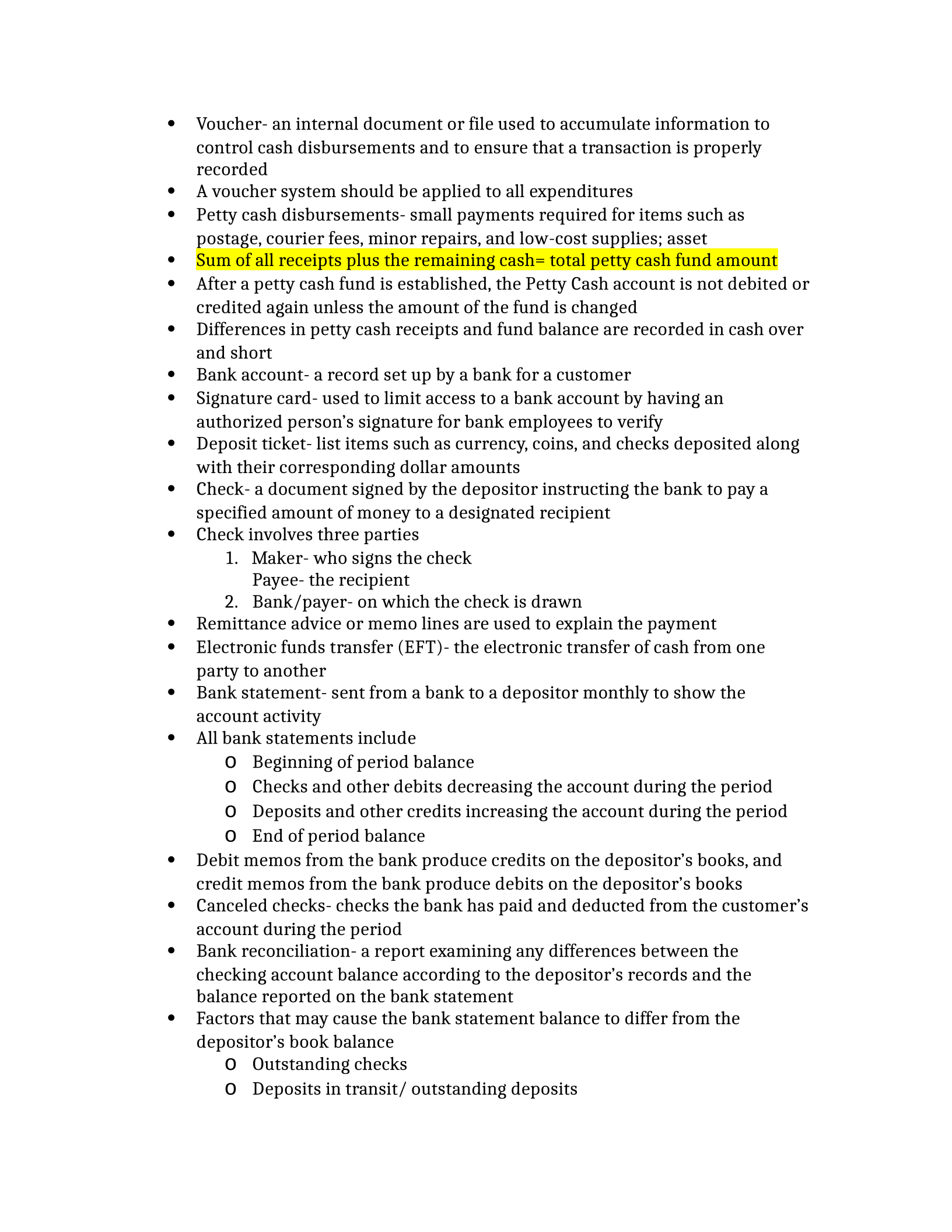
Voucher- an internal document or file used to accumulate information to
control cash disbursements and to ensure that a transaction is properly
recorded
A voucher system should be applied to all expenditures
Petty cash disbursements- small payments required for items such as
postage, courier fees, minor repairs, and low-cost supplies; asset
Sum of all receipts plus the remaining cash= total petty cash fund amount
After a petty cash fund is established, the Petty Cash account is not debited or
credited again unless the amount of the fund is changed
Differences in petty cash receipts and fund balance are recorded in cash over
and short
Bank account- a record set up by a bank for a customer
Signature card- used to limit access to a bank account by having an
authorized person’s signature for bank employees to verify
Deposit ticket- list items such as currency, coins, and checks deposited along
with their corresponding dollar amounts
Check- a document signed by the depositor instructing the bank to pay a
specified amount of money to a designated recipient
Check involves three parties
1. Maker- who signs the check
Payee- the recipient
2. Bank/payer- on which the check is drawn
Remittance advice or memo lines are used to explain the payment
Electronic funds transfer (EFT)- the electronic transfer of cash from one
party to another
Bank statement- sent from a bank to a depositor monthly to show the
account activity
All bank statements include
oBeginning of period balance
oChecks and other debits decreasing the account during the period
oDeposits and other credits increasing the account during the period
oEnd of period balance
Debit memos from the bank produce credits on the depositor’s books, and
credit memos from the bank produce debits on the depositor’s books
Canceled checks- checks the bank has paid and deducted from the customer’s
account during the period
Bank reconciliation- a report examining any differences between the
checking account balance according to the depositor’s records and the
balance reported on the bank statement
Factors that may cause the bank statement balance to differ from the
depositor’s book balance
oOutstanding checks
oDeposits in transit/ outstanding deposits
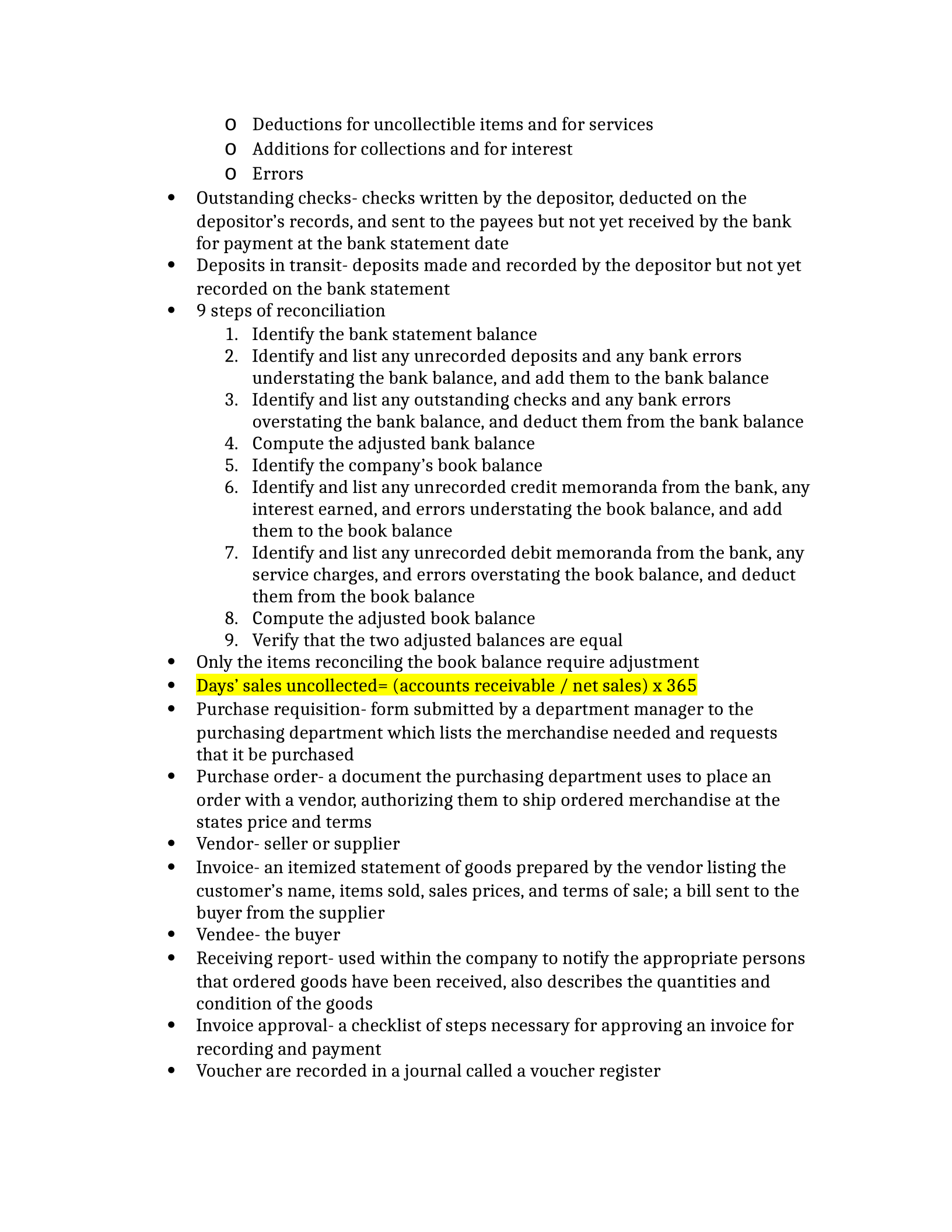
oDeductions for uncollectible items and for services
oAdditions for collections and for interest
oErrors
Outstanding checks- checks written by the depositor, deducted on the
depositor’s records, and sent to the payees but not yet received by the bank
for payment at the bank statement date
Deposits in transit- deposits made and recorded by the depositor but not yet
recorded on the bank statement
9 steps of reconciliation
1. Identify the bank statement balance
2. Identify and list any unrecorded deposits and any bank errors
understating the bank balance, and add them to the bank balance
3. Identify and list any outstanding checks and any bank errors
overstating the bank balance, and deduct them from the bank balance
4. Compute the adjusted bank balance
5. Identify the company’s book balance
6. Identify and list any unrecorded credit memoranda from the bank, any
interest earned, and errors understating the book balance, and add
them to the book balance
7. Identify and list any unrecorded debit memoranda from the bank, any
service charges, and errors overstating the book balance, and deduct
them from the book balance
8. Compute the adjusted book balance
9. Verify that the two adjusted balances are equal
Only the items reconciling the book balance require adjustment
Days’ sales uncollected= (accounts receivable / net sales) x 365
Purchase requisition- form submitted by a department manager to the
purchasing department which lists the merchandise needed and requests
that it be purchased
Purchase order- a document the purchasing department uses to place an
order with a vendor, authorizing them to ship ordered merchandise at the
states price and terms
Vendor- seller or supplier
Invoice- an itemized statement of goods prepared by the vendor listing the
customer’s name, items sold, sales prices, and terms of sale; a bill sent to the
buyer from the supplier
Vendee- the buyer
Receiving report- used within the company to notify the appropriate persons
that ordered goods have been received, also describes the quantities and
condition of the goods
Invoice approval- a checklist of steps necessary for approving an invoice for
recording and payment
Voucher are recorded in a journal called a voucher register
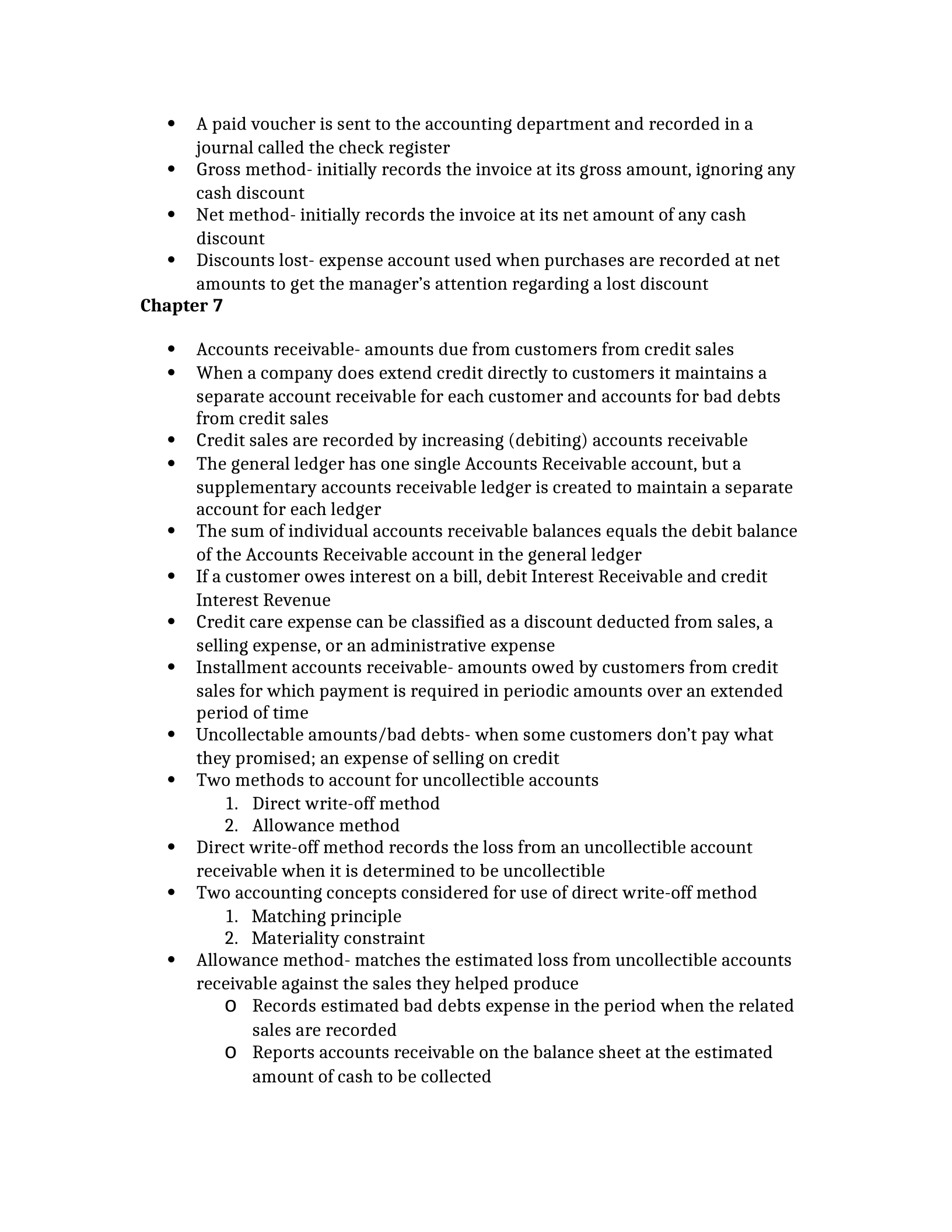
A paid voucher is sent to the accounting department and recorded in a
journal called the check register
Gross method- initially records the invoice at its gross amount, ignoring any
cash discount
Net method- initially records the invoice at its net amount of any cash
discount
Discounts lost- expense account used when purchases are recorded at net
amounts to get the manager’s attention regarding a lost discount
Chapter 7
Accounts receivable- amounts due from customers from credit sales
When a company does extend credit directly to customers it maintains a
separate account receivable for each customer and accounts for bad debts
from credit sales
Credit sales are recorded by increasing (debiting) accounts receivable
The general ledger has one single Accounts Receivable account, but a
supplementary accounts receivable ledger is created to maintain a separate
account for each ledger
The sum of individual accounts receivable balances equals the debit balance
of the Accounts Receivable account in the general ledger
If a customer owes interest on a bill, debit Interest Receivable and credit
Interest Revenue
Credit care expense can be classified as a discount deducted from sales, a
selling expense, or an administrative expense
Installment accounts receivable- amounts owed by customers from credit
sales for which payment is required in periodic amounts over an extended
period of time
Uncollectable amounts/bad debts- when some customers don’t pay what
they promised; an expense of selling on credit
Two methods to account for uncollectible accounts
1. Direct write-off method
2. Allowance method
Direct write-off method records the loss from an uncollectible account
receivable when it is determined to be uncollectible
Two accounting concepts considered for use of direct write-off method
1. Matching principle
2. Materiality constraint
Allowance method- matches the estimated loss from uncollectible accounts
receivable against the sales they helped produce
oRecords estimated bad debts expense in the period when the related
sales are recorded
oReports accounts receivable on the balance sheet at the estimated
amount of cash to be collected
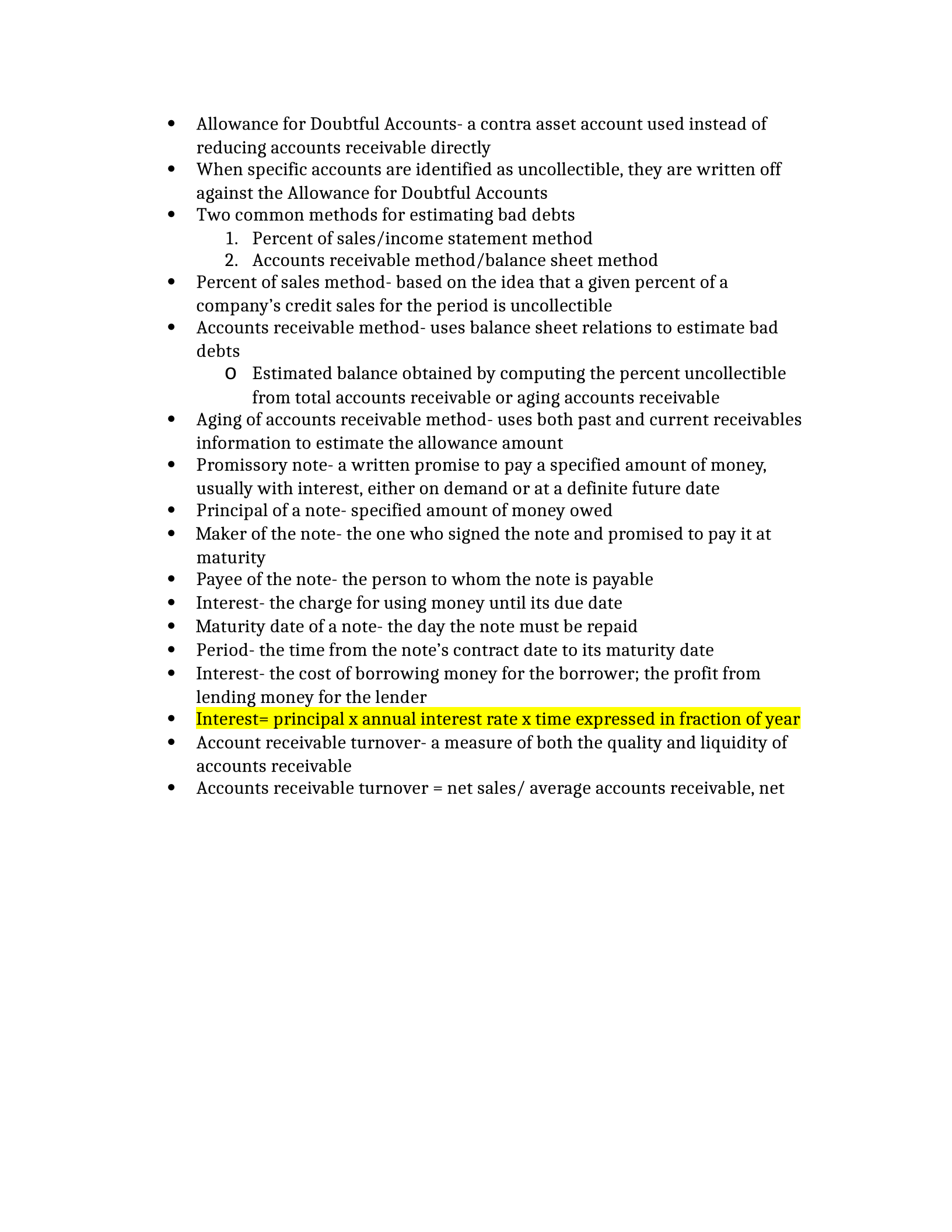
Allowance for Doubtful Accounts- a contra asset account used instead of
reducing accounts receivable directly
When specific accounts are identified as uncollectible, they are written off
against the Allowance for Doubtful Accounts
Two common methods for estimating bad debts
1. Percent of sales/income statement method
2. Accounts receivable method/balance sheet method
Percent of sales method- based on the idea that a given percent of a
company’s credit sales for the period is uncollectible
Accounts receivable method- uses balance sheet relations to estimate bad
debts
oEstimated balance obtained by computing the percent uncollectible
from total accounts receivable or aging accounts receivable
Aging of accounts receivable method- uses both past and current receivables
information to estimate the allowance amount
Promissory note- a written promise to pay a specified amount of money,
usually with interest, either on demand or at a definite future date
Principal of a note- specified amount of money owed
Maker of the note- the one who signed the note and promised to pay it at
maturity
Payee of the note- the person to whom the note is payable
Interest- the charge for using money until its due date
Maturity date of a note- the day the note must be repaid
Period- the time from the note’s contract date to its maturity date
Interest- the cost of borrowing money for the borrower; the profit from
lending money for the lender
Interest= principal x annual interest rate x time expressed in fraction of year
Account receivable turnover- a measure of both the quality and liquidity of
accounts receivable
Accounts receivable turnover = net sales/ average accounts receivable, net
Powered by TCPDF (www.tcpdf.org)

