
Alex Corgiat
Section Sketch
Managerial Accounting Section Sketch
Difference between Financial and Managerial Accounting
oFinancial
Produce statements for outside company
Specific rules set by GAAP or IFRS
Result of transactions that occurred in the period
oManagerial
For those within the company
Has less guidelines for how to be written
Does not have to be in financial terms
Has historical information’s but also has predictions for the future
Importance of Determining the Cost of a Product:
oProduct differentiation
Make it different than competitors with attributes that are important to
the customers.
Know cost plus a mark-up for profit to sell their item.
oPrice-based competition
Instead of making products different, they sell them at a lower price to
attract costumers.
Must make sure not to sell at a loss!
The Cost of Inventory:
oWhat types of businesses sell inventory? Merchandising firms (stores) &
Manufacturing firms (factories).
oMerchandising firms:
Wholesalers- buy inventory from various manufacturers and sell to
retailer
Retailers- buy inventory from wholesalers and sell it to public
oManufacturing firms:
Buys inventory- processes the inventory- sells the product
3 costs!
Raw Materials- materials the company busy that goes directly onto the
product being produced.
Direct Labor- cost of the employees working directly on the product.
NOT maintenance employees or a forklift driver.
Manufacturing Overhead- all other expenses of the factory. Examples
of this are factory utilities, factory rent, rags, used by the factory
workers.
The total cost of these three are record as total cost of inventory.
Three inventory accounts:
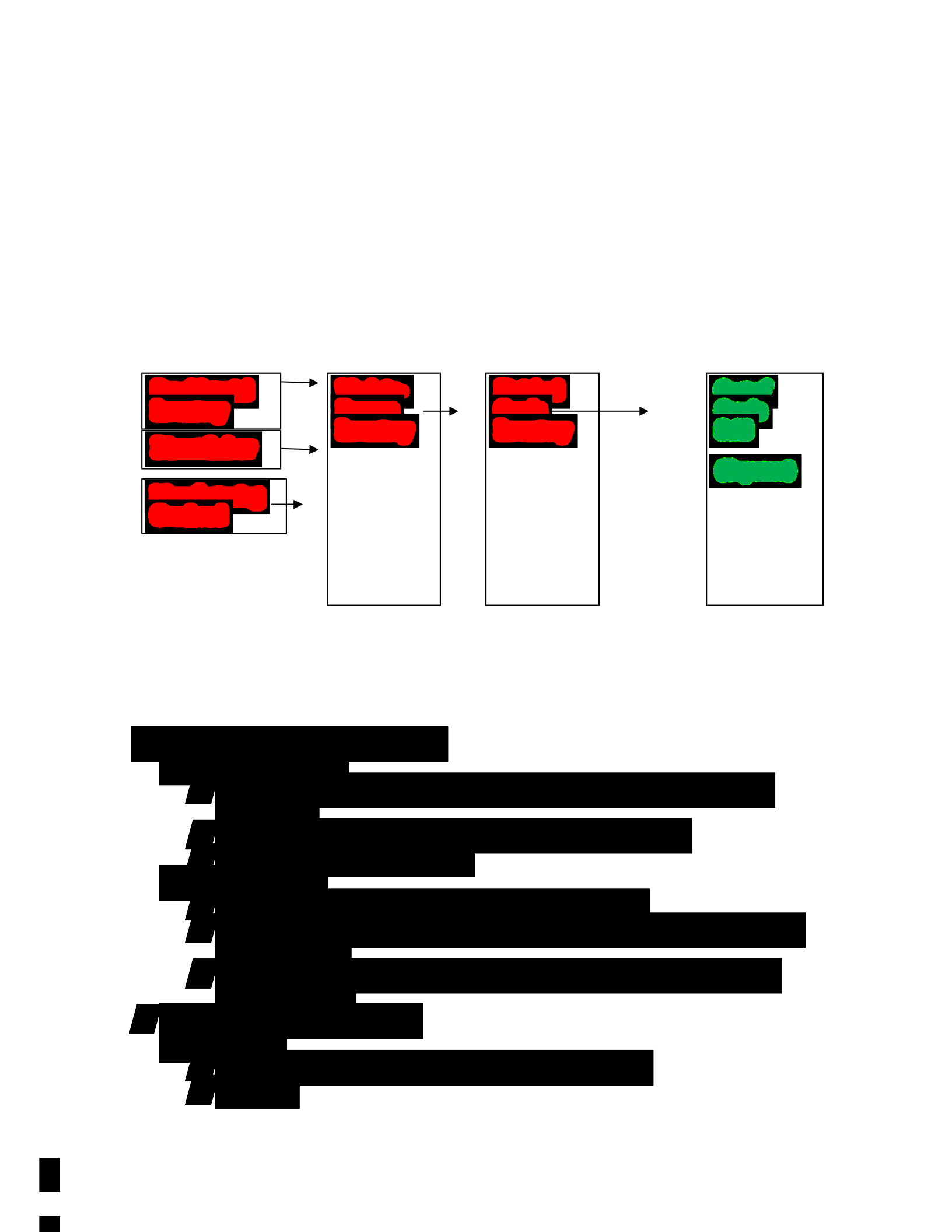
All asset accounts.
Raw materials inventory- direct materials purchased are recorded at
the time they are purchased.
Work-in-progress- cost of materials used is deducted from raw
material inventory and added to this account.
Finished goods inventory- total cost accumulator for the run of this
product are moved to the finished goods inventory. Not reduced until
the product is sold.
Balance Sheet Accounts: Income Statement
Account:
Product Costs: total costs that make up the cost of the product (raw materials,
direct labor and manufacturing overhead).
Period Costs: costs that do not get included in the cost of the products being
produced. Ex- rent utilities, salaries of office workers, salesmen, etc.