


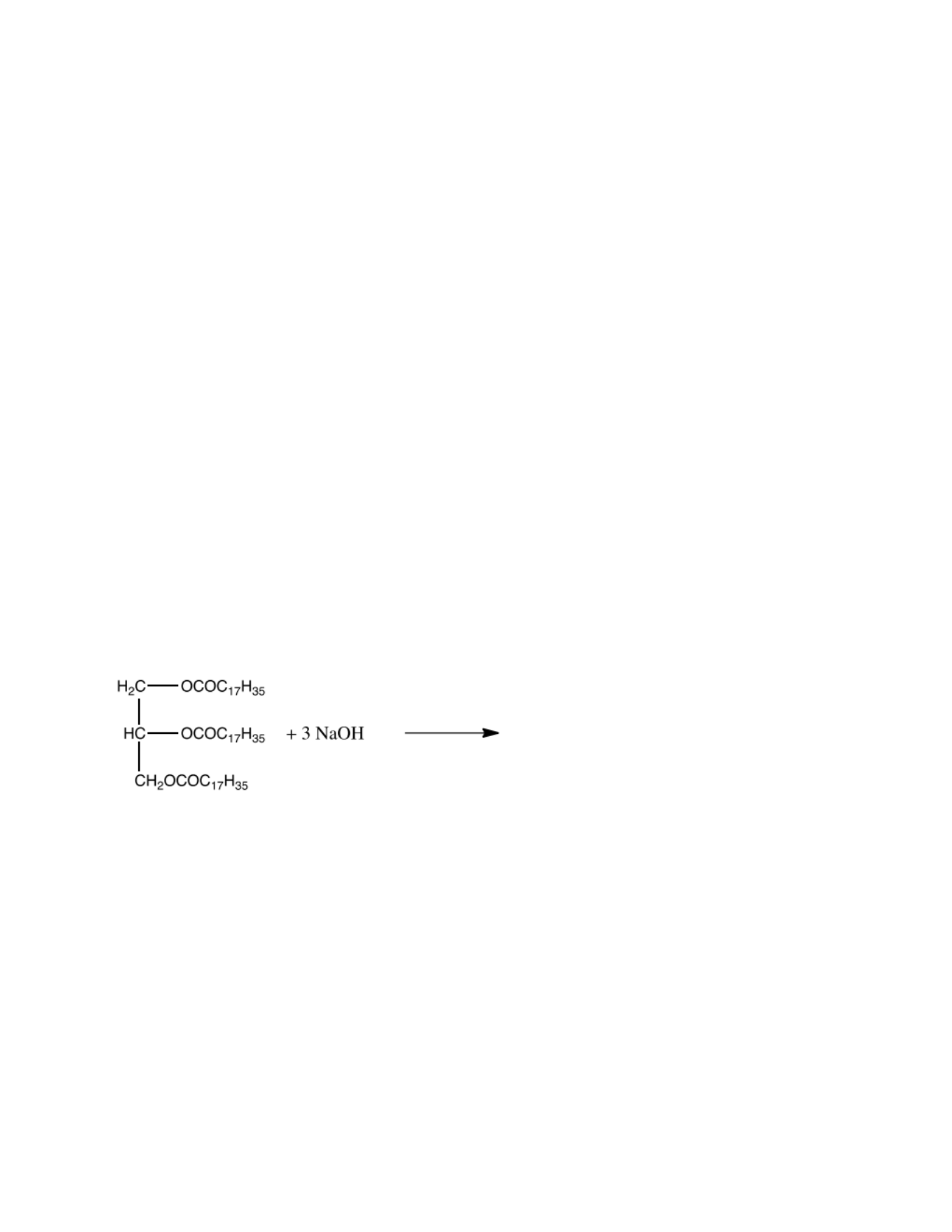
Lab 16 Saponification: Soap Making
Purpose
At the completion of these experiments, you will learn the structure of soap molecules and how
their structure directly relates to their function. You will also have created homemade soap using
various different types of oil solutions, you will also report data on these soaps when they interact
with different ionic solutions.
Methodology
While conducting these experiments you will add the substance NaOH to the test tubes and record
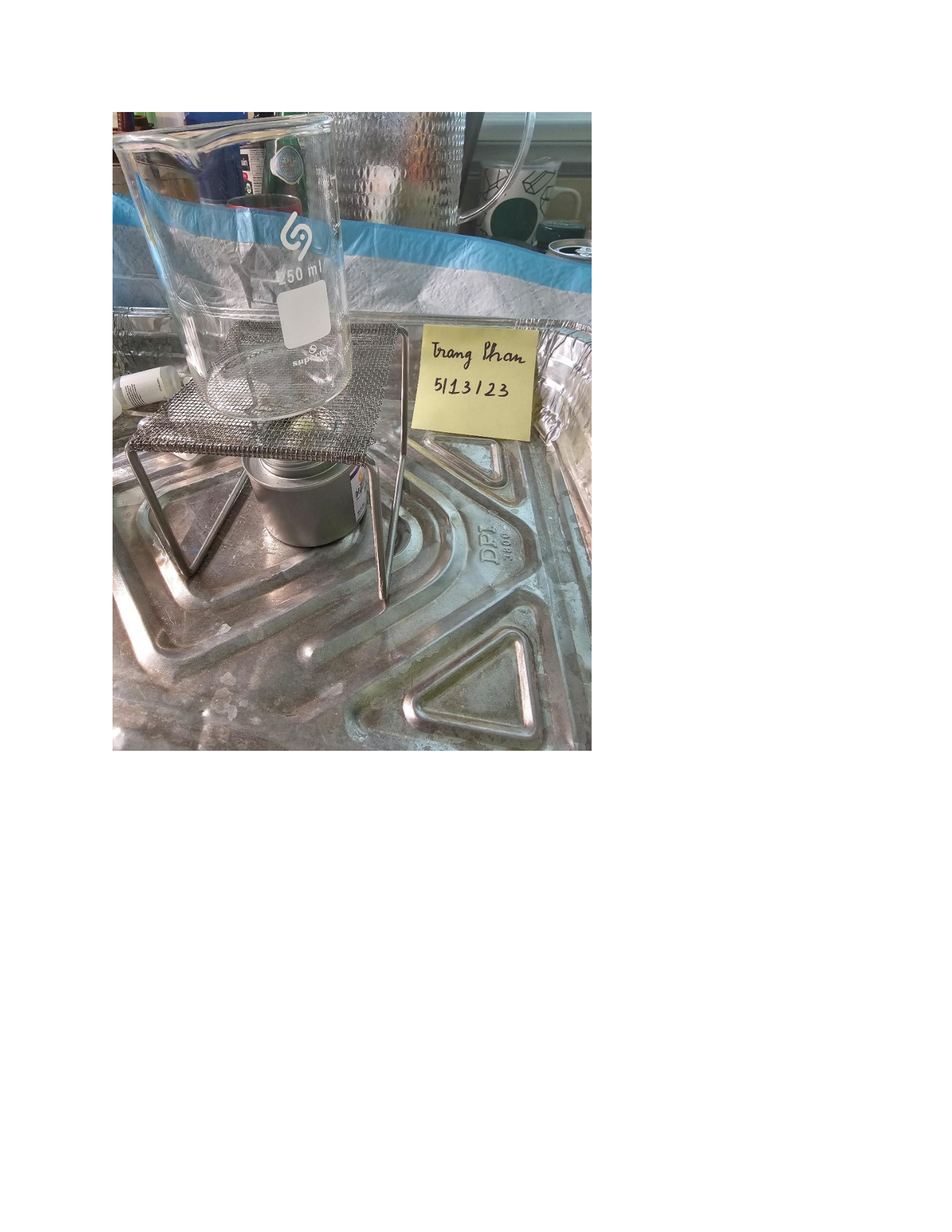
readings before and after adding the substance. You will also set the test tubes in a warm bath for
15 minutes and observe the change in color and consistency and record the data. After you record
this data, you will cool the test tubes with the substance for 30 minutes and observe for firmness
and let them stand for an additional 30 minutes, at this time you will pour the substance on a paper
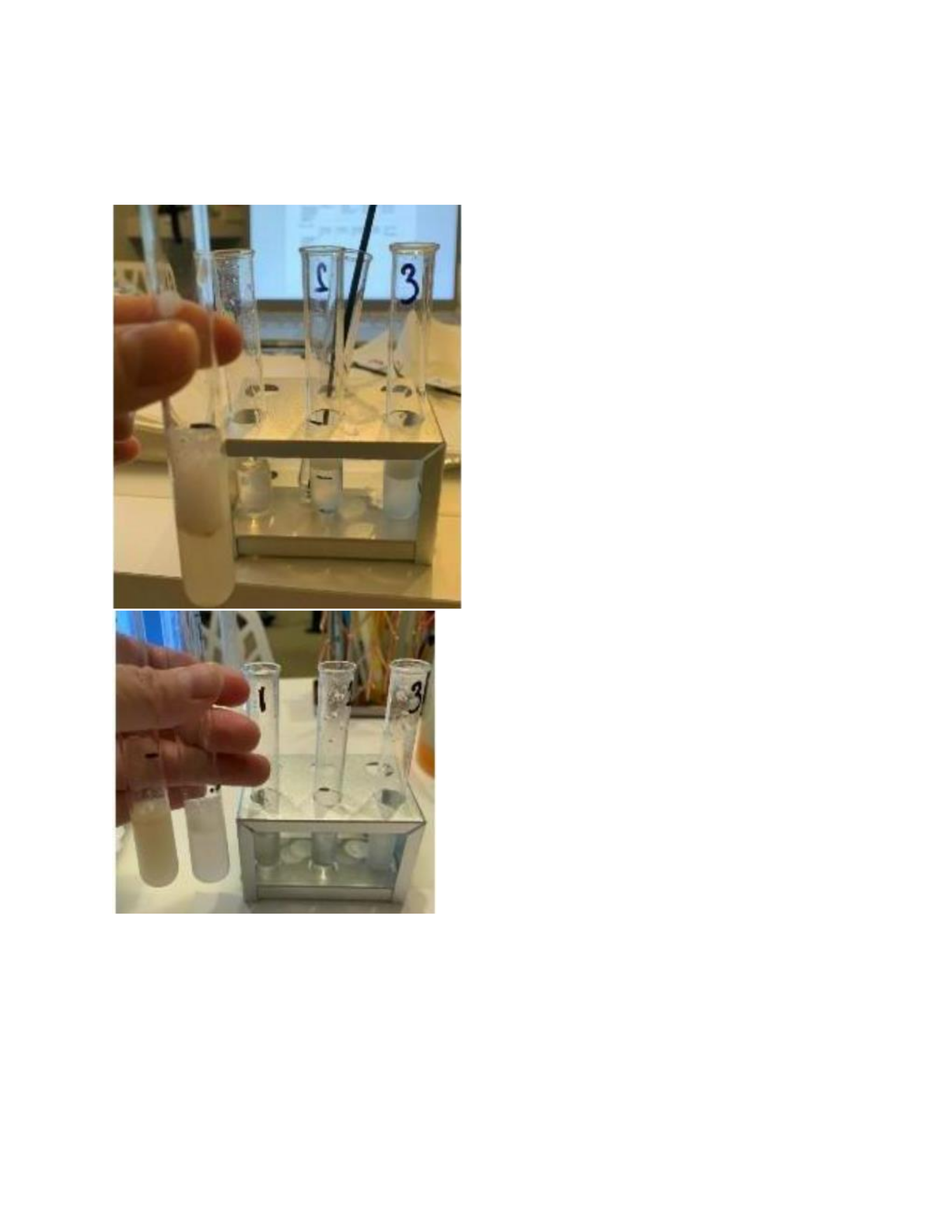
towel and allow it to firm. The next experiment will be to take a sample of soap and place it into a
test tube and add distilled water, you will then observe the substance for precipitation and suds.
Finally, you will add two drops of calcium chloride solution to the test tube and observe to see if
any suds occur.
Pre-Lab Questions
1. What is are the two key structural parts, one hydrophobic and the other hydrophilic, of a soap
molecule?
A polar hydrophilic that bonds with water and a non-polar hydrocarbon that bonds with oil and
grease.
2. How many moles of triglyceride react with each mole of NaOH base?
3 moles of NaOH react with each mole of triglyceride
3. Identify the expected products of the reaction with the base NaOH.
Free glycerol and fatty acid salt is the expected products of the reaction with the base NaOH.
4. Find the saponification value of olive oil if 1 gram of olive oil reacts with 190 mg of KOH.
How many moles of KOH are in 190 mg? Divide 1 g of olive oil by this value in moles.

5. Under Exposure Controls, Personal Protection what type of Personal Protective Equipment
should be worn when working with NaOH?
Eyes: Wear chemical splash goggles and face shield.
Skin: Wear butyl rubber gloves, apron, and/or clothing.
Clothing: Wear appropriate protective clothing to prevent skin exposure.
Respirators:
Follow the OSHA respirator regulations found in 29 CFR 1910.134 or European Standard
EN 149. Use a NIOSH/MSHA or European Standard EN 149 approved respirator if exposure
limits are exceeded or if irritation or other symptoms are experienced.
6. In a browser paste the following URL:
https://www.fishersci.com/shop/msdsproxy?productName=S3181
This is the MSDS for Sodium Hydroxide, answer the following questions:
i. What is the NFPA rating for NaOH?
(estimated) Health: 3; Flammability: 0; Instability: 1
j. In First Aid Measures, what do you do for skin contact?
In case of contact, immediately flush skin with plenty of water for at least 15 minutes while
removing contaminated clothing and shoes. Get medical aid immediately. Wash clothing before
reuse
k. In First Aid Measures, what are the “Most important symptoms and effects”?
Eye: Causes eye burns. May cause blindness. May cause chemical conjunctivitis and corneal
damage.
Skin: Causes skin burns. May cause deep, penetrating ulcers of the skin.
Ingestion: May cause severe and permanent damage to the digestive tract. Causes gastrointestinal
tract burns. May cause perforation of the digestive tract. Causes severe pain, nausea, vomiting,
diarrhea, and shock.
Inhalation: Irritation may lead to chemical pneumonitis and pulmonary edema. Causes severe
irritation of upper respiratory tract with coughing, burns, breathing difficulty, and possible coma.
Causes chemical burns to the respiratory tract.
Chronic: Prolonged or repeated skin contact may cause dermatitis. Effects may be delayed.
Results
Observations:

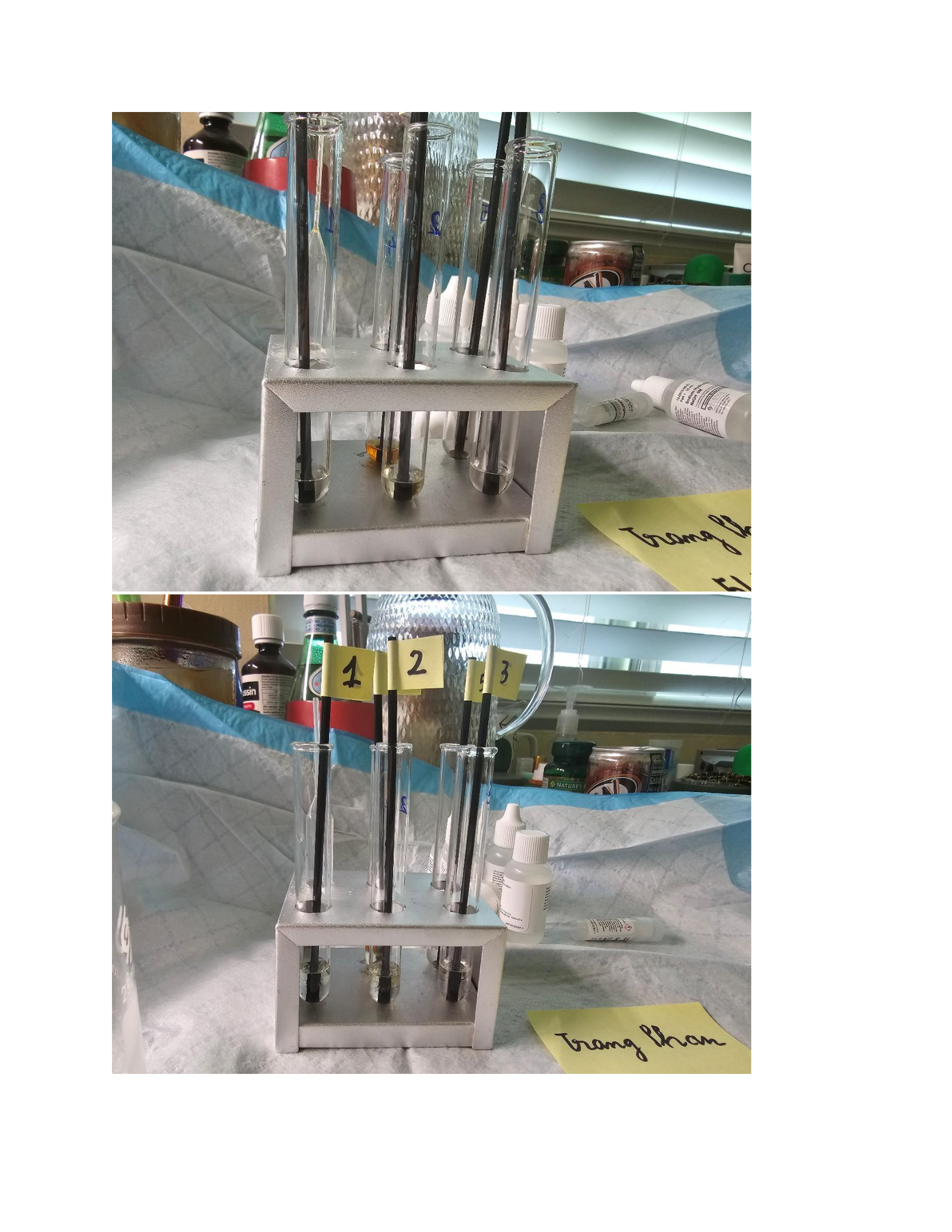
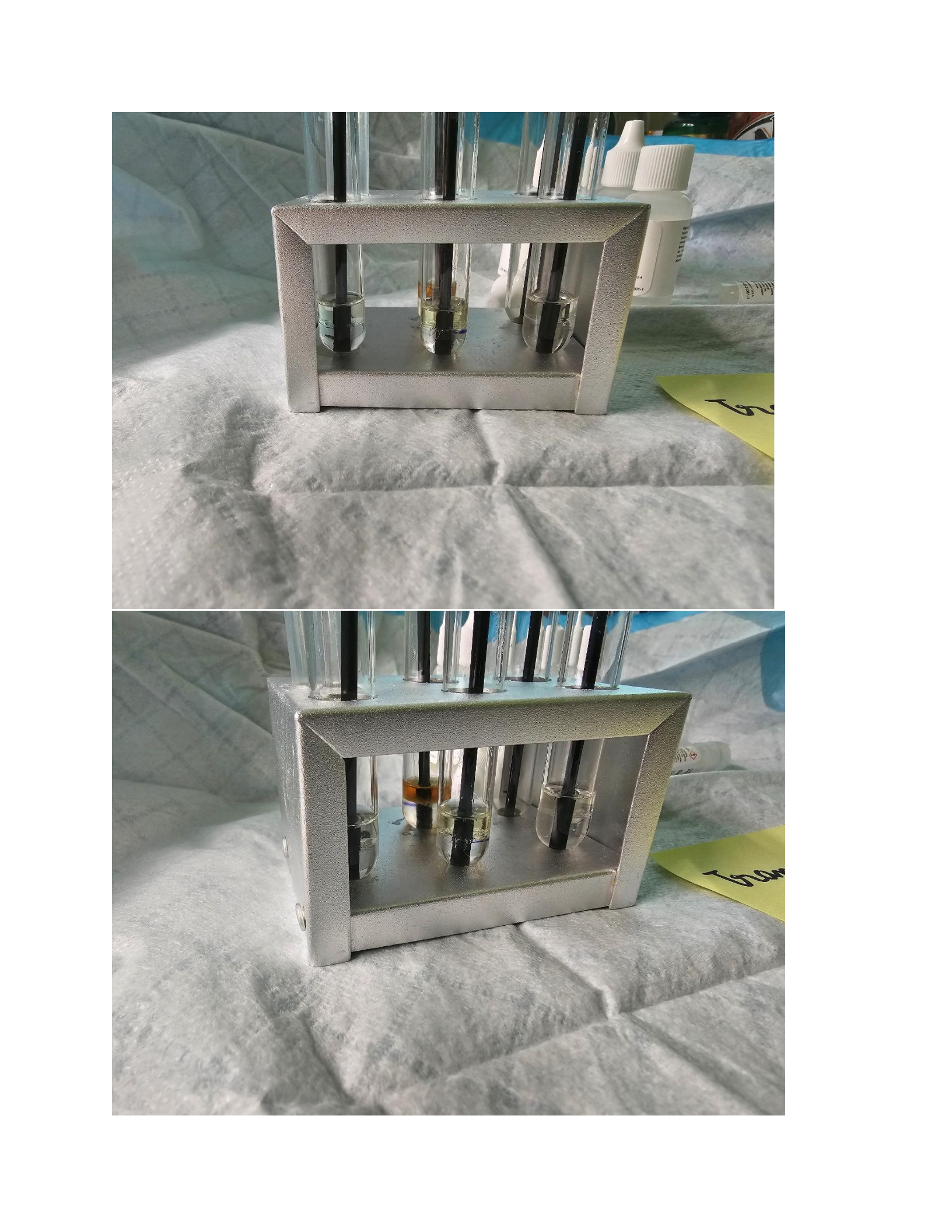
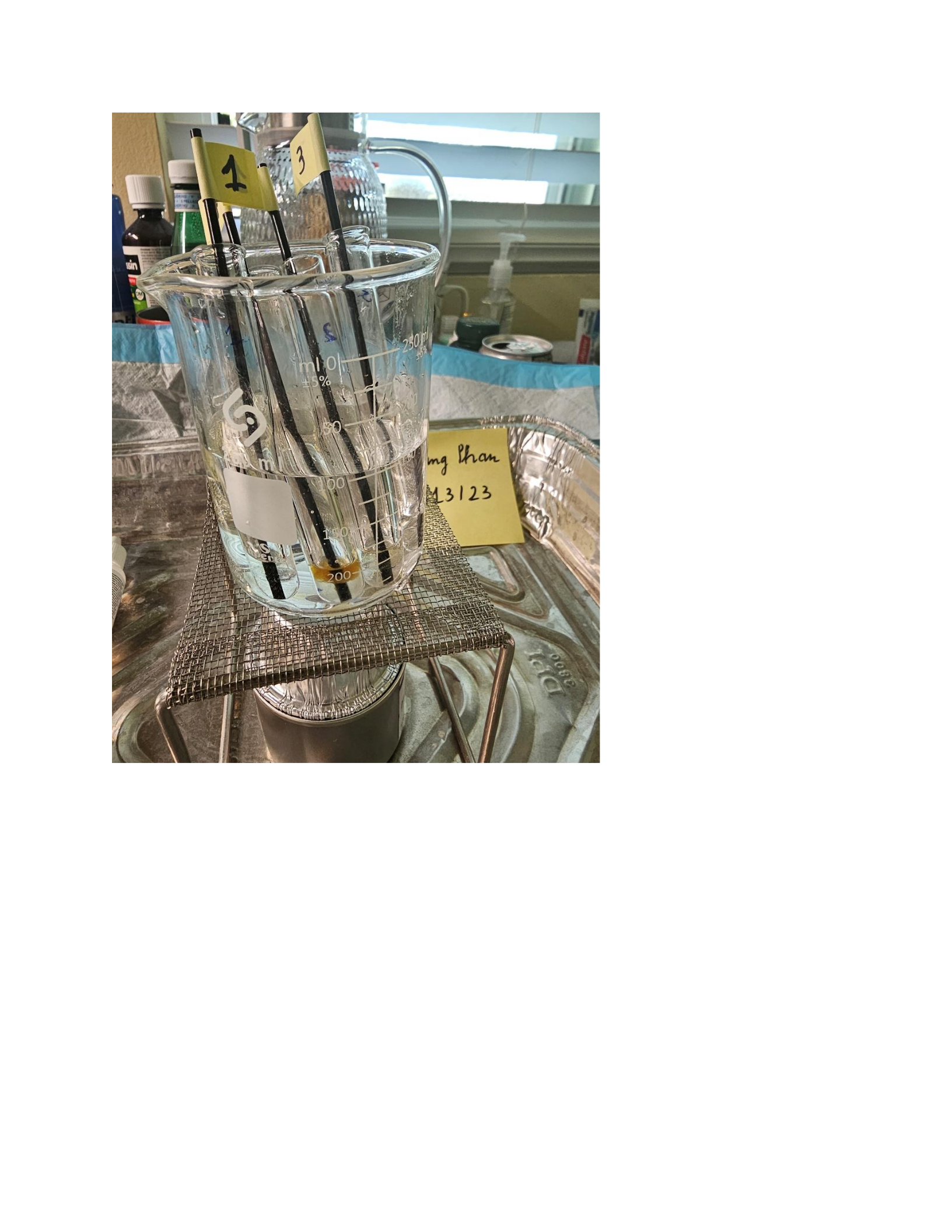
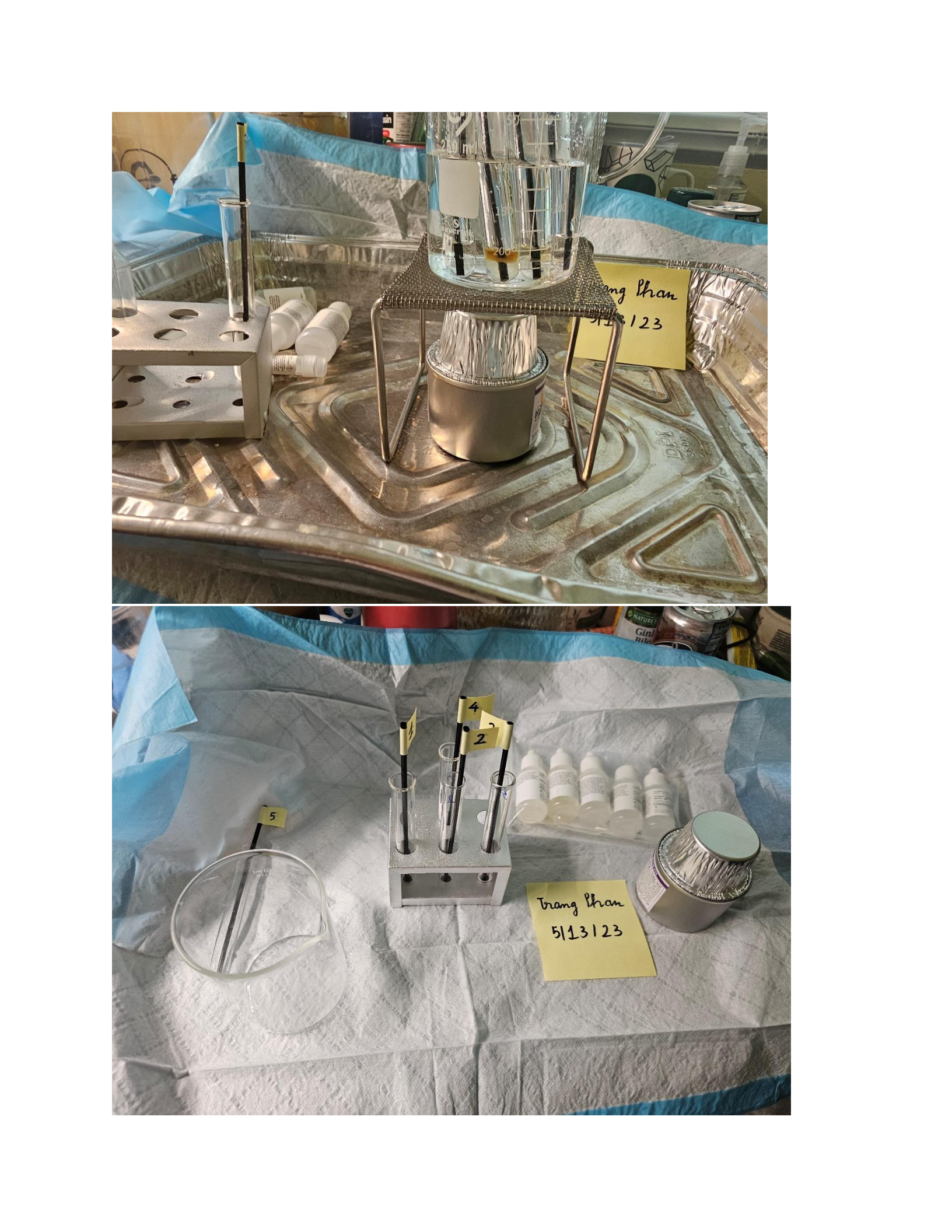

Data Tables and Graphs (if applicable):
Data table 1
Test Tube 1:
Canola oil
Test Tube 2: Corn
Oil
Test Tube 3:
Coconut Oil
Test Tube
4: unique
Sesame oil
Initial Color and
Composition
Dark Yellow/
brown oily
Yellow
Oily
Clear white
Coconut pieces
Orange/ rust
Observation after
Adding NaOH
NaOH is setting
on the bottom
NaOH is setting on
the bottom
NaOH is setting
on the bottom
NaOH is setting on
the bottom
Observation after
Hot Water Bath
2 layers with
white on the top
layer
The top layer
looks like oil, the
middle layer is
white, and NaOH
on bottom
The top layer
looks like oil, the
middle layer is
white, and NaOH
on bottom
The top layer
looks like oil, the
middle layer is
white, and NaOH
on bottom
Data table 2
Test Tube
1: Canola Oil
Test Tube
2: Corn Oil
Test Tube 3:
Coconut oil
Test Tube 4:
unique
household oil
Test Tube 5:
Detergent
Precipitation in Distilled
Water (Yes/No)
Yes
No
No
No
No
Distilled Water Sud
Production Ranking (1 =
Most to 5 = Least)
5
3
3
1
4
Sud Production in Hard
Water Compared to
Distilled Water
(More/Less/Equal)
Equal
Less
Less
Less
Equal
Precipitation in Hard
Water (Yes/No)
No
Yes
Yes
Yes
No
Calculations:
No calculation
Discussion
Analysis:
The purpose of these experiments was to teach you about saponification by conducting several
experiments utilizing various different types of oil such as oils, canola oil, corn oil, coconut oil,
and sesame oil. You will observe the reaction these oils will have with NaOH, as well as how
water will affect each of these oil–NaOH substances.

Post-Lab Questions:
1. What is the molecular difference between saturated and unsaturated fatty acids?
Unsaturated fatty acids contain one or more double bonds while saturated fatty acids contain
only a single C-C bond.
2. Each molecule of fatty acid ester provides how many equivalents of carboxylate acid salts?
Each molecule of fatty acid ester provides 3 carboxylate acid salt.
3. Why do most soaps contain glycerol? What properties does glycerol add to soap?
Because glycerol attracts moisture due to being a humectant.
4. What is hard water? What are the main problems combining soap and hard water?
Hard water has a high concentration of minerals such as calcium and magnesium in the form
of dissolved salts
5. Explain how soaps remove oily spots from clothing when washing.
Soaps contains surfactants, that help remove oily spots from clothing when washing.
6. Why is the prepared soap checked for pH value before using it? What is the preferred pH for
your soap?
It is important that soap's pH level does not damage skin glands with a high pH level, this is
why soap pH level is checked prior to use and is around 9-10 pH level.
7. Most recipes for making homemade soap recommend using excess fat. Explain why this is
beneficial.
When you make homemade soap it generally uses natural oils instead of chemical
preservatives and that is beneficial to moisturizing skin.

