


GENDER JUSTICE LEGAL EDUCATION AS AN EFFORT TO
PREVENT VIOLENCE AGAINST WOMEN FOR AISYIYAH
ADMINISTRATORS IN MEDAN
Larry Arhan
Arizona State University
Course
Professor Dahlya
April, 2024
Week 2
INTRODUCTION
Gender is a social and cultural construct that society attaches to men and women.
For example, women are gentle, compassionate, patient and diligent. While men, firm,
authoritative, not whiny and so on. (Maidin Gultom: 2012). Gender is a difference between
men and women in roles, functions, rights, responsibilities and behaviors that are
constructed socially, culturally and customarily. Gender is different from sex. (Mansur Fakih:
1996). In other words, gender is a term that indicates the division of social roles between
men and women that refers to the provision of emotional and psychological characteristics
that certain cultures expect to be physically adapted to men and women. Gender is formed
by humans, while sex is a gift from God that distinguishes between men and women
physically. Women have breasts, vaginas and female reproductive functions for
menstruation, pregnancy, childbirth, and breastfeeding that men do not naturally have. This
natural difference is what cannot be changed and exchanged. Meanwhile, gender is a
formation of humans that can change according to place and time.
Gender differences and divisions cause various injustices against both men and
women. Gender injustice in the form of restrictions on roles, thoughts or differences in
treatment has implications for violations of the recognition of human rights, equality of
rights between women and men. Gender-based violence is an act based on certain gender
or sexual assumptions. The gender violence that occurs involves both men and women,
while the victims are women due to the unequal relationship between them. In the
perspective of feminism, violence against women is called gender-based violence.
(Bambang Rudi Harnoko: 2012). Gender has a role in the problems that arise, in relation to
women victims of violence, both in the household and in society. Gender-based violence
creates situations and conditions that are different from other crimes, because the
perpetrator uses the victim to fulfill his wishes. (Komariah Emong

Sapardjaja: Lies Sulistiani: 2019).
Violence is still experienced by women, until today, especially violence that occurs
in the household, traditions that still glorify men and consider women to be weak creatures,
as well as wives who must obey and submit to their husbands, are powerful weapons for the
act of violence. (Maidin Gultom: 2012). Based on a report by Komnas Perempuan in March
2020, it was explained that the number of cases of violence against women increased by 6%.
In 2019, violence against women was 431,471, an increase from the previous case of
406,178. Komnas Perempuan: 2020) In the last 3 years (2016-2019) CATAHU Komnas
Perempuan also showed that sexual violence in the private/personal sphere increased to the
second highest rank after physical violence. The highest level of sexual violence in the
private sphere is inscest (rape by a person who is related to the victim) which amounted to
1,210 cases during 2017. The highest perpetrators of incest are biological fathers in 425
cases and then uncles in 322 cases (Komnas Perempuan: 2020).
The vulnerability of women to become victims of violence is increasing during the
Covid-19 pandemic. Economic downturns, PSBB, KdR, BdR, limited access to assistance,
cause tension in households that exacerbate conflicts and have implications for the
increase in domestic violence cases that occur against women. Komnas Perempuan in its
report shows that women experience double workload vulnerability and experience
violence, which generally occurs in women who earn less than 5 million rupiah per month.
Informal workers between the ages of 31-40 years old, married. (Komnas Perempuan: 2020).
Violence that occurs with various motives, domestic violence, sexual violence, online
gender-based violence which is a big threat to society. The use of the internet for social
media during the pandemic is increasingly rampant and rapid. Many community activities
are carried out at home, but it is possible that online gender-based violence (KBGO) will also
increase in social media. Based on data from Komnas Perempuan in CATAHU 2021, it was
recorded that in 2020 KBGO cases experienced a surge, namely around 940 cases which in
2019 were recorded 241 cases. (Nurhayati: 2020).
Efforts to eliminate violence against women are very important in connection with
social movements at the national and international levels in the form of "Three Ends". Three
ends is a social movement that campaigns for commitment and action to eliminate violence
against women and children (End Violence Against Women and Children), Human
Trafficking (End Human Trafficking), and Economic Barriers to Economic Justice (End
Barriers to Economic Justice). (NL. Meilani & Hesti Asriwandari: 2019). Law enforcement
and justice are the dream for the poor, women and children who are often victims of injustice
and human rights violations. Various cases of violence against women and children are

increasing every day. The facts about cases of violence against women and children are
certainly very concerning. The female group is a vulnerable group to experience social
exclusion. This situation is inseparable from the patriarchal social structure that has not
been on the side of women's interests and needs. Social exclusion causes women to have
limited access to basic rights as citizens as stated in the constitution. As a result, women
experience gender-based discrimination and violence starting from the scope of the family,
society and various sectors of life.
As an organization that has been active at the national level, Aisyiyah is committed
to being able to solve various societal problems, including the problem of violence against
women. Aisyiyah is considered to be able to be an agent of violence against women and has
a gender equality perspective. Because 'Aisyiyah has a base up to the branch level that can
socialize the understanding of gender equality as an effort to prevent violence against
women. The role of 'Aisyiyah as a women's organization of the Muhammadiyah Organization
has contributed to advancing Indonesia women in various fields of life, both in the fields of
education, health, economy, social welfare, legal awareness, political education and
women's empowerment. The Aisyiyah Law and Human Rights Council (MHH) is one of the
assemblies in 'Aisyiyah that are required to further increase their role in the legal fields. MHH
'Aisyiyah has a commitment and responsibility in solving various problems of society, nation
and state, especially related to injustice against women and children and human rights
violations that are increasing in intensity both at the national and global levels.
The problem is that not all MHH Aisyiyah administrators have a law background, so
many problems of women and children who are dealing with the law are not understood by
them. They also do not fully understand that violence against women and children that
occurs is the result of a system and culture in society that does not have a gender justice
perspective. The Aisyiyah administrators of the law and human rights assembly should be
able to provide a clear understanding to the community so that they do not commit victim
blaming, namely blaming the victim. So that they can provide maximum treatment for
women and children victims of violence. Based on this, UMSU Faculty of Law lecturers held
community service, with the UMSU PKPM scheme to design gender training and prevention
of violence against women to the management of 'Aisyiyah of the Law and Human Rights
Council in Medan, by involving participants from the management of the law and human
rights council from the city of Medan and branches in Medan. The purpose of this activity is
to increase understanding and foster awareness of the meaning of gender equality as an
effort to prevent violence against women.
The objectives of this activity include:

1. Increase the knowledge and understanding of the administrators of the 'Aisyiyah Legal
and Human Rights Council at the branch level regarding gender and forms of gender
injustice
2. Increasing the awareness and critical power of the administrators of the 'Aisyiyah Law
and Human Rights Council at the branch level regarding violence against women
3. Socializing information to 'Aisyiyah residents at the branch and branch levels regarding
gender and violence against women.
METHOD
The methods used in the implementation of this activity are in the form of education
in the form of training with an interactive discussion model, and case studies to explore the
knowledge of participants so that there can be easily a transfer of knowledge to participants
regarding gender material that is different from nature, forms of gender injustice and forms
of violence that occur in women. Accordingto KBBI (great Indonesian dictionary), education
is the same as education. Education from the word didik, means maintaining and providing
training (teachings, guidance, leadership) regarding morals and intelligence of the mind.
Implicitly, according to Notoaddmojo (2003), education or also known as education is any
effort that is planned to influence others, whether individuals, groups, or society so that they
do what is expected by education actors. In essence, Education is a process of changing the
attitude and behavior of a person or group of people in an effort to mature human beings
through teaching and training efforts.
The training was carried out by interactive discussions, using metaplane media,
videos and roleplay. Each participant was given a pretest at the beginning of the training and
a postes at the end of the activity to find out the extent of the participants' knowledge and
understanding of gender, forms of gender injustice and violence against women.
RESULT
Community service activities through the Muhammadiyah Development
Partnership Program (PKPM) scheme with the title Legal Education with Gender
Justice as an Effort to Prevent Violence Against Women for the Management of the
Legal and Human Rights Council "Aisyiyah", was held at the ' Aisyiyah Regional
Executive (PDA) Hall. The participants of this activity were 33 people who included; the
management of the Medan City legal and human rights council as many as 5 people, the
management of the legal and human rights council at the branch level as many as 28 people.

Each branch sent 1 (one) participant. This activity began by socializing the program with the
Aisyiyah Regional Leadership of the Law and Human Rights Council, the Aisyiyah Regional
Executive of Medan City. The socialization was directly carried out by holding a meeting with
the Chairperson of PDA, Mrs. Dra. Kholissani Nasution Through this meeting, the purpose
and purpose were conveyed, namely as a follow-up to the signing of the cooperation in
February 2021 related to the gender justice legal education program for handling cases of
violence against women and children. Preparations were carried out starting from the data
collection of participants consisting of the Regional Leadership of 'Aisyiyah Law and Human
Rights Council as many as 5 people and the management of the Law and Human Rights
Council at the branch level. There are 30 'Aisyiyah branches in Medan, while 28 people
registered as participants. This means that there are 2 (two) branches of 'Aisyiyah in Medan
that do not send their MHH members to participate in this activity. Thus, the number of
participants was 33 people. For smooth communication, the Team Leader created a Whats
App group, so that information can be conveyed quickly and clearly.
The implementation of the activity began with the opening ceremony and orientation
of the activity, each participant was asked to introduce himself and what his expectations
were after participating in this training. Participants were given a pre test and post test which
is a questionnaire instrument which is an evaluation of the activity. Each participant was
given 5 minutes to fill in the instrument. The number of instruments is 10 questions. After
filling out the pre-test, the activity continued with training. The material presented includes:
a. Gender Recognition
b. Forms of gender injustice include; subordination, stereotypes, marginalization,
violence, excessive double burden,
c. Violence against Women and Its Legal Protection,
d. The Urgency of Advocacy for Violence Against Women
e. Group Discussion
f. Follow-up Plan
This activity was held for 1 (one) full day, filled by 2 (two) facilitators. With an
interactive discussion model, delivered through meta plan media, power point slides and
videos. The activity was interspersed with ice breakers and watching the video "The
Imposible Dream" and the video "true story of domestic violence cases".

Figure 1. Material Delivery
After completing all the material was delivered, at around 14.30 WIB, participants
were divided into 5 groups, to discuss the cases given by the facilitator. The results of the
group discussion were then written on plano paper and presented to the future. The
participants were so enthusiastic about discussing and presenting the results of their
discussions related to cases of violence against women that began with gender injustice.
Figure 2. Participants have a group discussion
Figure 3. Participants presented the results of their discussions
At the end of the activity, participants were asked to write a follow-up plan for the
activity. Participants were also given a post test to measure their level of understanding,
post-training.

Figure 4. Post test and RTL filling
Based on the results of the pre test and post test, there was an increase in the
knowledge of activity participants about gender, forms of gender injustice and forms of
violence against women.
Table 1. Proposition of Pre-Test Results Participant Answers
It
Question
Participant's
Answer
Yes
Not
1
Knowing the meaning of gender
10
23
2.
Recognizing forms of gender injustice
2
31
3.
Knowing the difference between gender and nature
8
25
4.
Knowing why gender is a problem
10
23
5.
Know Forms violence towards women
6
27
6
Knowing examples of cases of violence against women
7
26
7
Know the legal rules that protect women
8
25
8
Know factor cause Occurrence Violence against
women
7
26
9
Knowing the impact of violence on women
10
23
10
Knowing why it is important to advocate for the handling of
cases of violence against women
14
19
Table 2. Proposition of Answer Participant Post Test Results
No
Question
Participant's
Answer
Already
No
1
Can explain the meaning of gender correctly
30
3
2.
Can provide examples of forms of gender injustice
19
14
3.
Can mention the difference between gender and nature
33
0
4.
Can explain why gender is a problem
31
2
5.
Can explain the forms of violence against women
33
0

6
Can provide examples of cases of violence against women
33
0
7
Can name a legal rule that protects
32
1
woman
8
Can explain the factors that cause violence against women
28
5
9
Get explain impact violence towards women
29
4
10
Can explain the urgency of advocacy for handling cases of
violence against women
28
5
Table 2 shows the change in the trainees' knowledge about gender and forms of
violence. Before getting the training material, only 10 people (30.31%) of the participants
knew the meaning of gender. After obtaining the material, 30 people (90.91%) participants
were able to correctly explain the meaning of gender, namely the difference between men
and women in roles, functions, rights, responsibilities and behaviors that are constructed
socially, culturally and customarily. This means that there is an increase in knowledge by
60.6%.
The second point of the question in the pretest found that only 6.06% understood the
forms of gender injustice. After obtaining the material, 57.58% of participants knew about
the forms of gender injustice, namely; subordination, stereotype, marginalization, double
bourden, violence. There was an increase of 51.52%. In the third question, before getting the
material, only 24.25%, but after getting the material, all participants (100%) were able to
distinguish between gender and nature by giving examples. This means that there was an
increase of 75.75%. For the fourth question, before being given the material, only 30.31%
understood why gender was a problem. But after being given the material, 93.94% of the
participants were able to explain the reasons why gender was problematic. The increase in
knowledge has increased by 63.63%.
Regarding the forms of violence against women, which is the fifth question, only 6
people (18.19%) of the participants were able to understand it. After being given the
material, all participants (100%) were able to give examples of forms of violence against
women. Thus, there was an increase in understanding by 81.81%. The sixth question about
examples of cases of violence against women, before being given the material, only 21.22%
of participants were able to understand it. However, after being given the material, all
participants were able to tell examples of cases of violence against women that occurred in
the community. There was an increase in participants' knowledge by 78.78%.
The next question about the legal rules that protect women, before the material was
presented, only 24.25% of the participants knew about it, but after being given the material,

it increased to 93.94% of participants who understood it, an increase of 69.69%. For
question point 8, the results of the pre-test showed that only 21.22% understood the factors
that caused violence against women. However, after the training, 84.85% of the participants
understood better that the factors for violence against women, one of which was due to
patriarchal culture. The ninth question showed that only 30.31% of the participants knew
how women experienced the impact of violence, before being given the material. However,
after being explained that violence has a negative impact on women's physical and
psychological health, participants' understanding increased by 87.88%. This means that
there was an increase of 57.57%.
For the last question regarding the importance of advocacy in handling cases of
violence against women, there was an increase in knowledge after being given material by
42.42%. Capacity building activities for the management of 'Aisyiyah Law and Human Rights
Council have become effective to be able to carry out legal advocacy in a sustainable and
sustainable manner. In the future, capacity building activities are needed that can be carried
out, for example in the form of victim-oriented counseling techniques and gender justice as
well as basic advocacy techniques as a basic need for cadres in legal awareness groups. As
mentioned in the article Nevey Farida Andriani (2020), with capacity building activities for
cadres of this legal awareness group, it is hoped that they can advocate appropriately,
efficiently and in accordance with the principles of victim achievement and gender justice.
Figure 5. Symbolic handover of certificates and group photos
CONCLUSION
Gender injustice and violence against women occur due to social structures built by
society and can be changed by providing education to all parties and having a commitment
to justice and protection of vulnerable groups. Socialization about gender and the
prevention of violence against women should be carried out continuously, so that it can
increase public knowledge and eliminate the occurrence of violence against women.

Community service activities through the Muhammadiyah Development
Partnership Program (PKPM) scheme with the title Legal Education with Gender
Justice as an Effort to Prevent Violence Against Women for the Management of the
Legal and Human Rights Council "Aisyiyah", was held at the ' Aisyiyah Regional
Executive (PDA) Hall. The participants of this activity were 33 people who included; the
management of the Medan City legal and human rights council as many as 5 people, the
management of the legal and human rights council at the branch level as many as 28 people.
Each branch sent 1 (one) participant. This activity began by socializing the program with the
Aisyiyah Regional Leadership of the Law and Human Rights Council, the Aisyiyah Regional
Executive of Medan City. The socialization was directly carried out by holding a meeting with
the Chairperson of PDA, Mrs. Dra. Kholissani Nasution Through this meeting, the purpose
and purpose were conveyed, namely as a follow-up to the signing of the cooperation in
February 2021 related to the gender justice legal education program for handling cases of
violence against women and children. Preparations were carried out starting from the data
collection of participants consisting of the Regional Leadership of 'Aisyiyah Law and Human
Rights Council as many as 5 people and the management of the Law and Human Rights
Council at the branch level. There are 30 'Aisyiyah branches in Medan, while 28 people
registered as participants. This means that there are 2 (two) branches of 'Aisyiyah in Medan
that do not send their MHH members to participate in this activity. Thus, the number of
participants was 33 people. For smooth communication, the Team Leader created a Whats
App group, so that information can be conveyed quickly and clearly.
The implementation of the activity began with the opening ceremony and orientation
of the activity, each participant was asked to introduce himself and what his expectations
were after participating in this training. Participants were given a pre test and post test which
is a questionnaire instrument which is an evaluation of the activity. Each participant was
given 5 minutes to fill in the instrument. The number of instruments is 10 questions. After
filling out the pre-test, the activity continued with training. The material presented includes:
g. Gender Recognition
h. Forms of gender injustice include; subordination, stereotypes, marginalization,
violence, excessive double burden,
i. Violence against Women and Its Legal Protection,
j. The Urgency of Advocacy for Violence Against Women
k. Group Discussion
l. Follow-up Plan

This activity was held for 1 (one) full day, filled by 2 (two) facilitators. With an
interactive discussion model, delivered through meta plan media, power point slides and
videos. The activity was interspersed with ice breakers and watching the video "The
Imposible Dream" and the video "true story of domestic violence cases".
Figure 1. Material Delivery
After completing all the material was delivered, at around 14.30 WIB, participants
were divided into 5 groups, to discuss the cases given by the facilitator. The results of the
group discussion were then written on plano paper and presented to the future. The
participants were so enthusiastic about discussing and presenting the results of their
discussions related to cases of violence against women that began with gender injustice.
Figure 2. Participants have a group discussion
Figure 3. Participants presented the results of their discussions
At the end of the activity, participants were asked to write a follow-up plan for the
activity. Participants were also given a post test to measure their level of understanding,
post-training.

Figure 4. Post test and RTL filling
Based on the results of the pre test and post test, there was an increase in the
knowledge of activity participants about gender, forms of gender injustice and forms of
violence against women.
Table 1. Proposition of Pre-Test Results Participant Answers
It
Question
Participant's
Answer
Yes
Not
1
Knowing the meaning of gender
10
23
2.
Recognizing forms of gender injustice
2
31
3.
Knowing the difference between gender and nature
8
25
4.
Knowing why gender is a problem
10
23
5.
Know Forms violence towards women
6
27
6
Knowing examples of cases of violence against women
7
26
7
Know the legal rules that protect women
8
25
8
Know factor cause Occurrence Violence against
women
7
26
9
Knowing the impact of violence on women
10
23
10
Knowing why it is important to advocate for the handling of
cases of violence against women
14
19
Table 2. Proposition of Answer Participant Post Test Results
No
Question
Participant's
Answer
Already
No
1
Can explain the meaning of gender correctly
30
3
2.
Can provide examples of forms of gender injustice
19
14
3.
Can mention the difference between gender and nature
33
0
4.
Can explain why gender is a problem
31
2
5.
Can explain the forms of violence against women
33
0

6
Can provide examples of cases of violence against women
33
0
7
Can name a legal rule that protects
32
1
woman
8
Can explain the factors that cause violence against women
28
5
9
Get explain impact violence towards women
29
4
10
Can explain the urgency of advocacy for handling cases of
violence against women
28
5
Table 2 shows the change in the trainees' knowledge about gender and forms of
violence. Before getting the training material, only 10 people (30.31%) of the participants
knew the meaning of gender. After obtaining the material, 30 people (90.91%) participants
were able to correctly explain the meaning of gender, namely the difference between men
and women in roles, functions, rights, responsibilities and behaviors that are constructed
socially, culturally and customarily. This means that there is an increase in knowledge by
60.6%.
The second point of the question in the pretest found that only 6.06% understood the
forms of gender injustice. After obtaining the material, 57.58% of participants knew about
the forms of gender injustice, namely; subordination, stereotype, marginalization, double
bourden, violence. There was an increase of 51.52%. In the third question, before getting the
material, only 24.25%, but after getting the material, all participants (100%) were able to
distinguish between gender and nature by giving examples. This means that there was an
increase of 75.75%. For the fourth question, before being given the material, only 30.31%
understood why gender was a problem. But after being given the material, 93.94% of the
participants were able to explain the reasons why gender was problematic. The increase in
knowledge has increased by 63.63%.
Regarding the forms of violence against women, which is the fifth question, only 6
people (18.19%) of the participants were able to understand it. After being given the
material, all participants (100%) were able to give examples of forms of violence against
women. Thus, there was an increase in understanding by 81.81%. The sixth question about
examples of cases of violence against women, before being given the material, only 21.22%
of participants were able to understand it. However, after being given the material, all
participants were able to tell examples of cases of violence against women that occurred in
the community. There was an increase in participants' knowledge by 78.78%.
The next question about the legal rules that protect women, before the material was
presented, only 24.25% of the participants knew about it, but after being given the material,

it increased to 93.94% of participants who understood it, an increase of 69.69%. For
question point 8, the results of the pre-test showed that only 21.22% understood the factors
that caused violence against women. However, after the training, 84.85% of the participants
understood better that the factors for violence against women, one of which was due to
patriarchal culture. The ninth question showed that only 30.31% of the participants knew
how women experienced the impact of violence, before being given the material. However,
after being explained that violence has a negative impact on women's physical and
psychological health, participants' understanding increased by 87.88%. This means that
there was an increase of 57.57%.
For the last question regarding the importance of advocacy in handling cases of
violence against women, there was an increase in knowledge after being given material by
42.42%. Capacity building activities for the management of 'Aisyiyah Law and Human Rights
Council have become effective to be able to carry out legal advocacy in a sustainable and
sustainable manner. In the future, capacity building activities are needed that can be carried
out, for example in the form of victim-oriented counseling techniques and gender justice as
well as basic advocacy techniques as a basic need for cadres in legal awareness groups. As
mentioned in the article Nevey Farida Andriani (2020), with capacity building activities for
cadres of this legal awareness group, it is hoped that they can advocate appropriately,
efficiently and in accordance with the principles of victim achievement and gender justice.
Figure 5. Symbolic handover of certificates and group photos
CONCLUSION
Gender injustice and violence against women occur due to social structures built by
society and can be changed by providing education to all parties and having a commitment
to justice and protection of vulnerable groups. Socialization about gender and the
prevention of violence against women should be carried out continuously, so that it can
increase public knowledge and eliminate the occurrence of violence against women.

Community service activities through the Muhammadiyah Development
Partnership Program (PKPM) scheme with the title Legal Education with Gender
Justice as an Effort to Prevent Violence Against Women for the Management of the
Legal and Human Rights Council "Aisyiyah", was held at the ' Aisyiyah Regional
Executive (PDA) Hall. The participants of this activity were 33 people who included; the
management of the Medan City legal and human rights council as many as 5 people, the
management of the legal and human rights council at the branch level as many as 28 people.
Each branch sent 1 (one) participant. This activity began by socializing the program with the
Aisyiyah Regional Leadership of the Law and Human Rights Council, the Aisyiyah Regional
Executive of Medan City. The socialization was directly carried out by holding a meeting with
the Chairperson of PDA, Mrs. Dra. Kholissani Nasution Through this meeting, the purpose
and purpose were conveyed, namely as a follow-up to the signing of the cooperation in
February 2021 related to the gender justice legal education program for handling cases of
violence against women and children. Preparations were carried out starting from the data
collection of participants consisting of the Regional Leadership of 'Aisyiyah Law and Human
Rights Council as many as 5 people and the management of the Law and Human Rights
Council at the branch level. There are 30 'Aisyiyah branches in Medan, while 28 people
registered as participants. This means that there are 2 (two) branches of 'Aisyiyah in Medan
that do not send their MHH members to participate in this activity. Thus, the number of
participants was 33 people. For smooth communication, the Team Leader created a Whats
App group, so that information can be conveyed quickly and clearly.
The implementation of the activity began with the opening ceremony and orientation
of the activity, each participant was asked to introduce himself and what his expectations
were after participating in this training. Participants were given a pre test and post test which
is a questionnaire instrument which is an evaluation of the activity. Each participant was
given 5 minutes to fill in the instrument. The number of instruments is 10 questions. After
filling out the pre-test, the activity continued with training. The material presented includes:
m. Gender Recognition
n. Forms of gender injustice include; subordination, stereotypes, marginalization,
violence, excessive double burden,
o. Violence against Women and Its Legal Protection,
p. The Urgency of Advocacy for Violence Against Women
q. Group Discussion
r. Follow-up Plan

This activity was held for 1 (one) full day, filled by 2 (two) facilitators. With an
interactive discussion model, delivered through meta plan media, power point slides and
videos. The activity was interspersed with ice breakers and watching the video "The
Imposible Dream" and the video "true story of domestic violence cases".
Figure 1. Material Delivery
After completing all the material was delivered, at around 14.30 WIB, participants
were divided into 5 groups, to discuss the cases given by the facilitator. The results of the
group discussion were then written on plano paper and presented to the future. The
participants were so enthusiastic about discussing and presenting the results of their
discussions related to cases of violence against women that began with gender injustice.
Figure 2. Participants have a group discussion
Figure 3. Participants presented the results of their discussions
At the end of the activity, participants were asked to write a follow-up plan for the
activity. Participants were also given a post test to measure their level of understanding,
post-training.

Figure 4. Post test and RTL filling
Based on the results of the pre test and post test, there was an increase in the
knowledge of activity participants about gender, forms of gender injustice and forms of
violence against women.
Table 1. Proposition of Pre-Test Results Participant Answers
It
Question
Participant's
Answer
Yes
Not
1
Knowing the meaning of gender
10
23
2.
Recognizing forms of gender injustice
2
31
3.
Knowing the difference between gender and nature
8
25
4.
Knowing why gender is a problem
10
23
5.
Know Forms violence towards women
6
27
6
Knowing examples of cases of violence against women
7
26
7
Know the legal rules that protect women
8
25
8
Know factor cause Occurrence Violence against
women
7
26
9
Knowing the impact of violence on women
10
23
10
Knowing why it is important to advocate for the handling of
cases of violence against women
14
19
Table 2. Proposition of Answer Participant Post Test Results
No
Question
Participant's
Answer
Already
No
1
Can explain the meaning of gender correctly
30
3
2.
Can provide examples of forms of gender injustice
19
14
3.
Can mention the difference between gender and nature
33
0
4.
Can explain why gender is a problem
31
2
5.
Can explain the forms of violence against women
33
0

6
Can provide examples of cases of violence against women
33
0
7
Can name a legal rule that protects
32
1
woman
8
Can explain the factors that cause violence against women
28
5
9
Get explain impact violence towards women
29
4
10
Can explain the urgency of advocacy for handling cases of
violence against women
28
5
Table 2 shows the change in the trainees' knowledge about gender and forms of
violence. Before getting the training material, only 10 people (30.31%) of the participants
knew the meaning of gender. After obtaining the material, 30 people (90.91%) participants
were able to correctly explain the meaning of gender, namely the difference between men
and women in roles, functions, rights, responsibilities and behaviors that are constructed
socially, culturally and customarily. This means that there is an increase in knowledge by
60.6%.
The second point of the question in the pretest found that only 6.06% understood the
forms of gender injustice. After obtaining the material, 57.58% of participants knew about
the forms of gender injustice, namely; subordination, stereotype, marginalization, double
bourden, violence. There was an increase of 51.52%. In the third question, before getting the
material, only 24.25%, but after getting the material, all participants (100%) were able to
distinguish between gender and nature by giving examples. This means that there was an
increase of 75.75%. For the fourth question, before being given the material, only 30.31%
understood why gender was a problem. But after being given the material, 93.94% of the
participants were able to explain the reasons why gender was problematic. The increase in
knowledge has increased by 63.63%.
Regarding the forms of violence against women, which is the fifth question, only 6
people (18.19%) of the participants were able to understand it. After being given the
material, all participants (100%) were able to give examples of forms of violence against
women. Thus, there was an increase in understanding by 81.81%. The sixth question about
examples of cases of violence against women, before being given the material, only 21.22%
of participants were able to understand it. However, after being given the material, all
participants were able to tell examples of cases of violence against women that occurred in
the community. There was an increase in participants' knowledge by 78.78%.
The next question about the legal rules that protect women, before the material was
presented, only 24.25% of the participants knew about it, but after being given the material,

it increased to 93.94% of participants who understood it, an increase of 69.69%. For
question point 8, the results of the pre-test showed that only 21.22% understood the factors
that caused violence against women. However, after the training, 84.85% of the participants
understood better that the factors for violence against women, one of which was due to
patriarchal culture. The ninth question showed that only 30.31% of the participants knew
how women experienced the impact of violence, before being given the material. However,
after being explained that violence has a negative impact on women's physical and
psychological health, participants' understanding increased by 87.88%. This means that
there was an increase of 57.57%.
For the last question regarding the importance of advocacy in handling cases of
violence against women, there was an increase in knowledge after being given material by
42.42%. Capacity building activities for the management of 'Aisyiyah Law and Human Rights
Council have become effective to be able to carry out legal advocacy in a sustainable and
sustainable manner. In the future, capacity building activities are needed that can be carried
out, for example in the form of victim-oriented counseling techniques and gender justice as
well as basic advocacy techniques as a basic need for cadres in legal awareness groups. As
mentioned in the article Nevey Farida Andriani (2020), with capacity building activities for
cadres of this legal awareness group, it is hoped that they can advocate appropriately,
efficiently and in accordance with the principles of victim achievement and gender justice.
Figure 5. Symbolic handover of certificates and group photos
CONCLUSION
Gender injustice and violence against women occur due to social structures built by
society and can be changed by providing education to all parties and having a commitment
to justice and protection of vulnerable groups. Socialization about gender and the
prevention of violence against women should be carried out continuously, so that it can
increase public knowledge and eliminate the occurrence of violence against women.

Community service activities through the Muhammadiyah Development
Partnership Program (PKPM) scheme with the title Legal Education with Gender
Justice as an Effort to Prevent Violence Against Women for the Management of the
Legal and Human Rights Council "Aisyiyah", was held at the ' Aisyiyah Regional
Executive (PDA) Hall. The participants of this activity were 33 people who included; the
management of the Medan City legal and human rights council as many as 5 people, the
management of the legal and human rights council at the branch level as many as 28 people.
Each branch sent 1 (one) participant. This activity began by socializing the program with the
Aisyiyah Regional Leadership of the Law and Human Rights Council, the Aisyiyah Regional
Executive of Medan City. The socialization was directly carried out by holding a meeting with
the Chairperson of PDA, Mrs. Dra. Kholissani Nasution Through this meeting, the purpose
and purpose were conveyed, namely as a follow-up to the signing of the cooperation in
February 2021 related to the gender justice legal education program for handling cases of
violence against women and children. Preparations were carried out starting from the data
collection of participants consisting of the Regional Leadership of 'Aisyiyah Law and Human
Rights Council as many as 5 people and the management of the Law and Human Rights
Council at the branch level. There are 30 'Aisyiyah branches in Medan, while 28 people
registered as participants. This means that there are 2 (two) branches of 'Aisyiyah in Medan
that do not send their MHH members to participate in this activity. Thus, the number of
participants was 33 people. For smooth communication, the Team Leader created a Whats
App group, so that information can be conveyed quickly and clearly.
The implementation of the activity began with the opening ceremony and orientation
of the activity, each participant was asked to introduce himself and what his expectations
were after participating in this training. Participants were given a pre test and post test which
is a questionnaire instrument which is an evaluation of the activity. Each participant was
given 5 minutes to fill in the instrument. The number of instruments is 10 questions. After
filling out the pre-test, the activity continued with training. The material presented includes:
s. Gender Recognition
t. Forms of gender injustice include; subordination, stereotypes, marginalization,
violence, excessive double burden,
u. Violence against Women and Its Legal Protection,
v. The Urgency of Advocacy for Violence Against Women
w. Group Discussion
x. Follow-up Plan

This activity was held for 1 (one) full day, filled by 2 (two) facilitators. With an
interactive discussion model, delivered through meta plan media, power point slides and
videos. The activity was interspersed with ice breakers and watching the video "The
Imposible Dream" and the video "true story of domestic violence cases".
Figure 1. Material Delivery
After completing all the material was delivered, at around 14.30 WIB, participants
were divided into 5 groups, to discuss the cases given by the facilitator. The results of the
group discussion were then written on plano paper and presented to the future. The
participants were so enthusiastic about discussing and presenting the results of their
discussions related to cases of violence against women that began with gender injustice.
Figure 2. Participants have a group discussion
Figure 3. Participants presented the results of their discussions
At the end of the activity, participants were asked to write a follow-up plan for the
activity. Participants were also given a post test to measure their level of understanding,
post-training.

Figure 4. Post test and RTL filling
Based on the results of the pre test and post test, there was an increase in the
knowledge of activity participants about gender, forms of gender injustice and forms of
violence against women.
Table 1. Proposition of Pre-Test Results Participant Answers
It
Question
Participant's
Answer
Yes
Not
1
Knowing the meaning of gender
10
23
2.
Recognizing forms of gender injustice
2
31
3.
Knowing the difference between gender and nature
8
25
4.
Knowing why gender is a problem
10
23
5.
Know Forms violence towards women
6
27
6
Knowing examples of cases of violence against women
7
26
7
Know the legal rules that protect women
8
25
8
Know factor cause Occurrence Violence against
women
7
26
9
Knowing the impact of violence on women
10
23
10
Knowing why it is important to advocate for the handling of
cases of violence against women
14
19
Table 2. Proposition of Answer Participant Post Test Results
No
Question
Participant's
Answer
Already
No
1
Can explain the meaning of gender correctly
30
3
2.
Can provide examples of forms of gender injustice
19
14
3.
Can mention the difference between gender and nature
33
0
4.
Can explain why gender is a problem
31
2
5.
Can explain the forms of violence against women
33
0

6
Can provide examples of cases of violence against women
33
0
7
Can name a legal rule that protects
32
1
woman
8
Can explain the factors that cause violence against women
28
5
9
Get explain impact violence towards women
29
4
10
Can explain the urgency of advocacy for handling cases of
violence against women
28
5
Table 2 shows the change in the trainees' knowledge about gender and forms of
violence. Before getting the training material, only 10 people (30.31%) of the participants
knew the meaning of gender. After obtaining the material, 30 people (90.91%) participants
were able to correctly explain the meaning of gender, namely the difference between men
and women in roles, functions, rights, responsibilities and behaviors that are constructed
socially, culturally and customarily. This means that there is an increase in knowledge by
60.6%.
The second point of the question in the pretest found that only 6.06% understood the
forms of gender injustice. After obtaining the material, 57.58% of participants knew about
the forms of gender injustice, namely; subordination, stereotype, marginalization, double
bourden, violence. There was an increase of 51.52%. In the third question, before getting the
material, only 24.25%, but after getting the material, all participants (100%) were able to
distinguish between gender and nature by giving examples. This means that there was an
increase of 75.75%. For the fourth question, before being given the material, only 30.31%
understood why gender was a problem. But after being given the material, 93.94% of the
participants were able to explain the reasons why gender was problematic. The increase in
knowledge has increased by 63.63%.
Regarding the forms of violence against women, which is the fifth question, only 6
people (18.19%) of the participants were able to understand it. After being given the
material, all participants (100%) were able to give examples of forms of violence against
women. Thus, there was an increase in understanding by 81.81%. The sixth question about
examples of cases of violence against women, before being given the material, only 21.22%
of participants were able to understand it. However, after being given the material, all
participants were able to tell examples of cases of violence against women that occurred in
the community. There was an increase in participants' knowledge by 78.78%.
The next question about the legal rules that protect women, before the material was
presented, only 24.25% of the participants knew about it, but after being given the material,

it increased to 93.94% of participants who understood it, an increase of 69.69%. For
question point 8, the results of the pre-test showed that only 21.22% understood the factors
that caused violence against women. However, after the training, 84.85% of the participants
understood better that the factors for violence against women, one of which was due to
patriarchal culture. The ninth question showed that only 30.31% of the participants knew
how women experienced the impact of violence, before being given the material. However,
after being explained that violence has a negative impact on women's physical and
psychological health, participants' understanding increased by 87.88%. This means that
there was an increase of 57.57%.
For the last question regarding the importance of advocacy in handling cases of
violence against women, there was an increase in knowledge after being given material by
42.42%. Capacity building activities for the management of 'Aisyiyah Law and Human Rights
Council have become effective to be able to carry out legal advocacy in a sustainable and
sustainable manner. In the future, capacity building activities are needed that can be carried
out, for example in the form of victim-oriented counseling techniques and gender justice as
well as basic advocacy techniques as a basic need for cadres in legal awareness groups. As
mentioned in the article Nevey Farida Andriani (2020), with capacity building activities for
cadres of this legal awareness group, it is hoped that they can advocate appropriately,
efficiently and in accordance with the principles of victim achievement and gender justice.
Figure 5. Symbolic handover of certificates and group photos
CONCLUSION
Gender injustice and violence against women occur due to social structures built by
society and can be changed by providing education to all parties and having a commitment
to justice and protection of vulnerable groups. Socialization about gender and the
prevention of violence against women should be carried out continuously, so that it can
increase public knowledge and eliminate the occurrence of violence against women.

Community service activities through the Muhammadiyah Development
Partnership Program (PKPM) scheme with the title Legal Education with Gender
Justice as an Effort to Prevent Violence Against Women for the Management of the
Legal and Human Rights Council "Aisyiyah", was held at the ' Aisyiyah Regional
Executive (PDA) Hall. The participants of this activity were 33 people who included; the
management of the Medan City legal and human rights council as many as 5 people, the
management of the legal and human rights council at the branch level as many as 28 people.
Each branch sent 1 (one) participant. This activity began by socializing the program with the
Aisyiyah Regional Leadership of the Law and Human Rights Council, the Aisyiyah Regional
Executive of Medan City. The socialization was directly carried out by holding a meeting with
the Chairperson of PDA, Mrs. Dra. Kholissani Nasution Through this meeting, the purpose
and purpose were conveyed, namely as a follow-up to the signing of the cooperation in
February 2021 related to the gender justice legal education program for handling cases of
violence against women and children. Preparations were carried out starting from the data
collection of participants consisting of the Regional Leadership of 'Aisyiyah Law and Human
Rights Council as many as 5 people and the management of the Law and Human Rights
Council at the branch level. There are 30 'Aisyiyah branches in Medan, while 28 people
registered as participants. This means that there are 2 (two) branches of 'Aisyiyah in Medan
that do not send their MHH members to participate in this activity. Thus, the number of
participants was 33 people. For smooth communication, the Team Leader created a Whats
App group, so that information can be conveyed quickly and clearly.
The implementation of the activity began with the opening ceremony and orientation
of the activity, each participant was asked to introduce himself and what his expectations
were after participating in this training. Participants were given a pre test and post test which
is a questionnaire instrument which is an evaluation of the activity. Each participant was
given 5 minutes to fill in the instrument. The number of instruments is 10 questions. After
filling out the pre-test, the activity continued with training. The material presented includes:
y. Gender Recognition
z. Forms of gender injustice include; subordination, stereotypes, marginalization,
violence, excessive double burden,
aa. Violence against Women and Its Legal Protection,
bb. The Urgency of Advocacy for Violence Against Women
cc. Group Discussion
dd. Follow-up Plan

This activity was held for 1 (one) full day, filled by 2 (two) facilitators. With an
interactive discussion model, delivered through meta plan media, power point slides and
videos. The activity was interspersed with ice breakers and watching the video "The
Imposible Dream" and the video "true story of domestic violence cases".
Figure 1. Material Delivery
After completing all the material was delivered, at around 14.30 WIB, participants
were divided into 5 groups, to discuss the cases given by the facilitator. The results of the
group discussion were then written on plano paper and presented to the future. The
participants were so enthusiastic about discussing and presenting the results of their
discussions related to cases of violence against women that began with gender injustice.
Figure 2. Participants have a group discussion
Figure 3. Participants presented the results of their discussions
At the end of the activity, participants were asked to write a follow-up plan for the
activity. Participants were also given a post test to measure their level of understanding,
post-training.

Figure 4. Post test and RTL filling
Based on the results of the pre test and post test, there was an increase in the
knowledge of activity participants about gender, forms of gender injustice and forms of
violence against women.
Table 1. Proposition of Pre-Test Results Participant Answers
It
Question
Participant's
Answer
Yes
Not
1
Knowing the meaning of gender
10
23
2.
Recognizing forms of gender injustice
2
31
3.
Knowing the difference between gender and nature
8
25
4.
Knowing why gender is a problem
10
23
5.
Know Forms violence towards women
6
27
6
Knowing examples of cases of violence against women
7
26
7
Know the legal rules that protect women
8
25
8
Know factor cause Occurrence Violence against
women
7
26
9
Knowing the impact of violence on women
10
23
10
Knowing why it is important to advocate for the handling of
cases of violence against women
14
19
Table 2. Proposition of Answer Participant Post Test Results
No
Question
Participant's
Answer
Already
No
1
Can explain the meaning of gender correctly
30
3
2.
Can provide examples of forms of gender injustice
19
14
3.
Can mention the difference between gender and nature
33
0
4.
Can explain why gender is a problem
31
2
5.
Can explain the forms of violence against women
33
0

6
Can provide examples of cases of violence against women
33
0
7
Can name a legal rule that protects
32
1
woman
8
Can explain the factors that cause violence against women
28
5
9
Get explain impact violence towards women
29
4
10
Can explain the urgency of advocacy for handling cases of
violence against women
28
5
Table 2 shows the change in the trainees' knowledge about gender and forms of
violence. Before getting the training material, only 10 people (30.31%) of the participants
knew the meaning of gender. After obtaining the material, 30 people (90.91%) participants
were able to correctly explain the meaning of gender, namely the difference between men
and women in roles, functions, rights, responsibilities and behaviors that are constructed
socially, culturally and customarily. This means that there is an increase in knowledge by
60.6%.
The second point of the question in the pretest found that only 6.06% understood the
forms of gender injustice. After obtaining the material, 57.58% of participants knew about
the forms of gender injustice, namely; subordination, stereotype, marginalization, double
bourden, violence. There was an increase of 51.52%. In the third question, before getting the
material, only 24.25%, but after getting the material, all participants (100%) were able to
distinguish between gender and nature by giving examples. This means that there was an
increase of 75.75%. For the fourth question, before being given the material, only 30.31%
understood why gender was a problem. But after being given the material, 93.94% of the
participants were able to explain the reasons why gender was problematic. The increase in
knowledge has increased by 63.63%.
Regarding the forms of violence against women, which is the fifth question, only 6
people (18.19%) of the participants were able to understand it. After being given the
material, all participants (100%) were able to give examples of forms of violence against
women. Thus, there was an increase in understanding by 81.81%. The sixth question about
examples of cases of violence against women, before being given the material, only 21.22%
of participants were able to understand it. However, after being given the material, all
participants were able to tell examples of cases of violence against women that occurred in
the community. There was an increase in participants' knowledge by 78.78%.
The next question about the legal rules that protect women, before the material was
presented, only 24.25% of the participants knew about it, but after being given the material,

it increased to 93.94% of participants who understood it, an increase of 69.69%. For
question point 8, the results of the pre-test showed that only 21.22% understood the factors
that caused violence against women. However, after the training, 84.85% of the participants
understood better that the factors for violence against women, one of which was due to
patriarchal culture. The ninth question showed that only 30.31% of the participants knew
how women experienced the impact of violence, before being given the material. However,
after being explained that violence has a negative impact on women's physical and
psychological health, participants' understanding increased by 87.88%. This means that
there was an increase of 57.57%.
For the last question regarding the importance of advocacy in handling cases of
violence against women, there was an increase in knowledge after being given material by
42.42%. Capacity building activities for the management of 'Aisyiyah Law and Human Rights
Council have become effective to be able to carry out legal advocacy in a sustainable and
sustainable manner. In the future, capacity building activities are needed that can be carried
out, for example in the form of victim-oriented counseling techniques and gender justice as
well as basic advocacy techniques as a basic need for cadres in legal awareness groups. As
mentioned in the article Nevey Farida Andriani (2020), with capacity building activities for
cadres of this legal awareness group, it is hoped that they can advocate appropriately,
efficiently and in accordance with the principles of victim achievement and gender justice.
Figure 5. Symbolic handover of certificates and group photos
CONCLUSION
Gender injustice and violence against women occur due to social structures built by
society and can be changed by providing education to all parties and having a commitment
to justice and protection of vulnerable groups. Socialization about gender and the
prevention of violence against women should be carried out continuously, so that it can
increase public knowledge and eliminate the occurrence of violence against women.

Community service activities through the Muhammadiyah Development
Partnership Program (PKPM) scheme with the title Legal Education with Gender
Justice as an Effort to Prevent Violence Against Women for the Management of the
Legal and Human Rights Council "Aisyiyah", was held at the ' Aisyiyah Regional
Executive (PDA) Hall. The participants of this activity were 33 people who included; the
management of the Medan City legal and human rights council as many as 5 people, the
management of the legal and human rights council at the branch level as many as 28 people.
Each branch sent 1 (one) participant. This activity began by socializing the program with the
Aisyiyah Regional Leadership of the Law and Human Rights Council, the Aisyiyah Regional
Executive of Medan City. The socialization was directly carried out by holding a meeting with
the Chairperson of PDA, Mrs. Dra. Kholissani Nasution Through this meeting, the purpose
and purpose were conveyed, namely as a follow-up to the signing of the cooperation in
February 2021 related to the gender justice legal education program for handling cases of
violence against women and children. Preparations were carried out starting from the data
collection of participants consisting of the Regional Leadership of 'Aisyiyah Law and Human
Rights Council as many as 5 people and the management of the Law and Human Rights
Council at the branch level. There are 30 'Aisyiyah branches in Medan, while 28 people
registered as participants. This means that there are 2 (two) branches of 'Aisyiyah in Medan
that do not send their MHH members to participate in this activity. Thus, the number of
participants was 33 people. For smooth communication, the Team Leader created a Whats
App group, so that information can be conveyed quickly and clearly.
The implementation of the activity began with the opening ceremony and orientation
of the activity, each participant was asked to introduce himself and what his expectations
were after participating in this training. Participants were given a pre test and post test which
is a questionnaire instrument which is an evaluation of the activity. Each participant was
given 5 minutes to fill in the instrument. The number of instruments is 10 questions. After
filling out the pre-test, the activity continued with training. The material presented includes:
ee. Gender Recognition
ff. Forms of gender injustice include; subordination, stereotypes, marginalization,
violence, excessive double burden,
gg. Violence against Women and Its Legal Protection,
hh. The Urgency of Advocacy for Violence Against Women
ii. Group Discussion
jj. Follow-up Plan

This activity was held for 1 (one) full day, filled by 2 (two) facilitators. With an
interactive discussion model, delivered through meta plan media, power point slides and
videos. The activity was interspersed with ice breakers and watching the video "The
Imposible Dream" and the video "true story of domestic violence cases".
Figure 1. Material Delivery
After completing all the material was delivered, at around 14.30 WIB, participants
were divided into 5 groups, to discuss the cases given by the facilitator. The results of the
group discussion were then written on plano paper and presented to the future. The
participants were so enthusiastic about discussing and presenting the results of their
discussions related to cases of violence against women that began with gender injustice.
Figure 2. Participants have a group discussion
Figure 3. Participants presented the results of their discussions
At the end of the activity, participants were asked to write a follow-up plan for the
activity. Participants were also given a post test to measure their level of understanding,
post-training.

Figure 4. Post test and RTL filling
Based on the results of the pre test and post test, there was an increase in the
knowledge of activity participants about gender, forms of gender injustice and forms of
violence against women.
Table 1. Proposition of Pre-Test Results Participant Answers
It
Question
Participant's
Answer
Yes
Not
1
Knowing the meaning of gender
10
23
2.
Recognizing forms of gender injustice
2
31
3.
Knowing the difference between gender and nature
8
25
4.
Knowing why gender is a problem
10
23
5.
Know Forms violence towards women
6
27
6
Knowing examples of cases of violence against women
7
26
7
Know the legal rules that protect women
8
25
8
Know factor cause Occurrence Violence against
women
7
26
9
Knowing the impact of violence on women
10
23
10
Knowing why it is important to advocate for the handling of
cases of violence against women
14
19
Table 2. Proposition of Answer Participant Post Test Results
No
Question
Participant's
Answer
Already
No
1
Can explain the meaning of gender correctly
30
3
2.
Can provide examples of forms of gender injustice
19
14
3.
Can mention the difference between gender and nature
33
0
4.
Can explain why gender is a problem
31
2
5.
Can explain the forms of violence against women
33
0

6
Can provide examples of cases of violence against women
33
0
7
Can name a legal rule that protects
32
1
woman
8
Can explain the factors that cause violence against women
28
5
9
Get explain impact violence towards women
29
4
10
Can explain the urgency of advocacy for handling cases of
violence against women
28
5
Table 2 shows the change in the trainees' knowledge about gender and forms of
violence. Before getting the training material, only 10 people (30.31%) of the participants
knew the meaning of gender. After obtaining the material, 30 people (90.91%) participants
were able to correctly explain the meaning of gender, namely the difference between men
and women in roles, functions, rights, responsibilities and behaviors that are constructed
socially, culturally and customarily. This means that there is an increase in knowledge by
60.6%.
The second point of the question in the pretest found that only 6.06% understood the
forms of gender injustice. After obtaining the material, 57.58% of participants knew about
the forms of gender injustice, namely; subordination, stereotype, marginalization, double
bourden, violence. There was an increase of 51.52%. In the third question, before getting the
material, only 24.25%, but after getting the material, all participants (100%) were able to
distinguish between gender and nature by giving examples. This means that there was an
increase of 75.75%. For the fourth question, before being given the material, only 30.31%
understood why gender was a problem. But after being given the material, 93.94% of the
participants were able to explain the reasons why gender was problematic. The increase in
knowledge has increased by 63.63%.
Regarding the forms of violence against women, which is the fifth question, only 6
people (18.19%) of the participants were able to understand it. After being given the
material, all participants (100%) were able to give examples of forms of violence against
women. Thus, there was an increase in understanding by 81.81%. The sixth question about
examples of cases of violence against women, before being given the material, only 21.22%
of participants were able to understand it. However, after being given the material, all
participants were able to tell examples of cases of violence against women that occurred in
the community. There was an increase in participants' knowledge by 78.78%.
The next question about the legal rules that protect women, before the material was
presented, only 24.25% of the participants knew about it, but after being given the material,

it increased to 93.94% of participants who understood it, an increase of 69.69%. For
question point 8, the results of the pre-test showed that only 21.22% understood the factors
that caused violence against women. However, after the training, 84.85% of the participants
understood better that the factors for violence against women, one of which was due to
patriarchal culture. The ninth question showed that only 30.31% of the participants knew
how women experienced the impact of violence, before being given the material. However,
after being explained that violence has a negative impact on women's physical and
psychological health, participants' understanding increased by 87.88%. This means that
there was an increase of 57.57%.
For the last question regarding the importance of advocacy in handling cases of
violence against women, there was an increase in knowledge after being given material by
42.42%. Capacity building activities for the management of 'Aisyiyah Law and Human Rights
Council have become effective to be able to carry out legal advocacy in a sustainable and
sustainable manner. In the future, capacity building activities are needed that can be carried
out, for example in the form of victim-oriented counseling techniques and gender justice as
well as basic advocacy techniques as a basic need for cadres in legal awareness groups. As
mentioned in the article Nevey Farida Andriani (2020), with capacity building activities for
cadres of this legal awareness group, it is hoped that they can advocate appropriately,
efficiently and in accordance with the principles of victim achievement and gender justice.
Figure 5. Symbolic handover of certificates and group photos
CONCLUSION
Gender injustice and violence against women occur due to social structures built by
society and can be changed by providing education to all parties and having a commitment
to justice and protection of vulnerable groups. Socialization about gender and the
prevention of violence against women should be carried out continuously, so that it can
increase public knowledge and eliminate the occurrence of violence against women.

Community service activities through the Muhammadiyah Development
Partnership Program (PKPM) scheme with the title Legal Education with Gender
Justice as an Effort to Prevent Violence Against Women for the Management of the
Legal and Human Rights Council "Aisyiyah", was held at the ' Aisyiyah Regional
Executive (PDA) Hall. The participants of this activity were 33 people who included; the
management of the Medan City legal and human rights council as many as 5 people, the
management of the legal and human rights council at the branch level as many as 28 people.
Each branch sent 1 (one) participant. This activity began by socializing the program with the
Aisyiyah Regional Leadership of the Law and Human Rights Council, the Aisyiyah Regional
Executive of Medan City. The socialization was directly carried out by holding a meeting with
the Chairperson of PDA, Mrs. Dra. Kholissani Nasution Through this meeting, the purpose
and purpose were conveyed, namely as a follow-up to the signing of the cooperation in
February 2021 related to the gender justice legal education program for handling cases of
violence against women and children. Preparations were carried out starting from the data
collection of participants consisting of the Regional Leadership of 'Aisyiyah Law and Human
Rights Council as many as 5 people and the management of the Law and Human Rights
Council at the branch level. There are 30 'Aisyiyah branches in Medan, while 28 people
registered as participants. This means that there are 2 (two) branches of 'Aisyiyah in Medan
that do not send their MHH members to participate in this activity. Thus, the number of
participants was 33 people. For smooth communication, the Team Leader created a Whats
App group, so that information can be conveyed quickly and clearly.
The implementation of the activity began with the opening ceremony and orientation
of the activity, each participant was asked to introduce himself and what his expectations
were after participating in this training. Participants were given a pre test and post test which
is a questionnaire instrument which is an evaluation of the activity. Each participant was
given 5 minutes to fill in the instrument. The number of instruments is 10 questions. After
filling out the pre-test, the activity continued with training. The material presented includes:
kk. Gender Recognition
ll. Forms of gender injustice include; subordination, stereotypes, marginalization,
violence, excessive double burden,
mm. Violence against Women and Its Legal Protection,
nn. The Urgency of Advocacy for Violence Against Women
oo. Group Discussion
pp. Follow-up Plan

This activity was held for 1 (one) full day, filled by 2 (two) facilitators. With an
interactive discussion model, delivered through meta plan media, power point slides and
videos. The activity was interspersed with ice breakers and watching the video "The
Imposible Dream" and the video "true story of domestic violence cases".
Figure 1. Material Delivery
After completing all the material was delivered, at around 14.30 WIB, participants
were divided into 5 groups, to discuss the cases given by the facilitator. The results of the
group discussion were then written on plano paper and presented to the future. The
participants were so enthusiastic about discussing and presenting the results of their
discussions related to cases of violence against women that began with gender injustice.
Figure 2. Participants have a group discussion
Figure 3. Participants presented the results of their discussions
At the end of the activity, participants were asked to write a follow-up plan for the
activity. Participants were also given a post test to measure their level of understanding,
post-training.

Figure 4. Post test and RTL filling
Based on the results of the pre test and post test, there was an increase in the
knowledge of activity participants about gender, forms of gender injustice and forms of
violence against women.
Table 1. Proposition of Pre-Test Results Participant Answers
It
Question
Participant's
Answer
Yes
Not
1
Knowing the meaning of gender
10
23
2.
Recognizing forms of gender injustice
2
31
3.
Knowing the difference between gender and nature
8
25
4.
Knowing why gender is a problem
10
23
5.
Know Forms violence towards women
6
27
6
Knowing examples of cases of violence against women
7
26
7
Know the legal rules that protect women
8
25
8
Know factor cause Occurrence Violence against
women
7
26
9
Knowing the impact of violence on women
10
23
10
Knowing why it is important to advocate for the handling of
cases of violence against women
14
19
Table 2. Proposition of Answer Participant Post Test Results
No
Question
Participant's
Answer
Already
No
1
Can explain the meaning of gender correctly
30
3
2.
Can provide examples of forms of gender injustice
19
14
3.
Can mention the difference between gender and nature
33
0
4.
Can explain why gender is a problem
31
2
5.
Can explain the forms of violence against women
33
0

6
Can provide examples of cases of violence against women
33
0
7
Can name a legal rule that protects
32
1
woman
8
Can explain the factors that cause violence against women
28
5
9
Get explain impact violence towards women
29
4
10
Can explain the urgency of advocacy for handling cases of
violence against women
28
5
Table 2 shows the change in the trainees' knowledge about gender and forms of
violence. Before getting the training material, only 10 people (30.31%) of the participants
knew the meaning of gender. After obtaining the material, 30 people (90.91%) participants
were able to correctly explain the meaning of gender, namely the difference between men
and women in roles, functions, rights, responsibilities and behaviors that are constructed
socially, culturally and customarily. This means that there is an increase in knowledge by
60.6%.
The second point of the question in the pretest found that only 6.06% understood the
forms of gender injustice. After obtaining the material, 57.58% of participants knew about
the forms of gender injustice, namely; subordination, stereotype, marginalization, double
bourden, violence. There was an increase of 51.52%. In the third question, before getting the
material, only 24.25%, but after getting the material, all participants (100%) were able to
distinguish between gender and nature by giving examples. This means that there was an
increase of 75.75%. For the fourth question, before being given the material, only 30.31%
understood why gender was a problem. But after being given the material, 93.94% of the
participants were able to explain the reasons why gender was problematic. The increase in
knowledge has increased by 63.63%.
Regarding the forms of violence against women, which is the fifth question, only 6
people (18.19%) of the participants were able to understand it. After being given the
material, all participants (100%) were able to give examples of forms of violence against
women. Thus, there was an increase in understanding by 81.81%. The sixth question about
examples of cases of violence against women, before being given the material, only 21.22%
of participants were able to understand it. However, after being given the material, all
participants were able to tell examples of cases of violence against women that occurred in
the community. There was an increase in participants' knowledge by 78.78%.
The next question about the legal rules that protect women, before the material was
presented, only 24.25% of the participants knew about it, but after being given the material,

it increased to 93.94% of participants who understood it, an increase of 69.69%. For
question point 8, the results of the pre-test showed that only 21.22% understood the factors
that caused violence against women. However, after the training, 84.85% of the participants
understood better that the factors for violence against women, one of which was due to
patriarchal culture. The ninth question showed that only 30.31% of the participants knew
how women experienced the impact of violence, before being given the material. However,
after being explained that violence has a negative impact on women's physical and
psychological health, participants' understanding increased by 87.88%. This means that
there was an increase of 57.57%.
For the last question regarding the importance of advocacy in handling cases of
violence against women, there was an increase in knowledge after being given material by
42.42%. Capacity building activities for the management of 'Aisyiyah Law and Human Rights
Council have become effective to be able to carry out legal advocacy in a sustainable and
sustainable manner. In the future, capacity building activities are needed that can be carried
out, for example in the form of victim-oriented counseling techniques and gender justice as
well as basic advocacy techniques as a basic need for cadres in legal awareness groups. As
mentioned in the article Nevey Farida Andriani (2020), with capacity building activities for
cadres of this legal awareness group, it is hoped that they can advocate appropriately,
efficiently and in accordance with the principles of victim achievement and gender justice.
Figure 5. Symbolic handover of certificates and group photos
CONCLUSION
Gender injustice and violence against women occur due to social structures built by
society and can be changed by providing education to all parties and having a commitment
to justice and protection of vulnerable groups. Socialization about gender and the
prevention of violence against women should be carried out continuously, so that it can
increase public knowledge and eliminate the occurrence of violence against women.

Community service activities through the Muhammadiyah Development
Partnership Program (PKPM) scheme with the title Legal Education with Gender
Justice as an Effort to Prevent Violence Against Women for the Management of the
Legal and Human Rights Council "Aisyiyah", was held at the ' Aisyiyah Regional
Executive (PDA) Hall. The participants of this activity were 33 people who included; the
management of the Medan City legal and human rights council as many as 5 people, the
management of the legal and human rights council at the branch level as many as 28 people.
Each branch sent 1 (one) participant. This activity began by socializing the program with the
Aisyiyah Regional Leadership of the Law and Human Rights Council, the Aisyiyah Regional
Executive of Medan City. The socialization was directly carried out by holding a meeting with
the Chairperson of PDA, Mrs. Dra. Kholissani Nasution Through this meeting, the purpose
and purpose were conveyed, namely as a follow-up to the signing of the cooperation in
February 2021 related to the gender justice legal education program for handling cases of
violence against women and children. Preparations were carried out starting from the data
collection of participants consisting of the Regional Leadership of 'Aisyiyah Law and Human
Rights Council as many as 5 people and the management of the Law and Human Rights
Council at the branch level. There are 30 'Aisyiyah branches in Medan, while 28 people
registered as participants. This means that there are 2 (two) branches of 'Aisyiyah in Medan
that do not send their MHH members to participate in this activity. Thus, the number of
participants was 33 people. For smooth communication, the Team Leader created a Whats
App group, so that information can be conveyed quickly and clearly.
The implementation of the activity began with the opening ceremony and orientation
of the activity, each participant was asked to introduce himself and what his expectations
were after participating in this training. Participants were given a pre test and post test which
is a questionnaire instrument which is an evaluation of the activity. Each participant was
given 5 minutes to fill in the instrument. The number of instruments is 10 questions. After
filling out the pre-test, the activity continued with training. The material presented includes:
qq. Gender Recognition
rr. Forms of gender injustice include; subordination, stereotypes, marginalization,
violence, excessive double burden,
ss. Violence against Women and Its Legal Protection,
tt. The Urgency of Advocacy for Violence Against Women
uu. Group Discussion
vv. Follow-up Plan

This activity was held for 1 (one) full day, filled by 2 (two) facilitators. With an
interactive discussion model, delivered through meta plan media, power point slides and
videos. The activity was interspersed with ice breakers and watching the video "The
Imposible Dream" and the video "true story of domestic violence cases".
Figure 1. Material Delivery
After completing all the material was delivered, at around 14.30 WIB, participants
were divided into 5 groups, to discuss the cases given by the facilitator. The results of the
group discussion were then written on plano paper and presented to the future. The
participants were so enthusiastic about discussing and presenting the results of their
discussions related to cases of violence against women that began with gender injustice.
Figure 2. Participants have a group discussion
Figure 3. Participants presented the results of their discussions
At the end of the activity, participants were asked to write a follow-up plan for the
activity. Participants were also given a post test to measure their level of understanding,
post-training.

Figure 4. Post test and RTL filling
Based on the results of the pre test and post test, there was an increase in the
knowledge of activity participants about gender, forms of gender injustice and forms of
violence against women.
Table 1. Proposition of Pre-Test Results Participant Answers
It
Question
Participant's
Answer
Yes
Not
1
Knowing the meaning of gender
10
23
2.
Recognizing forms of gender injustice
2
31
3.
Knowing the difference between gender and nature
8
25
4.
Knowing why gender is a problem
10
23
5.
Know Forms violence towards women
6
27
6
Knowing examples of cases of violence against women
7
26
7
Know the legal rules that protect women
8
25
8
Know factor cause Occurrence Violence against
women
7
26
9
Knowing the impact of violence on women
10
23
10
Knowing why it is important to advocate for the handling of
cases of violence against women
14
19
Table 2. Proposition of Answer Participant Post Test Results
No
Question
Participant's
Answer
Already
No
1
Can explain the meaning of gender correctly
30
3
2.
Can provide examples of forms of gender injustice
19
14
3.
Can mention the difference between gender and nature
33
0
4.
Can explain why gender is a problem
31
2
5.
Can explain the forms of violence against women
33
0

6
Can provide examples of cases of violence against women
33
0
7
Can name a legal rule that protects
32
1
woman
8
Can explain the factors that cause violence against women
28
5
9
Get explain impact violence towards women
29
4
10
Can explain the urgency of advocacy for handling cases of
violence against women
28
5
Table 2 shows the change in the trainees' knowledge about gender and forms of
violence. Before getting the training material, only 10 people (30.31%) of the participants
knew the meaning of gender. After obtaining the material, 30 people (90.91%) participants
were able to correctly explain the meaning of gender, namely the difference between men
and women in roles, functions, rights, responsibilities and behaviors that are constructed
socially, culturally and customarily. This means that there is an increase in knowledge by
60.6%.
The second point of the question in the pretest found that only 6.06% understood the
forms of gender injustice. After obtaining the material, 57.58% of participants knew about
the forms of gender injustice, namely; subordination, stereotype, marginalization, double
bourden, violence. There was an increase of 51.52%. In the third question, before getting the
material, only 24.25%, but after getting the material, all participants (100%) were able to
distinguish between gender and nature by giving examples. This means that there was an
increase of 75.75%. For the fourth question, before being given the material, only 30.31%
understood why gender was a problem. But after being given the material, 93.94% of the
participants were able to explain the reasons why gender was problematic. The increase in
knowledge has increased by 63.63%.
Regarding the forms of violence against women, which is the fifth question, only 6
people (18.19%) of the participants were able to understand it. After being given the
material, all participants (100%) were able to give examples of forms of violence against
women. Thus, there was an increase in understanding by 81.81%. The sixth question about
examples of cases of violence against women, before being given the material, only 21.22%
of participants were able to understand it. However, after being given the material, all
participants were able to tell examples of cases of violence against women that occurred in
the community. There was an increase in participants' knowledge by 78.78%.
The next question about the legal rules that protect women, before the material was
presented, only 24.25% of the participants knew about it, but after being given the material,

it increased to 93.94% of participants who understood it, an increase of 69.69%. For
question point 8, the results of the pre-test showed that only 21.22% understood the factors
that caused violence against women. However, after the training, 84.85% of the participants
understood better that the factors for violence against women, one of which was due to
patriarchal culture. The ninth question showed that only 30.31% of the participants knew
how women experienced the impact of violence, before being given the material. However,
after being explained that violence has a negative impact on women's physical and
psychological health, participants' understanding increased by 87.88%. This means that
there was an increase of 57.57%.
For the last question regarding the importance of advocacy in handling cases of
violence against women, there was an increase in knowledge after being given material by
42.42%. Capacity building activities for the management of 'Aisyiyah Law and Human Rights
Council have become effective to be able to carry out legal advocacy in a sustainable and
sustainable manner. In the future, capacity building activities are needed that can be carried
out, for example in the form of victim-oriented counseling techniques and gender justice as
well as basic advocacy techniques as a basic need for cadres in legal awareness groups. As
mentioned in the article Nevey Farida Andriani (2020), with capacity building activities for
cadres of this legal awareness group, it is hoped that they can advocate appropriately,
efficiently and in accordance with the principles of victim achievement and gender justice.
Figure 5. Symbolic handover of certificates and group photos
CONCLUSION
Gender injustice and violence against women occur due to social structures built by
society and can be changed by providing education to all parties and having a commitment
to justice and protection of vulnerable groups. Socialization about gender and the
prevention of violence against women should be carried out continuously, so that it can
increase public knowledge and eliminate the occurrence of violence against women.

Community service activities through the Muhammadiyah Development
Partnership Program (PKPM) scheme with the title Legal Education with Gender
Justice as an Effort to Prevent Violence Against Women for the Management of the
Legal and Human Rights Council "Aisyiyah", was held at the ' Aisyiyah Regional
Executive (PDA) Hall. The participants of this activity were 33 people who included; the
management of the Medan City legal and human rights council as many as 5 people, the
management of the legal and human rights council at the branch level as many as 28 people.
Each branch sent 1 (one) participant. This activity began by socializing the program with the
Aisyiyah Regional Leadership of the Law and Human Rights Council, the Aisyiyah Regional
Executive of Medan City. The socialization was directly carried out by holding a meeting with
the Chairperson of PDA, Mrs. Dra. Kholissani Nasution Through this meeting, the purpose
and purpose were conveyed, namely as a follow-up to the signing of the cooperation in
February 2021 related to the gender justice legal education program for handling cases of
violence against women and children. Preparations were carried out starting from the data
collection of participants consisting of the Regional Leadership of 'Aisyiyah Law and Human
Rights Council as many as 5 people and the management of the Law and Human Rights
Council at the branch level. There are 30 'Aisyiyah branches in Medan, while 28 people
registered as participants. This means that there are 2 (two) branches of 'Aisyiyah in Medan
that do not send their MHH members to participate in this activity. Thus, the number of
participants was 33 people. For smooth communication, the Team Leader created a Whats
App group, so that information can be conveyed quickly and clearly.
The implementation of the activity began with the opening ceremony and orientation
of the activity, each participant was asked to introduce himself and what his expectations
were after participating in this training. Participants were given a pre test and post test which
is a questionnaire instrument which is an evaluation of the activity. Each participant was
given 5 minutes to fill in the instrument. The number of instruments is 10 questions. After
filling out the pre-test, the activity continued with training. The material presented includes:
ww. Gender Recognition
xx. Forms of gender injustice include; subordination, stereotypes, marginalization,
violence, excessive double burden,
yy. Violence against Women and Its Legal Protection,
zz. The Urgency of Advocacy for Violence Against Women
aaa. Group Discussion
bbb. Follow-up Plan

This activity was held for 1 (one) full day, filled by 2 (two) facilitators. With an
interactive discussion model, delivered through meta plan media, power point slides and
videos. The activity was interspersed with ice breakers and watching the video "The
Imposible Dream" and the video "true story of domestic violence cases".
Figure 1. Material Delivery
After completing all the material was delivered, at around 14.30 WIB, participants
were divided into 5 groups, to discuss the cases given by the facilitator. The results of the
group discussion were then written on plano paper and presented to the future. The
participants were so enthusiastic about discussing and presenting the results of their
discussions related to cases of violence against women that began with gender injustice.
Figure 2. Participants have a group discussion
Figure 3. Participants presented the results of their discussions
At the end of the activity, participants were asked to write a follow-up plan for the
activity. Participants were also given a post test to measure their level of understanding,
post-training.

Figure 4. Post test and RTL filling
Based on the results of the pre test and post test, there was an increase in the
knowledge of activity participants about gender, forms of gender injustice and forms of
violence against women.
Table 1. Proposition of Pre-Test Results Participant Answers
It
Question
Participant's
Answer
Yes
Not
1
Knowing the meaning of gender
10
23
2.
Recognizing forms of gender injustice
2
31
3.
Knowing the difference between gender and nature
8
25
4.
Knowing why gender is a problem
10
23
5.
Know Forms violence towards women
6
27
6
Knowing examples of cases of violence against women
7
26
7
Know the legal rules that protect women
8
25
8
Know factor cause Occurrence Violence against
women
7
26
9
Knowing the impact of violence on women
10
23
10
Knowing why it is important to advocate for the handling of
cases of violence against women
14
19
Table 2. Proposition of Answer Participant Post Test Results
No
Question
Participant's
Answer
Already
No
1
Can explain the meaning of gender correctly
30
3
2.
Can provide examples of forms of gender injustice
19
14
3.
Can mention the difference between gender and nature
33
0
4.
Can explain why gender is a problem
31
2
5.
Can explain the forms of violence against women
33
0

6
Can provide examples of cases of violence against women
33
0
7
Can name a legal rule that protects
32
1
woman
8
Can explain the factors that cause violence against women
28
5
9
Get explain impact violence towards women
29
4
10
Can explain the urgency of advocacy for handling cases of
violence against women
28
5
Table 2 shows the change in the trainees' knowledge about gender and forms of
violence. Before getting the training material, only 10 people (30.31%) of the participants
knew the meaning of gender. After obtaining the material, 30 people (90.91%) participants
were able to correctly explain the meaning of gender, namely the difference between men
and women in roles, functions, rights, responsibilities and behaviors that are constructed
socially, culturally and customarily. This means that there is an increase in knowledge by
60.6%.
The second point of the question in the pretest found that only 6.06% understood the
forms of gender injustice. After obtaining the material, 57.58% of participants knew about
the forms of gender injustice, namely; subordination, stereotype, marginalization, double
bourden, violence. There was an increase of 51.52%. In the third question, before getting the
material, only 24.25%, but after getting the material, all participants (100%) were able to
distinguish between gender and nature by giving examples. This means that there was an
increase of 75.75%. For the fourth question, before being given the material, only 30.31%
understood why gender was a problem. But after being given the material, 93.94% of the
participants were able to explain the reasons why gender was problematic. The increase in
knowledge has increased by 63.63%.
Regarding the forms of violence against women, which is the fifth question, only 6
people (18.19%) of the participants were able to understand it. After being given the
material, all participants (100%) were able to give examples of forms of violence against
women. Thus, there was an increase in understanding by 81.81%. The sixth question about
examples of cases of violence against women, before being given the material, only 21.22%
of participants were able to understand it. However, after being given the material, all
participants were able to tell examples of cases of violence against women that occurred in
the community. There was an increase in participants' knowledge by 78.78%.
The next question about the legal rules that protect women, before the material was
presented, only 24.25% of the participants knew about it, but after being given the material,

it increased to 93.94% of participants who understood it, an increase of 69.69%. For
question point 8, the results of the pre-test showed that only 21.22% understood the factors
that caused violence against women. However, after the training, 84.85% of the participants
understood better that the factors for violence against women, one of which was due to
patriarchal culture. The ninth question showed that only 30.31% of the participants knew
how women experienced the impact of violence, before being given the material. However,
after being explained that violence has a negative impact on women's physical and
psychological health, participants' understanding increased by 87.88%. This means that
there was an increase of 57.57%.
For the last question regarding the importance of advocacy in handling cases of
violence against women, there was an increase in knowledge after being given material by
42.42%. Capacity building activities for the management of 'Aisyiyah Law and Human Rights
Council have become effective to be able to carry out legal advocacy in a sustainable and
sustainable manner. In the future, capacity building activities are needed that can be carried
out, for example in the form of victim-oriented counseling techniques and gender justice as
well as basic advocacy techniques as a basic need for cadres in legal awareness groups. As
mentioned in the article Nevey Farida Andriani (2020), with capacity building activities for
cadres of this legal awareness group, it is hoped that they can advocate appropriately,
efficiently and in accordance with the principles of victim achievement and gender justice.
Figure 5. Symbolic handover of certificates and group photos
CONCLUSION
Gender injustice and violence against women occur due to social structures built by
society and can be changed by providing education to all parties and having a commitment
to justice and protection of vulnerable groups. Socialization about gender and the
prevention of violence against women should be carried out continuously, so that it can
increase public knowledge and eliminate the occurrence of violence against women.

Community service activities through the Muhammadiyah Development
Partnership Program (PKPM) scheme with the title Legal Education with Gender
Justice as an Effort to Prevent Violence Against Women for the Management of the
Legal and Human Rights Council "Aisyiyah", was held at the ' Aisyiyah Regional
Executive (PDA) Hall. The participants of this activity were 33 people who included; the
management of the Medan City legal and human rights council as many as 5 people, the
management of the legal and human rights council at the branch level as many as 28 people.
Each branch sent 1 (one) participant. This activity began by socializing the program with the
Aisyiyah Regional Leadership of the Law and Human Rights Council, the Aisyiyah Regional
Executive of Medan City. The socialization was directly carried out by holding a meeting with
the Chairperson of PDA, Mrs. Dra. Kholissani Nasution Through this meeting, the purpose
and purpose were conveyed, namely as a follow-up to the signing of the cooperation in
February 2021 related to the gender justice legal education program for handling cases of
violence against women and children. Preparations were carried out starting from the data
collection of participants consisting of the Regional Leadership of 'Aisyiyah Law and Human
Rights Council as many as 5 people and the management of the Law and Human Rights
Council at the branch level. There are 30 'Aisyiyah branches in Medan, while 28 people
registered as participants. This means that there are 2 (two) branches of 'Aisyiyah in Medan
that do not send their MHH members to participate in this activity. Thus, the number of
participants was 33 people. For smooth communication, the Team Leader created a Whats
App group, so that information can be conveyed quickly and clearly.
The implementation of the activity began with the opening ceremony and orientation
of the activity, each participant was asked to introduce himself and what his expectations
were after participating in this training. Participants were given a pre test and post test which
is a questionnaire instrument which is an evaluation of the activity. Each participant was
given 5 minutes to fill in the instrument. The number of instruments is 10 questions. After
filling out the pre-test, the activity continued with training. The material presented includes:
ccc. Gender Recognition
ddd. Forms of gender injustice include; subordination, stereotypes, marginalization,
violence, excessive double burden,
eee. Violence against Women and Its Legal Protection,
fff. The Urgency of Advocacy for Violence Against Women
ggg. Group Discussion
hhh. Follow-up Plan

This activity was held for 1 (one) full day, filled by 2 (two) facilitators. With an
interactive discussion model, delivered through meta plan media, power point slides and
videos. The activity was interspersed with ice breakers and watching the video "The
Imposible Dream" and the video "true story of domestic violence cases".
Figure 1. Material Delivery
After completing all the material was delivered, at around 14.30 WIB, participants
were divided into 5 groups, to discuss the cases given by the facilitator. The results of the
group discussion were then written on plano paper and presented to the future. The
participants were so enthusiastic about discussing and presenting the results of their
discussions related to cases of violence against women that began with gender injustice.
Figure 2. Participants have a group discussion
Figure 3. Participants presented the results of their discussions
At the end of the activity, participants were asked to write a follow-up plan for the
activity. Participants were also given a post test to measure their level of understanding,
post-training.

Figure 4. Post test and RTL filling
Based on the results of the pre test and post test, there was an increase in the
knowledge of activity participants about gender, forms of gender injustice and forms of
violence against women.
Table 1. Proposition of Pre-Test Results Participant Answers
It
Question
Participant's
Answer
Yes
Not
1
Knowing the meaning of gender
10
23
2.
Recognizing forms of gender injustice
2
31
3.
Knowing the difference between gender and nature
8
25
4.
Knowing why gender is a problem
10
23
5.
Know Forms violence towards women
6
27
6
Knowing examples of cases of violence against women
7
26
7
Know the legal rules that protect women
8
25
8
Know factor cause Occurrence Violence against
women
7
26
9
Knowing the impact of violence on women
10
23
10
Knowing why it is important to advocate for the handling of
cases of violence against women
14
19
Table 2. Proposition of Answer Participant Post Test Results
No
Question
Participant's
Answer
Already
No
1
Can explain the meaning of gender correctly
30
3
2.
Can provide examples of forms of gender injustice
19
14
3.
Can mention the difference between gender and nature
33
0
4.
Can explain why gender is a problem
31
2
5.
Can explain the forms of violence against women
33
0

6
Can provide examples of cases of violence against women
33
0
7
Can name a legal rule that protects
32
1
woman
8
Can explain the factors that cause violence against women
28
5
9
Get explain impact violence towards women
29
4
10
Can explain the urgency of advocacy for handling cases of
violence against women
28
5
Table 2 shows the change in the trainees' knowledge about gender and forms of
violence. Before getting the training material, only 10 people (30.31%) of the participants
knew the meaning of gender. After obtaining the material, 30 people (90.91%) participants
were able to correctly explain the meaning of gender, namely the difference between men
and women in roles, functions, rights, responsibilities and behaviors that are constructed
socially, culturally and customarily. This means that there is an increase in knowledge by
60.6%.
The second point of the question in the pretest found that only 6.06% understood the
forms of gender injustice. After obtaining the material, 57.58% of participants knew about
the forms of gender injustice, namely; subordination, stereotype, marginalization, double
bourden, violence. There was an increase of 51.52%. In the third question, before getting the
material, only 24.25%, but after getting the material, all participants (100%) were able to
distinguish between gender and nature by giving examples. This means that there was an
increase of 75.75%. For the fourth question, before being given the material, only 30.31%
understood why gender was a problem. But after being given the material, 93.94% of the
participants were able to explain the reasons why gender was problematic. The increase in
knowledge has increased by 63.63%.
Regarding the forms of violence against women, which is the fifth question, only 6
people (18.19%) of the participants were able to understand it. After being given the
material, all participants (100%) were able to give examples of forms of violence against
women. Thus, there was an increase in understanding by 81.81%. The sixth question about
examples of cases of violence against women, before being given the material, only 21.22%
of participants were able to understand it. However, after being given the material, all
participants were able to tell examples of cases of violence against women that occurred in
the community. There was an increase in participants' knowledge by 78.78%.
The next question about the legal rules that protect women, before the material was
presented, only 24.25% of the participants knew about it, but after being given the material,

it increased to 93.94% of participants who understood it, an increase of 69.69%. For
question point 8, the results of the pre-test showed that only 21.22% understood the factors
that caused violence against women. However, after the training, 84.85% of the participants
understood better that the factors for violence against women, one of which was due to
patriarchal culture. The ninth question showed that only 30.31% of the participants knew
how women experienced the impact of violence, before being given the material. However,
after being explained that violence has a negative impact on women's physical and
psychological health, participants' understanding increased by 87.88%. This means that
there was an increase of 57.57%.
For the last question regarding the importance of advocacy in handling cases of
violence against women, there was an increase in knowledge after being given material by
42.42%. Capacity building activities for the management of 'Aisyiyah Law and Human Rights
Council have become effective to be able to carry out legal advocacy in a sustainable and
sustainable manner. In the future, capacity building activities are needed that can be carried
out, for example in the form of victim-oriented counseling techniques and gender justice as
well as basic advocacy techniques as a basic need for cadres in legal awareness groups. As
mentioned in the article Nevey Farida Andriani (2020), with capacity building activities for
cadres of this legal awareness group, it is hoped that they can advocate appropriately,
efficiently and in accordance with the principles of victim achievement and gender justice.
Figure 5. Symbolic handover of certificates and group photos
CONCLUSION
Gender injustice and violence against women occur due to social structures built by
society and can be changed by providing education to all parties and having a commitment
to justice and protection of vulnerable groups. Socialization about gender and the
prevention of violence against women should be carried out continuously, so that it can
increase public knowledge and eliminate the occurrence of violence against women.

Community service activities through the Muhammadiyah Development
Partnership Program (PKPM) scheme with the title Legal Education with Gender
Justice as an Effort to Prevent Violence Against Women for the Management of the
Legal and Human Rights Council "Aisyiyah", was held at the ' Aisyiyah Regional
Executive (PDA) Hall. The participants of this activity were 33 people who included; the
management of the Medan City legal and human rights council as many as 5 people, the
management of the legal and human rights council at the branch level as many as 28 people.
Each branch sent 1 (one) participant. This activity began by socializing the program with the
Aisyiyah Regional Leadership of the Law and Human Rights Council, the Aisyiyah Regional
Executive of Medan City. The socialization was directly carried out by holding a meeting with
the Chairperson of PDA, Mrs. Dra. Kholissani Nasution Through this meeting, the purpose
and purpose were conveyed, namely as a follow-up to the signing of the cooperation in
February 2021 related to the gender justice legal education program for handling cases of
violence against women and children. Preparations were carried out starting from the data
collection of participants consisting of the Regional Leadership of 'Aisyiyah Law and Human
Rights Council as many as 5 people and the management of the Law and Human Rights
Council at the branch level. There are 30 'Aisyiyah branches in Medan, while 28 people
registered as participants. This means that there are 2 (two) branches of 'Aisyiyah in Medan
that do not send their MHH members to participate in this activity. Thus, the number of
participants was 33 people. For smooth communication, the Team Leader created a Whats
App group, so that information can be conveyed quickly and clearly.
The implementation of the activity began with the opening ceremony and orientation
of the activity, each participant was asked to introduce himself and what his expectations
were after participating in this training. Participants were given a pre test and post test which
is a questionnaire instrument which is an evaluation of the activity. Each participant was
given 5 minutes to fill in the instrument. The number of instruments is 10 questions. After
filling out the pre-test, the activity continued with training. The material presented includes:
iii. Gender Recognition
jjj. Forms of gender injustice include; subordination, stereotypes, marginalization,
violence, excessive double burden,
kkk. Violence against Women and Its Legal Protection,
lll. The Urgency of Advocacy for Violence Against Women
mmm. Group Discussion
nnn. Follow-up Plan

This activity was held for 1 (one) full day, filled by 2 (two) facilitators. With an
interactive discussion model, delivered through meta plan media, power point slides and
videos. The activity was interspersed with ice breakers and watching the video "The
Imposible Dream" and the video "true story of domestic violence cases".
Figure 1. Material Delivery
After completing all the material was delivered, at around 14.30 WIB, participants
were divided into 5 groups, to discuss the cases given by the facilitator. The results of the
group discussion were then written on plano paper and presented to the future. The
participants were so enthusiastic about discussing and presenting the results of their
discussions related to cases of violence against women that began with gender injustice.
Figure 2. Participants have a group discussion
Figure 3. Participants presented the results of their discussions
At the end of the activity, participants were asked to write a follow-up plan for the
activity. Participants were also given a post test to measure their level of understanding,
post-training.

Figure 4. Post test and RTL filling
Based on the results of the pre test and post test, there was an increase in the
knowledge of activity participants about gender, forms of gender injustice and forms of
violence against women.
Table 1. Proposition of Pre-Test Results Participant Answers
It
Question
Participant's
Answer
Yes
Not
1
Knowing the meaning of gender
10
23
2.
Recognizing forms of gender injustice
2
31
3.
Knowing the difference between gender and nature
8
25
4.
Knowing why gender is a problem
10
23
5.
Know Forms violence towards women
6
27
6
Knowing examples of cases of violence against women
7
26
7
Know the legal rules that protect women
8
25
8
Know factor cause Occurrence Violence against
women
7
26
9
Knowing the impact of violence on women
10
23
10
Knowing why it is important to advocate for the handling of
cases of violence against women
14
19
Table 2. Proposition of Answer Participant Post Test Results
No
Question
Participant's
Answer
Already
No
1
Can explain the meaning of gender correctly
30
3
2.
Can provide examples of forms of gender injustice
19
14
3.
Can mention the difference between gender and nature
33
0
4.
Can explain why gender is a problem
31
2
5.
Can explain the forms of violence against women
33
0

6
Can provide examples of cases of violence against women
33
0
7
Can name a legal rule that protects
32
1
woman
8
Can explain the factors that cause violence against women
28
5
9
Get explain impact violence towards women
29
4
10
Can explain the urgency of advocacy for handling cases of
violence against women
28
5
Table 2 shows the change in the trainees' knowledge about gender and forms of
violence. Before getting the training material, only 10 people (30.31%) of the participants
knew the meaning of gender. After obtaining the material, 30 people (90.91%) participants
were able to correctly explain the meaning of gender, namely the difference between men
and women in roles, functions, rights, responsibilities and behaviors that are constructed
socially, culturally and customarily. This means that there is an increase in knowledge by
60.6%.
The second point of the question in the pretest found that only 6.06% understood the
forms of gender injustice. After obtaining the material, 57.58% of participants knew about
the forms of gender injustice, namely; subordination, stereotype, marginalization, double
bourden, violence. There was an increase of 51.52%. In the third question, before getting the
material, only 24.25%, but after getting the material, all participants (100%) were able to
distinguish between gender and nature by giving examples. This means that there was an
increase of 75.75%. For the fourth question, before being given the material, only 30.31%
understood why gender was a problem. But after being given the material, 93.94% of the
participants were able to explain the reasons why gender was problematic. The increase in
knowledge has increased by 63.63%.
Regarding the forms of violence against women, which is the fifth question, only 6
people (18.19%) of the participants were able to understand it. After being given the
material, all participants (100%) were able to give examples of forms of violence against
women. Thus, there was an increase in understanding by 81.81%. The sixth question about
examples of cases of violence against women, before being given the material, only 21.22%
of participants were able to understand it. However, after being given the material, all
participants were able to tell examples of cases of violence against women that occurred in
the community. There was an increase in participants' knowledge by 78.78%.
The next question about the legal rules that protect women, before the material was
presented, only 24.25% of the participants knew about it, but after being given the material,

it increased to 93.94% of participants who understood it, an increase of 69.69%. For
question point 8, the results of the pre-test showed that only 21.22% understood the factors
that caused violence against women. However, after the training, 84.85% of the participants
understood better that the factors for violence against women, one of which was due to
patriarchal culture. The ninth question showed that only 30.31% of the participants knew
how women experienced the impact of violence, before being given the material. However,
after being explained that violence has a negative impact on women's physical and
psychological health, participants' understanding increased by 87.88%. This means that
there was an increase of 57.57%.
For the last question regarding the importance of advocacy in handling cases of
violence against women, there was an increase in knowledge after being given material by
42.42%. Capacity building activities for the management of 'Aisyiyah Law and Human Rights
Council have become effective to be able to carry out legal advocacy in a sustainable and
sustainable manner. In the future, capacity building activities are needed that can be carried
out, for example in the form of victim-oriented counseling techniques and gender justice as
well as basic advocacy techniques as a basic need for cadres in legal awareness groups. As
mentioned in the article Nevey Farida Andriani (2020), with capacity building activities for
cadres of this legal awareness group, it is hoped that they can advocate appropriately,
efficiently and in accordance with the principles of victim achievement and gender justice.
Figure 5. Symbolic handover of certificates and group photos
CONCLUSION
Gender injustice and violence against women occur due to social structures built by
society and can be changed by providing education to all parties and having a commitment
to justice and protection of vulnerable groups. Socialization about gender and the
prevention of violence against women should be carried out continuously, so that it can
increase public knowledge and eliminate the occurrence of violence against women.

Community service activities through the Muhammadiyah Development
Partnership Program (PKPM) scheme with the title Legal Education with Gender
Justice as an Effort to Prevent Violence Against Women for the Management of the
Legal and Human Rights Council "Aisyiyah", was held at the ' Aisyiyah Regional
Executive (PDA) Hall. The participants of this activity were 33 people who included; the
management of the Medan City legal and human rights council as many as 5 people, the
management of the legal and human rights council at the branch level as many as 28 people.
Each branch sent 1 (one) participant. This activity began by socializing the program with the
Aisyiyah Regional Leadership of the Law and Human Rights Council, the Aisyiyah Regional
Executive of Medan City. The socialization was directly carried out by holding a meeting with
the Chairperson of PDA, Mrs. Dra. Kholissani Nasution Through this meeting, the purpose
and purpose were conveyed, namely as a follow-up to the signing of the cooperation in
February 2021 related to the gender justice legal education program for handling cases of
violence against women and children. Preparations were carried out starting from the data
collection of participants consisting of the Regional Leadership of 'Aisyiyah Law and Human
Rights Council as many as 5 people and the management of the Law and Human Rights
Council at the branch level. There are 30 'Aisyiyah branches in Medan, while 28 people
registered as participants. This means that there are 2 (two) branches of 'Aisyiyah in Medan
that do not send their MHH members to participate in this activity. Thus, the number of
participants was 33 people. For smooth communication, the Team Leader created a Whats
App group, so that information can be conveyed quickly and clearly.
The implementation of the activity began with the opening ceremony and orientation
of the activity, each participant was asked to introduce himself and what his expectations
were after participating in this training. Participants were given a pre test and post test which
is a questionnaire instrument which is an evaluation of the activity. Each participant was
given 5 minutes to fill in the instrument. The number of instruments is 10 questions. After
filling out the pre-test, the activity continued with training. The material presented includes:
ooo. Gender Recognition
ppp. Forms of gender injustice include; subordination, stereotypes, marginalization,
violence, excessive double burden,
qqq. Violence against Women and Its Legal Protection,
rrr. The Urgency of Advocacy for Violence Against Women
sss. Group Discussion
ttt. Follow-up Plan

This activity was held for 1 (one) full day, filled by 2 (two) facilitators. With an
interactive discussion model, delivered through meta plan media, power point slides and
videos. The activity was interspersed with ice breakers and watching the video "The
Imposible Dream" and the video "true story of domestic violence cases".
Figure 1. Material Delivery
After completing all the material was delivered, at around 14.30 WIB, participants
were divided into 5 groups, to discuss the cases given by the facilitator. The results of the
group discussion were then written on plano paper and presented to the future. The
participants were so enthusiastic about discussing and presenting the results of their
discussions related to cases of violence against women that began with gender injustice.
Figure 2. Participants have a group discussion
Figure 3. Participants presented the results of their discussions
At the end of the activity, participants were asked to write a follow-up plan for the
activity. Participants were also given a post test to measure their level of understanding,
post-training.

Figure 4. Post test and RTL filling
Based on the results of the pre test and post test, there was an increase in the
knowledge of activity participants about gender, forms of gender injustice and forms of
violence against women.
Table 1. Proposition of Pre-Test Results Participant Answers
It
Question
Participant's
Answer
Yes
Not
1
Knowing the meaning of gender
10
23
2.
Recognizing forms of gender injustice
2
31
3.
Knowing the difference between gender and nature
8
25
4.
Knowing why gender is a problem
10
23
5.
Know Forms violence towards women
6
27
6
Knowing examples of cases of violence against women
7
26
7
Know the legal rules that protect women
8
25
8
Know factor cause Occurrence Violence against
women
7
26
9
Knowing the impact of violence on women
10
23
10
Knowing why it is important to advocate for the handling of
cases of violence against women
14
19
Table 2. Proposition of Answer Participant Post Test Results
No
Question
Participant's
Answer
Already
No
1
Can explain the meaning of gender correctly
30
3
2.
Can provide examples of forms of gender injustice
19
14
3.
Can mention the difference between gender and nature
33
0
4.
Can explain why gender is a problem
31
2
5.
Can explain the forms of violence against women
33
0

6
Can provide examples of cases of violence against women
33
0
7
Can name a legal rule that protects
32
1
woman
8
Can explain the factors that cause violence against women
28
5
9
Get explain impact violence towards women
29
4
10
Can explain the urgency of advocacy for handling cases of
violence against women
28
5
Table 2 shows the change in the trainees' knowledge about gender and forms of
violence. Before getting the training material, only 10 people (30.31%) of the participants
knew the meaning of gender. After obtaining the material, 30 people (90.91%) participants
were able to correctly explain the meaning of gender, namely the difference between men
and women in roles, functions, rights, responsibilities and behaviors that are constructed
socially, culturally and customarily. This means that there is an increase in knowledge by
60.6%.
The second point of the question in the pretest found that only 6.06% understood the
forms of gender injustice. After obtaining the material, 57.58% of participants knew about
the forms of gender injustice, namely; subordination, stereotype, marginalization, double
bourden, violence. There was an increase of 51.52%. In the third question, before getting the
material, only 24.25%, but after getting the material, all participants (100%) were able to
distinguish between gender and nature by giving examples. This means that there was an
increase of 75.75%. For the fourth question, before being given the material, only 30.31%
understood why gender was a problem. But after being given the material, 93.94% of the
participants were able to explain the reasons why gender was problematic. The increase in
knowledge has increased by 63.63%.
Regarding the forms of violence against women, which is the fifth question, only 6
people (18.19%) of the participants were able to understand it. After being given the
material, all participants (100%) were able to give examples of forms of violence against
women. Thus, there was an increase in understanding by 81.81%. The sixth question about
examples of cases of violence against women, before being given the material, only 21.22%
of participants were able to understand it. However, after being given the material, all
participants were able to tell examples of cases of violence against women that occurred in
the community. There was an increase in participants' knowledge by 78.78%.
The next question about the legal rules that protect women, before the material was
presented, only 24.25% of the participants knew about it, but after being given the material,

it increased to 93.94% of participants who understood it, an increase of 69.69%. For
question point 8, the results of the pre-test showed that only 21.22% understood the factors
that caused violence against women. However, after the training, 84.85% of the participants
understood better that the factors for violence against women, one of which was due to
patriarchal culture. The ninth question showed that only 30.31% of the participants knew
how women experienced the impact of violence, before being given the material. However,
after being explained that violence has a negative impact on women's physical and
psychological health, participants' understanding increased by 87.88%. This means that
there was an increase of 57.57%.
For the last question regarding the importance of advocacy in handling cases of
violence against women, there was an increase in knowledge after being given material by
42.42%. Capacity building activities for the management of 'Aisyiyah Law and Human Rights
Council have become effective to be able to carry out legal advocacy in a sustainable and
sustainable manner. In the future, capacity building activities are needed that can be carried
out, for example in the form of victim-oriented counseling techniques and gender justice as
well as basic advocacy techniques as a basic need for cadres in legal awareness groups. As
mentioned in the article Nevey Farida Andriani (2020), with capacity building activities for
cadres of this legal awareness group, it is hoped that they can advocate appropriately,
efficiently and in accordance with the principles of victim achievement and gender justice.
Figure 5. Symbolic handover of certificates and group photos
CONCLUSION
Gender injustice and violence against women occur due to social structures built by
society and can be changed by providing education to all parties and having a commitment
to justice and protection of vulnerable groups. Socialization about gender and the
prevention of violence against women should be carried out continuously, so that it can
increase public knowledge and eliminate the occurrence of violence against women.

Community service activities through the Muhammadiyah Development
Partnership Program (PKPM) scheme with the title Legal Education with Gender
Justice as an Effort to Prevent Violence Against Women for the Management of the
Legal and Human Rights Council "Aisyiyah", was held at the ' Aisyiyah Regional
Executive (PDA) Hall. The participants of this activity were 33 people who included; the
management of the Medan City legal and human rights council as many as 5 people, the
management of the legal and human rights council at the branch level as many as 28 people.
Each branch sent 1 (one) participant. This activity began by socializing the program with the
Aisyiyah Regional Leadership of the Law and Human Rights Council, the Aisyiyah Regional
Executive of Medan City. The socialization was directly carried out by holding a meeting with
the Chairperson of PDA, Mrs. Dra. Kholissani Nasution Through this meeting, the purpose
and purpose were conveyed, namely as a follow-up to the signing of the cooperation in
February 2021 related to the gender justice legal education program for handling cases of
violence against women and children. Preparations were carried out starting from the data
collection of participants consisting of the Regional Leadership of 'Aisyiyah Law and Human
Rights Council as many as 5 people and the management of the Law and Human Rights
Council at the branch level. There are 30 'Aisyiyah branches in Medan, while 28 people
registered as participants. This means that there are 2 (two) branches of 'Aisyiyah in Medan
that do not send their MHH members to participate in this activity. Thus, the number of
participants was 33 people. For smooth communication, the Team Leader created a Whats
App group, so that information can be conveyed quickly and clearly.
The implementation of the activity began with the opening ceremony and orientation
of the activity, each participant was asked to introduce himself and what his expectations
were after participating in this training. Participants were given a pre test and post test which
is a questionnaire instrument which is an evaluation of the activity. Each participant was
given 5 minutes to fill in the instrument. The number of instruments is 10 questions. After
filling out the pre-test, the activity continued with training. The material presented includes:
uuu. Gender Recognition
vvv. Forms of gender injustice include; subordination, stereotypes, marginalization,
violence, excessive double burden,
www. Violence against Women and Its Legal Protection,
xxx. The Urgency of Advocacy for Violence Against Women
yyy. Group Discussion
zzz. Follow-up Plan

This activity was held for 1 (one) full day, filled by 2 (two) facilitators. With an
interactive discussion model, delivered through meta plan media, power point slides and
videos. The activity was interspersed with ice breakers and watching the video "The
Imposible Dream" and the video "true story of domestic violence cases".
Figure 1. Material Delivery
After completing all the material was delivered, at around 14.30 WIB, participants
were divided into 5 groups, to discuss the cases given by the facilitator. The results of the
group discussion were then written on plano paper and presented to the future. The
participants were so enthusiastic about discussing and presenting the results of their
discussions related to cases of violence against women that began with gender injustice.
Figure 2. Participants have a group discussion
Figure 3. Participants presented the results of their discussions
At the end of the activity, participants were asked to write a follow-up plan for the
activity. Participants were also given a post test to measure their level of understanding,
post-training.

Figure 4. Post test and RTL filling
Based on the results of the pre test and post test, there was an increase in the
knowledge of activity participants about gender, forms of gender injustice and forms of
violence against women.
Table 1. Proposition of Pre-Test Results Participant Answers
It
Question
Participant's
Answer
Yes
Not
1
Knowing the meaning of gender
10
23
2.
Recognizing forms of gender injustice
2
31
3.
Knowing the difference between gender and nature
8
25
4.
Knowing why gender is a problem
10
23
5.
Know Forms violence towards women
6
27
6
Knowing examples of cases of violence against women
7
26
7
Know the legal rules that protect women
8
25
8
Know factor cause Occurrence Violence against
women
7
26
9
Knowing the impact of violence on women
10
23
10
Knowing why it is important to advocate for the handling of
cases of violence against women
14
19
Table 2. Proposition of Answer Participant Post Test Results
No
Question
Participant's
Answer
Already
No
1
Can explain the meaning of gender correctly
30
3
2.
Can provide examples of forms of gender injustice
19
14
3.
Can mention the difference between gender and nature
33
0
4.
Can explain why gender is a problem
31
2
5.
Can explain the forms of violence against women
33
0

6
Can provide examples of cases of violence against women
33
0
7
Can name a legal rule that protects
32
1
woman
8
Can explain the factors that cause violence against women
28
5
9
Get explain impact violence towards women
29
4
10
Can explain the urgency of advocacy for handling cases of
violence against women
28
5
Table 2 shows the change in the trainees' knowledge about gender and forms of
violence. Before getting the training material, only 10 people (30.31%) of the participants
knew the meaning of gender. After obtaining the material, 30 people (90.91%) participants
were able to correctly explain the meaning of gender, namely the difference between men
and women in roles, functions, rights, responsibilities and behaviors that are constructed
socially, culturally and customarily. This means that there is an increase in knowledge by
60.6%.
The second point of the question in the pretest found that only 6.06% understood the
forms of gender injustice. After obtaining the material, 57.58% of participants knew about
the forms of gender injustice, namely; subordination, stereotype, marginalization, double
bourden, violence. There was an increase of 51.52%. In the third question, before getting the
material, only 24.25%, but after getting the material, all participants (100%) were able to
distinguish between gender and nature by giving examples. This means that there was an
increase of 75.75%. For the fourth question, before being given the material, only 30.31%
understood why gender was a problem. But after being given the material, 93.94% of the
participants were able to explain the reasons why gender was problematic. The increase in
knowledge has increased by 63.63%.
Regarding the forms of violence against women, which is the fifth question, only 6
people (18.19%) of the participants were able to understand it. After being given the
material, all participants (100%) were able to give examples of forms of violence against
women. Thus, there was an increase in understanding by 81.81%. The sixth question about
examples of cases of violence against women, before being given the material, only 21.22%
of participants were able to understand it. However, after being given the material, all
participants were able to tell examples of cases of violence against women that occurred in
the community. There was an increase in participants' knowledge by 78.78%.
The next question about the legal rules that protect women, before the material was
presented, only 24.25% of the participants knew about it, but after being given the material,

it increased to 93.94% of participants who understood it, an increase of 69.69%. For
question point 8, the results of the pre-test showed that only 21.22% understood the factors
that caused violence against women. However, after the training, 84.85% of the participants
understood better that the factors for violence against women, one of which was due to
patriarchal culture. The ninth question showed that only 30.31% of the participants knew
how women experienced the impact of violence, before being given the material. However,
after being explained that violence has a negative impact on women's physical and
psychological health, participants' understanding increased by 87.88%. This means that
there was an increase of 57.57%.
For the last question regarding the importance of advocacy in handling cases of
violence against women, there was an increase in knowledge after being given material by
42.42%. Capacity building activities for the management of 'Aisyiyah Law and Human Rights
Council have become effective to be able to carry out legal advocacy in a sustainable and
sustainable manner. In the future, capacity building activities are needed that can be carried
out, for example in the form of victim-oriented counseling techniques and gender justice as
well as basic advocacy techniques as a basic need for cadres in legal awareness groups. As
mentioned in the article Nevey Farida Andriani (2020), with capacity building activities for
cadres of this legal awareness group, it is hoped that they can advocate appropriately,
efficiently and in accordance with the principles of victim achievement and gender justice.
Figure 5. Symbolic handover of certificates and group photos
CONCLUSION
Gender injustice and violence against women occur due to social structures built by
society and can be changed by providing education to all parties and having a commitment
to justice and protection of vulnerable groups. Socialization about gender and the
prevention of violence against women should be carried out continuously, so that it can
increase public knowledge and eliminate the occurrence of violence against women.

Community service activities through the Muhammadiyah Development
Partnership Program (PKPM) scheme with the title Legal Education with Gender
Justice as an Effort to Prevent Violence Against Women for the Management of the
Legal and Human Rights Council "Aisyiyah", was held at the ' Aisyiyah Regional
Executive (PDA) Hall. The participants of this activity were 33 people who included; the
management of the Medan City legal and human rights council as many as 5 people, the
management of the legal and human rights council at the branch level as many as 28 people.
Each branch sent 1 (one) participant. This activity began by socializing the program with the
Aisyiyah Regional Leadership of the Law and Human Rights Council, the Aisyiyah Regional
Executive of Medan City. The socialization was directly carried out by holding a meeting with
the Chairperson of PDA, Mrs. Dra. Kholissani Nasution Through this meeting, the purpose
and purpose were conveyed, namely as a follow-up to the signing of the cooperation in
February 2021 related to the gender justice legal education program for handling cases of
violence against women and children. Preparations were carried out starting from the data
collection of participants consisting of the Regional Leadership of 'Aisyiyah Law and Human
Rights Council as many as 5 people and the management of the Law and Human Rights
Council at the branch level. There are 30 'Aisyiyah branches in Medan, while 28 people
registered as participants. This means that there are 2 (two) branches of 'Aisyiyah in Medan
that do not send their MHH members to participate in this activity. Thus, the number of
participants was 33 people. For smooth communication, the Team Leader created a Whats
App group, so that information can be conveyed quickly and clearly.
The implementation of the activity began with the opening ceremony and orientation
of the activity, each participant was asked to introduce himself and what his expectations
were after participating in this training. Participants were given a pre test and post test which
is a questionnaire instrument which is an evaluation of the activity. Each participant was
given 5 minutes to fill in the instrument. The number of instruments is 10 questions. After
filling out the pre-test, the activity continued with training. The material presented includes:
aaaa. Gender Recognition
bbbb. Forms of gender injustice include; subordination, stereotypes, marginalization,
violence, excessive double burden,
cccc. Violence against Women and Its Legal Protection,
dddd. The Urgency of Advocacy for Violence Against Women
eeee. Group Discussion
ffff. Follow-up Plan

This activity was held for 1 (one) full day, filled by 2 (two) facilitators. With an
interactive discussion model, delivered through meta plan media, power point slides and
videos. The activity was interspersed with ice breakers and watching the video "The
Imposible Dream" and the video "true story of domestic violence cases".
Figure 1. Material Delivery
After completing all the material was delivered, at around 14.30 WIB, participants
were divided into 5 groups, to discuss the cases given by the facilitator. The results of the
group discussion were then written on plano paper and presented to the future. The
participants were so enthusiastic about discussing and presenting the results of their
discussions related to cases of violence against women that began with gender injustice.
Figure 2. Participants have a group discussion
Figure 3. Participants presented the results of their discussions
At the end of the activity, participants were asked to write a follow-up plan for the
activity. Participants were also given a post test to measure their level of understanding,
post-training.

Figure 4. Post test and RTL filling
Based on the results of the pre test and post test, there was an increase in the
knowledge of activity participants about gender, forms of gender injustice and forms of
violence against women.
Table 1. Proposition of Pre-Test Results Participant Answers
It
Question
Participant's
Answer
Yes
Not
1
Knowing the meaning of gender
10
23
2.
Recognizing forms of gender injustice
2
31
3.
Knowing the difference between gender and nature
8
25
4.
Knowing why gender is a problem
10
23
5.
Know Forms violence towards women
6
27
6
Knowing examples of cases of violence against women
7
26
7
Know the legal rules that protect women
8
25
8
Know factor cause Occurrence Violence against
women
7
26
9
Knowing the impact of violence on women
10
23
10
Knowing why it is important to advocate for the handling of
cases of violence against women
14
19
Table 2. Proposition of Answer Participant Post Test Results
No
Question
Participant's
Answer
Already
No
1
Can explain the meaning of gender correctly
30
3
2.
Can provide examples of forms of gender injustice
19
14
3.
Can mention the difference between gender and nature
33
0
4.
Can explain why gender is a problem
31
2
5.
Can explain the forms of violence against women
33
0

6
Can provide examples of cases of violence against women
33
0
7
Can name a legal rule that protects
32
1
woman
8
Can explain the factors that cause violence against women
28
5
9
Get explain impact violence towards women
29
4
10
Can explain the urgency of advocacy for handling cases of
violence against women
28
5
Table 2 shows the change in the trainees' knowledge about gender and forms of
violence. Before getting the training material, only 10 people (30.31%) of the participants
knew the meaning of gender. After obtaining the material, 30 people (90.91%) participants
were able to correctly explain the meaning of gender, namely the difference between men
and women in roles, functions, rights, responsibilities and behaviors that are constructed
socially, culturally and customarily. This means that there is an increase in knowledge by
60.6%.
The second point of the question in the pretest found that only 6.06% understood the
forms of gender injustice. After obtaining the material, 57.58% of participants knew about
the forms of gender injustice, namely; subordination, stereotype, marginalization, double
bourden, violence. There was an increase of 51.52%. In the third question, before getting the
material, only 24.25%, but after getting the material, all participants (100%) were able to
distinguish between gender and nature by giving examples. This means that there was an
increase of 75.75%. For the fourth question, before being given the material, only 30.31%
understood why gender was a problem. But after being given the material, 93.94% of the
participants were able to explain the reasons why gender was problematic. The increase in
knowledge has increased by 63.63%.
Regarding the forms of violence against women, which is the fifth question, only 6
people (18.19%) of the participants were able to understand it. After being given the
material, all participants (100%) were able to give examples of forms of violence against
women. Thus, there was an increase in understanding by 81.81%. The sixth question about
examples of cases of violence against women, before being given the material, only 21.22%
of participants were able to understand it. However, after being given the material, all
participants were able to tell examples of cases of violence against women that occurred in
the community. There was an increase in participants' knowledge by 78.78%.
The next question about the legal rules that protect women, before the material was
presented, only 24.25% of the participants knew about it, but after being given the material,

it increased to 93.94% of participants who understood it, an increase of 69.69%. For
question point 8, the results of the pre-test showed that only 21.22% understood the factors
that caused violence against women. However, after the training, 84.85% of the participants
understood better that the factors for violence against women, one of which was due to
patriarchal culture. The ninth question showed that only 30.31% of the participants knew
how women experienced the impact of violence, before being given the material. However,
after being explained that violence has a negative impact on women's physical and
psychological health, participants' understanding increased by 87.88%. This means that
there was an increase of 57.57%.
For the last question regarding the importance of advocacy in handling cases of
violence against women, there was an increase in knowledge after being given material by
42.42%. Capacity building activities for the management of 'Aisyiyah Law and Human Rights
Council have become effective to be able to carry out legal advocacy in a sustainable and
sustainable manner. In the future, capacity building activities are needed that can be carried
out, for example in the form of victim-oriented counseling techniques and gender justice as
well as basic advocacy techniques as a basic need for cadres in legal awareness groups. As
mentioned in the article Nevey Farida Andriani (2020), with capacity building activities for
cadres of this legal awareness group, it is hoped that they can advocate appropriately,
efficiently and in accordance with the principles of victim achievement and gender justice.
Figure 5. Symbolic handover of certificates and group photos
CONCLUSION
Gender injustice and violence against women occur due to social structures built by
society and can be changed by providing education to all parties and having a commitment
to justice and protection of vulnerable groups. Socialization about gender and the
prevention of violence against women should be carried out continuously, so that it can
increase public knowledge and eliminate the occurrence of violence against women.

Community service activities through the Muhammadiyah Development
Partnership Program (PKPM) scheme with the title Legal Education with Gender
Justice as an Effort to Prevent Violence Against Women for the Management of the
Legal and Human Rights Council "Aisyiyah", was held at the ' Aisyiyah Regional
Executive (PDA) Hall. The participants of this activity were 33 people who included; the
management of the Medan City legal and human rights council as many as 5 people, the
management of the legal and human rights council at the branch level as many as 28 people.
Each branch sent 1 (one) participant. This activity began by socializing the program with the
Aisyiyah Regional Leadership of the Law and Human Rights Council, the Aisyiyah Regional
Executive of Medan City. The socialization was directly carried out by holding a meeting with
the Chairperson of PDA, Mrs. Dra. Kholissani Nasution Through this meeting, the purpose
and purpose were conveyed, namely as a follow-up to the signing of the cooperation in
February 2021 related to the gender justice legal education program for handling cases of
violence against women and children. Preparations were carried out starting from the data
collection of participants consisting of the Regional Leadership of 'Aisyiyah Law and Human
Rights Council as many as 5 people and the management of the Law and Human Rights
Council at the branch level. There are 30 'Aisyiyah branches in Medan, while 28 people
registered as participants. This means that there are 2 (two) branches of 'Aisyiyah in Medan
that do not send their MHH members to participate in this activity. Thus, the number of
participants was 33 people. For smooth communication, the Team Leader created a Whats
App group, so that information can be conveyed quickly and clearly.
The implementation of the activity began with the opening ceremony and orientation
of the activity, each participant was asked to introduce himself and what his expectations
were after participating in this training. Participants were given a pre test and post test which
is a questionnaire instrument which is an evaluation of the activity. Each participant was
given 5 minutes to fill in the instrument. The number of instruments is 10 questions. After
filling out the pre-test, the activity continued with training. The material presented includes:
gggg. Gender Recognition
hhhh. Forms of gender injustice include; subordination, stereotypes, marginalization,
violence, excessive double burden,
iiii. Violence against Women and Its Legal Protection,
jjjj. The Urgency of Advocacy for Violence Against Women
kkkk. Group Discussion
llll. Follow-up Plan

This activity was held for 1 (one) full day, filled by 2 (two) facilitators. With an
interactive discussion model, delivered through meta plan media, power point slides and
videos. The activity was interspersed with ice breakers and watching the video "The
Imposible Dream" and the video "true story of domestic violence cases".
Figure 1. Material Delivery
After completing all the material was delivered, at around 14.30 WIB, participants
were divided into 5 groups, to discuss the cases given by the facilitator. The results of the
group discussion were then written on plano paper and presented to the future. The
participants were so enthusiastic about discussing and presenting the results of their
discussions related to cases of violence against women that began with gender injustice.
Figure 2. Participants have a group discussion
Figure 3. Participants presented the results of their discussions
At the end of the activity, participants were asked to write a follow-up plan for the
activity. Participants were also given a post test to measure their level of understanding,
post-training.

Figure 4. Post test and RTL filling
Based on the results of the pre test and post test, there was an increase in the
knowledge of activity participants about gender, forms of gender injustice and forms of
violence against women.
Table 1. Proposition of Pre-Test Results Participant Answers
It
Question
Participant's
Answer
Yes
Not
1
Knowing the meaning of gender
10
23
2.
Recognizing forms of gender injustice
2
31
3.
Knowing the difference between gender and nature
8
25
4.
Knowing why gender is a problem
10
23
5.
Know Forms violence towards women
6
27
6
Knowing examples of cases of violence against women
7
26
7
Know the legal rules that protect women
8
25
8
Know factor cause Occurrence Violence against
women
7
26
9
Knowing the impact of violence on women
10
23
10
Knowing why it is important to advocate for the handling of
cases of violence against women
14
19
Table 2. Proposition of Answer Participant Post Test Results
No
Question
Participant's
Answer
Already
No
1
Can explain the meaning of gender correctly
30
3
2.
Can provide examples of forms of gender injustice
19
14
3.
Can mention the difference between gender and nature
33
0
4.
Can explain why gender is a problem
31
2
5.
Can explain the forms of violence against women
33
0

6
Can provide examples of cases of violence against women
33
0
7
Can name a legal rule that protects
32
1
woman
8
Can explain the factors that cause violence against women
28
5
9
Get explain impact violence towards women
29
4
10
Can explain the urgency of advocacy for handling cases of
violence against women
28
5
Table 2 shows the change in the trainees' knowledge about gender and forms of
violence. Before getting the training material, only 10 people (30.31%) of the participants
knew the meaning of gender. After obtaining the material, 30 people (90.91%) participants
were able to correctly explain the meaning of gender, namely the difference between men
and women in roles, functions, rights, responsibilities and behaviors that are constructed
socially, culturally and customarily. This means that there is an increase in knowledge by
60.6%.
The second point of the question in the pretest found that only 6.06% understood the
forms of gender injustice. After obtaining the material, 57.58% of participants knew about
the forms of gender injustice, namely; subordination, stereotype, marginalization, double
bourden, violence. There was an increase of 51.52%. In the third question, before getting the
material, only 24.25%, but after getting the material, all participants (100%) were able to
distinguish between gender and nature by giving examples. This means that there was an
increase of 75.75%. For the fourth question, before being given the material, only 30.31%
understood why gender was a problem. But after being given the material, 93.94% of the
participants were able to explain the reasons why gender was problematic. The increase in
knowledge has increased by 63.63%.
Regarding the forms of violence against women, which is the fifth question, only 6
people (18.19%) of the participants were able to understand it. After being given the
material, all participants (100%) were able to give examples of forms of violence against
women. Thus, there was an increase in understanding by 81.81%. The sixth question about
examples of cases of violence against women, before being given the material, only 21.22%
of participants were able to understand it. However, after being given the material, all
participants were able to tell examples of cases of violence against women that occurred in
the community. There was an increase in participants' knowledge by 78.78%.
The next question about the legal rules that protect women, before the material was
presented, only 24.25% of the participants knew about it, but after being given the material,

it increased to 93.94% of participants who understood it, an increase of 69.69%. For
question point 8, the results of the pre-test showed that only 21.22% understood the factors
that caused violence against women. However, after the training, 84.85% of the participants
understood better that the factors for violence against women, one of which was due to
patriarchal culture. The ninth question showed that only 30.31% of the participants knew
how women experienced the impact of violence, before being given the material. However,
after being explained that violence has a negative impact on women's physical and
psychological health, participants' understanding increased by 87.88%. This means that
there was an increase of 57.57%.
For the last question regarding the importance of advocacy in handling cases of
violence against women, there was an increase in knowledge after being given material by
42.42%. Capacity building activities for the management of 'Aisyiyah Law and Human Rights
Council have become effective to be able to carry out legal advocacy in a sustainable and
sustainable manner. In the future, capacity building activities are needed that can be carried
out, for example in the form of victim-oriented counseling techniques and gender justice as
well as basic advocacy techniques as a basic need for cadres in legal awareness groups. As
mentioned in the article Nevey Farida Andriani (2020), with capacity building activities for
cadres of this legal awareness group, it is hoped that they can advocate appropriately,
efficiently and in accordance with the principles of victim achievement and gender justice.
Figure 5. Symbolic handover of certificates and group photos
CONCLUSION
Gender injustice and violence against women occur due to social structures built by
society and can be changed by providing education to all parties and having a commitment
to justice and protection of vulnerable groups. Socialization about gender and the
prevention of violence against women should be carried out continuously, so that it can
increase public knowledge and eliminate the occurrence of violence against women.

Community service activities through the Muhammadiyah Development
Partnership Program (PKPM) scheme with the title Legal Education with Gender
Justice as an Effort to Prevent Violence Against Women for the Management of the
Legal and Human Rights Council "Aisyiyah", was held at the ' Aisyiyah Regional
Executive (PDA) Hall. The participants of this activity were 33 people who included; the
management of the Medan City legal and human rights council as many as 5 people, the
management of the legal and human rights council at the branch level as many as 28 people.
Each branch sent 1 (one) participant. This activity began by socializing the program with the
Aisyiyah Regional Leadership of the Law and Human Rights Council, the Aisyiyah Regional
Executive of Medan City. The socialization was directly carried out by holding a meeting with
the Chairperson of PDA, Mrs. Dra. Kholissani Nasution Through this meeting, the purpose
and purpose were conveyed, namely as a follow-up to the signing of the cooperation in
February 2021 related to the gender justice legal education program for handling cases of
violence against women and children. Preparations were carried out starting from the data
collection of participants consisting of the Regional Leadership of 'Aisyiyah Law and Human
Rights Council as many as 5 people and the management of the Law and Human Rights
Council at the branch level. There are 30 'Aisyiyah branches in Medan, while 28 people
registered as participants. This means that there are 2 (two) branches of 'Aisyiyah in Medan
that do not send their MHH members to participate in this activity. Thus, the number of
participants was 33 people. For smooth communication, the Team Leader created a Whats
App group, so that information can be conveyed quickly and clearly.
The implementation of the activity began with the opening ceremony and orientation
of the activity, each participant was asked to introduce himself and what his expectations
were after participating in this training. Participants were given a pre test and post test which
is a questionnaire instrument which is an evaluation of the activity. Each participant was
given 5 minutes to fill in the instrument. The number of instruments is 10 questions. After
filling out the pre-test, the activity continued with training. The material presented includes:
mmmm. Gender Recognition
nnnn. Forms of gender injustice include; subordination, stereotypes, marginalization,
violence, excessive double burden,
oooo. Violence against Women and Its Legal Protection,
pppp. The Urgency of Advocacy for Violence Against Women
qqqq. Group Discussion
rrrr. Follow-up Plan

This activity was held for 1 (one) full day, filled by 2 (two) facilitators. With an
interactive discussion model, delivered through meta plan media, power point slides and
videos. The activity was interspersed with ice breakers and watching the video "The
Imposible Dream" and the video "true story of domestic violence cases".
Figure 1. Material Delivery
After completing all the material was delivered, at around 14.30 WIB, participants
were divided into 5 groups, to discuss the cases given by the facilitator. The results of the
group discussion were then written on plano paper and presented to the future. The
participants were so enthusiastic about discussing and presenting the results of their
discussions related to cases of violence against women that began with gender injustice.
Figure 2. Participants have a group discussion
Figure 3. Participants presented the results of their discussions
At the end of the activity, participants were asked to write a follow-up plan for the
activity. Participants were also given a post test to measure their level of understanding,
post-training.

Figure 4. Post test and RTL filling
Based on the results of the pre test and post test, there was an increase in the
knowledge of activity participants about gender, forms of gender injustice and forms of
violence against women.
Table 1. Proposition of Pre-Test Results Participant Answers
It
Question
Participant's
Answer
Yes
Not
1
Knowing the meaning of gender
10
23
2.
Recognizing forms of gender injustice
2
31
3.
Knowing the difference between gender and nature
8
25
4.
Knowing why gender is a problem
10
23
5.
Know Forms violence towards women
6
27
6
Knowing examples of cases of violence against women
7
26
7
Know the legal rules that protect women
8
25
8
Know factor cause Occurrence Violence against
women
7
26
9
Knowing the impact of violence on women
10
23
10
Knowing why it is important to advocate for the handling of
cases of violence against women
14
19
Table 2. Proposition of Answer Participant Post Test Results
No
Question
Participant's
Answer
Already
No
1
Can explain the meaning of gender correctly
30
3
2.
Can provide examples of forms of gender injustice
19
14
3.
Can mention the difference between gender and nature
33
0
4.
Can explain why gender is a problem
31
2
5.
Can explain the forms of violence against women
33
0

6
Can provide examples of cases of violence against women
33
0
7
Can name a legal rule that protects
32
1
woman
8
Can explain the factors that cause violence against women
28
5
9
Get explain impact violence towards women
29
4
10
Can explain the urgency of advocacy for handling cases of
violence against women
28
5
Table 2 shows the change in the trainees' knowledge about gender and forms of
violence. Before getting the training material, only 10 people (30.31%) of the participants
knew the meaning of gender. After obtaining the material, 30 people (90.91%) participants
were able to correctly explain the meaning of gender, namely the difference between men
and women in roles, functions, rights, responsibilities and behaviors that are constructed
socially, culturally and customarily. This means that there is an increase in knowledge by
60.6%.
The second point of the question in the pretest found that only 6.06% understood the
forms of gender injustice. After obtaining the material, 57.58% of participants knew about
the forms of gender injustice, namely; subordination, stereotype, marginalization, double
bourden, violence. There was an increase of 51.52%. In the third question, before getting the
material, only 24.25%, but after getting the material, all participants (100%) were able to
distinguish between gender and nature by giving examples. This means that there was an
increase of 75.75%. For the fourth question, before being given the material, only 30.31%
understood why gender was a problem. But after being given the material, 93.94% of the
participants were able to explain the reasons why gender was problematic. The increase in
knowledge has increased by 63.63%.
Regarding the forms of violence against women, which is the fifth question, only 6
people (18.19%) of the participants were able to understand it. After being given the
material, all participants (100%) were able to give examples of forms of violence against
women. Thus, there was an increase in understanding by 81.81%. The sixth question about
examples of cases of violence against women, before being given the material, only 21.22%
of participants were able to understand it. However, after being given the material, all
participants were able to tell examples of cases of violence against women that occurred in
the community. There was an increase in participants' knowledge by 78.78%.
The next question about the legal rules that protect women, before the material was
presented, only 24.25% of the participants knew about it, but after being given the material,

it increased to 93.94% of participants who understood it, an increase of 69.69%. For
question point 8, the results of the pre-test showed that only 21.22% understood the factors
that caused violence against women. However, after the training, 84.85% of the participants
understood better that the factors for violence against women, one of which was due to
patriarchal culture. The ninth question showed that only 30.31% of the participants knew
how women experienced the impact of violence, before being given the material. However,
after being explained that violence has a negative impact on women's physical and
psychological health, participants' understanding increased by 87.88%. This means that
there was an increase of 57.57%.
For the last question regarding the importance of advocacy in handling cases of
violence against women, there was an increase in knowledge after being given material by
42.42%. Capacity building activities for the management of 'Aisyiyah Law and Human Rights
Council have become effective to be able to carry out legal advocacy in a sustainable and
sustainable manner. In the future, capacity building activities are needed that can be carried
out, for example in the form of victim-oriented counseling techniques and gender justice as
well as basic advocacy techniques as a basic need for cadres in legal awareness groups. As
mentioned in the article Nevey Farida Andriani (2020), with capacity building activities for
cadres of this legal awareness group, it is hoped that they can advocate appropriately,
efficiently and in accordance with the principles of victim achievement and gender justice.
Figure 5. Symbolic handover of certificates and group photos
CONCLUSION
Gender injustice and violence against women occur due to social structures built by
society and can be changed by providing education to all parties and having a commitment
to justice and protection of vulnerable groups. Socialization about gender and the
prevention of violence against women should be carried out continuously, so that it can
increase public knowledge and eliminate the occurrence of violence against women.

Community service activities through the Muhammadiyah Development
Partnership Program (PKPM) scheme with the title Legal Education with Gender
Justice as an Effort to Prevent Violence Against Women for the Management of the
Legal and Human Rights Council "Aisyiyah", was held at the ' Aisyiyah Regional
Executive (PDA) Hall. The participants of this activity were 33 people who included; the
management of the Medan City legal and human rights council as many as 5 people, the
management of the legal and human rights council at the branch level as many as 28 people.
Each branch sent 1 (one) participant. This activity began by socializing the program with the
Aisyiyah Regional Leadership of the Law and Human Rights Council, the Aisyiyah Regional
Executive of Medan City. The socialization was directly carried out by holding a meeting with
the Chairperson of PDA, Mrs. Dra. Kholissani Nasution Through this meeting, the purpose
and purpose were conveyed, namely as a follow-up to the signing of the cooperation in
February 2021 related to the gender justice legal education program for handling cases of
violence against women and children. Preparations were carried out starting from the data
collection of participants consisting of the Regional Leadership of 'Aisyiyah Law and Human
Rights Council as many as 5 people and the management of the Law and Human Rights
Council at the branch level. There are 30 'Aisyiyah branches in Medan, while 28 people
registered as participants. This means that there are 2 (two) branches of 'Aisyiyah in Medan
that do not send their MHH members to participate in this activity. Thus, the number of
participants was 33 people. For smooth communication, the Team Leader created a Whats
App group, so that information can be conveyed quickly and clearly.
The implementation of the activity began with the opening ceremony and orientation
of the activity, each participant was asked to introduce himself and what his expectations
were after participating in this training. Participants were given a pre test and post test which
is a questionnaire instrument which is an evaluation of the activity. Each participant was
given 5 minutes to fill in the instrument. The number of instruments is 10 questions. After
filling out the pre-test, the activity continued with training. The material presented includes:
ssss. Gender Recognition
tttt. Forms of gender injustice include; subordination, stereotypes, marginalization,
violence, excessive double burden,
uuuu. Violence against Women and Its Legal Protection,
vvvv. The Urgency of Advocacy for Violence Against Women
wwww. Group Discussion
xxxx. Follow-up Plan

This activity was held for 1 (one) full day, filled by 2 (two) facilitators. With an
interactive discussion model, delivered through meta plan media, power point slides and
videos. The activity was interspersed with ice breakers and watching the video "The
Imposible Dream" and the video "true story of domestic violence cases".
Figure 1. Material Delivery
After completing all the material was delivered, at around 14.30 WIB, participants
were divided into 5 groups, to discuss the cases given by the facilitator. The results of the
group discussion were then written on plano paper and presented to the future. The
participants were so enthusiastic about discussing and presenting the results of their
discussions related to cases of violence against women that began with gender injustice.
Figure 2. Participants have a group discussion
Figure 3. Participants presented the results of their discussions
At the end of the activity, participants were asked to write a follow-up plan for the
activity. Participants were also given a post test to measure their level of understanding,
post-training.

Figure 4. Post test and RTL filling
Based on the results of the pre test and post test, there was an increase in the
knowledge of activity participants about gender, forms of gender injustice and forms of
violence against women.
Table 1. Proposition of Pre-Test Results Participant Answers
It
Question
Participant's
Answer
Yes
Not
1
Knowing the meaning of gender
10
23
2.
Recognizing forms of gender injustice
2
31
3.
Knowing the difference between gender and nature
8
25
4.
Knowing why gender is a problem
10
23
5.
Know Forms violence towards women
6
27
6
Knowing examples of cases of violence against women
7
26
7
Know the legal rules that protect women
8
25
8
Know factor cause Occurrence Violence against
women
7
26
9
Knowing the impact of violence on women
10
23
10
Knowing why it is important to advocate for the handling of
cases of violence against women
14
19
Table 2. Proposition of Answer Participant Post Test Results
No
Question
Participant's
Answer
Already
No
1
Can explain the meaning of gender correctly
30
3
2.
Can provide examples of forms of gender injustice
19
14
3.
Can mention the difference between gender and nature
33
0
4.
Can explain why gender is a problem
31
2
5.
Can explain the forms of violence against women
33
0

6
Can provide examples of cases of violence against women
33
0
7
Can name a legal rule that protects
32
1
woman
8
Can explain the factors that cause violence against women
28
5
9
Get explain impact violence towards women
29
4
10
Can explain the urgency of advocacy for handling cases of
violence against women
28
5
Table 2 shows the change in the trainees' knowledge about gender and forms of
violence. Before getting the training material, only 10 people (30.31%) of the participants
knew the meaning of gender. After obtaining the material, 30 people (90.91%) participants
were able to correctly explain the meaning of gender, namely the difference between men
and women in roles, functions, rights, responsibilities and behaviors that are constructed
socially, culturally and customarily. This means that there is an increase in knowledge by
60.6%.
The second point of the question in the pretest found that only 6.06% understood the
forms of gender injustice. After obtaining the material, 57.58% of participants knew about
the forms of gender injustice, namely; subordination, stereotype, marginalization, double
bourden, violence. There was an increase of 51.52%. In the third question, before getting the
material, only 24.25%, but after getting the material, all participants (100%) were able to
distinguish between gender and nature by giving examples. This means that there was an
increase of 75.75%. For the fourth question, before being given the material, only 30.31%
understood why gender was a problem. But after being given the material, 93.94% of the
participants were able to explain the reasons why gender was problematic. The increase in
knowledge has increased by 63.63%.
Regarding the forms of violence against women, which is the fifth question, only 6
people (18.19%) of the participants were able to understand it. After being given the
material, all participants (100%) were able to give examples of forms of violence against
women. Thus, there was an increase in understanding by 81.81%. The sixth question about
examples of cases of violence against women, before being given the material, only 21.22%
of participants were able to understand it. However, after being given the material, all
participants were able to tell examples of cases of violence against women that occurred in
the community. There was an increase in participants' knowledge by 78.78%.
The next question about the legal rules that protect women, before the material was
presented, only 24.25% of the participants knew about it, but after being given the material,

it increased to 93.94% of participants who understood it, an increase of 69.69%. For
question point 8, the results of the pre-test showed that only 21.22% understood the factors
that caused violence against women. However, after the training, 84.85% of the participants
understood better that the factors for violence against women, one of which was due to
patriarchal culture. The ninth question showed that only 30.31% of the participants knew
how women experienced the impact of violence, before being given the material. However,
after being explained that violence has a negative impact on women's physical and
psychological health, participants' understanding increased by 87.88%. This means that
there was an increase of 57.57%.
For the last question regarding the importance of advocacy in handling cases of
violence against women, there was an increase in knowledge after being given material by
42.42%. Capacity building activities for the management of 'Aisyiyah Law and Human Rights
Council have become effective to be able to carry out legal advocacy in a sustainable and
sustainable manner. In the future, capacity building activities are needed that can be carried
out, for example in the form of victim-oriented counseling techniques and gender justice as
well as basic advocacy techniques as a basic need for cadres in legal awareness groups. As
mentioned in the article Nevey Farida Andriani (2020), with capacity building activities for
cadres of this legal awareness group, it is hoped that they can advocate appropriately,
efficiently and in accordance with the principles of victim achievement and gender justice.
Figure 5. Symbolic handover of certificates and group photos
CONCLUSION
Gender injustice and violence against women occur due to social structures built by
society and can be changed by providing education to all parties and having a commitment
to justice and protection of vulnerable groups. Socialization about gender and the
prevention of violence against women should be carried out continuously, so that it can
increase public knowledge and eliminate the occurrence of violence against women.

Community service activities through the Muhammadiyah Development
Partnership Program (PKPM) scheme with the title Legal Education with Gender
Justice as an Effort to Prevent Violence Against Women for the Management of the
Legal and Human Rights Council "Aisyiyah", was held at the ' Aisyiyah Regional
Executive (PDA) Hall. The participants of this activity were 33 people who included; the
management of the Medan City legal and human rights council as many as 5 people, the
management of the legal and human rights council at the branch level as many as 28 people.
Each branch sent 1 (one) participant. This activity began by socializing the program with the
Aisyiyah Regional Leadership of the Law and Human Rights Council, the Aisyiyah Regional
Executive of Medan City. The socialization was directly carried out by holding a meeting with
the Chairperson of PDA, Mrs. Dra. Kholissani Nasution Through this meeting, the purpose
and purpose were conveyed, namely as a follow-up to the signing of the cooperation in
February 2021 related to the gender justice legal education program for handling cases of
violence against women and children. Preparations were carried out starting from the data
collection of participants consisting of the Regional Leadership of 'Aisyiyah Law and Human
Rights Council as many as 5 people and the management of the Law and Human Rights
Council at the branch level. There are 30 'Aisyiyah branches in Medan, while 28 people
registered as participants. This means that there are 2 (two) branches of 'Aisyiyah in Medan
that do not send their MHH members to participate in this activity. Thus, the number of
participants was 33 people. For smooth communication, the Team Leader created a Whats
App group, so that information can be conveyed quickly and clearly.
The implementation of the activity began with the opening ceremony and orientation
of the activity, each participant was asked to introduce himself and what his expectations
were after participating in this training. Participants were given a pre test and post test which
is a questionnaire instrument which is an evaluation of the activity. Each participant was
given 5 minutes to fill in the instrument. The number of instruments is 10 questions. After
filling out the pre-test, the activity continued with training. The material presented includes:
yyyy. Gender Recognition
zzzz. Forms of gender injustice include; subordination, stereotypes, marginalization,
violence, excessive double burden,
aaaaa. Violence against Women and Its Legal Protection,
bbbbb. The Urgency of Advocacy for Violence Against Women
ccccc. Group Discussion
ddddd. Follow-up Plan

This activity was held for 1 (one) full day, filled by 2 (two) facilitators. With an
interactive discussion model, delivered through meta plan media, power point slides and
videos. The activity was interspersed with ice breakers and watching the video "The
Imposible Dream" and the video "true story of domestic violence cases".
Figure 1. Material Delivery
After completing all the material was delivered, at around 14.30 WIB, participants
were divided into 5 groups, to discuss the cases given by the facilitator. The results of the
group discussion were then written on plano paper and presented to the future. The
participants were so enthusiastic about discussing and presenting the results of their
discussions related to cases of violence against women that began with gender injustice.
Figure 2. Participants have a group discussion
Figure 3. Participants presented the results of their discussions
At the end of the activity, participants were asked to write a follow-up plan for the
activity. Participants were also given a post test to measure their level of understanding,
post-training.

Figure 4. Post test and RTL filling
Based on the results of the pre test and post test, there was an increase in the
knowledge of activity participants about gender, forms of gender injustice and forms of
violence against women.
Table 1. Proposition of Pre-Test Results Participant Answers
It
Question
Participant's
Answer
Yes
Not
1
Knowing the meaning of gender
10
23
2.
Recognizing forms of gender injustice
2
31
3.
Knowing the difference between gender and nature
8
25
4.
Knowing why gender is a problem
10
23
5.
Know Forms violence towards women
6
27
6
Knowing examples of cases of violence against women
7
26
7
Know the legal rules that protect women
8
25
8
Know factor cause Occurrence Violence against
women
7
26
9
Knowing the impact of violence on women
10
23
10
Knowing why it is important to advocate for the handling of
cases of violence against women
14
19
Table 2. Proposition of Answer Participant Post Test Results
No
Question
Participant's
Answer
Already
No
1
Can explain the meaning of gender correctly
30
3
2.
Can provide examples of forms of gender injustice
19
14
3.
Can mention the difference between gender and nature
33
0
4.
Can explain why gender is a problem
31
2
5.
Can explain the forms of violence against women
33
0

6
Can provide examples of cases of violence against women
33
0
7
Can name a legal rule that protects
32
1
woman
8
Can explain the factors that cause violence against women
28
5
9
Get explain impact violence towards women
29
4
10
Can explain the urgency of advocacy for handling cases of
violence against women
28
5
Table 2 shows the change in the trainees' knowledge about gender and forms of
violence. Before getting the training material, only 10 people (30.31%) of the participants
knew the meaning of gender. After obtaining the material, 30 people (90.91%) participants
were able to correctly explain the meaning of gender, namely the difference between men
and women in roles, functions, rights, responsibilities and behaviors that are constructed
socially, culturally and customarily. This means that there is an increase in knowledge by
60.6%.
The second point of the question in the pretest found that only 6.06% understood the
forms of gender injustice. After obtaining the material, 57.58% of participants knew about
the forms of gender injustice, namely; subordination, stereotype, marginalization, double
bourden, violence. There was an increase of 51.52%. In the third question, before getting the
material, only 24.25%, but after getting the material, all participants (100%) were able to
distinguish between gender and nature by giving examples. This means that there was an
increase of 75.75%. For the fourth question, before being given the material, only 30.31%
understood why gender was a problem. But after being given the material, 93.94% of the
participants were able to explain the reasons why gender was problematic. The increase in
knowledge has increased by 63.63%.
Regarding the forms of violence against women, which is the fifth question, only 6
people (18.19%) of the participants were able to understand it. After being given the
material, all participants (100%) were able to give examples of forms of violence against
women. Thus, there was an increase in understanding by 81.81%. The sixth question about
examples of cases of violence against women, before being given the material, only 21.22%
of participants were able to understand it. However, after being given the material, all
participants were able to tell examples of cases of violence against women that occurred in
the community. There was an increase in participants' knowledge by 78.78%.
The next question about the legal rules that protect women, before the material was
presented, only 24.25% of the participants knew about it, but after being given the material,

it increased to 93.94% of participants who understood it, an increase of 69.69%. For
question point 8, the results of the pre-test showed that only 21.22% understood the factors
that caused violence against women. However, after the training, 84.85% of the participants
understood better that the factors for violence against women, one of which was due to
patriarchal culture. The ninth question showed that only 30.31% of the participants knew
how women experienced the impact of violence, before being given the material. However,
after being explained that violence has a negative impact on women's physical and
psychological health, participants' understanding increased by 87.88%. This means that
there was an increase of 57.57%.
For the last question regarding the importance of advocacy in handling cases of
violence against women, there was an increase in knowledge after being given material by
42.42%. Capacity building activities for the management of 'Aisyiyah Law and Human Rights
Council have become effective to be able to carry out legal advocacy in a sustainable and
sustainable manner. In the future, capacity building activities are needed that can be carried
out, for example in the form of victim-oriented counseling techniques and gender justice as
well as basic advocacy techniques as a basic need for cadres in legal awareness groups. As
mentioned in the article Nevey Farida Andriani (2020), with capacity building activities for
cadres of this legal awareness group, it is hoped that they can advocate appropriately,
efficiently and in accordance with the principles of victim achievement and gender justice.
Figure 5. Symbolic handover of certificates and group photos
CONCLUSION
Gender injustice and violence against women occur due to social structures built by
society and can be changed by providing education to all parties and having a commitment
to justice and protection of vulnerable groups. Socialization about gender and the
prevention of violence against women should be carried out continuously, so that it can
increase public knowledge and eliminate the occurrence of violence against women.

Community service activities through the Muhammadiyah Development
Partnership Program (PKPM) scheme with the title Legal Education with Gender
Justice as an Effort to Prevent Violence Against Women for the Management of the
Legal and Human Rights Council "Aisyiyah", was held at the ' Aisyiyah Regional
Executive (PDA) Hall. The participants of this activity were 33 people who included; the
management of the Medan City legal and human rights council as many as 5 people, the
management of the legal and human rights council at the branch level as many as 28 people.
Each branch sent 1 (one) participant. This activity began by socializing the program with the
Aisyiyah Regional Leadership of the Law and Human Rights Council, the Aisyiyah Regional
Executive of Medan City. The socialization was directly carried out by holding a meeting with
the Chairperson of PDA, Mrs. Dra. Kholissani Nasution Through this meeting, the purpose
and purpose were conveyed, namely as a follow-up to the signing of the cooperation in
February 2021 related to the gender justice legal education program for handling cases of
violence against women and children. Preparations were carried out starting from the data
collection of participants consisting of the Regional Leadership of 'Aisyiyah Law and Human
Rights Council as many as 5 people and the management of the Law and Human Rights
Council at the branch level. There are 30 'Aisyiyah branches in Medan, while 28 people
registered as participants. This means that there are 2 (two) branches of 'Aisyiyah in Medan
that do not send their MHH members to participate in this activity. Thus, the number of
participants was 33 people. For smooth communication, the Team Leader created a Whats
App group, so that information can be conveyed quickly and clearly.
The implementation of the activity began with the opening ceremony and orientation
of the activity, each participant was asked to introduce himself and what his expectations
were after participating in this training. Participants were given a pre test and post test which
is a questionnaire instrument which is an evaluation of the activity. Each participant was
given 5 minutes to fill in the instrument. The number of instruments is 10 questions. After
filling out the pre-test, the activity continued with training. The material presented includes:
eeeee. Gender Recognition
fffff. Forms of gender injustice include; subordination, stereotypes, marginalization,
violence, excessive double burden,
ggggg. Violence against Women and Its Legal Protection,
hhhhh. The Urgency of Advocacy for Violence Against Women
iiiii. Group Discussion
jjjjj. Follow-up Plan

This activity was held for 1 (one) full day, filled by 2 (two) facilitators. With an
interactive discussion model, delivered through meta plan media, power point slides and
videos. The activity was interspersed with ice breakers and watching the video "The
Imposible Dream" and the video "true story of domestic violence cases".
Figure 1. Material Delivery
After completing all the material was delivered, at around 14.30 WIB, participants
were divided into 5 groups, to discuss the cases given by the facilitator. The results of the
group discussion were then written on plano paper and presented to the future. The
participants were so enthusiastic about discussing and presenting the results of their
discussions related to cases of violence against women that began with gender injustice.
Figure 2. Participants have a group discussion
Figure 3. Participants presented the results of their discussions
At the end of the activity, participants were asked to write a follow-up plan for the
activity. Participants were also given a post test to measure their level of understanding,
post-training.

Figure 4. Post test and RTL filling
Based on the results of the pre test and post test, there was an increase in the
knowledge of activity participants about gender, forms of gender injustice and forms of
violence against women.
Table 1. Proposition of Pre-Test Results Participant Answers
It
Question
Participant's
Answer
Yes
Not
1
Knowing the meaning of gender
10
23
2.
Recognizing forms of gender injustice
2
31
3.
Knowing the difference between gender and nature
8
25
4.
Knowing why gender is a problem
10
23
5.
Know Forms violence towards women
6
27
6
Knowing examples of cases of violence against women
7
26
7
Know the legal rules that protect women
8
25
8
Know factor cause Occurrence Violence against
women
7
26
9
Knowing the impact of violence on women
10
23
10
Knowing why it is important to advocate for the handling of
cases of violence against women
14
19
Table 2. Proposition of Answer Participant Post Test Results
No
Question
Participant's
Answer
Already
No
1
Can explain the meaning of gender correctly
30
3
2.
Can provide examples of forms of gender injustice
19
14
3.
Can mention the difference between gender and nature
33
0
4.
Can explain why gender is a problem
31
2
5.
Can explain the forms of violence against women
33
0

6
Can provide examples of cases of violence against women
33
0
7
Can name a legal rule that protects
32
1
woman
8
Can explain the factors that cause violence against women
28
5
9
Get explain impact violence towards women
29
4
10
Can explain the urgency of advocacy for handling cases of
violence against women
28
5
Table 2 shows the change in the trainees' knowledge about gender and forms of
violence. Before getting the training material, only 10 people (30.31%) of the participants
knew the meaning of gender. After obtaining the material, 30 people (90.91%) participants
were able to correctly explain the meaning of gender, namely the difference between men
and women in roles, functions, rights, responsibilities and behaviors that are constructed
socially, culturally and customarily. This means that there is an increase in knowledge by
60.6%.
The second point of the question in the pretest found that only 6.06% understood the
forms of gender injustice. After obtaining the material, 57.58% of participants knew about
the forms of gender injustice, namely; subordination, stereotype, marginalization, double
bourden, violence. There was an increase of 51.52%. In the third question, before getting the
material, only 24.25%, but after getting the material, all participants (100%) were able to
distinguish between gender and nature by giving examples. This means that there was an
increase of 75.75%. For the fourth question, before being given the material, only 30.31%
understood why gender was a problem. But after being given the material, 93.94% of the
participants were able to explain the reasons why gender was problematic. The increase in
knowledge has increased by 63.63%.
Regarding the forms of violence against women, which is the fifth question, only 6
people (18.19%) of the participants were able to understand it. After being given the
material, all participants (100%) were able to give examples of forms of violence against
women. Thus, there was an increase in understanding by 81.81%. The sixth question about
examples of cases of violence against women, before being given the material, only 21.22%
of participants were able to understand it. However, after being given the material, all
participants were able to tell examples of cases of violence against women that occurred in
the community. There was an increase in participants' knowledge by 78.78%.
The next question about the legal rules that protect women, before the material was
presented, only 24.25% of the participants knew about it, but after being given the material,

it increased to 93.94% of participants who understood it, an increase of 69.69%. For
question point 8, the results of the pre-test showed that only 21.22% understood the factors
that caused violence against women. However, after the training, 84.85% of the participants
understood better that the factors for violence against women, one of which was due to
patriarchal culture. The ninth question showed that only 30.31% of the participants knew
how women experienced the impact of violence, before being given the material. However,
after being explained that violence has a negative impact on women's physical and
psychological health, participants' understanding increased by 87.88%. This means that
there was an increase of 57.57%.
For the last question regarding the importance of advocacy in handling cases of
violence against women, there was an increase in knowledge after being given material by
42.42%. Capacity building activities for the management of 'Aisyiyah Law and Human Rights
Council have become effective to be able to carry out legal advocacy in a sustainable and
sustainable manner. In the future, capacity building activities are needed that can be carried
out, for example in the form of victim-oriented counseling techniques and gender justice as
well as basic advocacy techniques as a basic need for cadres in legal awareness groups. As
mentioned in the article Nevey Farida Andriani (2020), with capacity building activities for
cadres of this legal awareness group, it is hoped that they can advocate appropriately,
efficiently and in accordance with the principles of victim achievement and gender justice.
Figure 5. Symbolic handover of certificates and group photos
CONCLUSION
Gender injustice and violence against women occur due to social structures built by
society and can be changed by providing education to all parties and having a commitment
to justice and protection of vulnerable groups. Socialization about gender and the
prevention of violence against women should be carried out continuously, so that it can
increase public knowledge and eliminate the occurrence of violence against women.

Community service activities through the Muhammadiyah Development
Partnership Program (PKPM) scheme with the title Legal Education with Gender
Justice as an Effort to Prevent Violence Against Women for the Management of the
Legal and Human Rights Council "Aisyiyah", was held at the ' Aisyiyah Regional
Executive (PDA) Hall. The participants of this activity were 33 people who included; the
management of the Medan City legal and human rights council as many as 5 people, the
management of the legal and human rights council at the branch level as many as 28 people.
Each branch sent 1 (one) participant. This activity began by socializing the program with the
Aisyiyah Regional Leadership of the Law and Human Rights Council, the Aisyiyah Regional
Executive of Medan City. The socialization was directly carried out by holding a meeting with
the Chairperson of PDA, Mrs. Dra. Kholissani Nasution Through this meeting, the purpose
and purpose were conveyed, namely as a follow-up to the signing of the cooperation in
February 2021 related to the gender justice legal education program for handling cases of
violence against women and children. Preparations were carried out starting from the data
collection of participants consisting of the Regional Leadership of 'Aisyiyah Law and Human
Rights Council as many as 5 people and the management of the Law and Human Rights
Council at the branch level. There are 30 'Aisyiyah branches in Medan, while 28 people
registered as participants. This means that there are 2 (two) branches of 'Aisyiyah in Medan
that do not send their MHH members to participate in this activity. Thus, the number of
participants was 33 people. For smooth communication, the Team Leader created a Whats
App group, so that information can be conveyed quickly and clearly.
The implementation of the activity began with the opening ceremony and orientation
of the activity, each participant was asked to introduce himself and what his expectations
were after participating in this training. Participants were given a pre test and post test which
is a questionnaire instrument which is an evaluation of the activity. Each participant was
given 5 minutes to fill in the instrument. The number of instruments is 10 questions. After
filling out the pre-test, the activity continued with training. The material presented includes:
kkkkk. Gender Recognition
lllll. Forms of gender injustice include; subordination, stereotypes, marginalization,
violence, excessive double burden,
mmmmm. Violence against Women and Its Legal Protection,
nnnnn. The Urgency of Advocacy for Violence Against Women
ooooo. Group Discussion
ppppp. Follow-up Plan

This activity was held for 1 (one) full day, filled by 2 (two) facilitators. With an
interactive discussion model, delivered through meta plan media, power point slides and
videos. The activity was interspersed with ice breakers and watching the video "The
Imposible Dream" and the video "true story of domestic violence cases".
Figure 1. Material Delivery
After completing all the material was delivered, at around 14.30 WIB, participants
were divided into 5 groups, to discuss the cases given by the facilitator. The results of the
group discussion were then written on plano paper and presented to the future. The
participants were so enthusiastic about discussing and presenting the results of their
discussions related to cases of violence against women that began with gender injustice.
Figure 2. Participants have a group discussion
Figure 3. Participants presented the results of their discussions
At the end of the activity, participants were asked to write a follow-up plan for the
activity. Participants were also given a post test to measure their level of understanding,
post-training.

Figure 4. Post test and RTL filling
Based on the results of the pre test and post test, there was an increase in the
knowledge of activity participants about gender, forms of gender injustice and forms of
violence against women.
Table 1. Proposition of Pre-Test Results Participant Answers
It
Question
Participant's
Answer
Yes
Not
1
Knowing the meaning of gender
10
23
2.
Recognizing forms of gender injustice
2
31
3.
Knowing the difference between gender and nature
8
25
4.
Knowing why gender is a problem
10
23
5.
Know Forms violence towards women
6
27
6
Knowing examples of cases of violence against women
7
26
7
Know the legal rules that protect women
8
25
8
Know factor cause Occurrence Violence against
women
7
26
9
Knowing the impact of violence on women
10
23
10
Knowing why it is important to advocate for the handling of
cases of violence against women
14
19
Table 2. Proposition of Answer Participant Post Test Results
No
Question
Participant's
Answer
Already
No
1
Can explain the meaning of gender correctly
30
3
2.
Can provide examples of forms of gender injustice
19
14
3.
Can mention the difference between gender and nature
33
0
4.
Can explain why gender is a problem
31
2
5.
Can explain the forms of violence against women
33
0

6
Can provide examples of cases of violence against women
33
0
7
Can name a legal rule that protects
32
1
woman
8
Can explain the factors that cause violence against women
28
5
9
Get explain impact violence towards women
29
4
10
Can explain the urgency of advocacy for handling cases of
violence against women
28
5
Table 2 shows the change in the trainees' knowledge about gender and forms of
violence. Before getting the training material, only 10 people (30.31%) of the participants
knew the meaning of gender. After obtaining the material, 30 people (90.91%) participants
were able to correctly explain the meaning of gender, namely the difference between men
and women in roles, functions, rights, responsibilities and behaviors that are constructed
socially, culturally and customarily. This means that there is an increase in knowledge by
60.6%.
The second point of the question in the pretest found that only 6.06% understood the
forms of gender injustice. After obtaining the material, 57.58% of participants knew about
the forms of gender injustice, namely; subordination, stereotype, marginalization, double
bourden, violence. There was an increase of 51.52%. In the third question, before getting the
material, only 24.25%, but after getting the material, all participants (100%) were able to
distinguish between gender and nature by giving examples. This means that there was an
increase of 75.75%. For the fourth question, before being given the material, only 30.31%
understood why gender was a problem. But after being given the material, 93.94% of the
participants were able to explain the reasons why gender was problematic. The increase in
knowledge has increased by 63.63%.
Regarding the forms of violence against women, which is the fifth question, only 6
people (18.19%) of the participants were able to understand it. After being given the
material, all participants (100%) were able to give examples of forms of violence against
women. Thus, there was an increase in understanding by 81.81%. The sixth question about
examples of cases of violence against women, before being given the material, only 21.22%
of participants were able to understand it. However, after being given the material, all
participants were able to tell examples of cases of violence against women that occurred in
the community. There was an increase in participants' knowledge by 78.78%.
The next question about the legal rules that protect women, before the material was
presented, only 24.25% of the participants knew about it, but after being given the material,

it increased to 93.94% of participants who understood it, an increase of 69.69%. For
question point 8, the results of the pre-test showed that only 21.22% understood the factors
that caused violence against women. However, after the training, 84.85% of the participants
understood better that the factors for violence against women, one of which was due to
patriarchal culture. The ninth question showed that only 30.31% of the participants knew
how women experienced the impact of violence, before being given the material. However,
after being explained that violence has a negative impact on women's physical and
psychological health, participants' understanding increased by 87.88%. This means that
there was an increase of 57.57%.
For the last question regarding the importance of advocacy in handling cases of
violence against women, there was an increase in knowledge after being given material by
42.42%. Capacity building activities for the management of 'Aisyiyah Law and Human Rights
Council have become effective to be able to carry out legal advocacy in a sustainable and
sustainable manner. In the future, capacity building activities are needed that can be carried
out, for example in the form of victim-oriented counseling techniques and gender justice as
well as basic advocacy techniques as a basic need for cadres in legal awareness groups. As
mentioned in the article Nevey Farida Andriani (2020), with capacity building activities for
cadres of this legal awareness group, it is hoped that they can advocate appropriately,
efficiently and in accordance with the principles of victim achievement and gender justice.
Figure 5. Symbolic handover of certificates and group photos
CONCLUSION
Gender injustice and violence against women occur due to social structures built by
society and can be changed by providing education to all parties and having a commitment
to justice and protection of vulnerable groups. Socialization about gender and the
prevention of violence against women should be carried out continuously, so that it can
increase public knowledge and eliminate the occurrence of violence against women.

Community service activities through the Muhammadiyah Development
Partnership Program (PKPM) scheme with the title Legal Education with Gender
Justice as an Effort to Prevent Violence Against Women for the Management of the
Legal and Human Rights Council "Aisyiyah", was held at the ' Aisyiyah Regional
Executive (PDA) Hall. The participants of this activity were 33 people who included; the
management of the Medan City legal and human rights council as many as 5 people, the
management of the legal and human rights council at the branch level as many as 28 people.
Each branch sent 1 (one) participant. This activity began by socializing the program with the
Aisyiyah Regional Leadership of the Law and Human Rights Council, the Aisyiyah Regional
Executive of Medan City. The socialization was directly carried out by holding a meeting with
the Chairperson of PDA, Mrs. Dra. Kholissani Nasution Through this meeting, the purpose
and purpose were conveyed, namely as a follow-up to the signing of the cooperation in
February 2021 related to the gender justice legal education program for handling cases of
violence against women and children. Preparations were carried out starting from the data
collection of participants consisting of the Regional Leadership of 'Aisyiyah Law and Human
Rights Council as many as 5 people and the management of the Law and Human Rights
Council at the branch level. There are 30 'Aisyiyah branches in Medan, while 28 people
registered as participants. This means that there are 2 (two) branches of 'Aisyiyah in Medan
that do not send their MHH members to participate in this activity. Thus, the number of
participants was 33 people. For smooth communication, the Team Leader created a Whats
App group, so that information can be conveyed quickly and clearly.
The implementation of the activity began with the opening ceremony and orientation
of the activity, each participant was asked to introduce himself and what his expectations
were after participating in this training. Participants were given a pre test and post test which
is a questionnaire instrument which is an evaluation of the activity. Each participant was
given 5 minutes to fill in the instrument. The number of instruments is 10 questions. After
filling out the pre-test, the activity continued with training. The material presented includes:
qqqqq. Gender Recognition
rrrrr. Forms of gender injustice include; subordination, stereotypes, marginalization,
violence, excessive double burden,
sssss. Violence against Women and Its Legal Protection,
ttttt. The Urgency of Advocacy for Violence Against Women
uuuuu. Group Discussion
vvvvv. Follow-up Plan

This activity was held for 1 (one) full day, filled by 2 (two) facilitators. With an
interactive discussion model, delivered through meta plan media, power point slides and
videos. The activity was interspersed with ice breakers and watching the video "The
Imposible Dream" and the video "true story of domestic violence cases".
Figure 1. Material Delivery
After completing all the material was delivered, at around 14.30 WIB, participants
were divided into 5 groups, to discuss the cases given by the facilitator. The results of the
group discussion were then written on plano paper and presented to the future. The
participants were so enthusiastic about discussing and presenting the results of their
discussions related to cases of violence against women that began with gender injustice.
Figure 2. Participants have a group discussion
Figure 3. Participants presented the results of their discussions
At the end of the activity, participants were asked to write a follow-up plan for the
activity. Participants were also given a post test to measure their level of understanding,
post-training.

Figure 4. Post test and RTL filling
Based on the results of the pre test and post test, there was an increase in the
knowledge of activity participants about gender, forms of gender injustice and forms of
violence against women.
Table 1. Proposition of Pre-Test Results Participant Answers
It
Question
Participant's
Answer
Yes
Not
1
Knowing the meaning of gender
10
23
2.
Recognizing forms of gender injustice
2
31
3.
Knowing the difference between gender and nature
8
25
4.
Knowing why gender is a problem
10
23
5.
Know Forms violence towards women
6
27
6
Knowing examples of cases of violence against women
7
26
7
Know the legal rules that protect women
8
25
8
Know factor cause Occurrence Violence against
women
7
26
9
Knowing the impact of violence on women
10
23
10
Knowing why it is important to advocate for the handling of
cases of violence against women
14
19
Table 2. Proposition of Answer Participant Post Test Results
No
Question
Participant's
Answer
Already
No
1
Can explain the meaning of gender correctly
30
3
2.
Can provide examples of forms of gender injustice
19
14
3.
Can mention the difference between gender and nature
33
0
4.
Can explain why gender is a problem
31
2
5.
Can explain the forms of violence against women
33
0

6
Can provide examples of cases of violence against women
33
0
7
Can name a legal rule that protects
32
1
woman
8
Can explain the factors that cause violence against women
28
5
9
Get explain impact violence towards women
29
4
10
Can explain the urgency of advocacy for handling cases of
violence against women
28
5
Table 2 shows the change in the trainees' knowledge about gender and forms of
violence. Before getting the training material, only 10 people (30.31%) of the participants
knew the meaning of gender. After obtaining the material, 30 people (90.91%) participants
were able to correctly explain the meaning of gender, namely the difference between men
and women in roles, functions, rights, responsibilities and behaviors that are constructed
socially, culturally and customarily. This means that there is an increase in knowledge by
60.6%.
The second point of the question in the pretest found that only 6.06% understood the
forms of gender injustice. After obtaining the material, 57.58% of participants knew about
the forms of gender injustice, namely; subordination, stereotype, marginalization, double
bourden, violence. There was an increase of 51.52%. In the third question, before getting the
material, only 24.25%, but after getting the material, all participants (100%) were able to
distinguish between gender and nature by giving examples. This means that there was an
increase of 75.75%. For the fourth question, before being given the material, only 30.31%
understood why gender was a problem. But after being given the material, 93.94% of the
participants were able to explain the reasons why gender was problematic. The increase in
knowledge has increased by 63.63%.
Regarding the forms of violence against women, which is the fifth question, only 6
people (18.19%) of the participants were able to understand it. After being given the
material, all participants (100%) were able to give examples of forms of violence against
women. Thus, there was an increase in understanding by 81.81%. The sixth question about
examples of cases of violence against women, before being given the material, only 21.22%
of participants were able to understand it. However, after being given the material, all
participants were able to tell examples of cases of violence against women that occurred in
the community. There was an increase in participants' knowledge by 78.78%.
The next question about the legal rules that protect women, before the material was
presented, only 24.25% of the participants knew about it, but after being given the material,

it increased to 93.94% of participants who understood it, an increase of 69.69%. For
question point 8, the results of the pre-test showed that only 21.22% understood the factors
that caused violence against women. However, after the training, 84.85% of the participants
understood better that the factors for violence against women, one of which was due to
patriarchal culture. The ninth question showed that only 30.31% of the participants knew
how women experienced the impact of violence, before being given the material. However,
after being explained that violence has a negative impact on women's physical and
psychological health, participants' understanding increased by 87.88%. This means that
there was an increase of 57.57%.
For the last question regarding the importance of advocacy in handling cases of
violence against women, there was an increase in knowledge after being given material by
42.42%. Capacity building activities for the management of 'Aisyiyah Law and Human Rights
Council have become effective to be able to carry out legal advocacy in a sustainable and
sustainable manner. In the future, capacity building activities are needed that can be carried
out, for example in the form of victim-oriented counseling techniques and gender justice as
well as basic advocacy techniques as a basic need for cadres in legal awareness groups. As
mentioned in the article Nevey Farida Andriani (2020), with capacity building activities for
cadres of this legal awareness group, it is hoped that they can advocate appropriately,
efficiently and in accordance with the principles of victim achievement and gender justice.
Figure 5. Symbolic handover of certificates and group photos
CONCLUSION
Gender injustice and violence against women occur due to social structures built by
society and can be changed by providing education to all parties and having a commitment
to justice and protection of vulnerable groups. Socialization about gender and the
prevention of violence against women should be carried out continuously, so that it can
increase public knowledge and eliminate the occurrence of violence against women.

Community service activities through the Muhammadiyah Development
Partnership Program (PKPM) scheme with the title Legal Education with Gender
Justice as an Effort to Prevent Violence Against Women for the Management of the
Legal and Human Rights Council "Aisyiyah", was held at the ' Aisyiyah Regional
Executive (PDA) Hall. The participants of this activity were 33 people who included; the
management of the Medan City legal and human rights council as many as 5 people, the
management of the legal and human rights council at the branch level as many as 28 people.
Each branch sent 1 (one) participant. This activity began by socializing the program with the
Aisyiyah Regional Leadership of the Law and Human Rights Council, the Aisyiyah Regional
Executive of Medan City. The socialization was directly carried out by holding a meeting with
the Chairperson of PDA, Mrs. Dra. Kholissani Nasution Through this meeting, the purpose
and purpose were conveyed, namely as a follow-up to the signing of the cooperation in
February 2021 related to the gender justice legal education program for handling cases of
violence against women and children. Preparations were carried out starting from the data
collection of participants consisting of the Regional Leadership of 'Aisyiyah Law and Human
Rights Council as many as 5 people and the management of the Law and Human Rights
Council at the branch level. There are 30 'Aisyiyah branches in Medan, while 28 people
registered as participants. This means that there are 2 (two) branches of 'Aisyiyah in Medan
that do not send their MHH members to participate in this activity. Thus, the number of
participants was 33 people. For smooth communication, the Team Leader created a Whats
App group, so that information can be conveyed quickly and clearly.
The implementation of the activity began with the opening ceremony and orientation
of the activity, each participant was asked to introduce himself and what his expectations
were after participating in this training. Participants were given a pre test and post test which
is a questionnaire instrument which is an evaluation of the activity. Each participant was
given 5 minutes to fill in the instrument. The number of instruments is 10 questions. After
filling out the pre-test, the activity continued with training. The material presented includes:
wwwww. Gender Recognition
xxxxx. Forms of gender injustice include; subordination, stereotypes, marginalization,
violence, excessive double burden,
yyyyy. Violence against Women and Its Legal Protection,
zzzzz. The Urgency of Advocacy for Violence Against Women
aaaaaa. Group Discussion
bbbbbb. Follow-up Plan

This activity was held for 1 (one) full day, filled by 2 (two) facilitators. With an
interactive discussion model, delivered through meta plan media, power point slides and
videos. The activity was interspersed with ice breakers and watching the video "The
Imposible Dream" and the video "true story of domestic violence cases".
Figure 1. Material Delivery
After completing all the material was delivered, at around 14.30 WIB, participants
were divided into 5 groups, to discuss the cases given by the facilitator. The results of the
group discussion were then written on plano paper and presented to the future. The
participants were so enthusiastic about discussing and presenting the results of their
discussions related to cases of violence against women that began with gender injustice.
Figure 2. Participants have a group discussion
Figure 3. Participants presented the results of their discussions
At the end of the activity, participants were asked to write a follow-up plan for the
activity. Participants were also given a post test to measure their level of understanding,
post-training.

Figure 4. Post test and RTL filling
Based on the results of the pre test and post test, there was an increase in the
knowledge of activity participants about gender, forms of gender injustice and forms of
violence against women.
Table 1. Proposition of Pre-Test Results Participant Answers
It
Question
Participant's
Answer
Yes
Not
1
Knowing the meaning of gender
10
23
2.
Recognizing forms of gender injustice
2
31
3.
Knowing the difference between gender and nature
8
25
4.
Knowing why gender is a problem
10
23
5.
Know Forms violence towards women
6
27
6
Knowing examples of cases of violence against women
7
26
7
Know the legal rules that protect women
8
25
8
Know factor cause Occurrence Violence against
women
7
26
9
Knowing the impact of violence on women
10
23
10
Knowing why it is important to advocate for the handling of
cases of violence against women
14
19
Table 2. Proposition of Answer Participant Post Test Results
No
Question
Participant's
Answer
Already
No
1
Can explain the meaning of gender correctly
30
3
2.
Can provide examples of forms of gender injustice
19
14
3.
Can mention the difference between gender and nature
33
0
4.
Can explain why gender is a problem
31
2
5.
Can explain the forms of violence against women
33
0

6
Can provide examples of cases of violence against women
33
0
7
Can name a legal rule that protects
32
1
woman
8
Can explain the factors that cause violence against women
28
5
9
Get explain impact violence towards women
29
4
10
Can explain the urgency of advocacy for handling cases of
violence against women
28
5
Table 2 shows the change in the trainees' knowledge about gender and forms of
violence. Before getting the training material, only 10 people (30.31%) of the participants
knew the meaning of gender. After obtaining the material, 30 people (90.91%) participants
were able to correctly explain the meaning of gender, namely the difference between men
and women in roles, functions, rights, responsibilities and behaviors that are constructed
socially, culturally and customarily. This means that there is an increase in knowledge by
60.6%.
The second point of the question in the pretest found that only 6.06% understood the
forms of gender injustice. After obtaining the material, 57.58% of participants knew about
the forms of gender injustice, namely; subordination, stereotype, marginalization, double
bourden, violence. There was an increase of 51.52%. In the third question, before getting the
material, only 24.25%, but after getting the material, all participants (100%) were able to
distinguish between gender and nature by giving examples. This means that there was an
increase of 75.75%. For the fourth question, before being given the material, only 30.31%
understood why gender was a problem. But after being given the material, 93.94% of the
participants were able to explain the reasons why gender was problematic. The increase in
knowledge has increased by 63.63%.
Regarding the forms of violence against women, which is the fifth question, only 6
people (18.19%) of the participants were able to understand it. After being given the
material, all participants (100%) were able to give examples of forms of violence against
women. Thus, there was an increase in understanding by 81.81%. The sixth question about
examples of cases of violence against women, before being given the material, only 21.22%
of participants were able to understand it. However, after being given the material, all
participants were able to tell examples of cases of violence against women that occurred in
the community. There was an increase in participants' knowledge by 78.78%.
The next question about the legal rules that protect women, before the material was
presented, only 24.25% of the participants knew about it, but after being given the material,

it increased to 93.94% of participants who understood it, an increase of 69.69%. For
question point 8, the results of the pre-test showed that only 21.22% understood the factors
that caused violence against women. However, after the training, 84.85% of the participants
understood better that the factors for violence against women, one of which was due to
patriarchal culture. The ninth question showed that only 30.31% of the participants knew
how women experienced the impact of violence, before being given the material. However,
after being explained that violence has a negative impact on women's physical and
psychological health, participants' understanding increased by 87.88%. This means that
there was an increase of 57.57%.
For the last question regarding the importance of advocacy in handling cases of
violence against women, there was an increase in knowledge after being given material by
42.42%. Capacity building activities for the management of 'Aisyiyah Law and Human Rights
Council have become effective to be able to carry out legal advocacy in a sustainable and
sustainable manner. In the future, capacity building activities are needed that can be carried
out, for example in the form of victim-oriented counseling techniques and gender justice as
well as basic advocacy techniques as a basic need for cadres in legal awareness groups. As
mentioned in the article Nevey Farida Andriani (2020), with capacity building activities for
cadres of this legal awareness group, it is hoped that they can advocate appropriately,
efficiently and in accordance with the principles of victim achievement and gender justice.
Figure 5. Symbolic handover of certificates and group photos
CONCLUSION
Gender injustice and violence against women occur due to social structures built by
society and can be changed by providing education to all parties and having a commitment
to justice and protection of vulnerable groups. Socialization about gender and the
prevention of violence against women should be carried out continuously, so that it can
increase public knowledge and eliminate the occurrence of violence against women.

Community service activities through the Muhammadiyah Development
Partnership Program (PKPM) scheme with the title Legal Education with Gender
Justice as an Effort to Prevent Violence Against Women for the Management of the
Legal and Human Rights Council "Aisyiyah", was held at the ' Aisyiyah Regional
Executive (PDA) Hall. The participants of this activity were 33 people who included; the
management of the Medan City legal and human rights council as many as 5 people, the
management of the legal and human rights council at the branch level as many as 28 people.
Each branch sent 1 (one) participant. This activity began by socializing the program with the
Aisyiyah Regional Leadership of the Law and Human Rights Council, the Aisyiyah Regional
Executive of Medan City. The socialization was directly carried out by holding a meeting with
the Chairperson of PDA, Mrs. Dra. Kholissani Nasution Through this meeting, the purpose
and purpose were conveyed, namely as a follow-up to the signing of the cooperation in
February 2021 related to the gender justice legal education program for handling cases of
violence against women and children. Preparations were carried out starting from the data
collection of participants consisting of the Regional Leadership of 'Aisyiyah Law and Human
Rights Council as many as 5 people and the management of the Law and Human Rights
Council at the branch level. There are 30 'Aisyiyah branches in Medan, while 28 people
registered as participants. This means that there are 2 (two) branches of 'Aisyiyah in Medan
that do not send their MHH members to participate in this activity. Thus, the number of
participants was 33 people. For smooth communication, the Team Leader created a Whats
App group, so that information can be conveyed quickly and clearly.
The implementation of the activity began with the opening ceremony and orientation
of the activity, each participant was asked to introduce himself and what his expectations
were after participating in this training. Participants were given a pre test and post test which
is a questionnaire instrument which is an evaluation of the activity. Each participant was
given 5 minutes to fill in the instrument. The number of instruments is 10 questions. After
filling out the pre-test, the activity continued with training. The material presented includes:
cccccc. Gender Recognition
dddddd. Forms of gender injustice include; subordination, stereotypes, marginalization,
violence, excessive double burden,
eeeeee. Violence against Women and Its Legal Protection,
ffffff. The Urgency of Advocacy for Violence Against Women
gggggg. Group Discussion
hhhhhh. Follow-up Plan

This activity was held for 1 (one) full day, filled by 2 (two) facilitators. With an
interactive discussion model, delivered through meta plan media, power point slides and
videos. The activity was interspersed with ice breakers and watching the video "The
Imposible Dream" and the video "true story of domestic violence cases".
Figure 1. Material Delivery
After completing all the material was delivered, at around 14.30 WIB, participants
were divided into 5 groups, to discuss the cases given by the facilitator. The results of the
group discussion were then written on plano paper and presented to the future. The
participants were so enthusiastic about discussing and presenting the results of their
discussions related to cases of violence against women that began with gender injustice.
Figure 2. Participants have a group discussion
Figure 3. Participants presented the results of their discussions
At the end of the activity, participants were asked to write a follow-up plan for the
activity. Participants were also given a post test to measure their level of understanding,
post-training.

Figure 4. Post test and RTL filling
Based on the results of the pre test and post test, there was an increase in the
knowledge of activity participants about gender, forms of gender injustice and forms of
violence against women.
Table 1. Proposition of Pre-Test Results Participant Answers
It
Question
Participant's
Answer
Yes
Not
1
Knowing the meaning of gender
10
23
2.
Recognizing forms of gender injustice
2
31
3.
Knowing the difference between gender and nature
8
25
4.
Knowing why gender is a problem
10
23
5.
Know Forms violence towards women
6
27
6
Knowing examples of cases of violence against women
7
26
7
Know the legal rules that protect women
8
25
8
Know factor cause Occurrence Violence against
women
7
26
9
Knowing the impact of violence on women
10
23
10
Knowing why it is important to advocate for the handling of
cases of violence against women
14
19
Table 2. Proposition of Answer Participant Post Test Results
No
Question
Participant's
Answer
Already
No
1
Can explain the meaning of gender correctly
30
3
2.
Can provide examples of forms of gender injustice
19
14
3.
Can mention the difference between gender and nature
33
0
4.
Can explain why gender is a problem
31
2
5.
Can explain the forms of violence against women
33
0

6
Can provide examples of cases of violence against women
33
0
7
Can name a legal rule that protects
32
1
woman
8
Can explain the factors that cause violence against women
28
5
9
Get explain impact violence towards women
29
4
10
Can explain the urgency of advocacy for handling cases of
violence against women
28
5
Table 2 shows the change in the trainees' knowledge about gender and forms of
violence. Before getting the training material, only 10 people (30.31%) of the participants
knew the meaning of gender. After obtaining the material, 30 people (90.91%) participants
were able to correctly explain the meaning of gender, namely the difference between men
and women in roles, functions, rights, responsibilities and behaviors that are constructed
socially, culturally and customarily. This means that there is an increase in knowledge by
60.6%.
The second point of the question in the pretest found that only 6.06% understood the
forms of gender injustice. After obtaining the material, 57.58% of participants knew about
the forms of gender injustice, namely; subordination, stereotype, marginalization, double
bourden, violence. There was an increase of 51.52%. In the third question, before getting the
material, only 24.25%, but after getting the material, all participants (100%) were able to
distinguish between gender and nature by giving examples. This means that there was an
increase of 75.75%. For the fourth question, before being given the material, only 30.31%
understood why gender was a problem. But after being given the material, 93.94% of the
participants were able to explain the reasons why gender was problematic. The increase in
knowledge has increased by 63.63%.
Regarding the forms of violence against women, which is the fifth question, only 6
people (18.19%) of the participants were able to understand it. After being given the
material, all participants (100%) were able to give examples of forms of violence against
women. Thus, there was an increase in understanding by 81.81%. The sixth question about
examples of cases of violence against women, before being given the material, only 21.22%
of participants were able to understand it. However, after being given the material, all
participants were able to tell examples of cases of violence against women that occurred in
the community. There was an increase in participants' knowledge by 78.78%.
The next question about the legal rules that protect women, before the material was
presented, only 24.25% of the participants knew about it, but after being given the material,

it increased to 93.94% of participants who understood it, an increase of 69.69%. For
question point 8, the results of the pre-test showed that only 21.22% understood the factors
that caused violence against women. However, after the training, 84.85% of the participants
understood better that the factors for violence against women, one of which was due to
patriarchal culture. The ninth question showed that only 30.31% of the participants knew
how women experienced the impact of violence, before being given the material. However,
after being explained that violence has a negative impact on women's physical and
psychological health, participants' understanding increased by 87.88%. This means that
there was an increase of 57.57%.
For the last question regarding the importance of advocacy in handling cases of
violence against women, there was an increase in knowledge after being given material by
42.42%. Capacity building activities for the management of 'Aisyiyah Law and Human Rights
Council have become effective to be able to carry out legal advocacy in a sustainable and
sustainable manner. In the future, capacity building activities are needed that can be carried
out, for example in the form of victim-oriented counseling techniques and gender justice as
well as basic advocacy techniques as a basic need for cadres in legal awareness groups. As
mentioned in the article Nevey Farida Andriani (2020), with capacity building activities for
cadres of this legal awareness group, it is hoped that they can advocate appropriately,
efficiently and in accordance with the principles of victim achievement and gender justice.
Figure 5. Symbolic handover of certificates and group photos
CONCLUSION
Gender injustice and violence against women occur due to social structures built by
society and can be changed by providing education to all parties and having a commitment
to justice and protection of vulnerable groups. Socialization about gender and the
prevention of violence against women should be carried out continuously, so that it can
increase public knowledge and eliminate the occurrence of violence against women.

Community service activities through the Muhammadiyah Development
Partnership Program (PKPM) scheme with the title Legal Education with Gender
Justice as an Effort to Prevent Violence Against Women for the Management of the
Legal and Human Rights Council "Aisyiyah", was held at the ' Aisyiyah Regional
Executive (PDA) Hall. The participants of this activity were 33 people who included; the
management of the Medan City legal and human rights council as many as 5 people, the
management of the legal and human rights council at the branch level as many as 28 people.
Each branch sent 1 (one) participant. This activity began by socializing the program with the
Aisyiyah Regional Leadership of the Law and Human Rights Council, the Aisyiyah Regional
Executive of Medan City. The socialization was directly carried out by holding a meeting with
the Chairperson of PDA, Mrs. Dra. Kholissani Nasution Through this meeting, the purpose
and purpose were conveyed, namely as a follow-up to the signing of the cooperation in
February 2021 related to the gender justice legal education program for handling cases of
violence against women and children. Preparations were carried out starting from the data
collection of participants consisting of the Regional Leadership of 'Aisyiyah Law and Human
Rights Council as many as 5 people and the management of the Law and Human Rights
Council at the branch level. There are 30 'Aisyiyah branches in Medan, while 28 people
registered as participants. This means that there are 2 (two) branches of 'Aisyiyah in Medan
that do not send their MHH members to participate in this activity. Thus, the number of
participants was 33 people. For smooth communication, the Team Leader created a Whats
App group, so that information can be conveyed quickly and clearly.
The implementation of the activity began with the opening ceremony and orientation
of the activity, each participant was asked to introduce himself and what his expectations
were after participating in this training. Participants were given a pre test and post test which
is a questionnaire instrument which is an evaluation of the activity. Each participant was
given 5 minutes to fill in the instrument. The number of instruments is 10 questions. After
filling out the pre-test, the activity continued with training. The material presented includes:
iiiiii. Gender Recognition
jjjjjj. Forms of gender injustice include; subordination, stereotypes, marginalization,
violence, excessive double burden,
kkkkkk. Violence against Women and Its Legal Protection,
llllll. The Urgency of Advocacy for Violence Against Women
mmmmmm. Group Discussion
nnnnnn. Follow-up Plan

This activity was held for 1 (one) full day, filled by 2 (two) facilitators. With an
interactive discussion model, delivered through meta plan media, power point slides and
videos. The activity was interspersed with ice breakers and watching the video "The
Imposible Dream" and the video "true story of domestic violence cases".
Figure 1. Material Delivery
After completing all the material was delivered, at around 14.30 WIB, participants
were divided into 5 groups, to discuss the cases given by the facilitator. The results of the
group discussion were then written on plano paper and presented to the future. The
participants were so enthusiastic about discussing and presenting the results of their
discussions related to cases of violence against women that began with gender injustice.
Figure 2. Participants have a group discussion
Figure 3. Participants presented the results of their discussions
At the end of the activity, participants were asked to write a follow-up plan for the
activity. Participants were also given a post test to measure their level of understanding,
post-training.

Figure 4. Post test and RTL filling
Based on the results of the pre test and post test, there was an increase in the
knowledge of activity participants about gender, forms of gender injustice and forms of
violence against women.
Table 1. Proposition of Pre-Test Results Participant Answers
It
Question
Participant's
Answer
Yes
Not
1
Knowing the meaning of gender
10
23
2.
Recognizing forms of gender injustice
2
31
3.
Knowing the difference between gender and nature
8
25
4.
Knowing why gender is a problem
10
23
5.
Know Forms violence towards women
6
27
6
Knowing examples of cases of violence against women
7
26
7
Know the legal rules that protect women
8
25
8
Know factor cause Occurrence Violence against
women
7
26
9
Knowing the impact of violence on women
10
23
10
Knowing why it is important to advocate for the handling of
cases of violence against women
14
19
Table 2. Proposition of Answer Participant Post Test Results
No
Question
Participant's
Answer
Already
No
1
Can explain the meaning of gender correctly
30
3
2.
Can provide examples of forms of gender injustice
19
14
3.
Can mention the difference between gender and nature
33
0
4.
Can explain why gender is a problem
31
2
5.
Can explain the forms of violence against women
33
0

6
Can provide examples of cases of violence against women
33
0
7
Can name a legal rule that protects
32
1
woman
8
Can explain the factors that cause violence against women
28
5
9
Get explain impact violence towards women
29
4
10
Can explain the urgency of advocacy for handling cases of
violence against women
28
5
Table 2 shows the change in the trainees' knowledge about gender and forms of
violence. Before getting the training material, only 10 people (30.31%) of the participants
knew the meaning of gender. After obtaining the material, 30 people (90.91%) participants
were able to correctly explain the meaning of gender, namely the difference between men
and women in roles, functions, rights, responsibilities and behaviors that are constructed
socially, culturally and customarily. This means that there is an increase in knowledge by
60.6%.
The second point of the question in the pretest found that only 6.06% understood the
forms of gender injustice. After obtaining the material, 57.58% of participants knew about
the forms of gender injustice, namely; subordination, stereotype, marginalization, double
bourden, violence. There was an increase of 51.52%. In the third question, before getting the
material, only 24.25%, but after getting the material, all participants (100%) were able to
distinguish between gender and nature by giving examples. This means that there was an
increase of 75.75%. For the fourth question, before being given the material, only 30.31%
understood why gender was a problem. But after being given the material, 93.94% of the
participants were able to explain the reasons why gender was problematic. The increase in
knowledge has increased by 63.63%.
Regarding the forms of violence against women, which is the fifth question, only 6
people (18.19%) of the participants were able to understand it. After being given the
material, all participants (100%) were able to give examples of forms of violence against
women. Thus, there was an increase in understanding by 81.81%. The sixth question about
examples of cases of violence against women, before being given the material, only 21.22%
of participants were able to understand it. However, after being given the material, all
participants were able to tell examples of cases of violence against women that occurred in
the community. There was an increase in participants' knowledge by 78.78%.
The next question about the legal rules that protect women, before the material was
presented, only 24.25% of the participants knew about it, but after being given the material,

it increased to 93.94% of participants who understood it, an increase of 69.69%. For
question point 8, the results of the pre-test showed that only 21.22% understood the factors
that caused violence against women. However, after the training, 84.85% of the participants
understood better that the factors for violence against women, one of which was due to
patriarchal culture. The ninth question showed that only 30.31% of the participants knew
how women experienced the impact of violence, before being given the material. However,
after being explained that violence has a negative impact on women's physical and
psychological health, participants' understanding increased by 87.88%. This means that
there was an increase of 57.57%.
For the last question regarding the importance of advocacy in handling cases of
violence against women, there was an increase in knowledge after being given material by
42.42%. Capacity building activities for the management of 'Aisyiyah Law and Human Rights
Council have become effective to be able to carry out legal advocacy in a sustainable and
sustainable manner. In the future, capacity building activities are needed that can be carried
out, for example in the form of victim-oriented counseling techniques and gender justice as
well as basic advocacy techniques as a basic need for cadres in legal awareness groups. As
mentioned in the article Nevey Farida Andriani (2020), with capacity building activities for
cadres of this legal awareness group, it is hoped that they can advocate appropriately,
efficiently and in accordance with the principles of victim achievement and gender justice.
Figure 5. Symbolic handover of certificates and group photos
CONCLUSION
Gender injustice and violence against women occur due to social structures built by
society and can be changed by providing education to all parties and having a commitment
to justice and protection of vulnerable groups. Socialization about gender and the
prevention of violence against women should be carried out continuously, so that it can
increase public knowledge and eliminate the occurrence of violence against women.

Community service activities through the Muhammadiyah Development
Partnership Program (PKPM) scheme with the title Legal Education with Gender
Justice as an Effort to Prevent Violence Against Women for the Management of the
Legal and Human Rights Council "Aisyiyah", was held at the ' Aisyiyah Regional
Executive (PDA) Hall. The participants of this activity were 33 people who included; the
management of the Medan City legal and human rights council as many as 5 people, the
management of the legal and human rights council at the branch level as many as 28 people.
Each branch sent 1 (one) participant. This activity began by socializing the program with the
Aisyiyah Regional Leadership of the Law and Human Rights Council, the Aisyiyah Regional
Executive of Medan City. The socialization was directly carried out by holding a meeting with
the Chairperson of PDA, Mrs. Dra. Kholissani Nasution Through this meeting, the purpose
and purpose were conveyed, namely as a follow-up to the signing of the cooperation in
February 2021 related to the gender justice legal education program for handling cases of
violence against women and children. Preparations were carried out starting from the data
collection of participants consisting of the Regional Leadership of 'Aisyiyah Law and Human
Rights Council as many as 5 people and the management of the Law and Human Rights
Council at the branch level. There are 30 'Aisyiyah branches in Medan, while 28 people
registered as participants. This means that there are 2 (two) branches of 'Aisyiyah in Medan
that do not send their MHH members to participate in this activity. Thus, the number of
participants was 33 people. For smooth communication, the Team Leader created a Whats
App group, so that information can be conveyed quickly and clearly.
The implementation of the activity began with the opening ceremony and orientation
of the activity, each participant was asked to introduce himself and what his expectations
were after participating in this training. Participants were given a pre test and post test which
is a questionnaire instrument which is an evaluation of the activity. Each participant was
given 5 minutes to fill in the instrument. The number of instruments is 10 questions. After
filling out the pre-test, the activity continued with training. The material presented includes:
oooooo. Gender Recognition
pppppp. Forms of gender injustice include; subordination, stereotypes, marginalization,
violence, excessive double burden,
qqqqqq. Violence against Women and Its Legal Protection,
rrrrrr. The Urgency of Advocacy for Violence Against Women
ssssss. Group Discussion
tttttt. Follow-up Plan

This activity was held for 1 (one) full day, filled by 2 (two) facilitators. With an
interactive discussion model, delivered through meta plan media, power point slides and
videos. The activity was interspersed with ice breakers and watching the video "The
Imposible Dream" and the video "true story of domestic violence cases".
Figure 1. Material Delivery
After completing all the material was delivered, at around 14.30 WIB, participants
were divided into 5 groups, to discuss the cases given by the facilitator. The results of the
group discussion were then written on plano paper and presented to the future. The
participants were so enthusiastic about discussing and presenting the results of their
discussions related to cases of violence against women that began with gender injustice.
Figure 2. Participants have a group discussion
Figure 3. Participants presented the results of their discussions
At the end of the activity, participants were asked to write a follow-up plan for the
activity. Participants were also given a post test to measure their level of understanding,
post-training.

Figure 4. Post test and RTL filling
Based on the results of the pre test and post test, there was an increase in the
knowledge of activity participants about gender, forms of gender injustice and forms of
violence against women.
Table 1. Proposition of Pre-Test Results Participant Answers
It
Question
Participant's
Answer
Yes
Not
1
Knowing the meaning of gender
10
23
2.
Recognizing forms of gender injustice
2
31
3.
Knowing the difference between gender and nature
8
25
4.
Knowing why gender is a problem
10
23
5.
Know Forms violence towards women
6
27
6
Knowing examples of cases of violence against women
7
26
7
Know the legal rules that protect women
8
25
8
Know factor cause Occurrence Violence against
women
7
26
9
Knowing the impact of violence on women
10
23
10
Knowing why it is important to advocate for the handling of
cases of violence against women
14
19
Table 2. Proposition of Answer Participant Post Test Results
No
Question
Participant's
Answer
Already
No
1
Can explain the meaning of gender correctly
30
3
2.
Can provide examples of forms of gender injustice
19
14
3.
Can mention the difference between gender and nature
33
0
4.
Can explain why gender is a problem
31
2
5.
Can explain the forms of violence against women
33
0

6
Can provide examples of cases of violence against women
33
0
7
Can name a legal rule that protects
32
1
woman
8
Can explain the factors that cause violence against women
28
5
9
Get explain impact violence towards women
29
4
10
Can explain the urgency of advocacy for handling cases of
violence against women
28
5
Table 2 shows the change in the trainees' knowledge about gender and forms of
violence. Before getting the training material, only 10 people (30.31%) of the participants
knew the meaning of gender. After obtaining the material, 30 people (90.91%) participants
were able to correctly explain the meaning of gender, namely the difference between men
and women in roles, functions, rights, responsibilities and behaviors that are constructed
socially, culturally and customarily. This means that there is an increase in knowledge by
60.6%.
The second point of the question in the pretest found that only 6.06% understood the
forms of gender injustice. After obtaining the material, 57.58% of participants knew about
the forms of gender injustice, namely; subordination, stereotype, marginalization, double
bourden, violence. There was an increase of 51.52%. In the third question, before getting the
material, only 24.25%, but after getting the material, all participants (100%) were able to
distinguish between gender and nature by giving examples. This means that there was an
increase of 75.75%. For the fourth question, before being given the material, only 30.31%
understood why gender was a problem. But after being given the material, 93.94% of the
participants were able to explain the reasons why gender was problematic. The increase in
knowledge has increased by 63.63%.
Regarding the forms of violence against women, which is the fifth question, only 6
people (18.19%) of the participants were able to understand it. After being given the
material, all participants (100%) were able to give examples of forms of violence against
women. Thus, there was an increase in understanding by 81.81%. The sixth question about
examples of cases of violence against women, before being given the material, only 21.22%
of participants were able to understand it. However, after being given the material, all
participants were able to tell examples of cases of violence against women that occurred in
the community. There was an increase in participants' knowledge by 78.78%.
The next question about the legal rules that protect women, before the material was
presented, only 24.25% of the participants knew about it, but after being given the material,

it increased to 93.94% of participants who understood it, an increase of 69.69%. For
question point 8, the results of the pre-test showed that only 21.22% understood the factors
that caused violence against women. However, after the training, 84.85% of the participants
understood better that the factors for violence against women, one of which was due to
patriarchal culture. The ninth question showed that only 30.31% of the participants knew
how women experienced the impact of violence, before being given the material. However,
after being explained that violence has a negative impact on women's physical and
psychological health, participants' understanding increased by 87.88%. This means that
there was an increase of 57.57%.
For the last question regarding the importance of advocacy in handling cases of
violence against women, there was an increase in knowledge after being given material by
42.42%. Capacity building activities for the management of 'Aisyiyah Law and Human Rights
Council have become effective to be able to carry out legal advocacy in a sustainable and
sustainable manner. In the future, capacity building activities are needed that can be carried
out, for example in the form of victim-oriented counseling techniques and gender justice as
well as basic advocacy techniques as a basic need for cadres in legal awareness groups. As
mentioned in the article Nevey Farida Andriani (2020), with capacity building activities for
cadres of this legal awareness group, it is hoped that they can advocate appropriately,
efficiently and in accordance with the principles of victim achievement and gender justice.
Figure 5. Symbolic handover of certificates and group photos
CONCLUSION
Gender injustice and violence against women occur due to social structures built by
society and can be changed by providing education to all parties and having a commitment
to justice and protection of vulnerable groups. Socialization about gender and the
prevention of violence against women should be carried out continuously, so that it can
increase public knowledge and eliminate the occurrence of violence against women.

Community service activities through the Muhammadiyah Development
Partnership Program (PKPM) scheme with the title Legal Education with Gender
Justice as an Effort to Prevent Violence Against Women for the Management of the
Legal and Human Rights Council "Aisyiyah", was held at the ' Aisyiyah Regional
Executive (PDA) Hall. The participants of this activity were 33 people who included; the
management of the Medan City legal and human rights council as many as 5 people, the
management of the legal and human rights council at the branch level as many as 28 people.
Each branch sent 1 (one) participant. This activity began by socializing the program with the
Aisyiyah Regional Leadership of the Law and Human Rights Council, the Aisyiyah Regional
Executive of Medan City. The socialization was directly carried out by holding a meeting with
the Chairperson of PDA, Mrs. Dra. Kholissani Nasution Through this meeting, the purpose
and purpose were conveyed, namely as a follow-up to the signing of the cooperation in
February 2021 related to the gender justice legal education program for handling cases of
violence against women and children. Preparations were carried out starting from the data
collection of participants consisting of the Regional Leadership of 'Aisyiyah Law and Human
Rights Council as many as 5 people and the management of the Law and Human Rights
Council at the branch level. There are 30 'Aisyiyah branches in Medan, while 28 people
registered as participants. This means that there are 2 (two) branches of 'Aisyiyah in Medan
that do not send their MHH members to participate in this activity. Thus, the number of
participants was 33 people. For smooth communication, the Team Leader created a Whats
App group, so that information can be conveyed quickly and clearly.
The implementation of the activity began with the opening ceremony and orientation
of the activity, each participant was asked to introduce himself and what his expectations
were after participating in this training. Participants were given a pre test and post test which
is a questionnaire instrument which is an evaluation of the activity. Each participant was
given 5 minutes to fill in the instrument. The number of instruments is 10 questions. After
filling out the pre-test, the activity continued with training. The material presented includes:
uuuuuu. Gender Recognition
vvvvvv. Forms of gender injustice include; subordination, stereotypes, marginalization,
violence, excessive double burden,
wwwwww. Violence against Women and Its Legal Protection,
xxxxxx. The Urgency of Advocacy for Violence Against Women
yyyyyy. Group Discussion
zzzzzz. Follow-up Plan

This activity was held for 1 (one) full day, filled by 2 (two) facilitators. With an
interactive discussion model, delivered through meta plan media, power point slides and
videos. The activity was interspersed with ice breakers and watching the video "The
Imposible Dream" and the video "true story of domestic violence cases".
Figure 1. Material Delivery
After completing all the material was delivered, at around 14.30 WIB, participants
were divided into 5 groups, to discuss the cases given by the facilitator. The results of the
group discussion were then written on plano paper and presented to the future. The
participants were so enthusiastic about discussing and presenting the results of their
discussions related to cases of violence against women that began with gender injustice.
Figure 2. Participants have a group discussion
Figure 3. Participants presented the results of their discussions
At the end of the activity, participants were asked to write a follow-up plan for the
activity. Participants were also given a post test to measure their level of understanding,
post-training.

Figure 4. Post test and RTL filling
Based on the results of the pre test and post test, there was an increase in the
knowledge of activity participants about gender, forms of gender injustice and forms of
violence against women.
Table 1. Proposition of Pre-Test Results Participant Answers
It
Question
Participant's
Answer
Yes
Not
1
Knowing the meaning of gender
10
23
2.
Recognizing forms of gender injustice
2
31
3.
Knowing the difference between gender and nature
8
25
4.
Knowing why gender is a problem
10
23
5.
Know Forms violence towards women
6
27
6
Knowing examples of cases of violence against women
7
26
7
Know the legal rules that protect women
8
25
8
Know factor cause Occurrence Violence against
women
7
26
9
Knowing the impact of violence on women
10
23
10
Knowing why it is important to advocate for the handling of
cases of violence against women
14
19
Table 2. Proposition of Answer Participant Post Test Results
No
Question
Participant's
Answer
Already
No
1
Can explain the meaning of gender correctly
30
3
2.
Can provide examples of forms of gender injustice
19
14
3.
Can mention the difference between gender and nature
33
0
4.
Can explain why gender is a problem
31
2
5.
Can explain the forms of violence against women
33
0

6
Can provide examples of cases of violence against women
33
0
7
Can name a legal rule that protects
32
1
woman
8
Can explain the factors that cause violence against women
28
5
9
Get explain impact violence towards women
29
4
10
Can explain the urgency of advocacy for handling cases of
violence against women
28
5
Table 2 shows the change in the trainees' knowledge about gender and forms of
violence. Before getting the training material, only 10 people (30.31%) of the participants
knew the meaning of gender. After obtaining the material, 30 people (90.91%) participants
were able to correctly explain the meaning of gender, namely the difference between men
and women in roles, functions, rights, responsibilities and behaviors that are constructed
socially, culturally and customarily. This means that there is an increase in knowledge by
60.6%.
The second point of the question in the pretest found that only 6.06% understood the
forms of gender injustice. After obtaining the material, 57.58% of participants knew about
the forms of gender injustice, namely; subordination, stereotype, marginalization, double
bourden, violence. There was an increase of 51.52%. In the third question, before getting the
material, only 24.25%, but after getting the material, all participants (100%) were able to
distinguish between gender and nature by giving examples. This means that there was an
increase of 75.75%. For the fourth question, before being given the material, only 30.31%
understood why gender was a problem. But after being given the material, 93.94% of the
participants were able to explain the reasons why gender was problematic. The increase in
knowledge has increased by 63.63%.
Regarding the forms of violence against women, which is the fifth question, only 6
people (18.19%) of the participants were able to understand it. After being given the
material, all participants (100%) were able to give examples of forms of violence against
women. Thus, there was an increase in understanding by 81.81%. The sixth question about
examples of cases of violence against women, before being given the material, only 21.22%
of participants were able to understand it. However, after being given the material, all
participants were able to tell examples of cases of violence against women that occurred in
the community. There was an increase in participants' knowledge by 78.78%.
The next question about the legal rules that protect women, before the material was
presented, only 24.25% of the participants knew about it, but after being given the material,

it increased to 93.94% of participants who understood it, an increase of 69.69%. For
question point 8, the results of the pre-test showed that only 21.22% understood the factors
that caused violence against women. However, after the training, 84.85% of the participants
understood better that the factors for violence against women, one of which was due to
patriarchal culture. The ninth question showed that only 30.31% of the participants knew
how women experienced the impact of violence, before being given the material. However,
after being explained that violence has a negative impact on women's physical and
psychological health, participants' understanding increased by 87.88%. This means that
there was an increase of 57.57%.
For the last question regarding the importance of advocacy in handling cases of
violence against women, there was an increase in knowledge after being given material by
42.42%. Capacity building activities for the management of 'Aisyiyah Law and Human Rights
Council have become effective to be able to carry out legal advocacy in a sustainable and
sustainable manner. In the future, capacity building activities are needed that can be carried
out, for example in the form of victim-oriented counseling techniques and gender justice as
well as basic advocacy techniques as a basic need for cadres in legal awareness groups. As
mentioned in the article Nevey Farida Andriani (2020), with capacity building activities for
cadres of this legal awareness group, it is hoped that they can advocate appropriately,
efficiently and in accordance with the principles of victim achievement and gender justice.
Figure 5. Symbolic handover of certificates and group photos
CONCLUSION
Gender injustice and violence against women occur due to social structures built by
society and can be changed by providing education to all parties and having a commitment
to justice and protection of vulnerable groups. Socialization about gender and the
prevention of violence against women should be carried out continuously, so that it can
increase public knowledge and eliminate the occurrence of violence against women.

Community service activities through the Muhammadiyah Development
Partnership Program (PKPM) scheme with the title Legal Education with Gender
Justice as an Effort to Prevent Violence Against Women for the Management of the
Legal and Human Rights Council "Aisyiyah", was held at the ' Aisyiyah Regional
Executive (PDA) Hall. The participants of this activity were 33 people who included; the
management of the Medan City legal and human rights council as many as 5 people, the
management of the legal and human rights council at the branch level as many as 28 people.
Each branch sent 1 (one) participant. This activity began by socializing the program with the
Aisyiyah Regional Leadership of the Law and Human Rights Council, the Aisyiyah Regional
Executive of Medan City. The socialization was directly carried out by holding a meeting with
the Chairperson of PDA, Mrs. Dra. Kholissani Nasution Through this meeting, the purpose
and purpose were conveyed, namely as a follow-up to the signing of the cooperation in
February 2021 related to the gender justice legal education program for handling cases of
violence against women and children. Preparations were carried out starting from the data
collection of participants consisting of the Regional Leadership of 'Aisyiyah Law and Human
Rights Council as many as 5 people and the management of the Law and Human Rights
Council at the branch level. There are 30 'Aisyiyah branches in Medan, while 28 people
registered as participants. This means that there are 2 (two) branches of 'Aisyiyah in Medan
that do not send their MHH members to participate in this activity. Thus, the number of
participants was 33 people. For smooth communication, the Team Leader created a Whats
App group, so that information can be conveyed quickly and clearly.
The implementation of the activity began with the opening ceremony and orientation
of the activity, each participant was asked to introduce himself and what his expectations
were after participating in this training. Participants were given a pre test and post test which
is a questionnaire instrument which is an evaluation of the activity. Each participant was
given 5 minutes to fill in the instrument. The number of instruments is 10 questions. After
filling out the pre-test, the activity continued with training. The material presented includes:
aaaaaaa. Gender Recognition
bbbbbbb. Forms of gender injustice include; subordination, stereotypes, marginalization,
violence, excessive double burden,
ccccccc. Violence against Women and Its Legal Protection,
ddddddd. The Urgency of Advocacy for Violence Against Women
eeeeeee. Group Discussion
fffffff. Follow-up Plan

This activity was held for 1 (one) full day, filled by 2 (two) facilitators. With an
interactive discussion model, delivered through meta plan media, power point slides and
videos. The activity was interspersed with ice breakers and watching the video "The
Imposible Dream" and the video "true story of domestic violence cases".
Figure 1. Material Delivery
After completing all the material was delivered, at around 14.30 WIB, participants
were divided into 5 groups, to discuss the cases given by the facilitator. The results of the
group discussion were then written on plano paper and presented to the future. The
participants were so enthusiastic about discussing and presenting the results of their
discussions related to cases of violence against women that began with gender injustice.
Figure 2. Participants have a group discussion
Figure 3. Participants presented the results of their discussions
At the end of the activity, participants were asked to write a follow-up plan for the
activity. Participants were also given a post test to measure their level of understanding,
post-training.

Figure 4. Post test and RTL filling
Based on the results of the pre test and post test, there was an increase in the
knowledge of activity participants about gender, forms of gender injustice and forms of
violence against women.
Table 1. Proposition of Pre-Test Results Participant Answers
It
Question
Participant's
Answer
Yes
Not
1
Knowing the meaning of gender
10
23
2.
Recognizing forms of gender injustice
2
31
3.
Knowing the difference between gender and nature
8
25
4.
Knowing why gender is a problem
10
23
5.
Know Forms violence towards women
6
27
6
Knowing examples of cases of violence against women
7
26
7
Know the legal rules that protect women
8
25
8
Know factor cause Occurrence Violence against
women
7
26
9
Knowing the impact of violence on women
10
23
10
Knowing why it is important to advocate for the handling of
cases of violence against women
14
19
Table 2. Proposition of Answer Participant Post Test Results
No
Question
Participant's
Answer
Already
No
1
Can explain the meaning of gender correctly
30
3
2.
Can provide examples of forms of gender injustice
19
14
3.
Can mention the difference between gender and nature
33
0
4.
Can explain why gender is a problem
31
2
5.
Can explain the forms of violence against women
33
0

6
Can provide examples of cases of violence against women
33
0
7
Can name a legal rule that protects
32
1
woman
8
Can explain the factors that cause violence against women
28
5
9
Get explain impact violence towards women
29
4
10
Can explain the urgency of advocacy for handling cases of
violence against women
28
5
Table 2 shows the change in the trainees' knowledge about gender and forms of
violence. Before getting the training material, only 10 people (30.31%) of the participants
knew the meaning of gender. After obtaining the material, 30 people (90.91%) participants
were able to correctly explain the meaning of gender, namely the difference between men
and women in roles, functions, rights, responsibilities and behaviors that are constructed
socially, culturally and customarily. This means that there is an increase in knowledge by
60.6%.
The second point of the question in the pretest found that only 6.06% understood the
forms of gender injustice. After obtaining the material, 57.58% of participants knew about
the forms of gender injustice, namely; subordination, stereotype, marginalization, double
bourden, violence. There was an increase of 51.52%. In the third question, before getting the
material, only 24.25%, but after getting the material, all participants (100%) were able to
distinguish between gender and nature by giving examples. This means that there was an
increase of 75.75%. For the fourth question, before being given the material, only 30.31%
understood why gender was a problem. But after being given the material, 93.94% of the
participants were able to explain the reasons why gender was problematic. The increase in
knowledge has increased by 63.63%.
Regarding the forms of violence against women, which is the fifth question, only 6
people (18.19%) of the participants were able to understand it. After being given the
material, all participants (100%) were able to give examples of forms of violence against
women. Thus, there was an increase in understanding by 81.81%. The sixth question about
examples of cases of violence against women, before being given the material, only 21.22%
of participants were able to understand it. However, after being given the material, all
participants were able to tell examples of cases of violence against women that occurred in
the community. There was an increase in participants' knowledge by 78.78%.
The next question about the legal rules that protect women, before the material was
presented, only 24.25% of the participants knew about it, but after being given the material,

it increased to 93.94% of participants who understood it, an increase of 69.69%. For
question point 8, the results of the pre-test showed that only 21.22% understood the factors
that caused violence against women. However, after the training, 84.85% of the participants
understood better that the factors for violence against women, one of which was due to
patriarchal culture. The ninth question showed that only 30.31% of the participants knew
how women experienced the impact of violence, before being given the material. However,
after being explained that violence has a negative impact on women's physical and
psychological health, participants' understanding increased by 87.88%. This means that
there was an increase of 57.57%.
For the last question regarding the importance of advocacy in handling cases of
violence against women, there was an increase in knowledge after being given material by
42.42%. Capacity building activities for the management of 'Aisyiyah Law and Human Rights
Council have become effective to be able to carry out legal advocacy in a sustainable and
sustainable manner. In the future, capacity building activities are needed that can be carried
out, for example in the form of victim-oriented counseling techniques and gender justice as
well as basic advocacy techniques as a basic need for cadres in legal awareness groups. As
mentioned in the article Nevey Farida Andriani (2020), with capacity building activities for
cadres of this legal awareness group, it is hoped that they can advocate appropriately,
efficiently and in accordance with the principles of victim achievement and gender justice.
Figure 5. Symbolic handover of certificates and group photos
CONCLUSION
Gender injustice and violence against women occur due to social structures built by
society and can be changed by providing education to all parties and having a commitment
to justice and protection of vulnerable groups. Socialization about gender and the
prevention of violence against women should be carried out continuously, so that it can
increase public knowledge and eliminate the occurrence of violence against women.

Community service activities through the Muhammadiyah Development
Partnership Program (PKPM) scheme with the title Legal Education with Gender
Justice as an Effort to Prevent Violence Against Women for the Management of the
Legal and Human Rights Council "Aisyiyah", was held at the ' Aisyiyah Regional
Executive (PDA) Hall. The participants of this activity were 33 people who included; the
management of the Medan City legal and human rights council as many as 5 people, the
management of the legal and human rights council at the branch level as many as 28 people.
Each branch sent 1 (one) participant. This activity began by socializing the program with the
Aisyiyah Regional Leadership of the Law and Human Rights Council, the Aisyiyah Regional
Executive of Medan City. The socialization was directly carried out by holding a meeting with
the Chairperson of PDA, Mrs. Dra. Kholissani Nasution Through this meeting, the purpose
and purpose were conveyed, namely as a follow-up to the signing of the cooperation in
February 2021 related to the gender justice legal education program for handling cases of
violence against women and children. Preparations were carried out starting from the data
collection of participants consisting of the Regional Leadership of 'Aisyiyah Law and Human
Rights Council as many as 5 people and the management of the Law and Human Rights
Council at the branch level. There are 30 'Aisyiyah branches in Medan, while 28 people
registered as participants. This means that there are 2 (two) branches of 'Aisyiyah in Medan
that do not send their MHH members to participate in this activity. Thus, the number of
participants was 33 people. For smooth communication, the Team Leader created a Whats
App group, so that information can be conveyed quickly and clearly.
The implementation of the activity began with the opening ceremony and orientation
of the activity, each participant was asked to introduce himself and what his expectations
were after participating in this training. Participants were given a pre test and post test which
is a questionnaire instrument which is an evaluation of the activity. Each participant was
given 5 minutes to fill in the instrument. The number of instruments is 10 questions. After
filling out the pre-test, the activity continued with training. The material presented includes:
ggggggg. Gender Recognition
hhhhhhh. Forms of gender injustice include; subordination, stereotypes, marginalization,
violence, excessive double burden,
iiiiiii. Violence against Women and Its Legal Protection,
jjjjjjj. The Urgency of Advocacy for Violence Against Women
kkkkkkk. Group Discussion
lllllll. Follow-up Plan

This activity was held for 1 (one) full day, filled by 2 (two) facilitators. With an
interactive discussion model, delivered through meta plan media, power point slides and
videos. The activity was interspersed with ice breakers and watching the video "The
Imposible Dream" and the video "true story of domestic violence cases".
Figure 1. Material Delivery
After completing all the material was delivered, at around 14.30 WIB, participants
were divided into 5 groups, to discuss the cases given by the facilitator. The results of the
group discussion were then written on plano paper and presented to the future. The
participants were so enthusiastic about discussing and presenting the results of their
discussions related to cases of violence against women that began with gender injustice.
Figure 2. Participants have a group discussion
Figure 3. Participants presented the results of their discussions
At the end of the activity, participants were asked to write a follow-up plan for the
activity. Participants were also given a post test to measure their level of understanding,
post-training.

Figure 4. Post test and RTL filling
Based on the results of the pre test and post test, there was an increase in the
knowledge of activity participants about gender, forms of gender injustice and forms of
violence against women.
Table 1. Proposition of Pre-Test Results Participant Answers
It
Question
Participant's
Answer
Yes
Not
1
Knowing the meaning of gender
10
23
2.
Recognizing forms of gender injustice
2
31
3.
Knowing the difference between gender and nature
8
25
4.
Knowing why gender is a problem
10
23
5.
Know Forms violence towards women
6
27
6
Knowing examples of cases of violence against women
7
26
7
Know the legal rules that protect women
8
25
8
Know factor cause Occurrence Violence against
women
7
26
9
Knowing the impact of violence on women
10
23
10
Knowing why it is important to advocate for the handling of
cases of violence against women
14
19
Table 2. Proposition of Answer Participant Post Test Results
No
Question
Participant's
Answer
Already
No
1
Can explain the meaning of gender correctly
30
3
2.
Can provide examples of forms of gender injustice
19
14
3.
Can mention the difference between gender and nature
33
0
4.
Can explain why gender is a problem
31
2
5.
Can explain the forms of violence against women
33
0

6
Can provide examples of cases of violence against women
33
0
7
Can name a legal rule that protects
32
1
woman
8
Can explain the factors that cause violence against women
28
5
9
Get explain impact violence towards women
29
4
10
Can explain the urgency of advocacy for handling cases of
violence against women
28
5
Table 2 shows the change in the trainees' knowledge about gender and forms of
violence. Before getting the training material, only 10 people (30.31%) of the participants
knew the meaning of gender. After obtaining the material, 30 people (90.91%) participants
were able to correctly explain the meaning of gender, namely the difference between men
and women in roles, functions, rights, responsibilities and behaviors that are constructed
socially, culturally and customarily. This means that there is an increase in knowledge by
60.6%.
The second point of the question in the pretest found that only 6.06% understood the
forms of gender injustice. After obtaining the material, 57.58% of participants knew about
the forms of gender injustice, namely; subordination, stereotype, marginalization, double
bourden, violence. There was an increase of 51.52%. In the third question, before getting the
material, only 24.25%, but after getting the material, all participants (100%) were able to
distinguish between gender and nature by giving examples. This means that there was an
increase of 75.75%. For the fourth question, before being given the material, only 30.31%
understood why gender was a problem. But after being given the material, 93.94% of the
participants were able to explain the reasons why gender was problematic. The increase in
knowledge has increased by 63.63%.
Regarding the forms of violence against women, which is the fifth question, only 6
people (18.19%) of the participants were able to understand it. After being given the
material, all participants (100%) were able to give examples of forms of violence against
women. Thus, there was an increase in understanding by 81.81%. The sixth question about
examples of cases of violence against women, before being given the material, only 21.22%
of participants were able to understand it. However, after being given the material, all
participants were able to tell examples of cases of violence against women that occurred in
the community. There was an increase in participants' knowledge by 78.78%.
The next question about the legal rules that protect women, before the material was
presented, only 24.25% of the participants knew about it, but after being given the material,

it increased to 93.94% of participants who understood it, an increase of 69.69%. For
question point 8, the results of the pre-test showed that only 21.22% understood the factors
that caused violence against women. However, after the training, 84.85% of the participants
understood better that the factors for violence against women, one of which was due to
patriarchal culture. The ninth question showed that only 30.31% of the participants knew
how women experienced the impact of violence, before being given the material. However,
after being explained that violence has a negative impact on women's physical and
psychological health, participants' understanding increased by 87.88%. This means that
there was an increase of 57.57%.
For the last question regarding the importance of advocacy in handling cases of
violence against women, there was an increase in knowledge after being given material by
42.42%. Capacity building activities for the management of 'Aisyiyah Law and Human Rights
Council have become effective to be able to carry out legal advocacy in a sustainable and
sustainable manner. In the future, capacity building activities are needed that can be carried
out, for example in the form of victim-oriented counseling techniques and gender justice as
well as basic advocacy techniques as a basic need for cadres in legal awareness groups. As
mentioned in the article Nevey Farida Andriani (2020), with capacity building activities for
cadres of this legal awareness group, it is hoped that they can advocate appropriately,
efficiently and in accordance with the principles of victim achievement and gender justice.
Figure 5. Symbolic handover of certificates and group photos
CONCLUSION
Gender injustice and violence against women occur due to social structures built by
society and can be changed by providing education to all parties and having a commitment
to justice and protection of vulnerable groups. Socialization about gender and the
prevention of violence against women should be carried out continuously, so that it can
increase public knowledge and eliminate the occurrence of violence against women.

Community service activities through the Muhammadiyah Development
Partnership Program (PKPM) scheme with the title Legal Education with Gender
Justice as an Effort to Prevent Violence Against Women for the Management of the
Legal and Human Rights Council "Aisyiyah", was held at the ' Aisyiyah Regional
Executive (PDA) Hall. The participants of this activity were 33 people who included; the
management of the Medan City legal and human rights council as many as 5 people, the
management of the legal and human rights council at the branch level as many as 28 people.
Each branch sent 1 (one) participant. This activity began by socializing the program with the
Aisyiyah Regional Leadership of the Law and Human Rights Council, the Aisyiyah Regional
Executive of Medan City. The socialization was directly carried out by holding a meeting with
the Chairperson of PDA, Mrs. Dra. Kholissani Nasution Through this meeting, the purpose
and purpose were conveyed, namely as a follow-up to the signing of the cooperation in
February 2021 related to the gender justice legal education program for handling cases of
violence against women and children. Preparations were carried out starting from the data
collection of participants consisting of the Regional Leadership of 'Aisyiyah Law and Human
Rights Council as many as 5 people and the management of the Law and Human Rights
Council at the branch level. There are 30 'Aisyiyah branches in Medan, while 28 people
registered as participants. This means that there are 2 (two) branches of 'Aisyiyah in Medan
that do not send their MHH members to participate in this activity. Thus, the number of
participants was 33 people. For smooth communication, the Team Leader created a Whats
App group, so that information can be conveyed quickly and clearly.
The implementation of the activity began with the opening ceremony and orientation
of the activity, each participant was asked to introduce himself and what his expectations
were after participating in this training. Participants were given a pre test and post test which
is a questionnaire instrument which is an evaluation of the activity. Each participant was
given 5 minutes to fill in the instrument. The number of instruments is 10 questions. After
filling out the pre-test, the activity continued with training. The material presented includes:
mmmmmmm. Gender Recognition
nnnnnnn. Forms of gender injustice include; subordination, stereotypes, marginalization,
violence, excessive double burden,
ooooooo. Violence against Women and Its Legal Protection,
ppppppp. The Urgency of Advocacy for Violence Against Women
qqqqqqq. Group Discussion
rrrrrrr. Follow-up Plan

This activity was held for 1 (one) full day, filled by 2 (two) facilitators. With an
interactive discussion model, delivered through meta plan media, power point slides and
videos. The activity was interspersed with ice breakers and watching the video "The
Imposible Dream" and the video "true story of domestic violence cases".
Figure 1. Material Delivery
After completing all the material was delivered, at around 14.30 WIB, participants
were divided into 5 groups, to discuss the cases given by the facilitator. The results of the
group discussion were then written on plano paper and presented to the future. The
participants were so enthusiastic about discussing and presenting the results of their
discussions related to cases of violence against women that began with gender injustice.
Figure 2. Participants have a group discussion
Figure 3. Participants presented the results of their discussions
At the end of the activity, participants were asked to write a follow-up plan for the
activity. Participants were also given a post test to measure their level of understanding,
post-training.

Figure 4. Post test and RTL filling
Based on the results of the pre test and post test, there was an increase in the
knowledge of activity participants about gender, forms of gender injustice and forms of
violence against women.
Table 1. Proposition of Pre-Test Results Participant Answers
It
Question
Participant's
Answer
Yes
Not
1
Knowing the meaning of gender
10
23
2.
Recognizing forms of gender injustice
2
31
3.
Knowing the difference between gender and nature
8
25
4.
Knowing why gender is a problem
10
23
5.
Know Forms violence towards women
6
27
6
Knowing examples of cases of violence against women
7
26
7
Know the legal rules that protect women
8
25
8
Know factor cause Occurrence Violence against
women
7
26
9
Knowing the impact of violence on women
10
23
10
Knowing why it is important to advocate for the handling of
cases of violence against women
14
19
Table 2. Proposition of Answer Participant Post Test Results
No
Question
Participant's
Answer
Already
No
1
Can explain the meaning of gender correctly
30
3
2.
Can provide examples of forms of gender injustice
19
14
3.
Can mention the difference between gender and nature
33
0
4.
Can explain why gender is a problem
31
2
5.
Can explain the forms of violence against women
33
0

6
Can provide examples of cases of violence against women
33
0
7
Can name a legal rule that protects
32
1
woman
8
Can explain the factors that cause violence against women
28
5
9
Get explain impact violence towards women
29
4
10
Can explain the urgency of advocacy for handling cases of
violence against women
28
5
Table 2 shows the change in the trainees' knowledge about gender and forms of
violence. Before getting the training material, only 10 people (30.31%) of the participants
knew the meaning of gender. After obtaining the material, 30 people (90.91%) participants
were able to correctly explain the meaning of gender, namely the difference between men
and women in roles, functions, rights, responsibilities and behaviors that are constructed
socially, culturally and customarily. This means that there is an increase in knowledge by
60.6%.
The second point of the question in the pretest found that only 6.06% understood the
forms of gender injustice. After obtaining the material, 57.58% of participants knew about
the forms of gender injustice, namely; subordination, stereotype, marginalization, double
bourden, violence. There was an increase of 51.52%. In the third question, before getting the
material, only 24.25%, but after getting the material, all participants (100%) were able to
distinguish between gender and nature by giving examples. This means that there was an
increase of 75.75%. For the fourth question, before being given the material, only 30.31%
understood why gender was a problem. But after being given the material, 93.94% of the
participants were able to explain the reasons why gender was problematic. The increase in
knowledge has increased by 63.63%.
Regarding the forms of violence against women, which is the fifth question, only 6
people (18.19%) of the participants were able to understand it. After being given the
material, all participants (100%) were able to give examples of forms of violence against
women. Thus, there was an increase in understanding by 81.81%. The sixth question about
examples of cases of violence against women, before being given the material, only 21.22%
of participants were able to understand it. However, after being given the material, all
participants were able to tell examples of cases of violence against women that occurred in
the community. There was an increase in participants' knowledge by 78.78%.
The next question about the legal rules that protect women, before the material was
presented, only 24.25% of the participants knew about it, but after being given the material,

it increased to 93.94% of participants who understood it, an increase of 69.69%. For
question point 8, the results of the pre-test showed that only 21.22% understood the factors
that caused violence against women. However, after the training, 84.85% of the participants
understood better that the factors for violence against women, one of which was due to
patriarchal culture. The ninth question showed that only 30.31% of the participants knew
how women experienced the impact of violence, before being given the material. However,
after being explained that violence has a negative impact on women's physical and
psychological health, participants' understanding increased by 87.88%. This means that
there was an increase of 57.57%.
For the last question regarding the importance of advocacy in handling cases of
violence against women, there was an increase in knowledge after being given material by
42.42%. Capacity building activities for the management of 'Aisyiyah Law and Human Rights
Council have become effective to be able to carry out legal advocacy in a sustainable and
sustainable manner. In the future, capacity building activities are needed that can be carried
out, for example in the form of victim-oriented counseling techniques and gender justice as
well as basic advocacy techniques as a basic need for cadres in legal awareness groups. As
mentioned in the article Nevey Farida Andriani (2020), with capacity building activities for
cadres of this legal awareness group, it is hoped that they can advocate appropriately,
efficiently and in accordance with the principles of victim achievement and gender justice.
Figure 5. Symbolic handover of certificates and group photos
CONCLUSION
Gender injustice and violence against women occur due to social structures built by
society and can be changed by providing education to all parties and having a commitment
to justice and protection of vulnerable groups. Socialization about gender and the
prevention of violence against women should be carried out continuously, so that it can
increase public knowledge and eliminate the occurrence of violence against women.

Community service activities through the Muhammadiyah Development
Partnership Program (PKPM) scheme with the title Legal Education with Gender
Justice as an Effort to Prevent Violence Against Women for the Management of the
Legal and Human Rights Council "Aisyiyah", was held at the ' Aisyiyah Regional
Executive (PDA) Hall. The participants of this activity were 33 people who included; the
management of the Medan City legal and human rights council as many as 5 people, the
management of the legal and human rights council at the branch level as many as 28 people.
Each branch sent 1 (one) participant. This activity began by socializing the program with the
Aisyiyah Regional Leadership of the Law and Human Rights Council, the Aisyiyah Regional
Executive of Medan City. The socialization was directly carried out by holding a meeting with
the Chairperson of PDA, Mrs. Dra. Kholissani Nasution Through this meeting, the purpose
and purpose were conveyed, namely as a follow-up to the signing of the cooperation in
February 2021 related to the gender justice legal education program for handling cases of
violence against women and children. Preparations were carried out starting from the data
collection of participants consisting of the Regional Leadership of 'Aisyiyah Law and Human
Rights Council as many as 5 people and the management of the Law and Human Rights
Council at the branch level. There are 30 'Aisyiyah branches in Medan, while 28 people
registered as participants. This means that there are 2 (two) branches of 'Aisyiyah in Medan
that do not send their MHH members to participate in this activity. Thus, the number of
participants was 33 people. For smooth communication, the Team Leader created a Whats
App group, so that information can be conveyed quickly and clearly.
The implementation of the activity began with the opening ceremony and orientation
of the activity, each participant was asked to introduce himself and what his expectations
were after participating in this training. Participants were given a pre test and post test which
is a questionnaire instrument which is an evaluation of the activity. Each participant was
given 5 minutes to fill in the instrument. The number of instruments is 10 questions. After
filling out the pre-test, the activity continued with training. The material presented includes:
sssssss. Gender Recognition
ttttttt. Forms of gender injustice include; subordination, stereotypes, marginalization,
violence, excessive double burden,
uuuuuuu. Violence against Women and Its Legal Protection,
vvvvvvv. The Urgency of Advocacy for Violence Against Women
wwwwwww. Group Discussion
xxxxxxx. Follow-up Plan

This activity was held for 1 (one) full day, filled by 2 (two) facilitators. With an
interactive discussion model, delivered through meta plan media, power point slides and
videos. The activity was interspersed with ice breakers and watching the video "The
Imposible Dream" and the video "true story of domestic violence cases".
Figure 1. Material Delivery
After completing all the material was delivered, at around 14.30 WIB, participants
were divided into 5 groups, to discuss the cases given by the facilitator. The results of the
group discussion were then written on plano paper and presented to the future. The
participants were so enthusiastic about discussing and presenting the results of their
discussions related to cases of violence against women that began with gender injustice.
Figure 2. Participants have a group discussion
Figure 3. Participants presented the results of their discussions
At the end of the activity, participants were asked to write a follow-up plan for the
activity. Participants were also given a post test to measure their level of understanding,
post-training.

Figure 4. Post test and RTL filling
Based on the results of the pre test and post test, there was an increase in the
knowledge of activity participants about gender, forms of gender injustice and forms of
violence against women.
Table 1. Proposition of Pre-Test Results Participant Answers
It
Question
Participant's
Answer
Yes
Not
1
Knowing the meaning of gender
10
23
2.
Recognizing forms of gender injustice
2
31
3.
Knowing the difference between gender and nature
8
25
4.
Knowing why gender is a problem
10
23
5.
Know Forms violence towards women
6
27
6
Knowing examples of cases of violence against women
7
26
7
Know the legal rules that protect women
8
25
8
Know factor cause Occurrence Violence against
women
7
26
9
Knowing the impact of violence on women
10
23
10
Knowing why it is important to advocate for the handling of
cases of violence against women
14
19
Table 2. Proposition of Answer Participant Post Test Results
No
Question
Participant's
Answer
Already
No
1
Can explain the meaning of gender correctly
30
3
2.
Can provide examples of forms of gender injustice
19
14
3.
Can mention the difference between gender and nature
33
0
4.
Can explain why gender is a problem
31
2
5.
Can explain the forms of violence against women
33
0

6
Can provide examples of cases of violence against women
33
0
7
Can name a legal rule that protects
32
1
woman
8
Can explain the factors that cause violence against women
28
5
9
Get explain impact violence towards women
29
4
10
Can explain the urgency of advocacy for handling cases of
violence against women
28
5
Table 2 shows the change in the trainees' knowledge about gender and forms of
violence. Before getting the training material, only 10 people (30.31%) of the participants
knew the meaning of gender. After obtaining the material, 30 people (90.91%) participants
were able to correctly explain the meaning of gender, namely the difference between men
and women in roles, functions, rights, responsibilities and behaviors that are constructed
socially, culturally and customarily. This means that there is an increase in knowledge by
60.6%.
The second point of the question in the pretest found that only 6.06% understood the
forms of gender injustice. After obtaining the material, 57.58% of participants knew about
the forms of gender injustice, namely; subordination, stereotype, marginalization, double
bourden, violence. There was an increase of 51.52%. In the third question, before getting the
material, only 24.25%, but after getting the material, all participants (100%) were able to
distinguish between gender and nature by giving examples. This means that there was an
increase of 75.75%. For the fourth question, before being given the material, only 30.31%
understood why gender was a problem. But after being given the material, 93.94% of the
participants were able to explain the reasons why gender was problematic. The increase in
knowledge has increased by 63.63%.
Regarding the forms of violence against women, which is the fifth question, only 6
people (18.19%) of the participants were able to understand it. After being given the
material, all participants (100%) were able to give examples of forms of violence against
women. Thus, there was an increase in understanding by 81.81%. The sixth question about
examples of cases of violence against women, before being given the material, only 21.22%
of participants were able to understand it. However, after being given the material, all
participants were able to tell examples of cases of violence against women that occurred in
the community. There was an increase in participants' knowledge by 78.78%.
The next question about the legal rules that protect women, before the material was
presented, only 24.25% of the participants knew about it, but after being given the material,

it increased to 93.94% of participants who understood it, an increase of 69.69%. For
question point 8, the results of the pre-test showed that only 21.22% understood the factors
that caused violence against women. However, after the training, 84.85% of the participants
understood better that the factors for violence against women, one of which was due to
patriarchal culture. The ninth question showed that only 30.31% of the participants knew
how women experienced the impact of violence, before being given the material. However,
after being explained that violence has a negative impact on women's physical and
psychological health, participants' understanding increased by 87.88%. This means that
there was an increase of 57.57%.
For the last question regarding the importance of advocacy in handling cases of
violence against women, there was an increase in knowledge after being given material by
42.42%. Capacity building activities for the management of 'Aisyiyah Law and Human Rights
Council have become effective to be able to carry out legal advocacy in a sustainable and
sustainable manner. In the future, capacity building activities are needed that can be carried
out, for example in the form of victim-oriented counseling techniques and gender justice as
well as basic advocacy techniques as a basic need for cadres in legal awareness groups. As
mentioned in the article Nevey Farida Andriani (2020), with capacity building activities for
cadres of this legal awareness group, it is hoped that they can advocate appropriately,
efficiently and in accordance with the principles of victim achievement and gender justice.
Figure 5. Symbolic handover of certificates and group photos
CONCLUSION
Gender injustice and violence against women occur due to social structures built by
society and can be changed by providing education to all parties and having a commitment
to justice and protection of vulnerable groups. Socialization about gender and the
prevention of violence against women should be carried out continuously, so that it can
increase public knowledge and eliminate the occurrence of violence against women.

Community service activities through the Muhammadiyah Development
Partnership Program (PKPM) scheme with the title Legal Education with Gender
Justice as an Effort to Prevent Violence Against Women for the Management of the
Legal and Human Rights Council "Aisyiyah", was held at the ' Aisyiyah Regional
Executive (PDA) Hall. The participants of this activity were 33 people who included; the
management of the Medan City legal and human rights council as many as 5 people, the
management of the legal and human rights council at the branch level as many as 28 people.
Each branch sent 1 (one) participant. This activity began by socializing the program with the
Aisyiyah Regional Leadership of the Law and Human Rights Council, the Aisyiyah Regional
Executive of Medan City. The socialization was directly carried out by holding a meeting with
the Chairperson of PDA, Mrs. Dra. Kholissani Nasution Through this meeting, the purpose
and purpose were conveyed, namely as a follow-up to the signing of the cooperation in
February 2021 related to the gender justice legal education program for handling cases of
violence against women and children. Preparations were carried out starting from the data
collection of participants consisting of the Regional Leadership of 'Aisyiyah Law and Human
Rights Council as many as 5 people and the management of the Law and Human Rights
Council at the branch level. There are 30 'Aisyiyah branches in Medan, while 28 people
registered as participants. This means that there are 2 (two) branches of 'Aisyiyah in Medan
that do not send their MHH members to participate in this activity. Thus, the number of
participants was 33 people. For smooth communication, the Team Leader created a Whats
App group, so that information can be conveyed quickly and clearly.
The implementation of the activity began with the opening ceremony and orientation
of the activity, each participant was asked to introduce himself and what his expectations
were after participating in this training. Participants were given a pre test and post test which
is a questionnaire instrument which is an evaluation of the activity. Each participant was
given 5 minutes to fill in the instrument. The number of instruments is 10 questions. After
filling out the pre-test, the activity continued with training. The material presented includes:
yyyyyyy. Gender Recognition
zzzzzzz. Forms of gender injustice include; subordination, stereotypes, marginalization,
violence, excessive double burden,
aaaaaaaa. Violence against Women and Its Legal Protection,
bbbbbbbb. The Urgency of Advocacy for Violence Against Women
cccccccc. Group Discussion
dddddddd. Follow-up Plan

This activity was held for 1 (one) full day, filled by 2 (two) facilitators. With an
interactive discussion model, delivered through meta plan media, power point slides and
videos. The activity was interspersed with ice breakers and watching the video "The
Imposible Dream" and the video "true story of domestic violence cases".
Figure 1. Material Delivery
After completing all the material was delivered, at around 14.30 WIB, participants
were divided into 5 groups, to discuss the cases given by the facilitator. The results of the
group discussion were then written on plano paper and presented to the future. The
participants were so enthusiastic about discussing and presenting the results of their
discussions related to cases of violence against women that began with gender injustice.
Figure 2. Participants have a group discussion
Figure 3. Participants presented the results of their discussions
At the end of the activity, participants were asked to write a follow-up plan for the
activity. Participants were also given a post test to measure their level of understanding,
post-training.

Figure 4. Post test and RTL filling
Based on the results of the pre test and post test, there was an increase in the
knowledge of activity participants about gender, forms of gender injustice and forms of
violence against women.
Table 1. Proposition of Pre-Test Results Participant Answers
It
Question
Participant's
Answer
Yes
Not
1
Knowing the meaning of gender
10
23
2.
Recognizing forms of gender injustice
2
31
3.
Knowing the difference between gender and nature
8
25
4.
Knowing why gender is a problem
10
23
5.
Know Forms violence towards women
6
27
6
Knowing examples of cases of violence against women
7
26
7
Know the legal rules that protect women
8
25
8
Know factor cause Occurrence Violence against
women
7
26
9
Knowing the impact of violence on women
10
23
10
Knowing why it is important to advocate for the handling of
cases of violence against women
14
19
Table 2. Proposition of Answer Participant Post Test Results
No
Question
Participant's
Answer
Already
No
1
Can explain the meaning of gender correctly
30
3
2.
Can provide examples of forms of gender injustice
19
14
3.
Can mention the difference between gender and nature
33
0
4.
Can explain why gender is a problem
31
2
5.
Can explain the forms of violence against women
33
0

6
Can provide examples of cases of violence against women
33
0
7
Can name a legal rule that protects
32
1
woman
8
Can explain the factors that cause violence against women
28
5
9
Get explain impact violence towards women
29
4
10
Can explain the urgency of advocacy for handling cases of
violence against women
28
5
Table 2 shows the change in the trainees' knowledge about gender and forms of
violence. Before getting the training material, only 10 people (30.31%) of the participants
knew the meaning of gender. After obtaining the material, 30 people (90.91%) participants
were able to correctly explain the meaning of gender, namely the difference between men
and women in roles, functions, rights, responsibilities and behaviors that are constructed
socially, culturally and customarily. This means that there is an increase in knowledge by
60.6%.
The second point of the question in the pretest found that only 6.06% understood the
forms of gender injustice. After obtaining the material, 57.58% of participants knew about
the forms of gender injustice, namely; subordination, stereotype, marginalization, double
bourden, violence. There was an increase of 51.52%. In the third question, before getting the
material, only 24.25%, but after getting the material, all participants (100%) were able to
distinguish between gender and nature by giving examples. This means that there was an
increase of 75.75%. For the fourth question, before being given the material, only 30.31%
understood why gender was a problem. But after being given the material, 93.94% of the
participants were able to explain the reasons why gender was problematic. The increase in
knowledge has increased by 63.63%.
Regarding the forms of violence against women, which is the fifth question, only 6
people (18.19%) of the participants were able to understand it. After being given the
material, all participants (100%) were able to give examples of forms of violence against
women. Thus, there was an increase in understanding by 81.81%. The sixth question about
examples of cases of violence against women, before being given the material, only 21.22%
of participants were able to understand it. However, after being given the material, all
participants were able to tell examples of cases of violence against women that occurred in
the community. There was an increase in participants' knowledge by 78.78%.
The next question about the legal rules that protect women, before the material was
presented, only 24.25% of the participants knew about it, but after being given the material,

it increased to 93.94% of participants who understood it, an increase of 69.69%. For
question point 8, the results of the pre-test showed that only 21.22% understood the factors
that caused violence against women. However, after the training, 84.85% of the participants
understood better that the factors for violence against women, one of which was due to
patriarchal culture. The ninth question showed that only 30.31% of the participants knew
how women experienced the impact of violence, before being given the material. However,
after being explained that violence has a negative impact on women's physical and
psychological health, participants' understanding increased by 87.88%. This means that
there was an increase of 57.57%.
For the last question regarding the importance of advocacy in handling cases of
violence against women, there was an increase in knowledge after being given material by
42.42%. Capacity building activities for the management of 'Aisyiyah Law and Human Rights
Council have become effective to be able to carry out legal advocacy in a sustainable and
sustainable manner. In the future, capacity building activities are needed that can be carried
out, for example in the form of victim-oriented counseling techniques and gender justice as
well as basic advocacy techniques as a basic need for cadres in legal awareness groups. As
mentioned in the article Nevey Farida Andriani (2020), with capacity building activities for
cadres of this legal awareness group, it is hoped that they can advocate appropriately,
efficiently and in accordance with the principles of victim achievement and gender justice.
Figure 5. Symbolic handover of certificates and group photos
CONCLUSION
Gender injustice and violence against women occur due to social structures built by
society and can be changed by providing education to all parties and having a commitment
to justice and protection of vulnerable groups. Socialization about gender and the
prevention of violence against women should be carried out continuously, so that it can
increase public knowledge and eliminate the occurrence of violence against women.

Community service activities through the Muhammadiyah Development
Partnership Program (PKPM) scheme with the title Legal Education with Gender
Justice as an Effort to Prevent Violence Against Women for the Management of the
Legal and Human Rights Council "Aisyiyah", was held at the ' Aisyiyah Regional
Executive (PDA) Hall. The participants of this activity were 33 people who included; the
management of the Medan City legal and human rights council as many as 5 people, the
management of the legal and human rights council at the branch level as many as 28 people.
Each branch sent 1 (one) participant. This activity began by socializing the program with the
Aisyiyah Regional Leadership of the Law and Human Rights Council, the Aisyiyah Regional
Executive of Medan City. The socialization was directly carried out by holding a meeting with
the Chairperson of PDA, Mrs. Dra. Kholissani Nasution Through this meeting, the purpose
and purpose were conveyed, namely as a follow-up to the signing of the cooperation in
February 2021 related to the gender justice legal education program for handling cases of
violence against women and children. Preparations were carried out starting from the data
collection of participants consisting of the Regional Leadership of 'Aisyiyah Law and Human
Rights Council as many as 5 people and the management of the Law and Human Rights
Council at the branch level. There are 30 'Aisyiyah branches in Medan, while 28 people
registered as participants. This means that there are 2 (two) branches of 'Aisyiyah in Medan
that do not send their MHH members to participate in this activity. Thus, the number of
participants was 33 people. For smooth communication, the Team Leader created a Whats
App group, so that information can be conveyed quickly and clearly.
The implementation of the activity began with the opening ceremony and orientation
of the activity, each participant was asked to introduce himself and what his expectations
were after participating in this training. Participants were given a pre test and post test which
is a questionnaire instrument which is an evaluation of the activity. Each participant was
given 5 minutes to fill in the instrument. The number of instruments is 10 questions. After
filling out the pre-test, the activity continued with training. The material presented includes:
eeeeeeee. Gender Recognition
ffffffff. Forms of gender injustice include; subordination, stereotypes, marginalization,
violence, excessive double burden,
gggggggg. Violence against Women and Its Legal Protection,
hhhhhhhh. The Urgency of Advocacy for Violence Against Women
iiiiiiii. Group Discussion
jjjjjjjj. Follow-up Plan
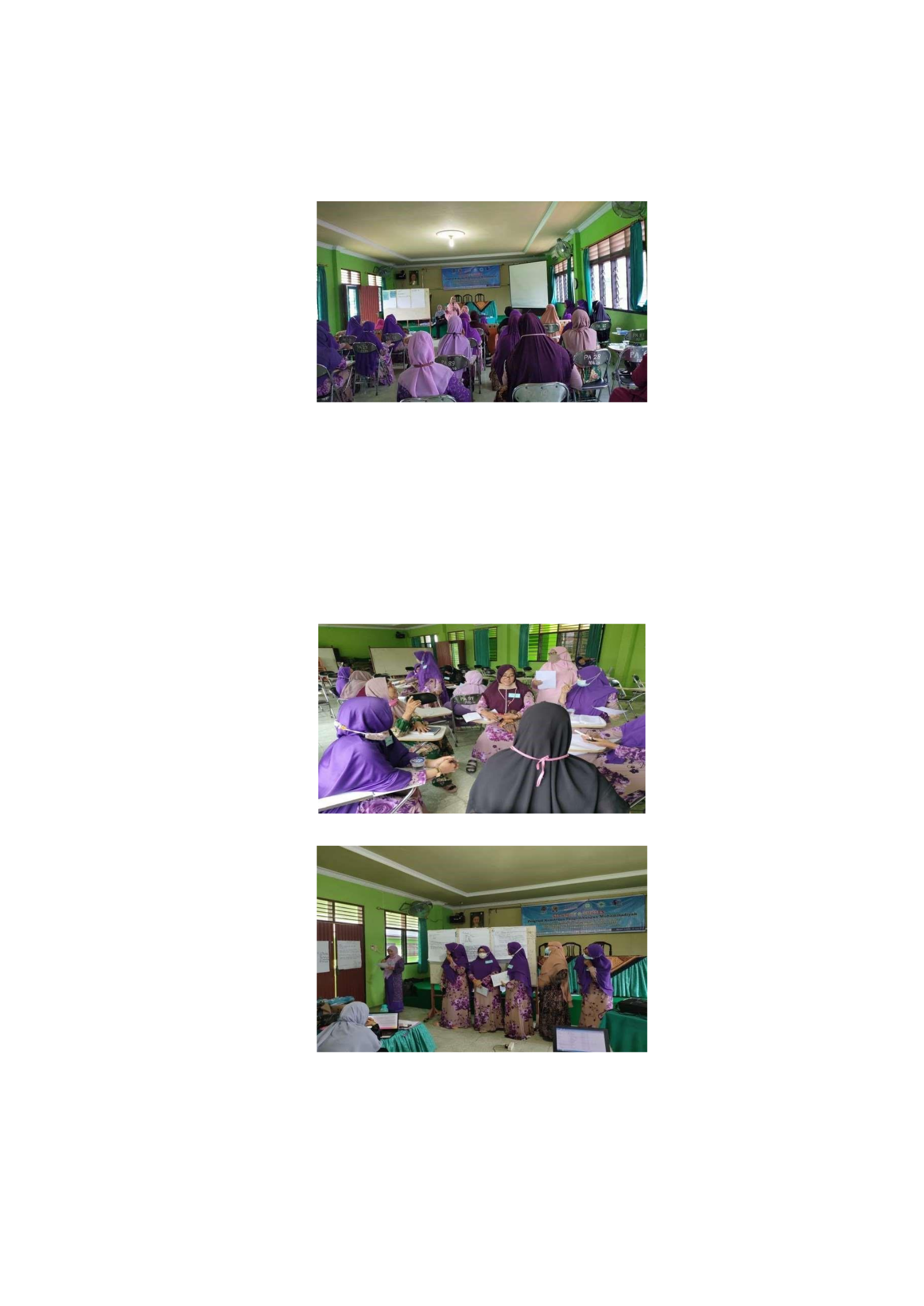
This activity was held for 1 (one) full day, filled by 2 (two) facilitators. With an
interactive discussion model, delivered through meta plan media, power point slides and
videos. The activity was interspersed with ice breakers and watching the video "The
Imposible Dream" and the video "true story of domestic violence cases".
Figure 1. Material Delivery
After completing all the material was delivered, at around 14.30 WIB, participants
were divided into 5 groups, to discuss the cases given by the facilitator. The results of the
group discussion were then written on plano paper and presented to the future. The
participants were so enthusiastic about discussing and presenting the results of their
discussions related to cases of violence against women that began with gender injustice.
Figure 2. Participants have a group discussion
Figure 3. Participants presented the results of their discussions
At the end of the activity, participants were asked to write a follow-up plan for the
activity. Participants were also given a post test to measure their level of understanding,
post-training.

Figure 4. Post test and RTL filling
Based on the results of the pre test and post test, there was an increase in the
knowledge of activity participants about gender, forms of gender injustice and forms of
violence against women.
Table 1. Proposition of Pre-Test Results Participant Answers
It
Question
Participant's
Answer
Yes
Not
1
Knowing the meaning of gender
10
23
2.
Recognizing forms of gender injustice
2
31
3.
Knowing the difference between gender and nature
8
25
4.
Knowing why gender is a problem
10
23
5.
Know Forms violence towards women
6
27
6
Knowing examples of cases of violence against women
7
26
7
Know the legal rules that protect women
8
25
8
Know factor cause Occurrence Violence against
women
7
26
9
Knowing the impact of violence on women
10
23
10
Knowing why it is important to advocate for the handling of
cases of violence against women
14
19
Table 2. Proposition of Answer Participant Post Test Results
No
Question
Participant's
Answer
Already
No
1
Can explain the meaning of gender correctly
30
3
2.
Can provide examples of forms of gender injustice
19
14
3.
Can mention the difference between gender and nature
33
0
4.
Can explain why gender is a problem
31
2
5.
Can explain the forms of violence against women
33
0

6
Can provide examples of cases of violence against women
33
0
7
Can name a legal rule that protects
32
1
woman
8
Can explain the factors that cause violence against women
28
5
9
Get explain impact violence towards women
29
4
10
Can explain the urgency of advocacy for handling cases of
violence against women
28
5
Table 2 shows the change in the trainees' knowledge about gender and forms of
violence. Before getting the training material, only 10 people (30.31%) of the participants
knew the meaning of gender. After obtaining the material, 30 people (90.91%) participants
were able to correctly explain the meaning of gender, namely the difference between men
and women in roles, functions, rights, responsibilities and behaviors that are constructed
socially, culturally and customarily. This means that there is an increase in knowledge by
60.6%.
The second point of the question in the pretest found that only 6.06% understood the
forms of gender injustice. After obtaining the material, 57.58% of participants knew about
the forms of gender injustice, namely; subordination, stereotype, marginalization, double
bourden, violence. There was an increase of 51.52%. In the third question, before getting the
material, only 24.25%, but after getting the material, all participants (100%) were able to
distinguish between gender and nature by giving examples. This means that there was an
increase of 75.75%. For the fourth question, before being given the material, only 30.31%
understood why gender was a problem. But after being given the material, 93.94% of the
participants were able to explain the reasons why gender was problematic. The increase in
knowledge has increased by 63.63%.
Regarding the forms of violence against women, which is the fifth question, only 6
people (18.19%) of the participants were able to understand it. After being given the
material, all participants (100%) were able to give examples of forms of violence against
women. Thus, there was an increase in understanding by 81.81%. The sixth question about
examples of cases of violence against women, before being given the material, only 21.22%
of participants were able to understand it. However, after being given the material, all
participants were able to tell examples of cases of violence against women that occurred in
the community. There was an increase in participants' knowledge by 78.78%.
The next question about the legal rules that protect women, before the material was
presented, only 24.25% of the participants knew about it, but after being given the material,

it increased to 93.94% of participants who understood it, an increase of 69.69%. For
question point 8, the results of the pre-test showed that only 21.22% understood the factors
that caused violence against women. However, after the training, 84.85% of the participants
understood better that the factors for violence against women, one of which was due to
patriarchal culture. The ninth question showed that only 30.31% of the participants knew
how women experienced the impact of violence, before being given the material. However,
after being explained that violence has a negative impact on women's physical and
psychological health, participants' understanding increased by 87.88%. This means that
there was an increase of 57.57%.
For the last question regarding the importance of advocacy in handling cases of
violence against women, there was an increase in knowledge after being given material by
42.42%. Capacity building activities for the management of 'Aisyiyah Law and Human Rights
Council have become effective to be able to carry out legal advocacy in a sustainable and
sustainable manner. In the future, capacity building activities are needed that can be carried
out, for example in the form of victim-oriented counseling techniques and gender justice as
well as basic advocacy techniques as a basic need for cadres in legal awareness groups. As
mentioned in the article Nevey Farida Andriani (2020), with capacity building activities for
cadres of this legal awareness group, it is hoped that they can advocate appropriately,
efficiently and in accordance with the principles of victim achievement and gender justice.
Figure 5. Symbolic handover of certificates and group photos
CONCLUSION
Gender injustice and violence against women occur due to social structures built by
society and can be changed by providing education to all parties and having a commitment
to justice and protection of vulnerable groups. Socialization about gender and the
prevention of violence against women should be carried out continuously, so that it can
increase public knowledge and eliminate the occurrence of violence against women.

Community service activities through the Muhammadiyah Development
Partnership Program (PKPM) scheme with the title Legal Education with Gender
Justice as an Effort to Prevent Violence Against Women for the Management of the
Legal and Human Rights Council "Aisyiyah", was held at the ' Aisyiyah Regional
Executive (PDA) Hall. The participants of this activity were 33 people who included; the
management of the Medan City legal and human rights council as many as 5 people, the
management of the legal and human rights council at the branch level as many as 28 people.
Each branch sent 1 (one) participant. This activity began by socializing the program with the
Aisyiyah Regional Leadership of the Law and Human Rights Council, the Aisyiyah Regional
Executive of Medan City. The socialization was directly carried out by holding a meeting with
the Chairperson of PDA, Mrs. Dra. Kholissani Nasution Through this meeting, the purpose
and purpose were conveyed, namely as a follow-up to the signing of the cooperation in
February 2021 related to the gender justice legal education program for handling cases of
violence against women and children. Preparations were carried out starting from the data
collection of participants consisting of the Regional Leadership of 'Aisyiyah Law and Human
Rights Council as many as 5 people and the management of the Law and Human Rights
Council at the branch level. There are 30 'Aisyiyah branches in Medan, while 28 people
registered as participants. This means that there are 2 (two) branches of 'Aisyiyah in Medan
that do not send their MHH members to participate in this activity. Thus, the number of
participants was 33 people. For smooth communication, the Team Leader created a Whats
App group, so that information can be conveyed quickly and clearly.
The implementation of the activity began with the opening ceremony and orientation
of the activity, each participant was asked to introduce himself and what his expectations
were after participating in this training. Participants were given a pre test and post test which
is a questionnaire instrument which is an evaluation of the activity. Each participant was
given 5 minutes to fill in the instrument. The number of instruments is 10 questions. After
filling out the pre-test, the activity continued with training. The material presented includes:
kkkkkkkk. Gender Recognition
llllllll. Forms of gender injustice include; subordination, stereotypes, marginalization,
violence, excessive double burden,
mmmmmmmm. Violence against Women and Its Legal Protection,
nnnnnnnn. The Urgency of Advocacy for Violence Against Women
oooooooo. Group Discussion
pppppppp. Follow-up Plan

This activity was held for 1 (one) full day, filled by 2 (two) facilitators. With an
interactive discussion model, delivered through meta plan media, power point slides and
videos. The activity was interspersed with ice breakers and watching the video "The
Imposible Dream" and the video "true story of domestic violence cases".
Figure 1. Material Delivery
After completing all the material was delivered, at around 14.30 WIB, participants
were divided into 5 groups, to discuss the cases given by the facilitator. The results of the
group discussion were then written on plano paper and presented to the future. The
participants were so enthusiastic about discussing and presenting the results of their
discussions related to cases of violence against women that began with gender injustice.
Figure 2. Participants have a group discussion
Figure 3. Participants presented the results of their discussions
At the end of the activity, participants were asked to write a follow-up plan for the
activity. Participants were also given a post test to measure their level of understanding,
post-training.

Figure 4. Post test and RTL filling
Based on the results of the pre test and post test, there was an increase in the
knowledge of activity participants about gender, forms of gender injustice and forms of
violence against women.
Table 1. Proposition of Pre-Test Results Participant Answers
It
Question
Participant's
Answer
Yes
Not
1
Knowing the meaning of gender
10
23
2.
Recognizing forms of gender injustice
2
31
3.
Knowing the difference between gender and nature
8
25
4.
Knowing why gender is a problem
10
23
5.
Know Forms violence towards women
6
27
6
Knowing examples of cases of violence against women
7
26
7
Know the legal rules that protect women
8
25
8
Know factor cause Occurrence Violence against
women
7
26
9
Knowing the impact of violence on women
10
23
10
Knowing why it is important to advocate for the handling of
cases of violence against women
14
19
Table 2. Proposition of Answer Participant Post Test Results
No
Question
Participant's
Answer
Already
No
1
Can explain the meaning of gender correctly
30
3
2.
Can provide examples of forms of gender injustice
19
14
3.
Can mention the difference between gender and nature
33
0
4.
Can explain why gender is a problem
31
2
5.
Can explain the forms of violence against women
33
0

6
Can provide examples of cases of violence against women
33
0
7
Can name a legal rule that protects
32
1
woman
8
Can explain the factors that cause violence against women
28
5
9
Get explain impact violence towards women
29
4
10
Can explain the urgency of advocacy for handling cases of
violence against women
28
5
Table 2 shows the change in the trainees' knowledge about gender and forms of
violence. Before getting the training material, only 10 people (30.31%) of the participants
knew the meaning of gender. After obtaining the material, 30 people (90.91%) participants
were able to correctly explain the meaning of gender, namely the difference between men
and women in roles, functions, rights, responsibilities and behaviors that are constructed
socially, culturally and customarily. This means that there is an increase in knowledge by
60.6%.
The second point of the question in the pretest found that only 6.06% understood the
forms of gender injustice. After obtaining the material, 57.58% of participants knew about
the forms of gender injustice, namely; subordination, stereotype, marginalization, double
bourden, violence. There was an increase of 51.52%. In the third question, before getting the
material, only 24.25%, but after getting the material, all participants (100%) were able to
distinguish between gender and nature by giving examples. This means that there was an
increase of 75.75%. For the fourth question, before being given the material, only 30.31%
understood why gender was a problem. But after being given the material, 93.94% of the
participants were able to explain the reasons why gender was problematic. The increase in
knowledge has increased by 63.63%.
Regarding the forms of violence against women, which is the fifth question, only 6
people (18.19%) of the participants were able to understand it. After being given the
material, all participants (100%) were able to give examples of forms of violence against
women. Thus, there was an increase in understanding by 81.81%. The sixth question about
examples of cases of violence against women, before being given the material, only 21.22%
of participants were able to understand it. However, after being given the material, all
participants were able to tell examples of cases of violence against women that occurred in
the community. There was an increase in participants' knowledge by 78.78%.
The next question about the legal rules that protect women, before the material was
presented, only 24.25% of the participants knew about it, but after being given the material,

it increased to 93.94% of participants who understood it, an increase of 69.69%. For
question point 8, the results of the pre-test showed that only 21.22% understood the factors
that caused violence against women. However, after the training, 84.85% of the participants
understood better that the factors for violence against women, one of which was due to
patriarchal culture. The ninth question showed that only 30.31% of the participants knew
how women experienced the impact of violence, before being given the material. However,
after being explained that violence has a negative impact on women's physical and
psychological health, participants' understanding increased by 87.88%. This means that
there was an increase of 57.57%.
For the last question regarding the importance of advocacy in handling cases of
violence against women, there was an increase in knowledge after being given material by
42.42%. Capacity building activities for the management of 'Aisyiyah Law and Human Rights
Council have become effective to be able to carry out legal advocacy in a sustainable and
sustainable manner. In the future, capacity building activities are needed that can be carried
out, for example in the form of victim-oriented counseling techniques and gender justice as
well as basic advocacy techniques as a basic need for cadres in legal awareness groups. As
mentioned in the article Nevey Farida Andriani (2020), with capacity building activities for
cadres of this legal awareness group, it is hoped that they can advocate appropriately,
efficiently and in accordance with the principles of victim achievement and gender justice.
Figure 5. Symbolic handover of certificates and group photos
CONCLUSION
Gender injustice and violence against women occur due to social structures built by
society and can be changed by providing education to all parties and having a commitment
to justice and protection of vulnerable groups. Socialization about gender and the
prevention of violence against women should be carried out continuously, so that it can
increase public knowledge and eliminate the occurrence of violence against women.

Community service activities through the Muhammadiyah Development
Partnership Program (PKPM) scheme with the title Legal Education with Gender
Justice as an Effort to Prevent Violence Against Women for the Management of the
Legal and Human Rights Council "Aisyiyah", was held at the ' Aisyiyah Regional
Executive (PDA) Hall. The participants of this activity were 33 people who included; the
management of the Medan City legal and human rights council as many as 5 people, the
management of the legal and human rights council at the branch level as many as 28 people.
Each branch sent 1 (one) participant. This activity began by socializing the program with the
Aisyiyah Regional Leadership of the Law and Human Rights Council, the Aisyiyah Regional
Executive of Medan City. The socialization was directly carried out by holding a meeting with
the Chairperson of PDA, Mrs. Dra. Kholissani Nasution Through this meeting, the purpose
and purpose were conveyed, namely as a follow-up to the signing of the cooperation in
February 2021 related to the gender justice legal education program for handling cases of
violence against women and children. Preparations were carried out starting from the data
collection of participants consisting of the Regional Leadership of 'Aisyiyah Law and Human
Rights Council as many as 5 people and the management of the Law and Human Rights
Council at the branch level. There are 30 'Aisyiyah branches in Medan, while 28 people
registered as participants. This means that there are 2 (two) branches of 'Aisyiyah in Medan
that do not send their MHH members to participate in this activity. Thus, the number of
participants was 33 people. For smooth communication, the Team Leader created a Whats
App group, so that information can be conveyed quickly and clearly.
The implementation of the activity began with the opening ceremony and orientation
of the activity, each participant was asked to introduce himself and what his expectations
were after participating in this training. Participants were given a pre test and post test which
is a questionnaire instrument which is an evaluation of the activity. Each participant was
given 5 minutes to fill in the instrument. The number of instruments is 10 questions. After
filling out the pre-test, the activity continued with training. The material presented includes:
qqqqqqqq. Gender Recognition
rrrrrrrr. Forms of gender injustice include; subordination, stereotypes, marginalization,
violence, excessive double burden,
ssssssss. Violence against Women and Its Legal Protection,
tttttttt. The Urgency of Advocacy for Violence Against Women
uuuuuuuu. Group Discussion
vvvvvvvv. Follow-up Plan

This activity was held for 1 (one) full day, filled by 2 (two) facilitators. With an
interactive discussion model, delivered through meta plan media, power point slides and
videos. The activity was interspersed with ice breakers and watching the video "The
Imposible Dream" and the video "true story of domestic violence cases".
Figure 1. Material Delivery
After completing all the material was delivered, at around 14.30 WIB, participants
were divided into 5 groups, to discuss the cases given by the facilitator. The results of the
group discussion were then written on plano paper and presented to the future. The
participants were so enthusiastic about discussing and presenting the results of their
discussions related to cases of violence against women that began with gender injustice.
Figure 2. Participants have a group discussion
Figure 3. Participants presented the results of their discussions
At the end of the activity, participants were asked to write a follow-up plan for the
activity. Participants were also given a post test to measure their level of understanding,
post-training.

Figure 4. Post test and RTL filling
Based on the results of the pre test and post test, there was an increase in the
knowledge of activity participants about gender, forms of gender injustice and forms of
violence against women.
Table 1. Proposition of Pre-Test Results Participant Answers
It
Question
Participant's
Answer
Yes
Not
1
Knowing the meaning of gender
10
23
2.
Recognizing forms of gender injustice
2
31
3.
Knowing the difference between gender and nature
8
25
4.
Knowing why gender is a problem
10
23
5.
Know Forms violence towards women
6
27
6
Knowing examples of cases of violence against women
7
26
7
Know the legal rules that protect women
8
25
8
Know factor cause Occurrence Violence against
women
7
26
9
Knowing the impact of violence on women
10
23
10
Knowing why it is important to advocate for the handling of
cases of violence against women
14
19
Table 2. Proposition of Answer Participant Post Test Results
No
Question
Participant's
Answer
Already
No
1
Can explain the meaning of gender correctly
30
3
2.
Can provide examples of forms of gender injustice
19
14
3.
Can mention the difference between gender and nature
33
0
4.
Can explain why gender is a problem
31
2
5.
Can explain the forms of violence against women
33
0

6
Can provide examples of cases of violence against women
33
0
7
Can name a legal rule that protects
32
1
woman
8
Can explain the factors that cause violence against women
28
5
9
Get explain impact violence towards women
29
4
10
Can explain the urgency of advocacy for handling cases of
violence against women
28
5
Table 2 shows the change in the trainees' knowledge about gender and forms of
violence. Before getting the training material, only 10 people (30.31%) of the participants
knew the meaning of gender. After obtaining the material, 30 people (90.91%) participants
were able to correctly explain the meaning of gender, namely the difference between men
and women in roles, functions, rights, responsibilities and behaviors that are constructed
socially, culturally and customarily. This means that there is an increase in knowledge by
60.6%.
The second point of the question in the pretest found that only 6.06% understood the
forms of gender injustice. After obtaining the material, 57.58% of participants knew about
the forms of gender injustice, namely; subordination, stereotype, marginalization, double
bourden, violence. There was an increase of 51.52%. In the third question, before getting the
material, only 24.25%, but after getting the material, all participants (100%) were able to
distinguish between gender and nature by giving examples. This means that there was an
increase of 75.75%. For the fourth question, before being given the material, only 30.31%
understood why gender was a problem. But after being given the material, 93.94% of the
participants were able to explain the reasons why gender was problematic. The increase in
knowledge has increased by 63.63%.
Regarding the forms of violence against women, which is the fifth question, only 6
people (18.19%) of the participants were able to understand it. After being given the
material, all participants (100%) were able to give examples of forms of violence against
women. Thus, there was an increase in understanding by 81.81%. The sixth question about
examples of cases of violence against women, before being given the material, only 21.22%
of participants were able to understand it. However, after being given the material, all
participants were able to tell examples of cases of violence against women that occurred in
the community. There was an increase in participants' knowledge by 78.78%.
The next question about the legal rules that protect women, before the material was
presented, only 24.25% of the participants knew about it, but after being given the material,

it increased to 93.94% of participants who understood it, an increase of 69.69%. For
question point 8, the results of the pre-test showed that only 21.22% understood the factors
that caused violence against women. However, after the training, 84.85% of the participants
understood better that the factors for violence against women, one of which was due to
patriarchal culture. The ninth question showed that only 30.31% of the participants knew
how women experienced the impact of violence, before being given the material. However,
after being explained that violence has a negative impact on women's physical and
psychological health, participants' understanding increased by 87.88%. This means that
there was an increase of 57.57%.
For the last question regarding the importance of advocacy in handling cases of
violence against women, there was an increase in knowledge after being given material by
42.42%. Capacity building activities for the management of 'Aisyiyah Law and Human Rights
Council have become effective to be able to carry out legal advocacy in a sustainable and
sustainable manner. In the future, capacity building activities are needed that can be carried
out, for example in the form of victim-oriented counseling techniques and gender justice as
well as basic advocacy techniques as a basic need for cadres in legal awareness groups. As
mentioned in the article Nevey Farida Andriani (2020), with capacity building activities for
cadres of this legal awareness group, it is hoped that they can advocate appropriately,
efficiently and in accordance with the principles of victim achievement and gender justice.
Figure 5. Symbolic handover of certificates and group photos
CONCLUSION
Gender injustice and violence against women occur due to social structures built by
society and can be changed by providing education to all parties and having a commitment
to justice and protection of vulnerable groups. Socialization about gender and the
prevention of violence against women should be carried out continuously, so that it can
increase public knowledge and eliminate the occurrence of violence against women.

Community service activities through the Muhammadiyah Development
Partnership Program (PKPM) scheme with the title Legal Education with Gender
Justice as an Effort to Prevent Violence Against Women for the Management of the
Legal and Human Rights Council "Aisyiyah", was held at the ' Aisyiyah Regional
Executive (PDA) Hall. The participants of this activity were 33 people who included; the
management of the Medan City legal and human rights council as many as 5 people, the
management of the legal and human rights council at the branch level as many as 28 people.
Each branch sent 1 (one) participant. This activity began by socializing the program with the
Aisyiyah Regional Leadership of the Law and Human Rights Council, the Aisyiyah Regional
Executive of Medan City. The socialization was directly carried out by holding a meeting with
the Chairperson of PDA, Mrs. Dra. Kholissani Nasution Through this meeting, the purpose
and purpose were conveyed, namely as a follow-up to the signing of the cooperation in
February 2021 related to the gender justice legal education program for handling cases of
violence against women and children. Preparations were carried out starting from the data
collection of participants consisting of the Regional Leadership of 'Aisyiyah Law and Human
Rights Council as many as 5 people and the management of the Law and Human Rights
Council at the branch level. There are 30 'Aisyiyah branches in Medan, while 28 people
registered as participants. This means that there are 2 (two) branches of 'Aisyiyah in Medan
that do not send their MHH members to participate in this activity. Thus, the number of
participants was 33 people. For smooth communication, the Team Leader created a Whats
App group, so that information can be conveyed quickly and clearly.
The implementation of the activity began with the opening ceremony and orientation
of the activity, each participant was asked to introduce himself and what his expectations
were after participating in this training. Participants were given a pre test and post test which
is a questionnaire instrument which is an evaluation of the activity. Each participant was
given 5 minutes to fill in the instrument. The number of instruments is 10 questions. After
filling out the pre-test, the activity continued with training. The material presented includes:
wwwwwwww. Gender Recognition
xxxxxxxx. Forms of gender injustice include; subordination, stereotypes, marginalization,
violence, excessive double burden,
yyyyyyyy. Violence against Women and Its Legal Protection,
zzzzzzzz. The Urgency of Advocacy for Violence Against Women
aaaaaaaaa. Group Discussion
bbbbbbbbb. Follow-up Plan

This activity was held for 1 (one) full day, filled by 2 (two) facilitators. With an
interactive discussion model, delivered through meta plan media, power point slides and
videos. The activity was interspersed with ice breakers and watching the video "The
Imposible Dream" and the video "true story of domestic violence cases".
Figure 1. Material Delivery
After completing all the material was delivered, at around 14.30 WIB, participants
were divided into 5 groups, to discuss the cases given by the facilitator. The results of the
group discussion were then written on plano paper and presented to the future. The
participants were so enthusiastic about discussing and presenting the results of their
discussions related to cases of violence against women that began with gender injustice.
Figure 2. Participants have a group discussion
Figure 3. Participants presented the results of their discussions
At the end of the activity, participants were asked to write a follow-up plan for the
activity. Participants were also given a post test to measure their level of understanding,
post-training.

Figure 4. Post test and RTL filling
Based on the results of the pre test and post test, there was an increase in the
knowledge of activity participants about gender, forms of gender injustice and forms of
violence against women.
Table 1. Proposition of Pre-Test Results Participant Answers
It
Question
Participant's
Answer
Yes
Not
1
Knowing the meaning of gender
10
23
2.
Recognizing forms of gender injustice
2
31
3.
Knowing the difference between gender and nature
8
25
4.
Knowing why gender is a problem
10
23
5.
Know Forms violence towards women
6
27
6
Knowing examples of cases of violence against women
7
26
7
Know the legal rules that protect women
8
25
8
Know factor cause Occurrence Violence against
women
7
26
9
Knowing the impact of violence on women
10
23
10
Knowing why it is important to advocate for the handling of
cases of violence against women
14
19
Table 2. Proposition of Answer Participant Post Test Results
No
Question
Participant's
Answer
Already
No
1
Can explain the meaning of gender correctly
30
3
2.
Can provide examples of forms of gender injustice
19
14
3.
Can mention the difference between gender and nature
33
0
4.
Can explain why gender is a problem
31
2
5.
Can explain the forms of violence against women
33
0

6
Can provide examples of cases of violence against women
33
0
7
Can name a legal rule that protects
32
1
woman
8
Can explain the factors that cause violence against women
28
5
9
Get explain impact violence towards women
29
4
10
Can explain the urgency of advocacy for handling cases of
violence against women
28
5
Table 2 shows the change in the trainees' knowledge about gender and forms of
violence. Before getting the training material, only 10 people (30.31%) of the participants
knew the meaning of gender. After obtaining the material, 30 people (90.91%) participants
were able to correctly explain the meaning of gender, namely the difference between men
and women in roles, functions, rights, responsibilities and behaviors that are constructed
socially, culturally and customarily. This means that there is an increase in knowledge by
60.6%.
The second point of the question in the pretest found that only 6.06% understood the
forms of gender injustice. After obtaining the material, 57.58% of participants knew about
the forms of gender injustice, namely; subordination, stereotype, marginalization, double
bourden, violence. There was an increase of 51.52%. In the third question, before getting the
material, only 24.25%, but after getting the material, all participants (100%) were able to
distinguish between gender and nature by giving examples. This means that there was an
increase of 75.75%. For the fourth question, before being given the material, only 30.31%
understood why gender was a problem. But after being given the material, 93.94% of the
participants were able to explain the reasons why gender was problematic. The increase in
knowledge has increased by 63.63%.
Regarding the forms of violence against women, which is the fifth question, only 6
people (18.19%) of the participants were able to understand it. After being given the
material, all participants (100%) were able to give examples of forms of violence against
women. Thus, there was an increase in understanding by 81.81%. The sixth question about
examples of cases of violence against women, before being given the material, only 21.22%
of participants were able to understand it. However, after being given the material, all
participants were able to tell examples of cases of violence against women that occurred in
the community. There was an increase in participants' knowledge by 78.78%.
The next question about the legal rules that protect women, before the material was
presented, only 24.25% of the participants knew about it, but after being given the material,

it increased to 93.94% of participants who understood it, an increase of 69.69%. For
question point 8, the results of the pre-test showed that only 21.22% understood the factors
that caused violence against women. However, after the training, 84.85% of the participants
understood better that the factors for violence against women, one of which was due to
patriarchal culture. The ninth question showed that only 30.31% of the participants knew
how women experienced the impact of violence, before being given the material. However,
after being explained that violence has a negative impact on women's physical and
psychological health, participants' understanding increased by 87.88%. This means that
there was an increase of 57.57%.
For the last question regarding the importance of advocacy in handling cases of
violence against women, there was an increase in knowledge after being given material by
42.42%. Capacity building activities for the management of 'Aisyiyah Law and Human Rights
Council have become effective to be able to carry out legal advocacy in a sustainable and
sustainable manner. In the future, capacity building activities are needed that can be carried
out, for example in the form of victim-oriented counseling techniques and gender justice as
well as basic advocacy techniques as a basic need for cadres in legal awareness groups. As
mentioned in the article Nevey Farida Andriani (2020), with capacity building activities for
cadres of this legal awareness group, it is hoped that they can advocate appropriately,
efficiently and in accordance with the principles of victim achievement and gender justice.
Figure 5. Symbolic handover of certificates and group photos
CONCLUSION
Gender injustice and violence against women occur due to social structures built by
society and can be changed by providing education to all parties and having a commitment
to justice and protection of vulnerable groups. Socialization about gender and the
prevention of violence against women should be carried out continuously, so that it can
increase public knowledge and eliminate the occurrence of violence against women.

Community service activities through the Muhammadiyah Development
Partnership Program (PKPM) scheme with the title Legal Education with Gender
Justice as an Effort to Prevent Violence Against Women for the Management of the
Legal and Human Rights Council "Aisyiyah", was held at the ' Aisyiyah Regional
Executive (PDA) Hall. The participants of this activity were 33 people who included; the
management of the Medan City legal and human rights council as many as 5 people, the
management of the legal and human rights council at the branch level as many as 28 people.
Each branch sent 1 (one) participant. This activity began by socializing the program with the
Aisyiyah Regional Leadership of the Law and Human Rights Council, the Aisyiyah Regional
Executive of Medan City. The socialization was directly carried out by holding a meeting with
the Chairperson of PDA, Mrs. Dra. Kholissani Nasution Through this meeting, the purpose
and purpose were conveyed, namely as a follow-up to the signing of the cooperation in
February 2021 related to the gender justice legal education program for handling cases of
violence against women and children. Preparations were carried out starting from the data
collection of participants consisting of the Regional Leadership of 'Aisyiyah Law and Human
Rights Council as many as 5 people and the management of the Law and Human Rights
Council at the branch level. There are 30 'Aisyiyah branches in Medan, while 28 people
registered as participants. This means that there are 2 (two) branches of 'Aisyiyah in Medan
that do not send their MHH members to participate in this activity. Thus, the number of
participants was 33 people. For smooth communication, the Team Leader created a Whats
App group, so that information can be conveyed quickly and clearly.
The implementation of the activity began with the opening ceremony and orientation
of the activity, each participant was asked to introduce himself and what his expectations
were after participating in this training. Participants were given a pre test and post test which
is a questionnaire instrument which is an evaluation of the activity. Each participant was
given 5 minutes to fill in the instrument. The number of instruments is 10 questions. After
filling out the pre-test, the activity continued with training. The material presented includes:
ccccccccc. Gender Recognition
ddddddddd. Forms of gender injustice include; subordination, stereotypes,
marginalization, violence, excessive double burden,
eeeeeeeee. Violence against Women and Its Legal Protection,
fffffffff. The Urgency of Advocacy for Violence Against Women
ggggggggg. Group Discussion
hhhhhhhhh. Follow-up Plan

This activity was held for 1 (one) full day, filled by 2 (two) facilitators. With an
interactive discussion model, delivered through meta plan media, power point slides and
videos. The activity was interspersed with ice breakers and watching the video "The
Imposible Dream" and the video "true story of domestic violence cases".
Figure 1. Material Delivery
After completing all the material was delivered, at around 14.30 WIB, participants
were divided into 5 groups, to discuss the cases given by the facilitator. The results of the
group discussion were then written on plano paper and presented to the future. The
participants were so enthusiastic about discussing and presenting the results of their
discussions related to cases of violence against women that began with gender injustice.
Figure 2. Participants have a group discussion
Figure 3. Participants presented the results of their discussions
At the end of the activity, participants were asked to write a follow-up plan for the
activity. Participants were also given a post test to measure their level of understanding,
post-training.

Figure 4. Post test and RTL filling
Based on the results of the pre test and post test, there was an increase in the
knowledge of activity participants about gender, forms of gender injustice and forms of
violence against women.
Table 1. Proposition of Pre-Test Results Participant Answers
It
Question
Participant's
Answer
Yes
Not
1
Knowing the meaning of gender
10
23
2.
Recognizing forms of gender injustice
2
31
3.
Knowing the difference between gender and nature
8
25
4.
Knowing why gender is a problem
10
23
5.
Know Forms violence towards women
6
27
6
Knowing examples of cases of violence against women
7
26
7
Know the legal rules that protect women
8
25
8
Know factor cause Occurrence Violence against
women
7
26
9
Knowing the impact of violence on women
10
23
10
Knowing why it is important to advocate for the handling of
cases of violence against women
14
19
Table 2. Proposition of Answer Participant Post Test Results
No
Question
Participant's
Answer
Already
No
1
Can explain the meaning of gender correctly
30
3
2.
Can provide examples of forms of gender injustice
19
14
3.
Can mention the difference between gender and nature
33
0
4.
Can explain why gender is a problem
31
2
5.
Can explain the forms of violence against women
33
0

6
Can provide examples of cases of violence against women
33
0
7
Can name a legal rule that protects
32
1
woman
8
Can explain the factors that cause violence against women
28
5
9
Get explain impact violence towards women
29
4
10
Can explain the urgency of advocacy for handling cases of
violence against women
28
5
Table 2 shows the change in the trainees' knowledge about gender and forms of
violence. Before getting the training material, only 10 people (30.31%) of the participants
knew the meaning of gender. After obtaining the material, 30 people (90.91%) participants
were able to correctly explain the meaning of gender, namely the difference between men
and women in roles, functions, rights, responsibilities and behaviors that are constructed
socially, culturally and customarily. This means that there is an increase in knowledge by
60.6%.
The second point of the question in the pretest found that only 6.06% understood the
forms of gender injustice. After obtaining the material, 57.58% of participants knew about
the forms of gender injustice, namely; subordination, stereotype, marginalization, double
bourden, violence. There was an increase of 51.52%. In the third question, before getting the
material, only 24.25%, but after getting the material, all participants (100%) were able to
distinguish between gender and nature by giving examples. This means that there was an
increase of 75.75%. For the fourth question, before being given the material, only 30.31%
understood why gender was a problem. But after being given the material, 93.94% of the
participants were able to explain the reasons why gender was problematic. The increase in
knowledge has increased by 63.63%.
Regarding the forms of violence against women, which is the fifth question, only 6
people (18.19%) of the participants were able to understand it. After being given the
material, all participants (100%) were able to give examples of forms of violence against
women. Thus, there was an increase in understanding by 81.81%. The sixth question about
examples of cases of violence against women, before being given the material, only 21.22%
of participants were able to understand it. However, after being given the material, all
participants were able to tell examples of cases of violence against women that occurred in
the community. There was an increase in participants' knowledge by 78.78%.
The next question about the legal rules that protect women, before the material was
presented, only 24.25% of the participants knew about it, but after being given the material,

it increased to 93.94% of participants who understood it, an increase of 69.69%. For
question point 8, the results of the pre-test showed that only 21.22% understood the factors
that caused violence against women. However, after the training, 84.85% of the participants
understood better that the factors for violence against women, one of which was due to
patriarchal culture. The ninth question showed that only 30.31% of the participants knew
how women experienced the impact of violence, before being given the material. However,
after being explained that violence has a negative impact on women's physical and
psychological health, participants' understanding increased by 87.88%. This means that
there was an increase of 57.57%.
For the last question regarding the importance of advocacy in handling cases of
violence against women, there was an increase in knowledge after being given material by
42.42%. Capacity building activities for the management of 'Aisyiyah Law and Human Rights
Council have become effective to be able to carry out legal advocacy in a sustainable and
sustainable manner. In the future, capacity building activities are needed that can be carried
out, for example in the form of victim-oriented counseling techniques and gender justice as
well as basic advocacy techniques as a basic need for cadres in legal awareness groups. As
mentioned in the article Nevey Farida Andriani (2020), with capacity building activities for
cadres of this legal awareness group, it is hoped that they can advocate appropriately,
efficiently and in accordance with the principles of victim achievement and gender justice.
Figure 5. Symbolic handover of certificates and group photos
CONCLUSION
Gender injustice and violence against women occur due to social structures built by
society and can be changed by providing education to all parties and having a commitment
to justice and protection of vulnerable groups. Socialization about gender and the
prevention of violence against women should be carried out continuously, so that it can
increase public knowledge and eliminate the occurrence of violence against women.

Community service activities through the Muhammadiyah Development
Partnership Program (PKPM) scheme with the title Legal Education with Gender
Justice as an Effort to Prevent Violence Against Women for the Management of the
Legal and Human Rights Council "Aisyiyah", was held at the ' Aisyiyah Regional
Executive (PDA) Hall. The participants of this activity were 33 people who included; the
management of the Medan City legal and human rights council as many as 5 people, the
management of the legal and human rights council at the branch level as many as 28 people.
Each branch sent 1 (one) participant. This activity began by socializing the program with the
Aisyiyah Regional Leadership of the Law and Human Rights Council, the Aisyiyah Regional
Executive of Medan City. The socialization was directly carried out by holding a meeting with
the Chairperson of PDA, Mrs. Dra. Kholissani Nasution Through this meeting, the purpose
and purpose were conveyed, namely as a follow-up to the signing of the cooperation in
February 2021 related to the gender justice legal education program for handling cases of
violence against women and children. Preparations were carried out starting from the data
collection of participants consisting of the Regional Leadership of 'Aisyiyah Law and Human
Rights Council as many as 5 people and the management of the Law and Human Rights
Council at the branch level. There are 30 'Aisyiyah branches in Medan, while 28 people
registered as participants. This means that there are 2 (two) branches of 'Aisyiyah in Medan
that do not send their MHH members to participate in this activity. Thus, the number of
participants was 33 people. For smooth communication, the Team Leader created a Whats
App group, so that information can be conveyed quickly and clearly.
The implementation of the activity began with the opening ceremony and orientation
of the activity, each participant was asked to introduce himself and what his expectations
were after participating in this training. Participants were given a pre test and post test which
is a questionnaire instrument which is an evaluation of the activity. Each participant was
given 5 minutes to fill in the instrument. The number of instruments is 10 questions. After
filling out the pre-test, the activity continued with training. The material presented includes:
iiiiiiiii. Gender Recognition
jjjjjjjjj. Forms of gender injustice include; subordination, stereotypes, marginalization,
violence, excessive double burden,
kkkkkkkkk. Violence against Women and Its Legal Protection,
lllllllll. The Urgency of Advocacy for Violence Against Women
mmmmmmmmm. Group Discussion
nnnnnnnnn. Follow-up Plan

This activity was held for 1 (one) full day, filled by 2 (two) facilitators. With an
interactive discussion model, delivered through meta plan media, power point slides and
videos. The activity was interspersed with ice breakers and watching the video "The
Imposible Dream" and the video "true story of domestic violence cases".
Figure 1. Material Delivery
After completing all the material was delivered, at around 14.30 WIB, participants
were divided into 5 groups, to discuss the cases given by the facilitator. The results of the
group discussion were then written on plano paper and presented to the future. The
participants were so enthusiastic about discussing and presenting the results of their
discussions related to cases of violence against women that began with gender injustice.
Figure 2. Participants have a group discussion
Figure 3. Participants presented the results of their discussions
At the end of the activity, participants were asked to write a follow-up plan for the
activity. Participants were also given a post test to measure their level of understanding,
post-training.

Figure 4. Post test and RTL filling
Based on the results of the pre test and post test, there was an increase in the
knowledge of activity participants about gender, forms of gender injustice and forms of
violence against women.
Table 1. Proposition of Pre-Test Results Participant Answers
It
Question
Participant's
Answer
Yes
Not
1
Knowing the meaning of gender
10
23
2.
Recognizing forms of gender injustice
2
31
3.
Knowing the difference between gender and nature
8
25
4.
Knowing why gender is a problem
10
23
5.
Know Forms violence towards women
6
27
6
Knowing examples of cases of violence against women
7
26
7
Know the legal rules that protect women
8
25
8
Know factor cause Occurrence Violence against
women
7
26
9
Knowing the impact of violence on women
10
23
10
Knowing why it is important to advocate for the handling of
cases of violence against women
14
19
Table 2. Proposition of Answer Participant Post Test Results
No
Question
Participant's
Answer
Already
No
1
Can explain the meaning of gender correctly
30
3
2.
Can provide examples of forms of gender injustice
19
14
3.
Can mention the difference between gender and nature
33
0
4.
Can explain why gender is a problem
31
2
5.
Can explain the forms of violence against women
33
0

6
Can provide examples of cases of violence against women
33
0
7
Can name a legal rule that protects
32
1
woman
8
Can explain the factors that cause violence against women
28
5
9
Get explain impact violence towards women
29
4
10
Can explain the urgency of advocacy for handling cases of
violence against women
28
5
Table 2 shows the change in the trainees' knowledge about gender and forms of
violence. Before getting the training material, only 10 people (30.31%) of the participants
knew the meaning of gender. After obtaining the material, 30 people (90.91%) participants
were able to correctly explain the meaning of gender, namely the difference between men
and women in roles, functions, rights, responsibilities and behaviors that are constructed
socially, culturally and customarily. This means that there is an increase in knowledge by
60.6%.
The second point of the question in the pretest found that only 6.06% understood the
forms of gender injustice. After obtaining the material, 57.58% of participants knew about
the forms of gender injustice, namely; subordination, stereotype, marginalization, double
bourden, violence. There was an increase of 51.52%. In the third question, before getting the
material, only 24.25%, but after getting the material, all participants (100%) were able to
distinguish between gender and nature by giving examples. This means that there was an
increase of 75.75%. For the fourth question, before being given the material, only 30.31%
understood why gender was a problem. But after being given the material, 93.94% of the
participants were able to explain the reasons why gender was problematic. The increase in
knowledge has increased by 63.63%.
Regarding the forms of violence against women, which is the fifth question, only 6
people (18.19%) of the participants were able to understand it. After being given the
material, all participants (100%) were able to give examples of forms of violence against
women. Thus, there was an increase in understanding by 81.81%. The sixth question about
examples of cases of violence against women, before being given the material, only 21.22%
of participants were able to understand it. However, after being given the material, all
participants were able to tell examples of cases of violence against women that occurred in
the community. There was an increase in participants' knowledge by 78.78%.
The next question about the legal rules that protect women, before the material was
presented, only 24.25% of the participants knew about it, but after being given the material,

it increased to 93.94% of participants who understood it, an increase of 69.69%. For
question point 8, the results of the pre-test showed that only 21.22% understood the factors
that caused violence against women. However, after the training, 84.85% of the participants
understood better that the factors for violence against women, one of which was due to
patriarchal culture. The ninth question showed that only 30.31% of the participants knew
how women experienced the impact of violence, before being given the material. However,
after being explained that violence has a negative impact on women's physical and
psychological health, participants' understanding increased by 87.88%. This means that
there was an increase of 57.57%.
For the last question regarding the importance of advocacy in handling cases of
violence against women, there was an increase in knowledge after being given material by
42.42%. Capacity building activities for the management of 'Aisyiyah Law and Human Rights
Council have become effective to be able to carry out legal advocacy in a sustainable and
sustainable manner. In the future, capacity building activities are needed that can be carried
out, for example in the form of victim-oriented counseling techniques and gender justice as
well as basic advocacy techniques as a basic need for cadres in legal awareness groups. As
mentioned in the article Nevey Farida Andriani (2020), with capacity building activities for
cadres of this legal awareness group, it is hoped that they can advocate appropriately,
efficiently and in accordance with the principles of victim achievement and gender justice.
Figure 5. Symbolic handover of certificates and group photos
CONCLUSION
Gender injustice and violence against women occur due to social structures built by
society and can be changed by providing education to all parties and having a commitment
to justice and protection of vulnerable groups. Socialization about gender and the
prevention of violence against women should be carried out continuously, so that it can
increase public knowledge and eliminate the occurrence of violence against women.

Community service activities through the Muhammadiyah Development
Partnership Program (PKPM) scheme with the title Legal Education with Gender
Justice as an Effort to Prevent Violence Against Women for the Management of the
Legal and Human Rights Council "Aisyiyah", was held at the ' Aisyiyah Regional
Executive (PDA) Hall. The participants of this activity were 33 people who included; the
management of the Medan City legal and human rights council as many as 5 people, the
management of the legal and human rights council at the branch level as many as 28 people.
Each branch sent 1 (one) participant. This activity began by socializing the program with the
Aisyiyah Regional Leadership of the Law and Human Rights Council, the Aisyiyah Regional
Executive of Medan City. The socialization was directly carried out by holding a meeting with
the Chairperson of PDA, Mrs. Dra. Kholissani Nasution Through this meeting, the purpose
and purpose were conveyed, namely as a follow-up to the signing of the cooperation in
February 2021 related to the gender justice legal education program for handling cases of
violence against women and children. Preparations were carried out starting from the data
collection of participants consisting of the Regional Leadership of 'Aisyiyah Law and Human
Rights Council as many as 5 people and the management of the Law and Human Rights
Council at the branch level. There are 30 'Aisyiyah branches in Medan, while 28 people
registered as participants. This means that there are 2 (two) branches of 'Aisyiyah in Medan
that do not send their MHH members to participate in this activity. Thus, the number of
participants was 33 people. For smooth communication, the Team Leader created a Whats
App group, so that information can be conveyed quickly and clearly.
The implementation of the activity began with the opening ceremony and orientation
of the activity, each participant was asked to introduce himself and what his expectations
were after participating in this training. Participants were given a pre test and post test which
is a questionnaire instrument which is an evaluation of the activity. Each participant was
given 5 minutes to fill in the instrument. The number of instruments is 10 questions. After
filling out the pre-test, the activity continued with training. The material presented includes:
ooooooooo. Gender Recognition
ppppppppp. Forms of gender injustice include; subordination, stereotypes,
marginalization, violence, excessive double burden,
qqqqqqqqq. Violence against Women and Its Legal Protection,
rrrrrrrrr. The Urgency of Advocacy for Violence Against Women
sssssssss. Group Discussion
ttttttttt. Follow-up Plan

This activity was held for 1 (one) full day, filled by 2 (two) facilitators. With an
interactive discussion model, delivered through meta plan media, power point slides and
videos. The activity was interspersed with ice breakers and watching the video "The
Imposible Dream" and the video "true story of domestic violence cases".
Figure 1. Material Delivery
After completing all the material was delivered, at around 14.30 WIB, participants
were divided into 5 groups, to discuss the cases given by the facilitator. The results of the
group discussion were then written on plano paper and presented to the future. The
participants were so enthusiastic about discussing and presenting the results of their
discussions related to cases of violence against women that began with gender injustice.
Figure 2. Participants have a group discussion
Figure 3. Participants presented the results of their discussions
At the end of the activity, participants were asked to write a follow-up plan for the
activity. Participants were also given a post test to measure their level of understanding,
post-training.

Figure 4. Post test and RTL filling
Based on the results of the pre test and post test, there was an increase in the
knowledge of activity participants about gender, forms of gender injustice and forms of
violence against women.
Table 1. Proposition of Pre-Test Results Participant Answers
It
Question
Participant's
Answer
Yes
Not
1
Knowing the meaning of gender
10
23
2.
Recognizing forms of gender injustice
2
31
3.
Knowing the difference between gender and nature
8
25
4.
Knowing why gender is a problem
10
23
5.
Know Forms violence towards women
6
27
6
Knowing examples of cases of violence against women
7
26
7
Know the legal rules that protect women
8
25
8
Know factor cause Occurrence Violence against
women
7
26
9
Knowing the impact of violence on women
10
23
10
Knowing why it is important to advocate for the handling of
cases of violence against women
14
19
Table 2. Proposition of Answer Participant Post Test Results
No
Question
Participant's
Answer
Already
No
1
Can explain the meaning of gender correctly
30
3
2.
Can provide examples of forms of gender injustice
19
14
3.
Can mention the difference between gender and nature
33
0
4.
Can explain why gender is a problem
31
2
5.
Can explain the forms of violence against women
33
0

6
Can provide examples of cases of violence against women
33
0
7
Can name a legal rule that protects
32
1
woman
8
Can explain the factors that cause violence against women
28
5
9
Get explain impact violence towards women
29
4
10
Can explain the urgency of advocacy for handling cases of
violence against women
28
5
Table 2 shows the change in the trainees' knowledge about gender and forms of
violence. Before getting the training material, only 10 people (30.31%) of the participants
knew the meaning of gender. After obtaining the material, 30 people (90.91%) participants
were able to correctly explain the meaning of gender, namely the difference between men
and women in roles, functions, rights, responsibilities and behaviors that are constructed
socially, culturally and customarily. This means that there is an increase in knowledge by
60.6%.
The second point of the question in the pretest found that only 6.06% understood the
forms of gender injustice. After obtaining the material, 57.58% of participants knew about
the forms of gender injustice, namely; subordination, stereotype, marginalization, double
bourden, violence. There was an increase of 51.52%. In the third question, before getting the
material, only 24.25%, but after getting the material, all participants (100%) were able to
distinguish between gender and nature by giving examples. This means that there was an
increase of 75.75%. For the fourth question, before being given the material, only 30.31%
understood why gender was a problem. But after being given the material, 93.94% of the
participants were able to explain the reasons why gender was problematic. The increase in
knowledge has increased by 63.63%.
Regarding the forms of violence against women, which is the fifth question, only 6
people (18.19%) of the participants were able to understand it. After being given the
material, all participants (100%) were able to give examples of forms of violence against
women. Thus, there was an increase in understanding by 81.81%. The sixth question about
examples of cases of violence against women, before being given the material, only 21.22%
of participants were able to understand it. However, after being given the material, all
participants were able to tell examples of cases of violence against women that occurred in
the community. There was an increase in participants' knowledge by 78.78%.
The next question about the legal rules that protect women, before the material was
presented, only 24.25% of the participants knew about it, but after being given the material,

it increased to 93.94% of participants who understood it, an increase of 69.69%. For
question point 8, the results of the pre-test showed that only 21.22% understood the factors
that caused violence against women. However, after the training, 84.85% of the participants
understood better that the factors for violence against women, one of which was due to
patriarchal culture. The ninth question showed that only 30.31% of the participants knew
how women experienced the impact of violence, before being given the material. However,
after being explained that violence has a negative impact on women's physical and
psychological health, participants' understanding increased by 87.88%. This means that
there was an increase of 57.57%.
For the last question regarding the importance of advocacy in handling cases of
violence against women, there was an increase in knowledge after being given material by
42.42%. Capacity building activities for the management of 'Aisyiyah Law and Human Rights
Council have become effective to be able to carry out legal advocacy in a sustainable and
sustainable manner. In the future, capacity building activities are needed that can be carried
out, for example in the form of victim-oriented counseling techniques and gender justice as
well as basic advocacy techniques as a basic need for cadres in legal awareness groups. As
mentioned in the article Nevey Farida Andriani (2020), with capacity building activities for
cadres of this legal awareness group, it is hoped that they can advocate appropriately,
efficiently and in accordance with the principles of victim achievement and gender justice.
Figure 5. Symbolic handover of certificates and group photos
CONCLUSION
Gender injustice and violence against women occur due to social structures built by
society and can be changed by providing education to all parties and having a commitment
to justice and protection of vulnerable groups. Socialization about gender and the
prevention of violence against women should be carried out continuously, so that it can
increase public knowledge and eliminate the occurrence of violence against women.

Community service activities through the Muhammadiyah Development
Partnership Program (PKPM) scheme with the title Legal Education with Gender
Justice as an Effort to Prevent Violence Against Women for the Management of the
Legal and Human Rights Council "Aisyiyah", was held at the ' Aisyiyah Regional
Executive (PDA) Hall. The participants of this activity were 33 people who included; the
management of the Medan City legal and human rights council as many as 5 people, the
management of the legal and human rights council at the branch level as many as 28 people.
Each branch sent 1 (one) participant. This activity began by socializing the program with the
Aisyiyah Regional Leadership of the Law and Human Rights Council, the Aisyiyah Regional
Executive of Medan City. The socialization was directly carried out by holding a meeting with
the Chairperson of PDA, Mrs. Dra. Kholissani Nasution Through this meeting, the purpose
and purpose were conveyed, namely as a follow-up to the signing of the cooperation in
February 2021 related to the gender justice legal education program for handling cases of
violence against women and children. Preparations were carried out starting from the data
collection of participants consisting of the Regional Leadership of 'Aisyiyah Law and Human
Rights Council as many as 5 people and the management of the Law and Human Rights
Council at the branch level. There are 30 'Aisyiyah branches in Medan, while 28 people
registered as participants. This means that there are 2 (two) branches of 'Aisyiyah in Medan
that do not send their MHH members to participate in this activity. Thus, the number of
participants was 33 people. For smooth communication, the Team Leader created a Whats
App group, so that information can be conveyed quickly and clearly.
The implementation of the activity began with the opening ceremony and orientation
of the activity, each participant was asked to introduce himself and what his expectations
were after participating in this training. Participants were given a pre test and post test which
is a questionnaire instrument which is an evaluation of the activity. Each participant was
given 5 minutes to fill in the instrument. The number of instruments is 10 questions. After
filling out the pre-test, the activity continued with training. The material presented includes:
uuuuuuuuu. Gender Recognition
vvvvvvvvv. Forms of gender injustice include; subordination, stereotypes,
marginalization, violence, excessive double burden,
wwwwwwwww. Violence against Women and Its Legal Protection,
xxxxxxxxx. The Urgency of Advocacy for Violence Against Women
yyyyyyyyy. Group Discussion
zzzzzzzzz. Follow-up Plan

This activity was held for 1 (one) full day, filled by 2 (two) facilitators. With an
interactive discussion model, delivered through meta plan media, power point slides and
videos. The activity was interspersed with ice breakers and watching the video "The
Imposible Dream" and the video "true story of domestic violence cases".
Figure 1. Material Delivery
After completing all the material was delivered, at around 14.30 WIB, participants
were divided into 5 groups, to discuss the cases given by the facilitator. The results of the
group discussion were then written on plano paper and presented to the future. The
participants were so enthusiastic about discussing and presenting the results of their
discussions related to cases of violence against women that began with gender injustice.
Figure 2. Participants have a group discussion
Figure 3. Participants presented the results of their discussions
At the end of the activity, participants were asked to write a follow-up plan for the
activity. Participants were also given a post test to measure their level of understanding,
post-training.

Figure 4. Post test and RTL filling
Based on the results of the pre test and post test, there was an increase in the
knowledge of activity participants about gender, forms of gender injustice and forms of
violence against women.
Table 1. Proposition of Pre-Test Results Participant Answers
It
Question
Participant's
Answer
Yes
Not
1
Knowing the meaning of gender
10
23
2.
Recognizing forms of gender injustice
2
31
3.
Knowing the difference between gender and nature
8
25
4.
Knowing why gender is a problem
10
23
5.
Know Forms violence towards women
6
27
6
Knowing examples of cases of violence against women
7
26
7
Know the legal rules that protect women
8
25
8
Know factor cause Occurrence Violence against
women
7
26
9
Knowing the impact of violence on women
10
23
10
Knowing why it is important to advocate for the handling of
cases of violence against women
14
19
Table 2. Proposition of Answer Participant Post Test Results
No
Question
Participant's
Answer
Already
No
1
Can explain the meaning of gender correctly
30
3
2.
Can provide examples of forms of gender injustice
19
14
3.
Can mention the difference between gender and nature
33
0
4.
Can explain why gender is a problem
31
2
5.
Can explain the forms of violence against women
33
0

6
Can provide examples of cases of violence against women
33
0
7
Can name a legal rule that protects
32
1
woman
8
Can explain the factors that cause violence against women
28
5
9
Get explain impact violence towards women
29
4
10
Can explain the urgency of advocacy for handling cases of
violence against women
28
5
Table 2 shows the change in the trainees' knowledge about gender and forms of
violence. Before getting the training material, only 10 people (30.31%) of the participants
knew the meaning of gender. After obtaining the material, 30 people (90.91%) participants
were able to correctly explain the meaning of gender, namely the difference between men
and women in roles, functions, rights, responsibilities and behaviors that are constructed
socially, culturally and customarily. This means that there is an increase in knowledge by
60.6%.
The second point of the question in the pretest found that only 6.06% understood the
forms of gender injustice. After obtaining the material, 57.58% of participants knew about
the forms of gender injustice, namely; subordination, stereotype, marginalization, double
bourden, violence. There was an increase of 51.52%. In the third question, before getting the
material, only 24.25%, but after getting the material, all participants (100%) were able to
distinguish between gender and nature by giving examples. This means that there was an
increase of 75.75%. For the fourth question, before being given the material, only 30.31%
understood why gender was a problem. But after being given the material, 93.94% of the
participants were able to explain the reasons why gender was problematic. The increase in
knowledge has increased by 63.63%.
Regarding the forms of violence against women, which is the fifth question, only 6
people (18.19%) of the participants were able to understand it. After being given the
material, all participants (100%) were able to give examples of forms of violence against
women. Thus, there was an increase in understanding by 81.81%. The sixth question about
examples of cases of violence against women, before being given the material, only 21.22%
of participants were able to understand it. However, after being given the material, all
participants were able to tell examples of cases of violence against women that occurred in
the community. There was an increase in participants' knowledge by 78.78%.
The next question about the legal rules that protect women, before the material was
presented, only 24.25% of the participants knew about it, but after being given the material,

it increased to 93.94% of participants who understood it, an increase of 69.69%. For
question point 8, the results of the pre-test showed that only 21.22% understood the factors
that caused violence against women. However, after the training, 84.85% of the participants
understood better that the factors for violence against women, one of which was due to
patriarchal culture. The ninth question showed that only 30.31% of the participants knew
how women experienced the impact of violence, before being given the material. However,
after being explained that violence has a negative impact on women's physical and
psychological health, participants' understanding increased by 87.88%. This means that
there was an increase of 57.57%.
For the last question regarding the importance of advocacy in handling cases of
violence against women, there was an increase in knowledge after being given material by
42.42%. Capacity building activities for the management of 'Aisyiyah Law and Human Rights
Council have become effective to be able to carry out legal advocacy in a sustainable and
sustainable manner. In the future, capacity building activities are needed that can be carried
out, for example in the form of victim-oriented counseling techniques and gender justice as
well as basic advocacy techniques as a basic need for cadres in legal awareness groups. As
mentioned in the article Nevey Farida Andriani (2020), with capacity building activities for
cadres of this legal awareness group, it is hoped that they can advocate appropriately,
efficiently and in accordance with the principles of victim achievement and gender justice.
Figure 5. Symbolic handover of certificates and group photos
CONCLUSION
Gender injustice and violence against women occur due to social structures built by
society and can be changed by providing education to all parties and having a commitment
to justice and protection of vulnerable groups. Socialization about gender and the
prevention of violence against women should be carried out continuously, so that it can
increase public knowledge and eliminate the occurrence of violence against women.

Community service activities through the Muhammadiyah Development
Partnership Program (PKPM) scheme with the title Legal Education with Gender
Justice as an Effort to Prevent Violence Against Women for the Management of the
Legal and Human Rights Council "Aisyiyah", was held at the ' Aisyiyah Regional
Executive (PDA) Hall. The participants of this activity were 33 people who included; the
management of the Medan City legal and human rights council as many as 5 people, the
management of the legal and human rights council at the branch level as many as 28 people.
Each branch sent 1 (one) participant. This activity began by socializing the program with the
Aisyiyah Regional Leadership of the Law and Human Rights Council, the Aisyiyah Regional
Executive of Medan City. The socialization was directly carried out by holding a meeting with
the Chairperson of PDA, Mrs. Dra. Kholissani Nasution Through this meeting, the purpose
and purpose were conveyed, namely as a follow-up to the signing of the cooperation in
February 2021 related to the gender justice legal education program for handling cases of
violence against women and children. Preparations were carried out starting from the data
collection of participants consisting of the Regional Leadership of 'Aisyiyah Law and Human
Rights Council as many as 5 people and the management of the Law and Human Rights
Council at the branch level. There are 30 'Aisyiyah branches in Medan, while 28 people
registered as participants. This means that there are 2 (two) branches of 'Aisyiyah in Medan
that do not send their MHH members to participate in this activity. Thus, the number of
participants was 33 people. For smooth communication, the Team Leader created a Whats
App group, so that information can be conveyed quickly and clearly.
The implementation of the activity began with the opening ceremony and orientation
of the activity, each participant was asked to introduce himself and what his expectations
were after participating in this training. Participants were given a pre test and post test which
is a questionnaire instrument which is an evaluation of the activity. Each participant was
given 5 minutes to fill in the instrument. The number of instruments is 10 questions. After
filling out the pre-test, the activity continued with training. The material presented includes:
aaaaaaaaaa. Gender Recognition
bbbbbbbbbb. Forms of gender injustice include; subordination, stereotypes,
marginalization, violence, excessive double burden,
cccccccccc. Violence against Women and Its Legal Protection,
dddddddddd. The Urgency of Advocacy for Violence Against Women
eeeeeeeeee. Group Discussion
ffffffffff. Follow-up Plan

This activity was held for 1 (one) full day, filled by 2 (two) facilitators. With an
interactive discussion model, delivered through meta plan media, power point slides and
videos. The activity was interspersed with ice breakers and watching the video "The
Imposible Dream" and the video "true story of domestic violence cases".
Figure 1. Material Delivery
After completing all the material was delivered, at around 14.30 WIB, participants
were divided into 5 groups, to discuss the cases given by the facilitator. The results of the
group discussion were then written on plano paper and presented to the future. The
participants were so enthusiastic about discussing and presenting the results of their
discussions related to cases of violence against women that began with gender injustice.
Figure 2. Participants have a group discussion
Figure 3. Participants presented the results of their discussions
At the end of the activity, participants were asked to write a follow-up plan for the
activity. Participants were also given a post test to measure their level of understanding,
post-training.

Figure 4. Post test and RTL filling
Based on the results of the pre test and post test, there was an increase in the
knowledge of activity participants about gender, forms of gender injustice and forms of
violence against women.
Table 1. Proposition of Pre-Test Results Participant Answers
It
Question
Participant's
Answer
Yes
Not
1
Knowing the meaning of gender
10
23
2.
Recognizing forms of gender injustice
2
31
3.
Knowing the difference between gender and nature
8
25
4.
Knowing why gender is a problem
10
23
5.
Know Forms violence towards women
6
27
6
Knowing examples of cases of violence against women
7
26
7
Know the legal rules that protect women
8
25
8
Know factor cause Occurrence Violence against
women
7
26
9
Knowing the impact of violence on women
10
23
10
Knowing why it is important to advocate for the handling of
cases of violence against women
14
19
Table 2. Proposition of Answer Participant Post Test Results
No
Question
Participant's
Answer
Already
No
1
Can explain the meaning of gender correctly
30
3
2.
Can provide examples of forms of gender injustice
19
14
3.
Can mention the difference between gender and nature
33
0
4.
Can explain why gender is a problem
31
2
5.
Can explain the forms of violence against women
33
0

6
Can provide examples of cases of violence against women
33
0
7
Can name a legal rule that protects
32
1
woman
8
Can explain the factors that cause violence against women
28
5
9
Get explain impact violence towards women
29
4
10
Can explain the urgency of advocacy for handling cases of
violence against women
28
5
Table 2 shows the change in the trainees' knowledge about gender and forms of
violence. Before getting the training material, only 10 people (30.31%) of the participants
knew the meaning of gender. After obtaining the material, 30 people (90.91%) participants
were able to correctly explain the meaning of gender, namely the difference between men
and women in roles, functions, rights, responsibilities and behaviors that are constructed
socially, culturally and customarily. This means that there is an increase in knowledge by
60.6%.
The second point of the question in the pretest found that only 6.06% understood the
forms of gender injustice. After obtaining the material, 57.58% of participants knew about
the forms of gender injustice, namely; subordination, stereotype, marginalization, double
bourden, violence. There was an increase of 51.52%. In the third question, before getting the
material, only 24.25%, but after getting the material, all participants (100%) were able to
distinguish between gender and nature by giving examples. This means that there was an
increase of 75.75%. For the fourth question, before being given the material, only 30.31%
understood why gender was a problem. But after being given the material, 93.94% of the
participants were able to explain the reasons why gender was problematic. The increase in
knowledge has increased by 63.63%.
Regarding the forms of violence against women, which is the fifth question, only 6
people (18.19%) of the participants were able to understand it. After being given the
material, all participants (100%) were able to give examples of forms of violence against
women. Thus, there was an increase in understanding by 81.81%. The sixth question about
examples of cases of violence against women, before being given the material, only 21.22%
of participants were able to understand it. However, after being given the material, all
participants were able to tell examples of cases of violence against women that occurred in
the community. There was an increase in participants' knowledge by 78.78%.
The next question about the legal rules that protect women, before the material was
presented, only 24.25% of the participants knew about it, but after being given the material,

it increased to 93.94% of participants who understood it, an increase of 69.69%. For
question point 8, the results of the pre-test showed that only 21.22% understood the factors
that caused violence against women. However, after the training, 84.85% of the participants
understood better that the factors for violence against women, one of which was due to
patriarchal culture. The ninth question showed that only 30.31% of the participants knew
how women experienced the impact of violence, before being given the material. However,
after being explained that violence has a negative impact on women's physical and
psychological health, participants' understanding increased by 87.88%. This means that
there was an increase of 57.57%.
For the last question regarding the importance of advocacy in handling cases of
violence against women, there was an increase in knowledge after being given material by
42.42%. Capacity building activities for the management of 'Aisyiyah Law and Human Rights
Council have become effective to be able to carry out legal advocacy in a sustainable and
sustainable manner. In the future, capacity building activities are needed that can be carried
out, for example in the form of victim-oriented counseling techniques and gender justice as
well as basic advocacy techniques as a basic need for cadres in legal awareness groups. As
mentioned in the article Nevey Farida Andriani (2020), with capacity building activities for
cadres of this legal awareness group, it is hoped that they can advocate appropriately,
efficiently and in accordance with the principles of victim achievement and gender justice.
Figure 5. Symbolic handover of certificates and group photos
CONCLUSION
Gender injustice and violence against women occur due to social structures built by
society and can be changed by providing education to all parties and having a commitment
to justice and protection of vulnerable groups. Socialization about gender and the
prevention of violence against women should be carried out continuously, so that it can
increase public knowledge and eliminate the occurrence of violence against women.

Community service activities through the Muhammadiyah Development
Partnership Program (PKPM) scheme with the title Legal Education with Gender
Justice as an Effort to Prevent Violence Against Women for the Management of the
Legal and Human Rights Council "Aisyiyah", was held at the ' Aisyiyah Regional
Executive (PDA) Hall. The participants of this activity were 33 people who included; the
management of the Medan City legal and human rights council as many as 5 people, the
management of the legal and human rights council at the branch level as many as 28 people.
Each branch sent 1 (one) participant. This activity began by socializing the program with the
Aisyiyah Regional Leadership of the Law and Human Rights Council, the Aisyiyah Regional
Executive of Medan City. The socialization was directly carried out by holding a meeting with
the Chairperson of PDA, Mrs. Dra. Kholissani Nasution Through this meeting, the purpose
and purpose were conveyed, namely as a follow-up to the signing of the cooperation in
February 2021 related to the gender justice legal education program for handling cases of
violence against women and children. Preparations were carried out starting from the data
collection of participants consisting of the Regional Leadership of 'Aisyiyah Law and Human
Rights Council as many as 5 people and the management of the Law and Human Rights
Council at the branch level. There are 30 'Aisyiyah branches in Medan, while 28 people
registered as participants. This means that there are 2 (two) branches of 'Aisyiyah in Medan
that do not send their MHH members to participate in this activity. Thus, the number of
participants was 33 people. For smooth communication, the Team Leader created a Whats
App group, so that information can be conveyed quickly and clearly.
The implementation of the activity began with the opening ceremony and orientation
of the activity, each participant was asked to introduce himself and what his expectations
were after participating in this training. Participants were given a pre test and post test which
is a questionnaire instrument which is an evaluation of the activity. Each participant was
given 5 minutes to fill in the instrument. The number of instruments is 10 questions. After
filling out the pre-test, the activity continued with training. The material presented includes:
gggggggggg. Gender Recognition
hhhhhhhhhh. Forms of gender injustice include; subordination, stereotypes,
marginalization, violence, excessive double burden,
iiiiiiiiii. Violence against Women and Its Legal Protection,
jjjjjjjjjj. The Urgency of Advocacy for Violence Against Women
kkkkkkkkkk. Group Discussion
llllllllll. Follow-up Plan

This activity was held for 1 (one) full day, filled by 2 (two) facilitators. With an
interactive discussion model, delivered through meta plan media, power point slides and
videos. The activity was interspersed with ice breakers and watching the video "The
Imposible Dream" and the video "true story of domestic violence cases".
Figure 1. Material Delivery
After completing all the material was delivered, at around 14.30 WIB, participants
were divided into 5 groups, to discuss the cases given by the facilitator. The results of the
group discussion were then written on plano paper and presented to the future. The
participants were so enthusiastic about discussing and presenting the results of their
discussions related to cases of violence against women that began with gender injustice.
Figure 2. Participants have a group discussion
Figure 3. Participants presented the results of their discussions
At the end of the activity, participants were asked to write a follow-up plan for the
activity. Participants were also given a post test to measure their level of understanding,
post-training.

Figure 4. Post test and RTL filling
Based on the results of the pre test and post test, there was an increase in the
knowledge of activity participants about gender, forms of gender injustice and forms of
violence against women.
Table 1. Proposition of Pre-Test Results Participant Answers
It
Question
Participant's
Answer
Yes
Not
1
Knowing the meaning of gender
10
23
2.
Recognizing forms of gender injustice
2
31
3.
Knowing the difference between gender and nature
8
25
4.
Knowing why gender is a problem
10
23
5.
Know Forms violence towards women
6
27
6
Knowing examples of cases of violence against women
7
26
7
Know the legal rules that protect women
8
25
8
Know factor cause Occurrence Violence against
women
7
26
9
Knowing the impact of violence on women
10
23
10
Knowing why it is important to advocate for the handling of
cases of violence against women
14
19
Table 2. Proposition of Answer Participant Post Test Results
No
Question
Participant's
Answer
Already
No
1
Can explain the meaning of gender correctly
30
3
2.
Can provide examples of forms of gender injustice
19
14
3.
Can mention the difference between gender and nature
33
0
4.
Can explain why gender is a problem
31
2
5.
Can explain the forms of violence against women
33
0

6
Can provide examples of cases of violence against women
33
0
7
Can name a legal rule that protects
32
1
woman
8
Can explain the factors that cause violence against women
28
5
9
Get explain impact violence towards women
29
4
10
Can explain the urgency of advocacy for handling cases of
violence against women
28
5
Table 2 shows the change in the trainees' knowledge about gender and forms of
violence. Before getting the training material, only 10 people (30.31%) of the participants
knew the meaning of gender. After obtaining the material, 30 people (90.91%) participants
were able to correctly explain the meaning of gender, namely the difference between men
and women in roles, functions, rights, responsibilities and behaviors that are constructed
socially, culturally and customarily. This means that there is an increase in knowledge by
60.6%.
The second point of the question in the pretest found that only 6.06% understood the
forms of gender injustice. After obtaining the material, 57.58% of participants knew about
the forms of gender injustice, namely; subordination, stereotype, marginalization, double
bourden, violence. There was an increase of 51.52%. In the third question, before getting the
material, only 24.25%, but after getting the material, all participants (100%) were able to
distinguish between gender and nature by giving examples. This means that there was an
increase of 75.75%. For the fourth question, before being given the material, only 30.31%
understood why gender was a problem. But after being given the material, 93.94% of the
participants were able to explain the reasons why gender was problematic. The increase in
knowledge has increased by 63.63%.
Regarding the forms of violence against women, which is the fifth question, only 6
people (18.19%) of the participants were able to understand it. After being given the
material, all participants (100%) were able to give examples of forms of violence against
women. Thus, there was an increase in understanding by 81.81%. The sixth question about
examples of cases of violence against women, before being given the material, only 21.22%
of participants were able to understand it. However, after being given the material, all
participants were able to tell examples of cases of violence against women that occurred in
the community. There was an increase in participants' knowledge by 78.78%.
The next question about the legal rules that protect women, before the material was
presented, only 24.25% of the participants knew about it, but after being given the material,

it increased to 93.94% of participants who understood it, an increase of 69.69%. For
question point 8, the results of the pre-test showed that only 21.22% understood the factors
that caused violence against women. However, after the training, 84.85% of the participants
understood better that the factors for violence against women, one of which was due to
patriarchal culture. The ninth question showed that only 30.31% of the participants knew
how women experienced the impact of violence, before being given the material. However,
after being explained that violence has a negative impact on women's physical and
psychological health, participants' understanding increased by 87.88%. This means that
there was an increase of 57.57%.
For the last question regarding the importance of advocacy in handling cases of
violence against women, there was an increase in knowledge after being given material by
42.42%. Capacity building activities for the management of 'Aisyiyah Law and Human Rights
Council have become effective to be able to carry out legal advocacy in a sustainable and
sustainable manner. In the future, capacity building activities are needed that can be carried
out, for example in the form of victim-oriented counseling techniques and gender justice as
well as basic advocacy techniques as a basic need for cadres in legal awareness groups. As
mentioned in the article Nevey Farida Andriani (2020), with capacity building activities for
cadres of this legal awareness group, it is hoped that they can advocate appropriately,
efficiently and in accordance with the principles of victim achievement and gender justice.
Figure 5. Symbolic handover of certificates and group photos
CONCLUSION
Gender injustice and violence against women occur due to social structures built by
society and can be changed by providing education to all parties and having a commitment
to justice and protection of vulnerable groups. Socialization about gender and the
prevention of violence against women should be carried out continuously, so that it can
increase public knowledge and eliminate the occurrence of violence against women.

Community service activities through the Muhammadiyah Development
Partnership Program (PKPM) scheme with the title Legal Education with Gender
Justice as an Effort to Prevent Violence Against Women for the Management of the
Legal and Human Rights Council "Aisyiyah", was held at the ' Aisyiyah Regional
Executive (PDA) Hall. The participants of this activity were 33 people who included; the
management of the Medan City legal and human rights council as many as 5 people, the
management of the legal and human rights council at the branch level as many as 28 people.
Each branch sent 1 (one) participant. This activity began by socializing the program with the
Aisyiyah Regional Leadership of the Law and Human Rights Council, the Aisyiyah Regional
Executive of Medan City. The socialization was directly carried out by holding a meeting with
the Chairperson of PDA, Mrs. Dra. Kholissani Nasution Through this meeting, the purpose
and purpose were conveyed, namely as a follow-up to the signing of the cooperation in
February 2021 related to the gender justice legal education program for handling cases of
violence against women and children. Preparations were carried out starting from the data
collection of participants consisting of the Regional Leadership of 'Aisyiyah Law and Human
Rights Council as many as 5 people and the management of the Law and Human Rights
Council at the branch level. There are 30 'Aisyiyah branches in Medan, while 28 people
registered as participants. This means that there are 2 (two) branches of 'Aisyiyah in Medan
that do not send their MHH members to participate in this activity. Thus, the number of
participants was 33 people. For smooth communication, the Team Leader created a Whats
App group, so that information can be conveyed quickly and clearly.
The implementation of the activity began with the opening ceremony and orientation
of the activity, each participant was asked to introduce himself and what his expectations
were after participating in this training. Participants were given a pre test and post test which
is a questionnaire instrument which is an evaluation of the activity. Each participant was
given 5 minutes to fill in the instrument. The number of instruments is 10 questions. After
filling out the pre-test, the activity continued with training. The material presented includes:
mmmmmmmmmm. Gender Recognition
nnnnnnnnnn. Forms of gender injustice include; subordination, stereotypes,
marginalization, violence, excessive double burden,
oooooooooo. Violence against Women and Its Legal Protection,
pppppppppp. The Urgency of Advocacy for Violence Against Women
qqqqqqqqqq. Group Discussion
rrrrrrrrrr. Follow-up Plan

This activity was held for 1 (one) full day, filled by 2 (two) facilitators. With an
interactive discussion model, delivered through meta plan media, power point slides and
videos. The activity was interspersed with ice breakers and watching the video "The
Imposible Dream" and the video "true story of domestic violence cases".
Figure 1. Material Delivery
After completing all the material was delivered, at around 14.30 WIB, participants
were divided into 5 groups, to discuss the cases given by the facilitator. The results of the
group discussion were then written on plano paper and presented to the future. The
participants were so enthusiastic about discussing and presenting the results of their
discussions related to cases of violence against women that began with gender injustice.
Figure 2. Participants have a group discussion
Figure 3. Participants presented the results of their discussions
At the end of the activity, participants were asked to write a follow-up plan for the
activity. Participants were also given a post test to measure their level of understanding,
post-training.

Figure 4. Post test and RTL filling
Based on the results of the pre test and post test, there was an increase in the
knowledge of activity participants about gender, forms of gender injustice and forms of
violence against women.
Table 1. Proposition of Pre-Test Results Participant Answers
It
Question
Participant's
Answer
Yes
Not
1
Knowing the meaning of gender
10
23
2.
Recognizing forms of gender injustice
2
31
3.
Knowing the difference between gender and nature
8
25
4.
Knowing why gender is a problem
10
23
5.
Know Forms violence towards women
6
27
6
Knowing examples of cases of violence against women
7
26
7
Know the legal rules that protect women
8
25
8
Know factor cause Occurrence Violence against
women
7
26
9
Knowing the impact of violence on women
10
23
10
Knowing why it is important to advocate for the handling of
cases of violence against women
14
19
Table 2. Proposition of Answer Participant Post Test Results
No
Question
Participant's
Answer
Already
No
1
Can explain the meaning of gender correctly
30
3
2.
Can provide examples of forms of gender injustice
19
14
3.
Can mention the difference between gender and nature
33
0
4.
Can explain why gender is a problem
31
2
5.
Can explain the forms of violence against women
33
0

6
Can provide examples of cases of violence against women
33
0
7
Can name a legal rule that protects
32
1
woman
8
Can explain the factors that cause violence against women
28
5
9
Get explain impact violence towards women
29
4
10
Can explain the urgency of advocacy for handling cases of
violence against women
28
5
Table 2 shows the change in the trainees' knowledge about gender and forms of
violence. Before getting the training material, only 10 people (30.31%) of the participants
knew the meaning of gender. After obtaining the material, 30 people (90.91%) participants
were able to correctly explain the meaning of gender, namely the difference between men
and women in roles, functions, rights, responsibilities and behaviors that are constructed
socially, culturally and customarily. This means that there is an increase in knowledge by
60.6%.
The second point of the question in the pretest found that only 6.06% understood the
forms of gender injustice. After obtaining the material, 57.58% of participants knew about
the forms of gender injustice, namely; subordination, stereotype, marginalization, double
bourden, violence. There was an increase of 51.52%. In the third question, before getting the
material, only 24.25%, but after getting the material, all participants (100%) were able to
distinguish between gender and nature by giving examples. This means that there was an
increase of 75.75%. For the fourth question, before being given the material, only 30.31%
understood why gender was a problem. But after being given the material, 93.94% of the
participants were able to explain the reasons why gender was problematic. The increase in
knowledge has increased by 63.63%.
Regarding the forms of violence against women, which is the fifth question, only 6
people (18.19%) of the participants were able to understand it. After being given the
material, all participants (100%) were able to give examples of forms of violence against
women. Thus, there was an increase in understanding by 81.81%. The sixth question about
examples of cases of violence against women, before being given the material, only 21.22%
of participants were able to understand it. However, after being given the material, all
participants were able to tell examples of cases of violence against women that occurred in
the community. There was an increase in participants' knowledge by 78.78%.
The next question about the legal rules that protect women, before the material was
presented, only 24.25% of the participants knew about it, but after being given the material,

it increased to 93.94% of participants who understood it, an increase of 69.69%. For
question point 8, the results of the pre-test showed that only 21.22% understood the factors
that caused violence against women. However, after the training, 84.85% of the participants
understood better that the factors for violence against women, one of which was due to
patriarchal culture. The ninth question showed that only 30.31% of the participants knew
how women experienced the impact of violence, before being given the material. However,
after being explained that violence has a negative impact on women's physical and
psychological health, participants' understanding increased by 87.88%. This means that
there was an increase of 57.57%.
For the last question regarding the importance of advocacy in handling cases of
violence against women, there was an increase in knowledge after being given material by
42.42%. Capacity building activities for the management of 'Aisyiyah Law and Human Rights
Council have become effective to be able to carry out legal advocacy in a sustainable and
sustainable manner. In the future, capacity building activities are needed that can be carried
out, for example in the form of victim-oriented counseling techniques and gender justice as
well as basic advocacy techniques as a basic need for cadres in legal awareness groups. As
mentioned in the article Nevey Farida Andriani (2020), with capacity building activities for
cadres of this legal awareness group, it is hoped that they can advocate appropriately,
efficiently and in accordance with the principles of victim achievement and gender justice.
Figure 5. Symbolic handover of certificates and group photos
CONCLUSION
Gender injustice and violence against women occur due to social structures built by
society and can be changed by providing education to all parties and having a commitment
to justice and protection of vulnerable groups. Socialization about gender and the
prevention of violence against women should be carried out continuously, so that it can
increase public knowledge and eliminate the occurrence of violence against women.

Community service activities through the Muhammadiyah Development
Partnership Program (PKPM) scheme with the title Legal Education with Gender
Justice as an Effort to Prevent Violence Against Women for the Management of the
Legal and Human Rights Council "Aisyiyah", was held at the ' Aisyiyah Regional
Executive (PDA) Hall. The participants of this activity were 33 people who included; the
management of the Medan City legal and human rights council as many as 5 people, the
management of the legal and human rights council at the branch level as many as 28 people.
Each branch sent 1 (one) participant. This activity began by socializing the program with the
Aisyiyah Regional Leadership of the Law and Human Rights Council, the Aisyiyah Regional
Executive of Medan City. The socialization was directly carried out by holding a meeting with
the Chairperson of PDA, Mrs. Dra. Kholissani Nasution Through this meeting, the purpose
and purpose were conveyed, namely as a follow-up to the signing of the cooperation in
February 2021 related to the gender justice legal education program for handling cases of
violence against women and children. Preparations were carried out starting from the data
collection of participants consisting of the Regional Leadership of 'Aisyiyah Law and Human
Rights Council as many as 5 people and the management of the Law and Human Rights
Council at the branch level. There are 30 'Aisyiyah branches in Medan, while 28 people
registered as participants. This means that there are 2 (two) branches of 'Aisyiyah in Medan
that do not send their MHH members to participate in this activity. Thus, the number of
participants was 33 people. For smooth communication, the Team Leader created a Whats
App group, so that information can be conveyed quickly and clearly.
The implementation of the activity began with the opening ceremony and orientation
of the activity, each participant was asked to introduce himself and what his expectations
were after participating in this training. Participants were given a pre test and post test which
is a questionnaire instrument which is an evaluation of the activity. Each participant was
given 5 minutes to fill in the instrument. The number of instruments is 10 questions. After
filling out the pre-test, the activity continued with training. The material presented includes:
ssssssssss. Gender Recognition
tttttttttt. Forms of gender injustice include; subordination, stereotypes, marginalization,
violence, excessive double burden,
uuuuuuuuuu. Violence against Women and Its Legal Protection,
vvvvvvvvvv. The Urgency of Advocacy for Violence Against Women
wwwwwwwwww. Group Discussion
xxxxxxxxxx. Follow-up Plan
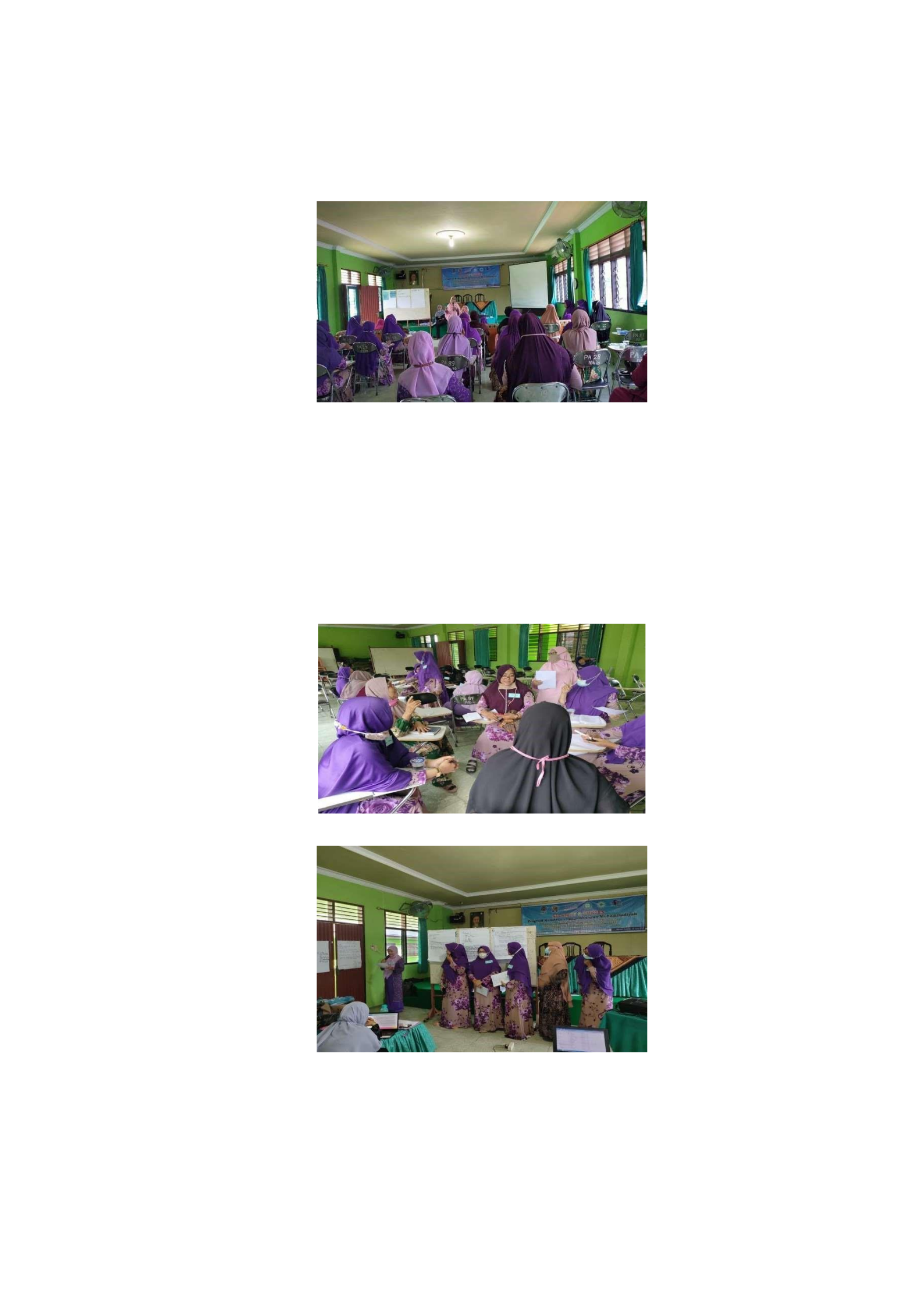
This activity was held for 1 (one) full day, filled by 2 (two) facilitators. With an
interactive discussion model, delivered through meta plan media, power point slides and
videos. The activity was interspersed with ice breakers and watching the video "The
Imposible Dream" and the video "true story of domestic violence cases".
Figure 1. Material Delivery
After completing all the material was delivered, at around 14.30 WIB, participants
were divided into 5 groups, to discuss the cases given by the facilitator. The results of the
group discussion were then written on plano paper and presented to the future. The
participants were so enthusiastic about discussing and presenting the results of their
discussions related to cases of violence against women that began with gender injustice.
Figure 2. Participants have a group discussion
Figure 3. Participants presented the results of their discussions
At the end of the activity, participants were asked to write a follow-up plan for the
activity. Participants were also given a post test to measure their level of understanding,
post-training.

Figure 4. Post test and RTL filling
Based on the results of the pre test and post test, there was an increase in the
knowledge of activity participants about gender, forms of gender injustice and forms of
violence against women.
Table 1. Proposition of Pre-Test Results Participant Answers
It
Question
Participant's
Answer
Yes
Not
1
Knowing the meaning of gender
10
23
2.
Recognizing forms of gender injustice
2
31
3.
Knowing the difference between gender and nature
8
25
4.
Knowing why gender is a problem
10
23
5.
Know Forms violence towards women
6
27
6
Knowing examples of cases of violence against women
7
26
7
Know the legal rules that protect women
8
25
8
Know factor cause Occurrence Violence against
women
7
26
9
Knowing the impact of violence on women
10
23
10
Knowing why it is important to advocate for the handling of
cases of violence against women
14
19
Table 2. Proposition of Answer Participant Post Test Results
No
Question
Participant's
Answer
Already
No
1
Can explain the meaning of gender correctly
30
3
2.
Can provide examples of forms of gender injustice
19
14
3.
Can mention the difference between gender and nature
33
0
4.
Can explain why gender is a problem
31
2
5.
Can explain the forms of violence against women
33
0

6
Can provide examples of cases of violence against women
33
0
7
Can name a legal rule that protects
32
1
woman
8
Can explain the factors that cause violence against women
28
5
9
Get explain impact violence towards women
29
4
10
Can explain the urgency of advocacy for handling cases of
violence against women
28
5
Table 2 shows the change in the trainees' knowledge about gender and forms of
violence. Before getting the training material, only 10 people (30.31%) of the participants
knew the meaning of gender. After obtaining the material, 30 people (90.91%) participants
were able to correctly explain the meaning of gender, namely the difference between men
and women in roles, functions, rights, responsibilities and behaviors that are constructed
socially, culturally and customarily. This means that there is an increase in knowledge by
60.6%.
The second point of the question in the pretest found that only 6.06% understood the
forms of gender injustice. After obtaining the material, 57.58% of participants knew about
the forms of gender injustice, namely; subordination, stereotype, marginalization, double
bourden, violence. There was an increase of 51.52%. In the third question, before getting the
material, only 24.25%, but after getting the material, all participants (100%) were able to
distinguish between gender and nature by giving examples. This means that there was an
increase of 75.75%. For the fourth question, before being given the material, only 30.31%
understood why gender was a problem. But after being given the material, 93.94% of the
participants were able to explain the reasons why gender was problematic. The increase in
knowledge has increased by 63.63%.
Regarding the forms of violence against women, which is the fifth question, only 6
people (18.19%) of the participants were able to understand it. After being given the
material, all participants (100%) were able to give examples of forms of violence against
women. Thus, there was an increase in understanding by 81.81%. The sixth question about
examples of cases of violence against women, before being given the material, only 21.22%
of participants were able to understand it. However, after being given the material, all
participants were able to tell examples of cases of violence against women that occurred in
the community. There was an increase in participants' knowledge by 78.78%.
The next question about the legal rules that protect women, before the material was
presented, only 24.25% of the participants knew about it, but after being given the material,

it increased to 93.94% of participants who understood it, an increase of 69.69%. For
question point 8, the results of the pre-test showed that only 21.22% understood the factors
that caused violence against women. However, after the training, 84.85% of the participants
understood better that the factors for violence against women, one of which was due to
patriarchal culture. The ninth question showed that only 30.31% of the participants knew
how women experienced the impact of violence, before being given the material. However,
after being explained that violence has a negative impact on women's physical and
psychological health, participants' understanding increased by 87.88%. This means that
there was an increase of 57.57%.
For the last question regarding the importance of advocacy in handling cases of
violence against women, there was an increase in knowledge after being given material by
42.42%. Capacity building activities for the management of 'Aisyiyah Law and Human Rights
Council have become effective to be able to carry out legal advocacy in a sustainable and
sustainable manner. In the future, capacity building activities are needed that can be carried
out, for example in the form of victim-oriented counseling techniques and gender justice as
well as basic advocacy techniques as a basic need for cadres in legal awareness groups. As
mentioned in the article Nevey Farida Andriani (2020), with capacity building activities for
cadres of this legal awareness group, it is hoped that they can advocate appropriately,
efficiently and in accordance with the principles of victim achievement and gender justice.
Figure 5. Symbolic handover of certificates and group photos
CONCLUSION
Gender injustice and violence against women occur due to social structures built by
society and can be changed by providing education to all parties and having a commitment
to justice and protection of vulnerable groups. Socialization about gender and the
prevention of violence against women should be carried out continuously, so that it can
increase public knowledge and eliminate the occurrence of violence against women.

Community service activities through the Muhammadiyah Development
Partnership Program (PKPM) scheme with the title Legal Education with Gender
Justice as an Effort to Prevent Violence Against Women for the Management of the
Legal and Human Rights Council "Aisyiyah", was held at the ' Aisyiyah Regional
Executive (PDA) Hall. The participants of this activity were 33 people who included; the
management of the Medan City legal and human rights council as many as 5 people, the
management of the legal and human rights council at the branch level as many as 28 people.
Each branch sent 1 (one) participant. This activity began by socializing the program with the
Aisyiyah Regional Leadership of the Law and Human Rights Council, the Aisyiyah Regional
Executive of Medan City. The socialization was directly carried out by holding a meeting with
the Chairperson of PDA, Mrs. Dra. Kholissani Nasution Through this meeting, the purpose
and purpose were conveyed, namely as a follow-up to the signing of the cooperation in
February 2021 related to the gender justice legal education program for handling cases of
violence against women and children. Preparations were carried out starting from the data
collection of participants consisting of the Regional Leadership of 'Aisyiyah Law and Human
Rights Council as many as 5 people and the management of the Law and Human Rights
Council at the branch level. There are 30 'Aisyiyah branches in Medan, while 28 people
registered as participants. This means that there are 2 (two) branches of 'Aisyiyah in Medan
that do not send their MHH members to participate in this activity. Thus, the number of
participants was 33 people. For smooth communication, the Team Leader created a Whats
App group, so that information can be conveyed quickly and clearly.
The implementation of the activity began with the opening ceremony and orientation
of the activity, each participant was asked to introduce himself and what his expectations
were after participating in this training. Participants were given a pre test and post test which
is a questionnaire instrument which is an evaluation of the activity. Each participant was
given 5 minutes to fill in the instrument. The number of instruments is 10 questions. After
filling out the pre-test, the activity continued with training. The material presented includes:
yyyyyyyyyy. Gender Recognition
zzzzzzzzzz. Forms of gender injustice include; subordination, stereotypes,
marginalization, violence, excessive double burden,
aaaaaaaaaaa. Violence against Women and Its Legal Protection,
bbbbbbbbbbb. The Urgency of Advocacy for Violence Against Women
ccccccccccc. Group Discussion
ddddddddddd. Follow-up Plan

This activity was held for 1 (one) full day, filled by 2 (two) facilitators. With an
interactive discussion model, delivered through meta plan media, power point slides and
videos. The activity was interspersed with ice breakers and watching the video "The
Imposible Dream" and the video "true story of domestic violence cases".
Figure 1. Material Delivery
After completing all the material was delivered, at around 14.30 WIB, participants
were divided into 5 groups, to discuss the cases given by the facilitator. The results of the
group discussion were then written on plano paper and presented to the future. The
participants were so enthusiastic about discussing and presenting the results of their
discussions related to cases of violence against women that began with gender injustice.
Figure 2. Participants have a group discussion
Figure 3. Participants presented the results of their discussions
At the end of the activity, participants were asked to write a follow-up plan for the
activity. Participants were also given a post test to measure their level of understanding,
post-training.

Figure 4. Post test and RTL filling
Based on the results of the pre test and post test, there was an increase in the
knowledge of activity participants about gender, forms of gender injustice and forms of
violence against women.
Table 1. Proposition of Pre-Test Results Participant Answers
It
Question
Participant's
Answer
Yes
Not
1
Knowing the meaning of gender
10
23
2.
Recognizing forms of gender injustice
2
31
3.
Knowing the difference between gender and nature
8
25
4.
Knowing why gender is a problem
10
23
5.
Know Forms violence towards women
6
27
6
Knowing examples of cases of violence against women
7
26
7
Know the legal rules that protect women
8
25
8
Know factor cause Occurrence Violence against
women
7
26
9
Knowing the impact of violence on women
10
23
10
Knowing why it is important to advocate for the handling of
cases of violence against women
14
19
Table 2. Proposition of Answer Participant Post Test Results
No
Question
Participant's
Answer
Already
No
1
Can explain the meaning of gender correctly
30
3
2.
Can provide examples of forms of gender injustice
19
14
3.
Can mention the difference between gender and nature
33
0
4.
Can explain why gender is a problem
31
2
5.
Can explain the forms of violence against women
33
0

6
Can provide examples of cases of violence against women
33
0
7
Can name a legal rule that protects
32
1
woman
8
Can explain the factors that cause violence against women
28
5
9
Get explain impact violence towards women
29
4
10
Can explain the urgency of advocacy for handling cases of
violence against women
28
5
Table 2 shows the change in the trainees' knowledge about gender and forms of
violence. Before getting the training material, only 10 people (30.31%) of the participants
knew the meaning of gender. After obtaining the material, 30 people (90.91%) participants
were able to correctly explain the meaning of gender, namely the difference between men
and women in roles, functions, rights, responsibilities and behaviors that are constructed
socially, culturally and customarily. This means that there is an increase in knowledge by
60.6%.
The second point of the question in the pretest found that only 6.06% understood the
forms of gender injustice. After obtaining the material, 57.58% of participants knew about
the forms of gender injustice, namely; subordination, stereotype, marginalization, double
bourden, violence. There was an increase of 51.52%. In the third question, before getting the
material, only 24.25%, but after getting the material, all participants (100%) were able to
distinguish between gender and nature by giving examples. This means that there was an
increase of 75.75%. For the fourth question, before being given the material, only 30.31%
understood why gender was a problem. But after being given the material, 93.94% of the
participants were able to explain the reasons why gender was problematic. The increase in
knowledge has increased by 63.63%.
Regarding the forms of violence against women, which is the fifth question, only 6
people (18.19%) of the participants were able to understand it. After being given the
material, all participants (100%) were able to give examples of forms of violence against
women. Thus, there was an increase in understanding by 81.81%. The sixth question about
examples of cases of violence against women, before being given the material, only 21.22%
of participants were able to understand it. However, after being given the material, all
participants were able to tell examples of cases of violence against women that occurred in
the community. There was an increase in participants' knowledge by 78.78%.
The next question about the legal rules that protect women, before the material was
presented, only 24.25% of the participants knew about it, but after being given the material,

it increased to 93.94% of participants who understood it, an increase of 69.69%. For
question point 8, the results of the pre-test showed that only 21.22% understood the factors
that caused violence against women. However, after the training, 84.85% of the participants
understood better that the factors for violence against women, one of which was due to
patriarchal culture. The ninth question showed that only 30.31% of the participants knew
how women experienced the impact of violence, before being given the material. However,
after being explained that violence has a negative impact on women's physical and
psychological health, participants' understanding increased by 87.88%. This means that
there was an increase of 57.57%.
For the last question regarding the importance of advocacy in handling cases of
violence against women, there was an increase in knowledge after being given material by
42.42%. Capacity building activities for the management of 'Aisyiyah Law and Human Rights
Council have become effective to be able to carry out legal advocacy in a sustainable and
sustainable manner. In the future, capacity building activities are needed that can be carried
out, for example in the form of victim-oriented counseling techniques and gender justice as
well as basic advocacy techniques as a basic need for cadres in legal awareness groups. As
mentioned in the article Nevey Farida Andriani (2020), with capacity building activities for
cadres of this legal awareness group, it is hoped that they can advocate appropriately,
efficiently and in accordance with the principles of victim achievement and gender justice.
Figure 5. Symbolic handover of certificates and group photos
CONCLUSION
Gender injustice and violence against women occur due to social structures built by
society and can be changed by providing education to all parties and having a commitment
to justice and protection of vulnerable groups. Socialization about gender and the
prevention of violence against women should be carried out continuously, so that it can
increase public knowledge and eliminate the occurrence of violence against women.

Community service activities through the Muhammadiyah Development
Partnership Program (PKPM) scheme with the title Legal Education with Gender
Justice as an Effort to Prevent Violence Against Women for the Management of the
Legal and Human Rights Council "Aisyiyah", was held at the ' Aisyiyah Regional
Executive (PDA) Hall. The participants of this activity were 33 people who included; the
management of the Medan City legal and human rights council as many as 5 people, the
management of the legal and human rights council at the branch level as many as 28 people.
Each branch sent 1 (one) participant. This activity began by socializing the program with the
Aisyiyah Regional Leadership of the Law and Human Rights Council, the Aisyiyah Regional
Executive of Medan City. The socialization was directly carried out by holding a meeting with
the Chairperson of PDA, Mrs. Dra. Kholissani Nasution Through this meeting, the purpose
and purpose were conveyed, namely as a follow-up to the signing of the cooperation in
February 2021 related to the gender justice legal education program for handling cases of
violence against women and children. Preparations were carried out starting from the data
collection of participants consisting of the Regional Leadership of 'Aisyiyah Law and Human
Rights Council as many as 5 people and the management of the Law and Human Rights
Council at the branch level. There are 30 'Aisyiyah branches in Medan, while 28 people
registered as participants. This means that there are 2 (two) branches of 'Aisyiyah in Medan
that do not send their MHH members to participate in this activity. Thus, the number of
participants was 33 people. For smooth communication, the Team Leader created a Whats
App group, so that information can be conveyed quickly and clearly.
The implementation of the activity began with the opening ceremony and orientation
of the activity, each participant was asked to introduce himself and what his expectations
were after participating in this training. Participants were given a pre test and post test which
is a questionnaire instrument which is an evaluation of the activity. Each participant was
given 5 minutes to fill in the instrument. The number of instruments is 10 questions. After
filling out the pre-test, the activity continued with training. The material presented includes:
eeeeeeeeeee. Gender Recognition
fffffffffff. Forms of gender injustice include; subordination, stereotypes, marginalization,
violence, excessive double burden,
ggggggggggg. Violence against Women and Its Legal Protection,
hhhhhhhhhhh. The Urgency of Advocacy for Violence Against Women
iiiiiiiiiii. Group Discussion
jjjjjjjjjjj. Follow-up Plan

This activity was held for 1 (one) full day, filled by 2 (two) facilitators. With an
interactive discussion model, delivered through meta plan media, power point slides and
videos. The activity was interspersed with ice breakers and watching the video "The
Imposible Dream" and the video "true story of domestic violence cases".
Figure 1. Material Delivery
After completing all the material was delivered, at around 14.30 WIB, participants
were divided into 5 groups, to discuss the cases given by the facilitator. The results of the
group discussion were then written on plano paper and presented to the future. The
participants were so enthusiastic about discussing and presenting the results of their
discussions related to cases of violence against women that began with gender injustice.
Figure 2. Participants have a group discussion
Figure 3. Participants presented the results of their discussions
At the end of the activity, participants were asked to write a follow-up plan for the
activity. Participants were also given a post test to measure their level of understanding,
post-training.

Figure 4. Post test and RTL filling
Based on the results of the pre test and post test, there was an increase in the
knowledge of activity participants about gender, forms of gender injustice and forms of
violence against women.
Table 1. Proposition of Pre-Test Results Participant Answers
It
Question
Participant's
Answer
Yes
Not
1
Knowing the meaning of gender
10
23
2.
Recognizing forms of gender injustice
2
31
3.
Knowing the difference between gender and nature
8
25
4.
Knowing why gender is a problem
10
23
5.
Know Forms violence towards women
6
27
6
Knowing examples of cases of violence against women
7
26
7
Know the legal rules that protect women
8
25
8
Know factor cause Occurrence Violence against
women
7
26
9
Knowing the impact of violence on women
10
23
10
Knowing why it is important to advocate for the handling of
cases of violence against women
14
19
Table 2. Proposition of Answer Participant Post Test Results
No
Question
Participant's
Answer
Already
No
1
Can explain the meaning of gender correctly
30
3
2.
Can provide examples of forms of gender injustice
19
14
3.
Can mention the difference between gender and nature
33
0
4.
Can explain why gender is a problem
31
2
5.
Can explain the forms of violence against women
33
0

6
Can provide examples of cases of violence against women
33
0
7
Can name a legal rule that protects
32
1
woman
8
Can explain the factors that cause violence against women
28
5
9
Get explain impact violence towards women
29
4
10
Can explain the urgency of advocacy for handling cases of
violence against women
28
5
Table 2 shows the change in the trainees' knowledge about gender and forms of
violence. Before getting the training material, only 10 people (30.31%) of the participants
knew the meaning of gender. After obtaining the material, 30 people (90.91%) participants
were able to correctly explain the meaning of gender, namely the difference between men
and women in roles, functions, rights, responsibilities and behaviors that are constructed
socially, culturally and customarily. This means that there is an increase in knowledge by
60.6%.
The second point of the question in the pretest found that only 6.06% understood the
forms of gender injustice. After obtaining the material, 57.58% of participants knew about
the forms of gender injustice, namely; subordination, stereotype, marginalization, double
bourden, violence. There was an increase of 51.52%. In the third question, before getting the
material, only 24.25%, but after getting the material, all participants (100%) were able to
distinguish between gender and nature by giving examples. This means that there was an
increase of 75.75%. For the fourth question, before being given the material, only 30.31%
understood why gender was a problem. But after being given the material, 93.94% of the
participants were able to explain the reasons why gender was problematic. The increase in
knowledge has increased by 63.63%.
Regarding the forms of violence against women, which is the fifth question, only 6
people (18.19%) of the participants were able to understand it. After being given the
material, all participants (100%) were able to give examples of forms of violence against
women. Thus, there was an increase in understanding by 81.81%. The sixth question about
examples of cases of violence against women, before being given the material, only 21.22%
of participants were able to understand it. However, after being given the material, all
participants were able to tell examples of cases of violence against women that occurred in
the community. There was an increase in participants' knowledge by 78.78%.
The next question about the legal rules that protect women, before the material was
presented, only 24.25% of the participants knew about it, but after being given the material,

it increased to 93.94% of participants who understood it, an increase of 69.69%. For
question point 8, the results of the pre-test showed that only 21.22% understood the factors
that caused violence against women. However, after the training, 84.85% of the participants
understood better that the factors for violence against women, one of which was due to
patriarchal culture. The ninth question showed that only 30.31% of the participants knew
how women experienced the impact of violence, before being given the material. However,
after being explained that violence has a negative impact on women's physical and
psychological health, participants' understanding increased by 87.88%. This means that
there was an increase of 57.57%.
For the last question regarding the importance of advocacy in handling cases of
violence against women, there was an increase in knowledge after being given material by
42.42%. Capacity building activities for the management of 'Aisyiyah Law and Human Rights
Council have become effective to be able to carry out legal advocacy in a sustainable and
sustainable manner. In the future, capacity building activities are needed that can be carried
out, for example in the form of victim-oriented counseling techniques and gender justice as
well as basic advocacy techniques as a basic need for cadres in legal awareness groups. As
mentioned in the article Nevey Farida Andriani (2020), with capacity building activities for
cadres of this legal awareness group, it is hoped that they can advocate appropriately,
efficiently and in accordance with the principles of victim achievement and gender justice.
Figure 5. Symbolic handover of certificates and group photos
CONCLUSION
Gender injustice and violence against women occur due to social structures built by
society and can be changed by providing education to all parties and having a commitment
to justice and protection of vulnerable groups. Socialization about gender and the
prevention of violence against women should be carried out continuously, so that it can
increase public knowledge and eliminate the occurrence of violence against women.

Community service activities through the Muhammadiyah Development
Partnership Program (PKPM) scheme with the title Legal Education with Gender
Justice as an Effort to Prevent Violence Against Women for the Management of the
Legal and Human Rights Council "Aisyiyah", was held at the ' Aisyiyah Regional
Executive (PDA) Hall. The participants of this activity were 33 people who included; the
management of the Medan City legal and human rights council as many as 5 people, the
management of the legal and human rights council at the branch level as many as 28 people.
Each branch sent 1 (one) participant. This activity began by socializing the program with the
Aisyiyah Regional Leadership of the Law and Human Rights Council, the Aisyiyah Regional
Executive of Medan City. The socialization was directly carried out by holding a meeting with
the Chairperson of PDA, Mrs. Dra. Kholissani Nasution Through this meeting, the purpose
and purpose were conveyed, namely as a follow-up to the signing of the cooperation in
February 2021 related to the gender justice legal education program for handling cases of
violence against women and children. Preparations were carried out starting from the data
collection of participants consisting of the Regional Leadership of 'Aisyiyah Law and Human
Rights Council as many as 5 people and the management of the Law and Human Rights
Council at the branch level. There are 30 'Aisyiyah branches in Medan, while 28 people
registered as participants. This means that there are 2 (two) branches of 'Aisyiyah in Medan
that do not send their MHH members to participate in this activity. Thus, the number of
participants was 33 people. For smooth communication, the Team Leader created a Whats
App group, so that information can be conveyed quickly and clearly.
The implementation of the activity began with the opening ceremony and orientation
of the activity, each participant was asked to introduce himself and what his expectations
were after participating in this training. Participants were given a pre test and post test which
is a questionnaire instrument which is an evaluation of the activity. Each participant was
given 5 minutes to fill in the instrument. The number of instruments is 10 questions. After
filling out the pre-test, the activity continued with training. The material presented includes:
kkkkkkkkkkk. Gender Recognition
lllllllllll. Forms of gender injustice include; subordination, stereotypes, marginalization,
violence, excessive double burden,
mmmmmmmmmmm. Violence against Women and Its Legal Protection,
nnnnnnnnnnn. The Urgency of Advocacy for Violence Against Women
ooooooooooo. Group Discussion
ppppppppppp. Follow-up Plan

This activity was held for 1 (one) full day, filled by 2 (two) facilitators. With an
interactive discussion model, delivered through meta plan media, power point slides and
videos. The activity was interspersed with ice breakers and watching the video "The
Imposible Dream" and the video "true story of domestic violence cases".
Figure 1. Material Delivery
After completing all the material was delivered, at around 14.30 WIB, participants
were divided into 5 groups, to discuss the cases given by the facilitator. The results of the
group discussion were then written on plano paper and presented to the future. The
participants were so enthusiastic about discussing and presenting the results of their
discussions related to cases of violence against women that began with gender injustice.
Figure 2. Participants have a group discussion
Figure 3. Participants presented the results of their discussions
At the end of the activity, participants were asked to write a follow-up plan for the
activity. Participants were also given a post test to measure their level of understanding,
post-training.

Figure 4. Post test and RTL filling
Based on the results of the pre test and post test, there was an increase in the
knowledge of activity participants about gender, forms of gender injustice and forms of
violence against women.
Table 1. Proposition of Pre-Test Results Participant Answers
It
Question
Participant's
Answer
Yes
Not
1
Knowing the meaning of gender
10
23
2.
Recognizing forms of gender injustice
2
31
3.
Knowing the difference between gender and nature
8
25
4.
Knowing why gender is a problem
10
23
5.
Know Forms violence towards women
6
27
6
Knowing examples of cases of violence against women
7
26
7
Know the legal rules that protect women
8
25
8
Know factor cause Occurrence Violence against
women
7
26
9
Knowing the impact of violence on women
10
23
10
Knowing why it is important to advocate for the handling of
cases of violence against women
14
19
Table 2. Proposition of Answer Participant Post Test Results
No
Question
Participant's
Answer
Already
No
1
Can explain the meaning of gender correctly
30
3
2.
Can provide examples of forms of gender injustice
19
14
3.
Can mention the difference between gender and nature
33
0
4.
Can explain why gender is a problem
31
2
5.
Can explain the forms of violence against women
33
0

6
Can provide examples of cases of violence against women
33
0
7
Can name a legal rule that protects
32
1
woman
8
Can explain the factors that cause violence against women
28
5
9
Get explain impact violence towards women
29
4
10
Can explain the urgency of advocacy for handling cases of
violence against women
28
5
Table 2 shows the change in the trainees' knowledge about gender and forms of
violence. Before getting the training material, only 10 people (30.31%) of the participants
knew the meaning of gender. After obtaining the material, 30 people (90.91%) participants
were able to correctly explain the meaning of gender, namely the difference between men
and women in roles, functions, rights, responsibilities and behaviors that are constructed
socially, culturally and customarily. This means that there is an increase in knowledge by
60.6%.
The second point of the question in the pretest found that only 6.06% understood the
forms of gender injustice. After obtaining the material, 57.58% of participants knew about
the forms of gender injustice, namely; subordination, stereotype, marginalization, double
bourden, violence. There was an increase of 51.52%. In the third question, before getting the
material, only 24.25%, but after getting the material, all participants (100%) were able to
distinguish between gender and nature by giving examples. This means that there was an
increase of 75.75%. For the fourth question, before being given the material, only 30.31%
understood why gender was a problem. But after being given the material, 93.94% of the
participants were able to explain the reasons why gender was problematic. The increase in
knowledge has increased by 63.63%.
Regarding the forms of violence against women, which is the fifth question, only 6
people (18.19%) of the participants were able to understand it. After being given the
material, all participants (100%) were able to give examples of forms of violence against
women. Thus, there was an increase in understanding by 81.81%. The sixth question about
examples of cases of violence against women, before being given the material, only 21.22%
of participants were able to understand it. However, after being given the material, all
participants were able to tell examples of cases of violence against women that occurred in
the community. There was an increase in participants' knowledge by 78.78%.
The next question about the legal rules that protect women, before the material was
presented, only 24.25% of the participants knew about it, but after being given the material,

it increased to 93.94% of participants who understood it, an increase of 69.69%. For
question point 8, the results of the pre-test showed that only 21.22% understood the factors
that caused violence against women. However, after the training, 84.85% of the participants
understood better that the factors for violence against women, one of which was due to
patriarchal culture. The ninth question showed that only 30.31% of the participants knew
how women experienced the impact of violence, before being given the material. However,
after being explained that violence has a negative impact on women's physical and
psychological health, participants' understanding increased by 87.88%. This means that
there was an increase of 57.57%.
For the last question regarding the importance of advocacy in handling cases of
violence against women, there was an increase in knowledge after being given material by
42.42%. Capacity building activities for the management of 'Aisyiyah Law and Human Rights
Council have become effective to be able to carry out legal advocacy in a sustainable and
sustainable manner. In the future, capacity building activities are needed that can be carried
out, for example in the form of victim-oriented counseling techniques and gender justice as
well as basic advocacy techniques as a basic need for cadres in legal awareness groups. As
mentioned in the article Nevey Farida Andriani (2020), with capacity building activities for
cadres of this legal awareness group, it is hoped that they can advocate appropriately,
efficiently and in accordance with the principles of victim achievement and gender justice.
Figure 5. Symbolic handover of certificates and group photos
CONCLUSION
Gender injustice and violence against women occur due to social structures built by
society and can be changed by providing education to all parties and having a commitment
to justice and protection of vulnerable groups. Socialization about gender and the
prevention of violence against women should be carried out continuously, so that it can
increase public knowledge and eliminate the occurrence of violence against women.

Community service activities through the Muhammadiyah Development
Partnership Program (PKPM) scheme with the title Legal Education with Gender
Justice as an Effort to Prevent Violence Against Women for the Management of the
Legal and Human Rights Council "Aisyiyah", was held at the ' Aisyiyah Regional
Executive (PDA) Hall. The participants of this activity were 33 people who included; the
management of the Medan City legal and human rights council as many as 5 people, the
management of the legal and human rights council at the branch level as many as 28 people.
Each branch sent 1 (one) participant. This activity began by socializing the program with the
Aisyiyah Regional Leadership of the Law and Human Rights Council, the Aisyiyah Regional
Executive of Medan City. The socialization was directly carried out by holding a meeting with
the Chairperson of PDA, Mrs. Dra. Kholissani Nasution Through this meeting, the purpose
and purpose were conveyed, namely as a follow-up to the signing of the cooperation in
February 2021 related to the gender justice legal education program for handling cases of
violence against women and children. Preparations were carried out starting from the data
collection of participants consisting of the Regional Leadership of 'Aisyiyah Law and Human
Rights Council as many as 5 people and the management of the Law and Human Rights
Council at the branch level. There are 30 'Aisyiyah branches in Medan, while 28 people
registered as participants. This means that there are 2 (two) branches of 'Aisyiyah in Medan
that do not send their MHH members to participate in this activity. Thus, the number of
participants was 33 people. For smooth communication, the Team Leader created a Whats
App group, so that information can be conveyed quickly and clearly.
The implementation of the activity began with the opening ceremony and orientation
of the activity, each participant was asked to introduce himself and what his expectations
were after participating in this training. Participants were given a pre test and post test which
is a questionnaire instrument which is an evaluation of the activity. Each participant was
given 5 minutes to fill in the instrument. The number of instruments is 10 questions. After
filling out the pre-test, the activity continued with training. The material presented includes:
qqqqqqqqqqq. Gender Recognition
rrrrrrrrrrr. Forms of gender injustice include; subordination, stereotypes, marginalization,
violence, excessive double burden,
sssssssssss. Violence against Women and Its Legal Protection,
ttttttttttt. The Urgency of Advocacy for Violence Against Women
uuuuuuuuuuu. Group Discussion
vvvvvvvvvvv. Follow-up Plan

This activity was held for 1 (one) full day, filled by 2 (two) facilitators. With an
interactive discussion model, delivered through meta plan media, power point slides and
videos. The activity was interspersed with ice breakers and watching the video "The
Imposible Dream" and the video "true story of domestic violence cases".
Figure 1. Material Delivery
After completing all the material was delivered, at around 14.30 WIB, participants
were divided into 5 groups, to discuss the cases given by the facilitator. The results of the
group discussion were then written on plano paper and presented to the future. The
participants were so enthusiastic about discussing and presenting the results of their
discussions related to cases of violence against women that began with gender injustice.
Figure 2. Participants have a group discussion
Figure 3. Participants presented the results of their discussions
At the end of the activity, participants were asked to write a follow-up plan for the
activity. Participants were also given a post test to measure their level of understanding,
post-training.

Figure 4. Post test and RTL filling
Based on the results of the pre test and post test, there was an increase in the
knowledge of activity participants about gender, forms of gender injustice and forms of
violence against women.
Table 1. Proposition of Pre-Test Results Participant Answers
It
Question
Participant's
Answer
Yes
Not
1
Knowing the meaning of gender
10
23
2.
Recognizing forms of gender injustice
2
31
3.
Knowing the difference between gender and nature
8
25
4.
Knowing why gender is a problem
10
23
5.
Know Forms violence towards women
6
27
6
Knowing examples of cases of violence against women
7
26
7
Know the legal rules that protect women
8
25
8
Know factor cause Occurrence Violence against
women
7
26
9
Knowing the impact of violence on women
10
23
10
Knowing why it is important to advocate for the handling of
cases of violence against women
14
19
Table 2. Proposition of Answer Participant Post Test Results
No
Question
Participant's
Answer
Already
No
1
Can explain the meaning of gender correctly
30
3
2.
Can provide examples of forms of gender injustice
19
14
3.
Can mention the difference between gender and nature
33
0
4.
Can explain why gender is a problem
31
2
5.
Can explain the forms of violence against women
33
0

6
Can provide examples of cases of violence against women
33
0
7
Can name a legal rule that protects
32
1
woman
8
Can explain the factors that cause violence against women
28
5
9
Get explain impact violence towards women
29
4
10
Can explain the urgency of advocacy for handling cases of
violence against women
28
5
Table 2 shows the change in the trainees' knowledge about gender and forms of
violence. Before getting the training material, only 10 people (30.31%) of the participants
knew the meaning of gender. After obtaining the material, 30 people (90.91%) participants
were able to correctly explain the meaning of gender, namely the difference between men
and women in roles, functions, rights, responsibilities and behaviors that are constructed
socially, culturally and customarily. This means that there is an increase in knowledge by
60.6%.
The second point of the question in the pretest found that only 6.06% understood the
forms of gender injustice. After obtaining the material, 57.58% of participants knew about
the forms of gender injustice, namely; subordination, stereotype, marginalization, double
bourden, violence. There was an increase of 51.52%. In the third question, before getting the
material, only 24.25%, but after getting the material, all participants (100%) were able to
distinguish between gender and nature by giving examples. This means that there was an
increase of 75.75%. For the fourth question, before being given the material, only 30.31%
understood why gender was a problem. But after being given the material, 93.94% of the
participants were able to explain the reasons why gender was problematic. The increase in
knowledge has increased by 63.63%.
Regarding the forms of violence against women, which is the fifth question, only 6
people (18.19%) of the participants were able to understand it. After being given the
material, all participants (100%) were able to give examples of forms of violence against
women. Thus, there was an increase in understanding by 81.81%. The sixth question about
examples of cases of violence against women, before being given the material, only 21.22%
of participants were able to understand it. However, after being given the material, all
participants were able to tell examples of cases of violence against women that occurred in
the community. There was an increase in participants' knowledge by 78.78%.
The next question about the legal rules that protect women, before the material was
presented, only 24.25% of the participants knew about it, but after being given the material,

it increased to 93.94% of participants who understood it, an increase of 69.69%. For
question point 8, the results of the pre-test showed that only 21.22% understood the factors
that caused violence against women. However, after the training, 84.85% of the participants
understood better that the factors for violence against women, one of which was due to
patriarchal culture. The ninth question showed that only 30.31% of the participants knew
how women experienced the impact of violence, before being given the material. However,
after being explained that violence has a negative impact on women's physical and
psychological health, participants' understanding increased by 87.88%. This means that
there was an increase of 57.57%.
For the last question regarding the importance of advocacy in handling cases of
violence against women, there was an increase in knowledge after being given material by
42.42%. Capacity building activities for the management of 'Aisyiyah Law and Human Rights
Council have become effective to be able to carry out legal advocacy in a sustainable and
sustainable manner. In the future, capacity building activities are needed that can be carried
out, for example in the form of victim-oriented counseling techniques and gender justice as
well as basic advocacy techniques as a basic need for cadres in legal awareness groups. As
mentioned in the article Nevey Farida Andriani (2020), with capacity building activities for
cadres of this legal awareness group, it is hoped that they can advocate appropriately,
efficiently and in accordance with the principles of victim achievement and gender justice.
Figure 5. Symbolic handover of certificates and group photos
CONCLUSION
Gender injustice and violence against women occur due to social structures built by
society and can be changed by providing education to all parties and having a commitment
to justice and protection of vulnerable groups. Socialization about gender and the
prevention of violence against women should be carried out continuously, so that it can
increase public knowledge and eliminate the occurrence of violence against women.

Community service activities through the Muhammadiyah Development
Partnership Program (PKPM) scheme with the title Legal Education with Gender
Justice as an Effort to Prevent Violence Against Women for the Management of the
Legal and Human Rights Council "Aisyiyah", was held at the ' Aisyiyah Regional
Executive (PDA) Hall. The participants of this activity were 33 people who included; the
management of the Medan City legal and human rights council as many as 5 people, the
management of the legal and human rights council at the branch level as many as 28 people.
Each branch sent 1 (one) participant. This activity began by socializing the program with the
Aisyiyah Regional Leadership of the Law and Human Rights Council, the Aisyiyah Regional
Executive of Medan City. The socialization was directly carried out by holding a meeting with
the Chairperson of PDA, Mrs. Dra. Kholissani Nasution Through this meeting, the purpose
and purpose were conveyed, namely as a follow-up to the signing of the cooperation in
February 2021 related to the gender justice legal education program for handling cases of
violence against women and children. Preparations were carried out starting from the data
collection of participants consisting of the Regional Leadership of 'Aisyiyah Law and Human
Rights Council as many as 5 people and the management of the Law and Human Rights
Council at the branch level. There are 30 'Aisyiyah branches in Medan, while 28 people
registered as participants. This means that there are 2 (two) branches of 'Aisyiyah in Medan
that do not send their MHH members to participate in this activity. Thus, the number of
participants was 33 people. For smooth communication, the Team Leader created a Whats
App group, so that information can be conveyed quickly and clearly.
The implementation of the activity began with the opening ceremony and orientation
of the activity, each participant was asked to introduce himself and what his expectations
were after participating in this training. Participants were given a pre test and post test which
is a questionnaire instrument which is an evaluation of the activity. Each participant was
given 5 minutes to fill in the instrument. The number of instruments is 10 questions. After
filling out the pre-test, the activity continued with training. The material presented includes:
wwwwwwwwwww. Gender Recognition
xxxxxxxxxxx. Forms of gender injustice include; subordination, stereotypes,
marginalization, violence, excessive double burden,
yyyyyyyyyyy. Violence against Women and Its Legal Protection,
zzzzzzzzzzz. The Urgency of Advocacy for Violence Against Women
aaaaaaaaaaaa. Group Discussion
bbbbbbbbbbbb. Follow-up Plan

This activity was held for 1 (one) full day, filled by 2 (two) facilitators. With an
interactive discussion model, delivered through meta plan media, power point slides and
videos. The activity was interspersed with ice breakers and watching the video "The
Imposible Dream" and the video "true story of domestic violence cases".
Figure 1. Material Delivery
After completing all the material was delivered, at around 14.30 WIB, participants
were divided into 5 groups, to discuss the cases given by the facilitator. The results of the
group discussion were then written on plano paper and presented to the future. The
participants were so enthusiastic about discussing and presenting the results of their
discussions related to cases of violence against women that began with gender injustice.
Figure 2. Participants have a group discussion
Figure 3. Participants presented the results of their discussions
At the end of the activity, participants were asked to write a follow-up plan for the
activity. Participants were also given a post test to measure their level of understanding,
post-training.

Figure 4. Post test and RTL filling
Based on the results of the pre test and post test, there was an increase in the
knowledge of activity participants about gender, forms of gender injustice and forms of
violence against women.
Table 1. Proposition of Pre-Test Results Participant Answers
It
Question
Participant's
Answer
Yes
Not
1
Knowing the meaning of gender
10
23
2.
Recognizing forms of gender injustice
2
31
3.
Knowing the difference between gender and nature
8
25
4.
Knowing why gender is a problem
10
23
5.
Know Forms violence towards women
6
27
6
Knowing examples of cases of violence against women
7
26
7
Know the legal rules that protect women
8
25
8
Know factor cause Occurrence Violence against
women
7
26
9
Knowing the impact of violence on women
10
23
10
Knowing why it is important to advocate for the handling of
cases of violence against women
14
19
Table 2. Proposition of Answer Participant Post Test Results
No
Question
Participant's
Answer
Already
No
1
Can explain the meaning of gender correctly
30
3
2.
Can provide examples of forms of gender injustice
19
14
3.
Can mention the difference between gender and nature
33
0
4.
Can explain why gender is a problem
31
2
5.
Can explain the forms of violence against women
33
0

6
Can provide examples of cases of violence against women
33
0
7
Can name a legal rule that protects
32
1
woman
8
Can explain the factors that cause violence against women
28
5
9
Get explain impact violence towards women
29
4
10
Can explain the urgency of advocacy for handling cases of
violence against women
28
5
Table 2 shows the change in the trainees' knowledge about gender and forms of
violence. Before getting the training material, only 10 people (30.31%) of the participants
knew the meaning of gender. After obtaining the material, 30 people (90.91%) participants
were able to correctly explain the meaning of gender, namely the difference between men
and women in roles, functions, rights, responsibilities and behaviors that are constructed
socially, culturally and customarily. This means that there is an increase in knowledge by
60.6%.
The second point of the question in the pretest found that only 6.06% understood the
forms of gender injustice. After obtaining the material, 57.58% of participants knew about
the forms of gender injustice, namely; subordination, stereotype, marginalization, double
bourden, violence. There was an increase of 51.52%. In the third question, before getting the
material, only 24.25%, but after getting the material, all participants (100%) were able to
distinguish between gender and nature by giving examples. This means that there was an
increase of 75.75%. For the fourth question, before being given the material, only 30.31%
understood why gender was a problem. But after being given the material, 93.94% of the
participants were able to explain the reasons why gender was problematic. The increase in
knowledge has increased by 63.63%.
Regarding the forms of violence against women, which is the fifth question, only 6
people (18.19%) of the participants were able to understand it. After being given the
material, all participants (100%) were able to give examples of forms of violence against
women. Thus, there was an increase in understanding by 81.81%. The sixth question about
examples of cases of violence against women, before being given the material, only 21.22%
of participants were able to understand it. However, after being given the material, all
participants were able to tell examples of cases of violence against women that occurred in
the community. There was an increase in participants' knowledge by 78.78%.
The next question about the legal rules that protect women, before the material was
presented, only 24.25% of the participants knew about it, but after being given the material,

it increased to 93.94% of participants who understood it, an increase of 69.69%. For
question point 8, the results of the pre-test showed that only 21.22% understood the factors
that caused violence against women. However, after the training, 84.85% of the participants
understood better that the factors for violence against women, one of which was due to
patriarchal culture. The ninth question showed that only 30.31% of the participants knew
how women experienced the impact of violence, before being given the material. However,
after being explained that violence has a negative impact on women's physical and
psychological health, participants' understanding increased by 87.88%. This means that
there was an increase of 57.57%.
For the last question regarding the importance of advocacy in handling cases of
violence against women, there was an increase in knowledge after being given material by
42.42%. Capacity building activities for the management of 'Aisyiyah Law and Human Rights
Council have become effective to be able to carry out legal advocacy in a sustainable and
sustainable manner. In the future, capacity building activities are needed that can be carried
out, for example in the form of victim-oriented counseling techniques and gender justice as
well as basic advocacy techniques as a basic need for cadres in legal awareness groups. As
mentioned in the article Nevey Farida Andriani (2020), with capacity building activities for
cadres of this legal awareness group, it is hoped that they can advocate appropriately,
efficiently and in accordance with the principles of victim achievement and gender justice.
Figure 5. Symbolic handover of certificates and group photos
CONCLUSION
Gender injustice and violence against women occur due to social structures built by
society and can be changed by providing education to all parties and having a commitment
to justice and protection of vulnerable groups. Socialization about gender and the
prevention of violence against women should be carried out continuously, so that it can
increase public knowledge and eliminate the occurrence of violence against women.

Community service activities through the Muhammadiyah Development
Partnership Program (PKPM) scheme with the title Legal Education with Gender
Justice as an Effort to Prevent Violence Against Women for the Management of the
Legal and Human Rights Council "Aisyiyah", was held at the ' Aisyiyah Regional
Executive (PDA) Hall. The participants of this activity were 33 people who included; the
management of the Medan City legal and human rights council as many as 5 people, the
management of the legal and human rights council at the branch level as many as 28 people.
Each branch sent 1 (one) participant. This activity began by socializing the program with the
Aisyiyah Regional Leadership of the Law and Human Rights Council, the Aisyiyah Regional
Executive of Medan City. The socialization was directly carried out by holding a meeting with
the Chairperson of PDA, Mrs. Dra. Kholissani Nasution Through this meeting, the purpose
and purpose were conveyed, namely as a follow-up to the signing of the cooperation in
February 2021 related to the gender justice legal education program for handling cases of
violence against women and children. Preparations were carried out starting from the data
collection of participants consisting of the Regional Leadership of 'Aisyiyah Law and Human
Rights Council as many as 5 people and the management of the Law and Human Rights
Council at the branch level. There are 30 'Aisyiyah branches in Medan, while 28 people
registered as participants. This means that there are 2 (two) branches of 'Aisyiyah in Medan
that do not send their MHH members to participate in this activity. Thus, the number of
participants was 33 people. For smooth communication, the Team Leader created a Whats
App group, so that information can be conveyed quickly and clearly.
The implementation of the activity began with the opening ceremony and orientation
of the activity, each participant was asked to introduce himself and what his expectations
were after participating in this training. Participants were given a pre test and post test which
is a questionnaire instrument which is an evaluation of the activity. Each participant was
given 5 minutes to fill in the instrument. The number of instruments is 10 questions. After
filling out the pre-test, the activity continued with training. The material presented includes:
cccccccccccc. Gender Recognition
dddddddddddd. Forms of gender injustice include; subordination, stereotypes,
marginalization, violence, excessive double burden,
eeeeeeeeeeee. Violence against Women and Its Legal Protection,
ffffffffffff. The Urgency of Advocacy for Violence Against Women
gggggggggggg. Group Discussion
hhhhhhhhhhhh. Follow-up Plan

This activity was held for 1 (one) full day, filled by 2 (two) facilitators. With an
interactive discussion model, delivered through meta plan media, power point slides and
videos. The activity was interspersed with ice breakers and watching the video "The
Imposible Dream" and the video "true story of domestic violence cases".
Figure 1. Material Delivery
After completing all the material was delivered, at around 14.30 WIB, participants
were divided into 5 groups, to discuss the cases given by the facilitator. The results of the
group discussion were then written on plano paper and presented to the future. The
participants were so enthusiastic about discussing and presenting the results of their
discussions related to cases of violence against women that began with gender injustice.
Figure 2. Participants have a group discussion
Figure 3. Participants presented the results of their discussions
At the end of the activity, participants were asked to write a follow-up plan for the
activity. Participants were also given a post test to measure their level of understanding,
post-training.

Figure 4. Post test and RTL filling
Based on the results of the pre test and post test, there was an increase in the
knowledge of activity participants about gender, forms of gender injustice and forms of
violence against women.
Table 1. Proposition of Pre-Test Results Participant Answers
It
Question
Participant's
Answer
Yes
Not
1
Knowing the meaning of gender
10
23
2.
Recognizing forms of gender injustice
2
31
3.
Knowing the difference between gender and nature
8
25
4.
Knowing why gender is a problem
10
23
5.
Know Forms violence towards women
6
27
6
Knowing examples of cases of violence against women
7
26
7
Know the legal rules that protect women
8
25
8
Know factor cause Occurrence Violence against
women
7
26
9
Knowing the impact of violence on women
10
23
10
Knowing why it is important to advocate for the handling of
cases of violence against women
14
19
Table 2. Proposition of Answer Participant Post Test Results
No
Question
Participant's
Answer
Already
No
1
Can explain the meaning of gender correctly
30
3
2.
Can provide examples of forms of gender injustice
19
14
3.
Can mention the difference between gender and nature
33
0
4.
Can explain why gender is a problem
31
2
5.
Can explain the forms of violence against women
33
0

6
Can provide examples of cases of violence against women
33
0
7
Can name a legal rule that protects
32
1
woman
8
Can explain the factors that cause violence against women
28
5
9
Get explain impact violence towards women
29
4
10
Can explain the urgency of advocacy for handling cases of
violence against women
28
5
Table 2 shows the change in the trainees' knowledge about gender and forms of
violence. Before getting the training material, only 10 people (30.31%) of the participants
knew the meaning of gender. After obtaining the material, 30 people (90.91%) participants
were able to correctly explain the meaning of gender, namely the difference between men
and women in roles, functions, rights, responsibilities and behaviors that are constructed
socially, culturally and customarily. This means that there is an increase in knowledge by
60.6%.
The second point of the question in the pretest found that only 6.06% understood the
forms of gender injustice. After obtaining the material, 57.58% of participants knew about
the forms of gender injustice, namely; subordination, stereotype, marginalization, double
bourden, violence. There was an increase of 51.52%. In the third question, before getting the
material, only 24.25%, but after getting the material, all participants (100%) were able to
distinguish between gender and nature by giving examples. This means that there was an
increase of 75.75%. For the fourth question, before being given the material, only 30.31%
understood why gender was a problem. But after being given the material, 93.94% of the
participants were able to explain the reasons why gender was problematic. The increase in
knowledge has increased by 63.63%.
Regarding the forms of violence against women, which is the fifth question, only 6
people (18.19%) of the participants were able to understand it. After being given the
material, all participants (100%) were able to give examples of forms of violence against
women. Thus, there was an increase in understanding by 81.81%. The sixth question about
examples of cases of violence against women, before being given the material, only 21.22%
of participants were able to understand it. However, after being given the material, all
participants were able to tell examples of cases of violence against women that occurred in
the community. There was an increase in participants' knowledge by 78.78%.
The next question about the legal rules that protect women, before the material was
presented, only 24.25% of the participants knew about it, but after being given the material,

it increased to 93.94% of participants who understood it, an increase of 69.69%. For
question point 8, the results of the pre-test showed that only 21.22% understood the factors
that caused violence against women. However, after the training, 84.85% of the participants
understood better that the factors for violence against women, one of which was due to
patriarchal culture. The ninth question showed that only 30.31% of the participants knew
how women experienced the impact of violence, before being given the material. However,
after being explained that violence has a negative impact on women's physical and
psychological health, participants' understanding increased by 87.88%. This means that
there was an increase of 57.57%.
For the last question regarding the importance of advocacy in handling cases of
violence against women, there was an increase in knowledge after being given material by
42.42%. Capacity building activities for the management of 'Aisyiyah Law and Human Rights
Council have become effective to be able to carry out legal advocacy in a sustainable and
sustainable manner. In the future, capacity building activities are needed that can be carried
out, for example in the form of victim-oriented counseling techniques and gender justice as
well as basic advocacy techniques as a basic need for cadres in legal awareness groups. As
mentioned in the article Nevey Farida Andriani (2020), with capacity building activities for
cadres of this legal awareness group, it is hoped that they can advocate appropriately,
efficiently and in accordance with the principles of victim achievement and gender justice.
Figure 5. Symbolic handover of certificates and group photos
CONCLUSION
Gender injustice and violence against women occur due to social structures built by
society and can be changed by providing education to all parties and having a commitment
to justice and protection of vulnerable groups. Socialization about gender and the
prevention of violence against women should be carried out continuously, so that it can
increase public knowledge and eliminate the occurrence of violence against women.

Community service activities through the Muhammadiyah Development
Partnership Program (PKPM) scheme with the title Legal Education with Gender
Justice as an Effort to Prevent Violence Against Women for the Management of the
Legal and Human Rights Council "Aisyiyah", was held at the ' Aisyiyah Regional
Executive (PDA) Hall. The participants of this activity were 33 people who included; the
management of the Medan City legal and human rights council as many as 5 people, the
management of the legal and human rights council at the branch level as many as 28 people.
Each branch sent 1 (one) participant. This activity began by socializing the program with the
Aisyiyah Regional Leadership of the Law and Human Rights Council, the Aisyiyah Regional
Executive of Medan City. The socialization was directly carried out by holding a meeting with
the Chairperson of PDA, Mrs. Dra. Kholissani Nasution Through this meeting, the purpose
and purpose were conveyed, namely as a follow-up to the signing of the cooperation in
February 2021 related to the gender justice legal education program for handling cases of
violence against women and children. Preparations were carried out starting from the data
collection of participants consisting of the Regional Leadership of 'Aisyiyah Law and Human
Rights Council as many as 5 people and the management of the Law and Human Rights
Council at the branch level. There are 30 'Aisyiyah branches in Medan, while 28 people
registered as participants. This means that there are 2 (two) branches of 'Aisyiyah in Medan
that do not send their MHH members to participate in this activity. Thus, the number of
participants was 33 people. For smooth communication, the Team Leader created a Whats
App group, so that information can be conveyed quickly and clearly.
The implementation of the activity began with the opening ceremony and orientation
of the activity, each participant was asked to introduce himself and what his expectations
were after participating in this training. Participants were given a pre test and post test which
is a questionnaire instrument which is an evaluation of the activity. Each participant was
given 5 minutes to fill in the instrument. The number of instruments is 10 questions. After
filling out the pre-test, the activity continued with training. The material presented includes:
iiiiiiiiiiii. Gender Recognition
jjjjjjjjjjjj. Forms of gender injustice include; subordination, stereotypes, marginalization,
violence, excessive double burden,
kkkkkkkkkkkk. Violence against Women and Its Legal Protection,
llllllllllll. The Urgency of Advocacy for Violence Against Women
mmmmmmmmmmmm. Group Discussion
nnnnnnnnnnnn. Follow-up Plan

This activity was held for 1 (one) full day, filled by 2 (two) facilitators. With an
interactive discussion model, delivered through meta plan media, power point slides and
videos. The activity was interspersed with ice breakers and watching the video "The
Imposible Dream" and the video "true story of domestic violence cases".
Figure 1. Material Delivery
After completing all the material was delivered, at around 14.30 WIB, participants
were divided into 5 groups, to discuss the cases given by the facilitator. The results of the
group discussion were then written on plano paper and presented to the future. The
participants were so enthusiastic about discussing and presenting the results of their
discussions related to cases of violence against women that began with gender injustice.
Figure 2. Participants have a group discussion
Figure 3. Participants presented the results of their discussions
At the end of the activity, participants were asked to write a follow-up plan for the
activity. Participants were also given a post test to measure their level of understanding,
post-training.

Figure 4. Post test and RTL filling
Based on the results of the pre test and post test, there was an increase in the
knowledge of activity participants about gender, forms of gender injustice and forms of
violence against women.
Table 1. Proposition of Pre-Test Results Participant Answers
It
Question
Participant's
Answer
Yes
Not
1
Knowing the meaning of gender
10
23
2.
Recognizing forms of gender injustice
2
31
3.
Knowing the difference between gender and nature
8
25
4.
Knowing why gender is a problem
10
23
5.
Know Forms violence towards women
6
27
6
Knowing examples of cases of violence against women
7
26
7
Know the legal rules that protect women
8
25
8
Know factor cause Occurrence Violence against
women
7
26
9
Knowing the impact of violence on women
10
23
10
Knowing why it is important to advocate for the handling of
cases of violence against women
14
19
Table 2. Proposition of Answer Participant Post Test Results
No
Question
Participant's
Answer
Already
No
1
Can explain the meaning of gender correctly
30
3
2.
Can provide examples of forms of gender injustice
19
14
3.
Can mention the difference between gender and nature
33
0
4.
Can explain why gender is a problem
31
2
5.
Can explain the forms of violence against women
33
0

6
Can provide examples of cases of violence against women
33
0
7
Can name a legal rule that protects
32
1
woman
8
Can explain the factors that cause violence against women
28
5
9
Get explain impact violence towards women
29
4
10
Can explain the urgency of advocacy for handling cases of
violence against women
28
5
Table 2 shows the change in the trainees' knowledge about gender and forms of
violence. Before getting the training material, only 10 people (30.31%) of the participants
knew the meaning of gender. After obtaining the material, 30 people (90.91%) participants
were able to correctly explain the meaning of gender, namely the difference between men
and women in roles, functions, rights, responsibilities and behaviors that are constructed
socially, culturally and customarily. This means that there is an increase in knowledge by
60.6%.
The second point of the question in the pretest found that only 6.06% understood the
forms of gender injustice. After obtaining the material, 57.58% of participants knew about
the forms of gender injustice, namely; subordination, stereotype, marginalization, double
bourden, violence. There was an increase of 51.52%. In the third question, before getting the
material, only 24.25%, but after getting the material, all participants (100%) were able to
distinguish between gender and nature by giving examples. This means that there was an
increase of 75.75%. For the fourth question, before being given the material, only 30.31%
understood why gender was a problem. But after being given the material, 93.94% of the
participants were able to explain the reasons why gender was problematic. The increase in
knowledge has increased by 63.63%.
Regarding the forms of violence against women, which is the fifth question, only 6
people (18.19%) of the participants were able to understand it. After being given the
material, all participants (100%) were able to give examples of forms of violence against
women. Thus, there was an increase in understanding by 81.81%. The sixth question about
examples of cases of violence against women, before being given the material, only 21.22%
of participants were able to understand it. However, after being given the material, all
participants were able to tell examples of cases of violence against women that occurred in
the community. There was an increase in participants' knowledge by 78.78%.
The next question about the legal rules that protect women, before the material was
presented, only 24.25% of the participants knew about it, but after being given the material,

it increased to 93.94% of participants who understood it, an increase of 69.69%. For
question point 8, the results of the pre-test showed that only 21.22% understood the factors
that caused violence against women. However, after the training, 84.85% of the participants
understood better that the factors for violence against women, one of which was due to
patriarchal culture. The ninth question showed that only 30.31% of the participants knew
how women experienced the impact of violence, before being given the material. However,
after being explained that violence has a negative impact on women's physical and
psychological health, participants' understanding increased by 87.88%. This means that
there was an increase of 57.57%.
For the last question regarding the importance of advocacy in handling cases of
violence against women, there was an increase in knowledge after being given material by
42.42%. Capacity building activities for the management of 'Aisyiyah Law and Human Rights
Council have become effective to be able to carry out legal advocacy in a sustainable and
sustainable manner. In the future, capacity building activities are needed that can be carried
out, for example in the form of victim-oriented counseling techniques and gender justice as
well as basic advocacy techniques as a basic need for cadres in legal awareness groups. As
mentioned in the article Nevey Farida Andriani (2020), with capacity building activities for
cadres of this legal awareness group, it is hoped that they can advocate appropriately,
efficiently and in accordance with the principles of victim achievement and gender justice.
Figure 5. Symbolic handover of certificates and group photos
CONCLUSION
Gender injustice and violence against women occur due to social structures built by
society and can be changed by providing education to all parties and having a commitment
to justice and protection of vulnerable groups. Socialization about gender and the
prevention of violence against women should be carried out continuously, so that it can
increase public knowledge and eliminate the occurrence of violence against women.

Community service activities through the Muhammadiyah Development
Partnership Program (PKPM) scheme with the title Legal Education with Gender
Justice as an Effort to Prevent Violence Against Women for the Management of the
Legal and Human Rights Council "Aisyiyah", was held at the ' Aisyiyah Regional
Executive (PDA) Hall. The participants of this activity were 33 people who included; the
management of the Medan City legal and human rights council as many as 5 people, the
management of the legal and human rights council at the branch level as many as 28 people.
Each branch sent 1 (one) participant. This activity began by socializing the program with the
Aisyiyah Regional Leadership of the Law and Human Rights Council, the Aisyiyah Regional
Executive of Medan City. The socialization was directly carried out by holding a meeting with
the Chairperson of PDA, Mrs. Dra. Kholissani Nasution Through this meeting, the purpose
and purpose were conveyed, namely as a follow-up to the signing of the cooperation in
February 2021 related to the gender justice legal education program for handling cases of
violence against women and children. Preparations were carried out starting from the data
collection of participants consisting of the Regional Leadership of 'Aisyiyah Law and Human
Rights Council as many as 5 people and the management of the Law and Human Rights
Council at the branch level. There are 30 'Aisyiyah branches in Medan, while 28 people
registered as participants. This means that there are 2 (two) branches of 'Aisyiyah in Medan
that do not send their MHH members to participate in this activity. Thus, the number of
participants was 33 people. For smooth communication, the Team Leader created a Whats
App group, so that information can be conveyed quickly and clearly.
The implementation of the activity began with the opening ceremony and orientation
of the activity, each participant was asked to introduce himself and what his expectations
were after participating in this training. Participants were given a pre test and post test which
is a questionnaire instrument which is an evaluation of the activity. Each participant was
given 5 minutes to fill in the instrument. The number of instruments is 10 questions. After
filling out the pre-test, the activity continued with training. The material presented includes:
oooooooooooo. Gender Recognition
pppppppppppp. Forms of gender injustice include; subordination, stereotypes,
marginalization, violence, excessive double burden,
qqqqqqqqqqqq. Violence against Women and Its Legal Protection,
rrrrrrrrrrrr. The Urgency of Advocacy for Violence Against Women
ssssssssssss. Group Discussion
tttttttttttt. Follow-up Plan

This activity was held for 1 (one) full day, filled by 2 (two) facilitators. With an
interactive discussion model, delivered through meta plan media, power point slides and
videos. The activity was interspersed with ice breakers and watching the video "The
Imposible Dream" and the video "true story of domestic violence cases".
Figure 1. Material Delivery
After completing all the material was delivered, at around 14.30 WIB, participants
were divided into 5 groups, to discuss the cases given by the facilitator. The results of the
group discussion were then written on plano paper and presented to the future. The
participants were so enthusiastic about discussing and presenting the results of their
discussions related to cases of violence against women that began with gender injustice.
Figure 2. Participants have a group discussion
Figure 3. Participants presented the results of their discussions
At the end of the activity, participants were asked to write a follow-up plan for the
activity. Participants were also given a post test to measure their level of understanding,
post-training.

Figure 4. Post test and RTL filling
Based on the results of the pre test and post test, there was an increase in the
knowledge of activity participants about gender, forms of gender injustice and forms of
violence against women.
Table 1. Proposition of Pre-Test Results Participant Answers
It
Question
Participant's
Answer
Yes
Not
1
Knowing the meaning of gender
10
23
2.
Recognizing forms of gender injustice
2
31
3.
Knowing the difference between gender and nature
8
25
4.
Knowing why gender is a problem
10
23
5.
Know Forms violence towards women
6
27
6
Knowing examples of cases of violence against women
7
26
7
Know the legal rules that protect women
8
25
8
Know factor cause Occurrence Violence against
women
7
26
9
Knowing the impact of violence on women
10
23
10
Knowing why it is important to advocate for the handling of
cases of violence against women
14
19
Table 2. Proposition of Answer Participant Post Test Results
No
Question
Participant's
Answer
Already
No
1
Can explain the meaning of gender correctly
30
3
2.
Can provide examples of forms of gender injustice
19
14
3.
Can mention the difference between gender and nature
33
0
4.
Can explain why gender is a problem
31
2
5.
Can explain the forms of violence against women
33
0

6
Can provide examples of cases of violence against women
33
0
7
Can name a legal rule that protects
32
1
woman
8
Can explain the factors that cause violence against women
28
5
9
Get explain impact violence towards women
29
4
10
Can explain the urgency of advocacy for handling cases of
violence against women
28
5
Table 2 shows the change in the trainees' knowledge about gender and forms of
violence. Before getting the training material, only 10 people (30.31%) of the participants
knew the meaning of gender. After obtaining the material, 30 people (90.91%) participants
were able to correctly explain the meaning of gender, namely the difference between men
and women in roles, functions, rights, responsibilities and behaviors that are constructed
socially, culturally and customarily. This means that there is an increase in knowledge by
60.6%.
The second point of the question in the pretest found that only 6.06% understood the
forms of gender injustice. After obtaining the material, 57.58% of participants knew about
the forms of gender injustice, namely; subordination, stereotype, marginalization, double
bourden, violence. There was an increase of 51.52%. In the third question, before getting the
material, only 24.25%, but after getting the material, all participants (100%) were able to
distinguish between gender and nature by giving examples. This means that there was an
increase of 75.75%. For the fourth question, before being given the material, only 30.31%
understood why gender was a problem. But after being given the material, 93.94% of the
participants were able to explain the reasons why gender was problematic. The increase in
knowledge has increased by 63.63%.
Regarding the forms of violence against women, which is the fifth question, only 6
people (18.19%) of the participants were able to understand it. After being given the
material, all participants (100%) were able to give examples of forms of violence against
women. Thus, there was an increase in understanding by 81.81%. The sixth question about
examples of cases of violence against women, before being given the material, only 21.22%
of participants were able to understand it. However, after being given the material, all
participants were able to tell examples of cases of violence against women that occurred in
the community. There was an increase in participants' knowledge by 78.78%.
The next question about the legal rules that protect women, before the material was
presented, only 24.25% of the participants knew about it, but after being given the material,

it increased to 93.94% of participants who understood it, an increase of 69.69%. For
question point 8, the results of the pre-test showed that only 21.22% understood the factors
that caused violence against women. However, after the training, 84.85% of the participants
understood better that the factors for violence against women, one of which was due to
patriarchal culture. The ninth question showed that only 30.31% of the participants knew
how women experienced the impact of violence, before being given the material. However,
after being explained that violence has a negative impact on women's physical and
psychological health, participants' understanding increased by 87.88%. This means that
there was an increase of 57.57%.
For the last question regarding the importance of advocacy in handling cases of
violence against women, there was an increase in knowledge after being given material by
42.42%. Capacity building activities for the management of 'Aisyiyah Law and Human Rights
Council have become effective to be able to carry out legal advocacy in a sustainable and
sustainable manner. In the future, capacity building activities are needed that can be carried
out, for example in the form of victim-oriented counseling techniques and gender justice as
well as basic advocacy techniques as a basic need for cadres in legal awareness groups. As
mentioned in the article Nevey Farida Andriani (2020), with capacity building activities for
cadres of this legal awareness group, it is hoped that they can advocate appropriately,
efficiently and in accordance with the principles of victim achievement and gender justice.
Figure 5. Symbolic handover of certificates and group photos
CONCLUSION
Gender injustice and violence against women occur due to social structures built by
society and can be changed by providing education to all parties and having a commitment
to justice and protection of vulnerable groups. Socialization about gender and the
prevention of violence against women should be carried out continuously, so that it can
increase public knowledge and eliminate the occurrence of violence against women.

Community service activities through the Muhammadiyah Development
Partnership Program (PKPM) scheme with the title Legal Education with Gender
Justice as an Effort to Prevent Violence Against Women for the Management of the
Legal and Human Rights Council "Aisyiyah", was held at the ' Aisyiyah Regional
Executive (PDA) Hall. The participants of this activity were 33 people who included; the
management of the Medan City legal and human rights council as many as 5 people, the
management of the legal and human rights council at the branch level as many as 28 people.
Each branch sent 1 (one) participant. This activity began by socializing the program with the
Aisyiyah Regional Leadership of the Law and Human Rights Council, the Aisyiyah Regional
Executive of Medan City. The socialization was directly carried out by holding a meeting with
the Chairperson of PDA, Mrs. Dra. Kholissani Nasution Through this meeting, the purpose
and purpose were conveyed, namely as a follow-up to the signing of the cooperation in
February 2021 related to the gender justice legal education program for handling cases of
violence against women and children. Preparations were carried out starting from the data
collection of participants consisting of the Regional Leadership of 'Aisyiyah Law and Human
Rights Council as many as 5 people and the management of the Law and Human Rights
Council at the branch level. There are 30 'Aisyiyah branches in Medan, while 28 people
registered as participants. This means that there are 2 (two) branches of 'Aisyiyah in Medan
that do not send their MHH members to participate in this activity. Thus, the number of
participants was 33 people. For smooth communication, the Team Leader created a Whats
App group, so that information can be conveyed quickly and clearly.
The implementation of the activity began with the opening ceremony and orientation
of the activity, each participant was asked to introduce himself and what his expectations
were after participating in this training. Participants were given a pre test and post test which
is a questionnaire instrument which is an evaluation of the activity. Each participant was
given 5 minutes to fill in the instrument. The number of instruments is 10 questions. After
filling out the pre-test, the activity continued with training. The material presented includes:
uuuuuuuuuuuu. Gender Recognition
vvvvvvvvvvvv. Forms of gender injustice include; subordination, stereotypes,
marginalization, violence, excessive double burden,
wwwwwwwwwwww. Violence against Women and Its Legal Protection,
xxxxxxxxxxxx. The Urgency of Advocacy for Violence Against Women
yyyyyyyyyyyy. Group Discussion
zzzzzzzzzzzz. Follow-up Plan

This activity was held for 1 (one) full day, filled by 2 (two) facilitators. With an
interactive discussion model, delivered through meta plan media, power point slides and
videos. The activity was interspersed with ice breakers and watching the video "The
Imposible Dream" and the video "true story of domestic violence cases".
Figure 1. Material Delivery
After completing all the material was delivered, at around 14.30 WIB, participants
were divided into 5 groups, to discuss the cases given by the facilitator. The results of the
group discussion were then written on plano paper and presented to the future. The
participants were so enthusiastic about discussing and presenting the results of their
discussions related to cases of violence against women that began with gender injustice.
Figure 2. Participants have a group discussion
Figure 3. Participants presented the results of their discussions
At the end of the activity, participants were asked to write a follow-up plan for the
activity. Participants were also given a post test to measure their level of understanding,
post-training.

Figure 4. Post test and RTL filling
Based on the results of the pre test and post test, there was an increase in the
knowledge of activity participants about gender, forms of gender injustice and forms of
violence against women.
Table 1. Proposition of Pre-Test Results Participant Answers
It
Question
Participant's
Answer
Yes
Not
1
Knowing the meaning of gender
10
23
2.
Recognizing forms of gender injustice
2
31
3.
Knowing the difference between gender and nature
8
25
4.
Knowing why gender is a problem
10
23
5.
Know Forms violence towards women
6
27
6
Knowing examples of cases of violence against women
7
26
7
Know the legal rules that protect women
8
25
8
Know factor cause Occurrence Violence against
women
7
26
9
Knowing the impact of violence on women
10
23
10
Knowing why it is important to advocate for the handling of
cases of violence against women
14
19
Table 2. Proposition of Answer Participant Post Test Results
No
Question
Participant's
Answer
Already
No
1
Can explain the meaning of gender correctly
30
3
2.
Can provide examples of forms of gender injustice
19
14
3.
Can mention the difference between gender and nature
33
0
4.
Can explain why gender is a problem
31
2
5.
Can explain the forms of violence against women
33
0

6
Can provide examples of cases of violence against women
33
0
7
Can name a legal rule that protects
32
1
woman
8
Can explain the factors that cause violence against women
28
5
9
Get explain impact violence towards women
29
4
10
Can explain the urgency of advocacy for handling cases of
violence against women
28
5
Table 2 shows the change in the trainees' knowledge about gender and forms of
violence. Before getting the training material, only 10 people (30.31%) of the participants
knew the meaning of gender. After obtaining the material, 30 people (90.91%) participants
were able to correctly explain the meaning of gender, namely the difference between men
and women in roles, functions, rights, responsibilities and behaviors that are constructed
socially, culturally and customarily. This means that there is an increase in knowledge by
60.6%.
The second point of the question in the pretest found that only 6.06% understood the
forms of gender injustice. After obtaining the material, 57.58% of participants knew about
the forms of gender injustice, namely; subordination, stereotype, marginalization, double
bourden, violence. There was an increase of 51.52%. In the third question, before getting the
material, only 24.25%, but after getting the material, all participants (100%) were able to
distinguish between gender and nature by giving examples. This means that there was an
increase of 75.75%. For the fourth question, before being given the material, only 30.31%
understood why gender was a problem. But after being given the material, 93.94% of the
participants were able to explain the reasons why gender was problematic. The increase in
knowledge has increased by 63.63%.
Regarding the forms of violence against women, which is the fifth question, only 6
people (18.19%) of the participants were able to understand it. After being given the
material, all participants (100%) were able to give examples of forms of violence against
women. Thus, there was an increase in understanding by 81.81%. The sixth question about
examples of cases of violence against women, before being given the material, only 21.22%
of participants were able to understand it. However, after being given the material, all
participants were able to tell examples of cases of violence against women that occurred in
the community. There was an increase in participants' knowledge by 78.78%.
The next question about the legal rules that protect women, before the material was
presented, only 24.25% of the participants knew about it, but after being given the material,

it increased to 93.94% of participants who understood it, an increase of 69.69%. For
question point 8, the results of the pre-test showed that only 21.22% understood the factors
that caused violence against women. However, after the training, 84.85% of the participants
understood better that the factors for violence against women, one of which was due to
patriarchal culture. The ninth question showed that only 30.31% of the participants knew
how women experienced the impact of violence, before being given the material. However,
after being explained that violence has a negative impact on women's physical and
psychological health, participants' understanding increased by 87.88%. This means that
there was an increase of 57.57%.
For the last question regarding the importance of advocacy in handling cases of
violence against women, there was an increase in knowledge after being given material by
42.42%. Capacity building activities for the management of 'Aisyiyah Law and Human Rights
Council have become effective to be able to carry out legal advocacy in a sustainable and
sustainable manner. In the future, capacity building activities are needed that can be carried
out, for example in the form of victim-oriented counseling techniques and gender justice as
well as basic advocacy techniques as a basic need for cadres in legal awareness groups. As
mentioned in the article Nevey Farida Andriani (2020), with capacity building activities for
cadres of this legal awareness group, it is hoped that they can advocate appropriately,
efficiently and in accordance with the principles of victim achievement and gender justice.
Figure 5. Symbolic handover of certificates and group photos
CONCLUSION
Gender injustice and violence against women occur due to social structures built by
society and can be changed by providing education to all parties and having a commitment
to justice and protection of vulnerable groups. Socialization about gender and the
prevention of violence against women should be carried out continuously, so that it can
increase public knowledge and eliminate the occurrence of violence against women.

Community service activities through the Muhammadiyah Development
Partnership Program (PKPM) scheme with the title Legal Education with Gender
Justice as an Effort to Prevent Violence Against Women for the Management of the
Legal and Human Rights Council "Aisyiyah", was held at the ' Aisyiyah Regional
Executive (PDA) Hall. The participants of this activity were 33 people who included; the
management of the Medan City legal and human rights council as many as 5 people, the
management of the legal and human rights council at the branch level as many as 28 people.
Each branch sent 1 (one) participant. This activity began by socializing the program with the
Aisyiyah Regional Leadership of the Law and Human Rights Council, the Aisyiyah Regional
Executive of Medan City. The socialization was directly carried out by holding a meeting with
the Chairperson of PDA, Mrs. Dra. Kholissani Nasution Through this meeting, the purpose
and purpose were conveyed, namely as a follow-up to the signing of the cooperation in
February 2021 related to the gender justice legal education program for handling cases of
violence against women and children. Preparations were carried out starting from the data
collection of participants consisting of the Regional Leadership of 'Aisyiyah Law and Human
Rights Council as many as 5 people and the management of the Law and Human Rights
Council at the branch level. There are 30 'Aisyiyah branches in Medan, while 28 people
registered as participants. This means that there are 2 (two) branches of 'Aisyiyah in Medan
that do not send their MHH members to participate in this activity. Thus, the number of
participants was 33 people. For smooth communication, the Team Leader created a Whats
App group, so that information can be conveyed quickly and clearly.
The implementation of the activity began with the opening ceremony and orientation
of the activity, each participant was asked to introduce himself and what his expectations
were after participating in this training. Participants were given a pre test and post test which
is a questionnaire instrument which is an evaluation of the activity. Each participant was
given 5 minutes to fill in the instrument. The number of instruments is 10 questions. After
filling out the pre-test, the activity continued with training. The material presented includes:
aaaaaaaaaaaaa. Gender Recognition
bbbbbbbbbbbbb. Forms of gender injustice include; subordination, stereotypes,
marginalization, violence, excessive double burden,
ccccccccccccc. Violence against Women and Its Legal Protection,
ddddddddddddd. The Urgency of Advocacy for Violence Against Women
eeeeeeeeeeeee. Group Discussion
fffffffffffff. Follow-up Plan

This activity was held for 1 (one) full day, filled by 2 (two) facilitators. With an
interactive discussion model, delivered through meta plan media, power point slides and
videos. The activity was interspersed with ice breakers and watching the video "The
Imposible Dream" and the video "true story of domestic violence cases".
Figure 1. Material Delivery
After completing all the material was delivered, at around 14.30 WIB, participants
were divided into 5 groups, to discuss the cases given by the facilitator. The results of the
group discussion were then written on plano paper and presented to the future. The
participants were so enthusiastic about discussing and presenting the results of their
discussions related to cases of violence against women that began with gender injustice.
Figure 2. Participants have a group discussion
Figure 3. Participants presented the results of their discussions
At the end of the activity, participants were asked to write a follow-up plan for the
activity. Participants were also given a post test to measure their level of understanding,
post-training.

Figure 4. Post test and RTL filling
Based on the results of the pre test and post test, there was an increase in the
knowledge of activity participants about gender, forms of gender injustice and forms of
violence against women.
Table 1. Proposition of Pre-Test Results Participant Answers
It
Question
Participant's
Answer
Yes
Not
1
Knowing the meaning of gender
10
23
2.
Recognizing forms of gender injustice
2
31
3.
Knowing the difference between gender and nature
8
25
4.
Knowing why gender is a problem
10
23
5.
Know Forms violence towards women
6
27
6
Knowing examples of cases of violence against women
7
26
7
Know the legal rules that protect women
8
25
8
Know factor cause Occurrence Violence against
women
7
26
9
Knowing the impact of violence on women
10
23
10
Knowing why it is important to advocate for the handling of
cases of violence against women
14
19
Table 2. Proposition of Answer Participant Post Test Results
No
Question
Participant's
Answer
Already
No
1
Can explain the meaning of gender correctly
30
3
2.
Can provide examples of forms of gender injustice
19
14
3.
Can mention the difference between gender and nature
33
0
4.
Can explain why gender is a problem
31
2
5.
Can explain the forms of violence against women
33
0

6
Can provide examples of cases of violence against women
33
0
7
Can name a legal rule that protects
32
1
woman
8
Can explain the factors that cause violence against women
28
5
9
Get explain impact violence towards women
29
4
10
Can explain the urgency of advocacy for handling cases of
violence against women
28
5
Table 2 shows the change in the trainees' knowledge about gender and forms of
violence. Before getting the training material, only 10 people (30.31%) of the participants
knew the meaning of gender. After obtaining the material, 30 people (90.91%) participants
were able to correctly explain the meaning of gender, namely the difference between men
and women in roles, functions, rights, responsibilities and behaviors that are constructed
socially, culturally and customarily. This means that there is an increase in knowledge by
60.6%.
The second point of the question in the pretest found that only 6.06% understood the
forms of gender injustice. After obtaining the material, 57.58% of participants knew about
the forms of gender injustice, namely; subordination, stereotype, marginalization, double
bourden, violence. There was an increase of 51.52%. In the third question, before getting the
material, only 24.25%, but after getting the material, all participants (100%) were able to
distinguish between gender and nature by giving examples. This means that there was an
increase of 75.75%. For the fourth question, before being given the material, only 30.31%
understood why gender was a problem. But after being given the material, 93.94% of the
participants were able to explain the reasons why gender was problematic. The increase in
knowledge has increased by 63.63%.
Regarding the forms of violence against women, which is the fifth question, only 6
people (18.19%) of the participants were able to understand it. After being given the
material, all participants (100%) were able to give examples of forms of violence against
women. Thus, there was an increase in understanding by 81.81%. The sixth question about
examples of cases of violence against women, before being given the material, only 21.22%
of participants were able to understand it. However, after being given the material, all
participants were able to tell examples of cases of violence against women that occurred in
the community. There was an increase in participants' knowledge by 78.78%.
The next question about the legal rules that protect women, before the material was
presented, only 24.25% of the participants knew about it, but after being given the material,

it increased to 93.94% of participants who understood it, an increase of 69.69%. For
question point 8, the results of the pre-test showed that only 21.22% understood the factors
that caused violence against women. However, after the training, 84.85% of the participants
understood better that the factors for violence against women, one of which was due to
patriarchal culture. The ninth question showed that only 30.31% of the participants knew
how women experienced the impact of violence, before being given the material. However,
after being explained that violence has a negative impact on women's physical and
psychological health, participants' understanding increased by 87.88%. This means that
there was an increase of 57.57%.
For the last question regarding the importance of advocacy in handling cases of
violence against women, there was an increase in knowledge after being given material by
42.42%. Capacity building activities for the management of 'Aisyiyah Law and Human Rights
Council have become effective to be able to carry out legal advocacy in a sustainable and
sustainable manner. In the future, capacity building activities are needed that can be carried
out, for example in the form of victim-oriented counseling techniques and gender justice as
well as basic advocacy techniques as a basic need for cadres in legal awareness groups. As
mentioned in the article Nevey Farida Andriani (2020), with capacity building activities for
cadres of this legal awareness group, it is hoped that they can advocate appropriately,
efficiently and in accordance with the principles of victim achievement and gender justice.
Figure 5. Symbolic handover of certificates and group photos
CONCLUSION
Gender injustice and violence against women occur due to social structures built by
society and can be changed by providing education to all parties and having a commitment
to justice and protection of vulnerable groups. Socialization about gender and the
prevention of violence against women should be carried out continuously, so that it can
increase public knowledge and eliminate the occurrence of violence against women.

Community service activities through the Muhammadiyah Development
Partnership Program (PKPM) scheme with the title Legal Education with Gender
Justice as an Effort to Prevent Violence Against Women for the Management of the
Legal and Human Rights Council "Aisyiyah", was held at the ' Aisyiyah Regional
Executive (PDA) Hall. The participants of this activity were 33 people who included; the
management of the Medan City legal and human rights council as many as 5 people, the
management of the legal and human rights council at the branch level as many as 28 people.
Each branch sent 1 (one) participant. This activity began by socializing the program with the
Aisyiyah Regional Leadership of the Law and Human Rights Council, the Aisyiyah Regional
Executive of Medan City. The socialization was directly carried out by holding a meeting with
the Chairperson of PDA, Mrs. Dra. Kholissani Nasution Through this meeting, the purpose
and purpose were conveyed, namely as a follow-up to the signing of the cooperation in
February 2021 related to the gender justice legal education program for handling cases of
violence against women and children. Preparations were carried out starting from the data
collection of participants consisting of the Regional Leadership of 'Aisyiyah Law and Human
Rights Council as many as 5 people and the management of the Law and Human Rights
Council at the branch level. There are 30 'Aisyiyah branches in Medan, while 28 people
registered as participants. This means that there are 2 (two) branches of 'Aisyiyah in Medan
that do not send their MHH members to participate in this activity. Thus, the number of
participants was 33 people. For smooth communication, the Team Leader created a Whats
App group, so that information can be conveyed quickly and clearly.
The implementation of the activity began with the opening ceremony and orientation
of the activity, each participant was asked to introduce himself and what his expectations
were after participating in this training. Participants were given a pre test and post test which
is a questionnaire instrument which is an evaluation of the activity. Each participant was
given 5 minutes to fill in the instrument. The number of instruments is 10 questions. After
filling out the pre-test, the activity continued with training. The material presented includes:
ggggggggggggg. Gender Recognition
hhhhhhhhhhhhh. Forms of gender injustice include; subordination, stereotypes,
marginalization, violence, excessive double burden,
iiiiiiiiiiiii. Violence against Women and Its Legal Protection,
jjjjjjjjjjjjj. The Urgency of Advocacy for Violence Against Women
kkkkkkkkkkkkk. Group Discussion
lllllllllllll. Follow-up Plan

This activity was held for 1 (one) full day, filled by 2 (two) facilitators. With an
interactive discussion model, delivered through meta plan media, power point slides and
videos. The activity was interspersed with ice breakers and watching the video "The
Imposible Dream" and the video "true story of domestic violence cases".
Figure 1. Material Delivery
After completing all the material was delivered, at around 14.30 WIB, participants
were divided into 5 groups, to discuss the cases given by the facilitator. The results of the
group discussion were then written on plano paper and presented to the future. The
participants were so enthusiastic about discussing and presenting the results of their
discussions related to cases of violence against women that began with gender injustice.
Figure 2. Participants have a group discussion
Figure 3. Participants presented the results of their discussions
At the end of the activity, participants were asked to write a follow-up plan for the
activity. Participants were also given a post test to measure their level of understanding,
post-training.

Figure 4. Post test and RTL filling
Based on the results of the pre test and post test, there was an increase in the
knowledge of activity participants about gender, forms of gender injustice and forms of
violence against women.
Table 1. Proposition of Pre-Test Results Participant Answers
It
Question
Participant's
Answer
Yes
Not
1
Knowing the meaning of gender
10
23
2.
Recognizing forms of gender injustice
2
31
3.
Knowing the difference between gender and nature
8
25
4.
Knowing why gender is a problem
10
23
5.
Know Forms violence towards women
6
27
6
Knowing examples of cases of violence against women
7
26
7
Know the legal rules that protect women
8
25
8
Know factor cause Occurrence Violence against
women
7
26
9
Knowing the impact of violence on women
10
23
10
Knowing why it is important to advocate for the handling of
cases of violence against women
14
19
Table 2. Proposition of Answer Participant Post Test Results
No
Question
Participant's
Answer
Already
No
1
Can explain the meaning of gender correctly
30
3
2.
Can provide examples of forms of gender injustice
19
14
3.
Can mention the difference between gender and nature
33
0
4.
Can explain why gender is a problem
31
2
5.
Can explain the forms of violence against women
33
0

6
Can provide examples of cases of violence against women
33
0
7
Can name a legal rule that protects
32
1
woman
8
Can explain the factors that cause violence against women
28
5
9
Get explain impact violence towards women
29
4
10
Can explain the urgency of advocacy for handling cases of
violence against women
28
5
Table 2 shows the change in the trainees' knowledge about gender and forms of
violence. Before getting the training material, only 10 people (30.31%) of the participants
knew the meaning of gender. After obtaining the material, 30 people (90.91%) participants
were able to correctly explain the meaning of gender, namely the difference between men
and women in roles, functions, rights, responsibilities and behaviors that are constructed
socially, culturally and customarily. This means that there is an increase in knowledge by
60.6%.
The second point of the question in the pretest found that only 6.06% understood the
forms of gender injustice. After obtaining the material, 57.58% of participants knew about
the forms of gender injustice, namely; subordination, stereotype, marginalization, double
bourden, violence. There was an increase of 51.52%. In the third question, before getting the
material, only 24.25%, but after getting the material, all participants (100%) were able to
distinguish between gender and nature by giving examples. This means that there was an
increase of 75.75%. For the fourth question, before being given the material, only 30.31%
understood why gender was a problem. But after being given the material, 93.94% of the
participants were able to explain the reasons why gender was problematic. The increase in
knowledge has increased by 63.63%.
Regarding the forms of violence against women, which is the fifth question, only 6
people (18.19%) of the participants were able to understand it. After being given the
material, all participants (100%) were able to give examples of forms of violence against
women. Thus, there was an increase in understanding by 81.81%. The sixth question about
examples of cases of violence against women, before being given the material, only 21.22%
of participants were able to understand it. However, after being given the material, all
participants were able to tell examples of cases of violence against women that occurred in
the community. There was an increase in participants' knowledge by 78.78%.
The next question about the legal rules that protect women, before the material was
presented, only 24.25% of the participants knew about it, but after being given the material,

it increased to 93.94% of participants who understood it, an increase of 69.69%. For
question point 8, the results of the pre-test showed that only 21.22% understood the factors
that caused violence against women. However, after the training, 84.85% of the participants
understood better that the factors for violence against women, one of which was due to
patriarchal culture. The ninth question showed that only 30.31% of the participants knew
how women experienced the impact of violence, before being given the material. However,
after being explained that violence has a negative impact on women's physical and
psychological health, participants' understanding increased by 87.88%. This means that
there was an increase of 57.57%.
For the last question regarding the importance of advocacy in handling cases of
violence against women, there was an increase in knowledge after being given material by
42.42%. Capacity building activities for the management of 'Aisyiyah Law and Human Rights
Council have become effective to be able to carry out legal advocacy in a sustainable and
sustainable manner. In the future, capacity building activities are needed that can be carried
out, for example in the form of victim-oriented counseling techniques and gender justice as
well as basic advocacy techniques as a basic need for cadres in legal awareness groups. As
mentioned in the article Nevey Farida Andriani (2020), with capacity building activities for
cadres of this legal awareness group, it is hoped that they can advocate appropriately,
efficiently and in accordance with the principles of victim achievement and gender justice.
Figure 5. Symbolic handover of certificates and group photos
CONCLUSION
Gender injustice and violence against women occur due to social structures built by
society and can be changed by providing education to all parties and having a commitment
to justice and protection of vulnerable groups. Socialization about gender and the
prevention of violence against women should be carried out continuously, so that it can
increase public knowledge and eliminate the occurrence of violence against women.

Community service activities through the Muhammadiyah Development
Partnership Program (PKPM) scheme with the title Legal Education with Gender
Justice as an Effort to Prevent Violence Against Women for the Management of the
Legal and Human Rights Council "Aisyiyah", was held at the ' Aisyiyah Regional
Executive (PDA) Hall. The participants of this activity were 33 people who included; the
management of the Medan City legal and human rights council as many as 5 people, the
management of the legal and human rights council at the branch level as many as 28 people.
Each branch sent 1 (one) participant. This activity began by socializing the program with the
Aisyiyah Regional Leadership of the Law and Human Rights Council, the Aisyiyah Regional
Executive of Medan City. The socialization was directly carried out by holding a meeting with
the Chairperson of PDA, Mrs. Dra. Kholissani Nasution Through this meeting, the purpose
and purpose were conveyed, namely as a follow-up to the signing of the cooperation in
February 2021 related to the gender justice legal education program for handling cases of
violence against women and children. Preparations were carried out starting from the data
collection of participants consisting of the Regional Leadership of 'Aisyiyah Law and Human
Rights Council as many as 5 people and the management of the Law and Human Rights
Council at the branch level. There are 30 'Aisyiyah branches in Medan, while 28 people
registered as participants. This means that there are 2 (two) branches of 'Aisyiyah in Medan
that do not send their MHH members to participate in this activity. Thus, the number of
participants was 33 people. For smooth communication, the Team Leader created a Whats
App group, so that information can be conveyed quickly and clearly.
The implementation of the activity began with the opening ceremony and orientation
of the activity, each participant was asked to introduce himself and what his expectations
were after participating in this training. Participants were given a pre test and post test which
is a questionnaire instrument which is an evaluation of the activity. Each participant was
given 5 minutes to fill in the instrument. The number of instruments is 10 questions. After
filling out the pre-test, the activity continued with training. The material presented includes:
mmmmmmmmmmmmm. Gender Recognition
nnnnnnnnnnnnn. Forms of gender injustice include; subordination, stereotypes,
marginalization, violence, excessive double burden,
ooooooooooooo. Violence against Women and Its Legal Protection,
ppppppppppppp. The Urgency of Advocacy for Violence Against Women
qqqqqqqqqqqqq. Group Discussion
rrrrrrrrrrrrr. Follow-up Plan

This activity was held for 1 (one) full day, filled by 2 (two) facilitators. With an
interactive discussion model, delivered through meta plan media, power point slides and
videos. The activity was interspersed with ice breakers and watching the video "The
Imposible Dream" and the video "true story of domestic violence cases".
Figure 1. Material Delivery
After completing all the material was delivered, at around 14.30 WIB, participants
were divided into 5 groups, to discuss the cases given by the facilitator. The results of the
group discussion were then written on plano paper and presented to the future. The
participants were so enthusiastic about discussing and presenting the results of their
discussions related to cases of violence against women that began with gender injustice.
Figure 2. Participants have a group discussion
Figure 3. Participants presented the results of their discussions
At the end of the activity, participants were asked to write a follow-up plan for the
activity. Participants were also given a post test to measure their level of understanding,
post-training.

Figure 4. Post test and RTL filling
Based on the results of the pre test and post test, there was an increase in the
knowledge of activity participants about gender, forms of gender injustice and forms of
violence against women.
Table 1. Proposition of Pre-Test Results Participant Answers
It
Question
Participant's
Answer
Yes
Not
1
Knowing the meaning of gender
10
23
2.
Recognizing forms of gender injustice
2
31
3.
Knowing the difference between gender and nature
8
25
4.
Knowing why gender is a problem
10
23
5.
Know Forms violence towards women
6
27
6
Knowing examples of cases of violence against women
7
26
7
Know the legal rules that protect women
8
25
8
Know factor cause Occurrence Violence against
women
7
26
9
Knowing the impact of violence on women
10
23
10
Knowing why it is important to advocate for the handling of
cases of violence against women
14
19
Table 2. Proposition of Answer Participant Post Test Results
No
Question
Participant's
Answer
Already
No
1
Can explain the meaning of gender correctly
30
3
2.
Can provide examples of forms of gender injustice
19
14
3.
Can mention the difference between gender and nature
33
0
4.
Can explain why gender is a problem
31
2
5.
Can explain the forms of violence against women
33
0

6
Can provide examples of cases of violence against women
33
0
7
Can name a legal rule that protects
32
1
woman
8
Can explain the factors that cause violence against women
28
5
9
Get explain impact violence towards women
29
4
10
Can explain the urgency of advocacy for handling cases of
violence against women
28
5
Table 2 shows the change in the trainees' knowledge about gender and forms of
violence. Before getting the training material, only 10 people (30.31%) of the participants
knew the meaning of gender. After obtaining the material, 30 people (90.91%) participants
were able to correctly explain the meaning of gender, namely the difference between men
and women in roles, functions, rights, responsibilities and behaviors that are constructed
socially, culturally and customarily. This means that there is an increase in knowledge by
60.6%.
The second point of the question in the pretest found that only 6.06% understood the
forms of gender injustice. After obtaining the material, 57.58% of participants knew about
the forms of gender injustice, namely; subordination, stereotype, marginalization, double
bourden, violence. There was an increase of 51.52%. In the third question, before getting the
material, only 24.25%, but after getting the material, all participants (100%) were able to
distinguish between gender and nature by giving examples. This means that there was an
increase of 75.75%. For the fourth question, before being given the material, only 30.31%
understood why gender was a problem. But after being given the material, 93.94% of the
participants were able to explain the reasons why gender was problematic. The increase in
knowledge has increased by 63.63%.
Regarding the forms of violence against women, which is the fifth question, only 6
people (18.19%) of the participants were able to understand it. After being given the
material, all participants (100%) were able to give examples of forms of violence against
women. Thus, there was an increase in understanding by 81.81%. The sixth question about
examples of cases of violence against women, before being given the material, only 21.22%
of participants were able to understand it. However, after being given the material, all
participants were able to tell examples of cases of violence against women that occurred in
the community. There was an increase in participants' knowledge by 78.78%.
The next question about the legal rules that protect women, before the material was
presented, only 24.25% of the participants knew about it, but after being given the material,

it increased to 93.94% of participants who understood it, an increase of 69.69%. For
question point 8, the results of the pre-test showed that only 21.22% understood the factors
that caused violence against women. However, after the training, 84.85% of the participants
understood better that the factors for violence against women, one of which was due to
patriarchal culture. The ninth question showed that only 30.31% of the participants knew
how women experienced the impact of violence, before being given the material. However,
after being explained that violence has a negative impact on women's physical and
psychological health, participants' understanding increased by 87.88%. This means that
there was an increase of 57.57%.
For the last question regarding the importance of advocacy in handling cases of
violence against women, there was an increase in knowledge after being given material by
42.42%. Capacity building activities for the management of 'Aisyiyah Law and Human Rights
Council have become effective to be able to carry out legal advocacy in a sustainable and
sustainable manner. In the future, capacity building activities are needed that can be carried
out, for example in the form of victim-oriented counseling techniques and gender justice as
well as basic advocacy techniques as a basic need for cadres in legal awareness groups. As
mentioned in the article Nevey Farida Andriani (2020), with capacity building activities for
cadres of this legal awareness group, it is hoped that they can advocate appropriately,
efficiently and in accordance with the principles of victim achievement and gender justice.
Figure 5. Symbolic handover of certificates and group photos
CONCLUSION
Gender injustice and violence against women occur due to social structures built by
society and can be changed by providing education to all parties and having a commitment
to justice and protection of vulnerable groups. Socialization about gender and the
prevention of violence against women should be carried out continuously, so that it can
increase public knowledge and eliminate the occurrence of violence against women.

Community service activities through the Muhammadiyah Development
Partnership Program (PKPM) scheme with the title Legal Education with Gender
Justice as an Effort to Prevent Violence Against Women for the Management of the
Legal and Human Rights Council "Aisyiyah", was held at the ' Aisyiyah Regional
Executive (PDA) Hall. The participants of this activity were 33 people who included; the
management of the Medan City legal and human rights council as many as 5 people, the
management of the legal and human rights council at the branch level as many as 28 people.
Each branch sent 1 (one) participant. This activity began by socializing the program with the
Aisyiyah Regional Leadership of the Law and Human Rights Council, the Aisyiyah Regional
Executive of Medan City. The socialization was directly carried out by holding a meeting with
the Chairperson of PDA, Mrs. Dra. Kholissani Nasution Through this meeting, the purpose
and purpose were conveyed, namely as a follow-up to the signing of the cooperation in
February 2021 related to the gender justice legal education program for handling cases of
violence against women and children. Preparations were carried out starting from the data
collection of participants consisting of the Regional Leadership of 'Aisyiyah Law and Human
Rights Council as many as 5 people and the management of the Law and Human Rights
Council at the branch level. There are 30 'Aisyiyah branches in Medan, while 28 people
registered as participants. This means that there are 2 (two) branches of 'Aisyiyah in Medan
that do not send their MHH members to participate in this activity. Thus, the number of
participants was 33 people. For smooth communication, the Team Leader created a Whats
App group, so that information can be conveyed quickly and clearly.
The implementation of the activity began with the opening ceremony and orientation
of the activity, each participant was asked to introduce himself and what his expectations
were after participating in this training. Participants were given a pre test and post test which
is a questionnaire instrument which is an evaluation of the activity. Each participant was
given 5 minutes to fill in the instrument. The number of instruments is 10 questions. After
filling out the pre-test, the activity continued with training. The material presented includes:
sssssssssssss. Gender Recognition
ttttttttttttt. Forms of gender injustice include; subordination, stereotypes, marginalization,
violence, excessive double burden,
uuuuuuuuuuuuu. Violence against Women and Its Legal Protection,
vvvvvvvvvvvvv. The Urgency of Advocacy for Violence Against Women
wwwwwwwwwwwww. Group Discussion
xxxxxxxxxxxxx. Follow-up Plan

This activity was held for 1 (one) full day, filled by 2 (two) facilitators. With an
interactive discussion model, delivered through meta plan media, power point slides and
videos. The activity was interspersed with ice breakers and watching the video "The
Imposible Dream" and the video "true story of domestic violence cases".
Figure 1. Material Delivery
After completing all the material was delivered, at around 14.30 WIB, participants
were divided into 5 groups, to discuss the cases given by the facilitator. The results of the
group discussion were then written on plano paper and presented to the future. The
participants were so enthusiastic about discussing and presenting the results of their
discussions related to cases of violence against women that began with gender injustice.
Figure 2. Participants have a group discussion
Figure 3. Participants presented the results of their discussions
At the end of the activity, participants were asked to write a follow-up plan for the
activity. Participants were also given a post test to measure their level of understanding,
post-training.

Figure 4. Post test and RTL filling
Based on the results of the pre test and post test, there was an increase in the
knowledge of activity participants about gender, forms of gender injustice and forms of
violence against women.
Table 1. Proposition of Pre-Test Results Participant Answers
It
Question
Participant's
Answer
Yes
Not
1
Knowing the meaning of gender
10
23
2.
Recognizing forms of gender injustice
2
31
3.
Knowing the difference between gender and nature
8
25
4.
Knowing why gender is a problem
10
23
5.
Know Forms violence towards women
6
27
6
Knowing examples of cases of violence against women
7
26
7
Know the legal rules that protect women
8
25
8
Know factor cause Occurrence Violence against
women
7
26
9
Knowing the impact of violence on women
10
23
10
Knowing why it is important to advocate for the handling of
cases of violence against women
14
19
Table 2. Proposition of Answer Participant Post Test Results
No
Question
Participant's
Answer
Already
No
1
Can explain the meaning of gender correctly
30
3
2.
Can provide examples of forms of gender injustice
19
14
3.
Can mention the difference between gender and nature
33
0
4.
Can explain why gender is a problem
31
2
5.
Can explain the forms of violence against women
33
0

6
Can provide examples of cases of violence against women
33
0
7
Can name a legal rule that protects
32
1
woman
8
Can explain the factors that cause violence against women
28
5
9
Get explain impact violence towards women
29
4
10
Can explain the urgency of advocacy for handling cases of
violence against women
28
5
Table 2 shows the change in the trainees' knowledge about gender and forms of
violence. Before getting the training material, only 10 people (30.31%) of the participants
knew the meaning of gender. After obtaining the material, 30 people (90.91%) participants
were able to correctly explain the meaning of gender, namely the difference between men
and women in roles, functions, rights, responsibilities and behaviors that are constructed
socially, culturally and customarily. This means that there is an increase in knowledge by
60.6%.
The second point of the question in the pretest found that only 6.06% understood the
forms of gender injustice. After obtaining the material, 57.58% of participants knew about
the forms of gender injustice, namely; subordination, stereotype, marginalization, double
bourden, violence. There was an increase of 51.52%. In the third question, before getting the
material, only 24.25%, but after getting the material, all participants (100%) were able to
distinguish between gender and nature by giving examples. This means that there was an
increase of 75.75%. For the fourth question, before being given the material, only 30.31%
understood why gender was a problem. But after being given the material, 93.94% of the
participants were able to explain the reasons why gender was problematic. The increase in
knowledge has increased by 63.63%.
Regarding the forms of violence against women, which is the fifth question, only 6
people (18.19%) of the participants were able to understand it. After being given the
material, all participants (100%) were able to give examples of forms of violence against
women. Thus, there was an increase in understanding by 81.81%. The sixth question about
examples of cases of violence against women, before being given the material, only 21.22%
of participants were able to understand it. However, after being given the material, all
participants were able to tell examples of cases of violence against women that occurred in
the community. There was an increase in participants' knowledge by 78.78%.
The next question about the legal rules that protect women, before the material was
presented, only 24.25% of the participants knew about it, but after being given the material,

it increased to 93.94% of participants who understood it, an increase of 69.69%. For
question point 8, the results of the pre-test showed that only 21.22% understood the factors
that caused violence against women. However, after the training, 84.85% of the participants
understood better that the factors for violence against women, one of which was due to
patriarchal culture. The ninth question showed that only 30.31% of the participants knew
how women experienced the impact of violence, before being given the material. However,
after being explained that violence has a negative impact on women's physical and
psychological health, participants' understanding increased by 87.88%. This means that
there was an increase of 57.57%.
For the last question regarding the importance of advocacy in handling cases of
violence against women, there was an increase in knowledge after being given material by
42.42%. Capacity building activities for the management of 'Aisyiyah Law and Human Rights
Council have become effective to be able to carry out legal advocacy in a sustainable and
sustainable manner. In the future, capacity building activities are needed that can be carried
out, for example in the form of victim-oriented counseling techniques and gender justice as
well as basic advocacy techniques as a basic need for cadres in legal awareness groups. As
mentioned in the article Nevey Farida Andriani (2020), with capacity building activities for
cadres of this legal awareness group, it is hoped that they can advocate appropriately,
efficiently and in accordance with the principles of victim achievement and gender justice.
Figure 5. Symbolic handover of certificates and group photos
CONCLUSION
Gender injustice and violence against women occur due to social structures built by
society and can be changed by providing education to all parties and having a commitment
to justice and protection of vulnerable groups. Socialization about gender and the
prevention of violence against women should be carried out continuously, so that it can
increase public knowledge and eliminate the occurrence of violence against women.

Community service activities through the Muhammadiyah Development
Partnership Program (PKPM) scheme with the title Legal Education with Gender
Justice as an Effort to Prevent Violence Against Women for the Management of the
Legal and Human Rights Council "Aisyiyah", was held at the ' Aisyiyah Regional
Executive (PDA) Hall. The participants of this activity were 33 people who included; the
management of the Medan City legal and human rights council as many as 5 people, the
management of the legal and human rights council at the branch level as many as 28 people.
Each branch sent 1 (one) participant. This activity began by socializing the program with the
Aisyiyah Regional Leadership of the Law and Human Rights Council, the Aisyiyah Regional
Executive of Medan City. The socialization was directly carried out by holding a meeting with
the Chairperson of PDA, Mrs. Dra. Kholissani Nasution Through this meeting, the purpose
and purpose were conveyed, namely as a follow-up to the signing of the cooperation in
February 2021 related to the gender justice legal education program for handling cases of
violence against women and children. Preparations were carried out starting from the data
collection of participants consisting of the Regional Leadership of 'Aisyiyah Law and Human
Rights Council as many as 5 people and the management of the Law and Human Rights
Council at the branch level. There are 30 'Aisyiyah branches in Medan, while 28 people
registered as participants. This means that there are 2 (two) branches of 'Aisyiyah in Medan
that do not send their MHH members to participate in this activity. Thus, the number of
participants was 33 people. For smooth communication, the Team Leader created a Whats
App group, so that information can be conveyed quickly and clearly.
The implementation of the activity began with the opening ceremony and orientation
of the activity, each participant was asked to introduce himself and what his expectations
were after participating in this training. Participants were given a pre test and post test which
is a questionnaire instrument which is an evaluation of the activity. Each participant was
given 5 minutes to fill in the instrument. The number of instruments is 10 questions. After
filling out the pre-test, the activity continued with training. The material presented includes:
yyyyyyyyyyyyy. Gender Recognition
zzzzzzzzzzzzz. Forms of gender injustice include; subordination, stereotypes,
marginalization, violence, excessive double burden,
aaaaaaaaaaaaaa. Violence against Women and Its Legal Protection,
bbbbbbbbbbbbbb. The Urgency of Advocacy for Violence Against Women
cccccccccccccc. Group Discussion
dddddddddddddd. Follow-up Plan

This activity was held for 1 (one) full day, filled by 2 (two) facilitators. With an
interactive discussion model, delivered through meta plan media, power point slides and
videos. The activity was interspersed with ice breakers and watching the video "The
Imposible Dream" and the video "true story of domestic violence cases".
Figure 1. Material Delivery
After completing all the material was delivered, at around 14.30 WIB, participants
were divided into 5 groups, to discuss the cases given by the facilitator. The results of the
group discussion were then written on plano paper and presented to the future. The
participants were so enthusiastic about discussing and presenting the results of their
discussions related to cases of violence against women that began with gender injustice.
Figure 2. Participants have a group discussion
Figure 3. Participants presented the results of their discussions
At the end of the activity, participants were asked to write a follow-up plan for the
activity. Participants were also given a post test to measure their level of understanding,
post-training.

Figure 4. Post test and RTL filling
Based on the results of the pre test and post test, there was an increase in the
knowledge of activity participants about gender, forms of gender injustice and forms of
violence against women.
Table 1. Proposition of Pre-Test Results Participant Answers
It
Question
Participant's
Answer
Yes
Not
1
Knowing the meaning of gender
10
23
2.
Recognizing forms of gender injustice
2
31
3.
Knowing the difference between gender and nature
8
25
4.
Knowing why gender is a problem
10
23
5.
Know Forms violence towards women
6
27
6
Knowing examples of cases of violence against women
7
26
7
Know the legal rules that protect women
8
25
8
Know factor cause Occurrence Violence against
women
7
26
9
Knowing the impact of violence on women
10
23
10
Knowing why it is important to advocate for the handling of
cases of violence against women
14
19
Table 2. Proposition of Answer Participant Post Test Results
No
Question
Participant's
Answer
Already
No
1
Can explain the meaning of gender correctly
30
3
2.
Can provide examples of forms of gender injustice
19
14
3.
Can mention the difference between gender and nature
33
0
4.
Can explain why gender is a problem
31
2
5.
Can explain the forms of violence against women
33
0

6
Can provide examples of cases of violence against women
33
0
7
Can name a legal rule that protects
32
1
woman
8
Can explain the factors that cause violence against women
28
5
9
Get explain impact violence towards women
29
4
10
Can explain the urgency of advocacy for handling cases of
violence against women
28
5
Table 2 shows the change in the trainees' knowledge about gender and forms of
violence. Before getting the training material, only 10 people (30.31%) of the participants
knew the meaning of gender. After obtaining the material, 30 people (90.91%) participants
were able to correctly explain the meaning of gender, namely the difference between men
and women in roles, functions, rights, responsibilities and behaviors that are constructed
socially, culturally and customarily. This means that there is an increase in knowledge by
60.6%.
The second point of the question in the pretest found that only 6.06% understood the
forms of gender injustice. After obtaining the material, 57.58% of participants knew about
the forms of gender injustice, namely; subordination, stereotype, marginalization, double
bourden, violence. There was an increase of 51.52%. In the third question, before getting the
material, only 24.25%, but after getting the material, all participants (100%) were able to
distinguish between gender and nature by giving examples. This means that there was an
increase of 75.75%. For the fourth question, before being given the material, only 30.31%
understood why gender was a problem. But after being given the material, 93.94% of the
participants were able to explain the reasons why gender was problematic. The increase in
knowledge has increased by 63.63%.
Regarding the forms of violence against women, which is the fifth question, only 6
people (18.19%) of the participants were able to understand it. After being given the
material, all participants (100%) were able to give examples of forms of violence against
women. Thus, there was an increase in understanding by 81.81%. The sixth question about
examples of cases of violence against women, before being given the material, only 21.22%
of participants were able to understand it. However, after being given the material, all
participants were able to tell examples of cases of violence against women that occurred in
the community. There was an increase in participants' knowledge by 78.78%.
The next question about the legal rules that protect women, before the material was
presented, only 24.25% of the participants knew about it, but after being given the material,

it increased to 93.94% of participants who understood it, an increase of 69.69%. For
question point 8, the results of the pre-test showed that only 21.22% understood the factors
that caused violence against women. However, after the training, 84.85% of the participants
understood better that the factors for violence against women, one of which was due to
patriarchal culture. The ninth question showed that only 30.31% of the participants knew
how women experienced the impact of violence, before being given the material. However,
after being explained that violence has a negative impact on women's physical and
psychological health, participants' understanding increased by 87.88%. This means that
there was an increase of 57.57%.
For the last question regarding the importance of advocacy in handling cases of
violence against women, there was an increase in knowledge after being given material by
42.42%. Capacity building activities for the management of 'Aisyiyah Law and Human Rights
Council have become effective to be able to carry out legal advocacy in a sustainable and
sustainable manner. In the future, capacity building activities are needed that can be carried
out, for example in the form of victim-oriented counseling techniques and gender justice as
well as basic advocacy techniques as a basic need for cadres in legal awareness groups. As
mentioned in the article Nevey Farida Andriani (2020), with capacity building activities for
cadres of this legal awareness group, it is hoped that they can advocate appropriately,
efficiently and in accordance with the principles of victim achievement and gender justice.
Figure 5. Symbolic handover of certificates and group photos
CONCLUSION
Gender injustice and violence against women occur due to social structures built by
society and can be changed by providing education to all parties and having a commitment
to justice and protection of vulnerable groups. Socialization about gender and the
prevention of violence against women should be carried out continuously, so that it can
increase public knowledge and eliminate the occurrence of violence against women.

Community service activities through the Muhammadiyah Development
Partnership Program (PKPM) scheme with the title Legal Education with Gender
Justice as an Effort to Prevent Violence Against Women for the Management of the
Legal and Human Rights Council "Aisyiyah", was held at the ' Aisyiyah Regional
Executive (PDA) Hall. The participants of this activity were 33 people who included; the
management of the Medan City legal and human rights council as many as 5 people, the
management of the legal and human rights council at the branch level as many as 28 people.
Each branch sent 1 (one) participant. This activity began by socializing the program with the
Aisyiyah Regional Leadership of the Law and Human Rights Council, the Aisyiyah Regional
Executive of Medan City. The socialization was directly carried out by holding a meeting with
the Chairperson of PDA, Mrs. Dra. Kholissani Nasution Through this meeting, the purpose
and purpose were conveyed, namely as a follow-up to the signing of the cooperation in
February 2021 related to the gender justice legal education program for handling cases of
violence against women and children. Preparations were carried out starting from the data
collection of participants consisting of the Regional Leadership of 'Aisyiyah Law and Human
Rights Council as many as 5 people and the management of the Law and Human Rights
Council at the branch level. There are 30 'Aisyiyah branches in Medan, while 28 people
registered as participants. This means that there are 2 (two) branches of 'Aisyiyah in Medan
that do not send their MHH members to participate in this activity. Thus, the number of
participants was 33 people. For smooth communication, the Team Leader created a Whats
App group, so that information can be conveyed quickly and clearly.
The implementation of the activity began with the opening ceremony and orientation
of the activity, each participant was asked to introduce himself and what his expectations
were after participating in this training. Participants were given a pre test and post test which
is a questionnaire instrument which is an evaluation of the activity. Each participant was
given 5 minutes to fill in the instrument. The number of instruments is 10 questions. After
filling out the pre-test, the activity continued with training. The material presented includes:
eeeeeeeeeeeeee. Gender Recognition
ffffffffffffff. Forms of gender injustice include; subordination, stereotypes,
marginalization, violence, excessive double burden,
gggggggggggggg. Violence against Women and Its Legal Protection,
hhhhhhhhhhhhhh. The Urgency of Advocacy for Violence Against Women
iiiiiiiiiiiiii. Group Discussion
jjjjjjjjjjjjjj. Follow-up Plan

This activity was held for 1 (one) full day, filled by 2 (two) facilitators. With an
interactive discussion model, delivered through meta plan media, power point slides and
videos. The activity was interspersed with ice breakers and watching the video "The
Imposible Dream" and the video "true story of domestic violence cases".
Figure 1. Material Delivery
After completing all the material was delivered, at around 14.30 WIB, participants
were divided into 5 groups, to discuss the cases given by the facilitator. The results of the
group discussion were then written on plano paper and presented to the future. The
participants were so enthusiastic about discussing and presenting the results of their
discussions related to cases of violence against women that began with gender injustice.
Figure 2. Participants have a group discussion
Figure 3. Participants presented the results of their discussions
At the end of the activity, participants were asked to write a follow-up plan for the
activity. Participants were also given a post test to measure their level of understanding,
post-training.

Figure 4. Post test and RTL filling
Based on the results of the pre test and post test, there was an increase in the
knowledge of activity participants about gender, forms of gender injustice and forms of
violence against women.
Table 1. Proposition of Pre-Test Results Participant Answers
It
Question
Participant's
Answer
Yes
Not
1
Knowing the meaning of gender
10
23
2.
Recognizing forms of gender injustice
2
31
3.
Knowing the difference between gender and nature
8
25
4.
Knowing why gender is a problem
10
23
5.
Know Forms violence towards women
6
27
6
Knowing examples of cases of violence against women
7
26
7
Know the legal rules that protect women
8
25
8
Know factor cause Occurrence Violence against
women
7
26
9
Knowing the impact of violence on women
10
23
10
Knowing why it is important to advocate for the handling of
cases of violence against women
14
19
Table 2. Proposition of Answer Participant Post Test Results
No
Question
Participant's
Answer
Already
No
1
Can explain the meaning of gender correctly
30
3
2.
Can provide examples of forms of gender injustice
19
14
3.
Can mention the difference between gender and nature
33
0
4.
Can explain why gender is a problem
31
2
5.
Can explain the forms of violence against women
33
0

6
Can provide examples of cases of violence against women
33
0
7
Can name a legal rule that protects
32
1
woman
8
Can explain the factors that cause violence against women
28
5
9
Get explain impact violence towards women
29
4
10
Can explain the urgency of advocacy for handling cases of
violence against women
28
5
Table 2 shows the change in the trainees' knowledge about gender and forms of
violence. Before getting the training material, only 10 people (30.31%) of the participants
knew the meaning of gender. After obtaining the material, 30 people (90.91%) participants
were able to correctly explain the meaning of gender, namely the difference between men
and women in roles, functions, rights, responsibilities and behaviors that are constructed
socially, culturally and customarily. This means that there is an increase in knowledge by
60.6%.
The second point of the question in the pretest found that only 6.06% understood the
forms of gender injustice. After obtaining the material, 57.58% of participants knew about
the forms of gender injustice, namely; subordination, stereotype, marginalization, double
bourden, violence. There was an increase of 51.52%. In the third question, before getting the
material, only 24.25%, but after getting the material, all participants (100%) were able to
distinguish between gender and nature by giving examples. This means that there was an
increase of 75.75%. For the fourth question, before being given the material, only 30.31%
understood why gender was a problem. But after being given the material, 93.94% of the
participants were able to explain the reasons why gender was problematic. The increase in
knowledge has increased by 63.63%.
Regarding the forms of violence against women, which is the fifth question, only 6
people (18.19%) of the participants were able to understand it. After being given the
material, all participants (100%) were able to give examples of forms of violence against
women. Thus, there was an increase in understanding by 81.81%. The sixth question about
examples of cases of violence against women, before being given the material, only 21.22%
of participants were able to understand it. However, after being given the material, all
participants were able to tell examples of cases of violence against women that occurred in
the community. There was an increase in participants' knowledge by 78.78%.
The next question about the legal rules that protect women, before the material was
presented, only 24.25% of the participants knew about it, but after being given the material,

it increased to 93.94% of participants who understood it, an increase of 69.69%. For
question point 8, the results of the pre-test showed that only 21.22% understood the factors
that caused violence against women. However, after the training, 84.85% of the participants
understood better that the factors for violence against women, one of which was due to
patriarchal culture. The ninth question showed that only 30.31% of the participants knew
how women experienced the impact of violence, before being given the material. However,
after being explained that violence has a negative impact on women's physical and
psychological health, participants' understanding increased by 87.88%. This means that
there was an increase of 57.57%.
For the last question regarding the importance of advocacy in handling cases of
violence against women, there was an increase in knowledge after being given material by
42.42%. Capacity building activities for the management of 'Aisyiyah Law and Human Rights
Council have become effective to be able to carry out legal advocacy in a sustainable and
sustainable manner. In the future, capacity building activities are needed that can be carried
out, for example in the form of victim-oriented counseling techniques and gender justice as
well as basic advocacy techniques as a basic need for cadres in legal awareness groups. As
mentioned in the article Nevey Farida Andriani (2020), with capacity building activities for
cadres of this legal awareness group, it is hoped that they can advocate appropriately,
efficiently and in accordance with the principles of victim achievement and gender justice.
Figure 5. Symbolic handover of certificates and group photos
CONCLUSION
Gender injustice and violence against women occur due to social structures built by
society and can be changed by providing education to all parties and having a commitment
to justice and protection of vulnerable groups. Socialization about gender and the
prevention of violence against women should be carried out continuously, so that it can
increase public knowledge and eliminate the occurrence of violence against women.

Community service activities through the Muhammadiyah Development
Partnership Program (PKPM) scheme with the title Legal Education with Gender
Justice as an Effort to Prevent Violence Against Women for the Management of the
Legal and Human Rights Council "Aisyiyah", was held at the ' Aisyiyah Regional
Executive (PDA) Hall. The participants of this activity were 33 people who included; the
management of the Medan City legal and human rights council as many as 5 people, the
management of the legal and human rights council at the branch level as many as 28 people.
Each branch sent 1 (one) participant. This activity began by socializing the program with the
Aisyiyah Regional Leadership of the Law and Human Rights Council, the Aisyiyah Regional
Executive of Medan City. The socialization was directly carried out by holding a meeting with
the Chairperson of PDA, Mrs. Dra. Kholissani Nasution Through this meeting, the purpose
and purpose were conveyed, namely as a follow-up to the signing of the cooperation in
February 2021 related to the gender justice legal education program for handling cases of
violence against women and children. Preparations were carried out starting from the data
collection of participants consisting of the Regional Leadership of 'Aisyiyah Law and Human
Rights Council as many as 5 people and the management of the Law and Human Rights
Council at the branch level. There are 30 'Aisyiyah branches in Medan, while 28 people
registered as participants. This means that there are 2 (two) branches of 'Aisyiyah in Medan
that do not send their MHH members to participate in this activity. Thus, the number of
participants was 33 people. For smooth communication, the Team Leader created a Whats
App group, so that information can be conveyed quickly and clearly.
The implementation of the activity began with the opening ceremony and orientation
of the activity, each participant was asked to introduce himself and what his expectations
were after participating in this training. Participants were given a pre test and post test which
is a questionnaire instrument which is an evaluation of the activity. Each participant was
given 5 minutes to fill in the instrument. The number of instruments is 10 questions. After
filling out the pre-test, the activity continued with training. The material presented includes:
kkkkkkkkkkkkkk. Gender Recognition
llllllllllllll. Forms of gender injustice include; subordination, stereotypes, marginalization,
violence, excessive double burden,
mmmmmmmmmmmmmm. Violence against Women and Its Legal Protection,
nnnnnnnnnnnnnn. The Urgency of Advocacy for Violence Against Women
oooooooooooooo. Group Discussion
pppppppppppppp. Follow-up Plan

This activity was held for 1 (one) full day, filled by 2 (two) facilitators. With an
interactive discussion model, delivered through meta plan media, power point slides and
videos. The activity was interspersed with ice breakers and watching the video "The
Imposible Dream" and the video "true story of domestic violence cases".
Figure 1. Material Delivery
After completing all the material was delivered, at around 14.30 WIB, participants
were divided into 5 groups, to discuss the cases given by the facilitator. The results of the
group discussion were then written on plano paper and presented to the future. The
participants were so enthusiastic about discussing and presenting the results of their
discussions related to cases of violence against women that began with gender injustice.
Figure 2. Participants have a group discussion
Figure 3. Participants presented the results of their discussions
At the end of the activity, participants were asked to write a follow-up plan for the
activity. Participants were also given a post test to measure their level of understanding,
post-training.

Figure 4. Post test and RTL filling
Based on the results of the pre test and post test, there was an increase in the
knowledge of activity participants about gender, forms of gender injustice and forms of
violence against women.
Table 1. Proposition of Pre-Test Results Participant Answers
It
Question
Participant's
Answer
Yes
Not
1
Knowing the meaning of gender
10
23
2.
Recognizing forms of gender injustice
2
31
3.
Knowing the difference between gender and nature
8
25
4.
Knowing why gender is a problem
10
23
5.
Know Forms violence towards women
6
27
6
Knowing examples of cases of violence against women
7
26
7
Know the legal rules that protect women
8
25
8
Know factor cause Occurrence Violence against
women
7
26
9
Knowing the impact of violence on women
10
23
10
Knowing why it is important to advocate for the handling of
cases of violence against women
14
19
Table 2. Proposition of Answer Participant Post Test Results
No
Question
Participant's
Answer
Already
No
1
Can explain the meaning of gender correctly
30
3
2.
Can provide examples of forms of gender injustice
19
14
3.
Can mention the difference between gender and nature
33
0
4.
Can explain why gender is a problem
31
2
5.
Can explain the forms of violence against women
33
0

6
Can provide examples of cases of violence against women
33
0
7
Can name a legal rule that protects
32
1
woman
8
Can explain the factors that cause violence against women
28
5
9
Get explain impact violence towards women
29
4
10
Can explain the urgency of advocacy for handling cases of
violence against women
28
5
Table 2 shows the change in the trainees' knowledge about gender and forms of
violence. Before getting the training material, only 10 people (30.31%) of the participants
knew the meaning of gender. After obtaining the material, 30 people (90.91%) participants
were able to correctly explain the meaning of gender, namely the difference between men
and women in roles, functions, rights, responsibilities and behaviors that are constructed
socially, culturally and customarily. This means that there is an increase in knowledge by
60.6%.
The second point of the question in the pretest found that only 6.06% understood the
forms of gender injustice. After obtaining the material, 57.58% of participants knew about
the forms of gender injustice, namely; subordination, stereotype, marginalization, double
bourden, violence. There was an increase of 51.52%. In the third question, before getting the
material, only 24.25%, but after getting the material, all participants (100%) were able to
distinguish between gender and nature by giving examples. This means that there was an
increase of 75.75%. For the fourth question, before being given the material, only 30.31%
understood why gender was a problem. But after being given the material, 93.94% of the
participants were able to explain the reasons why gender was problematic. The increase in
knowledge has increased by 63.63%.
Regarding the forms of violence against women, which is the fifth question, only 6
people (18.19%) of the participants were able to understand it. After being given the
material, all participants (100%) were able to give examples of forms of violence against
women. Thus, there was an increase in understanding by 81.81%. The sixth question about
examples of cases of violence against women, before being given the material, only 21.22%
of participants were able to understand it. However, after being given the material, all
participants were able to tell examples of cases of violence against women that occurred in
the community. There was an increase in participants' knowledge by 78.78%.
The next question about the legal rules that protect women, before the material was
presented, only 24.25% of the participants knew about it, but after being given the material,

it increased to 93.94% of participants who understood it, an increase of 69.69%. For
question point 8, the results of the pre-test showed that only 21.22% understood the factors
that caused violence against women. However, after the training, 84.85% of the participants
understood better that the factors for violence against women, one of which was due to
patriarchal culture. The ninth question showed that only 30.31% of the participants knew
how women experienced the impact of violence, before being given the material. However,
after being explained that violence has a negative impact on women's physical and
psychological health, participants' understanding increased by 87.88%. This means that
there was an increase of 57.57%.
For the last question regarding the importance of advocacy in handling cases of
violence against women, there was an increase in knowledge after being given material by
42.42%. Capacity building activities for the management of 'Aisyiyah Law and Human Rights
Council have become effective to be able to carry out legal advocacy in a sustainable and
sustainable manner. In the future, capacity building activities are needed that can be carried
out, for example in the form of victim-oriented counseling techniques and gender justice as
well as basic advocacy techniques as a basic need for cadres in legal awareness groups. As
mentioned in the article Nevey Farida Andriani (2020), with capacity building activities for
cadres of this legal awareness group, it is hoped that they can advocate appropriately,
efficiently and in accordance with the principles of victim achievement and gender justice.
Figure 5. Symbolic handover of certificates and group photos
CONCLUSION
Gender injustice and violence against women occur due to social structures built by
society and can be changed by providing education to all parties and having a commitment
to justice and protection of vulnerable groups. Socialization about gender and the
prevention of violence against women should be carried out continuously, so that it can
increase public knowledge and eliminate the occurrence of violence against women.

Community service activities through the Muhammadiyah Development
Partnership Program (PKPM) scheme with the title Legal Education with Gender
Justice as an Effort to Prevent Violence Against Women for the Management of the
Legal and Human Rights Council "Aisyiyah", was held at the ' Aisyiyah Regional
Executive (PDA) Hall. The participants of this activity were 33 people who included; the
management of the Medan City legal and human rights council as many as 5 people, the
management of the legal and human rights council at the branch level as many as 28 people.
Each branch sent 1 (one) participant. This activity began by socializing the program with the
Aisyiyah Regional Leadership of the Law and Human Rights Council, the Aisyiyah Regional
Executive of Medan City. The socialization was directly carried out by holding a meeting with
the Chairperson of PDA, Mrs. Dra. Kholissani Nasution Through this meeting, the purpose
and purpose were conveyed, namely as a follow-up to the signing of the cooperation in
February 2021 related to the gender justice legal education program for handling cases of
violence against women and children. Preparations were carried out starting from the data
collection of participants consisting of the Regional Leadership of 'Aisyiyah Law and Human
Rights Council as many as 5 people and the management of the Law and Human Rights
Council at the branch level. There are 30 'Aisyiyah branches in Medan, while 28 people
registered as participants. This means that there are 2 (two) branches of 'Aisyiyah in Medan
that do not send their MHH members to participate in this activity. Thus, the number of
participants was 33 people. For smooth communication, the Team Leader created a Whats
App group, so that information can be conveyed quickly and clearly.
The implementation of the activity began with the opening ceremony and orientation
of the activity, each participant was asked to introduce himself and what his expectations
were after participating in this training. Participants were given a pre test and post test which
is a questionnaire instrument which is an evaluation of the activity. Each participant was
given 5 minutes to fill in the instrument. The number of instruments is 10 questions. After
filling out the pre-test, the activity continued with training. The material presented includes:
qqqqqqqqqqqqqq. Gender Recognition
rrrrrrrrrrrrrr. Forms of gender injustice include; subordination, stereotypes,
marginalization, violence, excessive double burden,
ssssssssssssss. Violence against Women and Its Legal Protection,
tttttttttttttt. The Urgency of Advocacy for Violence Against Women
uuuuuuuuuuuuuu. Group Discussion
vvvvvvvvvvvvvv. Follow-up Plan

This activity was held for 1 (one) full day, filled by 2 (two) facilitators. With an
interactive discussion model, delivered through meta plan media, power point slides and
videos. The activity was interspersed with ice breakers and watching the video "The
Imposible Dream" and the video "true story of domestic violence cases".
Figure 1. Material Delivery
After completing all the material was delivered, at around 14.30 WIB, participants
were divided into 5 groups, to discuss the cases given by the facilitator. The results of the
group discussion were then written on plano paper and presented to the future. The
participants were so enthusiastic about discussing and presenting the results of their
discussions related to cases of violence against women that began with gender injustice.
Figure 2. Participants have a group discussion
Figure 3. Participants presented the results of their discussions
At the end of the activity, participants were asked to write a follow-up plan for the
activity. Participants were also given a post test to measure their level of understanding,
post-training.

Figure 4. Post test and RTL filling
Based on the results of the pre test and post test, there was an increase in the
knowledge of activity participants about gender, forms of gender injustice and forms of
violence against women.
Table 1. Proposition of Pre-Test Results Participant Answers
It
Question
Participant's
Answer
Yes
Not
1
Knowing the meaning of gender
10
23
2.
Recognizing forms of gender injustice
2
31
3.
Knowing the difference between gender and nature
8
25
4.
Knowing why gender is a problem
10
23
5.
Know Forms violence towards women
6
27
6
Knowing examples of cases of violence against women
7
26
7
Know the legal rules that protect women
8
25
8
Know factor cause Occurrence Violence against
women
7
26
9
Knowing the impact of violence on women
10
23
10
Knowing why it is important to advocate for the handling of
cases of violence against women
14
19
Table 2. Proposition of Answer Participant Post Test Results
No
Question
Participant's
Answer
Already
No
1
Can explain the meaning of gender correctly
30
3
2.
Can provide examples of forms of gender injustice
19
14
3.
Can mention the difference between gender and nature
33
0
4.
Can explain why gender is a problem
31
2
5.
Can explain the forms of violence against women
33
0

6
Can provide examples of cases of violence against women
33
0
7
Can name a legal rule that protects
32
1
woman
8
Can explain the factors that cause violence against women
28
5
9
Get explain impact violence towards women
29
4
10
Can explain the urgency of advocacy for handling cases of
violence against women
28
5
Table 2 shows the change in the trainees' knowledge about gender and forms of
violence. Before getting the training material, only 10 people (30.31%) of the participants
knew the meaning of gender. After obtaining the material, 30 people (90.91%) participants
were able to correctly explain the meaning of gender, namely the difference between men
and women in roles, functions, rights, responsibilities and behaviors that are constructed
socially, culturally and customarily. This means that there is an increase in knowledge by
60.6%.
The second point of the question in the pretest found that only 6.06% understood the
forms of gender injustice. After obtaining the material, 57.58% of participants knew about
the forms of gender injustice, namely; subordination, stereotype, marginalization, double
bourden, violence. There was an increase of 51.52%. In the third question, before getting the
material, only 24.25%, but after getting the material, all participants (100%) were able to
distinguish between gender and nature by giving examples. This means that there was an
increase of 75.75%. For the fourth question, before being given the material, only 30.31%
understood why gender was a problem. But after being given the material, 93.94% of the
participants were able to explain the reasons why gender was problematic. The increase in
knowledge has increased by 63.63%.
Regarding the forms of violence against women, which is the fifth question, only 6
people (18.19%) of the participants were able to understand it. After being given the
material, all participants (100%) were able to give examples of forms of violence against
women. Thus, there was an increase in understanding by 81.81%. The sixth question about
examples of cases of violence against women, before being given the material, only 21.22%
of participants were able to understand it. However, after being given the material, all
participants were able to tell examples of cases of violence against women that occurred in
the community. There was an increase in participants' knowledge by 78.78%.
The next question about the legal rules that protect women, before the material was
presented, only 24.25% of the participants knew about it, but after being given the material,

it increased to 93.94% of participants who understood it, an increase of 69.69%. For
question point 8, the results of the pre-test showed that only 21.22% understood the factors
that caused violence against women. However, after the training, 84.85% of the participants
understood better that the factors for violence against women, one of which was due to
patriarchal culture. The ninth question showed that only 30.31% of the participants knew
how women experienced the impact of violence, before being given the material. However,
after being explained that violence has a negative impact on women's physical and
psychological health, participants' understanding increased by 87.88%. This means that
there was an increase of 57.57%.
For the last question regarding the importance of advocacy in handling cases of
violence against women, there was an increase in knowledge after being given material by
42.42%. Capacity building activities for the management of 'Aisyiyah Law and Human Rights
Council have become effective to be able to carry out legal advocacy in a sustainable and
sustainable manner. In the future, capacity building activities are needed that can be carried
out, for example in the form of victim-oriented counseling techniques and gender justice as
well as basic advocacy techniques as a basic need for cadres in legal awareness groups. As
mentioned in the article Nevey Farida Andriani (2020), with capacity building activities for
cadres of this legal awareness group, it is hoped that they can advocate appropriately,
efficiently and in accordance with the principles of victim achievement and gender justice.
Figure 5. Symbolic handover of certificates and group photos
CONCLUSION
Gender injustice and violence against women occur due to social structures built by
society and can be changed by providing education to all parties and having a commitment
to justice and protection of vulnerable groups. Socialization about gender and the
prevention of violence against women should be carried out continuously, so that it can
increase public knowledge and eliminate the occurrence of violence against women.

Community service activities through the Muhammadiyah Development
Partnership Program (PKPM) scheme with the title Legal Education with Gender
Justice as an Effort to Prevent Violence Against Women for the Management of the
Legal and Human Rights Council "Aisyiyah", was held at the ' Aisyiyah Regional
Executive (PDA) Hall. The participants of this activity were 33 people who included; the
management of the Medan City legal and human rights council as many as 5 people, the
management of the legal and human rights council at the branch level as many as 28 people.
Each branch sent 1 (one) participant. This activity began by socializing the program with the
Aisyiyah Regional Leadership of the Law and Human Rights Council, the Aisyiyah Regional
Executive of Medan City. The socialization was directly carried out by holding a meeting with
the Chairperson of PDA, Mrs. Dra. Kholissani Nasution Through this meeting, the purpose
and purpose were conveyed, namely as a follow-up to the signing of the cooperation in
February 2021 related to the gender justice legal education program for handling cases of
violence against women and children. Preparations were carried out starting from the data
collection of participants consisting of the Regional Leadership of 'Aisyiyah Law and Human
Rights Council as many as 5 people and the management of the Law and Human Rights
Council at the branch level. There are 30 'Aisyiyah branches in Medan, while 28 people
registered as participants. This means that there are 2 (two) branches of 'Aisyiyah in Medan
that do not send their MHH members to participate in this activity. Thus, the number of
participants was 33 people. For smooth communication, the Team Leader created a Whats
App group, so that information can be conveyed quickly and clearly.
The implementation of the activity began with the opening ceremony and orientation
of the activity, each participant was asked to introduce himself and what his expectations
were after participating in this training. Participants were given a pre test and post test which
is a questionnaire instrument which is an evaluation of the activity. Each participant was
given 5 minutes to fill in the instrument. The number of instruments is 10 questions. After
filling out the pre-test, the activity continued with training. The material presented includes:
wwwwwwwwwwwwww. Gender Recognition
xxxxxxxxxxxxxx. Forms of gender injustice include; subordination, stereotypes,
marginalization, violence, excessive double burden,
yyyyyyyyyyyyyy. Violence against Women and Its Legal Protection,
zzzzzzzzzzzzzz. The Urgency of Advocacy for Violence Against Women
aaaaaaaaaaaaaaa. Group Discussion
bbbbbbbbbbbbbbb. Follow-up Plan

This activity was held for 1 (one) full day, filled by 2 (two) facilitators. With an
interactive discussion model, delivered through meta plan media, power point slides and
videos. The activity was interspersed with ice breakers and watching the video "The
Imposible Dream" and the video "true story of domestic violence cases".
Figure 1. Material Delivery
After completing all the material was delivered, at around 14.30 WIB, participants
were divided into 5 groups, to discuss the cases given by the facilitator. The results of the
group discussion were then written on plano paper and presented to the future. The
participants were so enthusiastic about discussing and presenting the results of their
discussions related to cases of violence against women that began with gender injustice.
Figure 2. Participants have a group discussion
Figure 3. Participants presented the results of their discussions
At the end of the activity, participants were asked to write a follow-up plan for the
activity. Participants were also given a post test to measure their level of understanding,
post-training.

Figure 4. Post test and RTL filling
Based on the results of the pre test and post test, there was an increase in the
knowledge of activity participants about gender, forms of gender injustice and forms of
violence against women.
Table 1. Proposition of Pre-Test Results Participant Answers
It
Question
Participant's
Answer
Yes
Not
1
Knowing the meaning of gender
10
23
2.
Recognizing forms of gender injustice
2
31
3.
Knowing the difference between gender and nature
8
25
4.
Knowing why gender is a problem
10
23
5.
Know Forms violence towards women
6
27
6
Knowing examples of cases of violence against women
7
26
7
Know the legal rules that protect women
8
25
8
Know factor cause Occurrence Violence against
women
7
26
9
Knowing the impact of violence on women
10
23
10
Knowing why it is important to advocate for the handling of
cases of violence against women
14
19
Table 2. Proposition of Answer Participant Post Test Results
No
Question
Participant's
Answer
Already
No
1
Can explain the meaning of gender correctly
30
3
2.
Can provide examples of forms of gender injustice
19
14
3.
Can mention the difference between gender and nature
33
0
4.
Can explain why gender is a problem
31
2
5.
Can explain the forms of violence against women
33
0

6
Can provide examples of cases of violence against women
33
0
7
Can name a legal rule that protects
32
1
woman
8
Can explain the factors that cause violence against women
28
5
9
Get explain impact violence towards women
29
4
10
Can explain the urgency of advocacy for handling cases of
violence against women
28
5
Table 2 shows the change in the trainees' knowledge about gender and forms of
violence. Before getting the training material, only 10 people (30.31%) of the participants
knew the meaning of gender. After obtaining the material, 30 people (90.91%) participants
were able to correctly explain the meaning of gender, namely the difference between men
and women in roles, functions, rights, responsibilities and behaviors that are constructed
socially, culturally and customarily. This means that there is an increase in knowledge by
60.6%.
The second point of the question in the pretest found that only 6.06% understood the
forms of gender injustice. After obtaining the material, 57.58% of participants knew about
the forms of gender injustice, namely; subordination, stereotype, marginalization, double
bourden, violence. There was an increase of 51.52%. In the third question, before getting the
material, only 24.25%, but after getting the material, all participants (100%) were able to
distinguish between gender and nature by giving examples. This means that there was an
increase of 75.75%. For the fourth question, before being given the material, only 30.31%
understood why gender was a problem. But after being given the material, 93.94% of the
participants were able to explain the reasons why gender was problematic. The increase in
knowledge has increased by 63.63%.
Regarding the forms of violence against women, which is the fifth question, only 6
people (18.19%) of the participants were able to understand it. After being given the
material, all participants (100%) were able to give examples of forms of violence against
women. Thus, there was an increase in understanding by 81.81%. The sixth question about
examples of cases of violence against women, before being given the material, only 21.22%
of participants were able to understand it. However, after being given the material, all
participants were able to tell examples of cases of violence against women that occurred in
the community. There was an increase in participants' knowledge by 78.78%.
The next question about the legal rules that protect women, before the material was
presented, only 24.25% of the participants knew about it, but after being given the material,

it increased to 93.94% of participants who understood it, an increase of 69.69%. For
question point 8, the results of the pre-test showed that only 21.22% understood the factors
that caused violence against women. However, after the training, 84.85% of the participants
understood better that the factors for violence against women, one of which was due to
patriarchal culture. The ninth question showed that only 30.31% of the participants knew
how women experienced the impact of violence, before being given the material. However,
after being explained that violence has a negative impact on women's physical and
psychological health, participants' understanding increased by 87.88%. This means that
there was an increase of 57.57%.
For the last question regarding the importance of advocacy in handling cases of
violence against women, there was an increase in knowledge after being given material by
42.42%. Capacity building activities for the management of 'Aisyiyah Law and Human Rights
Council have become effective to be able to carry out legal advocacy in a sustainable and
sustainable manner. In the future, capacity building activities are needed that can be carried
out, for example in the form of victim-oriented counseling techniques and gender justice as
well as basic advocacy techniques as a basic need for cadres in legal awareness groups. As
mentioned in the article Nevey Farida Andriani (2020), with capacity building activities for
cadres of this legal awareness group, it is hoped that they can advocate appropriately,
efficiently and in accordance with the principles of victim achievement and gender justice.
Figure 5. Symbolic handover of certificates and group photos
CONCLUSION
Gender injustice and violence against women occur due to social structures built by
society and can be changed by providing education to all parties and having a commitment
to justice and protection of vulnerable groups. Socialization about gender and the
prevention of violence against women should be carried out continuously, so that it can
increase public knowledge and eliminate the occurrence of violence against women.


