


Agenda
Today:
Lessons from Health South
Rationalizations
Next week:
2 Helios Cases (Unusual Suspect and 99 Problems)
Compare and contrast the stories.
Ethical Breakdowns (Reading posted in Canvas)
Single Quiz over BOTH cases (Due Wednesday at noon)
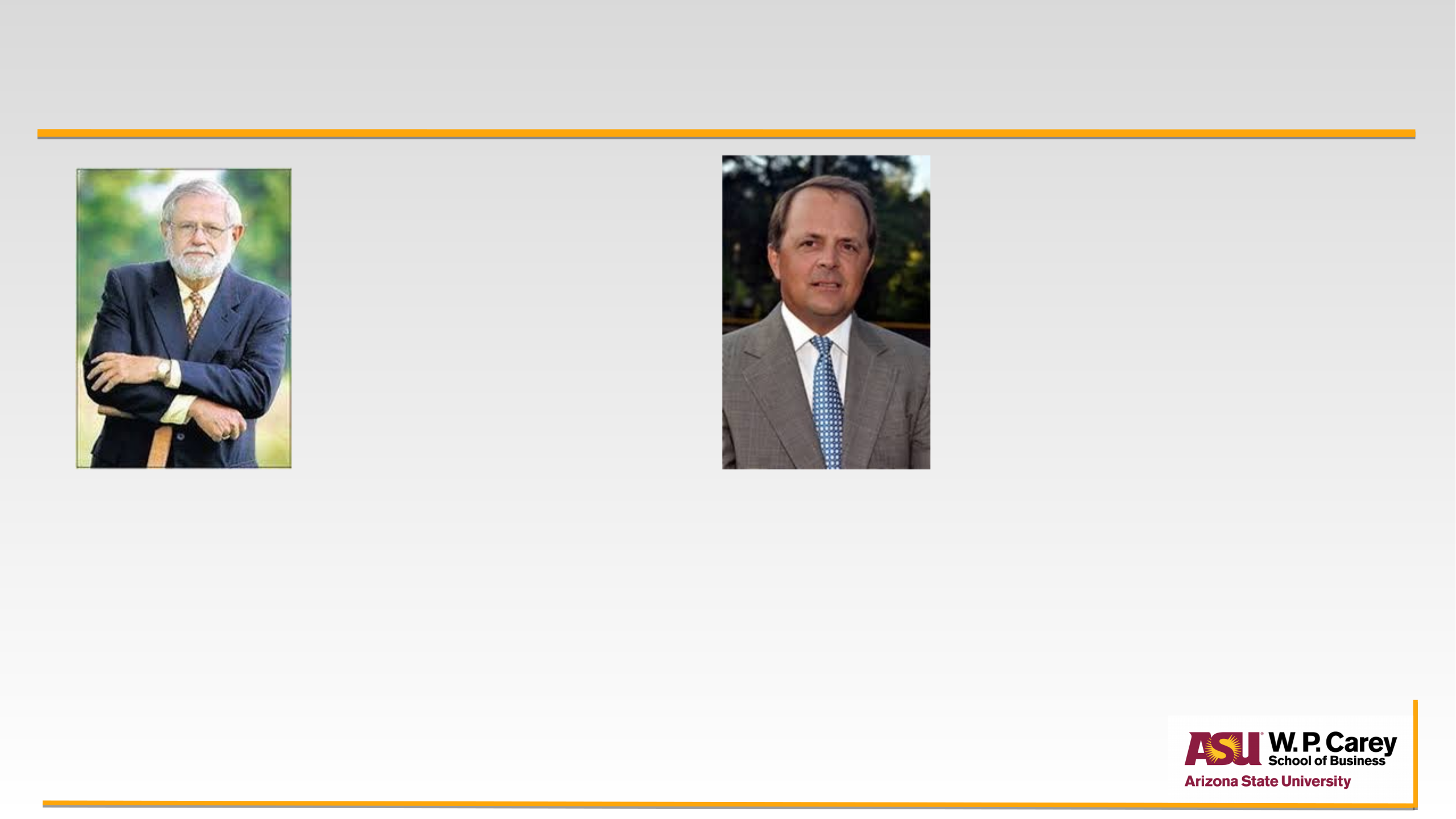
Felt uncomfortable with Scrushy from the
start
HealthSouth co-founder and CFO
1984-1997
Sentenced and served 3 months in
federal prison.
Worked for EY, one of the Big 4 accounting
firms for 5 years
HealthSouth controller and CFO
1997-2003
Sentenced to 27 months at a federal prison
camp.
Introduction to Aaron Beam and Weston Smith

Former CEO Richard Scrushy was the first CEO charged for violating the Sarbanes-
Oxley Act.
He was acquitted of all federal charges on June 28, 2005 after a jury trial in Birmingham.
Four months after the acquittal, Scrushy was charged with former Alabama Governor
Don Siegelman for:
Money laundering
Extortion
Obstruction of justice
Racketeering
Bribery
Scrushy spent six years in federal prison.
In a civil trial, Judge ruled in favor of the HealthSouth shareholders.
Scrushy was responsible for HealthSouth’s fraud.
Scrushy was ordered to pay $2.87 billion.

Rationalization
OpportunityMotive/Pressure
THE FRAUD TRIANGLE
3 Principal Drivers of Fraud

Four Stages of the Health South Fraud
1. Aggressive Accounting
Exploiting the grey areas of accounting
2. Acquisition of Other Companies
Capitalizing Start-up Costs
”Buying Future Earnings”
3. Large Company Acquisitions
Manipulating combined earnings (under-representing growth potential)
Problem was other companies were up to the same tricks.
4. “Making Things Up”
Fictitious Assets and False Entries
126,000 small journal entries per quarter to cover up the fraud

Biases
Overconfidence Bias
Tendency people have to be more confident in their own abilities than is objectively reasonable.
90% of people think they are above-average drivers.
50% of business people polled believed that they were in the top 10% ethically.
Conformity Bias
Tendency people have to behave like those around them rather than using their own personal
judgment.
Following the herd. Need to fit in.
Incrementalism
Slippery slope that often causes people to slide unintentionally into unethical behavior.
People’s brains are not adept at perceiving small changes. Continued exposure to unethical behavior is
desensitizing and makes those activities seem routine.
Series of small decisions can have a BIG impact.

Use tools to prevent escalation – address
issues early
Pay attention to the culture
Trust is built on telling the truth and not
telling people what they want to hear
Look for allies
Be willing to say NO.
Esq
W.P
Carey
School
of
Business
Arizona
State
University
What is a Rationalization vs. Reasoning?

Categories of Rationalizations
Moral Justification
Advantageous Comparison
Euphemistic Labeling
Minimize the Act
Denial of the victim
Displacing Responsibility
Diffusing Responsibility
Entitlement

R D K Phrase/
E
Moral Justification Reframing an act as having a moral purpose or off-setting benefit.
Advantageous Comparison Comparing an unethical act to something much worse so it seems trivial
by comparison.
Euphemistic Labeling Using language or milder words to make something sound
better than it really is.
Minimizing the Act Minimizing or ignoring the consequences of an action.
Denial of the Victim Placing blame on the victim, arguing the victim is too far removed, is
less than human, etc.
Displacing Responsibility Shifting responsibility to someone or something else.
Diffusing Responsibility Spreading responsibility among a larger group to lessen your share.
Entitlement Feeling that you deserve more or have been unfairly deprived of
something (regardless of facts).

PSU
W.P.Carey
Arizona
State
University
Rationalizations

S :
1It’s common practice,
everyone does it.
2It isn’t your job to worry
about it.
3You’re not being a team
player.
4This is nothing
compared to Enron.
5No one is getting hurt.
6I’m overworked and
underpaid.
7It was just creative
accounting.
8The company makes
too much money as it is.
Name that Rationalization. And how would you respond?
R C -Response

Reflection (Answer at least one)
What rationalization category are you most likely to use? Give an example.
Give me an example of a euphemism (e.g. term used to describe something in a less
offensive way).

