


Childrens Understanding of Intimate Partner Violence
Interparental aggression is a pervasive problem that affects the lives of millions of
children. Approximately 15.5 million American children are exposed to at least one act
of interparental violence every year, and seven million children live in households
characterized by severe intimate partner violence (McDonald, Jouriles, Ramisetty-Mikler,
Caetano, & Green, 2006), which may include one parent burning or scalding the other,
threatening or using a knife or gun on their partner, or forcing their partner to have sex
with them. Violence between caregivers falls on a continuum of interparental aggression
that includes both verbally and physically aggressive acts (Cummings, Kouros, & Papp,
2007). However, studies of children living in violent homes often rely on women and
children receiving services in intimate partner violence shelters (Hughes & Luke, 1998;
McDonald, Jouriles, & Skopp, 2006). Families who seek shelter services are
characterized by particularly high levels of violence compared to families living in the
community (Straus & Gelles, 1995) and often have very low income (McDonald,
Jouriles, & Skopp, 2006), making results from studies of shelter populations difficult to
generalize to other abusive families.
Children exposed to interparental aggression are vulnerable to a myriad of
negative outcomes (For a review see, DeBoard-Lucas & Grych, 2011a). At the verbal
end of the marital conflict continuum, conflict is associated with internalizing and
externalizing problems in children (Grych, Harold, & Miles, 2003). Moving up the
continuum to children exposed to physical acts of aggression, these children often go on
to suffer memory and concentration impairments (Margolin, 2005), poor social
competence, and internalizing and externalizing problems (Margolin & Gordis, 2004;

Rossman, 2001). The negative effects of violence exposure are not limited to the
childhood years, as children exposed to intimate partner violence are more likely to
experience and commit violence in their adult romantic relationships than children from
non-violent homes (Ehrensaft et al., 2003).
The connection between exposure to interparental aggression and children’s own
future episodes of violent behavior is clear (Ehrensaft et al., 2003). Why, though, does
this pattern develop? What types of experiences and relationships affect whether children
use violence? Children’s understanding of events has the potential to influence their
behavior (Crick & Dodge, 1994; Fivush, 2002); for example, several studies show that
attitudes about violence mediate the relationship between parent-child aggression and
children’s own aggressive behavior (Brockenbrough, Cornell, & Loper, 2002; Dodge,
Pettit, Bates, & Valente, 1995; Calvete, 2007; Herrenkohl, Huang, Tajima, & Whitney,
2003). Similarly, children exposed to aggression between caregivers may develop
positive attitudes about resolving conflict with aggression and a greater willingness to use
violence (Ehrensaft et al., 2003; Jaffe, Hurley, Wolfe, 1990; Kitzmann, Gaylord, Holt, &
Kenny, 2003). How are attitudes and other aspects of a child’s understanding of intimate
partner violence shaped by other factors?
Strong evidence for a relationship between beliefs about aggression and violent
behavior suggests that it is important to know what factors shape attitudes and other
aspects of children’s understanding of violence. Understanding violence encompasses
not only causal knowledge (Why does violence occur?), but also attitudes regarding
acceptability of violence. Given the connection between an understanding of social
situations and behavioral responses in those situations (Crick & Dodge, 1994), knowing

why children believe intimate partner violence occurs is an important step towards better
understanding how to intervene with children who may be at risk for aggressive behavior
and involvement in violent relationships (Ehrensaft et al., 2003).
The goal of the present study was to identify factors that may shape 9- to 14-
yearold children’s understanding of intimate partner violence. Understanding of intimate
partner violence was conceptualized as including children’s reports of why it occurs and
beliefs about the degree to which it is considered acceptable. Focusing on a 9- to 14year-
old sample has advantages because children over the age of 8 have a better understanding
that other people’s behaviors have intentions and can be based on plans (Corrigan, 1995;
Wellman, 1990). By this age, children have also developed the cognitive ability to
consider other people’s perspectives and intentions (Fraser, 1996).
Children’s cognitive development has relevance not only to the way they perceive
and understand interpersonal interactions, but also to how they respond. According to
Fraser (1996), the degree to which children behave aggressively in peer relationships
decreases and stabilizes by age nine. If high levels of aggressiveness are evident beyond
that point, children are at higher risk for delinquency and other behavior problems. Age
nine appears to be a good prevention and/or intervention point for children at risk for
behavioral concerns, making it especially important to understand why they believe
intimate partner violence occurs. Because early adolescence is marked by a variety of
social and psychological changes (Eccles, 1999; Kowaleski-Jones & Duncan, 1999), the
influence of other factors, such as dating relationships, should be taken into account when
considering children’s perceptions of relationship aggression. Social learning theory

(Bandura, 1986; O’Leary, 1993; Riggs & O’Leary, 1989) and ecological systems theory
(Bronfenbrenner, 1977, 1986) suggest that parents and previous experiences with other
forms of violence may affect the development of children’s understanding of intimate
partner violence.
Causal Understanding of Intimate Partner Violence
Children’s understanding of causality is central to any domain concerned with
understanding events (Corrigan & Denton, 1996). According to social information
processing theory, children draw on social cues from their environment and then give
meaning to those cues based on their understanding of other’s intentions and causal
attributions (Crick & Dodge, 1994). Given that causal attributions help a child make
meaning of social cues (Crick & Dodge, 1994), learning the reasons children believe
intimate partner violence occurs is critical to understanding how they process and
respond to aggression between caregivers. For example, children may attempt to
intervene in or stop violence in their home based on their understanding of why it is
happening. Children who feel they have caused interparental conflict may have a
stronger motivation to intervene or to attempt to protect a parent, which can place them in
physical danger. In this sense, if children feel they are the cause of aggression between
their parents, they may feel responsible for ending it or mediating the conflict in some
way. If children blame themselves for aggression between their parents, they may also
feel responsible for preventing future violent episodes. Alternatively, if children feel that
aggression was caused by one of the parents doing something wrong, they may be less
likely to attempt to end an argument by intervening.

Despite the potential for children’s causal understanding of intimate partner
violence to contribute to aggressive behavior in the short- and long-term, only one study
has examined the causal attributions children make for its occurrence and none have
sought to identify the specific reasons that children give for violent behavior (Lehmann,
1997). The sample in this study was comprised of children and mothers receiving
services at intimate partner violence shelters and child protective agencies. Children
ranging in age from 9- to 15-years participated in a structured interview, the Children’s
Impact of Traumatic Events – Family Violence Form (CITES-FVF) that assesses
Posttraumatic Stress Disorder (PTSD) symptoms and attributions for family violence
(Lehmann, 1997). Children indicated the extent to which they blamed themselves for
intimate partner violence and also the degree to which they thought these events
happened because of external factors, such as lack of safety. Attributions for intimate
partner violence pertained to: ‘the world as a dangerous place’, ‘personal vulnerability’,
and ‘self-blame/guilt’. All questions on the CITES-FVF were adapted from the CITESR,
which was designed for use with victims of sexual abuse, to be specific to family
violence. When children reported stronger agreement that family violence occurred due
to the world being a dangerous place, personal vulnerability, and personal selfblame/guilt,
they had significantly more PTSD symptoms (Lehmann, 1997).
Although this study suggests that attributions about intimate partner violence
(Lehmann, 1997) can have bearing on children’s adjustment, the attributions measured
general categories rather than specific reasons and thus provide little insight into more
precise causes children may attribute to the events. Knowing, for example, that children
believe intimate partner violence occurred because the world is dangerous or because of

personal responsibility provides insight into aspects of causal understanding, but these
constructs do not delineate specific reasons children attribute to the causation of an event.
It does not clarify, for example, what specifically was dangerous about the world or what
exactly the child believes s/he did to cause violence. The specific causal explanations
children generate for intimate partner violence have the potential to inform their
expectations about its occurrence or recurrence in their home, their perceptions of the
origins of violence (internal versus external causes) and whether it is controllable, and
also their emotional reactions to violence if it occurs (Thompson, 1989).
Beliefs and Attitudes about Intimate Partner Violence
Beliefs or perceptions of whether or not a behavior is normative, acceptable, or
morally sanctioned influence behavior because they define and restrict the range of
acceptable and forbidden response options (Huesmann & Guerra, 1997). Approval of
aggression is significantly associated with heightened aggressiveness in children and
adolescents (Brockenbrough et al., 2002; Calvete, 2007; Huesmann & Guerra, 1997;
Vernberg, Jacobs, & Hershberger, 1999). Believing that violence is acceptable may not
only influence whether a child behaves aggressively, but also may affect the impact that
someone else’s aggression has on the child. If children believe that violence is an
acceptable means of resolving conflict, they are more likely to think of aggressive
behaviors when generating solutions for conflict management and to feel efficacious in
using them (Crick & Dodge, 1994). When children observe others behaving aggressively,
they may not be as distressed or may be less likely to intervene if they are accepting of
violence relative to children who do not approve of aggression. Perhaps violent acts are
not perceived as traumatic if children feel it is acceptable to behave aggressively.

Although research has shown an association between beliefs about the
acceptability of aggression and children’s own aggression, few studies have examined
children’s specific beliefs about intimate partner violence (Astor, 1994; GrahamBermann
& Brescoll, 2000). Graham-Bermann and Brescoll (2000) assessed the relationship
between intimate partner violence experienced by mothers and children’s stereotyped
beliefs about family roles and violence in a sample of 6- to 12-year-old children.
Mothers and children were recruited from the community via fliers, newspaper
advertisements, schools, stores, and social service agencies. Few participants (less than
5%) were living in an intimate partner violence shelter when they participated in the
study. Mothers reported on the extent to which they had been physically and
psychologically victimized by a partner in the previous year. Scores on the CTS
indicated that women in the sample had experienced an average of 15 physically abusive
and 70 psychologically abusive events in the previous year. Children indicated the
degree to which they agreed with four family stereotypes: ‘domination,’ (e.g., ‘The man
is the king of the castle, he is in charge of the whole family’), ‘violence as the parent’s
prerogative’ (e.g., ‘Husbands can hit wives’), ‘traditional family form,’ (e.g., ‘It is wrong
when there is no man in the family’), and ‘right to privacy and autonomy from outside
institutions’ (e.g., ‘The police cannot tell fathers what to do when they are inside their
own house’). When age and family income were taken into account, intimate partner
violence significantly predicted agreement with stereotyped family beliefs for minority
but not nonminority children. Specifically, degree of intimate partner violence
experienced by the mother predicted stronger endorsement by children that violence is a
parent’s prerogative (Graham-Bermann & Brescoll, 2000).
This study demonstrates a link between intimate partner violence experienced by

mothers and children’s beliefs that it is acceptable and even a right for parents to
physically strike each other and their children (Graham-Bermann & Brescoll, 2000).
However, limitations of this study speak to the need for further research in this area.
Although this study provided initial support for a link between intimate partner violence
in the home and children’s beliefs, it focused more on general family stereotypes than
beliefs specific to intimate partner violence. Only one of the four belief subscales
pertained to violence at all and of those items, only two were specific to interparental
violence (‘Husbands can hit wives’ and ‘Wives can hit husbands’). The remaining items
focused on parent to child aggression.
Beliefs about intimate partner violence also include moral judgments, which
pertain to an individual’s understanding of the ideal way for people to interact with one
another (Smetana, 1999). Although morality is defined in a variety of ways, theories
generally agree that it encompasses a system of rules that guides behavior in social
settings and is based on protecting the welfare of others, ensuring justice, and
safeguarding rights (Smetana, 1999; Turiel, 2006). Only one study to date has examined
children’s moral reasoning as it applies to intimate partner violence (Astor, 1994). Moral
reasoning is considered distinct from moral judgments, as reasoning involves the process
of reaching a particular judgment (Astor, 1994). Astor compared moral reasoning about
provoked and unprovoked interparental violence in a sample of violent and nonviolent 8-
to 12-year-old children attending school in the inner city. Teachers and other school
personnel rated the frequency with which children engaged in acts of physical harm
against others. Children with the highest frequency of aggressive behaviors were
classified as violent. Participants were asked to evaluate a series of vignettes that

pertained to unprovoked acts of physical aggression and others that included acts of
psychological aggression followed by physical retribution. Children were then
interviewed and were asked to provide evaluations that consisted of judging the physical
aggression as ‘all right’ or ‘not all right’ as well as providing a reason for their
determination. Results of this study indicated that violent children were significantly
more likely than nonviolent children to approve of interparental violence when the
perpetrator was provoked. When asked to provide justification for their judgments,
violent children focused on the psychological harm the aggressor felt in connection to
being provoked (i.e. through name calling, lying, stealing). In contrast, nonviolent
children focused on the physical harm associated with the act of hitting. Whereas violent
children focused on provocation as immoral, nonviolent children viewed both
provocation and retaliation as wrong.
The attention aggressive children gave to provocation (Astor, 1994) suggests that
making a moral judgment involves taking issues such as consequences and intentions into
account (Fontaine, Salvano-Pardieu, Crouzet, Pulford, 2002). Children who feel that
intimate partner violence leads to negative consequences may be more likely to develop
attitudes that violence is unacceptable relative to children who associate it with neutral or
even positive outcomes. Additional research also is needed to understand how children
come to view intimate partner violence as morally acceptable in the context of
‘provocation.’ Knowing how children develop the idea that intimate partner violence is
morally acceptable may inform intervention or prevention techniques designed to help
children at risk for aggressive behavior.

A link between beliefs about aggression in specific situations and children’s own
use of aggression was noted in a study by Zelli and colleagues (1999). Results of this
study suggested that the way children process social situations mediates the longitudinal
relationship between beliefs about aggression in specific situations (including being
provoked) and behavior (Zelli et al., 1999). A similar model examining social
information processing as a mediator of the relationship between beliefs about general
views of aggression and behavior was not significant. Findings from Zelli and
colleagues’ (1999) study highlight the importance of distinguishing children’s beliefs
about global aggression from beliefs about aggression in specific situations and suggests
that results from studies of beliefs regarding peer aggression or general aggressiveness
cannot necessarily be generalized to intimate partner violence.
Although Zelli and colleagues (1999) highlight the importance of examining
beliefs about aggression in specific situations, other researchers point to a connection
between more global beliefs about violence and use of aggressive behavior. For example,
schema theory (for a review, see Fivush, 2002) specifies that schemas organize the way
events are perceived and processed, which implies that schemas for ‘aggression’ as an
event, may actually generalize from one type of aggression to other types of aggressive
behavior. The link between pro-aggressive attitudes and aggressive behavior suggests
that children who view intimate partner violence as normative and justified may behave
more aggressively overall or may do so in future romantic relationships; however future
research is necessary to clarify this question and to examine whether beliefs operate in the
same manner for distinct types of violence.
Endorsement of aggression has been linked to aggressive behavior for both boys

and girls (Vernberg et al., 1999); however, research has revealed gender differences in
favorable attitudes towards aggression (Huesmann & Guerra, 1997; Slaby & Guerra,
1988). In a large sample of 9-12-year-olds, Crick and colleagues (1996) found that both
boys and girls regarded physical aggression as the normative way for boys to express
anger and they agreed that it is more normative for boys than girls to be physically
aggressive. Children’s views of the normative nature of boys’ use of physical aggression
suggests that children may regard intimate partner violence committed by fathers as more
acceptable than aggression used by mothers.
Factors Proposed to Affect Children’s Understanding of Intimate Partner Violence
Children’s understanding of intimate partner violence has implications for their short- and
long-term susceptibility to engaging in aggressive behaviors (Ehrensaft et al., 2003). The
processes through which children form causal knowledge and beliefs about interparental
violence are unclear. Previous research suggests that factors that may shape children’s
understanding of intimate partner violence include parent influences, such as engaging in
interparental aggression (Quigley, Jaycox, McCaffrey, & Marshall, 2006) and how they
talk to their children about aggression (Sales, Fivush, & Peterson, 2003), experiences
with other forms of violence, such as parent-child aggression (Bandura, 1986;
Bronfenbrenner, 1977, 1986; O’Leary, 1993; Riggs & O’Leary, 1989) and community
violence (O’Donnell, Schwab-Stone, & Muyeed, 2002), and children’s empathy and
perspective taking abilities (Luthar, Cicchetti, & Becker, 2000). Children’s ability to
empathize with others’ feelings and see situations from their perspective may contribute
to their perception that intimate partner violence is unacceptable.

Parental Influences
Parents and caregivers have significant potential to shape their children’s
understanding of and beliefs pertaining to intimate partner violence through the way they
talk about violence and also through their actions. Social learning theory highlights the
importance of considering parents’ and caregivers’ influences on children’s understanding
of intimate partner violence. This theory suggests that children learn behavior by
observing others’ actions and understanding when is it appropriate to use certain
behaviors (Bandura, 1986; O’Leary, 1993; Riggs & O’Leary, 1989). Parent involvement
in aggressive behaviors may communicate the message that violence is justified, which
may subsequently increase children’s likelihood of using violent tactics (Quigley et al.,
2006).
Kirwil (1989) conducted one of the few examinations of parental justification of
aggression as an influence on their 8-9-year-old children’s own aggression. The parent
with the highest involvement with the child’s education (mother or father) was selected to
participate. Parents in this study then provided ratings of the degree to which
hypothetical aggressive behaviors, ranging from hitting to killing another person, were
justified under each of the following circumstances: self-defense, defense of another
person, emotional excitement, punishment, defense of personal property, and problem
solving. Results of this study indicated that children were more aggressive when mothers
justified violence in the context of emotional excitement and when fathers justified
violence committed in self-defense. Kirwil suggested that children tend to approve of
and use aggression when their parents have similar views. In regards to the differences in
mothers’ and fathers’ justification of violence, Kirwil proposed that fathers tend to be

more involved in parenting when their children are more aggressive. Although results
suggest that parental justifications of violence may influence child aggression through the
development of children’s own violence justifications, this was not explicitly examined.
Grych and Cardoza-Fernandes (2001) suggested that children who form perceptions that
their parents’ aggression is morally acceptable or is effective in achieving goals may be
more likely to remember those behaviors and to perhaps utilize them in their own
conflicts. If children believe that their parents view aggression, particularly their own, as
acceptable, they also may come to justify its use.
Parents may also shape children’s understanding of why intimate partner violence
occurs in the way they talk to them about violent events. According to Vygotsky (1978),
parents scaffold understanding of events for children by prompting and cueing them in
conversation. The aspects of events that parents emphasize teach children which
components are important and thus, help facilitate their interpretation of events and
formation of memories. In this sense, how parents discuss violence with children may
shape how they understand these events. Parent and child reports of negative events have
been found to be related in terms of parents’ and children’s tendencies to elaborate on
details pertaining to an injury the child received (Peterson, Sales, Rees, & Fivush, 2007;
Sales et al., 2003) and also to focus on similar content (Sales et al., 2003). In discussions
with their children, parents elaborated more on details pertaining to the cause of negative
rather than positive events (Peterson et al., 2007). Similarly, Tessler and Nelson (1994)
found that a few weeks after an initial parent-child discussion, children independently
provided representations of benign events that were similar to those provided by their
mothers. Application of these ideas to intimate partner violence suggests that if parents

talk with their children about interparental aggression, they may be influential in shaping
children’s perspectives on what factors caused the aggression. Parental explanations of
the causes of intimate partner violence may influence children to adopt similar
perspectives and to form related event perceptions (Vgotsky, 1978). Children’s
independent perceptions of the causes of aggression may then, be influenced by their
discussions with a parent about ‘why’ the aggression occurred.
Several of the studies regarding parent-child discussions of the causes of events
were completed with preschool-aged children (Peterson et al., 2007; Sales et al., 2003;
Tessler & Nelson, 1994) and pertained to neutral events (Tessler & Nelson, 1994) or
negative events of a non-interpersonal nature (Peterson et al., 2007; Sales et al., 2003).
Studies pertaining to intimate partner violence are needed to assess how parents’
discussions of this type of interpersonal event may influence children’s own accounts.
How parents explain the occurrence of intimate partner violence will likely shape the
development of children’s causal understanding by providing them with a framework for
interpreting and remembering what they have observed.
Generating causal explanations for the occurrence of violence is likely to be an
especially difficult task for children when the violence has occurred between their parents
because they must make sense of a variety of factors, including which parent is the
victim, their relationship to the victim and the perpetrator, and whether violence is
considered to be an act of self-defense (Fosco, DeBoard, & Grych, 2007). Cater (2005)
interviewed 10 Swedish children living in an intimate partner violence shelter about why
they believed their fathers had been violent towards their mothers. Some children
indicated that their fathers acted violently because they were bad people while others

focused on their fathers’ positive qualities or indicated that although their fathers did
something wrong, they were generally good people. This suggests that not all children
who observe violent acts between caregivers develop supportive attitudes about intimate
partner violence. Discussions with parents who regard intimate partner violence as
unacceptable may help children resolve the conflicting messages they receive when
witnessing violence at home and to evaluate issues of intention and blame. Without these
discussions, children may develop the belief that violence is acceptable, particularly if
they have a secure relationship with one or both caregivers who have committed violent
acts. If a child identifies closely with a parent, they may be more influenced by that
parent’s behaviors and opinions. When a parent they look up to and respect uses
violence, they may send the message to their child that aggression is acceptable.
Evidence of parental influence on children’s beliefs and judgments about
aggression can be found in a study in which mothers explained the causes of ambiguous
social events to their children (Root & Jenkins, 2005). When mothers downplayed
prosocial explanations in favor of a focus on the hostile intent of the characters’ actions,
children were more prone to expressions of anger than of other negative emotions in
social interactions one year later (Root & Jenkins, 2005). Although these findings were
only marginally significant, they suggest that parents’ beliefs about events are important
to children’s perceptions. The link Kirwil (1989) demonstrated between parental
justification of violence and children’s aggressive behavior may also lend support to this
idea; however, because children’s beliefs were not examined in this study, it can only be
inferred that parents influenced their children’s behavior by shaping their beliefs.

Parents’ direct discussion of violence that has occurred in the home is likely to have an
especially powerful impact on children’s beliefs about intimate partner violence. For example,
Grych and Fincham (1993) found that children were less likely to be worried about being drawn
into interparental conflict and to feel less responsibility for intervening in it when parents
directly explained that the child was not to blame for causing the conflict. If parents engage in
behavior considered to be verbally and/or physically aggressive, they are conveying a message
that this behavior is acceptable. Children are then likely to be more susceptible to developing
beliefs that it is justified. However, children are not passive receivers of information. They
‘recreate’ or ‘reconstruct’ beliefs from messages they receive (Edwards, 1993). Parental
discussions of aggression a child has witnessed are likely to be important to that reconstructive
process in that explanations convey ideas about what is acceptable behavior. Parents may offer
an interpretation of the violence that differs from that formed by the child. Children may then
incorporate their parents’ explanations into their own schemas and develop ideas about different
situations in which violence is acceptable.
In summary, parents may influence children’s causal attributions for and beliefs
about intimate partner violence. Parents have the opportunity to scaffold children’s
understanding of what causes violence between parents. Similarly, if parents discuss
violence as morally acceptable, children will likely adopt similar views. Children whose
parents do not discuss violence with them may be left to generate their own causal
explanations and opinions and may come to regard violence as justified if they observed a
caregiver getting goals met based on the use of violent behavior (Bandura, 1986). In
contrast, parents who talk about violence in a disapproving manner may discourage
children from regarding it as acceptable.

Experiences with Other Forms of Aggression
Social learning theory (Bandura, 1986; O’Leary, 1993; Riggs & O’Leary, 1989)
suggests that children’s experiences with other types of violence will also affect their
causal understanding and beliefs about intimate partner violence. Research has shown
that beliefs about aggression affect the relationship between parents’ physical conflict and
children’s own aggression (Graham-Bermann & Brescoll, 2000; Marcus, Lindahl, &
Malik, 2001) but has not investigated how these experiences shape children’s
understanding of violence. Drawing on the literature pertaining to parent-child
aggression may provide some preliminary insight.
Child and adolescent victims of maltreatment are able to identify causal
attributions for the abuse (Feiring, Taska, & Chen, 2002; McGee, Wolfe, & Olson, 2001).
Some causes pertained to victims’ own traits or behavior and others involved the
perpetrator. Although the children included in these studies were victims of sexual abuse
or other types of maltreatment, the results highlight the importance of examining
children’s perceptions of the causes for aggression. Perhaps children will generalize
causal attributions about their own experiences with maltreatment to those they make
about intimate partner violence. Whereas children who emphasize perpetrator-related
causes for aggression they directly experienced may be primed to view the perpetrator as
causing interparental aggression, those who blame themselves for parent-child aggression
may also feel they caused aggression between caregivers, particularly if the parents were
arguing about a child-related topic (Grych & Fincham, 1993). However, a tendency to
engage in self-blame for parent-child aggression may lead children to blame a victim of
intimate partner violence if they perceive the victim as having done something wrong.

Examining children’s experiences with both parent-child aggression and interparental
aggression provides an opportunity to gain insight into how children develop causal
knowledge of intimate partner violence.
Parent-child aggression also may have bearing on children’s perceptions that
intimate partner violence is acceptable or justified. Although attitudes about the
acceptability of violence have been shown to mediate the link between maltreatment and
aggression in children (Dodge et al., 1995) and adolescents (Brockenbrough et al., 2002;
Calvete, 2007; Herrenkohl et al., 2003), research has focused most heavily on adolescents
(Brockenbrough et al., 2002; Calvete, 2007; Herrenkohl et al., 2003). Because
preadolescents also are capable of considering other people’s intentions and perspectives
(Fraser, 1996), they too are susceptible to forming beliefs that violence is acceptable or
justified if they have experienced parent-child aggression. In the same way that parents
communicate norms about violence through the way they talk to children about it
(Vygotsky, 1978), parents who are physically and verbally aggressive against their
children may convey messages that such behavior is acceptable.
In contrast, because children whose parents have been physically or verbally
aggressive towards them have been personally hurt by aggression, it is also possible that
they will develop beliefs that aggression is wrong. If these beliefs are generalized to
intimate partner violence, children may also view aggression between caregivers as
unacceptable. This may be especially likely if children have empathy for the person
identified as the victim. Personal experiences with psychological and physical aggression
may encourage children to take the perspective of another person who is being
victimized. Children may have more empathy for a victim of intimate partner violence if

they themselves have experienced aggression, which may encourage them to believe that
intimate partner violence is not justified. However, the tendency for child maltreatment
victims to blame themselves for the abuse (Feiring et al., 2002; McGee et al., 2001)
suggests that children who have experienced some form of aggression may place blame
on victims of intimate partner violence. More research is needed to clarify the role of
parent-child aggression in connection to beliefs about intimate partner violence.
Although research supports children’s personal experiences with aggression as having a
role in the development of their causal attributions and beliefs about intimate partner
violence, some studies show that it has no bearing on moral judgments of violence
(Fontaine et al., 2002; Smetana et al., 1999; Smetana, Kelly, & Twentyman, 1984).
Although maltreated and nonmaltreated children did not differ in their moral judgments
of aggression (Fontaine et al., 2002; Smetana et al., 1984), methodology may have
affected the findings. Children were specifically told that the perpetrator in the vignettes
‘had a good reason’ to engage in aggression (Fontaine et al., 2002) or were not provided
context to aid in their decision making (Smetana et al., 1984). However, the children in
these studies may not have agreed with the researchers’ assertion that the aggression was
valid. If they had been able to personally evaluate the situations, they may have decided
that the aggression was invalid and therefore unacceptable. This suggests that children
may have made different moral judgments if they had been presented with a scenario to
evaluate for motives and intentions (Smetana et al., 1984). These methodological issues
leave room for further exploration of children’s experiences with aggression to shape
their moral judgments of intimate partner violence.
Given that experiences with multiple risk factors have a cumulative effect on

children’s adjustment (Gerard & Buehler, 2004a, b; Sameroff, Gutman, & Peck, 2003),
exposure to community violence in addition to interparental aggression and parent-child
aggression may also impact children’s understanding of intimate partner violence.
Children who are exposed to community violence report more depression and anxiety,
and are also more likely to engage in violent or aggressive behaviors than non-exposed
children (O’Donnell et al., 2002). Gorman-Smith and colleagues (2004) found that
exposure to community violence during midadolescence was positively related to
violence perpetration in late adolescence. The mediating relationship that attitudes about
violence have been shown to have between child maltreatment and aggressive behavior
(Brockenbrough et al., 2002; Dodge et al., 1995; Calvete, 2007; Herrenkohl et al., 2003)
suggests that exposure to community violence may play a similar role in shaping
children’s beliefs about intimate partner violence and linking it to later violence
perpetration. Kuther and Wallace (2003) suggest that community violence exposure
corresponds with experiences with discrimination and inequality (Kuther & Wallace,
2003) that may influence children’s perceptions of the moral acceptability of intimate
partner violence. For example, youth living in violent neighborhoods may experience
conflict when attempting to decide what is ‘right’ and ‘wrong.’ Experiences such as
police being unresponsive to requests for help or seeing criminals returned to already
violent communities may send the message to children that justice and equality do not
apply to them. Children who experience this type of inequality may come to view
intimate partner violence as acceptable if, for example, they see it go unpunished in their
families or communities. If aggression between parents is a common occurrence,
children may come to view it as normative.

Exposure to community violence may similarly affect the causes children
generate for intimate partner violence. Fick and Thomas (1995) found that when children
(10 to 13-years-old) were exposed to higher levels of community and interparental
violence, they were less likely to feel that they were able to make choices that influence
their health. Children exposed to more community violence also felt that others,
including doctors, teachers, and parents did not have the ability to affect children’s
physical health. Perhaps children who are exposed to community violence come to view
the violence in their neighborhoods as uncontrollable. In attempts to increase their sense
of control over whether violence will happen to them, children may view community
violence as caused by external situations or the victims themselves. Children may then
develop similar ideas about what causes intimate partner violence. Specifically, they may
be more likely to attribute intimate partner violence to situations or the behavior of the
person viewed as the victim rather than to perpetrator character traits. These perceptions
of aggression as due to situations or the victim may make violence seem more predictable
in children’s communities as well as in their homes. If children identify certain things
that a victim did to cause violence, they can decide not to engage in those behaviors and
seemingly, remove themselves from harm’s way. Because violence in the community
provides another context for understanding why aggression happens, children’s causal
attributions for this type of violence may generalize to their perceptions of why parents
use violence against each other.
Empathy and Perspective Taking
Although this review has thus far focused on factors proposed to shape beliefs that
are accepting of intimate partner violence, not all children will view violence as

acceptable. Personal attributes (Luthar et al., 2000) such as empathy and perspective
taking may shape children’s beliefs about the acceptability of interparental violence.
Research has shown that aggressive children tend to process conflict by quickly
attributing hostile attributions to others’ actions, generating more aggressive than
prosocial solutions, and evaluating aggression in a positive light (Crick & Dodge, 1994).
Children who are able to consider multiple perspectives may produce several reasons for
the occurrence of intimate partner violence. They may view causes from the perspective
of each person involved in the violence as well as from their own, which may facilitate
comparison and evaluation of the causes. Children may then develop attitudes that
violence is not acceptable if they are able to empathize with the victim and to reject
causes that justify the perpetrator’s actions. Having empathy for a parent victimized by
interparental aggression may be especially likely if children have a close relationship with
the victim. Being able to understand how that parent may feel when harmed by a partner
may lead children to view intimate partner violence as wrong and to be less likely to use
aggression themselves.
Methodological Issues
It has been established through previous research that exposure to intimate partner
violence (Ehrensaft et al., 2003) is linked to children’s own use of aggression. Little is
known, however, about the experiences and factors that contribute to children’s
aggressiveness. Children’s understanding of why interparental aggression happens and
whether it is acceptable are likely connected to children’s use of aggression, yet very little
research has focused on these topics. Although children’s approval of violence is
associated with heightened use of aggression, few studies have focused on children’s

beliefs about the acceptability of intimate partner violence (Astor, 1994; GrahamBermann
& Brescoll, 2000) and only one study has examined their perceptions of what causes this
type of violence (Lehmann, 1997). Knowing more about the factors that shape why
children think violence between parents happens and whether it is acceptable has the
potential to inform intervention and prevention work and thus, disrupt the cycle of
violence that is present for too many children. In addition to addressing the paucity of
research on children’s understanding of interparental violence, considering the
methodological limitations of existing work will show where improvements can be made
in our understanding of children’s perceptions of violence.
Thus far, assessment of children’s attitudes towards violence has relied on survey
methods in which children must respond to items presented to them (Brockenbrough et
al., 2002; Vernberg et al., 1999). A shortcoming of utilizing only self-report surveys is
that researchers may make assumptions about the factors children consider most salient in
violent situations. Few studies have asked children to provide their own explanations for
why violence occurs (Sparks, 1994). Using open-ended questions to directly ask children
why they believe violence has been committed or why they believe it is or is not justified
would likely provide better insight into the connection between violence exposure and
children’s own aggressive acts because it allows them to provide their ideas without
limiting the topics to those offered by researchers (Schwarz, 1999).
Additional research that supplements quantitative methods with qualitative
interviews is needed to enhance knowledge of why intimate partner violence is believed
to occur and how violence beliefs are shaped. However, interviews conducted with
children in intimate partner violence shelters would likely yield different beliefs about

and perceptions of the causes of intimate partner violence compared to those conducted
with children living in the community. Given the discrepant rates of physical aggression
experienced by women in the two settings, generalizability of findings from studies
including women and children living in intimate partner violence shelters to families
living in the community is questionable. For example, Grych and colleagues (2000)
found that women seeking shelter services experienced high levels of violence, with 75%
of women reporting that they were ‘kicked, bit, or hit with a fist’ by their partner in the
past year and 19% of these women indicated that this had happened ‘more than 20 times.’
In contrast, studies including community samples of couples with children typically find
low rates of violence, with only 21% of couples reporting one or more acts of physical
aggression (McDonald, Jouriles, Ramisetty-Mikler, et al., 2006). Levels of violence
experienced by couples in the community are also less severe, with approximately 14%
being classified as ‘moderately’ aggressive and another 14% as ‘severely’ aggressive
(Cummings et al., 2007).
Recruiting mothers and children from schools provides a more representative
view both of women’s and children’s experiences with interparental aggression and
children’s understanding of violence than can be obtained in a shelter sample.
Furthermore, because women and children living in intimate partner violence shelters
have recently left their homes, they are often in a transitional period and are under high
levels of stress during their time of participation in research studies. Using a community
sample of women and children allows them to participate when their environment is less
chaotic. Incorporating qualitative methods in a community sample allows children to

lend their voice to what little is known about their understanding of intimate partner
violence without limiting them to the topics typically offered by researchers.
The following hypotheses were examined:
Factors expected to shape children’s perceived causes of intimate partner violence
1.) Mothers and children are expected to report similar causes for violence, as
reported by each in their respective reports on the vignettes. It is expected that if
mothers indicate a specific factor(s) as a cause of intimate partner violence, that
children will identify the same cause(s) (see Figure 1)
2.) Interparental aggression, parent-child aggression, and community violence also
are expected to predict children’s perceived causes for intimate partner violence,
as described in the interviews and the vignettes. It is expected that the aggression
variables will predict children’s endorsement of certain causal explanations for
interparental aggression. Without knowing what categories will be produced from
the vignettes or semi-structured interviews, specific hypotheses could not be made
a priori (see Figure 1)
a. However, if children report causes similar to those found in pilot data
(DeBoard-Lucas & Grych, 2011b), it may be expected that exposure to
interparental and parent-child aggression will predict children reporting
the victim provoking the perpetrator, anger, and characteristics of the
perpetrator as causes for interparental aggression. Previous research has
found that children exposed to intimate partner violence (Cater, 2005;
DeBoard-Lucas & Grych, 2011b) and those who have experienced

maltreatment (Feiring et al., 2002; McGee et al., 2001) have generated
similar internal and external causes for this type of violence.
b. Community violence is expected to predict children’s endorsement of
provocation as a cause of interparental violence, based on the link between
exposure to community violence and youths’ loci of control (Fick &
Thomas, 1995).

Factors proposed to shape children’s beliefs about the acceptability of intimate partner violence
3.) Mothers’ and children’s perceived causes of intimate partner violence were
expected to predict children’s beliefs about the acceptability of interparental

violence. Based on the pilot data described above (DeBoard-Lucas & Grych,
2011b), it was expected that when mothers or children described externally based
explanations for violence (i.e. victim provoked the perpetrator), children would
view violence as more acceptable because the aggression is seen as deserved. In
contrast, internally based causes (i.e. perpetrator character traits) were expected to
predict stronger agreement with the belief that intimate partner violence is
unacceptable, based on the perception that internally based causes are more stable
and may be tied to detrimental outcomes such as violence (see Figure 2)
4.) Based on social learning theory (Bandura, 1986; O’Leary, 1993; Riggs &
O’Leary, 1989), it was hypothesized that higher levels of interparental-aggression,
parent-child aggression, and community violence would predict a stronger belief
that intimate partner violence is acceptable (i.e. higher score on ratings of
acceptability) (see Figure 3)


5.) The association between violence exposure and children’s beliefs about
interparental violence was expected to be moderated by mothers’ beliefs about the

acceptability of intimate partner violence. When mothers were more accepting of
violence, it was hypothesized that there would be a stronger relationship between
each of the forms of aggression and children’s beliefs about the acceptability of
intimate partner violence. In this way, mothers may exacerbate this association if
they endorse acceptance of interparental aggression. Alternatively, if mothers
communicate their disapproval of violence, they may have the potential to protect
against a positive association between violence exposure and children’s beliefs
about its acceptability (see Figure 3).
6.) Higher levels of perspective taking and empathy were expected to predict stronger
endorsement of the belief that domestic violence is not acceptable. Main effects
were predicted because empathy and perspective taking were expected to be
relevant to acceptability beliefs for all children, regardless of other experiences
(see Figure 2).
Method
Participants. One hundred thirty-seven mothers and children were recruited for
participation from six local Catholic schools (see Table 1 for demographic information).
Of the parents who responded to letters describing the study, 66% participated. These
schools serve students from a range of socioeconomic and ethnic backgrounds and accept
school vouchers. Children ranged in age from 9 to 14, with the majority of children
between the ages of 9 and 11 (age 9, n= 15; age 10, n = 37; age 11, n = 32; age 12, n =
26; age 13, n = 18; age 14, n= 8). Children in this age range were recruited because they
have developed the cognitive ability to consider other people’s perspectives and
intentions and also to reflect on their own thoughts, feelings, and behaviors (Fraser,

1996). Experiencing physical aggression in the home was not an inclusion criterion for
mothers or children.


Procedures. The majority of children and their mothers participated in the study at their
respective schools. Twenty-two mother-child pairs participated at a university research
lab due to scheduling or travel constraints. Mothers were given the option of completing
the research session in English or Spanish. Research teams consisted of either graduate
students in clinical psychology or an advanced undergraduate psychology student. The
graduate students have received clinical training in conducting interviews and
psychotherapy and have had supervised experiences administering treatment and
conducting assessments. As part of this clinical training, the graduate students have
obtained experience in discussing sensitive information such as interparental aggression
and parent-child aggression. The undergraduate students completed 15 hours of intensive
training including: reading and discussing articles about interviewing techniques and
specifically how to interview victims of abuse, conducting mock interviews with the
graduate assistants, and observing interviews conducted by the graduate assistants.
With the mother and child in the same room, the researchers explained the
purposes of the study and obtained the mother’s informed consent and the child’s assent
to participate. Researchers also explained that they are mandated reporters of instances of
intent to harm the self or others and cases of unreported child abuse. There were no
incidents in which children were reported to sustain bruises, cuts, or injuries from
parentchild aggression; therefore, no reports were made to child protective services
during the course of this research. According to Wisconsin state law (Crimes – General
Provisions, Privilege; Sec. 939.45; 2007-2008), parents are permitted to spank their
children as part of ‘reasonable discipline’; therefore, incidents of spanking that did not
result in bruises, cuts, or injuries were not reported.

A semi-structured interview, developed for this project, was used to collect
information pertaining to children’s perceived causes of violence and their beliefs about
the degree to which it is acceptable. Interviews and surveys were administered to the
mothers and children in separate rooms to enhance privacy. Research assistants asked the
mothers if they would like to complete the surveys independently or together with a
research assistant to allow women with reading difficulties to receive assistance without
being forced to ask for it. To enhance children’s understanding of the survey questions,
they were given the option of reading the items aloud to the research assistant or having
the assistant read the items to them. For children who reported being able to complete the
surveys independently, the researcher was available to respond to questions about item
wording.
In addition to completing surveys, mothers and children separately read and
responded to questions about two vignettes depicting interparental conflict that escalates
to physical aggression. Finally, they were brought back together and were asked to have
a discussion about one of the vignettes. The vignettes and the mother-child discussion
will be described in more detail in the measures section. Mothers were paid $30 and
children received $10 in cash for participating.
Measures
Mothers had the option of completing the measures in either English or Spanish.
Measures that were not available from the test producers in Spanish were translated from
English in to Spanish by research assistants fluent in both languages. These measures
were then back-translated in to English by different research assistants.

Interparental Conflict
Parent Perspective. Revised Conflict Tactics Scale. The Revised Conflict Tactics Scale,
or CTS2 (Straus, Hamby, Boney-McCoy, & Sugarman, 1996), was completed by mothers
to identify the frequency and severity of interparental aggression experienced and
committed by the women in the past year. The inclusion of questions pertaining to the
experience and perpetration of violent and nonviolent acts reduces the tendency for
participants to respond to items in a socially desirable manner, allowing the CTS2 to
elicit examples of inadequate or unsatisfactory conflict management in relationships
(Straus, 1979).
The CTS2 contains 78 items completed using a seven point Likert scale, with
higher numbers representing more frequent violence (0 = never; 6 = more than 20 times).
Specifically, the Psychological Aggression, (e.g. “Insulted or swore at the other”),
Physical Aggression and Violent Tactics (e.g. “Pushed or shoved my partner”), and Injury
(e.g. “Had a sprain, bruise, or small cut because of a fight with my partner) subscales
were used in the present study (Straus et al., 1996). A mean of mothers’ reports of their
own and their partners’ behaviors across the three subscales was taken to create a
composite score of interparental conflict. Internal reliability for the three subscales was
shown to be acceptable in the current study (Psychological Aggression α: .84, Physical
Aggression α: .72; Injury α: .78). Preliminary evidence of construct validity has also been
found in other studies (Straus et al., 1996).
Child Perspective. Children’s Perceptions of Interparental Conflict. Children’s
perceptions of interparental conflict were assessed with the Children’s Perceptions of
Interparental Conflict Scale (CPIC; Grych, Seid, & Fincham, 1992). The 19-item

Conflict Properties scale was used to measure children’s perceptions of the frequency,
intensity, and resolution of interparental conflict. Higher values indicate that conflict is
frequent, intense, and poorly resolved (e.g. ‘I often see my parents arguing,’ ‘My parents
get really mad when they argue’). On each item, children indicated whether the
statement is ‘True,’ ‘Sort of True,’ or ‘False’ for them. The CPIC has been found to
correlate with parental reports of marital conflict and with children’s reports of their
responses to specific instances of conflict, which provides evidence for its validity (Grych
et al., 1992). Internal reliability in the current study was found to be acceptable (α: .90).
Experiences with other Forms of Aggression
Parent-Child Aggression. Conflict Tactics Scale Parent-Child. The Conflict Tactics Scale
Parent-Child (CTSPC) is a child-report measure adapted from the original CTS to
identify verbally and physically aggressive behaviors utilized by parents toward the child
in the past year (Straus, Hamby, Finklehor, Moore, & Runyan, 1998). As was the case
with the original CTS, social desirability is often a concern when assessing aggression.
However, a meta-analysis of social desirability in the context of reporting relationship
violence found that socially desirable responding was more strongly correlated with
perpetrating rather than experiencing violence (Sugarman & Hotaling, 1997); this may
suggest that parental reports of parent-child aggression should be taken as a conservative
estimate of aggressive behaviors taking place in the home.
The CTSPC consists of 22 items that are measured on a seven-point Likert scale,
with higher numbers indicating more frequent aggression (0 = this never happened; 6 =
more than 20 times). The Psychological Aggression subscale (e.g. “Shouted, yelled, or
screamed at him/her”) and the Minor Assault/Corporal Punishment subscale (e.g.

“Slapped him/her on the hand, arm, or leg”) were used as an index of parent-child
aggression in the current study (Straus & Hamby, 1997, p. 131). Children reported on
aggression committed by both their mothers and fathers (or their mothers’ partners living
in the home). To facilitate understanding of the items, Straus and colleagues’ (1998)
recommend reading items aloud with pre-adolescents who are completing the CTSPC.
This method was followed in the current study. Reliability for the two subscales on the
CTSPC was found to be acceptable (Psychological Aggression α: .88; Minor
Assault/Corporal Punishment α: .89).
Community Violence Exposure. Exposure to community violence was assessed with nine
items from the Chicago Youth Development Study Stress Measure (Tolan &
GormanSmith, 1991). Gorman-Smith and colleagues (2004) asked boys in fifth through
seventh grades how many times in the previous year a family member died violently, a
close relative or friend died violently, a family member was seriously injured because of
violence, a family member was robbed or attacked, a close friend or acquaintance was a
victim of violence, the respondent saw someone beaten, the respondent saw someone shot
or killed, the respondent was a victim of violence, and the respondent witnessed a violent
crime. Instances of violence between caregivers were excluded from this measure to
provide a more accurate distinction between community violence and intimate partner
violence exposure. Internal reliability for this measure was moderate (α: .67).
Attitudes about & Causal Attributions for Intimate Partner Violence
Vignettes. Children and mothers read two vignettes about parental disagreements
that result in physical aggression (see Appendix). In the first vignette, the parents
disagree about who should complete a household task. The disagreement escalates into

one parent grabbing the other’s arm and each parent pushing the other. The second
vignette involves one parent arriving home late and then not being able to help their child
with homework as planned. During this argument, one parent is slapped after telling the
other parent that they are acting childish. Both stories end with the parents realizing that
their child has witnessed their conflict. These vignettes were adapted from a study
assessing adults’ attitudes towards intimate partner violence in the context of alcohol use
(Lane & Knowles, 2000). The original vignettes were slightly altered to include
moderate levels of violence and details regarding a child observing the arguments were
included to allow participants to report their perceptions of the child’s role in the
disagreement. Attitudes about intimate partner violence were assessed by asking children
‘How okay is it for (person’s name) to (action – hit, kick, etc.) the other person?’
(Smetana, Campione-Barr, & Yell, 2003). Mothers were asked ‘How acceptable is it for
(person’s name) to (action – hit, kick, etc.) the other person?’ To measure attitudes about
intimate partner violence on a continuum, children responded on a 7-point Likert scale (1
= not okay at all, 4 = somewhat ok, 7 = completely ok). The same scale was used with
mothers but used the word ‘acceptable’ in place of ‘okay.’ Acceptability scores provided
for the fathers’ physically aggressive behaviors were combined across the two vignettes.
To assess mothers’ and children’s perceived causes for intimate partner violence,
participants were asked ‘Why do you think (male partner) (hit, kicked, etc.) (the female
partner)?’ and ‘Why do you think (female partner) (hit, kicked, etc.) (the male partner)?’
Using focused questions about vignettes that depict interparental aggression may be a
developmentally appropriate way of helping children report on abstract concepts such as
their thoughts and attitudes. Using these methods in conjunction with semi-structured

interviews may enhance the likelihood that children report on their perceptions of
violence in a way that is spontaneous while maximizing their developmental capabilities.
Semi-structured interviews. Children participated in semi-structured interviews to
assess their perceptions of the acceptability of interparental aggression in general and also
verbally and physically aggressive behaviors that have occurred in their home. Directly
asking children to talk about ‘intimate partner violence’ may skew their understanding of
what they should say. Because children may have different impressions of what
constitutes violence, the interview began with broad questions about conflict, asking
‘What is arguing?’ and ‘What happens when people argue?’ Including broad open-ended
questions about family interactions and conflict in general, can bring out topics of interest
without shaping the children’s responses too closely or placing value judgments on family
behaviors. Rather than assuming what is important, these types of questions allow
children to verbalize ‘unspoken’ or ‘taken-for-granted’ meanings (Charmaz, 2006).
Next, to help children provide concrete and detailed descriptions of interparental
conflict, they were asked, ‘If you could see two parents through a window and you
couldn’t hear what was happening, how would you know if they were fighting? What
would you see?’ Using the same ‘window’ example, children were asked to imagine that
they saw one of the parents engage in various acts of aggression towards the other and
were asked about why each behavior happened and the degree to which it is acceptable.
Children also were asked to describe the behaviors that occur when their parents disagree
in order to assess their perceptions of interparental aggression that has actually occurred
as opposed to hypothetical situations. For all physically and verbally aggressive
behaviors they indicated their own parents used, children indicated why the behavior

happened and rated it for degree of acceptability. Children’s acceptability scores
provided in the vignettes and the interviews were analyzed in separate analyses.
Mother-Child Discussion. Mothers and children discussed together one of the
vignettes they had previously read in separate rooms. Following their separate
opportunities to respond to the vignette, they discussed their views of why the aggression
happened and the degree to which it was justified. Mothers and children were given five
minutes to discuss together these two topics as they would like, with the guidelines given
for each person to address why the aggression happened and how acceptable it was.
Following this five minute period, the researcher returned to the room and provided the
mother and the child with a checklist to ensure that they each discussed perceived causes
and beliefs about aggression. The researcher again left the room and the mother-child
pairs had an additional five minutes to talk together about any topics that had not yet been
discussed. These discussions were audiotaped and were then transcribed for coding.
To obtain children’s causal attributions for interparental aggression, responses to the
vignettes, interviews, and mother-child discussion were coded based on themes that
emerged from the data. Pilot data (DeBoard-Lucas & Grych, 2011b) suggest that
children regard loss of control of anger, a victim provoking a perpetrator, and perpetrator
character traits as causes of violence. Additional causes were explored through responses
provided in the vignettes, semi-structured interviews, and mother-child discussions.
Children’s responses to the interview and vignettes were coded in the following way:
transcribed responses were read and reviewed for relevance for causal explanations for
interparental aggression. Specifically, the questions from the vignettes and mother-child
discussions that asked ‘Why did (person) engage in (aggressive behavior)?’ were

examined when determining children’s perceived causes for violence. Questions from
the semi-structured interviews pertaining to why aggression happened in the hypothetical
window example and in their own families were also reviewed for themes.
Following Charmaz’s (2006) recommendations for coding qualitative interviews, themes
that recurred across multiple children’s responses were noted and coding schemes created
based on mutually exclusive categories. For each of the three tasks (vignettes, interviews,
mother-child discussions), five transcripts were selected at random and were reviewed for
recurring themes. These themes were used to create the coding schemes that were then
used to code another five interviews to see if additional codes emerged. Once theoretical
saturation was reached (Simons, 2008) and the final categories were identified, children’s
responses to the questions ‘Why did the (behavior) happen?’ were examined and sorted
into distinct themes. Each category received a code of ‘0’ to indicate ‘no, the child did
not indicate this as a cause for aggression’ or ‘1’ to indicate ‘yes, this was identified as a
cause for aggression.’ It was possible for children to identify more than one cause for
each act of aggression. Two coders were trained to be at least 80% reliable for each task
(one team per task). The lead coder then coded all of the respective tasks and the
reliability coder coded 30% of those tasks.
For the purposes of the current study, when examining children’s descriptions of
their own parents’ arguments, only causes for interparental aggression, including physical
and verbal aggression (shouting, cursing, insults) and aggression against an object are
reported. In the interviews, 88 references to interparental aggression were made in
children’s descriptions of their own parents’ arguments. Interrater reliability for causes
attributed to the parental behaviors ranged from good to very good (physical aggression

(interview), K = .76 p < .001 to .97 p < .001; parents’ own arguments, K = .84, p < .001
to 1.0, p < .001; child vignettes, K = .70, p < .001 to K= .84, p < .001). Mothers’
responses to the vignettes were reviewed separately for perceived causes of the father’s
and the mother’s behavior. Interrater reliability for perceived causes of aggressive acts in
the mother vignettes ranged from good (K = .76, p < .001) to very good (K= .96, p <
.001).
Global Beliefs about Aggression. Normative Beliefs about Aggression Scale (NOBAGS).
Both mother and children reported their global attitudes about the acceptability of
aggression on the 8-item General Approval of Aggression subscale of the NOBAGS
(Huesmann & Guerra, 1997). The NOBAGS is intended for use with participants from
preschool through college age (Huesmann, Guerra, Miller, & Zelli, 1992). Example
items from the General Approval of Aggression subscale include ‘It is generally wrong to
get into physical fights with others’ and ‘It is usually OK to push or shove other people
around if you’re mad.’ The remaining 12 items on the NOBAGS pertain to peer-directed
aggression and vary in regards to whether the aggression was in response to weak versus
strong provocation and whether the victim was a boy or a girl. Respondents indicated the
degree to which they believe an act is acceptable using a 4-point scale ranging from 1 =
It’s really wrong to 4 = It’s perfectly OK. The measure is comprised of six subscales
(General Approval of Aggression, Approval of Retaliation, Approval of Retaliation
(Weak Provocation), Approval of Retaliation (Strong Provocation), Approval of
Retaliation Against Males, Approval of Retaliation Against Females) and a Total
Approval of Aggression score. Acceptable levels of internal reliability were found for all
subscales and the total score in a sample of ethnically diverse children in the first through fourth

grades (Huesmann & Guerra, 1997). In a follow-up study, children were shown to have stable
beliefs about aggression by the third grade and these beliefs predicted aggressive behavior by the
fifth grade (Huesmann & Guerra, 1997). The General Approval of Aggression score was used
for the purposes of the current study and was found to have acceptable levels of reliability for
both mother and child report (mothers α:
.81; children α: .71).
Perspective Taking and Empathy. Interpersonal Reactivity Index. The Interpersonal
Reactivity Index (IRI) (Davis, 1980) consists of four subscales that assess both cognitive
and affective aspects of empathy using a multidimensional approach. These subscales
include Perspective-Taking (PT), Fantasy (FS), Empathic Concern (EC), and Personal
Distress (PD). The 7-item PT subscale was used to assess children’s tendency to
spontaneously consider another person’s perspective or point of view (e.g., ‘I sometimes
try to understand my friends better by imagining how things look from their
perspective’). The 7-item EC subscale was used to assess children’s level of empathy for
others (e.g., ‘Sometimes I don’t feel very sorry for other people when they are having
problems’). The 5-point response scale ranges from ‘does not describe me very well’ to
‘describes me very well,’ with higher scores representing a higher tendency to engage in
perspective-taking. In a sample of college students, Davis (1983) found acceptable levels
of internal reliability (α ≥ .70) and test-retest reliability (α ≥ .62) for each subscale.
Jagers and colleagues used a shortened, reworded version of the PT Scale in a sample of
5th to 7th grade students (Jagers, Smith, Mock, & Dill, 1997) and found internal reliability
to be adequate (α = .58). Davis (personal communication, August 14, 2008) reports using
the PT scale successfully with middle school students without rewording the items. In the

current study, internal reliability was lower than acceptable for both scales (PT α: .52, EC
α: .47). Due to the unacceptable reliability values, the analyses including empathy and
perspective taking were not completed.

Results
All continuous variables were visually inspected for normal distribution via
histograms and P-P plots. Children’s reports of the acceptability of interparental
aggression committed by the mother in the mother-child discussion and by their own
fathers were found to be slightly positively skewed, thus violating the requirement for
multiple regressions of a normal distribution (see Table 2). For these two variables, a
square root transformation was applied to the data by taking the square root of the
acceptability score plus a constant to make the lowest score equal to one (Tabachnick &
Fidell, 2001). Several variables were sufficiently skewed that a log transformation was
applied (See Table 2); these variables were mothers’ reports of interparental aggression,
parent-child aggression, community violence, mother and child reports of global beliefs
about aggression, mother and child beliefs about the father’s aggression in the vignettes,
mothers’ beliefs about the mother’s aggression in the vignettes, physical aggression in the
interviews, mother and child beliefs about the father’s behavior in the mother-child
discussion, and maternal beliefs about the mother’s aggression in the mother-child
discussion. Examination of transformed data yielded more normally distributed variables
and so these transformed variables were included in all regression equations (see Tables
3-4 for correlations and descriptives for pre- and post-transformed variables,
respectively). Prior to testing the hypothesized predictors of children’s understanding of
intimate partner violence, descriptive data regarding the level of aggression that they had
experienced and relations among the various measures of cause and acceptability are
presented.


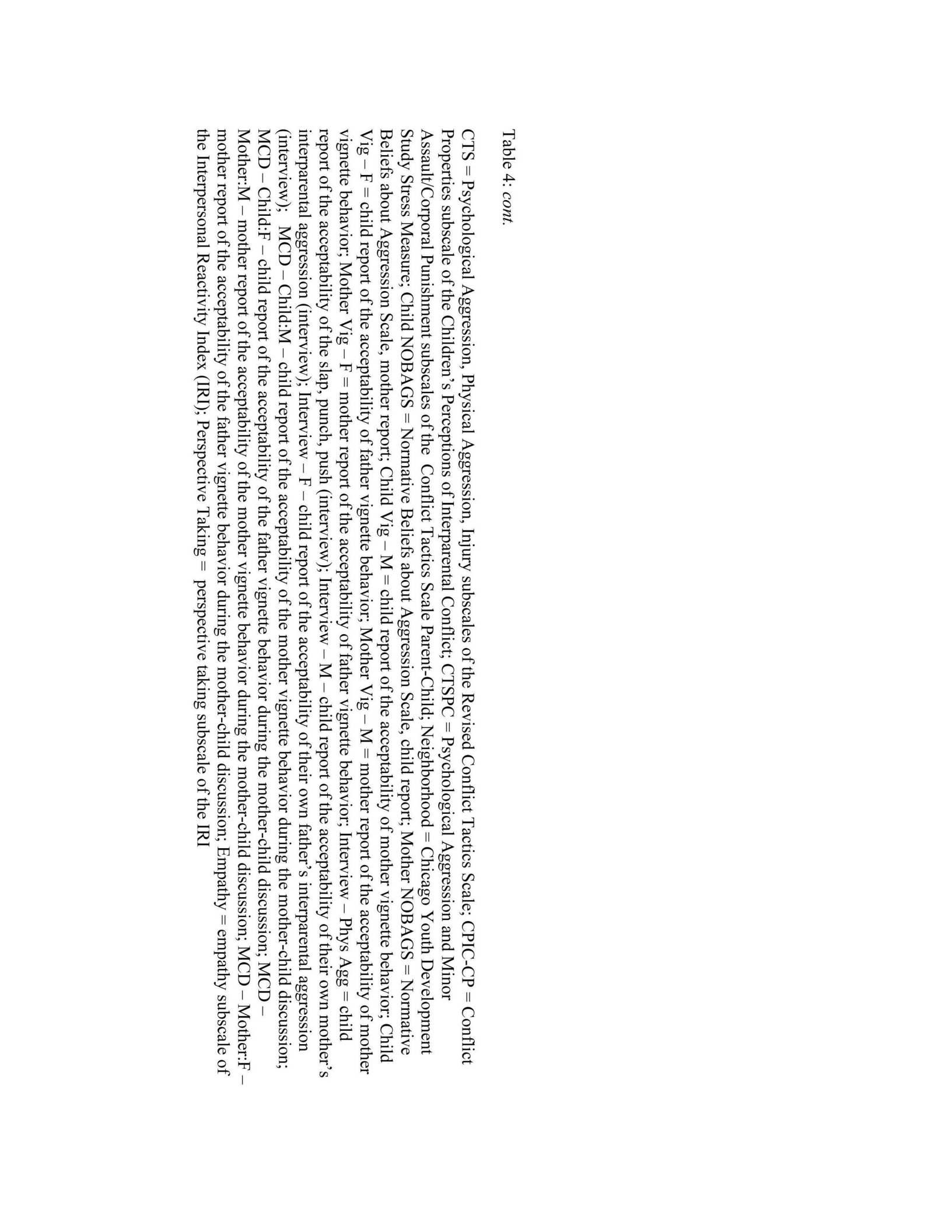

Children’s Exposure to Violence
Overall, children and their mothers reported experiencing greater verbal than
physical forms of interparental and parent-child aggression. For example, approximately
half the women and more than half of children reported that shouting or yelling occurred
during arguments; in contrast, small percentages of mothers and children reported various
acts of primarily mild physical aggression. For example, 11.6% of women indicated that
‘I threw something at my partner that could hurt’ and 5.9% reported that this happened to
them. Reports of pushing or shoving a partner were endorsed by 8.7% of women and
10.3% reported being pushed or shoved. Small numbers of women reported severe acts
of violence, with 1.4% reporting both ‘My partner used a knife or gun on me’ and ‘I used
a knife or gun on my partner.’ In regards to parent-child physical aggression, 20.4% and
14.6% of children reported that their mothers or fathers, respectively, spanked them on
the bottom with a bare hand. Similar numbers of children reported being slapped on the
face, head, or ears by their mother (18.9%) or father (11.0%). Although percentages of
community violence were relatively low, 8.8% of children reported violent deaths of
family members and 2.9% saw someone shot or killed.
Correlations between Parent and Child Report of Interparental Aggression
Correlations were computed between the Conflict Properties subscale of the CPIC
and the composite of the three CTS2 subscales (Psychological Aggression, Physical
Aggression and Violent Tactics, Injury) to assess both mothers’ and children’s
perspectives on parental arguments in the home. Moderate correlations were found
between these two variables (r = .37, p < .01), suggesting that they measure overlapping
but distinct concepts. Whereas children’s perceptions of interparental conflict were

correlated with other indicators of children’s beliefs about the acceptability of aggression,
mothers’ reports of interparental conflict were correlated with mothers’ beliefs about the
acceptability of aggression. Because mother and child reports of aggression correlated
with their respective reports of the acceptability of interparental and general aggression
and because research has highlighted the importance of children’s perspectives in
capturing a more complete picture of their understanding of parent conflict (Grych &
Fincham, 1990), the Conflict Properties subscale of the CPIC was used as the index of
interparental aggression. The other indicators of aggression were also moderately
correlated; children’s report of parent-child aggression was positively associated with
their endorsement of interparental and neighborhood aggression.
Children’s Perceived Causes for Aggressive Parent Behavior
Across the methods for assessing causal attributions, provocation, anger, and
retaliation generally were the most consistently identified reasons for intimate partner
violence (see Table 5 for percentages organized by method). Children often perceived the
cause of one parent’s aggression to be provocation by the other parent, through verbal or
physical means or by other types of behavior, including infidelity. For example, when
asked why her father shouted at her mother, one child said ‘Because my mom kept
yelling at my dad.’ Another child thought that aggression occurred because ‘One parent
said something to offend the other parent’ or ‘Because she pushed him.’
Anger was another frequently endorsed causal attribution. For example, one child stated
‘If you’re upset at someone and you’re really mad at them, you might call them those
words because it’s something that we think of as bad.’ Retaliation refers to the aggressor
acting out of a desire to get even or take revenge on the other parent for being aggressive

towards them or wronging them in some other way. Although retaliation involves being
provoked, this category differs from provocation because of the added element of
attempting to get even or take revenge for the transgression. One child who referenced
retaliation as the cause for a push said ‘Instead of slapping or even punching…he had to
do something, even worse than that, so he probably pushed or shoved.’ Another child
stated simply, ‘Because he wanted revenge.’ Arguing was a reason given for aggression
by children in nearly all assessment methods but was most frequently perceived as the
cause of aggression in children’s descriptions of their own parents’ arguments. One child
referenced arguing as the reason for her mother shouting at her father by saying ‘My
mom thought that he was wrong and he kept saying he was
right.’


A few causal attributions varied by gender of the parent committing the aggression.
Chi-square tests were completed to assess for differences, except in cases where values
for one parent were constant, in that a causal attribution was endorsed for one parent, but
never for the other. In these instances of constant values for one parent, related samples
Wilcoxon Ranked Signs tests were computed (see Table 6). Two of these gender
differences were significant. A causal attribution identified for the father’s, but not the
mother’s, aggression in the vignettes included the father wanting to continue the
conversation in a nonviolent way (T = -9.54, p < .01). Examples include ‘He didn’t want
her to go away because he wasn’t finished talking to her’ and ‘Because he thought that
she was leaving the conversation and he was saying something very important.’ Another
category attributed the father’s aggression to the mother not fulfilling an obligation or
promise that was made to the father (i.e. making dinner or assisting the child with
homework) (T = -8.78, p < .01); ‘Because he got mad because she wasn’t there to help
her (the daughter) with her homework’ and ‘Because the dad wanted her to make dinner.’
Self-defense, which includes one parent using physical aggression to protect the
person committing the act or to escape harm from the other parent, was the most
frequently identified cause of the mother’s aggression in the vignettes but was rarely
identified as the reason for the father’s vignette behavior (X2(1)= .73, p = n.s). Examples
include, ‘They were trying to defend themselves’ and ‘I guess that he was like maybe
hurting her and she didn’t like what he was doing so she was trying to defend herself.’
Although statistical gender differences were not evident in self-defense as reported in the
vignettes, there were substantial numerical differences. See table 5 for the full list of
causal attributions coded across methods.

Mothers’ Perceived Causes for Aggressive Parent Behavior (Vignettes)
The most frequently identified cause offered by mothers for both the father’s and
the mother’s aggressive behavior in the vignettes was provocation. Self-defense was the
other cause commonly attributed to the mother’s aggressive behavior while continuing
the conversation, the mother not fulfilling an obligation, anger, and retaliation were
reasons identified more often for the father’s aggression. Chi-square tests were
completed to assess for gender differences; when values for one parent were constant,
related samples Wilcoxon Ranked Signs tests were computed. Results indicated that
several of these gender differences were significant (continue the conversation: T = -7.48,
p < .01; not fulfilling an obligation: T = -7.48, p < .01; anger: X2(1) = 5.24, p < .05).
Although gender differences were not found for self-defense (X2(1) = 1.66, p = n.s) or
retaliation (X2 = .01, p = n.s), large numerical differences were evident. See table 5 for
the full list of coded causal attributions.

Children’s Perceptions of the Acceptability of Violence
Examination of the means of the various measures of children’s beliefs about
intimate partner violence and more global aggression suggest that they view these acts as
unacceptable (see Tables 7-8). To examine whether children reported similar beliefs
about the acceptability of intimate partner violence across the various measures of child
perceptions, correlations were computed. These associations generally were moderate,

suggesting that the methods produced related, yet distinct ratings of acceptability.
Whereas the strongest associations were found between children’s beliefs about the
acceptability of parents’ aggression in the vignettes and in the mother-child discussion,
the weakest correlation was between children’s beliefs about the mother’s and father’s
aggression in the mother-child discussion. Children generally reported aggression
committed by mothers, whether their own or in the vignettes, to be more acceptable than
aggressive acts by fathers; paired samples t-tests indicated that these differences were
statistically significant in the vignettes (t(135) = 9.29, p < .01) and mother-child
discussion (t(132) = 6.32, p < .01) but not in the children’s descriptions of their own
parents’ arguments (t(41) = 1.49, p = n.s).


Although children generally reported interparental violence to be unacceptable, they
reported significantly higher ratings of acceptability when they responded to the vignettes
alone versus in conversations with their mother (mother’s vignette aggression: (t(132) =
4.13, p < .01); father’s vignette aggression: (t(133) = 2.59, p = .01), suggesting that they
may be responding to social pressure to report violence as less acceptable than they
actually find it to be. Compared to the vignettes (t(41) = 2.83, p < .01) and the mother-
child discussion (t(40) = 3.64, p < .01), children were significantly more accepting of
their own parents’ verbal and physical aggression, suggesting that personalizing
aggression may provide additional context that deems it more acceptable, including
information pertaining to how often conflict occurs or how it is resolved (i.e. ‘Dad only
hit that one time;’ ‘Mom and dad don’t normally yell at each other and they made up after
they argued’).
Correlations across the measures of perceived acceptability supported the idea
that children have consistent beliefs about the justifiability of aggression. Their
perceptions of violence committed by fathers were moderately correlated between the
different assessment methods, as were their perceptions of mother-perpetrated aggression,
suggesting that children are able to reliably report their views of intimate partner
violence. Consistent with previous research (e.g., Dodge et al., 1995; Quigley et al.,
2006), children found interparental violence more acceptable when they had been
exposed to higher levels of violence in their homes and communities. Similarly,
children’s global beliefs about aggression had low to moderate associations with their
views of intimate partner violence, suggesting that if children find aggression acceptable
in general, they may be more likely to find it acceptable in other situations; however, the

modest level of association suggests that the context of specific situations remains
important in evaluating acceptability (Astor, 1994; Zelli, Dodge, Lochman, & Laird,
1999).
Given the diversity in children’s ethnic background, a Box’s M test was computed
to assess for differences in acceptability beliefs based on child ethnicity. This test was
significant (Box’s M (56) = 168.62, p = .001), however, Box’s M is sensitive to violations
of normality and differences in cell sample size (Tabachnick & Fidell, 2001) which were
evident for the ratings of acceptability of intimate partner violence (i.e. all children rated
aggression in the vignettes but smaller numbers endorsed interparental aggression
between their own parents). Examination of Tests of Between-Subjects Effects did not
yield any significant differences in acceptability beliefs, suggesting that beliefs about
violence did not differ based on ethnicity. Due to lack of between-subjects effects in
beliefs about violence based on ethnicity, this variable was not included as a covariate in
analyses.
Predictors of Children’s Perceived Causes of Interparental Aggression
Hypothesis 1: Mothers’ Perceived Causes of Aggression
Mothers and children are expected to report similar causes for violence, as
reported by each in their respective reports on the vignettes; a series of Chi-Square tests
was computed to examine this hypothesis (see Table 9). To lend sufficient power to the
analyses, codes that were infrequently endorsed were omitted from the analyses. Causes
that were endorsed across multiple assessment methods and were reported by at least
10% of children were included in analyses. The following causes were examined for the
father’s aggressive behavior in the vignettes: provocation, the mother not fulfilling an

obligation, wanting to continue the conversation, anger, and retaliation; provocation and
self-defense were examined in Chi-square tests for the mother’s aggressive vignette
behavior. Each cause perceived by the mother was entered in a Chi-Square test with the
same cause perceived by the child (e.g., mother perceived anger x child perceived anger).
Mothers’ and children’s perceived causes of interparental aggression in the vignettes were
not significantly related for either father- or mother-perpetrated aggression.
Hypothesis 2: Experiences with Aggression
Exposure to different forms of aggression, including interparental aggression,
parent-child aggression, and community violence, was hypothesized to predict
endorsement of specific causes for interparental aggression as reported in the interviews
and vignettes; a series of logistic regressions was computed to examine this hypothesis.
Exposure to different forms of aggression did not significantly predict children’s
perceived causes for interparental aggression in either the child interviews or the
vignettes (see Tables 10-12).


Factors Predicting Children’s Beliefs about the Acceptability of Interparental Aggression
Hypothesis 3: Mothers’ and Children’s Perceived Causes of Aggression
Mothers’ and children’s perceived causes of intimate partner violence were
expected to predict children’s beliefs about the acceptability of interparental violence.
Specifically, it was expected that when mothers or children described externally based
explanations for violence (i.e. victim provoked the perpetrator), children would view
violence as more acceptable; internally based causes (i.e. perpetrator character traits)
were expected to predict stronger agreement with the belief that intimate partner violence
is unacceptable. A series of regressions was computed to test this hypothesis, drawing
mothers’ and children’s responses from the vignettes (see Tables 13-14). Separate
regressions were computed for the mothers’ and fathers’ aggressive behavior in the
vignettes. To lend sufficient power to analyses, provocation, the mother not fulfilling
an obligation, the father wanting to continue the conversation, anger, and retaliation
were examined as perceived causes for the fathers’ aggression in the vignettes.
Provocation and self-defense were included in analyses for perceived causes of the
mother’s behavior in the vignettes.
In each regression, children’s global beliefs about the acceptability of aggression
were entered in the first step to account for their global beliefs about aggression. By
distinguishing beliefs about general aggression from beliefs about intimate partner
violence, the unique variance in the outcome variable that is accounted for by the
predictors can be noted. One of the perceived causes of aggression was then entered in
the second step. Regressions included causes and beliefs about the acceptability of the
same gendered parent (i.e. perceived causes for father’s aggression in the vignettes

predicted children’s ratings of the father’s behavior). None of the mothers’ perceived
causes of aggression predicted children’s beliefs about the acceptability of interparental
aggression (see Table 13). However, when children provided the causal attributions, the
context in which violence occurred was related to their beliefs about its acceptability.
Children found the mother’s use of aggression to be more acceptable when they felt she
acted in self-defense against the father (β = .21, p < .05).


Hypotheses 4 & 5: Experiences with Aggression & Mothers’ Beliefs about Acceptability of
Intimate Partner Violence
A series of hierarchical multiple regressions was computed to test the hypothesis
that exposure to higher levels of interparental, parent-child, and community aggression
will predict children’s beliefs that intimate partner violence is more acceptable and that
mothers’ beliefs about the acceptability of intimate partner violence would moderate this
relationship (see Tables 15 – 17). Specifically, when mothers were more accepting of
violence, it was hypothesized that there would be a stronger relationship between each of
the forms of aggression and children’s beliefs about the acceptability of intimate partner
violence. In contrast, if mothers communicate their disapproval of violence, they may
protect against a positive association between violence exposure and children’s beliefs
about the acceptability of interparental violence. Mothers’ and children’s ratings of the
acceptability of intimate partner violence were obtained from vignettes and the
motherchild discussion; children’s beliefs about acceptability were obtained from these
tasks and the child interviews.
In all regressions, interparental aggression, parent-child aggression, and
community violence exposure were entered in the first step together. To account for
children’s global beliefs about aggression and to distinguish these beliefs from those
about intimate partner violence, children’s beliefs about general violence (total score from
NOBAGS - general) were entered in the next step, along with mothers’ beliefs about the
acceptability of intimate partner violence. In the final step of each equation, the
interaction terms (mothers’ beliefs about intimate partner violence x interparental
aggression in the home; mothers’ beliefs about intimate partner violence x parent-child

aggression; mothers’ beliefs about intimate partner violence x community violence
exposure) were entered. Acceptability ratings of father and mother aggressive vignette
behavior were analyzed in separate regressions.


Hypothesis 4: Experiences with Aggression
Contrary to hypotheses, exposure to different forms of aggression generally did not
predict children’s beliefs about the acceptability of intimate partner violence (see Tables

15-17). This is in contrast to significant correlations found between the aggression types
and acceptability ratings. Whereas correlations examine the relationship between two
variables at a time, regressions included all three aggression types in the same equation.
Collectively, these types of aggression may share a different amount of variance with
acceptability of violence compared to the individual relationships. Given that each form
of violence does not occur in a vacuum, this suggests that examining the relationship
among multiple forms of violence and children’s beliefs about intimate partner violence
provides a more complete picture than considering the effect of one form of violence in
isolation. However, the specific context in which the violence occurred appeared to be
important, as interparental aggression (β = .23, p < .05) and neighborhood violence (β
= .20, p < .05) both significantly predicted children’s beliefs about the acceptability of
mothers’, but not fathers’, aggression in the vignettes (see Table 15). These associations
were not apparent when children discussed the vignettes with their mothers or when they
rated their own parents’ aggression.
Regressions also examined the relationship between children’s global beliefs
about aggression and acceptability about intimate partner violence. Results indicate that
children’s global approval of aggression is significantly related to the degree to which
they find it acceptable for men, but not women, to use aggression in intimate relationships
(see Tables 15-17). This pattern was found when children rated their own parents’
aggression, as well as that of hypothetical parents in the vignettes. Interestingly,
children’s global beliefs about aggression and their beliefs about physical violence in the
interviews also were related; given that broader beliefs about aggression were correlated
with male-, rather than female-perpetrated aggression, this suggests that children’s

schemas for physical aggression between parents may portray men, rather than women, as
the aggressors.
Hypothesis 5: Mothers’ Beliefs about Acceptability of Interparental Violence
Mothers’ beliefs about the acceptability of interparental violence were expected to
have direct and moderating effects on children’s beliefs about this type of violence. In
terms of direct effects, if mothers were more accepting of violence, children were
expected to show similar beliefs. Mothers’ beliefs about the acceptability of interparental
aggression significantly predicted children’s beliefs about the acceptability of aggression
in the mother-child discussion (mother’s aggression: β = .64, p = .00; father’s aggression:
β = .50, p = .00) (see Table 16) but not when children rated the acceptability of violence
without their mothers present or when they rated their own parents’ aggression (see Table
15). The uniqueness of these findings to conversations with their mothers may point to
children’s desire to please their parents or say ‘the right thing.’ Children may hear at
home and in school that it is wrong to hit; this finding may suggest that they are echoing
this lesson in the presence of their parent rather than truly incorporating it into their belief
system.
Mothers’ Beliefs about Interparental Aggression x Parent-Child Aggression
Turning to tests of moderation, it was hypothesized that mothers may exacerbate or
alternatively, may protect against the relationship between each of the forms of
aggression and children’s beliefs about the acceptability of intimate partner violence.
Several moderating effects were found (see Tables 15-17); the pattern of results differed
based on the gender of the parent committing the aggression as well as the type of
aggression to which children were exposed. Mothers’ beliefs about the acceptability of

the father’s aggression in the vignettes significantly moderated the relationship between
parent-child aggression and children’s beliefs about the acceptability of physical partner
violence in the interview as well as children’s ratings of the father’s behavior in the
mother-child discussion (see Tables 16-17); a conceptually similar trend was found for
children’s reports of the father’s behavior in the vignettes (see Table 15). To
decompose these and all other interactions, separate hierarchical multiple regressions
were computed for high and low levels of the moderators, which were based on a
median split. Because mothers’ acceptability ratings for the aggressive vignette
behaviors were log transformed for use in analyses, the median becomes a more
appropriate measure of central tendency than the mean (Tabachnick & Fidell, 2001).
Additionally, the split was used because mothers’ acceptability ratings of aggression in
the vignettes were fairly low, making a 1/2 standard deviation below the median below 1
(the lowest possible value for acceptability).
In the context of exposure to parent-child aggression, when mothers were more
accepting of fathers’ use of interparental aggression, there was a strong positive
relationship between parent-child aggression and children’s beliefs about the acceptability
of interparental aggression. When children experienced more physical and verbal
aggression from their parents, they found physical violence between parents more
acceptable; small associations were noted when mothers reported low levels of
acceptance of fathers’ aggression. This pattern of findings was evident across multiple
assessment methods, including children’s ratings of physical aggression in the interview
(high group: β = .72, p = .04; low group: β = .15, p = .n.s), the mother-child discussion

(high group: β = .52, p = n.s; low group: β = .19, p = n.s.), and a trend in the vignettes
(high group: β = .77, p < .05; low group: β = .14, p = n.s.) (see Figures 4-6). In regards
to the way mothers’ beliefs about intimate partner violence may shape children’s own
beliefs, results were more supportive of an exacerbating effect, such that when mothers
find violence more acceptable, their children do as well in the context of experiencing
parent-child aggression.
Mothers’ Beliefs about Interparental Aggression x Interparental Aggression
Interparental aggression was a second type of violence expected to interact with mothers’
beliefs about intimate partner violence in predicting children’s own beliefs. Two
significant moderating effects were found between mothers’ beliefs about intimate partner
violence and children’s exposure to interparental aggression. Maternal beliefs about the
acceptability of the mother’s aggression in the vignettes significantly moderated the
relationship between interparental aggression and children’s own beliefs about maternal
vignette aggression (see Table 15, Figure 7). In addition, mothers’ acceptability of the
father’s aggression in the vignettes interacted with interparental aggression and children’s
beliefs about the acceptability of physical aggression in the interview (see Table 17,
Figure 8). Whereas parent-child aggression showed a consistent pattern such that
mothers’ and children’s beliefs about fathers’ aggression were strongly associated, the
pattern of results pertaining to interparental aggression differed when mothers rated the
acceptability of mother- versus father-perpetrated aggression. When mothers were more
accepting of maternal-perpetrated aggression, interparental


aggression had a moderate, positive association with children’s own beliefs about the
acceptability of the mother’s aggression in the vignettes (β = .35, p < .05); a similar but
more modest association was found at low levels of the moderator (β = .16, p = n.s.) (see
Figure 7). These findings differ from those involving parent-child aggression because
maternal beliefs about the mother’s, rather than the father’s, aggression in the vignettes
were connected to similar beliefs in children.
The previously described findings suggest that in the context of violence
exposure, children report stronger acceptability of intimate partner violence when their
mothers do as well. However, a different pattern was evident in the interaction between

interparental aggression and mothers’ beliefs about the father’s vignette aggression.
Children in the high maternal acceptability group showed a strong negative association
between interparental aggression and their acceptability ratings for physical aggression in
the interview (β = -.68, p < .05); those in the low group showed a small association (β
= .03, p = n.s.) (see Figure 5).
Mothers’ Beliefs about Interparental Aggression x Community Violence
Community violence was the final type of violence expected to interact with mothers’
beliefs about intimate partner violence. Whereas mothers’ beliefs significantly interacted
with interparental and parent-child aggression, their beliefs did not interact with
community violence. There was, however, one trend for maternal acceptability of father
vignette aggression to moderate the relationship between community violence and
children’s own beliefs about the father’s aggression in the vignettes (Figure 9). At low
levels of the moderator, community violence (β = -.04, p = n.s.) had small associations
with children’s acceptability of fathers’ aggression in the vignettes. Whereas parent-child

aggression had a robust positive relationship with children’s acceptability beliefs,
community violence had a strong negative association (β = -.54, p < .10). Although this
association did not reach statistical significance, it points to the importance of how
context shapes children’s beliefs about the acceptability of intimate partner violence.
Hypothesis 6: Empathy and Perspective Taking
Higher levels of perspective taking and empathy were expected to predict stronger
endorsement of the belief that domestic violence is not acceptable. However, due to the
lower than acceptable levels of internal reliability for both of these constructs, analyses
involving empathy and perspective taking were not computed.

Discussion
The goal of the present study was to better understand children’s perceptions of
intimate partner violence. Results suggested that mothers’ and children’s causal
attributions were not related and that violence exposure did not predict their causal
understanding of intimate partner violence. When children perceived aggression to be
committed in self-defense, they found it more acceptable. Few direct relationships were
found between violence exposure and children’s acceptability beliefs; however, mothers’
beliefs about aggression significantly moderated these relationships. Across multiple
assessment methods, when mothers found fathers’ aggression more acceptable, there was
a strong positive relationship between children’s experiences with parent-child aggression
and their beliefs about the acceptability of intimate partner violence. These findings offer
insight into factors that shape children's views of interparental violence. Understanding
of intimate partner violence was conceptualized as including causal attributions and
beliefs about its acceptability. Children most consistently attributed intimate partner
violence to the aggressor being provoked by the other parent, acting in anger, or using
aggression to retaliate against the other parent for a transgression. The majority of
children were able to generate reasons for aggression, which suggests that they can
reliably identify causes of intimate partner violence and highlights the value of asking
children to provide these responses rather than to rate categories generated by
researchers. By asking children to provide their own perspectives, it became evident that
they perceived some aspects of interparental aggression differently based on the gender of
the parent. Whereas children frequently pointed to self-defense as the cause of
aggression committed by the woman in the vignettes, the man was often said to act

aggressively to continue the discussion or because the mother had not fulfilled an
obligation or promise. These differences highlight the gendered notions children may
have about intimate partner violence (Fosco et al., 2007) and suggest that context informs
children’s beliefs about the acceptability of interparental aggression.
Results of this study suggest that the most consistent direct predictor of children’s
perceptions of the acceptability of interparental aggression was their global belief about
aggression, which suggests that when children find it more acceptable to use aggression
during conflicts, they are also more accepting of these behaviors between parents.
Children’s global beliefs were included in regression equations to examine whether
specific experiences predicted beliefs about intimate partner violence beyond global
beliefs about aggression. Although greater exposure to interparental aggression and
community violence both predicted children finding the aggression used by the mother in
the vignettes to be more acceptable, violence exposure generally did not predict
children’s acceptability beliefs.
In contrast to hypotheses, results suggest that global beliefs were better direct
predictors of children’s beliefs about interparental aggression than specific experiences
such as exposure to different types of violence. Whereas Zelli and colleagues (1999)
assert that the specific context in which aggression happens is more meaningful than
examining global beliefs, these results suggest there also is a link between global beliefs
and beliefs about intimate partner violence. Consistent with schema theory (Fivush,
2002), children may generalize their views of global aggression to their perceptions of
interparental violence. Causal attribution research suggests that during infancy, general
causal concepts develop first and are later applied to specific domains (Corrigan &

Denton, 1996). Perhaps the same occurs in the development of beliefs; children may
form broad beliefs about aggression and then as they get older, apply these ideas to more
specific types of violence. If children initially believe that violence is wrong, they may
also think that any type of violence is wrong, whether it occurs between peers, parents, or
in the community. It may be that children in this study are still developing their ideas
about specific types of violence or that the older children have ideas about interparental
aggression that differ from the younger participants. Younger children’s beliefs about
interparental aggression may be less affected by exposure to different types of aggression
than by their broader beliefs that violence is wrong. Future research may provide
additional insight into children’s beliefs about the acceptability of intimate partner
violence by examining factors that shape the development of their global beliefs about
aggression.
Examining children’s global beliefs about aggression also provided some insight
into their ideas about who perpetrated intimate partner violence. Across the assessment
methods, children’s global beliefs about the acceptability of aggression were positively
associated with their beliefs concerning father-, but not mother-perpetrated aggression.
Given that this relationship was also found for children’s ratings of physical aggression in
the interview, it seems that their broader beliefs about the acceptability of aggression are
consistent with their ideas about the types of aggressive behaviors men use. Perhaps
children have gendered ideas about men’s and women’s use of aggression such that men
are perceived as perpetrators and women as acting in self-defense. Children who feel it is
acceptable for someone to get into physical fights when they are angry may find it more
acceptable for men to use these behaviors in relationships. Consistent with Lichter and

McCloskey’s (2004) findings that gendered ideas about family roles and dating scripts are
related to dating violence victimization and perpetration, children who view men’s use of
aggression as acceptable may be prone to involvement in relationship violence as teens or
adults. Violence prevention work may help target this issue by addressing not only
relationship violence, but also children’s more global beliefs about whether it is
acceptable to use aggression during conflicts.
Although global beliefs can provide initial direct connections to children’s beliefs
about intimate partner violence, results suggest that examining context can provide
additional information about the specific circumstances under which children find
interparental violence more or less acceptable. Specifically, mothers’ beliefs about the
acceptability of intimate partner aggression moderated children’s experiences with each
type of violence and their beliefs about interparental aggression. Patterns of association
differed based on the type of violence and the gender of the parent committing the
aggression, lending further support to the value of considering context. When mothers
found fathers’ aggression more acceptable, there was a strong positive relationship
between children’s experiences with parent-child aggression and their beliefs about the
acceptability of intimate partner violence. The more children experienced verbal and
physical aggression from their parents, the more acceptable they found interparental
aggression if their mothers were highly approving of fathers’ violence. If children are
yelled at or hit as a form of discipline, they may feel they did something wrong and
deserved the aggression. This belief may then be applied to their interpretation of
interparental aggression. Consistent with research showing that children who have been
maltreated tend to blame themselves for their abuse (Feiring et al., 2002; McGee et al.,

2001), children may place blame on parents who are victimized by their partners.
Mothers who convey the message that fathers’ use of intimate partner violence is
acceptable may contribute to children’s perceptions that a parent did something to
warrant the aggression. It appears that this combination of mothers’ approval of
fatherperpetrated aggression with children’s experiences of parent-child aggression
creates a context through which children view interparental violence as more acceptable.
The relationship between parent-child aggression and mothers’ beliefs about interparental
aggression provided insight into the circumstances that are important to children’s beliefs
about intimate partner violence. Moderating effects also were found in regards to
children’s experiences with interparental aggression, with different relationships noted
when mothers rated the acceptability of maternal and paternal use of aggression. When
mothers were more accepting of maternal-perpetrated aggression, interparental
aggression had a stronger association with children’s own views of the mother’s
aggression than when mothers showed lower levels of acceptance. Given that children
and mothers in this study frequently endorsed self-defense as a cause of the mother’s
aggression in the vignettes, mothers and children may both have had experiences that
contribute to their perceptions of intimate partner violence. If mothers are involved in
frequent conflict with their partners, they may feel they have reason to verbally or
physically defend themselves and likely would find that to be acceptable. Mothers may
then convey the message that it is okay for women to act in self-defense, which may
shape children’s beliefs about this particular use of aggression. When there are higher
levels of interparental aggression in their own homes, children may agree that mothers

have reasons to use self-defense and come to view aggression in self-defense as
acceptable.
In contrast, a different pattern was noted when mothers found fathers’ use of
aggression more acceptable. In this context, higher approval by mothers was associated
with children’s stronger disapproval of physical partner violence, as reported in the
interview. A trend for a conceptually similar relationship with community violence was
noted. These results suggest that there may be a discrepancy for children between their
mothers’ approval of violence and their emotional experiences with conflict in the home
or community. Children’s feeling of being threatened or frightened by the intensity,
frequency, or lack of resolution of conflict between their parents (Grych et al., 2003) or in
their neighborhood, may outweigh their mothers’ perceptions about interparental
aggression. This pattern may be particularly evident in the context of chronic, severe
violence, which is more often perpetrated by men. Future studies should examine these
associations in the presence of more severe levels of violence to see if mothers’ views of
fathers’ aggression similarly shape children’s beliefs in violent and non-violent families.
Although mothers’ beliefs about the acceptability of interparental violence significantly
moderated children’s exposure to each form of aggression and children’s own views
about this type of violence, direct effects were noted only when mothers and children
talked about violence together. These results raise the questions of how mothers shape
children’s views of violence and why children reported similarly disapproving views of
aggression when discussing it with their mothers. Are parents scaffolding the violence
for children or are children responding to pressure to identify violence as unacceptable?
It is possible that mothers were highlighting aspects that are important to consider and

were thus, facilitating children’s own understanding of the violence (Vygotsky, 1978).
However, given that children reported significantly lower ratings of acceptability in the
mother-child discussion than in their independent responses to the same questions and
that mothers’ beliefs only predicted children’s beliefs when they were together, it seems
possible that children are echoing their mother’s assertion that violence is wrong.
Anecdotally, transcripts of the mother-child discussions suggested that mothers
sometimes used direct instruction (‘No, you mean the grab was unacceptable’ when the
child said it was acceptable) or language suggesting that their view was the correct one
(‘It was wrong for the dad to do that, right?’). However, because children generally
reported views of interparental aggression as wrong, future studies would help clarify this
question by examining the communication styles used when parents and children discuss
intimate partner violence. Are parents portraying their view as the only acceptable
position in a fairly one-sided conversation or do they leave room for the child to disagree
and engage in a reciprocal discussion?
The finding that children were more accepting of violence when discussing it with
their mothers and that mothers’ beliefs moderated violence exposure and children’s own
beliefs suggest that mothers influence their children’s perceptions of interparental
violence. How though, do parents and caregivers shape children’s perceptions – is it
through direct instruction or messages conveyed indirectly? Although the cross-sectional
nature of this study precludes a more thorough examination of this issue, findings may be
able to provide some initial insight. Whereas the mother-child discussion involved
talking about views of violence together, the previously described moderators of violence
exposure consisted of mothers’ independent ratings of interparental aggression. Since

children were not present to hear their mothers talk about these particular ratings, results
suggest that children may be picking up on more subtle aspects of their mothers’ beliefs
about intimate partner aggression. For example, they may overhear conversations about
whether it is acceptable for a partner to yell during an argument or they may be told by
their parent that it is okay to hit a classmate in self-defense and then generalize that
perception of peer conflict to beliefs about interparental aggression.
Results of this study suggest that mothers may have more of an indirect, rather
than direct influence on children’s beliefs about intimate partner violence. The finding
that children reported more accepting views of interparental violence only in the presence
of their mothers suggests that direct instruction may not have long-lasting impressions on
children’s actual beliefs. Being directly told by parents that violence is or is not okay
may not shape their perceptions as much as children coming to that determination on
their own. Longitudinal research is needed to provide further insight into this issue.
Examining parents’ and children’s beliefs and how they may change over time would
help clarify questions about the mechanisms by which parents’ influence their children’s
beliefs about interparental violence and whether indirect or direct messages are more
influential.
Despite some initial insights into factors that may shape children’s beliefs about
interparental aggression, it is acknowledged that findings from this study supported a
small number of hypotheses. Contrary to hypotheses, neither mothers’ perceived causes
of intimate partner violence nor exposure to different types of violence predicted
children’s own perceptions of why interparental violence happens. It is possible that the
low levels of intimate partner violence experienced by women in this sample reduced the

likelihood that children have previously given consideration to why parents are
aggressive to each other or that mothers would explicitly explain causes of this type of
violence to their children. Although children were reliably able to report causes of
interparental aggression, these perceptions may be unrelated to violence exposure or their
mothers’ views of what causes aggression between parents. Future studies may provide
further insight into the degree to which violence exposure shapes children’s perceived
causes of intimate partner violence by testing for differences in causes among children
from violent and non-violent families. Another factor that may have contributed to the
relatively small number of findings is the fact that only 31 youth reported that they have
begun dating. Perhaps relationship experiences are needed to know more about why
violence happens in intimate relationships.
Relatively little support was found for hypotheses predicting children’s beliefs
about the acceptability of interparental aggression. Mothers’ perceived causes of violence
did not predict children’s beliefs about its acceptability and children’s perception that the
mother was acting in self-defense was the only causal attribution that predicted views that
violence is more acceptable. Although it is possible that self-defense is seen as an
exception to the belief that violence is generally unacceptable, future research is needed
to reduce the likelihood that this finding was a Type I error resulting from testing several
predictors of children’s acceptability beliefs.
The relatively small number of supported hypotheses also may be accounted for
by age and cultural factors that were not examined in the present study. Children ages 9-
14 were selected for participation based on the cognitive ability to consider other people’s
perspectives and intentions and also to reflect on their own thoughts, feelings, and

behaviors (Fraser, 1996). However, this age range spans different developmental periods
and includes preadolescents and adolescents, factors that may contribute to different
perceptions of interparental violence. Younger children tend to view aggression as a
more acceptable way to resolve conflict than do older children (Graham-Berman &
Brescoll, 2000). Perhaps younger children view aggression as a form of punishment;
they may then find it more acceptable for parents to be aggressive towards each other if
they feel one parent did something wrong. As children get older, they may witness or
hear about more violent events in their neighborhoods and homes that give them a
different context for interpreting the acceptability of interparental violence. If older
children are exposed to more community violence for example, they may come to view
aggression as more normative and think it is more acceptable for parents to use
aggression in conflicts. Whereas younger children may examine their immediate
surroundings (i.e. family relationships) for ideas about what causes interparental
aggression, older children may generalize their causal understanding of other types of
violence they have experienced or seen in their homes or communities to aggression
between parents.
Similarly, children’s perceptions of interparental violence may differ based on
cultural factors or socioeconomic background. Although group differences in
acceptability beliefs were not noted based on ethnicity, there are other factors that
comprise culture that were not examined in the present study, yet are likely important to
perceptions of interparental aggression. The religious beliefs and community perceptions
of conflict that surround a child as they are growing up likely shape their and their
parents’ perceptions of violence (Fosco et al., 2007). Similarly, participants could

identify as belonging to various ethnicities, each of which is made up of many diverse
cultures; within the Latino community, for example, there were participants from Mexico,
Puerto Rico, and Honduras. The values and beliefs held by people of different cultural
backgrounds may contribute to perceptions of what caused aggression or whether
aggressive behavior is even seen as such. If parents do not consider physical aggression
to be abusive or wrong, they may convey these views to their children.
Cultural values also shape what is considered appropriate and acceptable behavior
for men and women. A child who grows up in a household that views men as dominant
and in charge of the family may find it more acceptable for men to use aggression during
conflicts in their relationships or may have different ideas about why aggression
happened compared to households with different gender roles. Consistent with this idea,
a study of stereotyped family beliefs found that intimate partner violence was positively
associated with beliefs for minority but not nonminority children. The more violence
experienced by their mother, the more children viewed violence as a parent’s prerogative
(Graham-Bermann & Brescoll, 2000). Other factors that may shape children’s ideas of
what causes interparental aggression or the degree to which it is acceptable include
experiences with discrimination or inequality. Additional research is needed to examine
the different ways that cultural factors may shape children’s perceptions of intimate
partner violence.
Clinical Implications
Results of this study have important implications for clinical work with children
who have been exposed to intimate partner violence as well as violence prevention

efforts. Notably, children most consistently attributed intimate partner violence to
reasons such as provocation, anger, and retaliation for being wronged by the other parent.
Although in this study, self-defense was the only cause linked to children’s beliefs that
interparental violence is more acceptable, these causes highlight the way children
perceive violence between parents and may be connected to their own use of aggression.
If children think that parents hurts each other when they are angry or have done
something wrong, they may view other types of violence through a similar lens and may
be more likely to use aggression if they feel they have been provoked or need to get
revenge. Similar to clinical work on bullying, interventions with children exposed to
intimate partner violence may be able to help children generate causal explanations that
do not blame the victim or excuse the perpetrator’s behavior. Thinking of alternative
causes for violence may help children challenge misattributions about intimate partner
violence and perhaps, reduce the likelihood that children will be involved in violence in
their own relationships as adolescents or adults.
Violence prevention programs may be able to serve a similar aim by targeting
children’s causal attributions about violence. Given that much of the violence occurring
between youth in the community appears to be based on issues of provocation and
revenge, causal attributions appear to be driving much of this reciprocal violence.
Programs in schools or communities may be able to help children think of the devastation
that is heaped on families and neighborhoods when teens shoot each other because
someone wronged them or their friends. This topic may be more personalized and reach
more youth if programs such as those that ask former gang members or violence victims
to share their experiences are implemented and focus on causal attributions.

Intervention and prevention programs also may be able to interrupt the cycle of
violence by addressing children’s beliefs about the acceptability of intimate partner
violence. Given that mothers’ beliefs about violence acceptability moderated the
relationship between children’s exposure to different types of violence and children’s own
beliefs about how acceptable interparental violence is, these programs may be well served
by taking a family approach. Clinicians treating children who have been exposed to
interparental or parent-child aggression may be able to break a link between finding
violence more acceptable and children’s own aggressive behavior if they include the
parents in treatment. Helping parents think about or change their own perceptions of
violence or having the family talk with the child about the violence they witnessed or
experienced may facilitate children’s adjustment and shape their own views about
violence. Research has shown that when parents who have committed parent-child
aggression participate in their children’s treatment, there can be greater improvements in
child adjustment and positive parenting skills relative to parents who complete treatment
on their own (Runyon, Deblinger, & Steer, 2010).
Violence prevention programs may also be able to help stop the cycle of violence
by focusing on children’s global beliefs about the acceptability of violence as well as their
more specific beliefs about interparental violence. If children believe that violence is an
acceptable means of resolving conflicts, whether between parents or in other contexts,
they are more likely to use aggression themselves (Crick & Dodge, 1994). School or
community programs that target beliefs about the acceptability of violence may reduce
the likelihood of children and teens using aggression in their own conflicts. Existing

programs may be enhanced by focusing on different contexts in which violence occurs
and directly addressing issues of provocation, retaliation, and self-defense.
Having open and honest discussions about the dangers of using aggression even if it is
meant to defend oneself or friends will not likely have immediate or direct effects on
violence rates, but may be able to heighten community and family awareness of the
continuing epidemic of the cycle of violence.
Limitations and Future Directions
Although the current study provides some initial insight into factors that predict
and moderate children’s understanding of intimate partner violence, there are limitations.
One such limitation relates to the relatively low level of violence experienced by children
in this study. In the context of low exposure to interparental, parent-child, and
community aggression, it may be less likely for relationships between these variables and
children’s understanding of intimate partner violence to emerge. A goal of this study was
to improve the generalizability of previous findings with shelter samples by examining
children’s understanding of violence in a community sample. It is possible that increased
variance in each type of violence would produce different relationships with children’s
causal attributions and beliefs about acceptability. Children who witness more severe and
chronic acts of violence in their homes and neighborhoods or who experience more
severe physical aggression may have different ideas about what causes intimate partner
aggression or how acceptable this type of violence is, relative to children who live in
homes characterized primarily by mild verbal and physical aggression. However,
similarities in causal attributions in this sample and in children living in more violent
homes (DeBoard-Lucas & Grych, 2011b) suggest that there are commonalities in

perceptions of intimate partner violence between children in violent and non-violent
families. Future studies would shed further light on this question by examining
children’s understanding of intimate partner violence in the context of exposure to higher
levels of interparental, community, and parent-child aggression.
Related to the limitation associated with low levels of violence exposure is the
difference in the amount of time that lapsed since aggression occurred. Although
exposure to each type of aggression was measured over the past year, some children
reported violence that had occurred prior to that time frame and for other children,
aggression was on-going. Consistent with research showing that accumulation of risk
factors is more important to child adjustment than an isolated risk factor (Gerard &
Buehler, 2004a, b; Sameroff et al., 2003), differences in perceptions of intimate partner
violence may be noted when exposure to aggression is measured over a longer
timeframe. Future studies may provide clarification on this issue by examining life-time
exposure to each of the three types of aggression measured in this study. It also is
acknowledged that this study investigated a fairly large number of hypotheses, which
increases the chance of making a Type I error. Although this study attempted to control
for this likelihood by limiting analyses of causal attributions to the most consistently
endorsed categories, it remains possible that the null hypothesis was at times rejected
when significant differences did not exist.
Another issue to consider is the limited ability of cross-sectional data to make
causal inferences or clarify the mechanisms by which children form impressions of
intimate partner violence. Using cross-sectional methods, it is unknown what changes
may have taken place in children’s understanding of interparental aggression over time.

It would be interesting to know if children had a particular casual attribution or belief that
changed based on experiences with violence or conversations with their parents. Did
children think intimate partner violence happens because a victim does something to
provoke it and then this idea changed when they witnessed a friend being attacked in their
neighborhood? Did they view interparental aggression as wrong before or after their
mother spoke to them about it? Longitudinal methods would be able to address these
questions in a way that is not feasible using cross-sectional data. Future research should
implement longitudinal studies utilizing mixed-methods of quantitative and
semistructured interviews, as it remains critically important to build on our knowledge of
the factors that shape children’s perceptions of intimate partner violence. Knowing more
about how children’s understanding of interparental violence changes over time has
implications for clinical and preventative work. Clinicians working with children
exposed to interparental violence would be able to choose interventions to address
maladaptive attributions or beliefs about violence if more was known about how these
perceptions change. Violence prevention programs would reap similar benefits in their
ability to intervene in the cycle of violence.
In summary, this study highlights the importance of context in shaping children’s
perceptions of intimate partner violence. In responding to semi-structured methods,
children were able to reliably report on their perceptions of interparental aggression, both
in terms of their causal attributions and their beliefs about its acceptability. Children
generally found women’s use of interparental aggression more acceptable than aggression
committed by men. However, mothers’ beliefs about the acceptability of intimate partner
violence moderated the relationships between violence exposure and children’s own

beliefs. Consistent with work linking children’s beliefs about the acceptability of
aggression with perpetration of violence (Brockenbrough et al., 2002; Dodge et al., 1995;

