


1
A FRAMEWORK FOR VALUE CO-CREATION IN CHINA'S PPP PROJECTS:
ANTECEDENTS, INTERACTIONS, AND RESULTS
Chapter 1
Introduction
This chapter introduces the research study. It presents the background information
relevant to the research, then articulates the problem statement, and establishes its
connection to pertinent literature from diverse fields, such as project management,
marketing and general management. The research objectives and questions are outlined
after the study’s research aims. Last, the chapter provides an overview of the research
strategy adopted to address the research questions. The primary objective of this
chapter is to establish a robust theoretical and empirical foundation for the study.
1.1 Research Background
1.1.1 The PPP Project Context
Public–Private Partnerships (PPPs) have gained significant attention and have been
implemented in various countries worldwide. PPPs are often considered to be more
advantageous than traditional procurement methods, as they provide better risk sharing,
higher efficiency, and quality outcomes (Jefferies & McGeorge, 2009). As the
European Commission (2003) has suggested, PPP projects offer several benefits to
governments, including accelerated infrastructure provision, timely project
implementation, reduced entire-life cost, reduced government risk exposure, improved
service quality and innovation, and enhanced management of public expenditure (Liu
et al., 2017).
As an alternative to traditional infrastructure procurement methods, PPPs have gained
widespread popularity in the past two decades as long-term arrangements between
public and private sectors aimed at sharing risks and responsibilities while taking
advantage of each sector’s respective skills (Akintoye et al., 2003). This is especially
true in developing countries (Liu, Love, Davis, et al., 2015; World Bank, 2017), where

2
PPPs have been used to address the contradiction between the increasing demand for
new infrastructure and the government’s limited financial capacity (Chan et al., 2011;
Jefferies & McGeorge, 2009). PPP projects are characterised as inter-organisational
collaborative projects that combine public and private institutional logics.
One of the main advantages of PPPs is their ability to accelerate infrastructure
provision (Hodge & Greve, 2019). By allowing the public sector to translate capital
expenditure into ongoing service payments, PPPs enable infrastructure projects to be
implemented more quickly than traditional procurement methods. In addition,
allocating design and construction responsibility to the private sector ensures timely
project implementation. Furthermore, PPPs can reduce full lifecycle costs and motivate
performance by providing strong incentives for the private sector to minimise costs and
improve management throughout a project’s lifecycle (Koppenjan, 2005). This reduces
the financial burden on governments and ensures that infrastructure projects are
completed within budget and on schedule. Another advantage of PPPs is the risk
sharing between the public and private sectors (Delmon, 2017). By engaging the
private sector in sharing construction and operational risks, governments can mitigate
risk exposure compared to conventional procurement methods, thereby enhancing the
likelihood of successful project outcomes. Moreover, private sector expertise and
performance incentives can improve service quality and innovation (Zhang, 2005).
Private sector involvement can also enhance public expenditure management by
increasing accountability and transparency, thereby reducing the likelihood of
corruption.
While PPP projects have been touted as a solution to address infrastructure
development challenges, they are not without criticisms. Concerns have been raised
about the potentially high costs, lack of transparency and accountability, inappropriate
risk allocation, social and environmental impacts, and limited flexibility associated
with PPP projects. Scholars have questioned the value for money of PPP projects and

3
suggested that they may be more expensive than traditional procurement methods
(Hodge & Greve, 2007) due to higher financing costs, transaction fees, and profit
margins for private sector partners. The procurement process for PPP projects may also
lack transparency and accountability (Zhang & Tariq, 2020), leading to doubts about
fairness and effectiveness. Risk allocation is a crucial issue in PPP projects, and failure
to allocate risks reasonably can result in project failure (Ke, Wang, Chan, et al., 2010).
For instance, during the construction phase of the Sydney Airport Rail Link in the
1990s, several challenges such as delays, cost overruns and technical difficulties were
encountered, leading to significant financial challenges for the private sector partner.
The risks were then transferred back to the NSW government, which had to rescue the
project, resulting in additional costs, delays and an increased financial burden on the
government. PPP projects have also been criticised for prioritising private profit over
public interest, leading to negative social and environmental impacts (Jayasuriya et al.,
2020). Furthermore, PPP contracts may be inflexible, making it challenging to adapt to
changing circumstances or to terminate the contract in the case of problems (Klijn &
Koppenjan, 2016).
It is important to note that various countries define these partnerships differently.
Usually, these partnerships are defined as a collaborative effort between the public and
private sectors to deliver public services and infrastructure projects through a long-
term contractual agreement (Grimsey & Lewis, 2007). Nevertheless, it's crucial to
highlight that PPP definitions vary across different countries (see Table 1-1, adapted
and expanded from Kwak et al. (2009), potentially influencing their implementation
and success.

4
Table 1-1 Definitions of PPPs
Sources Definitions
HM Treasury An arrangement between two or more entities that enables
them to work cooperatively towards shared or compatible
objectives and in which there is some degree of shared
authority and responsibility, joint investment of resources,
shared risk-taking, and mutual benefit.
World Bank The term “Public–Private Partnerships” has taken on a
very broad meaning. The key elements, however, are the
existence of a “partnership” style approach to the provision
of infrastructure as opposed to an arm’s-length “supplier”
relationship… Either each party takes responsibility for an
element of the total enterprise, and they work together, or
both parties take joint responsibility for each element…
A PPP involves a sharing of risk, responsibility, and
reward, and it is undertaken in those circumstances when
there is a value-for-money benefit to the taxpayers.
European
Commission
A partnership is an arrangement between two or more
parties who have agreed to work cooperatively toward
shared and/or compatible objectives. There is shared
authority and responsibility; joint investment of resources;
shared liability or risk-taking; and ideally, mutual benefits.
Canadian Council
for Public–
Private
Partnerships
A PPP is a cooperative venture between the public and
private sectors, built on the expertise of each partner that
best meets clearly defined public needs through the
appropriate allocation of resources, risks and rewards.
Australian National
Audit Office
A contractual arrangement between a private party and a
public agency for the provision of public assets or services.
Grimsey and Lewis
(2007)
PPPs can be defined as arrangements whereby private
parties participate in or provide support for the provision
of infrastructure, and a PPP project results in a contract for
a private entity to deliver public infrastructure-based
services.
Kivleniece and Quelin
(2012)
Long-term collaborative relationships between one or more
firms and public bodies that combine public sector
management or oversight with private partners’ resources
and competencies for the direct provision of a public good
or service.

5
The differences in PPP definitions and frameworks across countries arise from several
factors, such as legal and regulatory environments, political and cultural contexts, and
institutional structures. These variations in PPP definitions can impact the
implementation and outcomes of PPP projects. For instance, in countries where PPPs
are mainly seen as a way to transfer risks to the private sector, the private sector may
end up assuming too much risk, leading to financial instability and project failure
(Song et al., 2019). In contrast, in countries where PPPs are viewed as a collaborative
effort between the public and private sectors, there may be better risk sharing and more
successful outcomes. Therefore, it is essential to understand the different PPP
definitions and frameworks across countries and their potential impact on project
implementation and outcomes. This understanding can help policymakers, practitioners
and scholars to identify best practices and improve PPP project outcomes across
different contexts.
1.1.2 PPP Projects in China
This research aims to research PPPs in China and provide valuable knowledge and
insights for other countries for several reasons. First, China has one of the world’s
largest and most active PPP markets, with a wide range of projects in various sectors.
As a result, the Chinese experience can provide valuable lessons for other countries
looking to develop their PPP frameworks (Chan et al., 2010). Second, China’s PPP
market has evolved rapidly in recent years, with significant changes to the legal and
regulatory framework governing these partnerships (Li & Wu, 2017). This has resulted
in a range of innovative PPP models and financing structures that have not been widely
adopted in other countries. By studying the Chinese experience, other countries can
gain insights into the potential benefits and risks of these new models. Third, China’s
PPP market has also faced significant challenges, such as project delays, funding
constraints and inadequate risk allocation. By examining these challenges and the
solutions developed to address them, other countries can gain insights into how to

6
effectively manage the risks and challenges associated with PPP projects. In addition,
China’s experience with PPPs reflects its unique political, economic and social context.
Finally, as a student from China, the researcher has convenient access to empirical data.
By studying how PPPs have been developed and implemented in this context, other
countries can gain insights into how to adapt and tailor PPP frameworks to their own
specific contexts and challenges.
Since the definitions and implementation of PPPs vary across different countries, it is
important to provide a clear understanding of what PPPs entail in the context of China.
This research is being conducted in China, as it is currently experiencing a significant
surge in infrastructure investment (Ansar et al., 2016). As a result, PPPs have gained
significant popularity in the country. In China, PPPs refer to collaborative
arrangements between the public and private parties aimed at bolstering the provision
of public goods and services, as well as enhancing supply efficiency (National
Development and Reform Commission, 2021). Through mechanisms such as
franchising and equity cooperation, this mode of long-term cooperation enables the
sharing of benefits and risks and serves as a common international investment and
financing approach in the infrastructure sector.
One notable characteristic of PPP projects in China is that the private party involved is
often a state-owned enterprise (SOE) instead of a purely private investor. This is
because many of the largest and most influential companies in China are state-owned,
and the government has a strong presence in many sectors of the economy. As a result,
the participation of SOEs in PPP projects is seen as a way to leverage their expertise
and resources to support the development of public services and infrastructure. This
also allows the government to maintain a certain level of control and oversight over the
implementation of PPP projects. However, the involvement of SOEs in PPP projects
has also raised concerns about fairness and competition. Some critics argue that SOEs
have an unfair advantage in the PPP procurement process, as they may have access to

7
government subsidies and other forms of support that are not available to private
companies. This could lead to a lack of competition and potentially higher costs for
taxpayers.
Another notable characteristic of PPP projects in China is the PPP legal system, which
lacks a national-level law and has confusing and conflicting lower-level regulations.
While there are regulations and guidelines in place, they are not always clear or
consistent, and there are gaps in the legal framework that leave room for interpretation
and uncertainty. This imperfect regulatory environment can create challenges for both
public and private partners in PPP projects. For public partners, it may be difficult to
navigate the legal and regulatory landscape and to ensure that the terms of the
partnership are fair and transparent. For private partners, the lack of clear guidelines
and regulations can make it difficult to assess the risks and potential returns of a PPP
project.
Since the widespread implementation of PPP projects in China in 2014, one of the key
challenges has been the lack of adequate risk assessment and management in many of
these projects. Risks come from the way in which private investment is often
structured as “equity” when it actually functions as “debt”. This means that the private
party invests in the project and is entitled to a share of the profits but is also guaranteed
a fixed return on their investment regardless of the project’s success or failure. This
arrangement is sometimes referred to as “hidden debt”, as it can result in a significant
financial burden to government. In practice, this means that local governments may use
PPP projects as a way to finance public infrastructure and services without directly
borrowing money. However, because private investment is structured as equity, it is
not included in the government’s official debt statistics, which can create a misleading
picture of the government’s financial situation. This approach to financing PPP
projects has led to concerns about the financial risks associated with these
partnerships,

8
particularly for local governments. If a project fails to generate the expected returns,
the government may be left with significant debt and few options for recouping its loss.
The Chinese government has taken a number of steps to promote and support the
implementation of PPP projects. First, it has established a legal and policy framework
that provides guidance and support for PPP initiatives and creates a more stable and
predictable environment for PPP projects. This includes developing more effective
performance governance frameworks, allocating risks more equitably between public
and private partners, and creating mechanisms for withdrawing or renegotiating PPP
contracts when necessary. The most remarkable move to improve PPP performance is
that the Chinese government has established a PPP centre that serves as a central
coordinating body for PPP projects across the country. This demonstrates the
government’s commitment to the PPP model as a way of delivering infrastructure and
public services in a more efficient and cost-effective manner.
Second, the government is committed to promoting open and fair competition between
SOEs and private companies in the PPP market. This is intended to create a level
playing field for all participants and to ensure that the best partners are selected for
each project. To achieve this, the government has introduced measures to increase
transparency and accountability in the PPP procurement process, as well as to prevent
anti-competitive practices. This encourages private companies to participate in PPP
projects, which can bring fresh ideas, innovation and expertise.
Third, the Chinese government is committed to strengthening scrutiny and fighting
“fake” PPP projects. This includes removing “fake” projects, where the private
investment is structured as “equity” when it actually functions as “debt”, from the PPP
centre’s database and implementing more rigorous screening and due diligence
procedures to ensure that only genuine PPP projects are supported. These efforts are
intended to reduce the government’s fiscal risks in the PPP model and to prevent
abuses and fraudulent practices from undermining the success of PPPs in China.

9
Overall, PPP projects in China are characterised by their complexity, requiring a high
level of expertise, skill and experience in managing risks and aligning the interests of
all parties involved.
1.2 Problem Statement
In PPPs, ensuring value for money, particularly in the public interest, is of paramount
importance. In fact, pursuing value outcomes instead of prescribed project deliverables
is a vigorously advocated tenet in project research (Morris, 2013). One distinguishing
feature of value is subjectivity. Thus, value can only be determined by the beneficiary
(Vargo & Lusch, 2007a). In PPP projects, various stakeholders with differing and
sometimes conflicting value expectations must be taken into account, creating a
significant barrier to value creation. Another key feature of value is dynamics. Value is
not static but dynamic, meaning that it may not be immediately apparent in the short
term but can be constructed or destructed over time (Fuentes et al., 2019). For example,
the Sydney Opera House was initially estimated to cost around AUD 7 million and be
completed in four years. However, it ended up costing approximately AUD 102 million
and took over 14 years to finish. However, the project has been considered a success in
the long term due to its significant symbolic and economic value (Murray, 2003). In
contrast, projects that prioritise cost and time savings over environmental, quality and
objective considerations may result in value destruction in the long term.
In order to achieve value creation in PPP projects, it is crucial to recognise the two key
features of value: subjectivity and dynamics. PPPs pose significant challenges to value
creation due to the involvement of multiple stakeholders with varying and often
conflicting value expectations, as well as their long-term nature that requires a focus on
long-term value creation. Thus, in the PPP context, achieving value creation requires
collaboration among all relevant stakeholders, including primary stakeholders (i.e., the
public and private parties) and external stakeholders such as end-users, consultants,

10
finance institutions and society. Consequently, the value creation objective in PPP
projects is often accomplished through a process of value co-creation.
This research defines value co-creation (VCC) as a process of reciprocal value creation
(Vargo & Lusch, 2015) through collaborative interaction (Escandon-Barbosa et al.,
2021; Payne et al., 2007; Prahalad & Ramaswamy, 2003) in the form of resource
integration (Chih et al., 2019; Vargo & Lusch, 2018) and relationship management
among actors (Grönroos & Voima, 2012; Vargo & Lusch, 2011). This is the key to
realising value creation in PPP projects.
VCC holds great potential for enhancing the outcomes and effectiveness of PPP
projects (Payne et al., 2007; Vargo & Lusch, 2015). It emphasises the collaborative
involvement of various stakeholders, including public authorities, private entities and
end-users, in jointly creating value throughout the project lifecycle (Fuentes et al.,
2019; Vargo & Clavier, 2015).
However, the practical implementation of VCC principles within PPP projects often
faces significant challenges, resulting in missed opportunities and suboptimal project
performance. Despite the increasing recognition of the importance of collaborative and
inclusive approaches in PPPs, there is a lack of comprehensive understanding and
guidance on how to effectively incorporate VCC principles into the planning,
execution and management of PPP projects (Bovaird, 2004; Delmon, 2017).
Key challenges around value co-creation (VCC) in PPP projects
The first challenge identified in the extant literature is the fragmented knowledge on
the value of PPP arrangements. Despite criticisms that PPPs may not be value-for-
money (Hodge & Greve, 2007), there is no consensus on what constitutes value in a
PPP project, nor a detailed presentation of value outcomes (Hueskes et al., 2017). In
project management research, the value-driven approach is increasingly being taken
seriously, but evaluating the value remains the greatest difficulty. The importance of

11
value, including its definition, creation and capture, has gained considerable attention
in business research, especially in the area of project management (Martinsuo, Klakegg,
et al., 2019).
The current conceptualisation of value in project management literature faces
limitations when applied to PPP projects, requiring a re-conceptualisation of value. It is
essential to adopt a holistic and multidimensional perspective on value that
encompasses economic, social, environmental and public value in the PPP context. For
instance, economic value assessment should consider the long-term revenue streams
and potential cost savings of PPP projects (Hueskes et al., 2017). Assessing social
value requires the identification and quantification of social benefits, such as job
creation and improved quality of life (Akbari Ahmadabadi & Heravi, 2019).
Environmental value should be integrated into VCC by employing robust
environmental assessment tools and frameworks (Zhang & Tariq, 2020). Additionally,
public value, including improved service quality and citizen satisfaction, needs to be
considered in PPP projects (Xiong et al., 2020). Although scholars advocate for re-
conceptualising value to encompass the dynamic interactions among stakeholders,
long-term project goals, and the broader societal impacts of PPP projects, we still lack
a comprehensive perspective on value that can fully capture the complexity and
nuances of VCC.
Furthermore, another challenge in achieving holistic value knowledge lies in the
tendency to conflate the value creation process with its content, thereby impeding
analytical discussions. Many existing studies do not make a clear distinction between
the two, leading to a general discussion of value creation. Differentiating the value
creation process from the value creation content allows for a more focused and precise
analysis of how value is actually co-created in a specific context. The value creation
process refers to the activities, interactions and collaborations undertaken by
stakeholders to jointly create (Vargo & Lusch, 2011). It encompasses the dynamic and

12
iterative nature of VCC, involving various stages such as idea generation, resource
integration, knowledge sharing and problem solving. Understanding the process helps
identify the specific mechanisms, strategies and practices that enable effective VCC.
On the other hand, the value creation content refers to the actual outcomes, benefits or
value propositions that result from the co-creation process (Grönroos, 2017). It focuses
on the tangible and intangible value that is co-created and delivered to stakeholders.
This could include improved service quality, enhanced customer experiences,
increased efficiency, environmental sustainability or social impact. By analysing the
value creation content, researchers can identify areas for improvement, value leakage,
or misalignment between the co-creation process and desired outcomes. This
understanding informs decision-making, resource allocation, and strategic planning to
enhance the effectiveness and efficiency of VCC initiatives, ultimately fostering a
deeper understanding of the value generated.
By making a clear distinction between the value creation process and the value
creation content, researchers can delve into the mechanisms, dynamics and
determinants that influence the co-creation process. This enables a more
comprehensive understanding of the factors that enable or hinder effective VCC. It
helps identify the roles, contributions and responsibilities of different stakeholders, as
well as the interactions, knowledge flows and coordination mechanisms that drive
VCC success. This analytical distinction enhances theoretical development,
methodological approaches, and practical interventions related to VCC. Moreover,
understanding the value creation content allows researchers and practitioners to
evaluate the outcomes and impacts of VCC efforts. It helps assess whether the co-
created value aligns with the intended objectives, expectations and needs of
stakeholders. By analysing the value creation content, researchers can identify areas
for improvement, areas of value leakage, or misalignment between the co-creation
process and the desired value outcomes. This understanding informs decision making,

13
resource allocation, and strategic planning to enhance the effectiveness and efficiency
of VCC initiatives.
The second challenge identified in this study pertains to the under-exploration of the
VCC and value management (VM) approach to value creation in PPP projects. While
VCC and VM approaches have been increasingly applied in various business contexts,
their application in the PPP project context has been limited. The VCC and VM
approaches aim to create value for all stakeholders, including those in the marketing
and engineering areas. However, there is a need for a deeper understanding of how to
effectively apply these approaches in PPP projects where multiple stakeholders with
diverse interests and objectives are involved. For example, in the project context, there
might be no actual customers but only actors who interact with each other, and in most
cases, value propositions refer to service exchanged for service instead of financial
transactions (Laursen, 2018). Additionally, there is a need for a more comprehensive
framework that integrates VCC and VM into the PPP context, taking into consideration
the specific characteristics of PPP projects. Therefore, further research is needed to
explore the application of VCC and VM approaches in PPP projects and to develop a
framework that guides managers in implementing these approaches effectively.
Implementing VCC and VM approaches in PPP projects requires a framework capable
of accommodating the intricate and diverse stakeholder landscape. PPP projects
involve multiple stakeholders with different interests and objectives, including public
and private partners, regulatory bodies, community groups and end-users. The existing
frameworks for VCC and VM approaches are mainly focused on the traditional
business context, and their applicability in the PPP project context is limited (Green &
Sergeeva, 2019). On the other hand, traditional PPP frameworks primarily focus on
contractual arrangements and financial aspects, often neglecting the collaborative and
participatory aspects necessary for successful VCC (Grönroos & Voima, 2012). The
absence of specific methodologies, frameworks and best practices tailored to VCC in

14
the context of PPP projects further exacerbates the obstacles. As a result, stakeholders
may rely on ad-hoc approaches or outdated models that do not adequately account for
the collaborative and participatory nature of VCC, hampering the achievement of
project goals and stakeholder satisfaction. Therefore, there is a need for a more tailored
and context-specific framework that guides managers in implementing VCC and VM
approaches in PPP projects.
The implementation of VCC and VM approaches in PPP projects faces additional
challenges due to the inherent nature of PPP settings, which predominantly function
within a Business-to-Business (B2B) context. VCC, as conceptualised within the
service-dominant logic framework by Vargo and Lusch (2004), has predominantly
been developed and studied in the Business-to-Customer (B2C) context, which
presents notable differences in terms of stakeholder dynamics, motivations and
operational considerations.
In the B2C context, VCC focuses on the collaborative engagement between businesses
and end-users to create value through interactive and personalised experiences (Vargo
& Lusch, 2004). This dynamic entails a direct relationship between service providers
and individual customers, enabling a high degree of customisation and immediate
feedback. However, the B2B context of PPP projects introduces distinct obstacles due
to the multifaceted stakeholder landscape, involvement of public authorities, private
entities, contractors, subcontractors and intermediaries. These diverse stakeholders
have varying interests, goals and decision-making processes, hindering the direct
interaction and personalised experiences typical of B2C settings. The differences in
stakeholder dynamics between B2B and B2C contexts pose obstacles in aligning
expectations, coordinating efforts, and fostering effective collaboration among diverse
stakeholders within PPP projects. The multiplicity of stakeholders, each with their own
motivations, priorities and power dynamics, can result in conflicting interests and
difficulties in reaching consensus on VCC objectives. Moreover, the contractual nature

15
of PPP arrangements often emphasises performance metrics, risk allocation and
financial considerations, which may overshadow the collaborative and relationship-
building aspects essential for successful VCC.
It is noteworthy to acknowledge that, within the B2B context of PPP projects, a unique
dynamic emerges where end-users could assume roles beyond mere customers. They
might actively participate in the project’s lifecycle or contribute inputs that impact
project outcomes. For instance, in a transport infrastructure PPP, commuters could be
considered both end-users and contributors by providing valuable insights into route
preferences, station locations and user experience enhancements.
However, despite such end-user engagement, the B2B context of PPP projects presents
distinct variations compared to the B2C context that originally inspired the concept of
VCC. Specifically, in the B2B realm, the complexities introduced by multiple
stakeholders are paramount. These complexities demand a broader understanding of
resource management and relationship dynamics.
Resource management plays a crucial role in VCC in PPP projects. It involves
identifying, allocating and optimising resources such as financial capital, human
capital, equipment and technology to support the collaborative efforts of stakeholders
(Osei-Kyei & Chan, 2015). Effective resource management ensures that the necessary
inputs are available to enable VCC activities, such as knowledge sharing, collaboration
and innovation. However, resource management in the context of PPP projects requires
special attention due to the complex contractual arrangements, diverse stakeholder
interests, and the need for equitable distribution of resources among the involved
parties.
Relationship management is also a critical aspect of VCC in the B2B context of PPP
projects. Successful VCC relies on building and maintaining collaborative
relationships among stakeholders, fostering trust, effective communication and mutual
understanding (Matinheikki et al., 2016). Establishing and nurturing strong

16
relationships can enhance knowledge exchange, cooperation and joint problem solving,
facilitating value creation throughout the project lifecycle. However, managing
relationships within the multi-stakeholder environment of PPP projects presents
obstacles related to power dynamics, conflicting interests, and divergent organisational
cultures.
The third challenge identified in this study is the influence of institutional and
organisational antecedents on VCC practice in the PPP project context has been under-
investigated. Institutional factors refer to formal and informal rules, norms and beliefs
that govern the behaviour of actors in a specific setting, while organisational factors
refer to the structures, processes and practices that shape the behaviour of actors within
an organisation. In service-dominant logic, Vargo and Lusch (2015) argue that
institutions play a crucial role in the co-creation of value as institutions are necessary
for the creation, distribution and exchange of value and that institutions help shape the
norms, rules and practices that govern economic activity. Similarly, in the PPP project
context, both institutions and organisations play a critical role in shaping the behaviour
of the public and private partners, as well as other stakeholders involved in the project.
Despite the acknowledged importance of institutional and organisational antecedents in
shaping the practices of VCC in PPP projects, little research has been conducted on
this aspect. The existing studies have mainly focused on the role of institutions in the
formation of PPP projects (Pérez-D’Oleo et al., 2015), with less emphasis on how
institutional and organisational factors influence the VCC practices of PPP projects.
Moreover, the existing studies have tended to focus on incomplete institutional
frameworks that only contain legal and regulatory frameworks rather than on a holistic
approach that contains norms and beliefs that shape the behaviour of actors in the PPP
project context.
Consequently, there is a gap in understanding how informal institutions interact with
formal
ones
and
how
they
collectively
shape
actor
behavior
in
PPP
projects.

17
Additionally, there is scant research exploring how organisational factors, such as
governance structures, cultural dynamics, and partner capabilities, impact VCC
practices in PPP projects. Given the diverse organisational structures and cultures
involved in PPP projects, comprehending the interplay between organisational and
institutional factors is vital for fostering successful VCC.
1.3 Research Aim, Objectives and Questions
Several key challenges have been identified in the preceding sections that require
further investigation to achieve the research aim. First, there is a lack of consensus on
PPP project value, which has hindered the development of a comprehensive
understanding of how value can be created. Second, the VCC and VM approach to
value creation in PPP projects has not been thoroughly explored, as this approach has
not been fully integrated into the PPP context. Finally, the influence of institutional
and organisational antecedents on VCC practice in the PPP project context has been
under- investigated. Addressing these challenges is essential for developing a holistic
framework to guide PPP project managers in effectively implementing VCC practices.
Thus, three research questions and two sub-questions have been formulated to guide
the investigation.
RQ 1: What is the meaning of value to different stakeholders involved in a PPP project
throughout its entire lifecycle?
RQ 2: How is value co-created in a PPP project throughout its lifecycle, and what are
the mechanisms of VCC in PPP projects? This is divided into two sub-questions:
RQ 2.1 What are the specific VCC activities involved in PPP projects? and
RQ 2.2 What are the mechanisms of VCC for value creation in PPP projects?
RQ 3: Which contextual factors enable and facilitate project VCC activities in PPP
projects, and how do they influence VCC practice?

18
The first question is to determine the meaning of value for various stakeholders
throughout the PPP project’s entire lifecycle. The second question is concerned with
identifying how project value is co-created and the VCC mechanisms involved in PPP
projects. It also seeks to identify the specific VCC activities that take place in PPP
projects. Finally, the third question aims to examine the contextual factors that enable
and facilitate VCC activities in PPP projects. These research questions are crucial in
understanding the complexities of PPP projects and developing a comprehensive
framework for guiding managers in implementing VCC practices effectively.
Overall, this research aims to investigate the VCC mechanism in PPP projects, and to
develop a comprehensive framework that can deepen the theoretical understanding of
this process and provide practical guidance for managers to effectively engage in PPPs.
By examining the VCC process in both theory and practice, this study seeks to provide
a more nuanced understanding of how PPP stakeholders can collaborate to create value,
and to offer insights into the key factors that facilitate or hinder successful VCC in PPP
projects. Ultimately, this research aims to contribute to the knowledge of VCC in PPP
projects and provide practical implications for managers to enhance project value and
achieve success. In order to overcome challenges and achieve research aims, three key
objectives have been identified in this research, as shown in Table 1-2:
1. To specify the subjective and dynamic nature of value by taking an inclusive
perspective that considers multiple stakeholders and the entire project lifecycle.
The subjective and dynamic nature of value is a complex and multifaceted concept that
requires a more inclusive perspective of multiple stakeholders and the entire lifecycle.
This objective aims to provide a more comprehensive understanding of how value is
perceived and created by various stakeholders throughout the lifecycle of PPP projects.
Achieving this objective requires a detailed analysis of the different perspectives,
interests and objectives of the stakeholders involved in PPP projects, as well as the
different phases and stages of the project lifecycle.

19
2. To identify the specific VCC activities that are applicable to PPP projects. This
objective can be divided into two sub-objectives:
2.1 To examine the relationships between VCC elements and project value
activities.
2.2 To explore the mechanisms behind VCC activities for the creation of value for
stakeholders.
The first sub-objective focuses on identifying the VCC activities in PPP projects,
which can be a challenging task due to the diverse and complex nature of PPP projects.
This objective aims to provide a clear and comprehensive understanding of the
different VCC activities that are involved in PPP projects, and how these activities
contribute to value creation for various stakeholders. In addition, this objective aims to
examine the relationships between different VCC elements and project value activities,
to help identify the most critical factors that contribute to the success of PPP projects.
The second sub-objective focuses on investigating the mechanisms of VCC activities
for stakeholder value creation. Achieving this objective requires a detailed analysis of
how different VCC activities are implemented and how they contribute to stakeholder
value creation. This objective also helps identify the most effective VCC activities and
mechanisms that can be used to create value for various stakeholders involved in PPP
projects.
3. To identify relevant institutional and organisational factors and examine their
implications for VCC activities.
The third objective aims to identify relevant institutional and organisational factors and
examine how they impact VCC activities in PPP projects, contributing to a holistic
understanding of the contextual dynamics shaping successful VCC implementation.
Institutional and organisational factors play a crucial role in shaping the context and
conditions in which PPP projects are implemented. Achieving this objective requires a

20
detailed analysis of the different institutional and organisational factors that affect
VCC activities in PPP projects, and how these factors can be managed to ensure the
successful implementation of VCC activities.
Table 1-2 Research challenges, questions and objectives
Research
challenges
Research questions Research objectives
Fragmented
knowledge of PPP
project value
1. What does value mean to
different stakeholders involved
in a PPP project throughout the
entire lifecycle?
To specify the subjective and
dynamic nature of value from
an inclusive perspective of
multi-stakeholders and the
entire lifecycle.
Lack of
understanding of
how value can be
created for PPP
projects in a VCC
approach
2. How is project value co-created
throughout the project lifecycle?
What is the VCC mechanism of
PPP projects?
2.1 What are the VCC activities?
2.2 What are the mechanisms of
VCC for value creation?
To identify what are the VCC
activities in the PPP project.
To examine the relationships
between VCC elements and
project value activities.
To investigate the mechanisms
of VCC activities for
stakeholders’ value creation.
Few studies
examined the
implications of
institutional and
organisational
antecedents on
VCC practice in
the PPP project
context
3 What contextual factors impact
project VCC activities, and how?
To identify relevant
institutional and
organisational factors and
examine their implications for
VCC activities.
1.4 Overall Research Strategy
This study focuses on exploring VCC in PPP projects based on the literature of VCC
and service science from marketing (Vargo & Lusch, 2015) and VM literature from
engineering (Thiry, 2013). The study adopts a qualitative research approach to identify

21
genuine project value from a multi-stakeholder perspective and examine how value is
co-created through stakeholder engagement. A multiple case study design is employed,
starting with a pilot study to refine data collection methods, followed by the
establishment of the case context and the development of a conceptual framework to
guide data analysis and interpretation.
The scope of this research is PPP projects in China. This scope has been selected due
to the following reasons:
Significance of PPP in China: China has been actively promoting PPP as a mechanism
for infrastructure development and public service delivery. The Chinese government
has launched various initiatives and policies to encourage private sector participation
in sectors such as transportation, energy, healthcare, and education. This makes China
an important context for studying PPP projects.
Rapid Growth of PPP Projects: China has witnessed a rapid increase in the number of
PPP projects since the year of 2004. This growth presents a rich landscape for
examining various aspects of PPP implementation, including VCC practices.
Unique Institutional Context: China's institutional environment, including its
regulatory framework, government policies, and market dynamics, differs from other
countries. Understanding how these institutional factors influence VCC in PPP projects
is essential for developing insights that are specific to the Chinese context.
Learning Opportunities: Studying PPP projects in China provides valuable insights and
lessons that can benefit both domestic and international stakeholders. Given China's
scale and influence in the global economy, understanding the dynamics of VCC in
Chinese PPP projects can inform best practices and policy recommendations for
similar initiatives worldwide.
To align with the research objectives, critical realism is adopted as the philosophical
stance, which recognises the role of social and historical factors in shaping our

22
understanding of an objective reality that exists independently of human observation.
Abduction is used as the reasoning logic, combining deductive and inductive reasoning
to develop new hypotheses or explanations for gaps in the existing literature on the
VCC process in PPP projects. The interactive process of VCC in PPP projects is a
phenomenon that has been studied from various perspectives but lacks a structured
understanding. Therefore, by examining data collected from interviews and
summarising plausible patterns, this research aims to elaborate the theoretical
understanding of the nature of value and the process of its co-creation in PPP projects.
1.5 Outline of the Thesis
The thesis has six chapters.
Chapter 1: Introduction
The introductory chapter presents the essential underpinnings of the research. The
chapter identifies the main issues concerning VCC practices in PPP projects and how
these challenges can be addressed through the principles of VM and co-creation. The
rationale behind each of the research objectives, questions and aims is thoroughly
explained, providing a clear context for the research. The chapter outlines the research
strategy adopted and the key aspects of this investigation. Overall, this chapter sets the
foundation for the subsequent chapters which further explore the theoretical and
practical aspects of the research.
Chapter 2: Literature Review and Conceptual Framework
This chapter presents a comprehensive review of literature related to value creation
across diverse fields, such as project management, marketing and service literature.
This review establishes the conceptual foundation for this research and provides a
critical analysis of the various concepts surrounding value. Based on this review, a
conceptual framework is proposed which serves as the foundation for data analysis.

23
This framework enables a deeper understanding of VCC and VM practices in PPP
projects and their impact on project success.
Chapter 3: Research Design
This chapter presents the research design, encompassing the research methodology and
methods employed for this study. The chapter provides an overview of the context
surrounding the five cases examined in this research. It explains how the research was
conducted from philosophical, critical and practical perspectives. This chapter outlines
the methods used to collect and analyse data while demonstrating the validity of the
research. Overall, this chapter provides a solid foundation for the subsequent chapters,
highlighting the robustness of the research design.
Chapter 4: Findings and Discussion – Value Outcomes
The findings and discussion are presented into two parts (chapters). The first part,
Chapter 4, focuses on the first research question, which aims to identify the subjective
nature of value in PPP projects by exploring the diverse perspectives of different
stakeholders. Additional research questions emerged from the analysis, which includes
the relationship between different value outcomes and the methods to assess the value
of PPP projects. The discussion part of the chapter critically discusses the main
findings in relation to the existing literature. Drawing on the detailed discussion of
project value and its components, including the benefits and costs, this study proposes
an inclusive value assessment approach for PPP projects that has significant theoretical
and practical implications.
Chapter 5: Findings and Discussion – Value Co-creation Process and Contextual
Antecedents
This chapter aims to answer the second and third research questions with the focus on
the resource management and relationship management practices that define the PPP
VCC process. The chapter examines how these practices are enabled or motivated by

24
various contextual factors. In-depth discussions on the approaches that enable effective
resource management and relationship building among stakeholders are provided, with
a particular emphasis on their contribution to the co-creation of value for the project
and all parties involved. The chapter also presents a set of propositions based on the
findings from the previous chapter that explore the implications of these VCC practices
on value outcomes. Finally, the chapter provides a comprehensive understanding of the
contextual antecedents, including institutional factors and organisational enablers, of
the VCC process, contributing to the final framework of the PPP VCC mechanism.
Overall, this chapter provides valuable guidance for researchers and practitioners
interested in enhancing the success of PPP projects through VCC by offering a detailed
discussion of these practices and contextual factors. Overall, Chapters 4 and 5 explore
all research questions set for this study.
Chapter 6: Conclusions, Limitations and Recommendations
This concluding chapter summarises the main contributions of this research, including
the implications for industry stakeholders, particularly the public and private parties
involved in PPP projects. The chapter also acknowledges the limitations of this
research, highlighting areas for further investigation and development. Finally, this
chapter concludes with a call for further research to continue exploring the dynamic
and complex nature of VCC in PPP projects, with a focus on refining and improving
the conceptual framework and practical implications presented in this study. Overall,
this chapter provides a comprehensive summary of the contributions and implications
of this research, as well as a roadmap for future research in this field.
The set of appendices provide supporting material, complementing the findings and
analysis presented in this research.

25
Chapter 2
Literature Review and Conceptual Framework
2.1 Introduction
This chapter sets the groundwork for the research study by conducting a
comprehensive review of relevant literature related to the research question, which
aims to examine how value outcomes are co-created in a PPP project by all the
involved stakeholders. The main focus of this chapter is to explore the concept of VCC
and corresponding practices in the context of PPP projects. The overarching goal is to
develop a conceptual VCC mechanism framework that can explain how different
stakeholders co-create value in a successful PPP project based on which the multiple
case study is conducted and analysed.
To achieve this goal, the literature review is divided into two parts: the first part
explores the creation of value in projects while the second part delves deeper into the
concept of value across various management literature, with a particular emphasis on
marketing and service-related literature, as this field publishes many articles about
VCC.
Based on the literature review, the chapter proposes a conceptual VCC mechanism
framework that identifies the key components and processes involved in VCC in PPP
projects. The conceptual framework proposed in this chapter provides a theoretical
foundation for understanding how value is co-created in successful PPP projects, and
the multiple case studies that follow test and refine this framework. By examining
various perspectives and theories on value creation and co-creation, the chapter
establishes a solid foundation for the research and sets the groundwork for further
exploration and analysis in subsequent chapters.

26
2.2 The Evolving Perspectives and Approaches in Project Management
Modern project management (PM) can be traced back to World War II when it was
initially developed for military and construction projects. Since then, project
management has evolved and become a set of theories, principles, methodologies and
practices that are used worldwide (Vidal & Marle, 2008).
2.2.1 The Project Context
The modern world is characterised by a heavy reliance on project-based processes.
These processes are integral to most organisations, whether government entities or
private industries, as they facilitate change and revenue generation. Due to their
significance, projects have become increasingly formalised, with the project-based
organisation structure becoming more common. This formalisation gives projects
greater legitimacy and structure and provides organisations with a recognised business
process for any initiative labelled as a “project”. Indeed, the project-based approach
has become a key aspect of modern organisational operations.
Projects are temporary endeavours designed to achieve specific goals within a defined
timeframe and budget (Davies, 2017). The definition suggests three inherent
characteristics of projects. The temporary nature of projects means that they have a
clear beginning and end date, and once the project objectives have been achieved, the
project is complete. Specific goals imply the uniqueness of projects; that is, they are
unique and have specific goals and objectives that need to be achieved. “Defined
timeframe and budget” indicates projects need to operate within specific constraints,
including time, cost and quality.
Emerging from the degree of uncertainty, ambiguity and dynamism inherent in a
project as well as the interaction of various contextual factors shaping a project, the
concept of project complexity serves as a significant starting point for understanding
and managing projects. Scholars identified several dimensions of project complexity,

27
including technical complexity, organisational complexity and social complexity
(Baccarini, 1996; Bakhshi et al., 2016; Vidal & Marle, 2008). Technical complexity
refers to the complexity of the project’s technical requirements, such as the degree of
technological innovation required. Organisational complexity refers to the complexity
of the project’s organisational context, such as the number of stakeholders involved or
the degree of interdependence between project tasks. Social complexity refers to the
complexity of the project’s social context, such as cultural differences or political
influences. Project managers must navigate the complexities of a project environment
that is often dynamic and unpredictable, and they must ensure that the project
objectives are achieved within the constraints of time, cost and quality. In their
systematic review of project complexities, the authors underscore the multifaceted
nature of project complexity by highlighting the interplay between technical,
organisational and social dimensions, emphasising the need for project managers to
adeptly navigate these intricacies while delivering on project objectives within time,
cost and quality constraints (Geraldi et al., 2011). Furthermore, the study underscores
the importance of acknowledging that project complexity is not static but rather
emerges from the evolving dynamics of a project environment, underlining the
significance of adaptability and proactive management strategies to address the
inherent uncertainties and ambiguities in complex projects.
2.2.2 Three Levels of Project Management
One dominant literature strand that led to broadening the scope of project management
is from “project management” to “the management of projects” proposed by Morris
(1994). Project management and the management of projects are two related but
distinct concepts. While both are concerned with achieving project objectives, they
differ in their focus and scope. Project management is a discipline that involves the
application of knowledge, skills, tools and techniques to plan, execute and control
projects effectively. It is a formal process that follows a structured approach, typically

28
involving five phases: initiation, planning, execution, monitoring and controlling, and
closing (Kerzner et al., 2022). The project management process is iterative, meaning
that it involves continuous monitoring and adjustment to ensure that the project stays
on track.
Morris (1994) proposed the concept of the “management of projects” as an extension
of traditional project management. Morris argued that the traditional approach to
project management was too narrow, and there was a need to broaden the focus to
include the overall management of the project, including the project environment,
stakeholders and strategic goals. The management of projects approach emphasises the
importance of integrating project management with broader organisational strategies
and goals. It also emphasises the importance of stakeholder management and
communication to ensure that projects align with the needs and expectations of all
stakeholders. Morris’s approach recognises that projects do not operate in isolation but
are influenced by the broader organisational context. This includes factors such as
organisational culture, structure and strategy. Thus, effective project management
requires an understanding of these contextual factors and the ability to align projects
with broader organisational goals.
In 2011, the concept of managing projects was expanded to three levels by Morris and
Geraldi (2011). As shown in Figure 2-1, the first level, the technical core, is concerned
with project delivery and focuses on techniques and processes. The technical core is
the foundation of project management, which focuses on delivering the project’s
technical requirements efficiently and effectively. It includes processes, techniques and
tools to manage scope, schedule, budget, resources, risks and quality. The project
manager and the project team are responsible for the technical core. Their primary
objective is to complete the project on time, within budget, and to the required quality
standard.
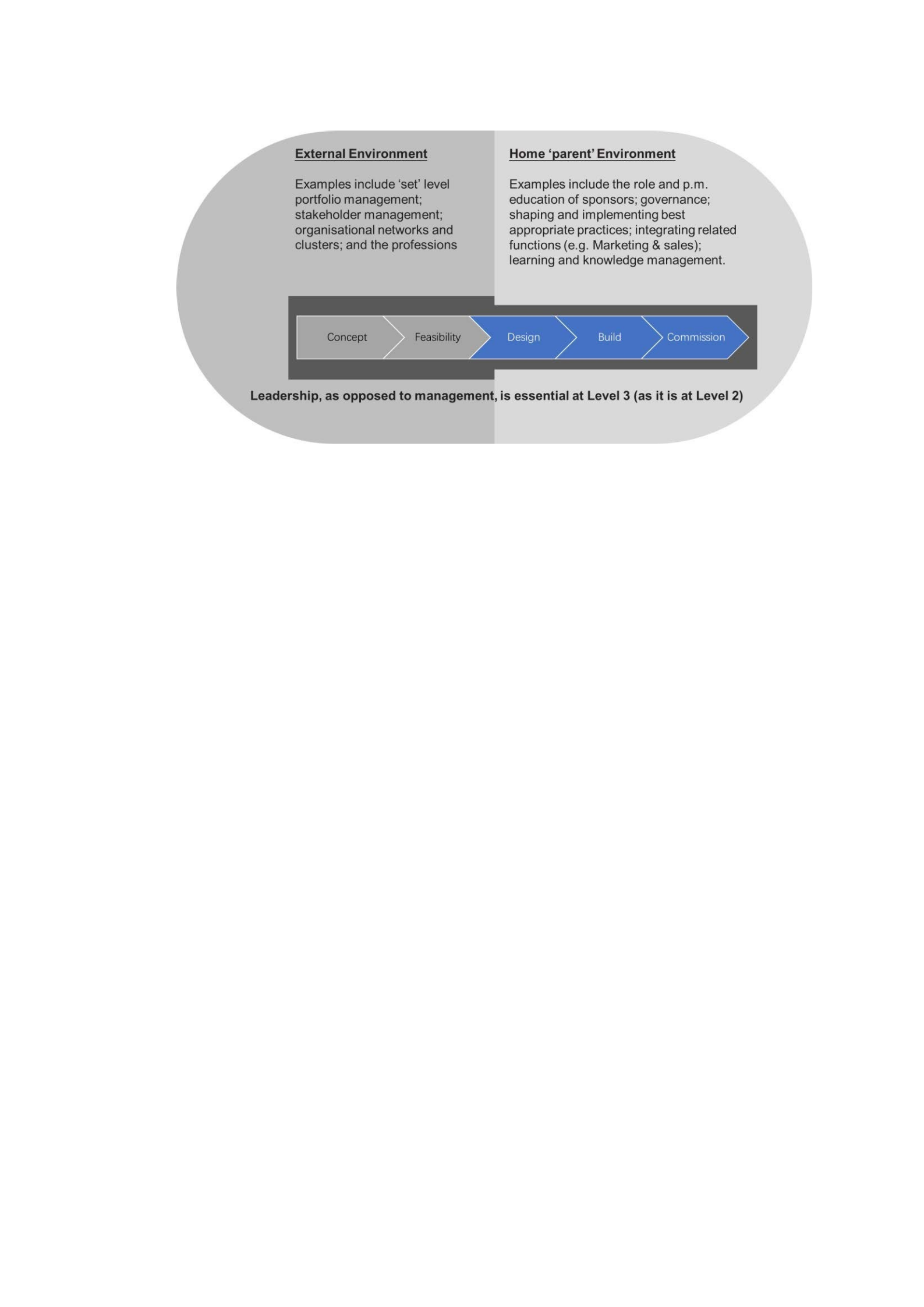
29
Figure 2-1 Levels 1 to 3 in the management of projects
(Source: Morris, P. and Geraldi, J. (2011) Managing the institutional context for
projects, Project Management Journal, 42, 6, Fig. 1, p. 23)
The second level, the project’s strategic wrap, expands the domain to include the
project’s front-end development and definition and protects the technical core from
environmental turbulence. It is concerned with the relationship between the project and
stakeholders’ strategies, the importance of getting the front-end right, and the value
and effectiveness of the project. The strategic wrap ensures that the project is
strategically aligned with the organisation’s goals, vision and mission. It also addresses
stakeholder management, communication and engagement. The project sponsor and
the project board are responsible for the strategic wrap. Their primary objective is to
ensure that the project is strategically aligned, well-defined and valuable.
The third level, the institutional level, is about managing the context within which the
project occurs to enhance its effectiveness in the long term. This level is concerned
with processes, standards, guides and agreements outside of particular projects’
individual management issues and predominantly in their institutional environment.
The institutional level focuses on improving the organisation’s project management
capability, maturity and performance. It includes developing project management

30
methodologies, processes and standards, providing project management training and
development, and implementing project management governance and oversight. The
project management office (PMO) is responsible for the institutional level. Its primary
objective is to improve the organisation’s project management capability, maturity and
performance to ensure long-term project success.
In fact, institutional theory has gained relevance in the field of project management due
to the increasing recognition of the importance of institutional factors in shaping
project outcomes. This has led to a range of research examining the influence of
institutional factors, such as norms, values and regulatory frameworks, on project
performance, governance and stakeholder relations (Panayides et al., 2015; Qiu et al.,
2019). Additionally, scholars have explored the role of institutional work, which
involves actors’ efforts to create, maintain and disrupt institutional structures and
norms in shaping project outcomes (Javernick-Will & Levitt, 2010; Matinheikki et al.,
2021). The research has provided valuable insights into the complex and dynamic
institutional environments in which projects are embedded and has highlighted the
need for project managers and researchers to be attuned to these institutional factors.
Overall, Morris’s concept of the management of projects represents a shift from a
narrow focus on project management to a more holistic approach that integrates project
management with broader organisational strategies and goals. This approach
recognises that projects are not standalone entities but are influenced by the broader
organisational context and require a more integrated and strategic approach to project
management.
This perspective shift is pertinent to the PPP projects of interest. Li and Wu (2017)
argue that the first-generation PPP model in China was primarily concerned with
reducing procurement costs and increasing efficiency in delivering public services.
However, the second-generation PPP model in China, as seen in France and other civil
law countries, positions PPP as a tool for leveraging regional economic development

31
through partnerships between the public and private sectors. The emphasis is on
stimulating social capital investment through market-oriented reforms and improving
the charging and price formation mechanism, which allows for investment return based
on market-oriented operations. The focus is no longer solely on the government’s
ability to pay financial funds but rather on the PPP’s driving role in regional economic
development and market mechanism maturity.
Li and Wu further argue that PPPs can be a useful tool in achieving sustainable
development goals, particularly in areas such as education, healthcare and elderly care,
where the pressure on government finances and technical management limitations
make it difficult to achieve these goals through government departments alone. The
PPP model can better balance the contradiction between the provision of public goods
and the need for sustainable development. Therefore, the future direction of PPPs, i.e.,
the third-generation PPP model in China, must focus on the needs of people and put
people first, elevating the operation concept and target positioning of the PPP model to
new heights.
2.2.3 The Hard and Soft Paradigm of Project Management
Another trend has influenced project management to focus on both hard and soft
paradigms, moving away from a sole emphasis on the hard paradigm. This discourse
has become increasingly prevalent in academic literature and industry practices. The
phrases “hard” and “soft” are frequently used in both practical and academic contexts
of general and project management. However, their meanings are often unclear and
indefinite. In general, the term “hard” often refers to technical or tangible aspects of
management, such as tools, methods and processes. On the other hand, “soft” often
refers to the intangible aspects of management, such as human behaviour,
organisational culture and communication.

32
From the perspective of the philosophical stand, Pollack (2007) suggests that hard
approaches to management are based on a positivist, reductionist and realistic
philosophy, which emphasises the pursuit of objective knowledge. In other words, hard
approaches seek to understand complex systems by breaking them down into smaller
parts and analysing them in a logical and systematic manner. Hard approaches focus on
finding the best solution based on objective data and facts. In contrast, soft approaches
are rooted in constructive and interpretive schools of thought. Soft approaches focus on
the human element of management, recognising that individuals and groups have
different perspectives and experiences that influence their understanding of complex
systems. Soft approaches emphasise the creation of knowledge through collaboration
and communication among stakeholders. The goal is to develop a shared understanding
of the problem and potential solutions rather than finding the one “correct” answer.
From the perspective of approaches to problem solving and decision making, Green
(1994) suggests that value engineering follows a hard systems thinking approach that
emphasises optimisation, while VM takes a soft systems thinking approach focused on
learning and improvement.
In the project context, the hard paradigm emphasises the technical and quantitative
aspects of project management, such as schedule and budget management, risk
assessment and performance measurement (Sanderson, 2012). The focus is on
achieving project goals through a structured, linear approach, often using
methodologies such as Waterfall. In contrast, the soft paradigm emphasises the human
and social aspects of project management, such as communication, team dynamics,
stakeholder engagement, and leadership (Ahsan & Gunawan, 2010). The focus is on
building relationships, fostering collaboration, and creating a positive work
environment to promote creativity, innovation and adaptability. Soft methodologies
such as Agile and Scrum prioritise flexibility, responsiveness and continuous
improvement.

33
The shift from a hard to a soft paradigm reflects a growing recognition that project
success depends not only on technical competence but also on the ability to manage
human and social factors effectively. This shift has implications for project managers,
who must develop new skills and competencies to manage both the hard and soft
aspects of project management, as well as for organisations, which must adopt new
structures, processes and cultures to support this new paradigm (San Cristóbal Mateo
et al., 2022).
To better illustrate the hard and soft paradigms of project management, Crawford and
Pollack (2007) developed a framework to better understand the concepts of “hard” and
“soft” in project management. They identified seven dimensions that contribute to a
project’s hardness or softness: goal/objective clarity, tangibility, success measures,
project permeability, solution options, degree of participation and stakeholder
expectations. Detailed connotations are summarised in Table 2-1.

34
Table 2-1 The hard and soft dimensions framework
Dimension Hard Soft Comments
Goal/objective
clarity
Goals are already well-
defined and don’t need
further examination
There may be ambiguity in
goals and instead, focus on
learning, exploring and
defining problems
The soft method helps to prevent
incorrect identification of the
problem. The approach then
shifts towards negotiation,
debate, and finding common
ground.
Goal/objective
tangibility
Goals can be defined in
clear, measurable terms
Goals can be more
challenging to define and
often require subjective
interpretation and judgment
Project managers need to be
aware of the level of the
tangibility of their goals and
adjust their approach accordingly
Success
measures
Quantitative measures
provide an accurate
reflection of reality
Qualitative analysis
provides an in-depth
understanding of a situation
Project managers should be
aware of the limitations and
strengths of both approaches and
use a combination of methods
for a comprehensive
understanding of their projects
Project
permeability
Limited number of
project influences inside
and outside project
control
Large number of project
influences inside and
outside project control
When the determination of a
clear boundary and specified
scope is more problematic, soft
methods that focus on learning,
exploration and problem
definition may be more
appropriate.
Solution
options
Efficient delivery with
predetermined solutions
is handed down without
room for discussion
There is an opportunity for
questioning assumptions
and thus exploring
alternatives and seeking
innovative solutions
The soft paradigm could be
considered the "optimal
approach" that arises from inter-
subjective, rational
argumentation
Degree of
participation
Team members are
considered experts in
their respective fields
with clear roles and
boundaries
People are encouraged to
cross professional
boundaries and negotiate
between multiple
perspectives
The effective hard method may
be suitable for simple, routine
projects, while the participative
soft method may be more
suitable in complex, multifaceted
projects where participant
ownership is necessary
Stakeholder
expectations
The emphasis is on
control, assuming the
predictable behaviour of
people
The emphasis is on culture,
meaning and value,
assuming people are part of
a complex system
Given the importance of
understanding different
stakeholder expectations, soft
methods that require greater
stakeholder interaction are more
effective in complex projects

35
Based on the framework summarised in Table 2-1, it can be argued that PPP projects
have more soft elements than hard ones. PPP projects often involve complex and
ambiguous goals from the outset, and stakeholders may have different interpretations
of what the project should achieve. Therefore, a soft method approach allows for
exploration, learning and defining problems to ensure that the project’s goals are clear
and agreed upon by all stakeholders.
Besides, PPP projects involve complex relationships between public and private
entities, and the success of such projects cannot be solely measured by quantitative
metrics. The qualitative analysis provided by soft methods can help project managers
gain an in-depth understanding of the complex factors that contribute to the success or
failure of PPP projects.
From the stakeholder-related dimension, PPP projects are often complex and involve
various stakeholders from different sectors who have different interests, priorities and
expectations. Therefore, PPP projects can be seen as having a large number of project
influences inside and outside project control. Also, there may not be a single
predetermined solution that can be handed down without room for discussion in PPP
projects.
Most importantly, participation and collaboration between stakeholders is crucial for
the success of the PPP project. Thus, soft methods that focus on learning, exploration
and problem definition are more suitable for PPP projects as they facilitate open
communication and cooperation between stakeholders, leading to better problem
solving and decision making.
When exploring the development of project management, it becomes apparent that
projects are anticipated to provide value to their stakeholders beyond the mere delivery
of products. It is expected that projects offer long-term strategic value to their
constituents (Martinsuo & Killen, 2014). The following sections explore the theoretical
underpinnings of project value and the approaches employed to create value in projects.

36
2.3 Broad Examination of Value Concept in Management Literature
In the realm of project management, the search for distinct knowledge unique to this
field is a common pursuit in the literature. For example, the Project Management Body
of Knowledge (PMBOK®) guide only delineates knowledge relevant to project
management that is not readily available in other fields and this approach did not
adequately cover the knowledge required for project management as a profession
(Morris, 2013).
To that end, this section aims to first examine the concept of value as described in the
broader management literature before narrowing its focus to the context of PPP
projects. Through this approach, better understanding of the common and specific
knowledge required for successful value creation in PPP projects and its distinctiveness
from other management fields is provided.
2.3.1 Value-in-use vs Value-in-exchange
In general, people seek to pursue value for money or, more broadly, the best value
possible. However, the question of what constitutes genuine goodness has been queried
throughout the history of humankind (Hart, 1971), making value an abstract and
subjective concept. To address issues related to value, which encompasses what is
regarded as valuable and/or desirable (Biedenbach & Jacobsson, 2016), a term called
“axiology” has emerged, which aims to synthesise and examine questions pertaining to
value priorities (Given, 2008).
Various approaches exist to comprehend and interpret value. One of the archetypes is
summarised by Rescher (1969), who classifies value into eight categories: material and
physical value; economic value; moral value; social value; political value; aesthetic
value; religious value; and intellectual value. While this classification provides a
universal perspective of what is typically valued, a triadic-dimension argued by
Hartman (1961) includes intrinsic, extrinsic and systemic values and exhibits the logic

37
of value creation. Intrinsic value refers to the value with which something is endowed
itself, rather than the value achieved in a specific context or through certain ways
(Hartman, 1991). Extrinsic value is defined as “not supposed to be good in itself but in
its function” (Hartman, 1991). Systemic value means that something must fulfill a
specific logic structure set up for such a value, resulting in a binary criterion in which
something is either valuable or not valuable at all, without an intermediate position
(Biedenbach & Jacobsson, 2016). Similarly, Pojman (2005) divides value into intrinsic
and instrumental ones, with the former meaning inherently valued and the latter
referring to effectual functions to achieve worth pursued (Biedenbach & Jacobsson,
2016).
To clarify the value construct, Bowman and Ambrosini (2000) employ the distinction
between use value and exchange value. Use value is subjective and contextual,
referring to the quality of a product or service perceived by customers with regard to
their actual need, while exchange value is the monetary amount realised at the point of
exchanging such products or services (i.e., the price the consumer is willing to pay for
the product) (Bowman & Ambrosini, 2000). Thus, value creation depends on the
subjective value realised by the target user or buyer who is the focus of value creation
whether an individual, organisation or community. However, Lepak et al. (2007, p. 182)
suggest that “subjective value realisation must at least translate into the user’s
willingness to exchange a monetary amount for the value received”. Similarly, from a
service-dominant logic perspective, Vargo et al. (2008, p. 145) argue that “value is
fundamentally derived and determined in use – the integration and application of
resources in a specific context – rather than in exchange – embedded in firm output
and captured by price”.
In the realm of business, value-in-exchange pertains to the price that consumers are
willing to pay for the goods and services offered by a firm (Bowman & Ambrosini,
2000). As profit-maximising entities, firms employ various strategies to achieve the
highest value-in-exchange possible (Lepak et al., 2007). However, it is important to

38
note that value-in-exchange is contingent upon value-in-use. Hence, firms should
prioritise the pursuit of value-in-use rather than value-in-exchange, as the latter is a
consequence that emerges from its antecedent, which is value-in-use.
Furthermore, value-in-use pertains to the benefits and utility that consumers derive
from the products and services offered by a firm (Leroy et al., 2013). This concept is
rooted in the notion that consumers purchase goods and services not for their inherent
value, but for the benefits that they provide. Hence, firms should focus on delivering
superior value-in-use to their customers, as this is what drives demand and ultimately
leads to higher value-in-exchange. It is also worth noting that value-in-use is not
limited to the functional benefits that a product or service provides. Rather, it
encompasses a range of intangible factors such as emotional attachment, social status
and environmental impact (Payne et al., 2007). Hence, firms should aim to create
products and services that not only fulfill their functional needs but also accord with
their emotional and social aspirations while minimising any negative impact on the
environment.
In conclusion, while value-in-exchange is a crucial component of a firm’s success, it is
ultimately dependent on the value-in-use that its products and services provide. Thus,
firms should prioritise the pursuit of superior value-in-use as this drives demand and
ultimately leads to higher value-in-exchange. By creating products and services that
cater to the diverse needs and aspirations of consumers while minimising negative
externalities, firms can build sustainable competitive advantages and long-term
profitability.
2.3.2 Value Creation Content vs Value Creation Process
Based on the philosophical discussion of value, value has been endowed with a variety
of contextual connotations, and its characteristics of long-term process and multi-
stakeholder involvement have been identified in the field of management. At the

39
organisational level, Thomas and Mullaly (2008) categorise three approaches to assess
the value of an organisation: the return on investment approach, which quantitatively
focuses on the cost–benefit ratio; the balanced scorecard approach, which includes
financial and non-financial measures; and the organisational competency approach,
which emphasises the long-term and sustainable competitive advantage of companies.
At the project level, some scholars adopt the 3E view, which is economy, efficiency,
and effectiveness, to elaborate on value creation. Economy refers to maximising inputs
with regard to the money invested; efficiency refers to maximising outputs with regard
to inputs, and effectiveness refers to maximising outcomes with regard to output. To
achieve value for money of a project, it is necessary to maximise outcomes for every
dollar invested into it (Burger & Hawkesworth, 2011). While economy and efficiency
focus more on the financial facet, effectiveness measures if the designed outcome has
been attained, moving beyond the uni-dimensional perspective to focus more on the
lasting effects beyond the project itself. This perspective emphasises the need to treat
value creation as a long-term and ongoing process (Chang et al., 2013).
In addition to the emphasis on the long-term view of value, academic attention is also
paid to the individual-specific nature of value in projects. The Institute of Value
Management (2010) defines value as “the relationship between satisfying needs and
expectations and the resources required to achieve them”, drawing attention to the
significant role that diverse stakeholders play in determining value. This emphasis is
further explained in the definition of value management, which aims to improve and
sustain the best balance between satisfaction and resources through reconciling various
value priorities from diverse stakeholders (Institute of Value Management, 2010).
According to Chang et al. (2013), value creation has two important characteristics that
must be considered: content and process. The content of value creation refers to what
is considered valuable, who values it, and where the value resides. Meanwhile, the
process of value creation distinguishes the process of capturing value from its creation.

40
By understanding these two aspects, value creation can be seen as an ongoing and
long-term process that involves various stakeholders. A synthesis of existing literature
(broadly in general management or specifically in engineering and project management)
on value and VCC is provided in the table below.
Table 2-2 A synthesis of existing literature on value and VCC
Literature Key Findings
Vargo and Lusch
(2004)
Introduced the concept of service-dominant logic which
emphasises VCC as a collaborative process between
customers and providers. Emphasised the importance of
shifting from a goods-dominant logic to a service-dominant
logic.
Prahalad and
Ramaswamy (2004)
Argued that value is co-created through interactions between
firms and customers. Stressed the need for firms to view
customers as active participants in the value creation process
rather than passive recipients of value. Introduced the concept
of the “co-creation experience”.
Grönroos (2011) Proposed a “service logic” approach to VCC, emphasising the
central role of services in value creation. Highlighted the
importance of customer integration, relationship development,
and continuous dialogue in the co-creation process.
Payne et al. (2007) Developed a framework for managing VCC that includes four
key processes: understanding, creating, delivering, and
capturing value. Emphasised the need for firms to align their
resources, capabilities and processes with customer needs and
preferences.
Ramaswamy (2011) Introduced the concept of “cocreation platforms” as a way to
facilitate VCC in networked environments. Emphasised the
role of technology in enabling collaboration and knowledge
sharing among stakeholders.
Edvardsson et al.
(2011)
Explored the application of VCC in the context of
infrastructure projects. Highlighted the importance of
involving multiple stakeholders, such as clients, contractors
and end-users, in the VCC process. Emphasised the need for
effective communication and collaboration among
stakeholders.

41
Value creation is a complex and multi-dimensional construct that can be influenced by
a range of factors. The individual-specific nature of value highlights the importance of
recognising the diverse perspectives and priorities of stakeholders in determining value.
At the same time, the process of capturing value from value creation emphasises the
need to consider the various stages involved in the value creation process, from
ideation to delivery and beyond.
In summary, value creation is a dynamic and multifaceted concept that requires a
comprehensive understanding of its content and process. By recognising the
importance of these two aspects, stakeholders can work together to create and capture
value in a sustainable and mutually beneficial way.
2.3.3 Value vs Values
Understanding the difference between values and value is crucial in the fields of
management and project management. Values refer to the beliefs and principles that
guide decision making and behaviour, whereas value refers to the worth or benefit
derived from a particular action, investment or project (Martinsuo, Klakegg, et al.,
2019).
In the context of public administration, the difference between value and values is that
value is more concerned with the tangible benefits and outcomes of public policies or
services, while values are more concerned with the ethical and normative dimensions
of public administration. The two streams of public value research – the managerial
perspective (Rf. Moore, 1995) and the normative perspective (Rf. Bozeman, 2007) –
reflect these different emphases. The managerial perspective focuses on the efficient
delivery of services and the achievement of specific outcomes, while the normative
perspective places greater emphasis on the ethical and moral considerations of public
administration. The managerial perspective of public value research is grounded in the
notion that public policies and services should be designed and delivered in a way that

42
maximises their value to citizens (Petrescu, 2019). This perspective views public
administration as a means to achieve specific goals and outcomes and emphasises the
importance of performance measurement and evaluation. It is concerned with
improving the efficiency and effectiveness of public services, while ensuring that they
meet the needs of citizens and contribute to the public good. The normative perspective
of public value research, on the other hand, places greater emphasis on the ethical and
normative dimensions of public administration (Bozeman, 2002). This perspective
acknowledges that public policies and services are not neutral, and that they can have
differential impacts on different segments of society. It advocates for a more inclusive
and participatory approach to public administration, one that is guided by principles of
transparency, accountability and fairness. It recognises the importance of values such
as social justice, equity and democracy in shaping public policies and services
(Williams & Shearer, 2011).
In project management, delivering value is the ultimate goal (Thiry, 2002). This means
that a project should provide benefits or outcomes that meet the needs and expectations
of stakeholders, while also being completed on time, within budget, and to the required
quality. Project managers must balance the competing demands of stakeholders and
ensure that the project’s objectives align with the organisation’s overall strategy and
values. In contrast, values are more abstract and subjective. They reflect an
organisation’s culture and beliefs and guide decision making and behaviour (Martinsuo,
Vuorinen, et al., 2019). Values can influence project selection, prioritisation and
governance. For example, an organisation that values sustainability may prioritise
projects that reduce its environmental impact, even if they are not the most profitable.
Values can also impact project outcomes, as they may influence the way in which
stakeholders perceive and evaluate a project’s success.
While values and value are distinct concepts, they are interconnected. The values of an
organisation and its stakeholders can impact the perception of a project’s value
(Vuorinen & Martinsuo, 2019). For example, a project that aligns with an

43
organisation’s values may be seen as more valuable, even if it does not generate the
highest financial return. On the other hand, a project that conflicts with an
organisation’s values may be seen as less valuable, even if it generates significant
financial returns. In summary, values and value are both important concepts in
management and project management. Values guide decision making and behaviour,
while value refers to the worth or benefit derived from a particular action or investment.
Both concepts are interconnected and can influence project selection, prioritisation and
governance, as well as project outcomes and the perception of a project’s value.
2.3.4 Key Insights on Value and Its Creation in the Context of PPP Projects
The review of management literature has highlighted three central insights. These
arguments are as follows:
First, rather than creating multiple dimensions of value, researchers should focus on
creating a unique definition of value that considers its usefulness from the client’s
perspective. This research aims to explore the expressions of value outcomes that
emerge from the usefulness of a project, especially in the PPP context.
Second, the concept of value has multiple meanings in the management literature, and
there is a lack of communication between different management streams. Notably, the
service-dominant logic framework originating from the marketing discipline and VM
methodologies originating from the engineering discipline offer the most robust
literature on value. However, combining these two streams of literature and adapting
them to unique project settings requires further investigation and examination.
Third, there has been a shift from a transactional and independent approach to value
creation to a more interactive approach. This approach has been refined in the service-
dominant logic constructs, such as VCC, which may provide more useful value
outcomes, particularly to client organisations. Service-dominant logic may be

44
considered a long-awaited model to move away from neo-classical economics (Fuentes,
2020).
For this thesis research focus on PPP projects, three primary arguments regarding
value and its creation are proposed as above by drawing on the perspective of PPP
projects. Referring back to the main focus of this study on project management, the
following section is a more in-depth examination of the idea of value in the project
context. It delves deeper into the concept of value and analyses it in relation to project
settings, to provide a more thorough understanding of how value can be created and
maximised in projects.
2.4 Analysis of Value Concept in PPP Project Context
2.4.1 Value vs Similar Concepts
The definition of value in the context of PPPs is a complex and multifaceted concept
that varies among stakeholders. Since PPP projects involve diverse stakeholders and
last for a long time, capturing value from various stakeholder perspectives and
throughout the full lifecycle of the project is crucial to its success. Despite value being
seldom mentioned in PPP literature, scholarly explorations on value within the context
of PPP projects are emerging, with studies focusing on constituent facets such as
performance measurement, social responsibility and sustainability.
The concept of value in PPP projects is evolving, with a growing recognition of its
importance in ensuring project success. Stakeholders’ perceptions of value are varied,
and capturing value from diverse perspectives is necessary to achieve genuine success
in PPP projects. While studies on evaluating PPP projects beyond the traditional “time-
cost-quality” view are fruitful, further research is needed to explore the different
dimensions of value in PPP projects.

45
Value vs performance
PPP infrastructure projects are essentially construction projects, and thus it is necessary
to draw on the experience of construction performance measurement to evaluate them
effectively (Liu, Love, Smith, et al., 2015). Successful delivery of PPP projects is
influenced by several factors, including performance measurement (Liu, Love, Smith,
et al., 2015; Osei-Kyei & Chan, 2015; Osei-Kyei et al., 2017). Performance
measurement is fundamental in ensuring project success by providing stakeholders
with valuable information (Liu, Love, Smith, et al., 2015; Yuan et al., 2009). In the
construction industry, performance is typically assessed through key performance
indicators (KPIs) and performance measurement systems (PMSs) (Bassioni et al.,
2004). However, it has been argued that KPIs are often used as a marketing tool rather
than being integrated into business management, and that they should be combined
with an overall performance measurement system for effective use (Beatham et al.,
2004). According to Neely et al. (2001), performance measurement is the evaluation of
past actions’ effectiveness and efficiency, and it needs to be extended to the ex-ante
and whole lifespan (Love et al., 2015).
As a result, recent research has focused on systematically evaluating PPP projects’
performance with broader and more inclusive views. Some of this research has
concentrated on the longevity of PPP projects and has asserted that performance
measurement throughout the entire lifecycle is scarce (Love et al., 2015). Meanwhile,
Verweij (2015) has highlighted the significance of stakeholders’ engagement in the
implementation phase of PPP projects, emphasising that managers’ externally-oriented
actions lead to satisfactory outcomes, while their internally-oriented actions lead to
unsatisfying ones. Robinson and Scott (2009) argue that stakeholders’ perceptions
remain consistent in some situations but can conflict with each other in others.
Through a multi-case study on the effectiveness of performance monitoring on
compliance with output specifications, it was found that the principal (public partner),

46
agent (private partner), and independent audit body all held different views on output
specifications, leading to divergent opinions on performance monitoring systems and
payment mechanisms (Liu et al., 2016). Other scholars have developed multi-
dimensional evaluation frameworks, such as the Yuan et al. (2009) conceptual model
of performance objectives, which has three separate packages: project inputs,
requirements of stakeholders, and project implementation. Despite several
comprehensive measurement frameworks established in previous research,
performance measurement tends to omit the significant impact of PPP projects on the
community, leaving critical issues regarding social responsibility and sustainability
unaddressed.
Project value, on the other hand, is a multifaceted concept that extends beyond the
traditional boundaries of performance measurement (Yeo, 1991). While performance
measurement primarily evaluates a project’s efficiency and effectiveness in achieving
predetermined objectives, project value encompasses a broader spectrum of
considerations. Project value incorporates not only the quantitative aspects of project
delivery but also the qualitative and long-term impacts it has on stakeholders, society
and the environment.
To delve deeper into this distinction, it is crucial to highlight that project performance
measurement typically focuses on specific key performance indicators (KPIs) and
metrics that are often associated with cost, time and quality (Chang et al., 2013). These
metrics are essential for evaluating the immediate success of a project, ensuring it stays
on budget, adheres to the schedule, and meets quality standards. However, they may
fall short in capturing the project’s wider implications, such as its contribution to
sustainability, social wellbeing and stakeholder engagement.
In contrast, assessing project value entails a more comprehensive analysis that
considers not only the project’s immediate outcomes but also its long-term effects
(Laursen & Svejvig, 2016). This evaluation takes into account the project’s ability to

47
create lasting value for the community, the environment and the economy. It
encompasses a holistic perspective that goes beyond traditional performance metrics,
delving into areas like environmental sustainability, social responsibility and the
project’s alignment with broader societal goals. Furthermore, project value assessment
is a forward-looking and comprehensive approach that recognises the
interconnectedness of projects within their broader context (Smyth et al., 2018).
Consequently, project value assessment aims to determine the project’s overall impact
and its ability to bring about positive, sustainable change in the community it serves
(Martinsuo & Killen, 2014).
Value vs social responsibility
Social responsibility has gained significant attention in the construction industry,
particularly in infrastructure projects, which have significant impacts on the
community and the environment (Loosemore & Lim, 2016). Socially responsible
infrastructure projects usually involve various stakeholders with different interests and
value orientations that are often incompatible with each other. As a result, social
responsibility has emerged as a crucial value orientation (Van Marrewijk, 2007) that
contributes significantly to the success of infrastructure projects, most of which are
delivered through PPP models (Zhang et al., 2015). Therefore, taking on social
responsibility is a critical aspect of successful infrastructure project development
(Wang et al., 2017).
The concept of social responsibility is multi-dimensional, encompassing ecological,
economic, environmental, ethical, legal and political responsibilities (Zhou & Mi, 2017,
p. 1386). As PPP projects progress, the power and status of the seven stakeholder
groups (governments, developers, main contractors, district councils, consultants, non-
government organisations, and end-users) regarding social responsibility change (Lin,
Ho, & Shen, 2017). It is also pointed out that exploring the role of stakeholders and the

48
relationship between them could be a potential research agenda in the future (Zhou &
Mi, 2017). It is worth noting that while previous research has established
comprehensive measurement frameworks, the impact of PPP projects on the
community’s social responsibility and sustainability has not received sufficient
attention, leaving critical issues unaddressed.
However, social responsibility represents only one facet of the broader concept of
project value. While social responsibility is crucial, project value assessment takes a
more comprehensive approach. It goes beyond examining only the ethical, societal and
environmental dimensions of a project, as it encompasses various other facets, such as
economic viability, innovation and long-term sustainability. Project value assessment
inherently incorporates social responsibility as one of its elements, recognising it as a
critical component of a project’s overall impact. Consequently, project value
assessment provides a more holistic evaluation of a project’s contribution to society,
the environment, and the economy, considering a broader spectrum of value creation
aspects beyond social responsibility alone.
Value vs sustainability
There is an increasing emphasis placed on sustainability within the construction
industry and urban development (Koppenjan & Enserink, 2009; Ortiz et al., 2009).
Studies have concluded that PPPs are significant in achieving sustainability in
economic systems (Khayrullina & Arzamastseva, 2018). Sustainability, as defined by
the World Commission on Environment and Development (WCED) (1987), refers to
development that meets present generation needs without jeopardising the ability of
future generations to fulfill theirs. PPP projects can have an impact on community
sustainability across three dimensions: natural environment, regional life support
system, and community fragmentation (Mouraviev & Kakabadse, 2016). Shen et al.
(2016) add that sustainable infrastructure development is crucial and propose a triple-

49
bottom-line sustainability performance-based evaluation model comprising economic,
social and environmental indicators.
However, there is a research gap regarding a comprehensive assessment of the real
value of PPP projects in social infrastructure projects from an integrated perspective
across the entire project lifecycle and different stakeholders. Therefore, this study aims
to fill this gap by summarising and analysing value-related studies from both lifecycle
and stakeholder dimensions.
In comparing project value and sustainability, it is important to note that while
sustainability is a critical aspect of project value, the terms represent distinct yet
interconnected concepts. Sustainability emphasises the long-term viability and
responsible stewardship of resources, with a focus on meeting current needs without
compromising future generations’ wellbeing (Baba et al., 2021). It encompasses
environmental, social and economic considerations, making it a comprehensive
framework for evaluating a project’s impact on society, the environment and the
economy. On the other hand, project value is a broader concept that encompasses
various dimensions beyond sustainability, including economic efficiency, innovation,
stakeholder satisfaction and overall societal impact. While sustainability is an integral
component of project value, the latter extends to evaluate a project’s contribution to a
wider range of stakeholders and its capacity to create enduring benefits for the
community, the environment and the economy (Green & Sergeeva, 2019).
Thus, this study posits that for PPP projects to effectively capture the value associated
with social responsibility and sustainability, a comprehensive assessment of project
value must be conducted through integrated horizontal and vertical dimensions.
Specifically, this entails evaluating the project’s lifecycle dimension and stakeholder
dimension to ensure that all relevant factors are considered in the assessment process.
By evaluating PPP projects in a comprehensive and integrated manner, decision
makers can make informed decisions that balance economic, social and environmental

50
considerations and achieve desirable outcomes for all stakeholders.
2.4.2 Dimensions of Value
The concept of value has been a significant area of focus in management literature as
organisations search for alternative ways to create value. However, the meaning of
value may differ across various stakeholders, resulting in diverse interpretations across
different fields of management. As a result, it is essential to recognise that the
perception of value may vary among stakeholders, and understanding their unique
perspectives can lead to better outcomes for all involved parties. It is also essential to
note that the perception of value may change over time, even for the same stakeholder.
This evolution may be due to the pursuit of value, which could change as new
priorities emerge, or the experience of value, which may evolve through the utilisation
of the service.
Project lifecycle dimension
According to the European Investment Bank (EIB) (2012), the development process of
a PPP infrastructure project typically comprises eight phases: project selection and
definition, PPP option assessment, getting organised, pre-tendering work, bidding
process, contract and financial close, contract management, and ex-post evaluation.
However, the literature offers alternative classifications of the PPP lifecycle. For
instance, Liu, Love, Davis, et al. (2015, p. 5) summarised the above eight phases into
three major interrelated phases: (1) initiation and planning; (2) procurement; and (3)
partnership (e.g., construction, operation, and maintenance). Lin et al. (2017) divide
the PPP lifecycle into three stages: the initiating and planning stage, the execution
stage, and the controlling and closing stage. Similarly, Love et al. (2015) argue that
current performance evaluation of PPP projects focuses on input, output and outcome
while omitting evaluation of process. This study adopts the conventional classification

51
used by the European Investment Bank and treats the partnership phase as two separate
phases from a process perspective as a construction phase and operation and
maintenance (O&M) phase aiming to ensure a more precise theoretical evaluation
framework. While studies on stakeholders are fruitful, evaluating PPP projects from
the process dimension is scarce (Love et al., 2015). Based on the division of lifecycle
process, Liu et al. (2017) put forward a performance measurement framework
regarding PPP social infrastructure projects consisting of a series of indicators from
five dimensions: stakeholder satisfaction, strategies, processes, capabilities, and
stakeholder contribution. Lin et al. (2017) investigated the dynamic stakeholder power
regarding social responsibility in the construction project lifecycle, and identified a set
of social responsibilities in three phases of construction projects. In a study of
corporate social responsibility, Zhao et al. (2012) also shed light on the issues and
performance indicators at the project level regarding PPP projects based on four phases
divided from PPP projects’ entire lifecycle. Based on a lifecycle assessment
perspective, Ortiz et al. (2009) highlighted the growing importance of sustainability in
the construction industry and the role of lifecycle assessment (LCA) in achieving
sustainability objectives. They discussed the methodology and application of LCA,
compared different LCA approaches, and emphasised the need for a balanced approach
to development that considers social, economic and environmental factors.
Multi-stakeholder dimension
Due to the complex composition of stakeholders with diverse value orientations
involved in PPP projects, Kwak et al. (2009) stress that integrating multiple
stakeholders effectively would be conducive to delivering successful outcomes.
Notably, increasingly more scholars have paid attention to evaluate PPP projects in an
inclusive view with comprehensive indicators and stress the relationship between goal
congruity as well as multi-value integration and PPPs’ success. PPPs have been
researched
not
just
within
the
project
management
area but
have also
received

52
academic attention from other disciplines such as legal, social development, and
sustainability. Thus, several stakeholders have been identified from different
perspectives and research focus. In general, these stakeholders can be divided into
three groups: public sector, private sector and general public (Henjewele et al., 2011;
Yuan et al., 2012). Based on the general classification, Yeung et al. (2008) took the
infrastructure sector as another stakeholder dimension. Paying special emphasis to
social infrastructure, Liu et al. (2016) classified key stakeholders as public client,
creditor, shareholder, concessionaire, subcontractors, end-users, and professional
employees of service provision. Another comprehensive classification by Lin et al.
(2017) is governments, developers, and main contractors; district councils; consultants;
non-government organisations; and end-users. After integration and comparison and
considering the particularity of PPP projects in China, this thesis study classified the
stakeholders as 1) public sector, 2) private sector, 3) creditors, 4) end-users, 5)
professional employees of facility and service provision, and 6) community and
general public.
An array of indicators has been identified under the multi-stakeholder dimension. Yuan
et al. (2009) identified a list of performance objectives from different stakeholders in
an attempt to reflect their best-value orientation. Reckoning performance objectives as
the foundation of performance measurement and management, in a subsequent paper
Yuan et al. (2010) defined the level of performance objectives, through which to
explore preliminarily how to integrate all stakeholders’ points of value through a fuzzy
entropy method. Further, Yuan et al. (2012) pointed out that, although performance
objectives vary due to different standpoints of stakeholders, the key performance
indicators (KPI) should be consistent because all the stakeholders need to compromise
and collaborate to ensure PPP projects provide value for money.
Based on this argument, Yuan et al. (2012) developed a conceptual model for KPIs in
PPP projects including three perspectives and five aspects: 1) the perspective of project
inputs (consisting of physical characteristics of projects); 2) the perspective of the

53
requirements of stakeholders (consisting of financing and marketing; innovation and
learning; stakeholders); and 3) the perspective of project implementation (consisting of
the project process). Yeung et al. (2008) established a set of qualitative indicators to
measure partnering performance in Hong Kong’s construction industry. The indicators
were derived initially from interviews with major stakeholders involved in the
partnership, which are the private sector, public sector and infrastructure sector, and
then refined them into seven groups as time performance, cost performance, top
management commitment performance, quality performance, trust and respect
performance, effective communications performance and innovation and improvement
performance. With a special focus on operational management, Osei-Kyei and Chan
(2017) explored the different perceptions of stakeholders based on the critical success
factors of PPP projects. Koppenjan and Enserink (2009) explored how to reconcile the
private participation and sustainability within urban infrastructure development and
summarised a set of governance practices.
2.4.3 Principal Concepts Discrimination
Value is a central and multifaceted concept that is extensively discussed in this
research. With the aim to differentiate confusing concepts and clarify the connotation
of these concepts in this research, this section clarifies the various value-related
concepts that are referred to in this study.
The concept of project value is used to provide context for this research, specifically in
relation to PPP projects. In this context, project value refers to the overall benefits
created for the entire project, which includes value creation for all stakeholders
involved in the project, minus all relevant costs. Project value is the independent
variable in this research, and the ultimate aim is to investigate how to maximise the
project value of a PPP project.
Value creation, on the other hand, refers to the amount of value that is created through

54
various VCC activities. Despite a possibly more precise way to describe value creation
by referring to it as the emergence or formation of value (Grönroos & Voima, 2012),
the term “value creation” is commonly used and accepted in academia, and therefore it
is used in this research. However, as there are different categories and timing of value
creation during the entire PPP project lifecycle, the noun, value outcomes, is used to
refer to different categories of benefits that are created, dictating dimensions of the
interdependent variable.
Moreover, value co-creation refers to the actions taken by stakeholders with the aim of
creating value. It has the verb attribute in the research and represents the dependent
variable in the research. It involves the active participation of multiple stakeholders in
the creation of value, rather than being solely generated by the service provider or the
client. In the context of PPP projects, VCC involves a collaborative process between
the public and private sectors to create value for all stakeholders, including the
government, private sector partners, and the public at large.
The concept of VCC is closely related to the notion of value proposition, which is the
set of benefits that a service provider promises to deliver to the client or end-users. In
the context of PPP projects, value proposition should be aligned with the interests and
needs of all stakeholders, and it should be based on a thorough understanding of their
expectations and requirements. Effective value proposition can help to ensure that the
project delivers the intended benefits and creates sustainable value for all stakeholders.
2.5 Analysis of Service-Dominant Logic and Value Management
Literature
As stated in the second argument in Section 2.4, the concept of value has multiple
meanings in the management literature, and there is a lack of communication between
different management streams. Notably, the service-dominant logic framework
originating from the marketing discipline and VM methodologies originating from the

55
engineering discipline offer the most robust literature on value. However, combining
these two streams of literature and adapting them to unique project settings requires
further investigation and examination. The disparate interpretations of the concept of
value in different management fields imply a need for a more comprehensive
understanding of its meaning. Given the significant contributions of the service-
dominant logic framework and VM methodologies to the value literature, further
exploration of these areas of inquiry, particularly regarding their adaptation to unique
project settings, is crucial. Such investigations allow for a deeper understanding of the
complexities of value creation and provide insights into the most effective strategies
for creating value in different project contexts.
2.5.1 Service-Dominant Logic and Value Co-creation
The main theoretical foundation of this research is VCC. VCC is a business concept
that emphasises the collaborative creation of value between a company and its
customers or other stakeholders (Payne et al., 2007; Prahalad & Ramaswamy, 2004). It
suggests that value is not created solely by the company or producer, but rather
through a joint effort between the company and its customers (Normann & Ramírez,
1993). In this theory, the customer is not merely a passive recipient of the company’s
offerings, but an active participant in the value creation process. The company
provides the resources, products or services, while the customer provides their own
knowledge, skills, experiences and preferences to create a unique value proposition
that satisfies both parties (Karpen et al., 2015; Vargo & Lusch, 2007a). The
implementation of this theory requires a shift in mindset from the traditional view of
customers as passive receivers of value to an active, collaborative partner in the value
creation process. This can involve a range of activities such as co-design, co-
production, co-marketing, co- innovation and co-creation of knowledge (Fuentes et al.,
2019).

56
There are two main research strands identified in the VCC literature. One strand,

57
represented by scholars such as Stephen L. Vargo and Robert F. Lusch, is the well-
known service-dominant logic perspective in service science. The two renowned
scholars with an active community of scholars have facilitated the evolution of this
theoretical perspective. In service-dominant logic, Vargo and Lusch (2018) argue that
VCC occurs through a series of interactions between the firm and the customer. These
interactions involve the integration of resources, especially the operant resources
(Constantin & Lusch, 1994), from both parties to achieve mutually beneficial
outcomes. Service-dominant logic is built on a set of axioms that emphasise the
centrality of VCC, the importance of relationships, and the role of knowledge and
information (Vargo & Lusch, 2015). VCC emphasises the role of customers as active
participants in the creation of value who co-created value with firms by bringing their
own resources, knowledge and experience to the service encounter.
Service-dominant logic further suggests reexamining the role of customers from a
perspective of networks and systems, and thus introduces the concept of “service
ecosystems” which are networks of firms, customers and other stakeholders that
interact to create and deliver value (Vargo & Lusch, 2011). In a service ecosystem,
value is not created by isolated firms but by the interactions between actors, such as
customers, suppliers, competitors and regulators. This means that a service firm cannot
fully control the value that is created within a service ecosystem but must instead work
collaboratively with other actors to create value for all participants.
Differentiating from Vargo and Lusch’s emphasis on the broader network of actors
involved in VCC, another strand, represented by scholars such as Grönroos,
Ramaswamy and Prahalad, examines how value is created in the context of services by
defining the concepts of VCC and value creation, and exploring the roles of both the
customer and the firm in this process. In their views, VCC is analysed as a function of
the interactions between these two main entities not among a network. In addition,
Grönroos (2017) stresses that customers not only determine value, but they are also the
value creators. The firm can facilitate customers’ value creation by providing potential

58
value, which evolves into value-in-use during consumption. By establishing a platform
of co-creation during direct interactions, the service provider and the customer can
merge their processes into one interactive, collaborative and dialogical process,
allowing the firm to co-create value with the customer. Although the concept of VCC
is not clearly defined, it is generally believed that both customers and firms contribute
to it, making it a comprehensive process. There is a need to differentiate between the
roles and actions of the service provider and the customer in this process (Grönroos,
2012). On this point, Grönroos holds a different view from Vargo and Lusch’s more
systemic view of emphasising the interconnectedness of all actors involved in value
creation.
Other than this difference, both strands acknowledge the importance of interaction.
Such interaction is twofold. The first aspect of interaction is resource integration
(Vargo et al., 2008), which refers to how actors combine their resources and
capabilities during interaction to create value. This could include the exchange of
information, expertise, technology or other resources that enable actors to co-create
value. The second aspect of interaction relates to the relationship among actors
involved in the interaction (Lambert & Enz, 2012). This refers to the social dynamics,
trust and mutual understanding between actors that enable them to work together
effectively. When actors have a strong relationship, they are more likely to collaborate
and co-create value, leading to positive outcomes for all involved.
2.5.2 Value Management Methodology and Value Co-creation
VM is a systematic process that aims to optimise the value delivered by a project or
organisation while minimising the costs and risks involved (Martinsuo & Killen, 2014).
According to Thiry (2013), VM is a structured approach that involves identifying and
defining the functions required to meet the customer’s needs and wants, analysing the
value of these functions, and developing innovative solutions that meet these needs

59
more effectively and efficiently than traditional approaches. This relates to two
dimensions: the fit with expectations and the achievability of the solution. Meeting
expectations requires a neutral or positive ratio between the achieved outcomes and
expected outcomes, while achieving solutions requires a balance between available and
requested competence (Thiry, 2013).
Although VM stresses receiving an equitable return, whether in goods, services or
money, for something exchanged (SAVE International, 2007), it is not just about cost-
cutting but involves a holistic approach to creating value, including considering the
entire lifecycle of a project or product, assessing the potential impact of new
technologies and innovations, and actively involving stakeholders in the process.
Function is a fundamental concept that refers to the expected performance of the
customer in terms of their needs and wants (British Standard Institution (BSI), 2012).
Function analysis is a critical activity in VM methodologies used to identify what the
customer truly values, regardless of feasibility considerations (British Standard
Institution (BSI), 2020). Functions are typically use-oriented and independent of
specific solutions. For example, a closet is a solution, while storing things is a function.
However, storing things can be accomplished by other solutions besides a closet, such
as storage boxes or garages. Functions are typically described as an active verb
followed by a measurable noun, such as “closet” = “store things”. This approach
encourages creative alternatives to be generated based on the customer’s needs, rather
than relying solely on the project team’s competence. Function analysis distinguishes
VM from other problem-solving or process improvement methods and fundamentally
connects VM and VCC. At the project level, functions can be associated with business
benefits since a project aims to seek benefit.
VM and VCC are two interconnected concepts that aim to create value for customers.
VM focuses on identifying the customer’s needs and wants and developing solutions to
meet
those
needs,
while
VCC
emphasises
the
collaborative
efforts
of
multiple

60
stakeholders in creating value. Both concepts are aimed at enhancing customer
satisfaction and creating long-term value for all stakeholders involved in a project.
Function analysis, a critical activity in VM, aligns with VCC, which emphasises the
co-creation of value through collaborative efforts between stakeholders. At the project
level, functions can be associated with business benefits, since a project aims to seek
benefit. Therefore, VM and VCC are complementary and can be used together to
enhance the value proposition of a project.
2.6 Analysis of Value Co-creation in the Management of Project Literature
2.6.1 Institutional Factors
Institutional factors in PPPs: Gaps and reasons for investigation
With the inception of organisations as a field of research in 1950, scholars started to
investigate organisational structures and behaviours from the institutional perspective
(Dimaggio & Powell, 1983). As Vargo and Lusch (2015, p. 18) maintained, value
creation cannot be fully understood without “including the institutions and institutional
arrangements that enable and constrain value creation”. However, while previous
research efforts in infrastructure project management have examined VCC mechanisms
in some detail, the role of institutions in shaping or hindering VCC behaviours in the
PPP context remains largely understudied especially empirically (Pérez-D’Oleo et al.,
2015), despite the relevance of this issue.
Research and discourses regarding institutional theory vary significantly, with one
notable difference being the diverse levels of analysis employed by scholars in the field
of project management (Scott, 2014). Although taking a risk to be arbitrary given the
extremely wide range of social phenomena, Scott (2014, p. 105) identified six levels of
analysis in institutional research: world system, society, organisation field,

61
organisational population, organisation, and organisational subsystem. These
categories are divided according to the scope of the phenomena encompassed. Using
data from the World Bank and the institutional framework developed by (Kaufmann et
al., 2009), one extant salient research stream has focused on the influence of
institutional environment and factors on the governance of PPP projects such as risk
allocation (Wang et al., 2019) and transferring (Percoco, 2014), adoption of PPP
projects (Panayides et al., 2015), PPP project termination (Ruiz Díaz, 2020), and PPP
project success (Pérez-D’Oleo et al., 2015). However, this research provides a cross-
national perspective on PPP project governance from a macro institutional perspective
on a global level. However, so far, very little research has been done to reveal
institutional impacts on PPP projects at the meso level, which is the organisational
level (the project).
Therefore, the thesis research fills this gap by focusing on investigating institutional
factors at the project level with regard to their impacts on stakeholders’ practice on
VC, particularly in the Chinese context. Given this research objective, the three
mutually supporting and reinforcing pillars of institutional factors developed by Scott
(2014) are used.
Among others, institutional factors are asserted in the thesis research to be amongst the
most influential factors having effects on VCC behaviours. The first reason is that a
PPP per se is an institutional arrangement (Akbari Ahmadabadi & Heravi, 2019). Each
stakeholder involved in a PPP project brings their own institutions to the project and
therefore institutional arrangements are assembled collectively. Thus, Vargo and Lusch
(2015) argue institutions to be the coordinating mechanisms of VCC. Furthermore, as
van Marrewijk et al. (2008) suggested, decisions regarding a PPP project mainly
represent three levels: first, to decide whether to invest resources into a certain project;
second, to decide whether to adopt PPP as the delivery approach; and finally, how to
manage the PPP project for better performance. It should be noted that decisions
regarding the first two levels are beyond the scope of this research and the focus of this

62
research is on activities practised by stakeholders at the level of PPP projects (as a
temporary organisation). Thus, the second reason for only investigating institutional
factors effects in the thesis research is because the focus is on how to do the project
right instead of how to do the right project. From this point, other factors that matter,
such as economic environment, are not discussed in this research given it is more
related to the adoption or the success of PPPs (Hueskes et al., 2019).
An overview of institutions
The institution is a multifaceted concept that has been studied by numerous scholars
for centuries from various dimensions, levels and perspectives and has resulted in a
variety of arguments, analytic elements, differences and debates. For example, Berger
and Thomas (1967, p. 58) referred to institutions as symbolic systems that are
“experienced as possessing a reality of their own, a reality that confronts the individual
as an external and coercive fact”. Seen from a more objective perspective, institutions
are referred to as a system of norms that “regulate the relations of individuals to each
other” (Parsons, 1990, p. 327). Davis (1949, p. 71) defined institutions as “a set of
interwoven folkways, mores, and laws built around one or more functions”. Ostrom
(2009) considered institutions are social norms and rules. Thornton and Ocasio (2008,
p. 804) defined institutional logic as “the socially constructed, historical patterns of
material practices, assumptions, values, beliefs, and rules by which individuals produce
and reproduce their material subsistence, organise time and space, and provide
meaning to their social reality”. Aiming to bring some order to the discussion, Scott
(2014, p. 56) proposed a broad definition of institutions through a comprehensive
review of institutional research since 1970s: “Institutions comprise regulative,
normative, and cultural-cognitive elements that, together with associated activities and
resources, provide stability and meaning to social life”.
Scott’s definition of institutions has two parts. One part is the symbolic system which

63
includes rules, norms and cultural-cognitive beliefs and the other part is the associated
activities and resources that produce and sustain the symbolic system. This is aligned
with many other institutional theorists who have been empathising on the mutual
effects between institutions that are constructed socially among actors and actors who
are subject to constraints of institutions. Relevant concepts and perspectives are well
developed such as institutionalisation (Parsons, 1937), institutional entrepreneurs
(Dimaggio, 1988), institution logic and institutional work (Thornton & Ocasio, 2008),
and institutional change (Scott, 2014). However, it should be noted that while such
effects are closely intertwined, the impacts of actors on institutions from an agent-
based point of view are outside the scope of the analysis of this study. This research
only focuses on the institutional effects and processes to allow a more concentrated
examination of VCC behaviours. Thus, only the first part of Scott’s definition is
discussed, that is, the three pillars of institutions: the regulative system, normative
system and cultural-cognitive system.
According to Scott (2014, pp. 59-70), regulative institutions are associated with “rule-
setting, monitoring and sanctioning activities” with the underlying logic being
instrumental: they are devised for increasing interests and they are conformed with to
seek rewards or avoid punishment. The normative system consists of values and norms
that “impose constraints on social behaviour” and at the same time, “empower and
enable social action”. Values relate to what should be achieved while norms are
connected with how to achieve it. Finally, the cultural-cognitive system refers to the
“shared conceptions that constitute the nature of social reality and create the frames
through which meaning is made”. This pillar stresses the cognitive frames, which
mediate humans’ response to external stimuli through different interpretive meaning-
making processes as well as the cultural frameworks that shape such internal
interpretive processes.
Built on the delineation of the three pillars, Scott (2014) also suggested empirical
indicators for each of them. For the regulative system, rules, laws and formal structures

64
of control such as sanctions and rewards are relevant. For the normative system,
accreditations and certifications according to formulated standards by relevant
institutions are included. For the cultural-cognitive system, common beliefs and shared
logics of action which most of the time are in the form of being taken for granted have
been recently developed (Scott, 2014). While these suggested empirical indicators
provide concrete objects for studying institutions, the attributes relating to them require
further elaboration. According to Hair (2018), constructs consist of the focal object and
the attribute. The focal object is the entity that the construct is meant to measure while
the attribute is the certain feature that the construct is about to describe. Since the
objects of each pillar have already been derived, the next paragraph focuses on the
attributes they represent.
Institutional factors manifest independently across various research domains, including
Critical Success Factor (CSF) investigations, examinations of drivers and barriers
impacting the success of PPP projects, risk identification inquiries, and assessments
related to stakeholder satisfaction. The three constituent components, regulative
systems, normative systems and cultural-cognitive systems, combine to create a
comprehensive framework for understanding institutions as a whole. However, it is
worth noting that these components represent somewhat divergent concepts and, as
such, require careful delineation. Scott (2014) emphasises the importance of not only
recognising these three components but also differentiating them from one another.
With this in mind, the thesis research endeavours to explore both the common
attributes and the unique facets of each of these three components.
Definitions and characteristics of the three pillars
The following section elucidates how the three aforementioned pillars can be mapped
onto the context of PPPs, with a specific focus on the organisational level. In the
Chinese PPP project context, the regulative pillar manifests itself in the form of

65
relevant regulations given there is no national PPP law yet. One common attribute that
all of the three institutional pillars share is constraints. North (1990) defined
institutions as the constraints which are devised by people and affect the interactional
activities of people. Thus, all the institutions including regulations are basically
constraints put on behaviours of social actors which, however, are not necessarily
negative. As opposed to this, the maturity of legal and regulatory frameworks as well
as the supervision system is important to PPP success (Eybpoosh et al., 2011; Hwang
et al., 2013; Osei-Kyei & Chan, 2015; Xu et al., 2012). Such constraints are imposed
through enforcement which means any violation will result in punishment by law.
Another attribute linked with the regulative system is complexity. This can be found in
both literature and in practice. In the literature, factors such as changes of laws and
political support are identified as risks (Bing et al., 2005; Eybpoosh et al., 2011;
Hwang et al., 2013; Ke, Wang, & Chan, 2010; Ng & Loosemore, 2007; Osei-Kyei &
Chan, 2015). In China, after a boost in the development of PPP projects from 2014 to
2018, many regulations have been published to normalise PPP development. Thus, the
attributes of the regulative pillar in the PPP context are constraints and complexity.
Similar to the regulative system, the normative system works first as constraints on
actors’ behaviours as it guides actors on what should be achieved and how to achieve it.
In Chinese PPP project practice, PPP demonstration projects represent a highly
promoted and vigorously supported model. PPP demonstration projects are initiatives
that encourage the adoption of standard PPP models, with the objective of establishing
exemplary and easily reproducible implementation practices. These projects also strive
to establish robust normative frameworks that facilitate the widespread adoption and
effective implementation of PPP standards, promoting the sustainable development of
PPPs. For example, demonstrative projects are easily financed and make it easy to get
public support. Another attribute of the normative system is conflict. All the
stakeholders involved in a PPP project normally hold various or even conflicting
values which thus lead to distinct norms of behaviours such as different working

66
methods and know-how (Bing et al., 2005; Hwang et al., 2013; Ke, Wang, & Chan,
2010). This makes a clear mutually beneficial goal (Khan et al., 2013) in the front end
of the project very important.
The constraints of the cultural-cognitive system function in the form of frames within
which social actors perceive the world (Schmeltz, 2014) and respond accordingly. In
the PPP context, this is relevant to how different stakeholders consider a PPP project
which is manifested in different ways such as the mutual trust among principal
stakeholders, the public support to the project, and the negative attitude among actors.
It also represents a major attribute as change. Such change can be exemplified by the
public support for a PPP project when such infrastructure projects can really provide
enhanced service for people, and the government function transforms from the service
provider to a service purchaser. Also, taking the citizen as the most important
stakeholder of a public (service) project is increasingly reflected in the “New Public
Management” wave to create public value (Kelly et al., 2002).
2.6.2 Mapping Value Co-Creation into PPP Context
According to Grimsey and Lewis (2007), the core of a PPP lies in the purchase of a
stream of services with pre-determined terms and conditions, rather than the
acquisition of an asset by the public sector. In contrast to traditional project
management, which is often considered a rigid process with fixed goals and resources,
VCC in projects is characterised by a learning process that seeks to improve the
understanding of the situation and address it more effectively (Thiry, 2013).
Researching VCC in the context of PPP projects is a relatively new area of research.
Through the contributions of scholars from different fields on extending and expanding
the concept, VCC research has expanded in different directions both in theory and in
practice resulting in an abundant output yet an equivocal conceptualisation on an
ambiguous theoretical base (McColl-Kennedy et al., 2012). To be more specific, VCC

67
is investigated in extant research based on separate focus and theoretical domains
resulting in a lack of convergence of the concept (Hamidi et al., 2019). To reveal the
core conceptual elements of VCC, Ranjan and Read (2014) conducted a
comprehensive and rigorous literature review on VCC and concluded that there are two
main theoretical dimensions of VCC with three conceptual elements under each
dimension. The first dimension is co-production (CoP) with knowledge, equity and
interaction as subordinate conceptual elements while the second dimension is value-in-
use (ViU) with experience, personalisation and relationship as subordinate conceptual
elements (Ranjan & Read, 2014). Similar arguments can be found in previous research
that also views VCC from the perspectives of both the production process and
consumption process (Etgar, 2007; Lember et al., 2019; Lusch & Vargo, 2016;
Voorberg et al., 2014).
In the marketing field, customers are increasingly encouraged to participate in the
production process by firms to create value (Bendapudi & Leone, 2018) through
interactions, deep engagement, interactivities and resources sharing. Such activities are
motivated by the willingness and ability of both parties based on equal dialogue with
shared decision-making power (Etgar, 2007; Lember et al., 2019; Prahalad &
Ramaswamy, 2004; Voorberg et al., 2014). However, VCC remains to be extended
beyond the production process where customers are viewed as co-producers to the
consumption process where customers’ subjective evaluation matters. Vargo and
Lusch (2007a) contended that value can only be created when the consumption process
begins, and the value created therein is value-in-use. It is worth noting that co-
production and value-in-use are connected together rather than being separate from
each other (Lusch & Vargo, 2016). Such combination characterises VCC among actors
within social constructions.
However, the concept of co-production and value-in-use cannot be directly mapped
into the PPP context. In the marketing field, co-production is characterised by the
active participation of customers in various activities conducted through the production

68
process (Voorberg et al., 2014), involving various forms of cooperation between
customers and firms (Etgar, 2007). As active co-producers instead of passive receivers
of products or services (Bendapudi & Leone, 2018), customers may engage in the
production process through direct or indirect interactions and information seeking and
sharing with firms (Prahalad & Ramaswamy, 2004). Similarly, co-production in public
service research entails shaping public services by involving active input from citizens
(Lember et al., 2019).
Although co-production and co-creation are used interchangeably in some studies
(Gebauer et al., 2010), most scholars consider co-creation as an umbrella concept
encompassing co-production (Galvagno et al., 2014). As suggested in Ranjan and Read
(2014)’s work, another main dimension discussed under the concept of VCC is value-
in-use (ViU). As can be interpreted literally, value-in-use can only be generated during
the consumption process when a certain product or service is used (Grönroos, 2011;
Vargo & Lusch, 2018). However, such value needs to be framed in advance. The
importance of value-in-use is brought to the fore by Robert Lusch and Stephen Vargo’s
extensive studies (e.g., Lusch & Vargo, 2014; Vargo & Lusch, 2007a, 2015; Vargo &
Lusch, 2018) supported by other contributing scholars (e.g., Grönroos, 2011; Karpen et
al., 2011; Payne et al., 2007) on service-dominant logic. The service-dominant logic
sees service as the basis of exchange and asserts value can only be determined by the
service receivers based on their own perception and the context. As opposed to value-
in-exchange, value-in-use will not be realised until the customers consume or use a
product or service (Payne et al., 2007). Thus, value is generated through experiential
interactions under individual perceptions embedded in relationship networks (Vargo &
Lusch, 2011).
However, this research adopts a different level of observation and unit of analysis from
previous research. For the level of observation, the exchange phenomenon is mostly
observed at a meso-social level which consists of organisations, systems and networks
(Leroy et al., 2013). Regarding public service provision, the level of observation is

69
mostly set as the macro-social level, including the whole society (Voorberg et al.,
2014). However, significant value is created at all levels of observation (Austin &
Seitanidi, 2012). As such, this research integrates the two levels of observation
mentioned above but with the emphasis on a variety of relevant stakeholders (i.e.,
individuals, organisations and communities) involved in a PPP project. Therefore, both
the sources and users of value creation (Lepak et al., 2007) are expanded to discuss
VCC in the PPP project.
For the unit of analysis, most extant studies have focused on actors while some other
research has looked at organisations (Leroy et al., 2013). That is because in marketing
and public service research the exchange process often happens where the customers
(and customer networks) or citizens (and communities) are uncertain but the product or
the service provided create certainty. In other words, the objective of exchange is
uncertain, but the content of exchange is certain. However, in the context of PPP
projects, the exchange process differs. While certain stakeholder groups, such as public
and private partners (first-order stakeholders), employees, end-users, and communities
(second-order stakeholders), are involved, the nature of the service being exchanged
remains uncertain. The thesis study takes the PPP project as the unit of analysis and
discusses how value can be co-created in it for various stakeholders at different levels
of observation (Fuentes & Smyth, 2016).
2.6.3 Value Co-Creation Elements
The creation of value involves determining what value to create and how to create it. In
the traditional value creation process, the focus is on maximising production efficiency
and achieving value-in-exchange, which is the monetary amount obtained in exchange
for goods or services.
In project management, value creation occurs at different stages of a PPP project,
starting from the initiation phase followed by the procurement phase and extending to

70
the implementation phase. However, these stages are not always clearly distinguishable
due to the complexity of PPP projects, which often involve multiple sub-projects and
sub-systems. For instance, while a PPP project may have distinct design and
construction stages, these stages often have multiple sub-stages, making it challenging
to differentiate them clearly (Eriksson et al., 2017). Additionally, a PPP project may
involve various sub-systems, each with its design and implementation processes. In
such cases, the production of one sub-system may occur before the design of another
sub-system, further complicating the value creation process.
It is crucial to acknowledge these complexities and understand that value creation in
PPP projects requires a holistic approach that considers the various stages and sub-
stages of the project. By doing so, project managers can identify areas where value can
be created and optimise their efforts to ensure the project’s success.
To overcome this complexity, this research does not divide the value creation process
into stages that parallel the PPP project phases, but instead groups the activities
according to the management of resources and relationships. This approach helps to
map the value creation practices in the context of PPP empirically. This perspective is
in accordance with the conclusion derived from the pilot case studies, discussed in
Chapter 3, where the interviewees suggested changing the division dimension from
“phase” to another relevant dimension. This is because many of the identified
indicators are designed in one phase of the PPP process and then applied in a later
phase. Therefore, using “phase” as the division dimension may not accurately capture
the interdependencies between different phases and their impact on value creation.
Instead, other relevant dimensions, such as “stakeholder engagement” and “resource
management”, could be used to capture the dynamic nature of value creation in PPPs.
Relationship management
Relationship management is a critical practice that involves analysing and investing in

71
long-term relationships with stakeholders in PPP projects, going beyond the basic
features of a product or service, and seeking to achieve long-term benefits. According
to Smyth and Edkins (2007), relationship management entails creating comprehensive
strategies and processes to partner with selected counterparts and stakeholders, thereby
fostering sustainable relationships that create superior value (Zou et al., 2014). This
involves identifying, establishing, maintaining, enhancing, and, if necessary,
terminating relationships, as highlighted by Grönroos (2000).
To be effective, relationship management must go beyond transactional interactions
and focus on building trust, mutual understanding, and a shared commitment to
achieving common goals. This requires an understanding of the needs and expectations
of stakeholders and adapting strategies to create a positive impact on their business and
the broader community. The benefits of successful relationship management are
numerous, including increased stakeholder satisfaction, improved project outcomes,
and a better reputation for the organisation.
This section explores relationship management as another element of VCC in project
management, especially in PPP projects. The review focuses on several themes that
have emerged from the literature including relational contracts, social value creation,
teamwork quality, stakeholder management strategies, trust, relationship learning, and
project governance.
One of the key themes that emerged from the literature is the importance of relational
contracts for VCC in PPP projects. Baker et al. (2002) define relational contracts as
agreements that rely on trust, cooperation and the exchange of information between the
parties involved. According to Baker et al., relational contracts are particularly useful
in situations where formal contracts are inadequate due to the complexity and
uncertainty of the project. Similarly, Dyer and Singh (1998) argue that cooperative
strategies and relational contracts can provide sources of interorganisational
competitive
advantage.
Another
theme
that
emerged
from
the
literature
is
the

72
importance of social value creation and relational coordination in PPP projects.
Caldwell et al. (2017) argue that social value creation can be achieved through
relational coordination between public and private partners. They define social value
creation as the process of creating economic, social and environmental value for all
stakeholders involved in the project. The authors suggest that relational coordination
can facilitate social value creation by increasing communication, trust and cooperation
between the partners.
Teamwork quality is another theme that emerged from the literature. Hoegl and
Gemuenden (2001) define teamwork quality as the extent to which team members
share a common understanding of the project goals and objectives, communicate
effectively, and collaborate to solve problems. The authors argue that high quality
teamwork is essential for the success of innovative projects. Similarly, Mills and
Razmdoost (2016) suggest that managing VCC requires effective teamwork and
collaboration between stakeholders. Stakeholder management strategies also emerged
as a key theme in the literature. Jayasuriya et al. (2020) explore the impact of
stakeholder management strategies on managing issues in PPP projects. The authors
suggest that effective stakeholder management can help to prevent issues and conflicts
from arising during the project. The authors propose three stakeholder management
strategies including the identification of key stakeholders, the development of
appropriate communication strategies, and the use of appropriate conflict management
strategies.
Trust is another important theme in the literature. Jiang et al. (2016) examine the
relationship between trust and project success from the perspective of both owners and
contractors. The authors suggest that trust can facilitate communication and
cooperation between the parties involved, which can lead to a successful outcome.
Similarly, Kadefors (2004) explores trust in project relationships and suggests that trust
is built through a process of social interaction and communication between the parties
involved.

73
Relationship learning is another theme that emerged from the literature. Kohtamäki
and Partanen (2016) explore the co-creation of value from knowledge-intensive
business services in manufacturing firms. The authors suggest that relationship
learning can facilitate VCC by increasing the knowledge and understanding of the
partners involved. The authors propose that relationship learning can be achieved
through a process of communication, interaction and collaboration between the
partners.
Finally, project governance is a key theme that emerged from the literature. Müller et
al. (2015) examine the impact of relational norms on information technology project
success and the moderating effect of project governance. The authors suggest that
relational norms can facilitate communication and cooperation between the parties
involved, which can lead to a successful outcome. The authors propose that project
governance can moderate the effect of relational norms on project success by providing
a framework for decision.
Resource management
In service-dominant logic, the creation of value in service exchanges is seen as a
collaborative effort between the service provider and the customer. This collaborative
process involves the use of two types of resources: operant and operand resources.
Operant resources are the resources that the service provider controls, such as their
knowledge, skills and abilities, as well as their communication and interaction with the
customer. These resources are essential in creating value through the interaction
between the service provider and the customer. On the other hand, operand resources
are the physical goods, technology and other tangible resources that are used in the
production and delivery of services. These resources are transformed or consumed
through the application of operant resources.
Service-dominant logic emphasises that value is co-created through the interaction of

74
operant and operand resources. Both the service provider and the customer actively
participate in the co-creation of value, as they contribute their own operant resources to
the exchange. This highlights the importance of the service provider–customer
interaction in the value creation process. The use of operant resources is crucial for
service providers to differentiate themselves from their competitors by creating unique
value propositions that cater to the specific needs and preferences of their customers.
By leveraging their operant resources, service providers can create a competitive
advantage that allows them to provide a more personalised and tailored service.
Resource management is a key element of VCC in project management, which is
similar to its application in PPPs requiring attention from project managers. VCC
emphasises that the value of a project is not just created by the project team but also by
the stakeholders, including the clients and the contractors. Such interactions involve
and mainly refer to the resource integration (Vargo & Lusch, 2007a).
For example, Grönroos (2011) critically analysed the concept of VCC in service logic.
The author emphasised that VCC should focus on interaction and collaboration
between stakeholders to achieve common goals. This perspective is relevant to PPP
projects, where multiple stakeholders collaborate to achieve a common goal. Moreover,
the study by Keeys and Huemann (2017) examined project benefits co-creation and its
role in shaping sustainable development benefits. The study concluded that effective
resource management is necessary for project benefits’ co-creation in PPP projects.
The authors suggested that project managers should focus on stakeholder engagement
and collaboration to co-create value. In a study by Fuentes et al. (2019), co-creation of
value outcomes was examined from a client’s perspective on service provision in
projects. The study revealed that clients’ contribution to the project team’s resource
management is critical to the success of the project. Therefore, resource management
in projects should not only focus on internal project team activities but also on external
collaboration with clients.

75
Some scholars also study resource management in combination with other areas such
as relationship management, value management and stakeholder management. In their
study, Suprapto et al. (2015) investigated the role of relational factors in owner–
contractor collaboration, and the mediating role of teamworking. The authors found
that effective resource management in PPP projects is essential for building and
maintaining strong relationships between the project owner and contractor. Effective
collaboration and resource management are critical to achieving VCC in PPP projects.
Furthermore, in a study by Normann and Ramírez (1993), the authors suggested that
VCC should focus on designing interactive strategies that promote collaboration and
resource sharing among stakeholders. The authors emphasised that resource
management
should
be
considered
from
a
broader
perspective
that
includes
stakeholders’ roles and interactions. In addition, a study by Martinsuo and Killen (2014)
focused on VM in project portfolios, identifying and assessing strategic value. The
authors concluded that resource management should prioritise strategic value creation
in PPP projects. Project managers should also focus on the stakeholders’ needs and
expectations in VCC.
Several articles highlight the importance of understanding the VCC process from a
dyadic perspective. Aarikka-Stenroos and Jaakkola (2012) discuss how joint problem
solving is critical to co-creation in knowledge-intensive business services. Similarly,
Razmdoost et al. (2019) emphasise the role of multiple stakeholders in co-creating
value in unique service exchanges. These studies suggest that resource management in
VCC should focus on fostering collaboration and interaction among stakeholders.
Another theme that emerges from the review is the significance of absorptive capacity
in VCC. Aboelmaged and Hashem (2019) explore the mediating effects of sustainable
organisational capabilities on green innovation adoption in SMEs. They argue that
firms with higher absorptive capacity are better equipped to leverage external
knowledge resources and co-create value with stakeholders. Similarly, Sirmon et al.
(2007) highlight the importance of managing firm resources to create value in dynamic

76
environments. This study suggests that resource management for VCC should focus on
building absorptive capacity and aligning resource allocation with dynamic business
environments.
Previous studies also shed light on the role of marketing interaction and service
innovation in resource management for VCC. Ballantyne and Varey (2016) argue that
creating value-in-use through marketing interaction involves a process of relating,
communicating and knowing. This study suggests that effective resource management
for VCC should focus on understanding customer needs and preferences. Lusch and
Nambisan (2015) provide a service-dominant logic perspective on service innovation,
arguing that innovation should be co-created with customers to improve value-in-use.
This study suggests that resource management for VCC should focus on identifying
and allocating resources to support service innovation. Lenney and Easton (2009)
argue that effective resource management in VCC requires firms to identify and
manage four key elements: actors, resources, activities, and commitments. This study
suggests that resource management should be aligned with the VCC process, with a
focus on ensuring that the right actors are involved, the right resources are allocated,
the right activities are performed, and the right commitments are made. Finally,
Takahashi and Takahashi (2022) emphasise the need to analyse the front-end dynamics
of VCC with multiple stakeholders. They argue that resource management should
focus on aligning stakeholder interests, managing power dynamics, and building trust
among stakeholders.
In conclusion, this section highlights several themes in resource management for VCC
in PPP projects. The review emphasises the importance of understanding the VCC
process from a dyadic perspective, building absorptive capacity, focusing on marketing
interaction and service innovation, aligning resource management with the VCC
process, and analysing front-end dynamics. Collaboration and communication among
stakeholders, as well as the interaction of risks and relationships between stakeholders,
are crucial factors that influence the success of projects. These insights can inform

77
effective resource management strategies for VCC in PPP projects.
2.7 Conceptual Framework
The conceptual framework plays an essential role in case study research by providing a
guiding structure for the analysis of data in a case study. It provides a foundation for
examining both conceptual and empirical evidence, ensuring that the research question
is addressed effectively. The conceptual framework of this research is presented in
Figure 2-2 which is based on four major fields of research in project and value
management as well as research in the service science of marketing. The conceptual
framework has been designed to investigate the process of co-creating and assessment
of value outcomes.
From the project management literature, Morris (2013) has inspired this research on
providing useful insights into how value can be (co-)created and configured,
particularly in the front-end of a project. This research argues that the assessment of
value should be conducted throughout the project lifecycle, with a particular focus on
the front-end, where the most value can be created and configured. This indicates the
dynamic nature of value in the context of a project as well as a new perspective of the
project lifecycle. In this research, the extended lifespan of projects with a special
emphasis on the project front-end is especially pertinent to PPP projects. From the
management of value and project literature, this research is influenced by Thiry (2013)
and integrates VM into the overall project management framework to ensure that it is
an integral part of the project planning and implementation process. The thesis research
argues that it is essential to adopt a comprehensive and integrated approach that
combines VM with project management that incorporates value as a key element of
project success. This requires identifying stakeholders, understanding their
requirements and expectations, and defining the project objectives and outcomes
accordingly.

78
From the VCC literature, Vargo and Lusch (2018) and Grönroos (2012) influenced the
research the most. The scholars suggests that VCC occurs through a series of
interactions between the firm and the customer. These interactions involve the
integration of resources, especially the operant resources (Constantin & Lusch, 1994),
from both parties to achieve mutually beneficial outcomes. Both strands acknowledge
the importance of interaction. Such interaction is twofold. The first aspect of
interaction is resource integration (Vargo et al., 2008), which refers to how actors
combine their resources and capabilities during interaction to create value. This could
include the exchange of information, expertise, technology or other resources that
enable actors to co-create value. The second aspect of interaction relates to the
relationship among actors involved in the interaction (Lambert & Enz, 2012). This
refers to the social dynamics, trust and mutual understanding between actors that
enable them to work together effectively. This relational aspect of interaction
underscores the importance of social dynamics, trust, and mutual understanding in
fostering effective collaboration and VCC. Indeed, when actors have a strong
relationship, they are more likely to collaborate and co-create value, leading to positive
outcomes for all involved.
While both Vargo and Lusch and Grönroos offer invaluable insights into the
mechanisms of VCC, they espouse differing perspectives on the nature of interaction.
Vargo and Lusch adopt a systemic view that emphasises the interconnectedness of all
actors involved in the VCC process, highlighting the holistic and interdependent nature
of value creation endeavors. In contrast, Grönroos examines VCC through the lens of
direct interaction between involved parties, focusing on the direct exchange of
resources and capabilities.
For this research, the perspective of direct interaction is more appropriate, given its
alignment with the organisational-level collaboration inherent in VCC initiatives
within the project management context. By focusing on the intricacies of direct
interaction between organisational actors, this study seeks to elucidate the mechanisms

79
through which collaborative efforts at the organisational level for VCC outcomes.
Furthermore, it is imperative to underscore the conceptualisation of project value
within the VCC literature, which emphasises value-in-use over value-in-exchange.
This shift in perspective underscores the paramount importance of delivering value to
end-users or customers, thereby emphasising the practical significance of VCC
endeavors within the project management domain.
In essence, by drawing upon the insights of Vargo and Lusch, Grönroos, and other
seminal scholars in the VCC literature, this research endeavors to advance our
understanding of the intricate dynamics underpinning VCC within organisational
settings, with a particular emphasis on the collaborative endeavors at the organisational
level. Through a nuanced exploration of the mechanisms of resource and relationship
integration, this study aims to elucidate the pathways through which organisational
actors can effectively collaborate to co-create value and deliver meaningful outcomes
to stakeholders.
Based on the management of projects and value, as well as the service science in
marketing, this research proposes the conceptual framework as presented in Figure 2-2.
It has four key elements: interaction environment, interaction practice, interaction
performance and project value.
Interaction practice is the focal element in the framework. By stressing the role of the
customer, scholars in marketing and service science suggest that interaction is the
premise for firms to deliver value to customers (Vargo & Lusch, 2018). By definition,
interaction refers to “mutual or reciprocal action or influence” (Merriam Webster
Online, 2023). The element of interaction practice aims to find out reciprocal actions
conducted by different stakeholders as different roles to maximise the project and their
own projects. Based on the theoretical perspective of service-dominant logic, this
element puts emphasis on “service” and “actor”. According to Vargo and Lusch
(2007b), service refers to the application of knowledge and skills which are operant

80
resources. By emphasising VCC actors, this research focuses more on the roles that
public and private parties play in a dyadic relationship. Through a nuanced
examination of resource integration and the dynamics of relationships between these
parties, this research seeks to uncover the mechanisms through which VCC unfolds
within the project management landscape. By delving into the intricate interplay of
actions, influences, and relationships among stakeholders, this element aims to
elucidate the pathways through which value is co-created, negotiated, and exchanged
within the PPP project. Moreover, it underscores the importance of fostering
collaborative and synergistic interactions among stakeholders, thereby fostering a
conducive environment for VCC to thrive.
In essence, the concept of interaction practice serves as a guiding framework for
understanding the complex interdependencies and dynamics inherent in VCC processes
within project management contexts. By shedding light on the reciprocal actions and
interactions between stakeholders, this element offers valuable insights into the
mechanisms through which value is generated, exchanged, and realised within project
ecosystems, ultimately paving the way for more effective and value-driven project
outcomes.
At the heart of the framework lies the overarching goal of attaining project value,
which serves as the ultimate objective driving the endeavors among PPP stakeholders.
Embracing the paradigm shift advocated by Prahalad and Ramaswamy (2004), the
framework pivots towards the pursuit of value-in-use rather than the traditional value-
in-exchange paradigm. This paradigm shift underscores the imperative of prioritising
the end-user experience and the tangible benefits derived from project outcomes,
thereby redefining the notion of project value.
Central to the framework's conception of project value is the recognition that it
encompasses not only the tangible outcomes delivered by the project but also the
inherent value perceptions of both the public and private parties involved. Project

81
value is thus viewed as a multifaceted construct which is more than financial
transactions, encompassing the broader spectrum of stakeholder value propositions and
aspirations.
Moreover, project value is intricately influenced by several factors, chief among them
being the interaction practice and performance exhibited through PPP collaboration.
Interaction practice, rooted in the dynamic exchange of actions and influences among
stakeholders, serves as the cornerstone upon which VCC efforts are founded. It
encapsulates the collaborative endeavors undertaken by diverse stakeholders to
maximise project value and advance their individual objectives.
In parallel, interaction performance emerges as a pivotal determinant of project value,
serving as both a consequence of interaction practice and a driver of value realisation.
The efficacy and effectiveness of interactions among stakeholders directly contribute
to the attainment of project objectives and the delivery of value to stakeholders.
Furthermore, the characteristics of stakeholders and the institutional factors that shape
the interaction environment exert significant influence on project value. Stakeholder
characteristics, such as their motivations, capabilities, and expectations, shape the
dynamics of interaction and ultimately impact the VCC process. Similarly, institutional
factors, including regulatory frameworks, cultural norms, and governance structures,
shape the context within which interactions occur, thereby influencing the outcomes of
VCC efforts.
Ultimately, the realisation of project value depends upon a harmonious interplay
between interaction practice, performance, stakeholder characteristics, and institutional
factors. By comprehensively addressing these dimensions, the framework seeks to
provide a holistic understanding of the mechanisms through which project value is
generated, exchanged, and realised within the project management domain, thereby
paving the way for more effective and value-driven project outcomes.
Together, these four key elements of the conceptual framework provide a
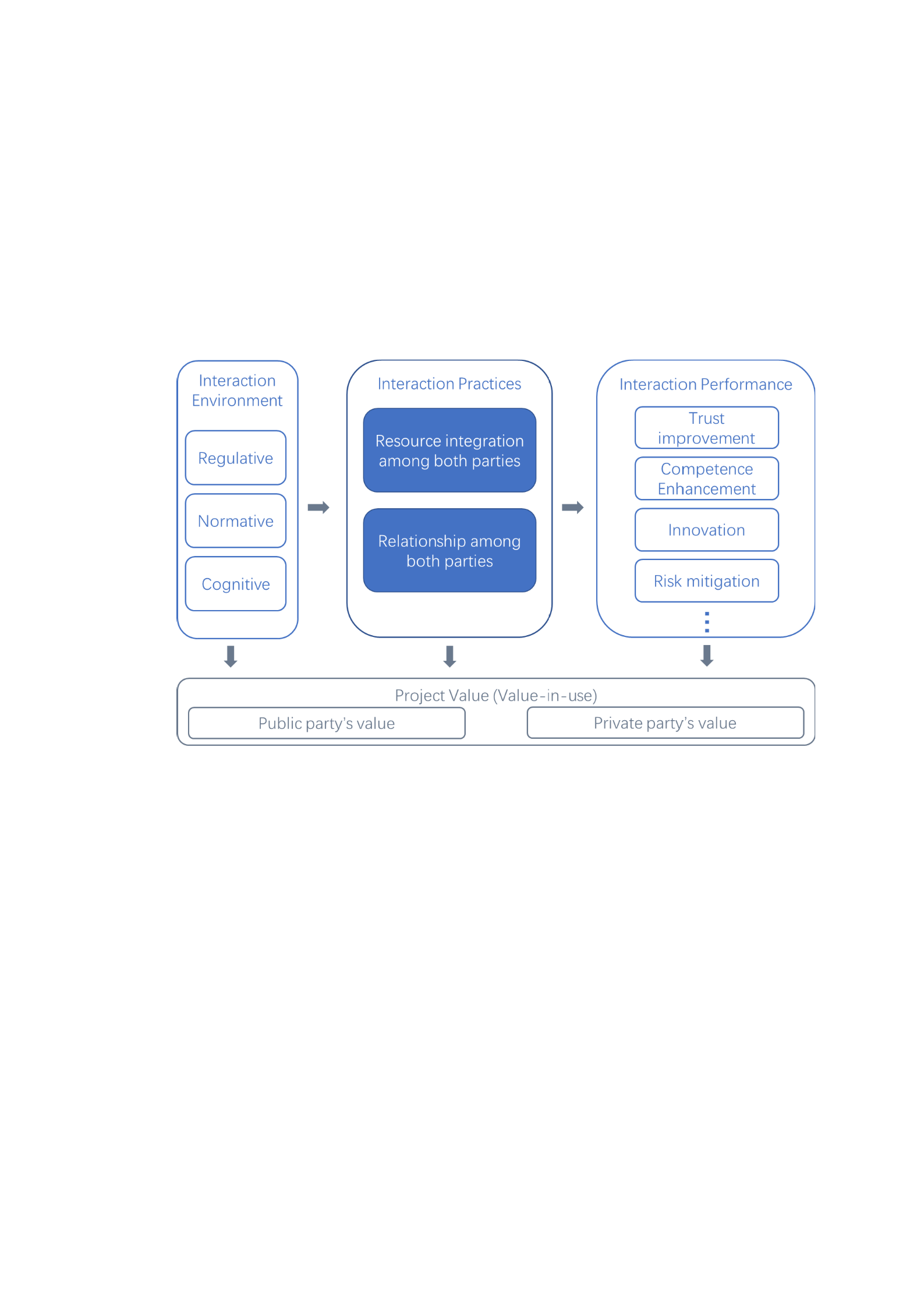
82
comprehensive and integrated perspective on the co-creation of value in PPP projects.
By focusing on the interactions between stakeholders, the framework acknowledges
the importance of collaboration and the role of stakeholder engagement in delivering
successful PPP projects. The framework also emphasises the dynamic nature of value
creation, recognising that value is not a fixed or static concept but rather a process that
unfolds over the lifecycle of the project.
Figure 2-2 Tentative framework for VCC in PPP projects (developed for this study)
2.8 Chapter Summary
This chapter focused on the need to understand how value can be designed and
configured across the project lifecycle. The key research question is exploring how
value outcomes can be co-created in PPP projects. The chapter provided a critical
review of the evolution of project management perspectives and approaches,
highlighting the shift towards value delivery. The concept of value and VCC in both
the wider management literature and projects has been examined in depth. It highlights
that the concept of VCC is primarily studied in marketing and service-related literature,

83
with a focus on examining value from the perspective of the client organisation rather
than the supplier organisation. The chapter extensively examined the service-dominant
logic and value management methodologies, which are considered as two robust
frameworks to analyse the concept of VCC. The next chapter presents the research
design, which is influenced by the conceptual analysis in this chapter and provides the
foundations for this research. The aim is to explore how value outcomes are co-created
at the micro-level of the project through direct interaction.

84
Chapter 3
Research Design: Methodology and Method
The research design constitutes a critical blueprint for conducting this study. Section
3.1 outlines the philosophical foundations, including ontology and epistemology, and
distinguishes between deductive, inductive, and abductive approaches to theory
development. The abductive approach is adopted in this research. Strategies for the
study are also discussed, covering case selection, data collection, and data analysis.
Detailed information is provided on sampling methods and interview protocols.
Section 3.2 introduces the essential process of collecting and analysing data within the
research design. Finally, in Section 3.3, research quality is assessed based on validity
and reliability.
3.1 Research Design - Methodology
The research is designed in the decision sequence suggested by Saunders et al. (2019),
of first determining the research philosophy, followed by the reasoning approach,
methodological choice, strategy and time horizon, before choosing the data collection
techniques and data analysis procedures. The research process is illustrated in Figure 3-
1 and is further elaborated in Sections 3.1 to 3.3.

85
Figure 3-1 Main phases and activities of the research process
3.1.1 Philosophical Underpinnings
Research philosophy refers to a set of beliefs and assumptions that underpins the way
that one develops knowledge (Saunders et al., 2019). These beliefs and assumptions
manifest how one believes the nature of reality is (ontology) (Miles et al., 2020) and
what knowledge one thinks to be valid and legitimate (epistemology) (Burrell &
Morgan, 1979).
Specifically, ontology is a philosophical perspective that shapes how researchers view
and study their research objects. In the field of social science, research objects can
include organisations, management practices, individual experiences in the workplace,
and various events and artifacts within these contexts. The researcher’s ontology,
therefore, influences how they understand and interpret the world of social science,
which subsequently determines the focus of their research project. For instance, a
researcher who adopts a positivist ontology would view the world of social science as a
fixed, objective reality that can be studied through objective, empirical methods. In
contrast, a researcher who takes a constructivist ontology would view the world of

86
social science as a socially constructed reality that is shaped by individuals and their
interactions. This would lead to different research questions and methods of inquiry.
Epistemology refers to a researcher’s assumptions about knowledge and what is
considered valid and legitimate knowledge, as well as how knowledge can be
communicated to others. In the field of social science, there are various types of
knowledge that can be considered legitimate, including numerical data, textual and
visual data, facts, opinions, narratives and stories. The multidisciplinary nature of
social science research implies that researchers may adopt different epistemological
perspectives when conducting their research. For example, some researchers may
adopt an empirical or positivist epistemology, where they believe that objective and
measurable data are the only legitimate forms of knowledge. Other researchers may
adopt a constructivist or interpretivist epistemology, where they believe that
knowledge is constructed through social and subjective processes and that personal
experiences and interpretations are just as valid as objective data. Furthermore, the
diverse range of knowledge in social science research means that different research
methods can be used to generate valid and legitimate knowledge. These methods can
include archival research, which involves analysing historical documents and records,
and autobiographical accounts, which involve studying the personal experiences and
perspectives of individuals.
There are five major philosophies in social science: positivism, critical realism,
interpretivism, postmodernism and pragmatism (Saunders et al., 2019). Of these,
critical realism is chosen as the philosophical foundation of this research.
Philosophical underpinning of this research: critical realism
Critical realism is a philosophical underpinning that aims to understand the
relationship between the external, social world and the internal, subjective experiences
of
individuals.
Critical
realism
claims
an
external
and
independent
reality
not

87
accessible directly through observation, and at the same time, accepts that each social
actor has their own interpretation of the reality according to different social
conditioning (Saunders et al., 2019). Critical realists emphasise the importance of
understanding the bigger picture of which we see only a small part and the need to
identify what we do not see through practical and theoretical processes. Critical realist
research also focuses on providing an explanation for observable organisational events
by looking for the underlying causes and mechanisms through which deep social
structures shape everyday organisational life.
As this research intends to identify genuine project value from a multi-stakeholder
perspective and how value is co-created in the entire lifecycle through stakeholder
engagement, critical realism matches well with this realist ontology and interpretivist
epistemology (Tashakkori & Teddlie, 2010). It helps to identify one possible but not
necessarily the only possible explanation of the phenomenon (Bhaskar, 2016). This
makes critical realism the most suitable philosophical underpinning of this research.
Ontologically, critical realism suggests that VCC practices and value outcomes
observed in PPP projects are objective where they are carried out. However, critical
realism also recognises that this objective reality is often complex and multifaceted and
may be influenced by social and cultural factors that shape the way individuals
perceive and interpret the reality. Epistemologically, critical realism acknowledges that
the subjective experiences and perceptions of individuals involved in PPP projects are
also important in shaping how value is co-created.
Critical realism allows the researcher to go beyond just describing the observable
events and instead examine the underlying structures and mechanisms that shape those
events. This can provide a more comprehensive understanding of the phenomenon and
help identify potential areas for intervention or improvement.

88
3.1.2 Approach to Theory Development
The theory development approach, which is also called the reasoning approach
(Lehtinen & Aaltonen, 2020), is a crucial aspect of research design. Theory
development refers to the process of constructing explanations or models that help to
explain observed phenomena or patterns. There are mainly three approaches of theory
development: deductive reasoning, inductive reasoning, and abductive reasoning
(Saunders et al., 2019). The three reasoning approaches are compared in Table 3-1,
adopted from Saunders et al. (2019).
Deductive theory development involves deriving hypotheses from existing theory and
testing them through empirical research, which leads to a confirmatory research design.
In other words, it starts with a general statement, or premise, and then applies it to a
specific case to derive a conclusion. This is why deduction is often described as
generalising from the general to the specific. In this process, the researcher first
develops a general theory or hypothesis based on existing knowledge and observations.
The researcher then makes specific predictions or deductions about what should
happen in a particular situation based on that theory or hypothesis. If the premise is
true and the reasoning is valid, then the conclusion must also be true. This deductive
process is commonly used in scientific research to test hypotheses or theories where
quantitative data is used most of the time given that quantitative data has the ability of
precise measurement.
Inductive theory development, on the other hand, involves generating theories or
hypotheses from the data collected through exploratory research, which leads to an
exploratory research design. In other words, it starts with specific observations or data,
and then makes generalisations or hypotheses based on those observations. This is why
induction is often described as generalising from the specific to the general. In this
process, the researcher first collects data through observation or experimentation, and
then looks for patterns or themes in that data. Based on those patterns or themes, the

89
researcher forms a hypothesis or generalisation about how the phenomenon works.
Inductive reasoning is commonly used in exploratory research, where the goal is to
identify patterns or relationships in the data that can then be used to generate new
theories or hypotheses. However, unlike deduction, induction does not guarantee that
the conclusion is true. Rather, it provides a framework for generating new ideas or
theories that can then be tested using deductive reasoning or other methods.
Abductive theory development is a combination of the two, where hypotheses are
generated from data while taking into account existing theories. It starts with specific
or sometimes surprising observations or data, and then generates hypotheses called
plausible theory that can explain those observations. Unlike deduction and induction,
abduction involves identifying possible explanations for a phenomenon without
knowing whether they are true or false. This is why abduction is often described as
generalising from the interactions between the specific and the general. In this process,
the researcher first collects data through observation or experimentation, and then
looks for patterns or themes in that data. Based on those patterns or themes, the
researcher forms a tentative hypothesis or explanation for how the phenomenon works
by going back and forth between the data and the existing theories. This hypothesis is
then tested using additional data collection and analysis, with the goal of either
confirming or refuting the hypothesis. Abductive reasoning is commonly used in
hypothesis-generating research, where the goal is to generate new theories or
hypotheses that can then be tested using other methods. However, it can also be used in
hypothesis-testing research, where the goal is to develop explanations for unexpected
or anomalous observations.

90
Table 3-1 Deduction, induction and abduction: from reason to research
Deduction Induction Abduction
Logic In a deductive inference,
when the premises are true,
the conclusion must also be
true
In an inductive inference,
known premises are used to
generate untested
conclusions
In an abductive inference,
known premises are used
to generate testable
conclusions
Generalisability Generalising from the
general to the specific
Generalising from the
specific to the general
Generalising from the
interactions between the
specific and the general
Use of data Data collection is used to
evaluate propositions or
hypotheses related to an
existing theory
Data collection is used to
explore a phenomenon,
identify themes and
patterns and create a
conceptual framework
Data collection is used to
explore a phenomenon,
identify themes and
patterns, locate these in a
conceptual framework and
test this through
subsequent data collection
and so forth
Theory Theory falsification
or verification
Theory generation
and building
Theory generation or
modification; incorporating
existing theory where
appropriate, to build new
theory or modify existing
theory
Reasoning approach of this research: abduction
Abduction is adopted in this research aiming to combine the credibility of deductive
reasoning rooted in the extant literature on value, with the creativity of inductive
reasoning from new empirical insights and the researcher’s own experience (Alvesson
& Skoldberg, 2018). The interactive process of VCC is a phenomenon that, on one
hand, has been studied from various perspectives, and on the other hand, requires more
exploration on structured understanding that is lacking in existing literature. This
situation is perfectly suited for abduction. Abduction can be used to develop new
hypotheses or explanations for the gaps in our current understanding of the VCC
process
in
PPP projects.
By
examining
the
data
collected
from
interviews
and

91
summarising plausible patterns of what might be the mechanism behind the VCC
process, this research intends to elaborate the theoretical understanding on the nature
of value and the process of its co-creation in PPP projects.
3.1.3 Methodological Choice and Research Strategy
It is generally accepted that there are three main methodological choices in research:
quantitative, qualitative, and mixed methods. Normally, quantitative research involves
collecting and analysing numerical data, while qualitative research involves collecting
and analysing non-numerical data such as words, images and video recordings. Mixed
methods research involves using both quantitative and qualitative methods in a
complementary way to gain a more comprehensive understanding of a phenomenon.
However, this is an intuitionistic view but can be a narrow distinction that is not
sufficient for choosing between quantitative and qualitative research methods. Instead,
the choice of methodology should be informed by philosophical assumptions and
approaches to theory development and strategies (Yin, 2016).
There are many choices of research strategy under different methodological choices.
The quantitative method normally includes experiment and survey while the qualitative
method normally includes archive research, ethnography, grounded theory, action
research and case study. The selection of methodological choice and research strategy
is not only based on the philosophical stance but also on the nature of the research.
Methodological choice and research strategy of this research: qualitative
research design and multiple case study
This research uses critical realism as its philosophical stance. Critical realism is a
philosophical position that emphasises the existence of an objective reality that is
independent of human observation, but also recognises the role of social and historical
factors in shaping our understanding of that reality. Critical realism emphasises the

92
need for theories to be grounded in empirical evidence, but also recognises the
limitations of empirical methods in capturing the complexity of social phenomena.
Given the philosophical assumption of critical realism, a qualitative research method
would be appropriate for this research. Qualitative research methods are well-suited for
exploring complex social phenomena and understanding the subjective experiences of
individuals. Qualitative research methods allow for a deep exploration of the
underlying meaning and context of social phenomena, which aligns with the critical
realist emphasis on the role of social and historical factors in shaping our
understanding of reality. Furthermore, critical realism emphasises the need for theories
to be grounded in empirical evidence. Qualitative research methods can provide rich
and detailed empirical evidence that can be used to develop and refine conceptual
frameworks.
Qualitative research methods also correspond to the exploratory nature and theory
building objective of this research. This research aims to explore how value is
perceived by different stakeholders in the whole lifecycle and opens the black box of
the mechanism whereby these value outcomes are co-created by various stakeholders.
Given the subjective nature of value, this research seeks to understand every
stakeholder’s value perception. In addition, given the complexity of the VCC process
contextual factors must be considered.
Multiple case study is adopted to study the VCC phenomenon in this research.
Multiple case study design involves conducting an in-depth investigation of multiple
cases that share similar characteristics, which can help to develop a deeper
understanding of the underlying phenomenon (Eisenhardt & Graebner, 2007). This
research strategy is particularly useful in this research, as it allows exploration of a
wide range of factors that may influence the VCC phenomenon being studied.
Studying multiple cases can help identify similarities and differences across cases, and
develop a more nuanced understanding of the underlying factors that influence VCC.

93
Multiple case studies can also help to identify patterns and relationships that may not
be apparent from a single case study.
3.1.4 Approach to Case Selection
Before the case selection, it is important to define the case and bound the case first
(Yin, 2018). “Case” in a case study typically refers to a particular entity or
phenomenon that is being studied in depth. This could be an individual, a group of
individuals, an organisation, a specific event or situation, a process, or any other
distinct entity or phenomenon that is the subject of analysis. In this research, the case is
defined as a PPP project.
To select appropriate cases, the first step is a literature review. The process began with
an extensive literature review focused on infrastructure PPP projects in China,
encompassing various industries. This review helped identify previous case studies,
both within and outside China, that were pertinent to the research questions and
objectives. These prior studies served as a valuable resource for identifying potential
cases for replication logic. Then, initial screening was performed to identify a pool of
potential cases. This involved assessing the relevance and alignment of the identified
cases with the research’s theoretical framework and objectives. Then, drawing on the
conceptual framework of the study, which aimed to generalise the VCC process in
infrastructure PPP projects across different industries, cases were selected based on
their potential to contribute to the development of theoretical concepts and constructs
identified in the literature or previous research.
To ensure that the chosen cases align with the research objectives and enhance the
study’s validity, generalisability and theoretical development, the replication logic is
adopted. Replication logic is different from the statistical sampling logic used in
survey research, but is rather a form of theoretical sampling. Replication logic in case
selection refers to the process of selecting cases for a case study that are similar or

94
comparable to previous cases that have been studied. By selecting cases that are similar
to previous cases, researchers can test the validity and generalisability of their findings
across different contexts and situations.
There are two main types of replication logic in case selection: literal replication and
theoretical replication. Literal replication involves selecting cases that are similar to
previous cases in terms of their characteristics and features. For example, a researcher
might choose to study a new company that is similar to a company that was previously
studied in terms of its industry, size and organisational structure. The goal of literal
replication is to test whether the findings from the previous case study can be
replicated in a new, similar case. On the contrary, theoretical replication involves
selecting cases that are different from previous cases in terms of their characteristics
and features but are expected to yield similar findings based on the same theoretical
concepts and mechanisms. This also involves selecting cases based on their potential to
contribute to the development of theoretical concepts or constructs identified in the
literature or previous research. The goal of theoretical replication is to test whether the
theoretical concepts and mechanisms identified in the previous case study can be
generalised to different contexts and situations.
Theoretical replication is adopted in this research aiming at generalising the VCC
process in infrastructure PPP projects in China regarding various industries. While
theoretical replication was a primary consideration, practical factors such as
accessibility and feasibility were also taken into account. Ensuring access to relevant
stakeholders and data within a reasonable timeframe was crucial. Additionally, the
geographic location of the cases and logistical considerations were weighed.
Five PPP project cases from three industries are selected, labelled Case Alpha, Beta,
Gamma, Delta and Epsilon. The goal of the selected cases is to provide the maximum
amount of information and insights relevant to the research questions. In addition, the
research uses both retrospective and current investigation methods. Retrospective cases

95
have the advantage of allowing for controlled selection since the success or failure of
the case is already known. However, they are susceptible to recollection bias and may
face difficulties in establishing a clear sequence of past events. On the other hand,
current investigations may be more time-consuming and open-ended, but they offer
certain advantages when studying complex behaviours since they eliminate the issue of
relying on the memory and ability of interviewees to verbalise such constructs. Case
Epsilon uses the current perspective as it is still in its construction phase. This also
provides the opportunity to directly observe how different stakeholders created value
together.
The quantity of cases selected in this research is dependent on the concept of saturation.
Saturation refers to the point in the data collection process at which new data no longer
provides additional insights or information relevant to the research questions or
objectives. When saturation is reached, it suggests that the sample of cases or
participants selected is sufficient and additional data collection is unlikely to yield new
or meaningful insights.
3.2 Data Collection and Analysis Process – Methods Selected
Data analysis involves organising, interpreting and drawing conclusions from the data
collected during the research process. The goal of data analysis is to identify patterns,
relationships and insights that can help answer the research questions and contribute to
the development of new knowledge.
The data analysis process includes several key steps. First, a pilot case study is
conducted to test the research approach and refine the data collection methods such as
interview questions. Then, the case context is established to provide a clear
understanding of the specific phenomenon being studied. Finally, the process of data
collection and analysis is described in detail with a description of adaptive theoretic
reasoning logic.

96
3.2.1 Pilot Case Studies
To test the data collection procedures, interview questions and case selection criteria to
ensure that the study’s objectives can be met, three pilot case studies were conducted.
In the case study context, a pilot test is not a pretest. The pretest is an opportunity to
conduct a formal rehearsal of the data collection plan, with the aim of ensuring that the
final plan is as accurate as possible. During the pretest, the researchers use a
methodology that is as close as possible to the final plan, in order to minimise errors
and bias, and increase the accuracy and validity of the study results. On the contrary, a
pilot test is a small-scale trial run of a study’s procedures, methods or instruments. The
pilot test is typically conducted before the full study to identify and correct any
potential problems or issues that may arise during the full study. The goal of a pilot test
is to refine and improve the study design and methodology to ensure that the full study
runs smoothly and efficiently.
In the three pilot case studies, 17 experts were interviewed from the public party, the
bank, the academic and the consultant company with at least 3 years of experience of
PPP projects (see Table 3-2). The main objectives of the pilot case studies were to find
out what is perceived as value by different stakeholders throughout the entire project
lifecycle of a PPP and to explore the mechanism among all the stakeholders on how to
reconcile these different value perceptions and co-create value for PPP projects used to
build social infrastructure. The pilot case studies were conducted systematically
according to a protocol (see Appendix 2).
The results of the pilot case studies were threefold. First, the participants suggested
that it is better to separate the value measurement indicator from the value success
factor. According to them, the value indicators identified from previous research and
literature are sometimes confused with the factors that contribute to them. By
separating these two concepts, it is possible to clearly identify the specific factors that
contribute to long-term value creation and assess the impact of each factor on value

97
creation. In fact, this differentiation contributes to the classification of mid-term value
outcomes and long-term value outcomes that are derived from empirical data which
lead to a more accurate and comprehensive understanding of value creation in the
context of PPPs.
The second suggestion was to change the division dimension from “phase” to another
relevant dimension such as “stakeholder engagement”. This is because many of the
identified indicators are designed in one phase of the PPP process and then operated in
a later phase. Therefore, using “phase” as the division dimension may not accurately
capture the interdependencies between different phases and their impact on value
creation. Instead, another relevant dimension, such as “stakeholder engagement”, could
be used to capture the dynamic nature of value creation in PPPs. Indeed, the resource
management practices and relationship management practices summarised from the
data reflect the dynamic nature of value and the co-creation process without clearly
focusing on “phases”, but in a more integrated way.
The third suggestion was to apply VM principles to investigate how to achieve
maximum value for all stakeholders in the context of PPPs. VM is a structured
approach that involves identifying and prioritising stakeholders’ needs and preferences,
defining project objectives, and optimising the use of resources to achieve those
objectives. This was not considered in the pilot test because initially the researcher
took a position to criticise the tendency to focus on cost-efficacy of project research.
However, criticism should not be focused on cost management but on the lack of
consideration of all the stakeholders (subjectivity) and the entire lifecycle (dynamics).
By applying VM principles to PPPs, researchers can identify the most effective ways
to maximise value creation for all stakeholders, including public and private sector
partners, investors, and end-users. This contributes to the definition of value in this
research which can lead to more successful and sustainable PPP projects that generate
maximum value for all stakeholders involved.

98
Table 3-2 Overview of participants in the pilot case studies.
No. Sector Experience in
PPPs (years)
Position
1 Public sector 7 Implementation Specialist
2 Bank 6 PPP Specialist
3 Academic 3 Lecturer
4 Academic 12 Professor
5 Academic 9 Assistant Professor
6 Academic 5 Lecturer
7 Academic 4 Lecturer
8 Academic 5 Postdoctoral Researcher
9 Academic 4 Lecturer
10 Consultant company 3 Senior Consultant
11 Consultant company 3 Senior Consultant
12 Consultant company 5 Manager
13 Consultant company 8 Manager
14 Consultant company 8 Manager
15 Consultant company 3 Senior Consultant
16 Consultant company 9 Manager
17 Consultant company 11 Manager
3.2.2 Case Context
All the five cases selected for the main study are registered in the National PPP
Database which means they are all legitimate PPP projects. Due to the rapid promotion
of PPP projects by central state-owned enterprises (SOEs) in recent years, accumulated
risks need to be resolved. Such risks mainly come from the contract arrangement of the
public party such as a repurchase agreement and promised return to attract private
investment. This “debt nature in the name of equity” of the private party’s investment
expanded the hidden debt of the government side and increased the financial risks of
local governments. As such, since 2017, the central government has carried out long-

99
term and systematic reforms on PPPs to weed out illegitimate PPP projects from the
National PPP Database. The selected cases are described below. Tables 3-3 and 3-4
present the overview characteristics of the five cases and compare the demographic
characteristics of the cases. The organisation structure of each case is in Appendix 3.
Table 3-3 Overview of case characteristics
Case
Code
Industry Area Investment Starting
time
Cooperation
period
Payment
Mechanism
Alpha Sewage
treatment
Liaoning
Province
164 million
RMB 2017 28 years End-user
Payment
Beta Sewage
treatment
Hebei
Province
484 million
RMB 2015 30 years End-user
Payment
Gamma Municipal
roads
Liaoning
Province
23 billion
RMB 2015 25 years Government
Payment
Delta Municipal
roads
Shandong
Province
560 million
RMB 2017 15 years Government
Payment
Epsilon Health
industry
Shandong
Province
666 million
RMB 2016 22 years Feasibility gap
subsidy
Table 3-4 Comparison of the demographic characteristics of the five cases
Alpha Beta Gamma Delta Epsilon
End-user payment
√ √ √
State-owned enterprise as
private party
√ √
Government fiscal capacity Good Poor Good Poor Good
Project scale Small Medium Large Medium Medium

100
Case Alpha
Case Alpha is a PPP project focused on sewage treatment, consisting of two sections.
One section involves the construction of a state-of-the-art sewage treatment station and
surrounding pipe networks, while the other involves taking over old pipe networks
from the government and maintaining them. The private party in charge of Case Alpha
is a state-owned public company that has advanced sewage treatment techniques.
What makes Case Alpha unique is that it represents the first underground sewage
treatment station in the north-east region of China, with a roof that has been afforested.
The water standard set by this project exceeds national requirements, making it an
exemplary model for other sewage treatment projects in the country. In addition, the
station plays a vital role in the area’s economic development, particularly in attracting
new manufacturing companies. Its ability to solve wastewater problems and provide
affordable reclaimed water is a valuable asset to the local government in attracting new
investors.
Overall, Case Alpha is an innovative and effective PPP project that demonstrates the
value of PPPs for sewage treatment. By combining the expertise of a state-owned
public company with the support of the local government, Case Alpha has been able to
achieve impressive results, providing a high-quality water supply for the region while
also supporting economic growth through attracting new businesses.
The construction of an underground sewage treatment station with a roof that has been
afforested is an innovative approach that is both environmentally friendly and
aesthetically pleasing. The use of advanced sewage treatment techniques by the state-
owned public company overseeing Case Alpha has allowed the project to surpass
national water quality standards. This achievement, coupled with the station's ability to
provide cost-effective reclaimed water, has played a pivotal role in attracting new
manufacturing companies to the area. As a result, it has not only created jobs but also
spurred
economic
growth,
showcasing
how
PPPs
can
deliver
both
public
and

101
substantial economic benefits to the local community.
The success of Case Alpha has led to its replication in other parts of China, as
policymakers recognise the value of the PPP model in addressing the country’s
pressing water and sanitation challenges. By leveraging the strengths of both the public
and private sectors, Case Alpha and other similar projects have demonstrated the
potential of PPPs to drive sustainable development and improve the lives of people in
China and beyond.
Case Beta
Case Beta is another sewage treatment PPP project, but in this case, it was initiated by
the private party involved. Prior to Case Beta, the private party had already been
involved in operating a sewage treatment station for the public party. Through this
experience, they realised that the demand for sewage treatment in the city was far
greater than what was currently being met. This led them to initiate Case Beta as a new
PPP project. The private party in charge of the project is a state-owned public company
with a strong track record of successful operation and collaboration with the public
party.
Case Beta is located in a poorer area at the national level, and the PPP model was used
to build a critical urban infrastructure to improve the quality of life for local residents
and promote regional development. By partnering with the private sector, the local
government was able to address the area’s pressing need for sewage treatment and
enhance its overall infrastructure. The success of Case Beta demonstrates the potential
of PPPs to drive sustainable development and improve the quality of life for people
living in disadvantaged areas.
Case Beta represents an important collaboration between the public and private sectors
to address a critical social and environmental issue. The lack of adequate sewage
treatment infrastructure in many areas of China has long been a major concern for

102
policymakers, as it poses a significant risk to public health and the environment. With
Case Beta, the private party’s experience in sewage treatment operation and
collaboration with the public party was critical in ensuring the project’s success.
The location of Case Beta in a state-level poor area highlights the importance of
infrastructure development as a means of promoting regional development and poverty
reduction. Through the PPP model, the local government was able to leverage the
expertise and resources of the private party to build much-needed infrastructure that
supports the growth of the region’s economy and improves the quality of life for local
residents.
Overall, Case Beta is a compelling example of how PPPs can be used to tackle
pressing social and environmental challenges in innovative and effective ways. By
bringing together the strengths of both the public and private sectors, PPPs can drive
sustainable development, improve infrastructure, and support the long-term prosperity
of communities across China.
Case Gamma
Case Gamma is a significant municipal road PPP project that has been in the planning
stage since 2002. Recognising the urgent need for a transportation solution, the
government began exploring different options for improving the city’s infrastructure.
The government therefore invested heavily in feasibility analysis and due diligence
work before deciding to adopt a PPP model. The main reason is that the government
faced significant funding constraints, as the project was estimated to cost several
billion dollars.
There was a careful selection of the private partner and the construction technique by
the public party. This involved a rigorous evaluation of different construction
techniques, with the government ultimately settling on the “immersed tube” technique
for the undersea tunnel component of the project. This was because the private party

103
invited the public party to visit another nationally renowned subsea tunnel project and
carefully explained and analysed the feasibility and advantage of their proposition.
During the construction process, the project confronted its first big challenge. The site
of the tunnel construction was located in a highly sensitive environmental area, which
required extensive environmental impact assessments and mitigation measures. But all
the parties worked as a single team and took active action to amend the design scheme
and get the permit to construct.
Case Gamma is expected to be operational by June 2023, with both the undersea tunnel
and the complementary municipal road being completed at that time. Unlike the other
four cases in the research, Case Gamma has not yet entered the operation stage. The
decision to include this project was deliberate, as the research aims to provide a current
perspective on the interactions between public and private stakeholders during the
procurement and construction stages of the project. One of the key advantages of
studying Case Gamma at this stage is the opportunity to observe first hand the ways in
which stakeholders work together to co-create value for the project. This includes the
researcher attending regular meetings with project participants to gain insights into
their communication strategies and decision-making processes.
Case Delta
Case Delta is a municipal road PPP project that was planned and executed with the
goal of solving the transportation problem in the region. The project was initiated by
the government, which wanted to improve the road network and infrastructure in the
area to support economic development. The private party involved in the project is a
well-established company with expertise in road construction and maintenance, which
made them an ideal partner for the government.
During the construction stage, the private party worked closely with the government to
ensure that the road was built according to specifications and completed on time. The

104
construction process was carried out smoothly, and the road was put into operation
shortly after completion. The private party’s role in maintaining the road has also been
essential, as it has ensured that the road remains in good condition even after years of
heavy use.
One of the key benefits of Case Delta is that it has helped to alleviate the government’s
financial deficit problem. By partnering with a private company, the government was
able to spread the cost of the project over a more extended period, which reduced the
burden on the government’s budget. Additionally, the government has recognised the
private party’s excellent work in maintaining the road, which has boosted their
reputation and credibility in the industry.
The successful completion of Case Delta has had a significant impact on the region’s
economic development. The improved road network has made it easier for businesses
to transport goods and access markets, which has led to an increase in economic
activity in the area. As a result, the region has transformed into an economic
development zone, attracting more investment and creating more job opportunities for
local residents. This case has demonstrated the benefits of PPP models in infrastructure
development, showcasing how PPPs can provide a win–win solution for both parties
involved.
Case Epsilon
Case Epsilon is a unique PPP project that combines a public hospital and an aged care
home into one comprehensive healthcare facility. The public hospital was initially a
Chinese medicine hospital that had limited scale and patients, but through PPP, the
government was able to upgrade it to a larger scale hospital that offers a combination
of Chinese and Western medicine. This upgrade significantly alleviated the medical
pressure in the local area, especially in the post-pandemic era. The government will
pay for the hospital’s construction over a period of 20 years.

105
For the aged care facility in Case Epsilon, the private party is required to build four
buildings as a profitable aged care home whose service will be paid by the end-users,
and the profits will be used to cover the construction costs. The private party is
responsible for taking all the operational risks and sharing any excess earnings with the
government. To enhance the competitiveness of the aged care home, Case Epsilon
takes full advantage of the hospital’s resources and opened a Hospital Green Channel
for the aged residents in the care home. This channel provides immediate access to
medical treatment, which can significantly reduce their anxiety and worries. In
addition, Case Epsilon was intended to enable a policy transformation which allows
the patients in the aged care home to use national medical insurance in the hospital.
This results in lower expenses for hospitalised elderly people, while the private party
earns more profits and is also motivated to provide better services. Overall, Case
Epsilon is an innovative PPP project that combines healthcare and aged care, which not
only meets the local residents’ needs but also promotes a sustainable business model
on the integrated solution of medical and elderly care.
3.2.3 The Process of Data Collection
Three types of evidence are collected in this research: documentation, interviews and
direct observation. The selection of these data collection tools was guided by the aim
of achieving a comprehensive understanding of the phenomena under investigation.
Each type of evidence serves a specific purpose and contributes to the richness and
depth of the case study, aligning with the principles of high-quality research advocated
by Yin (2018).
Documentation, such as project reports, contracts, and policy documents, provides
valuable historical context and background information essential for understanding the
evolution and dynamics of the PPP projects examined in this study. By analysing these
documents, it can uncover insights into project objectives, stakeholder roles,

106
contractual arrangements, and project outcomes.
Interviews offer a unique opportunity to gain insights directly from key stakeholders
involved in the PPP projects, including representatives from public and private sectors,
project managers, and other relevant parties. Through semi-structured interviews,
stakeholders' perspectives, experiences, motivations, challenges, and decision-making
processes can be explored, thereby capturing nuanced insights that may not be fully
captured by documentary evidence alone.
Direct observation complements both documentation and interviews by providing
firsthand insights into project activities, interactions, and dynamics as they unfold in
real-time. By immersing myself in the project environment, I can observe stakeholder
interactions, communication patterns, project management practices, and other
contextual factors that may influence project outcomes. This method allows for the
validation of information obtained from other sources and provides a deeper
understanding of the context in which PPP projects operate.
In summary, the selected data collection tools – documentation, interviews, and direct
observation – are deemed suitable for this research due to their ability to provide
diverse perspectives, rich contextual insights, and a comprehensive understanding of
the complex dynamics inherent in PPP projects. By triangulating evidence from
multiple sources, this research aims to enhance the validity, reliability, and robustness
of its findings.
The documentation used in this research includes two different types: publicly
available electronic documents and internal documentation (see Table 3-5). Publicly
available electronic documents include various reports, contracts and news articles
related to the projects that can be found on the internet. These documents were
collected systematically before conducting the interviews to provide a better
understanding of the case contexts and to support the interview data. Internal
documentation,
on
the
other
hand,
includes
meeting
memos,
tender
materials,

107
completed contracts and performance reports that are not publicly available on the
internet. Access to these internal documents, typically restricted to individuals directly
involved in the project, has been made possible through a collaborative effort and the
willingness of the interviewees to contribute to research endeavours. The interviewees,
recognising the importance of the research and the need to advance understanding in
the field, graciously shared these internal documents.
Prior to obtaining access, formal consents and permissions were diligently secured to
ensure ethical and responsible data handling. This study received ethics approval from
the UTS Human Research Ethics Committee (Approval Number: UTS HREC ETH18-
2820), and all prescribed ethical guidelines and protocols were rigorously followed
throughout the research process. A copy of the ethics approval is attached as Appendix
7. Stringent measures were implemented to safeguard the confidentiality and
anonymity of sensitive information within the documents. This collaboration and
commitment to ethical data practices have allowed a comprehensive examination of
the project, offering valuable insights that contribute significantly to the research’s
depth and credibility.
Table 3-5 Overview of documentation data for the study
Case
Number
Meeting
memos
(Times/pages)
VfM report
(pages)
Financial
affordability
report
(pages)
Implementation
plan
(pages)
Contract
(pages)
Periodic
performance
report
(Times/pages)
Alpha 3/18 30 22 174 84 None
Beta 5/23 27 24 168 89 1/125
Gamma 5/33 41 29 184 96 N/A
Delta 2/8 20 19 162 79 1/133
Epsilon 7/42 19 26 176 81 2/304

108
Using internal documentation enabled a deeper understanding of the cases being
studied and improved the ability to explain the phenomena. By using both publicly
available electronic documents and internal documentation, the researcher acquired a
more comprehensive understanding of the case and its context by finding access to
relevant information.
Five case projects were selected based on the theoretical sampling approach mentioned
earlier and their accessibility. Each selected case had at least one designated contact
person who facilitated the interview process. Public and private representatives, as well
as third-party project participants, were approached for interviews through these initial
contact persons. Table 3-6 provides an overview of the interviewees in each case.

109
Table 3-6 Overview of interview data for the study
Case Alpha
Code Party Position Project experience (years) Time (mins)
A1 Public Enforcement body 10 112
A2 Private Project manager 14 105
A3 Private Accountant 5 85
A4 Private Operation manager 6 93
A5 Third party Project consultant 6 100
Case Beta
Code Party Position Project experience (years) Time (mins)
B1 Public Enforcement body 9 108
B2 Public Bureau of finance 9 95
B3 Private Project manager 12 114
B4 Private Operation manager 6 75
B5 Third party Project consultant 7 81
Case Gamma
Code Party Position Project experience (years) Time (mins)
G1 Public Enforcement body 9 108
G2 Private Contract manager 7 95
G3 Private Engineer 10 114
G4 Private Operation manager 9 75
G5 Third party Project consultant 8 81
G6 Third party External expert 18 96
Case Delta
Code Party Position Project experience (years) Time (mins)
D1 Public Enforcement body 8 112
D2 Private Project manager 11 110
D3 Private Contract manager 6 110
D4 Private Operation manager 7 108
D5 Third party Performance manager 5 98
Case Epsilon
Code Party Position Project experience (years) Time (mins)
E1 Public Enforcement body 7 98
E2 Public Development and Reform
Commission
12 106
E3 Private Project manager 9 110
E4 Private Contract manager 6 85
E5 Private Operation manager 8 93
E6 Third party Project consultant 6 80
E7 Third party External expert 9 77

110
In total 28 interviews were conducted following a case study protocol developed for
this research (see Appendix 1). The interviews commenced with inquiries on the
interviewee’s background, their specific role within the project, and the project’s
demographic characteristics. Interviewees were encouraged to articulate their
perspectives on the assessment of a PPP project’s value, followed by an evaluation of
the project under consideration. Interviewees were also asked about project
stakeholders, their interactions, and levels of engagement, aimed at gaining a
comprehensive insight into the project’s processes. Throughout the interviews, an
open-ended semi-structured approach was employed, encompassing both closed and
open-ended questions. Open-ended questions were specifically used within the sections
addressing interaction practices, the project’s interaction environment, and its
interaction performance. This approach was chosen to prioritise the interviewee’s
individual narrative and their interpretation of roles, practices, events and causal
relationships among these various factors.
Direct observation was conducted in Case Gamma which is in its construction stage.
Despite being in the construction phase, Case Gamma was deemed suitable for the
study as it provided a unique opportunity to gain insight into the project from a current
perspective. For a period of four months, the researcher became part of the project
team as an observer to conduct non-participant observations on the evolving
collaboration among team members. Additionally, the researcher interviewed multiple
project team members to gain a deeper understanding of their perspectives on the
collaboration and the project as a whole. As a non-participant observer, the researcher
did not actively participate in the project but rather observed both parties’ interactions,
behaviour and collaboration from an outsider’s perspective. This allowed the
researcher to gather data on how the team worked together, how they communicated,
and how their collaboration evolved over time. Through these observations, the
researcher was able to gain insights into the dynamics of the team and how they
tackled challenges throughout the project.

111
3.2.4 The Process of Data Analysis
The data analysis process involved two significant phases: within-case and cross-case
analyses. The primary focus was on examining projects, starting from the front-end
phase and continuing until the implementation phase was completed. A conceptual
framework derived from a comprehensive literature review on relevant and extant
research provided a starting point of data analysis. The unit of analysis was the PPP
project, and the analysis was conducted at the organisational level. The primary
objective of the analysis was to acquire a comprehensive understanding of the roles
and practices of stakeholders in VCC throughout the project lifecycle. This involved
studying the different events and causality relationships among these practices, as they
related to the interaction performance and the ultimate value of the project.
Within-case analysis
In the within-case analysis, each case was individually investigated as a standalone
entity after the researcher familiarised herself with the interview transcripts and
documentation of the project’s events, and stakeholder interaction. The next step
involved creating comprehensive case descriptions to summarise the main events of
the project as well as the roles and interactions of involved stakeholders by making
notes of first impressions and ideas (Hsieh & Shannon, 2005). This step was essential
for gaining insights and understanding each case as a standalone unit. The third step
involved preparing for conventional content analysis by formulating initial ideas and
codes to capture how value is perceived by various stakeholders and how they co-
create value for the project (Miles et al., 2020). This step was critical to ensure that all
relevant information was captured and organised in a meaningful way.
Conventional content analysis was adopted to progress from specific details of the data
to more general and abstract ideas, in order to conceptualise dimensions of interaction

112
practices and stakeholders’ value perception. Conventional content analysis is a
research method typically used to describe a particular phenomenon, such as the VCC
process of PPP projects in the research. It is employed because the existing theories or
literature on a phenomenon are incomplete and sometimes contradictory.
Adopting abductive reasoning, the analysis commenced with a preliminary
understanding of the VCC phenomenon grounded in existing theories and literature.
This understanding served as a guiding framework for the analysis process. The
methodology involved iterative analysis and revision, where the initial understanding
continuously evolved in response to emerging data and insights (Aarikka-Stenroos &
Jaakkola, 2012). This analytical approach encompassed both deductive reasoning,
which facilitated the identification of relevant concepts and themes based on the initial
understanding, and inductive reasoning, which allowed the data to shape and refine
these concepts and themes.
Here is an example of the analysis process and generation of the results through
abduction (also see Figure 3-2). There are two second-order codes derived from
empirical data which are then summarised as an aggregated dimension of mid-term
value outcomes. These two second-order codes which are visible value and potential
value are summarised under the abductive reasoning. In the VCC literature, experience
is emphasised as having the most impact on the value perceived by the stakeholders
(Ramaswamy, 2011). In service-dominant logic literature, interactions among
stakeholders are viewed as the main mechanism of VCC. Thus, a preliminary
assumption was held that value perceived by the stakeholders involved in the PPP
projects may be classified according to their experience of different dimensions of
interaction. By examining the patterns emerging from the data and comparing the
patterns with extant literature of VCC, service-dominant logic and management of
project and value, finally two second-order codes were generated which are visible
value and potential value.
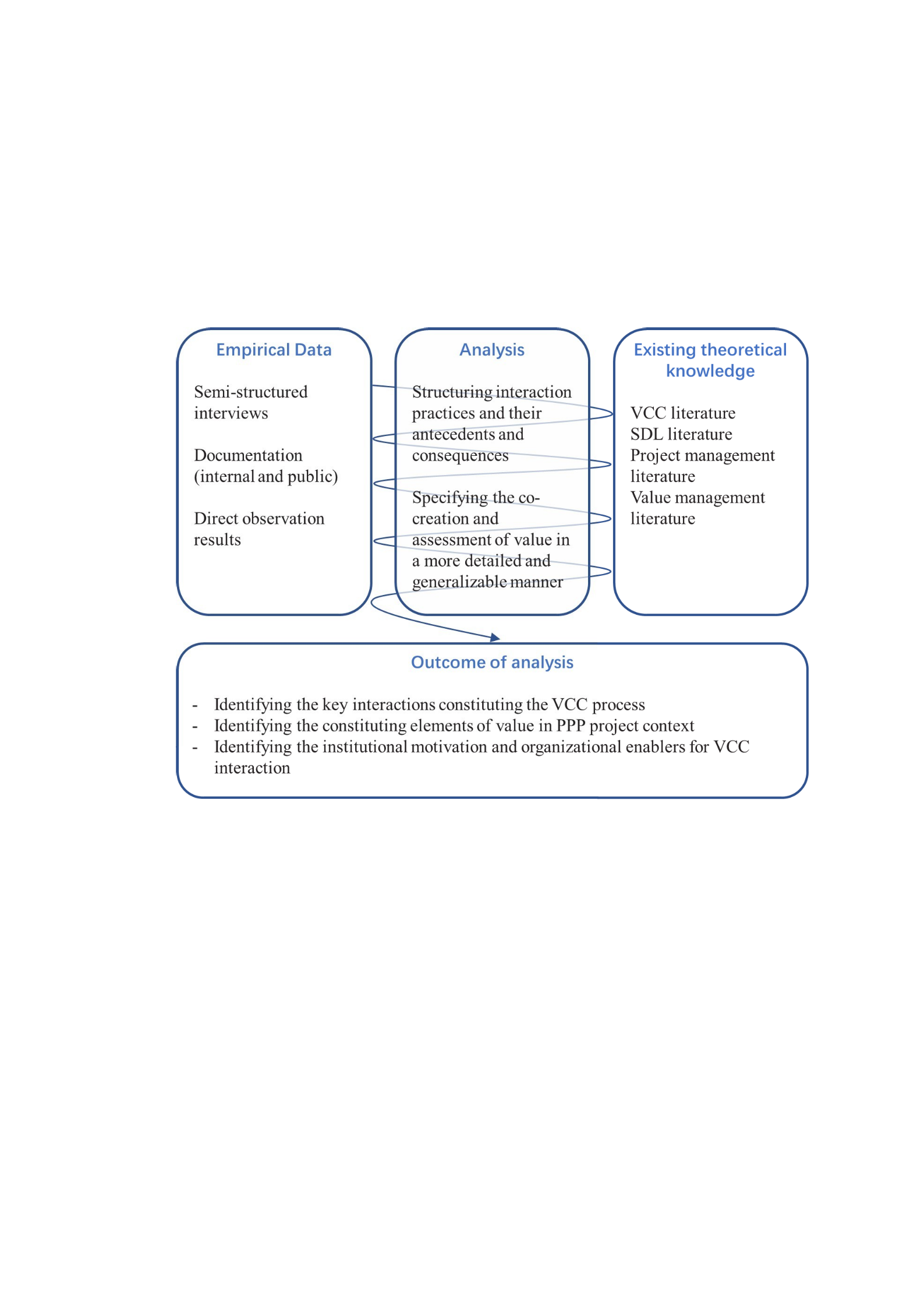
113
The goal of within-case analysis is to gain a comprehensive understanding of the case
and its unique characteristics, as well as to identify patterns, themes and relationships
that can inform further research. This process is essential in this research, as it helps to
develop a detailed understanding of the phenomenon being studied and to be prepared
for the cross-case analysis.
Figure 3-2 The analysis process and results generation through abduction
Cross-case analysis
The cross-case analysis in this research consists of two main phases aimed at
developing a better understanding of how value is co-created and assessed by all the
stakeholders involved in a PPP project. In the first phase, within-case code hierarchies
and associated concepts developed from the five cases were compared, exploring their
similarities and differences to create a single robust code hierarchy and set of concepts.
This
involved
identifying
tentative
relationships
between
the
codes,
themes
and

114
associated concepts for the five cases, refining these relationships through replication
logic, and eliminating significant differences based on insufficient evidence. The result
was a final code hierarchy that provided two dimensions of value outcomes and two
dimensions of interaction practices.
An example of coding procedure is displayed as follows. An interviewee’s detailed
description “We tried to clarify our expectation as early as the market testing phase.
This helped us rule out unqualified potential private parties to save time and facilitated
our own reflection on whether the requirements are too impractical” was coded into the
first-order code of “Value framing” and was then coded into the second-order theme of
“Dialogue approach”. A similar approach to conventional content analysis was
followed to identify codes and themes related to VCC phenomenon and stakeholders’
value perception. The first-order codes and second-order themes were compared for
the differences and similarities between the cases. This allowed the identification of
aggregated dimensions of “resource management” and “relationship management” that
were common to all cases. Then cross-analysis of data was performed to confirm and
refine the findings, ensuring that they were reliable and valid across all cases. This
process of cross-validation helped to establish the robustness of the findings and ensure
that they were not limited to a specific context or case.
In the second phase, a set of propositions was developed to explain the mechanism of
VCC in PPP projects by elaborating the role of value perception of stakeholders. Based
on the conceptual framework, it was interpreted and theorised about how stakeholders
pursue and assess the value of a PPP project, and thus interact with each other for co-
creating value for the project. Specifically, areas examined were what are the
interaction practices, what project value outcomes can be achieved as the consequences
of such interaction, and what are the antecedents of such interactions institutionally
and organisationally. Finally, ten propositions were derived that constitute a model of
these relationships addressing the research question.

115
3.3 Research Quality
The quality of any research design can be evaluated based on certain logical tests.
These tests are commonly used to establish the quality of most empirical social
research, and they also apply to case study research since it is part of this larger body.
The work of Miles et al. (2020) aligns with the critical realist tradition and explores
five primary issues that are interconnected to some extent. In this research, three of
these issues are identified as overlapping with Yin (2018)’s perspectives. The three
logical tests are as follows.
3.3.1 Construct Validity
This refers to whether the research accurately measures what it is intended to measure
(Gibbert et al., 2008). In the case of case study research, this involves ensuring that the
case is representative of the phenomenon being studied.
To increase the construct validity of the research, information was gathered from
multiple sources in a way that promotes convergence and consistency in the data. The
researcher also established a clear chain of evidence, which is also relevant during data
collection. This involved documenting all of the steps taken during the study and the
reasoning behind them, so that the research process can be easily traced and
understood (Denzin & Lincoln, 2000). In addition, the draft case study report was
reviewed by key informants. Having the report reviewed by individuals who are
knowledgeable about the topic being studied can help ensure that the interpretation
accurately reflected the participants’ opinion. This also helps to identify any biases or
errors in the research design and provides an opportunity for feedback and suggestions
for improvement.

116
3.3.2 External Validity
This refers to whether the research findings can be generalised to other populations or
contexts (Yin, 2018). In the case of case study research, this involves ensuring that the
findings are not specific to the case being studied and can be applied to other cases
(Lincoln & Guba, 1986).
To increase the external validity of the research, the research questions focused on the
“how” and “why” of the VCC process, rather than just documenting events or activities.
This helped to arrive at more meaningful analytic generalisations and made it easier to
demonstrate the external validity of the findings. Multiple sources of evidence were
used to ensure that the findings are consistent with other similar studies and were not
just unique to the particular cases selected in the discussion section (see Chapters 4 and
5). The discussion encourages convergence and can help to establish the credibility and
generalisability of the research.
3.3.3 Reliability
This concerns the consistency and stability of a study’s results over time and across
different settings or researchers. In the case of case study research, this involves
ensuring that the same findings can be obtained if the study were repeated
(Krippendorff, 2004).
To increase the reliability of the research, detailed documentation of the procedures
and methods used in the research was kept. This documentation was clear and explicit,
detailing every step taken in the research process. Furthermore, a case study protocol
was used and a case study database developed to address the reliability problem. The
case study protocol (see Appendix 1) outlined the specific procedures and methods to
be used in the research, while the case study database included all the relevant data and
documentation. By making these resources available, other researchers can potentially
replicate the study and arrive at similar conclusions.

117
3.4 Chapter Summary
This chapter outlined the research design and associated research process used in this
study, including the methodology and methods used, as well as the five project case
studies examined. It also provided details about the data collection and conceptual
framework used for analysis. The chapter concluded by discussing the steps taken to
ensure the quality and rigour of the research.
This chapter serves as a roadmap for the research, outlining the key components that
inform the study’s design and execution. It highlighted the importance of using a
robust methodology and rigorous data collection methods to ensure the validity and
reliability of the findings. It underscored the significance of having a well-defined
conceptual framework to guide the analysis and interpretation of the data. Finally, the
chapter emphasised the importance of quality control measures to ensure the research
meets the highest standards of excellence.

118
Chapter 4
Findings and Discussion – Value Outcomes
Key findings of this research are reported in Chapters 4 and 5, each of which includes
a section on findings and a section on discussion. Findings include the key codes,
themes and dimensions (i.e., constructs) that are derived from within and across cases
based on thematic pattern matching with code hierarchies and quotations as evidence,
and cross-tabulation analysis of each theme against the five cases to provide a holistic
view of all five cases and a foundation to analyse theoretical relationships among the
constructs. Discussions include the answers to research questions by illustrating
relationships and implications of the constructs according to the derived conceptual
framework in Chapter 2 and comparing empirical findings in this research with
previous relevant studies. Testable propositions are presented accordingly.
These two chapters are structured according to the logical process of VCC in PPP
projects, which follows the three research questions explained in Chapter 1.
Specifically, the two chapters answer the questions of what project value is pursued
and attained by different stakeholders, how project value is co-created during the
project lifecycle, and what factors enable and facilitate such co-creation practices.
This chapter addresses the first research question on what project value is pursued and
obtained by various stakeholders involved in a PPP project. This is important because
project value is increasingly receiving attention from academia and practitioners as a
more inclusive and comprehensive perspective to assess a project over the traditional
“iron triangle” as a success measure. Also, the main objective of this research is to
investigate how to maximise project value for all stakeholders which makes a good
understanding of project value a primary task.
Section 4.1 reports findings on project value by listing different value outcomes
observed in the five cases. According to the temporal nature of project value, mid-term
and long-term value outcomes are identified from the data. In addition, long-term value

119
outcomes are classified into economic value and social value according to the
subjective nature of value. Mid-term value outcomes are summarised into visible value
and potential value under the framework of service-dominant logic. Cross-tabulation
analysis shows that public and private parties prioritise different long-term value
outcomes but attach the same importance to mid-term value outcomes. Section 4.2
discusses the relationship among these finely sorted value outcomes that appeared in
PPP projects and how to assess a PPP project in a value-oriented perspective. The
phenomenon of neglecting value thinking is also discussed briefly.
4.1 Findings – Value Outcomes
This section describes the final code hierarchy regarding project value observed in the
investigated five cases and divides them into respective categories according to the two
features of value which were identified from the literature and confirmed in the data
collected. Specifically, empirical evidence shows that project value is understood
differently by different stakeholders at different times during the project lifecycle.
There are two dimensions of project value outcomes: the horizontal dimension, relating
to the project process; and the vertical dimension, relating to the various stakeholders
involved. In the horizontal dimension, project value contains mid-term and long-term
value outcomes, and in the vertical dimension, project value involves economic value
and social value. Both dimensions are discussed in detail in this chapter.
4.1.1 Mid-term and Long-term Value Outcomes
Two code categories of value outcomes were identified that are important to consider
in the entire PPP lifecycle: mid-term value outcomes and long-term value outcomes.
Despite this classification not being new in project business and value literature, it
highlights the dynamic feature of project value and allows a concrete discussion of the
cumulative process of value creation.

120
It is worth noting that this research considers value of PPP projects only from the mid-
and long-term timeframes and excludes the short-term value. This is because short-
term value normally refers to the value-in-exchange instead of value-in-use that can be
realised at the moment of exchange. However, in the PPP project context, value is
perceived as being co-created from the exchange of service among all stakeholders in
this research. Different from other contexts, such as commercial and marketing, the
exchange of service in PPP projects normally does not result in instant value outcomes
so that the short-term value outcomes are not discussed in the research.
Mid-term value outcomes refer to the benefits realised during the VCC process
although they are not the ultimate goal of stakeholders. Compared with long-term
value outcomes, mid-term ones are value outputs generated in the project lifecycle.
They are either outcomes of value by themselves or are conducive to further value
creation through facilitating VCC practices. There are seven mid-term value outcomes
identified in the five cases: risk mitigation, effective procedure, innovative solution,
competence enhancement, trust improvement, solidarity, and sense of belonging.
Although these types of value outcomes are not the ultimate goal of beneficiaries, they
are an essential stage in realising long-term value outcomes. Data shows that
practitioners are aware of and acknowledge the merit of mid-term value outcomes. For
example, the engineer from Case Gamma stated: “The success of a project is
influenced by numerous factors, including the effectiveness of procedures. Long-term
objectives are constructed incrementally from fundamental tasks and units of work.”
Mid-term value outcomes represent a process view of value creation. PPP projects
usually last for at least 15 years and go through many stages. Just as in the saying
“Three feet of ice does not form in a single day”, a PPP project must be viewed over
the long run which represents a process perspective. On one hand, mid-term value
outcomes obtained in the process can keep everyone informed about how the project is
going. In other words, they can also act as the performance indicators showing whether
the project is on the right track. However, these are the soft rather than the hard

121
indicators. Government payment criteria are a good example to illustrate this function
of mid-term value. All the five cases specified clearly when and how much to pay the
private party. The criteria include construction progress, delivery quality, service level
and so on. These criteria could be taken as the mid-term value outcomes based on
which the public party evaluates the private party’s performance. In addition,
qualitative criteria are used by all the five projects to impose a value-oriented principle
on performance management rather than a strict and inflexible prescription. This
encourages the motivation and innovation of the private party to a certain extent.
On the other hand, mid-term value outcomes obtained in the VCC process of a PPP
project make different stakeholders understand each other’s value perception more
clearly. This can be observed from Case Delta as the operation manager said1:
“Despite my primary role in road maintenance, I have been involved
in the project from its inception. Numerous milestones must be met
before my ultimate objective of providing cost-effective, high-quality
road service can be achieved. For instance, I contributed to contract
negotiations and assisted in securing a more equitable performance
indicator list for our team. This accomplishment is expected to yield
significant intermediate-term benefits, given its potential to enhance
our ability to achieve our goal of providing high-quality road
service at a reduced cost.”
The negotiated performance indicator list serves as a road map showing both parties’
bottom line. This builds a solid foundation for their follow-up collaboration in the rest
of the project.
Long-term value outcomes, on the other hand, refer to the sustainable results that a PPP
project achieves over the entire lifecycle, even after the transition stage. They are
1 All quotes in this thesis study are translated from the Chinese.

122
typically the ultimate goal of a beneficiary in conducting the PPP project which will
evolve and endure across the entire lifecycle. Such value outcomes are embedded with
the temporal nature and are not easy to assess before they are tested by time. However,
they are able to be envisioned before they are claimed to become true. A government
officer from Case Epsilon supported this view:
“Despite the limited two-year operational period of this healthcare
centre, we are confident that it will continue to have a positive
impact on the community beyond the initial two years. This is owing
to the growing population of aging individuals, which ensures
profitability, as well as the performance-based payment mechanism
that incentivises private parties to maintain and deliver quality
service.”
There are eight long-term values identified from the cases: financial feasibility,
lifecycle investment saving, profit, scale economy, environmental value, people
welfare, reputation, and regional value.
One defining feature of long-term value outcomes is that they should be sustainable
which differentiates them from mid-term value outcomes. Sometimes the mid-term
value outcomes may be the same as the long-term ones. For example, in both Case
Alpha and Case Beta, high quality infrastructure service is the government’s primary
expectation and is achieved in operation so far. However, the public party in both cases
expressed that they would not relax their vigilance on performance governance until
the project is successfully transferred to the government. This is because there have
been cases that ended with a project failure despite a good start.
Another defining feature of long-term value outcomes is that they are of use to the
beneficiaries in terms of their ultimate goals. While mid-term value outcomes
sometimes serve as interim achievements during the VCC process, long-term value
outcomes represent the stakeholders’ most pertinent goals. This can be supported by

123
the data as the government officer from Case Gamma said: “Although the investment
is more than the original design after the change on the use right of the sea area, we
still would like to continue the project because our objective is to connect the two
districts facilitating the area’s development. We can see the long-term value of the
project.”
Table 4-1 summarises the distinctions between mid-term and long-term value
outcomes in the context of PPP projects.
Table 4-1 The distinctions between mid-term and long-term value outcomes
Aspect Mid-Term Value Outcomes Long-Term Value Outcomes
Nature and purpose Benefits realised during VCC
process
Sustainable results achieved
over entire lifecycle
Timeframe Intermediate stages of project
lifecycle
Throughout project lifecycle and
beyond
Examples
Risk mitigation, effective
procedures, innovative
solutions, competence
enhancement, trust
improvement, solidarity,
sense of belonging
Financial feasibility, lifecycle
investment savings,
profitability, scale economy,
environmental value, people
welfare, reputation, regional
value
Function Performance indicators and
soft indicators
Reflects sustainable impact and
alignment with goals
Value perception
Enhances mutual
understanding of value
perceptions
Represents fulfilment of ultimate
stakeholder goals
Sustainability Important steps towards long-
term goals
Lasting impact and benefits over
extended timeframe
Alignment with
stakeholder goals
Contributes to achievement of
long-term objectives
Represents fulfilment of ultimate
project purpose
Mid-term and long-term value outcomes have distinct characteristics. Mid-term value
outcomes materialise during the collaborative VCC process, representing benefits

124
achieved in the project lifecycle. These outcomes, observed within intermediate project
stages, serve as performance and progress indicators, shaping the project’s trajectory.
Examples include risk mitigation, effective procedures, innovative solutions, and trust
improvement. They also facilitate mutual understanding among stakeholders regarding
value perceptions. On the other hand, long-term value outcomes encompass sustained
and enduring results achieved over the entire project lifecycle and beyond. These
outcomes, such as financial feasibility, lifecycle investment savings and environmental
benefits, align with stakeholders’ ultimate goals. Long-term value outcomes underpin
the project’s lasting impact, representing the culmination of stakeholders’ overarching
aspirations. In essence, mid-term value outcomes are pivotal steps towards long-term
goals, while long-term value outcomes epitomise the sustained and substantial
achievements of PPP projects.
Given the discussion above, the thesis proposes:
Proposition 1. PPP project value shows its dynamic nature by
being comprised of mid-term and long-term value outcomes.
Long-term value outcomes are discussed in detail in Section 4.1.2 while mid-term
value outcomes are discussed in Section 4.1.3. The relationship among all these value
outcomes identified in the cases is shown in Figure 4-1.
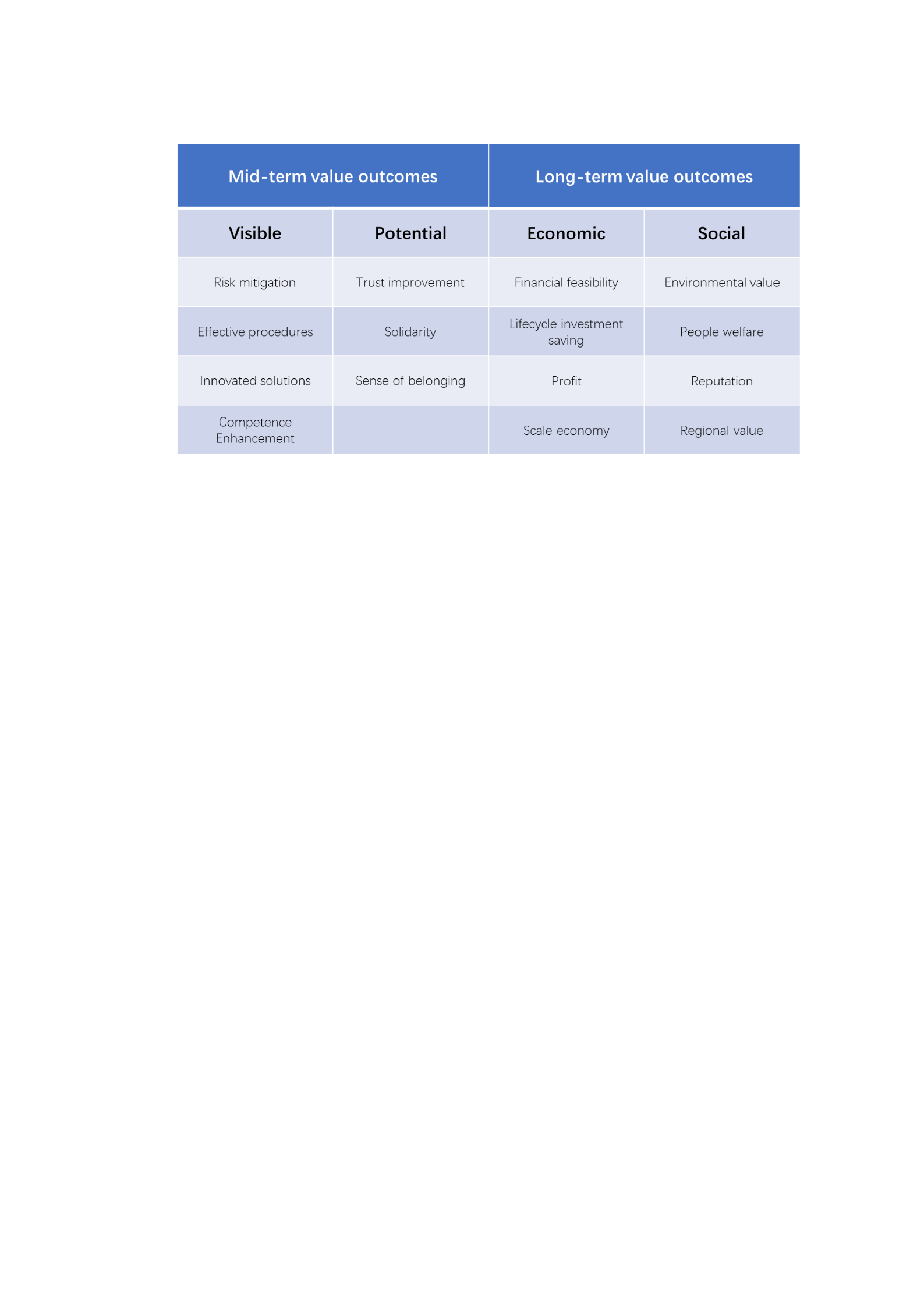
125
Figure 4-1 Value outcomes identified in the cases
4.1.2 Economic Value and Social Value
The previous section pointed out that PPP project value cannot be viewed in the same
way but rather as mid-term and long-term value given the dynamic nature of value. For
the long-term values, value outcomes vary among different stakeholders given the
subjective feature of value. Although mid-term value outcomes also differ in different
stakeholders’ eyes, such differentiation is not the focus in this section. Mid-term value
outcome archetypes based on experience, derived from the VCC research strand, are
discussed in the next section.
There are two categories of long-term value outcomes summarised from the data:
economic value and social value. Such classification is not limited to parties as
different individuals in the same party may value things in different ways. However,
there is a tendency that the private party focuses more on the economic value while the
public party focuses more on social value as shown in Table 4-2.

126
Table 4-2 Different long-term value focus among parties and cases
Economic
value Public Private Alpha Beta Gamma Delta Epsilon
Financial
feasibility H L
√ √ √ √
Lifecycle
investment
saving
H H
√ √ √ √ √
Profit M H
√ √ √ √ √
Scale economy L H
√ √ √
Social value Public Private Alpha Beta Gamma Delta Epsilon
Environmental
value H H
√ √ √ √ √
People welfare H M
√ √ √
Reputation H H
√ √ √ √
Regional value H L
√ √ √
Note: “H” indicates the party shows high interest in the value while “L” indicates the party has relatively
low interest in the value. The symbol “√” denotes that the indicated value has been observed in the
corresponding case.
4.1.2.1 Economic value
Economic value refers to financial benefits pursued and realised from the PPP project
by different stakeholders. First-order codes covering economic value include financial
feasibility, lifecycle investment saving, profit, and scale economy. As shown in Table
4-2, most public parties are concerned about financial feasibility and lifecycle
investment saving, while most private parties focus more on lifecycle investment
saving, profit, and scale economy. The process of coding with economic and social
value is shown in Figure 4-2.
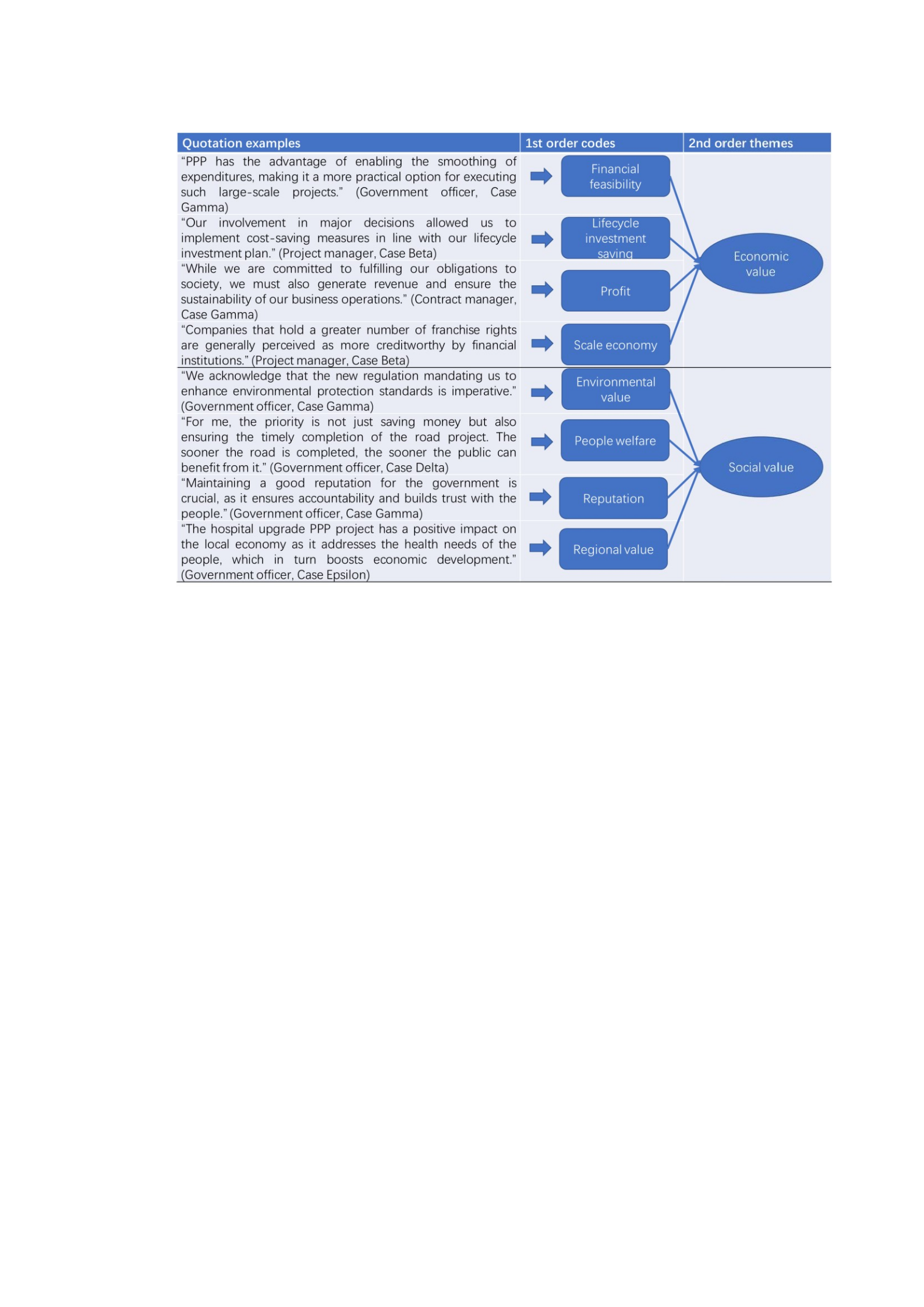
127
Figure 4-2 Coding process of economic and social value
Financial feasibility refers to the phenomenon that the government could not conduct
the project without choosing PPP. Indeed, this is one of the PPP functions that it can
smooth or assist with government expenditure and allow infrastructure development in
an area when the fiscal budget is not sufficient. This value is emphasised by public
parties in most of the cases other than Case Alpha. This may be because Case Alpha is
smaller in scale than the other cases and because Case Alpha was an expanded project
of a Build-Operate-Transfer (BOT) project which means the consideration of the PPP
mode did not depend heavily on the financial feasibility, but rather the lifecycle
investment saving. In the other four cases, financial feasibility is the foremost reason
as well as the main economic value that the public parties pursued and obtained in the
PPP projects.
Lifecycle investment saving refers to the phenomenon that the PPP mode could save
investment compared with alternative methods in delivering infrastructure projects
from an entire lifecycle perspective. There is repeated evidence obtained from the data

128
to support this phenomenon. Both public and private parties have acknowledged this
economic value in all five cases. For the public party, lifecycle investment saving is
another reason for choosing PPP as the infrastructure delivery mode. This does not
mean that all infrastructure projects are suitable for PPP with less lifecycle investment.
On the contrary, only the projects that have survived the Value for Money assessment
can be delivered in PPP mode. For the private party, pursuing less lifecycle investment
makes them become conscious about the importance of planning and designing, and be
willing to input more money in the project front-end with the aim of saving later on.
Profit denotes literally how much profit the private party can earn. According to the
data, profit is the most pertinent economic value the private party is concerned with.
For example, the contract manager from Case Gamma said: “To be honest, our primary
concern is profitability, even though we recognise our social responsibility as a state-
owned enterprise. While we are committed to fulfilling our obligations to society, we
must also generate revenue and ensure the sustainability of our business operations.” In
other words, no matter how much other value can be obtained by the private party from
a PPP project, they will not join the project if they know clearly there will be no profit
or even a loss. The project manager in Case Epsilon said: “PPP projects are typically
significant ventures that necessitate substantial investments. These projects differ from
regular corporate operations, as each of them must be profitable in order to be
successful.” On the other hand, the public party shows less enthusiasm for this
economic value indicator. The contracts of all the five cases show that for the end-user
payment and feasibility gap subsidy PPP projects such as Cases Alpha, Beta and
Epsilon, the public parties signed a contract on the distribution of excess income with
the private party; for the government payment cases, such as Case Gamma and Case
Delta, the public parties have no relation with the project profit. However, in all five
cases, the government officers all expressed that they need to control private parties’
profit at a reasonable level, that is, the profit should not be too high otherwise the
public interests cannot be guaranteed, and the profit could not be too low, otherwise the

129
private parties cannot be motivated. In this sense, the project’s profit is not just a value
objective of the public parties, but an instrument to balance public interest and the
private party’s motivation.
Scale economy refers to the phenomenon that the private party has more bargaining
power through the collaboration in a certain PPP project for their further collaborations
with the government and/or financial institutions. There are two observations in the
data that indicate that the private party can achieve scale economy from a PPP project.
In Case Gamma and Case Delta, the managers in the private parties revealed that they
could gain momentum in winning more projects from the local government given their
relationship foundation built in the studied projects. Moreover, the project manager in
Case Beta stressed another key economic benefit they derive from the PPP project, that
is, they earned more credits from the finance institutions by having the franchise rights.
This enables their company to get loans more easily from the bank as the franchise
rights are considered a reliable asset. In other words, “companies that hold a greater
number of franchise rights are generally perceived as more creditworthy by financial
institutions” (Project manager, Case Beta). On the contrary, the public party does not
show much interest in it.
4.1.2.2 Social value
Social value refers to positive social impact of the project on the broad community and
the primary stakeholders as well. First-order codes identified in cases include
environmental value, people welfare, reputation and regional value. It is worth
mentioning that while the beneficiaries of social value are the people and community,
the private party is the implementor of all the social values, while the government is
accountable for them. The project consultant from Case Alpha said: “Despite the
profit-seeking nature of capital, we also sincerely hope the project is successful in
terms of its social impact, and we put lots of effort into it”.

130
Environmental value refers to the extent to which the environment of PPP projects is
protected and/or improved. Both the public and private parties are concerned with
environmental value despite having different motivations. For the public parties,
environment protection is becoming increasingly important in the government’s job as
the commonsense of the “environment is valuable” prevails. In China, protecting the
environment while developing is a key emphasis in the work of the government. There
are many related laws and regulations that are strictly implemented by environment
bureaus. On the contrary, the private parties’ pursuit of environmental value is mainly
because of the imposed environmental laws and regulations. Especially for the
industries such as sewage treatment in Cases Alpha and Beta, environmental value is
the most important performance indicator. In other cases, such as Case Delta, the green
belt’s build and maintenance is also an important performance indicator. In Case
Gamma, the environmental value even led to a huge design change for the whole
project. As the first design of the immersed tube tunnel would destroy the environment
for undersea life, as assessed by the environment bureau, the private party was forced
to persuade the design company to change the original design. The project consultant
from Case Gamma said: “The change in the assessment regulation was an unexpected
risk, but fortunately, the government was understanding and covered the additional
costs associated with the design change.” This indicates that the public party not only
values the environment, but is also willing to pay for it.
People welfare refers to the general happiness of the local community brought about
by the PPP project. One basic function of infrastructure development is to improve the
welfare of people in the local community. This is logically at the top of the list of the
public party’s value priority. For example, the sewage treatment plants in Cases Alpha
and Beta contribute to the local environment and cleaner water and thus improve
people’s welfare. When choosing the private party, the public parties in the two cases
put the sewage treatment capability at the top of the list to ensure people’s welfare. In
other situations, the public party would seek the chance to improve people’s welfare

131
through innovative solutions. In the meantime, while the private party would cooperate
as much as they can, they are not motivated to initiate such value pursuit. For example,
in Case Gamma, the public party conceived of a plan to build playgrounds under the
highway interchanges which they learnt when visiting another city. The government
officer then communicated this idea to the private party in a timely manner. The
engineer said “As they (the public party) shared the idea in time so that we were able
to change the design as we haven’t dealt with the area under the highway”, “and of
course, they pay us extra money for it.” This shows that the public party cares more
about people’s welfare than the private party.
Reputation refers to the opinions held by the involved stakeholders in the PPP project
about other stakeholders during and after the collaboration. The data shows that both
public and private parties are concerned about reputation. For the public party, the
government needs to build their reputation among people to maintain the government’s
accountability. For example, the government officer in Case Gamma said:
“Maintaining a good reputation for the government is crucial, as it ensures
accountability and builds trust with the people.” Moreover, the public party needed to
maintain their credit to attract more investment as the government officer in Case Bata
said: “Paying on time is not only important for our own financial health, but also
crucial to maintain the government’s reputation and credit. This in turn would attract
more private capital to invest in our projects.” For the private party, reputation may
serve as an advertisement for them to the local community so that they can reduce
local resistance when constructing the infrastructure. For example, in Case Alpha, the
private party used their patent technology to build an underground sewage treatment
plant. They also built a playground on top of it for the community. This made the
residents very happy as it was published in the local newspaper. With such good
reputation, the private party won three other sewage treatment plant projects with
neighbouring governments. Moreover, reputation means more to the private party if
they want to expand into new business areas. The operation manager in Case Epsilon

132
said: “We are putting a lot of effort into building our reputation because we want to
expand our business into health and eldercare through this project.”
Regional value refers to the phenomenon that PPP projects can help expand the local
economy. For example, the government officer shared his view on Case Gamma’s
strategic objective:
“The subsea tunnel is a crucial link connecting the G and Z districts
of the city, which are separated by the sea. It enables the
development of the G district by providing access to the resources
and opportunities available in the Z district.”
A similar idea was expressed by the government officers in Cases Beta and Epsilon. In
Case Beta, the government officer said: “after building the sewage treatment plant, we
were able to invite more investment in this area because we not only can handle the
sewage the plants generate, but also we can provide cheap reclaimed water to them.” In
Case Epsilon the government officer also said that this PPP project activated the local
economy because people’s health considerations are well taken care of, people are
more likely to develop the economy. However, the data shows that private parties pay
less attention to such value.
From a cross-case analysis, it is evident that the public party pays more attention to
social value while the private party cares more about the economic value. For example,
the government officer from Case Delta said: “For me, the priority is not just saving
money but also ensuring the timely completion of the road project. The sooner the road
is completed, the sooner the public can benefit from it.” The opinion from another
government officer in Case Beta also supported that view: “Currently, the situation is
such that the government has limited financial resources, while private entities have
greater flexibility in selecting the cities and projects in which they wish to invest and
construct. Therefore, it is imperative for us to present attractive projects that offer high
profitability.” While the project manager in Case Gamma admits that the private party

133
cares more about finance, he also stresses that:
“We prioritise the social impact of the project because it reflects our
professionalism and ethical values, which ultimately affects our
reputation. Additionally, we have a sense of social responsibility
towards the community and aim to make a positive impact through
our projects.”
It is also interesting to find that the public party and private party of the same project
could have different perceptions on value creation. For example, the project manager
from Case Alpha said: “We are currently facing financial losses in operating the
sewage treatment plant, as the actual operating costs were significantly higher than our
initial estimates during the bidding process.” However, the government officer said:
“The private party benefited greatly from this project, as it served as a successful
model and led to the acquisition of seven additional similar projects in Northeast
China.” This shows that different stakeholders not only experience the value
differently, but they also view other’s value creation differently.
To sum up, the cores of each economic and social value outcomes are shown in Table
4-3.

134
Table 4-3 The core of each economic and social value outcomes
Constructs Contents
Economic value Financial benefits pursued and realised
Financial
feasibility
The phenomenon that the government could not conduct the
project without choosing PPP
Lifecycle
investment saving
The phenomenon that PPP mode could save investment
compared with alternative methods in delivering infrastructure
project from an entire lifecycle perspective
Profit How much profit the private party can earn
Scale economy The phenomenon that the private party gains more bargaining
power through the collaboration in a certain PPP project for
their further collaborations with the government and/or
financial institutions
Social value Positive social impact of the project on the broad community
and the primary stakeholders
Environmental
value
The extent the environment of PPP projects is protected and/or
improved
People’s welfare The general happiness of the local community brought by the
PPP project
Reputation The opinions held by the involved stakeholders in the PPP
project about other stakeholders during/after the collaboration
Regional value The phenomenon that PPP projects can help expand the local
economy
The findings in this section show the subjective nature of value which requires inter-
subjective interaction in managing PPP project value to satisfy various stakeholders
involved. Thus, it is proposed:
Proposition 2. Project value is a subjective feature given by
various stakeholders involved in the project. Long-term value
outcomes include economic value and social value which require
coordination in management and realisation.

135
4.1.3 Experience of Function vs Interaction
Value is highly subjective as different beneficiaries have different perceptions of it.
This has been highlighted repeatedly in the service-dominant logic and broader VCC
literature. Prahalad and Ramaswamy (2004) pointed out the experience of customers
would be a new source of competitive advantage which can only be achieved through
co-creation. In the same vein, Vargo and Lusch (2007a, p. 7) updated their
fundamental premises on service-dominant logic and stressed that “value is always
uniquely and phenomenologically determined by the beneficiary.” This subjectivity of
value has also been supported by the empirical data and discussed in the previous
section regarding long-term value outcomes. This section takes a further step in
discussing this subjective feature by combining the experience of function and the
experience of interaction and proposes the archetypes regarding mid-term value
outcomes.
Value is assessed by the beneficiaries according to their experience when they
consume the value propositions or service provided by other parties, and this leads to
the subjective feature of value. In the process of VCC, beneficiaries’ experience
depends on their experiences on the function and interaction. Function experience
refers to how useful a person rates a service provided by others while interaction
experience refers to how a person feels when engaging in an interaction with other
parties. According to the extent of function experience and interaction experience, four
value archetypes are summarised as shown in Figure 4-3.
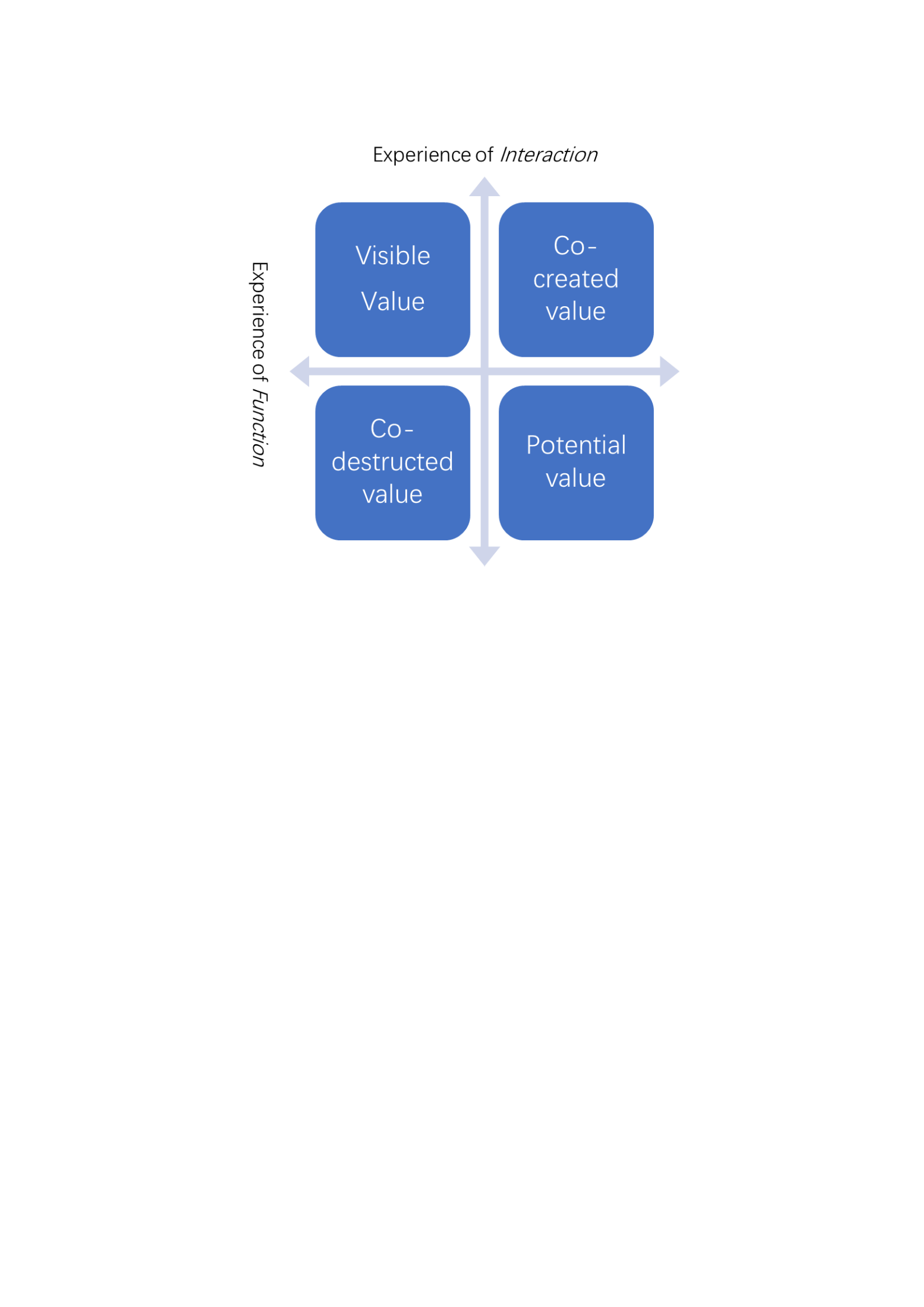
136
Figure 4-3 The archetypes of value outcomes according to experience
The top right quadrant indicates the better experience of function and interaction.
Accordingly, visible value is defined as the value outcomes that are of better function
experience and less interaction experience. Conversely, potential value is defined as
the value outcomes that are of less function experience and better interaction
experience. Mid-term value outcomes identified from the data include first-order codes
such as risk mitigation, effective procedures, innovative solutions, competence
enhancement, trust improvement, solidarity, and sense of belonging. As shown in
Figure 4-1, visible value includes risk mitigation, effective procedures, innovative
solutions, and competence enhancement while potential value includes trust
improvement, solidarity, and sense of belonging. The boundaries between visible and
potential value are to some extent blurred because of the subjectivity of experience. In
general, visible value focuses more on the function experience and potential value
focuses more on the interaction experience. The process of coding with visible and
potential value is shown in Figure 4-4.
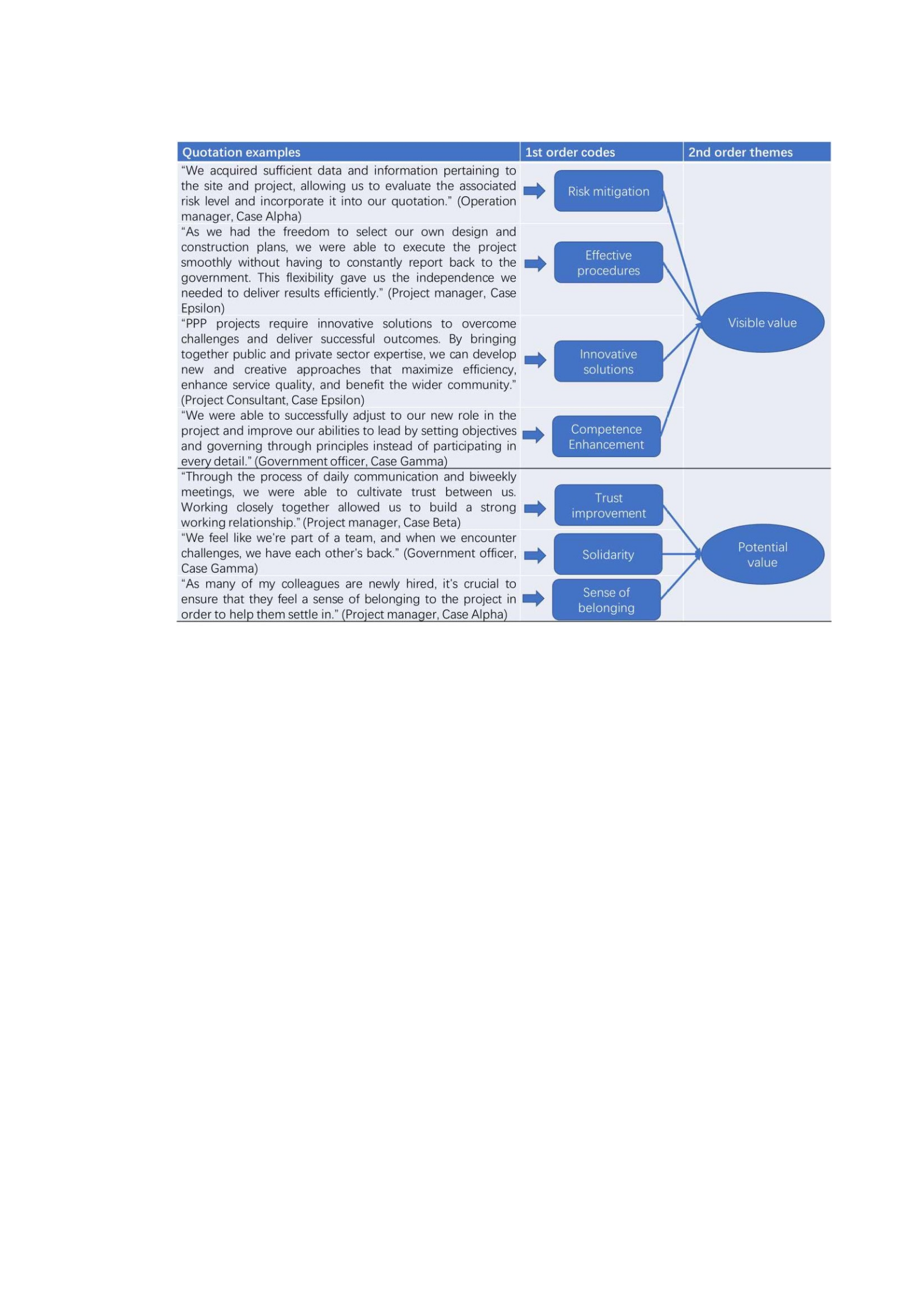
137
Figure 4-4 Coding process of visible and potential value
The value outcomes with both better experience of function and interaction are defined
as co-created value while the value outcomes with both less experience of function and
interaction are defined as co-destructed value. Long-term value outcomes discussed in
the last section are co-created value. While co-destructed value is an important topic in
VCC (Echeverri & Skålén, 2011, 2021; Fuentes, 2019; Prior & Marcos-Cuevas, 2016),
it is out of this research’s scope. As to the last archetype, co-created value refers to
both parties collaborating in a reciprocal way and creating value-in-use for and with
each other. What needs illustrating is that there are no explicit boundaries among
visible value, potential value and co-created value. This is because of the subjective
nature of value, which different stakeholders experience differently. The artificial
classification proposed in this research aims to provide a relatively clear foundation to
take a close look at what value looks like in the PPP projects and how it is co-created
among stakeholders. Table 4-4 shows the different mid-term value focus among parties

138
and cases.
Table 4-4 Different mid-term value focus among parties and cases
Visible value Public Private Alpha Beta Gamma Delta Epsilon
Risk mitigation H H √ √ √ √ √
Effective procedures H H √ √ √ √ √
Innovative solutions L H √ √ √ √ √
Competence Enhancement L L √ √ √
Potential value Public Private Alpha Beta Gamma Delta Epsilon
Trust improvement H H √ √ √ √ √
Solidarity M M √ √ √
Sense of belonging L M √ √ √ √
Note: “H” indicates the party shows high interest in the value, “M” indicates the party shows medium
interest in the value, and “L” indicates the party show relatively low interest in the value. The symbol “√”
denotes that the indicated value has been observed in the corresponding case.
4.1.3.1 Visible value
The pursuit of value-in-use reflects the underlying rationale of the subjective nature of
value, that is, only the usefulness deserves effort. Mid-term value outcomes such as
risk mitigation, effective procedure and innovative solutions can be regarded as visible
value. This is because such value outcomes are perceived as direct contributors to
realise long-term value that is pertinent to stakeholders’ concerns. Differing from
long-term value outcomes that are valued by different stakeholders and appear in
different cases, all visible value and potential value are observed from both public and
private perspectives in all cases.
Risk mitigation refers to the extent to which risks can be mitigated for different
stakeholders. This is one of the main functions of PPP and is valued by both public and
private parties. For example, the contract manager from Case Epsilon said:

139
“The government’s sharing of population and industry data is
crucial in determining future market needs and evaluating future
market competition. These data help to manage risks associated with
project operations, particularly in the early stages.”
The contract manager also confirmed that operational risk mitigation can be regarded
as a mid-term value that is obtained in the VCC process and should be given high
priority given its direct impact on the project success.
Effective procedure primarily relies on the successful execution of the procurement
process, seamless financing arrangements, and obtaining necessary building permits.
The procurement process involves negotiating contracts and requires close
collaboration among all involved stakeholders. Smooth project financing requires
timely disbursement of funds from the bank, as well as the use of a letter of guarantee
mechanism to safeguard public interests. In addition to procurement and financing,
securing building permits, including construction and environmental permits, is also
crucial to the project’s overall success. These permits serve as the legal foundation for
construction activities, and their timely acquisition is essential for project completion
in the set timeframe.
Innovative solutions can be described as novel approaches that are used to address
complex issues that arise during the course of a project. These solutions can take on a
variety of forms depending on the particular circumstances, but they share the
characteristic of being emergent and ground-breaking. An example of this can be seen
in Case Gamma, where a newly enacted regulation mandated that the project team
obtain a usage right for a sea area from the National Ministry of Ecology and
Environment. This process was anticipated to be arduous and time-consuming, and as a
result, the public and private stakeholders collaboratively developed a new design for
an artificial island that allowed them to obtain the use right from the provincial level
instead of the national level. This innovation also gave rise to new technological

140
advancements, such as the creation of an immersed tunnel.
Competence enhancement refers to the process whereby stakeholders involved in PPP
projects develop and refine their professional skills, which in turn facilitates the
success of the PPP venture. This phenomenon is often mutually reinforcing, as the
enhanced competence of stakeholders can contribute to the effectiveness of the PPP
project, while the project itself can serve as a platform for further competence
enhancement. Many public sector entities involved in PPP projects have reported that
their improved competence in areas such as project governance, as opposed to micro-
management, has not only contributed to the smooth implementation of current
projects but has also helped to advance the government’s broader PPP agenda. For
example, the government officer in Case Gamma said: “We were able to successfully
adjust to our new role in the project and improve our abilities to lead by setting
objectives and governing through principles instead of participating in every detail.”
Indeed, competence enhancement is a critical aspect of PPP projects, as it enables
stakeholders to better navigate the complex landscape of PPP development and
implementation. Through the development of new skills and competencies,
stakeholders can effectively manage risks, collaborate with partners, and achieve
project objectives in a manner that aligns with the broader goals of the PPP initiative.
This is also supported by the project consultant in Case Delta who suggested:
“Throughout the project, I noticed a significant improvement in my
professional skills, particularly in areas such as policy interpretation,
conflict resolution, and providing valuable recommendations.
Overall, this project provided me with valuable learning experiences.”
As such, fostering competence enhancement among PPP stakeholders should be a key
priority for governments and other entities seeking to develop and implement
successful PPP projects.

141
4.1.3.2 Potential value
In the context of this research, achieving value-in-use is a complex task that cannot be
achieved by any individual party alone. Instead, it requires collaboration and co-
creation of value between multiple parties. Consequently, the experience of co-creating
interactions has become an integral component of project value. This perspective is not
novel in the field of marketing VCC literature. Payne et al. (2007) have explicated how
customers engage in VCC through interactions with suppliers and the significance of
the interaction experience. Prahalad and Ramaswamy (2004) also argued that the
interaction between a company and its customers serves as the fundamental building
block for facilitating the co-creation of experience. Empirical evidence from data
analysis supports the notion that the interaction experience is crucial in VCC. For
example, the project manager in Case Beta said:
“As I evaluate the project, the quality of interaction with the
government is a crucial factor. When there’s reciprocal
collaboration, it creates a positive working environment and helps
increase efficiency and effectiveness by ensuring that the project team
is well- coordinated.”
While a positive interaction experience may not directly generate the value that
stakeholders prioritise, it can aid in the creation of tangible value and may even have
the potential to evolve into long-term value. As a result, the thesis proposes that a
positive interaction experience can be considered as potential value. Trust
improvement, solidarity and competence enhancement are among the first-order codes
identified through empirical analysis that reflect the potential value of a positive
interaction experience. These codes illustrate the various ways in which positive
interactions between stakeholders can lead to potential value such as improved
relationships, increased trust and enhanced competencies.
Trust improvement pertains to the observable trend of stakeholders developing a higher

142
level of trust in each other throughout the VCC process. While it is true that there is an
initial foundation of trust between public and private parties, this trust can be further
enhanced as the VCC process progresses. In all five cases examined, trust
improvement was highly valued by all stakeholders involved. For example, the
operation manager in Case Alpha said:
“As our collaboration progressed, I noticed a growing sense of trust
between us. This increased level of trust has allowed us to work
together more cohesively and effectively, and we both value and aim
to maintain it.”
Solidarity in the context of VCC refers to the phenomenon of mutual support and
converging interests, opinions and objectives within the PPP project team. This trend
was observed across several cases, with Case Gamma being a notable example. One
government officer in Case Gamma stated that the team had a strong sense of solidarity,
and that they worked together to address any challenges that arose. The private party
engineer in the same case also shared this sentiment, emphasising the collaborative and
supportive nature of the team as presented in the quote below:
“The public party was supportive to some extent, and we often faced
external challenges together rather than directing our efforts
against each other. For instance, when the project underwent a
governmental leadership audit, we went above and beyond our
responsibilities to assist the public party in preparing the necessary
materials.”
Sense of belonging refers to the feeling of being valued and connected to the ongoing
project. This was more frequently observed among private parties. In PPP projects, a
sense of belonging among stakeholders is crucial for the success of the project.
According to an external expert in Case Epsilon, when both parties feel like they are
part of a community working towards a common goal, they are more likely to stay

143
committed to the project for the long term. This highlights the importance of fostering
a collaborative and inclusive environment that promotes a sense of unity and shared
purpose. Furthermore, as noted by the operation manager in Case Gamma, having a
sense of belonging in a PPP project is not just about feeling connected to colleagues
but also about feeling part of something bigger than oneself. This emphasises the need
to communicate the project’s larger purpose and how it can create positive change in
the world. By creating an environment that fosters a sense of belonging and a shared
vision for the project’s success, stakeholders are more likely to remain committed to
the project and work collaboratively towards achieving its goals. Thus, it is essential
for PPP projects to prioritise the creation of a supportive and collaborative work
culture that fosters a sense of belonging among all stakeholders involved.
To sum up, the cores of the visible and potential value outcomes are shown in Table 4-
5.
Potential value may not be thought of highly by some of the stakeholders because of
their own subjectivity on value perception, however it has the potential to transform
into visible value or further the long-term value. Hence, the following proposition is
developed:
Proposition 3. Mid-term value outcomes include visible value
and potential value according to how the beneficiaries experience
the function of the service and the interaction when the service is
exchanged.

144
Table 4-5 The cores of the visible and potential value outcomes
Constructs Contents
Visible value Value outcomes that are of better function experience and less
interaction experience
Risk mitigation The extent risks can be mitigated for different stakeholders
Effective
procedure
The procurement procedure, smooth project financing and
various building permits
Innovative
solutions
The innovative ways solving different problems occurred in the
project process
Competence
enhancement
The phenomenon in which stakeholders experience
improvements in their professional skills
Potential value Value outcomes that are of less function experience and better
interaction experience
Trust
improvement
The phenomenon in which various stakeholders increasingly
trust each other in the VCC process
Solidarity The phenomenon in which there is mutual support within the
PPP project team and every party’s interests, opinions and
objectives are converging
Sense of
belonging
The feeling of being valued, and connected to the current project
4.2 Discussion – Value Outcomes
This chapter aims to answer the first research question “what does value mean to
different stakeholders involved in a PPP project?” Section 4.1 showed the dynamic and
subjective nature of value in the PPP project and how different stakeholders pursue
different value outcomes at different times.
In the course of data analysis, this question generated two more questions: “what is the
relationship between different value outcomes?” and “how to assess the value of a PPP
project?” This discussion makes an effort to answer these two additional questions.
Cross-case analysis indicates the relationship between mid-term and long-term value

145
outcomes. The comparison between the findings and previous studies suggests an
assessment framework of PPP projects in a value-oriented perspective. In addition,
empirical evidence also suggests that such value assessment application in practice is
not enough.
4.2.1 The Relationship between Mid-term and Long-term Value
There are three relationships between mid-term and long-term value outcomes
identified from cross-case analysis. Mid-term value outcomes are the results achieved
in the near term, usually before the operation stage in PPP projects. Long-term value
outcomes, on the other hand, refer to the sustainable results that a PPP project achieves
over the entire lifecycle, even after the transition stage. In the first situation, mid-term
value outcomes and long-term value outcomes sometimes appear to be similar.
Nevertheless, as discussed previously, the defining feature of long-term value is
sustainability. Hence, the secret of transforming such mid-term value outcomes
(mostly, visible value) into long-term outcomes is to try to duplicate and sustain the
realised value.
The second situation would be mid-term value outcomes in conflict with the long-term
ones. The most representative example would be the cost now or cost later question,
and cost later would probably lead to more cost. To maximise mid-term value
outcomes, some project managers are inclined to save the cost as much as possible in
the construction stage. However, such cost saving would possibly incur more costs in
the following operation stages. In this situation, successful project experiences suggest
that the long-term value outcomes should out weigh the mid-term value outcomes.
In the third situation which is also the most common one, mid-term value outcomes
would be conducive to long-term value outcomes. Both visible value and potential
value have the ability to facilitate long-term value outcomes.
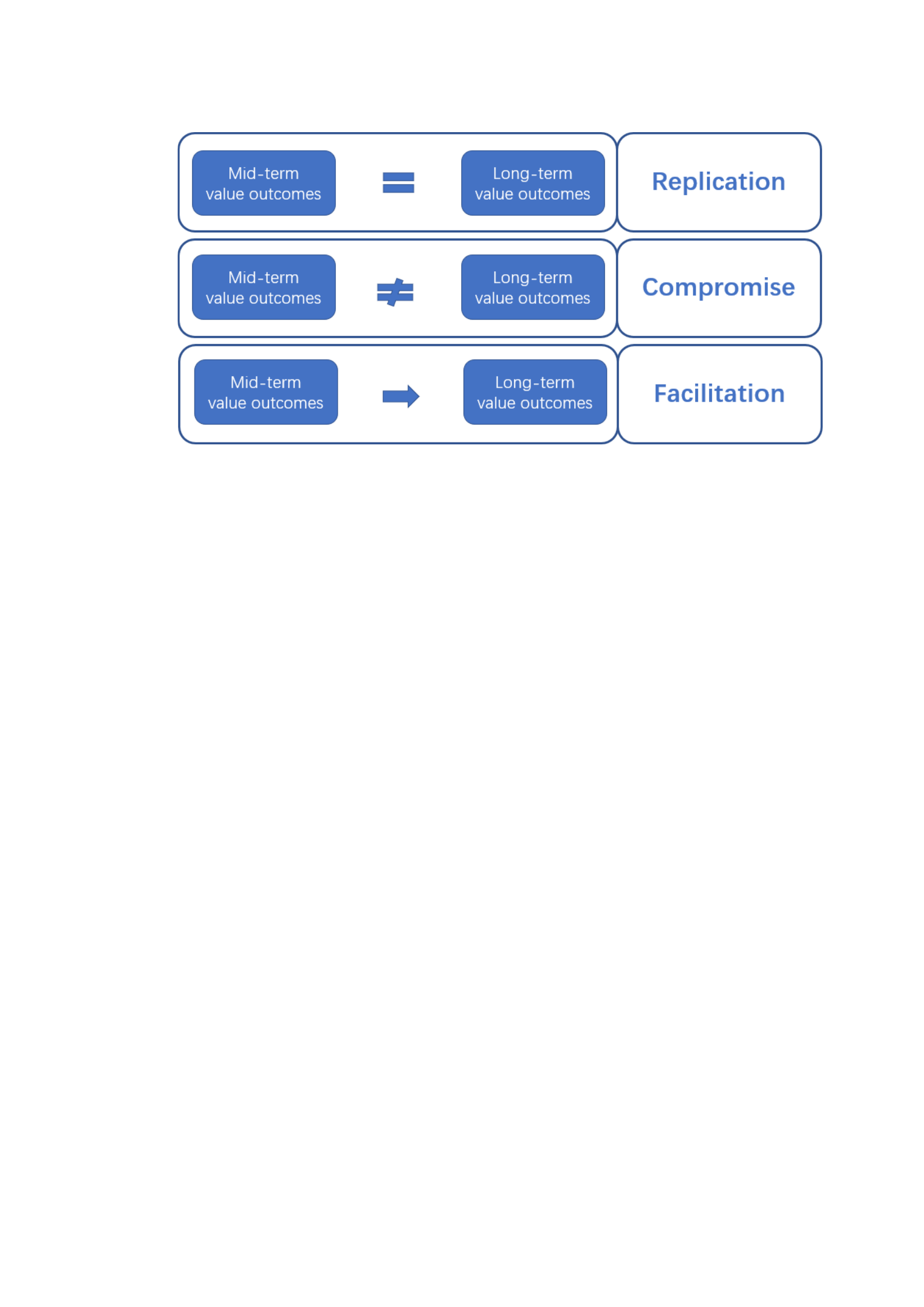
146
Figure 4-5 Relationships between mid-term and long-term value and respective
strategies
By identifying the above three types of relationship between the mid-term and long-
term value outcomes, this research can help project stakeholders to better understand
the dynamics of value creation and sustainability in PPP projects. Three respective
strategies (as shown in Figure 4-5) usually adopted by stakeholders, i.e., replication,
compromise or facilitation, are summarised from the cases. Overall, by understanding
the different types of relationships between mid-term and long-term value outcomes in
PPP projects, stakeholders can make more informed decisions and take actions that
support the long-term sustainability of the project and its value to society.
4.2.1.1 Mid-term value outcomes comply with long-term value outcomes
In the cases, there were several respondents reporting that mid-term value outcomes
are the same as long-term ones for themselves. Taking Case Beta as an example, one of
the long-term goals of the private party was to build a sound relationship with the
public party. After the effective and smooth contract negotiation, the public and private
parties achieved a solid relationship. As the government officer said: “we were
satisfied with our partner [the private party], they are professional, active and reliable”.

147
However, as the project manager from the private party said: “there is a good
relationship foundation between us, but the relationship requires maintenance”. A good
relationship has been achieved as a mid-term value does not automatically ensure it
can be sustained in the long term.
In this situation, stakeholders chose to maintain the achieved mid-term value outcomes
for a long-term purpose. In the above example, potential value such as a good
relationship provides the opportunity to become a long-term value outcome. In fact,
most of the visible value realised in the mid term would fit with this situation. This is
reasonable because visible value is perceived by the beneficiaries as useful and as a
direct contributor to the long-term value. For example, one of the most important long-
term value outcomes is to satisfy the end-users’ needs and meet their expectations.
However, during the entire PPP project lifecycle, on many occasions of a long duration
project, such fulfilments of expectations are always required and achieved as mid-term
value. The engineer in Case Gamma said: “The problem is how to meet everyone’s
need in the long run”.
The achievement of mid-term value outcomes often leads practitioners to adopt the
“replication” strategy to sustain these outcomes. Specifically, if stakeholders perceive
that the achieved outcomes align with long-term goals, they tend to identify the
underlying practices that led to such outcomes and replicate them to ensure the desired
outcomes persist over time. In other words, when VCC members achieve visible or
potential value outcomes that are consistent with their goals, they seek to maintain
those mid-term value outcomes by emulating the practices that were instrumental in
their attainment.
The adoption of the replication strategy to sustain mid-term VCC outcomes is driven
by incentives. When stakeholders achieve such outcomes, they are motivated to
continue the behaviours that led to their success, with the expectation of obtaining
further value. The success of this strategy depends on two key factors identified in the

148
case analysis. First, stakeholders must be able to identify the VCC practices that led to
the perceived positive mid-term outcomes. For example, the private party in charge of
Case Alpha identified the value of using advanced sewage treatment techniques and
afforesting the roof of the underground treatment station, which led to the project
exceeding national water quality standards and providing an environmentally friendly
and aesthetically pleasing infrastructure. Similarly, local government in the same case
identified the value of attracting new manufacturing companies to the area through the
affordable reclaimed water provided by the sewage treatment station, which led to job
creation and economic growth. The private party involved in operating a sewage
treatment station for the public party identified the value of increasing sewage
treatment capacity to meet the high demand in the city, which led to initiating Case
Beta as a new PPP project. The local government identified the value of improving
infrastructure and enhancing the quality of life for local residents in the state-level poor
area, which led to partnering with the private party to build the much-needed sewage
treatment infrastructure through the PPP model.
However, there could be several reasons why stakeholders may not be able to identify
the VCC practices that led to the perceived positive mid-term outcomes. One possible
reason is that the benefits of VCC are often diffused and intangible, making it difficult
to pinpoint the exact practices that led to the positive outcomes. For example, while
stakeholders may perceive improved trust and collaboration as a positive outcome, it
may be challenging to identify the specific VCC practices that contributed to this
outcome. Another reason could be a lack of awareness or understanding of the VCC
concept itself. Stakeholders who are not familiar with the VCC approach may not
recognise its contribution to the mid-term outcomes they are experiencing. Finally, it is
possible that stakeholders may not prioritise the identification of VCC practices.
Instead, they may be more focused on the outcomes themselves, such as improved
infrastructure or increased economic growth, without necessarily tracing these
outcomes back to specific VCC practices. While stakeholders may not always be able

149
to identify the specific VCC practices that led to positive outcomes, it is important for
them to recognise the benefits of the approach and continue to foster collaboration and
innovation in future projects.
Second, stakeholders must have a comprehensive understanding of the lifecycle of the
VCC process in PPP projects and be committed to ensuring that the value lasts beyond
the medium term. Thus, to sustain the achieved VCC outcomes in PPP projects,
stakeholders need to possess both the capability to identify the successful practices and
the willingness to maintain the value over the long term. For example, in Case Gamma,
the government and the private party worked as a single team to overcome the
environmental challenges faced during the construction stage, demonstrating their
commitment to ensuring the project’s long-term sustainability. The project has not yet
entered the operation stage, but the stakeholders are already taking steps to co-create
value that will last beyond the medium term. In Case Delta, the private party’s role in
maintaining the road has been essential, as it has ensured that the road remains in good
condition even after years of heavy use. This demonstrates their commitment to
ensuring that the value created by the project extends beyond the medium term. In
Case Epsilon, the private party is responsible for taking all the operational risks and
sharing any excess earnings with the government, which incentivises the private party
to provide better services and ensures the project’s long-term sustainability. The
project also takes full advantage of the hospital’s resources to provide better healthcare
services to the elderly residents in the care home, demonstrating the stakeholders’
commitment to co-creating value that lasts beyond the medium term.
However, in PPP projects, stakeholders may not always have a comprehensive
understanding of the lifecycle of the VCC process or be committed to ensuring that the
value lasts beyond the medium term. There are several reasons for this, such as the
lack of long-term planning, limited communication and collaboration, or misaligned
incentives. In addition, external factors such as changes in government policy or
economic conditions may also impact stakeholders’ commitment to ensuring the value

150
lasts beyond the medium term. These factors can lead to a focus on short-term gains
and neglect of the long-term sustainability of the project. For example, if the private
partner is primarily motivated by short-term profits, they may focus on maximising
their returns during the construction and operation stages of the project without
considering the long-term impact on the community or the sustainability of the project.
Similarly, if the government is primarily concerned with meeting immediate
infrastructure needs, they may prioritise the construction stage over long-term
maintenance and monitoring, which can lead to a loss of value over time. To ensure the
success of the VCC process in PPP projects, it is essential that stakeholders have a
shared vision and commitment to sustainability. They should be willing to invest in
ongoing maintenance and monitoring to ensure the asset’s longevity and the long-term
benefits for all involved parties.
In addition, the mid-term value outcomes that are aligned with long-term ones are
normally taken as indicators assessing project performance (Liu et al., 2016). This is
because such mid-term value outcomes provide a perspective of process in the course
of the PPP project (Yuan et al., 2009). In fact, sustaining mid-term value over the long
run helps to build trust and confidence among stakeholders. When stakeholders see that
the project is delivering consistent and sustainable value over time, they are more
likely to support and invest in the project. This can help to attract additional funding,
improve stakeholder relations, and ultimately contribute to the long term. Thus, this
research involves such mid-term value outcomes in the PPP project value assessment
framework as well, as elaborated in Section 4.2.2.
To sum up, sustaining mid-term value over the long run is crucial for the success of
PPP projects. By focusing on both mid-term and long-term value outcomes, project
stakeholders can create a sustainable and successful PPP project that delivers value to
society over the long run. Stakeholders are encouraged to choose a replication strategy
to sustain the material value for the long run. Such mid-term value outcomes contribute
to the holistic assessment of PPP project value.

151
4.2.1.2 Mid-term value outcomes conflict with long-term value outcomes
According to reports and feedback from participants in Cases Alpha, Gamma, Delta
and Epsilon, there is a conflict between mid-term and long-term value outcomes. Mid-
term outcomes are related to cost and time savings through efficient procedures. This
conflict between mid-term and long-term outcomes was identified as a commonality
among the cases studied. For instance, in Case Alpha, the government wanted the
private party to begin construction before receiving authorisation from the
environmental protection department. The project manager said:
“I couldn’t accede to the demand as the risk was high. Illegal
construction not only would impact the project but our company as
well. All I could do was to assist the public sector to get the permit
as soon as possible and got well-prepared to start construction.”
In Case Epsilon, the private party encountered difficulties when attempting to secure a
loan from a bank. The bank requested additional information about the project and an
endorsement letter from the government. A government officer explained that this
requirement was sensitive because the regulations on PPP projects prohibit the
government from promising to pay back the loan if the private party is unable to do so.
However, after consulting with professionals, an endorsement letter was generated that
included liability exemption. A similar phenomenon was observed in Case Delta as the
operation manager said:
“We invested more money on the good quality cable when [we]
constructed the road and it was worth it because we know that if the
cable has any problems in the next 15 years, we need to pay more to
repair it.”
In Case Alpha, the mid-term value outcome was saving time in construction. However,
this could only be achieved at the expense of high legal risks. Similarly, in Case

152
Epsilon, the mid-term value outcome was secure a loan more quickly and successfully,
even if it meant taking on potential legal risks. In Case Delta, the mid-term value
outcome was saving construction cost, but at the expense of high operational and
maintenance cost in the future. These conflicts between mid-term and long-term value
outcomes are not uncommon, and a singular focus on mid-term efficiency can lead to
criticisms in academia (Morris, 2013). Critics argue that such a focus can neglect
important environmental, social and governance considerations necessary for long-
term sustainability (He et al., 2019). Additionally, prioritising efficiency over long-
term value can result in inadequate investment in maintenance and upkeep, leading to
deteriorating infrastructure and decreased value over time. An overemphasis on
efficiency can also stifle innovation and flexibility, limiting a project’s ability to adapt
to changing circumstances and deliver long-term value (Sanz-Llopis & Ostermann,
2020).
The respondents in the cases chose to compromise mid-term value for sustainable
long-term benefits, and credited the success of the projects to this decision. In PPP
projects, compromising between mid-term and long-term value is crucial to ensure
sustainability and long-term success. Focusing solely on mid-term value outcomes,
such as cost savings or efficiency, can lead to a project design that neglects the long-
term needs of stakeholders. Conversely, prioritising long-term value outcomes, such as
sustainability or social impact, may not generate enough mid-term value to justify the
investment and support required for project success. Striking a balance between mid-
term and long-term value outcomes can produce a sustainable outcome that benefits all
stakeholders, including the public, private partners and the environment. This approach
ensures the project meets current needs without compromising the needs of future
generations, ultimately leading to project success.
However, it is true that some stakeholders may prioritise immediate values over long-
term ones, particularly if they are not involved in the project for a significant period.
To address this issue, it is recommended that PPP projects engage in stakeholder

153
management and communication to ensure all stakeholders understand the importance
of balancing mid-term and long-term value outcomes. This can involve explaining the
potential long-term benefits of the project, as well as engaging with stakeholders to
understand their priorities and concerns (Vuorinen & Martinsuo, 2019).
Stakeholder management and communication is a critical aspect of PPP projects, as it
helps to ensure that all stakeholders are informed and engaged in the project decision-
making process (Van Du et al., 2021). This involves identifying and prioritising
stakeholders based on their level of interest, power and influence in the project, as well
as their potential impact on the project’s success (Xue et al., 2020).
Once stakeholders are identified, it is important to engage with them throughout the
project lifecycle, using a variety of communication channels and strategies, including
meetings, workshops, surveys and social media. This allows stakeholders to provide
feedback and input on project plans and activities, and helps to build trust and
understanding between the public and private partners.
In addition to stakeholder engagement, it is also important for PPP projects to be
transparent and accountable in their decision making and reporting (Ramaswamy,
2011). This can involve publishing regular progress reports, financial statements, and
environmental and social impact assessments, as well as engaging in open dialogue
with stakeholders on key project issues and concerns. By actively involving
stakeholders in the project decision-making process, PPP projects can better align mid-
term and long-term value outcomes with stakeholder interests and values, leading to
greater project success and sustainability.
To sum up, while mid-term value outcomes are important for the success of PPP
projects, they should be considered in the broader context of the project’s long-term
sustainability and value creation. An overemphasis on mid-term gains can lead to a
neglect of important considerations and ultimately undermine the success and value of
the project over time. On the contrary, talking about ideals could hinder project

154
implemeantability. In this situation, compromise between the mid-term and long-term
value outcomes is encouraged.
4.2.1.3 Mid-term value outcomes are conducive to long-term value
outcomes
Typically, the achievement of mid-term value outcomes lays the foundation for the
realisation of long-term value outcomes. As demonstrated in all the cases, experts
concurred that mid-term value outcomes not only have intrinsic value but also facilitate
the creation of other values, including both mid-term and long-term ones. Thus, mid-
term value outcomes can act as a catalyst towards the attainment of long-term value.
On the one hand, it is evident that visible value outcomes are instrumental in achieving
long-term value outcomes in PPP projects. This can be achieved through stakeholder
efforts to improve their competencies and foster innovation. By continuously seeking
to improve and innovate, stakeholders can identify and address potential risks and
opportunities for value creation. One way to do this is by using sensor technology,
which can provide stakeholders with real-time data and insights to facilitate better
decision making, enhance efficiency, and minimise risks. For instance, in Case Beta,
the project manager recognised that traditional technology required periodic emptying
of the water tank to replace wastewater treatment components, leading to increased
costs and time wastage. Consequently, he proposed a new technology that could
replace the components in the water, which was driven by the anticipation of future
operational risks and led to significant lifecycle cost savings.
Visible value outcomes are defined as value outcomes that are highly useful, easily
observable, and provide evidence of success. They can build confidence among project
stakeholders, increase cooperation, improve communication, and promote a shared
commitment to the project’s long-term success. The contract manager in Case Gamma
emphasised the importance of achieving visible success in the mid-term as a means of

155
gaining confidence and enthusiasm for the project’s long-term potential. This can
sustain engagement and commitment over time, and provide momentum and
motivation to the project parties. In addition, visible value outcomes can be a useful
source of feedback for enhancing the project’s long-term performance. They indicate
where the project has been successful and where it has not met expectations. Through
analysis and reflection, stakeholders can identify opportunities for improvement and
adapt their approach to better meet the project’s requirements.
In Case Epsilon, the private party used feedback on the number of elderly individuals
receiving care, satisfaction levels among care recipients and their families, and cost
savings achieved through the PPP arrangement to identify areas for improvement in
elder home care services. This included expanding service offerings, enhancing the
speed and quality of healthcare, and identifying opportunities for cost savings through
efficient resource use and changes to service delivery. One noteworthy improvement
was the public party allocating the medical expense of elderly care home patients in the
hospital to the private party income and allowing patients to use national medical
insurance in the elderly care home. This not only reduced expenses for hospitalised
elderly individuals but also motivated the private party to offer better services while
earning higher profits. The example mentioned here illustrates how visible value
outcomes can also play a vital role in building public trust and support for a project. By
showcasing the positive impact of the project on the elderly and their families, visible
value outcomes can create a sense of confidence and trust among the public, leading to
increased investment in the project and its long-term success.
On the other hand, potential value outcomes can act as a catalyst for achieving visible
value outcomes, thereby contributing to long-term success. Trust is a crucial factor for
successful PPP projects, as it creates an environment of cooperation and collaboration
between public and private sector partners. Improved trust between partners can help
to mitigate risks by fostering a more transparent and accountable relationship, where
risks and challenges are openly discussed and addressed. Respondents in Cases Beta,

156
Gamma and Epsilon all reported the importance of trust in their collaboration. In Case
Gamma, the project faced significant risks related to financing, construction and
operational issues. To mitigate these risks, the partners established a risk-sharing
framework that included provisions for sharing revenue and losses. The partners were
able to establish a high level of trust, which helped them to work together effectively
and resolve issues quickly. As a result, the construction of the undersea tunnel is
expected to be completed on time and within budget, and once it starts operating, it is
expected to relieve traffic pressure, optimise city function, and promote urban
integration. The establishment of trust not only contributes to the project’s success in
the short term but also lays the foundation for a more sustainable and fruitful
partnership in the long term.
The relationship between potential value and visible value is interdependent and
cyclical, with visible value acting as a foundation for potential value creation, which in
turn contributes to the creation of more visible value. The creation of visible value
outcomes can provide feedback that helps to identify areas for potential value creation,
which can then be used to generate more visible value.
The recognition of the dynamic and cyclical relationship between visible value and
potential value highlights the significance of the facilitation strategy in this scenario.
Rather than a simple linear relationship, VCC is an ongoing, reinforcing process in
which each type of value contributes to the other. The participants in the cases studied
demonstrated an understanding of this relationship and effectively used it to maximise
the long-term value of PPP projects. For instance, in Case Epsilon, the completion of
the construction phase of the new hospital and elder care home represents a visible
value outcome. This outcome can provide feedback to identify potential areas for
improvement in the operations of the hospital and elder care home, such as more
efficient patient flow, better management of medical equipment, improved medical
treatment processes, or enhanced staff training. These potential value opportunities can
then be harnessed to create more visible value, such as increased patient satisfaction,

157
improved health outcomes, or higher staff productivity. Another example can be seen
in Case Alpha where stakeholders focused on creating visible value through improved
communication channels that can also lead to potential value creation. The public and
private parties established regular meetings and progress reports during the process.
Thus they can identify potential areas for improvement in the project. These areas
included streamlining processes, reducing costs, and enhancing the quality of service
delivery. By addressing these areas, the parties created more visible value, such as
improved project outcomes and higher levels of stakeholder satisfaction.
Based on the data analysed, the following key points can be identified for stakeholders
to implement a facilitation strategy in PPP projects as a way to co-create value:
Establish clear communication channels: It is essential to establish clear and open
channels of communication between the public and private parties involved in the
project. This can include regular meetings or progress reports, as well as the use of
technology to facilitate remote communication.
Identify and address potential conflicts: Early identification and resolution of
potential conflicts or disagreements between the public and private parties can
prevent them from becoming significant issues later on. This could involve the use
of a neutral third-party mediator or the establishment of a dispute resolution
process that all parties agree to follow.
Develop a risk-sharing framework: A risk-sharing framework that outlines how the
public and private parties will share risks and rewards throughout the project is
critical. This can include provisions for sharing revenue and losses, as well as
contingency plans in case of unexpected events or changes in the project scope.
Provide training and support: Providing training and support to local communities
and stakeholders can help them understand and participate in the project. This can
include workshops or training sessions on project management or technical skills,
as well as community engagement activities such as town hall meetings or public

158
forums.
Use feedback to identify areas for improvement: Feedback from stakeholders can
be valuable in identifying areas for potential value creation. Surveys or focus
groups can gather feedback, and data analytics can identify trends and patterns in
stakeholder experiences. The feedback can then be used to inform process
improvements, staff training programs, or other initiatives aimed at improving the
quality of service delivery.
By implementing these key points, stakeholders can facilitate the co-creation of value in PPP
projects, leading to improved project outcomes, higher levels of stakeholder
satisfaction, and increased long-term value.
The VCC practices supporting the transitions from mid-term value outcomes to long- term ones
are illustrated in the next chapter. However, based on the above identification of mid-
term and long-term value outcomes and discussion on their relationships, the following
proposition is developed:
Proposition 4. The mid-term value outcomes could eventually
transform into the long-term value outcomes in the form of
replication, compromise and facilitation through different
VCC practices.
4.2.2 The Assessment of Value in PPP Projects
According to Martinsuo (2020), the term “value” has two distinct meanings. The first refers to a
belief or perception of what is important or valuable, while the second meaning refers
to the amount of worth or value assigned to something. In the context of PPP projects,
the categories of value that are pursued and obtained by stakeholders over the medium
and long term are determined by their beliefs and perceptions of what is valuable.
However, this focus on the categories of value only represents a portion of

159
the overall assessment of value, as it does not address the amount of value created.
Therefore, it is necessary to consider both the categories of value and the amount of
value created when evaluating PPP projects.
Chapter 2 established that value is a quotient that reflects the discrepancy between
benefits and costs (Lepak et al., 2007), or the difference between expectations and
experiences (Bowman & Ambrosini, 2000). In light of the subjectivity inherent in the
concept of value discussed earlier, the latter definition of value, which focuses on the
contrast between expectations and experiences, is more suitable. This perspective is
supported by empirical evidence, for example, a government officer from Case Gamma
said:
“If you ask me about how much to pay is the most cost efficient, I
may not have the exact answer. However, I do have an expectation
of the cost and the quality. Such expectation comes from previous
experience of EPC project.”
Merely identifying the categories of value achieved is insufficient to evaluate the
overall value of a PPP project. It is equally important to assess the amount of value that
has been created. This notion is reinforced by the statement of a government official in
Case Beta who emphasised the importance of considering all the efforts, such as
financial, temporal and human resources invested, when assessing the final value of a
PPP project. The official also noted that while the benefits of the project should be
taken into account, the most crucial factor to consider is its social impact.
The traditional project assessment approach, known as the “iron triangle”, has been
heavily criticised in project research for its overemphasis on cost management (Morris,
2013). In contrast, VM also emphasises cost savings, but only if all necessary functions
are met (Thiry, 2013). This means that cost management should not be blamed if all
stakeholders’ expectations are fulfilled. This viewpoint is supported by a government
officer from Case Epsilon, who stated that the private party’s cost is not the primary
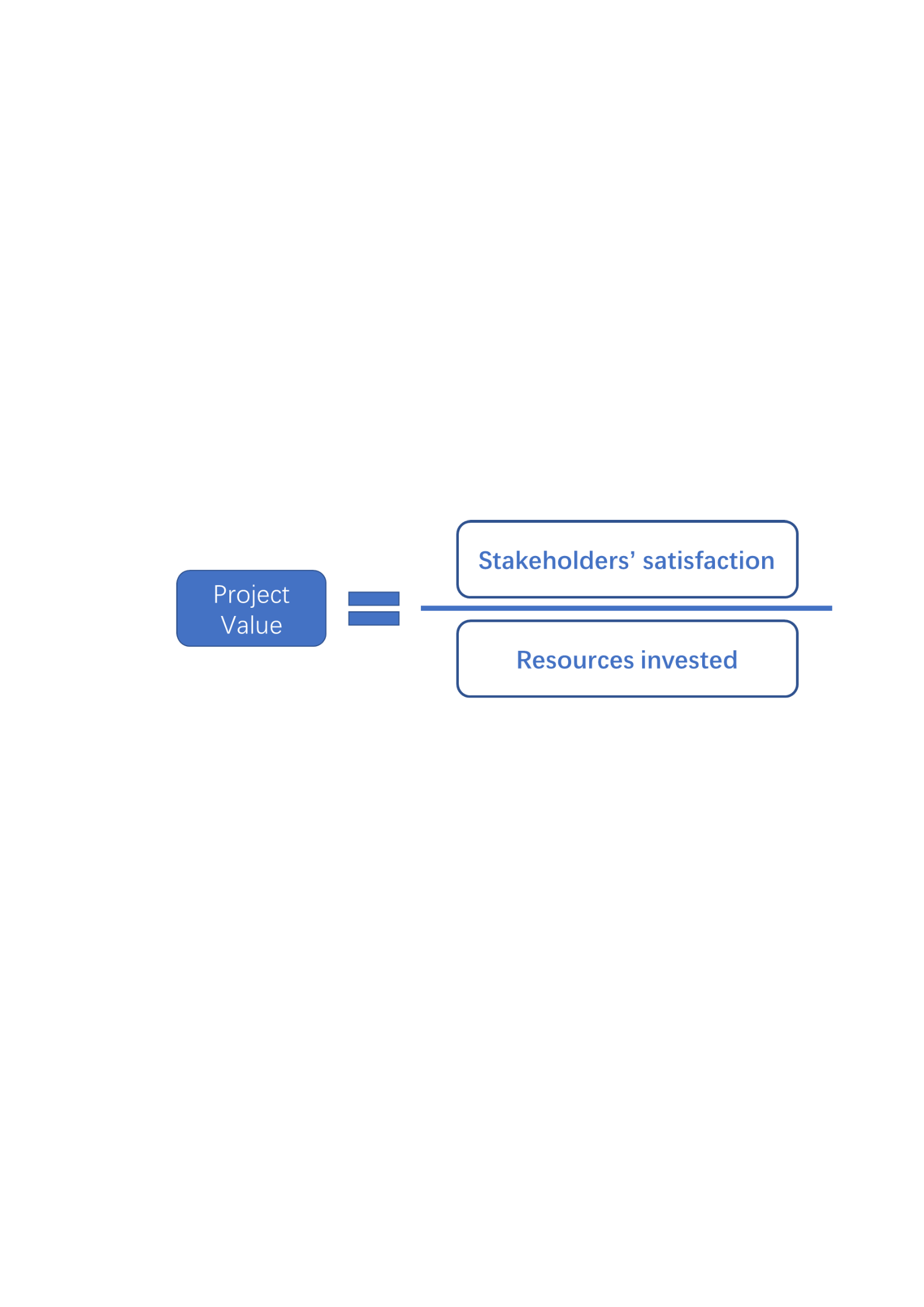
160
concern, as long as they [the private party] meet the performance indicators without
opportunism. The government is willing to assist the private party in saving costs
through optimising performance indicators. This highlights the importance of
considering various values and sacrifices in achieving them when assessing the project
value. In other words, scholarly criticism is not directed towards cost management
itself, but towards the lack of stakeholder consideration (subjectivity) and lifecycle
perspective (dynamics). Consequently, this research defines value as the degree to
which a PPP project’s outcome satisfies all stakeholders’ expectations, given the
resources invested throughout the project’s lifecycle.
Figure 4-6 Project value assessment framework
This definition includes the subjective and dynamic nature of value considering all
stakeholders’ value perceptions during the whole lifecycle while attending to the cost
incurred by the benefits. In order to assess the value of a PPP project according to this
definition, a framework (as shown in Figure 4-6) is proposed to take into account the
expectations of all stakeholders throughout the project’s lifecycle and balance the
benefits against the costs.
According to Bowman and Ambrosini (2000), value is determined by the quotient of
expectations and experiences. In the context of PPP projects, experiences are
determined by stakeholders’ needs and temporal duration. Stakeholders’ needs reflect
the subjective nature of value, and it is essential to identify all the stakeholders

161
involved in the PPP project, including the public sector, private sector, and any other
stakeholders, such as local communities, NGOs and other interest groups. Once
identified, a stakeholder analysis should be conducted to determine the expectations
and values of each stakeholder group, aiding in the understanding of what each group
hopes to achieve from the PPP project.
Temporal duration refers to the duration for which the obtained value can be sustained.
As PPP projects are typically long-term projects, it is crucial to identify the various
phases of the PPP project, from planning to implementation and operation.
Stakeholders’ perceptions may vary throughout these periods, making it crucial to
consider how to sustain the value during the entire lifecycle.
On the other hand, the concept of expectation in the context of PPP projects is
influenced by the resources invested and past experiences. Resource investment refers
to the tangible and intangible inputs that stakeholders put into the project, which affect
their expectations of the outcomes. The higher the investment, the greater the expected
return. Similarly, the higher the expected benefits, the more stakeholders are willing to
invest in the project. Past experience also plays a crucial role in shaping expectations.
If a stakeholder has achieved similar benefits with the same level of investment in the
past, they are likely to have the same expectations for future value creation.
In summary, the value of a PPP project should be assessed through weighing
experiences and expectations. It is necessary to identify all stakeholders involved in the
project, and to identify the expectations and values of each stakeholder group, which
will help to understand what each group hopes to achieve from the PPP project. The
resources invested, both tangible and intangible, should also be considered as they
determine the expectations of stakeholders. Similarly, previous experiences with the
same investment will influence stakeholder expectations for the next value creation.
Furthermore, temporal duration should be taken into account, as the sustained value of
a PPP project is critical over its lifecycle. This structured approach allows for the

162
consideration of all stakeholders’ expectations and experiences during the various
phases of the PPP project, from planning to implementation and operation, while
balancing the benefits against the costs. However, what is worth mentioning is that
there is no one-to-one correspondence between cost and benefits, so it is important to
assess the value in a holistic way.
The assessment framework of value proposed in this section is conceptual in nature. In
this research, the framework was used to assess stakeholders’ opinions on their projects
based on their subjective rating. During the study, preliminary research was conducted
to develop a conceptual value assessment index. How to develop a practical
assessment index is also discussed in the future research section in Chapter 6. For this
conceptual value assessment framework, the proposition is:
Proposition 5. Project value should be assessed from the
relationship between the satisfaction of stakeholders’
expectation in terms of mid-term and long-term value outcomes
and the resources invested for the outcomes.
4.2.3 Neglect of Value Thinking
An important finding to emerge from the analysis is that both public and private parties
are not paying enough attention to project value. In other words, the primary
stakeholders more or less lack a systematic value thinking. This claim can be shown in
the data from two aspects: the subjective aspect and the temporal aspect.
The subjective nature of project value requires the consideration of the entire group of
project stakeholders. It is pivotal for the project manager to address multiple
perceptions of stakeholders in a precise and inclusive way. Unfortunately, some
opposing situations were observed in empirical cases. Taking Case Epsilon as an
example to illustrate how this happens, two findings regarding the lack of subjective

163
consideration were identified. The first one is that both parties’ value perception is not
well documented in the meeting records. Case Epsilon undertook a long period of
negotiating on the contract terms and many meetings were organised for both of the
parties to reach an alignment. A review of seven meeting records showed there were
only vague notes of both parties’ value appeals. For example, the second record states:
“The government requires high quality of the hospital service”. This is very vague for
the private party to understand. Second, the project consultant from the third party
revealed that the government party did not take full account of the private party’s
interest and insisted on asking for a large amount of security deposit. “This was
unnecessary, and I wouldn’t suggest the government do so now,” said the project
consultant, “however, back then, we were not very confident about the private party’s
financial capability. This agreement took a long time to be reached and I need to admit
that the private party sacrificed a lot. Most importantly, this almost caused the failure
of the second negotiation.” The above evidence highlights the importance of
documenting and considering the diverse value perceptions of project stakeholders to
ensure successful project outcomes. It also underscores the potential negative
consequences when such considerations are lacking.
For a temporal aspect, data suggests that long-term value has not been fully considered
as a need. The operation manager from Case Alpha stated: “Previously the sewage
treatment plant was operated in the form of BOT, and later on we expanded the plant
and constructed the ancillary pipe network in the form of a PPP. However, I didn’t feel
much difference between the two modes. I need to admit I still put a strong focus on
short-term benefits in terms of time schedule and cost saving.” The government officer
in Case Alpha also felt that they did not put enough emphasis on the long-term value
and he explained:
“The newly constructed pipe network did not have sufficient
coverage area, which limited the scale of local investment that could

164
be attracted. As a result, we had to initiate a new project to expand
the pipe network. Fortunately, we were better prepared this time
around, and the two networks were able to be seamlessly connected.”
It is worth noting that there were stakeholder challenges to the value of interaction
experience (which is the potential value of mid-term value outcomes) in the interviews.
For example, a project manager from Case Alpha said: “we did have lots of
interactions with the public party and the experience was good. However, compared
with the interaction experience, I preferred they can offer us more payment.” The same
viewpoint was found in the interview with the government officer from Case Delta:
“Compared to our previous relationship with contractors in EPC
projects, we’ve put ourselves in a lower position within the PPP
relationship. We’ve provided the private party with all possible
conveniences to support their process, but I don’t think these
reciprocal interactions will be appreciated as much as a tax
reduction. In other words, they’re still more focused on cost than on
the attitude and support we provide.”
On the contrary, there were interviewees who acknowledged the importance of
potential value. The project manager from Case Beta attached much importance to
interaction experience with the government. And because he received the benefits from
good interaction with the government, he would like to maintain such close and
efficient interaction. Such evidence shows that there is not a consensus on the
importance of the interaction experience.
Despite the neglect of systematic value thinking observed in the cases, key VCC
practices were also identified from the data showing that all the five cases are
relatively successful in terms of VCC. This is also supported by the fact that all the
interviewees are satisfied with the project (progress). There are six key VCC practices
identified from the data, discussed further in the next chapter.

165
4.3 Chapter Summary
This chapter described the findings reported in the data regarding value outcomes in a
PPP project. It answered the first research question “what does value mean to different
stakeholders involved in a PPP project?” by revealing the dynamic and subjective
nature of value in the PPP project. The dynamic nature of value in a PPP project is
largely because it can change over time and be influenced by various factors such as
changes in political priorities, economic conditions, social expectations and
environmental concerns. As a result, stakeholders may have different views and
expectations of what constitutes value, and these views may evolve throughout the
project’s lifecycle. Moreover, the subjective nature of value in a PPP project implies
that different stakeholders may assign different weights or importance to different
aspects of value. For instance, while the private sector may prioritise financial returns
and profitability, the public sector may prioritise service quality, affordability and
accessibility. Therefore, the identification and assessment of value in a PPP project
requires a comprehensive and inclusive approach that considers the perspectives and
priorities of all stakeholders. Understanding the dynamic and subjective nature of value
in a PPP project is crucial for achieving project success and maximising the benefits
for all stakeholders involved.
Two additional research questions emerged from the analysis: “what is the relationship
between different value outcomes?” and “how to assess the value of a PPP project?”
By demonstrating the three types of relationship between mid-term value outcomes
and long-term value outcomes, corresponding strategies to transform mid-term value
outcomes to long-term ones are introduced. Replication strategy refers to that process
where stakeholders are encouraged to duplicate what has been done right when the
mid-term value outcomes comply with long-term value outcomes. Compromise
strategy refers to the contrasting situation when the mid-term value outcomes conflict
with long-term value outcomes. In this situation, it is important to make a trade-off

166
between the two and find the balance that can facilitate the feasibility of the project
while sustaining long-term benefits in the future. Facilitation strategy refers to most
situations when mid-term value outcomes would lead to long-term value outcomes. In
this situation the stakeholders are encouraged to conduct in-depth analysis and adopt
proper VCC practices.
Based on the detailed discussion of project value and its constituting elements,
considering the benefits as well as the cost, this research proposed a value assessment
approach for PPP projects that has important theoretical and practical implications.
Although the data reported a general neglect of value thinking among PPP project
stakeholders, plenty of VCC activities were identified in the cases that can reveal how
different stakeholders co-create value with and for each other.

167
Chapter 5 Findings and Discussion – Value Co-creation
Process and Contextual Antecedents
This chapter addresses two key research questions:
1. How is project value co-created during the project lifecycle?
2. What contextual factors enable and facilitate project VCC activities and how?
Drawing on the data analysed, several VCC activities are identified and grouped into
two aggregated dimensions: resource management practices and relationship
management practices. Each of these dimensions comprises three different approaches
(referred to as second-order themes) that encompass various relevant VCC activities
(referred to as first-order codes). This chapter also examines the contextual factors that
enable and facilitate project VCC activities. Two second-order themes of contextual
antecedents are identified: institutional motivators and organisational enablers.
Institutional motivators consist of three first-order codes that motivate stakeholders to
participate in VCC practices and engage in collaborative and interactive processes:
regulative, normative, and cognitive factors. Organisational enablers, on the other hand,
consist of three first-order codes that provide the support and initial momentum
necessary for the application of VCC practices: relationship foundation,
complementary capabilities, and transparent and fair environment. Overall, this chapter
provides valuable insights into the practices and contextual factors that facilitate
successful project VCC in PPP projects.
Section 5.1 presents the VCC practices observed in the study, categorised into first-
order codes, second-order codes, and aggregated dimensions, supported by ample
evidence. The first-order codes represent specific VCC activities observed in the cases
and contextual factors impacting them. Second-order codes, referred to as approaches,
aggregate similar activities and factors. The aggregated dimensions of VCC practice
are
summarised
as
resource
management
practices
and
relationship
management

168
practices, which are consistent with the literature review. The aggregated dimensions
of contextual factors are institutional motivators and organisational enablers, with the
former identified through the literature review and the latter emerging from the data
analysis. Section 5.2 discusses the results of the cross-case analysis. Section 5.2.1
illustrates the interplay between second-order codes and explains how the two
practices influence each other throughout the VCC process. Sections 5.2.2 and 5.2.3
take a further step to discuss the implications of the VCC process on mid-term and
long-term value outcomes, respectively. Section 5.2.4 discusses the implications of
contextual factors on VCC practices. Finally, Section 5.3 provides a comprehensive
summary of the chapter’s findings.
5.1 Findings – Value Co-creation Process and Contextual Antecedents
5.1.1 Resource Management Practices
Following the analysis of empirical data on resource management practices in VCC,
three second-order codes have emerged: the dialogue approach, the development
approach, and the deployment approach. These codes are comprised of several first-
order codes, which represent the observed activities of VCC in resource management
across the five cases studied (see Figure 5-1).
5.1.1.1 Dialogue approach
This approach pertains to the ways in which resources are distributed among various
stakeholders who acquire and assimilate them as sources of project value creation. The
dialogue approach implies a sense of interaction in which all involved stakeholders
have the willingness and ability to collaborate (Prahalad & Ramaswamy, 2004). From
the analysed data, four first-order codes were identified: value framing, information
sharing, invited visits, and proactive negotiations.
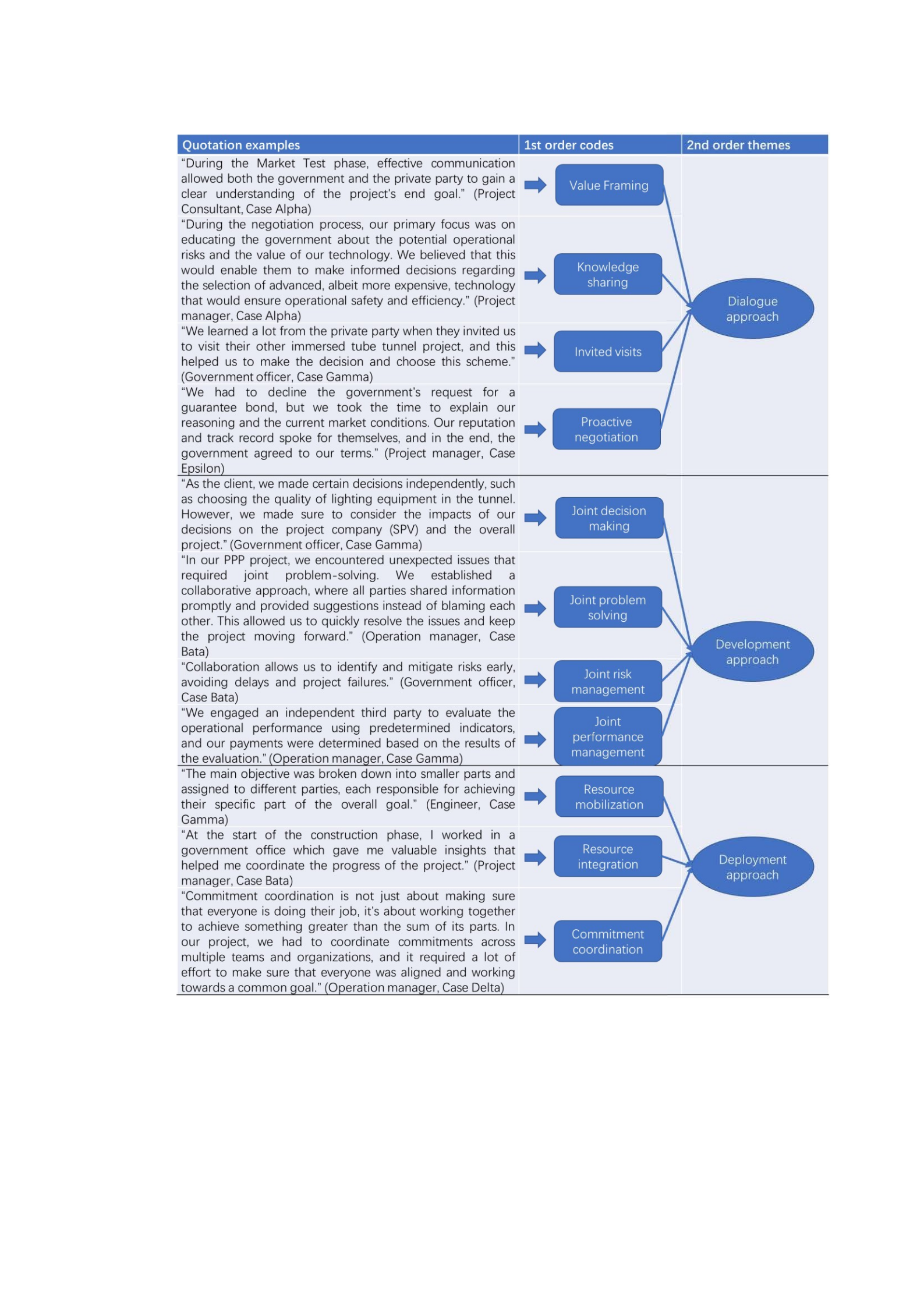
169
Figure 5-1 Data structure of resource management practices
Value framing. This relates to the activity that stakeholders explicate their value
perceptions and concerns to others while trying to understand those of others. This
activity happens mostly at the front-end which is a very important phase of PPP

170
projects (Burger et al., 2019; Zerjav et al., 2021). For example, a government officer
from Case Epsilon stated:
“During the market testing phase, we made sure to communicate our
expectations clearly. This not only helped us weed out potential
private parties that weren’t a good fit, but also allowed us to reflect
on whether our requirements were realistic and feasible.”
Another statement from the operation manager from Case Beta also reflects what value
framing is:
“We benefited from no preconceived assumptions – plenty of
communication was then initiated no matter how unnecessary it
seemed to be. This resulted in a comprehensive understanding
between the government and us in terms of what were the objectives
and requirements and what were the most important ones.”
It should be noted that the value framing process evolves over the lifecycle of the PPP
project, particularly during changes and renegotiations, and is initiated every new
round of negotiation.
Knowledge sharing. This relates to the activity where stakeholders communicate with
each other regarding professional knowledge, implicit information and so on. A project
manager from Case Alpha explained:
“During the negotiation process, our primary focus was on
educating the government about the potential operational risks and
the value of our technology. We believed that this would enable them
to make informed decisions regarding the selection of advanced,
albeit more expensive, technology that would ensure operational
safety and efficiency.”

171
Passive implicit information sharing also plays an important role in facilitating value
creation, as demonstrated by the example of the project manager from Case Beta. This
approach involves stakeholders sharing knowledge and information without being
prompted or explicitly requested to do so. The project manager in Case Beta stated:
“I was working closely with the government on this project,
spending three days a week in their office. One day, I overheard a
conversation about an electricity arrangement in our project area,
and I realised that we could reschedule our construction stage
accordingly to avoid any negative impact. It turned out that the
government didn’t realise the importance of this information to us,
and we wouldn’t have known about it if I hadn’t been present in
their office.”
In the realm of PPP project settings, the practice of knowledge sharing takes on
significant importance (Eriksson et al., 2017). Stakeholders actively engage in the
exchange of professional knowledge and implicit information. This sharing of insights,
as demonstrated by project managers in Cases Alpha and Beta, is instrumental in
facilitating value creation and exemplifies the dynamic learning environment nurtured
by co-creation within such project settings.
Invited visits. This relates to private parties inviting public partners to visit their
previous project cases to demonstrate their capabilities. While this activity was only
observed in Case Gamma, it represents a good practice. In this case, the government
planned to construct an undersea tunnel but was struggling to determine which
technology to use due to high costs and immature technology. During the market test
phase, one of the potential private party bidders invited the public party to visit their
successful undersea project in south China, where they explained how the technology
of an immersed tube would be the best choice. This visit helped the public party decide
the construction scheme, as expressed by a government representative:

172
“Visiting the private party’s previous project site, an immersed tube
tunnel, was a valuable learning experience for us. It greatly assisted
us in making an informed decision and ultimately selecting this
approach for our project.”
It is important to note that while this activity was observed in only one case, it
highlights the potential benefits of knowledge sharing through site visits in the PPP
context.
Proactive negotiation. This involves actively seeking mutually beneficial agreements
and compromises with stakeholders to enhance the value creation process. This activity
signifies a project environment characterised by equality, wherein each party involved
holds an equal and equitable position during negotiations. Proactive negotiation was
observed in all cases and encouraged by the governments. The government officer
from Case Epsilon explained that proactive negotiation was necessary as it created
innovative solutions, stating:
“We had a tough negotiation with the private party, and conflicts
happened, but their attitude showed that they really wanted to make
the project a success. If they didn’t care about the details and agreed
with all the terms, it would be worrying. How can we expect them to
be responsible for us if they are not responsible for themselves?”
In another example from Case Epsilon, the private party wanted franchise rights for
both the hospital and the elder care home, but conferring franchise rights on the
hospital was prohibited by local regulations. The government managed to use another
regulation and transferred a reasonable portion of the hospital’s profit to the private
party, leading to an innovative solution.

173
5.1.1.2 Development approach
This section discusses the bundling of resources as a means to develop capabilities
among stakeholders for reciprocal value creation, which is central to the service-
dominant logic perspective. As emphasised in service-dominant logic, resources can be
divided into operant resources and operand resources (Vargo & Lusch, 2018). Operand
resources could produce an effect when an operation or an act is performed on them,
while operant resources are the ones that can perform the operation or act on operand
resources (Constantin & Lusch, 1994). In other words, operand resources require an
operation or act to produce value, while operant resources can produce value directly
(Ballantyne & Varey, 2016). This demonstrates the idea emphasised by Vargo and
Lusch (2018, p. 2) regarding operant resources and operand resources: resources are
not, they become. Thus, operant resources can also produce value through producing
other resources, highlighting the importance of bundling resources for value creation.
This approach is reflected in activities such as joint decision making, joint problem
solving, joint risk management and joint performance management, which facilitate the
bundling of resources and the development of capabilities among stakeholders. The
development approach emphasises the collaborative nature of value creation, where
resources are bundled together to create reciprocal value.
Joint decision making. This refers to the activity where the main stakeholders are
engaged in making important decisions related to the project. Decisions are the result
of the conscious and irrevocable process of resource allocation aiming at achieving a
particular goal (Skinner, 1999) where information is a crucial input (Eweje et al., 2012).
Project stakeholders influence the project through their decisions, first in the front-end
by determining the strategic value of the target infrastructure (Williams & Samset,
2010), and second in the operational routines by determining the efficiency and
effectiveness. Joint decision making on important topics enables various stakeholders
to
contribute
their
information
and
knowledge
in
the
decision
process.
More

174
importantly, their value appeals are the most essential resources that are required in
this process, as they determine the goal. The project manager in Case Epsilon said “we
were involved in the decision-making process along the entire lifecycle from the
project front-end to the operation stage. We highly value the government's trust and
appreciate their recognition of our contributions to good decision-making” which
highlights both parties’ contributions to the joint decision-making process.
The joint decision-making process leads to the improvement of decision quality under
conditions of resource scarcity, such as time pressure and information asymmetry. For
instance, a government officer from Case Beta stated that their confidence in decision
making was boosted due to the involvement of the private party and the consultant
company. Although important decisions still had to be discussed in the government
meeting, the time period for decision making was reduced. Similarly, the project
manager from Case Delta reported that their decision quality was greatly improved
with the government’s support.
Joint problem solving. This refers to the activity that involves main stakeholders
collaborating to resolve conflicts or challenges in a reciprocal manner (Mohr &
Spekman, 1994). The data reflects a sense of close working relationships among
stakeholders, including sharing information promptly when unexpected situations arise,
providing suggestions instead of blaming or punishing when expectations are not met,
and sharing information about problems and issues instead of hiding them. Case
Gamma specifically adopted an approach of a panel of experts to assist with joint
problem solving. Both parties hired a panel of 38 experts from the fields of technology,
management, policy, finance and law. Every time a problem arose, both parties would
organise a meeting with the panel and listen to their suggestions. The operation
manager in Case Gamma said “The government sometimes didn’t trust us, but they
trusted the experts. So, this approach worked well in our project”. It should be noted
that this activity not only requires all stakeholders’ reciprocal interaction and resource

175
integration but also requires a clear and proper identification of the problems (Aarikka-
Stenroos & Jaakkola, 2012). Otherwise, it may result in a waste of time and human
resources if every problem is solved jointly, as noted by the project manager in Case
Alpha who said “We were facing tons of issues every day back then”.
The joint problem-solving activity enhances the development of various capabilities,
such as the ability to empathise, understand different perspectives, and reconcile
differences. The government officer in Case Beta acknowledged the importance of
understanding the concerns, challenges and requirements of the private party, which
allowed them to collaborate as co-solvers rather than gatekeepers. Additionally, joint
problem solving enhances the capacity of stakeholders to confront uncertainty and
manage rapid changes effectively. Moreover, the performance manager from the
consultant company in Case Delta highlighted an instance where both parties were
required to respond to a sudden request from the Ministry of Finance. In this case, both
parties collaborated and worked swiftly to provide the necessary information, resulting
in a successful outcome. This example illustrates how collaboration enabled quick
responses to unexpected requests, leading to successful outcomes.
Joint risk management. This refers to the collaborative efforts of the main stakeholders
in dealing with unforeseen and unquantifiable risks (Rahman & Kumaraswamy, 2004).
This activity involves sharing risk-related contractual arrangements, particularly when
there is uncertainty about the risks (Lo et al., 2006). It also involves adopting relational
contracting strategies to mitigate risks, as highlighted by Rahman and Kumaraswamy
(2002). For example, a project consultant in Case Gamma said:
“Both parties showed enough team spirit to reach a reasonable
contractual risk allocation despite the identification of many risks in
the beginning. As a result, when the change of use right of the sea
area occurred, the private party received compensation for
redesigning the implementation scheme from the government

176
conveniently, since the political risk was allocated to
the government.”
Relational contracting was also used in Case Delta, where the government officer
noted that they practised joint risk management with the private party instead of
transferring all risks to them. This approach benefited both parties, as the private party
was willing to raise concerns and difficulties, thus avoiding many potential problems.
"They had confidence that we would support them rather than leaving them to tackle
issues on their own," the government officer explained.
As such, the capabilities developed from joint risk management encompass a wide
range of skills. This collaborative approach encourages stakeholders to adopt a holistic
perspective when assessing risks, going beyond the traditional project-related risks
identified in risk registers to project delivery to extend to factors such as political and
environmental elements. This capability enables them to gain a more comprehensive
understanding of the potential challenges they may face and how to effectively address
them.
Moreover, joint risk management instills a proactive approach to risk monitoring and
response. Stakeholders become adept at continuously monitoring risks and adjusting
their strategies promptly to minimise potential negative impacts. This proactive stance
not only ensures that risks are managed effectively but also reduces the likelihood of
costly disruptions or project failures. In essence, joint risk management equips
stakeholders with a set of valuable skills that contribute to successful project outcomes
and long-term collaboration.
Joint performance management. This refers to the activity in which the main
stakeholders engage in performance assessment, which serves as the basis for payment
from the public to the private party. This process involves joint performance criteria
determination and joint performance appraisal. For example, in Case Epsilon, the
government and private party jointly consulted external professionals for the

177
determination of performance criteria. Additionally, the private party hired a consultant
to compile indicators for performance assessment. The performance evaluation process
in Case Epsilon involved an impartial third party that invited both parties to the site for
inspection and evaluation, within six main categories. The third party acted as the main
evaluator, while the public party shared their suggestions and opinions, and the private
party explained the challenges they faced and the efforts they invested. This joint
performance appraisal provided an opportunity for both parties to understand each
other’s expectations and difficulties and improve the quality of their relationship.
Importantly, all parties agreed on the evaluation results.
Joint performance management can help develop a range of capabilities for both public
and private parties involved in infrastructure projects. First, it can improve
communication and collaboration skills, as both parties work together to establish
performance criteria and appraise each other’s performance. Through this process, they
gain a better understanding of each other’s expectations and goals, which can help
them align their efforts towards achieving project success. Second, it enhances
negotiation and conflict resolution skills through collaborative performance assessment
and criteria determination, which often require negotiations between public and private
parties. This process not only refines their negotiation abilities but also equips them
with the capacity to effectively resolve conflicts, thereby promoting improved
cooperation and collaboration. Finally, joint performance management can also help
develop leadership and decision-making skills. The process involves making informed
decisions based on performance data, which requires both parties to analyse
information, consider various options, and make decisions in a timely and effective
manner. This can help build confidence and improve decision-making capabilities for
both parties, which can be valuable in future projects.
Joint working activities within the development approach represent a collaborative
effort among primary stakeholders with aligned goals. This collaboration fosters

178
teamwork, mutual support and a willingness to contribute resources, including finances,
human resources and technical expertise, to achieve desired project outcomes.
The development of capabilities from these joint working activities can be viewed
from two perspectives: the resources themselves and the relevant capabilities that are
derived from the activities. The joint working activities help to develop the resources
themselves by combining the public and private parties’ resources to create a more
significant pool of resources. This pool of resources is then leveraged to develop new
capabilities, such as new technology adoption, expertise or knowledge, that can be
used to improve the project’s outcomes. These joint working activities also develop
relevant capabilities that are essential for successful project implementation. For
example, joint problem-solving activities can develop capabilities such as the ability to
stand in others’ shoes, make sense of other perspectives, and reconcile differences.
Joint risk management activities can develop capabilities such as the ability to confront
uncertainty and handle rapid changes. Joint performance management activities can
develop capabilities such as the ability to assess performance criteria objectively and
improve relationship quality between the public and private parties.
5.1.1.3 Deployment approach
This relates to the configurations of shared resources and developed capabilities to
achieve efficient and effective exchange and utilisation of service. As stated before, in
service-dominant logic literature, the term service (singular) is conceptualised as
applied resources and capabilities which is the foundation of exchange for value
creation (Vargo & Lusch, 2007a). In a PPP context, there are plenty of service
exchanges between the public party and the private party during the VCC process. The
service exchanges between the public and private parties are not limited to a specific
service being exchanged for another specific service. Rather, the services are provided
through
a
service pool,
which
is
available
to
both
parties
and
other secondary

179
stakeholders. Thus, the deployment of these resources and capabilities is pivotal to the
value creation of the entire project lifecycle. The deployment of these resources and
capabilities involves three first-order codes identified in the data: resource mobilisation,
resource integration, and commitment coordination. These activities demonstrate how
the deployment of resources and capabilities can create value in PPP projects.
Resource mobilisation. In the context of PPPs, resource mobilisation involves the
process of gathering and leveraging resources from various stakeholders to enhance the
value creation process. The process of resource mobilisation requires collaboration and
communication among the primary stakeholders to understand the current situation and
the resources required to achieve the project objectives. For instance, in Case Beta,
when upgrading the water quality criteria was required to comply with the new
environmental regulations, the public and private parties, along with the consultant
company, organised a meeting to discuss the necessary resources and contributions
from each party. This resource mobilisation process facilitated a shared understanding
of the situation and provided a common platform for resource integration and
commitment coordination. Resource mobilisation can lead to the identification of new
resources and capabilities that can enhance the project’s value creation and lead to
better outcomes.
Another example of resource mobilisation in PPP projects is the identification of
necessary funding sources. In Case Delta, the public party identified that they did not
have enough funding to complete the project within the desired timeframe. The private
party, who had experience in securing financing, assisted in identifying potential
funding sources and helped negotiate favourable terms with lenders. This resource
mobilisation activity helped ensure that the project was completed on time and within
budget. Resource mobilisation is a key activity in the deployment approach that helps
identify, acquire and allocate the resources required to achieve the project objectives.
By involving all the primary stakeholders in the process of resource mobilisation, the

180
PPP project can leverage the collective knowledge, expertise and resources of all
stakeholders, leading to improved outcomes and value creation.
Resource integration. This activity involves combining resources and capabilities to
achieve collaborative value creation. The management literature emphasises the
importance of resource integration as resources are scarce and a source of competitive
advantage in a dynamic environment (Laud et al., 2015). In the VCC process of PPP
projects, integration becomes necessary as no single party can accomplish the huge
infrastructure project alone. First, resource matching is essential to ensure that the
resources from all stakeholders are compatible and complementary. In cases where the
resources are too different or the same, they become difficult or unnecessary to
integrate. For example, in Case Alpha, the design company and the construction
company had conflicting opinions that made integration challenging. It is important to
note that when all stakeholders have the same resources, resource integration may not
be necessary. However, this highlights the importance of the resource mobilisation
activity, which aims to identify the required resources and prevent duplication of
efforts. Thus, while resource integration is crucial in achieving collaborative value
creation, it is equally important to have a clear understanding of the required resources
and prevent duplication through effective resource mobilisation.
Second, it is important to integrate resources so they can complement each other and
generate synergistic effects. The ultimate goal is to create a synergistic effect, where
the combination of resources generates a value greater than the sum of its parts. This is
commonly referred to as the “the whole is more than the sum of its parts” result. For
instance, in Case Gamma, the private party and the local government combined their
resources to resolve the significant delay on land expropriation. Both parties
contributed their resources to achieve the objective, and this resulted in successful
resource integration. The project consultant introduced the situation:
“We faced significant delays due to land expropriation issues in two

181
areas. In one area, the stakeholders demanded more compensation,
which our private party decided to pay in full. In the other area, the
land was owned by the army and not under the authority of the local
government. However, the local government leadership actively
communicated with the army leadership to secure the land use right.”
Overall, effective resource integration requires proper resource matching and a
collaborative effort by all stakeholders to leverage their resources and capabilities to
achieve project objectives. However, it is important to note that not all resources need
to be integrated. In situations where resources from all stakeholders are similar
integration may not be necessary. In such cases, the focus should be on resource
mobilisation to ensure that all necessary resources are identified and made available for
the project. Through successful resource integration, PPP projects can realise mutual
benefits and achieve more significant value creation.
Commitment coordination. This relates to the activity involving aligning commitments
and efforts of different stakeholders to achieve synergetic value creation. This activity
has a significant emphasis on timing, as it requires timely coordination to boost
efficiency and reduce redundancy during the VCC process. Effective commitment
coordination can lead to successful outcomes, as evidenced in Case Gamma, where
stakeholders worked together to fight against COVID-19. The contract manager noted
that “COVID-19 influenced the world in a significant way, and our construction
progress was hugely threatened. However, we managed to coordinate very well by
every stakeholder trying to do what they can.” This coordination resulted in no COVID
infections among the over 3,000 workers on the construction site.
Another example from Case Gamma demonstrates long-term commitment
coordination. The project initiated an operation team at the beginning of the project,
which participated in the construction design by providing operational requirements.
The operation manager stated:

182
“We wanted to make sure that we were fully prepared for the
operational phase, so we took the initiative to visit three undersea
tunnels and many successful municipal roads. By doing so, we were
able to learn from their experiences and incorporate operational
needs into the construction process in an organic way.”
The team then integrated operational needs organically into the construction, ensuring
long-term commitment coordination. Overall, commitment coordination is a critical
activity that involves aligning the efforts and commitments of various stakeholders to
achieve synergistic value creation. This process places significant emphasis on timing
to enhance efficiency and reduce redundancy during value co-creation..
To sum up Section 5.1, a proposition is developed:
Proposition 6. Resource management practices, such as the
resource dialogue approach, resource development approach
and resource deployment approach, are crucial to the success of
the VCC process in PPP projects. The dialogue approach
involves fostering a shared understanding among stakeholders to
identify resources. The development approach centres on
bundling and procuring resources, while the deployment
approach emphasises the transfer of knowledge into capabilities
and the coordination of these capabilities. Together, these
approaches form a critical foundation for effective resource
management and collaboration among stakeholders in PPP
projects.
The findings echo previous studies that suggested the timing (Zahra & George, 2002)
and the manner (Sirmon et al., 2007) of resource deployment play important roles in
value creation. In summary, the deployment of these resources and capabilities

183
involves three first-order codes identified in the data: resource mobilisation, resource

184
integration, and commitment coordination. Resource mobilisation refers to the process
of identifying and acquiring necessary resources from both parties and secondary
stakeholders. Resource integration involves combining the resources and capabilities
of both parties and secondary stakeholders to create value in the project. Finally,
commitment coordination involves aligning the commitments and goals of all
stakeholders to ensure a successful outcome. These activities demonstrate how the
deployment of resources and capabilities can create value in PPP projects.
5.1.2 Relationship Management Practices
In project management research, it is widely acknowledged that establishing good
stakeholder relationships is crucial for the successful delivery of projects (Chang et al.,
2013). In PPP projects, the involvement of heterogeneous stakeholders requires even
more effective relationship management to ensure the success of the PPP process (Zou
et al., 2014). Smyth and Edkins (2007) define relationship management as an analysis
of relationships, an investment in relationships, and a clear understanding of the value
that can be derived from those relationships. Similarly, Zou et al. (2014, p. 266)
suggest that in the context of PPPs, relationship management refers to “a set of
comprehensive strategies and processes of partnering” that aim to maximise project
value for stakeholders by developing strong relationships. Effective relationship
management practices can help build trust among stakeholders, encourage information
sharing, and foster collaboration. These practices can also help mitigate potential
conflicts and promote the achievement of shared goals.
To effectively manage stakeholder relationships in PPP projects, it is essential to have
a nuanced understanding of these relationships at the individual level (Osborne et al.,
2015). Relational capital literature has emphasised the importance of relational
behaviours that establish and enhance both social and emotional links among
individual actors (Grönroos, 2000; Karpen et al., 2015). The participants in the PPP
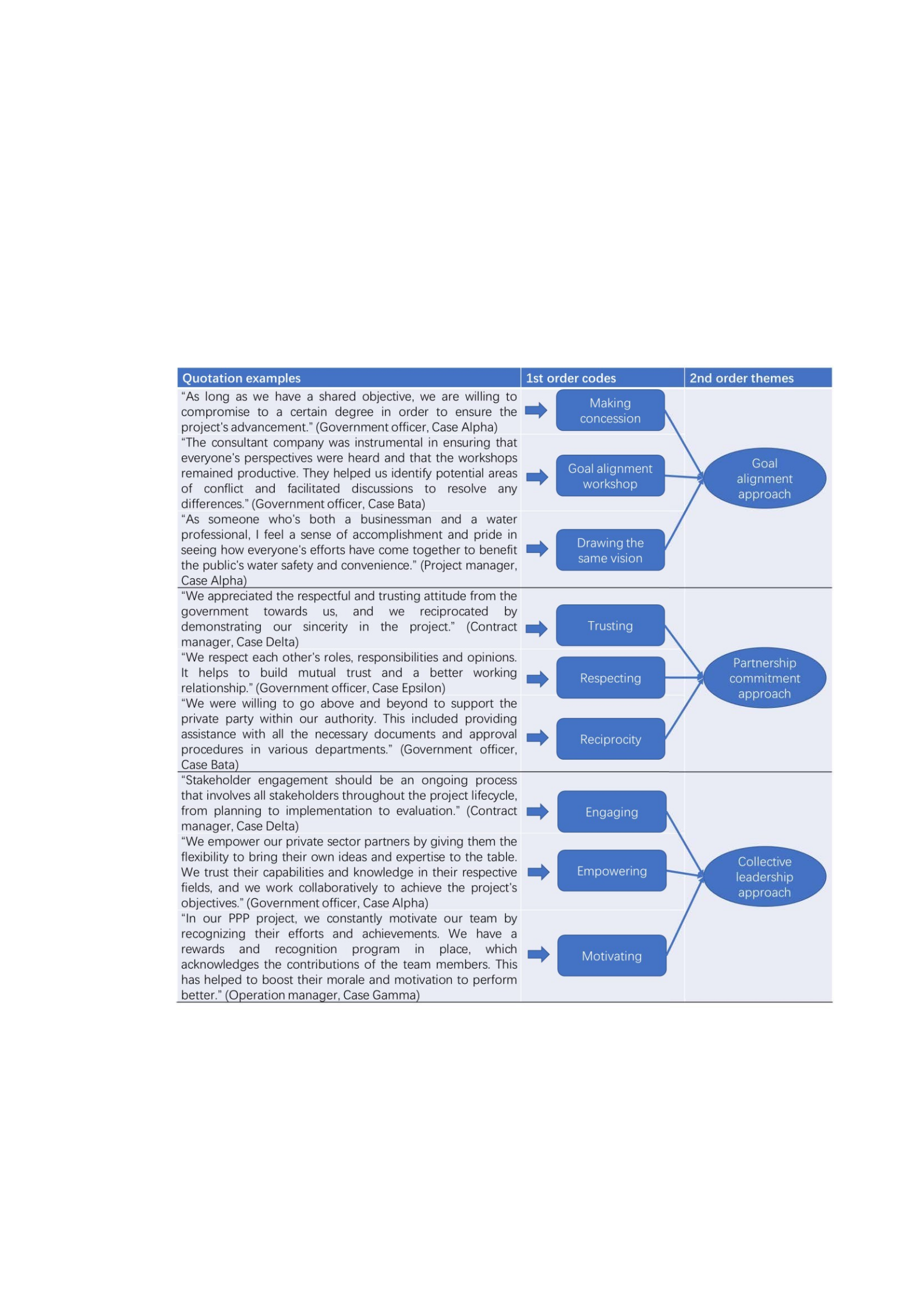
185
projects reported various relational management practices that focused on collective
leadership, partnership commitment, and goal alignment (see Figure 5-2 for the data
structure). These practices are essential in developing good relationships among
stakeholders, which can maximise project value. In the following discussion, the three
approaches are further explained, and their corresponding dimensions of relational
capital are presented to draw parallels among them.
Figure 5-2 Data structure of relationship management practices

186
5.1.2.1 Goal alignment approach
This approach focuses on activities that align the goals and objectives of different
stakeholders to ensure a shared purpose and direction in the value creation process in a
PPP project (Mom et al., 2015). These activities could involve making concessions,
organising goal alignment workshops, and developing a shared vision. The goal
alignment approach corresponds to the cognitive dimension of relational capital, which
emphasises the importance of a shared cognitive framework among stakeholder
networks. Through the goal alignment process, stakeholders develop a shared
understanding of project goals, objectives and priorities, which can help to reduce
misunderstandings, conflicts and other obstacles to successful collaboration. In the
context of PPP projects, where multiple stakeholders with diverse interests and
objectives are involved, the goal alignment approach can be a critical tool for building
trust, promoting cooperation, and enhancing project performance.
Making concession. This activity refers to being flexible and willing to compromise in
order to reach mutually beneficial agreements with stakeholders. It was observed in all
the cases studied, and appears to be essential for achieving mutually agreed-upon
project goals. For instance, in Case Delta, the government officer acknowledged the
importance of striking a balance between achieving the public interest and ensuring
reasonable profit for the private party. Similarly, the project manager in the same case
emphasised the need to make concessions in response to changes in regulations, even if
it meant facing adverse effects.
As another example, in Case Beta, the public sector partner initially insisted on
including certain sustainability requirements in the project contract, such as the use of
renewable energy sources. However, the private sector partner argued that these
requirements would be too costly and ultimately harm the project’s financial viability.
After some negotiation, the public sector partner agreed to modify the sustainability
requirements to be more flexible, allowing the private sector partner to choose the most

187
cost-effective options that still met the project’s overall goals. This concession helped
ensure that the project was both sustainable and financially feasible. The ability to
make concessions requires a willingness to compromise and prioritise the overall
success of the project over individual interests. This willingness can foster trust and
facilitate cooperation among stakeholders. The ability to navigate complex stakeholder
relationships in this way can also contribute to the development of relational capital
and the success of the PPP project.
Goal alignment workshop. This activity was observed in all the cases and seems to be
necessary for goal alignment. The workshops can take various forms and involve
different participants, bringing together stakeholders to collaboratively define and align
their goals, objectives and strategies, depending on the project’s specific context and
requirements. In Case Gamma, for example, expert panels were invited to participate
in goal alignment workshops to provide impartial and professional opinions, while in
other cases, consultant companies were involved as impartial third parties to facilitate
the alignment process.
Goal alignment workshops are essential for establishing a shared cognitive framework
among stakeholder networks, as they allow participants to explore their perspectives
and negotiate their interests. Through such workshops, stakeholders can identify areas
of potential conflict and work together to resolve any differences, ultimately creating a
shared understanding of project objectives and expected outcomes. Additionally, goal
alignment workshops can help build trust among stakeholders, which is critical for the
success of PPP projects. When stakeholders understand each other’s objectives and
trust one another, they are more likely to work collaboratively and effectively towards
project success.
Establishing a shared vision. In PPP projects, this activity aims to create a shared
understanding and commitment to a compelling vision that inspires and motivates all
stakeholders to work together toward a shared goal (Jansen et al., 2009). It is important

188
for each party to contribute meaningfully to their respective roles and incentivise
collaborative efforts (Eriksson et al., 2017). The development of a shared cognitive
framework is crucial to successful VCC, as it creates a clear goal for everyone and
instills a sense of mission that motivates stakeholders.
For example, in Case Alpha, the public and private parties agreed on a shared vision of
providing clean, safe and affordable water and sanitation services to all members of the
community. This vision also included specific goals such as reducing waterborne
illnesses, increasing access to water and sanitation infrastructure, and promoting
sustainable water management practices. The project manager from Case Alpha said:
“As someone who’s both a businessman and a water professional, I feel a sense of
accomplishment and pride in seeing how everyone’s efforts have come together to
benefit the public’s water safety and convenience.” Similarly, in Case Epsilon, both the
public and private parties were able to establish a shared vision that aimed to improve
access to high quality healthcare services for all members of the community, as well as
providing high quality nursing services to the elderly. This vision encompassed
specific goals, such as reducing wait times for appointments, increasing the availability
of specialised services, and promoting preventative care measures. By agreeing on a
common goal, both parties were able to work collaboratively towards achieving the
shared vision, which ultimately resulted in a successful PPP project outcome.
Establishing a shared vision serves as a cornerstone for this process, articulating a clear
and inspiring goal that guides the collaborative effort. Through this activity, the
primary parties can work towards mutual benefits and incentives that are essential to
effective VCC.
The activities involved in the goal alignment approach play a crucial role in developing
a shared cognitive framework that enables the exchange of information and promotes
integration among stakeholders (García-Granero et al., 2018). This shared cognitive
framework comprises the expectations of the public and private parties regarding the

189
project outcomes and how these outcomes should be achieved. It is worth noting that
having diverse cognitive frames may lead to a paradoxical cognitive process that
facilitates balanced decision making (Smith & Tushman, 2005). However, such
diversity may also give rise to conflicts, disagreements and inadequate sharing of
information, especially in the context of PPPs.
In this regard, it is essential to recognise that building a shared cognitive framework is
not a one-time event but rather an ongoing process that requires constant attention and
effort. Stakeholders must be willing to engage in open communication and actively
seek common ground to ensure that the shared cognitive framework remains relevant
and up-to-date. In addition, stakeholders should embrace diverse perspectives and be
willing to engage in constructive debate to identify potential pitfalls and develop
innovative solutions that benefit all parties involved. By doing so, stakeholders can
avoid cognitive traps and leverage diverse perspectives to achieve shared goals and
objectives.
5.1.2.2 Partnership commitment approach
This approach concerns the emotional and behavioural investments of stakeholders in
the PPP project. The first-order codes under this approach are trusting, respecting and
reciprocity. These activities are aligned with the affective dimension of relational
capital, which emphasises the importance of motivation, expectations and norms
among related parties (Kang et al., 2007). Thus, the activities involved in this approach
not only reflect the affective attachments among stakeholders but also instill relational
norms that guide their behaviours.
Trusting. This activity reflects the stakeholders’ confidence in each other’s reliability,
intentions, capabilities, and favourable future actions (Mom et al., 2015). Trust is built
through cognitive transformation, and it requires mutual respect and understanding.
For example, in Case Gamma, the engineer emphasised the importance of respect and

190
trust in the cooperative relationship between the public and private parties. The
government’s respectful attitude towards the private party’s expertise and social
responsibilities helped establish trust between the parties.
Another essential factor that contributes to trust building is cautious evaluations of
each other’s capabilities. The private party mainly considers the government’s credit,
while the public party pays attention to the private party’s financial capability as well
as the capability to deliver the project successfully. Evaluating each other’s strengths
and weaknesses can help build mutual trust.
Moreover, trust is also built on previous experiences. In Case Beta, the project
manager mentioned that the previous cooperation between the public and private
parties helped establish trust in the current project. Thus, experience plays a vital role
in building trust among the stakeholders. Trust is a critical component of building
affective relational capital in PPP projects. It requires mutual respect, understanding
and cautious evaluation of each other’s capabilities. By establishing trust, stakeholders
can collaborate more effectively and achieve better outcomes.
Respecting. This activity refers to the stakeholders demonstrating a courteous and
respectful attitude towards each other during the PPP project. Although this behaviour
may seem obvious, it is critical in establishing a positive working relationship among
stakeholders. Respectful behaviour is an essential component of relational commitment
in VCC processes and can contribute to trust building between parties. The public
party in Case Epsilon emphasised the importance of respect in their collaboration with
the private party, stating that “We respect each other’s roles, responsibilities and
opinions. It helps to build mutual trust and a better working relationship.” This activity
of respecting is not limited to the relationship between the public and private party, but
it is equally important among the private consortium members as well, which includes
the design company, construction company and operation company, among others. In
fact, the level of respect and cooperation among the private consortium members can

191
greatly impact the overall success of the PPP project.
Respectful behaviour promotes a positive working environment and helps avoid
conflicts that can impede project progress. As the project manager in Case Delta noted,
“Respect is the foundation of our cooperation with the private sector. We are aware that
their expertise is critical to achieving project success, and we show them the respect
they deserve.” Respectful behaviour involves acknowledging the value that each
stakeholder brings to the project and being open to diverse perspectives. In Case Alpha,
for example, the private party was able to offer insights and innovative solutions to the
project, which were not previously considered by the public party. The public party
recognised the private party’s value and expertise and respected their input, leading to
a successful outcome. As the project manager stated, “We respected the private party’s
expertise and listened to their suggestions. This helped us develop a better project plan
that met the needs of all stakeholders.”
Respectful behaviour also involves clear communication and a willingness to listen to
and understand others’ viewpoints. In Case Beta, the public party listened to the
private party’s concerns regarding project risks and took proactive measures to address
these concerns. The private party appreciated the public party’s respectful attitude and
willingness to work collaboratively, which helped establish a positive working
relationship.
Reciprocity. This activity refers to a situation where parties are committed to returning
favours when they receive benefits from their cooperation with the other party. This
activity establishes a sense of fairness and mutual obligation among stakeholders
(Baba et al., 2021) which is crucial for ongoing supportive exchanges (Wasko & Faraj,
2005). Moreover, reciprocity fosters communication among stakeholders and helps to
obtain their value perceptions and concerns. Scholars in service-dominant logic
emphasise the importance of reciprocal value propositions based on the notion of
complementary objectives among stakeholders (Truong et al., 2012). In the context of

192
PPP, this activity boosts the role flexibility as each of the parties may initiate a value
proposition. For instance, the project manager in Case Epsilon emphasised the
importance of reciprocal value propositions by mentioning how they often assisted the
government in applying for policy-based funding. Although these tasks were outside
their responsibility, they offered to help since they were better at filling out the
documents and were familiar with the process. This behaviour demonstrated their
willingness to reciprocate and their commitment to the success of the project.
5.1.2.3 Collective leadership approach
This approach emphasises the importance of collective leadership in PPP projects,
where primary stakeholders are responsible for and involved in the tasks of project
leadership (Love et al., 2020). These activities involve distributing leadership roles and
responsibilities among multiple stakeholders, fostering collaboration, and leveraging
diverse perspectives and expertise. Engaging, empowering, and motivating are first-
order codes of this approach. The structural dimension of relational capital, which
represents the connection patterns among stakeholders, is relevant to this approach.
These patterns demonstrating the configurations of the network are depicted in the
ways of actor connectedness, participant hierarchy and centrality, and the strength of
ties (Kang et al., 2007; Matinheikki et al., 2016).
The collective leadership approach emphasises the importance of collaboration among
stakeholders towards achieving shared goals in PPP projects. The primary stakeholders
are responsible for establishing a leadership structure that enables effective
communication, decision making, and problem solving among all parties involved.
This approach encourages stakeholders to work together towards a shared vision,
which can lead to more successful PPP projects. Effective engagement of stakeholders
in the VCC process, empowering competent stakeholders, and motivating everyone’s
involvement are key activities that help establish and maintain the appropriate structure

193
for collective leadership. By adopting this approach, PPP projects can ensure that all
stakeholders are actively involved in the decision-making process and that their voices
are heard. This can result in more effective stakeholder interaction, leading to better
project outcomes.
Engaging. This activity refers to the activities and structures used by an organisation to
involve all relevant stakeholders in the project’s operations and decision making.
Engaging stakeholders involves actively involving them in the co-creation process,
soliciting their input, and fostering a sense of ownership. This can include a range of
approaches, such as consultations, forums and feedback mechanisms. Engaging
stakeholders also involves various techniques and technologies to foster connectedness
among stakeholders. This approach enhances communication and collaboration among
stakeholders, promoting a more cohesive network. In PPP projects, technology plays a
significant role in engaging stakeholders, and many tools are used for this purpose. For
instance, the WeChat group is commonly used as a communication channel for sharing
information and coordinating tasks. In addition, proximity and close working
relationships are essential for effective engagement. In some PPP projects,
stakeholders work closely together, such as in Case Gamma, where the special purpose
vehicle (SPV), design company and construction site were located in close proximity.
Furthermore, in Case Beta, the project manager worked closely with the government
office, even having a working desk in the government office to ensure both parties
were well-engaged.
The aim of this approach is to ensure that all stakeholders have a voice in the project,
and that their views, concerns and needs are taken into account. Effective stakeholder
engagement is essential for building trust, creating a sense of ownership, and
promoting sustainable outcomes. Effective community engagement strategies help
stakeholders understand the needs, expectations and concerns of each other and build
trust and long-term relationships with each other. It requires clear communication,

194
mutual respect, and a willingness to work collaboratively with all stakeholders.
Empowering. The activity of empowering stakeholders in PPP projects involves
providing stakeholders with the resources, knowledge and authority to actively
contribute and make decisions (Alexiev et al., 2019), particularly primary stakeholders
(i.e., the public and private parties). This approach aims to strike a balance between
centralisation and delegation, and expand decision boundaries, ultimately leading to
greater stakeholder engagement. For example, in Case Epsilon, the project manager
noted that they were empowered to provide suggestions and request design changes
based on their construction situation. This level of empowerment was not possible in
traditional procurement approaches, where the government played a more active role in
project management. By shifting to a PPP model, the government can adopt a more
passive role as a governor, while private parties are empowered to manage the project.
This approach to empowerment helps to promote collaboration and establish a sense of
ownership among stakeholders, which can enhance the likelihood of project success.
The concept of stakeholder empowerment has been linked to an increased sense of
self-worth and belonging to a group, which can enhance the overall interaction
experience. In the context of service interactions, empowering refers to collaborative
efforts aimed at negotiating the power dynamics between both parties to influence the
outcome of the interaction (Neghina et al., 2014). During co-creation, empowering
involves taking responsibility for the outcome of the interaction and intervening when
necessary for the benefit of the overall goal. This sense of ownership and agency can
create value for all actors involved. By empowering stakeholders to work together
towards a shared goal, co-creation efforts can lead to more positive outcomes for
everyone involved.
In addition, empowering stakeholders in PPP projects may involve providing them
with access to relevant information, training and development opportunities, decision-
making authority, and resources to carry out their tasks effectively. For instance, in

195
Case Epsilon, the private party empowered the local community by providing them
with training on how to use the new information system of the hospital. This not only
helped improve the hospital’s operational efficiency by ensuring that the system was
being used effectively but also built trust and goodwill among the community members,
which is crucial for the long-term success of any PPP project.
Motivating. This refers to activity involving creating an environment that encourages
stakeholders’ active participation and fosters a sense of purpose and fulfilment such as
setting clear goals and incentives to encourage stakeholder participation in the VCC
process. This activity is essential for mobilising passive stakeholders and fostering
their engagement. While public parties or SPVs often employ this strategy, it can also
benefit private parties and their sub-contractors, who may not be accustomed to
making autonomous decisions and taking on corresponding responsibilities. In Case
Delta, for instance, the SPV incentivised the sub-contractor of the green belt company
to speed up and actively engage in the main road construction project. Similarly, in
Case Alpha, the government encouraged end-users and the local community to express
their expectations and foster satisfaction by demonstrating the project blueprint and
design drawing. By motivating stakeholders through clear goals and incentives, VCC
projects can create a sense of ownership and responsibility among stakeholders,
leading to more successful outcomes.
Motivating includes motivating the team and the stakeholders. Motivating the team is
crucial for achieving success in PPP projects. This involves recognising and rewarding
team members’ efforts, involving them in decision making, creating a positive work
environment, setting clear goals and expectations, providing necessary resources and
support, and offering training and development opportunities. Similarly, in the VCC
process, the motivating activity is an essential strategy for encouraging stakeholders to
actively participate in the project. Setting goals and incentives that align with the
stakeholders’
interests and priorities is an effective way to motivate passive

196
stakeholders to contribute their expertise, resources and knowledge to ensure project
success. This approach ensures that all stakeholders invest in the project’s success
which leads to better outcomes for all involved. By actively engaging stakeholders
through motivation, PPP projects and the VCC process can achieve their goals and
objectives.
To sum up Section 5.2, the proposition is developed:
Proposition 7. Relationship management practices play a crucial
role in complementing resource management practices in VCC
practices by facilitating the accumulation of relational capital.
The goal alignment approach pertains to the cognitive
dimension of relational capital, emphasising the importance of a
common cognitive framework. The partnership commitment
approach pertains to the affective dimension, promoting
relational norms among stakeholders. The collective leadership
approach pertains to the structural dimension, facilitating a
denser and closer network among stakeholders. Together, these
relationship management practices support effective
collaboration and contribute to the accumulation of relational
capital, which can enhance the VCC outcomes of PPP projects.
To sum up, two main practices were identified from the data collected in the five cases
to provide a comprehensive understanding of the VCC process in PPP projects. These
practices were observed to include three approaches each, consisting of various
activities that contribute to how value is co-created among different stakeholders.
While the classifications are based on the data and the conceptual framework from the
literature, they do not represent the only reality of the VCC process. There may be
other activities and approaches that contribute to the process but were not observed in

197
the data. Additionally, the classifications are not mutually exclusive but may overlap to

198
some extent. For example, the jointly working activities in the development approach
of resource management practice may overlap with the collective leadership approach
of relationship management practice. However, the distinction lies in their primary
emphasis: the former involves operational activities that are carried out collaboratively
with the pooling and development of resources, while the latter focuses on activities
that facilitate collective relational norms among stakeholders. Overall, these
classifications provide a useful framework for understanding the various approaches
and activities involved in the VCC process in PPP projects, but they should not be
considered definitive or exhaustive.
5.1.3 Contextual Factors
PPP projects involve multiple stakeholders, including public sector entities, private
companies, and the general public. In order to achieve successful VCC in PPP projects,
it is important to examine contextual factors that can impact the project environment.
Upon examining the empirical data, the analysis reveals two second-order themes (as
shown in Figure 5-3): institutional motivators and organisational enablers. Institutional
factors refer to formal and informal rules, norms and beliefs that govern the behaviour
of actors in a specific setting, while organisational factors refer to the structures,
processes and practices that shape the behaviour of actors within an organisation. The
stakeholders are incentivised to engage in the PPP model with a shared desire to co-
create value with other stakeholders, driven by institutional motivations that align with
the three pillars of institutional theory: regulative, normative, and cultural-cognitive
(Scott, 2014). Moreover, the success of the VCC process is contingent upon several
organisational enablers, including a strong relationship foundation among stakeholders,
a transparent environment, and complementary capabilities. These enablers serve as
key drivers that facilitate the smooth progress of the VCC process.
Overall, the findings suggest that both institutional motivators and organisational
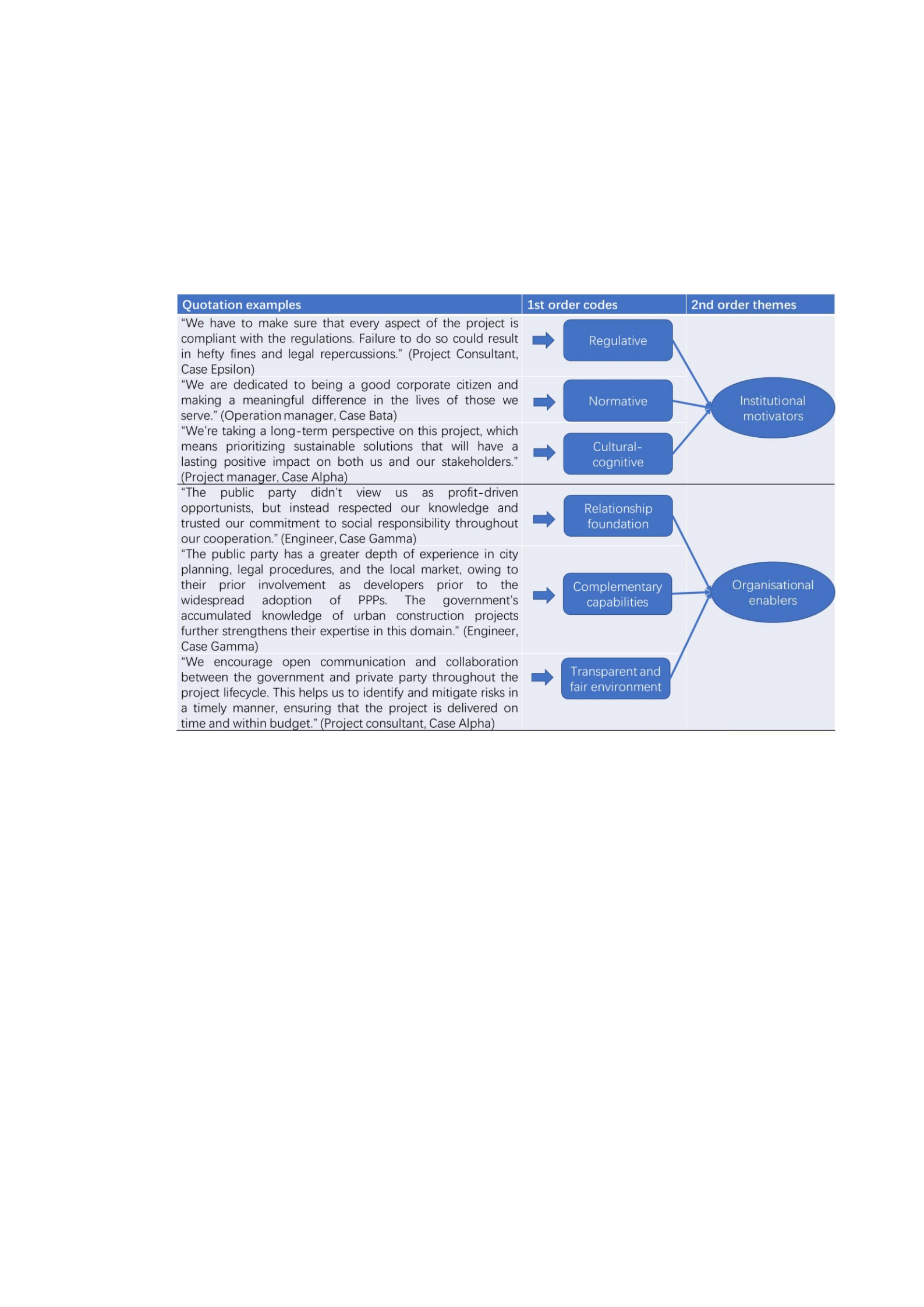
199
enablers are crucial factors for effective implementation of PPP models to facilitate
VCC among stakeholders. These findings provide valuable insights for practitioners
and policymakers who are seeking to establish PPP models and foster collaborative
value creation among stakeholders.
Figure 5-3 Data structure of contextual factors
5.1.3.1 Institutional motivators
Institutional motivators can be categorised into regulative, normative, and cultural-
cognitive motivators, each of which plays a crucial role in encouraging stakeholders to
engage in VCC practices.
Regulative motivators refer to the incentives that emerge from regulatory constraints,
such as laws, policies and regulations. Regulations serve as a powerful tool to align
stakeholder behaviour and encourage them to engage in VCC practices. The presence
of regulatory constraints incentivises stakeholders to think more strategically and

200
innovatively in their approach to VCC. For instance, when a regulatory constraint
stipulates that private parties operating PPP projects cannot receive promised profits
from the government, stakeholders may need to adopt a more proactive approach to
ensure that the project is financially viable in the long term, leading to more effective
VCC practices. As stated by the operation manager in Case Alpha:
“We were aware of the regulations and compliance requirements,
and we understood that violating them would have serious
consequences, such as being excluded from the national PPP
database. It was crucial for us to follow the rules to ensure the
success of the project, and we knew that asking for more
compensation was not an option.”
In addition to encouraging stakeholders to adopt innovative strategies, regulatory
constraints also help to standardise behaviour across stakeholders, resulting in more
effective collaboration and VCC. This is because regulations provide a shared
understanding of expectations and boundaries, which can help to reduce conflicts and
misunderstandings between stakeholders. For example, regulations can help to clarify
the roles and responsibilities of different stakeholders in a PPP project, which can
promote better collaboration and information sharing.
Moreover, regulatory motivators can also incentivise stakeholders to engage in
sustainable practices. For instance, regulations may stipulate environmental standards
that must be met during the construction and operation of PPP projects. In Case
Gamma, these regulations could motivate the private party and the design company to
adopt sustainable practices and innovative technologies that can help reduce the
environmental impact of the project.
Normative motivators play an important role in promoting VCC practices in PPP
projects, as they are based on the norms and values that are established and upheld by
the society in which these projects operate. Normative pressures can come from a

201
range of sources, including industry standards, professional practices and social
expectations. These pressures may not necessarily be legally binding, but they have
significant influence on the behaviour of stakeholders involved in PPP projects.
One of the most important normative pressures in PPP projects is related to
sustainability. In recent years, there has been growing recognition of the need to
promote sustainable development in infrastructure projects, which has led to the
establishment of a range of normative standards and guidelines. In China, for example,
the government has introduced a number of policies and regulations that require PPP
projects to meet certain environmental and social standards. For example, the private
party in Case Gamma and Case Epsilon were motivated to engage in VCC practices
that align with these standards, in order to avoid reputational damage and potential
penalties that may arise from non-compliance.
In addition to sustainability, normative pressures may also arise from other aspects,
such as safety, quality and social responsibility. For example, in PPP projects
involving the construction of highways or bridges, safety is a top priority, and
stakeholders are motivated to engage in VCC practices that ensure the safety of both
workers and users of the infrastructure. Similarly, in projects involving the provision of
public services, such as healthcare or education, stakeholders are motivated to engage
in VCC practices that ensure the quality and accessibility of these services.
Cultural-cognitive motivators refer to the incentives that emerge from cultural and
cognitive transformation. This involves a shift in people’s beliefs and values towards
the importance of long-term over short-term goals. As stakeholders become
increasingly aware of the benefits of VCC practices, they may be motivated to engage
in them to achieve more sustainable and long-term outcomes. This cultural shift can be
observed in the empirical data, where stakeholders are shown to prioritise long-term
value creation over short-term gains. This shift includes the public’s view of their own
role in the project. For example, the government officer in Case Gamma said:

202
“As a government entity, we have shifted away from a client mindset
and instead see ourselves as a collaborator in the project. This
means actively engaging in the project by expressing our needs,
sharing our experience, and discussing proposals.”
On the other hand, this also includes the private party’s consideration on the best trade-
off as noted by the contract manager in Case Gamma:
“We faced a challenge when the owner of the factory demanded
more compensation for the demolition than we had approved funds
for. This caused a stalemate as the owner refused to relocate without
the additional compensation. We ultimately decided to pay the extra
compensation to ensure the demolition could proceed as planned,
despite the limitations imposed by the regulatory framework. We
knew that any further delays would have significant financial
consequences, including increased loan interests and deferred
payments from the government.”
Overall, institutional motivators are critical in driving stakeholders to engage in VCC
practices. By understanding and leveraging these motivators, policymakers and
practitioners can design and implement effective PPP models that encourage
collaborative value creation among stakeholders.
5.1.3.2 Organisational enablers
Organisational enablers are factors derived from the parent organisations that can
facilitate the implementation and effectiveness of VCC practices among stakeholders
in a PPP project. In the context of the thesis study, the enablers for VCC practices were
not predetermined in the literature review but were derived from the analysis of the
empirical data. Previous research has identified organisational and institutional factors

203
as important for facilitating VCC practices. However, in this study, these enablers were
divided into two second-order themes. The first reason for this was to summarise
institutional factors according to the framework proposed by Scott (2014), which
identifies regulative, normative, and cultural-cognitive pillars. While these pillars
provide a useful way of categorising institutional factors, the organisational factors
identified in this study could not be easily merged into any one of them. The second
reason for distinguishing organisational factors from institutional factors was that
organisational factors served more as a support system for VCC practices, while
institutional factors were seen more as motivators for stakeholders to engage in such
practices. For example, while institutional factors such as regulations and norms may
encourage stakeholders to participate in VCC practices, it is the organisational factors
such as relationship foundation, complementary competences, and transparent
environment that enable these practices to be implemented effectively.
The data analysis showed that the implementation of VCC practices in PPP projects
requires support from the parent organisation of all stakeholders involved. This support,
which is summarised as three organisational enablers, namely relationship foundation,
complementary competence, and transparent and fair environment, can significantly
impact the effectiveness of VCC practices and their outcomes. The three organisational
factors are derived based on the theoretical perspective of the resource-based view
(RBV) of the organisation.
The resource-based view emphasises the role of organisational resources and
capabilities in achieving competitive advantage (Barney, 1991). According to this
perspective, organisations possess unique resources, both tangible and intangible, that
can contribute to their ability to create value and outperform competitors. These
resources can include physical assets, human capital, knowledge, relationships, and
organisational structures.
In the context of VCC practices in PPP projects, the resource-based view can be

204
applied to understand how organisational resources and capabilities facilitate or hinder
the successful implementation of VCC. The three organisational enablers identified in
the data analysis (relationship foundation, complementary competence, and transparent
and fair environment) can be seen as critical resources and capabilities that influence
the effectiveness of VCC efforts.
For example, a strong relationship foundation, characterised by trust, collaboration,
and effective communication among stakeholders, can be considered an organisational
resource that enhances the coordination and cooperation necessary for successful VCC.
Complementary competence, such as specialised knowledge, skills and expertise
possessed by different stakeholders, can also be seen as an organisational resource that
contributes to VCC outcomes. Lastly, a transparent and fair environment, supported by
organisational processes, structures and governance mechanisms, can be viewed as an
organisational capability that fosters equitable participation, decision making, and
resource allocation in VCC activities.
By drawing on the resource-based view, the study analyses how these organisational
factors (relationship foundation, complementary competence, and transparent and fair
environment) serve as valuable resources and capabilities that influence the
implementation and outcomes of VCC practices in PPP projects. Therefore, the
resource-based view provides a theoretical lens to understand how organisations
strategically leverage their resources and capabilities to facilitate effective VCC and
gain a competitive advantage in the PPP context.
Relationship foundation refers to the existing bonds among stakeholders involved in
PPP projects. The analysis of the data revealed that only in Case Beta did previous
relational foundations exist before the project. This finding is significant because it
shows that the quality of the procurement procedure and contract negotiation in Case
Beta was more effective than in other cases. As the project manager in Case Beta has
explained, a private company had assisted the government in operating a BOT sewage

205
treatment plant. The successful cooperation between the two parties resulted in a high
level of trust in the company’s capability and expertise. Furthermore, the private
company gained valuable insights into the government’s working style and feasibility
capabilities, which facilitated a smooth negotiation regarding the project value framing
and subsequent implementation. Notably, the company has introduced innovative raw
materials for sewage treatment, which has optimised the process. Additionally, there
has been a seamless exchange of information between both sides, allowing necessary
information to be acquired. This finding suggests that having a relational foundation
among stakeholders could lead to better project outcomes via effective VCC practices.
Relationship foundation also lies in the reciprocal attitude among all stakeholders. This
refers to the willingness of all parties to collaborate with each other, without taking
advantage of the other parties, with the aim of completing the project to a high
standard. In contrast, failed PPP projects often result from a lack of such reciprocal
attitudes, where the public party seeks to transfer risks to the private party without
considering their capabilities.
In the five cases examined in this study, a reciprocal attitude is well manifested, as
articulated by the government officer from Case Beta: “We can feel each other’s
reciprocal attitude and, to some extent, believe that the other party is willing to
collaborate instead of taking advantage using information asymmetry.” This quote
highlights the importance of mutual trust and respect in fostering a positive
relationship between public and private parties. In addition, the ability to balance risks
and rewards, as well as open communication and transparency, are crucial components
in building a strong foundation for a successful PPP project. By promoting a reciprocal
attitude among all stakeholders, PPP projects can benefit from enhanced cooperation,
greater trust, and ultimately, better outcomes.
Complementary competence is another important enabler that ensures all stakeholders
involved cooperate with each other effectively. This enabler refers to the combination

206
of diverse skills, knowledge and resources across different stakeholders involved in
VCC. Each participant brings unique expertise and capabilities to the co-creation
process, which, when integrated, can lead to innovative and value-added outcomes.
Organisations that recognise and leverage complementary competence can harness the
collective intelligence and expertise of stakeholders. By actively seeking input and
collaboration from diverse perspectives, they can generate new ideas, develop
comprehensive solutions, and create differentiated value offerings. This collaborative
approach enhances the effectiveness of VCC practices and allows organisations to
address complex challenges more effectively. When stakeholders possess
complementary competence, they can leverage each other’s strengths and mitigate their
weaknesses, which can lead to more effective project outcomes. This can be shown by
both parties in Case Gamma in the following quotes:
“The public party has a greater depth of experience in city planning,
legal procedures, and the local market, owing to their prior
involvement as developers prior to the widespread adoption of PPPs.
The government’s accumulated knowledge of urban construction
projects further strengthens their expertise in this domain.”
(Private party engineer, Case Gamma)
“The private party was selected due to their exceptional
professionalism and extensive experience in the construction of
immersed tube tunnels, which is demonstrated by their previous
successful projects. Additionally, their reliable financial capacity
makes them a suitable investor for such a major undertaking.”
(Government officer, Case Gamma)
A transparent and fair environment is an enabler that serves as the foundation of
communication, interaction and value exchange among stakeholders. Transparency

207
ensures that information is shared openly, enabling all stakeholders to have a clear
understanding of the co-creation process, goals and outcomes. Fairness ensures that
stakeholders are treated equitably, with their contributions acknowledged and rewarded
appropriately. In a transparent and fair environment, stakeholders feel confident in
actively participating in VCC activities. They are more willing to share their
knowledge, ideas and resources, as they trust that their contributions will be recognised
and valued. This leads to increased engagement, collaboration and commitment, which
positively impacts the outcomes of VCC practices. However, the analysis suggests that
creating such an environment is not easy, as it depends on the culture of the parent
organisation. Therefore, creating a culture of transparency and fairness is crucial to
ensure effective communication and collaboration among stakeholders.
Ensuring equity for all private parties and promoting public interest is critical in any
PPP project. To this end, several measures are implemented to achieve transparency
and fairness. For instance, in Case Delta, performance bonds were replaced with
performance guarantees to create a more equitable solution, enabling qualified private
enterprises to compete on a level playing field with state-owned enterprises. As
affirmed by the performance manager in Case Delta, this approach has significantly
reduced the burden on private enterprises.
In addition, the government takes several steps to foster a fair and transparent
procurement process. As articulated by a government officer in Case Beta, a
comprehensive list of project risks is compiled based on prior experience and
communicated to potential bidders during the pre-tender meeting. This method ensures
that the most suitable and qualified partner is selected, rather than simply opting for the
most optimistic one. These measures promote competition, mitigate risks, and foster
transparency, leading to a successful PPP project.
In summary, the three enablers identified in this study can facilitate the implementation
and effectiveness of VCC practices in PPP projects. These enablers are interconnected

208
and interdependent. The findings suggest that investing in building relational
foundations, ensuring complementary competence, and creating a transparent and fair
environment could lead to more effective project outcomes in PPP projects. Moreover,
understanding both the institutional and organisational factors that influence VCC
practices is critical for promoting their success. The institutional factors provide the
broader context for VCC practices and help create a culture that supports them, while
the organisational factors provide the necessary resources and infrastructure to
implement these practices effectively. By considering both types of factors,
organisations can create a supportive environment that encourages stakeholders to
engage in VCC practices and facilitates their effective implementation. Hence, the
proposition is developed:
Proposition 8. The VCC practices in PPP projects are influenced
by contextual antecedents, which can be categorised into
institutional motivators and organisational enablers.
Institutional motivators consist of regulative, normative, and
cognitive factors that motivate stakeholders to participate in
VCC practices and engage in collaborative and interactive
processes. Organisational enablers, on the other hand, provide
support and the initial momentum necessary for the
application of VCC practices. Together, these factors facilitate
the implementation of VCC practices in PPP projects,
contributing to the success of VCC efforts.
5.2 Discussion – Value Co-creation Process and Contextual Antecedents
5.2.1 Interplay of VCC Practices

209
The previous section reported on the two aggregated practices identified in VCC

210
process which are resource management practices and relationship management
practices. The interplay of these VCC practices is discussed in this section.
The comprehensive analysis of the five cases highlights two preliminary findings about
the characteristics of the VCC process. First, resource management and relationship
management practices that characterise the VCC process are mostly applied throughout
the entire project lifecycle although there may be an uneven emphasis on their
respective approaches. Second, a good combination of resource management practices
and relationship management practices is the key factor to maximise value creation for
project stakeholders as they facilitate each other well in continuous improvement.
5.1.3.1 Theoretical relations among each practice
To better illustrate theoretical relationships among different approaches, the focus of
this section begins with those within each practice. As previously mentioned, each
practice includes three approaches that contribute to effective resource and relationship
management. These approaches assume distinct roles while also exhibiting some
degree of overlap.
Relations among resource management practices. As shown in Figure 5-4, dark blue
rectangles represent the dialogue, development and deployment approaches. Notably,
the dialogue approach plays a pivotal role in enhancing the effectiveness of the other
two approaches. This fundamental role of dialogue is not only revealed in academic
literature, but also observed in practice. Scholars in both marketing and project
management interested in VCC all put dialogue as a basic element that underpins VCC.
For example, in the DART model constituting co-creating value experience practices
developed by Prahalad and Ramaswamy (2004), dialogue is the first element. Similarly,
Martinsuo, Vuorinen, et al. (2019) also emphasised the significance of dialogue in
shaping the value perspective at the project’s outset and throughout its entire lifecycle.
Dialogue implies an interactivity between stakeholders. It can be a set of conversations
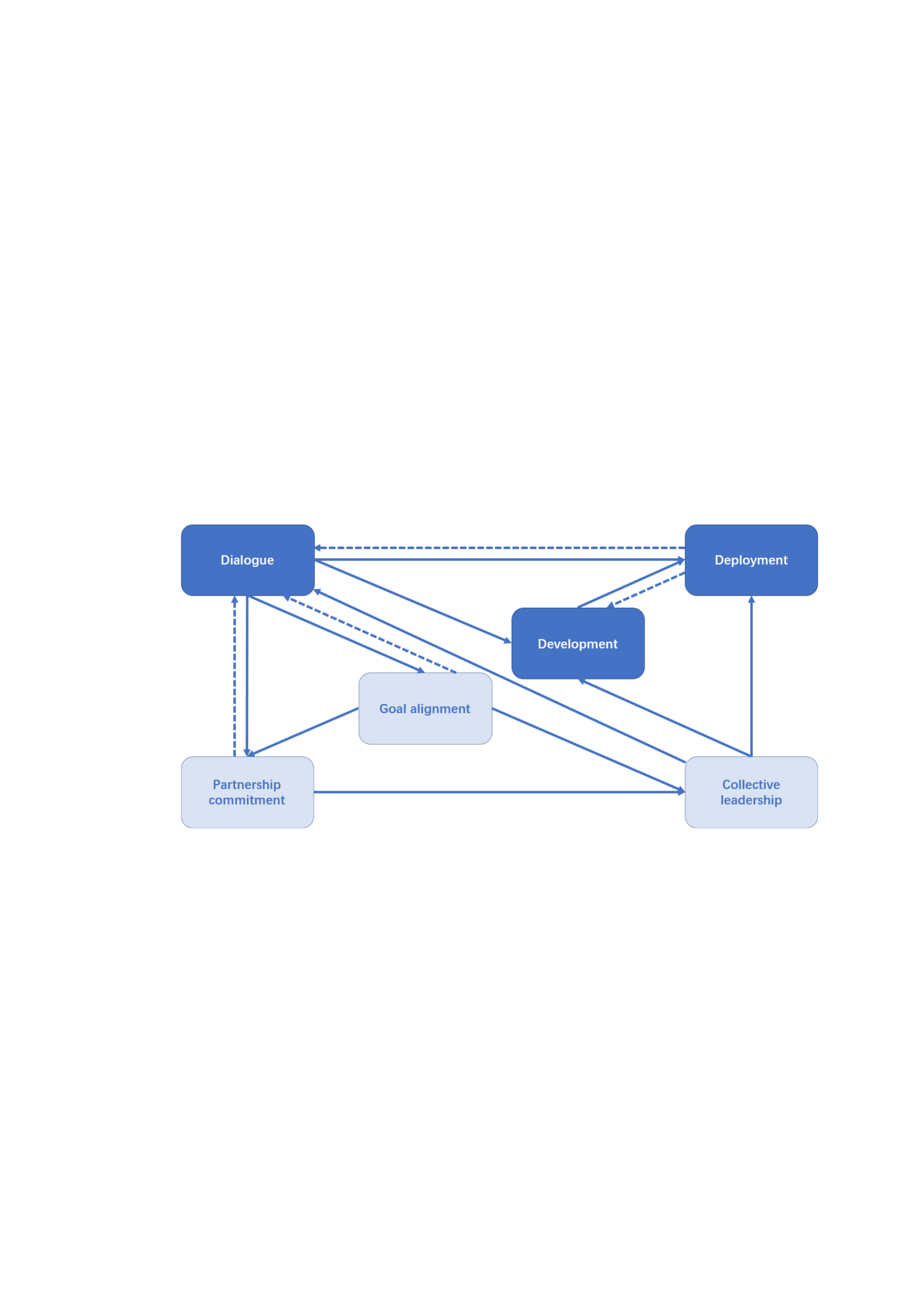
211
(Prahalad & Ramaswamy, 2004), but more about an interactive learning process
among stakeholders (Ballantyne, 2004). The previous chapter defined dialogue in this
research as “the ways resources flow among various stakeholders who acquire and
assimilate such resources as the source of project value creation”. The resources here
mainly refer to the operant resources comprised of knowledge and information. This
flow of knowledge and information among stakeholders with the consequence of
interactive learning provides the foundation of resource development and resource
deployment as shown in Figure 5-4. This process of learning together generates
common meaning for all stakeholders who could then move from interaction to the
participation that facilitates deeper resource management.
Figure 5-4 Interplay among approaches
The resources development approach refers to the bundling of resources to develop
capabilities among stakeholders for reciprocal value creation. Through combining and
using pertinent information and knowledge, this approach enables different
stakeholders as well as the SPV to develop relevant skills and capabilities. In practice,
such resources development is accomplished through joint working among
stakeholders such as joint decision making, joint problem solving, joint risk
management, joint performance management and so on. It is the shared understanding

212
or collective knowledge base every stakeholder accessed through continuous dialogue
that allows the possibility for such form of joint working and corresponding favourable
consequences. Resource deployment is a further step to value creation among
stakeholders, involving the utilisation of configurations of knowledge and skills.. An
appropriate configuration of operant resources relies on a comprehensive resources
pool that complements each party’s resources on one hand, and on a shared
understanding of and expectation on the objectives of the configuration on the other
hand. In other words, the quality of the dialogue approach and the development
approach would determine the quality of the deployment. However, resource
deployment, in turn, shapes resource development. It configures knowledge and skills
effectively, thereby influencing the development of capabilities.
As the VCC process goes on, this mutual influence becomes apparent. To be specific,
both the public and private parties would initiate a more focused dialogue on main
disputes and develop the most imperative capabilities on the hardest difficulties. That
is to say, as the shared understanding is reached and primary capabilities are developed,
the deployment approach in turn provides the direction and objectives to the other
approaches. This reverse influence is indicated in the dotted line in Figure 5-4.
All together, these three approaches deal with resources, especially the operant
resources, in an evolving cycle from resource identification to resource development
and finally to resource utilisation. They complement and facilitate each other as a
whole practice that operates organically in the VCC process.
Relations among relationship management practices. The light blue rectangles in
Figure 5-4 represent the three approaches: goal alignment, partnership commitment,
and collective leadership, identified within the domain of relationship management
practices. Among others, goal alignment is the fundamental prerequisite condition that
underpins a good relationship among stakeholders. Empirical evidence shows that
stakeholders in PPP projects put a lot of effort into aligning with each other such as

213
adopting goal alignment workshops with an impartial and professional third party in
the front-end of the project. This demonstrates that practitioners recognise the
importance of alignment and need this alignment to push the progress. As a positive
consequence of the alignment, partnership commitment occurs and accumulates in the
VCC process. This approach includes relation norms that have been developed
spontaneously in a bottom-up way guiding everyone’s behaviour.
The collective leadership approach thus becomes possible and effective based on the
function of the other two approaches. Collective leadership addresses relationships
among stakeholders from the structure perspective, that is, building a closer and denser
relationship network that fosters service exchange. This objective could be achieved
through engaging and empowering stakeholders as well as motivating their creativities
based on the empirical evidence.
This section has established connections between the three approaches within
relationship management practices and the three dimensions of relational capital.
Scholars suggest that there is an interplay among these three dimensions: cognitive,
reflective, and structural (Inkpen & Tsang, 2005; Tsai & Ghoshal, 1998). This implies
that changes in one dimension can affect the others, and they mutually influence each
other. However, in the PPP context that was observed in the cases, the implications of
the cognitive and reflective dimensions on the structural dimension were more obvious.
For example, the project manager in Case Alpha said:
“We hadn’t been fully empowered for autonomous decisions on
technology issues until the late procurement phase when we had
demonstrated our ability to the government and their consultant. We
were empowered when the public party finally trusted us.”
Similar evidence from the government officer in Case Epsilon shows that:
“We shared the project information to the local community through

214
the network and bulletin boards. We also collect people’s opinions
regarding this project preliminarily before we launched a hearing.
This was because I need to make sure the secondary stakeholders
were well informed and reached a certain shared understanding
with the government before formally engaging them in the decision
process. Otherwise, it would just be a waste of time.”
5.1.3.2 Theoretical relations between two practices
As shown in Figure 5-4, the VCC process begins with the dialogue approach and
progresses towards the deployment approach, with resource management practices
serving as both its foundation and ultimate objective.
The dialogue approach not only serves as the foundation for resource development and
deployment, but also supports goal alignment and partnership commitment. In
particular, behaviours like information exchange hold significant potential for
enhancing the quality of project relationships (Zheng et al., 2018). To delve deeper, the
value framing activities within the dialogue approach create a platform for dialogical
conversations, allowing stakeholders to clarify their value perceptions and eliminate
misunderstandings. These value framing discussions frequently occur during goal
alignment workshops, and the effectiveness of these workshops hinges on the quality
of value framing. Furthermore, partnership commitment could be accumulated through
dialogue forming the base of trust. It is important to note that dialogue differs from
discussions or communications that often revolve around debates and persuasion
(Ballantyne, 2004). Rather, it prioritises mutual understanding. Stakeholders engaged
in dialogue are less concerned with being right or wrong and are more focused on
whether their choices will benefit the project positively. They recognise that criteria for
right and wrong are akin to subjective and evolving value perceptions. Thus, this
dialogical interaction contributes to the development of relational norms such as

215
reciprocity.
On the other hand, the goal alignment approach and partnership commitment approach
also have an impact on the dialogue approach. Similar to the mutual influence
discussed in the development approach and the deployment approach, the dialogue
approach gets feedback on effective goal alignment and partnership commitment as the
VCC process goes on. This feedback loop is based in the iterative characteristic of the
VCC process. Given the subjectivity and dynamism of stakeholders’ value perceptions,
coupled with contingent changes that arise during the project lifecycle, disputes can
emerge, requiring a resolution. It is at this juncture that the dialogue approach comes
into play. Normally, based on the trust accumulated and the relation norms developed,
as well as a shared cognitive understanding, more effective dialogue could be
envisioned. This is also supported by the project consultant in Case Beta: “In the late
construction period, the environmental protection agency suddenly issued a new
regulation which enforced stricter reclaimed water criteria. This led the private party to
re-construct some of the plant. This was a huge re-negotiation. However, it was smooth
without wasting too much time, mostly because both parties were in a very good
relationship and had the sense of team spirit.”
The collective leadership approach serves as another interface between two practices.
Unlike the other two approaches within relationship management practices, collective
leadership provides feedback to the dialogue approach, and demonstrates its influence
on the development and deployment approaches, despite representing a higher level
within the relationship management practices hierarchy. By fostering a closer and
denser relationship network, the collective leadership approach creates favourable
conditions for stakeholder dialogues. For example, proximity among stakeholders,
especially working in the same location, ensures exchanging the information in a
timely manner. In addition, by empowering subordinate parties and placing everyone
on an equal position, the collective leadership approach encourages dialogue, as

216
highlighted by (Prahalad & Ramaswamy, 2004). Furthermore, active dialogue is one of
the objectives motivating stakeholders in the collective leadership approach.
Collective leadership also has a direct implication on resource development. To clarify
the relationship between these two approaches, it is important to distinguish between
them. Although they may initially appear to overlap, as discussed in Section 5.1.2.3,
they have distinct foci. Collective leadership centres on the operational activities that
are conducted jointly with resource bundling and development, while the latter one
emphasises the activities that facilitate a collective relational norm among stakeholders.
The rationale for their connection becomes evident when considering that the
development of collective relational norms, a consequence of the collective leadership
approach (Manz & Sims, 1993), enhances the efficiency and effectiveness of joint
working activities. Scholars have raised doubts about the effectiveness of vertical
leadership in harnessing operant resources especially project teams’ expertise and
creativity to ensure positive outcomes (Müller et al., 2018; Wu et al., 2018). Collective
leadership, when used in conjunction with other forms of leadership, offers a better
solution to the problem through letting project team members collectively exert
leadership influence.
This mutual influence is crucial, given the PPP project team members come from
different organisations, each representing different institutional logics. Through this
mutual influence among stakeholders, one party can mobilise or integrate the other
party’s resources to either develop value propositions together or to transform value
propositions into their own value creation. At the same time, this mutual influence
resulting from the effective collective leadership approach would also enhance every
stakeholder’s willingness to commit and promotes greater coordination. In this way,
the collective leadership approach influences the resource deployment approach.
As previously explained, these artificial classifications of VCC practices are by no
means the only perspective to understand the process of VCC in PPP projects. While

217
efforts were made to ensure the six approaches are conceptually distinct from each
other, there are inevitably some conceptual overlaps. This is mostly because the two
practice dimensions, resource management and relationship management, are
inextricably linked (Dyer & Singh, 1998). This interconnection can be clearly observed
in Figure 5-4 and the discussion in this section illustrates the possible logic in the PPP
context.
To sum up Section 5.3, the proposition is developed:
Proposition 9. There are six approaches that constitute the PPP
VCC process: dialogue, development, deployment, goal
alignment, partnership commitment, and collective leadership.
These approaches overlap with each other to some extent and
closely interact with each other as well. The VCC process
reflects an iterative and interactive configuration of these
practices.
5.2.2 Implications of VCC Practices on Value Outcomes
5.2.2.1 VCC practices and mid-term value outcomes
After discussing the theoretical relations among the six approaches in the VCC process,
this section delves into how these approaches would influence the value creation of
PPP projects. To begin, it enables a focus on the mid-term value outcomes. As
previously outlined in Chapter 4, mid-term value outcomes include visible value and
potential value including first-order codes such as effective procedure, risk mitigation,
innovated solution, team solidarity, trust improvement, mutual commitment, and so on.
Because of the dynamism of value and the extended lifespan of PPP projects, the value
outcomes can generally be categorised as mid-term unless they prove to be sustainable

218
over time. Thus, the VCC process generates mid-term value outcomes first before they

219
become the long-term ones.
Visible value outcomes represent the ultimate goals of PPP projects and the
stakeholders involved. These kind of value outcomes are mostly obtained from
successful resource management practices. For instance, consider the value outcome of
risk mitigation, which is one of the primary objectives of PPPs that can be significantly
realised through resource management skills. Given the large scale, lengthy duration,
and complex stakeholder involvement in PPP projects, they often face various risks.
The dialogue approach helps mitigate certain risks related to misalignment and
uncertainties during the initial stages of the project. By engaging in active and
transparent communication, stakeholders gain a better understanding of the project’s
requirements and agreements. Most of the government officers highlighted the
significance of the marketing test phase as it allows both parties to get familiar with
each other’s requirements and capabilities helping the public party to select the right
partner. Operational risks such as late design changes, finance availability and land
acquisition can also be minimised when stakeholders share information effectively and
integrate resources seamlessly.
Resource management practices also contribute to the establishment of effective
procedures. Dialogical interactions between the two parties take a leading role in
ensuring a streamlined procurement process. Once the contract is signed, additional
efforts are needed for resource motivation, mobilisation, integration and coordination,
all of which are essential for a smooth construction procedure. The public partner plays
an important role in preparing various permits and making the site available for the
private party. These tasks underscore the importance of resource management practices
in the overall project success.
Potential value outcomes are closely tied to the quality of the relationships among
stakeholders and primarily stem from effective relationship management practices.
These outcomes encompass elements like heightened trust, solidarity, and a sense of

220
belonging, which significantly contribute to a positive working environment, even if
they may not always be explicitly acknowledged by stakeholders. It was clear that
potential value outcomes are challenging to precisely measure, but they are the
accumulated relational capitals that would foster the VCC process. Through close
contacts and deep engagement with each other, stakeholders with different institutional
logics could gain mutual ex-post trust (Yan & Zhang, 2020) both in terms of affectivity,
integrity and competence (Pinto et al., 2009). Similarly, the goal alignment approach
fosters a shared cognitive framework among stakeholders, encouraging greater
commitment to the project. Likewise, the collective leadership approach establishes an
interaction platform for all stakeholders that enhances solidarity and a sense of
teamwork.
The service-dominant logic places a strong emphasis on the role of interaction in the
VCC process. This emphasis is rooted in the inherently subjective and dynamic nature
of value. Thus, the quality of interaction experience becomes a vital aspect of project
value within the scope of this research. Equivalently, visible value, the experience of
function of exchanged service, reflecting different stakeholders’ perceptions also seeks
attention.
5.2.2.2 VCC practices and long-term value outcomes
While mid-term value outcomes arise from the positive consequences of different VCC
practices, achieving long-term value outcomes requires a more deliberate and
intentional approach. In other words, long-term value outcomes can only be achieved
when the project team actively aims to achieve them. This is because long-term value
outcomes require two key factors. First, they must be sustainable over an extended
period, which demands ongoing commitment and strategic resource allocation from the
project team. Second, long-term value outcomes must take into account the diverse
expectations and experiences of project value held by different stakeholders. From this
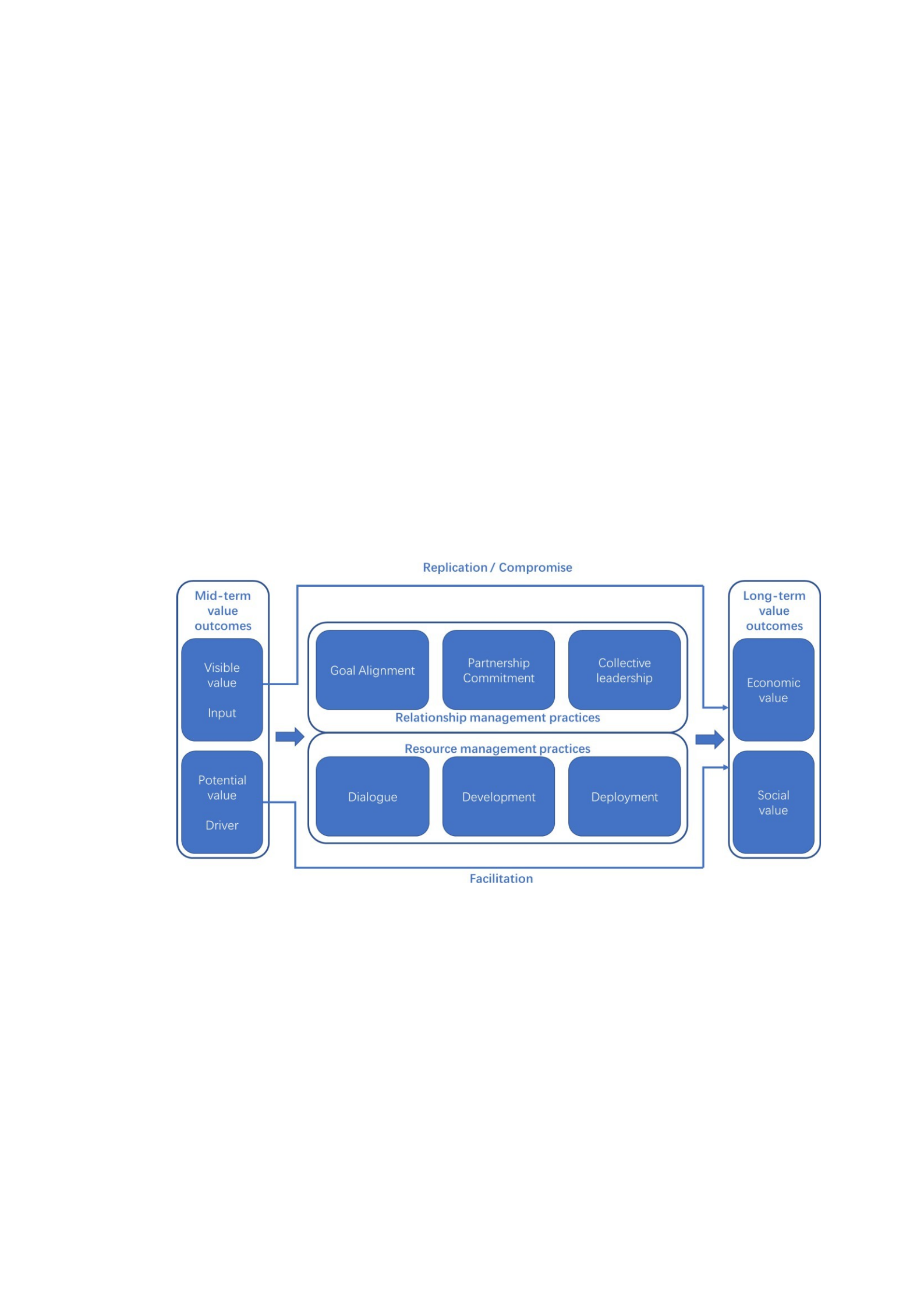
221
perspective, long-term value outcomes serve as guiding objectives that steer VCC
practices throughout the entire project lifecycle.
As depicted in Figure 5-5, practical observations reveal two paths by which mid-term
value outcomes evolve into long-term ones. These paths vary in their focus on the
application of VCC practices. The transformation of mid-term value outcomes into
long-term ones is influenced by the nature of the value. Visible value typically requires
a replication or compromise procedure, which places a greater reliance on relationship
management practices. On the other hand, potential value requires a facilitation
procedure, which leans more heavily on resource management practices. Both visible
value and potential value are the source of economic and social value achieved through
the co-creation process among stakeholders.
Figure 5-5 Implications of VCC practices on long-term value outcomes
In Figure 5-5 the first path begins with visible value which, as identified by this
research, is value that is apparent to everyone involved. This visibility has two
characteristics: first, visible value can be clearly experienced and measured by all
stakeholders; and second, it aligns with the mainstream values pursued by most
stakeholders. Evidence from the cases reveals that improper utilisation of these two
characteristics
can lead to tensions among stakeholders and
lead to negative

222
consequences. On one hand, the use of measurable indicators for visible value
introduces a rigorous assessment system. On the other hand, the clearly measured
value, co-created by all stakeholders, inevitably faces the capture dilemma – where
everyone desires a larger share of the benefits. This explicit value becomes enticing to
all stakeholders, potentially triggering greed and competition for a larger portion of the
rewards. Such dynamics can have a detrimental impact on stakeholder relationships,
especially when every party believes they deserve a larger share and seeks ways to
capture more value.
The pursuit of visible value, such as cost effectiveness, high value for money and
effective procedures, should not be viewed negatively. Instead, this research advocates
for the sustainable pursuit of visible value by achieving value outcomes replication
through relationship management. Through relationship management practices,
stakeholders involved in the PPP project can gain a shared perception and aspiration of
project success. This shifts stakeholders’ focus from the created visible value to the
envisioned project blueprint allowing each participating party to get more visible value
by expanding the overall benefits. As discussed in the last section, these visible value
outcomes mainly derive from successful resource management practices. However,
effective resource sharing, practical development and full integration among
stakeholders can only occur when relationships among stakeholders are strong. In
contrast, relational norms such as reciprocity in the partnership commitment approach
would facilitate an effective resource management practice. Additionally, as discussed
earlier, the collective leadership approach has a positive impact on resource
management practices. For example, the project managers in private parties shared
their previous experience about how their innovative solutions were turned down due
to a lack of trust and the absence of explicit contractual incentives as the public
partners did not see any benefits for themselves from the solution. In summary,
relationship management practices play a crucial role in realising the replication of
mid-term value outcomes by positively influencing resource management practices.

223
Resource management practices are the primary drivers underlying the formation of
mid-term value outcomes.
The second path addresses potential value, which often does not receive as much
recognition as visible value in PPP projects. Despite the extended lifespan and
prolonged lifecycle of PPP projects, values such as maintaining good relationships
among stakeholders are sometimes not taken as seriously. In this research, potential
value is defined as the value of good relationships among stakeholders. It reflects the
positive experiences that one party has when interacting with others. It is referred to as
“potential” value because it is not the ultimate goal of stakeholders although it plays a
valuable role in achieving ultimate goals. For example, the project manager in Case
Alpha said that a “good relationship is preferred, but we are more in favour of more
substantial benefits as we need to keep the business running”. Thus, the transformation
path from potential value to long-term value requires more effective resource
management practices. These practices can turn potential value into a tangible asset in
achieving the project’s and stakeholders’ ultimate goals. In addition, the potential
value in this path serves as a driving force, unlike visible value, which serves as an
input to the process.
Potential value primarily results from the effective application of relationship
management practices. These practices create a shared cognitive framework for all
stakeholders, encourage reciprocal relation norms and thus formulate the network
structure that is in favour of effective resources management. Competence
development is one of the most common forms of potential value observed in the cases.
Both the private and public parties in the five cases acknowledged their organisation’s
competence improved through the PPP project. For example, the government officer in
Case Beta said: “We have been facing difficulties in terms of local finance for a long
period, and we are very glad to see this PPP project energised our local finance to some
degree”. As a functional department of public service provision, the officer in the

224
Bureau of Municipal Construction in Case Gamma said: “collaborating with the
private party on this PPP project helped us on function transformation, and now we
have mastered the governance capability as well as an enhanced service capability.”
This transformation reflects the changing role of the public partner in PPP projects in
China. Instead of simply being a client that hires a construction company, they now
have a dual role as both a governing body and a service provider. It is important to note
that good relationships not only nurture well-performed resource management
practices but also create a positive feedback loop. As more visible value outcomes,
often referred to as “substantial benefits”, are created and replicated for different
stakeholders, relationships improve, leading to increased trust, solidarity and a sense of
belonging among stakeholders. In summary, the impact of VCC practices on value
outcomes follows a two-step process. Mid-term value outcomes are achieved first,
followed by the realisation of long-term value outcomes. These long-term outcomes
can be achieved through two distinct paths, each emphasising either resource
management or relationship management practices. Thus, the proposition is developed:
Proposition 10. The VCC process should be designed based on
the integrated application of resource management and
relationship management practices that facilitate both mid-
term value outcomes and long-term value outcomes.
5.2.3 Implications of Contextual Factors on VCC Practices
The PPP model was introduced to China from Western countries like the UK to
provide infrastructure. However, the development of the PPP model in China has
evolved significantly due to institutional and organisational factors. These factors
became increasingly important as the PPP model matured. In the early stages, there
was a lack of relevant legislation and regulations, and both the government and private

225
entities lacked a comprehensive system to govern PPP projects. As the PPP model in
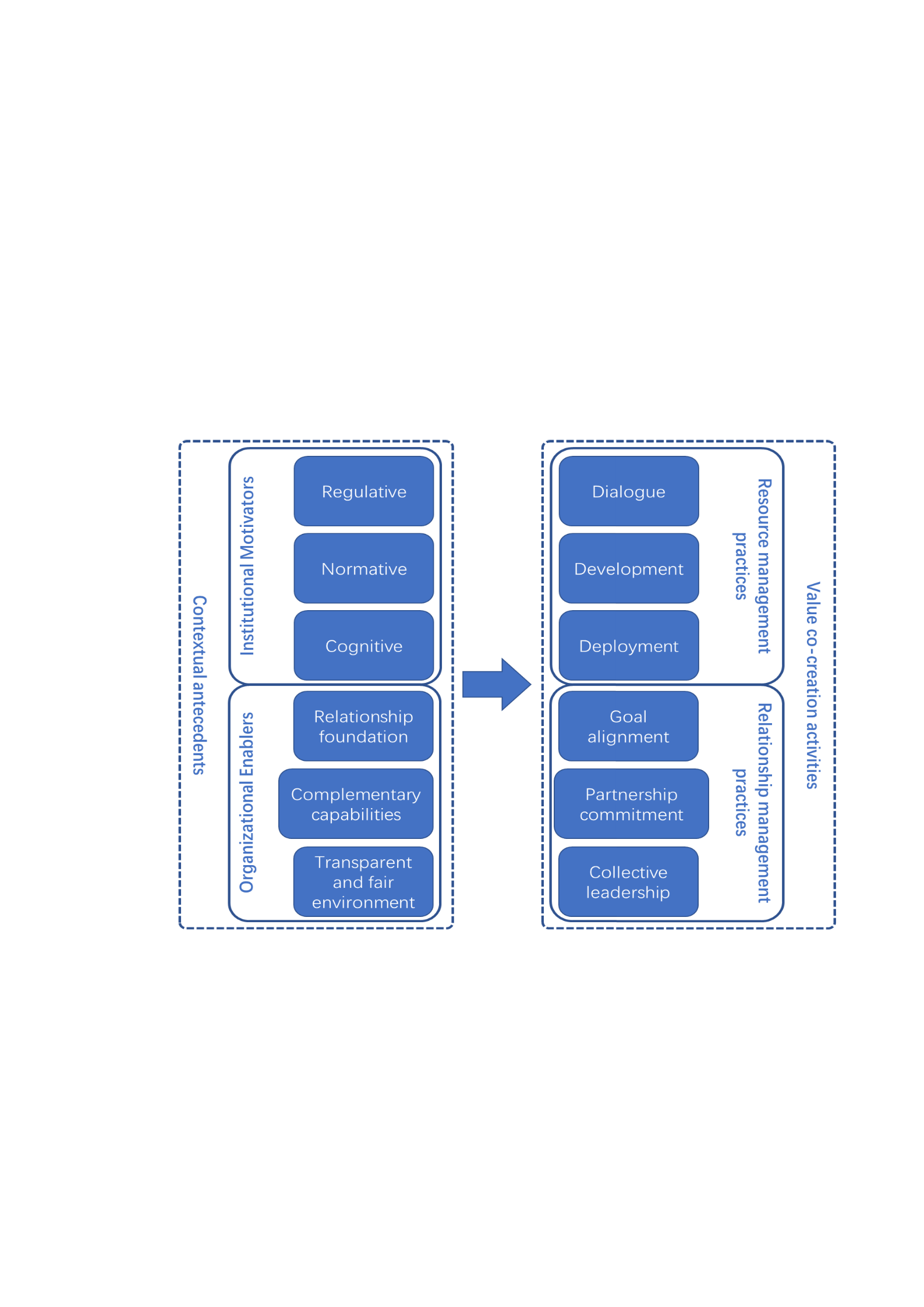
226
China matured, corresponding institutional and organisational factors gradually
developed and became recognised by stakeholders. The impact of these factors on
VCC practices in PPP projects was evident in the five cases studied. These factors
played an important role in shaping the VCC practices employed in PPP projects.
Therefore, understanding the institutional and organisational factors that influence the
development of PPP projects in China is crucial for the effective implementation and
success of these projects. Implications of contextual factors on VCC practices are
summarised in Figure 5-6 and then discussed in detail.
Figure 5-6 Implications of contextual factors on VCC practices
5.2.3.1 Institutional motivators and VCC practices
Regulative factors have a significant impact on stakeholders’ behaviour in PPP projects
in China. While they may appear as constraints, they also serve as incentives for

227
stakeholders to innovate within established boundaries. The regulative factors have
evolved in tandem with the growth and maturity of the PPP model in China. For
instance, the Ministry of Finance introduced the Implementation Opinions in March
2019 to promote the standardised development of public–private capital cooperation.
This policy specified six standard conditions and three requirements for PPP projects,
clarified the positive and negative lists, and encouraged the participation of private and
foreign investment, among other elements. These measures have set the parameters for
governing PPP projects thus strengthening the management of PPP projects, and
enhancing information disclosure. As a result, they have standardised the behaviour of
various stakeholders when collaborating on PPP projects. These reinforced regulatory
constraints establish a legal foundation for the future development of PPP projects,
fostering a more transparent and standardised PPP industry.
The regulatory framework surrounding PPP projects in China has grown progressively
stringent, as seen in the cases examined. Paradoxically, this regulatory complexity has
led participants to become more engaged in resource management. Specifically, due to
the complexity of rules and regulations, partners must frequently meet to clarify their
own information and concerns, which enhances the dialogue approach. This process
often involves a large number of third-party consulting firms, necessitating closer
cooperation in terms of both time and space, ultimately boosting the development
approach through joint working. In this process, the capabilities of all parties are
further improved, ultimately increasing the synergy of all parties involved in
configuring accessible resources in a way that maximises the value of the project
which is referred to as the deployment approach.
The increased regulatory constraints in Chinese PPP projects have had both positive
and negative impacts. On the positive side, they have standardised the behaviour of
stakeholders, potentially leading to more efficient project outcomes. However, these
regulations have also imposed some limitations on project schedules and selections,
which could constrain the project’s potential value. Striking a balance between these

228
constraints and the potential for VCC through resource management practices is
essential.
Normative motivators are an important factor in promoting VCC practices in PPP
projects. Normative motivators, such as sustainability and social responsibility, have
become increasingly important in recent years in promoting VCC practices in PPP
projects. Sustainability, in particular, has gained significant attention from stakeholders
due to the growing concern about the negative impact of economic activities on the
environment. Therefore, private parties involved in PPP projects are expected to
integrate environmental considerations into their operations, such as reducing carbon
emissions and promoting renewable energy use.
Moreover, stakeholders are also motivated by social responsibility, which emphasises
the importance of contributing to the social wellbeing of the communities in which
they operate. In the examined cases, it is evident that normative motivators play a
crucial role in driving stakeholders to engage in resource management practices to co-
create value. This is similar to the role played by regulative motivators, which also
incentivise stakeholders to innovate and consider the entire lifecycle cost upfront.
However, normative motivators are distinct in that they focus on adhering to
established norms and values rather than mere compliance with regulations. These
pressures often arise from societal expectations for sustainable and socially responsible
business practices, which can incentivise private parties to align their goals with those
of the broader community.
In addition to resource management practices, normative motivators also facilitate the
goal alignment approach in relationship management practices. This is because the
norms and values inherent in PPP projects require both parties to compromise and
work together to achieve common goals. For example, in social responsibility, private
sector entities may need to make concessions to support community development,
while the government may need to provide support and incentives to encourage private

229
sector investment. When stakeholders align their goals with established norms and
values, they can enhance their cooperation and collaboration within PPP projects,
ultimately fostering more effective VCC practices.
Cultural-cognitive motivators are distinct from the previous two motivators because
they focus on cognitive transformation rather than constraints. These motivators
encourage stakeholders to engage in VCC practices by shifting their cognitive
perspectives. With the increasing implementation of PPP projects, both parties are
becoming increasingly convinced that collaboration is essential for achieving better
project benefits. They understand that adopting a long-term perspective benefits all
parties involved. This shift in cognitive perspective is also evident in the evolving
relationship dynamics between public and private entities in PPP projects.
There are two noteworthy developments stemming from this cognitive shift. First, the
government is undergoing a functional transformation, transitioning from being a mere
customer in PPP projects to an active participant. In this new role, the government
actively supports and collaborates with private parties to enhance project outcomes.
This change has fostered a more open and cooperative approach to PPP projects.
Second, private companies are becoming increasingly transparent, which has led to
greater trust from government entities. This shift in cognition and the evolving
relationships between the public and private sectors are contributing to more effective
resource management practices. Indeed, these cultural-cognitive motivators, driven by
shifts in stakeholders’ thinking, have a positive impact on relationship management
practices in PPP projects. A key element in successful PPP ventures is the alignment of
goals between both parties involved. This alignment closely ties to the cognitive
dimension of relational capital. As stakeholders undergo cognitive transformations,
they become increasingly aware of the advantages of collaboration and are more
inclined to work together toward shared objectives. This, in turn, enhances goal
alignment practices, contributing to more successful PPP projects.

230
The concept of partnership commitment is considered vital in PPP projects,
particularly in the realm of affective relational capital. Private parties must invest in
and ensure the success of the project. Cultural-cognitive motivators play a significant
role in influencing stakeholders to invest more in the project and commit to achieving
common goals. This heightened commitment fosters a sense of ownership and
accountability, ultimately leading to more effective partnership commitment. By
fostering a shared understanding of the project’s objectives, cultural-cognitive
motivators can strengthen the relationship between the parties involved and promote a
long-term perspective that prioritises the project’s success. This can lead to a more
sustainable and mutually beneficial partnership that benefits all stakeholders involved
in the PPP project.
5.2.3.2 Organisational enablers and VCC practices
Organisational enablers play a critical role in promoting VCC practices in PPP projects.
These enablers include relationship foundation, complementary capabilities, and a
transparent and fair environment. Leadership roles within PPP projects are often filled
by individuals from diverse government departments and private sector organisations.
Prior to the initiation of a PPP project, the government collaborates with the private
partners to form a SPV to co-lead the project. While the SPV operates as an
organisation for the duration of the project, which is typically less than 20 years, it is
short-lived. Therefore, the behaviour of project team members is significantly
influenced by the constraints of their respective parent companies, as they continue to
represent and act on behalf of their organisations within the project team.
Relationship foundation refers to the pre-existing relationship bonds among
stakeholders involved in PPP projects. The relationship foundation also lies in the
reciprocal attitude among all stakeholders. This involves mutual willingness to
collaborate with each other without exploiting the other party, with the common goal

231
of completing the project to a high standard. According to interviewees, an emotional
connection plays a significant role in the cooperation between the two sides in PPP
projects. This emotional bond does not necessarily have to exist before the project
begins, as it can also develop during the initial interactions between the parties. The
first impression and initial feelings towards each other can set the tone for the entire
collaboration, highlighting the importance of building a positive relationship
foundation from the beginning.
Relationship foundation is a critical factor that impacts VCC in PPP projects through
relationship management practices among stakeholders. A good relationship
foundation promotes goal alignment activities and facilitates active partnership
commitment as trust, respect and reciprocity are more easily cultivated. This can lead to
increased accountability and a sense of ownership, which can ultimately result in more
effective collaboration. Furthermore, it fosters collective leadership in a PPP project,
as it is easier for stakeholders to engage and for the public party to empower the
private party, as well as the main private party to empower other partners in the
consortium. This can lead to a more engaged and empowered public party, which can
then empower the private party and other partners in the consortium. This collective
leadership approach can lead to better decision making and more effective resource
management practices, ultimately resulting in better project outcomes. Thus, a solid
relationship foundation can have a significant impact on the success of VCC practices
in PPP projects.
In addition, a strong relationship foundation is a significant enabler in facilitating
effective dialogue among stakeholders in resource management practices. When the
relationship foundation is robust, stakeholders are more willing to communicate and
interact with one another without hesitation, which results in the effectiveness of the
dialogue. Such a foundation can help to build trust and respect among stakeholders,
promoting a more open and transparent dialogue. As a result, the stakeholders can

232
understand each other’s perspectives and interests more clearly, leading to better
decision making and more effective resource management practices. Additionally,
effective dialogue aids in early detection and proactive resolution of potential conflicts,
thereby minimising the risk of disruptions to the project’s progress.
Complementary capabilities refers to the ability of stakeholders to complement each
other’s skills, knowledge and experience, and leverage each other’s strengths to
achieve project success. This factor is critical to the success of PPP projects, as it can
greatly influence the effectiveness of VCC practices through resource allocation and
utilisation. Complementary capabilities are determined at the procurement stage, where
stakeholders are selected based on their ability to complement each other’s capabilities.
However, it is still an organisational factor, as the ability of each party is influenced by
its organisational structure and resources. This factor can have a significant impact on
the resource allocation arrangements of the two parties, which include the bundling
and configuration of resources.
Bundling resources, also referred to as the development approach in resource
management practice (see Section 5.1.1), involves combining the resources of both
parties to create a more comprehensive and effective solution. This can include
combining financial resources, technical expertise and operational resources to achieve
project success. On the other hand, resource configuration, also termed the deployment
approach in resource management practices (see Section 5.1.1), involves allocating
shared resources and developed capabilities to achieve efficient and effective exchange
and utilisation of service. This can result in an optimal resource arrangement to be
aligned with the project’s objectives. By leveraging each other’s strengths and
expertise, stakeholders can create more effective and efficient solutions, and ensure
that project goals are met. Therefore, it is important for PPP project teams to consider
complementary capabilities when selecting stakeholders, and to foster an environment
that encourages collaboration and knowledge sharing.

233
A transparent and fair environment is a crucial enabler that forms the foundation of
communication, interaction and value exchange among stakeholders in a PPP project.
This factor ensures that all stakeholders have access to the same information and
resources and are treated equitably, thereby promoting a more successful project
outcome. While prior PPP research has recognised the importance of this factor, it has
not been categorised as an organisational factor, underscoring its distinctiveness and
indicating how the parent organisations can influence this aspect.
Transparency and fairness are two crucial components of this factor. Transparency
involves ensuring that all necessary information is readily available and easily
understood, while fairness focuses on how the involved stakeholders perceive their
treatment. Both of these dimensions derive from the parent organisation and have a
crucial role in relationship management and maintenance among stakeholders. While
prior studies have primarily concentrated on transparency in the tendering process
(Simon et al., 2020), it is important to note that transparency should extend throughout
the entire lifecycle of the PPP project. This requires ongoing and open communication
among parties and external stakeholders. Additionally, both the public and private
sectors should be transparent and open to external stakeholders or users, making
project-related information and reports accessible to the public. Addressing any doubts
or rumours within the public domain concerning the delivery of PPP projects is also
important, as negative public perception could affect successful project implementation.
In addition to transparency, fairness is a pivotal aspect of a successful PPP project.
Perceived fairness refers to the idea that stakeholders believe they are being treated
equitably and justly in the project. This encompasses fair sharing of benefits and costs,
impartial decision-making procedures, and equitable treatment of all involved parties.
When stakeholders perceive the project as fair, it can mitigate potential conflicts and
disputes while bolstering the legitimacy of organisational procedures.
Moreover, perceived fairness has demonstrated that perceived fairness positively

234
impacts employees’ cooperative behaviours and a firm’s operational efficiency. When
employees believe they are being treated fairly, they are more inclined to collaborate
with other stakeholders and strive towards achieving the project’s objectives. This
heightened cooperation can facilitate improved dialogue, resulting in a more efficient
project delivery. Furthermore, when stakeholders trust each other and perceive the
project as fair, joint-contract functions, such as risk sharing and performance
monitoring, are more likely to lead to improved project outcomes.
5.2.4 A Holistic Framework of VCC in PPP Projects
After a thorough examination of the previous discussion and analysis, a holistic
framework of VCC in PPP projects is proposed in Figure 5-7. This framework includes
all the essential components required for the VCC mechanism in PPP projects. The
ultimate purpose and value of a project depend on its long-term value, which
encompasses economic and social value. It is crucial to change the mindset of
stakeholders and create a fundamental ideological guarantee for them to work together
towards delivering value. Stakeholders must clearly understand the importance of
long-term value and be conscious of its implications. They should not only clarify their
own value propositions but also understand the value propositions of the other parties
involved.
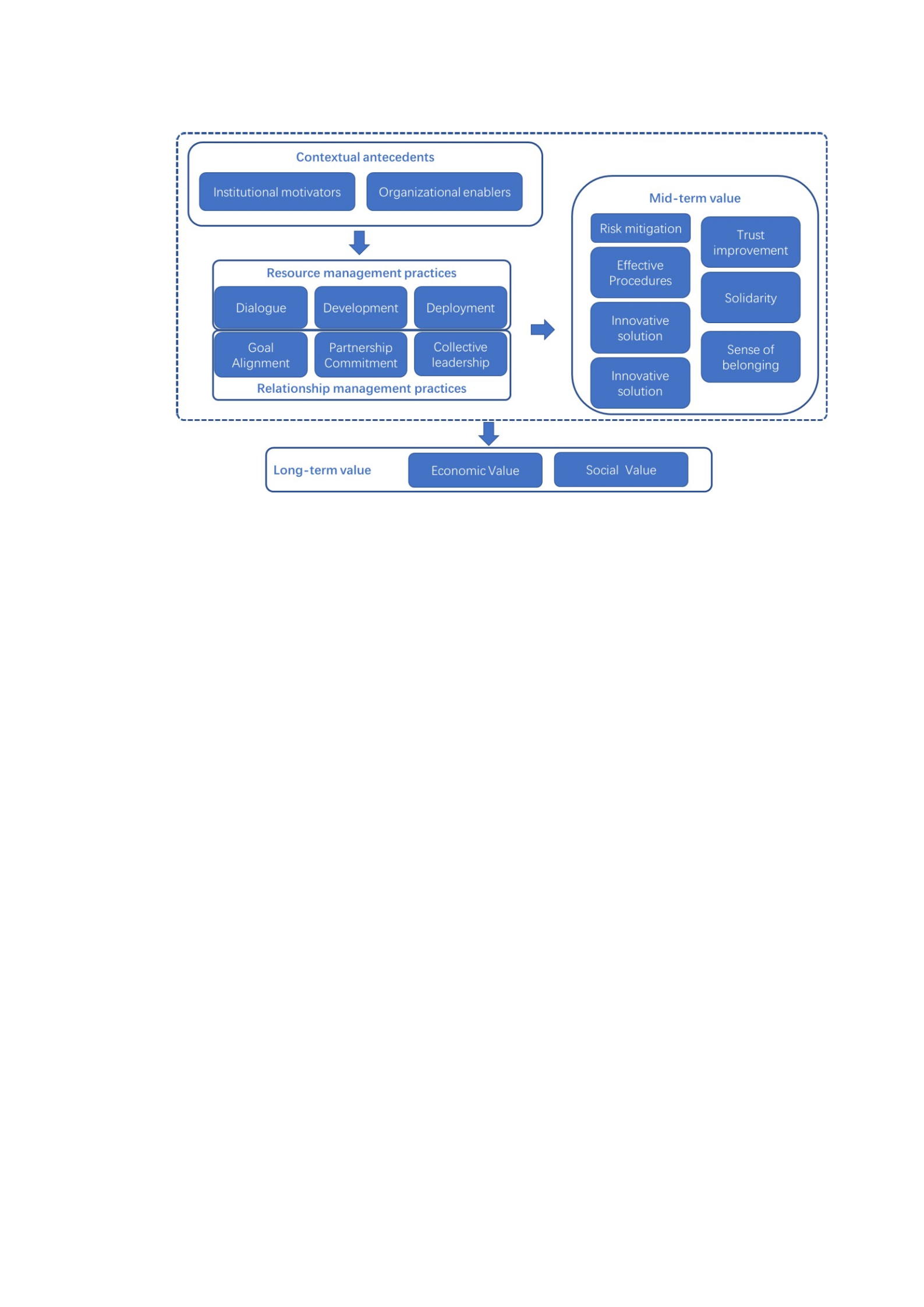
235
Figure 5-7 A holistic framework of VCC in PPP projects
The co-creation section of the framework consists of three main components. Drawing
from the conceptual model generated by the previous literature review, interaction
stands out as the central concept of VCC. The three components of this section
emphasise the interaction environment, interaction practices, and interaction
performance.
It is important to note that both the theoretical model and the final model proposed in
the study have similar connotations and underlying logic. They both emphasise that
value creation is a gradual process and that value is accumulated over time in the
medium term. This point is further supported by the findings from the interview
process, as several respondents highlighted the importance of mid-term values in
achieving long-term goals.
In the initial framework proposed in Section 2.7, interaction performance was
considered as a component that created value in the short term. However, on
examining the data from the PPP projects, it was clear that the value created by
interaction performance extended beyond the short term and into the medium term.
Specifically, the interactions between the public and private partners in the PPP project

236
not only generated immediate benefits but also laid the foundation for further value
creation. For instance, effective communication between the partners led to a better
understanding of each other’s needs, which facilitated the identification of new
opportunities for value creation in the medium term. Furthermore, it was observed that
the benefits of interaction performance were not limited to the immediate partners
involved in the PPP project. Rather, the positive outcomes of these interactions had a
ripple effect on other stakeholders and sectors, resulting in wider economic and social
benefits.
In light of these findings, interaction performance was relabelled as “mid-term value”
in the final framework. This adjustment better captures the broader, longer-term
benefits generated by effective interactions between public and private partners in a
PPP project and emphasises the importance of considering beyond short-term gains
when evaluating the overall success of such projects.
The reconceptualisation of interaction performance as mid-term value in the final
model reflects a deeper understanding of the value that interactions can generate. The
earlier concept of interaction performance only focused on the outcomes that
interactions could produce, without delving deeper into their underlying value. On the
other hand, the concept of mid-term value highlights that the outcomes of interactions
themselves have inherent value, and can generate further long-term value. Moreover,
mid-term value is also linked to interaction practices and the interaction environment,
creating a feedback loop that contributes to ongoing value creation.
The study identified two key aggregated dimensions of VCC practices in PPP projects:
resource management and relationship management. While these dimensions are not
new in management literature, they are still relevant and applicable in the context of
VCC in PPP projects. The components of these dimensions were derived from a
combination of the characteristics of PPP projects and VCC.

237
The resource management dimension encompasses three sub-dimensions: the dialogue
approach, the development approach, and the deployment approach. The dialogue
approach refers to the distribution of resources among various stakeholders, who
acquire and assimilate them as sources of project value creation. This approach
emphasises the importance of collaboration and interaction among stakeholders, as
identified through first-order codes such as value framing, information sharing, invited
visits, and proactive negotiations. The development approach refers to the bundling of
resources to develop capabilities among stakeholders for reciprocal value creation, as
emphasised by the service-dominant logic perspective. Joint-working activities are
crucial for developing capabilities from the resources themselves and creating a more
significant pool of resources that can be leveraged to improve project outcomes. The
development approach highlights the collaborative nature of VCC, where resources are
bundled together to create reciprocal value. The deployment approach focuses on the
configurations of shared resources and developed capabilities to achieve efficient and
effective exchange and utilisation of services. Three first-order codes identified in the
data relate to resource mobilisation, resource integration, and commitment
coordination.
It is widely recognised in project management research that establishing positive
stakeholder relationships is essential for project success. Relationship management
practices, including collective leadership, partnership commitment, and goal alignment,
are vital for achieving this.
The goal alignment approach focuses on activities that enhance alignment among
stakeholders in PPP projects. These activities may include making concessions,
holding goal alignment workshops, and creating a shared project vision. This approach
corresponds to the cognitive dimension of relational capital, emphasising the
importance of a shared cognitive framework among stakeholder networks that can be
developed through the goal alignment process.

238
The partnership commitment approach involves the emotional and behavioural
investment of stakeholders in PPP projects, with trusting, respecting and reciprocity
being the first-order codes under this approach. These activities reflect the affective
dimension of relational capital, which highlights the importance of motivation,
expectations and norms among related parties. These activities not only show the
emotional bonds among stakeholders but also establish norms that guide their actions.
Collective leadership emphasises the significance of shared leadership in PPP projects,
where primary stakeholders are responsible for and involved in the tasks of project
leadership. Engaging, empowering and motivating are first-order codes of this
approach. The structural dimension of relational capital, which represents the
connection patterns among stakeholders, is relevant to this approach. These patterns
demonstrate the configurations of the network depicted in ways of actor connectedness,
participant hierarchy and centrality, and the strength of ties.
As previously discussed, the relationships and interplay among the various approaches
and practices involved in the PPP VCC process are complex. The three resource-
related approaches involve an evolving cycle of resource identification, development,
and utilisation, with a focus on operant resources. They complement and facilitate each
other, operating organically to support the overall VCC process. The three relationship-
related approaches also support each other, emphasising effective communication,
collaboration and partnership commitment as crucial factors in achieving successful
project outcomes. The six approaches, namely dialogue, development, deployment,
goal alignment, partnership commitment, and collective leadership, form the core of
the PPP VCC process. While these approaches overlap to some extent, they also
closely interact with one another, reflecting an iterative and interactive configuration of
practices in the VCC process.
Successful VCC in PPP projects hinges on contextual factors. These factors fall into
two categories: institutional motivators and organisational enablers. Institutional
motivators can be further divided into regulative, normative, and cultural-cognitive

239
motivators, each of which plays a pivotal role in encouraging stakeholders to engage in
VCC practices. Therefore, policymakers and practitioners need to understand and
capitalise on these motivators when designing and implementing PPP models that
foster collaborative value creation among stakeholders. On the other hand, the
successful implementation of VCC practices in PPP projects is heavily reliant on the
parent organisation’s support for all stakeholders involved. This support can be
characterised by three organisational enablers: relationship foundation, complementary
competence, and transparent and fair environment. The presence of these enablers can
significantly impact the effectiveness of VCC practices and their outcomes.
Balancing regulative, normative and cultural-cognitive factors in PPP projects in China
is crucial. These factors have both positive and negative impacts, as it is essential to
strike a balance between them to ensure the successful implementation of PPP projects.
Building and maintaining trust between the public and private parties involved is
crucial to the success of PPP projects, and regulative, normative, and cultural-cognitive
factors all play a role in achieving this goal. On the other hand, one key point to
consider is that the success of PPP projects often depends on the effectiveness of
collaboration and communication between the different stakeholders involved. This is
where organisational enablers such as relationship foundation, complementary
capabilities, and a transparent and fair environment come into play. Organisational
enablers play a critical role in promoting VCC practices in PPP projects, and it is
important for project teams to prioritise building and maintaining positive relationships
among stakeholders, considering complementary capabilities when selecting
stakeholders, and fostering a transparent and fair environment for effective
communication and collaboration.

240
5.3 Chapter Summary
The primary focus of this chapter was on the two main practices that define the PPP
VCC process: resource management and relationship management practices. The
chapter also discussed in detail how these practices are enabled or motivated by
various contextual factors. The approaches that enable effective resource management
and relationship building among stakeholders were discussed in great detail, with an
emphasis on how these practices contribute to the co-creation of value for the project
and all parties involved.
The chapter also provided an overview of the first-order codes, second-order themes,
and aggregated dimensions for each VCC approach and contextual factors. It also
presented a conceptual framework for VCC in PPP projects that includes clearly
defined constructs. The interplay between these VCC practices was also discussed,
including the relationships between different approaches within each practice and
between the two practices themselves.
Furthermore, the chapter explored the implications of these VCC practices on value
outcomes, drawing on the findings from the previous chapter to develop a set of
propositions. Finally, the chapter provided a comprehensive understanding of the
contextual antecedents, i.e., institutional factors and organisational enablers, of the
VCC process, contributing to the final framework of the PPP VCC mechanism. By
providing an in-depth discussion of these practices and contextual factors, this chapter
serves as a valuable guide for researchers and practitioners interested in improving the
success of PPP projects through VCC.
The following chapter concludes with several key aspects, including a review of
research questions, an exploration of theoretical contributions, an analysis of practical
implications, and a discussion on limitations and recommendations for future research.

241
Chapter 6
Conclusion, Limitations and Recommendations
6.1 Review of Research Questions
This chapter outlines the significant contributions of this research to both theory and
practice. The study addressed three research questions:
RQ 1: What is the meaning of value to different stakeholders involved in a PPP project
throughout its entire lifecycle?
RQ 2: How is value co-created in a PPP project during its lifecycle, and what are the
mechanisms of VCC in PPP projects?
RQ 3: Which contextual factors enable and facilitate project VCC activities in PPP
projects, and how do they influence VCC practice?
This study has investigated several critical research issues regarding the creation of
value in PPP projects (see Table 6-1). The first one is to boost value creation for all
stakeholders involved in a PPP project. However, due to the intricate nature of projects
and project-based businesses, several challenges and unresolved issues remain. Thus,
there is a need for further research to address these challenges and issues, and to gain a
deeper understanding of value in project-based contexts. Additionally, the value
creation process is often conflated with the value creation content, which hinders
analytical discussion. Many existing studies do not make a clear distinction between
the two, leading to a general discussion of value creation. The second issue is to
explore how value can be managed and co-created during the process. While VCC and
VM approaches have been increasingly applied in various business contexts, their
application in the PPP project context has been limited. The VCC and VM approaches
aim to create value for all stakeholders, including those in the marketing and
engineering areas. However, there is a need for a deeper understanding of how to
effectively apply these approaches in PPP projects where multiple stakeholders with

242
diverse interests and objectives are involved. The third research issue is to investigate
the influence of institutional and organisational antecedents on VCC practice in the
PPP project context. Despite the acknowledged importance of institutional and
organisational antecedents in shaping the practices of VCC in PPP projects, little
research has been conducted on this aspect. The existing studies have mainly focused
on the role of institutions in the formation of PPP projects, with less emphasis on how
institutional and organisational factors influence the VCC practices of PPP projects.
Moreover, the existing studies have tended to focus on the incomplete institutional
frameworks that only contain legal and regulatory frameworks, rather than on a holistic
approach that contains norms and beliefs, that shape the behaviour of actors in the PPP
project context. As a result, little is known about how informal institutions interact
with formal institutions and how they shape the behaviour of actors in PPP projects.
There is also a lack of research on how organisational factors, such as the governance
environment, culture and capability of the public and private partners, influence the
practices of VCC in PPP projects.
Table 6-1 Critical research issues and research status
Number Key research issues Status of research issue in extant
literature
1 Boosting value creation for all
stakeholders involved in a PPP
project
There is a lack of consensus on PPP
project value in the extant literature,
which has hindered the development of
a comprehensive understanding of how
value can be created.
2 Exploring how value can be
managed and co-created during
the process
The VCC and VM approach to value
creation in PPP projects has not been
thoroughly explored, as this approach
has not been fully integrated into the
PPP context.
3 Investigating the influence of
institutional and organisational
antecedents on VCC practice in
the PPP project context
The influence of institutional and
organisational antecedents on VCC
practice in the PPP project context has
been under-investigated

243
6.2 Theoretical Contributions
The findings presented in Chapters 4 and 5 provide a comprehensive theoretical
understanding of project value in the context of PPPs. This research makes a
significant contribution to the growing body of knowledge on VCC in PPP projects.
The findings reveal the subjective and dynamic nature of value when evaluating the
value of PPP projects. Furthermore, specific VCC activities are identified from the
cases and summarised into two dimensions derived from the literature. The contextual
factors are outlined to illustrate how these VCC practices can be fully used to
maximise project value. Based on the findings and the above discussion, this study
makes four specific contributions to the research on VCC in projects and PPP project
VM, summarised in Tables 6-2, 6-3 and 6-4.
6.2.1 Comprehensive Understanding of Value in PPP Projects
This study makes a significant contribution to the literature by providing a
comprehensive understanding of project value in PPP projects. Analysis of the five
case studies identified that value in PPP projects is subjective and dynamic, and its
assessment requires a multifaceted approach that considers both tangible and intangible
aspects. The contributions are summarised in Table 6-2 based on RQ 1 and the detailed
analysis is shown below.

244
Table 6-2 Contribution 1: Boosting value creation for all stakeholders
Related to the
research issues
#1 Boosting value creation for all stakeholders involved in a
PPP project
Related to the
research questions
#1 What is the meaning of value to different stakeholders
involved in a PPP project throughout its entire lifecycle?
Key contributions Proposition 1. PPP project value shows its dynamic nature by
being comprised of mid-term and long-term value outcomes.
Proposition 2. Project value is a subjective feature given by
various stakeholders involved in the project. Long-term value
outcomes include economic value and social value which
require coordination in management and realisation.
Proposition 3. Mid-term value outcomes include visible value
and potential value according to how the beneficiaries
experience the function of the service and the interaction
when the service is exchanged.
Proposition 4. The mid-term value outcomes could eventually
transform into the long-term value outcomes in the form of
replication, compromise and facilitation through different
VCC practices.
Proposition 5. Project value should be assessed from the
relationship between the satisfaction of stakeholders’
expectation in terms of mid-term and long-term value
outcomes and the resources invested for the outcomes.
Intricate classifications and precise understanding
The identification of refined value elements that occur during the entire lifecycle
enhance our understanding of value in the PPP context. From within-case analysis, this
research identified two categories of project value from the dynamism perspective
which are the mid-term value outcomes and long-term value outcomes. Further, long-
term value outcomes are classified into economic value and social value according to
the subjectivity perspective. From the process view of value creation in PPP projects,
mid-term value outcomes are classified into visible value and potential value based on
how stakeholders experience the function of the service and the interaction of service

245
provision. These refined classifications not only bring the two defining natures
(dynamism and subjectivity) of value to the fore, but also delineate a concrete map of
how these two features are manifested in a PPP project.
The whole series of value classifications proposed in this research contribute to
literature by providing a holistic perspective on evaluating a PPP project. Prior studies
that have noted the complexity of value (Laursen & Svejvig, 2016; Normann &
Ramírez, 1993; Zeithaml et al., 2020) and scholars have made efforts to interpret value
from different perspectives and in a more detailed way. For example, Petrick (2002)
developed a scale for measuring the perceived value of service based on service
experience. Harrison and Wicks (2015) argued value has been overly simplified and
suggested an assessing framework including and extending beyond the economic value.
Kristensen and Remmen (2019) proposed a framework for sustainable value
propositions including economic, social and environment dimensions by recognising a
broader group of stakeholders.
Environmental value is an important dimension in project value assessment studies
(Kayaga & Zhe, 2007; Koppenjan & Enserink, 2009) especially regarding
sustainability topics. However, in this research, little evidence suggests stakeholders
prioritize environmental value compared to other social values. This could be due to
the limited environmental impact of the cases studied, such as road and building
construction projects or sewage treatment plants with advanced technology.
Environmental value often gets merged into social value, alongside factors like
organizational reputation and regional development. Vuorinen and Martinsuo (2019)
also combined environmental value into social ones. Previous studies also paid
attention to the dynamism of value. For example, Liu, Love, Davis, et al. (2015)
proposed a conceptual performance measurement framework of PPP projects
considering all stages in the entire lifecycle. However, few studies managed to
combine both features of value in the PPP context to provide a holistic perspective on
PPP project evaluation.

246
The transformation paths of mid-term value to the long-term ones
VCC in PPP projects represents an attempt to set value-in-use instead of value-in-
exchange as the rationale of value creation and a way to encourage stakeholders’
interaction for the sake of value maximisation. These emphasise the two aspects of
value, that are the experience of function and the experience of interaction. Mid-term
value outcomes are divided accordingly into visible value and potential value. These
mid-term value outcomes would eventually transform into the long-term ones.
One finding from the cross-tabulation of cases reveals that the value dynamism
indicates that project value evolves over the entire PPP lifecycle guided by the long-
term value goals, and eventually realises the long-term value outcomes through the
replication, actualisation and comprises mid-term value outcomes. The originality of
this claim supplements the extant research on the value transformation path and
provides a concrete foundation for further investigation of transformation mechanisms.
By proposing the three transformation paths of mid-term value outcomes to the long-
term ones, this chapter focuses on the black box of the VCC mechanism in PPP
projects. To be specific, to treat mid-term value outcomes when they contradict with
the long-term ones implies a trade-off guided by the project strategy. In addition, the
replication of visible value and the actualisation of potential value implies the iterative
procedure of VCC which manifests the dynamics of value and the learning process
among all stakeholders.
An assessment framework of PPP project value
Another finding from cross-case analysis shows that project value assessment should
take account of all stakeholders’ expectations in terms of mid-term and long-term
value outcomes, as well as the resources invested for the outcomes. This finding put
emphasis on both the category and the amount of value when assessing a project. As to
the category dimension of value assessment, scholars in the field advise the inclusive

247
consideration of multiple stakeholders which is also supported by the findings of this
research (for detailed discussion, see Section 4.2.1). This section discusses the amount
of value which derives from the main research stream of VM (Thiry, 2013).
What differentiates value from similar concepts such as performance and benefits is
that value is embedded within considerations of cost. Although performance indicators
also consider “cost performance” (Yuan et al., 2009), that does not convey the
integrated message as value does. This is important because when cost performance is
set as an indicator, there is a tendency to put the objective of “save money” as more
important neglecting truly important objectives such as end-use satisfaction. In other
words, value thinking does not put cost as an objective but considers it as a way to
improve efficiency and thus improve experience. This is actually in line with the soft
paradigm of project management (Pollack, 2007; Yeo, 1991). The traditional
assessment of a project always sets prescribed “time, cost and quality” criteria which
has been widely criticised (Cruz Villazón et al., 2020; Kivilä et al., 2017). However,
the value thinking promoted in this research encourages the project manager to think in
a strategic way – that is, all the stakeholders’ value orientations are the first
consideration, followed by an efficient way to realise them. Just like in the VM
procedure, function analysis comes before searching for the solution (Thiry, 2013).
6.2.2 VCC Practices in PPP Projects
This contribution relates to the second research issues and questions as summarised in
Table 6-3. Detailed discussion follows.
Table 6-3 Contribution 2: Exploring how value can be managed and co-created
Related to the
research
issues
#2 Exploring how value can be managed and co-created during the
process
Related to the
research
#2 How is value co-created in a PPP project during its lifecycle, and
what are the mechanisms of VCC in PPP projects?

248
questions
Key
contributions
Proposition 6. Resource management practices, such as the resource
dialogue approach, resource development approach and resource
deployment approach, are crucial to the success of the VCC process in
PPP projects. The dialogue approach involves fostering a shared
understanding among stakeholders to identify resources. The
development approach centres on bundling and procuring resources,
while the deployment approach emphasises the transfer of knowledge
into capabilities and the coordination of these capabilities. Together,
these approaches form a critical foundation for effective resource
management and collaboration among stakeholders in PPP projects.
Proposition 7. Relationship management practices play a crucial role in
complementing resource management practices in VCC practices by
facilitating the accumulation of relational capital. The goal alignment
approach pertains to the cognitive dimension of relational capital,
emphasising the importance of a common cognitive framework. The
partnership commitment approach pertains to the affective dimension,
promoting relational norms among stakeholders. The collective
leadership approach pertains to the structural dimension, facilitating a
denser and closer network among stakeholders. Together, these
relationship management practices support effective collaboration and
contribute to the accumulation of relational capital, which can enhance
the VCC outcomes of PPP projects.
Proposition 9. There are six approaches that constitute the PPP VCC
process: dialogue, development, deployment, goal alignment,
partnership commitment, and collective leadership. These approaches
overlap with each other to some extent and closely interact with each
other as well. The VCC process reflects an iterative and interactive
configuration of these practices.
Proposition 10. The VCC process should be designed based on the
integrated application of resource management and relationship
management practices that facilitate both mid-term value outcomes and
long-term value outcomes.
The identification and grouping of VCC activities into two aggregated dimensions of
resource management practices and relationship management practices provides a
theoretical contribution to the existing knowledge on PPP projects.
The identified resource management practices contribute to the theoretical
understanding of VCC in PPP projects by providing a framework for effective resource

249

250
management. The resource dialogue approach contributes to the cognitive dimension
of VCC, emphasising the importance of a shared understanding among stakeholders.
The resource development approach contributes to the structural dimension,
highlighting the importance of bundling and procuring resources to maximise their
value. Finally, the resource deployment approach contributes to the behavioural
dimension, emphasising the importance of transferring knowledge into capabilities and
coordinating these capabilities. Together, these approaches provide a comprehensive
framework for effective resource management in PPP projects.
The identified relationship management practices contribute to the theoretical
understanding of VCC in PPP projects by providing a framework for effective
collaboration among stakeholders. The goal alignment approach contributes to the
cognitive dimension of VCC, emphasising the importance of aligning stakeholders’
goals towards a common objective. The partnership commitment approach contributes
to the affective dimension, emphasising the importance of building relational norms
among stakeholders. Finally, the collective leadership approach contributes to the
structural dimension, emphasising the importance of creating a denser and closer
network among stakeholders. Together, these relationship management practices
provide a comprehensive framework for effective collaboration among stakeholders in
PPP projects.
Overall, the identified VCC activities and their categorisation into resource
management and relationship management practices provide a comprehensive and
theoretical understanding of VCC in PPP projects. This theoretical contribution can
guide future research on PPP projects, enhancing the knowledge and understanding of
VCC in this context. The findings also have practical implications for project managers,
helping them to design and implement effective VCC practices to maximise the value
of their PPP projects.

251
6.2.3 The Implication of Contextual Factors on VCC Practices
This contribution relates to the second research issues and questions as summarised in
Table 6-4. Detailed discussion follows.
Table 6-4 Contribution 3: Investigating the influence of antecedents
Related to the
research issues
#3 Investigating the influence of institutional and
organisational antecedents on VCC practice in the PPP
project context
Related to the
research questions
#3 Which contextual factors enable and facilitate project
VCC activities in PPP projects, and how do they influence
VCC practice?
Key contributions Proposition 8. The VCC practices in PPP projects are
influenced by contextual antecedents, which can be
categorised into institutional motivators and organisational
enablers. Institutional motivators consist of regulative,
normative, and cognitive factors that motivate stakeholders
to participate in VCC practices and engage in collaborative
and interactive processes. Organisational enablers, on the
other hand, provide support and the initial momentum
necessary for the application of VCC practices. Together,
these factors facilitate the implementation of VCC practices
in PPP projects, contributing to the success of VCC efforts.
The identification of institutional motivators and organisational enablers as contextual
antecedents of VCC practices in PPP projects contributes to the theoretical
understanding of VCC in the context of PPP. By examining these contextual factors,
this study expands the existing knowledge on the contextual factors that influence
VCC in PPP projects. The identification of institutional motivators, such as regulative,
normative and cognitive factors, contributes to the institutional theory by highlighting
the role of institutional pressures in promoting collaboration and interactive processes
among stakeholders. This study also contributes to the organisational enablers
literature by providing insight into the initial momentum required for the application of
VCC practices.
Moreover, the identification of these contextual factors expands the understanding of

252
how VCC practices can be effectively implemented in PPP projects. By understanding
the influence of institutional motivators and organisational enablers, managers can
design and implement VCC practices that take into account the contextual factors that
influence VCC. This understanding can be translated into practical implications for
managers, such as the need to create a collaborative culture and provide the necessary
support for VCC practices.
6.2.4 The Holistic Framework of VCC Mechanism in PPP Projects
The holistic framework of VCC in PPP projects proposed in this study offers a
comprehensive and systematic understanding of the key components and practices
involved in the VCC process. The framework not only synthesises and integrates
existing literature on VCC and PPP projects but also presents an original contribution
to the field. The proposed framework provides a valuable tool for practitioners and
researchers to understand and manage the complexities of PPP projects and the VCC
process. One of the key theoretical contributions of this study is the
reconceptualisation of interaction performance as mid-term value. This
reconceptualisation offers a deeper understanding of the value that interactions can
generate and highlights the importance of ongoing value creation. The identification of
two key aggregated dimensions of VCC practices, namely resource management and
relationship management, is another significant contribution of this study. These
dimensions provide a framework for practitioners to understand the practices necessary
for effective VCC in PPP projects. The study’s identification of institutional motivators
and organisational enablers as contextual factors that impact the project environment is
also a significant contribution to the field. The proposed framework’s iterative and
interactive configuration of practices in the VCC process offers a more nuanced
understanding of the VCC process, emphasising the importance of ongoing
collaboration, communication and partnership commitment. Overall, this study offers

253
valuable insights into the complexities of VCC in PPP projects and provides a
framework for practitioners and researchers to manage these complexities effectively.
6.3 Practical Implications
The practical implications of adopting a value-based approach to project management
in the context of PPP projects extend beyond mere procedural changes; they
encompass a fundamental shift in the way stakeholders engage, collaborate, and
ultimately derive value from project endeavours. By embracing this approach,
practitioners stand to unlock a myriad of benefits that integrates each stakeholder
group involved in PPP projects.
For government entities, embracing a value-based approach to project management in
PPP projects presents an opportunity to strategically allocate resources and maximise
societal benefits in various ways. Firstly, the identified value outcomes in Chapter 4
serve as a basis for the public party to prioritise values that align with public interests
and policy objectives, government stakeholders can ensure that PPP projects address
pressing societal needs and contribute to long-term socio-economic development. For
example, a government embarking on a PPP project for the construction of a new
transportation infrastructure system may prioritise outcomes such as reduced traffic
congestion, improved accessibility, and enhanced mobility for citizens, aligning with
broader urban development goals.
Furthermore, adopting a value-based approach rooted in resource integration and
relationship management allows government entities to leverage PPP projects as
catalysts for infrastructure enhancement and service delivery improvement. For
instance, a government partnering with private entities to develop a new healthcare
facility through a PPP arrangement may prioritise outcomes such as increased access to
quality healthcare services, improved health outcomes for citizens, and enhanced
healthcare infrastructure resilience. By focusing on these value-driven outcomes,

254
government stakeholders can maximise the impact of PPP investments and address
critical infrastructure gaps more effectively.
Moreover, rigorous stakeholder engagement and needs assessment play a pivotal role
in fostering broader support and buy-in for PPP initiatives among various stakeholders,
including citizens, community organisations, and other governmental agencies. This is
a specific reflection of the interaction between resource management practices and
relationship management practices. For instance, a government seeking to implement a
PPP project for the redevelopment of a public park may conduct extensive
consultations with local residents, environmental groups, and urban planners to
identify key priorities and concerns. By incorporating stakeholder feedback into the
project design and decision-making processes, government entities can enhance project
legitimacy, build trust, and foster a sense of ownership and shared responsibility
among stakeholders.
Additionally, by embracing a value-based approach, government stakeholders can
enhance transparency, accountability, and governance mechanisms in PPP projects,
thereby mitigating potential risks and ensuring the efficient and effective delivery of
public services. For example, implementing robust monitoring and evaluation
frameworks, establishing clear performance metrics, and engaging in regular
stakeholder consultations can help government entities track project progress, identify
potential challenges, and address emerging issues in a timely manner. This proactive
approach to project management not only enhances project outcomes but also
strengthens public trust and confidence in the efficacy of public-private collaboration
as a means of achieving societal goals and priorities.
Private sector partners can also derive numerous benefits from the adoption of a value-
based approach to project management in PPP projects, which extend beyond
conventional project management practices. Firstly, by prioritising value creation that
aligns with both public and private interests, private sector stakeholders can navigate

255
the inherent complexities and uncertainties associated with PPP projects more
effectively. This transformation can only take place when the relationship management
practices are well conducted in a PPP collaboration. As shown in Figure 5-4, VCC
practices start from and are targeted for relationship management practices. For
instance, in a PPP project involving the construction of a renewable energy
infrastructure, private sector partners may prioritise outcomes such as environmental
sustainability, cost-effectiveness, and energy efficiency to align with broader societal
goals while simultaneously enhancing project viability and attractiveness to investors.
Moreover, embracing a value-based approach enables private sector partners to
mitigate project risks and uncertainties proactively, thereby enhancing investor
confidence and facilitating smoother project implementation. For example, in a PPP
project for the development of a new urban transportation system, private sector
partners may adopt innovative risk-sharing mechanisms, such as performance-based
contracting or revenue-sharing arrangements, to align incentives and mitigate financial
risks. By leveraging their expertise and resources to address project risks, private
sector partners can attract investment, secure financing, and ensure project success.
Additionally, by aligning project objectives with broader societal goals, private sector
partners can enhance their corporate reputation, brand equity, and social license to
operate, thereby paving the way for sustained business growth and market
differentiation. Again, the identified value outcomes, especially the two perspectives of
viewing value would be helpful for practitioners to value smarter. For instance, in a
PPP project focused on affordable housing development, private sector partners may
prioritise outcomes such as community engagement, inclusivity, and social impact to
demonstrate their commitment to corporate social responsibility and sustainable
development. By delivering tangible benefits to local communities and stakeholders,
private sector partners can build trust, foster goodwill, and enhance their reputation as
responsible
corporate
citizens,
thereby
gaining
a
competitive
advantage
in
the
marketplace.

256
Furthermore, embracing a value-based approach allows private sector partners to
capitalise on emerging market opportunities and drive innovation in PPP projects. For
example, in a PPP project for the digitisation of public services, private sector partners
may leverage advanced technologies, such as blockchain or artificial intelligence, to
enhance service delivery, improve efficiency, and streamline operations. By embracing
cutting-edge solutions and best practices, private sector partners can differentiate
themselves from competitors, create new revenue streams, and position themselves as
industry leaders in the rapidly evolving PPP landscape.
For the public, the adoption of a value-based approach in PPP projects holds the
promise of tangible improvements in service delivery, quality of life, and overall
public welfare. By prioritising outcomes that directly address pressing societal needs
and challenges, PPP projects have the potential to significantly enhance public well-
being and promote social inclusion.
One practical challenge faced by public stakeholders in PPP projects is ensuring
equitable access to essential services and infrastructure. For instance, in a PPP project
aimed at improving healthcare services in underserved communities, public
stakeholders may face challenges related to affordability, accessibility, and quality of
care. By prioritising value-based outcomes such as affordability, accessibility, and
quality of care, public stakeholders can ensure that healthcare services are accessible to
all citizens, regardless of their socio-economic status or geographic location. This may
involve implementing innovative financing mechanisms, expanding healthcare
facilities, and improving healthcare delivery systems to reach marginalised populations
effectively.
Moreover, fostering transparency, accountability, and citizen engagement throughout
the project lifecycle is essential for ensuring that PPP projects are responsive to
community needs and preferences. For example, in a PPP project for the
redevelopment of a public park, public stakeholders may face challenges related to

257
community engagement, environmental sustainability, and cultural preservation. By
prioritising value-based outcomes such as community engagement, environmental
sustainability, and cultural preservation, public stakeholders can ensure that the park
redevelopment project reflects the aspirations and values of local residents. This may
involve conducting public consultations, incorporating green design principles, and
preserving historical landmarks to enhance the overall quality of the park and promote
community well-being.
Furthermore, promoting social cohesion and democratic governance is essential for
ensuring the success and sustainability of PPP projects. For instance, in a PPP project
for the development of affordable housing, public stakeholders may face challenges
related to social inequality, housing affordability, and urban regeneration. By
prioritising value-based outcomes such as social inclusion, housing affordability, and
urban revitalisation, public stakeholders can address these challenges and create
inclusive, communities that benefit all residents. This may involve implementing
inclusive housing policies, revitalising blighted neighbourhoods, and promoting
mixed-income housing developments to foster social cohesion and promote economic
opportunity for all citizens.
At last, the adoption of a value-based approach in PPP projects has far-reaching
implications for various stakeholders beyond government entities and private sector
partners. These stakeholders include project financiers, regulatory bodies, civil society
organisations, and local communities, each of whom plays a critical role in the success
and sustainability of PPP initiatives.
For project financiers, embracing a value-based approach entails aligning investment
decisions with outcomes that maximise value creation and long-term financial viability.
However, a practical challenge often faced by project financiers is balancing financial
returns with social and environmental considerations. For example, in a PPP project for
renewable energy infrastructure development, project financiers may face challenges

258
related to assessing the financial risks and returns associated with green investments.
By prioritising outcomes that promote environmental sustainability, energy efficiency,
and social impact, project financiers can attract sustainable investment capital and
contribute to the transition towards a low-carbon economy.
Regulatory bodies play a crucial role in ensuring compliance with laws, regulations,
and standards governing PPP projects. However, a practical challenge faced by
regulatory bodies is ensuring effective oversight and enforcement mechanisms to
safeguard public interests and promote accountability. For example, in a PPP project
for public infrastructure development, regulatory bodies may face challenges related to
monitoring project performance, ensuring contract compliance, and addressing
potential conflicts of interest. By prioritising outcomes that promote transparency,
accountability, and good governance, regulatory bodies can strengthen regulatory
frameworks, enhance oversight mechanisms, and mitigate risks associated with PPP
projects.
Local communities are directly impacted by PPP projects and have a vested interest in
their outcomes. However, a practical challenge faced by local communities is ensuring
meaningful participation and representation in decision-making processes. For
example, in a PPP project for urban redevelopment, local communities may face
challenges related to access to information, language barriers, and power imbalances.
By prioritising outcomes that promote community engagement, social inclusion, and
participatory governance, local communities can assert their rights, voice their
concerns, and influence project outcomes to better meet their needs and aspirations.
In conclusion, the practical implications of adopting a value-based approach to project
management in PPP projects are multifaceted, offering tangible benefits for all
stakeholders involved. By prioritising outcomes that maximise value creation,
practitioners can foster stakeholder alignment, drive collaboration, and enhance project
outcomes, ultimately contributing to the realisation of broader societal goals.

259
6.4 Limitations and Further Research Recommendations
6.4.1 Research Limitations
One limitation of this research is that it only proposes propositions without subjecting
them to quantitative testing. While these propositions are grounded in extensive
literature review, expert opinions, and the findings of my case analysis, their validity
and reliability in broader contexts may benefit from empirical testing. Without
quantitative validation, it is challenging to determine the extent to which these
propositions hold true in the real world.
Another limitation is the use of cause-and-effect statements, which, although based on
evidence from the five case studies, can sometimes be vague and challenging to
validate. While the proposed propositions attempt to identify causal relationships
between different variables, it's important to acknowledge that these statements may
still require further research to empirically test and establish their validity.
Another limitation of this multiple-case study is related to the selection of the
infrastructure type, cases and their context. While this study only focuses on transport,
sewage treatment and healthcare infrastructure, the findings may have implications for
other types of infrastructure projects. The study deliberately chose commonly
identified but distinct infrastructure projects, and their specific conditions were
described to contribute to their generalisability. Additionally, the study only analysed
infrastructure projects in several provinces that are in poorer areas in China, which
may limit the applicability of the results to areas with more extensive experience in
infrastructure implementation.
6.4.2 Future Recommendations
The identification of contextual factors that facilitate VCC in PPP projects has
important implications for both theory and practice. From a theoretical standpoint, this

260
research expands the understanding of VCC in the context of PPP projects by
identifying institutional motivators and organisational enablers that are crucial to
successful VCC outcomes. These findings have implications for future research as they
suggest possible avenues for investigating the role of institutional pressures and
organisational enablers in promoting VCC practices in PPP projects.
The identification of contextual factors in promoting VCC practices suggests several
possible avenues for future research. One of the areas that future studies could explore
is the role of institutional pressures in promoting VCC practices in PPP projects. As
demonstrated in the current study, institutional pressures can be a significant driver of
VCC practices in PPP projects. For instance, Sankaran et al. (2023) provide valuable
insights into how institutional factors can drive innovation in projects within project-
oriented organisations. However, there is a need for more research to understand how
these pressures can be effectively managed to promote successful VCC outcomes.
Another area that could benefit from further research is the design and implementation
of organisational enablers that facilitate the application of VCC practices in PPP
projects. The study has identified several organisational enablers, such as effective
communication, collaboration and trust, that can facilitate the application of VCC
practices in PPP projects. Future research can examine how these enablers can be
designed and implemented in different organisational contexts to promote VCC
outcomes.
In addition to the dimensions previously mentioned, future research could explore the
governance mechanisms involved in the VCC process within PPPs, particularly
focusing on the role of leadership. Investigating how leadership approaches influence
the governance of VCC in PPPs can provide valuable insights into the dynamics
between public and private sector actors, and how they collaborate to achieve mutually
beneficial outcomes. This line of research could examine different leadership styles
and behaviours that contribute to effective VCC, considering factors such as vision

261
setting, relationship building, decision-making processes, and conflict resolution
strategies. By exploring the role of leadership in guiding and aligning the interests of
diverse stakeholders, researchers can shed light on the mechanisms that foster
successful VCC within PPPs. Furthermore, comparative studies across various PPP
projects and sectors can identify commonalities and differences in leadership
approaches and their impact on VCC outcomes. Understanding the governance
dimensions of VCC in PPPs from a leadership perspective can help policymakers,
practitioners and stakeholders develop strategies and frameworks that enhance
collaboration, trust and accountability, ultimately leading to more effective and
sustainable PPP initiatives.
Future research can also investigate how the identified contextual factors, such as the
type of infrastructure project and the geographical location, may impact the application
of VCC practices in PPP projects. For instance, the study focused on transport, sewage
treatment, and healthcare infrastructure projects in a specific region in China. Future
research can explore how the findings may apply to other types of infrastructure
projects, and in different geographical locations, to achieve a more comprehensive
understanding of the phenomena under investigation.
Given this research has some limitations in using propositions without conducting
quantitative tests that affect the extent to which the findings can be generalised, further
empirical testing is needed to determine the validity and reliability of these
propositions. Second, the use of cause-and-effect statements, while based on evidence
from the case studies, can sometimes be vague and challenging to validate
quantitatively. Future research should aim to identify quantitative evidence to support
these causal relationships.
In addition, future research could explore additional dimensions of small, medium and
large PPPs to examine potential variations across different timeframes and lifecycles in
relation to the value they aim to co-create and the outcomes they expect to achieve.

This exploration could investigate how the characteristics and dynamics of PPPs
evolve over time, considering factors such as project scale, complexity, stakeholder
involvement, and resource allocation. By conducting longitudinal studies or
comparative analyses, researchers could gain insights into the changing nature of PPPs
and the potential impact of these variations on the value generated and outcomes
achieved. Furthermore, examining the specific challenges and opportunities associated
with each size category of PPPs could help identify best practices, inform policy
making, and enhance the effectiveness of future PPP initiatives. By considering these
additional dimensions and their temporal and lifecycle variations, this line of research
can contribute to a more comprehensive understanding of PPPs and their potential for
facilitating successful collaborations between the public and private sectors.

