


Perceptions of Succession Planning Practices and Their Influence on
Work Engagement in K–12 School Districts
Chapter 1: Introduction
Effective leadership development is at the core of successful schools, and
researchers have recognized its significant impact on educational outcomes
(BrowneFerrigno & Muth, 2008; Clayton et al., 2013; Leithwood et al., 2008; Yasmeen &
Tobawal, 2023). Beyond the influences of the classroom teacher, school leadership ranks
as a critical factor in student achievement (Hallinger & Heck, 1998; Leithwood et al.,
2008; Leithwood et al., 2004; Tan, 2018). Effective administrators impact schools by
setting clear directions, developing staff, and optimizing the use of school and district
resources to bolster student learning (Leithwood et al., 2004). They also enhance the
school’s climate, fostering staff collaboration and promoting effective instructional
practices. Leithwood et al. (2004) estimated that school leadership could account for up to
7% of the variance in student achievement across schools, affirming the importance of
high-quality leaders in educational organizations.
Despite this evidence, districts often struggle with a shortage of skilled leadership
candidates when resignations, retirements, or promotions to higher-level positions leave a
gap in leadership succession (Browne-Ferrigno, 2007). Furthermore, in a study of
principal retention patterns in Arizona, Nevada, and Utah, Makkonen and Jaquet (2021)
revealed that fewer than half of the principals in each of these states remained at the same
school over the 4-year period of the study. Findings highlighted the challenges of
1

maintaining stable leadership and the potential impact of frequent changes in leadership
on school effectiveness and student outcomes.
Moreover, stakeholders’ increasing demands for school improvement have
intensified the pressure on district leaders to hire administrators who can motivate staff in
an ever-changing environment, while simultaneously implementing school improvement
strategies and holding staff accountable for student achievement results (Roza et al., 2003;
Sabina, 2023). Educational institutions rely on both current and aspiring administrators to
possess the necessary skills and competencies for successful school leadership (Browne-
Ferrigno & Muth, 2008; Cieminski, 2018; Clayton et al., 2013; Rhodes et al., 2008; Roza
et al., 2003; Sabina, 2023). Building the capacity of leaders and all school staff is essential
for sustained school improvement (Hallinger & Heck, 2010). Consequently, leadership
and succession planning is essential to enable educational organizations to meet these
challenges effectively (Browne-Ferrigno & Muth, 2008; Cieminski, 2018; Rhodes et al.,
2008; Roza et al., 2003; Sabina, 2023).
Succession planning is a strategic process aimed at recruiting, developing, and
retaining talent (Ali & Mehreen, 2019; Barker, 2006; Bogdány et al., 2014; Chavez, 2011;
Gulzar & Durrani, 2014; Rothwell, 2005, 2015; Sweeney, 2013). Various organizations
utilize succession planning as part of their talent management process, yet research about
and implementation of this planning within the education field have been inconsistent
(Aravena, 2020; Fullan, 2005; Parfitt, 2017). For sustainable school leadership,
customized plans tailored to the organizational culture of K–12 schools districts are
essential (Fullan, 2005; Parfitt, 2017; Sabina, 2023). These plans should be tailored to the
specific cultural context of K–12 school districts, integrating aligned recruitment,
2

leadership development, and retention practices to facilitate seamless leadership
succession (Browne-Ferrigno, 2007; Chavez, 2011; Cieminski, 2018; Parfitt, 2017; Parfitt
& Romano, 2023).
Previous researchers have primarily focused on various aspects of succession
planning, including the identification, development, and retention of school leaders.
However, leaders’ impact on the successful development and engagement of current and
aspiring school leaders remains uncertain (Bengtson et al., 2012). Specifically, the
relationship between succession planning and the engagement of school leaders–defined
as their active involvement and commitment to their roles–has not been clearly
established. Effective development of future school leaders involves equipping current
leaders with skills and knowledge through proactive recruitment, rigorous learning
experiences, and continuous professional development. Effective development focuses on
instructional innovation, organizational change, promotion of an inclusive culture, and
fostering a supportive and growth-oriented organizational culture (Darling-Hammond et
al., 2022).
Previous research specifically addressing the impact of succession planning on
engagement in the educational setting is limited. Parfitt (2017) conducted a mixed
methods study using surveys to explore perceptions of succession planning, but no
extensive large-scale K–12 quantitative studies exist. Given the significant influence
school administrators have on student achievement, it is imperative for educators to
explore methods for building capacity and fostering engagement among future and current
leaders.
3

This study focused on examining the effects of succession planning on employee
work engagement, framed within the context of social exchange theory. Social exchange
theory suggests that when organizations invest in their employees–whether through
financial support, training opportunities, or other forms of development–employees are
more likely to reciprocate by increasing their work engagement, demonstrating loyalty to
the organization, and reducing turnover (Abdullahi et al., 2022; Koster et al., 2011). The
more employees feel their employers invest in their growth, the more likely they are to be
engaged in their work (Abdullahi et al., 2022; Cropanzano & Mitchell, 2005).
Employees who are engaged are more likely to demonstrate dedication to their
work and commitment to the organization (Anitha, 2014; Chandani et al., 2016; Dami et
al., 2022). Ensuring potential leadership candidates are engaged in their work can assist
schools in developing a ready pool of leaders with the necessary skills at every level. This
preparedness is vital not only for when current administrators vacate their positions but
also for when these same administrators advance through the hierarchy as part of the
succession plan.
Background of the Problem
Researchers have identified two issues that contribute to the shortage of qualified
school administrators. First, aspiring leaders often choose not to pursue leadership
positions due to perceived challenges and inadequate preparation (Cintron, 2019; Fink,
2011). Second, those who do acquire a leadership position frequently struggle to perform
effectively, commonly due to insufficient ongoing support and professional development
(Fink, 2011; Parker, 2019; Peters, 2011). Addressing these two dynamics becomes more
4

complicated because educators must deal with high rates of attrition among school
leaders.
High turnover rates persist in U.S. schools; the School Leaders Network (2014)
and Fuller and Young (2009) reported that 50% of newly appointed principals leave their
positions within 3 years. Eighteen percent of principals exited their positions during the
2015-16 academic year (R. Goldring & Taie, 2018), and more recent data revealed that
about 11.2% of public and 9.7% of private school principals left their positions in a single
year, influenced heavily by low job satisfaction (Taie & Lewis, 2023). These findings
reflect broader difficulties in maintaining stable leadership, as evidenced by findings that
fewer than half of the principals in Arizona, Nevada, and Utah remained at the same
school over a 4-year period (Makkonen & Jaquet, 2021).
Instability and attrition not only hinder the effectiveness of educational institutions
but also exacerbate the difficulty of developing a strong pipeline of capable leaders. A
lack of effective training and leadership development deters many candidates from
entering administrative roles (Cintron, 2019; Darling-Hammond et al., 2022).
Furthermore, perceptions of inadequate support and limited career advancement
opportunities contribute to the reluctance among qualified candidates to apply for these
roles (Darling-Hammond et al., 2022; Fink, 2011). These findings suggest that in addition
to identifying and recruiting effective candidates, schools need to improve training and
development opportunities for leaders and increase support and advancement
opportunities.
Newly appointed administrators, regardless of their background, encounter a
developmental learning curve. Those who obtained a leadership position immediately
5

after receiving their administrative license often report doubts that they have the necessary
skills for the job (DeAngelis & O’Connor, 2012; Fink, 2011; Parker, 2019; Peters, 2011;
Sabina, 2023). Indeed, superintendents, central administrators, and human resource
personnel report that credentialed aspiring administrators often lack the necessary skills to
manage the demands of their positions (Browne-Ferrigno, 2007;
DeAngelis & O’Connor, 2012; Mitchell, 2017; Roza et al., 2003; Wallace Foundation,
2013). Long-established practices, such as attending university principal preparation
programs and obtaining a license, appear to be inadequate to sufficiently prepare future
school leaders without the addition of continuous high-quality training and development
(Darling-Hammond et al., 2022; Vogel et al., 2014).
These circumstances establish a need for continued improvements in the vetting,
development, retention, and succession process for future school leaders, well beyond the
procedures in current practice in school systems (Bengtson et al., 2012). By comparison,
businesses often strategically plan leadership succession by incorporating structured
training and mentorships through apprenticeships or internships to bridge the gap between
academic learning and practical job skills. Continuous professional development is
essential in many careers to meet evolving job demands, yet formal succession planning
in education remains sporadic. The challenges faced by newly licensed administrators in
education suggest that the sector may benefit from reevaluating and enhancing the current
methods used to prepare school leaders.
Succession Planning
Succession planning encompasses a range of practices organized into three main
categories: identification, development, and retention (Chavez, 2011). At each stage of
6

succession planning, leaders should consider the organization’s culture and prioritize
transparency and inclusivity when selecting and implementing practices (Abdullahi et al.,
2022). This approach is consistent with the talent pipeline theory, which advocates for
strategically developing a continuous flow of potential leaders to ensure leadership
continuity (Donald, 2021).
The early stage of succession planning involves identifying or recruiting
individuals with the potential to become future leaders (Rothwell, 2005, 2015). The aim
during this step is to recruit and encourage potential successors who can then participate
in development programs. The next stage, development, focuses on nurturing and
enhancing the skills and capabilities of these identified leaders (Darling-Hammond et al.,
2022). Organizations utilize various methods to develop leaders who can meet the
organization’s needs (Cieminski, 2018; Clayton et al., 2013; Parfitt, 2017; Rothwell, 2005,
2015). The final component of succession planning is retention, wherein organizations
employ strategies to retain the talent they have cultivated and promoted (Bano et al.,
2022; Parfitt, 2017; Parfitt & Romano, 2023). The primary goal of succession planning is
to ensure that capable leaders are ready to step into administrative roles at every level of
the organization as vacancies arise (Abdullahi et al., 2022; Chavez,
2011).
Formal succession planning could help build capacity of school districts’ current
and aspiring administrators to ensure leaders have the skills and engagement needed as
they advance through each level of an organization (Chavez, 2011; Parfitt, 2017; Sabina,
2023). Succession planning can be viewed as a continuum. Based on a review of the
7

research, Chavez (2011) concluded organizations can effectively develop the capacity of
their entire staff through practices involving identification, development, and retention.
In an organization, the individuals who are most important in achieving intended
outcomes are those who hold the most power, and a person in a position of power in the
organization can influence, develop, and prepare future leaders for succession (Cieminski,
2018; Shafritz et al., 2010). In fact, Orr (2011) confirmed that leadership preparation can
influence aspiring leaders’ career intentions and learning. Therefore, current leaders and
managers of organizations are instrumental in developing a pool of aspiring leaders and
creating a successful succession plan (Browne-Ferrigno, 2007; Bryson et al., 2006;
Cieminski, 2018; Groves, 2011).
For administrators to assert their influence effectively and create a quality
succession plan aimed at building the capacity of all staff, they must be well-prepared and
trained to complete the duties that come with formal positions of authority
(Leithwood et al., 2004; Steele, 2015). Leithwood et al. (2004) stressed the point:
Educational leadership, our review also makes clear, comes from many sources, not
just the “usual suspects”–superintendents and principals. But the usual suspects are
likely still the most influential. Efforts to improve their recruitment, training,
evaluation, and ongoing development should be considered highly cost-effective
approaches to successful school improvement. (p. 70)
Researchers in various industries described overall succession planning as a
strategic approach to managing human talent to ensure the preparation of future leaders
(Chavez, 2011; Cieminski, 2018; Fink, 2010; Fink & Brayman, 2006; Gulzar & Durrani,
2014; Parfitt, 2017; Peters, 2011; Rothwell, 2005, 2015; Sabina, 2023). Despite
differences in organizational context and culture, exemplary succession planning practices
share several key characteristics (Chavez, 2011; Cieminski, 2018; Fink, 2010;
8

Fink & Brayman, 2006; Gulzar & Durrani, 2014; Parfitt, 2017; Peters, 2011; Rothwell,
2005, 2015; Sabina, 2023). Such quality plans include the following practices:
●Recruitment/talent identification
●Ongoing differentiated talent/professional development
●Forecasting
●Selection for placement
●Mentoring
●Socialization/onboarding support
●Evaluation of the plan
●Retention practices
●Collaborative organizational culture
For the purpose of this study, the definition of succession planning was a strategic effort
made by organizations to identify/recruit, develop, retain, and encourage employee
growth to ensure the continuity of leadership (Barker, 2006; Bogdány et al., 2014;
Chavez, 2011; Gulzar & Durrani, 2014; Sweeney, 2013).
Although a small body of research detailed the effects of succession planning
practices and leadership development (Aravena, 2020; Bengtson, 2010; Peters, 2011;
Zepeda et al., 2012), none of these studies related engagement outcomes to specific K–12
district succession planning practices or components. Previous researchers have explored
the outcomes of organizational succession planning, such as leadership sustainability and
organizational growth (Fullan, 2005); the augmentation of knowledge, skills, and abilities
that cultivate and nurture aspiring leaders who can help their students thrive academically
(Hanover Research Council, 2014); and how succession programs can facilitate the
9

movement of aspiring leaders to the principalship (Bryant et al., 2017; Myung et al.,
2011). In response to the lack of quantitative research, Parfitt (2017) developed and
validated a new instrument, which I administered in this study to assess participants’
perceptions of succession planning practices.
Other scholars have portrayed the relationship between components of succession
planning practices and aspiring leaders’ self-efficacy perceptions. For example, Bryant et
al. (2017) and Clayton et al. (2013) agreed that mentoring can increase an aspiring
leader’s self-efficacy and growth. Bryant et al. (2017) found that authentic administrative
opportunities provided by principals cultivated aspiring leaders in preparation for
principal succession. Although the results illuminated the growth and development of
leaders, no studies included all the succession planning practices and explained how they
affected the engagement of aspiring and current leaders in a K–12 district.
Employee Engagement
In the literature, researchers defined employee work engagement in numerous
ways. Kahn (1990) first defined the term as the harnessing of organization members’
identities to their work roles in the ways they employ and express themselves physically,
cognitively, and emotionally during role performances. Maslach et al. (2001) defined
engagement as an antonym of burnout, which consists of exhaustion, cynicism, and
inefficacy. For this research, the definition of engagement was an individual’s
commitment and involvement at their workplace (Anitha, 2014). Commitment and
involvement can be characterized and measured by an employee’s vigor, dedication, and
absorption in their work (Schaufeli et al., 2002).
10

Although researchers have completed studies on the nature of the relationship
between succession planning and employee engagement in the private business sector and
at higher education academic institutions, a gap remains in the research regarding the
relationship between succession planning and employee engagement in a K–12
publicschool setting (Abdullahi et al., 2022; Alias et al., 2014; Anitha, 2014; Bakker et al.,
2007; Gulzar & Durrani, 2014). Findings indicated that the implementation of succession
planning and the development of aspiring leaders are critical to engagement and retention
of employees (Anitha, 2014; Bano et al., 2022). Gulzar and Durrani (2014) asserted that
succession planning predicts job engagement; therefore, a focus on succession planning
practices is crucial to increase employee engagement.
This study was an exploration of the perceptions of current and aspiring
administrators on the utilization of succession planning in K–12 schools. The primary
objectives were to provide insights for educational policy and to help school district
personnel comprehend the impact of succession planning on employee work engagement.
This study contributes to existing literature by offering insight into how districts recruit,
develop, and retain top administrators through succession plans. Furthermore, this study
enhances understanding of the influence of succession plans on the engagement of both
aspiring and current administrators.
Statement of the Problem
An apparent shortage of qualified candidates prompted researchers to seek the
reasons for the deficit of principals in U.S. schools. Some researchers concluded that there
were more individuals with administrators’ licenses than there were available positions
(Mitchell, 2017; Papa et al., 2002; White et al., 2016), and high turnover rates complicated
11

the process of determining how many qualified candidates existed (Kaufman et al., 2022).
The shortage of leaders resulted because many licensed individuals decided that they
either did not want to pursue or felt unprepared for a career as an educational leader
(Brown-Ferrigno & Muth, 2008; Cintron, 2019; Hackmann, 2016). Lee and Mao (2023)
identified another significant gap in research when they noted a lack of systematic, policy-
relevant studies on the career choices of current and aspiring school leaders. This
deficiency in data hampers educators’ ability to make informed policy decisions regarding
administrative license holders.
Employers want to hire leaders who are ready to lead schools, yet there is limited
knowledge about how succession planning practices influence the engagement of aspiring
and current leaders in the field (Young & Crow, 2017). Numerous reserachers have
reported on aspects of leadership development related to succession planning, such as the
effects of mentoring (Clayton et al., 2013; Groves, 2011), professional development
(Cieminski, 2018; Korach & Cosner, 2017; Parylo & Zepeda, 2015), and
principal/leadership preparation programs (Browne-Ferrigno & Allen, 2006; Clayton et
al., 2013; Darling-Hammond et al., 2022; White et al., 2016). Nevertheless, few
quantitative studies reflect the degree to which educational leaders utilize succession
planning and its impact on the engagement of developing and current leaders in schools
beyond a leadership preparation program.
Educational administrators need to understand the range of succession planning
practices currently implemented in K–12 districts and the impact those practices have on
the engagement of developing and current leaders. Succession planning practices are
especially important for districts struggling to find quality leaders because in some cases,
12

they recruit future leaders from the ranks of current employees. These employees simply
need to go through the process of being identified as aspiring leaders, so they can be
recruited and prepared to lead schools (Browne-Ferrigno, 2007). If educational
organizations do not effectively engage their teacher-leaders and assistant principals, they
will lose potential school leaders (Alias et al., 2014).
Purpose of the Study
The purpose of this study was to investigate the impact of succession planning on
employee engagement within K–12 schools. This examination featured the perceptions of
current and aspiring administrators on the implementation of succession planning and how
their perception of succession planning practices (recruitment, development retention, and
culture) influenced their work engagement. Implementing succession programs can deter
leadership turnover, identify new leaders, and increase a district’s leadership pool (Brant
et al., 2008; Cieminski, 2018; Clayton et al., 2013; Groves, 2011). Previous researchers
have studied the various types of succession, components of succession planning, and
socialization experiences of succession planning in educational contexts. However, a gap
persists in knowledge of the relationship between succession planning and engagement in
K–12 school districts in the United States.
The aim of this study was to provide insights into K–12 districts’ succession
planning in education and to explore the prevalence of various practices employed to
identify, prepare, and retain potential successors for key administrative roles.
Engagement, showcased through enthusiasm, commitment, and motivation, is crucial for
administrators' effectiveness (Darling-Hammond et al., 2007; Sweeney, 2013). The goal in
this study was to identify factors that contribute to administrator engagement, including
13

the presence and perception of succession plans in attracting, developing, and retaining
talented professionals. This understanding may enhance the literature on educational
leadership and organizational management, offering strategic insights for districts to
refine their succession planning approaches, develop highly effective administrators, and
drive positive change in the K–12 education system.
Research Questions
This study was an exploration of the following research questions (RQ):
RQ1. To what extent do current and aspiring school administrators perceive the
existence of succession planning practices implemented in their K–12 district?
RQ2. How does their perception of the frequency of succession planning practices
(recruitment, development, retention, and culture) predict their work
engagement?
For this study, current and aspiring leaders in K–12 schools across the United
States completed a survey to share their perceptions of the components of succession
planning implemented in their schools and their current engagement in their jobs.
Succession planning is as a strategic approach to human talent management aimed at
ensuring a pipeline for future leaders (Chavez, 2011; Cieminski, 2018; Fink, 2010; Fink
& Brayman, 2006; Gulzar & Durrani, 2014; Parfitt, 2017; Peters, 2011; Rothwell, 2005,
2015; Sabina, 2023). This planning involves identifying and developing potential leaders
within the organization to prepare them for key roles. Effective succession planning
includes practices such as recruiting and nurturing talent, providing structured
professional development, and creating opportunities for advancement to maintain
organizational stability and achieving long-term goals. Participants in the study identified
14

succession planning practices their districts used to recruit, develop, and retain aspiring
and current leaders.
Statement of Potential Significance
Organizations whose employees are engaged in their work experience increased
employee performance, employee retention, and a more significant talent pool from which
they can choose their leaders (Alias et al., 2014; Bano et al., 2022; Lockwood, 2007).
Improvements in succession planning in public-school districts could translate into an
increased pool of qualified aspiring leaders to lead schools. Educators may use the results
of this study to modify and strengthen succession planning practices in school districts.
Findings may include support for focusing funding and efforts on succession practices
that affect aspiring and current administrators’ work engagement.
The survey instrument used in this study can assist stakeholders in identifying
aspiring and current K–12 school district administrators’ perceptions of the succession
planning practices utilized in their schools. These practices include strategies to attract
and train aspiring and current leaders and increase their job engagement levels. Analysis
of the survey data, a comparison of stakeholders’ self-reported perceptions of succession
planning practices and level of engagement in K–12 school districts across the country,
provided insights for future succession planning efforts.
Theoretical Foundation
Homans’s (1961) social exchange theory (SET) formed the foundation of this
study. SET proposes that there is an exchange between humans in their interactions with
one another. There are costs and benefits in every social interaction (Ahmad et al., 2023).
Satisfaction with the relationship depends on the costs and benefits of maintaining the
15

relationship. Homans (1958) cautioned that such a relationship in the business world was
too simplistic, prompting Saks (2006) to extend the theory.
Saks (2006) asserted that the relationship between employers and employees is a
continuous cycle of interdependence and reciprocation, utilizing SET to explain variations
in employee engagement. Saks (2006) observed that although the engagement models
proposed by Kahn (1990) and Maslach et al. (2001) outlined seven psychological
conditions necessary for employee engagement–work environment, leadership dynamics,
team and coworker relationships, training and career development opportunities,
compensation structures, organizational policies, and workplace well-being–they failed to
explain why employees exhibit varying levels of engagement in response to these
conditions.
Integrating the concept of the talent pipeline theory deepened understanding of
how talent management strategies can function as part of these social exchanges,
emphasizing the strategic identification, recruitment, and development phases within
organizations. This integration highlights how the pipeline facilitates continuous
exchanges that align with organizational missions and nurture employee engagement.
Critical examination of various engagement factors, particularly how the work
environment, leadership dynamics, team and coworker relationships, and training and
career development opportunities interplay with the framework of SET, can explain their
impact on relationships between employees and employers (Ahmad et al., 2023; Saks,
2006). SET suggests that engagement derives from positive exchanges that evolve into
mutual, trusting relationships as long as each party adheres to the rules of exchange
(Cropanzano & Mitchell, 2005).
16

This study was an exploration of the extent to which current and aspiring school
administrators perceived the presence of succession planning practices in their K–12
districts and an examination of whether their perception of the frequency of these
practices–including recruitment, development, retention, and culture–predicted their work
engagement. By integrating key elements of Kahn’s theory and SET principles with the
talent pipeline theory, the research could address whether these perceptions influence
employee engagement and evaluate whether these practices foster a culture of
engagement, which is essential for effective leadership transitions and the retention of
critical knowledge and skills.
Conceptual Framework
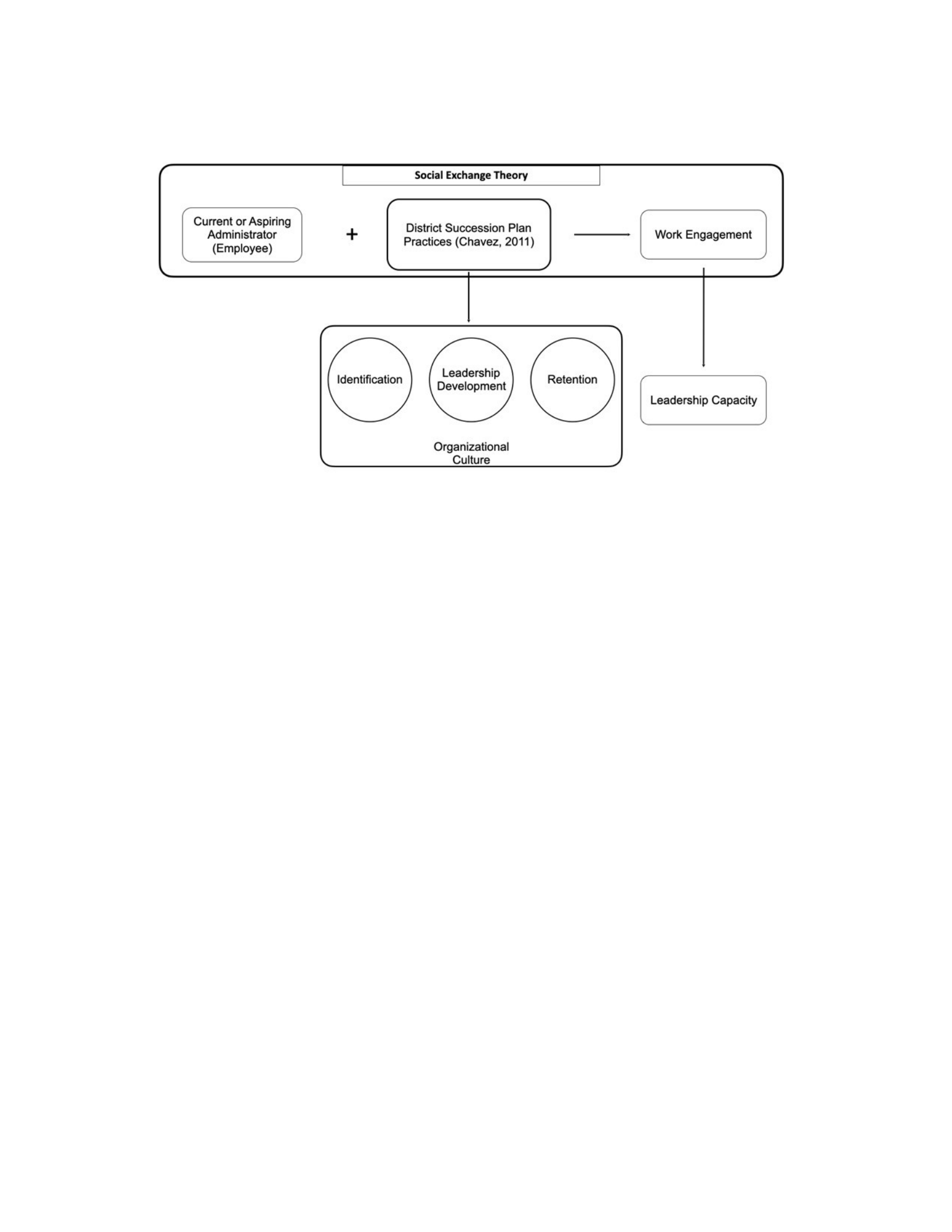
This study was grounded in Homans’s (1961) theory, which provided the
theoretical background, as shown in Figure 1. The work of Gulzar and Durrani (2014) and
Chavez (2011) further supported the conceptual foundation. Gulzar and Durrani (2014)
suggested that effective succession planning ensures leadership at all levels and provides
career opportunities that contribute to employee growth, satisfaction, and engagement.
They argued that succession planning practices that utilize Kahn’s seven factors for
engagement align with the principles of SET and demonstrate commitment to human
capital, resulting in more engaged employees (Lockwood, 2007).
Figure 1
Conceptual Framework
17
Additionally, Gulzar and Durrani (2014) emphasized that effective succession
planning not only ensures strong leadership at each level but also boosts job satisfaction
and engagement. High employee engagement, in turn, contributes to talent retention and
improved organizational performance (Gulzar & Durrani, 2014). Succession planning acts
as a form of reward and recognition for employees’ hard work, and these benefits are
known drivers of engagement. When succession planning is aligned with the
organization’s goals, employees gain a better understanding of their roles, feel valued, and
align their personal growth and career advancement with the organization’s strategic
objectives (Gulzar & Durrani, 2014). This alignment creates a positive cycle wherein
succession planning leads to greater employee engagement and organizational success.
Gulzar and Durrani’s (2014) research supported the idea that effective succession
planning can enhance employee engagement. Chavez (2011) proposed three key
principles of succession planning practices: (a) identification of potential leaders, (b)
development of leaders, and (c) retention. Organizational culture and climate influence the
effectiveness of these practices (Abdullahi et al., 2022; Lockwood, 2007; Parfitt, 2017).
18

For succession planning to foster a culture of engagement, it must align with the
organization’s culture (Lockwood, 2007; Parfitt, 2017). Research indicated that
organizational culture impacts the effectiveness of succession planning and leadership
development. Therefore, the survey included questions aimed at gaining a very high-level
understanding of aspects related to organizational culture and the three principles
proposed by Chavez (2011), using this framework to organize and analyze the data.
In this framework, strategic succession planning acts as a catalyst for improved
leadership, driving districts and individual schools to enhance their succession process.
Despite this study’s nonsignificant results, the findings will contribute to the body of
research on succession planning by offering recommendations and highlighting the need
for further exploration of succession planning strategies. The goal is to enable future
educational leaders to select and implement succession practices that enhance work
engagement for both aspiring and current leaders. Such adjustments could improve
succession planning, transform leadership identification and development, increase
leadership capacity, and positively impact various teacher and school outcomes, ultimately
leading to improved student achievement (Herman et al., 2017).
Summary of the Methodology
This quantitative study employed a multiple linear regression approach to examine
the relationship between district succession planning practices and their impact on
employee engagement. This method supported efforts to determine the variations in
succession planning practices and their impact on employee engagement levels among K–
12 aspiring and current leaders. This approach was appropriate for analyzing existing data
19

where the effects of the variables have already occurred and where random assignments of
treatments was not feasible (Creswell, 2014).
Design, Population, and Sampling Procedures
The study was a quantitative analysis utilizing multiple linear regression. Data
collection took place through a web-based survey administered to a convenience sample
of aspiring and current K–12 leaders in the United States. To evaluate the impact of
succession planning practices on employee engagement, the participants completed the
Succession Alignment and Educational Leadership Engagement Survey (SAELES), which
incorporated two instruments: the Utrecht Work Engagement Scale 17 (UWES-17) for
measuring employee engagement, and Parfitt’s (2017) Succession Planning
Perception Survey (SPSP) for evaluating perceptions of succession planning practices.
These instruments were the best fit for this study because of their ability to capture data
relevant to the key variables of interest.
The sampling frame for this study consisted of members of a LinkedIn group
called Principals, School Directors, Deans, and Educational Leaders (81,000+ members)
and Facebook groups called PhinisheD/FinishEdD (23,000+ members) and School
Principals, Administrators, & Counselors Networking Group (7,000+ members) (USA).
After the group administrators approved the message, I posted an invitation on the group
site, asking current and aspiring leaders in public K–12 educational organizations to
complete a survey. The invitation to participate in this study could have reached over
100,000 administrators. To ensure anonymity and confidentiality, the web link did not
connect any responses to individuals.
20

Data Analysis
I tested the survey instrument for validity and reliability before administering it to
participants. This process included piloting the instrument and engaging an expert panel
to gauge its effectiveness and consistency in measuring the intended variables. I used
descriptive statistics to narratively describe the data and calculated frequencies and
percentages for age, gender, educational level, position, and years of experience as an
administrator. Descriptive statistics provided the means to answer RQ1 as well. I figured
the means, standard deviations, Cronbach’s alpha reliability coefficients, and Pearson
correlation matrix for the UWES-17 and each of the components of succession planning.
Multiple linear regression, where the dependent variable was the UWES-17 total score
and the independent variables were the components of succession planning, was the
means of answering RQ2.
Limitations and Delimitations
The study’s limitations included the use of self-reported data and potential
variations in participants’ involvement in succession planning within their districts.
Participants’ individual perceptions, which introduce the potential for response bias, may
have influenced responses regarding succession planning practices. This bias could
compromise the accuracy and credibility of the reported succession practices within the
districts. Furthermore, the findings may have been skewed by the possibility that those
who responded to the survey were employees more engaged with their school districts,
potentially leading to a biased representation of succession planning practices. The
differing experiences and engagement levels among nonrespondents might have produced
21

results that were not fully representative. These limitations potentially affected not only
the generalizability but also the overall credibility of the results.
The participants in this study were a convenience sample from LinkedIn and
Facebook groups, which yielded a national sample of current and aspiring administrators.
Convenience sampling may produce bias because of the willingness of the participants to
take the survey. A convenience sample is not a truly random sample of the population, and
its use may limit the generalizability of the results (Creswell, 2014). However, the first
delimitation considered in this study was that data were collected from an online group of
self-reported current and aspiring administrators at a specific point in their careers. Many
individuals invited to participate may not have been actively employed as administrators
or aspiring administrators at the time. Additionally, self-selection into the group did not
guarantee that participants were actively fulfilling these roles.
Definition of Key Terms
For the purpose of this study, the subsequent terms will be operationally defined:
Administrator. Central office and building level (principal, assistant principal,
deans, etc.) administrators in a K–12 public school district.
Assistant Principal or Vice Principal. The entry-level position and often the first
formal administrative position that individuals without previous administrative experience
hold (Marshall & Hooley, 2006, p. 13).
Development. The second phase of succession planning wherein organizations
train, coach, mentor, and socialize aspiring and current leaders (Cieminski, 2018; Clayton
et al., 2013; Parfitt, 2017; Rothwell, 2005, 2015).
22

Identification/Recruitment. The initial phase in the succession planning process
wherein organizations systematically identify and assess the current talent at all levels to
determine the potential of individuals for increased responsibilities and advancement
(Rothwell, 2005, 2015).
Retention. The final phase of the succession planning process wherein
organizations implement practices to decrease turnover and retain key talent (Parfitt,
2017).
Succession Planning. A talent management process wherein organizations make
strategic efforts to recruit, retain, develop, and encourage employee growth to ensure
optimal continuity of leadership (Barker, 2006; Bogdány et al., 2014; Gulzar & Durrani,
2014; Sweeney, 2013).
Succession Planning Practices. Practices that aid in recruitment, retention, and
the transition of leadership (Bogdány et al., 2014).
Work Engagement. The commitment and involvement of an individual at their
workplace (Anitha, 2014).
Summary
The role of succession planning is evolving in education. Increasingly, both local
and national scrutiny highlights the importance of recruiting and retaining educational
leaders in U.S. public schools. Empirical research has shown that leadership is vital to
student achievement gains (Yasmeen & Tobawal, 2023). A national focus on leadership is
especially apparent in the Every Student Succeeds Act of 2015 (ESSA; Herman et al.,
2017; Young et al., 2017). This research study’s purpose was to determine the relationship
between the presence and quality of succession planning practices and current and
23

aspiring administrators’ work engagement in K–12 school districts and to identify what
practices may be needed to increase the engagement of current and aspiring administrators
so that educational organizations may retain potential leadership candidates.
Chapter 2 contains a review of the current research available on the succession
planning practices and employee engagement of K–12 administrators. Chapter 3 describes
the methodology, data collection process, and data analysis process applied in this study.
Chapter 4 provides an overview of the data collected and its analysis. Chapter 5 focuses
on the summarization, evaluation, and the connection of the results to previous literature
and provides recommendations for further research.
24

Chapter 2: Literature Review
Introduction
The purpose of this study was to investigate the relationship between district
succession planning practices and current and aspiring administrators’ work engagement.
A review of the body of literature on leadership succession in schools revealed the
rationale, components, and current limitations of succession planning. Chapter 2 describes
the methodology used to search for literature. A summary of the relevant literature
features a discussion of succession planning practices, viewed through the lens of the
study’s conceptual framework, which frames those practices into three categories:
recruitment, leadership development, and retention. Next, the chapter contains analysis of
literature related to engagement theories, succession planning, and the theoretical
framework followed by a summary of the literature review.
Methods of Searching
To collect literature for this dissertation, I employed search engines and databases
including Article Plus, EBSCO Host, ProQuest, Google, and Google Scholar. Search
terms included the following:
Leadership development in K–12 schools-GS Leadership succession
Succession planning Leadership succession in schools
Leadership socialization Aspiring educational leaders
Leadership development Leadership > succession
planning
Tapping > Google Scholar Principal turnover
Succession planning > scholarly journal Educator engagement
Tapping leadership > Google Scholar Work engagement + administrators
School administrator engagement Educators + social exchange theory
25

Teacher engagement UWES validity + reliability
Employee development Social exchange theory
UWES response rates + educators
Employee engagement strategic planning + leadership succession
Assistant principal succession and principal succession planning
Succession planning in education > scholarly journals
Succession planning > scholarly journals > 2010–2017 > leadership >
succession planning
Succession planning K–12 education > scholarly journals > 2010–2017 >
Tapping leadership > education > last 5 years > GW article plus
Principal shortage > education > last 5 years > education and educational research >
GW
Peer–reviewed articles on strategic succession planning
I assembled the articles in the following categories: leadership succession planning,
strategic leadership succession planning, identification of aspiring leaders, development
of leaders, retention of leaders, employee engagement, work and employee engagement
theories, and the effect of succession planning on employee engagement.
The review of literature on leadership succession and work engagement showed
that research primarily focuses on preparing aspiring leaders for principal succession,
strategic planning for succession, and the principles of succession planning. Studies often
included terms such as “succession planning,” “aspiring leaders,” “employee
engagement,” “grow-your-own leadership,” “leadership development,” and “succession
programs.”
26

The reference pages of other researchers’ peer-reviewed articles and dissertations
also suggested additional resources for this literature review. This literature review
includes the significance of leadership succession, formal strategic planning for
succession, the development of aspiring and current leaders, the retention of aspiring
leaders, informal succession programs, employee engagement, and the impact of
succession planning on aspiring and current administrator’s work engagement.
Literature Review
This review begins with an overview of succession planning in general, and more
specifically, in business and educational applications. The chapter then addresses the
components, benefits, and potential problems with succession planning and offers
examples of the types of leadership succession programs researchers have identified to
date. Finally, the review presents the scholarly knowledge of the other major factors in
this study—retention, and employee engagement—in terms of the theoretical framework
that shaped this investigation.
Strategic Planning for Succession
Strategic planning for school leadership succession is essential for the vitality and
growth of an organization (Burrows-McCabe, 2014; Clayton, 2014). The goal of strategic
planning should be to continuously reinvent the organization, creating the ideal future
version (W. J. Cook, 2000; Kaufman et al., 2002; Rothwell, 2005, 2015). To stay relevant
and meet the ever-changing needs of society, organizations must consistently plan for the
future and revitalize their strategies to fulfill their goals and mission (W. J. Cook, 2000;
Kaufman et al., 2002; Peters, 2011). Strategic planning for succession is especially crucial
in educational realms due to the ever-changing environment and nature of the work of
27

educating students (Sweeney, 2013). An organization must assess its current needs and
predict its requirements to succeed in the future (W. J. Cook, 2000; Jenlink et al., 1998;
Kaufman et al., 2002). Effective leadership succession planning utilizes data collection
from all organizational managers in planning, implementing, and revising the process of
succession planning decisions (Fusarelli et al., 2018; Groves, 2011). As organizations
develop, so do the needs of their leaders.
Groves (2011) asserted that it is essential for an organization to understand the true
meaning of succession planning. At times, organizations conflate succession planning
with planning for position replacements. Groves (2011) referred to this form of planning
as replacement planning. Replacement planning is when organizations appoint and groom
only certain individuals for specific positions. However, succession planning focuses on
developing many individuals to lead the organization to establish many levels of
leadership throughout the organization (Abdullahi et al., 2022; Beeson, 1998).
Groves (2011) conducted semi-structured interviews with 30 CEOs or senior
human resource executives in 15 U.S. healthcare organizations known for successful
CEO successions. Although a small sample size limited the generalizability of the results,
Groves concluded that when succession planning is used to tap specific leaders for
specific positions, it damaged the organization, led to low morale, and resulted in turnover
among talented employees not considered for those positions. Also, succession planning
done correctly can lead to diverse management. Replacement planning can lead to hiring
successors who identify directly with the current leaders, which may also limit diversity
(Groves, 2011). Certain characteristics identify succession planning and distinguish it
from replacement planning and other forms of organizational development.
28

One core component of succession planning is professional development. Young et
al. (2017) asserted that the federal government has underlined the importance of
leadership development and interventions through the passage and reauthorization of the
Elementary and Secondary Education Act (ESEA) of 1965. The initial law enacted by the
Johnson Administration in 1965 provided federal aid to schools to improve education for
students in poverty. Although the initial legislation had limited mentions of school-based
leadership, it evolved with each reauthorization to include more focus on the importance
and funding of leadership development.
As the latest reauthorization of ESEA, the ESSA (2015) highlights the use of
research-based practices and allows the flexibility to use federal money to support those
practices. The ESSA allows states and school divisions to set aside Title II money for
research-based leadership development. The allowance of more flexibility with federal
funds is an improvement on the previous installation of the ESEA, the No Child Left
Behind Act (NCLB) of 2001, which allotted grants and subgrants only for leadership
support. The NCLB also increased the focus on school accountability by mandating that
all schools not meeting their annual benchmark standards establish a school improvement
plan (SIP) or similar strategy to increase academic achievement (Dunaway et al., 2012;
Schumacher, 2011; Strunk et al., 2015).
However, NCLB did not include a mandate for leadership succession in those
plans to accommodate the changes in focus on outcome-based measures (Lunenburg,
2010; Lynch, 2012). Districts and schools continuously focus on student achievement and
teacher quality, but not all have put succession plans in place for developing instructional
leaders to guide teachers in schools (Campbell & Gross, 2012; Hanover Research
29

Council, 2014; Zepeda et al., 2012). Effective strategic succession planning allows the
organization to operate like a brain, hardly missing a connection and seamlessly evolving
as different leadership takes place (Morgan, 2006). Redman (2006) theorized succession
planning can also offer other advantages to school districts, including reduced turnover
and socialization costs, a more orderly transition of power, and the ongoing development
of employees’ capabilities.
Succession Planning in Business
Leadership succession planning in business has become a key component in an
organization’s success (Redman, 2006). Although the practice has been identified as a
necessity for future success, not all organizations have a process for leadership succession
planning (Brant et al., 2008; Redman, 2006). An analysis of the top 20 medical device
companies revealed 95% of them placed great emphasis on ensuring they had formal
succession planning strategies aimed at identifying and preparing a ready pool of
successors for leadership positions (Brant et al., 2008). As shown by the success of these
companies, a strategically planned succession will result in a successful, wellthought out,
cultivated transition of leadership for the institution and the incoming leader. Such
preparations can ensure that organizations thrive even during the turbulent time of
leadership transition.
Basari and Sabegh (2014) conducted a quantitative study and administered a
survey to analyze the importance of a management approach to succession planning in
public organizations. The primary goal of their research was to study how changes in
organizational factors influenced the succession of managers in Khuzestan Province, Iran.
Organizational factors included senior management support, encouragement from leaders,
30

and employee retention. The researchers applied random sampling to select 144 of the 550
employees working in Khuzestan as participants in the study.
The 20-item questionnaire used a Likert scale, and the questions addressed
succession planning and organizational factors. The researchers mentioned that experts
verified the validity of the questionnaire but did not explain either the process or which
experts were involved. Cronbach’s alpha was the means of assessing the internal
consistency reliability of the survey, and the value was .85. Because the level was higher
than .70, Basari and Sabegh (2014) concluded that the results of the questionnaire were
reliable. Results of the Pearson correlation (r = .49, p < .001) indicated that organizational
factors have a moderate positive relationship with succession planning. Basari and Sabegh
(2014) determined that any disruption in the organizational factors affected the
organization’s strategic succession planning process. Therefore, organizations need to
ensure that organizational factors necessary for strategic planning are in place to ensure a
smooth transition in leadership succession.
Succession Planning in Public Education
NCLB (2001), a reauthorization of ESEA, was a catalyst for school districts to
become focused on training and recruiting instructional leaders to lead schools to assure
compliance and student success (Dunaway et al., 2012; Schumacher, 2011; Strunk et al.,
2015). Paradoxically, NCLB contained no mandate to include leadership succession in
those plans. In contrast, the latest ESEA reauthorization, the ESSA, renewed the focus on
instructional leadership with stronger focus on developing school leaders to improve
schools, instructional practices, and increase equity in schools (Herman et al., 2017;
Young et al., 2017).
31

ESSA’s (2015) Title II explicitly targeted and allotted federal funds to develop and
recruit school leaders and principals. The regulation allowed the use of a significant
amount of flexible and targeted federal funding (almost 8% of the state’s allotment) to
develop evidenced-based practices on professional development to guide leadership
improvements. Additionally, the statute promoted strengthening the leadership succession
pipeline by providing grants to states and districts, offering the option to partner with
higher education institutions, and encouraging recruitment, development, and support for
leaders in high-poverty, low-performing schools. Also, the ESSA embodied President
Johnson’s initial goals for implementing the ESEA: supporting equity of education for all
students through leadership and funding, as evidenced by the mandate that 7% of state
funding must be used by school districts to support low-performing schools and efforts to
close the achievement gap (Young et al., 2017).
The positive relationship between effective leaders and student achievement
necessitated strategic planning for leadership succession (Mendels & Mitgang, 2013).
Sweeney (2013) argued that organizations must be proactive in implementing strategic
planning on district and school levels. However, Cieminski (2018), Riddick (2009), and
Mascall et al. (2011) asserted that educational organizations have been hesitant to
formally institute succession planning. In addition, numerous theorists outlined the
process of strategic planning; however, no conclusive research indicated that any one
specific plan yielded successful programs (Orr, 2011; Sweeney, 2013).
Consequently, various models for leadership succession planning have emerged
(Elbanna, 2008; Hambright & Diamantes, 2004; Orr, 2011; Strunk et al., 2015; Zepeda et
al., 2012). Institutions and researchers approach succession planning in various ways
32

because no set standard for succession planning exists (Cieminski, 2018). Zepeda et al.
(2012) studied four Georgia school systems’ succession plans and found differences in the
sense of urgency in implementing the plans and the types of succession planning
processes districts and schools utilized. The researchers reported that succession plans that
focus on developing aspiring leaders should be an intricate part of strategic planning for
the districts and schools to continue the organization’s mission of increasing student
achievement and creating a learning community.
Researchers cautioned that strategic planning for succession is not a linear process
wherein any one approach works for any organization (Abdullahi et al., 2022; Peters,
2011; Sweeney, 2013). Based on a review of literature, Sweeney (2013) confirmed the
urgency for organizations to be proactive and engaged in strategic succession planning.
However, researchers cautioned that succession planning is different for each organization
depending on its size, needs, and type of education. Educational organizations are often
fluid and unstable, and district educational leaders must understand differences in the
stability and purpose of succession planning within their districts. Consequently, organic
approaches to succession planning are essential
(Abdullahi et al., 2022; Sweeney, 2013).
Sweeney (2013) went on to say that decentralizing succession planning could
allow district schools to adapt their succession plans to meet the needs of the communities
they serve. Educational organizations must realize when creating succession plans that the
educational system, along with the family structure, has evolved tremendously over the
last hundred years and is ever-changing. It is impossible to create systemic change without
recognizing interrelationships and interdependencies within the educational system itself
33

and the community it serves (W. J. Cook, 2000; Jenlink et al., 1998; Sweeney, 2013).
Hence, strategic planning for succession should also be fluid, and educators must retain
the ability to adjust plans (Sweeney, 2013).
The lack of planning, preparation, and support for leadership succession and new
leaders was one of the major themes in Peters’s (2011) qualitative instrumental case study.
The study was an investigation of the experiences of two early career high school female
principals within the same school in a small urban division. The first principal served 2
years, and her successor was employed for only 1 year. Peters (2011) aimed to understand
the succession experiences of principals who lead school reform and sought to answer two
questions: (a) What district supports are needed to sustain early career leaders in
challenging contexts? and (b) How can districts anticipate and address leadership
transitions systematically and at the school level?
Peters (2011) highlighted that the districts and schools were primarily focused on
replacement planning, a method that Groves (2011) identified as a reactive approach to fill
immediate vacancies rather than a comprehensive succession plan. Although Peters’s
(2011) conclusions regarding the two principals, who experienced replacement planning
rather than a more integrated succession planning approach, might not be broadly
generalizable, they highlighted the inadequacies of the current practices. Peters (2011)
argued for a shift toward dynamic succession planning, which offers a more holistic
approach by incorporating planning, forecasting, and sustaining aspects of leadership
succession simultaneously. Despite the limited scope of the case study, Peters (2011)
integrated their findings with existing literature to advocate for this broader approach to
succession planning.
34

The planning phase of principal succession presented in the dynamic succession
planning framework was lacking or even nonexistent in districts and schools, according to
the researcher. Peters (2011) pointed to the participants’ experience of filling their
successors’ positions two weeks before school started, even though the principals had
resigned a month and a half earlier. The lack of preparation time left the new principals
and the school at a disadvantage for the school year. According to Peters, succession plans
are necessary and should be a requirement for all districts and schools. The researcher
proposed another step in the planning process, which was to ensure that districts have
development plans specifically for assistant principals who show potential for success at
the principal level. Participants in the study expressed the desire for their districts to have
more comprehensive development and succession plans so that leaders are ready and
waiting even before the time comes to fill a principal vacancy (Peters,
2011).
Components, Benefits, and Drawbacks of Succession Planning
The goal of leadership succession plans is to ensure a clear path for organizations
to follow when a leader in an educational organization expectedly or unexpectedly departs
and prepare developed leaders to step into that position (Groves, 2011; Hanover Research
Council, 2012; Peters, 2011). As leaders depart their positions, according to McCall
(2006), employees already in the organization who have had ample training can fill the
openings. This practice may ensure individuals are adequately prepared for succession and
organizations experience less downtime during transitions (McCall, 2006).
Districts may incorporate various strategies into succession planning to develop
aspiring leader skills. One option is partnering with a university to incorporate coursework
35

on theory and best practices and to aid in recruitment and job placement (Harchar &
Campbell, 2010; Orr, 2011). School districts may establish an ongoing mentor/mentee
program (Cieminski, 2018; Clayton et al., 2013; Groves, 2011), develop socialization
programs (Browne-Ferrigno, 2007), or provide hands-on opportunities to apply theory
learned in coursework (Browne-Ferrigno & Allen, 2006; Browne-Ferrigno
& Muth, 2008).
Leadership Succession Programs
District Partnerships With Universities. Harchar and Campbell (2010)
concluded that a connection exists between university leadership preparation and
successful school district succession programs. A critical aspect of the success of
partnerships between districts and universities includes establishing clear partner
relationship norms and guidelines for collaboration (Campbell & Gross, 2012; Clayton et
al., 2013; Fowler, 2013). Both institutions must embed the partnership requirements as a
part of their workload, performance evaluations, and resource allotment so that the
partnership is beneficial to both the university and the PK–12 school districts (Harchar &
Campbell, 2010; Parylo, 2013).
Researchers have also identified effective ways for districts to “grow their own”
leadership by partnering with universities in leadership recruitment and training
(BrowneFerrigno & Allen, 2006; Browne-Ferrigno & Muth, 2008; Clayton et al., 2013). A
productive partnership between universities and schools may include authentic leadership
experiences and internships for aspiring school leaders (Browne-Ferrigno & Muth, 2012;
Clayton et al., 2013). Nevertheless, New Leaders (2013) found that in many cases,
36

universities and districts continue to operate in silos with no collaboration between the
two entities to develop aspiring leaders.
Grow-Your-Own Leadership Programs. More attention needs to be focused on
ensuring that program participants have real-world experiences in administrative positions
before they step into the role (Browne-Ferrigno & Muth, 2008). Affording aspiring leaders
many practical learning opportunities has the potential to give them the confidence they
need in their decision-making processes (Browne-Ferrigno & Muth, 2008). A leader’s
experiences and knowledge determine—and may limit—the decisionmaking capacity they
possess (Cohen et al., 1972). The role of the district in grow-yourown leadership is to
provide students with internship experiences in schools where candidates learn the
administrative skills necessary to lead successful schools (Browne-
Ferrigno, 2007; Browne-Ferrigno & Allen, 2006; Clayton et al., 2013; Parylo, 2013).
In 2010, Illinois took the university-district partnership concept further by
becoming one of the first states in the nation to require state-wide principal preparation
programs to partner with local districts (White et al., 2016). This emphasis on university
and district partnerships ensures that principal preparation aligns with the needs of Illinois
schools. The Illinois General Assembly passed Public Act 96–0903 in 2010 to restructure
the preparation of school leaders in response to districts plagued with tens of thousands of
educators with administrator licenses who have no intention of leading schools (Mitchell,
2017; White et al., 2016).
Other requirements established by the state legislation included that candidates
must illustrate mastery of critical principal leadership competencies; candidates should
37

receive training in instructional leadership; and principals must be trained to work with all
students P–12, students with disabilities, and English language learners. The
University of Illinois in Chicago, to comply with state legislation, instituted a competitive
entrance criterion and a year-long internship (Mitchell, 2017). The university also requires
a year-long full-time paid leadership residency. Further, the candidate must then receive
leadership coaching for 3 years after graduating from the program (Mitchell, 2017).
Preliminary results derived from graduation and attendance rates of high schools led by
graduates of the principal preparation program indicated success (Mitchell, 2017;
White et al., 2016).
Also, White et al. (2016) conducted a mixed-methods study to investigate
stakeholders’ perspectives on the goals, implementation, and potential impacts of Illinois’
new principal preparation initiative. The study utilized site visits, syllabus reviews, and an
online survey as instruments to gather data. The researchers collected data in two phases
during the fall of 2014 and the winter of 2015. Participants included program faculty
members, the district partners of 21 out of 28 principal preparation programs in Illinois,
and a project advisory board composed of 24 key decision makers. The key findings of
this study included (a) most programs reported having stronger partnerships when the
district took a more active role in developing leaders, (b) most programs experienced a
drop in enrollment due to a shift in the quality of program applicants, (c) participants
reported that the redesign brought clarity to the focus of the program towards instructional
leadership, (d) competency-based internships exposed candidates to a wealth of
experiences that aided in their quest for the principalship, and (e) more accurate outcome
38

data on graduates was collected due to the requirement that all program coordinators
collect data.
Although each program acknowledged their challenges and areas for growth, the
consensus of many of the study participants was that they were pleased with the revised
programs and new partnerships with local state universities. One concern that remained,
however, was whether the new strenuous requirements would produce enough candidates
for principalship for the future despite the reduced enrollment in principal preparation
programs (White et al., 2016).
Leadership succession programs not only identify, recruit, prepare, and replace
administrators; they also provide socialization and mentorships. These relationships
provide ongoing professional development for all leaders by allowing leaders to teach
classes, facilitate workshops, and play an active role in leadership development (Fink &
Brayman, 2006; Groves, 2011). Well-structured succession programs with socialization
and leadership training are essential resources for supporting new leadership (Bengtson et
al., 2013; Cieminski, 2018; Darling-Hammond et al., 2022). Unplanned leadership
succession is a prominent factor in struggling schools, and this deficit may hinder
organizational growth (Cocklin & Wilkinson, 2011; Peters, 2011). In the business
industry, leadership academies equate to the grow-your-own leadership
academies/programs in educational organizations.
During leadership academies, identified leaders receive executive-directed in–
services and are assigned to action-learning projects where they work in teams to
complete the assignment. Action-learning projects are identified by top executives to gain
insight on issues current to the organization. The leadership academy allows them to
39

socialize and gain an audience with their peers, managers, and executive leadership. This
approach helps the executive leaders to identify potential leaders they may not have
noticed (Groves, 2011).
Some educational districts are developing grow-your-own leadership programs to
fill the leadership pipeline. Browne-Ferrigno (2007), Browne-Ferrigno and Allen (2006),
and Clayton et al. (2013) provided exemplars of well-planned grow-your-own leadership
succession programs in rural districts. The goal was to counteract the weak leadership
training many candidates had received and to increase the capacity of all leaders, aspiring
and current, in their districts.
The rural school district in Clayton et al.’s (2013) study and the school district in
Browne-Ferrigno and Allen’s (2006) study had encountered increasing difficulty finding
qualified candidates to fill administrative positions. Acknowledging the deficit of quality
leadership and realizing they would be losing many leaders to retirement, each
administration decided they must commit to cultivating leadership. Browne-Ferrigno and
Allen’s (2006) study focused on the succession planning of Picket County School District
(PCSD) located in a rural area of Kentucky.
In this study, the superintendent and central administration worked with outside
agencies and the University of Kentucky to establish the Principals Excellence Program
(PEP). To qualify for the program, participants had to have a valid administrative license.
The 15 participants chosen for the PEP received university instruction and hands-on
experience in district schools. While working in schools, they had a chance to apply the
theory from coursework to the duties of an administrator. Throughout the PEP,
40

participants engaged in professional development on leadership, effective communication,
and research-based instructional practices (Browne-Ferrigno, 2007;
Browne-Ferrigno & Allen, 2006).
The PCSD research, a qualitative study with data drawn from interviews, journals,
and questionnaires, determined that PEP was successful in refining instructional leaders
and potential administrative candidates as measured by a self-reported professional
growth questionnaire. Potential administrative candidates expressed gratitude for the
necessary professional development and real-world leadership training they received. In
addition, current administrators reported growth in their personal development in
instructional leadership, distributed leadership, and the need for school leaders to
collaborate with other school leaders as well as school stakeholders to support
instructional programs in their schools (Browne-Ferrigno, 2007; Browne-Ferrigno &
Allen, 2006).
Clayton et al. (2013) focused on a struggling rural school district in a mid-Atlantic
state. Two of the three district’s schools failed to meet Adequate Yearly Progress (AYP),
as required by NCLB (2001). The school district obtained a grant to fund a leadership
cohort called the Futures Program. Researchers recruited eight aspiring administrators and
eight veteran administrators to participate in the program. Each participant who enrolled
in the educational leadership cohort participated in four key components: an intense
mentoring program, an internship, leadership-focused professional development in–
services, and coursework.
The researchers strategically matched the aspiring leaders with veteran
administrators as their mentors. Study participants expressed satisfaction with their
41

mentor/mentee assignments. The study conclusions suggested the importance of careful
deliberation when assigning mentor/mentee partnerships, time allotted for authentic
internship experiences, projects with a clear connection to the district’s vision for
improving student learning, and development of instruments for successful mentoring
programs with a positive impact on leadership development (Clayton et al., 2013).
The goals for each of the two aforementioned succession programs were to build
the instructional leadership capacities of current and aspiring school leaders. Both districts
were also able to build their aspiring leaders’ confidence and skill levels while
simultaneously expanding their applicant pool of capable leaders. They were successful in
this endeavor, as indicated by the participants who reported feeling ready to step
immediately into a leadership position and continue the work of improving academic
achievement in schools (Browne-Ferrigno, 2007; Browne-Ferrigno & Allen, 2006;
Clayton et al., 2013).
Both studies were examples of succession programs utilizing school districts and
university partnerships to instruct their potential leaders. The university offered classes in
theory, knowledge, and research-based leadership practices for aspiring leaders to
implement when faced with educational dilemmas, while districts concurrently assisted in
recruiting, socializing, and mentoring aspiring administrators. All participants and
stakeholders interviewed in the Futures Program and PEP reported feeling pleased with
the mentor selections and program outcomes (Browne-Ferrigno, 2007; Browne-Ferrigno
& Allen, 2006; Clayton et al., 2013). Researchers asserted that it might be beneficial for
districts to prepare leaders in grow- your own leadership programs but cautioned that if
42

districts are not careful, these programs can also lead to unintended consequences of
groupthink and organization stagnation (Clayton, 2014).
Mentoring. Mentoring is linked to job and career success and plays a significant
role in the development of future leaders (Darling-Hammond et al., 2022; Leithwood et
al., 2004; Redman, 2006). A robust mentoring program is vital for any organization
(Bokeno & Gantt, 2000), and typically involves either informal or formal pairing of
mentors and mentees in reciprocal learning experiences. Mentorship programs are
essential for the socialization of aspiring leaders, helping them integrate into the
organization’s culture and providing a safe space for mentees to discuss challenges
(Cieminski, 2018; Clayton et al., 2013).
One case study examination of the effectiveness of mentorship in administrative
internships revealed that effective mentorship involves three distinct phases: establishing
the partnership, nurturing the mentoring relationship, and enabling learning through
leadership experiences (Thessin et al., 2020). The mentors provided critical support and
feedback, aiding the interns’ ability to lead authentic administrative tasks, which
significantly contributed to their development as leaders. Thessin et al. (2020) emphasized
that a strong mentor-intern relationship, built on trust and reciprocal learning, enhances
the internship experience, thereby promoting the growth of competent educational
administrators.
Similarly, the Futures Program recognized that both aspiring and current leaders
need mentoring and professional development. It began with the purposeful pairing of
mentors with mentees (Clayton et al., 2013). Each pair was required to meet face-to-face
once a month and interact at least three additional times using another form of
43

communication to foster this relationship. However, mentors and mentees faced
challenges such as outside obligations and limited time, which sometimes forced them to
choose between their sanctioned educational responsibilities and the program. Despite
these challenges, participants in this study reported benefits from participation in the
mentorship program, especially when projects focused on improving the school’s
instructional program, mirroring findings from Thessin et al. (2020) that well-structured
mentorship could lead to meaningful leadership development.
In contrast, a mentoring program similar to the PEP, which designated specific
time in their program for mentorship activities, reported greater success (BrowneFerrigno
& Allen, 2006). The PEP designated one day a week for collaborative learning and
mentorship activities and allotted time within teachers’ working hours to ensure that
mentors and mentees could have frequent, meaningful interactions. As a result,
participants in the PCSD were able to engage in more consistent and impactful
interactions, reinforcing their mission to ensure that schools in their district had more
concentrated leadership development opportunities (Browne-Ferrigno, 2007;
BrowneFerrigno & Allen, 2006).
Furthermore, informal mentoring relationships have a significant impact on
aspiring leaders, as demonstrated in a study by Barnett et al. (2017) involving 69 assistant
principals serving in school districts in the Southwestern United States. These assistant
principals valued the practical knowledge and learning opportunities provided by former
and current administrators, which enhanced their communication skills and relationships
with stakeholders. The study revealed that mentors advised assistant principals on
44

decision-making, building relationships with teachers and, and maintaining work-life
balance.
Overall, mentoring remains a critical component of leadership development
programs. Effective mentoring not only supports the professional growth of the mentees
but also strengthens the overall leadership within educational organizations. As suggested
by Thessin et al. (2020), structured, trust-based mentoring relationships can enhance the
leadership capabilities of administrative interns, preparing them for future challenges in
educational leadership. The findings from Barnett et al. (2017) reinforced the importance
of both formal and informal mentoring in developing well-rounded educational leaders.
Potential Problems With Succession Planning
Problems may arise when using succession planning as a tool for internal selection
of management positions. According to Hill (2012) in the Encyclopedia of Management,
succession planning can be shallow, focusing only on developing a select few for top
management positions instead of focusing on building all employees’ capacity. Hill (2012)
also referred to other issues with succession planning such as “crowned prince syndrome,”
talent drain, managing human resource information, and the roadblocks to effective
succession planning.
Animosity over management candidate selection may prompt employees who have
been overlooked to leave the company. In these situations, crowned prince syndrome and
talent drain may both lead to employee turnover (Hill, 2012). Crowned prince syndrome
occurs when only those employees who make themselves visible receive consideration for
promotion to management positions. Employees who are just as qualified but perhaps less
visible can be overlooked for promotion. Talent drain occurs as leaders move identified
45

talent up to higher management positions. The result may be a reduction in talent in the
lower and middle levels of the organization as the employees who are not promoted exit
the organization (Hill, 2012).
Managing human resource information is a daunting task for organizations. The
maintenance of employee performance and evaluation records over several years can be
laborious. Reviewing and comparing those records for various opportunities for
promotion add another layer of difficulty to succession planning (Hill, 2012). Other
roadblocks to succession planning include planning only for the CEO or another
highprofile leadership vacancy and the desire to have a seasoned leader who can make
immediate improvements (Hill, 2012). Identifying, recruiting, and retaining aspiring
leaders is a major component of succession planning (Abdullahi et al., 2022).
Aspiring Leaders
Organizations with strategic succession plans relay the message to current and
potential employees that human resources and investment in human capital are valuable to
the organization; hence, these organizations can recruit individuals who are interested in
opportunities for growth and development (Redman, 2006). All administrators should play
a role in the identification and development of leaders (Cieminski, 2018; Groves, 2011).
Identifying how current leadership competencies within the organization match up with
the organization’s desired competencies is critical to leadership development and the
recruitment of potential leaders among employees (Groves, 2011; Redman, 2006).
Identification. Succession planning begins with the identification and recruitment
of individuals who exhibit the potential to lead (Chavez, 2011, Neefe, 2009). This initial
stage, identification, involves a systematic process whereby an organization assesses the
46

current talent at all levels to evaluate individuals’ readiness for increased responsibilities
and their potential for advancement (Rothwell, 2005, 2015). The methods used to assess
talent can vary across organizations. Clayton et al. (2013) emphasized the importance of
surveying the needs of school districts and aspiring leaders to make informed, data-driven
decisions about the skills aspiring leaders need to develop to align with district goals.
Parfitt (2017) highlighted the need for educational organizations committed to
strategic succession planning and identifying potential leaders to incorporate multiple
points of evaluation. These evaluations must include consideration of the organizational
culture and the structural framework of the organization. Comprehensive assessment
ensures that the job responsibilities of principals, assistant principals, and other
administrators align with the skills that aspiring leaders need to develop for future
challenges (Russell & Sabina, 2014; Sweeney, 2013).
To achieve this alignment, districts should focus on developing and defining the
specific skills they want their leaders to possess. This approach aligns with
BrownFerrigno and Muth’s (2008) recommendation for districts to engage in
socialization, continuous professional improvement, principal readiness, and succession
planning. These initiatives help identify and train a pool of quality internal candidates for
leadership roles. Effective methods for identifying potential leaders include the use of
regular performance evaluations to provide insights into individuals’ capabilities and
achievements (Leithwood et al., 2004). Leadership competency assessments can help
pinpoint those who excel in critical leadership skills such as strategic thinking, team
management, and decision making (Burch et al., 2015).
47

Furthermore, comprehensive feedback involves collecting perspectives from
various stakeholders, offering a rounded view of an individual’s leadership abilities
(Chavez, 2011). Developmental assignments that test problem-solving and leadership in
real-world scenarios can also reveal potential leaders (Fletcher, 2019). Additionally,
mentoring and coaching programs allow experienced leaders to observe and develop
potential leaders, providing them with guidance and growth opportunities (Gulzar &
Durrani, 2014).
Professional development workshops and training sessions also serve as a platform
to gauge and enhance leadership potential, identifying those who are committed to their
own growth and the success of their organization (Yasmeen & Tobawal, 2023). By
implementing these strategies, districts can effectively identify individuals who are
capable of fulfilling current leadership roles and those who are potential candidates for
future advancement within the educational sector. This proactive approach in succession
planning ensures that organizations are prepared to meet future challenges with a pipeline
of well-trained and capable leaders.
Development. Educational leadership has a significant impact on learning
(Darling-Hammond et al., 2022; Hallinger & Heck, 2010; Leithwood et al., 2004;
Mendels & Mitgang, 2013; Yasmeen & Tobawal, 2023); therefore, developing aspiring
leaders is vital to improving student performance. Development is the second phase of
succession planning; during this phase, organizations train, coach, mentor, and socialize
aspiring and current leaders (Cieminski, 2018; Clayton et al., 2013; Parfitt, 2017,
Rothwell, 2005, 2015). Leithwood et al. (2004) found that a leader’s formal and informal
learning experiences were an essential part of their development. Orr (2011), Young
48

(2015), Young and Crow (2017), and Darling-Hammond et al. (2022) agreed that
leadership preparation influences the development of a leader’s skills and aspirations.
However, in many states, after they have acquired a license, it is up to the individual to
stay current with best leadership practices and research (Briggs et al., 2013;
DarlingHammond et al., 2022; Vogel et al., 2014).
The George W. Bush Institute collected data on the policies regarding principal
preparation by sending the Principal Policy State Survey to chief state school officers in
all states and the District of Columbia (Briggs et al., 2013). Results indicated that only six
states (Washington, New Mexico, Tennessee, Georgia, Rhode Island, and Connecticut)
required principals to demonstrate effectiveness as leaders to renew their licenses (Briggs
et al., 2013). Currently, in Virginia, once an aspiring leader completes a principal
preparation program and receives their license, there are no specific leadership
development requirements to renew their administrator license other than to complete
180 hours of professional development (Virginia Code Commission, 2007; Virginia
Department of Education, 2021).
Without formal requirements for succession planning, no data are available
regarding whether administrators are meeting current standards and developing further
skills after receiving their degrees or certifications. Consequently, if they do not acquire a
leadership position upon the completion of their program, there is no assurance they will
remain qualified or confident in applying for future vacancies. Darling-Hammond et al.
(2022), Cieminski (2018), and Mendels and Mitgang (2013) suggested that states and
districts should establish formal policies for leadership succession plans to support the
professional development needs of aspiring and current school leaders.
49

Darling-Hammond et al. (2022) highlighted disparities in leadership training
across the United States, noting that candidates in states (like California) that have
structured and rigorous licensure and accreditation policies reported better access to
quality training. Federal and state policies that provide support and funding for the
development of leaders can help districts to continually engage current and aspiring
leaders to meet their student achievement goals (Darling-Hammond et al., 2022; Mendels
& Mitgang, 2013). Effective succession planning also integrates professional development
strategies such as partnerships with universities that offer coursework on theory and best
practices. Bengtson et al. (2013) emphasized the importances of socialization in leader
succession, advocating for mentorship programs that provide practical experience to apply
theoretical learning (see also Browne-Ferrigno, 2007;
Browne-Ferrigno & Allen, 2006; Clayton et al., 2013; Darling-Hammond et al., 2022).
Socialization
Socialization of aspiring and new leaders to organizational culture is essential. Van
Maanen and Schein (1979) described socialization as the method by which individuals
gain the necessary knowledge, skills, and values needed to effectively fulfill a social role
in an organization. Socialization allows employees to acclimate to relationships and to
understand the responsibilities of their new position in the educational organization,
which, by nature, must be continually learning, flexible, and adaptable (Morgan, 2006).
Current school leaders are responsible for socializing aspiring and new school leaders and
staff into the current school culture (Cieminski, 2018; S. D.
Cook & Yanow, 1993).
50

Socialization is also necessary for aspiring and incoming educational leaders to
understand the overt as well as the hidden culture of the organization they serve to
increase student achievement (Lunenberg, 2010). Increasing newcomers’ familiarity
allows them to understand the shared philosophies of the organization, including the
norms, values, rules, and climate, in their transition from a teaching role to an
administrative or newly acquired position. Various socialization tactics play a crucial role
in retaining new leaders and helping newcomers adjust to their new roles (Allen, 2006;
Bengtson et al., 2013; Cieminski, 2018).
Bengtson et al. (2013) conducted a qualitative, multiple-case study involving 29
administrators across four school districts in Georgia. At each district, key personnel,
including a superintendent, human resources director, a principal, and an assistant
principal, participated. The research focused on the socialization of individuals as they
moved into the principalship. Through in-depth interviews and stories from the
participants, the researchers identified six types of socialization tactics employed during
this transition period: collective-individual, formal-informal, sequential-random,
fixedvariable, serial-disjunctive, and investiture-divestiture (Bengtson et al., 2013).
The researchers described the impact of these socialization tactics on the retention
and success of new school leaders (Bengtson et al., 2013). For instance, collective
socialization involves grouping newcomers together to facilitate shared learning
experiences; this approach is common in the cohort model commonly used in grow-
yourown leadership programs. Formal tactics offer clearly defined socialization processes,
and informal tactics lack a structured approach. In contrast to random tactics, sequential
tactics follow a predetermined order. Fixed tactics have a specific timeline, but variable
51

tactics do not, and their use may create uncertainty for newcomers. Serial tactics, such as
mentorship programs, are often used in education to foster relationships between new and
experienced employees. Unlike investiture tactics, divestiture tactics lack mentorship
support for newcomers, but investiture tactics provide social support. To optimize
socialization, organizations can combine these tactics in various ways, depending on their
culture and goals for the organization (Allen, 2006; Bengtson et al., 2013).
To maintain or change their culture, educational organizations need effective
methods and tactics for socializing their leaders, starting with candidate selection (S. D.
Cook & Yanow, 1993). An organization’s self-view is influenced by both internal and
external environments, which affect its paradigms (Johnson, 1992). It is important for an
organization to learn, shift, and evolve even when trying to maintain its current cultural
identity (S. D. Cook & Yanow, 1993). Garfinkel (1967) asserted that culture is mainly
based on social norms, but Morgan (2006) argued that understanding the rules is also
necessary for full comprehension. It is challenging to assess an organization's culture from
an outsider's perspective, and leaders must understand the culture to manage or change it
effectively, according to Van Maanen and Schein (1978). As a result, educational leaders
should be aware of the culture of their organization, as failure to develop that knowledge
may be detrimental to the organization (Bengtson et al., 2013). For a new school leader,
socialization is critical for learning the culture and adapting to their position; thus,
socialization is an essential process for both aspiring and current school leaders.
Retention
Retention in succession planning within the public sector presents challenges, and
the process is often ineffectively implemented (Cieminski, 2018; Sweeney, 2013). These
52

challenges stem from high staff turnover, political dynamics, and issues with transparency
(Sweeney, 2013). Educational organizations in particular face notably high leadership
turnover rates (Cieminski, 2018).
In their study exploring tenure and retention of principals, Fuller and Young
(2009) analyzed data from newly hired principals across Texas public schools between
2006 and 2008 (N = 16,544). The researchers defined “newly hired” as principals who had
not been at the school during the previous academic year. The researchers reported a
concerning statistic: 90% of those who left their positions as principals did not return to
principal roles, indicating a significant exit rate from the profession. However, the
researchers did not reveal the specific percentage of principals who left, making it
difficult to gauge the full extent of turnover. Fuller and Young (2009) called for further
research to understand why principals were leaving and to pinpoint their subsequent
career paths. They also noted that the average tenure for a principal is 3 to 5 years (Fuller
& Young, 2009), a finding which aligned with other research (Hull, 2012; Zepeda et al.,
2012). High turnover rates can negatively impact student achievement, employee
engagement, and the school district budget (Darling-Hammond et al., 2007; Fuller &
Young, 2009; School Leaders Network, 2014).
Cieminski (2018) emphasized the critical impact of school leadership on student
success, arguing that the goal for strategic succession planning is not only to attract,
select, and develop leaders but also to retain skilled administrators (Cieminski, 2018;
Wood et al., 2013). Cieminski’s (2018) study in five large school districts in Colorado
involved semi-structured interviews with 18 participants, including seven school
53

district/system administrators and 11 school principals. The aim was to gather diverse
perspectives on succession practices and their impact on retention rates.
The findings identified effective succession planning practices that contributed to
higher retention rates among principals (Cieminski, 2018). These practices included
structured professional development focused on leadership skills, tailored support for new
principals through mentoring, and involving stakeholders in the process, which ensured a
better fit and greater satisfaction among principals. One participating district reported an
increase in principal retention to 93% over 3 years after implementing these practices,
compared to the state average of around 85%. This significant improvement highlighted
the effectiveness of the succession planning measures.
Bano et al. (2022) also provided valuable insights into the retention effects of
effective succession planning practices in Malaysian public higher learning institutions
(HLIs). The researchers emphasized the importance of structured practices despite a low
response rate of 3.08% on their survey. The 300 participants came from a population of
9,750 academic and nonacademic employees at four technical universities. Bano et al.’s
(2022) analysis [partial least squares structural equation modeling (PLS SEM)] revealed
that leadership development had a path coefficient of 0.94, which was significant (p
< .0001) and indicated a substantial impact on employee retention. Other key variables
included selection of a successor, top leadership involvement, technology advancement,
and succession planning programs. The results indicated that implementing leadership
development opportunities and involving top leaders strategically created a rich pool of
internal applicants who were well-prepared and ready for promotion when leadership
positions became available.
54

Cieminski (2018), Bano et al. (2022), and other researchers documented the
importance of integrating effective succession planning practices. Outcomes suggested
that leveraging strategies such as leadership development and involving current leadership
in the succession process can mitigate some of the challenges associated with retention in
the public sector, particularly in educational settings. By creating a culture of development
and engagement, organizations can enhance their capability to retain key leadership
personnel, thereby stabilizing the leadership structure and ultimately improving
organizational outcomes.
Employee Engagement
Employee engagement is an essential determinant of both individual employee and
organizational performance (Anitha, 2014; Kahn, 1990; Kumar et al., 2023). Kahn
(1990) described employee engagement as deeply rooted psychological experiences that
can alter perspectives and behaviors within an individual’s workplace. Engagement,
according to Kahn (1990), is “the simultaneous employment and expression of a person’s
‘preferred self’ in task behaviors that promote connections to work and to others” (p. 700).
In contrast, disengagement is “the simultaneous withdrawal and defense of a person’s
preferred self in behaviors that promote a lack of complete role performance” (Kahn,
1990, p. 700). Anitha (2014) built on this analysis by defining employee engagement as
the level of commitment and involvement of an individual at their workplace. Anitha’s
definition of employee engagement was the best fit for the purposes of this study.
Kumar et al. (2023) extended this discussion by emphasizing the systematic nature
of engagement across organizational settings. Their systematic literature review
underscored the significant association between employee engagement, organizational
55

commitment, and overall organizational effectiveness, particularly highlighting the impact
of leadership behaviors and comprehensive HR practices on fostering a highly
engagement workforce. The researchers highlighted the critical role of leadership
behaviors and human resources practices on fostering a highly engaged workforce. Also,
Kumar et al. (2023) stressed the critical roles of transformation leadership in enhancing
engagement, noting that such leadership behaviors not only inspire but also intellectually
stimulate employees, thereby supporting a more engaged organizational atmosphere.
In a causal-comparative study, Anitha (2014) examined determinants of employee
engagement derived from Kahn’s (1990) theory of engagement—work environment,
leadership, team and coworker relationships, training and career development,
compensation, organizational policies, and workplace well-being—and confirmed the
statistical significance of all factors. Anitha’s (2014) study, which included data collected
from questionnaires completed by 383 middle and lower managers from small-scale
organizations registered with the Coimbatore District Small Industries Association,
underscored the importance of understanding the factors influencing employee
engagement and its impact on organizational performance.
Moreover, Kumar et al. (2023) expanded on the implications of well-managed
talent practices, building on Anitha’s (2014) findings. Although all factors were significant
to employee engagement (r2 = .672), the working environment was identified as the
strongest predictor of engagement (r2 = .463), followed by team and coworker
relationships (r2 = .316). Training and career development also showed a significant,
though weaker, predictive power (r2 =.002). Kumar et al. (2023) highlighted how strategic
succession planning and tailored professional development, as a part of comprehensive
56

engagement strategies, enhanced employee commitment and organizational adaptability.
These elements underscored the critical importance of creating a supportive and enriching
environment that fosters not only individual growth but also collective success through
effective succession planning and talent management
(Abdullahi et al., 2022; Kumar et al., 2023).
Similarly, Alias et al. (2014) explored the relationships between talent
management practices, employee engagement, and employee retention in an information
and technology organization in Malaysia. The researchers surveyed a convenience sample
of 840 employees classified as executives, with a response rate of 68% (581 participants).
They identified three dimensions of talent management practices:
managerial support, employee career development, and rewards and recognition. The
results indicated that career development (r = .544, p < .01), rewards and recognition (r
= .658, p < .01) and managerial support (r = .445, p < .001) all had significant
relationships with employee engagement. The researchers also identified a positive
relationship between employee engagement and employee retention (r = .691, p < .01).
However, the multiple regression analysis revealed that managerial support did not predict
employee engagement or make a significant contribution to employee retention. In
contrast, career development and rewards and recognition did make a significant
contribution to employee retention. These results indicated that employees who benefit
from talent management practices were more likely to be engaged and retained in their
current positions (Alias et al., 2014).
57

Gulzar and Durrani (2014) conducted a quantitative causal comparative study on
the impact of succession planning on employee engagement within the
telecommunications sector, involving 250 employees from five companies in Rawalpindi,
Pakistan. Participants completed the Employee Engagement survey from the Gallup
Workplace Audit and the Acumen Leadership Work Styles questionnaire. Findings
indicated that the overall regression model was significant, F (1, 43) = 24.070, p < 0.001,
R2 = .344 and that succession planning explained 34% of employee engagement.
Although the small sample size limited the generalizability of findings, Gulzar and
Durrani (2014) concluded that effective talent management practices can increase
employee engagement, which leads to higher employee retention.
Complementing these findings, Abdullahi et al. (2021) conducted research with
314 academic staff members at private universities in Malaysia. Results confirmed the
impact of succession planning practice on employee engagement. Their results revealed a
path coefficient of β = 0.590 and a t-value of 16.097, indicating statistical significance.
These results suggested that when institutions implemented thoughtful and wellstructured
succession planning, staff engagement increased. Furthermore, the impact of employee
engagement on performance was also statistically significant, with a path coefficient of β
= 0.364 and a t-value of 5.711, illustrating that engaged employees were indeed more
productive. Moreover, the mediation analysis showed that employee engagement
accounted for about 46% of the total effect of succession planning on employee
performance, highlighting its role as a partial mediator in this dynamic.
These studies collectively underscored the critical role of strategic succession
planning. Effective plans not only identified potential leaders but also provided tailored
58

professional development opportunities, which improved engagement and organizational
performance. This strategic focus fostered a culture of mentorship and support that
strengthened team relationships and influenced the future aspirations, capacities, and
engagement of both current and aspiring administrators (Abdullahi et al., 2022; Gulzar &
Durrani, 2014; Kumar et al., 2023; Orr, 2011; Sweeney, 2013).
Theoretical Framework
Social Exchange Theory
The foundation of this study was Homans’s (1958) SET, which explores the costs
and benefits of relationships within a framework rooted in sociology and psychology.
The origins of SET can be traced back to Homans’s (1958) study “Social Behavior as
Exchange.” In this article, Homans drew upon findings from studies of small group
dynamics, including influence and structure. Additionally, the researcher integrated
various theoretical frameworks, including behavioral psychology and economics, to
establish the foundation for the theory. Homans (1958) asserted that viewing social
behavior as an exchange can enhance understanding of group dynamics, structure, and
equilibrium in experimental and real-world situations.
Blau (1964) made significant contributions to SET by expanding upon the
foundational ideas to develop its conceptual framework. Blau’s (1964) framework consists
of five main constructs. First, social relationships encompass the exchange of material and
nonmaterial goods and services between individuals during interactions. Each exchange
entails dynamics of rewards and/or costs. Second, individuals assess outcomes based on
comparison levels, aiming to maximize the rewards and avoid interactions with minimal
gains, to ensure that the benefits outweigh the costs. Third, individuals consider
59

comparison levels for alternative interactions, opting for the alternative options that meet
their needs to maximize profit and avoid losses. Fourth, Blau (1964) highlighted the
interdependence of individuals in social relationships, where each participant contributes
something of value. Fifth, the theory of reciprocity underscores how people feel inclined
to reciprocate positive actions from others. Blau (1964) also extended the theory beyond
interpersonal relationships, applying it to organizational dynamics, economic transactions,
and broader social structures.
Saks (2006) further expanded SET by applying this concept to organizations.
Saks’s (2006) suggested employees who perceive that their employers support and
develop them are more likely to reciprocate with greater levels of engagement in their
jobs and loyalty to the organization. Employees who feel that their employer invests in
their growth and development are more likely to be engaged and invested in the company
(Abdullahi et al., 2022; Kumar et al., 2023).
Employee Engagement Theories
Engagement is a crucial aspect of maintaining a positive and productive work
environment. When employees are engaged in their work, an organization experiences
significantly enhanced performance (Kumar et al., 2023). In this study, I utilized Anitha’s
(2006) enhancement of Kahn’s seven determinants of employee engagement along with
the job demand and resources theory developed by Schaufeli et al. (2006). That theory
informed the construction of the UWES-17 (Schaufeli et al., 2006), a measure of
engagement, which was the survey I used in this study as well.
60

Kahn’s Theory of Engagement
Kahn (1990) was among the first researchers to explore the concepts of personal
engagement and disengagement at work. Kahn observed that engagement in work
involves physical, cognitive, and emotional energies, which an individual must actively
invest in their work roles. Kahn (1990) proposed seven determinants of employee
engagement: meaningfulness, variety, identity, autonomy, feedback, social support, and
interpersonal interaction.
Job Demands and Resources Theory
Bakker et al. (2023) developed an instrument to measure work engagement, the
UWES-17, within the context of the job demands-resources model by Schaufeli and
Bakker (2004). This model describes the effects of workplace resources and demands on
engagement. The job demands-resources model provides a framework for fostering
employee engagement and managing burnout, key considerations in preparing employees
for advancement into leadership positions (Bakker et al., 2023; Crawford et al., 2010).
Resources such as career development opportunities, personal growth, job control, and
participation in decision-making not only motivate employees but also equip them with
the necessary skills and experience, preparing them for higher responsibilities. According
to Crawford et al. (2010), resources are positively correlated with engagement (β = .36, p
< .05) and burnout (β = .10, p < .05 for burnout; β = .21, p < .05 for engagement). This
result implies that providing resources can significantly enhance engagement and reduce
burnout risks as employees prepare for advanced roles.
Challenge demands, which include increased responsibility and complexity, are
common in higher organizational roles. These demands are positively associated with both
61

engagement (β = .21, p <.05) and burnout (β = .10, p < .05). When effectively managed,
these demands can enhance an employee’s development by boosting their ability to handle
stress and complex decision-making. In contrast, hinderances—such as constraints
(situational or resource-related), hassles, organizational politics, and role ambiguity,
conflict, or overload—negatively impact engagement (ρ = -.19, p < .05) and are positively
related to burnout (β = .25, p < .05; Crawford et al., 2010). Reducing these hindrances is
crucial to preventing disengagement and ensuring employees can focus on their growth
and readiness for their roles.
In a meta-analytical study of 64 samples, Crawford et al. (2010) found that when
researchers used the job demands-resources model to investigate employee engagement,
they frequently employed the UWES-17 for data collection. This scale has proven
effective in capturing the essence of engagement as influenced by the interplay of job
demands and resources. The findings using the job demands-resources model underscore
the critical role of differentiating between types of job demands and the role of resources
in employee development, which are invaluable for succession planning (Crawford et al.,
2010).
Succession Theory: Talent Pipeline Theory
The talent pipeline theory is a conceptual framework used in human resource
management, organizational behavior, and business strategy. This strategy involves
building a pipeline of talent within the organization through systematic identification,
development, and retention strategies (Donald, 2021). The focus is on having the suitable
talent for the right time throughout the various levels of an organization. This theory does
not trace back to a single developer or seminal work, but it has evolved over time from
62

various scholars, practitioners, and organizational leaders in the field. The overall
emphasis is the need to align individual career aspirations with organizational goals to
optimize the flow of talent within organizations (Gulzar & Durrani, 2014). The education
sector has embraced components of the talent pipeline theory as they have looked to build
and develop their educational leaders and created programs for aspiring leaders.
The first aspect of the talent management theory is talent identification, wherein
organizations strategically pinpoint and recruit individuals who not only exhibit leadership
qualities but also align with the organizational mission and objectives. This process is
crucial in ensuring that the potential leaders’ skills and values resonate with the
organizational goals, facilitating a smoother transition into leadership roles. To effectively
identify talent, organizations employ a variety of methods, including establishing
partnerships with educational institutions. These partnerships provide a steady pipeline of
candidates who are already aligned with the sector’s needs. Additionally, performance
evaluations and psychological testing are utilized to gain insights into individuals’ current
capabilities and inherent leadership traits.
The second aspect of the theory involves organized development of leaders with
an emphasis on investing in professional growth and learning. This development can take
many forms, such as targeted training, mentorship programs, courses, workshops, and
specialized programs in preparation for quality leadership (Darling-Hammond et al.,
2022). Through these training opportunities, organizations increase the talent mobility so
that employees gain the skills needed to address organizational needs as they arise
(Donald, 2021).
63

The last aspect of the theory is retention, and the focus is on keeping talented
individuals within the organization long-term. Retention strategies are a crucial part of the
long-term success of an organization (Allen et al., 2010; Bano et al., 2022). Strategies can
include competitive compensation, a positive working environment that supports work-
life balance, and opportunities for advancement. Ensuring retention and contributing to
employee growth not only enhance the individual but also strengthen the organization
(Allen et al., 2010). The three aspects of talent pipeline theory— identification,
development, and retention—are interconnected and contribute to an organization’s
strategic goal by ensuring that a ready pool of talented employees is ready to meet current
and future demands. Utilizing this approach not only helps the individual employees but
also supports ongoing business success and growth.
Summary
Researchers have recognized the value of succession planning in recruiting and
developing strong educational leaders; however, there is a notable lack of research
examining how succession planning influences the engagement of teachers, staff, and
administrators in school districts, the key sources of aspiring leaders. This gap is
significant because without understanding how leadership succession impacts school
organizations, there is no foundation for effectively retaining and engaging current and
potential aspiring leaders. Businesses have invested considerable time and resources into
developing succession plans to enhance employee engagement and cultivate a pool of
qualified leadership candidates, but educational organizations have not kept pace (Béteille
et al., 2012; Bogdány et al., 2014; Lee & Mao, 2023; Redman, 2006).
64

This study relied on several foundational theories to explore the dynamics of
employee engagement and organizational development. Homans’s (1961) SET served as a
foundation and suggested that social behaviors can be seen as exchanges wherein rewards
must outweigh costs. Other scholars extended this theory. Blau (1964) discussed the
distinctions of social exchanges within organizations, and Saks’s (2006) application of
SET to organizational behavior highlighted how positive perceptions of employer support
can enhance engagement. Additionally, this study incorporated Anitha’s (2014) expansion
of Kahn’s (1990) determinants of engagement, emphasizing the importance of physical,
cognitive, and emotional contributions to work. Finally, the talent pipeline theory
underscored that strategic management of identifying, developing, and retaining talent in
alignment with organizational goals is a way organizations can maintain a steady flow of
capable leaders.
The focus of this study was how the implementation of succession planning by
districts impacts the engagement of aspiring and current school leader engagement. With
increasing vacancies of leadership positions, a systematic approach to succession is
becoming more prevalent and necessary for school districts (Béteille et al., 2012; Fuller &
Young, 2009; Herman et al., 2017; Wood et al., 2013). Although the research on the effect
of succession planning on employee work engagement within education is scarce, such
planning is a well-established success strategy that is widely recognized in the business
sector (Croteau & Wolk, 2010; Lee & Mao, 2023; Rothwell, 2005, 2015). In the next
chapter, I will present a description of the methodology and procedures used to conduct
this study.
65

Chapter 3: Methodology
Overview
Schools need leaders who are prepared and willing to take on the responsibilities
of the principalship and beyond. For a smooth leadership transition, school districts need
highly engaged leaders who are ready to succeed in new leadership positions. This
quantitative study was an examination of current and aspiring K–12 administrators’ scores
on each component of succession planning practices in the Perceptions of Succession
Planning Survey (PSPS).
The objective was to investigate the potential impact of succession planning
practices on work engagement as measured by the UWES-17. To achieve this goal, I
combined the two assessment tools into a single survey named the Succession Alignment
and Educational Leadership Engagement Survey (SAELES). SAELES not only measured
the participants’ perceptions of succession planning but also evaluates their level of
workplace engagement. A secondary aim of this study was to determine how current and
aspiring K–12 administrators perceived the current level, nature, and quality of the
components of succession planning in K–12 school districts in the United States as
measured by their scores on SAELES.
This methodology was appropriate because of the potential predictive capabilities
inherent in quantitative research, which aligned with the post-positivism paradigm.
Chapter 3 identifies the research questions, describes the research design, participants,
survey instrument, study procedures, data collection and analysis procedures, and
discusses potential ethical dilemmas.
66

Research Questions
Given the aim of understanding work engagement and succession planning
practices, the following research questions shaped this study:
1. To what extent do current and aspiring school administrators perceive the
existence of succession planning practices are implemented in their K–12
district?
2. How does their perception of the frequency of these succession planning
practices (recruitment, development, retention, and culture) predict their work
engagement?
Research Design
The research design for this study was a nonexperimental, descriptive, quantitative
approach utilizing multiple linear regression. This design was appropriate because the aim
was to examine the relationship between district succession planning practices and
employee engagement without manipulating variables or employing control groups
(Creswell & Creswell, 2018). Unlike experimental designs, which involve the
manipulation of independent variables, this study focused on analyzing data to identify
patterns and relationships (Lowhorn, 2007). Survey administration generated numeric
data, facilitating both descriptive and regression analysis (Creswell & Creswell, 2018).
The aim was to explore these relationships without experimental intervention, relying on
survey data to inform the analysis.
The primary objective was to observe the patterns of succession planning in K–12
schools across the United States. Descriptive statistics facilitated examination of these
patterns and provided a foundational understanding of the data (Creswell & Creswell,
67

2018; Yockey, 2017). This approach was appropriate because it represented the initial step
in understanding a new topic; it allows researchers to describe variables within the proper
context (Lowhorn, 2007). Additionally, performance of t-tests determined whether
statistically significant differences existed in perceptions of succession planning among
aspiring and current administrators, providing deeper insights into descriptive data
(Schmider et al., 2010).
Efficient collection of descriptive data on succession planning practices from
multiple participants in K–12 schools was essential for this study. A qualitative design
requiring interviewing or observing succession planning in the various districts would not
have allowed for the timely and widespread data collection necessary. Online survey
research emerged as a cost-efficient and rapid approach, enabling data collection from a
geographically diverse sample via platforms like Facebook and LinkedIn (Creswell &
Creswell, 2018). Survey research facilitated the distribution of the data collection
instrument to various K–12 leadership stakeholders, offering a broad view of the
phenomena that can be generalized to the larger population (Creswell & Creswell, 2018;
Lowhorn, 2007).
To address the research questions, I conducted multiple linear regression analysis.
This method facilitated examination of the relationship between scores on succession
planning components and engagement scores for current and aspiring administrators, as
measured by SAELES. Multiple linear regression was useful for its ability to assess the
impact of multiple independent variables on a single dependent variable, providing
insights into how variations in succession planning may influence employee engagement
levels (Creswell & Creswell, 2018; Yockey, 2017).
68

Following data collection, I conducted a comprehensive analysis, including
descriptive statics and t-tests, to explore patterns and differences in succession planning
perceptions. Multiple linear regression allowed assessment of the extent to which
succession planning practices (identification, development, retention, and culture) within
K–12 schools predicted employee engagement. The aim was to determine whether these
practices served as statically significant predictors of engagement.
Research Variables
The dependent variable in this study was work engagement, as measured by the
UWES-17. The independent variables or predictors were the stakeholders’ perceptions of
the four components of quality succession planning: identification, development,
retention, and culture, as measured by a survey designed by Parfitt (2017).
Limitations and Future Implications
Results from this study hold the potential to contribute to the practice of district
succession planning and to determine its relationship to the work engagement of both
aspiring administrators and those already in administrative roles. However, it is crucial to
recognize some limitations that arose during this investigation.
First, it is essential to recognize the inherent limitations of using multiple linear
regression for the data analysis. One primary challenge is the absence of a manipulated
variable, which makes it difficult to establish a cause-and-effect relationship between
district succession planning and work engagement. Multiple linear regression is
correlational in nature, meaning it can identify associations and patterns, but cannot
confirm causation. Another inherent limitation is the possibility that other variables
outside the scope of the research may influence the relationship between succession
69

planning and work engagement, potentially confounding the results. Furthermore, it is
worth noting that multiple regression analysis reflects only linear relationships between
the variables and may not illuminate more intricate, nonlinear relationships that may exist
(Shaughnessy et al., 2000).
Additionally, this study did not delve into the depth of participants’ knowledge of
succession practices versus the practical implementation of these practices. This gap raises
questions about the degree to which participants’ perceptions aligned with the actual
district succession planning processes in place. A more in-depth examination of this
alignment or potential misalignment could yield valuable insights into the ways
perception and reality intersect in the context of succession planning. Consequently, future
researchers should consider addressing this dynamic to provide a more holistic
perspective on the subject.
Another limitation derived from the use of a web survey as the instrument of data
collection. Applicants may potentially be less transparent on surveys than in interviews
(de Leeuw et al., 2008). However, according to ethical survey standards, I assured
participants that their information would be confidential and private (de Leeuw et al.,
2008) in hope of encouraging complete honesty. Utilizing a web survey also increased
participants’ access to the survey, which increased the response rate as well as the scope of
reach to include potential respondents from all over the United States (de Leeuw et al.,
2008). However, because I used a convenience sampling method, the sample may be
biased and results not generalizable because I could not access a truly random sample of
the population (Creswell, 2014). Also, the participants in this study self-identified as
70

leaders, a designation which may not have aligned with how they their districts would
have identified them.
Another critical limitation is the measurement of quality succession planning in
this study. The issue revolves around the Perceptions of Succession Planning Survey
created by Parfitt (2017), who developed this instrument in response to a lack of available
tools for assessing succession planning practices in the education sector. Given its limited
use, there is a need for further research to validate its accuracy in assessing succession
planning.
As I was required to use the survey with fidelity and could not make
modifications, any limitations of the instrument directly affected the study’s results.
Consequently, if the survey did not effectively measure the succession planning practices
employed by the district, it may not accurately reflect the actual succession plan
implemented. This limitation highlights a broader gap in research tools for assessing
succession planning, underscoring the need for more comprehensive and validated
instruments in this field.
Participants
The participants for this study were members of Facebook and LinkedIn who
selfidentified as current and aspiring school administrators working in K–12 school
districts in the United States. Using a convenience sampling approach, I posted an
invitation to prospective participants on the social media sites LinkedIn and Facebook. I
also posted the survey on the pages of special interest groups on Facebook called
PhinisheD/FinishEdD (23,000+members) and School Principals, Administrators, and
Counselors Networking Group (7,000+ members) pages and on a LinkedIn group
71

Principals, School Directors, Deans, and Educational Leaders (81,000+ members).
The Facebook groups had more than 28,400 members. The sampling frame fit the
population because all participating members in the group classified themselves as
educational leaders to meet the criteria for entry into the Facebook group. All members
must request membership approval from the group administrator, agree to follow the rules
of the group, and self-identify as a current or aspiring school leader. This sampling frame
allowed for consideration across many school districts across the United States.
The fit of the sampling frame to the population could have been affected by
several possible differences between individuals who participate in social media and those
who choose not to participate (Lehdonvirta et al., 2020). Orchard et al. (2014) used
opportunity sampling to conduct a study in which college students (N = 244) completed a
Social Networking and Personality Survey to identify several personality traits associated
with frequent social networking usage. While their findings may no longer represent
current trends, Orchard et al. (2014) found that individuals who joined social networking
sites were likely to exhibit extroverted tendencies or a desire to form new connections or
opportunities to socialize. Additionally, individuals who were sociotropic joined social
networking platforms with the intention of increasing their social capital and conforming
to social trends (Orchard et al., 2014). These findings imply that by extension, aspiring
and current administrators who do not use social media sites may be more introverted or
feel less pressure to conform socially.
More specifically, demographic characteristics of people who use LinkedIn may
differ from those who use Facebook. According to Greenwood et al. (2016), only 29% of
online users use LinkedIn, and 78% use Facebook. Of those who use LinkedIn, 45% make
72

$75,000 or more per year (Greenwood et al., 2016). Professionals who make less money
do not use LinkedIn as often. The advantage of using LinkedIn to survey urban
administrators was that more professionals in urban areas (68%) use social media than
those in rural areas (58%; Smith & Anderson, 2018). Further, no notable differences were
evident between professionals’ races and their use of social media (Perrin, 2015).
However, Lehdonvirta et al. (2020) found that demographic disparities were evident in the
frequency and active participation of people in online services. The researchers also
acknowledged that respondents to their surveys chose to participate on a self-selecting
basis, depending on their interest in the subject matter, and these conditions may have
limited the representation of a national sample.
A power analysis using G*Power 3 determined the target number of participants
for my study (Faul et al., 2007). The power analysis determined that a multiple linear
regression with four predictors (the three components of succession planning:
identification, development, retention, and culture) had a medium effect size (f2 = 0.15), a
power of .80, and a significance level of .05 (Lomax & Hahs-Vaugh, 2012). The results of
the power analysis showed that the target sample size for analysis was 89 participants.
The selection criteria for this study focused on aspiring and current administrators
in K–12 schools. This demographic was ideal to examine the influence of succession
planning on work engagement of leadership stakeholders. Gathering data from educators
who had not participated in succession planning or who did not aspire to become
administrators would not have been relevant in evaluating the impact of the school
district’s current succession planning process on work engagement of current and aspiring
school leaders.
73

Aspiring and current administrators were especially pertinent to this study because
they were likely to have had current or recent experiences with district succession
planning practices. Their professional journey often involves advancement from teaching
roles to assistant principal positions, and if desired, on to a principalship or even district
leadership positions. Therefore, I specifically invited participants who identified as
aspiring or current administrators to ensure the study captured their relevant and firsthand
experiences with succession planning.
Instrument
Participants completed the Succession Alignment and Educational Leadership
Engagement Survey (SAELES) to investigate the relationship between how leadership
stakeholders perceive their district’s succession planning practices and its effect on their
work engagement scores. Moreover, the study included an analysis of existing succession
planning practices currently implemented in K–12 districts. Therefore, the survey
contained two distinct instruments. Parfitt’s (2017) PSPS gathered data on current and
aspiring leaders’ perceptions of their schools’ succession plan, and the UWES-17
(Schaufeli et al., 2006) measured the engagement levels of both current and aspiring
administrators.
Before the data collection process began, I evaluated the survey questions to
ensure alignment with the two research questions. Then, I combined both surveys
(UWES-17 and Parfitt’s PSPS) into a unified survey, the SAELES, with consent from the
authors, and then input that instrument into the Qualtrics platform. The consolidated
survey had two sections: (a) employee engagement, employing a 7-point rating scale and
(b) succession planning practices, utilizing a 5-point rating scale. The latter section
74

included subsections addressing demographics, identification of talent, leadership
development, and employee retention.
Both Sections 1 and 2 utilized a rating scale, and I treated the responses as interval
data. This decision aligned with the practice of treating ordinal data from surveys with
five or more response points as interval data, consistent with the research of previous
scholars (Camparo & Camparo, 2013; Norman, 2010; Spector, 1980). Demographic data
in Section 2 included both nominal and ordinal data.The nominal data included gender,
administrative status, and school level, and the ordinal data included age ranges and years
of experience. I administered the survey through a web link hosted on the Qualtrics
platform. This method ensured an efficient and user-friendly approach to data collection.
Utrecht Work Engagement Scale-17 (UWES-17)
The first instrument included in the SAELES was the UWES-17, designed to
measure work engagement. The original version of the UWES-17 contains 24 questions; it
also has abridged 9- and 15-question versions (Schaufeli et al., 2006). I used the shortened
17-item survey, UWES-17 with three subscales (vigor, dedication, and absorption) for this
study. The three subscales contained six, five, and six questions, respectively. Previous
researchers have examined work engagement as both a onedimensional and a three-
dimensional construct (Seppala et al., 2009).
In this study, I used the one-dimensional construct and reported participants’
composite scores from the 17 items as a total score. The instrument scores work
engagement on a 7-point frequency scale ranging from 0 (never) to 6 (always). Higher
scores on the UWES-17 indicate a greater level of work engagement. The UWES-17 is
75

available in 13 different languages (Schaufeli et al., 2006) and is available for use by the
public, provided researchers share the data with the primary author.
UWES-17 Reliability
Previous researchers have established the reliability of the UWES-17 using
Cronbach’s alpha. Schaufeli et al. (2006) conducted a study to evaluate the instrument’s
psychometric properties across 10 countries (N = 14,521) including Australia, Belgium,
Canada, Finland, France, Germany, The Netherlands, Norway, South Africa, and Spain.
Participants held various occupations in fields such as social work, blue-collar, health
care, white-collar (profit and not for profit), education, law enforcement, and
management. Although the authors did not report the individual total alpha scores across
the countries, they did report that the total alpha estimates ranged from .85 to .92 across
the international samples, which indicated a high internal consistency for the UWES-17
for the countries in this study.
De Bruin et al. (2013) examined 2,429 employees in a South African information
and communication technology (ICT) company to assess the optimal interpretation of
work engagement measured by UWES-17. Their findings supported a single summative
score interpretation. A strong Cronbach alpha coefficient of .95 for the combined score
supported their conclusions. Similarly, Simbula et al. (2013) conducted a study which
drew data from surveys completed by 488 elementary, lower secondary, and upper
secondary school teachers in Italy (response rate 68%). The objective of the study was to
evaluate the factor validity and reliability of the UWES-17 among schoolteachers. Their
results concurred with those of De Bruin et al. (2013), indicating that the total Cronbach’s
alpha for the UWES-17 of .93 was a better fit than the three-factor structure.
76

Furthermore, Muilenburg-Trevino (2009) conducted quantitative study in the
United States with employees from nonprofit organizations (N= 227) in Oklahoma. The
study aimed to assess the validity and reliability of the UWES-17 scale. The findings
indicated that the total Cronbach alpha for the UWES-17 was .93, which was slightly
lower than the 15-question scale at .94; however, I used the 17–question scale for this
study due to its accessibility. Accordingly, the small sample size and homogenous
respondents require a cautious interpretation of results (Muilenburg-Trevino, 2009).
UWES-17 Validity
Previous researchers have established the validity of the UWES-17 (Nerstad et al.,
2010; Schaufeli et al., 2006; Seppala et al., 2009). Using in-depth analysis of surveys
embedded with UWES-17 questions, Schaufeli et al. (2006) constructed a database of 27
studies to report on UWES-17 validity in 10 different countries (Australia, Belgium,
Canada, Finland, France, Germany, the Netherlands, Norway, South Africa, and Spain).
The sample (N = 14,521) included nine different occupations, including teaching and
management occupations, which relate to the current study. The researchers distributed
the surveys at different times of the year and presented the questions in different orders in
the different iterations of administration.
Using confirmatory factor analysis (CFA), Schaufeli et al. (2006) found that the
one-factor model (M1) and the three-factor model (M2) of the UWES-17 met the
acceptable minimum and maximum requirements. For example, the goodness of fit index
(GFI) for the M1 factor was .89, and the M2 was .95. The CFA tests whether the questions
asked and data collected on a study survey are consistent with the construct the researcher
is measuring.
77

Nerstad et al. (2010) also conducted a study to investigate the validity and
reliability of the UWES-17. This study, however, tested the 17-item form of the UWES
and the short form, which consists of nine of the 17 items. They used 10 different
occupation groups (N = 1,266) in Norway, including 271 professionals in the education
field. Of the 2,284 participants who received the survey, 1,349 returned surveys within a
6-month period for a response rate of 55.4%. The researchers did not include surveys
missing 25% or more of the responses. The results from the CFA indicated that the models
provided a good fit to support the three-dimensional representation of a work engagement
model, reaching .90 on the comparative fit index.
Previously, Seppala et al. (2009) investigated the 17- and 9-item versions of the
UWES with similar results. Utilizing data from five previous studies (N = 9,404) and a
confirmatory factor analysis, researchers found that the UWES does measure work
engagement with the three correlated factors: vigor, dedication, and absorption. The
goodness-of-fit chi square test showed correlations between the factors of engagement
that ranged from .90 to .96. The high correlations between the three factors (from .83
to .97) indicated that work engagement can be considered as a whole, or a three-factor
construct, depending on the purpose of a study. If the purpose is to study work
engagement in general, as in the current study, then one-dimensional variables can be
used. The researchers’ meta-analysis also found greater construct validity of the original
17-question UWES due to Cronbach’s alpha ranging from .82 to .89, which was higher
than the .65 to .84 range of the short 9-question version (Seppala et al., 2009).
Both above-mentioned studies gauged employee engagement using the UWES-17.
Participants in both studies were managers or educators, like the participants in this study.
78

The original version of the instrument is also economical for researchers because it is free
for noncommercial research and has been translated into 13 languages (Schaufeli et al.,
2006).
Perceptions of Succession Planning Survey (PSPS)
To gauge aspiring and current administrators’ perceptions of succession planning
practices, participants in this study answered survey questions developed by Parfitt
(2017). Participants first responded to questions regarding demographic characteristics.
Data collected included respondents’ administrative status, age, gender, school level, and
years of experience, providing essential information about their roles within their districts.
These data played a crucial role in contextualizing the impact of succession planning on
the employee engagement of aspiring and current administrators. The participants
responded to a 5-point frequency response scale (ranging from never to always) based on
the conceptual framework of succession planning Parfitt developed for his dissertation.
Parfitt (2017) established a framework for quality succession planning that
includes four essential components: identification (12 questions), development (14
questions), retention (4 questions), and organizational culture (7 questions). The survey
specifically measured and reported results for each of these components separately at the
district level, focusing on practices related to recruitment, leadership development,
retention, and organizational culture. This approach allowed for a detailed analysis of the
instrument Parfitt (2017) initially developed for his dissertation, which was later
published in the International Council of Professors of Educational Leadership Review.
79

Validity
To assess the validity of his survey instrument, Parfitt (2107) engaged an expert
panel of 11 individuals, composed of former and current administrators, leadership
candidates, and members of his dissertation committee. He employed Lawshe’s (1975)
content validity ratio (CVR) to evaluate the validity of each individual survey item.
Rather than calculating the content validity index (CVI) for each scale, Parfitt (2017)
computed the mean of the CVRs for all survey questions to determine the overall CVI,
which was .91. According to Gilbert and Prion (2016), a CVI of .80 or higher
demonstrates an instrument’s validity and reliability.
Reliability
Parfitt (2017) did not report Cronbach’s alpha or any evidence for the reliability of
the survey. Thus, before the survey was distributed, I tested the reliability of the survey.
Reliability and Validity of SAELES
For this study, a pilot study was the means of assessing the functionality of the
online communication and administration method and to verify the reliability of the
SAELES (de Leeuw et al., 2008), which contained the UWES-17, PSPS, and
demographic questions. An expert panel of 48 current school administrators, teachers, and
cohort members from the Graduate School of Education and Human Development
(GSEHD) participated in the pilot study (de Leeuw et al., 2008). Subsequently, a
fourmember expert panel assessed the content validity of the instrument, leading to survey
modifications.
The pilot study took several weeks beyond its initially planned two-week
timeframe to complete. Originally, participants had one week to take the survey, and data
80

analysis would take place during the second week. However, two setbacks occurred: a
lack of participation from the initial sample population and incomplete survey responses.
The purpose of the pilot study was to modify the descriptive questions and gain a better
understanding of the validity of the questions in the survey. After consulting with Parfitt,
the author of the PSPS, and according to his request, I agreed not to alter questions about
the four components of succession planning practices and not to omit any categories. I
also agreed not to alter the UWES-17, per the author’s request, to ensure the results can be
compared to those from previous researchers who have used the instrument.
The original goal for the pilot sample was 30 participants. Substantial attrition
took place in the pilot survey; of 72 initial respondents, only 48 completed the survey.
Among those who returned the survey, instances of item nonresponse required me to
address the missing data through mean-based data imputation.
The initial sample population were fellow students from GSEHD Cohort 20 (n =
9) and colleagues from a school district, which included the district’s Instructional
Technology Resource Teacher team (n = 25), Elementary School A’s instructional team (n
= 9), and Elementary School B’s instructional team (n = 18), for a total of 61 potential
participants. These teams were appropriate participants because of their experience as
teacher leaders and current roles as school administrators.
I did not expect the lack of interest from those individuals aspiring to become
administrators. Initially, 22 total people participated in the survey within the first week,
resulting in only 10 completed surveys. I issued a reminder to encourage additional
participation. After 14 days, the total number of participants increased; 35 people took the
survey, but only 20 surveys were complete. Subsequently, I sent another email reminder to
81

solicit more participants. Seeking additional support, I also reached out to my dissertation
chair who offered to share the email with fellow doctoral students in the GSEHD program
for their support. During the following week, these efforts successfully resulted in
collecting enough surveys to meet the participant goal for the pilot study.
The second challenge was that several questions (Questions D2, D3, & D4) had
less than a 30% response rate. Although the participants who chose not to answer previous
questions had marked N/A, they chose not to answer these questions at all. When brought
to the attention of the expert panel, they noticed that these questions specifically asked
about executive leadership and succession planning. Social desirability was one rationale
given; the panel thought that perhaps participants did not want their districts to be
perceived negatively. To address social desirability bias, the researcher explained to the
participants the purpose of the research on succession planning and attempted to assure
participants that their responses to the survey would be anonymous.
Another possible explanation was that the questions specifically mentioned the
succession plan, and if the participant did not have direct knowledge of the succession
plan, they may have not felt compelled to answer. Question C6 alluded to the fact that
they are part of the succession planning process where they can observe the succession
planning and determine if executives had input. C1 was a subjective question, and some
experts thought that people would be hesitant to say how someone else may feel or
perceive an experience.
Overall, however, the panel agreed that the questions measured what they asked.
Although I had agreed to restrictions related to modifying specific questions of the
succession planning and engagement questions, I made post-pilot modifications based on
82

the feedback from the four-person expert panel. I eliminated question Q4, because the
panel determined that it was not needed. This question inquired about participants’ tenure
as an administrator, which the panel considered redundant with Question A-4, which
asked about their years of experience in the role. I also added the option “Unsure/NA”
after receiving feedback from the panel that some participants found “NA” was not quite
the right answer choice.
Regarding the survey’s online functionality, the panel appreciated the one scroll
feature vs. multiple clicks to complete the survey items. However, they noted the need to
scroll up to view the scale. To address this, I separated the questions by category to ensure
each section fell on a separate page. Adding multiple pages allowed participants to better
view the visual progress/completion bar or indication of completion percentage.
During the review of each question, the panel and I made efforts to ensure that
there were no typos and all questions were clear and formatted correctly. This review led
to minor edits, including the identification and correction of an extra question/item
intended to be the last section header. Following the panel’s suggestions, I added item
numbers. The panel found the survey design was accessible and formatted correctly for
the computer, mobile devices, and browsers. The link was easily accessible and directed
participants straight to the survey when they clicked, as intended.
I assessed the reliability of the SAELES through the Cronbach’s coefficient alpha
test of internal consistency reliability. This test gauged the reliability of the survey using
the components of succession planning–recruitment, leadership development, retention,
and culture–and work engagement as the subscales (Cronbach, 1951). Specifically, the
Cronbach’s alpha for the engagement subscale was .94 for 17 items, for identification was
83

.95 for 12 items, for development was .96 for 13 items, for retention was .86 for 4 items,
and for culture was .89 for 7 items (Table 1). The means of the individual items ranged
from 2.04 to 5.58, with a mean on the total scale of 193.27 (SD = 31.074). I used
correlations to examine the relationships among employee engagement and succession
planning practice questions. Before launching the survey, I completed a final review of all
elements and changes to ensure that the changes had not introduced new issues.
Table 1
Cronbach’s Alpha Coefficients for Pilot Study Variables (N = 48)
Variable n Number of Items Cronbach’s Alpha
Engagement 48 17 .94
Identification 28 12 .95
Development 25 13 .96
Retention 43 4 .86
Culture 24 7 .89
Note: Need n = or > 30 to get stable values.
Data Collection Procedures
Developing clear, detailed protocols to collect and manage data increased the
reliability of this quantitative research and provided a roadmap for any individual who
may want to replicate this study (Pyrczak, 2017). An examination of how aspiring and
current administrators’ perceptions of K–12 district succession planning programs impact
their work engagement required data from both the PSPS (Parfitt, 2017) and the UWES-
17 (Schaufeli et al., 2006). This compilation collectively covered employee demographics,
employee engagement, and district succession planning efforts. This section provides a
detailed account of the data collection process for this study.
The data collection procedure included gathering primary data from an online
survey using the Qualtrics software. Before data collection began, I obtained permission
84

to conduct the study from the George Washington University Institutional Review Board
(IRB). The IRB ensures that researchers maintain the ethical treatment of human
participants. The two leading ethical concerns were informed consent and confidentiality,
and the study was ultimately determined to be in exempt status (de Leeuw et al., 2008).
Two components satisfied informed consent. The first component was the letter
inviting administrators to participate in the study and providing information on the
potential benefits and risks of completing the survey. The second component was the
screen that required respondents to acknowledge their informed consent to participate in
the survey by clicking to agree to participate. I delineated how I would protect
participants’ confidentiality by outlining the steps I would take to store data and ensuring
no identifying information would be collected.
The next step in the data collection process involved obtaining permission from
the administrators of the Facebook and LinkedIn groups to post the survey on their
respective group pages. Simultaneously, I communicated a timeline to all group managers
indicating when I would share the invitation and encouraging current and aspiring
educational leaders to participate in the research study (Castelli et al., 2013).
Once I received approval, I posted invitations on the Facebook group pages for School
Principals, Administrators, Counselors, and Networking and Phinished/FinishedED, as
well on the LinkedIn page for Principals, School Directors, Deans & Educational Leaders.
Approximately 107,000 members across these three groups had the ability to opt in and
participate in the survey. The materials included a brief discussion of the study, a
Qualtrics link, and an invitation to aspiring and current administrators in public K–12
schools to participate in a study focused on leadership succession. The invitation also
85

informed potential participants that their involvement in the study was both voluntary and
anonymous (de Leeuw et al., 2008).
To ensure that school leaders had enough time to participate, I attempted to
distribute the surveys during periods when their workload was less demanding. For this
reason, I posted the first invitation to participate on the LinkedIn group, along with the
two other Facebook groups in October. After carefully monitoring and assessing the
survey activity, I reposted the invitations on the Facebook and LinkedIn pages (Anseel et
al., 2010; Orr, 2011). Additionally, I reposted the survey link on Facebook group sites
once a week until I had issued three reminders to engage those members who had yet to
respond (de Leeuw et al., 2008).
Preliminary Data Handling
Qualtrics was the software used to collect the survey data. Qualtrics includes
programming to secure data and safeguard the privacy and security of confidential data.
To provide security for their users, the inventors of Qualtrics have embedded several
security infrastructure practices such as authentication, individual passwords scrutinized
for security, and data encryption. The URL provided to the participants allowed them to
access the survey; they did not have access to the results. I was the only person who had
access to the results. Data were not identified with any individual participants. The next
step was to import the data to Excel for cleaning. Then, I transferred the cleaned data from
an Excel spread sheet to the Statistical Package for Social Science (SPSS) for
descriptive analysis.
I received the research data from Qualtrics and stored them in an Excel spreadsheet
on a password-protected computer with face recognition safeguards to protect the
86

participants’ information. I assessed the confidentiality of data to ensure that no data
contained direct identifiers (de Leeuw et al., 2008). At the conclusion of the study, I stored
all survey responses collected throughout the study on a hard drive dedicated for this
study’s research; this hard drive is locked securely in a cabinet away from public access
and will be maintained there for 5 years (de Leeuw et al., 2008).
Data Analysis
Response Rate
Previous researchers reported varying response rates for online data collection.
According to Anseel et al. (2010), their study of managers and top managers achieved
response rates of 47.1% and 37%, respectively. Seppala et al. (2009) reported response
rates of 49% for managers and 52% for educators, occurring in the same study period. In
contrast, a more recent study by Park and Johnson (2019), which focused on the job
satisfaction, work engagement, and turnover intentions of career and technical educators
in the United States, yielded a response rate of only 27.8% (n = 250) using the UWES-17
distributed on Qualtrics.
If I had conducted this study outside of social media, the anticipated response rate
would have been around 35% or somewhere in between the above-mentioned response
rates. Orr (2011) surveyed a similar population of educators and achieved a response rate
of 42%, consistent with Anseel et al.’s (2010) findings. Findings from the studies by
Anseel et al. (2010) and Orr (2011) are somewhat dated and may not reflect the current
population’s response rates.
Nevertheless, because I distributed this survey on Facebook and LinkedIn, it is
crucial to acknowledge that surveys distributed via social media are nonprobability based
87

(Lehdonvirta et al., 2020; Zindel, 2023). Therefore, the composition of the target group on
social media platforms is unknown. Consequently, there is a lack of information about
those who actively choose not to participate in the survey, and an accurate calculation of
response rate is not feasible (Lehdonvirta et al., 2020; Zindel, 2023).
To increase the response rate for the study’s population, I emphasized my
affiliation with The George Washington University and explained that the work would
benefit the study of aspiring and current administrator engagement in K–12 education.
Following the advice of Castelli et al. (2013), I became a member of the relevant
Facebook and LinkedIn groups to introduce their topics to potential participants. I
concentrated recruitment efforts within the groups and posted multiple follow-up study
invitations to serve as reminders.
I addressed concerns that might decrease the response rate, such as time
constraints and anonymity, with specific measures. I designed the survey to be
straightforward and accessible, and distribution occurred during less busy time periods for
schools. The online survey method ensured that participants could complete the survey at
their convenience and not have to worry about mailing the survey back. Additionally, I
assured participants in writing that no identifying details would be collected, and their
responses would be kept confidential (Lomax & Hahs-Vaugh, 2012).
However, as stated previously, the social media sampling procedure makes it challenging
to determine the precise response rate of the survey.
Analysis
Once data collection for the survey concluded, I analyzed the data using SPSS.
88

The first step involved verifying data accuracy and checking for missing values.
Computing frequencies and percentages for each variable ensured that all responses fell
within the expected ranges. Following the recommendations of Hair et al. (2018), I
excluded surveys with missing values for more than 50% of the questions from the
analysis; 47 of the 142 total responses had to be excluded. I assessed the reliability of the
UWES-17 and succession planning components in the final sample using Cronbach’s
alpha, allowing comparison with reliability statistics from previous studies.
I calculated total work engagement (UWES-17) scores and scores for each
component of the succession planning instrument (identification, development, retention,
and culture) according to the instrument authors’ guidelines. I computed descriptive
statistics for these scores and each demographic variable. Means and standard deviations
reflected information about continuous variables, and frequencies and percentages were
pertinent for categorical variables.
To address RQ1, “How do school administrators and stakeholders perceive the
extent to which succession planning practices are employed in their K–12 district?”, I
computed descriptive statistics including means and standard deviations for each
component of succession planning (identification, development, retention, and culture).
Next, I conducted an analysis of group comparisons using nondirectional independent
ttests to determine if statistically significant differences existed in perceptions of
succession planning practices and missing responses between aspiring and current
administrators. This process involved defining the null and alterative hypotheses and
assessing the assumptions of independence of observations, normality, and equality of
variances before performing the test.
89

The study design, which avoided paired or overlapping data between groups,
satisfied the condition of independence. I tested normality via visual examination of the
skewness and kurtosis and evaluated equality of variances by calculating Levene’s test.
After confirming that assumptions had been met, I conducted t-tests by examining the
tvalue, degrees of freedom, and the p-value; p-values less than the .05 lead to the rejection
of the null hypothesis, indicating a statistically significant difference between groups.
For RQ2, “How does their perception of the frequency of these succession
planning practices (recruitment, development, retention, and culture) predict their work
engagement?”, I conducted a multiple linear regression analysis. This analysis is
appropriate for examining relationships between multiple independent variables and a
single continuous dependent variable (Field, 2013). The independent variables included
scores for identification, development, retention, and culture. The dependent variable was
the total UWES-17 score.
I entered all independent variables into the regression model simultaneously. An F-
test assessed whether the components of succession planning collectively predicted work
engagement. R-squared determined the proportion of variance in work engagement
explained by succession planning components. If the F-test indicated significance at
the .05 level, I evaluated the significance of individual regression coefficients to
determine the relationship between each component of succession planning and work
engagement.
Standardized coefficients determined the strength and direction of these relationships.
Before interpreting the regression results, I tested the assumptions of normality,
homoscedasticity, absence of multicollinearity, and absence of outliers. Visual
90

examination of a Q-Q scatterplot confirmed normality. I tested homoscedasticity using a
scatterplot of residuals and fitted values. Finally, I evaluated multicollinearity by
calculating variance inflation factors and examined outliers by calculating studentized
residuals.
Ethical Guidelines
In compliance with ethical guidelines, before they saw the survey, participants
viewed materials including an implied “Informed Consent” form with a brief description
of the study’s purpose, survey instructions, introduction of the researcher, and contact
information for the George Washington University IRB. Before the survey began,
potential candidates answered three screening questions to access the survey. If the
participant answered “no” to any one of the three items, the participant was thanked and
exited from the survey. The first question required the leadership stakeholder to indicate
informed consent. The second question inquired if they were currently employed in a K–
12 school in the United States. The third question asked potential participants if they were
a current administrator or aspired to become an administrator. Once participants
completed the survey and exited the survey, another survey branch popped up and thanked
them for their completion of the survey.
Summary
The purpose of this chapter was to summarize the methodological approach
employed in this study. At least 107,000 administrators were invited to participate in this
nonexperimental, descriptive, quantitative study utilizing multiple linear regression. Each
participant answered questions pertaining to their current level of work engagement and
their perceptions of succession planning in their districts to assess the relationship
91

between the two variables. The methodology chosen for this study was appropriate for
determining whether a relationship existed between succession planning and the work
engagement of aspiring and current administrators in K–12 schools.
The following two chapters present the findings of the data analysis. Chapter 4
provides a description of the participants and an examination of the findings that emerged
from the quantitative analysis of the data. Chapter 5 contains discussion of how the results
of data analysis depict the relationship between aspiring and current administrators’
perceptions of succession planning perceptions and their work engagement.
Chapter 4: Results
Introduction
Existing research supports the assertion that succession planning in businesses and
higher educational institutions positively affects employee engagement (Abdullahi et al.,
2022; Alias et al., 2014). However, such a relationship has yet to be studied in the context
of the education sector, which must retain highly qualified and engaged leaders. This
nonexperimental, descriptive, and quantitative study employed multiple linear regression
to investigate the relationship between district succession planning practices and work
engagement. This study involved measuring succession planning practices using the PSPS
and assessing work engagement levels among current and aspiring administrators with the
UWES-17.
92

Higher scores on the PSPS indicate greater frequency of a particular succession
planning practice or in the case of UWES-17, higher levels of engagement. The following
research questions shaped this study: “To what extent do current and aspiring school
administrators perceive the existence of succession planning practices implemented in
their K–12 district?” and “How does their perception of the frequency of these succession
planning practices (recruitment, development, retention, and culture) predict their work
engagement?” The hypothesis for the study was “There is a statistically significant
relationship between K–12 district succession planning practices and their staff’s work
engagement.” The sections of this chapter present descriptions of the population and
sample, descriptive statistics, the findings for each research question, and a summary of
results.
Population and Sample
The population for this study was all current and aspiring administrators working
in K–12 educational institutions in the United States. The educational leadership social
media groups on Facebook and LinkedIn, which consisted of over 107,000 members who
self-identified as current or aspiring administrators, comprised the sampling frame for this
study. A power analysis, performed using the G*Power 3 sample size calculator,
determined a minimum sample size of 89 participants for the four predictors to be
sufficient for statistically valid results (Faul et al., 2007).
Following recruitment through social media invitations, participants returned a
total of 142 Succession Alignment and Educational Leadership Engagement Survey
(SAELES) surveys. Forty-six respondents did not answer any of the questions on the
engagement and succession planning instruments; I excluded these surveys from further
93

analysis. I examined the remaining responses for missing data on the engagement and
succession planning questions. One respondent was missing data for more than 50% of
the questions; this respondent was excluded from further analysis as recommended by
Hair et al. (2018).
A total of 95 responses with at least 50% of the total questions answered were
included in the analysis. I performed Little’s test on the remaining responses to determine
if data were missing completely at random. The test was not significant, χ2(2674) =
2768.51, p = .099, indicating that the observed pattern of missing values was not
significantly different from a completely random pattern. Because the data could be
considered missing completely at random, missing values were imputed using
regressionbased imputation, according to the recommendations of Hair et al. (2018).
Descriptive Statistics
The demographic information collected from the school leaders who participated
included age, gender, school level, current position, and years of experience. Table 2
displays the frequencies and percentages for the demographic characteristics. For this
sample, the most common age group was 45-54 years (f = 34, 35.8%) and the majority of
participants were women (f = 77, 81.1%). The most frequent school levels served by
participants were elementary (f = 24, 25.3%) and central office/supervisor (f = 24,
25.3%). Additionally, the largest proportion of participants identified as aspiring leaders (f
= 42, 44.2%), with approximately one-third reporting 0-2 years of experience as an
administrator (n = 31, 32.6%).
Research Questions
The two research questions answered by the present study were as follows:
94

RQ1. To what extent do current and aspiring school administrators perceive the
existence of succession planning practices implemented in their K–12 district?
RQ2. How does their perception of the frequency of these succession planning
practices (recruitment, development, retention, and culture) predict their work
engagement?
Table 2
Sample Demographic Characteristics (N = 95)
Variable Frequency Percentage
Age 25-34
14 14.7
35-44 31 32.6
45-54 34 35.8
55-64 13 13.7
65 or older 2 2.1
Other 1 1.1
Gender
Female
77
81.1
Male 15 15.8
Other 1 1.1
Missing 2 2.1
School level K-8
6
6.3
Elementary 24 25.3
Middle 12 12.6
High school 16 16.8
Central Office/Supervisor 24 25.3
Other 13 13.7
Position
Aspiring Leader
42
44.2
95

Assistant Principal 9 9.5
Principal 16 16.8
Principal Supervisor 1 1.1
Other 27 28.4
Years of experience as administrator 0-2
31
32.6
3-5 17 17.9
6-10 13 13.7
11-20 14 14.7
21 or more 3 3.2
Other 1 1.1
Missing or N/A 16 16.8
Preliminary Analysis
Before performing the analyses to answer the research questions, I computed
scores for the study variables and calculated preliminary descriptive and bivariate
statistics. The average of the responses to the UWES-17 items for each participant
resulted in a total score for work engagement. The scores had a possible spread of 0 to 6. I
computed scores for the subscales of succession planning practices (identification,
development, retention, and culture) by figuring the average of the responses to the
respective items for each participant. These scores had a possible spread of 1 to 5.
I also calculated Cronbach’s alpha reliability coefficients and bivariate Pearson
correlations for the study variables (see Tables 3 and 4). The Cronbach’s alpha values
ranged from .85 to .96, demonstrating acceptable reliability across the sample.
Specifically, the alpha values were .92 for the 17-item engagement subscale, .95 for the
12-item identification subscale, .96 for the 13-item development subscale, .85 for the
4item retention subscale, and .91 for the 7-item culture subscale (Table 3).
96

Compared to the pilot phase, when the engagement subscale had an alpha of .94
and the culture subscale an alpha of .89, these values showed a slight decrease in
engagement and an increase in cultural reliability. Correlations allowed exploration of the
relationships among employee engagement and succession planning practices. All
subscales of succession planning practices were significantly positively correlated with
each other. Additionally, work engagement was significantly positively correlated with
identification (r = .30, p = .003) and development (r = .26, p = .011).
Table 3
Cronbach’s Alpha Coefficients for Study Variables (N = 95)
Variable f Number of Items Cronbach’s Alpha
Engagement 92 17 .92
Identification 60 12 .95
Development 55 13 .96
Retention 87 4 .85
Culture 50 7 .91
Table 4
Pearson Correlations for Study Variable
s (N = 95)
Variable Engagement Identification
Development
Retention Culture
Engagement -
Identification .30** -
Development .26* .80** -
Retention .17 .72** .67** -
Culture .18 .79** .77** .79** -
*p < .05. **p < .01.
97

Findings
Research Question 1
Descriptive statistical analyses determined the answer to RQ1, “To what extent do
current and aspiring school administrators perceive the existence of succession planning
practices implemented in their K–12 district?”. To assess if there were any statistically
significant differences between the two groups, I conducted t-tests to compare their mean
scores. Participants responded to survey questions with options ranging from (a) never,
(b) rarely, (c) sometimes, (d) frequently, to (e) always. Each question also included an
option for not applicable, which was scored as a missing value (Hair et al., 2018).
Descriptive statistics, including means, frequencies, standard deviations, and
ranges, supported analysis of the data after imputing missing values. Tables 5 and 6
display the descriptive statistics for the study variables from the succession planning
section of the SAELES survey. The mean scores suggested varying levels of
implementation. On average, participants perceived that identification practices were
integrated either sometimes or frequently, with a mean score of 3.08 (SD = 0.91).
Respondents perceived development practices as being integrated rarely or sometimes,
with a mean development score of 2.81 (SD = 0.96). Retention practices received a mean
score of 3.10 (SD = 0.83), suggesting participants perceived them as being implemented
sometimes or frequently. Last, the mean score for cultural practices was 3.18 (SD = 0.83),
indicating a perception of their implementation as sometimes or frequently. These results
provided insight into how aspiring and current K–12 administrators perceived succession
planning practices.
98

Table 5
Descriptive Statistics for Succession Planning Survey Items (N = 95)
Never Rarely Sometimes Frequently Always Missing
Item f % f % f % f % f % f % M SD
I–1: The school district has a formal
succession plan in place.
16 16.8 18 18.9 17 17.9 12 12.6 13 13.7 19 20.0 2.84 1.36
I–2: Resources are devoted to develop
high–quality leadership candidates.
7 7.4 18 18.9 32 33.7 21 22.1 12 12.6 5 5.3 3.14 1.16
I–3: Assessment of candidates is based
on multiple sources, not just a
recommendation from the direct
supervisor.
3 3.2 16 16.8 28 29.5 23 24.2 14 14.7 11 11.6 3.35 1.14
I–4: Potential Candidates are
encouraged to seek leadership
development opportunities early in
their careers.
6 6.3 23 24.2 25 26.3 19 20.0 18 18.9 4 4.2 3.22 1.21
I–5: Future career aspirations are
sought from all faculty and staff
members on a routine basis.
12 12.6 26 27.4 26 27.4 17 17.9 11 11.6 3 3.2 2.88 1.22
I–6: Stellar candidates are considered
to be organization- wide assets.
7 7.4 14 14.7 30 31.6 19 20.0 16 16.8 9 9.5 3.27 1.19
I–7: The organization looks for people
with passion, courage, and integrity.
7 7.4 11 11.6 24 25.3 25 26.3 20 21.1 8 8.4 3.46 1.22
I–8: Individuals are encouraged to
take risks.
13 13.7 15 15.8 30 31.6 18 18.9 16 16.8 3 3.2 3.10 1.27
104

Table 5
Descriptive Statistics for Succession Planning Survey Items (N = 95) (continued)
Never Rarely Sometimes Frequently Always Missing
Item f % f % f % f % f % f % M SD
I–9: Open–mindedness is
considered to be a desirable trait.
4 4.2 7 7.4 29 30.5 25 26.3 25 26.3 5 5.3 3.67 1.11
I–10: Newly promoted or
transferred administrators are
trustworthy, humble, and authentic.
3 3.2 15 15.8 30 31.6 29 30.5 9 9.5 9 9.5 3.30 1.01
I–11: All aspects of the succession
plan are transparent.
25 26.3 19 20.0 20 21.1 16 16.8 1 1.1 14 14.7 2.37 1.20
I–12: The succession plan is clearly
communicated to all stakeholders.
27 28.4 20 21.1 18 18.9 12 12.6 4 4.2 14 14.7 2.33 1.28
D–1: An established succession plan
is conveyed clearly to all
stakeholders.
24 25.3 26 27.4 15 15.8 13 13.7 3 3.2 14 14.7 2.32 1.19
D–2: Succession plan results are
reviewed regularly.
27 28.4 24 25.3 11 11.6 8 8.4 2 2.1 23 24.2 2.08 1.11
D–3: Constant follow–ups occur to
ensure the success of the succession
plan.
26 27.4 23 24.2 16 16.8 5 5.3 2 2.1 23 24.2 2.08 1.03
D–4: Succession plans are reviewed
based on organizational performance.
24 25.3 18 18.9 12 12.6 14 14.7 3 3.2 24 25.3 2.35 1.29
Never Rarely Sometimes Frequently Always Missing
Item f % f % f % f % f % f % M SD
D–5: Developmental high–leverage
assignments are identified for
candidates to develop needed
20 21.1 26 27.4 14 14.7 15 15.8 5 5.3 15 15.8 2.49 1.22
105

Table 5
Descriptive Statistics for Succession Planning Survey Items (N = 95) (continued)
knowledge and skills
D–6: Specific assignment to high
leverage opportunities is available.
18 18.9 21 22.1 22 23.2 11 11.6 5 5.3 18 18.9 2.53 1.22
D–7: A specific person or office
coordinates development assignments.
21 22.1 7 7.4 16 16.8 21 22.1 10 10.5 20 21.1 2.89 1.45
D–8: Clear feedback is provided to
leadership candidates.
19 20.0 17 17.9 30 31.6 12 12.6 9 9.5 8 8.4 2.71 1.29
D–9: Specific skills and competencies
are identified for administrative
positions.
10 10.5 6 6.3 28 29.5 20 21.1 22 23.2 9 9.5 3.44 1.26
D–10: Participation in professional
organizations is encouraged.
7 7.4 14 14.7 26 27.4 20 21.1 21 22.1 7 7.4 3.39 1.23
D–11: Formal mentoring opportunities
are arranged.
12 12.6 19 20.0 21 22.1 18 18.9 19 20.0 6 6.3 3.15 1.32
D–12: Informal mentoring
opportunities are available.
6 6.3 12 12.6 27 28.4 23 24.2 22 23.2 5 5.3 3.48 1.21
D–13: A robust, formal leadership
development program is in place.
21 22.1 18 18.9 22 23.2 11 11.6 14 14.7 9 9.5 2.76 1.40
R–1: Rewards and recognition are
clearly given to valuable employees.
10 10.5 25 26.3 34 35.8 19 20.0 4 4.2 3 3.2 2.81 1.05
106

Table 5
(continued)
Descriptive Statistics for Succession Planning Survey Items (N = 95)
Never Rarely Sometimes Frequently Always Missing
Item f % f % f % f % f % f % M SD
R–2: High performing employees are
encouraged to stay in the organization.
8 8.4 18 18.9 31 32.6 21 22.1 14 14.7 3 3.2 3.16 1.16
R–3: There is evidence of high
performing employees staying in the
organization.
3 3.2 17 17.9 38 40.0 25 26.3 10 10.5 2 2.1 3.24 0.98
R–4: Administrative vacancies are
filled by qualified, internal
candidates.
3 3.2 13 13.7 46 48.4 26 27.4 4 4.2 3 3.2 3.18 0.84
C–1: Executive administrators appear
to value succession planning.
16 16.8 16 16.8 24 25.3 12 12.6 3 3.2 24 25.3 2.58 1.17
C–2: Growth and improvement are
clearly high priorities of the
organization and fostered
appropriately.
9 9.5 14 14.7 27 28.4 26 27.4 15 15.8 4 4.2 3.26 1.20
C–3: A person from outside the
organization would be hired for a
position, if he or she had superior
credentials, and was the appropriate
fit.
6 6.3 14 14.7 28 29.5 27 28.4 14 14.7 6 6.3 3.33 1.13
C–4: Succession plans are made with
input of all stakeholders.
1 1.1 1 1.1 27 28.4 28 29.5 33 34.7 5 5.3 4.01 1.02
C–5: Succession plans consider the
unique organizational culture.
8 8.4 21 22.1 20 21.1 12 12.6 9 9.5 25 26.3 2.90 1.27
Descriptive Statistics for Succession Planning Survey Items (N = 95)
107
108

Table 5
(continued)
Never Rarely Sometimes Frequently Always Missing
Item f % f % f % f % f % f % M SD
C–6: Executive administrators have
visible input into the succession-
planning process.
10 10.5 8 8.4 18 18.9 18 18.9 15 15.8 26 27.4 3.29 1.32
C–7: Executive administrators are
open and honest about challenges and
issues.
8 8.4 16 16.8 29 30.5 19 20.0 6 6.3 17 17.9 2.99 1.14
Note: M = Mean; SD=standard deviation.

Table 6
Descriptive Statistics for Study Variables (N = 95)
Variable Minimum Maximum Mean Std. Deviation
Engagement 0.00 6.00 3.99 0.71
Identification 1.00 5.00 3.08 0.91
Development 1.00 5.00 2.81 0.96
Retention 1.00 5.00 3.10 0.83
Culture 1.00 5.00 3.18 0.83
Note: The response scale for engagement ranged from 0 to 6. The response scale for
identification, development, retention, and culture ranged from 1 to 5.
Question D-14, Who is involved in selecting leadership candidates? was omitted
from the table because the answer choices were (a) principal, (b) central-office
administrator, (c) colleague, (d) university professor, and (e) other, and the participants
were able to select multiple answers. Notably, 72.7% (f = 72) of respondents listed
central-office administrators and principals as involved in the selection process. In
contrast, respondents scored the remaining categories of individuals at a lower
percentage, with colleagues accounting for 17.2% (f = 17), university faculty at 6.1% (f =
6), and other sources at 13.1% (f = 13).
Participants also reported who was involved in selecting leadership candidates.
Frequencies and percentages of participants’ answers to this question appear in Table 7.
Most participants indicated that the central office (f = 50, 52.6%) and principal (f = 68,
71.6%) were involved in selecting leadership candidates.
Table 7
Answers to Who is Involved in Selecting Leadership Candidates? (N = 95)
Answer Frequency Percentage
Principal 50 52.6
104

Central Office 68 71.6
University Faculty 3 3.2
Colleague 8 8.4
Other 19 20.0
None selected 4 4.2
Note: Percentages do not total 100% because participants could select more than one.
answer.
In an effort to gain deeper insights from the data, I analyzed the differences in
SAELES scores and missing values between aspiring and current K–12 administrators
prior to imputing missing data (Tables 8 & 9). Although these independent t-tests were
not a part of the original research plan and not directly linked to the research questions,
they allowed exploration of potential differences in the mean scores between the two
groups, using an alpha level of .05. These tests assumed independence, normal
distribution of data, and equality of variances for comparing group means. The sampling
procedure met the assumption of independence, and the sample size satisfied the
normality assumption.
To test the hypothesis that aspiring administrators and current administrators
differed statistically in their SAELES mean scores, I performed two-tailed independent
samples t-tests for each category: engagement, identification, development, retention, and
culture (Table 8). Levene’s test indicated unequal variances for most dimensions, except
for engagement, leading to the use of degrees of freedom adjusted for unequal variances
in these cases. The results revealed significant differences in engagement and
identification between the two groups, no significant differences were evident in
development, retention, and culture.
105

To assess the hypothesis that aspiring administrators have higher missing mean
scores than current administrators, I conducted one-tailed independent samples t-tests for
each category: engagement, identification, development, retention, and culture (Table 9).
Levene’s F test revealed significant variance differences in all categories except
identification and retention, prompting the use of degree of freedom adjusted for unequal
variances in these categories. The results indicated that aspiring administrators had
significantly higher missing scores in engagement and culture, but no significant
difference existed in development, identification, and retention.
106

Table 8
Comparative Analysis of SAELES Scores Between Aspiring and Current K–12 Administrators
Variables n M SD t df p Cohen’s d
Engagement -2.29 90 .024* −0.48
Aspiring 39 64.26 15.02
Current
53 70.02
8.97
Identification
-2.32 55.40 .021* −0.61
Aspiring 25 31.44 10.03
Current 35 38.03 11.39
Development
-1.87
53
.065
−0.5
Aspiring 24 30.75 11.74
Current 31 37.32 14.09
Retention
-1.22
83.24
.225
−0.26
Aspiring 38 11.79 3.17
Current
49
12.67
3.55
Culture -.827 34.45 .414 −0.25
Aspiring 19 21.11 7.11
Current 31 22.74 6.25
Note: N = 95. M = mean; SD = standard deviation. *p < .05.
112

Table 9
Comparative Analysis of Missing SAELES Scores Between Aspiring and Current K–12 Administrators
Variables n M SD t df p Cohen’s d
Engagement 1.877 41 .032* 0.387
Aspiring 39 0.09 0.37
Current
53
0.00
0.00
Identification
.740 82.79 .231 0.155
Aspiring 1.29 2.35 10.03
Current 0.94 2.09 11.39
Development
1.57
93
.060
0.324
Aspiring 2.45 3.75 11.74
Current 1.47 2.30 14.09
Retention
-.434
85.29
.333
0.085
Aspiring 0.09 0.29 3.17
Current
0.13
0.52
3.55
Culture 1.85 93 .034* 0.381
Aspiring 1.45 1.66 7.11
Current 0.87 1.43 6.25
Note: N = 95. M = mean; SD=standard deviation. *p < .05.
113


Research Question 2
The second RQ, “How does their perception of the frequency of these succession
planning practices (recruitment, development, retention, and culture) predict their work
engagement?” determined if the independent variables—the scores on the subscales of
succession planning practices—could be used to predict the dependent variable, UWES17
employee engagement scores. A multiple linear regression determined and predicted the
relationships between the independent and dependent variables. The null hypothesis for
this analysis was that no statistically significant relationship exists between an aspiring or
current administrator’s succession planning scores and their engagement score.
Before conducting the multiple linear regression analysis, I tested the assumptions
of normality, homoscedasticity, multicollinearity, and outliers. Normality was assessed by
examining a Q-Q plot of the regression residuals (Figure 2). The residuals generally
followed the normal (diagonal) line, with the exception of three outlying points. An
examination of studentized residuals confirmed these three points were significant
outliers.
Figure 2
Q-Q Plot of Regression Residuals (N = 95)
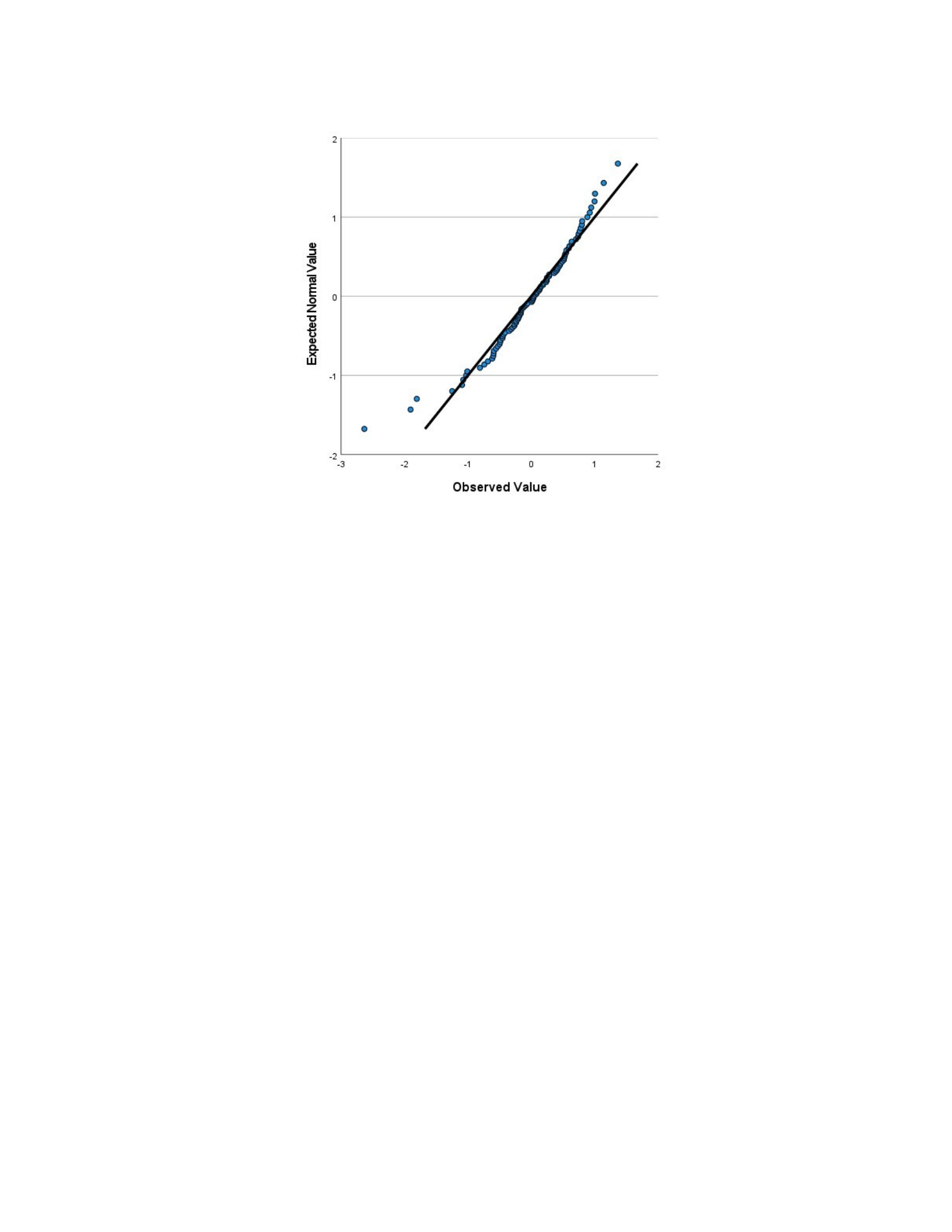
I tested homoscedasticity by plotting the residuals against the predicted values of
the regression (Figure 3). The scatterplot showed that the points were approximately
randomly distributed around zero, with the exception of the three outlying points identified
previously. I removed the outlying cases from the final regression analysis.
Figure 3
Scatterplot of Regression Residuals Versus Predicated Values (N = 95)
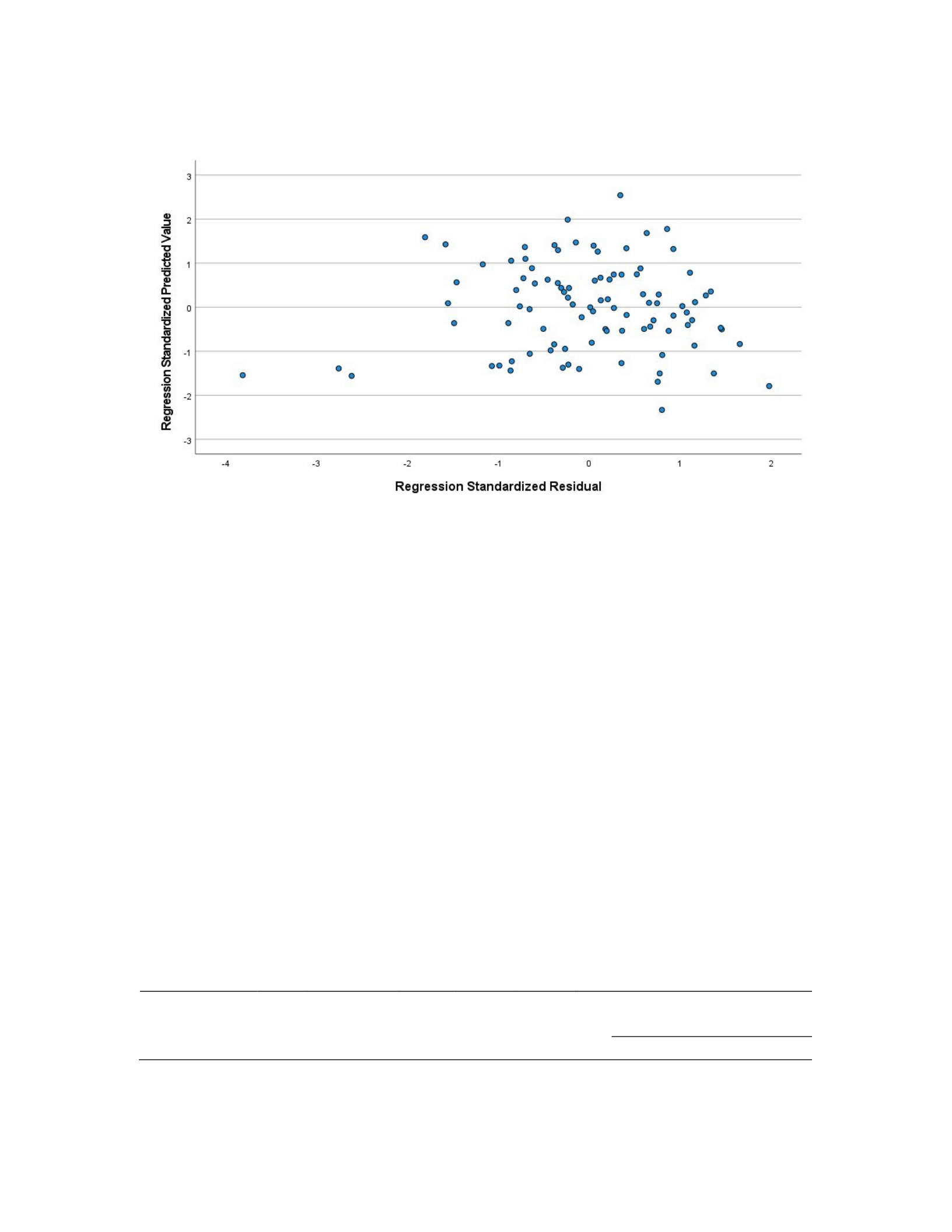
Finally, to test multicollinearity, I calculated variance inflation factors. All
variance inflation factors were below 10 (Max = 4.04), indicating that there was no severe
multicollinearity in the data.
The overall regression model was not significant, F(4, 87) = 1.31, p = .273, R2
= .06, indicating that the collective subscale scores of succession planning practices did
not explain a significant percentage of variance in engagement scores. These results
suggested that identification, development, retention, and culture collectively do not
significantly influence work engagement. Therefore, I did not reject the null hypothesis.
Table 10 displays the results for the individual predictors in the regression.
Table 10
Coefficient Statistics for Regression Predicting Engagement (N = 92)
95% CI B
Variable B Std. Error Beta t p Lower Upper
Identification 0.08 0.13 0.14 0.66 .510 -0.17 0.34

Development 0.04 0.11 0.08 0.40 .688 -0.17 0.26
Retention 0.02 0.12 0.03 0.18 .857 -0.21 0.25
Culture 0.01 0.15 0.02 0.08 .940 -0.28 0.30
Note: N = 92 for the regression after removing three outliers.
Summary
Data from 95 current and aspiring administrators working in K–12 educational
institutions helped answer the research questions. Descriptive statistics on the responses
to the succession planning practices instrument answered RQ1. The results showed that
participants perceived identification, retention, and culture as being integrated sometimes
or frequently on average, whereas they perceived development to be integrated rarely or
sometimes on average. Additionally, most participants indicated that the central office and
principal were involved in selecting leadership candidates.
The results from t-tests on the SAELES revealed significant differences in
engagement and identification, with current administrators more frequently reporting these
succession planning behaviors. No significant differences existed in development,
retention, and culture dimensions. Furthermore, t-tests on the missing data indicated that
aspiring administrators had a higher incidence of missing responses in development and
culture related questions. Conversely, the analysis failed to show a difference in
identification and retention scores, although there was a marginally significant difference
in engagement scores (p =.06) for current administrators.
A multiple linear regression provided the answer to RQ2. The overall regression
model was not significant, failing to show that identification, development, retention, and
culture collectively had a significant influence on work engagement; thus, the null

hypothesis was not rejected. The next chapter will present a discussion of these findings and
suggest possible directions for future research.

Chapter 5: Discussion
Introduction
The purpose of this study was to examine current and aspiring K–12 administrators’
scores to determine which practices were being used and whether succession planning was
a predictor of employee engagement as measured on the SAELES. Chapter 4 presented the
results of the quantitative analysis. This chapter delves into the implications of the findings
from the previous chapter, which explored the prevalence of succession planning practices
and their relationship with work engagement within K–12 districts.
Results of a literature review suggested that quality school leadership is critical for
increasing student academic achievement; researchers noted leadership as second only to
classroom teaching in its impact on student achievement (Burch et al., 2015; Leithwood et
al., 2004; Yasmeen & Tobawal, 2023). Researchers also emphasized the need for
organizations to implement succession planning that integrates culturally infused
components aimed at identifying, developing, and retaining a pipeline of competent
leaders throughout all levels of an organization (Chavez, 2011; Parfitt, 2017). These
conclusions aligned with the talent pipeline theory, which advocates for systemic talent
management to ensure a steady supply of leaders who are prepared to take on roles as
they become available, thus enhancing organizational stability and continuity (Donald,
2021).
Additionally, a body of research suggested that developing leaders through succession
planning is linked to increased employee engagement (Abdullahi et al., 2022; Anitha, 2014;
Fletcher, 2019; Gulzar & Durrani, 2014; Marzano et al., 2005). However, results from this
study did not reveal a statistically significant relationship between succession planning and

employee engagement, a finding contrary to expectations based on literature from other
sectors, such as the positive correlations identified by Alias et al. (2014) in the business
sector. This chapter draws upon the theoretical underpinnings provided by social exchange
theory (Blau, 1964; Homans, 1958), the job demandsresources model (Schaufeli et al., 2006),
Kahn’s (1990) theory of engagement, and the talent pipeline theory (Donald, 2021) to
understand the unexpected results of the study and explore their broader implications. This
inconsistency invites a critical examination of the unique challenges and environment
inherent in K–12 education that may influence the effectiveness of succession planning
practices.
Chapter 5 presents a summary of the study’s findings along with recommendations
for future research. It provides suggestions for researchers interested in further exploring
succession planning and its relationship with employee engagement. Additionally, it offers
insights into effective practices and identifies areas that need further evaluation.
Summary of Results
The current study consisted of a multiple linear regression analysis to assess the
extent to which the predictor, succession planning practices, predicted employee engagement
as measured by SAELES survey. A total of 95 participants completed the SAELES survey,
which consisted of two parts: the UWES-17 by Schaufeli et al. (2006), which measures
engagement on a spread from 0 to 6, and Parfitt’s (2017) Perceptions of Succession Planning
Survey (PSPS), which evaluates demographic information and succession planning practices
on a spread from 1 to 5. The PSPS covers areas such as identification, development and
mentoring, retention of talent, and organizational culture.
Two research questions guided this investigation:

RQ1. To what extent do current and aspiring school administrators perceive the existence
of succession planning practices implemented in their K–12 district?
RQ2. How does their perception of the frequency of these succession planning practices
(recruitment, development, retention, and culture) predict their work engagement?
Data were collected through surveys distributed via selected educational leadership
group pages on Facebook and LinkedIn, using IBM SPSS Version 26 software for
analysis.
Summary of Findings and Interpretation of Results
Results from this study did not reveal a statistically significant relationship
between succession planning and increased employee engagement within K–12 districts,
challenging the prevailing conclusions by previous researchers who identified a positive
link between effective succession planning and improved organizational outcomes
(Abdullahi et al., 2022; Fletcher, 2019). However, despite this unexpected result, the study
identified a correlation between employee engagement and the identification and
development of leaders. This finding underscores the importance of building a robust
pipeline of leaders, as empathized by Chavez (2011) and Rothwell (2005, 2015), who
argued that such efforts are critical for ensuring long-term organizational stability and
reducing risks associated with leadership turnover.
Effective succession planning is crucial not only because schools must maintain
operational continuity but also because leadership significantly influences student
achievement, ranking second only to classroom instruction among all school-related
factors (Leithwood et al., 2020; Leithwood et al., 2004). Succession planning actively
addresses potential leadership gaps, thereby enhancing employee capacity and ensuring

the continuity and stability of school operations (Abdellah, 2021; Abdullahi et al., 2022;
Fletcher, 2019). Previous researchers also indicated that effective succession planning is
linked to stronger leadership development and increased organizational commitment
(Anitha, 2014; Brant et al., 2008; Gulzar & Durrani, 2014). Moreover, well-structured
succession plans contribute to a positive organizational climate and potentially increase
employee engagement by demonstrating a commitment to professional development and
career progression (Ahmad et al., 2023; Okwakpam, 2019; Saks, 2006). This commitment
not only boosts morale but also fosters more effective leadership, leading to better student
outcomes (Alias et al., 2014; Darling-Hammond et al., 2022).
The lack of a significant correlation in this study contrasts with prior evidence of a
positive link between effective succession planning and improved organizational
outcomes (Abdullahi et al., 2022; Fletcher, 2019). The discrepancy raises questions about
stakeholders’ understanding of the succession process. One possible explanation lies in
gaps in stakeholders’ awareness or comprehension, as suggested by the missing data or in
the survey’s potential inability to fully capture the nuances of succession planning
practices, rather than the inherent failure of the succession planning practices themselves.
Although this study of K–12 leaders did not provide direct evidence linking
succession planning to employee engagement, existing business literature consistently
demonstrates that strategic succession planning enhances organizational performance and
stability (Beeson, 1998; Brant et al., 2008; Cieminski, 2018). Educational leaders are thus
encouraged to prioritize and adapt succession planning to fit their district’s unique culture,
supporting organizational goals and preparing for future leadership transitions (Parfitt,
2017). Investing in succession planning not only promotes leadership continuity but also

fosters a supportive environment that contributes to institutional success and ultimately to
student achievement (Leithwood et al., 2008; Rothwell, 2005, 2015; Tan, 2018).
The remainder of this section will present insights from exploring two research
questions that addressed the variability and implementation frequency of succession
planning practices and their relationship to employee engagement within K–12 educational
settings. The analysis will summarize the findings and interpretations derived from
participant responses, providing a clearer view of the current state of succession planning
in K–12 districts across the United States.
Research Question 1: Perception of Succession Planning Implementation
Despite the absence of a significant overall relationship with engagement, the descriptive
statistics provided valuable insights into the variability of formal succession planning across
districts. Specifically, the data for item I-1 indicated that only 13.7% of respondents confirmed
their school districts always had a formal succession plan in place, with a substantial 20% of
responses missing. Furthermore, the distribution of responses— 16.8% never, 18.9% rarely,
17.9% sometimes, and only 12.6% frequently having such plans—further illustrated the
inconsistent implementation of formal succession planning.
This inconsistency likely reflects not only varied commitment levels among
districts but also a potential lack of understanding among participants about their districts’
strategic approaches. This discrepancy highlighted a significant gap between recognition
of the need for and the actual execution of robust leadership development mechanisms, as
suggested by Chavez (2011) and reflected in Parfitt’s (2017) findings that only 26.3%
reported always having a formal plan. Administrators often recognized and integrated
practices districts use for identification and retention. Nevertheless, the comparatively

low implementation scores for development practices highlighted a potential area for
improvement.
According to participants, identification practices among administrators, critical
for effective succession planning, occurred with moderate overall frequency with a mean
score of 3.08 (SD = 0.91; Chavez, 2011; Donald, 2021). These findings aligned with
Parfitt’s (2017) observations that participants similarly perceived identification practices
as being implemented sometimes. These findings underscored the need to enhance and
increase the frequency of identification practices to strengthen succession planning efforts
within districts.
Development practices, which are critical for cultivating leadership skills, were perceived
as being implemented infrequently or occasionally across K–12 districts with a mean score of
2.81 (SD = 0.96; Chavez, 2011; Donald, 2021). Although participants recognized the value of
developmental opportunities, the consistent implementation of these practices—especially high-
leverage assignments critical for skill development— remained sporadic, as indicated by mean
scores of 2.49 (SD = 1.02) and 2.53 (SD = 0.98). The participant data also suggested that formal
and informal mentoring occurred relatively frequently, but the districts’ failure to provide
comprehensive developmental assignments highlighted a missed opportunity to use mentoring
effectively to enhance leadership capabilities within the organization (Clayton et al., 2013;
Darling-Hammond et al., 2022).
The mean score for retention practices (M = 3.10, SD = 0.83) suggested that these
practices were somewhat implemented, consistent with Parfitt’s (2017) focus on retention
within succession planning frameworks. The moderately positive responses (M = 3.0, SD
= 0.85) regarding the encouragement and retention of high performers indicated that some

districts have implemented effective strategies to retain top talent. These results aligned
with theories from Alias et al. (2014) and Kumar et al. (2023), who associated effective
retention strategies with enhanced employee commitment and engagement. However, the
variability in responses highlighted the need for more consistent and robust application of
these strategies to maximize their impact across all districts.
The mean culture score of 3.18 (SD = 0.83) indicated that participants generally
perceived cultural practices related to succession planning as being implemented occasionally.
Furthermore, the mean score for stakeholder involvement was 4.01 (SD =
0.78), reflecting a strong participatory approach in the development of succession plans, which is
pivotal for cultivating an inclusive culture that supports effective succession planning.
Additionally, the mean score of 3.33 (SD = 0.92) for hiring practices and cultural fit implied that
districts were receptive to external candidates, an approach vital for accommodating new
perspectives and maintaining a dynamic leadership pool (Bengtson et al., 2013).
The analysis also included exploration of the differences in scores on the SAELES
and missing responses between aspiring and current K–12 administrators using
independent t-tests. Under the assumptions of independence, normal distribution of data,
and equality of variances, I conducted a comparison of group means to assess variations
in engagement and perceptions of succession planning practices. The analysis revealed
significant differences in engagement and identification and additional insights into
development, retention, and culture dimensions.
The analysis of SAELES scores revealed that current administrators have
significantly higher engagement mean scores (M = 70.02, SD = 8.97) than aspiring
administrators (M = 64.26, SD =15.02) with a medium effect size. These results indicated a

notable difference in engagement levels between the two groups. Additionally, the scores
for identification practices showed a significant difference favoring current (M = 38.03, SD
= 10.03) over aspiring (M = 31.44, SD =15.02) administrators with a moderate to large
effect size. These outcomes suggested a substantial disparity in the understanding of
identification practices between current and aspiring administrators.
However, no significant differences were evident in development, retention, and culture.
The implication is that experience seems to enhance engagement and understanding of
identification practices, yet it has less impact on perceptions of development, retention, and
cultural aspects of succession planning. These results suggested that current administrators have
a clearer understanding of identification practices used in K–12 districts, likely benefitting from
more effective communication and more robust engagement strategies. These findings
underscored the importance of targeted developmental programs that could bridge the gap
between aspiring and current administrators, particularly focusing on improving engagement
and understanding identification practices of future leaders.
In terms of missing responses, aspiring administrators had significantly higher missing
scores in engagement and culture than current administrators, with p-values of
.032 and .034, respectively. Specifically, aspiring administrators had a mean of 0.09 (SD =
0.37) for missing engagement scores, whereas current administrators had no missing
scores. Missing culture scores were also higher among aspiring leaders (M = 1.45, SD =
1.65) than current administrators (M = 0.87, SD = 1.43). The analysis revealed a small to
medium effect size for both categories. These results highlighted the importance of
addressing specific gaps in training programs for aspiring administrators, particularly in

areas crucial to organizational engagement and culture, to better prepare them for their
future roles in educational leadership.
Given the dynamic nature of succession planning, which should be tailored to the
unique culture of the educational organization, the observed variability in the data is
understandable. This variation raised questions about whether the survey sufficiently accounted
for regional differences in the understanding and terminology of succession planning and
whether these differences can significantly influence the perceptions and understandings of the
component facets of succession planning practices. For example, educational districts in urban
areas might experience different challenges and opportunities than those in rural settings,
affecting their approaches to succession planning (Fusarelli et al., 2018).
Additionally, regional educational policies, local cultural norms, and community
expectations may lead to inconsistencies in the language used for succession planning
practices and stakeholder engagement (Hallinger & Heck, 2010). These regional factors
could result in diverse interpretations and terminology surrounding succession planning,
highlighting the need for context-specific strategies that consider local conditions and
cultural influences (Fink & Brayman, 2006). Understanding these regional differences in
terminology is essential for developing effective succession planning practices that align with
the unique needs and challenges of various educational environments.
Research Question 2: Perceptions of Succession Planning Implementation
RQ2 identified that practices related to identification, development, retention, and
cultural adaptation were present, yet their implementation did not significantly influence
engagement levels among aspiring and current administrators. This finding conflicted
with the conclusions from previous researchers, who stressed the importance of strategic

planning for succession to maintain organizational vitality and growth (BurrowsMcCabe,
2014; Clayton, 2014). In business and higher education contexts, strategic succession
planning has been linked to organizational success (Abdullahi et al., 2022;
Anitha, 2014; Brant et al., 2008; Redman, 2006).
The discrepancy between these findings and those in previous literature may
reflect unique organizational dynamics within K–12 education that differ from those in
business and higher education. For instance, educational organizations often face distinct
challenges such as frequent policy changes, varied funding sources, and a broader range
of stakeholder interests, which might affect the implementation and effectiveness of
succession planning practices (Kumar et al., 2023). The results may indicate a gap in the
practical application of these practices in K–12 settings or a potential mismatch between
the theoretical models of succession planning and their real-world execution in
educational environments (Abdullahi et al., 2022; Redman, 2006). Further research is
needed to explore these differences and address how educational dynamics influence the
outcomes of succession planning. Understanding these nuances could help refine
succession planning practices in education, ensuring they are adapted to the specific needs
and challenges of K–12 environments (Anitha, 2014; Fletcher, 2019).
In regard to employee engagement, according to Kumar et al. (2023) and other
scholars, engagement is directly influenced by the perceived investment in employee
development and recognition. Social exchange theory posits that interactions are based on
the benefits and rewards derived from them, meaning that employees should experience
higher engagement when they perceive the organization to practice effective succession
planning (Ahmad et al., 2023; Blau, 1964; Saks, 2006). Theoretically, if succession
planning practices are effectively implemented, they should lead to higher engagement

(Abdullahi et al., 2022). However, the data did not support this relationship, suggesting that
other factors unique to the educational sector, such as external policy pressures or internal
administrative challenges, might be diluting or overshadowing the impact of these
practices.
One of the critical issues highlighted by both the pilot and the main phases of this
study involved the measurement instrument. The study included the SAELES, which
combined the PSPS (Parfitt, 2017) and the UWES-17 (Schaufeli et al., 2006). The PSPS
was specifically designed for the educational sector, aligning closely with the unique
nuances and specific needs of educational leadership succession planning. This specificity
is crucial, as noted by Burch et al. (2015), because of the complexity and variability of
educational leadership roles that often require specially tailored approaches. However,
examples of its use are scarce in broader literature, suggesting a need for more extensive
validation within this field.
Conversely, the UWES-17 was designed for a wider range of industries and lacked
specific adaptations for the educational context. This generality may have rendered the
instrument unable to effectively capture the unique aspects of engagement within the
educational leadership. The potential misalignment could have led to skewed results and
possible misinterpretations of what constitutes effective engagement in educational
settings.
The SAELES demonstrated high internal consistency, and Cronbach’s alpha values
for the study’s variables ranged from .85 to .95. However, challenges concerning
participants’ response rates to specific questions related to executive leadership and

succession planning, which had less than 30% response rate, emerged. Some participants,
who had previously marked N/A on other questions, did not respond to these critical
items in any way. The expert panel speculated that social desirability might have
influenced these omissions, and participants may have been reluctant to cast their districts
in a negative light. Another possible explanation was that participants without firsthand
knowledge of such plans may have avoided answering questions that explicitly mentioned
succession planning.
Requests from the original author to maintain survey fidelity made it difficult to
modify the survey, but these challenges led to post-pilot modifications to improve response
rates. The changes included the addition of an Unsure/NA option to better accommodate
uncertain respondents. The aim of these adjustments was to enhance the survey’s relevance
and accessibility, thereby improving the quality and reliability of the data collected in
future applications within the educational sector.
The study’s findings challenged the expected outcomes suggested by the SET and
job demands-resources model, as well as assumptions within talent management theory.
SET and the job demands-resources model suggested that investments in employee
development–like succession planning, training, and clear career progression paths–
typically boost engagement; however, the results of this study did not align with that
expectation. SET, particularly as expanded by Blau (1964), and the job demandsresources
model suggested that such benefits should enhance employees’ commitment and reduce
burnout, leading to higher engagement levels.
Similarly, talent management theory posits that strategic talent identification and
development practices should continuously cultivate engagement by aligning employee

aspirations with organizational goals. However, results from the current study revealed that
despite the implementation of these theoretically sound practices, employee engagement did not
increase as predicted. This unexpected outcome underscored a potential complexity in the
relationship between succession planning practices and employee engagement, suggesting that
other variables may influence engagement or that the theoretical models might require adjustment
to better capture the dynamics of educational organizational environments.
Implications
The findings of this study offer valuable insights into succession planning within
K–12 schools and that planning’s impact on employee engagement. Although no
significant link existed between succession planning and engagement, the results
highlighted the need for increased use of research-based practices, better communication
of these succession planning practices, improved assessment tools, and further research.
Addressing these areas could enhance the effectiveness of succession planning and provide
a clearer understanding of its impact on employee engagement.
Previous results indicated that many districts lack comprehensive succession
planning but utilize various practices for leadership replacement (Parfitt, 2017). Results
from this study revealed that only 13.7% of participants reported formal succession
planning as consistently implemented. Additionally, the data indicated that some of the
four components of effective succession planning—identification, development, retention,
and organizational culture—were not consistently evident to participants. None of the
succession planning practices were perceived as being widely implemented. These
findings, combined with numerous unanswered survey questions, raise critical questions

for future research: Is succession planning truly absent, poorly communicated,
misunderstood by participants, or inadequately measured by the instrument?
These inconsistencies may have resulted from varying definitions, practices, and poor
communication about succession planning, causing confusion in K–12 environments (Steele,
2015). Such challenges highlight the need for clear frameworks and improved
communication about succession planning processes. By implementing and consistently
applying research-backed strategies, districts can establish a more standardized approach,
enhance employee capacity, and ensure a robust leadership pipeline (Chavez, 2011;
Parfitt, 2017).
Effective communication of succession planning practices is critical. Brant et al.
(2008) stressed that districts must not only implement succession planning processes but
also ensure they clearly communicate these processes and support them with feedback.
Results from this study revealed that while some districts may have succession planning
processes, they do not always effectively communicate or implement them. The analysis
indicated a medium effect size for the difference in engagement scores between current
and aspiring administrators, indicating that current administrators experience significantly
higher engagement levels.
The moderate-to-large effect size for identification practices suggested that current
administrators have a more substantial understanding of these practices than aspiring
administrators. The implication was that current administrators benefitted from more
effective communication and engagement strategies related to succession planning.

Addressing these gaps in communication and implementation could enhance the effectiveness of
succession planning processes and improve engagement and understanding among aspiring
administrators.
According to SET, improving communication and transparency regarding career
opportunities and development boosts employee engagement (Saks, 2006). This result
highlighted the need to refine communication strategies to address gaps in knowledge and
engagement related to succession planning. Improved communication may help close the
information gaps and actively involve current and potential administrators, leading to better
understanding of succession practices and increased effectiveness in current and future
roles.
To achieve this goal of improved communication, districts should adopt a
standardized approach that ensures that all stakeholders understand, communicate, and
execute succession plans consistently. Regular training sessions and clear communication
strategies are essential to enhance transparency and engagement across all levels of the
organization. This perspective aligned with the findings of Abdullahi et al. (2022) and
Bryant et al. (2017), who underscored the importance of robust communication in successful
succession planning.
The study also highlighted a need for improved tools for assessing succession
planning practices. Policymakers, researchers, and educational leaders should consider
developing and validating tools and methodologies that capture the complexities of
educational leadership and the nuances of succession planning. According to Bryant et al.
(2017), policies should include guidelines for transparency, stakeholder involvement, and the
measurement of plan effectiveness. Regular audits of succession plans could also help ensure

that organizations effectively implement these practices and achieve the desired impact on
engagement and leadership development.
Further research is necessary to explore the specific elements of succession
planning that most effectively improve employee engagement. Future researchers could
administer more refined instruments tailored to the educational setting, addressing possible
shortcomings in current tools. Researchers should examine components such as
mentorship programs, leadership development opportunities, and the role of stakeholder
communication and these measures’ effects on engagement. Longitudinal studies could
also provide deeper insights into how succession planning influences educational
leadership over time (Abdullahi et al., 2022; Alias et al., 2014; Fletcher, 2019; Kumar et
al., 2023).
In conclusion, this study highlighted the importance of improving the implementation
of succession planning practices within K–12 districts. Although results revealed no
significant relationships between succession planning and employee engagement, the
findings pointed to the need for increased adoption of evidence-based practices, better
communication, improved assessment tools, and further research. By addressing these areas,
educational institutions can enhance their succession planning processes, better prepare
aspiring and current administrators, and build the capacity of all stakeholders, strengthening
the overall leadership framework within K–12 educational settings. Schaufeli and Bakker
(2004) emphasized that employees are more engaged and likely to persist in their roles when
they feel their development is valued, underscoring the potential benefits of targeted
developmental programs and improved succession planning practices by the organization.

Limitations
Understanding the limitations of this study is criterial for interpreting its findings and
framing future research. While the study offered valuable insights into succession planning
and engagement among K–12 education leaders, several factors may have impacted the
reliability, generalizability, and depth of its conclusions. These limitations include
challenges related to participant recruitment, the design and application of the survey
instruments, and the broader context of the succession planning research in education.
Additionally, key differences between the educational and business sectors, particularly in
organizational culture and expected outcomes, further complicated the study’s implications.
Addressing these limitations highlights areas for methodological improvement and sets the
stage for future exploration of this important topic (Creswell & Creswell, 2018).
The study relied on data from an online survey completed by 95 K–12 education
leaders who self-identified through LinkedIn and Facebook groups. Although participants
were assumed to be honest, relying on self-identification could introduce response bias,
as the recruitment strategy may not have reached a representative sample of the intended
population. Nonresponse bias was also an issue, given the use of social media for
recruitment. Eligible participants might not have been interested in participating online.
Additionally, the volume of content in their social media feeds could have caused some to
miss the survey invitation, despite multiple postings.
Another limitation concerns the design of the SAELES survey itself. The first
section of the survey, the UWES-17 engagement survey created by Schaufeli et al. (2006),
had no missing data. However, the section on succession planning practices, created by
Parfitt (2017), experienced a significant number of missed items totaling 403. Unlike the

widely used UWES-17, the PSPS has been used exclusively by Parfitt. The exclusive use
of the PSPS by a single researcher or context may limit its broader application and
reliability, particularly in diverse settings (Hair et al., 2018).
Additionally, the survey lacked clarity in distinguishing between current and aspiring
administrators. There was a noticeable mismatch in reported years of experience between
the two groups, suggesting that participants might have misunderstood the definitions of
these categories. For instance, an assistant principal aspiring to become a principal might
have categorized themselves as “aspiring” despite reporting substantial years of
administrative experience. Clearer definitions in the survey could have improved the
accuracy of the data collected and validity of comparisons between the two groups.
The analysis of the missing data suggested possible weaknesses in the survey’s
design. Considering that the survey was deployed once in a limited study involving four
districts, the high rate of missing responses from aspiring leaders—especially on items
related to the existence of formal succession plans and executive involvement—
suggested that the survey questions may not have been adequately clear, relevant, or
aligned with the common understanding or practices of succession planning recognized
by administrators in different districts or educational settings. Notably, all but one of the
seven questions that had a 20% or higher missing rate contained the term “succession
plan,” suggesting that the wording may have contributed to confusion or uncertainty
among participants. Participants may have answered differently if the term “succession
plan” had been excluded or replaced with a more familiar terminology, potentially
reducing ambiguity and improving response rates. This misalignment may have led

respondents to skip questions they felt were beyond their current understanding or
experience.
Compounding this issue was the fact that the expert panel used to review the
survey instrument for the pilot study was composed entirely of individuals from Virginia.
This lack of geographic diversity may have influenced the validity of the survey, as the
panel’s input may have been shaped by reginal practices and perspectives that did not fully
reflect the broader, more varied practices of districts in other states. Furthermore, some
participants, unfamiliar with succession planning components, selected N/A for several
questions. According to Hair et al. (2018), these responses may be considered a form of
ignorable missing data, especially as there were no specific instructions from the author on
how to handle such responses.
The consistent missing data across both groups for items regarding review and
follow-up practices might suggest that these elements of succession planning are not well-
defined or emphasized within the organizations, indicating a gap in the survey’s ability to
capture critical, actionable information. The high rate of nonresponses could also signal a
potential lack of engagement with the survey, possibly due to its length, complexity, or the
way I distributed and explained it to participants, which may have hindered the overall
effectiveness of the data collection process. Because of this limitation, not all aspiring or
current administrators; scores contained comparable information.
A further limitation involves the broader context of succession planning research.
The differences in organizational culture and expected outcomes between the business
and education sectors may have influenced the study’s findings. In the business sector,
succession planning is often strategic and long-term, whereas educators tend to prioritize

immediate results, reflecting an impatience for actionable outcomes in research and
practice (Cieminiski, 2018). Businesses have extensively examined the influence of
succession planning on employee engagement, often linking it to productivity and
retention (Anitha, 2014). However, engagement may not be as critical in the educational
sector, where succession planning could be more appropriately aligned with goals such as
student achievement, leadership continuity, and district-specific priorities. This distinction
suggests that relying on engagement as a primary measure of success may not fully
capture the impact of succession planning in education.
This dynamic, combined with a relatively limited body of research on succession
planning in education, underscores a gap in the literature and a need for more
comprehensive exploration on this topic (Parfitt, 2017; Sabina, 2023). For example,
businesses often focus on measurable financial outcomes (Redman, 2006), whereas
educational institutions may place greater emphasis on student achievement and leadership
continuity, complicating direct comparisons (Zuckerman, 2020). Additionally, the lack of
established frameworks for succession planning in education contributes to the challenges
of developing clear strategies and instruments for effective measurement.
Addressing these gaps through targeted research could help define the unique goals and metrics
of succession planning in the educational context.
In conclusion, the study provided valuable insights among K–12 educational
leaders; however, it faced substantial limitations. Recruitment through social media and
self-identification may have introduced response bias. The SAELES instrument,
particularly the Parfitt-developed succession planning section, experienced considerable
missing data and indicated possible issues with the clarity and relevance. Furthermore,

differences in organizational culture and expected outcomes between the business and
education sectors highlight the unique challenges of succession planning research in
education. These limitations suggest the need for further methodological improvements and
future research to develop more comprehensive and representative frameworks for
understanding succession planning dynamics in educational administration.
Recommendations
The findings from this study provided valuable insights and raised important
questions regarding the implementation and perceptions of succession planning within K–
12 districts. Various stakeholder groups—parents, universities, school district, personnel,
and state department of educations—could have a vested interest in the succession
planning practices that prepare future school leaders. Despite the failure to show a
statistically significant relationship between succession planning and employee
engagement as measured by the SAELES, correlations between identification and
development of leaders and employee engagement were evident. These results aligned with
the tenets of SET, which posits that mutual investment between organizations and
employees fosters reciprocal benefits, including higher engagement and commitment
(Cropanzano & Mitchell, 2005; Homans, 1961). The following recommendations address
key areas for improvement.
Improved Succession Planning
The results identified a lack of robust succession planning practices in K–12
districts, which may hinder employees’ perceptions of reciprocal organizational
investment and as a result, diminish their engagement. This outcome raises the question of
whether the absence of strong succession planning limits employees’ sense of

organizational commitment to their growth and reduces their motivation to engage fully.
To address this possibility, districts should enhance succession planning by implementing
targeted leadership identification and development programs. These programs can
demonstrate a clear organizational investment in employees’ growth, thereby reinforcing
the social exchange dynamic. According to Saks (2006), such organizational investments
are likely to foster greater engagement and loyalty among employees. Improving the
implementation of succession planning could leverage the principles of SET to create a
more engaged and committed workforce, thereby achieving more significant strategic
impacts within K–12 educational leadership.
Communication and Development
The study’s results also revealed that inconsistent communication about succession
planning processes may hinder stakeholders’ understanding, perceptions, and
opportunities to benefit from these efforts. This suggestion raises the question of how
improved communication can enhance perceptions and foster greater inclusion in
succession planning practices. To address this dynamic, districts should standardize and
formalize the communication of their succession planning processes to all stakeholders.
Transparent and consistent communication demonstrates organizational investment,
fosters trust, and promotes inclusion, aligning with SET principles (Saks, 2006). This
approach minimizes variability and ensures a consistent understanding of the district’s
succession plans across all schools. Leaders from each stakeholder group should
collaborate in the development of the plan and the establishment of clear communication
guidelines. Regular updates through meetings, surveys, and newsletters not only
disseminate information but also invite feedback, enabling ongoing refinement and

adaptation of succession plans to meet evolving needs. This bidirectional exchange of
information strengthens the perception of reciprocity and supports employee engagement
(Saks, 2006).
In addition to communication, enhancing and effectively promoting training and
development opportunities for current and aspiring administrators is essential. Previous
research indicated that meaningful professional development positively influences
employee engagement by signaling organizational commitment to employee growth
(Kumar et al., 2023; Marzano et al., 2005). Leadership development programs should
focus on cultivating skills aligned with district goals, reinforcing the alignment between
organizational investment and employee outcomes, as delineated by SET. Districts should
implement comprehensive mentoring and support systems consistently to ensure that all
potential leaders perceive equitable investment in their development.
Survey Instrument
The study revealed significant limitations in the survey instrument (SAELES),
including missing data, response bias, and the absence of demographic variables. These
issues reduced the instrument’s reliability and applicability, raising the question of how
survey instruments can be refined to accurately measure the impact of succession
planning while addressing these limitations. Future researchers should prioritize
validating and refining the PSPS to ensure it effectively captures critical succession
planning elements within the unique context of K–12 education (Creswell & Creswell,
2018). Implementing prompts for essential questions or making key items as mandatory
would address missing data, while emphasizing anonymity and confidentiality may
mitigate social desirability bias, encouraging participants to provide honest responses.

Additionally, adopting neutral phrasing of questions might yield data that more accurately
reflects participants’ true perceptions and experiences.
The persistence of missing values raised concerns about the completeness of data,
particularly in critical areas where participants’ responses were vital for understanding the
impact of succession planning. Future iterations of the PSPS could implement prompts on
essential questions or build-in reminders for survey completion to ensure comprehensive
data collection, leading to more reliable findings. The consistent missing data in questions
containing the term “succession plan” suggests that clearer terminology might improve
participants’ understanding and response accuracy. Additionally, making critical items
mandatory could ensure more comprehensive data collection, ultimately leading to more
robust and reliable findings.
The final data confirmed the expert panel’s feedback and confirmed that the items
with missing data reflected a tendency for participants to respond with a degree of social
desirability bias, which likely skewed their responses to appear favorable to the
researcher or their district. This bias may obscure authentic perceptions, especially if
respondents feared repercussions for expressing criticism about succession planning
practices within their districts. To address this possibility, future research should prioritize
emphasizing anonymity and confidentiality of responses. Moreover, crafting questions in
a neutral manner could encourage participants to provide more honest and accurate
responses, yielding data that better reflects true perceptions and experiences. The
lack of demographic data also raised questions about the equitable implementation of
succession planning. Since the study’s permissions restricted changes to the PSPS, I
could not include questions about demographics such as race, school category (urban vs.

rural), economic status, and district size. Adding these demographics in future research
could provide critical insights into how succession planning impacts diverse groups and
suggest policies that are more equitable and contextually relevant (Glesne, 2011).
Including the demographic characteristic of race could reveal disparities in leadership
advancement, as leaders from minority populations often face barriers like reduced access
to mentorship (Horsford et al., 2011), and addressing these disparities could help
establish pathways that support underrepresented groups (E. Goldring et al., 2023).
School location also impacts leadership needs, as rural schools face limited access to
professional development while urban schools experience higher turnover (Boyce &
Bowers, 2018; Fusarelli et al., 2018), so understanding these contexts could make
succession planning more adaptable (Zuckerman, 2020). Economic status influences
available resources for leadership pipelines (Grissom et al., 2021; Owens & Valesky, 2015),
and including economic factors could highlight the need for equitable resource distribution.
Finally, larger districts may have structured succession plans, while smaller districts lack
these resources (Diliberti et al., 2024; Gates et al., 2019), so studying district size can
inform tailored strategies for both large and small districts. Incorporating these
demographics in future studies would enable more comprehensive understanding of
succession planning’s impact across diverse contexts.
Additional refinements to the survey instrument could include incorporating a
broader range of experience levels, such as zero years and 1-2 years, might help
differentiate between novice and experienced administrators, offering insights into how
succession planning strategies impact new versus seasoned leaders. Removing items
unrelated to succession planning, such as those related to organizational culture, could

further increase the validity of the findings, focusing solely on relevant variables and
reducing survey fatigue (Patton, 2015). These adjustments would enhance the
instrument’s generalizability, ensuring that findings are applicable to districts with similar
policy and legislative contexts (Merriam, 2009).
In summary, by addressing issues of missing data, response bias, and demographic
diversity, future researchers can refine and validate the PSPS to capture a more
comprehensive understanding of succession planning practices in K–12 education. These
adjustments would provide school districts and policymakers with actionable insights to
improve succession planning and promote equity across various educational contexts. The
following section highlights the need to explore district-based comparisons to gain a
deeper insight into succession practices on the assumption that broad national surveys
may overlook the unique challenges and opportunities within specific K–12
districts.
Future Research
Results from this study raised the question of whether national surveys fail to
capture the nuances of succession planning and how a more focused approach could
provide actionable insights. To address the gaps, future researchers should prioritize
district-to-district comparisons, which could reveal effective practices in particular
contexts and offer strategies for adapting these practices to other districts. Additionally,
involving central administrative and human resource departments directly in the
succession planning process would ensure integration of the leadership development
programs into the overall organizational strategy. This integration is essential for student
success and achievement of broader educational outcomes (Zuckerman, 2020).

Moreover, since the initial interest in this study stemmed from observing a neighboring
district with strong leadership planning, future investigators should extend research to
explore comparative studies between districts with formalized succession planning and
those without. This study examined the relationship between succession planning and
employee engagement, but engagement may not be the most relevant metric for
evaluating the effectiveness of succession planning in educational leadership. Districts
could benefit from using succession planning to achieve their unique organizational
goals, such as ensuring leadership continuity, improving student outcomes, or aligning
strategic priorities, so that focusing solely on engagement might exclude other crucial
factors.
To gain a deeper and more comprehensive understanding of the factors influencing
succession planning and its outcomes, one recommendation is to shift from a convenience
sampling procedure to a random sampling method, using a district’s or professional
organization’s list of administrators. This approach would ensure a more representative
sample and reduce bias, enhancing the generalizability of findings. Employing a case
study methodology that integrates both quantitative and qualitative methods could further
provide a holistic view of succession planning practices and their impacts. Such an
approach would allow researchers to examine how succession planning supports district-
specific objectives and delivers value beyond traditional engagement metrics.
The case study approach would involve selecting specific districts as in-depth units
of analysis to compare practices, challenges, and outcomes. Researchers could collect
quantitative data using an updated contextual survey designed to address the limitations
identified in this study; possible revisions are to incorporate clearer terminology and

improve alignment with diverse district practices. Qualitative interviews with district
leaders, administrators, and stakeholders would complement the survey data, capturing
nuanced insights into succession planning practices, organizational culture, and those
efforts’ effects on engagement.
By combining these methods within a case study framework, researchers could
uncover the contextual factors influencing succession planning and district specific
objectives and offer actionable strategies for districts lacking structured succession
planning practices. This approach could ultimately enhance the overall effectiveness of
leadership development in the education sector (Fusarelli et al., 2018). Implementing these
recommendations would allow researchers, school stakeholders, and districts to align
succession planning practices with the dual goals of filling leadership positions and
fostering a culture of continuous improvement.
Conclusion
The ever changing and unstable environment of education in the United States,
marked by heightened accountability standards and the increasing responsibilities of
school leaders, underscores the critical need for effective succession planning within K–
12 districts (Perez, 2015; Sabina, 2023). As educational demands and expectations rise, so
does the necessity for school administrators who can transcend traditional managerial
roles to become instructional leaders capable of fostering environments conducive to
academic success. This shift, highlighted by researchers such as Perez (2015), Sabina
(2023), Gordon (2003), and Vail (2005), indicates a growing pressure on schools to
achieve and sustain student achievement amidst a myriad of internal and external
challenges.

Despite these changing expectations, many school districts report challenges in
finding enough qualified leaders to effectively lead their schools. The current study was an
attempt to discover the extent to which K—12 districts employ succession planning
practices and determine the impact of these practices on the engagement levels of current
and aspiring administrators. The quantitative findings confirmed the persistence of gaps
between the presence of succession planning practices and their influence on employee
engagement, though correlations between the identification, development, and
engagement levels were present.
These insights are crucial as they aligned with the broader research indicating that
effective school leadership is essential for achieving educational success. However, the
gap in formal succession planning practices—as evidenced in the study and highlighted in
the literature by Parfitt (2017)—suggests a critical area of focus for educational
organizations. Schools have a limited window to impact students’ futures, and without
strategic succession planning that includes comprehensive identification, development,
and retention strategies, districts risk falling short of their potential to foster effective
leaders and consequently achieve successful educational outcomes.
As the educational landscape continues to evolve, the importance of strategic and
deliberate succession planning becomes ever clearer. Schools must prioritize the
development of leadership capacities that can meet both current and future educational
challenges. By cultivating a culture that values and develops potential leaders, districts can
ensure that their leaders are not only prepared to meet the demands of their roles but also
motivated and actively engaged in their work. The success of students and the future of
education depend heavily on districts’ ability to effectively prepare and support educators

as they step into leadership roles. This study serves as a call to action for all involved in
education leadership to revisit and strengthen their succession planning efforts to better
serve their communities and fulfill their crucial role in shaping the next generation of
learners.

