


1
Examining the Process of Change in Cognitive Behaviour Therapy
for Treatment Resistant Depression.
Discontinuous Patterns of Change in Cognitive Therapies for
Depression: A Review
Depression is a significant public health problem (Mathers & Loncar,
2005). It is a highly prevalent, disabling condition that typically runs a chronic
and recurring course (Kupfer, 1991). It is characterised by intense sadness and
loss of interest and enjoyment in activities usually valued by the individual
(American Psychiatric Association, 2013). It is frequently co-morbid with
physical health problems (e.g. Barefoot et al., 1996) and is associated with an
increased risk of mortality (Cuijpers & Smit, 2002). Thus, depression has a huge
impact on individuals and families, health services and society. Enabling access
to effective therapies is an imperative for health services.
Antidepressants are often the first-line treatment for depression,
however, only one-third of people respond fully to pharmacotherapy (Trivedi et
al., 2006), adherence is low (Hunot, Horne, Leese & Churchill, 2007) and
people often express a preference for psychological therapies (Riedel-Heller,
Matschinger & Angermeyer, 2005). Clinical guidelines recommend a number of
psychosocial interventions including cognitive behaviour therapy (CBT), which
was considered to have the best evidence-base of psychological approaches in
a recent review (NICE, 2009). CBT for depression has demonstrated good
efficacy and effectiveness across a number of research studies and real-world
settings (e.g. DeRubeis et al. 2005; Richards & Suckling, 2009; Wiles et al.,
2012), and is widely applied to treat depression. However, a significant
proportion of people do not respond to treatment (Hollon, Thase & Markowitz,
2002; Wiles et al., 2012). This highlights the need for research examining the

2
EXAMINING THE PROCESS OF CHANGE
relationship between CBT processes and outcomes in order to advance
understanding of the mechanisms of change in CBT.
Kazdin (2007) asserts that after decades of research we still do not know
how or why psychological therapies produce change, or equally, fail to. He
notes that historically, this field of research questioning the how and why of
change has been neglected in favour of pure outcome research examining
whether or not change takes place. Thus, while much has already been
achieved on the development, implementation and evaluation of CBT for
depression, understanding of change processes is less well advanced (Kazdin,
2007). Understanding the processes and mechanisms underlying change in
CBT for depression is a fundamental step in efforts to develop treatments to
improve therapy outcomes (Kazdin, 2007; Llewellyn & Hardy, 2001; Medical
Research Council, 2008) for the large numbers of people who seek help, and
ultimately may contribute to alleviating the burden of depression.
This review first outlines the cognitive theory of depression to provide
context, then aims to appraise current understanding of patterns and processes
of change in cognitive therapies for depression. This encompasses a broad
field and vast literature, therefore, this review focuses on illustrating a promising
and developing body of contemporary research that demonstrates an
association between depression outcomes and non-linear patterns of symptom
change over the course of CBT. Thus, research examining discontinuities in
symptom change and their concomitant change processes is reviewed and
future directions for research are considered.

3
EXAMINING THE PROCESS OF CHANGE
Cognitive-Behaviour Therapy for Depression: Theory and Evidence
Cognitive therapy for depression (Beck, Rush, Shaw & Emery, 1979) is
based on Beck’s (1967) cognitive model of depression. It has been subject to
intensive empirical investigation and consequent evolutions over the years (e.g.
Segal, Williams & Teasdale, 2002; Watkins et al., 2007). Contemporary
terminology typically refers to cognitive behavioural therapies (CBT) reflecting
the integration of cognitive and behavioural techniques, therefore this term will
be used throughout.
The cognitive theory of depression (Beck, 1967, Beck et al., 1979)
proposes that through formative developmental experiences people acquire
stable cognitive schemas reflecting dysfunctional beliefs about the self, the
world and the future. These beliefs may lie dormant, but are activated by
relevant stressful life events. When activated, these schemas predispose the
individual to engage in maladaptive information-processing styles (e.g.
rumination) that precipitate depressed mood and lead to depressive behaviours
that serve to maintain negative mood in a self-perpetuating feedback loop (see
Figure 1). Correspondingly CBT seeks to identify and address these cognitive
and behavioural processes to help a person learn more adaptive coping
strategies. CBT is proposed to facilitate therapeutic change by enabling
modification of core cognitive schemas, thus cognitive interventions are
considered the active ingredients of change (Beck et al., 1979); this is referred
to as the cognitive mediation hypothesis.

4
EXAMINING THE PROCESS OF CHANGE
C incident
Stressful life event resonant with
individual’s beliefs
Figure 1: Illustration of the cognitive model of depression (Beck, 1967; Beck et al
1979).
CBT has demonstrated good efficacy in the treatment of depression
achieving effect sizes of .85 and above (DeRubeis, Gelfand, Tang & Simons
1999; DeRubeis et al., 2005; Dimidjian et al., 2006). There is also evidence to
suggest that CBT gives rise to lower rates of relapse compared to
antidepressant medication (Hollon et al., 2005; Dobson et al., 2008). However,
despite its efficacy, a consistent finding is that CBT is not universally effective;
typically 30-50% of people do not respond to treatment with CBT (Hollon et al.,
2002; NICE, 2009; Wiles et al., 2012). Furthermore, for those who do respond,
relapse and recurrence are commonplace (Judd, 1997). Therefore, significant
value may be gained from advancing understanding of the processes that
facilitate and hinder therapeutic change.
B
e.g. withdrawal, reduced activity
E
Negative mood states, e.g. sadness, anger
F information proces
Negative automatic thoughts and cognitive errors
B activated
Depressive beliefs about self, world and future
D Cogn Schemas
Core beliefs and dysfunctional assumptions
E experience
Adverse developmental experiences

5
EXAMINING THE PROCESS OF CHANGE
Shape and Process of Therapeutic Change in CBT
One means to make sense of variability in outcome and to increase the
effectiveness of therapy is to look more closely at the process of therapeutic
change (Lewellyn & Hardy, 2001). Understanding the process of change
enables putative theories of change to be tested, may advance understanding
of depression and guide treatment development in order to optimize therapeutic
change (Kazdin 2007; Laurenceau, Hayes & Feldman, 2007). One strand of
process research has focused on temporal patterns of symptom change across
the course of therapy. Longitudinal patterns of change have often been
neglected in psychotherapy research where an assumption that change is
gradual and linear is reflected in the use of cross-sectional aggregate data from
assessment of clinical outcomes at pre- and post-treatment, but not throughout
the course of treatment (Laurenceau et al., 2007).
Contemporary research investigating the shape of change in CBT has
drawn attention to discontinuous patterns of non-linear change for the
proposition that they mark important transition points in therapy and thus
enhance capacity to isolate and study therapy processes and variables that
may be causally related to change (Hayes, Laurenceau, Feldman, Strauss &
Cardaciotto, 2007a). Research has identified at least three different patterns of
non-linear change in CBT for depression: “sudden gains” “depression spikes”,
and “rapid early responses”.
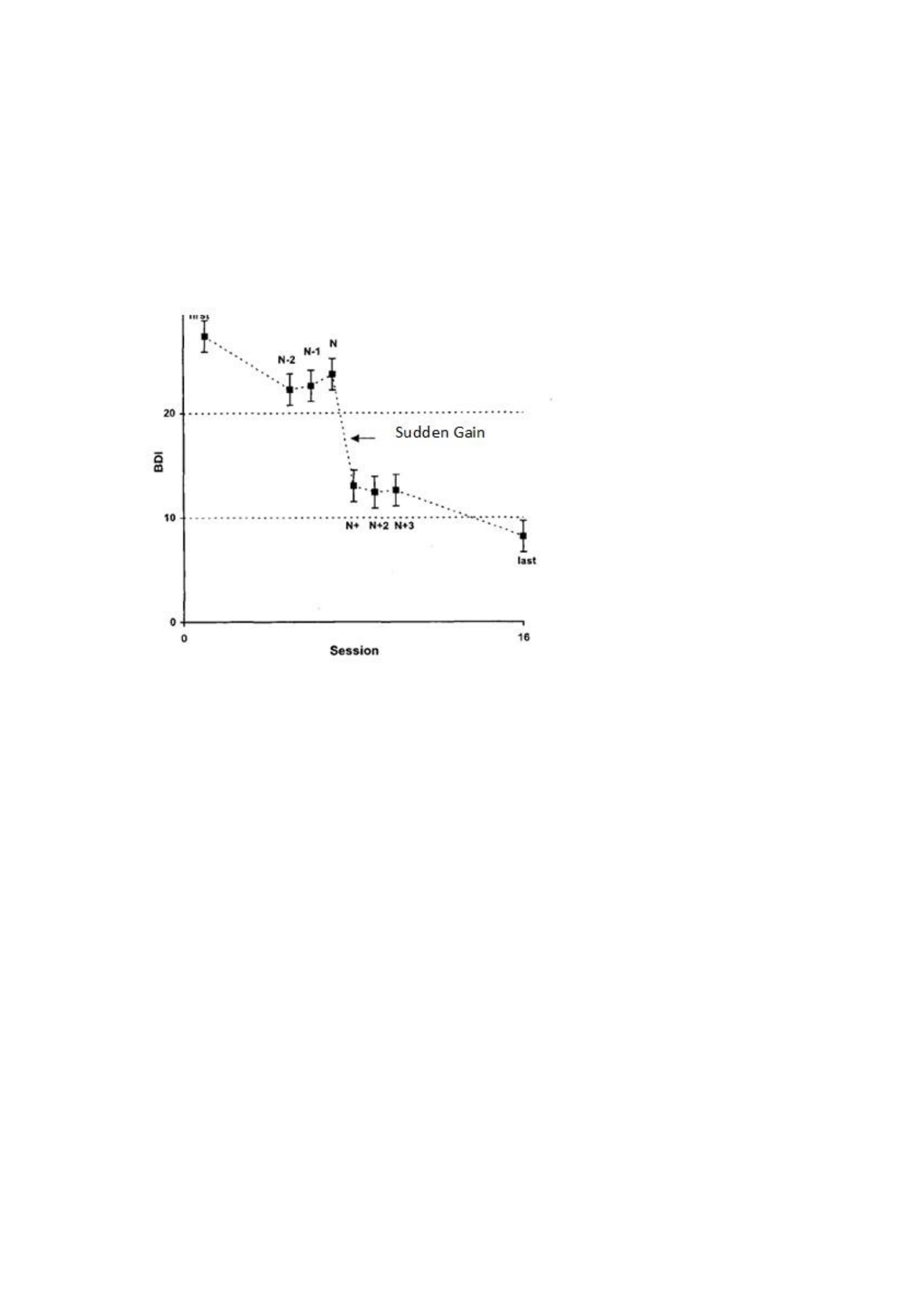
Sudden gains. Sudden gains describe large and enduring symptom
improvements observed in a single between-session interval (Tang & DeRubeis,
1999, see Figure 2). Research has repeatedly shown that people who
experience sudden gains in treatment report fewer symptoms of depression at
the end of therapy than those who do not (Aderka, Nickerson, Bøe, & Hofmann,
6
EXAMINING THE PROCESS OF CHANGE
2012). Furthermore, this finding has been replicated in a range of therapy
approaches and for a range of presenting issues (e.g. Adler,
Harmeling & Walder-Biesanz, 2013; Bohn, Aderka, Scrieber, Stangier &
Hofmann, 2013; Drymalski & Washburn, 2011; Keller, Feeny & Zoellner, 2013).
Figure 2: Illustration of time-course symptom change depicting sudden
gains observed in CBT for depression. Figure taken from Tang and
DeRubeis (1999).
Depression spikes. Another, emerging, pattern of discontinuous change
is the “depression spike” (see Figure 3), which is described as the conceptual
opposite of the sudden gain in that it refers to a large and transient worsening in
symptoms (Hayes, Feldman, Beevers, Laurenceau, Cardaciotto & Lewis-Smith,
2007b).

7
EXAMINING THE PROCESS OF CHANGE
Figure 3: Time-course of symptom change over therapy, displaying the depression
spike (and rapid early response). Figure taken from Hayes et al. (2007a).
Depression spikes were first identified by Hayes, Beevers, Feldman,
Laurenceau and Perlman (2005) in a trial of exposure-based cognitive therapy
for depression. Individual time-course data revealed the rapid early response
and depression spike patterns, which both predicted improvement in depression
(Hayes et al., 2007b).
Rapid early response. The rapid early response was the first non-linear
pattern of change to be observed in CBT (see Figure 4). It refers to the finding
that the majority of therapeutic change takes place early in therapy (e.g. Fennell
& Teasdale, 1987; Ilardi & Craighead, 1994; Rush, Beck, Kovacs & Hollon,
1977) and is clinically important because people who display a rapid early
response to CBT for depression go on to achieve better post-treatment
outcomes (Ilardi & Craighead, 1994).

8
EXAMINING THE PROCESS OF CHANGE
Figure 4: Temporal change in depression severity, as measured by the Beck
Depression Inventory (BDI, Beck, Steer & Brown, 1996), across CBT for depression
depicting the rapid early response. Figure taken from Ilardi and Craighead, (1994).
What can be learned from these patterns of change?
These patterns of change are of interest to clinical researchers for their
prognostic significance across a range of disorders and therapies (Aderka, et
al., 2012; Adler, Harmeling & Walder-Biesanz, 2013; Hayes et al., 2007b; Ilardi
& Craighead, 1994; Keller, Feeny & Zoellner, 2013), and for their capacity to
identify and focus analysis on periods of therapy that may help to identify
important processes underlying therapeutic change (Laurenceau et al., 2007).
Literature relating to these patterns of change and putative change processes is
reviewed here.
Tang and DeRubeis (1999) hypothesised that sudden gains resulted from
cognitive shifts observed in pre-gain sessions and thus proposed that they
support Beck’s hypothesis of cognitive mediation as the mechanism of change

9
EXAMINING THE PROCESS OF CHANGE
in CBT (Tang & DeRubeis, 1999). Tang and DeRubeis also observed improved
alliance in post-gain sessions, theorising that the cognitive shift and sudden
gain triggered an “upward spiral” (p. 902) that precipitated further therapeutic
gains. However, there are limitations to the interpretations that can be drawn
from this study: only correlational data is provided; the reliability of the rating
method was unconvincing and sudden gains did not predict reduced symptoms
at 12 months and failed to predict relapse. Moreover, Vittengl, Clark and Jarrett,
(2005) found that among clients who responded to treatment, CBT sudden
gains did not confer added clinical benefits. Similarly, sudden gains identified by
Kelly, Roberts and Ciesla (2005) in group CBT for depression were not
associated with treatment outcome. However, Tang and DeRubeis (2007)
countered by highlighting evidence that sudden gains generated in CBT are
more stable than those obtained in non-cognitive interventions (Tang et al.,
2002; Kelly et al., 2005) and revisited sudden gains using more rigorous relapse
assessment procedures to indicate that sudden gains significantly reduced the
risk of relapse following CBT for depression. Therefore, Tang and DeRubeis
(2007) maintained that sudden gains are implicated in the preventative benefits
of CBT and reflect cognitive changes.
Literature has accumulated to support the clinical and prognostic
significance of sudden gains in depression (Aderka et al., 2012). Consequently,
the need to identify factors that may predispose a person towards experiencing
sudden gains, as well as the underlying causal processes is emphasised
(Drymalski & Washburn, 2011). Such research has provided ambivalent findings
in relation to Tang and DeRubeis’ (1999, 2007) view that sudden gains are
associated with developing cognitive insight in CBT. Studies directly examining
cognitive shifts as a precursor to sudden gains in depression have provided

10
EXAMINING THE PROCESS OF CHANGE
inconsistent results (Andrusyna, Luborsky, Pham & Tang, 2006; Kelly, Roberts &
Bottonari, 2007; Tang & DeRubeis, 1999; Tang, DeRubeis, Beberman & Pham,
2005). Furthermore, sudden gains have been found to occur with similar
frequency and magnitude in pharmacotherapy (Keller et al., 2013; Vittengl et al.,
2005) and other non-cognitive psychotherapies (Tang,
Luborsky & Andrusyna, 2002); patient-directed treatments (Lorenz, Pulverman,
& Meston, 2013) and non-treatment contexts (Kelly, Roberts & Bottonari, 2007)
calling into question the universality of cognitive change as a precursor to
sudden gains. Others have suggested that the differential pattern of sudden
gains in different therapies may indicate differential mechanisms (Jun, Zoellner
& Feeny, 2013). Taken together, these findings support calls for a more
transtheoretical approach to understanding sudden gains (Hardy, Cahill, Stiles,
Ispan, Macaskill & Barkham, 2005). Mechanisms other than cognitive shifts
have been proposed to explain sudden gains in depression. Although,
suggested mechanisms have tended to remain close to the concept of insight in
one way or another. For instance, therapist interpretive accuracy (Andrusyna et
al., 2006); assimilation (Goodridge & Hardy, 2009), self-evaluative processes
(Kelly et al., 2007), emotional processing (Adler et al., 2013; Keller et al. 2013)
and narrative coherence (Adler et al., 2013).
Limited progress has been made towards identifying factors that may
predispose individuals towards sudden gains. A number of studies have failed to
identify significant baseline differences between participants who go on to
experience sudden gains in therapy and those who do not (Adler et al., 2013;
Hardy et al., 2005; Keller et al., 2013; Kelly, Cyranowski & Frank, 2007). This
has led to suggestions that sudden gains may be better predicted by dynamic
therapy process factors (Hunnicutt-Ferguson, Hoxha & Gollan, 2012).

11
EXAMINING THE PROCESS OF CHANGE
In summary, the literature on sudden gains has accumulated to suggest
that they are a relatively robust phenomenon with prognostic significance, but
their mechanisms, antecedents and consequences are uncertain. Further
research is needed to clarify the processes underlying sudden gains.
Hayes et al. (2005) drew on emotion theory and literature proposing
emotional processing as a key mechanism in psychological interventions for
anxiety (Foa & Kozak, 1986; Rachman, 1980) and endorsed suggestions that
emotional processing is clinically significant in depression as well as anxiety
disorders (Teasdale, 1999) to develop an exposure-based cognitive therapy for
depression. The therapy was designed to target hopelessness, avoidance and
rumination, and to promote activation and disturbance of the depressive
network to facilitate emotional processing. Clients wrote weekly narratives of
their depression to stimulate emotional processing. Emotional processing was
conceptualised as “exploring and questioning issues and material related to
depression with some insight or perspective shift” (p.413). Hayes et al. (2007b)
evaluated the extent to which clients’ narratives demonstrated evidence of
emotional processing and found that depression spikes were correlated with
peak levels of emotional processing. Furthermore, when the spike occurred
during the exposure activation phase of therapy it was associated with reduced
symptoms post-treatment and improved rates of recovery. Thus, Hayes et al.
(2007b) suggested that emotional processing mediated the association between
depression spikes and improved outcomes. They construed emotional
processing and associated depression spikes as evidence of critical
fluctuations, reflecting destabilisation of the depressive system before transition,
consistent with a general principle of change seen across a range of

12
EXAMINING THE PROCESS OF CHANGE
psychological phenomena, and analogous to that seen in exposure therapy for
anxiety (Heimberg & Becker, 2002).
Depression spikes have recently been studied in the context of prolonged
exposure treatment for post-traumatic stress disorder (Keller et al., 2013).
However, Keller et al. (2013) failed to replicate Hayes et al.’s (2007b) finding;
depression spikes were not associated with improved depression outcomes.
More work is needed to understand the clinical significance of transient
symptom spikes in relation to emotional processing and depression outcomes.
The rapid early response has been variably defined (see Lambert, 2005
for review). However, early symptom change in CBT is thought to be associated
with “remoralization” that occurs early in therapy (Howard, Moras, Brill,
Martinovich, & Lutz, 1996) and reflects an increase in hope resulting from a
strengthening of belief that change is possible and that therapy might be helpful
in alleviating change (Kuyken, 2004). The rapid response has been cited as
evidence to challenge Beck et al.’s (1979) cognitive mediation hypothesis, since
cognitive modification strategies are not commonly applied during the early
stages of therapy (Ilardi & Craighead, 1994, 1999).
Ilardi and Craighead argue that the rapid early response is consistent with
improvement by non-specific processes common to all psychotherapies, such
as talking about ones problems with a warm, attentive professional. The rapid
response was replicated in Hayes et al. (2007b) study, and clients who
experienced a rapid early response expressed greater hope in early narratives
compared to those who did not and showed better outcomes at post-treatment.
This provides some support for the notion of rapid early response as evidence
of remoralisation, consistent with the phase model of psychotherapy. More
recently, early response to treatment has been studied using more advanced

13
EXAMINING THE PROCESS OF CHANGE
statistical methods (e.g. Forand & DeRubeis, 2013; Haas, Hill, Lambert, &
Morrell, 2002). Forand and DeRubeis (2013) reported that pre-treatment anxiety
predicted early rapid change in depression symptoms in CBT and
antidepressant treatments for depression, but that early response did not
predict positive outcomes. They suggest that anxiety may influence
responsiveness to common therapy factors. However, the mechanisms linking
rapid response to longer-term outcome is unclear (Lambert, 2005) and the
debate over the precedence of specific versus common factors in therapy
continues. Lambert (2005) speaks to the dilemma and points to the importance
of examining trajectories of treatment response and their causes to help to
clarify active ingredients of therapy.
Thus, preliminary evidence suggests that hope and emotional processing
may be associated with discontinuities in symptom change and predict
improved client outcomes (Hayes et al., 2007b). However, Hayes et al. studied
an exposure-based cognitive therapy intervention expressly developed to target
these constructs. It is not clear whether these findings would generalise to the
original protocols (Beck et al., 1979) more commonly used in CBT practice and
to in-session hope and processing. Adler et al. (2013) recently studied
emotional processing in the context of routine clinic psychotherapy and found
that higher levels preceded sudden gains in mental health, as did narrative
coherence. They concluded that developing new insight and making meaning in
therapy is associated with subsequent sudden gains.
The literature presented on the shape of change in CBT for depression
demonstrates evolving understanding about the process of change and has
highlighted important client processes that may mediate therapeutic change,
specifically hope (Ilardi & Craighead, 1994; Kuyken 2004), emotional

14
EXAMINING THE PROCESS OF CHANGE
processing (Hayes et al., 2007b) and cognitive shifts (Tang & DeRubeis, 1999).
However, understanding facets of therapy that predict these changes is still
lacking.
Future Directions for Research
Therapy variables. Literature examining discontinuous trajectories of
therapeutic change has for the most part, concentrated on client processes
during these periods of rapid change. Yet, therapist variables consistently
account for a significant proportion of the variance in outcome in CBT (e.g.
Okiishi et al., 2006) and there is a body of literature to suggest that therapist
competence is associated with improved client outcomes (Trepka, Rees,
Shapiro, Hardy, & Barkham, 2004). This suggests that the way in which therapy
is provided can influence client outcomes. Furthermore, therapy is inherently a
dynamic interaction between therapist and client, hence, research needs to
attend to client, therapist and their interaction in order to understand the
complexities of the process of therapeutic change (Llewellyn & Hardy, 2001).
This appears to be a field deserving of increased attention. A better
understanding of the role of therapy factors in periods of transition may help to
improve treatments and yield pragmatic implications for clinical decision-making
(DeRubeis, Brotman & Gibbons, 2005).
Treatment-resistant depression. There is no consensus definition for
treatment-resistance, but typically treatment-resistant depression refers to the
persistence of depression despite treatment that might be expected to be
effective (Fava, 2003). It is a relatively common occurrence affecting up to
5060% of people treated with an adequate course of antidepressant
medications
(Fava, 2003; Trivedi et al., 2006).

15
EXAMINING THE PROCESS OF CHANGE
Persistence of depression despite treatment has significant adverse
consequences for psychological wellbeing and social functioning (Moore &
Garland, 2003). Higher levels of demoralisation and hopelessness are observed
compared to acute depression (Thase, 1994), and as more treatment steps are
required, the likelihood of remission diminishes and relapse rates rise (Rush et
al., 2006). In conceptualising persistent depression, Moore and Garland (2003)
describe a long-term vicious cycle where successive treatment failures reinforce
hopeless beliefs and the persistence of depression (despite intervention)
negatively impacts self-esteem. Chronic patterns of cognitive, emotional and
behavioural avoidance and social withdrawal are activated and serve to
maintain depression; these patterns become more entrenched and disruptive as
depression persists. Moore and Garland note that offering cognitive
interventions to help clients to address chronic patterns of avoidance in therapy
frequently results in transient symptom disturbance prior to therapeutic benefit
(p.36), and so non-linear trajectories may be expected in this population.
The process of therapeutic change is under-researched in this population;
yet understanding change processes in people who struggle to attain
therapeutic change, may help to elucidate factors underlying non-response to
treatment and enhance the potency of intervention. As discussed here, hope
and emotional processing represent candidates identified in the literature that
may help to explain rapid symptom change. The paucity of research in
treatment-resistant populations means that hypotheses as to the shape and
process of change must be speculative, but given theoretical accounts
emphasising the prominence of avoidance and hopeless beliefs in persistent
depression, one may expect the clinical significance of emotional processing
and remoralisation to be magnified. This is supported by evidence suggesting

16
EXAMINING THE PROCESS OF CHANGE
that emotional processing is associated with improved outcomes in dialectical
behaviour therapy for people with treatment-resistant depression (Feldman,
Harley, Kerrigan, Jacobo & Fava, 2009). Therefore, treatment resistant
depression presents a promising avenue for research examining discontinuities
of change and their concomitant processes in order to understand inhibitors and
facilitators of therapeutic change.
Methodological Issues and Challenges
Identification of discontinuities is a growing field and enables focused
research of change processes. However, there are limitations to the literature
reviewed here. Much of it relies on correlational data, meaning that causality
cannot be inferred, small samples and a lack of appropriate controls are also
impediments to interpretation. These are often casualties associated with
process research that is less well funded than outcome research. Another issue
with the study of discontinuities is the inconsistent operationalisation of change
patterns and measurement of process, which limits the capacity to compare
findings (Llewellyn & Hardy, 2001). Progress to build upon the extant literature
can be achieved by concerted programmes of theory-driven research drawing
upon sophisticated and diverse range of methodologies.
Laurenceau et al. (2007) identified core aims for process research to study
the course of symptom change over time and to identify moderators and
mediators of change. Psychotherapeutic change has often been studied using
cross-sectional aggregated data at pre- and post-treatment (e.g. Elkin, 1989).
However, this rests on the assumption that change is linear and universal and,
as discussed, there is mounting evidence that this is not so. Client
heterogeneity in response to treatment is masked by such approaches

17
EXAMINING THE PROCESS OF CHANGE
(Cuijpers, van Lier, van Straten & Donker, 2005). This highlights the importance of
longitudinal assessments of outcome, as well as of putative mediating and moderating
variables in order to sufficiently measure change over time (Laurenceau et al., 2007).
More sophisticated analytic procedures now offer the capacity to distinguish different
patterns of symptom change, and test variables that may predict the shape and rate of
change (Singer & Willet, 2003).
Kraemer, Wilson, Fairburn and Agras (2002) present a conceptual and
analytical framework to facilitate the study of mediators and moderators in
psychotherapy research. Mediators are variables that account for the relation
between an independent and dependent variable and can point to possible
mechanisms through which an intervention might achieve its effects. They
should precede symptom change, occur during the course of treatment and be
associated with future change. Thus, longitudinal assessment of putative
mediators would further analysis of causal mechanisms.
Psychotherapy process-outcome research is concerned with the
mechanisms through which client change is achieved and involves the study of
factors that may influence therapeutic change, including therapist, client and
their interaction (Lambert & Hill, 1994). A considerable challenge facing process
researchers is how to appropriately examine this dynamic therapeutic
interaction between therapist and client systems (Llewellyn & Hardy, 2001).
Concluding Summary
CBT for depression is an efficacious treatment but there is substantial
room for improvement. Empirical understanding of how and why change occurs
in CBT for depression is still needed (Kraemer et al., 2002; Kazdin, 2007), yet is
integral to efforts to optimise therapeutic change. Exploring individual
trajectories of symptom change enables research to move beyond the question

18
EXAMINING THE PROCESS OF CHANGE
of whether or not CBT is effective to examine how change occurs (Barkham,
Stiles and Shapiro, 1993).
Discontinuous patterns of change have been identified across the course
of CBT for depression and are associated with improved therapy outcomes.
Putative client mediating processes have been proposed, but understanding of
the therapy correlates is outstanding. Treatment resistant depression represents
a costly and debilitating problem. Patterns of therapeutic change are previously
unexplored in this population and may offer opportunity to elucidate processes
that inhibit and mobilise therapeutic change.
Examining trajectories of change and their mediators and moderators
offers a fruitful line of process research. The task is for researchers to respond
to methodological challenges to develop understanding of how therapy leads to
effective change. Understanding how change occurs has implications for the
practice of CBT, for example, supplying the potential to identify clients who may
be at risk of treatment failure early on to enable therapists to respond
appropriately to enhance response (Lambert, Whipple, Hawkins, Vermeersch,
Nielsen, & Smart, 2003).
References
Aderka, I. M., Nickerson, A., Bøe, H. J., & Hofmann, S. G. (2012). Sudden gains
during psychological treatments of anxiety and depression: A
metaanalysis. Journal of Consulting and Clinical Psychology, 80(1), 93-
101.
Adler, J. M., Harmeling, L. H., & Walder-Biesanz, I. (2013). Narrative meaning
making is associated with sudden gains in psychotherapy clients’ mental

19
EXAMINING THE PROCESS OF CHANGE
health under routine clinical conditions. Journal of Consulting and Clinical
Psychology, 81(5), 839-845.
American Psychiatric Association. (2013). Diagnostic and statistical manual of
mental disorders (5th ed.). Arlington, VA: American Psychiatric Publishing.
Andrusyna, T. P., Luborsky, L., Pham, T., & Tang, T. Z. (2006). The mechanisms
of sudden gains in supportive–expressive therapy for depression.
Psychotherapy Research, 16(5), 526-536.
Barefoot, J.C., Helms, M.J., Mark, D.B., Blumenthal, J.A., Califf, R.M., Haney,
T.L., ...Williams, R.B. (1996). Depression and long-term mortality risk in
patients with coronary artery disease. American Journal of
Cardiology,78(6), 613–617.
Barkham, M., Stiles, W.B., & Shapiro, D.A. (1993). The shape of change in
psychotherapy: Longitudinal assessment of personal problems. Journal of
Consulting and Clinical Psychology, 61(4), 667-677.
Beck, A.T., (1967). Depression: Clinical, experimental and theoretical aspects.
New York, NY: Hoeber.
Beck, A., Rush, A.J., Shaw, B., & Emery, G. (1979). Cognitive therapy of
depression. New York, NY: Wiley.
Beck A., Steer R.A., & Brown G.K., (1996). Beck Depression Inventory - Second
Edition: Manual. San Antonio, TX: The Psychological Corporation.
Beck, J. (1995). Cognitive therapy: Basics and beyond. New York, NY: Guildford
Press.
Bohn, C., Aderka, I. M., Schreiber, F., Stangier, U., & Hofmann, S. G. (2013).
Sudden gains in cognitive therapy and interpersonal therapy for social
anxiety disorder. Journal of Consulting and Clinical Psychology, 81(1),
177.

20
EXAMINING THE PROCESS OF CHANGE
Cuijpers, P. & Smit, F. (2002). Excess mortality in depression: A meta-analysis of
community studies. Journal of Affective Disorders, 72, 227-236.
Cuijpers, P., van Lier, P.A.C., van Straten, A., & Donker, M. (2005). Examining
differential effects of psychological treatment of depressive disorder: An
application of trajectory analyses. Journal of Affective Disorders 89, 137–
146.
DeRubeis, R. J., Brotman, M. A., & Gibbons, C. J. (2005). A conceptual and
methodological analysis of the nonspecifics argument. Clinical
Psychology: Science and Practice, 12, 174–183.
DeRubeis, R.J., Gelfand, L.A., Tang, T.Z., & Simons,A.D. (1999). Medications
versus cognitive behavior therapy for severely depressed outpatients:
Mega-analysis of four randomized comparisons. American Journal of
Psychiatry, 156, 1007 – 1013.
DeRubeis, R.J., Hollon, S.D., Amsterdam, J.D., Shelton, R.C., Young, P.R.,
Salomon, R.M., ... & Gallop, R. (2005). Cognitive therapy vs medications
in the treatment of moderate to severe depression. Archives of General
Psychiatry, 62, 409 - 416.
Dimidjian, S., Hollon, S.D., Dobson, K.S., Schmaling, K.B., Kohlenberg, R.J.,
Addis, M.E., .... Jacobsen, N.S. (2006). Randomized trial of behavioural
activation, cognitive therapy, and antidepressant medication in the acute
treatment of adults with major depression. Journal of Consulting and
Clinical Psychology, 74(4), 658-670.
Dobson, K.S., Hollon, S.D., Dimidjian, S, Schmaling, K.B., Kohlenberg, R.J.,
Gallop, R.J. ... Jacobson, N.S. (2008). Randomized trial of behavioral
activation, cognitive therapy, and antidepressant medication in the

21
EXAMINING THE PROCESS OF CHANGE
prevention of relapse and recurrence in major depression. Journal of
Consulting and Clinical Psychology, 76(3), 468-477.
Drymalski, W. M., & Washburn, J. J. (2011). Sudden gains in the treatment of
depression in a partial hospitalization program. Journal of Consulting and
Clinical Psychology, 79(3), 364.
Fava, M., (2003). Diagnosis and definition of treatment-resistant depression.
Biological Psychiatry, 53, 649-659.
Feldman, G., Harley, R., Kerrigan, M., Jacobo, M., & Fava, M. (2009). Change in
emotional processing during a dialectical behaviour therapy-based skills
group for major depressive disorder. Behaviour Research & Therapy, 47,
316-321.
Fennell, M.J.V., & Teasdale, J.D. (1987). Cognitive therapy for depression:
Individual differences and the process of change. Cognitive Therapy and
Research, 11(2), 253-271.
Foa, E.B., & Kozak, M.J. (1986). Emotional processing of fear: Exposure to
corrective information. Psychological Bulletin, 99, 20–35.
Forand, N. R., & DeRubeis, R. J. (2013). Pretreatment anxiety predicts patterns
of change in cognitive behavioral therapy and medications for depression.
Journal of Consulting and Clinical Psychology, 81(5), 774-782.
Goodridge, D., & Hardy, G. E. (2009). Patterns of change in psychotherapy: An
investigation of sudden gains in cognitive therapy using the assimilation
model. Psychotherapy Research, 19(1), 114-123.
Haas, E., Hill, R. D., Lambert, M. J., & Morrell, B. (2002). Do early responders
to psychotherapy maintain treatment gains? Journal of Clinical
Psychology, 58(9), 1157-1172.

22
EXAMINING THE PROCESS OF CHANGE
Hardy, G. E., Cahill, J., Stiles, W. B., Ispan, C., Macaskill, N., & Barkham, M.
(2005). Sudden gains in cognitive therapy for depression: a replication and
extension. Journal of Consulting and Clinical Psychology, 73(1), 59-67.
Hayes, A.M., Beevers, C., Feldman, G., Laurenceau, J.-P., & Perlman, C.A.
(2005). Avoidance and emotional processing as predictors of symptom
change and positive growth in an integrative therapy for depression.
International Journal of Behavioral Medicine, 12, 111–122.
Hayes, A.M., Laurenceau, J.-P., & Feldman, G.C., Strauss, J.L., & Cardaciotto,
L.A. (2007a). Change is not always linear: The study of nonlinear and
discontinuous patterns of change in psychotherapy. Clinical Psychology
Review, 27, 715-723.
Hayes, A.M., Feldman, G.C., Beevers, C.G., Laurenceau, J.-P., Cardaciotto, L.,
Lewis-Smith, J. (2007b). Discontinuities and cognitive changes in an
exposure-based cognitive therapy for depression. Journal of Consulting
and Clinical Psychology 75, 409–421.
Heimberg, R. G., & Becker, R. E. (2002). Cognitive-behavioral group treatment
for social phobia: Basic mechanisms and clinical applications. New York,
NY: Guilford Press.
Hollon, S.D., DeRubeis, R.J., Shelton, R.C., Amsterdam, J.D., Salomon, R.M.,
O’Reardon, J.P., ... Gallop, R. (2005). Prevention of relapse following
cognitive therapy vs medications in moderate to severe depression.
Archives of General Psychiatry, 62, 417-422.
Hollon, S.D., Thase, M.E., & Markowitz, J.C. (2002). Treatment and prevention of
depression. Psychological Science in the Public Interest, 3, 39–77.

23
EXAMINING THE PROCESS OF CHANGE
Howard, K.I., Moras, K., Brill, P.L., Martinovich, Z., & Lutz, W. (1996). Evaluation
of psychotherapy: Efficacy, effectiveness, and patient progress. American
Psychologist, 51, 1059–1064.
Hunnicutt-Ferguson, K., Hoxha, D., & Gollan, J. (2012). Exploring sudden gains
in behavioral activation therapy for major depressive disorder. Behaviour
Research and Therapy, 50(3), 223-230.
Hunot, V.M., Horne, R., Leese, M.N. & Churchill, R.C. (2007). A cohort study of
adherence to antidepressants in primary care: The influence of
antidepressant aconcerns and treatment preferences. Primary Care
Companion to the Journal of Clinical Psychiatry, 9(2), 91-99.
Ilardi, S.S., & Craighead, W.E. (1994). The role of nonspecific factors in cognitive
behavior therapy for depression. Clinical Psychology: Science and
Practice, 1, 138–156.
Ilardi, S.S., & Craighead, W.E. (1999). Rapid early response and nonspecific
factors in cognitive-behavior therapy for depression: A reply to Tang and
DeRubeis. Clinical Psychology: Science and Practice, 6,295–299.
Judd, L.L. (1997). The clinical course of unipolar major depressive disorders.
Archives of General Psychiatry, 54(11), 989-991.
Jun, J. J., Zoellner, L. A., & Feeny, N. C. (2013). Sudden gains in prolonged
exposure and sertraline for chronic PTSD. Depression and anxiety, 30(7),
607-613.
Kazdin, A. E. (2005). Treatment outcomes, common factors and continued
neglect of mechanisms of change. Clinical Psychoogy: Science and
Practice, 12(2), 184-188.
Kazdin, A. E. (2007). Mediators and mechanisms of change in psychotherapy
research. Annual Review of Clinical Psychology, 3, 1-27.

24
EXAMINING THE PROCESS OF CHANGE
Keller, S. M., Feeny, N. C., & Zoellner, L. A. (2014). Depression sudden gains
and transient depression spikes during treatment for PTSD. Journal of
Consulting and Clinical Psychology, 82(1), 102-111.
Kelly, M. A., Cyranowski, J. M., & Frank, E. (2007). Sudden gains in
interpersonal psychotherapy for depression. Behaviour Research and
Therapy, 45(11), 2563-2572.
Kelly, M.A., Roberts, J. E., & Bottonari, K. A. (2007). Non-treatment-related
sudden gains in depression: The role of self-evaluation. Behaviour
Research and Therapy, 45(4), 737-747.
Kelly, M.A., Roberts, J.E., & Ciesla, J.A. (2005). Sudden gains in cognitive
behavioral treatment for depression: When do they occur and do they
matter? Behaviour Research and Therapy, 43, 703-714.
Kraemer, H.C., Wilson, T.W., Fairburn, C.G., & Agras, W.S. (2002). Mediators and
moderators of treatment effects in randomized controlled trials. Archives of
General Psychiatry, 59, 877-883.
Kupfer, D.J. (1991). Long-term treatment of depression. Journal of Clinical
Psychiatry, 52(suppl), 28-34.
Kuyken, W. (2004). Cognitive therapy outcome: The effects of hopelessness in a
naturalistic outcome study. Behaviour Research and Therapy,42, 631–
646.
Lambert, M. J. (2005). Early response in psychotherapy: Further evidence for the
importance of common factors rather than “placebo effects”. Journal of
Clinical Psychology, 61(7), 855-869.
Lambert, M. J., & Hill, C. E. (1994). Assessing psychotherapy outcomes and
processes. In A. E. Bergin & S. L. Garfield (Eds.). Handbook of
psychotherapy and behaviour change (4th ed., pp. 72–113). New York:

25
EXAMINING THE PROCESS OF CHANGE
Wiley.
Lambert, M.J., Whipple, J.L., Hawkins, E.J., Vermeersch, D.A., Nielsen, S.L., &
Smart, D.W. (2003). Is it time for clinicians to routinely track patient
outcome? A meta-analysis. Clinical Psychology: Science and Practice 10,
288–301.
Laurenceau, J -P., Hayes, A.M., & Feldman, G.C., (2007). Statistical and
methodological issues in the study of change in psychotherapy. Clinical
Psychology Review, 27, 682−695.
Llewelyn, S., & Hardy, G. (2001). Process research in understanding and
applying psychological therapies. British Journal of Clinical Psychology,
40(1), 1-21.
Lorenz, T. A., Pulverman, C. S., & Meston, C. M. (2013). Sudden gains during
patient-directed expressive writing treatment predicts depression reduction
in women with history of childhood sexual abuse: Results from a
randomized clinical trial. Cognitive Therapy and Research, 37(4), 690-696.
Mathers, C.D. & Loncar, D. (2005). Updated projections of global mortality and
burden of disease, 2002-2030: Data sources, methods and results
(working paper). Geneva: WHO, 2005.
Medical Research Council (2008). Developing and evaluating complex
interventions: New guidance. London: Medical Research Council.
Moore, R. G., & Garland, A. (2003). Cognitive therapy for chronic and persistent
depression. Chichester, UK: Wiley.
National Institute for Health & Clinical Excellence, (2009). Depression: The
treatment and management of depression in adults (updated edition).
National Clinical Practice Guideline – 90. London: NICE. Retrieved from
http://guidance.nice.org.uk/CG90/NICEGuidance/pdf/English

26
EXAMINING THE PROCESS OF CHANGE
Okiishi, J. C., Lambert, M. J., Eggett, D., Nielsen, L., Dayton, D. D., &
Vermeersch, D. A. (2006). An analysis of therapist treatment effects:
Toward providing feedback to individual therapists on their clients'
psychotherapy outcome. Journal of Clinical Psychology, 62, 1157-1172.
Rachman, S. (1980). Emotional processing. Behaviour Research and
Therapy,18, 51–60.
Richards, D. A., & Suckling, R. (2009). Improving access to psychological
therapies: Phase IV prospective cohort study. British Journal of Clinical
Psychology, 48(4), 377-396.
Riedel-Heller, S.G., Matschinger, H., & Angermeyer, M., (2005). Mental disorders:
Who and what might help? Help-seeking and treatment preferences of the
lay public. Social Psychiatry and Psychiatric
Epidemiology, 40(2), 167-174.
Rush, A.J., Beck, A.T., Kovacs, M., & Hollon, S. (1977). Comparative efficacy of
cognitive therapy and pharmacotherapy in the treatment of depressed
outpatients. Cognitive Therapy and Research, 1, 17-37.
Rush, A.J., Madhukaer, H., Trivedit, M.D., Wisniewski, S.R., Nierenberg, A.A.,
Stewart, J.W., ... Fava, M. (2006). Acute and longer-term outcomes in
depressed outpatients requiring one or several treatment steps: A Star*D
report. American Journal of Psychiatry, 163, 1905 – 1917.
Segal, Z.V., Williams, J.M.G., & Teasdale, J.D. (2002). Mindfulness-based
cognitive therapy for depression: a new approach to preventing relapse.
New York, NY: Guilford Press.
Singer, J.D., & Willet, J.B. (2003). Applied longitudinal data analysis: Modelling
change and event occurrence. New York, NY: Oxford University Press

27
EXAMINING THE PROCESS OF CHANGE
Tang, T.Z., & DeRubeis, R.J. (1999). Sudden gains and critical sessions in
cognitive behavioural therapy for depression. Journal of Consulting and
Clinical Psychology, 67, 894–904.
Tang, T.Z., DeRubeis, R.J., Hollon, S.D., Amsterdam, J., & Shelton, R. (2007).
Sudden gains in cognitive therapy of depression and depression
relapse/recurrence. Journal of Consulting and Clinical Psychology, 75(3),
404-408.
Tang, T. Z., DeRubeis, R. J., Beberman, R., & Pham, T. (2005). Cognitive
changes, critical sessions, and sudden gains in cognitive-behavioral
therapy for depression. Journal of Consulting and Clinical Psychology,
73(1), 168-172.
Tang, T.Z., Luborsky, L., & Andrusyna, T. (2002). Sudden gains in recovering from
depression: Are they also found in psychotherapies other than cognitive-
behavioral therapy? Journal of Consulting and Clinical
Psychology, 70, 444−447.
Teasdale, J.D. (1999). Emotional processing, three modes of mind, and the
prevention of relapse in depression. Behaviour Research and Therapy, 37,
S53–S78.
Thase, M.E. (1994). The roles of psychosocial factors and psychotherapy in
refractory depression: missing pieces in the puzzle of treatment resistance
In W.A. Nolen, J. Zohar, S.P. Roose & J.D. Amsterdam (Eds.), Refractory
depression: Current strategies and future directions. Chichester, UK: John
Wiley & Sons.
Trepka, C., Rees, A., Shapiro, D. A., Hardy, G. E., & Barkham, M. (2004).
Therapist competence and outcome of cognitive therapy for depression.
Cognitive Therapy and Research, 28, 143-157.

28
EXAMINING THE PROCESS OF CHANGE
Trivedi, M.H., Fava, M., Wisniewski, S.R., Thase, M.E., Quitkin, F.M., Warden, D.
… Rush, J. (2006). Medication augmentation after the failure of SSRIs for
depression. New England Journal of Medicine, 354, 1243-1252.
Vittengl, J.R., Clark, L.A., & Jarrett, R.B. (2005). Validity of sudden gains in acute
phase treatment of depression. Journal of Consulting and Clinical
Psychology, 73, 173–182.
Watkins, E., Scott, J., Wingrove, J., Rimes, K., Bathurst, N., Steiner., H., ...
Morialis, Y. (2007). Rumination-focused cognitive behaviour therapy for
residual depression: a case series. Behaviour Research and Therapy, 45,
2144–2154.
Wiles, N., Thomas, L., Abel, A., Ridgway, N., Turner, N., Campbell, J., ... &
Lewis, G. (2013). Cognitive behavioural therapy as an adjunct to
pharmacotherapy for primary care based patients with treatment resistant
depression: results of the CoBalT randomised controlled trial. The Lancet,
381(9864), 375-384.
DOCTORATE IN CLINICAL PSYCHOLOGY

29
EXAMINING THE PROCESS OF CHANGE
Examining the Process of Change in Cognitive Behaviour Therapy
for Treatment Resistant Depression
EMPIRICAL PAPER
Supervisors
Professor Willem Kuyken
University of Exeter
Professor William Henley
University of Exeter
Intended Journal: Journal of Consulting and Clinical Psychology
Word Count: Abstract: 217; Empirical paper: 8000 (excluding tables, figures,
references and appendices).
Abstract
Objective: The present studies aimed to examine temporal patterns of
symptom change over the course of cognitive behavioural therapy (CBT) in
individuals with treatment-resistant depression (TRD) and evaluate their
relationship to outcomes. They further sought to investigate whether
caseconceptualisation competence, client hope and processing were
associated with therapeutic change.
Method: Participants were 156 individuals with TRD receiving 12-18
sessions of CBT as part of a randomised controlled trial. Depressive severity
was assessed at each session. Audio-recordings of therapy sessions proximal

30
EXAMINING THE PROCESS OF CHANGE
to sudden gains and control sessions for 25 sudden gainers and 25 non-sudden
gainers were rated for client hope and emotional processing, and therapist
competence in case-conceptualisation.
Results: The overall shape of change was best described as cubic, with
frequent discontinuities in symptom trajectories. Sudden gains were associated
with reduced depressive severity and a greater likelihood of remission at 12
months. Sudden gainers demonstrated greater hope than non-sudden gainers
and emotional processing increased prior to a gain. Therapists showed greater
competence in case-conceptualisation with sudden gainers.
Conclusion: The present study describes a non-linear shape of change in
TRD and extends the phenomenon of sudden gains to this population. It
suggests that the combination of hope for change with supported efforts to
process and make meaning of experiences may predispose individuals
favourably towards experiencing sudden gains in therapy.
Keywords: treatment resistant depression, cognitive therapies, patterns of
change, emotional processing, hope
Examining the Process of Change in Cognitive Behaviour Therapy
for Treatment-Resistant Depression
Depression is a prevalent, debilitating illness that carries a major personal
and public health burden (Mathers & Loncar, 2006). It is widely treated with
antidepressant medications, but these have limited effectiveness. Recent
evidence suggests that half do not recover with antidepressant treatment
(Trivedi et al., 2006), thus treatment resistant depression is commonplace. The
CoBalT trial (Wiles et al., 2012) provided evidence that cognitive behaviour
therapy (CBT) can be an effective adjunctive treatment in this group. Yet,
despite significantly superior rates of relapse and remission compared to usual

31
EXAMINING THE PROCESS OF CHANGE
care (including antidepressants), a significant proportion of people did not
respond
1
to CBT (45% at 12 months, Wiles et al., 2012). This is consistent with
the substantial body of CBT literature suggesting that CBT is efficacious in
relieving depression, but by no means universally effective (e.g. Hollon, Thase
& Markowitz, 2002). This study aims to better understand processes that may
be instrumental in therapeutic change so that potentially targeting these
processes can enhance treatment outcomes.
Kazdin (2007) set out a framework for examining the processes and
mechanisms by which CBT produces change in depression. Process-oriented
research can complement effectiveness trials to advance understanding of the
factors underlying symptom change in order to guide treatment development
and aid implementation (Kazdin, 2007; Medical Research Council, 2008). At a
clinical practice level, a better understanding of the temporal pattern and
processes of therapeutic change could enable therapists to monitor clients’
progress and respond to individualise therapy accordingly to optimise change
(Whipple, Lambert, Hawkins, Vermeersch, Nielsen, & Smart, 2003). The
process of therapeutic change is under-researched in treatment-resistant
populations; yet understanding processes of change in people who struggle to
attain therapeutic change can be especially illuminating to understand treatment
non-response and enhance the potency of intervention (Lambert, 2011). This
study uses the Kazdin framework to first describe patterns of change occurring
over the course of CBT for treatment-resistant depression delivered as part of
the CoBalT trial (Wiles et al., 2012), and second, examine therapy and client
1
Treatment response was defined as at least a 50% reduction in symptoms from baseline.

32
EXAMINING THE PROCESS OF CHANGE
factors operating at times of rapid symptom change to potentially explain their
relationship to outcome.
Although there is no consensus definition, treatment-resistant depression
typically refers to the persistence of depression despite treatment that might be
expected to be effective (Fava, 2003). Treatment-resistant depression is
characterised by enduring hopelessness, helplessness and low self-esteem.
Successive treatment failures and the persistence of depression confirm and
entrench this cognitive triad (Moore & Garland, 2003). Chronic patterns of
cognitive, emotional and behavioural avoidance are activated and serve to
maintain depression; becoming more disruptive as depression persists (Hayes,
Wilson, Gifford, Follette, & Strosahl, 1996). Moore & Garland (2003) outline how
CBT can be modified to address the chronic negative triad of treatment resistant
depression. They advocate a warm, collaborative therapeutic stance, a focus on
conditional beliefs and emphasise the importance of developing a personalised
case-conceptualisation and treatment plan.
The shape of therapeutic change has received increased attention in
recent years, one strand of research has focused on discontinuous patterns of
non-linear change (Hayes, Laurenceau, Feldman, Strauss & Cardaciotto,
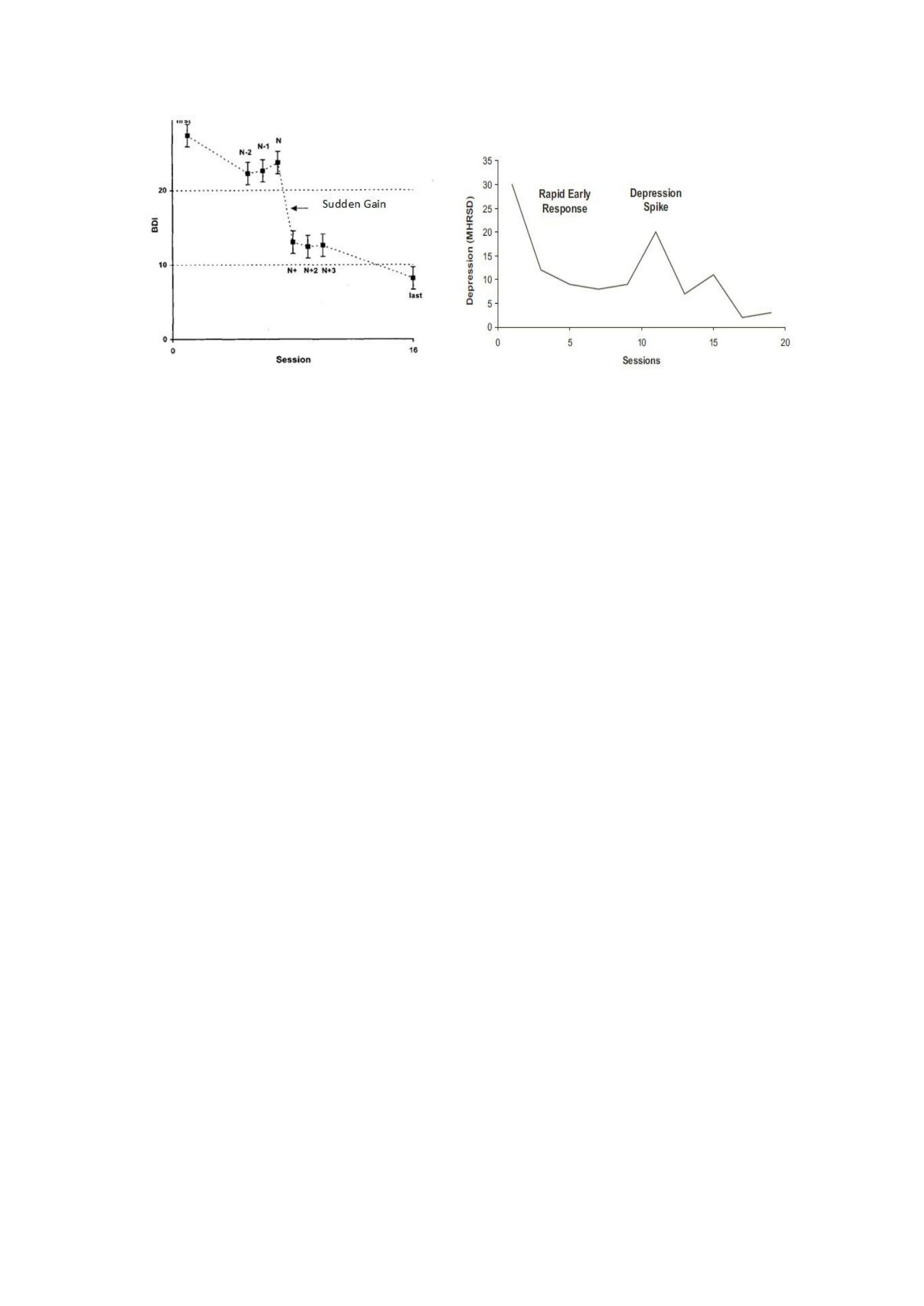
2007a). Three patterns have been identified that are associated with improved
depression outcomes: “sudden gains” (Tang & DeRubeis, 1999); “depression
spikes” (Hayes, Feldman, Beevers, Cardaciotto, Laurenceau & Lewis-Smith
(2007b) and “rapid early responses” (Ilardi & Craighead, 1994). These are
illustrated in Figure 5.
33
EXAMINING THE PROCESS OF CHANGE
Figure 5: Temporal change in depression symptoms across the course of CBT
depicting the sudden gain, depression spike, and rapid early response.
Images
taken from Tang and DeRubeis (1999, left) and Hayes et al. (2007b, right).
Sudden gains have consistently been associated with improved outcomes
across a range of interventions and disorders (Aderka, Nickerson, Bøe &
Hofmann, 2012; Adler, Harmeling & Walder-Biesanz, 2013; Bohn, Aderka,
Schreiber, Stangier, & Hofmann, 2013; Keller, Feeny & Zoellner, 2014). They
are hypothesised to result from cognitive shifts observed in “critical” pre-gain
sessions (Tang & DeRubeis, 1999; Tang, DeRubeis, Beberman & Pham, 2005).
However, others have failed to replicate this finding (Bohn et al., 2013;
Hofmann, Schulz, Meuret, Moscovitch & Suvak, 2006; Kelly, Roberts & Ciesla,
2005) and the observation that sudden gains arise in a range of treatment
approaches that are not oriented towards cognitive change (e.g. Vittengl, Clark
& Jarrett, 2005) has led to suggestions that a more trans-theoretical perspective
may be warranted (Hardy, Cahill, Stiles, Ispan, Macaskill & Barkham, 2005).

34
EXAMINING THE PROCESS OF CHANGE
Cognitive changes remain the principal mechanism studied to date but
assimilation (Goodridge & Hardy, 2009), interpretive accuracy (Andrusyna,
Luborsky, Pham & Tang, 2006), self-evaluation processes (Kelly, Roberts &
Bottonari, 2007) and, narrative meaning making (Adler et al., 2013) have also
been suggested as possible contributing processes. Tang & DeRubeis (1999)
theorised that sudden gains trigger an “upward spiral”, marked by further
cognitive change and improved therapeutic alliance that facilitates onward
therapeutic change.
Hayes et al. (2007b) identified “depression spikes” in a trial of
exposurebased cognitive therapy. Depression spikes described transient
periods of symptom disturbance, and were associated with improved
depression at the end of therapy. Hayes et al. (2007b) suggested that the
relationship between depression spikes and improved outcomes was mediated
by emotional processing. Depression spikes are theorised to reflect activation of
the depressive network that serves to facilitate emotional processing and are
likened to the principle of destabilization before transition in therapeutic change
(Hayes et al., 2007b). However, a recent study in the context of post-traumatic
stress disorder found that depression spikes did not influence outcome (Keller,
Feeny & Zoellner, 2014).
The rapid early response describes a pattern of responding where the
majority of total symptom change occurs during the first few sessions (e.g.
Rush, Beck, Kovacs & Hollon, 1977; Fennell & Teasdale, 1987). Ilardi and
Craighead (1994) theorised that the rapid early response to CBT reflects an
early increase in hopefulness that is largely mediated by common therapy
factors such as the therapeutic alliance. Indeed, greater hopefulness has been
observed among rapid responders (Hayes et al., 2007b); however, the debate

35
EXAMINING THE PROCESS OF CHANGE
about the precedence of specific versus common factors in therapeutic change
continues (e.g. Gerger, Munder & Barth, 2013).
Research has repeatedly shown that individuals who evince these
discontinuities obtain better therapeutic outcomes than those who do not
(Aderka, Nickerson, Bøe, & Hofmann, 2012; Adler, Harmeling & WalderBiesanz,
2013; Hayes et al., 2007b; Ilardi & Craighead, 1994; Keller, Feeny & Zoellner,
2014). Yet, research explaining discontinuities in outcome is limited, and
uncertainty remains about facets of therapy that predict these changes.
Discontinuous patterns are thought to correspond to transitional periods in
therapy; thereby, affording opportunity to isolate and study variables that may
be causally related to change (Hayes, Laurenceau, Feldman, Strauss &
Cardaciotto, 2007b; Tang & DeRubeis, 1999). We need to know more about the
therapy processes that characterise these important periods and, hence, what
therapist and client can do to bring about change.
Cognitive shifts, hope, and emotional processing have been associated
with discontinuous patterns of change, with inconclusive results so far. The
processes associated with sudden gains have commonly been studied by
comparing the pre-gain session to the pre-pre-gain session (e.g. Adler et al.,
2013; Bohn et al., 2013; Hofmann et al., 2006; Tang & DeRubeis, 1999; Tang et
al., 2005). While this offers valuable insight into the changes preceding sudden
gains, it cannot determine how these may differ in non-sudden gainers. This
study examines the role of hope and emotional processing in relation to
discontinuities of change in the context of CBT for treatment-resistant
depression. Both within and between person-control sessions are included to
afford understanding of the temporal changes leading up to gains, as well as
how this pattern of change may differ in non-sudden gainers. This study further

36
EXAMINING THE PROCESS OF CHANGE
built on existing literature by integrating examination of a specific therapy factor,
namely therapist competence in case-conceptualisation.
Case-conceptualisation is integral to the practice of CBT but until recently
has received relatively little attention in research (Bieling & Kuyken, 2003). It is
an evolving collaborative process between therapist and client that synthesises
theory and practice to generate hypotheses to describe and explain a person’s
difficulties and help clients make sense of their experiences (Division of Clinical
Psychology, 2011; Kuyken, Padesky & Dudley, 2009). Its principal function is to
guide therapy in order to relieve distress and build resilience (Kuyken et al.,
2009), but it is also proposed to provide validation and normalisation, to foster
engagement and to aid understanding of non-response in therapy, offering
alternative routes for change (Kuyken et al., 2009). Following recent
suggestions of a role for processing and meaning making in therapeutic change
(Adler et al., 2013; Hayes et al., 2007b) this study asked whether therapists can
facilitate processing through competent case-conceptualisation. It was
hypothesised that more competent case-conceptualisation should assist clients
to process and make meaning of their experience. Further, this study asked
whether more competent case-conceptualisation was associated with clients’
hope for change, and whether it may ultimately improve outcomes.
This paper is divided into two studies. The first aimed to examine and
describe the temporal pattern of symptom change observed across the course
of CBT in people with treatment-resistant depression using individual growth
curve models. It evaluates the incidence of discontinuous patterns of change
and their relationship to depression outcomes. Moore & Garland (2003) caution
that due to the prominence of avoidance in treatment resistant depression,
initial cognitive interventions frequently result in transient symptom disturbance

37
EXAMINING THE PROCESS OF CHANGE
prior to therapeutic benefit (p.36). This is consistent with Hayes et al.’s (2007)
conceptualisation of depression spikes. Therefore, this study might predict a
non-linear course of therapeutic change in this population as the chronic
patterns of cognitive, behavioural and emotional avoidance are worked upon.
The second study is a process analysis; therapeutic phenomena in
“critical” therapy sessions are explored and compared to control sessions to
investigate client and therapist processes that may be influential in the
experience of change in therapy. The research questions are articulated below.
Study One.
• What is the shape of change across the course of CBT for depression in
this treatment-resistant sample?
• Are sudden gains, rapid early responses, depression spikes observed in
people with treatment resistant depression participating in CBT?
• If present, do they predict outcome; do clients who demonstrate
discontinuities of change reliably attain better depression outcomes than
those who do not?
Study Two.
• What is the relationship between discontinuous patterns of change,
therapist competence in case-conceptualisation, and client hope and
processing? Specifically, do sessions proximal to discontinuities of
change (e.g., sudden gains, rapid early responses and depression
spikes) exhibit changes in case-conceptualisation competence, hope and
processing compared to within and between-person control sessions?
Study One: Method

38
EXAMINING THE PROCESS OF CHANGE
Data source: The CoBalT Study
This project reports a secondary analysis of data collected as part of the
CoBalT study (Wiles et al., 2012). CoBalT was a multi-centre
2
pragmatic
randomised controlled trial, with the objective to examine the clinical and
costeffectiveness of CBT as an adjunct to pharmacotherapy for people with
treatment-resistant depression in primary care. Thus, 469 eligible and
consenting participants were randomised to continue with usual GP care,
including antidepressants, or to receive a course of CBT in addition to usual
care, including antidepressants. Participants were followed up at 3, 6, 9 and 12
month intervals. Thomas et al. (2012) report the protocol in full, Wiles et al.
(2012), report the main effectiveness findings, and Hollinghurst et al. (2014), the
cost-effectiveness findings.
Ethical Considerations
The CoBalT trial was ethically approved by a multi-centre research ethics
committee (NRES/07/H1208/60) and local research governance. The Cobalt
Trial Steering Committee and Trial Management Group reviewed and
sanctioned the proposed secondary analyses and additional approval was
granted by The University of Exeter ethics committee (see Appendices B – E for
documentation). The present study utilised the CoBalT dataset in accordance
with appropriate consents and ethical approvals and did not involve direct
contact with participants. Therefore, no additional risk or burden of participation
was incurred.
2
Universities of Bristol, Exeter, Glasgow and Peninsula Medical School.

39
EXAMINING THE PROCESS OF CHANGE
Participants
Data from participants who were randomised to receive CBT in addition to
usual GP care (n=235), and who had consented to the use of their data in future
research (n=210, 89%) were available for inclusion in this project. Participants
were adults with treatment resistant depression who had been taking an
adequate dose of antidepressant medication for at least six weeks and were still
reporting significant depressive symptoms. The CoBalT study eligibility criteria
are shown in Table 1.
Table 1
CoBalT Trial Eligibility Criteria
Inclusion criteria
Exclusion criteria
Adults aged 18-75
Bipolar disorder or psychosis
Currently taking adequate dose1 of
antidepressant medication for at least
6 weeks.
Alcohol or substance abuse /
dependence
Adhered to their medication2
Concurrent psychotherapy or
secondary care; or received >5
sessions of CBT in last 3 years
Report clinical level of depressive
symptoms3
Women who were pregnant at the time
of recruitment
Meet criteria for ICD-10 diagnosis of
depression 4
Not able to complete study
questionnaires
Note.
1. Based on the British National Formulary
2. Assessed by self-reported measure (Morisky, Green & Levine, 1986).
3. Assessed by self-reported measure of depression severity (Beck Depression Inventory-II,
Beck, Steer & Brown, 1996).
4. Assessed using the Revised Clinical Interview Schedule (CIS-R, Lewis, Pelosi, Araya &
Dunn, 1992).

40
EXAMINING THE PROCESS OF CHANGE
Given that this study aims to describe trajectories of change over CBT
using growth curve models and to distinguish discontinuities in change, the
sample was restricted to participants who had received an adequate dose of
CBT to enable this aim. Those who had attended at least nine sessions of CBT
and who had completed the BDI-II in at least six sessions were included,
yielding a sample of 156 individuals for analysis (75%).
Baseline characteristics. Of these 156 individuals, 73% were women
and 99% were white. The mean age was 49.6 years (SD=11.6). Just over half
(53%) were married or living as married and most (54%) were in paid
employment. Participants reported severe, chronic and treatment-resistant
experiences of depression. The mean BDI-II at baseline was 31.96 (SD=9.93),
which falls within the severe range. The majority (90%) had experienced
depression previously, with more than half (53%) reporting five or more previous
episodes. Most (70%) had been taking their current course of antidepressants
for more than a year. Comorbidity was almost universal; all but one individual
obtained a secondary psychiatric diagnosis (according to the revised Clinical
Interview Schedule, Lewis et al., 1992), the most frequent of which was
generalised anxiety disorder (51%). These sample characteristics were
consistent with the full CoBalT intervention group; the only variation is that this
sample contained a slightly higher proportion of people in paid employment
(54% compared to 47%).
Therapy and Therapists
Participants were offered 12 to 18 sessions of individual face-to-face CBT.
The median number of CBT sessions in this sample was 15 (Range=9-19). CBT
sessions lasted approximately 50 minutes and were audio-recorded, subject to
written client consent.

41
EXAMINING THE PROCESS OF CHANGE
Eleven (10 female), UK trained, therapists delivered the CBT across
three sites: Exeter, Bristol and Glasgow. Therapy was delivered according to
seminal treatment manuals (Beck et al., 1979; Beck, 1995), with adaptations to
address treatment resistance in order to explicitly target cognitive and
behavioural avoidance (Moore & Garland, 2003). Consistent with Moore and
Garland, emphasis was placed on using individualised case-conceptualisations
to guide CBT.
Measures
The Beck Depression Inventory, second edition (BDI-II, Beck et al., 1996)
measured self-reported depression symptoms at the start of each therapy
session and also at baseline, six and 12month follow-ups. Twenty-one items
assess symptom severity over a two-week period; scores range from zero to 63
with higher scores indicating more severe depression. It has strong
psychometric properties, having been shown to be reliable, valid, and sensitive
to change (Beck et al., 1996).
Procedure
Identifying discontinuities of change. Individual treatment trajectories
were examined to identify discontinuous patterns of symptom change according
to criteria documented in previous research. Dummy variables were generated
to indicate the presence of sudden gains, rapid early responses and depression
spikes for each session and participants were classified according to whether or
not they exhibited each change pattern during therapy.
Sudden gains. Sudden gain criteria should pragmatically distinguish
clinically significant gains from transient noise or random symptom variability.
Sudden gains were originally identified by Tang and DeRubeis (1999) according
to the following criteria requiring: a) at least a 7-point drop in BDI-II from one

42
EXAMINING THE PROCESS OF CHANGE
session to the next, b) the magnitude of the gain must equal at least 25% of the
pre-gain BDI-II and c) the mean BDI-II of the three sessions preceding the gain
must be significantly greater than that of the three sessions following the gain3.
These criteria have been repeatedly used, and have identified sudden gains of
clinical significance in terms of their relationship to outcomes (e.g. Keller et al.,
2013; Tang & DeRubeis, 1999; Tang, DeRubeis, Hollon, Amsterdam, & Shelton,
2007). However, some have argued the seven point criterion is arbitrary, and
other variations have been suggested, for example to include firstsession gains
(Gaynor, Weersing, Kolko, Birmaher, Heo, & Brent, 2003). Aderka et al.’s (2012)
meta-analysis of sudden gains reported that adjusting the criteria and including
first-session gains did not significantly alter effect sizes. Furthermore, the
reliable change index (Jacobson & Truax, 1991) for this sample equated to 7.07
BDI-II points and so the seven point cut-off appears justified. Therefore, the
original Tang and DeRubeis (1999) criteria were retained.
Depression spikes. Hayes et al.’s (2007) criteria were adapted to
categorise depression spikes. Spikes were identified by an increase of seven or
more BDI-II-points, followed by a decrease of at least seven points within a six
session period. This adaption was intended to capture transient symptom
spikes whenever they occurred during therapy.
Rapid early responses. There is a lack of consensus in how to measure
rapid early responses (Lambert, 2005). Rapid early responses were
operationalised by patterns of early change that were large in absolute
magnitude and relative to total change during therapy. This method is
concordant with recent literature (Hayes et al., 2007b; Renaud, Brent, Baugher,
Birmaher, Kolko & Bridge, 1998) and analogous to the sudden gains critieria.

43
EXAMINING THE PROCESS OF CHANGE
Rapid early responses were demarcated where a) at least 60% of the total BDIII
change during therapy occurred within the first five sessions (Hayes et al.,
2007a) and b) the threshold for reliable change was met.
Data analytic strategy. In order to examine trajectories of change over
time in therapy it is necessary to consider the longitudinal nature of the data,
which entails a multi-level structure. The first level comprised repeated
measures of depressive severity collected at each CBT session (BDI-II). These
(level 1) observations were nested within individuals (level 2), nested within
therapists (level 3). This hierarchically structured data is suited to growth curve
modelling approaches (Singer & Willett, 2003). Such multilevel models are
robust to differences in the number of observations between individuals. Both
within-person and between-person variance in outcome is considered and
change trajectories can be examined. This analytic approach allows
examination of how individuals change over time and how these changes vary
across individuals.
A series of growth curve models were conducted to estimate change in
depression over the course of CBT, where session number was used to
represent time. To reduce correlation between linear, quadratic and cubic terms
session number was centred on the mean session number (8.28). Therefore,
the intercept represents the estimated BDI-II score at the average session
midtherapy. Maximum likelihood estimation procedures were used with a
flexible unstructured covariance matrix to allow intercepts and slopes to covary
and to be estimated from the data, rather than independence assumed.
Firstly, linear change in BDI-II scores over sessions of CBT was modelled.
Visual examination of the data depicted differing trajectories for individuals.

44
EXAMINING THE PROCESS OF CHANGE
Therefore, random intercepts, then random slopes were tested to allow
individual rates of change to vary. Next, polynomial growth parameters were
tested following observation of curvilinear trends in trajectories. Finally, therapist
was tested as a third level to the unadjusted model, to evaluate the change in
depressive severity that may be explained by therapist level factors. Likelihood
ratio tests were used to compare models and determine which model provided
the best fit to the data.
Analysis of covariance (ANCOVA) examined differences between
participants with and without sudden gains, depression spikes and rapid early
responses in depressive severity at 12 months, controlling for pre-treatment
depression at baseline. To provide an additional, clinically significant, measure
of outcome, rates of clinical remission
3
at 12 months were evaluated among the
different groups using chi square analyses.
Results
Data analysis was implemented using Stata statistical software, version
12.5
Growth Curves
Table 2 displays the coefficients, standard errors, p-values and
goodnessof-fit statistics from the unadjusted growth curve models used to
evaluate the shape of change in depression over sessions of CBT. These
analyses revealed a significant linear decrease in depression over the course of
CBT in this treatment-resistant sample. Allowing the slopes to vary between
individuals improved the fit over the random intercept model.
3
Clinical remission of symptoms is indicated by a BDI-II score 13 or less (Beck et al, 1996). 5
Only 3% of data was missing across all assessments, no imputation procedures were
undertaken (see Appendix J for details).

45
EXAMINING THE PROCESS OF CHANGE
Curvilinear patterns were evident in individual trajectories. Therefore,
quadratic and cubic parameters were added to the linear model. These
revealed a significant cubic pattern of change in addition to the linear decrease
in symptoms. Likelihood ratio tests indicated that the cubic model provided the
best fit to the data, indicating an overall cubic pattern of change in depression
over the course of CBT.
To evaluate whether individual therapists yielded differential client
responses to CBT, therapist was added as a third level of variance into the
unadjusted cubic model. The three-level model where sessions (level one) were
nested within individuals (level two), nested within therapists (level three) did
not significantly improve the model fit over the two-level model (see Table 2).
Thus, there was no evidence to suggest that client responses to CBT varied
systematically by therapist. Partitioning the variance confirmed that the vast
majority of variation in depressive severity over the course of CBT was
explained at the individual level, only 1% of the variance in depression was
explained at the level of the therapist. As the three-level model did not add
value to the two-level model, for parsimony, the two-level model was preferred.

EXAMINING THE PROCESS OF CHANGE
56
Table 2
Fixed Effects and Variance Components for Unadjusted Growth Models: BDI-II by Session
Parameter
Model A
Linear change, fixed
slope
Model B
Linear change, random
slopes
Model C
Quadratic change, random
slopes
Model D
Cubic change, random
slopes
Model F
Three level cubic
model
Fixed Intercept effects
(SE)
22.79***
(0.88)
22.46***
(0.91)
22.18***
(0.98)
22.12***
(0.98)
22.33***
(1.08)
Linear term
(SE)
-0.99***
(0.03)
-1.10***
(0.07)
-1.06***
(0.07)
-0.93***
(0.10)
-0.93***
(0.10)
Quadratic
term (SE)
0.02
(0.01)
0.02*
(0.01)
0.02*
(0.01)
Cubic term
(SE)
-0.003*
(0.001)
-0.003*
(0.001)
Variance
Level
1
components
Withinperson
(SE)
39.15
1.2
27.62
0.89
22.88
0.76
21.34
0.73
21.34
0.73
Level
2
Betweenperson
(SE)
117.5
-13.63
125.83
14.53
146.18
16.94
147.16
17.03
144.96
16.99
Linear term
(SE)
0.63
0.089
0.55
0.08
1.04
0.17
1.04
0.17
Quadratic term
(SE)
0.01
0.002
0.01
0.002
0.01
0.002
Cubic term
(SE)
0.0001
0.00004
0.0001
0.00004
Level
3
Therapist (SE)
1.95
2.97

EXAMINING THE PROCESS OF CHANGE
Goodness of fit 2*log-
likelihood (df)
454.54*** (2) 218.97*** (4) 63.45*** (5)
0.71 (1)
Note.
Quadratic term is equal to the centered session number, squared. Cubic term is equal to the centered session number, cubed. BDI-II
= Beck Depression Inventory, 2nd edition (Beck et al., 1996).
***p<.001 **p<.01 *p<.05

EXAMINING THE PROCESS OF CHANGE
Therefore, the overall shape of change in depression over the course of
CBT was best described by the two-level, cubic random intercept and slope
model. The average treatment trajectory predicted by this model is illustrated in
Figure 6. It suggests that depression severity tended to reduce in early
sessions, followed by a period of slowed change, then symptom improvement
accelerated towards the latter part of therapy. Despite the significance of the
cubic parameter, the average trajectory appears not dissimilar to a linear trend.
However, inspecting individual trajectories revealed a high degree of variation
between individuals (see Appendix J). As a result of this inter-individual
variation, the average treatment trajectory provides a limited conceptualisation
of change.
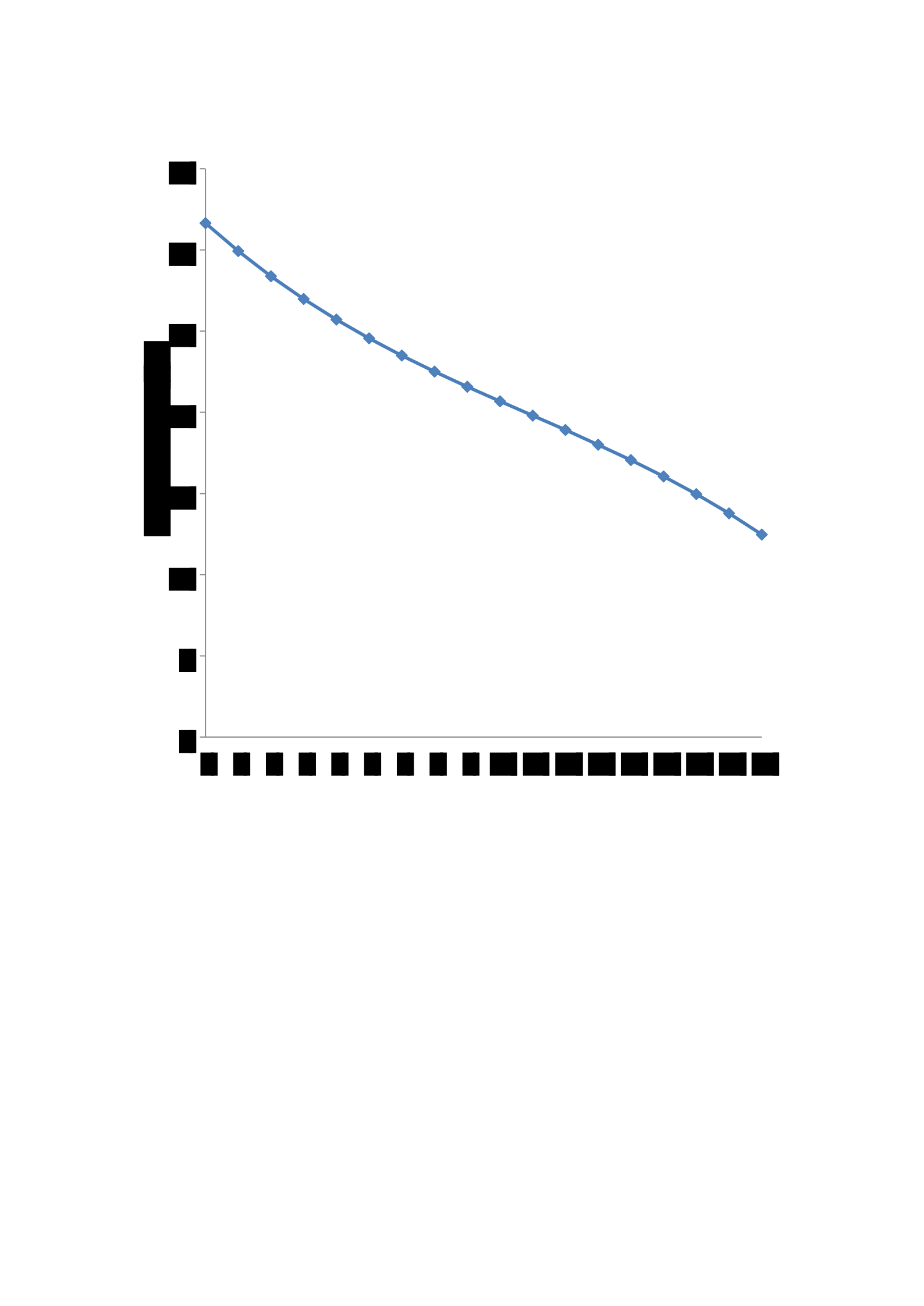
49
EXAMINING THE PROCESS OF CHANGE
58
Session Number
Figure 6. Estimated average trajectory of symptom change (measured by
the BDI-II) over sessions of CBT according to the unadjusted two-level
cubic model.
Examining model fit graphically by individual suggested that the model
appeared to adequately estimate the trajectory of change for many people.
However, it appeared unable to capture the large and sharp discontinuities in
symptom change that were observed, which may represent incidences of
depression spikes and sudden gains. Attention now turns to these patterns.
0
5
10
15
20
25
30
35
1
2
3
4
5
6
7
8
9
10
11
12
13
14
15
16
17
18

EXAMINING THE PROCESS OF CHANGE
Discontinuities of Change
In all, 119 sudden gains were observed among 84 individuals, thus 54%
experienced a sudden gain at some point during therapy. Of these, 31 went on to
experience a second gain, and four displayed a third. The median pre-gain
session was six, while the mean magnitude equalled 12.29 BDI-II points
(SD=5.53, Range= 7-36). Among sudden gainers, this equated to 62% of their
mean symptom change during therapy, and exceeded the mean change of
nonsudden gainers during therapy.
Seventy-eight people (50%) demonstrated at least one depression spike
during therapy. Forty-six (30%) had one spike, 26 (17%) had two and six (4%)
had three spikes. The median session for spikes to occur was session nine,
and the mean magnitude of the increase was 11.98 BDI-II points (SD=5.2,
Range = 7-31).
Thirty-one people (21%) experienced a rapid early response to therapy.
However, of these early improvements 19% were not maintained; six individuals
reported a higher BDI-II score at the end of therapy than at session five.
Relationship between discontinuous patterns and depression
outcomes. Table 3 shows the mean BDI-II scores at baseline and 12-month
follow-ups, mean symptom change during therapy and rates of remission at 12
months, according to participants’ classification regarding discontinuous patterns.

EXAMINING THE PROCESS OF CHANGE
60
Table 3
Mean Depression Outcomes by Participant Classification According to Discontinuous Patterns of Change
Participant classification
n
Total BDI-II change
during therapy
Baseline BDI-II
12 month BDI-
II
Percent
achieving
remission at
12 months
Rapid early responders
31
18.81 (10.86)
30.06 (8.82)
15.77(15.16)
38%
Non-rapid early responders
120
15.76 (11.67)
32.41 (10.20)
16.48 (13.66)
40%
Sudden gainers
84
20.51 (11.34)
32.16 (8.91)
12.59 (11.50)
49%*
Non-sudden gainers
72
11.41 (9.72)
31.36 (11.03)
20.08 (15.13)
30%
Depression spikes
78
16.27 (12.47)
32.32 (9.35)
15.64 (13.09)
41%
No depression spikes
78
16.55 (10.57)
31.26 (10.52)
16.58 (14.55)
40%
Note.
BDI-II = Beck Depression Inventory, 2nd Edition (Beck et al., 1996).
Remission of depression is indicated by a BDI-II score of 13 or less (Beck et al., 1996). Standard
deviations are in parentheses.
* χ2(1)=6.30, p<.05

EXAMINING THE PROCESS OF CHANGE

53
EXAMINING THE PROCESS OF CHANGE
ANCOVA tested the hypothesis that individuals who experienced
discontinuous patterns of change would obtain better depression outcomes,
after controlling for pre-treatment depression. The results demonstrated a
significant main effect of sudden gains: people who experienced sudden gains
reported lower levels of depression at 12 months (F(1,150) =20.98, p<.001)
compared to non-sudden gainers. This represents a medium effect size
(Cohen’s d) of 0.57. Chi square analyses indicated that more sudden gainers
achieved remission at 12 months than non-sudden gainers ( 2(1) =5.98, p=.01).
Conversely, people with and without depression spikes did not differ in
depression at 12 months (F(1,150) =0.64, p=.43), and similarly, there was no
difference between rapid and non-rapid responders (F(1,145) =0.08, p=.77).
Chi square analyses showed no significant differences between people with and
without depression spikes in the rates of remission at 12 month follow-up
22
(1)=0.03, p=.87) nor between rapid and non-rapid responders ( (1)=0.08,
p=.77).
Study Two: Processes of Change
Discontinuities in symptom trajectories are proposed to mark transition
points in therapy (e.g. Tang & DeRubeis, 1999; Hayes, Laurenceau, Feldman,
Strauss & Cardaciotto, 2007b), and so indicate periods of therapy most likely to
reveal factors that mobilize and inhibit change (Hayes et al., 2007b). Studying
these periods of transition can help to better understand change processes.
Study two built on study one by investigating processes of change in therapy
from audio-recordings of complete therapy sessions that were proximal to
discontinuous patterns associated with outcome. Study one suggested that
sudden gains, but not rapid early responses or depression spikes, were

54
EXAMINING THE PROCESS OF CHANGE
significantly associated with improved depression outcomes. Therefore, study
two focused on sudden gains as a meaningful indicator of transition. It sought to
understand what characterises these transition points, in terms of therapy
processes, in order to shed light on what may explain therapeutic change. The
sampling strategy was thus designed to enable examination of the “critical”
sessions, proximal to observed sudden gains, and to provide both between and
within-person controls for comparison.
Method
Sampling procedures. The sample of therapy sessions for study two
were drawn from the 97% of participants who had provided written consent to
the use of their therapy audio-recordings for research purposes.
Twenty-five sudden gainers were randomly selected for inclusion in study
two. Next, a yoked control group consisting of 25 non-sudden gainers, matched
to the sudden gain group by baseline BDI-II score, were selected for inclusion.
The second therapy session was sampled from these 50 participants to
provide a consistent baseline measure early in therapy, prior to the experience
of discontinuous change patterns. In addition, the sessions immediately
preceding, and following, sudden gains were sampled from the 25 sudden
gainers. The corresponding pre-gain session was sampled from the 25
nonsudden gainers, matched to the paired sudden gainer.
This strategy yielded a total of 125 therapy sessions for analysis from 50
people and is summarised in Table 4 below.
Table 4
Summary of the Selection of Therapy Sessions for Process Analysis

55
EXAMINING THE PROCESS OF CHANGE
Group
Sessions sampled (n)
Sudden gainers
(n=25)
Session 2 (25)1 Pre-gain sudden Post-gain
gain (25) session (25)
Yoked-control
nonsudden gainers
(n=25)
Session 2 (25)2 Matched “pre-gain”
session (25)2
Note.
1. Within-person control sessions
2. Between-person control sessions
Coding of therapy sessions. The Change and Growth Experiences
Scale (CHANGE, Hayes, Feldman & Goldfried, 2006) was used to rate the level
of in-session emotional processing and hope from audio-recordings of sampled
therapy sessions (see Appendix H). Emotional processing refers to the extent to
which a person explores, questions and makes meaning of experiences related
to their depression (Hayes et al., 2006). Hope describes the extent to which a
person expresses a belief that the future will be better and progress can be
made, as well as a commitment to change (Hayes et al., 2007). CHANGE is an
observational coding system designed to measure the frequency and extent of
change processes in psychotherapy and codes variables on a 4-point likert
scale from 0=not present or very low to 3=high. Preliminary research indicates
good inter-rater agreement and predictive validity (Hayes et al., 2006).
CHANGE was chosen for its capacity to capture a cognitive-affective form of
processing, to study multiple variables pertinent to treatment-resistant
depression (hope and processing), and to enable comparison to previous
research on discontinuities (Adler et al., 2013; Hayes et al., 2007b). Three
(clinical psychology post-graduates) coders rated sessions for hope and

56
EXAMINING THE PROCESS OF CHANGE
processing using the CHANGE. Each session was rated by two coders and
consensus scores were used.
Case-conceptualisation competence was evaluated using the
Collaborative Case-Conceptualization Rating Scale (CCCRS - Padesky, Kuyken
& Dudley, 2010, see Appendix I). The CCCRS provides an operational
definition and observational coding system to evaluate the concept of
caseconceptualisation as outlined by Kuyken et al. (2009). The CCCRS is a 14-
item observer-rated scale that assesses the presence and degree of specific
caseconceptualisation activities on a four point likert scale from 0=incompetent
to 3=expert. Consistent with the Kuyken et al. model (2009) it comprises three
domains of competence: evolving levels of conceptualisation, collaborative
empiricism and strengths/resilience. Preliminary research has demonstrated
high levels of inter-rater reliability, internal consistency and good convergent
validity with the Cognitive Therapy Scale–Revised (CTS-R; Blackburn et al.,
2001), a validated measure of general CBT competence (Kuyken et al.,
submitted). Two coders independently rated sessions for competence in
caseconceptualisation using the CCCRS. One (the author), was a doctoral level
clinical psychology student, the other a post-graduate clinical psychology
student.
Coders were trained in using the rating tools by authors of the scales
(CHANGE - Adele Hayes; CCCRS – Willem Kuyken). Training included
instruction, discussion and practise of pre-rated training sessions. Practise
continued until inter-rater reliability (ICC ≥ .8) was achieved. Regular
supervision meetings were held between the coders and scale authors to

57
EXAMINING THE PROCESS OF CHANGE
review discrepancies and prevent rater drift. All coders were blinded to
outcome and presence or absence of target change patterns.
Data Analytic Strategy. ANOVA evaluated change in process variables in
relation to sudden gains by comparing sessions proximal to sudden gains to
between and within-person control sessions. Relationships between
caseconceptualisation, client hope and processing, and depression outcome at
12 months were analysed using a series of multiple linear regressions and a
correlation matrix. Growth curve models in study one provided no evidence that
nesting clients within therapists improved the estimation of client depression
and therefore, for parsimony, ordinary linear regression was used to predict
depression at 12 months, rather than multi-level models. Further, each therapy
session is unique in terms of case-conceptualisation, the same therapists may
vary in competence across clients and sessions. Thus, conceptually, ordinary
linear regression is indicated.
Results
Table 5 below shows descriptive statistics for client hope and emotional
processing and therapist competence in case-conceptualisation.
Table 5
Means and Standard Deviations for Client Hope and Processing and Therapist
Competence in Case-conceptualisation at the Different Time Points in Therapy
Among Sudden Gainers and Non-Sudden Gainers
Non sudden gainers
(n=24†)
Sudden gainers (n=25)

58
EXAMINING THE PROCESS OF CHANGE
Variable
Session
two
Matched
“pre-gain”
session
Session
two
Pre-gain
session
Post-gain
session
Positive hope
(SD)
1.13
(0.47)
1.15
(0.83)
1.43
(0.70)
1.62
(0.89)
2.04
(0.75)
Emotional
processing (SD)
1.04
(0.75)
1.42
(0.80)
1.24
(0.82)
1.74
(0.82)
2.24
(0.75)
CCCRS Total
(SD)
18.13
(7.47)
17.71
(5.68)
21.92
(7.14)
21.64
(7.02)
23.40
(6.95)
CCCRS Levels
subscale (SD)
6.09
(2.71)
5.67
(2.24)
7.58
(2.62)
7.00
(2.83)
7.96
(2.75)
CCCRS
Collaboration
(SD)
4.43
(2.00)
4.29
(1.63)
5.50
(1.74)
5.44
(1.61)
5.64
(1.50)
CCCRS
Empiricism (SD)
4.30
(1.87)
4.21
(1.25)
5.17
(1.90)
5.32
(2.21)
5.36
(1.85)
CCCRS
Strengths (SD)
3.30
(2.22)
3.54
(2.40)
3.67
(2.18)
3.88
(2.42)
4.44
(2.77)
Note.
† Data from one participant was not usable due to failure of session audio-recordings.
Standard deviations are in parentheses.
CCCRS = Competence in Case-Conceptualisation Rating Scale (Padesky, Kuyken &
Dudley, 2011).
Factors associated with sudden gains. Two-way mixed ANOVAs
evaluated the hypothesis that pre-gain sessions would show greater levels of
case-conceptualisation competence, hope and processing compared to
between and within-person control sessions. Sudden gain status (present/not)
was the between-group factor and time-point (session two/pre-gain) the
repeated measure.
ANOVA indicated no significant effect of time-point on the competence of
case-conceptualisation (F(1,45)= 0.06, p=.81), but a significant main effect of
sudden gain status (F(1,47)= 5.51, p=.02). Therapists exhibited greater

59
EXAMINING THE PROCESS OF CHANGE
competence in case-conceptualisation with people who experienced a sudden
gain, and this did not vary significantly between session two and pre-gain.
Examining Table 5, it appears that for sudden gainers, levels of
caseconceptualisation competence at session two and pre-gain were in the
competent range and in non-sudden gainers they were in the novice/beginner
range. There was no significant interaction between sudden gain status and
time-point (F(1,45)= 0.01, p=.92), suggesting no differential effect from session
two to pre-gain between sudden gainers and non-sudden gainers. Sudden
gainers expressed significantly greater hopefulness (F(1,47)= 6.14, p=.02), but
this did not differ significantly between session two and pre-gain (F(1,47)=0.54,
p=.47), and again the interaction was not significant (F(1,47)=0.34, p=.56).
Conversely, emotional processing increased significantly from session two to
pre-gain (F(1,47)=9.25, p=.004), but did not differ significantly between sudden
gain groups (F(1,47)=2.17, p=.15), and again the interaction between the
factors was not significant (F(1,48)=0.19, p=.67).
Repeated measures ANOVA examined the effect of time-point (session
two / pre-gain / post-gain) within sudden gainers, to evaluate changes in hope,
processing and case-conceptualisation competence in relation to sudden gains.
Results indicated that competence of case-conceptualisation remained
relatively stable over these time points (F(2,47)= 1.06, p=.36). However,
emotional processing (F(2,48)= 12.95, p<.001), and hope (F(2,48)=4.97, p=.01)
increased significantly over the sessions. Post-hoc pairwise comparisons of
means, applying Bonferroni’s correction for multiple tests, suggested that it was
only the contrast in processing from session two to post-gain that was
significant (t=4.44, p<.001), and not from session two to pre-gain (p=.09), nor

60
EXAMINING THE PROCESS OF CHANGE
from pre to post gain (p=.09). The same pattern was observed with hope, it was
only the difference between session two and post-gain that was significant
(t=2.74, p=.02). However, it is noteworthy that the mean increase in hope
observed during the single sudden gain interval is more than double that
observed in the period from session two to pre-gain, a period that is equal to a
median of four sessions (range 1-13).
Relationships between outcome and case-conceptualisation, hope
and processing. Pearson correlation matrices between the predictor
(caseconceptualisation competence, client hope, emotional processing) and
outcome variables were generated at each time-point (session two, pre-gain
and postgain) to observe the inter-relationships among the variables measured
at the different points in therapy. The inter-correlations between the variables as
rated at the pre-gain session are shown in Table 6.

EXAMINING THE PROCESS OF CHANGE
69
Table 6
Zero-order Correlations Showing Inter-relationships Between Hope, Processing and Case-conceptualisation Competence as
Measured at Pre-gain, and Depression Severity at Pre-treatment Baseline and 12 months (n=49)
1
2
3
4
5
6
7
8 9
1. Hope
-
2. Emotional processing
0.59***
-
3. CCCRS Total scale
0.22
0.37**
-
4. CCCRS Levels subscale
0.24
0.38**
0.89***
-
5. CCCRS Collaboration
subscale
0.27
0.31*
0.75***
0.62***
-
6. CCCRS Empiricism subscale
0.14
0.24
0.88***
0.84***
0.65***
-
7. CCCRS Strengths subscale
0.06
0.21
0.59***
0.27
0.18
0.27
-
8. Baseline depression (BDI-II)
-0.10
-0.10
-0.07
-0.14
-0.16
-0.08
0.16
-
9. Depression at 12 months
(BDI-II)
-0.50***
-0.49***
-0.33*
-0.36*
-0.26
-0.33*
-0.07
0.49*** -
Note.

EXAMINING THE PROCESS OF CHANGE
CCCRS = Competence in Case Conceptualisation Rating Scale (Padeksy, Kuyken & Dudley, 2011). BDI-II
= Beck Depression Inventory – 2nd Edition (Beck et al., 1996).
*p<.05, **p<.01, ***p<.001

EXAMINING THE PROCESS OF CHANGE
70
Table 6 points to significant, small to medium, positive relationships
between outcome and competence in case-conceptualisation, overall, and with
the levels and empiricism subscales specifically. More competent
caseconceptualisation on these domains at the pre-gain session was
associated with improved depression outcome at 12 months. The absence of a
relationship with pre-treatment depression suggests that therapist competence
in caseconceptualisation was not influenced by client’s severity of depression at
intake. Greater expressions of hope and more engagement in emotional
processing at the pre-gain session were associated with better outcomes at 12
months, but not with pre-treatment depression.
Greater overall competence in case-conceptualisation was also
significantly correlated with emotional processing: more competent
conceptualisation was associated with greater client processing. Further, there
was a significant positive relationship between client hope and processing.
The significant relationships with outcome reported above were unique to
the pre-sudden gain session; i.e., they were not present when the predictor
variables were estimated at the second therapy session or at post-gain (see
Appendix J). Significant correlations observed at session two were positive
associations between emotional processing and 1) therapist competence in
conceptualisation (total scale, levels, empiricism and collaboration subscales),
and 2) client hope. When the post-gain sessions were rated, only the
relationship between hope and processing was significant.
Predicting depression outcome. Multiple linear regression was used to
develop an exploratory model to predict depression outcome (BDI-II) at 12

EXAMINING THE PROCESS OF CHANGE
months from therapist competence in case-conceptualisation and client hope
and processing, after controlling for pre-treatment depression (baseline BDI-II).
71
In light of the positive correlations with outcome, the estimates of hope,
processing and conceptualisation as measured at the pre-gain session were
used in the regression analysis.
A sequential multiple regression analysis was employed where
pretreatment depression at baseline was entered into the model on the first step
as a predictor of post-treatment depression at 12 months. Based on previous
literature documenting the relationship of client hope and processing to
predicting outcome (Hayes et al., 2007) these variables were entered
simultaneously into the model on the second step. Given that this is the first
empirical study using the CCCRS to predict depression outcome, the total scale
and subscale variables representing domains of therapist competence in
caseconceptualisation were entered at the third and final step of the regression
equation in a stepwise manner to reflect the exploratory nature of this question.
Table 7 shows descriptive statistics and regression coefficients for the resulting
multiple regression model.

EXAMINING THE PROCESS OF CHANGE
72
Table 7
Hierarchical Regression Table Showing Unstandardised Coefficients (B), Standard Errors (SE) and Standardised Coefficients (β)
for the Three Steps of the Multiple Regression Model
Variables
Step 1
Step 2
Step 3
B
SE of B
β
B
SE of B
β
B
SE of B
β
Baseline depression
(BDI-II)
0.67***
0.17
0.49
0.59***
0.15
0.43
0.57***
0.14
0.42
Hope
-4.35*
2.03
-0.28
-4.39*
1.98
-0.29
Emotional processing
-4.69*
2.20
-0.28
-3.88
2.18
-0.23
CCCRS –
Empiricism subscale
-1.48
0.77
-0.20
R2
0.24
0.49
0.53
F for change in R2
14.74***
11.12***
3.67†
Note.

EXAMINING THE PROCESS OF CHANGE
CCCRS = Competence in Case Conceptualisation Rating Scale (Padeksy, Kuyken & Dudley, 2011).
BDI-II = Beck Depression Inventory – 2nd Edition (Beck et al., 1996). *p<.05, **p<.01, ***p<.001,
†p=0.06


EXAMINING THE PROCESS OF CHANGE 94
The addition of hope and processing to the model resulted in a significant
increase in variance explained by the model. Clients who expressed greater
hopefulness and engaged in deeper emotional processing at the pre-gain
session went on to report lower levels of depression at 12 months. Both hope
and processing contributed significantly to predicting depression at 12 months,
after controlling for pre-treatment depression. Stepwise entry of the CCCRS
variables into the model evaluated whether therapist competence in the
domains of case-conceptualisation predicted depression outcome over and
above client hope and processing. This led to the addition of the empiricism
subscale of competence as a predictor of outcome
4
. However, its unique
contribution to improving the proportion of variance explained, in combination
with pre-treatment depression and client hope and processing, was not quite
significant; r2 change = 0.4, F(1,44) = 3.67, p=0.06. Taken together these
variables explained just over half (53%) of the variance in depression at 12
months, and indicate that clients who express greater hope and engage in
emotional processing working with therapists to co-create conceptualisations
that are better informed by theory at this important time of transition in therapy
go on to report lower levels of depression after 12 months, even after controlling
for pre-treatment depression.
Pathway mediation analysis. Only hope and pre-treatment depression
were significant predictors of depression at 12 months in the final model;
processing was no longer significant when the empiricism subscale of the
CCCRS was included. This may suggest some shared variance with outcome and
the CCCRS. The significant correlations between case-conceptualisation,
4
The Levels subscale of the CCCRS was automatically excluded from the model due colinearity
with the other CCCRS predictors.

EXAMINING THE PROCESS OF CHANGE 95
processing and outcome (see Table 6) met Baron & Kenny’s (1986) criteria for
mediation (see also univariate regression models in Appendix J). This suggested
that it may be informative to test an exploratory pathway analysis. A bias-
corrected bootstrapping analysis with case re-sampling and percentile confidence
intervals was conducted to explore hypothesised concurrent mediation (at the
pre-gain session) where more competent caseconceptualisation (independent
variable) predicts improved depression at 12 months, mediated by facilitating
client emotional processing (mediating variable), and controlling for pre-treatment
depression. This cross-sectional strategy to examine mediation at a significant
transition-point in therapy represents a tentative but feasible option suited to the
exploratory nature of this question. Bootstrapping is consistent with
recommendations by Fritz and MacKinnon (2007) and due to the limited power of
the Baron and Kenny procedure to detect a significant finding with this small
sample size.
Table 8 shows the coefficients, bootstrap standard errors and 95%
bootstrap bias-corrected confidence intervals for the indirect and direct
pathways.
Table 8
Regression Table Showing Coefficients, Bootstrap Standard Errors and 95% Bootstrap
Bias-corrected Confidence Intervals for the Estimated Effect of Caseconceptualisation
on Depression Outcome at 12 months Directly, and Indirectly
Dediated by Emotional Processing
Observed
coefficient
Bootstrap standard
error
95% Confidence
Interval
Indirect effect
-.29
.16
-.67 -.05
Direct effect
-.32
.004
-.75 .10

EXAMINING THE PROCESS OF CHANGE 96
Table 8 demonstrates that using percentile confidence intervals the indirect
effect of competence in case-conceptualisation on depression outcome at 12
months, mediated by emotional processing, is significant. However, it does not
quite meet significance using standard confidence intervals. This suggests that
the mediated effect observed is borderline. Nonetheless, it appears promising
that more competent case-conceptualisation on behalf of the therapist may
facilitate clients to engage in deeper emotional processing (at the critical pre-
gain session), which in turn predicts improved depression outcomes for clients
at 12 months.
Discussion
This paper contributes to the growing body of literature documenting
nonlinear trajectories of therapeutic change (e.g. Forand & DeRubies, 2013;
Hayes, et al., 2007b; Vittengl, Clark, Thase & Jarrett, 2013); by suggesting a
cubic pattern of change occurs over the course of CBT for treatment-resistant
depression. Individual trajectories featured rapid discontinuities in symptom
change. The phenomenon of sudden gains is extended to a treatment-resistant
population of individuals who reported severe and chronic experiences of
depression. Sudden gains of a comparable effect size, magnitude and timing
were observed in this sample, yet they were slightly more prevalent than has
been reported previously (e.g. Aderka et al., 2012; Hardy et al., 2005; Tang et
al., 2007). Consistent with the majority of literature on sudden gains (e.g.
Aderka et al., 2012; Adler et al., 2013; Tang & DeRubeis, 1999), sudden gainers
enjoyed better depression outcomes at 12 months.
This study also provided preliminary evidence suggesting that sudden gains
were associated with case-conceptualisation, hope and emotional processing.
Sudden gainers experienced more competent caseconceptualisation and

EXAMINING THE PROCESS OF CHANGE 97
demonstrated greater hopefulness than their non-sudden gainer counterparts.
Deeper processing preceded sudden gains, and was positively related to
therapist competence in case-conceptualisation, as well as client hope. Case-
conceptualisation competence, hope and processing together predicted reduced
depression at 12 months.
Clinically, it is possible that superior case-conceptualisation increases the
probability of experiencing sudden gains in therapy. Likewise, hope for change
may predispose an individual favourably towards experiencing gains in therapy.
The combination of high quality case-conceptualisation and a sense of client
hope, with active client processing may encourage symptom relief, which may
be expressed in sudden gains. This suggests that therapists who can use
caseconceptualisation effectively to support clients to process and make
meaning of their experiences, during this critical window of time in therapy, may
contribute to facilitating sudden gains, and in so doing, predispose clients
towards longer term change and recovery. These findings align with and build
upon recent literature suggesting that emotional processing and meaning
making is associated with sudden gains (Adler et al., 2013) and with greater
improvement during therapy for depression (Hayes, Beevers, Feldman,
Laurenceau & Perlman, 2005).
Despite the fundamental role of case-conceptualisation in CBT, to our
knowledge this represents the first empirical study to demonstrate that it predicts
outcome. Further, a possible pathway of change is proposed, whereby more
competent case-conceptualisation predicts greater therapeutic change,
mediated by deeper emotional processing. This represents a preliminary finding
of concurrent mediation (at the pre-gain session). Causality cannot be assumed

EXAMINING THE PROCESS OF CHANGE 98
as it does not meet the criterion for causal inference that states that the
independent variable must temporally precede the mediating variable (Haynes
& O’Brien, 2000). Nonetheless, from a clinical perspective, the competence with which a
therapist facilitates conceptualisation of experiences may influence the degree to which that
individual is able to process and make meaning of issues related to their depression in the
moment, rather than carry forward to a later session. Therefore, whilst this finding must be
viewed as preliminary, it suggests an avenue for future research to investigate more closely
the interactive processes between therapist and client that may be influential in facilitating
change.
Another possible interpretation of the shared variance between emotional
processing and case-conceptualisation competence is that both are measuring
an overlapping construct of meaning making, albeit from the different
perspectives of client and therapist, rather than reflecting a process of
mediation. In this study, client emotional processing was rated by the CHANGE,
while the CCCRS rated therapist competence in case-conceptualisation.
Nevertheless, case-conceptualisation is inherently an interactive and
collaborative process between client and therapist. If we are to better
understand patterns of change in therapy and how they occur it seems important
to examine all aspects of the therapy process (therapist, client and their
interaction) during these periods of transition (Lambert & Hill, 1994;
Llewellyn & Hardy, 2001).
In exploring the impact of the gain on therapy this study hints towards a
trend for deeper emotional processing and hope to emerge following a gain. While
these effects were statistically non-significant after correcting for multiple tests in
this small sample (n=25), the rate and magnitude of the changes during the single
sudden gain interval make them noteworthy. Hope and processing were

EXAMINING THE PROCESS OF CHANGE 99
significantly positively related at sessions proximal to sudden gains. One possible
hypothesis is that experiencing a sudden gain validates early residual hope and
may help to foster an emergent sense of hope and commitment for change. This
may prime clients’ active engagement in the process and tasks of therapy,
including efforts to approach, explore and make meaning of their experiences of
depression. This aligns with writing on the facilitative role of hope in the process
of therapy (Hoffart & Sexton, 2002; Kuyken, 2004; Snyder, Ilardi, Cheavens,
Michael, Yamhure & Sympson, 2000). Sudden gains may therefore present an
opportunity for the chronic, defensive and avoidant cognitive and behavioural
processes that constrict change to be approached and worked upon, thereby
unlocking the depressive system to allow onward therapeutic change. This
hypothesis is consistent with the concept of Tang and DeRubeis’ (1999) upward
spiral hypothesis and with Hayes et al.’s suggestion that early change might
facilitate later processing (2007b). However, the lack of data on non-sudden
gainers “post-gain” means that more research is needed to understand the impact
of sudden gains on later therapy.
Therapist competence in utilising empirically sound conceptualisations,
together with greater client expressions of hope and engagement in emotional
processing at pre-gain predicted reduced depressive severity at 12 months,
after controlling for pre-treatment depression. These variables held no predictive
value when measured at the second therapy session or after the gain had
occurred. This supports the notion that sudden gains signify a critical period of
transition in the process of therapeutic change (Tang & DeRubeis, 1999; Hayes
et al., 2007a) and so can be utilised as a marker of where to focus analysis to
examine causal mechanisms of change.

EXAMINING THE PROCESS OF CHANGE 100
Study Strengths and Limitations
This study has methodological strengths and limitations. It is embedded within
a high-quality randomised controlled trial examining a clinical population for whom
the process of therapeutic change is under-researched, but especially meaningful
given the entrenched nature of the depressive system in treatmentresistant clients.
It examines both client and therapist processes during “critical” therapy sessions
and compares them to both between and within-person controls to characterise
processes of change during transition. The CCCRS and CHANGE are well suited
to explore the constructs under examination; however, it is acknowledged that as
they are contemporary scales, their psychometric properties are still being
established.
Whilst the cubic growth term was significant and provided the best fit to the
data; the cubic shape is not pronounced in the average trajectory. The high
degree of interindividual variation in trajectories limits the face validity of an
average trajectory and illustrates the limitations of aggregating data to predict
an average trajectory of change. Nevertheless, this study has not considered
more complex patterns of change (such as spline functions) that may provide a
better estimation of change to capture the rapid discontinuities apparent within
individual trajectories. It would be fruitful to examine interindividual variation in
trajectories to identify covariates that moderate the shape and rate of change.
Latent class analysis could identify sub-groups of trajectories to examine
whether different trajectories are associated with outcome. However, these
increasingly complex modelling functions were beyond the scope of this study,
which set out to describe the shape of change observed over the course of CBT
for treatment resistant depression.

EXAMINING THE PROCESS OF CHANGE 101
This study suggests a role for hope and processing in understanding the
impact of sudden gains on later therapy. It was a limitation of this study that the
corresponding “post-gain” session did not have a between-person control, restricting
the conclusions that may be drawn about the impact of the gain on therapy.
However, process coding of therapy sessions is time-intensive and resource
constraints rendered this unfeasible here. Future research can address this by
analysing this period of therapy in both gainers and non-gainers to try to illuminate
the impact of the gain on important processes of therapy thereafter, and to
empirically evaluate the upward spiral hypothesis (Tang & DeRubeis, 1999).
The CBT was delivered in the context of a randomised controlled trial, a
strength of this context was the well qualified and competent therapists, which
increases the internal validity of the study. However, future research may wish to
extend findings to more naturalistic clinical settings with greater variability in
therapist training and competence to increase external validity. The CoBalT
usual care group was not included in this study because neither longitudinal
symptom measures nor therapy audio-recordings were collected from these
participants. This would be a valuable step, to directly compare trajectories of
change and the concomitant processes of change between CBT and usual care
groups, to assess whether CBT operates a causal role in the process and
trajectory of therapeutic change. This could also help to establish whether
discontinuities in symptom change are a part of the natural course of
depression.
As with all research on sudden gains, causality of effects cannot be
determined. This paper reports some exploratory, correlational findings together
with efforts to understand their clinical meaning. For example, the exploratory
mediation model presented here represents one hypothesised pathway for change,

EXAMINING THE PROCESS OF CHANGE 102
consistent with the pattern of emergent findings. However, it is acknowledged that
there are many more possible pathways for change. These tentative findings may
inform future research to examine hypothesised
pathways using more advanced procedures such as structural equation
modelling and with more power, which may help to ascertain their validity as
causal agents of therapeutic change. A possible future step to address causality
could be to manipulate the variables under question. For example, by
comparing usual care, with standard CBT and CBT augmented with focused
training to enhance competence in using case-conceptualisation to facilitate
client processing and meaning making.
Conclusions
This study suggests that the course of CBT for treatment resistant
depression can best be characterised as cubic, featuring prevalent and rapid
discontinuities in symptom change. It further validates the clinical significance of
sudden gains, by suggesting that they represent a meaningful transition point in
therapy for depression and contribute to sustained wellness, even in
treatmentresistant cases. These findings add to a growing body of literature
emphasising the importance of studying the shape of therapeutic change, and
the suggestion that non-linear trajectories represent important transitions and
reorganizations within the depressive network (e.g. Hayes et al., 2007a).
Therefore, focusing analysis on periods of rapid symptom change can aid
understanding of therapy processes and mechanisms of change. Finally, this
paper provides preliminary findings suggesting that therapists can support
clients in emotional processing and making meaning of their experience by
practicing competent caseconceptualisation, and together with a hope for

EXAMINING THE PROCESS OF CHANGE 103
change, these processes may be instrumental in bringing about sudden gains
and contributing to improved depression outcomes.
Appendix A. Search Strategy
The following electronic databases were searched: PsycARTICLES,
PsycINFO, ISI Web of Knowledge. The search terms “depression” and “cognitive
therapy” were used in combination with the following terms one by one “change
patterns”, “sudden gains”, “depression spikes” and “rapid early responses” to
identify papers for review. The searches were limited to articles published in
peer-reviewed journals. Articles were included if they reported an original
empirical study of a discontinuous pattern of symptom change observed over
the course of cognitive therapies for depression. Relevant papers identified by
cross-referencing were included additionally, including those in non-cognitive
therapies, where comparison was considered to be informative. Figure A1
illustrates the search process using a flow chart to show the identification of
literature for the sudden gains part of the review.

EXAMINING THE PROCESS OF CHANGE 104
22
Figure A1. Flow chart depicting the search strategy to identify literature
included in review relevant to sudden gains.
Appendix B
Sudden gains studies included
-
Excluded
studies not reporting
:
analysis of symptom course data
-
5
Sudden gains in depression
-
27
E
xcluded
:
studies not in the
context of depression
-
16
Sudden gains studies identified
-
43
EXAMINING THE PROCESS OF CHANGE 105
Research Ethics Committee Approval for the CoBalT Study
EXAMINING THE PROCESS OF CHANGE 106
EXAMINING THE PROCESS OF CHANGE 107
Appendix C

EXAMINING THE PROCESS OF CHANGE 108
NHS Research & Development Approval for the CoBalT study

EXAMINING THE PROCESS OF CHANGE 109
Appendix D CoBalT Trial Management Group Approval for Secondary Analysis
Appendix E
University of Exeter Ethics Committee Approval for this study
Psychology Research Ethics
Committee
Psychology,
College of Life &
Environmental Sciences
Washington Singer Laboratories
Perry Road
Exeter
EX4 4QG
Telephone
Fax +44 (0)1392 724623
Email Marilyn.evans@exeter.ac.uk

EXAMINING THE PROCESS OF CHANGE 110
To:
Anna Abel
From:
CC:
Cris Burgess
Willen Kuyken
Re:
Application 2011/540 Ethics Committee
Date:
July 24, 2014
The School of Psychology Ethics Committee has now discussed your application,
2011/540 – Examining the process of change in cognitive behaviour therapy (CBT)
for treatment-resistant depression . The project has been approved in principle for
the duration of your study.
The agreement of the Committee is subject to your compliance with the British
Psychological Society Code of Conduct and the University of Exeter procedures for data
protection (http://www.ex.ac.uk/admin/academic/datapro/). In any correspondence with
the Ethics Committee about this application, please quote the reference number above.
I wish you every success with your research.
Cris Burgess
Chair of Psychology Research Ethics Committee

EXAMINING THE PROCESS OF CHANGE 111
Appendix F CoBalT Participant Consent Form

EXAMINING THE PROCESS OF CHANGE 112
Appendix G
Extended Method
Ethical Considerations
Only data from clients who explicitly consented to use of their data and
session audio-recordings in future research was available for inclusion in these
analyses. Anonymised codes were used to identify CoBalT therapists and clients,

EXAMINING THE PROCESS OF CHANGE 113
the researchers did not have access to identifiable data. The master dataset
remained at the co-ordinating trial centre
5
; an anonymised sub-dataset was
stored securely on the University of Exeter server with access restricted to the
author, principal supervisor and the three coders who rated the audio-data for the
process analysis. Audio-recordings where anonymity was breached were not
made available for inclusion in this study. Consent for audio-recording of therapy
sessions was checked prior to each therapy session. Participants had the right to
withdraw consent for the recording at any time.
Therapy and Therapists
Therapists had been practising therapy for a mean of 9.7 years (SD=8.1).
Training and regular supervision were delivered by experienced personnel. The
level of therapist competence observed in the main trial according to the
Cognitive Therapy Rating Scale (CTS-R; Blackburn et al. 2001) exceeded that
expected by UK CBT training programmes ((Mean= 38.8, SD=8.0) Wiles et al.,
2012).
Measures
Consistent with Adele Hayes’ theoretical orientation and assumptions,
CHANGE was developed in the spirit of positive psychology and with the explicit
aim to measure insight and processing in the context of therapy (Hayes et al. 2005,
2006). It was preferred here to other potential coding instruments, such as the
experiencing scale (Klein, Mathieu-Coughlan & Kiesler, 1986), to favour
comparison with previous research examining discontinuities of change (Adler et al.,
2013; Hayes et al., 2007b) and to capture a cognitive-affective form of insight and
processing.
5
University of Bristol

EXAMINING THE PROCESS OF CHANGE 114
The CCCRS coders showed good inter-rater agreement on a sample of double-
rated tapes (ICC=0.825).
Sudden Gains Reversals
Rates of reversal of sudden gains were examined to assess the stability of
sudden gains. A reversal occurred when at least 50% of the gain was lost before
the end of therapy (Tang & DeRubeis, 1999).
Reliable Change Index
The reliable change index was calculated according to Jacobson & Truax
formula (1991) using the BDI-II test-retest reliability estimate of 0.93, consistent with
the BDI-II manual (Beck, Steer & Brown, 1996).
Appendix H

EXAMINING THE PROCESS OF CHANGE 115
Change and Growth Experiences Scale Manual

EXAMINING THE PROCESS OF CHANGE 116

EXAMINING THE PROCESS OF CHANGE 117

EXAMINING THE PROCESS OF CHANGE 118

EXAMINING THE PROCESS OF CHANGE 119

EXAMINING THE PROCESS OF CHANGE 120

EXAMINING THE PROCESS OF CHANGE 121
EXAMINING THE PROCESS OF CHANGE 122
Appendix I

EXAMINING THE PROCESS OF CHANGE 123
Collaborative Case-Conceptualisation Rating Scale and Coding Manual
EXAMINING THE PROCESS OF CHANGE 124

EXAMINING THE PROCESS OF CHANGE 125

EXAMINING THE PROCESS OF CHANGE 126

EXAMINING THE PROCESS OF CHANGE 127

EXAMINING THE PROCESS OF CHANGE 128
EXAMINING THE PROCESS OF CHANGE 129

EXAMINING THE PROCESS OF CHANGE 130
EXAMINING THE PROCESS OF CHANGE 131

EXAMINING THE PROCESS OF CHANGE 132
EXAMINING THE PROCESS OF CHANGE 133
EXAMINING THE PROCESS OF CHANGE 134

EXAMINING THE PROCESS OF CHANGE 135

EXAMINING THE PROCESS OF CHANGE 136

EXAMINING THE PROCESS OF CHANGE 137
EXAMINING THE PROCESS OF CHANGE 138

EXAMINING THE PROCESS OF CHANGE 139

EXAMINING THE PROCESS OF CHANGE 140

EXAMINING THE PROCESS OF CHANGE 141
EXAMINING THE PROCESS OF CHANGE 142
EXAMINING THE PROCESS OF CHANGE 143
EXAMINING THE PROCESS OF CHANGE 144
EXAMINING THE PROCESS OF CHANGE 145
Appendix J
Expanded Results
Missing Data
Three per cent of session-by-session BDI-II scores were missing and no
significant correlations were observed between missingness on depression
scores and values of other variables that could predict missingness including
age, sex, baseline depression, therapist, number of sessions attended, chronicity
of depressive episode. Therefore, missing session-by session data may

EXAMINING THE PROCESS OF CHANGE 146
reasonably be assumed to be missing at random; consequently data imputation
techniques were not necessitated.
Individual Growth Trajectories
The following graphs depict the depression symptom trajectories over
sessions of CBT predicted by the two-level cubic random co-efficient model
(shown by the line) for each individual, together with their actual BDI-II scores at
each session (shown by the dots). For most, the model provides a good fit to
the data, but it is less effective to capture rapid discontinuities in symptom
change.
Sudden Gain Reversals
Of the 84 people who experienced sudden gains, 30% experienced a reversal
before the end of therapy, suggesting that, for most, sudden gains represented
stable improvements.
Overlap Between Sudden Gains and Depression Spikes
There was some overlap between depression spikes and sudden gains and
so the co-incidence was examined. Forty-four discontinuous patterns
(among 36 individuals) were co-incident, meaning that the downward trajectory of a
spike, also met criteria for a sudden gain. This indicates that most gains
(63%) and spikes (63%) occurred independently of each other.
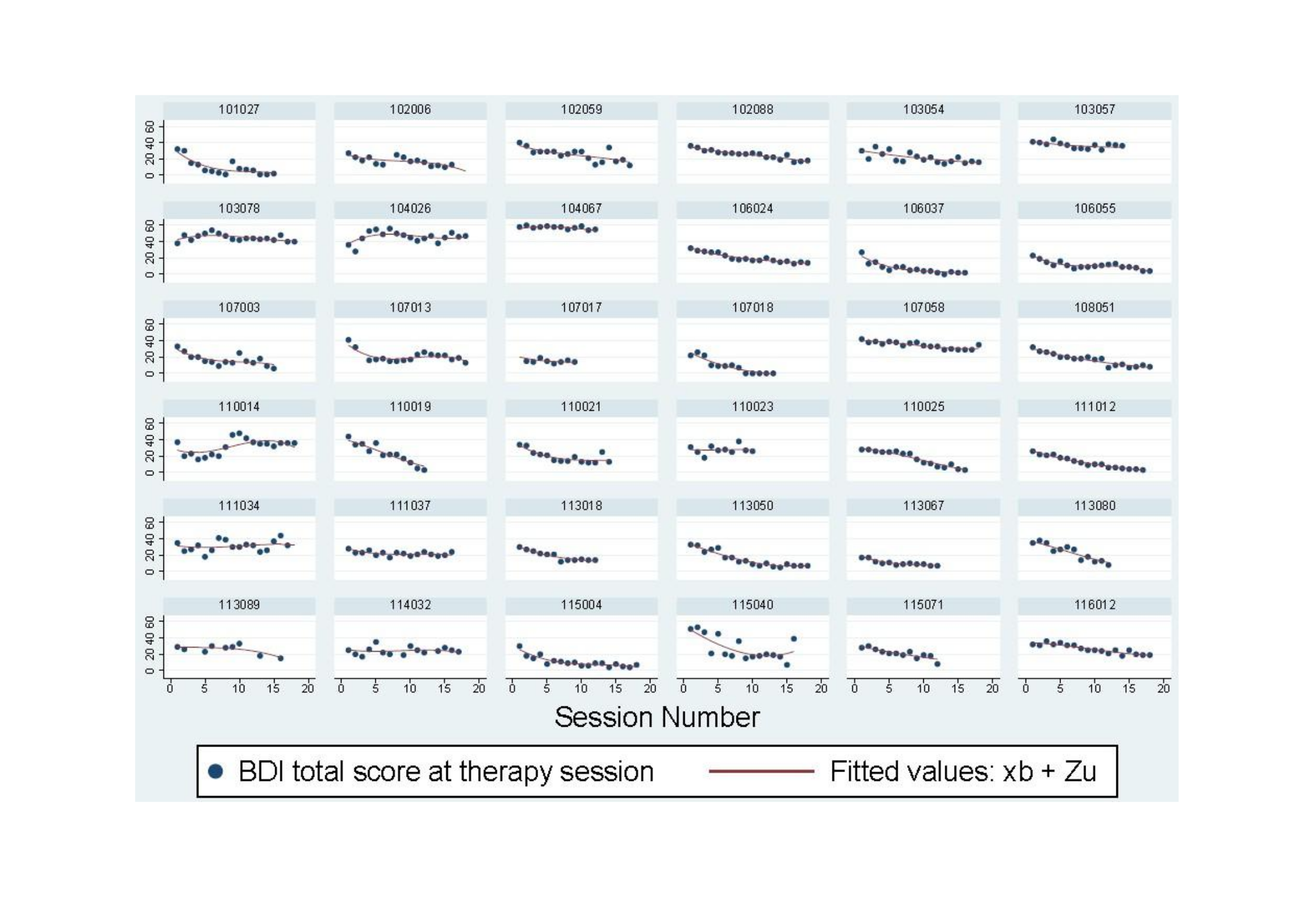
o204060
0204060
0204080 o24060
0
204060
0
2040
60
101027 102008 102059 102088 108054 103087
«*
soeteeyest
tee
we,
eet
eet
see
Setagetece
ree
ane
toa078 1n4028 104067 tn6024 106037 106058
steoreesetee
“reteanneatesege
Meyttecceeyeee
“teeteyeveettosegy
107003 sorata sorot7
toro
107058
108051
=
Seteteestecesesee® eng,
Seonajesttitag
wetegete
eee
cece
ee
‘40014
‘0019
‘10021
140023 110028
‘1012
seqteee
oevetas,
*
te,
rete
ssascecag
111037 ‘13018 113050 113067 113060
Pwetengseyetone?
esas,
“ees,
n
wore
Wet
ertegtees
“eeeeeseces
wee,
113089 114092 118004 115040
148071
‘6012
Sagtlen
afte
otto
§
oeeeeet,
sw
eeee,
Pe
seeteettytoge
“se
7
oe
oe
Fm
Se
wo
S$
oe
Heo
SF
eH
oF
oS
OS
UU
Session
Number
e
BDI
total
score
at
therapy
session
Fitted
values:
xb
+
Zu
EXAMINING THE PROCESS OF CHANGE 147

0
204060,
0
204060
0
204060,
0
204060
0
20
4080
0
204060
‘tena
116031
116042 116048
116049
‘7007
S00
ogee
sevcettoene
-
an"eeynn
Pevesces”
147020
117041
147078 118008
118034
171089
ates"e*envetoes
Pee
Serececestoctense
regu?
.
121049
172010
1m049
173001 173051
123076
.
onsen,
oeres
a”
05,
atete,
eee,
ete,
oe
eeteee
weeny
123078
125013
125028 126070
126076
127007
ane
*
eaten,
Pree
aetenesaateetety
6
aeeaat
ann
Bae
127038
sz071
srr
127133 127143
.
tote
oet,
S
eaettaton
Pees
ea,
“
Taree
ee
202010 202054 203017 203050 203088 203089
ety
og
Prec,
7
ob
em
oS
0
oo
6
mo
§
m
mw
OS
0
oS
tS
Session
Number
®
BDI
total
score
at
therapy
session
Fitted
values:
xb
+
Zu
EXAMINING THE PROCESS OF CHANGE 148

ono
cman
000
020060
0
0
40 60
0
0
0
Session
Number
2e3t68
moatra
e806
20012 00020
zones
200008
wee,
eae.
feesteta,
tee
seeneessseeee
ate
tere
evteeneeeees
20018
zo0008
200016
20017
210007
210051
212004
sine
tone
“yee
=
coe
_—
21m
212078
210010 2xcn98
aco
240008
210028
- “ a
=
5
me
torent,
Settee
eceae
eteaetey
se,
tee
oyesteee
tetas,
“etettenee
oy
210008
2sro0a
217017 217060
snort
217072
217m
5
—
Sesenioaceicdeae
eee
wneytyaegeete
oe
Seavtecenet
®
mee
veto
21002
21904
210007 21c000 216028
aioe
21008
“,
sey
“
mas
“ns,
oe
.
—
teehee
re
Seateeaten
2moi6
zones
20087
zw zm
2am
2a
seat
“
4
cm
oor
gcets
ote,
e,
seen
tet
yyt
te
Toe
Tie
7
a
a
a
e
BDI
total
score
at
therapy
session
Fitted
values:
xb
+
Zu
EXAMINING THE PROCESS OF CHANGE 149
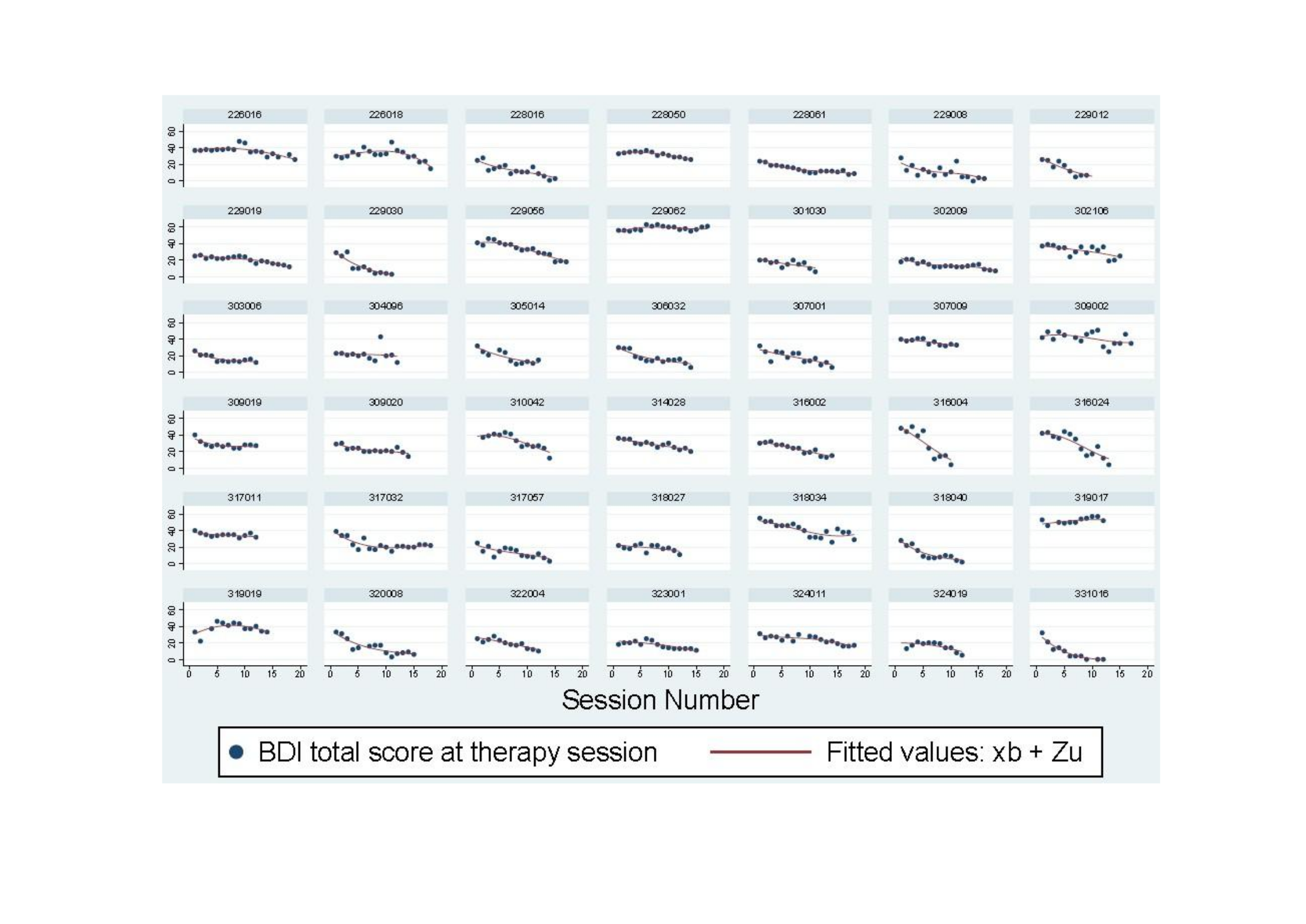
ono
ocnao
oom
omao
ocmam
on
a0
zo018
zante
zane
zens0
zene
za08
zoe
crest,
oot
tn.
ert
tesen
;
ey
me
2010
229080
0088
m0
nnn
02000
oxn108
aceoetatotgeyst®
tes
onenestat
onme
span
ment
somnee
aur
some once
.
eves,
strate
ose
eeeett,
seeeeras
oe,
Se
rea?
Vwewteents,
ome
snon20
1002
stare
10m
a1en0
310004
‘
nts
aie
nse,
ean
—
0
:
.
whee,
at,
arrott
a1reae
ed
siener
oor
sy
ceeetttte
outta,
are019
zona
ama
204
zat
aan
a1010
eer
ee
a
a
saree
ae
‘
°
oo
oe!
rn
one
%,
“seeeteey
somvees
serene
weet
He,
a
)
BUDS
oe
TS
eee
TT
TT
he
TS
Session
Number
e
BDItotal
score
at
therapy
session
Fitted
values:
xb
+
Zu
EXAMINING THE PROCESS OF CHANGE 150

EXAMINING THE PROCESS OF CHANGE 151
Figure A2. Individual growth trajectories.

EXAMINING THE PROCESS OF CHANGE 152
Depression at the end of therapy was tested as an alterntive outcome
measure in addition to the main analyses reporting depression at 12month
follow-up as the principal outcome. ANCOVA tested the effect of sudden gain
status on depression at end of therapy, controlling for pre-treatment baseline
BDI-II and showed that people who enjoyed sudden gains reported
significantly less depression at the end of therapy, after controlling for pre-
treatment depression. This replicated the outcomes found with depression at
12month follow-up.
Table A1 and A2 show the inter-relations between outcomes and
predictors as measured at the second therapy session and the post-gain
session.

EXAMINING THE PROCESS OF CHANGE 153
Table A1
Zero-order Correlations Between Hope, Processing and Case-conceptualisation Competence as Measured at Session Two, and Depression at
Pretreatment Baseline and 12 months (n=49)
1
2
3
4
5
6
7
8
9
1. Hope
~
2. Cognitive emotional processing
0.40**
~
3. CCCRS Total scale
0.21
0.38**
~
4. CCCRS Levels subscale
0.24
0.40**
0.94***
~
5. CCCRS Collaboration subscale
0.05
0.32*
0.86***
0.77***
~
6. CCCRS Empiricism subscale
0.26
0.42**
0.86***
0.82***
0.72***
~
7. CCCRS Strengths subscale
0.17
0.16
0.72***
0.56***
0.48***
0.40**
~
8. Baseline depression (BDI-II)
-0.05
0.15
0.25
0.26
0.23
0.30*
0.06
~

EXAMINING THE PROCESS OF CHANGE 154
9. Depression at 12 months (BDI-II)
-0.14
0.03
-0.01
0.01
-0.02
-0.05
0.02
0.49***
~
Note.
CCCRS = Competence in Case Conceptualisation Rating Scale (Padeksy, Kuyken & Dudley, 2011).
BDI-II = Beck Depression Inventory – 2nd Edition (Beck et al., 1996).
*p<.05, **p<.01, ***p<.001
Table A2
Zero-order Correlations Between Hope, Processing and Case-conceptualisation Competence as Measured at Post-gain, and Depression at
Pretreatment Baseline and 12 months (n=25)
1
2
3
4
5
6
7
8
9
1. Hope
~
2. Cognitive emotional processing
0.57***
~
3. CCCRS Total scale
0.17
0.02
~
4. CCCRS Levels subscale
0.01
-0.04
0.86***
~
5. CCCRS Collaboration subscale
0.24
0.15
0.68***
0.49**
~

EXAMINING THE PROCESS OF CHANGE 155
6. CCCRS Empiricism subscale
-0.10
-0.03
0.86***
0.86***
0.43*
~
7. CCCRS Strengths subscale
0.36
0.02
0.72***
0.33
0.40*
0.40*
~
8. Baseline depression (BDI-II)
-0.22
-0.28
0.12
0.24
-0.17
0.24
-0.01
~
9. Depression at 12 months (BDI-II)
0.04
-0.21
-0.18
-0.20
-0.18
-0.26
0.01
0.22
~
Note.
CCCRS = Competence in Case Conceptualisation Rating Scale (Padeksy, Kuyken & Dudley, 2011).
BDI-II = Beck Depression Inventory – (Beck et al., 1996).
*p<.05, **p<.01, ***p<.001

EXAMINING THE PROCESS OF CHANGE 156
Table A3 shows the results of models estimating outcome from the
predictors individually, after controlling for baseline depression, in order to
illustrate their predictive value individually. This shows that only baseline
depression significantly predicted depression at 12 months when the predictors
were measured at the second therapy session. When the predictors were
measured at the pre-gain session, hope, cognitive emotional processing,
caseconceptualisation competence (including the levels, collaboration and
empiricism domains) significantly predicted depression at 12 months, after
controlling for baseline depression. When the variables were measured
postgain, none of the variables significantly predicted depression at 12 months,
although this may reflect the lower power to detect a difference, given the
smaller sample and the reduced variability in outcome. Only sudden gainers
post-gain session was coded due to resource constraints.

EXAMINING THE PROCESS OF CHANGE 157
Table A3
Regression Table Showing Unstandardised Coefficients (B), Standard Errors (SE) and Standardised Coefficients (β) for Linear Regression Models
Estimating the Variables Individually as Predictors of Depression at 12 Months, After Controlling for Pre-treatment (Baseline) Depression Using the BDI-II
Session 2
"Pre-gain" session
Post-gain session
Variable
B
SE of B
β
B
SE of B
β
B
SE of B
β
Baseline depression
0.68***
0.18
0.49***
0.61***
0.15
0.44***
0.15
0.18
0.18
Cognitive emotional processing
-0.67
2.25
-0.04
-7.46***
1.84
-0.45***
-1.76
2.31
-0.16
Baseline depression
0.66***
0.17
0.48***
0.61***
0.15
0.44***
0.21
0.18
0.24
Hope
-2.52
2.84
-0.11
-6.91***
1.70
-0.45***
0.97
2.30
0.09
Baseline depression
0.73***
0.19
0.52***
0.64***
0.17
0.47***
0.21
0.17
0.25
CCCRS, Total scale
-0.25
0.25
-0.14
-0.62*
0.25
-0.30*
-0.24
0.24
-0.21
Baseline depression
0.72***
(0.19)
0.51***
0.61***
(0.17)
0.45***
0.25
(0.18)
0.29
CCCRS, Levels sub-scale
-0.61
(0.68)
-0.12
-1.55*
(0.63)
-0.30*
-0.78
(0.61)
-0.27
Baseline depression
0.73***
(0.19)
0.52***
0.63***
(0.17)
0.46***
0.17
(0.18)
0.20
CCCRS, Collaboration sub-scale
-1.03
(0.96)
-0.14
-1.52
(1.02)
-0.19
-0.77
(1.13)
-0.14
Baseline depression
0.77***
(0.19)
0.54***
0.63***
(0.17)
0.46***
0.26
(0.17)
0.30
CCCRS, Empiricism sub-scale
-1.50
(0.97)
-0.21
-2.14*
(0.88)
-0.29*
-1.45
(0.89)
-0.33
Baseline depression
0.68***
(0.19)
0.48***
0.70***
(0.18)
0.51***
0.19
(0.18)
0.22

EXAMINING THE PROCESS OF CHANGE 158
CCCRS, Strengths sub-scale
-0.07
(0.84)
-0.01
-0.88
(0.73)
-0.15
0.03
(0.61)
0.01
N
49
49
25
Note.
CCCRS = Competence in Case Conceptualisation Rating Scale (Padeksy, Kuyken & Dudley, 2011). BDI-II
= Beck Depression Inventory – 2nd Edition (Beck et al., 1996).
* p<0.05, ** p<0.01, *** p<0.001

EXAMINING THE PROCESS OF CHANGE 159
Regression Diagnostics
All parametric regression models have basic underlying assumptions.
In particular, linear and multilevel regression models rely on assumptions of
normality and homoscedasticity (Field, 2013). The degree to which these
assumptions were met was evaluated by using the residuals to perform
standard diagnostic checks.
Growth curve modelling of trajectories of change. The two-level cubic
random coefficient model was tested for its conformity to model assumptions.
The Figures below illustrate the tests performed.
Figure A3. A normal probability plot of standardised level one residuals of the 2-
level cubic random coefficient model of depression symptoms over the course
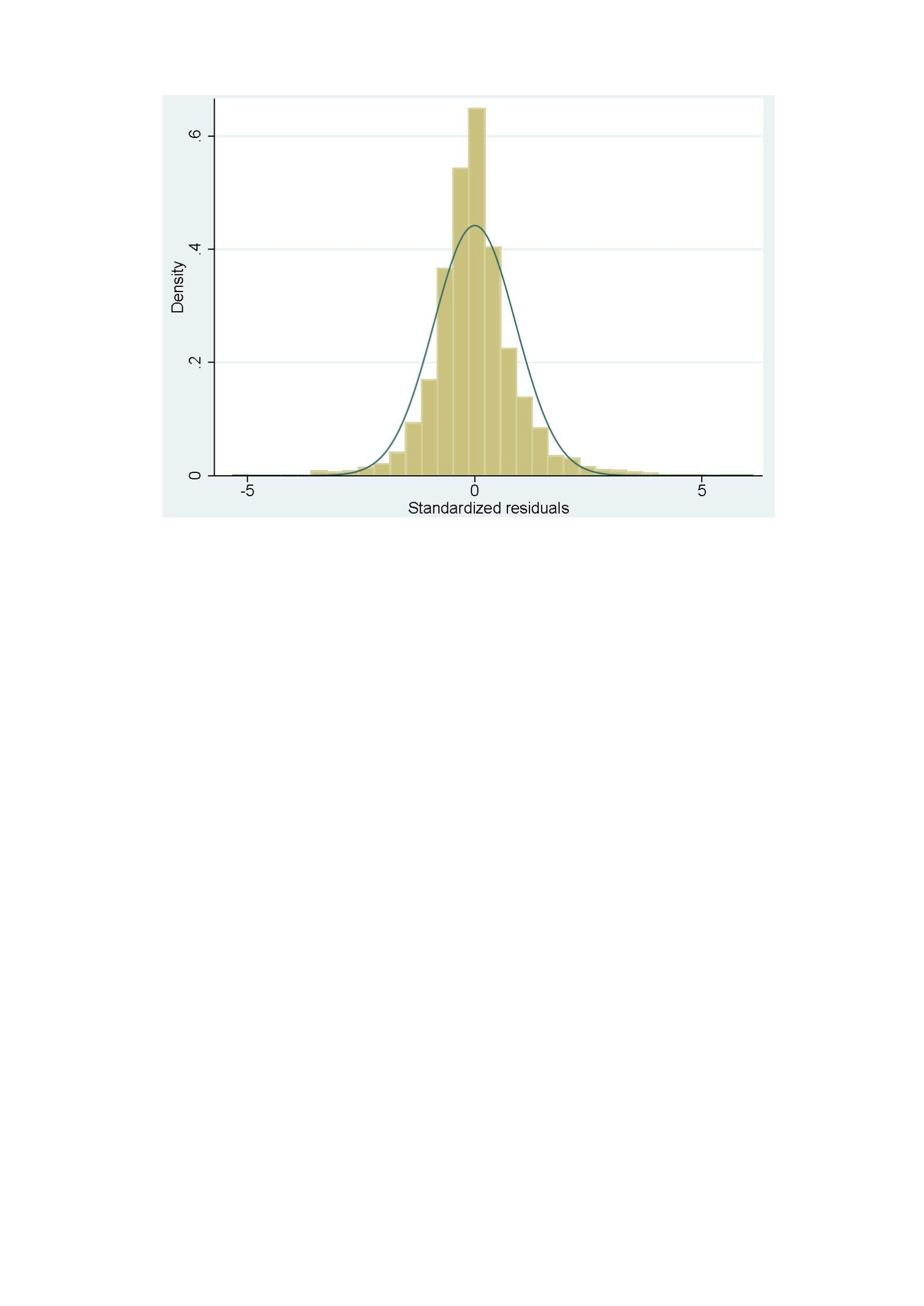
EXAMINING THE PROCESS OF CHANGE 160
Figure A4. Histogram of level one standardised residuals of the 2-level cubic
random coefficient model of depression symptoms over the course of CBT
Figure A3 and A4 illustrate checks for normality in the level one (session)
residuals. The residual distribution is symmetric and mostly appears to conform to
the assumption of normality, although there is some suggestion of higher
“peakedness” than for the normal distribution (i.e. a heavy tailed distribution).
Fortunately, the regression assumption that is generally the least important is
that the errors are normally distributed (Gelman and Hill, 2007).
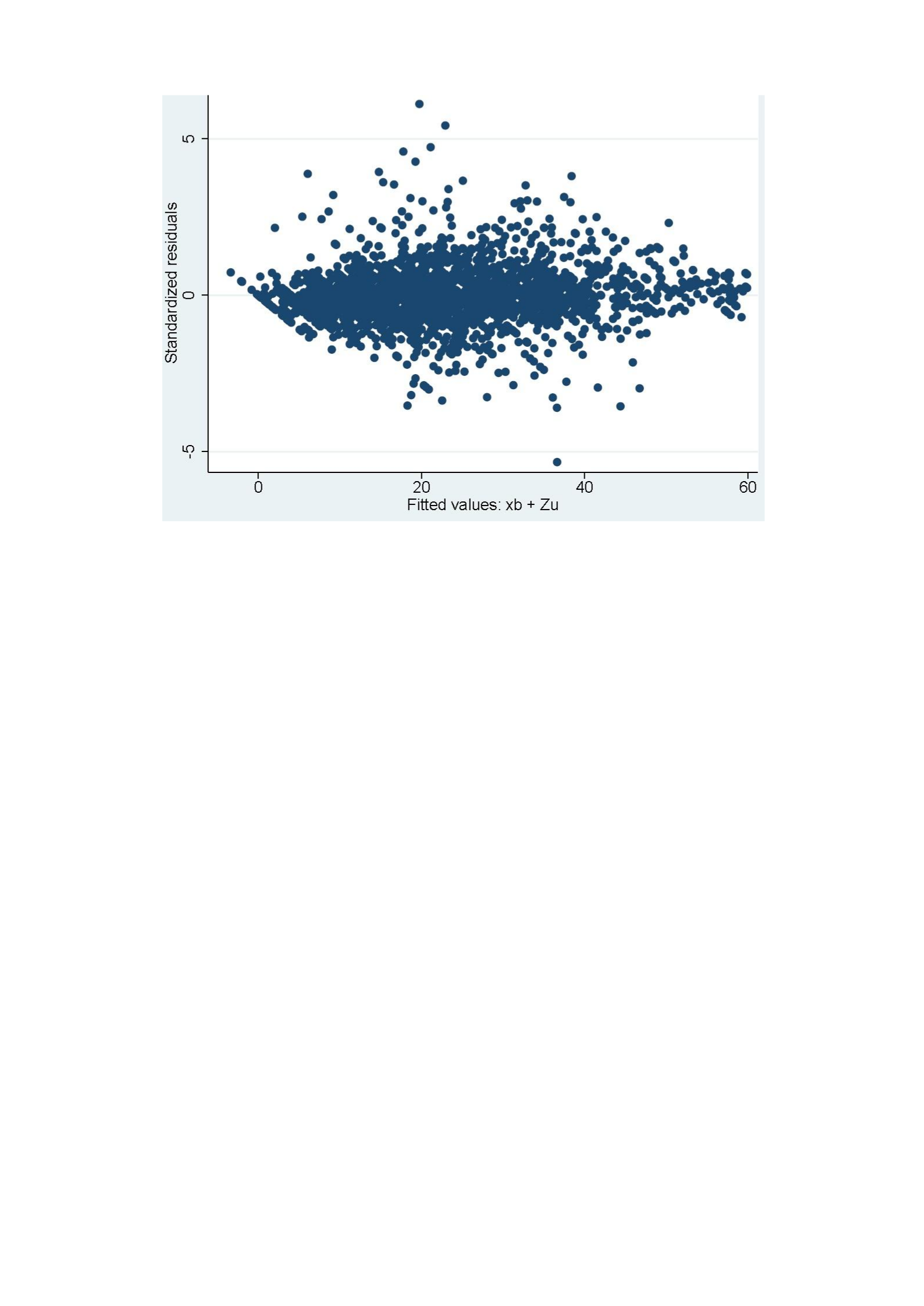
EXAMINING THE PROCESS OF CHANGE 161
Figure A5. Plot of level one standardised residuals against values predicted by the
2-level cubic random coefficient model of depression symptoms over the course of
CBT model, in order to provide a check of the assumption of homoskedasticity.
Figure A5 suggests the standardised residuals tend to vary around zero, and
their vertical spread is comparable across the predicted values. Therefore, we
may accept the homogeneity assumption as reasonable.
Multiple linear regression estimating depression at 12 months. The
multiple linear regression model estimating depression at 12 months from hope,
processing, competence in using empirical case-conceptualisations and baseline
depression was tested to determine whether assumptions of multiple linear
regression were valid. The Figures below illustrate the checks performed to
assess whether the standardised residuals were normally distributed and
whether the assumption of homoskedasticity was reasonable.

EXAMINING THE PROCESS OF CHANGE 162
Figure A6. A normal probability plot of standardised residuals to check
assumption that residuals are normally distributed.
Figure A6 shows a roughly straight line, with limited deviation from
linearity, suggesting that the normal distribution assumption is reasonable.

EXAMINING THE PROCESS OF CHANGE 163
Figure A7. Histogram of standardised residuals against a normal distribution curve.
The histogram in Figure A7 confirms that they normal distribution
assumption appears reasonable.
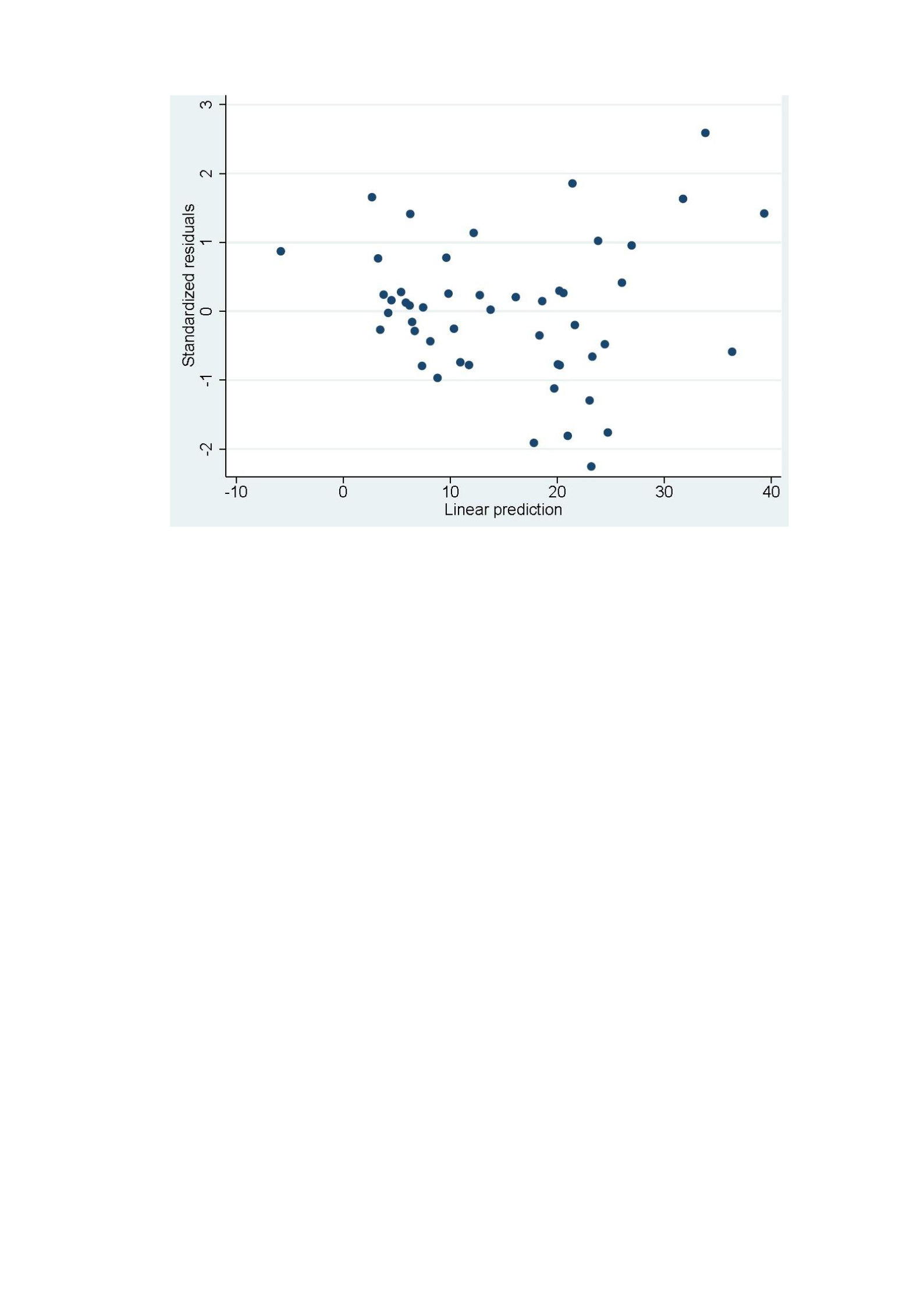
EXAMINING THE PROCESS OF CHANGE 164
Figure A8. Plot of standardised residuals against the linear prediction provided by
the model, in order to provide a check of the assumption of homoscedasticity.
Figure A8 indicates uneven vertical spread of the points across different
values of standardised residuals, which might indicate heteroscedasticity.
However, less than 5% of residuals fall outside the -2 to +2 range, which is
encouraging. It is possible that heterogeneity in residuals is present to some
degree, therefore caution is needed in interpreting the probability estimates and
confidence intervals (Field, 2013). Possible corrective steps may include a
weighted least squares method or log-transforming the dependent variable,
however, as this analysis was preliminary, these are not reported here.

EXAMINING THE PROCESS OF CHANGE 165
Appendix K Dissemination Statement
The studies reported here will be disseminated in several ways. A
manuscript is in preparation to be submitted for publication to the Journal of
Consulting and Clinical Psychology. This journal invites submissions on
treatment and prevention in all areas of clinical psychology, and welcomes
papers investigating mechanisms of therapeutic change. Therefore, this
manuscript examining the process of change in cognitive behavioural therapy for
depression seems well suited to publication in the Journal of Consulting and
Clinical Psychology. The instructions for authors have been followed here (see
Appendix L). A poster will also be submitted to present at the annual conference
of the British Association of Behavioural and Cognitive Psychotherapies.
Finally, this project was embedded within the CoBalT randomised
controlled trial. The main trial findings have already been disseminated to
participants. However, the findings reported here can be disseminated to
therapists who delivered the CBT in the trial, and who now work in clinical practice
settings. Communicating the findings of process research to practising clinicians
is important if research is to have real-world effects to optimise treatment.
Appendix L Journal Instructions for Authors


Journal of Consulting and Clinical Psychology: Instructions to Authors
Prior to submission, please carefully read and follow the submission guidelines
detailed below. Manuscripts that do not conform to the submission guidelines
may be returned without review.

Length and Style of Manuscripts
Full-length manuscripts should not exceed 35 pages total (including cover page,
abstract, text, references, tables, and figures), with margins of at least 1 inch on
all sides and a standard font (e.g., Times New Roman) of 12 points (no
smaller). The entire paper (text, references, tables, etc.) must be double
spaced.
Instructions on preparing tables, figures, references, metrics, and abstracts
appear in the Publication Manual of the American Psychological Association
(6th edition).
Authors submitting manuscripts that report new data collection, especially
randomized clinical trials (RCTs), should comply with the newly developed APA
Journal Article Reporting Standards (PDF, 98KB) (JARS; see American
Psychologist, 2008, 63, 839–851 or Appendix in the APA Publication Manual).
For papers that exceed 35 pages, authors must justify the extended length in
their cover letter (e.g., reporting of multiple studies), and in no case should the
paper exceed 45 pages total. Papers that do not conform to these guidelines
may be returned without review.
The References section should immediately follow a page break.
Title of Manuscript
The title of a manuscript should be accurate, fully explanatory, and preferably
no longer then 12 words. The title should reflect the content and population
studied (e.g., "treatment of generalized anxiety disorders in adults").
If the paper reports a randomized clinical trial (RCT), this should be indicated in
the title. Note that JARS criteria must be used for reporting purposes.
Abstract and Keywords
Starting in 2010, all manuscripts published in the Journal of Consulting
and Clinical Psychology will include a structured abstract of up to 250
words.
For studies that report randomized clinical trials or meta-analyses, the abstract
also must be consistent with the guidelines set forth by JARS or MARS
(MetaAnalysis Reporting Standards) guidelines, respectively. Thus, in preparing
a manuscript, please ensure that it is consistent with the guidelines stated
below.
Please include an Abstract of up to 250 words, presented in paragraph form.
The Abstract should be typed on a separate page (page 2 of the manuscript),
and must include each of the following sections:
• Objective: A brief statement of the purpose of the study
Method: A detailed summary of the participants (N, age, gender,
ethnicity) as well as descriptions of the study design, measures

(including names of measures), and procedures
• Results: A detailed summary of the primary findings that clearly
articulate comparison groups (if relevant), and that indicate significance
or confidence intervals for the main findings
• Conclusions: A description of the research and clinical
implications of the findings
After the abstract, please supply up to five keywords or short phrases.
Participants: Description and Informed Consent
The Method section of each empirical report must contain a detailed description
of the study participants, including (but not limited to) the following: age, gender,
ethnicity, SES, clinical diagnoses and comorbidities (as appropriate), and any
other relevant demographics.
In the Discussion section of the manuscript, authors should discuss the diversity
of their study samples and the generalizability of their findings.
The Method section also must include a statement describing how informed
consent was obtained from the participants (or their parents/guardians) and
indicate that the study was conducted in compliance with an appropriate
Internal Review Board.
Measures
The Method section of empirical reports must contain a sufficiently
detailed description of the measures used so that the reader understands
the item content, scoring procedures, and total scores or subscales.
Evidence of reliability and validity with similar populations should be
provided.
Statistical Reporting of Clinical Significance
JCCP requires the statistical reporting of measures that convey clinical
significance. Authors should report means and standard deviations for all
continuous study variables and the effect sizes for the primary study findings. (If
effect sizes are not available for a particular test, authors should convey this in
their cover letter at the time of submission.)
JCCP also requires authors to report confidence intervals for any effect sizes
involving principal outcomes (see Fidler et al., Journal of Consulting and Clinical
Psychology, 2005, pp. 136–143 and Odgaard & Fowler, Journal of Consulting
and Clinical Psychology, 2010, pp.287–297).
In addition, when reporting the results of interventions, authors should include
indicators of clinically significant change. Authors may use one of several
approaches that have been recommended for capturing clinical significance,
including (but not limited to) the reliable change index (i.e., whether the amount
of change displayed by a treated individual is large enough to be meaningful;
see Jacobson et al., Journal of Consulting and Clinical Psychology, 1999), the

extent to which dysfunctional individuals show movement into the functional
distribution (see Jacobson & Truax, Journal of Consulting and Clinical
Psychology, 1991), or other normative comparisons (see Kendall et al., Journal
of Consulting and Clinical Psychology, 1999).
The special section of JCCP on "Clinical Significance" (Journal of Consulting
and Clinical Psychology, 1999, pp. 283–339) contains detailed discussions of
clinical significance and its measurement and should be a useful resource (see
also Atkins et al., Journal of Consulting and Clinical Psychology, 2005, pp. 982–
989).
Discussion of Clinical Implications
Articles must include a discussion of the clinical implications of the study
findings or analytic review. The Discussion section should contain a clear
statement of the extent of clinical application of the current assessment,
prevention, or treatment methods. The extent of application to clinical practice
may range from suggestions that the data are too preliminary to support
widespread dissemination to descriptions of existing manuals available from the
authors or archived materials that would allow full implementation at present.
Randomized Clinical Trials: Use of JARS Guidelines
JCCP requires the use of JARS guidelines for randomized clinical trials,
consistent with the recommendations and policies established by the
Publications and Communications Board of the American Psychological
Association. JARS offers a standard way to improve the quality of such reports,
and to ensure that readers have the information necessary to evaluate the
quality of a clinical trial.
Manuscripts that report randomized clinical trials are required to include a flow
diagram of the progress through the phases of the trial. When a study is not
fully consistent with JARS guidelines, the limitations should be acknowledged
and discussed in the text of the manuscript.
For follow-up studies of previously published clinical trials, authors should
submit a flow diagram of the progress through the phases of the trial and
followup. The above checklist information should be completed to the extent
possible, especially for the Results and Discussion sections of the manuscript.
Authors of RCTs should also describe procedures to assess for treatment
fidelity (also known as treatment integrity), including both therapist adherence
and competence. Where possible, results should be reported regarding the
relationship between fidelity and outcome found in the investigation.
View the JARS guidelines (PDF, 98KB)
Meta-Analyses of Randomized Clinical Trials: Use of MARS Guidelines
JCCP requires the use of the APA MARS guidelines for meta-analyses of
randomized clinical trials. MARS offers a standard way to improve the quality of

such reports, and to ensure that readers have the information necessary to
evaluate the quality of a meta-analysis.
Manuscripts that report meta-analyses of randomized clinical trials are required
to include a flow diagram of the progress through the stages of the
metaanalysis. When a study is not fully consistent with MARS, the limitations
should be acknowledged and discussed in the text of the manuscript.
MARS guidelines are included in the JARS guidelines (PDF, 98KB)
Nonrandomized Trials
For nonrandomized designs that often are used in public health and
mentalhealth interventions, JCCP requires compliance with JARS.
Failure to comply with JARS or MARS can result in the return of manuscripts
without review.
Manuscript Preparation
Prepare manuscripts according to the Publication Manual of the American
Psychological Association (6th edition). Manuscripts may be copyedited for
biasfree language (see Chapter 3 of the Publication Manual).
Review APA's Checklist for Manuscript Submission before submitting your
article.
Double-space all copy. Other formatting instructions, as well as instructions on
preparing tables, figures, references, metrics, and abstracts, appear in the
Manual.
Below are additional instructions regarding the preparation of display equations,
computer code, and tables.
Display Equations
We strongly encourage you to use MathType (third-party software) or Equation
Editor 3.0 (built into pre-2007 versions of Word) to construct your equations,
rather than the equation support that is built into Word 2007 and Word 2010.
Equations composed with the built-in Word 2007/Word 2010 equation support
are converted to low-resolution graphics when they enter the production
process and must be rekeyed by the typesetter, which may introduce errors.
To construct your equations with MathType or Equation Editor 3.0:
• Go to the Text section of the Insert tab and select Object.
• Select MathType or Equation Editor 3.0 in the drop-down menu.
If you have an equation that has already been produced using Microsoft Word
2007 or 2010 and you have access to the full version of MathType 6.5 or later,

you can convert this equation to MathType by clicking on MathType Insert
Equation. Copy the equation from Microsoft Word and paste it into the
MathType box. Verify that your equation is correct, click File, and then click
Update. Your equation has now been inserted into your Word file as a
MathType Equation.
Use Equation Editor 3.0 or MathType only for equations or for formulas
that cannot be produced as Word text using the Times or Symbol font.
Computer Code
Because altering computer code in any way (e.g., indents, line spacing, line
breaks, page breaks) during the typesetting process could alter its meaning, we
treat computer code differently from the rest of your article in our production
process. To that end, we request separate files for computer code.

