


Emotions
Think back to a time when you were very upset. Can you remember what you were upset
about? What about a time when you were really happy? Which event sticks out more in your
mind? Often, we are much better at remember events associated with negative emotions.
Functions of Emotions
It is impossible to imagine life without emotion. We treasure our feelings—the joy at a ball
game, the pleasure of the touch of a loved one, or the fun with friends on a night out. Even
negative emotions are important, such as the sadness when a loved one dies, the anger when
violated, the fear that overcomes us in a scary or unknown situation, or the guilt or shame
toward others when our sins are made public. Emotions color life experiences and give those
experiences meaning and flavor. In fact, emotions play many important roles in people’s lives
and have been the topic of scientific inquiry in psychology for well over a century (Cannon,
1927; Darwin, 1872; James, 1890). This section explores why we have emotions and why they
are important. Doing so requires us to understand the function of emotions, and this module
does so below by dividing the discussion into three sections. The first concerns the
intrapersonal functions of emotion, which refer to the role that emotions play within each of us
individually. The second concerns the interpersonal functions of emotion, which refer to the
role emotions play between individuals within a group. The third concerns the social and
cultural functions of emotion, which refer to the role that emotions play in the maintenance of
social order within a society.
An emotion is a subjective state of being that we often describe as our feelings. Emotions result
from the combination of subjective experience, expression, cognitive appraisal, and
physiological responses (Levenson, Carstensen, Friesen, & Ekman, 1991). However, the exact
order in which the components occur is not clear, and some parts may happen at the same
time. An emotion often begins with a subjective (individual) experience, which is a stimulus.
Often the stimulus is external, but it does not have to be from the outside world. For example, it
might be that one thinks about war and becomes sad, even though they never experienced war.
Emotional expression refers to the way one displays an emotion and includes nonverbal and
verbal behaviors (Gross, 1999). One also performs a cognitive appraisal in which a person tries
to determine the way they will be impacted by a situation (Roseman & Smith, 2001). In

addition, emotions include physiological responses, such as possible changes in heart rate,
sweating, etc. (Soussignan, 2002).
All in all, we will see that emotions inform us of who we are, what our relationships with others
are like, and how to behave in social interactions. Emotions give meaning to events; without
emotions, those events would be mere facts. Emotions help coordinate interpersonal
relationships. And emotions play an important role in the cultural functioning of keeping human
societies together.
Intrapersonal Functions of Emotion
We will begin our discussion of the functions of emotions with intrapersonal functions.
Emotions Help us Act Quickly with Minimal Conscious Awareness
Emotions are rapid information-processing systems that help us act with minimal thinking
(Tooby & Cosmides, 2008). Problems associated with birth, battle, death, and seduction have
occurred throughout evolutionary history and emotions evolved to aid humans in adapting to
those problems rapidly and with minimal conscious cognitive intervention. If we did not have
emotions, we could not make rapid decisions concerning whether to attack, defend, flee, care
for others, reject food, or approach something useful, all of which were functionally adaptive in
our evolutionary history and helped us to survive. For instance, drinking spoiled milk or eating
rotten eggs has negative consequences for our welfare. The emotion of disgust, however, helps
us immediately take action by not ingesting them in the first place or by vomiting them out. This
response is adaptive because it aids, ultimately, in our survival and allows us to act immediately
without much thinking. In some instances, taking the time to sit and rationally think about what
to do, calculating cost–benefit ratios in one’s mind, is a luxury that might cost one one’s life.
Emotions evolved so that we can act without that depth of thinking.
Emotions Prepare the Body for Immediate Action
Emotions prepare us for behavior. When triggered, emotions orchestrate systems such as
perception, attention, inference, learning, memory, goal choice, motivational priorities,
physiological reactions, motor behaviors, and behavioral decision making (Cosmides & Tooby,
2000; Tooby & Cosmides, 2008). Emotions simultaneously activate certain systems and
deactivate others in order to prevent the chaos of competing systems operating at the same
time, allowing for coordinated responses to environmental stimuli (Levenson, 1999). For
instance, when we are afraid, our bodies shut down temporarily unneeded digestive processes,
resulting in saliva reduction (a dry mouth); blood flows disproportionately to the lower half of
the body; the visual field expands; and air is breathed in, all preparing the body to flee.
Emotions initiate a system of components that includes subjective experience, expressive
behaviors, physiological reactions, action tendencies, and cognition, all for the purposes of
specific actions; the term “emotion” is, in reality, a metaphor for these reactions.

One common misunderstanding many people have when thinking about emotions, however, is
the belief that emotions must always directly produce action. This is not true. Emotion certainly
prepares the body for action; but whether people actually engage in action is dependent on
many factors, such as the context within which the emotion has occurred, the target of the
emotion, the perceived consequences of one’s actions, previous experiences, and so forth
(Baumeister, Vohs, DeWall, & Zhang, 2007; Matsumoto & Wilson, 2008). Thus, emotions are just
one of many determinants of behavior, albeit an important one.
Emotions Influence Thoughts
Emotions are also connected to thoughts and memories. Memories are not just facts that are
encoded in our brains; they are colored with the emotions felt at those times the facts occurred
(Wang & Ross, 2007). Thus, emotions serve as the neural glue that connects those disparate
facts in our minds. That is why it is easier to remember happy thoughts when happy, and angry
times when angry. Emotions serve as the affective basis of many attitudes, values, and beliefs
that we have about the world and the people around us; without emotions those attitudes,
values, and beliefs would be just statements without meaning, and emotions give those
statements meaning. Emotions influence our thinking processes, sometimes in constructive
ways, sometimes not. It is difficult to think critically and clearly when we feel intense emotions,
but easier when we are not overwhelmed with emotions (Matsumoto, Hirayama, & LeRoux,
2006).
Emotions Motivate Future Behaviors
Because emotions prepare our bodies for immediate action, influence thoughts, and can be felt,
they are important motivators of future behavior. Many of us strive to experience the feelings of
satisfaction, joy, pride, or triumph in our accomplishments and achievements. At the same time,
we also work very hard to avoid strong negative feelings; for example, once we have felt the
emotion of disgust when drinking the spoiled milk, we generally work very hard to avoid having
those feelings again (e.g., checking the expiration date on the label before buying the milk,
smelling the milk before drinking it, watching if the milk curdles in one’s coffee before drinking
it). Emotions, therefore, not only influence immediate actions but also serve as an important
motivational basis for future behaviors.
Interpersonal Functions of Emotion
Emotions are expressed both verbally through words and nonverbally through facial
expressions, voices, gestures, body postures, and movements. We are constantly expressing
emotions when interacting with others, and others can reliably judge those emotional
expressions (Elfenbein & Ambady, 2002; Matsumoto, 2001); thus, emotions have signal value to
others and influence others and our social interactions. Emotions and their expressions
communicate information to others about our feelings, intentions, relationship with the target
of the emotions, and the environment. Because emotions have this communicative signal value,

they help solve social problems by evoking responses from others, by signaling the nature of
interpersonal relationships, and by providing incentives for desired social behavior (Keltner,
2003).
Emotional Expressions Facilitate Specific Behaviors in Perceivers
Because facial expressions of emotion are universal social signals, they contain meaning not
only about the expressor’s psychological state but also about that person’s intent and
subsequent behavior. This information affects what the perceiver is likely to do. People
observing fearful faces, for instance, are more likely to produce approach-related behaviors,
whereas people who observe angry faces are more likely to produce avoidance-related
behaviors (Marsh, Ambady, & Kleck, 2005). Even subliminal presentation of smiles produces
increases in how much beverage people pour and consume and how much they are willing to
pay for it; presentation of angry faces decreases these behaviors (Winkielman, Berridge, &
Wilbarger, 2005). Also, emotional displays evoke specific, complementary emotional responses
from observers; for example, anger evokes fear in others (Dimberg & Ohman, 1996; Esteves,
Dimberg, & Ohman, 1994), whereas distress evokes sympathy and aid (Eisenberg et al., 1989).
Emotional Expressions Signal the Nature of Interpersonal
Relationships
Emotional expressions provide information about the nature of the relationships among
interactants. Some of the most important and provocative set of findings in this area come from
studies involving married couples (Gottman & Levenson, 1992; Gottman, Levenson, & Woodin,
2001). In this research, married couples visited a laboratory after having not seen each other for
24 hours, and then engaged in intimate conversations about daily events or issues of conflict.
Discrete expressions of contempt, especially by the men, and disgust, especially by the women,
predicted later marital dissatisfaction and even divorce.
Emotional Expressions Provide Incentives for Desired Social Behavior
Facial expressions of emotion are important regulators of social interaction. In the
developmental literature, this concept has been investigated under the concept of social
referencing (Klinnert, Campos, & Sorce, 1983); that is, the process whereby infants seek out
information from others to clarify a situation and then use that information to act. To date, the
strongest demonstration of social referencing comes from work on the visual cliff. In the first
study to investigate this concept, Campos and colleagues (Sorce, Emde, Campos, & Klinnert,
1985) placed mothers on the far end of the “cliff” from the infant. Mothers first smiled to the
infants and placed a toy on top the safety glass to attract them; infants invariably began
crawling to their mothers. When the infants were in the center of the table, however, the
mother then posed an expression of fear, sadness, anger, interest, or joy. The results were
clearly different for the different faces; no infant crossed the table when the mother showed

fear; only 6% did when the mother posed anger, 33% crossed when the mother posed sadness,
and approximately 75% of the infants crossed when the mother posed joy or interest.
Other studies provide similar support for facial expressions as regulators of social interaction. In
one study (Bradshaw, 1986), experimenters posed facial expressions of neutral, anger, or disgust
toward babies as they moved toward an object and measured the amount of inhibition the
babies showed in touching the object. The results for 10- and 15-month-olds were the same:
anger produced the greatest inhibition, followed by disgust, with neutral the least. This study
was later replicated (Hertenstein & Campos, 2004) using joy and disgust expressions, altering
the method so that the infants were not allowed to touch the toy (compared with a distractor
object) until one hour after exposure to the expression. At 14 months of age, significantly more
infants touched the toy when they saw joyful expressions, but fewer touched the toy when the
infants saw disgust.
Social and Cultural Functions of Emotion
If you stop to think about the many things we take for granted in our daily lives, we cannot help
but come to the conclusion that modern human life is a colorful tapestry of many groups and
individual lives woven together in a complex yet functional way. For example, when you’re
hungry, you might go to the local grocery store and buy some food. Ever stop to think about
how you’re able to do that? You might buy a banana that was grown in a field in southeast Asia
being raised by farmers there, where they planted the tree, cared for it, and picked the fruit.
They probably handed that fruit off to a distribution chain that allowed multiple people
somewhere to use tools such as cranes, trucks, cargo bins, ships or airplanes (that were also
created by multiple people somewhere) to bring that banana to your store. The store had
people to care for that banana until you came and got it and to barter with you for it (with your
money). You may have gotten to the store riding a vehicle that was produced somewhere else in
the world by others, and you were probably wearing clothes produced by some other people
somewhere else.
Thus, human social life is complex. Individuals are members of multiple groups, with multiple
social roles, norms, and expectations, and people move rapidly in and out of the multiple
groups of which they are members. Moreover, much of human social life is unique because it
revolves around cities, where many people of disparate backgrounds come together. This
creates the enormous potential for social chaos, which can easily occur if individuals are not
coordinated well and relationships not organized systematically.
One of the important functions of culture is to provide this necessary coordination and
organization. Doing so allows individuals and groups to negotiate the social complexity of
human social life, thereby maintaining social order and preventing social chaos. Culture does
this by providing a meaning and information system to its members, which is shared by a group
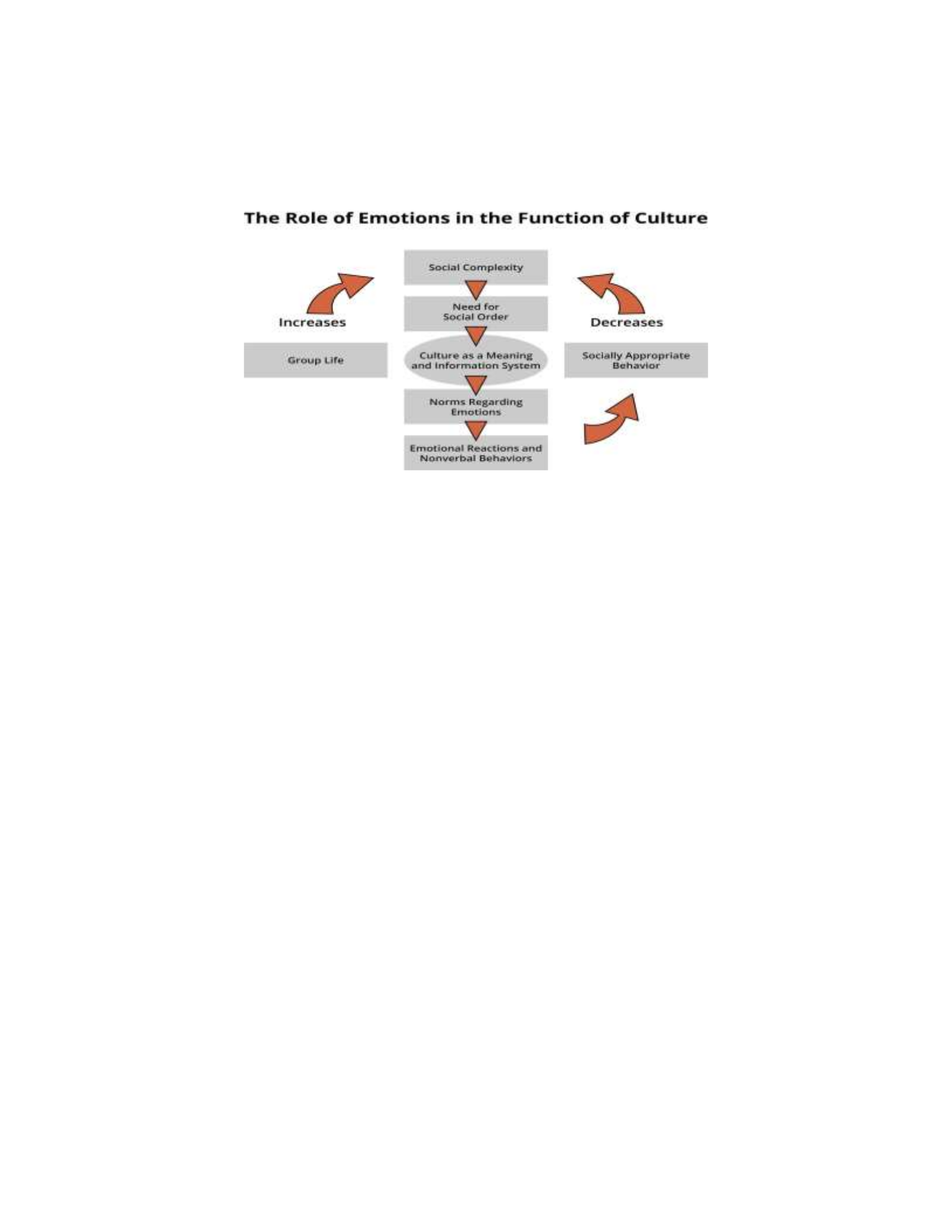
and transmitted across generations, that allows the group to meet basic needs of survival,
pursue happiness and well-being, and derive meaning from life (Matsumoto & Juang, 2013).
Culture is what allowed the banana from southeast Asia to appear on your table.
Cultural transmission of the meaning and information system to its members is, therefore, a
crucial aspect of culture. One of the ways this transmission occurs is through the development
of worldviews (including attitudes, values, beliefs, and norms) related to emotions (Matsumoto
& Hwang, 2013; Matsumoto et al., 2008). Worldviews related to emotions provide guidelines
for desirable emotions that facilitate norms for regulating individual behaviors and
interpersonal relationships. Our cultural backgrounds tell us which emotions are ideal to have,
and which are not (Tsai, Knutson, & Fung, 2006). The cultural transmission of information
related to emotions occurs in many ways, from childrearers to children, as well as from the
cultural products available in our world, such as books, movies, ads, and the like (Schönpflug,
2009; Tsai, Louie, Chen, & Uchida, 2007).
Cultures also inform us about what to do with our emotions—that is, how to manage or modify
them—when we experience them. One of the ways in which this is done is through the
management of our emotional expressions through cultural display rules (Friesen, 1972). These
are rules that are learned early in life that specify the management and modification of our
emotional expressions according to social circumstances. Thus, we learn that “big boys don’t
cry” or to laugh at the boss’s jokes even though they’re not funny. By affecting how individuals
express their emotions, culture also influences how people experience them as well.
Because one of the major functions of culture is to maintain social order in order to ensure
group efficiency and thus survival, cultures create worldviews, rules, guidelines, and norms
concerning emotions because emotions have important intra- and interpersonal functions, as
described above, and are important motivators of behavior. Norms concerning emotion and its
regulation in all cultures serve the purpose of maintaining social order. Cultural worldviews and

norms help us manage and modify our emotional reactions (and thus behaviors) by helping us
to have certain kinds of emotional experiences in the first place and by managing our reactions
and subsequent behaviors once we have them. By doing so, our culturally moderated emotions
can help us engage in socially appropriate behaviors, as defined by our cultures, and thus
reduce social complexity and increase social order, avoiding social chaos. All of this allows us to
live relatively harmonious and constructive lives in groups. If cultural worldviews and norms
about emotions did not exist, people would just run amok having all kinds of emotional
experiences, expressing their emotions and then behaving in all sorts of unpredictable and
potentially harmful ways. If that were the case, it would be very difficult for groups and societies
to function effectively, and even for humans to survive as a species, if emotions were not
regulated in culturally defined ways for the common, social good. Thus, emotions play a critical
role in the successful functioning of any society and culture. We will look more in-depth at the
role culture plays in emotions in the next section.
Emotional Intelligence
Imagine you are waiting in line to buy tickets to see your favorite band. Knowing tickets are
limited and prices will rise quickly, you showed up 4 hours early. Unfortunately, so did everyone
else. The line stretches for blocks and hasn’t moved since you arrived. You are now close to Will
Call when you notice three people jump ahead of you to join their friends, who appear to have
been saving a spot for them. They talk loudly on their cellphones as you inch forward, following
the slow procession of others waiting in line. You finally reach the ticket counter only to have
the clerk tell you the show is sold out. You notice the loud group off to the side, waving their
tickets in the air.
Emotional intelligence (EI) involves the idea that cognition and emotion are interrelated. From
this notion stems the belief that emotions influence decision making, relationship building, and
everyday behavior. After spending hours waiting eagerly in the pouring rain and having nothing
to show for it, is it even possible to squelch such intense feelings of anger due to injustice? From
an EI perspective, emotions are active mental processes that can be managed, so long as
individuals develop the knowledge and skills to do so. But how, exactly, do we reason with our
emotions? In other words, how intelligent is our emotion system?
To begin, we’ll briefly review the concept of standard, or general, intelligence. The late American
psychologist, David Wechsler, claimed that intelligence is the “global capacity of an individual to
think rationally, act purposefully, and deal effectively with their environment” (Wechsler, 1944).
If we choose to accept this definition, then intelligence is an operational process through which
we learn to utilize our internal abilities in order to better navigate our surroundings—a process

that is most certainly similar to, if not impacted by, our emotions. In 1990, Peter Salovey and
John D. Mayer first explored and defined EI. They explained EI as “the ability to monitor one’s
own and others’ feelings and emotions, to discriminate among them and use this information to
guide one’s thinking and actions” (Salovey & Mayer, 1990). EI, according to these researchers,
asserts that all individuals possess the ability to leverage their emotions to enhance thinking,
judgment, and behavior. This section aims to unpack this theory by exploring the growing
empirical research on EI, as well as what can be learned about its impact on our daily lives.
History of EI
Traditionally, many psychologists and philosophers viewed cognition and emotion as separate
domains, with emotion posing a threat to productive and rational thinking. Have you ever been
told not to let your emotions get in the way of your decisions? This separation of passion and
reason stretches as far back as early ancient Greece (Lyons, 1999). Additionally, mid-20th
century scholars explained emotions as mentally destabilizing forces (Young, 1943). Yet, there
are traces throughout history where the intersection of emotion and cognition has been
theoretically questioned. In 350 B.C.E., the famous Greek philosopher Aristotle wrote, “some
men . . . if they have first perceived and seen what is coming and have first roused themselves
and their calculative faculty, are not defeated by their emotion, whether it be pleasant or
painful” ( Aristotle, trans. 2009, Book VII, Chapter 7, Section 8. Still, our social interactions and
experiences suggest this belief has undergone centuries of disregard, both in Western and
Eastern cultures. These are the same interactions that teach us to “toughen up” and keep our
emotions hidden. So, how did we arrive at EI—a scientific theory that claims all individuals have
access to a “calculative faculty” through emotion?
In the early 1970s, many scientists began to recognize the limitations of the Intelligence
Quotient (IQ)—the standardized assessment of intelligence. In particular, they noticed its
inability to explain differences among individuals unrelated to just cognitive ability alone. These
frustrations led to the advancement of more inclusive theories of intelligence such as Gardner’s
multiple intelligences theory (1983/1993) and Sternberg’s triarchic theory of intelligence (1985).
Researchers also began to explore the influence of moods and emotions on thought processes,
including judgment (Isen, Shalker, Clark, & Karp, 1978) and memory (Bower, 1981). It was
through these theoretical explorations and empirical studies that the concept of EI began to
take shape.
Today, the field of EI is extensive, encompassing varying perspectives and measurement tools.
Some attribute this growth to Daniel Goleman’s popularization of the construct in his 1995
book, Emotional Intelligence: Why It Can Matter More Than IQ. Generating public appeal, he

focused on EI’s connection to personal and professional success. Goleman’s model of EI includes
a blend of emotion-related skills, traditional cognitive intelligence, and distinct personality
traits. This embellished conceptualization of EI, followed by an increase in EI literature,
contributed, at least in part, to conflicting definitional and measurement models within the
field.
Models and Measures of EI
Many researchers would agree that EI theory will only be as successful as its form of
measurement. Today, there are three primary models of EI: the ability model (Mayer & Salovey
1997; Salovey & Mayer, 1990), mixed models (Bar-On, 2006; Boyatzis & Sala, 2004), and the trait
EI model (Petrides & Furnham, 2003).
Ability models approach EI as a standard intelligence that utilizes a distinct set of mental
abilities that (1) are intercorrelated, (2) relate to other extant intelligences, and (3) develop with
age and experience (Mayer, Caruso, & Salovey, 1999; Mayer, Salovey, Caruso, & Sitarenios,
2003). In contrast, both mixed and trait models define and measure EI as a set of perceived
abilities, skills, and personality traits.
Ability Models
Mayer and Salovey (1997) proposed a Four-Branch model of EI. This model proposes that four
fundamental emotion-related abilities comprise EI: (1) perception/expression of emotion, (2)
use of emotion to facilitate thinking, (3) understanding of emotion, and (4) management of
emotion in oneself and others.
Perception of Emotion
Perception of emotion refers to people’s capacity to identify emotions in themselves and others
using facial expressions, tone of voice, and body language (Brackett et al., 2013). Those skilled in
the perception of emotion also are able to express emotion accordingly and communicate
emotional needs. For example, let’s return to our opening scenario. After being turned away at
the ticket booth, you slowly settle into the reality that you cannot attend the concert. A group
of your classmates, however, managed to buy tickets and are discussing their plans at your
lunch table. When they ask if you are excited for the opening band, you shrug and pick at your
food. If your classmates are skilled at perception of emotion, then they will read your facial
expression and body language and determine that you might be masking your true feelings of
disappointment, frustration, or disengagement from the conversation. As a result, they might
ask you if something is wrong or choose not to talk about the concert in your presence.

Use of Emotion to Facilitate Thinking
Using emotion to enhance cognitive activities and adapt to various situations is the second
component of EI. People who are skilled in this area understand that some emotional states are
more optimal for targeted outcomes than others. Feeling frustrated over the concert tickets
may be a helpful mindset as you are about to play a football game or begin a wrestling match.
The high levels of adrenaline associated with frustration may boost your energy and strength,
helping you compete. These same emotions, however, will likely impede your ability to sit at
your school desk and solve algebra problems or write an essay.
Individuals who have developed and practiced this area of EI actively generate emotions that
support certain tasks or objectives. For example, a teacher skilled in this domain may recognize
that her students need to experience positive emotions, like joy or excitement, in order to
succeed when doing creative work such as brainstorming or collaborative art projects. She may
plan accordingly by scheduling these activities for after recess, knowing students will likely come
into the classroom cheerful and happy from playing outside. Making decisions based on the
impact that emotional experiences may have on actions and behavior is an essential component
of EI.
Understanding of Emotion
EI also includes the ability to differentiate between emotional states, as well as their specific
causes and trajectories. Feelings of sadness or disappointment can result from the loss of a
person or object, such as your concert tickets. Standing in the rain, by most standards, is merely
a slight annoyance. However, waiting in the rain for hours in a large crowd will likely result in
irritation or frustration. Feeling like you have been treated unfairly when someone cuts in line
and takes the tickets you feel you deserved can cause your unpleasantness to escalate into
anger and resentment. People skilled in this area are aware of this emotional trajectory and also
have a strong sense of how multiple emotions can work together to produce another. For
instance, it is possible that you may feel contempt for the people who cut in front of you in line.
However, this feeling of contempt does not arise from anger alone. Rather, it is the combination
of anger and disgust by the fact that these individuals, unlike you, have disobeyed the rules.
Successfully discriminating between negative emotions is an important skill related to
understanding of emotion, and it may lead to more effective emotion management (Feldman
Barret, Gross, Christensen, & Benvenuto, 2001).
Management of Emotion
Emotion management includes the ability to remain open to a wide range of emotions,
recognize the value of feeling certain emotions in specific situations, and understand which
short- and long-term strategies are most efficient for emotion regulation (Gross, 1998). Anger
seems an appropriate response to falling short of a goal (concert tickets) that you pursued both

fairly and patiently. In fact, you may even find it valuable to allow yourself the experience of this
feeling. However, this feeling will certainly need to be managed in order to prevent aggressive,
unwanted behavior. Coming up with strategies, such as taking a deep breath and waiting until
you feel calm before letting the group ahead of you know they cut in line, will allow you to
regulate your anger and prevent the situation from escalating. Using this strategy may even let
you gain insight into other perspectives—perhaps you learn they had already purchased their
tickets and were merely accompanying their friends.
Mixed and Trait Models of EI
Unlike ability models, mixed models offer a broad definition of EI that combines mental
abilities with personality traits such as optimism, motivation, and stress tolerance (see
Cherniss, 2010, for a review). The two most widely used mixed models are the Boyatzis-
Goleman model (Boyatzis & Sala, 2004) and the Bar-On model of emotional social intelligence
(Bar-On, 2006). The Boyatzis-Goleman model divides EI competencies into four groups: self-
awareness, self-management, social awareness, and relationship management. Similarly, the
Bar-On model offers five main components of EI:
intrapersonal skills, interpersonal skills, adaptability, stress management, and mood. Developers
of the trait EI model (Petrides & Furnham, 2003) explain EI as a constellation of self-perceived,
emotion-related personality traits.
Mixed and Trait Model Assessment: Self-Report
Self-report assessments—surveys that ask respondents to report their own emotional skills—
are most often associated with mixed and trait models. Self-report measures are usually quick
to administer. However, many researchers argue that their vulnerability to social-desirability
biases and faking are problematic (Day & Carroll, 2008). In addition, there is wide speculation
concerning the potential for inaccurate judgments of personal ability and skill on behalf of
responders (Paulhus, Lysy, & Yik, 1998). Self-report measures have been shown to lack
discriminant validity from existing personality measures and have very low correlations with
ability measures of EI (Brackett & Mayer, 2003; Brackett, Rivers, Shiffman, Lerner, & Salovey,
2006). According to Mayer and colleagues (2008), selfreport tests may show reliability for
individual personalities, but should not be considered EI because performance tests are the gold
standard for measuring intelligence.
Although tensions between ability and mixed or trait model approaches appear to divide the
field, competing definitions and measurements can only enhance the quality of research
devoted to EI and its impact on real-world outcomes.
Room for Debate
While mixed and trait models shed some light on the concept of EI, many researchers feel these
approaches undermine the EI construct as a discrete and measurable mental ability. EI, when

conceptualized as an ability, most accurately describes the relationship between cognition and
emotion by accounting for changes in individual outcomes that are often missed when focusing
solely on cognitive intelligence or personality traits (O’Boyle, Humphrey, Pollack, Hawver, &
Story, 2010). What’s more, among adults, personality traits provide little room for malleability,
making development in these areas difficult even when combined with emotional skills. For
example, characteristics such as agreeableness and neuroticism, while contributing to personal
and professional success, are seen as innate traits that are likely to remain static over time.
Distinguishing EI from personality traits helps us better target the skills that can improve
desirable outcomes (Brackett et al., 2013). Approaching EI with language that provides the
opportunity for personal growth is crucial to its application. Because the ability model aligns
with this approach, the remainder of this module will focus on ability EI and the ways in which it
can be applied both in professional and academic settings.
Outcomes
Historically, emotions have been thought to have no place in the classroom or workplace
(Sutton & Wheatly, 2003). Yet today, we know empirical research supports the belief that EI has
the potential to influence decision making, health, relationships, and performance in both
professional and academic settings (e.g., Brackett et al., 2013; Brackett, Rivers, & Salovey, 2011).
Education
When applied in educational settings, theoretical foundations of EI are often integrated into
social and emotional learning (SEL) programs. SEL is the process of merging thinking, feeling,
and behaving. These skills enable individuals to be aware of themselves and of others, make
responsible decisions, and manage their own behaviors and those of others (Elias et al., 1997;
Elbertson, Brackett, & Weissberg, 2010). SEL programs are designed to enhance the climate of a
classroom, school, or district, with the ultimate goal of enhancing children’s social and
emotional skills and improving their academic outcomes (Greenberg et al., 2003). Adopting
curricula that focus on these elements is believed to enable success in academics, relationships,
and, ultimately, in life (Becker & Luthar, 2002; Catalino, Berglundh, Ryan, Lonczek, & Hawkins,
2004).
Take a moment to think about the role of a teacher. How might emotions impact the climate of
a classroom? If a teacher enters a classroom feeling anxious, disgruntled, or unenthused, these
states will most likely be noticed, and felt, by the students. If not managed well, these negative
emotions can hurt the classroom dynamic and prevent student learning (Travers, 2001).
Research suggests that the abilities to perceive, use, understand, and manage emotions are
imperative for effective teaching (Reyes, Brackett, Rivers, White, & Salovey, 2012; Brackett,
Reyes, Rivers, Elbertson, & Salovey,

2011; Hargreaves, 2001). In a study that examined the relationship between emotion regulation
and both job satisfaction and burnout among secondary-school teachers, researchers found
that emotion regulation among teachers was associated with positive affect, support from
principals, job satisfaction, and feelings of personal accomplishment (Brackett, Palomera,
Mojsa-Kaja, Reyes, & Salovey, 2010).
EI, when embedded into SEL programs, has been shown to contribute positively to personal and
academic success in students (Durlak, Weissberg, Dymnicki, Taylor, & Schellinger, 2011).
Research also shows that strong emotion regulation can help students pay attention in class,
adjust to the school environment, and manage academic anxiety (Lopes & Salovey, 2004;
Mestre, Guil, Lopes, Salovey, & Gil-Olarte, 2006). A recent randomized control trial of RULER*
also found that, after one year, schools that used RULER—compared with those that used only
the standard curriculum—were rated by independent observers as having higher degrees of
warmth and connectedness between teachers and students, more autonomy and leadership,
less bullying among students, and teachers who focused more on students’ interests and
motivations (Rivers, Brackett, Reyes, Elbertson, & Salovey, 2013).
*RULER - Recognize emotions in oneself and in other people. Understand the causes and
consequences of a wide range of emotions. Label emotions using a sophisticated
vocabulary. Express emotions in socially appropriate way. Regulate emotions effectively.
Workplace
Research conducted in the workplace supports positive links between EI and enhanced job
performance, occupational well-being, and leadership effectiveness. In one study, EI was
associated with performance indicators such as company rank, percent merit increase, ratings
of interpersonal facilitation, and affect and attitudes at work (Lopes, Grewal, Kadis, Gall, &
Salovey, 2006). Similar correlations have been found between EI and a variety of managerial
simulations involving problem solving, determining employee layoffs, adjusting claims, and
negotiating successfully (Day & Carroll, 2004; Feyerherm & Rice, 2002; Mueller & Curhan,
2006). Emotion management is seen as most likely to affect job performance by influencing
social and business interactions across a diverse range of industries (O’Boyle et al., 2010).
Leaders in the workplace also benefit from high EI. Experts in the field of organizational
behavior are beginning to view leadership as a process of social interactions where leaders
motivate, influence, guide, and empower followers to achieve organizational goals (Bass &
Riggio, 2006). This is known as transformational leadership— where leaders create a vision and
then inspire others to work in this direction (Bass, 1985). In a sample of 24 managers, MSCEIT
scores correlated positively with a leader’s ability to inspire followers to emulate their own
actions and attend to the needs and problems of each individual (Leban & Zulauf, 2004).
The workday requires a large number of decisions that need to be made. Many of these
decisions are emotionally charged in some way, with passion and opinions behind them.

Employees with strong emotional intelligence are more likely to make rational and wellthought-
out decisions. Emotional intelligence is an extremely desirable trait for new and tenured
employees alike. Many companies ask behavioral based interview questions in order to assess
emotional intelligence and make better informed hiring decisions. These companies understand
the value of emotionally intelligent individuals and the positive impact they can have on a
workforce. With international expansion and globalization becoming more and more relevant,
emotional intelligence is more valuable than ever, allowing companies to better breech cultural
differences and the complex ways in which other cultures express their emotions.
Emotional intelligence can be explained and presented through training events, but it is up to
each individual to grow and develop their own emotional intelligence. Emotional intelligence
cannot be taught in a classroom, but is instead developed through everyday life and interactions
with others. Since each individual is responsible for their own emotional intelligence, making
smart hiring choices and considering how an individual will affect team dynamics is essential to
building a strong, emotionally intelligent team.
Future Directions of EI
Although further explorations and research in the field of EI are needed, current findings
indicate a fundamental relationship between emotion and cognition. Returning to our opening
question, what will you do when denied concert tickets? One of the more compelling aspects of
EI is that it grants us reign over our own emotions—forces once thought to rule the self by
denying individual agency. But with this power comes responsibility. If you are enraged about
not getting tickets to the show, perhaps you can take a few deep breaths, go for a walk, and wait
until your physiological indicators (shaky hands or accelerated heartbeat) subside. Once you’ve
removed yourself, your feeling of rage may lessen to annoyance. Lowering the intensity level of
this feeling (a process known as down regulating) will help re-direct your focus on the situation
itself, rather than the activated emotion. In this sense, emotion regulation allows you to
objectively view the point of conflict without dismissing your true feelings. Merely down
regulating the emotional experience facilitates better problem solving. Now that you are less
activated, what is the best approach? Should you talk to the ticket clerk? Ask to see the sales
manager? Or do you let the group know how you felt when they cut the line? All of these
options present better solutions than impulsively acting out rage.
As discussed in this section, research shows that the cultivation and development of EI
contributes to more productive, supportive, and healthy experiences. Whether we’re waiting in
a crowded public place, delivering lesson plans, or engaging in conversation with friends, we are
the ultimate decision makers when it comes how we want to feel and, in turn, behave. By
engaging the right mental processes and strategies, we can better understand, regulate, and
manage our emotional states in order to live the lives we desire.

Culture and Emotion
Take a moment and imagine you are traveling in a country you’ve never been to before.
Everything—the sights, the smells, the sounds—seems strange. People are speaking a language
you don’t understand and wearing clothes unlike yours. But they greet you with a smile and you
sense that, despite the differences you observe, deep down inside these people have the same
feelings as you. But is this true? Do people from opposite ends of the world really feel the same
emotions? While most scholars agree that members of different cultures may vary in the foods
they eat, the languages they speak, and the holidays they celebrate, there is disagreement
about the extent to which culture shapes people’s emotions and feelings—including what
people feel, what they express, and what they do during an emotional event. Understanding
how culture shapes people’s emotional lives and what impact emotion has on psychological
health and wellbeing in different cultures will not only advance the study of human behavior
but will also benefit multicultural societies. Across a variety of settings—academic, business,
medical— people worldwide are coming into more contact with people from foreign cultures. In
order to communicate and function effectively in such situations, we must understand the ways
cultural ideas and practices shape our emotions.
Historical Background
In the 1950s and 1960s, social scientists tended to fall into either one of two camps. The
universalist camp claimed that, despite cultural differences in customs and traditions, at a
fundamental level all humans feel similarly. These universalists believed that emotions
evolved as a response to the environments of our primordial ancestors, so they are the same
across all cultures. Indeed, people often describe their emotions as “automatic,” “natural,”
“physiological,” and “instinctual,” supporting the view that emotions are hard-wired and
universal.
The social constructivist camp, however, claimed that despite a common evolutionary heritage,
different groups of humans evolved to adapt to their distinctive environments. And because
human environments vary so widely, people’s emotions are also culturally variable. For instance,
Lutz (1988) argued that many Western views of emotion assume that emotions are “singular
events situated within individuals.” However, people from Ifaluk (a small island near Micronesia)
view emotions as “exchanges between individuals” (p. 212). Social constructivists contended
that because cultural ideas and practices are allencompassing, people are often unaware of how
their feelings are shaped by their culture. Therefore, emotions can feel automatic, natural,
physiological, and instinctual, and yet still be primarily culturally shaped.

In the 1970s, Paul Ekman conducted one of the first scientific studies to address the
universalist–social constructivist debate. He and Wallace Friesen devised a system to measure
people’s facial muscle activity, called the Facial Action Coding System (FACS; Ekman & Friesen,
1978). Using FACS, Ekman and Friesen analyzed people’s facial expressions and identified
specific facial muscle configurations associated with specific emotions, such as happiness,
anger, sadness, fear, disgust. Ekman and Friesen then took photos of people posing with these
different expressions. With the help of colleagues at different universities around the world,
Ekman and Friesen showed these pictures to members of vastly different cultures, gave them a
list of emotion words (translated into the relevant languages), and asked them to match the
facial expressions in the photos with their corresponding emotion words on the list (Ekman &
Friesen, 1971; Ekman et al., 1987).
Across cultures, participants “recognized” the emotional facial expressions, matching each
picture with its “correct” emotion word at levels greater than chance. This led Ekman and his
colleagues to conclude that there are universally recognized emotional facial expressions. At the
same time, though, they found considerable variability across cultures in recognition rates. For
instance, whereas 95% of U.S. participants associated a smile with “happiness,” only 69% of
Sumatran participants did. Similarly, 86% of U.S. participants associated wrinkling of the nose
with “disgust,” but only 60% of Japanese did (Ekman et al., 1987). Ekman and colleagues
interpreted this variation as demonstrating cultural differences in “display rules,” or rules about
what emotions are appropriate to show in a given situation (Ekman, 1972). Indeed, since this
initial work, Matsumoto and his colleagues have demonstrated widespread cultural differences
in display rules (Safdar et al., 2009). One prominent example of such differences is biting one’s
tongue. In India, this signals embarrassment; however, in the U.S. this expression has no such
meaning (Haidt & Keltner, 1999).
These findings suggest both cultural similarities and differences in the recognition of emotional
facial expressions (although see Russell, 1994, for criticism of this work). Interestingly, since the
mid-2000s, increasing research has demonstrated cultural differences not only in display rules,
but also the degree to which people focus on the face (versus other aspects of the social
context; Masuda, Ellsworth, Mesquita, Leu, Tanida, & Van de Veerdonk, 2008), and on different
features of the face (Yuki, Maddux, & Matsuda, 2007) when perceiving others’ emotions. For
example, people from the United States tend to focus on the mouth when interpreting others’
emotions, whereas people from Japan tend to focus on the eyes.
But how does culture shape other aspects of emotional life—such as how people emotionally
respond to different situations, how they want to feel generally, and what makes them happy?
Today, most scholars agree that emotions and other related states are multifaceted, and that
cultural similarities and differences exist for each facet. Thus, rather than classifying emotions
as either universal or socially-constructed, scholars are now attempting to identify the specific

similarities and differences of emotional life across cultures. These endeavors are yielding new
insights into the effects of cultural on emotion.
Given the wide range of cultures and facets of emotion in the world, for the remainder of the
module we will limit our scope to the two cultural contexts that have received the most
empirical attention by social scientists: North America (United States, Canada) and East Asia
(China, Japan, and Korea). Social scientists have focused on North American and East Asian
contexts because they differ in obvious ways, including their geographical locations, histories,
languages, and religions. Moreover, since the 1980s large-scale studies have revealed that North
American and East Asian contexts differ in their overall values and attitudes, such as the
prioritization of personal vs. group needs (individualism vs. collectivism; Hofstede, 2001).
Whereas North American contexts encourage members to
prioritize personal over group needs (to be “individualistic”), East Asian contexts encourage
members to prioritize group over personal needs (to be “collectivistic”).
Views of Self in North American and East Asian Contexts
In a landmark paper, cultural psychologists Markus and Kitayama (1991) proposed that
previously observed differences in individualism and collectivism translated into different
models of the self—or one’s personal concept of who they are as a person. Specifically, the
researchers argued that in North American contexts, the dominant model is an independent
self, in which being a person means being distinct from others and behaving accordingly across
situations. In East Asian contexts, however, the dominant is an interdependent self, in which
being a person means being fundamentally connected to others and being responsive to
situational demands. For example, in a classic study (Cousins, 1989), American and Japanese
students were administered the Twenty Statements Test, in which they were asked to complete
the sentence stem, “I am ______,” twenty times. U.S. participants were more likely than
Japanese participants to complete the stem with psychological attributes (e.g., friendly,
cheerful); Japanese participants, on the other hand, were more likely to complete the stem with
references to social roles and responsibilities (e.g., a daughter, a student) (Cousins, 1989). These
different models of the self result in different principles for interacting with others. An
independent model of self teaches people to express themselves and try to influence others
(i.e., change their environments to be consistent with their own beliefs and desires). In contrast,
an interdependent model of self teaches people to suppress their own beliefs and desires and
adjust to others’ (i.e., fit in with their environment) (Heine, Lehman, Markus, & Kitayama, 1999;
Morling, Kitayama, & Miyamoto, 2002; Weisz, Rothbaum, & Blackburn, 1984). Markus and
Kitayama (1991) argue that these different models of self have significant implications for how
people in Western and East Asian contexts feel.

Cultural Similarities and Differences in Emotion
A considerable body of empirical research suggests that these different models of self shape
various aspects of emotional dynamics. Next, we will discuss several ways culture shapes
emotion, starting with emotional response.
Culture Influences People’s Emotional Responses
How does culture influence people’s responses to emotional events? Studies of emotional
response tend to focus on three components: physiology (e.g., how fast one’s heart beats),
subjective experience (e.g., feeling intensely happy or sad), and facial expressive behavior (e.g.,
smiling or frowning). Although only a few studies have simultaneously measured these different
aspects of emotional response, those that do tend to observe more similarities than differences
in physiological responses between cultures. That is, regardless of culture, people tend to
respond similarly in terms of physiological (or bodily) expression. For instance, in one study,
European American and Hmong (pronounced “muhng”) American participants were asked to
relive various emotional episodes in their lives (e.g., when they lost something or someone they
loved; when something good happened) (Tsai, Chentsova-Dutton, Freire-Bebeau, & Przymus,
2002). At the level of physiological arousal (e.g., heart rate), there were no differences in how
the participants responded. However, their facial expressive behavior told a different story.
When reliving events that elicited happiness, pride, and love, European Americans smiled more
frequently and more intensely than did their Hmong counterparts—though all participants
reported feeling happy, proud, and in love at similar levels of intensity. And similar patterns
have emerged in studies comparing European Americans with Chinese Americans during
different emotion-eliciting tasks (Tsai et al., 2002; Tsai, Levenson, & McCoy, 2006; Tsai,
Levenson, & Carstensen, 2000). Thus, while the physiological aspects of emotional responses
appear to be similar across cultures, their accompanying facial expressions are more culturally
distinctive.
Again, these differences in facial expressions during positive emotional events are consistent
with findings from cross-cultural studies of display rules, and stem from the models of self-
description discussed above: In North American contexts that promote an independent self ,
individuals tend to express their emotions to influence others. Conversely, in East Asian
contexts that promote an interdependent self, individuals tend to control and suppress their
emotions to adjust to others.
Cultural Differences in Emotional Suppression
If the cultural ideal in North American contexts is to express oneself, then suppressing emotions
(not showing how one feels) should have negative consequences. This is the assumption
underlying hydraulic models of emotion: the idea that emotional suppression and repression
impair psychological functioning (Freud, 1910). Indeed, significant empirical research shows
that suppressing emotions can have negative consequences for psychological well-being in

North American contexts (Gross, 1998). However, Soto and colleagues (2011) find that the
relationship between suppression and psychological well-being varies by culture. True, with
European Americans, emotional suppression is associated with higher levels of depression and
lower levels of life satisfaction. (Remember, in these individualistic societies, the expression of
emotion is a fundamental aspect of positive interactions with others.) On the other hand, since
for Hong Kong Chinese, emotional suppression is needed to adjust to others (in this
interdependent community, suppressing emotions is how to appropriately interact with others),
it is simply a part of normal life and therefore not associated with depression or life satisfaction.
These findings are consistent with research suggesting that factors related to clinical depression
vary between European Americans and Asian Americans. European Americans diagnosed with
depression show dampened or muted emotional responses (Bylsma, Morris, & Rottenberg,
2008). For instance, when shown sad or amusing film clips, depressed European Americans
respond less intensely than their nondepressed counterparts. However, other studies have
shown that depressed East Asian Americans (i.e., people of East Asian descent who live in the
United States) demonstrate similar or increased emotional responses compared with their
nondepressed counterparts (Chentsova-Dutton et al., 2007; Chentsova-Dutton, Tsai, & Gotlib,
2010). In other words, depressed European Americans show reduced emotional expressions,
but depressed East Asian Americans do not—and, in fact, may express more emotion. Thus,
muted responses (which resemble suppression) are associated with depression in European
American contexts, but not in East Asian contexts.
Cultural Influences on Subjective Emotional Experiences
What about people’s subjective emotional experiences? Do people across cultures feel the
same emotions in similar situations, despite how they show them? Recent studies indicate
that culture affects whether people are likely to feel bad during good events. In North
American contexts, people rarely feel bad after good experiences.
However, a number of research teams have observed that, compared with people in North
American contexts, people in East Asian contexts are more likely to feel bad and good (“mixed”
emotions) during positive events (e.g., feeling worried after winning an important competition;
Miyamoto, Uchida, & Ellsworth, 2010). This may be because, compared with North Americans,
East Asians engage in more dialectical thinking (i.e., they are more tolerant of contradiction and
change). Therefore, they accept that positive and negative feelings can occur simultaneously. In
addition, whereas North Americans value maximizing positive states and minimizing negative
ones, East Asians value a greater balance between the two (Sims, Tsai, Wang, Fung, & Zhang,
2013). To better understand this, think about how you would feel after getting the top score on
a test that’s graded on a curve. In North American contexts, such success is considered an
individual achievement and worth celebrating. But what about the other students who will now
receive a lower grade because you “raised the curve” with your good grade? In East Asian
contexts, not only would students be more thoughtful of the overall group’s success, but they

would also be more comfortable acknowledging both the positive (their own success on the
test) and the negative (their classmates’ lower grades).
Again, these differences can be linked to cultural differences in models of the self. An
interdependent model encourages people to think about how their accomplishments might
affect others (e.g., make others feel bad or jealous). Thus, awareness of negative emotions
during positive events may discourage people from expressing their excitement and standing
out (as in East Asian contexts). Such emotional suppression helps individuals feel in sync with
those around them. An independent model, however, encourages people to express themselves
and stand out, so when something good happens, they have no reason to feel bad.
So far, we have reviewed research that demonstrates cultural similarities in physiological
responses and in the ability to suppress emotions. We have also discussed the cultural
differences in facial expressive behavior and the likelihood of experiencing negative feelings
during positive events. Next, we will explore how culture shapes people’s ideal or desired states.
Cultural Variation of Positive Affective States
Everyone welcomes positive feelings, but cultures vary in the specific types of positive affective
states, their people favor. An affective state is essentially the type of emotional arousal one
feels coupled with its intensity—which can vary from pleasant to unpleasant (e.g., happy to
sad), with high to low arousal (e.g., energetic to passive). Although people of all cultures
experience this range of affective states, they can vary in their preferences for each. For
example, people in North American contexts lean toward feeling excited, enthusiastic,
energetic, and other “high arousal positive” states. People in East Asian contexts, however,
generally prefer feeling calm, peaceful, and other “low arousal positive” states (Tsai, Knutson, &
Fung, 2006). These cultural differences have been observed in young children between the ages
of 3 and 5, college students, and adults between the ages of 60 and 80 (Tsai, Louie, Chen, &
Uchida, 2007; Tsai, Sims, Thomas, & Fung, 2013), and are reflected in widely-distributed cultural
products. For example, wherever you look in American contexts—women’s magazines,
children’s storybooks, company websites, and even Facebook profiles, you will find more open,
excited smiles and fewer closed, calm smiles compared to Chinese contexts (Chim, Moon, Ang,
Tsai, 2013; Tsai, 2007; Tsai, Louie, et al., 2007).
Again, these differences in ideal affect (i.e., the emotional states that people believe are best)
correspond to the independent and interdependent models described earlier: Independent
selves want to influence others, which requires action (doing something), and action involves
high arousal states. Conversely, interdependent selves want to adjust to others, which requires
suspending action and attending to others—both of which involve low arousal states. Thus, the
more that individuals and cultures want to influence others (as in North American contexts), the
more they value excitement, enthusiasm, and other high arousal positive states. And, the more
that individuals and cultures want to adjust to others (as in East Asian contexts), the more they

value calm, peacefulness, and other low arousal positive states (Tsai, Miao, Seppala, Fung, &
Yeung, 2007).
Because one’s ideal affect functions as a guide for behavior and a way of evaluating one’s
emotional states, cultural differences in ideal affect can result in different emotional lives. For
example, several studies have shown that people engage in activities (e.g., recreational
pastimes, musical styles) consistent with their cultural ideal affect. That is, people from North
American contexts (who value high arousal affective states) tend to prefer thrilling activities
like skydiving, whereas people from East Asian contexts (who value low arousal affective
states) prefer tranquil activities like lounging on the beach (Tsai, 2007). In addition, people
base their conceptions of well-being and happiness on their ideal affect. Therefore, European
Americans are more likely to define well-being in terms of excitement, whereas Hong Kong
Chinese are more likely to define well-being in terms of calmness. Indeed, among European
Americans, the less people experience high arousal positive states, the more depressed they
are. But, among Hong Kong Chinese—you guessed it! —the less people experience low arousal
positive states, the more depressed they are (Tsai, Knutson, & Fung, 2006).
Culture Influences the Weight Placed Factors that Impact Happiness
What factors make people happy or satisfied with their lives? We have seen that discrepancies
between how people actually feel (actual affect) and how they want to feel (ideal affect)—as
well as people’s suppression of their ideal affect—are associated with depression. But happiness
is based on other factors as well. For instance, Kwan, Bond, & Singelis (1997) found that while
European Americans and Hong Kong Chinese subjects both based life satisfaction on how they
felt about themselves (self-esteem) and their relationships (relationship harmony), their
weighting of each factor was different. That is, European Americans based their life satisfaction
primarily on self-esteem, whereas Hong Kong Chinese based their life satisfaction equally on
self-esteem and relationship harmony. Consistent with these findings, Oishi and colleagues
(1999) found in a study of 39 nations that self-esteem was more strongly correlated with life
satisfaction in more individualistic nations compared to more collectivistic ones. Researchers
also found that in individualistic cultures people rated life satisfaction based on their emotions
more so than on social definitions (or norms). In other words, rather than using social norms as
a guideline for what constitutes an ideal life, people in individualistic cultures tend to evaluate
their satisfaction according to how they feel emotionally. In collectivistic cultures, however,
people’s life satisfaction tends to be based on a balance between their emotions and norms
(Suh, Diener, Oishi, & Triandis, 1998). Similarly, other researchers have recently found that
people in North American contexts are more likely to feel negative when they have poor mental
and physical health, while people in Japanese contexts don’t have this association (Curhan et
al., 2013).
Again, these findings are consistent with cultural differences in models of the self. In

North American, independent contexts, feelings about the self matter more, whereas in East
Asian, interdependent contexts, feelings about others matter as much as or even more than
feelings about the self.
Why Do Cultural Similarities and Differences in Emotion
Matter?
Understanding cultural similarities and differences in emotion is obviously critical to
understanding emotions in general, and the flexibility of emotional processes more specifically.
Given the central role that emotions play in our interaction, understanding cultural similarities
and differences is especially critical to preventing potentially harmful miscommunications.
Although misunderstandings are unintentional, they can result in negative consequences—as
we’ve seen historically for ethnic minorities in many cultures. For instance, across a variety of
North American settings, Asian Americans are often characterized as too “quiet” and
“reserved,” and these low arousal states are often misinterpreted as expressions of
disengagement or boredom—rather than expressions of the ideal of calmness. Consequently,
Asian Americans may be perceived as “cold,” “stoic,” and “unfriendly,” fostering stereotypes of
Asian Americans as “perpetual foreigners” (Cheryan & Monin, 2005). Indeed, this may be one
reason Asian Americans are often overlooked for top leadership positions (Hyun, 2005).
In addition to averting cultural miscommunications, recognizing cultural similarities and
differences in emotion may provide insights into other paths to psychological health and well-
being. For instance, findings from a recent series of studies suggest that calm states are easier
to elicit than excited states, suggesting that one way of increasing happiness in cultures that
value excitement may be to increase the value placed on calm states (Chim, Tsai, Hogan, &
Fung, 2013).
What About Other Cultures?
In this section, we’ve focused primarily on comparisons between North American and East Asian
contexts because most of the research in cultural psychology has focused on these
comparisons. However, there are obviously a multitude of other cultural contexts in which
emotional differences likely exist. For example, although Western contexts are similar in many
ways, specific Western contexts (e.g., American vs. German) also differ from each other in
substantive ways related to emotion (Koopmann-Holm & Matsumoto, 2011). Thus, future
research examining other cultural contexts is needed. Such studies may also reveal additional,
uninvestigated dimensions or models that have broad implications for emotion. In addition,
because more and more people are being raised within multiple cultural contexts (e.g., for
many Chinese Americans, a Chinese immigrant culture at home and mainstream American
culture at school), more research is needed to examine how people negotiate and integrate

these different cultures in their emotional lives (for examples, see De Leersnyder, Mesquita, &
Kim, 2011; Perunovic, Heller, & Rafaeli, 2007).
How Are Cultural Differences in Beliefs About Emotion Transmitted?
According to Kroeber and Kluckhohn (1952), cultural ideas are reflected in and reinforced by
practices, institutions, and products. As an example of this phenomenon—and illustrating the
point regarding cultural differences in ideal affect—bestselling children’s storybooks in the
United States often contain more exciting and less calm content (smiles and activities) than do
bestselling children’s storybooks in Taiwan (Tsai, Louie, et al., 2007).
To investigate this further, the researchers randomly assigned European American, Asian
American, and Taiwanese Chinese preschoolers to be read either stories with exciting content or
stories with calm content. Across all of these cultures, the kids who were read stories with
exciting content were afterward more likely to value excited states, whereas those who were
read stories with calm content were more likely to value calm states. As a test, after hearing the
stories, the kids were shown a list of toys and asked to select their favorites. Those who heard
the exciting stories wanted to play with more arousing toys (like a drum that beats loud and
fast), whereas those who heard the calm stories wanted to play with less arousing toys (like a
drum that beats quiet and slow). These findings suggest that regardless of ethnic background,
direct exposure to storybook content alters children’s ideal affect. More studies are needed to
assess whether a similar process occurs when children and adults are chronically exposed to
various types of cultural products. As well, future studies should examine other ways cultural
ideas regarding emotion are transmitted (e.g., via interactions with parents and teachers).

