


Chapter 1 Introduction Frances Haugen revealed
Frances Haugen revealed to the world in September 2021 that Facebook had
designed its algorithm to incite its users into highly polarized discussions because it led
to increased user time spent on its platform, expanding its ad revenues (Zubrow et al.,
2021). Following this leak, it soon followed that Twitter was also leveraging its algorithm
to incite further polarization by ranking political figures with more polarizing views and
massive followings (Hong & Kim, 2016). This study generally defines polarization as the
general population's increasingly divided opinions and beliefs such that consensus
becomes increasingly more improbable. Some argue that the two-party system has
always created a polarized culture in America dating back to the political discourse
between urban and rural communities in America.
This dissertation looks at the rapid adoption of social media and its impact on
widening the political divide in the United States. Some research concludes that echo
chambers created on social media are to blame for the rise in affective and pernicious
polarization (Bessi, 2016; Bessi et al., 2016; Cinelli et al., 2021). Pernicious polarization
can be defined as the breakdown of democracy such that two distinctly different groups
distance themselves based on increasingly unmergeable ideology (McCoy & Somer,
2019). Contrarian research concludes that partisan sorting mediated by social media
platforms like Facebook and Twitter has dramatically increased opinion dynamics,
intensifying conflict, and polarization (Dubois & Blank, 2018; Flaxman et al., 2016;
Törnberg, 2022). This dissertation uses Epistemic Network Analysis, an instrument
created by Dr. Shaffer (2018) and the team at the University of Madison Wisconsin

(Marquart et al., 2019), to show how both a combination of echo chambers and partisan
sorting generated by algorithm used by Twitter are increasing the political divide in
America to increase profits at the expense of American democratic values.
Many of the problems with social media surrounding echo chambers and
increased sharing of misinformation were recognized in during my tenure as a digital
marketing consultant (2014-2021). While the study relies on other academic research,
my experience working in social media platforms observed firsthand the rapid rise of
misinformation online to sell products and sway voters. My bias is in the belief that these
platforms enable and encourage harmful content-sharing behavior, as supported by
Francis Haugen in her statements to the SEC and media publications (Whistleblower's
SEC Complaint, 2021). While this study's objective is to remain neutral, some of my bias
led to specific design choices and approaches to the methodology and research
questions. In particular, Research Question Two looks at the algorithm's impact on
Twitter and develops a method for measuring a tweet’s level of engagement, i.e.,
counting the number of likes and shares.
America’s Polarization Problem
Polarization has existed in the United States for quite some time. According to
Duverger's Law, the lack of a proportional representation system in America that favors
two parties, coupled with the Constitution's separation of House and Senate,
inadvertently created a vehicle for polarization in its attempt to preserve individual
states' identities among the nation (Huder, n.d.). A 2014 Pew Research report reported
that the American ideological divide was at the center of political polarization; Figure 1
below shows how in just twenty years, polarization has increased significantly between
the Democrat and Republican parties (Geiger, 2014).
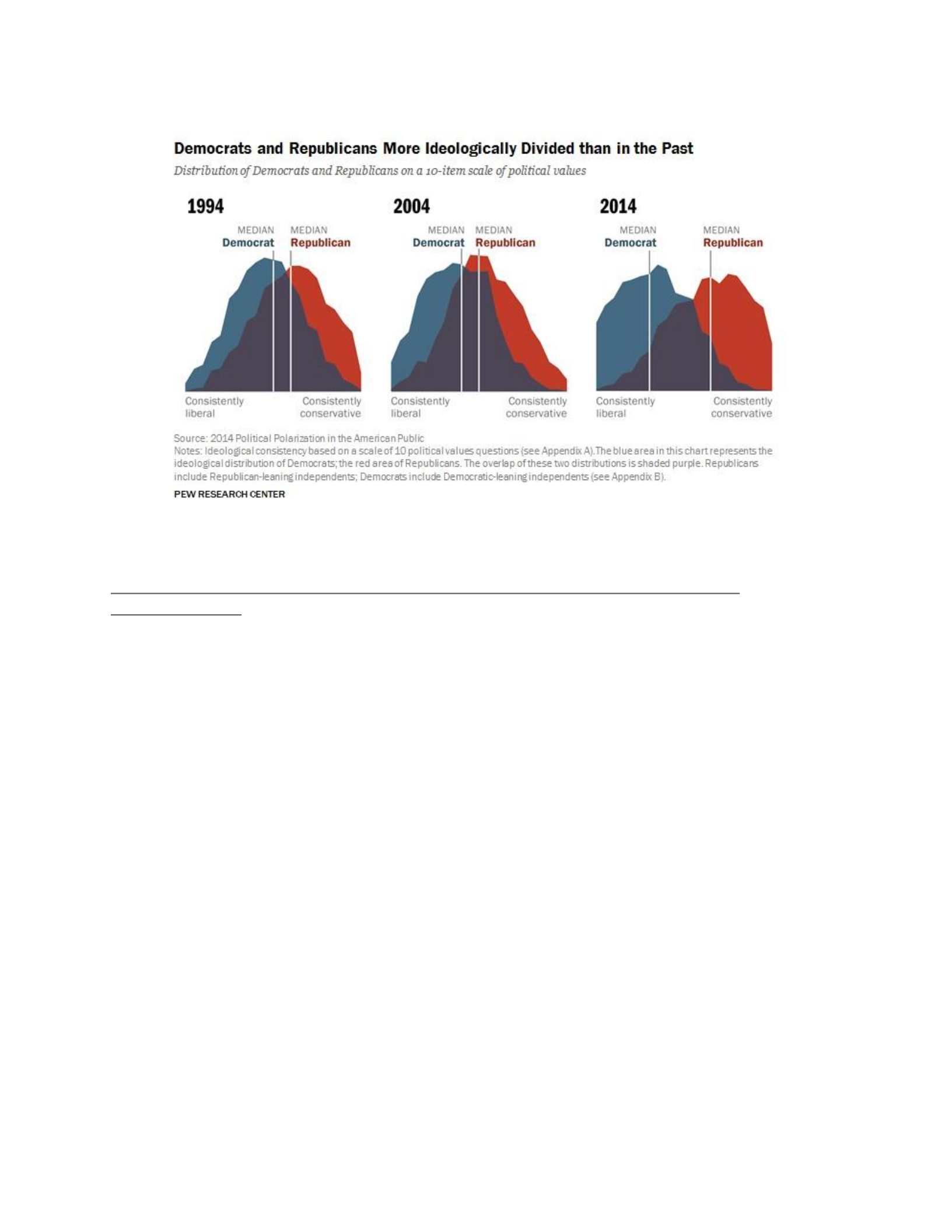
Figure 1
Democrats and Republicans More Ideologically Divided than in the Past
Note. Reprinted from 2 from “Political Polarization in the American Public.” Pew
Research Center, Washington D.C. (12 June 2014)
https://www.pewresearch.org/politics/2014/06/12/political-polarization-in-the-
americanpublic/. With permission from https://www.pewresearch.org/about/terms-and-
conditions/
Since social media's rapid adoption and inclusion in the daily lives of Americans
and politicians, there has been a more significant divergence from the centrist
ideologies of the 20th century. This dissertation seeks to determine if social media and
the political elite drive the polarization America is experiencing today. This study will
define the political elite as current United States 118th Congress members and former
political leaders Donald Trump and Jair Bolsonaro. The former Brazilian President is
included in this study to show that this problem of elite polarization isn’t limited to the
United States but a worldwide problem on social media. Additionally, the January 8th
uprising in Brazil was equally significant as the January 6th uprising, as there is sufficient
evidence linking the attacks on government to the the leaders uses of Twitter (Dwoskin,
2023; Harton, 2022). Political analyst and commentator Ezra Klein believes that the
recent shift towards more extraordinary polarization results from a systemic imbalance

that has encouraged parties to distance themselves as they have become ideologically
driven (Klein, 2020). It becomes nearly impossible for voters to feel comfortable shifting
from one party to another (Klein, 2020).
Historically the term conservative and liberal was not associated with political
ideology rather it referred to people's values on individual policies (Levendusky, 2009, p.
3). Conservative, previously defined in American political circles as individuals with
fiscally conservative parties evolved into an ideologically bound definition created by the
political elite (Levendusky, 2009, p. 25). Inevitably Republicans, identifying as
conservatives, started actively promoting socially conservative values in addition to their
fiscal values during the former President Regan’s tenure (Levendusky, 2009, p. 25).
This same process of tying ideology to parties occurred among Democrats, who started
identifying and sorting themselves as liberals be means of promoting social welfare, and
corporate taxes (Levendusky, 2009, pp. 3, 126). The political elite's use partisan sorting
inevitably led to much of the pernicious polarization experienced around the world today
as individuals of differing political ideologies become increasing divided (McCoy &
Somer, 2019).
Pernicious and affective rhetoric has become commonplace in modern social
media as platforms expand and monitoring and regulation become increasingly more
complicated (Levy, 2021). The vitriol dialogue among politicians makes it harder for
individuals to compromise, as negotiating with an alternative viewpoint can bring
backlash from within their community (McCoyet al., 2018). While there are many
theories and beliefs behind the causation of polarization in America, more important,
however, is the ability of the government to continue to function even when it is
polarized. This level of polarization intensity seen in America today is a significant threat
to the future democracy in the United States (Carothers & O'Donohue, 2019). It is not
without a warrant to be concerned with Twitter's potential impact on democracy

worldwide as it has been at the center of political uprisings worldwide and in the
storming of the United States Capital on January 6, 2021 (Budenz et al., 2019;
Dreisbach, 2022; Theocharis et al., 2015; Valenzuela et al., 2018).
McCoy and Somer (2019) dive deeper into the roots of pernicious polarization
due to "us vs. them" with a strong mentality distrusting the other party; this is further
ingrained because of the rhetoric of politicians like Senator Hawley or Congresswomen
Greene of Louisiana. These extremist polarized views are subsequently ending
conversations between moderate conservatives and liberals as each one might fear
their constituents seeing them as some traitor for reaching across the aisle (Klein, 2020;
McCoy & Somer, 2019).
How does a democracy avoid becoming deadlocked into endless "us vs. them"
debates? The challenges of pernicious polarization presented by McCoy et al. (2018)
suggest that the future of American democracy is at stake due to the inability for rational
debate to occur as individuals like Congresswomen Greene make highly incendiary
policy positions targeted at reasonable discourse in Congress. To further validate this, a
Pew Research poll conducted in 2016 before the Presidential elections found that
antipathy of both democrats and republicans towards the opposing party grew
significantly in the previous 22 years, 91% of Republican respondents found the
Democratic Party position unfavorable (up from 74% in 1994), and 86% of Democratic
respondents found the Republican party position unfavorable (up from 59% in 1994;
Geiger, 2016).
From a historical perspective, the growth of the internet, the expansion of
globalization, and the increase of general welfare have all potentially contributed
elements to the increase in polarization worldwide. This dissertation aims to focus on
social media's impact, specifically Twitter, on polarization and determine if it is a part of
the cause or just another effect of the rapidly dividing world population.

Purpose of Research
The following paragraph utilizes Creswell's formula for developing a purpose
statement to determine the aim of the dissertation and identify critical elements in
determining the author's goals in their work (Creswell & Poth, 2016). The purpose of this
quantitative ethnographic study will be to understand the impact of social media on the
users' political views as the world seemingly becomes increasingly more polarized. The
importance of this is immeasurable in determining if Twitter is contributing to events like
January 6 and whether there is cause for further concern regarding political divisiveness
being resonated by United States politicians on Twitter. By examining members of the
House and Senate's Twitter accounts, this study will reveal and compare the sentiments
inside members of Congress's (MoC) tweets and determine if Twitter's algorithm
rewards polarizing behavior. The study seeks to determine if polarization among political
elites is the driving force behind polarization in America, or conversely, polarization is a
pre-existing social construct and identity of the American system. Determining how
polarization occurs will impact the study of social media, especially Twitter. This study
assumes that current polarization is beyond partisan sectioning/sorting as populations
become increasingly disaffiliated from one another, and populist leaders become more
prevalent around the world (Klein, 2020).
While there is much debate between the theories of partisan sorting and echo
chambers, this study will assume that both are relevant to current polarization in the
United States and that political elites are leveraging partisan sorting to create their echo
chambers (Bail et al., 2018; Brown & Enos, 2021; Törnberg, 2022). These echo
chambers, powered by the political elite, create dangerous narratives reinforced by
unsubstantiated claims online that are wildly repeated by Twitter's algorithms (Simon et
al., 2020). One study found that while Facebook has tried to combat the spread of
misinformation since 2016, Twitter continues to fail to do so as misinformation is rapidly

increasing (Allcott et al., 2019). Misinformation is defined as the unintentional spread of
inaccurate information. At the same time, disinformation is the pervasive use of
spreading malicious or salacious rhetoric to dissuade an individual from further research
(Misinformation and Disinformation, 2023). This study aims to determine if civil unrest,
like the January 6 Uprising and the subsequent uprising following the former President
Bolsonaro in the 2022 Brazilian Presidential Elections, are instigated by the
aforementioned politicians' Tweets (Allcott et al., 2019; Bugs et al., 2023; Cinelli et al.,
2021).
The general intention of the study is to gain insight and determine if Twitter's
algorithm favors polarizing content such that it increases their overall advertising
revenue. Many publications have revealed that since Elon Musk's takeover, advertisers
have been leaving Twitter (Ghaffary, 2023; Saeedy et al., 2023). The Facebook
whistleblower, Frances Haugen, identified that the financial motivation for favoring
polarizing content led to higher levels of user engagement due to human's propensity to
share salacious content (Akinwotu, 2021; Rathje et al., 2021). Many academic
researchers have shown correlations between polarized populations engaging actively
on social media in specific echo chambers; however, the causal formation of these echo
chambers is still widely debated (Cinelli et al., 2021; Hong & Kim, 2016; Rathje et al.,
2021). Using ENA to compare politicians' rhetoric on Twitter will help identify if Twitter's
algorithm favors highly inflammatory posts.
The primary question this study seeks to answer is who is liable for the rapid
polarization of Americans. Is it Twitter that is actively contributing by not monitoring the
algorithms? Alternatively, is it the political elite, i.e., former President Donald Trump,
Senator Elizabeth Warren D-MA, and Congresswomen Greene R-GA, who propagate
provocative agendas on Twitter, which are furthering the political divide in America? By
comparing users' responses to the Twitter threads created and posted by the former

Presidents, Quantitative Ethnography and ENA will quantify the level of impact these
tweets had on the target population.
Follow-up research questions will look at users and their average levels of
engagement with Twitter based on the post type. Rubin defines the uses and
gratification approach (U&G) as a central component to understanding how people
engage with social media from a psychological perspective and will also evaluate how
social media can satisfy their needs to communicate and engage (Nabi & Oliver, 2009).
A study conducted in 2010 concluded that Twitter users were using tweets and retweets
to satisfy their communication needs with other individuals (Chen, 2011). Extending
these studies to examine how polarized users engage within their echo chambers will
be crucial in understanding if users are coming to Twitter with pre-existing bias (partisan
segregation) or if echo chambers are furthering new biases.
Summary of Research Questions and Hypotheses
The following research proposed above will consider the following questions
followed by their subsequent hypotheses:
• RQ1: Do the political elite (Members of Congress) leverage Twitter to promote
identity politics furthering political polarization in America?
• RQ2: Is Twitter’s algorithm giving preferential status to the political elite who use
polarizing tweets to generate higher user engagement resulting in higher ad
revenue?
• RQ3: Were President Donald Trump's (@realDonaldTrump) and President Jair
Bolsonaro of Brazil (@jairbolsonaro) tweets leading up to the uprising of January
6, 2021, and January 8th, 2023, respectively, responsible for the unfortunate and
subsequent events?
• H10: There is no correlation between political elite tweets and affective
polarization in America.

• H1a: ENA reveals a correlation between the tweets of the political elite and the
rise in affective polarization in America.
• H20: Twitter’s algorithm does not treat polarizing tweets with preferential
treatment.
• H2a: Twitter’s algorithm favors highly polarizing content and tweets by giving it
more significant viewership.
• H30: Former President Donald Trump’s and former Brazilian President Jair
Bolsonaro’s tweets did not significantly impact the January 6, 2021, uprising in
Washington D.C. or the January 8, 2023, uprising in Brazil.
• H3a: Using ENA, former President Donald Trump and former President Jair
Bolsonaro's tweets used rhetoric that may have significantly impacted the events
that took place on January 6 and January 8.
Methodological Approach
While there is continued debate about the existence and causes of polarization,
the research conducted in this dissertation assumes that polarization exists both in
political spheres (elite polarization) and in the public of the United States (social
polarization; Banda & Cluverius, 2018; Hare & Poole, 2014; Iyengar et al., 2019). What
is also to be assumed and measured is that societal-level grievances are being
exploited and exacerbated by the elite political rhetoric (McCoy & Somer, 2019). This
dissertation seeks to determine if politicians leverage Twitter's algorithm to maintain
leadership positions by creating non-navigable divisions using us-or-them rhetoric,
furthering pernicious polarization (McCoy & Somer, 2019). This study reviewed select
Members of Congress (MOC) from both the House of Representatives and Senate; the
account of the selected for the study will be based on their official Congressional
account, while some of these accounts may be managed by their staffers, for this study
it will be assumed that these accounts are a wholistic representation of their political

ideology and values. Additionally, since these MOC are using their official title on their
Twitter title page, the study will assume that even staff-managed accounts are
representations of their values.
Other assumptions included are that Twitter's algorithm is intended to increase
user time on the platform, such as advertisers generating more views and increasing ad
spending to maximize Twitter's profits (Hines, 2023). Buzzword or not, the algorithm is
one of the core foundations of 21st-century technology companies. Even as artificial
intelligence is making its way into the world, AI was only possible with massive
algorithmic and machine learning research developments. This study's challenge is
determining the algorithmic bias; inherently, algorithms are intentionally designed to
create a bias (Boddington, 2017, p. 17). For example, the European Court of Justice
2011 required insurance companies to eliminate gender bias in their algorithm because
it set lower premiums for females seeking pensioners insurance due to average more
extended lifespans (Boddington, 2017, p. 17). The ethics of using AI and algorithms will
continue to challenge the future of social media platforms as their rapid user uptake and
increase in world presence continue. One of the most robust assumptions made in this
study is determining the intention of the user of Twitter.
As society becomes increasingly divided, morality and ethics become less about
a shared system of justification and more about the reasoning of specific groups or echo
chambers (Boddington, 2017, p. 20). For example, followers of congresswomen
Marjorie Taylor Green (R-GA; on Twitter as @mtgreenee) will most likely have a widely
different code of ethics than those who are following Senator Elizabeth Warren (D-MA;
on Twitter as @SenWarren). Former Rep. Frank D-MA stated that "ethics were not
political until Gingrich" was elected in 1978 and while serving his first term in Congress
(Tolchin, 2019, pp. 1-2). Since the Republican Revolution of 1994, the Republican party
has latched onto its perceived view of ethics linked to Christian values, while

Democrats, like Sen. Warren, have attributed their ethics to prioritizing citizens over
corporate profits (Tolchin, 2019). Prior to this, the ethical bounds of party lines were
rarely drawn. The framers of the Constitution designed a system similar to the approach
in The Republic by Plato, in which Philosopher Kings determine the moral high ground
through careful thought (Boddington, 2017, p. 20). The Philosopher Kings are for the
sake of this dissertation, not @mtgreenee and @SenWarren; this paper assumes that
the framers of the Constitution determined a framework for moral high ground that
values Freedom of Speech (the First Amendment) and the sanctity of democracy in the
form of a constitutional republic (Boddington, 2017, p. 20).
Much of this study will use Epistemic Network Analysis and other tools to bring
quantitative results to qualitatively observed actions on a social platform. Quantifying
emotional responses on Twitter while using various existing tools like the Vader
Sentiment Analysis tool and nCoder, each has potential flaws and limitations (Hutto,
2023; Marquart et al., 2019). The tool for verifying measures of polarization created by
this study will be the DW-NOMINATE tool (Lewis et al., 2023). DW-NOMINATE was
created by Poole & Rosenthall (1985) to use congressional roll call voting to measure
each MoC voting behavior on a liberal versus conservative scale (Lewis et al., 2023). A
website maintained by UCLA named Voteview.com updates DW-NOMINATE scores
after each Congressional roll call vote and maintains up-to-date, accurate scores for
each MoC (Lewis et al., 2023).
Hemphill et al. (2016) created the #Polar scores tool using the coding language
of Python to determine how polarized a particular tweet is from a member of the United
States Congress. Additionally, #Polar scores can differentiate between users with similar
scores based on the tags used by tweeting politicians and their frequency of tweeting
(Hemphill et al., 2016). Because of the new design of Twitter and the shift towards quote
tweeting, hashtags are no longer an effective tool for gaining views and shares. This

change makes #Polar scores less effective for measuring modern politicians' Twitter
feed polarities. However, the study conducted by Hemphill et al. (2016) reviewed some
of the same MoC examined in this study, so legacy scores can be compared to the
results from the current study's ENA results to determine if members of Congress's
tweets are more of less polarized in correlation to their previous #Polarscore. This study
proposes introducing a new tool that combines the VADER sentiment analysis tool with
nCoder (software for matching large data sets with codes) to create a polarization score
based on the discourse used by each MoC (Hutto, 2023; Marquart et al., 2019). Using
DW-NOMINATE, this study can validate the polarization scores of the combined SA and
nCoder scores generated in this dissertation (Hutto, 2023; Lewis et al., 2023).
To determine the impact on users, the number of likes and retweets of members
of Congress will be categorized and scored based on the level of engagement, then
mapped on ENA to determine if the tweet has any other polarizing effect (Hemphill et al.,
2016; D. W. Shaffer, 2018). This has become increasingly more important as identity
politics continues to dominate the media's election narratives in social media (Herrera &
Sethi, 2022).
The outcome of the 2022 mid-term elections left the Republicans failing to
capture the Senate but gaining an advantage in the House. More academic research
needs to be revealed regarding the 2022 elections. However, many speculate that the
Republicans lost the Senate due to their hyper-polarized candidates pushing identity
politics rather than pushing for more centrist candidates (Everett et al., 2022). Using
tweets generated by the political elite and DW-NOMINATE will allow the study to
determine if the House is, in fact, more polarized than the Senate both in their roll call
votes and use of social Twitter (Lewis et al., 2023).
VADER sentiment analysis will again be used to help gain a broad and quick
understanding of user behavior on Twitter (Lyu & Kim, 2016). Lyu and Kim (2016)

created a sentiment dictionary to measure the strength of specific user responses in
social media. Similarly, the author of this dissertation and Dr. Eric Hamilton of
Pepperdine University used ENA to model the political discourse of user interactions on
Facebook (Hamilton & Hobbs, 2021). From these sentiments, categorizing users by
political ideology is often less challenging, as many can interact in specific echo
chambers (Baumann et al., 2020). However, independent voters/moderates are often
more challenging to identify as they might engage with media sources of all types and
interact with politicians on Twitter from both parties.
Lastly, understanding how one's engagement on social media within specific
echo chambers translates into potentially anti-democratic behavior is more challenging
to research, apart from January 6 and, in Brazil, the insurrection on January 8, 2023.
Studies have shown that algorithms on Facebook have tended to skew to show users
posts that specifically align with their political views (Van Bavel et al., 2021). Tying
incidents like January 6 to specific individuals' behaviors outside of Twitter is more
complicated; however, understanding how this type of user engaged in Twitter before
January 6 can better understand how Twitter might have impacted their decision to enter
the capitol on January 6. Similarly, specific Tweets and the former President of Brazil
Jair Bolsonaro's Telegram page have been attributed to instigating the insurrection on
January 8, 2023 (Dwoskin, 2023). In this portion of the study, the tweets of former
President Donald Trump and former President Jair Bolsonaro will be coded using
nCoder, VADER, and the ENA web tool to determine if the rhetoric used by both
presidents elicited the subsequent insurrections (Hutto, 2023; Marquart et al., 2019,
2021).
Definition of Terms
This dissertation considers the many forms of polarization to determine how and
if Twitter's elites drive any or all forms. Elite polarization is created by political and social

elites (Politicians, business & thought leaders, and celebrities) whose highly radicalized
political interests disseminate to the general population's polarization (Banda &
Cluverius, 2018). Affective polarization is when partisans become so polarized that they
dislike and distrust members of the opposite party based on party identity alone
(Druckman et al., 2021).
Van Bavel et al. (2021) defines echo chambers as a group of like-minded
individuals found on communities on platforms, i.e., Facebook or Twitter, where they can
share and confirm strongly biased opinions without considering opposing viewpoints. At
the same time, not all researchers agree on whether social media polarizes individuals;
they often agree that the echo chambers found in social media provide a catalyst for
further polarization and confirmation bias of certain groundless beliefs (Van Bavel et al.,
2021). Echo chambers, also referred to by some researchers as "selective exposure,"
are perhaps the prominent hypothesis for current theories on social media-driven
affective polarization in America (Baumann et al., 2020; Bessi,
2016; Bessi et al., 2016; McPherson et al., 2001; Tokita et al., 2021; Van Bavel et al.,
2021) However, others have argued that social media does not enable echo chambers
as users are more exposed to contrarian viewpoints in social media and its pre-existing
segregation knows as partisan sorting is driving affective polarization in America (Bail et
al., 2018; Brown & Enos, 2021; Törnberg, 2022).
Partisan sorting is the belief that pre-existing forms of segregation of voters in
America are causally linked to the increase of polarization in the United States (Brown &
Enos, 2021; Mason, 2016; Törnberg, 2022). Brown & Enos (2021) conducted a study
using election data compared with geographic data and found that much of partisan
sorting is an extension of racial/ethnic sorting, as seen in the urban and rural divide.
Perhaps the most surprising part of the study found that the most isolated ten percent of
Democratic voters had 93% or more encounters with other Democrats in their

respective urban areas (Brown & Enos, 2021). These isolated environments have
increased the "us vs. them" mentalities leading to the most problematic form of
polarization, pernicious polarization (McCoy & Somer, 2019).
As defined by McCoy and Somer (2019), Pernicious polarization is the idea that
polarization eventually becomes so unreconcilable that political actions taken by
individuals are dictated solely by their status within their subgroup or echo chamber
rather than free thought. The greatest challenge in combating pernicious polarization is
that individuals struggle to cross the political divide as their constituents see their
actions reprehensible (McCoy & Somer, 2021). This way, democracy is threatened by
pernicious polarization's rigidness in limiting free thought and speech.
Sentiment analysis is a key term used in social media studies to determine users'
attitudes, emotions, and the strength of their emotional responses when engaging in
discourse online. Specific sentiment dictionaries have been created to map these
sentiments into measurable responses such that they can be compared to other
responses (Lyu & Kim, 2016). Other sentiment analysis uses come from studying
political discourse in an analytic framework that can be translated into models used in
various quantitative and qualitative studies (Hamilton & Hobbs, 2021). Epistemic
network analysis is a mixed-method approach designed by Dr. Shaffer of the University
of Wisconsin Madison in his book, Quantitative Ethnography, which allows researchers
to use "big data" to capture quantitative and qualitative results into meaningful networks
that can highlight correlations that might not be quantifiable without a visual
representation of their network connections (D. W. Shaffer, 2018).
On average, today's social media users view their political expression or
selfpresentation online as politically active and knowledgeable (Lane et al., 2019).
These concepts of political self-awareness are central in approaching social media
political discourse as one can avail superior knowledge while feeling more

knowledgeable under the guise and protection of a digital platform that allows for
expression with managed consequences (Lane et al., 2019). For example, users can
correlate ideas and relay inaccurate historical references in echo chambers without
being corrected. Increases in political self-efficacy, the level at which one believes one
can influence politics, have given rise to political movements like QANON and the Proud
Boys (Abramson & Aldrich,
1982).
One of the more challenging terms to define is misinformation, as political
commentators regularly use the term "fake news" to describe it; however, the latter has
no actual relevance to any academic study (Ng et al., 2022). Misinformation is widely
understood to mean information not verifiable by either science or common historical
knowledge spread unintentionally (Misinformation and Disinformation, 2023). It is
essential to study how politicians disseminate misinformation on social media,
reaffirming potentially harmful ideologies leading to identity politics (Ng et al., 2022).
Social identity theory can help classify users on Twitter and determine engagement on
these platforms about events like the January 6 uprising (Ng et al., 2022).
Disinformation, as described earlier, is also imperative in understanding, although
harder to prove, as the intent of spreading false information requires insight into the
creator's intentions. Social identity theory is the belief that an individual's identity
becomes increasingly more attached to their social networks. This alludes to the
potential increases in polarization worldwide (Wakefield & Wakefield, 2023).
Significance of the Study
The study of Twitter's aims and uses of its algorithms is essential to
understanding how social media is changing political behavior amongst active users.
More specifically, gaining insight into Twitter's algorithms might help anticipate/predict
potential uprisings using machine learning algorithms (Bahrami et al., 2018). While

many might believe January 6 to be a one-off incident, and Twitter is not entirely to
blame, there are many examples of even foreign governments leveraging Twitter to try
and influence the public, for example, the Hong Kong protests in 2019 and the
insurrection on January 8, 2023, in Brazil (Dwoskin, 2023; D. Wood et al., 2019). Much
of the challenge the US government faces in regulation is determining who the
responsible actor is; Section 230 of The Communication Decency Act of 1996 suggests
that the third party, the one posting the troublesome content, is the only liable actor
(D.O.J., n.d.). However, more research suggests that the platforms could play a more
significant part in prompting potentially harmful content through its algorithms design.
One study found that when a user shares a tweet with their readers, retweeting
misinformation leads to more significant viewership and distribution of misinformation
(Pang & Ng, 2017). Perhaps more importantly, the study conducted by Pang and Ng
(2017) found that primary users were not more likely to spread misinformation in all
cases. However, followers retweeting their posts had a more significant impact (Pang &
Ng, 2017). This could indicate that further research regarding Twitter's algorithm needs
further study to determine whether Twitter users spreading potential misinformation or
Twitter's positioning of that tweet could create more harm.
Following the Mueller and Cambridge Analytica Scandal, allegations of using
misinformation on social media to interfere with elections became apparent to the
government and the United States Public (Mueller, 2019). The FTC levied the most
significant fine against a company for Facebook's negligence in protecting its user data
from Cambridge Analytica in 2019 (Fair, 2019). However, since then, there has been
little to no legislation passed in Congress to prevent such further attacks on American
data. The rapid spread of misinformation on Twitter, YouTube, Facebook, WhatsApp,
and TikTok revealed the continued lack of controls by tech companies in managing

harmful content during the early months of the COVID-19 epidemic in 2020 (Gisondi et
al., 2022; F. Simon et al., 2020).
While some believe that polarization is an irreparable situation in American
politics, the level of pernicious polarization seen both in the United States government
and the American public is cause for alarm (J. Campbell, 2018, p. 57). The rate at which
Americans are drifting away from centrist politics, as seen in Figure 1, indicates that
January 6, 2021, will not be the last attack on American democracy (Geiger, 2016).
Summary of the Proposed Study
This dissertation seeks to determine if the political elite, for this study, select
Members of Congress (MOC), are leveraging Twitter to further incite political discord in
America by leveraging identity politics through pernicious rhetoric. The second question
is to determine if Twitter's algorithms are giving preferential treatment to the MOC
studied to generate. The final question will look specifically at former President Donald
Trump's and former Brazilian President Jair Bolsonaro's tweets leading up to January 6
and January 8 uprisings to determine if the rhetoric used by the former presidents could
be correlated to the actions taken by those who led their respective insurrections.
Previous studies on elite polarization done by Lewis et al. (2023) and Pew
Research have generally shown increasing polarization in the United States over the
past 50 years, with an even more dramatic rise in the past ten years (Abramson &
Aldrich, 1982; Geiger, 2016; Voteview, 2022). Social media's impact on said polarization
has been debated on whether it is to blame. Theories on previous partisan segregation
put for by Bail et al. (2018), Brown & Enos (2021), and Törnberg (2022) suggest that
social media is not to blame as users were already polarized and social media merely
has amplified the awareness of affective polarization. While there is significant evidence
to support prior partisan segregation in America, the competing echo chamber theories
by Bessi (2016), Tokita (2021), Cinelli et al. (2021), and Baumann et al. (2020) coupled

with this study's focus on elite polarization driving mass polarization helps determine
that social media is being utilized as a tool to polarize.
The studies conducted on COVID-19 misinformation helped create the
hypotheses that the political elite is driving political polarization (Gisondi et al., 2022; F.
Simon et al., 2020). Before these studies, academics were less likely to point the finger
at the political elite. Views of political moderatism dominating voting behavior are still
pushed by Fiorina et al. (2021) versus the counter view that political elites are driving
affective polarization (A. Abramowitz, 2008; Banda & Cluverius, 2018; Hetherington,
2001; Zingher & Flynn, 2018).
Most researchers have encountered challenges studying polarization online
Twitter varies significantly as the platform frequently changes both the algorithm and the
users engaging on Twitter. One study on the amplification of politics on Twitter showed
that randomizing control groups in studying the effects of the interaction on social media
was impossible due to the nature of the content being shared by the user on the
platform (Huszár et al., 2022). VADER Sentiment Analysis (VADER) tool also presented
challenges to other researchers, as the tweets are character-limited, and users might
employ the use of sarcasm or jargon not yet classified by the VADER tool (Hutto, 2023;
Lyu & Kim, 2016; Misiejuk et al., 2021).
This study is needed now more than ever; misinformation and disinformation
campaigns are driven by social media platforms' algorithms and political elites who fuel
messages of affective polarization (Akinwotu, 2021; Atad et al., 2023; Tønnesson et al.,
2022). Social commentator and comedian Sascha Baron Cohen revealed in his
acceptance speech to the Anti-Defamation League in 2019 that he was able to convince
a slightly radicalized Trump follower to use fake explosives (which the subject believed
were real) to attack and theoretically kill members of Antifa based on misinformation he
was feeding him (Cohen, 2019). Sascha Baron Cohen, in his speech, referred to
Voltaire's famous quote in Questions sur les Miracles, "Those who can make you

believe in absurdities can make you commit atrocities" (Cohen, 2019). While
experiments conducted by Sascha Baron Cohen have zero academic credibility, it
provides an allegory to a potential situation that has been witnessed in the case of many
tragedies, including the Capitol Breach on January 6, where five people died. This study
ultimately seeks to show how extremist language used in social media, specifically on
Twitter, leads disenfranchised public members to commit violent uprisings (Capitol
Breach Cases, 2021; Harton et al., 2022). These members of society are distorted by
pernicious polarization. They are told by political elites that there is no compromise with
the other side and that, in some cases, violence and uprising are the only solutions
(McCoyet al., 2018). The threats to democracy are genuine with the rise in populism
worldwide and the constant reaffirmation of such radical beliefs.
The elite movement catalyzes the affective and pernicious polarization society is
encountering across the globe (McCoy & Somer, 2019). This dissertation aims to show
that using ENA coupled with the VADER tool and nCoder will exemplify how Twitter's
rapid and mass delivery capability spreads uncontrollable pernicious discourse, leading
to attempted and potential democracy in America.

Chapter 2: Review of Literature
Background and Research
While the origins of polarization in American society are debated widely by
academics and politicians, the effects of social media on polarization were not seriously
considered until the COVID-19 epidemic and Frances Haugen's interview with 60
Minutes (Akinwotu, 2021; Hart et al., 2020). Some argue that polarization was
preexisting in social media and that, most likely, platforms like Facebook and Twitter
gave greater awareness of the existing polarization (Banks et al., 2021). This sparked
the debate between partisan sorting (existing segregation of voters into polarized
groups) and echo chambers (homophilic groups that create platforms to extend
confirmation bias to users everywhere). Törnberg (2022) is perhaps one of the most
prominent critics of echo chambers' causal effects on polarization and believes that
existing segregation is amplified on social media to create the perception that social
media is creating echo chambers. While substantial evidence supports the pre-existing
segregation, the subsequent echo chambers have become too large to ignore. The
creation of platforms like Truth Social, Parler, and even Elon Musk's purchasing of
Twitter signaled the dominance of the homophilic interest of a few to create and buy
social media platforms such that their voices can be heard (M. Otala et al., 2021).
This literature review will seek to explain how the political elite has leveraged the
flaws of human nature and social media to influence increased partisan segregation into
seeming uncontrollable polarization. The first portion of this literature review will focus
on the historical perspectives of segregation and polarization in America. With a general
review of the theories and types of polarization. Leading to definitions of the harsher,
more extreme cases of pernicious polarization followed by a general review of social
media regulation. Lastly, this literature review will follow the methodical approach of

reviewing previous studies measuring discourse and polarization on social media and
how they impact this study.
History of Polarization
While Americans have had ideological differences since its foundation, mainly
seen in urban and rural divides, divisive political polarization is something that has only
varied in intensity throughout its history. The principles of the Constitution called for
politicians to compromise and put aside differences as a means to an end (J. Campbell,
2018). However, the electoral college and development of the House of
Representatives, made up of congress members from area-specific districts, as
opposed to a whole state or country, lends itself to a two-party system according to
Duverger's Law (Hare & Poole, 2014, p. 414). Duverger's Law is the understanding that
in proportional electoral systems, the United States included participants tend to vote for
the party/person with the best chance of expressing and matching their ideologies
(Schlesinger & Schlesinger, 2006). Hare & Poole (2014) reference the historical
polarization and depolarization of the United States as a cycle. This cycle remained in
balance; however, in the past ten years, ideological framing and identity have become
more critical to party identity than ever, further accelerating what seems like
unremovable polarization.
The first mass political polarization in the United States occurred in the lead-up to
the Civil War (Hare & Poole, 2014). This mass polarization occurred because the
Southern Democrats and Whigs felt affronted by the North with their high tariffs on
exporting commodities and the North's push to end slavery (Hare & Poole, 2014). Mass
polarization, in this case, was brought on because it impacted Southerners economically
and culturally, as well as a fear of overreach from the Federal government (Hare &
Poole, 2014). The impact of the end of the Civil War should have narrowed much of the
preexisting ideological and cultural gaps; however, a disgruntled President, Andrew

Johnson, reinstated racial animosity and inequality when he returned power to white
supremacists (Klein, 2020, pp. 34-35).
The dominance of the Republican Party following the Civil War leading to the Great
Depression led to some deep-seated resentment among Southern Democrats (B. D.
Wood & Jordan, 2017, p. 49). However, from the Great Depression until the Civil Rights
movement, there were significantly low levels of polarization (B. D. Wood & Jordan,
2017, p. 128). The slow return to institutionalized racism in America, especially in the
South, continued for the next hundred years following the Civil War. These cultural
differences between parties in America remained at ease, and mass polarization did not
occur again until the Civil rights movement in the middle of the 1960s (Hare & Poole,
2014). The Civil Rights Movement of the 1960s was monumental because it
transcended both parties and brought a resurgence of mass polarization in America
(Campbell, 2018, pp. 54). As it had after the Civil War, Southern Democrats felt
affronted by the Federal Government's overreach with the passage of the Civil Rights
Act of 1964 and the Voting Rights Act of 1965 (J. Campbell, 2018; Hare & Poole, 2014).
These affronts not only led to the inevitable end of the Dixiecrat as Southern Democrats
became Republicans and Democrats in urban communities brought on minorities to its
party (Carmines & Stimson, 1989, pp. 62). Campbell's Revealed Polarization Theory
(2018) credits the Civil Rights movement, and the challenges faced in the 1960s were at
the heart of the foundation of polarization today.
In the late 1960s through 1970s, the continued liberalization of the Democratic
party, coupled with the Republican Party's shift towards strict conservativism, led to the
modern forms of polarization seen in American politics today (Hare & Poole, 2014; K.
Poole, 2008). During this time, a divergence started forming among political elites as
Democrats and Republicans started to become more isolated from one another. Pauline
Kael was famously quoted for saying in 1972 that she "did not know how Nixon could

have won because I did not know anyone that would have voted for him" (Brandt &
Spälti, 2018). This belief in perceived social norms by social sampling is possibly the
beginning of the future's echo chambers and filter bubbles (Brandt & Spälti, 2018;
Flaxman et al., 2016). In the 1980s and early 90s, there was an increase in elite political
polarization as income inequality, and immigration rose (K. Poole, 2008). Former
President Regan rolled back civil rights reforms and began dialogues introducing
religious ideology (Levendusky, 2009, p. 25). While at the time, these issues weren't
vital enough concerns to polarize the masses, politicians and political elites became
increasingly divided among these ideological concerns (Hare & Poole, 2014).
Gradually members of Congress became increasingly more divisive over
concerns of gun control, abortion, and social welfare to the point where ideological
values started becoming platforms for politicians(D. Green et al., 2004, pp. 210–211).
The use of sorting individuals' ideological values by politicians inevitably leads to the
general polarization seen in society today (Iyengar et al., 2019; Klein, 2020). Like the
1960s, many social issues centered around race (D. P. Green et al., 2004, p. 3). The
Democratic party has become increasingly more diverse as the Republican party finds
itself losing favor with minorities (Klein, 2020).
Former President Obama's win in the presidential election in 2008 was not met
without racism as birtherism, touted primarily by Donald Trump, that Obama was not
born in the United States but instead an African Muslim (Klein, 2020). This racism only
continued into President Donald Trump's electoral victory as he campaigned on
ideological concerns over concerns of illegal immigration (Harton et al., 2022). President
Trump's tenure, coupled with the advent of the COVID-19 epidemic, accelerated
polarization to new heights as party ideology became coupled with public health
strategy (Morris, 2021). A study conducted using 2016 voter data coupled with COVID19
cases and morality data in the Spring and Summer of 2020 found that while counties

that did not vote for Trump had higher death rates in the earlier months later were
surpassed by Republican counties as the summer passed on (Morris, 2021). Morris
(2021) noted in the study that political ideology led to wildly divergent health strategies
for managing COVID-19. This draws much concern as COVID-19 revealed how deep
partisan ideology became more important in the United States in manners of public
health (life or death) than the well-being of the people (Morris, 2021). Sadly, both parties
were equally to blame for politicizing COVID-19 responses (Morris, 2021). The media
essentially aided this political elite manipulation by giving more airtime to politicians than
scientists and medical professionals during the epidemic's early stages (Hart et al.,
2020).
From COVID-19 to January 6, the United States has been besieged with the
realization that social media was primarily to blame for the massive influx of
misinformation online (Gisondi et al., 2022). Further research will reveal that COVID-19,
coupled with the alternative narratives pushed forward by former President Donald
Trump and the company, led to a greater distrust of mainstream media, driving
polarization to a new height.
Theories & Types of Polarization Explained
Campbell (2018, pp. 40-41) attributes modern polarization to three different
theories; the first is the Emerging Polarization Theory, which argues that polarization
happens in political party leadership, and their electorate follows. The Emerging
Polarization Theory identifies polarization as a more modern concept and that extreme
polarization did not occur until the 2000s (Campbell, 2018, p. 40). According to a Pew
Research poll (Duggan e al., 2016), which showed voters the departure from centrist
ideology in the late 2010s, historically, as identified by Hare and Poole (2014), the cycle
of polarization has been around since the Civil War.

Campbell's (2018, p. 40) second theory of polarization is the No Polarization Theory
which suggests that the public is still largely centrist and that polarization is, in fact, a
myth. The midterm elections in 2022 hypothetically indicated that America is growing
tired of extremist politics, as decidedly polarized candidates did poorly while moderate
candidates thrived. On the contrary, a Harvard University Poll (Harvard IOP Youth
Survey, 2022) revealed that 59% of Generation Z voters polled were planning on voting
in the midterms in record numbers because they felt their rights were under attack by
extremist politicians. Campbell's (2018, p. 40) No Polarization Theory is problematic and
can only be defended as a form of ideological sorting (Klein, 2020).
The third theory of polarization, defined by Campbell (2018, p. 41), is the
Revealed Polarization Theory which claims that Americans have been highly polarized
since the 1960s and that politically homogenous parties have masked polarization. This
only became apparent to the population as the Republican and Democratic parties in
the 1990s and 2000s started to take on polarized platforms (Campbell, 2018, p. 41).
Ezra Klein, author of the book Why We Are Polarized (2020), argued that the core
component of current polarization is an extension of Campbell's Revealed Polarization
theory (2018), which looks at identity politics as the core component of current
polarization.
According to several polls, over 40 percent of Americans believed a second civil
war was imminent (Orth, 2022; Zogby, 2021). While there is some debate about whether
America is on the precipice of a second civil war, the division of Americans during the
1960s and early 70s by ethnicity and socioeconomics led to what is known as greater
mass polarization (J. Campbell, 2018). Mass polarization, or group polarization, resulted
from this as communities again, like the first industrial revolution leading to the Civil War.
Political parties divided communities as they embraced the ideological concerns of their
constituents and pushed away from bipartisanship (J. Campbell, 2018;

Sunstein, 1999;).
The continued focus on identity politics by the Democratic and Republican
parties further revealed the partisan sorting in America (Fiorina et al., 2008; Klein,
2020). Issues like abortion, healthcare, social security, continued racial inequality, police
reform, and immigration are transitioning from sorting to party mainstays as they ingrain
themselves into party identity and further deepen polarization (D. P. Green et al., 2004;
Klein, 2020). Opportunistic political actors, like Marjorie Taylor Greene (R-GA) and Matt
Gaetz (R-FL), leverage existing societal cleavages (created by partisan sorting) to build
their agendas and dominate political discourse among their radicalized subgroups
(McCoy & Somer, 2019). Political cleavages do not account for polarization; however,
once political actors embrace these cleavages as part of their platforms and ideologies,
they create formative rifts, resulting in pernicious polarization (McCoy & Somer, 2019).
There are many examples of how identity politics continue to interfere with the success
of the United States and the rest of the world. The Greater Idaho Movement seeks to
expand Idaho's borders into Eastern Oregon to create a more significant conservative
state because it does not match the "cultural divide" (The Greater Idaho Movement,
2023). This is quite terrifying in theory as it suggests that states should be bound by
cultural identity and nothing else. The principles set forth by the founding fathers of the
United States of America relied on compromise and civil debate to frame a constitution
that created platforms that allowed reasonable discourse and checks and balances.
When the political elite push identity politics to determine a state's borders, this is a
prime example of albeit reprehensible and pernicious behavior.
To outsiders, one of the most fascinating aspects of American politics is the
focus on national politics over regional politics, which typically have a far more
significant impact on their daily lives (Hopkins, 2018). The internet and social media
have stimulated national political identity more than ever. In the 2000 presidential

election, Tim Russert, who at the time was at NBC, was credited for popularizing the
red-state vs. blue-state terminology while discussing the elections (Crouch & Rozell,
2014). These "red vs. blue" narratives exploded in the media as increasingly everything
seemed to become some form of "us vs. them" (Crouch & Rozell, 2014). It has gone so
far that most Americans no longer perceive media as non-partisan (Crouch & Rozell,
2014). Social media has seemingly fanned the flames of the already highly charged
political rivalry among political elites in the past decade.
Affective to Pernicious Polarization
Affective polarization is when partisans become so ideologically bound to their
party's values that they disaffect themselves from the contrary opinions (Iyengar &
Westwood, 2015). Ultimately the level of disaffection from other members of society
leads the affectively polarized to believe the other party is uncompromising (Iyengar &
Westwood, 2015). For example, fundamentalist Christians support the Republican party
based on ideological values and avow support to any of its leaders regardless of their
status as a Christian, i.e., former President Donald Trump. Affective polarization
increases as ideological values are amplified and increased political turmoil (Iyengar et
al., 2019). The events following the January 6 insurrection and division in mainstream
media and later isolated disclosure of evidence to a partisan media source, Fox News,
by House Speaker McCarthy enabled both affective and pernicious polarization
(Grisales & Swartz, 2023).
Pernicious polarization, coined by McCoy and Somer (2019), is when individuals
cannot cross party lines or ideological boundaries without fear of reprisal from their
respective cohorts. With pernicious polarization, one's political identity becomes
tantamount to each of their actions. Any action out of touch with that particular ideology
can further that individual's social relationships and positions even in their respective
neighborhood (McCoy & Somer, 2019). One catalyst for this behavior has been social

media which has led to the self-segregation of individuals into echo chambers (Törnberg
et al., 2021). Group polarization is the belief that when groups segregate themselves
into ideological enclaves and expel contrary discourse, they become more radicalized
(Sunstein, 1999). Democracy struggles to thrive when pernicious polarization occurs
because civil discourse is limited and often blocked.
Partisan media has exploded since the advent of the internet and exacerbated
pernicious polarization. Normative views of bipartisanship are frequently under attack by
mainstream media. As a result, viewers find themselves far more uncompromising and
furthering themselves into affective modes of polarization (Levendusky, 2013). One
study found that partisan polarization was a key physiological driver in spreading
misinformation on Twitter (Osmundsen et al., 2020).
Divisive Alienation
Divisive alienation has become one of the unfortunate outcomes for many as
pernicious polarization continues to plague America on social media. One study found
that as the shareability of news on social media increased, polarization increased as
users reflected less tolerance to contrarian viewpoints and media sources (Coscia &
Rossi, 2022). While shareability was previously viewed as a positive for social media,
the speed at which false information can be easily shared and repeated has potentially
harmful circumstances (Coscia & Rossi, 2022). One Twitter engineer who worked on the
"Retweet" button later admitted that he regretted this decision as harmful content
sharing exploded in use (Haidt, 2022). Since 2020, Twitter has tried to limit frivolous
sharing by asking users if they want to share a link they have not opened yet (Hern,
2020). The idea was that if the user has to read the link first rather than just the
prepopped headline, the user might second-guess sharing the article (Hern, 2020).
Twitter and Facebook have made other attempts at reducing misinformation by
using misinformation labels on posts (Papakyriakopoulos & Goodman, 2022). One study

found that warning labels on Donald Trump's tweets about election fraud in the 2020 US
Presidential election did not change the magnitude of users' interaction with the tweets
(Papakyriakopoulos & Goodman, 2022). However, the study found that labels did
reduce users' propensity to create harmful content and retweet information labeled as
misinformation (Papakyriakopoulos & Goodman, 2022). Sharing content in the hopes of
becoming viral became a part of the social media game, and users tend to contribute
maliciously as the platforms seem to favor content that incites mob dynamics (Haidt,
2022).
The COVID-19 epidemic in 2020 gave significant rise to a partisan divide across
the globe as governments attempted to manage an unmanageable virus with various
strategies, each currying or losing favor with its respective base. The general approach
across right-leaning states in the United States was to remain open and wait for herd
immunity; Governor Ron DeSantis was praised for keeping Florida open and gained
significant status as a Republican national leader. On the Opposite side, left-leaning
states, like California and New York, experienced lengthy and big pushes for mass
vaccination. Governor Gavin Newsome of California was praised for his response by
Democratic politicians across America. Neither leader had any noticeable similarities in
their COVID-19 mitigation strategies, and both emerged as successful leaders during
the epidemic, each praised for their approaches. Much of this resulted from the highly
politicized viewpoints of traditional newspaper and network news coverage (Hart et al.,
2020). Hart et al. (2020) found that politicians were more regularly featured than
scientists in newspaper coverage.
Two studies found that conservative respondents showed greater trust in
government authorities to manage COVID-19 than the World Health Organization
(WHO) and scientists (Kerr et al., 2021). Among Congressmen, the typical tweets
among Democratic members were promoting COVID-19 safety and threats to public

health, whereas Republican members blamed China and spoke of damages to
American industry (Kerr et al., 2021). The decrease in cross-party relationships and
cooperation was further exacerbated by COVID-19 and the January 6 uprising, as
politicians showing any amount of party distancing were immediately discredited (Haidt,
2022). Liz Cheney suffered the consequences of Pernicious polarization when she
voted to impeach Donald Trump following his role in the January 6 uprising. She was
subsequently voted by the Republican Party of Wyoming to no longer recognize her as
a Republican (Associated Press, 2021). This type of pernicious polarization has
occurred in political circles and communities around America, both on and offline.
Politically sorted social networks have emerged more robust as users tend to
favor homogenous viewpoints and begin to isolate themselves from contradictory
ideologies (Tokita et al., 2021). A study on Twitter users found that individuals were
becoming increasingly more likely to unfollow users and create homogenous social
environments where they were less likely to continue to follow new sources with
crossideology (Tokita et al., 2021).
Social Media Regulation Effects on Polarization
Social media regulation has been virtually nonexistent on a Federal level as
social media companies claim immunity from misleading or harmful content posted on
their platform using Section 230 of the Communications Decency Act of 1996 (Cramer,
2020). Section 230 was created before the existence of social media as it is seen today
while enforcing it is legally valid, morally unethical, and dubious as it has enabled the
proliferation of misbehavior in social media (Cramer, 2020). Section 230 has also been
misused in assuming that it allows social media to censor specific individuals; for
example, politicians Ted Cruz (R-TX) wrongfully criticized the law saying Facebook
leveraged it to censor right pundits like Alex Jones (Cramer, 2020).

The challenge with Section 230 is that it does protect free speech, but at what
cost? The reality of Internet companies policing and moderating content on their
platforms has led to disastrous consequences, like the rallying of users to commit
genocide in Myanmar (Cramer, 2020). While Facebook certainly did not intend to enable
this behavior, its platform created the vessel to allow for such actions to occur;
ultimately, legal expert Cramer argues that corporate social responsibility (CSR) that will
leverage Facebook to be its police for the good of its users as well as profits (Cramer,
2020). The moderation challenge is inevitably cost-driven; Twitter and Facebook could
not be profitable if humans prescreened all tweets and posts (Goldman, 2018). While
some want to create more significant restrictions around Section 230, the reality is that
doing so would create greater protections for existing internet giants like Google and
Facebook, who can take on any new regulatory costs (Goldman, 2018). Start-ups can
compete against Facebook and Google with the ability not to worry so much about
moderation and focus more on growth (Goldman, 2018).
While the Federal Government has taken it upon itself to remain committed to
Section 230, other states have enacted stricter laws enforcing greater scrutiny of social
media platforms. In March 2023, the state of Utah enacted a law that requires explicit
parental permission for anyone in households under the age of eighteen to use
Facebook, TikTok, Instagram, and Facebook (Singh, 2023). The ban also calls for
platforms to moderate and adapt their platforms such that they are non-addicting for
underage users (Singh, 2023). While this ban is explicitly targeted at youth, there is also
a more significant cause for concern as now Civil Liberties groups point out that parents
have control over their children's accounts and might be able to single out LGBTQ+
(Singh, 2023). While it is difficult to answer precisely, children are subject to first
amendment rights (Garvey, 1979; Tinker v. Des Moines Independent Community School
District, 393 U.S. 503 (1969)). Whether or not this applies to children's content being

monitored by their parents is still debatable, and it seems there will be potential legal
cases against Utah's bill.
Regulating content on social media platforms and the debate of free speech has
been a challenging subject, one that now Twitter CEO Elon Musk has faced in the past
with an SEC violation regarding a tweet he had made online (Krisher, 2022). The subject
of hate speech, insider trading, child pornography, and misinformation have all
presented legal challenges in the United States with little or no avail to setting up
concrete laws to protect users from what is still a wildly complicated platform to police.
Misinformation, commonly referred to as "fake news on Twitter, is perhaps the most
relevant subject regarding determining if social media is in effect, leading to any form of
affective or pernicious polarization. A complex study looking at "fake news" tweets in
which articles promoting misinformation were shared on line garnered a significant
amount of polarized debated in the comment threads (Ribeiro et al., 2017). Ironically,
the study found that "fake news" was generally used not as a tool for identifying
misinformation but for some users, particularly right-leaning, to express disagreement
(Ribeiro et al., 2017).
The Mueller Report presented evidence of Russian election interference with
misinformation campaigns on social media (Polyakova, 2019). Subsequently, the CEOs
of Facebook, Mark Zuckerberg, Twitter, Jack Dorsey, and Google, Sundar Pichai, were
called to testify in a Senate hearing multiple times over the allegations of potential
election interference on their successive platforms (Guynn, 2020). Unsurprisingly, even
with the evidence that Robert Mueller had presented, no laws were passed in Congress
to protect Americans from any future harm caused by misinformation campaigns (Kim,
2020). Even less surprising is that election interference through social media campaigns
continued even into the 2020 presidential elections, except this time, rather than
individuals being surprised, it seemed par for the course (Kim, 2020).

In 2020 the COVID-19 epidemic led to a monumental rise in misinformation being
distributed on social media (Gisondi et al., 2022). The ease of sharing on social
platforms allowed users to leverage algorithms and rapidly disseminate antivaccine
information, questionable cures, and wild conspiracy theories as to the origins of the
virus (Gisondi et al., 2022). Even before COVID-19, misinformation on human wellbeing
was being exploited by users on social media; one study found that over seven years
(2012-2018), the number of eligible articles addressing health misinformation online
increased from 7 to 41 a year with a substantial rise in 2017 (Wang et al., 2019). Some
of the sharp rises in vaccine hesitancy, even before the COVID-19 epidemic, was
identified as some community's objection to a corrupt elite (McKee & Diethelm, 2010;
Wang et al., 2019). The massive uptake in 2021 is primarily attributed to the increase in
celebrity and high-level authority figures' misinformation (Gisondi et al., 2022; F. Simon
et al., 2020). Simon et al. (2020) found that these authority figures and celebrities only
accounted for 20% of the misinformation on social and traditional media but 69% of the
total share of engagements on social media. These massive uptakes in misinformation
led to some of the first significant examples of censorship led by Facebook and Twitter;
Facebook alone removed over 7 million posts and added warning labels to another 98
million between April and June 2020 (Lerman, 2020).
The sheer volume of posts flagged by Facebook in just three months should offer
insight into their capabilities in managing misinformation. Gisondi et al. (2022) believe
that part of the problem is in the scientific and medical communities' failure to use social
media correctly and convey messages that are accessible to users at all levels. These
massive rifts and echo chambers created among users on social media by health
misinformation are not unlike the rifts seen in political discourse online. Monitoring and
holding politicians accountable for their social posts is tantamount to the reduction of
polarization across the world. The unprecedented blocking of former President Donald

Trump's Facebook and Twitter accounts on January 7, 2021, was monumental in
establishing a clear line in First Amendment rights online (Conger et al., 2021).
Ethical Implications and Future of Media Regulation
The challenge of social media and media regulation is that the government is an
elected body that changes every two years in the case of the House, six years in the
Senate, four years in the Presidency, and a lifetime in the Supreme Court. On the other
hand, companies are reactive. New tech companies are creating technologies faster
than lawmakers can respond to past technologies. By the time bills are signed into law,
they are often no longer effective at managing the new technologies. Facebook and
Google have resisted becoming arbiters of political discourse, yet they actively monitor
paid content on their platforms (Kreiss & Mcgregor, 2019). Industry self-regulation is
needed now more than ever as artificial intelligence becomes a large part of modern
corporations' futures. Social media never intended to become a source of American
news (Bell, 2016). Even more surprising is how many Americans consume their news
on social media; a Pew Research Poll found that, even though social media news
consumption has decreased since 2020, nearly 50% of Americans Sometimes reported
or Often get their news on media (See Figure 3 below; Pew Research Center, 2022). Of
those, 31% got their news from Facebook, 14% from Twitter, and 25% from YouTube
(Pew Research Center, 2022). These are massive numbers with powers to generate
substantial effects with little government oversight.

Figure 2
News Consumption on Social Media Sites from Pew Research Center
Note. Reprinted from “Social Media and News Fact Sheet.” Pew Research Center,
Washington, D.C. (20 September 2022)
https://www.pewresearch.org/journalism/factsheet/social-media-and-news-fact-sheet/.
Reprinted with permission.
While there are arguments for and against protecting Section 230 of the
Communication Decency Act, the challenge of regulating platforms extends beyond the
free speech protections as Facebook, Twitter, and other platforms allow paid
promotional content (Cramer, 2020, p. 135). Kreiss & Mcgregor (2019) conducted a
study on Facebook and Google’s paid political advertising and found that while paid
media was being monitored rigorously, public content was seldom reviewed. Advertisers
were a primary force in pressuring social media companies to hire more content
moderators after brands became concerned with their advertisements being placed next
to conflictual content (Cramer, 2020, p. 135). The fear of reprisal or backlash from brand
loyalists has been a concern of many companies on social media as social media

content has seemingly become more and more disdainful. However, the platforms have
argued that social media promotes free speech. Before his takeover of Twitter, Elon
Musk was embroiled in legal controversy regarding his tweet suggesting he had the
offer to take Tesla private at a higher valuation, which subsequently drove the stock
price up (SEC.GOV, 2018). The SEC subsequently charged Elon Musk with securities
fraud and required him to have all of his tweets preapproved by a lawyer (Hawkins,
2023; SEC.GOV, 2018).
Twitter vs. The World: Who is Responsible?
The foundation of modern corporations can be traced back to the East India
Company of the 17th century (Roy, 2012, p. xi). The significant difference between the
formation of the East India Corporation in the 17th century and corporations today is
that in the 17th century, they relied on private interest from other lords and ruling elite
members (Roy, 2012, p. xiii). In contrast, today, the general public has the power to be
owners of corporations (Roy, 2012, p. xiii). By the 18th century, the industrial revolution
pushed away from monopolistic structures managed by the ruling elite as individual
members of the public became enabled to become owners of corporations (Roy, 2012,
p. ix). Today significant corporations like Google, Facebook, Twitter, and Amazon can
create changes that impact society in instrumental ways, often with more significant
impact and speed than the government. This presents an ethical dilemma faced by the
United States government and governments worldwide.
When Elon Musk acquired Twitter in October 2022, many conservative elites and
pundits rejoiced. Senator Ted Cruz (R-TX) hailed it as a significant win for free speech
(Rohlinger et al., 2023). The immediate aftermath of Musk’s takeover was significant as
he cleared out his auditing team, and hate speech dramatically increased (Conger &
Frenkle, 2022). Shortly following Musk’s takeover, previously banned accounts, i.e.,
@realDonaldTrump and several others, were unbanned, giving access to users deemed
by the previous leadership as harmful (Rohlinger et al., 2023). After this unbanning, a

study looked explicitly at rhetoric before and after the banning in regards to the Arizona
election audit, the study found that even with the ban, the type of information regarding
the audits was no different, and in fact, conspiracy theories regarding the ban seemed to
increase (Rohlinger et al., 2023). This marks a challenge for social media companies
and not just Twitter. Does banning certain accounts prevent the dissemination of fake
news? Rohlinger et al. (2023) study suggests that banning Twitter accounts did not
mitigate any misinformation spread or amplification on Twitter. This presents a challenge
for not only Elon Musk but other technology leaders like him to determine what their
responsibilities are in the spreading of misinformation.
January 6 and the genocide in Myanmar were violent and tragic events strongly
correlated to the misuse of social media platforms (Harton et al., 2022; Tønnesson et
al., 2022). Harton et al. (2022) use the dynamic social impact theory (Latané, 1981,
1996) to determine that the ease of communication on social media between likeminded
and troubled individuals led to the January 6 uprising. DSIT is an extension of Latané’s
social impact theory (1981) which suggest the emergence of cultural elements are
connected and form group-oriented values and dynamics based on clustering, once
thought to be a regional now extending into social media as users can cluster online
based on their values (Latané, 1981, 1996). A literature review found that individuals
were persuaded by one another, and affirmations from then-President Donald Trump led
to the rise of the mob that unlawfully entered the capitol on January 6 (Harton et al.,
2022). In Myanmar, military groups made Facebook pages to convey their status as
legitimate states (Tønnesson et al., 2022). While Facebook attempted to ban these
groups’ pages as they were created, the forces would turn to hashtags to continue
sharing misinformation (Tønnesson et al., 2022). The Myanmar government was forced
to shut down the internet in seven Rahkine townships from June 2019 to February 2021
because paramilitary groups used Facebook for military operations and commands

(Tønnesson et al., 2022). As these social media platforms grow, managing content
becomes extremely difficult and costly. However, these social media companies profit
from sharing user-generated content by selling advertiser space. They have a moral
obligation to protect both their users and their advertisers.
Methodologies and History of Polarization Studies
Methods for Measuring Political Divide
To determine how affective polarization impacts society can be done using the
Törnberg et al. (2021) model, which looks at identity-centered politics as a driver for
social or affective polarization. The model looks at how the internet, specifically social
media, allows individuals to isolate themselves and engage in spaces where other
likeminded individuals can avoid conflictual ideas (Törnberg et al., 2021).
Social media has the power to both enable access to free speech and
disseminate democratizing values, but using the same rapid information release can
also harm democratic values by propagating propaganda aimed at harming particular
groups or instilling doubt among citizens (Lorenz-Spreen et al., 2022). To study the
effects of social media on democratization, Lorenz-Spreen et al. (2022) used two
approaches focused on observational data that provided correlational evidence; the first
was looking at articles that examined social media and democracy. The second
approach was a deep analysis of the articles reporting causal evidence of these
breakdowns in democratic values (Lorenz-Spreen et al., 2022). The results indicated
that there were, in fact, a significant number of negative correlations of polarization
found on Twitter, "Political Parties," and "Social Media" (Lorenz-Spreen et al., 2022).
These correlational studies also found that Twitter users were consistently embracing
homophily and engaging in their echo chambers at higher rates than other social media
sources (Lorenz-Spreen et al., 2022).

Some studies suggest that while polarization does exist, it exists in the absence
of social media; these preexisting echo chambers have dominated negative discourses
online, leading to a perceived increase in polarization (Buder et al., 2021) (Banks et al.,
2021). It is suggested that negative social media frames are more likely to increase
perceptions of polarization even if they lack policy content (Banks et al., 2021).
However, another study looking especially at Twitter users and their engagement with
contrarian political views through a guided study found that previously conservative
users became more conservative following engaging with the study (Bail et al., 2018).
These studies, however, are limited in that it is hard to isolate independent voters in the
findings as they are less likely to engage in a predictable or repeatable manner such as
a highly liberal or conservative Twitter user would (Bail et al., 2018; Banks et al., 2021;
Buder et al., 2021).
One of the most used tools to determine political polarity on members in both
houses of Congress is NOMINATE (now referred to as DW-NOMINATE, Dynamic
Weighted NOMINA Three-step Estimation; K. T. Poole, 2005, 2007; Voteview, 2022).
DW-NOMINATE, created by Keith T. Poole and Howard Rosenthal in the 1980s,
evaluates every congressional vote and spatially places each member on a
conservative to liberal scale (Examples seen in Chapter 4; K. T. Poole & Rosenthal,
1985; Voteview, 2022)
Hare and Poole found that the study of polarization in contemporary politics
measuring political actors' ideologies was contingent on each other (2014). The
DWNominate procedure is an effective estimation tool for the ideological scoring of
Senators and Representatives (Hare & Poole, 2014). Bringing the DW-Nominate tool
and referencing said Senators' and Representatives' Twitter accounts would help
determine if the polarization expressed in said Congressman's' tweets are comparable
to their voting behaviors (Voteview, 2022).

In the past, many politicians have often used hashtags on Twitter to indicate
keywords or topics associated with their tweets (Hemphill et al., 2016). Hemphill et al.
found that these hashtags are used in that they provide metadata and are practical tools
for organizing political discussions (2016). Hemphill et al. created the #Polarscores tool
to determine the political spectrum identity of Members of Congress by enumerating
their hashtag positioning, the act of using specific hashtags to identify a political position
in a tweet, and scaling it into a political identity score (Hemphill et al., 2016). #Polar
Scores found a strong correlation between Members of Congress's DW-Nominate score
and their #Polar Score (Hemphill et al., 2016).
Other tools include the Valence Aware Dictionary for Sentiment Reasoner
(VADER) tool, which uses "grammatical and syntactical rules" to detect language and
generate a positive or negative sentiment score (Hutto, 2023). The VADER sentiment
tool can measure responses and tweets using the coding language Python in real-time
(Elbagir & Yang, 2019; Hutto, 2023). Another tool for measuring sentiment is the Twitter
sentiment analysis tool; the tool can detect various human sentiments. Unfortunately,
there are some sentiments it struggles to detect, particularly humor (18% error rate) and
neutral, mistaken for sentiment (16% error rate) (Zimbra et al., 2018). Some of these
mistakes are also seen in the VADER tool; however, sentiment analysis often fails to
improve even with a human review (Elbagir & Yang, 2019; Hutto, 2023). Epistemic
Network Analysis can unpack extensive SA data sets into more meaningful groups by
splitting them into single-subject focus groups (Misiejuk et al., 2021). This study can test
SA's effectiveness in comparing the results of SA with nCoder results and DW-
NOMINATE scores (Lewis et al., 2023; Marquart et al., 2019).
nCoder, not unlike Twitter's SA tool, relies on artificial intelligence to help unpack
and code extensive datasets (Marquart et al., 2019). Unlike SA, nCoder requires
advanced coding by the researcher; for example, when creating a set of codes to

identify potentially harmful sentiments, the researcher would list as many possible
variables (a minimum of five keywords or phrases) reflecting the users' sentiments
(Marquart et al., 2019). Following this, the researcher can train the AI by manually
coding a training set instance for as many variables of their choosing (minimum of ten
and 80 to get validation; Marquart et al., 2019). The results of nCoder, while again rarely
perfect, will allow this study to analyze massive data sets with the hopes that, in
combination with ENA and VADER, the results will be reliable.
Significance of Social Media Data for Polarization Study
Facebook whistleblower Francis Haugen first made the world aware of using
algorithms to amplify contemptuous discourse on the platform (Whistleblower's SEC
Complaint, 2021). Since then, studies have been conducted to determine if Twitter's
algorithm has amplified specific politicians' and commentators' voices (Huszár et al.,
2022). Huszár et al. developed an algorithmic amplification model to measure tweets
from politicians from left and right-leaning groups and measured Twitter users'
responses (2022). The study found that the right across seven countries, including the
United States House and Senate, saw benefits from its increases in the amplification
versus the left, which had minor amounts in comparison (Huszár et al., 2022). The study
concluded that additional research was needed to complete if media sources and
politicians' use of Twitter were responsible for increased political extremism (Huszár et
al., 2022). This dissertation aims to continue this research and determine if the
responses generated by users on the tweets made by politicians and media sources
validate the rise of political extremism.
Understanding moral sentiment in social media and its connection to the rise of
political extremism is a rigorous task and has been modeled in various ways. The MAD
model (motivation, attention, and design) was developed to explain mortal contagion
online (Brady et al., 2022). The primary premise of the MAD model is that people "have

group-identity-base motivations to share moral content," triggering and capturing
audiences such that they continue to share and repeat (Brady et al., 2022). Social
networks are commonplace for over 3 billion users worldwide; disseminating political
and moral discourse by its users has created a demand for politicians, even at the local
level, to embrace it to win elections (Brady et al., 2022). A Pew Research Poll conducted
in 2016 found that nearly 84% of respondents believed that people post things on social
media that they would never say in person (Duggan & Smith, 2016). This is troubling as
research has indicated that social media is structured such that it is designed to amplify
attention to moral content, and in particular, algorithms favor highly engaged content
(Brady et al., 2022).
Human nature has played a part in social media's rise in moral and emotional
content, as humans are biologically and psychologically driven to engage with specific
content (Brady et al., 2022). This human behavior, along with the algorithms designed
by Twitter and Facebook to keep users engaged (spending more time means more ad
revenues), has led to an increased focus on group identity or echo chambers (Barberá
et al., 2015; Brady et al., 2022). One study found that while Twitter has a vast array of
interpersonal networks that are not always bound by ideological configurations
regarding political ideologies, users tend to be more apprehensive about engaging with
content from dissimilar sources (Barberá et al., 2015). The study and Bail et al. found
that liberal users tend to engage slightly more with opposing viewpoints, while
conservative users tend to fall into increasingly polarized viewpoints (Bail et al., 2018;
Barberá et al., 2015).
Estimating political viewpoints on social media while gauging ideological
placement was done using three steps. Using the Twitter REST API, Barberá et al.
found followers of Congress and political elites such as the President and Vice
President, then correlated their followers with other non-political figures but users who

were favored among liberal and conservative voters (Barberá et al., 2015). For example,
liberals matched users with following accounts such as The Huffington Post and
Stephen Colbert; and then matched users following Tea Party and Tucker Carlson with
having conservative ideology (Barberá et al., 2015). Once this was completed, Barberá
et al. (2015) validated the demographics by comparing the 113th U.S. Congress roll call
votes, which saw a correlation of r=.95. While estimating political ideology was far more
complex in years past, social media has seemingly made political preferences easier to
determine.
Much of this preferencing and ideological authentication has been made more
accessible by Facebook's algorithm, which tends to circulate content that validates and
reassures their confirmation bias (Roee, 2021). The field study by Levy (2016)
determined that Facebook's algorithm was less likely to deliver posts from
counterattitudinal outlets. A case study in Israel compared interactions between
Facebook, Twitter, and WhatsApp users and found that of all platforms, Twitter users
interacted more homophilic than the others and supported the case of enabling echo
chambers (Yarchi et al., 2021). A systematic literature review also concluded that social
media favored the emergence of polarizing echo chambers, which limited said users to
diverse information (Iandoli et al., 2021).
Echo chambers have tremendously shaped social media across all platforms as
users find homophily and refuge amongst their constituents (Cinelli et al., 2021). Cinelli
et al. (2021) compared how users consumed news on Facebook, Gab, Reddit, and
Twitter and gave scores to the users and the media sources to determine their
ideological preferences. The study found that Facebook and Twitter users were
particularly homophilic, and the algorithms tended to mimic their behaviors as users
were significantly more segregated than Gab and Reddit (Cinelli et al., 2021). When
comparing how specific news articles or posts were shared on Facebook and Reddit,

the study found that on Facebook news articles, final recipients tended to be exclusively
those of the seed users' leanings, indicating the presence of echo chambers, whereas
on it did not occur this way on Reddit (Cinelli et al., 2021).
One of the limitations of this study is in the review of just Twitter. Since the
January 6 uprising, new social media platforms have been released and created
specifically to enable greater free speech targeted at conservative communities (this is
according to their stated function; Fischer, 2022). Theoretically, these platforms will have
an increased level of pernicious and affective dialogue that is not currently allowed on
Twitter or was not allowed in the past, as the new owner of Twitter, Elon Musk, has
theoretically opened the platform to users like the former president (Elon Musk
[@elonmusk], 2022; Fischer, 2022).
Modern Theories on Political Polarization
Polarization: Echo Chamber vs. Partisan Sorting
One of the challenges many researchers have faced when scrutinizing social
media and polarization is whether social media is the cause of polarization. One study
using Dutch Panel data on social media and affective polarization found little correlation
that one caused the other (Nordbrandt, 2021). The challenge with the study is that the
data is from the Netherlands, which the author admits exhibits a lower level of
polarization than other countries (Nordbrandt, 2021; Reiljan, 2020). This theory lends
itself to Campbell's third theory of revealed polarization, such that polarization only now
seems to increase the masses' ability to articulate with the significant presence of social
media (J. Campbell, 2018). Nordbrandt (2021) and Campbell (2018) fail to account for
social media's ability to project outside users' homogenous groups and bring outside
their local bubbles, fueling polarization (Törnberg, 2022). Multiple studies concluded that
partisan sorting is causally linked to increased affective polarization, especially among
conservative Americans (Bail et al., 2018; Törnberg, 2022).

A survey conducted in an Ipsos panel posted in 2022 found that nearly 50% of
Americans believed there was a likelihood of a civil war in the next few years (Garen J.
Wintemute et al., 2022). This is cause for significant alarm following the uprising on
January 6, 2021. Americans are more willing to believe that the use of force will be
required to end what is likely the most significant level of polarization seen since the
Civil War (J. Campbell, 2018). Selective exposure, the assumption that users are
isolating themselves in echo chambers, has long been touted as the central hypothesis
for affective polarization; however, Törnberg (2022) reveals in his recent study that echo
chambers are merely an "intellectual cul-de-sac.” Additional research conducted by Bail
et al. (2018), Flaxman et al. (2016), and Dubois & Blank (2018) have also fostered this
result when looking at social media platforms, as it believes that studies on echo
chambers have neglected to identify social media's increasing exposure to crosspolitical
content. While these are all sound peer-reviewed studies with evidence, it is hard to
determine a proper methodology for approaching social media as there are many
complexities. Most studies on polarization find it hard to filter individuals with centrist
ideologies engaging with politicized content online (Flaxman et al., 2016).
Most of the centrist or moderate voter identification challenge stems from the
understanding that a massive spectrum of moderate voters exists (Drutman, 2019). A
FiveThirtyEight study examined YouGov America and Democracy Fund Voter Survey
data to break down moderate, undecided, and independent voters (Drutman, 2019).
The study revealed that even those who are ideologically moderate and independent
(only 2.4% of the electorate) are still wildly different in ideological values (Drutman,
2019).
The disappearing centrist voice in all media forms correlates to the general
population's rapid polarization of the center (Drutman, 2019). Opinion dynamics
formulated by social media algorithms and attitude polarization push media consumers

into wildly extreme positions (Jones et al., 2022). Jones et al. model found that rationally
behaving major-party candidates will gain from supporting highly polarized platforms
more so than pivoting to the center (2022). Upon examining highly polarized Congress
members like Margorie Taylor Green R-GA, and Josh Hawley R-IL, they have leveraged
extremist positions to furth their base and maintain a significant presence in Congress
with little centrist positioning.
Multiple forms of segregation have existed and continue to exist since the
foundation of the United States in the 18th century. The continued segregation of human
social groups has led to numerous negative consequences that are mainly responsible
for the massive levels of 180 million sorted votes in the United States (Brown & Enos,
2021). Political party affiliation has become a critical social identity despite little impact
on one's day-to-day life (Green et al., 2004). Brown & Enos attribute these increases in
partisan sorting to isolated partisan environments that lack interpersonal contact (2021).
Exposure to cross-political viewpoints is reasonably low in the United States, with the
average Democrat seeing Republicans at just .30 and converse at .36 (Brown & Enos,
2021). Many voters live in extreme isolation, with 10% of Democrats having virtually no
exposure to Republicans (Brown & Enos, 2021). These low exposure levels are vital in
understanding how subsequent affective polarization occurs in the American public
(Luttig, 2018).
Partisan sorting and affective polarization in America are seemingly occurring
together, and Americans' need for closure drives part of this partisan divide (Luttig,
2018). The closure theory drives the "us" versus "them" mentality as individuals find it
increasingly more challenging to connect with partisan outgroups (Luttig, 2018). Brown
& Enos identify the part of the problem as the lack of exposure and segregation that
leads to prejudiced personalities and inevitably pernicious polarization (Brown & Enos,
2021; Luttig, 2018; McCoy & Somer, 2019).

Some have argued that mainstream media are not responsible for the forces
driving the current polarization (Garen J. Wintemute et al., 2022). However, the rapid
rise of news and media consumption via social media has driven primary mainstream
news sources like Fox News, CNN, and MSNBC to take more partisan positions.
Psychology of Polarization
There are many beliefs and theories about the psychological causes of
polarization; one particular social psychologist, Dr. Bibb Latané of Florida Atlantic
University, pioneered group dynamics research in the 1980s and 90s (Latané, 1981,
1996). In the social impact theory, Latané (1981) suggested that the influence of one
person is directly related and multiplied by the strength, immediacy, and number of
individuals engaging in the target (person). By 1996, social impact theory expanded to
dynamic social impact theory (DSIT), which added the tendency for individuals to be
influenced by those nearby, with immediacy and high redundancy, thus accelerating the
social impact (Latané, 1996). Social media created the perfect platform for the explosion
of highly influential subcultures with similar values and ideologies, as they could quickly
form echo chambers and like-minded users willing to share similar ideologies (Latané,
1996). Social media has been the catalyst for many subcultures and groups like
QANON, Proud Boys, and Oath Keepers; these communities formed online as
individuals continued to feed their needs for validation and securing social standing in
like-minded communities with strong leaders (Harton et al., 2022).
While DSIT is a relatively new theory in which social media and the creation of
echo chambers sufficiently provide evidential examples to support it, human nature and
behaviors have always seen this type of radicalization, enabling it to occur much faster.
The allegory of Hitler's rise to power in Germany is a story told by many but understood
by few regarding the consequences of media and access to information. The inclusion
of political programming on the radio in Germany didn't start until 1929; subsequently, it

became increasingly politicalized (Adena et al., 2015). While the Weimar Republic was
effective in slowing Nazi growth by controlling the radio news programs in 1929, by
1933, Nazis took control over radio programming and were able to convince many
Germans to engage in antisemitic behavior and join the Nazi party (Adena et al., 2015).
The speed in which pro-Nazi messages were distributed on the radio was unlike any
other forms of media seen in previous human history; it allowed for less scrutiny and
opened the doors for newspapers to follow suit furthering the DSIT model of social
impact (Adena et al., 2015; Latané, 1996).
The rapid adoption of social media platforms has allowed for little to no regulation
and oversight leaving the doors wide open for bad actors to influence those with
misinformation at incredible speeds. This is referred to as a "post-truth" world by many
media members and political pundits. Twitter enabled former President Donald Trump to
leverage DSIT because of Twitter's simplicity, impulsivity, and incivility (Ott, 2017). The
original 140-character limit of Twitter (it doubled during Trump's tenure in office and now
is 10,000) encouraged simplicity which meant that context is often lost, and users are
left with the ability to misinterpret information however they see fit (Ott, 2017;
Weatherbed, 2023). Former President Trump leaned hard and successfully into his
ability to create ambiguity and stir up the media and interest with his tweets as people
craved the potential for being viral.
Twitter's ability to create impulsivity follows this desire to become a viral social
media influencer (Ott, 2017). The ease of posting on Twitter or sharing discourages
selfreflection and encourages users to act quickly for the best quote-tweet or tweet
regarding an incident. A study on disseminating fake and real news on Twitter concluded
that fake news spread faster and more effectively because humans were sharing the
news, not bots (Vosoughi et al., 2018). The human desire to engage in selfpromotion
inadvertently relies on humans' choices to act negatively toward those they see as

threatening (Ott, 2017). This use of incivility for self-promotion is one that former
President Donald Trump and other polarizing politicians have leveraged frequently on
Twitter (Ott, 2017).
Former President Donald Trump mastered Twitter in many ways by capitalizing
on Twitter's strengths and flaws. He was able to create communities to spread his
messages through DSIT and create easily repeatable messages like "Stop the Steal,"
Build the Wall," and "Make America Great Again" (Harton et al., 2022). According to the
Washington Post Fact Checker team, on the day before the election on Nov. 2, 2020,
then-President Donald Trump made 503 false or misleading claims regarding election
interference; over his four years, this number is 30,573 about 21 false claims a day
(Kessler et al., 2021). Perhaps more disturbing is that significant media publisher Fox
News validated these beliefs, even though they knew these claims were false (Levine &
Lerner, 2023). To the devotees of some Trump followers, the only truth is the one he
created (Ott, 2017).
The Trump base, however, is not necessarily to blame for their blind faith in his
seemingly endless stream of false claims. Before the 2016 election, affective
polarization and ideological contempt had been engrained in both the Republican and
Democratic parties (Geiger, 2016). Former President Trump offered a completely
different narrative than the existing aristocracy and gave a small-disenfranchised group
hope following the economic struggle and long recovery of the 2008 crash (S. Simon,
2021). Using simple language coupled with emotionally and morally charged tweets,
Trump quickly captured the attention of the previously disenfranchised (Ott, 2017).
The challenge media faces today is that often the news isn’t as emotionally triggering
as the fake news, and as a result, it gets shared less (Brady et al., 2017). This
phenomenon is called "moral contagion," in which the spread of moral ideals is shared
more frequently and with higher engagement (Brady et al., 2017). Brady et al. 2022

explain moral contagion with their psychological model, MAD (motivation, attention, and
design). The MAD model exemplifies how individuals are more likely to share
“moralemotional content” which is fueled by group identities because of their likelihood
to garner responses (Brady et al, 2022).
Former President Trump’s tweets exemplify the MAD model at the core; even
when he deleted the infamous "covfefe" tweet, the media responded with questions over
his mental acuity, and rather than getting defensive, he leaned in with the subsequent
tweet, "Despite the negative press covfefe" (Estepa, 2018). Trump continued to engage
his base and feed his existing narratives without hesitation and did so successfully by
constantly invalidating his opponents, the out-groups (Harton et al., 2022). Trump’s
consistent use of inflammatory and frankly racist language when talking about the
border issues between the United States and Mexico was also an effective example of
the MAD model (Brady et al. 2022)
This polarizing strength of former President Trump waylays into social media,
specifically Facebook and Twitter, favoritism towards posts promoting "out-group
animosity" (Rathje et al., 2021). Rathje et al. (2021) found that the likelihood of a Tweet
or a Post going viral increased by 4.8 times when using out-group terminology over
negative affect language and 6.7 times more than moral-emotional language. Out-group
language is the number one predicting political and media account-sharing behavior
(Rathje et al., 2021a. It can be assumed that the success of highly polarized politicians
on Twitter, like Rep. Greene (R-GA), Sen. Hawley (R-IL), and Senator Warren (D-WA),
is from their leveraging of this out-group animosity phenomenon in their tweets.
Elite Polarization in the 21st Century
While there is still much room for debate, ultimately, this dissertation seeks to
demonstrate how elite polarization continues to drive mass/group polarization in
America. Social media, not unlike mass media in the 1930s in Germany, is acting as a

catalyst for segregated groups to form partisan echo chambers fueled by pernicious
polarization. While there have undoubtedly been minority groups pushing for highly
ideological party formation, the super-minority's magnification due to Twitter's nature is
giving these outliers much more power (Banda & Cluverius, 2018; Rathje et al., 2021).
In 2001 it was common for political scholars to state that American political parties were
weak and in decline (Hetherington, 2001). However, in the 1980s, there was a shift in
the political elite (members of Congress specifically) as partisan voting became
increasingly more common (Hetherington, 2001). By the mid-1990s, voters began voting
for a party based on personal ideology more than ever (Hetherington, 2001). Another
Pew Research Center Analysis study using DW-NOMINATE found that Congressional
polarization was at an all-time high as the divide between Democrats and Republicans
had increased significantly (Desilver, 2022). Figure 3 shows average political ideology
scores for members of the Democratic and Republican parties using
DW-NOMINATE in ten-year intervals from the 92nd to 117th Congress (Desilver, 2022).
Much of this divergence from centrist politics is due to the loss of moderate-to-liberal
Republicans and moderate-Conservative-Democrats as both have vanished from
Congress (Desilver, 2022).

Figure 3
Republicans Have Moved Further to the Right than Democrats to the Left
Note. Reprinted from “Republicans have moved further to the right than Democrats
have to the left.” Pew Research Center, Washington, D.C. (9 March 2022)
https://www.pewresearch.org/ft_22-02-22_congresspolarization_featured_new/.
Reprinted with permission
While there is much debate over the causes of elite polarization in Congress,
there is certainly no doubt in its existence. Some political theorists speculate that the
affective polarization in echo chambers drives elite polarization (Diermeier & Li, 2019).
These theorize that voters are becoming increasingly more responsive to ingroup
deviations than out-group deviations, i.e., politicians fear partisan reprisal for going
against party ideology (Diermeier & Li, 2019). Former Rep. Liz Cheney (R-WY) and
former Rep. Adam Kinzinger (R-IL) experienced this partisan reprisal firsthand as both
were chastised by other Republicans for their work in the January 6 committee and lost
re-election in their districts (Harknik, 2022). There is little research, however,
determining if affective polarization is driving elite polarization or to the contrary, it is
hard to create a model in which the choices of politicians can be measured such that it

reflects decision-making on their values, party values, or the values of the affected
masses (Banda & Cluverius, 2018).
Banda & Cluverius (2018) argue that elite polarization drives affective polarization
such that the political elite leverage out-group leadership and takeover fear to rally their
base. Social identity threat is ingrained in American psychology, and when an individual
is categorized as a group member, this can be perceived as a threatening experience
(Branscombe et al., 1999). The fear of miscategorization to an out-group based on an
ideological value can be highly deterministic in creating voting behavior (Banda &
Cluverius, 2018; Branscombe et al., 1999). This experience is leveraged by pernicious
polarization as cross-cutting ties between elites become systematic conduct of the
political elite (McCoy & Somer, 2019). The challenge is that there is no constructive
element in this type of us vs. them political bargaining (McCoy & Somer,
2019). The Republican party experienced this self-destructive behavior as
Congressmen Kevin McCarthy (R-CA) battled with the far-right conservatives to secure
his position as House Speaker (Greve & Gambino, 2023). Representative McCarthy
(RCA) failed fifteen times before making several concessions which inevitably
weakened his status as the leader of his party (Greve & Gambino, 2023).
While the Republican party has shifted further right than the Democrats have to
the left, the reality is that both parties have put tremendous focus on identity politics in
their campaigns (Desilver, 2022). One study found that as elite-level polarization
increased among the Democratic party, those further on the left became increasingly
polarized (Zingher & Flynn, 2018). Republican elites did not experience the same
increase in polarization with their more conservative base as the Democrats saw with
their extreme liberal base (Zingher & Flynn, 2018). However, regardless of ideology,
both parties saw increases in mass polarization as their elite became increasingly more
ideological (Zingher & Flynn, 2018). Crossover voting is becoming extremely rare, as

noted by shifts in presidential campaigns focused on core supporters rather than
independent voters (J. E. Campbell, 2005; Zingher & Flynn, 2018). The 2004
Presidential Election marked a significant election in that NES election data revealed
that 56% of votes had determined whom they would vote for before the national
conventions (J. E. Campbell, 2005, p. 227). Democrats stood solidly behind John Kerry
because he was not former President G.W. Bush; however, this was not enough as
states who had previously voted for Bush in 2000 saw a significant uptake in voter
turnout (J. E. Campbell, 2005, p. 237). This behavioral shift signified the start of the
extreme polarization that followed in subsequent elections as ideological voting
behaviors of the masses began to take place and the fight for the disappearing
independent voters diminished (J. E. Campbell, 2005; Zingher & Flynn, 2018).
The general shift towards affective and pernicious polarization has sufficiently
eliminated much of the moderate voter category in America (A. I. Abramowitz, 2010;
Drutman, 2019). In the 2008 presidential election, presidential nominees in both the
Democratic and Republican parties took hardline positions that reflected the party views
of their majority (A. Abramowitz, 2008). This partisan-ideological polarization among the
political elite, especially in the case of presidential candidates, brought these partisan
beliefs front and center to the American voter (A. I. Abramowitz, 2010, p. 36). Contrary
to this argument, a few have argued that these divisions have existed since the 1950s
and that the center is alive and well hence the existence of mixed blue and red states
(Republican governors voting blue in a presidential election; Fiorina et al., 2008).
Fiorina et al. (2008) frequently met with a rebuttal as their views are highly
idealist and grant significant credit to American voters' knowledge of the government
system (A. I. Abramowitz, 2010, p. 36). A survey poll conducted with Penn State
University after the 2018 midterm congressional elections suggested that Republican
voters had reasonably strong views regarding the intentions of the average Democratic

voter (Plutzer & Berkman, 2018). Only one in four Republican voters surveyed believed
that Democratic voters had the country's best interest in their mind when voting (Plutzer
& Berkman, 2018). The other parties' lack of social trust is furthering affective
polarization among American votes (Lee, 2022). Social trust and perception of others
following suit in the belief that other Americans will follow through for the public's good
was tested and failed drastically during the COVID-19 epidemic (Lee, 2022). Lee's
(2022) survey found that the higher levels of perceived polarization led to a significant
reduction in social trust cross-party lines. The amplification of trust issues among the
political elite only leads to greater affective polarization in America (Theiss-Morse et al.,
2015).
McCoy et al. (2018) found that elite polarization significantly created and
intensified divisive pernicious rhetoric in Hungary, Turkey, the United States, and
Venezuela. The study found that the elites effectively targeted societal cleavages to
push their base to a position of distrust and animosity (McCoyet al., 2018). Elites used
messages instilling fear of cross-political ideologies in their base to garner political
support and funding (Iyengar & Westwood, 2015). Former President Obama signified
the begging of partisan cues entering the daily lives of Americans as individuals became
increasingly more determined to express their political identities (Iyengar & Westwood,
2015). This increasing behavior of expressing partisanship, coupled with the ability to
disseminate information rapidly, accelerates the polarization created by social media.
Using Epistemic Network Analysis to Evaluate Twitter
Several studies cited in this paper have successfully used epistemic network
analysis (ENA) to provide quantitative and qualitative insights into political rhetoric used
on Twitter (Hamilton & Hobbs, 2021; Misiejuk et al., 2021). ENA identifies and quantifies
connections of critical themes and sentiments in coded tweets by creating dynamic
network models that generate and illustrate qualitative connections through quantitative

summary statistics (D. W. Shaffer et al., 2016). The challenges of traditional multivariate
statistical models for social media analysis lie in the inability to indefinity networks and
patterns in massive data sets like Twitter feeds (D. W. Shaffer et al., 2016). ENA allows
this study to identify key phrases to model the rhetoric used by those engaging in highly
charged political feeds. As mentioned early in the chapter, the study conducted by
Misiejuk et al. (2021) incorporated SA data into ENA by coding sentiments of Twitter
feeds of both Democratic and Republican users regarding the COVID-19 epidemic.
Figure 4 below shows the networks created by adding SA data into their coding scheme
and developing a second network; they could identify sentiments expressed by
individuals in a particular party and a positive and negative correlation (Misiejuk et al.,
2021). The thickness of the line determines the strength of the connection in ENA; in
Figure 4 below, the correlation between stimulus action and favorable among
Democrats was a strong correlation which is not surprising considering the media's
representation of Democratic support for COVID-19 stimulus relief packages (Misiejuk
et al., 2021).
Figure 4:
Incorporation Sentiment Analysis into ENA
Note. Obtained from “Incorporating Sentiment Analysis with Epistemic Network
Analysis” by K. Misiejuk, J. Scianna, R. Kaliisa, K Vachuska, D.W. Schaffer, A. Ruis, and
S.B. Lee., 2021, Advances in Quantitative Ethnography p. 378 Copyright 2021.
Reprinted with Permission.

A systematic literature review of social media sentiment analysis studies found
that, in large part, most of the studies conducted their research using the opinionlexicon
analysis method (Drus & Khalid, 2019). Since the data set this study will use are far too
large for human coding, the study will rely instead on the machine-based learning
models of the VADER sentiment tool and nCoder (Hutto, 2023; Marquart et al., 2019).
The review found that while the opinion-lexicon model was suitable for small data sets,
machine-based learning with proper training was just as accurate (Drus & Khalid, 2019).
One of the studies reviewed found that using both machine-based learning and onion-
lexicon sentiment data, Twitter feeds 43 days before the 2016 presidential election were
just as strong if not stronger predictors than polling data (B. Joyce & J.
Deng, 2017). While opinion-lexicon outperformed in smaller datasets, the Naive Bayes
Machine Learning Algorithm achieved a higher correlation coefficient the more extensive
the data set (B. Joyce & J. Deng, 2017).

Chapter 3: Methods
Designing a study using ENA to Discourse on Twitter
While there have been numerous studies on human discourse on Twitter, few
have used ENA to design qualitative and quantitative studies to gain a clearer insight
into the outcomes of specific types of rhetoric (Garson, 2020/2023). While Twitter's
sentiment analysis (SA) tool has been criticized as being inaccurate, one study found
that looking at SA results in ENA gave more meaningful insights when comparing SA
results individually (Misiejuk et al., 2021). In May 2023, while this study was being
conducted, Elon Musk eliminated academic access to the Twitter API and required
costly packages to access legacy datasets (Calma, 2023). Hence this study shifted
away from the Twitter SA tool and took on the VADER sentiment tool, which performs
arguably better (Elbagir & Yang, 2019). While the VADER is one aspect of this study, the
primary research questions are to determine if the specific rhetoric being tweeted is
polarizing. Determining this is challenging as the study will have to assume that the
respondents to specific tweets convey their intentions as polarizing or neutral. Like any
study, there needs to be some philosophical assumption in the research (Creswell &
Poth, 2016). Specifically, this is going to be the belief that ENA will create a network of
responses using the comments on each tweet that indicate both the political identity of
the user as well as their intention with the tweet.
The first research question: RQ1: Do the political elite (Members of Congress)
leverage Twitter to promote identity politics furthering political polarization in America?
Various studies have shown that the political elite, celebrities, and influencers have been
some of the most effective at spreading COVID-19 misinformation (Gisondi et al., 2022;
F. Simon et al., 2020). In their study, Simon et al. (2020) found that the political elite,
celebrities, and prominent public figures (influencers) generated around 20% of the
misinformation on social media but garnered nearly 69% of the total media engagement.

This study led to the focus of this dissertation on the political elite, as they have a
tremendous influence on Twitter users.
Following Question 1, a deeper understanding of how followers and Twitter users
are responding to the political elite will provide insight into the effectiveness and
perceived nature of the elite user's tweets. This dissertation hypothesizes that the
political elites leverage the spread of disinformation and polarizing rhetoric to further
drive cross-political animosity and, in turn strengthen their position within their base.
RQ2: Is Twitter's algorithm giving preferential status to the political elite who use
polarizing tweets to generate higher user engagement resulting in higher ad revenue?
The second research question is more challenging to study as the nature of Twitter's
algorithm is published; however, determining if users are becoming polarized is more
difficult to prove. This research aims to determine who is responsible for the divisions
created on social media. Once a satisfactory outcome of RQ2 is determined, the
subsequent question of blame will be revealed. Is the political elite tweeting or Twitter
driving the spread of the information?
Since Elon Musk's takeover of Twitter, he has pledged to make the company
even more transparent and revealed in a blog post how the recommendation algorithm
works (Twitter, 2023b). According to Twitter (2023b), the recommendation algorithm
generates a user's feed through a complex system of scoring the user's tweets and
matching them to similar tweets that the user might find engaging. One of these intricate
methods of determining these groups is a space called SimClusters, a cluster of
influential users that generally see users interacting within (Satuluri et al., 2020; Twitter,
2023b). It is hard to differentiate between SimClusters by Twitter's definition and echo
chambers; however, the original recommendation made by Twitter is being made off the
foundation of the user's first follows or tweet likes such that they are the building blocks
for their feed.

Every story has a who, what, where, when, why, and how. RQ1 seeks to answer
the who and what by looking at what the political elite are tweeting. RQ2 seeks to
answer the where and when by looking at users' engagements on Twitter and
determining if there are corresponding behaviors to specific types of tweeters (are the
loudest/craziest voices being heard the most?) RQ3 (below) seeks to answer why this
study matters and how it impacts the world.
RQ3: Were President Donald Trump's (@realDonaldTrump) and President Jair
Bolsonaro of Brazil's (@jairbolsonaro) tweets leading up to the uprising of January 6,
2021, and January 8th, 2023, respectively, responsible for the unfortunate and
subsequent events?
While Trump was banned from Twitter following his potentially triggering tweets
leading up to January 6, Elon Musk restored his account shortly after his takeover at
Twitter (Elon Musk [@elonmusk], 2022). This study will look at specific tweets from
@realDonaldTrump and determine if those who illegally entered the capitol on January
6 liked and commented on any of those tweets. Again, using the ENA web tool, the
study will model the language with nCoder and VADER sentiment analysis on the
specific tweets to determine if the former presidents could be linked to inciting
subsequent insurrections.
Following several hearings in Congress and a few court cases, many of those
defending their actions to commit treason cited the former President's tweet on
December 19, 2020, cited below, for their actions (Dreisbach, 2022).
Peter Navarro releases 36-page report alleging election fraud 'more than
sufficient' to sing victory to Trump…. A great report by Peter. Statistically
impossible to have lost the 2020 Election. Big protest in D.C. on January 6th. Be
there, will be wild! (Trump, 2020)
"Will be wild" was the triggering phrase for many of the rioters who believed that their
actions were being condoned by former President Trump (Dreisbach, 2022; Trump,
2020). While many Americans believed former President Trump's actions were

antidemocratic, nearly 70% of Republican voters believed that Trump was trying to
defend democracy (Malloy & Schwartz, 2021). The outcomes of the insurrection on
January 6 are still lingering, and whether or not democracy is still at risk is debated as
no politicians have been held accountable nearly two and half years later (S. Simon,
2021). Not unlike former President Donald Trump's tweet on December 19, former
President tweeted on the night of the election, October 30, 2022, a bible quote
translated with Google Translate read:
"Put on the whole armor of God so that you can stand firm against the Devil's
wiles, for our fight is not against humans, but against the powers and authorities,
against the rulers of this world of darkness...
Ephesians 6:11-12
- MAY GOD BLESS OUR BELOVED BRAZIL! (Bolsonaro, 2022; Google
Translate, n.d.)
While the context of this tweet is subjective in nature, journalistic publications and one
study have found that former President Bolsonaro's tweets and denial of the election
results could have led to the uprising on January 8, 2023 (Bugs et al., 2023; Dwoskin,
2023). This study aims to provide insight into determining the accountability of the
political elite who engaged with those who were inside the capitol illegally on January 6,
2021, and for those who incited insurrection in Praça dos Três Poderes, Brazil on
January 8th, 2023.
Research methodological approach and Study Design
ENA Theory
The following three research questions rely on Epistemic Network Analysis
(ENA), a technique for modeling the structure of connections in data. ENA assumes: (1)
that it is possible to systematically identify a set of meaningful features in the data (i.e.,
tweets); (2) that the data has local structure, i.e., the constituents grouped by their
ideological identity; and (3) that an essential feature of the data is the way that Codes
are connected within conversations (Bowman et al., 2021; D. Shaffer & Ruis, 2017; D.
W. Shaffer, 2018; D. W. Shaffer et al., 2016)

ENA models the connections among Codes by quantifying the co-occurrence of
Codes within conversations, producing a weighted network of co-occurrences, along
with associated visualizations for each unit of analysis in the data. Critically, ENA
analyzes all the networks simultaneously, resulting in a set of networks that can be
compared both visually and statistically.
While ENA was initially designed to address challenges in learning analytics (D.
Shaffer et al., 2009), the method is not limited to analyses of learning data. For example,
ENA has been used to analyze (a) task performance (Brückner et al., 2020; D’Angelo et
al., 2020); (b) gaze patterns (Andrist et al., 2015; Brückner et al., 2020;
D’Angelo et al., 2020); (c) team communication (Sullivan et al., 2018; Wooldridge et al.,
2018); (d) governmental communication and policy (Schnaider et al., 2021) and social
media (Dubovi & Tabak, 2021; Misiejuk et al., 2021) The critical assumption of the method
is that the structure of connections in the data is meaningful. Thus, ENA is a valuable
technique for modeling polarization in social media because it can model the relationships
among Members of Congress’ rhetoric on Twitter as they occur among their constituents.
Research Question 1: Research Design and Data Gathering
Elite polarization has had a tremendous impact on American politics as it
becomes more evident that parties are becoming increasingly ideologically driven
(Banda & Cluverius, 2018; K. T. Poole, 2007). Several studies have identified levels of
elite polarization on Twitter and concluded that politicians were using social media to
share misinformation to garner additional support for their party (Banda & Cluverius,
2018; M. Otala et al., 2021). RQ1 uses ENA to compare the polarization levels
determined by the nCoder of members of Congress with DW-NOMINATE (Lewis et al.,
2023; Marquart et al., 2019). Using DW-Nominate to help identify members of Congress
to determine political leanings will determine in their tweeting behavior matches their
voting record seen on Voteview.com (Lewis et al., 2023). DW-Nominate was created to

develop a spatial model of roll call votes in Congress to determine if individual members
of Congress were more or less liberal or conservative based on the measure or bill
passed (K. T. Poole & Rosenthal, 1985). Lewis et al. (2023) use DW-NOMINATE and
post results for each roll call vote in Congress, ultimately generating an ideology score
based on their liberal to conservative spectrum (Lewis et al., 2023). Voteview.com
(2023) allows for rankings of both houses of Congress to be downloaded into a CSV file
where each candidate was identified by their ranking as either Far Left, Median Left,
Center Left, Center Right, Median Right, and Far Right. With these assigned rankings,
ten MoCs from each category were selected from both houses, such that 120 members
of Congress were selected for their data to be collected from Twitter. To develop
consistent networks, both Independent Senators Bernie Sanders and Senator Angus
King will be categorized as Democrats as they caucus with the Democrats and
ideologically are included as Democrats in DW-NOMINATE scores on Voteview.com
(Lewis et al., 2023).
While Twitter data was accessible using the Twitter API, which is free to use and
allows Twitter users to make calls to Twitter’s data sets, request data, and even post
data for a small fee if the number of posts exceeds (Hutto, 2023). Elon Musk removed
API access for academics in May 2023, which forced the study to rely on a web
scraping tool called TwExportly instead that allowed for a maximum number of 1,000
tweets to be downloaded instead (TWExportly, 2023).
Using TwExportly, tweets from each member of 120 Members of Congress (MoC)
were downloaded, and the most recent 200 up to July 28, 2023, for each member
studied will be studied (this study will look only at data from the 118th Congress). The
data collected will include the author (MoC), the 160-character tweet and any
corresponding URL or retweet, the number of likes, the number of retweets,
corresponding hashtags, and the number of comments made on each tweet. Once the

data is collected, using the VADER sentiment analysis tool, each tweet will be scored as
positive, negative, or neutral (1 to -1 scale; (Hutto, 2023).
Once the tweets were collected, the study used nCoder, a tool created to codify
massive datasets using machine learning, to code the tweets into the codes in Table 1
below (Marquart et al., 2019). The below coding chart is the intended tool with specific
examples from members of Congress, with the Senate with the highest and lowest
scores and the most moderate Republican and Democrat (Lewis et al., 2023).
Table 1
Codes used in RQ1
Left Polarizing
Neutral/Unifying
Right Polarizing
Check Supreme Court
Supreme court ethics
Gun Violence
Judiciary Act
Tax-dodging/Wealthy
Cheating
Reproductive
health/Body’s Choice
Striking down
MAGA
Weapons Ban
Gun Violence
Improve/Improving
Innovate/Innovation
Assistance/Working With
Train/Trained
Honor
Applaud
Bi-partisan
Together/Teamed
Congrats/Celebrate
Happy
Opportunities
Patriot
Radical Left
Mainstream Media
Bidenomics/ Biden
Administration/ Joe Biden
Southern Border
Borders/Border
God/GodBless
Hunter Biden
National Security
American People
Table 2
Sample Coding in RQ1
Member of
Senate
DW-
NOMINATE
Score
Latest Tweet (as of May
17, 2023)
Sentiment
Analysis
nCoder
Polarization
Sentiments
Thomas
Hawley
Tuberville
@TTuberville
.936 (Most
Conservative
member of
Senate)
I’ve said it before and
I’ll ALWAYS say it: I’m
100% ALL-IN for
President Trump. He’s
the one to get us over
the goal line and SAVE
AMERICA from the
radical left. Stand with
President Trump today
>>
https://bit.ly/3MnLfph
Positive
Pro-Trump
Save
America
Radical Left

Susan
Margaret
Collins
.116 (Most
Liberal
member of
the
Republican
senators)
It was an honor to
accept the Edward M.
Kennedy National
Service Lifetime
Leadership Award.
I was delighted to be
joined by so many
champions of
AmeriCorps, who
selflessly dedicate their
time and efforts to
improving the world
around them.
Positive
Unifying
Improving
Member of
Senate
DW-
NOMINATE
Score
Latest Tweet (as of May
17, 2023)
Sentiment
Analysis
nCoder
Polarization
Sentiments
Joe Manchin
III
-.06 (Most
Conservative
member of
Democratic
Senators)
GOOD NEWS:
Improving and
modernizing our roads,
bridges and highways
continues to be one of
my top priorities, and
I’m pleased the
@USDOTFHWA
is investing more than
$7.1 MILLION in
repairing roads in West
Positive
Improving
Unifying
Virginia damaged by
severe flooding.
MORE:
Elizabeth
Warren
-.751 (Most
Liberal
member of
Senate)
The last time Silicon
Valley Bank’s CEO
testified to the Senate
Banking Committee, he
was lobbying for looser
regulations.
Today, he came back to
talk about how his bank
had failed—under
weaker oversight.
I’m fighting to put strong
protections in place and
prevent more crashes.
Negative
Failure
Oversight
Improving

Once the data is compiled, it will be loaded into the ENA web tool. Each data set
from each house of Congress can be evaluated in terms of their DW-NOMINATE score,
sentiment analysis, and corresponding polarization codes. If H1a is correct, using the
corresponding SA scores with the matched tweet sentiment codes will result in a
corresponding score that should be similar to their distance from 0 on DW-NOMINATE
scores (Garson, 2020; Lewis et al., 2023; Misiejuk et al., 2021). This will validate
whether the study correctly identifies whether the tweets are polarizing.
Once the sentiment scores were reviewed, the data was uploaded into the
nCoder web tool to be coded into the following codes in Table 1. The challenge with
nCoder is getting a meaningful result due to the potential overlap of specific terms and
the inability of machine learning to detect sarcasm and identify all the potential
keywords that might be used for each category. Many of the codes could also be
perceived as both left and right polarizing. However, after coding, narrowing down
keywords for each group, and training the data sets, our Left Polarizing, Right
Polarizing, and Neutral/Unifying codes achieved reliable Kappa and precision (Hallgren,
2012). For Right polarizing, a Kappa of .80 and a precision of .87 were reached,
indicating substantial agreement between the test sets created by the author and the
machine learning algorithms of the n-Coder web tool (Hallgren, 2012; Marquart et al.,
2019). For our Left polarizing, a Kappa of .89 and precision of .88 was reached and
indicating an almost perfect agreement and precision, along with a Neutral/Unifying
code reaching a Kappa of .94 and a precision of .82, suggesting again almost perfect
agreement and precision (Hallgren, 2012; Marquart et al., 2019).
Research Question 2: Research Design and Data Gathering
Once the outliers are determined in research RQ1, RQ2 will look at the levels of
engagement of the tweets posted by the members of Congress in RQ1. By adding a
ranking of tweets by likes and shares, the virality of each MoC tweet can be measured.

In this instance, MoCs were ranked using a quartile system (Highest Engagement,
Above Median, Below Median, and Lowest Engagement), where all the tweets' likes
were averaged for each MoC, then ranked by their results.
Using the same categorizations for RQ1, the DW-NOMINATE classifications for polarity
groupings, Far Right to Far Left, will be used to determine if the increased levels of
polarization reflect the level of engagement received (Lewis et al., 2023). I will also
compare (if they should vary from RQ1s results) the most polarized MoCs tweets with a
significant follower count. Responses to each of the selected tweets will also be coded
using VADER and nCoder to determine their stance affirming their desire for
crosscutting (pro-polarization) or invalidation of polarization (Hutto, 2023; Marquart et
al., 2019). To gain further insight into potential polarization themes and understand why
specific tweets gain virality over others, a more in-depth coding system was used to
determine linking themes behind each MoC polarizing or non-polarizing tweet. The
categories were Government, Social, and Economic. Government codes were when an
MoC blamed the other side, a particular policy, or a branch of government for some
fault. Social reflected attacks on social policies or religious themes alluding to isolating
and polarizing behaviors. Lastly, economics pointed to economic policies or bills
targeted as being divisive by MoC.
Once a sample of the tweets is taken from the user, and set, the codes (a partial
list is shown in Table 3 below) to be used in nCoder will be programmed. Following this,
Table 4 is an example of the coding implementation used in the study, followed by a
sample data set with like share counts.
Table 3
Codes used in RQ2
Left – Economic
Neutral/Unifying –
Economic
Right – Economic

clean energy, student
debt, tax wealthy,
working families, fossil
fuel, labor pensions,
rigged tax, social
security for all, special
interests, carbon-free
energy, extreme heat,
Clean Air Act, paid sick
days, tax cuts, blue
economy, rich,
Inflation reduction act,
innovation, innovate,
Economy works for all,
Economy works,
Small businesses,
Bipartisan Digital, upgrade
infrastructure, Trade Award,
economic growth, made in
America,
BipartisanInfrastructureLaw
, strengthen our economy,
Debt ceiling, Small
businesses, American
people, Inflation
reduction act, Big tech,
Debt ceiling deal, Right
to work, National right
work, Right to work act
Farm bill, Bidenomics,
deep faith, ban
Obamacare, taxpayer
dollars,
Left – Social
Neutral/Unifying –
Social
Right – Social
reproductive health care,
health care for all, mental
health, mental health
crisis, health crisis, health
education, women’s
rights, trans rights, sexual
identity, maternal
mortality, maternal health
crisis, weapons ban,
assault riffle ban, red flag,
reproductive health,
reproductive rights,
PACT Act, condemn hate,
honor, American heroes,
Educational Partnership,
mental healthcare, public
health, Cost-of-Living
Adjustment Act of 2023,
police reform, social
security for all,
Child sex trafficking,
Protect Children’s
innocence, Southern
border, religious liberty,
Trafficked, bypass
parents, sanctity of life,
abortion is murder, First
Amendment, second
amendment, girls safe,
censure, God bless,
conception, illegal
immigration, violate young
Left – Government
Neutral/Unifying –
Government
Right – Government
extreme maga
republicans, extremist
right, radical right,
extremist right, extremist
maga, supreme court
justices, supreme court
ethics, senate judiciary
committee, maga
republicans, conservative
court, Trump
Bipartisan infrastructure,
working together, National
security, Bipartisan bill,
RESTRICT Act, TikTok,
bipartisan infrastructure
law, Bipartisan Digital,
brave men women, both
sides, support veterans
Blame Biden, Biden crime
family, Million-dollar bribe,
Bill protects children’s,
left-wing extremists, DOJ
IS WEAPONIZED, FBI,
Hunter Biden, executive
overreach, Biden
Administration, tyrannical
FBI, DOJ is corrupt, FBI is
corrupt, FBI leadership

Table 4
Sample Coding in RQ2
User
Tweet
Likes
DW-NOM
Sentiment
Codes
@RepMTG
Rep.
Margorie
Taylor
Green
R-GA
“I sold a lot state
secrets and a lot of
very important
things”
Joe Bides brain is
going and he's
literally admitting his
crimes out loud.
Impeach Biden!
It’s unreal and so
insulting to America.
https://t.co/Wt58cB
7X5T
68581
.8
-.5
Polarizing Right
- Government
@SenWarren
Sen.
Elizabeth
Warren
D-MA
The same
Supreme Court that
overturned Roe now
refuses to follow the
plain language of
the law on student
loan cancellation.
This fight is not
over.
The President has
more tools to cancel
student debt and he
must use them.
37748
-.753
-.4
Polarizing Left -
Government &
Economic
@RepGregLa
ndsman
Rep.
Greg
Landsmans
D-OH
We’ve got
incredible leaders in
SW Ohio who are
on the ground doing
the work, and
these projects will
make a huge impact
on our communities
4
-.187
.31
Unifying/Neutral
- Economic
Following the VADER sentiment analysis tool, each MoC tweets were coded
using nCoder into three categories to determine which themes drove polarizing rhetoric

on Twitter. The selected categories were Social, Government, and Economic for both
left and right and for the Unifying/Neutral non-polarizing categories. (Marquart et al.,
2019). After coding and achieving the following Kappa and Precision are seen in Table
5.
Table 5
Kappa and Precision Scores from nCoder on RQ2
Code
Kappa
Precision
Left – Government
.89
.88
Left – Social
.82
.79
Left – Economic
.77
.87
Unifying – Government
.92
1.00
Unifying – Social
.66
.83
Unifying – Economic
.54
.69
Right – Government
.84
.88
Right – Social
.92
1.00
Right – Economic
.60
.82
According to the nCoder web tool, the Kappa and Precision of the data set were
sufficient to proceed with uploading the data into the ENA web tool (Marquart et al.,
2019, 2021). To test the effectiveness of the model, the ENA web tool will provide a
Pearson and a Spearmen Score (Marquart et al., 2021). Additionally, comparing to the
result and findings from other studies should provide insight into the accuracy of the
model (Ballard et al., 2023; Russell, 2021).
Research Question 3: Research Design and Data Gathering
RQ3 seeks to answer if the tweets created by former President Donald Trump
and former President Jair Bolsonaro were significant in instigating the capitol breach on
January 6, 2022 in Washington D.C. and the insurrection in Praça dos Três Poderes on
January 8, 2023. The likes, shares, and comment data will be collected from the specific
from @realDonaldTrump on November 19th, 2020 (Trump, 2020) and from
@jairbolsonaro on October, 30th, 2022 (Bolsonaro, 2022). Unfortunately, due to the
limits of the Twitter feed, only select tweets could be downloaded from the relevant time
frame to capture the pre-event sentiments: for @realDonaldTrump, 56 tweets were

collected, and for @jairbolsonaro, 142 tweets were collected. From this, the data will be
categorized to determine if the subjects responding to the tweet had indicated any
potential for incursion into the capital leading (Capitol Breach Cases, 2021).
Similar to RQ1 & RQ2 using nCoder and sentiment analysis, the following
comment threads on the specified tweets can be matched to words and phrases
indicating potential actions taken or sentiment regarding the tweet (Trump, 2020). The
following coding system was used, Potential Threat, Moderate Threat, Actual Threat,
Religion, Rigged. Defining these codes was based on the language used that could
signify a direct threat or just an open-ended confirmation of the former president's
Tweets; the codes Rigged and Religion were added because they were central themes
to the rhetoric used by former President Bolsonaro and former President Trump. While
religion and rigged do not signify threats, confirmation of the original tweet indicated a
correlation in developing a conversation study to classify the tweets. Table 5 below
shows the codes used in the manual coding as well as an example coding of three
different responses to the tweet.
Table 6
Codes used in RQ3
Religion (Good vs. Evil)
God, our side, protection, god bless,
honor
Rigged (Fraud)
Fraud, election, count, recount, votes,
voter id, corrupt
Come together (Potential threat)
Join, come together, count me in, let’s
go,

Justice/Freedom (Moderate threat)
Protest, freedom, resistance, we will
win,
Actual threats
War, fight, guns, strap up, prepare for,
Table 7
Sample Coding in RQ3
Replying to
Tweeter
Tweet
Sentimen
t Score
Code
@jairbolsonaro
@dinizacessorios
Amen!
Prepared
for war,
let's go
Brazil
-.5093
Religion/Mino
r Threat,
Major Threat
@realDonaldTrum
p
@Perpetualmania
c
Count me
in, Mr.
President
.
.501
Come
Together
(minor threat)
Because the sample set for the data was relatively small, it precluded adding
additional tweets from both form President Bolsonaro and Trump. This way, the
standard codes seen in the first part of RQ3 can be explored in R2 to narrow and
account for how often each invokes polarizing language. The data set included 500
tweets from each of the former two presidents, collected starting two days following
each insurrection and going backward through each subsequent insurrection. Two days
following was selected because, on January 8, 2021, Twitter suspended former
President Donald Trump's account, and while it is currently reinstated, he has not
tweeted since (Conger et al., 2021; Elon Musk [@elonmusk], 2022). After reviewing the
tweets from each president, using nCoder, four categories were created to determine
themes in their subsequent tweets. Table 6 and 7 shows the subsequent codes with

their nCoder kappa and precision scores following the coding (Marquart et al., 2019).
Positive sentiments were included to account for times when either subject was not
overtly polarizing. The other codes, Rigged/Corruption accounting for claims of election
fraud, Good vs. evil was a catch-all-category for blaming the other candidate in the lost
election or invoking some division in Bolsonaro's case, this was typically a reference to
god, and in Trump's case he would frequently blame the other candidate or socialists,
and the final code Fight/Rebel was simply looking for tweets that invoked hostile
behavior.
Table 8
Codes for RQ3 Part 2
Positive Sentiments
Vaccines, MAGA, make America great,
American people, Brazil, jobs,
employment, trade
Rigged/Corruption
Rigged, stole, stolen, steal, fake, fraud,
voter fraud, signature,
Good vs. Evil
God bless, may god, god, save
America, Socialism, Lula, Biden,
Communist
Fight/Rebel
Fight, rise up, rebel, protect, defend,
march, stop,
Table 9:
Sample Coding for RQ3 Part 2
Respondent
Comment
Likes
Shares
SA
Coding
@jairbolsonaro
"Put on the whole armor
of God, so that you may
be able to stand against
the wiles of the devil, for
our struggle is not against
humans, but against the
powers and authorities,
against the rulers of this
dark
world..." Ephesians 6:11-
12
- MAY GOD BLESS
OUR BELOVED
BRAZIL! 🇺🇸
https://t.co/T2A6iqgFgB
28210
6
40096
.97
2
Good vs. Evil,
Fight/Protect

realDonaldTrum
p
Peter Navarro releases
36-page report alleging
election fraud 'more than
sufficient' to swing victory
to Trump
https://t.co/D8KrMHnFdK
. A great report by Peter.
Statistically impossible to
have lost the 2020
Election. Big protest in
D.C. on January 6th. Be
there, will be wild!
14224
1
36231
-
.50
9
Rigged/Corruption
, Fight/Protect
Table 10:
Kappa and Precision Scores from nCoder on RQ3 p.2
Code
Kappa
Precision
Positive Sentiments
.83
1.00
Rigged/Corruption
.71
.74
Good vs. Evil
.67
1.00
Fight/Protect
.71
.85
Since a sufficient Kappa and Precision were reached after using nCoder, VADER
sentiment analysis was conducted, and a sample of the following Tweets is shown in
Table 8 (Hutto, 2023; Marquart et al., 2019). The results discussed in Chapter 4 will
review the ENA web tool results for the Pearson and Spearmen scores to validate the
corresponding data sets in addition to validating the study and hypothesis H3a
(Marquart et al., 2021).
Human Subjects Considerations
The following study relies entirely on existing data sets generated by Twitter’s
feeds and historical case analysis. Due to the nature of the study, no human interactions
will be necessary to conduct any research. Twitter’s API is open and available to all
individuals by creating a free account at developer.twitter.com. Twitter’s API allows any
user to create data sets from all open and public accounts. This study will only use open
accounts and look at public tweets. Since the data is made available to the general
public, IRB subject review is not required per IRB guidelines stated in the Belmont
Report (HHS, 1979).

Proposed Data Analysis Process
Epistemic Network Analysis (ENA) must use data that can be used in machine
learning such that it is standardized to represent data when imported into the ENA tool
found at epistemicnetwork.org (D. W. Shaffer, 2014). Part 1 of Research Question
Number 1 seeks to determine if the Sentiments of the tweets are positive, neutral, or
negative. No network is being created in this analysis, as results will be returned in
variable formatting, so ENA will not be used to analyze the studies' SA. The study will
consider and assume that a positive sentiment score is unifying and a negative
sentiment score is polarizing. Once the average VADER sentiment scores are
calculated for each MoC, using the Mann-Whitney U test, and Voteview.com, the data
will be compared to see if VADER's SA score helps determine the polarization of a
particular MoC (Hutto, 2023; Lewis et al., 2023; Marquart et al., 2019, 2021; McKnight &
Najab, 2010).
Using nCoder can add the variability of the type of polarization and determine if
the specific MoC is pushing highly conservative or liberal narratives based on the coding
type used (Marquart et al., 2019). From this, the data can be interpreted to create
networks that identify groups of MoC making highly polarizing narratives on social
media. nCoder, using machine learning, can look at the massive data sets acquired
from the members of Congress's tweets and match them to phrases and words that
convey the polarization (Marquart et al., 2019). Once these networks are created, the
SA scores can be added to the networks to add validity using the method developed by
Misiejuk et al. (2021), which can help quantify the effect of potential statements made
using the ENA tool (Marquart et al., 2021).
In Research Question 2, the tweets and responses of the five most significant
contributors to the liberal and conservative polarizing language tweets will be collected
using the TwExportly and again coded using VADER and nCoder results (Hutto, 2023;

Marquart et al., 2019; TWExportly, 2023). For this study, the selected tweets reviewed
were the highest shared and commented-on tweets prior to July 28th, 2023 going back
to 200 tweets for each MoC. The nCoder results of the language used by the MoC of the
specified tweets will help provide insight into the users' reactions to the specified data.
Then like RQ1, the Misiejuk et al. (2021) method for incorporating VADER into ENA will
be added to each of the responses to verify if there is any correlation between positive
and negative sentiments to the potentially polarizing tweets (Hutto, 2023;
Shaffer et al., 2016).
Validating Study
In RQ1, data validation of the VADER sentiment scores and the DW-NOMINATE
scores were compared using comparative and regression analysis (Hutto, 2023; Lewis
et al., 2023). These regressions of the ENA results determined how close each
MoC'sMoC's VADER and nCoder scores are compared to their recent DW-NOMAINTE
pulled at the same instance of their last roll call vote (Lewis et al., 2023). Some
variances, however, don'tdon't suggest the study is invalid, as some MoC might be
leveraging polarizing rhetoric to exploit Twitter'sTwitter's algorithm but voting more
predictably. A 2010 review of Congressional member Twitter accounts revealed that the
platform'splatform's primary use was self-promotion and engaging with their base; it was
rare that MoCs used the platform to discuss policy formation (Golbeck et al., 2010). It is
becoming increasingly evident that social media has disrupted America'sAmerica's
general news and information sources. How the political elite uses social media will
determine the safety of America and other democracies across the globe, as the power
of their messages is highly effective in generating mass polarization. While this study
will provide insight into the problems surrounding Twitter, further research will be needed
to understand how the masses perceive Twitter feeds.

Chapter 4: Findings
Research Question 1: Results and Findings
As stated in this dissertation's purpose statement, this study aims to determine if
social media, specifically Twitter, is being utilized by politicians to polarize their bases to
gain political ground. Research Question 1: Do the political elite (Members of Congress)
leverage Twitter to promote identity politics furthering political polarization in America?
While our null hypothesis states there is no correlation between political elite tweets and
affective polarization in America, our hypothesis suggests that ENA would reveal a
correlation between the tweets of the political elite and the rise in affective polarization in
America.
The study compared DW-Nominate scores for Members of Congress found at
Voteview.com to the rhetoric revealed on their official Twitter accounts (Lewis et al.,
2023). The first step was ranking the members of Congress by their polarization score
taken from VoteView.com on August 28th, 2023; the politicians were then grouped by
their level of polarization: Highly polarized Republican/Democrat, Median
Republican/Democrat, and Centrist Republican/Democrat (Lewis et al., 2023).
To grab an influential sample group, ten members from each of the groupings, as
mentioned earlier's extremes and each party's medians were selected for their official
Twitter accounts to be studied. Two hundred tweets were scraped from Twitter using the
100xTools.com TWExportly tool from each of the selected 60 members of the House
and 60 members of the Senate for a total of 24,000 tweets (2023). Once all the data
was extracted and the tweets were categorized, the VADER sentiment analysis tool was
used to score each of the tweets, with 1 being a positive sentiment score, 0 as neutral,
and -1 as a negative (Hutto, 2023).
The VADER sentiment scores were then averaged for each selected member of
the Representative and Senate (Hutto, 2023). The findings, when averaged by each

group Far Democrat, Median Democrat, Centrist Democrat, Centrist Republican,
Median Republican, and Far Republican, revealed high Pearson correlation coefficients
between both Senate (R2 = .9636) and members of the House (R2 = .8945).
Figure 5
DW-Nominate Scores of Representatives vs. Sentiment Scores
Figure 6
DW-Nominate Scores of Senators vs. Sentiment Scores
In this, the absolute value of the DW-Nominate Score was used to determine
mostly level of polarization in comparison to their average sentiment scores. The study
found that MoCs with lower DW-Nominate scores (Center Republicans and Center
Democrats) were more likely to have higher sentiment scores than those who were
highly polarized based on their DW-Nominate for both parties. The average Sentiment
Score among all the tweets for Senators and Representatives was .283. The median

was significantly higher at .422, suggesting a negative skewness which was not
surprising as it seems more and more politicians are using negative language in their
regular tweets. Tying sentiment scores to congressional voting behavior is not a new
concept. While it appeared to work well with the data set using more recent tweets,
another study found exciting variations in the data where skewness changed under the
Trump presidency (Spell et al., 2020). Should Twitter’s API be opened to academics,
tweets from different presidencies should be correlated to the sentiment scores. One
hypothesis would suggest that members of the same party as the president would
generally show higher sentiment scores in their tweets.
For the second part of the study, the data set, once coded with nCoder, was
applied to ENA (Bowman et al., 2021; D. Shaffer & Ruis, 2017; D. W. Shaffer, 2018; D.
W. Shaffer et al., 2016) using the ENA Web Tool (version 1.7.0; Marquart et al., 2021) I
defined the units of analysis as all lines of data associated with a single value of Party
(Republican/Democrat) subsetted by Chamber (House of Representatives/Senate) and
each Member of Congress (MOC) reviewed. ENA algorithm uses a moving window to
construct a network model for each line in the data, showing how codes in the current
line are connected to codes that occurred previously (Ruis et al., 2019;
SiebertEvenstone et al., 2017), defined as all lines preceding the current line within a
given conversation. In this model, an infinite stanza was used as the study is only
looking at recent tweets and not connecting with tweets from the past. The resulting
networks are aggregated for all lines for each unit of analysis in the model. In this
model, an aggregated network was used in a binary summation in which the networks
for a given line reflect the presence or absence of the co-occurrence of each pair of
codes.
The ENA model included the following codes: Left Polarizing, Neutral/Unifying,
and Right Polarizing. The study defined all conversations as all lines of data associated

with a single value of Position. For example, one conversation comprised all the lines
associated with Position and Far-R. The ENA model normalized the networks for all
units of analysis before they were subjected to a dimensional reduction, which accounts
for the fact that different units of analysis may have different numbers of coded lines in
the data. A singular value decomposition was used for the dimensional reduction, which
produces orthogonal dimensions that maximize the variance explained by each
dimension (See Bowman et al., 2021, and Shaffer et al., 2016 for a more detailed
explanation of the mathematics).
Networks were visualized using network graphs where nodes correspond to the
codes, and edges reflect the relative frequency of co-occurrence, or connection,
between two codes. The result is two coordinated representations for each unit of
analysis: (1) a plotted point, which represents the location of that unit’s network in the
low-dimensional projected space, and (2) a weighted network graph. The positions of
the network graph nodes are fixed, and those positions are determined by an
optimization routine that minimizes the difference between the plotted points and their
corresponding network centroids. Because of this co-registration of network graphs and
projected space, the positions of the network graph nodes—and the connections they
define—can be used to interpret the dimensions of the projected space and explain the
positions of plotted points in the space. The model had co-registration correlations of
0.99 (Pearson) and 0.99 (Spearman) for the first dimension and co-registration
correlations of 0.99 (Pearson) and 1 (Spearman) for the second. These measures
indicate that there is a strong goodness of fit between the visualization and the original
model.
ENA can be used to compare units of analysis in terms of their plotted point
positions, individual networks, mean plotted point positions, and mean networks, which
average the connection weights across individual networks. Networks may also be

compared using network difference graphs. These graphs are calculated by subtracting
the weight of each connection in one network from the corresponding connections in
another. To test for differences, a Mann-Whitney test was applied to the location of
points in the projected ENA space for units of Independent Senator Sanders (identified
as a Democrat in the ENA tool for ease of viewing and because he caucuses with the
Democrats) and Republican Senator Lisa Murkowski. Along the X axis (MR1), a
MannWhitney test showed that Democrat (Mdn = -0.64, N = 60) was statistically
significantly different at the alpha = 0.05 level from Republican (Mdn = 0.66, N = 65 U =
404.00, p = 0.00, r = 0.79). Along the Y axis (SVD2), a Mann-Whitney test showed that
Democrat
(Mdn = 0.09, N = 60) was not statistically significantly different at the alpha = 0.05 level
from Republican (Mdn=-0.10, N =65 U = 2036.00, p = 0.67, r = -0.04). The
MannWhitney test revealed that the study’s correlation and visualization revealed there
are significant differences between Republican and Democratic members of Congress
and their use of either conservative or liberally polarizing language. However, it did
show that for non-polarizing tweets, there were minimal differences; this is not surprising
as the Senators and Members of Congress taken from the center of the DW-Nominate
Score were found to be more likely to use non-polarizing language and, even more
surprisingly, some center Democratic MoC (Rep. Golden D-MA, Senator Stabenow –
DMI, Rep. Don Beyer D-VA, Rep. Robert Garcia D-CA) and were found on the right or
the nearing the right of the spectrum seen in Figure 13. Similarly, many center-leaning
Republicans were identified as using fewer polarizing tweets and left-leaning tweets in
the polarization spectrum. Figure 8 shows Senator Lisa Murkowski R-AK, Rep. Molinaro
R-NY, Rep. Brian Fitzpatrick R-PA, Rep. Tom Kean R-NJ, as well as several others were
found in the upper left quadrant signifying uses of higher uses of non-polarizing
language and some use of Left Polarizing language.

Figure 7
ENA Results RQ1 all MoC
Figure 8
ENA Results RQ1 Centrist
When comparing the overall results from the ENA, incorporating all 60 members
from the House and Senate, each reveals interesting similarities visually to the

VoteView.com DW-nominate visualization, with the general outliers remaining similar for
Republican Party MoC but slightly different on the Democratic Side the same (Lewis et
al., 2023).
Further left or right indicates more significant levels of either Left or Right
Polarization, with the Y-axis representing increased positive sentiments and
probipartisanship as one moves up the Y-axis. For the House of Representatives,
Representative Margorie Taylor Greene, R-GA, and a DW-Nominate Score of .8 and is
one of only three representatives with a negative average VADER sentiment score at
.128 (Hutto, 2023; Lewis et al., 2023). On the Democrat party side, Rep. Greene R-GA,
is a clear outlier as she is on the extreme right. In contrast, Rep. Sean Casten D-IL was
a slight outlier on the ENA results, not unlike his DW-Nominate score as the 3rd most
liberal with a score of .673 and a positive sentiment score of just .188. The Republican
Representatives did have two strange outliers regarding scoring high in
Neutral/Unifying: Rep. David Valado, R-CA, and Rep. Adrian Smith, R-NE. After
reviewing the tweets that were scored highly, it was clear that they frequently
congratulated veterans and wished their followers happy holidays, which the n-Coder
system recognized as a Neutral/Unifying code. While these types of tweets are, in fact,
positive sentiments, they aren't rewarded with much traction on the Twitter platform;
RQ2 will reveal in greater detail why these types of tweets are significant in considering
the polarizing effects of politicians' use of Twitter.
Figures 9 and 10 show the selected members of the House, except for the
aforementioned outliers; the distribution is relatively normal compared to the
expectations seen in Voteview.com DW-Nominate results (Lewis et al., 2023). Likewise,
in Figure 9, a similar distribution for the Senators is included in the study. The study
results merit further inquiry into RQ2 to look at how the messages of polarization are
being categorized and delivered by the MoC on Twitter. The simple three-code structure

provides some insight; however, the additional coding provided in RQ will add further
clarification.
Figure 9
ENA results for RQ1: House of Representatives
Figure 10
ENA results for RQ1: Senators

In general, for both the Democrat and Republican Representatives and Senators,
the outliers are predictable based on the candidates' position in the ENA study (Figure 9
& 10) to their relative DW-Nominate Positioning see Figure 11; however, the centrist are
less predictable as there is overlap as mentioned above in the ENA but none in
DWNominate (Lewis et al., 2023). Part of this may be attributed to the catch-all
polarization categories that are simply based on terms and keywords used on Twitter.
Many of the terms at the center of each party will likely be the same.
Figure 11:
118th Congress House of Rep. DW-NOM. Distribution
Note. Adapted from “DW-Nominate Plot: Representatives.” VoteView.com, Lewis et. Al
(2023) https://voteview.com/congress/house. Reprinted with permission. Figure 12

118th Congress Senators DW-NOM. Distribution
Note. Adapted from “DW-Nominate Plot: Representatives.” VoteView.com, Lewis et. Al
(2023) https://voteview.com/congress/house. Reprinted with permission.
Figure 12 shows the average ENA results for each party's Far, Median, and
Center sub-group. Across the Democratic Senators, the distributions were also quite
similar except for Democratic Senators in the Median range who were the most
polarized of the Democratic party based on their ENA average scores. This is an
exciting occurrence; one reason for this unexpected outlier is that one of the more
prolific members of the Senate Democrats was included in the study, Sen. Charles
Schumer, D-NY, at the median. I hypothesize that because Sen. Schumer is the
appointed leader of the Democratic Senators, his voice is supposed to be the voice of
the party, and as Congress is becoming seemingly more polarized, choosing polarizing
rhetoric as the leader might be encouraged at the party level. The averages in Figure 18
indeed show that on a party level, there is increased polarization as there is zero
crossover between any of the averaged groups. The similarities in the outliers seen in
Figures 8, 9, 10, and 13 suggest that the ENA models reflecting the high levels of
polarization used by Members of Congress on Twitter are correlated DW-Nominate
Scores.

Figure 13
ENA Averages for MoC by Group Average
Comparing the results to the Hemphill et al. (2016) study, which correlated
DWNominate scores to hashtag use on Instagram, found some interesting correlations.
For example, Sen. Joe Manchin D-WB was more likely to use red hashtags (ones used
by the Republican party) and was found on the right side of the Y-Axis in the ENA study
(Hemphill et al., 2016). Additionally, Sen. Rand R-KY was an outlier on the far right in
both studies (Hemphill et al., 2016). Unfortunately, there were few other MoCs that I
could compare using the #Polar Scores as a validation tool. However, it will be
interesting should Twitter make changes that bring back the effectiveness of the hashtag
(Hemphill et al., 2016).
Research Question 2: Results and Findings
Research Question 2 follows Question 1 in so much as it looks at how individuals
respond to the tweets shared by Members of Congress online by adding value
components to the amount of shares, replies, and likes each tweet gets. Question 1
revealed that MoCs use social media to leverage their platforms to promote various
forms of polarizing rhetoric. What is unanswered by Question 1 is: How influential are

these tweets in being polarizing? RQ2 asks: Is Twitter's algorithm giving preferential
status to the political elite who use polarizing tweets to generate higher user
engagement resulting in higher ad revenue? The null hypothesis suggested that Twitter
does not give polarizing tweets preferential treatment, and the hypothesis suggests that
Twitter's algorithm favors highly polarized tweets.
The study was conducted using the same Twitter data from Question 1 but further
analyzed and modified the coding to reveal the type of polarization being used in the
studied tweets. These codes were broken down into three specific categories of the
tweeter's affective or pernicious polarizing tweets, which were as follows: Government
(Republicans/Democrats side blaming the other), Social (MoC condemning social
issues relevant to their opposition as being related to any decline) and finally the
Economy (MoC criticizing economic policies of the other parties). The same categorical
considerations were made when looking into Neutral/Unifying tweets to determine at
what level of social media engagement these tweets were either disappearing or not
being shared at scale.
Using ENA, RQ2, and the previously mentioned coding system (also seen in
Table 3) across all the 24,000 tweets, three different models were created. The second
ENA analysis took the top 200 most shared tweets of the 24,000, then were hand coded
again using the same coding system. Then finally, on the third ENA review, the codes for
all Left and Right designations were removed, Social Government and Economic
categories were combined, and the Neutral/Unifying codes all into a single category to
determine if polarizing tweets were, in fact, more likely to gain virality among the Twitter
users.
The study revealed in RQ1 that politicians at the median tended to use both
liberal (L) and conservative (R) polarizing terms while still maintaining a strong
emphasis towards neutrality/unification, as depicted in Figure 18 as Sen. Far L & R were

above the X-Axis revealing higher usage of neutral/unifying tweets than negative ones.
What was surprising was Democratic Senators, in the median of their party, on average,
were more polarized on Twitter than their constituents identified as far left by their DW-
Nominate scores (Lewis et al., 2023). This suggests that while these members of
Congress might be less polarizing in terms of their voting record, they are using
polarizing rhetoric on Twitter to engage their audience. To test this, two approaches to
ENA were used with the ENA web tool on RQ2 to determine if the users are engaging
with these polarizing tweets or if they are falling on deaf ears (Marquart et al., 2021; D.
W. Shaffer et al., 2016). I used the coding system in Table 3 below across all the 24,000
tweets downloaded in RQ1 and added a ranking based on engagement from Twitter
users by assigning averages of likes and shares from each MoC tweets. Following this,
to narrow the study, codes for all Left and Right designations were removed. They were
coded specifically for Social, Government, and Economic categories, and all the
Neutral/Unifying codes all into a combined single category to determine what type of
polarizing tweet was more likely to gain virality among the Twitter users.
Rather than looking specifically at individuals, MoCs were divided into four
categories, Highest Engagement, Above Median, Below Median, and Lowest
Engagement. The level of engagement was determined by ranking each congressional
member by their average number of likes from the subset of 200 tweets downloaded. An
infinite stanza was used, as was used in RQ1, since only recent tweets were being
reviewed and not looking at the comments following each tweet. The primary model
used in RQ2 had co-registration correlations of 0.99 (Pearson) and 0.99 (Spearman) for
the first dimension and co-registration correlations of 0.99 (Pearson) and 0.99
(Spearman) for the second. These measures indicate that there is a strong goodness of
fit between the visualization and the original model. Not unlike the results from RQ1,

similar variations of polarization found in the Far Right, Far Left, and centrist were
identified in the matrix created by the ENA model. Figure 14 reflects all the
Congressional Members studied using all nine codes coded using nCoder with networks
for Republicans and Democrats created.
Figure 14
ENA Results RQ2
By breaking down each code into the causes of polarization (Social, Economic,
and Governmental), the immediate result revealed a far less visible crossover between
even among the centrist Republicans and Democrats. Politicians move down and away
from the Y-Axis as they become more polarized and less unifying.
When narrowing the study down, looking at specific groups of politicians ranked
and categorized by their average level of engagement, the ability to determine how the
most engaged MoC’s tweets compare to the lesser engaged. To this, a quartile system
was used to count the average likes and retweets, and each MoC studied was
categorized. Those with the Highest Engagement, unsurprisingly, were the most
polarizing, seen at the low end of the Y-axis, and the lowest engaging politicians were
on the highest point of the Y-axis, seen in Figure 15.

Figure 15
ENA Result RQ2: Engagement Averages
When broken down by engagement, those with higher levels of polarization see
the highest levels of engagement, and as an MoC becomes less polarizing, they see
less engagement on Twitter. Another study found nearly identical results and suggested
that these behaviors by MoCs encourage increased funding from their donors (Ballard
et al., 2023). Additionally, Ballard et al. (2023) found that MoCs of the president's
opposite party were often more vitriol and polarizing. In the case of averages, this wasn't
necessarily the case in the study, however on an individual level, regarding the most
polarizing Republican (Rep. Greene – GA Figure 16) vs. the most polarizing Democrat
(Sen. Warren – MA Figure 17) on Twitter, the Republican MoC was the most polarizing
with a very high network score seen on the third ENA study comparing only codes for
causes of polarization.
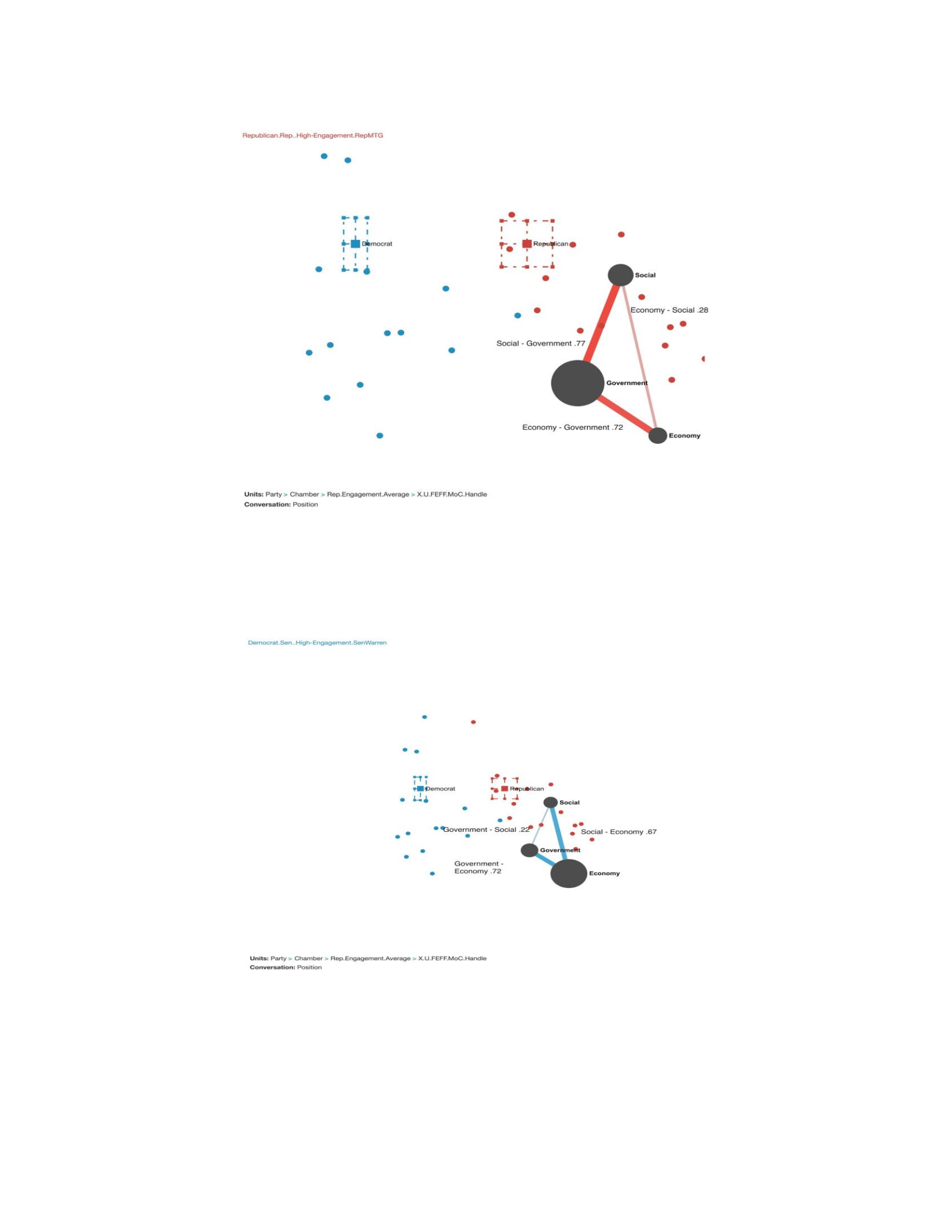
Figure 16
ENA Results for @RepMTG
Figure 17
ENA Results for SenWarren
When comparing Figures 16 and 17, the nodes on each suggest a shift in
concerns for both ideological extremes amongst conservatives and liberals. Typically,
Republicans are viewed as expressing economic concerns and being the party of
business owners and those fiscally concerned; however, the nodes suggest that Rep
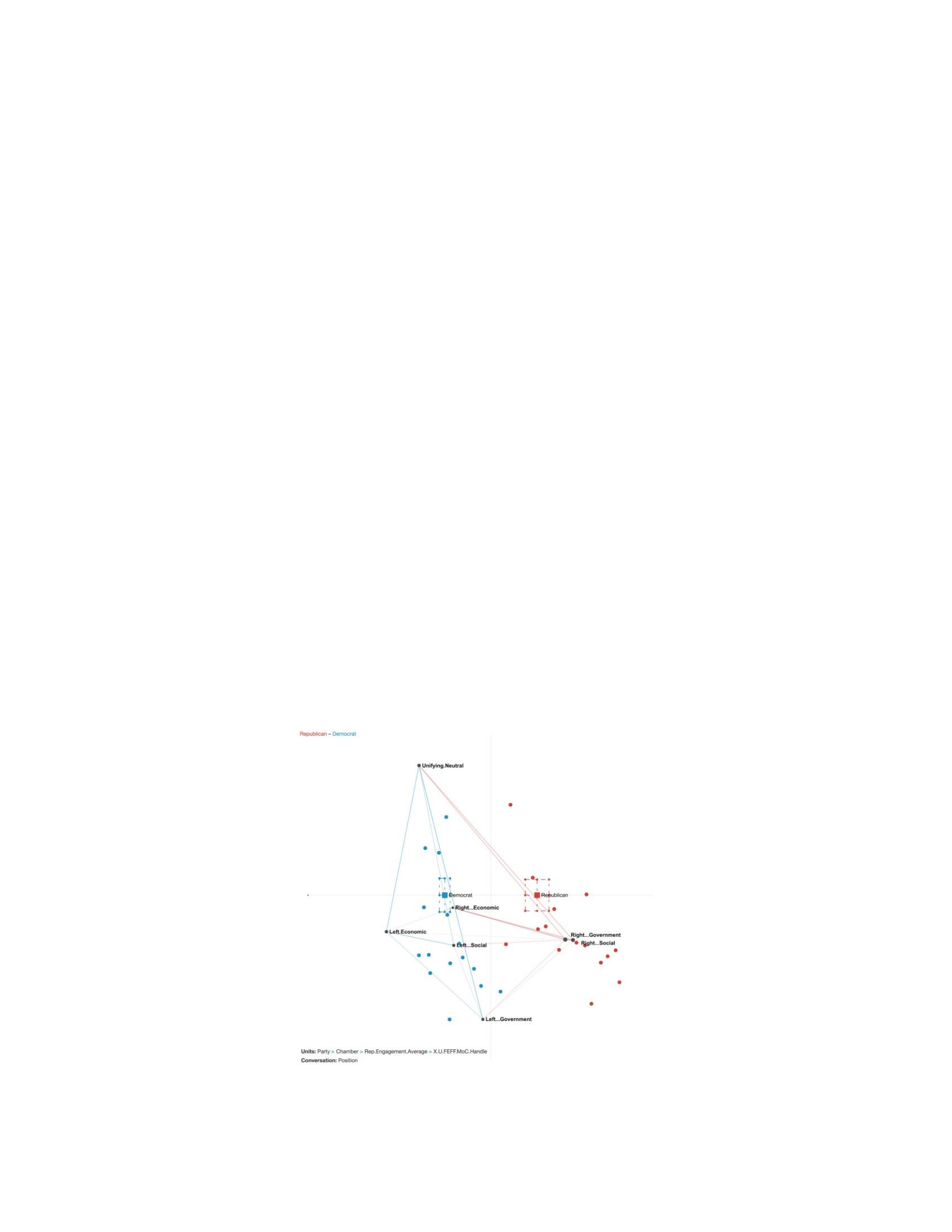
Greene R-GA's primary concern is government overreach and social concerns, versus
Sen. Warren D-MA, who is more focused on Economic issues. Further analysis was
gathered to test whether this was true for all members of Congress from each party; the
findings revealed that Republicans confirmed that there certainly was a shift towards
Government and Social concerns; however, Democrats were significantly more
scattered. Figure 18 looks at the highest engaging MoC studied, and not unlike Rep.
Greene R-GA, the Republican MoC was clustered more significantly around the Social
and Government nodes. The lesser engaged MoC from the Republican party, seen in
Figure 18, is clustered closer to Unifying and Economic, which is in keeping with the
past perceptions of the Republican party (Klein, 2020). Democrats with the highest
engagements (Figure 18) are clustered a bit more scattered, and the thin lines between
the network scores suggest that there is not a high correlation between any of the nodes
and the party average, which was the highest at .21 for Unifying/Neutral and Left
Economic.
Figure 18
Results for Republicans and Democrats
The primary objective of RQ2 was to determine if the Twitter algorithm favored
polarizing tweets. The results seen in Figure 15 provide a solid reason to assume that

polarizing tweets get higher likes and shares. The results of this study suggest that
further research on Twitter algorithms favoring polarizing rhetoric be considered.
Research Question 3: Results and Findings
The final question of the study looks at the potential negatives of polarizing
rhetoric on social media. The question: Were President Donald Trump's
(@realDonaldTrump) and President Jair Bolsonaro of Brazil (@jairbolsonaro) tweets
leading up to the uprising of January 6, 2021, and January 8th, 2023, respectively,
responsible for the unfortunate and subsequent events? The null hypothesis suggests
that Former President Donald Trump's and former Brazilian President Jair Bolsonaro's
tweets did not significantly impact the January 6, 2021, uprising in Washington D.C. or
the January 8, 2023, uprising in Brazil. The hypothesis concludes that using ENA,
former President Donald Trump and former President Jair Bolsonaro tweets used
rhetoric that may have had a significant impact on the events that took place on January
6 and January 8.
The study again uses ENA to compare two separate data sets to determine if in
fact, the former presidents' use of Twitter had a significant impact on the subsequent
insurrections. This study was met with many challenges as Elon Musk eliminated Twitter
API access in late July of 2023 while the study was taking place. This limited the ability
for individuals to retrieve legacy data from Twitter feeds and made it nearly impossible to
extract both quote tweets and comments on tweets. To best answer the question, two
small data sets were used.
The first data set comprised of responses of from both president's twitter
followers. Because there had been many comments in response to the January 6th
uprising made on @realDonaldTrump's account, only 56 quotes from former President
Trump's tweet on December 19th, 2020 were recovered that were prior to the Jan 6
date. From former President Bolsonaro I was able to manually copy 142 tweets prior to

January 8th insurrection in response to his post on October 30th, 2023 (which have
been cited as the tweets having potentially caused each insurrection). These were
manually coded using the codes seen in Table 5 (above) and be imported into the ENA
web tool (Bugs et al., 2023; Harton et al., 2022; Marquart et al., 2021). The model had
co-registration correlations of 0.98 (Pearson) and 0.99 (Spearman) for the first
dimension and co-registration correlations of 0.99 (Pearson) and 0.98 (Spearman) for
the second. These measures indicate that there is a strong goodness of fit between the
visualization and the original model. Five codes were used after ranking the responses
in groups of those affirming the respective president or descending, and then grouped
by their respective quintile-ranked VADER sentiment scores (Hutto, 2023).
The results seen in Figure 19 include the averages for those who responded to
@realDonaldTrump and @jairbolsonaro, who were identified as supporters based on
the rhetoric used in the tweet. For @realDonaldTrump (red) the most substantial
network was between the potential minimal threat and Rigged with a network score of .5
in the line on Figure 19. For @jairbolsonaro (purple), the most substantial network of .42
was between Religion and Actual threats. This is unsurprising as the former President of
Brazil uses religious language frequently in his tweets and rhetoric, invoking biblical
quotes referencing weapons and armor.

Figure 19
ENA Results RQ3 Part 1
The study, however, was less conclusive for showing threats on behalf of Donald
Trump followers, a part of this might be because many of the accounts and hashtags
used at the time invoking violence were banned from Twitter after January 6. What is
interesting is that several media outlets reported that Twitter was ineffective at managing
threats of violence in the January 8 uprising (Dwoskin, 2023; Scott, 2023; Stargardter &
Ayres, n.d.). It was reported by Dwoskin (2023) that several of the previously banned
terms following the January 6 rising in the United States, like “Stop the Steal,” were
being used in Portuguese. Whether Twitter had either failed to remove this ban or
unsuccessfully recognized the tweet due to the language variance was not revealed by
Twitter; however, further studies should take place.
The similarities between January 6 and 8 are unsurprising; however,
understanding the rhetoric leading up to and following by both former Presidents Trump
and Bolsonaro is essential in understanding if polarizing language can instigate riots.
The coding seen in Table 8 was applied to 500 of each president’s Twitter accounts
leading up to the event and two days after using nCoder. The following codes were then
uploaded to the ENA web tool for analysis. The model of the former presidents’ tweets

had co-registration correlations of 1 (Pearson) and 1 (Spearman) for the first dimension
and co-registration correlations of 1 (Pearson) and 1 (Spearman) for the second. These
measures indicate that there is an intense goodness of fit between the visualization and
the original model. The following models seen in Figure 20 were produced using the
ENA webtool coding looking at the average @realDonaldTrump and @jairbolonaro
tweet accounting for the level of engagement (low, median, and high) with a
conversation engaging the sentiment scores using a quintile system (lowest, low,
medium, high, highest) with an infinite stanza. The most substantial network for
@realDonald Trump was between Government Corruption and Rise up/Fight with a
score of .55, while @jairbolsonaro’s most substantial network was narrowly
Economy/Growth and Good vs. Evil with a score of .52, only just above Good vs. Evil
and Rise up/Fight at .51. These networks are engaging, as there is a higher use of
nonpolarizing discussion in @jairbolsonaro’s feed, this is reflective of their average
VADER sentiment scores, @jairbolsonaro averaged .159 while @realDonaldTrump
average just .070.
Figure 20
Results for RQ3 Engagement Considered

What becomes increasingly concerning is how much the levels of polarization
increase among both presidents’ tweets when one examines only the highest levels of
engagement. For @realDonaldTrump, the highest network connection at the highest
engagement was between Government Corruption and Rise up/Fight, with a network
score of 1.00 and a score of .87 between Government Corruption and Good vs. Evil
(seen in Figures 21 and 22). Similarly, @realjairbolsonaro had the most substantial
connection at Good vs. Evil and Rise up/Fight with a score of .94 in Figure 21.
Figure 21
RQ3 Part 2: Highest Engagement @realDonaldTrump

Figure 22
RQ3 Part 2: Highest Engagement @jairBolsonaro
Conclusively it is nearly impossible to say that the rhetoric of both former
President Trump and Jair Bolsonaro led to the subsequent insurrections. However, the
studies reveal that both used highly inflammatory language in their tweets. While neither
directly asked their followers to attack the capitols, they gave what many followers felt
was sufficient validation for attacking the capital. Several insurrections on trial for the
January 6 attack cited the tweets from @realDonaldTrump and comments made by the
former president at his preceding rally for their call to arms (Dreisbach, 2022; Harton et
al., 2022). While these are not enough to preclude guilty verdicts, the Washington D.C.
district attorney has filed four criminal charges against him: “conspiracy to defraud the
U.S., conspiracy to obstruct an official proceeding, obstruction of an official proceeding,
and conspiracy against the rights of the citizen” (Debussman, 2023). Former President
Jair Bolsonaro, on the other hand, was yet to be charged with any crimes in Brazil.

Chapter 5: Implications
Summary of Study and Findings
Determining the best approach for studying polarization can be challenging as
there are many contrarian viewpoints on polarization in the United States. There are
some that believe that America is not polarized, but instead, partisan sorting is causing
the illusion of polarization in America (Fiorina et al., 2008). Regardless of these
contradictory viewpoints, the research concluded in this study showed that polarization
does exist in the context of Members of Congress and their use of Twitter. To more
significant concern, the level of vitriol content being created on social media by the
MoC, or political elite, can be identified as pernicious polarization, which can only lead
to dire consequences, as seen in the January 6 and 8 insurrections (McCoy & Somer,
2019).

This study conjectures that there is an existence of elite polarization that is
evident based on the usage of Twitter by many members of Congress. The study used
data specifically from Twitter because it is utilized by nearly all the Members of
Congress and with nearly 78 million American users (Shepherd, 2023). Creating a study
using Epistemic Network Analysis was designed such that the triggers of polarization
could be identified in the rhetoric of the specified MoC while creating networks between
the types of rhetoric being used (D. W. Shaffer, 2018).
This study chose to look specifically at members of Congress and former
Presidents Bolsonaro and Trump to determine if their influence on social media,
specifically Twitter, was polarizing and, in specific cases instigating insurrections. By
framing the study in three parts, I determined if there was polarizing rhetoric on social
media, how effective polarizing rhetoric was in engaging an audience, and if potentially
harmful rhetoric could be cause for concern.
Research Question 1
RQ1 asked if the MoC studied were using polarizing language on Twitter.
Polarization was defined in two categories Left Polarizing and Right Polarizing. Then a
Neutral/Unifying category was added to catch all non-polarizing tweets. The study
reviewed tweets by coding them with the nCoder machine learning tool and loading the
ENA Webtool after completing the VADER Sentiment analysis (Hutto, 2023; Marquart et
al., 2019, 2021).
The results of the ENA study revealed less significant polarization at the center
but increased polarization at the extremes when comparing DW-NOMINATE scores to
ENA network placement (Lewis et al., 2023; Marquart et al., 2021). This is not out of the
norm as multiple studies have concluded that far right and far left members of
Congress, as well as their constituents, had shown increasingly more protective of their
partisan identity as well as likely to attack their rivals (Bail et al., 2018; Rathje et al.,
2021; Van Bavel et al., 2021).

What was noteworthy, however, was the correlation between the VADER
sentiment analysis and the level of polarization determined by the DW-NOMINATE
(Lewis et al., 2023). Politicians who were scored as having higher levels of polarization
were more likely to use hostile rhetoric. This isn’t unanticipated, but the strong linear
regressions for both Senators (r2=.96) and Representatives of the House (r2=.96)
suggest that VADER sentiment analysis could be a good gauge for monitoring social
media content (Hutto, 2023).
Monitoring and regulating content has proven to be challenging and costly for
social media companies due to the extensiveness of their user base. This theoretically
reveals VADER as an effective tool for monitoring content; ideally, social media
companies take it upon themselves to harness the power of AI to be more proactive in
protecting its users (Hutto, 2023). This was evident in the instance of the January 8
insurrection in Brazil. One journalist concluded that Telegram, Facebook, and Instagram
were all negligent in their recognition of the events as they transpired, even though all
the signs indicating an insurrection were actively being posted (Scott, 2023). It appears
that AI will offer new avenues to look at social media in real-time and provide insights
that might prevent negative actions from occurring.
Research Question 2
RQ2 took it one step further by breaking down the types of rhetoric used to
polarize. The categories selected were social, government (often identified as political,
for this study, it carries the same meaning), and economic. These tend to be the key
concerns when voters make election decisions (Budge et al., 1987). Social concerns for
both parties have been hot tokens as debates over the Supreme Court's recent overturn
of Roe v. Wade have ignited both parties into heated partisan dialogue (Swers, 2023). In
government/political, this code focuses primarily on attacks on the other side, generally
when searching through all the Tweets studied, it was more likely for Democratic

Members of Congress to mention Trump negatively and Republicans to mention Biden
negatively than it was for either party to congratulate/or praise their respective
President. The last coded category was economic; for Republicans, this was generally
targeted at "Bidenomics" and blaming President Joseph R. Biden for the inflation.
Democrats, on the other hand, were expressing their economic woes over acrimonious
tweets about the Supreme Court's rejection of Biden's student debt relief and
Republicans' lagging in working with Biden.
The categorical breakdown of types of polarizing rhetoric seen on Twitter further
provided the additional insights needed to show how political elites leverage affective
and pernicious tweets. The ENA web tool study revealed that Twitter was amplifying the
voices of the most vitriolic and hostile tweets and rewarding them. The study showed
that the most polarizing members of both parties saw much higher engagement than
those who were ideologically centrist. This is a piece of familiar information, as Rathje et
al. (2021) uncovered this in their respective study; however, what RQ2 reveals is that
politicians are leveraging consistent underlying themes to gain further momentum on
social platforms while using hostile rhetoric. Figure 23 breakdown the highest engaging
members of Congress in the study; the anticipated members like RepMTG (Rep Greene
R-GA) and RepAndyBiggsAZ are seen at the far bottom right, indicating high
polarization. However, the distribution for Democrats is not as predictable individually.
Figure 24 shows the lowest engaging MoC on Twitter and most of them are in the center
upper quadrants signifying more unifying and less polarization. The stark differences
between Figures 23 and 24 show how polarizing rhetoric is more powerful in terms of
distribution and engagement on Twitter.
Senator John Ossoff, D-GA, a Junior Senator, was categorized as a Far
Democrat because his DW-NOMINTE score was one of the ten lowest at -.454.

However, he frequently works with Republican Senators (Lewis et al., 2023). Sen.
Offsoff, who defeated a Republican incumbent in the 2020 elections, narrowly won in a
runoff. Author and Journalist Ezra Klein describes this high level of polarization driving
this competitiveness in politics (Klein, 2020, p. 250).
Figure 23
Highest Engaged Sen. & Reps.
Figure 24
Lowest Engaging Members of Congress

Former President Donald Trump in 2016 had successfully dismantled traditional
strategy by becoming a significant outsider with highly charged political views.
Democrats, on the other hand, have typically stepped away from propelling outsiders,
and much of this is because there is less amount of deviation in the party (Noel, 2016).
Comparing DW-NOMINATE scores, the median for the Republican party is .51 while the
Democrats are much closer to the center at -.37 (Lewis et al., 2023). The Republican
party is generally more divided than the Democratic party, and as a result, there are
certainly higher instances of polarization; this is both evident in voting behavior and the
rhetoric seen on Twitter. The results of this fractioning have seen an increase in new rifts
forming in the Republican Party. First, it was the Tea Party, and now it is the
Freedom Caucus (Noel, 2016). The Freedom Caucus has been relatively unsuccessful
in security a majority, they have added incredible challenges for Speaker of the House
Kevin McCarthy, but overall, they cannot gain leadership at the Presidential level or
even the highest party seats (Baer, 2023; Noel, 2016).
While the Freedom Caucasus has been less successful in the elections, RQ2
reveals its success on Twitter, so much so that a shift in Republican ideology seems to
be occurring on Twitter. House Freedom Caucasus Members, who have attached
themselves to the former President Trump, leveraged much of the xenophobic rhetoric
espoused by Trump. With the ENA web tool, an additional study using the RQ2 data set
with just the Highest Engaged Republicans and the polarizing codes identified for
conservatives/right in Figure 25 (Marquart et al., 2021). The results revealed that
Government and Social concerns were the highest tweeted among highly engaged
Republicans, with a network score of .72.

Figure 25
Republican High Engagement
Social concerns seen in the codes for Republicans on Table 3 that had high
occurrence were "Southern Border," "Child sex trafficking," "Protect Children's
innocence," and "religious liberty." Child sex trafficking has been a remarkably dividing
term as followers of the QAnon conspiracy have leveraged this narrative as an attack on
the Democratic elite (Bleakley, 2023). While it is disheartening the rhetoric being spread
by MoC on the right, it is no surprise. One study suggests that QAnon has leveraged
hashtags like "Pizzagate," a QAnon theory of child sex abuse among the liberal elite, as
a weapon to band extremists together, forming paramilitary groups like the Proud Boys
and One Percenters (Bleakley, 2023).
General societal normative beliefs about the Republican Party suggest a party
focused on less government and more economic relief (Brandt & Spälti, 2018;
Levendusky, 2009). The focus on social issues and government regulation of these
issues reflect much of the conservative ideological narratives of the Trump Republicans'
focus on their elite has shifted (Klein, 2020; Levendusky, 2009). Results like this
perhaps explain why Representative Margorie Taylor Greene, R-GA, would actively use

the term Christian as her first descriptor under her name on her Twitter profile. Viewers
of her profile will attach that descriptor to her political identity. Members of Congress are
leveraging the Christian identity to further the us vs. them narratives; much of this can
be attributed to the birtherism movement created by Trump, who frequently referred to
Former President Obama as a Muslim (Klein, 2020). This pernicious polarization creates
the strong party loyalty witnessed among Republicans with Donald Trump at the helm
(Barber & Pope, 2019). Partisan identity is no longer just political as it is becoming a
personal identity, especially for those at the extremes of each party (Iyengar &
Westwood, 2015).
Before social media, the ability to openly state one's religious identity and attach
it to their political identity required specific channels and airtime from media sources. In
the modern world, Twitter has given platforms to Members of Congress who might not
have had similar opportunities to be seen nationally. Rep Greene's highly charged
rhetoric is easily engageable and enforceable due to social media's ability to allow
followers to engage and share (Grover et al., 2019). This clustering of individuals
created by social media is mainly responsible for the appearance of more echo
chambers online (Cinelli et al., 2021).

Figure 26
Democrat High Engagement
Figure 26 reveals how the perceived norms for Democratic elite, have slightly
change and shifted. The Democratic Members of Congress among the highest engaged
posts on Twitter, were focused on Economic and Government concerns with a network
score of .55 but this is only slight above Government and Social at .52 (See Figure 26).
This shift towards economics isn’t surprising as the narrative often repeated by Senator
Warren D-MA and Sanders I-VT is over student debt relief. One study found that MoC
who supported President Biden’s Student debt relief plan saw a political benefit and a
boost in their potential votes (SoRelle & Laws, 2023). SoRelle & Laws’ (2023) survey
showed that nearly 72% of respondents supported student debt relief plan, this included
33% who identified as Republican. The study suggest that failed “red wave” in the 2022
midterms indicated significant student voter turnout who supported the student debt
relief plan (SoRelle & Laws, 2023).
Research Question 3
For RQ3, the ENA web tool was again used, to evaluate not only former
President Trump and Bolsonaro, but also to examine the rhetoric espoused by their
followers (Marquart et al., 2021). By adding responses to the former presidents’ tweets

insights into the engagement and actions of their followers was added validation of the
perceived threat of violence made. For example, @realDonaldTrump tweeted “we’ll be
wild” these famous three words taken in the context of many meant to be there for
Donald Trump on January 6th, and help prevent the confirmation of the votes for
President Biden (Harton et al., 2022; Trump, 2020).
Additional studies have established that polarization wasn’t always occurring at
the social level, but predominantly in partisan identity politics manifested by the political
elite (Mason, 2015, 2016; J. L. McCoy & Somer, 2021). Mason (2015) suggest that
American’s are more attached to their political identity than ever and that even though
politically that nation is aligned, that identity politics are driving this animosity. The study
aimed to show how politically charged rhetoric demonstrating identity politics are
frequently leveraged by Members of Congress and other influential individuals on social
media. These narratives have had significant consequences and can be linked to events
like January 6 and January 8 (Bugs et al., 2023; Harton et al., 2022). There are several
other objective reports and academic studies pointing to social media’s influence over
coups, insurrections, and uprisings there are going to be more should these polarizing
individuals continue to produce content freely (Bugs et al., 2023;
Dwoskin, 2023; Ribeiro et al., 2017; Scott, 2023; Tønnesson et al., 2022).
The top-down theories of polarization have been linked to several studies
mentioned in this paper (Banda & Cluverius, 2018; J. L. McCoy & Somer, 2021). The
results of RQ2 and RQ3 provide sufficient evidence to display that there is
unquestionably a strong correlation between user engagement on Twitter with elite
polarizing rhetoric. RQ2 indicated that when politicians use inflammatory and polarizing
rhetoric, their engagement increased considerably. The least engaged members of
Congress were those who were closest to the center ideologically and used neutral and
unifying terms like “bipartisan” or “come together”.

Part of this can be identified as the user being inclined to participate in the
acrimonious dialogue. The MAD model presented by Brady et al. (2022) reveals the
propensity of human nature on social media to engage with content that is more likely to
instigate than to bring together. However, it is now considered to be common knowledge
among these social media giants how powerful the influence of conflict is on social
media (Rathje et al., 2021). The question that remains to be answers is: who is to blame
for the algorithm ranking polarizing content higher, is it the politician who takes the bait
and continues to feed the system or the creator of the system?
The findings from RQ3 revealed that there is cause to believe that the actions
taken on social media by former President Trump and former President Bolsonaro had
inspired insurrections in both Washington D.C in various ways. While Twitter provided a
tool for the rapid dissemination of information, it also became a rallying tool for
supporting Bolsonaro and Trump. Groups of insurrectionist were able to mobilize rapidly
by using hashtags and sharing the leaders tweets to band together and ultimately lead
insurrections (Dwoskin, 2023; Harton et al., 2022). Now deciding whether Bolsonaro,
Trump, or Twitter should be liable to the following actions is arguably a moot point since
the decision was made on an individual level by each insurrectionist. This does present
a new moral quandary however, one does pass a certain form of responsibility to both
the influencer and the one providing the platform, in this case Bolsonaro, Trump, and
Twitter.
Political leaders, especially MoC and former Presidents, have responsibility to
maintain and protect democratic values in order for healthy democracies to survive.
McCoy et al. (2018) demonstrate how Trump’s anti-establishment rhetoric help lead his
way to victory in the 2016 election. Trump’s narrative of being a victim of oppression
from the establishment resonates with his followers. They are exhausted by the
“establishment” and the messages of distrust of the government that Trump voices is

codified in their belief that they are being manipulated (J. L. McCoy & Somer, 2021).
Trump has so successfully designed his narrative around distrusting the government,
that even with four criminal trials facing him in the advent of the 2024 election, his poll
numbers far outpace his fellow Republican candidates (Best et al., 2023).
Implications for Practice and Scholarship
Even though academic Twitter API access has been revoked, it is still going to be
imperative for research on tweets to be conducted. This study revealed multiple
instances of polarization being amplified by Twitter. The results of such amplification
could be attributed to violent uprisings around the world (Bugs et al., 2023; Harton et al.,
2022; Tønnesson et al., 2022). The issue of polarization seems mute when looking at
the level of harm encountered from events triggered by social media; it creates the
necessity for academics, businesses, as well as politicians to take note and begin to
work together to formulate policies and strategies to mitigate any potential future
violence. Understanding polarization and how it affects being influenced is essential.
However, there is an immediate need to monitor and protect individuals from future
harm regardless of the perceived definition of the rhetoric being used by the political
elite.
Study Limitations
When this study began, Twitter had open API access to their platform; sadly, in
May of 2023, Elon Musk removed this access, forcing academics to either pay an
exorbitant fee for legacy data collection or use scraping tools like TwExportly (Calma,
2023; TWExportly, 2023; Twitter, 2023a). While a great tool, TwExportly (2023) can only
extract tweets by username and cannot extract comments on specific tweets. This
limited the study to reviewing tweets of specific accounts instead of the entire House of
Representatives and Senate. Additionally, retrieving legacy comments from the former
president’s account @realDonaldTrump was challenging because Elon Musk’s policies

removed the ability for Twitter accounts to see more than a certain number of tweets a
day (Calma, 2023). This way, when retrieving comments for @realDonaldTrump’s “will
be wild,” I could only retrieve 56 comments written before the January 6 uprising
(Trump, 2020). Comments made after January 6 on that post would not provide insight
into the question being asked in the study.
Another limitation is the assumption that the tweets are the true intention of the
Members of Congress or the former Presidents. Rouge aids, or even misinterpretations
of the tweets, happen regularly on social media. The speed at which people can post
and share on social media often means unintended posts can become viral and taken
out of context before an individual can remove the tweet. Politicians are held to a higher
standard and must exercise caution when using social media. Former President Donald
Trump may not intend to instigate the insurrection in the capitol on January 6; however,
as a leader with a highly influential voice, he is entirely responsible for anything he
tweets or says.
Defining the origin of the polarization seen on Twitter was one of the aims of this
study, and while the study provides some vital insights, there is still much-needed
research. There is a myriad of other social platforms that have gained significant
momentum. One journalist attributed Telegram to the January 8 uprising in Brazil. In the
United States, the use of the platform Parler had potentially a significant impact on the
events that took place on January 6 (Dwoskin, 2023, 2023; Harton et al., 2022). While
potentially less significant and widespread than Twitter, Truth Social, Gettr, Telegram,
and many more might be more important to monitor as they tend to cater to fringe
groups with potentially more polarizing and hostile views (Fischer, 2022).
Short-form video is the new format that has taken social media by storm as the
platform TikTok has rocketed toward controversial success. A study on adolescent
TikTok users in China found that TikTok is addictive and highly influential (Qin et al.,

2022). One positive found that it was an effective and rapid way of informing the youth.
However, this could have negative consequences (Qin et al., 2022). This study was
limited to text-based resources for monitoring and evaluating polarization online; future
studies should consider examining narrative dialogue in the short form video social
platforms for issues surrounding polarization.
Recommendations for Practice and Future Research
While this study is a comprehensive review of how Members of Congress and
former leaders are becoming more polarized in their use of Twitter, the study opens
further research into the specifics of the types of polarization. Pernicious polarization is
the driving force behind the elite polarization. Members of Congress and former
politicians turn to their social media feeds to espouse vitriol dialogue attacking the other
side. The study gave insight into Twitter's algorithm's favoritism towards sharing the
polarized dialogues mentioned in the coding sets of RQ1, RQ2, and RQ3 and showed
how these tweets gained higher views, likes, and shares. However, the study fails to
determine if these individuals are the compelling force behind this phenomenon. The
MAD model introduces the concept of moral contagion in social media being driven by
group identity and social reinforcement. However, additional research is needed to gain
further insight into the external consequences of these types of interactions (Brady et
al., 2022).
RQ3 does provide some foundation for linking former President Trump and
former President Bolsonaro's social media accounts; however, much more needs to be
studied in this space as humans are getting more and more of their information from
social media. The American Academy of Pediatrics contained a study that revealed that
children following specific social media influencers were more likely to change their diets
based on influencers' actions (Coates et al., 2019). There is undoubtedly a need for
greater insight into this as information on social media is so quickly spread and shared

that disinformation has in the past and will continue to elicit serious harm and, in some
cases, death (Tønnesson et al., 2022).
I believe that social media companies, specifically Twitter and Facebook, need to
continue to their use of flagging content, however, rather than shadow banning it,
provide an explanation for why content is being flagged. This would help restore trust in
the context of platforms and help users understand potential bias. For example, the
World Health Organization (WHO) recommends that Twitter, Facebook, and other social
media companies limit certain information regarding COVID-19 on social media
(Cosentino, 2023, pp. 21-22). Some of the information recommended to be blocked by
the WHO was specifically linking Wuhan to the virus for fear of reprisal against Asian
communities around the world (Cosentino, 2023, p. 22). After nearly three years of
social media companies blocking information regarding the potential lab leak at the
Wuhan Institute, a Senate hearing on March 3rd, 2023, revealed that the lab leak was in
fact a potential cause for the COVID-19 epidemic (Committee on Oversight and
Accountability, 2023).
As mentioned in the limitation, further research into the new social media
platforms like Telegram, Truth Social, and Gettr should be done to understand how
these new platforms might create or inhibit pernicious polarization. The study is also
limited to the United States and briefly looks at Brazil and former President Jair
Bolsonaro's failed attempt at reelection. Populist leaders have run successful
campaigns around the world and have leveraged social media to their advantage.
Understanding what about social media is attractive to the populist follower is highly
important. While many might assume it is echo chambers that power the campaign of
former President Donald Trump, the reality is it his ability to operate outside of that
vacuum and create a co-evolved media strategy has enabled him to defy conventional
political strategies (Postill, 2018). Hitler and the Nazi party were able to defy the

establishment's role in what was traditional media at the time by leveraging radio
broadcasts in the 1930s and gaining tremendous power through a newly invented media
format (Adena et al., 2015).
Closing Comments
While many are turning to the government for regulation of social media
companies, the challenges are massive as government regulation moves at a much
slower pace than technology. For example, it took the world wide web seven years to
reach 100 million users, TikTok nine months, ChatGPT two months, and Threads hit this
milestone in just five days (granted it leveraged ownership of the existing platform
Instagram to migrate its followers; Rao, 2023). If platforms like Instagram (owned by
Meta) start getting regulated, the laws applying to them could influence their decision to
spin off new apps that might be immune from the legislation. Meta's creation of Threads
was a response to the growing frustrations of Twitter users, as Elon Musk's takeover
has brought some drastic unfavorable changes (Conger & Frenkle, 2022; Rao, 2023).
This brings a challenge for both regulators and business owners when deciding who is
responsible for managing content created on social media. The answer is still unclear;
as mentioned earlier, Section 230 has provided many companies with significant leeway
regarding the content created and posted on their respective platforms (Cramer, 2020,
p. 230; D.O.J., n.d.). This needs to change as there clearly is an influence created by
the platform’s use of their proprietary algorithms as certain content, is given favoritism,
as noted by the results of RQ2: Figure 15.
Former President Donald Trump, in a social media post, had called out Congress
for their inability to make significant changes to Section 230 and even signed an
executive order in the past to try and block it (which failed in court) (Siripurapu, 2020).
Politicians in Utah and Arkansas have passed regulations in their own state legislatures
targeted at social media with the intention of protecting children. However, some believe

the law's creators intended to harm young adolescents by forcing them to share their
private profiles with their parents (Murphy, 2023). Additionally, there are cases in Texas
and Florida heading toward the Supreme Court that are suing Meta (Facebook), Twitter,
and Alphabet (Google) for blocking first amendment rights (Chung, 2023). These
lawsuits are controversial as they target social companies for blocking information being
shared on the platforms. The COVID-19 Epidemic put more pressure on social media
companies to be monitoring their content than ever before for fear of misinformation
being tied back to their platform (Gisondi et al., 2022). This pressure revealed the
weakness of social platforms and uncovered their inability to protect their users from
misinformation (Gisondi et al., 2022). Reiterating the Simon et al. (2020) study revealed
that while only 20% of the misinformation regarding COVID-19 was created by top-down
misinformation (politicians, celebrities, and public figures), it accounts for 69% of the
total social engagement. This study reveals that, like COVID-19, the most inflammatory
and polarizing politicians are typically the most shared on Twitter. The problem is that
these politicians rarely offer solutions that provide sustainable options for societies in
general.
As of August 29th, 2023, US Special Operations and Command (USSOCCOM)
entered an agreement with AI technology company Accrete to use their software
ArgusTM to work on detecting disinformation in real time (Accrete, Inc., 2023). The
intention of USSCOM use of ArgusTM is to protect the American public from
disinformation campaigns from foreign actors, however, some speculate that this might
be more problematic as there is a potential for misuse and increase censoring limiting
free speech (US Special Operations Command Will Deploy., 2023). I believe while AI
should be used for monitoring and detecting mis/disinformation it ultimately should
provide an interstitial, or warning that the content is potentially false and provide
reasonings for the platform’s decision to create the warning. This way free speech is

protected, and consumer trust can be reestablished in the long term with social media
platforms.
The biggest problem America and the world are facing today is that elite
polarization (specifically when it is pernicious) is creating pressure for partisan identity
that extends beyond political life and into personal life (Barber & Pope, 2019; Klein,
2020; J. L. McCoy & Somer, 2021; Noel, 2016). When I was a child, I was told that it
was rude to ask someone you voted for; society generally regarded this as private
information. Apart from that might have been my upper-middle-class upbringing in an
outwardly liberal community but secretly highly conservative fiscally. The conventions of
keeping personal voting behavior private changed after the 2000 elections when Bush
defeated Al Gore. What was surprising was that while Gore won the popular vote, he did
it with less than 700 counties; Hillary Clinton in 2016 won the popular vote but lost the
electoral college with less than 500 counties (more than 1000 counties less than Bill
Clinton had won with few votes in 1990; Klein, 2020, p. 66).
The urban-rural divide narrative has long since been a part of party politics and is
extending into daily life more and more as social media has empowered individuals to
connect in echo chambers (Sasahara et al., 2021). While social media has the ability to
connect users from across the globe, the tendency of users, albeit a function of human
nature as well as the respective platform, is one where the user engages in homophily
and strengthens personal confirmation bias (Sasahara et al., 2021). This trend toward
homophily and echo chambers is a result of human nature as well as the idea of political
acrophily, the tendency of individuals to associate with others who also share extreme
political views (Goldenberg et al., 2023). This acrophily, as described by Goldenberg et
al. (2023), drives the partisan sorting that is dividing Americans. The famous Pauline
Kael's quote about not knowing anyone who voted for Nixon is most likely the case for
people who voted for opponents of other highly liberal or conservative candidates
(Brandt & Spälti, 2018). Brown & Enos (2021) study revealed that partisan isolation is

distinct from even racial and ethnic segregation and extends across all of the United
States. This separation creates and enables the acrophily encountered in the. Twitter
feeds I studied extend into the media (Goldenberg et al., 2023).
How did Americans and possibly the world i.e. Hungry, Turkey, Brazil, and
Venezuela become so acrimonious and unharmonized (McCoy et al., 2021)? Social
media has provided a platform for both hate and love, and sadly these platforms make
more money over acrimonious dialogue than shared pictures of grandchildren (Rathje et
al., 2021; Riemer & Peter, 2021). Riemer & Peter (2021) define algorithmic audiencing
as a tool created by social platforms to generate feeds that produce profits over free
speech. Part of this audiencing can be attributed to the acrophily witnessed in Brazil and
the United States. If the least shared members of Congress had the same views as
@realDonaldTrump, would January 6 have occurred? There is no way to answer this
with certainty, as some believe that cross-party exposure increases polarization (Bail et
al., 2018).
The ultimate problem this dissertation seeks to address is preventing pernicious
social media rhetoric from turning into violent uprisings. Many parties share
responsibility regarding what happened on January 6 and January 8. Political elites,
Members of Congress, politicians, and world leaders can influence and espouse rhetoric
on social platforms to a like that has never been seen before in history. The speed and
virality at which one can disseminate messages to the world becomes greater daily.
Fixing this problem requires many different parties to work together to provide a solution
that prevents further harm to individuals.
I argue that all parties involved have a responsibility to preserve democracy and
reduce hard. Platforms like Twitter, Facebook, TikTok, and many others are going to be
tasked with even more significant challenges of monitoring content as AI has given rise
to the deep fake. This technology is particularly worrisome as individuals will have

difficulty discerning between reality and fiction. Political leaders, politicians, and
influencers are also responsible for maintaining a moral high ground. Their ability to
transform their followers into insurrectionists is concerning. In the end, however, it is the
responsibility of the individual to learn and be mindful of the ideological minefield the
world has become. Individuals like Alex Jones create and reiterate narratives like lizard
people to purposely dehumanize his opponents (Van den Bulck & Hyzen, 2020). This
dehumanization is dangerous as individuals believe that compromise is impossible. The

