


Drugs Targeting Other Microorganisms
An important quality for an antimicrobial drug is selective toxicity, meaning that it selectively
kills or inhibits the growth of microbial targets while causing minimal or no harm to the host.
Most antimicrobial drugs currently in clinical use are antibacterial because the prokaryotic cell
provides a greater variety of unique targets for selective toxicity, in comparison to fungi,
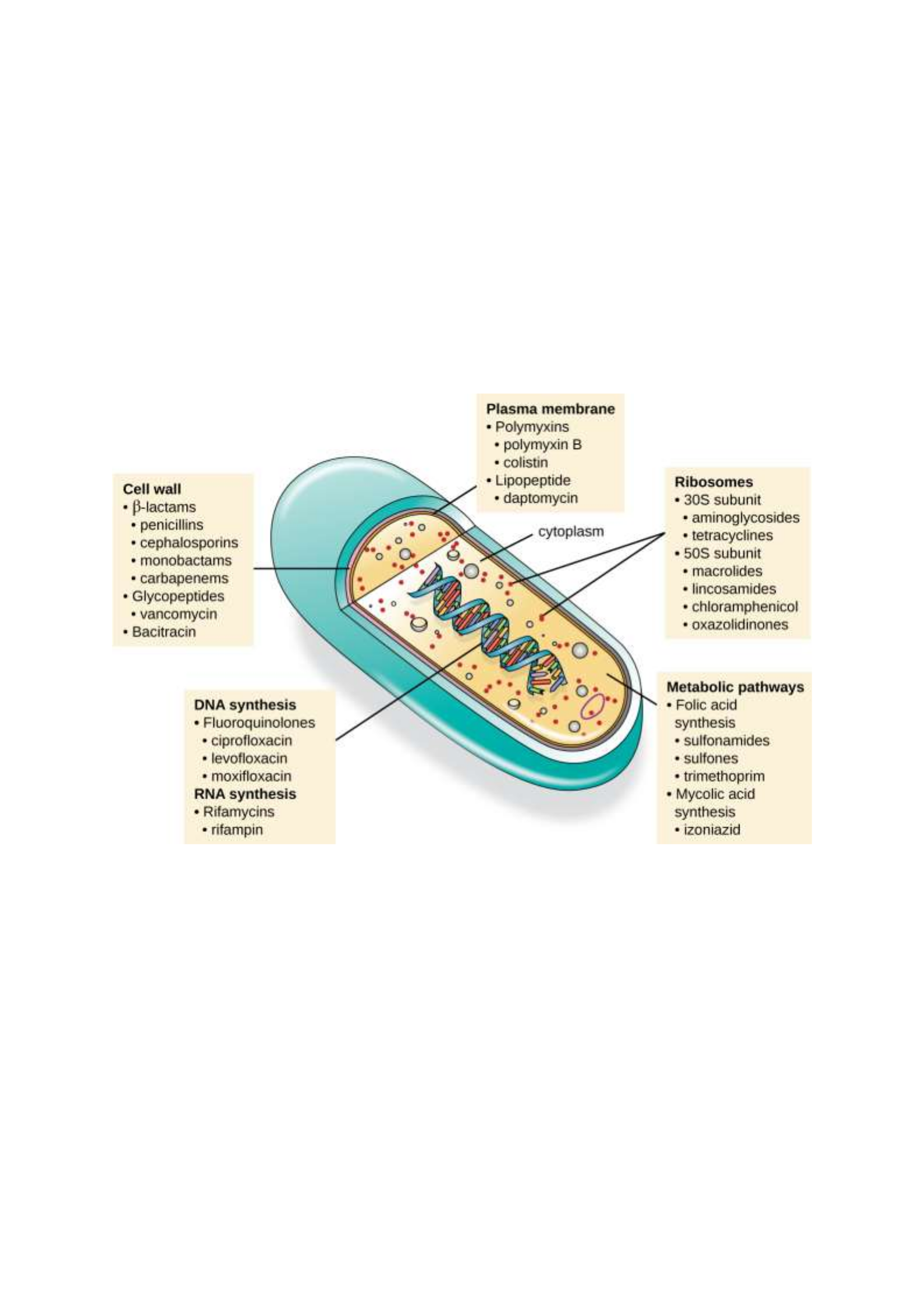
parasites, and viruses. Each class of antibacterial drugs has a unique mode of action (the way
in which a drug affects microbes at the cellular level), and these are summarized in
Figure 14.3.114.3.1 and Table 14.3.114.3.1.
Figure 14.3.114.3.1: There are several classes of antibacterial compounds that are typically
classified based on their bacterial target.
Inhibitors of Cell Wall Biosynthesis
Several different classes of antibacterials block steps in the biosynthesis of peptidoglycan,
making cells more susceptible to osmotic lysis (Table 14.3.2
). Therefore, antibacterials that target cell wall biosynthesis are bactericidal in their action.
Because human cells do not make peptidoglycan, this mode of action is an excellent example
of selective toxicity.

Penicillin, the first antibiotic discovered, is one of several antibacterials within a class called
β-lactams. This group of compounds includes the penicillins, cephalosporins, monobactams,
and carbapenems, and is characterized by the presence of a β-lactam ring found within the
central structure of the drug molecule (Figure 14.3.2
). The β-lactam antibacterials block the crosslinking of peptide chains during the biosynthesis
of new peptidoglycan in the bacterial cell wall. They are able to block this process because the
β-lactam structure is similar to the structure of the peptidoglycan subunit component that is
recognized by the crosslinking transpeptidase enzyme, also known as a penicillin-binding
protein (PBP). Although the β-lactam ring must remain unchanged for these drugs to retain
their antibacterial activity, strategic chemical changes to the R groups have allowed for
development of a wide variety of semisynthetic β-lactam drugs with increased potency,
expanded spectrum of activity, and longer half-lives for better dosing, among other
characteristics.
Penicillin G and penicillin V are natural antibiotics from fungi and are primarily active against
gram-positive bacterial pathogens, and a few gram-negative bacterial pathogens such as
Pasteurella multocida. Figure 14.3.2
summarizes the semisynthetic development of some of the penicillins. Adding an amino group
(-NH2) to penicillin G created the aminopenicillins (i.e., ampicillin and amoxicillin) that have
increased spectrum of activity against more gram-negative pathogens. Furthermore, the
addition of a hydroxyl group (-OH) to amoxicillin increased acid stability, which allows for
improved oral absorption. Methicillin is a semisynthetic penicillin that was developed to
address the spread of enzymes (penicillinases) that were inactivating the other penicillins.
Changing the R group of penicillin G to the more bulky dimethoxyphenyl group provided
protection of the β-lactam ring from enzymatic destruction by penicillinases, giving us the first
penicillinase-resistant penicillin.
Similar to the penicillins, cephalosporins contain a β-lactam ring (Figure 14.3.2
) and block the transpeptidase activity of penicillin-binding proteins. However, the β-lactam
ring of cephalosporins is fused to a six-member ring, rather than the five-member ring found
in penicillins. This chemical difference provides cephalosporins with an increased resistance
to enzymatic inactivation by β-lactamases. The drug cephalosporin C was originally isolated
from the fungus Cephalosporium acremonium in the 1950s and has a similar spectrum of
activity to that of penicillin against gram-positive bacteria but is active against more gram-

negative bacteria than penicillin. Another important structural difference is that cephalosporin
C possesses two R groups, compared with just one R group for penicillin, and this provides for
greater diversity in chemical alterations and development of semisynthetic cephalosporins. The
family of semisynthetic cephalosporins is much larger than the penicillins, and these drugs
have been classified into generations based primarily on their spectrum of activity, increasing
in spectrum from the narrow-spectrum, first-generation cephalosporins to the broad-spectrum,
fourth-generation cephalosporins. A new fifth-generation cephalosporin has been developed
that is active against methicillin-resistant Staphylococcus aureus (MRSA).
The carbapenems and monobactams also have a β-lactam ring as part of their core structure,
and they inhibit the transpeptidase activity of penicillin-binding proteins. The only
monobactam used clinically is aztreonam. It is a narrow-spectrum antibacterial with activity
only against gram-negative bacteria. In contrast, the carbapenem family includes a variety of
semisynthetic drugs (imipenem, meropenem, and doripenem) that provide very broad-
spectrum activity against gram-positive and gram-negative bacterial pathogens.
The drug vancomycin, a member of a class of compounds called the glycopeptides, was
discovered in the 1950s as a natural antibiotic from the actinomycete Amycolatopsis orientalis.
Similar to the β-lactams, vancomycin inhibits cell wall biosynthesis and is bactericidal.
However, in contrast to the β-lactams, the structure of vancomycin is not similar to that of cell-
wall peptidoglycan subunits and does not directly inactivate penicillin-binding proteins. Rather,
vancomycin is a very large, complex molecule that binds to the end of the peptide chain of cell
wall precursors, creating a structural blockage that prevents the cell wall subunits from being
incorporated into the growing N-acetylglucosamine and N-acetylmuramic acid (NAM-NAG)
backbone of the peptidoglycan structure (transglycosylation). Vancomycin also structurally
blocks transpeptidation. Vancomycin is bactericidal against gram-positive bacterial pathogens,
but it is not active against gram-negative bacteria because of its inability to penetrate the
protective outer membrane.
The drug bacitracin consists of a group of structurally similar peptide antibiotics originally
isolated from Bacillus subtilis. Bacitracin blocks the activity of a specific cell-membrane

molecule that is responsible for the movement of peptidoglycan precursors from the cytoplasm
to the exterior of the cell, ultimately preventing their incorporation into the cell wall. Bacitracin
is effective against a wide range of bacteria, including gram-positive organisms found on the
skin, such as Staphylococcus and Streptococcus. Although it may be administered orally or
intramuscularly in some circumstances, bacitracin has been shown to be nephrotoxic
(damaging to the kidneys). Therefore, it is more commonly combined with neomycin and
polymyxin in topical ointments such as Neosporin.
The top of the image shows diagrams of various antibiotics. All have a beta-lactam ring wich
is a square made of 3 carbons and a nitrogen; one of the carbons has a double bonded O. The
antibiotics shown are penicillin, cephalosporin, monobactam and carbapenem Below is a table
with the rows: R group, Drug name, specrum of activity and route of administration. Penicillin
G has an R group of a carbon linked to a 6 carbon ring; it is active on G+ and a few G- cells,
and has a parenteral route of administration. Penicillin V has an R group of a carbon linked t
an oxygen linked to a carbon ring. IT affects G+ and a few G- and is administered orally.
Ampicillin has an R group of a Carbon attached to both an amine group and a carbon ring. It
is affective agains G+ and more G- than penicillin. It is administered orally and parenterally.
Amoxicillin has an R group similar to ampicillin but the carbon rign has an additional OH. It
has similar activity to ampicillin and is administerd orally (better than ampicillin). Methiciliin
has an R group of a carbon right with 2 CH3O attached to the ring. IT is affective against G+
only, including B-lactam producers. It is administered parenterally.
Figure 14.3.2
: Penicillins, cephalosporins, monobactams, and carbapenems all contain a β-lactam ring, the
site of attack by inactivating β-lactamase enzymes. Although they all share the same nucleus,
various penicillins differ from each other in the structure of their R groups. Chemical changes
to the R groups provided increased spectrum of activity, acid stability, and resistance to β-
lactamase degradation.
Inhibitors of Protein
Biosynthesis
The cytoplasmic ribosomes found in animal cells (80S) are structurally distinct from those
found in bacterial cells (70S), making protein biosynthesis a good selective target for

antibacterial drugs. Several types of protein biosynthesis inhibitors are discussed in this section
and are summarized in Figure 14.3.314.3.3.
Protein Synthesis Inhibitors That Bind the 30S Subunit
Aminoglycosides are large, highly polar antibacterial drugs that bind to the 30S subunit of
bacterial ribosomes, impairing the proofreading ability of the ribosomal complex. This
impairment causes mismatches between codons and anticodons, resulting in the production of
proteins with incorrect amino acids and shortened proteins that insert into the cytoplasmic
membrane. Disruption of the cytoplasmic membrane by the faulty proteins kills the bacterial
cells. The aminoglycosides, which include drugs such as streptomycin, gentamicin, neomycin,
and kanamycin, are potent broad-spectrum antibacterials. However, aminoglycosides have
been shown to be nephrotoxic (damaging to kidney), neurotoxic (damaging to the nervous
system), and ototoxic (damaging to the ear).Another class of antibacterial compounds that bind
to the 30S subunit is the tetracyclines. In contrast to aminoglycosides, these drugs
are bacteriostatic and inhibit protein synthesis by blocking the association of tRNAs with
the ribosome during translation. Naturally occurring tetracyclines produced by various strains
of Streptomyces were first discovered in the 1940s, and several semisynthetic tetracyclines,
including doxycycline and tigecycline have also been produced. Although the tetracyclines are
broad spectrum in their coverage of bacterial pathogens, side effects that can limit their use
include phototoxicity, permanent discoloration of developing teeth, and liver toxicity with high
doses or in patients with kidney impairment.
Protein Synthesis Inhibitors That Bind the 50S Subunit
There are several classes of antibacterial drugs that work through binding to the 50S subunit of
bacterial ribosomes. The macrolide antibacterial drugs have a large, complex ring structure and
are part of a larger class of naturally produced secondary metabolites called polyketides,
complex compounds produced in a stepwise fashion through the repeated addition of two-
carbon units by a mechanism similar to that used for
fatty acid synthesis. Macrolides are broad-spectrum, bacteriostatic drugs that block elongation
of proteins by inhibiting peptide bond formation between specific combinations of amino
acids. The first macrolide was erythromycin It was isolated in 1952 from Streptomyces
erythreus and prevents translocation. Semisynthetic macrolides include azithromycin and
telithromycin. Compared with erythromycin , azithromycin

has a broader spectrum of activity, fewer side effects, and a significantly longer half-life (1.5
hours for erythromycin versus 68 hours for azithromycin ) that allows for once-daily dosing
and a short 3-day course of therapy (i.e., Zpac formulation) for most infections. Telithromycin
is the first semisynthetic within the class known as ketolides. Although telithromycin shows
increased potency and activity against macrolide-resistant pathogens, the US Food and Drug
Administration (FDA) has limited its use to treatment of community-acquired pneumonia and
requires the strongest “black box warning” label for the drug because of serious hepatotoxicity.
The lincosamides include the naturally produced lincomycin and semisynthetic clindamycin.
Although structurally distinct from macrolides, lincosamides are similar in their mode of
action to the macrolides through binding to the 50S ribosomal subunit and preventing peptide
bond formation. Lincosamides are particularly active against streptococcal and staphylococcal
infections.The drug chloramphenicol represents yet another structurally distinct class of
antibacterials that also bind to the 50S ribosome, inhibiting peptide
bond formation. Chloramphenicol, produced by Streptomyces venezuelae, was discovered in
1947; in 1949, it became the first broad-spectrum antibiotic that was approved by the FDA.
Although it is a natural antibiotic, it is also easily synthesized and was the first antibacterial
drug synthetically mass produced. As a result of its mass production, broad-spectrum coverage,
and ability to penetrate into tissues efficiently, chloramphenicol was historically used to treat a
wide range of infections, from meningitis to typhoid fever to conjunctivitis. Unfortunately,
serious side effects, such as lethal gray baby syndrome, and suppression of bone marrow
production, have limited its clinical role. Chloramphenicol also causes anemia in two different
ways. One mechanism involves the targeting of mitochondrial ribosomes within hematopoietic
stem cells, causing a reversible, dose-dependent suppression of blood cell production. Once
chloramphenicol dosing is discontinued, blood cell production returns to normal. This
mechanism highlights the similarity between 70S ribosomes of bacteria and the 70S ribosomes
within our mitochondria. The second mechanism of anemia is idiosyncratic (i.e., the
mechanism is not understood), and involves an irreversible lethal loss of blood cell production
known as aplastic anemia. This mechanism of aplastic anemia is not dose dependent and can
develop after therapy has stopped. Because of toxicity concerns, chloramphenicol usage in
humans is now rare in the United States and is limited to severe infections unable to be treated
by less toxic antibiotics. Because its side effects are much less severe in animals, it is used in
veterinary medicine.The oxazolidinones, including linezolid, are a new broad-spectrum class
of synthetic protein synthesis inhibitors that bind to the 50S ribosomal subunit of both gram-

positive and gram-negative bacteria. However, their mechanism of action seems somewhat
different from that of the other 50S subunit-binding protein synthesis inhibitors already
discussed. Instead, they seem to interfere with formation of the initiation complex (association
of the 50S subunit, 30S subunit, and other factors) for translation, and they prevent
translocation of the growing protein from the ribosomal A site to the P site.
Table 14.3.314.3.3 summarizes the protein synthesis inhibitors.
Figure 14.3.314.3.3: The major classes of protein synthesis inhibitors target the 30S or 50S
subunits of cytoplasmic ribosomes.
Inhibitors of Membrane Function
A small group of antibacterials target the bacterial membrane as their mode of action (Table
14.3.4 ). The polymyxins are natural polypeptide antibiotics that were first discovered in 1947
as products of Bacillus polymyxa; only polymyxin B and polymyxin E (colistin) have been
used clinically. They are lipophilic with detergent-like properties and interact with the
lipopolysaccharide component of the outer membrane of gram-negative bacteria, ultimately
disrupting both their outer and inner membranes and killing the bacterial cells. Unfortunately,
the membrane-targeting mechanism is not a selective toxicity, and these drugs also target and
damage the membrane of cells in the kidney and nervous system when administered
systemically. Because of these serious side effects and their poor absorption from the digestive
tract, polymyxin B is used in over-the-counter topical antibiotic ointments (e.g., Neosporin),
and oral colistin was historically used only for bowel decontamination to prevent infections
originating from bowel microbes in immunocompromised patients or for those undergoing

certain abdominal surgeries. However, the emergence and spread of multidrug-resistant
pathogens has led to increased use of intravenous colistin in hospitals, often as a drug of last
resort to treat serious infections. The antibacterial daptomycin is a cyclic lipopeptide produced
by Streptomyces roseosporus that seems to work like the polymyxins, inserting in the bacterial
cell membrane and disrupting it. However, in contrast to polymyxin B and colistin, which target
only gram-negative bacteria, daptomycin specifically targets gram-positive bacteria. It is
typically administered intravenously and seems to be well tolerated, showing reversible
toxicity in skeletal muscles.
Inhibitors of Nucleic Acid Synthesis
Some antibacterial drugs work by inhibiting nucleic acid synthesis (Table 14.3.5
). For example, metronidazole is a semisynthetic member of the nitroimidazole family that is
also an antiprotozoan. It interferes with DNA replication in target cells. The drug rifampin is a
semisynthetic member of the rifamycin family and functions by blocking RNA polymerase
activity in bacteria. The RNA polymerase enzymes in bacteria are structurally different from
those in eukaryotes, providing for selective toxicity against bacterial cells. It is used for the
treatment of a variety of infections, but its primary use, often in a cocktail with other
antibacterial drugs, is against mycobacteria that cause tuberculosis. Despite the selectivity of
its mechanism, rifampin can induce liver enzymes to increase metabolism of other drugs being
administered (antagonism), leading to hepatotoxicity (liver toxicity) and negatively influencing
the bioavailability and therapeutic effect of the companion drugs.
One member of the quinolone family, a group of synthetic antimicrobials, is nalidixic acid. It
was discovered in 1962 as a byproduct during the synthesis of chloroquine, an antimalarial
drug. Nalidixic acid selectively inhibits the activity of bacterial DNA gyrase, blocking DNA
replication. Chemical modifications to the original quinolone backbone have resulted in the
production of fluoroquinolones, like ciprofloxacin and levofloxacin, which also inhibit the
activity of DNA gyrase. Ciprofloxacin and levofloxacin are effective against a broad spectrum
of gram-positive or gram-negative bacteria, and are among the most commonly prescribed
antibiotics used to treat a wide range of infections, including urinary tract infections, respiratory
infections, abdominal infections, and skin infections. However, despite their selective toxicity
against DNA gyrase, side effects associated with different fluoroquinolones include

phototoxicity, neurotoxicity, cardiotoxicity, glucose metabolism dysfunction, and increased
risk for tendon rupture.
Inhibitors of Metabolic Pathways
Some synthetic drugs control bacterial infections by functioning as antimetabolites,
competitive inhibitors for bacterial metabolic enzymes (Table 14.3.6
). The sulfonamides (sulfa drugs) are the oldest synthetic antibacterial agents and are structural
analogues of para-aminobenzoic acid (PABA), an early intermediate in folic acid synthesis
(Figure 14.3.4
). By inhibiting the enzyme involved in the production of dihydrofolic acid, sulfonamides
block bacterial biosynthesis of folic acid and, subsequently, pyrimidines and purines required
for nucleic acid synthesis. This mechanism of action provides bacteriostatic inhibition of
growth against a wide spectrum of gram-positive and gram-negative pathogens. Because
humans obtain folic acid from food instead of synthesizing it intracellularly, sulfonamides are
selectively toxic for bacteria. However, allergic reactions to sulfa drugs are common. The
sulfones are structurally similar to sulfonamides but are not commonly used today except for
the treatment of Hansen’s disease (leprosy).
Trimethoprim is a synthetic antimicrobial compound that serves as an antimetabolite within the
same folic acid synthesis pathway as sulfonamides. However, trimethoprim is a structural
analogue of dihydrofolic acid and inhibits a later step in the metabolic pathway (Figure 14.3.4
). Trimethoprim is used in combination with the sulfa drug sulfamethoxazole to treat urinary
tract infections, ear infections, and bronchitis. As discussed, the combination of trimethoprim
and sulfamethoxazole is an example of antibacterial synergy. When used alone, each
antimetabolite only decreases production of folic acid to a level where bacteriostatic inhibition
of growth occurs. However, when used in combination, inhibition of both steps in the metabolic
pathway decreases folic acid synthesis to a level that is lethal to the bacterial cell. Because of
the importance of folic acid during fetal development, sulfa drugs and trimethoprim use should
be carefully considered during early pregnancy.
The drug isoniazid is an antimetabolite with specific toxicity for mycobacteria and has long
been used in combination with rifampin or streptomycin in the treatment of tuberculosis. It is

administered as a prodrug, requiring activation through the action of an intracellular bacterial
peroxidase enzyme, forming isoniazid-nicotinamide adenine dinucleotide (NAD) and
isoniazid-nicotinamide adenine dinucleotide phosphate (NADP), ultimately preventing the
synthesis of mycolic acid, which is essential for mycobacterial cell walls. Possible side effects
of isoniazid use include hepatotoxicity, neurotoxicity, and hematologic toxicity (anemia).
PABA binds to an enzyme to produce dihydrofolic acid, which binds to another enzyme to
produce tetrahydrofolic acid and nucletides. Trimethoprim, a structural analog of dihydrofolic
acid, completely inhibits the synthesis of tetrtahydrofolic acid. Sulfonamide, a structural analog
of PABA, competitively inhibits the synthesis of dihydrofolic acid.
Figure 14.3.4
: Sulfonamides and trimethoprim are examples of antimetabolites that interfere in the bacterial
synthesis of folic acid by blocking purine and pyrimidine biosynthesis, thus inhibiting bacterial
growth.
Inhibitor of ATP Synthase
Bedaquiline, representing the synthetic antibacterial class of compounds called the
diarylquinolones, uses a novel mode of action that specifically inhibits mycobacterial growth.
Although the specific mechanism has yet to be elucidated, this compound appears to interfere
with the function of ATP synthases, perhaps by interfering with the use of the hydrogen ion
gradient for ATP synthesis by oxidative phosphorylation, leading to reduced ATP production.
Due to its side effects, including hepatotoxicity and potentially lethal heart arrhythmia, its use
is reserved for serious, otherwise untreatable cases of tuberculosis
An important quality for an antimicrobial drug is selective toxicity, meaning that it selectively
kills or inhibits the growth of microbial targets while causing minimal or no harm to the host.
Most antimicrobial drugs currently in clinical use are antibacterial because the prokaryotic cell
provides a greater variety of unique targets for selective toxicity, in comparison to fungi,
parasites, and viruses. Each class of antibacterial drugs has a unique mode of action (the way
in which a drug affects microbes at the cellular level), and these are summarized in
Figure 14.3.114.3.1 and Table 14.3.114.3.1.

Figure 14.3.114.3.1: There are several classes of antibacterial compounds that are typically
classified based on their bacterial target.
Inhibitors of Cell Wall Biosynthesis
Several different classes of antibacterials block steps in the biosynthesis of peptidoglycan,
making cells more susceptible to osmotic lysis (Table 14.3.2
). Therefore, antibacterials that target cell wall biosynthesis are bactericidal in their action.
Because human cells do not make peptidoglycan, this mode of action is an excellent example
of selective toxicity.
Penicillin, the first antibiotic discovered, is one of several antibacterials within a class called
β-lactams. This group of compounds includes the penicillins, cephalosporins, monobactams,
and carbapenems, and is characterized by the presence of a β-lactam ring found within the
central structure of the drug molecule (Figure 14.3.2
). The β-lactam antibacterials block the crosslinking of peptide chains during the biosynthesis
of new peptidoglycan in the bacterial cell wall. They are able to block this process because the
β-lactam structure is similar to the structure of the peptidoglycan subunit component that is
recognized by the crosslinking transpeptidase enzyme, also known as a penicillin-binding

protein (PBP). Although the β-lactam ring must remain unchanged for these drugs to retain
their antibacterial activity, strategic chemical changes to the R groups have allowed for
development of a wide variety of semisynthetic β-lactam drugs with increased potency,
expanded spectrum of activity, and longer half-lives for better dosing, among other
characteristics.
Penicillin G and penicillin V are natural antibiotics from fungi and are primarily active against
gram-positive bacterial pathogens, and a few gram-negative bacterial pathogens such as
Pasteurella multocida. Figure 14.3.2
summarizes the semisynthetic development of some of the penicillins. Adding an amino group
(-NH2) to penicillin G created the aminopenicillins (i.e., ampicillin and amoxicillin) that have
increased spectrum of activity against more gram-negative pathogens. Furthermore, the
addition of a hydroxyl group (-OH) to amoxicillin increased acid stability, which allows for
improved oral absorption. Methicillin is a semisynthetic penicillin that was developed to
address the spread of enzymes (penicillinases) that were inactivating the other penicillins.
Changing the R group of penicillin G to the more bulky dimethoxyphenyl group provided
protection of the β-lactam ring from enzymatic destruction by penicillinases, giving us the first
penicillinase-resistant penicillin.
Similar to the penicillins, cephalosporins contain a β-lactam ring (Figure 14.3.2
) and block the transpeptidase activity of penicillin-binding proteins. However, the β-lactam
ring of cephalosporins is fused to a six-member ring, rather than the five-member ring found
in penicillins. This chemical difference provides cephalosporins with an increased resistance
to enzymatic inactivation by β-lactamases. The drug cephalosporin C was originally isolated
from the fungus Cephalosporium acremonium in the 1950s and has a similar spectrum of
activity to that of penicillin against gram-positive bacteria but is active against more gram-
negative bacteria than penicillin. Another important structural difference is that cephalosporin
C possesses two R groups, compared with just one R group for penicillin, and this provides for
greater diversity in chemical alterations and development of semisynthetic cephalosporins. The
family of semisynthetic cephalosporins is much larger than the penicillins, and these drugs
have been classified into generations based primarily on their spectrum of activity, increasing
in spectrum from the narrow-spectrum, first-generation cephalosporins to the broad-spectrum,
fourth-generation cephalosporins. A new fifth-generation cephalosporin has been developed
that is active against methicillin-resistant Staphylococcus aureus (MRSA).

The carbapenems and monobactams also have a β-lactam ring as part of their core structure,
and they inhibit the transpeptidase activity of penicillin-binding proteins. The only
monobactam used clinically is aztreonam. It is a narrow-spectrum antibacterial with activity
only against gram-negative bacteria. In contrast, the carbapenem family includes a variety of
semisynthetic drugs (imipenem, meropenem, and doripenem) that provide very broad-
spectrum activity against gram-positive and gram-negative bacterial pathogens.
The drug vancomycin, a member of a class of compounds called the glycopeptides, was
discovered in the 1950s as a natural antibiotic from the actinomycete Amycolatopsis orientalis.
Similar to the β-lactams, vancomycin inhibits cell wall biosynthesis and is bactericidal.
However, in contrast to the β-lactams, the structure of vancomycin is not similar to that of cell-
wall peptidoglycan subunits and does not directly inactivate penicillin-binding proteins. Rather,
vancomycin is a very large, complex molecule that binds to the end of the peptide chain of cell
wall precursors, creating a structural blockage that prevents the cell wall subunits from being
incorporated into the growing N-acetylglucosamine and N-acetylmuramic acid (NAM-NAG)
backbone of the peptidoglycan structure (transglycosylation). Vancomycin also structurally
blocks transpeptidation. Vancomycin is bactericidal against gram-positive bacterial pathogens,
but it is not active against gram-negative bacteria because of its inability to penetrate the
protective outer membrane.
The drug bacitracin consists of a group of structurally similar peptide antibiotics originally
isolated from Bacillus subtilis. Bacitracin blocks the activity of a specific cell-membrane
molecule that is responsible for the movement of peptidoglycan precursors from the cytoplasm
to the exterior of the cell, ultimately preventing their incorporation into the cell wall. Bacitracin
is effective against a wide range of bacteria, including gram-positive organisms found on the
skin, such as Staphylococcus and Streptococcus. Although it may be administered orally or
intramuscularly in some circumstances, bacitracin has been shown to be nephrotoxic
(damaging to the kidneys). Therefore, it is more commonly combined with neomycin and
polymyxin in topical ointments such as Neosporin.

The top of the image shows diagrams of various antibiotics. All have a beta-lactam ring wich
is a square made of 3 carbons and a nitrogen; one of the carbons has a double bonded O. The
antibiotics shown are penicillin, cephalosporin, monobactam and carbapenem Below is a table
with the rows: R group, Drug name, specrum of activity and route of administration. Penicillin
G has an R group of a carbon linked to a 6 carbon ring; it is active on G+ and a few G- cells,
and has a parenteral route of administration. Penicillin V has an R group of a carbon linked t
an oxygen linked to a carbon ring. IT affects G+ and a few G- and is administered orally.
Ampicillin has an R group of a Carbon attached to both an amine group and a carbon ring. It
is affective agains G+ and more G- than penicillin. It is administered orally and parenterally.
Amoxicillin has an R group similar to ampicillin but the carbon rign has an additional OH. It
has similar activity to ampicillin and is administerd orally (better than ampicillin). Methiciliin
has an R group of a carbon right with 2 CH3O attached to the ring. IT is affective against G+
only, including B-lactam producers. It is administered parenterally.
Figure 14.3.2
: Penicillins, cephalosporins, monobactams, and carbapenems all contain a β-lactam ring, the
site of attack by inactivating β-lactamase enzymes. Although they all share the same nucleus,
various penicillins differ from each other in the structure of their R groups. Chemical changes
to the R groups provided increased spectrum of activity, acid stability, and resistance to β-
lactamase degradation.
Inhibitors of Protein
Biosynthesis
The cytoplasmic ribosomes found in animal cells (80S) are structurally distinct from those
found in bacterial cells (70S), making protein biosynthesis a good selective target for
antibacterial drugs. Several types of protein biosynthesis inhibitors are discussed in this section
and are summarized in Figure 14.3.314.3.3.
Protein Synthesis Inhibitors That Bind the 30S Subunit
Aminoglycosides are large, highly polar antibacterial drugs that bind to the 30S subunit of
bacterial ribosomes, impairing the proofreading ability of the ribosomal complex. This
impairment causes mismatches between codons and anticodons, resulting in the production of
proteins with incorrect amino acids and shortened proteins that insert into the cytoplasmic
membrane. Disruption of the cytoplasmic membrane by the faulty proteins kills the bacterial

cells. The aminoglycosides, which include drugs such as streptomycin, gentamicin, neomycin,
and kanamycin, are potent broad-spectrum antibacterials. However, aminoglycosides have
been shown to be nephrotoxic (damaging to kidney), neurotoxic (damaging to the nervous
system), and ototoxic (damaging to the ear).Another class of antibacterial compounds that bind
to the 30S subunit is the tetracyclines. In contrast to aminoglycosides, these drugs
are bacteriostatic and inhibit protein synthesis by blocking the association of tRNAs with
the ribosome during translation. Naturally occurring tetracyclines produced by various strains
of Streptomyces were first discovered in the 1940s, and several semisynthetic tetracyclines,
including doxycycline and tigecycline have also been produced. Although the tetracyclines are
broad spectrum in their coverage of bacterial pathogens, side effects that can limit their use
include phototoxicity, permanent discoloration of developing teeth, and liver toxicity with high
doses or in patients with kidney impairment.
Protein Synthesis Inhibitors That Bind the 50S Subunit
There are several classes of antibacterial drugs that work through binding to the 50S subunit of
bacterial ribosomes. The macrolide antibacterial drugs have a large, complex ring structure and
are part of a larger class of naturally produced secondary metabolites called polyketides,
complex compounds produced in a stepwise fashion through the repeated addition of two-
carbon units by a mechanism similar to that used for
fatty acid synthesis. Macrolides are broad-spectrum, bacteriostatic drugs that block elongation
of proteins by inhibiting peptide bond formation between specific combinations of amino
acids. The first macrolide was erythromycin It was isolated in 1952 from Streptomyces
erythreus and prevents translocation. Semisynthetic macrolides include azithromycin and
telithromycin. Compared with erythromycin , azithromycin
has a broader spectrum of activity, fewer side effects, and a significantly longer half-life (1.5
hours for erythromycin versus 68 hours for azithromycin ) that allows for once-daily dosing
and a short 3-day course of therapy (i.e., Zpac formulation) for most infections. Telithromycin
is the first semisynthetic within the class known as ketolides. Although telithromycin shows
increased potency and activity against macrolide-resistant pathogens, the US Food and Drug
Administration (FDA) has limited its use to treatment of community-acquired pneumonia and
requires the strongest “black box warning” label for the drug because of serious hepatotoxicity.
The lincosamides include the naturally produced lincomycin and semisynthetic clindamycin.
Although structurally distinct from macrolides, lincosamides are similar in their mode of

action to the macrolides through binding to the 50S ribosomal subunit and preventing peptide
bond formation. Lincosamides are particularly active against streptococcal and staphylococcal
infections.The drug chloramphenicol represents yet another structurally distinct class of
antibacterials that also bind to the 50S ribosome, inhibiting peptide
bond formation. Chloramphenicol, produced by Streptomyces venezuelae, was discovered in
1947; in 1949, it became the first broad-spectrum antibiotic that was approved by the FDA.
Although it is a natural antibiotic, it is also easily synthesized and was the first antibacterial
drug synthetically mass produced. As a result of its mass production, broad-spectrum coverage,
and ability to penetrate into tissues efficiently, chloramphenicol was historically used to treat a
wide range of infections, from meningitis to typhoid fever to conjunctivitis. Unfortunately,
serious side effects, such as lethal gray baby syndrome, and suppression of bone marrow
production, have limited its clinical role. Chloramphenicol also causes anemia in two different
ways. One mechanism involves the targeting of mitochondrial ribosomes within hematopoietic
stem cells, causing a reversible, dose-dependent suppression of blood cell production. Once
chloramphenicol dosing is discontinued, blood cell production returns to normal. This
mechanism highlights the similarity between 70S ribosomes of bacteria and the 70S ribosomes
within our mitochondria. The second mechanism of anemia is idiosyncratic (i.e., the
mechanism is not understood), and involves an irreversible lethal loss of blood cell production
known as aplastic anemia. This mechanism of aplastic anemia is not dose dependent and can
develop after therapy has stopped. Because of toxicity concerns, chloramphenicol usage in
humans is now rare in the United States and is limited to severe infections unable to be treated
by less toxic antibiotics. Because its side effects are much less severe in animals, it is used in
veterinary medicine.The oxazolidinones, including linezolid, are a new broad-spectrum class
of synthetic protein synthesis inhibitors that bind to the 50S ribosomal subunit of both gram-
positive and gram-negative bacteria. However, their mechanism of action seems somewhat
different from that of the other 50S subunit-binding protein synthesis inhibitors already
discussed. Instead, they seem to interfere with formation of the initiation complex (association
of the 50S subunit, 30S subunit, and other factors) for translation, and they prevent
translocation of the growing protein from the ribosomal A site to the P site.
Table 14.3.314.3.3 summarizes the protein synthesis inhibitors.

Figure 14.3.314.3.3: The major classes of protein synthesis inhibitors target the 30S or 50S
subunits of cytoplasmic ribosomes.
Inhibitors of Membrane Function
A small group of antibacterials target the bacterial membrane as their mode of action (Table
14.3.4 ). The polymyxins are natural polypeptide antibiotics that were first discovered in 1947
as products of Bacillus polymyxa; only polymyxin B and polymyxin E (colistin) have been
used clinically. They are lipophilic with detergent-like properties and interact with the
lipopolysaccharide component of the outer membrane of gram-negative bacteria, ultimately
disrupting both their outer and inner membranes and killing the bacterial cells. Unfortunately,
the membrane-targeting mechanism is not a selective toxicity, and these drugs also target and
damage the membrane of cells in the kidney and nervous system when administered
systemically. Because of these serious side effects and their poor absorption from the digestive
tract, polymyxin B is used in over-the-counter topical antibiotic ointments (e.g., Neosporin),
and oral colistin was historically used only for bowel decontamination to prevent infections
originating from bowel microbes in immunocompromised patients or for those undergoing
certain abdominal surgeries. However, the emergence and spread of multidrug-resistant
pathogens has led to increased use of intravenous colistin in hospitals, often as a drug of last
resort to treat serious infections. The antibacterial daptomycin is a cyclic lipopeptide produced
by Streptomyces roseosporus that seems to work like the polymyxins, inserting in the bacterial
cell membrane and disrupting it. However, in contrast to polymyxin B and colistin, which target
only gram-negative bacteria, daptomycin specifically targets gram-positive bacteria. It is

typically administered intravenously and seems to be well tolerated, showing reversible
toxicity in skeletal muscles.
Inhibitors of Nucleic Acid Synthesis
Some antibacterial drugs work by inhibiting nucleic acid synthesis (Table 14.3.5
). For example, metronidazole is a semisynthetic member of the nitroimidazole family that is
also an antiprotozoan. It interferes with DNA replication in target cells. The drug rifampin is a
semisynthetic member of the rifamycin family and functions by blocking RNA polymerase
activity in bacteria. The RNA polymerase enzymes in bacteria are structurally different from
those in eukaryotes, providing for selective toxicity against bacterial cells. It is used for the
treatment of a variety of infections, but its primary use, often in a cocktail with other
antibacterial drugs, is against mycobacteria that cause tuberculosis. Despite the selectivity of
its mechanism, rifampin can induce liver enzymes to increase metabolism of other drugs being
administered (antagonism), leading to hepatotoxicity (liver toxicity) and negatively influencing
the bioavailability and therapeutic effect of the companion drugs.
One member of the quinolone family, a group of synthetic antimicrobials, is nalidixic acid. It
was discovered in 1962 as a byproduct during the synthesis of chloroquine, an antimalarial
drug. Nalidixic acid selectively inhibits the activity of bacterial DNA gyrase, blocking DNA
replication. Chemical modifications to the original quinolone backbone have resulted in the
production of fluoroquinolones, like ciprofloxacin and levofloxacin, which also inhibit the
activity of DNA gyrase. Ciprofloxacin and levofloxacin are effective against a broad spectrum
of gram-positive or gram-negative bacteria, and are among the most commonly prescribed
antibiotics used to treat a wide range of infections, including urinary tract infections, respiratory
infections, abdominal infections, and skin infections. However, despite their selective toxicity
against DNA gyrase, side effects associated with different fluoroquinolones include
phototoxicity, neurotoxicity, cardiotoxicity, glucose metabolism dysfunction, and increased
risk for tendon rupture.
Inhibitors of Metabolic Pathways
Some synthetic drugs control bacterial infections by functioning as antimetabolites,
competitive inhibitors for bacterial metabolic enzymes (Table 14.3.6

). The sulfonamides (sulfa drugs) are the oldest synthetic antibacterial agents and are structural
analogues of para-aminobenzoic acid (PABA), an early intermediate in folic acid synthesis
(Figure 14.3.4
). By inhibiting the enzyme involved in the production of dihydrofolic acid, sulfonamides
block bacterial biosynthesis of folic acid and, subsequently, pyrimidines and purines required
for nucleic acid synthesis. This mechanism of action provides bacteriostatic inhibition of
growth against a wide spectrum of gram-positive and gram-negative pathogens. Because
humans obtain folic acid from food instead of synthesizing it intracellularly, sulfonamides are
selectively toxic for bacteria. However, allergic reactions to sulfa drugs are common. The
sulfones are structurally similar to sulfonamides but are not commonly used today except for
the treatment of Hansen’s disease (leprosy).
Trimethoprim is a synthetic antimicrobial compound that serves as an antimetabolite within the
same folic acid synthesis pathway as sulfonamides. However, trimethoprim is a structural
analogue of dihydrofolic acid and inhibits a later step in the metabolic pathway (Figure 14.3.4
). Trimethoprim is used in combination with the sulfa drug sulfamethoxazole to treat urinary
tract infections, ear infections, and bronchitis. As discussed, the combination of trimethoprim
and sulfamethoxazole is an example of antibacterial synergy. When used alone, each
antimetabolite only decreases production of folic acid to a level where bacteriostatic inhibition
of growth occurs. However, when used in combination, inhibition of both steps in the metabolic
pathway decreases folic acid synthesis to a level that is lethal to the bacterial cell. Because of
the importance of folic acid during fetal development, sulfa drugs and trimethoprim use should
be carefully considered during early pregnancy.
The drug isoniazid is an antimetabolite with specific toxicity for mycobacteria and has long
been used in combination with rifampin or streptomycin in the treatment of tuberculosis. It is
administered as a prodrug, requiring activation through the action of an intracellular bacterial
peroxidase enzyme, forming isoniazid-nicotinamide adenine dinucleotide (NAD) and
isoniazid-nicotinamide adenine dinucleotide phosphate (NADP), ultimately preventing the
synthesis of mycolic acid, which is essential for mycobacterial cell walls. Possible side effects
of isoniazid use include hepatotoxicity, neurotoxicity, and hematologic toxicity (anemia).

PABA binds to an enzyme to produce dihydrofolic acid, which binds to another enzyme to
produce tetrahydrofolic acid and nucletides. Trimethoprim, a structural analog of dihydrofolic
acid, completely inhibits the synthesis of tetrtahydrofolic acid. Sulfonamide, a structural analog
of PABA, competitively inhibits the synthesis of dihydrofolic acid.
Figure 14.3.4
: Sulfonamides and trimethoprim are examples of antimetabolites that interfere in the bacterial
synthesis of folic acid by blocking purine and pyrimidine biosynthesis, thus inhibiting bacterial
growth.
Inhibitor of ATP Synthase
Bedaquiline, representing the synthetic antibacterial class of compounds called the
diarylquinolones, uses a novel mode of action that specifically inhibits mycobacterial growth.
Although the specific mechanism has yet to be elucidated, this compound appears to interfere
with the function of ATP synthases, perhaps by interfering with the use of the hydrogen ion
gradient for ATP synthesis by oxidative phosphorylation, leading to reduced ATP production.
Due to its side effects, including hepatotoxicity and potentially lethal heart arrhythmia, its use
is reserved for serious, otherwise untreatable cases of tuberculosis
An important quality for an antimicrobial drug is selective toxicity, meaning that it selectively
kills or inhibits the growth of microbial targets while causing minimal or no harm to the host.
Most antimicrobial drugs currently in clinical use are antibacterial because the prokaryotic cell
provides a greater variety of unique targets for selective toxicity, in comparison to fungi,
parasites, and viruses. Each class of antibacterial drugs has a unique mode of action (the way
in which a drug affects microbes at the cellular level), and these are summarized in
Figure 14.3.114.3.1 and Table 14.3.114.3.1.

Figure 14.3.114.3.1: There are several classes of antibacterial compounds that are typically
classified based on their bacterial target.
Inhibitors of Cell Wall Biosynthesis
Several different classes of antibacterials block steps in the biosynthesis of peptidoglycan,
making cells more susceptible to osmotic lysis (Table 14.3.2
). Therefore, antibacterials that target cell wall biosynthesis are bactericidal in their action.
Because human cells do not make peptidoglycan, this mode of action is an excellent example
of selective toxicity.
Penicillin, the first antibiotic discovered, is one of several antibacterials within a class called
β-lactams. This group of compounds includes the penicillins, cephalosporins, monobactams,
and carbapenems, and is characterized by the presence of a β-lactam ring found within the
central structure of the drug molecule (Figure 14.3.2
). The β-lactam antibacterials block the crosslinking of peptide chains during the biosynthesis
of new peptidoglycan in the bacterial cell wall. They are able to block this process because the
β-lactam structure is similar to the structure of the peptidoglycan subunit component that is
recognized by the crosslinking transpeptidase enzyme, also known as a penicillin-binding

protein (PBP). Although the β-lactam ring must remain unchanged for these drugs to retain
their antibacterial activity, strategic chemical changes to the R groups have allowed for
development of a wide variety of semisynthetic β-lactam drugs with increased potency,
expanded spectrum of activity, and longer half-lives for better dosing, among other
characteristics.
Penicillin G and penicillin V are natural antibiotics from fungi and are primarily active against
gram-positive bacterial pathogens, and a few gram-negative bacterial pathogens such as
Pasteurella multocida. Figure 14.3.2
summarizes the semisynthetic development of some of the penicillins. Adding an amino group
(-NH2) to penicillin G created the aminopenicillins (i.e., ampicillin and amoxicillin) that have
increased spectrum of activity against more gram-negative pathogens. Furthermore, the
addition of a hydroxyl group (-OH) to amoxicillin increased acid stability, which allows for
improved oral absorption. Methicillin is a semisynthetic penicillin that was developed to
address the spread of enzymes (penicillinases) that were inactivating the other penicillins.
Changing the R group of penicillin G to the more bulky dimethoxyphenyl group provided
protection of the β-lactam ring from enzymatic destruction by penicillinases, giving us the first
penicillinase-resistant penicillin.
Similar to the penicillins, cephalosporins contain a β-lactam ring (Figure 14.3.2
) and block the transpeptidase activity of penicillin-binding proteins. However, the β-lactam
ring of cephalosporins is fused to a six-member ring, rather than the five-member ring found
in penicillins. This chemical difference provides cephalosporins with an increased resistance
to enzymatic inactivation by β-lactamases. The drug cephalosporin C was originally isolated
from the fungus Cephalosporium acremonium in the 1950s and has a similar spectrum of
activity to that of penicillin against gram-positive bacteria but is active against more gram-
negative bacteria than penicillin. Another important structural difference is that cephalosporin
C possesses two R groups, compared with just one R group for penicillin, and this provides for
greater diversity in chemical alterations and development of semisynthetic cephalosporins. The
family of semisynthetic cephalosporins is much larger than the penicillins, and these drugs
have been classified into generations based primarily on their spectrum of activity, increasing
in spectrum from the narrow-spectrum, first-generation cephalosporins to the broad-spectrum,
fourth-generation cephalosporins. A new fifth-generation cephalosporin has been developed
that is active against methicillin-resistant Staphylococcus aureus (MRSA).

The carbapenems and monobactams also have a β-lactam ring as part of their core structure,
and they inhibit the transpeptidase activity of penicillin-binding proteins. The only
monobactam used clinically is aztreonam. It is a narrow-spectrum antibacterial with activity
only against gram-negative bacteria. In contrast, the carbapenem family includes a variety of
semisynthetic drugs (imipenem, meropenem, and doripenem) that provide very broad-
spectrum activity against gram-positive and gram-negative bacterial pathogens.
The drug vancomycin, a member of a class of compounds called the glycopeptides, was
discovered in the 1950s as a natural antibiotic from the actinomycete Amycolatopsis orientalis.
Similar to the β-lactams, vancomycin inhibits cell wall biosynthesis and is bactericidal.
However, in contrast to the β-lactams, the structure of vancomycin is not similar to that of cell-
wall peptidoglycan subunits and does not directly inactivate penicillin-binding proteins. Rather,
vancomycin is a very large, complex molecule that binds to the end of the peptide chain of cell
wall precursors, creating a structural blockage that prevents the cell wall subunits from being
incorporated into the growing N-acetylglucosamine and N-acetylmuramic acid (NAM-NAG)
backbone of the peptidoglycan structure (transglycosylation). Vancomycin also structurally
blocks transpeptidation. Vancomycin is bactericidal against gram-positive bacterial pathogens,
but it is not active against gram-negative bacteria because of its inability to penetrate the
protective outer membrane.
The drug bacitracin consists of a group of structurally similar peptide antibiotics originally
isolated from Bacillus subtilis. Bacitracin blocks the activity of a specific cell-membrane
molecule that is responsible for the movement of peptidoglycan precursors from the cytoplasm
to the exterior of the cell, ultimately preventing their incorporation into the cell wall. Bacitracin
is effective against a wide range of bacteria, including gram-positive organisms found on the
skin, such as Staphylococcus and Streptococcus. Although it may be administered orally or
intramuscularly in some circumstances, bacitracin has been shown to be nephrotoxic
(damaging to the kidneys). Therefore, it is more commonly combined with neomycin and
polymyxin in topical ointments such as Neosporin.

The top of the image shows diagrams of various antibiotics. All have a beta-lactam ring wich
is a square made of 3 carbons and a nitrogen; one of the carbons has a double bonded O. The
antibiotics shown are penicillin, cephalosporin, monobactam and carbapenem Below is a table
with the rows: R group, Drug name, specrum of activity and route of administration. Penicillin
G has an R group of a carbon linked to a 6 carbon ring; it is active on G+ and a few G- cells,
and has a parenteral route of administration. Penicillin V has an R group of a carbon linked t
an oxygen linked to a carbon ring. IT affects G+ and a few G- and is administered orally.
Ampicillin has an R group of a Carbon attached to both an amine group and a carbon ring. It
is affective agains G+ and more G- than penicillin. It is administered orally and parenterally.
Amoxicillin has an R group similar to ampicillin but the carbon rign has an additional OH. It
has similar activity to ampicillin and is administerd orally (better than ampicillin). Methiciliin
has an R group of a carbon right with 2 CH3O attached to the ring. IT is affective against G+
only, including B-lactam producers. It is administered parenterally.
Figure 14.3.2
: Penicillins, cephalosporins, monobactams, and carbapenems all contain a β-lactam ring, the
site of attack by inactivating β-lactamase enzymes. Although they all share the same nucleus,
various penicillins differ from each other in the structure of their R groups. Chemical changes
to the R groups provided increased spectrum of activity, acid stability, and resistance to β-
lactamase degradation.
Inhibitors of Protein
Biosynthesis
The cytoplasmic ribosomes found in animal cells (80S) are structurally distinct from those
found in bacterial cells (70S), making protein biosynthesis a good selective target for
antibacterial drugs. Several types of protein biosynthesis inhibitors are discussed in this section
and are summarized in Figure 14.3.314.3.3.
Protein Synthesis Inhibitors That Bind the 30S Subunit
Aminoglycosides are large, highly polar antibacterial drugs that bind to the 30S subunit of
bacterial ribosomes, impairing the proofreading ability of the ribosomal complex. This
impairment causes mismatches between codons and anticodons, resulting in the production of
proteins with incorrect amino acids and shortened proteins that insert into the cytoplasmic
membrane. Disruption of the cytoplasmic membrane by the faulty proteins kills the bacterial

cells. The aminoglycosides, which include drugs such as streptomycin, gentamicin, neomycin,
and kanamycin, are potent broad-spectrum antibacterials. However, aminoglycosides have
been shown to be nephrotoxic (damaging to kidney), neurotoxic (damaging to the nervous
system), and ototoxic (damaging to the ear).Another class of antibacterial compounds that bind
to the 30S subunit is the tetracyclines. In contrast to aminoglycosides, these drugs
are bacteriostatic and inhibit protein synthesis by blocking the association of tRNAs with
the ribosome during translation. Naturally occurring tetracyclines produced by various strains
of Streptomyces were first discovered in the 1940s, and several semisynthetic tetracyclines,
including doxycycline and tigecycline have also been produced. Although the tetracyclines are
broad spectrum in their coverage of bacterial pathogens, side effects that can limit their use
include phototoxicity, permanent discoloration of developing teeth, and liver toxicity with high
doses or in patients with kidney impairment.
Protein Synthesis Inhibitors That Bind the 50S Subunit
There are several classes of antibacterial drugs that work through binding to the 50S subunit of
bacterial ribosomes. The macrolide antibacterial drugs have a large, complex ring structure and
are part of a larger class of naturally produced secondary metabolites called polyketides,
complex compounds produced in a stepwise fashion through the repeated addition of two-
carbon units by a mechanism similar to that used for
fatty acid synthesis. Macrolides are broad-spectrum, bacteriostatic drugs that block elongation
of proteins by inhibiting peptide bond formation between specific combinations of amino
acids. The first macrolide was erythromycin It was isolated in 1952 from Streptomyces
erythreus and prevents translocation. Semisynthetic macrolides include azithromycin and
telithromycin. Compared with erythromycin , azithromycin
has a broader spectrum of activity, fewer side effects, and a significantly longer half-life (1.5
hours for erythromycin versus 68 hours for azithromycin ) that allows for once-daily dosing
and a short 3-day course of therapy (i.e., Zpac formulation) for most infections. Telithromycin
is the first semisynthetic within the class known as ketolides. Although telithromycin shows
increased potency and activity against macrolide-resistant pathogens, the US Food and Drug
Administration (FDA) has limited its use to treatment of community-acquired pneumonia and
requires the strongest “black box warning” label for the drug because of serious hepatotoxicity.
The lincosamides include the naturally produced lincomycin and semisynthetic clindamycin.
Although structurally distinct from macrolides, lincosamides are similar in their mode of

action to the macrolides through binding to the 50S ribosomal subunit and preventing peptide
bond formation. Lincosamides are particularly active against streptococcal and staphylococcal
infections.The drug chloramphenicol represents yet another structurally distinct class of
antibacterials that also bind to the 50S ribosome, inhibiting peptide
bond formation. Chloramphenicol, produced by Streptomyces venezuelae, was discovered in
1947; in 1949, it became the first broad-spectrum antibiotic that was approved by the FDA.
Although it is a natural antibiotic, it is also easily synthesized and was the first antibacterial
drug synthetically mass produced. As a result of its mass production, broad-spectrum coverage,
and ability to penetrate into tissues efficiently, chloramphenicol was historically used to treat a
wide range of infections, from meningitis to typhoid fever to conjunctivitis. Unfortunately,
serious side effects, such as lethal gray baby syndrome, and suppression of bone marrow
production, have limited its clinical role. Chloramphenicol also causes anemia in two different
ways. One mechanism involves the targeting of mitochondrial ribosomes within hematopoietic
stem cells, causing a reversible, dose-dependent suppression of blood cell production. Once
chloramphenicol dosing is discontinued, blood cell production returns to normal. This
mechanism highlights the similarity between 70S ribosomes of bacteria and the 70S ribosomes
within our mitochondria. The second mechanism of anemia is idiosyncratic (i.e., the
mechanism is not understood), and involves an irreversible lethal loss of blood cell production
known as aplastic anemia. This mechanism of aplastic anemia is not dose dependent and can
develop after therapy has stopped. Because of toxicity concerns, chloramphenicol usage in
humans is now rare in the United States and is limited to severe infections unable to be treated
by less toxic antibiotics. Because its side effects are much less severe in animals, it is used in
veterinary medicine.The oxazolidinones, including linezolid, are a new broad-spectrum class
of synthetic protein synthesis inhibitors that bind to the 50S ribosomal subunit of both gram-
positive and gram-negative bacteria. However, their mechanism of action seems somewhat
different from that of the other 50S subunit-binding protein synthesis inhibitors already
discussed. Instead, they seem to interfere with formation of the initiation complex (association
of the 50S subunit, 30S subunit, and other factors) for translation, and they prevent
translocation of the growing protein from the ribosomal A site to the P site.
Table 14.3.314.3.3 summarizes the protein synthesis inhibitors.

Figure 14.3.314.3.3: The major classes of protein synthesis inhibitors target the 30S or 50S
subunits of cytoplasmic ribosomes.
Inhibitors of Membrane Function
A small group of antibacterials target the bacterial membrane as their mode of action (Table
14.3.4 ). The polymyxins are natural polypeptide antibiotics that were first discovered in 1947
as products of Bacillus polymyxa; only polymyxin B and polymyxin E (colistin) have been
used clinically. They are lipophilic with detergent-like properties and interact with the
lipopolysaccharide component of the outer membrane of gram-negative bacteria, ultimately
disrupting both their outer and inner membranes and killing the bacterial cells. Unfortunately,
the membrane-targeting mechanism is not a selective toxicity, and these drugs also target and
damage the membrane of cells in the kidney and nervous system when administered
systemically. Because of these serious side effects and their poor absorption from the digestive
tract, polymyxin B is used in over-the-counter topical antibiotic ointments (e.g., Neosporin),
and oral colistin was historically used only for bowel decontamination to prevent infections
originating from bowel microbes in immunocompromised patients or for those undergoing
certain abdominal surgeries. However, the emergence and spread of multidrug-resistant
pathogens has led to increased use of intravenous colistin in hospitals, often as a drug of last
resort to treat serious infections. The antibacterial daptomycin is a cyclic lipopeptide produced
by Streptomyces roseosporus that seems to work like the polymyxins, inserting in the bacterial
cell membrane and disrupting it. However, in contrast to polymyxin B and colistin, which target
only gram-negative bacteria, daptomycin specifically targets gram-positive bacteria. It is

typically administered intravenously and seems to be well tolerated, showing reversible
toxicity in skeletal muscles.
Inhibitors of Nucleic Acid Synthesis
Some antibacterial drugs work by inhibiting nucleic acid synthesis (Table 14.3.5
). For example, metronidazole is a semisynthetic member of the nitroimidazole family that is
also an antiprotozoan. It interferes with DNA replication in target cells. The drug rifampin is a
semisynthetic member of the rifamycin family and functions by blocking RNA polymerase
activity in bacteria. The RNA polymerase enzymes in bacteria are structurally different from
those in eukaryotes, providing for selective toxicity against bacterial cells. It is used for the
treatment of a variety of infections, but its primary use, often in a cocktail with other
antibacterial drugs, is against mycobacteria that cause tuberculosis. Despite the selectivity of
its mechanism, rifampin can induce liver enzymes to increase metabolism of other drugs being
administered (antagonism), leading to hepatotoxicity (liver toxicity) and negatively influencing
the bioavailability and therapeutic effect of the companion drugs.
One member of the quinolone family, a group of synthetic antimicrobials, is nalidixic acid. It
was discovered in 1962 as a byproduct during the synthesis of chloroquine, an antimalarial
drug. Nalidixic acid selectively inhibits the activity of bacterial DNA gyrase, blocking DNA
replication. Chemical modifications to the original quinolone backbone have resulted in the
production of fluoroquinolones, like ciprofloxacin and levofloxacin, which also inhibit the
activity of DNA gyrase. Ciprofloxacin and levofloxacin are effective against a broad spectrum
of gram-positive or gram-negative bacteria, and are among the most commonly prescribed
antibiotics used to treat a wide range of infections, including urinary tract infections, respiratory
infections, abdominal infections, and skin infections. However, despite their selective toxicity
against DNA gyrase, side effects associated with different fluoroquinolones include
phototoxicity, neurotoxicity, cardiotoxicity, glucose metabolism dysfunction, and increased
risk for tendon rupture.
Inhibitors of Metabolic Pathways
Some synthetic drugs control bacterial infections by functioning as antimetabolites,
competitive inhibitors for bacterial metabolic enzymes (Table 14.3.6

). The sulfonamides (sulfa drugs) are the oldest synthetic antibacterial agents and are structural
analogues of para-aminobenzoic acid (PABA), an early intermediate in folic acid synthesis
(Figure 14.3.4
). By inhibiting the enzyme involved in the production of dihydrofolic acid, sulfonamides
block bacterial biosynthesis of folic acid and, subsequently, pyrimidines and purines required
for nucleic acid synthesis. This mechanism of action provides bacteriostatic inhibition of
growth against a wide spectrum of gram-positive and gram-negative pathogens. Because
humans obtain folic acid from food instead of synthesizing it intracellularly, sulfonamides are
selectively toxic for bacteria. However, allergic reactions to sulfa drugs are common. The
sulfones are structurally similar to sulfonamides but are not commonly used today except for
the treatment of Hansen’s disease (leprosy).
Trimethoprim is a synthetic antimicrobial compound that serves as an antimetabolite within the
same folic acid synthesis pathway as sulfonamides. However, trimethoprim is a structural
analogue of dihydrofolic acid and inhibits a later step in the metabolic pathway (Figure 14.3.4
). Trimethoprim is used in combination with the sulfa drug sulfamethoxazole to treat urinary
tract infections, ear infections, and bronchitis. As discussed, the combination of trimethoprim
and sulfamethoxazole is an example of antibacterial synergy. When used alone, each
antimetabolite only decreases production of folic acid to a level where bacteriostatic inhibition
of growth occurs. However, when used in combination, inhibition of both steps in the metabolic
pathway decreases folic acid synthesis to a level that is lethal to the bacterial cell. Because of
the importance of folic acid during fetal development, sulfa drugs and trimethoprim use should
be carefully considered during early pregnancy.
The drug isoniazid is an antimetabolite with specific toxicity for mycobacteria and has long
been used in combination with rifampin or streptomycin in the treatment of tuberculosis. It is
administered as a prodrug, requiring activation through the action of an intracellular bacterial
peroxidase enzyme, forming isoniazid-nicotinamide adenine dinucleotide (NAD) and
isoniazid-nicotinamide adenine dinucleotide phosphate (NADP), ultimately preventing the
synthesis of mycolic acid, which is essential for mycobacterial cell walls. Possible side effects
of isoniazid use include hepatotoxicity, neurotoxicity, and hematologic toxicity (anemia).

PABA binds to an enzyme to produce dihydrofolic acid, which binds to another enzyme to
produce tetrahydrofolic acid and nucletides. Trimethoprim, a structural analog of dihydrofolic
acid, completely inhibits the synthesis of tetrtahydrofolic acid. Sulfonamide, a structural analog
of PABA, competitively inhibits the synthesis of dihydrofolic acid.
Figure 14.3.4
: Sulfonamides and trimethoprim are examples of antimetabolites that interfere in the bacterial
synthesis of folic acid by blocking purine and pyrimidine biosynthesis, thus inhibiting bacterial
growth.
Inhibitor of ATP Synthase
Bedaquiline, representing the synthetic antibacterial class of compounds called the
diarylquinolones, uses a novel mode of action that specifically inhibits mycobacterial growth.
Although the specific mechanism has yet to be elucidated, this compound appears to interfere
with the function of ATP synthases, perhaps by interfering with the use of the hydrogen ion
gradient for ATP synthesis by oxidative phosphorylation, leading to reduced ATP production.
Due to its side effects, including hepatotoxicity and potentially lethal heart arrhythmia, its use
is reserved for serious, otherwise untreatable cases of tuberculosis
An important quality for an antimicrobial drug is selective toxicity, meaning that it selectively
kills or inhibits the growth of microbial targets while causing minimal or no harm to the host.
Most antimicrobial drugs currently in clinical use are antibacterial because the prokaryotic cell
provides a greater variety of unique targets for selective toxicity, in comparison to fungi,
parasites, and viruses. Each class of antibacterial drugs has a unique mode of action (the way
in which a drug affects microbes at the cellular level), and these are summarized in
Figure 14.3.114.3.1 and Table 14.3.114.3.1.

Figure 14.3.114.3.1: There are several classes of antibacterial compounds that are typically
classified based on their bacterial target.
Inhibitors of Cell Wall Biosynthesis
Several different classes of antibacterials block steps in the biosynthesis of peptidoglycan,
making cells more susceptible to osmotic lysis (Table 14.3.2
). Therefore, antibacterials that target cell wall biosynthesis are bactericidal in their action.
Because human cells do not make peptidoglycan, this mode of action is an excellent example
of selective toxicity.
Penicillin, the first antibiotic discovered, is one of several antibacterials within a class called
β-lactams. This group of compounds includes the penicillins, cephalosporins, monobactams,
and carbapenems, and is characterized by the presence of a β-lactam ring found within the
central structure of the drug molecule (Figure 14.3.2
). The β-lactam antibacterials block the crosslinking of peptide chains during the biosynthesis
of new peptidoglycan in the bacterial cell wall. They are able to block this process because the
β-lactam structure is similar to the structure of the peptidoglycan subunit component that is
recognized by the crosslinking transpeptidase enzyme, also known as a penicillin-binding

protein (PBP). Although the β-lactam ring must remain unchanged for these drugs to retain
their antibacterial activity, strategic chemical changes to the R groups have allowed for
development of a wide variety of semisynthetic β-lactam drugs with increased potency,
expanded spectrum of activity, and longer half-lives for better dosing, among other
characteristics.
Penicillin G and penicillin V are natural antibiotics from fungi and are primarily active against
gram-positive bacterial pathogens, and a few gram-negative bacterial pathogens such as
Pasteurella multocida. Figure 14.3.2
summarizes the semisynthetic development of some of the penicillins. Adding an amino group
(-NH2) to penicillin G created the aminopenicillins (i.e., ampicillin and amoxicillin) that have
increased spectrum of activity against more gram-negative pathogens. Furthermore, the
addition of a hydroxyl group (-OH) to amoxicillin increased acid stability, which allows for
improved oral absorption. Methicillin is a semisynthetic penicillin that was developed to
address the spread of enzymes (penicillinases) that were inactivating the other penicillins.
Changing the R group of penicillin G to the more bulky dimethoxyphenyl group provided
protection of the β-lactam ring from enzymatic destruction by penicillinases, giving us the first
penicillinase-resistant penicillin.
Similar to the penicillins, cephalosporins contain a β-lactam ring (Figure 14.3.2
) and block the transpeptidase activity of penicillin-binding proteins. However, the β-lactam
ring of cephalosporins is fused to a six-member ring, rather than the five-member ring found
in penicillins. This chemical difference provides cephalosporins with an increased resistance
to enzymatic inactivation by β-lactamases. The drug cephalosporin C was originally isolated
from the fungus Cephalosporium acremonium in the 1950s and has a similar spectrum of
activity to that of penicillin against gram-positive bacteria but is active against more gram-
negative bacteria than penicillin. Another important structural difference is that cephalosporin
C possesses two R groups, compared with just one R group for penicillin, and this provides for
greater diversity in chemical alterations and development of semisynthetic cephalosporins. The
family of semisynthetic cephalosporins is much larger than the penicillins, and these drugs
have been classified into generations based primarily on their spectrum of activity, increasing
in spectrum from the narrow-spectrum, first-generation cephalosporins to the broad-spectrum,
fourth-generation cephalosporins. A new fifth-generation cephalosporin has been developed
that is active against methicillin-resistant Staphylococcus aureus (MRSA).

The carbapenems and monobactams also have a β-lactam ring as part of their core structure,
and they inhibit the transpeptidase activity of penicillin-binding proteins. The only
monobactam used clinically is aztreonam. It is a narrow-spectrum antibacterial with activity
only against gram-negative bacteria. In contrast, the carbapenem family includes a variety of
semisynthetic drugs (imipenem, meropenem, and doripenem) that provide very broad-
spectrum activity against gram-positive and gram-negative bacterial pathogens.
The drug vancomycin, a member of a class of compounds called the glycopeptides, was
discovered in the 1950s as a natural antibiotic from the actinomycete Amycolatopsis orientalis.
Similar to the β-lactams, vancomycin inhibits cell wall biosynthesis and is bactericidal.
However, in contrast to the β-lactams, the structure of vancomycin is not similar to that of cell-
wall peptidoglycan subunits and does not directly inactivate penicillin-binding proteins. Rather,
vancomycin is a very large, complex molecule that binds to the end of the peptide chain of cell
wall precursors, creating a structural blockage that prevents the cell wall subunits from being
incorporated into the growing N-acetylglucosamine and N-acetylmuramic acid (NAM-NAG)
backbone of the peptidoglycan structure (transglycosylation). Vancomycin also structurally
blocks transpeptidation. Vancomycin is bactericidal against gram-positive bacterial pathogens,
but it is not active against gram-negative bacteria because of its inability to penetrate the
protective outer membrane.
The drug bacitracin consists of a group of structurally similar peptide antibiotics originally
isolated from Bacillus subtilis. Bacitracin blocks the activity of a specific cell-membrane
molecule that is responsible for the movement of peptidoglycan precursors from the cytoplasm
to the exterior of the cell, ultimately preventing their incorporation into the cell wall. Bacitracin
is effective against a wide range of bacteria, including gram-positive organisms found on the
skin, such as Staphylococcus and Streptococcus. Although it may be administered orally or
intramuscularly in some circumstances, bacitracin has been shown to be nephrotoxic
(damaging to the kidneys). Therefore, it is more commonly combined with neomycin and
polymyxin in topical ointments such as Neosporin.

The top of the image shows diagrams of various antibiotics. All have a beta-lactam ring wich
is a square made of 3 carbons and a nitrogen; one of the carbons has a double bonded O. The
antibiotics shown are penicillin, cephalosporin, monobactam and carbapenem Below is a table
with the rows: R group, Drug name, specrum of activity and route of administration. Penicillin
G has an R group of a carbon linked to a 6 carbon ring; it is active on G+ and a few G- cells,
and has a parenteral route of administration. Penicillin V has an R group of a carbon linked t
an oxygen linked to a carbon ring. IT affects G+ and a few G- and is administered orally.
Ampicillin has an R group of a Carbon attached to both an amine group and a carbon ring. It
is affective agains G+ and more G- than penicillin. It is administered orally and parenterally.
Amoxicillin has an R group similar to ampicillin but the carbon rign has an additional OH. It
has similar activity to ampicillin and is administerd orally (better than ampicillin). Methiciliin
has an R group of a carbon right with 2 CH3O attached to the ring. IT is affective against G+
only, including B-lactam producers. It is administered parenterally.
Figure 14.3.2
: Penicillins, cephalosporins, monobactams, and carbapenems all contain a β-lactam ring, the
site of attack by inactivating β-lactamase enzymes. Although they all share the same nucleus,
various penicillins differ from each other in the structure of their R groups. Chemical changes
to the R groups provided increased spectrum of activity, acid stability, and resistance to β-
lactamase degradation.
Inhibitors of Protein
Biosynthesis
The cytoplasmic ribosomes found in animal cells (80S) are structurally distinct from those
found in bacterial cells (70S), making protein biosynthesis a good selective target for
antibacterial drugs. Several types of protein biosynthesis inhibitors are discussed in this section
and are summarized in Figure 14.3.314.3.3.
Protein Synthesis Inhibitors That Bind the 30S Subunit
Aminoglycosides are large, highly polar antibacterial drugs that bind to the 30S subunit of
bacterial ribosomes, impairing the proofreading ability of the ribosomal complex. This
impairment causes mismatches between codons and anticodons, resulting in the production of
proteins with incorrect amino acids and shortened proteins that insert into the cytoplasmic
membrane. Disruption of the cytoplasmic membrane by the faulty proteins kills the bacterial

cells. The aminoglycosides, which include drugs such as streptomycin, gentamicin, neomycin,
and kanamycin, are potent broad-spectrum antibacterials. However, aminoglycosides have
been shown to be nephrotoxic (damaging to kidney), neurotoxic (damaging to the nervous
system), and ototoxic (damaging to the ear).Another class of antibacterial compounds that bind
to the 30S subunit is the tetracyclines. In contrast to aminoglycosides, these drugs
are bacteriostatic and inhibit protein synthesis by blocking the association of tRNAs with
the ribosome during translation. Naturally occurring tetracyclines produced by various strains
of Streptomyces were first discovered in the 1940s, and several semisynthetic tetracyclines,
including doxycycline and tigecycline have also been produced. Although the tetracyclines are
broad spectrum in their coverage of bacterial pathogens, side effects that can limit their use
include phototoxicity, permanent discoloration of developing teeth, and liver toxicity with high
doses or in patients with kidney impairment.
Protein Synthesis Inhibitors That Bind the 50S Subunit
There are several classes of antibacterial drugs that work through binding to the 50S subunit of
bacterial ribosomes. The macrolide antibacterial drugs have a large, complex ring structure and
are part of a larger class of naturally produced secondary metabolites called polyketides,
complex compounds produced in a stepwise fashion through the repeated addition of two-
carbon units by a mechanism similar to that used for
fatty acid synthesis. Macrolides are broad-spectrum, bacteriostatic drugs that block elongation
of proteins by inhibiting peptide bond formation between specific combinations of amino
acids. The first macrolide was erythromycin It was isolated in 1952 from Streptomyces
erythreus and prevents translocation. Semisynthetic macrolides include azithromycin and
telithromycin. Compared with erythromycin , azithromycin
has a broader spectrum of activity, fewer side effects, and a significantly longer half-life (1.5
hours for erythromycin versus 68 hours for azithromycin ) that allows for once-daily dosing
and a short 3-day course of therapy (i.e., Zpac formulation) for most infections. Telithromycin
is the first semisynthetic within the class known as ketolides. Although telithromycin shows
increased potency and activity against macrolide-resistant pathogens, the US Food and Drug
Administration (FDA) has limited its use to treatment of community-acquired pneumonia and
requires the strongest “black box warning” label for the drug because of serious hepatotoxicity.
The lincosamides include the naturally produced lincomycin and semisynthetic clindamycin.
Although structurally distinct from macrolides, lincosamides are similar in their mode of

action to the macrolides through binding to the 50S ribosomal subunit and preventing peptide
bond formation. Lincosamides are particularly active against streptococcal and staphylococcal
infections.The drug chloramphenicol represents yet another structurally distinct class of
antibacterials that also bind to the 50S ribosome, inhibiting peptide
bond formation. Chloramphenicol, produced by Streptomyces venezuelae, was discovered in
1947; in 1949, it became the first broad-spectrum antibiotic that was approved by the FDA.
Although it is a natural antibiotic, it is also easily synthesized and was the first antibacterial
drug synthetically mass produced. As a result of its mass production, broad-spectrum coverage,
and ability to penetrate into tissues efficiently, chloramphenicol was historically used to treat a
wide range of infections, from meningitis to typhoid fever to conjunctivitis. Unfortunately,
serious side effects, such as lethal gray baby syndrome, and suppression of bone marrow
production, have limited its clinical role. Chloramphenicol also causes anemia in two different
ways. One mechanism involves the targeting of mitochondrial ribosomes within hematopoietic
stem cells, causing a reversible, dose-dependent suppression of blood cell production. Once
chloramphenicol dosing is discontinued, blood cell production returns to normal. This
mechanism highlights the similarity between 70S ribosomes of bacteria and the 70S ribosomes
within our mitochondria. The second mechanism of anemia is idiosyncratic (i.e., the
mechanism is not understood), and involves an irreversible lethal loss of blood cell production
known as aplastic anemia. This mechanism of aplastic anemia is not dose dependent and can
develop after therapy has stopped. Because of toxicity concerns, chloramphenicol usage in
humans is now rare in the United States and is limited to severe infections unable to be treated
by less toxic antibiotics. Because its side effects are much less severe in animals, it is used in
veterinary medicine.The oxazolidinones, including linezolid, are a new broad-spectrum class
of synthetic protein synthesis inhibitors that bind to the 50S ribosomal subunit of both gram-
positive and gram-negative bacteria. However, their mechanism of action seems somewhat
different from that of the other 50S subunit-binding protein synthesis inhibitors already
discussed. Instead, they seem to interfere with formation of the initiation complex (association
of the 50S subunit, 30S subunit, and other factors) for translation, and they prevent
translocation of the growing protein from the ribosomal A site to the P site.
Table 14.3.314.3.3 summarizes the protein synthesis inhibitors.

Figure 14.3.314.3.3: The major classes of protein synthesis inhibitors target the 30S or 50S
subunits of cytoplasmic ribosomes.
Inhibitors of Membrane Function
A small group of antibacterials target the bacterial membrane as their mode of action (Table
14.3.4 ). The polymyxins are natural polypeptide antibiotics that were first discovered in 1947
as products of Bacillus polymyxa; only polymyxin B and polymyxin E (colistin) have been
used clinically. They are lipophilic with detergent-like properties and interact with the
lipopolysaccharide component of the outer membrane of gram-negative bacteria, ultimately
disrupting both their outer and inner membranes and killing the bacterial cells. Unfortunately,
the membrane-targeting mechanism is not a selective toxicity, and these drugs also target and
damage the membrane of cells in the kidney and nervous system when administered
systemically. Because of these serious side effects and their poor absorption from the digestive
tract, polymyxin B is used in over-the-counter topical antibiotic ointments (e.g., Neosporin),
and oral colistin was historically used only for bowel decontamination to prevent infections
originating from bowel microbes in immunocompromised patients or for those undergoing
certain abdominal surgeries. However, the emergence and spread of multidrug-resistant
pathogens has led to increased use of intravenous colistin in hospitals, often as a drug of last
resort to treat serious infections. The antibacterial daptomycin is a cyclic lipopeptide produced
by Streptomyces roseosporus that seems to work like the polymyxins, inserting in the bacterial
cell membrane and disrupting it. However, in contrast to polymyxin B and colistin, which target
only gram-negative bacteria, daptomycin specifically targets gram-positive bacteria. It is

typically administered intravenously and seems to be well tolerated, showing reversible
toxicity in skeletal muscles.
Inhibitors of Nucleic Acid Synthesis
Some antibacterial drugs work by inhibiting nucleic acid synthesis (Table 14.3.5
). For example, metronidazole is a semisynthetic member of the nitroimidazole family that is
also an antiprotozoan. It interferes with DNA replication in target cells. The drug rifampin is a
semisynthetic member of the rifamycin family and functions by blocking RNA polymerase
activity in bacteria. The RNA polymerase enzymes in bacteria are structurally different from
those in eukaryotes, providing for selective toxicity against bacterial cells. It is used for the
treatment of a variety of infections, but its primary use, often in a cocktail with other
antibacterial drugs, is against mycobacteria that cause tuberculosis. Despite the selectivity of
its mechanism, rifampin can induce liver enzymes to increase metabolism of other drugs being
administered (antagonism), leading to hepatotoxicity (liver toxicity) and negatively influencing
the bioavailability and therapeutic effect of the companion drugs.
One member of the quinolone family, a group of synthetic antimicrobials, is nalidixic acid. It
was discovered in 1962 as a byproduct during the synthesis of chloroquine, an antimalarial
drug. Nalidixic acid selectively inhibits the activity of bacterial DNA gyrase, blocking DNA
replication. Chemical modifications to the original quinolone backbone have resulted in the
production of fluoroquinolones, like ciprofloxacin and levofloxacin, which also inhibit the
activity of DNA gyrase. Ciprofloxacin and levofloxacin are effective against a broad spectrum
of gram-positive or gram-negative bacteria, and are among the most commonly prescribed
antibiotics used to treat a wide range of infections, including urinary tract infections, respiratory
infections, abdominal infections, and skin infections. However, despite their selective toxicity
against DNA gyrase, side effects associated with different fluoroquinolones include
phototoxicity, neurotoxicity, cardiotoxicity, glucose metabolism dysfunction, and increased
risk for tendon rupture.
Inhibitors of Metabolic Pathways
Some synthetic drugs control bacterial infections by functioning as antimetabolites,
competitive inhibitors for bacterial metabolic enzymes (Table 14.3.6

). The sulfonamides (sulfa drugs) are the oldest synthetic antibacterial agents and are structural
analogues of para-aminobenzoic acid (PABA), an early intermediate in folic acid synthesis
(Figure 14.3.4
). By inhibiting the enzyme involved in the production of dihydrofolic acid, sulfonamides
block bacterial biosynthesis of folic acid and, subsequently, pyrimidines and purines required
for nucleic acid synthesis. This mechanism of action provides bacteriostatic inhibition of
growth against a wide spectrum of gram-positive and gram-negative pathogens. Because
humans obtain folic acid from food instead of synthesizing it intracellularly, sulfonamides are
selectively toxic for bacteria. However, allergic reactions to sulfa drugs are common. The
sulfones are structurally similar to sulfonamides but are not commonly used today except for
the treatment of Hansen’s disease (leprosy).
Trimethoprim is a synthetic antimicrobial compound that serves as an antimetabolite within the
same folic acid synthesis pathway as sulfonamides. However, trimethoprim is a structural
analogue of dihydrofolic acid and inhibits a later step in the metabolic pathway (Figure 14.3.4
). Trimethoprim is used in combination with the sulfa drug sulfamethoxazole to treat urinary
tract infections, ear infections, and bronchitis. As discussed, the combination of trimethoprim
and sulfamethoxazole is an example of antibacterial synergy. When used alone, each
antimetabolite only decreases production of folic acid to a level where bacteriostatic inhibition
of growth occurs. However, when used in combination, inhibition of both steps in the metabolic
pathway decreases folic acid synthesis to a level that is lethal to the bacterial cell. Because of
the importance of folic acid during fetal development, sulfa drugs and trimethoprim use should
be carefully considered during early pregnancy.
The drug isoniazid is an antimetabolite with specific toxicity for mycobacteria and has long
been used in combination with rifampin or streptomycin in the treatment of tuberculosis. It is
administered as a prodrug, requiring activation through the action of an intracellular bacterial
peroxidase enzyme, forming isoniazid-nicotinamide adenine dinucleotide (NAD) and
isoniazid-nicotinamide adenine dinucleotide phosphate (NADP), ultimately preventing the
synthesis of mycolic acid, which is essential for mycobacterial cell walls. Possible side effects
of isoniazid use include hepatotoxicity, neurotoxicity, and hematologic toxicity (anemia).

PABA binds to an enzyme to produce dihydrofolic acid, which binds to another enzyme to
produce tetrahydrofolic acid and nucletides. Trimethoprim, a structural analog of dihydrofolic
acid, completely inhibits the synthesis of tetrtahydrofolic acid. Sulfonamide, a structural analog
of PABA, competitively inhibits the synthesis of dihydrofolic acid.
Figure 14.3.4
: Sulfonamides and trimethoprim are examples of antimetabolites that interfere in the bacterial
synthesis of folic acid by blocking purine and pyrimidine biosynthesis, thus inhibiting bacterial
growth.
Inhibitor of ATP Synthase
Bedaquiline, representing the synthetic antibacterial class of compounds called the
diarylquinolones, uses a novel mode of action that specifically inhibits mycobacterial growth.
Although the specific mechanism has yet to be elucidated, this compound appears to interfere
with the function of ATP synthases, perhaps by interfering with the use of the hydrogen ion
gradient for ATP synthesis by oxidative phosphorylation, leading to reduced ATP production.
Due to its side effects, including hepatotoxicity and potentially lethal heart arrhythmia, its use
is reserved for serious, otherwise untreatable cases of tuberculosis
An important quality for an antimicrobial drug is selective toxicity, meaning that it selectively
kills or inhibits the growth of microbial targets while causing minimal or no harm to the host.
Most antimicrobial drugs currently in clinical use are antibacterial because the prokaryotic cell
provides a greater variety of unique targets for selective toxicity, in comparison to fungi,
parasites, and viruses. Each class of antibacterial drugs has a unique mode of action (the way
in which a drug affects microbes at the cellular level), and these are summarized in
Figure 14.3.114.3.1 and Table 14.3.114.3.1.

Figure 14.3.114.3.1: There are several classes of antibacterial compounds that are typically
classified based on their bacterial target.
Inhibitors of Cell Wall Biosynthesis
Several different classes of antibacterials block steps in the biosynthesis of peptidoglycan,
making cells more susceptible to osmotic lysis (Table 14.3.2
). Therefore, antibacterials that target cell wall biosynthesis are bactericidal in their action.
Because human cells do not make peptidoglycan, this mode of action is an excellent example
of selective toxicity.
Penicillin, the first antibiotic discovered, is one of several antibacterials within a class called
β-lactams. This group of compounds includes the penicillins, cephalosporins, monobactams,
and carbapenems, and is characterized by the presence of a β-lactam ring found within the
central structure of the drug molecule (Figure 14.3.2
). The β-lactam antibacterials block the crosslinking of peptide chains during the biosynthesis
of new peptidoglycan in the bacterial cell wall. They are able to block this process because the
β-lactam structure is similar to the structure of the peptidoglycan subunit component that is
recognized by the crosslinking transpeptidase enzyme, also known as a penicillin-binding

protein (PBP). Although the β-lactam ring must remain unchanged for these drugs to retain
their antibacterial activity, strategic chemical changes to the R groups have allowed for
development of a wide variety of semisynthetic β-lactam drugs with increased potency,
expanded spectrum of activity, and longer half-lives for better dosing, among other
characteristics.
Penicillin G and penicillin V are natural antibiotics from fungi and are primarily active against
gram-positive bacterial pathogens, and a few gram-negative bacterial pathogens such as
Pasteurella multocida. Figure 14.3.2
summarizes the semisynthetic development of some of the penicillins. Adding an amino group
(-NH2) to penicillin G created the aminopenicillins (i.e., ampicillin and amoxicillin) that have
increased spectrum of activity against more gram-negative pathogens. Furthermore, the
addition of a hydroxyl group (-OH) to amoxicillin increased acid stability, which allows for
improved oral absorption. Methicillin is a semisynthetic penicillin that was developed to
address the spread of enzymes (penicillinases) that were inactivating the other penicillins.
Changing the R group of penicillin G to the more bulky dimethoxyphenyl group provided
protection of the β-lactam ring from enzymatic destruction by penicillinases, giving us the first
penicillinase-resistant penicillin.
Similar to the penicillins, cephalosporins contain a β-lactam ring (Figure 14.3.2
) and block the transpeptidase activity of penicillin-binding proteins. However, the β-lactam
ring of cephalosporins is fused to a six-member ring, rather than the five-member ring found
in penicillins. This chemical difference provides cephalosporins with an increased resistance
to enzymatic inactivation by β-lactamases. The drug cephalosporin C was originally isolated
from the fungus Cephalosporium acremonium in the 1950s and has a similar spectrum of
activity to that of penicillin against gram-positive bacteria but is active against more gram-
negative bacteria than penicillin. Another important structural difference is that cephalosporin
C possesses two R groups, compared with just one R group for penicillin, and this provides for
greater diversity in chemical alterations and development of semisynthetic cephalosporins. The
family of semisynthetic cephalosporins is much larger than the penicillins, and these drugs
have been classified into generations based primarily on their spectrum of activity, increasing
in spectrum from the narrow-spectrum, first-generation cephalosporins to the broad-spectrum,
fourth-generation cephalosporins. A new fifth-generation cephalosporin has been developed
that is active against methicillin-resistant Staphylococcus aureus (MRSA).

The carbapenems and monobactams also have a β-lactam ring as part of their core structure,
and they inhibit the transpeptidase activity of penicillin-binding proteins. The only
monobactam used clinically is aztreonam. It is a narrow-spectrum antibacterial with activity
only against gram-negative bacteria. In contrast, the carbapenem family includes a variety of
semisynthetic drugs (imipenem, meropenem, and doripenem) that provide very broad-
spectrum activity against gram-positive and gram-negative bacterial pathogens.
The drug vancomycin, a member of a class of compounds called the glycopeptides, was
discovered in the 1950s as a natural antibiotic from the actinomycete Amycolatopsis orientalis.
Similar to the β-lactams, vancomycin inhibits cell wall biosynthesis and is bactericidal.
However, in contrast to the β-lactams, the structure of vancomycin is not similar to that of cell-
wall peptidoglycan subunits and does not directly inactivate penicillin-binding proteins. Rather,
vancomycin is a very large, complex molecule that binds to the end of the peptide chain of cell
wall precursors, creating a structural blockage that prevents the cell wall subunits from being
incorporated into the growing N-acetylglucosamine and N-acetylmuramic acid (NAM-NAG)
backbone of the peptidoglycan structure (transglycosylation). Vancomycin also structurally
blocks transpeptidation. Vancomycin is bactericidal against gram-positive bacterial pathogens,
but it is not active against gram-negative bacteria because of its inability to penetrate the
protective outer membrane.
The drug bacitracin consists of a group of structurally similar peptide antibiotics originally
isolated from Bacillus subtilis. Bacitracin blocks the activity of a specific cell-membrane
molecule that is responsible for the movement of peptidoglycan precursors from the cytoplasm
to the exterior of the cell, ultimately preventing their incorporation into the cell wall. Bacitracin
is effective against a wide range of bacteria, including gram-positive organisms found on the
skin, such as Staphylococcus and Streptococcus. Although it may be administered orally or
intramuscularly in some circumstances, bacitracin has been shown to be nephrotoxic
(damaging to the kidneys). Therefore, it is more commonly combined with neomycin and
polymyxin in topical ointments such as Neosporin.

The top of the image shows diagrams of various antibiotics. All have a beta-lactam ring wich
is a square made of 3 carbons and a nitrogen; one of the carbons has a double bonded O. The
antibiotics shown are penicillin, cephalosporin, monobactam and carbapenem Below is a table
with the rows: R group, Drug name, specrum of activity and route of administration. Penicillin
G has an R group of a carbon linked to a 6 carbon ring; it is active on G+ and a few G- cells,
and has a parenteral route of administration. Penicillin V has an R group of a carbon linked t
an oxygen linked to a carbon ring. IT affects G+ and a few G- and is administered orally.
Ampicillin has an R group of a Carbon attached to both an amine group and a carbon ring. It
is affective agains G+ and more G- than penicillin. It is administered orally and parenterally.
Amoxicillin has an R group similar to ampicillin but the carbon rign has an additional OH. It
has similar activity to ampicillin and is administerd orally (better than ampicillin). Methiciliin
has an R group of a carbon right with 2 CH3O attached to the ring. IT is affective against G+
only, including B-lactam producers. It is administered parenterally.
Figure 14.3.2
: Penicillins, cephalosporins, monobactams, and carbapenems all contain a β-lactam ring, the
site of attack by inactivating β-lactamase enzymes. Although they all share the same nucleus,
various penicillins differ from each other in the structure of their R groups. Chemical changes
to the R groups provided increased spectrum of activity, acid stability, and resistance to β-
lactamase degradation.
Inhibitors of Protein
Biosynthesis
The cytoplasmic ribosomes found in animal cells (80S) are structurally distinct from those
found in bacterial cells (70S), making protein biosynthesis a good selective target for
antibacterial drugs. Several types of protein biosynthesis inhibitors are discussed in this section
and are summarized in Figure 14.3.314.3.3.
Protein Synthesis Inhibitors That Bind the 30S Subunit
Aminoglycosides are large, highly polar antibacterial drugs that bind to the 30S subunit of
bacterial ribosomes, impairing the proofreading ability of the ribosomal complex. This
impairment causes mismatches between codons and anticodons, resulting in the production of
proteins with incorrect amino acids and shortened proteins that insert into the cytoplasmic
membrane. Disruption of the cytoplasmic membrane by the faulty proteins kills the bacterial

cells. The aminoglycosides, which include drugs such as streptomycin, gentamicin, neomycin,
and kanamycin, are potent broad-spectrum antibacterials. However, aminoglycosides have
been shown to be nephrotoxic (damaging to kidney), neurotoxic (damaging to the nervous
system), and ototoxic (damaging to the ear).Another class of antibacterial compounds that bind
to the 30S subunit is the tetracyclines. In contrast to aminoglycosides, these drugs
are bacteriostatic and inhibit protein synthesis by blocking the association of tRNAs with
the ribosome during translation. Naturally occurring tetracyclines produced by various strains
of Streptomyces were first discovered in the 1940s, and several semisynthetic tetracyclines,
including doxycycline and tigecycline have also been produced. Although the tetracyclines are
broad spectrum in their coverage of bacterial pathogens, side effects that can limit their use
include phototoxicity, permanent discoloration of developing teeth, and liver toxicity with high
doses or in patients with kidney impairment.
Protein Synthesis Inhibitors That Bind the 50S Subunit
There are several classes of antibacterial drugs that work through binding to the 50S subunit of
bacterial ribosomes. The macrolide antibacterial drugs have a large, complex ring structure and
are part of a larger class of naturally produced secondary metabolites called polyketides,
complex compounds produced in a stepwise fashion through the repeated addition of two-
carbon units by a mechanism similar to that used for
fatty acid synthesis. Macrolides are broad-spectrum, bacteriostatic drugs that block elongation
of proteins by inhibiting peptide bond formation between specific combinations of amino
acids. The first macrolide was erythromycin It was isolated in 1952 from Streptomyces
erythreus and prevents translocation. Semisynthetic macrolides include azithromycin and
telithromycin. Compared with erythromycin , azithromycin
has a broader spectrum of activity, fewer side effects, and a significantly longer half-life (1.5
hours for erythromycin versus 68 hours for azithromycin ) that allows for once-daily dosing
and a short 3-day course of therapy (i.e., Zpac formulation) for most infections. Telithromycin
is the first semisynthetic within the class known as ketolides. Although telithromycin shows
increased potency and activity against macrolide-resistant pathogens, the US Food and Drug
Administration (FDA) has limited its use to treatment of community-acquired pneumonia and
requires the strongest “black box warning” label for the drug because of serious hepatotoxicity.
The lincosamides include the naturally produced lincomycin and semisynthetic clindamycin.
Although structurally distinct from macrolides, lincosamides are similar in their mode of

action to the macrolides through binding to the 50S ribosomal subunit and preventing peptide
bond formation. Lincosamides are particularly active against streptococcal and staphylococcal
infections.The drug chloramphenicol represents yet another structurally distinct class of
antibacterials that also bind to the 50S ribosome, inhibiting peptide
bond formation. Chloramphenicol, produced by Streptomyces venezuelae, was discovered in
1947; in 1949, it became the first broad-spectrum antibiotic that was approved by the FDA.
Although it is a natural antibiotic, it is also easily synthesized and was the first antibacterial
drug synthetically mass produced. As a result of its mass production, broad-spectrum coverage,
and ability to penetrate into tissues efficiently, chloramphenicol was historically used to treat a
wide range of infections, from meningitis to typhoid fever to conjunctivitis. Unfortunately,
serious side effects, such as lethal gray baby syndrome, and suppression of bone marrow
production, have limited its clinical role. Chloramphenicol also causes anemia in two different
ways. One mechanism involves the targeting of mitochondrial ribosomes within hematopoietic
stem cells, causing a reversible, dose-dependent suppression of blood cell production. Once
chloramphenicol dosing is discontinued, blood cell production returns to normal. This
mechanism highlights the similarity between 70S ribosomes of bacteria and the 70S ribosomes
within our mitochondria. The second mechanism of anemia is idiosyncratic (i.e., the
mechanism is not understood), and involves an irreversible lethal loss of blood cell production
known as aplastic anemia. This mechanism of aplastic anemia is not dose dependent and can
develop after therapy has stopped. Because of toxicity concerns, chloramphenicol usage in
humans is now rare in the United States and is limited to severe infections unable to be treated
by less toxic antibiotics. Because its side effects are much less severe in animals, it is used in
veterinary medicine.The oxazolidinones, including linezolid, are a new broad-spectrum class
of synthetic protein synthesis inhibitors that bind to the 50S ribosomal subunit of both gram-
positive and gram-negative bacteria. However, their mechanism of action seems somewhat
different from that of the other 50S subunit-binding protein synthesis inhibitors already
discussed. Instead, they seem to interfere with formation of the initiation complex (association
of the 50S subunit, 30S subunit, and other factors) for translation, and they prevent
translocation of the growing protein from the ribosomal A site to the P site.
Table 14.3.314.3.3 summarizes the protein synthesis inhibitors.

Figure 14.3.314.3.3: The major classes of protein synthesis inhibitors target the 30S or 50S
subunits of cytoplasmic ribosomes.
Inhibitors of Membrane Function
A small group of antibacterials target the bacterial membrane as their mode of action (Table
14.3.4 ). The polymyxins are natural polypeptide antibiotics that were first discovered in 1947
as products of Bacillus polymyxa; only polymyxin B and polymyxin E (colistin) have been
used clinically. They are lipophilic with detergent-like properties and interact with the
lipopolysaccharide component of the outer membrane of gram-negative bacteria, ultimately
disrupting both their outer and inner membranes and killing the bacterial cells. Unfortunately,
the membrane-targeting mechanism is not a selective toxicity, and these drugs also target and
damage the membrane of cells in the kidney and nervous system when administered
systemically. Because of these serious side effects and their poor absorption from the digestive
tract, polymyxin B is used in over-the-counter topical antibiotic ointments (e.g., Neosporin),
and oral colistin was historically used only for bowel decontamination to prevent infections
originating from bowel microbes in immunocompromised patients or for those undergoing
certain abdominal surgeries. However, the emergence and spread of multidrug-resistant
pathogens has led to increased use of intravenous colistin in hospitals, often as a drug of last
resort to treat serious infections. The antibacterial daptomycin is a cyclic lipopeptide produced
by Streptomyces roseosporus that seems to work like the polymyxins, inserting in the bacterial
cell membrane and disrupting it. However, in contrast to polymyxin B and colistin, which target
only gram-negative bacteria, daptomycin specifically targets gram-positive bacteria. It is

typically administered intravenously and seems to be well tolerated, showing reversible
toxicity in skeletal muscles.
Inhibitors of Nucleic Acid Synthesis
Some antibacterial drugs work by inhibiting nucleic acid synthesis (Table 14.3.5
). For example, metronidazole is a semisynthetic member of the nitroimidazole family that is
also an antiprotozoan. It interferes with DNA replication in target cells. The drug rifampin is a
semisynthetic member of the rifamycin family and functions by blocking RNA polymerase
activity in bacteria. The RNA polymerase enzymes in bacteria are structurally different from
those in eukaryotes, providing for selective toxicity against bacterial cells. It is used for the
treatment of a variety of infections, but its primary use, often in a cocktail with other
antibacterial drugs, is against mycobacteria that cause tuberculosis. Despite the selectivity of
its mechanism, rifampin can induce liver enzymes to increase metabolism of other drugs being
administered (antagonism), leading to hepatotoxicity (liver toxicity) and negatively influencing
the bioavailability and therapeutic effect of the companion drugs.
One member of the quinolone family, a group of synthetic antimicrobials, is nalidixic acid. It
was discovered in 1962 as a byproduct during the synthesis of chloroquine, an antimalarial
drug. Nalidixic acid selectively inhibits the activity of bacterial DNA gyrase, blocking DNA
replication. Chemical modifications to the original quinolone backbone have resulted in the
production of fluoroquinolones, like ciprofloxacin and levofloxacin, which also inhibit the
activity of DNA gyrase. Ciprofloxacin and levofloxacin are effective against a broad spectrum
of gram-positive or gram-negative bacteria, and are among the most commonly prescribed
antibiotics used to treat a wide range of infections, including urinary tract infections, respiratory
infections, abdominal infections, and skin infections. However, despite their selective toxicity
against DNA gyrase, side effects associated with different fluoroquinolones include
phototoxicity, neurotoxicity, cardiotoxicity, glucose metabolism dysfunction, and increased
risk for tendon rupture.
Inhibitors of Metabolic Pathways
Some synthetic drugs control bacterial infections by functioning as antimetabolites,
competitive inhibitors for bacterial metabolic enzymes (Table 14.3.6

). The sulfonamides (sulfa drugs) are the oldest synthetic antibacterial agents and are structural
analogues of para-aminobenzoic acid (PABA), an early intermediate in folic acid synthesis
(Figure 14.3.4
). By inhibiting the enzyme involved in the production of dihydrofolic acid, sulfonamides
block bacterial biosynthesis of folic acid and, subsequently, pyrimidines and purines required
for nucleic acid synthesis. This mechanism of action provides bacteriostatic inhibition of
growth against a wide spectrum of gram-positive and gram-negative pathogens. Because
humans obtain folic acid from food instead of synthesizing it intracellularly, sulfonamides are
selectively toxic for bacteria. However, allergic reactions to sulfa drugs are common. The
sulfones are structurally similar to sulfonamides but are not commonly used today except for
the treatment of Hansen’s disease (leprosy).
Trimethoprim is a synthetic antimicrobial compound that serves as an antimetabolite within the
same folic acid synthesis pathway as sulfonamides. However, trimethoprim is a structural
analogue of dihydrofolic acid and inhibits a later step in the metabolic pathway (Figure 14.3.4
). Trimethoprim is used in combination with the sulfa drug sulfamethoxazole to treat urinary
tract infections, ear infections, and bronchitis. As discussed, the combination of trimethoprim
and sulfamethoxazole is an example of antibacterial synergy. When used alone, each
antimetabolite only decreases production of folic acid to a level where bacteriostatic inhibition
of growth occurs. However, when used in combination, inhibition of both steps in the metabolic
pathway decreases folic acid synthesis to a level that is lethal to the bacterial cell. Because of
the importance of folic acid during fetal development, sulfa drugs and trimethoprim use should
be carefully considered during early pregnancy.
The drug isoniazid is an antimetabolite with specific toxicity for mycobacteria and has long
been used in combination with rifampin or streptomycin in the treatment of tuberculosis. It is
administered as a prodrug, requiring activation through the action of an intracellular bacterial
peroxidase enzyme, forming isoniazid-nicotinamide adenine dinucleotide (NAD) and
isoniazid-nicotinamide adenine dinucleotide phosphate (NADP), ultimately preventing the
synthesis of mycolic acid, which is essential for mycobacterial cell walls. Possible side effects
of isoniazid use include hepatotoxicity, neurotoxicity, and hematologic toxicity (anemia).

PABA binds to an enzyme to produce dihydrofolic acid, which binds to another enzyme to
produce tetrahydrofolic acid and nucletides. Trimethoprim, a structural analog of dihydrofolic
acid, completely inhibits the synthesis of tetrtahydrofolic acid. Sulfonamide, a structural analog
of PABA, competitively inhibits the synthesis of dihydrofolic acid.
Figure 14.3.4
: Sulfonamides and trimethoprim are examples of antimetabolites that interfere in the bacterial
synthesis of folic acid by blocking purine and pyrimidine biosynthesis, thus inhibiting bacterial
growth.
Inhibitor of ATP Synthase
Bedaquiline, representing the synthetic antibacterial class of compounds called the
diarylquinolones, uses a novel mode of action that specifically inhibits mycobacterial growth.
Although the specific mechanism has yet to be elucidated, this compound appears to interfere
with the function of ATP synthases, perhaps by interfering with the use of the hydrogen ion
gradient for ATP synthesis by oxidative phosphorylation, leading to reduced ATP production.
Due to its side effects, including hepatotoxicity and potentially lethal heart arrhythmia, its use
is reserved for serious, otherwise untreatable cases of tuberculosis
An important quality for an antimicrobial drug is selective toxicity, meaning that it selectively
kills or inhibits the growth of microbial targets while causing minimal or no harm to the host.
Most antimicrobial drugs currently in clinical use are antibacterial because the prokaryotic cell
provides a greater variety of unique targets for selective toxicity, in comparison to fungi,
parasites, and viruses. Each class of antibacterial drugs has a unique mode of action (the way
in which a drug affects microbes at the cellular level), and these are summarized in
Figure 14.3.114.3.1 and Table 14.3.114.3.1.

Figure 14.3.114.3.1: There are several classes of antibacterial compounds that are typically
classified based on their bacterial target.
Inhibitors of Cell Wall Biosynthesis
Several different classes of antibacterials block steps in the biosynthesis of peptidoglycan,
making cells more susceptible to osmotic lysis (Table 14.3.2
). Therefore, antibacterials that target cell wall biosynthesis are bactericidal in their action.
Because human cells do not make peptidoglycan, this mode of action is an excellent example
of selective toxicity.
Penicillin, the first antibiotic discovered, is one of several antibacterials within a class called
β-lactams. This group of compounds includes the penicillins, cephalosporins, monobactams,
and carbapenems, and is characterized by the presence of a β-lactam ring found within the
central structure of the drug molecule (Figure 14.3.2
). The β-lactam antibacterials block the crosslinking of peptide chains during the biosynthesis
of new peptidoglycan in the bacterial cell wall. They are able to block this process because the
β-lactam structure is similar to the structure of the peptidoglycan subunit component that is
recognized by the crosslinking transpeptidase enzyme, also known as a penicillin-binding

protein (PBP). Although the β-lactam ring must remain unchanged for these drugs to retain
their antibacterial activity, strategic chemical changes to the R groups have allowed for
development of a wide variety of semisynthetic β-lactam drugs with increased potency,
expanded spectrum of activity, and longer half-lives for better dosing, among other
characteristics.
Penicillin G and penicillin V are natural antibiotics from fungi and are primarily active against
gram-positive bacterial pathogens, and a few gram-negative bacterial pathogens such as
Pasteurella multocida. Figure 14.3.2
summarizes the semisynthetic development of some of the penicillins. Adding an amino group
(-NH2) to penicillin G created the aminopenicillins (i.e., ampicillin and amoxicillin) that have
increased spectrum of activity against more gram-negative pathogens. Furthermore, the
addition of a hydroxyl group (-OH) to amoxicillin increased acid stability, which allows for
improved oral absorption. Methicillin is a semisynthetic penicillin that was developed to
address the spread of enzymes (penicillinases) that were inactivating the other penicillins.
Changing the R group of penicillin G to the more bulky dimethoxyphenyl group provided
protection of the β-lactam ring from enzymatic destruction by penicillinases, giving us the first
penicillinase-resistant penicillin.
Similar to the penicillins, cephalosporins contain a β-lactam ring (Figure 14.3.2
) and block the transpeptidase activity of penicillin-binding proteins. However, the β-lactam
ring of cephalosporins is fused to a six-member ring, rather than the five-member ring found
in penicillins. This chemical difference provides cephalosporins with an increased resistance
to enzymatic inactivation by β-lactamases. The drug cephalosporin C was originally isolated
from the fungus Cephalosporium acremonium in the 1950s and has a similar spectrum of
activity to that of penicillin against gram-positive bacteria but is active against more gram-
negative bacteria than penicillin. Another important structural difference is that cephalosporin
C possesses two R groups, compared with just one R group for penicillin, and this provides for
greater diversity in chemical alterations and development of semisynthetic cephalosporins. The
family of semisynthetic cephalosporins is much larger than the penicillins, and these drugs
have been classified into generations based primarily on their spectrum of activity, increasing
in spectrum from the narrow-spectrum, first-generation cephalosporins to the broad-spectrum,
fourth-generation cephalosporins. A new fifth-generation cephalosporin has been developed
that is active against methicillin-resistant Staphylococcus aureus (MRSA).

The carbapenems and monobactams also have a β-lactam ring as part of their core structure,
and they inhibit the transpeptidase activity of penicillin-binding proteins. The only
monobactam used clinically is aztreonam. It is a narrow-spectrum antibacterial with activity
only against gram-negative bacteria. In contrast, the carbapenem family includes a variety of
semisynthetic drugs (imipenem, meropenem, and doripenem) that provide very broad-
spectrum activity against gram-positive and gram-negative bacterial pathogens.
The drug vancomycin, a member of a class of compounds called the glycopeptides, was
discovered in the 1950s as a natural antibiotic from the actinomycete Amycolatopsis orientalis.
Similar to the β-lactams, vancomycin inhibits cell wall biosynthesis and is bactericidal.
However, in contrast to the β-lactams, the structure of vancomycin is not similar to that of cell-
wall peptidoglycan subunits and does not directly inactivate penicillin-binding proteins. Rather,
vancomycin is a very large, complex molecule that binds to the end of the peptide chain of cell
wall precursors, creating a structural blockage that prevents the cell wall subunits from being
incorporated into the growing N-acetylglucosamine and N-acetylmuramic acid (NAM-NAG)
backbone of the peptidoglycan structure (transglycosylation). Vancomycin also structurally
blocks transpeptidation. Vancomycin is bactericidal against gram-positive bacterial pathogens,
but it is not active against gram-negative bacteria because of its inability to penetrate the
protective outer membrane.
The drug bacitracin consists of a group of structurally similar peptide antibiotics originally
isolated from Bacillus subtilis. Bacitracin blocks the activity of a specific cell-membrane
molecule that is responsible for the movement of peptidoglycan precursors from the cytoplasm
to the exterior of the cell, ultimately preventing their incorporation into the cell wall. Bacitracin
is effective against a wide range of bacteria, including gram-positive organisms found on the
skin, such as Staphylococcus and Streptococcus. Although it may be administered orally or
intramuscularly in some circumstances, bacitracin has been shown to be nephrotoxic
(damaging to the kidneys). Therefore, it is more commonly combined with neomycin and
polymyxin in topical ointments such as Neosporin.

The top of the image shows diagrams of various antibiotics. All have a beta-lactam ring wich
is a square made of 3 carbons and a nitrogen; one of the carbons has a double bonded O. The
antibiotics shown are penicillin, cephalosporin, monobactam and carbapenem Below is a table
with the rows: R group, Drug name, specrum of activity and route of administration. Penicillin
G has an R group of a carbon linked to a 6 carbon ring; it is active on G+ and a few G- cells,
and has a parenteral route of administration. Penicillin V has an R group of a carbon linked t
an oxygen linked to a carbon ring. IT affects G+ and a few G- and is administered orally.
Ampicillin has an R group of a Carbon attached to both an amine group and a carbon ring. It
is affective agains G+ and more G- than penicillin. It is administered orally and parenterally.
Amoxicillin has an R group similar to ampicillin but the carbon rign has an additional OH. It
has similar activity to ampicillin and is administerd orally (better than ampicillin). Methiciliin
has an R group of a carbon right with 2 CH3O attached to the ring. IT is affective against G+
only, including B-lactam producers. It is administered parenterally.
Figure 14.3.2
: Penicillins, cephalosporins, monobactams, and carbapenems all contain a β-lactam ring, the
site of attack by inactivating β-lactamase enzymes. Although they all share the same nucleus,
various penicillins differ from each other in the structure of their R groups. Chemical changes
to the R groups provided increased spectrum of activity, acid stability, and resistance to β-
lactamase degradation.
Inhibitors of Protein
Biosynthesis
The cytoplasmic ribosomes found in animal cells (80S) are structurally distinct from those
found in bacterial cells (70S), making protein biosynthesis a good selective target for
antibacterial drugs. Several types of protein biosynthesis inhibitors are discussed in this section
and are summarized in Figure 14.3.314.3.3.
Protein Synthesis Inhibitors That Bind the 30S Subunit
Aminoglycosides are large, highly polar antibacterial drugs that bind to the 30S subunit of
bacterial ribosomes, impairing the proofreading ability of the ribosomal complex. This
impairment causes mismatches between codons and anticodons, resulting in the production of
proteins with incorrect amino acids and shortened proteins that insert into the cytoplasmic
membrane. Disruption of the cytoplasmic membrane by the faulty proteins kills the bacterial

cells. The aminoglycosides, which include drugs such as streptomycin, gentamicin, neomycin,
and kanamycin, are potent broad-spectrum antibacterials. However, aminoglycosides have
been shown to be nephrotoxic (damaging to kidney), neurotoxic (damaging to the nervous
system), and ototoxic (damaging to the ear).Another class of antibacterial compounds that bind
to the 30S subunit is the tetracyclines. In contrast to aminoglycosides, these drugs
are bacteriostatic and inhibit protein synthesis by blocking the association of tRNAs with
the ribosome during translation. Naturally occurring tetracyclines produced by various strains
of Streptomyces were first discovered in the 1940s, and several semisynthetic tetracyclines,
including doxycycline and tigecycline have also been produced. Although the tetracyclines are
broad spectrum in their coverage of bacterial pathogens, side effects that can limit their use
include phototoxicity, permanent discoloration of developing teeth, and liver toxicity with high
doses or in patients with kidney impairment.
Protein Synthesis Inhibitors That Bind the 50S Subunit
There are several classes of antibacterial drugs that work through binding to the 50S subunit of
bacterial ribosomes. The macrolide antibacterial drugs have a large, complex ring structure and
are part of a larger class of naturally produced secondary metabolites called polyketides,
complex compounds produced in a stepwise fashion through the repeated addition of two-
carbon units by a mechanism similar to that used for
fatty acid synthesis. Macrolides are broad-spectrum, bacteriostatic drugs that block elongation
of proteins by inhibiting peptide bond formation between specific combinations of amino
acids. The first macrolide was erythromycin It was isolated in 1952 from Streptomyces
erythreus and prevents translocation. Semisynthetic macrolides include azithromycin and
telithromycin. Compared with erythromycin , azithromycin
has a broader spectrum of activity, fewer side effects, and a significantly longer half-life (1.5
hours for erythromycin versus 68 hours for azithromycin ) that allows for once-daily dosing
and a short 3-day course of therapy (i.e., Zpac formulation) for most infections. Telithromycin
is the first semisynthetic within the class known as ketolides. Although telithromycin shows
increased potency and activity against macrolide-resistant pathogens, the US Food and Drug
Administration (FDA) has limited its use to treatment of community-acquired pneumonia and
requires the strongest “black box warning” label for the drug because of serious hepatotoxicity.
The lincosamides include the naturally produced lincomycin and semisynthetic clindamycin.
Although structurally distinct from macrolides, lincosamides are similar in their mode of

action to the macrolides through binding to the 50S ribosomal subunit and preventing peptide
bond formation. Lincosamides are particularly active against streptococcal and staphylococcal
infections.The drug chloramphenicol represents yet another structurally distinct class of
antibacterials that also bind to the 50S ribosome, inhibiting peptide
bond formation. Chloramphenicol, produced by Streptomyces venezuelae, was discovered in
1947; in 1949, it became the first broad-spectrum antibiotic that was approved by the FDA.
Although it is a natural antibiotic, it is also easily synthesized and was the first antibacterial
drug synthetically mass produced. As a result of its mass production, broad-spectrum coverage,
and ability to penetrate into tissues efficiently, chloramphenicol was historically used to treat a
wide range of infections, from meningitis to typhoid fever to conjunctivitis. Unfortunately,
serious side effects, such as lethal gray baby syndrome, and suppression of bone marrow
production, have limited its clinical role. Chloramphenicol also causes anemia in two different
ways. One mechanism involves the targeting of mitochondrial ribosomes within hematopoietic
stem cells, causing a reversible, dose-dependent suppression of blood cell production. Once
chloramphenicol dosing is discontinued, blood cell production returns to normal. This
mechanism highlights the similarity between 70S ribosomes of bacteria and the 70S ribosomes
within our mitochondria. The second mechanism of anemia is idiosyncratic (i.e., the
mechanism is not understood), and involves an irreversible lethal loss of blood cell production
known as aplastic anemia. This mechanism of aplastic anemia is not dose dependent and can
develop after therapy has stopped. Because of toxicity concerns, chloramphenicol usage in
humans is now rare in the United States and is limited to severe infections unable to be treated
by less toxic antibiotics. Because its side effects are much less severe in animals, it is used in
veterinary medicine.The oxazolidinones, including linezolid, are a new broad-spectrum class
of synthetic protein synthesis inhibitors that bind to the 50S ribosomal subunit of both gram-
positive and gram-negative bacteria. However, their mechanism of action seems somewhat
different from that of the other 50S subunit-binding protein synthesis inhibitors already
discussed. Instead, they seem to interfere with formation of the initiation complex (association
of the 50S subunit, 30S subunit, and other factors) for translation, and they prevent
translocation of the growing protein from the ribosomal A site to the P site.
Table 14.3.314.3.3 summarizes the protein synthesis inhibitors.

Figure 14.3.314.3.3: The major classes of protein synthesis inhibitors target the 30S or 50S
subunits of cytoplasmic ribosomes.
Inhibitors of Membrane Function
A small group of antibacterials target the bacterial membrane as their mode of action (Table
14.3.4 ). The polymyxins are natural polypeptide antibiotics that were first discovered in 1947
as products of Bacillus polymyxa; only polymyxin B and polymyxin E (colistin) have been
used clinically. They are lipophilic with detergent-like properties and interact with the
lipopolysaccharide component of the outer membrane of gram-negative bacteria, ultimately
disrupting both their outer and inner membranes and killing the bacterial cells. Unfortunately,
the membrane-targeting mechanism is not a selective toxicity, and these drugs also target and
damage the membrane of cells in the kidney and nervous system when administered
systemically. Because of these serious side effects and their poor absorption from the digestive
tract, polymyxin B is used in over-the-counter topical antibiotic ointments (e.g., Neosporin),
and oral colistin was historically used only for bowel decontamination to prevent infections
originating from bowel microbes in immunocompromised patients or for those undergoing
certain abdominal surgeries. However, the emergence and spread of multidrug-resistant
pathogens has led to increased use of intravenous colistin in hospitals, often as a drug of last
resort to treat serious infections. The antibacterial daptomycin is a cyclic lipopeptide produced
by Streptomyces roseosporus that seems to work like the polymyxins, inserting in the bacterial
cell membrane and disrupting it. However, in contrast to polymyxin B and colistin, which target
only gram-negative bacteria, daptomycin specifically targets gram-positive bacteria. It is

typically administered intravenously and seems to be well tolerated, showing reversible
toxicity in skeletal muscles.
Inhibitors of Nucleic Acid Synthesis
Some antibacterial drugs work by inhibiting nucleic acid synthesis (Table 14.3.5
). For example, metronidazole is a semisynthetic member of the nitroimidazole family that is
also an antiprotozoan. It interferes with DNA replication in target cells. The drug rifampin is a
semisynthetic member of the rifamycin family and functions by blocking RNA polymerase
activity in bacteria. The RNA polymerase enzymes in bacteria are structurally different from
those in eukaryotes, providing for selective toxicity against bacterial cells. It is used for the
treatment of a variety of infections, but its primary use, often in a cocktail with other
antibacterial drugs, is against mycobacteria that cause tuberculosis. Despite the selectivity of
its mechanism, rifampin can induce liver enzymes to increase metabolism of other drugs being
administered (antagonism), leading to hepatotoxicity (liver toxicity) and negatively influencing
the bioavailability and therapeutic effect of the companion drugs.
One member of the quinolone family, a group of synthetic antimicrobials, is nalidixic acid. It
was discovered in 1962 as a byproduct during the synthesis of chloroquine, an antimalarial
drug. Nalidixic acid selectively inhibits the activity of bacterial DNA gyrase, blocking DNA
replication. Chemical modifications to the original quinolone backbone have resulted in the
production of fluoroquinolones, like ciprofloxacin and levofloxacin, which also inhibit the
activity of DNA gyrase. Ciprofloxacin and levofloxacin are effective against a broad spectrum
of gram-positive or gram-negative bacteria, and are among the most commonly prescribed
antibiotics used to treat a wide range of infections, including urinary tract infections, respiratory
infections, abdominal infections, and skin infections. However, despite their selective toxicity
against DNA gyrase, side effects associated with different fluoroquinolones include
phototoxicity, neurotoxicity, cardiotoxicity, glucose metabolism dysfunction, and increased
risk for tendon rupture.
Inhibitors of Metabolic Pathways
Some synthetic drugs control bacterial infections by functioning as antimetabolites,
competitive inhibitors for bacterial metabolic enzymes (Table 14.3.6

). The sulfonamides (sulfa drugs) are the oldest synthetic antibacterial agents and are structural
analogues of para-aminobenzoic acid (PABA), an early intermediate in folic acid synthesis
(Figure 14.3.4
). By inhibiting the enzyme involved in the production of dihydrofolic acid, sulfonamides
block bacterial biosynthesis of folic acid and, subsequently, pyrimidines and purines required
for nucleic acid synthesis. This mechanism of action provides bacteriostatic inhibition of
growth against a wide spectrum of gram-positive and gram-negative pathogens. Because
humans obtain folic acid from food instead of synthesizing it intracellularly, sulfonamides are
selectively toxic for bacteria. However, allergic reactions to sulfa drugs are common. The
sulfones are structurally similar to sulfonamides but are not commonly used today except for
the treatment of Hansen’s disease (leprosy).
Trimethoprim is a synthetic antimicrobial compound that serves as an antimetabolite within the
same folic acid synthesis pathway as sulfonamides. However, trimethoprim is a structural
analogue of dihydrofolic acid and inhibits a later step in the metabolic pathway (Figure 14.3.4
). Trimethoprim is used in combination with the sulfa drug sulfamethoxazole to treat urinary
tract infections, ear infections, and bronchitis. As discussed, the combination of trimethoprim
and sulfamethoxazole is an example of antibacterial synergy. When used alone, each
antimetabolite only decreases production of folic acid to a level where bacteriostatic inhibition
of growth occurs. However, when used in combination, inhibition of both steps in the metabolic
pathway decreases folic acid synthesis to a level that is lethal to the bacterial cell. Because of
the importance of folic acid during fetal development, sulfa drugs and trimethoprim use should
be carefully considered during early pregnancy.
The drug isoniazid is an antimetabolite with specific toxicity for mycobacteria and has long
been used in combination with rifampin or streptomycin in the treatment of tuberculosis. It is
administered as a prodrug, requiring activation through the action of an intracellular bacterial
peroxidase enzyme, forming isoniazid-nicotinamide adenine dinucleotide (NAD) and
isoniazid-nicotinamide adenine dinucleotide phosphate (NADP), ultimately preventing the
synthesis of mycolic acid, which is essential for mycobacterial cell walls. Possible side effects
of isoniazid use include hepatotoxicity, neurotoxicity, and hematologic toxicity (anemia).

PABA binds to an enzyme to produce dihydrofolic acid, which binds to another enzyme to
produce tetrahydrofolic acid and nucletides. Trimethoprim, a structural analog of dihydrofolic
acid, completely inhibits the synthesis of tetrtahydrofolic acid. Sulfonamide, a structural analog
of PABA, competitively inhibits the synthesis of dihydrofolic acid.
Figure 14.3.4
: Sulfonamides and trimethoprim are examples of antimetabolites that interfere in the bacterial
synthesis of folic acid by blocking purine and pyrimidine biosynthesis, thus inhibiting bacterial
growth.
Inhibitor of ATP Synthase
Bedaquiline, representing the synthetic antibacterial class of compounds called the
diarylquinolones, uses a novel mode of action that specifically inhibits mycobacterial growth.
Although the specific mechanism has yet to be elucidated, this compound appears to interfere
with the function of ATP synthases, perhaps by interfering with the use of the hydrogen ion
gradient for ATP synthesis by oxidative phosphorylation, leading to reduced ATP production.
Due to its side effects, including hepatotoxicity and potentially lethal heart arrhythmia, its use
is reserved for serious, otherwise untreatable cases of tuberculosis
An important quality for an antimicrobial drug is selective toxicity, meaning that it selectively
kills or inhibits the growth of microbial targets while causing minimal or no harm to the host.
Most antimicrobial drugs currently in clinical use are antibacterial because the prokaryotic cell
provides a greater variety of unique targets for selective toxicity, in comparison to fungi,
parasites, and viruses. Each class of antibacterial drugs has a unique mode of action (the way
in which a drug affects microbes at the cellular level), and these are summarized in
Figure 14.3.114.3.1 and Table 14.3.114.3.1.

Figure 14.3.114.3.1: There are several classes of antibacterial compounds that are typically
classified based on their bacterial target.
Inhibitors of Cell Wall Biosynthesis
Several different classes of antibacterials block steps in the biosynthesis of peptidoglycan,
making cells more susceptible to osmotic lysis (Table 14.3.2
). Therefore, antibacterials that target cell wall biosynthesis are bactericidal in their action.
Because human cells do not make peptidoglycan, this mode of action is an excellent example
of selective toxicity.
Penicillin, the first antibiotic discovered, is one of several antibacterials within a class called
β-lactams. This group of compounds includes the penicillins, cephalosporins, monobactams,
and carbapenems, and is characterized by the presence of a β-lactam ring found within the
central structure of the drug molecule (Figure 14.3.2
). The β-lactam antibacterials block the crosslinking of peptide chains during the biosynthesis
of new peptidoglycan in the bacterial cell wall. They are able to block this process because the
β-lactam structure is similar to the structure of the peptidoglycan subunit component that is
recognized by the crosslinking transpeptidase enzyme, also known as a penicillin-binding

protein (PBP). Although the β-lactam ring must remain unchanged for these drugs to retain
their antibacterial activity, strategic chemical changes to the R groups have allowed for
development of a wide variety of semisynthetic β-lactam drugs with increased potency,
expanded spectrum of activity, and longer half-lives for better dosing, among other
characteristics.
Penicillin G and penicillin V are natural antibiotics from fungi and are primarily active against
gram-positive bacterial pathogens, and a few gram-negative bacterial pathogens such as
Pasteurella multocida. Figure 14.3.2
summarizes the semisynthetic development of some of the penicillins. Adding an amino group
(-NH2) to penicillin G created the aminopenicillins (i.e., ampicillin and amoxicillin) that have
increased spectrum of activity against more gram-negative pathogens. Furthermore, the
addition of a hydroxyl group (-OH) to amoxicillin increased acid stability, which allows for
improved oral absorption. Methicillin is a semisynthetic penicillin that was developed to
address the spread of enzymes (penicillinases) that were inactivating the other penicillins.
Changing the R group of penicillin G to the more bulky dimethoxyphenyl group provided
protection of the β-lactam ring from enzymatic destruction by penicillinases, giving us the first
penicillinase-resistant penicillin.
Similar to the penicillins, cephalosporins contain a β-lactam ring (Figure 14.3.2
) and block the transpeptidase activity of penicillin-binding proteins. However, the β-lactam
ring of cephalosporins is fused to a six-member ring, rather than the five-member ring found
in penicillins. This chemical difference provides cephalosporins with an increased resistance
to enzymatic inactivation by β-lactamases. The drug cephalosporin C was originally isolated
from the fungus Cephalosporium acremonium in the 1950s and has a similar spectrum of
activity to that of penicillin against gram-positive bacteria but is active against more gram-
negative bacteria than penicillin. Another important structural difference is that cephalosporin
C possesses two R groups, compared with just one R group for penicillin, and this provides for
greater diversity in chemical alterations and development of semisynthetic cephalosporins. The
family of semisynthetic cephalosporins is much larger than the penicillins, and these drugs
have been classified into generations based primarily on their spectrum of activity, increasing
in spectrum from the narrow-spectrum, first-generation cephalosporins to the broad-spectrum,
fourth-generation cephalosporins. A new fifth-generation cephalosporin has been developed
that is active against methicillin-resistant Staphylococcus aureus (MRSA).

The carbapenems and monobactams also have a β-lactam ring as part of their core structure,
and they inhibit the transpeptidase activity of penicillin-binding proteins. The only
monobactam used clinically is aztreonam. It is a narrow-spectrum antibacterial with activity
only against gram-negative bacteria. In contrast, the carbapenem family includes a variety of
semisynthetic drugs (imipenem, meropenem, and doripenem) that provide very broad-
spectrum activity against gram-positive and gram-negative bacterial pathogens.
The drug vancomycin, a member of a class of compounds called the glycopeptides, was
discovered in the 1950s as a natural antibiotic from the actinomycete Amycolatopsis orientalis.
Similar to the β-lactams, vancomycin inhibits cell wall biosynthesis and is bactericidal.
However, in contrast to the β-lactams, the structure of vancomycin is not similar to that of cell-
wall peptidoglycan subunits and does not directly inactivate penicillin-binding proteins. Rather,
vancomycin is a very large, complex molecule that binds to the end of the peptide chain of cell
wall precursors, creating a structural blockage that prevents the cell wall subunits from being
incorporated into the growing N-acetylglucosamine and N-acetylmuramic acid (NAM-NAG)
backbone of the peptidoglycan structure (transglycosylation). Vancomycin also structurally
blocks transpeptidation. Vancomycin is bactericidal against gram-positive bacterial pathogens,
but it is not active against gram-negative bacteria because of its inability to penetrate the
protective outer membrane.
The drug bacitracin consists of a group of structurally similar peptide antibiotics originally
isolated from Bacillus subtilis. Bacitracin blocks the activity of a specific cell-membrane
molecule that is responsible for the movement of peptidoglycan precursors from the cytoplasm
to the exterior of the cell, ultimately preventing their incorporation into the cell wall. Bacitracin
is effective against a wide range of bacteria, including gram-positive organisms found on the
skin, such as Staphylococcus and Streptococcus. Although it may be administered orally or
intramuscularly in some circumstances, bacitracin has been shown to be nephrotoxic
(damaging to the kidneys). Therefore, it is more commonly combined with neomycin and
polymyxin in topical ointments such as Neosporin.

The top of the image shows diagrams of various antibiotics. All have a beta-lactam ring wich
is a square made of 3 carbons and a nitrogen; one of the carbons has a double bonded O. The
antibiotics shown are penicillin, cephalosporin, monobactam and carbapenem Below is a table
with the rows: R group, Drug name, specrum of activity and route of administration. Penicillin
G has an R group of a carbon linked to a 6 carbon ring; it is active on G+ and a few G- cells,
and has a parenteral route of administration. Penicillin V has an R group of a carbon linked t
an oxygen linked to a carbon ring. IT affects G+ and a few G- and is administered orally.
Ampicillin has an R group of a Carbon attached to both an amine group and a carbon ring. It
is affective agains G+ and more G- than penicillin. It is administered orally and parenterally.
Amoxicillin has an R group similar to ampicillin but the carbon rign has an additional OH. It
has similar activity to ampicillin and is administerd orally (better than ampicillin). Methiciliin
has an R group of a carbon right with 2 CH3O attached to the ring. IT is affective against G+
only, including B-lactam producers. It is administered parenterally.
Figure 14.3.2
: Penicillins, cephalosporins, monobactams, and carbapenems all contain a β-lactam ring, the
site of attack by inactivating β-lactamase enzymes. Although they all share the same nucleus,
various penicillins differ from each other in the structure of their R groups. Chemical changes
to the R groups provided increased spectrum of activity, acid stability, and resistance to β-
lactamase degradation.
Inhibitors of Protein
Biosynthesis
The cytoplasmic ribosomes found in animal cells (80S) are structurally distinct from those
found in bacterial cells (70S), making protein biosynthesis a good selective target for
antibacterial drugs. Several types of protein biosynthesis inhibitors are discussed in this section
and are summarized in Figure 14.3.314.3.3.
Protein Synthesis Inhibitors That Bind the 30S Subunit
Aminoglycosides are large, highly polar antibacterial drugs that bind to the 30S subunit of
bacterial ribosomes, impairing the proofreading ability of the ribosomal complex. This
impairment causes mismatches between codons and anticodons, resulting in the production of
proteins with incorrect amino acids and shortened proteins that insert into the cytoplasmic
membrane. Disruption of the cytoplasmic membrane by the faulty proteins kills the bacterial

cells. The aminoglycosides, which include drugs such as streptomycin, gentamicin, neomycin,
and kanamycin, are potent broad-spectrum antibacterials. However, aminoglycosides have
been shown to be nephrotoxic (damaging to kidney), neurotoxic (damaging to the nervous
system), and ototoxic (damaging to the ear).Another class of antibacterial compounds that bind
to the 30S subunit is the tetracyclines. In contrast to aminoglycosides, these drugs
are bacteriostatic and inhibit protein synthesis by blocking the association of tRNAs with
the ribosome during translation. Naturally occurring tetracyclines produced by various strains
of Streptomyces were first discovered in the 1940s, and several semisynthetic tetracyclines,
including doxycycline and tigecycline have also been produced. Although the tetracyclines are
broad spectrum in their coverage of bacterial pathogens, side effects that can limit their use
include phototoxicity, permanent discoloration of developing teeth, and liver toxicity with high
doses or in patients with kidney impairment.
Protein Synthesis Inhibitors That Bind the 50S Subunit
There are several classes of antibacterial drugs that work through binding to the 50S subunit of
bacterial ribosomes. The macrolide antibacterial drugs have a large, complex ring structure and
are part of a larger class of naturally produced secondary metabolites called polyketides,
complex compounds produced in a stepwise fashion through the repeated addition of two-
carbon units by a mechanism similar to that used for
fatty acid synthesis. Macrolides are broad-spectrum, bacteriostatic drugs that block elongation
of proteins by inhibiting peptide bond formation between specific combinations of amino
acids. The first macrolide was erythromycin It was isolated in 1952 from Streptomyces
erythreus and prevents translocation. Semisynthetic macrolides include azithromycin and
telithromycin. Compared with erythromycin , azithromycin
has a broader spectrum of activity, fewer side effects, and a significantly longer half-life (1.5
hours for erythromycin versus 68 hours for azithromycin ) that allows for once-daily dosing
and a short 3-day course of therapy (i.e., Zpac formulation) for most infections. Telithromycin
is the first semisynthetic within the class known as ketolides. Although telithromycin shows
increased potency and activity against macrolide-resistant pathogens, the US Food and Drug
Administration (FDA) has limited its use to treatment of community-acquired pneumonia and
requires the strongest “black box warning” label for the drug because of serious hepatotoxicity.
The lincosamides include the naturally produced lincomycin and semisynthetic clindamycin.
Although structurally distinct from macrolides, lincosamides are similar in their mode of

action to the macrolides through binding to the 50S ribosomal subunit and preventing peptide
bond formation. Lincosamides are particularly active against streptococcal and staphylococcal
infections.The drug chloramphenicol represents yet another structurally distinct class of
antibacterials that also bind to the 50S ribosome, inhibiting peptide
bond formation. Chloramphenicol, produced by Streptomyces venezuelae, was discovered in
1947; in 1949, it became the first broad-spectrum antibiotic that was approved by the FDA.
Although it is a natural antibiotic, it is also easily synthesized and was the first antibacterial
drug synthetically mass produced. As a result of its mass production, broad-spectrum coverage,
and ability to penetrate into tissues efficiently, chloramphenicol was historically used to treat a
wide range of infections, from meningitis to typhoid fever to conjunctivitis. Unfortunately,
serious side effects, such as lethal gray baby syndrome, and suppression of bone marrow
production, have limited its clinical role. Chloramphenicol also causes anemia in two different
ways. One mechanism involves the targeting of mitochondrial ribosomes within hematopoietic
stem cells, causing a reversible, dose-dependent suppression of blood cell production. Once
chloramphenicol dosing is discontinued, blood cell production returns to normal. This
mechanism highlights the similarity between 70S ribosomes of bacteria and the 70S ribosomes
within our mitochondria. The second mechanism of anemia is idiosyncratic (i.e., the
mechanism is not understood), and involves an irreversible lethal loss of blood cell production
known as aplastic anemia. This mechanism of aplastic anemia is not dose dependent and can
develop after therapy has stopped. Because of toxicity concerns, chloramphenicol usage in
humans is now rare in the United States and is limited to severe infections unable to be treated
by less toxic antibiotics. Because its side effects are much less severe in animals, it is used in
veterinary medicine.The oxazolidinones, including linezolid, are a new broad-spectrum class
of synthetic protein synthesis inhibitors that bind to the 50S ribosomal subunit of both gram-
positive and gram-negative bacteria. However, their mechanism of action seems somewhat
different from that of the other 50S subunit-binding protein synthesis inhibitors already
discussed. Instead, they seem to interfere with formation of the initiation complex (association
of the 50S subunit, 30S subunit, and other factors) for translation, and they prevent
translocation of the growing protein from the ribosomal A site to the P site.
Table 14.3.314.3.3 summarizes the protein synthesis inhibitors.

Figure 14.3.314.3.3: The major classes of protein synthesis inhibitors target the 30S or 50S
subunits of cytoplasmic ribosomes.
Inhibitors of Membrane Function
A small group of antibacterials target the bacterial membrane as their mode of action (Table
14.3.4 ). The polymyxins are natural polypeptide antibiotics that were first discovered in 1947
as products of Bacillus polymyxa; only polymyxin B and polymyxin E (colistin) have been
used clinically. They are lipophilic with detergent-like properties and interact with the
lipopolysaccharide component of the outer membrane of gram-negative bacteria, ultimately
disrupting both their outer and inner membranes and killing the bacterial cells. Unfortunately,
the membrane-targeting mechanism is not a selective toxicity, and these drugs also target and
damage the membrane of cells in the kidney and nervous system when administered
systemically. Because of these serious side effects and their poor absorption from the digestive
tract, polymyxin B is used in over-the-counter topical antibiotic ointments (e.g., Neosporin),
and oral colistin was historically used only for bowel decontamination to prevent infections
originating from bowel microbes in immunocompromised patients or for those undergoing
certain abdominal surgeries. However, the emergence and spread of multidrug-resistant
pathogens has led to increased use of intravenous colistin in hospitals, often as a drug of last
resort to treat serious infections. The antibacterial daptomycin is a cyclic lipopeptide produced
by Streptomyces roseosporus that seems to work like the polymyxins, inserting in the bacterial
cell membrane and disrupting it. However, in contrast to polymyxin B and colistin, which target
only gram-negative bacteria, daptomycin specifically targets gram-positive bacteria. It is

typically administered intravenously and seems to be well tolerated, showing reversible
toxicity in skeletal muscles.
Inhibitors of Nucleic Acid Synthesis
Some antibacterial drugs work by inhibiting nucleic acid synthesis (Table 14.3.5
). For example, metronidazole is a semisynthetic member of the nitroimidazole family that is
also an antiprotozoan. It interferes with DNA replication in target cells. The drug rifampin is a
semisynthetic member of the rifamycin family and functions by blocking RNA polymerase
activity in bacteria. The RNA polymerase enzymes in bacteria are structurally different from
those in eukaryotes, providing for selective toxicity against bacterial cells. It is used for the
treatment of a variety of infections, but its primary use, often in a cocktail with other
antibacterial drugs, is against mycobacteria that cause tuberculosis. Despite the selectivity of
its mechanism, rifampin can induce liver enzymes to increase metabolism of other drugs being
administered (antagonism), leading to hepatotoxicity (liver toxicity) and negatively influencing
the bioavailability and therapeutic effect of the companion drugs.
One member of the quinolone family, a group of synthetic antimicrobials, is nalidixic acid. It
was discovered in 1962 as a byproduct during the synthesis of chloroquine, an antimalarial
drug. Nalidixic acid selectively inhibits the activity of bacterial DNA gyrase, blocking DNA
replication. Chemical modifications to the original quinolone backbone have resulted in the
production of fluoroquinolones, like ciprofloxacin and levofloxacin, which also inhibit the
activity of DNA gyrase. Ciprofloxacin and levofloxacin are effective against a broad spectrum
of gram-positive or gram-negative bacteria, and are among the most commonly prescribed
antibiotics used to treat a wide range of infections, including urinary tract infections, respiratory
infections, abdominal infections, and skin infections. However, despite their selective toxicity
against DNA gyrase, side effects associated with different fluoroquinolones include
phototoxicity, neurotoxicity, cardiotoxicity, glucose metabolism dysfunction, and increased
risk for tendon rupture.
Inhibitors of Metabolic Pathways
Some synthetic drugs control bacterial infections by functioning as antimetabolites,
competitive inhibitors for bacterial metabolic enzymes (Table 14.3.6

). The sulfonamides (sulfa drugs) are the oldest synthetic antibacterial agents and are structural
analogues of para-aminobenzoic acid (PABA), an early intermediate in folic acid synthesis
(Figure 14.3.4
). By inhibiting the enzyme involved in the production of dihydrofolic acid, sulfonamides
block bacterial biosynthesis of folic acid and, subsequently, pyrimidines and purines required
for nucleic acid synthesis. This mechanism of action provides bacteriostatic inhibition of
growth against a wide spectrum of gram-positive and gram-negative pathogens. Because
humans obtain folic acid from food instead of synthesizing it intracellularly, sulfonamides are
selectively toxic for bacteria. However, allergic reactions to sulfa drugs are common. The
sulfones are structurally similar to sulfonamides but are not commonly used today except for
the treatment of Hansen’s disease (leprosy).
Trimethoprim is a synthetic antimicrobial compound that serves as an antimetabolite within the
same folic acid synthesis pathway as sulfonamides. However, trimethoprim is a structural
analogue of dihydrofolic acid and inhibits a later step in the metabolic pathway (Figure 14.3.4
). Trimethoprim is used in combination with the sulfa drug sulfamethoxazole to treat urinary
tract infections, ear infections, and bronchitis. As discussed, the combination of trimethoprim
and sulfamethoxazole is an example of antibacterial synergy. When used alone, each
antimetabolite only decreases production of folic acid to a level where bacteriostatic inhibition
of growth occurs. However, when used in combination, inhibition of both steps in the metabolic
pathway decreases folic acid synthesis to a level that is lethal to the bacterial cell. Because of
the importance of folic acid during fetal development, sulfa drugs and trimethoprim use should
be carefully considered during early pregnancy.
The drug isoniazid is an antimetabolite with specific toxicity for mycobacteria and has long
been used in combination with rifampin or streptomycin in the treatment of tuberculosis. It is
administered as a prodrug, requiring activation through the action of an intracellular bacterial
peroxidase enzyme, forming isoniazid-nicotinamide adenine dinucleotide (NAD) and
isoniazid-nicotinamide adenine dinucleotide phosphate (NADP), ultimately preventing the
synthesis of mycolic acid, which is essential for mycobacterial cell walls. Possible side effects
of isoniazid use include hepatotoxicity, neurotoxicity, and hematologic toxicity (anemia).

PABA binds to an enzyme to produce dihydrofolic acid, which binds to another enzyme to
produce tetrahydrofolic acid and nucletides. Trimethoprim, a structural analog of dihydrofolic
acid, completely inhibits the synthesis of tetrtahydrofolic acid. Sulfonamide, a structural analog
of PABA, competitively inhibits the synthesis of dihydrofolic acid.
Figure 14.3.4
: Sulfonamides and trimethoprim are examples of antimetabolites that interfere in the bacterial
synthesis of folic acid by blocking purine and pyrimidine biosynthesis, thus inhibiting bacterial
growth.
Inhibitor of ATP Synthase
Bedaquiline, representing the synthetic antibacterial class of compounds called the
diarylquinolones, uses a novel mode of action that specifically inhibits mycobacterial growth.
Although the specific mechanism has yet to be elucidated, this compound appears to interfere
with the function of ATP synthases, perhaps by interfering with the use of the hydrogen ion
gradient for ATP synthesis by oxidative phosphorylation, leading to reduced ATP production.
Due to its side effects, including hepatotoxicity and potentially lethal heart arrhythmia, its use
is reserved for serious, otherwise untreatable cases of tuberculosis
An important quality for an antimicrobial drug is selective toxicity, meaning that it selectively
kills or inhibits the growth of microbial targets while causing minimal or no harm to the host.
Most antimicrobial drugs currently in clinical use are antibacterial because the prokaryotic cell
provides a greater variety of unique targets for selective toxicity, in comparison to fungi,
parasites, and viruses. Each class of antibacterial drugs has a unique mode of action (the way
in which a drug affects microbes at the cellular level), and these are summarized in
Figure 14.3.114.3.1 and Table 14.3.114.3.1.

Figure 14.3.114.3.1: There are several classes of antibacterial compounds that are typically
classified based on their bacterial target.
Inhibitors of Cell Wall Biosynthesis
Several different classes of antibacterials block steps in the biosynthesis of peptidoglycan,
making cells more susceptible to osmotic lysis (Table 14.3.2
). Therefore, antibacterials that target cell wall biosynthesis are bactericidal in their action.
Because human cells do not make peptidoglycan, this mode of action is an excellent example
of selective toxicity.
Penicillin, the first antibiotic discovered, is one of several antibacterials within a class called
β-lactams. This group of compounds includes the penicillins, cephalosporins, monobactams,
and carbapenems, and is characterized by the presence of a β-lactam ring found within the
central structure of the drug molecule (Figure 14.3.2
). The β-lactam antibacterials block the crosslinking of peptide chains during the biosynthesis
of new peptidoglycan in the bacterial cell wall. They are able to block this process because the
β-lactam structure is similar to the structure of the peptidoglycan subunit component that is
recognized by the crosslinking transpeptidase enzyme, also known as a penicillin-binding

protein (PBP). Although the β-lactam ring must remain unchanged for these drugs to retain
their antibacterial activity, strategic chemical changes to the R groups have allowed for
development of a wide variety of semisynthetic β-lactam drugs with increased potency,
expanded spectrum of activity, and longer half-lives for better dosing, among other
characteristics.
Penicillin G and penicillin V are natural antibiotics from fungi and are primarily active against
gram-positive bacterial pathogens, and a few gram-negative bacterial pathogens such as
Pasteurella multocida. Figure 14.3.2
summarizes the semisynthetic development of some of the penicillins. Adding an amino group
(-NH2) to penicillin G created the aminopenicillins (i.e., ampicillin and amoxicillin) that have
increased spectrum of activity against more gram-negative pathogens. Furthermore, the
addition of a hydroxyl group (-OH) to amoxicillin increased acid stability, which allows for
improved oral absorption. Methicillin is a semisynthetic penicillin that was developed to
address the spread of enzymes (penicillinases) that were inactivating the other penicillins.
Changing the R group of penicillin G to the more bulky dimethoxyphenyl group provided
protection of the β-lactam ring from enzymatic destruction by penicillinases, giving us the first
penicillinase-resistant penicillin.
Similar to the penicillins, cephalosporins contain a β-lactam ring (Figure 14.3.2
) and block the transpeptidase activity of penicillin-binding proteins. However, the β-lactam
ring of cephalosporins is fused to a six-member ring, rather than the five-member ring found
in penicillins. This chemical difference provides cephalosporins with an increased resistance
to enzymatic inactivation by β-lactamases. The drug cephalosporin C was originally isolated
from the fungus Cephalosporium acremonium in the 1950s and has a similar spectrum of
activity to that of penicillin against gram-positive bacteria but is active against more gram-
negative bacteria than penicillin. Another important structural difference is that cephalosporin
C possesses two R groups, compared with just one R group for penicillin, and this provides for
greater diversity in chemical alterations and development of semisynthetic cephalosporins. The
family of semisynthetic cephalosporins is much larger than the penicillins, and these drugs
have been classified into generations based primarily on their spectrum of activity, increasing
in spectrum from the narrow-spectrum, first-generation cephalosporins to the broad-spectrum,
fourth-generation cephalosporins. A new fifth-generation cephalosporin has been developed
that is active against methicillin-resistant Staphylococcus aureus (MRSA).

The carbapenems and monobactams also have a β-lactam ring as part of their core structure,
and they inhibit the transpeptidase activity of penicillin-binding proteins. The only
monobactam used clinically is aztreonam. It is a narrow-spectrum antibacterial with activity
only against gram-negative bacteria. In contrast, the carbapenem family includes a variety of
semisynthetic drugs (imipenem, meropenem, and doripenem) that provide very broad-
spectrum activity against gram-positive and gram-negative bacterial pathogens.
The drug vancomycin, a member of a class of compounds called the glycopeptides, was
discovered in the 1950s as a natural antibiotic from the actinomycete Amycolatopsis orientalis.
Similar to the β-lactams, vancomycin inhibits cell wall biosynthesis and is bactericidal.
However, in contrast to the β-lactams, the structure of vancomycin is not similar to that of cell-
wall peptidoglycan subunits and does not directly inactivate penicillin-binding proteins. Rather,
vancomycin is a very large, complex molecule that binds to the end of the peptide chain of cell
wall precursors, creating a structural blockage that prevents the cell wall subunits from being
incorporated into the growing N-acetylglucosamine and N-acetylmuramic acid (NAM-NAG)
backbone of the peptidoglycan structure (transglycosylation). Vancomycin also structurally
blocks transpeptidation. Vancomycin is bactericidal against gram-positive bacterial pathogens,
but it is not active against gram-negative bacteria because of its inability to penetrate the
protective outer membrane.
The drug bacitracin consists of a group of structurally similar peptide antibiotics originally
isolated from Bacillus subtilis. Bacitracin blocks the activity of a specific cell-membrane
molecule that is responsible for the movement of peptidoglycan precursors from the cytoplasm
to the exterior of the cell, ultimately preventing their incorporation into the cell wall. Bacitracin
is effective against a wide range of bacteria, including gram-positive organisms found on the
skin, such as Staphylococcus and Streptococcus. Although it may be administered orally or
intramuscularly in some circumstances, bacitracin has been shown to be nephrotoxic
(damaging to the kidneys). Therefore, it is more commonly combined with neomycin and
polymyxin in topical ointments such as Neosporin.

The top of the image shows diagrams of various antibiotics. All have a beta-lactam ring wich
is a square made of 3 carbons and a nitrogen; one of the carbons has a double bonded O. The
antibiotics shown are penicillin, cephalosporin, monobactam and carbapenem Below is a table
with the rows: R group, Drug name, specrum of activity and route of administration. Penicillin
G has an R group of a carbon linked to a 6 carbon ring; it is active on G+ and a few G- cells,
and has a parenteral route of administration. Penicillin V has an R group of a carbon linked t
an oxygen linked to a carbon ring. IT affects G+ and a few G- and is administered orally.
Ampicillin has an R group of a Carbon attached to both an amine group and a carbon ring. It
is affective agains G+ and more G- than penicillin. It is administered orally and parenterally.
Amoxicillin has an R group similar to ampicillin but the carbon rign has an additional OH. It
has similar activity to ampicillin and is administerd orally (better than ampicillin). Methiciliin
has an R group of a carbon right with 2 CH3O attached to the ring. IT is affective against G+
only, including B-lactam producers. It is administered parenterally.
Figure 14.3.2
: Penicillins, cephalosporins, monobactams, and carbapenems all contain a β-lactam ring, the
site of attack by inactivating β-lactamase enzymes. Although they all share the same nucleus,
various penicillins differ from each other in the structure of their R groups. Chemical changes
to the R groups provided increased spectrum of activity, acid stability, and resistance to β-
lactamase degradation.
Inhibitors of Protein
Biosynthesis
The cytoplasmic ribosomes found in animal cells (80S) are structurally distinct from those
found in bacterial cells (70S), making protein biosynthesis a good selective target for
antibacterial drugs. Several types of protein biosynthesis inhibitors are discussed in this section
and are summarized in Figure 14.3.314.3.3.
Protein Synthesis Inhibitors That Bind the 30S Subunit
Aminoglycosides are large, highly polar antibacterial drugs that bind to the 30S subunit of
bacterial ribosomes, impairing the proofreading ability of the ribosomal complex. This
impairment causes mismatches between codons and anticodons, resulting in the production of
proteins with incorrect amino acids and shortened proteins that insert into the cytoplasmic
membrane. Disruption of the cytoplasmic membrane by the faulty proteins kills the bacterial

cells. The aminoglycosides, which include drugs such as streptomycin, gentamicin, neomycin,
and kanamycin, are potent broad-spectrum antibacterials. However, aminoglycosides have
been shown to be nephrotoxic (damaging to kidney), neurotoxic (damaging to the nervous
system), and ototoxic (damaging to the ear).Another class of antibacterial compounds that bind
to the 30S subunit is the tetracyclines. In contrast to aminoglycosides, these drugs
are bacteriostatic and inhibit protein synthesis by blocking the association of tRNAs with
the ribosome during translation. Naturally occurring tetracyclines produced by various strains
of Streptomyces were first discovered in the 1940s, and several semisynthetic tetracyclines,
including doxycycline and tigecycline have also been produced. Although the tetracyclines are
broad spectrum in their coverage of bacterial pathogens, side effects that can limit their use
include phototoxicity, permanent discoloration of developing teeth, and liver toxicity with high
doses or in patients with kidney impairment.
Protein Synthesis Inhibitors That Bind the 50S Subunit
There are several classes of antibacterial drugs that work through binding to the 50S subunit of
bacterial ribosomes. The macrolide antibacterial drugs have a large, complex ring structure and
are part of a larger class of naturally produced secondary metabolites called polyketides,
complex compounds produced in a stepwise fashion through the repeated addition of two-
carbon units by a mechanism similar to that used for
fatty acid synthesis. Macrolides are broad-spectrum, bacteriostatic drugs that block elongation
of proteins by inhibiting peptide bond formation between specific combinations of amino
acids. The first macrolide was erythromycin It was isolated in 1952 from Streptomyces
erythreus and prevents translocation. Semisynthetic macrolides include azithromycin and
telithromycin. Compared with erythromycin , azithromycin
has a broader spectrum of activity, fewer side effects, and a significantly longer half-life (1.5
hours for erythromycin versus 68 hours for azithromycin ) that allows for once-daily dosing
and a short 3-day course of therapy (i.e., Zpac formulation) for most infections. Telithromycin
is the first semisynthetic within the class known as ketolides. Although telithromycin shows
increased potency and activity against macrolide-resistant pathogens, the US Food and Drug
Administration (FDA) has limited its use to treatment of community-acquired pneumonia and
requires the strongest “black box warning” label for the drug because of serious hepatotoxicity.
The lincosamides include the naturally produced lincomycin and semisynthetic clindamycin.
Although structurally distinct from macrolides, lincosamides are similar in their mode of

action to the macrolides through binding to the 50S ribosomal subunit and preventing peptide
bond formation. Lincosamides are particularly active against streptococcal and staphylococcal
infections.The drug chloramphenicol represents yet another structurally distinct class of
antibacterials that also bind to the 50S ribosome, inhibiting peptide
bond formation. Chloramphenicol, produced by Streptomyces venezuelae, was discovered in
1947; in 1949, it became the first broad-spectrum antibiotic that was approved by the FDA.
Although it is a natural antibiotic, it is also easily synthesized and was the first antibacterial
drug synthetically mass produced. As a result of its mass production, broad-spectrum coverage,
and ability to penetrate into tissues efficiently, chloramphenicol was historically used to treat a
wide range of infections, from meningitis to typhoid fever to conjunctivitis. Unfortunately,
serious side effects, such as lethal gray baby syndrome, and suppression of bone marrow
production, have limited its clinical role. Chloramphenicol also causes anemia in two different
ways. One mechanism involves the targeting of mitochondrial ribosomes within hematopoietic
stem cells, causing a reversible, dose-dependent suppression of blood cell production. Once
chloramphenicol dosing is discontinued, blood cell production returns to normal. This
mechanism highlights the similarity between 70S ribosomes of bacteria and the 70S ribosomes
within our mitochondria. The second mechanism of anemia is idiosyncratic (i.e., the
mechanism is not understood), and involves an irreversible lethal loss of blood cell production
known as aplastic anemia. This mechanism of aplastic anemia is not dose dependent and can
develop after therapy has stopped. Because of toxicity concerns, chloramphenicol usage in
humans is now rare in the United States and is limited to severe infections unable to be treated
by less toxic antibiotics. Because its side effects are much less severe in animals, it is used in
veterinary medicine.The oxazolidinones, including linezolid, are a new broad-spectrum class
of synthetic protein synthesis inhibitors that bind to the 50S ribosomal subunit of both gram-
positive and gram-negative bacteria. However, their mechanism of action seems somewhat
different from that of the other 50S subunit-binding protein synthesis inhibitors already
discussed. Instead, they seem to interfere with formation of the initiation complex (association
of the 50S subunit, 30S subunit, and other factors) for translation, and they prevent
translocation of the growing protein from the ribosomal A site to the P site.
Table 14.3.314.3.3 summarizes the protein synthesis inhibitors.

Figure 14.3.314.3.3: The major classes of protein synthesis inhibitors target the 30S or 50S
subunits of cytoplasmic ribosomes.
Inhibitors of Membrane Function
A small group of antibacterials target the bacterial membrane as their mode of action (Table
14.3.4 ). The polymyxins are natural polypeptide antibiotics that were first discovered in 1947
as products of Bacillus polymyxa; only polymyxin B and polymyxin E (colistin) have been
used clinically. They are lipophilic with detergent-like properties and interact with the
lipopolysaccharide component of the outer membrane of gram-negative bacteria, ultimately
disrupting both their outer and inner membranes and killing the bacterial cells. Unfortunately,
the membrane-targeting mechanism is not a selective toxicity, and these drugs also target and
damage the membrane of cells in the kidney and nervous system when administered
systemically. Because of these serious side effects and their poor absorption from the digestive
tract, polymyxin B is used in over-the-counter topical antibiotic ointments (e.g., Neosporin),
and oral colistin was historically used only for bowel decontamination to prevent infections
originating from bowel microbes in immunocompromised patients or for those undergoing
certain abdominal surgeries. However, the emergence and spread of multidrug-resistant
pathogens has led to increased use of intravenous colistin in hospitals, often as a drug of last
resort to treat serious infections. The antibacterial daptomycin is a cyclic lipopeptide produced
by Streptomyces roseosporus that seems to work like the polymyxins, inserting in the bacterial
cell membrane and disrupting it. However, in contrast to polymyxin B and colistin, which target
only gram-negative bacteria, daptomycin specifically targets gram-positive bacteria. It is

typically administered intravenously and seems to be well tolerated, showing reversible
toxicity in skeletal muscles.
Inhibitors of Nucleic Acid Synthesis
Some antibacterial drugs work by inhibiting nucleic acid synthesis (Table 14.3.5
). For example, metronidazole is a semisynthetic member of the nitroimidazole family that is
also an antiprotozoan. It interferes with DNA replication in target cells. The drug rifampin is a
semisynthetic member of the rifamycin family and functions by blocking RNA polymerase
activity in bacteria. The RNA polymerase enzymes in bacteria are structurally different from
those in eukaryotes, providing for selective toxicity against bacterial cells. It is used for the
treatment of a variety of infections, but its primary use, often in a cocktail with other
antibacterial drugs, is against mycobacteria that cause tuberculosis. Despite the selectivity of
its mechanism, rifampin can induce liver enzymes to increase metabolism of other drugs being
administered (antagonism), leading to hepatotoxicity (liver toxicity) and negatively influencing
the bioavailability and therapeutic effect of the companion drugs.
One member of the quinolone family, a group of synthetic antimicrobials, is nalidixic acid. It
was discovered in 1962 as a byproduct during the synthesis of chloroquine, an antimalarial
drug. Nalidixic acid selectively inhibits the activity of bacterial DNA gyrase, blocking DNA
replication. Chemical modifications to the original quinolone backbone have resulted in the
production of fluoroquinolones, like ciprofloxacin and levofloxacin, which also inhibit the
activity of DNA gyrase. Ciprofloxacin and levofloxacin are effective against a broad spectrum
of gram-positive or gram-negative bacteria, and are among the most commonly prescribed
antibiotics used to treat a wide range of infections, including urinary tract infections, respiratory
infections, abdominal infections, and skin infections. However, despite their selective toxicity
against DNA gyrase, side effects associated with different fluoroquinolones include
phototoxicity, neurotoxicity, cardiotoxicity, glucose metabolism dysfunction, and increased
risk for tendon rupture.
Inhibitors of Metabolic Pathways
Some synthetic drugs control bacterial infections by functioning as antimetabolites,
competitive inhibitors for bacterial metabolic enzymes (Table 14.3.6

). The sulfonamides (sulfa drugs) are the oldest synthetic antibacterial agents and are structural
analogues of para-aminobenzoic acid (PABA), an early intermediate in folic acid synthesis
(Figure 14.3.4
). By inhibiting the enzyme involved in the production of dihydrofolic acid, sulfonamides
block bacterial biosynthesis of folic acid and, subsequently, pyrimidines and purines required
for nucleic acid synthesis. This mechanism of action provides bacteriostatic inhibition of
growth against a wide spectrum of gram-positive and gram-negative pathogens. Because
humans obtain folic acid from food instead of synthesizing it intracellularly, sulfonamides are
selectively toxic for bacteria. However, allergic reactions to sulfa drugs are common. The
sulfones are structurally similar to sulfonamides but are not commonly used today except for
the treatment of Hansen’s disease (leprosy).
Trimethoprim is a synthetic antimicrobial compound that serves as an antimetabolite within the
same folic acid synthesis pathway as sulfonamides. However, trimethoprim is a structural
analogue of dihydrofolic acid and inhibits a later step in the metabolic pathway (Figure 14.3.4
). Trimethoprim is used in combination with the sulfa drug sulfamethoxazole to treat urinary
tract infections, ear infections, and bronchitis. As discussed, the combination of trimethoprim
and sulfamethoxazole is an example of antibacterial synergy. When used alone, each
antimetabolite only decreases production of folic acid to a level where bacteriostatic inhibition
of growth occurs. However, when used in combination, inhibition of both steps in the metabolic
pathway decreases folic acid synthesis to a level that is lethal to the bacterial cell. Because of
the importance of folic acid during fetal development, sulfa drugs and trimethoprim use should
be carefully considered during early pregnancy.
The drug isoniazid is an antimetabolite with specific toxicity for mycobacteria and has long
been used in combination with rifampin or streptomycin in the treatment of tuberculosis. It is
administered as a prodrug, requiring activation through the action of an intracellular bacterial
peroxidase enzyme, forming isoniazid-nicotinamide adenine dinucleotide (NAD) and
isoniazid-nicotinamide adenine dinucleotide phosphate (NADP), ultimately preventing the
synthesis of mycolic acid, which is essential for mycobacterial cell walls. Possible side effects
of isoniazid use include hepatotoxicity, neurotoxicity, and hematologic toxicity (anemia).

PABA binds to an enzyme to produce dihydrofolic acid, which binds to another enzyme to
produce tetrahydrofolic acid and nucletides. Trimethoprim, a structural analog of dihydrofolic
acid, completely inhibits the synthesis of tetrtahydrofolic acid. Sulfonamide, a structural analog
of PABA, competitively inhibits the synthesis of dihydrofolic acid.
Figure 14.3.4
: Sulfonamides and trimethoprim are examples of antimetabolites that interfere in the bacterial
synthesis of folic acid by blocking purine and pyrimidine biosynthesis, thus inhibiting bacterial
growth.
Inhibitor of ATP Synthase
Bedaquiline, representing the synthetic antibacterial class of compounds called the
diarylquinolones, uses a novel mode of action that specifically inhibits mycobacterial growth.
Although the specific mechanism has yet to be elucidated, this compound appears to interfere
with the function of ATP synthases, perhaps by interfering with the use of the hydrogen ion
gradient for ATP synthesis by oxidative phosphorylation, leading to reduced ATP production.
Due to its side effects, including hepatotoxicity and potentially lethal heart arrhythmia, its use
is reserved for serious, otherwise untreatable cases of tuberculosis
An important quality for an antimicrobial drug is selective toxicity, meaning that it selectively
kills or inhibits the growth of microbial targets while causing minimal or no harm to the host.
Most antimicrobial drugs currently in clinical use are antibacterial because the prokaryotic cell
provides a greater variety of unique targets for selective toxicity, in comparison to fungi,
parasites, and viruses. Each class of antibacterial drugs has a unique mode of action (the way
in which a drug affects microbes at the cellular level), and these are summarized in
Figure 14.3.114.3.1 and Table 14.3.114.3.1.

Figure 14.3.114.3.1: There are several classes of antibacterial compounds that are typically
classified based on their bacterial target.
Inhibitors of Cell Wall Biosynthesis
Several different classes of antibacterials block steps in the biosynthesis of peptidoglycan,
making cells more susceptible to osmotic lysis (Table 14.3.2
). Therefore, antibacterials that target cell wall biosynthesis are bactericidal in their action.
Because human cells do not make peptidoglycan, this mode of action is an excellent example
of selective toxicity.
Penicillin, the first antibiotic discovered, is one of several antibacterials within a class called
β-lactams. This group of compounds includes the penicillins, cephalosporins, monobactams,
and carbapenems, and is characterized by the presence of a β-lactam ring found within the
central structure of the drug molecule (Figure 14.3.2
). The β-lactam antibacterials block the crosslinking of peptide chains during the biosynthesis
of new peptidoglycan in the bacterial cell wall. They are able to block this process because the
β-lactam structure is similar to the structure of the peptidoglycan subunit component that is
recognized by the crosslinking transpeptidase enzyme, also known as a penicillin-binding

protein (PBP). Although the β-lactam ring must remain unchanged for these drugs to retain
their antibacterial activity, strategic chemical changes to the R groups have allowed for
development of a wide variety of semisynthetic β-lactam drugs with increased potency,
expanded spectrum of activity, and longer half-lives for better dosing, among other
characteristics.
Penicillin G and penicillin V are natural antibiotics from fungi and are primarily active against
gram-positive bacterial pathogens, and a few gram-negative bacterial pathogens such as
Pasteurella multocida. Figure 14.3.2
summarizes the semisynthetic development of some of the penicillins. Adding an amino group
(-NH2) to penicillin G created the aminopenicillins (i.e., ampicillin and amoxicillin) that have
increased spectrum of activity against more gram-negative pathogens. Furthermore, the
addition of a hydroxyl group (-OH) to amoxicillin increased acid stability, which allows for
improved oral absorption. Methicillin is a semisynthetic penicillin that was developed to
address the spread of enzymes (penicillinases) that were inactivating the other penicillins.
Changing the R group of penicillin G to the more bulky dimethoxyphenyl group provided
protection of the β-lactam ring from enzymatic destruction by penicillinases, giving us the first
penicillinase-resistant penicillin.
Similar to the penicillins, cephalosporins contain a β-lactam ring (Figure 14.3.2
) and block the transpeptidase activity of penicillin-binding proteins. However, the β-lactam
ring of cephalosporins is fused to a six-member ring, rather than the five-member ring found
in penicillins. This chemical difference provides cephalosporins with an increased resistance
to enzymatic inactivation by β-lactamases. The drug cephalosporin C was originally isolated
from the fungus Cephalosporium acremonium in the 1950s and has a similar spectrum of
activity to that of penicillin against gram-positive bacteria but is active against more gram-
negative bacteria than penicillin. Another important structural difference is that cephalosporin
C possesses two R groups, compared with just one R group for penicillin, and this provides for
greater diversity in chemical alterations and development of semisynthetic cephalosporins. The
family of semisynthetic cephalosporins is much larger than the penicillins, and these drugs
have been classified into generations based primarily on their spectrum of activity, increasing
in spectrum from the narrow-spectrum, first-generation cephalosporins to the broad-spectrum,
fourth-generation cephalosporins. A new fifth-generation cephalosporin has been developed
that is active against methicillin-resistant Staphylococcus aureus (MRSA).

The carbapenems and monobactams also have a β-lactam ring as part of their core structure,
and they inhibit the transpeptidase activity of penicillin-binding proteins. The only
monobactam used clinically is aztreonam. It is a narrow-spectrum antibacterial with activity
only against gram-negative bacteria. In contrast, the carbapenem family includes a variety of
semisynthetic drugs (imipenem, meropenem, and doripenem) that provide very broad-
spectrum activity against gram-positive and gram-negative bacterial pathogens.
The drug vancomycin, a member of a class of compounds called the glycopeptides, was
discovered in the 1950s as a natural antibiotic from the actinomycete Amycolatopsis orientalis.
Similar to the β-lactams, vancomycin inhibits cell wall biosynthesis and is bactericidal.
However, in contrast to the β-lactams, the structure of vancomycin is not similar to that of cell-
wall peptidoglycan subunits and does not directly inactivate penicillin-binding proteins. Rather,
vancomycin is a very large, complex molecule that binds to the end of the peptide chain of cell
wall precursors, creating a structural blockage that prevents the cell wall subunits from being
incorporated into the growing N-acetylglucosamine and N-acetylmuramic acid (NAM-NAG)
backbone of the peptidoglycan structure (transglycosylation). Vancomycin also structurally
blocks transpeptidation. Vancomycin is bactericidal against gram-positive bacterial pathogens,
but it is not active against gram-negative bacteria because of its inability to penetrate the
protective outer membrane.
The drug bacitracin consists of a group of structurally similar peptide antibiotics originally
isolated from Bacillus subtilis. Bacitracin blocks the activity of a specific cell-membrane
molecule that is responsible for the movement of peptidoglycan precursors from the cytoplasm
to the exterior of the cell, ultimately preventing their incorporation into the cell wall. Bacitracin
is effective against a wide range of bacteria, including gram-positive organisms found on the
skin, such as Staphylococcus and Streptococcus. Although it may be administered orally or
intramuscularly in some circumstances, bacitracin has been shown to be nephrotoxic
(damaging to the kidneys). Therefore, it is more commonly combined with neomycin and
polymyxin in topical ointments such as Neosporin.

The top of the image shows diagrams of various antibiotics. All have a beta-lactam ring wich
is a square made of 3 carbons and a nitrogen; one of the carbons has a double bonded O. The
antibiotics shown are penicillin, cephalosporin, monobactam and carbapenem Below is a table
with the rows: R group, Drug name, specrum of activity and route of administration. Penicillin
G has an R group of a carbon linked to a 6 carbon ring; it is active on G+ and a few G- cells,
and has a parenteral route of administration. Penicillin V has an R group of a carbon linked t
an oxygen linked to a carbon ring. IT affects G+ and a few G- and is administered orally.
Ampicillin has an R group of a Carbon attached to both an amine group and a carbon ring. It
is affective agains G+ and more G- than penicillin. It is administered orally and parenterally.
Amoxicillin has an R group similar to ampicillin but the carbon rign has an additional OH. It
has similar activity to ampicillin and is administerd orally (better than ampicillin). Methiciliin
has an R group of a carbon right with 2 CH3O attached to the ring. IT is affective against G+
only, including B-lactam producers. It is administered parenterally.
Figure 14.3.2
: Penicillins, cephalosporins, monobactams, and carbapenems all contain a β-lactam ring, the
site of attack by inactivating β-lactamase enzymes. Although they all share the same nucleus,
various penicillins differ from each other in the structure of their R groups. Chemical changes
to the R groups provided increased spectrum of activity, acid stability, and resistance to β-
lactamase degradation.
Inhibitors of Protein
Biosynthesis
The cytoplasmic ribosomes found in animal cells (80S) are structurally distinct from those
found in bacterial cells (70S), making protein biosynthesis a good selective target for
antibacterial drugs. Several types of protein biosynthesis inhibitors are discussed in this section
and are summarized in Figure 14.3.314.3.3.
Protein Synthesis Inhibitors That Bind the 30S Subunit
Aminoglycosides are large, highly polar antibacterial drugs that bind to the 30S subunit of
bacterial ribosomes, impairing the proofreading ability of the ribosomal complex. This
impairment causes mismatches between codons and anticodons, resulting in the production of
proteins with incorrect amino acids and shortened proteins that insert into the cytoplasmic
membrane. Disruption of the cytoplasmic membrane by the faulty proteins kills the bacterial

cells. The aminoglycosides, which include drugs such as streptomycin, gentamicin, neomycin,
and kanamycin, are potent broad-spectrum antibacterials. However, aminoglycosides have
been shown to be nephrotoxic (damaging to kidney), neurotoxic (damaging to the nervous
system), and ototoxic (damaging to the ear).Another class of antibacterial compounds that bind
to the 30S subunit is the tetracyclines. In contrast to aminoglycosides, these drugs
are bacteriostatic and inhibit protein synthesis by blocking the association of tRNAs with
the ribosome during translation. Naturally occurring tetracyclines produced by various strains
of Streptomyces were first discovered in the 1940s, and several semisynthetic tetracyclines,
including doxycycline and tigecycline have also been produced. Although the tetracyclines are
broad spectrum in their coverage of bacterial pathogens, side effects that can limit their use
include phototoxicity, permanent discoloration of developing teeth, and liver toxicity with high
doses or in patients with kidney impairment.
Protein Synthesis Inhibitors That Bind the 50S Subunit
There are several classes of antibacterial drugs that work through binding to the 50S subunit of
bacterial ribosomes. The macrolide antibacterial drugs have a large, complex ring structure and
are part of a larger class of naturally produced secondary metabolites called polyketides,
complex compounds produced in a stepwise fashion through the repeated addition of two-
carbon units by a mechanism similar to that used for
fatty acid synthesis. Macrolides are broad-spectrum, bacteriostatic drugs that block elongation
of proteins by inhibiting peptide bond formation between specific combinations of amino
acids. The first macrolide was erythromycin It was isolated in 1952 from Streptomyces
erythreus and prevents translocation. Semisynthetic macrolides include azithromycin and
telithromycin. Compared with erythromycin , azithromycin
has a broader spectrum of activity, fewer side effects, and a significantly longer half-life (1.5
hours for erythromycin versus 68 hours for azithromycin ) that allows for once-daily dosing
and a short 3-day course of therapy (i.e., Zpac formulation) for most infections. Telithromycin
is the first semisynthetic within the class known as ketolides. Although telithromycin shows
increased potency and activity against macrolide-resistant pathogens, the US Food and Drug
Administration (FDA) has limited its use to treatment of community-acquired pneumonia and
requires the strongest “black box warning” label for the drug because of serious hepatotoxicity.
The lincosamides include the naturally produced lincomycin and semisynthetic clindamycin.
Although structurally distinct from macrolides, lincosamides are similar in their mode of

action to the macrolides through binding to the 50S ribosomal subunit and preventing peptide
bond formation. Lincosamides are particularly active against streptococcal and staphylococcal
infections.The drug chloramphenicol represents yet another structurally distinct class of
antibacterials that also bind to the 50S ribosome, inhibiting peptide
bond formation. Chloramphenicol, produced by Streptomyces venezuelae, was discovered in
1947; in 1949, it became the first broad-spectrum antibiotic that was approved by the FDA.
Although it is a natural antibiotic, it is also easily synthesized and was the first antibacterial
drug synthetically mass produced. As a result of its mass production, broad-spectrum coverage,
and ability to penetrate into tissues efficiently, chloramphenicol was historically used to treat a
wide range of infections, from meningitis to typhoid fever to conjunctivitis. Unfortunately,
serious side effects, such as lethal gray baby syndrome, and suppression of bone marrow
production, have limited its clinical role. Chloramphenicol also causes anemia in two different
ways. One mechanism involves the targeting of mitochondrial ribosomes within hematopoietic
stem cells, causing a reversible, dose-dependent suppression of blood cell production. Once
chloramphenicol dosing is discontinued, blood cell production returns to normal. This
mechanism highlights the similarity between 70S ribosomes of bacteria and the 70S ribosomes
within our mitochondria. The second mechanism of anemia is idiosyncratic (i.e., the
mechanism is not understood), and involves an irreversible lethal loss of blood cell production
known as aplastic anemia. This mechanism of aplastic anemia is not dose dependent and can
develop after therapy has stopped. Because of toxicity concerns, chloramphenicol usage in
humans is now rare in the United States and is limited to severe infections unable to be treated
by less toxic antibiotics. Because its side effects are much less severe in animals, it is used in
veterinary medicine.The oxazolidinones, including linezolid, are a new broad-spectrum class
of synthetic protein synthesis inhibitors that bind to the 50S ribosomal subunit of both gram-
positive and gram-negative bacteria. However, their mechanism of action seems somewhat
different from that of the other 50S subunit-binding protein synthesis inhibitors already
discussed. Instead, they seem to interfere with formation of the initiation complex (association
of the 50S subunit, 30S subunit, and other factors) for translation, and they prevent
translocation of the growing protein from the ribosomal A site to the P site.
Table 14.3.314.3.3 summarizes the protein synthesis inhibitors.

Figure 14.3.314.3.3: The major classes of protein synthesis inhibitors target the 30S or 50S
subunits of cytoplasmic ribosomes.
Inhibitors of Membrane Function
A small group of antibacterials target the bacterial membrane as their mode of action (Table
14.3.4 ). The polymyxins are natural polypeptide antibiotics that were first discovered in 1947
as products of Bacillus polymyxa; only polymyxin B and polymyxin E (colistin) have been
used clinically. They are lipophilic with detergent-like properties and interact with the
lipopolysaccharide component of the outer membrane of gram-negative bacteria, ultimately
disrupting both their outer and inner membranes and killing the bacterial cells. Unfortunately,
the membrane-targeting mechanism is not a selective toxicity, and these drugs also target and
damage the membrane of cells in the kidney and nervous system when administered
systemically. Because of these serious side effects and their poor absorption from the digestive
tract, polymyxin B is used in over-the-counter topical antibiotic ointments (e.g., Neosporin),
and oral colistin was historically used only for bowel decontamination to prevent infections
originating from bowel microbes in immunocompromised patients or for those undergoing
certain abdominal surgeries. However, the emergence and spread of multidrug-resistant
pathogens has led to increased use of intravenous colistin in hospitals, often as a drug of last
resort to treat serious infections. The antibacterial daptomycin is a cyclic lipopeptide produced
by Streptomyces roseosporus that seems to work like the polymyxins, inserting in the bacterial
cell membrane and disrupting it. However, in contrast to polymyxin B and colistin, which target
only gram-negative bacteria, daptomycin specifically targets gram-positive bacteria. It is

typically administered intravenously and seems to be well tolerated, showing reversible
toxicity in skeletal muscles.
Inhibitors of Nucleic Acid Synthesis
Some antibacterial drugs work by inhibiting nucleic acid synthesis (Table 14.3.5
). For example, metronidazole is a semisynthetic member of the nitroimidazole family that is
also an antiprotozoan. It interferes with DNA replication in target cells. The drug rifampin is a
semisynthetic member of the rifamycin family and functions by blocking RNA polymerase
activity in bacteria. The RNA polymerase enzymes in bacteria are structurally different from
those in eukaryotes, providing for selective toxicity against bacterial cells. It is used for the
treatment of a variety of infections, but its primary use, often in a cocktail with other
antibacterial drugs, is against mycobacteria that cause tuberculosis. Despite the selectivity of
its mechanism, rifampin can induce liver enzymes to increase metabolism of other drugs being
administered (antagonism), leading to hepatotoxicity (liver toxicity) and negatively influencing
the bioavailability and therapeutic effect of the companion drugs.
One member of the quinolone family, a group of synthetic antimicrobials, is nalidixic acid. It
was discovered in 1962 as a byproduct during the synthesis of chloroquine, an antimalarial
drug. Nalidixic acid selectively inhibits the activity of bacterial DNA gyrase, blocking DNA
replication. Chemical modifications to the original quinolone backbone have resulted in the
production of fluoroquinolones, like ciprofloxacin and levofloxacin, which also inhibit the
activity of DNA gyrase. Ciprofloxacin and levofloxacin are effective against a broad spectrum
of gram-positive or gram-negative bacteria, and are among the most commonly prescribed
antibiotics used to treat a wide range of infections, including urinary tract infections, respiratory
infections, abdominal infections, and skin infections. However, despite their selective toxicity
against DNA gyrase, side effects associated with different fluoroquinolones include
phototoxicity, neurotoxicity, cardiotoxicity, glucose metabolism dysfunction, and increased
risk for tendon rupture.
Inhibitors of Metabolic Pathways
Some synthetic drugs control bacterial infections by functioning as antimetabolites,
competitive inhibitors for bacterial metabolic enzymes (Table 14.3.6

). The sulfonamides (sulfa drugs) are the oldest synthetic antibacterial agents and are structural
analogues of para-aminobenzoic acid (PABA), an early intermediate in folic acid synthesis
(Figure 14.3.4
). By inhibiting the enzyme involved in the production of dihydrofolic acid, sulfonamides
block bacterial biosynthesis of folic acid and, subsequently, pyrimidines and purines required
for nucleic acid synthesis. This mechanism of action provides bacteriostatic inhibition of
growth against a wide spectrum of gram-positive and gram-negative pathogens. Because
humans obtain folic acid from food instead of synthesizing it intracellularly, sulfonamides are
selectively toxic for bacteria. However, allergic reactions to sulfa drugs are common. The
sulfones are structurally similar to sulfonamides but are not commonly used today except for
the treatment of Hansen’s disease (leprosy).
Trimethoprim is a synthetic antimicrobial compound that serves as an antimetabolite within the
same folic acid synthesis pathway as sulfonamides. However, trimethoprim is a structural
analogue of dihydrofolic acid and inhibits a later step in the metabolic pathway (Figure 14.3.4
). Trimethoprim is used in combination with the sulfa drug sulfamethoxazole to treat urinary
tract infections, ear infections, and bronchitis. As discussed, the combination of trimethoprim
and sulfamethoxazole is an example of antibacterial synergy. When used alone, each
antimetabolite only decreases production of folic acid to a level where bacteriostatic inhibition
of growth occurs. However, when used in combination, inhibition of both steps in the metabolic
pathway decreases folic acid synthesis to a level that is lethal to the bacterial cell. Because of
the importance of folic acid during fetal development, sulfa drugs and trimethoprim use should
be carefully considered during early pregnancy.
The drug isoniazid is an antimetabolite with specific toxicity for mycobacteria and has long
been used in combination with rifampin or streptomycin in the treatment of tuberculosis. It is
administered as a prodrug, requiring activation through the action of an intracellular bacterial
peroxidase enzyme, forming isoniazid-nicotinamide adenine dinucleotide (NAD) and
isoniazid-nicotinamide adenine dinucleotide phosphate (NADP), ultimately preventing the
synthesis of mycolic acid, which is essential for mycobacterial cell walls. Possible side effects
of isoniazid use include hepatotoxicity, neurotoxicity, and hematologic toxicity (anemia).

PABA binds to an enzyme to produce dihydrofolic acid, which binds to another enzyme to
produce tetrahydrofolic acid and nucletides. Trimethoprim, a structural analog of dihydrofolic
acid, completely inhibits the synthesis of tetrtahydrofolic acid. Sulfonamide, a structural analog
of PABA, competitively inhibits the synthesis of dihydrofolic acid.
Figure 14.3.4
: Sulfonamides and trimethoprim are examples of antimetabolites that interfere in the bacterial
synthesis of folic acid by blocking purine and pyrimidine biosynthesis, thus inhibiting bacterial
growth.
Inhibitor of ATP Synthase
Bedaquiline, representing the synthetic antibacterial class of compounds called the
diarylquinolones, uses a novel mode of action that specifically inhibits mycobacterial growth.
Although the specific mechanism has yet to be elucidated, this compound appears to interfere
with the function of ATP synthases, perhaps by interfering with the use of the hydrogen ion
gradient for ATP synthesis by oxidative phosphorylation, leading to reduced ATP production.
Due to its side effects, including hepatotoxicity and potentially lethal heart arrhythmia, its use
is reserved for serious, otherwise untreatable cases of tuberculosis
An important quality for an antimicrobial drug is selective toxicity, meaning that it selectively
kills or inhibits the growth of microbial targets while causing minimal or no harm to the host.
Most antimicrobial drugs currently in clinical use are antibacterial because the prokaryotic cell
provides a greater variety of unique targets for selective toxicity, in comparison to fungi,
parasites, and viruses. Each class of antibacterial drugs has a unique mode of action (the way
in which a drug affects microbes at the cellular level), and these are summarized in
Figure 14.3.114.3.1 and Table 14.3.114.3.1.

Figure 14.3.114.3.1: There are several classes of antibacterial compounds that are typically
classified based on their bacterial target.
Inhibitors of Cell Wall Biosynthesis
Several different classes of antibacterials block steps in the biosynthesis of peptidoglycan,
making cells more susceptible to osmotic lysis (Table 14.3.2
). Therefore, antibacterials that target cell wall biosynthesis are bactericidal in their action.
Because human cells do not make peptidoglycan, this mode of action is an excellent example
of selective toxicity.
Penicillin, the first antibiotic discovered, is one of several antibacterials within a class called
β-lactams. This group of compounds includes the penicillins, cephalosporins, monobactams,
and carbapenems, and is characterized by the presence of a β-lactam ring found within the
central structure of the drug molecule (Figure 14.3.2
). The β-lactam antibacterials block the crosslinking of peptide chains during the biosynthesis
of new peptidoglycan in the bacterial cell wall. They are able to block this process because the
β-lactam structure is similar to the structure of the peptidoglycan subunit component that is
recognized by the crosslinking transpeptidase enzyme, also known as a penicillin-binding

protein (PBP). Although the β-lactam ring must remain unchanged for these drugs to retain
their antibacterial activity, strategic chemical changes to the R groups have allowed for
development of a wide variety of semisynthetic β-lactam drugs with increased potency,
expanded spectrum of activity, and longer half-lives for better dosing, among other
characteristics.
Penicillin G and penicillin V are natural antibiotics from fungi and are primarily active against
gram-positive bacterial pathogens, and a few gram-negative bacterial pathogens such as
Pasteurella multocida. Figure 14.3.2
summarizes the semisynthetic development of some of the penicillins. Adding an amino group
(-NH2) to penicillin G created the aminopenicillins (i.e., ampicillin and amoxicillin) that have
increased spectrum of activity against more gram-negative pathogens. Furthermore, the
addition of a hydroxyl group (-OH) to amoxicillin increased acid stability, which allows for
improved oral absorption. Methicillin is a semisynthetic penicillin that was developed to
address the spread of enzymes (penicillinases) that were inactivating the other penicillins.
Changing the R group of penicillin G to the more bulky dimethoxyphenyl group provided
protection of the β-lactam ring from enzymatic destruction by penicillinases, giving us the first
penicillinase-resistant penicillin.
Similar to the penicillins, cephalosporins contain a β-lactam ring (Figure 14.3.2
) and block the transpeptidase activity of penicillin-binding proteins. However, the β-lactam
ring of cephalosporins is fused to a six-member ring, rather than the five-member ring found
in penicillins. This chemical difference provides cephalosporins with an increased resistance
to enzymatic inactivation by β-lactamases. The drug cephalosporin C was originally isolated
from the fungus Cephalosporium acremonium in the 1950s and has a similar spectrum of
activity to that of penicillin against gram-positive bacteria but is active against more gram-
negative bacteria than penicillin. Another important structural difference is that cephalosporin
C possesses two R groups, compared with just one R group for penicillin, and this provides for
greater diversity in chemical alterations and development of semisynthetic cephalosporins. The
family of semisynthetic cephalosporins is much larger than the penicillins, and these drugs
have been classified into generations based primarily on their spectrum of activity, increasing
in spectrum from the narrow-spectrum, first-generation cephalosporins to the broad-spectrum,
fourth-generation cephalosporins. A new fifth-generation cephalosporin has been developed
that is active against methicillin-resistant Staphylococcus aureus (MRSA).

The carbapenems and monobactams also have a β-lactam ring as part of their core structure,
and they inhibit the transpeptidase activity of penicillin-binding proteins. The only
monobactam used clinically is aztreonam. It is a narrow-spectrum antibacterial with activity
only against gram-negative bacteria. In contrast, the carbapenem family includes a variety of
semisynthetic drugs (imipenem, meropenem, and doripenem) that provide very broad-
spectrum activity against gram-positive and gram-negative bacterial pathogens.
The drug vancomycin, a member of a class of compounds called the glycopeptides, was
discovered in the 1950s as a natural antibiotic from the actinomycete Amycolatopsis orientalis.
Similar to the β-lactams, vancomycin inhibits cell wall biosynthesis and is bactericidal.
However, in contrast to the β-lactams, the structure of vancomycin is not similar to that of cell-
wall peptidoglycan subunits and does not directly inactivate penicillin-binding proteins. Rather,
vancomycin is a very large, complex molecule that binds to the end of the peptide chain of cell
wall precursors, creating a structural blockage that prevents the cell wall subunits from being
incorporated into the growing N-acetylglucosamine and N-acetylmuramic acid (NAM-NAG)
backbone of the peptidoglycan structure (transglycosylation). Vancomycin also structurally
blocks transpeptidation. Vancomycin is bactericidal against gram-positive bacterial pathogens,
but it is not active against gram-negative bacteria because of its inability to penetrate the
protective outer membrane.
The drug bacitracin consists of a group of structurally similar peptide antibiotics originally
isolated from Bacillus subtilis. Bacitracin blocks the activity of a specific cell-membrane
molecule that is responsible for the movement of peptidoglycan precursors from the cytoplasm
to the exterior of the cell, ultimately preventing their incorporation into the cell wall. Bacitracin
is effective against a wide range of bacteria, including gram-positive organisms found on the
skin, such as Staphylococcus and Streptococcus. Although it may be administered orally or
intramuscularly in some circumstances, bacitracin has been shown to be nephrotoxic
(damaging to the kidneys). Therefore, it is more commonly combined with neomycin and
polymyxin in topical ointments such as Neosporin.

The top of the image shows diagrams of various antibiotics. All have a beta-lactam ring wich
is a square made of 3 carbons and a nitrogen; one of the carbons has a double bonded O. The
antibiotics shown are penicillin, cephalosporin, monobactam and carbapenem Below is a table
with the rows: R group, Drug name, specrum of activity and route of administration. Penicillin
G has an R group of a carbon linked to a 6 carbon ring; it is active on G+ and a few G- cells,
and has a parenteral route of administration. Penicillin V has an R group of a carbon linked t
an oxygen linked to a carbon ring. IT affects G+ and a few G- and is administered orally.
Ampicillin has an R group of a Carbon attached to both an amine group and a carbon ring. It
is affective agains G+ and more G- than penicillin. It is administered orally and parenterally.
Amoxicillin has an R group similar to ampicillin but the carbon rign has an additional OH. It
has similar activity to ampicillin and is administerd orally (better than ampicillin). Methiciliin
has an R group of a carbon right with 2 CH3O attached to the ring. IT is affective against G+
only, including B-lactam producers. It is administered parenterally.
Figure 14.3.2
: Penicillins, cephalosporins, monobactams, and carbapenems all contain a β-lactam ring, the
site of attack by inactivating β-lactamase enzymes. Although they all share the same nucleus,
various penicillins differ from each other in the structure of their R groups. Chemical changes
to the R groups provided increased spectrum of activity, acid stability, and resistance to β-
lactamase degradation.
Inhibitors of Protein
Biosynthesis
The cytoplasmic ribosomes found in animal cells (80S) are structurally distinct from those
found in bacterial cells (70S), making protein biosynthesis a good selective target for
antibacterial drugs. Several types of protein biosynthesis inhibitors are discussed in this section
and are summarized in Figure 14.3.314.3.3.
Protein Synthesis Inhibitors That Bind the 30S Subunit
Aminoglycosides are large, highly polar antibacterial drugs that bind to the 30S subunit of
bacterial ribosomes, impairing the proofreading ability of the ribosomal complex. This
impairment causes mismatches between codons and anticodons, resulting in the production of
proteins with incorrect amino acids and shortened proteins that insert into the cytoplasmic
membrane. Disruption of the cytoplasmic membrane by the faulty proteins kills the bacterial

cells. The aminoglycosides, which include drugs such as streptomycin, gentamicin, neomycin,
and kanamycin, are potent broad-spectrum antibacterials. However, aminoglycosides have
been shown to be nephrotoxic (damaging to kidney), neurotoxic (damaging to the nervous
system), and ototoxic (damaging to the ear).Another class of antibacterial compounds that bind
to the 30S subunit is the tetracyclines. In contrast to aminoglycosides, these drugs
are bacteriostatic and inhibit protein synthesis by blocking the association of tRNAs with
the ribosome during translation. Naturally occurring tetracyclines produced by various strains
of Streptomyces were first discovered in the 1940s, and several semisynthetic tetracyclines,
including doxycycline and tigecycline have also been produced. Although the tetracyclines are
broad spectrum in their coverage of bacterial pathogens, side effects that can limit their use
include phototoxicity, permanent discoloration of developing teeth, and liver toxicity with high
doses or in patients with kidney impairment.
Protein Synthesis Inhibitors That Bind the 50S Subunit
There are several classes of antibacterial drugs that work through binding to the 50S subunit of
bacterial ribosomes. The macrolide antibacterial drugs have a large, complex ring structure and
are part of a larger class of naturally produced secondary metabolites called polyketides,
complex compounds produced in a stepwise fashion through the repeated addition of two-
carbon units by a mechanism similar to that used for
fatty acid synthesis. Macrolides are broad-spectrum, bacteriostatic drugs that block elongation
of proteins by inhibiting peptide bond formation between specific combinations of amino
acids. The first macrolide was erythromycin It was isolated in 1952 from Streptomyces
erythreus and prevents translocation. Semisynthetic macrolides include azithromycin and
telithromycin. Compared with erythromycin , azithromycin
has a broader spectrum of activity, fewer side effects, and a significantly longer half-life (1.5
hours for erythromycin versus 68 hours for azithromycin ) that allows for once-daily dosing
and a short 3-day course of therapy (i.e., Zpac formulation) for most infections. Telithromycin
is the first semisynthetic within the class known as ketolides. Although telithromycin shows
increased potency and activity against macrolide-resistant pathogens, the US Food and Drug
Administration (FDA) has limited its use to treatment of community-acquired pneumonia and
requires the strongest “black box warning” label for the drug because of serious hepatotoxicity.
The lincosamides include the naturally produced lincomycin and semisynthetic clindamycin.
Although structurally distinct from macrolides, lincosamides are similar in their mode of

action to the macrolides through binding to the 50S ribosomal subunit and preventing peptide
bond formation. Lincosamides are particularly active against streptococcal and staphylococcal
infections.The drug chloramphenicol represents yet another structurally distinct class of
antibacterials that also bind to the 50S ribosome, inhibiting peptide
bond formation. Chloramphenicol, produced by Streptomyces venezuelae, was discovered in
1947; in 1949, it became the first broad-spectrum antibiotic that was approved by the FDA.
Although it is a natural antibiotic, it is also easily synthesized and was the first antibacterial
drug synthetically mass produced. As a result of its mass production, broad-spectrum coverage,
and ability to penetrate into tissues efficiently, chloramphenicol was historically used to treat a
wide range of infections, from meningitis to typhoid fever to conjunctivitis. Unfortunately,
serious side effects, such as lethal gray baby syndrome, and suppression of bone marrow
production, have limited its clinical role. Chloramphenicol also causes anemia in two different
ways. One mechanism involves the targeting of mitochondrial ribosomes within hematopoietic
stem cells, causing a reversible, dose-dependent suppression of blood cell production. Once
chloramphenicol dosing is discontinued, blood cell production returns to normal. This
mechanism highlights the similarity between 70S ribosomes of bacteria and the 70S ribosomes
within our mitochondria. The second mechanism of anemia is idiosyncratic (i.e., the
mechanism is not understood), and involves an irreversible lethal loss of blood cell production
known as aplastic anemia. This mechanism of aplastic anemia is not dose dependent and can
develop after therapy has stopped. Because of toxicity concerns, chloramphenicol usage in
humans is now rare in the United States and is limited to severe infections unable to be treated
by less toxic antibiotics. Because its side effects are much less severe in animals, it is used in
veterinary medicine.The oxazolidinones, including linezolid, are a new broad-spectrum class
of synthetic protein synthesis inhibitors that bind to the 50S ribosomal subunit of both gram-
positive and gram-negative bacteria. However, their mechanism of action seems somewhat
different from that of the other 50S subunit-binding protein synthesis inhibitors already
discussed. Instead, they seem to interfere with formation of the initiation complex (association
of the 50S subunit, 30S subunit, and other factors) for translation, and they prevent
translocation of the growing protein from the ribosomal A site to the P site.
Table 14.3.314.3.3 summarizes the protein synthesis inhibitors.

Figure 14.3.314.3.3: The major classes of protein synthesis inhibitors target the 30S or 50S
subunits of cytoplasmic ribosomes.
Inhibitors of Membrane Function
A small group of antibacterials target the bacterial membrane as their mode of action (Table
14.3.4 ). The polymyxins are natural polypeptide antibiotics that were first discovered in 1947
as products of Bacillus polymyxa; only polymyxin B and polymyxin E (colistin) have been
used clinically. They are lipophilic with detergent-like properties and interact with the
lipopolysaccharide component of the outer membrane of gram-negative bacteria, ultimately
disrupting both their outer and inner membranes and killing the bacterial cells. Unfortunately,
the membrane-targeting mechanism is not a selective toxicity, and these drugs also target and
damage the membrane of cells in the kidney and nervous system when administered
systemically. Because of these serious side effects and their poor absorption from the digestive
tract, polymyxin B is used in over-the-counter topical antibiotic ointments (e.g., Neosporin),
and oral colistin was historically used only for bowel decontamination to prevent infections
originating from bowel microbes in immunocompromised patients or for those undergoing
certain abdominal surgeries. However, the emergence and spread of multidrug-resistant
pathogens has led to increased use of intravenous colistin in hospitals, often as a drug of last
resort to treat serious infections. The antibacterial daptomycin is a cyclic lipopeptide produced
by Streptomyces roseosporus that seems to work like the polymyxins, inserting in the bacterial
cell membrane and disrupting it. However, in contrast to polymyxin B and colistin, which target
only gram-negative bacteria, daptomycin specifically targets gram-positive bacteria. It is

typically administered intravenously and seems to be well tolerated, showing reversible
toxicity in skeletal muscles.
Inhibitors of Nucleic Acid Synthesis
Some antibacterial drugs work by inhibiting nucleic acid synthesis (Table 14.3.5
). For example, metronidazole is a semisynthetic member of the nitroimidazole family that is
also an antiprotozoan. It interferes with DNA replication in target cells. The drug rifampin is a
semisynthetic member of the rifamycin family and functions by blocking RNA polymerase
activity in bacteria. The RNA polymerase enzymes in bacteria are structurally different from
those in eukaryotes, providing for selective toxicity against bacterial cells. It is used for the
treatment of a variety of infections, but its primary use, often in a cocktail with other
antibacterial drugs, is against mycobacteria that cause tuberculosis. Despite the selectivity of
its mechanism, rifampin can induce liver enzymes to increase metabolism of other drugs being
administered (antagonism), leading to hepatotoxicity (liver toxicity) and negatively influencing
the bioavailability and therapeutic effect of the companion drugs.
One member of the quinolone family, a group of synthetic antimicrobials, is nalidixic acid. It
was discovered in 1962 as a byproduct during the synthesis of chloroquine, an antimalarial
drug. Nalidixic acid selectively inhibits the activity of bacterial DNA gyrase, blocking DNA
replication. Chemical modifications to the original quinolone backbone have resulted in the
production of fluoroquinolones, like ciprofloxacin and levofloxacin, which also inhibit the
activity of DNA gyrase. Ciprofloxacin and levofloxacin are effective against a broad spectrum
of gram-positive or gram-negative bacteria, and are among the most commonly prescribed
antibiotics used to treat a wide range of infections, including urinary tract infections, respiratory
infections, abdominal infections, and skin infections. However, despite their selective toxicity
against DNA gyrase, side effects associated with different fluoroquinolones include
phototoxicity, neurotoxicity, cardiotoxicity, glucose metabolism dysfunction, and increased
risk for tendon rupture.
Inhibitors of Metabolic Pathways
Some synthetic drugs control bacterial infections by functioning as antimetabolites,
competitive inhibitors for bacterial metabolic enzymes (Table 14.3.6

). The sulfonamides (sulfa drugs) are the oldest synthetic antibacterial agents and are structural
analogues of para-aminobenzoic acid (PABA), an early intermediate in folic acid synthesis
(Figure 14.3.4
). By inhibiting the enzyme involved in the production of dihydrofolic acid, sulfonamides
block bacterial biosynthesis of folic acid and, subsequently, pyrimidines and purines required
for nucleic acid synthesis. This mechanism of action provides bacteriostatic inhibition of
growth against a wide spectrum of gram-positive and gram-negative pathogens. Because
humans obtain folic acid from food instead of synthesizing it intracellularly, sulfonamides are
selectively toxic for bacteria. However, allergic reactions to sulfa drugs are common. The
sulfones are structurally similar to sulfonamides but are not commonly used today except for
the treatment of Hansen’s disease (leprosy).
Trimethoprim is a synthetic antimicrobial compound that serves as an antimetabolite within the
same folic acid synthesis pathway as sulfonamides. However, trimethoprim is a structural
analogue of dihydrofolic acid and inhibits a later step in the metabolic pathway (Figure 14.3.4
). Trimethoprim is used in combination with the sulfa drug sulfamethoxazole to treat urinary
tract infections, ear infections, and bronchitis. As discussed, the combination of trimethoprim
and sulfamethoxazole is an example of antibacterial synergy. When used alone, each
antimetabolite only decreases production of folic acid to a level where bacteriostatic inhibition
of growth occurs. However, when used in combination, inhibition of both steps in the metabolic
pathway decreases folic acid synthesis to a level that is lethal to the bacterial cell. Because of
the importance of folic acid during fetal development, sulfa drugs and trimethoprim use should
be carefully considered during early pregnancy.
The drug isoniazid is an antimetabolite with specific toxicity for mycobacteria and has long
been used in combination with rifampin or streptomycin in the treatment of tuberculosis. It is
administered as a prodrug, requiring activation through the action of an intracellular bacterial
peroxidase enzyme, forming isoniazid-nicotinamide adenine dinucleotide (NAD) and
isoniazid-nicotinamide adenine dinucleotide phosphate (NADP), ultimately preventing the
synthesis of mycolic acid, which is essential for mycobacterial cell walls. Possible side effects
of isoniazid use include hepatotoxicity, neurotoxicity, and hematologic toxicity (anemia).

PABA binds to an enzyme to produce dihydrofolic acid, which binds to another enzyme to
produce tetrahydrofolic acid and nucletides. Trimethoprim, a structural analog of dihydrofolic
acid, completely inhibits the synthesis of tetrtahydrofolic acid. Sulfonamide, a structural analog
of PABA, competitively inhibits the synthesis of dihydrofolic acid.
Figure 14.3.4
: Sulfonamides and trimethoprim are examples of antimetabolites that interfere in the bacterial
synthesis of folic acid by blocking purine and pyrimidine biosynthesis, thus inhibiting bacterial
growth.
Inhibitor of ATP Synthase
Bedaquiline, representing the synthetic antibacterial class of compounds called the
diarylquinolones, uses a novel mode of action that specifically inhibits mycobacterial growth.
Although the specific mechanism has yet to be elucidated, this compound appears to interfere
with the function of ATP synthases, perhaps by interfering with the use of the hydrogen ion
gradient for ATP synthesis by oxidative phosphorylation, leading to reduced ATP production.
Due to its side effects, including hepatotoxicity and potentially lethal heart arrhythmia, its use
is reserved for serious, otherwise untreatable cases of tuberculosis
An important quality for an antimicrobial drug is selective toxicity, meaning that it selectively
kills or inhibits the growth of microbial targets while causing minimal or no harm to the host.
Most antimicrobial drugs currently in clinical use are antibacterial because the prokaryotic cell
provides a greater variety of unique targets for selective toxicity, in comparison to fungi,
parasites, and viruses. Each class of antibacterial drugs has a unique mode of action (the way
in which a drug affects microbes at the cellular level), and these are summarized in
Figure 14.3.114.3.1 and Table 14.3.114.3.1.

Figure 14.3.114.3.1: There are several classes of antibacterial compounds that are typically
classified based on their bacterial target.
Inhibitors of Cell Wall Biosynthesis
Several different classes of antibacterials block steps in the biosynthesis of peptidoglycan,
making cells more susceptible to osmotic lysis (Table 14.3.2
). Therefore, antibacterials that target cell wall biosynthesis are bactericidal in their action.
Because human cells do not make peptidoglycan, this mode of action is an excellent example
of selective toxicity.
Penicillin, the first antibiotic discovered, is one of several antibacterials within a class called
β-lactams. This group of compounds includes the penicillins, cephalosporins, monobactams,
and carbapenems, and is characterized by the presence of a β-lactam ring found within the
central structure of the drug molecule (Figure 14.3.2
). The β-lactam antibacterials block the crosslinking of peptide chains during the biosynthesis
of new peptidoglycan in the bacterial cell wall. They are able to block this process because the
β-lactam structure is similar to the structure of the peptidoglycan subunit component that is
recognized by the crosslinking transpeptidase enzyme, also known as a penicillin-binding

protein (PBP). Although the β-lactam ring must remain unchanged for these drugs to retain
their antibacterial activity, strategic chemical changes to the R groups have allowed for
development of a wide variety of semisynthetic β-lactam drugs with increased potency,
expanded spectrum of activity, and longer half-lives for better dosing, among other
characteristics.
Penicillin G and penicillin V are natural antibiotics from fungi and are primarily active against
gram-positive bacterial pathogens, and a few gram-negative bacterial pathogens such as
Pasteurella multocida. Figure 14.3.2
summarizes the semisynthetic development of some of the penicillins. Adding an amino group
(-NH2) to penicillin G created the aminopenicillins (i.e., ampicillin and amoxicillin) that have
increased spectrum of activity against more gram-negative pathogens. Furthermore, the
addition of a hydroxyl group (-OH) to amoxicillin increased acid stability, which allows for
improved oral absorption. Methicillin is a semisynthetic penicillin that was developed to
address the spread of enzymes (penicillinases) that were inactivating the other penicillins.
Changing the R group of penicillin G to the more bulky dimethoxyphenyl group provided
protection of the β-lactam ring from enzymatic destruction by penicillinases, giving us the first
penicillinase-resistant penicillin.
Similar to the penicillins, cephalosporins contain a β-lactam ring (Figure 14.3.2
) and block the transpeptidase activity of penicillin-binding proteins. However, the β-lactam
ring of cephalosporins is fused to a six-member ring, rather than the five-member ring found
in penicillins. This chemical difference provides cephalosporins with an increased resistance
to enzymatic inactivation by β-lactamases. The drug cephalosporin C was originally isolated
from the fungus Cephalosporium acremonium in the 1950s and has a similar spectrum of
activity to that of penicillin against gram-positive bacteria but is active against more gram-
negative bacteria than penicillin. Another important structural difference is that cephalosporin
C possesses two R groups, compared with just one R group for penicillin, and this provides for
greater diversity in chemical alterations and development of semisynthetic cephalosporins. The
family of semisynthetic cephalosporins is much larger than the penicillins, and these drugs
have been classified into generations based primarily on their spectrum of activity, increasing
in spectrum from the narrow-spectrum, first-generation cephalosporins to the broad-spectrum,
fourth-generation cephalosporins. A new fifth-generation cephalosporin has been developed
that is active against methicillin-resistant Staphylococcus aureus (MRSA).

The carbapenems and monobactams also have a β-lactam ring as part of their core structure,
and they inhibit the transpeptidase activity of penicillin-binding proteins. The only
monobactam used clinically is aztreonam. It is a narrow-spectrum antibacterial with activity
only against gram-negative bacteria. In contrast, the carbapenem family includes a variety of
semisynthetic drugs (imipenem, meropenem, and doripenem) that provide very broad-
spectrum activity against gram-positive and gram-negative bacterial pathogens.
The drug vancomycin, a member of a class of compounds called the glycopeptides, was
discovered in the 1950s as a natural antibiotic from the actinomycete Amycolatopsis orientalis.
Similar to the β-lactams, vancomycin inhibits cell wall biosynthesis and is bactericidal.
However, in contrast to the β-lactams, the structure of vancomycin is not similar to that of cell-
wall peptidoglycan subunits and does not directly inactivate penicillin-binding proteins. Rather,
vancomycin is a very large, complex molecule that binds to the end of the peptide chain of cell
wall precursors, creating a structural blockage that prevents the cell wall subunits from being
incorporated into the growing N-acetylglucosamine and N-acetylmuramic acid (NAM-NAG)
backbone of the peptidoglycan structure (transglycosylation). Vancomycin also structurally
blocks transpeptidation. Vancomycin is bactericidal against gram-positive bacterial pathogens,
but it is not active against gram-negative bacteria because of its inability to penetrate the
protective outer membrane.
The drug bacitracin consists of a group of structurally similar peptide antibiotics originally
isolated from Bacillus subtilis. Bacitracin blocks the activity of a specific cell-membrane
molecule that is responsible for the movement of peptidoglycan precursors from the cytoplasm
to the exterior of the cell, ultimately preventing their incorporation into the cell wall. Bacitracin
is effective against a wide range of bacteria, including gram-positive organisms found on the
skin, such as Staphylococcus and Streptococcus. Although it may be administered orally or
intramuscularly in some circumstances, bacitracin has been shown to be nephrotoxic
(damaging to the kidneys). Therefore, it is more commonly combined with neomycin and
polymyxin in topical ointments such as Neosporin.

The top of the image shows diagrams of various antibiotics. All have a beta-lactam ring wich
is a square made of 3 carbons and a nitrogen; one of the carbons has a double bonded O. The
antibiotics shown are penicillin, cephalosporin, monobactam and carbapenem Below is a table
with the rows: R group, Drug name, specrum of activity and route of administration. Penicillin
G has an R group of a carbon linked to a 6 carbon ring; it is active on G+ and a few G- cells,
and has a parenteral route of administration. Penicillin V has an R group of a carbon linked t
an oxygen linked to a carbon ring. IT affects G+ and a few G- and is administered orally.
Ampicillin has an R group of a Carbon attached to both an amine group and a carbon ring. It
is affective agains G+ and more G- than penicillin. It is administered orally and parenterally.
Amoxicillin has an R group similar to ampicillin but the carbon rign has an additional OH. It
has similar activity to ampicillin and is administerd orally (better than ampicillin). Methiciliin
has an R group of a carbon right with 2 CH3O attached to the ring. IT is affective against G+
only, including B-lactam producers. It is administered parenterally.
Figure 14.3.2
: Penicillins, cephalosporins, monobactams, and carbapenems all contain a β-lactam ring, the
site of attack by inactivating β-lactamase enzymes. Although they all share the same nucleus,
various penicillins differ from each other in the structure of their R groups. Chemical changes
to the R groups provided increased spectrum of activity, acid stability, and resistance to β-
lactamase degradation.
Inhibitors of Protein
Biosynthesis
The cytoplasmic ribosomes found in animal cells (80S) are structurally distinct from those
found in bacterial cells (70S), making protein biosynthesis a good selective target for
antibacterial drugs. Several types of protein biosynthesis inhibitors are discussed in this section
and are summarized in Figure 14.3.314.3.3.
Protein Synthesis Inhibitors That Bind the 30S Subunit
Aminoglycosides are large, highly polar antibacterial drugs that bind to the 30S subunit of
bacterial ribosomes, impairing the proofreading ability of the ribosomal complex. This
impairment causes mismatches between codons and anticodons, resulting in the production of
proteins with incorrect amino acids and shortened proteins that insert into the cytoplasmic
membrane. Disruption of the cytoplasmic membrane by the faulty proteins kills the bacterial

cells. The aminoglycosides, which include drugs such as streptomycin, gentamicin, neomycin,
and kanamycin, are potent broad-spectrum antibacterials. However, aminoglycosides have
been shown to be nephrotoxic (damaging to kidney), neurotoxic (damaging to the nervous
system), and ototoxic (damaging to the ear).Another class of antibacterial compounds that bind
to the 30S subunit is the tetracyclines. In contrast to aminoglycosides, these drugs
are bacteriostatic and inhibit protein synthesis by blocking the association of tRNAs with
the ribosome during translation. Naturally occurring tetracyclines produced by various strains
of Streptomyces were first discovered in the 1940s, and several semisynthetic tetracyclines,
including doxycycline and tigecycline have also been produced. Although the tetracyclines are
broad spectrum in their coverage of bacterial pathogens, side effects that can limit their use
include phototoxicity, permanent discoloration of developing teeth, and liver toxicity with high
doses or in patients with kidney impairment.
Protein Synthesis Inhibitors That Bind the 50S Subunit
There are several classes of antibacterial drugs that work through binding to the 50S subunit of
bacterial ribosomes. The macrolide antibacterial drugs have a large, complex ring structure and
are part of a larger class of naturally produced secondary metabolites called polyketides,
complex compounds produced in a stepwise fashion through the repeated addition of two-
carbon units by a mechanism similar to that used for
fatty acid synthesis. Macrolides are broad-spectrum, bacteriostatic drugs that block elongation
of proteins by inhibiting peptide bond formation between specific combinations of amino
acids. The first macrolide was erythromycin It was isolated in 1952 from Streptomyces
erythreus and prevents translocation. Semisynthetic macrolides include azithromycin and
telithromycin. Compared with erythromycin , azithromycin
has a broader spectrum of activity, fewer side effects, and a significantly longer half-life (1.5
hours for erythromycin versus 68 hours for azithromycin ) that allows for once-daily dosing
and a short 3-day course of therapy (i.e., Zpac formulation) for most infections. Telithromycin
is the first semisynthetic within the class known as ketolides. Although telithromycin shows
increased potency and activity against macrolide-resistant pathogens, the US Food and Drug
Administration (FDA) has limited its use to treatment of community-acquired pneumonia and
requires the strongest “black box warning” label for the drug because of serious hepatotoxicity.
The lincosamides include the naturally produced lincomycin and semisynthetic clindamycin.
Although structurally distinct from macrolides, lincosamides are similar in their mode of

action to the macrolides through binding to the 50S ribosomal subunit and preventing peptide
bond formation. Lincosamides are particularly active against streptococcal and staphylococcal
infections.The drug chloramphenicol represents yet another structurally distinct class of
antibacterials that also bind to the 50S ribosome, inhibiting peptide
bond formation. Chloramphenicol, produced by Streptomyces venezuelae, was discovered in
1947; in 1949, it became the first broad-spectrum antibiotic that was approved by the FDA.
Although it is a natural antibiotic, it is also easily synthesized and was the first antibacterial
drug synthetically mass produced. As a result of its mass production, broad-spectrum coverage,
and ability to penetrate into tissues efficiently, chloramphenicol was historically used to treat a
wide range of infections, from meningitis to typhoid fever to conjunctivitis. Unfortunately,
serious side effects, such as lethal gray baby syndrome, and suppression of bone marrow
production, have limited its clinical role. Chloramphenicol also causes anemia in two different
ways. One mechanism involves the targeting of mitochondrial ribosomes within hematopoietic
stem cells, causing a reversible, dose-dependent suppression of blood cell production. Once
chloramphenicol dosing is discontinued, blood cell production returns to normal. This
mechanism highlights the similarity between 70S ribosomes of bacteria and the 70S ribosomes
within our mitochondria. The second mechanism of anemia is idiosyncratic (i.e., the
mechanism is not understood), and involves an irreversible lethal loss of blood cell production
known as aplastic anemia. This mechanism of aplastic anemia is not dose dependent and can
develop after therapy has stopped. Because of toxicity concerns, chloramphenicol usage in
humans is now rare in the United States and is limited to severe infections unable to be treated
by less toxic antibiotics. Because its side effects are much less severe in animals, it is used in
veterinary medicine.The oxazolidinones, including linezolid, are a new broad-spectrum class
of synthetic protein synthesis inhibitors that bind to the 50S ribosomal subunit of both gram-
positive and gram-negative bacteria. However, their mechanism of action seems somewhat
different from that of the other 50S subunit-binding protein synthesis inhibitors already
discussed. Instead, they seem to interfere with formation of the initiation complex (association
of the 50S subunit, 30S subunit, and other factors) for translation, and they prevent
translocation of the growing protein from the ribosomal A site to the P site.
Table 14.3.314.3.3 summarizes the protein synthesis inhibitors.

Figure 14.3.314.3.3: The major classes of protein synthesis inhibitors target the 30S or 50S
subunits of cytoplasmic ribosomes.
Inhibitors of Membrane Function
A small group of antibacterials target the bacterial membrane as their mode of action (Table
14.3.4 ). The polymyxins are natural polypeptide antibiotics that were first discovered in 1947
as products of Bacillus polymyxa; only polymyxin B and polymyxin E (colistin) have been
used clinically. They are lipophilic with detergent-like properties and interact with the
lipopolysaccharide component of the outer membrane of gram-negative bacteria, ultimately
disrupting both their outer and inner membranes and killing the bacterial cells. Unfortunately,
the membrane-targeting mechanism is not a selective toxicity, and these drugs also target and
damage the membrane of cells in the kidney and nervous system when administered
systemically. Because of these serious side effects and their poor absorption from the digestive
tract, polymyxin B is used in over-the-counter topical antibiotic ointments (e.g., Neosporin),
and oral colistin was historically used only for bowel decontamination to prevent infections
originating from bowel microbes in immunocompromised patients or for those undergoing
certain abdominal surgeries. However, the emergence and spread of multidrug-resistant
pathogens has led to increased use of intravenous colistin in hospitals, often as a drug of last
resort to treat serious infections. The antibacterial daptomycin is a cyclic lipopeptide produced
by Streptomyces roseosporus that seems to work like the polymyxins, inserting in the bacterial
cell membrane and disrupting it. However, in contrast to polymyxin B and colistin, which target
only gram-negative bacteria, daptomycin specifically targets gram-positive bacteria. It is

typically administered intravenously and seems to be well tolerated, showing reversible
toxicity in skeletal muscles.
Inhibitors of Nucleic Acid Synthesis
Some antibacterial drugs work by inhibiting nucleic acid synthesis (Table 14.3.5
). For example, metronidazole is a semisynthetic member of the nitroimidazole family that is
also an antiprotozoan. It interferes with DNA replication in target cells. The drug rifampin is a
semisynthetic member of the rifamycin family and functions by blocking RNA polymerase
activity in bacteria. The RNA polymerase enzymes in bacteria are structurally different from
those in eukaryotes, providing for selective toxicity against bacterial cells. It is used for the
treatment of a variety of infections, but its primary use, often in a cocktail with other
antibacterial drugs, is against mycobacteria that cause tuberculosis. Despite the selectivity of
its mechanism, rifampin can induce liver enzymes to increase metabolism of other drugs being
administered (antagonism), leading to hepatotoxicity (liver toxicity) and negatively influencing
the bioavailability and therapeutic effect of the companion drugs.
One member of the quinolone family, a group of synthetic antimicrobials, is nalidixic acid. It
was discovered in 1962 as a byproduct during the synthesis of chloroquine, an antimalarial
drug. Nalidixic acid selectively inhibits the activity of bacterial DNA gyrase, blocking DNA
replication. Chemical modifications to the original quinolone backbone have resulted in the
production of fluoroquinolones, like ciprofloxacin and levofloxacin, which also inhibit the
activity of DNA gyrase. Ciprofloxacin and levofloxacin are effective against a broad spectrum
of gram-positive or gram-negative bacteria, and are among the most commonly prescribed
antibiotics used to treat a wide range of infections, including urinary tract infections, respiratory
infections, abdominal infections, and skin infections. However, despite their selective toxicity
against DNA gyrase, side effects associated with different fluoroquinolones include
phototoxicity, neurotoxicity, cardiotoxicity, glucose metabolism dysfunction, and increased
risk for tendon rupture.
Inhibitors of Metabolic Pathways
Some synthetic drugs control bacterial infections by functioning as antimetabolites,
competitive inhibitors for bacterial metabolic enzymes (Table 14.3.6

). The sulfonamides (sulfa drugs) are the oldest synthetic antibacterial agents and are structural
analogues of para-aminobenzoic acid (PABA), an early intermediate in folic acid synthesis
(Figure 14.3.4
). By inhibiting the enzyme involved in the production of dihydrofolic acid, sulfonamides
block bacterial biosynthesis of folic acid and, subsequently, pyrimidines and purines required
for nucleic acid synthesis. This mechanism of action provides bacteriostatic inhibition of
growth against a wide spectrum of gram-positive and gram-negative pathogens. Because
humans obtain folic acid from food instead of synthesizing it intracellularly, sulfonamides are
selectively toxic for bacteria. However, allergic reactions to sulfa drugs are common. The
sulfones are structurally similar to sulfonamides but are not commonly used today except for
the treatment of Hansen’s disease (leprosy).
Trimethoprim is a synthetic antimicrobial compound that serves as an antimetabolite within the
same folic acid synthesis pathway as sulfonamides. However, trimethoprim is a structural
analogue of dihydrofolic acid and inhibits a later step in the metabolic pathway (Figure 14.3.4
). Trimethoprim is used in combination with the sulfa drug sulfamethoxazole to treat urinary
tract infections, ear infections, and bronchitis. As discussed, the combination of trimethoprim
and sulfamethoxazole is an example of antibacterial synergy. When used alone, each
antimetabolite only decreases production of folic acid to a level where bacteriostatic inhibition
of growth occurs. However, when used in combination, inhibition of both steps in the metabolic
pathway decreases folic acid synthesis to a level that is lethal to the bacterial cell. Because of
the importance of folic acid during fetal development, sulfa drugs and trimethoprim use should
be carefully considered during early pregnancy.
The drug isoniazid is an antimetabolite with specific toxicity for mycobacteria and has long
been used in combination with rifampin or streptomycin in the treatment of tuberculosis. It is
administered as a prodrug, requiring activation through the action of an intracellular bacterial
peroxidase enzyme, forming isoniazid-nicotinamide adenine dinucleotide (NAD) and
isoniazid-nicotinamide adenine dinucleotide phosphate (NADP), ultimately preventing the
synthesis of mycolic acid, which is essential for mycobacterial cell walls. Possible side effects
of isoniazid use include hepatotoxicity, neurotoxicity, and hematologic toxicity (anemia).

PABA binds to an enzyme to produce dihydrofolic acid, which binds to another enzyme to
produce tetrahydrofolic acid and nucletides. Trimethoprim, a structural analog of dihydrofolic
acid, completely inhibits the synthesis of tetrtahydrofolic acid. Sulfonamide, a structural analog
of PABA, competitively inhibits the synthesis of dihydrofolic acid.
Figure 14.3.4
: Sulfonamides and trimethoprim are examples of antimetabolites that interfere in the bacterial
synthesis of folic acid by blocking purine and pyrimidine biosynthesis, thus inhibiting bacterial
growth.
Inhibitor of ATP Synthase
Bedaquiline, representing the synthetic antibacterial class of compounds called the
diarylquinolones, uses a novel mode of action that specifically inhibits mycobacterial growth.
Although the specific mechanism has yet to be elucidated, this compound appears to interfere
with the function of ATP synthases, perhaps by interfering with the use of the hydrogen ion
gradient for ATP synthesis by oxidative phosphorylation, leading to reduced ATP production.
Due to its side effects, including hepatotoxicity and potentially lethal heart arrhythmia, its use
is reserved for serious, otherwise untreatable cases of tuberculosis
An important quality for an antimicrobial drug is selective toxicity, meaning that it selectively
kills or inhibits the growth of microbial targets while causing minimal or no harm to the host.
Most antimicrobial drugs currently in clinical use are antibacterial because the prokaryotic cell
provides a greater variety of unique targets for selective toxicity, in comparison to fungi,
parasites, and viruses. Each class of antibacterial drugs has a unique mode of action (the way
in which a drug affects microbes at the cellular level), and these are summarized in
Figure 14.3.114.3.1 and Table 14.3.114.3.1.

Figure 14.3.114.3.1: There are several classes of antibacterial compounds that are typically
classified based on their bacterial target.
Inhibitors of Cell Wall Biosynthesis
Several different classes of antibacterials block steps in the biosynthesis of peptidoglycan,
making cells more susceptible to osmotic lysis (Table 14.3.2
). Therefore, antibacterials that target cell wall biosynthesis are bactericidal in their action.
Because human cells do not make peptidoglycan, this mode of action is an excellent example
of selective toxicity.
Penicillin, the first antibiotic discovered, is one of several antibacterials within a class called
β-lactams. This group of compounds includes the penicillins, cephalosporins, monobactams,
and carbapenems, and is characterized by the presence of a β-lactam ring found within the
central structure of the drug molecule (Figure 14.3.2
). The β-lactam antibacterials block the crosslinking of peptide chains during the biosynthesis
of new peptidoglycan in the bacterial cell wall. They are able to block this process because the
β-lactam structure is similar to the structure of the peptidoglycan subunit component that is
recognized by the crosslinking transpeptidase enzyme, also known as a penicillin-binding

protein (PBP). Although the β-lactam ring must remain unchanged for these drugs to retain
their antibacterial activity, strategic chemical changes to the R groups have allowed for
development of a wide variety of semisynthetic β-lactam drugs with increased potency,
expanded spectrum of activity, and longer half-lives for better dosing, among other
characteristics.
Penicillin G and penicillin V are natural antibiotics from fungi and are primarily active against
gram-positive bacterial pathogens, and a few gram-negative bacterial pathogens such as
Pasteurella multocida. Figure 14.3.2
summarizes the semisynthetic development of some of the penicillins. Adding an amino group
(-NH2) to penicillin G created the aminopenicillins (i.e., ampicillin and amoxicillin) that have
increased spectrum of activity against more gram-negative pathogens. Furthermore, the
addition of a hydroxyl group (-OH) to amoxicillin increased acid stability, which allows for
improved oral absorption. Methicillin is a semisynthetic penicillin that was developed to
address the spread of enzymes (penicillinases) that were inactivating the other penicillins.
Changing the R group of penicillin G to the more bulky dimethoxyphenyl group provided
protection of the β-lactam ring from enzymatic destruction by penicillinases, giving us the first
penicillinase-resistant penicillin.
Similar to the penicillins, cephalosporins contain a β-lactam ring (Figure 14.3.2
) and block the transpeptidase activity of penicillin-binding proteins. However, the β-lactam
ring of cephalosporins is fused to a six-member ring, rather than the five-member ring found
in penicillins. This chemical difference provides cephalosporins with an increased resistance
to enzymatic inactivation by β-lactamases. The drug cephalosporin C was originally isolated
from the fungus Cephalosporium acremonium in the 1950s and has a similar spectrum of
activity to that of penicillin against gram-positive bacteria but is active against more gram-
negative bacteria than penicillin. Another important structural difference is that cephalosporin
C possesses two R groups, compared with just one R group for penicillin, and this provides for
greater diversity in chemical alterations and development of semisynthetic cephalosporins. The
family of semisynthetic cephalosporins is much larger than the penicillins, and these drugs
have been classified into generations based primarily on their spectrum of activity, increasing
in spectrum from the narrow-spectrum, first-generation cephalosporins to the broad-spectrum,
fourth-generation cephalosporins. A new fifth-generation cephalosporin has been developed
that is active against methicillin-resistant Staphylococcus aureus (MRSA).

The carbapenems and monobactams also have a β-lactam ring as part of their core structure,
and they inhibit the transpeptidase activity of penicillin-binding proteins. The only
monobactam used clinically is aztreonam. It is a narrow-spectrum antibacterial with activity
only against gram-negative bacteria. In contrast, the carbapenem family includes a variety of
semisynthetic drugs (imipenem, meropenem, and doripenem) that provide very broad-
spectrum activity against gram-positive and gram-negative bacterial pathogens.
The drug vancomycin, a member of a class of compounds called the glycopeptides, was
discovered in the 1950s as a natural antibiotic from the actinomycete Amycolatopsis orientalis.
Similar to the β-lactams, vancomycin inhibits cell wall biosynthesis and is bactericidal.
However, in contrast to the β-lactams, the structure of vancomycin is not similar to that of cell-
wall peptidoglycan subunits and does not directly inactivate penicillin-binding proteins. Rather,
vancomycin is a very large, complex molecule that binds to the end of the peptide chain of cell
wall precursors, creating a structural blockage that prevents the cell wall subunits from being
incorporated into the growing N-acetylglucosamine and N-acetylmuramic acid (NAM-NAG)
backbone of the peptidoglycan structure (transglycosylation). Vancomycin also structurally
blocks transpeptidation. Vancomycin is bactericidal against gram-positive bacterial pathogens,
but it is not active against gram-negative bacteria because of its inability to penetrate the
protective outer membrane.
The drug bacitracin consists of a group of structurally similar peptide antibiotics originally
isolated from Bacillus subtilis. Bacitracin blocks the activity of a specific cell-membrane
molecule that is responsible for the movement of peptidoglycan precursors from the cytoplasm
to the exterior of the cell, ultimately preventing their incorporation into the cell wall. Bacitracin
is effective against a wide range of bacteria, including gram-positive organisms found on the
skin, such as Staphylococcus and Streptococcus. Although it may be administered orally or
intramuscularly in some circumstances, bacitracin has been shown to be nephrotoxic
(damaging to the kidneys). Therefore, it is more commonly combined with neomycin and
polymyxin in topical ointments such as Neosporin.

The top of the image shows diagrams of various antibiotics. All have a beta-lactam ring wich
is a square made of 3 carbons and a nitrogen; one of the carbons has a double bonded O. The
antibiotics shown are penicillin, cephalosporin, monobactam and carbapenem Below is a table
with the rows: R group, Drug name, specrum of activity and route of administration. Penicillin
G has an R group of a carbon linked to a 6 carbon ring; it is active on G+ and a few G- cells,
and has a parenteral route of administration. Penicillin V has an R group of a carbon linked t
an oxygen linked to a carbon ring. IT affects G+ and a few G- and is administered orally.
Ampicillin has an R group of a Carbon attached to both an amine group and a carbon ring. It
is affective agains G+ and more G- than penicillin. It is administered orally and parenterally.
Amoxicillin has an R group similar to ampicillin but the carbon rign has an additional OH. It
has similar activity to ampicillin and is administerd orally (better than ampicillin). Methiciliin
has an R group of a carbon right with 2 CH3O attached to the ring. IT is affective against G+
only, including B-lactam producers. It is administered parenterally.
Figure 14.3.2
: Penicillins, cephalosporins, monobactams, and carbapenems all contain a β-lactam ring, the
site of attack by inactivating β-lactamase enzymes. Although they all share the same nucleus,
various penicillins differ from each other in the structure of their R groups. Chemical changes
to the R groups provided increased spectrum of activity, acid stability, and resistance to β-
lactamase degradation.
Inhibitors of Protein
Biosynthesis
The cytoplasmic ribosomes found in animal cells (80S) are structurally distinct from those
found in bacterial cells (70S), making protein biosynthesis a good selective target for
antibacterial drugs. Several types of protein biosynthesis inhibitors are discussed in this section
and are summarized in Figure 14.3.314.3.3.
Protein Synthesis Inhibitors That Bind the 30S Subunit
Aminoglycosides are large, highly polar antibacterial drugs that bind to the 30S subunit of
bacterial ribosomes, impairing the proofreading ability of the ribosomal complex. This
impairment causes mismatches between codons and anticodons, resulting in the production of
proteins with incorrect amino acids and shortened proteins that insert into the cytoplasmic
membrane. Disruption of the cytoplasmic membrane by the faulty proteins kills the bacterial

cells. The aminoglycosides, which include drugs such as streptomycin, gentamicin, neomycin,
and kanamycin, are potent broad-spectrum antibacterials. However, aminoglycosides have
been shown to be nephrotoxic (damaging to kidney), neurotoxic (damaging to the nervous
system), and ototoxic (damaging to the ear).Another class of antibacterial compounds that bind
to the 30S subunit is the tetracyclines. In contrast to aminoglycosides, these drugs
are bacteriostatic and inhibit protein synthesis by blocking the association of tRNAs with
the ribosome during translation. Naturally occurring tetracyclines produced by various strains
of Streptomyces were first discovered in the 1940s, and several semisynthetic tetracyclines,
including doxycycline and tigecycline have also been produced. Although the tetracyclines are
broad spectrum in their coverage of bacterial pathogens, side effects that can limit their use
include phototoxicity, permanent discoloration of developing teeth, and liver toxicity with high
doses or in patients with kidney impairment.
Protein Synthesis Inhibitors That Bind the 50S Subunit
There are several classes of antibacterial drugs that work through binding to the 50S subunit of
bacterial ribosomes. The macrolide antibacterial drugs have a large, complex ring structure and
are part of a larger class of naturally produced secondary metabolites called polyketides,
complex compounds produced in a stepwise fashion through the repeated addition of two-
carbon units by a mechanism similar to that used for
fatty acid synthesis. Macrolides are broad-spectrum, bacteriostatic drugs that block elongation
of proteins by inhibiting peptide bond formation between specific combinations of amino
acids. The first macrolide was erythromycin It was isolated in 1952 from Streptomyces
erythreus and prevents translocation. Semisynthetic macrolides include azithromycin and
telithromycin. Compared with erythromycin , azithromycin
has a broader spectrum of activity, fewer side effects, and a significantly longer half-life (1.5
hours for erythromycin versus 68 hours for azithromycin ) that allows for once-daily dosing
and a short 3-day course of therapy (i.e., Zpac formulation) for most infections. Telithromycin
is the first semisynthetic within the class known as ketolides. Although telithromycin shows
increased potency and activity against macrolide-resistant pathogens, the US Food and Drug
Administration (FDA) has limited its use to treatment of community-acquired pneumonia and
requires the strongest “black box warning” label for the drug because of serious hepatotoxicity.
The lincosamides include the naturally produced lincomycin and semisynthetic clindamycin.
Although structurally distinct from macrolides, lincosamides are similar in their mode of

action to the macrolides through binding to the 50S ribosomal subunit and preventing peptide
bond formation. Lincosamides are particularly active against streptococcal and staphylococcal
infections.The drug chloramphenicol represents yet another structurally distinct class of
antibacterials that also bind to the 50S ribosome, inhibiting peptide
bond formation. Chloramphenicol, produced by Streptomyces venezuelae, was discovered in
1947; in 1949, it became the first broad-spectrum antibiotic that was approved by the FDA.
Although it is a natural antibiotic, it is also easily synthesized and was the first antibacterial
drug synthetically mass produced. As a result of its mass production, broad-spectrum coverage,
and ability to penetrate into tissues efficiently, chloramphenicol was historically used to treat a
wide range of infections, from meningitis to typhoid fever to conjunctivitis. Unfortunately,
serious side effects, such as lethal gray baby syndrome, and suppression of bone marrow
production, have limited its clinical role. Chloramphenicol also causes anemia in two different
ways. One mechanism involves the targeting of mitochondrial ribosomes within hematopoietic
stem cells, causing a reversible, dose-dependent suppression of blood cell production. Once
chloramphenicol dosing is discontinued, blood cell production returns to normal. This
mechanism highlights the similarity between 70S ribosomes of bacteria and the 70S ribosomes
within our mitochondria. The second mechanism of anemia is idiosyncratic (i.e., the
mechanism is not understood), and involves an irreversible lethal loss of blood cell production
known as aplastic anemia. This mechanism of aplastic anemia is not dose dependent and can
develop after therapy has stopped. Because of toxicity concerns, chloramphenicol usage in
humans is now rare in the United States and is limited to severe infections unable to be treated
by less toxic antibiotics. Because its side effects are much less severe in animals, it is used in
veterinary medicine.The oxazolidinones, including linezolid, are a new broad-spectrum class
of synthetic protein synthesis inhibitors that bind to the 50S ribosomal subunit of both gram-
positive and gram-negative bacteria. However, their mechanism of action seems somewhat
different from that of the other 50S subunit-binding protein synthesis inhibitors already
discussed. Instead, they seem to interfere with formation of the initiation complex (association
of the 50S subunit, 30S subunit, and other factors) for translation, and they prevent
translocation of the growing protein from the ribosomal A site to the P site.
Table 14.3.314.3.3 summarizes the protein synthesis inhibitors.

Figure 14.3.314.3.3: The major classes of protein synthesis inhibitors target the 30S or 50S
subunits of cytoplasmic ribosomes.
Inhibitors of Membrane Function
A small group of antibacterials target the bacterial membrane as their mode of action (Table
14.3.4 ). The polymyxins are natural polypeptide antibiotics that were first discovered in 1947
as products of Bacillus polymyxa; only polymyxin B and polymyxin E (colistin) have been
used clinically. They are lipophilic with detergent-like properties and interact with the
lipopolysaccharide component of the outer membrane of gram-negative bacteria, ultimately
disrupting both their outer and inner membranes and killing the bacterial cells. Unfortunately,
the membrane-targeting mechanism is not a selective toxicity, and these drugs also target and
damage the membrane of cells in the kidney and nervous system when administered
systemically. Because of these serious side effects and their poor absorption from the digestive
tract, polymyxin B is used in over-the-counter topical antibiotic ointments (e.g., Neosporin),
and oral colistin was historically used only for bowel decontamination to prevent infections
originating from bowel microbes in immunocompromised patients or for those undergoing
certain abdominal surgeries. However, the emergence and spread of multidrug-resistant
pathogens has led to increased use of intravenous colistin in hospitals, often as a drug of last
resort to treat serious infections. The antibacterial daptomycin is a cyclic lipopeptide produced
by Streptomyces roseosporus that seems to work like the polymyxins, inserting in the bacterial
cell membrane and disrupting it. However, in contrast to polymyxin B and colistin, which target
only gram-negative bacteria, daptomycin specifically targets gram-positive bacteria. It is

typically administered intravenously and seems to be well tolerated, showing reversible
toxicity in skeletal muscles.
Inhibitors of Nucleic Acid Synthesis
Some antibacterial drugs work by inhibiting nucleic acid synthesis (Table 14.3.5
). For example, metronidazole is a semisynthetic member of the nitroimidazole family that is
also an antiprotozoan. It interferes with DNA replication in target cells. The drug rifampin is a
semisynthetic member of the rifamycin family and functions by blocking RNA polymerase
activity in bacteria. The RNA polymerase enzymes in bacteria are structurally different from
those in eukaryotes, providing for selective toxicity against bacterial cells. It is used for the
treatment of a variety of infections, but its primary use, often in a cocktail with other
antibacterial drugs, is against mycobacteria that cause tuberculosis. Despite the selectivity of
its mechanism, rifampin can induce liver enzymes to increase metabolism of other drugs being
administered (antagonism), leading to hepatotoxicity (liver toxicity) and negatively influencing
the bioavailability and therapeutic effect of the companion drugs.
One member of the quinolone family, a group of synthetic antimicrobials, is nalidixic acid. It
was discovered in 1962 as a byproduct during the synthesis of chloroquine, an antimalarial
drug. Nalidixic acid selectively inhibits the activity of bacterial DNA gyrase, blocking DNA
replication. Chemical modifications to the original quinolone backbone have resulted in the
production of fluoroquinolones, like ciprofloxacin and levofloxacin, which also inhibit the
activity of DNA gyrase. Ciprofloxacin and levofloxacin are effective against a broad spectrum
of gram-positive or gram-negative bacteria, and are among the most commonly prescribed
antibiotics used to treat a wide range of infections, including urinary tract infections, respiratory
infections, abdominal infections, and skin infections. However, despite their selective toxicity
against DNA gyrase, side effects associated with different fluoroquinolones include
phototoxicity, neurotoxicity, cardiotoxicity, glucose metabolism dysfunction, and increased
risk for tendon rupture.
Inhibitors of Metabolic Pathways
Some synthetic drugs control bacterial infections by functioning as antimetabolites,
competitive inhibitors for bacterial metabolic enzymes (Table 14.3.6

). The sulfonamides (sulfa drugs) are the oldest synthetic antibacterial agents and are structural
analogues of para-aminobenzoic acid (PABA), an early intermediate in folic acid synthesis
(Figure 14.3.4
). By inhibiting the enzyme involved in the production of dihydrofolic acid, sulfonamides
block bacterial biosynthesis of folic acid and, subsequently, pyrimidines and purines required
for nucleic acid synthesis. This mechanism of action provides bacteriostatic inhibition of
growth against a wide spectrum of gram-positive and gram-negative pathogens. Because
humans obtain folic acid from food instead of synthesizing it intracellularly, sulfonamides are
selectively toxic for bacteria. However, allergic reactions to sulfa drugs are common. The
sulfones are structurally similar to sulfonamides but are not commonly used today except for
the treatment of Hansen’s disease (leprosy).
Trimethoprim is a synthetic antimicrobial compound that serves as an antimetabolite within the
same folic acid synthesis pathway as sulfonamides. However, trimethoprim is a structural
analogue of dihydrofolic acid and inhibits a later step in the metabolic pathway (Figure 14.3.4
). Trimethoprim is used in combination with the sulfa drug sulfamethoxazole to treat urinary
tract infections, ear infections, and bronchitis. As discussed, the combination of trimethoprim
and sulfamethoxazole is an example of antibacterial synergy. When used alone, each
antimetabolite only decreases production of folic acid to a level where bacteriostatic inhibition
of growth occurs. However, when used in combination, inhibition of both steps in the metabolic
pathway decreases folic acid synthesis to a level that is lethal to the bacterial cell. Because of
the importance of folic acid during fetal development, sulfa drugs and trimethoprim use should
be carefully considered during early pregnancy.
The drug isoniazid is an antimetabolite with specific toxicity for mycobacteria and has long
been used in combination with rifampin or streptomycin in the treatment of tuberculosis. It is
administered as a prodrug, requiring activation through the action of an intracellular bacterial
peroxidase enzyme, forming isoniazid-nicotinamide adenine dinucleotide (NAD) and
isoniazid-nicotinamide adenine dinucleotide phosphate (NADP), ultimately preventing the
synthesis of mycolic acid, which is essential for mycobacterial cell walls. Possible side effects
of isoniazid use include hepatotoxicity, neurotoxicity, and hematologic toxicity (anemia).

PABA binds to an enzyme to produce dihydrofolic acid, which binds to another enzyme to
produce tetrahydrofolic acid and nucletides. Trimethoprim, a structural analog of dihydrofolic
acid, completely inhibits the synthesis of tetrtahydrofolic acid. Sulfonamide, a structural analog
of PABA, competitively inhibits the synthesis of dihydrofolic acid.
Figure 14.3.4
: Sulfonamides and trimethoprim are examples of antimetabolites that interfere in the bacterial
synthesis of folic acid by blocking purine and pyrimidine biosynthesis, thus inhibiting bacterial
growth.
Inhibitor of ATP Synthase
Bedaquiline, representing the synthetic antibacterial class of compounds called the
diarylquinolones, uses a novel mode of action that specifically inhibits mycobacterial growth.
Although the specific mechanism has yet to be elucidated, this compound appears to interfere
with the function of ATP synthases, perhaps by interfering with the use of the hydrogen ion
gradient for ATP synthesis by oxidative phosphorylation, leading to reduced ATP production.
Due to its side effects, including hepatotoxicity and potentially lethal heart arrhythmia, its use
is reserved for serious, otherwise untreatable cases of tuberculosis
An important quality for an antimicrobial drug is selective toxicity, meaning that it selectively
kills or inhibits the growth of microbial targets while causing minimal or no harm to the host.
Most antimicrobial drugs currently in clinical use are antibacterial because the prokaryotic cell
provides a greater variety of unique targets for selective toxicity, in comparison to fungi,
parasites, and viruses. Each class of antibacterial drugs has a unique mode of action (the way
in which a drug affects microbes at the cellular level), and these are summarized in
Figure 14.3.114.3.1 and Table 14.3.114.3.1.

Figure 14.3.114.3.1: There are several classes of antibacterial compounds that are typically
classified based on their bacterial target.
Inhibitors of Cell Wall Biosynthesis
Several different classes of antibacterials block steps in the biosynthesis of peptidoglycan,
making cells more susceptible to osmotic lysis (Table 14.3.2
). Therefore, antibacterials that target cell wall biosynthesis are bactericidal in their action.
Because human cells do not make peptidoglycan, this mode of action is an excellent example
of selective toxicity.
Penicillin, the first antibiotic discovered, is one of several antibacterials within a class called
β-lactams. This group of compounds includes the penicillins, cephalosporins, monobactams,
and carbapenems, and is characterized by the presence of a β-lactam ring found within the
central structure of the drug molecule (Figure 14.3.2
). The β-lactam antibacterials block the crosslinking of peptide chains during the biosynthesis
of new peptidoglycan in the bacterial cell wall. They are able to block this process because the
β-lactam structure is similar to the structure of the peptidoglycan subunit component that is
recognized by the crosslinking transpeptidase enzyme, also known as a penicillin-binding

protein (PBP). Although the β-lactam ring must remain unchanged for these drugs to retain
their antibacterial activity, strategic chemical changes to the R groups have allowed for
development of a wide variety of semisynthetic β-lactam drugs with increased potency,
expanded spectrum of activity, and longer half-lives for better dosing, among other
characteristics.
Penicillin G and penicillin V are natural antibiotics from fungi and are primarily active against
gram-positive bacterial pathogens, and a few gram-negative bacterial pathogens such as
Pasteurella multocida. Figure 14.3.2
summarizes the semisynthetic development of some of the penicillins. Adding an amino group
(-NH2) to penicillin G created the aminopenicillins (i.e., ampicillin and amoxicillin) that have
increased spectrum of activity against more gram-negative pathogens. Furthermore, the
addition of a hydroxyl group (-OH) to amoxicillin increased acid stability, which allows for
improved oral absorption. Methicillin is a semisynthetic penicillin that was developed to
address the spread of enzymes (penicillinases) that were inactivating the other penicillins.
Changing the R group of penicillin G to the more bulky dimethoxyphenyl group provided
protection of the β-lactam ring from enzymatic destruction by penicillinases, giving us the first
penicillinase-resistant penicillin.
Similar to the penicillins, cephalosporins contain a β-lactam ring (Figure 14.3.2
) and block the transpeptidase activity of penicillin-binding proteins. However, the β-lactam
ring of cephalosporins is fused to a six-member ring, rather than the five-member ring found
in penicillins. This chemical difference provides cephalosporins with an increased resistance
to enzymatic inactivation by β-lactamases. The drug cephalosporin C was originally isolated
from the fungus Cephalosporium acremonium in the 1950s and has a similar spectrum of
activity to that of penicillin against gram-positive bacteria but is active against more gram-
negative bacteria than penicillin. Another important structural difference is that cephalosporin
C possesses two R groups, compared with just one R group for penicillin, and this provides for
greater diversity in chemical alterations and development of semisynthetic cephalosporins. The
family of semisynthetic cephalosporins is much larger than the penicillins, and these drugs
have been classified into generations based primarily on their spectrum of activity, increasing
in spectrum from the narrow-spectrum, first-generation cephalosporins to the broad-spectrum,
fourth-generation cephalosporins. A new fifth-generation cephalosporin has been developed
that is active against methicillin-resistant Staphylococcus aureus (MRSA).

The carbapenems and monobactams also have a β-lactam ring as part of their core structure,
and they inhibit the transpeptidase activity of penicillin-binding proteins. The only
monobactam used clinically is aztreonam. It is a narrow-spectrum antibacterial with activity
only against gram-negative bacteria. In contrast, the carbapenem family includes a variety of
semisynthetic drugs (imipenem, meropenem, and doripenem) that provide very broad-
spectrum activity against gram-positive and gram-negative bacterial pathogens.
The drug vancomycin, a member of a class of compounds called the glycopeptides, was
discovered in the 1950s as a natural antibiotic from the actinomycete Amycolatopsis orientalis.
Similar to the β-lactams, vancomycin inhibits cell wall biosynthesis and is bactericidal.
However, in contrast to the β-lactams, the structure of vancomycin is not similar to that of cell-
wall peptidoglycan subunits and does not directly inactivate penicillin-binding proteins. Rather,
vancomycin is a very large, complex molecule that binds to the end of the peptide chain of cell
wall precursors, creating a structural blockage that prevents the cell wall subunits from being
incorporated into the growing N-acetylglucosamine and N-acetylmuramic acid (NAM-NAG)
backbone of the peptidoglycan structure (transglycosylation). Vancomycin also structurally
blocks transpeptidation. Vancomycin is bactericidal against gram-positive bacterial pathogens,
but it is not active against gram-negative bacteria because of its inability to penetrate the
protective outer membrane.
The drug bacitracin consists of a group of structurally similar peptide antibiotics originally
isolated from Bacillus subtilis. Bacitracin blocks the activity of a specific cell-membrane
molecule that is responsible for the movement of peptidoglycan precursors from the cytoplasm
to the exterior of the cell, ultimately preventing their incorporation into the cell wall. Bacitracin
is effective against a wide range of bacteria, including gram-positive organisms found on the
skin, such as Staphylococcus and Streptococcus. Although it may be administered orally or
intramuscularly in some circumstances, bacitracin has been shown to be nephrotoxic
(damaging to the kidneys). Therefore, it is more commonly combined with neomycin and
polymyxin in topical ointments such as Neosporin.

The top of the image shows diagrams of various antibiotics. All have a beta-lactam ring wich
is a square made of 3 carbons and a nitrogen; one of the carbons has a double bonded O. The
antibiotics shown are penicillin, cephalosporin, monobactam and carbapenem Below is a table
with the rows: R group, Drug name, specrum of activity and route of administration. Penicillin
G has an R group of a carbon linked to a 6 carbon ring; it is active on G+ and a few G- cells,
and has a parenteral route of administration. Penicillin V has an R group of a carbon linked t
an oxygen linked to a carbon ring. IT affects G+ and a few G- and is administered orally.
Ampicillin has an R group of a Carbon attached to both an amine group and a carbon ring. It
is affective agains G+ and more G- than penicillin. It is administered orally and parenterally.
Amoxicillin has an R group similar to ampicillin but the carbon rign has an additional OH. It
has similar activity to ampicillin and is administerd orally (better than ampicillin). Methiciliin
has an R group of a carbon right with 2 CH3O attached to the ring. IT is affective against G+
only, including B-lactam producers. It is administered parenterally.
Figure 14.3.2
: Penicillins, cephalosporins, monobactams, and carbapenems all contain a β-lactam ring, the
site of attack by inactivating β-lactamase enzymes. Although they all share the same nucleus,
various penicillins differ from each other in the structure of their R groups. Chemical changes
to the R groups provided increased spectrum of activity, acid stability, and resistance to β-
lactamase degradation.
Inhibitors of Protein
Biosynthesis
The cytoplasmic ribosomes found in animal cells (80S) are structurally distinct from those
found in bacterial cells (70S), making protein biosynthesis a good selective target for
antibacterial drugs. Several types of protein biosynthesis inhibitors are discussed in this section
and are summarized in Figure 14.3.314.3.3.
Protein Synthesis Inhibitors That Bind the 30S Subunit
Aminoglycosides are large, highly polar antibacterial drugs that bind to the 30S subunit of
bacterial ribosomes, impairing the proofreading ability of the ribosomal complex. This
impairment causes mismatches between codons and anticodons, resulting in the production of
proteins with incorrect amino acids and shortened proteins that insert into the cytoplasmic
membrane. Disruption of the cytoplasmic membrane by the faulty proteins kills the bacterial

cells. The aminoglycosides, which include drugs such as streptomycin, gentamicin, neomycin,
and kanamycin, are potent broad-spectrum antibacterials. However, aminoglycosides have
been shown to be nephrotoxic (damaging to kidney), neurotoxic (damaging to the nervous
system), and ototoxic (damaging to the ear).Another class of antibacterial compounds that bind
to the 30S subunit is the tetracyclines. In contrast to aminoglycosides, these drugs
are bacteriostatic and inhibit protein synthesis by blocking the association of tRNAs with
the ribosome during translation. Naturally occurring tetracyclines produced by various strains
of Streptomyces were first discovered in the 1940s, and several semisynthetic tetracyclines,
including doxycycline and tigecycline have also been produced. Although the tetracyclines are
broad spectrum in their coverage of bacterial pathogens, side effects that can limit their use
include phototoxicity, permanent discoloration of developing teeth, and liver toxicity with high
doses or in patients with kidney impairment.
Protein Synthesis Inhibitors That Bind the 50S Subunit
There are several classes of antibacterial drugs that work through binding to the 50S subunit of
bacterial ribosomes. The macrolide antibacterial drugs have a large, complex ring structure and
are part of a larger class of naturally produced secondary metabolites called polyketides,
complex compounds produced in a stepwise fashion through the repeated addition of two-
carbon units by a mechanism similar to that used for
fatty acid synthesis. Macrolides are broad-spectrum, bacteriostatic drugs that block elongation
of proteins by inhibiting peptide bond formation between specific combinations of amino
acids. The first macrolide was erythromycin It was isolated in 1952 from Streptomyces
erythreus and prevents translocation. Semisynthetic macrolides include azithromycin and
telithromycin. Compared with erythromycin , azithromycin
has a broader spectrum of activity, fewer side effects, and a significantly longer half-life (1.5
hours for erythromycin versus 68 hours for azithromycin ) that allows for once-daily dosing
and a short 3-day course of therapy (i.e., Zpac formulation) for most infections. Telithromycin
is the first semisynthetic within the class known as ketolides. Although telithromycin shows
increased potency and activity against macrolide-resistant pathogens, the US Food and Drug
Administration (FDA) has limited its use to treatment of community-acquired pneumonia and
requires the strongest “black box warning” label for the drug because of serious hepatotoxicity.
The lincosamides include the naturally produced lincomycin and semisynthetic clindamycin.
Although structurally distinct from macrolides, lincosamides are similar in their mode of

action to the macrolides through binding to the 50S ribosomal subunit and preventing peptide
bond formation. Lincosamides are particularly active against streptococcal and staphylococcal
infections.The drug chloramphenicol represents yet another structurally distinct class of
antibacterials that also bind to the 50S ribosome, inhibiting peptide
bond formation. Chloramphenicol, produced by Streptomyces venezuelae, was discovered in
1947; in 1949, it became the first broad-spectrum antibiotic that was approved by the FDA.
Although it is a natural antibiotic, it is also easily synthesized and was the first antibacterial
drug synthetically mass produced. As a result of its mass production, broad-spectrum coverage,
and ability to penetrate into tissues efficiently, chloramphenicol was historically used to treat a
wide range of infections, from meningitis to typhoid fever to conjunctivitis. Unfortunately,
serious side effects, such as lethal gray baby syndrome, and suppression of bone marrow
production, have limited its clinical role. Chloramphenicol also causes anemia in two different
ways. One mechanism involves the targeting of mitochondrial ribosomes within hematopoietic
stem cells, causing a reversible, dose-dependent suppression of blood cell production. Once
chloramphenicol dosing is discontinued, blood cell production returns to normal. This
mechanism highlights the similarity between 70S ribosomes of bacteria and the 70S ribosomes
within our mitochondria. The second mechanism of anemia is idiosyncratic (i.e., the
mechanism is not understood), and involves an irreversible lethal loss of blood cell production
known as aplastic anemia. This mechanism of aplastic anemia is not dose dependent and can
develop after therapy has stopped. Because of toxicity concerns, chloramphenicol usage in
humans is now rare in the United States and is limited to severe infections unable to be treated
by less toxic antibiotics. Because its side effects are much less severe in animals, it is used in
veterinary medicine.The oxazolidinones, including linezolid, are a new broad-spectrum class
of synthetic protein synthesis inhibitors that bind to the 50S ribosomal subunit of both gram-
positive and gram-negative bacteria. However, their mechanism of action seems somewhat
different from that of the other 50S subunit-binding protein synthesis inhibitors already
discussed. Instead, they seem to interfere with formation of the initiation complex (association
of the 50S subunit, 30S subunit, and other factors) for translation, and they prevent
translocation of the growing protein from the ribosomal A site to the P site.
Table 14.3.314.3.3 summarizes the protein synthesis inhibitors.

Figure 14.3.314.3.3: The major classes of protein synthesis inhibitors target the 30S or 50S
subunits of cytoplasmic ribosomes.
Inhibitors of Membrane Function
A small group of antibacterials target the bacterial membrane as their mode of action (Table
14.3.4 ). The polymyxins are natural polypeptide antibiotics that were first discovered in 1947
as products of Bacillus polymyxa; only polymyxin B and polymyxin E (colistin) have been
used clinically. They are lipophilic with detergent-like properties and interact with the
lipopolysaccharide component of the outer membrane of gram-negative bacteria, ultimately
disrupting both their outer and inner membranes and killing the bacterial cells. Unfortunately,
the membrane-targeting mechanism is not a selective toxicity, and these drugs also target and
damage the membrane of cells in the kidney and nervous system when administered
systemically. Because of these serious side effects and their poor absorption from the digestive
tract, polymyxin B is used in over-the-counter topical antibiotic ointments (e.g., Neosporin),
and oral colistin was historically used only for bowel decontamination to prevent infections
originating from bowel microbes in immunocompromised patients or for those undergoing
certain abdominal surgeries. However, the emergence and spread of multidrug-resistant
pathogens has led to increased use of intravenous colistin in hospitals, often as a drug of last
resort to treat serious infections. The antibacterial daptomycin is a cyclic lipopeptide produced
by Streptomyces roseosporus that seems to work like the polymyxins, inserting in the bacterial
cell membrane and disrupting it. However, in contrast to polymyxin B and colistin, which target
only gram-negative bacteria, daptomycin specifically targets gram-positive bacteria. It is

typically administered intravenously and seems to be well tolerated, showing reversible
toxicity in skeletal muscles.
Inhibitors of Nucleic Acid Synthesis
Some antibacterial drugs work by inhibiting nucleic acid synthesis (Table 14.3.5
). For example, metronidazole is a semisynthetic member of the nitroimidazole family that is
also an antiprotozoan. It interferes with DNA replication in target cells. The drug rifampin is a
semisynthetic member of the rifamycin family and functions by blocking RNA polymerase
activity in bacteria. The RNA polymerase enzymes in bacteria are structurally different from
those in eukaryotes, providing for selective toxicity against bacterial cells. It is used for the
treatment of a variety of infections, but its primary use, often in a cocktail with other
antibacterial drugs, is against mycobacteria that cause tuberculosis. Despite the selectivity of
its mechanism, rifampin can induce liver enzymes to increase metabolism of other drugs being
administered (antagonism), leading to hepatotoxicity (liver toxicity) and negatively influencing
the bioavailability and therapeutic effect of the companion drugs.
One member of the quinolone family, a group of synthetic antimicrobials, is nalidixic acid. It
was discovered in 1962 as a byproduct during the synthesis of chloroquine, an antimalarial
drug. Nalidixic acid selectively inhibits the activity of bacterial DNA gyrase, blocking DNA
replication. Chemical modifications to the original quinolone backbone have resulted in the
production of fluoroquinolones, like ciprofloxacin and levofloxacin, which also inhibit the
activity of DNA gyrase. Ciprofloxacin and levofloxacin are effective against a broad spectrum
of gram-positive or gram-negative bacteria, and are among the most commonly prescribed
antibiotics used to treat a wide range of infections, including urinary tract infections, respiratory
infections, abdominal infections, and skin infections. However, despite their selective toxicity
against DNA gyrase, side effects associated with different fluoroquinolones include
phototoxicity, neurotoxicity, cardiotoxicity, glucose metabolism dysfunction, and increased
risk for tendon rupture.
Inhibitors of Metabolic Pathways
Some synthetic drugs control bacterial infections by functioning as antimetabolites,
competitive inhibitors for bacterial metabolic enzymes (Table 14.3.6

). The sulfonamides (sulfa drugs) are the oldest synthetic antibacterial agents and are structural
analogues of para-aminobenzoic acid (PABA), an early intermediate in folic acid synthesis
(Figure 14.3.4
). By inhibiting the enzyme involved in the production of dihydrofolic acid, sulfonamides
block bacterial biosynthesis of folic acid and, subsequently, pyrimidines and purines required
for nucleic acid synthesis. This mechanism of action provides bacteriostatic inhibition of
growth against a wide spectrum of gram-positive and gram-negative pathogens. Because
humans obtain folic acid from food instead of synthesizing it intracellularly, sulfonamides are
selectively toxic for bacteria. However, allergic reactions to sulfa drugs are common. The
sulfones are structurally similar to sulfonamides but are not commonly used today except for
the treatment of Hansen’s disease (leprosy).
Trimethoprim is a synthetic antimicrobial compound that serves as an antimetabolite within the
same folic acid synthesis pathway as sulfonamides. However, trimethoprim is a structural
analogue of dihydrofolic acid and inhibits a later step in the metabolic pathway (Figure 14.3.4
). Trimethoprim is used in combination with the sulfa drug sulfamethoxazole to treat urinary
tract infections, ear infections, and bronchitis. As discussed, the combination of trimethoprim
and sulfamethoxazole is an example of antibacterial synergy. When used alone, each
antimetabolite only decreases production of folic acid to a level where bacteriostatic inhibition
of growth occurs. However, when used in combination, inhibition of both steps in the metabolic
pathway decreases folic acid synthesis to a level that is lethal to the bacterial cell. Because of
the importance of folic acid during fetal development, sulfa drugs and trimethoprim use should
be carefully considered during early pregnancy.
The drug isoniazid is an antimetabolite with specific toxicity for mycobacteria and has long
been used in combination with rifampin or streptomycin in the treatment of tuberculosis. It is
administered as a prodrug, requiring activation through the action of an intracellular bacterial
peroxidase enzyme, forming isoniazid-nicotinamide adenine dinucleotide (NAD) and
isoniazid-nicotinamide adenine dinucleotide phosphate (NADP), ultimately preventing the
synthesis of mycolic acid, which is essential for mycobacterial cell walls. Possible side effects
of isoniazid use include hepatotoxicity, neurotoxicity, and hematologic toxicity (anemia).

PABA binds to an enzyme to produce dihydrofolic acid, which binds to another enzyme to
produce tetrahydrofolic acid and nucletides. Trimethoprim, a structural analog of dihydrofolic
acid, completely inhibits the synthesis of tetrtahydrofolic acid. Sulfonamide, a structural analog
of PABA, competitively inhibits the synthesis of dihydrofolic acid.
Figure 14.3.4
: Sulfonamides and trimethoprim are examples of antimetabolites that interfere in the bacterial
synthesis of folic acid by blocking purine and pyrimidine biosynthesis, thus inhibiting bacterial
growth.
Inhibitor of ATP Synthase
Bedaquiline, representing the synthetic antibacterial class of compounds called the
diarylquinolones, uses a novel mode of action that specifically inhibits mycobacterial growth.
Although the specific mechanism has yet to be elucidated, this compound appears to interfere
with the function of ATP synthases, perhaps by interfering with the use of the hydrogen ion
gradient for ATP synthesis by oxidative phosphorylation, leading to reduced ATP production.
Due to its side effects, including hepatotoxicity and potentially lethal heart arrhythmia, its use
is reserved for serious, otherwise untreatable cases of tuberculosis
An important quality for an antimicrobial drug is selective toxicity, meaning that it selectively
kills or inhibits the growth of microbial targets while causing minimal or no harm to the host.
Most antimicrobial drugs currently in clinical use are antibacterial because the prokaryotic cell
provides a greater variety of unique targets for selective toxicity, in comparison to fungi,
parasites, and viruses. Each class of antibacterial drugs has a unique mode of action (the way
in which a drug affects microbes at the cellular level), and these are summarized in
Figure 14.3.114.3.1 and Table 14.3.114.3.1.

Figure 14.3.114.3.1: There are several classes of antibacterial compounds that are typically
classified based on their bacterial target.
Inhibitors of Cell Wall Biosynthesis
Several different classes of antibacterials block steps in the biosynthesis of peptidoglycan,
making cells more susceptible to osmotic lysis (Table 14.3.2
). Therefore, antibacterials that target cell wall biosynthesis are bactericidal in their action.
Because human cells do not make peptidoglycan, this mode of action is an excellent example
of selective toxicity.
Penicillin, the first antibiotic discovered, is one of several antibacterials within a class called
β-lactams. This group of compounds includes the penicillins, cephalosporins, monobactams,
and carbapenems, and is characterized by the presence of a β-lactam ring found within the
central structure of the drug molecule (Figure 14.3.2
). The β-lactam antibacterials block the crosslinking of peptide chains during the biosynthesis
of new peptidoglycan in the bacterial cell wall. They are able to block this process because the
β-lactam structure is similar to the structure of the peptidoglycan subunit component that is
recognized by the crosslinking transpeptidase enzyme, also known as a penicillin-binding

protein (PBP). Although the β-lactam ring must remain unchanged for these drugs to retain
their antibacterial activity, strategic chemical changes to the R groups have allowed for
development of a wide variety of semisynthetic β-lactam drugs with increased potency,
expanded spectrum of activity, and longer half-lives for better dosing, among other
characteristics.
Penicillin G and penicillin V are natural antibiotics from fungi and are primarily active against
gram-positive bacterial pathogens, and a few gram-negative bacterial pathogens such as
Pasteurella multocida. Figure 14.3.2
summarizes the semisynthetic development of some of the penicillins. Adding an amino group
(-NH2) to penicillin G created the aminopenicillins (i.e., ampicillin and amoxicillin) that have
increased spectrum of activity against more gram-negative pathogens. Furthermore, the
addition of a hydroxyl group (-OH) to amoxicillin increased acid stability, which allows for
improved oral absorption. Methicillin is a semisynthetic penicillin that was developed to
address the spread of enzymes (penicillinases) that were inactivating the other penicillins.
Changing the R group of penicillin G to the more bulky dimethoxyphenyl group provided
protection of the β-lactam ring from enzymatic destruction by penicillinases, giving us the first
penicillinase-resistant penicillin.
Similar to the penicillins, cephalosporins contain a β-lactam ring (Figure 14.3.2
) and block the transpeptidase activity of penicillin-binding proteins. However, the β-lactam
ring of cephalosporins is fused to a six-member ring, rather than the five-member ring found
in penicillins. This chemical difference provides cephalosporins with an increased resistance
to enzymatic inactivation by β-lactamases. The drug cephalosporin C was originally isolated
from the fungus Cephalosporium acremonium in the 1950s and has a similar spectrum of
activity to that of penicillin against gram-positive bacteria but is active against more gram-
negative bacteria than penicillin. Another important structural difference is that cephalosporin
C possesses two R groups, compared with just one R group for penicillin, and this provides for
greater diversity in chemical alterations and development of semisynthetic cephalosporins. The
family of semisynthetic cephalosporins is much larger than the penicillins, and these drugs
have been classified into generations based primarily on their spectrum of activity, increasing
in spectrum from the narrow-spectrum, first-generation cephalosporins to the broad-spectrum,
fourth-generation cephalosporins. A new fifth-generation cephalosporin has been developed
that is active against methicillin-resistant Staphylococcus aureus (MRSA).

The carbapenems and monobactams also have a β-lactam ring as part of their core structure,
and they inhibit the transpeptidase activity of penicillin-binding proteins. The only
monobactam used clinically is aztreonam. It is a narrow-spectrum antibacterial with activity
only against gram-negative bacteria. In contrast, the carbapenem family includes a variety of
semisynthetic drugs (imipenem, meropenem, and doripenem) that provide very broad-
spectrum activity against gram-positive and gram-negative bacterial pathogens.
The drug vancomycin, a member of a class of compounds called the glycopeptides, was
discovered in the 1950s as a natural antibiotic from the actinomycete Amycolatopsis orientalis.
Similar to the β-lactams, vancomycin inhibits cell wall biosynthesis and is bactericidal.
However, in contrast to the β-lactams, the structure of vancomycin is not similar to that of cell-
wall peptidoglycan subunits and does not directly inactivate penicillin-binding proteins. Rather,
vancomycin is a very large, complex molecule that binds to the end of the peptide chain of cell
wall precursors, creating a structural blockage that prevents the cell wall subunits from being
incorporated into the growing N-acetylglucosamine and N-acetylmuramic acid (NAM-NAG)
backbone of the peptidoglycan structure (transglycosylation). Vancomycin also structurally
blocks transpeptidation. Vancomycin is bactericidal against gram-positive bacterial pathogens,
but it is not active against gram-negative bacteria because of its inability to penetrate the
protective outer membrane.
The drug bacitracin consists of a group of structurally similar peptide antibiotics originally
isolated from Bacillus subtilis. Bacitracin blocks the activity of a specific cell-membrane
molecule that is responsible for the movement of peptidoglycan precursors from the cytoplasm
to the exterior of the cell, ultimately preventing their incorporation into the cell wall. Bacitracin
is effective against a wide range of bacteria, including gram-positive organisms found on the
skin, such as Staphylococcus and Streptococcus. Although it may be administered orally or
intramuscularly in some circumstances, bacitracin has been shown to be nephrotoxic
(damaging to the kidneys). Therefore, it is more commonly combined with neomycin and
polymyxin in topical ointments such as Neosporin.

The top of the image shows diagrams of various antibiotics. All have a beta-lactam ring wich
is a square made of 3 carbons and a nitrogen; one of the carbons has a double bonded O. The
antibiotics shown are penicillin, cephalosporin, monobactam and carbapenem Below is a table
with the rows: R group, Drug name, specrum of activity and route of administration. Penicillin
G has an R group of a carbon linked to a 6 carbon ring; it is active on G+ and a few G- cells,
and has a parenteral route of administration. Penicillin V has an R group of a carbon linked t
an oxygen linked to a carbon ring. IT affects G+ and a few G- and is administered orally.
Ampicillin has an R group of a Carbon attached to both an amine group and a carbon ring. It
is affective agains G+ and more G- than penicillin. It is administered orally and parenterally.
Amoxicillin has an R group similar to ampicillin but the carbon rign has an additional OH. It
has similar activity to ampicillin and is administerd orally (better than ampicillin). Methiciliin
has an R group of a carbon right with 2 CH3O attached to the ring. IT is affective against G+
only, including B-lactam producers. It is administered parenterally.
Figure 14.3.2
: Penicillins, cephalosporins, monobactams, and carbapenems all contain a β-lactam ring, the
site of attack by inactivating β-lactamase enzymes. Although they all share the same nucleus,
various penicillins differ from each other in the structure of their R groups. Chemical changes
to the R groups provided increased spectrum of activity, acid stability, and resistance to β-
lactamase degradation.
Inhibitors of Protein
Biosynthesis
The cytoplasmic ribosomes found in animal cells (80S) are structurally distinct from those
found in bacterial cells (70S), making protein biosynthesis a good selective target for
antibacterial drugs. Several types of protein biosynthesis inhibitors are discussed in this section
and are summarized in Figure 14.3.314.3.3.
Protein Synthesis Inhibitors That Bind the 30S Subunit
Aminoglycosides are large, highly polar antibacterial drugs that bind to the 30S subunit of
bacterial ribosomes, impairing the proofreading ability of the ribosomal complex. This
impairment causes mismatches between codons and anticodons, resulting in the production of
proteins with incorrect amino acids and shortened proteins that insert into the cytoplasmic
membrane. Disruption of the cytoplasmic membrane by the faulty proteins kills the bacterial

cells. The aminoglycosides, which include drugs such as streptomycin, gentamicin, neomycin,
and kanamycin, are potent broad-spectrum antibacterials. However, aminoglycosides have
been shown to be nephrotoxic (damaging to kidney), neurotoxic (damaging to the nervous
system), and ototoxic (damaging to the ear).Another class of antibacterial compounds that bind
to the 30S subunit is the tetracyclines. In contrast to aminoglycosides, these drugs
are bacteriostatic and inhibit protein synthesis by blocking the association of tRNAs with
the ribosome during translation. Naturally occurring tetracyclines produced by various strains
of Streptomyces were first discovered in the 1940s, and several semisynthetic tetracyclines,
including doxycycline and tigecycline have also been produced. Although the tetracyclines are
broad spectrum in their coverage of bacterial pathogens, side effects that can limit their use
include phototoxicity, permanent discoloration of developing teeth, and liver toxicity with high
doses or in patients with kidney impairment.
Protein Synthesis Inhibitors That Bind the 50S Subunit
There are several classes of antibacterial drugs that work through binding to the 50S subunit of
bacterial ribosomes. The macrolide antibacterial drugs have a large, complex ring structure and
are part of a larger class of naturally produced secondary metabolites called polyketides,
complex compounds produced in a stepwise fashion through the repeated addition of two-
carbon units by a mechanism similar to that used for
fatty acid synthesis. Macrolides are broad-spectrum, bacteriostatic drugs that block elongation
of proteins by inhibiting peptide bond formation between specific combinations of amino
acids. The first macrolide was erythromycin It was isolated in 1952 from Streptomyces
erythreus and prevents translocation. Semisynthetic macrolides include azithromycin and
telithromycin. Compared with erythromycin , azithromycin
has a broader spectrum of activity, fewer side effects, and a significantly longer half-life (1.5
hours for erythromycin versus 68 hours for azithromycin ) that allows for once-daily dosing
and a short 3-day course of therapy (i.e., Zpac formulation) for most infections. Telithromycin
is the first semisynthetic within the class known as ketolides. Although telithromycin shows
increased potency and activity against macrolide-resistant pathogens, the US Food and Drug
Administration (FDA) has limited its use to treatment of community-acquired pneumonia and
requires the strongest “black box warning” label for the drug because of serious hepatotoxicity.
The lincosamides include the naturally produced lincomycin and semisynthetic clindamycin.
Although structurally distinct from macrolides, lincosamides are similar in their mode of

action to the macrolides through binding to the 50S ribosomal subunit and preventing peptide
bond formation. Lincosamides are particularly active against streptococcal and staphylococcal
infections.The drug chloramphenicol represents yet another structurally distinct class of
antibacterials that also bind to the 50S ribosome, inhibiting peptide
bond formation. Chloramphenicol, produced by Streptomyces venezuelae, was discovered in
1947; in 1949, it became the first broad-spectrum antibiotic that was approved by the FDA.
Although it is a natural antibiotic, it is also easily synthesized and was the first antibacterial
drug synthetically mass produced. As a result of its mass production, broad-spectrum coverage,
and ability to penetrate into tissues efficiently, chloramphenicol was historically used to treat a
wide range of infections, from meningitis to typhoid fever to conjunctivitis. Unfortunately,
serious side effects, such as lethal gray baby syndrome, and suppression of bone marrow
production, have limited its clinical role. Chloramphenicol also causes anemia in two different
ways. One mechanism involves the targeting of mitochondrial ribosomes within hematopoietic
stem cells, causing a reversible, dose-dependent suppression of blood cell production. Once
chloramphenicol dosing is discontinued, blood cell production returns to normal. This
mechanism highlights the similarity between 70S ribosomes of bacteria and the 70S ribosomes
within our mitochondria. The second mechanism of anemia is idiosyncratic (i.e., the
mechanism is not understood), and involves an irreversible lethal loss of blood cell production
known as aplastic anemia. This mechanism of aplastic anemia is not dose dependent and can
develop after therapy has stopped. Because of toxicity concerns, chloramphenicol usage in
humans is now rare in the United States and is limited to severe infections unable to be treated
by less toxic antibiotics. Because its side effects are much less severe in animals, it is used in
veterinary medicine.The oxazolidinones, including linezolid, are a new broad-spectrum class
of synthetic protein synthesis inhibitors that bind to the 50S ribosomal subunit of both gram-
positive and gram-negative bacteria. However, their mechanism of action seems somewhat
different from that of the other 50S subunit-binding protein synthesis inhibitors already
discussed. Instead, they seem to interfere with formation of the initiation complex (association
of the 50S subunit, 30S subunit, and other factors) for translation, and they prevent
translocation of the growing protein from the ribosomal A site to the P site.
Table 14.3.314.3.3 summarizes the protein synthesis inhibitors.

Figure 14.3.314.3.3: The major classes of protein synthesis inhibitors target the 30S or 50S
subunits of cytoplasmic ribosomes.
Inhibitors of Membrane Function
A small group of antibacterials target the bacterial membrane as their mode of action (Table
14.3.4 ). The polymyxins are natural polypeptide antibiotics that were first discovered in 1947
as products of Bacillus polymyxa; only polymyxin B and polymyxin E (colistin) have been
used clinically. They are lipophilic with detergent-like properties and interact with the
lipopolysaccharide component of the outer membrane of gram-negative bacteria, ultimately
disrupting both their outer and inner membranes and killing the bacterial cells. Unfortunately,
the membrane-targeting mechanism is not a selective toxicity, and these drugs also target and
damage the membrane of cells in the kidney and nervous system when administered
systemically. Because of these serious side effects and their poor absorption from the digestive
tract, polymyxin B is used in over-the-counter topical antibiotic ointments (e.g., Neosporin),
and oral colistin was historically used only for bowel decontamination to prevent infections
originating from bowel microbes in immunocompromised patients or for those undergoing
certain abdominal surgeries. However, the emergence and spread of multidrug-resistant
pathogens has led to increased use of intravenous colistin in hospitals, often as a drug of last
resort to treat serious infections. The antibacterial daptomycin is a cyclic lipopeptide produced
by Streptomyces roseosporus that seems to work like the polymyxins, inserting in the bacterial
cell membrane and disrupting it. However, in contrast to polymyxin B and colistin, which target
only gram-negative bacteria, daptomycin specifically targets gram-positive bacteria. It is

typically administered intravenously and seems to be well tolerated, showing reversible
toxicity in skeletal muscles.
Inhibitors of Nucleic Acid Synthesis
Some antibacterial drugs work by inhibiting nucleic acid synthesis (Table 14.3.5
). For example, metronidazole is a semisynthetic member of the nitroimidazole family that is
also an antiprotozoan. It interferes with DNA replication in target cells. The drug rifampin is a
semisynthetic member of the rifamycin family and functions by blocking RNA polymerase
activity in bacteria. The RNA polymerase enzymes in bacteria are structurally different from
those in eukaryotes, providing for selective toxicity against bacterial cells. It is used for the
treatment of a variety of infections, but its primary use, often in a cocktail with other
antibacterial drugs, is against mycobacteria that cause tuberculosis. Despite the selectivity of
its mechanism, rifampin can induce liver enzymes to increase metabolism of other drugs being
administered (antagonism), leading to hepatotoxicity (liver toxicity) and negatively influencing
the bioavailability and therapeutic effect of the companion drugs.
One member of the quinolone family, a group of synthetic antimicrobials, is nalidixic acid. It
was discovered in 1962 as a byproduct during the synthesis of chloroquine, an antimalarial
drug. Nalidixic acid selectively inhibits the activity of bacterial DNA gyrase, blocking DNA
replication. Chemical modifications to the original quinolone backbone have resulted in the
production of fluoroquinolones, like ciprofloxacin and levofloxacin, which also inhibit the
activity of DNA gyrase. Ciprofloxacin and levofloxacin are effective against a broad spectrum
of gram-positive or gram-negative bacteria, and are among the most commonly prescribed
antibiotics used to treat a wide range of infections, including urinary tract infections, respiratory
infections, abdominal infections, and skin infections. However, despite their selective toxicity
against DNA gyrase, side effects associated with different fluoroquinolones include
phototoxicity, neurotoxicity, cardiotoxicity, glucose metabolism dysfunction, and increased
risk for tendon rupture.
Inhibitors of Metabolic Pathways
Some synthetic drugs control bacterial infections by functioning as antimetabolites,
competitive inhibitors for bacterial metabolic enzymes (Table 14.3.6

). The sulfonamides (sulfa drugs) are the oldest synthetic antibacterial agents and are structural
analogues of para-aminobenzoic acid (PABA), an early intermediate in folic acid synthesis
(Figure 14.3.4
). By inhibiting the enzyme involved in the production of dihydrofolic acid, sulfonamides
block bacterial biosynthesis of folic acid and, subsequently, pyrimidines and purines required
for nucleic acid synthesis. This mechanism of action provides bacteriostatic inhibition of
growth against a wide spectrum of gram-positive and gram-negative pathogens. Because
humans obtain folic acid from food instead of synthesizing it intracellularly, sulfonamides are
selectively toxic for bacteria. However, allergic reactions to sulfa drugs are common. The
sulfones are structurally similar to sulfonamides but are not commonly used today except for
the treatment of Hansen’s disease (leprosy).
Trimethoprim is a synthetic antimicrobial compound that serves as an antimetabolite within the
same folic acid synthesis pathway as sulfonamides. However, trimethoprim is a structural
analogue of dihydrofolic acid and inhibits a later step in the metabolic pathway (Figure 14.3.4
). Trimethoprim is used in combination with the sulfa drug sulfamethoxazole to treat urinary
tract infections, ear infections, and bronchitis. As discussed, the combination of trimethoprim
and sulfamethoxazole is an example of antibacterial synergy. When used alone, each
antimetabolite only decreases production of folic acid to a level where bacteriostatic inhibition
of growth occurs. However, when used in combination, inhibition of both steps in the metabolic
pathway decreases folic acid synthesis to a level that is lethal to the bacterial cell. Because of
the importance of folic acid during fetal development, sulfa drugs and trimethoprim use should
be carefully considered during early pregnancy.
The drug isoniazid is an antimetabolite with specific toxicity for mycobacteria and has long
been used in combination with rifampin or streptomycin in the treatment of tuberculosis. It is
administered as a prodrug, requiring activation through the action of an intracellular bacterial
peroxidase enzyme, forming isoniazid-nicotinamide adenine dinucleotide (NAD) and
isoniazid-nicotinamide adenine dinucleotide phosphate (NADP), ultimately preventing the
synthesis of mycolic acid, which is essential for mycobacterial cell walls. Possible side effects
of isoniazid use include hepatotoxicity, neurotoxicity, and hematologic toxicity (anemia).

PABA binds to an enzyme to produce dihydrofolic acid, which binds to another enzyme to
produce tetrahydrofolic acid and nucletides. Trimethoprim, a structural analog of dihydrofolic
acid, completely inhibits the synthesis of tetrtahydrofolic acid. Sulfonamide, a structural analog
of PABA, competitively inhibits the synthesis of dihydrofolic acid.
Figure 14.3.4
: Sulfonamides and trimethoprim are examples of antimetabolites that interfere in the bacterial
synthesis of folic acid by blocking purine and pyrimidine biosynthesis, thus inhibiting bacterial
growth.
Inhibitor of ATP Synthase
Bedaquiline, representing the synthetic antibacterial class of compounds called the
diarylquinolones, uses a novel mode of action that specifically inhibits mycobacterial growth.
Although the specific mechanism has yet to be elucidated, this compound appears to interfere
with the function of ATP synthases, perhaps by interfering with the use of the hydrogen ion
gradient for ATP synthesis by oxidative phosphorylation, leading to reduced ATP production.
Due to its side effects, including hepatotoxicity and potentially lethal heart arrhythmia, its use
is reserved for serious, otherwise untreatable cases of tuberculosis
An important quality for an antimicrobial drug is selective toxicity, meaning that it selectively
kills or inhibits the growth of microbial targets while causing minimal or no harm to the host.
Most antimicrobial drugs currently in clinical use are antibacterial because the prokaryotic cell
provides a greater variety of unique targets for selective toxicity, in comparison to fungi,
parasites, and viruses. Each class of antibacterial drugs has a unique mode of action (the way
in which a drug affects microbes at the cellular level), and these are summarized in
Figure 14.3.114.3.1 and Table 14.3.114.3.1.

Figure 14.3.114.3.1: There are several classes of antibacterial compounds that are typically
classified based on their bacterial target.
Inhibitors of Cell Wall Biosynthesis
Several different classes of antibacterials block steps in the biosynthesis of peptidoglycan,
making cells more susceptible to osmotic lysis (Table 14.3.2
). Therefore, antibacterials that target cell wall biosynthesis are bactericidal in their action.
Because human cells do not make peptidoglycan, this mode of action is an excellent example
of selective toxicity.
Penicillin, the first antibiotic discovered, is one of several antibacterials within a class called
β-lactams. This group of compounds includes the penicillins, cephalosporins, monobactams,
and carbapenems, and is characterized by the presence of a β-lactam ring found within the
central structure of the drug molecule (Figure 14.3.2
). The β-lactam antibacterials block the crosslinking of peptide chains during the biosynthesis
of new peptidoglycan in the bacterial cell wall. They are able to block this process because the
β-lactam structure is similar to the structure of the peptidoglycan subunit component that is
recognized by the crosslinking transpeptidase enzyme, also known as a penicillin-binding

protein (PBP). Although the β-lactam ring must remain unchanged for these drugs to retain
their antibacterial activity, strategic chemical changes to the R groups have allowed for
development of a wide variety of semisynthetic β-lactam drugs with increased potency,
expanded spectrum of activity, and longer half-lives for better dosing, among other
characteristics.
Penicillin G and penicillin V are natural antibiotics from fungi and are primarily active against
gram-positive bacterial pathogens, and a few gram-negative bacterial pathogens such as
Pasteurella multocida. Figure 14.3.2
summarizes the semisynthetic development of some of the penicillins. Adding an amino group
(-NH2) to penicillin G created the aminopenicillins (i.e., ampicillin and amoxicillin) that have
increased spectrum of activity against more gram-negative pathogens. Furthermore, the
addition of a hydroxyl group (-OH) to amoxicillin increased acid stability, which allows for
improved oral absorption. Methicillin is a semisynthetic penicillin that was developed to
address the spread of enzymes (penicillinases) that were inactivating the other penicillins.
Changing the R group of penicillin G to the more bulky dimethoxyphenyl group provided
protection of the β-lactam ring from enzymatic destruction by penicillinases, giving us the first
penicillinase-resistant penicillin.
Similar to the penicillins, cephalosporins contain a β-lactam ring (Figure 14.3.2
) and block the transpeptidase activity of penicillin-binding proteins. However, the β-lactam
ring of cephalosporins is fused to a six-member ring, rather than the five-member ring found
in penicillins. This chemical difference provides cephalosporins with an increased resistance
to enzymatic inactivation by β-lactamases. The drug cephalosporin C was originally isolated
from the fungus Cephalosporium acremonium in the 1950s and has a similar spectrum of
activity to that of penicillin against gram-positive bacteria but is active against more gram-
negative bacteria than penicillin. Another important structural difference is that cephalosporin
C possesses two R groups, compared with just one R group for penicillin, and this provides for
greater diversity in chemical alterations and development of semisynthetic cephalosporins. The
family of semisynthetic cephalosporins is much larger than the penicillins, and these drugs
have been classified into generations based primarily on their spectrum of activity, increasing
in spectrum from the narrow-spectrum, first-generation cephalosporins to the broad-spectrum,
fourth-generation cephalosporins. A new fifth-generation cephalosporin has been developed
that is active against methicillin-resistant Staphylococcus aureus (MRSA).

The carbapenems and monobactams also have a β-lactam ring as part of their core structure,
and they inhibit the transpeptidase activity of penicillin-binding proteins. The only
monobactam used clinically is aztreonam. It is a narrow-spectrum antibacterial with activity
only against gram-negative bacteria. In contrast, the carbapenem family includes a variety of
semisynthetic drugs (imipenem, meropenem, and doripenem) that provide very broad-
spectrum activity against gram-positive and gram-negative bacterial pathogens.
The drug vancomycin, a member of a class of compounds called the glycopeptides, was
discovered in the 1950s as a natural antibiotic from the actinomycete Amycolatopsis orientalis.
Similar to the β-lactams, vancomycin inhibits cell wall biosynthesis and is bactericidal.
However, in contrast to the β-lactams, the structure of vancomycin is not similar to that of cell-
wall peptidoglycan subunits and does not directly inactivate penicillin-binding proteins. Rather,
vancomycin is a very large, complex molecule that binds to the end of the peptide chain of cell
wall precursors, creating a structural blockage that prevents the cell wall subunits from being
incorporated into the growing N-acetylglucosamine and N-acetylmuramic acid (NAM-NAG)
backbone of the peptidoglycan structure (transglycosylation). Vancomycin also structurally
blocks transpeptidation. Vancomycin is bactericidal against gram-positive bacterial pathogens,
but it is not active against gram-negative bacteria because of its inability to penetrate the
protective outer membrane.
The drug bacitracin consists of a group of structurally similar peptide antibiotics originally
isolated from Bacillus subtilis. Bacitracin blocks the activity of a specific cell-membrane
molecule that is responsible for the movement of peptidoglycan precursors from the cytoplasm
to the exterior of the cell, ultimately preventing their incorporation into the cell wall. Bacitracin
is effective against a wide range of bacteria, including gram-positive organisms found on the
skin, such as Staphylococcus and Streptococcus. Although it may be administered orally or
intramuscularly in some circumstances, bacitracin has been shown to be nephrotoxic
(damaging to the kidneys). Therefore, it is more commonly combined with neomycin and
polymyxin in topical ointments such as Neosporin.

The top of the image shows diagrams of various antibiotics. All have a beta-lactam ring wich
is a square made of 3 carbons and a nitrogen; one of the carbons has a double bonded O. The
antibiotics shown are penicillin, cephalosporin, monobactam and carbapenem Below is a table
with the rows: R group, Drug name, specrum of activity and route of administration. Penicillin
G has an R group of a carbon linked to a 6 carbon ring; it is active on G+ and a few G- cells,
and has a parenteral route of administration. Penicillin V has an R group of a carbon linked t
an oxygen linked to a carbon ring. IT affects G+ and a few G- and is administered orally.
Ampicillin has an R group of a Carbon attached to both an amine group and a carbon ring. It
is affective agains G+ and more G- than penicillin. It is administered orally and parenterally.
Amoxicillin has an R group similar to ampicillin but the carbon rign has an additional OH. It
has similar activity to ampicillin and is administerd orally (better than ampicillin). Methiciliin
has an R group of a carbon right with 2 CH3O attached to the ring. IT is affective against G+
only, including B-lactam producers. It is administered parenterally.
Figure 14.3.2
: Penicillins, cephalosporins, monobactams, and carbapenems all contain a β-lactam ring, the
site of attack by inactivating β-lactamase enzymes. Although they all share the same nucleus,
various penicillins differ from each other in the structure of their R groups. Chemical changes
to the R groups provided increased spectrum of activity, acid stability, and resistance to β-
lactamase degradation.
Inhibitors of Protein
Biosynthesis
The cytoplasmic ribosomes found in animal cells (80S) are structurally distinct from those
found in bacterial cells (70S), making protein biosynthesis a good selective target for
antibacterial drugs. Several types of protein biosynthesis inhibitors are discussed in this section
and are summarized in Figure 14.3.314.3.3.
Protein Synthesis Inhibitors That Bind the 30S Subunit
Aminoglycosides are large, highly polar antibacterial drugs that bind to the 30S subunit of
bacterial ribosomes, impairing the proofreading ability of the ribosomal complex. This
impairment causes mismatches between codons and anticodons, resulting in the production of
proteins with incorrect amino acids and shortened proteins that insert into the cytoplasmic
membrane. Disruption of the cytoplasmic membrane by the faulty proteins kills the bacterial

cells. The aminoglycosides, which include drugs such as streptomycin, gentamicin, neomycin,
and kanamycin, are potent broad-spectrum antibacterials. However, aminoglycosides have
been shown to be nephrotoxic (damaging to kidney), neurotoxic (damaging to the nervous
system), and ototoxic (damaging to the ear).Another class of antibacterial compounds that bind
to the 30S subunit is the tetracyclines. In contrast to aminoglycosides, these drugs
are bacteriostatic and inhibit protein synthesis by blocking the association of tRNAs with
the ribosome during translation. Naturally occurring tetracyclines produced by various strains
of Streptomyces were first discovered in the 1940s, and several semisynthetic tetracyclines,
including doxycycline and tigecycline have also been produced. Although the tetracyclines are
broad spectrum in their coverage of bacterial pathogens, side effects that can limit their use
include phototoxicity, permanent discoloration of developing teeth, and liver toxicity with high
doses or in patients with kidney impairment.
Protein Synthesis Inhibitors That Bind the 50S Subunit
There are several classes of antibacterial drugs that work through binding to the 50S subunit of
bacterial ribosomes. The macrolide antibacterial drugs have a large, complex ring structure and
are part of a larger class of naturally produced secondary metabolites called polyketides,
complex compounds produced in a stepwise fashion through the repeated addition of two-
carbon units by a mechanism similar to that used for
fatty acid synthesis. Macrolides are broad-spectrum, bacteriostatic drugs that block elongation
of proteins by inhibiting peptide bond formation between specific combinations of amino
acids. The first macrolide was erythromycin It was isolated in 1952 from Streptomyces
erythreus and prevents translocation. Semisynthetic macrolides include azithromycin and
telithromycin. Compared with erythromycin , azithromycin
has a broader spectrum of activity, fewer side effects, and a significantly longer half-life (1.5
hours for erythromycin versus 68 hours for azithromycin ) that allows for once-daily dosing
and a short 3-day course of therapy (i.e., Zpac formulation) for most infections. Telithromycin
is the first semisynthetic within the class known as ketolides. Although telithromycin shows
increased potency and activity against macrolide-resistant pathogens, the US Food and Drug
Administration (FDA) has limited its use to treatment of community-acquired pneumonia and
requires the strongest “black box warning” label for the drug because of serious hepatotoxicity.
The lincosamides include the naturally produced lincomycin and semisynthetic clindamycin.
Although structurally distinct from macrolides, lincosamides are similar in their mode of

action to the macrolides through binding to the 50S ribosomal subunit and preventing peptide
bond formation. Lincosamides are particularly active against streptococcal and staphylococcal
infections.The drug chloramphenicol represents yet another structurally distinct class of
antibacterials that also bind to the 50S ribosome, inhibiting peptide
bond formation. Chloramphenicol, produced by Streptomyces venezuelae, was discovered in
1947; in 1949, it became the first broad-spectrum antibiotic that was approved by the FDA.
Although it is a natural antibiotic, it is also easily synthesized and was the first antibacterial
drug synthetically mass produced. As a result of its mass production, broad-spectrum coverage,
and ability to penetrate into tissues efficiently, chloramphenicol was historically used to treat a
wide range of infections, from meningitis to typhoid fever to conjunctivitis. Unfortunately,
serious side effects, such as lethal gray baby syndrome, and suppression of bone marrow
production, have limited its clinical role. Chloramphenicol also causes anemia in two different
ways. One mechanism involves the targeting of mitochondrial ribosomes within hematopoietic
stem cells, causing a reversible, dose-dependent suppression of blood cell production. Once
chloramphenicol dosing is discontinued, blood cell production returns to normal. This
mechanism highlights the similarity between 70S ribosomes of bacteria and the 70S ribosomes
within our mitochondria. The second mechanism of anemia is idiosyncratic (i.e., the
mechanism is not understood), and involves an irreversible lethal loss of blood cell production
known as aplastic anemia. This mechanism of aplastic anemia is not dose dependent and can
develop after therapy has stopped. Because of toxicity concerns, chloramphenicol usage in
humans is now rare in the United States and is limited to severe infections unable to be treated
by less toxic antibiotics. Because its side effects are much less severe in animals, it is used in
veterinary medicine.The oxazolidinones, including linezolid, are a new broad-spectrum class
of synthetic protein synthesis inhibitors that bind to the 50S ribosomal subunit of both gram-
positive and gram-negative bacteria. However, their mechanism of action seems somewhat
different from that of the other 50S subunit-binding protein synthesis inhibitors already
discussed. Instead, they seem to interfere with formation of the initiation complex (association
of the 50S subunit, 30S subunit, and other factors) for translation, and they prevent
translocation of the growing protein from the ribosomal A site to the P site.
Table 14.3.314.3.3 summarizes the protein synthesis inhibitors.

Figure 14.3.314.3.3: The major classes of protein synthesis inhibitors target the 30S or 50S
subunits of cytoplasmic ribosomes.
Inhibitors of Membrane Function
A small group of antibacterials target the bacterial membrane as their mode of action (Table
14.3.4 ). The polymyxins are natural polypeptide antibiotics that were first discovered in 1947
as products of Bacillus polymyxa; only polymyxin B and polymyxin E (colistin) have been
used clinically. They are lipophilic with detergent-like properties and interact with the
lipopolysaccharide component of the outer membrane of gram-negative bacteria, ultimately
disrupting both their outer and inner membranes and killing the bacterial cells. Unfortunately,
the membrane-targeting mechanism is not a selective toxicity, and these drugs also target and
damage the membrane of cells in the kidney and nervous system when administered
systemically. Because of these serious side effects and their poor absorption from the digestive
tract, polymyxin B is used in over-the-counter topical antibiotic ointments (e.g., Neosporin),
and oral colistin was historically used only for bowel decontamination to prevent infections
originating from bowel microbes in immunocompromised patients or for those undergoing
certain abdominal surgeries. However, the emergence and spread of multidrug-resistant
pathogens has led to increased use of intravenous colistin in hospitals, often as a drug of last
resort to treat serious infections. The antibacterial daptomycin is a cyclic lipopeptide produced
by Streptomyces roseosporus that seems to work like the polymyxins, inserting in the bacterial
cell membrane and disrupting it. However, in contrast to polymyxin B and colistin, which target
only gram-negative bacteria, daptomycin specifically targets gram-positive bacteria. It is

typically administered intravenously and seems to be well tolerated, showing reversible
toxicity in skeletal muscles.
Inhibitors of Nucleic Acid Synthesis
Some antibacterial drugs work by inhibiting nucleic acid synthesis (Table 14.3.5
). For example, metronidazole is a semisynthetic member of the nitroimidazole family that is
also an antiprotozoan. It interferes with DNA replication in target cells. The drug rifampin is a
semisynthetic member of the rifamycin family and functions by blocking RNA polymerase
activity in bacteria. The RNA polymerase enzymes in bacteria are structurally different from
those in eukaryotes, providing for selective toxicity against bacterial cells. It is used for the
treatment of a variety of infections, but its primary use, often in a cocktail with other
antibacterial drugs, is against mycobacteria that cause tuberculosis. Despite the selectivity of
its mechanism, rifampin can induce liver enzymes to increase metabolism of other drugs being
administered (antagonism), leading to hepatotoxicity (liver toxicity) and negatively influencing
the bioavailability and therapeutic effect of the companion drugs.
One member of the quinolone family, a group of synthetic antimicrobials, is nalidixic acid. It
was discovered in 1962 as a byproduct during the synthesis of chloroquine, an antimalarial
drug. Nalidixic acid selectively inhibits the activity of bacterial DNA gyrase, blocking DNA
replication. Chemical modifications to the original quinolone backbone have resulted in the
production of fluoroquinolones, like ciprofloxacin and levofloxacin, which also inhibit the
activity of DNA gyrase. Ciprofloxacin and levofloxacin are effective against a broad spectrum
of gram-positive or gram-negative bacteria, and are among the most commonly prescribed
antibiotics used to treat a wide range of infections, including urinary tract infections, respiratory
infections, abdominal infections, and skin infections. However, despite their selective toxicity
against DNA gyrase, side effects associated with different fluoroquinolones include
phototoxicity, neurotoxicity, cardiotoxicity, glucose metabolism dysfunction, and increased
risk for tendon rupture.
Inhibitors of Metabolic Pathways
Some synthetic drugs control bacterial infections by functioning as antimetabolites,
competitive inhibitors for bacterial metabolic enzymes (Table 14.3.6

). The sulfonamides (sulfa drugs) are the oldest synthetic antibacterial agents and are structural
analogues of para-aminobenzoic acid (PABA), an early intermediate in folic acid synthesis
(Figure 14.3.4
). By inhibiting the enzyme involved in the production of dihydrofolic acid, sulfonamides
block bacterial biosynthesis of folic acid and, subsequently, pyrimidines and purines required
for nucleic acid synthesis. This mechanism of action provides bacteriostatic inhibition of
growth against a wide spectrum of gram-positive and gram-negative pathogens. Because
humans obtain folic acid from food instead of synthesizing it intracellularly, sulfonamides are
selectively toxic for bacteria. However, allergic reactions to sulfa drugs are common. The
sulfones are structurally similar to sulfonamides but are not commonly used today except for
the treatment of Hansen’s disease (leprosy).
Trimethoprim is a synthetic antimicrobial compound that serves as an antimetabolite within the
same folic acid synthesis pathway as sulfonamides. However, trimethoprim is a structural
analogue of dihydrofolic acid and inhibits a later step in the metabolic pathway (Figure 14.3.4
). Trimethoprim is used in combination with the sulfa drug sulfamethoxazole to treat urinary
tract infections, ear infections, and bronchitis. As discussed, the combination of trimethoprim
and sulfamethoxazole is an example of antibacterial synergy. When used alone, each
antimetabolite only decreases production of folic acid to a level where bacteriostatic inhibition
of growth occurs. However, when used in combination, inhibition of both steps in the metabolic
pathway decreases folic acid synthesis to a level that is lethal to the bacterial cell. Because of
the importance of folic acid during fetal development, sulfa drugs and trimethoprim use should
be carefully considered during early pregnancy.
The drug isoniazid is an antimetabolite with specific toxicity for mycobacteria and has long
been used in combination with rifampin or streptomycin in the treatment of tuberculosis. It is
administered as a prodrug, requiring activation through the action of an intracellular bacterial
peroxidase enzyme, forming isoniazid-nicotinamide adenine dinucleotide (NAD) and
isoniazid-nicotinamide adenine dinucleotide phosphate (NADP), ultimately preventing the
synthesis of mycolic acid, which is essential for mycobacterial cell walls. Possible side effects
of isoniazid use include hepatotoxicity, neurotoxicity, and hematologic toxicity (anemia).

PABA binds to an enzyme to produce dihydrofolic acid, which binds to another enzyme to
produce tetrahydrofolic acid and nucletides. Trimethoprim, a structural analog of dihydrofolic
acid, completely inhibits the synthesis of tetrtahydrofolic acid. Sulfonamide, a structural analog
of PABA, competitively inhibits the synthesis of dihydrofolic acid.
Figure 14.3.4
: Sulfonamides and trimethoprim are examples of antimetabolites that interfere in the bacterial
synthesis of folic acid by blocking purine and pyrimidine biosynthesis, thus inhibiting bacterial
growth.
Inhibitor of ATP Synthase
Bedaquiline, representing the synthetic antibacterial class of compounds called the
diarylquinolones, uses a novel mode of action that specifically inhibits mycobacterial growth.
Although the specific mechanism has yet to be elucidated, this compound appears to interfere
with the function of ATP synthases, perhaps by interfering with the use of the hydrogen ion
gradient for ATP synthesis by oxidative phosphorylation, leading to reduced ATP production.
Due to its side effects, including hepatotoxicity and potentially lethal heart arrhythmia, its use
is reserved for serious, otherwise untreatable cases of tuberculosis
An important quality for an antimicrobial drug is selective toxicity, meaning that it selectively
kills or inhibits the growth of microbial targets while causing minimal or no harm to the host.
Most antimicrobial drugs currently in clinical use are antibacterial because the prokaryotic cell
provides a greater variety of unique targets for selective toxicity, in comparison to fungi,
parasites, and viruses. Each class of antibacterial drugs has a unique mode of action (the way
in which a drug affects microbes at the cellular level), and these are summarized in
Figure 14.3.114.3.1 and Table 14.3.114.3.1.

Figure 14.3.114.3.1: There are several classes of antibacterial compounds that are typically
classified based on their bacterial target.
Inhibitors of Cell Wall Biosynthesis
Several different classes of antibacterials block steps in the biosynthesis of peptidoglycan,
making cells more susceptible to osmotic lysis (Table 14.3.2
). Therefore, antibacterials that target cell wall biosynthesis are bactericidal in their action.
Because human cells do not make peptidoglycan, this mode of action is an excellent example
of selective toxicity.
Penicillin, the first antibiotic discovered, is one of several antibacterials within a class called
β-lactams. This group of compounds includes the penicillins, cephalosporins, monobactams,
and carbapenems, and is characterized by the presence of a β-lactam ring found within the
central structure of the drug molecule (Figure 14.3.2
). The β-lactam antibacterials block the crosslinking of peptide chains during the biosynthesis
of new peptidoglycan in the bacterial cell wall. They are able to block this process because the
β-lactam structure is similar to the structure of the peptidoglycan subunit component that is
recognized by the crosslinking transpeptidase enzyme, also known as a penicillin-binding

protein (PBP). Although the β-lactam ring must remain unchanged for these drugs to retain
their antibacterial activity, strategic chemical changes to the R groups have allowed for
development of a wide variety of semisynthetic β-lactam drugs with increased potency,
expanded spectrum of activity, and longer half-lives for better dosing, among other
characteristics.
Penicillin G and penicillin V are natural antibiotics from fungi and are primarily active against
gram-positive bacterial pathogens, and a few gram-negative bacterial pathogens such as
Pasteurella multocida. Figure 14.3.2
summarizes the semisynthetic development of some of the penicillins. Adding an amino group
(-NH2) to penicillin G created the aminopenicillins (i.e., ampicillin and amoxicillin) that have
increased spectrum of activity against more gram-negative pathogens. Furthermore, the
addition of a hydroxyl group (-OH) to amoxicillin increased acid stability, which allows for
improved oral absorption. Methicillin is a semisynthetic penicillin that was developed to
address the spread of enzymes (penicillinases) that were inactivating the other penicillins.
Changing the R group of penicillin G to the more bulky dimethoxyphenyl group provided
protection of the β-lactam ring from enzymatic destruction by penicillinases, giving us the first
penicillinase-resistant penicillin.
Similar to the penicillins, cephalosporins contain a β-lactam ring (Figure 14.3.2
) and block the transpeptidase activity of penicillin-binding proteins. However, the β-lactam
ring of cephalosporins is fused to a six-member ring, rather than the five-member ring found
in penicillins. This chemical difference provides cephalosporins with an increased resistance
to enzymatic inactivation by β-lactamases. The drug cephalosporin C was originally isolated
from the fungus Cephalosporium acremonium in the 1950s and has a similar spectrum of
activity to that of penicillin against gram-positive bacteria but is active against more gram-
negative bacteria than penicillin. Another important structural difference is that cephalosporin
C possesses two R groups, compared with just one R group for penicillin, and this provides for
greater diversity in chemical alterations and development of semisynthetic cephalosporins. The
family of semisynthetic cephalosporins is much larger than the penicillins, and these drugs
have been classified into generations based primarily on their spectrum of activity, increasing
in spectrum from the narrow-spectrum, first-generation cephalosporins to the broad-spectrum,
fourth-generation cephalosporins. A new fifth-generation cephalosporin has been developed
that is active against methicillin-resistant Staphylococcus aureus (MRSA).

The carbapenems and monobactams also have a β-lactam ring as part of their core structure,
and they inhibit the transpeptidase activity of penicillin-binding proteins. The only
monobactam used clinically is aztreonam. It is a narrow-spectrum antibacterial with activity
only against gram-negative bacteria. In contrast, the carbapenem family includes a variety of
semisynthetic drugs (imipenem, meropenem, and doripenem) that provide very broad-
spectrum activity against gram-positive and gram-negative bacterial pathogens.
The drug vancomycin, a member of a class of compounds called the glycopeptides, was
discovered in the 1950s as a natural antibiotic from the actinomycete Amycolatopsis orientalis.
Similar to the β-lactams, vancomycin inhibits cell wall biosynthesis and is bactericidal.
However, in contrast to the β-lactams, the structure of vancomycin is not similar to that of cell-
wall peptidoglycan subunits and does not directly inactivate penicillin-binding proteins. Rather,
vancomycin is a very large, complex molecule that binds to the end of the peptide chain of cell
wall precursors, creating a structural blockage that prevents the cell wall subunits from being
incorporated into the growing N-acetylglucosamine and N-acetylmuramic acid (NAM-NAG)
backbone of the peptidoglycan structure (transglycosylation). Vancomycin also structurally
blocks transpeptidation. Vancomycin is bactericidal against gram-positive bacterial pathogens,
but it is not active against gram-negative bacteria because of its inability to penetrate the
protective outer membrane.
The drug bacitracin consists of a group of structurally similar peptide antibiotics originally
isolated from Bacillus subtilis. Bacitracin blocks the activity of a specific cell-membrane
molecule that is responsible for the movement of peptidoglycan precursors from the cytoplasm
to the exterior of the cell, ultimately preventing their incorporation into the cell wall. Bacitracin
is effective against a wide range of bacteria, including gram-positive organisms found on the
skin, such as Staphylococcus and Streptococcus. Although it may be administered orally or
intramuscularly in some circumstances, bacitracin has been shown to be nephrotoxic
(damaging to the kidneys). Therefore, it is more commonly combined with neomycin and
polymyxin in topical ointments such as Neosporin.

The top of the image shows diagrams of various antibiotics. All have a beta-lactam ring wich
is a square made of 3 carbons and a nitrogen; one of the carbons has a double bonded O. The
antibiotics shown are penicillin, cephalosporin, monobactam and carbapenem Below is a table
with the rows: R group, Drug name, specrum of activity and route of administration. Penicillin
G has an R group of a carbon linked to a 6 carbon ring; it is active on G+ and a few G- cells,
and has a parenteral route of administration. Penicillin V has an R group of a carbon linked t
an oxygen linked to a carbon ring. IT affects G+ and a few G- and is administered orally.
Ampicillin has an R group of a Carbon attached to both an amine group and a carbon ring. It
is affective agains G+ and more G- than penicillin. It is administered orally and parenterally.
Amoxicillin has an R group similar to ampicillin but the carbon rign has an additional OH. It
has similar activity to ampicillin and is administerd orally (better than ampicillin). Methiciliin
has an R group of a carbon right with 2 CH3O attached to the ring. IT is affective against G+
only, including B-lactam producers. It is administered parenterally.
Figure 14.3.2
: Penicillins, cephalosporins, monobactams, and carbapenems all contain a β-lactam ring, the
site of attack by inactivating β-lactamase enzymes. Although they all share the same nucleus,
various penicillins differ from each other in the structure of their R groups. Chemical changes
to the R groups provided increased spectrum of activity, acid stability, and resistance to β-
lactamase degradation.
Inhibitors of Protein
Biosynthesis
The cytoplasmic ribosomes found in animal cells (80S) are structurally distinct from those
found in bacterial cells (70S), making protein biosynthesis a good selective target for
antibacterial drugs. Several types of protein biosynthesis inhibitors are discussed in this section
and are summarized in Figure 14.3.314.3.3.
Protein Synthesis Inhibitors That Bind the 30S Subunit
Aminoglycosides are large, highly polar antibacterial drugs that bind to the 30S subunit of
bacterial ribosomes, impairing the proofreading ability of the ribosomal complex. This
impairment causes mismatches between codons and anticodons, resulting in the production of
proteins with incorrect amino acids and shortened proteins that insert into the cytoplasmic
membrane. Disruption of the cytoplasmic membrane by the faulty proteins kills the bacterial

cells. The aminoglycosides, which include drugs such as streptomycin, gentamicin, neomycin,
and kanamycin, are potent broad-spectrum antibacterials. However, aminoglycosides have
been shown to be nephrotoxic (damaging to kidney), neurotoxic (damaging to the nervous
system), and ototoxic (damaging to the ear).Another class of antibacterial compounds that bind
to the 30S subunit is the tetracyclines. In contrast to aminoglycosides, these drugs
are bacteriostatic and inhibit protein synthesis by blocking the association of tRNAs with
the ribosome during translation. Naturally occurring tetracyclines produced by various strains
of Streptomyces were first discovered in the 1940s, and several semisynthetic tetracyclines,
including doxycycline and tigecycline have also been produced. Although the tetracyclines are
broad spectrum in their coverage of bacterial pathogens, side effects that can limit their use
include phototoxicity, permanent discoloration of developing teeth, and liver toxicity with high
doses or in patients with kidney impairment.
Protein Synthesis Inhibitors That Bind the 50S Subunit
There are several classes of antibacterial drugs that work through binding to the 50S subunit of
bacterial ribosomes. The macrolide antibacterial drugs have a large, complex ring structure and
are part of a larger class of naturally produced secondary metabolites called polyketides,
complex compounds produced in a stepwise fashion through the repeated addition of two-
carbon units by a mechanism similar to that used for
fatty acid synthesis. Macrolides are broad-spectrum, bacteriostatic drugs that block elongation
of proteins by inhibiting peptide bond formation between specific combinations of amino
acids. The first macrolide was erythromycin It was isolated in 1952 from Streptomyces
erythreus and prevents translocation. Semisynthetic macrolides include azithromycin and
telithromycin. Compared with erythromycin , azithromycin
has a broader spectrum of activity, fewer side effects, and a significantly longer half-life (1.5
hours for erythromycin versus 68 hours for azithromycin ) that allows for once-daily dosing
and a short 3-day course of therapy (i.e., Zpac formulation) for most infections. Telithromycin
is the first semisynthetic within the class known as ketolides. Although telithromycin shows
increased potency and activity against macrolide-resistant pathogens, the US Food and Drug
Administration (FDA) has limited its use to treatment of community-acquired pneumonia and
requires the strongest “black box warning” label for the drug because of serious hepatotoxicity.
The lincosamides include the naturally produced lincomycin and semisynthetic clindamycin.
Although structurally distinct from macrolides, lincosamides are similar in their mode of

action to the macrolides through binding to the 50S ribosomal subunit and preventing peptide
bond formation. Lincosamides are particularly active against streptococcal and staphylococcal
infections.The drug chloramphenicol represents yet another structurally distinct class of
antibacterials that also bind to the 50S ribosome, inhibiting peptide
bond formation. Chloramphenicol, produced by Streptomyces venezuelae, was discovered in
1947; in 1949, it became the first broad-spectrum antibiotic that was approved by the FDA.
Although it is a natural antibiotic, it is also easily synthesized and was the first antibacterial
drug synthetically mass produced. As a result of its mass production, broad-spectrum coverage,
and ability to penetrate into tissues efficiently, chloramphenicol was historically used to treat a
wide range of infections, from meningitis to typhoid fever to conjunctivitis. Unfortunately,
serious side effects, such as lethal gray baby syndrome, and suppression of bone marrow
production, have limited its clinical role. Chloramphenicol also causes anemia in two different
ways. One mechanism involves the targeting of mitochondrial ribosomes within hematopoietic
stem cells, causing a reversible, dose-dependent suppression of blood cell production. Once
chloramphenicol dosing is discontinued, blood cell production returns to normal. This
mechanism highlights the similarity between 70S ribosomes of bacteria and the 70S ribosomes
within our mitochondria. The second mechanism of anemia is idiosyncratic (i.e., the
mechanism is not understood), and involves an irreversible lethal loss of blood cell production
known as aplastic anemia. This mechanism of aplastic anemia is not dose dependent and can
develop after therapy has stopped. Because of toxicity concerns, chloramphenicol usage in
humans is now rare in the United States and is limited to severe infections unable to be treated
by less toxic antibiotics. Because its side effects are much less severe in animals, it is used in
veterinary medicine.The oxazolidinones, including linezolid, are a new broad-spectrum class
of synthetic protein synthesis inhibitors that bind to the 50S ribosomal subunit of both gram-
positive and gram-negative bacteria. However, their mechanism of action seems somewhat
different from that of the other 50S subunit-binding protein synthesis inhibitors already
discussed. Instead, they seem to interfere with formation of the initiation complex (association
of the 50S subunit, 30S subunit, and other factors) for translation, and they prevent
translocation of the growing protein from the ribosomal A site to the P site.
Table 14.3.314.3.3 summarizes the protein synthesis inhibitors.

Figure 14.3.314.3.3: The major classes of protein synthesis inhibitors target the 30S or 50S
subunits of cytoplasmic ribosomes.
Inhibitors of Membrane Function
A small group of antibacterials target the bacterial membrane as their mode of action (Table
14.3.4 ). The polymyxins are natural polypeptide antibiotics that were first discovered in 1947
as products of Bacillus polymyxa; only polymyxin B and polymyxin E (colistin) have been
used clinically. They are lipophilic with detergent-like properties and interact with the
lipopolysaccharide component of the outer membrane of gram-negative bacteria, ultimately
disrupting both their outer and inner membranes and killing the bacterial cells. Unfortunately,
the membrane-targeting mechanism is not a selective toxicity, and these drugs also target and
damage the membrane of cells in the kidney and nervous system when administered
systemically. Because of these serious side effects and their poor absorption from the digestive
tract, polymyxin B is used in over-the-counter topical antibiotic ointments (e.g., Neosporin),
and oral colistin was historically used only for bowel decontamination to prevent infections
originating from bowel microbes in immunocompromised patients or for those undergoing
certain abdominal surgeries. However, the emergence and spread of multidrug-resistant
pathogens has led to increased use of intravenous colistin in hospitals, often as a drug of last
resort to treat serious infections. The antibacterial daptomycin is a cyclic lipopeptide produced
by Streptomyces roseosporus that seems to work like the polymyxins, inserting in the bacterial
cell membrane and disrupting it. However, in contrast to polymyxin B and colistin, which target
only gram-negative bacteria, daptomycin specifically targets gram-positive bacteria. It is

typically administered intravenously and seems to be well tolerated, showing reversible
toxicity in skeletal muscles.
Inhibitors of Nucleic Acid Synthesis
Some antibacterial drugs work by inhibiting nucleic acid synthesis (Table 14.3.5
). For example, metronidazole is a semisynthetic member of the nitroimidazole family that is
also an antiprotozoan. It interferes with DNA replication in target cells. The drug rifampin is a
semisynthetic member of the rifamycin family and functions by blocking RNA polymerase
activity in bacteria. The RNA polymerase enzymes in bacteria are structurally different from
those in eukaryotes, providing for selective toxicity against bacterial cells. It is used for the
treatment of a variety of infections, but its primary use, often in a cocktail with other
antibacterial drugs, is against mycobacteria that cause tuberculosis. Despite the selectivity of
its mechanism, rifampin can induce liver enzymes to increase metabolism of other drugs being
administered (antagonism), leading to hepatotoxicity (liver toxicity) and negatively influencing
the bioavailability and therapeutic effect of the companion drugs.
One member of the quinolone family, a group of synthetic antimicrobials, is nalidixic acid. It
was discovered in 1962 as a byproduct during the synthesis of chloroquine, an antimalarial
drug. Nalidixic acid selectively inhibits the activity of bacterial DNA gyrase, blocking DNA
replication. Chemical modifications to the original quinolone backbone have resulted in the
production of fluoroquinolones, like ciprofloxacin and levofloxacin, which also inhibit the
activity of DNA gyrase. Ciprofloxacin and levofloxacin are effective against a broad spectrum
of gram-positive or gram-negative bacteria, and are among the most commonly prescribed
antibiotics used to treat a wide range of infections, including urinary tract infections, respiratory
infections, abdominal infections, and skin infections. However, despite their selective toxicity
against DNA gyrase, side effects associated with different fluoroquinolones include
phototoxicity, neurotoxicity, cardiotoxicity, glucose metabolism dysfunction, and increased
risk for tendon rupture.
Inhibitors of Metabolic Pathways
Some synthetic drugs control bacterial infections by functioning as antimetabolites,
competitive inhibitors for bacterial metabolic enzymes (Table 14.3.6

). The sulfonamides (sulfa drugs) are the oldest synthetic antibacterial agents and are structural
analogues of para-aminobenzoic acid (PABA), an early intermediate in folic acid synthesis
(Figure 14.3.4
). By inhibiting the enzyme involved in the production of dihydrofolic acid, sulfonamides
block bacterial biosynthesis of folic acid and, subsequently, pyrimidines and purines required
for nucleic acid synthesis. This mechanism of action provides bacteriostatic inhibition of
growth against a wide spectrum of gram-positive and gram-negative pathogens. Because
humans obtain folic acid from food instead of synthesizing it intracellularly, sulfonamides are
selectively toxic for bacteria. However, allergic reactions to sulfa drugs are common. The
sulfones are structurally similar to sulfonamides but are not commonly used today except for
the treatment of Hansen’s disease (leprosy).
Trimethoprim is a synthetic antimicrobial compound that serves as an antimetabolite within the
same folic acid synthesis pathway as sulfonamides. However, trimethoprim is a structural
analogue of dihydrofolic acid and inhibits a later step in the metabolic pathway (Figure 14.3.4
). Trimethoprim is used in combination with the sulfa drug sulfamethoxazole to treat urinary
tract infections, ear infections, and bronchitis. As discussed, the combination of trimethoprim
and sulfamethoxazole is an example of antibacterial synergy. When used alone, each
antimetabolite only decreases production of folic acid to a level where bacteriostatic inhibition
of growth occurs. However, when used in combination, inhibition of both steps in the metabolic
pathway decreases folic acid synthesis to a level that is lethal to the bacterial cell. Because of
the importance of folic acid during fetal development, sulfa drugs and trimethoprim use should
be carefully considered during early pregnancy.
The drug isoniazid is an antimetabolite with specific toxicity for mycobacteria and has long
been used in combination with rifampin or streptomycin in the treatment of tuberculosis. It is
administered as a prodrug, requiring activation through the action of an intracellular bacterial
peroxidase enzyme, forming isoniazid-nicotinamide adenine dinucleotide (NAD) and
isoniazid-nicotinamide adenine dinucleotide phosphate (NADP), ultimately preventing the
synthesis of mycolic acid, which is essential for mycobacterial cell walls. Possible side effects
of isoniazid use include hepatotoxicity, neurotoxicity, and hematologic toxicity (anemia).

PABA binds to an enzyme to produce dihydrofolic acid, which binds to another enzyme to
produce tetrahydrofolic acid and nucletides. Trimethoprim, a structural analog of dihydrofolic
acid, completely inhibits the synthesis of tetrtahydrofolic acid. Sulfonamide, a structural analog
of PABA, competitively inhibits the synthesis of dihydrofolic acid.
Figure 14.3.4
: Sulfonamides and trimethoprim are examples of antimetabolites that interfere in the bacterial
synthesis of folic acid by blocking purine and pyrimidine biosynthesis, thus inhibiting bacterial
growth.
Inhibitor of ATP Synthase
Bedaquiline, representing the synthetic antibacterial class of compounds called the
diarylquinolones, uses a novel mode of action that specifically inhibits mycobacterial growth.
Although the specific mechanism has yet to be elucidated, this compound appears to interfere
with the function of ATP synthases, perhaps by interfering with the use of the hydrogen ion
gradient for ATP synthesis by oxidative phosphorylation, leading to reduced ATP production.
Due to its side effects, including hepatotoxicity and potentially lethal heart arrhythmia, its use
is reserved for serious, otherwise untreatable cases of tuberculosis
An important quality for an antimicrobial drug is selective toxicity, meaning that it selectively
kills or inhibits the growth of microbial targets while causing minimal or no harm to the host.
Most antimicrobial drugs currently in clinical use are antibacterial because the prokaryotic cell
provides a greater variety of unique targets for selective toxicity, in comparison to fungi,
parasites, and viruses. Each class of antibacterial drugs has a unique mode of action (the way
in which a drug affects microbes at the cellular level), and these are summarized in
Figure 14.3.114.3.1 and Table 14.3.114.3.1.

Figure 14.3.114.3.1: There are several classes of antibacterial compounds that are typically
classified based on their bacterial target.
Inhibitors of Cell Wall Biosynthesis
Several different classes of antibacterials block steps in the biosynthesis of peptidoglycan,
making cells more susceptible to osmotic lysis (Table 14.3.2
). Therefore, antibacterials that target cell wall biosynthesis are bactericidal in their action.
Because human cells do not make peptidoglycan, this mode of action is an excellent example
of selective toxicity.
Penicillin, the first antibiotic discovered, is one of several antibacterials within a class called
β-lactams. This group of compounds includes the penicillins, cephalosporins, monobactams,
and carbapenems, and is characterized by the presence of a β-lactam ring found within the
central structure of the drug molecule (Figure 14.3.2
). The β-lactam antibacterials block the crosslinking of peptide chains during the biosynthesis
of new peptidoglycan in the bacterial cell wall. They are able to block this process because the
β-lactam structure is similar to the structure of the peptidoglycan subunit component that is
recognized by the crosslinking transpeptidase enzyme, also known as a penicillin-binding

protein (PBP). Although the β-lactam ring must remain unchanged for these drugs to retain
their antibacterial activity, strategic chemical changes to the R groups have allowed for
development of a wide variety of semisynthetic β-lactam drugs with increased potency,
expanded spectrum of activity, and longer half-lives for better dosing, among other
characteristics.
Penicillin G and penicillin V are natural antibiotics from fungi and are primarily active against
gram-positive bacterial pathogens, and a few gram-negative bacterial pathogens such as
Pasteurella multocida. Figure 14.3.2
summarizes the semisynthetic development of some of the penicillins. Adding an amino group
(-NH2) to penicillin G created the aminopenicillins (i.e., ampicillin and amoxicillin) that have
increased spectrum of activity against more gram-negative pathogens. Furthermore, the
addition of a hydroxyl group (-OH) to amoxicillin increased acid stability, which allows for
improved oral absorption. Methicillin is a semisynthetic penicillin that was developed to
address the spread of enzymes (penicillinases) that were inactivating the other penicillins.
Changing the R group of penicillin G to the more bulky dimethoxyphenyl group provided
protection of the β-lactam ring from enzymatic destruction by penicillinases, giving us the first
penicillinase-resistant penicillin.
Similar to the penicillins, cephalosporins contain a β-lactam ring (Figure 14.3.2
) and block the transpeptidase activity of penicillin-binding proteins. However, the β-lactam
ring of cephalosporins is fused to a six-member ring, rather than the five-member ring found
in penicillins. This chemical difference provides cephalosporins with an increased resistance
to enzymatic inactivation by β-lactamases. The drug cephalosporin C was originally isolated
from the fungus Cephalosporium acremonium in the 1950s and has a similar spectrum of
activity to that of penicillin against gram-positive bacteria but is active against more gram-
negative bacteria than penicillin. Another important structural difference is that cephalosporin
C possesses two R groups, compared with just one R group for penicillin, and this provides for
greater diversity in chemical alterations and development of semisynthetic cephalosporins. The
family of semisynthetic cephalosporins is much larger than the penicillins, and these drugs
have been classified into generations based primarily on their spectrum of activity, increasing
in spectrum from the narrow-spectrum, first-generation cephalosporins to the broad-spectrum,
fourth-generation cephalosporins. A new fifth-generation cephalosporin has been developed
that is active against methicillin-resistant Staphylococcus aureus (MRSA).

The carbapenems and monobactams also have a β-lactam ring as part of their core structure,
and they inhibit the transpeptidase activity of penicillin-binding proteins. The only
monobactam used clinically is aztreonam. It is a narrow-spectrum antibacterial with activity
only against gram-negative bacteria. In contrast, the carbapenem family includes a variety of
semisynthetic drugs (imipenem, meropenem, and doripenem) that provide very broad-
spectrum activity against gram-positive and gram-negative bacterial pathogens.
The drug vancomycin, a member of a class of compounds called the glycopeptides, was
discovered in the 1950s as a natural antibiotic from the actinomycete Amycolatopsis orientalis.
Similar to the β-lactams, vancomycin inhibits cell wall biosynthesis and is bactericidal.
However, in contrast to the β-lactams, the structure of vancomycin is not similar to that of cell-
wall peptidoglycan subunits and does not directly inactivate penicillin-binding proteins. Rather,
vancomycin is a very large, complex molecule that binds to the end of the peptide chain of cell
wall precursors, creating a structural blockage that prevents the cell wall subunits from being
incorporated into the growing N-acetylglucosamine and N-acetylmuramic acid (NAM-NAG)
backbone of the peptidoglycan structure (transglycosylation). Vancomycin also structurally
blocks transpeptidation. Vancomycin is bactericidal against gram-positive bacterial pathogens,
but it is not active against gram-negative bacteria because of its inability to penetrate the
protective outer membrane.
The drug bacitracin consists of a group of structurally similar peptide antibiotics originally
isolated from Bacillus subtilis. Bacitracin blocks the activity of a specific cell-membrane
molecule that is responsible for the movement of peptidoglycan precursors from the cytoplasm
to the exterior of the cell, ultimately preventing their incorporation into the cell wall. Bacitracin
is effective against a wide range of bacteria, including gram-positive organisms found on the
skin, such as Staphylococcus and Streptococcus. Although it may be administered orally or
intramuscularly in some circumstances, bacitracin has been shown to be nephrotoxic
(damaging to the kidneys). Therefore, it is more commonly combined with neomycin and
polymyxin in topical ointments such as Neosporin.

The top of the image shows diagrams of various antibiotics. All have a beta-lactam ring wich
is a square made of 3 carbons and a nitrogen; one of the carbons has a double bonded O. The
antibiotics shown are penicillin, cephalosporin, monobactam and carbapenem Below is a table
with the rows: R group, Drug name, specrum of activity and route of administration. Penicillin
G has an R group of a carbon linked to a 6 carbon ring; it is active on G+ and a few G- cells,
and has a parenteral route of administration. Penicillin V has an R group of a carbon linked t
an oxygen linked to a carbon ring. IT affects G+ and a few G- and is administered orally.
Ampicillin has an R group of a Carbon attached to both an amine group and a carbon ring. It
is affective agains G+ and more G- than penicillin. It is administered orally and parenterally.
Amoxicillin has an R group similar to ampicillin but the carbon rign has an additional OH. It
has similar activity to ampicillin and is administerd orally (better than ampicillin). Methiciliin
has an R group of a carbon right with 2 CH3O attached to the ring. IT is affective against G+
only, including B-lactam producers. It is administered parenterally.
Figure 14.3.2
: Penicillins, cephalosporins, monobactams, and carbapenems all contain a β-lactam ring, the
site of attack by inactivating β-lactamase enzymes. Although they all share the same nucleus,
various penicillins differ from each other in the structure of their R groups. Chemical changes
to the R groups provided increased spectrum of activity, acid stability, and resistance to β-
lactamase degradation.
Inhibitors of Protein
Biosynthesis
The cytoplasmic ribosomes found in animal cells (80S) are structurally distinct from those
found in bacterial cells (70S), making protein biosynthesis a good selective target for
antibacterial drugs. Several types of protein biosynthesis inhibitors are discussed in this section
and are summarized in Figure 14.3.314.3.3.
Protein Synthesis Inhibitors That Bind the 30S Subunit
Aminoglycosides are large, highly polar antibacterial drugs that bind to the 30S subunit of
bacterial ribosomes, impairing the proofreading ability of the ribosomal complex. This
impairment causes mismatches between codons and anticodons, resulting in the production of
proteins with incorrect amino acids and shortened proteins that insert into the cytoplasmic
membrane. Disruption of the cytoplasmic membrane by the faulty proteins kills the bacterial

cells. The aminoglycosides, which include drugs such as streptomycin, gentamicin, neomycin,
and kanamycin, are potent broad-spectrum antibacterials. However, aminoglycosides have
been shown to be nephrotoxic (damaging to kidney), neurotoxic (damaging to the nervous
system), and ototoxic (damaging to the ear).Another class of antibacterial compounds that bind
to the 30S subunit is the tetracyclines. In contrast to aminoglycosides, these drugs
are bacteriostatic and inhibit protein synthesis by blocking the association of tRNAs with
the ribosome during translation. Naturally occurring tetracyclines produced by various strains
of Streptomyces were first discovered in the 1940s, and several semisynthetic tetracyclines,
including doxycycline and tigecycline have also been produced. Although the tetracyclines are
broad spectrum in their coverage of bacterial pathogens, side effects that can limit their use
include phototoxicity, permanent discoloration of developing teeth, and liver toxicity with high
doses or in patients with kidney impairment.
Protein Synthesis Inhibitors That Bind the 50S Subunit
There are several classes of antibacterial drugs that work through binding to the 50S subunit of
bacterial ribosomes. The macrolide antibacterial drugs have a large, complex ring structure and
are part of a larger class of naturally produced secondary metabolites called polyketides,
complex compounds produced in a stepwise fashion through the repeated addition of two-
carbon units by a mechanism similar to that used for
fatty acid synthesis. Macrolides are broad-spectrum, bacteriostatic drugs that block elongation
of proteins by inhibiting peptide bond formation between specific combinations of amino
acids. The first macrolide was erythromycin It was isolated in 1952 from Streptomyces
erythreus and prevents translocation. Semisynthetic macrolides include azithromycin and
telithromycin. Compared with erythromycin , azithromycin
has a broader spectrum of activity, fewer side effects, and a significantly longer half-life (1.5
hours for erythromycin versus 68 hours for azithromycin ) that allows for once-daily dosing
and a short 3-day course of therapy (i.e., Zpac formulation) for most infections. Telithromycin
is the first semisynthetic within the class known as ketolides. Although telithromycin shows
increased potency and activity against macrolide-resistant pathogens, the US Food and Drug
Administration (FDA) has limited its use to treatment of community-acquired pneumonia and
requires the strongest “black box warning” label for the drug because of serious hepatotoxicity.
The lincosamides include the naturally produced lincomycin and semisynthetic clindamycin.
Although structurally distinct from macrolides, lincosamides are similar in their mode of

action to the macrolides through binding to the 50S ribosomal subunit and preventing peptide
bond formation. Lincosamides are particularly active against streptococcal and staphylococcal
infections.The drug chloramphenicol represents yet another structurally distinct class of
antibacterials that also bind to the 50S ribosome, inhibiting peptide
bond formation. Chloramphenicol, produced by Streptomyces venezuelae, was discovered in
1947; in 1949, it became the first broad-spectrum antibiotic that was approved by the FDA.
Although it is a natural antibiotic, it is also easily synthesized and was the first antibacterial
drug synthetically mass produced. As a result of its mass production, broad-spectrum coverage,
and ability to penetrate into tissues efficiently, chloramphenicol was historically used to treat a
wide range of infections, from meningitis to typhoid fever to conjunctivitis. Unfortunately,
serious side effects, such as lethal gray baby syndrome, and suppression of bone marrow
production, have limited its clinical role. Chloramphenicol also causes anemia in two different
ways. One mechanism involves the targeting of mitochondrial ribosomes within hematopoietic
stem cells, causing a reversible, dose-dependent suppression of blood cell production. Once
chloramphenicol dosing is discontinued, blood cell production returns to normal. This
mechanism highlights the similarity between 70S ribosomes of bacteria and the 70S ribosomes
within our mitochondria. The second mechanism of anemia is idiosyncratic (i.e., the
mechanism is not understood), and involves an irreversible lethal loss of blood cell production
known as aplastic anemia. This mechanism of aplastic anemia is not dose dependent and can
develop after therapy has stopped. Because of toxicity concerns, chloramphenicol usage in
humans is now rare in the United States and is limited to severe infections unable to be treated
by less toxic antibiotics. Because its side effects are much less severe in animals, it is used in
veterinary medicine.The oxazolidinones, including linezolid, are a new broad-spectrum class
of synthetic protein synthesis inhibitors that bind to the 50S ribosomal subunit of both gram-
positive and gram-negative bacteria. However, their mechanism of action seems somewhat
different from that of the other 50S subunit-binding protein synthesis inhibitors already
discussed. Instead, they seem to interfere with formation of the initiation complex (association
of the 50S subunit, 30S subunit, and other factors) for translation, and they prevent
translocation of the growing protein from the ribosomal A site to the P site.
Table 14.3.314.3.3 summarizes the protein synthesis inhibitors.

Figure 14.3.314.3.3: The major classes of protein synthesis inhibitors target the 30S or 50S
subunits of cytoplasmic ribosomes.
Inhibitors of Membrane Function
A small group of antibacterials target the bacterial membrane as their mode of action (Table
14.3.4 ). The polymyxins are natural polypeptide antibiotics that were first discovered in 1947
as products of Bacillus polymyxa; only polymyxin B and polymyxin E (colistin) have been
used clinically. They are lipophilic with detergent-like properties and interact with the
lipopolysaccharide component of the outer membrane of gram-negative bacteria, ultimately
disrupting both their outer and inner membranes and killing the bacterial cells. Unfortunately,
the membrane-targeting mechanism is not a selective toxicity, and these drugs also target and
damage the membrane of cells in the kidney and nervous system when administered
systemically. Because of these serious side effects and their poor absorption from the digestive
tract, polymyxin B is used in over-the-counter topical antibiotic ointments (e.g., Neosporin),
and oral colistin was historically used only for bowel decontamination to prevent infections
originating from bowel microbes in immunocompromised patients or for those undergoing
certain abdominal surgeries. However, the emergence and spread of multidrug-resistant
pathogens has led to increased use of intravenous colistin in hospitals, often as a drug of last
resort to treat serious infections. The antibacterial daptomycin is a cyclic lipopeptide produced
by Streptomyces roseosporus that seems to work like the polymyxins, inserting in the bacterial
cell membrane and disrupting it. However, in contrast to polymyxin B and colistin, which target
only gram-negative bacteria, daptomycin specifically targets gram-positive bacteria. It is

typically administered intravenously and seems to be well tolerated, showing reversible
toxicity in skeletal muscles.
Inhibitors of Nucleic Acid Synthesis
Some antibacterial drugs work by inhibiting nucleic acid synthesis (Table 14.3.5
). For example, metronidazole is a semisynthetic member of the nitroimidazole family that is
also an antiprotozoan. It interferes with DNA replication in target cells. The drug rifampin is a
semisynthetic member of the rifamycin family and functions by blocking RNA polymerase
activity in bacteria. The RNA polymerase enzymes in bacteria are structurally different from
those in eukaryotes, providing for selective toxicity against bacterial cells. It is used for the
treatment of a variety of infections, but its primary use, often in a cocktail with other
antibacterial drugs, is against mycobacteria that cause tuberculosis. Despite the selectivity of
its mechanism, rifampin can induce liver enzymes to increase metabolism of other drugs being
administered (antagonism), leading to hepatotoxicity (liver toxicity) and negatively influencing
the bioavailability and therapeutic effect of the companion drugs.
One member of the quinolone family, a group of synthetic antimicrobials, is nalidixic acid. It
was discovered in 1962 as a byproduct during the synthesis of chloroquine, an antimalarial
drug. Nalidixic acid selectively inhibits the activity of bacterial DNA gyrase, blocking DNA
replication. Chemical modifications to the original quinolone backbone have resulted in the
production of fluoroquinolones, like ciprofloxacin and levofloxacin, which also inhibit the
activity of DNA gyrase. Ciprofloxacin and levofloxacin are effective against a broad spectrum
of gram-positive or gram-negative bacteria, and are among the most commonly prescribed
antibiotics used to treat a wide range of infections, including urinary tract infections, respiratory
infections, abdominal infections, and skin infections. However, despite their selective toxicity
against DNA gyrase, side effects associated with different fluoroquinolones include
phototoxicity, neurotoxicity, cardiotoxicity, glucose metabolism dysfunction, and increased
risk for tendon rupture.
Inhibitors of Metabolic Pathways
Some synthetic drugs control bacterial infections by functioning as antimetabolites,
competitive inhibitors for bacterial metabolic enzymes (Table 14.3.6

). The sulfonamides (sulfa drugs) are the oldest synthetic antibacterial agents and are structural
analogues of para-aminobenzoic acid (PABA), an early intermediate in folic acid synthesis
(Figure 14.3.4
). By inhibiting the enzyme involved in the production of dihydrofolic acid, sulfonamides
block bacterial biosynthesis of folic acid and, subsequently, pyrimidines and purines required
for nucleic acid synthesis. This mechanism of action provides bacteriostatic inhibition of
growth against a wide spectrum of gram-positive and gram-negative pathogens. Because
humans obtain folic acid from food instead of synthesizing it intracellularly, sulfonamides are
selectively toxic for bacteria. However, allergic reactions to sulfa drugs are common. The
sulfones are structurally similar to sulfonamides but are not commonly used today except for
the treatment of Hansen’s disease (leprosy).
Trimethoprim is a synthetic antimicrobial compound that serves as an antimetabolite within the
same folic acid synthesis pathway as sulfonamides. However, trimethoprim is a structural
analogue of dihydrofolic acid and inhibits a later step in the metabolic pathway (Figure 14.3.4
). Trimethoprim is used in combination with the sulfa drug sulfamethoxazole to treat urinary
tract infections, ear infections, and bronchitis. As discussed, the combination of trimethoprim
and sulfamethoxazole is an example of antibacterial synergy. When used alone, each
antimetabolite only decreases production of folic acid to a level where bacteriostatic inhibition
of growth occurs. However, when used in combination, inhibition of both steps in the metabolic
pathway decreases folic acid synthesis to a level that is lethal to the bacterial cell. Because of
the importance of folic acid during fetal development, sulfa drugs and trimethoprim use should
be carefully considered during early pregnancy.
The drug isoniazid is an antimetabolite with specific toxicity for mycobacteria and has long
been used in combination with rifampin or streptomycin in the treatment of tuberculosis. It is
administered as a prodrug, requiring activation through the action of an intracellular bacterial
peroxidase enzyme, forming isoniazid-nicotinamide adenine dinucleotide (NAD) and
isoniazid-nicotinamide adenine dinucleotide phosphate (NADP), ultimately preventing the
synthesis of mycolic acid, which is essential for mycobacterial cell walls. Possible side effects
of isoniazid use include hepatotoxicity, neurotoxicity, and hematologic toxicity (anemia).

PABA binds to an enzyme to produce dihydrofolic acid, which binds to another enzyme to
produce tetrahydrofolic acid and nucletides. Trimethoprim, a structural analog of dihydrofolic
acid, completely inhibits the synthesis of tetrtahydrofolic acid. Sulfonamide, a structural analog
of PABA, competitively inhibits the synthesis of dihydrofolic acid.
Figure 14.3.4
: Sulfonamides and trimethoprim are examples of antimetabolites that interfere in the bacterial
synthesis of folic acid by blocking purine and pyrimidine biosynthesis, thus inhibiting bacterial
growth.
Inhibitor of ATP Synthase
Bedaquiline, representing the synthetic antibacterial class of compounds called the
diarylquinolones, uses a novel mode of action that specifically inhibits mycobacterial growth.
Although the specific mechanism has yet to be elucidated, this compound appears to interfere
with the function of ATP synthases, perhaps by interfering with the use of the hydrogen ion
gradient for ATP synthesis by oxidative phosphorylation, leading to reduced ATP production.
Due to its side effects, including hepatotoxicity and potentially lethal heart arrhythmia, its use
is reserved for serious, otherwise untreatable cases of tuberculosis
An important quality for an antimicrobial drug is selective toxicity, meaning that it selectively
kills or inhibits the growth of microbial targets while causing minimal or no harm to the host.
Most antimicrobial drugs currently in clinical use are antibacterial because the prokaryotic cell
provides a greater variety of unique targets for selective toxicity, in comparison to fungi,
parasites, and viruses. Each class of antibacterial drugs has a unique mode of action (the way
in which a drug affects microbes at the cellular level), and these are summarized in
Figure 14.3.114.3.1 and Table 14.3.114.3.1.

Figure 14.3.114.3.1: There are several classes of antibacterial compounds that are typically
classified based on their bacterial target.
Inhibitors of Cell Wall Biosynthesis
Several different classes of antibacterials block steps in the biosynthesis of peptidoglycan,
making cells more susceptible to osmotic lysis (Table 14.3.2
). Therefore, antibacterials that target cell wall biosynthesis are bactericidal in their action.
Because human cells do not make peptidoglycan, this mode of action is an excellent example
of selective toxicity.
Penicillin, the first antibiotic discovered, is one of several antibacterials within a class called
β-lactams. This group of compounds includes the penicillins, cephalosporins, monobactams,
and carbapenems, and is characterized by the presence of a β-lactam ring found within the
central structure of the drug molecule (Figure 14.3.2
). The β-lactam antibacterials block the crosslinking of peptide chains during the biosynthesis
of new peptidoglycan in the bacterial cell wall. They are able to block this process because the
β-lactam structure is similar to the structure of the peptidoglycan subunit component that is
recognized by the crosslinking transpeptidase enzyme, also known as a penicillin-binding

protein (PBP). Although the β-lactam ring must remain unchanged for these drugs to retain
their antibacterial activity, strategic chemical changes to the R groups have allowed for
development of a wide variety of semisynthetic β-lactam drugs with increased potency,
expanded spectrum of activity, and longer half-lives for better dosing, among other
characteristics.
Penicillin G and penicillin V are natural antibiotics from fungi and are primarily active against
gram-positive bacterial pathogens, and a few gram-negative bacterial pathogens such as
Pasteurella multocida. Figure 14.3.2
summarizes the semisynthetic development of some of the penicillins. Adding an amino group
(-NH2) to penicillin G created the aminopenicillins (i.e., ampicillin and amoxicillin) that have
increased spectrum of activity against more gram-negative pathogens. Furthermore, the
addition of a hydroxyl group (-OH) to amoxicillin increased acid stability, which allows for
improved oral absorption. Methicillin is a semisynthetic penicillin that was developed to
address the spread of enzymes (penicillinases) that were inactivating the other penicillins.
Changing the R group of penicillin G to the more bulky dimethoxyphenyl group provided
protection of the β-lactam ring from enzymatic destruction by penicillinases, giving us the first
penicillinase-resistant penicillin.
Similar to the penicillins, cephalosporins contain a β-lactam ring (Figure 14.3.2
) and block the transpeptidase activity of penicillin-binding proteins. However, the β-lactam
ring of cephalosporins is fused to a six-member ring, rather than the five-member ring found
in penicillins. This chemical difference provides cephalosporins with an increased resistance
to enzymatic inactivation by β-lactamases. The drug cephalosporin C was originally isolated
from the fungus Cephalosporium acremonium in the 1950s and has a similar spectrum of
activity to that of penicillin against gram-positive bacteria but is active against more gram-
negative bacteria than penicillin. Another important structural difference is that cephalosporin
C possesses two R groups, compared with just one R group for penicillin, and this provides for
greater diversity in chemical alterations and development of semisynthetic cephalosporins. The
family of semisynthetic cephalosporins is much larger than the penicillins, and these drugs
have been classified into generations based primarily on their spectrum of activity, increasing
in spectrum from the narrow-spectrum, first-generation cephalosporins to the broad-spectrum,
fourth-generation cephalosporins. A new fifth-generation cephalosporin has been developed
that is active against methicillin-resistant Staphylococcus aureus (MRSA).

The carbapenems and monobactams also have a β-lactam ring as part of their core structure,
and they inhibit the transpeptidase activity of penicillin-binding proteins. The only
monobactam used clinically is aztreonam. It is a narrow-spectrum antibacterial with activity
only against gram-negative bacteria. In contrast, the carbapenem family includes a variety of
semisynthetic drugs (imipenem, meropenem, and doripenem) that provide very broad-
spectrum activity against gram-positive and gram-negative bacterial pathogens.
The drug vancomycin, a member of a class of compounds called the glycopeptides, was
discovered in the 1950s as a natural antibiotic from the actinomycete Amycolatopsis orientalis.
Similar to the β-lactams, vancomycin inhibits cell wall biosynthesis and is bactericidal.
However, in contrast to the β-lactams, the structure of vancomycin is not similar to that of cell-
wall peptidoglycan subunits and does not directly inactivate penicillin-binding proteins. Rather,
vancomycin is a very large, complex molecule that binds to the end of the peptide chain of cell
wall precursors, creating a structural blockage that prevents the cell wall subunits from being
incorporated into the growing N-acetylglucosamine and N-acetylmuramic acid (NAM-NAG)
backbone of the peptidoglycan structure (transglycosylation). Vancomycin also structurally
blocks transpeptidation. Vancomycin is bactericidal against gram-positive bacterial pathogens,
but it is not active against gram-negative bacteria because of its inability to penetrate the
protective outer membrane.
The drug bacitracin consists of a group of structurally similar peptide antibiotics originally
isolated from Bacillus subtilis. Bacitracin blocks the activity of a specific cell-membrane
molecule that is responsible for the movement of peptidoglycan precursors from the cytoplasm
to the exterior of the cell, ultimately preventing their incorporation into the cell wall. Bacitracin
is effective against a wide range of bacteria, including gram-positive organisms found on the
skin, such as Staphylococcus and Streptococcus. Although it may be administered orally or
intramuscularly in some circumstances, bacitracin has been shown to be nephrotoxic
(damaging to the kidneys). Therefore, it is more commonly combined with neomycin and
polymyxin in topical ointments such as Neosporin.

The top of the image shows diagrams of various antibiotics. All have a beta-lactam ring wich
is a square made of 3 carbons and a nitrogen; one of the carbons has a double bonded O. The
antibiotics shown are penicillin, cephalosporin, monobactam and carbapenem Below is a table
with the rows: R group, Drug name, specrum of activity and route of administration. Penicillin
G has an R group of a carbon linked to a 6 carbon ring; it is active on G+ and a few G- cells,
and has a parenteral route of administration. Penicillin V has an R group of a carbon linked t
an oxygen linked to a carbon ring. IT affects G+ and a few G- and is administered orally.
Ampicillin has an R group of a Carbon attached to both an amine group and a carbon ring. It
is affective agains G+ and more G- than penicillin. It is administered orally and parenterally.
Amoxicillin has an R group similar to ampicillin but the carbon rign has an additional OH. It
has similar activity to ampicillin and is administerd orally (better than ampicillin). Methiciliin
has an R group of a carbon right with 2 CH3O attached to the ring. IT is affective against G+
only, including B-lactam producers. It is administered parenterally.
Figure 14.3.2
: Penicillins, cephalosporins, monobactams, and carbapenems all contain a β-lactam ring, the
site of attack by inactivating β-lactamase enzymes. Although they all share the same nucleus,
various penicillins differ from each other in the structure of their R groups. Chemical changes
to the R groups provided increased spectrum of activity, acid stability, and resistance to β-
lactamase degradation.
Inhibitors of Protein
Biosynthesis
The cytoplasmic ribosomes found in animal cells (80S) are structurally distinct from those
found in bacterial cells (70S), making protein biosynthesis a good selective target for
antibacterial drugs. Several types of protein biosynthesis inhibitors are discussed in this section
and are summarized in Figure 14.3.314.3.3.
Protein Synthesis Inhibitors That Bind the 30S Subunit
Aminoglycosides are large, highly polar antibacterial drugs that bind to the 30S subunit of
bacterial ribosomes, impairing the proofreading ability of the ribosomal complex. This
impairment causes mismatches between codons and anticodons, resulting in the production of
proteins with incorrect amino acids and shortened proteins that insert into the cytoplasmic
membrane. Disruption of the cytoplasmic membrane by the faulty proteins kills the bacterial

cells. The aminoglycosides, which include drugs such as streptomycin, gentamicin, neomycin,
and kanamycin, are potent broad-spectrum antibacterials. However, aminoglycosides have
been shown to be nephrotoxic (damaging to kidney), neurotoxic (damaging to the nervous
system), and ototoxic (damaging to the ear).Another class of antibacterial compounds that bind
to the 30S subunit is the tetracyclines. In contrast to aminoglycosides, these drugs
are bacteriostatic and inhibit protein synthesis by blocking the association of tRNAs with
the ribosome during translation. Naturally occurring tetracyclines produced by various strains
of Streptomyces were first discovered in the 1940s, and several semisynthetic tetracyclines,
including doxycycline and tigecycline have also been produced. Although the tetracyclines are
broad spectrum in their coverage of bacterial pathogens, side effects that can limit their use
include phototoxicity, permanent discoloration of developing teeth, and liver toxicity with high
doses or in patients with kidney impairment.
Protein Synthesis Inhibitors That Bind the 50S Subunit
There are several classes of antibacterial drugs that work through binding to the 50S subunit of
bacterial ribosomes. The macrolide antibacterial drugs have a large, complex ring structure and
are part of a larger class of naturally produced secondary metabolites called polyketides,
complex compounds produced in a stepwise fashion through the repeated addition of two-
carbon units by a mechanism similar to that used for
fatty acid synthesis. Macrolides are broad-spectrum, bacteriostatic drugs that block elongation
of proteins by inhibiting peptide bond formation between specific combinations of amino
acids. The first macrolide was erythromycin It was isolated in 1952 from Streptomyces
erythreus and prevents translocation. Semisynthetic macrolides include azithromycin and
telithromycin. Compared with erythromycin , azithromycin
has a broader spectrum of activity, fewer side effects, and a significantly longer half-life (1.5
hours for erythromycin versus 68 hours for azithromycin ) that allows for once-daily dosing
and a short 3-day course of therapy (i.e., Zpac formulation) for most infections. Telithromycin
is the first semisynthetic within the class known as ketolides. Although telithromycin shows
increased potency and activity against macrolide-resistant pathogens, the US Food and Drug
Administration (FDA) has limited its use to treatment of community-acquired pneumonia and
requires the strongest “black box warning” label for the drug because of serious hepatotoxicity.
The lincosamides include the naturally produced lincomycin and semisynthetic clindamycin.
Although structurally distinct from macrolides, lincosamides are similar in their mode of

action to the macrolides through binding to the 50S ribosomal subunit and preventing peptide
bond formation. Lincosamides are particularly active against streptococcal and staphylococcal
infections.The drug chloramphenicol represents yet another structurally distinct class of
antibacterials that also bind to the 50S ribosome, inhibiting peptide
bond formation. Chloramphenicol, produced by Streptomyces venezuelae, was discovered in
1947; in 1949, it became the first broad-spectrum antibiotic that was approved by the FDA.
Although it is a natural antibiotic, it is also easily synthesized and was the first antibacterial
drug synthetically mass produced. As a result of its mass production, broad-spectrum coverage,
and ability to penetrate into tissues efficiently, chloramphenicol was historically used to treat a
wide range of infections, from meningitis to typhoid fever to conjunctivitis. Unfortunately,
serious side effects, such as lethal gray baby syndrome, and suppression of bone marrow
production, have limited its clinical role. Chloramphenicol also causes anemia in two different
ways. One mechanism involves the targeting of mitochondrial ribosomes within hematopoietic
stem cells, causing a reversible, dose-dependent suppression of blood cell production. Once
chloramphenicol dosing is discontinued, blood cell production returns to normal. This
mechanism highlights the similarity between 70S ribosomes of bacteria and the 70S ribosomes
within our mitochondria. The second mechanism of anemia is idiosyncratic (i.e., the
mechanism is not understood), and involves an irreversible lethal loss of blood cell production
known as aplastic anemia. This mechanism of aplastic anemia is not dose dependent and can
develop after therapy has stopped. Because of toxicity concerns, chloramphenicol usage in
humans is now rare in the United States and is limited to severe infections unable to be treated
by less toxic antibiotics. Because its side effects are much less severe in animals, it is used in
veterinary medicine.The oxazolidinones, including linezolid, are a new broad-spectrum class
of synthetic protein synthesis inhibitors that bind to the 50S ribosomal subunit of both gram-
positive and gram-negative bacteria. However, their mechanism of action seems somewhat
different from that of the other 50S subunit-binding protein synthesis inhibitors already
discussed. Instead, they seem to interfere with formation of the initiation complex (association
of the 50S subunit, 30S subunit, and other factors) for translation, and they prevent
translocation of the growing protein from the ribosomal A site to the P site.
Table 14.3.314.3.3 summarizes the protein synthesis inhibitors.

Figure 14.3.314.3.3: The major classes of protein synthesis inhibitors target the 30S or 50S
subunits of cytoplasmic ribosomes.
Inhibitors of Membrane Function
A small group of antibacterials target the bacterial membrane as their mode of action (Table
14.3.4 ). The polymyxins are natural polypeptide antibiotics that were first discovered in 1947
as products of Bacillus polymyxa; only polymyxin B and polymyxin E (colistin) have been
used clinically. They are lipophilic with detergent-like properties and interact with the
lipopolysaccharide component of the outer membrane of gram-negative bacteria, ultimately
disrupting both their outer and inner membranes and killing the bacterial cells. Unfortunately,
the membrane-targeting mechanism is not a selective toxicity, and these drugs also target and
damage the membrane of cells in the kidney and nervous system when administered
systemically. Because of these serious side effects and their poor absorption from the digestive
tract, polymyxin B is used in over-the-counter topical antibiotic ointments (e.g., Neosporin),
and oral colistin was historically used only for bowel decontamination to prevent infections
originating from bowel microbes in immunocompromised patients or for those undergoing
certain abdominal surgeries. However, the emergence and spread of multidrug-resistant
pathogens has led to increased use of intravenous colistin in hospitals, often as a drug of last
resort to treat serious infections. The antibacterial daptomycin is a cyclic lipopeptide produced
by Streptomyces roseosporus that seems to work like the polymyxins, inserting in the bacterial
cell membrane and disrupting it. However, in contrast to polymyxin B and colistin, which target
only gram-negative bacteria, daptomycin specifically targets gram-positive bacteria. It is

typically administered intravenously and seems to be well tolerated, showing reversible
toxicity in skeletal muscles.
Inhibitors of Nucleic Acid Synthesis
Some antibacterial drugs work by inhibiting nucleic acid synthesis (Table 14.3.5
). For example, metronidazole is a semisynthetic member of the nitroimidazole family that is
also an antiprotozoan. It interferes with DNA replication in target cells. The drug rifampin is a
semisynthetic member of the rifamycin family and functions by blocking RNA polymerase
activity in bacteria. The RNA polymerase enzymes in bacteria are structurally different from
those in eukaryotes, providing for selective toxicity against bacterial cells. It is used for the
treatment of a variety of infections, but its primary use, often in a cocktail with other
antibacterial drugs, is against mycobacteria that cause tuberculosis. Despite the selectivity of
its mechanism, rifampin can induce liver enzymes to increase metabolism of other drugs being
administered (antagonism), leading to hepatotoxicity (liver toxicity) and negatively influencing
the bioavailability and therapeutic effect of the companion drugs.
One member of the quinolone family, a group of synthetic antimicrobials, is nalidixic acid. It
was discovered in 1962 as a byproduct during the synthesis of chloroquine, an antimalarial
drug. Nalidixic acid selectively inhibits the activity of bacterial DNA gyrase, blocking DNA
replication. Chemical modifications to the original quinolone backbone have resulted in the
production of fluoroquinolones, like ciprofloxacin and levofloxacin, which also inhibit the
activity of DNA gyrase. Ciprofloxacin and levofloxacin are effective against a broad spectrum
of gram-positive or gram-negative bacteria, and are among the most commonly prescribed
antibiotics used to treat a wide range of infections, including urinary tract infections, respiratory
infections, abdominal infections, and skin infections. However, despite their selective toxicity
against DNA gyrase, side effects associated with different fluoroquinolones include
phototoxicity, neurotoxicity, cardiotoxicity, glucose metabolism dysfunction, and increased
risk for tendon rupture.
Inhibitors of Metabolic Pathways
Some synthetic drugs control bacterial infections by functioning as antimetabolites,
competitive inhibitors for bacterial metabolic enzymes (Table 14.3.6

). The sulfonamides (sulfa drugs) are the oldest synthetic antibacterial agents and are structural
analogues of para-aminobenzoic acid (PABA), an early intermediate in folic acid synthesis
(Figure 14.3.4
). By inhibiting the enzyme involved in the production of dihydrofolic acid, sulfonamides
block bacterial biosynthesis of folic acid and, subsequently, pyrimidines and purines required
for nucleic acid synthesis. This mechanism of action provides bacteriostatic inhibition of
growth against a wide spectrum of gram-positive and gram-negative pathogens. Because
humans obtain folic acid from food instead of synthesizing it intracellularly, sulfonamides are
selectively toxic for bacteria. However, allergic reactions to sulfa drugs are common. The
sulfones are structurally similar to sulfonamides but are not commonly used today except for
the treatment of Hansen’s disease (leprosy).
Trimethoprim is a synthetic antimicrobial compound that serves as an antimetabolite within the
same folic acid synthesis pathway as sulfonamides. However, trimethoprim is a structural
analogue of dihydrofolic acid and inhibits a later step in the metabolic pathway (Figure 14.3.4
). Trimethoprim is used in combination with the sulfa drug sulfamethoxazole to treat urinary
tract infections, ear infections, and bronchitis. As discussed, the combination of trimethoprim
and sulfamethoxazole is an example of antibacterial synergy. When used alone, each
antimetabolite only decreases production of folic acid to a level where bacteriostatic inhibition
of growth occurs. However, when used in combination, inhibition of both steps in the metabolic
pathway decreases folic acid synthesis to a level that is lethal to the bacterial cell. Because of
the importance of folic acid during fetal development, sulfa drugs and trimethoprim use should
be carefully considered during early pregnancy.
The drug isoniazid is an antimetabolite with specific toxicity for mycobacteria and has long
been used in combination with rifampin or streptomycin in the treatment of tuberculosis. It is
administered as a prodrug, requiring activation through the action of an intracellular bacterial
peroxidase enzyme, forming isoniazid-nicotinamide adenine dinucleotide (NAD) and
isoniazid-nicotinamide adenine dinucleotide phosphate (NADP), ultimately preventing the
synthesis of mycolic acid, which is essential for mycobacterial cell walls. Possible side effects
of isoniazid use include hepatotoxicity, neurotoxicity, and hematologic toxicity (anemia).

PABA binds to an enzyme to produce dihydrofolic acid, which binds to another enzyme to
produce tetrahydrofolic acid and nucletides. Trimethoprim, a structural analog of dihydrofolic
acid, completely inhibits the synthesis of tetrtahydrofolic acid. Sulfonamide, a structural analog
of PABA, competitively inhibits the synthesis of dihydrofolic acid.
Figure 14.3.4
: Sulfonamides and trimethoprim are examples of antimetabolites that interfere in the bacterial
synthesis of folic acid by blocking purine and pyrimidine biosynthesis, thus inhibiting bacterial
growth.
Inhibitor of ATP Synthase
Bedaquiline, representing the synthetic antibacterial class of compounds called the
diarylquinolones, uses a novel mode of action that specifically inhibits mycobacterial growth.
Although the specific mechanism has yet to be elucidated, this compound appears to interfere
with the function of ATP synthases, perhaps by interfering with the use of the hydrogen ion
gradient for ATP synthesis by oxidative phosphorylation, leading to reduced ATP production.
Due to its side effects, including hepatotoxicity and potentially lethal heart arrhythmia, its use
is reserved for serious, otherwise untreatable cases of tuberculosis

