



Criterion- B And C- Energy From Fuels- Chemistry-Rathin
Criterion B-
Research Question- To determine which fuel( Ethanol, Butanol and Propanol) is the most
efÞcient in burning, while comparing the differences of burning rate and economy and
energy released per minute especially for boiling water and the temperature change the
fuel effects on the boiling?
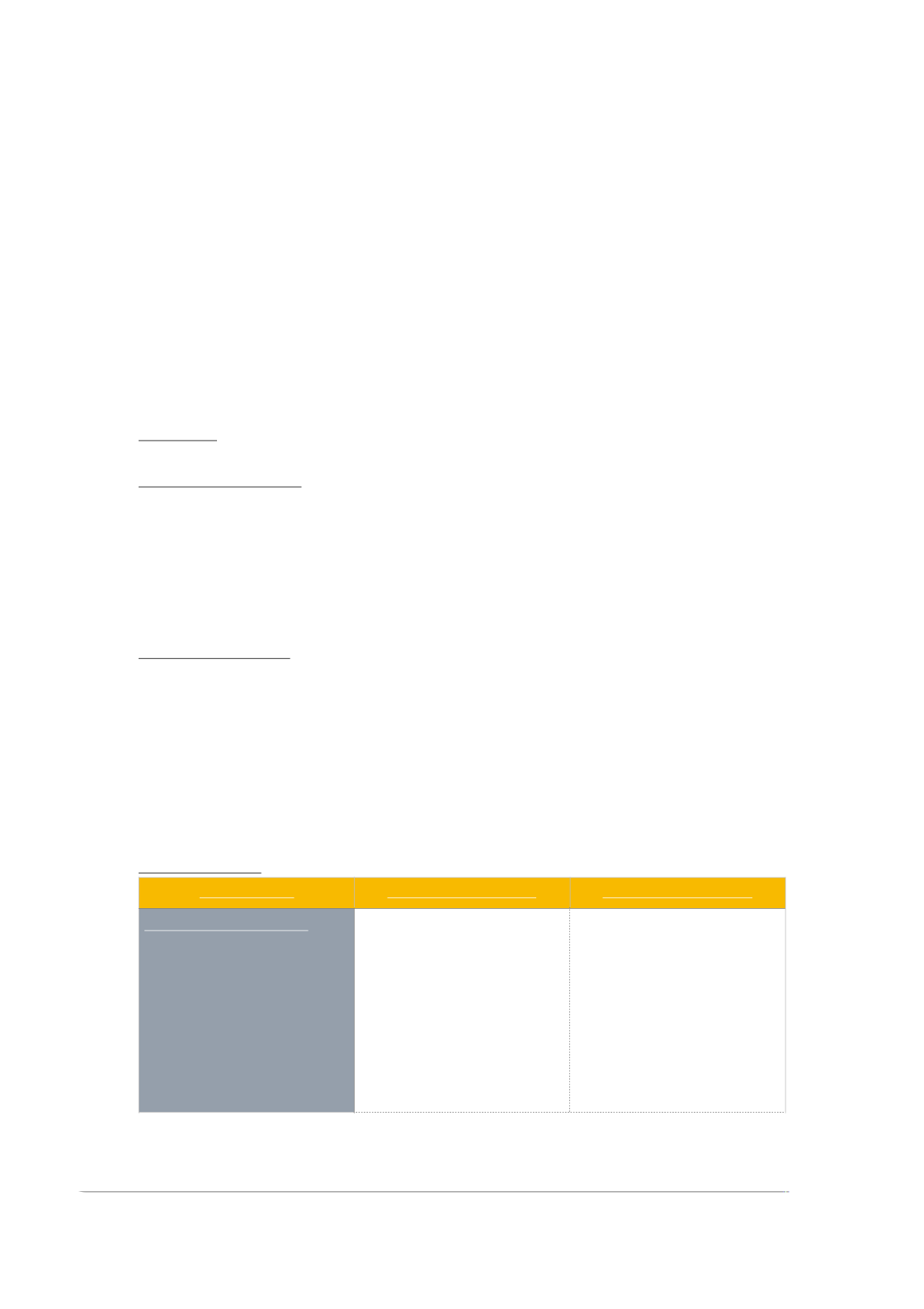
Hypothesis- When the fuel is burnt it reacts with the oxygen in the air to form the
products of water and carbon dioxide. My prediction as per the fuel burn may vary, as
fuels are highly ßammable and are a great reactant of substance
against heat or combustion, fuels undergo combustion as a
process in which fuels are used in term of creating heat by an
endothermic reaction of process. When energy is taken in and less
energy is released from the energy of input a reaction of
endothermic reactivity takes place, in a process of when energy is
put out in which more output energy is greater than the input
which makes an exothermic reactivity in which energy is absorbed
from the surroundings to form bonds between the fuel molecules.
A variety of fuels undergo combustion, and the products made can be identiÞed. Fuels
such as Ethanol, Propanol and Butanol burn as they are oxygenated means these
chemical molecules contain oxygen molecules which joins forces with oxygen molecules
in air to help them burn as combustion requires oxygen to burn and to create a bond
from an Exothermic reaction as energy is released. Thus, the extra energy is required to
break apart this new molecule. It is much harder to break up a longer hydrocarbon chain
than a shorter one as there are more bonds to break.
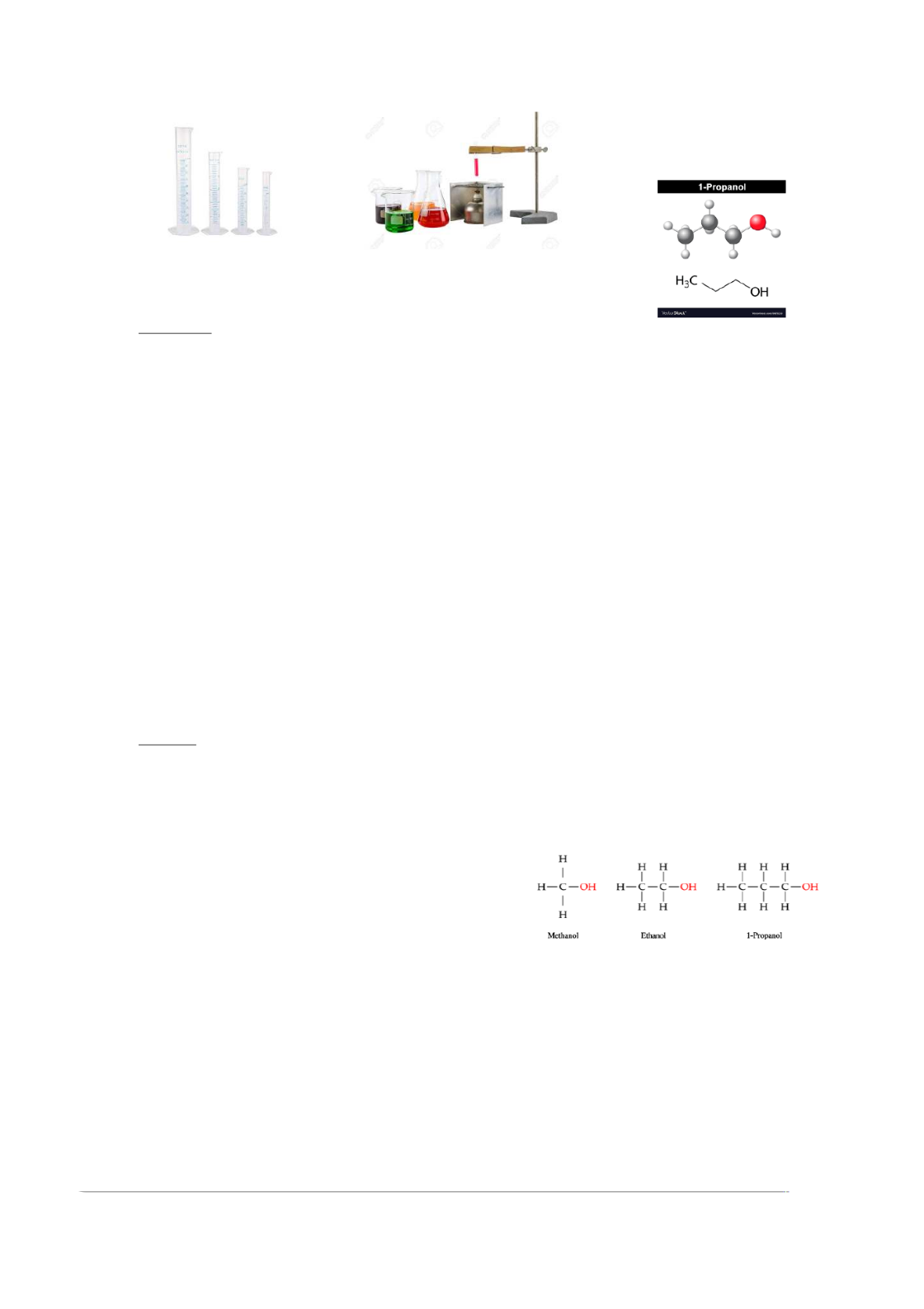
-Ethanol- C2H5OH.
Molar mass: 46.07 g/mol !
IUPAC ID: ethanol
Boiling point: 78.37 ¡C !
Density: 789 !kg/m³
Melting point: -114.1 ¡C !
Density: 0.789
It can be hypothesized that as the number of Carbon atoms in an alcohol increases; the
enthalpy of combustion will also become more negative.This is because as the number
of Carbon atoms increase, the moleculeÕs shape differs. The hydrocarbon chain
becomes longer.Looking at the molar masses, density and melting point as well as the
the chemical compound, according to my prediction, I predict that Ethanol will be the
most efÞcient in the point of boiling a 20ml water in a test tube and result in the most
effective one against Butanol and Propanol as Ethanol consists the most amount of
Propanol- C3H8O
Molar mass: 60.09 g/mol !
Boiling point: 97 ¡C !
Density: 803 !kg/m³
Melting point: -126 ¡C !
IUPAC ID: Propan-1-ol
Butanol- C4H10O
Molar mass: 74.1 g/mol !
Melting point: -90 ¡C !
Density: 810 !kg/m³
Oxygen molecules in its bond in which more oxygen molecules will burn resulting in the
most efÞcient fuel to burn as well having less density means the fuel will burn as a lower
rate amongst the others while providing the highest amount of temperature for burning
and the lowest rate of usage of the fuel, predicting that Ethanol will be the most efÞcient
fuel for burning. As well as Ethanol is used in fuels and is known as the most effective
fuel for burning with oxygen and resulting in combustion for heating and boiling. As a
prediction out of all the fuels, I predict Ethanol will be the most effective, hence having
the least amount of bonds making it the most efÞcient and the most amount of carbon
to be creating bonds and breaking bonds. Having hydrogen-oxygen and carbon-
oxygen bonds are polar covalent bonds while reacting with oxygen to form water and
carbon dioxide. This prediction is made more valid if one talks in terms of the Van der
WaalÕs(Thermodynamicist) forces of the molecules.
Variables-
Independent Variable-
-The fuels that will be used to boil the water will be different to get a result of which
fuel is the most efÞcient for boiling (Ethanol, Propanol, Butanol). The fuels will not
remain the same as we will require different fuels to get which fuel is the most efÞcient
for the boiling of water.
-The amount of fuel also be different as we will be conducting the experiments in trials
of 3 from which the 3 fuels will be burnt making the amount of fuel to change.
Dependent Variable-
-In this experiment we will be measuring the amount of fuel burnt in the spare of 2
minutes of burning as we will be burning the 3 fuels for 2 minutes to get a result of
how much fuel is burnt at that time. I will be measuring the amount of fuel burnt by
checking the weight of the fuel before burning and after burning to get an
understanding of which fuel is burnt more.
-I will also be measuring the temperature of the boiling water after every 2 minutes
after being burnt by the 3 different types of fuel by using a thermometer in the boiling
jar to Þnd out which fuel is the most efÞcient in boiling the water. The higher the
temperature the more the efÞcient.
Control Variable-
Why Will It Be Controlled
How Will It Be Controlled
Measuring Instruments
The scientiÞc measuring meter
will remain the same to get a fair
result as di erent instruments ff
might show di erent readings of ff
the mass of the fuels burnt,
making the result unfair. Hence
the measuring scale will be the
same to get an appropriate and a
fair result. The instruments will
remain the same as some
instruments show default or faulty
results.
As the scale shows us accurate
details and measurements of the
mass of the fuel burnt, we will
keep the scale the same to keep
the result fair and more accurate.
Control Variable
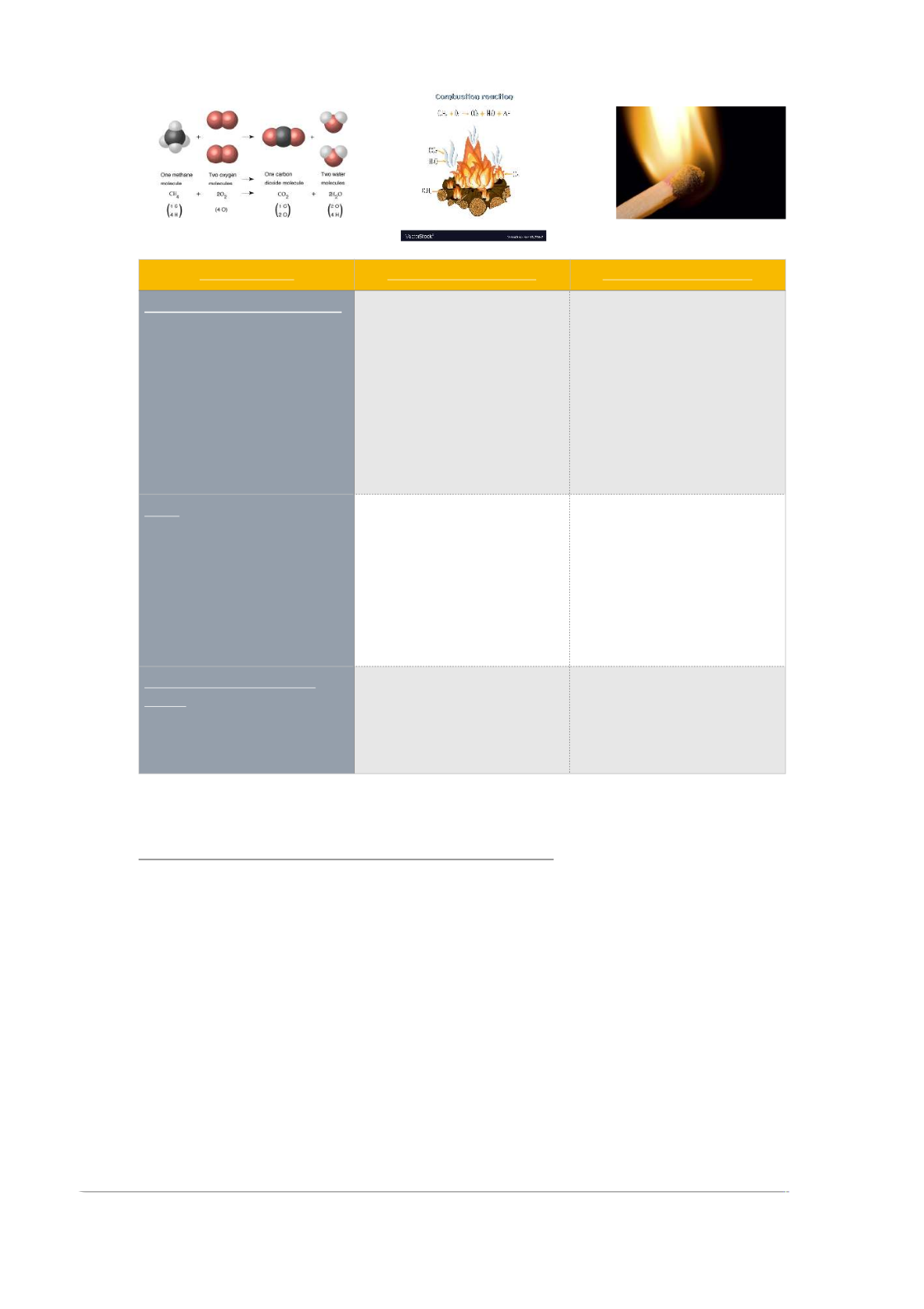
Apparatus Required To Conduct The Experiment-
-Ethanol Fire Pot/ Fuel-Ethanol- To burn and contain Ethanol
-Propanol Fire Pot/ Fuel-Propanol- To burn and contain Propanol
-Butanol Fire Pot/Fuel-Butanol- To burn and contain Butanol
-Boiling Tubes- 3x- To boil the 20ml of water
-Measuring Cylinders- To measure the amount of water to be poured in the boiling
tube.- 20ml
-Hanging Stand- To hold the boiling tube from the the jar wick to the tube.
-Measuring Tape- To measure the height from the jar wick to the tube.- 5cm
-Match Sticks- 9x- To burn the wick of the fuel jar.- 9 trials.
-Thermometer- To measure the initial and Þnal temperature of the 20ml of water.
Height From Tube To Flame
We will keep the height from the
tube to the ßame at a height of
5cm as an exothermic reaction
takes place in which heat will be
deployed in the surroundings and
due to di erent heights and ff
distance the heat will be
dispersed and making more time
for the heat molecules to reach
the tube. Hence we will keep the
height the same to keep the test
fair and accurate.
We will put the boiling tube on a
hanging stand exactly 5cm above
the wick of the fuel bottles
making the test fair and the same
amount of heat will be provided
to the boiling tube and same
distance.
Time
We will be keeping the time the
same to Þnd out which fuel is the
most e cient as the same ffi
amount of time will be given to
the 3 chemicals to react with
oxygen and to form an
exothermic reaction to boil the
water and to change the
temperature of water with in the
time of 2 minutes of burning.
We will set a timer of 2 minutes in
which the 3 trials will take place
of the 3 fuels will be burnt which
will provide us with results of
which fuel is the most e cient in ffi
values of mass of the fuel and
temperature of the water.
Starting Temperature Of
Water
The starting temperature of the
water will remain the same at 24
Degree Celsius at which we will
get a accurate result of the
temperature change of the
temperature of the water.
We will be using the 20ml of
water of which the temperature of#
water at the initial point will be at
24 Degree Celsius of which the
20ml water will be used from a
measuring cylinder.
Why Will It Be Controlled
How Will It Be Controlled
Control Variable
Method-
-
-Step 1-Measure the water to be poured in the boiling tubes- 20ml
-Step 2- Pour 20ml water in the 3 boiling tubes.
-Step 3- Keep the Þre mat and the hanging stand ready and apparatus ready to use.
-Step 4- Keep the 1 fuel pot on the mat and measure 5cm of the height.
-Step 5- Put the 20ml of tube of water 5cm above the ßame of the fuel on the hanging
stand.
-Step 6- Now once your fuel pot is ready and the tube is on the hanging stand, put the
thermometer in the tube and measure the initial temperature of the water.
-Step 7- Set the timer of 2 minutes and set the wick of the fuel pot on Þre.
-Step 8-After 2 minutes immediately stop the Þre and measure the temperature of the
water.
-Step 9- Do the test 3 times from the same fuel and other 3 times for the different fuels.
-Step 10- Measure the temperatures and the mass of the fuels.
-Step 11- Carry out the tests for 3 times for each fuel.
-Step 12- Workout the amount of fuel burnt and the temperatures of the water,
conclude the efÞcient fuel for boiling water.
Safety-
- Report all incidents or accidents if taken place under no supervision.
-Keep unnecessary equipments away from place of experiment.
-Wear sensible clothing such as heat gloves and
lab glasses.
-Keep ground and place of experiment clean and
tidy.
-Always stand while carrying out an experiment.
-Be aware of the ßame and wear gloves.
-Do not apply foreign objects or unknown objects
to the fuel.
-Do not play with Þre and do not light other fuels while experimenting.
-Measure the variables appropriately.

Criterion-C-Experiment
In this experiment we will be Þnding out which of the three fuels (Butanol, Ethanol And
Propanol) is the most efÞcient in forms of burning, usage of the fuel or the economy the
fuel provides as well calculating which fuel has the least usage and the most
effectiveness on a boiling a 20ml water in a boiling tube with room temperature of 28¡
Celsius by effective how warm the water will get due to the heat provided by the fuel.
This experiment will help us analyse and evaluate which fuel is the most efÞcient in
forms of usage/economy of the fuel as well as how the fuel has an effect on temperature
to warm the researching formula. We will Þnding out the weight of the fuel from start to
Þnish in which we can evaluate the usage of fuel and the temperature of the water using
a thermometer to overall give us a result from which we can determine the fuel and the
heat it produces and the use of the quantity provided to overall analyse which is the
most efÞcient fuel.
Moles Of Burnt Fuels-
-Propanol- Mass Of Propanol-170.9/ Molecular Mass Of Propanol- 60.09 g/mol= !
170.9grams/60.09!g/mol= 2.84 mol.
-Butanol- Mass Of Butanol-190.3/ Molecular Mass Of Butanol-74.1 g/mol= !
190.3grams/74.1!g/mol= 2.56 mol.
-Ethanol-Mass Of Ethanol-170.9/ Molecular Mass Of Butanol-46.07 g/mol= !
170.9grams/46.07 g/mol=!3.70 mol.
Chemical/Fuel
Trial-1
Trial-2
Trial-3
Fuel Averages
Propanol
Start Weight-
172.0g#
Ending Weight-
170.9g#
Difference- 1.1
grams
Start Weight-
170.9g#
Ending Weight-
169.3g#
Difference- 1.6
grams
Start Weight-
169.3g#
Ending Weight-
167.6g#
Difference- 1.7
grams
Fuel Usage
Average- 1.46
grams#
Asper Reaction
Butanol
Start Weight-
190.8g#
Ending Weight-
190.3g#
Difference- 0.5
grams
Start Weight-
190.3g#
Ending Weight-
189.6g#
Difference- 0.7
grams
Start Weight-
189.6g#
Ending Weight-
188.7g#
Difference- 0.9
grams
Fuel Usage
Average- 0.7grams#
Asper Reaction
Ethanol
Start Weight-
161.1g#
Ending Weight-
160.5g#
Difference- 0.6
grams
Start Weight-
160.5g#
Ending Weight-
159.8g#
Difference-0.7
grams
Start Weight-
159.8g#
Ending Weight-
159.0g#
Difference- 0.8
grams
Fuel Usage
Average- 0.7 grams#
Asper Reaction

Temperature Changes In Boiling
Temperature Rise ( T) = Final Temperature Ð Initial Temperature∆
Chemical/Fuel
-Boiling For 2
Minutes*
- Volume- 20ml
Trial-1
Trial-2
Trial-3
Average
Temperature
Propanol
Start Temperature
Of Water- 24¡
Celsius#
Ending
Temperature- 48¡
Celsius#
Temperature
Change- 24¡
Celsius#
Start Temperature
Of Water- 24¡
Celsius#
Ending
Temperature- 51¡
Celsius#
Temperature
Change- 27¡
Celsius#
Start Temperature
Of Water- 24¡
Celsius#
Ending
Temperature- 49¡
Celsius#
Temperature
Change- 25¡
Celsius#
Average
Temperature
Change- #
25¡ Celsius#
Butanol
Start Temperature
Of Water- 24¡
Celsius#
Ending
Temperature- 53¡
Celsius#
Temperature
Change- 29¡
Celsius#
Start Temperature
Of Water- 24¡
Celsius#
Ending
Temperature- 55¡
Celsius#
Temperature
Change- 31¡
Celsius#
Start Temperature
Of Water- 24¡
Celsius#
Ending
Temperature- 58¡
Celsius#
Temperature
Change- 34¡
Celsius#
Average
Temperature
Change- #
31¡ Celsius#
Ethanol
Start Temperature
Of Water- 24¡
Celsius#
Ending
Temperature- 60¡
Celsius#
Temperature
Change- 36¡
Celsius#
Start Temperature
Of Water- 24¡
Celsius#
Ending
Temperature- 63¡
Celsius#
Temperature
Change- 39¡
Celsius#
Start Temperature
Of Water- 24¡
Celsius#
Ending
Temperature- 61¡
Celsius#
Temperature
Change- 37¡
Celsius#
Average
Temperature
Change- #
37¡ Celsius#

Conclusion-
Combustion is principally the oxidation of carbon compounds by oxygen in air to form
CO2 if there is a sufÞcient amount of oxygen. The hydrogen in a compound forms H2O.
Combustion produces heat as well as carbon dioxide and water. The enthalpy change of
combustion is the enthalpy change that occurs when 1 mole of a fuel is burned
completely in oxygen.After evaluating, analysing and testing we come to a conclusion to
help support our research question and to deÞne the laws reactions in particular
exothermic and endothermic reaction of which in point where bonds are made and
broken(Oxygen, Carbon, Hydrogen). In the conclusion we will be assessing and
analysing the data from our data results and table to Þnally conclude which fuel is the
most efÞcient in points of boiling, temperature change and the economy or the usage
provided by the fuels(Propanol, Ethanol And Butanol) Looking through results of the
fuels, the 3 fuels were highly efÞcient in forms of providing results in the change of
temperature, forming bonds as carbon and oxygen and to hence forwards the mass of
the fuel when burnt giving us the most useful and efÞcient fuel. Analysing the fuels used
for the exothermic reaction we can provide that mass of the fuels changed while being
used in following ways of Propanol losing 1.1 grams, Butanol losing 0.5 while Ethanol
losing 0.6 grams to the minimal. As providing us with details which fuel required the
most energy to break bonds in which results to energy being used to break bonds
which resulted in the product to heat up. In the table in which we are comparing the
usage or the burning of fuel we can evidently tell us the most efÞcient fuel in standard of
burning and usage from which we can know Propanol being the least efÞcient by
burning over 1 gram of fuel in 2 minutes, with Butanol and Ethanol tied up with 0.7
grams of usage in 2 minutes of combustion. Eliminating Propanol to be the most
efÞcient in combustion. Proving henceforth that and by theory that Ethanol and Butanol
carry more than 60% in energy in forms of fuel as well as Ethanol is being used in
motorsport and proven by transport regulation Ethanol is proven to be the most
efÞcient fuel to provide more result less waste age. While on the other hand Butanol is
used in alcohol, both fuels evidently showing efÞciency in which Ethanol being a 2
carbon bond and Butanol being a 4 carbon bond.
In the table of Temperature Change from the burning of fuels and the boiling of water
shows us the change caused by different fuels in which the combustion of oxygen takes
place to result in heat, where energy in this universe is constant where energy cannot be
made nor destroyed in which these fuels are burnt in the presence of oxidant uses.
Analysing the temperature of the water at 24¡ Celsius from start and analysing the
temperature change from the 3 trials and the 3 fuels from the 20ml water. With Propanol
changing the average temperature of 25¡ Celsius, Butanol changing the average
temperature of 31¡ Celsius and Ethanol changing the average temperature of 37¡
Celsius. Through these data we can clearly evaluate that the temperature change of the
water and the heat released from the 3 fuels in form of an exothermic reaction. Through
out all the data we can analyse that Propanol being the least efÞcient, with Butanol the
second and Ethanol being the most efÞcient in forms of releasing heat.

Evaluating and supporting the hypothesis created we can Þnally analyse and hold the
title of which fuel to be the most efÞcient over all with fuels as Propanol losing 1.1 grams
and providing 25¡ Celsius, Butanol providing 0.7 gram loss with 31¡ Celsius and Ethanol
providing 0.7 gram loss and 37¡ Celsius change. Concluding that Ethanol to be proven
to be the most efÞcient fuel in forms of causing temperature change and usage, by
burning the amount of fuel to raise the temperature change.
In conclusion we can close and provide evaluation that Ethanol is the most efÞcient fuel
in standards of burning and temperature change compared to other fuels, with having
hydrogen-oxygen and carbon-oxygen bonds are polar covalent bonds which react
oxygen to create water and carbon dioxide resulting in releases a lot of heat, 277.7 kJ
per mole of ethanol. Breaking and creating bonds. Making Ethanol the most useful and
efÞcient from Butanol and Propanol.
Evaluation-
When comparing my results to my colleagues and other students in our group the both
results were absolutely similar with similar hypothesis and very close numbers on paper.
In the experiment to Þnd out which fuel is the most efÞcient in forms of rising
temperature and the least economy or usage of the fuel, resulting in the best
economical fuel, the results were very valid and a very successful experiment to deÞne
exothermic and endothermic reactions. Coming back at evaluation our results might
vary depending on a lot of settings and options. What we or I could do better to further
change my data and enhance it, would be by using a higher quality apparatus as some
of our tested apparatus weren't in the correct form to work as well as ßuctuated results
appeared from which we took an average. Deciding whether our data is valid might or
has caused many issues we would like to improve, like a faulty reading, faulty apparatus
the type of fuel, where the fuel has been stored as the fuel temperature might vary, the
evaporation might have an effect as well. As well as the distance from the fuel pot wick
to the boiling tube might also show and deÞne even more varied and displaying how
distance effects results also try with different fuels with more or less carbon bonds and
oxygen intake to combust to carry more data for comparison and more to deÞne our
data analysis and what we could do to improve our test and make it more valid and
dependent. Thus, these are the improvements keeping in mind we could also use a 3-4
tries to see and use to show how the average of these fuels are and making a more
accurate result in which we could compare and have more data in hand to calculate and
analyse the exothermic and endothermic reactions. Room temperature also effecting the
evaporation rates as seen in our tests by even point ones have an effect on the fuel
usage and readings, amount of water, temperature of water, distance from wick to tube,
surface area of tubes and much more to enhance and prove the laws of exothermic and
endothermic reactions to furthermore enhance our data and analysis to correspond to
which fuel is the most efÞcient.

Improvements-
How I could improve my experiment-
-Take Multiple tries instead of 3 taken 5 to get an even accurate results.
-Take readings by changing the apparatus.
-Compare results from other groups to analyse my results.
-Used different amount of water, 50 ml, 60 ml and more.
-Adding more apparatus to measure the data and use a more scientiÞc based data
evaluation a scientiÞc thermometer and more accurate apparatus.
-Use different fuels to compare the results and the efÞciency.
-Change the distance from the wick to the boiling tube to understand how distance
and the dispersion of heat effects temperature.
-Use more surface area boiling tubes to compare.
-Test the boiling time for different times, 3 minutes, 5 minutes and more.
-Try the experiment of different temperatures of the water to understand the
exothermic reaction.

References-
http://www.gandhijkt.org/blog/wp-content/uploads/2011/03/chemistry-sample-lab-
report.pdf
Study.com. 2019. How Fuel Becomes Heat Energy - Video & Lesson Transcript |
Study.com. [ONLINE] Available at: https://study.com/academy/lesson/how-fuel-
becomes-heat-energy.html. [Accessed 29 April 2019].
www.bbc.com. 2019. No page title. [ONLINE] Available at: https://www.bbc.com/
bitesize/guides/z8yj6sg/revision/1. [Accessed 29 April 2019].
Ethanol. 2019. Ethanol. [ONLINE] Available at: https://www.fueleconomy.gov/feg/
ethanol.shtml. [Accessed 29 April 2019].
NewsCenter. 2019. More efÞcient way of converting ethanol leads to better alternative
fuel : NewsCenter. [ONLINE] Available at: https://www.rochester.edu/newscenter/more-
efÞcient-way-of-converting-ethanol-leads-to-better-alternative-fuel-130872/. [Accessed
29 April 2019].
Alternative Fuels Data Center: Ethanol BeneÞts and Considerations. 2019. Alternative
Fuels Data Center: Ethanol BeneÞts and Considerations. [ONLINE] Available at: https://
afdc.energy.gov/fuels/ethanol_beneÞts.html. [Accessed 29 April 2019].
Owlcation. 2019. Heat Energy Produced by Fuel Butanol and Its Isomers | Owlcation.
[ONLINE] Available at: https://owlcation.com/stem/Heat-Energy-produced-by-Fuel-
Butanol-and-its-Isomers. [Accessed 29 April 2019].
www.bbc.com. 2019. No page title. [ONLINE] Available at: https://www.bbc.com/
bitesize/guides/z9ntjty/revision/3. [Accessed 29 April 2019].
The Student Room. 2019. methanol,butanol,ethanol and propanol - The Student Room.
[ONLINE] Available at: https://www.thestudentroom.co.uk/showthread.php?t=885477.
[Accessed 29 April 2019].
Alcohol solubility - methanol, ethanol, propanol etc. in solubility OF things. 2019.
Alcohol solubility - methanol, ethanol, propanol etc. in solubility OF things. [ONLINE]
Available at: https://www.solubilityofthings.com/water/alcohols. [Accessed 29 April
2019].

GCSE CHEMISTRY - What is an Alcohol? - What is an Organic Molecule? - What is a
Functional Group? - What is Cholesterol? - GCSE SCIENCE.. 2019. GCSE CHEMISTRY -
What is an Alcohol? - What is an Organic Molecule? - What is a Functional Group? - What
is Cholesterol? - GCSE SCIENCE.. [ONLINE] Available at: http://www.gcsescience.com/
o35.htm. [Accessed 29 April 2019].

