


MAT 275 Test 2 SOLUTIONS, FORM A
For the following multiple-choice problems below, write the letter of the correct answer on the blank to the
right of the problem. Make sure your answer is clearly legible, or it will be counted wrong. There is no
partial credit for these problems. Each is worth 5 points.
1. The solution to a certain differential equation is
y(t)=4e−3tsin(2t)+3e−3tcos(2t) + 5 sin(4t)−2 cos(4t).
The steady-state solution is
D.
5 sin(4t)−2 cos(4t)
Solution: These are the terms which do not converge to zero when tapproaches ∞.
2. The form for a particular solution to the differential equation y00 −4y0+ 4y=te2tis
D.
At3e2t+Bt2e2t
Solution: The presence of te2ton the right-hand side suggests a form of Ae2t+Bte2t. However, e2t
and te2tare solutions to the homogeneous equation, so you need to multiply Ae2t+Bte2tby t2to
get a useable form.
3. The vibration problem 3y00 + 6y0+ 8y= 0 is
B.
underdamped.
Solution: γ= 6 and √4km =√72. Since γ < √4km, the problem is underdamped.
4. In the differential equation y00 + 9y= 5 sin(at), resonance will
A.
occur when a= 3.
Solution: The homogeneous solution is y=C1sin(3t) + C2cos(3t). In order for resonance to occur,
the function Asin(at) + Bsin(bt)must be a solution to the homogeneous solution; hence a= 3.
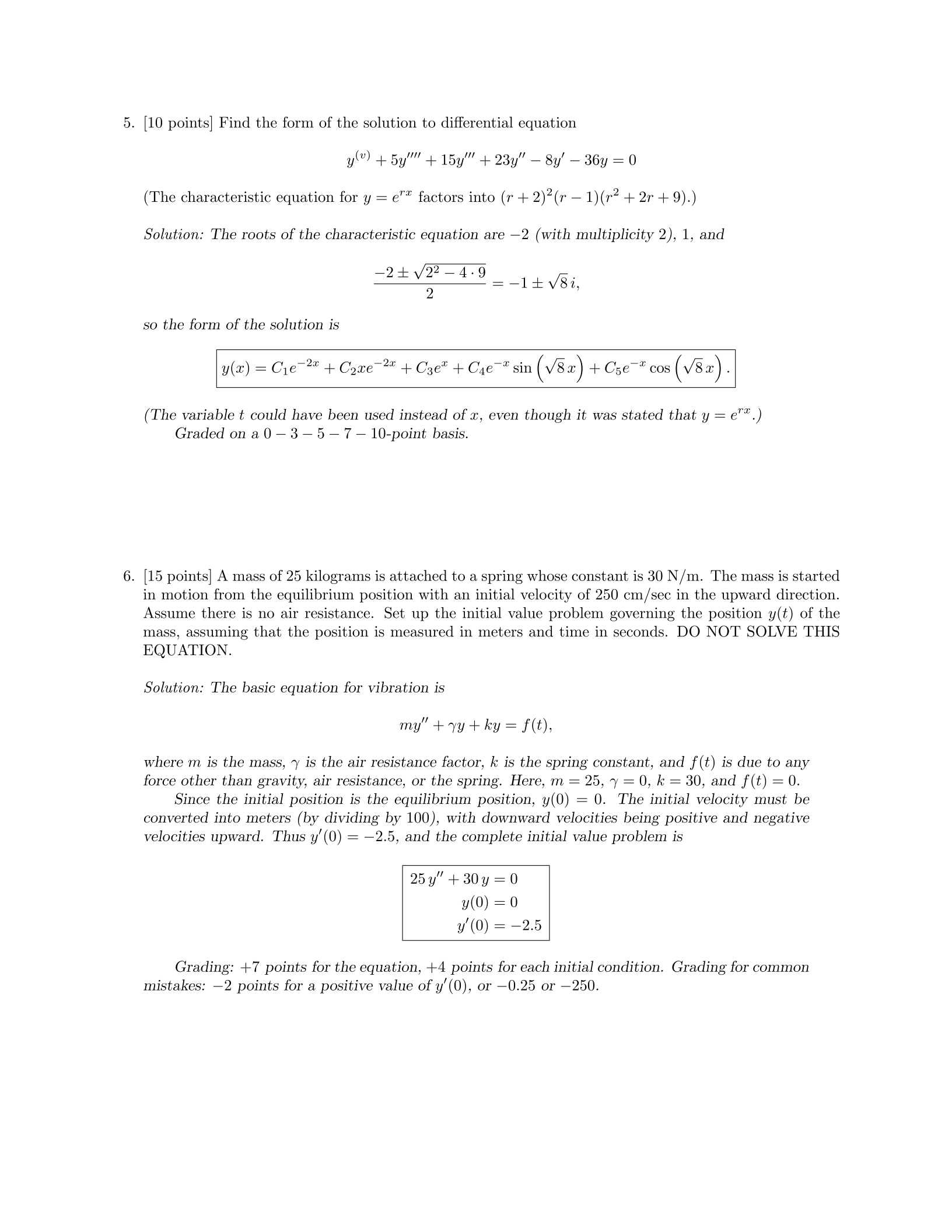
5. [10 points] Find the form of the solution to differential equation
y(v)+ 5y0000 + 15y000 + 23y00 −8y0−36y= 0
(The characteristic equation for y=erx factors into (r+ 2)2(r−1)(r2+ 2r+ 9).)
Solution: The roots of the characteristic equation are −2(with multiplicity 2), 1, and
−2±√22−4·9
2=−1±√8i,
so the form of the solution is
y(x) = C1e−2x+C2xe−2x+C3ex+C4e−xsin √8x+C5e−xcos √8x.
(The variable tcould have been used instead of x, even though it was stated that y=erx.)
Graded on a 0−3−5−7−10-point basis.
6. [15 points] A mass of 25 kilograms is attached to a spring whose constant is 30 N/m. The mass is started
in motion from the equilibrium position with an initial velocity of 250 cm/sec in the upward direction.
Assume there is no air resistance. Set up the initial value problem governing the position y(t) of the
mass, assuming that the position is measured in meters and time in seconds. DO NOT SOLVE THIS
EQUATION.
Solution: The basic equation for vibration is
my00 +γy +ky =f(t),
where mis the mass, γis the air resistance factor, kis the spring constant, and f(t)is due to any
force other than gravity, air resistance, or the spring. Here, m= 25,γ= 0,k= 30, and f(t)=0.
Since the initial position is the equilibrium position, y(0) = 0. The initial velocity must be
converted into meters (by dividing by 100), with downward velocities being positive and negative
velocities upward. Thus y0(0) = −2.5, and the complete initial value problem is
25 y00 + 30 y= 0
y(0) = 0
y0(0) = −2.5
Grading: +7 points for the equation, +4 points for each initial condition. Grading for common
mistakes: −2points for a positive value of y0(0), or −0.25 or −250.
2
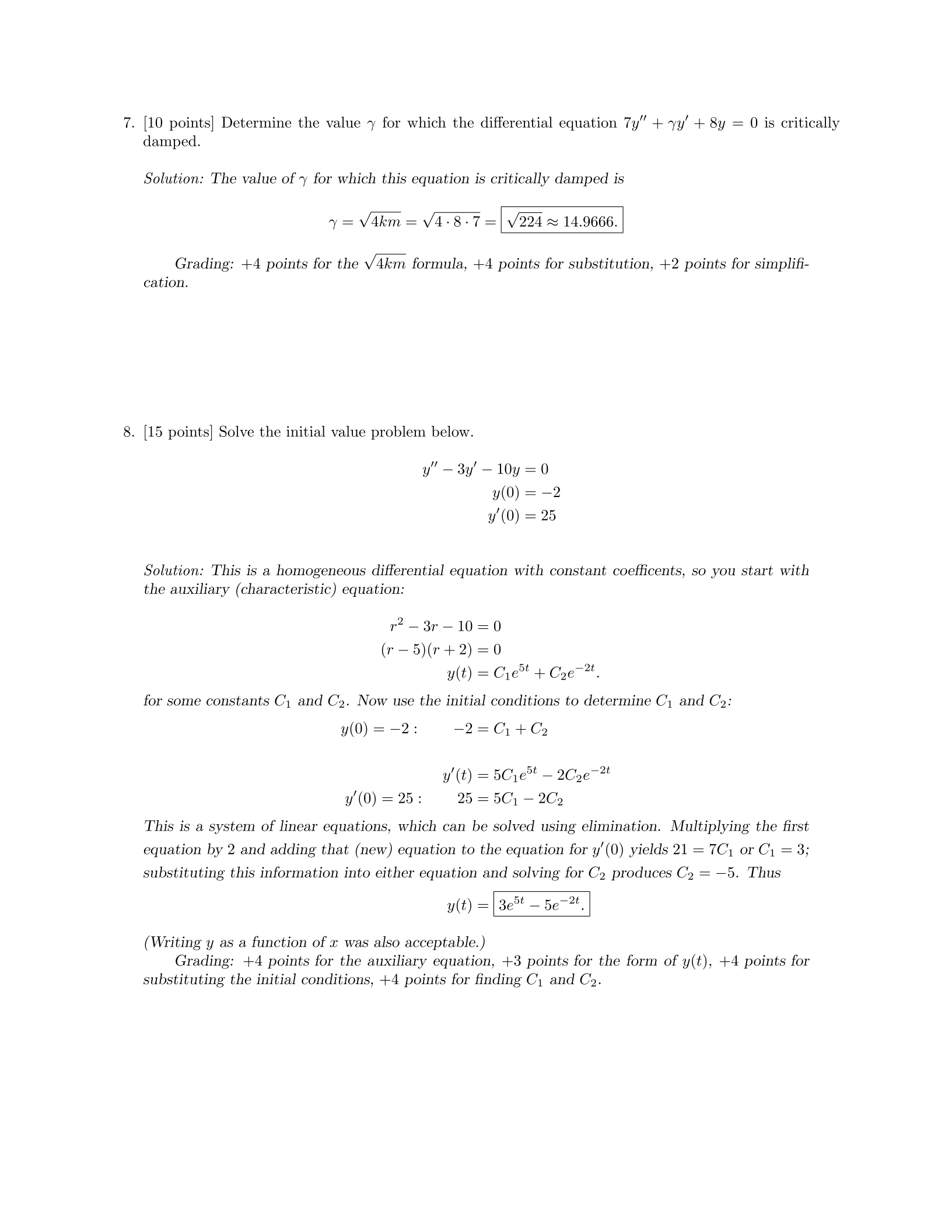
7. [10 points] Determine the value γfor which the differential equation 7y00 +γy0+ 8y= 0 is critically
damped.
Solution: The value of γfor which this equation is critically damped is
γ=√4km =√4·8·7 = √224 ≈14.9666.
Grading: +4 points for the √4km formula, +4 points for substitution, +2 points for simplifi-
cation.
8. [15 points] Solve the initial value problem below.
y00 −3y0−10y= 0
y(0) = −2
y0(0) = 25
Solution: This is a homogeneous differential equation with constant coefficents, so you start with
the auxiliary (characteristic) equation:
r2−3r−10 = 0
(r−5)(r+ 2) = 0
y(t) = C1e5t+C2e−2t.
for some constants C1and C2. Now use the initial conditions to determine C1and C2:
y(0) = −2 : −2 = C1+C2
y0(t)=5C1e5t−2C2e−2t
y0(0) = 25 : 25 = 5C1−2C2
This is a system of linear equations, which can be solved using elimination. Multiplying the first
equation by 2and adding that (new) equation to the equation for y0(0) yields 21 = 7C1or C1= 3;
substituting this information into either equation and solving for C2produces C2=−5. Thus
y(t) = 3e5t−5e−2t.
(Writing yas a function of xwas also acceptable.)
Grading: +4 points for the auxiliary equation, +3 points for the form of y(t),+4 points for
substituting the initial conditions, +4 points for finding C1and C2.
3
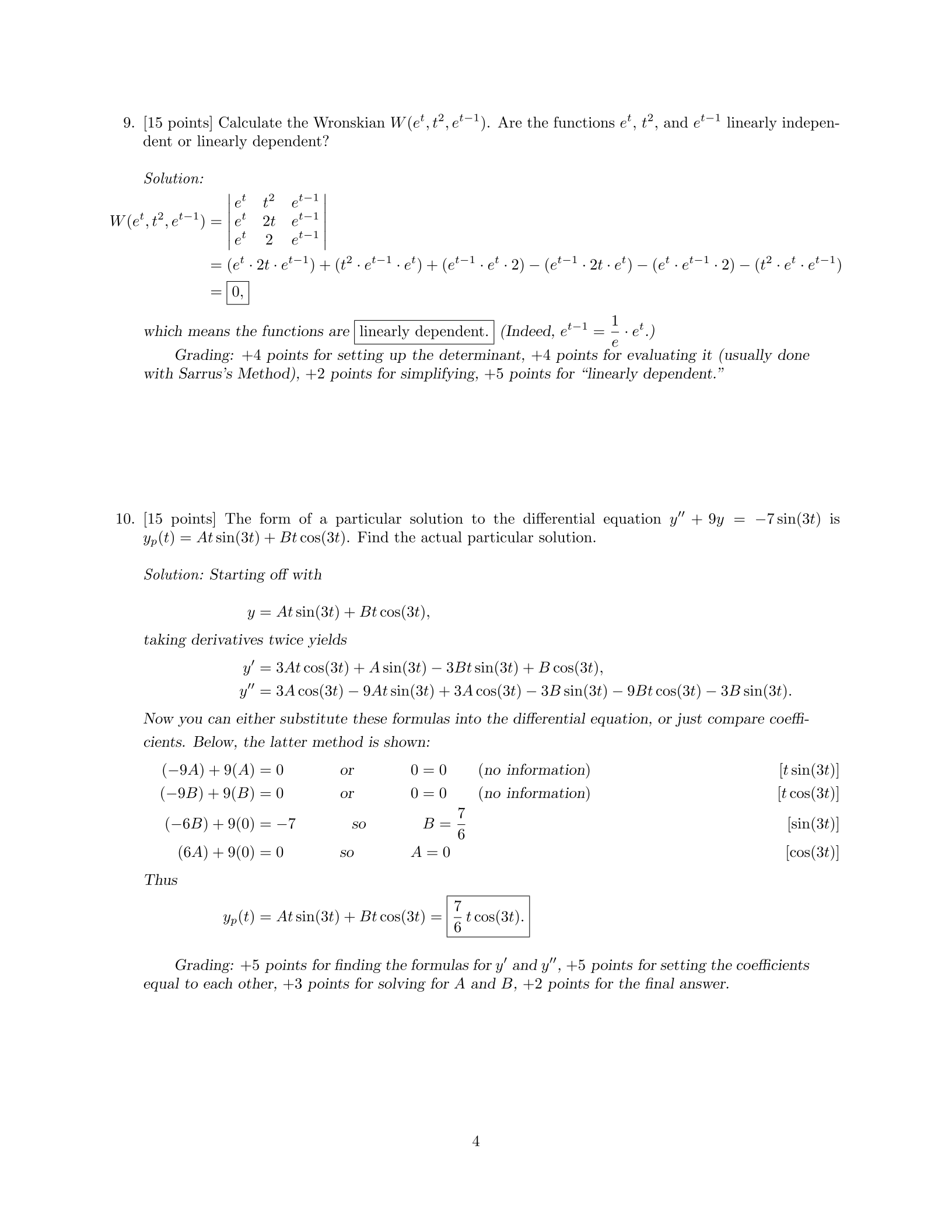
9. [15 points] Calculate the Wronskian W(et, t2, et−1). Are the functions et,t2, and et−1linearly indepen-
dent or linearly dependent?
Solution:
W(et, t2, et−1) =
ett2et−1
et2t et−1
et2et−1
= (et·2t·et−1)+(t2·et−1·et)+(et−1·et·2) −(et−1·2t·et)−(et·et−1·2) −(t2·et·et−1)
=0,
which means the functions are linearly dependent. (Indeed, et−1=1
e·et.)
Grading: +4 points for setting up the determinant, +4 points for evaluating it (usually done
with Sarrus’s Method), +2 points for simplifying, +5 points for “linearly dependent.”
10. [15 points] The form of a particular solution to the differential equation y00 + 9y=−7 sin(3t) is
yp(t) = At sin(3t) + Bt cos(3t). Find the actual particular solution.
Solution: Starting off with
y=At sin(3t) + Bt cos(3t),
taking derivatives twice yields
y0= 3At cos(3t) + Asin(3t)−3Bt sin(3t) + Bcos(3t),
y00 = 3Acos(3t)−9At sin(3t)+3Acos(3t)−3Bsin(3t)−9Bt cos(3t)−3Bsin(3t).
Now you can either substitute these formulas into the differential equation, or just compare coeffi-
cients. Below, the latter method is shown:
(−9A) + 9(A)=0 or 0 = 0 (no information) [tsin(3t)]
(−9B) + 9(B)=0 or 0 = 0 (no information) [tcos(3t)]
(−6B) + 9(0) = −7so B=7
6[sin(3t)]
(6A) + 9(0) = 0 so A= 0 [cos(3t)]
Thus
yp(t) = At sin(3t) + Bt cos(3t) = 7
6tcos(3t).
Grading: +5 points for finding the formulas for y0and y00 ,+5 points for setting the coefficients
equal to each other, +3 points for solving for Aand B,+2 points for the final answer.
4
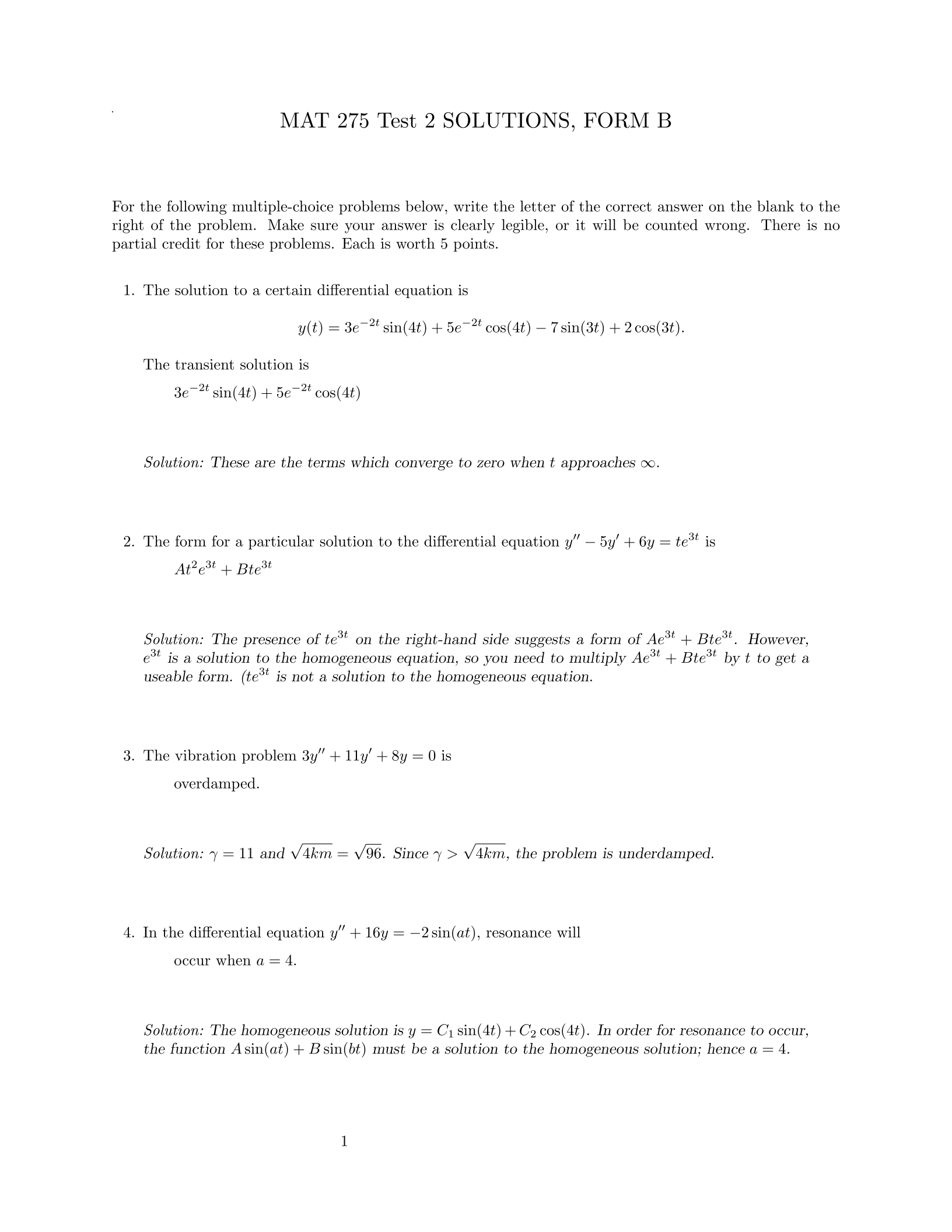
MAT 275 Test 2 SOLUTIONS, FORM B
For the following multiple-choice problems below, write the letter of the correct answer on the blank to the
right of the problem. Make sure your answer is clearly legible, or it will be counted wrong. There is no
partial credit for these problems. Each is worth 5 points.
1. The solution to a certain differential equation is
y(t)=3e−2tsin(4t)+5e−2tcos(4t)−7 sin(3t) + 2 cos(3t).
The transient solution is
A.
3e−2tsin(4t)+5e−2tcos(4t)
Solution: These are the terms which converge to zero when tapproaches ∞.
2. The form for a particular solution to the differential equation y00 −5y0+ 6y=te3tis
C.
At2e3t+Bte3t
Solution: The presence of te3ton the right-hand side suggests a form of Ae3t+Bte3t. However,
e3tis a solution to the homogeneous equation, so you need to multiply Ae3t+Bte3tby tto get a
useable form. (te3tis not a solution to the homogeneous equation.
3. The vibration problem 3y00 + 11y0+ 8y= 0 is
D.
overdamped.
Solution: γ= 11 and √4km =√96. Since γ > √4km, the problem is underdamped.
4. In the differential equation y00 + 16y=−2 sin(at), resonance will
C.
occur when a= 4.
Solution: The homogeneous solution is y=C1sin(4t) + C2cos(4t). In order for resonance to occur,
the function Asin(at) + Bsin(bt)must be a solution to the homogeneous solution; hence a= 4.
1
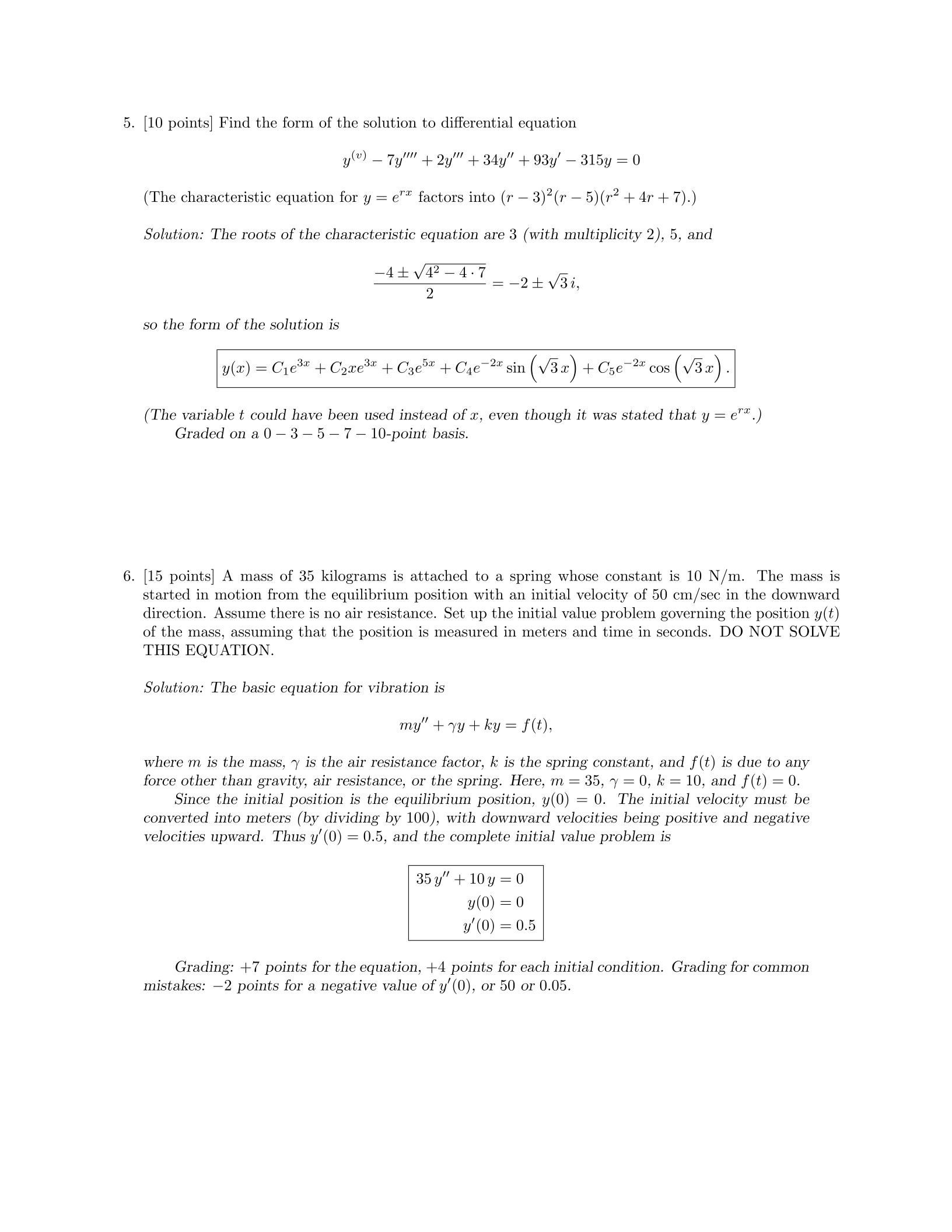
5. [10 points] Find the form of the solution to differential equation
y(v)−7y0000 + 2y000 + 34y00 + 93y0−315y= 0
(The characteristic equation for y=erx factors into (r−3)2(r−5)(r2+ 4r+ 7).)
Solution: The roots of the characteristic equation are 3(with multiplicity 2), 5, and
−4±√42−4·7
2=−2±√3i,
so the form of the solution is
y(x) = C1e3x+C2xe3x+C3e5x+C4e−2xsin √3x+C5e−2xcos √3x.
(The variable tcould have been used instead of x, even though it was stated that y=erx.)
Graded on a 0−3−5−7−10-point basis.
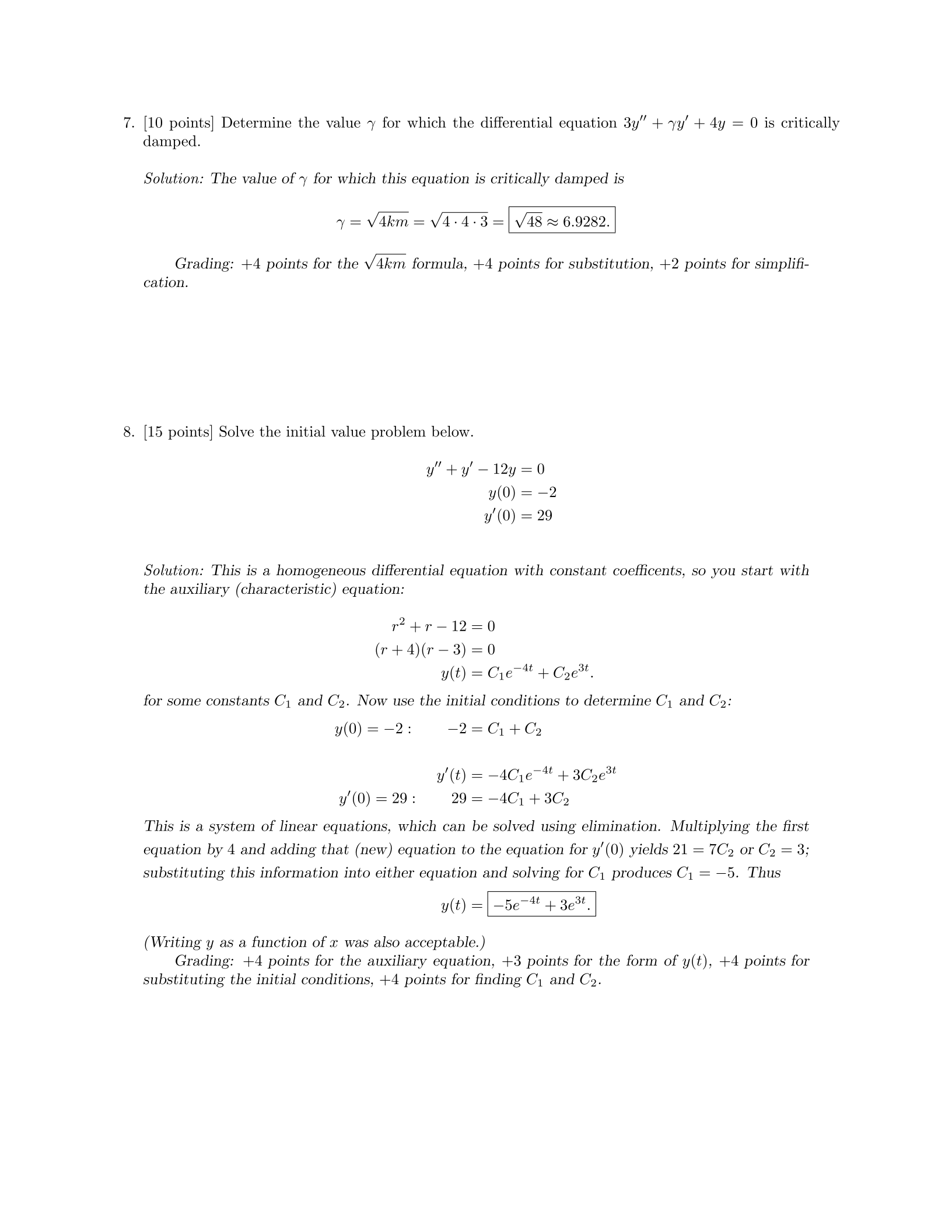
6. [15 points] A mass of 35 kilograms is attached to a spring whose constant is 10 N/m. The mass is
started in motion from the equilibrium position with an initial velocity of 50 cm/sec in the downward
direction. Assume there is no air resistance. Set up the initial value problem governing the position y(t)
of the mass, assuming that the position is measured in meters and time in seconds. DO NOT SOLVE
THIS EQUATION.
Solution: The basic equation for vibration is
my00 +γy +ky =f(t),
where mis the mass, γis the air resistance factor, kis the spring constant, and f(t)is due to any
force other than gravity, air resistance, or the spring. Here, m= 35,γ= 0,k= 10, and f(t)=0.
Since the initial position is the equilibrium position, y(0) = 0. The initial velocity must be
converted into meters (by dividing by 100), with downward velocities being positive and negative
velocities upward. Thus y0(0) = 0.5, and the complete initial value problem is
35 y00 + 10 y= 0
y(0) = 0
y0(0) = 0.5
Grading: +7 points for the equation, +4 points for each initial condition. Grading for common
mistakes: −2points for a negative value of y0(0), or 50 or 0.05.
2
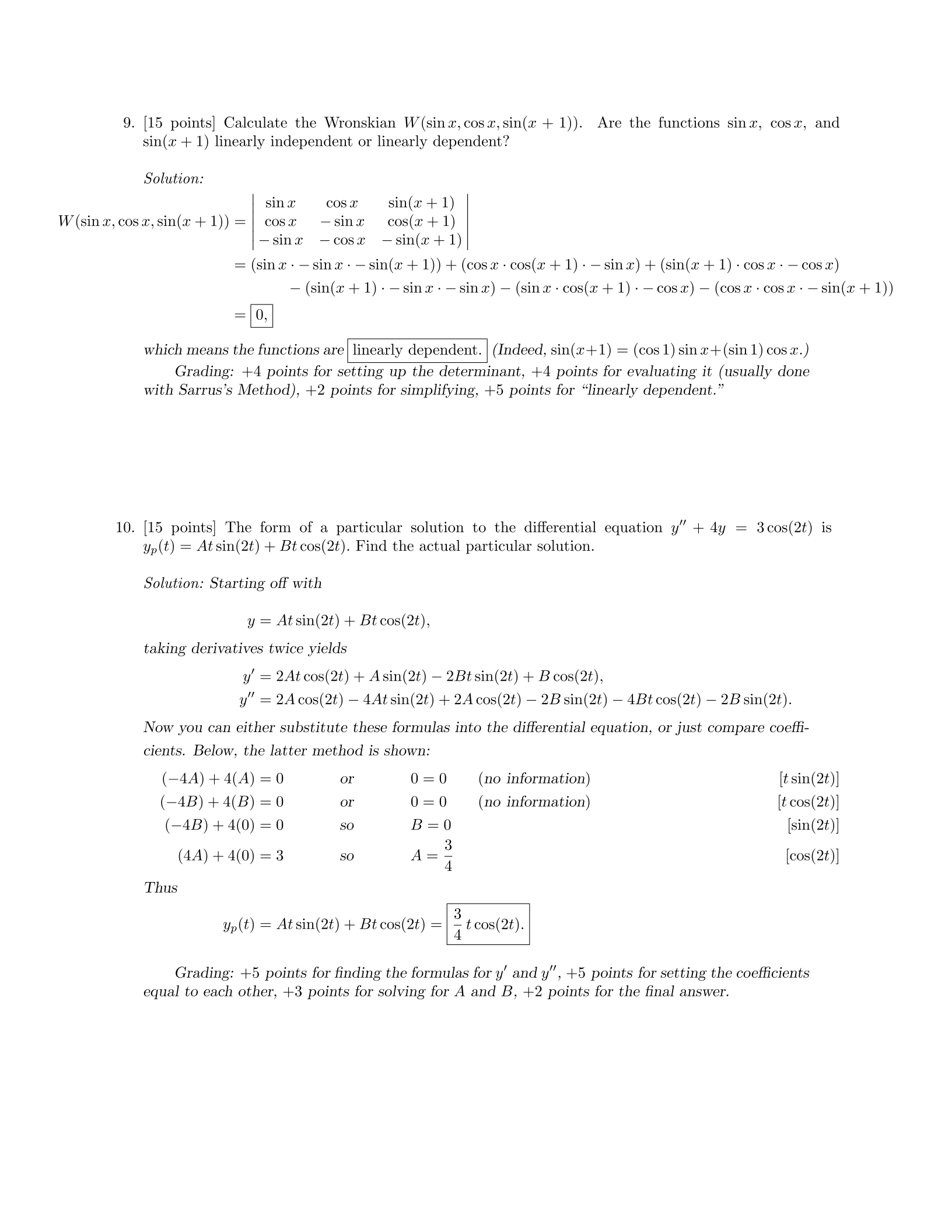
7. [10 points] Determine the value γfor which the differential equation 3y00 +γy0+ 4y= 0 is critically
damped.
Solution: The value of γfor which this equation is critically damped is
γ=√4km =√4·4·3 = √48 ≈6.9282.
Grading: +4 points for the √4km formula, +4 points for substitution, +2 points for simplifi-
cation.
8. [15 points] Solve the initial value problem below.
y00 +y0−12y= 0
y(0) = −2
y0(0) = 29
Solution: This is a homogeneous differential equation with constant coefficents, so you start with
the auxiliary (characteristic) equation:
r2+r−12 = 0
(r+ 4)(r−3) = 0
y(t) = C1e−4t+C2e3t.
for some constants C1and C2. Now use the initial conditions to determine C1and C2:
y(0) = −2 : −2 = C1+C2
y0(t) = −4C1e−4t+ 3C2e3t
y0(0) = 29 : 29 = −4C1+ 3C2
This is a system of linear equations, which can be solved using elimination. Multiplying the first
equation by 4and adding that (new) equation to the equation for y0(0) yields 21 = 7C2or C2= 3;
substituting this information into either equation and solving for C1produces C1=−5. Thus
y(t) = −5e−4t+ 3e3t.
(Writing yas a function of xwas also acceptable.)
Grading: +4 points for the auxiliary equation, +3 points for the form of y(t),+4 points for
substituting the initial conditions, +4 points for finding C1and C2.
3
9. [15 points] Calculate the Wronskian W(sin x, cos x, sin(x+ 1)). Are the functions sin x, cos x, and
sin(x+ 1) linearly independent or linearly dependent?
Solution:
W(sin x, cos x, sin(x+ 1)) =
sin xcos xsin(x+ 1)
cos x−sin xcos(x+ 1)
−sin x−cos x−sin(x+ 1)
= (sin x· −sin x· −sin(x+ 1)) + (cos x·cos(x+ 1) · −sin x) + (sin(x+ 1) ·cos x· −cos x)
−(sin(x+ 1) · −sin x· −sin x)−(sin x·cos(x+ 1) · −cos x)−(cos x·cos x· −sin(x+ 1))
=0,
which means the functions are linearly dependent. (Indeed, sin(x+1) = (cos 1) sin x+(sin 1) cos x.)
Grading: +4 points for setting up the determinant, +4 points for evaluating it (usually done
with Sarrus’s Method), +2 points for simplifying, +5 points for “linearly dependent.”
10. [15 points] The form of a particular solution to the differential equation y00 + 4y= 3 cos(2t) is
yp(t) = At sin(2t) + Bt cos(2t). Find the actual particular solution.
Solution: Starting off with
y=At sin(2t) + Bt cos(2t),
taking derivatives twice yields
y0= 2At cos(2t) + Asin(2t)−2Bt sin(2t) + Bcos(2t),
y00 = 2Acos(2t)−4At sin(2t)+2Acos(2t)−2Bsin(2t)−4Bt cos(2t)−2Bsin(2t).
Now you can either substitute these formulas into the differential equation, or just compare coeffi-
cients. Below, the latter method is shown:
(−4A) + 4(A)=0 or 0 = 0 (no information) [tsin(2t)]
(−4B) + 4(B)=0 or 0 = 0 (no information) [tcos(2t)]
(−4B) + 4(0) = 0 so B= 0 [sin(2t)]
(4A) + 4(0) = 3 so A=3
4[cos(2t)]
Thus
yp(t) = At sin(2t) + Bt cos(2t) = 3
4tcos(2t).
Grading: +5 points for finding the formulas for y0and y00 ,+5 points for setting the coefficients
equal to each other, +3 points for solving for Aand B,+2 points for the final answer.
4
Powered by TCPDF (www.tcpdf.org)

