


1
Chapter 1: Introduction to the Study
At the state and local level educators and leaders were required to develop plans to use
educational technologies in the classroom and produce technologically literate students. A
federal legislation mandate emphasized that technology be integrated into all K–12 classrooms
(U.S. Department of Education, 2002). This directive was based on the belief that learning is
enhanced using technology and students would need to develop technology skills to be
productive citizens (U.S. Department of Education, 2002). Because learning had been based
upon using textbooks and how students interact with their teachers, classrooms would need a
paradigm shift to meet the technology mandate. While educators and leaders are working to
meet this mandate, another consideration would need to be considered for high school students
and their work readiness skills. The reason for this consideration is because many students may
choose not to go to college right away, and those who do will still need technical skills to move
forward in their work careers.
The Secretary’s Commission on Achieving Necessary Skills (SCANS) Report (2000) was
charged with producing guidelines for work readiness skills for workers in world class
companies. The SCANS Report found that the competencies that workers will need to be
productive were: resources, interpersonal skills, information, systems, and technology. A recent
survey completed by Lowther, Inan, Strahl, and Ross (2008) of over 400 U.S. employers
revealed that high school graduates were deficient in most 21st century knowledge and skills
needed to enter today’s workforce. The SCANS Report examined the demands of the workplace

2
and what students and workers would need to know and do to succeed in the workplace. SCANS
was charged to: (a) define the necessary skills needed for employment; (b) propose acceptable
levels in those skills; (c) suggest effective ways to assess proficiency; and (d) develop strategies
to disseminate the findings to the nation’s schools, businesses, and homes.
Students will need all the assistance they can get to become successful in school and the
workplace. Carrier (2008), director of the Ford Motor Company’s 21st Century Education
Programs stated, “Many communities lag behind in understanding how businesses and schools
must work together to make the K–12 workforce connections” (p. 5). The retirement of baby
boomers in key occupations may cause a disruption in labor shortages. As businesses begin to
realize these shortages, they may become more supportive of Career and Technical Education
programs in schools. Therefore, businesses will be looking for employees that possess
technology skills, and higher order thinking skills, such as critical thinking; and problem-solving.
Employees will also need to be innovative and creative in their thinking, technologically savvy,
able to communicate effectively, able to be self-directed, as well as able to work in teams.
Therefore, administrators and educators must find ways to prepare students to compete and
become leaders in today’s workforce.
However, preparing students to be competitive leaders in the workforce can pose
challenges for teachers because they need to find meaningful ways to engage, motivate, and
inspire students to use technology and be innovative while meeting the demands of school
administrators and businesses. Teachers should be sure their personal skill levels in technology

3
are current. Administrators will need to make sure that teachers have the required hardware and
software in their classrooms for students to use. To assist teachers and leaders, the U.S.
Department of Education (2010) developed a National Education Technology Plan (NETP)
calling for “engaging and empowering learning experiences for all learners” (p. 8), while finding
innovative ways to take advantage of the opportunities offered by technology. These actions
must be taken to meet the goal to empower and educate students. This challenge requires
schools and businesses to work together to train high school students with technological skills to
prepare them for the workforce and/or college.
With continued technological advancements, today’s students are experiencing an even
greater disconnect from their teachers. Mumtaz (2001) stated that children spend more time on
their home computers than on computers at school. Children go home to teach themselves things
that interest them. Students are texting, instant messaging, gaming, blogging, and downloading
and uploading music and videos, while teachers are contending for their attention in a less
digitally-focused classroom. Prensky (2010) stated, “For the digital age, we need new curricula,
new organizations, new architecture, new teaching, new student assessments, new parental
connections, new administration procedures, and may other elements” (p. 5). Consequently,
teachers and students must become familiar with using technology resources and tools in the
classroom for learning (e.g., digital authoring tools, multimedia learning content,
communication, and collaboration tools that provided the ability to participate in online learning
communities).

4
The development of information and communication technologies (ICTs) has increased
the demand for knowledgeable workers and impacted the educational system in the United States
(Voogt, Erstad, Dede, & Mishras, 2013). The advancement of ICTs created jobs nonexistent a
decade ago, and students need to be educated to fill those jobs (Voogt, Erstad, Dede, & Mishras,
2013). These types of developments pose challenges for teachers to connect pedagogical
techniques with integrating technology into their curriculum. Diaz (1999) affirmed: “A
fundamental challenge for many teachers is using computers to create innovative learning
opportunities for students” (p. 11). The reason for this challenge is the lack of training
integrating technology into the curriculum. Prensky (2008) asserted that technology offers
students new, highly effective tools they could use on their own, and teachers should not support
the old pedagogy of telling or lecturing. Teachers should serve as a guide or a facilitator, not a
speaker standing in front of the class lecturing.
Teachers will need to be able to conceptualize ways to integrate technology into the
curriculum and demonstrate it as well as find ways to use technology to develop classroom
activities that promote problem solving, provide information, stimulate discussions, and allow
for drill and practice (Prensky, 2007). Prensky confirmed that, “Our students’ strengths lie in
their ability to quickly master, use, and apply technology in their fearlessness to try new things”
(p. 46). Prensky believed that students are savvy enough to filter through what is true, analyze
information, and collaborate with people. Davies (2011) argued that it should not be assumed
students are instinctively capable of using technology to learn what is expected of them in school

5
because they grew up in a technological age. Just because students seem fearless when using
technology, they could still need to be taught how technology could add value to their learning.
There are lessons, such as evaluation and comparing the use of technology, students cannot learn
on their own; therefore, teachers must pedagogically find ways to work with students using
technology and be prepared to face whatever challenges they must meet their students’
technology education needs.
If teachers do not show that they are willing to use technology and try new methods that
are relevant and engaging, they will not capture their students’ attention and will not be as
effective as they could otherwise be. Teachers that develop a classroom allowing for trial and
error where mistakes are made, motivated students to use technology while providing them with
more opportunity to learn and increase self-esteem and self-confidence as they become a part of
the learning process within the classroom. Bitner and Bitner (2002) suggested that teachers need
to be motivated enough to endure the frustration and turmoil of the change process. The change
process is less painful if teachers allow students to become partners in the learning process
(Bitner & Bitner, 2002). Ertmer, Ottenbreit-Leftwich, Sadik, Sendurur, and Sendurur, (2012)
noted, “Our education systems must reflect our students’ world or we will not only miss the
opportunity to capture their attention, but also forgo their full potential to learn and grow” (p.
432). Students are resisting teachers who are using old pedagogies with new technologies.
Prensky (2001) confirmed that the single biggest problem facing education today is, “our Digital
Immigrant instructors, who speak an outdated language (that of the predigital age), are struggling

6
to teach a population that speaks an entirely new language” (p. 2). Teachers need to provide
engaging and powerful learning experiences for their students. The challenges that teachers face
should be identified and addressed so they can move from the predigital age to the digital age,
which would include integration of technology.
Much research has documented teachers’ integration of technology; however, not much
progress was made with teachers integrating digital technologies (the use of computers and other
multimedia sources) into their lessons. Hsu (2010) differentiated between teachers’ usage ability
of technology integration by identifying three issues that need to be clarified: The first issue is
the understanding the difference between technology integration proficiency and computer
proficiency. Technology integration proficiency requires more complicated aspects such as
pedagogical considerations, while computer proficiency requires knowing how to use
technology. The second issue is understanding ability and usage could be influenced by beliefs
and attitudes. Third, although teachers can integrate technology into teaching, they may not be
able to integrate technology into their classes because they face barriers such as the lack of
functional equipment, appropriate software, school curriculum, and students’ ability.
In my study, I explored the theory of first and second-orders of change developed by
Cuban (1988), Brickner (1995), and Ertmer (1999), along with Hsu’s (2010) second and third
constructs of high school teachers’ perceived barriers of integrating technology into their
classrooms and their perceptions toward technology integration. The question I focused on in
my study was whether these barriers and perceptions will impact high school graduates being

7
technologically-prepared 21st century professionals. In this chapter, I will present the
background of the problem, problem statement, purpose of the study, research questions and
hypotheses, theoretical foundation, significance of the study, definition of terms, limitations of
the study, the implications for social change, and the conclusion.
Background of the Problem
Technology has altered society on a global level. This change has increased the demand
for competitive workers, and therefore, impacted the educational system. Millions of dollars
were spent to acquire educational computing tools and many educators, the U.S. government,
and business leaders believe that investing in these computing tools would improve teaching and
learning (Keengwe, Onchwari, & Wachiera, 2008). Having computer tools alone will not
improve teaching or learning, nor will large financial investments improve student learning or
education. Keengwe, Onchwari, and Wachiera assert that improving teaching and student
learning requires educators using and integrating these tools into their curricula and an
assessment process put in place to determine whether technology was being used effectively.
Recommendations were made to consider educational computing as a necessary basic
skill if American children are going to be globally competitive in today’s workforce. Bauer and
Kenton (2005) noted that teachers in the United States were not prepared to meaningfully
incorporate technology into their curricula. Educating the youth for success in a global economy
has become a challenge for 21st century educators and learners. The adoption of technology
integration has been slower than the acquisition of the technology itself due to teachers not

8
thoroughly understanding the role computers should play and their fear of computers taking
away their jobs. McCoy (2001) pointed out that “computers have the potential to become the
single most important element of change in education during the advent of the 21st century” (p.
23).
In the United States, public schools are responsible for producing technologically literate
students that are prepared to succeed in an information/technology based society. If students are
to be effective consumers and producers in the 21st century, it is important for teachers and
administrators to be involved in the school’s curriculum development to provide information on
what the changing workplace would demand of them. Conversely, the use of computers should
be incorporated into every classroom course, which would include computer applications, such
as word processing, spreadsheets, databases, and administrative information systems.
Although technology has been identified as a critical part of student success in the 21st
century, Keengwe (2007) asserted that students lack “computer skills in various computer
applications that are necessary to support and enhance their learning experiences” (p. 169).
Keengwe further stated during the late 1980s and early 1990s teachers were poorly trained in
technology integration. Teachers lacked confidence and the self-efficacy to pedagogically
integrate technology for students to effectively learn in the classroom. Teachers also feared
computers would replace the student and teacher relationship. I addressed the issue of teacher
barriers and teachers’ perceptions regarding effectively integrating technology into their
classrooms in this study as one of the issues students face regarding achieving technological

9
preparedness as 21st century professionals. With this perspective in mind, Prensky (2012)
affirmed that for every request a teacher makes of a student using technology inside and outside
the classroom, students should have one or more of the following requirements as part of their
assignment:
1. Determine the most powerful way(s) to use technology to do assignments.
2. Complete assignments using technology in new and powerful ways.
3. Invent a new, technology-based way to do assignments.
4. Include something technological that has never been done before.
5. Use technology to connect in a new way to do tasks better.
Within the last decade, technology has changed and infiltrated our society. Prensky
(2012) added that students lack the necessary skills to become global competitors in the
workforce and in higher education because teachers lack the necessary skills to make engaging
learning experiences and resources available to these students using technology. Therefore,
technology integration in the classroom should change as well. Students are coming to class
expecting to use technology and learn to become technologically competitive.
Problem Statement
Integrating technology into the classroom is a challenge for educators. The barriers that
hinder teachers from effectively incorporating technology into their classrooms include lack of
working computers, poor technological support, and inadequate technology resources. These
barriers are first-order barriers identified by Ertmer (1999) as external barriers to the teacher.

10
Issues of self-efficacy, beliefs about how students learn, and the perceived value of technology to
teaching and learning are second-order barriers as described by Ertmer, which are internal to the
teacher. First and second-order barriers can hinder students from becoming globally competitive
as 21st century professionals.
While national statistics show improvement in access to computer technology, access to
computers does not lead to effective technology integration in the classroom. Research by the
U.S. Department of Education (2010) released a technology plan revealing that students are not
prepared technologically to become global competitors. Wachira and Keengwe (2011) reported
that teacher surveys completed by the National Center for Education Statistics (2005) showed
consistent declines in the use of technology integration to enhance student learning.
Even if first and second-order barriers are overcome by teachers, for effective integration
of technology to take place, teachers need to develop a paradigm shift in their thinking. This
paradigm shift is related to teachers believing in new ways of seeing and doing things. The
existing gap in the literature does not address educators’ barriers in charter schools or teacher
self-efficacy integrating technology into their classrooms being associated with student’s
technological preparedness as 21st century professionals.
Teachers’ beliefs predict, reflect, and determine their actual teaching practice (Kim, Kim,
Lee, Spector, & DeMeester, 2013. p. 77). The need to determine if teachers are still
experiencing barriers and finding solutions to those barriers will allow teachers to successfully
integrate technology into their classrooms. The results of this study can contribute to the

11
management field by identifying if charter school teachers are experiencing technology
integration barriers and if they believe they are skilled enough to integrate technology into their
classes and assist administrators with improving technology integration professional
development sessions for teachers
Purpose of the Study
The purpose of this quantitative study was to determine whether charter school educators
face technological barriers hindering them from incorporating technology into their classrooms,
their self-efficacy issues integrating technology into their classes, and their students being
globally competitive as 21st century professionals.
Research Question(s) and Hypotheses
This study was guided by the following research questions and hypotheses:
1. What indicators cause high school educators to believe they face barriers
hindering them from incorporating technology into their classes?
Hₒ1: High school educators believe they face barriers incorporating technology into their
classes.
Hı1: High school educators do not believe they face barriers incorporating technology
into their classes.
2. What elements lead high school educators to believe they are not prepared to
integrate technology in their classrooms?

12
Hₒ2: High school educators are not prepared to integrate technology into their
classrooms.
Hı2: High school educators are prepared to integrate technology into their classrooms.
3. What indicators show high school educators their students are technologically
prepared as 21st century professionals?
Hₒ3: High school students are not technologically prepared to be 21st century
professionals.
Hı3: High school students are technologically prepared to be 21st century professionals.
In this study, I explored whether educators are faced with technological and perceived
barriers hindering them from integrating technology into their classrooms and whether these
barriers are affecting their students from becoming technologically competent. The dependent
variable in this study was students being technologically prepared as 21st century professionals,
while the independent variables were teachers’ barriers and their self-efficacy pertaining to
integration of technology into their classroom.
Theoretical Foundation
The term, first-order and second-order change, was derived from Cuban (1988, 2013).
First-order changes are “reforms assume that the existing organizational goals and structures are
basically adequate and what needs to be done is to correct deficiencies in policies and practices”
(Cuban, 1988, p. 228). Cuban defined fundamental change as basic building blocks of goals and
structures established and defined for the public-school system and changing them means

13
altering funding, governance, curriculum, and instruction. When these building blocks are
altered (e.g., providing vouchers, choices for students to attend charter schools, changing the
school curriculum, changing from teacher-centered to student-centered pedagogy), these
fundamental changes are considered second-order changes. Second-order changes involve what
ought to be and are different from what is embedded in the existing school organization.
Incremental changes were referred to as amendments to current school structures that do
not require the removal of the core components of the school structure. This type of change is
called first-order change. Examples of first-order change are: creating new academic courses,
extending the school day or year, reducing the class size, raising teacher salaries, etc. These
first-order changes do not change the basic school structure but correct deficiencies and enhance
the existing structure. These types of planned changes vary in their approach and effect on
teachers and students.
Cuban’s (1988) first-order and second-order change and Brickner’s (1995) first order and
second-order barriers served as the theoretical foundation for this research. Research Question 1
asked the participants about the first-order barriers to change, while Research Question 2 asked
the participants questions relating to second-order barriers to change. The data from these two
questions provided me with information about the degree and nature of computer use in
classrooms and allowed me to explore the effects of first- and second-order barriers to change.
Research Question 3 asked what type of barriers teachers face and whether these barriers hinder
them from technologically preparing their students to be 21st century professionals. If teachers

14
have perceived barriers toward technology integration, I wanted to determine if these perceived
barriers affect teachers’ self-efficacy limiting their incorporation of technology into their classes.
These barriers included teachers’ beliefs about using technology in their classroom, the teachers’
time schedules, inadequate infrastructure in the school, consistent replacement of software and
machines, servers crashing, and lack of technical support.
Based on Brickner’s (1995) first-order and second-order barriers to change, Ertmer
(1999) applied the first- and second-order barriers to the integration of technology in the
classroom. Brickner described first-order barriers as “obstacles which impede the effective
implementation of a projected change or innovation” (p. 6). First-order barriers are extrinsic in
nature and require a “technological quick fix” for the change to occur, and hinder the
implementation of a projected change (e.g., lack of updated software or lack of computer access).
Ertmer (1999) claimed that second-order barriers can range from personal fears to organizational
and pedagogical concerns. Second-order barriers are “obstacles which impede the effective
implementation of a projected change or innovation,” these barriers are intrinsic in nature and
internal to the teacher (e.g., fear of computers or feelings of insecurity using computers (p. 6).
Teachers do not want to admit these barriers exist. Students in K–12 schools today have access
to computers, laptops, smart phones, and other technology but are still getting classroom lessons
that are paper based (e.g., tests, quizzes, worksheets), which shun the use of current technologies.
Cuban, Kirkpatrick, and Peck (2001) noted these deeply embedded factors form barriers that
deter the use of technology in the classrooms or changes in teaching practices.

15
Cuban (2013) asserted that reformers sought to change the student classroom to be
student centered and that provided intellectually demanding pedagogy that engaged children in
academic content and led to their acquiring social and intellectual skills through improved
teaching. These efforts were considered as incremental, first-order change that left the current
teaching routines and pedagogy intact. Despite technological advances, fundamental structural
changes have done little to answer questions teachers have regarding technology and learning.
For example: Will laptops motivate my students? Do these new technologies require me to gain
knowledge and skills that are connected to what the state and district expect me to teach and
what students need? Will my students learn better and more than they do now? (Cuban, 2013, p.
116). Therefore, teachers will not support or make changes in their classroom unless they are
sure their students will learn while using the technology. First-order barriers as described by
Brickner (1995) were easier to identify than second-order barriers because second-order barriers
are usually hidden within first-order barriers. These explanations are not mutually exclusive, but
need to be taken into consideration by administrators when making assumptions about the lack of
technology use within the classroom.
When it comes to using technology in the classroom, it is important to unlock student
access to certain websites, while at the same time monitoring students when on those websites.
Jacobsen, Clifford, and Friesen (2002) asserted that computers in schools are “secured,
standardized, preconfigured, and completely locked down” (p. 365). This is one of the reasons
computers are not being used extensively in the classroom. Unlocking student access to websites

16
for research will give students experience using computers while being engaged with the
material. Another reason computers are not used is due to technology not being seamlessly used
to think and learn.
A plan needs to be developed for teachers and students to have access to computers in
classrooms and labs to prevent inequities (O’Donnell & Dooling, 2000). Davies and Linton (as
cited in Davies, 2011) stated, “while most education practitioners value technology, many
researchers and school administrators are concerned that technology is not being integrated into
classroom instruction as much as theory suggests it should” (p. 46). The problem that arises
from this expectation is the fallacy that adopting and using technology provides empirical
evidence that someone is technologically literate. To qualify as technologically literate, per
Davies (2011), requires “the ability to effectively use technology (i.e., any tool, piece of
equipment or device, electronic or mechanical) to accomplish required learning tasks” (p. 47).
Technologically literate people make decisions about when to use and how to use technology,
what technology can do, and are able use technology proficiently.
The implementation of computer use in a teacher’s classroom requires teachers to change
their instructional practices, which may sometimes be difficult for them to accept. Moore-Hayes
(2011) identified a link between teacher self-efficacy and their perceptions of their ability to
provide meaningful educational experiences for students while engaging in and experimenting
with new and innovative strategies using technology. However, there is a trend of teachers
lacking confidence in using their ability to think outside the box with technology and the

17
curriculum. Teacher efficacy is defined as a teacher’s beliefs about their capability as a teacher
(Penuel, 2006). Smith (2011) emphasized, “The fundamental challenge facing modern educators
. . . to engage students in meaningful learning and help them as they grow” (p. 73). Teachers’
perceptions about using educational technology and their ability to integrate technology into
teaching impacts their self-efficacy beliefs regarding technology (Levin & Wadmany, 2006;
Moore-Hayes, 2011; Pierson & McLachlan, 2004; Wang, Ertmer, & Newby, 2004). Teacher
beliefs about technology integration directly affect their use of it in the classroom.
Teacher beliefs serve as a filter for their prioritization of what software applications to
use when they do use technology. Chen (2008) confirmed that teachers need to believe
technology will help them attain higher-level learning goals. Ertmer (2010) asserted that when
teachers incorporate technology into their classes, there is a direct link between their beliefs and
their contextual factors (e.g., their interpretation of proposed school policies, school culture,
training, availability of appropriate equipment, and integration examples). This link may cause
discrepancies when they undertake technological innovation, because teaching with technology
is a “complex, ill-structured task” (Harris & Koehler, 2009, p. 62). These inconsistencies will
require educators to be adaptable and creative in their use of technology when engaging students
in activities of problem-solving, critical thinking, and collaborative learning. Davies (2011)
confirmed that “the challenge for educators is to understand how best to teach with technology
while developing the technological expertise of their students” (p. 45). Aligned with this

18
inconsistency are barriers, factors surrounding those barriers, and concerns regarding the self-
efficacy to implement technology effectively into their classrooms.
Based on Ertmer’s (1999) research on first- and second-order barriers-to-change, there is
evidence that computers have not brought about a revolution in teaching or in the school
organizational structure. Educator access to technology has increased over the years, and in
some cases, has reduced or eliminated first-order barriers. In this study, I used Ertmer’s (1999)
research to determine whether high school educator’s first-order barriers are prevalent and hinder
them from integrating technology into their classroom and whether teachers can identify any
second-order barriers they may need to address to minimize any first-order barriers.
School administrators, school board members, and policymakers often have less
experience with technology and are unable to provide strong leadership when it comes to
supporting the necessary changes needed to have technology infused into the curriculum. Many
school board members and policy makers have only a vague idea of what teachers are thinking or
of teachers’ daily classroom practices. To compound the issue, the movement to hire
administrators (e.g., district superintendents) that are noneducators is on the rise in large cities.
For example, ex-U.S. Army Generals Julius Becton in Washington, DC and John Stanford in
Seattle. Although these administrators and policymakers have sat in a classroom, they have not
taught in a public-school classroom, but they are still making decisions based on what they think
should happen in the classroom (Cuban, 2013). School administrators could foster a culture of
technology use by using technology. They should lead by example (e.g., communicating with

19
staff via e-mail and demonstrating the use of presentation software to the faculty). If
administrators learn to effectively use technology by participating in technology training
sessions, faculty may come to share their leader’s vision. Upon identification of teachers and
administrators’ first- and second-order barriers, I determined whether students can use
technology to think critically, collaborate, and think reflectively despite teacher barriers
Definitions
Digital competence: Students that have digital competence can use information and
communication technology (ICT) creatively. “A complex competence that emerges as the sum
of simple ICT skills (using software to search, locate, transform, and control information) and
more advanced skills (to evaluate, interpret and analyze) digital genres and media forms to that
through the creative and critical use of digital tools and media” (Voogt, Erstad, Dede, & Mishras,
2013, p. 405).
Digital divide: There are issues surrounding the digital divide in the past decade
regarding equitable distribution of educational technologies in urban and rural schools versus
suburban schools. Though equitable distribution of technology resources may have been
provided to many of these schools, teachers that know how to use these resources in these
schools are also needed. Unless this issue is addressed, the gap may increase over time.
Therefore, those teachers who are likely to teach in rural and urban school settings are primary
candidates to receive the needed professional development (Lawless & Pellegrino, 2007).

20
Digital Immigrants: Digital immigrants are those persons who were not exposed to the
widespread adoption of digital technology. Prensky (2001) describes digital immigrants as:
“Those of us who were not born into the digital world but have, at some later point in our lives,
become fascinated by and adopted many or most aspects of the new technology . . .” (Prensky,
2001, p. 1).
Digital Natives: The new students of today, as defined by Prensky (2001), “are all
‘native speakers’ of the digital language of computers, video games, and the Internet” (p. 1).
Educational technology: Educational technology is a wide field and there are many
definitions from different disciplines based on theoretical knowledge. For the purpose of this
study, educational technology as defined by Cifuentes, Maxwell, and Bulu (2011) educational
technology is: “A combination of the processes and tools involved in addressing educational
needs and problems, with an emphasis on applying the most current tools: computers and other
electronic devices” (p. 60). Hooper and Rieber (as cited in Ornstein & Behar, 1995) describe
educational technology as "applying ideas from various sources to create the best learning
environments possible for students” (p. 251).
High-speed Internet access: The term high speed internet is a marketing term used by
technical people referring to Internet access and the access speed. The Federal Communications
Commission (FCC) defined high-speed Internet access as, “access [to] the Internet and Internet-
related services at significantly higher speeds than those available through ‘dial-up’ Internet
access services” (Bakia, Means, Gallagher, Chen, & Jones, 2009, p. x).

21
Instructional technology/educational technology: The terms are used interchangeably.
The Association for Educational Communications and Technology (AECT) described
instructional technology/educational technology as:“a complex, integrated process involving
people, procedures, ideas, devices, and organizations for analyzing problems, and devising,
implementing, evaluating, and managing solutions to those problems involved in all aspects of
human learning” (p. 7).
Self-efficacy: When one has self-confidence to perform. Bandura described self-efficacy
as: “…a perception about one’s abilities within a given domain” (Abbitt, 2011, p. 136). Abbitt
described perceived self-efficacy as: “beliefs in one’s capabilities to organize and execute the
courses of action required to produce given attainments” (p. 136).
Technology: Technology is used in our lives on a daily basis. According to Ornstein and
Behar (1995): Technology “By definition, applies current knowledge to some useful purpose.
Therefore, technology uses evolving knowledge (whether about a kitchen or a classroom) to
adapt and improve the system to which the knowledge applies (such as a kitchen’s microwave
oven or educational computing)” (p. 252).
Technology in education: Technology in education is developing lessons using
technology. Per Ornstein & Behar (1995): “Technology in education is often perceived in terms
of how many computers are video-cassette recorders are in a classroom and how they might be
used to support traditional classroom activities, but this is a misleading and potentially dangerous
interpretation. It not only places an inappropriate focus on hardware, but fails to consider other

22
potentially useful ‘idea’ technologies that result from the application of one or more knowledge
bases such as learning theory” (p. 251).
Technological fluency: Being technologically fluent means to be able to complete
technological tasks quickly. Mills & Tincher (2003) defined technological fluency as: “. . . a
combination of the information skills, communication skills, and technology skills necessary to
function in a technological environment” (Mills & Tincher, 2003, p. 383).
Significance of the Study
The significance of this study was to explore educator perceptions of what their
technological integration barriers were and how these barriers impacted high school graduates
for employment within the North Carolina business sector. The school system must make sure
that all students have equal access to technology regardless of student social or economic status.
In 2009, the U. S. Department of Education’s Enhancing Education Through Technology
(EETT) program final report was compiled by Bakia, Means, Gallagher, Chen, & Jones (2009).
The report discussed the goals of the EETT as a part of the No Child Left Behind Act of 2001
(NCLB) which targets “high-need school districts” (p. vii). The EETT was the most
comprehensive federal program supporting the improvement of student academic achievement in
elementary and secondary schools using educational technology (Bakia, Means, Gallagher,
Chen, & Jones, 2009). The goals of the program are listed as follows:

23
To ensure that every student is technologically literate by the time he or she
finishes the eighth grade, regardless of the student’s race, ethnicity, gender,
family income, geographic location, or disability, and to encourage the effective
integration of technology resources and systems with teacher training and
curriculum development to establish research-based instructional methods that
can be widely implemented as best practices. (Bakia, Means, Gallagher, Chen, &
Jones, 2009, p. 1)
Using a formula, the EETT program was to provide funds to states to support access to
educational technologies while providing technology-related teacher professional development to
integrate technologies in ways that would academically prepare students (Bakia, Means,
Gallagher, Chen, & Jones, 2009). In Fiscal Year 2002 through 2008, the EETT program was
given approximately $3.4 billion in funding for educational technology (Bakia, Means,
Gallagher, Chen, & Jones, 2009). The EETT program was a part of the No Child Left Behind
Act (NCLB) of 2001 that targeted “high need school districts” (Bakia, Means, Gallagher, Chen,
& Jones, 2009, p. 1) These school districts have large percentages of low-income students and
have one or more schools in need of technology. These were the schools that received Title I
funds (Atkins, et al., 2010).
As of January 2010, President Obama announced that more than $1.3 billion of the
budget would continue to go to the Race to the Top initiative to local school districts that were
committed to change and reform of their schools (Atkins, et al., 2010). The states were

24
encouraged to adopt more challenging standards to prepare children for college and careers by
using cutting-edge data systems to track a child’s progress throughout their academic career
(Atkins, et al., 2010). The teacher will determine what is and is not working in the classroom,
and states can turn around some of their lowest-performing schools (Atkins, et al., 2010). Forty-
eight states committed to instituting reforms and partnerships to develop a common set of career-
ready standards in reading and math (Atkins, et al., 2010).
In March 2010, President Obama sent Congress a Blueprint for Reform of the Elementary
and Secondary Education Act (ESEA), which addressed the issues created by the NCLB (U.S.
Department of Education, 2010). The blueprint for ESEA put in place an accountability system
that set a higher bar for high school students ready to move into college and careers. The system
also rewarded high poverty schools and districts that showed student improvement using
measures of progress and growth. ESEA also allowed state districts to find meaningful ways to
measure principal and teacher effectiveness to ensure every classroom had a great teacher and
every school had a good principal while closing achievement gaps.
This quantitative study was significant because by conducting it I addressed the gap in
the literature by providing information from charter school teachers regarding their beliefs and
perceptions relating to barriers integrating technology and their self-efficacy integrating
technology into their classrooms. The results of this study also provide information to assist
charter schools with determining the issues hindering teachers from moving forward with
incorporating technology into their classrooms. I would like to use the results of this study to

25
work with schools and businesses. This action could lead to providing administrators and
teachers with additional information on how to improve professional development for teachers
with integrating technology into their classrooms and also provide teachers with opportunities to
develop their skills in effectively integrating technology into their classrooms, thereby providing
students with pedagogically sound ways to use technology in their classroom.
Since high school graduates will be consumers of the higher education process and will
be future workforce participants, they must be skilled in the use of various Internet technologies
and software. Friedman (2007) in the book, The World is Flat delineated, “The international
economic playing field is level,” (p. 270) evoking the metaphor: the world is flat. In the book,
Friedman asked the educational question, “Have we been preparing our children for the world
they will live in?” (p. 270). Friedman answered the question by stating, “The American
education system from kindergarten through twelfth grade is just not stimulating enough for
young people to want to go into science, math, and engineering” (p. 275). The responsibility of
public education is to ensure students have equal access to technology and technology-based
support for their academic success. This should be especially true in schools where
economically disadvantaged students are expected to achieve high academic standards equal to
their counterparts. Friedman expounds on technology education in the United States by saying:
Because it takes fifteen years to create a scientist or advanced engineer,
starting from when that young man or woman first gets hooked on science
and math in elementary school, we should be embarking on an all-hands-

26
on-deck, no-holds-barred, no-budget-too-large, crash program for science
and engineering education immediately. The fact that we are not doing so
is our quiet crisis. Scientists and engineers don’t grow on trees. They
have to be educated through a long process, because, ladies and
gentlemen, this really is rocket science (p. 275).
In the United States, public schools are responsible for producing technologically literate
students prepared to succeed in an information/technology-based society (Prensky, 2012). The
aim of this study was to document whether high school students are technologically adept
enough to help businesses compete to gain and keep a competitive advantage in the United States
and whether they are prepared to excel in their college careers if that is the road they choose.
The significance of my study in relation to the management field concerns the role of school
administrators and their support of technology integration. Teachers are held accountable to
integrating technology into their classes. However, if they don’t have up-to-date resources,
computers, technical support, time, or the skills to help them to achieve this goal, principals and
administrators need to set the climate in their schools of promoting effective technology
integration. Principals will need to model, encourage, and support the use of technology in their
schools. Some examples of modeling, encouraging, and supporting teachers would be for them to
attend technology conferences to see what other teachers and schools are doing to integrate
technology. Administrators could also provide incentives for teachers in the way of time for
teachers to experiment with technology. Principals could purchase computers for the teachers at

27
the end of the school year and tell them to experiment with integrating technology into their
classes during the summer. School leaders could also provide professional development
opportunities for the teachers to offer brown bag lunch sessions integrating technology.
Social Change
Social change resulting from this study could lead to providing administrators with
additional information on how to improve teacher’s professional development integrating
technology into their classrooms. Another benefit could be that businesses could provide
funding to high school teachers and students for additional training on the use of digital
technologies. This type of funding could lead to students acquiring skills to work with
companies in the United States. Funding could support teacher access to professional
development courses to help them pedagogically integrate technology into their classrooms—a
win-win situation for businesses, teachers and students. Additionally, software companies may
be willing to provide educators with training to enable them to develop and align their
technological/pedagogical knowledge to current business practices, while addressing any
possible barriers or self-efficacy issues. The findings from this research could lead to the
implementation of a school workforce technology development summer program for high school
juniors and seniors to ensure they are prepared to meet the required workforce standards.
Summary
High school graduates will be consumers of higher education processes and future
workforce participants. They will need to be skilled in the use of various software and Internet

28
technologies. Bybee and Starkweather (2006) concede that, “technology is one of the disciplines
identified as a major factor influencing economic progress” (p. 27), and education is one avenue
to help resolve the problems of this quiet crisis. The U.S. Department of Education (2002)
mandated that student’s technology skills need to be developed to be productive citizens.
In Chapter 1, I introduced the study, which focused on barriers charter high school
teachers face and their perceived barriers of integrating technology into their classrooms. The
background of the problem provided a glimpse of how technology has affected society, the
impact it has on business and education, and how important it is for teachers to educate our
children to be technologically literate and globally competitive.
I provided information from research conducted by the U.S. Department of Education
(2010), The Secretary’s Commission on Achieving Necessary Skills (SCANS) Report (2000), a
survey completed by Lowther, Inan, Stral, and Ross (2008) discussing the importance of
integrating technology into the classroom to help students become successful in the workplace
and school. The problem statement, research questions and hypotheses along with the theoretical
framework for this study is based upon Cuban’s (1988), Brickner’s (1995), and Ertmer’s (1999),
first-order and second-order barriers to change. First-order barriers are extrinsic meaning that
teachers may have lack of access to computers and software, insufficient time to plan instruction
using technology, inadequate technical support; may feel alienated about securing additional
resources (e.g., obtaining additional professional development to increase their technology
skills). Second-order barriers are intrinsic and confront the teacher’s fundamental beliefs about

29
their current practices and the teacher becomes willing to change by obtaining additional
professional development to increase their computer skills, develop work arounds to address
technical issues (e.g., have the students assist with locating the issue), find ways to make time for
the integration of technology. The important aspect is that teachers recognize their need to
understand the difference between the type of barriers (extrinsic or intrinsic) they experience.
The importance of teachers understanding extrinsic and intrinsic barriers about
themselves is for them to become better at engaging their students in using technology and
allowing students to become actively engaged in the learning process as well. Teachers are the
key to the change process (Ertmer, 1999). When teachers feel empowered, they are more likely
to use technology to facilitate teaching and learning. The importance of the current study was to
survey charter high school educators to decide if they are affected by first or second order
barriers, and if they perceive their students are affected technologically by those barriers.
I will discuss my literature search strategies and the importance of technology integration
in education in Chapter 2. I provide a historical background of technology being introduced into
education for improving science and math achievement in public schools. Thus, technology in
education has evolved to ensuring students are technologically prepared for the workforce. As
graduates, students can develop a company or help organizations they work for create and keep
their competitive advantage. I defined technology integration and its purpose. I discussed the
Technology Acceptance Model (Gone, Xu, & Yu, 2008; Teo, 2011), first and second order

30
barriers, educator perceptions, beliefs, and self-efficacy about technology integration, technology
and student learning, and the 21st century workforce.

31
Chapter 2: Literature Review
In this study, I researched if charter school educators faced technological barriers
hindering them from incorporating technology into their classrooms, if they encountered self-
efficacy issues integrating technology in their classes, and if they believed their students were
globally competitive as 21st century professionals. In this literature review, I will address topics
relating to my research, such as technology integration; technology integration barriers; first and
second-order barriers; areas where teachers face barriers using and integrating technology (such
as availability and accessibility, funding, administrator support, technical support, and time
constraints); successful integration of technology; teacher perceptions, beliefs, and self-efficacy;
and the 21st century student, technology, and student learning; and the 21st century workforce.
These underlying themes that run through the literature reflected the purpose of this study--the
need to assist teachers to be successful integrating technology into their classrooms and better
preparing their students to become 21st century professionals.
Literature Search Strategy
I searched scholarly literature using the Internet and the following online databases
accessed through the Walden Library: Academic Search Premier, Computers and Applied
Sciences, Education Research Complete, Educational Resource Information Center (ERIC), and
Ebrary. I also used the search engine, Google Scholar, which linked to the Walden Library. In
these databases and search engine, I searched for peer-reviewed articles and professional journals
to provide support for my research. A search for articles related to barriers to technology

32
integration, teacher self-efficacy, and student technological preparedness as 21st century
professionals caused me to review additional resources, such as government manuscripts from
the U.S. Department of Education and the U.S. Department of Labor, to address the above
topics. For example, the U.S. Department of Commerce conducted a survey involving 55
industry sectors in 2003, and education was ranked as the least technology intensive enterprise.
Another study of over 400 employers indicated that U.S. high school graduates entering the
workforce were lacking the necessary knowledge and skills needed for successful careers
(Lowther et al., 2008). I will begin this literature review by addressing the importance of
integrating technology in educating and addressing issues related to technology integration.
Technology Integration—Definition
Though there are multiple, but no clear definitions for technology integration, I compiled
many technology integration definitions to show their nuances. For example, Wachira and
Keengwe (2011) define technology integration as “technology being incorporated into all aspects
of learning, specifically objectives and assessment of learning outcomes.” Another definition of
technology integration by Belland (2008) is the “sustainable and persistent change in the social
system of K–12 schools caused by the adoption of technology to help students construct
knowledge” (p. 354). Still others consider technology integration as “technology being used by
teachers to develop students’ thinking skills” (Hew & Brush, 2007; Lim, et al., 2003). The
Office of Technology Assessment (as cited in Baylor & Richie, 2002) stated, “. . . it is becoming
increasingly clear that technology, in and of itself, does not directly change teaching or learning.

33
Rather, the critical element is how technology is incorporated into instruction” (p. 401). When
technology is successfully implemented into instruction, it is because it is presented to the
teacher as a tool to use to support the teacher’s instructional methods. [Name the theory or
theories. Provide origin or source of the theory. Describe major theoretical propositions and/or
major hypotheses, including delineation of any assumptions appropriate to the application of the
theory.
Historical Background
How a country responds to economic and technical change—whether its
response will be strong or weak—depends on how the country integrates
learning within its employer institutions (Carnevale, Gainer, & Meltzer,
1990, p. 14)
Schools in the United States have operated on a factory model to create obedience and
competence, by seating students in rows individually while completing assignments; forcing
them to memorize their work; and not allowing students to question authority. Schools have
remained unchanged since the early 1900s (Morrison & Lowther, 2002). The education process
of reform to break away from the factory model of education was not questioned until the
publication of A Nation at Risk: The Imperative for Educational Reform.
In 1958, Congress passed the National Defense Education Act to improve science and
math achievement in public schools (Morrison & Lowther, 2002). The first effect of this act
placed overhead projectors in most, if not all P–12 classrooms. In 1962, programmed instruction
and educational television were introduced. In the early 1980s, some microcomputers appeared
in the classroom. During the 1990s, state and federal initiatives were established to place more

34
computer technology in P–12 classrooms in the hope technology would solve our problems
(Morrison & Lowther, 2002).
Americans rely on scientists and engineers to arrange for mass production and
technology, managerial, supervisory, and white collar professionals to achieve and maintain low
production costs and wide dissemination of products. The United States had a competitive
advantage during early stages of new product development and technologies. However, the
United States does not fare well when it comes to sustaining this competitive advantage
(Morrison & Lowther, 2002). Nonsupervisory skilled and craft workers’ need for better skills
has presented a major challenge for this sector of the workforce and caused the United States to
lose competitive advantage (Morrison & Lowther, 2002). The challenge for American educators
and employers is to focus innovation on nonsupervisory employees and not on white collar and
technical elites (Morrison & Lowther, 2002). Nonsupervisory employee’s workforce is filled
with high school graduates (Morrison & Lowther, 2002).
Young people as workers must achieve basic workplace and competency skills to obtain
and then keep a job. Per the SCANS report, stated: “more than half our young people leave
school without the knowledge or foundation required to find and hold a good job” (p. xv). The
current economy and its demand for labor will create opportunities for a less skilled workforce
(Carnevale, Gainer & Meltzer, 1990). Employers will need to fill the skill gap and build, from
within, their employees’ workplace competency skills (Carnevale, Gainer & Meltzer, 1990).
Carnevale, Gainer and Meltzer have much to say about the importance of high school students

35
having the skills and knowledge to use technology to fill the skill gap. The link between the need
for students to develop workforce skills and the competitive cycle is the need for them to have
problem-solving skills to overcome barriers when faced with new situations. They need to be
technically adept, creative and innovative, able to work in teams, as well as have a sense of self-
worth while setting and meeting goals. Carnevale et al. (1990) suggested when employees can
listen and communicate their thoughts clearly and recognize when and how to assume leadership
roles, this allows the organization to produce products and deliver services while maintaining
efficiency and quality. If these skills are developed in students while they are in school, this may
help the organization create and keep its competitive advantage.
At all levels of the organization, the employer role has expanded due to increased
technological innovations. Carnevale et al. (1990) suggested this could have either a positive or
negative effect on efficiency, quality, and innovation. Technical changes in jobs create basic
skill requirements and may do so to the point of creating new occupations. For example,
Carnevale et al. distinguished that a machinist may become a technician, a secretary may evolve
into an information manager, or a bank teller into a financial services consultant. Technology is
increasing the range of skills needed to perform most jobs. Changes in the economy have
resulted in changes in business institutions businesses have become more decentralized and their
institutional hierarchy flattened, which causes employees of that institution to need higher levels
of interpersonal, organizational, negotiation, and teamwork skills (Carnevale et al., 1990).

36
Therefore, students will need to develop these basic workplace skills to be able to apply them on
the job.
Education in relation to on-the-job learning can increase earnings by as much as 30%
Sharpe (2005). Academic preparation can increase an American’s lifetime earnings between 10
and 13% Sharpe (2005). However, those with a high school diploma and 2 years’ formal
education has a 20% greater chance of securing on-the-job training, and those with a college
education have a 50% greater chance (Sharpe, 2005). Moursund (as cited in Sharpe, 2005)
pointed out that there are basic goals of education, and the future of technology could help solve
education-oriented problems. Computers could also help solve education-oriented tasks.
Moursund advocated that students’ goals are to learn problem-solving, learn to learn, and gain an
understanding of computers and information science as a part of the core content within each
discipline they study. Sharpe (2005) confirmed that students will develop a broad-based fluency
in computer tool knowledge and skills while teachers would become more competent. Before
going into the discussion of educators’ barriers, it is important that I define technology
integration.
The Importance of Technology Integration in Education
Since the global economy is driven by technological innovation, it seemed apparent to me
that the education system would need to make adjustments within the school curriculum to
achieve higher levels of technological literacy. K-12 education in the United States must play a
significant role in reaching this goal. In their research, Bybee and Starkweather (2006) provided

37
recommendations for K–12 science and technology education for various segments of the K–12
systems. However, in all their research, they did not find any specific discussion about
technology education. The authors believed that the subject of technology education should be
viewed as fundamental to achieving workforce competencies in students, such as technology
skills, critical thinking skills, solving semistructured problems, and reasoning. The major goal
for education is to prepare students for a 21st century workforce.
Bybee and Starkweather (2006) proposed that educators need to reach the goal of
preparing a 21st century workforce by requiring higher levels of student achievement, which
would require long-term changes in educational policy, school programs, and classroom
practices. In Table 1, Bybee and Starkweather synthesized their research in relation to the
themes that developed during their research. The common themes that arose in their research at
the core of science and technology education were: “high quality teachers, rigorous content,
coherent curricula, appropriate classroom assessments, and general accountability aligned with
our most valued goals” (p. 29). Educators direct their efforts regarding technology education on
the most pressing contemporary challenges and develop improvements to address those
challenges. Per Bybee and Starkweather (2006), “Policies, programs, and practices should
address: workforce competencies, career awareness, equity issues, and technology, as well as
science and systemic alignment” (p. 29). Table 1 shows the types of policies, programs, and
practices high-quality teachers incorporate and implement into their teaching practices.

38
Table 1
Themes and Initiatives for the Purpose of Advancing Reform to Improve K–12 and Teacher
Education
High Quality Teachers and Teaching
Purpose:
Teachers have adequate knowledge and skills
to improve student achievement in technology.
Programs:
* Resources and support are allocated for
continued professional development.
* Professional development is aligned with
curricula and assessment.
*Opportunities for technology teachers to work
in business and industry.
Policies:
* Districts hire technology specialists for
elementary schools.
* Districts have qualified technology teachers
for secondary schools.
* Differentiated pay for qualified technology
teachers.
Practices:
* Teachers incorporate skills and abilities in
their teaching.
* Teachers incorporate technology concepts in
the curriculum.
* Teachers incorporate awareness of
technology-related careers. (table continues)

39
Purpose:
Curricula have engaging, challenging, and
relevant content based on the technology
standards.
Programs:
* Districts adopt and implement instructional
materials appropriate for elementary and
secondary schools.
* Districts implement an evaluation program to
determine the effectiveness of technology
curricula.
Policies:
* Districts develop adoption criteria for high-
quality curricula.
* Districts provide materials, equipment, and
facilities for curricula.
* School boards, administrators, and parents
learn about technology curricula.
Practices:
* Teachers implement curriculum materials
with high fidelity.
* Teachers receive feedback on their use of
materials. (table continues)

40
High Quality Assessments and Accountability
Purpose:
Assessments incorporate 21st century
workforce knowledge, skills, and abilities.
Programs:
* Assessment results are available at
classroom, school, and district levels.
* Professional development for school
personnel to understand assessment results and
make instructional decisions.
Policies:
* Require use of “short cycle” tests that align
with state assessments.
* Districts use assessment data to monitor and
adjust curricula, professional development,
teaching, and testing.
Practice:
* Teachers and administrators use assessment
data to identify needs for improvement across
the system.
Technology education has an important role to play in American education in relation to
the global economy. The omission of technology programs in the K–12 curriculum affects
business and industry because it creates a deficit of competent and capable 21st century ready
workers. Students lacking necessary skills to become knowledge-based workers will cause a

41
negative ripple effect on the workplace and society. When technology in the workplace changes,
it affects every area of society: government, education, profit and nonprofit organizations, retail,
sales, and communication companies. It is imperative that K–12 classrooms change and adapt to
keep up with fast-paced technological changes in society. In the next section, I will discuss the
historical background of technology integration.
Purpose of Technology Integration
Technology being integrated into teaching and learning could assist students to become
more productive. Having access to technology does not mean that students’ academic abilities
will change dramatically, but technology should be used to provide students with opportunities to
enhance their performance. According to Bakia, Means, Gallagher, Chen, and Jones (2009),
technology integration can take on a variety of forms. Variety includes:
“assessments embedded in computer-based activities; administrative software for
teachers; computer-based lesson plans and assignments that could be available
anytime and anywhere; research-based educational software for students; distance
education; and a plethora of other tools and resources available online or offline”
(p. 4).
Technology integration in current literature includes digital elements such as the use of
computing devices (e.g., desktop computers, laptops, handheld computers, software, or Internet)
in K–12 schools for instructional purposes.

42
These digital elements according to Papert (as cited in Blikstein, 2013) are protean,
versatile, and usable in different ways. They are also unstable (change often) and opaque (the
inner workings are hidden from users), which from an educator’s perspective presents new
challenges in the classroom and has a major effect on teaching and learning. I would be remiss if
I did not discuss the Technology Acceptance Model (TAM) to determine what causes people (in
this case teachers) to use or not use technology. TAM will be discussed in relation to users’
perceived use and ease of use when it comes to using technology. Ajzen and Fishbein (1977)
argued that a user’s response toward an object has bearing on their overall perception about that
object. In other words, the user’s behavior is determined by the intention to perform that
behavior. That user’s intention is his/her attitude toward performing the behavior.
Technology Acceptance Model
Figure 1 shows The Technology Acceptance Model (TAM) developed by Davis, Bagozzi
& Warshaw (1989) who theorized that a user’s technology usage is determined by the behavioral
intentions of the user to use a system. There are two beliefs posited by TAM, perceived
usefulness and perceive ease of use to computer/IT acceptance behavior (Gong, Xu, & Yu, 2008;
Teo, 2011). Perceived usefulness is defined as the user’s belief that using a system or
application would improve his/her job performance. From an organizational perspective,
employees are motivated by raises, promotions, bonuses, and other reward factors (Davis, 1989;
Compeau, Higgins, & Huff, 1999).
43
Figure 1. Technology acceptance model (Adapted from Davis, Bagozzi & Warshaw, 1989)
Perceived ease of use and external variables such as system features, training, documentation,
and user support are the major determinants of the users or whether the user believes using a
particular system would be easy to use or free of effort. In their expectancy-value theory, Ajzen
and Fishbein (1980) explained that external variables influence a person’s beliefs about
outcomes associated with executing a behavior, which shapes the person’s attitude in performing
that behavior. This idea was also present in the TAM when it comes to understanding the
attitude a person holds when using technology. The attitude construct in TAM represents the
attitude toward the behavior of using technology.
Ease means freedom from difficulty (Davis, Bagozzi, & Warshaw, 1989). With all things
equal, ease of use means if one system is easier to use, the person will be more likely to use that
system. Robey (as cited by Davis, Bagozzi, & Warshaw, 1989) theorized that if a system does
not help the person perform his/her job effectively, then that system will not be viewed in a
positive manner no matter how that system is implemented. However, the TAM model presents
Attitude
Toward
Computer
Use
Perceived
Usefulness
External
Variables
Behavioral
Intention
to Use
Perceived
Ease of Use
Actual
System
Use
44
that the user’s attitude toward using technology is determined by the perceived usefulness and
the perceived ease of use, which in many technology acceptance studies seem to prevail with
user’s intent to use technology (Davis, Bagozzi, & Warshaw, 1989; Teo, 2011). The TAM model
targets the relationship between users perceived usefulness and perceived ease of use when using
technology.
Figure 2. Theoretical Framework for the determinants of Perceived Ease of Use
In the TAM model, perceived usefulness was theorized to have a direct effect on
perceived ease of use. Wixom and Todd (2005) examined the external variables of the TAM that
they described as antecedent to or moderating the influence of ease of use and usefulness of the
TAM described as personality traits and demographic characteristics.
The TAM was criticized by Venkatesh (2000) for its prudence. In addition to the generic TAM
model, Venkatesh (2000) stated that Davis failed to include the user’s attitude toward using a
technology due to the weak impact that beliefs had on intention by attitude, and the strong direct

45
link between perceived usefulness and behavioral intention. The weakness of TAM does not
provide system designers with the information necessary to create user acceptance for new
systems. Wixom and Todd (2005) confirmed “Nor does it explain acceptance in ways that guide
development beyond suggesting that system characteristics impact ease of use” (p. 344).
Another limitation regarding ease of use and usefulness was stated by Wixom and Todd alluded
to the fact that designers receive feedback in the general sense but they do not receive actionable
feedback about the important aspects of the IT system itself in terms of flexibility, integration,
etc. The authors expound on the importance of user satisfaction and technology acceptance,
which will not be discussed in this research.
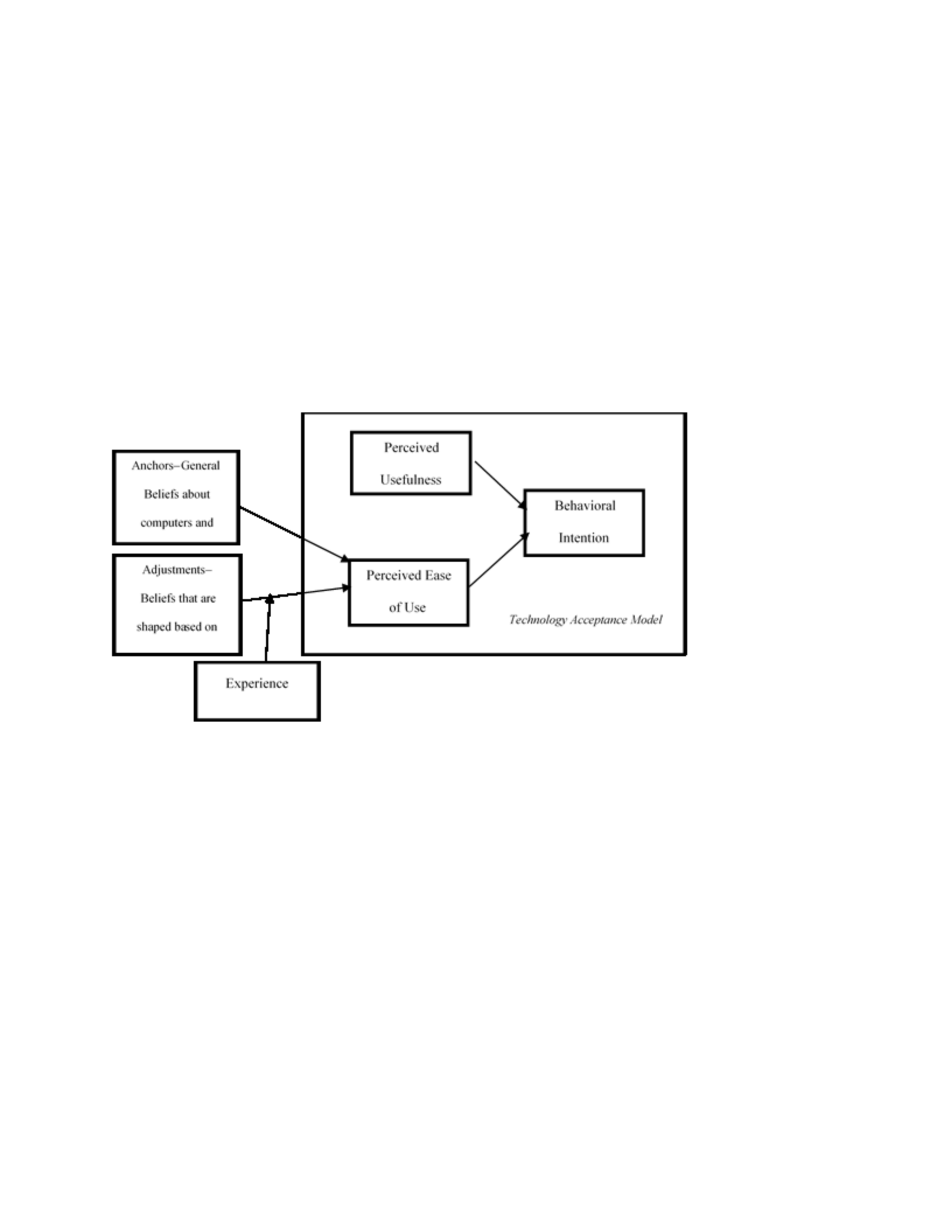
Venkatesh (2000) added to the TAM (see Figure 2), specifically to the perceived ease of
use. Before users have direct experience with the system, they are expected to anchor their
perceived ease of use to the new system to their general beliefs about computers and using
computers. As the users gain more experience with the system, the users are expected to adjust
their perceived ease of use to reflect their interaction with the system. Venkatesh specified that
anchoring and adjustment is supported by empirical evidence that when the user does not have
direct contact with the new system, the user’s perception regarding ease of use is not distinct
across various new systems.
During the early stages of the user’s experience with the new system, there is a set of
common determinants for system specific ease of use. The initial anchors for system-specific
perceived ease of use of a new target system is expected to be based on the individual’s prior

46
experience with computers, software, and other systems within the organization. Compeau and
Higgins (1995) supported this line of thinking by stating that before users have hands-on
experience with the target system, general computer self-efficacy is a strong determinant of
perceived ease of use. Teacher self-efficacy will be discussed in a later section in this chapter.
Since technology integration has been defined and is important in the classroom, it is important
to identify any technology integration barriers teachers may face.
Technology Integration Barriers
According to national surveys and reports, Cuban (2001) noted technology leaders made
up a small portion of school faculties. These early adopters of technological innovation differed
greatly from their colleagues in their frequency of computer usage in their classrooms and in the
way they teach. Cuban stated that, “Teachers and senior high school students across the country
report they use machines mostly for word processing” (p. 72). Across the country, teachers and
their students are nonusers or occasional-to-rare users of these technologies in their classroom.
Technology integration is more than using the computer as a tool. Morton (as cited in
Dias, 1999) suggested that technology integration is not viewing the computer as a tool because
it promotes the notion of the computer as an “add on” (p. 11). For example, taking students to
the computer lab once or twice a week is not technology integration. Ertmer, Ottenbreit-
Leftwich & York (2007) indicated teachers that have access to computers and support may not
integrate technology in meaningful ways. Dunleavy, Dexter, and Heinecke (2007) affirmed in
one-to-one computing classrooms, educators have found an increase in management problems in

47
their workload, issues linking laptop use to learning outcomes and standards, limited desk space,
short battery life, software deficiencies, data loss, and unreliable Internet access.
Other constraints included computers housed in labs or media center, negative attitudes
toward computers, and change. Clark (2006) contributed to these factors by asserting that the
lack of progress integrating technology is because of limited up-to-date hardware, software,
limited infrastructure and lack of technology support staff, ineffective integration of technology
into the curricula, lack of computer capability, and lack of staff development. However, on the
opposite end of the spectrum, McCain (as cited in Ertmer, 2012) stated:
“the use of technology in the classroom is not the critical issue facing education in
the 21st century. Rather, the issue of foremost importance is to develop thinking
skills in our students so that they will be able to utilize the power of technical
tools to solve problems and do useful work” (p. 424).
Once students can develop their thinking skills, they will be able to utilize technology to
communicate, collaborate, and solve problems like professionals do.
However, government officials and educators advocate the need to emphasize
technological skills so students will be able to use technology as a tool to communicate, conduct
research, and solve problems (Hew & Brush, 2007). Technology cannot be used to replace
critical thinking and problem-solving but the appropriate use of computer tools is, however,
primary to effective learning (Elliott & Hall, 2002). Since technology has become an integral

48
part of business, it seems that it should also play an equally important role in education;
therefore, barriers must be identified and addressed.
First- and Second-order Barriers
There are two types of changes in the U.S. schools that Cuban (1986) discussed in
Teachers and Machines: The Classroom Use of Technology Since 1920: fundamental and
incremental. Cuban (1988) described incremental and fundamental changes, or first- and
second-order change, as applied to school reform. Incremental changes, or first-order change,
are reforms that assume the existing organizational goals focused on improved efficiency and
effectiveness within the existing environment without disrupting the basic organizational
structure (e.g., classroom instruction). These environments were sound but needed improvement
to become more effective and efficient. Fundamental changes, or second-order changes, are
those that required restructuring of a system. Cuban defined second-order change as
transforming the organizational structure because the entire structure is defective at the core.
The focus of the change seeks to transform the systems mission and goals as well as the roles and
responsibilities of those who work in the system. Cuban mentioned that he obtained the terms
“first-order” and “second-order” change from Watzlawick et.al., (as cited in Cuban 2013).
Examples of fundamental or second-order change are: creating open classrooms
(informal education) or giving vouchers to parents to use in choosing a school. These types of
change involve visions of what ought to be different from the way they are currently (Cuban,
1988). As described above, Cuban distinguished the difference between first- and second-order

49
change relating to school reform. His explanation about first- and second-order change does not
mean he favors one over the other, but showed his involvement with the various types of change.
Brickner (1995) reported the evolution of first- and second-order barriers to change
developed from change theories posited by Cuban. Brickner defined first- and second-order
barriers as they related to teacher training on using the computer as an instructional tool. First-
order incremental change applied to computer implementation is extrinsic in nature. These
external changes include “access to computers, software availability and quality, planning time,
and technical support” (p. 38), which could be resolved through a technological fix. Brickner
posited that first-order change was a process that occurred incrementally and teachers could
implement computers into their curriculum if they proceeded through the process one step at a
time.
The way the change occurred would be through persistence, fortitude, and time.
Unfortunately, the first-order barrier does not consider teacher anxiety (second order barrier)
when going through the implementation process. Anxiety is intrinsic and may be grounded
within the teacher, which is a fundamental issue for the teacher because the teacher must think
about effective teaching methods and the best way to use the computer as an instructional tool.
Anxiety overcome by persistence, fortitude, and time may change the teacher’s epistemological
and pedagogical beliefs because the teacher’s role would be that of a facilitator instead of as a
knowledge source (Brickner, 1995). The teacher then becomes a learner along with the students.

50
This may cause the teacher to be affected subconsciously and may affect their efforts in
implementing computers in their classrooms.
The major hypothesis identified by Brickner was a teacher’s degree of computer use
versus teacher gender. Brickner’s research showed that teacher age, education level, and years
of teaching experience had no relationship to teacher’s use of computers during instruction. As a
part of Brickner’s research a series of six Technology Implementation Project (TIP) workshops
was offered for teachers, and the workshops were effective in assisting teachers in their computer
implementation efforts. Teachers became more committed to implementing computer use when
they knew they were not alone in their efforts. Some teachers used and implemented computers
while others did not until certain intrinsic (perceived) barriers were overcome. Bricker asserted
that future technology implementation will contribute to the operational definition for
implementation. Those teachers who experienced second-order barriers also believed first-order
barriers stopped them from using computers.
Ertmer (1999) addressed first- and second-order barriers as it related to pre-service and
in-service teachers who faced barriers while they worked to achieve technology integration.
Ertmer provided strategies for dealing with first- and second-order barriers to change for pre- and
in-service teachers so they could become effective users of technology. Ertmer (2012) posed the
following questions: Do external constraints exert the same influence over teachers’ technology
practices as was true 10 or more years ago? To what extent do external or first-order barriers
constrain teacher integration? Fabry and Higgs (as cited in Keengwe, 2002) somewhat address

51
Ertmers questions regarding the use of computers. In order for computers to be used in the
classroom effectively, administrators must begin to invest time, money, and resources in their
faculty not just provide more computers.
Research by Hew and Brush (2007) identified 127 barriers from past empirical studies
and classified them into six main categories: (a) resources, (b) knowledge and skills, (c)
institution, (d) attitudes and beliefs, (e) assessment, and (f) subject culture. These barriers,
though listed separately, were interrelated. These classifications seem to align with first- and
second-order barriers listed by Brickner (1995) and Ertmer (1999).
I described the different first- and second-order barriers as it related to teachers integrating
technology into their curriculum and the effects these barriers had on teachers technologically
preparing students to become 21st century professionals. The next section discusses the types of
first and second order barriers beginning with availability and accessibility of computers in the
classroom.
Availability and Accessibility
Availability and accessibility refers to the technological infrastructure related to
technology needed to implement technology in the classroom that should be easily accessible
(Ensminger, 2008). Barriers in this category include “limited access to useful, relevant, and
appropriate hardware and software, the availability of the hardware or software to teachers, and
the quality of the hardware or software” (Lowther, Inan, Strahl, & Ross, 2008; Rogers, 2000, p.
459). There should also be support personnel on-site to handle possible issues or problems. Inan

52
and Lowther (2009) pointed out that teaching practice with the integration of technology into the
classroom does not necessarily improve with the increased availability of technology. For
example, a New York City high school was wired for Internet access but most classrooms did
not have a computer. The school had three mobile laptop carts with 20 computers on each cart
for each floor in the school. One cart was shared by ten teachers and was unavailable for daily
use. The computers available for daily use were in the computer lab, which required the teacher
to take class time to relocate the learning environment to the computer lab if he/she wanted
students to have access to the computer (Kress, 2011). To find out if teachers still experience
this barrier, I will ask questions about computer access.
Access to technology was historically measured as the number of computers in a school
or Internet access in a school. Bakia, Means, Gallagher, Chen, and Jones (2009) stated: in 2007
teachers in high- and low-poverty schools reported that students had high-speed Internet access
in their classrooms. This information was necessary during the early stages of technology
acquisition but this information does not address the “availability of technology for instructional
purposes” (p. 9). Another example of technology access but lack of availability of technology to
teachers and students is the case that Kress (2011) described where one New York City high
school used technology seamlessly by integrating it as a means of surveillance. This negatively
impacted learning because it deterred teachers from relocating to the learning environment (the
computer lab). Students were brought to the lab only to type papers or create end-of-term
projects, therefore technology became an add-on instead of being integrated. On paper, the

53
school was fully wired for Internet access with a 5:1 student to computer ratio; however,
ethnographically technology was not often integrated into learning. In the context of this
research, there may be schools that are faced with this barrier of availability. I will not ask
questions in the survey regarding technology being used as a surveillance mechanism.
Making technology available is crucial in the 21st century; however, implementing
technology without taking the teacher into consideration would be futile. Chen (2013) stated that
teachers realize that technology implementation is important, but stated: “the value of a computer
depends upon what purpose it serves and how well it is utilized” (p. 7). Students use technology,
but what about those students living in rural areas and the inner city? Are teachers in these
schools trained to use technology? Bakia, Means, Gallagher, Chen, and Jones (2009) reported
that teachers in high poverty districts who used technology to enhance student learning in math
and English Language Learning (ELL) classes were more likely to report needing additional
professional development related to the use of technology than those in low poverty schools.
One of the objectives of the Enhancing Education Through Technology (EETT) program was for
teachers in high poverty schools to have access to educational technology in the same manner as
that of students and teachers in low poverty schools. The EETT report stated that equivalent
technology access has been achieved except for the availability of laptop computers and
professional development.
Buckenmeyer (2010) noted that teachers in high poverty schools had significantly less
training to use technology than teachers in more affluent schools. In 2006–2007 teachers in high

54
poverty schools consistently requested technology-related professional development (Bakia,
Means, Gallagher, Chen, & Jones, 2009). The challenge for the less affluent schools was getting
the teachers in the classrooms prepared to use technology with willingness to incorporate
“changing technologies as they emerged” (p. 27). Other challenges teachers and students faced
were the perpetuation of inequitable education. Inequitable education means students and
teachers continued to lack up-to-date facilities, financial resources, hardware, and software.
Other factors of inequitable education are the absence of technology initiatives due to other
pressing issues such as overcrowded classrooms, teacher and administrator turnover, insufficient
Annual Yearly Progress (AYP), high dropout rates, curriculum reforms, and school safety
(Kress, 2011). Although the student-to-computer ratio has dropped, and more students have
access to an Internet-connected computer, there are no guarantees that teachers have easy access
to the resources or to a supportive school administration. The next barrier that arises is funding.
Funding
In many schools, funding may be an issue contributing to the lack of technical support,
hardware and software purchases, and teacher technology integration. Rogers (2000) proposed
that inadequate funding may reflect an individual choice by the administrator to allot funds to
areas other than technology. Maintaining up-to-date software can be expensive and schools
cannot always afford to purchase updated software (Chen, 2013). If the teacher is not a part of
the software selection process, the appropriate software may not be purchased. The cause for
this may be due to an administrator’s attitude toward technology instead of student needs.

55
Administrator Support
Not all administrators are supportive of technology integration but want teachers to be as
competent as possible using technology. Bauer and Kenton (2005) affirmed: “unless
administrators take the lead and make a difference, schools will continue to lag behind other
sectors in society” (p. 539). Administrators need to consider the importance computers play
within the structure of the school’s curriculum and allow teachers to be trained. Training is not
the only factor that has to be considered for teachers to incorporate technology into their
curricula, but support is also important. Koehler and Mishra (2009) acknowledged that
institutional contexts are often unsupportive of teacher efforts to integrate technology into their
classrooms. Teachers often do not have adequate digital technologies for teaching and learning.
Lack of adequate support for the use of Information and Communication Technology
(ICT) also cause obstacles for teachers. The term support as defined by Ronnkvist, Dexter, and
Anderson (1998) includes but is not limited to: “facilities, presence of support staff, personal
help and guidance, professional development, and professional incentives” (p. 2). Attitudes
toward technology in relation to administrator support and technology integration determine
teacher roles in whether they will adopt or reject technology integration. If teachers believe the
use of technology is not important, they will not use technology. Chen (2008) asserted that
administrators should pay attention to teacher beliefs because these beliefs influence their
decision-making processes regarding technology use.

56
Administrators must support teacher efforts by developing new settings in which the
teacher’s work will not constrain or limit their hard work (Ertmer & Ottenbreit-Leftwich, 2010).
Not only do teachers have to change the way they do things within their classrooms, they must
change the way they think about how they are going to incorporate technology. Brickner (1995)
suggested that technology alone is not the answer to computer implementation. Koehler and
Mishra (2009) affirmed that for teachers to acquire a new knowledge base is challenging,
especially if it is a time-intensive activity that must fit into their busy class schedules. The
teachers are often not provided with adequate training and their professional development often
is a one-size-fits-all approach to technology integration when they need a more context-specific
training related to the classes they teach. Teachers trained in the effective use of computers is of
paramount importance. Bakia, Means, Gallagher, Chen, and Jones (2009) expressed that
professional development should engage teachers with topics that could change their
instructional practice, such as learning to use technology to support new teaching methods or
teaching concepts in specific subjects. Koehler and Mishra (2009) stated that teachers need to be
provided with a way to combine what they know and how to apply what they know in the
“unique circumstances or contexts within their classrooms” (p. 62). A paradigm shift must take
place for teachers to incorporate technology into their classes.
As mentioned in an article by Dias (1999), change is a barrier that is often ignored.
Teachers are asked to adopt new teaching tools like computers and the Internet as part of their
repertoire as well as change the way they teach their students. This has been quite an adjustment

57
from using the chalkboard, overhead projector, or television. Technology integration requires
teachers to go through a process that can take years to complete. In order for teachers to change
their beliefs about technology integration, their classroom practices and existing pedagogical
beliefs must be taken into account (Ertmer, 2005). Providing teachers with technology uses that
would support their immediate needs may be more effective than trying to change their beliefs.
In order for teachers to develop confidence and competence with technology, they need technical
and pedagogical support.
Technical Support
Teachers need adequate technical support when using and maintaining technology.
When schools have limited or no support, this hinders technology adoption by the teacher (Bauer
& Kenton, 2005; Chen, 2008; Chen, 2013; Clark, 2006; Cuban et al., 2001; Hew & Brush, 2007;
Rogers, 2000). Technical support should have the necessary skills to troubleshoot and remedy
hardware and software problems followed by a quick response time to meet the needs of the
faculty (Hew & Brush, 2007). For example, teachers can use telephones in their classrooms to
get answers to technical related questions. Another suggestion would be for administrators to
provide enough personnel on-site to assist teachers. Teachers with a class of 20 or more students
do not have time to manage technology resource breakdowns (Bitner & Bitner, 2002). If
technical glitches occur frequently without technical assistance, teacher confidence in technology
integration will dissipate. However, the technical support would need to have the technical skills
to meet the needs of the faculty. If technical support is not available, the teacher may become

58
frustrated and give up, especially if it is the teacher’s first time integrating technology into the
classroom. Another external barrier for teachers is the lack of time.
Time Constraints
Time constraints occur when teachers need to develop new curricula and new skills.
Lack of advanced training for teachers poses a barrier to the school and teacher, especially if the
teacher is new to technology integration. Fear may cause teachers not to incorporate technology
into their curriculums and provide them with an excuse not to use technology (Rogers, 2000). In
other studies, researchers found that teachers did not integrate technology consistently as a
teaching and learning tool because their students did not have enough time to use computers.
Also, teachers need additional planning time to incorporate technology into their lessons (Bauer
& Kenton, 2005; Chen, 2008). Teachers also need clear direction for integrating technology into
their instruction. If teachers lack clear direction for incorporating technology into their
classrooms, they will not use technology. If teachers are not comfortable using technology in
their classrooms, they will not use technology. Teachers need to feel confident when using
technology. They want to know that their students are learning because of using technology.
Teachers who are not comfortable with integrating technology may have second-order barriers of
negative perceptions, beliefs, and self-efficacy.
Teacher Perceptions, Beliefs, and Self-Efficacy
Teacher perceptions, beliefs, and self-efficacy represented another obstacle when
integrating technology into instruction. These intrinsic second order barriers affect teachers

59
mentally and emotionally. Nespor (as cited in Pajares, 1992) provided resources from the
following authors who defined beliefs. Nespor suggested:
“Beliefs have stronger affective and evaluative components than knowledge and
affect typically operates independently of the cognition associated with knowledge”
(p. 309).
Abelson (1992) defined beliefs in terms of people manipulating knowledge for a
purpose or under a necessary circumstance.
Brown and Cooney (1992) explained that beliefs are dispositions to action and major
determinants of behavior.
Sigel (1992) defined beliefs as “mental constructions of experience…” (p. 313).
Harvey (1992) defined beliefs as an “individual’s representation of reality, which has
enough validity, truth, or credibility to guide thought and behavior” (p. 313).
Teacher beliefs are related to their teaching practices and some practices are more resistant to
change. Pajares (1992) emphasized that teachers hold more than beliefs in regard to their work,
students, and subject matter. Teachers have educational beliefs that encompass: (a) pedagogy,
(b) efficacy, (c) epistemological beliefs, (d) attributions, (e) locus of control, (f) motivation, (g)
perceptions of self, and (h) feelings of self-worth. If teachers are required to incorporate
technology into their instruction, they may have to reconsider their pedagogical beliefs.

60
The following quotes from a body of literature concerning teacher beliefs cited from
research conducted by Hermans, Tondeur, vanBraak, & Valcke (2008) centered on teacher
educational beliefs:
1) Individual conceptions about desirable ways of teaching and conceptions about how
students come to learn. (Beijaard, 1998, p. 1500).
2) Beliefs are grounded in teachers’ personal belief systems and represent
psychologically held understandings, premises, or propositions felt to be true. (Richardson, 2003,
p. 1500).
3) The set of someone’s beliefs about the physical, the social world, and the self is
clustered in a belief system. (Rokeach, 1976, p. 1500).
4) The main contention is that teachers’ classroom use of computers cannot be fully
understood without taking their underlying educational beliefs into consideration. (Becker, 2001;
Dede, 2000, p. 1500).
Teacher attitudes and beliefs towards technology play an important role in what they do
in their classrooms. Schrum and Glassett (2006) asserted: “Teachers’ technology beliefs are
influenced by their teaching philosophy” (p. 44). If teachers resist technology, it is because of
their existing teaching beliefs. Bitner and Bitner (2002) deduced that teacher attitude toward
using technology within their classroom was a key factor in integration.
Ertmer (1999) noted that teacher beliefs are based on second-order (personal) barriers
that hinder the implementation of technology into their classroom. She stressed that teachers

61
will run into these barriers while trying to implement technology into their classrooms and will
need to find ways to overcome these obstacles. Strategies and discussions will need to occur for
teachers to clearly define and identify the role technology will need to play when incorporating
technology into their curriculum. Ertmer (2000) also noted that teacher beliefs regarding their
ability to use technology in the classroom may be key, especially since the role of self-efficacy
plays a vital role in determining behavior.
Schrum and Glassett (2006) noted that teachers felt that teacher identity (including role of
the teacher and the student-teacher relationship) have to be more clearly defined, that
administrative support was essential, and having relationships with decision makers are essential.
Teachers also want administrators to understand that adopting technology is a significant
challenge. Teacher attitudes toward their colleagues, school, and the purpose for them to use
technology influences their implementation of technology. Their perception of their
environment and the support they receive will affect long-term technology implementation.
Bahr, Shaha, Farnsworth, Lewis, and Benson (as cited in Schrum and Glassett (2006) affirmed
that introducing technology effectively into instruction is a struggle. The important factors that
need to be considered are teacher’s perceptions about ways to incorporate technology into their
instruction. If teacher’s attitudes are not positive towards the usefulness of technology in
instruction, or using technology for instruction technology will not be used.

62
Teacher Perceptions
There was no clear description of teacher beliefs or perceptions toward technology
integration in research literature. Hutchinson and Reinking (2011) reported in a national survey
exploring literacy teachers’ perceptions of integrating Information Communication Technologies
(ICTs) into instruction, that teacher perceptions are consistent regarding obstacles to technology
integration. Teacher perceptions, beliefs, and self-efficacy an intrinsic barrier, should be
considered when integrating technology into instruction. If teachers find no connection between
using technology and the subject matter they are teaching, it will be difficult for them to
incorporate technology into their instruction. Pajares (1992) described teacher beliefs a “messy
construct” (p. 307) and teacher beliefs influenced their perceptions and judgments and affect
their behavior in the classroom. Hutchinson & Reinking (2011) stated: “If teachers have shallow
definitions or incomplete perceptions of integrating ICTs into instruction—or perhaps
oppositional stances—they are not likely to achieve an authentic curricular integration of ICTs”
(p. 315). When teachers see a connection between the content and technology they are more
likely to integrate technology.
Further research indicated the difference between beliefs and knowledge that must be
taken into consideration when dealing with teachers. Nesbitt and Ross (as cited in Pajares, 1992)
asserted: “conceptualized generic knowledge as a structure composed of a cognitive component,
schematically organized, and a belief component, possessing elements of evaluation and
judgment” (p. 310). Knowledge has to do with understanding something mentally, whereas

63
beliefs influence how an individual makes sense of the world. Bandura (1997) acknowledged
that teachers who believed in their ability affected their general orientation toward the
educational process and their instructional activities.
Teachers were the ones who were receptive to and adopted educational technology.
Oliver (as cited in Bandura, 1997) brought up an interesting point. Bandura said, “Teachers of
low-perceived mathematical efficacy distrust their capacity to make good instructional use of
computers” (p. 241). Teachers who do not believe in their ability as a teacher or to use
technology in the classroom find themselves distressed and probably would not choose teaching
as a profession if they had it to do over again. Bandura (1997) stated that teacher’s efficacy
beliefs can influence students’ intrinsic and academic self-directedness. Students learned more
from teachers with high self-efficacy than from those with ensuing doubts about their ability as a
teacher.
Beliefs play a critical role when it comes to how individuals think about and behave
toward using technology. Knowledge systems are open to evaluation and critical examination
whereas belief systems are not flexible or dynamic (Pajares, 2008). Wachira and Keengwe
(2011) expressed that teachers who have not personally experienced technology-infused
classrooms are limited in finding appropriate ways to use technology to enhance learning.
Many educators ask “But what if the technology breaks down? What will we be able to
do then?” These are questions many educators ask and it causes them to develop a negative
perception toward technology when the questions cannot be answered. Hill (as cited in Davis,

64
1999) postulated that both self-efficacy and outcome beliefs have influence on decisions to learn
a computer language. From interviews conducted by Wachira and Keegwe (2011), they asserted
that “teachers did not know how to take advantage of technology as powerful tools to strengthen
students’ understanding . . .” (p. 23). Teacher’s lack of confidence using technology may cause
them to be reluctant to ask for assistance for fear of being thought of as incompetent.
Teacher attitudes regarding technology integration was conceptualized by Hew and
Brush (2007) as “. . . teachers liking or disliking the use of technology” (p. 229). Koehler and
Mishra (2009) explained that teachers need content knowledge, pedagogical knowledge,
instructional resources and materials, and the ability to change the way they think about how to
use technology. As previously stated, knowledge of technology and content is not enough if
teachers do not have confidence in themselves to facilitate student learning when using
technology. Teacher self-efficacy plays an important role when it comes to teaching, student
learning, and using technology. In the next section, I will discuss the definition of self-efficacy
as postulated by Albert Bandura and relate that definition to teachers’ self-efficacy regarding the
use of computers.
Teacher Self-efficacy
Self-efficacy is an internal perception of the individual. Bandura (1986) defined self-
efficacy as: People’s judgments of their capabilities to organize and execute courses of action
required to attain designated types of performances. It is concerned not with the skills one has
but with judgments of what one can do with whatever skills one possesses (p. 391). Self-efficacy

65
perceptions influence a person’s decisions about what behaviors to carry out. Gong, Xu, and Yu
(2004) asserted:
“Self-efficacy perceptions have been found to influence decisions about
what behaviors to undertake: the effort exerted and persistence in attempting
those behaviors, the emotional responses (including stress and anxiety) of the
individual performing the behaviors, and the actual performance attainments of
the individual with respect to the behavior” (p. 366).
Therefore, if a teacher has a high self-efficacy toward using computers or mastering a
new technology, then he/she believes they will be effective using the computer or mastering that
new technology.
Feltz (1982) affirmed that performance-based procedures are more effective than other
methods in producing behavioral change. She asserted that “perceived self-efficacy influences
not only choice of activities but also persistence of coping efforts in the face of anxiety-
provoking situations” (p. 764). As with TAM, computer self-efficacy acts as a determinant of
perceived ease of use before and after using the computer or mastering the technology
(Venkatesh, 2000; Gong, Xu, & Yu, 2004). A teacher with high computer self-efficacy has a
positive perception of his/her ability to use computers to accomplish the tasks they set out to do.
Compeau and Higgins (1995) discussed computer self-efficacy as an individual’s self-judgement
based on what they can do using a computer, not what they did in the past with the computer.
This means the person is not focused on the basics of using a computer, such as turning it on or

66
creating documents and spreadsheets, but on analyzing data and creating reports. Chen (2008)
reported the relation between teacher beliefs and teacher practices should shed light on their
technology-integration decisions.
The following example provides information regarding student use of computers some
teachers experienced. In the 1:1 laptop initiative study by Dunleavy, Dexter, and Heinecke
(2007), they discovered the overall use of the 1:1 laptops appeared to contribute to the learning
environment, but online research presented unique challenges for the teachers and detracted from
effective teaching and learning. Although the school had adequate availability and accessibility
to use technology, teachers were concerned about student access to inappropriate materials (e.g.,
games, pornography, etc.) and wasting time doing ineffective searches on the Internet. Although
the concerns of these teachers are valid, Cope and Ward (2002) asserted teachers who perceive
learning as an accumulation of information are likely to be those teachers who use the teaching-
centered approach. These teachers are the talking heads or the teacher who imparts information
to students and use assessment techniques that encourage tests and rote learning.
Teachers must know how to teach software to students, select the right applications to
meet the instructional needs of the curriculum and learning needs of their students while
managing the hardware and software (Coppola, 2004, as cited in Ertmer & Ottenbreit-Leftwich,
2010). Not only do teachers feel the pressure about acquiring technology-related management
skills, but they need to feel confident using this knowledge to facilitate student learning. Ertmer
et al., (2012) explained: “Teachers noted that the strongest barriers preventing other teachers

67
from using technology were their existing attitudes and beliefs toward technology, as well as
their current levels of knowledge and skills (p. 423). Like in the TAM, teachers who believed
that technology can improve learning are more than likely to implement technological
innovations that are in line with their beliefs about teaching methods and student learning.
Bandura (1977) maintained his support for self-efficacy by stating that the relationship
between efficacy expectations and performance are give-and-take: “Mastery expectations
influence performance and are, in turn, altered by the cumulative effects of one’s efforts” (p.
194). Therefore, self-efficacy and behavior are reciprocal. Yi and Hwang (2003) reported
findings regarding goal orientation, intrinsic motivation, and self-efficacy. They reported the
three play an important role in determining a person’s behavior.
Ertmer, Ottenbreit-Leftwich, Sadik, Sendurur, and Sendurur (2012) described how one
teacher had her first-grade students collaborate with other students around the world using blogs
to find out what they had for breakfast. Hew and Brush (2007) admitted that teachers who used
technology to keep students busy did not believe technology was important and failed to see the
value of technology for educating their students. Knowledge of technology is not sufficient if
teachers are not self-confident using technology. Abbitt (2011) denoted self-efficacy beliefs will
“influence decisions and behaviors” (p. 136) while being influenced by other characteristics and
prior behaviors within a given domain. Ertmer (2000) simply summarized Bandura’s self-
efficacy definition: “. . . self-efficacy is thought to mediate the relationship between skill and
action” (p. 115). Ertmer further stated: “Without skill, performance isn’t possible; yet without

68
self-efficacy, performance may not be attempted” (p. 115). As discussed in the prior section
about the basis of TAM, we can see here that self-efficacy plays a role in technology usage,
acceptance, and technology integration. Chen (2008) highlighted a few factors regarding
teachers and technology integration.
The teacher must believe that: (a) using technology can help them reach higher level
goals, (b) technology will not deter students from reaching higher level goals, and (c) teachers
will have the ability to use technology and have sufficient resources to use technology within the
classroom. Self-efficacy influences teachers’ decisions about using technology in the classroom.
Teachers with high self-efficacy use technology in the classroom based on knowledge and
pedagogy. Penuel (2006) acknowledged that teachers who received frequent professional
development felt prepared to use technology with students. Teachers who spent more than nine
hours in educational technology activities felt “well prepared to use computers and the Internet
for instruction” (Penuel, 2006, p. 333). Teachers who found professional development relevant
and useful to their teaching were more likely to integrate technology into their classrooms.
Chen (2008) asserted, “To implement national plans for technology integration, policy
makers must know how teacher beliefs influence teacher practices regarding technology
integration” (p. 65). Teacher high self-efficacy toward using technology is an essential factor for
integrating technology into their classroom. Integrating technology into the classroom influences
their students’ attitudes toward using technology. While teacher self-efficacy plays an important
role in their integrating technology into their classrooms and influences student use of

69
technology, Holden and Rada (2011) concluded that high technology acceptance may alleviate
second-order barriers. Having a positive attitude toward technology usage allows for successful
integration of technology into the classroom.
Successful Integration of Technology
Integration of technology into the classroom means the computer is actively used by the
teacher interacting with the content spontaneously while students ask questions, conduct
individual and small group projects, and do hands-on work and computer activities. Davies
(2011) claimed that successful integration of learning technologies in the classroom would lead
to enhanced learning outcomes. Successful technology integration is the ability to use
technology to facilitate learning. Using technology as a part of the instructional condition and as
a key teaching tool within the school to enhance instruction impacts learning (Brickner, 1995).
Computer usage should be used with a plan or rationale for its use, not just an add-on to
instruction.
Kumar, Rose, and D’Silva (2008) in their study of teacher computer acceptance and
Actual Usage of Computer (AUC) in Malaysia, found that AUC among mathematics, science,
and English language (MSE) teachers were at the moderate level. They claim there is resistance
among teachers using technology in education even though there is a demand for IT usage by
business leaders. Kumar et al., asserted that the challenge for technology use among many
individual teachers created a challenge for school administrators, technology advocates, and

70
policy makers. Kumar, et al., noted there are several factors that influence teacher use of
technology.
These factors are labeled as technology acceptance constructs, which are personal and
behavioral in nature and include the areas of attitude, perceived usefulness, perceived ease of
use, job relevance, and computer compatibility. Kumar et al. (2008) posited from their research
on technology acceptance constructs that the cause for teachers using the computer moderately
was due to their acquiring the knowledge and skills pertaining to computer technology but not
owning a computer. Until teachers see that AUC is beneficial, interesting, easier to teach, and
exciting, it will be difficult for them to see how AUC is job-related and useful (Kumar et al.,
2008). It is important to note that when teachers do not use technology on their own
consistently, it is harder for them to support the use of technology in the classroom.
Dias (1999) maintained that successful technology integration is a seamless process that will
support the curriculum and engage students in meaningful learning. Students can demonstrate
what they learned in new and creative ways. Davies (2011) concluded that to use technology
effectively, the teacher must understand the learning goals and the function of the technology to
accomplish these goals. Technology permeates daily routines and work, and is not an end but a
means to an end.
Technology Integration and the 21st Century Student
Baytak (2011) points out very little research has been done on student perception of
technology in education. Researchers who explored elementary, middle, and high school student

71
stated that research on student perceptions are few. Baytak reported that researchers found
students have a positive attitude toward computers and perceive computers as a part of their life.
The Secretary’s Commission on Achieving Necessary Skills (SCANS) reported: “Every student
should graduate from high school ready for college and a career.” (1991, p. 7). The primary
focus of my research is on teacher perceptions and beliefs about technology integration barriers
and whether students are prepared technologically as 21st century professionals.
Voogt, Erstad, Dede, and Mishras (2013) described 21st century competencies and the
specific role technology takes in the learning process. Their research showed that teachers are
not using strategies to assist students in obtaining those competencies (e.g., collaboration,
communication, digital literacy, citizenship, problem-solving, critical thinking, creativity,
productivity, digital literacy), which are essential for the 21st century student. The way students
learn is related to the way teachers teach. The reason for the lack of integration is due to
insufficient preparation of teachers and the absence of any systematic attention to innovative
strategies in their teaching practice. Teachers that use more constructivist ways in their teaching
seem to provide an enhanced learning outcome for students. Per Chen (2008), learning with
technology can foster higher order thinking skills, self-regulated and collaborative learning in
students.
When computers are integrated into the classroom, they can be used in various ways
(e.g., research, word processing, computations, slide shows, and other visual presentations). The
use of computers can give students direct access to ideas, facts, and primary sources by linking

72
images and concepts to sound and film. Students can create professional presentations; work in
groups or pairs on long term projects. The teacher may then move into the role of facilitator to
support and challenge students. With the use of computers, students can demonstrate their
knowledge and understanding of the school standards set by teachers.
In their book Integrating Technology for Meaningful Learning (3rd ed.), Grabe and Grabe
(2001) discussed the importance of standards and how these standards can influence classroom
practice. The International Society for Technology in Education (ISTE) established standards
and benchmarks that defined what a student should know and can do with technology. For this
paper, I will list the foundation standards for students and benchmark standards for grades 9–12.
Technology Standards for Grades 9–12
Foundation Standards for Students
1. Basic operations and concepts
Students demonstrate a sound understanding of the nature and operation of
technology systems.
Students are proficient in the use of technology.
2. Social, ethical, and human issues
Students understand the ethical, cultural, and societal issues related to
technology.
Students practice responsible use of technology systems, information, and
software.

73
Students develop positive attitudes toward technology uses that support
life-long learning, collaboration, personal pursuits, and productivity.
3. Technology productivity tools
Students use technology tools to enhance learning, increase productivity,
and promote creativity.
Students use productivity tools to collaborate in constructing technology-
enhanced models, preparing publications, and producing other creative works.
4. Technology communication tools
Students use telecommunications to collaborate, publish, and interact with
peers, experts, and other audiences.
Students use a variety of media and formats to communicate information
and ideas effectively to multiple audiences.
5. Technology research tools
Students use technology to locate, evaluate, and collect information from a
variety of sources.
Students use technology tools to process data and report results.
Students evaluate and select new information resources and technological
innovations based on the appropriateness to specific tasks.
6. Technology problem-solving and decision-making tools

74
Students use technology resources for solving problems and making
informed decisions.
Students employ technology in the development of strategies for solving
problems in the real world.
Communication Tools (Benchmarks)
Grades 9–12
Use technology tools and resources for managing and communicating
personal/professional information (e.g., finances, schedules, addresses, purchases, and
correspondence).
Routinely and efficiently use online information resources to meet needs for
collaboration, research, publications.
Select and apply technology tools for research, information analysis, problem-solving,
and decision-making in content learning (p. 38).
When standards are in place, the implication is that students will meet essential
knowledge and skills that, at a minimum, schools will help students to achieve. Sharpe (2014)
indicated that, “educators generally want technology integrated into the classroom but there are
no firm guidelines for accomplishing this task” (p. 441). Technology is developing faster than
teachers can keep up with and they must continually change and develop themselves to adapt and
take advantage of new technologies. Morrison and Lowther (2002) specified the overriding
agreement between education reform and educational technology is the relationship between the

75
two. When those in authority restructured the schools, they failed to consider the use of
technology when designing new programs.
Likewise, instructional technologists failed to consider the redesign of the school when
implementing technology (e.g., location of printers, computers, and use of laptops). The issue
could be the type of technology available and the way it is used. For example, the use of drill
and practice software that emphasizes rote memorization when it is based upon a behavioral
approach to teaching. This approach is inconsistent with today’s student-centered approach to
learning in an open-ended environment and not supported by the traditional uses of technology.
Instead of educational reform and educational technology being at odds with each other, if the
teacher changes his/her view of computers as a tool to solve problems instead as a means to
deliver instruction, agreement could result between the two factors. The authors Morrison and
Lowther (2002) believe that using computers for more than a delivery device but integrating
computers into the curriculum as a tool for solving real-world problems would start a revolution
that could affect how students learn.
Making computers readily available to students during the school day allows students to
use computers as a tool and teachers to take different approaches to using computers as tools.
This paves the way for computers to be integrated into the classroom so the student will know
when and how to use computers to solve problems. Students can use the computer to “apply
solutions used in the real world to analyze and manipulate real-world problems” (2002, p. 15).
Students and teachers can use the computer to search beyond the classroom for answers.

76
Technology and Student Learning
Children have accepted and learned to use the technology incorporated into their lives. By the
time children turn four, they can turn on a stereo and play video games. Does this mean students
are technologically competent? Clements, Nastasi, and Swaminathan (as cited in Wright &
Shade, 1994) claimed that computers enhance or augment children’s school learning (p. 24). By
using a computer, they gain a new opportunity for understanding—they can link what they
already know and thereby cement new knowledge in place. For example, students are given a
project to work on. Using a computer graphics program, they gain an ability to focus their
attention on relationships they may have had difficulty seeing together (such as number and
size). This activity presents children with new opportunities for understanding. Their interest
and understanding linked with their understanding of the new relationship between number and
size enlarges what they already know, cementing their new knowledge.
Technologically preparing students can be a challenge for teachers who do not know the
nature and implications of the change. Solomon and Gardner (as cited in Wright & Shade, 1994)
offered that “computers alone do not act to affect children’s learning; they act in concert with the
competencies of the individual and the aspects of the social system in which they are embedded”
(p. 26). Therein, the determination of technology’s appropriateness should be judged by the task
to be accomplished. Bowman and Beyer (as cited in Wright & Shade, 1994) identified three
learning experiences teachers could develop for their students: (a) focus on the task and learning
assumed to be the by-product. The teacher oversees all the activities for quality and quantity; (b)

77
the teacher is responsible for setting cognitive goals that refer to children’s prior knowledge,
asking questions to stimulate discussion, and monitoring their comprehension process. The
teacher focuses on setting cognitive goals and focuses on the students understanding. The
teacher will encourage the student while maintaining control over the learning process; and (c)
the teacher turns control of the learning process over to the student who is encouraged to ask
questions, determine his/her need for information, and monitor his comprehension. The teacher
therefore plays a part in the student’s learning process acting as a facilitator and guide.
Donaldson (1993) affirmed through his research that children’s own motivations and
concerns shape their learning process as well. Engaging learning experiences occur when a
learner is interested and can control the pace and type of information to be processed. Bowman
and Beyer (as cited in Wright & Shade, 1994) asserted, the best computer tool for a student to
learn is when he/she can control the way he/she experiences new information or knowledge.
Computer use is not a panacea, however, certain types of thinking work in conjunction
with technology such as: linear and sequential organization of ideas, expression of symbolic and
abstract thought and discrete categorical systems. Bowman and Beyer assessed that: “Computer
technology is not a single tool but rather a continuum of tools having in common a small
microchip that permits humans to expand greatly their power over the environment and over
ideas” (p. 19). Computers should be used as a tool for thinking. It will be up to the teacher to
integrate computers as a problem-solving tool, which will take more time, commitment, and
vision.

78
For technology to be successfully integrated into the classroom, Hooper and Rieber (as
cited in Ornstein & Behar, 1995) believed two things must happen: first, the classroom must
become learner-centered. Second, students and teachers will need to be able to collaborate with
technology and create a community that nurtures and supports the learning process. Ornstein
and Behar (1995) considered: “If teachers themselves become models of exploration and inquiry,
children are likely to follow. Technology is an area of the curriculum as well as a tool for
learning in which teachers must demonstrate their own capacity for learning” (p. 61). When
integrating technology, it may mean that the curriculum and setting may also have to change to
meet the learning opportunities that present themselves. Ornstein and Behar (1995) made a valid
point that doctors and dentists with skills from the 1950s would not be capable of practicing
using today’s medical and dental technology, but teachers from that era would probably feel
comfortable using today’s classrooms.
Today’s teachers will need to move beyond the student-as-bucket and teacher pouring in
knowledge metaphor. In this aspect learning is viewed as a consequence of receiving
information. Students should be able to remember, understand, and use information, which
students regularly leave school unable to achieve. Without meaningful learning (the ability to
build external connections between existing and new information), students are doing mindless
tasks that have no meaning. Teachers must prepare for technology to become a part of their
future by keeping up with change. They must adopt effective strategies by reading technical and
educational publications, attending professional development sessions, and perusing various

79
websites to keep as current as possible with technology. For learning with technology to be
meaningful, teachers will need to design lessons based on instructional principles and effective
pedagogy and not focus strictly on the technology.
The following principles that teachers should consider when using technology in the
classroom are: Effective learners actively process lesson content by actively seeking and
generating relationships between lesson content and prior knowledge. Teachers will need to find
the right blend of appropriate technology and pedagogy to encourage students to engage in
deeper cognitive activity; and, presenting information from multiple perspectives increases the
durability of instruction. For example, in cooperative learning the students are teaching each
other in small groups and students are responsible for each other’s learning. Ornstein and Behar
(1995) stated, “Cooperative learning and hypermedia represent technologies with significant
potential for developing multiple perspectives” (p. 258). Hypermedia is a technology that
organizes information non-sequentially. The students browse through an information base to
construct relationships between their personal knowledge/experiences and the lesson. This
allows the student to obtain information in a logical fashion, explore and discover
interrelationships often missed in the traditional presentation of the lesson.
The teacher must manage this learning carefully and individual accountability must be
maintained. Effective instruction should build upon student knowledge and experiences and be
grounded in meaningful contexts. While instruction should attempt to build upon student’s
experiences, the role of technology should be flexible enough to adapt to the student’s ongoing

80
instructional needs. Because of using the above principles as possible guidelines for
incorporating technology into instruction, teachers must be willing to venture into re-
conceptualizing their roles in the classroom and work at trying to create environments where
students can actively engage in “cognitive partnerships with technology” (Ornstein and Behar,
1995, p. 262). For technology integration to work, teachers will need to have vision and be
active in building what is needed for change and growth.
Technology integration strategies and approaches can be used as a remedy to assist
students to learn prerequisite skills in a more efficient manner using drills and tutorials to help
teachers provide individualized instruction. Drill and practice programs could replace
worksheets while a tutorial can offer instruction. Self-instructional materials and simulations can
be used to assist self-motivated students to pursue skills they believe are related to what they are
learning or provide a foundation for later concepts. For example, a simulation can let students
repeat an experiment without using hazardous materials.
Word processing programs help students to overcome logistical hurdles by allowing
students to rewrite papers more quickly and efficiently without the labor of handwriting.
Computer Assisted Design (CAD) software programs allow students to try different house
designs to see how they look before building actual models. Multimedia and videos can prove
helpful when trying to capture the attention of some at-risk students. To get students to think
about how they think, problem-solving courseware and multimedia applications could be used.

81
Teachers who work with students in the areas of math and science may find it useful to use video
programs that help students build mental models of problems to be solved.
Creating collaborative efforts among students gives them the opportunity to make
contributions to their projects on their own terms. Students who work together in collaborative
groups find it more motivating and easier to accomplish projects using technology resources
(Robler & Edwards, 2000). This has the implication of enhancing students’ self-esteem, increase
their willingness to spend more time on learning tasks, as well as give them an opportunity to
learn from each other, the teacher, and the media. Students can practice using modern methods
of communicating information (e.g., using presentation software to present a report instead of
using cardboard charts). Robler and Edwards conceded: “Using technology to communicate
visually represents Information Age skills students will need both for higher education and the
workplace” (p. 71). Student’s use of technology in preparation for the workforce or for college
is important for the economy.
The 21st Century Workforce
Technology is one discipline that influences economic progress. The global economy is driven
by technological innovation and there is a need for technology education in K–12 school
programs. Bybee and Starkweather (2006) indicated that business and industry recognized that
technology education should be viewed as fundamental to achieving workforce competencies.
The SCANS (1991) report discussed designing classroom activities using technology to
motivate students to increase their technology skills and help them obtain jobs in the future. This

82
report suggested the need for students to be technologically developed. However, in today’s
classrooms, students do not seem to be experiencing this. Jacobsen, Clifford, and Friesen (2002)
asserted that technology integration is not used as a seamless process for students to think and
learn but “standardized, secured, preconfigured, and locked down” (p. 365). They further
explain that there is a growing digital divide for students in what they know and what they are
permitted to do in schools. Education has not kept up with the growth of technology the way
businesses have. Clark (2006) confirmed that technology has a greater impact on business than
in education.
Technology has affected every sector in society: Retail, manufacturing, government,
nonprofits, communications, and sales, to name a few. Each of these sectors has been affected
by technological advances. As technology became more influential in our society, education has
faced more problems. On a global scale, it appears students in the United States have fallen
behind in our technologically rich environment. Effective infusion of technology must be
developed and guided by teachers because it has never been done before (Elliott & Hall, 2002).
Educators are faced with challenges integrating technology because they were not prepared to
create meaningful learning opportunities for students.
Today’s workforce requires that workers be equipped with knowledge and skills. From a
business perspective, there has always been a need to find and use information quickly and
efficiently. Technology has allowed this to happen at warp speed. This is the Information Age.
Information has become a vital part of our society. Administrators, government officials, and

83
many educators have high hopes to close the gap between the haves and the have-nots in relation
to technology. Gerstner Jr., former Chief Executive Officer of IBM (as cited in Cuban, 2001)
expounded on this by suggesting that we need to recognize that our public schools are low-tech
institutions operating in a high-tech society. The same changes that cataclysmically affects
businesses to change, should be used to teach students and teachers which will also improve the
way our schools are operated.
Therefore, I believe when teachers begin integrating technology into the classroom, they
will raise the standards of education and will build workplace skills in their students. Students
involved in a skills-based, vocationally driven curriculum known as a working-class school learn
skill sets that will enable them to obtain jobs once they complete high school. In a study
completed by Santa Maria (2010) described these jobs as hybrid technology employment jobs
that will have a working and business class status that allow the student to be employed in
various settings, such as industry without doing manual labor.
These workers, defined as hybrid technologists, are considered knowledge workers and
they work closely with management on technology related projects. They gain respect of their
peers and those around them because of their technical abilities, their skill sets, and ability to use,
offer services, or perform essential tasks using technology. These workers can troubleshoot,
install, repair, and program, or perform some tasks that others within their work environment
may be unable to do (Santa Maria, 2010). Due to the increase in technological innovation, there
is a demand for competitive workers, which has impacted the educational system.

84
The SCANS (2000) report was designed to help educators make high school courses
more relevant to the needs of today’s workforce. They will see in the report, illustrative tasks for
each skill that are generic to many jobs. For example, educators can use the report to gain
knowledge of the SCANS competencies and foundations to ensure these skills are taught in their
courses. The report also provides examples of how it can be used by a curriculum developer, job
counselor, and training director.
A National Education Technology Plan (NETP) was distributed by the U.S. Department
of Education stated: “We want to foster excellence that flows from the ability to use today’s
information, tools, and technologies effectively and a commitment to lifelong learning” (U.S.
Department of Education, 2010, p. 1). The plan also expressed a need for schools to be
incubators of exploration and invention. Teachers must be more than collaborators in learning;
they must seek new knowledge and consistently acquire new skills along with their students.
Students must be engaged in school intellectually, socially and emotionally. These students will
need to have a network of adults and peers to support their intellectual growth. For education to
meet the technological demands of the workplace and outside competitive forces, educational
technologies need to be embedded into school curricula.
The NETP proposed that the education system and its stakeholders begin to think
differently about education because of the technologically competitive and global environment.
The education system must become interdependent for individuals and nations to work together
and solve many of today’s challenges and problems. Our educational system is failing because

85
we have not engaged the hearts and minds of our children. The learning experiences we provide
for our students should change. We need to re-evaluate how we assess our children and improve
learning in the moment. We need to integrate the data we gather about student learning and make
it available to decision makers at all levels of our education system—individual educators,
schools, districts, states, and the federal government. We need to focus on extended teams of
connected educators in different roles to collaborate within and outside of schools who use
technology resources and tools to augment human talent.
Effectively training and preparing our teachers and leaders will guide the type of learning
we want in our schools. Making learning experiences and resources engaging and available to all
learners requires state-of-the-art infrastructure, which includes technology, people, and processes
that ensure continuous access. Businesses can teach educators about leveraging technology to
improve learning outcomes while increasing productivity of our education system. The
government has a role to play in funding and coordinating some of the R and D challenges
associated with leveraging technology to ensure maximum opportunities for learning.
The NETP also assumed that powerful learning resources and assessments could be
developed by using technology. Assumptions were made in the plan to improve student learning
by stating: “With technology-based learning and assessment systems, we can improve student
learning and generate data that can be used to continuously improve the education system at all
levels” (U. S. Department of Education, 2010, p. 6). These identified assumptions would require
a lot of collaboration and investment by the United States education system. The purpose of

86
mentioning these assumptions in this research is to show the magnitude of issues our education
system is facing. It will take multiple types of research to address even a small portion of the
assumptions identified by the U.S. Department of Education in this paper. However, I hope to
add to the research by attempting to identify if teachers are facing barriers integrating technology
into their classrooms, if they perceive that high school students are technologically prepared for
the workforce, and if they feel prepared to integrate technology into the classroom.
In her research, Hernandez (2007) alluded to the fact that teachers are under pressure to
meet multiple goals (e.g., integrating technology, addressing required curriculum goals, assist
learners in their learning process, and develop clear evidence that students are meeting their
achievements). Regardless of the current requirements, more should be done regarding
technology integration. Hernandez stated that substantive changes related to the way we
approach technology requires a behavioral change, employment readiness for future job-seekers
in the 21st century is at risk. Hernandez emphasized: “Staff development in technology would
help educators answer the following questions: (a) What do we most want job-seekers to
understand, (b) What can teachers do to assist job-seekers to develop and demonstrate
understanding in technology, (c) How can teachers assess and support job seekers’ learning
technology, and (d) How might new technologies improve teaching and learning?” (p. 76). Not
only does technology integration need to be taken into consideration, but teaching with
technology will become important.

87
Technology itself should be used to improve student learning and depending on how
educators use it, it can be a useful tool. Schrum and Glassett (2006) confirmed that “technology
by itself is not good or bad but it all depends on how it is used by educators” (p. 46). Teachers
who use technology because it is required of them to do so by administration will not necessarily
use technology for curriculum-related purposes, but only for documentation of grades, and/or
creation of documents for their classes (e.g., handouts, worksheets, and quizzes).
Although the subject of the digital divide was mentioned briefly, I recognize that it is
imperative that adequate resources be provided to all school districts, not just the affluent school
districts. Mason and Dodd (as cited in Schrum & Glassett, 2006) corroborated the following:
“Failure to provide adequate technological resources for all translates into failure to provide
quality education, creating an even greater divide between affluent and poor school districts” (p.
48). Consideration must be made for students to use technology, especially in poor school
districts. If a student does not have a computer or access to the Internet at home, school may be
the only place he/she has access. Other areas for consideration are teachers’ pedagogy and
instructional practices. Teachers may not feel the need to use technology because the technology
changes so frequently. The schools and educators cannot keep up with it and the teachers begin
to feel overwhelmed and will not use it.
According to the U.S. Department of Education (2004) an update was requested from
Congress regarding educational technology. Although the development of technology was
thriving, the reverse was happening in the schools. Schools have been connected to the Internet

88
with a 5:1 student to computer ratio but technology used for education has not been realized.
The issue is training the teachers to incorporate technology into the curriculum. This has not
been effectively managed. The focus was on providing computers rather than transforming
education. The unfortunate part was students were using computers at home and not in school.
As a matter of fact, the report completed by the U.S. Department of Education revealed that: a)
teens spend more time online using the Internet than watching television, b) 94 percent of online
teens use the Internet for school-related research, c) twenty four percent have created their own
web pages, and d) ninety percent of children between the ages 5 and 17 use computers (p. 8).
The report revealed that there is a gap between what teens are doing at home versus school and
this seems to be an ongoing challenge for educators.
The challenges integrating technology into the P–12 classrooms are extensive per Schrum
and Glassett (2006) and the results from surveys that were conducted, found that fewer than
twenty percent of current teachers reported feeling comfortable and prepared to use technology
in their classrooms. They also noted that even though computer technology has increased, a very
low number of teachers used computers to teach concepts during math, or do collaborative
projects where students shared data and responded to each other. These activities turn out to be
nothing more than traditional assignments and handouts with instructions.
The subject of the usefulness of technology in the classroom is still under investigation. Paige,
the U.S. Secretary of Education from 2001 until 2005, alluded to the following: “Education is the
only business still debating the usefulness of technology. Schools remain unchanged for the

89
most part despite numerous reforms, and increased investments in computers and networks”
(U.S. Department of Education, 2004, p. 9). Research undertaken by the Center for Applied
Research in Educational Technology (CARET), a joint project between the International Society
for Technology in Education (ISTE) and Educational Support Systems (ESS) established that the
research examined by CARET was descriptive and based on surveys, interviews, and
ethnographies and case studies. Although there was educational significance in the studies, the
research methodologies didn’t meet the NCLB standards. The rigorous studies in which the use
of appropriate statistical methods demonstrated that large groups of students using computers or
videos significantly, in the statistical sense, out-performed their randomly selected control-group
counterparts. Per Cradler, Cradler, and Clarke (as cited in Schrum & Glassett, 2004) the
difficulty with many of the statistical studies is that they do not provide a sufficient basis for
consumers (e.g., school districts) to evaluate the educational relevance of the results. Not only
do research studies need to consider educational institutions, but software developers need to
consider surveying teachers before developing educational software for the classroom.
Software developers may need to consider working with the educational community
before developing their educational technology to ensure that it meets the standards that are in
place and meets the needs of the teachers and students. There is no purpose to having software
and computers if the software does not meet the needs of the students and the teachers. Although
this research doesn’t address the use of educational technology in the classroom it is important to
understand that teachers need to have access to up to date and effective software with

90
educational relevance and they need to be able to can choose the type of software to use in their
classrooms.
Summary and Conclusions
Teachers must be able to effectively integrate and facilitate technology use in their
classrooms. They will need to be able to identify and overcome their first and second order
barriers when integrating technology by developing creative ways of using technology in their
classroom. Understanding if teachers are confronted with first order or second order barriers will
help them to determine ways to overcome the barriers and begin integrating technology into their
classes. They will need to find ways to work with their principals and administrators to work out
a plan to work with their students to use technology for learning. Not only will students need to
be able to use technology, but they will need to develop workforce skills. understand the role
technology has on the global economy. In the Chapter 3, I will discuss the research methods used
in this study.

91
Chapter 3: Research Method
The purpose of this quantitative study was to determine whether charter school educators
face technological barriers hindering them from incorporating technology into their classrooms,
educators have self-efficacy issues integrating technology in their classes, and educators are
preparing their students for being globally competitive as 21st century professionals. I developed
the research questions to address making these determinations. I will begin this chapter by
providing the rationale for selecting a quantitative research design and a justification for the
design followed by an in-depth discussion universality, replication, control, measurement, survey
research, internal validity, external validity, geographic location, informed consent and
confidentiality, sample size, data collection, and the relationship of survey questions to research
questions used in the study.
Research Design and Rationale
I used the research questions, survey constructs, and findings from the review of the
literature to develop an initial pool of survey items. Items not found in the review of literature
were added to the survey to better identify the barriers teachers experience by providing
respondents with broader response options. A pilot survey was used to test the validity of the
questions and refine the initial survey items. The survey was a Likert scale that I analyzed each
question using a t test. There were 10 questions within the survey that addressed significant
barriers high school educators face that hinder them from integrating technology into their
classes, 15 questions to address negative factors high school educators may have experienced

92
when incorporating technology into their classrooms, and 13 questions to find out if educators
believe their high school students are technologically prepared as 21st century professionals
I created a self-reporting survey on SurveyMonkey.com for the participants of my study-
-educators in North Carolina. The boundaries of this study were the areas the research covered
regarding the high schools. I only conducted the surveys within the high schools that principals
provided approval in. The study was limited to high school educators and did not include all K–
12 educators due to the enormity and expense this type of research would take on. Students were
not surveyed due to the nature of the research.
I e-mailed an online survey link using SurveyMonkey.com to a sample of charter high
school teachers in North Carolina. The total number of participants who responded to the survey
were 61 (N = 61). The survey results were downloaded into an Excel spreadsheet before being
cleaned up, coded, and then data analyzed. After exporting data, I cross-tabulated the data by
charter schools and stratified them on separate spreadsheets by the charter schools’ geographic
locations according to north, south, east, west. I labeled each charter school strata by color (East,
Southeast, and Northeast) to keep the participating schools’ anonymity.
Justification for the Research Design
Initially I considered a mixed method approach for this study. Due to the difficulty, I
could have possibly faced with obtaining the data from the charter high schools, I decided to
conduct a quantitative study by having the teachers complete a survey. I decided to use my own
questions because I thought I would be able to get truthful answers from the teachers and I

93
wanted to show that the data were being handled only by me. Leedy and Ormrod (2010)
suggested that data is information provided to the observer that is derived from certain situations.
Data, in its reality, cannot be documented; data are elusive and transient. For example, I wanted
to know how prepared students were for using technology at the high school level. I could not
observe the high school students during their classes or know what those students learned while
they were taking their classes. To capture this information and document it, I needed detailed
and specific questions to ask each student in the class, which was not realistic. In this case,
Leedy and Ormrod were correct when they say data are elusive and transient.
I had to trust that the teachers would be honest in their evaluation of their students and they
would have enough data in the form of assignments and assessments to determine best if their
students were technologically prepared. Thus, the data I obtained were secondary and valid
according to the teachers’ overall perceptions of his/her students when they filled out the survey.
The research design criteria described by Leedy and Ormrod (2010) for good research is
universality, replication, control, and measurement.
Universality, Replication, Control, and Measurement
Generally, universality in research means any researcher can conduct the research, and if
the original researcher is unable to complete the research, he/she can be replaced by another
researcher and that researcher will derive the similar results. In quantitative research, the options
have been predetermined using many respondents. Therefore, researchers conducting
quantitative studies use formulas and seek sample sizes that will yield findings with at least a

94
95% confidence interval. This means if the survey was repeated 100 times, 95 of those times
would produce the same response, making the research universal and replicable.
Research should have the ability to be replicated. In the case of quantitative research,
another competent researcher should be able to follow the research and achieve the same results
previously documented. In quantitative research, I, as the researcher, should have been able to
isolate or control the factors involved pertaining to the research problem. Control is important to
replication because if the factors pertinent to the research problem have been isolated, a
researcher should be able to repeat the experiment and derive the same results originally
documented. Research is valid only when there is enough data to support it. Data should be
measured even though measurement is less precise and less accurate (Leedy & Ormrod, 2010).
However, there are strategies that will augment measurement procedures, but first an
understanding of the variables used in quantitative research must be determined.
There are a few differences between categories and attributes. A category is a group of
people or things that have similar characteristics. For example, male and female are categories
that describe the variable of gender. Attributes are the characteristics used to describe a group of
people, a person, or thing. For example, a sophomore is an attribute or category of a variable
academic class. In a quantitative study, variables consist of numbers. Leedy and Ormrod (2010)
defined a variable as “. . . any quality or characteristic in a research investigation that has two or
more possible values” (p. 224). There are many types of variables: explanatory, extraneous,

95
independent, and dependent. For the purpose of this study, I focused on defining the last two
terms: independent and dependent variables.
The independent variable (cause) influences the dependent variable (effect) in a cause-
and-effect relationship. For example, in this study, the dependent variable was students being
technically prepared as 21st century professionals. The independent variables were teacher use
of technology, the barriers they faced using and integrating technology into their classrooms, and
their self-efficacy pertaining to integration of technology into their classroom.
In this study, technology was delineated by the classroom use of computers (desktops, laptops,
tablets, and smartphones). Using the studies of Cuban (1986), Ertmer (1999), and Brickner
(1995) on first- and second-order barriers to change and first- and second-order barriers to
technology use, respondents were asked questions ranging from computers working adequately,
their ability to work through any issues that may arise while using computers in the classroom
without assistance, to barriers that may cause them not to incorporate technology in their
classrooms. Regarding student technological preparedness as 21st century professionals,
teachers were asked questions related to student ability to use technology in various modes
ranging from using e-mails, blogs, and wikis to creating videos and/or movies using technology.
Survey Research
In this study, I surveyed charter high school educators within North Carolina. Conducting
survey research does not require that experimental variables be manipulated as Wiersma (2000)
concluded that variables are studied as they exist within a natural environment. A survey gives

96
the researcher the ability to study large and small populations through the study of samples
chosen from the population. This type of survey research is called sample surveys because the
researcher cannot survey an entire population but only a sample of that population, with the
expectation that the sample will be representative of the total population. Kerlinger (1973)
stated, “The survey researcher is interested in the accurate assessment of the characteristics of
whole populations of people” (p. 411). Survey research is a part of social scientific research and
the researcher looks to infer characteristics from the targeted population, which could provide the
same information as a census could from an entire population with less cost. Survey research
focuses on vital facts of people, their beliefs, opinions, attitudes, motivations, and behaviors
(Kerlinger, 1973). There are various types of surveys: personal interview, mail questionnaire,
panel, telephone, and controlled observation. I used an e-mail Likert scale survey.
Although this type of survey is popular, it has many weaknesses (e.g., lack of response
and ability to check the survey responses given). However, as Dillman (2000) pointed out, the
issues that arise as a result of using electronic surveys are the issues of security and
confidentiality, which raises an issue of trust among the participants. In this study, I expected at
most a 40–50% return rate of survey responses. Some things that could have possibly brought a
higher return are follow-up questionnaires, enclosing money, interviewing a random sample of
nonrespondents, which can be costly and ineffective (Kerlinger, 1973). Even with the weakness
of mail surveys, it has provided much to the methodology of the social sciences due to the

97
rigorous sampling procedures, design, and the implementation of the design. Survey samples
provide a unique advantage in being able to check the validity of the survey data.
My reason for using an electronic survey was due to cost considerations and the
efficiency of using this method. Per Dillman (2000), the electronic survey method brings
efficiencies that include “the nearly complete elimination of paper, postage, mail out, and data
entry costs” (p. 352). These types of surveys also have the potential to overcome international
boundaries, time, and the reduction of sample size and survey costs. This means that the costs
that would be involved with telephone interviews or postal procedures are virtually eliminated.
Although web surveys provide more capabilities than any other self-administered
questionnaire, there is also an increased risk of survey error. The surveys can be designed with
such sophistication the respondents will not be able to receive or respond to them. The screen
configurations can be different or the computers can be older and slower, which would not allow
the participant to view or download the survey. Quantitative researchers need to verify and
demonstrate the reliability and validity of their studies.
Based on the review of literature, three major hypothesis areas guided my analysis of data. I used
three t tests with an equal weighted score across the survey that were categorized by barriers,
perceptions, and technology integration. I used a purposive sample of charter school teachers in
this study. Regarding the sample size of 175, I considered the margin of error (or confidence
interval) to allow on my survey results. Per Schrijver (2013), I needed to set my margin of error
5% in hope that 85% (90% -5) and 95% (90% +5) of the teachers faced barriers, were not

98
prepared to integrate technology into their classroom, and whose high school students were not
technologically prepared as 21st century professionals. As noted by Schrijver, a 95% confidence
level of the survey research is standard in quantitative research. The margin of error defines the
lower and upper bounds of the confidence interval. The greater difference between the means,
the greater the statistically significant mean difference exists. When determining the
measurement instruments, the researcher must have a reasonable degree of validity and
reliability. Once the survey was created, I performed a pilot study with teachers to check for
validity of the survey.
Internal Validity
In quantitative studies, there are two types of validity: internal validity and external validity.
When the researcher is able to determine with accuracy conclusions about cause and effect
relationships, the research is considered to have internal validity. The idea behind internal
validity is whether the changes observed were attributed to the program or intervention. External
validity involves generalizations.
External validity
External validity is determined by three commonly used strategies: a) a real-life setting,
b) use of a representative sample, and c) replication in a different context (Leedy & Ormond,
2010). In a test-retest method when the results are similar, reliability equals stability. When the
results of a study are repeatable there is a high degree of reliability. The data collected must in
some way be measured. A researcher is interested in reaching a conclusion about the participants

99
and the places in the sample. Cook and Campbell, 1979; Shadish, Cook, and Campbell, 2002 (as
cited in Trochim & Donnelly, 2008) “. . . external validity is the degree to which the conclusions
in your study would hold for other persons in other places and at other times (p. 34). A
representative sample of the participants to be studied should be diverse enough to generalize the
findings to fit the general population. To enhance external validity, I should “incorporate design
features . . . such as the use of multiple testing sites . . . or the use of probability sampling”
(Singleton & Straits, 2010, p. 201). External validity is useful when conducted in a more natural
and complex environment.
When similar research studies are done in different contexts, the research is considered to
have validity and applicability (Leedy & Ormond, 2010). In quantitative studies, the researcher
attempts to disassociate him/herself as much as possible from the research process because
otherwise it would reduce the validity of the research. Only what can be measured or quantified
is considered in quantitative research. Therefore, external validity is the extent to which the
results can be generalized and applied to other populations. Although there are differences in the
way qualitative and quantitative researchers view validity, it is important that the research is
validated in order to eliminate any ethical issues in the research.
In the case of this project, I believe I collected a representative sample, but I am unable to
tell if that sample was diverse due to anonymity of the survey. I was able to measure and
quantify the data and I believe that the conclusions discussed in this study can be held for other
people in other places at other times. Del Siegle (2013) stated the sample size is important in

100
determining the significance of the difference between means. With an increased sample size, the
means becomes a more stable representation of the group performance.
Sample Size
I did not know how large or small the schools were. I initially set my sample to be 100
participants. The sample size calculator in SurveyMonkey.com was used to determine the
sample size. A population size of 100 was entered with a ninety-five percent confidence level
and five percent margin of error and, with a normal distribution of fifty percent, the sample size
calculated to be 80. Individuals who participated in this study were charter high school
educators currently teaching in a high school. I wanted only high school educators to participate
in the study since they had access to high school students starting or graduating. This was the
only information the researcher knew about participants. No demographic data about
participants were collected to keep the survey anonymous as mentioned earlier in this paper and
the sampling procedure is as follows.
Sampling Procedure
When I was preparing the survey questions, additional assistance was needed to ensure
question clarity. I gathered a focus group consisting of three classroom teachers who were asked
to read over the survey questions to ensure clarity and provide feedback. This was done to
obtain “feedback from a representative group for whom the survey was intended” (Hutchinson &
Reinking, 2011, p. 317). The survey items were revised because of feedback provided by the
focus group through email. Clarification of survey terminology was made based on input

101
provided by the educators. After the survey was revised, it was sent to dissertation committee
members via email for approval.
Once survey questions were approved by committee members, it was provided to another
pilot study where survey questions were administered to check for validity. Kerlinger (1973)
stated that when checking attitude responses, the reliability of average responses is greater than
individual responses. I sent out an email asking for the assistance of my colleagues who were
teachers and educators to review my abstract and survey questions to make sure the survey: a)
took fewer than 15 minutes to complete, b) the survey questions were easy to understand, c)
grammatically correct, and d) the questions related to the research categories. I received six
responses with various suggested corrections related to grammar and one question about an
incorrect sentence structure. This process was used to ensure that the survey contained validity
and reliability to the respondents. The charter school principals were contacted by email and
many of them responded positively to my request to submit my survey to them to distribute to
the teachers in their schools.
Informed Consent and Confidentiality
I received University Research Review (URR) and Institutional Review Board (IRB)
approval (IRB# 07-22-15-0072369) from Walden University and submitted my application to the
school districts in the various regions of North Carolina. High school educators were selected
because their pedagogical culture differs from elementary and middle school teachers and that
may have an impact on their ability to integrate technology into their classrooms. These teachers

102
are preparing graduates for the 21st century workforce and higher education and therefore are
under more pressure to use technology in their classrooms.
The survey provided instructions about the importance of the study and how the teachers
could participate in the study. The consent form informed participants about the voluntary nature
of the study and by answering the questions in the survey they would not receive compensation
for taking the survey, and responses would be anonymous. In relation to the confidentiality of the
respondent’s answers, I did not ask any demographic questions. Whatever demographics were
collected were in relation to the geographic area of the schools as posted online through the
Department of Public Instruction charter school and public school websites. I stored the data on
my computer, which will be stored for at least three years. The survey was password-protected
and as per the IRB application, the difference between confidentiality and anonymity is: the
former contains one or more identifiers that are kept private by the researcher; the latter means
the data contain no identifiers so it is impossible to determine who participated in the study and
who did not. Participants were assured there would be no risks to their safety or well-being, and
all information they provided would be kept anonymous. I told principals of participating
schools the results of the research would be sent to them as a customized report.
Data Collection
As stated, the survey was piloted by several teachers from schools that were not a part of the
study to ensure the reliability of the instrument. Fink (2006) asserted that survey reliability
provided “a consistent measure of important characteristics despite background fluctuations” (p.

103
38). Nineteen charter high schools were contacted in the state of North Carolina. Principals at
nine charter high schools responded and allowed their teachers to participate in the study. Five
principals said they would not be able to participate in the study because they had a lot of
projects going on. Five principals did not respond, even after multiple e-mail requests were sent
to them.
My e-mail to principals assured them the survey would be anonymous, and I would
identify neither school nor teachers by name. The e-mail pointed out the importance of gathering
data to address the president’s technology initiative. I asked principals if they would be willing
to write a letter to their teachers with their approval of me administering the survey at their
school. Survey questions were uploaded to an online format using SurveyMonkey
(www.surveymonkey.com), a web-based application for developing online surveys. This
method was recommended by Mills (2003) who stated that “for busy teachers, it may be a far
more effective use of time to engage in an ongoing conversation using e-mail” (p. 63).
Administrators forwarded surveys to teachers and I waited for teacher response. After a period, I
contacted my mentor and he suggested that I close the survey.
Data Analysis Plan
Hypothesis testing is used to determine if there is enough evidence in a sample of data to
deduce that a certain condition is true for the entire population. Hypothesis testing examines two
opposing hypotheses about a population, rejection at a specified significance level of the
hypothesis; and a failure to reject the null hypothesis at that level. Failure to reject the null

104
hypothesis is true when no significant difference is found. However, one cannot conclude that
the null hypothesis is true, but the null hypothesis may be true or false, it may be rejected or fail
to be rejected. Statistical significance tests of differences between the means Nickerson (2000)
stated that significance is based on a measure of variability across samples, with a measure of
variability within samples, weighted by the number of items in the samples. In order for there to
be statistical significance, a difference between the sample means has to be large, if the within
sample variability is large and the number of items is small. If the within sample variability is
small and the number of items per sample is large, even a small difference between sample
means may attain statistical significance.
I analyzed the data using the statistical package for the social sciences (SPSS) software.
I exported the data to an Excel spreadsheet to perform a more detailed analysis. I calculated the
mean of each of the individual respondents for each group of research questions. The scores
from the individual mean responses were used to calculate the total mean. The standard
deviation of the responses was calculated and a parametric t test with a probability level of p <
.05 used to determine the null or alternative hypothesis.
The Relationship of Survey Questions to Research Questions
For each of the three research questions there were survey questions associated with
them. The research questions were to determine if teachers believed they faced technology
barriers, if they believed they could integrate technology into their classrooms, and if they
believed their students were technologically prepared as 21st century professionals. I used an

105
electronic web survey (SurveyMonkey.com) containing 38 questions measuring levels of
technology integration barriers, teacher self-efficacy toward integrating technology in their
classrooms, and if barriers do exist, do they affect student’s ability to be proficient using
technology. The items in this scale (n = 5), ranging from “strongly agree” to “strongly disagree,”
were administered in a purposive manner. Based on a 5-point Likert scale, the teacher had the
opportunity to provide one of the following answers to each of the questions: 1) Strongly
Disagree, 2) Disagree, 3) Neither Agree nor Disagree, 4) Agree, and 5) Strongly Agree. If
teachers decided against taking the survey, they only needed to exit.
Research Question 1 was: What indicators cause high school educators to believe they
face barriers hindering them from incorporating technology into their classes? Educators were
asked 10 questions relating to computer access, current software being installed on their
classroom computers, their ability to integrate technology into their classroom without
assistance, the professional development training they received to assist them with integrating
technology into their classroom, the time or budget constraints they may have had integrating
technology into their classroom, and the skills their students had using computers in their
classroom.
Research Question 2 was What elements lead high school educators to believe they are
not prepared to integrate technology in their classrooms? Educators were asked 15 questions
about their perceptions about integrating technology into their classrooms. They were asked
questions regarding their beliefs: if they believed they had the necessary skills to integrate

106
technology into their classroom, if they believed they could enrich student learning by
integrating technology into their classroom, if they believed they could successfully evaluate
software relating to teaching and learning, and if they were comfortable integrating technology
into their classroom. They were also asked questions about helping students use technology, if
faced with system constraints would they be able to creatively use available technology, and if
they believed it was important to have professional development training.
Research Question 3 was: What indicators show high school educators their students are
technologically prepared as 21st century professionals? Educators were asked 13 questions
relating to high school student preparedness as 21st century professionals using technology.
Most questions related to educator perception of student use of technology and software in the
classroom. For example, teachers were asked if their students could contribute to blogs, wikis,
surveys, or play educational video games using the computer. Teachers were asked if students
could create graphics, movies, or YouTube video clips related to instructional objectives. Other
questions related to students being able to complete assignments using software applications
such as word processing, database management, spreadsheets, and presentations; if they believed
students were able to evaluate information online, formulate questions to research online, and
collaborate online with students from other classes.
Summary
In this study, I used a quantitative research design. I created a survey in
SurveyMonkey.com to measure educator’s technology barriers, their perceptions about using

107
technology in their classrooms and their perceptions relating to their students’ technological
preparedness to use technology. I discussed how I will analyze the survey using a t test, the
research design by developing my questions instead of using predeveloped questions by another
author. In this chapter, I provided a discussion about universality, replication, control, and
measurement, which were strategies used to assist me with measurement procedures to follow
when conducting a quantitative study using surveys. Survey research using sample surveys was
also discussed, along with the pros and cons of using surveys, and the types of surveys a
researcher could use, the most popular being an electronic survey which was used in the current
study. The increased risk of survey error requires the researcher to take internal and external
validity into consideration. In Chapter 4, I will discuss the results of the data collection.

108
Chapter 4: Results
In this quantitative study, I analyzed whether charter school educators faced
technological barriers hindering them from incorporating technology into their classrooms,
educators have self-efficacy issues integrating technology in their classes, and educators are
preparing their students for being globally competitive as 21st century professionals. Within
North Carolina there were 31 prospective high schools where I wanted to conduct the research. I
needed to obtain approval from each of the county’s boards of education by filling out an online
or paper application to conduct research. When I began this research, I planned to survey public
high schools in North Carolina. Since the state of North Carolina is large, I narrowed my
research down to two major cities. In one city, the public high school told me I had to go
through the board of education and apply. I found the names of the principals at the high schools
in those cities and e-mailed letters requesting to administer my survey at their school. One
principal agreed to let me perform the survey at his school and since his school was located
among two other public high schools, he would talk to the principals at those schools for me.
When I submitted the IRB application, I contacted the principal and he never responded.
I followed up with him four times by phone, and two times by e-mail and he did not respond. I
sent e-mails to principals at six high schools in the two cities and received no response from
them. In one of the cities, I was informed I would need to fill out a 10-page application to the
school board, with no guarantee I would hear back from the school board in a timely fashion. In

109
fact, I was further informed I would probably be rejected because my research might shed a
negative light on high schools in that city. At that point, I became frustrated with the public high
school system in the city and decided to come up with another strategy. Before I submitted the
application, I wanted to widen the survey to include charter schools because I was not sure how
long the approval process would be for each school.
I spoke to an administrator in a charter high school who said I would not have as difficult
a time to complete my research in the charter high schools. I decided to focus on the charter
schools because I did not have to go through such an extensive, time-consuming process. I
contacted my mentor and explained what I had experienced and the new direction I decided to
take. I contacted the principals of 19 charter high schools in the state of North Carolina. Since
the population changed in this research, my mentor contacted the program manager to ask if I
would need to send the proposal through the URR to be reapproved. The program manager
indicated to me that I would not need to resubmit to the IRB because I included charter high
schools in the original application.
In this chapter, I will review the data gathering procedure, missing data, data analysis, followed
by survey participants’ demographic classifications, the research questions, hypothesis findings,
and chapter summary. The data gathering process will be discussed in the first section of this
chapter.

110
Data Gathering
In this study, I surveyed educators using a 5-point Likert scale. After closing the survey
in Survey Monkey, I exported the data to Excel spreadsheets to create cross-tab data collection
reports. This information was and is password protected on my home computer and laptop. The
total number of participants who responded to the survey were 61 (n = 61). I exported survey
data to Excel and cleaned them up. After exporting data, I cross-tabulated the data by charter
schools and stratified them on separate spreadsheets and color coded each stratum as East
Charter Schools, Northeast Charter Schools, and Southeast Charter Schools to protect the
schools’ anonymity. Tables were developed from the coded spreadsheets and will be presented
later in this chapter. I duplicated each school’s spreadsheet so I could make the statement
corrections on numbers 6, 7, 9, and 10, and prepare each of the spreadsheets to be coded. I
duplicated spreadsheets to ensure accuracy of the data from text to numbers, especially after
reversing the statements and the associated participant answers. I also checked for any missing
data, which I discuss in further detail in the following section.
Missing Data
After exporting the data into Excel, stratifying the charter schools into three groups made
it easier for me to locate missing data. There were participants in each group who filled out the
first part of the survey but did not fill out the rest of the survey, possibly because they grew tired
of answering questions or felt the questions were too sensitive for them to answer. Whatever the
reason, I included their responses in the t test for the first section. I did not include them in the t

111
test in the second and third sections of the survey, the sections that were not answered by those
participants.
Collection and Conversion of Data
Before coding the data, I looked for errors. I noticed in the survey that Question 6 was
duplicated and I deleted it. The original format for the statements in the survey was for all of
them to be answered in one direction from “Strongly Disagree” to “Strongly Agree” with
Strongly Disagree = 1, Disagree = 2, Neither Agree nor Disagree = 3, Agree = 4, and Strongly
Agree = 5. All questions were coded from lowest to highest. During a final review of the
questions, I noticed that Questions 6, 7, 9, and 10 needed to be reversed to correctly match the
answer direction of the rest of the questions. Table 2 shows the original questions and the
changed questions.

112
Table 2
Changes to Survey Questions
Statement
#
Original
Question:
Incorrect direction
if answered
“Strongly Agree” or
“Agree”
Question
Changed to:
Correct direction
if answered
“Strongly Agree”
or “Agree”
6
It takes a lot
of time to use
technology in
my classroom.
Barrier
It does not
take a lot of
time to use
technology
in my
classroom.
No Barrier
7
Budget
constraints
hinder me
from
incorporating
technology in
my classroom.
Barrier
Budget
constraints
do not hinder
me from
incorporating
technology
in my
classroom
No Barrier
9
The students I
teach do not
have the
necessary
skills to use
the technology
in my class.
Barrier
The students
I teach have
the necessary
skills to use
the
technology
in my class.
No Barrier
10
The school I
work
for does not
have enough
equipment for
me to use in
order to
incorporate
technology
into my
classroom.
Barrier
The school I
work for has
enough
equipment
for me to use
in order to
incorporate
technology
into my
classroom.
No Barrier

113
In Question 6, the original statement read: “It takes a lot of time to use technology in my
classroom.” If the respondent replied “Strongly Agree” or “Agree,” it meant there was a barrier,
and hence, did not match up with the original intent of statements all going in the same direction.
For the answer to show up as a barrier, the respondent would need to “Strongly Disagree” or
“Disagree.” Therefore, I changed the question to read as follows: “It does not take a lot of time
to use technology in my classroom.” Since the statement was reversed, the participant’s answer
was reversed, from “Strongly Agree” or “Agree” to “Strongly Disagree” or “Disagree,” which
shows as a barrier or a negative perception. Question 7 read: “Budget constraints hinder me
from incorporating technology in my classroom.” If the respondents answered “Strongly Agree”
or “Agree,” this meant there was a barrier, and showed the statement needed to be reversed. I
changed the statement to: “Budget constraints do not hinder me from incorporating technology
into my classroom.” If the participant “Strongly Agrees” or “Agrees” the response showed there
is no barrier. If the participant “Strongly Disagrees” or “Disagrees,” the response showed there
is a barrier.
Statement 9 read: “The students I teach do not have the necessary skills to use technology
in my class.” As stated previously, if the response is “Strongly Agree” or “Agree,” there is a
barrier, and if the response is “Strongly Disagree” or “Disagree” there is no barrier. I changed
the question to: “The students I teach have the necessary skills to use technology in my class.”
When the response is “Strongly Agree” or “Agree,” there is no barrier, and if the response is

114
“Strongly disagree” or “Disagree” there is a barrier, and meets the direction the statement
requires.
The last statement, number 10, read: “The school I work for does not have enough
equipment for me to use in order to incorporate technology into my classroom.” I changed the
statement to “The school I work for has enough equipment in order for me to incorporate
technology into my classroom.” Adhering to the above reasons, this statement meets the
requirements for the direction of the responses in the rest of the survey. Table 2 shows the
changes made to the original statement. Once the statements were changed to match the
direction of the other questions, I began the data analysis process.
Survey Participant Demographic Data
Survey participants were comprised of 61 charter high school teachers who
independently chose to participate in the study by responding to an e-mail that was provided by
me and sent to them through a listserv by the principal at their respective schools. Since I
indicated to the principal that I would keep the survey totally anonymous, I did not ask for
demographic information in the survey. The charter schools were located throughout North
Carolina. To increase the survey population and make the data more meaningful, I stratified the
schools into three strata. I looked for similarities in the schools, and labeled each school as East
Charter School, Southeast Charter School, or Northeast Charter School. I labeled the schools to
protect the anonymity of the school names and locations. When I send the final report with the
results to principals, they will see only the data and will be unable to identify their school with
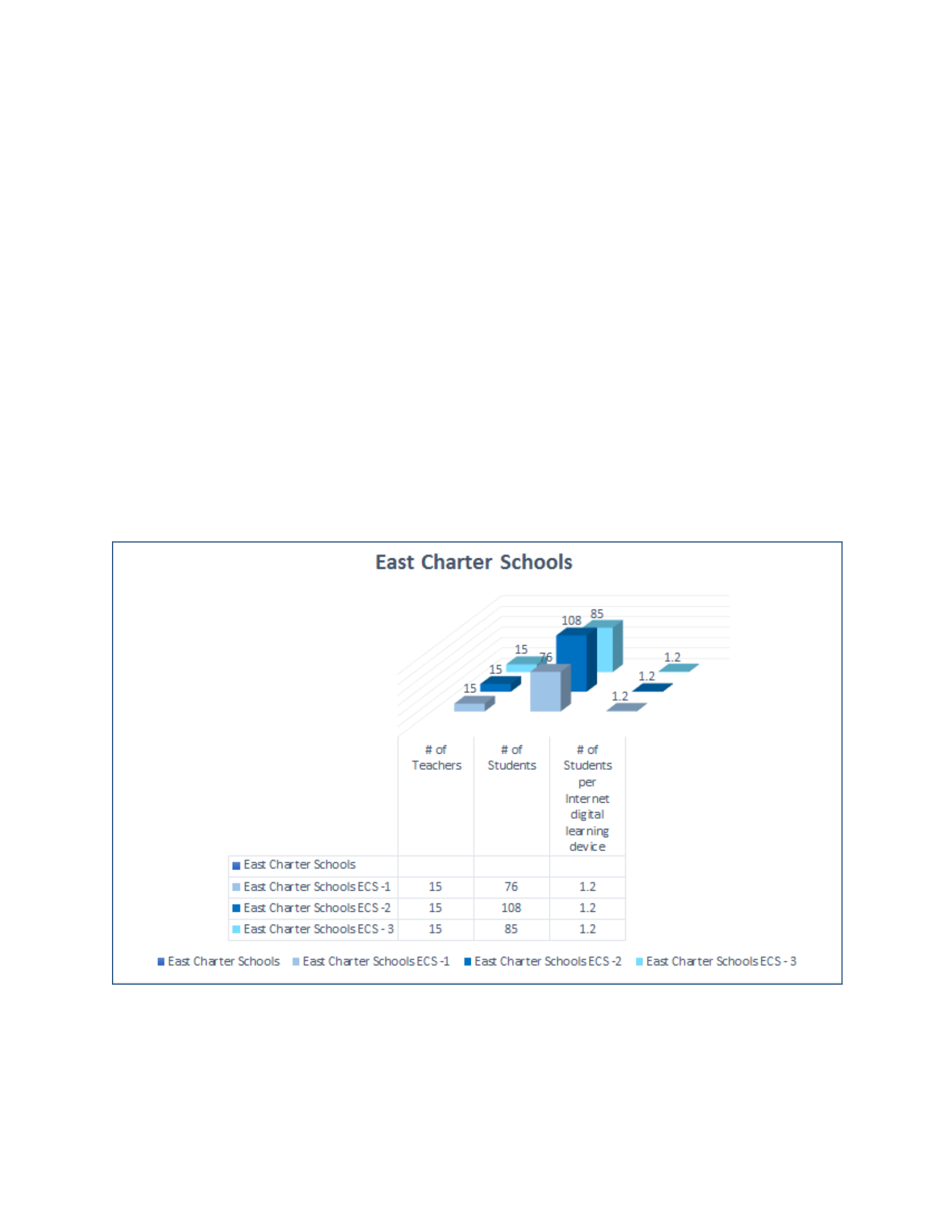
115
any certainty. I will provide a discussion of the descriptive analysis of the survey charter school
demographics in the following section.
Descriptive Analysis of Demographic Data
The East Charter school stratum are in rural areas in the state of North Carolina. Figure
3 shows these charter schools are small with a student population between 75 and 110 students in
each school. There were approximately 15 teachers in each school and per the data provided by
the Department of Public Instruction website for Charter Schools, 1.2 students had access to the
Internet in each of these schools.
Figure 3. Column chart showing the total number of teachers and students in the East Charter
School strata with the number of students per Internet digital learning device.
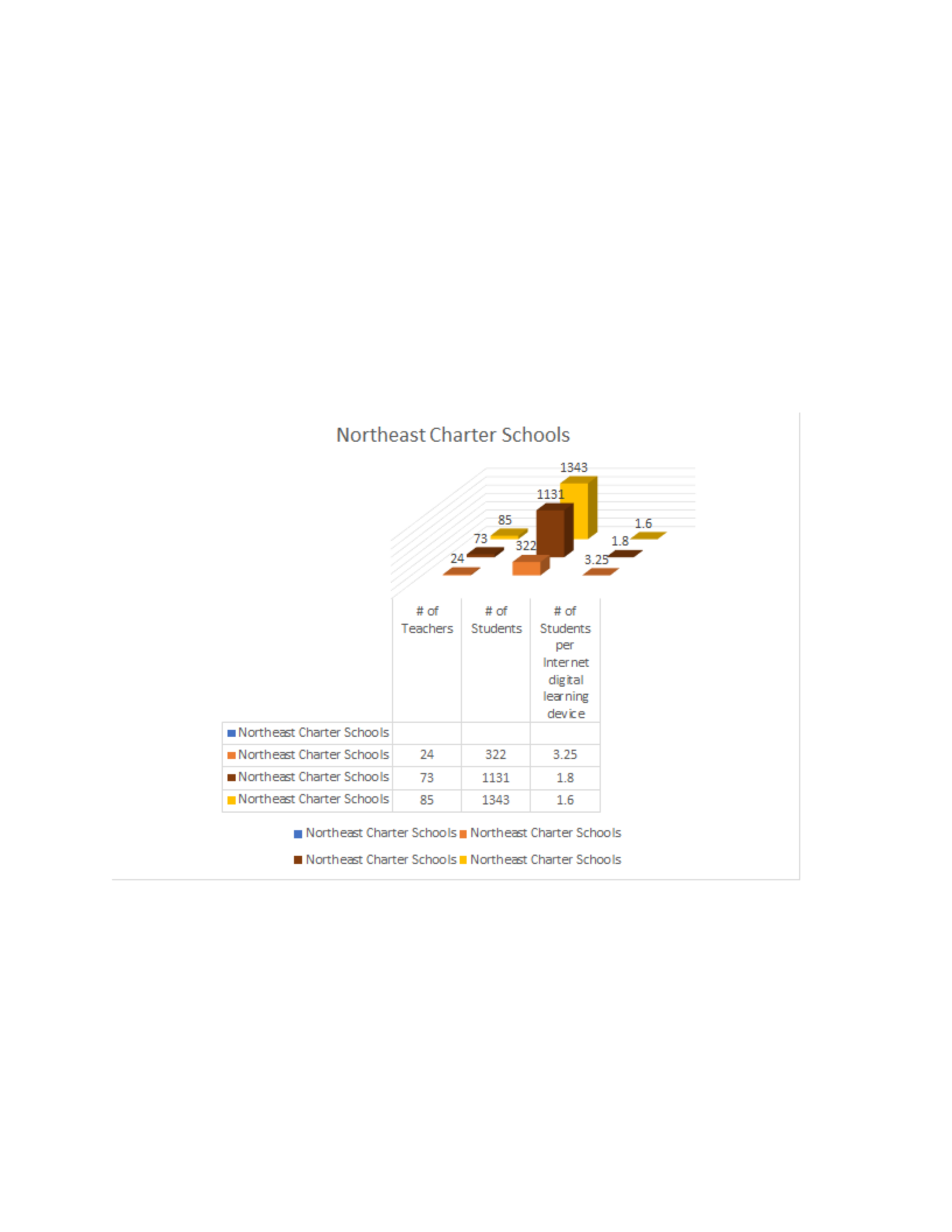
116
The Northeast Charter Schools were located in an urban area of North Carolina and the
locations of the schools were between 45 and 80 minutes apart. Figure 4 shows the student
population ranged from 300 to 1,300 students with 24 to 85 teachers in each school. The school
with the least number of students and teachers had a 3.25 student ratio of access per Internet
digital learning device as compared with the larger schools in this stratum.
Figure 4. Column chart showing the total number of teachers and students in the Northeast
Charter School strata with the number of students per Internet digital learning device.
The Southeast Charter Schools (see Figure 5) were also located in an urban area in North
Carolina and each school had a student population of 700–1,220 students with a 53 to 75 teacher
ratio. The charter school with the highest student population also had the highest number of
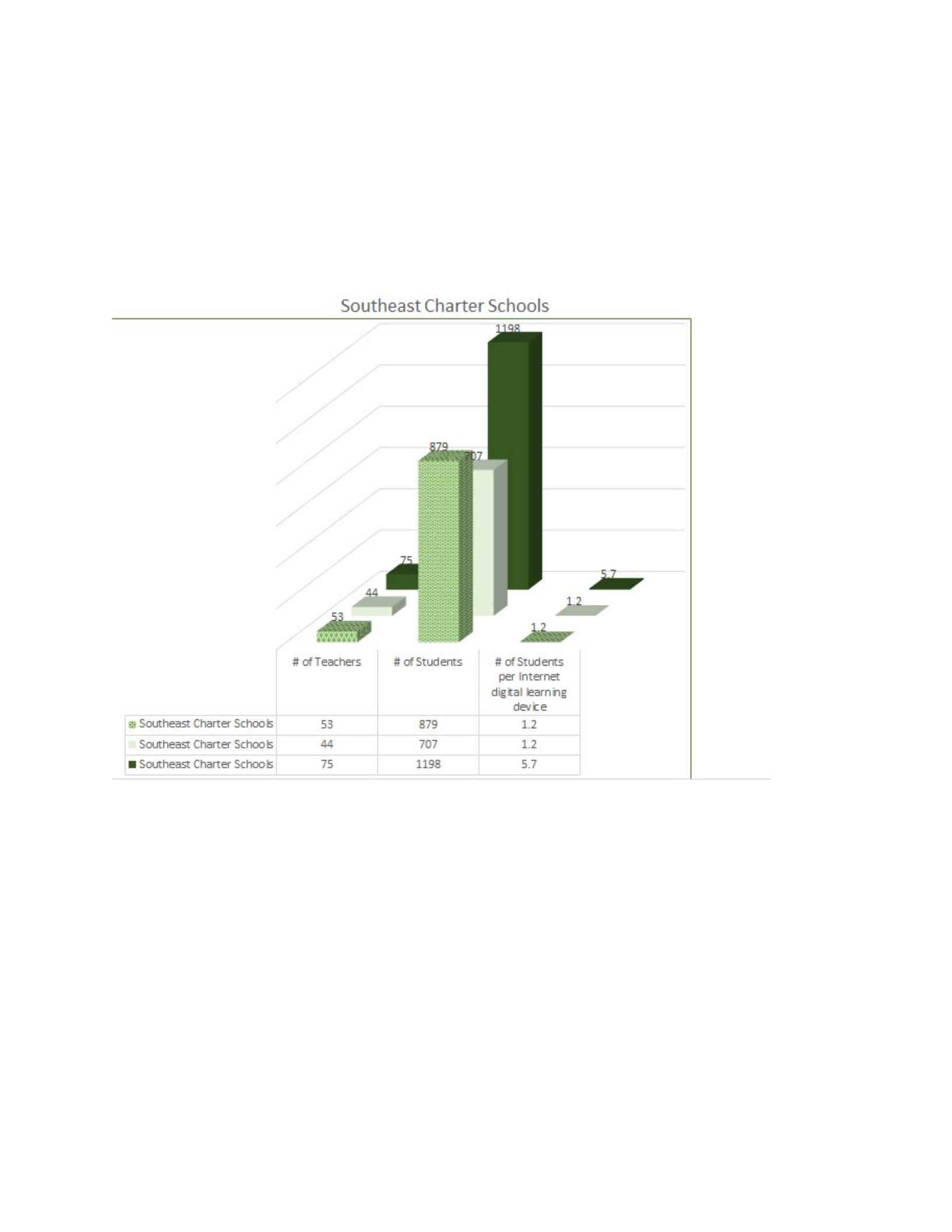
117
students that had access to each Internet digital learning device (5.7), whereas the other two
schools showed that 1.2 students had access to each Internet digital learning device.
Figure 5. Column chart showing the total number of teachers and students in Southeast Charter
School strata with the number of students per Internet digital learning device.
Assumptions
I assumed that the survey instrument I developed for this study was appropriate and the
respondents understood the questions and made their responses accordingly. I assumed initially
that public school teachers faced barriers incorporating technology into their classrooms, that

118
they had a negative perception of integrating technology into their classrooms, and that they
believed their students were not technologically prepared as 21st century professionals due to
time factors, budget constraints, and lack of technology to handle the large class sizes the
teachers had. Since this population could not be accessed, I had to revert to conducting my
survey with charter school teachers and my perceptions concerning the hypothesis were reversed.
I believed that charter school teachers did not have barriers or have negative perceptions
regarding technology integration and they believed their students were prepared as 21st century
professionals. The reason for my perceptions was due to charter school teachers being able to
operate independent of the public-school district; they are held accountable by the State Board of
Education and the parents and they controlled their own curriculum, staffing, organization, and
budget. They do not have local bond funds or Education Lottery funds. They are governed by
their own school board. Charter schools are held to a higher academic accountability than
traditional public schools but have more freedom in their financial operations.
Other assumptions of this study are the respondent’s answers to the survey questions.
They may have answered with positive instead of negative responses because they didn’t think
they could be honest with their answers to the questions. Low or no-response rates and teacher
attitudes regarding online surveys may be a factor for educators not answering the survey. Low
response rates may be due to the proliferation of junk mail and the survey may be deleted. The
participant may not be aware they are asked to participate in the survey and delete the survey.
The length of the survey may have bearing on a low response rate as well. To address some of

119
the limitations to this study, I included a cover letter with the survey that was approved by the
IRB. I explained the purpose of the survey and how their answers could benefit students in the
future with possible internships or jobs.
Limitations
The boundaries of this study were the areas the research will cover regarding the high
schools. I conducted the surveys only within the charter high schools where principals provided
approval. The study was limited to high school educators and did not include all K–12 educators
in the state due to the enormity and expense this type of research would take on. Students were
not surveyed due to the nature of the research.
The problem that occurred when I tried to obtain permission to conduct my study in the
public high schools was the principals not responding to my letters after providing me with prior
verbal approval. When I called, I spoke with them personally, they told me they consulted with
their technology professional and was advised against allowing me to conduct the survey with
the teachers at the school. I spoke with a few administrators and they said that some of the
schools may be facing some issues they do not want exposed especially if they did not know if I
was going to be honest with keeping the results of the research confidential. Even though I
explained that I was going keep the survey results confidential, I was told if the principal did not
know me, they would not trust me.
Limitations of this research include the limits of time. I was not able to conduct a mixed-
method research due to the time constraints I am faced with and the area in North Carolina where

120
I conducted the study. I would not be able to conduct any structured interviews or travel to the
many areas where the research took place. Another limitation to my study was the subject of
professional development. This is an area that will require further research to answer questions
that arise about professional development and the lack or impact it has on the teacher and the
student.
Some questions about professional development I had while I was doing my research that
will not be addressed in this study were:
What impact does professional development activities have on pedagogical change or
student learning?
What are the effects of professional development on student learning?
What is a clear articulation of intended outcomes of professional development?
What are appropriate evaluation strategies that must be implemented to assess the
effects of professional development?
What are teacher’s motivations to learn?
What is teacher’s commitment to change?
What is teacher’s willingness to be risk takers?
What are teachers learning when they participate in professional development
activities?
Do professional development sessions change teacher pedagogies?
How does professional development change their pedagogy?

121
A more in-depth evaluation of professional development activities is critical if there is to
be any growth in the knowledge base. Lawless and Pellegrino (2007) assessed that “A more
systematic study of how technology integration occurs within our schools, what increases
adoption by teachers, and the long-term impacts that these investments have on both teachers and
students” (p. 575). Therefore, I will not try to answer these questions in this study due to the
research required to find out the long-term impact that professional development has on the
teacher and student. I have mentioned the issue of professional development because it is a part
of the teacher’s ongoing education. The following section will discuss my data analysis for this
project.
Data Analysis
The total of 61 participants were surveyed and each participant answered 38 questions
about three research questions: a) Potential challenges educators face that hinder them from
integrating technology into their classes, b) Educators’ perception related to technology
integration, and if c) Educator’s believed their high school students were technologically
prepared as 21st century professionals. I performed the data analysis using the statistical
package for the social sciences (SPSS) software. To ensure my findings, I created a new
spreadsheet from the coded Excel spreadsheet discussed in the data gathering section of this
chapter to perform a more detailed analysis. I calculated the mean of each of the individual
respondents for each group of research questions. The scores from the individual mean
responses were used to calculate the total mean. The standard deviation of the responses was

122
calculated and a parametric t test with a probability level of p < .05 used to determine if the null
or alternative hypothesis was proven.
Research Findings
Research Question 1—East Charter School
There were 10 questions and three strata related to Research Question 1. I will discuss each
stratum separately to bring clarity to the findings. Table 3 shows the data for the East Charter
School coded and separated by Questions (Q1–Q10) listed vertically and Respondents (R1–R18)
listed horizontally. In all of the following tables I followed the same format. A row labeled
Count was of the number of respondents that answered each question and a Count of the number
of questions answered by each respondent. A row labeled Sum and Count was added to calculate
the mean score for each respondent. A row labeled Mean calculated the total mean, and a row
labeled Standard Deviation calculated the standard deviation for each of the respondents. The
hypothesis mean was 3 and the degrees of freedom were 17. The null hypothesis being tested
was to test if the mean is less than or equal to 3. I used a one-tailed test to test my hypothesis,
which is shown in Appendix C and discussed in the Summary Hypothesis for East Charter
School section of this chapter.
There were 18 respondents who answered the 10 questions in the East Charter School strata.
There was a total of 180 responses (18 respondent’s x 10 questions) documented. Research
Question 1 asked: What indicators cause high school educators to believe they face barriers
hindering them from incorporating technology into their classes? As shown in Table 4, there

123
were five items with a point range between 1 and 5 coded as follows: Number 1: Strongly
Disagree, 2: Disagree, 3: Neither Disagree nor Agree, 4: Agree, 5: Strongly Agree. The
hypothesis test indicated that, on average, most of the participants responded between Agree and
Strongly Agree on all 10 items. Out of a total of 180 responses, there were seven responses (4%)
of Strongly Disagree, 31responses (17%) of Disagree, 15 responses (8%) Neither Agree nor
Disagree, 78 responses (43%) Agree, and 49 responses (27%) Strongly Agree to the 10
questions.
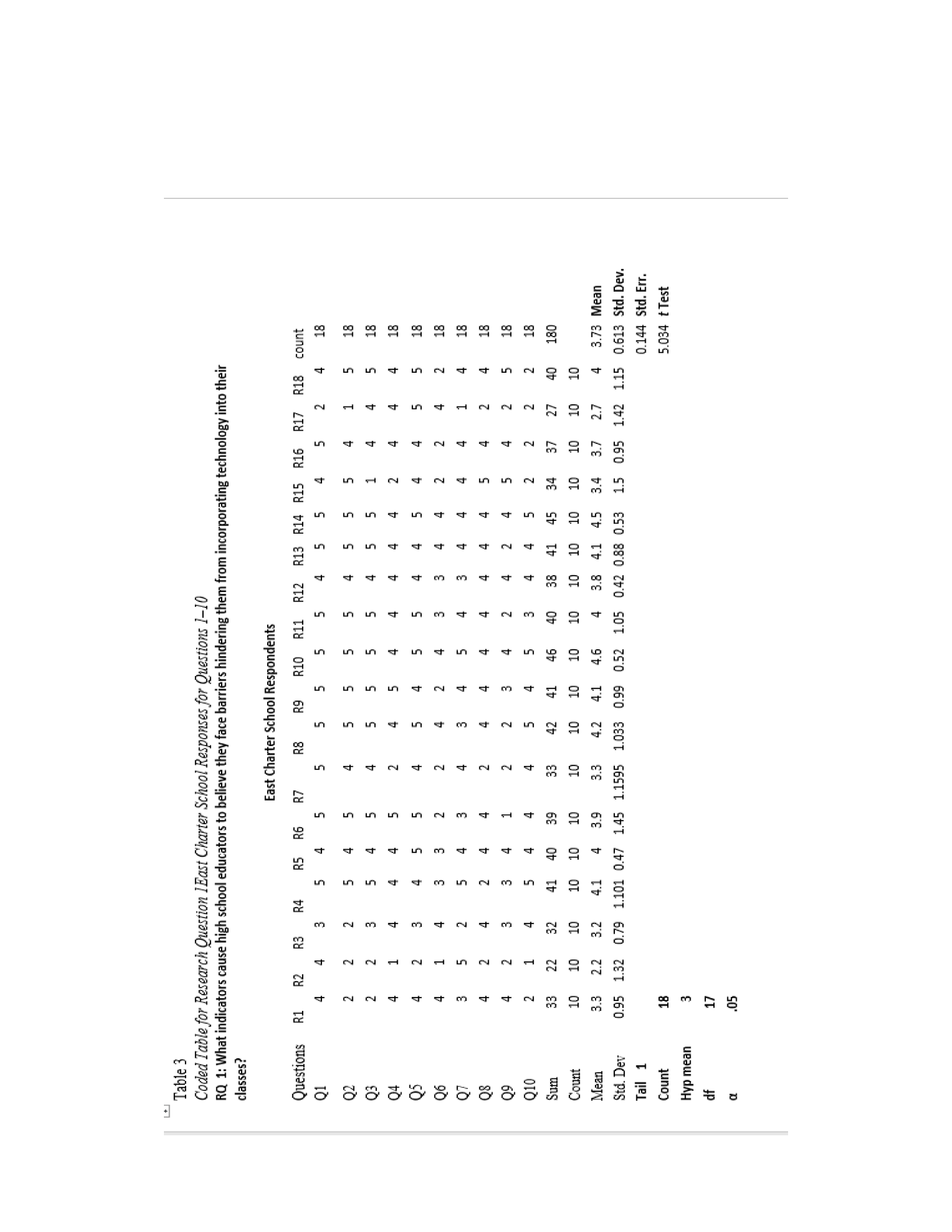
ys3]]
“41
"pas
“Ao
“ps
uray
peos
tet
0
e190
STT
tT
S60
ST
ele
O8T
81
aT
81
aT
81
aT
8T
81
8T
8ST
quno3
F
Le
oT
OT
Or
de
t t
5 t
v
t
F
T
¢
v
5 5
t t
S
F
s T
F
t
STH
TH
STH STH PTH ETH
7cTd
TTd OTH
Le
oT
~
oo
ws
sr
rN
PE
or
=>
el
wos
MS
oN
se
ou
In
'
€S0 880
thO
SOT
@50 660
ff0T SHSTT
SPT
/¢rO
oP
oT
us
st
ws
a
5
TP
oT
ot
ws
tt
5
BE
oT
oo
ie
sS-
ft
FF
tA
HSH
SF
tt
+
t
a
a
win
osh
ue
ost
ost
om
om
5
oF
oT
wo
=
uns
aS
au
5
TP
oT
wow
us
Ns
sh
os
ot
uw
6d
cv
or
inn
sr
oun
sro
ost
om
un
wn
te
oT
stot
SN
st
NSN
St
NSN
Ss
ot
om
ie
uw
sjuapuodsay
jooyos
JaYeYD
S29
6E
oT
n
oo
ww
uN
oY
F
oT
oS
+
ss
trot
Tt
A
HB
et
te
tp
+
su
TOTT
620 ZET
TP
oT
wownosh
sr
om
un
ey
om
oun
uw
ct
oT
el
oom
st
om
st
sw
tm
+t
on
ed
ce
oT
c
es
|
=
cd
so"
it
aT
S60
a
oa
|
SoS
sp
SP
sh
om
sp
os
om
of
=
Td
D
3p
uesw
dAy
juno)
F
el
Aad
pis
weal]
june}
mang
oro
60
80
LO
90
0
+0
£0
z0
10
suonsen()
esassapo
Jay]
OyuT
Adopouysay
duyerodsoIuI
Woy
Wal]
SULApUly
SiaLUeg
aoe}
Ady]
aAaljag
0}
SIOJEINpa
[OOYDS
YsTY
ase
s1OJeIpul
JEYM
7
OY
O[-]
suonsang)
cof
sasuodsay
jooyag
aajapy)
IsSPy]
uolsang)
yavasay
4ofajgn]
paper
£
GEL
124

125
The responses indicated that the highest area where the respondents faced
barriers for the East Charter school was Questions 6, which stated, “It takes a lot of
time to use technology in my classroom,” seven respondents face barriers in this area.
Question 9 stated, “The students I teach have the necessary skills to use the technology
in my class”; seven respondents perceive that their students didn’t have the necessary
skills to use the technology which created a barrier for the teacher. Question 10 stated,
“The school I work for has enough equipment for me to use to incorporate technology
into my classroom”; six respondents disagreed and strongly disagreed with this
question and this created a barrier for the teacher.

