


Exploring South Texas Teachers Perceptions of Challenges
Implementing Blended Learning into their Classrooms
Section 1: The Problem
The Local Problem
The problem addressed in this study was that some teachers in South Texas school
districts were struggling to implement blended learning into their classrooms, and the
specific challenges that these teachers experienced and the guidance and support needed
were unknown. This project study focused on one grant-funded school district in South
Texas, identified as D1, which fully implemented blended learning across the school
platform and curriculum. This district was provided a grant by the Raise Your
Hand Texas Foundation, now known as the Charles Butt Foundation (Raise Your Hand
Texas, 2019b). The name of this grant, which offered over $6 million in funding to Texas
schools, merged with Raising Blended Learners (Charles Butt Foundation, 2019). This
study further focused on one non-technology grant-funded school district, identified as
D2, which had yet to fully implement blended learning into their district and had teachers
that independently incorporated blended learning into their curriculum. Courtney (2021)
mentioned that despite the benefits provided by blended learning in classrooms, teachers
continued to implement technological pedagogy into classroom instruction
unsuccessfully. Regardless of which blended learning initiative these districts followed,
some teachers were close to retiring, and some new incoming teachers faced challenges
and lacked creative digital strategies for implementing the blended learning model and
technological pedagogy.

Some South Texas teachers from non-technology grant-funded school districts
that stressed the importance of integrating traditional in-person and online class
instruction attempted to implement their blended learning curriculum yet failed to gain
essential professional guidance and training support due to lack of funding. Alvarez’s
(2020) findings showed that although blended learning promotes opportunities for
students and teachers, teachers perceived blended learning as challenging to implement
due to a lack of ICT training, limited access to technology, and a lack of confidence (p.
113). These challenges presented a gap in research on the need for more understanding
of teacher instructional performances in the South Texas area and the improvement of
diverse student learning of digital pedagogy.
Technological education is highly regarded to increase student achievement for
lifelong learning. Henrikson et al. (2018) asserted that providing blended learning in
classrooms can transform education worldwide through technical creativity, flexibility,
and personalized learning. The National Education Association (NEA) stated that blended
learning can accommodate various learning styles and enhance student learning
experiences (National Education Association, 2021). Institutions worldwide strive to
improve student performance by focusing on blended learning and technology-based
competency education (World Education Services [WES], 2020). The NEA and WES
organizations continue to stress the importance of technological pedagogy as a necessary
educational structure for personalizing student needs and skills required for future
success. To understand technical pedagogy among educators, high-quality professional

growth and support are needed to face challenges experienced in a blended learning
environment (National Education Association, 2021).
Rationale
The COVID-19 pandemic era transformed the way teachers and students
experience learning (Sasmito & Sekarsari, 2022, p.181). The limitations enforced on
teachers and students to continue instruction during a pandemic created an urgency that
provided an upheaval in technological pedagogy (Sasmito & Sekarsari, 2022, p.181). The
challenges brought upon teachers in South Texas, primarily those who work in school
districts containing a high percentage of economically disadvantaged students and a lack
of digital funding, found districts scrambling to provide laptops for every student and
technical training for teachers across the region (US Department Office of Educational
Technology, 2022). This issue caused various challenges for teachers with little to no
experience in technological knowledge, online skills, or asynchronous classroom settings.
Since the return of local school-based instruction, South Texas school districts
have realized the benefits of incorporating technology and face-to-face instruction. This
facet of learning led to the interest in blended learning practices. However, due to the lack
of technological funding, several districts turned to the Raise Your Hand Texas
Foundation, now known as the Charles Butt Foundation (Raise Your Hand Texas,
2019a). Local evidence indicates that only two out of the 38 local districts in the South
Texas Region were granted the funding to implement the blended learning model. The
$300,000 grant was created by the foundation to provide intensive technical assistance for
three years to improve student performance, encourage redesigning of school learning,

and scale systemic improvements (Raise Your Hand Texas, 2019a). The awarded
Raising Blended Learners grant provided much-needed financial assistance and support
for school districts to implement blended learning and technological pedagogy district-
wide.
This qualitative study explored the challenges experienced and the guidance and
support needed by South Texas school district teachers when implementing blended
learning into their classrooms. Despite the benefits of blended learning, some teachers in
South Texas school districts are struggling to implement blended learning into their
classrooms and are facing currently unknown challenges. Rasheed et al. (2020) stated that
the biggest challenge faced by teachers was the need for digital support to implement a
sustainable, technologically instructed classroom. Alvarez (2020) noted that teachers
faced many challenges in blended learning environments, including a lack of time to
integrate instructional course design and development, technical knowledge, poor school
infrastructure, and ICT integration training (p.116). Moreover, Alvarez (2020) indicated
that when teachers are provided the technical support to overcome their challenges,
students can experience more personalized learning styles, as opposed to the finding that
a lack of technological capabilities affects a student’s discovery of learning in adverse
ways. While the literature refers to experiences from teachers beyond the local researched
area, some teachers in South Texas have not openly expressed their perceptions of
challenges that could help their district understand what guidance and support are needed
to help them succeed.

Definition of Terms
Adaptive Learning Technologies (ALT): ALTs are technologies that continually
calibrate and adjust students’ learning activities toward their competence and skill levels
through customization and personalization (Moltudal et al., 2020).
Asynchronous Learning: Also known as asynchronous instruction, is a form of
learning that is considered self-paced, where not all participants are required to be
virtually present at the same time (Texas Education Agency, 2022).
Blended Learning (BL): Blended learning, also known as flipped, inverted, or
hybrid, is a mix of traditional in-person instruction with online learning activities or
technology interventions (Alam & Agarwal, 2020; Müller & Wulf, 2021; Rasheed et al.,
2020).
eLearning Environments: Electronic learning environments, also known as online
learning, facilitate teacher and student communication that allows educators to scaffold
participating strategies with students while conducting collaborative working
environments outside the classroom (Hayati et al., 2021).
Face-to-face Learning: A traditional method of interaction with students directly
meeting with a teacher daily through face-to-face lectures (Alam & Argwal, 2020).
Hybrid Classroom Environment: A classroom setting that provides integration of
face-to-face and online modes of instruction (Rasheed et al., 2020).
Learning Management System (LMS): This widely used system facilitates distant
learning through online learning and course management, including course administration
and teacher and student communication (Müller & Wulf, 2021).

Online Learning (OL): OL, also referred to as eLearning, remote learning, distant
learning, or virtual learning, is an instruction-based environment where communication is
solely based on the use of technological tools (An et al., 2021).
Synchronous Learning: A two-way collaboration of guided learning that focuses
on real-world problems students can solve together in real-time or virtually through
video, web conferencing, or virtual worlds (Hrastinski, 2019)
Traditional Classroom: A classroom setting that provides face-to-face interaction
with an instructor (Müller & Wulf, 2021).
Significance of the Study
Müller and Wulf (2021) found that although much research suggests a blended
education leads to higher learning than traditional classroom methods, instructors
continue to face challenges with implementing a blended curriculum. Moreover, Alam
and Agarwal (2020) stated that teachers lacking technical knowledge, which is essential
in blended learning classrooms, face barriers. Alvarez (2020) found that many teachers
lacked an understanding of blended learning concepts, ICT training/knowledge, and
confidence in their abilities to execute the blended learning approach. The information
obtained in this study could encourage more districts in the South Texas area to consider
implementing the blended learning model to increase technological pedagogy,
knowledge, and skills. The challenges presented a practice gap between instructional
performance and improving student learning outcomes. These challenges contributed to a
lack of technical knowledge students need in this low socioeconomic region for future
educational endeavors, careers, and improved livelihoods. The findings of this study

further have the potential to make a meaningful contribution toward addressing the gap in
practice and contributing to positive social change by serving as a guide in blended
learning research toward addressing plausible solutions to the challenges that teachers
and administrators across the region share. Understanding challenges that halt the
implementation of blended learning in classrooms can assist administrators and teachers
with necessary educational instruction and help break barriers that limit technological
pedagogy that contribute to future real-world student accomplishments. Fundamentally,
this study provides a stronger foundation for South Texas school district academia by
supplying beneficial information regarding teacher-perceived blended learning challenges
and the guidance and support needed to contribute to positive change. In turn, helpful
strategies could provide powerful learning of technical skills needed for tomorrow’s
leaders, innovators, and global citizens.
Research Questions
This qualitative study explored the perceptions of teachers in the South Texas area
who experience challenges with implementing blended learning in their classrooms.
Interviewing teachers is a practical and appropriate way to gather their perceptions and
experiences when incorporating blended learning into their class instruction for a basic
qualitative study design. Teachers from two approved participating districts were
interviewed for the study. One of the two participating school districts was provided
funding from the Raise Your Hand Texas Raising Blended Learners Grant initiative to
support teachers and students with school-wide blended learning implementation. The
other participating district was non-grant funded for blended learning integration;

however, the teachers still utilized blended learning in their classroom environments.
Regardless of funds, teachers continued to face challenges in blended learning
implementation that were unknown. These unknown challenges, once understood,
provide a more accurate picture of what was needed to assess the help and guidance
teachers needed to provide meaningful instruction and become more knowledgeable in
the technological pedagogy and skills required of teachers.
This project study focused on two research questions and one sub-research
question:
RQ 1: What are the perceptions of participating South Texas teachers about the
challenges they face when implementing blended learning into their classrooms?
SUB RQ: What blended learning models, pedagogical methods, technologies, or
online components do teachers perceive to be most challenging to integrate?
RQ 2: What are the perceptions of participating South Texas teachers about the
guidance and support needed when implementing blended learning into their classrooms?
Review of the Literature
The literature review in this study began with a focus on the conceptual
framework. The goal of this portion was to identify and define the phenomenon that
grounded the study, explain the conceptual framework as derived from the literature, state
the logical connections of the framework’s key elements, and how the framework
connected to the approach of the study and research questions. This review portion, as
assessed by Burkholder et al. (2020), provided a logical structure that connected the

study’s research questions, methodology, and overall design. The review of the literature
further continued in this section by presenting a review of the broader problem. This
portion provided a more in-depth view of the topics that framed this study and the process
and procedures of how the search was conducted. The review of the broader problem
provided a critical review of the local problem addressed in the study and delved into the
scholarly research related to the broader problem. This portion of the study further
covered relevant public data and provided an in-depth analysis of the body of literature.
The final coverage of this section provided the implications for possible project
directions based on predictions of data collection and analysis outcomes. Preliminary
directions for the project deliverable were provided while ensuring the project’s
development was met. This literature review was organized through sections and
subsections to provide a conceptual overview, frame the topic, and explain the study’s
criteria.
Conceptual Framework
Conceptual frameworks are often considered the guide of the study built from
many theories and concepts, bodies of literature, reflective writings, conversations with
individuals, and personal experiences (Ravitch & Carl, 2021, p. 48). This enduring
process is constantly evolving and being refined (Ravitch & Carl, 2021, p. 48). The
theories and concepts selected to ground this study included the technology acceptance
model (TAM; Davis, 1989) and Bloom’s digital taxonomy (BDT; Bloom, 1956;
Churches, 2009). Each has been revered as a learning theory for the digital age (Devi,

2019; Fauzi et al., 2021; Granić & Marangunić, 2019; Husain, 2021b). These concepts
made up the conceptual framework that guided this study. The logical connection
between the model and theory presented and this study approach was that each concept
supports usage and technological pedagogy.
TAM was extensively used to explain the indicator of technology user acceptance
through Perceived Usefulness (PU) and Perceived Ease of Use (PEoU). Scherer et al.
(2019) mentioned that TAM is “a way of determining the teacher’s intentions toward
using new technologies in their educational practice” (p.14). Moodley et al. (2020)
explained that TAM consists of four external factors: social, cultural, contextual, and
political. These factors influence the user’s attitude, behavior, skills, and belief in the
desire to accept a particular application or benefit of usage (Moodley et al., 2020).
According to Zakaria et al. (2021), the “actual use of a new technology depends on the
attitude towards the technology” (p. 1297). In educational contexts, the acceptance of
technology is relevant in determining a teacher’s intention to use digital tools in class
instruction (Antonietti et al., 2022). The TAM informed the study problem and purpose
by helping to gain insight into teachers’ perceptions in the PU and PEoU of BL. As
Granić and Marangunić (2019) and Fauzi et al. (2021) explained, TAM is the key to
comprehending the predictors of human rejection or acceptance of technology usage.
Benjamin Bloom’s taxonomy was considered the most prominent educational
conceptualization in teaching and learning (Amin & Mirza, 2020; Bloom 1956). Of three
behavioral domains derived from the original Bloom’s taxonomy– cognitive, affective,

and psychomotor (Bloom, 1956) – the cognitive domain was most applied in the primary,
secondary, and tertiary levels of education (Amin & Mirza, 2020). Each of Bloom’s
domains was further broken down into six levels. These levels were often seen in a
pyramid formation, ranging from lower-order thinking skills at the pyramid’s base (1) to
higher-order thinking skills at the top (6). These cognitive levels, starting at the bottom
lower order, included: knowledge, comprehension, application, analysis, synthesis, and
evaluation. Each level is associated with action nouns to demonstrate a student’s level of
learning (Amin & Mirza, 2020).
In 1990, Bloom’s former student, Lorin Anderson, and partner, David
Karathwohl, along with other experts in the area of education and cognitive psychology,
revisited the original version of Bloom’s taxonomy to inform educators of meaningful
ways to expand skills associated with terminology, structure, and emphasis (Amin &
Mirza, 2020; Anderson & Karathwohl, 2001). The new version was published in 2001
and referred to as Bloom’s revised taxonomy. This new version adjusted the sequence of
the original top two categories and added verbs instead of nouns to describe each
category (see Figure 1). The major difference, not often recognized, is a more
comprehensive add-on to the taxonomy that crosses over to act on various levels of
knowledge: factual, conceptual, and metacognitive (Anderson & Karathwohl, 2001). The
original pyramid formation continued in the revised version, with the higher-order
thinking skills at the top and the lower-level thinking skills at the pyramid’s base. The
new domain categories, which started at the pyramid’s base, included remembering,
understanding, applying, analyzing, evaluating, and creating. Andrew Churches (2009)
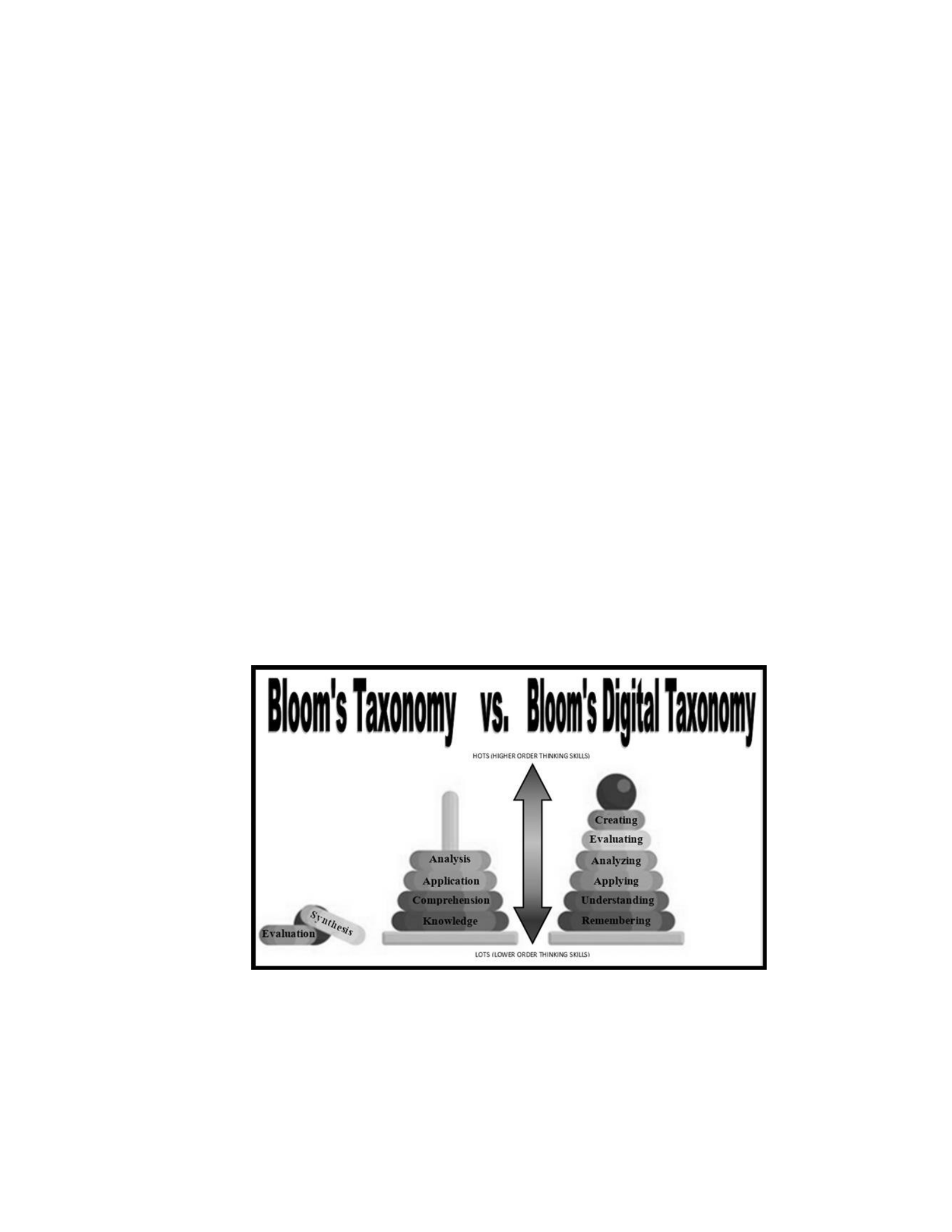
realized that the revised taxonomy and actions by Anderson and Krathwohl (2001)
accounted for more traditional classroom practices but failed to account for new Web 2.0
practices and actions associated with 21st-century technological pedagogy. Churches
(2008) realized that although these revisions may contain applicable cognitive practices,
they lacked the ability to address methods and tooling for digital learners. The same verbs
Anderson and Krathwohl (2001) used remained; however, each contained a more
extensive list of actions (see Figure 1). The term collaboration was also included as a
separate element. Although collaboration is not a learning requirement, it is a 21st-century
higher-order thinking skill important to the new generation of digital learners (Churches,
2008).
Figure 1
Bloom’s Taxonomy vs. Bloom’s Digital Taxonomy
The BDT framework model approach was fundamental to this study. It was the
logical connection because it addressed the actions presented in emergence and

information technologies and further connected the characteristics of each BDT level
with the digital learning tools needed to examine challenges, experiences, and
acceptances of technology lacking in South Texas BL classroom instruction. A priori
deductive coding process further helped explore the creative digital tools and higherorder
thinking skills implemented in blended learning.
Body of Research that Supports the Need for the Study
Research is lacking around understanding challenges faced by teachers in blended
learning classroom environments (Alam & Agarwal, 2020; Alvarez, 2020; An et al.,
2021; Ashraf et al., 2021; Hayati et al., 2021; Henrikson et al., 2018; Panggua et al.,
2022; Portillo et al., 2021; Rasheed et al., 2020; Yumiko & Hiroyuki, 2020). Although
various studies attempted to comprehend the factors that challenge educators, Antonietti
et al. (2022) revealed that multiple factors must be considered. The factors researched are
each a complex dynamic of interweaving factors influenced by teachers, which included
technology usage, technological pedagogy, and support for technology integration
(Antonietti et al., 2022). Each geographical area that was researched in the study of
challenges became a unique and complex dynamic of information based on their
teachers’ perspectives of technical resource availability, technological support,
selfefficacy, self-assessed digital competence, and their relationship with perceived
usefulness (PU), perceived ease of use (PEoU), and behavioral intention (BI) in relation
to the technology acceptance model (TAM; Antonietti et al., 2022).

Understanding Blended Learning and Models as a Logical Connection
Blended learning (BL) is regarded as a combination of face-to-face learning and
digital technology, online, or virtual interaction (Chin, 2019; Chiu, 2021; Ghimire,
2022; Hayati et al., 2021; Müller & Wulf, 2021; Rasheed et al., 2020; Shin, 2021; Yang
et al., 2021). According to Ashraf et al. (2021), BL is “one of the most used methods in
education to promote active learning and enhance student learning outcomes” (p. 1525).
Blended learning occurs when students learn partially in a traditional classroom setting
and partially while using online technologies that allow them to choose their learning
methods at their own pace (Ghimire, 2022; Rasheed et al., 2020). The terms hybrid,
flipped, and inverted have also been used to explain a blended learning environment
(Alam & Agarwal, 2020; Ashraf et al., 2021; Ghimire, 2022; Müller & Wulf, 2021;
Pastae, 2020; Rasheed et al., 2020). Hayati et al. (2021) asserted that the blended learning
method, in most recent years, has also been termed “integrated learning” in educator
circles (p.767). Chiu (2021) affirmed that BL integrates online learning tools with
traditional in-person classroom activity experiences. Regardless of the terms used to
integrate technology in the classroom, each term incorporates some form of digital,
online, and face-to-face learning.
Research by Müller and Wulf (2021) suggested that today’s educators continue to
face challenges in implementing a blended learning curriculum. Courtney (2021) also
recognized these challenges when studying practitioners’ blended learning
implementations in classroom instruction. Ashraf et al. (2021) asserted that the individual
differences between teachers’ and students’ attitudes and behaviors may impact decisions

on adopting BL. Blended learning models were investigated in this study to distinguish
the challenges teachers faced during classroom implementation.
Although blended learning has existed for over a decade (Ashraf et al., 2021), it
was a learning concept in the lower South Texas Region that was newly gaining
momentum. The onset of the COVID-19 pandemic necessitated emergency remote
learning, paralyzed educators across the globe, and exposed the digital divide and
educational inequalities that once were overlooked (An et al., 2021). Portillo and Lopez
de la Serna (2021) noted that half of the world’s students did not have access to
technological devices or connectivity. At the point of worldwide school closures, digital
devices, the internet, and Wi-Fi were in high demand and became a profound necessity to
ensure student academia continued (Singh et al., 2021). UNESCO (2020) reported at the
pandemic’s peak, 1.6 billion learners were affected by the lack of technology, forcing
school closures in 194 countries worldwide. This rift caused an abrupt shift in education,
and its inequities were felt around the world. Schools worldwide endured many obstacles
to ensure students’ connectivity. Digital devices were scarce, and challenges faced by
educators on lack of technology, connectivity, safety, and technological pedagogy were
surmounted. As a result of scarcity, many turned to advanced mobile devices that
provided interactive learning environments through open educational resources and social
platforms (Moodley et al., 2020). Ibna Seraj et al. (2022) stated that neither teachers nor
students were prepared to exercise institutionally supported technologies, interactive
learning environments, or eLearning environments. Regardless of the upheaval and
challenges posed by learning new online platforms, teachers began to see the benefits of

incorporating various technologies to assist in teaching the digital generation (Ibna Seraj
et al., 2022). Pastae (2020) stated that teachers began to experience easier access and
greater flexibility with this learning style. The realization of using digital devices to
encourage engagement and dynamic interactions caused an awakening of teachers to
integrate a blended learning style of pedagogy into their curriculum.
With vaccinations and great strides to ensure precautionary measures, schools
worldwide have resumed onsite learning. Educators realized the benefits on online
learning and meeting the new needs of students that emerged from the pandemic
(Bozkurt, 2022). Educators and students were introduced to eLearning platforms and
quickly saw the benefits, experienced the ease of use, and developed a positive attitude
towards these online processes (Fauzi et al., 2021). Students who wished to have a more
personalized style, including those of English as a Second Language (ESL) and English
as Foreign Language (EFL), made a significant connection to learning through
technology (Altay & Altay, 2019). Despite the many benefits, some teachers continue to
face challenges with blended learning when implementing technological pedagogy into
their classroom environments. This phenomenon of challenges grounds this study.
Bozkurt (2022) defined the blended learning model as “a combination of onsite
and online learning modalities formulated by relevant pedagogies, modalities, and
technologies” (p. 1). The difference between this definition and the classification of BL is
the difference in each modality application (Alam & Agarwal, 2020). Each modality can
be personalized by its facilitator to deliver optimum performance in developing students’
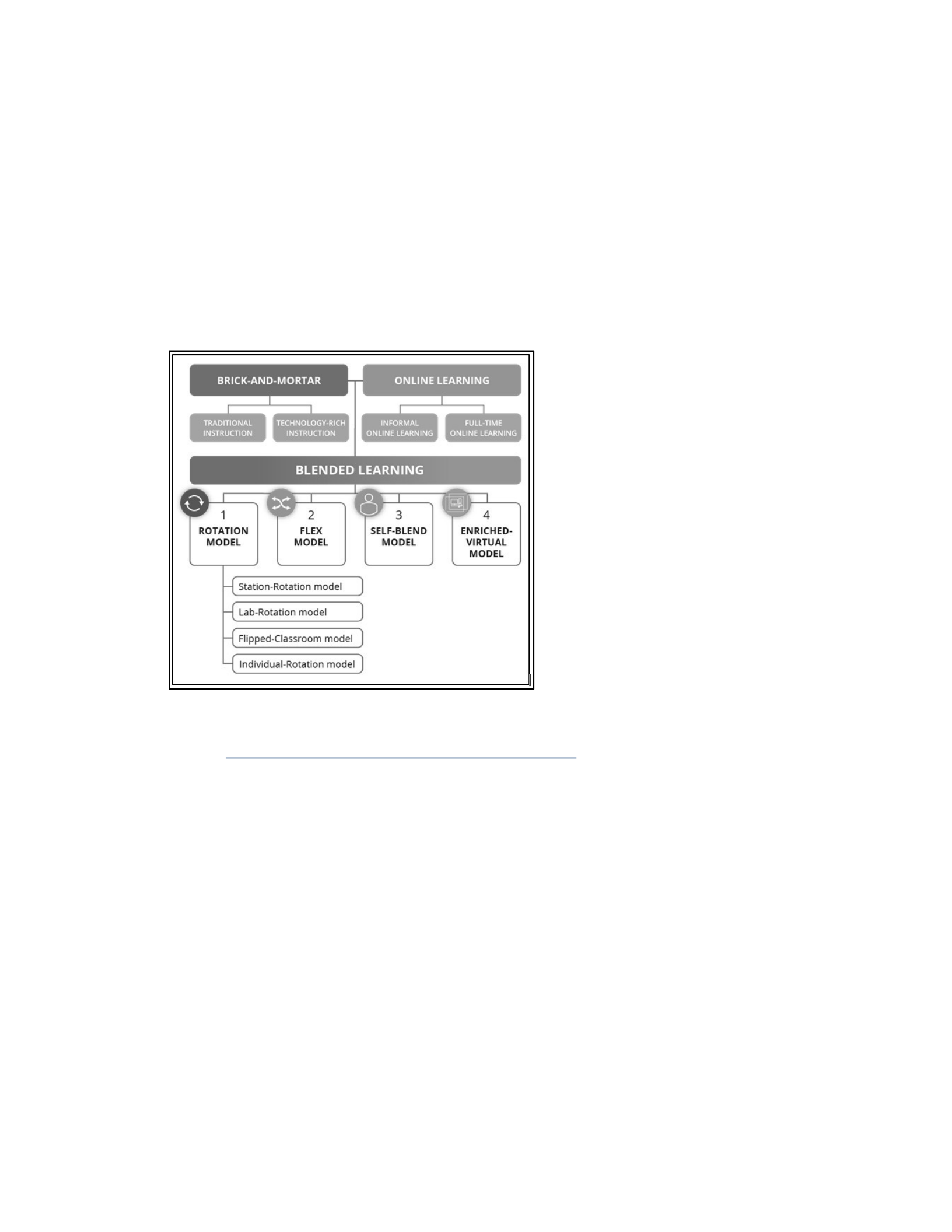
digital skills and scholastic achievement. The Raise Your Hand Texas Organization lists
four BL models most schools use today: Rotation, Flex, A La Carte, and Enriched Virtual
(see Figure 2; Raise Your Hand Texas, 2019a).
Figure 2
Note. From The Engine to Power Student-Centered Learning Scale in Texas, by Raise Your Hand Texas
(2019a) (https://www.raiseyourhandtexas.org/foundation/blended).
Alam and Agarwal (2020) mentioned each of the above models and sub-models,
including a Face-to-Face model. As Alam and Agarwal (2020) explained, this model is
also referred to as the traditional method. It provides interaction with students in a direct
or daily meeting while presenting the curriculum through a face-to-face lecture;
electronic mechanisms, such as an overhead projector or electronic smart-board, are used.
Four Blended Learning Models

Framework Relation to the Study Approach
The framework related to the study approach was that each modality selected by
the teacher provided the student with a learning path and integrated learning experience.
It is essential to understand the framework to distinguish which areas teachers feel most
challenged when implementing BL into student learning environments. A teacher’s
digital competence in these BL areas can influence their technology acceptance and
perceptions of challenges faced in blended learning environments (Antonietti et al.,
2022). Regardless of the blended learning model selected, they are meant to enrich a
student’s academic performance, maximize the benefits of technology usage, and develop
digital skills and environments that prepare students for real-world experiences (Alam &
Agarwal, 2020). Müller and Wulf (2021) expressed that learning outcomes were
equivalent to the blended learning modalities, while Rasheed et al. (2020) found that
blended learning integration excelled over onsite classes and gained higher achievement
outcomes. The research questions in this qualitative project study were related to the
framework by connecting blended learning models utilized and teacher perceptions of
technology acceptance. The questions further explored the implementation of blended
learning and the guidance and support needed to face the challenges experienced.
Review of the Broader Problem
To review the broader problem, literature topics such as blended learning amongst
teachers, challenges faced when implementing blended learning models, blended learning
methods, technologies, online components, and guidance and support needed for blended
learning implementation were viewed. Many factors go into challenges faced by teachers

when implementing blended learning in the classroom and online environments (Alvarez,
2020; Ashraf et al., 2021; Corcuera & Alvarez, 2021; Ghimire, 2022). The literature has
been gathered to help enrich this study by forming a clearer understanding of previously
explored challenges and the multiple layers of blended learning methods.
Overview of Topics and Search Methods
For this study, a systemic literature review was conducted using Walden
University’s extensive online library to find peer-reviewed literature related to blended
learning, issues/challenges, education, technology, Bloom’s digital taxonomy, technology
acceptance model (TAM), personalized learning, BL experiences, guidance and support,
digital creativity, digital strategies, and digital tools. Literature was gathered on topics of
blended learning in the K-12 education setting. The literature topics were intentionally
explored to gain an objective overview of evidence surrounding the research questions.
The literature was acquired using key terms such as BL challenges, BL benefits, BL
methods, professional development on BL, digital literacy amongst teachers, eLearning,
technology challenges during the COVID-19 pandemic, personalized learning, Bloom’s
digital taxonomy (BDT), and technology acceptance model (TAM).
A Shift in Education
The most significant online environment learning occurred in the Spring of 2020
when 90% of schools around the globe shut down due to the COVID-19 pandemic
(UNESCO, 2020, as cited in An et al., 2021). The shifting of traditional learning to 100%
online learning, also known as eLearning, hybrid learning, and remote learning, became a

turning point for teachers and students. The majority of online classes were provided only
through higher education. This disruption left a significant gap in technological
pedagogy, curriculum, knowledge, and skills within the educational field. The swift
transition created an onset of challenges for teachers in the South Texas area.
During the COVID-19 pandemic of 2020, teachers faced the challenges of
abruptly transitioning from traditional methods of differentiating class content to the
ability to incorporate lessons into a remote online platform environment. Ibna Seraj et al.
(2022) stated that teacher and student learners were scrambling to adapt to new
instructional and assessment delivery methods. An et al. (2021) noted that teachers were
unprepared for the sudden shift to online teaching. Educational loopholes in emergency
remote education (ERE) became evident as teachers needing proper training and
technology experiences served as online and distant education teachers (Corcuera &
Alvarez, 2021). The United Nations (2020) stressed that the COVID-19 pandemic
wreaked havoc on students and educators on a global level. In an effort to save lives,
governments around the world suspended face-to-face campus-based learning. To prevent
further educational disruption, schools used technology worldwide to promote distance
education in a remote synchronous setting (Ibna Seraj et al., 2022). For many students,
the digital divide and educational inequities became more apparent (An et al., 2021).
Teachers faced many challenges during the pandemic, including students without
access to technology, a lack of student connectivity, participation, engagement, minimal
parental support, and no work-life balance. Other challenges included no face-to-face

interactions, concerns about their student’s and families’ well-being, and the stresses of
learning a new technology or management system (LMS) in a matter of days or weeks
(An et al., 2021). Students who could not connect through electronic learning (eLearning)
were provided subject packets by their teachers to maintain a connected learning lifeline
at home (Hayati et al., 2021). Although challenges were numerous, a shift in education
was necessary to save lives.
The Digital Divide. According to Casey et al. (2023), the socioeconomic status of
students worldwide is evident through the increase in the digital divide and inequity in
terms of limited access to technology and advancements. This crisis was never more
evident than during the world mandate to teach remote learning online regardless of
preparation, resources, or readiness (Park et al., 2021). Renick and Reich (2023)
mentioned that during the COVID pandemic, educational inequities were exacerbated
amongst Hispanic and low-income students with limited access to technology and
internet connection. Many school districts and teachers were unprepared for the transition
to distance learning (Francom et al., 2021). As a result, a spotlight on issues of a “digital
divide” surfaced by showing students and communities without access to computers and
wireless internet connectivity. Rural communities, communities of color, and those living
in low socioeconomic groups were most significantly impacted (An et al., 2021). To
remedy the situation, school districts around the United States worked with private
businesses and organizations to raise funds for needed technology and wireless internet
access (An et al., 2021).

Post-COVID-19 and Blended Learning Integration. Upon the gradual return of
students into classrooms, blended learning integration became more prevalent (Ghimire,
2022; Singh et al., 2021). Some districts in the South Texas area allowed the return of
students with parent consent of strict health and safety guidelines. Other parents who did
not feel comfortable sending their children back were allowed the opportunity to continue
with remote asynchronous learning. Some school districts in the area incorporated a
fourday in-school program with day five as a remote learning day. School districts across
the
United States had to make similar decisions based on state, regional, and county
COVID19 case reports. During this time, the interest in blended learning peaked to meet
new emerging student needs and to keep compliant with health regulations and safety
standards (Ashraf et al., 2021; Bozkurt, 2022).
During emergency remote education (ERE), technology and digital devices played
a strategic role in providing instructional delivery (Corcuera & Alvarez, 2021). This
historical and worldwide medical emergency changed the educational landscape and how
educators provided learning opportunities. Teachers endured added responsibilities with
blended learning environments that doubled their workload. This workload included:
curriculum-based lesson plans, LMS homework uploads, class-recorded lessons, bilingual
parental newsletter websites, daily attendance logs, and bilingual activity packets. These
responsibilities ensured constant communication, learning, and updates were accessible
for all stakeholders, including students participating on campus, remote synchronous

(RS), remote asynchronous (RA), and students located off-campus without technology
connectivity. Workloads continued to surmount with the ensuring of weekly parent
communication logs, campus duties, observation lesson preparations, staff meetings,
PLCs, and multiple professional development trainings. The propelling of
responsibilities, testing requirements, health and safety guidelines, and disciplines added
much stress to educators to ensure state test scores remained high despite COVID-19
disruptions that disregarded state scoring during the pandemic.
Current Research Trends. Current research, post-COVID-19 school shutdowns,
revealed that combining traditional classroom and online practices through blended
learning provides benefits like flexible learning, differentiated and personalized learning,
and self-efficacy (An et al., 2021). Blended learning has emerged as a new trend amongst
schools nationwide (Hassan et al., 2022). With its flexibility in learning styles, multiple
teaching models, and potential to stimulate student self-efficacy, it has become a popular
educational platform for school change.
Since the experience of remote online learning during the pandemic, blended
learning has become a popular teaching technique and method for educating students
worldwide (Ghimire, 2022). According to Chin et al. (2019), blended learning can
potentially hold a constructive educational approach for teaching sustainability through
thoughtful integration of traditional and online learning experiences. Farooq et al. (2022)
accessed that blended learning environments assist in making students more responsible
and independent. This type of responsibility prepares students to take ownership of their

learning instead of relying entirely on their teacher for guidance. Hayati et al. (2021)
mentioned that applying blended learning helps students stay more focused and engaged
in learning. While much research supports the use of online learning guidance and
learning effectiveness, there is a lack of training in blended learning environments
(Müller & Wulf, 2021). However, remote and rural community schools, including those
with high poverty rates, such as several in the South Texas area, lack the technological
resources and connectivity to provide suitable lessons and valuable student interaction.
Rasheed et al. (2020) indicated that although self-regulation is not as pivotal to students
in blended learning environments as it is to full-time online students, it is imperative to
student success and their experience with BL instruction. Florez (2022) asserted that the
success of online learning depends on socioeconomic conditions, a positive learning
environment, and the learning platform’s perceived ease of use (PEoU). Rasheed et al.
(2020) mentioned that technological sufficiency challenges (TSC) indicate inadequate
access to technology, inequality of digital device accessibility, low bandwidths, slow
processing speeds, outdated technology, and lack of interest in the subject matter
contribute to the challenges faced.
Adapting to Public Change
Since the upheaval caused by COVID-19, technology has become a prevalent
addition to regular academic programs (Ghimire, 2022). According to Shinghal et al.
(2020), blended learning gained significant attention since the recovery from the
pandemic setback. This new evolution of education shifted traditional classroom learning
to include online learning/eLearning environments (Shinghal et al., 2020). Adopting

learning approaches, such as blended learning, has helped solve the problems faced by
remote and rural communities (Ghimire, 2022). Blended learning approaches have
provided a more flexible framework of learning opportunities for students with
disabilities, those hospitalized, bully-victims, actors, and competitive athletes (An et al.,
2021). Blended learning approaches also provided another benefit of differentiation and
personalization that grant students the opportunity for change. Students can learn at their
own pace, and teachers can encourage the potential to promote independence through
networked learning (Alvarez, 2020; An et al., 2021).
Alam and Agarwal (2020) expressed that in order to experience change and gain
the opportunities presented by blended learning, teaching practices and improved
technology levels of skills and knowledge must be learned. Digital literacy must
constantly be practiced in order to obtain the necessary technical skills required for this
era (Alam & Agarwal, 2020). To incorporate change and promote a dynamic blended
learning environment in schools, policies on blended learning usage, training,
accessibility to computer laboratories or wireless digital devices, and the confidence of
teachers and students to engage in the BL approach must come to fruition (Alvarez, 2020,
p. 113). To impact gains in student achievement and promote blended learning programs,
digital learning environments that include adaptive learning should be encouraged
(Debeer et al., 2021). Amin and Mirza (2020) stressed that to gain positive academic
outcomes in this tech-savvy world, it is a prerequisite that every teacher and student be

proficient in the use of digital tools and obtain the necessary knowledge needed for the
adaption of change.
Adaptive Digital Learning and Technologies
Within the last decade, ed-tech companies and government entities have shown an
increased interest in game-like adaptive learning environments (DeBeer et al., 2021).
These adaptive digital learning environments provide teachers with techniques that assist
in personalizing digital learning for each student (DeBeer et al., 2021). Adaptive digital
technologies, also known as adaptive learning technologies (ALT), provide a data-driven
approach that aims to supply customized learning paths that allow students to learn at
their own pace. Moltudal et al. (2020) asserted that ALTs are expected to contribute to
the personalization and customization of student learning. These technology types
encourage personalized learning that customizes each level of competence and progress
within a student’s activity (Moltudal et al., 2020). Shinghal et al. (2020) mentioned
incorporating a critique or scenario activity that provides students with a meaningful
experience through simulation games (p. 230). Gaming used in blended learning
environments contributes to student motivation by providing an array of techniques such
as multi-tier levels, points, leaderboards, and rewards. Soft skills like critical thinking,
decision-making, communication, collaboration, negotiation, and conflict resolution are
also shown to contribute to student learning (Farooq et al., 2022).

Implications
The implications anticipated from this project study resulted from the challenges
some teachers in South Texas experienced with blended learning and the guidance and
support needed to make meaningful transitions from teachers’ perceptions and
experiences. The literature review focused on the need for the study, the understanding of
blended learning and its models as a logical connection, and how the framework relates to
the study’s approach. Moreover, a critical review of the broader problem focused on the
shift in education that began the enforcement of technological pedagogy for teachers and
students, the digital divide it caused for underprivileged students, and the after-effect,
post-COVID-19, and the blended learning integration that followed. These topics assisted
in helping understand the perspectives of teachers with the technological challenges
faced, teacher training and support that was lacking, digital strategies utilized, and the
student engagement that provided validity to the importance of blended learning and its
significance towards student digital literacy.
The importance of digital literacy was further expressed through ISTE Educator
Standards to rethink and transform traditional classroom approaches by encouraging
educators to teach digital citizenship inspiring students to engage in the digital world
(International Society for Technology in Education, 2022). These standards are woven
into blended learning environments. Shiu (2021) asserted that when teachers are provided
support and are confident in facing the challenges of blended learning, students feel
connected, positive, and more confident in participating in the learning of course
activities. Hassan et al. (2022) stressed that students benefit when instructors integrate

technology and online learning materials to convert their traditional face-to-face learning
in the classroom. Moreover, to achieve positive outcomes, teachers require effective
training to overcome the perceived challenges of blended learning (Rasheed et al., 2020).
Students benefit when teachers grasp an understanding of blended learning methods and
strategies because it constitutes higher effectiveness of comprehension and a deeper level
of engagement (Müller & Wulf, 2021). Hayati et al. (2021) accessed that teachers not
adequately trained in technological knowledge and skills encounter challenges when
adapting to blended learning environments (p. 768).
The implications of educators creating blended learning environments based on
knowledge of instructional practice are to transform habits of traditional teaching,
emphasize the infusion of technological pedagogy, and personalize student learning to
stimulate student self-efficacy and potential. Müller and Wulf (2021) asserted that
when blended learning environments encompass balance in combining face-to-face
class activities and the flexibility of blended learning environments, it provides
students more control over their learning, promotes greater interest in the subject, and
creates motivation, greater class engagement, and more active learners. Alam and
Agarwal (2020) stated that blended learning environments assist students in
personalizing their instruction, maximizing technology skills, and enriching students’
academic practice and scholastic achievement. Additionally, this study has the
potential to promote positive social change by focusing on the identified blended
learning challenges experienced by teachers in instructional practice and the guidance
and support needed to transform technological pedagogy in the South Texas region.

Summary
The literature gathered for the study presented an array of viewpoints that
projected the benefits of blended learning implementation to challenges faced through
instructional practice. The peer-reviewed journals, books, institutions, state, and
government entities researched represent diverse methods to implement strategies, skills,
and understanding that institutions can utilize to improve student achievement and
encourage strong lifelong learning connections. Each resource served as a comparison of
South Texas BL school district implementation experiences to gain a better understanding
of the various challenges other educators across the nation experience.
Although many of the authors gathered in this literature review mentioned
challenges experienced by educators, all agreed on the benefits institutions face when
successfully implementing blended learning as part of an engaging method of student
learning. The literature obtained assisted in filling the gap by including teacher
experiences when implementing a blended learning environment into their instructional
practice. The authors further assessed that creative blended learning environments
provided a more personalized digital student experience, cultivated digital skills, and
improved digital literacy.
Blended learning is a relatively new educational endeavor in the South Texas
area; therefore, the collected research can transform how school districts across the region
perceive its effectiveness with student learning. Whether the South Texas districts have
the funding to implement blended learning into their classrooms or wish to support those
teachers who utilize its benefits, blended learning can provide a flexible learning

experience to address diverse student populations. The literature gathered will further be
discussed throughout the project study to highlight areas listed for the inclusion of
research.
Section 2: The Methodology
The methodological approach of this project study was based on best practices of
gathering information to support the understanding of teachers’ perspectives on the
challenges faced while implementing blended learning in their classrooms. The concept
allows employing qualitative methods to emphasize their viewpoints and voices that often
go unheard or undisclosed. This section captures the research methodology by presenting
a clear discussion of the qualitative methods that describe how responses to the research
questions will be answered; this includes, as mentioned by Burkholder et al.
(2020), discussing “the participant selection, instrumentation, data collection, and data
analysis” (p. 325). Limitations of this project study are further identified to present
transparency of weaknesses existing in the methods.
Qualitative Research Design and Approach
The basic qualitative design, also known as a generic qualitative design, was
selected for this study to explore the participants’ perceptions through conducted
interviews. The decision to choose this research design is justified in that to understand
the perceptions of individuals, a quantitative study would not be considered an
appropriate choice. Moreover, the research questions presented in a qualitative study
would not align with measurable variables in a quantitative study (Burkholder et al.,

2020). Alvarez (2020) described a project study as an “evaluation of a particular
program” (p.116). Ravitch and Carl (2021) mentioned that a qualitative study is a means
to examine the perspectives of individuals and their experiences.
Qualitative researchers, as mentioned by Ravitch and Carl (2021, p.10), are
interested in understanding the subjective interpretations of an individual’s experiences.
The literature gathered for this study has justified that challenges in blended learning
environments do exist in other educational institutions worldwide. Rasheed et al. (2020)
found a multitude of challenges faced by teachers in Malaysia, ranging from
technological incompetency, negative perceptions, lack of technology, and lack of
institutional training to name a few. Alvarez (2020) found in the Philippines that teachers
experienced blended learning as challenging to execute, an absence of institutional
policies, a lack of confidence, limited access to labs, and a lack of ICT knowledge.
Although these issues may have come from the experiences faced from the onset of the
pandemic and the sudden shift in teaching and delivery, as explained by Corcuera and
Alvarez (2021), this study aimed to explore the perceptions, challenges, and experiences
of South Texas teachers that come from similar circumstances in a region of high poverty
within its student population.
Burkholder et al. (2020) described five research designs that are most adopted by
researchers: case study, ethnography, phenomenology, narrative, and grounded theory.
The case study research design would not align with this basic qualitative study because
it does not focus on multiple data sources, such as “interviews, observations, meeting

agendas and minutes, policies, reports, and artifacts” (Burkholder et al., 2020, p. 84). The
narrative design was also ruled out as a research design for this study because it “does not
seek to derive a shared meaning from individual experiences, as does phenomenology”
(Burkholder et al., 2020, p. 86). Moreover, when considering the grounded theory design,
this option also did not align with the research design selected because it focuses on
theory development. Although grounded theory design utilizes interviews, the questions
can constantly change as the interview progresses (Burkholder et al., 2020, p. 87). A basic
qualitative investigation using interviews was conducted. The nature of inquiry in a
qualitative project study is considered an empirical design that focuses on the context of
what is being studied (Alvarez, 2020, p. 117). The goal was to explore South Texas
teachers’ perceptions of challenges faced when implementing blended learning into their
classrooms. This project study aimed to assist the local area with a problem experienced
in technological pedagogy that helps improve teacher experiences, helps develop
improved student outcomes, and promotes positive social change.
Participants
The South Texas area being studied, specifically referred to as the Region One
area, houses approximately 38 public school districts and 10 public charter school
districts (Lopez & Lau, 2022). Of these districts, one of two districts receiving the Raise
Your Hand Texas (RYHT) blended learning grant awarded by the Charles Butt
Foundation (2019) and one non-granted RYHT school district were selected. In this
section, I explained how the districts and teacher participants were selected for the study,
including the criteria for selecting the participants, how access was gained to the

participants, how the numbers of participants were justified, how the gatekeepers were
obtained, the procedures for establishing a researcher-participant relationship, and the
ethical consideration on protecting each participant in the study.
Criteria for Selecting Participating School Districts
The Region One area of South Texas houses approximately 38 school districts
throughout the region. According to the Teach for America (2020) organization, these
districts all share one thing in common: more than 85% of the students are classified as
economically disadvantaged and only 46% of high school graduates are deemed college
ready. Despite national issues of immigration, gender identity, a teacher salary crisis, and
digital inequities, the South Texas Region One area increased standards and, in many
cases, surpassed state averages in educational indicators (Lopez & Lau, 2022; Teach for
America, 2020). Indicators further showed that of the 38 school districts and 10 charter
schools in the Region One area, 95% received school district rankings of either an A or
B, compared to 87% of other regional school district areas in the state (Lopez & Lau,
2022). Any school district from the South Texas Region One area, large or small, selected
to participate in this project study would be appropriate based on the criteria of only
choosing a set amount of teachers per district. To ensure reduced bias and the perceived
threat of coercion in this study (Rubin & Rubin, 2012), I do not currently work for either
of the participating school districts in the area.

Obtaining District-Based Approval
The next step in the process was to obtain provisional district-based approval. For
this project study, I reviewed the potential school districts meeting the study’s criteria. I
then called each school district to inquire who would be responsible for granting
permission to conduct a research study. Each potential participating school district
administrator, whose names and emails were provided to the IRB, was sent a “Request
for Permission to Conduct Research in Schools” form. I then attached a letter and a
duplicate worded document to the compose pane. I next distributed a duplicate email
individually to several district administrators throughout the South Texas region. I
received four provisional confirmations; however, after encountering issues with
confirming administrator position changes and inconsistency in correspondences with
two other districts, I decided to select the remaining two: one Raise Your Hand Texas
granted district (D1) and one non-granted district (D2). The changes were made and
confirmed after presenting the issues to the doctoral chair and the IRB. I randomly
selected two school districts in the area, and each was contacted by phone to gather the
names and email addresses of the administrators who would be in charge of research
proposal approvals for the district. I then sent a letter providing information about the
intent to seek district approval to conduct the study.
Criteria for Selecting Teacher Participants
After obtaining permission from the Internal Review Board (IRB) at Walden
University (10-06-23-0720992), I then contacted two South Texas school district
administrators, one from a Raise Your Hand Texas blended learning granted school (D1)

and another from a non-blended learning granted school (D2). I next contacted district
superintendents via my cell phone to inform them about the study and the need for a
volunteer gatekeeper who would serve as an intermediate contact for email and
participant information. In both cases, their administrative secretaries served as
intermediates to ensure that the superintendents received phone messages or emails if
unavailable. Once superintendents were able, they informed their district leaders about
the study and the need for a volunteer district gatekeeper. The gatekeepers, both familiar
with the technology used in the school district, then randomly selected certain schools
(one elementary, middle, and high school) that may benefit from this qualitative study.
Participants included three teachers instructing at different grade levels (elementary,
middle, and high school) from each participating school district. Based on the purpose of
the research, the criteria for the participants include the following:
1. they must be a certified teacher from an approved participating school district in
the South Texas area;
2. they must be a teacher between grades K-12;
3. they must currently be integrating blended learning methods, models, online
learning, or technological pedagogy into their curriculum; and
4. they must encounter challenges with technological knowledge, skills, devices, or
blended learning methods in their classroom instruction as monitored by an
administrator during walk-throughs or T-TESS observations.

Purposeful sampling was used to select the teachers participating in the study.
Ravitch and Carl (2021) claimed that when using purposeful sampling, individuals are
purposely assigned based on specific experiences, knowledge of the phenomenon, or
residing or working in a certain location. Using purposeful sampling further allowed me
to gather the information needed to obtain the best answers to the research questions.
All district participants selected for this project study work in South Texas, where
all the counties are considered low socioeconomic areas. Studies show that teachers
working from districts in disadvantaged areas, such as these, often have students who
lack access to the Internet, computers, and other digital devices (Catalano et al., 2021),
causing digital disparities and challenges with teaching.
Justification of the Number of Participants
This qualitative project study included six teacher participants. Six participants
from the primary and secondary levels benefited from this study because it presented a
range of challenges faced by multiple teachers trying to incorporate technological
pedagogy regardless of the level being taught. A researcher can experience an in-depth
exploration from a small number of samples provided by participants (Subedi, 2021),
making it possible to achieve a deep level of inquiry. Subedi (2021) affirmed that a
qualitative inquiry is considered value-laden and that a small number of participants work
well to allow the researcher to focus on a more in-depth understanding. Obtaining a lower
number of teacher participants further allowed me to provide a more meaningful study
and the opportunity to obtain a rich exploration of the study phenomenon.

Gaining Access to Participants
Following IRB approval, I spoke to each approving district administrator from the
participating districts to discuss the need for a gatekeeper in the study. The gatekeeper, as
described by Ravitch and Carl (2021), is an individual who is able to grant or deny access
to the participants and serves as a key point person for the researcher throughout the data
collection process. The district administrators discussed the benefits of the study with
other district leaders and individuals working within their administrative offices and
asked if anyone was willing to volunteer. For D1, several individuals volunteered as
gatekeepers, but only one was selected by the administrator in charge. As explained by
the administrator, the selection was based on the individual who worked with technology
and would have the best understanding of the study. For D2, the superintendent felt that
the district's administrator overseeing technology or technological practices would be
most suitable. Several individuals were considered and informed of the role; one accepted
the responsibility. I then emailed the agreeing individuals a ‘Request for Approval as
Gatekeeper’ form. This form included the essential key point person’s position, role, and
responsibilities. To confirm their position in the process, I asked the volunteer
gatekeepers from each district to submit a signed approval letter document via email. The
signed letters were returned, entered as data collected in this study, and automatically
saved as a PDF.
Obtaining a Gatekeeper
A gatekeeper, as explained by Ravitch and Carl (2021), is an individual who
serves as a key contact person for the researcher throughout the information-gathering

process (p. 201). For this project study, a volunteer administrator was obtained as a
gatekeeper or key point person by the approving administrator of each district. To
confirm their assistance in the process, the volunteer gatekeeper at each district returned a
signed gatekeeper letter via email. Once received, each district’s gatekeeper provided the
researcher with principal emails and phone numbers. I then contacted the principals by
phone. If the principals were unavailable by phone, I emailed to explain the research and
the need for a list of potential participating teachers who qualified according to the
project specifications. The teachers selected would have been witnessed by the principal
or school administrators experiencing challenges with issues or misunderstandings of
blended learning procedures, curriculum execution, or technological pedagogy or usage.
Ravitch and Carl (2021) suggested that building relationships with gatekeepers would
look different based on contextual factors and study goals. Despite differences
experienced, the relationship should:
•include respect;
•address gatekeeper concerns, needs, interests, skills, and resources;
•show an authentic and honest presentation of self; and
•critically approach reciprocity issues (Ravitch & Carl, 2021, p. 200).
The gatekeeper’s role was to ensure that the possible participant emails were
acquired from each principal. The D1 gatekeeper quickly sent me the list of email
addresses for each participating primary and secondary school on one spreadsheet. The
D2 gatekeeper sent me the information via various separate emails once they were
obtained from the individual school principals. Regardless of the method, the list of email

addresses provided by both district gatekeepers allowed me to contact each teacher
individually via email. The Teacher Survey (Appendix B) and consent form were sent via
email. This allowed the teachers to understand the study’s purpose, procedures, nature,
risks, and benefits before participating. If any of the teachers chose not to participate in
the interview for data collection, the gatekeeper would gather participant information
from an alternative school until the participant selection was complete.
Establishing Working Relationships
When choosing a qualitative study, it is crucial to build and establish a working
relationship of trust and ongoing respectful engagement with all participants before,
during, and after the research process (Ravitch & Carl, 2021, p. 199; Rubin & Rubin,
2012, p. 36). Rubin and Rubin (2012) acknowledged that trust is a critical element that
must not be violated when participants share their thoughts or experiences with the
researcher (p. 36). These relationships apply to the interviewed participant and any
individual who assists the researcher in obtaining data for their study. The gatekeeper is
one of the main points of contact that the researcher must form a relationship with as an
intricate part of the research process. As stated in the ‘Request for Approval as
Gatekeeper’ form, a volunteer administrative gatekeeper was obtained as a key point
person. The first role of the gatekeeper was to gather principal emails and phone numbers
so I could contact each individually. The first attempt I made to contact principals was by
phone. Most principals were unavailable; as a result, the decision was made to email each
administrator about the study’s purpose. Principals were informed that the search

specifically sought teacher participants who demonstrated challenges with BL techniques
or technology integration. Through the principal’s insight into challenges observed during
walkthroughs, observations, and T-TESS evaluations, they each acquired a list of three to
five possible teacher participants. During this process, the gatekeeper maintained close
communication with me and participating school administrators. Upon my request, D1
and D2 principals were supportive in providing the list of possible teacher participants to
the gatekeeper within a few days. Once the principals provided their acquired information
and submitted it to the administrative district gatekeeper, they gathered the potential
participant teachers’ email information from each participating school principal and
submitted it to me for individual and confidential email contact.
Ethical Considerations to Protect Participants
Walden University (2024) states that all participants must be protected under
federal, state, and local research laws. I took several measures to protect participants’
rights in this qualitative study. District superintendents, principals, gatekeepers, possible
participants, and selected participants were provided information via email about the
confidentiality of their identities in this project study. Information was emailed to all
potential teacher participants through the consent form. I sent informed consent forms to
provide information about the study’s purpose, procedures, voluntary nature, thank you
gift, and privacy protection. The researcher is required to protect the participants’ privacy
(Walden University, 2024); therefore, I informed all participants that their identities
would remain confidential within the limits of the law. Participants were further informed
that their personal information would not be used for any purpose outside of this research

project. If the dataset is shared with another researcher in the future, the information
would not include any identifiers that would identify the participant. I further ensured that
the data collection information was kept confidential by providing code names to all
participants. Interviews were recorded using Zoom video-conferencing with a voice-only
blank-screen option and saved under an undisclosed file name. Transcriptions of the
audio recordings were encrypted at rest and secured using TurboScribe. This site protects
the privacy and security of all data using advanced data-secured cryptographic methods
(TurboScribe, 2024). Files stored in TurboScribe are kept secured in a strictly controlled
data environment accessible only to the account holder (TurboScribe, 2024). All data
gathered will be guarded and stored securely for at least 5 years to align with Walden
University policies. After the fifth year, collected data for this project study will be
disposed of by deleting, overwriting, or destroying all gathered research information from
my password-protected computer, USB, or any devices used in its collection.
Data Collection
A proposed research study was first presented to the Walden University IRB
committee for approval to begin the data collection process. This process is a requirement
as established by U.S. federal regulations. These regulations require that any entity
receiving federal funding for research with human participants must first have an
institutional review board in place “to assess the ethical compliance of research studies
and oversee the conduct of research to protect participants, researchers, and institutions”
(U.S. Department of Health & Human Services, 2020, as cited in Burkholder et al., 2021,

p. 202). Furthermore, to obtain IRB approval for the proposal of a doctoral study, Walden
University (2024) requires each doctoral student to complete a CITI course before
obtaining data for human research or when studying human participants.
Justifying the Data for Collection
Collecting data in a qualitative research study begins by conceptualizing the types
of data needed to seek answers to the research questions (Ravitch & Carl, 2021, p. 106).
Interviews are the most utilized data collected in qualitative research. They allow the
researcher to gain a deeper understanding of perspectives and experiences as viewed
through the eyes of the participant.
This qualitative study provided participant experiences, not just from one grade
level or school district, but allowed the reader to view experiences from various educators
in the South Texas Region One area teaching students from elementary, middle school,
and high school to gain a greater understanding of the challenges faced at every level.
Obtaining perspectives from two different school districts allowed me to reduce biases
and gain perceived experiences from a wider area related to the same problem. Data were
collected by presenting the same survey and interview questions. Acknowledging the
process in which researchers present the questions asked, methods utilized, and
techniques for collected is a critical component of understanding the data set and
qualitative research (Ravitch & Carl, 2021, p.107).
The data collected in this qualitative study were gathered by conducting surveys,
providing questions aligned with the study, and interviewing participants. These three

processes allowed the participants to share their perceptions and experiences of blended
learning and the guidance and support needed without interference from external
influences.
The collection of data for this qualitative study first began by providing surveys to
25 possible participants throughout two districts in the South Texas area. This survey was
used to identify participants through demographic information. Once the participants
were identified and they agreed to sit down for a one-on-one semi-structured interview, I
provided 10 open-ended questions before the interviewing process to give the participants
more time to contemplate and express all the challenges experienced without worrying
about leaving important information out.
Interviewing is the best and most traditional choice for this research project
because it is considered the center of a qualitative study for most students and provides
“deep, rich, individualized, and contextualized data that are centrally important to
qualitative research” (Ravitch & Carl, 2021, p. 126). The interview protocol created for
the interview allowed me to maintain control over the type of information needed from
the participant. Moreover, interviews assisted me in gaining a fuller range and more
focused understanding of participants’ experiences and perceptions of blended curriculum
(Ravitch & Carl, 2021, p. 126). Subedi (2021) emphasized that “the epistemological base
of qualitative research is the co-construction of knowledge from the researcher and the
participants through in-depth exploration” (p. 2), stemming from interviews with a small
number of participants. Using interviews with open-ended questions allows participants

to elaborate on the challenges and strengths associated with combining the traditional and
online curriculum utilized during blended learning instruction. Interviews further enabled
me to experience more personal interactions and develop an understanding of the
participant’s experiences subject to the study, in this case, the participant’s challenges in
blended learning environments as facilitated with Bloom’s digital taxonomy (BDT) and
perceived ease of use (PEoU), and perceived usefulness (PU) as found in the technology
acceptance model (TAM).
I chose three teachers from each of the selected school districts (one elementary,
middle, and high school teacher) for the study’s participant group. There were six
participants selected in total. The fewer the participants chosen for the study, the deeper
the inquiry and the more balanced the experiences (Walden University, 2022). Once
participants were selected, the scheduling of interview dates and times were determined. I
conducted recorded interviews with six teachers for the planned research design in this
qualitative study. Data were collected using the online Zoom recorded videoconferencing
(VC) platform. Off-screen recordings provided privacy that allowed the teacher not to be
viewed, only heard. A research journal was also minimally utilized to provide me with a
structured introduction and procedures to remind the teachers of the purpose, time slot
provided for the interview, confidentiality, transcription from the recorded interview, and
structured closing.

Data Collection Instrument
The purpose of creating the interview protocol (see Appendix C) was to maintain
a standard introduction and closing statement to recite to each participant. I created this
data collection instrument to provide an informative guideline that would help align with
the conceptual framework and literature review. The interview protocol is an influential
part of the qualitative process, allowing me to obtain study alignment through the
interview questions presented. This protocol further addresses the considerations of
researcher-participant trust, interview logistics, and enhancing the credibility of the
study’s findings (Khan et al., 2021; Masango et al., 2020). These questions were
specifically created to obtain inquiry-based conversations, purposeful feedback, and to
pilot the protocol (Masango et al., 2020). The development of the open-ended interview
questions was specifically structured with the purpose of discovering the teacher’s
perceptions of the study’s two research questions and one sub-question. Moreover, they
were thoughtfully constructed with the conceptual framework in mind to help me deeply
probe into the teachers’ perceptions to gain a better understanding of their intentional or
unintentional incorporation of Bloom’s digital taxonomy and to identify their perceived
ease of use (PEoU) and perceived usage (PU) on the technology used in their classroom.
Sufficiency of Data Collection Instruments
The 10 interview questions and transcribed audio recordings, later included in the
Interview Protocol form (see Appendix C), were designed to develop a deep
understanding and inquiry into the perceived challenges of teachers when trying to
integrate blended learning into their classrooms. The interview protocol validates and

aligns the research questions within the interview questions to obtain the data needed to
understand the problem of the study.
Data Processes
The data processes of a qualitative study explain how and when the data is to be
generated, gathered, and recorded (Walden University, 2022). The data acquired began
with the surveys submitted to possible participants D1 and D2 Pre-K through 12th-grade
teachers. These particular teachers were perceived by their principals to be experiencing
challenges in technological pedagogy and deliverance in their blended learning
classrooms. Once I reviewed all surveys, purposeful sampling, also known as selective
sampling, was used to distinguish and recruit the participants who could provide the most
detailed and in-depth information about the phenomenon of the study (Ravitch & Carl,
2021). Using purposeful sampling for this study allowed for a more information-rich
understanding of the phenomenon.
I generated a Microsoft Excel spreadsheet titled Teacher Survey Results to clearly
reflect the survey answers (see Appendix D). Purposeful sampling was then utilized to
break down the participants who would best qualify for the study. Teachers from D1 and
D2 were assigned code names in the chart to keep their identities confidential. Teachers
selected for the study were identified as D1-ES, D1-MS, and D1-HS for District 1
elementary school, middle school, and high school teachers; for District 2 elementary
school, middle school, and high school teachers, they will be identified as D2-ES, D2MS,
and D2-HS. As noted in the consent letter sent via email, the procedural steps included

utilizing the Zoom video-conferencing sessions, where open-ended questions were asked
by the researcher and answered by the participants using a blank screen and voice-only
recording. Upon selecting the participants, I sent congratulatory emails providing details,
including their selection of participation, a reminder of the 30-minute recording cutoff,
the confidentiality and discretion of the meeting, and a request for the best time to
interview that week. Each teacher decided on Zoom meeting times to allow them an
opportunity to be flexible with their schedules. A document containing the 10 questions
to be asked during the interview was provided to D1 and D2 teachers via email to allow
them to think deeply about their answers. I utilized this step to provide a more in-depth
collection of data. I further informed teachers that they could use their form as a guide
during the interview to avoid any missed information that could be critical to the data
collection process. As indicated to the superintendents, this project study would ensure
that their teachers would not be distracted or pulled away from classroom instruction
time. Teachers were allowed to meet for their interview during an off-period or after
working hours. All teachers chose the latter. These two options offer both parties the
convenience of time management, preparedness, and the opportunity to be comfortable
with their environment.
In addition, the email sent to the participants provided my number and the request
for a reliable contact number to send meeting reminders minutes before the interview,
provide email delivery verification and maintain contact for transcript reviews.

Participant contact numbers were saved with their code name and deleted at the end of
the data analysis phase to ensure a conclusory contact to deliver their participation gift
card.
Continuing the data collection process, I recorded interviews via Zoom, a
videoconferencing site that provides user recording accessibility. The teachers selected
for the interviews were allowed to schedule their meeting times by emailing me with the
chosen day and time of availability. The participants were further informed that the video
recordings would be conducted utilizing a black screen so they could not be seen or
identified. After the video-conferencing recording, the meeting was saved on my
computer under their provided code name. The participant’s code name and cell number
were saved on my cell phone so the teachers could be reminded minutes before the
scheduled interview and for any needed contact during the data collection and analysis
phase. All participant numbers were deleted after the gift card was presented.
Keeping Track of the Data
To keep track of the data, I utilized several processes. First, all interview
information was noted in my planning calendar. The interviewing and transcribing data
was gathered within a 2-week period, starting with the first two interviews on April 3,
2024, to the last two interviews on April 11, 2024.
As mentioned to the participants at the onset of their Zoom meeting, the entire
interview did not take more than 30 minutes and the final recording was then transcribed.
After the interview, transcribing was easy, and the site utilized to complete this task was

user-friendly. Zoom video conferencing allows the user to select an option to record
meetings or, in this case, interviews. Zoom then automatically downloads the audio and
video recording and directs users to place it into a selected file. For this qualitative
project study, the data were then uploaded from the selected file and transcribed verbatim
within a minute by a transcribing site called TurboScribe. Transcription is a way to
convert spoken data into a generated piece of valuable information (Ravitch & Carl,
2021). Transcriptions are not only a representation of the data but a form of interpretation
the researcher can use to collect data in a qualitative study (Ravitch & Carl, 2021). Once
the forms were transcribed using TurboScribe and I verified the validity of the
information, I then added the code name of the interviewee along with the date and time
to the transcription heading. After each recording, the teacher’s code name, interview
date, online platform location, start and end time, and duration was documented in my
research journal.
Data were first analyzed after the transcriptions of the interviews. These data were
transcribed verbatim, which provided a clear overview of the conversation, questions
asked, and the answers as perceived by the participants. Ravitch and Carl (2021)
explained that when researchers transcribe an individual’s speeches, they should not
eliminate the participant’s natural speech patterns, such as, the “ums,” “mmms,” “likes,”
“yeah,” or “you know” (p.257). People refer to the process of eliminating these sayings as
“cleaning up” the data (Ravitch & Carl, 2021, p. 257). Although these patterns often
occurred within the participants’ transcriptions, I chose to leave them “as is” to avoid any
ethical issues, as mentioned by Ravitch and Carl (2021, p. 257).

Moreover, Ravitch and Carl (2021) expressed that transcripts are considered
representations of the participant, and when deliberately altered, fidelity is compromised
(p. 257). When the transcriptions and coding were sent to them, they were informed that
the transcriptions were transcribed “word-for-word” and that the interview introduction,
closing, or these natural speech words were not included in the researcher’s coding.
Following the confirmation from all participants on the data sent, I could move forward
in the search for the answers that emerged from the findings. To begin the a priori
process, I then coded the transcribed interviews.
Gaining Access to Participants
Communication was a crucial factor in gaining access to participants. The primary
forms of communication with district participants throughout this study were email and
phone correspondence. These methods allowed me to keep records of previous
communication and commitments, set within a particular timeframe, with administrators
and possible participants. When needed, I utilized phone correspondence with the
gatekeepers and district administrators. Correspondence was maintained with teacher
participants primarily by email, text, and during the interviews. Phone numbers were
explicitly exchanged with the participants for scheduled meeting text reminders,
transcript review, and gift card delivery.
After the teacher district-approved participant search, I emailed two documents to
teachers. The first document sent to teachers was a consent form that introduced the
study’s purpose, qualification of participants, procedures, the nature of the study, risks

and benefits, gift obtained, participant privacy policy, and researcher contact information.
This form was an integral part of a process also referred to as informed consent. This type
of consent allows the potential participant the opportunity to understand the study before
deciding whether to participate (Ravitch & Carl, 2021, p. 209). Volunteers participating
in the blended learning research study can provide South Texas school districts valuable
information, potentially improving learning outcomes and technological pedagogy in
their blended learning classroom environments. Teacher participation was voluntary, as
stipulated in the consent form provided to each potential participant. Also specified in the
consent form was that any information obtained would remain completely confidential.
The second form, sent in the same email to possible participants, was a Teacher
Participant Survey (see Appendix B) that allowed me to gather demographic information
to determine eligibility for the study. This survey included 15 multiple-choice questions.
The first five questions were personal questions about gender, age (if over 18 years),
years of teaching, degree held, and employment status. The following nine questions
pertained to technology usage in the classroom, experiences with blended learning
integration, possible challenges experienced, and guidance and support received. Four of
the nine questions allowed the surveyed participant another option to add any additional
technology device usage, integrated practices, or challenges in blended learning. These
questions provided information to assist with participant selections. The last question,
Question 15, stated the purpose of the survey, the expected timeframe for the interview if
selected, confidentiality statements, and their willingness to participate.

Furthermore, the email informed the teacher that participation in the study was
considered voluntary and that completing this document is only a means to gather
information about experiences in BL classroom environments and the guidance and
support needed. I further informed the teachers that submitting the document did not
guarantee the participation’s final selection in the study.
The Role of the Researcher
The role of the researcher, as expressed by Ravitch and Carl (2021), is an
individual who is interested in “people’s subjective interpretations of their experiences,
events, and other inquiry domains” (p. 10). Qualitative researchers have an ethical
responsibility to protect the rights of their study’s participants and must present a clearly
defined position of social identity (Ravitch & Carl, 2021). I am a former educator with no
current or past working relationship with either of the districts participating in the study.
My past work history includes serving Pre-K through the Early College (EC)
educational field for over 25 years, nine as a certified teacher. Five years into teaching, I
obtained principal certification. I experienced multiple positions and roles serving
children in the community and surrounding communities. These positions included
serving as an elementary assistant coach, an elementary and high school
paraprofessional, a Pre-K-12 and early college computer lab manager, a middle school
clerk, a dance team and cheerleader head sponsor, an elementary and middle school
student council head sponsor, a safety and security department advisor, a middle school
district-assigned insurance representative, a middle school ISS (in-school suspension)
supervisor, an administrative bilingual department clerk responsible for PEIMS, a

middle school technology applications teacher, a middle school college and career
readiness teacher, a 504 representative, a lead teacher, a T-TESS and T-PESS certified
appraiser, a site-based decision management (SBDM) representative, a principal
certified candidate, and a regional college and career advisor. The many positions
provided me with experience working with students of all ages at every educational
level and helped me expand my leadership skills, deepen my expertise, and broaden my
regional network. At this specific time, a break is being taken from work to devote a
complete commitment to obtaining a doctorate in Educational Administration and
Leadership.
As the researcher, I ensured the protection of all participants, conducted
interviews using the same protocol to avoid any biases, used participant validation
strategies (Ravitch & Carl, 2021) to challenge the data collected, and remained credible
and trustworthy by maintaining confidentiality and professionalism. I further confirm that
I have never worked for the districts being studied or worked under any participating
administrators serving these districts. Furthermore, to ensure transparency, I have been
employed in the same regional area served by these districts but have never worked with
or served any organization in these particular communities.
Data Analysis
According to Müller and Wulf (2021), the researcher must first provide an
overview of antecedents and participant experiences to gain insights needed to deliver
qualitative content. The recorded data was gathered and analyzed following the teacher
interviews and data collection process to determine common themes in the participants’

interview responses. I used a thematic analysis using a priori coding to help understand
the challenging factors the participants mentioned most by categorizing the data extracts.
The codes selected were Blended Learning (BL)/Technology/Classroom Challenges, BL
Models Used, BL Benefits, Technology/Device Usage, Technology & Classroom
Practices, and Guidance & Support. Each code was color-coded, and a master Code Key
was included in each transcribed document.
Further utilized were core elements of Bloom’s digital taxonomy and the
technology acceptance model (TAM) using a priori codes extracted from the framework
for this deductive analysis top-down approach. Ravitch and Carl (2021) said that “coding
is a process of assigning meaning to data” (p. 264). As a traditional method of data
analysis, coding allows the researcher to organize and contemplate how the data will be
presented (Ravitch & Carl, 2021, p. 264). For this qualitative project study, the a priori
coding approach served as a guide to generate codes, sub-codes, categories, and themes.
This coding approach allowed me to maintain focus and utilize broad topical categories to
guide the study’s alignment further. The a priori codes, sub-codes, categories, and themes
extracted from the interview questions showed alignment with the research questions.
Once I extracted all the themes, the answers to the research questions began to appear.
After I recorded each interview in Zoom, the process was to start transcribing to
obtain a better familiarity with the data collected. To transcribe the interview, I uploaded
the Zoom audio recording into TurboScribe. Another transcription site was attempted;
however, many words and phrases were identified as missing after examining the
transcription. TurboScribe produced a more concise transcription and allowed options to

edit, download, export, and share. Identifiers were added to each transcript, P for the
participant and R for the researcher, to ensure all aspects of the conversation were
covered between me and the participant and that no important information provided was
missed. This process was repeated for each participant in the study. After gathering all
the data, verifying the informants and bolding the questions asked of the participants, the
transcriptions were reevaluated and further analyzed to gain an overview of the data
excerpts.
The key to effectively collecting data in a qualitative study is to create simple and
elemental forms to gather enough clear data that answers the research questions
developed for the study. The data are then extracted into relevant sections to make up
codes; in this case, the a priori coding method was utilized. Using the transcription
documents for each interview, I added codes as a starting point to begin the analytic
processes needed to perform the a priori method. Coding, as expressed by Ravitch and
Carl (2021), organizes and breaks down the information into manageable segments (p.
264). These segments are named to identify the terminology or specific concepts, or
reoccurring terms expressed by the participant during the interview.
Following the next step of the a priori process, I found categories or common
themes in the participants’ responses to each interview question. Constructive sub-codes
were used in the coding process to further assist in the top-down method. The data
analysis of the study consists of variable levels of coding. The first-level coding helps
divide the data into manageable sections of information (Ravitch & Carl, 2021). The

second level, sub-codes, identified patterns across the interview data. A third-level code
of categories was added to provide more detail and understanding of transcriptions to
determine the similarities and differences. Emerging themes based on perceptions
gathered throughout all six interviews were identified (see Figure 3).
Figure 3
A Priori Coding Table
To further check the qualitative data, I explored the emerging themes. A first draft
was created to divide the codes, sub-codes, categories, sub-themes, and themes as I
interpreted them. The second draft was revised after reviewing the table and considering
alternative structures. The A Priori Codes, Sub-Codes, Categories, Sub-Themes, &
Themes that Answer Research Questions table (see Appendix F) was reviewed and
presented to the participants to verify the findings.

Evidence of Quality and Procedure to Assure Accuracy
For this study, the participants were sent a coded transcript to provide the
opportunity to respond, review, confirm their validity, or provide any concerns before the
findings were presented. This process allows the participant to react to the findings and
confirm the interpretation and accuracy of the data. To include the participants in this
process, I sent each an email on the transcription of their interview. Participants were
encouraged to indicate any findings that needed clarification or change to avoid bias in
my interpretations or assumptions. This process further allowed the participant to confirm
the authenticity of the findings presented and the ability to add or eliminate any portion
of it.
Procedures for Dealing with Discrepant Cases
Another consideration in the research process was acknowledging the potential for
discrepant cases to ensure quality data was gathered for research. To avoid discrepant
cases, participants performed transcript reviews to ensure the validity and credibility of
the research. During the transcript review, the teacher participants were sent emails and
asked to review the transcripts and provide additional information they felt may have
been missing. The teachers were further informed that they could provide additional
information regarding possible discrepancies in the data if needed.
Limitations
Various limitations to this study were worthy of consideration. The focus of this
qualitative project study was exploring the perceptions of challenges South Texas
teachers experienced in their blended learning classrooms. Limitations experienced in this

study included multiple attempts to submit research request forms to gain district
approval to conduct the study. Various districts had different formats of request forms to
provide to researchers. Some research approval forms were as simplistic as three pages of
information, while others were as extensive and complex as 25 pages.
Early in the study, several attempts were made to gain approval for my research at
several districts. One roadblock experienced was when a school district employed a new
superintendent, the old research approval form previously submitted was then considered
invalid, new forms had to be resubmitted, and the approval process had to start over
again. Approvals of the submitted applications proved time consuming.
Additional limitations encountered early in this study were failed attempts to meet
with various district administrators throughout the region. The process included phone
calls made to district offices to schedule in-person meetings. Dates were set; however,
meetings were postponed due to administrative duties. Attempts to meet with
administrators had been in progress since the onset of the prospectus phase of this project
to bring awareness and gain administrative provisional approval or feedback. Half the
original four district-scheduled meetings set early in the project through district office
administrators were canceled due to unforeseen circumstances or last-minute district
commitments. Reasons for cancellations included unexpected district meetings, district
testing, and administrators leaving out of town for a last-minute conference.
After IRB approval, the main limitation experienced was time and teacher
acceptance of participation in the study. D1 teachers submitted their forms within a few

weeks; however, the first group of elementary school teachers surveyed chose to refrain
from participating in the study. As a result of needing an elementary teacher for D1, the
district selected another elementary school. The new elementary school teachers, chosen
by their principal, were emailed the Teacher Survey (see Appendix B) and consent form.
Each of the participants returned their survey and agreed to participate if selected. The
process to obtain a new elementary school and a minimum of three possible teacher
participants took two additional weeks to complete before the study’s participant was
selected.
To maintain D2 participants, I sent multiple emails to teachers. As performed with
D1, the first email was sent to introduce the study, including the teacher survey and the
consent form. I sent two to three emails throughout the week to teachers who did not
submit the teacher surveys within a designated period. The D2 superintendent, selected
school principals, and the administrative gatekeeper also sent emails to encourage
teachers to submit their teacher survey forms on time.
Several occurrences during the month prevented educators from submitting their
forms on time, including benchmark testing, Spring Break, and Easter Break; as a result,
multiple dates were extended for teacher survey submissions. D2 middle school teachers
complied and submitted their surveys promptly after the initial request; however, D2
elementary and D2 high school teachers’ surveys remained pending for an additional two
weeks. The process seemed daunting as surveys started coming in, only to find that
several teachers chose not to participate. As a final attempt to obtain participants, I

requested district administrative support to remind the selected teachers to submit their
surveys or express their willingness to participate as soon as possible. D2 elementary
selected participants began responding and submitted their surveys shortly after the
administrative request. Having minimal returned responses from the D2 high school
teachers selected by the principal, district administrators suggested sending an all-staff
email explaining the study and asking for willing participants. This attempt drew in the
selection of the final participant needed for the study. Gathering all the teacher surveys
from D1 and D2 took approximately a month and a half. Another limitation of this study
is that each school district and school is responsible for obtaining technology and
technological support for their teachers and students. Without the proper investments,
funding, training, and support needed to address the critical need for technological
knowledge and skills advancements, district teachers in this area may continue to face
challenges for years to come.
Data Analysis Results
The data for this qualitative project study was generated by finding participants
who met the study’s parameters through teacher surveys and selected by principals of D1
and D2. The survey further helped to determine participants who met the criteria of
blended learning challenges faced in the classroom. Once I gathered each teacher survey,
purposeful sampling was utilized to break down the answers that best qualified for the
study.
As the teacher surveys from each campus were submitted via email, I entered the
responses into a Microsoft Excel spreadsheet labeled Teacher Survey Results (see

Appendix D). The Excel spreadsheet allowed me to keep track of the participant’s
10question survey responses, including their challenges and willingness to participate.
This process further assisted in maintaining a clear picture of what was needed to perform
purposeful sampling when selecting the final participants.
The study’s data were gathered through one-on-one semi-structured interviews
with the chosen participants. The six chosen participants engaged in a one-on-one Zoom
interview, and the audio for this interview was recorded through Zoom.
Findings and Overview of Themes
The study’s purpose was to explore the perceptions of challenges faced by South
Texas teachers when implementing blended learning into their classrooms and the
guidance and support needed. This study helped provide an understanding of the need for
improved and updated technology and resources in blended learning classrooms and the
need for continued technological training and support for the teachers who spearhead its
integration. Bloom’s digital taxonomy (BDT) and the technology acceptance model
(TAM) provided a conceptual framework to examine each teacher’s concern about
challenges, perceived support needed, and usage of technology implemented in their
classrooms. Through interviews, open-ended questions allowed teachers to provide
feedback of their experiences and delve deeper into the challenges experienced.
Six participants from two school districts in the South Texas area were
interviewed with ten questions that addressed the perceptions of challenges encountered
with blended learning/technology/classroom usage, BL methods and practices, and

guidance and support while integrating blended learning in their classroom. The problem
addressed in this study was that some teachers in South Texas school districts were
experiencing challenges implementing blended learning in their classrooms, and the
guidance and support needed was unknown. To be as concise as possible, the following
section describes patterns, relationships, and themes of the findings supporting the data to
align with the research questions.
The research questions were designed to understand teachers’ perceptions when
incorporating blended learning into their classrooms, including the models, methods,
technologies used, and the guidance and support they have or have not received.
Understanding teachers’ perspectives allows administrators to form a relationship that
can assist in addressing the impeding issues that hinder progress with blended learning
implementation in their classrooms and the support received. Forming a relationship with
a small sample of participants helps the researcher build a foundation of trust and respect
that is impossible to gather from larger groups (Subedi, 2021). The research questions
presented aligned with the a priori codes, which included the BL/technology/classroom
challenges, the BL models used, technology and device usage, technology and classroom
practices, and the guidance and support received. Deductive coding was used as a
topdown approach based on the research questions and pulled from excerpts of the
interviews to ensure alignment (Bingham, 2023). These codes further provided guidance
with the understanding needed to answer the research questions and address the best
course of action to assist districts in the South Texas area.

This study’s findings showed that since the COVID-19 pandemic, that caused an
upheaval in educational practice and understanding of technological pedagogy, most of
the participant teachers have expressed more technological usage of learning
management systems, social media, adaptive digital learning, digital gaming, AI tools,
and internet platforms in the classroom. All the participants further expressed an increase
usage to their preferred learning technology methods of choice. Luongo (2023) suggested
that it is important teachers become active users when they find technology tools that
work. Nevertheless, before teachers can become comfortable with these updated tools, it
is important to recognize the challenges today’s educators face with digital literacy and
competence needed to ultimately improve the quality of their students’ digital society
(Tondeur et al, 2023) and technological pedagogy.
The findings indicated the challenges teachers faced when implementing blended
learning in their classrooms. From the two questions and one sub-question, the themes
that emerged were:
•Lack of time to train, plan, prepare, facilitate, or implement BL models;
•Adopting technology trends, which includes the lack of understanding on the
usage of school-issued and personal hardware, software, or learning technologies
that can be perceived as somewhat challenging to integrate in contrast to those
most often used; and
•Support needed, which includes the lack of technological training required from
the district/school to help teachers effectively integrate the programs into their
lessons, follow-ups to ensure continued support, and the technological

differentiation techniques to help prevent student distractions and ensure students
stay on task.
An unexpected code emerged from the interviews: blended learning benefits. This
code was added after the transcriptions of each teacher showed preferred blended
learning methods and perceived positive outcomes when incorporating specific programs
used. Moreover, most teachers also perceived this code when stating their online LMS,
adaptive learning programs, and, in one case, AI that was most utilized. The theme
extracted from this code was improved outcomes as perceived by teachers. Although this
code and emergent theme does not answer the research question, the findings showed that
while teachers faced challenges integrating blended learning into their classrooms, they
fully recognized the potential benefits that blended learning could offer them and their
students.
The findings from this study provided insights through the two research questions
and one sub-question to deeply explore the perceived experiences of six teachers from
two South Texas school districts. Based on the study’s research questions, I noticed that
various themes emerged from each question. The following information, presenting each
research question and one sub-question, was broken down to represent an understanding
of collected data linking the emergent themes, explaining the alignment with the literature
review, and presenting the connection to the conceptual framework.
RQ1: What are the perceptions of participating South Texas teachers about the
challenges they face when implementing blended learning into their classrooms?

This first research question sought to obtain the perceptions of South Texas
educators teaching at different levels to understand the challenges faced by integrating
blended learning into their primary or secondary classrooms. Based on RQ1, the teachers
were asked to share their perceptions of the challenges in their BL classroom. Questions
1, 9, and 10 (See Appendix E) were designed to provide insight and understanding of
what phenomena could be causing these challenges; however, lack of time appeared in
many of the answers to various questions throughout the interview.
Theme 1: Lack of Time
The findings that address RQ1 evolved into the emerging theme of lack of time,
while the sub-themes also included training and development needs, school and tech
support needs, and student distractions. Evidence to support the theme and RQ1 included
portions of answer statements for the perceived challenges faced by all D1 and D2
teachers. These statements relate to and support the finding of this theme, indicating the
lack of time needed to train students, keep students focused, plan, prepare, or the time
required implementing blended learning.
Supporting theme 1, D1-ES mentioned that she often had to settle for what she
was doing at that moment because she did not have time to prepare more activities for
BL. D2-MS also mentioned that she had no time to implement more programs other than
her core subject due to time restraints. Most participants recorded the need for more time
due to schools pushing for greater focus on instruction targeting achievement goals for
state assessments. D1-HS and D2-HS expressed their concerns with the demand of

staying on track and completing their units within a set amount of days needed for
enrichment. D2-ES expressed that her young students usually had issues with technology,
such as trying to log in, instructions, and forgetting their usernames and passwords. As
she mentioned, this practice proved very time-consuming, causing the challenge of
keeping students focused after a short period. D1-MS mentioned she enjoyed creating her
videos for class instruction but found it took too much time during the day to complete.
All D1 teachers, D1-ES, D1-MS, and D1-HS mentioned the need for more planning time.
As all participants described, the lack of time was evident. Each teacher
interviewee mentioned the lack of time, such as the time needed to integrate BL, train,
plan, implement BL into their curriculum, practice implementing BL in class, and teach
technology skills. According to Uzorka et al. (2022), many teachers view the lack of time
as hindering their professional progression. Each of the six teachers perceived the need
for more time as their biggest drawback. Each of the following sub-themes, training and
development needs, school and tech support needs, and student distractions, evolved into
the emergent theme of lack of time.
Sub-Theme 1: Training and Development Needs
D1-HS mentioned that what was missing from their teacher development was the
ability for administrators to show teachers a real-time scenario like a video or in-class
demonstration. This demonstration could provide teachers a way to envision strategies
they could implement in their classrooms. D2-ES stressed the importance of follow-up
training to avoid time wasted. She mentioned experiencing the incorporation of a
program and being informed an entire semester later that her implementation procedures

were incorrect. Providing teachers with timely instruction and follow-up is essential for
blended learning success. O’Shea and Trainin (2021) found that when districts integrate
technology into their schools, it is important to remember that there is a vital need to
revisit each component as a critical step to continue effective implementation.
Sub-Theme 2: School and Tech Support Needs
Teachers D1-MS, D2-MS, and D1-ES all mentioned the lack of time provided for
school and tech support needs. D1-MS mentioned that school administrators are often
busy and are time-deficient in BL training. D2-MS mentioned that when facing BL
challenges, she turns to the technology department for support or to whoever is available
or has time to assist. Teacher D1-ES stated that if school administrators could provide
them with more planning time, such as reviewing and breaking down data, sharing ideas,
and creating tools, they could offer better teacher support. Allowing teachers more
planning time and networking activities to improve technology integration could provide
beneficial and more productive long-term results (Burrows et al., 2021).
Sub-Theme 3: Student Distractions
Four of the six teachers mentioned the lack of time caused when students get
distracted. D2-HS stated that their district is pushing for a no cell phone policy. Even
though, as she mentioned, students are being deprived of their cell phones during lectures
and guided reading, they are provided Chromebooks during independent practice, and
active monitoring is still essential so that the students use their time wisely and do not get
distracted with things on the internet or YouTube. D1-HS mentioned that “anything like a
fly could go by them, and they are gone.” She stated that trying to do a BL activity on a

15-minute timer is difficult because the student’s attention span is not there. Wu and
Cheng (2019) examined increasing concerns about digital distractions. They found that
males exhibited higher media-related attention problems than females, while females with
high attention problems experienced poorer academic achievement. Their findings further
discovered that gender differences with digital distractions were connected to cognitive
attention issues (Wu & Cheng, 2019). Teacher interventions are needed to promote
healthy psychological well-being about social media or online distractions.
D1-ES and D1-HS also mentioned the need for more time accumulated when
students get distracted. D1-ES expressed that her students got distracted when she
implemented the Flex Model within a certain amount of time, so she had to switch to a
more student-centered model. This occurrence proved to be a class period worth of lost
time. D1-HS mentioned that one challenge she faces is her belief that this generation
needs to learn to manage their time effectively; they become easily distracted by their
peers, personal devices, and anything else that is not their assigned task. Williams (2021)
found that if utilized effectively, socially interactive technologies (SIT) can positively
impact the learning environment. His findings included decreased communication,
writing, and spelling skills, an increased need for instant gratification, increased drama in
the classroom, and an overall distraction to education and learning. He further mentioned
that teachers must address concerns and issues immediately to transform the learning
environment positively.

Literature that aligns with this emergent theme was found by Zhao and Song
(2021), who mentioned that teachers face various challenges, such as an increased
workload and the lack of time to prepare blended learning contexts or online activities.
Bozkurt (2022) found that time played a significant factor in shaping blended learning
modalities, pedagogies, and technology needed to address the development of a proper
curriculum. Howell et al. (2021) mentioned that time was critical for enriching teachers
and their need to plan, collaborate, practice, and reflect.
The consistency of the findings on the lack of time theme, as perceived by D1 and
D2 teachers, connects to challenges of the perceived use (PU) of blended learning as
explained by the Technology Acceptance Model (TAM; Davis, 1989). PU, as explained
by Antonietti et al. (2022), is the belief that an individual experiences using technology as
beneficial to their job performance. In this case, the challenge perceived as lack of time
hinders the teachers’ ability to fully and effortlessly integrate blended learning,
effectively plan and prepare the curriculum, or ensure students stay on task with minimal
distractions to complete their assigned stations. Reverting to RQ1 about the perceived
challenges teachers face when implementing BL, the lack of time theme appears to be the
main issue faced in both districts.
SubRQ: What blended learning models, pedagogical methods, technologies, or online
components do teachers perceive to be the most challenging to integrate?
The sub-research question was designed to understand teachers’ perceptions of the
BL models, methods, technologies, or online components used by teachers that were the
most challenging to integrate into their classrooms. This sub-question helped me delve

deeper into what technology usage, methods, or devices could be causing the challenges
faced in the blended learning implementation of these South Texas teachers. Based on the
SubRQ, the teachers were asked to share their perceptions of the challenges they faced in
their BL classroom when using BL models, methods, technologies, or online components.
Questions 2, 3, and 8 were designed to provide insight from the teachers’ experiences
into understanding technology usage that could be causing these challenges. For the
SubRQ, the emergent theme is adopting technology trends, while the sub-themes
included training and development needs, school-issued (technology), personal devices,
somewhat challenging (technology usage), and components most used.
Theme 2: Adopting Technology Trends
All six teachers from districts D1 and D2 faced challenges in adopting technology
trends. D1-ES, D1-MS, and D1-HS all mentioned having difficulty integrating various
BL methods. D1-ES mentioned that the Flex Model was the most difficult to implement
because students had to push themselves to complete their work. D1-MS mentioned
having difficulty with the flipped classroom, while D1-HS stated the most challenging
technology trend was the self-paced lesson due to the excess preparation work needed to
implement it. According to Scherer et al. (2019), technology presents new challenges and
pressures for teachers. D1-ES and D2-ES mentioned that online programs were the most
challenging technology trends they adopted. D1-ES mentioned that Summit K-12, an
evidence-based interactive online program, and Boddle, an adaptive interactive
educational game-based program, were most challenging to integrate because of the extra
time needed to prepare and implement it. D2-MS mentioned that the most challenging

issue she had with programs was navigating through the district-provided learning
management system (LMS), Google Classroom, interactive games and quizzes. Ongoing
district online video training could be most beneficial for providing instant teacher
support. D2-HS mentioned that the biggest challenge she faced with adopting technology
trends was differentiating between those students who wanted to use the programs and
those who preferred the more traditional method of working with paper and pencil. She
continued to explain that her biggest challenge would be integrating too much technology
or going extra heavy on one over the other.
Adopting technology trends was a clear data theme and was evident when most of
the participating teachers described experiencing challenges when new technologies were
adopted by their district. They expressed that the training received was insufficient to
understand and fully adopt to their class curriculum.
Seven sub-themes emerged: training and development needs, somewhat
challenging, school-issued, personal device, components most used, self-learning, and
student-centered, which evolved into the emergent theme of adopting technology trends.
The following section includes evidence of the sub-themes.
Sub-Theme 1: Training and Development Needs
D1-MS, D2-ES, and D2-HS supported the following sub-theme. D1-MS
mentioned that no one could help model a BL lesson that caters to her subject. The
training and development needs of this teacher or other secondary teachers who teach
specialized instruction must be considered when selecting or adopting technology trends.

D2-ES experienced training that introduced a program before school began, before
teachers were provided rosters, and before accessing the program. This process prevented
the teachers from accessing or exploring the programs components during training. As
she explained, once the program was accessible, they found it was not as they explained.
Without following up to ensure the teachers’ development needs were met, valuable
information was not implemented as intended, nor was the correct data accumulated or
submitted. Hayati et al. (2021) stressed that teachers not adequately trained in digital
knowledge and skills will have difficulty adapting to technology (p.768).
Sub-Theme 2: Somewhat Challenging
D1-HS and D2-ES supported the following sub-theme. These teachers
experienced a challenging issue with specific technology trends adopted by their districts.
D1-HS expressed that although Google Classroom has been somewhat challenging, she
continues to grow more comfortable utilizing the program. She further expressed the need
for a better organization method for the district-assigned LMS program. D2-ES further
expressed that she found the district-assigned iReady program challenging because the
training was too early in the year. Casey et al. (2023) expressed that a critical component
in successfully implementing BL in the classroom is preparing teachers to be proficient at
using new educational technologies.
Sub-Theme 3: School-Issued
Two of the six teachers mentioned school-issued technology trend problems. As
with low socioeconomic school districts, D2-HS mentioned that one of the components
that she struggled with was the need for a sufficient number of laptop classroom sets to

accommodate each teacher. She also noted that this shortage poses a considerable
problem when teachers wish to incorporate the district-issued LMS or Google Classroom.
However, they have yet to be provided with other options to verify whether it is the best
selection for her students.
Sub-Theme 4: Personal Device
Two of the six teachers mentioned the following sub-theme. Stachowski et al.
(2020) mentioned an unresolved debate about using personal devices, namely cell
phones, on whether they serve as a hindrance or a learning tool in classrooms. The issue
of students’ device usage has proven to be challenging for teachers as more students have
access to their own devices. D1-HS mentioned that if schools allow kids to have more fun
while learning, she believes that students would begin putting their cell phones down and
showing a higher interest in class-assigned lessons and activities. D2-HS mentioned that
cell phones and student usage in the classroom have become a central issue on her
campus. She explains that when students pull out their cell phone, the issue becomes
keeping them engaged with the BL lesson. Fakih et al. (2020) found that cell phones
distract students during class time, providing drawbacks such as learning distractions,
cheating, and teacher perception of lack of readiness. Stachowski et al. (2020) found that
cell phone usage, such as texting, surfing the internet, and playing games impair student
learning. Alternative approaches to stopping unwanted use of cell phones in classrooms,
as mentioned by Stachowski et al. (2020), could be to take a proactive approach to teach
students cell phone management and etiquette.

Sub-Theme 5: Components Most Used
Components most used are the last sub-theme that connects to adopting
technology trends. All participating teachers from both districts, D1 and D2, mentioned
this sub-theme. Both primary teachers, D1-ES and D2-ES, mentioned using adaptive
technology as their components most used. While D1-ES and D2-ES incorporated
iStation, D1-ES adopted more technology trends than D2-ES. The additional programs
used by D1-ES include Summit K-12, Progress Learning, AI, MagicSchool, Brisk, and
Diffit. Aside from iStation, D2-ES expressed that her students work independently with
other school-provided computer programs, such as iReady and Amplify.
For secondary teachers, D1-MS, D2-MS, D1-HS, and D2-HS, the components
most used include the following:
D1-MS uses Imagine Math, EdPuzzle, Nearpod, and SIRIUS;
D2-MS uses Google Classroom, Quizizz, Blooket, Gimkit, and Kahoot;
D1-HS uses Google Classroom, Google Forms, and IXL;
D2-HS uses application-based lessons to reach a different teaching method for
students and uses EdPuzzle assigned videos, and Kahoot for content-based questions.
Sub-Theme 6: Self-Learning
All participants from both districts, D1 and D2, supported the following
subtheme. D1-ES mentioned using Google Classroom to provide her students with
selfdirection to reach their goals by focusing on their needs. D2-ES, D1-MS, and D2-HS
mentioned assigning independent practices that are data-driven activities where students
complete the activities on their own. This process allows students to build on their level

at their own pace. D1-HS expressed that she assigns self-learning assignments where
students can select their learning path from three must-do assignments or tasks, two
should-do, and one aspires-to-do. D2-MS expressed that along with Google Classroom,
she uses interactive games to encourage the students to practice what they learned during
the lecture.
Sub-Theme 7: Student-Centered
Two of the six teacher participants mentioned student-centered approaches. D2ES
mentioned breaking up her students into groups where students work individually, and
D1-MS mentioned grouping students based on their academic needs. She stressed that
students learn from peer teaching, collaboration, and instruction. These studentcentered
techniques allow teachers to become facilitators in student-centered learning
environments. When teachers serve as facilitators in their BL classrooms, BL integration
will surely succeed (Zhao & Song, 2021).
Literature that aligns with the emergent theme of adoptive technology trends was
found in Matthew et al. (2021), which state that when adopting technology trends,
teachers must be aware of the technological configuration of options they wish to
integrate into their classroom. They must further understand why this is the best
implementation for them and their students and how to integrate this method into
beneficially impactful student learning (Matthew et al., 2021). Zhao and Song (2021)
affirmed that when adopting technologies, facilitating teachers must embrace their
technological pedagogy and skills, realize their teaching design, and regularly use the
technology to improve their teaching and overcome challenges.

The consistency of the findings on the theme of adopting technology trends, as
perceived by D1 and D2 teachers, connect to the perceptions teachers have on the
perceived ease of use (PEoU) of blended learning as explained by the Technology
Acceptance Model (TAM; Davis, 1989). PEoU, as explained by Antonietti et al. (2022)
and Zakaria et al. (2021), is the belief that if an individual perceives technology as easy to
use, it is more likely to be utilized. In this case, the proper adoption of technology trends
can answer SubRQ by determining the models that are deemed most challenging and
preferred to be integrated and most used based on PEoU. Reverting to SubRQ about the
perceived BL models, methods, technologies, or online components that seem to be the
most challenging to integrate, the theme of adopting technological trends is determined
by the teacher’s understanding and preference of the technologies they feel most
comfortable implementing. The findings showed that the technologies adopted by the
school or district that were not understood or required more training were perceived to be
the most challenging to implement.
Unexpected Theme of SubRQ- Improved Outcomes
The theme that emerged from the unexpected code BL Benefits is improved
outcomes. Although this theme does not answer the main research question asking about
the challenges teachers face in BL classrooms, teachers continuously mentioned the
benefits of the online learning programs, LMSs, and, in one case, AI applications that
they enjoyed utilizing and found beneficial integrating. This unexpected code emerged
from all participants. Although they faced many challenges, teachers embraced specific

programs based on their perceived ease of use (PEoU). The findings also showed that
since the COVID-19 pandemic, which transitioned the education landscape (Singh et al.,
2021), teachers are embracing more technology in their classrooms (Zakaria et al., 2021).
Some of these programs utilized by teachers were district-taught, while others were
selftaught. D2-HS expressed that she feels the blended learning structure allows her to
reach out to all of her student; she further explains that she enjoys using technology as a
bridge to connect with all her students. D2-MS expressed the benefits of BL by keeping
her students up-to-date with their assignments and improving their outcomes. She
explains that accessing their online assignments at home prevents students from falling
behind and lessens their chances of failing. D2-ES and D1-HS mentioned the beneficial
outcomes when students can work on the same program but build on their level, different
from their peers, at their own pace. D1-MS expressed that she enjoys using Google
Classroom because of its user-friendly tools. This LMS is preferred and used by both
districts in this study. D1-ES expressed the benefits of teaching herself AI and using other
districtoffered adaptive learning programs. When districts offer their teachers an array of
programs, they allow them to select resources that work best with their lessons to produce
positive student outcomes.
Literature reveals that blended learning has many undeniable benefits that
intrinsically motivate Generation Z and Generation Alpha learners (Evans & Robertson,
2020; Ghimire, 2022; Kaplan-Berkley, 2022; Whitehead, 2023). Kaplan-Berkley’s (2022)
and Whitehead’s (2023) ideologies assess that both Generations Z and Alpha extend the

phenomenon, supporting the connection between digital technologies as educational and
social tools, enhancing a new realm of creative BL classroom environments. These
ideologies further connect to the style of motivated learning that these two generations of
students seek.
The literature finds other benefits that support the findings. Zakaria et al. (2021)
added that technology excites students, encourages focus, and increases academic
achievement. When exploring technology usage and integration in a secondary
elementary education program, Burrows et al. (2021) found that secondary teachers use
dominant/content-specific technologies in their courses and confirm many benefits that
enhance their teaching and learning. Zakaria et al. (2021) conducted a study on the
benefits and challenges of Google Classroom. They found that not only does this LMS
benefit the learning process and help students work at their own pace, but the findings
also confirmed that teachers found it conducive to facilitating class assignments and
enabling systemic class management.
The consistency of the findings on the unexpected theme, improved outcomes,
connects to the perceptions of D1 and D2 teachers. This finding is significant and
relevant to this study because both districts, D1 and D2, adopted Google Classroom as
their chosen LMS. The findings of this project study, based on the perceptions of D1 and
D2 teachers, showed alignment to the benefits and perceived usefulness (PU) of Google
Classroom, as found in the Zakaria et al. (2021) study.
RQ2: What are the perceptions of participating South Texas teachers about the
guidance and support needed when implementing blended learning into the classroom?

For RQ2, the emergent theme was support needed, and the sub-themes that
emerged were guidance and support, self-learning, student-centered, training and
development needs, more time needed (for integration), (student) intrinsic motivation,
school assigned, individualized instruction, learning and growth, and tech support
needed. RQ2 was intentionally included to understand teachers’ perceptions of the
guidance and support needed when implementing BL in their classrooms. Based on RQ2,
the six teachers were asked to share their perceptions of the guidance and support needed
when implementing BL into their classroom. Questions 4, 5, 6, 7, and 10 were designed
to gather insight from teachers’ experiences on the guidance and support needed, with
whom they felt most comfortable learning, perceptions of what they felt might be missing
from their teacher development, and which supports they felt would be most helpful.
These interview questions on guidance and support revert to help develop an
understanding of the challenges teachers face when trying to implement BL in their
classrooms. For RQ2, the emergent theme was support needed, while the subthemes
included training and development needs, more time needed, intrinsic motivation,
schoolassigned, individualized instruction, learning and growth, and tech support needed.
Theme 3: Support Needed
Support needed is the final emergent theme. As perceived by D1 and D2 teachers,
the following statements relate to the guidance and support sought when implementing
BL into their classroom. All teacher participants from both districts supported this theme.
D1-ES and D2-ES mentioned that follow-up training and support were essential to ensure
that teacher learning was achieved and the programs taught were correctly implemented.

D1-HS also mentioned guidance and support but would appreciate follow-ups to ensure
that the activities provided to the students are challenging enough for the upper-level
students and engaging enough for the lower level. Timotheou et al. (2023) found that
teachers recognize the positive impact gained with the use of digital technology for
students of every competence and grade level.
D2-MS and D2-HS expressed the need for reliable and knowledgeable trainers.
D2-MS mentioned that she turns to whoever is available when support is needed. D2-HS
mentioned that program training for incoming teachers is usually provided by lead
teachers and less from her district. Brown (2019) mentioned that classroom teachers
make excellent technology coaches because they guide fellow teachers to re-examine
technology or their lessons through technological pedagogy while staying within their
school district or school’s framework.
Throughout the interviews of most of the teachers, the theme of support needed
was evident. Insufficient technological training when integrating district-wide programs
and the lack of follow-up support were two of the most concerning mentions. Without
enough support to ensure the complexity of information was understood, the teachers
have faced an apparent indifference, reverted from implementing the technology, and lost
out on the benefits that the training and technology could have provided.
Seven sub-themes emerged for this theme: training and development needs, more
time needed (for integration), student intrinsic motivation, school assigned,

individualized instruction, learning and growth, and learning and growth evolved into the
emergent theme support needed. Evidence of the sub-themes is shared below.
Sub-Theme 1: Training and Development Needs
Out of the six participants, D1-ES and D2-ES supported this sub-theme yet had
different viewpoints. D2-ES mentioned that she had no preference who the BL trainer
was as long as they were knowledgeable in the area in which they were presenting. D1-
MS mentioned that when BL is being presented, the person “spearheading the training”
needs to be knowledgeable and an expert who has successfully implemented the
strategies in a classroom setting. D2-ES further expressed that they attended a training
session where the trainer was just as lost as they were. The hiring district or school could
avoid this on issue by verifying the presenter’s expertise.
Sub-Theme 2: More Time Needed
Two of the six participants supported this sub-theme, D1-ES and D1-HS. D1-ES
expressed that more support of time was needed on modeling BL instruction, while
D1HS mentioned gaining more support of time by watching real-time videos or in-class
observations. Both of these suggestions allow teachers to observe BL practices in action.
They could also prove more beneficial if videos were embedded into their district website
for an immediate point of reference.
Sub-Theme 3: Intrinsic Motivation
Two of the six teacher participants support this sub-theme, D1-ES and D1-MS.
For this sub-theme, intrinsic motivation is shown from both sides. D1-MS expresses that

most of her students have intrinsic motivation to learn blended learning, while D1-ES
experiences intrinsic motivation to envision BL from her students’ perspectives.
Sub-Theme 4: School Assigned
Two teachers supported this sub-theme, D1-ES and D1-MS. Both teachers
mentioned school-assigned work. D1-MS mentioned reviewing school-assigned work
preparing students for state assessments where “drill and kill” was the name of the game,
while D1-ES mentioned providing her students with school-assigned district worksheets.
Often, school-assigned work is provided per grade level so all stakeholders can stay on
the same page and focus on school-driven goals.
Sub-Theme 5: Individualized Instruction
Three teachers, D1-ES, D2-HS, and D1-HS, supported this sub-theme. Each of
these teachers expressed challenges with providing individualized instruction. Both D1ES
and D1-HS mentioned finding it difficult to prepare materials or lessons for
individualization. D1-HS mentions that it is hard to balance the amount of
individualization to put into each lesson. D2-HS also mentioned the difficulty of
balancing the incorporation of BL models because many of her students need her to
provide them with one-to-one instruction.
Sub-Theme 6: Learning and Growth
Teachers D1-ES and D2-MS both support the sub-theme of learning and growth.
D1-ES found that the support she received helped her to be motivated to push her
students to a level beyond their comfort zone. D2-MS mentioned that the guidance and
support she received from colleagues when faced with challenges helped her profession

to grow by providing her with a better understanding and development of her skills. Sub-
Theme 7: Tech Support Needed
Two teachers, D2-ES and D2-MS, both supported this last sub-theme of tech
support needed. This guidance and support are essential for implementing a successful
BL classroom. D2-MS expressed, she preferred going with the experts and their campus
tech department when encountering challenges. She further expressed that she was
grateful that the school provides a laptop for every student; however, she feels the district
needs to invest in better connectivity. This issue, she feels, is where the tech support is
most needed. D2-ES mentioned that tech support is needed when iPads are not updated
and headphones are not working.
Literature that shows alignment to the emergent theme, support needed, could be
found in Love et al. (2020), which stated that school leaders must provide continuous
support and follow-up guidance; with this type of leadership guidance, the training would
be considered effective. Zakaria et al. (2021) suggested that learners find comprehension
of the training difficult without leadership and guidance, leaving them questioning
whether their work has met expectations. Ghimire (2022) stated that leadership support is
a significant factor in increasing teachers’ use of blended learning and student
engagement and achievement. Albó and Hernández-Leo (2020) pointed out that to
address the challenges of blended learning, administrators must provide teachers with an
appropriate support system. Antwi-Boampong (2020) suggested that to promote the

adoption of blended learning successfully, leaders must support teachers by implementing
four core elements:
•Evaluate readiness with policy frameworks and implementation strategies;
•Ensure teachers have technical familiarity and acceptance;
•Provide teachers with a complete support system and
•Provide an appropriate hardware infrastructure for blended learning
environments.
The literature suggests that providing complete teacher support is necessary for
successfully implementing blended learning.
The consistency of the findings with the theme of support needed connects to the
perceptions of all D1 and D2 teachers. This finding is significant and relevant to this
study in which all D1 and D2 participant teachers expressed the need for continued
support. The findings of this project study show alignment through the conceptual
framework using BDT. When teachers are trained to integrate technology into their
classrooms, much like their students, they become learners using Bloom’s lower-order
thinking skills (LOTS), remembering, understanding, and applying. They can build on
their higher-order thinking skills to analyze, evaluate, and create with continued support.
Salient Data in the Findings
The salient data, or most essential data shared, is reflected within the responses to
the research questions as perceived by the teachers. These statements, obtained during
each interview, were transcribed verbatim, and each is reflective of the experiences in

their blended learning classrooms and the guidance and support they received. Each
statement provided the opportunity to understand the districts being researched.
The themes and statements constituted salient data because they resonated
throughout each interview as the main challenges or guidance and support needed by
each participant. Time, or the lack thereof, was a much-discussed topic that each
participant brought up as challenging. Teachers consistently brought up the need to
manage their time effectively, such as time needed to source technological or digital
components in the classroom, time to individualize student’s needs, time required for
students to complete BL stations, extra time needed to accomplish productive learning
goals, time required to gather focus from students before understanding their task, as well
as, time restraints on unit-learning that do not allow other programs to be implemented,
and as stated by D1-ES, “planning time to effectively design a blended learning lesson.”
The interview questions directly focus on the challenges faced, and lack of time was the
most salient data to emerge from the findings.
The need for teacher training covering technological pedagogy and guidance and
support for teachers surfaced in all the interviews. As mentioned by several teachers,
training or modeling experienced by fellow teachers, such as lead teachers or experienced
individuals, was just as beneficial as professional training. Some teachers noted that
administrators would ask for a group consensus to purchase and implement it whenever
they wanted to integrate a specific technology or program. This administrative support
was reported as helpful and could benefit the teachers and the departments they serve.

The beneficial aspect is that the teacher can learn the program through district or school
administrator guidance. Others mentioned financing was only available for individual
subject/class purchases if the program was implemented, approved, or purchased for the
entire school. This decision could prove to be detrimental to a teacher. The damaging
aspect is that the teacher may have to spend personal money to implement the program
into the class lesson. This issue could prove costly and time-consuming to integrate.
When a teacher is not supported in constructing a positive learning environment in their
BL classroom, it could negatively impact student learning.
Evidence of Quality
Multiple processes were used in this study to maintain quality, validity, and
credibility. First, procedures were followed to address the accuracy of the data. These
rigorous procedures included establishing a confirmability audit (Ravitch & Carl, 2021,
p. 171). This process was done through member checks, also known as participant
validation strategies (Ravitch & Carl, 2021, p. 176), where the findings were shared with
the participants to ensure that the data obtained aligns with their views and is not unique
to the researcher’s perceptions. Once the data was shared, the participants were opened to
confirm or deny its validity. Moreover, if the participant wishes to add information, they
can do so. In this study, all six participants confirmed the validity of the data.
Ravitch and Carl (2021) mentioned that triangulation is a popular way for a
qualitative researcher to achieve confirmability (p. 171). The goal of using triangulation,
as further mentioned by Ravitch and Carl (2021), is to consider whether the researcher

has acquired “enough data or the right kinds of data to provide [the researcher] with the
quality and depth of information to answer the research questions confidently” (p. 175).
The coding process included reviewing the data from the interview transcripts and
breaking down the sentences into previously derived codes. A code key was placed at the
beginning and end of the transcript for each access to understanding the color-coded
information labeling system. The coding was then broken down into an a priori table
using Microsoft Excel (see Appendix I). This data collection was obtained from different
grade level teachers (elementary, middle, and high school) and two districts within the
South Texas Region One area.
The triangulation that was used is referred to as perspectival triangulation. This
form of triangulation is also related to participant selection/sampling and is considered
part of the data triangulation process (Ravitch & Carl, 2021, p. 175). This intentional
method requires a systematical range of perspectives, including participants from
different settings, such as those selected from different and separate districts, and
circumstances, such as selecting different grade levels or one technology grant-certified
district while the other is not. According to Ravitch and Carl (2021), these intentional
processes enable the researcher to demonstrate the quality and depth of information and
engage in rigorous data collection that allows the researcher to establish authentic and
solid interpretations of information to emerge (p. 175).

Summary of Outcomes
The problem addressed in this study is that some teachers in South Texas school
districts need assistance to implement blended learning into their classrooms, and the
specific challenges these teachers experienced and the guidance and support needed were
unknown. The research questions, including two main questions and one sub-question,
were included in a 10-question scheduled interview with six participants from two
different districts to gain a better understanding of the perceptions of their experiences.
Although the participants were comprised of two elementary teachers, two middle school
teachers, and two high school teachers from two different districts, D1 and D2, their
experiences and challenges were very similar.
Challenges that teachers in both districts perceived included a need for more
guidance in areas of time management, adoption of technology used, and support needed,
such as follow-ups that required continuous support from the technological training
received. Ottenbreit-Leftwich et al. (2020) found that after examining end-of-year
interviews, one main challenge was lack of time. Jurs et al. (2023) found that the lack of
support led many teachers to “burnout and lack of time to dedicate themselves to
teaching” (p. 112). This issue caused many teachers to consider leaving the profession
altogether (Jurs et al., 2023, p. 112). Other challenges teachers mentioned included
learning how to customize and individualize instructional delivery, provide online
support to students, and manage planning time while utilizing digital tools to incorporate
into the curriculum. These were some of the challenges faced by participating teachers of
all levels.

Thematic outcomes included all teachers expressing a lack of time, such as a lack
of time to plan, prepare, facilitate, or implement blended learning. One teacher expressed
that with their “Drill and Kill” school framework to help their students excel with the
state exam, there is never any time left to integrate technology or implement classroom
research projects. Another teacher expressed that with a high demand to stick to a
schedule to complete units, there was no time left to integrate technology during class.
More technological training was also discussed to assist teachers better and
support their integration of blended learning in their classrooms. Some teacher feedback
indicated that technological training needed to be ongoing with administrative follow-ups
throughout the year. In contrast, others felt that technological training could be provided
by peer coaching or guidance from their district’s technology department.
The final thematic outcome derived from the data and SubRQ was that of the most
challenging models, methods, technologies, or online components to integrate. The
findings showed that BL stations/rotations were the most difficult to implement due to the
time needed to prepare and facilitate in class. Moreover, students had difficulty staying
on task or completing the station rotations when assigned.
Description of Project Deliverable as an Outcome of the Results
This qualitative study explored the perceptions of South Texas teachers’
challenges when implementing BL in the classroom. TAM and BDT made up the
conceptual framework that guided this project study. As a result of the data collected and
presented, three themes emerged. The themes of lack of time, adopting technology trends,

and support needed provided an overall view of the teacher’s perceptions that guided the
researcher to understand the phenomenon better and served as a major deliverable for the
project. The deliverable for this basic qualitative project study, a position paper, will
provide intangible results as recommendations presented to D1 and D2. The project aims
to guide district administrators to provide intervention efforts that can assist teachers and
improve blended learning across their districts. The recommendations will address each
theme based on the challenges experienced by D1 and D2 teachers.
Section 3: The Project
Introduction
The proposed project, as explained by Walden University (2022), is the artifact or
deliverable that a researcher creates based on the findings from the research. The findings
revealed that although the teachers perceived blended learning as beneficial, most
participants found certain environmental factors and aspects challenging to manage,
leading to hesitancy to incorporate into classroom practices. A position paper genre, also
known as white paper (see Appendix A), was selected to describe two recommendations
that may help leaders employ new policies to improve teacher technological knowledge
and skills through blended learning training and support in two lower South Texas school
districts, D1 and D2.
Background of Existing Problem and Summary of Findings
The problem that prompted this study was that some teachers in South Texas
school districts were experiencing challenges when implementing blended learning into
their classrooms, and the specific challenges that these teachers experienced, and the

guidance and support needed were unknown. Through purposeful sampling, six teachers
were selected from 25 possible participants sent in from principals from one elementary,
one middle school, and one high school from D1 and D2 in the South Texas region. The
findings of the project study revealed three themes: lack of time, adoption of technology
trends, and support needed. An unexpected code also developed during the interview:
blended learning benefits. This code led to the emergent theme, improved outcomes. The
literature review findings indicate that teachers at both primary and secondary levels can
benefit from ongoing technological training and coaching that utilizes continuous support
from administrators or experienced teacher colleagues. To address the existing problem
of this study, I created a position paper that describes policy recommendations to South
Texas administrators to help improve teacher technological knowledge and skills through
blended learning training and support.
According to the data gathered from D1 and D2 teacher participants, all teachers
faced challenges that prevented them from incorporating various forms of blended
learning into their classroom practices. A thematic data analysis method, deductive and
inductive coding, was used to gather findings from the data excerpts. I used the literature
review and the conceptual framework of this study to clarify and guide the
methodological choices that contributed to the findings. Findings showed that although
teachers from both districts perceived blended learning as challenging in various
utilization aspects, they shared the beneficial uses and programs they enjoyed
implementing in their classrooms. Further analysis found that teachers perceived
continued technological training, frequent follow-ups, and the integration of team

teaching, teacher coaching, or peer learning as a solution to help improve their
challenges. Ravitch and Carl (2021) mentioned that “critically considering the goals and
motivations inspiring your research is an important aspect of qualitative research design”
(p. 65). The research presented through the literature in Section 3 corroborates the
findings outlined in the position paper to support my recommendations. The goals of this
position paper are:
1. to provide district leadership with a summary and description of the analysis;
2. to bring awareness of the benefits blended learning and technological
pedagogy can bring to South Texas teachers through supporting literature and
3. to provide two recommendations:
a. to encourage school administrators to employ a policy that encourages
the implementation of research-proven programs that improve BL
learning experiences to create a high-quality technological experience;
and
b. to suggest the implementation of Teacher Technology Coaches (TTCs)
at each campus to provide training and continuous on-hand
teacherguided support.
Rationale
Four project genres are available when deciding the best way to present a project
study’s findings. The four genres include an evaluation report, a curriculum plan, a
professional development/training curriculum and materials, or a policy recommendation
with detail, also known as a position paper or white paper (Walden University, 2022). I

first looked into the evaluation report genre. According to Burrows et al. (2021),
qualitative evaluation data typically comes from fieldwork where the researcher spends
time at the location under study to observe the study participants. My basic research
design does not include fieldwork; as a result, this genre was not considered for my study.
Next, I examined the curriculum plan genre, which describes materials, units,
lesson objectives, student activities and assessments, the teacher’s notes, and a complete
evaluation plan (Japee & Oza, 2021). This genre was not selected because my basic
qualitative research study was assessed entirely from the six individual campuses where
each teacher taught. The teachers represented three different schools from each of the
two districts in which the teachers were interviewed. If selected, the lessons, activities,
and assessments must be created to cater to each grade level. For secondary schools, the
subjects must be relevant to their curriculum. Moreover, my research study was based
on teachers’ perceptions of the challenges they faced when integrating BL in their
classrooms; an outcome-based project would not be warranted. For these reasons, the
curriculum plan was not selected.
The next genre, professional development (pd)/training curriculum and materials,
requires an hour-by-hour 3-day detailed training. This genre includes developing a
purpose, training goals, learning outcomes, and presenting to a target audience (Walden
University, 2022). The PD designed for this genre includes outlining components,
devising a timeline, and creating activities, including trainer notes, module formats, a
PowerPoint presentation, an implementation plan, and an evaluation plan (Walden

University, 2022). This genre was not selected for the same reason as the Curriculum
Plan, which would require the PD to be relevant to each grade level and subject taught at
the primary and secondary levels. Moreover, the plan of my study was not to conduct
professional development for each of the districts or schools represented in the study;
therefore, the PD/Training genre was not selected.
The position paper project genre was appropriate for the development of this
project study as it conveys understanding through a scholarly recommendation based on
an overview of antecedents and experiences as perceived by the participants. This
position paper includes the existing problem, a summary of the analysis, evidence from
the literature and research, and outlines the recommendations related to the audience.
Moreover, this genre provides information and insights for district leaders to re-evaluate
and improve blended learning model practices, pedagogical methods, technology, and
online components within their primary and secondary schools. The position paper in this
study provides lucid recommendations based on qualitative research findings that may
serve as a scholarly, evidence-based incentive for leaders to implement policy reform that
improves teacher technological knowledge and skills and blended learning training and
support.
Review of the Literature
This study explored the challenges experienced when integrating blended learning
into the classroom and the guidance and support South Texas school teachers need at the
primary and secondary levels. Teacher perceptions expressed from both districts showed
needed support on blended learning practices, continued guidance and support in

technological pedagogy, and more time to plan, prepare, and facilitate. Considering the
results of the interview data analysis collected from six teachers in two South Texas
school districts, D1 and D2, I reviewed the current literature by searching for
peerreviewed articles using the Walden University Library and Google Scholar. It was
noticed that some of these articles also led to journals linked to ERIC, ProQuest, EBSCO,
Springer Link, Permalink, Taylor & Francis Online, and others. The key terms searched
for included position paper, white paper, policy in educational technology, policy reform,
evidence-based policies, educational policy reform, technology-influenced teaching,
digital transformation, teacher training, teacher competencies (TETCs), and blended
learning training. The searches conducted for all the articles were narrowed to the search
for peer-reviewed journals. Due to the ever-changing pace of technology upgrades and
practices and to maintain current relevance, the information presented was confined to 5
years, ranging from 2019-2024.
The Position Paper Genre
The purpose of a position paper is to help people understand an issue or problem.
Povey and Whiting (2022) articulated that a white paper can challenge a regime’s truth
and delivery and may lead to promulgating a new policy within an organization. Position
papers also help to clarify and target pedagogical priorities to produce more focused
educational developments that better meet a leader’s needs, constraints, and contexts
(Chen et al., 2023b). Hwang et al. (2021) mentioned that the goal of a position paper is to
provide a solid foundation using facts and reasoning so that the researcher’s opinion is
justifiable and worth hearing. Position papers can be used to advocate for positive

educational changes within the institution. Hwang and Chen (2023) asserted that position
papers can provide relevant information to address challenges and promote change.
McGarr and Johnston (2021) mentioned that policies are utilized to solve specific
problems and must serve a variety of stakeholders. Prior to issuing a reform, Steiner-
Khamsi et al. (2019) mentioned that there must first be “a mandate to review past and
current experiences and make recommendations for further action” (p. 120). Kumalo
(2021) found that white papers can be an effective proactive tool that can provide an
understanding of academic practices and curricula while providing deeply embedded
conceptions of knowledge. For this study, a position paper was thoughtfully selected
because it appeared to be the most appropriate genre to address the problem of the study
and reveal the evidence of the findings from both the literature and research to provide
solution-based recommendations for a more supported district-wide implementation of
blended learning and technology usage.
Research Supporting the Project Content
To support the project content, a critical, interconnected analysis of how the
research was presented, along with discussions of the findings from Section 2 (Walden
University, 2024c), are shared to clearly indicate of the recommendations provided to D1
and D2 (see Appendix A). Policymakers must consider the challenges and needs of
school stakeholders in order to provide and promote positive change (Levinson et al.,
2022). According to Fowle et al. (2021), policymakers should seek pertinent and
innovative solutions to resolve their challenges. Challenges that teachers in both districts

perceived included a need for more guidance in areas of time management, adoption of
technology used, and support needed, such as follow-ups that required continuous support
from the technical training received. Much like the findings of D1 and D2 participants,
Ottenbreit-Leftwich et al. (2020) found that after examining end-of-year interviews, one
of the main challenges included lack of time. Jurs et al. (2023) attested that the lack of
support led many teachers to experience “burnout and lack of time to dedicate themselves
to teaching” (p. 112). Other challenges teachers mentioned included learning how to
customize and individualize instructional delivery, provide online support to students,
and manage planning time while utilizing digital tools to incorporate into the curriculum.
These were some of the challenges faced by participating teachers of all levels.
The granted and non-technology-granted school district teachers also shared
challenges in blended learning classroom environments due to a lack of time to integrate
or plan BL environments. D2 teachers from the non-technology-granted district
mentioned limited access to new hardware, software, and modern educational learning
digital tools. Other issues experienced by D2 educators were outdated hardware/software,
lack of financial backing to integrate, and issues with Wi-Fi connectivity. Considering the
challenges discovered in this study, both districts can benefit from addressing the issues
faced with implementing district-based policies. Based on the research findings, a
position paper can provide data-driven results to help school districts address the
challenges faced to promote positive change and inform a more productive practice
(Booher et al., 2020).

Most teacher participants from D1 and D2 shared perceptions of low
selfdirectedness, motivation, lack of time, or classroom management skills, such as
diversifying, individualizing, differentiating students’ needs, and creating an effective
self-paced learning environment. According to Casey et al. (2023), a key element to
ensuring socioeconomic K-12 students receive equitable access to technology is training
teachers to be proficient in digital skills and utilizing new advanced technologies. Casey
et al. (2023) found that although most teachers see technology as a favorable tool for their
classrooms, additional concerns and challenges still need to be addressed. When leaders
implement policy reforms that address additional technological training to meet teacher
needs, they improve BL performance outcomes (Albó & Hernández-Leo, 2020;
Daramola, 2024) and assist in correcting the challenges faced.
School-Based Management Policy Reform for Technology Trends and Programs
School-Based Management (SBM) provides school-based processes that manage
changes or adoptions of technology trends and programs within each school. Bandur et al.
(2022) asserted that SBM policies provide a higher quality of education that contributes
to 21st-century school achievement. When considering educational technology policies,
policymakers, such as the SBM, must consider the commitment to the many stakeholders
that the policy impacts (McGarr & Johnston, 2021). According to Timotheou et al.
(2023), technologies have changed the scope of education reform and the adoption of
school-based technology trends. Specifically, Timotheou et al. (2023) mentioned that
today’s classrooms are evolving into digital environments that support the connection
between technologies and innovative, adaptive learning programs. When approved by the

SBM, these technology programs can provide teachers with the tools to address their
students’ specific needs.
Moreover, Kaplan-Berkley (2020) stated that schools must “rethink how children
learn and develop 21st-century skills in a rapidly evolving and changing digital world” (p.
198). Contributing to school reforms at local levels can improve educational performance
outcomes for districts with students living in low-income areas (Daramola, 2024), such as
those found in this study. According to Schmid et al. (2023), when administrators
implement school-wide digital technology reform into their daily practices, they should
first select technology based on student personalized learning and preferences and, lastly,
select digital technology in accordance with school-wide strategical integration (p.370).
SBM policies implementing change can significantly impact technological pedagogy in
their school environment and provide leadership opportunities to present technological
training to support teacher and student advancement for the 21st century.
Use of Evidence and Research in Developing Policies
Using evidence and research in a position paper shows its relevancy to the topic
and validates the writer’s position on a claim. According to Hwang and Chen (2023), a
position paper addresses issues from the various perspectives of academic research
acquired and its educational objectives. Based on the research obtained, new policies will
need to be implemented by both districts to ensure blended learning is fully and
successfully utilized in classrooms and that teacher technology training and follow-up
support are addressed. According to Bandur et al. (2021), policy recommendations are

primarily based on available evidence and can effectively improve public education.
Implementing evidence-based policy changes can help promote ongoing learning and
accountability for teacher development and contribute to innovative and improved
outcomes (Gouëdard, 2021). Rickinson and Edwards (2021) asserted that research
evidence is critically needed to improve public and educational policy practice.
Evidence-based policies encourage using practices and programs that have proven
effective in rigorous research (Slavin, 2019). According to Ylimaki and Brunderman
(2019), evidence-based interventions provide valuable resources for decision-making
policies to improve outcomes. Implementing evidence-informed policies based on
research and recommendations presented in this study can provide district and school
leaders with a solid foundation to generate knowledge and improve BL outcomes.
Digital Reforms to Enhance Blended Learning Teaching Practices
Maintaining a thriving blended learning environment requires a successful digital
reform by school districts to ensure an increase in digital capacity levels (Timotheou et
al., 2023) and to establish necessary “culture, policies, infrastructure as well as digital
competence of students and staff to support the effective integration of technology in
teaching and learning practices” (Costa et al., 2021, p. 163). Xibin et al. (2023)
maintained the importance of building and facilitating a sound organizational structure to
enhance teacher technological proficiency and transform the institution. Adamson and
Sloan (2023) found that there is a need for learning institutions to recognize and shift
traditional methods into a new style of pedagogy. In today’s tech-savvy world, it is

essential that teachers maintain technological competence to address the relevancy of
adopted technologies and upgraded digital tools implemented within their learning
institutions (Uzorka et al., 2022). Regular technological training is critical to keep
educators updated on the latest upgrades, 21st-century skills, technological strategies,
digital literacy, classroom/grade-level curriculum, digital integrations, teamwork, and
guidance and support practices (Varas et al., 2023). Timotheou et al. (2023) assert that
teachers recognize and acknowledge the positive impact gained with the use of
technology in blended learning environments for students of every competence and grade
level. Moreover, Xibin et al. (2023) and Zhao and Song (2021) discovered that most
teachers are highly motivated to participate in digital reform to enhance their teaching
and improve their students’ BL classroom environment.
Summary of Literature Review
This literature review aimed to present a scholarly literature review that addressed
the selected genre and a critical, integral analysis showing how the theory and research
contribute to the project’s content (Walden University, 2022). Moreover, this literature
review included the need to provide information on how the search was conducted and to
demonstrate saturation with over twenty-five relevant sources within five years (Walden
University, 2022). The project genre I selected was Policy Recommendation with Detail,
also known as a Position Paper or White Paper. The literature review further presents
and supports this selection. Based on the study’s findings, D1 and D2 would benefit from
implementing technological training through ongoing training and support led by
technology coaches. The literature affirmed that educational policies supporting

technological reform and teacher technological skills should be developed to solve the
challenges faced in blended learning classrooms. These policies can benefit all
stakeholders, promote positive social change, and significantly impact schools servicing
students in low socioeconomic areas.
Project Description
The project, a position paper, was developed based on my analysis of this study.
Considering the findings of this qualitative study, I decided on two recommendations to
present to both districts, D1 and D2, to confront and remedy the challenges teachers faced
when implementing blended learning into their classroom environments. The position
paper was selected as an effective measure to present recommendations to implement
policies to address the challenges faced and to improve technological pedagogy and
support in both South Texas districts. Making recommendations to district administrators
on the need for technological training and teacher support with the inclusion of
technology coaches is beneficial. By implementing school-based policies or policy
manuals, policymakers can improve teacher technological knowledge and skills that
confront the challenges of lack of time, promote the adoption of technology trends, and
provide the much-needed support, guidance, and follow-ups needed throughout the
school year.
Needed Resources, Existing Supports, Potential Barriers, and Solutions
District administrators must consider teachers’ needed resources, existing
supports, potential barriers, and solutions to implement the recommendations suggested
in the position paper. If considered, the district superintendent will propose these

recommendations to their prospective school board on the need for a Technology
Coaching Director/Supervisor position to oversee all teacher technology coaches at each
school in the district. This position would require the districts to invest in hiring a
technology director and promote a selected teacher from each school.
Currently, D1 has a Technology Director who oversees all facets of technology in
the district and is condensed into six areas:
-Information Systems- responsible for the Public Education Information
Management System (PEIMS) reporting, Student Information Systems (SIS),
Financial Management System (FMS), the team of programmers, and reports
for users district-wide.
-Internet Systems- this area covers the district’s wide area network, email
system, internet services, monitoring, network security, web hosting, web
content filtering, and the district’s malware response team.
-Technology Support- this area covers the repairs of all technology equipment,
local area networks, including cabling and switch configurations, and wireless
networks. This area also assists with the district malware response team.
-PEIMS- this area is responsible for reporting all PEIMS to TEA and training
and monitoring all campus and district staff compliance with PEIMS.
-Voice Communications- This division oversees the district’s voice
communication systems. These areas include voice-over IP (VOIP)
telephones, intercom systems, telephones, radios, paging systems, and cell
phones (Personal communication with Technology personnel, June 2024).

If implemented, the Technology Coaching Director/Supervisor position could be
incorporated as a separate facet to make a seventh technology division. This division
would train and oversee all teacher technology coaches in the district to ensure a smooth
blended learning experience and a continuum-based approach.
D2 has a Technology Director who oversees a Master Technology Instructor, a
Cybersecurity Specialist, a Network Administrator with two assistants, a Software
Support Specialist, a Technician Supervisor, and seven technicians. These individuals
make up the district’s entire technology department. The divisions have no breakdowns,
as seen in the larger district. In this case, D2 could benefit from hiring a Technology
Coaching Supervisor, creating a separate role from the Master Technology Instructor.
The Technology Coaching Director/Supervisor would specifically oversee the technology
coaches from each school in the district. These positions could provide the support
needed to ensure blended learning is fully integrated with a more personalized
implementation to produce better outcomes.
Potential barriers to implementing Technology Coaching Director/Supervisor and
Teacher Technology Coaches in these districts are limited financial backing or school
boards turning down the request for the positions or recommendation. Possible solutions
to these issues could be applying for technology grants or presenting a thorough analysis
or strategic plan that outlines the roles, responsibilities, benefits, and support the positions
would provide. The Technology Coaching Director/Supervisor position would qualify as
an administrator’s salary; for teachers, a stipend would be awarded above their teacher

pay with little-to-no classroom responsibilities to accommodate fellow teacher support on
campus. According to Banciu and Fodorean (2022), a technology coach is considered an
‘instructional designer’ and is regarded as a specialist in education and training. This
professional individual’s role is to identify and analyze the specific training needs of the
beneficiaries (Banciu & Fodorean, 2022). Isaacson (2021, as cited in Innegraeve &
Passmore, 2024) mentioned that when hiring technology coaches, institutions can
significantly benefit by improving their return on investment and increasing efficiency.
Proposal for Implementation
The implementation of the following proposal should be presented during the
administration’s return in July. Pending approval by the superintendents of each school
district and their prospective district school boards during their district meeting, a
position for a Technology Coaching Director/Supervisor would be posted. Hiring for this
administrative position would take place in August before school begins. I recommend
that the District Technology Coaching Supervisor (DTCS) be announced upon the return
of teachers. This announcement is an ideal opportunity to advise teachers about the
search for a Teacher Technology Coach (TTC) position within the school and the
responsibilities and benefits that this position presents. Teachers interested can submit a
‘request for consideration’ to the principal of each school. The new TTC will be
announced prior to the return of students.
Once the positions have been filled for the DTCS and the new TTC from each
school, the new supervisor will meet, train, and present the district’s strategic plan to

provide monthly support. The newly hired DTCS will equip all TTCs with a deeper
understanding of present and newly adopted technology platforms, tools, and apps. The
role of the DTCS includes implementing digital programs that promote best practices for
Pre-K-12 and recommending district strategies, procedures, and policies. These new roles
will provide leadership opportunities to multiple teachers across the district and offer
teachers the collaboration and support they need to enhance their educational practices
greatly.
A strength of this proposal is that each school will have a trained TTC to assist
with ongoing technology implementations, training, department consultations,
personalized teacher support based on subjects taught, modeling, and more. When
modeling BL in schools, TTCs, and teacher education faculty, can support adopting new
instructional practices (Polly et al., 2020) while providing higher-order thinking skills, as
suggested by Churches (2009). Regular technological training keeps educators up-to-date
on improving 21st-century skills (Varas et al., 2023). TTCs can also impact technological
training by providing knowledge, skills, and techniques that can help simplify the
learning process for teachers. Lofthouse (2019) recognized that peer-coaching teacher
participants were likelier to form collaborative and educational partnerships that
contributed to shared experience, expertise, and positive outcomes.
Furthermore, TTCs can now assist in the recommended technological trainings on
implementing school-wide grade level/subject-based digital technologies and programs,
as well as district-based adopted technologies, presenting upgraded digital tools and

resources, teaching educators time management based on online and classroom
techniques, and utilizing technology to show teachers creative approaches to enhancing
their practice. According to Akhavan et al. (2021), meaningful technological training is
enhanced when teachers receive one-on-one coaching conversations and communities of
practice to share their ideas and learning experiences. Pearse et al. (2019) mentioned that
technological training should implement a peer-coaching component to increase teachers’
continued growth and improvement with long-term, targeted instruction. These modes of
assistance, if adopted, can “build strong relationships and learning communities”
(Darling-Hammond et al., 2020, p. 99) and provide positive and supporting working
environments for all stakeholders.
Roles and Responsibilities of the Researcher
My role in this project study was to collect data related to challenges teachers face
trying to implement blended learning into their classrooms. Through my conducted
research, teacher interviews, and relevant literature, I set out to determine the cause of the
problem. To address the problem, I sought out two districts from my local area. The
larger district, D1, has access to many technology resources via the Raise Your Hand
Texas grant. The smaller district, D2, did not receive access through the funding of this
grant. My goal for this project is to help district leaders understand teachers’ challenges
and determine the best way to resolve these issues through recommended technological
training and implementation of technology coaches. In this final stage, I am responsible
for working with the district superintendents and administrators to determine the best
plan for executing the proposed recommendations and helping them come to fruition.

Project Evaluation Plan
The type of evaluation planned for this project deliverable was formative.
According to Thamrin and Fahri (2024), formative evaluation, also known as formative
assessment or formative feedback, provides “constructive and instructional-based
feedback based on the criteria, learning outcomes, and learning approaches” (p. 195). To
implement effective training, district leaders must understand their school’s learning
environment. A formative evaluation increases the effectiveness and alignment of
instructional objectives of a training design (Smith & Luo, 2024). The project presented
for this study was a position paper that suggested recommendations based on the
challenges faced by teachers of primary and secondary levels from two districts in the
South Texas Region One area. This project aimed to confront the challenges experienced
by D1 and D2 teachers through the recommended technological training and
implementation of DTCS and district-wide TTCs. Leaders and TTCs should regularly
evaluate their teachers to monitor their practice, misunderstandings, or any challenges
they may be facing.
Consequently, I have created a formative evaluation form that administrators can
use as a pre-evaluation for teachers that can be used before designing their technological
training. This form can assist in verifying where teachers need more understanding of
technology, performance, or specific challenges they experience in blended learning
environments before administrators decide the best route for the planning and training
design process. The Teacher Pre-Training Formative Evaluation Form (as seen at the end
of Appendix A), using a 5-point Likert scale ranging from strongly agree to strongly

disagree, can be provided to teachers monthly and be collected before designing any
technological training session. The questions answered with the Likert scale are made to
systematically consider the indicators of the framework (Siregar et al., 2024); in the case
of this study’s framework, the TAM’s perceived ease of use (PEoU) is considered based
on the teacher ratings selected. The data collected from the ratings could provide the
trainer with the best course of action based on the staff’s perceptions of needs. Leaders
will need a robust formative evaluation form distributed and collected for pre-training
data that can also be used as a guided comparison to verify the effectiveness of the
previous training. These accumulated results are statistically significant in determining
whether the training received previously impacted teacher learning. The results of the
comparisons from one training to another can provide district leaders with a means of
proceeding with future PLCs or technological training. When administrators develop
technological training or planning design strategies, they must consider the robust
feedback received from teacher formative evaluations, which can be an effective tool in
providing administrators with valuable information for training delivery information
(Samuel & Conceição, 2024). The project genre and formative evaluation form I have
selected can transform district policies, increase technological pedagogy, help design
effective and relevant training and provide the support needed to improve blended
learning approaches. These project selections can also help transform teachers’
perspectives on their challenges and the lack of support received. Furthermore, it
provides administrators with the information needed to train teachers to better understand

blended learning concepts and ways to strengthen their perceived ease of use (PEoU)
with adopted technology trends.
Project Implications
This project has the potential to promote a positive social change by providing
both participating South Texas school districts with a clear picture of the findings of
challenges experienced by teachers in the study and the project recommendations
presented to help assist in a district-wide improvement of technological pedagogy while
implementing blended learning. This project may help district and school leaders create a
transformational view of blended learning implementation needed to improve teacher
support and enhance student learning. Based on this study’s research, covering both
primary and secondary levels, district-wide technological training on blended learning
implementation and time management would be needed for each level. This undertaking
would be implemented best at the beginning of the school year with continued guidance
and support throughout the remaining school year. This form of leadership guidance
would be critical in supporting teachers’ need for follow-up reassurances and support to
effectively and seamlessly add blended learning into their classroom schedules and
planning.
This project is important to local stakeholders because this area houses districts
with high percentages of economically disadvantaged students. The implementation and
impact of incorporating technological knowledge and skills with emerging technologies
and future blended learning approaches help leaders and educators prepare students to
become college and career-ready.

Section 4: Reflections and Conclusions
This section is an overview of the strengths and limitations of the project
recommendations based on the findings of the perceptions of challenges South Texas
teachers face when implementing blended learning into their classrooms. The following
section also includes my recommendations for alternative approaches to address the
problem, followed by a reflective analysis of scholarship, project development,
leadership, and change. I further discuss my reflection on learning and growth as a
scholar-practitioner and project developer. This section concludes my reflection on the
importance of the work and the implications of the potential impact for positive social
change, applications, and direction for future research.
Project Strengths and Limitations
This project presents a position paper recommending policy reform for the
effective support needed for teachers in their respective districts, specifically through
technological training and technology coaching support. Technological training can
effectively address these challenges and other issues experienced by teachers who did not
participate in this study. The main topics to be discussed in these technological training
sessions would cover time management, the adoption of past and present technological
programs utilized by teachers and the district, and the in-depth discussion of available
support and services provided to teachers with the implementation of technology coaches
or district technology personnel. Recommendations presented in the position paper will

address technological training, the key challenges teachers face, and the support
technology coaches can provide to remedy those challenges.
Project Strengths
A significant strength gathered from this project is the support received from
district administrators, administrative assistants/secretaries, principals, teachers, and
volunteer gatekeepers. This project is substantial because its outcome is personally
constructed from the perceived views of teachers working within the districts studied and
the district administrators who understood the need for confidentiality and urgency.
When assembled, the data compiled through teacher interviews allows a larger picture to
develop. Teachers sought support to effectively continue implementing blended learning
with little to no challenges that could otherwise hinder more positive outcomes of
technological implementation. Teachers interviewed understood the benefits, regardless
of the challenges faced when implementing BL. They expressed positive aspects of
incorporating technology into their lessons and valued learning more about BL practices,
skills, and the personalization it could provide for their respective classroom grade levels
and subjects taught.
Furthermore, another project strength of this position paper is the potential to
influence district policy changes if approved and open up new doors for teacher
advancements through the hiring or promotions provided for schoolteacher technology
coaches. After hearing about the lack of follow-up support after training that left teachers
feeling lost throughout their attempts to implement specific technology programs, I felt a

strong need to ensure the recommendation of implementing technology coaches who
could provide constant, more personal support for teachers within their schools. The
position paper (Appendix A) will provide a more in-depth understanding of the time
needed and the opportunities my recommendations can provide to benefit each respective
district.
Project Limitations
As mentioned, more time needed poses a limitation to this recommendation.
Technological training takes time to prepare. With the addition of a teacher technology
coach (TTC) in each school, the administrator in charge of the training can have added
assistance and support in planning and producing effective methods of delivering the
information needed to train teachers. The limitation, however, is that this process requires
time to ensure the TTC recognizes the challenges each teacher faces so that they can
provide personalized technological training support to meet their needs. The TTC must
consider the time needed to train and collaborate with administrators and educators to
meet personalized or department needs.
Another area for improvement was that the data gathered for the study were
limited to only two districts from over 30 in the region. This limitation prevents a broader
study and other possible critical feedback that can contribute to the findings and data
saturation. Many school districts in South Texas are small and have limited resources.
Learning more about the challenges teachers face while implementing blended learning

could broaden the scope of data and contribute to more districts deciding to change their
policies or processes to implement more robust BL classroom environments.
Another limitation for these districts may be budget constraints. Since the
COVID-19 pandemic, school districts have relied on the Elementary and Secondary
Emergency Relief (ESSER) plan (Texas Education Agency, 2024b) or other federal relief
funding to assist schools that need financial assistance. The project will provide some
recommended solutions to relieve these limitations.
Recommendations for Alternative Approaches
Analysis of the data collected from the D1 and D2 teacher participant interviews
guided a formulation plan to present two recommendations to district administrators. The
recommendations presented can provide solutions for improved blended learning training
and additional on-hand teacher-guided support with each school’s teacher-promoted
position of a Teacher Technology Coach (TTC). However, administrators can also
present alternative approaches to provide a beneficial and improved blended learning
support plan to address the problem.
Different Approaches to Address the Problem
Alternative approaches to address the findings included providing teachers with
year-long online blended learning technological training. Technological training is
essential in developing teacher growth and understanding in BL environments. Puhala
(2020) found that teachers experience a better understanding of technological programs
that provide effective district-wide training. This type of training can be a monthly video
where each segment presentation must be completed by a designated time or date.

Follow-ups can be provided by the TTC when teachers submit a ‘request for assistance
form’ via email if questions or a need to model the procedures or training arise. Another
alternative to this approach would be to survey or interview all teachers before planning a
blended learning technological training. This process would allow the TTC to
comprehend the teacher’s most requested teacher needs or challenges experienced in the
school.
Another alternative approach to address if district budgets are constricted is to hire
only a handful of Teacher Technology Coaches (TTCs) within the district. These TTCs
can have a one-to-three ratio (one TTC to three assigned schools; no more than five) of
district schools to cover. Although this would prevent the TTC from having a more
hands-on approach or more personable relationship with the teachers serviced, it would
surely assist the district in being able to provide the service needed to assure teachers are
receiving the help they need to relieve any challenges or misunderstandings in blended
learning techniques they face within a specific timeframe. Early teacher surveys or bi-
weekly request forms can also be sent via email from all teachers the TTC serves to
receive a better understanding of those in most need of guidance and support.
Alternative Definitions and Alternative Solutions to the Local Problem
Alternative definitions of the problem that could have been utilized were
integrating a qualitative observation method for this study, as opposed to a basic
qualitative study where only surveys, interviews, and minimal use of a journal were
utilized to gather the data. A qualitative observation is a study that allows the researcher

to observe and interact with their participants and gain a rich picture of their natural
environment (Delve & Limpaecher, 2022).
Another alternative definition often misunderstood is the term blended learning.
Blended learning has been known by alternative names, such as digital learning (Debeer
et al., 2021), flipped classroom learning, web-based learning, hybrid-based learning,
online learning (Alam & Agarwal, 2020; Catalano et al., 2021), hybrid learning,
technology-mediated instruction, web-enhanced instruction, mixed-mode instruction
(Abbas et al, 2023), and e-learning (Banciu & Fodorean, 2022). I have also found the
definition to vary from my studies and literature research.
Alternative solutions to the local problem addressing the challenges teachers face
when implementing blended learning into their classrooms would need to be considered
based on the acceptance of the recommendations of this study. This study found that the
challenges faced were the lack of time, issues regarding adopting new technology trends,
and the support needed. The alternative solutions to fit these findings are as follows:
•For the first alternative solution, lack of time, school administrators can
implement a schedule that aligns not only with class times but also with times
allotted for integrating blended learning.
•The second alternative solution would be for issues faced with adoptive
technology trends. This challenge could be solved by incorporating professional
trainers from the company where the technology or integrated programs are being

purchased. An example of this could be hiring a Google representative to train
teachers on using Google Classroom and its tools and capabilities.
•The last alternative solution to support needs would be incorporating peer
teaching or coaching. This form of support comes from teacher colleagues who
have utilized a program or system and can help their fellow teachers by showing
them how to use it, often by providing tricks and shortcuts that allow the learning
teacher to merely get by with its usage.
Scholarship, Project Development, and Leadership and Change
Throughout my doctoral journey at Walden University, I learned many valuable
lessons about leadership and what it takes to enact positive change. Choosing a project
study has taught me the importance of research and working with others to produce and
present a product that can positively change education, structure, and policies in my area
and beyond. The critical process of balancing life and scholarship took me several years
to accomplish. However, at the end of this experience, I felt a greater sense of
accomplishment, knowing that my determination and perseverance paid off. The many
trials and tribulations have taught me patience, understanding, and a deep respect for
administrators and educators in the field. The courses I completed were rigorous but
mentally prepared me for the leadership qualities desperately needed in today’s
everchanging world.
Through project development, I have experienced growth as a scholar. The skills I
have learned through research, proposal, interviewing, gathering, and reporting data have

helped me become more reflective and understanding. Developing this project has taught
me that every individual faces challenges, and it is crucial, as a leader, to listen, be open
to suggestions, and ask for help and support when needed. I reflect on the potential and
positive social change this project can bring to technological pedagogy in the South
Texas area.
Completing this study as a Hispanic female and a first-generation doctoral scholar
has taught me that I am strong-willed and driven. I have experienced growth as a Walden
scholar-practitioner, first from obtaining my Master of Science degree in Education, then
two years later, making the life-changing decision of obtaining a Doctorate in Education
specializing in Educational Administration and Leadership from my alma mater. I look
forward to the possibilities of what the future holds. This journey has taught me that
anything you wish to accomplish is possible when determination and grit are applied.
Reflective Analysis as a Scholar-Practitioner and Project Developer
This experience taught me the importance of gathering relevant research to stay
up-to-date with ongoing changes, techniques, and advancements supporting my practice.
The skills that I acquired as a scholar-practitioner have been invaluable. I have gained a
significant insight into blended learning that I can now share with administrators and
educators in my area. Conducting interviews of teachers’ perceptions on the challenges
they faced in BL classroom environments allowed me to understand the issues
encountered and derive solutions to assist them and other teachers experiencing the same
challenges. The process of helping teachers whom I had never met before the interview
was gratifying, and I felt honored that they were willing to share their experiences with

me. As I reflect on my decision to obtain my doctorate in education, I know that I have
pursued the path that I was destined to follow, one that will allow me to make a positive
difference in the lives of others and contribute to a positive social change that can, in
some small aspect, have a rippling impact on the future of blended learning.
Reflection on the Importance of the Work
This basic qualitative study aimed to explore the perceptions of South Texas
teachers to understand the challenges they faced when integrating BL into their
classrooms. The work on this study was important because it allowed teachers to express
issues with blended learning that have troubled them. It covered BL models, techniques,
programs, LMS usage, lack of time, limited implementation supports, classroom
dynamics, environmental issues, device/connection issues, and other dwelling obstacles
such as lack of support. Addressing these issues allows administrators the opportunity to
remedy these challenges. Reflecting on the work, sleepless nights, endless emails, phone
calls, and video conference meetings have helped me understand that the work
implemented into educational strategies, research, planning, and development is never
truly finished. It is an ongoing purpose that contributes to the future of our tomorrow.
The data gathered and produced through this project study is significantly important
because it contributes to a transformation of learning. As Burbules et al. (2020)
expressed, “The digital transformation of the global economy and society is increasing
the complexity of the modern world, as well as the speed of change, due to increased
connectivity and an increase in the number of better-educated individuals worldwide” (p.
93). The complexity and speed of change elements developed through this process can

help connect education to evolving technological trends (Burbules et al., 2020). The
Organization for Economic Co-Operation and Development (OECD) (2019) stressed that
shaping our world has never been so urgent.
Implications, Applications, and Directions for Future Research
Policymakers can decide on future research implications based on the study’s
results. Although all teacher participants perceived challenges while implementing
blended learning, an unexpected result verified that although they faced these challenges,
they also perceived blended learning as beneficial for their students. Given this perceived
benefit, applications for future research could include exploring the impact of blended
learning outcomes on students whose teachers have experienced ongoing technological
training compared to those who have not. Other applications for future research could be
to explore the existence of the digital divide, the inequalities or disadvantages facing
students who live in low socioeconomic areas, or the lack of technological resources
provided to teachers in low socioeconomic areas and its detrimental impact on student
learning outcomes.
This project study has the potential to provide teachers with the ongoing support
needed when implementing blended learning and technological pedagogy in their
classrooms. School districts can use the study’s position paper with recommendations and
policy suggestions to direct teachers throughout their district, provide coaching support,
and help strengthen their teacher’s technological knowledge and skills. The implications
for positive social change are significant in districts wanting to transform their classroom

learning environments to produce student success and prepare them for learning about the
present and upcoming digital world they will be exposed to for the rest of their lives.
The possible directions for future research for this project include the challenges
teachers face when providing ESL or adaptive technologies to personalize student
learning in a blended learning classroom environment. Coming from an area that is right
along the US/Mexico border, divided by the Rio Grande River on the southern tip of
Texas, teachers are used to transitioning instruction from English to Spanish; however,
when it comes to transitioning language through technology and utilizing the tools and
programs to do so, many struggle. This type of research would be an excellent suggestion
to undertake as a research that can promote positive social change in our South Texas
area.
Conclusion
For the conclusion of my capstone study, I identified the challenges local teachers
face when implementing blended learning into their classrooms. I interviewed six
teachers from two districts in the South Texas area to gather relevant data that would help
me explore their circumstances and perceived experiences. I researched current and
relevant information to strengthen my paper and provide information that could help
teachers and districts improve technological knowledge and support to prepare students
for a better tomorrow. The processes and checklists provided by Walden University
helped me gain a deeper insight into the study and provide formidable information and
inquiry, as well as a deeper understanding of policy reform.

I learned a great deal from this journey, not only about my study and the pursuit
of answers but also about myself and the type of leader I wish to be. This study has taught
me patience and understanding, how to listen to the needs and challenges of others, how
to collaborate, how to implement a project, and how to manage and develop it. This study
has also given me the strength and determination to become a scholarpractitioner
contributing to positive social change. Walden University’s (2024b) vision is to
“empower students to make a difference by confronting those challenges where they live,
in their professions, and on a global scale.” Through this doctoral study, I am confident I
have met their vision by confronting a local challenge, applying it to my profession, and
presenting a relevant topic that can make a difference for educators implementing BL
practices worldwide.

