


1
Chapter 1
Introduction
Introduction and Background
Recent research (Wang and Vásquez, 2012) has shown there has been a clear shift and
increase in the implementation of interactive, Web 2.0 technologies in foreign language learning
environments. While this trend has become more common, transformations continue to occur in
how these technologies are integrated (Yang, Gamble, and Tang, 2012). Previous research
highlights a paradigm shift from audio-lingual methods utilizing audio cassette tapes common in
the 1970s (Warschauer and Meskill, 2000), to drill-and-practice types of computer-assisted
language learning (hereinafter CALL) common in the 1980s, to more interactive types of CALL
technologies developed and integrated in the 1990s and early 2000s (Liu, Moore, Graham, and
Lee, 2003; Zhao, 2003).
In the 1970s, the development of the audio cassette tape was the primary medium used to
practice the audio-lingual method, which is learning through oral repetition. Language
laboratories were typical settings where university students practiced repetitive drills via audio
prompts. In the late 1970s researchers recognized that this method was leading to poor results.
The focus of instruction was purely on language form, namely pronunciation, and the teaching of
communicative meaning and interpreting of the target language was ignored. Conversely, the
1980s and 1990s experienced a shift from this drill and practice method toward a communicative
teaching approach (Warschauer and Meskill, 2000). Liu et al. (2003) and Zhao’s (2003) reviews
of literature portray uses of technology in language learning environments during the 1990s.
Much of the technology focused on interactive tools such as email, as well as the use of specific
software such as grammar checkers. Zhao’s (2003) meta-analysis of previous literature shows
there were consistent, positive results with the effectiveness of technology on student learning.

2
However, it should be noted that only nine studies were included in this review, making it
difficult to deduce the impact of technology in language education. With that said, Zhao
calculated the effect size for each study, then an overall effect mean of the nine studies combined
which was “quite large, indicating an overwhelmingly positive effect of technology applications
on language learning” (Zhao, 2003, p. 19).
Current research indicates that tens of thousands of educators, including those in second
language education, have experimented with Web 2.0 technologies (Wang and Vásquez, 2012).
The concept of Web 2.0 technologies was born in 2004 (O’Reilly, 2005), and is described as
online tools, such as blogs, wikis, and chat that assist in collaboration among users, not merely
with a computer (Kennedy and Miceli, 2013). Wang and Vásquez (2012) believe the attributes
of these technologies, such as collaboration, ease of sharing, communication and participation,
are primary reasons for the aforementioned paradigm shift for using them in second language
acquisition (SLA). Moreover, when utilized effectively, technology may enhance the acquisition
of a second language by exposing students to authentic materials, such as listening to native
speakers through podcasts (Schmidt, 2008) as well as linking students with native speakers
(Ware, 2005), resulting in higher learner achievement (Zhao, 2003). Yet, properly integrating
technology in the foreign language classroom has been problematic in certain instances
indicating there are challenges in finding the appropriate balance of technology use for teachers
as well as for students. A common challenge reported was the lack of faculty training on how to
incorporate technology (Wiebe and Kabata, 2010).
Improvements in the interactive abilities of technology (Toyoda and Harrison, 2002),
including that of computer-mediated communication (hereinafter CMC), have given educators
(and students) the opportunity to create and enhance foreign language learning environments

3
with increased asynchronous and synchronous interaction both in and out of the classroom
(Chenoweth and Murday, 2003). As such, the literature suggests these technologies allow
students to take advantage of informal learning scenarios which foster constructive learning
(Comas-Quinn, Mardomingo, and Valentine, 2009; Elola and Oskoz, 2012; Pasfield-Neofitou,
2007), enhance student motivation (Morton and Jack, 2010), promote student accountability
(Ducate, Lomicka, and Moreno, 2011), improve student performance and achievement (Perez,
2003; Shang, 2005; Volle, 2005), increase student collaboration (Oskoz, 2009; Shekary and
Tahririan, 2006), and promote social interaction with native speakers from a distance (Helm,
Guth, and Farrah, 2012; Kötter, 2003; Ware, 2005; Yang et al., 2012).
Despite the ever-increasing use of technology to enhance language learning in the past
decade, “research on the application of Web 2.0 technologies to second language (L2) learning is
still quite limited” (Wang & Vásquez, 2012, p. 416). Therefore this study developed from my
own interest of using Web 2.0 technologies to enhance classroom instruction and student
learning in a German language course, more specifically in the areas of: 1) reading, writing,
listening, and speaking comprehension, 2) cultural awareness, 3) linking students with native
speakers, and 4) understanding student perceptions of using these tools and experiences to learn
a foreign language.
Problem Statement
The American Council on the Teaching of Foreign Languages (ACTFL) “acknowledges
and encourages using the potential of technology as a tool to support and enhance classroom-
based language instruction” (ACTFL, 2014). Furthermore, ACTFL’s 21st Century Skills Map
(2014) declares that students should be “using digital technology, communication tools, and/or
networks appropriately to access, manage, integrate, evaluate, and create information in order to

4
function in a knowledge economy” (p. 14). There is a growing body of research providing data
about the impact of technology on student learning, as well as the status of research on the use of
technology in foreign language instruction. For example, a recent study (Jahner, 2012) surveyed
4,500 high school students enrolled in foreign language courses. Results revealed that a large
amount of funding was spent to enhance technology resources in the schools, including language
laboratories. Students surveyed found the labs to be helpful, websites focusing on skills practice
to be useful, and websites that provide authentic, cultural materials in the target language to be
beneficial. Notwithstanding these positive findings, a significant number of students indicated
that several technologies were not utilized, including social networking sites, podcasts, blogs,
wikis, smart phones, and interactive boards. This strongly suggests there is room for
improvement regarding a more comprehensive integration of technology. “In order to provide
effective and individualized language instruction, students need to encounter the language on a
daily basis, which is certainly possible based on today’s applications and interconnectivity”
(Jahner, 2012, p. 4).
The improvements in interactive technologies open the door for researchers to find the
best possible means of integrating technology into language instruction. For instance, Lord
(2008) found the use of podcasts revealed that students became more conscious of their
pronunciation with the aid of said technology, and the majority stated the project was useful and
should be continued in future semesters. Nonetheless, Oliver (2010) concluded that Web 2.0
tools, including blogs and wikis, are “just the tip of an integration iceberg” (p. 50), further
indicating a critical need to explore the depths of what these technologies have to offer
educators, particularly in foreign language education.

5
A number of technologies have been utilized in foreign language learning environments.
These include but are not limited to the following: (a) blogs; (b) wikis; (c) podcasts; (d) online
chat; and (e) video conferencing. A blog is a web log which displays entries that are presented in
reverse chronological order, and are then interlinked with other media (Castaneda, Ahern, and
Díaz, 2011). Wikis are designed for online group collaboration and function as shared
repositories of information among users (Castaneda et al., 2011). A podcast is an audio file that
is created by using a computer, microphone, and a software program (Ducate and Lomicka,
2009). Chat is synchronous online communication via text message transmission from sender to
receiver (Wikipedia). Skype is a telecommunication application that allows for synchronous
video chat (Wikipedia). These technologies have been found to promote collaboration (Comas-
Quinn, Mardomingo, and Valentine, 2009; Ducate, Lomicka, and Moreno, 2011), enhance
writing (Armstrong and Retterer, 2008; Kessler, Bikowski, and Boggs, 2012; Sun, 2010),
improve listening comprehension (Schmidt, 2008), create environments conducive to
constructivist learning among students (Comas-Quinn et al., 2009) and provide authentic
language learning experiences with native speakers (Chen and Yang, 2014). These studies
illustrate how the use of specific technologies can be used to enhance the teaching and learning
of a foreign language.
In a review of literature between 2004 and 2009, Wang and Vásquez (2012) highlighted
the latest trends of Web 2.0 technologies used in language learning scenarios. Their examination
of 43 empirical studies found that 35% utilized blogs, 23% focused on the use of wikis, 12%
examined the use of podcasts, while 5% detailed the use of multiple technologies. They suggest
that these technologies “exploit the participatory potential of the Web” (p. 412). Yet, their
results suggest that the use of Web 2.0 technologies is still limited and in its beginning stages.

6
Of the 43 empirical studies highlighted in their review, 10 address technologies which enhance
writing, eight explore students’ attitudes and perceptions regarding the use of Web 2.0
technologies in learning a foreign language, four examine student pronunciation and proficiency,
three focus on culture, and one tackles reading comprehension. Additionally, only four (9%) of
the studies specifically pertained to the German language, two (5%) utilized a mixed methods
approach, while none of the studies from their review indicated the use of technology to
communicate with native speakers via distance exchanges. These findings are instrumental to
this study, and are therefore further detailed in the following section. Wang and Vásquez (2012)
also found that the majority of the studies analyze how these Web 2.0 technologies assist
educators in creating a favorable learning environment for students. Conversely, very few
studies illustrate students’ progress and learning outcomes using these tools. Moreover, their
review found that these studies lack in-depth analyses of the investigated phenomena, suggesting
more qualitative research techniques should be implemented because they “enable researchers to
offer rich descriptions of observed phenomena, and to address issues related to participants’
individual perspectives as well as to their personal, lived experiences” (Wang & Vásquez, 2012,
p. 422).
Therefore, a need still exists to provide empirical research – both quantitative and
qualitative – which analyzes the uses of Web 2.0 technologies in foreign language learning
environments, especially German, with particular focus on technology’s effects on: (a) language
skills; (b) cultural awareness; (c) ease of linking students with native speakers in cross-cultural
studies; and (d) analyzing students’ perceptions on the use of these technologies to learn
German. Echoing Wang and Vásquez’s (2012) sentiment regarding the need for more research
on students’ progress and learning outcomes, Li (2012) recommends future studies center more

7
on quantitative data to analyze the impacts technologies have on students’ language skills.
Authors such as Pellettieri (2010) suggest that future research should include qualitative data to
help understand students’ perspectives on the phenomena of Web 2.0 technologies in learning
foreign languages, as well as offer insight into the instructors’ perspectives when employing such
a study. In response to Wang and Vásquez’s (2012) findings that 56% of reviewed studies
utilize no identifiable theoretical framework, other researchers (Elola and Oskoz, 2012; Perez,
2003) call for more studies which are designed through specific theoretical lenses. This is
another aspect that was pivotal for this study, as the researcher utilized technology that fostered a
social constructivist learning environment among the participants.
Purpose of Study
The purpose of this study was to analyze the effects of Web 2.0 technology tools,
including blogs, online chat, podcasts, wikis, Internet searches, video tutorials and video
conferencing, and cross-cultural exchange on students’ acquisition of German language skills
and their cultural awareness of the German-speaking countries. Additionally this study analyzed
students’ perceptions of these technologies as a tool to enhance their language learning and
cultural awareness. The researcher gauged whether students believe their German language
skills were enhanced by having additional exposure to the language in authentic contexts using
these technologies, and whether this method may be used in future teaching scenarios. To
accomplish this, the researcher employed the aforementioned technologies, in addition to the
regular use of the course textbook, to increase communication on an individual basis, with
classmates, and by linking students with native German speakers at the university level in a
cross-cultural communication project.

8
Research Questions
In order to provide an understanding of students’ achievement in learning the German
language and culture in a course that is enhanced by technology, as well as to gain deeper
insights into students’ perceptions of learning a foreign language which is enhanced by
technology, this study was guided by the following questions:
1. What effect will the TSGLE intervention (blog, chat, podcast, wiki, and video
conferencing) and cross-cultural exchange have on the dependent variables: students’
language skills (reading, writing, listening, and speaking)?
2. What effect will the TSGLE intervention (blog, chat, podcast, wiki, and video
conferencing) and cross-cultural exchange have on the students’ cultural awareness?
3. How do students perceive the use of the TSGLE intervention and cross-cultural exchange
in their process of learning German?
Study Procedures and Objectives
In addressing the identified research questions, this mixed methods study employed a
concurrent triangulation process (Creswell and Plano-Clark, 2011). Quantitative data
(Technology Implementation Survey results), and mixed methods data (blog entry and podcast
recording results) were collected and analyzed to determine the effect of technology on students’
learning of German by examining their reading, writing, listening, speaking skills, and cultural
awareness. Qualitative data were collected and analyzed to determine student perceptions on the
use of technology in the learning of German. More specifically, this included two focus group
interviews, students’ post-chapter reflections, the researcher’s observations, and open-ended
student responses to questions focusing on the virtual, cross-cultural exchange. The findings

9
developed from both quantitative and qualitative datasets were synthesized to answer the
research questions.
Significance of Study
Wang and Vásquez (2012) highlighted several underrepresented areas in their review of
literature from 2004 to 2009. These included, but were not limited to the following: studies
focusing on the German language, lack of mixed methods studies, scarcity of research depicting
multiple technology implementation, small percentage of literature incorporating a theoretical
lens, limited research of less-used Web 2.0 tools (Skype), and no mention of virtual, cross-
cultural studies. Therefore this study contributes to the literature as it provides insight into the
aforementioned gaps, which has the potential to benefit educators and students of foreign
languages, especially educators interested in learning how to implement technology in the
classroom. As a mixed method study, it provides mixed method, qualitative, and quantitative
data with the goal of better understanding the effects technology has on the learning of a foreign
language, namely, German, as well as gaining a deeper understanding of students’ perceptions on
how effective technology can be in their pursuit of enhancing their learning of a foreign
language. To contribute to the lack of theory implemented in previous research, the researcher
of this study used a social-constructivist theoretical lens to evaluate the implementation of the
aforementioned technologies. Finally, by embarking on a cross-cultural, distance project via
blog, email, and video conferencing, this study linked students in the United States with
university-level students in Germany; providing a unique venue of how technology can be used
to connect students with authentic materials and real-life learning scenarios.
Previous research (Baker, 2006; Crozet and Liddicoat, 1997; Crozet, Liddicoat and Lo
Bianco, 1997) has shown that learning a foreign language, which is inextricably linked to the

10
target culture, can provide students with a better understanding of their own cultural traditions.
The study of a foreign language gives students the access required to engage with the target
culture, which allows them to explore and identify the values and boundaries of their own
cultural perspective. Therefore, studying German allows students to identify their own culture,
as well as provide an understanding of the German culture, its language and literature as a
discipline. This process requires students to speak and read in German, exposes students to
linguistic structures different from English, and requires analysis of the German language,
preparing them to be global citizens. This aligns with the German course from this study, as it
qualifies as general education course (See Appendix B), the goals of which echo the
aforementioned research (Baker, 2006; Crozet and Liddicoat, 1997; Crozet et al., 1997).
Furthermore, the researcher of this study will have the potential to provide a model of German
language instruction of how to incorporate technology in future curricula, including the
possibility of linking students with native speakers.
Reflexivity Statement
My interest in learning the German language began at an early age when my family spent
our summer vacations in Vermont visiting our German cousins from Stuttgart, who immigrated
to the United States in the 1950s. While I was not speaking fluently as a youth and teenager,
these visits allowed me to learn letters, numbers, simple phrases, and even some prayers that we
recited at the dinner table. This interest in learning how to communicate with my cousins led me
to study German in high school and college. My interest was particularly sparked when I had the
chance to live and study in Salzburg, Austria during my junior year of undergraduate studies.
This eventually led me to spend a summer in Heidelberg, Germany at an intensive German
language school before embarking on a Master of German Studies at the University of

11
Cincinnati. The latter institution is where I also learned some essentials of technology, for
example, how to organize classroom materials with tools such as Blackboard, the university’s
Course Management System (CMS). My methodology professor also demonstrated how to
include video, web searches, and recordings of our lectures as graduate assistant student teachers,
which were made available to our students.
After spending a year as a Fulbright Commission English Teaching Assistant in the small
town of Bruck an der Mur in Styria, Austria, I honed my teaching skills and improved my
German to where I felt confident communicating with natives in their local dialect Steirisch
(Styrian). In order to stay in touch with my family and my now wife, I utilized the synchronous
video conferencing tool Skype as well as the instant chat option available through the online-
gaming website Pogo. At LSU I worked and trained with fellow faculty on the use of Moodle, as
well as how to efficiently integrate technology into language teaching. This dissertation study
illustrates the skills I learned and developed, and was enhanced by the multiple opportunities I
have experienced and described above.

12
Chapter 2
Literature Review
Introduction
This literature review provides an overview of the following: an examination of the
historical background of technology (instructional media) in education, the historical background
of technology use in foreign language learning environments, and recent trends in use of
technology to teach and learn foreign languages. This is followed by a section providing an
overview of constructivism and social constructivism, including previous examples of this
approach when using technology in foreign language teaching and learning.
Historical Background of Instructional Media
Reiser and Dempsey (2007) developed a definition of instructional media in their text
Trends and Issues in Instructional Design and Technology. This was based on a number of
previous definitions offered by the Association for Educational Communications and
Technology (AECT) and is as follows:
The field of instructional design and technology (also known as
instructional technology) encompasses the analysis of learning and
performance problems, and the design, development, implementation,
evaluation, and management of the instructional and noninstructional
processes and resources intended to improve learning and performance in a
variety of settings, particularly educational institutions and the workplace.
Professionals in the field of instructional design and technology often use
systematic instructional design procedures and employ instructional media
to accomplish their goals. Moreover, in recent years, they have paid
increasing attention to noninstructional solutions to some performance
problems. Research and theory related to each of the aforementioned areas
is also an important part of the field.
While the inclusion of technology in education is not a new phenomenon, it is important
to include this definition in order to provide a basis for how educators and researchers
have refined their use of technology in educational settings over the years in the field of

13
foreign language education. However, before describing the current trends of
instructional media in foreign language learning environments, the following depicts the
earliest uses and subsequent developments.
According to Saettler (1990), use of media as an instructional tool in the United States
traces back to the beginning of the twentieth century when school museums were first
introduced. The museum exhibits included mostly visual media such as stereographs (three
dimensional photographs), slides, films, study prints, and charts. The interest of visual media
was the impetus for the visual education movement which was established by the Keystone View
Company, who in 1908 published Visual Education, a publication providing educators an
informative guide to lantern slides and stereographs (Reiser, 2007). This movement led to the
use of the motion picture projector as the first media device to be used in schools such as the
public school system of Rochester, New York, who adopted this form of media in 1910. Over
the following decade and several years after World War I, the visual education movement had
developed into a professionally-recognized entity. This included the establishment of five
national professional organizations for visual instruction, five journals focusing on visual
instruction, more than 20 teacher-training institutions that offered courses in visual instruction,
and numerous school systems having developed bureaus of visual education (Saettler, 1990).
The 1920s and 1930s became an era marking the beginning of another movement of
instructional media, audiovisual instruction and instructional radio. “Technological advances in
such areas as radio broadcasting, sound recordings, and sound motion pictures led to increased
interest in instructional media” (Reiser, 2007, p. 19). This movement continued its expansion,
particularly due to a major merger of three professional organizations for visual instruction into
one organization, the Department of Visual Instruction (DVI). The DVI was a unit within the

14
National Education Association, which over the years eventually became called the Association
for Educational Communications and Technology (AECT) (Saettler, 1990). With the
establishment of the DVI, the audiovisual movement gained momentum in the field of education,
particularly due to the value educators were witnessing in the use of audiovisual materials used
in presenting content. One medium that became particularly recognized was radio. Many
advocates strongly believed this technology would become revolutionary in the field of
education. However, it was found that radio, as well as the audiovisual movement, lost its
momentum in school environments. Much of this was caused by World War II, a time which
saw a shift in the use of audiovisual materials from the school setting to that of the United States
military. “For example, during the war the United States Army Air Force produced more than
400 training films and 600 filmstrips, and during a two-year period, from mid-1943 to mid-1945,
it was estimated that there were over four million showings of training films to United States
military personnel” (Reiser, 2007, p. 19). Training films were not only used by military
personnel but also by citizens, particularly in training for employment, which led to more
effective training programs that reduced training times as well as absenteeism by employees
(Saettler, 1990).
According to Saettler (1990), additional audiovisual materials were also developed and
implemented to train military forces during World War II. These included overhead projectors
and slide projectors, which were used to teach aircraft and ship recognition, audio equipment,
which was used to teach foreign languages, and simulators for flight training. The use of these
materials, as well as the aforementioned instructional film, was perceived as a success, especially
in areas of training. This led to a revived interest in the use of audiovisual materials in schools in
the years following the war, with an additional effort to establish intensive research studies.

15
These studies were “designed to identify how various features, or attributes, of audiovisual
materials affected learning; the goal being to identify those attributes that would facilitate
learning in given situations” (Reiser, 2007, p. 20). The majority of studies conducted in the
years following World War II focused on comparing uses of specific mediums, such as film,
versus use of traditional, live instruction with no technological medium. According to Clark
(1983), such studies typically resulted in students having learned equally regardless of the
medium.
Due to these repeated results, critics suggested that research should shift its focus to other
areas, such as how the media affects learning or how instructional methods in the use of
technology, versus simply the technology, affect learning outcomes (Reiser, 2007). In the 1950s,
different theories of communication began to steer research in another direction that focused on
communication processes, which helped expand the focus of the audiovisual movement.
However, while this new direction in research helped increase its presence, “perhaps the most
important factor to affect the audiovisual movement in the 1950s was the increased interest in
television as a medium for delivering instruction” (Reiser, 2007, p. 20).
The growth in use of television as a medium in education was due to two primary factors.
The first was the Federal Communications Commission’s decision in 1952 to designate 242
television channels for educational purposes, which led to the increased development in public
television stations, whose primary mission was to present instructional content. The second
significant factor in the expansion of the use of television as an educational tool was the stimulus
in funding provided by the Ford Foundation. This led to the adoption of closed-circuit television
into various school systems, for example, in Maryland and Chicago. Unfortunately, poor
instructional television projects, high costs of installation and maintenance, and teacher

16
resistance, were all factors why educational television did not experience a larger expansion
(Reiser, 2007).
The 1970s witnessed a major development in instructional media
1
. The term audiovisual
instruction was now recognized as educational technology and instructional technology. Two
journals published by the AECT had also experienced a name change; Audiovisual
Communication Review changed to Educational Communications and Technology Review, and
Audiovisual Instruction became Instructional Innovator (Reiser, 2007). Not only were changes
happening in the naming of key organizations and publications, but other changes and
advancements in technology, namely the computer, were also happening during the 1970s, 1980s
and beyond. The development of the microcomputer in the early 1980s led to an increased
interest in instructional environments. “Many educators were attracted to microcomputers
because they were relatively inexpensive, were compact enough for desktop use, and could
perform many of the functions performed by the large computers that had preceded them”
(Reiser, 2007, p. 22).
By the mid-1990s, although the schools in the United Stated averaged one computer for
every nine students, the impact of their use was minimal, and a number of teachers even
indicated that there was little to no use of computers for educational purposes. Research studies
revealed that the majority of uses of computers and technology were primarily for drill and
practice exercises, and for teaching computer-related skills; they showed minimal signs of
having any impact on teaching methods. Despite these revelations, there is evidence that
indicates positive uses of technology (Reiser, 2007).
1
The 1970s also marked a period in which technology played a more significant role in foreign language education.
While use of audio equipment was used to instruct military personnel during World War II, technology during the
1970s was being implemented more in language laboratories (Warschauer & Meskill, 2000). This will be further
discussed in the following section that highlights the historical uses of technology in foreign language instruction.

17
Throughout the 1990s and beginning of the twenty-first century, developments and
improvements in access to the Internet increased the use of technology for instructional purposes,
especially in training and business. There was also an increased use in technology in higher
education settings, particularly in distance learning and online course delivery. In 2004/2005
nearly two-thirds of all colleges and universities offered accredited online degrees. In 2002, 83%
of colleges and universities used course management systems such as Blackboard and WebCT
(Market Data Retrieval, 2005). The United States military, including the United States Navy,
United States Army, and United States Marine Corps all offer online course delivery or provided
digital training facilities (Chisholm, 2003a; Chisholm, 2003b; Fuhr, 2004).
Moore (1989) recognized new developments such as the interactive capacities of
technology, in particular three modes of interaction supported by media: learner with
instructional content; learner with instructor; and learner with learner. The types of media
described by Moore include: email, chat rooms, and bulletin boards. While there is a learning
curve becoming accustomed to new technologies, these types of media, along with new
capabilities in technology enhancements, allowed for types of information to be more easily
presented. This includes print, video, audio, and feedback capabilities. “Moreover, the ability of
computers to present information in a variety of forms, as well as to allow learners to easily link
to various content, has attracted the interest of instructional designers having a constructivist
perspective” (Reiser, 2007, p. 23).
This section has offered a concise historical overview on some of the earlier traces of
technology in education, with particular focus on the twentieth century. While it is important to
gauge the implementations and developments in educational technology over time, the primary
focus of this project, aside from analyzing the uses of technology in a German language course,

18
is also to provide insight into the uses of educational technology in foreign language instruction.
The following section therefore provides a historical preview of this which will then lead to an
overview of current trends in the use of technology in foreign language instruction.
Historical Background of Technology in Foreign Language Learning
As was previously mentioned, technology use in foreign language instruction dates back
to World War II, when United States military forces trained by using audio equipment during the
audiovisual instructional and instructional radio movement (Saettler, 1990). Warschauer and
Meskill (2000) have provided a brief summary on the history of educational technology in
foreign language instruction, with particular focus on higher education. This provides some
insight into the shift of approaches that occurred starting in the 1970s to today’s uses.
In the 1970s, the development of the audio cassette tape was the primary medium used to
practice the audio-lingual method, which is learning through extensive memorization and oral
repetition (Taylor, 2003). This method was typically used in language laboratories where
university students would practice repetitive drills following audio prompts. However, in the
late 1970s researchers began to recognize that this method was leading to poor results. The
focus of instruction was purely on language form, namely pronunciation, and the teaching of
communicative meaning and interpreting the target language was ignored. Resultantly, the
1980s and 1990s experienced a shift from this drill and practice method toward a communicative
teaching approach (Warschauer and Meskill, 2000).
The focus of the communicative teaching approach was to foster student engagement in
authentic and meaningful interactions. Educators utilizing this trend focused on two perspectives
in order to provide the best learning scenario for students via technology, namely cognitive and
socio-cognitive approaches, not simply based on habit formation (Chomsky, 1986, as cited in

19
Warschauer and Meskill, 2000). Chomsky (1957) (as cited in Slife and Williams, 1995),
discusses the language learning process as not based on simply stimulus and response. “Rather,
it seems that human beings have an innate capacity to learn and use language, a capacity that
unfolds naturally rather than being shaped. Learning and using a language is more like following
rules than being shaped by reinforcement” (p. 39).
Warschauer and Meskill (2000) highlighted several technologies supporting cognitive
approaches allowing for exposure to language in meaningful contexts where learners construct
their own individual knowledge. Examples of these technologies include text reconstruction
software, concordancing software, and simulation software. An example of text reconstruction
software is NewReader, designed by Hyperbole, which allows instructors to alter a text by
deleting or scrambling words for students to then complete it by filling in the blanks or re-
scrambling the words. Monoconc, designed by Athelstan, is an example of concordancing
software, which allows instructors and students to search through texts to find instances of the
actual uses of particular words. Not only does the program provide a dictionary definition of a
particular word, it also provides additional examples and particular uses of that word in a variety
of ways. An example of a multimedia simulation is the French program A le reecontre de
Philippe, produced by the Massachusetts Institute of Technology (MIT). This program allows
learners to enter into computerized microworlds with exposure to the target language and culture.
Students “walk around” in a virtual world and explore simulated environments, which allow for
control and interactivity. While these examples of software products can be used in foreign
language teaching and learning contexts, they are limited to individual or partner exercises,
working solely with the computer, and do not require student to student interaction (Warschauer

20
and Meskill, 2000). The following section briefly discusses socio-cognitive approaches, and
provides examples of technologies that foster student to student interaction.
According to Schieffeln and Ochs (1986) (as cited in Warschauer & Meskill, 2000),
language learning is a process of socialization and participation in a variety of discourse
communities. Students need exposure to authentic interaction, and this can be accomplished by
engaging in student collaboration or authentic tasks which prepare them for the communication
they will encounter outside of the classroom, for example, in the Internet. Examples of the
computer-mediated communication (CMC) tools can be implemented to support this type of
environment including email, blog, online chat, podcasts, wikis, and course management
systems. Several other categories including social media sites, online video games, interactive
television programs, and individual tools such as iPads have also been utilized to enhance the
teaching/learning of a foreign language. Additionally, these technologies have also been used in
foreign language distance learning (FLDL) and in long distance exchanges between students.
The following section will highlight these trends in the use of technology to enhance language
learning and instruction.
Technology Use in Foreign Language Learning Environments
This section primarily includes studies in higher education, but also highlights several at
the K-12 level simply to illustrate the use of specific technologies that were effectively
implemented. This review also includes several studies in English as a Foreign Language
(hereinafter EFL) as they also illustrate effective uses of technologies. Studies in FLDL
environments and for long distance exchanges are also included. It should be noted that
throughout this review key terminologies related to technology, including the following:
asynchronous computer-mediated communication (hereinafter ACMC), computer-mediated

21
communication (hereinafter CMC), synchronous computer-mediated communication (hereinafter
SCMC), blog, online chat, podcasts, and wikis, will be described, defined, and used
interchangeably and often.
Email
Several studies found that the use of email exchange, an asynchronous form of
communication, helped assist students’ reading skills (Shang, 2005), writing skills (Shang,
2007), and pronunciation skills (Volle, 2005). Shang (2005) explored students’ attitudes when
exchanging emails with one another demonstrating that “incorporating email into a reading class
may positively influence student reading achievement” (p. 208). For this study, students
exchanged emails for peer feedback and corrections. Results indicated that negative attitudes did
exist among participants in that there was either not enough time to complete the task, or that
some students prefer communicating face-to-face (F2F). While this may have been the case for
some, the majority of students who participated in the intervention maintained a positive attitude,
indicating email helped improve their reading skills; they also found the technology to be a
useful exercise to practice their L2 learning, (Shang, 2005).
In a similar study, Shang (2007) again employed the use of email exchange among
students, however, with a focus on improving writing. Results showed that “most students
believe that it [email] is a positive strategy that helps improve their foreign language learning
and attitudes toward English, as reflected by the positive responses to the survey” (Shang, 2007,
p. 92). To gauge student achievement using the email as a medium of communication, the
researcher, (Shang, 2007), analyzed total words, use of subordinate and coordinate clauses,
sentence complexity and vocabulary complexity. The results revealed that students thought they
had more practice in the target language, engaged in more social interaction and self-monitoring

22
of their work, and claimed their language skills and attitude toward English improved, (Shang,
2007). Volle (2005) also used email exchange but with a slightly different approach. In her
Spanish courses students exchanged two types of voiced audio emails that took place on a
weekly basis; read-aloud passages and grammar-drill completions. In addition, students
participated in two oral conversations via MSN messaging, an instant chat tool for oral
communication. The researcher analyzed students’ articulation, accuracy, and proficiency and
found that although improvement in articulation was not significant, improvement in
conversation proficiency was significant. The researcher observed that “synchronous online oral
tasks and online oral interviews are valuable experiences to the students and provide permanent
records of oral development” (Volle, 2005, p. 156). Another valuable aspect of requiring
students to complete oral communication tasks asynchronously and synchronously, when
compared to F2F classes, is that “each student has a true voice and cannot hide online” (Volle,
2005, p. 156). The use of email exchanges, as seen in these studies, shows how students can
practice their L2 learning in interactive contexts outside of the classroom, in some cases
analyzing and critiquing fellow classmates and constructing new knowledge. In the next section,
the review depicts studies that utilized synchronous communication technology through the use
of online chat.
Online Chat
Chat is synchronous online communication via text message transmission from sender to
receiver (Wikipedia). Studies that analyzed the use of online chatting found that this technology
can enhance learner to learner interaction (Oskoz, 2009), promote negotiation of meaning
between learners (Pellettieri, 2010; Shekary and Tahririan, 2006; Toyoda and Harrison, 2002;
Tudini, 2003), and increase vocabulary (Perez, 2003). Perez (2003) compared productivity of

23
asynchronous (email) versus synchronous (chat) communication in a first semester Spanish
course. The use of online chatting “allow[s] students more opportunities to negotiate meaning
and to converse in spontaneous, everyday language away from textbooks” (Perez, 2003, p.90).
Moreover, this technology has the ability to promote equivalent or higher production of the
target language versus traditional, F2F courses (Perez, 2003; Abrams, 2003). Although students
in Perez’s (2003) study showed equal preference to email and online chat use on a weekly basis,
the analysis indicated that on average, chat produced more new words. Students also indicated
that chat room sessions allowed them to practice more words and learn sentence structure faster.
Sykes (2005) analyzed the quantity of supportive moves in partner-assigned dialogues.
These are apologies or explanations used when practicing how to decline an invitation. In this
study, students in a Spanish course observed a modeled dialogue by native speakers before being
designated to one of three groups, online chat, oral chat, or F2F. Results found that F2F groups
produced more supporting moves when conducting partner-assigned dialogues as compared to
synchronous oral chat and synchronous written chat. Although the F2F group produced more,
Sykes (2005) found that the written chat “group was the only discussion group that allowed for
consistent practice of the strategies in two modes of communication: written and oral” (p. 420).
Sanders (2006) compared chat room production in a lab setting with the presence of a
teacher (control) to use of chat out-of-class without the presence of a teacher (experiment).
Students chatted about their experiences with Spanish, their favorite places, and a typical day.
Production in the experimental group was greater than that of the control in minutes spent
chatting, turns taken, use of Spanish, and correctly spelled Spanish words. Students in the
experiment group needed to prioritize their schedules outside of class time which may have
resulted in being more productive with their work (Sanders, 2006). Ene, Görtler and McBride

24
(2005) also observed student chat room production in a German class and found that students
took more turns while the teacher was absent versus when the teacher was present.
Shekary and Tahririan’s (2006) study of online chat for an EFL course “focused on the
naturally occurring negotiation of meaning” (p. 561). The researchers found that this form of
SCMC promotes negotiation of meaning and noticing which they describe as mini-dialogues or
language-related episodes (LREs), where students notice errors or raise questions during their
chat exchanges (Shekary and Tahririan, 2006). After analyzing multiple identified LREs from
over 125 hours of recorded chat sessions from eight dyads, the researchers found that the
majority of them were correct and concluded that a blended learning environment using
technologies such as online chat “enhances the process of noticing and subsequent L2 learning”
(Shekary & Tahririan, 2006, p. 570).
Although these studies show how online chat can enhance student learning by promoting
students’ negotiation of meaning (Shekary and Tahririan, 2006), and by helping increase the use
of the target language (Perez, 2003), the increased use in the language does not always translate
into more effective language use. Böhlke (2003) found that while student use of chat in a
German course yielded higher productivity compared to F2F student interaction, the F2F
students produced more syntactic changes including the use of subordinate clauses, inverted
word order, and verb separation. It is important to consider some of the learning curves involved
when implementing these technologies, and to know that some students may produce better
results in one environment versus another. In order to create an ideal learning scenario,
researchers should keep in mind the importance of training students, and the design involved
when using these technologies

25
Oskoz (2009) observed student behavior in the use of four online chats by exploring
“ways in which learners assist each other” (p. 49) by pairing expert with novice learners. In this
Spanish course, the researcher also hoped to find whether learners’ feedback helped assist in
student learning. Results revealed that “learners engage in a collaborative dialogue and that they
provide one another with both direct (explicit) and indirect (implicit) feedback” (Oskoz, 2009,
p.64). While this study does show that use of online chat can promote student collaboration, it
was recommended to incorporate posttests to check language items used in the student
exchanges (Oskoz, 2009).
Pellettieri (2010) compared SCMC students using online chat to a F2F group and focused
on structural interaction. Similar to Shekary and Tahririan (2006), this study also hoped to use
online chat as a tool to promote negotiation of meaning where students resolve a problem they do
not fully comprehend while using SCMC (Pellettieri, 2010). Students in both groups completed
informational-gap exercises where the partners would describe an image to each other to then be
drawn by the partner. The F2F groups did produce more turns in their exchanges, however, the
SCMC groups produced more words (Pellettieri, 2010). Hirotani (2009) investigated the effects
of SCMC and ACMC on the development of linguistic features of learners’ speech in a Japanese
language course. Discussions from two SCMC groups, one utilizing synchronous chat via MSN
messenger, and one ACMC group utilizing online discussions via a virtual bulletin board were
compared to the discussions of a F2F group. The researcher concluded that while CMC is a
good tool to prepare students for oral discussion, it may not be the most effective way to help
students develop oral skills in terms of quantity of output (Hirotani, 2009). Despite this
assertion, the findings indicated “that, overall, the participants significantly improved their oral
proficiency skills over the course of a semester” (Hirotani, 2009, p. 423).

26
Blogs
A blog is a web log which displays entries that are presented in reverse chronological
order, and are then interlinked with other media (Castaneda et al, 2011). Some examples on the
uses of blogs include but are not limited to the following: use as a digital repository for
uploading documents from mobile devices (Comas-Quinn, Mardomingo, and Valentine, 2009),
use as an extensive writing task (Armstrong and Retterer, 2008; Sun, 2010), and use for
producing collaborative, creative writing projects (Armstrong and Retterer, 2008). Given the
nature by which blogs can promote collaboration, they may also play a pivotal role in creating
constructivist learning environments (Comas-Quinn et al., 2009).
Comas-Quinn et al. (2009) conducted a study to gauge the impact mobile blogging has on
student learning during a week-long study abroad course in Spain. Students developed a blog
which was a repository for digital file uploads and comments. Due to ease of use and cost
effectiveness, students used their own phones, digital cameras, and MP3 recorders to collect
content. Students participated in a content gathering phase by documenting their travels to a
town center and uploading that content to the blog. By the end of the study abroad excursion
multiple images and audio recordings had been uploaded to the blog, which sparked additional
commentaries by the student participants (Comas-Quinn et al., 2009). Armstrong and Retterer
(2008) analyzed student participation using blogs in an intermediate Spanish course to observe
the effect of blog writing on students’ language acquisition skills. The authors observed that
student writing improved in the areas of verb tense and an increased ability in writing complex
sentences including T-units (sentences including main and secondary clauses). It was evident
that this experience was positive for the students. The majority indicated that they enjoyed

27
writing blogs, and felt this tool was easy to use. All participants indicated they felt more
comfortable and confident writing in Spanish, (Armstrong and Retterer, 2008).
Ducate and Lomicka (2008) used blogs to help improve French and German students’
reading and writing skills. Results from their study revealed that students felt a sense of
ownership and enhanced creativity when writing their blogs. Students also felt the blog was a
more relaxed learning environment that allowed them to experiment with the language.
Additionally, the blogs provided students a window into the target culture that normally would
not have been experienced by the textbook alone. Sun and Chang (2012) found that students
who used blogs to develop dialogue exchanges in an EFL course improved their strategies to
cope with difficult language situations. Results from this study also revealed that participants
engaged in knowledge sharing and creation which enhanced their sense of autonomy and
ownership when writing. Similarly, Sun (2010) found that blog use improved students’ writing
performance in that the medium promoted autonomy, improved attitude, and enhanced
motivation among participants. Lastly, Castaneda et al., (2011) found that the use of blogging in
a Spanish language course provides students with the potential for learning problematic grammar
structures. Results from their study indicate that students found the blogs easy to use and that
they were satisfied with their regular contributions and exchanges with other participants.
Podcasts
The use of podcasts in language learning environments was also evident in multiple
studies, ranging from student-created recordings to practice pronunciation (Ducate and Lomicka,
2009), to searching for downloaded podcasts used to enhance listening skills (Schmidt, 2008).
Ducate and Lomicka (2009) define a podcast as “an audio file that anyone can create using a
computer, microphone, and a software program” (p. 68). Not only can podcasts be student-

28
created, but students can also search, subscribe, and listen to a number of podcasts created by
others. Academic scholars propose a four-part definition of a podcast as a digital audio or video
file that is: 1) episodic; 2) downloadable; 3) program-driven, mainly with a host and/or theme;
and 4) convenient, usually via an automated feed with computer software (Gil de Zúñiga, 2010).
Schmidt (2008) required students in his German language classes to find podcasts
through the internet, as well as create their own. Students were trained during the first few
weeks of a semester on how to find podcasts, as well as how to create their own. Schmidt helped
facilitate, offered support, and provided feedback to students having difficulty finding podcasts,
as well as understanding the faster-paced tempo of the language. Students were required to listen
to podcasts two to three times a week and reflect on them in written form, group collaboration, or
oral presentation, all in the target language. Even though students faced challenges adapting to
listening to authentic German, they eventually became accustomed to the material, even when it
was more advanced material. “The main advantage of the long term podcast assignments is that
students will hear authentic German on a regular basis” (Schmidt, 2008, p. 189).
Ducate and Lomicka (2009) utilized podcasts to analyze student pronunciation in German
and French courses. Students were required to create five scripted recordings and post them to a
blog from which students would listen to each other’s podcasts and provide commentaries. After
taking a pre-/post-test pronunciation attitude survey, no significant difference was found in
student pronunciation. Despite these results, the French students’ accents did improve between
their first and second podcasts, and half of the German students’ accents improved between the
pre-test and post-test.
Abdous, Camarena, and Facer (2009) analyzed student responses from surveys and
interviews from two groups; podcasts as supplemental material (PSM), and podcasts integrated

29
into curriculum (PIC). The PSM group indicated they were helpful, but would have found them
to benefit their language skills more had they been made compulsory to access and use. The PIC
group indicated the podcasts had a positive impact on their study habits, helped improve their
listening skills, and increased their vocabulary. Results revealed that when compared to the PSM
students, more PIC students indicated the podcasts helped make learning the material easier. In a
similar study, Abdous, Facer, and Yen (2012) analyzed student achievement by comparing final
grades between PIC and PSM groups. This study yielded different results compared to their
2009 study suggesting “a relationship between podcasting use and final grade that is inconsistent
with the theoretical expectation” (Abdous et al., 2012, p. 50). In this study more than half of the
PSM students achieved an A/A-, whereas less than half of the PIC students achieved an A/A-.
Lord’s (2008) study of podcast use found a significant improvement in students’
pronunciation. Participants were required to record texts read aloud, tongue twisters, and
phonetic exercises. Students’ perceptions indicated that the integration of podcasts was useful
and beneficial to their Spanish speaking skills (Lord, 2008).
Wiki
Another popular Web 2.0 tool used in a variety of foreign language learning
environments is a wiki, which is a website that can be edited by anyone asynchronously allowing
for collaboration among its users (Ducate, Lomicka, and Moreno, 2011). Wikis are designed for
online group collaboration and function as shared repositories of information among users
(Castaneda, Ahern, and Díaz, 2011). Their use in educational settings have included student-
created pre-reading tasks, collaborative stories (Ducate et al., 2011), and peer-reviewed writing
projects (Kessler, Bikowski, and Boggs, 2012).

30
Ducate, Lomicka, and Moreno (2011), analyzed the use of wikis in three language
courses, French, German, and Spanish. The French, German, and Spanish courses created three
individual wikis, a micropedia, pre-reading project, and branching story, respectively. The
micropedia required students to compile text, images, and sound files. The pre-reading wiki
required students to add cultural and historical aspects of a text for fellow students to consult as a
resource. The branching story required students to create their own version of a story to be
added to the wiki from which other students could choose to read. It was found that the wiki
promoted responsibility and accountability on the students. Results from quantitative and
qualitative data also “suggest that students viewed the wiki as a valid learning tool and found the
wiki environment to be enjoyable” (Ducate et al., 2011, p. 515).
Kennedy and Miceli (2013) also used a wiki in an introductory Italian course. Despite
some challenges of integrating this technology, and some signs that showed a lack of interest by
the students, the participants did create some creative pages within the wiki. The researchers
also found that even though the wiki did not reach its full potential in establishing a sense of
community, student perception of this technology was favorable (Kennedy and Miceli, 2013).
Recent Trends of Technology
Social media websites including Facebook have also been integrated into language
learning environments. Leier (2011), for instance, used Facebook in a German course for a film
project. Students were required to create mini-films and upload them to the class-created
Facebook page. Students viewed each other’s films and judged their contents in a discussion
forum. Post-survey results showed that students enjoyed this type of interaction. Rama, Black,
Van Es, and Warschauer (2012) observed student behavior, interviews and game logs for two
individual students after playing a Spanish-language version of the massively multi-player online

31
game (MMOG) World of Warcraft (WoW). Results show that playing this type of game
provides authentic L2 social interaction and an engaging and low anxiety setting to explore the
Spanish language (Rama et al., 2012).
Pardo-Ballester (2012) used the online television program LoMásTV, created by Yabla
Inc., to allow students to practice their listening and speaking skills by reviewing authentic video
clips. The program also includes a chat tool allowing students to communicate with one another
while viewing the clips. Results show that students’ listening skills improved, their recall of
vocabulary improved, they learned more about the culture, and found the videos useful and
enjoyable. Comparing pre- and posttest results showed that students’ listening and speaking
skills improved.
Lys (2013) used iPads in an advanced German conversation class to enhance oral
proficiency. In this study, participants were required to conduct weekly recordings, and
participate in weekly video conversations using iPad’s Facetime application, a video
conferencing tool. Most students found use of the iPad to be helpful in learning the language.
The average time of the weekly recordings increased between the first and the last recording.
Although not much change in length of weekly Facetime conversations was evident, the
researcher noticed that it can be beneficial to improving oral proficiency (Lys, 2013).
Technologies used in Distance Learning
This review also included studies of foreign language distance learning (FLDL) programs
as they integrated interactive technologies that can also be used in F2F settings. Hannan (2009)
discussed how successes in an online learning environment depend on the need for interactivity,
and that e-learning environments are ideal in fostering interaction between students because of
the “myriad forms of communication available and the rich exchange of ideas that build over

32
time” (p. 4). Stickler and Hempel’s (2010) pilot course “CyberDeutsch” helped students develop
their social-constructivist skills by participating in the Moodle Virtual Learning Environment
(VLE). This environment offered online discussion forums, group tasks such as creating a wiki,
blog writing, unit quizzes, website access, and synchronous video conferencing. Results of this
case study from two individual students’ overall actual work revealed the most significant
language production. The researchers argue that such an environment is ideal for student
production in the target language; however, additional research is required to gauge whether this
is due strictly to being online versus F2F. In the case for this study it is evident that, if given a
proper environment such as Moodle, students are capable of producing and achieving higher
levels of learning in the target language.
Walker and Haddon (2011) analyzed distance learners of Chinese, French, German,
Japanese, and Spanish utilizing resources including written study guides, textbooks, the WebCT
course management system (CMS), and Wimba voice communication system. While most
student feedback was positive, some challenges were experienced including difficulty accessing
the technology, which caused some resistance from the students to the technology and online
learning environment. Student reflections indicated that their experiences were positive in that
they were highly motivated, claiming that in the past, F2F courses were difficult, but that this
mode made it easier to learn. Students preferred the online tools including instant-feedback
quizzes, online verb trainers, online dictionaries, and access to Wimba voice tools (Walker and
Haddon, 2001).
Lai, Zhao, and Wang (2011) examined an online Chinese course for high school students
that featured asynchronous tools including textbooks, online resources such as Chinese podcasts,
Chinese character learning software, online dictionaries, weekly language and culture

33
assignments, and discussion forums via message centers through Blackboard CMS. Students
were also required to record oral responses, complete dialogues, write short essays about their
families, and offer self-reflections. The synchronous portion of the course included one-hour
weekly video conferences via Adobe Connect which allows students and instructors to share
documents, provides live lecture and video presentation via a web camera, conducts online chat,
and shares presenter roles. The course also consisted of 12 one-hour task-based language
teaching sessions, completing units every two weeks in a F2F setting. Students reacted
positively to the course design, noticing progressive changes in their approach to learn. The
majority retained interest in learning Chinese, and more than half continued to learn Chinese at
the next level. Some students responded “I like the atmosphere of the experience”, and “I like
the tasks a lot because it is a little bit different from how I am used to learning” (Lai et al., 2011,
p. 87).
Cross-Cultural Exchanges
Multiple studies focusing on creating long distance exchanges between students from
international locations have also been conducted in foreign language learning environments.
These have focused on creating a number of online environments, for example, having ESL
students located in Canada, Mexico, and Russia communicate with one another via digital
bulletin boards (Basharina, 2007), creating email exchanges between students in the United
States and Germany (Belz, 2002; Belz, 2003; Biesenbach-Lucas, 2005), chat room dialogues for
native Cantonese speakers living in the United States (Lam, 2004), and social media network
exchanges (Klimanova and Dembovskaya, 2013).
In Basharina’s (2007) study, EFL students from Mexico, Japan, and Russia linked together
using the CMS WebCT to participate in bulletin board discussions. Three main themes

34
developed from this study: intra-cultural contradictions, inter-cultural contradictions, and tech-
related contradictions. The intra-cultural contradictions included issues for students concerned
with wanting to post a comment or not, or whether to sound formal versus informal. The inter-
cultural contradictions included unequal contribution among the students, clashes among
students when it came to topic choices for discussion, and even plagiarism. The tech-related
contradictions included message overload which sometimes hindered the formation of a
community, name and gender confusion, and a slow-functioning bulletin board, especially when
compared to instant chat. Despite these contradictions that were identified, learners became less
anxious communicating in the target language over time (Basharina, 2007).
Lam (2004) analyzed a Chinese/English chat room for two teenage, Chinese immigrants
living in the United States. This tool provided an additional venue for language socialization,
illustrating how people can navigate across contexts within virtual environments of the Internet
to “articulate new ways of using English” (Lam, 2004, p. 44). Lam (2004) found that students
created new online identities, such as being recognized as a speaker of English on the Internet.
Klimanova and Dembovskaya (2013) analyzed the behavior of non-native speakers (NNS) with
native speakers (NS) of Russian using a social media community networking tool called
VKontakte. Their goal was to gain a better perspective of student identity development by
speaking with NS, and to observe how this internet tool can enhance language learning when
NNS have a lack of contact with the L2. Analysis of the data shows that NS and NNS
interaction can result in unequal power relations, where the NS becomes empowered and the
NNS’s role as a L2 learner becomes diminished. Yet, despite this, the researchers found that
“power relations enabled our L2 participants to shift out of the intimidating frames of L2

35
speakers, and assume the role of L2 learners when a need to negotiate meaning arose”
(Klimanova & Dembovskaya, 2013, p 83).
Constructivism and Social Constructivism
The research reviewed in this study focused on trends in technology use in teaching and
learning foreign languages both F2F and in FLDL environments. In doing so, the researcher’s
goal was also to gain a better understanding of the theoretical underpinnings found in these
studies. For instance, Shekary and Tahririan (2006) observed student interaction in online chat
activities within the context of interaction theory which promotes online negotiation and
collaboration between students in L2 learning.
Other studies (Hutchinson, 2009; Leier, 2011; Oskoz, 2009) incorporated sociocultural
theory, introduced by Vygotsky (1978), which describes the learning process being enhanced by
those around us. Hutchinson (2009) and Leier (2011) claim that technologies promote
collaboration among one another by allowing continuous sharing and commenting on one
another’s work. This collaboration also creates a natural, informal learning environment.
Moreover, use of specific software tools, seen through a socio-cultural lens, allows students to
facilitate their learning and improve their performance in L2 learning in that it helps address
literacy and identity issues in language learning (Hutchinson, 2009). Additionally, several
studies (Comas-Quinn et al., 2009; Hutchinson, 2009; Shekary and Tahririan, 2006) also
addressed the use of specific technologies such as blogs that foster constructive learning.
Comas-Quinn et al. (2009) look at two forms of constructivist thought that emerged from
constructivist thinking, namely, Jean Piaget’s (1969) cognitive constructivism, which focuses on
the mental processes of an individual’s construction of knowledge, and Vygotsky’s (1978) social
constructivism, which focuses on the social contexts that shape knowledge construction.

36
Constructivism is derived from the notion that there is a real world that exists and is
experienced, and the meanings and understandings of this world are imposed by the person
(Thompson, Simonson, and Hargrave, 1996). It is an epistemology by which knowledge, or
reality, is created by individuals and social groups based on their previous life experiences.
These realities are embodied in human experiences, individual perceptions of events,
imaginations, and mental and social constructions (Jonassen, Cernusca, and Ionas, 2007). John
Dewey (as cited in Daly, 2007), mentions that “the meaning of prior experience is necessary and
instrumental for shaping the intellectual formulation of any social event” (p. 32). Furthermore,
“we don’t simply create idiosyncratic meanings of behavior, but we construct meanings on the
basis of socially available, shared understandings of reality” (p. 32).
According to Driscoll (2007), to create a constructivist scenario in an academic setting, it
should: “engage learners in activities authentic to the discipline in which they are learning;
provide for collaboration and the opportunity to engage multiple perspectives in what is being
learned; support learners in setting their own goals and regulating their learning; and encourage
learners to reflect on what and how they are learning” (p. 42). This learning environment
represents a shift away from the emphasis being on instructional communication to that of
practice-based learning. Rather than being told about the world, students are participating in
interactive practices that promote an engaging and immersing scenario (Jonnasen et al., 2007),
where cognitive experiences are situated in authentic activities (Thompson, Simonson, &
Hargrave, 1996). Wilson (1996) describes this setting “as a place where people can draw upon
resources to make sense out of things and construct meaningful solutions to problems” (p. 3).

37
Summary
The research reviewed in this chapter shows that effective use of asynchronous and
synchronous technologies
2
can lead to enhanced L2 learning by students such as increased
vocabulary (Perez, 2003), improved negotiation of meaning (Pellettieri, 2010), improvement in
listening skills (Schmidt, 2008), and collaborative and constructive learning environments
(Armstrong and Retterer, 2008; Ducate et al., 2011; Leier, 2011). Despite the evidence
supporting increased L2 learning, these studies also illustrate that improvements in some cases
were not always significant (Ducate and Lomicka, 2009; Perez, 2003). Reasons causing this
included, for example, students having difficulty working with and accessing the technology
(Walker and Haddon, 2011). Some even showed the difficulty of late planning which led to a
lack of student motivation, or misunderstanding of the goals of using the technology (Comas-
Quinn et al., 2009). Other instances showed how students became frustrated with extensive use
of the target language, and the difficulty working with strangers from different virtual locations
as was the case in a FLDL environment (Lai et al, 2011).
To minimize these challenges, educators must keep several things in mind. First, making
a clear plan of how you intend to use technology in the classroom is crucial. As was seen in
Comas-Quinn et al. (2009), planning and designing the use of mobile blogging was done late in
their course. Although this occurred, they still found positive implications of what the
technology can do to encourage student participation. There needs to be clear set goals of how to
design a course which includes technology integration. Second, the training of students is also a
crucial component of making technology use a success in the language classroom. Schmidt
(2008) required his students to access challenging audio podcasts for an entire semester.
2
These include but not limited to the aforementioned technologies in this study or the following: blogs, chat, games,
online television, social media, and wikis.

38
Although this was difficult for the students, Schmidt trained them for the first several weeks of
the semester on how to access them, and he also coached them throughout the semester to help
interpret the material. Lastly, be sure to model the use of the technology as this will help
students have a better grasp of what your goals are for including technology (Lai et al, 2011).
When this occurs the students find the use of the technology to be more convenient, and more
individualized which can lead to better results (Lai et al, 2011).
This review revealed a number of insights into the use of technology in teaching foreign
languages. It also revealed some possible future directions in which research can take advantage
of enhanced technologies such as the interactive television program LoMásTV (Pardo-Ballester,
2012), iPads (Lys, 2013), or similar tools that allow for simultaneous student interaction. Other
technologies of which to take advantage are social media sites such as Facebook (Leier, 2011)
which can enhance a sense of community among students. And, while these technologies should
be embraced, others, including blogs, chat, podcasts, and wikis, which have resulted in enhanced
learning, should also be considered as meaningful tools that can enhance student interaction and
constructive learning.

39
Chapter 3
Methodology
Purpose
The purpose of this study was to analyze the effects a Web 2.0 technology intervention,
including: (a) blogs; (b) chat; (c) podcasts; (d) wikis; and (e) live video conferencing with native
speakers had on the dependent variables, students’: (a) reading; (b) writing; (c) speaking; (d)
listening skills; and (e) cultural awareness of the German-speaking countries. In addition, this
study evaluated how students perceived the effectiveness of said technology as a supportive tool
to learn a foreign language and to improve their cultural awareness of the German-speaking
countries. The aforementioned Web 2.0 technologies, Technology to Support German Language
Enhancement, will hereinafter be referred to as TSGLE. This intervention is considered the
independent variable, and the various components comprising of it have an impact on the
dependent variables described above. In order to determine the effects of this intervention, a
mixed methods case study was employed to establish a concurrent triangulation process
(Appendix H), which Creswell (2009) describes as incorporating, collecting, and analyzing both
qualitative and quantitative research.
Theoretical Framework
The researcher used a social-constructivist theoretical lens to evaluate the use of TSGLE
to fulfill the participants’ learning goals. Due to the multiple uses these technologies offer, the
researcher integrated them to increase student interaction and collaboration with one another. As
such, students had the opportunity to gain different perspectives from other learners, which can
potentially lead to improvement of learning (Comas-Quinn et al., 2009). These technologies
increase student interaction as “they are ideally suited to support a social constructivist approach
to task and course designs” (Comas-Quinn et al., 2009, p. 100). This approach is adopted from

40
Vygotsky (1978), who developed his theory of social constructivism, in which he claims that
learning “presupposes a specific social nature and a process by which children grow into the
intellectual life of those around them” (p. 88). Learners develop cognition when they are
engaged in collaborative tasks, which influences engagement in other activities (Palinscar, 1998).
Because of the types of TSGLE intervention used in this study, students were provided the
opportunity to instantaneously connect and increase their interaction and collaboration with one
another and the language in authentic, communicative contexts. Thus creating a social
constructivist learning environment.
Research Questions
The researcher hypothesized the TSGLE intervention would improve the dependent
variables: students’ achievement in reading comprehension, writing ability, listening
comprehension, speaking skills, and cultural awareness. The researcher also believed the
students would perceive TSGLE as an effective means to support their language learning and
cultural awareness over the course of a semester. In order to provide insight into students’
achievement in a German language course enriched by technology, as well as to gain a deeper
understanding of students’ perceptions of learning a foreign language reinforced by technology,
this study was guided by the following questions:
1. What effect will the TSGLE intervention (blog, chat, podcast, wiki, and video
conferencing) and cross-cultural exchange have on the dependent variables: students’
language skills (reading, writing, listening, and speaking)?
2. What effect will the TSGLE intervention (blog, chat, podcast, wiki, and video
conferencing) and cross-cultural exchange have on students’ cultural awareness?

41
3. How do students perceive the use of the TSGLE intervention and cross-cultural exchange
in their process of learning German?
These questions provided a setting in which strengths from qualitative data add to the strengths
of the quantitative data. By answering these questions, this study offers a unique perspective that
focuses on the effects a TSGLE intervention and cross-cultural exchange have on students’
language learning and cultural awareness. Furthermore, this study assesses students’ perceptions
of TSGLE as a medium to enhance language learning and cultural awareness within a
constructivist learning environment.
Context
This study took place in the foreign language laboratory (FLL) on the campus of a major,
public university in the southeastern part of the United States. The primary mission of the
university is to bring this institution to a new level of excellence by taking steps to increase
research, scholarly productivity, and the quality and competitiveness of its graduate and
undergraduate students. It has nearly 1,400 faculty members and 30,000 students from 50 states
and more than 100 countries. Its fifteen colleges offer 193 undergraduate and
graduate/professional degrees. The FLL facility was an optimal setting in the instructional
delivery for this study. Each student was provided the use of a computer, which included
Internet access, headphones for listening exercises, microphones to create electronic voice files,
and access to an interactive Smart Board touch screen. This setting therefore was optimal in
providing an environment in which students received traditional-style instruction that was
enhanced by technology allowing for asynchronous and synchronous communication.

42
Participants
Twenty-eight students (16 female, 12 male) participated in this study as a convenience
sample that consisted mostly of undergraduate students between the ages of 18 to 25 years old.
In order to be eligible to take this course, students must have passed the first two introductory
courses of German taught at this university, or an equivalent from another institution. Students
may also test into this level by taking the language placement examination administered by the
university. Before beginning this study, the researcher first obtained approval from the
university’s Institutional Review Board (IRB) to conduct research (Appendix J). The students
agreed to participate in this study and signed consent forms (Appendix I) at the beginning of the
semester. To ensure student confidentiality, the researcher also signed and submitted a Security
of Data form (Appendix J), made available by the university’s IRB.
Research Design
This study employed a within-group case study design using a mixed methods approach.
In doing so, the researcher used a concurrent triangulation process (Creswell, Plano-Clark,
Gutmann, and Hanson, 2003) (Appendix H) during a one semester intermediate German
language course, which analyzed participants during the fall 2014. In addition to the textbook,
the researcher included the aforementioned TSGLE intervention at regular intervals during the
16-week semester, which covered six chapters. The TSGLE included the following: (a) eight
blog posts; (b) six recorded podcasts; (c) three chat sessions; and (d) weekly use of a wiki and
web search exercises, creating an environment of increased asynchronous and synchronous
interaction. Additionally, students embarked on a cross-cultural, virtual exchange with German
university students (hereinafter Jena Project) by participating in a blog website, a collaborative
video conference session, a German film screening, individual email correspondence, and

43
individual video conference sessions. A more detailed overview of the TSGLE intervention is
provided in the Procedure’s section. Mixed methods, quantitative, and qualitative data were
collected and analyzed at the conclusion of all of these activities.
Data Collection
Mixed Methods Data Collection
The mixed methods data originated from students’ blog entries and students’ podcast
recordings, which also include the final oral examination (Appendix E). This consisted of
content analyses of the following: (a) students’ first, third, fifth, and seventh blog entries, and (b)
students’ first, fourth, and sixth podcast recordings. Results of each the blog entries and podcast
recordings were all entered into separate Excel spreadsheets and subsequently exported into the
SPSS (IBM SPSS Statistics for Windows, Version 22.0) software program to prepare for an
analysis of the data. The assessment for students’ writing skills was adapted by the American
Council on the Teaching of Foreign Languages (ACTFL) Reading, Writing, and Listening
Guidelines (2012) (Appendix D). The oral examination and podcast recordings were rated by
using the Oral Proficiency Rubric (Appendix E), which was adapted from the ACTFL Speaking
Guidelines (2012) (Appendix E). A complete description of these analyses is provided in the
Data Analysis section.
Quantitative Data Collection
Quantitative data originated from the Technology Implementation Survey (TIS)
(Appendix F), which was designed by the researcher specifically for this study and generated
using Qualtrics software (Qualtrics, Version 2013, Provo, UT) which automatically produced
descriptive statistics results upon completion. This survey took place in the FLL and included 12
Likert-type and scaled questions which asked students about their preferred use of technology in

44
academic settings and to rate their perception on the effectiveness of the TSGLE intervention
over the course of a semester to learn German as a foreign language. Results from the TIS were
collected during the last week of the semester, prior to the post-test assessment. The researcher
subsequently exported these results into the SPSS (IBM SPSS Statistics for Windows, Version
22.0) software program to prepare for an analysis of the data. To establish validity for this
instrument, the researcher adopted questions from a survey on technology use created by
Educause (2013) and combined those with his own questions, which were reviewed and
approved by two members of his doctoral committee. As a secondary means of establishing
validity to the TIS, the researcher also conducted two factor analyses.
The first analyzed all questions from the TIS, however, this resulted in a high number of
components with eigenvalues above one. Therefore the researcher conducted a follow-up factor
analysis by discarding several questions from the survey. For instance, some questions asked
students to rate the effectiveness of the wiki tool on their speaking enhancement. Since this tool
was not used to practice speaking, the researcher discarded it, as well as any question where the
technology and the intended dependent variable to be enhanced did not relate.
This provided the researcher with a factor score covariance matrix, which allowed the
researcher to identify underlying factors found within the observed variables (IDRE, 2007). This
also provided the Kaiser-Meyer-Olkin (KMO) measure of sampling adequacy (.630), and a
significance of (.000). The KMO indicates an acceptable in establishing content validity, and the
significance level indicates there are some relationships between variables to include in analysis
(Field, 2005).

45
Qualitative Data Collection
Qualitative data originated from the following: (a) two focus group interviews; (b)
students’ reflections from the TSGLE intervention; (c) students’ open-ended responses and email
correspondence with the researcher regarding the cross-cultural exchange; and (d) researcher
observations over the course of the semester. The researcher conducted two focus group
interviews (Appendix G), each taking place in the FLL on separate dates and lasting
approximately one hour, respectively. The first took place during the last week of the semester
following the completion of the TIS. Nine participants responded to 12 open-ended questions
which were designed by the researcher based on results from the TIS in order to gain a better
understanding of students’ perceptions on the use of the TSGLE intervention to learn a foreign
language. To establish homogeneity, the researcher purposely selected the nine participants
whose grades were closest to the course’s overall median average. This helped the researcher
identify them as subgroup from the entire sample who most closely possessed this characteristic
(Creswell, 2008). To establish content validity, these questions were reviewed and approved by
a member of his doctoral committee.
The second interview took place after the conclusion of the semester. Eight participants
responded to five open-ended questions which were designed by the researcher based on results
from the TIS in order for the researcher to gain a deeper understanding of students’ perceptions
of the cross-cultural exchange with the students from Jena, Germany. To establish homogeneity,
the researcher purposely selected the eight participants who successfully scheduled and
conducted individual video conference meetings with their German partners. This helped the
researcher identify them as subgroup from the entire sample who most closely possessed this
characteristic (Creswell, 2008). Only six of the eight participants were present for the face to

46
face focus group interview. Two additional students, who also completed at least one video
conference with their German partner, could not attend this focus group, but were provided the
same questions and submitted their responses via E-Mail. The two focus group interviews were
recorded using two Sony ICD-PX232 handheld voice recorders which produced a digitized file
of each interview. Two recorders were utilized to ensure all content from each interview was
properly recorded and captured. These files were then transferred to the researcher’s computer
in preparation for analyses. Qualitative data also included students’ reflections, which they
wrote and submitted at the completion of each chapter by hand or by email. The researcher
provided the students with prompts asking them to reflect on the TSGLE intervention which
provided insight into their perceptions on how the use of specific technologies affected their
language acquisition and cultural awareness throughout each unit, which progressively became
more challenging. Additional qualitative data consisted of email correspondences between the
researcher and participants during the Jena Project, which allowed the researcher to gauge a
deeper understanding of how participants interacted with their partners. Finally, the researcher
wrote field notes throughout the semester based on his classroom observations. The researcher
gathered all field notes, collected and printed all student reflections and email correspondences in
preparation for analysis. The researcher was able to obtain access to the research site, including
the students and location by gaining permission from the Chair of the Department of Foreign
Languages & Literatures at this university (Creswell, 2009).
Procedures
First, this section provides an overview of the study’s course structure, including a
description of the materials and technologies used. Table 3.1 on the following page provides a
visual summary of materials and technologies implemented throughout the course.

47
Table 3.1
Summary of Course Material and TSGLE Implementation
Chapter
Course Materials and TSGLE Implementation
Station 1 -
Berlin
Textbook
Workbook
Blog 1
Blog 2
Podcast 1
Podcast 2
Wiki
Station 2 -
Munich
Textbook
Workbook
Blog 3
Podcast 3
Chat 1
Wiki
Station 3 -
Heidelberg
Textbook
Workbook
Blog 4
Blog 5
Podcast 4
Chat 2
Wiki
Station 4 -
Hamburg
Textbook
Workbook
Blog 6
Podcast 5
Chat 3
Wiki
Station 5 –
Leipzig &
Jena Project
Textbook
Workbook
Blog 7
Blog 8
Group
Video
Chat
Individual
Video
Chat
Wiki
Station 6 -
Frankfurt
Textbook
Workbook
Wiki
Textbook and Workbook
The textbook and accompanying workbook used for this course and study is titled
Stationen (Augustyn and Euba, 2014). Students were required to complete weekly-assigned
textbook and workbook exercises which included reading and writing practice, grammatical
exercises, and vocabulary practice. Students had the option of purchasing a copy of the paper-
based textbook and a separate workbook, the Student Activities Manual (SAM), or the course e-
book. The e-book is an identical version of the textbook, but with additional, interactive
features, including pronunciation samples to vocabulary terms and direct links to Videoblogs.
All students, regardless if they purchased the textbook or e-book, were also provided with a code
to set up accounts in an online portal called iLRN (Heinle Learning Center, Cengage, Inc., 2014).
Here, students accessed the electronic SAM (eSAM) or e-book. The exercises in the eSAM were
identical to the SAM, however, responses to these exercises were automatically submitted into

48
iLRN (Heinle Learning Center, Cengage, Inc., 2014). Students had the option to submit
homework exercises either by hand or via the eSAM. It should be noted that only three students
submitted assignments by hand.
The textbook Stationen (Augustyn and Euba, 2014) is comprised of twelve chapters, in
which each is titled Station and is devoted to a specific German-speaking city, for example
Berlin. Each chapter provides historical and cultural information for the particular location as
well as grammatical and lexical insights to the German language. Authentic literary texts are
also included and reinforce reading comprehension and cultural knowledge (See Figures A1 and
A2), and grammatical explanations and detailed vocabulary lists test students’ linguistic
comprehension (See Figures A3 and A4). Each chapter also includes a Videoblog section,
which is a short video reflection by a native of the particular city (See Figure A5) which
reinforces listening and cultural comprehension. The student activities manual (SAM) provides
numerous listening, writing, grammar-based, and reading exercises, which provided students
with a variety of means to practice their language comprehension (See Figure A6). The
researcher also created a total of 13 video tutorials which provided students with additional,
grammatical explanations and examples. These reinforced structural aspects of the language
from the text and were created using Camtasia (TechSmith®), a capturing software that allows
one to record lectures from a computer. The researcher made these available to students through
Moodle, the university’s course management system (CMS) (See Figure A7), where they could
access them and other materials such as PowerPoint presentations and handouts on demand.
Technology
As a primary portion of this course design the instructor integrated a TSGLE intervention
within the first six chapters, each of which lasted approximately two weeks. The TSGLE was

49
designed to impact the dependent variables by enhancing the course delivery. In order to
illustrate the differences between technologies used in this study, Table 3.2 provides a summary
of the various affordances each offer.
Table 3.2
Affordances of TSGLE
Web 2.0
Affordances
Asynchronous
Communication
Synchronous
Communication
Read
Write
Listen
Speak
Culture
Blog
+
-
+
+
-
-
+
Chat
-
+
+
+
-
-
-
Podcast
+
-
+
-
+
+
+
Wiki
+
+
+
+
-
-
-
Video
Chat
-
+
-
-
+
+
+
In this context, the researcher refers to participants’ interactions with the various TSGLE
intervention, focusing specifically on cognitive affordances, which are certain attributes each
technology provides that assists participants in thinking or knowing how to complete the
particular tasks using each tool (Hartson, 2012). The plus symbol (+) indicates it offers
affordance, the minus symbol (-) indicates it does not. The following describes the technologies
designated for use in this study. Please visit the course syllabus (Appendix C) for a more
detailed outline of their weekly implementation per chapter, and the Samples of TSGLE
Intervention (Appendix A) for an example of how each technology was implemented.

50
Blog
Students were assigned to write a total of eight blog entries over the course of the
semester, each with a five to seven sentence minimum. The first six blog entries assigned over
the first four chapters were: (a) a description of what to do in Berlin; (b) a description of Berlin
street food and students’ “fast food” tendencies; (c) a description of what to do at Oktoberfest in
Munich; (d) a description of what to do in Heidelberg; (e) students’ reaction and thoughts about
tuition at German universities; and (f) a description of what to do in Hamburg. Blog entries
seven and eight (7-8) were designated for the fifth chapter, during which the students
participated in the Jena Project. A description of these particular entries is provided in the Jena
Project section.
The blog was implemented as a “Forum” writing activity available in Moodle.
Armstrong and Retterer (2008) found that extended use of a student blog can enhance student
writing ability by increasing vocabulary usage, use of subordinate and coordinate clauses, and
enhancing student collaboration. The textbook Stationen (Augustyn and Euba, 2014) provides a
number of writing activities that test student comprehension of reading passages. These
activities also allow for open-ended discussions and students were required to answer particular
questions to assigned readings, and conduct cultural research of the various cities within
Stationen (Augustyn and Euba, 2014) by accessing German websites provided by the researcher
and reporting on their findings. An example and description of the website is provided in Figure
A8. In addition, students provided commentary to their classmates’ responses, which created an
environment promoting collaboration and autonomy via asynchronous communication (See
Figure 3.1 on the following page).
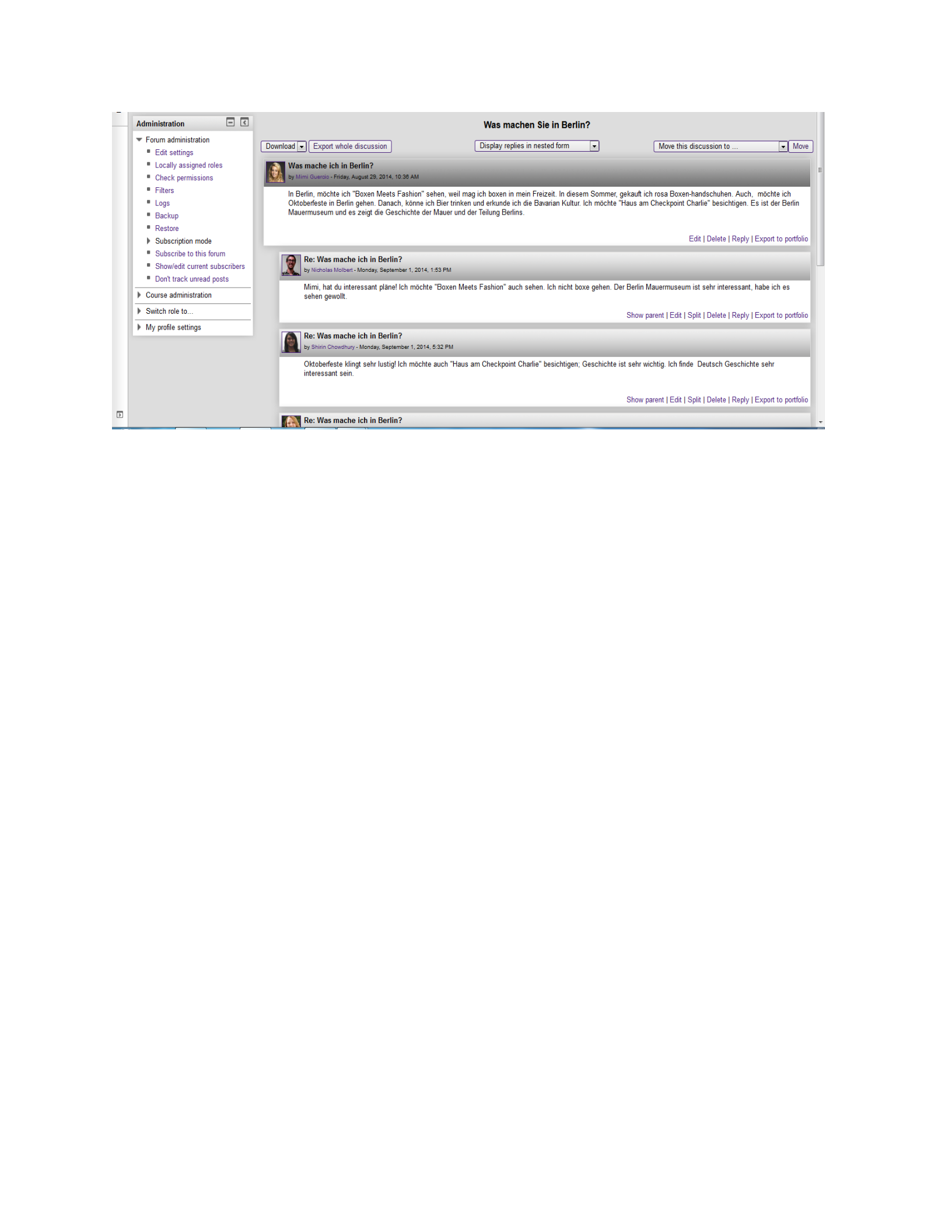
51
Figure 3.1. Screen Shot of Moodle Forum/blog room.
Chat
Online chat was utilized for in-class language practice and review, and for two assigned
partner tasks. The chat tool was implemented using Adobe Connect (Adobe Systems, Inc.)
conferencing software program. This program includes a shared-screen option that allows the
instructor to open chat rooms while delivering a lecture allowing all participants to have access
to and work collaboratively within the same screen, providing all students with an increased
opportunity to participate in class (See Figure 3.2 on the following page). In addition to in-class
language review, one group chat session was held outside-of-class, during a regularly scheduled
class meeting that the researcher could not attend. Students were invited to participate for bonus
points and were allowed to access the chat room from any location with an Internet connection.
During this session the researcher posted grammar sentences as well as utilized the polling tool
to ask multiple-choice questions for the students to complete.
The two partner chat sessions were assigned and included the following tasks: a
discussion about beverages and recycling, and a discussion about childhood activities and future
aspirations, both pertaining to cultural aspects introduced in Stationen (Augustyn and Euba,
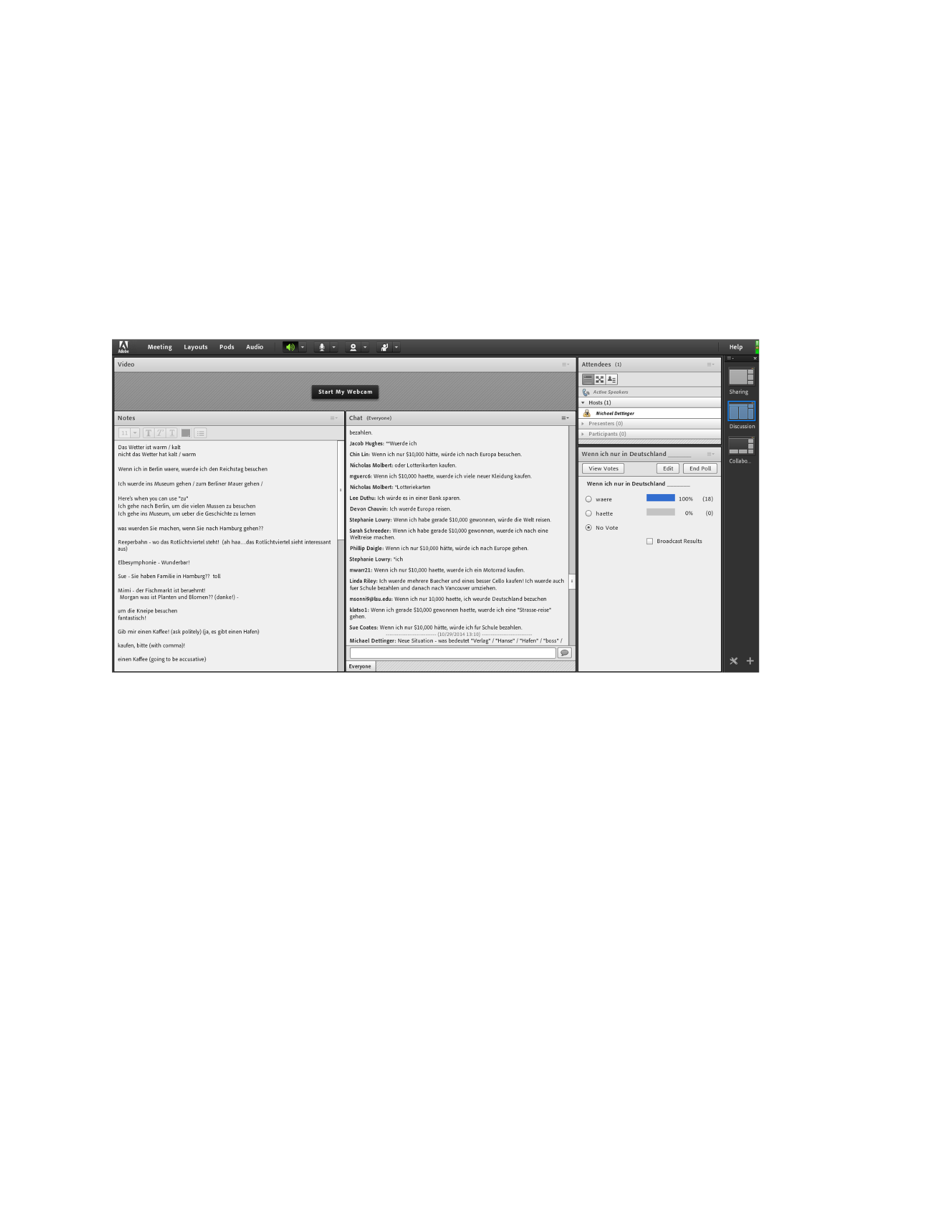
52
2014). For each exercise, students were required to ask one another six questions originating
from the textbook that focused on the tasks mentioned above. Because Adobe Connect chat
sessions could only be scheduled by the instructor, and since these particular chat sessions were
conducted only between students, participants were permitted to utilize other chat tools for out-
of-class chat assignments, including Google Docs or even text messaging.
Figure 3.2. Screen Shot of Adobe Connect chat room page.
Podcasts
Podcasts for this course were implemented for students to practice speaking outside of
class lectures. Students were required to create five audio files using the Audacity (Audacity ®)
recording software which allowed participants to create digital recordings that can be saved,
uploaded, and archived to Moodle. The five recording assignments were: (a) answering
introductory interview questions; (b) describing current events and activities they would do in
Berlin; (c) reading a textbook passage aloud; (d) dictating a variety of individual sentences; and
(e) answering intensive interview questions. A sixth recording was also conducted as the second
part of the oral final examination. For the first recording podcast assignment, students were

53
assigned to speak for a minimum of one minute by introducing themselves, talking about where
they are from, what they study, what their hobbies are, and why they are studying German.
Students were not permitted to write out responses ahead of time, but to simply speak as freely as
possible. The second podcast required students to talk about what they would do if they were to
visit Berlin. This task was in collaboration with their first blog post, which required students to
research the city of Berlin and find activities they would recommend doing. They needed to
speak for a minimum of one minute and were permitted to read their blog posts out loud. The
third recording assignment required students to read a six sentence, eight line passage from the
second chapter out loud (See Figure A9). This text included a number of new vocabulary, the
majority of which represented a higher level of difficulty to pronounce for a third semester
student. For the fourth recording assignment students were assigned to read aloud 15 short
sentences using the past tense. Ten of these were provided by the researcher as a model, and
students were required to write the last five sentences on their own, reading all 15 in sequence.
The final recorded podcast assignment, required students to answer 24 interview questions
provided by the researcher. These included questions about where the students are from, what
they study, what their university is like, what their home town is like, and whether they had been
to Germany. These questions were designed to help students prepare for the Jena Project. The
sixth podcast (Appendix E), as part of the students’ final, oral exam, required participants to
leave a recorded voice mail. For this task, students were given up to two minutes to leave a
detailed message describing their accommodations and plans to meet with a friend in Munich for
Oktoberfest. They were first given a description of the task and were allowed one minute to
consider a response.

54
Wiki
The wiki tool in this study was used as a class-study guide, for in-class note taking, and
for tasks requiring students to work simultaneously practicing sentence writing. It was
accessible to students anytime through a shared Google Docs (See Figure A10) created by the
researcher, who then sent individual email invitations for each student to accept access. The
class accessed the wiki on a weekly basis and the researcher used it to provide examples of
language structure and for exercising grammar practice. The Google Docs wiki allows for
synchronous use where multiple users could access and contribute simultaneously on one page,
acting as a virtual blackboard, such as collaborating in teams of five to complete sentences using
specific vocabulary listed within the wiki.
Cross-Cultural Exchange: The Jena Project
During the last three weeks of the semester, students participated in a virtual, cross-cultural
exchange with native, German speakers
3
from the city of Jena, Germany, located in former East
Germany. This group included 12 undergraduate university students (nine female and three
male) between the ages 18-25 studying Deutsch als Fremdsprache (German as a Foreign
Language) with a goal of becoming German teachers following graduation. This project was
coordinated by the researcher, who successfully contacted and collaborated with a colleague,
who is a professor of German as a Foreign Language at this university. The project consisted of
four main phases, which included: (a) Phase 1, the creation of a shareable blog and blog post
entries by all students and both instructors; (b) Phase 2, a group video conference; (c) Phase 3,
conducting of individual video conference sessions between paired student dyads; and (d) Phase
3
It should be noted that two of the students in Germany were originally from China and Guatemala, respectively.
However, due to the amount of time they have been in Germany, their language skills were fluent and near native.
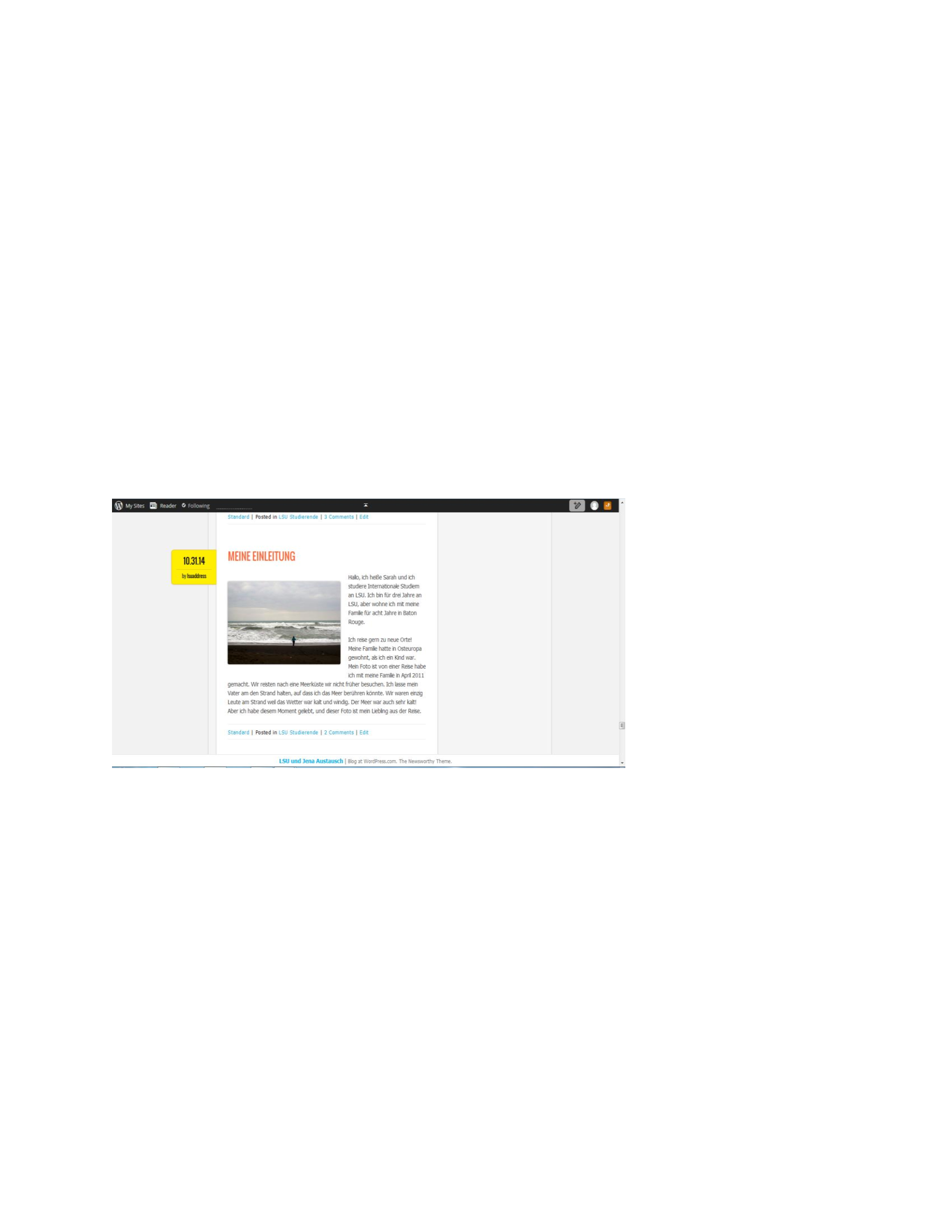
55
4, the screening of the German film Friendship! (Berg and Beckmann, 2010). The following
presents a description of each of these phases.
Phase 1: Blog
The blog selected and used for this project was created via WordPress (WordPress, 2003) a
website that allows individuals to create their own blog site at no charge or for a fee, depending
on the amount of content desired to be included. Students were required to upload two blog
assignments to the site LSU und Jena Austausch: Eine Zusammenarbeit (LSU and Jena
Exchange: A Collaboration). Figure 3.3 shows an image of a participant’s first blog post, which
was a brief introduction with a picture attached.
Figure 3.3. Screen Shot of a Student’s First Blog Post and Image Upload.
The introduction needed to include a description of each student and describe where they are
from, their major, their interests, and any additional information they cared to share. The picture
either could have been of themselves or of an image depicting something about them that the
German students needed to inquire about. The second blog assignment (See Figure 3.4) required
students to write a statement indicating their interest in learning the German language and about
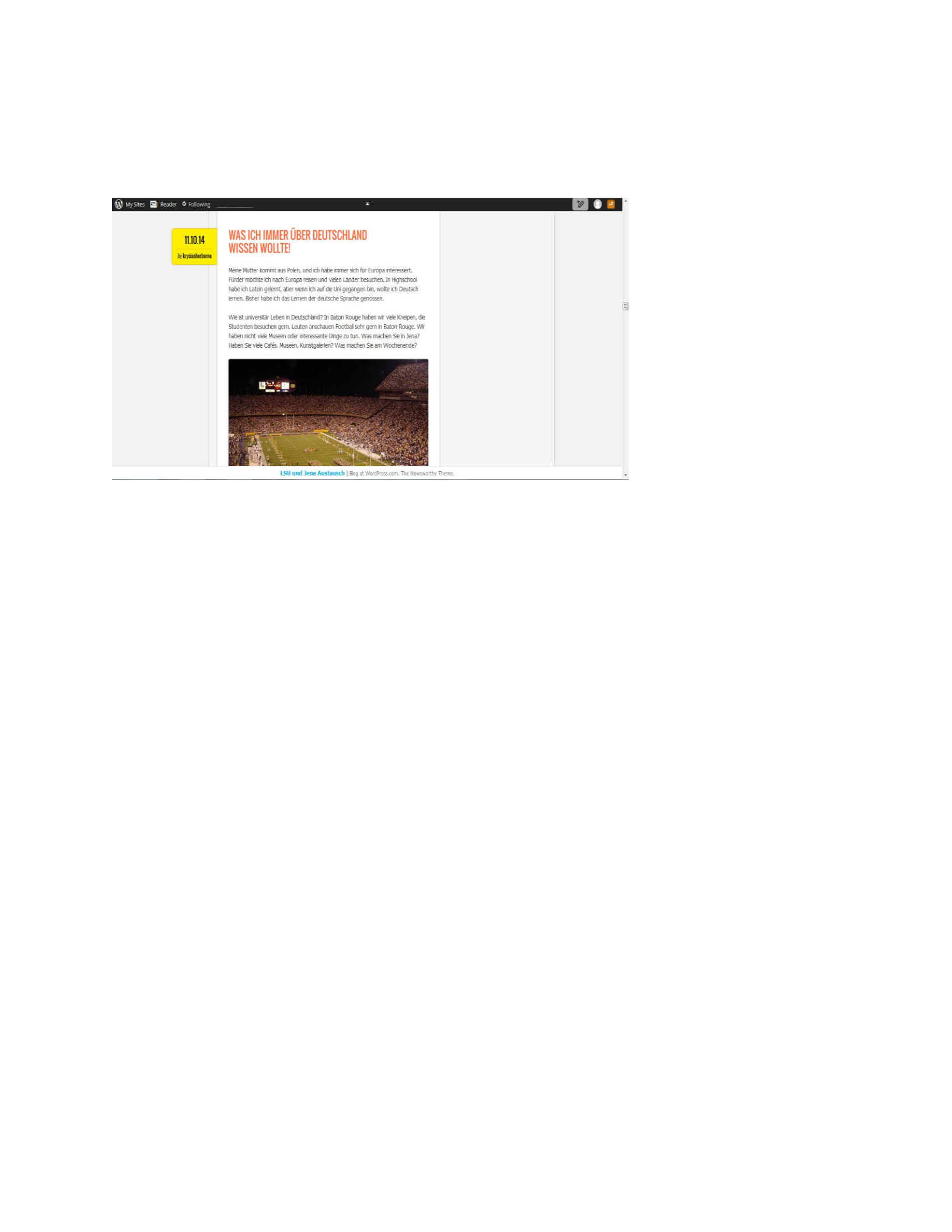
56
Germany and posting a question to the German students specifically asking something about
Germany they wanted to know.
Figure 3.4. Screen Shot of Student’s Second Blog Post and Image Upload.
The German students were also required to write introductions and upload these texts along with
images to the blog. They were also assigned to respond to the American students’ inquiries
about Germany. All students who participated in this project were required to provide
commentary to at least two partner students.
Phase 2: Group Video Conference
For Phase 2 of this project, students from both groups participated in a group video
conference via Adobe Connect (Adobe Systems, Inc.) which took place in the Foreign Language
Laboratory (FLL). Because of the time difference of seven hours between the two schools, the
meeting lasted approximately 30 minutes. The American students met at 12:30 p.m. which was
7:30 p.m. in Germany. For this portion, the German instructor and researcher made brief
introductions and described how the meeting would proceed. Several of the German students
came up and introduced themselves and selected several blog posts by the American students,
which led to a brief question and answer session among the students. The German students
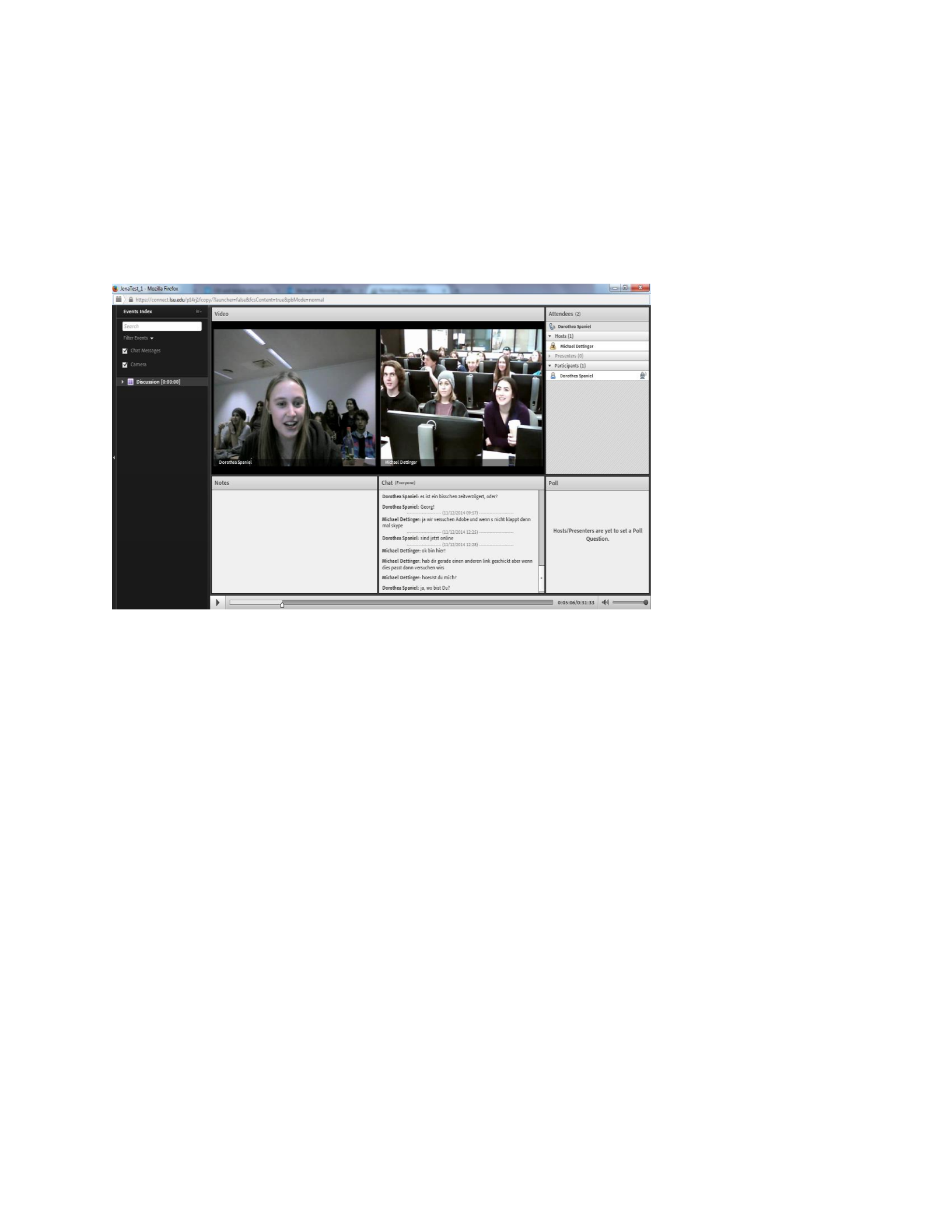
57
answered the American students’ blog questions and expanded candidly about their experiences
as students in Germany. Since there was only 30 minutes allowed for this conference, only three
to four students from each group were able to communicate with one another. However, all
participants were able to listen and watch (See Figure 3.5).
Figure 3.5. Screen Shot of Group Video Conference via Adobe Connect.
Phases 3 and 4: Individual Video Conferences and Film Screening
Phase 3 of the project consisted of individual video conference sessions via Skype
(Skype™). Students were designated into pairs and were assigned to conduct two video
conference sessions. Due to the skewed numbers of participants from each group (American, n =
28, and German, n = 12), only nine of the American students were able to participate in this
phase. However, all students were at least able to email with one another in an attempt to
schedule an individual video conference session. In these video conference sessions, which were
designed to last approximately 20 minutes in length, students were assigned to first conduct brief
introductions with one another in which they discussed each other’s blog posts, and to then
discuss the German film Friendship! (Berg and Beckmann, 2010), Phase 4. This film was

58
screened in the FLL one week into the project and was intended to take place in between the two
assigned video conferences. The American students also had online access to the film to view
from home. Friendship! (Berg and Beckmann, 2010) depicts two best friends from former East
Germany who took a trip to the United States in order for one of them to find his father in San
Francisco. The film represented stereotypes of former East Germany and Germans, as well as of
the United States and Americans. It was a fitting medium to screen for this project as the year
2014 marked the 25th anniversary of the fall of the Berlin Wall. It was also a suitable talking
point as the German university is located in former East Germany, allowing the American
students to gain a perspective into a unique geographic and historic location in Germany. At the
conclusion of the cross-cultural exchange, the American students were scheduled to take their
end of the year assessments, including oral and written final examinations.
Data Analysis
Mixed Methods Data Analysis of Blog Entries and Podcasts
The results from students’ blog entries and podcast recordings were analyzed in two
ways: by conducting a content analysis and by conducting a repeated measures one-way
ANOVA. The researcher conducted a content analysis of the participants’ first, third, fifth, and
seventh blog entries. Seventeen participants’ blog entries were included in this analysis, which
does not represent the entire sample (n = 28). The remaining participants only completed one of
these blog assignments and their results were not included. The researcher then conducted a
content analysis of participants’ first, fourth, and sixth podcast recording. Fifteen participants’
podcast recordings were included in this analysis, which does not represent the entire sample (n
= 28). The remaining participants only completed one of these podcast assignments and their
results were not included. The researcher utilized ACTFL’s 2012 Language Guidelines

59
(Appendix D) to conduct an analysis of blogs for the following: (a) total number of sentences;
(b) use of secondary clauses; (c) total word count (blogs); and (e) grammar accuracy. The
grammar accuracy included a check of aspects including: (a) correct word order; (b) correct verb
conjugation; (c) correct use of case; and (d) correct spelling. The researcher utilized a rubric for
assessing oral accuracy established by ACTFL (2012) (Appendix E), which assesses the
following: (a) fluency and coherence; (b) appropriateness of vocabulary; (c) grammatical
accuracy; and (d) pronunciation. Any incorrect use of these aspects, depending on its severity,
resulted in a point reduction and allowed the researcher to quantify an overall score for each.
These scores then led to the second portion of data analysis for blog entries and podcast
recordings.
For the second portion of analysis of blogs and podcasts, the researcher first conducted
two one-way ANOVAs with repeated measures of participants’ first, third, fifth, and seventh
(Jena Project) blog entry results; the first to analyze overall score, and the second to analyze
grammar output from the students. This included use of modal verbs, for example sollen (to be
supposed to), which, when used, often times require students to integrate a second verb or more
at the end of the sentence. This also included students’ use of subordinate clauses, which
automatically places a single verb or multiple verbs at the end of a clause or sentence. Lastly,
this included students’ total word and sentence count for each blog entry. The researcher then
conducted a separate one-way ANOVA with repeated measures for the participants’ first, fourth,
and sixth podcast results of their overall scores. These statistical tests provided descriptive
statistics, including means and standard deviations, and allowed the researcher to also measure
within-group independent samples for significance (Wilks’ Lambda) and effect size (Robinson-
Szapkiw, 2013). The researcher did not conduct an ANOVA of the grammar output for podcast

60
recordings. While speaking is an important element in this course and study, based on end of the
semester assessment (post-test), this university’s German program, expects students at this level
to perform at the Advanced Low for listening and writing, Advanced for reading, and
Intermediate Mid for speaking, based on ACTFLs (2012) language guidelines. For additional
information regarding these guidelines, please visit Appendices D and E.
Quantitative Data Analysis of the TIS
Quantitative data included a descriptive statistical analysis of the TIS. Upon submission
of the TIS, Qualtrics software (Qualtrics, Version 2013, Provo, UT), immediately produced
descriptive statistics based on students’ responses. This provided the researcher with overall
percentages of students’ perceptions of the TSGLE intervention and cross-cultural exchange
(Jena Project).
Qualitative Data Analysis
The researcher transcribed and analyzed the recorded, focus group interviews to
determine codes. This coding process organized these data into segments of text, which was
turned into categories and labeled with a specific term. This allowed the generation of a
description of the participants, as well as specific themes which were analyzed in students’
responses (Creswell, 2009). The same process was conducted in analyzing students’ reflections
after the completion of each chapter. Additionally, the researcher analyzed students’ emails and
open-ended responses to the Jena Project, as well as field notes taken throughout the course of
the semester. From these data, he also organized and sorted out specific codes that depicted
apparent themes in his observations and linked commonalities and overlapping themes from
these data with those from the focus group interviews. The researcher then merged the mixed

y7
61
methods, quantitative, and qualitative data in order to see if there were differences, similarities,
or converge between the three data sets (Creswell, 2009).

62
Chapter 4
Results
This chapter provides results of mixed methods, quantitative and qualitative data, which
the researcher collected separately to maintain independence of the analyses. Mixed methods
data included results of repeated measures of students’ blog entries and podcast recordings,
which were conducted over the course of the semester. Quantitative data originated from results
of the TIS, which assessed students’ perceptions on the use of the TSGLE and cross-cultural
exchange (Jena Project). Qualitative data originated from two focus group interviews, students’
reflections, and the researcher’s observations. The researcher conducted an interpretive analysis
and coding process by organizing these data into categories and labeled each with a specific
term. This generated the following four themes that emerged from students’ responses:
convenience, social constructivism, cultural awareness, and language acquisition. These themes
describe the various affordances provided by the course materials, the TSGLE intervention, and
cross-cultural exchange.
The researcher then merged findings from each set of data in an attempt to explore the
research questions that guided this within-group case study design using mixed methods. The
mixed methods, quantitative, and qualitative data indicate the TSGLE intervention and Jena
Project had a tremendous impact on students’ language acquisition and cultural awareness.
These data also indicate that students’ perceived the intervention and cross-cultural exchange as
beneficial to helping them learn a foreign language. Mixed methods data revealed significant
gains in the dependent variables, namely, students’ writing (blogs) and speaking (podcasts).
Quantitative data obtained from the TIS indicated that an overwhelmingly high percentage of
students perceived use of TSGLE and cross-cultural exchange to be effective means of
improving language skills and cultural awareness. Qualitative data also provided additional

63
insight into the improvements in students’ learning, even when faced with challenges throughout
the course. By merging these findings, the researcher was able to gain a deeper understanding of
the effects the TSGLE intervention and cross-cultural exchange (Jena Project) had on students’
language acquisition and cultural awareness. Furthermore, these data also allowed the researcher
to gain insight into students’ perceptions after experiencing the TSGLE intervention and cross-
cultural exchange. The following provides an overview of these results and the researcher’s
interpretations.
Impact of the TSGLE and Cross-Cultural Exchange
In order to investigate Research Questions 1 (hereinafter RQ1): What effect will the
TSGLE intervention (blog, chat, podcast, wiki, and video conferencing) and cross-cultural
exchange have on the dependent variables: students’ language skills (reading, writing, listening,
and speaking)?, the researcher originally intended on analyzing results from pre-test (chapter 1)
and post-test (final examination) instruments. However, after careful consideration, the
researcher opted not to include these data. The pre-test and post-test instruments included
individual language skill sections, however, they were primarily used to assess students’
knowledge of the textbook content. Also, because the pre-test was a chapter test and the post-
test was a cumulative final examination, these instruments did not have equal forms reliability.
As a result, the researcher believes that the pre-test and post-test were potentially inadequate
instruments for assessing the impact of technology use on students’ language skills and will
discuss this in the following chapter. The following sections include the researcher’s analysis of
results of each of the dependent variables: writing, speaking, reading, and listening.

64
Impact of the TSGLE and Cross-Cultural Exchange: Writing
In order to investigate RQ1, and to assess the effects of the TSGLE on students’ writing,
the researcher analyzed student performance from their authentic writing produced during blog
activities. To accomplish this, students were required to write a total of eight blog entries over
the course of the semester. They were required to write a minimum of five to seven sentences
for each, then to provide a minimum five sentence commentary to at least two of their
classmates’ entries. For example, for Blog 1: Berlin, students were assigned to conduct
individual research on the city of Berlin using a website provided by the researcher. Students
were required to search the site and find events going on in the city that they would recommend
for their classmates, then write about them. For a more detailed description of this task and all
remaining blog assignments, please visit Appendix A.
The blogs from 17 students were assessed as they were the only participants who
successfully completed each task. The remaining participants were unable to complete each task
and were not included in these analyses. To obtain a final score, the researcher first conducted a
content analysis of grammar production, such as spelling, word order, use of tense and case, as
well as the following for each blog entry: (a) use of modal verbs; (b) use of subordinating
clauses; (c) total word count; and (d) total sentence count of. The researcher then performed a
one-way ANOVA with repeated measures to analyze grammar accuracy. Table 4.1 on the
following page illustrates results of the content analysis for grammar production in students’
blog entries.
Observing these results, there was a significant effect for use of modal verbs, Wilks’
Lambda = 0.29, [F(3, 14) = 11.390, p < .001]. There was not a significant effect for use of
subordinating clauses, Wilks’ Lambda = 0.71, [F(3, 14) = 1.953, p = .168], total word count,

65
Wilks’ Lambda = 0.73 [F(3, 14) = 1.742, p = .204], or total sentence count, Wilks’ Lambda =
0.67, [F(3, 14) = 2.330, p = .119].
Table 4.1
Content Analysis of Blog Entries: Grammar Production
Repeated Measures of Grammar Production
Blog
Modal Verbs:
x
Subordinate
Clauses: x
Word Count: x
Sentence
Count: x
Blog 1: Berlin
5.76
2.65
88.24
10.47
Blog 3: Munich
5.06
2.82
77.18
8.41
Blog 5:
Heidelberg
4.06
3.65
106.76
10.76
Blog 7: Jena
1.76
2.18
88.29
9.88
Multivariate Tests of Each Repeated Measure
Grammar
Element
Effect
Value
F
Hypothesis
df
Error df
Sig.
Modal Verbs
Wilks’
Lambda
0.29
11.39
3.00
14.00
.000
Subordinating
Clauses
Wilks’
Lambda
0.71
1.95
3.00
14.00
.168
Word Count
Wilks’
Lambda
0.73
1.74
3.00
14.00
.204
Sentence
Count
Wilks’
Lambda
0.67
2.33
3.00
14.00
.119
By observing the mean scores of grammar output, students produced the most
subordinating clauses (x
= 3.65), most words used (x
= 106.76), and most sentences written (x
=
10.76) on Blog 5: Heidelberg, when compared to the other blog entries. For this blog entry,
66
students discussed the differences in tuition prices between the United States and Germany. Due
to the minimal rates of tuition for German students, this may have sparked students’ interests in
writing more about this topic. The content analysis for grammar accuracy and production for
these blog entries allowed the researcher to obtain a final score of each entry, which he used to
more closely assess students’ authentic writing performance over the course of the semester. To
accomplish this the researcher performed a one-way ANOVA with repeated measures of
participants’ final scores on their first, third, fifth, and seventh blog entries, which are illustrated
in Table 4.2.
Table 4.2
Repeated Measures of Blog Entries: Total Score
Repeated Measures of Blog Entries
Blog Entry
Berlin: x
Munich: x
Heidelberg: x
Jena: x
Blog Score
77.76
83.71
85.41
93.59
Standard
Deviation
6.63
7.73
4.65
3.78
Multivariate Test
Effect
Value
F
Hypothesis
df
Error df
Sig.
Wilks’
Lambda
0.09
44.82
3.00
14.00
.000
Observing these results, there was a significant effect of students’ total scores of blog
entries, Wilks’ Lambda = 0.09, [F(3, 14) = 44.84, p < .001]. The mean scores of each blog entry
show that participants gradually increased their performance over the course of the semester. By
analyzing students’ repeated measures of blog writing, the researcher was able to more
accurately assess the effect of TSGLE on writing acquisition. The blog tool allowed students to
write in a less-stressful environment, allowing them to produce more authentic writing.

67
To gain a deeper understanding of the effects of TSGLE and cross-cultural exchange on
students’ writing acquisition, the researcher merged findings from these mixed methods and
quantitative data with qualitative data. These included students’ responses during focus group
interviews, students’ post-chapter reflections, as well as the researcher’s own observations.
When referring to students’, researcher identified each as P, for example, Participant 1 is referred
to as P1, Participant 2 is referred to P2, Participant 3 is referred to as P3, etc., to ensure
anonymity for their direct responses provided throughout this narrative, as well as all subsequent
sections.
Only a slight increase in writing competency was observed on the post-test instrument.
However, analyzing the repeated measures results, along with the aforementioned qualitative
findings, indicates that students’ writing skills improved. The researcher observed how the
blogs, as well as various, additional aspects of the TSGLE intervention and cross-cultural
exchange (Jena Project) also contributed to enhancing writing. These included: the textbook,
SAM and course lectures, in-class tasks, Internet searches, video tutorials, chat, and wiki. For a
more detailed description of these tasks, please visit Appendix A. The researcher found from
students’ responses that these tools also contributed to a social constructivist environment. For
example, “Reading blog posts and gathering information from what others were writing assisted
with my writing and putting in my own thoughts” (P9). “In-class writing tasks […] put pressure
on us to think on the spot. This helped us figure things out as we go, where we were willing to
venture off and take a risk with the language” (P11). “The in-class writing really helped me. It
was stressful, but I felt more prepared for the writing on the exam” (P18). Other students
reported on the independence that writing blog posts afforded them. “The Moodle blog posts,

68
because like research on our own and forming our own sentences and paragraphs, and then to
respond (to others) by reading was really positive” (P11). Another added,
As far as the websites go, I like what you provided. It was more interesting to me
to go find my own websites in Germany; I learned to Google in German! And
things like that where you actually had to do a real life type of situation (P9).
The researcher observed how the online chat and wiki tools promoted collaboration
among the students which contributed to their writing skills. For instance, “I find the Adobe
Connect very useful in getting everyone involved and on the same page” (P7). “It was a great
way to get everyone involved and working together” (P2). Regarding the wiki, “When we did
the Google Doc and you had like five sentences to do; it’s like each person on the row would just
take one sentence and then we’d help each other out, so that was really nice” (P20). Other
participants reported the various themes of blog entries enhanced their writing. “I enjoyed
writing the blog post about my own college finances and comparing them to how they would be
in Germany” (P7). In one case, a student referred to the blog and chat as effective tools for
writing. “I feel as though the variety of my written German has improved. I think the blogs and
chat have helped this” (P23).
Some students, however, required additional adaptation to the blog. For instance, one
student found early on that “The blog was difficult for me” (P4). However, as the semester
progressed, so did her comfort level: “they (the blogs) have been getting easier to do and that
helps with my writing skills especially when I can take my time to grasp what is being said and
figure out what to say in return” (P4). Students’ reports also indicated that the blog task during
the cross-cultural exchange (Jena Project) assisted with their writing, even if it required an
adjustment,
After we got into it and actually started posting and I was able to see everyone
else’s posts, plus the posts from the other class in Jena, it made me feel a little

69
more comfortable about where I was and about what I was saying and about
getting ideas about what to post in my next thing from other people’s stuff. So
after we got started, it felt easier (P9).
Other students reported that the blog tasks from the semester prepared them for this
interaction. For example, “I didn’t really feel weird about posting in German (laughter from
group) and then like German students commenting – I kind of just treat it like a Forum” (P5).
Another student remarked, “It was low pressure and because since I was used to doing that
because most of the stuff we do in class was written” (P2). The combination of results of the
aforementioned mixed methods, quantitative and qualitative data provided the researcher with a
better understanding of the effects of TSGLE on students’ writing acquisition. In order to
explore RQ1 and assess the effect of TSGLE and cross-cultural exchange on students’ speaking
acquisition, the researcher also collected and analyzed quantitative and qualitative data. These
steps and procedures are addressed in the following section.
Impact of the TSGLE and Cross-Cultural Exchange: Speaking
To assess the impact of TSGLE on students’ acquisition of speaking skills, the researcher
first observed student performance by conducting a content analysis of their speech produced
during recorded podcast activities. The researcher then analyzed qualitative data from students’
focus group interview responses and post-chapter reflections. To obtain a final score for
speaking acquisition, the researcher graded students’ responses from their first, fourth and sixth
podcast recordings. The podcasts from 15 students were assessed as they were the only
participants who successfully completed each podcast. The remaining participants were unable
to complete each task and were not included in these analyses. For the first and fourth
recordings, students used the Audacity software recording program to provide responses in
German to prompts provided by the researcher. For example, Podcast 1 prompts included:

70
What’s your name? Where are you from? What are you studying? What are your hobbies?
Describe your family? Why do you study German? Students were required to speak for a
minimum of one minute and were not allowed to write down any notes. The researcher made
this requirement in order to provide a context in which the students had the opportunity to speak
more authentically. In the fourth podcast task students were required to produce a recording of
15 sentences read aloud. Ten of these were provided by the researcher, and the students were
required to write and record the remaining five. For a more detailed description of the fourth
podcast recording, please visit Appendix A. The sixth podcast task served as the students’ oral
final examination and took place in the researcher’s office and was recorded using his iPhone.
Students were provided a scenario in which they were required to speak for up to two minutes by
leaving an answering machine message describing their plans to a friend they hoped to meet in
Munich. For a more detailed description of the sixth podcast recordings, please visit Appendix
E.
To assess speaking language acquisition, the oral examination and podcast recordings
were rated by using the Oral Proficiency Rubric (Appendix E) adapted from the ACTFL
Speaking Guidelines (2012). This allowed the researcher to obtain a quantified final score based
on students’ performance of the following: fluency and coherence, appropriateness of
vocabulary, grammatical accuracy, and pronunciation. A one-way ANOVA was computed with
repeated measures of the 15 participants’ final scores on their first, fourth, and sixth blog podcast
recordings, the results of which are displayed in Table 4.3 on the following page.
Observing these results, there was a significant effect of students’ total scores of podcast
recordings, Wilks’ Lambda = 0.51, [F(2, 13) = 6.32, p = .012]. The mean scores indicate
students improved from their first podcast recording to their fourth, but experienced a slight
71
decrease on their sixth. By analyzing students’ repeated measures of podcast recordings, the
researcher was able to more accurately assess the effect of TSGLE on speaking acquisition.
Table 4.3
Language Acquisition Assessment: Speaking
Repeated Measures Mean Scores of Podcast Recordings
Podcast
Recording
Podcast 1
Podcast 4
Podcast 6
x
91.47
93.60
91.20
s
2.36
3.74
4.04
Multivariate Test
Effect
Value
F
Hypothesis
df
Error df
Sig.
Wilks’
Lambda
.51
6.32
2.00
13.00
.012
Aside from the sixth recording, which was the final oral examination, the podcast
recordings allowed students to speak in a less-stressful environment, which allowed them to
produce more authentic speaking. To gain a deeper understanding of the effects of TSGLE and
cultural exchange on students’ speaking acquisition, the researcher merged findings from these
quantitative data with qualitative data. These included students’ responses during focus group
interviews, students’ post-chapter reflections, the researcher’s own observations, as well as
comments provided by the researcher’s German colleague.
The researcher observed that two primary elements of the course contributed to the
students’ speaking enhancement, the podcasts and the cross-cultural exchange (Jena Project).
Students’ responses from the interviews revealed that the podcasts helped with individual
practice for speaking. For example, “The podcast helped by forcing me to actually use the
language” (P16). “I think my speaking skills increased due to the podcast” (P6). “I enjoyed the

72
chance to practice my speaking with the podcast. The feedback you provided helped my
pronunciation” (P9). One student remarked on the process involved with creating podcasts that
assisted in speaking, “I think the podcasts helped because it made us speak and we were able to
listen to ourselves and hear any mistakes in pronunciation or grammar that we would not have
noticed if we didn’t listen to ourselves” (P1).
During the Jena Project, in addition to the two assigned blog posts, students were
assigned to conduct two individual video conferences using the Skype software program, which
allows for simultaneous video conferencing with an Internet connection. Students were required
to talk with their German partners for a minimum of 20 minutes. Reports from the Jena Project
indicate that interacting with the German students during synchronous video conferencing
contributed to students’ speaking, even if it required some adjustment. In several instances,
students reported on the challenges faced during this aspect of the exchange:
It went well, but I was nervous. I’ve got to practice listening, but in the end, it
wasn’t so bad. The second time I felt more prepared. For me, forcing myself to
sit down and talk to someone face-to-face and think of the words and use the
vocabulary, it was huge (P9).
It took lots of brain energy. I was striving to speak German (grasping hands as if
could not figure something out). You know after the first time I felt better the
second time, it’s not that bad, you know. I just keep thinking, oh that’s the words
we learned in class and then we would start using it (P4).
You’ll say something grammatically correct but you’re saying it in such a
roundabout way to a native speaker, and that’s what I was worried about. And he
was using words that I’ve never seen before … like so many words, I mean that
you can’t find in the back of the book’s dictionary just because there are a million
terms (P3).
At the end of it (first meeting), I got off the Skype call and was like, ok that
wasn’t so bad. Then we talked again later that week and I was already prepared
and felt more comfortable because I had time to look up some more vocabulary,
and I had prepped a little better than I had for the first time (P9).

73
So I just completed my first call with my partner (we did it through Skype so I
wasn't able to record it) but I'm feeling a little bad because I feel like I didn't
understand as much as I should have and I felt that when I tried to make
sentences, they were probably out of order and not entirely understandable (that
could be because I was nervous of course). Luckily my partner was very helpful
and would translate some things for me when I needed, but I was just wondering
if you had any tips to help me be able to speak it a little better. I've been trying to
practice but I didn't do as well as I thought I would so I'm feeling a little let down!
(P28).
Based on the other accounts from the students, the researcher observed that the individual
video conferencing created a social constructivist environment. During these instances, students
collaborated and the German students acted as language coaches. For example, “It was really
stressful. I forgot all of my German and felt that I wasn’t advanced enough to do this. It was
super important she (German partner) knew English” (P2). One student remarked on how both
encounters helped with her comfort level speaking German: “I will say something and they will
help us out in a way so that it will be even less pressure because I know that my partner is going
to help me out” (P4). She continued, “So definitely this helped and let me feel more comfortable
and if I go to Germany you know it’s going to be ok” (P4). On two additional occasions,
students reinforced the assistance offered by their German partners and how this helped them
adapt:
The first meeting was a little more difficult just because I was nervous, but she
was very kind and helpful. She worked with me as far as if I didn’t understand
something, then she would either type it in the instant message to me so that I
could then look it up or she would change her vocabulary to explain the word or
change it to something I understood (P9).
I tried as much German as possible, although there were some
miscommunications at first. I was excited to do this and after the first session, it’s
ok. I love my Skype girl, she was great. I learned a lot from her and that helped
me with speaking and listening. I’m still really nervous about speaking but I do
have a better grasp on it (P3).
Two students even reported feeling comfortable while interacting with their German partners and
how this experience improved their speaking ability:

74
I wasn’t afraid to speak. Our Skype sessions went really well, um also being anal
we never spoke English. So that was fine and was actually really good for to me
practice because I haven’t talked to a German speaker in a while. It ended up
becoming a conversation about university life and just about his struggles with
roommates in the past. It was definitely, really good application (P6).
It wasn’t as high pressure because we emailed back and forth like quite a bit
before the first Skype meeting. It was really mentally draining. I could tell that
she (German partner) was nervous and I was nervous too but in some ways
speaking is easier than typing, because you don’t have to use full sentences, ever.
This (Skype meeting) was the thing that helped me learn the most, like hands
down (P5).
The researcher’s colleague from Germany even remarked on the exchanges, and how the
American students exhibited noticeable changes in their ability to communicate (speak) in this
environment, “Von unserer Seite eine große Bestätigung, dass ein großer Unterschied zwischen
der ersten und zweiten Sitzung festzustellen war, also bitte ermutigt die Studierenden immer, an
solchen Austauschprogrammen teilzunehmen”, which translates as: “From our perspective, there
was a noticeable difference between the first and second meeting (video conference), so please
encourage the students to always try and participate in these types of exchanges” (D. Spaniel-
Weise, personal communication, January 30, 2015). The combination of results of the
aforementioned quantitative and qualitative data provided the researcher with a better
understanding of the effects of TSGLE and cross-cultural exchange on students’ speaking
acquisition. In order to explore RQ1 and assess the effect of TSGLE and cross-cultural exchange
on students’ reading acquisition, the researcher collected and analyzed qualitative data. These
steps and procedures are addressed in the following section.
Impact of the TSGLE and Cross-Cultural Exchange: Reading
The researcher analyzed qualitative data from students’ focus group interview responses
and reflections to assess the effects of the TSGLE and cross-cultural exchange on students’
reading acquisition. In doing so, the researcher observed that several elements of the TSGLE

75
intervention contributed to their reading comprehension. The researcher observed from students’
interview responses that in-class meetings contributed to a social constructivist environment as it
promoted collaboration. In this context, students indicated that working through texts together
helped their reading comprehension. “Reading as a class, line by line and phrase by phrase
together helped understand” (P4). The class meetings and eSAM assignments are responsible for
increasing this skill” (P27). “I only liked it (literary texts) when we would go over it in class. I
feel like it helped me understand better and seeing what words or phrases everyone can identify
because it’s really intimidating to just go by yourself” (P3). “I feel like I know about sentence
structure when we go over readings in the beginning of the chapter and I enjoy that” (P18).
Based on other students’ reports, reading comprehension was also enhanced through
multiple sources including the eSAM, blog, video tutorials, and podcasts. For example, “I felt
my German skills in reading increased. My language skills were enhanced by reading in the
blog posts” (P15). “The video tutorials helped with improving my reading skills” (P2). “My
reading skills were enhanced because of videos” (P9). “The podcasts helped with improving my
reading skills” (P2). The researcher intended that reviewing assigned readings from the textbook
and SAM as a class would promote reading comprehension. Moreover, the researcher also
anticipated that reading through classmates’ blog entries would expose students to more
authentic language production and have an impact on their ability to comprehend in order to
produce a written response. However, students’ responses regarding their improved reading
from tools such as video tutorials and podcasts were unexpected. These were intended for
review and to practice speaking. While some podcast assignments did require students to read a
text aloud, it was expected that this would affect their pronunciation. This is an indication of the

76
effects the TSGLE and Web 2.0 technologies can have on promoting language acquisition and
will be discussed in more detail in the following chapter.
The aforementioned qualitative data provided the researcher with a better understanding
of the effects of TSGLE and cross-cultural exchange on students’ reading comprehension. In
order to explore RQ1 and assess the effect of TSGLE and cross-cultural exchange on students’
listening comprehension, the researcher also collected and analyzed qualitative data. These steps
and procedures are addressed in the following section.
Impact of the TSGLE and Cross-Cultural Exchange: Listening
The researcher observed the impact on students’ listening comprehension by analyzing
qualitative data, which revealed that participants found a variety of tools from the TSGLE
intervention and Jena Project that contributed to their listening comprehension. Several
indicated the German used in class attributed to this, even if it required time to adapt. For
example, “When we first came into class […] I got about 65% of what you said […] but by the
end of the semester I found that I was understanding what you were saying” (P4). Others added
that the consistency of German used in class helped with their listening skills. “My listening
skills increased due to class attendance and homework assignments” (P6). “I feel my listening
skills in particular have been improved through homework and in-class listening assignments”
(P7). “I feel like I am hearing more German and that is helping from several different sources
such as just being in class” (P8). “I think your decision to speak only in German in class is
SUPER helpful. It’s the only time we hear consistent German each week” (P18). The researcher
intended on speaking in German as much as possible during class meetings. Only when students
were having difficulty understanding complex themes, such as difficult grammar aspects, would

77
the researcher use English. This, however, usually only last several minutes out of a 50-minute
lecture.
Some students reported that the online homework exercises from the textbook helped
improve their listening. For example, “The eSAM exercises serve to keep my vocab, listening,
and comprehension sharpened” (P23). Other participants reported that the video tutorials
improved their listening acquisition. “The video tutorials and podcasts helped with improving
my listening skills” (P2). “My listening skills were enhanced because of videos” (P9). Some
even referred to the podcast as an effective resource for listening. “I feel like I am hearing more
German and that is helping from several different sources such as the podcast” (P8).
Several students indicated the group video conference during the Jena Project proved to
be challenging. During this video conference, both classes met in an online video conference
room via Adobe Connect video presentation and conferencing software. The meeting lasted
approximately 30 minutes and included students from Germany approaching the camera and
microphone to provide short introductions, answer several of the American students’ questions
provided from the blog, and even ask questions to several of the American students. One student
noted, “I wished they spoke more slowly, because I need time to process what to say” (P3). As
several students also shared the same sentiment about this phase of the project, others found the
German film to be helping with their listening. Students were required to view the German film
Friendship! (Goller, 2010) during the exchange. One explained his realization of listening
enhancement,
I was watching it and I wasn’t actively thinking about translating everything that
they were saying, but I was finding myself laughing at parts, and I was like, that
wasn’t English (laughter from group). I think that it helped show me that I knew
more than I thought I knew (P11).

78
Students’ responses during focus group interviews and reflections provided the researcher
with a better understanding of the effects of TSGLE and cross-cultural exchange on students’
listening comprehension. In order to now assess the effect of TSGLE and cross-cultural
exchange on students’ cultural awareness, the researcher collected and analyzed qualitative data.
These steps and procedures are addressed in the following section.
Impact of the TSGLE and Cross-Cultural Exchange: Cultural Awareness
In order to explore Research Question 2 (hereinafter RQ2): What effect will the TSGLE
intervention (blog, chat, podcast, wiki, and video conferencing) and cross-cultural exchange have
on the students’ cultural awareness?, the researcher observed qualitative data from students’
responses from focus group interviews and post-chapter reflections. These data revealed that
participants found a variety of tools from the TSGLE intervention and Jena Project that helped
contribute to their cultural awareness. Participants attributed the blog posts and individual
research of websites to assisting in their cultural enhancement. For instance, “The blog and
exploring websites helped me expand my knowledge of the culture. It was cool to explore these
websites and, in a way, virtually go to these cities” (P11). “I think researching what Heidelberg
is known for (through website searches) was how I learned about it” (P26). Moreover,
participants reported about the hands-on, cultural characteristics these websites provided, which
allowed for convenient access to authentic language materials. “They gave us a look into the
actual culture itself” (P11), was one student’s perspective. Another remarked, “I really liked
how we explored what was actually out there instead of what is inside these four walls” (P9).
This provided students with access to cultural insights known to Germany, for example, “I
remember the Oktoberfest link. That was really cool because you were able to walk around

79
almost and look at everything that was going on, and that was something I hadn’t done in a
German class before” (P11).
Participants also reported on their interactions with their German partners, and how this
contributed to their cultural development. For example, “I mean it was cool because I met
someone from Germany” (P2). Another expressed her interest in film with her partner, “I tried
telling her that I was really into German movies and she was very surprised at like how many
German movies I had seen” (P3). When asked from her German partner about the main
character from the film that the groups screened, however, she responded, “And I’m like, wow,
that y’all have someone that’s like your big German star and you just don’t know” (P3). Others
offered a variety of additional insights gained from this experience. For example, “I learned a lot
about how similar we are, just as far as like interests and day to day stuff. I didn’t expect us to
be that different, honestly” (P5). One even commented, “I mean, we’re just college kids, we’re
kind of universal” (P3). “It was a really, really awesome” (P11), was one student’s response to
the Skype video conferencing. He continued, “I enjoyed the Skype talk because I kind of got to
hear their side and they were asking me questions about Louisiana, and I think it was a positive
experience that I got a lot out of” (P11).
The researcher anticipated that the literary texts from the textbook and individual website
searches would contribute to students becoming more acclimated with German culture. The
researcher hoped that by participating in the Jena Project, that students’ cultural awareness would
become enriched. Moreover, the researcher intended for this exchange to provide students with a
truly authentic opportunity that would also enhance their language competence. Students’
responses from their interviews and reflections were able to provide the researcher with a better
understanding of the effects of TSGLE and cross-cultural exchange on students’ cultural

80
awareness over the course of a semester. To gain a deeper understanding of students’
perceptions of the effects of TSGLE and cross-cultural exchange on their language acquisition
and cultural awareness, the researcher collected and analyzed both quantitative and qualitative
data. These steps and procedures are addressed in the following section.
Impact of the TSGLE and Cross-Cultural Exchange: Students’ Perceptions
In order to explore Research Question 3 (hereinafter RQ3), How do students perceive the
use of the TSGLE intervention and cross-cultural exchange in their process of learning German?,
the researcher first analyzed students’ responses to the Technology Implementation Survey (TIS)
instrument. The TIS consisted of 11 Likert-type and scaled questions. For example, Questions 1
and 2 asked students whether they preferred or learned more in a German course that utilizes
technology. Questions 3 through 7 asked students to rate their perceptions on the effectiveness
of the technologies (blog, podcast, chat, wiki, Skype, and video tutorials) used throughout the
course and their impact on students’ reading, writing, listening, speaking, and cultural awareness.
For a more detailed description of the TIS, please visit Appendix F. To obtain results of the TIS,
the survey was administered during the last week of the semester using Qualtrics software
(Qualtrics, Version 2013, Provo, UT), which automatically produced results to students’
responses. Responses to the first two questions indicated that 85.71% of students learn most in a
German course that uses technology, and 82.14% prefer learning German in a course that utilized
technology. Table 4.4 on the following page provides the results of the next five questions that
illustrate students’ perceptions to the specific technologies used to learn German. The top
portion reflects the percentages of students’ responses of “agree” or “strongly agree”. The
bottom portion reflects percentages of students’ responses of “disagree” or “strongly disagree”.

81
Table 4.4
Language Acquisition Assessment: Students’ Perceptions
Language Acquisition Enhanced by Technology
Language Skill
Blog
Chat
Wiki
Podcast
Video
Tutorial
Skype
Writing Skills
92.86%
89.29%
89.29%
46.43%
82.14%
50%
Speaking Skills
55.56%
48.15%
44.44%
88.89%
70.37%
81.48%
Reading
Comprehension
82.14%
85.71%
82.14%
46.43%
71.43%
53.57%
Listening
Comprehension
35.71%
39.29%
35.71%
85.71%
92.86%
89.29%
Cultural
Awareness
92.86%
50%
42.86%
50%
64.29%
96.43%
Language Acquisition Not Enhanced by Technology
Language Skill
Blog
Chat
Wiki
Podcast
Video
Tutorial
Skype
Writing Skills
7.14%
10.71%
10.71%
53.57%
17.86%
50%
Speaking Skills
44.44%
51.85%
55.56%
11.11%
29.63%
18.51%
Reading
Comprehension
17.86%
14.29%
17.86%
53.57%
28.57%
46.43%
Listening
Comprehension
64.29%
60.71%
64.29%
14.29%
7.14%
10.71%
Cultural
Awareness
7.14%
50%
57.14%
50%
37.71%
3.57%
These results show that the majority of students perceived the blog, online chat, and wiki
tools to be helpful with their reading and writing skills as was anticipated by the researcher.
However, the researcher did not expect the high percentages of students’ responses indicating the
podcast, video tutorials and Skype helped their writing. Likewise, the high response rate of

82
students perceiving that podcasts, video tutorials, and Skype helped their reading also was
unexpected.
The majority perceived the podcasts and Skype sessions to help with their speaking skills.
However, the researcher did not anticipate such a high response rate from students indicating
they perceived the blog, chat, wiki, or video tutorials to help with their speaking. The majority
perceived the podcasts, video tutorials, and Skype sessions to be helpful with their listening
comprehension, and the majority perceived the blogs and Skype sessions to be helpful with their
cultural awareness. While the researcher anticipated that students would perceive these as
effective tools to enhance listening comprehension and cultural awareness, as was his intention,
he anticipated a lower percentage of students to find the blog, chat, wiki, podcasts, and video
tutorials as tools to enhance their listening skills and cultural awareness.
The goal of implementing this survey was to provide insight into the students’
perceptions of the technologies used and whether they felt the TSGLE intervention helped
enhance their language acquisition and cultural awareness. To seek additional answers into how
students’ perceived the intervention, the researcher conducted focus group interviews and
collected students’ reflections. These qualitative data were able to provide additional insight into
students’ perceptions regarding the course and TSGLE intervention that were not gathered from
this survey. For example, several participants reported on the convenience and accessibility
multiple features from the course offered, such as the ease of accessing the ebook as opposed to a
traditional textbook. For example, several provided their reaction to the option of using the
ebook versus the traditional book. “I’m more of an electronic user, so the ebook was awesome.
I wouldn’t have to lug around a three-ring binder” (P20). “I used the online (ebook) more often
just because it’s easier to have a laptop with me and I don’t have to carry things around all the

83
time” (P24). Participants also referred to the course wiki (Google Doc) as a “good review that
was easily accessible” (P3). Referring to the wiki’s use in class, one student commented
“someone could go change it and you’d see it instantly” (P3). The researcher intended for the
wiki to be an easily accessible tool that provided instant, simultaneous use.
In addition to the wiki, multiple participants reported the on-demand access of the video
tutorials as being very convenient. “I liked the video tutorials because it gave us a chance to
review the material with your explanation of how without actually having to go to your office”
(P9). “The video tutorials were very helpful. I can review them over and over again” (P4). “I
love the tutorials you post on YouTube before the class test. It is a great review” (P18). “The
video tutorials were life savers” (P21). While the students’ responses were helpful in providing
the researcher with a better understanding to their perceptions, there still existed some
unanswered questions to students’ responses to the TIS. As was the case for the unexpected low
result of students’ listening comprehension, perhaps the timing of the TIS affected some of the
responses provided by students. The TIS was administered during the last week of classes prior
to the final examination post-test. It is possible students were at their limit in terms of workload
and coursework expectations. As this may be the case, this will be discussed in more detail in
the following chapter. Despite the results of the TIS, most of which were anticipated, one
student did provide his overall impressions of the course and TSGLE intervention, as he stated,
Both my language skills and cultural awareness were enhanced through the blogs,
chats, podcasts, Adobe Connect, reading out of the textbook, participating in class
discussions and looking at the tutorials. I find that by using all of my available
resources, I expand my understanding of the language. The thorough method
leaves no chance for any misunderstandings. I find class lectures to be the best
option for my learning style, but I also like the use of technology (P19).
This may shed more light on students’ perceptions of the use of technology to learn
German. In addition to seeking more understanding of students’ perceptions of the use of
84
TSGLE to learn German, the TIS also was intended to learn more about students’ reactions to the
cross-cultural exchange. Questions 8 through 11 of this survey asked students to rate their
perceptions of the cross-cultural exchange (Jena Project) and its effect on their cultural
awareness and language acquisition, their overall impressions on the exchange, and issues
encountered during the exchange. Each question was followed by a four-point Likert scale
ranging from “strongly agree” through “agree”, or “disagree” to “strongly disagree”. Table 4.5
provides these results, and reflects the percentage of students’ responses of “agree” or “strongly
agree”.
Table 4.5
Cross-Cultural Exchange: Students’ Perceptions
Enhancement of Cultural Awareness and Language Acquisition
Awareness
of East
German
Culture
Improved
Awareness
of Current
German
Culture
Improved
Vocabulary
Enhanced
Communication
Skills
Enhanced
Pronunciation
Enhanced
Increased
Motivation
71.43%
92.86%
85.71%
89.29%
85.71%
82.14%
Overall Impressions of Exchange
Image of Germany
Changed
Interest in Continuing
Project
Recommendation of Project
for Future Classes
71.43%
82.14%
89.29%
Issues Experienced
Technical Issues
Language Barriers
Personal Issues
75%
78.57%
82.14%

85
These results indicate that the majority of students perceived the Jena Project to be a
good means to enhance their cultural awareness and language acquisition. Students’ responses to
the survey show that students’ knowledge of East German culture and culture of present-day
Germany improved. These results also indicate how students’ language acquisition, such as their
communication skills, pronunciation, and increased vocabulary was improved. The majority
expressed interest in continuing cross-cultural exchange and even recommended it for future
classes. Despite these responses, students did provide insight into the technical issues faced as
well as the language barriers that existed. In order to find additional insight into students’
perceptions, the researcher also analyzed students’ interview responses and reflections.
For example, several participants reported how the Jena Project blog was an effective means of
bringing them closer to the German culture and introducing both groups to one another. For
instance, one student remarked,
It was a nice starting point and it was a nice way to get to know everybody and
their interests and perhaps we could find something in common with somebody
and you could talk about it. It sort of formed a relationship before we even started
Skype (P6).
Other comments also aligned with this sentiment, as well as provided insight into how the
exchange helped their language acquisition. For example, “I thought it was a good introduction
and effective in how it introduces everybody. The language was just, um, getting used to it and
getting used to the idea of someone who is actually German reading my German” (P9).
Participants also reported how the blog aided their writing development. “I like the pressure of
knowing if I was going to read something […] I didn’t understand or I know what they’re talking
about. And […] when they commented back, I was excited, because they were talking to me”
(P10).

86
Some commented on the technical issues faced during the group video conference, such
as the time delay and small camera angle. Others reported about their initial anxiety of
interacting during the group video conference, particularly with the language barrier. “We were
nervous and anxious to see what would happen. I realized they seemed just as nervous or
anxious as us” (P5). “At first I wasn’t that interested, but then seeing the German students made
me very curious. I realized we are very different” (P2). “I was pretty confident and thought I
wouldn’t get embarrassed, but at same time I was hoping they wouldn’t call on me” (P5). “I had
the feeling I want to do this but I’m not quite over the threshold” (P4). One student, however,
did not seem overwhelmed to interact with the German students, “I thought it was a breeze. But
it was different maybe for me, because I’ve been exposed to German since the fifth grade” (P6).
As this was not the case for most, she did provide additional commentary indicating the
exchange was a very applicable means of utilizing German in a very natural way. Lastly, one
student commented on the German film that was screened by both groups, which provided an
interesting take on German film. She commented, “It was funny for me seeing a light-hearted
German romp. I’m a film major and I love German movies, but all German movies I watch are
super serious and scary” (P3). The TIS and students’ responses indicated that the majority of
students perceived the TSGLE intervention and Jena Project to assist in language acquisition and
cultural awareness.
The researcher anticipated the TSGLE and cross-cultural exchange would enhance
students’ language acquisition and cultural awareness. As was observed by the mixed methods,
quantitative and qualitative data collected during this study, this intervention did indicate
improvement in students’ writing, speaking, reading, listening, and cultural knowledge. For
example, the researcher conducted repeated measures to gauge the impact of technology on

87
students’ writing and speaking skills. The results indicate students did show improvement in
these language skills as they were able to communicate in authentic language scenarios.
Quantitative results from the TIS, as well as qualitative data from students’ focus group
interviews and reflections, also provided the researcher with a deeper understanding of the
impacts of the TSGLE and cross-cultural exchange. These revealed that in addition to writing
and speaking, students’ reading and listening comprehension, as well as cultural awareness were
enhanced through use of the synchronous and asynchronous communication afforded through the
various technologies and exchange with the Jena students. The researcher intended for these
technologies and exchange to increase and improve communication and use of German and
ultimately immerse students more deeply with the language and culture. Of course, challenges
were experienced by the students during this process. However, these experiences provide
lessons to be learned, and can help create more effective uses of technology intervention and
cross-cultural exchange for future studies. The findings indicate that the majority of students
improved their language acquisition and cultural awareness. What follows is a discussion that
addresses the aforementioned results of the TSGLE intervention and cross-cultural exchange, as
well as implications of what the findings revealed. Additionally, the discussion outlines the
strengths and weaknesses experienced during the intervention in this German language course, as
well as recommendations for future studies based on the outcomes over the course of this study.

88
Chapter 5
Discussion
This chapter provides a brief introduction of the research problem and description of the
study which included a TSGLE intervention and cross-cultural exchange to enhance language
acquisition and cultural awareness in a German language course. The researcher then provides a
discussion of the conclusions and summaries of the findings by providing an interpretation of the
quantitative and qualitative data. Furthermore, the researcher provides implications of the
findings and concludes with suggestions for future research.
As previous research has shown, technology offers the potential to enhance classroom-
based language instruction (ACTFL, 2014). More specifically, Web 2.0 technologies, such as
those utilized in this current study, have the ability to enhance collaboration, communication and
sharing of content among students (Wang and Vásquez, 2012). Yet, according to Jahner (2012),
“In order to provide effective and individualized language instruction, students need to encounter
the language on a daily basis, which is certainly possible based on today’s applications and
interconnectivity” (p. 4). While there is evidence indicating increases in the applications of
technology in SLA, “research on the application of Web 2.0 technologies to L2 learning is still
quite limited” (Wang & Vásquez, 2012, p. 416). Therefore, previous literature (Li, 2012) has
recommended future research to center more on quantitative data to analyze the impacts
technologies have on students’ language skills, as well as qualitative data to “offer rich
descriptions of observed phenomena, and to address issues related to participants’ individual
perspectives as well as to their personal, lived experiences” (Wang & Vásquez, 2012, p. 422).
Furthermore, other researchers (Elola and Oskoz, 2012; Perez, 2003) have urged for more studies
to be designed through specific theoretical lenses.

89
In response to these findings and recommendations, this study employed a within-group
case study design using a mixed methods approach. To accomplish this, the researcher
employed a TSGLE intervention to increase and improve students’ communication on an
individual basis, with classmates, and by linking students with native German speakers in a
cross-cultural exchange. This allowed the researcher to analyze the intervention’s effects on
students’ language acquisition and cultural awareness, as well as analyze students’ perceptions of
this pedagogical method to enhance their language acquisition and cultural awareness. The
researcher used a concurrent triangulation process during a one semester intermediate German
language course and merged findings of mixed methods, quantitative, and qualitative data to
answer the research questions that guided this study in an attempt to provide deeper insight into
the aforementioned gaps reported. The researcher hypothesized that students’ language
acquisition would improve after a semester-long TSGLE intervention. The results of this study
did show that TSGLE enhanced students’ language acquisition and cultural awareness. Results
also indicated that an overwhelming majority of students perceived this intervention to be a
beneficial means to enhance these skill sets. The researcher collected and analyzed mixed
methods, quantitative, and qualitative data to come to this conclusion and presents an
interpretation of these findings in the discussion that follows.
Although the researcher originally intended on using pre-test and post-test instruments to
assess the effects of a technology intervention on students’ language acquisition, it was found
that these were potentially inadequate instruments to accomplish this. One reason supporting
this claim was that these instruments did not have equal forms reliability. The post-test was a
cumulative test that included a larger quantity of content for the students to prepare, mainly
grammar. Moreover, the post-test was the final examination and administered during a time

90
when students have multiple final examinations and projects in their other coursework. In
addition to this, the timing of the Jena Project, which was near the end of the semester, may have
also contributed to students having difficulty managing their time to accomplish all of their tasks
effectively. This was reported by multiple students, who commented on the difficulty to simply
find time to schedule individual video conferences with their partners. As (Lin et al., 2008)
found, personal limitations for students was a major problem encountered when conducting a
study utilizing technology implementation in addition to regular coursework. These limitations
included busy schedules in school or personal situations which hindered their ability and/or
effort to practice. These findings (Lin et al., 2008) align with some of the experiences that
resulted in this current study. Many students reported that they work outside of school, some
even as much as 40 hours per week, and some with families to support. In addition to the pre-
test and post-test instruments not having equal forms reliability, the researcher also found that
these examinations were more suitable to assess textbook content.
The pre-test and post-test instruments, which included individual language skill sections,
were primarily used to assess students’ knowledge of the textbook content, not the impact of
technology per se. Research (Grimes and Warschauer, 2008) has shown that assessment for
effects of technology should address 21st century skills, including, global awareness, critical
thinking and problem solving skills, and information and communications technology literacy.
Furthermore, ACTFL’s 21st Century Skills Map (2014) declares that students should be “using
digital technology, communication tools, and/or networks appropriately to access, manage,
integrate, evaluate, and create information in order to function in a knowledge economy” (p. 14).
However, assessment instruments, including standardized tests, are inadequate in measuring
these skills as they focus more on students’ knowledge of discrete facts (Grimes and

91
Warschauer, 2008). While Grimes and Warschauer (2008) refer to standardized tests on a
national level, the researcher believes that the pre- and post-test instruments used in this current
study, which were pre-designed by the authors of Stationen (Augustyn and Euba, 2013), apply to
this claim.
Therefore, in order to more accurately measure the impact of TSGLE, for example, on
students’ writing and speaking skills, the researcher performed repeated measures statistical
testing of students’ performance on blog posts and podcast recordings completed over the course
of the semester. Results from these tests, the TIS, and qualitative data support the positive gains
the TSGLE afforded students in their language skills and cultural awareness. The following will
expand on this in more detail.
Writing
Descriptive statistics of repeated measures indicated significant effects of blog post
entries on students’ writing. Overall mean scores also indicated an improved score on each
measure. Students’ responses to the TIS and qualitative data indicated that in addition to the
blog tasks, other Web 2.0 technologies used throughout the semester, also improved their writing
skills, including online chat and wiki. The researcher’s intent on using each of these tools was to
increase students’ opportunities in written practice in more informal settings. The asynchronous
affordance of the blog allowed students to process their thoughts before providing a written
response. The synchronous affordance of the chat allowed students to apply their written
German in a more improvisational manner. Previous research supports these findings and also
shows that these tools are especially beneficial to enhancing individual’s writing ability.
Armstrong and Retterer (2008) utilized a semester-long blog and found that students’ writing
abilities and attitudes were enhanced. The researchers found that student writing improved in

92
areas including, use of verb tense, and writing more complex sentences by using primary and
secondary clauses. Sun (2010) reported that blog use improved students’ autonomy, attitude, and
motivation, and Ducate and Lomicka (2008) found that blog use gave students a sense of
ownership and more opportunity for creativity.
The blog and podcast tasks from the TSGLE intervention and cross-cultural exchange,
which were conducted in less-pressured situations compared to that of an exam, suggest that
students were able to take their time and enjoy using the technology to complete each
assignment. For example, when referring to the blog, one student remarked, “that helps with my
writing skills especially when I can take my time to grasp what is being said and figure out what
to say in return”. Regarding the blog assignments, there were multiple students who wrote the
minimum sentence requirement of each task, five sentences. The researcher intended for blog
assignments to be a minimum of five to seven sentences. It is difficult to ascertain if the
minimum production was an indication of a lack of motivation, or perhaps even a result of
personal limitations, such as busy schedules in school or personal situations, which hinder one’s
ability to practice (Lin, Winaitham, and Saitakham, 2008). However, other students took
advantage of the blog task to exhibit their potential by writing initial posts and by adding
multiple commentaries to their classmates’ entries. In these instances, such as Blog 5:
Heidelberg, students’ writing tended to flourish, which was evident in the amount of words used,
sentences written, and even use of secondary clauses, an indication of a higher proficiency with
the language (Armstrong and Retterer, 2008). For some students this was expected, as several
exhibited stronger language skills from day one, either from previous experience with German in
school or even opportunities spent in Germany. Yet for several other participants who had less
experience with German, this was as an unexpected outcome. Some of these students expressed

93
they had done poorly in previous German courses or simply struggle with the language. It was
rewarding to see them participate in multiple asynchronous blog exchanges with their
classmates, which suggests the potential of blogs to promote learner autonomy and
constructivism (Ducate and Lomicka, 2008; Sun, 2010).
In regards to the current study, this was evident during the blog phase of the Jena Project.
As a warm-up phase to the project, students found that this helped improve their writing skills as
it allowed them to adapt to the language whereby they had to perform in front of an audience of
native speakers. Several students commented that writing for a native speaker did add some
pressure, but that it was rewarding when the German students would provide commentary and
begin an interaction. The students felt that writing repeated blog entries over the course of the
semester helped them prepare for this, and that they viewed the Jena blog as simply another blog
task to write. These data indicate that writing blog tasks, as well as using other Web 2.0
technologies, such as chat and wiki, can allow students’ writing to flourish. By having additional
exposure and practice in authentic writing situations, for instance, in informal environments,
students demonstrated positive gains in their writing skills. The multiple blog assignments
throughout the semester even prepared students to interact with native speakers, which reveals
that even with some adjustments that students can adapt to authentic writing and language
production. The results of repeated measures of students’ blog posts, as well as focus group
interview responses and students’ reflections, indicate that the TSGLE had a positive effect on
their writing skills. In addition to students’ writing performance, the researcher also wanted to
assess the effects of TSGLE and cross-cultural exchange on students’ speaking skills.

94
Speaking
Students’ responses to the TIS and from focus group interviews indicated that podcast
recordings improved their speaking skills. Descriptive statistics from repeated measures also
indicated significant effects of podcast recordings on students’ speaking. While these data
indicated improvement between the first and fourth podcast, students’ sixth podcast resulted in a
lower mean score. A possible explanation of the lower mean score of the sixth and last podcast
recording was due to it being the students’ final oral examination. Students were only given two
minutes to come up with a response on a topic they had not prepared for prior to the exam,
creating a high-pressure situation. Despite this students still performed at a high level during the
podcast recordings.
The researcher intended on using podcasts for students to practice speaking outside of
class meetings, especially since these lasted only 50 minutes, three times a week. With 28
students participating in this environment, it is challenging to have ample amounts of in-class
time devoted to practice speaking on an individual basis. While some students displayed high
levels of confidence communicating in German, some expressed they felt intimidated by this
factor, which led them to be less inclined to speak in class. These students noted that having the
time to create recordings allowed them to apply their speaking abilities, take the time to listen to
their mistakes, and correct them through instructor feedback. For instance, one student remarked
that podcasting helped “because it made us speak and […] we were able to listen to ourselves
and hear any mistakes in pronunciation or grammar we […] would not have noticed if we didn’t
listen to ourselves”. This aligns with previous research, which has shown that podcasts can
improve students’ speaking capabilities, for instance, (Ducate and Lomicka, 2009), who found
that podcasts helped improve students’ accents between pre- and post-test assessments.

95
Similarly, Lord (2008) found that students gained significant improvement in pronunciation from
creating a variety of podcast tasks, such as tongue twisters, conducting phonetic pronunciation
exercises, and reading texts aloud. An indication that more practice using technology such as
podcast should be considered for individual practice and then applied in F2F or even SCMC
environments.
The significant results of the repeated measures of students’ blog entries and podcast
recordings align with the researcher’s belief that the TSGLE would improve students’ language
acquisition. While the language skills assessed in these instances were only designated for
writing and speaking, the researcher believes the interactive affordances provided by the blog
and podcast tools contributed to student learning. Moreover, these tools gave students the
opportunity to interact using their 21st century skills outlined by Grimes and Warschauer (2008)
and ACTFL’s 21st Century Skills Map (2014). Additional research (Bull, Thompson, Searson,
Garofalo, Park, Young, and Lee, 2008) describes the “phenomenon” of informal learning,
stressing it “is associated not only with students’ abilities to access and enjoy media and online
content, but also to create, produce, publish, and maintain it in real time” (p. 101). Rossett and
Hoffmann (2007) describe informal learning as something that takes on multiple forms and
occurs outside of the learner’s control. Additionally “new technologies increase our access to
information, empowering learners to pursue knowledge in informal as well as formal educational
contexts using web and mobile tools” (Comas-Quinn et al., 2009, p. 102).
As was indicated by students, the blogs and podcasts did help them practice their
individual language skills in writing and speaking. The repeated tasks throughout the semester
were then applied by interacting with native speakers. Students seemed to be more comfortable
while writing the blog entries during this project, which was anticipated by the researcher.

96
Students at the intermediate level of German are expected to write at the Advanced Low level
based on ACTFLs (2012) language guidelines. These indicate students at this level should be
able to compose simple summaries, but that they may not be substantive. For a more detailed
description of these guidelines, please visit Appendix D.
While podcasts did afford improvements in speaking on an individual basis, qualitative
results indicated that when faced in a speaking situation with native speakers, the ability to speak
comfortably proved to be a challenge. Some students reported feeling overwhelmed and
expressed they lacked the ability to communicate effectively in German. Despite these
experiences, however, they indicated enjoying the opportunity to communicate with someone
from Germany. Other students, who had less difficulty communicating in German, primarily due
to having been taught the language previously, felt that interacting with native speakers was a
very applicable way to practice German in school. One indicated that one normally does not
have this sort of opportunity in an American school system, and that the language courses in the
United States mostly consist of book exercises. This indicates a possible recommendation for
future studies and will be addressed later. The positive results of students’ speaking and writing
indicate that the TSGLE did have an effect on these language skills. Students’ responses also
show that these Web 2.0 technologies can help with individual learning and better prepare them
for interactive communication with non-native speakers, as well as with native speakers. These
results also align with the informal learning that is promoted while using these tools, as well as
enhancing students’ 21st Century Skills communicative and critical thinking skills, as outlined by
the aforementioned research (Bull et al., 2008; Grimes and Warschauer, 2008). In addition to
assessing students’ writing and speaking skills, the researcher also wanted to assess the impacts
of the TSGLE and cross-cultural exchange on students’ reading comprehension.

97
Reading
Students’ responses to the TIS and qualitative data indicated that a number of aspects of
the course, including the textbook, in-class meetings, the SAM, blog posts, online chat, video
tutorials, podcasts, and wiki as tools that contributed to their reading acquisition. During in-class
meetings, the researcher reviewed textbook reading selections that were assigned for homework,
which included a discussion of the content and review of new vocabulary. As the researcher
anticipated, students reported that the in-class review of these texts gave them a better
understanding of language structure and use of particular vocabulary. Data also indicated that
the blog was a tool that enhanced their reading. In addition to writing eight blog posts, students
were also required to read and comment on their classmates’ entries. Participants reported that
the blogs had a duel effect; reading through the textbook and websites for additional research
allowed them to write follow-up responses, and reading their classmates’ responses aided their
comprehension by providing alternative means of expressing themselves in German. This is
supported by Shang (2005), who found that email exchanges between students for feedback and
corrections resulted in a positive experience that enhanced reading skills. Although blogs and
email represent different mediums, they both promote asynchronous communication, which can
enhance language skills (Volle, 2005).
While students’ responses indicating that the blog tasks assisted in reading
comprehension were anticipated by the researcher, he did not expect students’ responses from
the TIS to indicate that other tools, such as podcasts and video tutorials, would aid reading skills.
Although the podcasts were intended to promote speaking enhancement, three of the six assigned
podcasts gave students the opportunity to practice reading pre-written responses aloud. The
video tutorials were merely intended to be a review of language structure and grammar; the

98
researcher did not anticipate that this tool would assist students’ reading comprehension as
reported. Previous research also shows that a variety of Web 2.0 technologies can enhance
reading comprehension, which (Ducate et al., 2011) found evident in pre-reading tasks using a
wiki to enhance reading comprehension of assigned texts. While certain outcomes, such as blogs
and podcasts helping with writing and speaking were expected, the unanticipated responses from
students in this current study that certain tools aided in other language skills, indicate the need
to continue analyzing the effects Web 2.0 technologies have on students’ overall language
acquisition. In addition to assessing the effects of the TSGLE on students’ writing, speaking,
and reading, the researcher also hoped to find aspects of this intervention that contributed to
listening comprehension.
Listening
Students’ responses to the TIS and qualitative data indicated that a variety of aspects and
tools used in the course, such as in-class discussion, video tutorials, and podcasts led to an
improvement in their listening comprehension. The researcher’s goal was to use German as
often as possible, and to only use English when additional explanation was required to clarify
complex language structures, especially when students were having difficulty understanding the
initial explanation in German. Students reported they preferred the use of German in class, even
if it was challenging at first. One remarked, however, “by the end of the semester I found that I
was understanding what you were saying”. Although podcasts were intended to be used for
speaking practice, students could listen to their recordings to make revisions, and even listen to
instructor-created podcasts to be used as guides. Previous research also supports the claim that
Web 2.0 tools can enhance listening acquisition. Schmidt (2008), for example, incorporated
podcast tasks for an entire semester, where students were required to access multiple, pre-

99
recorded podcasts on a weekly basis and complete follow-up reports on their findings. He
observed improved listening comprehension over the course of the semester, even when content
was challenging. The consistent exposure to native speakers allowed students to adapt to the
language, even at advanced levels. Abdous et al., (2009) implemented podcasts as review tools
and found that students improved their study habits, increased their vocabulary, and improved
their listening skills.
In addition to assessing the effects of TSGLE on students’ language acquisition, the
researcher also wanted to evaluate the effects of a cross-cultural exchange on students’ language
learning. While certain aspects of this exchange have already been touched upon in this
discussion, the following will address additional findings that resulted from a virtual tele-
collaboration with native German speakers.
Language Acquisition: Jena Project
During the Jena Project it was found that simply having the opportunity to interact with
native speakers is what attributed to students’ language acquisition. Although students
experienced challenges during some of their correspondence, they reported the project increased
their vocabulary, improved their communication skills and pronunciation. Students were also
more motivated when communicating in German at the completion of the cross-cultural
exchange. Enhancement to students’ language acquisition was due to their interaction and
application of the German language in the blog, group video conference, film, individual video
conference, and chat option within the individual video conference. The results of repeated
measures of blog tasks indicated students performed at their highest level on this particular task.
This suggests that repeated interaction with technology over longer periods of time, has the
potential to improve communication skills, such as higher proficiency in writing. Moreover,

100
results revealed that continuous use of this medium helped students prepare for their
asynchronous communication. Based of students’ responses, it was suggested the blog phase of
this project was low-pressure and proved to be a good introduction in linking two cultures
together.
Wang, Zou, Wang, and Xing (2013) describe how students can benefit from cross-
cultural exchange by shifting from an intra-cultural communication environment, for example, a
single foreign language classroom at a single location, to that of an intercultural communication
environment. This includes communication with international learners via tele-collaborative
partnerships, which provide intercultural interaction between groups of students “who might
otherwise not have the opportunity to interact” (Wang et al., 2013, p. 248). Previous research
(Pellettieri, 2010) also indicates that technologies promoting synchronous computer mediated
communication (SCMC) have the added benefit that allow students to interact outside of class
time or even with others around the globe where learners are likely to engage in effective and
meaningful L2 practice. Moreover, interacting in online environments also gives students the
opportunity to communicate on their own in that they cannot hide online (Volle, 2005).
Viewing a German language film and participating in group and individual video
conference meetings resulted in enhanced listening and speaking skills. Students indicated after
some initial struggles they were able to adapt to each medium, and that participating in video
conferences afforded them with the ability to collaborate with their partners, who acted as
coaches guiding them through the language process. For instance, when referring to the
individual video conference, one student remarked, “I learned a lot from her and that helped me
with speaking and listening”. Another commented about the help she received from her partner:
“She worked with me […] and if I didn’t understand something, then she would either type it in

101
the instant message to me […] or she would change her vocabulary to explain the word or
change it to something I understood”. One student remarked that the individual video
conferences “helped speaking skills, especially improvisational conversation skills”. He even
reported that email and Facebook correspondence “helped with writing and comprehension
skills”. In addition to these comments, he indicated that this interaction improved his “efficiency
of online language navigation”.
While the researcher’s goal of embarking on a cross-cultural exchange would contribute
to students’ language acquisition and cultural awareness, the last comment provided by the
student indicating this project also helped improve his technical skills was not anticipated.
Although this was the case, this result does align with previous research (Grimes and
Warschauer, 2008), who reported that in addition to enhancing communication skills, that the use
of technology in an academic setting can also promote technical literacy. This is an additional
finding that should be considered for future studies.
These results suggest that linking students in cross-cultural exchange has the potential to
improve students’ language comprehension. The researcher and his colleague from Jena
encouraged the German students to function as language coaches and work with the American
students on improving their language skills. Because the German students will potentially
become German teachers, this was an applicable task. Oskoz (2009) observed how learners
using Web 2.0 technology such as chat, assisted one another and how feedback provided by
learners developed students’ learning. It was found that this communication tool allowed
students to request for help when necessary, in that expert learners “used a variety of implicit and
explicit mechanisms of assistance to help their partners” (Oskoz, 2009, p. 55), and how “novice
learners tend to integrate both implicit and explicit feedback provided by expert learners”

102
(Oskoz, 2009, p. 56). Tudini (2003) suggested that linking non-native speakers with native
speakers can promote negotiation of meaning of language. These results (Oskoz, 2009; Tudini,
2003) align with the findings from this current study which also found that, in addition to
improving students’ language skills, cross-cultural exchange has the potential to improve
students’ cultural awareness.
Cultural Awareness
Reports from students indicated that multiple aspects of this German course, including
the textbook, blog assignments, and Jena Project, enhanced their cultural awareness. It was
suggested that these tools and aspects of the study provided students with authentic access to
cultural content. The textbook offers a chapter by chapter overview of various German cities
including historical, geographical, and cultural insights into each location. The Moodle blog
tasks required students to conduct individual research of specific websites pertaining to each city
introduced in the textbook, including websites about Berlin, Munich, Heidelberg, Hamburg, and
Leipzig. For more details regarding these websites, please visit Appendix A. These websites
allowed individuals to become immersed in the German language and culture. For example,
when accessing a website about Oktoberfest, one of Munich’s annual fall festivals, one student
claimed, “it was cool to explore these websites and, in a way, virtually go to these cities”.
While exploring websites in a target language can bring students closer to a language’s
culture, as was reported by students, the Jena Project perhaps gave students the closest access to
authentic cultural content, and even provided both groups access into one another’s culture. The
majority of students reported that this project changed their image of Germany in that it
enhanced their cultural knowledge of East Germany as well as contemporary German life,
particularly as a university student. Students commented that the interaction helped them get to

103
know one another. As a result, the common interests they shared revealed how similar they were
as college students from two different countries. For example, one commonality that many
shared, was going out in town either to watch movies, go to museums, or even to clubs to listen
to live music. Many students from both groups even commented on the food available at their
respective universities, and although it might lack imagination, it met their needs to curb their
hunger. An unexpected point of conversation during the group video conference, was when both
groups discussed having McDonald’s as a food option. The researcher observed that this helped
the American students realize that although their partners resided on a different continent, that
there were similarities the two cultures shared, even if it was fast food options that brought them
closer.
Previous research (Wang et al., 2013) has shown that intercultural competence can be
enhanced through e-learning, particularly by connecting language learners with native speakers.
The ability to easily connect in a virtual world “emphasizes the inherently intercultural nature of
language learning, with learners in these collaborative partnerships developing both linguistic
and intercultural competence while engaged in electronically mediated dialogue with their
foreign partners” (Wang et al., 2013). In addition to the Jena Project's assignment requirements,
this exchange demonstrated how students established continued communication with one
another. Some even reporting to have emailed multiple times and even connecting on social
media sites such as Facebook. These findings were unexpected and suggest the potential cross-
cultural exchange can provide in regards to not only improving language acquisition and cultural
awareness, but also by establishing relationships.

104
Implications of Findings
The findings suggest that technologies such as blogs, chat, podcasts, wiki, and cross-
cultural exchange can have a positive impact on students’ reading, writing, listening and
speaking skills, cultural awareness, as well as students’ motivation and perceptions of
participating in this type of pedagogy. Moreover, these tools, as well as in-class meetings can
help support collaboration, constructivism, and learner autonomy, creating an environment
promoting social constructivism. As such, individual’s learning experiences have the potential
of being enhanced by those surrounding them (Vygotsky, 1978). Learner’s cognition also has
the potential to develop when engaged in collaborative tasks, which can influence engagement in
other activities (Palinscar, 1998).
The researcher observed that in-class activities, homework, group activities, the TSGLE
intervention and Jena Project were all aspects of the study that contributed to social
constructivism. The researcher found that by using various Web 2.0 technologies, students had
increased opportunities for communicating, which allowed for more student-to-student, student-
to-computer, and student-to-instructor interaction. This interaction resulted in increased in use of
German. Furthermore, much of the course correspondence, including blog activities and course
email was accessible via the Course Management System (CMS) Moodle. This system (See
Appendix B, Figure 8) is designed to be used for multiple purposes to assist in the organization
and dissemination of course content. Rosenberg (2007) defines this process as Knowledge
Management (KM), which “is the creation, archiving, and sharing of valued information,
expertise, and insight within and across communities of people and organizations with similar
interests and needs, the goal of which is to build competitive advantage” (pp. 157-158). For this

105
study, it was used as a repository for storing large amounts of materials such as uploaded files
4
,
Internet links, and access to the blog. It was also used to organize, distribute, and assign tasks, as
well as allow participants to access a gradebook and email. It played a vital role in this course,
as it “is based on socio-constructivist pedagogy with the goal of providing a set of tools to
support an inquiry- and discovery-based approach to online learning” (Brandl, 2005, p. 16).
Previous research supports the researcher’s observations of Web 2.0 technologies
promoting social constructivism. For example, Oskoz (2009) found that use of online chat
promoted collaboration for students as they engaged in dialogues and provided feedback to one
another. Pellettieri (2010) found that online chat promoted negotiation of meaning between
students by resolving difficult language problems. Sun and Chang (2012) found that dialogue
exchanges while using a course blog led to students being more engaged with knowledge sharing
and creation, which enhanced their sense of autonomy and ownership. Lastly, Tudini (2003)
found that students negotiated meaning based on feedback provided by the native speakers,
indicating a collaborative-like environment created by online chat.
Perhaps an indication of positive impact of TSGLE intervention was due to the
convenience these tools afforded, as was reported by multiple students. Aspects contributing to
this, included the course textbook, wiki, the instructor-created video tutorials, and blog. The
researcher intended on using said materials to provide students with tools that were easily
accessible and could be used with limited training. The textbook provided students with
numerous glimpses of language structure and language, and the wiki was provided as a tool for
synchronous and simultaneous language practice and review. The video tutorials were meant to
be accessible for on-demand review of language structures, and the blog was available through
4
These include but are not limited to the course syllabus, handouts and language guidelines, and PowerPoint
presentations.

106
the course CMS for language application and reflection for writing practice. Reasons for these
tools being convenient included being accessible, enjoyable to use, offering hands-on usability,
and providing easy access to authentic content. Previous research also illustrates the
convenience afforded by various Web 2.0 technologies. For example, Castaneda et al., (2011)
reported that the incorporation of a blog is easy for students to utilize and that students were
satisfied using them. Comas-Quinn et al., (2009) also expressed that accessibility of a blog made
for student participation easy. Additionally, Schmidt (2008) found that incorporating podcasts
over the course of a semester gave students access to authentic material in the target language.
These findings align with the results from this previous study, and indicate that the TSGLE
intervention and cross-cultural exchange has the potential to improve students’ language
acquisition and cultural awareness.
Strengths and Limitations
Since this study employed a triangulating process, the researcher was able to use both
quantitative and qualitative data to determine if there was convergence, differences, or some
combination between the two (Creswell, 2009). The use of repeated measures allowed the
researcher to interpret that the TSGLE was an effective intervention on students’ performance
over the course of a semester. This was particularly evident from the use of multiple blog entries
and podcast recordings, which provided insight into students’ improvement of language skills,
namely, their writing and speaking skills. The TIS allowed the researcher to determine that
students perceived the TSGLE intervention to be an effective tool assisting in language learning
over the course of a semester. Students’ interview responses and reflections also provided the
researcher with a deeper understanding of students’ perceptions to learning and teaching a
foreign language enhanced by technology. The number of participants (n = 28) was a relatively

107
small sample size, which may have affected the overall statistical power. However, the use of
the aforementioned repeated measures, as well as obtaining students’ reports, provided the
researcher with a deeper understanding of the effects of a technology intervention and cross-
cultural exchange on students’ learning. Despite these positive findings, several limitations of
the study were also present.
The use of a convenience sample made it challenging to generalize results to a larger
population. Although results indicated the TSGLE had a positive impact on students’ language
acquisition and cultural awareness, as well as students’ perceptions of using such an
implementation to enhance their experience in a language course, it does not necessarily indicate
these results would be replicated if employed under the same conditions at another institute.
Having no presence of a control group could be an additional factor contributing of this. The
researcher’s presence, particularly in focus group interviews, may also have resulted in a
limitation to this study as this may have caused biased responses by participants.
Recommendations for Future Research
Future research should carefully consider the use of Web 2.0 technologies and, more
specifically, the amount and type of technology tools to implement in a study. Moreover,
researchers should consider why implementing said technology will be used and what type of
training should be incorporated. Wiebe and Kabata (2010) found that students were unclear as to
what the specific goals and outcomes of using technology would afford them. Schmidt (2008)
reported that proper training in the use of technology is a critical aspect to consider when
utilizing it in a language course.
Some participants from this current study were challenged by the technology, reporting it
sometimes “gets in the way of me trying to understand the language”. In addition, other

108
participants suggested more speaking be incorporated into in-class meetings, “I would like more
opportunities to practice speaking and listening because they are a weak point of mine”. Others
felt some of the less-used technologies, such as online video, should be implemented more,
because it “was really beneficial for listening comprehension skills. I think it’s good for us to
hear more German being spoken like that”. Based on the TIS results, the majority of students
reported that online chat was an effective tool to practice German. However, qualitative results
offered an alternative glimpse to students’ reactions, as several indicated they were very
dissatisfied with this medium. One student even indicated that “there are far too many individual
assignments for me to handle, even try to keep track of”. Wang et al., (2013) insist on the need
to determine the amount of time demanded of students when utilizing technological aspects in a
course. Conducting training and setting target goals of how to implement technology, in addition
to regular coursework, should be considered ahead of time. Researchers should also consider
utilizing a control group to make comparisons after a technology intervention.
Future research implementation of cross-cultural exchange should consider the logistics
involved. In this study, logistics proved to be a difficult obstacle to avoid. Although the intent
was for every participant to have a partner to interact with during the individual video
conferences, the 12 German participants made it challenging for the 28 American students to
find ideal times to connect. Aside from communicating via email, only nine of the American
students were successful in scheduling and connecting with their partners for synchronous video
conferencing. Should similar logistic obstacles result after attempting to schedule time to
conduct video conferencing, future studies should take more advantage of asynchronous
communication tools that allow for continued interaction between partners. One suggestion
could be to include the instructor in email exchanges between partners so that he or she may

109
establish at an earlier point in the interaction if finding time for them to participate in
synchronous interaction will be a challenge. Based on this, an adjustment in the scope of the
interaction could be changed to strictly asynchronous.
Zhang (2013) also found similar challenges when trying to connect students with native
speakers, as the native speakers were rarely available to connect and interact in the target
language. Moreover, Zhang (2013) found that although technologies – such as the blog and
video conferencing tool used in this study – allow for communication with anyone from
anywhere, learning opportunities were affected by time lags. Also, careful use of the technology,
such as Adobe Connect (Adobe Systems, Inc.), must be taken into consideration, as the group
video conference was affected by a time delay. With multiple microphones being used
simultaneously, the responses by the American students resulted in sometimes up to a five
second delay before the German students could hear and interpret what was said. The researcher
suggests a trial run to test for bugs in the technology. Because the German students’ semester
began during the middle of the American students’ course, planning an ideal starting point to
initiate the Jena Project was challenging. Although all participants were able to interact in the
blog and group video conference, several students reported wanting to begin such a project
earlier in the semester in order to take full advantage of what this feature can offer in terms of
language acquisition and cultural enhancement. That said, establishing early communication
with possible cross-cultural partners is necessary to designing an effective learning environment.
Despite this, the data results of this mixed methods cases study revealed that an overwhelming
majority of students benefitted from the TSGLE intervention and participating in cross-cultural
exchange and recommend this in future courses. These findings suggest future studies attempt to
implement technology intervention and cross-cultural exchange.

