


1
INTRODUCTION & LITERATURE REVIEW
The transition to school requires children to use their acquired oral language skills in a
different and more elaborated way, because written language builds on and is dependent on
students’ oral language proficiency (Adams, 1990; National Reading Panel, 2000; Scarborough,
2001). Children are expected to think about language and its use for reading and writing,
including reflecting on grammatical structures. Readers must apply their knowledge about
language to reading, both for decoding and for comprehension (Byrnes & Wasik, 2009). In
comparison to oral language, literate language consists of a greater number of embedded and
conjoined utterances, abstract vocabulary and complex discourse structures (Loban, 1976; Wells
& Wells, 1984). Children acquire the ability to understand and produce these complex
utterances through reading, writing, and classroom lectures (Nippold, 1998). For native
speakers, the syntax of written text in beginning stages of reading is within their oral language
proficiency so the child only needs to focus on learning the written code. However, with each
grade level the syntactic complexity increases until the grammatical complexity of text at the
fourth grade level exceeds typical conversational language (Chall, 1983). However, for non-
native speakers, the language presents challenges that can interfere with learning to read from the
earliest reading levels.
Students with English as second language (ESL) have the extra burden to learn to speak a
second language proficiently and to learn to read that second language before they fully
understand it. While their English-speaking peers mastered the basic sentence types by four
years of age (Brown, 1973) and can use this native language foundation to support their efforts in
reading, older second language learners lack the proficiency in English to interpret even
beginning level reading passages. Even when vocabulary is known, the nuances of word order

2
can interfere with fluent reading as well as comprehension. Poor syntactic awareness has been
shown to be a persistent problem that is highly correlated with comprehension deficits for ESL
students (Lesaux & Siegel, 2003). If older ESL students are to learn to read fluently and
comprehend what they read, it is important to improve their ability to process the advanced
syntactic strategies used in literate language.
This study explored the effects of an intervention designed to increase syntactic
awareness, including meta-awareness of key structures of English for ESL students. The ability
to produce embedded and conjoined structures, including changes in both oral language and
reading were examined.
Challenges for Students from Culturally and Linguistically Diverse Populations
Public schools in the U.S. are characterized by an increasing number of linguistically and
culturally diverse students. Between 1997 and 2009, the number of English as second-language
learners (ESL) enrolled in public schools in the United States increased from 3.5 million to 5.3
million. This corresponds to 51% growth in comparison to 7.2% growth of the general
population of students , or an overall number of 49.5 million (National Clearinghouse for
English Language Acquisition, 2011). According to Fry (2008), ESL learners have been the
fastest growing subgroup of students for the past ten years. Their annual enrollment in U.S.
public schools is predicted to increase by 10 percent. By 2020, it is estimated that 1 out of 4
students will be an ESL learner.
Increasingly, ESL students are enrolled in early childhood intervention programs, yet
they remain at high risk for low academic performance. The Early Childhood Longitudinal
Study, Kindergarten (ECLS-K, 2009) reveals that ESLs who enrolled in kindergarten with low
English proficiency scored in the lowest performing quartile in fifth grade reading and math

3
assessments (Najarian, Pollack, & Sorogon, 2009). The 2009 National Assessment of
Educational Progress (NAEP) for reading reported only 29% of ESLs in fourth grade scored at or
above a basic reading performance level, compared with 70% of native speakers (National
Center for Educational Statistics, 2009). These at-risk students are likely to fall increasingly
further behind their native-speaking peers with each year in school, with academic success
dependent on sufficient reading comprehension to understand and actively engage with the
curriculum (Lesaux, Crosson, Kieffer & Pierce, 2010).
Syntax as Foundation to Reading
A growing number of studies have established a relationship between higher-level
language abilities and reading (Carlisle & Rice, 2004; Demont & Gombert, 1996; Gottardo,
Stanovich, & Siegel, 1996; Leikin, 2002; Mahony, Singson, & Mann, 2000; Nation & Snowling,
2000; Nation, Clarke, Marshall, & Durand, 2004; Stothard & Hulme, 1992; Yuill & Oakhill,
1991). Syntax is one of the foundational skills of reading and speaking. In English, word order
is important for establishing the relationships of meaning between and across propositions.
Phrases can extend the information associated with a noun or verb phrase using elements such as
prepositions, adverbs, or infinitive verbs. Two complete propositions can be placed in
coordinating, correlative, or subordinate relationships through use of conjunctions, or one
proposition can be embedded within another using relative or adverbial clause structures.
Mastering the more complex structures of English is important for children entering
school. With each grade level, the number and types of clauses included in one sentence
increase, placing greater language demands on reading with successive grades (Fry, 1963;
Loban, 1976). The acquisition of these complex grammatical structures, forms, and strategies
allows for more sophisticated and precise ways of using language. With each grade level,

4
students must become more proficient at using these “literate” forms of language for reading and
writing (Fillmore & Snow, 2000).
Sentence processing as prerequisite of reading comprehension. Sentence parsing is
defined as the ability to identify and process grammatical structures within a sentence (Scott,
2009). Successful readers need to be able to recognize the grammatical forms that indicate when
information has been embedded, conjoined, or moved within a sentence. Syntactic ties also
provide a means to indicate how information is related across the boundaries of sentences
(Halliday & Hasan, 1976). While we have much descriptive literature detailing how syntactic
complexity increases across grade levels, several authors point out that the relationship between
reading comprehension and sentence processing as a prerequisite of reading comprehension have
not been well addressed in reading research (Scott, 2009). Scott recognizes that even reports
about best practices for reading instruction by the National Reading Panel (2000) do not include
syntax, but mention only the areas of phonemic awareness, phonics, fluency, vocabulary and text
comprehension. However, a growing body of research suggests that difficulties understanding
and processing syntax may be important reasons for reading failure, including fluency and
comprehension (Bentin, Deutsch, & Liberman, 1990). Syntax can be seen as “vehicle” or
“workhorse of meaning” (Scott, 2009, 185) when it comes to reading comprehension.
One of the major difficulties for school-age children is the discrepancy between oral and
written language that becomes more apparent by third or fourth grade. At this level, the syntactic
and semantic complexity of written language surpasses oral language, while at the same time the
picture support for the language is reduced to a few illustrations that communicate limited
meaning until combined with the text. At this age, reading problems may become apparent for
readers who have good word recognition skills but lack the language skills to comprehend the

5
text at this level of complexity (Catts, Adlof, Hogan, & Ellis-Weismer, 2005; Scarborough,
2005; Scott, 2004).
Certain structures present particular difficulties for children, such as inflectional
morphology (e.g., verb tense and agreement), reflexive pronouns, object relative clauses, relative
clauses and passive sentences. Long separations between subjects and predicates that occur as a
result of embedded clauses have also shown to be difficult for struggling readers (Thompson &
Shapiro, 2007). Other variables of difficulty include the number of propositions, how many and
what kind of embedded structures are used (e.g., dependent vs. independent clauses), and order
of mention (e.g., SVO structure vs. passive sentences).
Models of Word Recognition and Reading Comprehension
The Rand Reading Report (2002) describes reading comprehension as “the process of
simultaneously extracting and constructing meaning through interaction and involvement with
written language” (RAND, 2002, p.11). Successful reading comprehension is dependent on
word decoding strategies and higher order linguistic comprehension; thus, both bottom-up and
top-down processes need to be mastered. Bottom-up processes include decoding strategies and
rapid word recognition. Top-down processes include knowledge of vocabulary, syntax and
morphology, pragmatics, discourse, and text structure, as well as inferential skills, background
knowledge, and comprehension monitoring skills. The organization of input according to
syntactic structures and the ability to parse sentences into constituent structures during reading
are important to word recognition and influence the speed and accuracy of word recognition
(West & Stanovich, 1986). Chard, Pikulski and McDonagh (2006) showed that knowledge of
syntax predicts word choices and is used as part of the feedback system that confirms whether a
word has been correctly decoded. The syntax limits the words that could potentially fit a

6
context, and if an ungrammatical sentence results from a word choice then the reader is cued to
the error. In good readers, the miscue is self- corrected. Thus, syntax both guides decoding and
gives feedback used in self-monitoring. Two different models of word recognition and reading
are introduced in the following section to illustrate bottom-up and top-down processes. Ehri’s
stage model (2000) provides an example of bottom-up word recognition processes. Seidenberg
and McClelland’s connectionist model of word recognition (1989) is described as an example of
an interactive reading model.
Bottom-up models. Bottom-up reading models emphasize a unidirectional, part-to-
whole processing of a text. The models place little emphasis on contextual information,
including syntax, or other higher-order information until word recognition is achieved. At that
point, the same processes used to interpret speech are involved in comprehending the text. The
more automatic the word recognition becomes, the more fluent the reading, and, in general, the
better the comprehension.
To understand how words are recognized, it is necessary to know how printed words map
onto speech. English is not a full alphabetic writing system because there are more phonemes,
particularly vowels, than there are graphemes. There are several strategies, such as doubling
vowels and use of silent e, to indicate the intended pronunciation but there are numerous
exceptions to every pattern. Consonants also have variable roles, such as the hard and soft
pronunciations of the letter “c” (“cat” versus “cent) or letter combinations such as “gh” (i.e.,
tough, light, ghost). English also tends to spell morphemes consistently, regardless of
pronunciation (i.e., past tense is spelled “ed” whether the pronunciation is /t/ “jumped,” /d/
“lived,” or /ə d/ “headed”). Yet other consonant phonemes have no letter and are represented
using two letters (i.e., sh, ch, th, wh).

7
To learn this system, children must convert unfamiliar written forms of words into
familiar spoken forms. This process is very slow and laborious at initial stages of reading but
becomes increasingly more rapid and automatic with time and experience. Ehri’s stages of word
recognition lend insight regarding how this learning occurs and the changes in the underlying
cognitive structure that evolve to support word recognition (Adams, 1990; Chall 1983; Ehri,
2000; Frith, 1985).
According to Ehri (2000), the first phase or the “prealphabetic level” is characterized by
the acquisition of letter-sound correspondences. Environmental signs or labels can be
recognized (e.g., the golden arches to read McDonald’s), but the connections between letters and
sounds are still unsystematic and arbitrary. Frith (1985) described this stage as the ”logographic
level”. As soon as children develop a first insight into the alphabetic system and gradually
understand that units of letters correspond to certain sounds, they begin to read words and
transition to the next phase, the “partial alphabetic level”. At this level, children are able to read
salient letters in a word, usually consonants. Oftentimes the first and last letters of a specific
word are used to sound out the word. Characteristic of this phase is that words are remembered
or recognized based on certain contextual cues, but the alphabet is not fully mastered. The third
level is called the “full alphabetic phase”. Children in this stage are able to decode unfamiliar
words and use their fully developed alphabetic knowledge to segment words into individual
phonemes. New words are learned by analogy, with reference to letter and syllable patterns of
sight words stored in memory.
The fourth level is the “consolidated alphabetic level”. This is the phase when children
recognize orthographic patterns and are able to reduce their attentional resources, because they
begin to automatically recognize combination of letters, identify specific patterns with words,

8
and decode new words using analogy to known words, thus increasing independence from
decoding individual letters. Consequently, children gain increasing fluency and accuracy
through repeated reading. Chall (1983) describes this phase of confirmation and fluency as
“ungluing from print” (p. 18). Phonics advocates claim that systematic, explicit instruction is
needed to enable children to create the alphabetic structure needed for decoding. However,
connectionist models suggest that the patterns are part of the implicit knowledge that is
structured as input is processed.
Connectionist model of word recognition. Seidenberg and McClelland (1989)
proposed a model that includes four coordinated and highly interactive processors involved in
the reading process: the orthographic processor, the phonological processor, the meaning
processor and the context processor. The connections between the phonological and
orthographic representations form a phonological pathway to word recognition, and the
connections between semantic representations, phonology and orthography form a semantic
pathway. Reading depends on visual processing, therefore the orthographic processor is
activated as soon as the visual information from the printed page is received. The orthographic
processor starts the process of word or syllable recognition through interaction with the
phonological processor, the meaning processor and the context processor, so that the incoming
visual information can be processed simultaneously. Simultaneous processing facilitates the
speed and accuracy of word recognition. To explain how the system works under ideal
circumstances to facilitate the word recognition process and thus fluent reading, strategies of
fluent readers will be described to illustrate the interconnections of the processors.
Fluent readers process words as sequences of letters and spaces that co-occur.
Connections form between the co-occurring forms that become recognized patterns as

9
connection weights strengthen with repeated instances of the same pattern. Through repeated
reading, the reader activates and strengthens only associations between letters that frequently
occur together, but weak connections also form between letters that randomly co-occur (Adams,
1990). Even though individual letters are received as input, they are perceived as whole words
or syllables through the repeated attention to the described patterns.
Auditory information about a word, syllable or phoneme is processed through the
phonological processor. As described for the orthographic processor, if the string of letters is
pronounceable, certain units are activated and strengthened as the information comes in and
weaker connections are formed for information that is not as frequently used. The phonological
processor is directly connected not only with the orthographic processor, but also with the
meaning processor. If the pronunciation of a certain syllable or word is activated, meaning is
attached to the string of sounds through the direct link to the meaning processor, assuming the
word is a part of the reader’s lexicon. Conversely, if the meaning of the word is processed first
from context, the phonological processor is activated to analyze and strengthen the associations
of the different phonological units.
The connection between the processors ensures that the incoming information is
processed simultaneously. Every processor guides and facilitates the extraction of meaning and
activation of units, as well as the creation of initial or stronger connection weights to and
between processors. The activation of the phonological system occurs as an automatic and
instant result of visual word processing and skilled readers are able to access the sounds of a
particular string of letters, their meaning and spelling simultaneously. Adams (1990) describes
two important functions of the phonological processor: first, the phonological processor serves as
an alphabetic backup system to retain the speed and accuracy of word recognition. The second

10
function is the provision of on-line memory for individual words to facilitate text
comprehension. The connection between speech and print is strengthened, refined and facilitated
through repeated practice. The phonological processor can assist in interpreting unfamiliar
words through sounding them out. Skilled readers use this strategy automatically and without
much effort.
The more frequently a certain spelling pattern is encountered and processed, the more its
individual letters activate each other in the orthographic processor. Consequently, it is crucial
that the individual letters are interpreted relatively fast and correctly in order to create a holistic
image of the word and its spelling patterns. The more a certain spelling pattern has been
associated with a particular pronunciation, the faster, more focused and stronger the connection
weights between processors and to the phonological processor develop.
The more often a written word interpretation has occurred, the stronger and faster the
connections to and from the meaning processor become. The meaning processor is directly
connected to the context processor. A skilled reader compares new incoming words with his
expectations and predictions that are compatible with the ongoing interpretation of the text. If
the context is highly predictable, the reader does not have to rely as strongly on information of
the orthographic processor, which is another good example for the interconnectedness of the
system. Learning from context is considered to be a very important component of vocabulary
acquisition. The earliest stages of reading development are mostly dedicated to form strong
connections between orthographic and phonological processor, the semantic pathway becomes
more dominant later in development when decoding skills are developed and the main goal is to
develop efficient reading strategies for unknown words, such as irregular verbs.

11
Poor Comprehenders
Gough and Tunmer (1986) proposed the Simple View of Reading to explain the
relationship between decoding and comprehension. In this model, the two processes needed for
reading comprehension are a) fluent decoding, and b) sufficient language skills to interpret the
text, including syntax. Gough and Tunmer argued that children begin learning to read with well
developed language abilities, including facility with compound and complex sentences.
Therefore, the only new skill that a reader must acquire is decoding. Once the print is decoded,
the reader simply enacts the same mechanism used to interpret oral language. Reading
instruction is viewed as a decoding problem, and consequently they concluded that instructional
efforts should be directed toward this goal. While several studies have supported the Simple
View (Catts, Adlof & Ellis-Weismer, 2006; Hoover & Gough, 1990) not all readers follow this
pattern.
Two subgroups of poor readers are identified when it comes to specific problems with
reading comprehension (Hulme & Snowling, 2011; Lipka & Siegel, 2011, Yuill & Oakhill,
1991). The first group of poor comprehenders can be described as having difficulty interpreting
text using oral language processes because of poor decoding. Poor reading comprehension is a
consequence of their weak basic level skills with letter-sound correspondences and decoding
abilities. The second group consists of children who have good word recognition skills in
comparison to their age level peers. This group can read fluently and accurately, but they show
specific problems with reading comprehension due to problems with higher-level language skills
(Yuill & Oakhill, 1991). It is estimated that 10% of primary-school children show deficits in
reading comprehension compared to reading accuracy (Hulme & Snowling, 2011; Nation &
Snowling, 2004). Hulme and Snowling (2011) report that 28% of readers classified as poor

12
comprehenders were English as second-language learners and that this particular type of
comprehension difficulty due to higher-level processes is more common among second-language
readers.
Successful Reading Comprehension and Underlying Processes
Hoover and Gough (1990) applied the simple view of reading to a longitudinal study with
Spanish-speaking minority students in the U.S. The authors assumed reading comprehension is
dependent on the reader’s ability to process linguistic structures to comprehend oral language.
They proposed three processes that are important for successful reading comprehension. The
first process is the ability to parse sentences into their basic constituents. The second process is
the ability to recognize relationships within and between sentences and to integrate information
through inferential skills. Third is the identification of the underlying text structure including the
microstructure used to process propositions within a text and macrostructure needed to process
the main ideas of the text. Yuill and Oakhill (1991) showed that young, beginning readers have
lower levels of mastery and more difficulty coordinating the described processes for reading
comprehension than older, more experienced readers.
As reading ability increases, the correlations between decoding abilities and reading
comprehension decrease in favor of higher correlations between listening comprehension (the
ability to understand spoken language and process linguistic structures) and reading
comprehension (Cain, 2010; Droop & Verhoeven, 2003; Gough, Hoover, & Peterson, 1996;
Hulme & Snowling, 2011; Lervag & Aukrust, 2010; Melby-Lervag & Lervag, 2011; Nation &
Snowling, 2004). This is true for first and second-language learners. The shift from decoding
skills to listening comprehension reflects the increasing linguistic complexity of text with each
grade level. Longitudinal studies with L1 and L2 learners suggest that second-language learners

13
with poor comprehension skills showed difficulties with working memory and phonological,
syntactic and morphological awareness (Lipka & Siegel, 2011). Particular challenges for L2
learners are not only their receptive and expressive language skills in both languages, but also the
culturally-based lack of background knowledge (Lesaux, Lipka & Siegel, 2006).
Predictor variables for sucessful reading comprehension. In comparison to L1
studies, there are far fewer ESL predictor studies in reading comprehension. Several studies
showed evidence for the importance of word level reading skills and oral language proficiency in
English to reading comprehension (for overviews see August & Shanahan, 2010, 2008; Erdos,
Genesee, Savage & Haigh, 2010; Geva &Yaghoub-Zadeh, 2006; Lesaux, Crosson, Kieffer &
Pierce, 2010; Lesaux, Lipka & Siegel, 2006; Lervag & Aukrust, 2010; Nation & Snowling,
2004). Studies also revealed the strong relationships between vocabulary knowledge, decoding
skills and reading comprehension (Droop & Verhoeven, 2003; Mancilla-Martinez & Lesaux,
2010; Verhoeven, 2000) and the impact of vocabulary, grammatical knowledge and listening
comprehension on reading comprehension (Catts, Adlof & Ellis-Weismer, 2006; Nation, Clarke,
Marshall, & Durand, 2004; Nation, Cocksey, Taylor, & Bishop, 2010; Verhoeven, Reitsma &
Siegel, 2011). De Jong and van de Leij (2002)’s study indicated that fifth grade reading
comprehension can be predicted by third grade word decoding, vocabulary, and listening
comprehension skills, even after controlling for third grade reading comprehension. Lesaux and
colleagues (2010) followed Spanish-speaking students from fourth to fifth grade and showed that
oral language proficiency in L2 was a much stronger predictor of reading comprehension than
word recognition skills, which only accounted for a portion of variance in one of four models.
L2 listening comprehension had the strongest influence on reading comprehension for the
examined group of Spanish-speaking students followed from fourth to fifth grade. This finding

14
is very essential, because most of the research with L2 learners shows that even after several
years in U.S. schools, listening comprehension skills do not typically reach native-like
proficiency and thus impact the development of reading comprehension skills in a negative way
(Lesaux et al., 2010; Mancilla-Martinez & Lesaux, 2010).
Reading comprehension in ESL learners. The majority of the L2 studies examining
reading comprehension indicate that L2 learners perform significantly lower than their peers on
measures of reading comprehension, even when decoding skills, reading fluency and
phonological awareness abilities are comparable to native speakers (Aarts & Verhoeven, 1999;
August & Shanahan, 2008, 2010; Droop & Verhoeven, 1998, 2003; Lesaux, Crosson, Kieffer &
Pierce, 2010; Low & Siegel, 2005; Verhoeven, 1990, 2000). Longitudinal studies by Lesaux,
Rupp and Siegel (2007) and Low and Siegel (2005) demonstrated the opposite results, but it
must be noted that their group of highly diverse ESL learners received early intervention in
phonological awareness in kindergarten and the schools provided a highly balanced literacy
program for all students. Low and Siegel (2005) investigated the role of phonological
processing, verbal working memory and syntactic awareness in reading comprehension with L1
and L2 learners in sixth grade. They found that L2 learners performed equally to their native
speaking peers in word reading, but their performance on syntactic awareness measures
examined by oral cloze tasks was much lower. The authors attributed the slightly lower levels of
reading comprehension in ESL learners, in comparison to native speakers, to the lower measures
in syntactic awareness skills. However, the mean scores for reading comprehension fell into the
50th percentile in comparison to the 58th percentile for native speakers, indicating that ESL
students were not at a disadvantage. Lesaux, Rupp and Siegel (2007) examined the same cohort,
comparing their kindergarten and fourth grade performance. They found that in kindergarten, L2

15
learners performed significantly lower on early literacy assessments, but by fourth grade there
were no differences between L1 and L2 students in reading comprehension.
A longitudinal study by Chong (2009) investigated reading comprehension in L1
(N=593) and L2 learners (N=153) from fourth to seventh grade who attended an urban school
district of 30 schools in North Vancouver, Canada. The participants had a variety of linguistic
backgrounds and her sample included 33 different languages. All of the students in this study
were exposed to a rich literacy program and if they were identified as at-risk students, received
intensive phonemic awareness training during their preschool years. Chong measured
phonological awareness, pseudoword decoding, word identification, reading fluency, and
syntactic awareness as basic processes of reading comprehension and examined whether or not
there were differences between the two groups. Her results showed that ESL learners and native
speakers did not differ significantly in the linear ways their reading comprehension skills grew
and changed over the three years. For both groups, word identification, reading fluency, and
syntactic awareness were identified as significant predictor variables for higher levels of reading
comprehension at fourth grade, but pseudoword decoding skills and phonological awareness did
not turn out as significant predictors for reading comprehension. This pattern has been found in
studies with native English-speakers, suggesting that the relationship between reading
comprehension and phonological skills may be indirect and mediated by word recognition (Cain,
Oakhill & Bryant, 2000).
However, second-language-learners were weaker in reading comprehension and did not
close the initial gap over the course of the study. The author suggests that the weaker reading
comprehension skills of ESL learners could be related to weaker abilities in underlying basic
processes of reading comprehension. While both groups performed similarly in the areas of

16
word reading and reading fluency, ESL learners showed much weaker abilities in syntactic
awareness tasks. Deficits in structural and grammatical aspects of English (e.g., lower syntactic
awareness) in ESL learners have been shown in other studies as well (August & Shanahan, 2010;
Da Fountoura & Siegel, 1995; Lesaux & Siegel, 2003; Lesaux et al., 2006).
Most of the previous L2 research has concentrated on word recognition and phonological
awareness skills, validating that the stages of initial reading development are the same for L1 and
L2 learners. This suggests that models of reading development such as Ehri’s bottom-up model
(2000) are applicable to both groups (for reviews see August & Shanahan, 2010, 2008). Chong’s
study contributed to the existing research with her finding that the development of text
comprehension skills are dependent on the same underlying processes and occur similarly in
nature and growth rates for L1 and L2 learners. Her longitudinal study shows that L2 learners
developed the same word recognition skills as their native speaking peers by grade four,
suggesting that the early intervention in phonological awareness development and the school-
wide literacy program were highly effective. Nevertheless, L2 learners still lagged behind their
peers in syntactic awareness and text comprehension despite of all early intervention efforts, as
reported in August and Shanahan’s meta- analyses (2008, 2010). Several L2 researchers
strongly suggested that intervention programs should include components based on syntax and
morphology (Demont & Gombert, 1996; Lipka & Siegel, 2011; Martohardjono et al., 2005;
Siegel, 2008).
Syntactic Awareness in ESL Learners
During the past two decades, researchers have become increasingly aware of the role of
syntactic awareness and the importance of grammatical knowledge for reading comprehension.
Syntactic awareness is a cognizance of the grammatical structures of a language. It is defined as

17
awareness of the syntactic structure of sentences and the ability to reflect on and manipulate that
structure (Kuo & Anderson, 2008). It has been argued that this meta-awareness of the
grammatical patterns in one’s native language can be used to analyze and understand similarities
and differences when a second language is learned (August & Shanahan, 2008; Bialystock, 2007;
Cummins 2000; Tarone, 1979). Likewise, learning a second language heightens syntactic
awareness as a speaker thinks about language consciously when attempting to formulate an
utterance.
One can differentiate between different levels of syntactic awareness skills in young
children: syntactic error detection is acquired earlier than error correction skills, and explanations
of why certain structures are required are the most difficult task. To make grammatical
corrections in their own sentence productions, children must understand how to analyze syntactic
structures and to assign roles to different sentence parts (i.e., noun, verb). This process takes
several years and improves throughout grade levels and even beyond the school years (Menyuk,
1999).
A variety of tasks has been used to measure syntactic awareness, sometimes with
conflicting results. Measures typically include tasks to detect, correct and/or explain syntactic
errors, word order correction tasks and cloze tasks. One view of these contradictions is that
syntactic awareness may not be a solitary entity, but rather a continuum of meta-abilities that
evolve both developmentally and with experience.
Syntactic and morphosyntactic awareness. The concept of transference of first
language knowledge during the process of second-language acquisition was explored by
Cummins (1978). Known as the Linguistic Interdependence Hypothesis, Cummins proposed
that the linguistic abilities, both knowledge and skills, present in the first language can facilitate

18
the development of similar abilities in the second language. That is, having a word order
strategy in one language for communicating a linguistic role can help the speaker identify a
strategy for performing a similar function in the second language. This expectation, as well as
already acquired structures in the first language, can form a scaffold for learning a second
language. Becoming consciously aware of this process is termed syntactic awareness.
Syntactic awareness is defined as conscious knowledge about how sentences are
constructed. Kuo and Anderson (2008) differentiate two components of syntactic awareness:
knowledge about word order and morphosyntactical awareness. Both subcomponents have been
shown to be important for second-language acquisition. Word order awareness refers to a
conscious recognition of differences between the native language and a second language. Slobin
(1980) conducted cross-cultural research and revealed word order variations among languages.
Some languages have relatively restricted word order patterns (e.g., French, German) while
others are more flexible, making greater use of inflection (e.g., Hebrew, Portugese, Romanian,
Russian, Finnish). Essentially every language makes use of a preferred word order strategy.
When learning a second language, the differences in word order between the native and target
language often result in heightened syntactic awareness abilities and interference with second
language learning. Researchers (Ellis, 1994; Slobin, 1980) suggested that the degree of difficulty
learning a second language could be predicted by the differences between the structure of the
first and second language. Termed Contrastive Analysis, these linguists studied pairs of
languages for their structural differences and similarities and found that second-language
learners often apply their knowledge of word order in L1 to their constructions in L2, leading to
confusion, overgeneralizations, and mistakes (Cummins, 2000; Tomasello, 2003).

19
Morphosyntactical awareness is the ability to consciously analyze, compare, manipulate
and alter language forms (e.g., subject-verb agreement, agreement in tense, aspect, number,
gender or case). All languages use morphology to specify relationships within and across
sentences, but some languages use morphology to mark grammatical roles to a greater extent
than others. For example, Russian makes use of a complex inflectional system in nouns, while
English specifies these roles using word order. Learning a second language may be easier or
more difficult depending upon the similarity in the morphosyntactic markers to the first
language. The structures and markers of a first language can be transferred fairly directly to a
similar second language (i.e., Spanish and English), but for languages with inflectional
differences, an entirely new structure must be acquired (i.e., Russian and English).
Syntactic awareness in bilingual children. Support for the role of syntactic awareness
in second language acquisition can be found in the study of children acquiring two languages.
To acquire two languages, speakers must differentiate between two or more language systems
and different syntactic rules. Researchers have proffered that children learning two languages
become consciously aware of the different systems as they learn contrasting syntactic strategies
for communicating the same content. If this is the case, bilingual children are likely to develop
syntactic awareness very early in their language acquisition process, especially when compared
to monolingual speakers (Kuo & Anderson, 2008). Several studies that examined syntactic
awareness skills have found advantages for young bilingual immigrant children (Bialystock,
1988; Cromdall, 1999; Galambos & Goldin-Meadow, 1990; Ricciardelli, 1992).
Syntactic awareness assessed with word order correction tasks. Ricciardelli (1992)
conducted a study with 57 Italian-English bilingual and 55 monolingual English speaking first
graders with a mean age of 5;8 years. To assess grammatical awareness, she used a word order

20
correction task and specifically examined three word order violations, adjective-noun violations
(e.g., I like days hot), subject-verb-object violations (e.g., Dad the car washes) and verb-negator
violations (e.g., The lawn not is wet). Children were asked to help a puppet to say the sentences
in the right way (correction task). Her conclusions were that even though bilingual Italian-
English children showed smaller English vocabularies when compared to monolinguals, they
outperformed the monolingual English-speaking control group in the described word-order
correction tasks. However, the level of second language proficiency did make a difference. Her
data supported her hypothesis that high language proficiency in both languages led to better
results in word order tasks than low language proficiency in one or both of the languages. This
finding is consistent with Cummin’s (2000) threshold theory proposing that cognitive advantages
in bilinguals can only be found in students with highly proficient or balanced language
proficiency.
Syntactic awareness assessed with grammatical judgment and correction tasks. Similar
results were found by Bialystock (1988) who examined performance on syntax correction tasks
in bilingual French-English children. Their findings showed the advantage in syntactic
awareness skills compared to monolingual English-speaking children was only observed in
balanced bilingual speakers. Children with a lower proficiency in French did not show superior
skills.
Syntactic awareness may be acquired in different levels over an extended period of time
as examined in Galambos and Goldin-Meadow’s study (1990). The authors investigated
developmental patterns of syntactic awareness in monolingual English, monolingual Spanish,
and bilingual Spanish-English speaking children in pre-K, kindergarten, and first grade (age
range 4;4 to 8 years). Bilingual children were proficient in both languages. A grammatical

21
judgment task was used to assess developmental patterns. Three different levels of syntactic
awareness skills were presented: the detection of syntactic errors, the correction of detected
errors, and the explanation of error corrections. The different tasks reflected children’s
metalinguistic development from implicit (i.e., recognizing that something is incorrect) to
explicit (i.e., understanding the grammatical rules) knowledge about language. Their tasks
indicated a continuum from lowest to highest levels of awareness, or a change from content-
based understanding to a structure-based interpretation of language. Results revealed similar
stages of development for both groups: syntactic error detection was acquired earlier than error
correction skills and explanation was the most difficult task. In addition, age differences were
found. Bilingual children in pre-K showed a grammar-oriented approach to corrections, while
monolinguals showed a content approach until kindergarten. Explanations were difficult for all
children across ages, and bilinguals were not more successful than monolinguals at providing
grammar-based explanations for incorrect structures. This outcome suggests that bilingual
children acquire an earlier sensitivity for forms, but at first grade do not have greater explicit
knowledge about language.
The role of language proficiency in grammatical judgment tasks. Bialystock (1988)
conducted an experiment to explore if the degree of bilingual language proficiency had an
influence on students’ ability to differentiate between form and content of syntactic structures
and to find and correct errors. She administered grammatical judgment tests to 41 bilingual
Italian-English first grade students in both languages. Four different types of sentences were
included in the test: grammatically and syntactically correct sentences, semantically meaningful
but grammatically incorrect sentences (called incorrect), semantically not meaningful but
grammatically correct sentences (called anomalous) and semantically not meaningful and

22
grammatically incorrect sentences. The conditions of interest were the incorrect and anomalous
sentences in which content and form conflicted, because children had to focus on the
grammatical structure instead of the meaning to determine that the sentences were wrong. For
both types of sentences, children had to intentionally suppress the meaning and focus on formal
structures, a judgment that requires high level cognitive as well as syntactic awareness skills.
Results were similar across language groups for test scores on the anomalous items, but children
with better Italian language proficiency scored higher on tasks with incorrect sentences in
comparison with children with low Italian proficiency and monolingual children. Her study
supports the advantage for bilingual children, but puts an additional emphasis on high and
balanced language proficiency in both languages. It also has to be noted that her examination
was based on error detection and correction and not on explanations why certain forms were
wrong, the highest developmental stage of syntactic awareness as described in Galambos and
Goldin-Meadow’s study (1990).
Cromdall (1999) replicated Bialystock’s study with two groups of English-Swedish
bilingual students and a monolingual Swedish group. The bilingual participants showed similar
proficiency in English, but different levels of Swedish proficiency. The group with lower
Swedish proficiency performed similarly to the monolingual group, even though their vocabulary
in Swedish was significantly smaller. The highly balanced Swedish-English group scored higher
on the incorrect sentence tasks compared to the monolingual group.
Davidson, Raschke and Pervez (2010) compared ten monolingual English-speaking
children’s performance on grammatical judgment tests with ten bilingual Urdu-English speaking
children’s performance. The bilingual children were described as highly proficient in Urdu and
English, but they were only tested in English for the first experiment. Fifteen grammatically

23
correct and fifteen grammatically incorrect sentences were presented. Children were asked to
determine if they were correct and if not to explain why the sentence was incorrect. Bilingual
children outperformed monolingual children in detecting grammatically incorrect sentences, but
all children had problems explaining why sentences were incorrect, consistent with Galambos
and Goldin-Meadow’s study (1990). In a second experiment six additional sentences were added
and bilingual children received either an English version of the sentences or a version in Urdu.
The sample size was increased to 72 children. Results showed that the bilingual children and
monolingual children could identify the correct sentences equally well. However, the bilinguals
performed better than their monolingual peers at detecting incorrect sentences in English. The
language of instruction did not make a difference so that grammatically incorrect sentences were
equally well detected in English and Urdu. The authors also found that children between 3-4
years of age were not able to point out grammatically incorrect sentences but the 5- 6 year olds
could perform this task. Consistent with Galambos and Goldin-Meadow (1990), a
developmental continuum was apparent that showed younger children attended more to meaning
instead of form and that bilinguals held an advantage in detecting ungrammatical sentences.
Lower syntactic awareness in ESL learners. While several researchers have shown
greater syntactic awareness among bilingual children, not all studies have supported this finding.
No advantages for second-language learners on syntactic awareness over monolingual children
were found in a series of early studies by Siegel and colleagues (Abu-Rabia & Siegel, 2002;
Chiappe & Siegel, 1999; Lipka & Siegel, 2007). The different results could be attributed to
different measurements used to assess syntactic awareness. The studies by Siegel et al. focused
on the development of reading skills for English speaking children and English as second-
language learners. Syntactic awareness skills were assessed through oral cloze tasks. Children

24
had to listen to 12 different sentences and were asked to provide the missing word to create a
semantically and syntactically correct sentence (e.g., Jane ____ her sister ran up the hill; the
brown dog is small; the grey dog is smaller; but the white one is the ______). Results of all three
studies indicated that native English speakers always scored significantly higher on oral cloze
tasks than ESL students. Kuo and Anderson (2008) argue that native speakers might not need
explicit syntactic awareness skills to fill in the right word. Monolinguals could attend to
meaning instead of form and might not be able to explain why they used the word as opposed to
bilingual speakers, who might have a more explicit understanding of language forms, but smaller
vocabularies. Additionally, language proficiency in the native language was not taken into
account in studies by Siegel and colleagues. Therefore, it cannot be determined whether
bilingualism did not have an impact on syntactic awareness or whether the participants did not
show a certain proficiency in their second language yet, so that metalinguistic advantages did not
occur at the time of evaluation. While Siegel and colleagues present data suggesting that
bilinguals do not hold an advantage for all tasks, the literature does suggest that bilingualism has
a positive impact on children’s early abilities to focus on language structures and to detect
incorrect structures. It can also be concluded that the level of proficiency in both languages is an
important indicator for the degree of metalinguistic awareness. Children with higher or equal
language proficiency in their second language showed higher syntactic awareness skills because
of their abilities to differentiate between languages and to consciously compare grammatical
forms for self-correction.
Syntactic awareness and written language in ESL learners. Earlier research showed
an advantage for young bilingual children with high language proficiency in both languages on
syntactic awareness tasks. However, early language differs from academic language in

25
important ways. Cummins (2000) made a distinction between basic interpersonal
communication skills (BICS) and cognitive academic language proficiency (CALP). According
to Cummins, the conversational language skills or BICS can be acquired very quickly through
interactions with peers, because very few cognitive demands are required (Cummins, 2000;
Genesee, Paradis, & Crago, 2006). Cummins compares the development of basic interpersonal
communication skills with the language development of typically developing children and
explains that children do not need formal instruction to acquire such language skills. On the
other hand, his research showed that it takes between 5-7 years for minority students to achieve
native-like academic language proficiency (CALP) in their second language, because schools
demand very high decontextualized language skills and abstract thinking which includes
metacognitive skills such as syntactic awareness.
Jongejan, Verhoeven and Siegel (2007) looked at the relationship between second
language learning and academic learning. They examined first and second-language learners
between first and fourth grade to predict word reading and spelling abilities. Their study
specifically addressed the question of whether or not the processes that are known to underlie the
reading and spelling skills of L1 speakers (phonological awareness, lexical access, syntactic
awareness and working memory) would be the same for second language learners. Syntactic
awareness was assessed using syntactic error judgment tasks; the children had to determine if
sentences were grammatically correct or not (e.g., To school go I. This is a chair.) Thirty-five
sentences were used, including 12 syntactically correct and 13 incorrect. The overall results of
the study revealed that performances on phonological awareness tasks, word and pseudoword
reading, and word and pseudoword spelling were similar for both groups. Second-language
learners outperformed the monolingual group in tests related to lexical access (e.g., rapid word

26
naming tasks), but scored lower on tasks related to syntactic awareness and verbal working
memory. Even though the authors report improvements in syntactic awareness skills in grades 3
and 4, it was questioned whether ESL children would reach native-like syntactic awareness skills
in higher grades. As a result of their regression analysis, the authors came to the conclusion that
syntactic awareness and verbal working memory were important predictor variables for word
reading and spelling competencies for monolingual children in grades 3 and 4, but not for
second- language learners. Verbal working memory was assessed with sentence completion
tasks and repetition of responses. According to the authors it is possible that the lower language
proficiency of the ESL students may have accounted for the lower performance on working
memory tasks in comparison to the monolingual students.
Despite lower performances for the second-language learners in syntactic awareness,
reading and spelling skills were comparable to first language learners. One possible explanation
suggested by Jongejan et al. (2007) was that second-language learners may use their superior
lexical access skills to compensate for lower skills in working memory and syntactic awareness.
It also should be pointed out that reading and spelling were measured using single words and
nonsense words. Reading comprehension and text writing abilities were not considered in this
study, and results might have been different if they would have served as variables. The findings
show that the importance of syntactic awareness and verbal working memory to reading skills is
ambiguous. Since language proficiency was not controlled for, children in these studies may
have developed social language skills (BICS) but not a level of proficiency that would support
academic language (CALP) (Cummins, 2000).
A second study by Lipka and Siegel (2007) investigated reading skills in second-
language learners. The longitudinal study assessed phonological awareness, syntactic awareness,

27
memory, spelling, word reading and lexical access as predictor variables for reading skills in
kindergarten and third grade. The study included 701 L1 students and 128 ESL students in
kindergarten and through grade 3. Syntactic awareness was assessed with oral cloze tasks in
which children had to provide missing words for 11 sentences. The ESL group showed
significantly lower scores in the areas of phonological awareness, syntactic awareness, spelling
and memory for sentences in kindergarten, but by third grade, both groups showed similar scores
except for results in syntactic awareness and spelling. As in earlier studies by Siegel and
colleagues, it was found that ESL students did not reach the same level as their monolingual
peers when it came to syntactic awareness. The authors found that the variation in third-grade
word reading for L1 students was explained by the five kindergarten measures (i.e., phonological
awareness, syntactic awareness, lexical access, letter identification and memory for sentences),
but only letter identification and memory for sentences explained the variation for word reading
ability for second-language learners.
The results of these two studies suggest that syntactic awareness skills may only play a
limited role in literacy abilities of young L2 learners, since both studies show equal reading
proficiency levels in both groups. However, both studies only measured reading skills at the
word level. Syntactic awareness skills were reported to increase by grade level and this finding
suggests they might become predictor variables for ESL students if passage reading and
comprehension skills on the text level are addressed.
Poor readers’ difficulties to detect and correct errors. Adams (1990) revealed the strong
positive correlation between metalinguistic abilities and reading and writing skills. The presence
of reduced syntactic awareness, as measured by various different tests, is documented in several
studies of poor readers, suggesting that poor readers have difficulties detecting and correcting

28
syntactic errors. Tunmer (1989) conducted a longitudinal study with 100 first graders and found
out that syntactic awareness skills at first grade were strong predictors of word recognition in
second grade, controlling for effects of verbal intelligence and concrete operativity. Syntactic
awareness was assessed by 3-5 word long oral word-order correction tasks. There was a stronger
correlation between syntactic awareness, reading comprehension (r = .42) and listening
comprehension (r = .56) than between phonological awareness, reading comprehension (r = .31)
and listening comprehension (r = .31). Syntactic awareness also correlated with real word and
pseudoword decoding (r = .46) and was described as equally predictive as phonological
awareness skills for decoding. Listening comprehension became a significant independent
contributor to reading comprehension in second grade, suggesting that as soon as basic decoding
skills are acquired, listening comprehension increases in significance at later stages of the
reading process. Tunmer considered syntactic awareness as an independent predictor of listening
comprehension and decoding abilities. This finding was challenged by Gottardo, Stanovich and
Siegel (1996) who conducted a study with third graders. Their main result found phonological
awareness measures, but not syntactic processing as significant predictors for word reading. The
conflicting findings might be explained by the different age groups, but also by different
assessments of the construct “syntactic awareness” or “syntactic processing”. While Tunmer
only used word order tasks, Gottardo et al. used sentence judgment and correction tasks,
including word order tasks, but also subject-verb agreement and errors in prepositional usage.
Fowler (1988) used a syntactic judgment task with good and poor readers in second
grade to examine whether or not there were differences between the two groups in detecting and
correcting errors. The students were asked to judge if orally presented sentences were correct or
incorrect. She found no association between reading ability and the ability to point out correct

29
and incorrect sentences. However, good readers showed superior skills in syntactic correction
tasks in comparison to poor readers. She therefore drew the conclusion that there was no
difference in syntactic knowledge between the two groups, but that poor readers might have
more problems with manipulating syntactic elements in short-term memory in comparison to
good readers.
Bentin, Deutsch, and Liberman (1990) conducted a similar auditory syntactic judgment
task with 3 groups of Hebrew-speaking students. They compared 19 students identified as
severely dyslexic readers with good (N= 15) and poor readers (N=15) who attended fourth grade
at two local elementary schools. The poor readers were identified as good decoders, but did not
perform as well as the good reading group on a reading task without vowel marks. Reading
instruction in Hebrew starts with vowel marks that are presented with the consonant letters.
Children begin to learn to read without vowels during third grade and are expected to be fluent
readers of unvoweled text by fourth grade (Bentin et al., 1990). It is generally agreed that there
is an inverse relationship between fluency in Hebrew and reliance on vowel marks for reading.
When asked to judge if sentences were correct or incorrect, good and poor readers
performed equally, but the good readers were significantly better in correcting syntactic
violations. It is likely that their superior performance in syntactic awareness reflect greater
language fluency. The dyslexic group performed significantly lower than both comparison
groups, both in the auditorily presented sentence judgment task, as well as in the correction task.
The dyslexic readers were able to detect syntactically correct sentences as well as good readers,
but their performance on incorrect sentences was inferior for detection and correction. This
suggests that the dyslexic group showed less explicit awareness about basic syntactic structures.
In opposition to Fowler (1990), Bentin et al. (1990) argued that the differences cannot be

30
attributed to short-term memory deficiencies, because only three or four-word sentences were
used and students of all groups were able to repeat all sentences correctly. Their results suggest
group differences in the ability to detect and generate correct syntactic structures; and a
relationship between reading disabilities and syntactic abilities in Hebrew. The authors proposed
the existence of different aspects of syntactic awareness that might develop at different rates, a
suggestion that has been advocated in several other studies (Davidson, Raschke, & Perves, 2009;
Galambos & Goldin-Meadow, 1990).
Nation and Snowling (2000) researched syntactic awareness of 30 English-speaking
children (15 poor comprehenders, 15 typical readers) between 6-11 years, matched on decoding
skills, chronological age and nonverbal skills. Auditory word order correction tasks on active
and passive sentences were presented to both good and poor readers. The overall results
revealed that typical readers performed significantly better on all experimental tasks than poor
comprehenders. Both groups performed better on active sentences. Therefore, the authors
concluded that the children’s performance on word ordering tasks was influenced by syntactic
complexity (e.g., active vs. passive structures). Syntactic awareness was also influenced by
semantic ambiguity. Reversible sentences (e.g., The elephant gave the monkey to the rabbit)
were much more difficult for children than irreversible sentences (e.g., The elephant put the
bananas in the box). The authors suggest that poor comprehenders’ lower syntactic awareness
abilities reflect difficulties with higher-level language skills and include major weaknesses in
semantics and grammar.
Demont and Gombert (1996) followed 23 French students from preschool to second
grade to determine if phonemic and syntactic awareness predicted later reading achievement.
Grammatical judgment and correction tasks were administered as measures for syntactic

31
awareness and the authors found that syntactic awareness skills increased steadily over time.
The students performed better on judgment tasks than on correction tasks, a result that is
congruent with several other studies (Bentin, Deutsch & Liberman, 1990; Davison, Raschke, &
Perves, 2009; Galambos & Goldin-Meadow, 1990). The authors found performance on
phonemic tasks (e.g., phoneme counting, phoneme deletion, phoneme inversion) to be the best
predictors of decoding skills, whereas syntactic awareness skills only contributed weakly to
decoding abilities. By comparison, they observed that only syntactic awareness measures
predicted reading comprehension, particularly judgment and correction in word order tasks and
the correction of morpho-syntactic structures. This was specifically important from second
grade on and confirmed the hypothesis of a strong link between syntactic skills and
comprehension abilities. However, phonemic awareness measures contributed much more to the
variance in decoding skills than syntactic measures to the variance in comprehension measures,
so that other variables that were not measured might have to be considered (e.g., working
memory).
Mokhtari and Thompson (2006) examined thirty-two fifth grade students' levels of
syntactic awareness in relation to their reading fluency and comprehension. Syntactic awareness
was assessed through three subtests (oral sentence combining, word ordering and grammatical
comprehension) of the TOLD:I (Hammill & Newcomer, 1997). Correlation analyses revealed a
significant relationship between syntactic awareness and reading fluency (r = .625), as well as
between syntactic awareness and their performance on reading comprehension (r = .816). The
results of the study confirmed the authors’ proposed hypothesis that students who scored higher
on measures of syntactic awareness showed higher level performance in reading fluency and
reading comprehension. In accordance with Nation and Snowling’s studies (2000, 2004),

32
Mokhtari and Thomson concluded that lower syntactic awareness skills cannot be described as
“by-product of poor phonemic awareness skills”. According to the authors, weaknesses in
syntactic awareness skills refer to language processing difficulties with higher- level language
skills, especially syntax. Mokhtari and Thomson even go a step further to argue that the over-
emphasis on phonemic awareness and decoding in research may have masked the urgency to
examine the relationships between syntactic awareness skills and reading problems. This is
consistent with Nation and Snowling’s (2004) findings that language skills beyond decoding
skills were strong predictors for additional variance in word recognition. Listening
comprehension and expressive vocabulary were stronger longitudinal predictors than semantic
skills, measured by semantic fluency and a synonym judgment task, suggesting that general
language abilities rather than specific semantic features shape the development of the reading
system.
Syntactic processing difficulties in dyslexic readers. Leikin (2002) compared the ability
of 18 dyslexic and 18 normal readers between 18-27 years of age to identify differences in
sentence processing in Hebrew. Electrophysical measures (event-related potentials) were used to
detect different levels of brain activation as well as different levels of processing difficulties.
The emphasis of the study was based on the use of information about syntactic functions for
sentence comprehension or, in other words, the identification of grammatical roles of words,
especially subject and predicate. An earlier study with typical readers (Leikin & Breznitz, 1999)
showed that adult Hebrew-speaking readers preferred a predicate-oriented, morphologically
based strategy to process different grammatical functions and that word order did not significally
impact the ability to identify grammatical parts of speech. Results of the study with poor readers
(Leikin, 2002) showed that readers with dyslexia were significantly slower in sentence

33
processing and showed more effort in comparison to normal readers, suggesting weaknesses in
syntactic processing. It was also revealed that dyslexic readers mainly used a word order
strategy instead of a predicate-oriented, morphologically based strategy.
Oral Hebrew interpretation does not generally rely primarily on word order when other
morphological cues are present, since morphological affixes are containing important syntactic
information. Thus, using word order strategies to identify words’ grammatical functions is a
simpler and not always successful strategy and tends to be characteristic of Hebrew speakers
with less verbal fluency. The predicate- oriented strategy was more evident in normal readers
who showed the highest brain activation for the detection of the predicate, followed by subject
detection, the object, and/or modifier and/or preposition. The word-order activation pattern
observed in the dyslexic readers showed the highest brain activation for the detection of the
subject, followed by the predicate, the object and/or preposition and the modifier. Leikin’s
finding confirms the hypothesis of differences in sentence processing between normal readers
and readers with dyslexia.
Good readers show good mastery of syntactic structures and perform high on syntactic
awareness tasks. Repeated reading leads to more and more knowledge about syntax and how to
manipulate syntactic structures. Poor readers however start out with low syntactic awareness
skills and do not have the opportunities to increase their syntactic awareness skills because of
their difficulties with decoding and language processing.
The concept of transference of first language knowledge during the process of second
language acquisition intuitively presents an explanation of strategies used when acquiring a
second language. The degree to which this process occurs consciously is still open for debate.
There is evidence that young children acquiring a second language develop at least recognition

34
of incorrect sentences earlier than their monolingual peers. However, this advantage depends on
language proficiency in both languages, age of child, and task demands. Several researchers
suggest that task demands should be considered as existing along a continuum that is influenced
by both age and language proficiency. Difficulties interpreting the literature are found when task
demands or language proficiency levels are not given or fully defined. When older children are
examined, the relationship of bilingualism and syntactic awareness is less clear. Older bilinguals
appear to perform less successfully than their monolingual peers on measures of syntactic
awareness.
Intervention for Syntactic Awareness
The increasing evidence of the importance of syntactic awareness to reading
comprehension for both L1 and L2 speakers has researchers calling for the need for effective
instruction aimed at syntactic awareness (Demont & Gombert, 1996; Lesaux, Lipka & Siegel,
2006; Mokhtari & Thomson, 2006; Siegel, 2008). If poor levels of syntactic awareness
correspond to poor reading fluency and poor comprehension, then increasing syntactic awareness
should have a direct positive effect on reading.
The question becomes what form this training should take. Formal grammar is studied
within language arts from elementary through high school with the expectation that learning the
parts of speech and grammatical analysis will lead to improvements in reading comprehension
and writing (Hillocks, 1986). Workbook pages and other textbook activities are used to practice
identification of examples of targeted grammatical forms, correct errors such as noun-verb
agreement, and analyze the structure of sentences. However, decades of research and variations
in instructional approaches have revealed few positive outcomes resulting from the formal
training of grammar on any aspect of oral or written language (Braddock, Lloyd-Jones, &
Schoer, 1963; Hillocks & Smith, 2003; Weaver, 1979). Braddock et al. (1963) stated that

35
explicit formal teaching of grammar is of no benefit and may even be harmful because of the
time that it takes away from useful classroom instruction. This finding was reinforced in a recent
review by Andrews (2010) who concluded that no current studies have shown any positive
effects from the teaching of grammar. The instruction in grammar has been particularly
ineffective for those most at-risk who fail to learn the grammar and subsequently are unable to
use the information to reflect on language for reading and writing (Lundberg & Squire, 2003).
While many agree that there is a need to revise the method in which grammar is taught (Hillocks,
1986; Schleppegrell, 1998; Weaver, 1996), Taylor (1986) argues that traditional instruction
continues because viable alternative approaches have not been developed.
Harris and Graham (1992) argued that grammar taught outside of a context of meaning
and use had little chance of generalization to authentic writing. They indicated greater benefits
could be accrued from explicit teaching of grammar in context during actual writing. Similarly,
Hillocks (2005) argued that knowing the parts of speech does not help develop the skills and
strategies needed to develop a focused and coherent written essay. It is the wrong type of meta-
reflection about language because it does not help writers to think or generate ideas. The few
studies that evaluated teaching of grammar in the context of writing did show reductions in
grammatical errors or increases in grammatical complexity, referred to as “syntactic fluency”
(Elley et al., 1976; McQuade, 1980; Weaver, 2010).
In addition to scaffolded grammar instruction during writing, only sentence combining
with or without learning the grammatical terms had positive effects on syntactic fluency in
writing. Mellon (1969) found small significant gains for students instructed in transformational
grammar rules that had a sentence combining component. O’Hare (1973) was able to replicate
the outcomes using sentence combining alone with no reference to the grammatical terminology

36
or rules. This led to a flurry of studies examining the effects of sentence combining on writing.
Hillocks and Mavrogenes (1986) reviewed the extant research and revealed that 60% of the
studies using sentence combining practice did result in increases in syntactic maturity for
experimental subjects compared to control group subjects across age groups and types of
students. Remedial and disadvantaged students also showed greater change than higher
performing peers following sentence combining practice (Hunt & O’Donnell, 1970; Perron,
1975; Ross, 1971; Schuster, 1977; Waterfall, 1978).
Few studies have examined the effects of teaching grammar in the context of reading
comprehension. This lack of research is surprising in that one of the two measures of readability
(Fry, 1963) is grammar (the other being the number of syllables per word, a measure of
vocabulary). The relationship between grammar and reading comprehension has also shown
high correlations (Catts, 1993; Catts, Fey, Zhang, & Tomblin, 1999). The effects of grammar
instruction on reading comprehension was explored by Straw and Schreiner (1982) who found
that students who engaged in sentence combining compared to a control group who learned to
name parts of speech did better on a reading cloze task but not on a test of reading
comprehension following 25 sessions. The opposite was found by Levine (1977) who compared
sentence combining (96 sessions) to a control group who only read their classroom reading text
for a comparable amount of time. In this study, comprehension improved significantly following
grammar instruction while measures of word recognition did not. Chipere (2003) taught
complex noun phrases to 18-year old college students and demonstrated improved reading
comprehension.
The majority of the intervention studies for ESL students target phonemic awareness and
phonics training (August & Shanahan, 2008, 2010). Results of these studies reveal that reading

37
fluency improves and for many subjects, once words are fluently recognized comprehension also
improves. However, syntactic awareness remains poor and subtle comprehension problems
remain (Demont & Gombert, 1996; Lipka & Siegel, 2006; Van Staden, 2011).
Animated PowerPoint presentations as intervention tool. Norris (1989) proposed an
interactive model of reading, termed Communicative Reading Strategies (CRS), to improve
reading fluency and comprehension. Consistent with Hoover and Gough (1990), during CRS
interaction sentences are parsed into their basic constituents, students are guided to recognize
relationships within and between sentences, and the macrostructure is examined for clues used to
draw inferences. To accomplish this, the interventionist facilitates word recognition and
comprehension by scaffolding the reading for the child turn-by-turn. When the reader has
difficulty, as interpreted by poor fluency, inappropriate phrasing or intonation, low volume, or
miscues, the facilitator provides support by giving a prompt, providing more information, or
providing a quick explicit lesson on the needed skill (i.e., decoding/phonics, morphology,
vocabulary, or syntax).
Scaffolding strategies used for syntax include providing a preparatory set that suggests
what the sentence will be about, parsing a sentence into constituent clauses or phrases, or
pointing to and paraphrasing a sentence, followed by reexamining it as written. While clinical
trials have shown highly positive changes in reading fluency and comprehension, the scaffolding
procedures are variable and based on the facilitator’s interpretation of the information needed by
the child moment to moment. It also is dependent upon the facilitator having a strong
metalinguistic awareness of the syntactic difficulties found in the text and their transformational
origin in order to show the reader how to interpret the sentence. Therefore, it is not a technique
that can be broadly disseminated.

38
To address the need for instruction in syntactic awareness in a more reliable manner,
Animation Scaffolded PowerPoints were developed (Norris, 2009). The animation in the
scaffolded PowerPoint stories follow Hoover and Gough’s (1990) principles, parsing complex
sentences into their constituents so that students can see the phrases and sentences underlying the
complex structure, and then highlighting the linguistic forms that build the relationships of
meaning within and across sentences as the complex sentences are reconstructed. Thus,
strategies for sentence combining are modeled and practiced, consistent with research
demonstrating the efficacy of that practice (Hillocks & Mavrogenes, 1986; Hunt & O’Donnell,
1970; Perron, 1975; Ross, 1971; Schuster, 1977; Waterfall, 1978).
For example, if the sentence read, “Whales are mammals that breathe air through
blowholes”, then animation would unpack this into two sentences, “Whales are mammals” and
“Whales breathe air through blowholes”. The animation highlights the redundant noun “whales”
and then substitutes the second for the pronoun “that” which also syntactically combines the
sentences.
The successive frames in the PowerPoint build the macrostructure and allow for returning
to previous frames to help readers see how information presented in earlier sentences is used to
draw inferences later in the text. The function of forms such as pronouns that reduce redundancy
are highlighted, as well as forms such as conjunctions that combine and subordinate information.
Like Communicative Reading Strategies, the interactions with the animated PowerPoints
are primarily a meaning making process. The grammatical structures are revealed as strategies
to express intended meanings. Forms are viewed as tools for coding the intended meanings.
Like the scaffolded grammar instruction approach for writing (Weaver, 2010), grammar
instruction is incorporated into the PowerPoints as a natural part of the discussion. Animation

39
brings in visual tags that label important elements such as nouns, verbs, conjunctions, or relative
pronouns. As the PowerPoint is presented, the facilitator prompts the children to identify
sentence constituents, find redundant information, and suggests how to combine the sentences or
add clauses such as prepositions or adjectives. Thus, the intervention is highly interactive and
requires the students to actively problem solve and verbally explain the strategies they choose,
thus fostering syntactic awareness using visual and verbal strategies.
Rationale for the Current Study
ESL students are typically behind monolingual peers in reading comprehension even
when phonemic awareness skills, phonics and word recognition are at grade level. The lack of
syntactic awareness is one of the reasons cited in multiple studies (August & Shanahan, 2010; Da
Fountoura & Siegel, 1995; Leseaux & Siegel, 2003; Leseaux et al., 2006; Chong, 2009; Siegel,
2008). All of these studies recommended procedures to increase syntactic awareness skills and
to support the understanding of complex syntactic structures as intervention goals for English as
second-language learners.
Two pilot studies have been conducted using Scaffolded Animated PowerPoints (Norris,
Meaux, Tausch, 2009; Norris, Meaux, Tausch, Delrose, 2010). A fifth grade Animation
Scaffolded PowerPoint was used in a pilot study for monolingual at-risk fourth graders.
Following six weeks of intervention (one hour weekly) reading comprehension improved by
eight months (significant) and measures of syntax improved by +1 standard deviation (also
significant) on the Test of Language Development: Intermediate (TOLD:I) compared to the
control subjects. A second pilot study addressing younger subjects yielded similar gains for
word recognition, comprehension, and language subtests on the TOLD:I. These promising
results suggest that Scaffolded Animated PowerPoints are effective intervention tools for

40
monolingual speakers and it is hypothesized that they may be beneficial for English as second-
language learners too.
Most of the existing studies for second-language learners focus on increasing phonemic
awareness and phonic skills and do not include training on complex syntactic structures. The
purpose of this study is to contribute to the existing research gap in the literature examining
whether an intervention to improve syntactic awareness skills would be effective for English as
second-language learners.
Specifically, this study evaluated whether or not English as second-language learners
who participated in a syntactic awareness intervention for six weeks would improve their
syntactic awareness and reading scores in comparison to a control group who received a
phonemic awareness intervention.
Research Questions
1. Will there be differences on syntactic awareness measures for ESL students who receive
a syntactic awareness intervention compared to students who receive a phonemic
awareness intervention?
2. Will there be differences on measures of word recognition between ESL students who
receive a syntactic awareness intervention compared to students who receive a phonemic
awareness intervention?
3. Will there be differences on measures of reading comprehension for ESL students who
receive a syntactic awareness intervention and students who receive a phonemic
awareness intervention?
4. Will the level of English Language Proficiency (i.e., beginning vs. intermediate) affect students’
progress in performance scores on measures of syntactic awareness and reading?

41
METHODS
A six-week intervention, comprised of either a syntactic awareness (SA) or a phonemic
awareness condition (control condition, PA), was implemented with children who spoke English
as a second language at a level considered below the proficiency needed for success in the
classroom. The intervention students were seen three times weekly, receiving an intervention
lesson followed by a daily probe.
Participants
Interventionists. Eight LSU students served as the interventionists at a local Elementary
School. The students included five undergraduate seniors, one master, and two doctoral students
majoring in Communication Sciences and Disorders. The undergraduate and master’s students
were volunteers who enrolled for practicum hours and were receiving a grade for participating.
The undergraduates had just completed an undergraduate course in language disorders, and had
implemented either the syntactic awareness PowerPoint intervention or the phonemic awareness
intervention during an eight-week service learning experience in an elementary school. The
students had learned to administer the test instruments as part of the course/service-learning
requirements.
Immediately prior to the initiation of the study, the course instructor and the Ph.D.
students provided a 2-hour training workshop explaining the activities and procedures. During
that workshop, the test instruments were reviewed and the general procedures were discussed.
The group then subdivided into the syntactic awareness and phonemic awareness groups where
the activities and procedures specific to each condition were presented and practiced.
The interventionists followed the prescribed schedule of testing and intervention
throughout the project according to their assignment on a given day. Interventionists
administered pretests and posttests, intervened using materials provided, and administered daily

42
probes. One of the Ph.D. students who held state licensure as a speech-language pathologist
(SLP) and is ASHA certified provided ongoing monitoring and supervision. She made sure that
the interventionists followed the daily lesson plans for each group and provided corrective
feedback as needed to ensure treatment fidelity.
Elementary school students. Students were recruited from an elementary school in
Louisiana that houses one of three English as Second-Language (ESL) programs in the parish.
All of the participating students were referred as below grade level by the ESL teacher who
instructed them in a pull-out class for 45 minutes daily. Consent for participation was sent home
by the ESL teacher, and child assent was obtained from those who returned forms. Four students
were excluded from the study following pretesting because their reading performance met grade
level expectations, even though they were referred as students at risk.
The students for this study were twenty elementary students (13 fourth graders and 7 fifth
graders), including ten syntactic awareness intervention students (SA), and 10 phonemic
awareness students (PA) as a control group. The students included 14 males and 6 females.
Students ranged from 9 years, 3 months to 11 years and 6 months of age (mean age SA = 10.6;
PA = 10.4). Seven of the SA and six of the PA students were fourth graders and three of the SA
and four of the PA students were in fifth grade.
All of the students spoke a native language other than English. All of them received free
lunch, an indicator of low socio-economic status. None of the students were receiving services
for special education and none of them had a known delay in their native language according to
parent report. The students had a variety of first languages such as Spanish, Arabic, Swahili,
Thai, Japanese, Dinka, Burmese, Munukutuba, Vietnamese, and French. The heterogeneous
group of ESL students used in this study reflect typical classrooms with a high percentage of

43
ESL students (see Lesaux, Lipka, & Siegel, 2006). The participant description is profiled in
Table 1.
Table 1: Demographic Characteristics of Experimental and Control Students
Subject #
Age
Gender
Grade
L1
Country
Experimental Group
1
10;3
M
4
Munukutuba
Gabon/Congo
2
10;10
F
5
Thai
Burma
3
10;1
M
4
Arabic
Iraq
4
11;5
F
4
Dinka
Sudan
5
11;5
M
5
Spanish
Honduras
6
10;1
M
4
Swahili
Congo
7
10;1
F
4
Burmese
Burma
8
10;0
F
4
Japanese
Japan
9
10;11
M
4
Spanish
Mexico
10
10;7
M
5
Swahili
Congo
Control Group
11
9;3
F
4
Spanish
Cuba
12
9;6
M
5
Thai
Burma
13
10;4
M
4
French
Gabon/Congo
14
10;8
M
5
Arabic
Iraq
15
10;5
M
5
Vietnamese
Vietnam
16
11;5
M
4
Spanish
Mexico
17
9;5
M
4
Spanish
Mexico
18
9;11
F
4
Spanish
born in U.S.
19
11;6
M
5
Spanish
Mexico
20
11;3
M
4
Swahili
Congo
Oral Language Proficiency in English
The English Language Development Assessment (ELDA) measured students’
proficiency in English. This test is given by the school annually and was administered during the
second week of intervention, providing current English proficiency levels. The ELDA assesses
both academic and social/school environment language in the domains of listening, speaking,
reading, and writing. ELDA has five levels of performance descriptors, ranging from level 1
(beginning to learn English), to level 5 (full English proficiency) (LA State Department of

44
Education). The descriptions of these five levels of English proficiency are summarized in the
descriptions below:
Proficiency level 1 (beginning)
beginning to understand short utterances, but use gestures to communicate
understand some cognates, borrowed words, or social conventions (e.g., greetings,
introductions)
demonstrate understanding through nonverbal responses
imitate others’ use of English
beginning to understand simple printed materials
beginning to develop communicative writing skills
Proficiency level 2 (lower intermediate)
understand simple statements, directions, and questions
use of strategies to successfully initiate and respond in simple conversations
comprehension of main ideas in basic reading passages
composition of short essays about familiar topics
Proficiency level 3 (upper intermediate)
understand conversations/directions in standard school and social settings
oral communication with some hesitation
understands some more complex narratives and descriptions about familiar
contexts
composition of short essays and reports

45
Proficiency level 4 (advanced)
ability to understand main ideas and more detailed information in conversations,
discussions or classroom presentations on a wider range of topics
active participation in familiar and most unfamiliar discourse contexts
comprehension of most academic text with support
write multiple paragraph stories, journal entries, letters, and creative passages
with some errors
Proficiency level 5 (full proficient)
ability to process and point out main ideas and relevant details of broader
discussions and presentations on familiar and unfamiliar topics
production of accurate and fluent language
similar reading skills as native English-speaking peers to comprehend a wide
range of social and academic texts
some circumlocutions in writing, but fluent writing skills including the use of
technical vocabulary, appropriate writing conventions and more sophisticated
language structures.
Table 2 provides a profile of subject’s performance on the ELDA subtests. The
Composite score, including all oral and written measures, shows that all participating students
were at the beginning (Level 1) or lower intermediate level (Level 2) of English proficiency.
Students’ performances on subscales were variable. To determine if group differences were
present for oral language, reading, or writing, independent t-tests were conducted to compare
groups. Table 3 presents means and standard deviations and shows that there were no significant
differences between the two groups.

46
Table 2: Profile of Subject’s English Proficiency Performance on the English Language Development Assessment (ELDA)
Subj. #
Listen.
LL
Rating
Speaking
SL
Reading
RL
Writing
WL
Compreh.
Composite
Experimental Group
1
289
1
1
298
1
356
1
358
1
1
1
2
306
1
1
163
1
341
1
358
1
1
1
3
413
1
1
369
1
422
1
251
1
1
1
4
438
1
1
688
4
341
1
296
1
1
1
5
473
2
2
578
3
422
1
329
1
1
1
6
496
2
2
856
5
422
1
506
2
1
2
7
520
2
2
490
2
483
2
439
1
2
1
8
556
3
2
528
2
529
2
506
2
2
2
9
668
4
2
767
4
371
1
506
2
2
2
10
744
5
2
805
4
371
1
358
1
2
2
M
490.3
2.20
554.2
2.70
405.8
1.20
390.7
1.30
1.40
1.40
SD
143.24
1.40
229.86
1.49
62.56
.42
92.92
.48
.52
.52
Control Group
11
321
1
1
163
1
398
1
358
1
1
1
12
336
1
1
298
1
327
1
358
1
1
1
13
350
1
1
163
1
356
1
380
1
1
1
14
350
1
1
413
1
356
1
296
1
1
1
15
350
1
1
448
1
435
1
401
1
1
1
16
532
2
2
767
4
293
1
358
1
1
1
17
608
3
2
805
4
384
1
296
1
1
1
18
652
4
2
856
5
371
1
489
2
2
2
19
685
4
2
767
4
341
1
489
2
2
2
20
795
5
2
856
5
384
1
439
1
2
2
M
497.90
2.30
553.60
2.70
364.50
1
386.40
1.20
1.30
1.30
SD
177.46
1.57
286.47
1.83
39.60
0
68.99
.42
.48
.48
Note. Subj. # = Subject number, Listen = listening comprehension, LL = listening level, Rating = differentiation into beginning and
intermediate proficiency, SL = speaking level, RL = reading level, WL = writing level, Compreh. = comprehension level

47
Table 3: Group Comparisons for the English Language Development Assessment (ELDA)
English Language Proficiency
Experimental Group
Control Group (PA)
Subtest Scores
Listening
M(SD)
490.30(143.24)
497.90(177.46)
Group Comparison
t(18) = -.11, p = .917
Speaking
M(SD)
554.20(229.86)
553.60(286.47)
Group Comparison
t(18) = .005, p = .996
Reading
M(SD)
405.80(62.56)
364.50(39.60)
Group Comparison
t(18) = 1.76, p = .095
Writing
M(SD)
390.70(92.92)
386.40(68.99)
Group Comparison
t(18) = .117, p = .908
Note. The raw score means for the subtest listening correspond to proficiency level 2
(Intermediate), the raw score means for speaking correspond to proficiency level 3 (upper
intermediate), and the mean raw scores for reading and writing correspond to proficiency level 1
(beginning)
The students’ individual speaking and listening levels ranged from the beginning level 1
to proficiency level 5. Language comprehension or listening abilities usually precede speaking
abilities, especially in a second language. Therefore, the listening subtest level was used to
divide students into a beginning and intermediate group for subsequent analyses.
Students who scored at Level 1 for the Listening subtest of the ELDA were rated as
“Beginning English Proficiency” and coded as “1” for the purposes of this study, while those
who scored at Levels 2, 3, 4, or 5 were rated as “Intermediate English Proficiency” and coded as
“2” (see Rating column in Table 2). Four of the experimental group members and five of the
controls rated as beginning proficiency for listening abilities, and six experimental and five
controls rated as intermediate proficiency.

48
Test Battery
Basic reading inventory 5th edition (BRI). The BRI (Johns, 2005) is an informal
reading assessment used to measure reading (words in isolation and in context) and
comprehension. The word lists and reading passages (scored for word recognition and
comprehension) were administered. Administration began with the Pre-Primer level for both
word lists and reading passages and continued until the subject reached a ceiling (frustration
level) for word lists, in either word recognition or comprehension for passages. Only significant
errors were counted (insertions, substitutions, and omissions). Self-corrections and repetitions
were marked but not counted as errors. The level at which frustration was reached was used to
report reading levels for word lists, word recognition and comprehension. Form A was given at
pretest and Form B at posttest.
Test of language development-intermediate (TOLD:I) (Hammill & Newcomer, 1997).
Two subtests measuring grammatical elements were administered. For all subtests, raw scores
were compared at pretest and posttest.
1. Sentence combining. The subject is required to form one compound or complex
sentence from two or more simple sentences spoken by the examiner.
2. Word ordering. The subject forms a complete, correct sentence from a randomly
ordered string of words, ranging from three to seven in length.
Test of written language 3 (TOWL 3) (Hammill & Larsen, 2009). The Sentence
Combining subtest of the TOWL was administered. The child subject must integrate the meaning
of several short sentences into one grammatically correct written sentence. Raw scores were
compared at pretest and posttest.
Dynamic indicators of basic early literacy skills (DIBELS) (Good & Kaminski, 2002).
The students’ daily progress was monitored using the DIBELS Oral Reading Fluency (ORF)

49
progress monitoring passages for first grade students. At the end of each session, students were
given one minute to read a passage and another minute to retell the story if they were able to read
at least ten words of the passage correctly.
Pretest Performance on Test Battery
Immediately prior to intervention, students were administered a battery of oral and
written language assessments. Three of these measures assessed syntactic awareness, i.e.,
sentence combining and word order subtests of the Test of Language Development Intermediate
–3rd Edition (TOLD:I); and the sentence combining subtest of the Test of Written Language
(TOWL). The Basic Reading Inventory (BRI) provided three measures of reading, i.e., word
recognition in isolation, passage word recognition, and passage comprehension. Table 4 profiles
subject performance at pretest. Language and reading measures are reported as raw scores and
the reading measures additionally reflect the grade level at which frustration was reached.
Following the administration of the pretest battery, students were matched on as many
variables as possible with priority given in order of performance on a) oral sentence combining,
b) word ordering, c) written sentence combining d) reading level, and e) age. Once students
were matched, a member from each pair either was randomly assigned to the experimental or
control condition. Language and age scores were normally distributed, but the reading scores did
not follow the assumptions of normality. Therefore, Mann-Whitney U tests and parametric
Independent t-tests for the normally distributed language scores were conducted to determine if
the groups were similar in language, reading measures, and age. Results revealed that the means
for the experimental and the control group for the language scores and age were not significantly
different for any variable, indicating that the groups were equal prior to intervention (see Table
5). The comparison of the median scores for the reading data also did not show any differences,
indicating equivalencies of groups at pretest (see Table 6).

50
Table 4: Profile of Oral and Written Language Abilities on Individually Administered
Instruments at Pretest for Experimental and Control Students
TOLD: I
TOWL
BRI
Subj. #
SC
WO
WRSC
Words
Level
Passage
Level
Comp
Level
Experimental Group
1
0
0
1
9
1
54
1
0
1
2
4
2
2
115
6
100
1
2
1
3
5
2
2
9
1
66
1
4
1
4
4
1
2
23
2
62
1
1
1
5
0
1
2
12
1
88
1
0
1
6
4
8
0
113
6
100
1
3
1
7
3
6
2
77
4
96
1
3
1
8
0
0
0
11
1
32
1
0
1
9
10
7
.
76
5
369
4
27
4
10
0
0
0
33
2
66
1
0
1
Mean
3.00
2.70
1.22
47.80
2.90
103.30
1.30
3.95
1.30
Mdn
3.50
1.50
2.00
28.00
2.00
77.00
1.00
1.25
1.00
SD
3.20
3.09
.97
43.33
2.13
95.98
.95
8.24
.95
Control Group
11
0
0
0
93
6
76
1
0
1
12
0
0
0
7
1
84
1
0
1
13
4
5
1
28
2
83
1
8
1
14
6
7
0
24
2
66
1
6
1
15
8
2
2
77
4
96
1
2
1
16
2
0
0
3
1
10
1
0
1
17
1
4
1
73
5
100
1
0
1
18
1
0
2
43
3
88
1
5
1
19
0
0
0
1
1
2
1
0
1
20
7
8
2
61
4
181
2
19
2
Mean
2.90
2.60
.80
41.00
2.90
78.60
1.10
4.00
1.10
Mdn
1.50
1.00
.50
35.50
2.50
83.50
1.00
1.00
1.00
SD
3.11
3.17
.92
33.48
1.79
49.58
.32
6.06
.32
Note. TOLD: I = Test of Language Development Intermediate –3rd Edition (Hammill &
Newcomer, 1997) Subtests: SC = Sentence Combining, WO = Word Order; TOWL = Test of
Written Language (Hammill & Larsen, 2009) Subtest: WRSC = Written Sentence Combining;
BRI = Basic Reading Inventory (Johns, 2005) Subtests: Words = Word Recognition in Isolation
(# of words read), Level = Reading Level (1 = preprimer, 2 = primer, 3 = 1st grade, 4 = 2nd grade,
5 = 3rd grade; 6 = 4th grade); Passage = Word Recognition in Context, Level = Reading Level 1-
6; Comp. = Reading Comprehension, Level = Comprehension Level 1-6.

51
Table 5: Means, Standard Deviations and Group Differences for Language Scores and Age by
Treatment Group
Experimental Group
Control Group (PA)
Matching Variables
TOLD:I
Subtest Sentence Combining
M(SD)
3.00(3.20)
2.90(3.11)
Group Comparison
t (18) = 0.71, p = 0.94
Subtest Word Ordering
M(SD)
2.70(3.09)
2.60(3.17)
Group Comparison
t (18) = 0.71, p = 0.94
TOWL
Subtest Written Sentence
Combining
M(SD)
1.22(.97)
.80(.92)
Group Comparison
t (17) = 0.97, p = 0.34
Age
M(SD)
126.80(6.65)
124.40(10.09)
Group Comparison
t (18) = 0.63, p = 0.54
Table 6: Medians, Mean Ranks and Group Differences for Reading Scores by Treatment Group
Experimental Group (SA)
Control Group(PA)
Matching Variables
BRI
Subtest Word Recognition
Mdn
28.00
35.50
Mean Rank
11.15
9.85
Group Comparison
U(18) = 43.50, z = -.49 , p = 0.62
Subtest Word Recognition in Context
Mdn
77.00
83.50
Mean Rank
10.70
10.30
Group Comparison
U(18) = 48, z = -.15, p = 0.88
Subtest Comprehension
Mdn
1.25
1.00
Mean Rank
10.55
10.45
Group Comparison
U(18) = 48.5, z = -.12, p = 0.91

52
Materials
Scaffolded Animated PowerPoint stories. The Scaffolded Animated PowerPoint Stories
had been created by undergraduate students under the direction of their instructor, Dr. Janet Norris,
in the following manner. Each student wrote an original story that paralleled the syntactic structure
of an assigned DIBELS reading passage. For example, if the DIBELS passage was about a tornado,
the student might write a parallel story about a hurricane with parallel content and sentence
structures. During intervention the sentences of the story are “unpacked” into their simple
constituent structure and are displayed on the screen. The complex sentences are recreated step by
step. With each mouse click, the animation highlights redundant information, deletes and/or
substitutes the words with a pronoun, and cohesive ties, such as relative pronouns or conjunctions,
are shown as they connect the sentence constituents to recreate the complex sentence. Each
sentence in the story is “unpacked” and recreated.
Five stories at the first grade reading level and one story at the second grade level were used
in this study (see Appendix K). Story length ranged from 22-29 sentences, consistent with the
DIBELS passages.
Figure 1. Scaffolded PowerPoint Slide with animations

53
Visual grammar cards. Visual grammar cards use mnemonics to define the meaning of
basic grammatical terms using picture cues (i.e., nouns, verbs, pronouns, conjunctions, relative
pronouns). Pictures superimposed on the letters in the word visually define its content. For
example, the definition “A noun is a person, place or thing” is represented as a face drawn into
letter “o,” a house drawn into the first letter “n,” and a wrapped gift with a question mark for “a
thing” (see Figure 2 below).
Figure 2. Visual Grammar Noun card with mnemonics superimposed into letter to provide
parts of speech.
Phonemic awareness stories. The Phonemic Awareness stories included CVC words
containing the daily target phonemes (see Appendix G). Embedded pictures illustrated actions and
vocabulary that may have been unfamiliar to the ESL students. Two different stories were read per
week, but on the last day of the week, both of the stories were read.
Figure 3. Phonemic Awareness Story
Phonic faces. Phonic Faces multicolored picture cards (Norris, 2001) provide iconic
representations of speech and facilitate associations between letters and sounds. The letters and
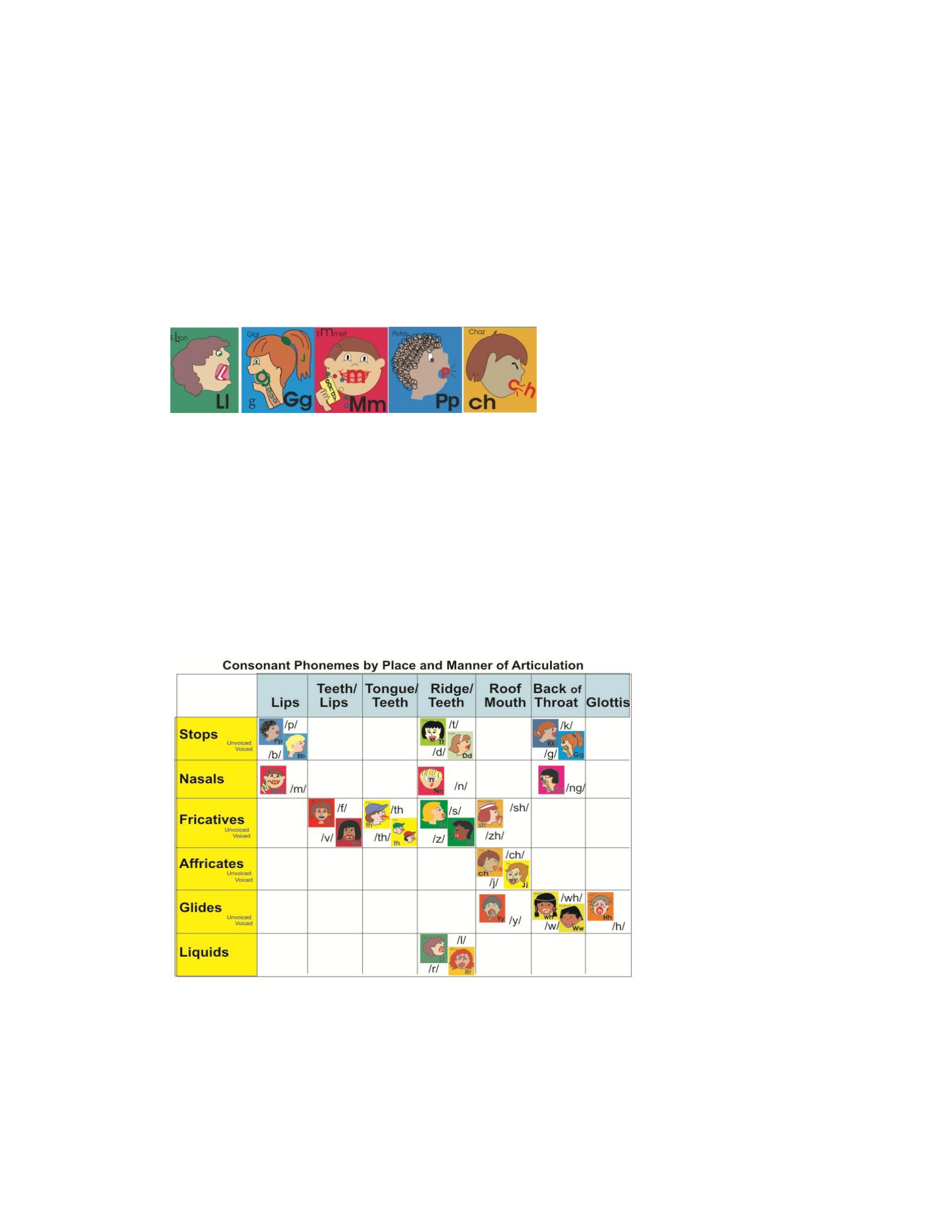
54
their shapes are imposed on the faces of the 44 individual characters, which represent 44 sounds
forming their lips or tongue and indicating voiced features or speech patterns. Through the visual
cues, the meaning and purpose of letters is clarified, because there is a direct link between the
visual shape of a letter and the speech sound. Phonic Faces utilize short anecdotal stories that
function as mnemonic device and accompany each letter of the alphabet.
Figure 4. Phonic Faces picture cards
Consonant production chart. The consonant placement chart provides a visual description
of the articulators used when producing a sound and the manner in which the sound is produced
(i.e., fricatives versus glides). The articulators used to make the sound were represented using
Phonic Faces (Norris, 2001).
Figure 5. Consonant Placement Chart
Word train. The word train is a visual for depicting the sound structure of words. The
initial sound(s) are placed on the engine, the medial sound on the train card, and the final sound(s)

55
on the caboose. It can be used for decoding or encoding words by phonemic structure or by
orthographic representation.
Figure 6. Word Train
Setting
The intervention was implemented at a local elementary school in southeastern Louisiana.
The school serves a diverse population of 450 students, representing approximately 40 countries
and 31 different first languages.
Assessments and interventions took place in the school’s auditorium that contains three
classrooms for speech-language therapy, ESL services, and exceptional, self-contained students.
The area designated for intervention also served as workroom for teachers and as an area for
delivery of other services, including reading and math resource services, administration of DIBELS
assessment, school pictures, and administration of vaccinations.
The large area designated for intervention was able to accommodate the setup of six tables
with at least three chairs. School announcements occurred during intervention sessions each
morning.
Procedures
The intervention groups received a battery of tests prior to the first week of intervention.
Intervention was implemented three times weekly for 35 minutes in the auditorium. The
intervention was implemented for 6 weeks, followed by readministration of the test battery

56
(posttest). Students were seen in groups of two with an interventionist who had been trained to
implement the respective syntactic awareness or phonemic awareness program.
Daily probes. Three probes were alternated in order of administration and presented at the end
of each session.
DIBELS reading passage (2 min). One story from the 20 progress monitoring passages
of DIBELS was administered following each intervention session. Each child was given one minute
to read as many words as he or she could. The score received was the number of correctly read
words. Students who correctly read more than 10 words were asked to retell the story. A slash
mark was made on the DIBELS form for every word used to retell the story. If the student did not
say anything for 3 seconds, the prompt “Try to tell me everything you can. Begin” was given. The
score received was the number of words used to retell the story in one minute.
Sentence combining (2 min). A group of 2-3 sentences ranging from 4-8 words each
were read to the child. The child was asked to combine the sentences into one complex
sentence. The first series included three pairs of 4-5 word sentences that could be conjoined with
“and,” “or,” or “but.” The second series included pairs of 4-7 word sentences that could be
conjoined or combined using a relative clause (e.g., “The dog was watching the cat.” and “The cat
was walking slowly.” Could be combined as “The dog was watching the cat that was walking
slowly,” or “The dog was watching the cat because it/the cat was walking slowly.”) The third
series included groups of 4-8 word sentences. The number of sentences correctly produced out of
12 possible sentences in two minutes was recorded (see Appendix I).
Decoding Probe (2 min). The phonics probe is an investigator-created task used to monitor
each student’s word decoding abilities (Randolph, 2010). The task consisted of four words for the
first two days that contained the target phoneme in the initial or final position of a one-syllable

57
word with a CVC pattern (e.g., pack, car, goat, jug). All eight words were presented on the final
day. Each word was printed using a 1 ½” boldfaced, sans serif font and printed on 2 x 3” cardstock.
Each student was asked to read the printed word and the student’s response was recorded
phonetically. If the child was unable to read one of the word cards, approximations were recorded
on the response sheet. If no approximations were made by the child (e.g., “I don’t know”), the
experimenter presented the word orally and the child’s repetition was transcribed. Students were
given one point if they were able to read the word correctly and a score of zero for incorrect
responses. The received score included the number of words read, as well as the number of
phonetically correct produced sounds (see Appendix H).
Syntactic awareness group. The Syntactic Awareness Group used Scaffolded Animated
PowerPoints and Visual Grammar cards (Norris, 2007) to focus awareness on the form, meaning,
and function of syntactic structures. Instruction was provided in the context of meaningful stories
presented in the PowerPoint programs. Each interventionist had a laptop computer and grammar
cards.
Five types of grammatical forms and constructions typically found in first- and second-
grade-reading passages were explored using structured activities and animated PowerPoints. The
same PowerPoint was used for one week (i.e., three sessions). The forms and constructions
included the following:
1) Grammatical Phrases: sentences are composed of noun, verb, and prepositional phrases
2) Elements: three elements common to noun and verb phrases
3) Transformations: rules for combining, embedding, and moving phrases
4) Punctuation: sentence boundaries and transformations are marked with punctuation
5) Forms: contractions, possessives, and irregular past tense forms

58
A different exemplar of the structure was presented each day (see Table 7). During each
intervention session, awareness of the new grammatical form or construction was highlighted, but
other forms and constructions were talked about throughout the interactive lesson (see Appendix
E).
Table 7: Schedule of PowerPoints and Grammatical Structures Introduced by Day and Week
PowerPoint
Grammatical
Structures
Day 1
Day 2
Day 3
Week 1
Ant Pile
Phrases
Noun Phrase
Verb Phrase
Prepositional
Phrase
Week 2
Roly Poly
Elements
Pronoun
Verb Tense
Adjective
Week 3
The Kitten
Transformations
Adverb
Conjunctions
Relative
Clause
Week 4
Favorite
Colors
Transformations
Infinitive
Quotation
Clause
Movement
Week 5
Cold Zoo
Punctuations
Commas
Capitalization
Periods
Week 6
Tree House
Forms
Contractions
Possessives
Irregular Past
Each lesson proceeded with
1. 1 min.: Identify and define the target form or structure using a Visual Grammar card
2. 20 min.: Read the PowerPoint and help the child identify instances of the form or
structure
3. Talk about other transformations or forms animated in the PowerPoint
4. 12 min.: Conduct probe
Define form or structure. The grammatical target structure for the day was introduced and
defined. The definition focused on meaning; for example, “A pronoun stands for a noun, usually a
person, place, thing, or idea. Instead of saying the noun twice in one sentence or in different
sentences, the pronoun can be used instead. It is a word that “points to” or refers to the actual
noun.”

59
Read the PowerPoint. First, the full sentence written in the target sentence box was read
by the researcher. Second, the first constituent sentence was displayed using the animation.
Children were asked to read the words with the mentor as they appeared on the screen. Any
instances of the target form for that day were pointed to and talked about for their meaning and
function, using the grammar cards as a reference. The first constituent sentence was displayed
using the animation. Third, children were asked to read the words with the mentor as they appeared
on the screen. Any instances of the target form for that day were pointed to and talked about for
their meaning and function using the grammar cards as a reference
… we found even more roly-polies.
They were teeny tiny
Figure 7. Visual Grammar Pronoun card with mnemonics superimposed into letter to
provide parts of speech
“The word ‘they’ is a pronoun. What does ’they’ mean in this sentence? You might need to look at
the prior sentence to find the meaning. Yes, ‘they’ means the roly-polies. So does the pronoun “they” mean
a person, a place, or a thing? (refer to the visual grammar card). The pronoun “they” points to a word in an
earlier sentence so when I see a pronoun, I need to think which word it is “pointing to.” So now we know
that the roly-polies were what size? Yes, they, the roly-polies, were teeny tiny.”
As the PowerPoint progressed, children were asked to find the pronouns and explain
them. In addition to the target form, the researcher also talked about other forms or
structures that were animated or highlighted on the slide, as well as unfamiliar vocabulary.

60
As modeled above, the talk focused on both meaning and form. This was assisted by the
structure of the PowerPoints. The constituent sentences all began in the Noun Phrase + Verb
Phrase format; subsequent animation systematically showed how elements were deleted,
moved, or added to create more complex constructions from the simple sentences. Likewise,
pictures appeared on every slide that provided images of the meaning of vocabulary words
and the overall sentence. Thus, throughout the intervention the focus was on how the forms
function to communicate meaning.
The same PowerPoint was read for three days, but with a focus on a different
grammatical target form each day. The discussion focused on the new form, but also
reviewed previously introduced forms. For example, on Day 1, the target form was noun
phrases; the children were helped to find the noun phrase of the sentence and to learn to
recognize nouns. On Day 2, the target form was verbs; the children were helped to find the
verb phrases and the verbs, and to contrast them with the noun phrase. On Day 3 the target
form was prepositional phrases; the children were helped to find the prepositional phrases
and to contrast them to noun and verb phrases.
Once the three target forms (constituents) were completely combined to recreate the complex
sentence, the children were asked to read them again. Words were provided if needed to
successfully read the sentences.
Phonemic awareness group. The phonemic awareness group used Phonic Faces (Norris,
1997) to focus awareness on the form, meaning, and function of phonemic structures. Instruction
was provided in the context of phoneme manipulation activities and meaningful stories. Eight
categories of phonemes were explored using structured activities and stories. The same category of
phonemes was examined for one week (i.e., three sessions). The phonemic categories included:

61
1. Stop Plosives: airflow blocked and then released during production
2. Alveolars: sounds produced at the ridge behind the upper front teeth
3. Fricatives: airflow constricted but not fully blocked
4. Nasals: sounds produced with air passing through the nose
5. Liquids: sounds produced with close but not touching articulators
6. Affricates: sounds that begin like stops but end like fricatives
7. Glides: produced like a vowel but with tongue closer to roof of mouth
8. Glottal: produced using space between the vocal folds
Phonemes that are representative of each of the 8 categories of phonemes were presented
each day, usually two minimally contrasting phonemes the first two sessions within a week, with all
of the targeted phonemes explored on day 3. The schedule of phonemes taught is profiled in Table
8.
Table 8: Schedule of Phonemes Introduced by Day and Week
Week Phonemes Day 1 Day 2 Day 3
Week 1 Stop Plosives b, p k, g b, p, k, g
Week 2 Alveolars t, d s, z t, d, s, z
Week 3 Fricatives f, v sh, th f, v, sh, th
Week 4 Nasals m n, ng m, n, ng
Week 5 Liquids, Affricates l, r j, ch l, r, j, ch
Week 6 Glides, Glottal y, h w, wh y, h, w, wh
The following procedure was followed for the Phonemic Awareness Group:
1) The two phonemes were introduced using the Phonic Faces. The phonetic production cues
were represented on the face for each sound (e.g., “The letter ‘b’ looks like your bottom lip.
When you make the /b/ sound, you stop the air with your lips and then explode the sound.”)

62
2) The phonemes on the Consonant Production Chart were examined. The interventionists
discussed what the target consonant has in common with related sounds for place of
production and for manner of production.
3) A series of ten words were presented using the Phonic Faces cards containing the target
phonemes. The words were chosen to demonstrate the phonemes in different word
positions and were arranged so that the students practiced producing the first word, followed
by one change to create the next word. For example, for b/p phonemes the sequence was
‘p a t’ which changed to ‘b a t’ followed by ‘t a b’ which changes to ‘t a p’ and then to
‘t o p.’ The phonemic awareness activity required the students to fully process each word
because changes occurred in all positions of words. It simplified the production task by
holding most of the word constant and by allowing the students to exert processing attention
to the one change in each word. Students could narrow the field of possible letter-sound
pairings and produce the speech sound sequence more easily.
4) Following the practice activity, a short story was presented containing all of the target
words. The students read the text and their interventionists helped them with decoding and
comprehension when necessary. The stories gave the students an authentic language
context to produce the words with the targeted speech sounds. The stories also gave the
subject immediate practice in applying the speech production strategy learned in the lessons
to words that are located in sentences and in longer discourse contexts. The sentences in the
stories ranged from three to nine words in length and most were simple noun phrase + verb
phrase + (prepositional phrase) sentence structure. However, seven occurrences of the
infinitive to construction and five compound sentences (conjunctions “and” or “but”)
occurred within the 12 stories.

63
5) The subject was then given a Sound Train and asked to place Phonic Faces in sequence to
represent the sounds of the target word. The subject placed initial sound(s) on the engine,
medial sounds on the car, and final sounds on the caboose. Prompts and feedback were
given as needed.
Reliability and Fidelity
Treatment fidelity. During the first two weeks, the course instructor and doctoral
supervisor observed and provided feedback to interventionists. Throughout the six weeks, informal
observations and feedback were provided for parts of sessions and questions were answered as they
arose. The school principal and guidance counselor were unwilling to grant permission to
videotape sessions and the environment was not conducive to audio recording.
Observations guided by a checklist were used to assess whether interventionists included the
necessary components of the daily plan and followed guidelines (i.e., do not sound out words if
teaching the SA PowerPoint group) (see Appendix J). During the six week intervention period two
intervention sessions for each interventionist were randomly chosen and observed for fidelity by
the Speech Language Pathologist. The experimenter ensured that the individual lesson plans were
followed and the session implemented according to protocol. If certain elements were not
implemented correctly, the element was scored as incorrect and feedback and suggestions were
provided by the experimenter. Interventionist ratings showed that procedures were followed with
94% accuracy.
Scoring test and probe data. The experimenter scored all daily probes following each
session. The interventionists initially scored the tests given at pre- and posttest but all scoring was
checked for accuracy by the experimenter. Twenty percent of the daily probes and pre/post tests
were rescored by two certified speech-language pathologists, including one blind to the purpose of

64
the study and treatment condition received by the participants. Interscorer reliability for the daily
probes were: DIBELS 98%, sentence combining 100%, and decoding 97%. The interscorer
reliability for the tests were: BRI 98%, TOWL written sentence combining 100%, TOLD oral
sentence combining 100%, TOLD word order 100%.

65
RESULTS
The purpose of this study was to determine whether or not students who participated in a
syntactic awareness PowerPoint intervention for six weeks would show higher gain scores on oral
and written measures of syntactic awareness and reading in comparison to the control group who
received a phonemic awareness intervention.
Treatment Effects on Measures of Syntax
Two measures of oral syntax were used to assess the efficacy of the syntactic awareness
PowerPoint intervention. The first, sentence combining, examined the students’ ability to use
grammatical strategies such as conjunction and embedded clauses to create a grammatically
complex sentence from two simple sentences. The second, word ordering, required the participants
to organize randomly presented words to create a grammatically correct sentence.
Sentence combining. The mean raw scores for the Sentence Combining subtest of the
TOLD:I are displayed in Figure 7. The error bars represent the standard error of the mean. The
figure shows that the groups were equal at pretest, with the SA group scoring a mean of 3.0 (SD =
3.20) and the PA control group scoring a mean of 2.9 (SD = 3.11). At posttest, the mean scores for
the SA group showed greater gains than the PA group, with a mean posttest score of 7.30 (SD =
5.25) compared to 3.60 (SD = 2.84). Mauchly’s test of sphericity indicated that the assumption of
sphericity was met. Therefore, analysis of variance (ANOVA) procedures were used without
corrections in the following analyses.
A 2 x 2 mixed repeated measures factorial ANOVA (Huck, 2008) was used to analyze
group differences between pre- and posttest. Time (pretest and posttest) was treated as a within-
subject variable, and group (SA, PA) as a between-subject variable. The raw scores for sentence
combining served as the dependent variable.
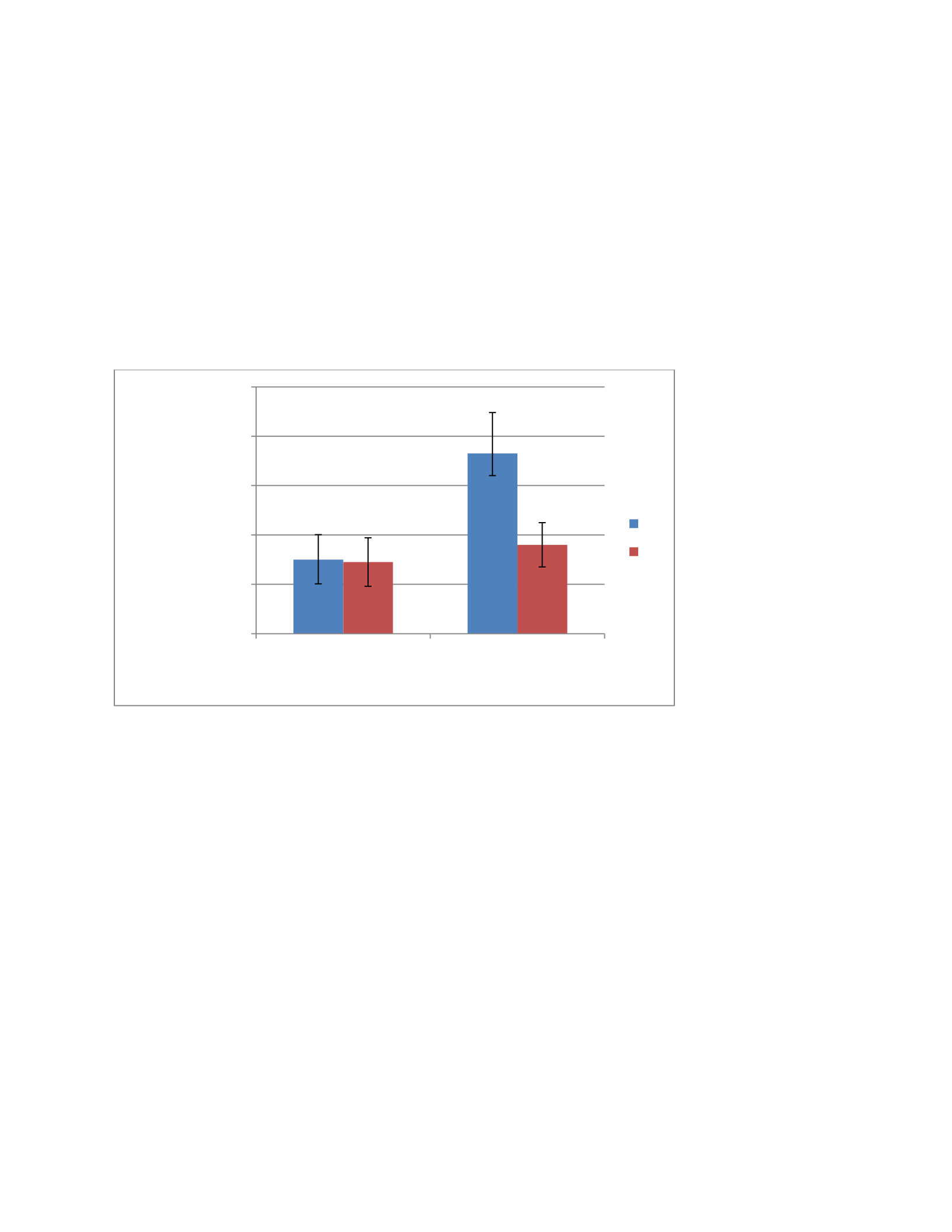
66
Results revealed a significant main effect for time, F(1, 18) = 11.59, p = .003, partial eta
squared = .39, and a significant interaction for time x group, F(1, 18) = 6.01, p = .025, partial eta
squared = .25. There was no significant main effect for group, F(1,18) = 1.62, p = .22. Paired
samples t-tests were completed to follow up the significant interaction, and showed a significant
gain between pre- and posttest scores for the SA group t(9) = -3.50, p = .007, and no significant
difference between pre- and posttest for the control group, t(9) = -.87, p = .41.
Figure 8. Mean Pretest and Posttest Scores for TOLD:I Sentence Combining Subtest.
Sentence combining ability was evaluated using measures of English proficiency level as
measured on the ELDA. A visual inspection of the mean gain scores of students who ranked
beginning versus intermediate on the ELDA listening level showed differential learning (see Table
9). Students scoring at the beginning listening level made small and approximately equal gains (SA
= 1.25, PA = 2.0) regardless of group. In contrast, SA students at the intermediate listening level
made large gains (mean = 6.33), whereas their PA group peers did not improve (mean = -.60). This
finding suggests that a higher level of receptive English language proficiency may have been
needed for students to benefit from the exploration of syntax provided by the PowerPoint activities.
0
2
4
6
8
10
Pretest
Posttest
Mean Scores
for Sentence
Combining
Time of Measurement
SA
PA

67
Table 9: Comparison of Group Gains for Sentence Combining by Receptive English Language
Proficiency
Syntactic Awareness
Phonemic Awareness
Beginning
Intermediate
Beginning
Intermediate
M
SD
M
SD
M
SD
M
SD
1.25
2.36
6.33
3.39
2.0
1.87
-.60
2.61
Word ordering. The mean raw scores for the Word Order subtest of the TOLD:I are
displayed in Figure 8. The error bars represent the standard error of the mean. The figure shows
that the groups were equal at pretest, with the SA group scoring a mean of 2.7 (SD = 3.09) and the
PA control group scoring a mean of 2.6 (SD = 3.17). At posttest, the mean scores for the SA group
showed greater gains than the PA group, with a mean posttest score of 4.80 (SD = 4.42) compared
to 4.10 (SD = 2.81). Mauchly’s test of sphericity indicated that the assumption of sphericity was
met. Therefore, analysis of variance procedures were used without corrections in the following
analyses.
Figure 9. Mean Pretest and Posttest Scores for TOLD:I Word Ordering Subtest
0
1
2
3
4
5
6
7
Pretest
Posttest
Mean Scores
for Word
Ordering
Time of Measurement
SA
PA

68
A 2 x 2 mixed measures ANOVA was used to analyze group differences between pre- and
posttest. Results revealed a main effect for time, F(1,18) = 10.29, p = .005, partial eta squared =
.36 , but no main effect for group, F(1,18) = .08, p = .78. The interaction between time x group was
not significant F(1,18) = .29, p = .60. These results indicated that both groups made equivalent
gains in the ability to correctly order words to form sentences.
However, when the ELDA levels of subjects were considered by visual inspection in Table
10, differences in the SA and PA groups were apparent. The means for the low and high
proficiency levels for the PA group showed that the greatest gains were made by students with
beginning English proficiency. These students had not mastered early sentence structures at pretest
and scored very low. The items that they scored correct at posttest were four-word sentences in the
NP+VP format, a sentence structure they were exposed to in the phonemic awareness stories.
Exposure to the simple sentences in the PA tasks helped establish basic syntactic order and their
scores increased accordingly. In contrast, those PA subjects with intermediate English proficiency
had correctly constructed these sentences at pretest and made only minimal gains at posttest,
indicating they had not learned higher level structures.
Table 10: Comparison of Group Gains for Word Ordering by Receptive English Language
Proficiency
Syntactic Awareness
Phonemic Awareness
Beginning
Intermediate
Beginning
Intermediate
M
SD
M
SD
M
SD
M
SD
1.00
1.41
2.83
2.79
2.20
3.19
.80
1.92
The SA group showed the opposite profile. The beginning SA group made minimal gains,
suggesting the sentences on the PowerPoints may have been too difficult to learn basic NP + VP
patterns while the intermediate group made the greatest gains, having both the language foundation
and the exposure to more complex sentences in the SA task.
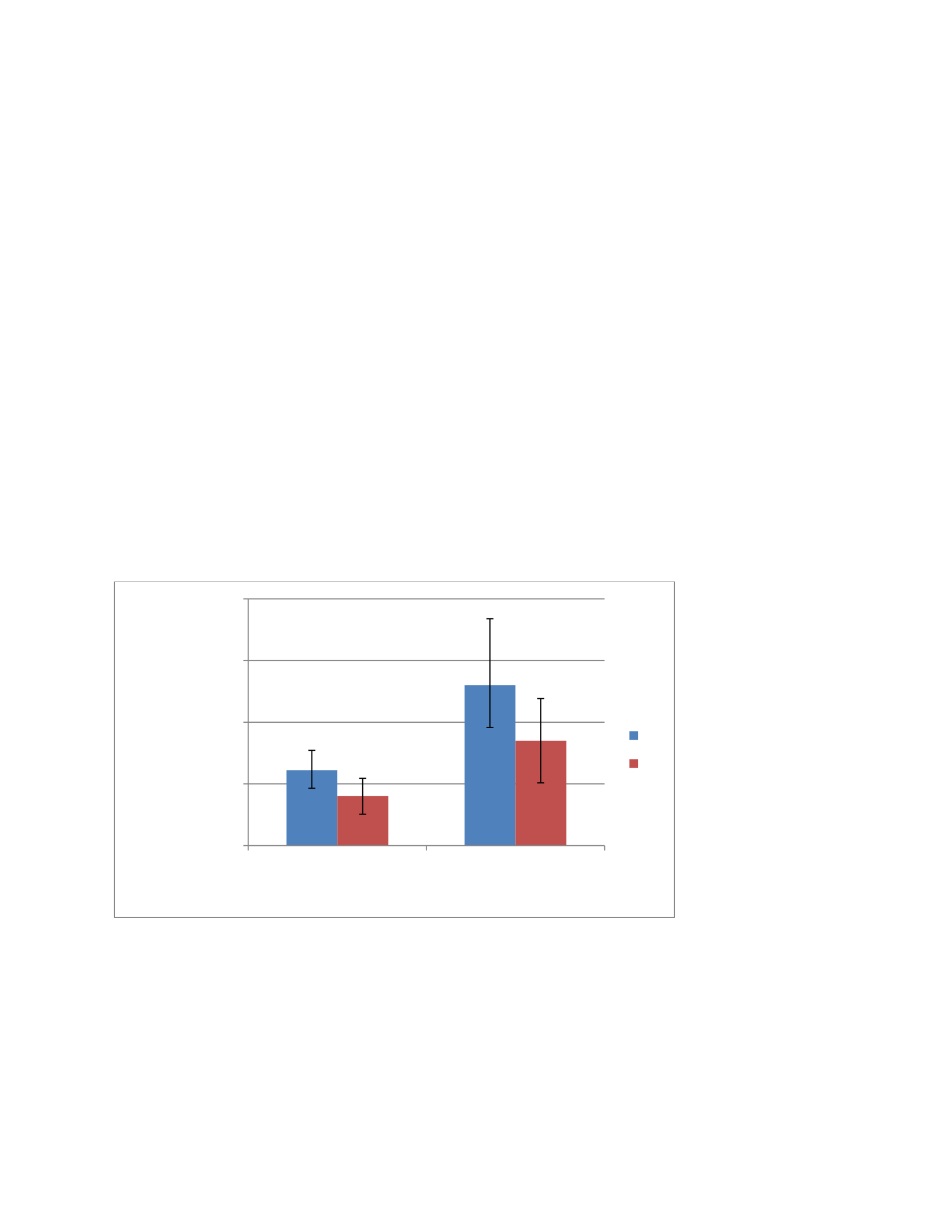
69
Treatment Effects on Measures of Written Language
The subtest of Written Sentence Combining was used to assess the students’ ability to
integrate the meaning of several short sentences into one grammatically correct written sentence.
Written sentence combining. The mean raw scores for the Written Sentence Combining
subtest of the TOWL are displayed in Figure 9. The error bars represent the standard error of the
mean. The figure shows that the groups were equal at pretest, with the SA group scoring a mean of
1.22 (SD = .97) and the PA control group scoring a mean of .80 (SD = . 92). At posttest, the mean
scores for the SA group showed greater gains than the PA group, with a mean posttest score of 2.56
(SD = 3.61) compared to 1.70 (SD = 2.16). Mauchly’s test of sphericity indicated that the
assumption of sphericity was met. Therefore, analysis of variance procedures were used without
corrections in the following analyses.
Figure 10. Mean Pretest and Posttest Scores for TOLD:I Written Sentence Combining Subtest
A 2 x 2 mixed measures ANOVA was used to analyze group differences between pre- and
posttest. There was no time effect F(1,17) = 3.17, p = .09, no significant interaction effect F(1,17)
0
1
2
3
4
Pretest
Posttest
Mean Scores
for Written
Sentence
Combining
Time of Measurement
SA
PA

70
= .12, p = .73 and no group effect F(1,17) = .67, p = .42. Neither group made significant gains in
written sentence combining.
A visual inspection of the means in Table 11 revealed that students rated beginning for
listening level made no gains for the SA condition but notable gains for the PA condition, an
unexpected outcome. The majority of students in both groups could not combine sentences in
writing at all or with limited success at pretest. The PA students may have learned to use the
conjunction “and” through repeated reading of the PA stories, which did contain these structures.
The opposite pattern was found for students in the intermediate level. The intermediate PA subjects
decreased their scores while the SA subjects increased their scores (gains range 1 to 9 correctly
combined sentences). This finding suggests that a threshold level of language proficiency was
needed to maximally benefit from the SA activity. The PA intermediate students did not make
gains, suggesting they already had the basic sentence types at pretest and did not learn higher level
sentence combining strategies from their intervention.
Table 11: Comparison of Group Gains for Written Sentence Combining by Receptive English
Language Proficiency
PowerPoint
Phonemic Awareness
Beginning
Intermediate
Beginning
Intermediate
M
SD
M
SD
M
SD
M
SD
.00
1.16
2.40
4.22
2.20
2.05
-.40
1.14
Treatment Effects on Measures of Reading
The assumption of normality was violated for the reading measures, therefore
nonparametric statistics were used to assess group differences. Three separate nonparametric
Mann-Whitney U tests were completed to examine the three subtests of the BRI scores: word
recognition in isolation, word recognition in context, and reading comprehension. The

71
improvement was measured in raw scores (numbers of word read). Reading level changes by
groups will be discussed.
Word recognition in isolation. Table 12 shows reading levels at pretest and posttest for
words read in isolation from graded word lists. These medians show students who participated in
the SA group increased their median word recognition scores from 28 words to 45 words,
indicating a change from primer to 1st grade. Students who participated in the PA group increased
their median word recognition from 35.50 to 43 at posttest, also representing a change from primer
to 1st grade.
Table 12: Pre and Posttest Median Scores for Isolated Word Recognition (Basic Reading Inventory)
Pretest
Posttest
Mdn
Mean Rank
Mdn
Mean Rank
SA
28.00
11.15
45.00
11.30
PA
35.50
9.85
43.00
9.70
A nonparametric Mann-Whitney U test revealed no differences between posttest scores (U =
42, z = -.61, p = .55), and no group differences between gain scores (U = 42.50, z = -.57, p = .57).
Both groups improved from pretest to posttest in isolated word recognition, but neither treatment
yielded an advantage.
Table 13: Profile of Level Changes in Isolated Word Recognition
No change
Loss
Increase +1
Increase +2
Low
IP
Low
IP
Low
IP
Low
IP
SA
2
3
1
0
0
0
2
2
PA
2
1
1
2
2
0
0
2
Note. Low = Beginning Listening Proficiency; IP = Intermediate Listening Proficiency (ELDA)
No change = reading level did not change, Loss = posttest scores were lower than pretest scores,
Increase +1 = reading level increased one level, e.g., from preprimer to primer, +2 = reading level
increased two levels, e.g., from preprimer to first grade level.
Table 13 shows that eight participants made no changes in word recognition (SA = 5; PA =
3) and that four decreased their score (SA = 1; PA = 3). A gain of one reading level was made by 2

72
students (PA = 2) and two levels of change were shown by 6 students (SA = 4, PA = 2). No
relationship was found between the ELDA listening level and changes in word recognition.
Word recognition in context. Table 14 profiles median reading scores at pretest and
posttest for words read in the context of reading passages. Students who participated in the SA
intervention increased their median numbers of words read from 77 words at pretest to a median
reading score of 136.50 at posttest, indicating an improvement from preprimer to primer reading.
Students who received the PA intervention improved their median reading scores from 83.50 to 95
words at posttest, indicating full mastery of the preprimer level.
Table 14: Pre and Posttest Median Scores for Word Recognition in Context (Basic Reading
Inventory)
Pretest
Posttest
Mdn
Mean Rank
Mdn
Mean Rank
SA
77.00
10.70
136.50
11.80
PA
83.50
10.30
95.00
9.20
A nonparametric Mann-Whitney U test revealed no differences between posttest scores (U =
37, z = -.99, p = .33), and no group differences between gain scores (U = 27.00, z = -1.74, p = .08).
Both groups improved from pretest to posttest in word recognition in context, but neither treatment
yielded an advantage.
Table 15 reveals that twelve students (SA = 4; PA = 8) did not show gains in contextual
word recognition. Eight students increased their word recognition level (SA = 6; PA = 2). When
the ELDA listening level was considered, seven out of eight students who made +1 level of change
or greater had been ranked as intermediate in listening proficiency. Four intermediate students
failed to make gains (SA = 1; PA = 3). Four students made a level change from preprimer to
primer (SA), including one student ranked as beginning in listening proficiency. Two intermediate

73
students from the SA group increased their reading level from preprimer to first grade and
preprimer to third grade, and two intermediate students from the PA group increased their levels
from preprimer to second and preprimer to fourth grade.
Table 15: Profile of Level Changes in Word Recognition in Context
No change
Increase +1
Increase +2
Increase +3
Increase +4
Increase +5
Low
IP
Low
IP
Low
IP
Low
IP
Low
IP
Low
IP
SA
3
1
1
3
0
1
0
0
0
1
0
0
PA
5
3
0
0
0
0
0
1
0
0
0
1
Note. Low = Beginning Listening Proficiency; IP = Intermediate Listening Proficiency (ELDA)
No change = reading level did not change, Increase +1 = reading level increased one level, e.g.,
from preprimer to primer, +2 = reading level increased two levels, e.g., from preprimer to first
grade level, +3 = reading levels increased three levels, e.g., from preprimer to second grade level,
+4 = reading levels increased four levels, e.g., from preprimer to third grade level, +5 = Reading
level increased by five levels, e.g., from preprimer to fourth grade level.
Reading comprehension. Table 16 profiles reading levels at pretest and posttest for
response to comprehension questions. Students who received the SA intervention increased their
median comprehension score from 1.25 at pretest to 10.25 at posttest, indicating a change in
comprehension level from the beginning pre-primer to primer. Students who received the PA
intervention increased their median comprehension scores from 1 at pretest to 4 at posttest,
indicating a change from the beginning preprimer level to instructional/independent mastery of the
preprimer level.
Table 16: Pre and Posttest Median Scores for Reading Comprehension (Basic Reading Inventory)
Pretest
Posttest
Median
Mean Rank
Median
Mean Rank
SA
1.25
10.35
10.25
11.85
PA
1.00
10.65
4.00
9.15

74
A nonparametric Mann-Whitney U test revealed no differences between posttest scores for
reading comprehension (U = 36.5, z = -1.03, p = .30), and no group differences between gain scores
(U = 30.5, z = -1.48, p = .14). Both groups improved from pretest to posttest in comprehension, but
neither treatment yielded an advantage.
Table 17: Profile of Level Changes in Reading Comprehension
No change
Increase +1
Increase +2
Increase +3
Increase +4
Increase +5
Low
IP
Low
IP
Low
IP
Low
IP
Low
IP
Low
IP
SA
3
1
1
3
0
1
0
0
0
1
0
0
PA
5
3
0
0
0
0
0
1
0
0
0
1
Note. Low = Beginning Listening Proficiency; IP = Intermediate Listening Proficiency (ELDA)
No change = reading level did not change, Increase +1 = reading level increased one level, e.g.,
from preprimer to primer, +2 = reading level increased two levels, e.g., from preprimer to first
grade level, +3 = reading levels increased three levels, e.g., from preprimer to second grade level,
+4 = reading levels increased four levels, e.g., from preprimer to third grade level, +5 = Reading
level increased by five levels, e.g., from preprimer to fourth grade level.
Table 17 reveals that twelve students (SA = 4; PA = 8) did not show gains in passage
comprehension, but eight students did increase their comprehension level, the majority from the SA
group (SA = 6; PA = 2). When the ELDA listening level was considered, seven of the students who
made +1 level of change or greater were ranked as Intermediate in English proficiency. All but
one of the SA students who made no change were ranked as Beginning proficiency, while both
Beginning (5) and Intermediate (3) students in the PA group made no gains. Two of the students
who made the greatest gains were in the PA group. These students were ranked respectively as
advanced and full proficiency in listening level.
Conclusions
Results of the standardized measures of oral and written language indicated that both groups
improved on oral sentence combining, word ordering, word recognition in context and
comprehension. Although visual inspection showed that more students in the SA group showed
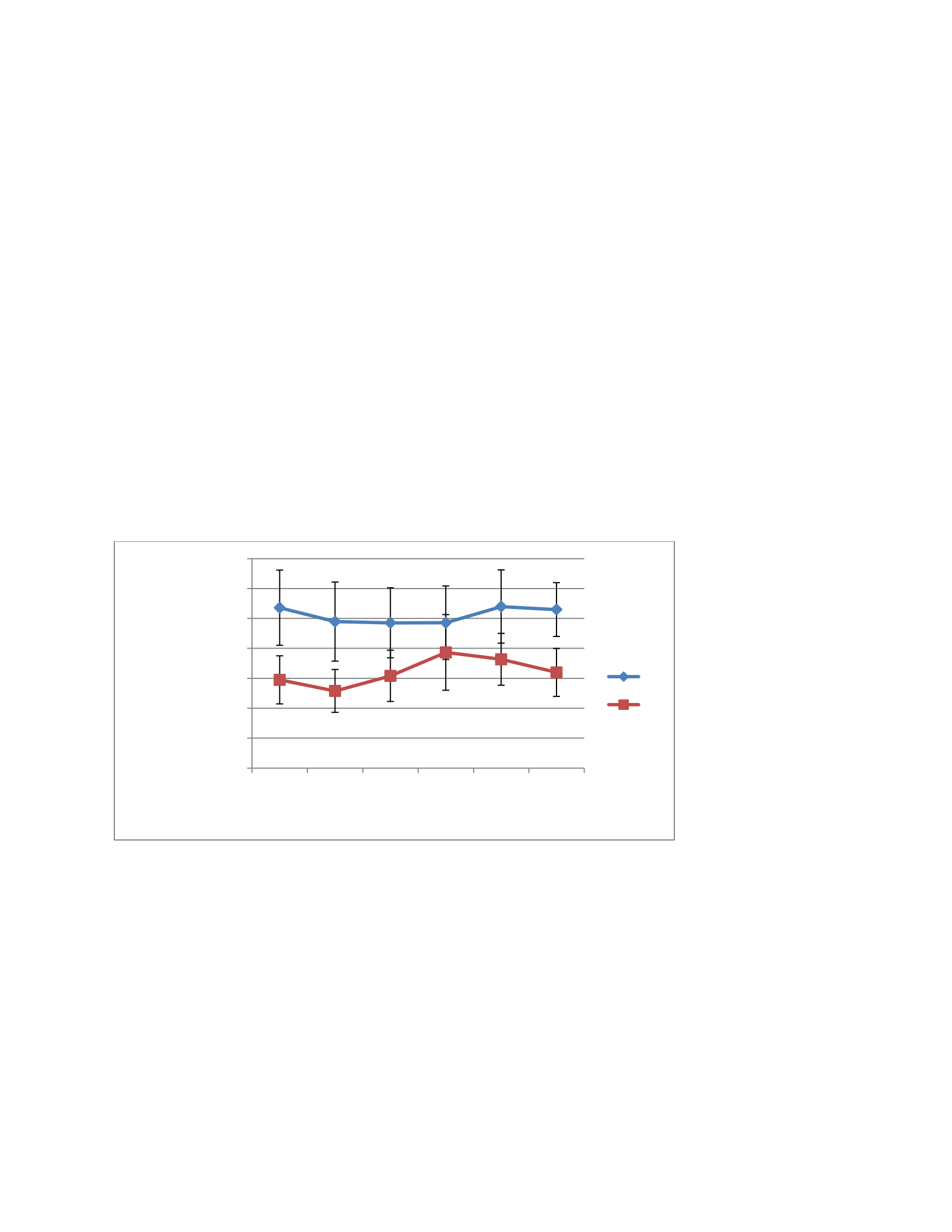
75
increases, particularly in reading scores, the differences were not significant except for oral
sentence combining.
Daily Probe Results
DIBELS. The two DIBELS subtests for reading fluency and retell were administered for
one minute after each intervention session. The analysis for the daily probes revealed no
statistically significant time differences between the two groups for reading fluency F(2.15, 38.71)
= 1.70, p = .19. Mauchley’s test indicated that the assumption of sphericity was violated, chi square
(14) = 56.59, p <.05) therefore the degrees of freedom were adjusted with the Greenhouse-Geisser
method (epsilon = .430). There was no interaction between time x group F(2.15,38.71) = 1.45, p =
.25. There was also no group effect F(1,18) = 1.72, p =.21.
Figure 11. Mean Scores for Dibels Oral Reading Fluency Probe over Six Weeks
For the retell subtest there was a significant time effect F(5,90) = 5.13, p < .001, partial eta
squared = .22. A Bonferroni correction was applied for multiple follow-up t-tests and an alpha
level of .01 (.05/5) was used. For the SA group, significant differences were found between probe
1 and probe 3; t (9) = -3.58, p = .006, and between probe 1 and probe 5; t (9) = -3.68, p = .005.
0
10
20
30
40
50
60
70
t1
t2
t3
t4
t5
t6
Number of
Words Read
Weeks of Intervention
SA
PA
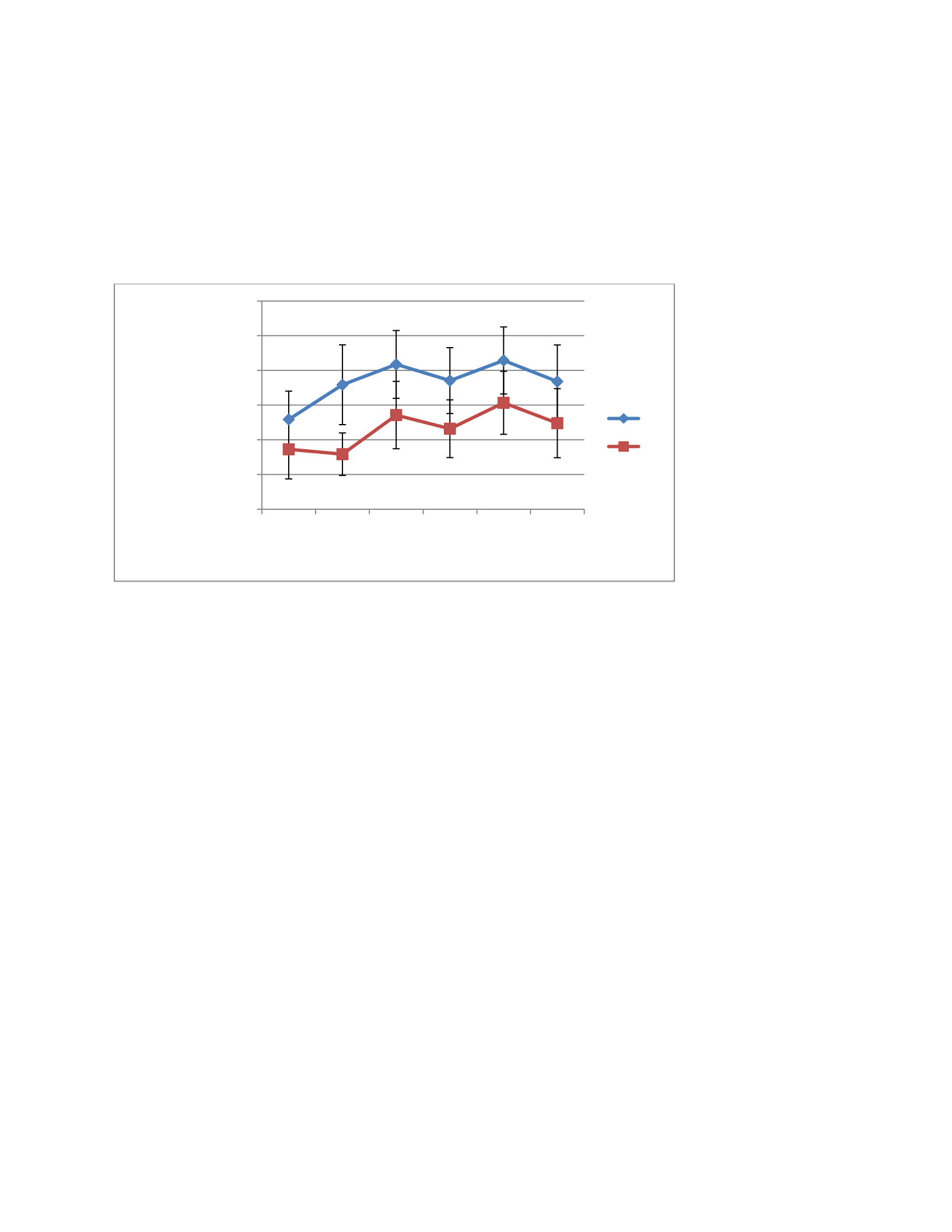
76
For the PA group, significant differences were found between probe 1 and probe 5; t (9) = -
4.03, p = .003. There was no significant interaction between time and group F(5,90) = .66, p = .65
and no significant group effect F(1,18) = 1.26, p = .28. Both groups increased their numbers of
words retold in a minute during the six weeks.
Figure 12. Mean Scores for Dibels Retell Probe over Six Weeks
Sentence combining. The daily sentence combining probes were administered for two
minutes after each intervention session. Mauchley’s test indicated that the assumption of sphericity
was violated (chi-square (14) = 48.37, p < .001); therefore the degrees of freedom were adjusted
with the Greenhouse-Geisser method (epsilon = .43). Results revealed a significant effect for time
F(2.15, 38.77) = 15.56, p < .001, partial eta squared = .46. A Bonferroni correction was applied for
multiple follow-up t-tests and an alpha level of .01 (.05/5) was used. For the SA group, significant
differences were found between probe 1 and probe 4; t(9) = -3.31, p = .009, probe 1 and probe 5; t
(9) = -4.02, p = .003, and probe 1 and probe 6; t(9) = -3.59, p = .006. For the PA group, significant
differences were found between probe 1 and probe 5; t (9) = -4.25, p = .002. There was no time x
group interaction effect F(2.15, 38.77) = .33, p = .74 and no group effect F(1,18) = 1.30, p = .27.
Both groups were able to combine more sentences correctly across the six weeks of intervention.
0
5
10
15
20
25
30
t1
t2
t3
t4
t5
t6
Number of
Words Retold
Weeks of Intervention
SA
PA
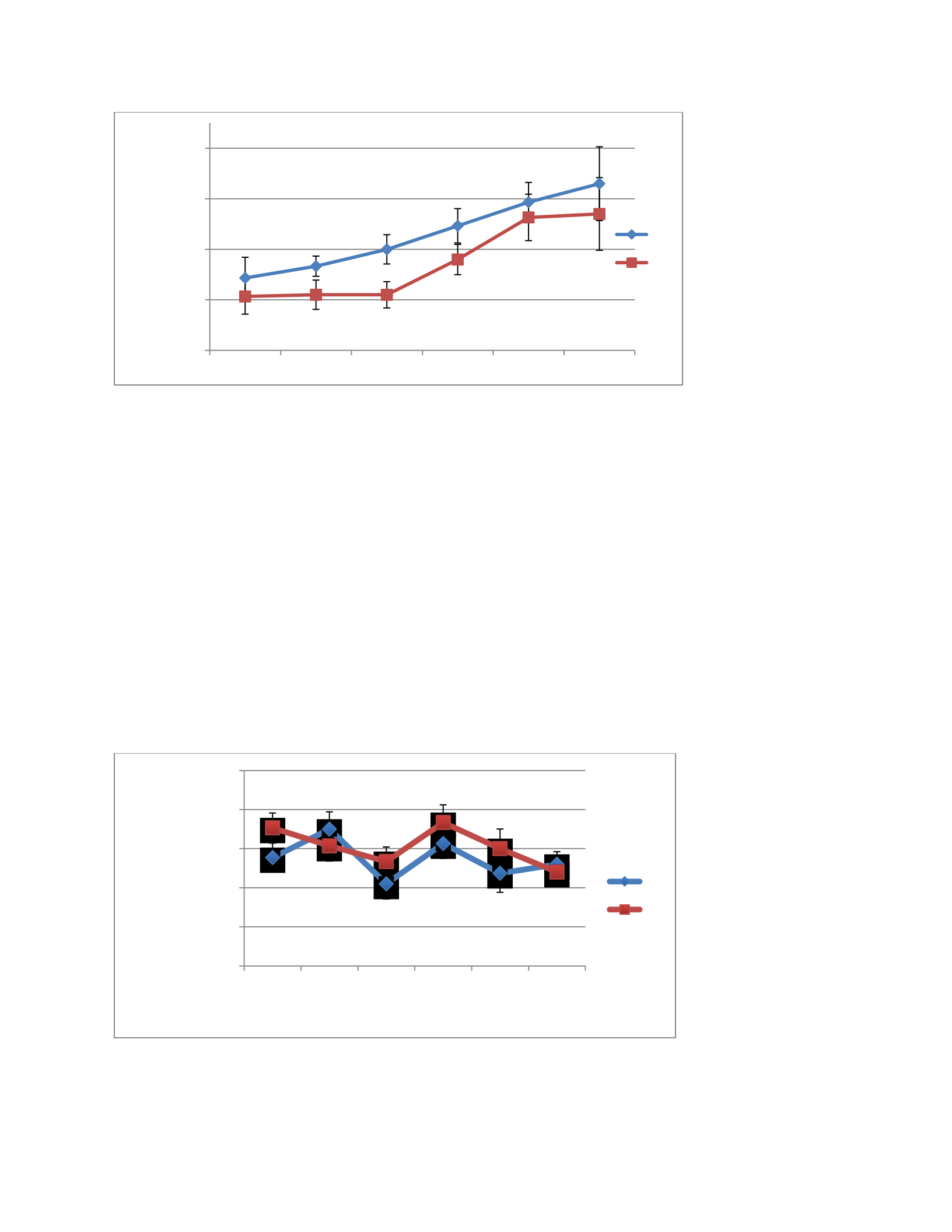
77
Figure 13. Mean Scores for Sentence Combining Probe over Six Weeks
Decoding. An investigator-created word-decoding probe measured word decoding skills
across time (Randolph, 2010). Results revealed a significant effect for time F(5,90) = 5.60, p <
.001, partial eta squared = .24. A Bonferroni correction was applied for multiple follow-up t-tests
and an alpha level of .01 (.05/5) was used. For the SA group, no significant differences were found
between probes. For the PA group, significant differences were found between probe 1 and probe
3; t(9) = 3.34, p = .009. There was no time x group interaction effect F(5,90) = 1.45, p = .21 and no
group effect F(1,18) = .68, p = .42. Both groups performed equally on word decoding tasks.
Figure 14. Mean Scores for Decoding Probe over Six Weeks
0
1
2
3
4
t1
t2
t3
t4
t5
t6
Number of
Sentences
Combined
Weeks of Intervention
SA
PA
0
1
2
3
4
5
t1
t2
t3
t4
t5
t6
Number of
Words Read
Weeks of Intervention
SA
PA

78
DISCUSSION
English as second-language learners have the dual burden of learning to speak a second
language while also learning to read and write a language before they fully understand it. The
challenges are even greater for older students who must function in upper grade level classrooms
and take high-stakes exams (Lesaux, Crosson, Kieffer & Pierce, 2010). It is critical that we seek
methods for simultaneously addressing the oral and written language needs of this population in a
manner that could accelerate learning. Syntactic awareness has been shown to be highly related to
second language acquisition as well as reading fluency and comprehension (August & Shanahan,
2010; Da Fountoura & Siegel, 1995; Lesaux & Siegel, 2003; Lesaux et al., 2006; Chong, 2009;
Siegel, 2008). Although correlational studies have repeatedly revealed these relationships, few
studies have attempted to improve syntactic awareness for ESL students, in part because there are
few strategies shown to be efficacious (Andrews, 2010; MacKey, 1982; Shin, 2009). In addition,
syntactic awareness is viewed as a developmental ability that improves gradually throughout the
grade levels and beyond (Menyuk, 1999) so it is unclear how quickly changes can be made,
particularly when awareness is measured in a second language. This study endeavored to address
these issues for fourth and fifth grade ESL students with limited English proficiency.
To determine whether a syntax-based Animated Scaffolded PowerPoint intervention held
potential, it was compared to a phonemic awareness intervention, a treatment generally prescribed
for beginning readers. Although enrolled in upper elementary classrooms, all but two of the
students in this study were essentially nonreaders, reading at or below a beginning first grade level,
comparable to younger beginning readers. Training in phonemic awareness is consistent with the
Simple View of Reading (Gough & Tunmer, 1986), suggesting that decoding is the primary skill
needed for learning to read. However, unlike native speakers, the ESL participants were at
beginning to intermediate levels of English proficiency for listening and speaking as well. Even

79
with good decoding skills, these readers may not have the language skills needed for
comprehension at the first grade level. This is supported by the finding that seventeen of twenty
students reached a ceiling for comprehension for the beginning (preprimer) passage, one at the
primer passage (mid first grade), and one at the second grade passage at pretest.
Measures of Syntactic Awareness
Four measures of syntactic awareness were elicited, including two standardized measures of
oral syntax, one measure of written syntax, and weekly sums of daily sentence combining probes.
Sentence combining requires the individual to consciously compare the content of two sentences
and then determine the type of relationship between them (i.e., additive, subordinate, adversative).
Words must be added, deleted, or moved to combine the information syntactically. The results
showed that, as predicted, students who received the syntactic awareness intervention (SA) made
significantly greater gains for the oral sentence combining subtest of the TOLD:I than the phonemic
awareness group (PA). The gain represented an increase in two standard scores, from 5 to 7,
according to the ten year old norms for the TOLD:I (i.e., an increase from the very poor to the
below average range). In contrast, the PA group remained in the very poor range. Thus, both
statistical and clinical changes were seen following only ten hours of intervention.
However, a closer examination showed that differences were evident between students with
lower and higher levels of English language proficiency within the SA group. Those students who
were ranked as beginning or low on listening comprehension on the English Language
Development Assessment (ELDA) made minimal gains with several students unable to combine
sentences, and those with greater proficiency made large gains and all successfully combined
sentences. This finding suggests that the PowerPoints had a differential effect according to the
English language proficiency of the students exposed to the intervention. For those with beginning

80
English proficiency, the PowerPoints presented language at a level too advanced for students to
process and learn, even though the complex sentences were examined as a series of simple
sentences, each accompanied by a picture. The vocabulary, syntax, and morphology were all
unfamiliar and three sessions per week with the same PowerPoint story were not sufficient to
enable them to learn the words and sentence patterns. Further, the beginning level students were
essentially nonreaders with only some decoding abilities at the single word level and so they could
not benefit from the print on the PowerPoints. For readers, the print can be used to support the oral
language used by the interventionist to explain the sentences and the sentence transformations. The
print remains visible and allows the learner to reread and reexamine the sentence patterns. The
inability to read the print placed high level demands on listening for students who were only
beginning to grasp English. In contrast, those with higher listening proficiency were able to benefit
from both the animation modeling sentence combining and the print supporting the oral language.
The six weekly probes for sentence combining showed a steady increase from one to over
three sentences successfully combined for the SA group as expected, but also an unexpected
increase beginning the fourth week for the PA group to approximately the same level. Most of the
sentences successfully combined were simple conjunctions. It is possible that exposure to the
probes after daily intervention sessions created an awareness of this sentence type which occurs
with high frequency in conversational language. Following a month of school, both groups were
learning this pattern.
When written sentence combining was examined, both groups made minimal gains that did
not show significant change across time or between groups. This finding was not surprising
because the ELDA writing subtest score showed most subjects to be at the beginning proficiency
level for writing. Developmentally, beginning writers use invented spellings to write simple ideas.

81
Further, syntactic complexity in writing lags behind oral language by at least one year (Loban,
1976) and the majority of the students were not using either compound or complex sentences in
their oral language. Thus, difficulty using these sentence types in writing would be expected.
The other measure of oral syntax, the Word Ordering subtest of the TOLD:I, yielded
significant improvements in the ability to order three to seven words in correct syntactic order for
both groups but no group differences. The student was required to reorder the words to make sense
by creating syntactically correct sentences. In this case, the ESL student needed to attend to
English word order strategies that may differ from the native language (for example, adjectives
before the noun rather than following it as in Spanish). Once again, English language proficiency
showed differential results. For students in the SA condition, visual inspection of those with higher
proficiency showed greater gains than those with lower proficiency.
However, an interesting outcome occurred for the Phonemic Awareness (PA) group that
was seen across measures. Surprisingly at first glance, visual inspection of those in the PA group
who had greater language proficiency either decreased in syntax at posttest (i.e., both oral and
written sentence combining) or made minimal gains (i.e., word ordering). However, when the
materials for the PA instruction were examined, all of the sentences for the intervention stories
were in simple noun-verb-object sentence structure (i.e., Bob got a pot. He took off the top. He
saw a big crab.) These sentences were also supported by a series of pictures depicting main ideas
and were read and discussed by the interventionists. Thus, even though the goal was to read the
words following a particular phonic pattern in context (i.e., short vowel CVC words), that context
did provide a format for learning the basic syntactic patterns of English. Those students who were
at the earliest stages of acquiring English benefitted from this input and increased their scores in
oral and written sentence combining and word ordering.

82
In contrast, those students in the PA group who were already proficient at this simple level
of vocabulary and syntax in English did not similarly benefit because they were not exposed to
more complex syntax or vocabulary. Unlike their SA group peers, they did not improve in
syntactic abilities at posttest. For those receiving the SA treatment, the students who had greater
listening proficiency in English (rated as intermediate, advanced, or proficient on the ELDA
assessment) made moderate gains in measures of syntax following intervention. Two attributes
enabled the more proficient students to make gains in both oral and written sentence combining and
ordering: first, having sufficient understanding of the patterns of English syntax; and second, a
large enough vocabulary to follow the stories and the explanations provided by the interventionists.
These contrasting profiles of learning for the treatment groups explain why significant
changes were found for time but not for group for all but the sentence combining measure.
Measures of Reading
Five measures of reading were elicited, including isolated word recognition, word
recognition in context, and passage comprehension from the Basic Reading Inventory, and daily
probes for passage reading and a decoding probe. Isolated word reading was measured as the
student read word lists at increasing levels of difficulty until a ceiling was reached. According to
the Simple View of Reading (Gough & Tunmer, 1986), the PA group should have had a distinct
advantage because they received direct instruction on decoding common word patterns and then
identified and read them in short passages. Indeed, the PA group did improve word recognition
from a median score at the primer to the first grade level, but surprisingly, so did the SA group that
received no training in decoding. This finding is consistent with an interactive model of reading
that suggests that an interaction between higher level language (i.e., top-down) and decoding print
(i.e., bottom-up) results in word recognition (Seidenberg & McClelland, 1989). This suggests that

83
as words were repeatedly read in the SA intervention, connections were established between the
written words and the orthographic patterns comprising them, resulting in improved word
recognition. This is consistent with Chard, Pikulski and McDonagh (2006), who attributed a direct
role of syntax for decoding, stating that knowledge of syntax is used to confirm the accuracy of
decoding as well as guiding decoding. The word to be decoded must fit into the structure of the
sentence, and thus syntax can serve to limit the potential words that the reader is attempting to
decode.
Visual inspection showed no differences in groups in level changes for word recognition.
For both the SA and PA groups, only half of the subjects made gains (e.g., changes from preprimer
to primer or to first grade level word lists), while the other half remained the same or decreased
word recognition scores. No relationship was found between the ELDA listening level and changes
in word recognition, indicating that higher proficiency students did not have any advantage for
word recognition in isolation.
The weekly decoding probe showed similar results with an overall tendency of a decrease in
scores across time in words decoded for both groups. At each week, the group receiving the SA
intervention with no decoding component scored similar to the PA group who were directly taught
decoding skills.
Word Recognition in Context
Neither group made significant gains in word recognition in context. However, visual
inspection showed that 8 of 10 students in the PA condition remained at the same reading level, and
4 of the SA group members increased their reading level from a beginning reading level to a mid-
first grade level (i.e., preprimer to primer). Two SA students increased their reading level from
preprimer to first grade and from preprimer to a third grade reading level, respectively. Because the

84
remaining 4 SA students did not change levels, the increases were not statistically significant, but
they were clinically significant for those who made changes, representing progress expected
following half a school year (change from preprimer to primer) and more. Once again, English
language proficiency corresponded with changes in reading. Seven of the eight children who made
one level of change or greater (change from preprimer to second grade level and change from
preprimer to fourth grade level) were ranked as intermediate in listening proficiency on the ELDA
scale. The two students who made the greatest change, representing a change from the preprimer to
the second grade reading level and from preprimer to the fourth grade level, were from the PA
group. They also had the highest ELDA level, ranked as advanced and full proficient in their
listening level. They were the only students in the PA condition who increased their reading level,
suggesting that high English proficiency and some reading ability is needed to fully benefit from a
bottom-up phonics approach, consistent with the Simple View of Reading.
A greater number of students made changes from the SA condition despite no direct
instruction in decoding, including one with beginning level proficiency on the ELDA who made a
change from the preprimer to a primer reading level (half a school year). In general, regardless of
condition, those ranked as beginning English proficiency made slower progress. These findings
suggest that proficiency in language is a necessary condition for reading to develop and that a
balanced program that focuses on both top-down and bottom-up processes may prove most
efficacious for those with beginning and intermediate listening proficiency. Only those with highly
proficient listening proficiency did well in the PA condition. This is in contrast to most reading
programs which emphasize decoding, consistent with the Simple View of Reading, as well as the
recommendations from the National Reading Panel (2000) that do not include higher level language
skills such as syntax in their recommendations for reading instruction.

85
Comprehension
Comprehension improved significantly for both groups but there were no group advantages.
However, examination of profile changes revealed different patterns of change for the two groups.
Only two students in the PA group increased their comprehension levels, and both made large gains
(+3 and +5 levels, indicating changes from preprimer to second and preprimer to fourth grade,
respectively). When ELDA listening levels were considered, both of these students had the highest
listening levels in the group, ranking at the advanced and full proficiency level. These changes
were consistent with the Simple View of Reading (Gough & Tunmer, 1986), whereby students
already had the language to support comprehension and only had to improve their decoding skills
during intervention. The phonics training received in the PA condition was effective for this profile
and large gains were seen in a very short period of time.
In contrast, the remaining eight students in the PA condition did not make any changes in
comprehension, remaining at the preprimer level regardless of whether their English proficiency
score ranked as beginning or intermediate. Comprehension was limited by poor decoding skills,
and higher level language was not available to guide word recognition, resulting in slow progress in
both processes, consistent with Chard, Pikulski and McDonagh (2006).
A different profile was observed for students in the SA condition. Six of ten students in this
condition improved their reading comprehension, ranging from 1 to 4 levels of change. Of those
who made changes, all but one student ranked as intermediate in listening proficiency. Three of the
four who failed to make gains ranked at the beginning level of proficiency. These findings suggest
that those students who had some listening proficiency were able to benefit from the PowerPoint
program, and acquired higher levels of language that were then available for comprehension. This
finding supports a top-down model of reading where organization of higher levels of language

86
improved the language foundation needed to support comprehension, as shown by significant gains
in syntactic awareness and significant gains in decoding.
Although twelve students from both groups continued to reach a ceiling for comprehension
at preprimer reading, evidence of change was revealed by examining their scoring level. At pretest,
half of the students were not able to answer any comprehension question after reading a fifty word
passage, thus scoring at the frustration level. At posttest only three students were not able to
answer any comprehension questions, most scoring closer to an instructional level. It is important
to recognize the small differences that students did make, representing clinically important changes
(i.e., comparable to the difference between an “F” versus a “C” on an exam). The small
improvements that initially appear minimal need to be interpreted based on Cummin’s (2000)
research, that suggests that it takes about 2 years to acquire conversational skills in a second
language and 5-7 years to acquire academic language skills. These students had recently arrived in
the U.S., (only one was enrolled at the participating school for more than a year), whereas all other
students had been enrolled for one year or less.
The comprehension probes presented a similar profile of change, with significant gains for
both groups across time. The means for the SA group were higher than those of the PA group for
all six weeks, although large standard errors precluded group effects.
Limitations and Future Research
Although this study did show promising support for the syntactic awareness training with
young English as second-language learners, it is not without limitations. Areas that could be
improved upon include sample size, subject selection, instruction methods, length of intervention,
as well as project design and analyses. Qualitative interviews with parents and observations in the
home environment would provide additional measures.

87
Population and sample size. The population studied was a very small and heterogeneous
sample of English as second-language learners. Bonferroni corrections for multiple comparisons
were not applied to the analysis of variance procedures due to the exploratory character of this
study and the limited sample size, suggesting high probabilities for increased type one errors. A
replication of this study with an increased sample size would be necessary to confirm the trends of
this study.
The sample included several different first language backgrounds, cultures, and different
language proficiency skills in L2 (English), even though all but one student were enrolled into the
program within the same year. Unfortunately, it was not possible to obtain comprehensive data
about the students’ first entry into the United States to learn more about the length of exposure to
English while living in the U.S., their families’ living conditions and the time between arrival in the
U.S. and the first enrollment into the American school system. Therefore, the results of this study
have limited generalizability and can only refer to trends within this particular sample, not to the
overall population of English as second-language learners.
All students were qualified for free lunch and therefore were considered as students with
low socioeconomic status (SES). However, some of the students had parents who moved to the
United States to pursue higher-level degrees and were enrolled at the nearby university. Thus,
children’s educational levels, motivational factors, and cultural-based background knowledge
varied considerably and influenced the outcome of this study. Additional measures, such as the
assessment of oral and written language proficiency, including the occurrence of complex syntactic
structures in L1, the administration of IQ tests and qualitative parent interviews in the home
environment would have contributed to additional background knowledge and more differentiated
results.

88
Outcome results may have been different if children were divided into groups with the same
first language to additionally target specific differences between L1 and L2. The goal of this study
however was to explore the usefulness of syntax-based language interventions in typical classrooms
that have very limited personnel resources and widely varying cultures and language groups.
Improvement of instruction methods and time constraints. The study suggests that more
time on each PowerPoint story may be needed for English as second-language learners. Children
would benefit from a modification to the use of the PowerPoints. Given that their vocabulary was
much smaller in English than that of native English-speaking peers who receive this type of
intervention, the current study suggests an advantage in maintaining the vocabulary of content
words and themes constant, allowing the children to establish relevant semantic frames for the
words. By doing this, their ability to focus more on the targeted grammatical features will be
facilitated. For beginning speakers, one story at the primer level may be sufficient, and the targeted
grammatical features could be reduced for an intervention period of six weeks.
The two treatments focused on very different skills, phonemic awareness compared to
syntactic awareness. However, practice reading the words in isolation and decoded in short
sentences was provided in the PA condition and thus confounded the data. The SA group did not
receive any training in word decoding and only read words in context and may have been at a
disadvantage.
An overall limitation of this study was the short time for the daily intervention. The 35-
minute intervention time consisted of 22 minutes of direct intervention and 12 minutes for daily
probes, due to the group intervention structure and the time constraints set by the school. Future
studies would benefit from extended time periods for intervention and testing. Overall, the
intervention was short in duration (17 sessions over a period of six weeks). This is a very short

89
time period to effect changes in oral and written language. Knowing that it takes several years to
increase academic language proficiency in a second language (Cummins, 2000), a longer period of
intervention may have resulted in more significant group effects in that the trends in the data were
in favor of the SA group for most measures.
Site/Personnel logistics. The intervention took place in the school auditorium and reflected
natural school conditions, but the intervention was frequently interrupted with announcements and
schedule conflicts because of testing periods, or school-based activities and events. The students
met in small groups near each other so there was ambient noise and visual distractions throughout
the sessions. Although not ideal, this is typical of an educational setting and the conditions were
equal across groups.
Improving treatment fidelity. Another limitation includes the lack of videotapes and
recordings of the intervention sessions. Even though the clinicians were supervised by the Speech
Language Pathologist to ensure that the provided daily lesson plans were followed, future studies
would benefit from detailed videotape analyses to follow the treatment protocol and to monitor the
interactions between clinicians and children. To ensure the development of a stable relationship for
intervention procedures, students worked with the same interventionist for the six week intervention
period, unless make-up sessions had to be provided. In spite of working with the same
interventionist for most of the time, it is unclear how the different personalities of interventionists
and classroom teachers influenced the students’ learning process. Students have to get used to
interacting with different teachers throughout the school day and after school programs, but
different personalities and different relationships between students and adults may have affected the
intervention results of this study.

90
In addition to videotape analyses concerning the relationships between clinicians and
students, classroom observations would have been helpful to see, if and how the ESL students were
able to participate in classroom lectures, to determine the complexities of the classroom discourse,
and to compare interpersonal relationships in classroom and small group intervention settings.
Comparisons between small group interactions and classroom behavior regarding language
proficiency and willingness to speak would supplement the results of probes and posttest scores and
should be included in future studies.
Control group. Even though the Phonemic Awareness group served as the control group
for the Syntactic Awareness group, future studies should include a third group that receives
additional attention from the researchers, but works on worksheets or regular exercises without
instruction. The inclusion of such a control group would help control for maturation effects.
Clinical Implications
This study revealed the importance of identifying student’s language and listening
proficiency when planning for classroom instruction or small group interventions. Although nearly
all students initially scored at the beginning first grade level (preprimer) for reading, only those
with higher listening proficiency made rapid gains when presented the PowerPoints that contained
first grade level sentences or activities with first grade phonic rules. Students with lower listening
proficiency made slower gains even though their initial reading scores were similar. This is
consistent with Gough and Tunmer’s (1986) predictive formula in their Simple View of Reading,
stating that successful reading can be estimated by knowing the person’s ability to decode words
and their understanding of spoken language. The formula also demonstrated efficacy for predicting
gains in sentence combining.

91
This study used the listening level of the ELDA as the measure of language. Listening
proficiency is a global measure of language comprehension in which short stories or passages are
read and students must respond to multiple choice questions that are also read while they follow
along. This subtest of the ELDA added explanatory power to the analysis of both oral language and
reading changes because it represented what students understood at the beginning of the treatment
and how likely they would be able to fully benefit from the instruction provided. The high impact
of listening comprehension levels found in the current study is consistent with Lesaux et al.’s
longitudinal study (2010) that showed that oral language proficiency and specifically listening
comprehension in L2 had the strongest influence on reading and reading comprehension for fourth
and fifth grade students.
For practitioners, it is important to recognize that substantial gains can be made in a short
period of time (i.e., 6 weeks). The personnel responsible for delivering the interventions were
preprofessional undergraduate and graduate students with limited training and experience, as
opposed to licensed speech-language pathologists (SLPs). The training they received included an
undergraduate course in language development supplemented by training inservice, and daily
problem-solving sessions on site if questions occurred. Ongoing training and monitoring was
provided by a licensed speech-language pathologist. The implications of the children’s
improvement in language and reading scores suggest that speech-language pathologists may be able
to provide effective input to those with more limited training, such as a classroom aide, thereby
maximizing their impact on the ESL population. Many ESL students receive instruction in
inclusive classrooms where the ESL specialist consults with the classroom teacher on strategies
than can be implemented. The structured training guided by the PowerPoint program could be
implemented by an aide under the supervision of the SLP. This study suggests that it is a tool that

92
can enable ESL students to progress in their ability to comprehend and produce more complex
sentences and read in English. These skills will enable students to gain better benefit from
classroom instruction, and move them toward catching up with their peers.
The finding that students exposed to the SA intervention made equal gains in decoding and
passage reading as those receiving direct instruction in phonics suggests that time may be better
spent on reading activities designed to improve language skills than on isolated phonics instruction.
It is tempting to assume that ESL students will have the same needs and learn in the same manner
as younger native speakers who benefit from intensive instruction in decoding. The results
suggested that the time spent on higher level language was not at the expense of word recognition
skills, consistent with an interactive model of reading which suggests that an interaction between
higher level language (i.e., top-down) and decoding print (i.e., bottom-up) occurs to result in word
recognition (Seidenberg & McClelland, 1989).
Summary. Learning to read English is going to be a slow process for ESL students with
limited proficiency in English. However, recognizing a student’s listening level and providing
differentiated instruction accordingly can help students to maximize their success. Scaffolded
Animated PowerPoints are a tool that can assist ESL students, particularly those with higher
proficiency.

