


Introduction Summaries The introduction and evolution
The introduction and evolution of information and communication technologies
(ICTs) have delivered a plethora of benefits such as the increase of communication and
innovative means of marketing products and services. The impact of information systems
(IS) on everyday human life is considered a utility similar to that of water, electricity, gas
and telephone (Buyya, Yeo, Venugopal, Broberg, & Brandic, 2008). Yet, despite the
advantages provided by information systems, there are disadvantages that are potentially
dangerous to the individuals that use them. For instance, information privacy is a major
concern (Mason, 1986), whereby personal information could often be compromised and
used negatively.
Through the use of information systems, individuals can leverage their personal
information to attain something else of value. This can be observed through the example
of ecommerce websites, which allows individuals to purchase products and services, but
require individuals to disclose their personal information. In turn, organizations could use
the personal information of their customers to profile them, whereby organizations could
develop stronger rapport with their customers, thereby growing their business (Awad &
Krishnan, 2006; Culnan & Armstrong, 1999). Yet, the trade of personal information is
considered a “double-edged sword” whereby personal information could be both an asset
to an individual and a risk (Malhotra, Kim, & Agarwal, 2004). Organizations could use the
personal information they have collected about an individual unethically such as selling it
to third parties (Culnan, 1993; Smith, Milberg, & Burke, 1996), as well as reuse the
collected personal information legally, but in ways that are unsanctioned by the owners
(i.e. clients/customers) of the personal information (Culnan & Williams, 2009). Due to

these risks, consumer reports and surveys have often revealed that individuals have great
concerns over the privacy of their personal information (Dinev & Hart, 2006;
Madden, Fox, Smith, & Vital, 2007; Smith, Dinev, & Xu, 2011).
Privacy concerns increase individuals’ reluctance to disclose personal information,
and subsequently impedes the use of information systems, such as ecommerce or ehealth,
which requires individuals to disclose their personal information (Angst & Agarwal,
2009; Dinev & Hart, 2006; Li, Sarathy, & Xu, 2011). This is reflected by United States
(US) trade data where ecommerce sales accounted for only 7% of total retail sales,
indicating that the adoption and growth of ecommerce have not reached its full potential
(US Census Bureau News, 2015). Similarly, while governments have invested in ehealth
for safer and more efficient healthcare systems (Angst & Agarwal,
2009), patients are concerned about their personal medical records (Bishop, Holmes, and
Kelley, 2005). It is therefore necessary to understand how both individuals and organizations
could capitalize on the benefits provided by information systems, without compromise to
personal information.
Researchers identified the privacy paradox as a fundamental issue whereby a
conflict of interest exist between individuals’ stated intentions and actual behavior
regarding privacy related decisions (Norberg, Horne, & Horne, 2007). The privacy
paradox occurs when individuals claim privacy concerns, yet continue to disclose their
personal information (Dinev & Hart, 2006; Smith et al., 2011). By understanding the
privacy paradox, organizations could potentially grow their businesses through the
benefits of information systems. Similarly, the benefits through the use of information
systems should be maximized by individuals, while reducing the vulnerability to

information privacy. The privacy paradox becomes a key issue in understanding why
individuals are willing to disclose their personal information, and if their decisions are
reflective of good judgment regarding their information privacy.
1.2. Research Problem and Argument
This study investigated the privacy paradox to better understand individuals’ decisions
to withhold or disclose their personal information. Researchers have studied the privacy
paradox in the context of ecommerce (Acquisti, 2004; Dinev & Hart, 2006;
Norberg et al., 2007), personalization (Awad & Krishnan, 2006; Culnan & Armstrong,
1999), ehealth (Anderson & Agarwal, 2011; Angst & Agarwal, 2009), location based
services (Xu, Teo, Tan, & Agarwal, 2012), and web 2.0 technologies (Dinev, Smith, &
Xu, 2009). Yet, despite the impact the context may have on influencing individuals’
decisions to disclose personal information, privacy concerns are consistent in negatively
affecting the disclosure of personal information (Anderson & Agarwal, 2011; Awad &
Krishnan, 2006; Dinev and Hart, 2006; Xu et al., 2010). Therefore, despite the difference in
value of the medium in influencing individuals’ disclosure of personal information
(Awad & Krishnan, 2006), it is necessary to understand the role of individuals’
perceptions in shaping their privacy related decisions.
In seeking to understand the privacy paradox, researchers have often assumed
individuals are rational decision-makers (Acquisti, 2004; Acquisti & Grossklags, 2005), where
multiple factors may subvert the negative effect privacy concerns have over personal
information disclosure (Smith et al., 2011). Trust has often been found to be a plausible
explanation as to why individuals would disclose their personal information despite claims of

concerns (Belanger, Hiller, & Smith, 2002; Dinev & Hart, 2006; Pavlou, Liang, & Xue, 2007;
Van Slyke, Shim, Johnson, & Jiang, 2006). Essentially, an individual’s propensity to trust an
entity to properly handle the personal information he/she is required to disclose would
override their privacy concerns. Yet, trust and privacy concerns are not the only factors to be
considered since privacy risk has also been observed to be a salient factor in the privacy
paradox (Dinev & Hart, 2006; Malhotra et al., 2004; Norberg et al., 2007). While privacy
concerns and privacy risks are closely related, Dinev and Hart (2006) considered them to be
distinct. Furthermore, risk may not be one dimensional as often assumed, but may involve
both the assessment of loss as well as the probability of avoiding a risky action (Peter &
Tarpey, 1975; Smith et al., 2011). The conflicting nature of the privacy paradox has led to
the development of the privacy calculus, which assumes individuals perform a cost-benefit
analysis when they decide to disclose their personal information (Culnan & Bies, 2003; Dinev
& Hart, 2004; 2006; Smith et al., 2011). The privacy calculus assumes that individuals would
be more likely to disclose their personal information if the benefits outweigh the costs (Laufer
& Wolfe, 1977). Based on this cost-benefit assumption, Dinev and Hart (2006) argued that
individuals’ decisions to disclose their personal information consists of contrary but salient
factors, which included trust, privacy concerns, and privacy risks. Additionally, Dinev and
Hart (2006) considered personal interest as a factor that could override the negative impacts of
privacy risk and privacy concerns. Similarly, Van Slyke et al. (2006) found similar factors of
trust, privacy risk, and privacy concerns as key indicators to individuals’ decisions to disclose
personal information. Yet, the cost-benefit assumption is limited by the reality that humans are
not purely rational decision-makers (Acquisti & Grossklags, 2005).

Acquisti (2004) explained that several psychological deviations limit rationality
from individuals. Acquisti (2004) explained that people are subject to bounded rationality,
whereby they do not have knowledge of all the parameters governing a privacy-related
decision, and even if they did, they would not be able to accurately process all of these
parameters. Moreover, cognitive biases such as hyperbolic discounting, where individuals
prefer short-term gratifications, affect rationality in privacy-related decisions (Acquisti,
2004). Evidently, research from the cognitive neuroscience field has identified a number
of brain areas that are correlated with mental processes such as perceptions of risk and
trust (Dimoka, Pavlou, & Davis, 2007; 2011). Furthermore, these brain activations occur
in both the prefrontal cortex (rational decisions) and limbic system, which are responsible
for emotional responses (Dimoka et al., 2007). The prefrontal cortex and limbic system
interacts with one another extensively, indicating that rationality and emotions are often
intertwined (Phelps, 2006). Essentially, no decision is purely rational or purely emotional.
Based on the findings of cognitive neuroscience, it can be assumed that both rationality
and emotions play a role in individuals’ decisions to disclose their personal information.
As such, this research argued that individuals’ disclose their personal information based
on their cognitive disposition, which includes rational and emotional mental processes.
1.3. Importance of Research Problem
Privacy is a concept that has been present in philosophical debates and social
science research, such as psychology, sociology, political science, as well as other fields
(Smith et al., 2011). The emergence of ICTs has highlighted the importance of a specific
subset of privacy, i.e. information privacy, as a major concern in the digital age (Mason,

1986). Specifically, the evolution of ICTs allows for increased surveillance, computation,
storage and retrieval of individuals’ personal information (Mason, 1986). Organizations
gain valuable strategies for continued development through data mining techniques using
individuals’ personal information (Li & Sarker, 2006; Mason, 1986). Additionally, the
growth of the internet provides convenient business transactions for individuals, as well
as increased communications. Moreover, individuals use the internet and other innovative
web applications to become content providers (Hong & Thong, 2013). Essentially, this
leaves individuals vulnerable to privacy-related threats (Culnan & Williams, 2009; Hong
& Thong, 2013). While individuals continue to voice concerns for the privacy of their
personal information (Dinev & Hart, 2006; Smith et al., 2011), specific laws and
regulations are enacted by governments in hope of protecting individuals’ personal
information (Culnan & Williams, 2009; Greenaway, Chan, & Crossler 2015). Yet, many
such regulations are ineffective in adequately protecting individuals’ personal information
(Culnan & Willaims, 2009); while individuals’ behavior deviate from their voiced privacy
concerns in their increased disclosure of personal information using ICTs (Smith et al.,
2011).
Individuals’ contradictory behavior of stating their concerns for the privacy of
their personal information, yet continuing to disclose their personal information for
certain benefits, termed the privacy paradox, has been extensively studied by multiple
researchers (Acquisti, 2004; Acquisti & Grossklags, 2005; Awad & Krishnan, 2006;
Belanger & Crossler, 2011; Dinev & Hart, 2006, Norberg et al., 2007; Smith et al., 2011).
It was found that individuals’ privacy beliefs and their associated privacy-related behavior
could be classified into three categories: privacy fundamentalists, privacy pragmatists,

and privacy unconcerned (Harris Interactive & Westin, 2002). While privacy
fundamentalists were more skeptical of disclosing their personal information, and fought
for privacy regulations, privacy pragmatists were more likely to estimate the risks and
costs in disclosing their personal information (Angst & Agarwal, 2009; Awad &
Krishnan, 2006; Harris Interactive & Westin, 2002). Individuals who were identified as
privacy unconcerned, however, would readily disclose their personal information, without
much concern or emphasis to the concept of information privacy (Angst &
Agarwal, 2009).
The beliefs of individuals with regards to information privacy, and subsequently
personal information disclosure, has often been investigated by researchers (Dinev & Hart,
2006; Norberg et al., 2007; Pavlou et al., 2007; Van Slyke et al., 2006), while often
connecting these beliefs to the three privacy categories of individuals (Awad & Krishnan,
2006; Angst & Agarwal, 2009). A number of contradictory beliefs (negative and positive
factors) emerge from extant literature that is found to directly influence individuals to
disclose or withhold their personal information (Dinev & Hart, 2006). Among these beliefs
are privacy concerns, privacy risk, institutional trust (i.e. the propensity to trust), and
uncertainty (Awad & Krishnan, 2006; Belanger et al., 2002; Dinev & Hart, 2006;
Malhotra et al., 2004; Norberg et al., 2007; Pavlou et al., 2007; Van Slyke et al., 2006).
Additionally, studies have indicated that other factors such as culture, regulations,
organizations’ privacy practices (such as privacy seals, privacy statements, and organizations’
transparency of the use of collected personal information), and methods of persuasion were
related to privacy beliefs (Awad & Krishnan, 2006; Angst & Agarwal,
2009; Dinev, Bellotto, Hart, Russo, Serra, & Collautti, 2006; Li et al., 2006; LaRose &
Rifon, 2006; Milberg, Smith, & Burke, 2000).

While an individuals’ privacy beliefs, along with other related antecedents may
inform privacy-related behavior, some researchers point out that privacy-related
decisionmaking may be limited by individuals’ cognitive capabilities (Acquisti &
Grossklags, 2005). As argued by Acquisti (2004), multiple cognitive biases, such as
cognitive overload (inability to cognitively process all parameters of a given situation),
may affect individuals’ privacy-related decisions. Specifically, individuals’ decisions are
not purely rational, which may often result in outcomes that seem contrary to their beliefs.
Similarly,
Sim, Liginlal, and Khansa (2012) advocated that individuals’ decisions with regards to the
privacy of their personal information may be subjected to situational awareness (an
individual’s ability to handle a situation in space and time with their restricted cognitive
abilities).
While understanding the intrinsic beliefs, as well as the extrinsic factors that may
influence such beliefs could provide an explanation to the privacy paradox, a better
understanding of individuals’ privacy-related decision-making could be elicited by
examining individuals’ perceptions in privacy situations. Specifically, while intrinsic and
extrinsic factors may be antecedents of privacy concerns and privacy-related decisions, the
momentary cognitive and affective state before an individual makes a decision with
regards to information privacy should be considered. Current literature has investigated
individuals’ privacy beliefs (Dinev & Hart, 2006; Van Slyke et al., 2006), the factors
which may affect these beliefs (Angst & Agarwal, 2009; Li et al., 2011), as well as the
cognitive limits of individuals in privacy-related situations (Acquisti, 2004; Anderson &

Agarwal, 2009). However, a gap in the literature exists in observing how individuals’
perceptions are formed and relate to one another when they are in a situation requiring
them to disclose their personal information. Findings in cognitive neuroscience has
indicated that human behavior is often influenced by the processing of some external
stimuli, before conscious thought (Dimoka, 2010; Dimoka et al., 2007; 2011; Sur &
Sinha, 2009; Vance, Eargle, Anderson, & Kirwan, 2014). Essentially, while long held
beliefs and other intrinsic and extrinsic factors may play a role in privacy-related
decisions, the state of an individual produced by a privacy-related decision (such as
whether to disclose personal information to an online seller or for entry into an electronic
health system) may be more effective in determining privacy-related decisions. Thus, this
study argued that individuals disclose their personal information based on their cognitive
disposition, which is both rational and emotional. Since rationality and emotions are often
interconnected (Phelps, 2006), this study contributes to the field of information privacy by
providing a better explanation of the privacy paradox by addressing the current gap in the
literature.
With the proliferation of data produced at an exponential rate, information privacy
has become an issue that affects both society and organizations. Organizations continue to
invest in and promote the use of various ICTs for data mining purposes to remain
competitive (Awad & Krishnan, 2006; Culnan & Armstrong, 1999). So as to not waste
investments and resources into innovative ICTs, organizations could enact strategies
based on knowledge derived from understanding the privacy paradox, to motivate
individuals to disclose their personal information. However, the rise of big data and
emergence of new technologies, such as virtual reality and the internet-of-things (IoT),

individuals’ information privacy become further threatened. Understanding the privacy
paradox could enable individuals, privacy-activists, and government to increase
awareness of information privacy issues and develop strategies for individuals to further
protect their personal information, such as the development and use of privacy enhancing
technologies, as well as laws and regulations that are designed more proactive as opposed
to reactive (Culnan & Williams, 2009; DeGeorge, 2006)
1.4. Definition of Key Terms
Personal Information – also referred to as ‘personally identifiable information’, can be
defined as information that can specifically identify someone, such as name, address, social
security number; as well as financial information such as credit card numbers (Caudill &
Murphy, 2000; Dinev & Hart, 2006). Additionally, personal information may comprise of
aggregated non-identifying information used for market analysis, or for profiling when
used in combination with identifiable information (Caudill & Murphy, 2000; FTC, 1998).
Personal information may often be defined based on context, such financial information in
ecommerce, electronic health records in ehealth, digital content hosted by content
providers, digital surveillance in the workplace and in individuals’ homes (Hong & Thong,
2013; Smith et al., 2011). Essentially, personal information is broad enough to include a
variety of situations that currently exist and evolve throughout space and time (Hong &
Thong, 2013; Smith et al., 2011).
Privacy – General privacy has been applied to almost all fields of the social sciences, yet
does not have a clear definition consistent across all disciplines (Smith et al., 2011).
Warren and Brandeis (1890) defined privacy as the human right to be left alone.

According to Smith et al. (2011), privacy as a human right was the first definition of
general privacy, whereby privacy is considered integral to a society's moral value system.
Due to the broadness of privacy, different disciplines assigned different meanings to it,
such as the commodity view of privacy with regards to the field of economics (Smith et
al., 2011). Specifically, researchers across disciplines may not be able to fully articulate
what privacy means due to the outcomes of each context to which privacy is applied
(Belanger & Crossler, 2011; Smith et al., 2011; Solove, 2006). However, privacy is an
overarching concept which incorporates information privacy (Smith et al., 2011).
Information Privacy – Information privacy is a subset of the overall concept of general
privacy because of the complex issues arising from the introduction and evolution of ICTs
(Belanger and Crossler, 2011; Smith et al., 2011). There are many definitions for
information privacy, whereby researchers have classified information privacy into two
broad categories of value-based and cognate-based definitions (Smith et al., 2011). Value-
based definitions regard information privacy as an objective societal value, whereas
cognate-based definitions are related to individual's mind, perceptions and cognitions
(Smith et al., 2011). For the purposes of this dissertation, Westin's (1967) definition of
information privacy is adopted which refers to the control an individual has over the
collection, use and dissemination of his/her personal information. A cognatebased
definition of information privacy as a control is suited for this study as an individual's
belief of the control he/she has over his/her personal information may drive his/her
rational and emotional perceptions that influence his/her privacy-related decisions.

Privacy Paradox – The privacy paradox refers to the inconsistency of individuals' decisions
whereby they disclose their personal information despite claiming concerns for the privacy
of their personal information (Dinev & Hart, 2006; Norberg et al., 2007).
Researchers have often used privacy concerns as a measure of an individual’s perception
of privacy (Smith et al., 2011). Studies have thus found privacy concerns to inhibit
individuals from disclosing their personal information (Awad & Krishnan, 2006; Dinev &
Hart, 2004; 2006; Smith et al., 2011). Yet, despite these privacy concerns, there is some
growth in the use of ICTs that require individuals to disclose their personal information.
As such, the privacy paradox exists when individuals' claim that information privacy is
important, but their behavior is contradictory to their claims.
Cognitive Disposition – An individual's cognitive disposition refers to the rational and
emotional mental processes that govern the decisions the individual makes (Dimoka et al.,
2007; 2011). An individual's mental processes correlate with specific areas of the brain. In
the brain, the prefrontal cortex is responsible for processing rationality, whereas the
limbic system processes emotions (Dimoka et al., 2007). However, both the prefrontal
cortex and limbic system interact with one another, suggesting that rationality and
emotional processing are intertwined (Dimoka et al., 2007; 2011; Phelps, 2006).
Essentially, an individual does not make a decision that is based solely on rationality, nor
purely emotions, but rather an individuals' decisions consist of both rational and emotional
mental processes.

1.5. Summary
The privacy paradox is a phenomenon whereby individuals claim concerns for the
privacy of their personal information, but act contrarily by disclosing their personal
information to organizations and websites in return for small benefits. The information
privacy field studies this phenomenon so that both organizations and individuals may obtain
the maximum benefit of using ICTs, but without the compromise to individuals’ personal
information. The privacy paradox has often been studied as a phenomenon that occurs due
to some rational thought process or calculation by individuals. However, individuals are not
purely rational, and may be subjected to emotional impulses.
Essentially, studying the privacy paradox from individuals’ cognitive disposition (i.e. both
rational and emotional mental processes) should enhance the current understanding of
individuals’ privacy-related decisions, which is the objective of this study.
Chapter 2
Literature Review
2.1. Introduction
This chapter reviews literature which is related to the topic of this dissertation. The
findings and contributions of prior literature need to be understood so that gaps within the
literature could be identified, and arguments could be clearly articulated. This literature
review is separated into three main sections, which begins with discussing the concept of
information privacy followed by how information privacy has often been studied by
researchers using privacy concerns as a measure of information privacy. Literature

pertaining to the privacy paradox is then reviewed to complete the literature review of this
study.
2.2. Information Privacy
Privacy is an issue within the disciplines of philosophy and other social sciences
that is at least over a century old (Belanger & Crossler, 2011; Smith et al., 2011).
However, the introduction of ICTs within the everyday lives of individuals has brought an
invested interest in the implications of the privacy of individuals' personal information.
Specifically, information privacy is a subset of general privacy that has incited numerous
studies by researchers (Belanger & Crossler, 2011; Pavlou, 2011; Smith et al., 2011).
However, while information privacy is of great relevance to society, it is still a
fragmented concept which has not yet been fully defined (Solove, 2006). The most
inclusive definition of information privacy explains that it is the control an individual has
over the collection and use of his/her personal information (Smith et al., 1996; Westin,
1967). Yet, personal information is a resource from which individuals and organizations
could gain multiple benefits. As such, individuals and organizations continue to exchange
personal information for these benefits despite the presence of risks. Researchers have
attempted to understand the role of information privacy in society, as well as how it
impacts the adoption of ICTs (Belanger & Crossler, 2011; Smith et al., 2011).
Prior studies have found that the concept of information privacy could be
categorized as either value-based or cognate-based (Smith et al., 2011). Within the
valuebased category, information privacy is regarded as either a right or a commodity,
whereby individuals' personal information has an actual value within the framework of

society (Smith et al., 2011). However, the cognate-based approach to information privacy
interprets privacy as an individuals' subjective value assessment of his/her personal
information. The cognate-based definitions of information privacy further categorize
information privacy as a state or a control (Smith et al., 2011). Essentially, the valuebased
category of information privacy differs from the cognate-based category since it assumes
that privacy is an assigned value of the society, whereas the cognate-based category is
related to individuals' mind, perceptions and cognitions (Smith et al., 2011).
2.2.1. Privacy Defined as a Value
When privacy is regarded as a value, it is further categorized as either a right, or a
commodity. Privacy defined as a human right to be left alone is deemed as a necessity in
maintaining a society's moral value system (Clarke, 1999; Skinner, Han, & Chang, 2006;
Smith et al., 2011). Explaining information privacy as a right stem from the debates of general
privacy as a human right which is highly discussed in the legal and political fields (Smith et
al., 2011). Stemming from an article by Warren and Brandeis (1890), which defined general
privacy as the "right to be left alone", influenced US law in recognizing privacy as a salient
issue to society. This led to numerous legal cases which advocated privacy as each individual's
right to be left alone and covered a number of themes such as privacy and the press, privacy
and law enforcement, privacy and voyeurism, and privacy in the workplace (Alderman &
Kennedy, 1997; Smith et al., 2011).
The US established the “Privacy Act of 1974” based on the notion that privacy is a
human right, whereby individuals could still be protected from unwarranted invasion of
their privacy by government agencies (The Privacy Act of 1974). The recognition of

privacy as a societal issue within the information age led to the development of the
federal trade commission (FTC) fair information practices (FIPs) which described four
main dimensions of notice, access, choice and security within the electronic marketplace
for the protection of individuals’ personal information (Liu & Arnett, 2002). While the US
FIPs allowed for organizations to regulate themselves by establishing the FIPs within
their business processes, other regulations and laws were established for different industry
sectors to better protect the personal information organizations collected (Culnan &
Williams, 2009). For example, the Health Insurance Portability and Accountability Act
(HIPAA) is one such regulation to which healthcare organizations are required to adhere
(Culnan & Williams, 2009).
Yet, the debate about privacy as a human right as integral to the structure of the
society's moral system suffers from the limitation that privacy does not hold the same value
in the varied cultures and governmental bodies throughout the world (Smith et al., 2011).
In fact, the European Union (EU) differs from the US in the view of privacy, where they
focus on the implementation and enforcement of safeguards for organizations to fairly
manage individuals' personal information (Rose, 2006). Also, despite the view that
individuals' privacy is a human right, when examining consumer behavior, a privacy
paradox was observed whereby individuals continue to trade their personal information for
specific benefits (Smith et al., 2011). This lead to the shift in the definition that the value of
privacy was more regarded as a commodity than a human right (Smith et al., 2011).
Researchers adopted the commodity-based definition of information privacy when
they observed the apparent cost-benefit analysis individuals undergo when deciding to
disclose or withhold their personal information. (Acquisti & Grossklags, 2005; Culnan &

Armstrong, 1999; Dinev & Hart, 2006; Norberg et al., 2007). Essentially, the
commoditybased definition holds that an individual's personal information is valuable, but
he/she may be willing to trade his/her personal information for something else of equal
value. Assigning an economic value to information privacy differentiates the definition of
privacy as a commodity from privacy as a right (Smith et al., 2011). Specifically, while
both definitions regard information privacy as an objective value in society, when privacy
is defined as a commodity, it essentially means that the individual may lose ownership of
his/her personal information. Conversely, privacy as a human right retains the notion that
even if an individual were to disclose his/her personal information to some other person or
organization, the individual's personal information would still be required to be protected
and used only based on the individual's permission (Culnan & Williams, 2009;
Solove, 2006; Smith et al., 2011).
2.2.2. Privacy Defined as Cognate-based
The cognate-based definitions of state and control assumes that privacy is decided
by the individual him/herself. Schoeman (1984) explained that general privacy is a state
of "limited access to a person" (p. 3), whereby Westin (1967) viewed privacy as consistent
of an individual's anonymity, solitude, reserve and intimacy. Essentially, the paradigm of
privacy as a state is defined by an individual's choice to seek privacy or disclose his/her
personal information, which is influenced by situations which includes self-ego,
environmental, and interpersonal factors (Laufer & Wolfe, 1977). With regards to
information privacy, a state-based definition posits that individuals’ subjective cognitions
of the situations in which they are asked to disclose their personal information would
direct their decisions.

A widely accepted definition of privacy within the field of information systems, as
well as other fields such as philosophy, social and political sciences, psychology and
marketing assumes that privacy is based on the level of control an individual has over
his/her personal information (Smith et al., 2011). Specifically, as long as an individual
assumes that he/she can control the use of his/her personal information, and minimize the
risks posed by disclosing it, he/she would be willing to provide his/her personal
information to other entities. The control-based definition of general privacy is rooted in
the definition by Westin (1967), as well as that of Altman (1975) as "the selective control
of access to the self" (p. 24). Margulis (1977) captured the essence of the control-based
definition of privacy by explaining "privacy, as a whole or in part, represents the control
of transactions between person(s) and other(s), the ultimate aim of which is to enhance
autonomy and/or to minimize vulnerability" (p. 10). Yet, there exists another debate
between researchers by what is meant by “privacy is a control” (Smith et al., 2011). Smith
et al. (2011) explained that some researchers considered privacy in and of itself as a
control, whereas others assumed that control is a key factor of privacy. As explained by
Laufer and Wolfe (1977), an individual may assert some level of control over his/her
personal information, however that does not equate to privacy. Control, however, may be
a key factor in achieving privacy (Laufer & Wolfe, 1977; Smith et al., 2011).
2.2.3. Privacy within the Information Systems Field
With regards to the information systems field, researchers have conducted a
number of studies by categorizing privacy in one of the four above mentioned definitions,
so as to gain a better understanding of the concept (Smith et al., 2011). Adopting a

definition to information privacy allows researchers to better understand how the concept
of information privacy relates to other factors (Pavlou, 2011; Smith et al., 2011).
Essentially, the only way to understand the role of information privacy in individuals' lives
is by understanding its meaning and relationship with other factors that drive individuals'
behavior towards specific tasks.
Similar to the fields of law and political sciences where privacy is often defined as
a human right (Smith et al., 2011), a number of studies in the IS discipline have also
adopted a right-based definition (Liu, Marchewka, Lu, & Yu, 2005; Malhotra et al.,
2004). Yet, a review of empirical studies suggest that this view of privacy is limited in the
IS field. Schwaig, Kane, and Storey (2006) found that less than four percent of the
Fortune 500 companies' websites actually complied with all aspects of fair information
practices. If privacy is a right, then individuals should be reluctant in disclosing their
personal information to organizations that have ambiguous privacy practices. Yet, as Hsu
(2006) found, individuals stated privacy concerns do not match their behavior in
disclosing personal information. As such, a large number of studies in the IS field have
adopted a control-based definition of information privacy assuming that individuals’
perceptions of control over their personal information drive them towards decisions of
information disclosure (Belanger & Crossler, 2011; Culnan & Bies, 2003; Dinev & Hart,
2004; Van Slyke et al. 2006). Alternatively, a growing number of studies adhere to the
rational commodity trade-off of information privacy to specific benefits, since it logically
explains the current paradox of individuals’ personal information disclosure, yet high
levels of privacy concerns (Acquisti, 2004; Dinev & Hart, 2006; Norberg et al., 2007).
Due to the multiple streams of research into information privacy, as well as the

conflicting findings, the concept is still inconsistent and requires much study (Pavlou,
2011; Smith et al., 2011). Researchers have often used privacy concerns as a means of
measuring information privacy, since information privacy is often regarded as complex
and near impossible to measure by itself (Dinev et al., 2009; Smith et al., 2011). While
Dinev et al. (2009) regarded privacy concerns as inadequate to fully understand
information privacy, privacy concerns as a construct is a representation of the negative
perceptions an individual has over the collection and use of his/her personal information
he/she may be required to disclose to another person or organization.
2.3. Measuring Information Privacy Through Privacy Concerns
Privacy concerns have often been studied as a proxy for measuring the concept of
information privacy, due to the complexity and immeasurable nature of information privacy
itself (Dinev et al., 2009; Smith et al., 2011). Understandably, studies in the IS discipline seek
to examine how information privacy affects the use of technologies, and as such, researchers
have treated information privacy as a negative factor (Dinev et al., 2009). This is further
justified based on the evidence presented from polls whereby individuals claim a high level of
concern for the privacy of their personal information (Dinev & Hart, 2006; Madden et al.,
2007; Smith et al., 2011). Similarly, numerous studies have found that privacy concerns inhibit
individuals from disclosing their personal information (Dinev & Hart, 2006; Li et al., 2011;
Pavlou et al., 2007; Van Slyke et al., 2006).
Smith et al. (1996) developed the concern for information privacy (CFIP)
instrument which consisted of four dimensions to measure individuals' concerns over the
information handling techniques of organizations. The CFIP consists of four dimensions

of concerns individuals have over their personal information: collection, errors, secondary
use, and improper access (Smith et al., 1996). Collection refers to the extensive collection
and storage of the personal information of individuals, whereas secondary use pertains to
the use of such personal information of individuals for purposes apart from that which
was stated (Smith et al., 1996). This would include selling the personal information to
third party organizations. Individuals are also concerned about the access others may have
to their personal information, despite the lack of proper authorization. Finally, errors refer
to the concern individuals may have over the deliberate and accidental errors to their
personal information, and the lack of safeguards towards such cases (Smith et al., 1996).
While the CFIP instrument was developed to capture individuals' privacy concerns,
and measure these concerns with regards to other factors in relation to individuals'
adoption of ICTs (such as ecommerce, or ehealth), Stewart and Segars (2002) found that
CFIP may be better represented as a higher-order factor structure rather than a set of first-
order factors. Essentially, these findings indicated that individuals are concerned with all
the dimensions of CFIP rather than one dimension (Stewart & Segars, 2002). As such,
modeling the CFIP as a higher-order construct would allow for more accurate findings
when measured with regards to other factors, which, may drive individuals to disclose or
withhold their personal information (Stewart & Segars, 2002). However, Malhotra et al.
(2004) explained that there were limitations to CFIP which did not account for the overall
privacy concerns of individuals in situations where they are required to disclose their
personal information.
Malhotra et al. (2004) developed the Internet Users' Information Privacy
Concerns (IUIPC) instrument because of limitations of previous instruments such as the

global information privacy concern (GIPC) and CFIP. Malhotra et al. (2004) explained
that GIPC suffered from the lack of dimensionality in explaining individuals' privacy
concerns, and CFIP was not an absolute scale. The change of the marketing environment
because of the internet could impact the dimensions of privacy concerns individuals may
have (Malhotra et al., 2004). As such, the IUIPC accounted for these limitations by
developing a better scale for measuring and studying individuals' privacy concerns.
Specifically, while CFIP is focused on individuals’ perceptions of how organizations handle
collected personal information, IUIPC concentrated on the perceptions of fairness
individuals may have when deciding to disclose their personal information (Malhotra et al.,
2004). Therefore, the IUIPC essentially consists of individuals' perceptions of the
collection of their personal information, the control they have over it, and also their level of
awareness of privacy practices (Malhotra et al., 2004). However, despite the advantages of
IUIPC over CFIP, researchers have often chosen to use the CFIP instrument when
measuring privacy concerns (Rose, 2006; Van Slyke et al., 2006). While researchers have
often extensively used privacy concerns as a measure of information privacy (Dinev &
Hart, 2006; Pavlou et al., 2007; Van Slyke et al., 2006), privacy concerns may be lacking to
truly represent information privacy (Dinev et al., 2009). Essentially, privacy concerns may
not represent individuals' overall perception of information privacy since a person's privacy
may not be violated despite his/her high levels of privacy concerns (Dinev et al., 2009).
Similarly, privacy concerns are negative, and therefore, contradicts the value of information
privacy to any individual or society (Dinev et al., 2009). Essentially, the overall concept of
information privacy may be a result of the relationship between factors such as privacy
awareness, privacy beliefs, and privacy attitudes. Dinev et al. (2009) found that individuals’

privacy attitudes were influenced by privacy beliefs which were preceded by privacy
values. Similarly, Belanger and Crossler (2011) indicated that individuals' privacy attitudes
differed from their privacy concerns. Therefore, while prior literature has indicated the
saliency of privacy concerns with regards to information privacy, there are other measurable
factors of information privacy that might provide a better understanding of the concept.
2.4. Privacy Paradox
The phenomenon of the privacy paradox involves the contradictory behavior of
individuals whereby they express concerns for the privacy of their personal information, yet
continue to disclose personal information to organizations (Dinev & Hart, 2006; Li et al.,
2011; Norberg et al., 2007; Smith et al., 2011). It is expected that individuals would abstain
from information disclosure since they express high concerns over the privacy of their
information, yet anecdotal and empirical evidence suggest otherwise, thereby indicating
that while privacy is an important issue to individuals, there are other factors which drive
behavior beyond privacy (Dinev & Hart, 2006; Smith et al., 2011). The commodity-based
definition of information privacy was based on the existence of the privacy paradox (Smith
et al., 2011). Essentially, it is reasonable to assume that logically privacy is only one asset
that could be traded for an equal or better asset.
Since information technologies are becoming a utility of modern society (Buyya
et al., 2008), organizations and governments seek to influence individuals to disclose their
personal information. From the organizational perspective, individuals' personal
information could be used to increase rapport between the organization and their clients,

thus contributing to organizational growth (Awad & Krishnan, 2006; Culnan &
Armstrong, 1999). Similarly, from the individual and societal perspective, there are
multiple benefits that could be gained from using innovative information technologies
(Angst & Agarwal, 2009). It is only by understanding the privacy paradox, organizations,
government, and society could maximize the benefits of information exchange and
minimize the costs.
Research within the privacy paradox has been centered on various ICTs. Often,
researchers would examine the privacy paradox with regards to online transactions
(Acquisti, 2004; Dinev & Hart, 2006; Norberg et al., 2007). Findings have indicated that
individuals’ privacy concerns are an impediment to ecommerce transactions (Dinev &
Hart, 2006; Li et al., 2011), yet individuals’ online purchasing behavior outweigh their
stated intentions (Norberg et al., 2007). Through the use of ICTs, organizations are able to
gather a great deal of information on individuals' online shopping behavior and browsing
habits. Furthermore, the collection of individuals' personal information could be used for
online profiling. While online profiling could be used for both the benefits of
organizations and individuals, it can incur heavy privacy concerns (Awad & Krishnan,
2006; Culnan & Armstrong, 1999; Sutanto, Palme, Tan, & Phang, 2013). Moreover, when
the sensitivity of information is increased, there exists reluctance to personal information
disclosure, such as in the case of medical information (Anderson & Agarwal, 2011; Angst
& Agarwal, 2009; Bansal, Zahedi, & Gefen, 2010; Hsu, 2006). In essence, despite the
context, privacy concerns have been found to have a negative effect in the disclosure of
personal information (Dinev & Hart, 2006; Pavlou et al., 2007; Van Slyke et al., 2006).

The inconsistency posed by the privacy paradox has driven researchers to seek an
understanding as to why individuals would provide their personal information despite their
stated privacy concerns (Acquisti, 2004; Awad & Krishnan, 2006; Dinev & Hart, 2006;
Norberg et al., 2007; Pavlou et al., 2007). Studies have indicated that as long as
individuals retain a level of control of their personal information, they will be willing to
disclose their personal information online (Awad & Krishnan, 2006; Culnan, 1993; 2000;
Culnan & Bies, 2003; Dinev & Hart, 2004). Culnan (1993) found that individuals with a
positive attitude towards secondary information use were different from those with
negative attitudes because of the level of control they had over their personal information.
Awad and Krishnan (2006) found that the importance of information transparency,
which was defined as the “features that give consumers access to the information a firm
has collected about them, and how that information is going to be used” (p. 14),
influenced individuals to disclose their personal information. Similarly, when individuals
perceived fairness in the handling of their personal information and subsequently felt they
had control over their personal information, they were more likely to disclose their
personal information (Culnan & Armstrong, 1999; Lin & Wu, 2008; Malhotra et al.,
2004). However, Awad and Krishnan (2006) also found that between personalized
services and personalized advertisement, individuals were more willing to participate in
the former since it was more valuable, which essentially indicated that there was some
perception of equivalent trade present. Thus, further investigations of the privacy paradox
were carried out by researchers to elicit a more thorough understanding of individuals'
privacy-related behaviors (Dinev & Hart, 2007; Kehr, Wentzel, &
Kowatsch, 2014; Pavlou et al., 2007).

Privacy concerns contribute towards individuals’ decisions to withhold personal
information (Dinev & Hart, 2006; Van Slyke et al., 2007). However, as explained by Kehr
et al. (2014), empirical evidence has shown that in the presence of other factors, privacy
concerns are either insignificant, or more often, have small correlations with individuals’
personal information disclosure, despite individuals’ claims of privacy concerns.
Essentially, privacy concerns may be subverted by other factors. Malhotra et al. (2004)
indicated that information sensitivity was a salient factor impacting individuals’
behavioral intentions, risk beliefs and trust beliefs. Similarly, Dinev et al. (2009) found
information sensitivity significantly impacted individual’s perceived vulnerability, which
in turn influenced individuals’ privacy perception.
Studies have found that an important factor which was related to information
privacy is that of trust (Belanger et al. 2002; Smith et al., 2011). Specifically, the trust built
between organizations and individuals has been found to influence personal information
disclosure (Malhotra et al., 2004; Smith et al., 2011), as well as mitigate privacy concerns
(Belanger et al. 2002; Pavlou et al., 2007; Xu, Teo, & Tan, 2005). Yet, other studies have
found that trust was negatively predicted by individuals’ privacy concerns (Bansal, Zahedi,
& Gefen, 2008; 2010; Chellappa, 2008; Malhotra et al., 2004).
Dinev and Hart (2006) found trust to influence individuals’ intentions to provide personal
information, and subsequently transact online. Their findings were consistent with those of
Van Slyke et al. (2006), who also found that if individuals' privacy concerns were higher,
their trust would be lower. While individuals' privacy concerns significantly influenced
their perceived uncertainty in ecommerce transactions, trust was found to be a mitigator of
both information privacy and security concerns; and subsequently also mitigated the two

other antecedents of perceived uncertainty: perceived information asymmetry and fears of
seller opportunism (Pavlou et al., 2007). As such, the results of Pavlou et al. (2007)
suggested that trust could influence individuals to provide their personal information, and
transact online, to some degree.
Research has been done which identified the conditions under which individuals
would trust an organization. With regards to building trust, Culnan and Armstrong (1999)
found FIPs were significant in influencing individuals’ disclosure of personal information.
Their findings were consistent with that of Xu et al. (2012), whereby both industry self-
regulation and government regulation of FIPs reduce the perceived risks of information
disclosure. Similarly, individuals’ trust in organizations increases with the use of privacy
policies (Andrade, Kaltcheva, & Weitz, 2002; Hui, Teo, &Lee, 2007; Milne & Boza, 1999).
The platform for privacy preferences project (p3p) compliance was found to increase trust
which in turn influenced individuals to disclose their personal information (Xu et al., 2005).
Likewise, Rifon, La Rose, and Choi (2005) found privacy seals positively influenced
individuals trust perceptions, while Miyazaki and
Krishnamurthy (2002) found privacy seals added to the positive effect privacy statements had
on trust. However, contrary findings from Hui et al. (2007), as well as Moores
(2005), both found privacy seals as insignificant in addressing privacy concerns.
Specifically, while Hui et al. (2007) found privacy seals were less important than privacy
statements, Moores (2005) found that individuals barely understand the role of privacy
seals. Similarly, Norberg et al. (2007) questioned the overall influence of trust on
individuals’ behavior to disclose personal information when the results of their study found
trust to be insignificant.

2.4.1. Privacy Calculus
Researchers within the field of information privacy have found that one of the
most plausible explanations to individuals’ behavior with regards to information privacy,
is the privacy calculus (Dinev & Hart, 2006; Smith et al., 2011). While studies have found
that individuals could be influenced to disclose their personal information; they could also
choose to withhold their personal information under certain circumstances. As such, the
privacy calculus delivered a logical explanation, in which individuals’ privacyrelated
behavior was subject to a cost-benefit analysis (Smith et al., 2011). Specifically, the
privacy calculus posited that there exists a rational calculus of salient but contrary factors
in which individuals undergo when they are asked to disclose their personal information
(Dinev & Hart, 2006). If individuals perceived a higher level of negative consequences in
disclosing their personal information, they were less likely to do so; and similarly, a
perception of greater benefits led to information disclosure (Dinev & Hart, 2006).
The origins of the privacy calculus lie in the studies that argued that individuals’
behavior to disclose personal information was subject to a trade-off of benefits and costs,
whereby economic or social benefits should outweigh the negative consequences (Culnan &
Armstrong, 1999; Laufer & Wolfe, 1977; Posner, 1984; Stone & Stone, 1990). In their
study, Dinev and Hart (2004) utilized the privacy calculus, which consisted of perceived
vulnerability as the negative factor, and perceived ability to control as the positive factor.
Their research model was rooted in the procedural justice framework which was found to
motivate individuals to disclose their personal information (Culnan & Armstrong, 1999).

As such, the perceived ability to control was posited to decrease individuals’ privacy
concerns, whereas perceived vulnerability increased privacy concerns (Dinev & Hart,
2004). The privacy calculus used by Dinev and Hart (2004) essentially emphasized how
individuals’ perceptions were formed when contrary but salient factors were present.
Following the study by Dinev & Hart (2004), an extended privacy calculus model was
developed and tested in the context of online transactions (Dinev & Hart, 2006). The
extended privacy calculus posited that when individuals undergo situations whereby they
are required to disclose their personal information, a calculus of risk beliefs, as well as
confidence and enticement beliefs existed (Dinev & Hart, 2006). Among the risk beliefs
were privacy risk and privacy concerns, which, were both found to negatively influence
individuals’ personal information disclosure. Likewise, Dinev and Hart (2006) included
trust and personal internet interest as the confidence and enticement beliefs, and found that
they both positively influenced individuals' disclosure of personal information. The findings
of Dinev and Hart (2006) were consistent with that of studies whereby trust influenced
personal information disclosure (Bansal et al., 2010; Malhotra et al., 2004).
Similarly, Dinev and Hart’s (2006) findings of privacy risk’s negative impact on an
individual’s personal information disclosure corroborated with the findings of prior
research, such as that of Malhotra et al. (2004).
The privacy calculus is adaptable to multiple definitions of privacy. For instance,
while the most apparent definition (based on the extended model) is that of a
commoditybased definition (Dinev & Hart, 2006; Smith et al., 2011), it has been adopted
by a number of researchers, and in some instances has been aligned with a control-based
definition (Dinev & Hart, 2004; Xu, Dinev, Smith, & Hart, 2008; Xu et al., 2010; 2012).

However, the privacy calculus assumed that individuals were rational in their
decisionmaking (Dinev & Hart, 2006). This assumption was consistent with a number of
other studies which assumed that there existed some rational process behind individuals’
personal information disclosure (Acquisti & Varian, 2005; Awad &Krishnan, 2006; Culnan
& Armstrong, 1999; Pavlou et al., 2007; Van Slyke et al., 2006), thereby neglecting the
emotional and situational aspects of individuals’ decision-making (Li et al., 2011).
2.4.2. Debates that Privacy-Related Decisions Are Not Purely Rational
According to Acquisti (2004), individuals are unable to make purely rational
decisions with regards to privacy concerns due to ‘bounded rationality’. Specifically,
individuals do not possess all the information of the parameters governing a given
situation (Acquisti & Grossklags, 2005). Moreover, even if the individual had all the
information required for a rational decision, his/her cognitive ability would be limited in
the processing of all this information (Acquisti, 2004). Therefore, studies have examined
other arguments to better explain individuals’ privacy decisions (Acquisti, 2004; Angst &
Agarwal, 2009; Li et al., 2011). Acquisti (2004) proved that a number of psychological
distortions may be enacted when individuals make decisions concerning their information
privacy, such as hyperbolic discounting of future costs and benefits. As such, individuals’
decisions of privacy may be affected by their estimations which differ at different points of
time, which may lead to individuals having faulty assessments and undermining their risks
(Acquisti, 2004).
Studies also found psychological features contributed to individuals’ perceptions of
privacy and decisions to provide or withhold personal information (Acquisti &

Grossklags, 2005; Bansal et al., 2010). In their study, Bansal et al. (2010) found
personality differences affected individuals' privacy-related decisions, along with positive
factors (such as trust and prior positive experiences), and negative factors of risk beliefs,
prior online invasions and privacy concerns. Acquisti and Grossklags (2005) found that
incomplete information, bounded rationality and systemic psychological deviations (such
as overconfidence in risk assessments), affected individuals’ privacy-related decision
making.
Consistent with explaining the privacy-paradox based on psychological arguments
that discounted a purely rational perspective, Li et al. (2011) argued that various
situational factors affected individuals when they interact with a website. Due to the
situational factors, privacy-related decision-making is dynamic (Li et al., 2011).
Essentially, despite any preconceptions an individual may have with regards to disclosing
their personal information, situational factors would influence their behavior. As such, Li
et al. (2011) adopted the stimulus-organism-response (S-O-R) model, whereby the
affective and cognitive states of an individual is based on the environment. Emotions, such
as joy or fear incorporated the affect-based state, whereas the cognition-based state
comprised of perceived relevance of information and awareness of privacy statements. Li
et al. (2011) posited that the affective and cognate states had an impact on the privacy
calculus which individuals undergo. While Li et al. (2011) found that individuals’ privacy
concerns shaped their privacy beliefs; initial emotions (affect-based state) and fairness
levers (cognate-based state) were also influential to privacy beliefs and subsequently,
individuals’ decisions to disclose personal information. In essence, the study by Li et al.

(2011) corroborated the arguments that individuals’ privacy behavior was not purely
rational.
Anderson and Agarwal (2011) further improved the explanatory power of the
privacy calculus with regards to the privacy paradox by including emotions as a
necessary factor for consideration. Anderson and Agarwal (2011) argued that the
examination of privacy concerns within the healthcare context need to differ from
previous privacy studies since there exists a “consideration of risk that is substantially
more granular than has been explored in past privacy studies” (p. 471). As such,
emotions played a significant role in influencing individuals’ decisions to disclose
their personal information (Anderson & Agarwal, 2011). Their findings suggested that
the emotions individuals perceive over their health status influenced them to disclose
or withhold their personal information, however, so did the privacy calculus, which
consisted of trust and privacy concerns (Anderson & Agarwal, 2011). While the
findings of Anderson and Agarwal (2011) differed from Li et al. (2011) in that emotion
influenced individuals to disclose their personal information directly, and not the
privacy calculus; essentially, a major contribution from their study was that
individuals’ decision making could be dominated by emotional states as opposed to
being purely rational. Despite the argument of Anderson and Agarwal (2009) that
privacy within the healthcare context needed to be studied differently, their findings
lent support to the debates that emotions need to be considered along with rationality
when examining individuals’ privacy behaviors, despite the context.

2.5. Summary
Information privacy is a subset of the general field of privacy, which has been
defined by researchers as either a value or cognate-based (Smith et al., 2011).
Specifically, privacy is defined as a value as a human right or a commodity that could be
traded for something in return. Privacy as a cognate-based definition, however, refers to the
subjective value an individual place over the privacy of their personal information, and
may be regarded as either a cognitive state or control (Smith et al., 2011). The definitions
of information privacy have allowed researchers to develop theoretical research models for
empirically examining the privacy paradox, which is the contradictory actions of
individuals who claim concerns for information privacy, but continue to disclose their
personal information (Dinev & Hart, 2004; 2006; Norberg et al., 2007; Van Slyke et al.,
2006). The privacy calculus has often been used to explain the privacy paradox (Laufer &
Wolfe, 1977; Dinev & Hart, 2006), which assumes that individuals make decisions
rationally. Yet, individuals are not purely rational decisionmakers (Acquisti & Grossklags,
2005). Studies have therefore integrated emotions as key factors in individuals’ privacy-
related decision-making (Anderson & Agarwal, 2011; Li et al., 2011). Essentially, a better
understanding of the privacy paradox could be achieved by considering both the rationality
and emotional thought processes behind individuals’ privacy-related decisions.
Chapter 3
Theory

3.1. Introduction
This chapter consists of the theory used for the development of the research
model and hypotheses for this study. Section 3.2 presents the theory used for this study,
how it was expanded upon using cognitive neuroscience, as well as relevant information
of the neuroanatomy of the human brain to better understand how cognitive neuroscience
is used to better explain the privacy paradox. Section 3.3 presents an overarching
research model for the study, along with the hypotheses, and their separate models.
Section 3.4 then summarizes and ends the chapter.
3.2. Theoretical Basis
The privacy calculus has often been used to explain individuals' privacy-related
decisions, particularly in understanding the privacy paradox, positing that individuals'
would trade their personal information based on a cost-benefit analysis (Culnan & Bies,
2003; Dinev & Hart, 2004; Laufer & Wolfe, 1977, Smith et al., 2011). The principles of
the privacy calculus have often been adopted by researchers greatly in extant literature in
the information privacy field (Bansal et al., 2010; Dinev & Hart, 2004; 2006; Dinev et al.,
2006; Li et al., 2011; Malhotra et al., 2004; Xu et al., 2010). Essentially, researchers have
often explained the privacy paradox using the privacy calculus, highlighting the numerous
cost-related and benefit-related factors that influence privacy-related decisions. For
instance, in their study, Dinev and Hart (2006) found factors of trust and personal interest
(benefits) acted against factors of privacy concerns and privacy risk (costs) in individuals’
decisions to disclose personal information.

The privacy calculus is limited in assuming individuals are purely rational decision
makers, yet, researchers have recognized the need to include emotions in investigating
individuals' privacy-related decisions (Anderson & Agarwal, 2011; Li et al., 2011).
Following the studies that sought to gain a better understanding of the privacy paradox,
this study adopted the extended privacy calculus model developed by Dinev and Hart
(2004) as the theoretical basis. However, the extended privacy calculus model is limited in
the assumption that individuals are purely rational decision-makers. To address this
limitation, the findings from cognitive neuroscience were applied to the extended privacy
calculus model. The introduction of cognitive neuroscience thus enhanced the explanation
provided by the extended privacy calculus model in interpreting the privacy paradox.
3.2.1. Extended Privacy Calculus Model
This study used the extended privacy calculus model developed by Dinev and
Hart (2006), as the basis for the research model. Despite the limitations of the privacy
calculus in assuming individuals’ decisions are purely rational, it greatly contributes to
explaining the privacy paradox. The cost-benefit tradeoff has been adopted by many
researchers with regards to personal information disclosure, most often including privacy
risk beliefs, trusting beliefs and other contrary but influential factors (Bansal et al., 2010;
Dinev & Hart, 2004; 2006; Li et al., 2011; Malhotra et al., 2004; Norberg et al., 2007; Xu
et al., 2010).
Depicted in Figure 1, the extended privacy calculus model posited that
individuals’ intentions to disclose personal information were inhibited by privacy risk and
privacy concerns, but influenced by trust and personal interest (Dinev & Hart, 2006).
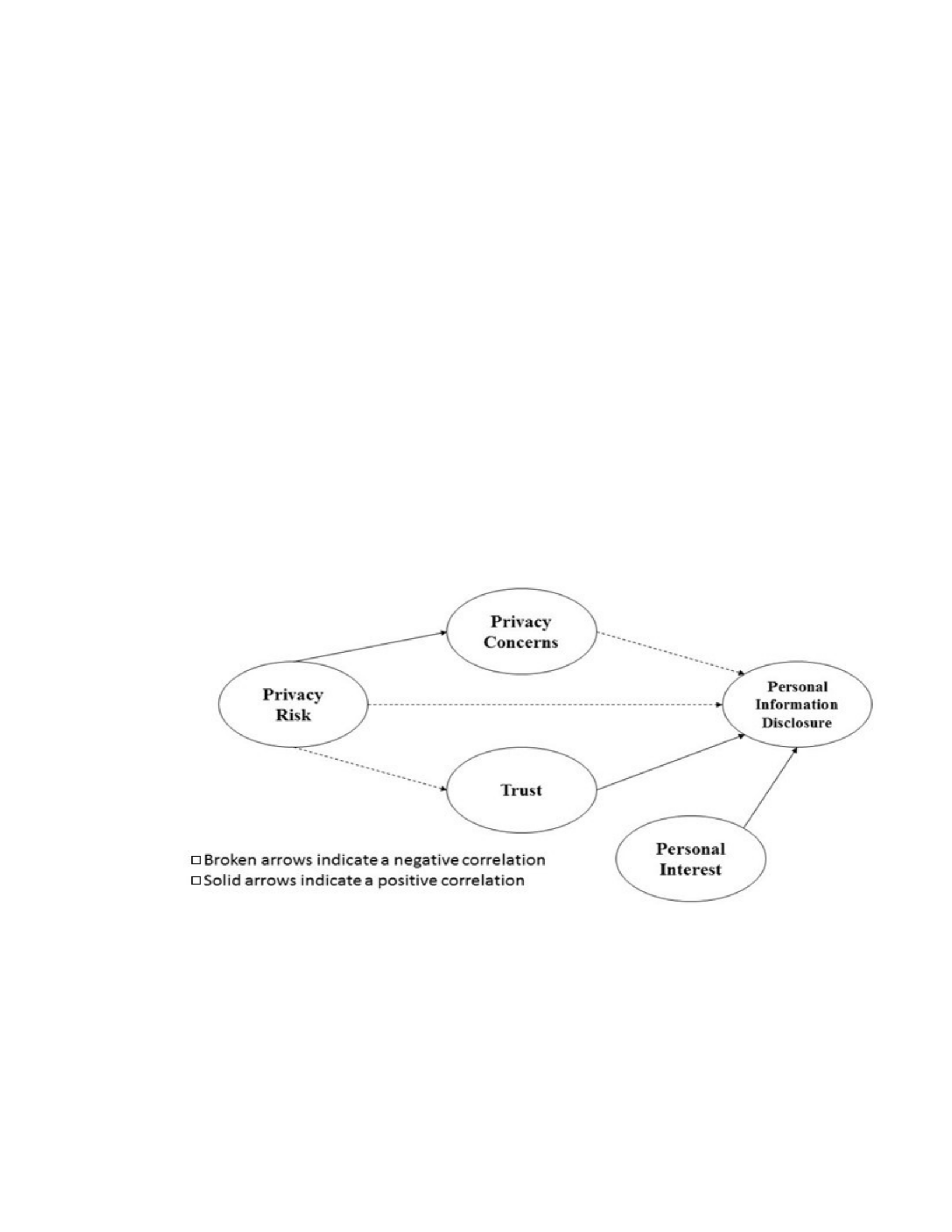
Privacy risk was defined as the risk of opportunistic behavior towards the personal
information an individual disclosed, which was associated with the possibility of loss and
uncertainty (Dinev & Hart, 2006). Privacy risk correlated positively with privacy
concern, but negatively with trust (Dinev & Hart, 2006). Essentially, if an individual
perceived more trust in disclosing his/her personal information, his/her perception of
privacy risk would be lower. Trust was one of the confidence and enticement beliefs,
which positively influenced individuals’ intentions to disclose personal information.
Personal interest is the other confidence and enticement belief factor that was defined as
the intrinsic motivation toward performing an action, and the satisfaction derived from
doing so (Dinev & Hart, 2006).
Figure 1. Extended Privacy Calculus Model developed by Dinev & Hart (2006)
3.2.2. Using Insights from Cognitive Neuroscience to Enhance the Extended Privacy
Calculus
Acquitsi and Grossklags (2005) explained that privacy-related decisions may be
limited by bounded rationality, and cognitive biases. Specifically, Acquisti (2004)

explained the cognitive bias of hyperbolic discounting as a cause for individuals’
decisions to disclose personal information despite claiming concerns for their information
privacy. Essentially, individuals would prefer short-term benefits rather than the better
choice of long-term benefits (Acquisti, 2004). However, explaining the privacy paradox
by arguing for the saliency of cognitive biases, such as hyperbolic discounting, ignores
the rational aspects involved in privacy-related decisions. While individuals’ disclosure of
personal information may not be purely rational, findings from cognitive neuroscience
have explained that decisions are complex enough to involve multiple mental processes
(Dimoka et al., 2007).
Findings of cognitive neuroscience indicated that there are correlations between
mental processes and specific brain areas. Rational cognitive processes are often
correlated with brain activity in the prefrontal cortex, while emotions are often correlated
with the limbic system (Dimoka et al. 2007). Furthermore, these systems of rationality
(prefrontal cortex) and emotional processing (limbic system) interact with one another
(Phelps, 2006). Essentially, no decision is purely rational, nor is any decision purely
emotional. Furthermore, Dimoka (2012) explained that individuals’ brain activity does not
necessarily mean that only one mental process is occurring. There exists a many-tomany
relationship between brain activity and mental processes (Dimoka, 2012). For instance,
when an individual perceives some activity will yield specific rewards, several key brain
areas are activated, such as the orbitofrontal prefrontal cortex, medial prefrontal cortex,
amygdala, nucleus accumbens, and caudate nucleus (Dimoka et al., 2007). The brain areas
activated in assessing rewards include areas present in both the prefrontal cortex and the
limbic system (Dimoka et al., 2007). Therefore, to elicit a better understanding of the

privacy paradox, it would be essential to observe how individuals decide to withhold or
disclose their personal information.
Cognitive neuroscience provides a number of tools and techniques to measure
individuals’ brain activity, and associate brain functions with mental processes. Popular
within brain mapping literature, is the use of the functional magnetic resonance imaging
(fMRI) scanner to track the flow of oxygenated and deoxygenated blood to specific brain
areas (Dimoka, 2012; Riedl et al., 2009). Yet, many studies in cognitive neuroscience
have used the electroencephalogram (EEG) to track individuals’ electrophysiological
responses. These electrophysiological responses are electric potentials produced from
neurons within the brain, and is categorized by different frequency bands (Guyton & Hall,
2001). These frequencies, measured in Hertz (Hz), correspond to a variety of functions
(Demos, 2005). The frequency bands and their associated functions are summarized from
Demos (2005) in Table 1.
Table 1. Frequency bands of electric potentials
W
aves
Delta waves 1-4 Produced more in infants and children than adults, and
pertains to the functioning of the immune system, natural
healing, and deep sleep.
Theta waves 4-8 Connected to feelings of deep and raw emotions. High
frequencies of theta waves are associated with depression,
impulsivity, hyperactivity, and inattentiveness. Low
frequencies of theta waves are associated with anxiety,
poor emotional awareness, and stress. Optimal
frequencies of theta waves are associated with intuition,
relaxation, creativity and emotional connection.
Alpha
waves
8-12 The state between the conscious and subconscious mind,
often produced in resting state, with eyes closed. High
Frequency Function

frequencies of alpha waves relate to daydreaming,
excessive relaxation, and the inability to focus. Low
frequencies of alpha waves relate to anxiety, high stress,
insomnia, and obsessive-compulsive behavior. Optimal
levels of alpha waves pertain to relaxation.
Beta waves 13-21 Relates to conscious thought, logical thinking, focus and
problem solving.
High Beta
waves
20-32 Pertains to intensity, anxiety and hyper alertness.
Gamma
waves
38-42 Involved in higher processing tasks and cognitive
functioning.
While the extended privacy calculus model (Dinev & Hart, 2006) consisted of
privacy risk, privacy concern, trust and personal interest, cognitive neuroscience has found
these factors correlated with neural activity in specific areas of the brain. Different brain
areas are responsible for different functions, such as motor control, executive functions,
and emotional processing. Thus, these brain areas associated with the mental processes or
factors involved in the extended privacy calculus enhances the investigation of
individuals’ privacy-related decisions. Furthermore, other factors such as uncertainty and
distrust are important in considering since uncertainty was found to be an antecedent of
personal information disclosure (Pavlou et al., 2007), and distrust as a distinct factor from
trust (Dimoka, 2010). Thus, the findings of cognitive neuroscience were applied to the
extended privacy calculus model, to elicit a better explanation of the privacy paradox,
identifying both the involvement of emotions and rationality in individuals’ privacyrelated
decisions.

3.2.3. Neuroanatomy – Structure and Function of Key Brain Areas
Adequately applying the findings of neuroscience to the field of Information
Systems to better understand IS problems, require a basic understanding of the structure
of the human brain (i.e. its anatomy), as well as some key functions of these brain areas.
The human brain is part of the central nervous system, which consists of gray and white
matter, and are divided into three principle areas, the forebrain, midbrain and hindbrain.
The gray matter are nerve cells, called neurons, while the white matter are axons, which
are linked to the neurons for neuronal communication (Demos, 2005; Hanaway, Woosley,
Gado, & Mellville, 1998; Snell, 2010). Connected to the spinal column is the hindbrain,
which contains the medulla oblongata, pons, and cerebellum, with the midbrain
connecting the hindbrain to the forebrain (Snell, 2010). The forebrain consists of the
telencephalon and diencephalon. The telencephalon is composed of the cerebrum,
separated into a right and left hemisphere, composed of an outer layer, known as the
cerebral cortex, and subcortical structures such as the basal ganglia (Cannon, 2012;
Demos, 2005). The diencephalon is the inner part of the forebrain consisting of the
thalamus and hypothalamus. The diencephalon is comprised mainly of gray matter, and is
situated at the head of the brain stem, thus linking lower brain stem structures to the
cerebral cortex (Cannon 2012). The cerebral hemisphere is partitioned into four lobes: the
frontal lobe, temporal lobe, parietal lobe, and occipital lobe. Each hemisphere consists of
a number of bulges, known as gyri (pl. gyrus), and small and large grooves known as
sulci (pl. sulcus) and fissures, respectively (Goldberg, 2010). As depicted in Figure 2, the
frontal lobe is the anterior part of the brain, the temporal lobe is located to the side, and
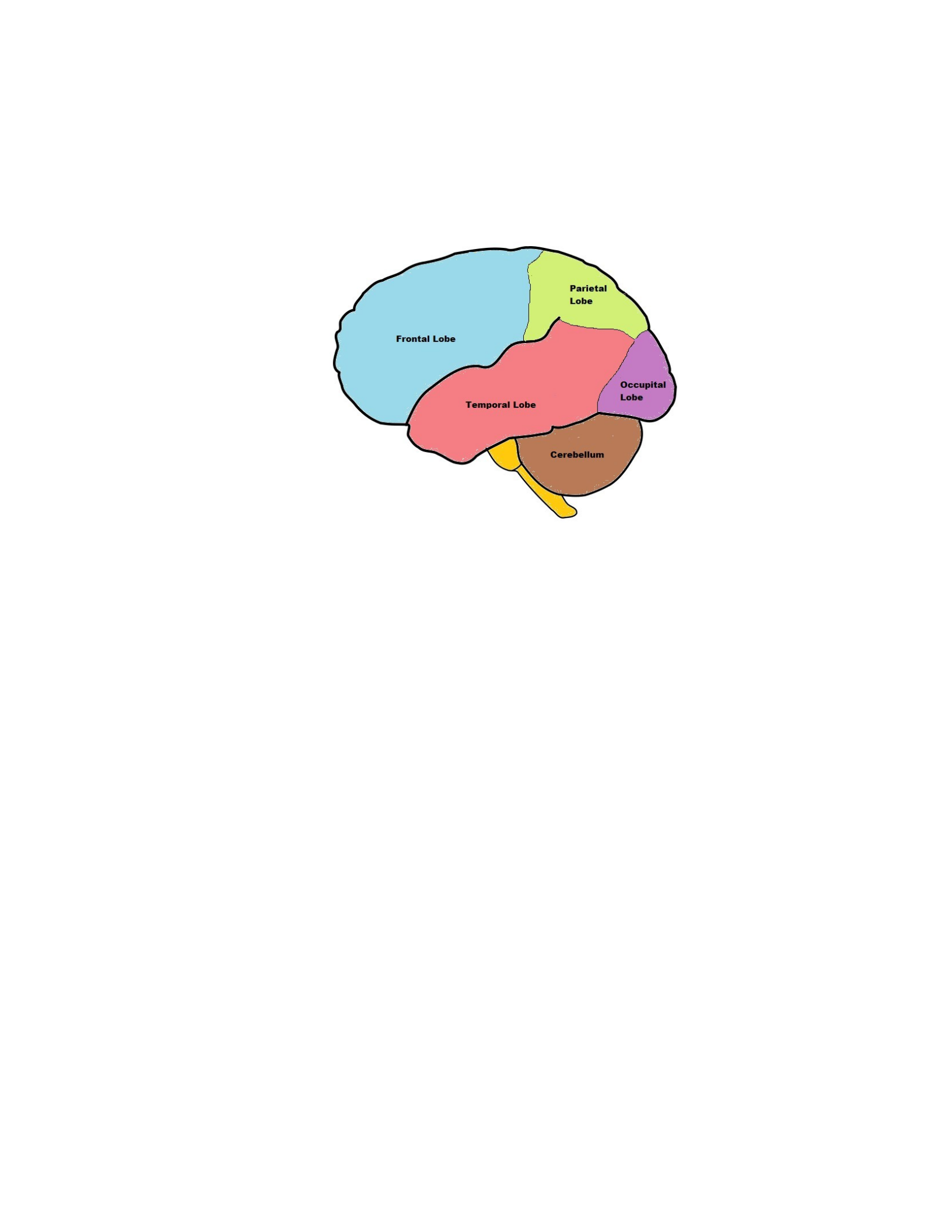
the parietal lobe is behind the frontal lobe, but above the occipital lobe. The occipital
lobe, which is located at the base of the brain, is primarily associated with vision (Demos,
2005).
Figure 2. Lobes of the Cerebral Cortex
Further division of the cerebral cortex into specific areas was developed by
Korbinian Brodmann in 1908 into a cytoarchitectural map consisting of Brodmann Areas
(BA) labeled 1 to 52 (Cannon, 2012). The BA’s were developed based on the organization
of neurons, and have since been the most widely accepted cytoarchitectural map of the
cerebral cortex, which, over the years, have undergone re-evaluations and further
divisions (Cannon, 2012). BA’s are responsible for many different functions ranging from
somatosensory perceptions, such as temperature and pain, located in BA’s 1, 2, and 3 (also
known as the Somatosensory Cortex), to decision-making, which is located in BA 8.
Brodmann areas exist in both hemispheres. For instance, there are right and left BA 5’s.
Figure 3a and 3b depicts the Brodmann Areas within the brain, while table 2 illustrates
some of the functions found to be associated with these Brodmann Areas.
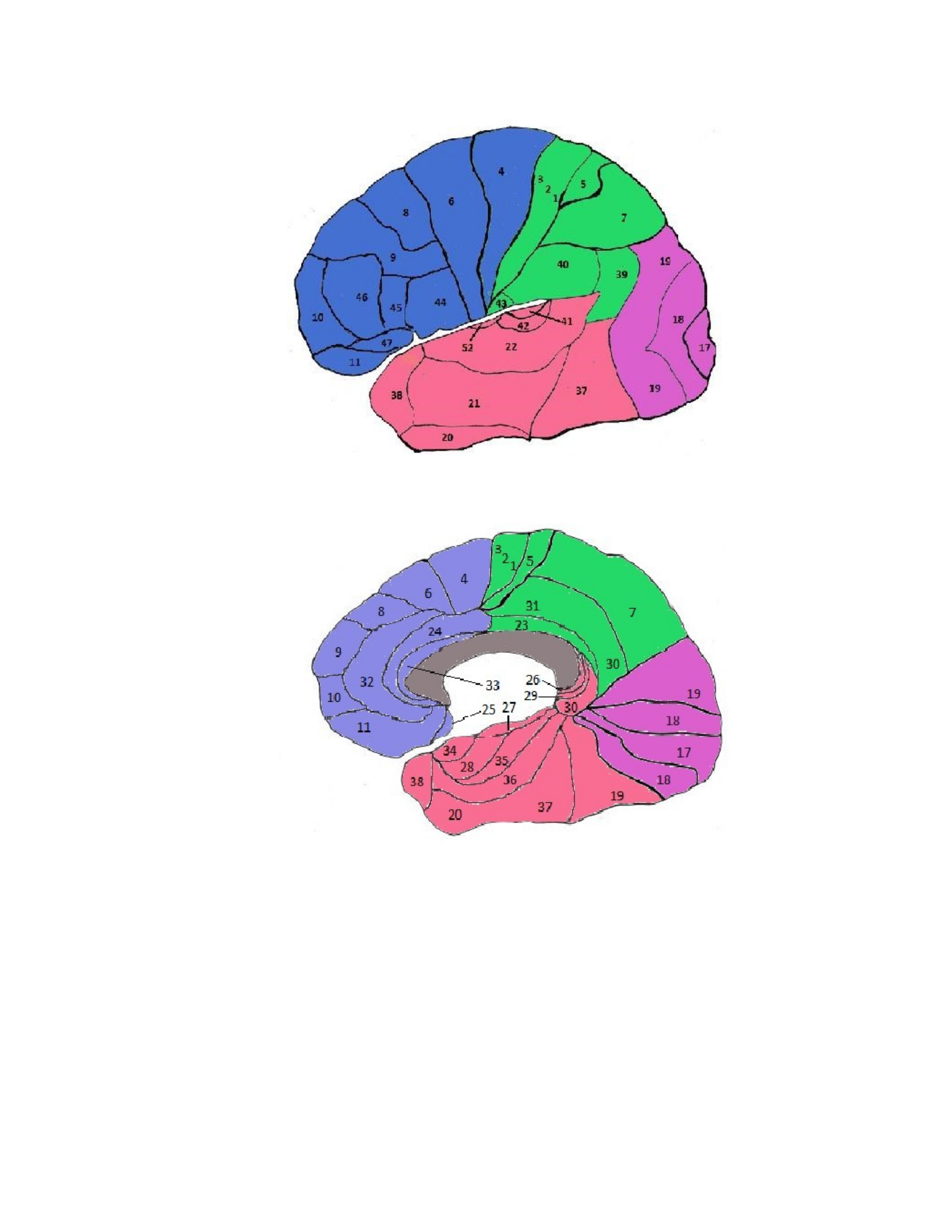
Figure 3a. Brodmann Areas of the Cerebral Cortex (outer view)
Figure 3b. Sagittal View of Brodmann Areas in the Brain

44
Table 2. Brief overview of Brodmann Areas and some of their Associated Functions
Brodmann Name of Areas Functions References Areas
1, 2, 3 Postcentral Gyrus
4 & 6 Premotor Cortex
5 & 7 Superior Parietal
Lobule
8, 9, 10 Prefrontal Cortex
11, 12, 25 Orbitofrontal Cortex
13, 14, 15,
16 Insular Cortex
17, 18, 19 Primary & Secondary
visual cortices
20, 21, 22 Inferior Temporal,
Fusiform &
Parahippocampal Gyri

Temperature, pain, Kirimoto, Ogata, Onishi, Oyama, Goto, & Tobimatsu proprioception and nociception (2010); McCaslin,
Chen, Radosevich, Cauli, & Hillman processes (2010); Straube & Miltner (2011); Zhang, Jiao, & Sun
(2011)
Motor functions Luria (1966)
Motor execution, spatial Knauff, Mulack, Kassubek, Salih, & Greenlee (2002); imagery in deductive reasoning Stephan, Fink,
Passingham, Silbersweig, CeballosBauman, Frith, & Frackowiak (1995)
Decision-making, uncertainty,
executive attention,
selfregulation, emotion,
arithmetic processes
Cannon, Congedo, Lubar, & Hutchens (2009); Cannon,
Sokhadze, Lubar, & Baldwin (2008); Jahanashi,
Dirnberger, Fuller, & Frith (2000); Volz, Schubotz, & von
Cramon (2005)
Emotional regulation,
selfregulation, encoding and
retrieval, decision-making
involving rewards
Cannon (2012); Ernst et al. (2004)
Fear, risk-taking Phelps, O’Connor, Gatenby, Gore, Grillon, & Davis
(2001); Paulus & Frank (2003)
Associated with vision Cannon (2012)
Attribution of attention to
others Brunet, Sarfati, Hardy-Bayle, & Decety (2000)
45
23, 26, 29, Posterior Cingulate Emotions and episodic Cannon (2012)
30, 31 Gyrus memory processes
24, 25, 32, Anterior Cingulate Consciousness, learning, Devinsky, Morrell, & Vogt (1995)
33 Gyrus reward, and decision-making
27, 28, 34, Hippocampal Areas Emotional memories, fear Reinders, Gascher, de Jong, Willemsen, den Boer, &

35, 36, 48 Buchel (2006); Richardson, Strange, & Dolan (2004).
37 Fusiform Gyrus Visual recognition Tanaka (1997)
38 Temporal Pole Social and emotional Dupont (2002)
processes, decision-making
39 Angular Gyrus Integration of visual and tactile Cannon (2012)
stimuli in addition to speech
40 Supramarginal Gyrus Writing of single letters Rektor, Rektorova, Mikl, Brazdil, & Krupa (2006)
41 & 42 Primary Auditory Basic auditory processing Stefanatos, Joe, Aguirre, Detre, & Wetmore (2008)
Cortex
43 Subcentral Area Sign and spoken language Soderfeldt, Ingvar, Ronnberg, Eriksson,
Serrander, &
Stone-Elander (1997)
44 & 45 Broca’s Area Involved in the production of Cannon (2009) language
46 Anterior Middle Processing emotions and self-Deppe, Schwindt, Kugel, Plassman, & Kenning (2005)
Frontal Gyrus reflections in decision-making
(left)
47 Inferior Frontal Gyrus Decision making involving Rogers, Own, Middleton, Williams, Pickard, Sahakian, &
conflict and rewards (right) Robbins (1999)

46
3.3. Research Model
The research model is based on the application of the findings of cognitive
neuroscience to the extended privacy calculus model developed by Dinev and Hart
(2006). The privacy calculus has often been used by researchers to study the beliefs
individuals have concerning the disclosure of their personal information in various
contexts, such as ecommerce, ehealth, social media, and profiling (Awad & Krishnan,
2006; Bansal et al., 2010; Dinev & Hart, 2006), due to the influence certain factors, such
as trust and risk. However, a distinction should be made between the oft-measured
beliefs, when researchers use the privacy calculus, and the perceptions or mental
processes identified in this study.
Factors such as risk beliefs and trust beliefs, often used in the literature (Dinev &
Hart, 2006; Li et al., 2011), pertains to an individuals’ enduring perceptions or beliefs of a
given situation. However, individuals’ attitudes (i.e. their perceptions or mental
processes) may be different due to situational factors and cognitive limitations (Acquisti
& Grossklags, 2005; Belanger & Crossler, 2011; Sim et al., 2012), often triggered by
some stimuli. Specifically, the extended privacy calculus model developed by Dinev and
Hart (2006) identified a number of salient factors (such as trust and risk) present in
privacy-related decisions. While these factors were measured as beliefs, research in
cognitive neuroscience has identified these factors as mental processes, which may be
derived from a both internally held beliefs and external stimuli (Angst & Agarwal, 2009;
Dimoka, 2010; 2012; Dimoka et al., 2007; Li et al., 2011). Additionally, factors of
uncertainty and distrust were added to the privacy calculus based on the findings of
cognitive neuroscience that these factors were distinct from factors such as risk or trust
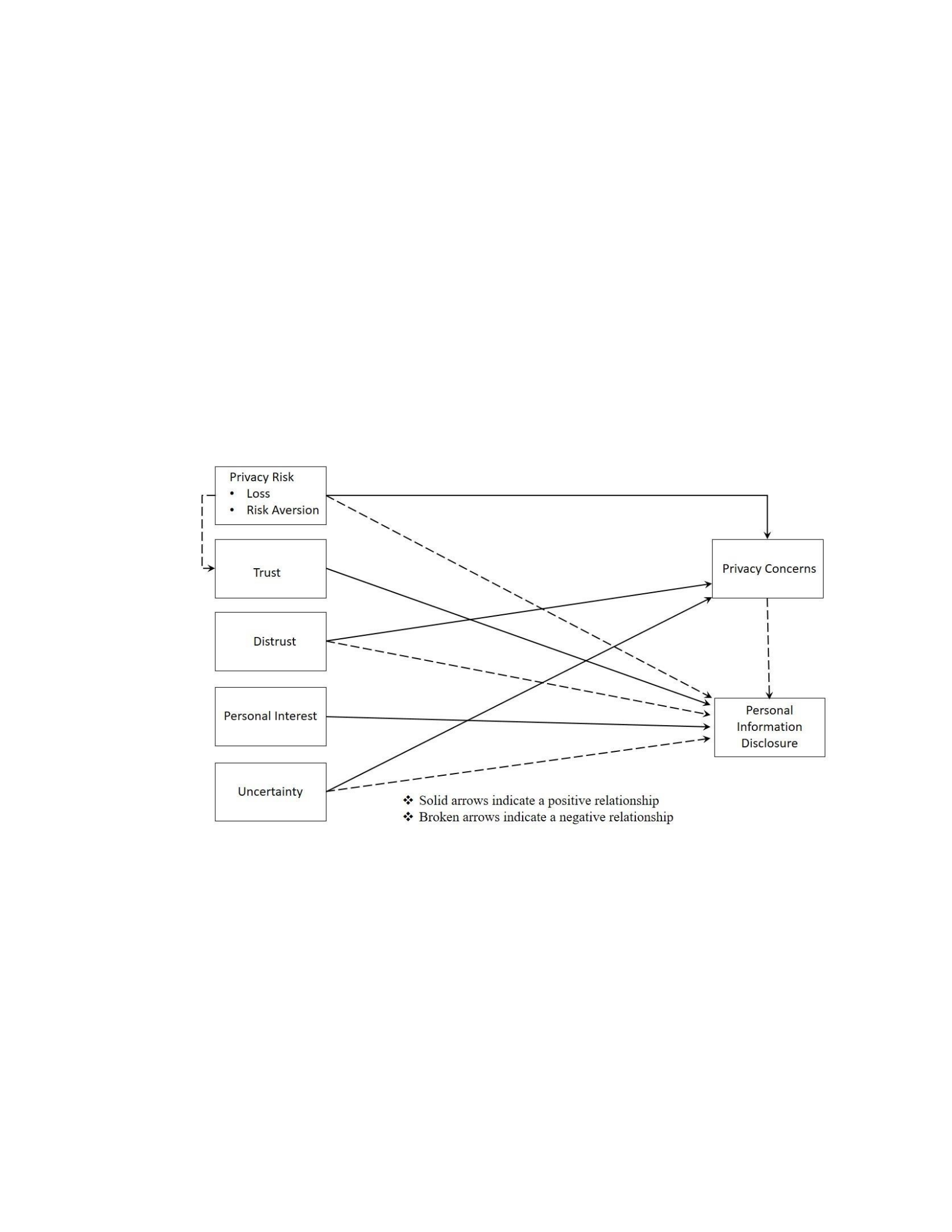
47
(Dimoka, 2010; Dimoka et al., 2007; 2011). Specifically, Dimoka (2010) found distrust
was associated with brain areas different from the brain areas associated with trust.
Figure 4 presents the overarching research model for this study developed from the
extended privacy calculus and pertaining to the mental processes predicting privacy
concerns and personal information disclosure. This model is further broken in the next
two subsections, displaying the inclusion and relationships between these mental
processes and brain areas in predicting privacy concerns and personal information
disclosure.
Figure 4. Overarching research model
3.3.1. Hypotheses Development – Neural Correlates
The following hypotheses were developed mainly from research using positron
emission tomography (PET) scans and fMRI techniques for source localization.
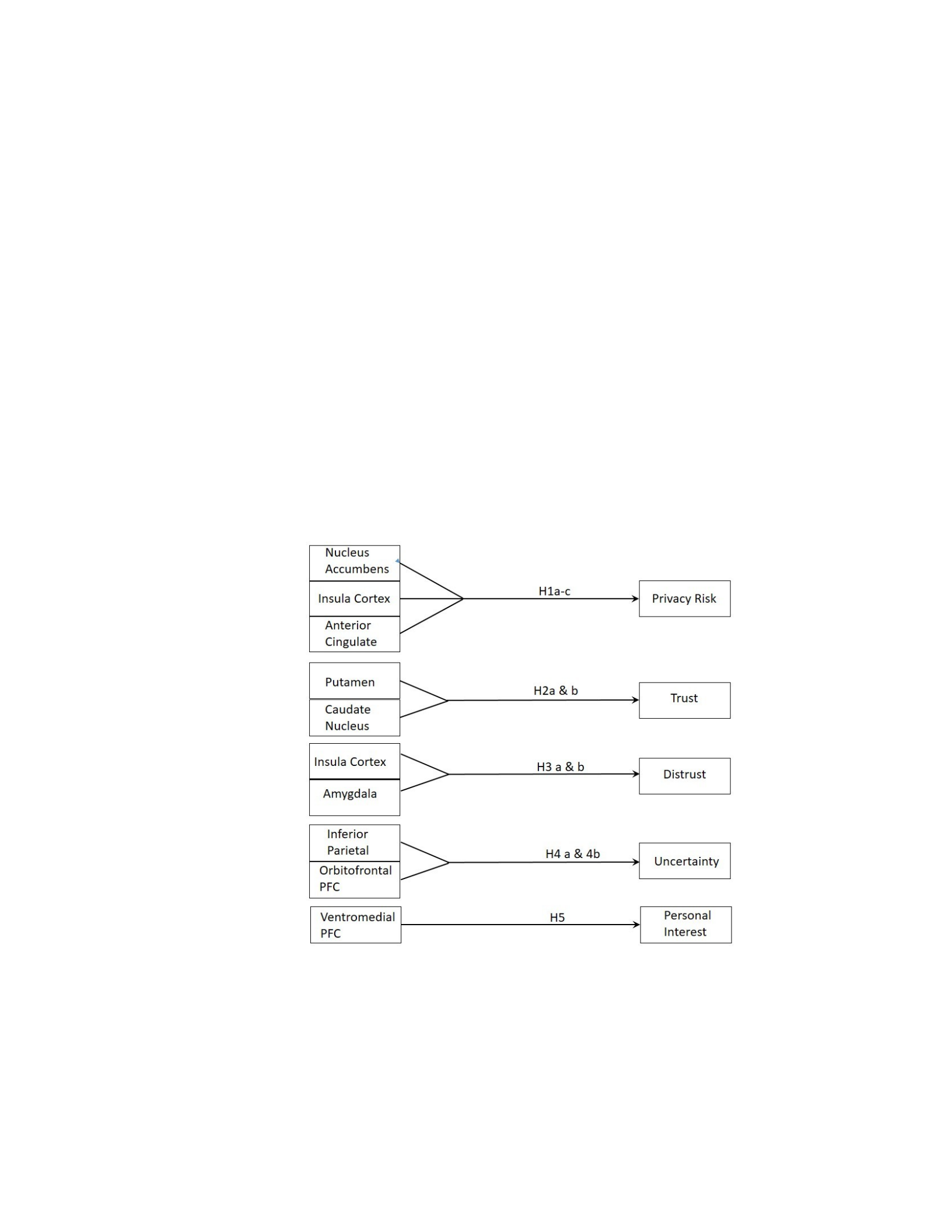
48
Localization of brain activity may not be the same across neuroimaging technologies;
however, past research can provide an idea as to where neural activity may take place in
specific situations. Thus, these hypotheses are developed more as a guideline to where
brain activity might occur. Specifically, exploring neural activity for specific mental
processes might produce varied results from past literature based on a number of factors
such as the design of experiments and neuroimaging tools selected. As explained by
Cannon (2012), the brain is a complex system of systems, whereby findings in current
neuroscience literature can be challenged as new findings can refute previous
understanding of the brain. Figure 5 depicts the hypotheses of brain areas correlated with
the mental perceptions of the extended privacy calculus model.
Figure 5. Neural Correlates of Mental Processes

49
Researchers in the field of information privacy have often treated privacy risk as a
one-dimensional construct (Dinev & Hart, 2006; Malhotra et al., 2004; Norberg et al.,
2007; Smith et al., 2011). However, privacy risk may actually be a multidimensional
construct whereby an individual's perception of risk may assess the likelihood and
severity of consequences in engaging or avoiding a risky action (Peter & Tarpey, 1975;
Smith et al., 2011). Privacy risk is essentially an individual's perception of risk but in the
context of information privacy. According to Dinev and Hart (2006), privacy risk wis
defined as the possibility of loss, which is related to the uncertainty caused by the
possibility of harm to the individual if he/she were to disclose his/her personal
information. Findings in cognitive neuroscience have explained that risk may be
multidimensional as there are different brain activations, based on different situations.
The nucleus accumbens, which is primarily attributed to the anticipation of rewards
(Knuston, Fong, Adams, Varner, & Hommer, 2001), is activated when individuals sought
to avoid risky behavior (Matthews, Simmons, Lane, & Paulus, 2004). However, brain
activity in the insular cortex correlated with risky games when individuals perceived high
loss predictions (Paulus & Frank, 2003). Additionally, Brown and Braver (2007)
indicated that the anterior cingulate cortex might be involved in avoiding risks. Similarly,
Massar, Rossi, Schutter, and Kenemans (2012) found that individuals with high
behavioral inhibition system (BIS) scores (i.e. an assessment of punishment severity) had
a high theta/beta ratio correlated with low feedback related negativity (a component of an
eventrelated potential), whereby the baseline theta activity was generated in the anterior
cingulate cortex.
H1a: Privacy Risk is associated with brain activity in the nucleus accumbens.

50
H1b: Privacy Risk is associated with brain activity in the insula cortex. H1c:
Privacy Risk is associated with brain activity in the anterior cingulate
cortex.
The extended privacy calculus model found trust to be a salient factor that
positively influenced individuals to disclose their personal information (Dinev & Hart,
2006). Trust is defined as the confidence of an individual that organizations would act
benevolently in protecting them from harm caused by the personal information they
collect (Dinev & Hart, 2006). The extended privacy calculus model neglected the impact
of distrust because researchers have often assumed that trust and distrust lay at opposite
ends of a single continuum (Dimoka, 2010). However, Dimoka (2010) found that trust
correlated with brain activity in the caudate nucleus and putamen, whereas distrust
correlated with the amygdala and insular cortex (Dimoka, 2010). These findings indicated
that trust and distrust are distinct from each other. Moreover, the effect of distrust was
more influential than trust when subjects made decisions about price premiums (Dimoka,
2010).
H2a: Trust is associated with brain activity in the caudate nucleus.
H2b: Trust is associated with brain activity in the putamen.
H3a: Distrust is associated with brain activity in the amygdala.
H3b: Distrust is associated with brain activity in the insula cortex.
Studies in neuroscience found uncertainty correlates with the orbitofrontal cortex
and inferior parietal cortices (Krain, Wilson, Arbuckle, Castellanos, & Milham, 2006),

51
which are different from the neural correlates in risky situations. Pfeffer and Salancik
(1978) explained uncertainty as the inability to accurately anticipate the future state of a
situation because of a lack of enough information. Specifically, when using ICTs, such as
ecommerce, uncertainty may exist when an individual is unsure of the outcome if he/she
were to disclose his/her personal information. This is often due to a lack of information
regarding the parameters of such a situation, such as the case with buyers and sellers in
ecommerce transactions (Acquisti, 2004; Pavlou et al., 2007). Yet, uncertainty is different
from ambiguity and risk. An individual may be privy to a great deal of information when
deciding to disclose his/her personal information, and may assess the situation as risky.
Alternatively, ambiguity is not necessarily considered as negative, as opposed to risky or
uncertain situations (Krain et al., 2007).
H4a: Uncertainty is associated with brain activity in the orbitofrontal prefrontal
cortex.
H4b: Uncertainty is associated with brain activity in the inferior parietal cortex.
In the extended privacy calculus model, personal interest is defined as an
enticement that would influence individuals to disclose personal information (Dinev &
Hart 2006). This may be based on an individual's intrinsic motivation to use a system
despite the requirement to disclose his/her personal information and the risk associated
with doing so. This decision may not be altogether rational, but rather impulsive as
suggested in the findings of Belanger et al. (2002), where individuals preferred the
pleasure of online shopping to security and privacy. In a similar manner to the impulsivity
of consumer behavior, personal interest was assumed to be associated with the similar

52
cognitive processes of high activations in the ventromedial prefrontal cortex and inferior
parietal lobule (right BA 40), but low activations in the dorsolateral prefrontal cortex
(Deppe et al., 2005).
H5a: Personal Interest is associated with high brain activity in the ventromedial
prefrontal cortex, but low activity in the dorsolateral prefrontal cortex. H5b:
Personal Interest is associated with brain activity in the inferior parietal lobule.
3.3.2. Hypotheses Development – Relationship with Privacy Concerns and Personal
Information Disclosure
Dimoka (2010) found that the neural activity of brain areas correlated with
perceptions of trust and distrust provided a better explanation to decisions of price
premiums than psychometric data. Similarly, the neural activity of brain areas correlated
with the perceptions of privacy risk, trust, distrust, uncertainty and personal interest
should be better predictors than self-reported data. Thus, the following hypotheses were
formed on the basis that neural correlates of the predictors of the extended privacy
calculus would influence individual’s perceptions of privacy concerns, as well as their
decisions to withhold or disclose their personal information.
In the extended privacy calculus model, privacy risk influenced privacy concerns,
while inhibiting personal information disclosure (Dinev & Hart, 2006). Privacy risk has
been seen in a number of studies as an inhibitor to personal information disclosure
(Malhotra et al., 2004; Norberg et al., 2007; Van Slyke et al., 2006). However, privacy
risk may be more complicated than past studies have suggested, as it may entail both the
perceptions of loss, as well as the anticipation of outcomes if a risky action were averted.

53
Furthermore, findings in neuroscience suggest that risky situations involve brain areas
that are involved in strong negative emotions (such as the insula cortex) as well as reward
centers (Knuston et al., 2001; Paulus & Frank, 2003). While the full extent of the role
privacy risk may be unknown in relation to privacy-related situations, the following
hypothesis was developed based on findings from prior literature.
H6a: The neural correlates for privacy risk are positively related to privacy
concerns.
H6b: The neural correlates for privacy risk are negatively related to personal
information disclosure.
The extended privacy calculus model found that high levels of risk were
negatively related to high levels of trust (Dinev & Hart, 2006). Similarly, the neural
correlates of risk and trust may have a negative relationship. Trust was found to positively
influence personal information disclosure (Dinev & Hart, 2006; Pavlou et al., 2007; Van
Slyke et al., 2006). However, as trust and distrust were found to be distinct from each
other with regards to their neural correlates, it is expected that both the neural correlates
of distrust and trust would have some influence on personal information disclosure.
Additionally, in the same manner that privacy risk, which has been considered as a
negative construct in previous studies (Dinev & Hart, 2006; Malhotra et al., 2004; Van
Slyke et al., 2007), has a relationship with privacy concerns, it is also expected that the
neural correlates of distrust may enforce individuals’ privacy concerns.
H7a: The neural correlates of privacy risk are negatively related to the neural
correlates of trust.

54
H7b: The neural correlates of trust are positively related to personal information
disclosure.
H8a: The neural correlates of distrust are positively related to privacy concerns.
H8b: The neural correlates of distrust are negatively related to personal
information disclosure.
The extended privacy calculus model by Dinev and Hart (2006) found personal
interest directly influenced individuals to disclose their personal information. Similarly,
the neural correlates associated with personal interest should be related to individuals’
decisions to disclose their personal information. Similarly, perceptions of uncertainty, and
the associated neural correlates would increase privacy concerns, while inhibiting
personal information disclosure. Specifically, in the context of information privacy,
uncertainty is often considered negative, which may be related to privacy concerns
(Pavlou et al., 2007). While Pavlou et al. (2007) found privacy concerns influenced
individual's perceived uncertainty; it is also possible that because of uncertain situations,
an individual's privacy concerns are heightened. Similarly, uncertainty would also
influence individuals to withhold their personal information.
H9: The neural correlates of personal interest are positively related to personal
information disclosure.
H10a: The neural correlates of uncertainty are positively related to privacy
concerns.
H10b: The neural correlates of uncertainty are negatively related to personal
information disclosure.

55
Privacy concerns are often used in information privacy field as an appropriate
measure of information privacy (Smith et al., 2011). Dinev & Hart (2006) defined privacy
concerns as the concerns an individual has over the opportunistic behavior of another
entity to which an individual would disclose his/her personal information. Dinev and Hart
(2006) distinguished privacy risk from privacy concerns by explaining that privacy risk
was a perception based on the individual's overall perception of disclosing his/her
personal information, while privacy concerns was an internalization of what happens to
the personal information the individual has disclosed. Studies have often categorized
privacy concerns as a multi-dimensional construct reflecting dimensions of concerns for
the collection, unauthorized secondary use, improper access and errors of personal
information (Smith et al., 1996; Stewart & Segars, 2002). The IUIPC asserted that the
dimensions of privacy concerns in the era of the internet were based on the concerns for
the collection and control of personal information, as well as the individual's awareness of
how the personal information he/she has disclosed to an entity is handled. It is assumed
that the greater an individual's degree of privacy concerns, the more likely he/she would
withhold his/her personal information. Figure 6 depicts the research model that was tested
in the study (except for hypothesis 12).
H11: Privacy Concerns are negatively related to personal information disclosure
Figure 6. Research Model Depicting Hypothesized Relationships
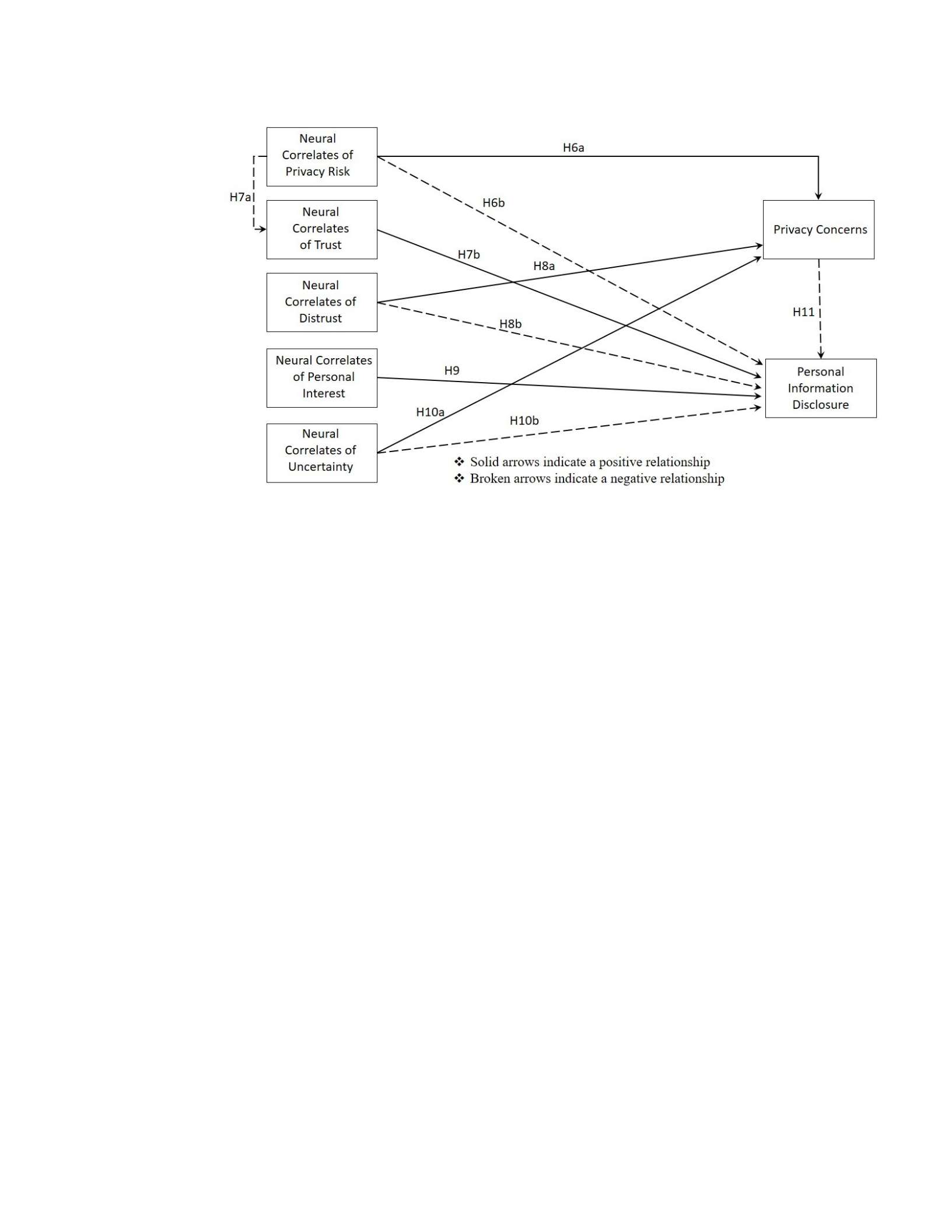
56
Based on the findings of cognitive neuroscience, the constructs or mental
processes that are involved in individuals’ privacy concerns, as well as their decision to
disclose their personal information are distinct (Dimoka et al., 2007). As found by
Dimoka (2010), a high level of trust does not dictate that a low level of distrust would be
perceived by an individual. In the same manner that both distrust and trust can be
perceived at the same time and at varying degrees (Dimoka, 2010), individuals may
perceive other mental processes such as risk and personal interest at the same time and at
varying degrees. However, the effect of an independent variable on the dependent
variable can be changed due to the presence of other independent variables. These effects
are referred to as interaction effects. It should be noted that the following hypotheses on
interaction effects are not represented in the research model, since interaction effects
should not alter the direction of the relationships between the independent variables and
the dependent variables. For instance, the interaction effects would not alter hypotheses

57
such as 6b, which posits that risk would negatively influence personal information
disclosure, but would determine the amount of change in the dependent variable based on
the interactions between independent variables.
H12a: An interaction effect would exist between the independent variables
(privacy risk, trust, distrust, personal interest, uncertainty) and privacy concerns.
H12b: An interaction effect would exist between the independent variables (privacy
risk, distrust, personal interest, uncertainty, privacy concerns) and personal
information disclosure.
3.4. Summary
The extended privacy calculus model developed by Dinev and Hart (2006) was
used as the theoretical basis for this study. However, the extended privacy calculus model
is limited in assuming individuals are purely rational decision-makers. To address this
limitation, the findings of cognitive neuroscience were added to the extended privacy
calculus. The findings of cognitive neuroscience aid in identifying the neural correlates of
mental processes, which predict individuals’ privacy-related decisions. Identifying these
neural correlates allow for examining the nature of these mental processes (such as
rational and/or emotional) as well as observes the relationships between these mental
processes in privacy-related decisions.
Chapter 4
Research Design

58
4.1. Introduction
This chapter consists of the research design used for testing the research model
and hypotheses for this study. Section 4.2 presents the research method used, while
section 4.3 explains how the data was collected. Section 4.4 details the design of the
research method to adequately capture data for analysis and achieving the objectives of
this study. Section 4.5 explains the data analysis, including the preprocessing of data
before analysis. Section 4.6 concludes the chapter with a summary.
4.2. Research Method
Three within-subject experiments were conducted using an EEG device to
measure subjects’ brain activity. All subjects participated in the three experiments as if it
were one experiment, while the conditions associated with each experiment were later
separated and analyzed accordingly. Experiments were chosen as the selected research
method, as it allows researchers to control the environment through manipulations (i.e.
treatments or conditions) to observe specific behavior, and retain strong internal validity
(Sekaran & Bougie, 2013). However, experiments are often used for examining causal
relationships (Sekaran & Bougie, 2013), yet, inferring a causal relationship between
mental processes and research constructs can lead to erroneous assumptions, referred to
as “reverse inference” (Poldrack, 2006). This is because there exists a many-to-many
relationship between mental processes and brain activity, whereby a research construct,
such as trust, may generate brain activity in multiple regions of the brain, while another
construct may generate activity in similar brain regions (Dimoka, 2012). However,
experiments using an EEG expose subjects to treatments, where data is recorded and

59
analyzed, and a conclusion can be drawn over the neural correlates associated with
specific mental processes and certain decisions. It should be noted, however, that as the
brain is considered extremely complex with multiple sub-systems, whatever results are
discovered in current studies can easily be challenged with newer neuroimaging tools and
techniques, resulting in vastly different results that are more accurate (Cannon, 2009).
EEG captures brain activity through electrodes which detect the voltage
fluctuations on the scalp which “results from the changes in membrane conductivity
elicited by synaptic activity and intrinsic membrane processes” (Riedl et al., 2009, p.
246). While EEG provides lower spatial resolution in comparison to neuroimaging
technology such as fMRI and PET, it provides a high temporal resolution, where brain
activity is captured in milliseconds (Riedl et al., 2009), and epochs are extracted from
continuous records for thorough analysis of event-related potentials. This lack of spatial
resolution leads to the “inverse problem”, whereby the location of origination of neural
activity is often too ambiguous to identify (Grech et al., 2008). However, this inverse
problem can be addressed using a number of mathematical formulations such as the
lowresolution electrical tomography (LORETA) and the standardized LORETA
(sLORETA), thus increasing the detection of localized neuronal activity (Grech et al.,
2008; Pascual-Marqui, 1999; Pascual-Marqui, Esslen, Kochi, & Lehmann, 2002).
While studies have often used self-reported data, such as survey questionnaires,
there are more advantages to using neuroimaging tools that could directly measure brain
activity. Self-reported data is often limited by the participants' lack of knowledge or
biases (Dimoka et al., 2011). For instance, an individual may fail to accurately answer
psychometric measures in a given situation because he/she may be unaware of what

60
drove he/she to specific decisions. However, directly measuring neural activity or
physiological functions could produce more objective and generalized findings, thereby
enhancing the information privacy field (Dimoka et al., 2011), particularly in providing a
better understanding of the privacy paradox. Moreover, using a neuroimaging tool to
measure brain activity allows for identifying the mental processes that are present when
individuals make privacy-related decisions. These mental processes are distinct from
beliefs, as they are spontaneous and less enduring, and maybe influenced by internal
beliefs and external stimuli, as mentioned earlier (Angst & Agarwal, 2009; Dimoka 2012;
Li et al., 2011).
4.3. Data Collection
The study was approved by the institutional review board (IRB) before any data
was collected. IRB approval ensures that subjects are not mistreated, and data collected is
handled carefully and safely so as to protect the subjects from any harm in the course of
the study. To attain approval, the benefits and risks to participants, the method of data
collection and data analysis, how the data is kept, as well as the overall importance of the
study were documented. Appendix A contains the approval letter by IRB, indicating the
study could proceed.
A within-subjects experiment (also called a repeated-measures experiment) is an
experiment whereby each subject undergoes all the treatments (also called experimental
conditions), with some control available to separate the effects of each treatment
(Dimoka, 2010; 2012). Essentially, each treatment consists of one or more of the
independent variables, and usually at some level (Dimoka, 2012). For instance, the

61
independent variable for a particular treatment, such as trust, is introduced at a high level
and used to determine the subject’s decision to disclose personal information. This same
independent variable would then be introduced at a low level to measure subjects’
decisions. Essentially, the independent variable is introduced at varying levels (such as
high and low) to determine what effect it has on the dependent variable. Within-subject
experiments reduce the number of participants necessary for adequate power, since all
participants are exposed to all of the treatments, thus making it advantageous in reducing
sample sizes and cutting costs for neuroimaging studies (Dimoka, 2012).
Studies in neuroscience sometimes have a small number of subjects, such as the
study of Zotev et al. (2014) with six participants. Generally, however, the number of
participants is often over twenty (Seeley, Smith, MacDonald, & Beninger, 2016; Xu,
Shen, Chen, Ma, Sun, & Pan, 2011; Zotev, Yuan, Misaki, Phillips, Young, Feldner, &
Bodurka, 2016). In this study, a total of twenty-seven subjects participated in the three
experiments (where the three experiments were conducted as one experiment). Five of the
subjects’ data were used for analysis in a pilot study, which was used as feedback for
improving on any drawbacks in the design of the experiment, as well as exploring
drawbacks in the collection of continuous EEG data used for analysis. The data collected
from the remaining twenty-two participants was used for analysis and testing the
hypotheses. For the pilot study, three subjects were male, while two were female (n=5),
while the main study consisted of eleven males and eleven females each (n=22),
indicating an equal ratio of males to females.
As per IRB, participants were required to sign a consent form indicating they
understood what was required of them in the study, the benefits and the risks, as well as

62
their rights before beginning the experiments. Similarly, participants were required to
sign a screening form indicating they were not pregnant, diagnosed with any
psychological illnesses, or took any psychotropic medications. Pregnant women were
excluded from the study so as to not induce any stress that could be caused when
collecting data using an EEG, as well as to avoid any varied neuronal activity that may be
caused by pregnancy. Brain activity in individuals who use psychotropic medications or
suffer psychological illnesses may be different from individuals who do not use
psychotropic medications or have psychological illnesses. This is evident, where theta
brain waves can be moderated by dopamergic inputs in attention deficit hyperactivity
disorder (ADHD) patients (di Michele, Prichep, John, & Chabot, 2005). Similarly, the use
of psychotropic medications can induce specific hormonal changes to improve brain
activity in specific areas (Demos, 2005).
4.3.1. Emotiv EPOC+ EEG
The experiments captured brain data using an EEG device known as the Emotiv
EPOC+. The emotive EPOC+ is a 14-electrode commercial EEG device with two
reference points. The fourteen electrodes corresponded to the following channels of the
10-20 system: AF3, F7, F3, FC5, T7, P7, O1, O2, P8, T8, FC6, F4, F8, AF4. The 10-20
system is an international standard used for EEG, which describes where electrodes
should be placed (Teplan, 2002). Figure 7 depicts the emotive EPOC+ as well as the
channel locations and their associated positions in the 10-20 system as detected by
EEGLab.
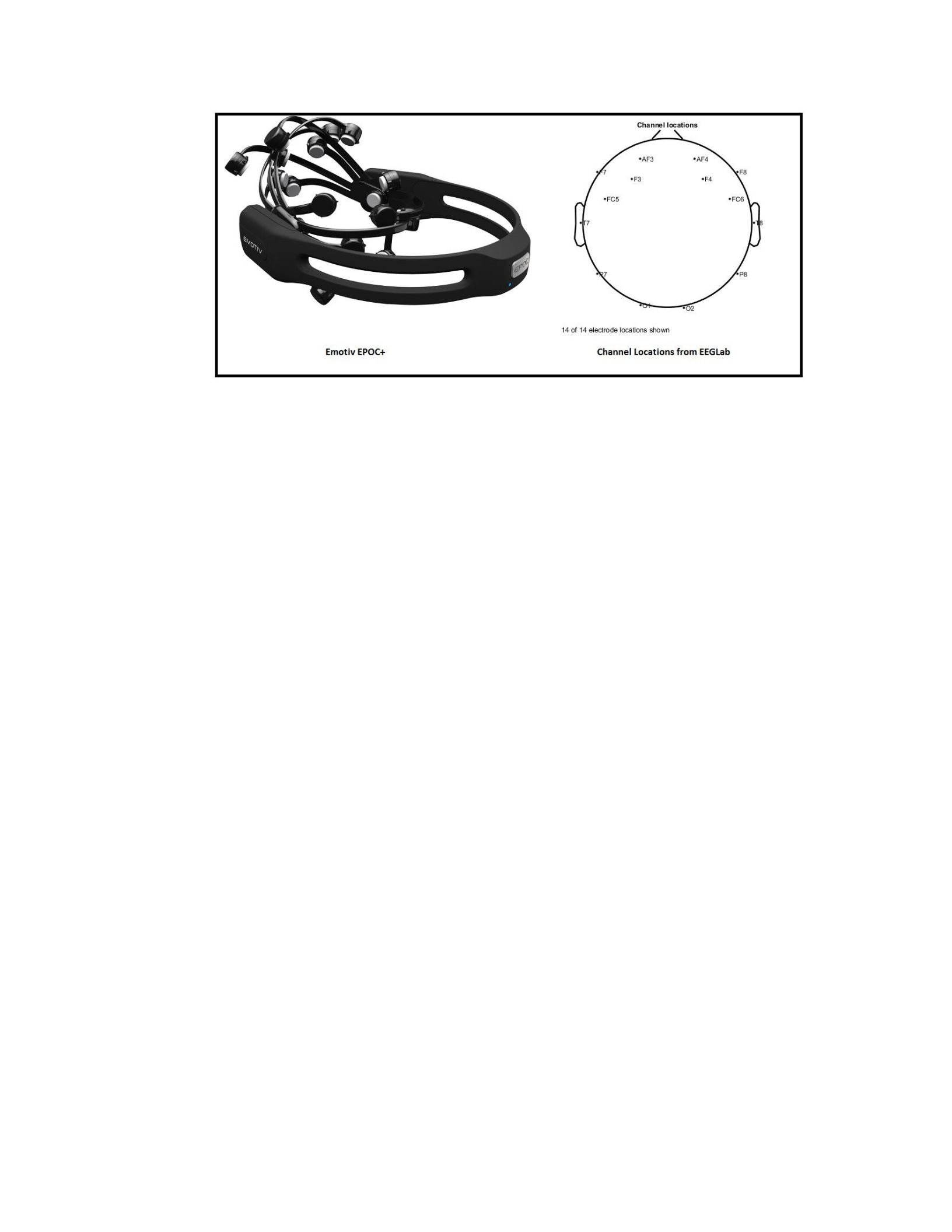
63
Figure 7. Emotiv Epoc+ Adapted from Emotiv Website and Channel Locations Depicted
from EEGLab
4.4. Experiment Design
As explained above, the study is divided into three experiments, in which all
subjects participated as if it were one experiment. Each experiment was designed as a
within-subjects experiment. Experiment 1 was designed solely to capture the neural
correlates of the independent variables of this study (i.e. privacy risk, trust, distrust,
personal interest, and uncertainty). Experiment 2 was designed as a 2x2x2x2 factorial
experiment whereby the independent variables of privacy risk, distrust, trust and personal
interest were measured on two levels: high and low. Experiment 3 was designed as a 2x1
factorial experiment, where there were two levels of personal interest, and one level of
uncertainty. Experiments 2 and 3 were designed for testing the relationships between the
independent variables, privacy concerns and personal information disclosure.
Before subjects began the experiments, the emotiv EPOC+ EEG was fitted on
their scalps according to the 10-20 system, and each electrode was tested to ensure
electric potentials were captured for each channel. When all channels were responsive,
subjects began the experiments, as if it were one experiment. During the experiments,

64
subjects were allowed to take a break if they felt uncomfortable or stressed, at which
point the emotiv EPOC+ was removed and recordings were stopped. When subjects were
ready to resume, the emotiv EPOC+ was once again placed on the scalp, and all
electrodes tested for data acquisition. In total, there were only two subjects who took a
break. If at any point an electrode stopped collecting data or became faulty, the subjects
were asked to stop and the electrode(s) was re-adjusted until data was once more
captured. At times, this entailed an electrode moving out of position, bad connectivity
using Bluetooth, or the electrode becoming dry.
Taken as one experiment, the least amount of time taken by one subject was
fifteen minutes, while the longest was one hour and five minutes. However, every other
subject took between thirty to forty-five minutes to complete the experiments. Overall,
subjects were given the freedom to take as much time as they needed, so as to not apply
any pressure on them. The times associated for when subjects were introduced to stimuli,
and when they made their decisions were recorded for the creation of epochs for later
analysis. When subjects completed the experiments, they were offered $50 as
compensation for their participation.
4.4.1. Experiment 1: Neural Correlates
Experiment 1 consisted of five conditions/treatments, each pertaining to the
mental processes identified in the external privacy calculus. Condition 1 pertains to
privacy risk, condition 2 pertains to trust, condition 3 pertains to distrust, condition 4
pertains to uncertainty, and condition 5 pertains to personal interest. Conditions 1 to 4
utilized review profiles of simulated organizations and/or websites. Review profiles have

65
been used in prior studies to elicit specific perceptions and observe subjects’
decisionmaking (Ba & Pavlou, 2002; Dimoka, 2010). For example, Dimoka (2010) used
feedback profiles to examine subjects’ neural activity to the constructs of trust and
distrust. In the context of ecommerce transactions, feedback profiles were found to be
adequate treatments since they help buyers to accept or reject sellers (Pavlou & Dimoka,
2006). Similarly, the internet has been used by reviewers to provide useful feedback and
reviews for organization and websites.
Conditions 1 to 3 reflected the factors of privacy risk, trust and distrust,
respectively. Essentially, the profiles for conditions 1 and 3 consisted of negative reviews
indicating the unsafe and opportunistic nature of the organization or website, while the
profile for condition 2 consisted of positive reviews indicating the safety and benevolence
of the organization or website. For the factor of uncertainty (condition 4), a similar
review profile was used, but instead, there was very little and ambiguous information for
the simulated organization or website. As explained above, uncertainty is related to
ambiguity, but is often related to an assessment with doubtful outcomes (Pfeffer and
Salancik, 1978). Alternatively, because of the ambiguous nature of a situation, uncertainty
may not necessarily be considered as risk, but may influence risk (Krain et al., 2007).
Condition 5, personal interest, was measured by allowing subjects to choose either an
ecommerce product category that they would be highly interested in obtaining from
online sellers, or an e-service which they may be more interested in using. Personal
interest is the intrinsic motivation of the individual for the content requiring him/her to
disclose his/her personal information (Dinev & Hart, 2006). Since peoples’ personal
interests are diverse, and they may decide to disclose their personal information for a

66
variety of reasons such as convenience or the desire to obtain a specific item that can only
be found online, an accurate means of measuring personal interest would be to actually
let subjects choose something in which they have a vested interest. The profiles for
experiment 1 are located in Appendix B.
For each profile (conditions 1-4), subjects were exposed to one review comment,
and clicked the screen to move on to the subsequent comments, until all comments were
read. All the previous comments were then aggregated on one screen, where questions
were asked pertaining to their perception of the factor the treatment reflected, their
privacy concerns for the organization or website they just read reviews for, as well as the
likelihood that they would disclose their personal information to such organization or
website. Specifically, subjects would be asked questions like “Do you believe it is a risk
to disclose your personal information to LTPC?”, “How concerned are you about the
privacy of your personal information if you were to disclose it to LTPC?” and “Would
you agree to disclose your personal information to LTPC?”. Subjects answered each
question on a seven-point Likert scale, ranging from 1 being the least likely to 7 being the
most likely, which was used to stimulate brain activity regarding the treatment they were
currently undergoing. This method of triggering brain activity has been used by Dimoka
(2010), since the subjects would be processing the information about the organization or
website they have just been exposed to (Dimoka, 2012). After answering all questions,
subjects were then directed to a screen where they were asked to randomly click any
number between 1 to 9. This acted as the control treatment to erase any perceptions from
the treatment they had currently undergone, thus reducing any carryover effects. This
method of control in a within-subjects experiment was used by Dimoka (2010), in her

67
fMRI experiment of trust and distrust when buying online. Subjects iterated this process
for conditions 1 to 4.
For condition 5, measuring the neural correlates of personal interest, subjects were
exposed to a screen with a number of options from which to choose. After choosing a
product category they were highly interested in obtaining online or an e-service (such as
online banking, online education, e-health), subjects would click the screen to answer a
similar set of questions as in the first four treatments. Since this study is not
contextspecific (i.e. ecommerce, ehealth), and is more concerned about individuals’
decisions to disclose their personal information, the review profiles for simulated
organizations or websites were altered to reflect the privacy practices of the organization
or website.
It should be noted that the review profiles were developed to mimic feedback
comments from Google Play, where users can rate an application on a five-point scale
(represented as stars), and leave a comment about what they thought about the
application. This is also similar to Amazon reviews. The mean score of users’ ratings are
then calculated to give the profile an overall score, and was also represented as a bar chart
with a spectrum of colors (red means 1, green means 5) at the top of the profile. For this
study, the profiles are all simulated, but developed to reflect the positive and negative
comments that are associated with the variables of the study. For instance, a profile that
reflected high trust would retain more review comments with 4-5 stars, and overall score
closer to 5 (i.e. closer to 100% satisfaction), while a profile reflecting distrust would
receive more 1-2 stars and an overall score closer to 1.

68
4.4.2. Experiment 2: 2x2x2x2 Factorial Experiment
Experiment 2 is a 2x2x2x2 within-subjects factorial experiment, whereby the
independent variables of privacy risk, trust, distrust and personal interest each have two
levels: high and low. The factorial experiment allows for studying both the main effects
and the interaction effects of the independent variables against the dependent variables.
Experiment 2 therefore had sixteen conditions in total, as seen in Table 3.
Table 3. 2x2x2x2 Factorial Design for Privacy Risk, Trust, and Distrust
Conditions Privacy Risk Trust Distrust Personal
Interest
1 High High High High
2 High Low High High
3 High Low Low High
4 Low Low Low High
5 Low Low High High
6 Low High High High
7 Low High Low High
8 High High Low High
9 High High High Low
10 High Low High Low
11 High Low Low Low
12 Low Low Low Low
13 Low Low High Low
14 Low High High Low
15 Low High Low Low
16 High High Low Low
As stated earlier, experiments 1, 2 and 3 were designed as if subjects performed
one experiment. This made it easier for them to complete each experiment without having

69
to reschedule a meeting to do the other experiments. As such, the first eight conditions of
the 2x2x2x2 factorial experiment followed on directly where experiment 1 ended. In so
doing, the choice of product category obtained online or e-service subjects had the most
interest in (condition 5 of experiment 1) was used as the means of manipulating the first
eight conditions of experiment 2 for having a high level of personal interest. Subjects
were asked to keep their choice in condition 5 of experiment 2 in mind, while proceeding
to the next eight conditions, as if the website or organization offered the interested
product category or service of choice.
Subjects were then exposed to the first eight conditions, each of which consisted
of a review profile, similar to experiment 1. For each condition, subjects read one review
comment before clicking to the subsequent review comments until they arrived at a
screen where all comments were aggregated and questions were asked pertaining to their
level of personal interest, risk, trust and distrust perceptions, as well as their privacy
concerns and willingness to disclose their personal information to the organization or
website. In essence, experiment 2 followed the same format as experiment 1, and the
questions asked were similar, each of which was rated on a seven point Likert scale.
Review profiles were also designed similarly, as those in experiment 1. The
review comments for each condition consisted of comments and aggregated scores to
reflect the levels of each variable per condition. For instance, the profile that reflected
high risk, high distrust, and low trust (conditions 2 and 10), had a lower mean score than
the profile that had high risk, high distrust, and high trust (conditions 1 and 9), since the
latter profile included a few positive comments reflecting trust. Alternatively, the profile

70
that reflected high risk, low distrust and low trust (conditions 3 and 11) had a slightly
higher mean score than the profile with high risk and high distrust, but low trust
(conditions 2 and 10), since the former profile consisted of more negative comments.
Between each condition, subjects were asked to select a number between 1 and 9
before proceeding to the subsequent conditions. This acted as the control condition to
reduce any carryover effects. When subjects completed the first eight conditions, they
were presented with a similar screen as that of condition 5 from experiment 1, but instead
of choosing a product category or e-service they were most interested in, they chose the
one that they were least interested in. This acted as the manipulation for a low level of
personal interest. Subjects then proceeded to complete the remaining conditions 9-16 in
the same manner as they did for conditions 1-8. Conditions 9-16 utilized the same
profiles as conditions 1-8, but under the condition that the subjects were looking at an
organization or website for a product category they could obtain online or e-service in
which they had little interest in.
4.4.3. Experiment 3: 2x1 Factorial Experiment
For uncertainty, a 2x1 within-subjects factorial experiment was designed. As
mentioned above, uncertainty may consist of doubt for the outcome of a situation, but is
differentiated from ambiguity in that it is more negative. As such, it was not included as a
factor in experiment 2, since a review profile that contains comments over whether an
organization or website is risky, or should be trusted or distrusted, should help better
inform individual’s decisions and would not be representative of uncertainty. However,
uncertainty must be tested with personal interest to observe if there are any interaction

71
effects. Specifically, while the research model in Chapter 3 did not hypothesize a
significant relationship between personal interest and uncertainty, it is incumbent to test
for any effects that may exist between the constructs when conducting an experiment.
Therefore, a 2x1 factorial design (two levels for personal interest, one level for
uncertainty) would be used.
The first condition of the 2x1 factorial experiment utilized the choice subjects
made for condition 5 of experiment 1 to elicit a high level of personal interest. Subjects
were asked to keep this choice in mind while reviewing the profile for the first condition
of experiment 3. Similar to experiment 1 and 2, each comment was read by the subjects,
then the screen was clicked to move on to the subsequent comments. When all the
comments for the condition were read, they were aggregated and questions pertaining to
the personal interest and uncertainty perceptions were asked, along with privacy concerns
and willingness to disclose personal information. Each question was similar to those in
experiments 1 and 2, and were all rated on a seven point Likert scale.
Subjects were asked to select a random number between 1 to 9 before moving on
to the second condition of the experiment as the control condition to reduce any carryover
effects. The second condition of the 2x1 factorial experiment utilized the choice subjects
made for the least interested product category or e-service in experiment 2 in representing
a low level of personal interest. Subjects then reviewed the profile and were asked to
answer the same questions as in previous condition of this experiment.

72
4.4.4. Summary of Experiments
The study utilized three within-subjects experiments. However, all three
experiments were conducted as if it were one experiment for the convenience of the
subjects. Experiment 1 consisted of five conditions, used for assessing the neural
correlates of privacy risk, trust, distrust, uncertainty and personal interest, respectively.
Experiments 2 and 3 were factorial experiments, where experiment 2 consisted of sixteen
conditions (2x2x2x2) and experiment 3 consisted of 2 conditions (2x1). In total, each
subject underwent twenty-three conditions. A control condition was included to remove
carryover effects between conditions, and entailed subjects randomly choosing a number
between 1 to 9.
4.4.5. Validity Criteria
Experiments are used in social science research when the investigators want to
observe a phenomenon, in a strictly controlled environment, where one or more variables
are varied, but other variables are kept constant (Zimney, 1961). Essentially, the strict
controlled environment in experimental research often sacrifices external validity for
internal validity (Sekaran & Bougie, 2013). Specifically, in lab experiments, there is often
a high level of internal validity, whereby researchers are able to make inferences over the
causal relationships between independent and dependent variables, as opposed to the low
level of external validity (Sekaren & Bougie, 2013). External validity refers to the
generalizability of the results from an experiment to the field or organizational setting
(Sekaren & Bougie, 2013). Essentially, the controlled environment of a lab experiment
may not adequately represent the real world setting of a situation being examined,

73
therefore sacrificing the external validity of the experiment. However, this tradeoff of
external validity for strong internal validity is necessary in experimental research when
the investigators wish to better understand a phenomenon, by examining the factors that
influence the phenomenon (Sekaran & Bougie, 2013), such as in the case of this study,
where a better understanding of the privacy paradox is the end-goal.
There are seven major threats to internal validity in any experiment, which are:
history effects, maturation effects, testing effects, selection bias effects, mortality effects,
statistical regression effects, and instrumentation effects (Sekaren & Bougie, 2013).
History effects refers to unplanned effects on the dependent variable, when a relationship
between in independent and dependent variable is being tested, that occur from
extraneous variables that were not accounted for (Sekaren & Bougie, 2013). History
effects were mitigated in experiments 1 to 3 due to the timeframe it took for each subject
to complete the experiments, which lasted on average thirty to forty-five minutes, as
discussed above. Additionally, each task in the experiments required the subjects to focus
on the review profiles and answer specific questions (measurement items) based on what
they read.
Maturation effects are similar in that there may be unplanned psychological
changes over time on the subject that influences the relationship between the independent
and dependent variable in an experiment (Sekaran & Bougie, 2013). The probability of a
maturation effect in this experiment could have occurred because of its within-subjects
design. However, this was mitigated through the control condition in place, where
subjects chose a random number between conditions. Testing effects occur in situations
whereby the subjects’ responses are changed from the second administration of a test

74
(Sekaran & Bougie, 2013). Testing effects usually occur when subjects are exposed to a
pre-test (i.e. given a test to measure the dependent variable before being exposed to the
treatment) and post-test (i.e. given a test to measure the dependent variable after being
exposed to the treatment). A within-subjects experimental design with a proper control in
place mitigates testing effects, such as in the case of this study.
Selection bias effects occur when the selection of participants do not match the
criteria for the study (Sekaren & Bougie, 2013). An example of this would be selecting
individuals who use psychotropic medications for the EEG experiment, which may affect
their decision-making processes. However, a few criteria for subject participation was set
to minimize selection bias, which mitigates the selection bias effects that may affect
internal validity. Mortality effects refer to the attrition of members assigned to the
different groups over the course of the experiment (Sekaren & Bougie, 2013).
Specifically, over the course of the experiment, members of the various groups could
drop out, which could affect the results of the experiment. Since this study utilized
within-subjects experiments, there was no threat to internal validity from mortality
effects, since there is essentially one group, where each subject is exposed to all the
treatments.
Statistical regression effects occur when members chosen for a particular group
has extreme scores on the dependent variable on the second administration of the test
used to measure the dependent variable (Sekaran & Bougie, 2013). Random assignments
of subjects to each group is a proposed means of addressing this issue, since it is most
probable that subjects would be distributed between groups evenly. Statistical regression
effects are even less of a problem in within-subjects designs, similar to mortality effects.

75
Finally, the instrumentation effect occurs when the researcher makes changes as to what
he/she wishes to observe during the course of the experiment (Cook & Campbell, 1979).
The use of a measurement item to assess the dependent variable, as well as the lack of a
between-subjects experimental design helps in mitigating this threat.
4.5. Data Analysis
Before any data could be analyzed, data preprocessing of the raw EEG took place.
Essentially, EEG data is collected in a continuous stream, and then chopped into a
specific set of timeframes corresponding to key events (i.e. introduction to stimuli)
known as epochs. These epochs are then used for analysis. Data is also cleaned to remove
artifacts.
Since EEG captures a lot of data points, there are a number of techniques that can
be used for analysis. One such method is the analysis of frequency bands (delta, theta,
alpha, low beta, high beta, and gamma), which are compared against baseline brain
activity (Massar et al., 2012; Schonwald & Muller, 2014). Frequency analysis is also
quite common in neurofeedback research (Zotev et al., 2014; 2016). Alternatively,
timedomain research of event related potentials (i.e. the brain activity after a subject is
exposed to stimuli) analyzes the reflexive brain activity of subjects before conscious
thought begins (Sur & Sinha, 2009). The P100, N100, P200, P300, mismatch negativity
(MMN), and feedback related negativity (FRN) are some of the more popular
components of event related potentials (ERPs) in EEG research (Massar et al., 2012;

76
Sumich, Kumari, Heasman, Gordon, & Brammer, 2006; Sur & Sinha, 2009; Vance et al.,
2014). Time-domain research has been used for a number of studies for assessing
emotions and precognitive reactions of the brain (Olofsson, Nordin, Sequeira, & Polich,
2008). Massar et al. (2012) used time-domain research, specifically the effect of FRN in
studying risk-taking behavior of individuals. In IS security research, Vance et al. (2014)
measured the effect of the P300 in predicting individuals disregard of safety warnings.
EEG source analysis of event related potential constitutes another method of
analysis, where the goal is to determine the localization of neuronal activity. While EEG
has low spatial resolution, leading to the inverse problem, a number of techniques have
been developed to estimate the dipoles of evoked potentials. The dipole is the flow of
ions through the axons of neural tissue, whereby a scalp potential distribution map is
generated based on the points within the cerebral cortex where estimated potential occurs
(Scherg, 1990). Methods of dipole estimations fall into two categories: parametric and
non-parametric. Dipole parameters are estimated based on a priori determined number of
dipoles in parametric techniques, while non-parametric techniques estimate the dipoles’
magnitude and orientation of at fixed positions in the brain volume. However,
nonparametric techniques present a linear problem which are solved by different
mathematical formulations (Grech et al., 2008).
Grech et al. (2008) reviewed a number of parametric and non-parametric techniques to
solve the inverse problem, such as beamforming, BESA, MUSIC, FINES, simulated
annealing and computational intelligence algorithms for parametric techniques.
For non-parametric techniques, Grech et al. (2008) reviewed minimum norm estimates,
(s)LORETA, variable resolution electrical tomography (VARETA), quadratic

77
regularization and spatial regularization (S-MAP) using dipole intensity gradients,
spatiotemporal regularization (ST-MAP), the Backus-Gilbert method, local
autoregressive average (LAURA), shrinking LORETA FOCUS (SLF), standardized
shrinking LORETA
FOCUS (SSLOFO), and adaptive standardized LORETA FOCUS (ALF) for
nonparametric methods. While different methods had their advantages with regards to
specific constraints and parameters, LORETA was found to give satisfactory results, with
sLORETA giving the best solution for localization (Grech et al. 2008). For this study,
neural correlates of specific brain areas for mental processes were predicted to have an
effect on privacy concerns and individuals’ decisions to withhold or disclose their
personal information. As such, sLORETA was the chosen method for analysis for all
three experiments.
4.5.1. Preprocessing of Data
All EEG data were captured continuously with a sampling rate of 128Hz.
Specifically, data are sampled 128 times per second, producing 128 timeframes per
second. Key events were marked, when subjects were responding to the questions in each
condition to be epoched for analysis (i.e. chopped into segments for analysis of key
events). These questions were used to trigger brain activity as subjects were processing
the stimuli with which they were presented (Dimoka, 2012). Continuous EEG files were
exported from the emotiv PURE.EEG software in European data format (.edf) format,
and converted using the PURE.EEG tool into comma separated value (.csv) files.

78
Data recorded on each channel were recorded as floating point values, where the
direct current (DC) level of each signal occurred at approximately 4200 uV. Negative
voltages were expressed as less than 4200, while positive voltages were expressed as
more than 4200. Each .csv file was then cleaned as it contained information pertaining to
timeframes per EEG, data captured by each electrode, contact quality, gyros, etc. Every
additional piece of data other than the data captured by the fourteen channels were erased
and saved as tab delimitated text files (.txt). Each file was then imported into EEGLab, a
toolbox for Matlab for processing EEG data for removing the DC offset (i.e. changing the
floating point values into root-mean squared (RMS) microvolts), removal of artifacts, and
epoching.
Channel locations were first added to the imported data, where each channel’s
parameters were specified in the “channel locations” toolbox of eeglab. When the
parameters were first entered, they were saved as a .ced file so that they could be
imported for subsequent continuous EEG files. A high-pass band filter was applied with a
lower tail frequency of 0.16. This changed the floating point values to RMS microvolts
for analysis. Artifacts were removed manually, through each continuous EEG file.
Artifacts are waveforms that are not of cerebral origin, and may consist of specific
actions such as muscle movements and the blinking of eyes (Libenson, 2010). Artifacts
can be gleaned based on wave morphology, such as in the case of eyeblinks, where a
downward deflection of the waves occur (Libenson, 2010). There are numerous other
artifacts such as eye movements, electrode pops, bad electrodes, among others. Usually,
however, artifacts can be detected through distortion of waveforms in continuous EEG
(Libenson, 2010). Figure 8 displays a snippet of artifact removal from one subject, where
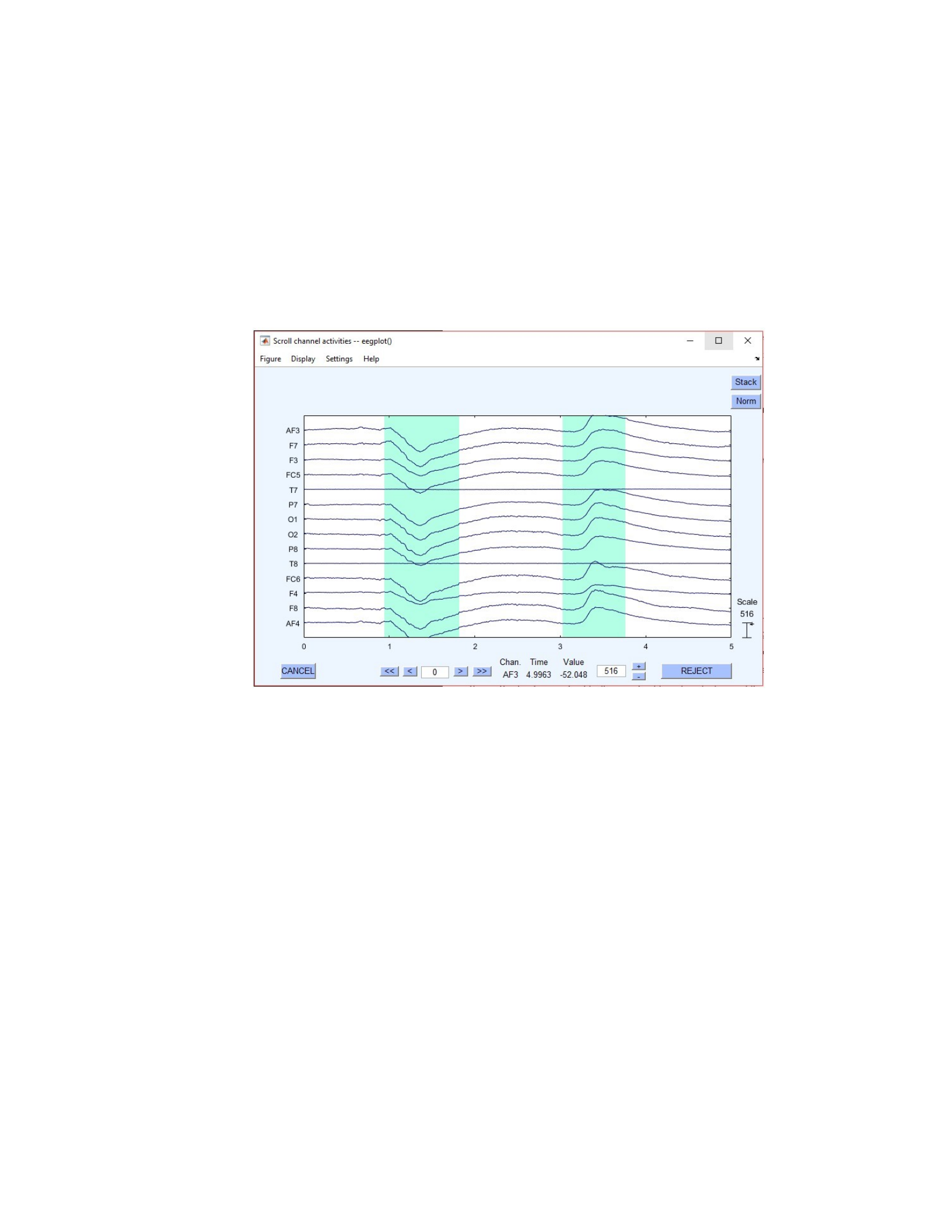
79
highlighted blue lines indicate selected waves as an artifact to be rejected. After the
removal of artifacts, each file was epoched according to criteria described above, where
128 timeframes were extracted before subjects responded to questions (1000
milliseconds). A similar method of epoching based on subjects answering questions was
done by Cannon (2009).
Figure 8. Artifact Removal in EEGLab
4.5.2. Transformation into sLORETA Images.
After preprocessing and epoching the data, all files (stored as tab delimitated text
files) were sent to sLORETA for transformation into sLORETA images. This required the
creation of an electrode coordinate text file, with all channels corresponding to the order
in which data values per channel were recorded (i.e. AF3 recorded data in the first
column of all data files, and was therefore the first electrode specified in the electrode
coordinate file). The sLORETA utility was used to create an .sxyz electrode coordinate
file, which was then used to create the transformation matrix required for performing the
computational analysis of localized brain areas. Using the transformation matrix, all

80
epoched data files were transformed into .slor files which produced sLORETA images,
current source density and localization for each timeframe per file, per subject.
LORETA calculates the volume elements (voxels) of the cortical gray matter
(Pascual-Marqui et al., 2002). LORETA uses realistic electrode coordinates for a
threeconcentric shell spherical head model co-registered on a standardized MRI atlas with
talairach coordinates (Cannon, 2012). Talairach coordinates system is a 3-dimensional
atlas of the human brain, that maps locations of brain structures from individual
differences in the size and shapes of the brain (Talairach, 1998). It consists of three axes,
the x-axis which corresponds to the left and right sides of the brain, y-axis which
corresponds to the posterior and anterior locations of the brain, and z-axis corresponding
to the dorsal (upwards) and ventral (downwards) positions of the brain. Current source
density is mapped to 2,394 voxels of 7mm3 dimensions, with a maximum error of 14mm
(Pascual-Marqui, 1999). The improved version of LORETA, the sLORETA, which was
used for this study, utilizes the MRI atlas from the Montreal Neurological Institute
(MNI), an alternative to the Talairach atlas, which consists of 6,329 voxels of 5mm3
(Cannon, 2012). In comparison to the 1mm resolution of fMRI and PET (Huettel & Song,
2008), sLORETA is proposed as an adequate solution to the inverse problem, whereby
Pascual-Marqui (2002) argued that localization error cannot be improved beyond
sLORETA.
4.5.3. Data Analysis for Experiment 1
Single group zero-mean t-tests were used by Pascual-Marqui et al. (2002) to
compare three methods of source localization in an experiment where seventeen subjects

81
were exposed to neutral facial affect. Hotspots (i.e. areas of brain activity) were captured
and compared between each technique, where all brain areas had an equal probability of
containing a hotspot (Pascual-Marqui et al., 2002). Specifically, there was no favored
brain area, and the experiment was used to determine where statistically significant brain
activity occurred in the seventeen subjects. Similarly, single group zero-mean t-tests
utilizing Statistical non-Parametric Mapping (SnPM) were used for each of the conditions
of experiment 1. Essentially, the group means of brain activity were compared against a
group with brain activity of zero-mean.
EEG data transformed to sLORETA images produce localized brain activity for
every timeframe. SnPM allows for testing the timeframe of interest where statistical
significance is met, and the location of brain activity for this timeframe is determined
(Pascual-Marqui et al., 2002). Specifically, t-tests are produced for every timeframe for
each subject, whereby three numbers corresponding to MNI coordinates (X, Y, and Z
axes) are multiplied by the total number of voxels (i.e. 3x6329), resulting in 18,987
variables (Pascual-Marqui et al., 2002). For each subject, the total number of variables
are multiplied by the timeframes (i.e. given 128 timeframes, 18,987x128), resulting in
2,430,336 t-tests. Pascual-Marqui et al. (2002) argued that the univariate t-distribution
cannot determine statistical significance for testing brain activity, as multiple
comparisons of nearly one million variables (in this case, based on the data produced
from the experiments and the use of sLORETA, nearly 2.5 million variables), do not
correspond to a univariate t-distribution, nor is the t-statistic representative of the
Student’s t-test if current source density does not have a normal Gaussian distribution.
Thus, SnPM solves statistical errors used for testing neural activity by estimating the

82
probability distribution through the randomization procedure, while retaining the highest
possible statistical power (Pascual-Marqui et al., 2002).
For each condition, all subjects per condition were tested using SnPM, where
threshold t-values at significance levels of 0.01, 0.05, and 0.10 for two-tailed and
onetailed tests were produced, as well as t-statistics for each timeframe. This was done by
first analyzing the raw EEG data from epoched files per condition. Threshold t-values and
t-statistics for each timeframe were determined through randomization tests of 5000
(Nichols & Holmes, 2001). Timeframes with a t-statistic meeting or surpassing the
threshold values at p ≤ 0.05 were group-transformed into sLORETA images for the brain
area where localization occurred using the .slor files produced for each subject, for each
condition.
4.5.4. Data Analysis for Experiments 2 & 3.
Data analysis techniques were the same for experiments 2 and 3. Firstly, for
experiment 2, region of interest (ROI) seed files were created using sLORETA utility for
all sixteen conditions, where each ROI seed pertained to the neural correlates of brain
activity for the conditions 1, 2, 3 and 5 of experiment 1 (condition 4 pertained to
uncertainty, which was excluded from experiment 2), as can be seen in Appendix C. The
ROI seed file was then used to extract the log of current source density values for every
timeframe in the .slor epoched files of conditions 1-16 in experiment 2. This resulted in a
text file of the log transformation of CSDs for each ROI specified and one single voxel
(its nearest neighbor), for each subject for each condition in experiment 2. Log
transformation of data is one technique of many data transformation techniques that are

83
used to simplify complex data, as well as provide normality to otherwise non-normal data
(Osbourne, 2002). As violations of normality could hinder certain parametric tests, data
transformations are often used in fields such as social sciences (education, psychology)
and biology, where normality is rare (Micceri, 1999; Osbourne, 2010).
ROI analysis has been used in fMRI research (Poldrack, 2006), and was used by
Dimoka (2010) to determine the effect neural correlates of trust and distrust had in
predicting price premiums. Additionally, Dimoka (2010) then developed a regression
model with independent variables based on ROI values to predict price premiums.
Following such method of analysis, the average log CSD per ROI was extracted for each
subject in each condition of experiment 2, and placed in a regression model denoted by
𝑦 = 𝛽0 + 𝛽1 + 𝛽2 + ⋯ + 𝛽𝑗 + 𝜀 (1)
where:
y is the dependent variable, x is the
dependent variable, β0 is the value of y when
each value of x = 0, βj is the value of y based
on unit change of xj
as independent variables against the dependent variable of privacy concerns. This was
done to test the hypotheses related to the neural correlates of the mental processes of the
extended privacy calculus model (see Chapter 3), and privacy concerns. A second
regression model was developed using the average log CSD per ROI of brain areas for
the neural correlates of risk (independent variables) and trust (dependent variables). A
third regression model was developed where the average log CSD per ROI per subject in

84
each condition, and the response of each subject in each condition for privacy concerns
were regressed against their willingness to disclose their personal information.
The regression models produced unstandardized beta coefficients of each
independent variable (βjxj) which represented the amount of change in the dependent
variable based on one unit change in the independent variable, y (Sekaran & Bougie,
2013). Positive beta coefficients represent an increase in y when xj increases by one unit,
while a negative beta coefficient represents a decrease in y when xj increases by one unit.
Similarly, for each beta coefficient, standardized beta coefficients were produced,
whereby the beta coefficients are standardized to a mean of zero and a standard deviation
of one (Sekaran & Bougie, 2013). The t-statistic and p-values were used to determine the
significance of the relationships between the independent variables and dependent
variables. Together with the sign (positive or negative) of the beta coefficients, as well as
the significance of the relationships between independent and dependent variables, the
hypotheses 6 to 11 (both experiment 2 and 3) were rejected or accepted for main effects.
All analysis was done using SPSS. Interaction effects (hypothesis 12) were tested using
R, where the same statistics were used to test the relationships of the interactions (i.e. beta
coefficients to determine the effect, and t-value and p-value to determine the
significance).
The regression models produced a coefficient of determination called the
Rsquared value denoted by,
R2 = 1 − 𝑆𝑆𝐸 (2)
𝑆𝑆𝑇
where SSE is the error sum of squares (the degree to which the data points vary when
compared to the estimated regression line), and SST is the total sum of squares (the degree

85
to which data points vary when compared to their mean). The coefficient of determination
explains the extent to which the variation in the independent variables vary from the
dependent variables (Sekaran & Bougie, 2013). The adjusted R-square value was also
calculated, denoted by
(1− 𝑅2)(𝑛−1)
𝑅𝑎𝑑𝑗𝑢𝑠𝑡𝑒𝑑 = 1 − (𝑛−𝑝−1) (3)
where, n is total sample size,
p is the number of
predictors
The adjusted R-square adjusts the R-square statistic based on the number of independent
variables in the model.
An Analysis of Variance (ANOVA) test was produced for each regression model to
explain how well the independent variables explain the dependent variables with an
Fstatistic denoted by 𝐹 = 𝐵𝑒𝑡𝑤𝑒𝑒𝑛 −𝑔𝑟𝑜𝑢𝑝 𝑣𝑎𝑟𝑖𝑎𝑏𝑖𝑙𝑖𝑡𝑦 (4)
𝑊𝑖𝑡ℎ𝑖𝑛−𝑔𝑟𝑜𝑢𝑝 𝑣𝑎𝑟𝑖𝑎𝑏𝑖𝑙𝑖𝑡𝑦
where an F-value significant at p ≤ 0.05 indicates the model’s independent variables are a
better predictor of the dependent variables as opposed to the constant-only (i.e. β0) model.
Finally, the tolerance (equation 5) and variance inflation factors (VIF, denoted in equation
6) were used to test for multicollinearity of the independent variables where
𝑇 = 1 − 𝑅𝑖2 (5)
𝑉𝐼𝐹 = 1/(1 − 𝑅𝑖2) (6)
where,
𝑅𝑖2 relates proportion of variance in the ith independent variable that is not
related to other independent variables in the model (O’Brien, 2007). Several “rules-of-

86
thumb” are given concerning the tolerance and VIF values for detecting multicollinearity.
The higher the tolerance value (i.e. the closer to 1) the less likely multicollinearity exists,
while a lower VIF indicates lower multicollinearity. While some researchers use a
tolerance value as high as 0.70 to indicate multicollinearity (Dimoka, 2010), values as
low as 0.10 are accepted, while VIF values as high as 10 and lower are considered
acceptable (O’Brien, 2007).
Experiment 3 followed the same type of analysis as experiment 2. An ROI seed
file was created using the sLORETA utility for brain areas associated personal interest
and uncertainty identified in experiment 1 (conditions 4 and 5). The ROI seed file was
then used to extract log CSD of each subject in each condition of experiment 3 for each
ROI, from the .slor epoched files for experiment 3. The log CSD of each ROI was
produced, whereby the average log CSD per ROI was input into a regression model as
independent variables against the dependent variable of privacy concerns. The second
regression model was developed using the average log CSD per ROI and privacy
concerns as independent variables and subjects’ willingness to disclose their personal
information as the dependent variable. The statistics used for testing the hypotheses and
model fits were the same as described for experiment 2.
4.5.5. Summary of Data Analysis for all Experiments and Hypotheses Testing.
Hypotheses 1 to 5 were developed to determine the neural correlates of privacy
risk, trust, distrust, uncertainty and personal interest, respectively, in experiment 1. Data
analysis was carried out on the epoched text files containing data collected by each
electrode for each subject per condition using paired groups zero-mean SnPM t-tests.

87
Essentially, the timeframes per subject per condition were compared, where threshold
tdistributions were produced to determine which timeframes were statistically significant.
The .slor transformed files were then analyzed as a group, where the statistically
significant timeframe(s) indicated the localized source of brain activity.
Hypotheses 6 to 9 and hypothesis 11 corresponded to experiment 2. These
hypotheses were tested by producing an ROI seed file using sLORETA for all the brain
areas identified in conditions 1-3, and 5 of experiment 1. The ROI seed file was then used
to extract the log transformation of CSD of each ROI per subject per condition, and its
nearest neighbor voxel. The average log CSD per subject per condition per ROI was used
as independent variables in a regression model against the dependent variable of privacy
concerns. A second regression model was developed to test the relationship between the
neural correlates of trust and risk, using the average CSD of the ROI of the neural
correlates for trust and risk identified in experiment 1. The third regression model tested
the relationship of the log CSD of each ROI and privacy concerns as independent
variables, against the dependent variable of personal information disclosure.
Hypotheses 10 and 11 corresponded to experiment 3, where an ROI seed file was
produced for the brain areas identified in conditions 4 and 5 for experiment 1 were
produced. Similar to experiment 2, the ROI seed file was used to extract the log
transformation of CSD for each ROI for each subject in each condition. The average log
CSD was used as independent variables for a regression model against privacy concerns,
and a second regression model where privacy concerns were also an independent variable
was used against the dependent variable of personal information disclosure.

88
4.6. Summary
Three within-subjects lab experiments using an EEG were conducted to collect
data and test the hypotheses of this study. However, subjects performed all three
experiments as if they were one. Experiment 1 consisted of five conditions, used for
capturing the neural correlates of privacy risk, trust, distrust, uncertainty and personal
interest. Experiment 2 was a 2x2x2x2 factorial experiment, whereby personal interest,
privacy risk, trust and distrust were all varied on two levels. Experiment 3 was a 2x1
factorial experiment where personal interest varied on two levels, but uncertainty
remained at only one level. Review profiles were used for simulated organizations and/or
websites as manipulations for the various conditions in the experiments. However,
personal interest was manipulated by asking subjects to choose a product category or
service they were interest in, using ICTs.
Neural correlates were derived using sLORETA, a mathematical formulation for
identifying the localization of brain activity. SnPM t-tests of zero-means were used to
analyze the neural correlates in experiment 1. Regression models were developed for
experiments 2 and 3, where log-transformed CSDs of ROIs of brain areas identified in
experiment 1 were used as independent variables, while privacy concerns were used as a
dependent variable for the first model, and an independent variable in the second model,
for each experiment.
Chapter 5
Results

89
5.1. Introduction
This chapter presents the results of the experiments used to test the research
model and hypotheses. Section 5.2 describes the outcome of the pilot study, while section
5.3 contains the results of experiment 1. Sections 5.4 and 5.5 present the results for
experiment 2 and 3 respectively. Section 5.6 contains the summary, included in which,
highlights the hypotheses that were rejected and supported.
5.2. Pilot Study
Five subjects were used for the pilot study, whereby three were males and two
were females. The primary objective of the pilot study was not used for acquiring neural
correlates, as the sample size was too low for any significant results, nor for examining
relationships between variables used for the regression models in experiment 2 and 3.
The pilot study was first used to identify limitations in the experiments themselves (i.e.
flaws in presenting the stimuli to subjects, and marking the key timeframes to which
events took place). The pilot allowed for making adjustments to the questions which at
first may have been difficult for subjects to interpret. Data acquired from the pilot study
was preprocessed, epoched and transformed into sLORETA images. SnPM was used on
the pilot data for each of the experiments, but there were no significant timeframes.
However, the pilot study did provide some insights for the analysis of the actual
experiments. Firstly, instead of log-transformed CSD for each ROI, the pilot study
initially used the actual CSD values. However, this led to a lot of outliers, skewed
datasets, and non-normal distributions. Moreover, when actual CSD values were not
computed well in the regression models, which led to almost all variables being removed.

90
Utilizing the log-transformation of the pilot data corrected many of these errors and led to
better model fits indicating that log-transformations should be used for the actual
experiments. Analysis of the pilot data also led to extracting the CSD for a single voxel
and its nearest neighbor for ROIs, rather than selecting all the voxels associated with one
ROI. Essentially, the CSD of all voxels for a specific ROI produces results that are often
inaccurate with very high multicollinearity.
5.3. Experiment 1: Neural Correlates
Zero-mean t-tests were used to acquire significant neural correlates for the mental
processes that predict privacy concerns and personal information disclosure in the
extended privacy calculus model. SnPM was used with a randomization of 5000 to
establish threshold t-distributions for each condition, where timeframe(s) that surpassed
the threshold t-value at p ≤ 0.05 were significant. Group analysis of significant
timeframes then revealed the location of neural correlates associated with mental
processes for privacy risk, trust, distrust, uncertainty and personal interest.
5.3.1. Neural Correlates for Privacy Risk
For privacy risk (condition 1), threshold values were calculated by sLORETA
SnPM, where significant t-values for one-tailed t-tests were 4.014 and -3.994, and 4.3 for
two-tailed tests at a p-value of 0.05. There was significant activation in the right BA 32
(MNI coordinates: 10, 35, 20), which is part of the right anterior cingulate cortex in the
limbic lobe (t-value: -5.67, p < 0.01). Additionally, there was significant activity in the
left BA 9, the medial frontal gyrus, which is part of the frontal lobe (MNI coordinates: 5,
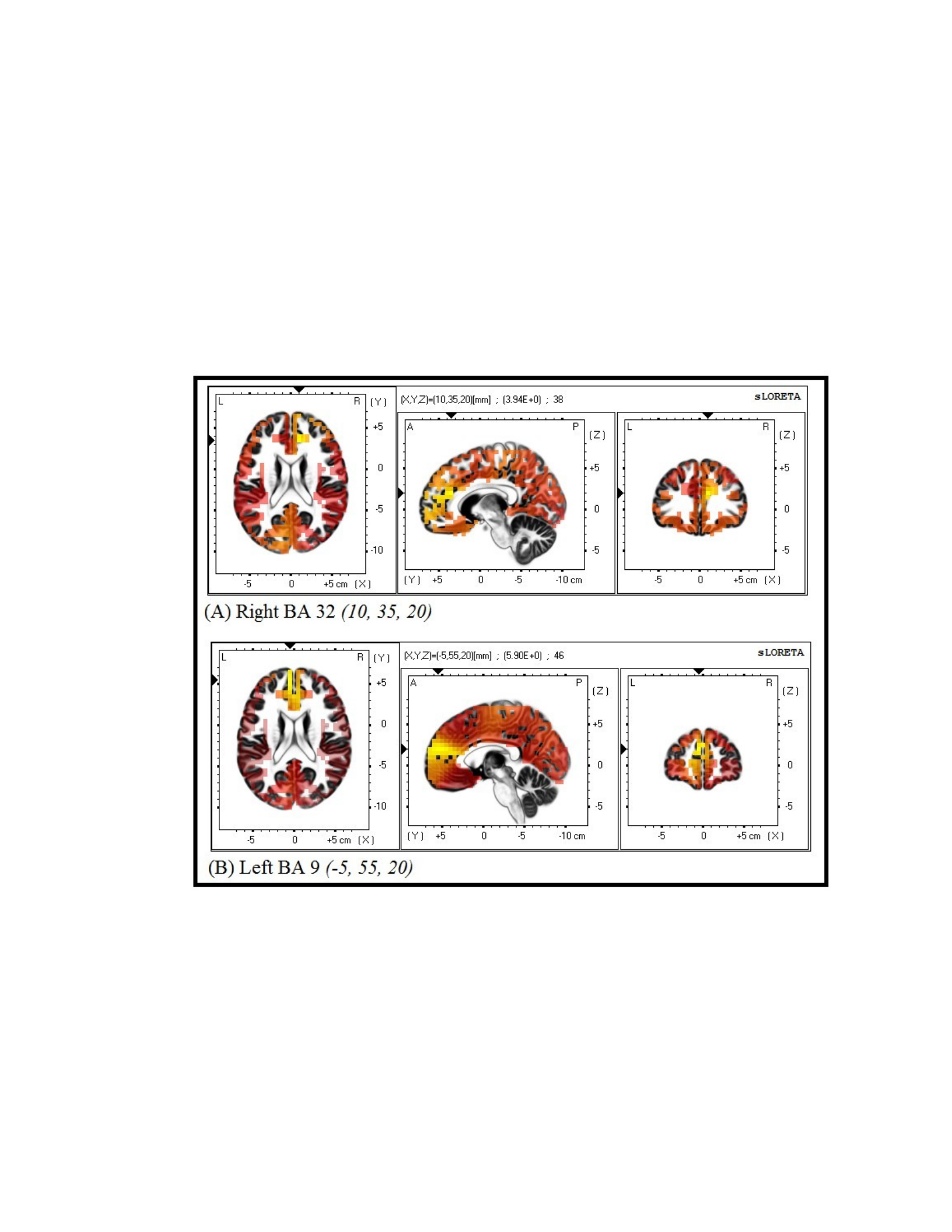
91
55, 20; t-value: -4.30, p < 0.05). While brain activity in the insular cortex (BA 13) was
produced, the t-values were below the threshold levels and thus insignificant. Figure 9
depicts the significant brain activity for risk perceptions in privacy-related situations.
Significant brain activity is shown in bright yellow, at 0 mm, where LORETA values
were at their highest (LORETA values are in the square brackets after the [X, Y, Z] MNI
coordinates at the top of each image).
Figure 9. Neural Correlates of Risk Perceptions. Significant activity in yellow; A (BA 32)
and B (BA 9) at 0mm. Brain slices from left to right depicting horizontal, sagittal and
coronal planes.
To check for activation in the nucleus accumbens, the methodology developed by
Lacadie, Fulbright, Constable, and Papadematris (2008) was used to determine the MNI
coordinates for brain areas. This methodology was proposed by Lacadie et al (2008) as a

92
better and more accurate means of determining functional neuroanatomical regions since
it compensates for the actual differences between MNI templates and the Talairach atlas.
The MNI coordinates for the right nucleus accumbens are (10, 10, -12), while the left
nucleus accumbens has the coordinates (-11, 9, -11). However, there were no significant
activations at these MNI coordinates. The results rejects hypotheses 1a and 1b, but
supports hypothesis 1c.
5.3.2. Neural Correlates of Trust
Threshold values for condition 2, trust perceptions, for a zero-mean t-test were
calculated where t-values at 4.082 and -4.121 were significant at p-value 0.05 for
onetailed tests, and 4.367 for a two-tailed test. There was significant activation of brain
activity in the right BA 47, which is part of the inferior frontal gyrus in the frontal lobe
(MNI coordinates: 15, 20, -15; t-value: 6.13, p < 0.01 at a two-tailed level). While MNI
coordinates (15, 20, -15) are considered to be BA 47 based on sLORETA, the
methodology by Lacadie et al. (2008) designates these coordinates as BA 11. Both BA 47
and BA 11 are considered as part of the orbitofrontal pre-frontal cortex along with BA 10
(Kringelbach, 2005). Dimoka (2010) found that the caudate nucleus and putamen were
activated in trusting situations. To test if these areas had any significant activations, the
MNI coordinates of the caudate nucleus (right: 13, 13, 11, left: -11, 13, 10), and putamen
(right: 25, 3 -1, left: -26, 0, 2), were derived based on the methodology of Lacadie et al.
(2008). However, there were no activity at any of these MNI coordinates. Figure 10
depicts the brain activity related to trust perceptions in privacy-related situations. Based
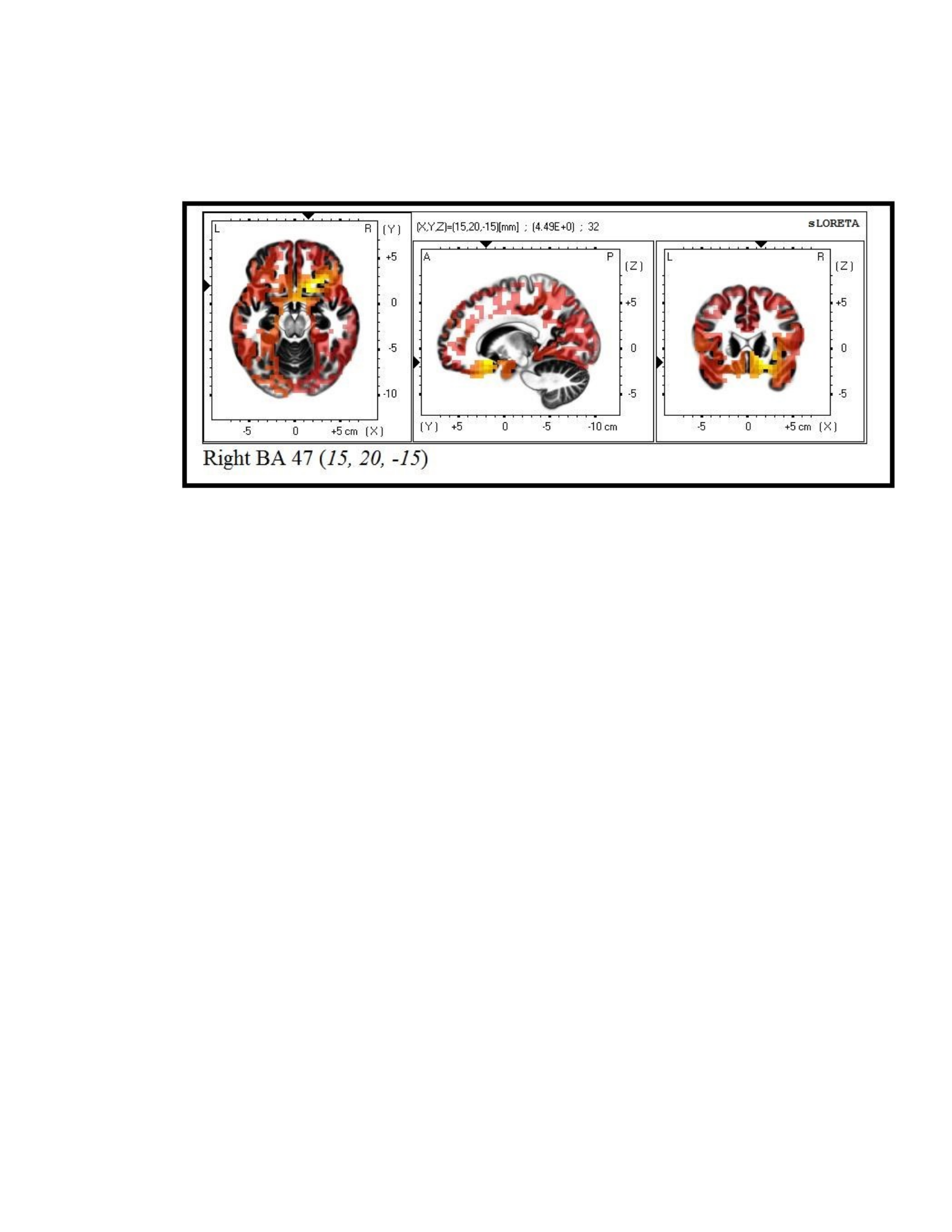
93
on these results, neither hypothesis 2a nor 2b are supported. However, the test did reveal
right BA 47 as the source of localization for trust perceptions.
Figure 10. Neural Correlates of Trust Perceptions. Significant activity in yellow; BA 47
at 0mm. Brain slices from left to right depicting horizontal, sagittal and coronal planes.
5.3.3. Neural Correlates of Distrust
Threshold values for condition 3 (distrust) were calculated by sLORETA SnPM,
where t-values of 4.290 and -4.254 were significant at p-value 0.05 for one-tailed tests,
and 4.548 was significant at p-value 0.05 for a two-tailed test. Significant activity was
found in the right BA 31 (MNI coordinates: 15, -25, 45; t-value: -4.41, p < 0.05), which is
a part of the posterior cingulate gyrus, in the limbic lobe. There was also brain activity in
the right BA 13 (MNI coordinates: 35, -5, 20; t-value: -4.29, p < 0.05), which constitutes
part of the right insula cortex. Neural correlates for distrust are depicted in
Figure 11. The methodology developed by Lacadie et al. (2008) gives the amygdala the
MNI coordinates (right: 21, -1, -22 and left: -24, 0, -21). However, there was no activity
at either right or left MNI coordinates of the amygdala at significant timeframes.
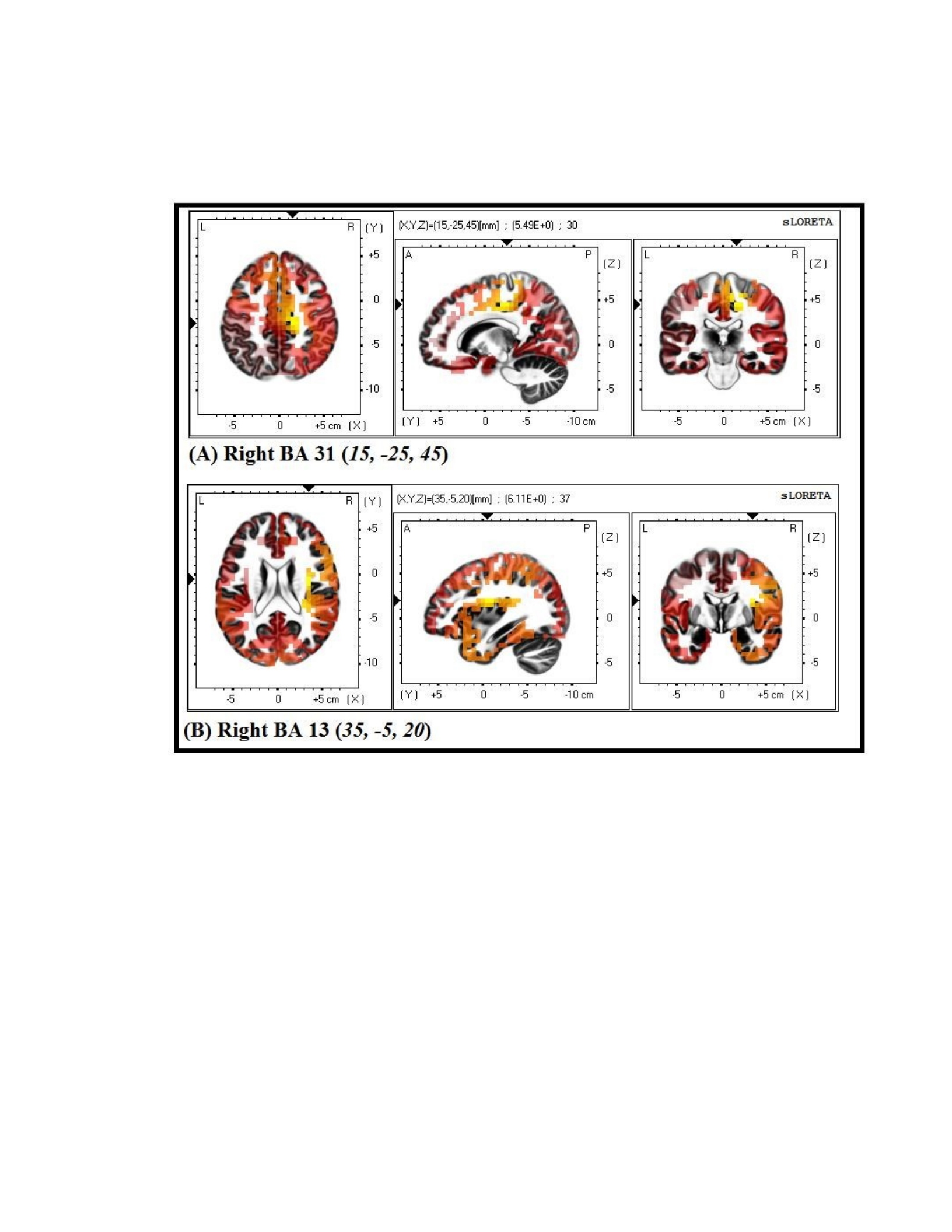
94
Hypothesis 3a was not supported, but the source localization for distrust occurred in the
right BA 31, and right BA 13, the insula cortex, indicating hypothesis 3b was supported.
Figure 11. Neural Correlates of Distrust Perceptions. Significant activity in yellow; A (BA
31) and B (BA 13) at 0mm . Brain slices from left to right depicting horizontal, sagittal
and coronal planes.
5.3.4. Neural Correlates of Uncertainty
Neural correlates were assessed in condition 4, where threshold values were
calculated using sLORETA SnPM. T-values at 4.307 or -4.317 were significant at pvalue
0.05 for one-tailed tests, while a two-tailed test required a t-value of 4.636 for a pvalue of
0.05. There was significant brain activity in the right BA 40 (MNI coordinates:
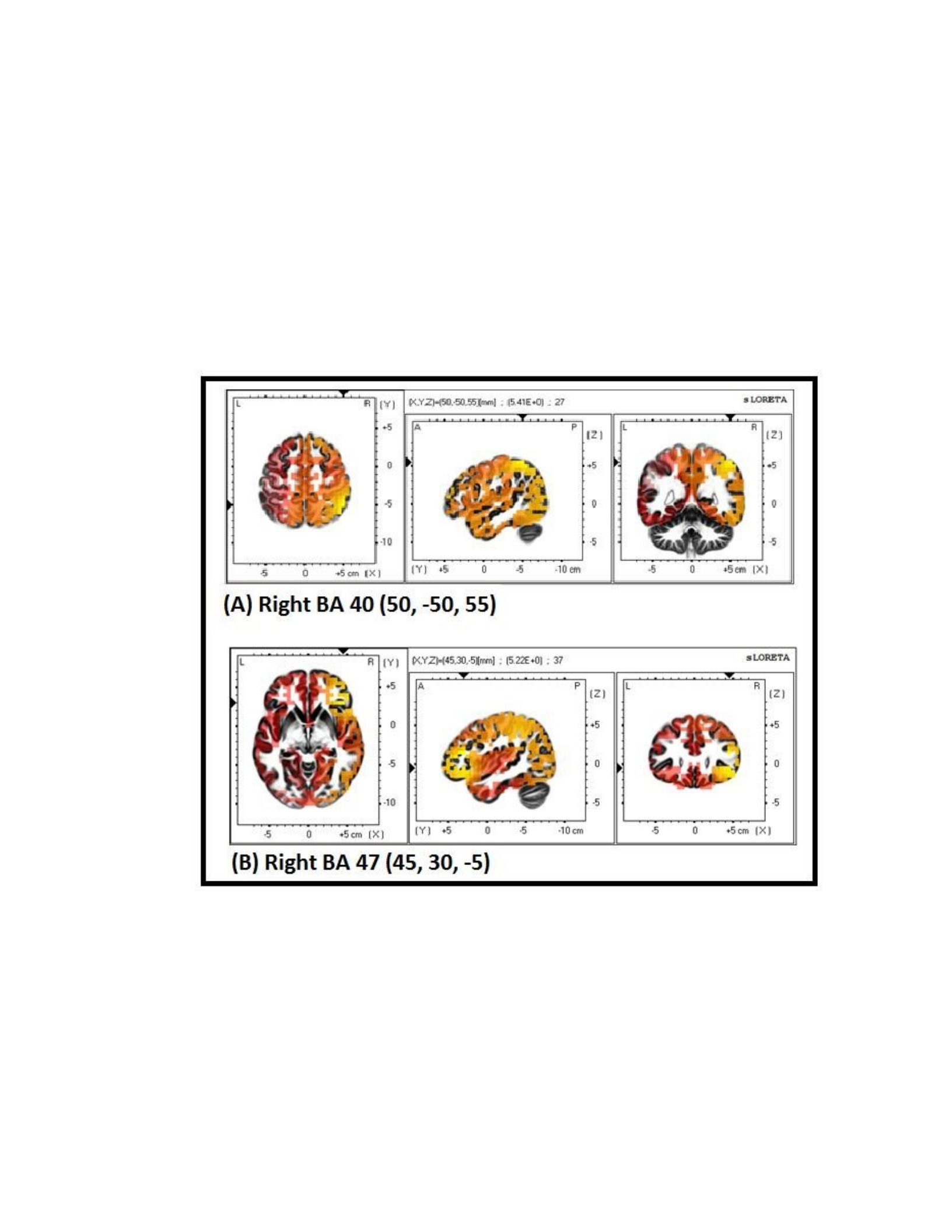
95
50, -50, 55; t-value: -4.441, p < 0.05). BA 40 is a part of the inferior parietal lobule in the
parietal lobe. There was also significant activation in the right BA 47 the inferior frontal
gyrus in the frontal lobe (MNI coordinates: 45, 30, -5, t-value: -4.663, p < 0.05). BA 47 is
a part of the orbitofrontal prefrontal cortex, along with BA 10 and BA 11 (Kringelbach,
2005). Thus, hypotheses 4a and 4b were supported. Figure 12 illustrates the localization
of neural correlates for uncertainty perceptions.
Figure 12. Neural Correlates of Uncertainty Perceptions. Significant activity in yellow; A
40 and BA 47 at 0mm. Brain slices from left to right depicting horizontal, sagittal and
coronal planes.
5.3.5. Neural Correlates for Personal Interest
Threshold t-values were calculated for zero-mean t-tests for condition 5 (personal
interest). For one-tailed tests, t-values at 4.077 and -4.099 were significant at p-value
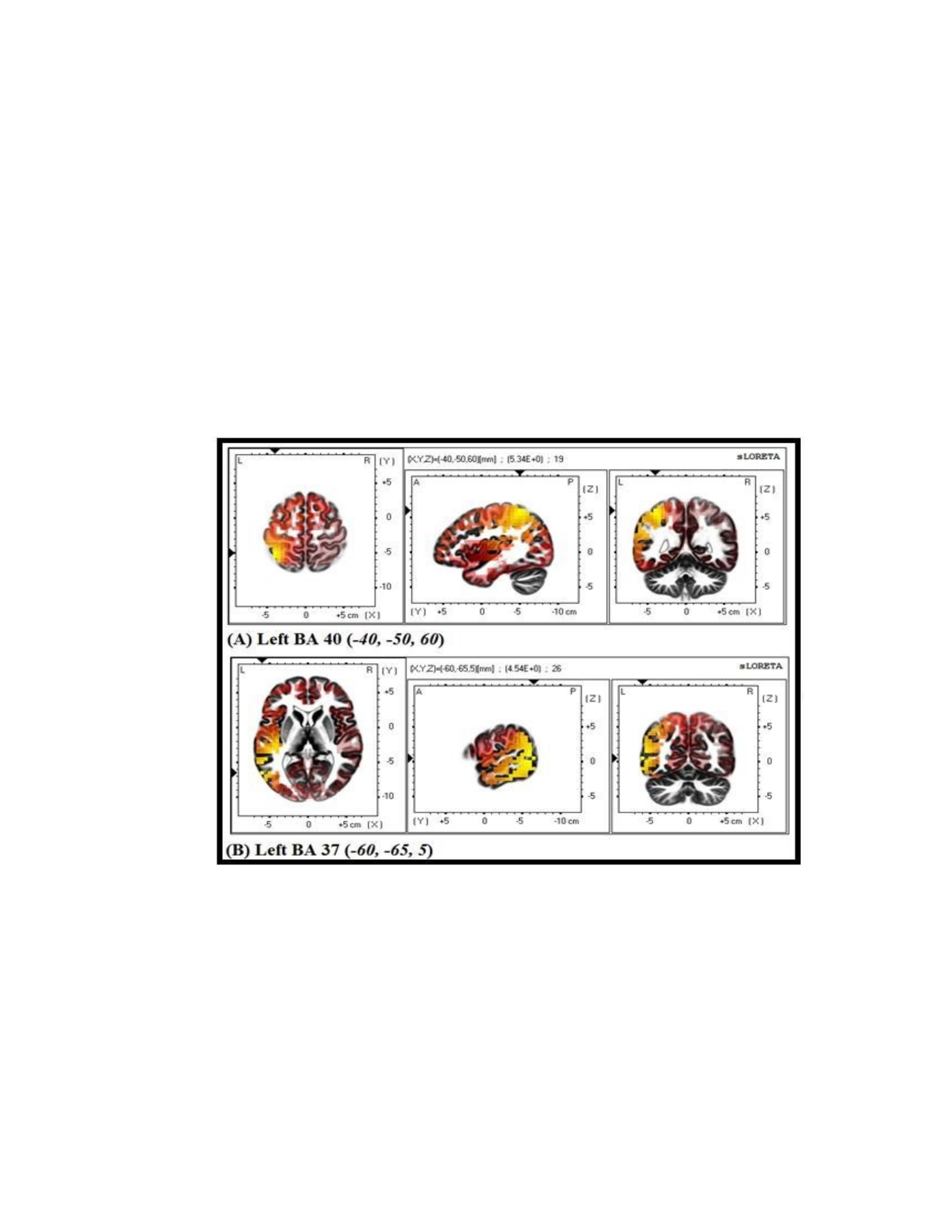
96
0.05, while a t-value of 4.393 is significant at p-value 0.05 for two tailed tests. There was
significant activation in left BA 40, inferior parietal lobule (MNI coordinates: -40, -50,
60; t-value: -4.20; p < 0.05), and left BA 37, middle temporal gyrus in the temporal lobe
(MNI coordinates: -60, -65, 5; t-value: -4.34, p < 0.05). Thus, hypothesis 5a was not
supported; however, hypothesis 5b was supported and localization for personal interest
was inferred to be correlated with neuronal activity at left BA’s 40 and 37. Figure 13
depicts the brain activity for subjects choosing an e-service or product they are personally
interested in obtaining online.
Figure 13. Neural Correlates for Personal Interest. Significant activity in yellow; A (BA
40), and B (BA 37) at 0mm. Brain slices from left to right depicting horizontal, sagittal
and coronal planes.
5.4. Experiment 2: 2x2x2x2 Factorial Experiment
Using sLORETA, a seed file with the ROIs of BAs based on experiment 1 for

97
neural correlates of personal interest, risk, trust and distrust was created. This seed file
was used to extract the log-transformed CSD values for each ROI voxel and its nearest
neighbor, for each subject for each of the sixteen conditions. The average log CSD per
ROI was then plugged into a regression model to determine the effect of each neural
correlate in influencing privacy concerns and in a second model to determine the
influence of each neural correlate in influencing personal information disclosure. Table 4
shows the descriptive statistics for the variables of the sixteen conditions.
Table 4. Descriptive Statistics for Experiment 2
Variables Mean Standard
Deviation
Right BA32 5.21 1.19
Left BA 9 5.68 1.17
Right BA 47 5.98 1.10
Right BA 31 4.45 1.21
Right BA 13 5.49 1.17
Left BA 40 4.99 1.17
Left BA 37 5.32 1.04
Privacy Concerns 5.48 1.58
Personal Information Disclosure 3.03 1.92
5.4.1. Regression Model for Privacy Concerns
Using SPSS and R, a regression model was developed to determine the change in
the dependent variable of privacy concerns due to the influence of the independent
variables of Right BA32, Left BA9, Right BA47, Right BA31, Right BA13, Left BA40,
and Left BA37. The model had an R-square value of 0.055 (R2 = 0.055), while the

98
adjusted R-square value was 0.036. This indicated that the variance predicted by the
independent variables was poor. However, the model had an F-value of 2.852 at p =
0.007, indicating its significance in predicting the dependent variable, privacy concerns,
with the independent variable. Table 5 presents regression coefficients for the dependent
variable privacy concerns.
Table 5. Regression Model for Dependent Variable: Privacy Concerns
Independ- Beta Standardiz- Significan- Signific- Toleran- VIF ent
Coeffici- ed Beta ce (t-value) ance (p- ce Variables ent Coefficient value)
The results of Table 5 indicated that only right BA 13 is significantly related to
privacy concerns. All other variables are above the threshold 0.05 p-value. However, BA
13 has a standardized beta coefficient of -0.294, indicating a negative relationship with
privacy concerns. Essentially, higher neural activity in BA 13 is related to lower privacy
concerns. This result is opposite to hypothesis 8a. Thus, while the relationship is
significant, the hypothesized direction of the relationship is not supported. Similarly,
hypothesis 6a was not supported since the relationships are not significant. There were
also no significant relationships when checking the interaction effects of the independent
variables on the privacy concern. Thus, hypothesis 12a was rejected.
-0.016 -0.232 0.816 0.561 1.78
Right BA32 0.421 0.317 1.654 0.099 0.075 13.4
Left BA9 -0.075 -0.055 -0.405 0.686 0.147 6.78
Right BA47 0.355 0.247 1.853 0.065 0.154 6.48
Right BA31 0.029 0.022 0.143 0.887 0.113 8.85
Right BA13 -0.396 -0.294 -2.199 0.029* 0.153 6.52
Left BA40 -0.116 -0.086 -0.752 0.452 0.210 4.77
Left BA37 -0.025
* p ≤ 0.05, ** p ≤ 0.01, *** p ≤ 0.001

99
5.4.2. Regression model to Determine the Relationship between Risk and Trust
The neural correlates of risk (right BA 32 and left BA 9) were regressed against
the dependent variable of trust (right BA 47). The regression model contained an
Rsquared value of 0.799 and an adjusted R-squared value of 0.798, indicating a high
power in explaining the variance of the dependent variable with the variance of the
independent variables. The model produced an F-value of 693.95 at p < 0.001. This
indicated the independent variables were better predictors of the dependent variable than
the constantonly model. As seen in Table 6, right BA 32 was significant at p < 0.01, but
had a standardized beta coefficient of -1.039. While standardized beta coefficients are
assumed to be less than 1, there are instances where they can exceed 1, such as in the case
where two or more predictors are highly correlated (Deegan, Jr., 1978). However, left
BA9 has a standardized β of -0.163, and is significant at the p < 0.01 level. Thus,
hypothesis 7a was supported. Tolerance values were also above 0.10 and VIF values
below 10, indicating that multicollinearity may not have been a problem in this model.
Table 6. Regression Model for Dependent Variable of Trust (right BA47)
Independ- Beta Standardiz- Significan- Signific- Toleran- VIF ent Variable Coeffici- ed Beta
ce (t-value) ance (p- ce
ent Coefficient value)
Right BA 32 0.960 -1.039 -18.042 0.000*** 0.174 5.76
Left BA 9 -0.153 -0.163 -2.822 0.005** 0.174 5.76

100
5.4.2. Regression Model for Personal Information Disclosure
The dependent variable, personal information disclosure was regressed against the
independent variables, Right BA 32, Left BA 9, Right BA 47, Right BA 31, Right BA 13,
Left BA 40, Left BA 37, and privacy concerns. The regression model had an R-square
value of 0.483 (R2 = 0.483), with an adjusted R-square value of 0.471. The R-square and
adjusted R-square values indicated the variance predicted by the independent variables in
the model was fair enough. Specifically, R-square values when predicting human
behavior are not always extremely high. The adjusted R-square value for this regression
model of 0.471 is close to the adjusted R-square value of Dimoka’s (2010) regression
model of 0.49. The regression model had an F-value of 40.05 (p < 0.001), indicating that
the independent variables significantly predicted the dependent variables. Table 7
displays the regression coefficients of the independent variables on personal information
disclosure.
Table 7. Regression Model for Dependent Variable of Personal Information Disclosure
Independent
Variable
Beta
Coefficient
Standardized
Beta
Coefficient
Significance
(t-value)
Significance
(pvalue)
Tolerance VIF
Right BA 32 -0.464 -0.228 -2.016 0.045* 0.074 13.5
Left BA 9 0.404 0.246 2.434 0.015* 0.147 6.79
Right BA 47 0.501 0.287 2.890 0.004** 0.153 6.55
Right BA 31 0.084 0.053 0.489 0.646 0.113 8.85
Right BA 13 -0.413 -0.253 -2.532 0.012* 0.151 6.61
Left BA 40 -0.169 -0.103 -1.120 0.227 0.209 4.78
Left BA 37 0.201 0.109 2.097 0.037* 0.561 1.78
Privacy
Concerns
-0.830 -0.683 -17.104 0.000*** 0.945 1.06
* p ≤ 0.05, ** p ≤ 0.01, *** p ≤ 0.001

101
Apart from the right BA 31 and left BA 40, all Brodmann Areas were significantly
related to personal information disclosure. As indicated in the results from experiment 1,
privacy concerns are related to brain activity in both the right BA32 and left BA 9. Right
BA 32 has a significant and negative relationship with personal information disclosure
(standardized β = -0.228, p < 0.05), indicating that an increase in brain activity in the
right BA 32 is related to a decrease in an individuals’ decision to disclose his/her personal
information. The results of BA 32, when regressed on personal information disclosure
partially supports hypothesis 6b. However, left BA 9 has a positive relationship with
personal information disclosure (standardized β = 0.246, p <
0.05), whereby an increase in an individual’s decision to disclose personal information is
related to an increase in brain activity in the left BA 9. Similarly, right BA 47, the
associated neural correlate for trust, also has a significant and positive relationship with
personal information disclosure (standardized β = 0.287, p < 0.01), supporting hypothesis
7b.
Right BA 31, one of the neural correlates for distrust, had a positive relationship
with personal information disclosure; however, the relationship was not significant. The
other neural correlate for distrust, the insula cortex, BA 13, had a negative relationship
with personal information disclosure, with a standardized β = -0.253 (p < 0.05).
Essentially, an increase in brain activity in BA 13 is related to a decrease in personal
information disclosure. Hypothesis 8b is thus partially supported based on the result of
BA 13 on personal information disclosure. Left BA 40 and 37 are associated with a high
level of an individual’s personal interest, and both had positive beta coefficients,
indicating an increase in BA 40 or BA 37 would increase an individual’s decision to

BA9L:BA47R:BA13R -5.49 -2.046 0.0432*
(t-values) (p-values)
BA47R:BA31R:BA40L:Priv acy Concern -5.62 -2.07 0.0409*
1.36 2.211 0.0292*
1.64 2.102 0.038*
-1.33 -2.044 0.0435*
1.68 2.045 0.0434*
-9.28 -2.241 0.0271*
-1.47 -2.139 0.0347*
-7.00 -2.118 0.0366*
-2.20 -2.153 0.0336*
-2.20 -2.153 0.0336*
BA32R:BA9L:BA13R:BA40L:BA37L:Priv acy Concern -2.36 -1.992 0.049*
* p ≤ 0.05, ** p ≤ 0.01, *** p ≤ 0.001
102
disclose personal information. However, only BA 37 was significant, with a standardized
β = 0.109. Hypothesis 9 was thus partially supported. Privacy concerns, were negatively
and significantly related to personal information disclosure, with a standardized β = 0.683
(p < 0.001), indicating an increase in privacy concerns will cause a decrease in personal
information disclosure, supporting hypothesis 11. Tolerance and VIF values were
collected for each variable, whereby each variable, apart from BA 32 were above the 0.10
threshold for tolerance, and below the 10 threshold for VIF indicating multicollinearity
may not be present.
Table 8 displays the interaction effects of independent variables on the dependent
variable of personal information disclosure that were significant at p ≤ 0.05. The results
from Table 8 supports hypothesis 12b, in that interaction effects would occur. In total,
there are twelve interaction effects, with beta coefficients used to explain how much
change occurs in the dependent variable based due to interactions between the
independent variables.
Table 8. Significant Interaction Effects
Interacting Variables Beta Coefficients Significance Significance
BA32R:BA9L:BA37L:Privacy Concern
BA31R:BA13R:BA37L:Privacy Concern
BA9L:BA47R:BA31R:BA13R:BA40L
BA32R:BA9L:BA47R:BA40L:BA37L
BA32R:BA9L:BA13R:BA40L:BA37L
BA32R:BA9L:BA31R:BA40L:Privacy Concern
BA47R:BA31R:BA13R:BA37L:Privacy Concern
BA32R:BA9L:BA31R:BA13R:BA40L:BA37L
BA9L:BA47R:BA31R:BA13R:BA40L:Privacy Concern

103
5.5. Experiment 3: 2x1 Factorial Experiment
The current source densities for the ROIs for uncertainty and personal interest
were extracted using sLORETA for the 2x1 factorial experiment, where uncertainty had
one level, and personal interest had two levels (high and low). The average (log) CSD
per ROI were then placed in regression models against privacy concerns, and personal
information disclosure. The regression model for privacy concerns had an R-square of
0.072 and an adjusted R-square of 0.024. These values were low in predicting the
dependent variable of privacy concerns. However, the model had an insignificant F- value
of 0.753 (p = 0.562). The relationship between uncertainty (right BA’s 40 & 47) and
privacy concerns was not significant, neither were the relationships between personal
interest (left BA 40 and BA 37) and privacy concerns. Thus, hypothesis 10a was rejected.
For the regression model against personal information disclosure, an R-squared of
0.438 and an adjusted R-squared of 0.364 was achieved suggesting a fair degree of
predicting the dependent variable (personal information disclosure). The model also had
an F-value of 5.930 (p < 0.001). However, similar to the privacy concerns model, neither
the brain areas associated with uncertainty (right BA 40 and right BA 47) nor those of
personal interest (left BA 37 and 40) were significant. Hypothesis 10b was thus rejected.
However, privacy concerns were significantly and negatively related to personal
information disclosure (standardized β = -0.618, p < 0.001), supporting hypothesis 11, as
in experiment 2. Additionally, there were no significant interaction effects between the

104
neural correlates of uncertainty and personal interest on either privacy concerns or
personal information disclosure. Table 9 summarizes the results for the privacy concerns
regression model, while Table 10 summarizes the results for the personal information
disclosure regression model.
Table 9. Experiment 3: Regression for Privacy Concerns
Variables Beta
Coefficient
Standardized
Beta
Coefficient
Significance
(tvalues)
Significanc-e
(p-values)
Tolerance VIF
BA 40R -0.150 -0.142 -0.382 0.705 0.171 5.84
BA 47R 0.149 0.121 0.397 0.693 0.257 3.89
BA 40L 1.680 1.379 1.547 0.130 0.030 33.3
BA 37L -1.699 -1.351 -1.562 0.126 0.257 31.4
Table 10. Experiment 3: Regression for Personal Information Disclosure
Variables Beta
Coefficient
Standardized
Beta
Coefficient
Significance
(t-values)
Significance
(pvalues)
Toleranc-e VIF
BA 47R 0.411 0.229 0.952 0.347 0.256 3.91
BA 40R 0.274 0.179 1.608 0.547 0.171 5.86
BA 40L -0.215 0.121 0.167 0.868 0.028 35.4
BA 37L -0.119 -0.065 -0.092 0.927 0.030 33.4
Privacy
Concerns
-0.901 -0.618 -4.853 0.000 0.928 1.08
5.6. Summary
Paired groups zero-means t-tests using SnPM were conducted for experiment 1 to
identify the neural correlates of the mental processes of privacy risk, trust, distrust,
uncertainty and personal interest. The results of experiment 1 revealed that risk
perceptions are associated with brain activity in right BA 32 and left BA 9, while trust
perceptions are associated with right BA 47. Distrust perceptions are associated with
brain activity in the right BA’s 31 and 13, while uncertainty and personal interest

105
perceptions are associated with right BA’s 40 and 47, and left BA’s 40 and 37,
respectively. Experiment 1 supported hypotheses 1c, 3b, 4a and 4b.
For experiment 2, the average log CSD of ROI for each brain area identified in
experiment 1 for each subject of the sixteen conditions were plugged into a regression
model with the dependent variable of privacy concerns. The results indicated the model
was a bad fit, and the only neural correlate that predicted privacy concerns was BA 13.
However, this result is opposite to what was predicted in hypothesis 8a. Hypothesis 7a
was assessed by developing a regression model for the dependent variable of the neural
correlate trust (left BA 47) against the independent variables of the neural correlates for
risk (right BA 32 and left BA 9). Hypothesis 7a was partially supported. The results of the
regression model when plotted against a dependent variable of personal information
disclosure found right BA’s 32, 47, and 13, and left BA’s 9 and 37 predicted personal
information disclosure, as well as privacy concerns. Hypotheses 6b, 8b, and 9 were
partially supported, while hypotheses 7b and 11 were fully supported. Also, there was a
total of twelve significant interactions between the independent variables on the
dependent variable of personal information disclosure. Therefore, while hypothesis 12a
was rejected, 12b was supported. For experiment 3, for both the regression models
against privacy concerns and personal information disclosure, there were no significant
main or interaction effects, thus hypothesis 10a and 10b were rejected.
Chapter 6
Discussion

106
6.1. Introduction
This chapter discusses the results of the study, the contributions, as well as
limitations and future research. Section 6.2 discusses the findings with regards to
literature, while section 6.3 discusses the contributions of the study. Section 6.4 discusses
the managerial implications derived from the results of this study, while section 6.5
discusses limitations and section 6.6 suggests future studies. Section 6.7 then concludes
the dissertation, with summary of the overall study.
6.2. Findings
This study investigated the privacy paradox to better understand individuals’
decision to withhold or disclose their personal information. The privacy paradox is
explained as the concerns individuals express over the privacy of their personal
information, yet act contrarily by continually disclosing their personal information (Smith
et al., 2011). Extant literature has found that while privacy concerns often have a
significant and negative relationship to the use of various ICTs (Anderson & Agarwal,
2009; Awad & Krishnan, 2006; Dinev & Hart, 2006; Xu et al., 2010), numerous other
factors such as trust, personality, and culture plays an important role in shaping
individuals decisions to disclose or withhold their personal information (Bansal et al.,
2010; Belanger et al., 2002; Dinev et al., 2006). However, many studies have often
assumed that privacy-related decisions, and therefore, the privacy paradox, could be
explained by investigating individuals’ rational decision-making processes (Dinev et al.,
2006; Malhotra et al., 2004; Norberg et al., 2007; Pavlou et al., 2007; Van Slyke et al.,

107
2006). Yet, individual’ decisions are not completely rational, nor are they fully aware of
all the parameters to make a completely justifiable decision in the context of information
privacy (Acquisti & Grossklags, 2005).
Individuals’ privacy-related decisions may in fact be clouded by emotions, that
may not be reflective of a true calculus based on rewards and losses. Studies done by
Acquisti (2004); Anderson and Agarwal (2011); and Li et al. (2011) establishes that
individuals’ decisions are limited by their cognitive capabilities and can be often affected
by emotions. Moreover, as all decisions are based on cognitive processing of the human
brain, findings in the field of cognitive neuroscience reveals that many decision-making
processes are distinct from one another, and may involve a heavy mixture of rationality
and emotion (Dimoka et al., 2007; 2011). Thus, to better understand the privacy paradox,
this study argued that privacy-related decisions are based on an individual’s cognitive
disposition, which includes both rationality and emotions.
This study used the extended privacy calculus model (Dinev & Hart, 2006) as the
theoretical basis, and applied the findings of cognitive neuroscience to it, to address its
limitations in assuming individuals are rational decision-makers. Three within-subjects
experiments were conducted to test the hypotheses and research model developed to
achieve the objective of this study. There was a total of twenty-two subjects that
participated in the experiments, but each subject participated in all three experiments as if
they were one experiment. Table 11 summarizes the hypotheses for experiment 1 that
were rejected and supported for this study.
Table 11. Results of Hypotheses Testing for Experiment 1
Hypothesis Support

108
1a Privacy Risk is associated with brain activity in the
nucleus accumbens
Not Supported
1b Privacy Risk is associated with brain activity in the
insula cortex
Not Supported
1c Privacy risk is associated with brain activity in
anterior cingulate cortex
Supported
2a Trust is associated with brain activity in the caudate
nucleus
Not Supported
2b Trust is associated with brain activity in the putamen Not Supported
3a Distrust is associated with brain activity in the
amygdala
Not Supported
3b Distrust is associated with brain activity in the insula
cortex
Supported
4a Uncertainty is associated with brain activity in the
orbitofrontal prefrontal cortex
Supported
4b Uncertainty is associated with brain activity in the
inferior parietal cortex
Supported
5a Personal Interest is associated with high brain activity
in the ventromedial prefrontal cortex, but low activity
in the dorsolateral prefrontal cortex
Not Supported
5b Personal Interest is associated with brain activity in
the inferior parietal lobule
Supported
While several hypotheses were not supported in experiment 1, this was expected
as many of these hypotheses were derived from fMRI and PET literature. EEG captures
electric potentials in the human brain, while fMRI and PET measure blood oxygen level
dependent (BOLD) signals in the brain. Furthermore, EEG provides greater temporal
resolution at the cost of spatial resolution, and vice versa for fMRI and PET (Riedl et al.,
2009). However, despite the lack of support for many of the hypotheses, findings for key
brain areas involved in the mental processing of factors such as privacy risk, trust,
distrust, uncertainty and personal interest were found. Privacy risk found brain activity in
the right BA 32 (anterior cingulate cortex), as well as in the frontal lobe of left BA 9.
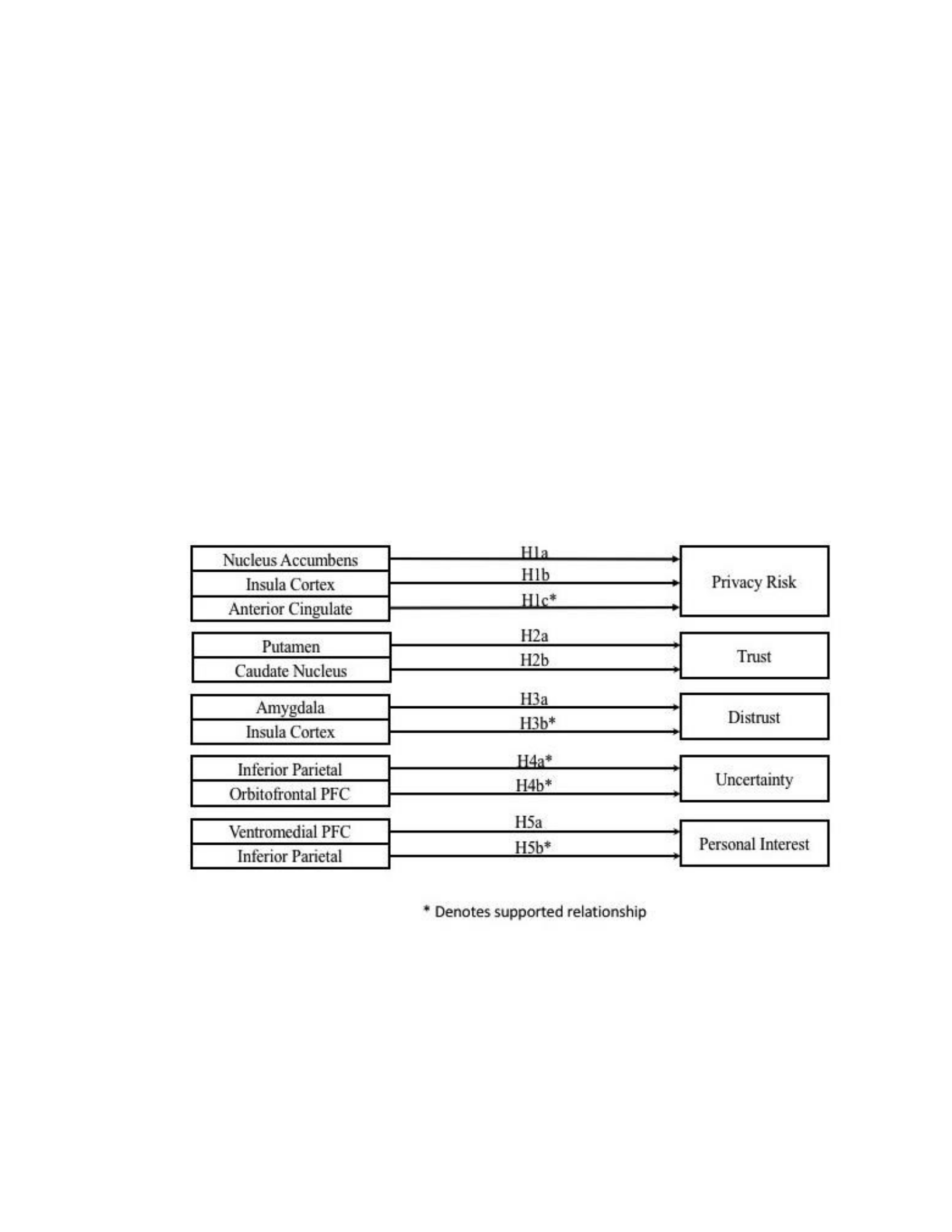
109
Right BA 47, which constitutes a part of the orbitofrontal prefrontal cortex was involved
in trust, while distrust included the right BA 31. Additionally, the neural correlates of
personal interest were found to be left BA 40, the inferior parietal lobe, and left BA 37,
the middle temporal gyrus in the temporal lobe. Figure 14 depicts the research model of
neural correlates with the relationships that were supported (denoted with an *), while
figure 15 depicts the research model with significant relationships (denoted by * for
partial support and ** for full support) to personal information disclosure. The hypotheses
for experiments 2 and 3 are summarized in Table 12, which are discussed in detail in the
following subsections.
Figure 14. Research Model depicting Significant Neural Correlates of Mental Processes
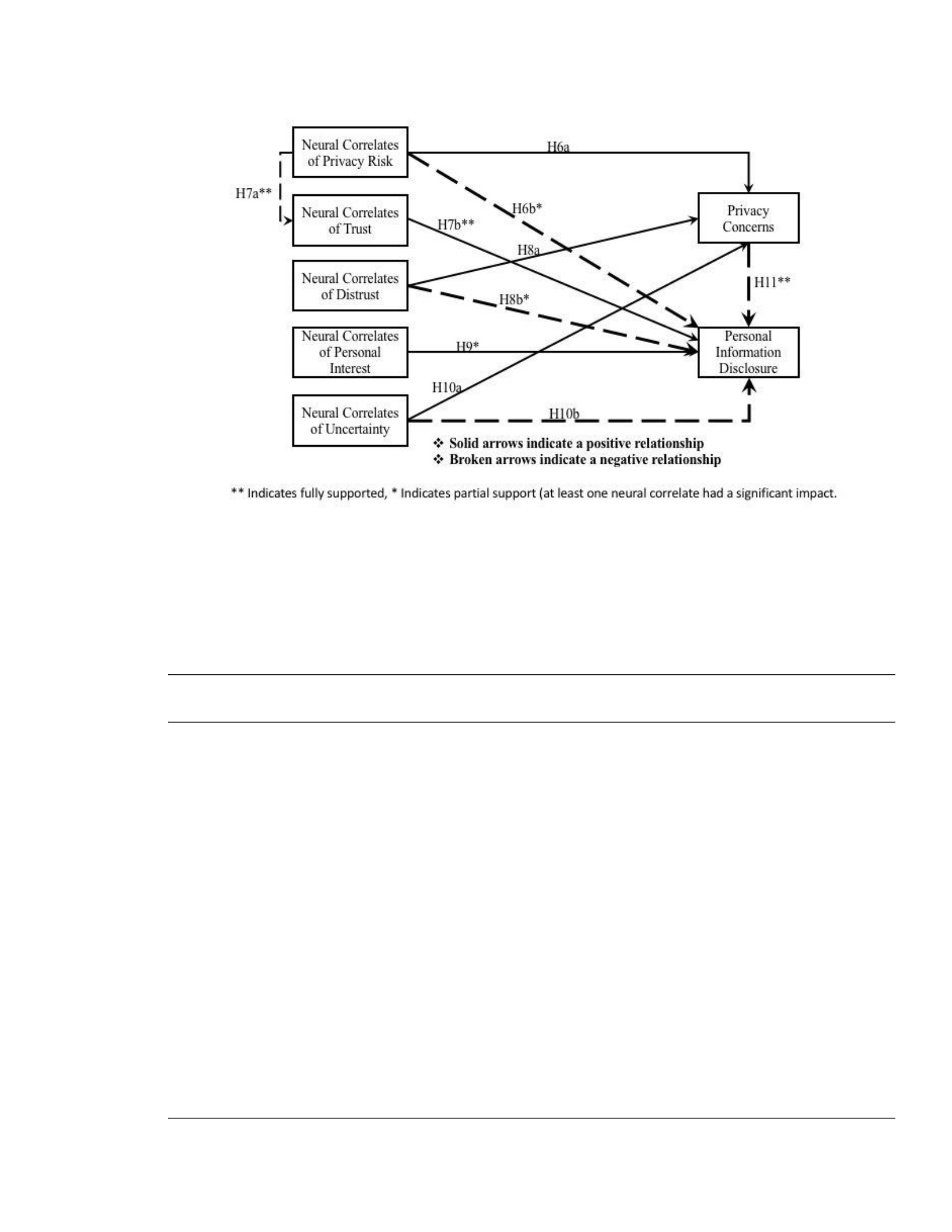
110
Figure 15. Research Model with Supported Hypotheses
Table 12. Results of Hypotheses Testing for Experiments 2 and 3
Hypotheses Neural
Correlates
Standardized
(p-value)
Support
6a The neural correlates of privacy risk
are positively related to privacy
concerns
rBA32
lBA9
0.317N.S.
-0.055N.S.
Not Supported
6b The neural correlates of privacy risk
are negatively related to personal
information disclosure
rBA32
lBA9
-0.228*
0.246*
Partially
Supported
7a The neural correlates of privacy risk
are negatively related to the neural
correlates of trust
rBA32
lBA9
-1.039***
-0.153**
Supported
7b The neural correlates of trust are
positively related to personal
information disclosure
lBA47 0.287** Supported
8a The neural correlates of distrust are
positively related to privacy
concerns
rBA31
rBA13
0.247N.S.
-0.294*
Not Supported
8b The neural correlates of distrust are
negatively related to personal
rBA31
rBA13
0.053N.S. Partially
Supported

111
information disclosure -0.253*
N.S. Not Significant, * p 0.05, ** p 0.01, *** p 0.001, r Right, l Left
9 The neural correlates of personal
interest are positively related to
personal information disclosure
lBA40
lBA37
-0.103N.S.
0.109*
Partially
Supported
10a The neural correlates of uncertainty
are positively related to privacy
concerns
rBA40
rBA47
-0.142N.S.
0.121N.S.
Not Supported
10b The neural correlates of uncertainty
are negatively related to personal
information disclosure
rBA40
rBA47
0.229N.S.
0.179N.S.
Not Supported
11 Privacy concerns are negatively
related to personal information
disclosure
N.A. -0.683*** Supported
12a An interaction effect would exist
between the independent variables
and privacy concerns
N.A. Not Supported
12b An interaction effect would exist
between the independent variables
and personal information disclosure
See Table 8 of Chapter 5 Supported

112
6.2.5. Privacy Concerns
Privacy concerns as a dependent variable had poor predictors which were
insignificant, and bad model fit. The only significant variable to have a relationship with
privacy concerns was right BA 13, and the relationship was contrary to the hypothesis.
However, data collected for privacy concerns utilized a one-item survey question of
selfreported data. Essentially, privacy concerns, like privacy risk, have been found to be
more complex and multidimensional, whereby researchers have developed instruments to
properly assess privacy concerns (Malhotra et al., 2004; Smith et al., 1999). As such, a
more appropriate means of assessing privacy concerns may have presented more
insightful findings. Moreover, neural correlates of privacy concerns were not assessed,
which may have provided useful insights as to how the human brain processes
information privacy.
When regressed against personal information disclosure, privacy concerns were
statistically significant, and had the strongest effect when compared to all the other
independent variables, with a standardized beta of -0.683. This relationship indicated that
when privacy concerns increased by one unit, there would be a decrease of the dependent
variable, personal information disclosure by a standard deviation of -0.683. This negative
relationship is consistent with findings in the information privacy field, where privacy
concerns negatively impact the use of ICTs that require individuals to disclose their
personal information (Awad & Krishnan, 2006; Bansal et al., 2010; Dinev & Hart, 2006;
Pavlou et al., 2007; Van Slyke et al., 2006).

113
6.2.6. Interaction Effects
While experiment 3 did not produce any significant interaction effects, nor did the
regression model with the dependent variable of privacy concerns for experiment 2, there
were in total, twelve significant interactions between the independent variables for the
dependent variable of personal information disclosure (see Table 8 in Chapter 5). In total,
only three out of twelve interactions that had a positive relationship with personal
information disclosure, each of which had beta coefficients higher than 1, but less than 2.
Alternatively, all the significant interactions with negative relationships had a beta
coefficient of -1.33 as its lowest, but -9.28 as the highest, which was an interaction
between the neural correlates of privacy risk, distrust (only BA 13) and personal interest.
In all interactions where the independent variables positively predicted personal
information disclosure, brain activity in left BA 37 (a neural correlate of personal interest)
was present. The neural correlate of trust (right BA 47) often had little effect in predicting
personal information disclosure. Interactions where both neural correlates of distrust and
trust were present predicted a reduction of personal information disclosure (i.e. negative
beta coefficients). These findings were similar to Dimoka (2010), which found distrust
was more salient than trust in predicting price premiums. Additionally, the high number
of interactions of the independent variables and their predicted negative relationships and
magnitude (i.e. beta coefficients) with personal information disclosure reinforces the
weight negative outcomes have over positive ones, when individuals make decisions
regarding rewards and losses (Kahneman & Tversky, 1979).

114
6.3. Contributions
There were four contributions from this study to information privacy research.
Firstly, this study provides a better explanation to the privacy paradox in that individuals’
privacy-related decisions are based on both rational and emotional mental processes, that
intertwine with one another. The findings thus supports the research argument that
individuals disclosed their personal information based on their cognitive disposition.
Essentially, individuals’ decision to withhold or disclose their personal information
cannot be explained through rational behavior, nor solely through emotional impulses.
Furthermore, this study addressed a gap in current privacy literature where the processing
of external stimuli was measured as predictors of privacy-related decisions, as opposed to
internally held beliefs. The neural correlates of mental processes that were posited to
affect privacy-related situations were identified using a neurological tool, the
electroencephalogram. The findings of this study identified the nature of the mental
processes involved in privacy-related decision-making. This led to the second
contribution, where the findings of cognitive neuroscience was applied to the extended
privacy calculus model to address its limitation in assuming individuals are rational
decision-makers. The third and fourth contributions are methodological contributions by
using sLORETA technique to identify the neural correlates of mental processes posited to
be involved in explaining the privacy paradox, and using SnPM for the analysis. These
contributions are discussed in more detail next.

115
6.3.1. Research Contributions
The first research contribution of this study, whereby the findings of this study
supported the research argument that individuals would disclose their personal
information based on their cognitive disposition, which includes both rational and
emotional mental processes. The brain areas identified as neural correlates to the factors
such as privacy risk, trust, distrust, and personal interest are responsible for
rational/executive functions, emotions, emotional regulation, and calculation of rewards.
Thus, a better explanation of the privacy paradox is derived based on the results of the
significant relationships of this study, between the neural correlates of mental processes,
privacy concerns, and personal information disclosure. This indicates that individuals’
privacy-related decisions are neither purely emotional nor rational, as there exists
interconnectivity between these brain areas as suggested by Phelps (2006). Essentially,
the privacy paradox cannot be explained solely through a logical cost-benefit analysis or
by examining individuals’ emotions only. Furthermore, the results of this study were
based on studying real behavior influenced by the momentary perceptions formed in
privacy-related situations as opposed to self-reported data on individuals’ beliefs
concerning information privacy and personal information disclosure.
The constructs of privacy risk, trust, privacy concerns and personal interest in the
extended privacy calculus model were modeled as enduring (institutional) beliefs
individuals have in the context of information privacy, which influences individuals’
decisions to withhold or disclose their personal information. Yet, these constructs have
been found to be correlated with neural activity in specific regions of the brain when
individuals are processing stimuli, i.e. they are produced based on situations and are more

116
a ‘state-of-mind at a given time’ as opposed to an enduring belief (Dimoka et al., 2007;
2011; Sur & Sinha, 2009). Additionally, studies have found that the activation of brain
areas when individuals are in a specific situation influences behavioral outcomes
(Dimoka, 2010; Vance et al., 2014). As Dimoka et al. (2011) indicated, the use of
neuroscience can advance the IS field. One such opportunity occurs where antecedents of
IS constructs could be used to predict certain behavior and challenge past IS assumptions.
The findings of this study fulfill this opportunity highlighted by Dimoka et al., (2011)
where specific neural correlates, that included emotional responses and rational
processes, significantly influenced individuals to disclose or withhold their personal
information.
The second contribution of this study resulted from applying the findings of
cognitive neuroscience to the theoretically enhance the extended privacy calculus model
developed by Dinev and Hart (2006). The extended privacy calculus model is limited in
assuming individuals are rational decision-makers. The constructs established in the
extended privacy calculus model were mapped to brain areas of neural activity using the
findings of cognitive neuroscience literature, which identified these mental processes as
distinct. This led to challenging traditional assumptions such as the relationship between
trust and distrust as existing along opposite ends of the same continuum. Mental
processes such as uncertainty and distrust were therefore added to the extended privacy
calculus model to better explain the privacy paradox.
As indicated by the results of this study, privacy-related decisions are not purely
rational, and involves several brain areas related to assessments of risks and rewards,
emotions, emotional regulations, and high executive processing. While the neural

117
correlates of uncertainty did not have any significant relationships with privacy concerns
or personal information disclosure, there were significant relationships with the neural
correlates of privacy risk, trust, distrust and personal interest to personal information
disclosure. Essentially, this study establishes distrust as an integral factor in the extended
privacy calculus model, and explaining the privacy paradox. This study also advances the
IS field as IS constructs were mapped to specific brain areas, which would allow for
better understanding the nature and dimensionality of these constructs as opposed to
utilizing the metrics of self-reported data that would be inadequate in assessing and
understanding these constructs in privacy-related decisions (Dimoka et al., 2011).
6.3.2. Methodological Contributions
The third contribution of this study was related to the research methodology, and
contributed to both the information privacy field, as well as NeuroIS in general. This
study used (standardized) low tomography brain electromagnetic tomography to identify
the neural correlates of mental processes posited to be involved in explaining the privacy
paradox. While the use of PET and fMRI are considered better approaches to identifying
the location of neural activity for given tasks, sLORETA provides specific advantages
such as the increased temporal resolution of neuronal activity at specific moments in time
(Cannon, 2012). The ability of sLORETA to capture neural activity in milliseconds
addresses a fundamental limitation of fMRI research, where there are high degrees of
overlap in brain areas during cognitive, affective, memory and attentional tasks, which
leads to difficulty in accurately interpreting fMRI results (Cabeza & Nyberg, 2000).
While sLORETA may have low resolution, it is able to detect neuronal activity in voxels

118
of 5mm3, and detect even deeper brain structures such as the anterior cingulate cortex
(Pizzagalli, Oakes, & Davidson, 2003), and hippocampal regions.
While there is a growing body of literature in the neuroscience field that utilizes
sLORETA techniques for analysis of localization of brain areas for specific tasks, at the
time of writing this dissertation, the use of sLORETA seems very rare in IS, with the only
other study found utilizing sLORETA was that of Kalgotra, Sharda, and Chakraborty
(2014). A search for the keywords “privacy”, “NeuroIS”, “Information Systems”,
“LORETA” (with variations of “sLORETA”, “standardized LORETA”, “exact
LORETA”, and “eLORETA”) did not return any results on databases such as ProQuest,
ABI/InFORMs, and Web of Science for sLORETA-based research in IS, much less
information privacy. The only result obtained from searching these databases with regards
to neuroIS and information privacy returned an editorial calling for the use of
neuroscience techniques in information privacy to better understand privacy constructs
(Belanger & Xu, 2015).
Essentially, this study contributed by answering such a call to use neuroscience
techniques to better understand the privacy paradox, while also contributing to NeuroIS
by using sLORETA, a technique for identifying brain areas with high temporal resolution.
Other than the analysis of the localization for key brain areas, sLORETA provides
additional advantages such as the ability to provide analysis of frequency domains
involved in specific tasks, along with localization (i.e. origination) of these frequency
domains (Cannon, 2012; Massar et al., 2012). Furthermore, functional connectivity
analysis can be done using sLORETA (Cannon, 2012), to determine “the temporal

119
dependency of neuronal activation patterns of anatomically separated brain regions”
(Lang, Tome, Keck, Gorriz-Saez, & Puntonet, 2012, p. 1).
An additional advantage of using sLORETA for identification of key brain areas
entails the use of an EEG over an fMRI or PET, which reduces the monetary costs of
collecting data drastically. Traditional neuroimaging tools such as fMRI and PET are very
costly, with scans per subject for one-hour costing around $360-$540 and $450$900,
respectively (Riedl et al., 2009). EEG devices, in comparison, are much cheaper than
purchasing fMRI and PET machines, while using the equipment from third parties
(i.e. research labs and hospitals) can be as cheap as $55 per subject per hour (Riedl et al.,
2009). Furthermore, the proliferation of commercial EEG devices such as emotiv EPOC+
and OpenBCI R&D kit, are much cheaper than traditional EEG devices, providing
researchers with more cost-effective devices. This becomes an advantage for research,
particularly in neuroIS and information privacy, since fMRI and PET studies have smaller
sample sizes which can hinder the generalizability of findings (Dimoka, 2012). Yet, the
use of EEG devices could provide more forms of analysis (i.e. frequency analysis, event-
related potential component analysis), with localization determined through techniques
such as sLORETA, with larger sample sizes. Additionally, the design of experiments
becomes more flexible, whereby instead of constraining experiments to within-subjects
designs to increase power while limiting sample sizes (Dimoka, 2012), a number of
designs such as between-subjects and mixed designs (i.e. both a between and within-
subjects design) can be used.
Finally, the forth contribution of this study was the use of SnPM for determining
statistically significant brain areas involved in the mental processing of privacy-related

120
decisions. Research in NeuroIS is limited, with a number of researchers appealing to the
use of cognitive neuroscience to better understand information privacy (Dimoka et al.,
2007; 2011; Riedl et al., 2009). Statistical Parametric Mapping (SPM) using general
linear models is an often used approach of analysis for functional neuroimaging data,
even in the fields of neuroscience and neuropsychology (Dimoka, 2012; Nichols &
Holmes, 2001). In NeuroIS fMRI research, Dimoka (2010) used SPM to test for
significant brain areas associated with trust and distrust. However, Nichols and Holmes
(2001) explained that SnPM can surpass SPM for analyses of brain data with low degrees
of freedom. Additionally, Pascual-Marqui et al. (2002) argued that SnPM was a powerful
technique to accurately test the significance of brain areas produced from sLORETA,
where parametric tests would be inadequate. Essentially, SnPM not only accurately
analyzes data from sLORETA, but could also be used in the analysis of neuroimaging
tools such as PET, fMRI, and single-photon emission computerized tomography
(SPECT).
6.4. Managerial Implications
Several practices are suggested for both organizations and society. An
organization’s survivability and growth depends greatly on insights and predictions they
gain from data mining techniques. This data allows for them to understand patterns and
trends of their current clients as well as potential clients. However, acting
opportunistically and selling data to third-parties or misrepresenting their practices of
handling data could lead to a negative perception of the organization by society, such as
in the case of ChoicePoint (Culnan & Williams, 2009). This can then lead to distrustful

121
perceptions of an organization by society. As was evident in the case of ChoicePoint, this
distrust of an organization could lead to major financial losses and loss of clientele.
Organizations should therefore handle the personal information they collect from
individuals with a high degree of ethical values (Culnan & Williams, 2009).
As can be seen from the findings, perceptions of trust and personal interest may consist
of some degree of emotion targeting reward centers in the human brain, yet negative
perceptions have more weight than positive ones. Thus organizations should reduce
negative outcomes of privacy, in that the personal information they have collected and the
data mining done to gain insights into client behavior should be handled carefully enough
that negative reviews of an organization could easily be refuted (Mohammed & Tejay,
2015). Additionally, by acting in a manner that suggests an organization’s ethical
disposition as morally altruistic, with high concern and practices reflecting a “proactive
privacy” attitude could lead to increased trust between clients and organizations.
Organizations could achieve this by creating and often reviewing comprehensive privacy
policies, developing a culture of privacy within an organization, designing informative
and easy to read privacy statements, and helping individuals that were affected by privacy
breaches overcome the negative outcomes (Culnan & Williams, 2009; Mohammed &
Tejay, 2015). Organizations should also invest in messages, slogans, and cues that
highlights the importance of clients’ information privacy. As can be seen in cognitive
neuroscience literature, as well as the findings in this study, specific stimuli trigger the
neural activity associated with tasks. Essentially, creating positive messages to promote
trusting perceptions and developing an environment of trust should impact individuals’
privacy-related decisions and challenge minor negative privacy-related outcomes.

122
For individuals, privacy-related decisions have been found to include both a degree of
emotions and rationality, with antecedents activating brain areas related to rewards, as
well as negative emotions. This generally means that individuals’ privacy-related
decisions may not always reflect the best of judgements (Acquisti & Grossklags, 2005),
and may also lead to taking risks in return for small rewards. Additionally, individuals
may forego any rewards associated with specific ICTs due to fear of negative outcomes,
which was found to have stronger weight in privacy-related decisions. To counteract
many of these drawbacks, stronger regulations should be developed which balances the
need for organizations and government to collect and analyze large sets of individuals’
personal information, while limiting the probability of harm caused to individuals due to
privacy and security incidents.
As ICTs are fast becoming a utility in everyday life (Buyya et al., 2008),
maximizing the opportunities of ICTs should not be hindered by the risks in society.
Privacy advocates could use the findings of this study pertaining to how individuals make
privacy-related decisions, to form better campaigns to promote the development of fair
privacy practices through campaigns by both governments and organizations.
Furthermore, privacy advocates, as well as firms that specialize in information privacy
and security could develop awareness programs centered around the perceptions found to
influence privacyrelated decisions in this study. These awareness programs could be used
to aid individuals to make better privacy-related judgements, and promote the use of
privacy enhancing technologies, such as Tor.

123
6.5. Limitations
There were a few limitations within this study. Firstly, privacy-related mental
processes, such as privacy risk and privacy concerns have been discussed as
multidimensional factors, with empirical evidence indicating privacy concerns are better
modeled as second-order factor rather than a first-order factor (Smith et al., 2011; Stewart
& Segars, 2002). In this study, neural correlates for privacy risk were assessed as if it
were a completely negative factor, yet the findings indicated that while one of the neural
correlates were negatively related to personal information disclosure (i.e. right BA 32),
the other neural correlate (left BA 9) positively influenced individuals to disclose their
personal information. These findings of privacy risk implied that privacy risk cannot be
looked at as one single factor, with a single relationship to personal information
disclosure, but may in fact pertain to the contradictory risk-behaviors of individuals who
are considered either risk-taking or risk-aversive.
With regards to the findings of privacy concerns, none of the hypotheses posited
to predict it were significant, which suggested that complex modeling of privacy concerns
may be necessary to truly understand the nature of this construct. Additionally, privacy
concerns may be correlated with specific brain areas by itself, and the selfreported metric
used to determine a relationship within this study, was inadequate. However, privacy
concerns did have the most significant effect on personal information disclosure, as well
as the highest magnitude as compared to the other independent variables. This suggests
the need for further investigation of mental processes such as privacy risk and privacy
concerns.

124
Another limitation of this study was in the choice of the EEG device used to
capture brain activity. The emotiv EPOC+ provided a cheaper solution as opposed to
clinical EEGs, or functional neuroimaging tools such as fMRI and PET, but consisted of
only fourteen electrodes. While sLORETA was chosen as the method to analyze the EEG
data to derive the neural correlates of mental processes, some of the spatial resolution was
sacrificed due to the limited number of electrodes. However, studies have shown that
sLORETA can produce accurate results with a small number of electrodes (Cannon,
2012). While sLORETA can detect activity in deep brain regions such as the anterior
cingulate (Pizzagalli et al., 2003), and other parts of the limbic lobe, such as the
hippocampul gyrus, certain brain areas, such as the amygdala are more difficult to detect.
In cases where such regions are of interest, high spatial resolution scans from fMRI and
PET are recommended. However, both fMRI and PET contain poor temporal resolution,
whereby brain areas activated for a given task become difficult to interpret due to the
length of time passed since the stimulus was produced and the neural activity occurred
(Cabeza & Nyberg, 2000). The results produced by sLORETA are in the millisecond
range, where approximately every 7.8125 milliseconds, brain areas associated with
specific tasks are captured for an EEG device with a 128Hz sampling rate. These
sLORETA images can then be tested using SnPM for identifying statistically significant
brain areas activated in the processing of certain stimuli.
It can be seen in the results that the statistics for assessing multicollinearity, the
tolerance values were low, and the VIF values were high. However, despite this, all
values for tolerance were above the minimum threshold, while VIF values were below the
maximum threshold, except for right BA 32, in the regression model against personal

125
information disclosure. This indicated that multicollinearity may not have been an issue
in the study. However, even in the case of BA 32, multicollinearity does not invalidate the
results of a regression model (O’Brien, 2007). Additionally, there is a high degree of
connectivity in the brain, whereby, even if there were high correlations between the brain
areas associated with mental processes, the functional connectivity of these areas alone
cannot be decided simply through traditional multicollinearity tests, but may require
connectivity analysis to better determine the degree of separation between the brain areas
and their relationships. However, this was not an objective of this study.
Finally, this study did not account for differences in neural activity between right
and left-handed individuals. Dimoka (2012) suggested limiting subjects to right-handed
individuals when conducting fMRI experiments used for analyzing the neural correlates
of mental processes. Gut et al. (2007) found that dominance of the right hand was
controlled by the left hemisphere, while the non-dominant hand was controlled by both
hemispheres of the brain. While investigations behind hand dominance and specific brain
areas associated with perceptions of reward and losses are unclear, research does suggest
that processing of motivation takes place in the hemisphere of dominance, i.e. right
handed individuals had more activity in the left hemisphere and vice versa (Brookshire &
Casasanto, 2012).
6.6. Future Research
There are a few studies that can be developed based on the findings and
limitations of this study. Firstly, this study could be re-examined utilizing neuroimaging
tools with higher spatial resolution, such as fMRI and PET. As research has found the

126
mental correlates identified in this study to be correlated with some deeper brain
structures such as the putamen and caudate nucleus for trust, amygdala for distrust, and
nucleus accumbens for risk (Dimoka, 2010; Matthews et al., 2004), neuroimaging tools
with higher spatial resolution may detect certain brain areas that were not detected in this
study. Secondly, connectivity analysis, used for understanding the functional
interconnectivity of neurons in specific brain areas could be used to better understand
how the brain areas in this study are related to one another. This may in turn lead to
inferences of the causal relationship between brain areas associated with privacy-related
decisions, which is identified as one of the opportunities to advance the IS field by using
the tools, techniques and theories from cognitive neuroscience (Dimoka et al., 2011).
Finally, a study on the differences on gender in privacy-related decision-making
should be done. In this study, gender differences were not accounted for, however, studies
in functional neuroanatomy suggest there are differences between brain activity in men
and women. Dimoka (2010) found women had stronger neural activity in the emotional
areas of the brain than men in trusting and distrusting situations. Essentially, the corpus
callosum (connection between the right and left hemispheres) is thicker in women than in
men, whereby women have about thirty percent more connectivity between the right and
left hemispheres in the brain, and use both hemispheres for emotional processing, while
for men, there are more activity in the right hemisphere for processing emotions (Pease &
Pease, 2000).

127
6.7. Conclusions
As individuals are becoming more aware of the breaches information privacy,
they have expressed a degree of privacy concerns, to which researchers have found were
inhibitors to the use of ICTs (Li et al., 2011; Madden et al., 2007; Smith et al., 2011). Yet,
despite expressing concerns over the privacy of their personal information, individuals
continue to disclose their personal information; a behavior which is referred to as the
privacy paradox. Researchers have often investigated the privacy paradox with regards to
different ICTs, and found certain institutional beliefs, such as risk and trust were
antecedents to explaining privacy-related decisions (Dinev & Hart, 2006; Pavlou et al.,
2007; Van Slyke et al., 2005). However, a common assumption in information privacy
research is that individuals are rational decision-makers. Acquisti and Grossklags (2005)
argued that individuals are not able to make fully rational decisions, and their privacy-
related decisions may be hindered by cognitive biases and limited cognition.
Furthermore, a gap exists in the literature exists in observing how individuals’
perceptions are formed and relate to one another when they are in a situation requiring
them to disclose their personal information. Specifically, the perceptions based on the
cognitive processing of external stimuli, to which studies in neuroscience have indicated
influence decision-making (Dimoka et al., 2007; 2011). Thus, the objective of this study
investigated the privacy paradox to better understand why individuals disclose or
withhold their personal information. The study argued that individuals disclose their
personal information based on their cognitive disposition, which includes rationality and
emotions.
The findings of cognitive neuroscience were applied to the extended privacy
calculus model developed by Dinev and Hart (2006), addressing the limitation that

128
individuals were rational in their privacy-related decisions. Three within-subjects
experiments were carried out to test the research model and hypotheses. A total of twenty-
two subjects participated in all three experiments as if it was one, while a pilot study was
conducted using five participants. The first experiment assessed the neural correlates of
mental processes involved in privacy-related decisions, while the second and third
experiments were conducted to determine the effect of these neural correlates on privacy
concerns and personal information disclosure. Experiment 2 was a 2x2x2x2 factorial
experiment with high and low levels of personal interest, privacy risk, trust and distrust,
leading to sixteen conditions in total, while experiment 3 was a 2x1 factorial experiment,
with two conditions of a high and low level of personal interest and one high level of
uncertainty. The results indicated that brain areas associated with emotional and rational
functions, as well as emotional regulation, and risk and reward centers were involved in
privacy-related decision-making.

