


INTRODUCTION This dissertation examines the intersection of love and HIV
This dissertation examines the intersection of love and HIV risk among female sex
workers who inject drugs and their intimate, non-commercial partners along the Mexico-
U.S. border. I employ a critical phenomenology approach to studying the dynamics of
these relationships, integrating political economy with phenomenological attention to
couples’ subjective experiences and the emotional meanings ascribed to their
relationships. Within this framework, this study evaluates the role of love and other
emotions in shaping sexual and drug-related HIV risk perceptions and practices among
sex workers and their intimate partners within the broader contexts of poverty, drug
addiction, violence, inequalities, and social marginalization that characterize the border
region. Throughout this dissertation, I refer to the “border region” as both a geographic
and social risk environment that lies in the interstices of the U.S. and Mexican national
political boundaries where I conducted my research. By drawing on qualitative data from
a mixed-methods epidemiological study in two border cities and on my own ethnographic
fieldwork in Tijuana, this work intends to highlight the emotional lived experience of the
relationships between female sex workers and their intimate male partners who are at
heightened risk for HIV and other health harms.
Researching love and risk
Love is a universal human emotional experience shaped by broader cultural,
social, and economic contexts (Hirsch 2009; Padilla, et al. 2007). A growing body of
cross-cultural research suggests that modern relationships have transformed to emphasize

love and emotional intimacy over moral or kinship obligations (De Munck 1998; Giddens
1992). Particularly in contexts of risk and uncertainty, intimate relationships provide
emotional security (Rhodes and Cusick 2000). Drug-using couples may engage in
unprotected sex (Corbett, et al. 2009; Sobo 1993) or even needle sharing (Barnard 1993;
MacRae and Aalto 2000) to convey notions of love and trust and help sustain emotional
unity, but such acts also place partners at heightened risk for HIV.
For female sex workers in Tijuana who endure poverty, marginality, and an
increased risk of contracting HIV, establishing and maintaining emotional bonds with
intimate partners may be of paramount importance (Sobo 1995). Yet little is known about
how sex workers’ intimate male partners shape their HIV risk perceptions and practices.
Moreover, male partners’ perspectives are critically absent in HIV prevention strategies.
Female sex workers who inject drugs are at heightened risk for HIV/AIDS
through unprotected sex and needle sharing (Needle, et al. 2008; Ngo, et al. 2007;
Strathdee, et al. 2008b). International studies suggest explicit overlap in risky sexual and
drug use practices in relationships among sex workers and their intimate, non-commercial
partners (Go, et al. 2006; Lam 2008). Recent studies on the Mexico-U.S. border have
documented a rise in HIV prevalence among female sex workers from two to five percent
overall that reaches 12 percent among those who inject drugs; female injectors were more
likely than non-injectors to have intimate male partners and to report using drugs before
sex (Strathdee, et al. 2008b). As documented worldwide (Basuki, et al. 2002; Chan, et al.
2004; Fox, et al. 2006; Ghys, et al. 2001; Green and Goldberg 1993; Mgalla and Pool
1997; Panchanadeswaran, et al. 2008; Sanders 2002; Shannon, et al. 2008; Warr and Pyett
1999; Zhao, et al. 2008), sex workers on the Mexico-U.S. border are also less likely to

report condom use with intimate partners than with clients (Patterson, et al. 2008a). These
intimate partners themselves may engage in risky sexual and drug-related behaviors,
suggesting that male partners contribute to HIV risk among female sex workers. Although
the HIV epidemic in Tijuana thus far remains concentrated in high risk groups, cross-
border mobility and migration within Mexico suggest the potential for the diffusion of
HIV to diverse populations in the North and South (Bronfman, et al.
2002; Goldenberg, et al. 2012; Strathdee and Magis-Rodriguez 2008).
Research for this dissertation was part of a larger project working as a coordinator
for the University of California, San Diego, on Proyecto Parejas, a longitudinal, mixed
methods study of the social context and epidemiology of HIV/AIDS, sexually transmitted
infections (STIs), and high risk behaviors among female sex workers and their intimate,
non-commercial partners in Tijuana and Ciudad Juarez, Mexico. While I draw on
qualitative data collected from both border cities as part of Parejas to build an analytical
framework of female sex workers’ relationships, I conducted additional anthropological
fieldwork in Tijuana to supplement these data and provide insight into the emotional lived
experience of these relationships and HIV risk behaviors.
Specifically, my dissertation examines the following research questions:
Q1) How do female sex workers who inject drugs and their non-commercial partners
experience their relationships in terms of emotions such as love, trust, and intimacy?
Q2) How do the emotional qualities of sex workers' intimate relationships influence each
partner’s sexual and drug-related HIV risk perceptions and practices?

Q3) How might couple-based interventions take into account the emotional dynamics of
relationships between sex workers and their non-commercial partners?
Through a phenomenologically-engaged approach to dissertation fieldwork (Katz
and Csordas 2003; Willen 2007b) that included semi-structured and ethnographic
interviewing, a photo elicitation project, and participant observation, I got to know on a
more personal level seven of the couples from Tijuana who were enrolled in Parejas (also
referred to as “the parent study”). The resulting case studies of these seven couples are
each unique in their own right, yet represent the common emotional experiences that
emerged from the parent study’s qualitative interviews with sex worker couples in both
border cities. The personal stories from these seven couples are warm, humorous, heart
wrenching, and difficult pursuits of love, intimacy, and emotional and material security as
experienced within the constraints of their broader social context: in short, their
relationships are tales of love and risk.
Throughout this dissertation, I am concerned with documenting the intersection of
emotional and structural factors (e.g. violence, economic inequalities, discrimination,
limited educational opportunities, and social marginalization) in shaping HIV risk
perceptions and practices, telling the stories of these couples in their own words, and
interweaving my own critical interpretations of phenomena throughout the process. I
draw on interview text, fieldnotes, and photographs to creatively construct a humanistic
portrait of the relationships and risks among sex workers and their intimate partners.
Admittedly, I had more opportunities to interact with some of the couples than with
others and I present this greater detailed information where available. I provide all
partners with pseudonyms (including all Parejas parent study qualitative participants) and

obscure personal details that might place participants at risk of identification. My use of
photos taken by the participants in this project is deliberate but judicious. I was granted
written permission to use all of the images that are interwoven throughout the text, and I
take the participants’ overwhelming expressions of trust in my judgment quite seriously.
The ultimate goal of this work is to engender a better understanding of these couples’
emotional experiences so that researchers, practitioners, and policy makers may more
meaningfully address their health concerns through programs and services.
Overview of the dissertation
The remainder of this introductory chapter outlines the structure of the
dissertation. Chapters 2, 3, and 4 build an argument toward a critical phenomenology of
love and risk among female sex workers and their non-commercial partners along the
Mexico-U.S. border. In Chapter 2, I introduce Tijuana as my dissertation research site. I
first provide historical, political economic, and socio-demographic context to the
MexicoU.S. border region where Proyecto Parejas was conducted, before shifting my
focus to Tijuana, my fieldsite and the sister city of San Diego, California. The Tijuana-
San Diego corridor is the busiest land border crossing in the world and represents a
microcosmic glimpse into the “uneven experiences” (Appadurai 1996) of global
integration in light of the profound inequalities between the Global North and South. The
extreme economic and social inequalities on the Mexican side of the border historically
have been shaped by U.S. appropriation of cheap migrant wage labor on the U.S. side and
expatriation of leisure and vice to the Mexican side. Within this context, I discuss the
commercial sex industry and injection risk environment of modern day Tijuana as a stage
for couplebased HIV research with sex workers and their intimate partners. I also reflect

on conducting risky fieldwork in a dangerous location, and discuss some of the issues of
representation that working with vulnerable populations of sex workers and drug users
introduces. Finally, I offer my experiences of personal risk during this project, and
conclude that the benefits of conducting fieldwork in this context outweighed the risks.
Chapter 3 proceeds to deconstruct the concepts at the heart of this dissertation:
love and risk. The chapter begins by synthesizing the social science literature tracing the
development of modern love and intimacy as reactionary to the rise of capitalism and the
profound social, cultural, and economic changes that accompanied this historical shift. I
next evaluate studies on the influence of love and other emotions on sexual and
drugrelated risk behaviors in intimate relationship contexts before turning my attention to
the rise of modern forms of sex work, including the different types of client relationships
and role of emotions therein. Finally, I review the limited literature on the influence of
emotions on sexual and drug-related HIV risk among female sex workers and their
intimate, non-commercial partners. I conclude that further research is needed to bridge
the gaps in this new area of inquiry.
In Chapter 4, I lay the groundwork for a theoretical framework of critical
phenomenology (Desjarlais 1997; Desjarlais and Jason Throop 2011). To do so, I examine
the history of political economic and critical approaches in medical anthropology that
illuminate the historical production of inequality and risk in diverse contexts. I also
introduce the concepts of risk environment and structural vulnerability. A risk
environment framework conceptualizes harms as a matter of “contingent causation” that
is produced through an individual’s social interactions within the constraints of their
broader physical, social, economic, and political environment (Rhodes 2002). Within a

risk environment, the concept of structural vulnerability implies a position in which one’s
vulnerability is produced through one’s place within hierarchical political economic and
social structures (Quesada, et al. 2011). This positioning imposes patterned physical and
emotional suffering on specific groups through larger economic, cultural, class-based, and
gendered forms of discrimination that perversely become internalized and naturalized in
the subjectivities of the very groups who are relegated to a depreciated position. This later
point provides an opening to blend phenomenological perspectives with political
economy. I begin with an overview of the historical roots of phenomenological thought
and practice, and introduce key phenomenological concepts in anthropology, including
experience, emotions, and embodiment. In the concluding section of this chapter, I
attempt to construct a critical phenomenology framework for studying love and risk by
synthesizing the information offered about the structural and social spaces of Tijuana in
Chapter 2 with notions of love and emotions in diverse modern relationships discussed in
Chapter 3. This sketch attempts to ground the theoretical framework of my study in the
historical particularity of the embodied present.
The methods Chapter 5 provides an overview of my unique doctoral research
experience. I start with a brief overview of my experience as a Hispanic Serving Health
Professions School (HSHPS) fellow, a six-month academic program that originally
brought me to San Diego from Tampa, Florida. I then provide an overview of the design
and methods of Proyecto Parejas, the parent study I have worked on for nearly three
years and in which my dissertation research is nested. I outline my methodological
approach and illustrate its integration into and contributions to the larger study design.
Through semi-structured and ethnographic interviews, a photo elicitation project, and

participant observation, I was able to construct a more intimate and nuanced
understanding of these relationships than permitted by the parent study methods alone. I
conclude the chapter by reflecting on the successes and challenges presented by the use of
the specific methods employed in my dissertation, with special attention given to the
visual component of the work.
Chapters 6 through 9 comprise the results section at the heart of this dissertation.
In Chapter 6, I construct a descriptive typology of female sex workers’ intimate
relationships by drawing on qualitative data collect from Parejas, the parent study. My
analysis of 44 distinct couples from Tijuana and Ciudad Juarez provides an overarching
framework of the emotional qualities of these relationships. I explore the emotional
meanings and significance of these relationships from each partner’s perspective,
including love, intimacy, and commitment, particularly in terms of how the primary
relationship is defined with respect to sex work. Based on how the couples spoke about
their relationships, the words they used to define their feelings, and the sense of
companionship and commitment they shared, I assert that these relationships represent a
range of experiences of love and emotional closeness.
Using this framework as a guide, Chapter 7 draws on interview data, photos, and
observations to introduce and provide an overview of the lived experience of the seven
couples enrolled in my dissertation study. These couples reflect the range of emotional
closeness found in the parent study data, which helps organize the subsequent analyses of
emotions and risk behaviors. Chapters 8 and 9 examine patterns of HIV risk perceptions
and practices related to sexual behavior and drug use, respectively, among the dissertation
couples. These chapters contribute a unique approach to understanding the HIV risk of

female sex workers and their intimate partners by foregrounding a theoretical framework
of critical phenomenology that integrates both the subjective contours of love and affect
with the structural constraints in which these relationships are situated. The analyses
highlight the capabilities of ethnographic fieldwork in explaining the larger patterns also
found among the couples in the Parejas parent study qualitative data. My approach places
the analysis of how people feel about and adapt to their life circumstances into a
framework that considers their emotional experiences as well as the broader contexts that
shape them. How people feel about life experience is important to tracing tangible
sequences of action. Ultimately, my analyses strive to give voice to female sex workers
and their partners and humanize these relationships which are all too often pathologized
and misunderstood.
In the discussion Chapter 10, I synthesize the evidence from the qualitative parent
study and my own dissertation data presented in Chapters 6 through 9 to assess how the
emotional qualities of sex workers’ relationships influence sexual and drug-related HIV
risk in light of the broader political economic and socio-cultural context that shapes the
couples’ daily experience. I argue that a range of emotions constitutes a set of important
drivers of behavior for both male and female partners, but love alone does not account for
all forms of HIV risk. This chapter highlights the intentional non-condom use within sex
workers’ intimate relationships that frequently is driven by affect, but suggests that
differing motivations and ability to use condoms with clients and outside partners are
complex and context dependent. Moreover, male partners’ emotions – both positive and
negative – are equally complex factors driving relationship risks. Structural issues
permeate these couples’ lives and their drug use in particular, as partners frequently share

drugs, syringes, and other ancillary equipment as a sign of care, but also for reasons of
finances, access, and an embodied fear of the police. All couples, regardless of emotional
closeness, face dual sexual and drug-related HIV risks that tailored interventions should
address in tandem.
Chapter 11 reflects on the anthropological contributions of my dissertation
research to the parent study and the discipline more widely. I begin by discussing
emergent themes in the research that tie together the stories of the dissertation couples,
including the social context of the relationships; embodiment, rationality, and risk; and
health issues beyond HIV/AIDS. I then consider the methodological contributions of my
approach, and suggest that observations and visual methods are particularly useful for
uncovering new forms of information that office-based data collection miss.
Nevertheless, these methods introduce difficult ethical issues when applied to the study of
illicit behaviors among vulnerable populations. Specifically, I grapple with issues in
couple-based data collection and the ethics of using visual methods in this context. I also
acknowledge the limitations of my study and outline my plans for future research.
Finally, Chapter 12 discusses the practical applications of this research project.
While the contribution to anthropological theory is an explicit goal of this work, theories
are generated “in order to act” (Rhodes 2009:198, emphasis in original). Engaging in the
lives of marginalized couples to study their stigmatized behaviors without generating
concrete steps of action risks the entire research enterprise as merely voyeuristic
(Bourgois and Schonberg 2009). I offer suggestions based directly on my research on
ways to design meaningful couple-based HIV interventions for female sex workers and
their intimate partners.

A growing body of empirical evidence suggests that emotions such as love and
trust should be integrated into couple-based prevention programs (Corbett, et al. 2009; El-
Bassel, et al. 2011; Hirsch, et al. 2002; Pilkington, et al. 1994; Warr 2001) that also
explicitly consider male partner perspectives (Higgins, et al. 2010). My research supports
the idea of tailoring programs to the emotional strength and content of female sex
workers’ relationships. I further suggest that programs could incorporate innovative
expressive therapies (e.g., emotion-centered art and writing), communication skills
building, and safer injection information into comprehensive prevention approaches. In
addition to couple-based programs, multi-level interventions (e.g. programs for clients,
nutritional and health programs, syringe exchange, police reform) are needed in order to
create the conditions that will enable drug-using sex worker couples to practice harm
reduction strategies (Cusick 2006; MacPherson, et al. 2006; Page 1997; Rekart 2006;
Strathdee and Vlahov 2001). Finally, I outline a plan to disseminate my research results
as part of a larger effort to publicize these ideas and ignite social change.
CHAPTER 2: THE RESEARCH SETTING
Welcome to Tijuana,
Tequila, sexo y marihuana
~ Manu Chao song lyrics
Tijuana is a world renowned city. Although it is a cosmopolitan metropolis home
to more than 1.4 million inhabitants that boasts vibrant cultural, culinary, and arts scenes,

its seedier side and reputation for sex, drugs, and violence supersede its virtues. Tijuana’s
unique historical trajectory has stimulated the collective imagination, and fairly or not, it
has given the city a cultural status “as a present-day Gomorrah, as a haven for all sorts of
criminals and a place where vice and immorality are endemic” (Hoffman 2010:1). This
image of Tijuana as a “city of vice” coincides with other Mexico-U.S. border city liminal
identities as geographic and social spaces of marginality and immorality where bad
behavior is the norm, and even expected (Goldenberg, et al. 2011b; Hoffman 2010;
Loustaunau and Bane 1999; Vila 2000).
Located at a critical crossroads in the Americas, Tijuana is a city known for
human trafficking, drug smuggling, and violence (Goldenberg 2012; Zhang 2010). Drug
use, and particularly injection drug use, has exploded in recent years (Strathdee, et al.
2005; Strathdee, et al. 2008a) and Tijuana has among the highest rates of drug use in the
nation (Instituto Nacional de Salud Pública 2008). Sex work is tolerated and widespread,
and since the days of U.S. Prohibition policies, Tijuana has ranked as one of the premier
international sex tourism destinations (Goldenberg, et al. 2011; Strathdee, et al. 2008b).
Tijuana also has among the highest HIV rate in all of Mexico (CENSIDA 2009; Strathdee
and Magis-Rodriguez 2008), where as many as one in 116 adults aged 15-49 may be
HIV-infected (Iñiguez-Stevens, et al. 2009). Because of this convergence of risk factors
(however perceived, imagined, or experienced), Tijuana makes for the ideal field site for
anthropological research on sexual and drug-related HIV risk among female sex workers
and their intimate, non-commercial partners.
This chapter integrates scholarly resources and media reports with ethnographic
observations conducted in Tijuana to describe my research setting. I begin by providing a

brief historical sketch of Mexico’s political economy on a national level as a trajectory to
situating the modern day Mexico-U.S. border cities of Tijuana and Ciudad Juarez, study
sites of Proyecto Parejas. The primary focus of this chapter is my fieldwork site of
Tijuana that I contend is a risk environment (Rhodes 2009) that profoundly shapes the
experiences of the sex workers and their partners who live there and the ethnographers
who study there. Specifically, this chapter highlights the social spaces of sex work and
drug use in Tijuana. I conclude with a note on the politics of conducting fieldwork on the
border, including my subjective experience as an anthropology graduate student and
project coordinator working on a difficult research topic in a “dangerous” field setting.
Mexico in political economic context
To understand the historical trajectory of the United States and Mexico’s
intertwined political economic development is to better understand Tijuana as it is
collectively imagined and experienced today. The current Mexico-U.S. border is both a
real and false divide that was created by the Mexican American War and 1848 Treaty of
Guadalupe Hidalgo. The treaty forced Mexico to cede its northwestern territories (the
present-day states of California, Nevada, Utah, and parts of Arizona, New Mexico,
Colorado, and Wyoming) and to accept Texas's incorporation into the United States (Vila
2000). This left Mexicans of all backgrounds, especially indigenous peoples and
mestizos, settled along both sides of a newly superimposed border. In the aftermath of the
war, there were violent military and law enforcement clashes in the newly annexed land
areas, but this has represented the last major military conflict between the two countries.
Nevertheless, the geographic strength and legitimacy of la línea (the borderline)
continues to be contested in the present (Heyman 2009).

Mexican political economic development has always been linked to U.S.
economy and policy decisions. It was not until the 1940s that Mexico embarked on a
process of urbanization, modernization, and industrialization. These processes produced a
significant middle class while increasing rural poverty and marginalization that
intensified over the following decades (Latapi and González de la Rocha 1995). A major
economic crisis erupted in the early 1980s and resulted in the reorganization of labor
markets and reduction in public sector employment, food subsidies, and public
expenditure (Middlebrook and Zepeda 2003). The urban poor were hit particularly hard
by shrinking wages, increasing unemployment, stagnant employment opportunities, and
decreased public spending on social services and subsidies for basic goods that provided
a safety net (Latapi and González de la Rocha 1995). Also during the 1980s, the
stagnation of formal employment contributed to the expansion of the informal economy.
Between 1980 and 1987, participation in the informal economy in Mexico grew by 80
percent, and its importance continues to persist (Latapi and González de la Rocha 1995).
During this time, the poor had to reorganize their household economic strategies to try to
adapt in times of scarcity (Lomnitz 1988; Lomnitz, et al. 1977).
The decade of the 1990s is characterized by similar economic turmoil. In 1992,
the Mexican government devalued the peso as consumer prices and unemployment
soared (Humphrey 2000). Mexico received a U.S.-sponsored multi-billion dollar relief
package in 1995 and agreed to a series of structural adjustment policies and market
reforms authored by the International Monetary Fund (IMF) and the World Bank that
liberalized trade policies, deregulated financial institutions, and privatized state-owned
enterprises (Humphrey 2000; Middlebrook and Zepeda 2003). Moreover, in 1994 Mexico

committed to the North American Free Trade Agreement (NAFTA), which eliminated
barriers to free trade between the three nations of North America. NAFTA also enabled
the open flow of capital across borders while further restricting the flow of labor and
labor rights. Maquiladora (factory) employment grew and automotive multinationals
became the largest exporters after the oil company PEMEX, and much of the growth was
spurred by cheap labor and increased access to local markets (Tamayo-Flores 2006).
Nevertheless, this growth was restricted to the North, whereas there was no parallel in
investment in the South. As a result, laborers migrated north in search of employment.
Landless peasants are a labor pool for capitalists and high unemployment serves the
interests of capital by helping drive wages down, which creates a compliant workforce
where workers are well aware they are replaceable (cf. Mintz 1974).
Mexico’s increasing integration into the U.S. and world markets has contributed to
an increased concentration of poor and urban populations (Woods 1998). Such policies
have further excluded the poor by withdrawing state support for health, education, and
welfare programs, and have thus widened the gap between rich and poor (Harvey 1989),
who have had to find creative means to adapt and survive amidst economic insecurity.
Adaptive strategies required “an intentional, positive, creative approach in one’s own
actions which then needs to be understood as part of a strategy of survival” (Latapi and
González de la Rocha 1995:57). Women’s participation in informal economic activities
has been one such strategy, which intensified as households restructured their division of
labor to cope with shifting economic uncertainties. Typically, the women seeking work
had little education, were older, married or separated, and had children to care for (Latapi
and González de la Rocha 1995). These women developed social networks for mutual

support, in which the flow of goods and services among relatives, neighbors, and friends
became fundamental to household survival and well-being (Gonzalez de la Rocha and
Gantt 1995; Lomnitz 1994; Lomnitz 2002). One important function of these networks
was the conversion of trust and information into economic assets. Shared information
included instructions for migration, sources of jobs, orientation to living in cities,
referrals of accommodations, and provision of moral support (Lomnitz 1994).
More recent analyses of Mexico, however, suggest that the economic situation has
further deteriorated. A more appropriate approach to understanding the current political
economic climate might be conceptualized as a “poverty of resources” model of
increasing social isolation in light of worsening economic conditions. According to
Mercedes Gonzalez de la Rocha (2006), loss of personal ties and conditions of social
decay manifest in drug and alcohol use, crime, insecurity, and social unrest. She calls for
new research, particularly in regard to the gendered impact of economic conditions and
new household responses. She suggests that exclusion and decay of formal labor market
opportunities for males is creating new urban patterns in which men are increasingly
alienated from their capacity to fulfill socially and culturally assigned roles as household
providers, and instead women are emerging as the new heads of households, but at low
wages (González De La Rocha 2006; González de la Rocha 2007). She also points out
that the Mexican nuclear family is changing in line with the economy, and that
households are dynamic and diverse, but some household arrangements are able to
mobilize resources and cope better than others. She cites research from Guadalajara,
Mexico, that has linked poverty with symptoms of physical and emotional stress among
women (Enríquez Rosas 2002). As economic instability continues, it is creating “a social

and cultural context of radical exclusion” in Mexican cities (González De La Rocha
2006:69) that continues to push people into the informal economy.
The northern border of Mexico has long attracted migrants of other parts of
Mexico searching for economic opportunities, including factory work, as similar
opportunities are not available in other areas of the nation (Carrillo 1990; Fussell 2004).
Border cities serve as both new centers for migrants and a staging ground of sorts for
career migrants who make multiple attempts to cross into the United States for economic
and social reasons (Cornelius and Martin 1993; Fussell 2002). Moreover, a thriving
informal economy operates along the border to smuggle goods and people (Willoughby
2003; Zhang 2010). Within this context, sex work and drug market activities along the
northern border have flourished as survival strategies for the poor and marginalized
within the economic constraints of the modern Mexican economy. The remainder of this
chapter examines the political economic, social, and health dimensions of the MexicoU.S.
border region, with specific attention to Tijuana.
The Mexico-U.S. border
The Mexico-U.S. border is an area uniquely set apart from the rest of Mexico. La
línea (borderline) represents a liminal space, often discussed as an “in-between” state or
“the land of the third culture” because of its distinct mixture of people, language, food,
clothing, culture, and other aspects of life that uniquely characterize the region
(Loustaunau and Bane 1999:xvi). While invoking fascination in some, and having
essentially been referred to as a laboratory of post-modernity (Canclini 1990), others have
suggested that the northern border is imagined by federal powers as the most
"unredeemable of all the provincial outposts, tainted by the cultural, linguistic, and moral
corruption of Mexico's powerful neighbor, the United States” (Castillo, et al. 1999:402).

The important point here is that the border is viewed as a social and geographic third
space with its own separate identity, apart both from the U.S. side and from the rest of
Mexico, even though it has been variably shaped by forces from both North and South.
The northern border of Mexico is characterized by poverty, economic and social
inequalities, high rates of migration and deportation, and drug-related violence. Not
surprisingly, the larger cities are characterized by syndemics, or mutually reinforcing
epidemics, of sex work, drug abuse, violence, and HIV infection (Singer 2009). Tijuana is
the largest city on the Mexico-U.S. border. Located in the state of Baja California,
Tijuana has a population of 1.4 million and borders the city of San Diego, California.
With a population 1.3 million, Ciudad Juarez is the second largest border city. It is located
at about the mid-point of the border in the Mexican state of Chihuahua, adjacent to El
Paso, Texas. In the following sections, I provide an epidemiologic profile of Tijuana and
Ciudad Juarez, study sites of Proyecto Parejas, the study in which this dissertation
research is situated. I then offer additional historical and social contextual information
about Tijuana, my primary field site.
While the adult HIV prevalence rate in Mexico remains comparatively low
nationally (0.3%), rates are disproportionately higher among socially marginalized risk
groups such as male sex workers (15%), men who have sex with men (11%), injection
drug users (5%), and female sex workers (2%) (CENSIDA 2009). Studies in the
MexicoU.S. border cities have documented HIV prevalence rates of 11 percent to as high
as 20 percent among MSM, and three percent to seven percent among injection drug
users (Brouwer, et al. 2006a; Magis Rodriguez, et al. 2008; White, et al. 2007). HIV
prevalence among female sex workers in Tijuana and Ciudad Juarez has increased from

less than one percent to six percent over the past several years. In a recent study, in
addition to an elevated rate of HIV (6%), female sex workers in these cities also tested
positive for gonorrhea (6.4%), chlamydia (13%), and active syphilis (14.2%) at high rates
(Patterson, et al. 2008b). Female sex workers who inject drugs have high HIV/STI
prevalence rates, recently estimated at 5.3 percent for HIV and 72 percent for any STI,
including HIV (Strathdee, et al. 2011).
Sex work is decriminalized in Mexico, and typically practiced in designated zonas
de tolerancia (tolerance zones, or Red Light Districts), where it may be locally regulated
(Curtis and Arreola 1991; Kelly 2008). In Tijuana, registration with the municipal health
department is formally required, but many of the estimated 5,000 – 9,000 sex workers
exchange sex without permits, which is explored further in the next section (Brouwer, et
al. 2006a; Sirotin, et al. 2010a). In Ciudad Juarez, the districts where sex work
historically has been practiced have undergone gentrification, and women currently work
in several areas of the city where permits are not required (Valdez, et al. 2002; Wright
2004). There are an estimated 4,000 female sex workers in Juarez (Patterson, et al. 2006).
The northern Mexican border cities are located on major drug trafficking routes
for heroin, methamphetamine, and cocaine, and drug use has grown in the region over the
past several years. The state of Baja California, where Tijuana is located, has among the
highest prevalence rates of drug use in the nation (9.6 percent), as does the state of
Chihuahua (8.2 percent), where Ciudad Juarez is located (Instituto Nacional de Salud
Publica 2008a). Moreover, these cities have concentrated populations of injection drug
users. The number of injectors in Tijuana and Ciudad Juarez has been estimated at 10,000
and 6,500, respectively (Strathdee and Magis-Rodriguez 2008).

As part of a larger push toward harm reduction policies in some parts of Latin
America (Cook 2010; Roehr 2010), Mexico recently changed its national drug laws. This
new legislation decriminalized small amounts of drugs for personal use, and a three strike
rule now offers offenders drug treatment in lieu of jail. The controversial legislation was
passed in 2009 and is seen by some as a move toward public health-informed policy as
well as a way for the Mexican government to focus their enforcement efforts and appear
tough on the drug cartels (Syvertsen, et al. 2010). Nevertheless, in Mexico, police often
enforce their own laws “on the street” that disregard the laws “on the books” (Strathdee,
et al 2005). Anecdotal evidence and ongoing qualitative work as part of a study of
injection drug use in Tijuana suggests that on-the-ground policing practices have changed
very little since the new law took effect.
This point is extremely important, as local policing practices shape HIV risk for
injection drug users (Blankenship and Koester 2002; Burris, et al. 2004; Pollini, et al.
2008; Rhodes, et al. 2008b; Small, et al. 2006). Policing can exert direct and indirect
pressures on injectors’ risk practices (Burris and Strathdee 2006). Directly, studies show
that show that police pressure is associated with use of shooting galleries (Philbin, et al.
2008b), communal spaces in abandoned buildings or lots where individuals can inject out
of the purview of the police, but often do so with shared and unhygienic syringes and
other ancillary equipment (Bourgois 1998a; Carlson 2000; Page, et al. 1990). Indirect
effects of policing on HIV risk include patrolling to discourage injectors’ access to
syringe exchange programs (Wood, et al. 2004). Mexican border cities are characterized
by high levels of discrimination, violence, and human rights abuses perpetrated by law
enforcement, often targeted at drug users (Beletsky, et al. 2012; Meyer 2010).

In Mexico, as in much of Latin America, harm reduction is a nascent but
expanding approach to confronting issues of drug use (Cook 2010; Magis-Rodriguez, et
al. 2002). Harm reduction initiatives, such as needle exchange programs in which users
can trade used needles for clean ones and often gain access to other prevention services,
health education, condoms, and drug treatment information, have been found effective in
preventing the spread of HIV and facilitating users to seek treatment (Page 1997;
Strathdee and Vlahov 2001; Vlahov, et al. 2001). Yet according to Jesus Bucardo and
colleagues (2005), “on the whole, harm reduction activities in Mexico appear to be
tolerated, but seldom promoted” (2005:289). In both Tijuana and Ciudad Juarez,
nongovernmental agencies operate legal syringe exchange programs and provide free
condoms, and it is legal for individuals to purchase and carry syringes without a
prescription. Nevertheless, external factors like discrimination and policing practices
often limit these options, as I discuss later in the chapter when conceptualizing Tijuana as
an injection risk environment (Rhodes 2009).
Formative studies of sex workers’ relationships on the border Work by the
UCSD research team in these border cities has been ongoing for a number of years with
injection drug users, sex workers, and sex workers’ clients. Relevant to this dissertation
research, the team recently demonstrated the efficacy of a brief behavioral intervention
designed to increase female sex workers’ condom use with male clients. The intervention
reduced STI incidence among sex workers by 40 percent over the six month follow-up
period (Patterson, et al. 2008a), but had no impact on condom use with their non-
commercial partners, with whom they were twice as likely to have unprotected sex
compared with clients (Ulibarri, et al. 2012). Another study reported that female sex

workers who inject drugs were more than twice as likely to have an intimate partner as
non-injectors (Strathdee, et al. 2008b). Qualitative work with female injectors in these
cities has found that women often use drugs with their steady partners and share syringes
(Cruz, et al. 2007). These data suggest that female sex workers’ non-commercial partners
may be significant drivers of HIV/STI acquisition. Although numerous studies have been
conducted with female sex workers in diverse contexts (Baral, et al. in press; Ghys, et al.
2001; Harcourt 2005), almost none have examined their non-commercial partners, who
represent a crucial missing link in HIV/STI prevention. This work highlighted the
importance of HIV behaviors in the context of sex workers’ intimate relationships and
served as a justification for Proyecto Parejas.
Tijuana: The Love and Risk dissertation field site
Tijuana evolved from a small cattle-ranching village in the 1880s to a city today
that is home to nearly 1.4 million inhabitants. Early population growth and development
in Tijuana occurred around a leisure economy that capitalized on illicit and stigmatized
industries that were persecuted elsewhere (Castillo and Córdoba 2002). When Los
Angeles outlawed bars and horse racing in 1911, numerous bars, liquor stores, and night
clubs opened throughout Tijuana, and by the Prohibition Era of the 1920s, the city had
grown into a dynamic center of trade and tourism with the United States. Between 1916
and 1937, gambling and racetracks became a principal tourist draw, and Avenida
Revolución developed into a concentrated street of bars and dance clubs that continues to
function as a central tourist attraction (Herzog 1993). During this time, stories about
Tijuana’s leisure pursuits began to circulate in the popular media (Vila 2000).

Tijuana’s population growth has been largely fueled by migration. The significant
social and economic disparities between southern and northern Mexico and the large
urban centers and industrial zones in the northern border have driven migrants northward
in search of economic opportunities (Graizbord and Aguilar 2006; Tamayo-Flores 2006).
The overwhelming majority of migrants to Tijuana are young (ages 16-24), female,
unskilled, and from the rural southern interior, while the migratory flow to the USA is
almost exclusively males aged 25 to 34 (Castillo and Córdoba 2002:200). Today, the
Tijuana-San Diego corridor is the busiest land border crossing in the world and the
economies of Tijuana and Southern California are intimately integrated, as residents cross
back and forth daily for work, school, and family reasons, and tourists cross on both sides
for leisure (Castillo and Córdoba 2002; Vila 2000). In recent years, the increased
militarization and surveillance of the border have created circumstances in which many
individuals find themselves stuck in transit (Heyman 2001; Loustaunau and SanchezBane
1999; Vila 2000). U.S. immigration policies create a constant stream of deportees sent to
Tijuana, many of whom are not from there and others who have rarely spent time in
Mexico (Brouwer, et al. 2009; Ojeda, et al. 2011; Robertson, et al. 2012).
In the Zona Norte, or northern downtown area of Tijuana located adjacent to the
U.S. border, inexpensive hotels and short-term room rentals have opened over the years to
accommodate the population influx, and this bustling area is densely marked by street
vendors, restaurants, bars, strip clubs, discount pharmacies, and souvenir shops. Many
transient residents of Tijuana engage in formal and informal economic strategies to eke
out a living, including institutional or street-based sex work and illegal drug trade
activities (Hoffman 2010). While still a tourist draw, locals say the influx of visitors,

particularly from the United States, has dropped dramatically because of fear of
drugrelated violence. They say it is not “like the old days” when the streets were flooded
with young revelers who visited for the infamous sex, drugs, and vice of the Zona Norte.
The city’s image has influenced local policy and urban redevelopment initiatives
and prompts periodic crackdowns on blight and vice and the Zona Norte (Katsulis 2008).
Among these efforts is the development of a sex worker registration system (discussed
below) and periodic high profile efforts to demonstrate its enforcement, such as the recent
arrest of more than 200 unregistered sex workers. Other initiatives, such as closing the
bars early, have been aimed at promoting the city’s image and public safety to counteract
bad press and re-attract tourists (Beaudeau 2010; Cruz 2010). High profile events such as
Tijuana Innovadora, a series of conferences and cultural events designed to promote
Tijuana’s potential as a new hub for environmental innovations and business
development, have drawn positive press to the city. Former American Vice President Al
Gore was a keynote speaker at the event, in which he dramatically stated that Tijuana is
“engaged in one of the greatest battles ever waged between hope and fear” (Dibble 2010).
In many ways, Tijuana is reinventing itself again to attract new investment and tourism.

Figure 1: Scenes from around the Zona Norte in Tijuana. Top Left: Viagra
for sale. Inexpensive prescription drugs are available in the many
pharmacies along the border, including heavily advertised erectile
dysfunction drugs. Top right: Las Pulgas, a popular dance club that recently
celebrated its 23rd anniversary. Bottom: wrestling masks for sale.
(All photos by Jennifer Syvertsen, unless otherwise credited.)
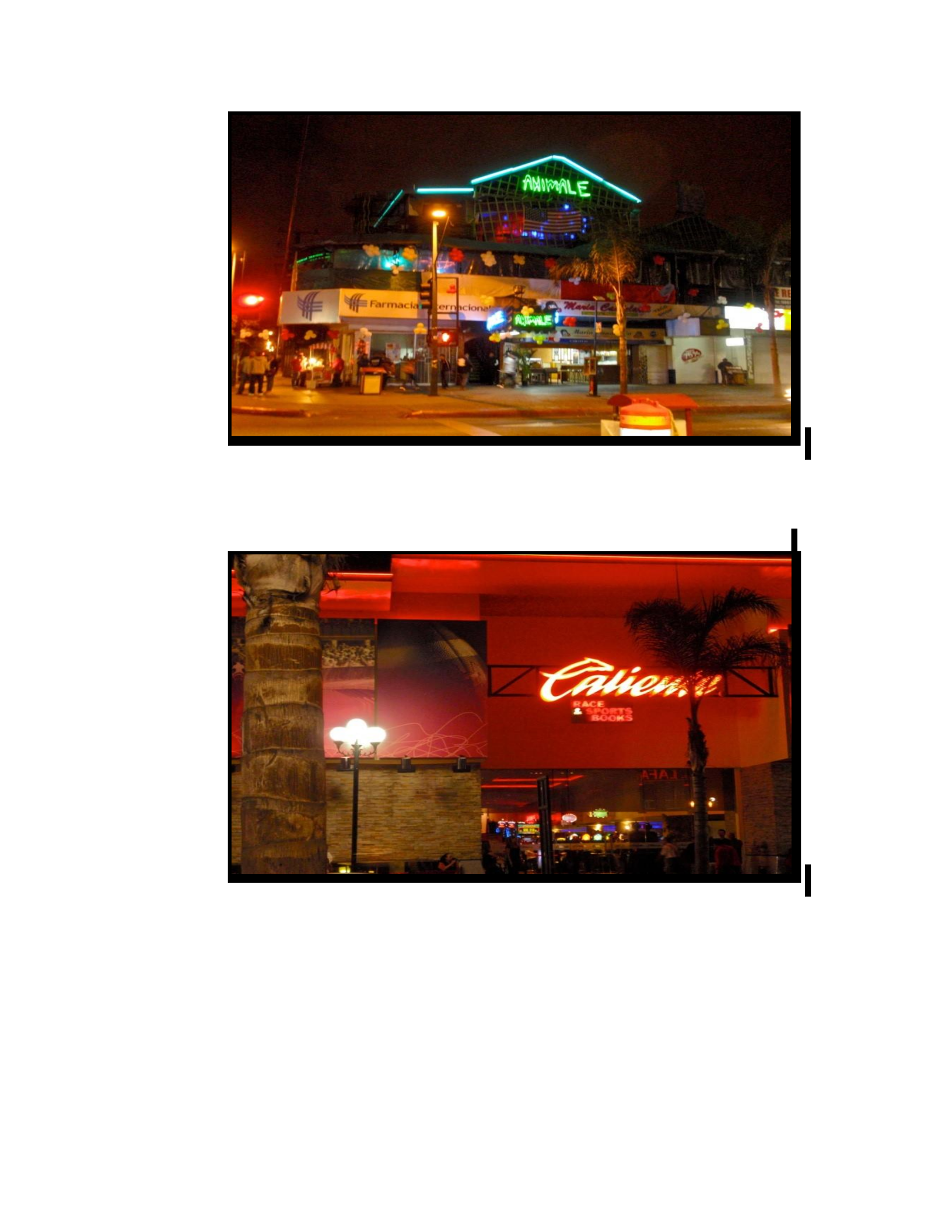
Figure 2: A club on the Avenida Revolucion. Ever since the days of U.S.
Prohibition, the “Revo” has served as a central location for clubs, bars,
restaurants, gambling, and other leisure pursuits.
Figure 3: “Casino Caliente” in the Zona Norte of Tijuana.
Tijuana as a sex-scape
Tijuana remains internationally renowned for its commercial sex trade. In
conceptualizing the forms of sexual risk that circulate through the Zona, I draw on
Denise Brennan’s work on the “sex scapes” of the Dominican Republic (Brennan 2004;

Brennan 2008). Adapting Arjun Appadurai’s “ scapes” of modernity (Appadurai 1996), a
“sex scape” is characterized by international travel from the developed to developing
world, where the consumption of paid sex is transacted within a broader context of
inequality.
While this is certainly the case, sex work takes on many forms in Tijuana.
First, I examine the policy environment in Tijuana that attempts to regulate
commercial sex exchange. In 2005, the Tijuana city council passed a law making periodic
medical check-ups mandatory for sex workers (Hoffman 2010). Legalization was the
product of strategic decision-making by local politicians. As public health studies have
increasingly focused on HIV/AIDS and migration along the border and U.S. researchers
pressure Mexican health officials to respond, officials regulated sex work and required
women to obtain health cards as a strategy to mitigate the possible negative health
consequences of those who purchased sex in Tijuana (Hoffman 2010). There may also be
ulterior motives for regulating sex work, however. The Zona Roja has long served as an
important source of revenue for the local and state governments, who profit off the
licenses and taxes paid by bars and club owners, as well as the health fees paid by the
registered sex workers (Hoffman 2010).
The benefits of the registration system to the sex workers themselves are arguable,
however, as it has not been found independently to predict lower rates of HIV/STIs
compared to women who are not registered (Sirotin, et al. 2010a). Sex work registration
in Tijuana costs $360 per year, and requires monthly HIV testing and quarterly STI
screening. Women registering as sex workers who test positive for an STI are treated with
antibiotics according to federal guidelines, and if they test positive for HIV, their cards

are automatically revoked and they are referred to specialty care in the city HIV clinics.
Statistics from the Municipal Health Clinic indicate that more than 8,000 sex workers
have registered since the system began (Hoffman 2010). Yet, only about half of all active
sex workers are currently registered (Sirotin, et al. 2010b). Enforcement of sex work
registration is difficult and the penalties of non-compliance often fall disproportionately
on women rather than business owners, as infected women cannot work but bars can
remain open (Beaudeau 2010).
Moreover, the regulation of sex work may actually contribute to the further
marginalization of some women. The thousands of women who are not registered often
cannot afford the regular checkups, or they do not have proper documentation. While
women who are not from Mexico are technically able to register, there are no registered
non-Mexican sex workers, likely because migrants do not want to reveal their identities to
governmental institutions (Hoffman 2010).
In a recent study of 410 female sex workers in Tijuana, just 44 percent were
registered with the health department. Registration was less likely among women who
engaged in street-based sex work, injected cocaine, inhaled or smoked crystal
methamphetamine, and were born outside of the state of Baja California (Sirotin, et al.
2010a). Thus, in practice, the current registration system fails to serve the health needs of
many sex workers in Tijuana, particularly the street-based, drug-using sex workers who
are at highest risk for HIV and other STIs (Sirotin, et al. 2010b).
As suggested by the inequalities in the registration system, sex work in Tijuana is
hierarchical and practiced by a diverse group of women. As elsewhere, women involved
in sex work in Tijuana tend not to be viewed for their complexity as individuals, but

rather in terms of the labor they offer and their potential to spread disease (Katsulis
2008). The women involved in sex work in this context range in age from their twenties
to their fifties and have worked for periods ranging from a few weeks to many years in a
variety of commercial establishments or informally by their own arrangements (Castillo,
et al. 1999; Goldenberg, et al. 2011a; Katsulis, et al. 2010). A substantial number of
female sex workers are migrants from other parts of Mexico who traveled to the area for
economic opportunities or in hope of crossing the border, and many support children and
extended families through their work (Ojeda, et al. 2009). Increasingly, females who have
attempted to cross into the United States are being deported and find themselves with
little other economic opportunities than trading sex (Ojeda, et al. 2011). Some come from
situations of family violence, and escape abusive homes by forming partnerships with
men at a young age or by seeking informal work. These women may vacillate between
sex work and other options in response to economic need, relationship failures, or
intolerable working conditions in menial jobs (Bucardo, et al. 2004).
Some women have been lured to Tijuana by word of mouth and through other
women passing on information about the economic possibilities of the city’s sex
establishments and working conditions in different clubs. Such “success stories” have
reportedly attracted other women to pursue employment in certain locales. The
wellestablished Adelita Bar has a national reputation as a lucrative place to earn money
where women are treated well (Hoffman 2010). Researchers have found that many of the
women “don’t want to get stuck selling sex in Tijuana” (Hoffman 2010:16) and look to
sex-based employment as a temporary fix to earn enough money to move on to other
opportunities. Many sex workers in Tijuana engage in this work out of economic

necessity, and many others are the sole supporter of their children and extended families
(Bucardo, et al. 2004; Castillo, et al. 1999). The lack of other employment opportunities,
high living expenses, and continued financial obligations often constrains sex workers’
options for geographic, economic, and social mobility (Katsulis 2008).
These diverse women most famously work in Tijuana’s Zona Roja, or designated
“zone of tolerance,” a concentrated area of the downtown where sex is sold in a diverse
array of establishments as well as on the streets. Many of the women who are registered
as sex workers operate here in the Zona and cater to the influx of international and local
clients who solicit sex at the many strip clubs and bars that pack this dense corridor.
Sometimes jaladores, street- or bar-based men, help recruit and match clients, particularly
Americans, with sex workers in the Zona. These men are often clients themselves
(Goldenberg, et al. 2011).
In the Zona, the most famous and upscale clubs, including Adelita and the Hong
Kong, are located on one principal avenue. A multitude of other clubs and bars line the
local side streets, including a narrow one-way street behind these main establishments
that is densely populated with paraditas, or street-based sex workers. Hotel rooms are
available for rent on the upper floors of bars and clubs, or are located adjacent to their
entrance. The narrow street behind the main drag and the blocks immediately surrounding
this area are lined with even more small hotels that charge by the hour. The paraditas
have specific street locations where they are regulated to stand in the several blocks that
encompass the Zona Roja. Although the women have many different physical features
and vary widely in appearance, many employ strategies of heavy makeup, short skirts,
and platform heels to attract clients amidst all of the competition.

Figure 4: The famous Adelita bar in the Zona Norte of Tijuana.
Figure 5: Adelita celebrates 50 years of business in 2012. During the
time I worked in the Zona Norte, Adelita opened a gift shop on the
main strip to sell memorabilia such as T-shirts, hats, and shot glasses.
The inside of the store is decorated with cultural iconic posters of
Lucha Libre Mexican wrestling movies, the kind of masks sold all
over Tijuana. Efforts to commemorate the longevity of local
businesses have been part of the initiatives to re-invent the Zona and
try to re-attract the tourism that has suffered in the wake of increased
border security since September 11, 2001 and fear of drug violence.
Photos by Angela Robertson.

Figure 6: The Hong Kong gentlemen’s club. The Hong Kong (close-up on the left;
wide shot on the right) is another landmark in the Zona. According to its website
(painted on the side of the hotel next door; the website is available in English or
Spanish) “This 24 hour Tijuana strip club is located on the world famous Calle
Coahuila, only rivaled by the Red Light District in Amsterdam.” The website also
advertises bachelor and divorce parties and U.S. border pickup service for patrons.
Nevertheless, other types of commercial exchanges take place in Tijuana that
substantially differs from the sex work practiced in the Zona. As in other international
settings, sexual barter based on small scale, self-organized and informal terms often
within the context of sex for drug exchanges also occurs (Castillo, et al. 1999; Bucardo,
et. al 2004; Bernstein 2007). Brennan characterizes women who exchange sex outside of
the context of formal establishments or pimp arrangements as “freelance” sex workers.
These women exercise some level of agency and control over their work and their
earnings (Brennan 2008).

The overwhelming majority of women enrolled in Parejas are not registered with
the health department and do not work for formal establishments. Rather, these women
act as “freelance” sex workers who privately select their own clients with whom they
negotiate their own arrangements based on financial and drug-related need (Brennan
2004; Robertson, et al under review). While some of the women engage in street-based
forms of exchange to secure one-time clients, often freelance workers prefer to form
relationships with men with whom they regularly meet and often count on for a steady
source of income. These sexual arrangements take place in hotels or in the clients’ own
homes, and at times, the services the women provide do not include sex as much as
companionship (Robertson, et al. under review). While these forms of sexual exchange in
Tijuana are perhaps less famously known than the commercial work that occurs out in the
open of the Zona Roja, these freelancers are the kinds of sex workers who are enrolled in
my dissertation research.
Tijuana as an injection risk environment
Tijuana is also an injection drug risk environment (Rhodes 2009). It is located on
major drug trafficking routes, and drugs are widely availability and inexpensive in the
city (Bucardo, et al. 2005). In the 1980s and decades to follow, shifting interdiction
efforts targeted at Caribbean drug trade routes and the advent of neoliberal reforms and
passage of NAFTA led to an increase in the involvement, size, and power of Mexican
drug cartels. This increased the production and flow of drugs through the region; and
resulted in a surge of drug-related violence throughout the country and along the northern
border (Ciccarone 2009). In the aftermath of the terrorist attacks of September 11, 2001,

in the U.S.A., increased border surveillance led to a parallel increase in the local supply
and consumption of heroin within Mexico (Bucardo, et al. 2005).
Mexican black tar heroin dominates the drug trade routes up the Western coast of
Mexico and the United States (Ciccarone 2005; Ciccarone 2009) and is widely used in
Tijuana (it is the primary drug of choice among Parejas participants). Black tar heroin is
a crude and unpurified derivative of opium that originates in Mexico (Bucardo, et al.
2005). The drug is often diluted or “cut” at several points along the distribution line,
including with soil, which can introduce contaminants (Passaro, et al. 1998). Its sticky,
tar-like consistency must be diluted with water and heated before injecting.
With consistent use, heroin produces an intense physical dependency among users
and a painful drug withdrawal syndrome when the body is craving a fix. Called “malilla”
in Tijuana, heroin withdrawal syndrome produces symptoms such as fever, chills, runny
nose, muscle and bone pain, cramps, nausea, vomiting, diarrhea, and anxiety that users
report is so unpleasant that they feel compelled to continue injecting at all costs (Connors
1994; Syvertsen, et al. 2010).
Crystal methamphetamine (“meth” from here forward) has also become
increasingly prominent in the region; currently about 90 percent of the methamphetamine
that enters the U.S. market originates in Mexico, where the local market for consumption
has increased exponentially in border cities (Case, et al. 2008; Strathdee, et al. 2008c).
During the 1990s crackdown of ‘meth’ laboratories in the U.S., Mexican drug
organizations started producing high quality, low priced methamphetamine that won out
over U.S.-based producers (Smith and Toro 1997). The quality of the meth available
varies (Strathdee, et al. 2008c), but it is typically a powdery white substance. In Tijuana,

meth is nasally inhaled, smoked after being heated in pipes or hollowed-out light bulbs
known as focos, or mixed with heroin and injected (Brouwer, et al. 2006b).
Harm reduction initiatives are attempting to mitigate the increase in drug use in
Tijuana in recent years (Instituto Nacional de Salud Pública 2008b). Several
nongovernmental organizations operate syringe exchange programs in Tijuana, but the
funding and scope of their street outreach may be modest given the need (Strathdee, et al.
2005). Research with local stakeholders such as pharmacists, health professionals,
religious leaders, policy makers, and law enforcement personnel suggests that while
many are generally accepting of syringe exchange programs, they also indicate that a lack
of political will, limited funding, policing practices, religious opposition, lack of public
knowledge, and social and cultural factors (e.g., conservative and religious beliefs, stigma
and discrimination against drug users) are important barriers to effective implementation
of harm reduction programs (Philbin, et al. 2009a; Philbin, et al. 2008a; Philbin, et al.
2009b).
Moreover, external factors can limit risk reduction initiatives. I once witnessed an
empty needle exchange van run by another organization parked at a popular locale where
drug users congregate; the UCSD project staff told me that participants fear that they will
be targeted for arrest. Indeed, research in Tijuana has documented the injectors who
attend needle exchange programs have been subject to drug-related harms related to
policing practices, such as rushing an injection, being restricted in the geographic areas of
drug purchase and use, fearing arrest, and engaging in receptive needle sharing (Volkman,
et al. 2011). Fear of arrest also limits mobility and the capacity to carry clean syringes to
reduce injection risk (Pollini, et al. 2008). Furthermore, while syringes can be legally

purchased and carried, drug users often face discrimination in trying to purchase syringes
in local pharmacies (Pollini, et al. 2010a; Pollini, et al. 2011b). The importance of
structural factors like policing and discrimination on constraining injection practices in
Tijuana cannot be overstated.
While tourists can purchase heroin and meth from low level dealers on the streets
of the Zona Norte and are likely not subjected to these structural constraints, I focus my
discussion on local injection drug use practices. One critical site for local drug exchange
is the Tijuana River canal. The Tijuana River canal (the “canal” from here forward, as it is
commonly called) is an intermittent river that flows along the border of Northern Baja
California and the Southern U.S. border until it empties into the Pacific Ocean. In
downtown Tijuana, it takes the form of a massive concrete structure large enough to allow
vehicles to pass through on either side of a recessed waterway in the middle that is
sometimes completely dry and sometimes rapidly flowing. The canal partially demarcates
the border between Mexico and the U.S.A.
While the canal is located just blocks from the Zona Roja, it is completely out of
sight from the activities and the bustle of the city. The canal provides refuge and acts as a
social meeting ground for the ever growing population of migrants, deportees, indigents,
and injection drug users who live and spend time there. Many of the study participants
regularly go to the canal to buy and use drugs, and sometimes seek injection assistance.
I have been to the canal on numerous occasions to conduct harm reduction
activities and locate study participants. Parts of it are strewn with garbage and the stench
of refuse and stagnated water can be nauseating. There are places where entire makeshift
tent cities have been erected, though the police will periodically come in to sweep the

area and force individuals to resettle elsewhere. Police also regularly target their patrol
activities at drug users in the canal because it is a well-known area of drug exchange and
use. On numerous occasions, I have witnessed scenes of public injection, including a
woman being injected in her neck by a man and a woman carefully injecting a man in his
collarbone area. While the scene is mostly male dominated, there are women who live
and use drugs in the canal as well. Some of these women also engage in “freelance” sex
work, including several of the participants in Parejas.
Celia, one of the partners in my study who is introduced in Chapter 7, also showed
me a lesser-known aspect of the canal, the hidden compartments that individuals have
built into the structure where dealers can hide from the police. Deep in the canal, we
walked past a makeshift encampment with small structures made of cardboard and loose
scraps. The stench was unbearable that day, as it had recently rained and the copious
amounts of garbage, mud, and sewage were festering. The compartment – she said there
are about four of them hidden in this general area – was a two to three foot deep hole in
the ground, rectangle-shaped and just large enough to fit an individual lying down. Inside,
I noticed what appeared to be glass liquor bottles and scattered garbage like plastic soda
bottles. Then I noticed a person’s leg – I did not see the identity of the individual, as he
was lodged inside the compartment, with only his leg and sneakered foot visible from my
direct view above ground. The wooden trap door covering the compartment was open, but
Celia indicated if it is shut, it is sufficiently obscured by dirt, weeds, and debris covering
the rest of the area, providing protection from the police.
While we have not created an ethnographic portrait of the drug users in the canal,
a recent cohort study of 1,056 injectors in Tijuana reported that the median age of the

sample was 37 years, with 86 percent male, and 76 percent comprised of migrants. The
crude HIV prevalence was higher in female participants (8.3%) than in male participants
(3.3%), which was in part associated with migration status and having been arrested for
track marks (Strathdee, et al. 2008a). These findings are perhaps suggestive of a
descriptive profile of the injectors in the canal, who engage in street-based drug use
among networks of migrants and are often targeted for arrest by the police.
The canal is also an important site targeted for needle exchange and harm
reduction activities in Tijuana. The canal is one of the destinations on the “tour” of the
UCSD research projects in Tijuana that I used to help regularly facilitate for students,
prospective scholars, and community members interested in learning about the research
projects. In conjunction with a local non-governmental organization, the tours also
provided an opportunity to conduct informal needle exchanges. We gave away prevention
kits and collected used needles and chatted with the recipients. The need was always
immense and even if it appeared as though no one was around when we first pulled up to
an area in our van, individuals would quickly emerge from what seemed like nowhere
once word got out that the needle exchange had arrived.

Figure 7: The Tijuana River Canal, when the river is flowing. The canal is
a meeting place for migrants, deportees, homeless individuals, and others
who live, purchase, and use drugs there.
Figure 8: The floodgates of the canal. The floodgates often serve as shelter
for some of the homeless injection drug users who live there. Sometimes
the gates flood, forcing individuals out. The garbage and stench in the
canal is often overpowering, but as evidenced by the clothes drying
outside, some people must use the river water to wash their clothes.

Figure 9: Heading into the Tijuana River canal for needle exchange. Needle
exchanges take place on a semi-regular basis. On several occasions, I
helped coordinate tours into the canal for students and others interested in
research at UCSD in which we also held informal needle exchanges.
Figure 10: Prevention kits for injection. This group of individuals just
received prevention kits as part of the harm reduction activities carried
out in the canal, where many Tijuana injectors use drugs. The kit contains
a syringe, water, filter, and harm reduction information.

Celia said that many of the locals buy and use drugs in the canal because it is easy
to climb up the concrete sides to quickly escape or duck into a flood gate to avoid the
police. She also showed me another connecta, or place to purchase drugs, that at the time
had “good dope” and was popular in the Zona. To an outsider, it appeared to be just a
little alleyway; there was a home on the left side that had a family inside, and a little
market on the right hand side. All the way in the back of the narrow alley way, several
young males, who she indicated are the sellers, sat outside in plastic chairs. The risk in
this connecta is that in contrast to the canal, there is only one way in and out, which
increases the likelihood of getting trapped by the police and arrested.
In Chapter 9, I discuss what I learned about other drug purchasing arrangements
and drug use practices for couples who live outside of the Zona. For the current purposes,
I have discussed the canal because one cannot ethnographically understand the full
picture of drug injection in Tijuana without knowing the canal.
Borderline crazy: Reflecting on fieldwork
During my work on Parejas, the parent study in which my dissertation is nested, I
crossed the border and spent considerable time in La Zona, as the UCSD research project
office is located there. As Joseph Heyman has written, anthropologists have long
theorized borders as possessing “powerful symbolic properties” (Heyman 2009). Borders
help contain risk and provide protection; as such, the people and elements that attempt to
cross the lines are viewed as a threat to the order. As sex work, drugs, and vice
historically have been relegated to the Mexican side of the border, my attempt to cross
into it and study the phenomena represented risk and danger. This section reflects on my

experience of conducting fieldwork in Tijuana, with particular attention to the nature of
the subject matter under study and the danger inherent in its pursuit.
The logistics of commuter fieldwork (Ong 2003) enabled me to participate in the
busy transnational circulation of people, commodities, and ideas that characterize the
Mexico-U.S. border region. I typically crossed into Mexico via a pedestrian bridge.
Nearly every time I crossed into Tijuana on foot, I observed buses dropping off a new
stream of deportees to be processed and released to the streets of Tijuana. I also met
numerous deportees during my work, which prompted me to employ deportation as a
sampling category in my study, as further discussed in Chapter 5. I was also always struck
by the impossibly long line of northbound vehicles waiting to cross the border, which can
take several hours. An entire informal economy has developed around the border wait, as
vendors sell food, cold drinks, Mexican flags, blankets, jewelry, religious symbols,
ceramic knock-off Hello Kitty figures, and just about anything else one can imagine.
Others set out with a bottle of glass cleaner and rag and try to wash cars in exchange for a
few pesos.
I applied for a SENTRI (Secure Electronic Network for Travelers Rapid
Inspection) pass from the U.S. Customs and Border patrol, which allows “low risk”
travelers who pass a background check and personal interview to obtain an identification
card and car pass for those who wish to drive across. Separate lanes for walking and
driving are reserved for SENTRI card holders, which greatly expedites the border
crossing experience. The program is invaluable to frequent commuters in attending to
their family, business, educational, and social needs on both sides of the border, and many
of my colleagues at UCSD have SENTRI. Yet it also essentially creates and maintains a

classed system of surveillance and categorization that privileges the expedited movement
of those deemed desirable and routinely interrogates those individuals whose personal
profile appears to deviate from lower risk ideals (Heyman 2001).
Nevertheless, having SENTRI was invaluable in my work, as it permitted me to
cross back and forth with ease on a nearly weekly basis over a period of about two and a
half years (see also methods Chapter 5). The UCSD project office is located in the heart
of the Zona Norte in the second story of an office building. At all hours of the day, the
Zona is bustling with movement, sounds, smells, and sights of simultaneous formal (e.g.,
bars, clubs, restaurants, and hotels) and informal (e.g., street vending, drug dealing)
economic activities. Like many cities, there is usually an excess of garbage throughout
the Zona. Workers are constantly sweeping or hosing down the streets in the morning and
sometimes the afternoon in front of their bars and restaurants. The air is often thick with
alternating wafts of grilled meat, garbage, and dog shit, sometimes all on the same block.
The sounds of music blaring from behind the dark curtains that cover the front doors of
many bars can range from American rap to traditional Mexican rancheros and everything
in between. The men who work the doors always call out to me first in Spanish, and if I
do not answer, they often code switch into English. They say their bars are “happy
places” with cheap drinks. “Lady, don’t you want to have some fun?”

Figure 11: Northbound border crossing from Tijuana. The empty lanes in the
right side of the photo are reserved for SENTRI card holders. The sidewalk
next to the SENTRI lanes is the pedestrian crossing. Crossing the border to
the U.S. side can take up to several hours at peak travel times. The line backs
up going into Mexico in the late afternoon.
Figure 12: Vendors in the northbound lanes of
traffic entering into the U.S.A.

From the office vantage point on the second floor, one can see the constant flurry
of street activity below, including the street-based sex workers, men and women
informally selling items in the street, street cart venders, police, and young school
children who attend the school one block down the street. The office is stuffy and hot in
the summer, and even setting up oscillating fans in the interview rooms does not prevent
interviewer or interviewee from becoming damp with sweat during the interaction. In
contrast, the office is frigid in the winter to the point that some of the staff wear jackets,
scarves, and gloves inside. The music from the bar downstairs from some of the
interviewing room seeps through the floor and walls and the bustle of loud traffic, street
mariachis, police sirens, and general commotion outside the windows can at times render
it difficult to conduct an interview. Nonetheless, the office serves as a convenient location
where formal project interviews take place and HIV/STI testing is conducted, as well as
an informal place where participants sometimes drop in to get coffee, chat, check on their
test results, and inquire about their next interview.
The majority of my work for Parejas was based in this office and consisted of
data collection and project management. I often went out into the field to locate
participants and helped facilitate tours of the UCSD projects before they were suspended
due to safety concerns by the University. My dissertation work involved recruiting
participants from this office base and I conducted the first interviews of my project in the
office. After providing partners with the option for home-based interviews (see methods
Chapter 5), my work extended out into other areas of the city beyond the Zona Norte
which contrasted with the more sanitized environment of the clinic.

Of the seven couples enrolled in my dissertation work, four live in neighborhoods
outside of the Zona Norte, three of whom I was able to visit to conduct home-based
interviews and observations. I also conducted interviews and observation with one couple
who live in the heart of the Zona. In all cases, couples reside in simple homes or
apartments either with other family members or close to family. I learned that each of
these neighborhoods has its own drug market, and I was able to observe drug use
practices among all of the couples I visited. Chapter 9 provides descriptions of the social
environments in which the fieldwork was conducted and lends insight into the couples’
drug use practices.
My research outside of the office setting presented several challenges, which now
provide several points of critical reflection about researcher position and the dangers of
fieldwork. The remainder of this chapter processes, reflects, and acknowledges my
position as a researcher working on a difficult topic in a potentially dangerous context.
Risky fieldwork and representation
I begin with risk, harm, and danger. The sociological concept of risk refers to the
possibility that certain actions or processes will result in future harms, including injury,
loss, damage, destruction, or death (Giddens 1990). I define harm broadly to include a
range of disease outcomes as well as other threats to wellbeing, whereas danger is the
perception of risk (Douglas 1991). Access to resources and opportunities is unequally
distributed throughout societies, and these factors are not only produced by human
actions over time, they have tangible consequences in terms of the distribution of wealth,
economic production, residence, information, and health, and therefore bear directly upon
how, and among whom, risk is circulated (Beck 1996; Reith 2004). The “risk

environment” framework upon which I draw in this research conceptualize harms as a
matter of “contingent causation” (Rhodes 2009:198). Harm is contingent upon an
individual’s social interactions as produced within the constraints of the political,
economic, and socio-cultural environment. The risk taking and risk avoidance strategies
as practiced by female sex workers and drug users are at once symptomatic of their
vulnerable position in society and expressions of agency that attempt to manage multiple,
competing harms.
My fieldwork was conducted within the “risk environment” of Tijuana’s spaces of
illicit sex and drug trade (Rhodes 2002). This is an immanent domain of risk – it is
comprised of the larger, historical factors of militarized violence, drugs, and vice that are
feared by outsiders. As a researcher working in Tijuana, my experiences and perceptions
were shaped by this immanent domain of risk, but not in the same way that the research
participants whose lived experience is more intimately shaped by it. I only observed their
experiences of risk as an outsider to the domain.
Part of the anthropological project is to be humanizing of the people we study,
particularly when they engage in illegal and stigmatizing behaviors that typically cast
them as a “risk group” for HIV infection (Schiller, et al. 1994; Schoepf 2001). In working
in a dangerous place on sensitive and stigmatized topics, we want to recognize real risks
without reifying these risk categories or portraying participants in ways that reinforce
negative stereotypes. At the same time, however, we must be careful not to accept
uncritically what participants say at face value and enable ourselves to be seduced by
their versions of events without thoroughly evaluating other forms of evidence (Robben
1995). The challenge in this reflection and throughout this dissertation is to represent

accurately the couples’ lives without exotifying or reifying them (Taussig 1980) and to
acknowledge how my personal role as a researcher (Cohen 2000; Hill, et al. 2010) in this
particular risk environment shaped my data collection and influences my representations
of female sex workers and their intimate partners’ lives and risks.
As Peter Magolda (2000) writes, “qualitative researchers need not apologize for
their subjectivity but must be aware of and acknowledge it” (Magolda 2000:230).
Because of my gender, ethnicity, nationality, fully clothed and sober body, and relatively
privileged position as a graduate student who returned home to a middle class San Diego
neighborhood after each day of fieldwork, I was always self-aware of my position
working in Tijuana. In her discussion of emotionally engaged fieldwork, Kari Lerum
(2000) points out that “the study of sex work is a politically and emotionally tricky
endeavor” (Lerum 2001:468). This sentiment ostensibly applies not only to the
ethnographer’s engagement during fieldwork, but to later issues of representation of the
experience studying taboo subjects. Magolda (2000) calls the “confessional tales” of
fieldwork about ethnographers’ experiences, mishaps, and hardships in the field an
important part of including the researchers’ own voice in the work (Magolda 2000).
Unlike traditional models of detached data collection, ethnographic engagement in the
lives of the participants and immersion in the daily flow of the research site ultimately
generate a different kind of research result. According to Magolda:
Confessional tales reveal how the research came into being, expose the
human qualities of the field-worker, chronicle the researcher’s shifting
points of view during the fieldwork and writing phases of the research,
and remind readers that the fieldwork process is imperfect but not
fatally flawed (Magolda 2000: 210).
In addition to reflecting on the difficult content of my research, working in a
“dangerous” fieldsite like Tijuana introduces the challenges and imminent risks associated

with the daily movements through the city and varied interactions and experiences with
individuals. Anthropologists have long worked in risky and dangerous places and a
number of publications have reflected on these experiences (Kovats-Bernat 2002; Nilan
2002; Nordstrom and Robben 1995). Pamela Nilan, for example, wrote that dangerous
fieldwork is often worth the risk because of the highly charged data that can emerge from
the experience that other methods are not able to fully capture. Nilan concluded that
while not entirely unproblematic, hiring a local “guide” who was privy to a bar scene
where sex work and drug dealing openly occurred provided her with new and invaluable
insight in her study of young people’s health risks in Bali (Nilan 2002).
Experiences of personal risk
People always asked me if I personally felt “safe” conducting fieldwork in Tijuana
and traveling back and forth across the border by myself. Overwhelmingly, the answer is
yes. Yet U.S. State Department Travel warnings and media coverage of drugrelated
violence and human rights abuses (Archibold, et al. 2011; Human Rights Watch 2011;
Savage 2011; U.S. Department of State 2012) generated some admittedly legitimate
concerns with my proposed research plan from university officials, project staff, and
advisers.
Navigating institutional resistance and concern was further complicated when,
about one month prior to launching my dissertation work, an incident occurred with a
group of staff from the UCSD research studies that were driving through the canal to
locate participants. On this particular day, a group of men stopped the staff, pulled them
out of the van at gunpoint, and forced them down onto the concrete for several minutes;
one of the men also kicked a male staff member in the ribs in the process. Only after

several minutes of uncomfortable torment did the men identify themselves as undercover
police and eventually accept the staff’s legitimate reason to be in the canal. They let them
go. Needless to say, the staff was severely shaken up, and all fieldwork activities were
temporarily suspended (no incidents have been reported since).
In response to concerns about physical safety in the field, I followed the risk
management protocol developed for Parejas. I carried emergency contact numbers and
always informed someone from the Tijuana project staff where I was for the day. As
another form of precaution, I always carried multiple forms of identification, including a
UCSD employee ID as well my driver license and University of South Florida school ID
in case I was ever stopped. I carried my personal cell phone and a Nextel phone that I had
from the University at the time, which acted as a two way pager to make calls for free all
over Mexico and Southern California. In addition to the contact numbers I carried on my
person, the Nextel had several pre-programmed numbers of people on both of the border
who I could call in case of an emergency. I did not create any formal agreement with the
local police for my personal study, but rather operated under the (naïve?) assumption that
my affiliation as an American UCSD project staff member would have pardoned my
presence or gotten me out of jail, as UCSD has been working in the community for a
number of years and is well known to most of the local authorities.
Despite my outline of precautionary measures, I was exasperated when I first
started my project at the continued intuitional resistance to my entering the field and lack
of access to the staff for their assistance in locating participants’ homes in a sprawling,
chaotic city. A Mexican colleague of mine suggested and helped arrange for a

“bodyguard” to take me around to my first home-based interviews. This would enable me
to start my work and support an argument of safety and precaution should I be questioned
about my activities. Little did I know this would end up being a “real” bodyguard who
looked like he was straight out of a Hollywood movie, drove a giant, glimmering
Suburban SUV, and boasted credentials of providing protection to several state-level
officials in the course of his professional experience.
I hired the bodyguard on two separate occasions, but quickly decided that his
presence and level of protection (I later found out that he carried a gun) was unnecessary
and distracting, particularly given the nature of the work I was doing. Beto, one of the
partners in my study who I introduce in Chapter 7, later told me that the bodyguard
looked like a cop. Upon further reflection, the bodyguard’s appearance could have
endangered Beto and his partner Cindy if someone got the wrong idea about who was
spending time waiting around outside their house (a well-known corner where locals
often congregate to purchase drugs from the dealers who drive through the colonia, or
neighborhood). After this gaffe, I quietly hired cabs to take me around and adopted a
“buddy system” in which a colleague accompanied me (on her own time) on all home
visits, further discussed in the methods Chapter 5.
Among the primary safety concerns in this context are the risks of physical harm
and incarceration from engaging with individuals who are involved in illegal activities.
Law enforcement agencies along the northern Mexican border have been accused of
human rights violations, forced disappearances, repressive policing tactics, and
questionable detentions (Beletsky, et al. 2012; Human Rights Watch 2011). Nevertheless,
I do not pretend that my risks from the police are the same as those for the participants

with whom I work. While my identification and identity as an American researcher likely
would have gotten me out of jail, I cannot say the same for the participants who are
routinely targeted by the police for their appearances as drugs users. At the same time, my
presence may have been suspicious and my unfamiliarity in navigating the legal system
and restrictions in my language capabilities may have rendered it difficult to quickly
negotiate my way out of a bad situation. To be fair, the police themselves contend with
their own sense of danger in a city reputed for its violence and drugs.
The risks of physical harm and incarceration are not the only issues of concern in
this type of work, however. Spending time in participants’ homes and observing their
injection drug practices could have placed me at risk for accidental exposure to needle
sticks and other environmental hazards. Partners under the influence of drugs could have
grown violent, gotten sick, or overdosed. Other household members and social contacts
not directly involved in the study could have raised objection to my presence. Others’
suspicion about my presence there could have placed the participants at risk as well, if
their family members and friends became upset or angry as to why they let me into their
home and exposed me to illegal activities that could tip off law enforcement.
In the end, I did not suffer any negative consequences because of my fieldwork.
Neither did any of the participants, of which I am aware. I was able to conduct interviews
in the homes of four of the seven couples who participated in my study, and for three out
of four, I made multiple trips to interview and interact with them. The observations and
interview data generated through this work made invaluable contributions to my study
that purely office-based collection methods could not have provided (Nilan 2002). The

challenges that I faced along the way to collect these data to me have far outweighed my
sense of personal danger at any point.
As a final point, I want to reiterate that Tijuana is much more than its stereotype as
a bastion of sin and risk and there are many other dimensions of experience besides
worrying about personal security. In this chapter, I have focused on the commercial sex
trade and drug-related aspects of Tijuana because they form important parts of the city’s
history and are directly relevant to my dissertation work. During my fieldwork, however,
my eyes were opened to other areas of a modern, cosmopolitan city luring new high tech
industries and garnering media attention for a burgeoning culinary scene and upscale
nightlife (Isackson 2010; Landsel 2011). People are hospitable and proud of their city.
From study participants to government officials, people were kind, patient, and open with
me. This richness, diversity, history, and chaos of the Mexico-U.S. border makes it an
ideal setting in which to explore critical and phenomenological notions of modernity,
emotion, risk, theory, and practice, as taken up in the following chapters.
Figure 13: Nightscape of Tijuana. This photo was taken from a friend’s balcony in
an upscale neighborhood outside of the Zona Norte. The lights on the hillsides of
Tijuana at dusk give it a serene feeling. Photo by Angela Robertson
CHAPTER 3: LITERATURE REVIEW

"Anthropologists ask for trouble when they deal with love because
it's so hard to get a logic handle on it. But love is so incontestably
important in human affairs, that anthropologists who do not try,
flout the very definition of their profession" --Margaret Mead 1977
This chapter evaluates love and HIV risk in the diverse contexts of intimate
relationships. My review of the literature begins with a historically situated,
phenomenological perspective of modern love. As asserted by Mark Padilla and
colleagues (2007): "love is a particularly useful lens for social analysis, providing as it
does a glimpse into the complex interconnections between cultural, economic,
interpersonal, and emotional realms of experience. Love in a word is holistic.” (Padilla et
al 2007:ix). Through this lens, I explore the influence of love and other emotions on
sexual and drug-related risk behaviors within relationship contexts and contend that an
affective approach to studying HIV risk is also appropriate for understanding sex
workers’ non-commercial relationships in Tijuana.
The second part of the chapter discusses the rise of modern forms of sex,
including sex work and to what extent affect is embedded in this industry on a global
scale. In examining the subjective experience and meaning of love from sex workers’
point of view, the importance of emotions becomes evident. Studies suggest that love,
trust, and intimacy can shape sex worker-client relationships and influence patterns of
condom use. Nevertheless, few studies have focused on the emotional content of female
sex workers’ relationships with non-commercial partners and how emotions can shape
intersecting sexual and drug-related risk perceptions and practices. This omission in
international scholarship invites the possibilities to expand the HIV literature and advance
an anthropology of affect.

‘Modern love’
Love is a universal human emotional experience (Fisher 1994; Fisher 2004).
Throughout history, individuals have experienced and expressed romantic love in many
different ways (Lee 1977; Moore 1998). How people love is profoundly shaped by
broader cultural, social, and even economic contexts (Hirsch and Wardlow 2006; Padilla,
et al. 2007; Rebhun 1999). Such external factors shape individual choice of partners,
influence the timing and processes involved in establishing a committed relationship
(Fisher 1994), and even help determine what a committed relationship means in a
particular context (Jankowiak and Nixon 2008; Lewinson 2006).
Historically, the rise of modern love and companionate marriage traces back to
19th and early 20th century Europe and U.S systems of emergent capitalism (Shumway
2003). As new configurations of production and consumption overtook an order based on
kinship and group obligations of earlier times, the structure of relationships changed to
become gradually less bounded as units based on female reproductive capabilities
(Coontz 2006; Lindholm 1998). Older systems of marriage were based on duty and
kinship ties; families were bound units in which members had a moral obligation to each
other to adhere to gendered forms of labor (e.g., the female remains in the domestic
sphere and rears the children who grow up to contribute their labor to the household).
Marriage had been expected of women who had few other options and fulfilling marital
obligations was a means to securing a livelihood and represented an end unto itself.
Marriage was also a key way to manage property and perpetuate family order through
patriarchal systems of inheritance that passed down property from one generation to the
next. During the rise of capitalism, however, the economic and social order began to
change. Corporations took over some of the roles of the traditional family, and

individualization and flexible accumulation began to chip away at the traditional roles of
marriage. Urbanization, education, fertility decline, gains in life expectancy, rise of wage
labor, and media influences have been critical forces in shifting relationships from that of
obligation to that based on personal decision, autonomy, and self-realization (Shumway,
2003; Padilla et al. 2007). Marriage started to become a more personal and private
decision. In other words, no longer was marriage, particularly for women, a moral duty
or responsibility, it was a choice. Yet, when it became a choice, expectations surrounding
it increased. The view of marriage shifted from necessity and function to instead become
a site of emotional investment and intimacy (Sumway 2003). Particularly given the
confusing new options of economic flexibility, social fragmentation, and geographic
mobility that capitalism engendered, people felt alone and disconnected, which made it
all the more important to seek emotional refuge and companionship in others. Social
theorists such as Anthony Giddens (1992) have proposed that love served a purpose
within capitalism, as it provided socially isolated people in an increasingly alienating
environment meaning to their lives, while at the same time, enabled capitalistic structures
in society to perpetuate themselves (Lindholm 1998). When individuals found emotional
comfort in their relationships and marriages, modes of capitalist production and the social
changes accompanying it seemed less scary, and new forms of production and
consumption kept moving forward.
Moreover, material and affective motives are intertwined, and economic systems
and class status affect emotional expression (Rebhun 1999). In other words, the product
of the romance of love and marriage is invariably a unit of economic production that
remains profoundly shaped by larger ideologies (Rapp 1987; Rebhun 1999). Particularly

in contexts of hardship and poverty and separation from kinship forms of support,
relationships necessitate pooling of resources to cope with uncertain and destabilizing
circumstances. These factors inexorably bind economic and emotional aspects of
relationships as individual partners demonstrate love through sharing the goods and
services upon which life depends (Rapp 1987; Rebhun 1999).
But even in diverse political economic contexts, researchers have documented
fundamental shifts toward companionate relationship patterns (De Munck 1998; Faier
2007; Hardt 2011; Smith 2008). Throughout the literature, younger people talk about
affective ties, which contrasts the relationships of their parents and grandparents that were
based on moral obligations to family and fulfillment of traditional gender roles (Hirsch
and Wardlow 2006). Recent comparative ethnographic work on love has shown that
partners now pursue modern, “companionate” relationships based on ideals of love,
intimacy, pleasure, personal satisfaction, and the like. These commonly sought after traits
represent an ideal, mutually fulfilling companionship in both emotional and sexual terms
(Hirsch 2003; Hirsch, et al. 2007). Companionate ideals now form the basis of intimate
relationships and give meaning to individuals’ lives, rather than existing merely as
byproducts of traditional social partnerships (Giddens 1992; Hirsch and Wardlow 2006;
Padilla, et al. 2007).
While anthropological perspectives have informed our understanding of the
historical trajectory and lived experience of modern love, psychological studies have
attempted to operationalize the concept of love, which may illuminate its varied
expressions in diverse contexts. One of the most influential perspectives is Robert
Sternberg’s “triangular theory of love” (Sternberg 1986), which posits that love is

comprised of three main components: intimacy, passion, and decision making and
commitment. In this conceptualization, each of the three components can combine in
different forms and strengths to define different types of love. Intimacy, the first
component, refers to feelings of closeness and connection in loving relationships. Passion
refers to the sexual aspect of the relationship, such as romance, physical attraction, and
sexual consummation. The decision-making and commitment aspect refers to the short
and long-term decisions partners make about maintaining their love. Taken together, these
three components generate different kinds of love, although no relationship is an entirely
“pure” form of any of them (Sternberg 1986; Sternberg and Grajek 1984). Based on this
model, companionate love, as discussed in the above ethnographic studies, derives from a
combination of intimacy and decision making and commitment.
Not only is intimacy a key component of Sternberg’s theory of love, ethnographic
research has suggested that it is a defining characteristic driving a shift in modern
relationships (Giddens 1992; Hirsch and Wardlow 2006). The very meaning of intimacy
has changed through history, from its connotations prior to the 19th century as an
euphemism for sexual relations to its shift in the 20th century to signify in broader
discourse a new style of relationship that provided a balance of autonomy and attachment
with another person as an emotional refuge from the alienation and social fragmentation
of capitalism (Shumway 2003).
In the current literature, intimacy refers not only to physical, but to emotional
forms of closeness shared between partners that can be private, caring, and typically
unavailable to outside parties (Constable 2009; Zelizer 2005). Intimacy is built on trust,
which is grounded in cognition and affect. Trust is based on rational assessment and

subjective feelings that can engender a sense of protection and security (Alaszewski and
Coxon 2009; Rhodes, et al. 2008a). In short, intimacy is the building block of modern
relationships, though it may take distinct physical and emotional forms.
Leave it to modern psychology to try to quantify an affective domain as enigmatic
as intimacy. Yet, Sternberg and Grajek’s (1984) factor analysis of the dimensions of
intimacy helps bring cohesion to an otherwise abstract concept. The ten components of
intimacy listed in Table 1 have broad appeal and can manifest accordingly to the specific
cultural context in which the intimate relationship is experienced.
Table 1: 10 Aspects of Intimacy (Sternberg and Grajek, 1984)
1. Desire to promote the welfare of the loved one
2. Experience happiness with the loved one
3. High regard for the loved one
4. Being able to count on the loved one in times of need
5. Mutual understanding with the loved one
6. Sharing of one's self and one's possessions with the loved one
7. Receipt of emotional support from the loved one
8. Giving of emotional support to the loved one
9. Intimate communication with the loved one
10. Valuing of the loved one in one's life
While Sternberg and Grajek’s (1984) analysis provides an empirical basis for the
investigation of intimacy within relationships, it follows that the expression and relative
importance of each factor will be shaped by the broader contexts in which the relationship
is embedded. Moreover, it is important to distinguish between feelings or ideals and
associated actions. As Sternberg points out (1984), it is one thing to feel a certain way
about a significant other, and another matter entirely to act in a way consistent with these
feelings. Each of Sternberg’s components of love (intimacy, passion, and commitment)
has a set of actions associated with it; the actions that express a particular component of

love can differ from one person to another, from one relationship to another, or from one
context to another.
Nevertheless, it is important to consider how love is expressed through action
because action can affect a relationship and the physical and emotional wellbeing of its
participants. There is urgent need to understand how the meanings of love shape
vulnerabilities (Padilla, et al. 2007). That is, how love shapes the meaning of the
relationship and influences decisions may have wide-ranging health effects, including
engagement in “risky” sexual and drug-related behaviors that potentially render each
partner susceptible to HIV/AIDS, STIs, and other health harms.
Intimate relationships, love, and sexual risk
Anthropological works have focused on the importance of the emotional aspects
of intimate relationships among at-risk populations. Some of the earliest and most
prominent work in this area is E.J. Sobo’s research on the constructions of HIV risk
denial among urban, minority, low income women in Ohio (Sobo 1993; Sobo 1995a;
Sobo 1995b). Sobo was among the first in anthropology to explicitly recognize the
importance of the psychosocial and emotional benefits that women take away from
engaging in “risk behaviors” in the context of intimate relationships experienced within
larger contexts of poverty and uncertainty. In such contexts, women will often forgo the
use of condoms even in relationships with “high risk” partners because they associate
condoms with emotional betrayal and mistrust. By not using condoms, partners
demonstrate their fidelity – or at least the illusion of fidelity – and find a reassurance of
emotional security within the relationship (Sobo1993).

Since the time of these studies, researchers have turned increasing attention to the
importance of emotions in forging modern, intimate relationships, including their role in
decision making surrounding condom use (Hirsch and Wardlow 2006; Rhodes and
Cusick 2000). Research has suggested that socially marginalized women engage in
“risky” unprotected sex with steady partners because they value the emotional security
that relationships provide over distal pathogenic threats, such as HIV (Rhodes and Cusick
2000; Sobo 1995b). In the search for physical and emotional intimacy, partners may be
reluctant to use condoms out of fear that condoms will evoke distance in the relationship
or even arouse suspicion of infidelity (Bourne and Robson 2009; Chimbiri 2007; Hirsch,
et al. 2007; Philpott, et al. 2006; Pilkington, et al. 1994; Warr 2001). Tim Rhodes and
Linda Cusick (2000) examined the role of intimacy in the relationships of HIV positive
individuals and their primary partners and found that emotional meanings signified by
unprotected sex far outweighed partners’ concern with seroconversion. They concluded
that “unprotected sex may provide a particularly potent expression of relationship
security when all around there is risk” (Rhodes and Cusick 2000:10).
Intimate relationships, love, and drug-related risks
Importantly, drug use intersects with sexual risk (Gyarmathy and Neaigus 2009;
Hahn, et al. 2002; Harvey, et al. 2003; Kane 1991; Lakon, et al. 2006; Sibthorpe 1992).
Drug using intimate partners frequently report unprotected sex in the context of their
relationship (Barnard 1993; Rhodes and Quirk 1998), and may engage in sex work
outside of the relationship to support each other’s drug habits, which could introduce
excess risk into the main relationship (Lam 2008; Simmons and Singer 2006). Moreover,
while females are more likely to engage in unprotected sex and needle sharing with

intimate partners, males may also engage in sexual and drug-related risk behaviors with
friends or casual sex partners (Cleland, et al. 2007; Tortu, et al. 2003).
Studies of drug-using couples suggest a gendered performance of risk (Barnard
1993; Bryant, et al. 2010; Cleland, et al. 2007; Riehman 2004). Researchers suggest that
women often have less ability than their male counterparts to control their risk (Go, et al.
2006). Gendered risk may begin with the typical division of labor in obtaining and using
drugs. Some studies have found that men are more likely to procure drugs, which can
protect their partners from the risk of arrest, but which also presents additional
opportunities to use drugs outside of the context of their relationship (MacRae and Aalto
2000; Simmons and Singer 2006). Female partners may also be at heightened risk of
harm through needle sharing with intimate sexual partners (Gyarmathy, et al. 2010;
Lazuardi, et al. 2012; Unger, et al. 2006), particularly when they use needles after their
male partner, who may be more likely to share injection paraphernalia outside of the
relationship (Barnard 1993; Go, et al. 2006; Tortu, et al. 2003). While needle sharing may
be part of an emotional bond that signifies trust between committed partners (Loxley and
Ovenden 1995; Rhodes and Quirk 1998), and refusing to share can suggest mistrust and
distance (Barnard 1993), researchers have speculated that such emotional meanings may
be more important to women, whereas men may be motivated to share by “practical
terms” such as experiencing drug withdrawal and needing to inject regardless of the
circumstances (MacRae and Aalto 2000). As Stephanie Tortu and colleagues have
observed, similar dynamics that function as barriers to safe sex within relationships,
including gender inequality and emotional closeness, also serve to sustain risky drug
using practices such as needle sharing (Tortu, et al. 2003).

Drug using partners may be influenced by each other’s frequency, intensity, and
type of drug use, as well as treatment engagement. Individuals may shift their drug use
toward leveling or equalizing behaviors, whereby one partner starts using more drugs to
match the other, or progresses from smoking or snorting to injection to match the other’s
behavioral patterns (Lam 2008; Rhodes and Quirk 1998). The reasons for transitioning
may be may be emotional in nature, to coalesce into “drug using harmony” within the
relationship (Lam 2008:S130). Moreover, drug involvement within relationships has
implications for both partners in terms of treatment seeking and drug treatment outcomes,
and cessation is difficult unless both partners are in agreement (Rhodes and Quirk 1998).
Research suggests that women are more likely than men to be influenced by their
partner’s drug use patterns and (non-)motivation to seek treatment (Riehman, et al. 2000;
Rivaux, et al. 2008). Drug-involved female sex workers in Hartford, for example, felt that
any attempt at drug treatment would fail if the program did not address both partners, and
women who finished programs on their own subsequently relapsed when they returned to
home to their actively using partner (Romero-Daza, et al. 2003).
In sum, it appears that drug use often complicates intimate relationships by
introducing physical, social, and potential legal risks, but that concern over drug-related
harm is often secondary to maintaining the relationship (Rhodes and Quirk 1998;
Simmons and Singer 2006). This literature also suggests that the emotional meanings
ascribed to drug use need to be explored in light of the broader context, such as syringe
availability (Bluthenthal, et al. 2004; Page and Fraile 1999; Small 2005; Souradet, et al.
2007) and gender-power dynamics (Bourgois, et al. 2004; Evans, et al. 2003). Finally, the

overlapping forms of sexual and drug-related risk within intimate relationships in a larger
context of sex work merit further investigation.
Sex work and modernity
This section evaluates the applicability of notions of love and risk within a
broader context of commercial sex work. Giddens (1992) has argued that not only did
capitalism give rise to the modern individual and modern love, it has also shaped modern
sexualities (Giddens 1992). Giddens goes so far as to propose that romantic forms of love
are losing their purpose in conditions of post-modernity and proposes that "confluent
love," or that based on maximized sexual satisfaction and pleasure without moral
obligation, will be ascendant (Giddens 1992). The rise of large-scale commercial sex
work in the West developed alongside capitalism in the same set of conditions that
originated modern love, thus demonstrating the parallel convergence of love, sex, flexible
economic accumulation, and gendered forms of power (Bernstein 2007).
Post-industrial sex is sold as an increasingly diversified range of services by an
increasingly diverse cadre of providers. The term “sex worker” emerged in feminist
political discourse in the 1970s as an attempt to shift the focus away from the deviance
implied by terms such as “prostitute” and to instead acknowledge that sex was a form of
work not unlike other forms of physical labor (Leigh 1987). Later, the term “sex worker”
was adopted by researchers who wanted to employ a “value-free” term in the collection
of epidemiologic data (Ratliff 1999). Yet even the most aseptic terminology is liable to
become value-laden, and some studies employing this vocabulary have been criticized as
simplistic, reductionist representations (de Zalduondo 1999; Stoebenau 2009). Prosaic
definitions of what constitutes “sex work” are liable to obscure the extensive range of

practices involved and types of relationships that are formed, as well as the diversity of
social identities and livelihoods of individuals engaged in both the production and
consumption of sexual services (Brennan 2008; Cohen 1987; Padilla 2007; Stoebenau, et
al. 2009; Uribe-Salas, et al. 2007). In fact, sex work is now often less defined by sexual
acts themselves than by the provision of other forms of emotional intimacy. The range of
these new sexual services is a ripe area of investigation (Bernstein 2007).
At its most basic level, sex work refers to the provision of a range of sexual
services in exchange for money, goods, or services; the sexual activities can include
heterosexual, homosexual, or group activities that are engaged in by both males and
females of a range of ages, from various socio-economic backgrounds, and in varied
cultural and environmental contexts (Carlson and Siegal 1991; de Zalduondo 1999;
Harcourt 2005; Vanwesenbeeck 2001). Researchers have called attention to a “hierarchy”
among sex workers ranging from high-end call girls and escorts to those who are
streetbased and sometimes referred to as “street walkers” who comprise the bottom of the
hierarchy; somewhere in between are the women who garner clients in bars, clubs,
entertainment venues, restaurants, massage parlors, salons, or other establishments
depending on the local context (Dalla 2000; Gysels, et al. 2002; Pyett and Warr 1997;
Romero-Daza, et al. 1998; Uribe-Salas, et al. 2007; Willman 2008; Yang, et al. 2010).
Harcourt and Donovan (2005) sketched a global typology of sex work and identified at
least 25 different types of sex work, according to workplace, mode of solicitation, and
services offered to clients. The authors divided these types into “direct” and “indirect”
forms of sex work. The former refer to more defined types of exchanges, whereas the

latter refer to an array of more informal practices in which women are less likely to
consider themselves as sex workers per se (Harcourt and Donovan 2005).
Other scholars suggest that “pre-modern” forms of sexual barter based on small
scale, self-organized and informal terms mainly exist in developing countries, and within
the context of sex for drug exchanges (Bernstein 2007). For the most part, this is akin to
what we see among participants in Parejas in Tijuana, who engage in freelance sex work
(Brennan 2008). Still, there is a booming international sex industry and sex tourism in
Tijuana that has largely fueled the city’s economic development since the early 20th
century as well as the collective imaginary of this border city as a haven for sin
(Campbell and Castillo 1995; Hoffman 2010). In this sense, Tijuana is a dizzying
amalgamation of “pre-modern” informal sex trading as well as a post-modern “sex
scape,” as discussed in Chapter 2 (Brennan 2008). Truly, in the sexual sense, Tijuana is
on the border of modern sexualities, sexual exchanges, relationships, and associated flows
of HIV risk.
Love and sex work?
Research on the affective dimensions of modern sex work is an emergent pursuit.
The extant literature has mostly focused on the fluid emotions that develop between
female sex workers and their clients, including the female’s intentional pursuit of love
and intimacy beyond the work context (Brennan 2004; Cheng 2010; Ratliff 1999;
Stoebenau, et al. 2009). These global studies suggest that love and emotion do indeed
play an important role in shaping female sex workers’ risk perceptions and practices.
Factors such as the nature, duration, and social context of dyadic relationships
with different sexual partners variably influence female sex workers’ physical and
emotional risk perceptions and practices. The international, interdisciplinary literature

consistently documents that female sex workers are most likely to use condoms with
casual clients, less likely to use condoms with regular clients and other known partners,
and least likely to use condoms with primary, non-commercial partners (Basuki, et al.
2002; Castaneda and Ortiz 1996; Chan, et al. 2004; Fox, et al. 2006; Green and Goldberg
1993; Gysels, et al. 2002; Mgalla and Pool 1997; Panchanadeswaran, et al. 2008;
Shannon, et al. 2008; Warr and Pyett 1999; Zhao, et al. 2008). Nevertheless, it is
important to note that such “sex partner” categories are often fluid and overlapping, and
in many contexts it is difficult to disentangle commercial or exchange-based relationships
from other types of close relationships (Brennan 2008; Gysels, et al. 2002; Ratliff 1999;
Roche, et al. 2005; Stoebenau, et al. 2009).
Similar to conceptions of “direct” and “indirect” forms of sex work (Harcourt and
Donovan 2005), the term “open-ended” sex work has been suggested to capture
relationships that turn into prolonged transactions whereby the male partner provides for
the female both materially and emotionally (Cohen 1987). In these relationships, “money
is viewed as a man's duty or a gift rather than a payment for companionship or sex” and
moreover, the payment may express feelings of love (Ratliff 1999:70). Others have
simply noted that the fluidity of client relationships constitutes a grey area in which
“straddling the world between client and boyfriend … reflects a process in which a steady
partnership is shaped and cultivated over time” (Roche 2005:161). The length of time
over which relationships develop with clients, the women’s own aspirations for marriage
and intimacy, economic need, and the ability of clients to provide financially all appear to
intersect and shape the boundaries of the relationships (Stoebenau, et al. 2009).

Ethnographic accounts suggest that some women use their work interactions to
feel desired and that they may intentionally develop feelings for their clients (Peracca, et
al. 1998; Ratliff 1999). There is a growing recognition in the literature that HIV/AIDS is
not necessarily perceived as the gravest risk for many female sex workers, as women may
be far more concerned with the social risk of growing old alone and remaining childless
(Ratliff 1999). Other ethnographic work has shown that sex workers have used their work
as a vehicle toward finding love and security. Sealing Cheng’s (2010) work with Filipina
entertainers in a South Korea military camp offered a nuanced examination of why these
women were drawn to this particular stage of globalized labor. Within a broader
framework of political economy and globalization, she documented motivations
surrounding adventure, excitement, meaning, and a chance for romance with a foreign
man that could lead to greater emotional and economic stability for their lives (Cheng
2010). Cheng highlights these strategies as "women's creative response to subordination"
(2010:24) and cautions that the subjective, particularized perspective of the women
themselves as participants in a globalized sexual workforce must be incorporated into
analyses. Similarly, Brennan’s work in the Dominican Republic documented sex work in
that context as a blurred line of physical and emotional labor, in which the women
deliberately tried to secure marriages to a foreigner to escape poverty and build financial
security and stability for their children (Brennan 2004). Other examples of women’s
calculated participation in forms of sexual exchange suggest that increasingly complex,
subjective, and globalized configurations of sex, emotional intimacy, and economic
capital are inexorably bound and packaged as the new hallmarks of sexual postmodernity

(Constable 2003; Constable 2009; Frohlick 2007; Kempadoo and Doezema 1998;
Sanders 2008; Zelizer 2005).
If women’s sex work is an agentive act as a means to an end, then it stands to
reason that her risk behavior might differ depending on the context and end goal of the
encounter. Female sex workers may draw from a “cognitive repertoire” of strategies to
weigh the benefits of unprotected sex (e.g., pleasure, emotion, reproduction) with the risk
of disease with different partners (Waddell 1996). Condoms are integral to this process, as
condoms have been perceived as symbolic and loaded with meaning beyond simple
notions of disease prevention (Romero-Daza, et al. 1998). With clients, female sex
workers may find comfort in this dual barrier because condoms prevent direct flesh-
toflesh contact, and the literal physical division reinforces the figurative emotional
division of the sex act. According to Teela Sanders, “It is not just a rubber sheath that
stops semen entering [the sex worker’s] body; it prevents the client from entering their
minds, stealing their thoughts and affecting their personal relationships” (Sanders
2002:564).
Alternately, if trying to establish emotional intimacy, introducing condom use may
undermine the ability to achieve the desired connectivity to create an “authentic” sexual
experience with a partner. For some partners, condoms not only act as a physical barrier
to prevent the exchange of bodily fluids, they also act as a symbolic barrier to trust,
intimacy, and love (Castaneda and Ortiz 1996; Corbett, et al. 2009; Sanders 2002).
Research suggests that the greater the level of trust (Mgalla and Pool 1997; Waddell
1996; Zhao, et al. 2008), intimacy (Kerrigan, et al. 2003; Murray, et al. 2007), or love

(Jackson, et al. 2009; Warr and Pyett 1999) that female sex workers feel for their partner,
the greater likelihood they will engage in unprotected sex. The risk is likely to occur
regardless of how the “sex partner” can be variously labeled as “client,” “boyfriend,” or
any other socially significant category.
The emotional liminality of sex workers’ relationships that shift between notions
of client and boyfriend, coupled with the affective logics of condom use (and non-use) in
sex work, lend evidence that love and other emotions play a vital role in shaping HIV risk
perceptions and practices in this context. Yet little is known about the emotional
dimensions of HIV risk among sex workers who already have stable, non-commercial
male partners apart from their sex work and who are not actively seeking love in their
client relationships. What are these intimate, non-commercial relationships like? Who are
these intimate male partners and what risks and protections do they impart for these
women?
Sex worker’s intimate, non-commercial relationships
More than decade ago, anthropologist E.J. Sobo lamented our lack of knowledge
on the relationships between sex workers and their non-commercial partners and called
for further research, including the implications of these relationships for developing
health interventions (Sobo 1999). While more than three decades of research indicate that
female sex workers are at heightened risk for HIV/AIDS (Baral, et al. in press; Cleland, et
al. 2007; Ghys, et al. 2001), and are less likely to use condoms with intimate partners than
with clients (cf. Sanders 2002), we know virtually nothing about female sex workers’
intimate relationships, nor have we attempted to incorporate their male partner
perspectives into HIV prevention. There are still relatively few studies on this topic, and
to my knowledge, there are no studies of Mexican female sex workers and their

noncommercial partners that investigate relationship influences on HIV risk behaviors.
The following studies were selected and outlined because of their rare attempt to propose
a specifically couple-based approach to understanding HIV risk and include the
perspectives of female sex workers’ male partners.
Jackson and colleagues (2009) conducted a study of female sex workers and
partners of sex workers (who were not romantically linked) in Canada that highlighted
the psychosocial aspects of wellbeing in these complex relationships. Many of the
relationships studied by Jackson et al. were long term and stable, and participants talked
about the loving and caring nature of their partnership, while others discussed fighting
with their partners about finances, drug use, and jealousy. Positive aspects of relationships
included feelings of inclusion, safety, respect, acceptance and trust, which were related to
a general sense of well-being. These feelings were particularly important to the women,
who wanted to be accepted and held in equal status with their partner despite their
involvement in sex work. Furthermore, women drew distinct physical and symbolic
boundaries between their work-related and intimate relationships; the latter of which were
characterized by an emotional closeness that was not shared with clients. Not using
condoms with intimate partners marked this boundary (Jackson, et al. 2009).
Corbett and colleagues (2009) examined condom use among “high risk” couples
who were poor, illicit drug users, sex workers, and/or homeless in Hartford and found that
two primary themes emerged from in-depth interviewing: couples prioritized the
proximate love and intimacy that these relationships provided over distal health concerns,
and many couples employed strategies other than condom use to reduce their risk for
HIV/STI infection. Here, the authors call attention to the possibility of pursuing a

“negotiated safety” approach. Negotiated safety means that partners undergo mutual
HIV/STI testing and share their status, commit to monogamy or establish rules for
condom use for outside partnerships, and discontinue condom use with each other. Many
of these relationships were long-term and committed, and based on notions of trust and
faithfulness; as such, the use of condoms represented both a physical and emotional
barrier to intimacy. As participants were socially marginalized and tended to use drugs,
the need to feel safe, accepted, and loved outweighed any potential health risks from
unprotected sex (Corbett, et al. 2009). This work highlights how knowledge and
selfefficacy are insufficient to explain human sexual behaviors, and how innovative risk
reduction approaches for couples are needed.
Recent research among couples in Vietnam offered a rare examination of love, sex
work, and drug use within three different types of relationships: injecting drug users and
their injecting partners; injecting drug users and their smoking partners; and injecting
drug users and their non-using partners (Lam 2008). Some, but not all, of the females in
the study engaged in sex work to support their drug use, though this was typically not
discussed. Non-condom use and needle sharing were typical and deliberate expressions of
love and intimacy within the relationships that demonstrated partners’ trust in each other.
Partners were often reluctant to suggest condom use out of fear that it would arouse
suspicions of infidelity. As such, “using a condom may be viewed as a risk itself since it
hinders the development of meaningful relationships” (Lam 2008:S129). Another
identified risk was that over time, smokers often switched to injecting in order to create
“drug using harmony” with their partners (Lam 2008:S130) and partners often engaged in
a gendered division of labor to procure drugs: some of the females engaged in sex work,

and the males often robbed and worked in the drug market. Drug use intersected with
sexual risk, as newer users often engaged in sex while high and reported that drug use
enhanced their sexual desire, while many longer term users often lost interest in sex.
In sum, the literature suggests that the emotionally charged experience of sexual
relations and subjective meanings that individuals ascribe to different types of sexual
experiences is important in terms of HIV prevention programming (Cheng 2010; de
Zalduondo 1999; Ratliff 1999; Sibthorpe 1992). These studies also help support the
human universality of concepts such as love, trust, and intimacy in romantic relationships
among diverse populations and suggest a further need for its investigation in the context
of female sex workers’ intimate relationships. The scant literature on drug use practices
also suggests the importance of examining the emotional meanings of risky drug sharing
practices, though such couple-based perspectives are relatively rare. What is better known
is that taking risks – whether emotional, physical, or otherwise – is an inherent feature of
all intimate relationships (Bourne and Robson 2009) and that perhaps with the promise of
love, intimacy, security, and meaning that relationships can provide, individuals are
willing to take these risks.
Further studies focusing exclusively on female sex workers and their
noncommercial partners are needed to help shed light onto the emotional contours of
potential HIV acquisition in this risky intimate relationship context. These couples face
unique and overlapping sexual and drug-related risks both within and outside of their
primary relationships. Importantly, HIV risks are perceived and practiced by both
members of the couple, and a truly dyadic approach incorporating both partners’
perspectives, as proposed in this dissertation, is needed in order to inform interventions

that both partners will find meaningful. While the HIV literature has mostly focused on
female sex workers’ individual behaviors and, to a lesser extent, the role of emotions in
driving their risk, the importance of relational and emotional factors in shaping intimate
male partners’ experiences should no longer be discounted.
Relatively few couple-based HIV interventions have been documented in the
literature, and none have focused on sex workers’ intimate relationships (Burton, et al
2012). Recently published reviews of couple-based interventions suggest the science is
still in early stages of development, and researchers have called for theory-based
approaches that extend beyond traditional social-cognitive theories (El Bassel, et al
2010). Moreover, there is new interest in designing prevention programs that incorporate
the centrality of intimacy and sexual pleasure in relationship contexts (Bluthenthal and
Fehringer 2011). Applying a phenomenological lens to study the emotional meanings that
female sex workers and their non-commercial male partners ascribe to their relationships
may shed insight into the motivations and contexts of couples’ sexual and drug-related
HIV risk and inform innovative new intervention strategies. This theoretical approach is
taken up further in the following chapter.
CHAPTER 4: THEORETICAL FRAMEWORK Critical Phenomenology:
Introduction
This chapter builds on the ethnographic context of Chapter 2 and the literature on
love and relationships in Chapter 3 to introduce a critical phenomenological approach to
studying sexual and drug-related risk among female sex workers and their intimate,

noncommercial partners. Medical anthropologists frequently draw on critical
perspectives, such as political economy, to demonstrate how the nexus of sex work, drug
use, and HIV/AIDS is not randomly distributed but historically and structurally produced
(Bourgois 2003; Rhodes, et al. 2005; Singer 1998b). Phenomenology, in turn, privileges
experience, emotions, embodiment, and subjectivity (Moran 2000), and a rich body of
anthropological scholarship has drawn on phenomenological concepts to examine
subjective experiences of health (Biehl, et al. 2007; Csordas 1990; Jackson 1996;
Kleinman, et al. 1997). Robert Desjarlais (1997) calls on anthropologists explicitly to link
phenomenological and political economic frames through a "critical phenomenology"
approach. To do so, in this dissertation I draw on the idea of the mindful body proposed
by Nancy Scheper-Hughes and Margaret Lock (1987:28-29), whereby life experiences
become inscribed on the body as health conditions and emotions provide “an important
‘missing link’ capable of bridging mind and body, individual, society, and body politic."
This chapter proposes that an intensive ethnographic study of the micro-dynamics
of intimate relationships as an emotionally-charged “missing link” (Scheper-Hughes and
Lock 1987) represents an important unit of analysis articulating with interior (subjective)
and exterior (critical) theoretical frames. This chapter first outlines the development and
premises of critical political economic perspectives, including introducing the concept of
structural vulnerability as a conduit to understanding risk among drug-involved female sex
workers and their partners. I then trace the historical development of phenomenology and
examine its diachronic integration into anthropological scholarship. These sections provide
the contextual building blocks to argue for a more explicit integration of the two
perspectives in the study of stigmatized behaviors within socially marginalized
relationships. Applying this theoretical lens to the study of relationships, love, and risk is a

primary contribution of this dissertation and I attempt to draw connections back to theory
throughout my writing. The overarching goal of this work is to construct a critical
phenomenology framework that highlights the emotional lived experience of “embodied
structural vulnerability” (Rhodes et al 2012:211) of HIV risk among sex workers and their
intimate partners in the context of the Mexico-U.S. border.
The political economy of health
The political economy of health focuses on how the social organization of the
economy structures and influences political power and wellbeing to privilege some
groups while marginalizing others. In the process, these structural factors correspondingly
configure health and wellbeing among populations according to social status and access
to material goods and resources. Structural perspectives on the study of drug use and
disease transmission are pervasive in the anthropological literature and have
demonstrated that such health harms are not randomly distributed but rather are socially
produced (Bourgois 1995; Bourgois 2003; Castro and Singer 2004; Farmer 1999; Farmer,
et al. 1996; Rhodes, et al. 2011; Rhodes, et al. 2005; Romero-Daza and Himmelgreen
1998; Schoepf 2001; Singer 1994; Singer 1998b). Analyses are also considered in
historical perspective, linking changes in macro-structural processes over time to tangible
consequences at the micro-level. Essentially, the political economy of health model seeks
to uncover the root causes of proximate “risk factors” for disease by critically analyzing
the structural factors that invite risk in the first place; in other words, it examines the
“risk for the risk factors” that comprise many reductionist epidemiologic analyses
(Trostle 2005:127).

The political economy of health is an outgrowth of Marxist social analysis of class
conflict, and the study of the social origins of disease that began with the work of
Friedrich Engels and Rudolf Virchow in the 19th century (Singer 1998b; Trostle 1986;
Trostle 2005). Engels’s work, The Conditions of the Working Class in England was one of
the first socially grounded studies of health, which eloquently argued that poor health
outcomes (e.g., tuberculosis, sexually transmitted infections, and alcoholism, etc.) were
correlated with the miserable working conditions of the time. Virchow’s examination of
the underlying social causes of a typhus epidemic in Prussia arrived at a similar
conclusion about the relationship between poor health and oppressive social conditions
(Azar 1997; Taylor and Rieger 1985). Specifically, factors such as poverty,
unemployment, lack of government assistance, inadequate housing, overcrowding, poor
sanitation, and nutritional deficiencies, among others, created the social conditions
amenable to rampant disease transmission (Trostle 2005).
Political economic frameworks have gone through cycles of disfavor and
reemergence in social science since the early 20th century, as ascendant biomedical
models of health came to obscure the social production of disease. The most recent
revitalization of political economic analyses occurred in the 1970s, a period marked by
rapid economic and technological changes, in which economic practices shifted toward
flexible accumulation and increasingly globalized market strategies. At the same time, the
privatization of industries and institutions eroded social safety nets and the welfare state,
especially among Third World debtor nations, and intensified a global patterning of
inequitable resource distribution (Harvey 1989). The political economy of health
framework gained momentum during the 1980s and 1990s, as social scientists

increasingly recognized its potential as a coherent schema to explain the multiple impacts
of such wide scale changes (Singer 1998b). The advent of the HIV/AIDS epidemic
ushered in a new era of political economic analyses by medical anthropologists, who now
frequently frame sex work, drug use, violence, and disease in terms of political economic
processes (Bourgois 1995; Castro and Singer 2004; Farmer 2004; Parker 2002; Weeks, et
al. 1998). Merrill Singer’s work on “syndemics” has been important in this regard, as
rather than analyzing health conditions as isolated occurrences, this framework
recognizes the inexorable interrelationships between health, social, and environmental
factors (Singer 2009). For example, the SAVA syndemic (substance abuse, violence, and
AIDS) posits that these conditions constitute mutually reinforcing health hazards that are
impelled by social forces (Singer and Clair 2003; Singer, et al. 2006).
As a cautionary, political economic analyses need to be grounded and practical,
particularly when working in multidisciplinary collaborations. For example, while
acknowledging the ethnographic contributions to an epidemiological study of hepatitis,
Andrew Moss (2003) refers to Philippe Bourgois’s idea of theory as a “huge Wizard-of-
Oz-like edifice of academic post-modernism” that appeared more content at
“demonstrating the truth of a set of preexisting ‘socially significant power categories’”
than working toward meaningful public health intervention (Moss 2003:105). Such a
critique serves as a reminder to ensure that structural analyses are discussed in tangible,
materialist terms and linked to specific behaviors and health outcomes. Perhaps the most
important critique of political economy is its traditional lack of attention to agency
(Singer 1990). While structural forces invariably shape human existence, individuals are
not entirely powerless to act within the constraints imposed upon them. Robert Desjarlais

(1997) has lamented the tension between political economic analyses that often “neglect
the finer questions of human agency and subjectivity” versus the micro-level analyses of
personal experience on the other hand that often lack connection to the larger structural
forces that shape their very existence (Desjarlais 1997:25).
HIV researchers increasingly are tracing the links between multiple levels of scale
in analyzing the patterned spread of the disease. Particularly important in this critical
framework are the links between globalization, migratory patterns, and changing
behavioral practices (Appadurai 1996; Goldenberg, et al. 2012; Hirsch, et al. 2002;
Inciardi, et al. 2005; Romero-Daza and Himmelgreen 1998; Romero-Daza and Freidus
2008; Shedlin, et al. 2006). This body of work suggests that economic-induced migration
and social change has fueled the dissolution of partnerships and families, opened new
avenues of sexual exposure between groups of people, and increased the global
transmission of HIV/AIDS and other diseases in diverse locales. For example, in Lesotho,
a country with one of the highest rates of HIV/AIDS in the world, multiple and often
overlapping sexual partnerships as a result of male migration for wage labor and female
bonyatsi relationships, based on informal sexual exchange for economic reasons, are
important factors contributing to an explosive HIV/AIDS epidemic (Romero-Daza and
Himmelgreen 1998). Research with women in Western Mexico and Atlanta, Georgia, has
shown that their migrating partner’s outside sexual relationships during periods of
prolonged absence may expose them to HIV and STIs, but that social and cultural norms
mitigate against condom use in this context (Hirsch, et al. 2002).
More recently, scholars have taken an interest in capturing the affective contours
of experience in a “political economy of love” approach to understanding new sexual

partnerships and HIV risk (Padilla, et al. 2007). Research on sex work on the global stage
have examined the transnational processes, dissolving borders, and evolving sexual
preferences that are creating a global commodification of intimacy (Brennan 2004; Cheng
2010; Constable 2009; Frohlick 2007). Particularly relevant here is Brennan’s work on
the “sex scapes” of the Dominican Republic (Brennan 2004; Brennan 2008). The “sex
scape” characteristics of international travel from developed to developing world and the
consumption of paid sex within a broader context of inequality aptly captures the
dynamics of social mobility that are shaping modern HIV risk.
As discussed in Chapter 2, Tijuana may be considered a sex scape, as it is a
destination for international migration as well as a magnet for migrants from Central
America and other parts of Mexico who are attracted to the economic and social
opportunities of the border region, sex work included. Studies from the group at the
University of California, San Diego (UCSD) have shown that migratory patterns, cross
border mobility, and deportation shape risk practices related to injection drug use and sex
work, which in turn configure exposure to HIV (Ojeda, et al. 2009; Ojeda, et al. 2012;
Ojeda, et al. 2011; Robertson, et al. 2012; Wagner, et al. 2011). These studies suggest that
population movement influences health outcomes in the context of the northern Mexican
border, but critical approaches that draw on ethnographic detail are needed to understand
the lived experience of HIV risk in this context.
Critical ethnographic approaches grounded in specific time and place challenge
anthropologists to articulate their work within multiple levels of scale. A critical
ethnographic approach refers to an “interpretive approach to fieldwork that rejects
scientific positivism, asserting subjectivism, language, and discourse as crucial to

understanding the meanings upon which individual actions are based” (Vaughan, et al.
2007:2). Critical approaches like that of critical medical anthropology (CMA) (Singer
1986; Singer 1989; Singer 1998a; Singer and Baer 1995) are particularly concerned with
documenting ethnographically how structural forces such as power relations and the
distribution of economic and social resources affect local biologies. Because concepts
like “structure” - like that of “culture” - can mystify as much as they clarify (Quesada, et
al. 2011), ethnographically-grounded critical approaches to political economy are
important in a tangible, local context. In this sense, ethnographic work not only intends to
understand a particular time and place by unraveling the historical structural processes
that have converged to create it, but a further goal is “to see a constant interplay between
experience and meaning in a context in which both experience and meaning are shaped
by inequality and domination" (Roseberry 1989:49).
Structural vulnerability and the risk environment
An increasingly popular and similarly critical approach with growing appeal is the
risk environment framework proposed by Tim Rhodes (Rhodes 2002; Rhodes 2009). A
risk environment framework advances an understanding of health-related harms as a
matter of “contingent causation,” in which health outcomes are contingent upon the social
context and the interactions among individuals and between individuals and their
environments. Drawing on ideas from critical political economy, a risk environment
approach to studying health includes the physical, social, economic, and political
environment and also considers macro and micro scales of environmental influence
(Rhodes 2009). This framework is building a fruitful dialogue between public health and

social science scholarship and finding applicability in multiple contexts of injection drug
use and HIV risk (Burris, et al. 2004; Rhodes, et al. 1999; Strathdee, et al. 2010).
Within the critical context of a risk environment framework, I draw on the concept
of structural vulnerability to understand better how structural factors might interact with
affective relationship factors as important drivers of sexual and drug-related risk for
female sex workers and their intimate partners. Structural vulnerability implies a position
in which one’s vulnerability is produced through one’s place within hierarchical political
economic and social structures. Drawing on the concept of structural violence first
proposed by Johan Galtung (Galtung 1969; Galtung and Höivik 1971) and later
popularized by Paul Farmer (Farmer 2004), James Quesada and colleagues (2011) posit
that the concept of vulnerability is a more neutral and inclusive term that invokes not only
political economic factors, but an array of cultural and other social factors in producing
harm and duress. This positioning imposes patterned physical and emotional suffering on
specific groups through larger economic, cultural, class-based, and gendered forms of
discrimination that perversely become internalized and naturalized in the subjectivities of
the very groups who are relegated to a depreciated position.
Rhodes and colleagues caution that scholars need to move beyond classic
dichotomous models pitting “structure” versus “agency” but rather to conceptualize risk
environments as dynamic spaces where individual HIV risk perceptions and practices
constitute forms of “habitus.” Pierre Bourdieu’s concept of habitus refers to the
internalized and unconscious set of structures that shape how an individual acts and reacts
to the world (Bourdieu 1977; Throop and Murphy 2002). This structured mode of
perceiving and being in the world perpetuates specific behaviors that serve to reproduce

the structural frames that initially shape habitus. As Rhodes and colleagues suggest, “risk
environments, then, are embodied through participation, through ways of being in the
world and of understanding the ethics of self-formation or subjectivity” (Rhodes et al
2011:224). Further, “structural vulnerability within a concrete risk environment extends
this focus by linking health, political economy, culture and subjectivity to re-conceive
risk as a structural outcome” (Rhodes et al 2011:226). As such, these researchers advocate
for critical ethnographic and qualitative research approaches to capture the “lived
experience of embodied structural vulnerability” (Rhodes et al 2011:211). At this point
we turn to phenomenology to assist in this pursuit.
Theoretical foundations of phenomenology
Phenomenology has been described as a “radical way of doing philosophy, a
practice rather than a system” (Moran 2000:4). It is challenging to conceptualize
phenomenology as a single cohesive method, theoretical framework, or set of
philosophical principles, and as such, diverse adherents have taken different approaches
to the investigation of a wide range of topics (Moran 2000). Although “phenomenology”
has evolved over time, researchers employing the concept are generally concerned with
the investigation of meaning and lived experience, the goal of which is to describe the
“essence” of specific experiences (Creswell 2007). The philosophical origins of
phenomenology can be traced to German philosophers such as Edmund Husserl and
Martin Heidegger, whose ideas were then adapted and transformed by existentialist
philosophers, such as Maurice Merleau-Ponty, Jean Paul Sartre, and Simone de Beauvoir
in post-World War II France (Moran 2000).

Husserl (1859-1938) is widely recognized as the progenitor of the phenomenology
movement, which he conceived of as the study and description of things as they are and
in the manner in which they appear (Smith and Smith 1995). Heidegger (1889-1976)
studied under Husserl, but ultimately branched out in a different direction to apply
phenomenology to questions of ontology, or the question of being (Heidegger [1954]
1975). Ultimately, one of Heidegger’s important contributions to phenomenology was his
insistence on interpreting and describing experiences within specific historical and social
contexts (Moran 2000:21). Moreover, his notion of dasein is particularly relevant in the
context of relationship research, as this concept proposes that individuals do not exist in
isolation, but all experience is in relation to other people. Our understandings are always
embedded in the larger social contexts; even when others are not physically there in
being, they are conspicuous by their absence (Moran 2000).
In the 1930s, French thinkers such as Merleau-Ponty and Sartre were attracted to
phenomenology’s potential “as a means of going beyond narrow empiricist,
psychological assumptions about human existence, broadening the scope of philosophy to
be about everything, to capture life as it is lived” (Moran 2000:5). Merleau-Ponty
(19081961) is perhaps best known for his work on the importance of perception and
refutation of Cartesian dualisms such as subject and object or self and world. Expanding
on Husserl’s ideas about consciousness and being, Merleau-Ponty synthesized
phenomenology and existentialism in The Phenomenology of Perception (Merleau-Ponty
[1945] 2003). This work was based on ideas about embodiment and perception, in which
he argued that the body cannot be understood as an object in the world, but that as
humans, we are our bodies and we cannot separate cognitive and physical processes. In

other words, the body as an object and the body as a subject are the same because it is
through the physical body that we gain access to the outside world. Perception, he argues,
involves the perceiving subject in a situation, rather than positioning them as a spectator
who has somehow abstracted themselves from the situation. Perception is active and
subjective, as what we see or perceive is shaped by the dynamic between the perceiving
body and the body as an object that are experienced as one and the same (Merleau-Ponty
[1945] 2003).
Sartre (1905-80) also integrated existentialism and phenomenology and his work
sought to understand human existence rather than the world as such, including issues such
as the active participation in emotional experiences. In Sketch for a Theory of the
Emotions, Sartre rejected the notion that emotions are passive, instead arguing that
humans actively construct and participate in their emotional states (Sartre [1939] 2004).
One of Sartre’s most important contributions was his attempt to synthesize Marxism with
existentialism. In contrast to the more deterministic Marxism that tended to dominate
European thinking at the time, Sartre’s Marxism was more humanistic. In Critique of
Dialectical Reason (Sartre [1960] 2004) he argued that political theory and philosophy
were “not only mutually consistent but as mutually dependent: as dialectically requiring
one another for an adequate understanding of human reality” (Priest 2011:2). Sartre’s
arguments represent an early attempt to integrate phenomenology and political economy
perspectives. His seminal work essentially outlines the long-standing anthropological
debate pitting structure versus agency, as he recognized that political arrangements shape
and constrain individual existence and emotional states, but individuals retain the ability
to make conscious decisions (Priest 2001).

Finally, Simone de Beauvoir (1908-1986) was an existential phenomenologist
whose work tended to focus on matters of ethics, but spanned such topics relevant to this
research such as politics, relationships, psychoanalysis, sexuality, gender, prostitution,
marriage, and love (Card 2003). Her “agent-centered, relational, and situational approach
to ethics” formed a core concern that characterized much of her work (Card 2003:3). Her
major contributions include The Ethics of Ambiguity, in which she argues that value and
meaning are ambiguous (De Beauvoir [1948] 1976). For De Beauvoir, “ambiguity refers
to the idea that meaning is not predetermined; however, there are meanings and values,
but it is up to each of us to discover, create, or reveal them” (Andrew 2003:26). Her work
The Second Sex, perhaps best known for the popularized quote “one is not born, but
rather becomes, a woman’’ (de Beauvoir [1949] 1961:267), evokes an argument for the
social construction of femininity. That work was premised on the idea that women’s
oppression has been created through their relegation of being man’s “other,” as every self
needs an “other” in order to define itself as a subject. Moreover, this work introduces the
phenomenological concept of “woman’s situation” in which she acknowledges how the
larger political and social climates structure individual gendered and bodily experiences
according to the prevailing mores of the in historical time period (Andrew 2003), which
constitutes another important contribution toward integrating phenomenological and
political perspectives.
Phenomenological concepts in anthropology
Phenomenology’s historical development as a philosophy and science of
“concrete, lived human experience in all its richness” (Moran 2000:5, emphasis in
original) is very much compatible with anthropological aspirations. Phenomenological
ideas that privilege the importance of consciousness, experience, perception, emotions,

and subjectivity in knowledge production have created a legacy in the social sciences.
Drawing on such ideas allows us “to offer a holistic approach to the relation between
objectivity and consciousness, stressing the mediating role of the body in perception”
(Moran 2000:13, emphasis in original). Anthropology is also a holistic science that aims
to generate rich descriptions of how individuals experience their everyday lives.
Yet it was not until the postmodern turn of the late 1980s and the 1990s that a
space opened up to integrate phenomenological perspectives into anthropological work
struggling with the crisis of representation (Clifford and Marcus 1986). Since this time,
anthropologists have frequently drawn on phenomenology in their work, without always
explicitly couching it as such. According to Jack Katz and Thomas J. Csordas (2003),
concepts like “experiential” and “phenomenological” are often used as unexamined
synonyms in many anthropological works (Katz and Csordas 2003). Nevertheless,
phenomenology underlies key anthropological concepts such as experience, emotions,
and embodiment, which are further elaborated below.
Medical anthropology has incorporated and problematized some of the core
premises of phenomenology, including experience itself (Kleinman 1997). Victor Turner
made important contributions ascending experience into the anthropological project
(Turner and Bruner 1986). Turner’s early work approached experience as the
“physiological, bodily, sensory and emotional dimensions of human existence” (Throop
2003:222) while later work weaved together ideas of “cognitive, affective and volitional
elements as they are directly ‘lived through’ by social actors” (Throop 2003:222).
Although some anthropologists have remained unsatisfied with the theoretically
unexamined invocation of “experience” in anthropology, in many ways the idea of

experience has played a central role in medical anthropology as a means for exploring
differing perceptions of health, illness, and wellbeing cross-culturally (Throop 2003).
Arthur Kleinman’s work has advanced an understanding of experience as an
individual’s immersion in the flow of interpersonal relations in the immediate world,
including family, social groups, and the larger community (Kleinman, et al. 1997). This
conceptualization evokes the existential ideas of scholars such as Merleau-Ponty, who
theorized this flow as “a vital medium of socially constructed gestures, somatosensory
communication, actions, reactions, engagements that moves both interpersonally and
within the person” (Kleinman 1997:326). Moreover, Kleinman was concerned with what
comprised “everyday experience” or the senses, actions, and social relationships that
constitute existence (Kleinman 1997:318). Health and illness are part of everyday
experiences that are culturally shaped in terms of how we experience, explain, and
manage our subjective bodily conditions (Kleinman, et al. 1997; Kleinman 1988;
Kleinman and Good 1985).
Anthropologists have had a productive history of theorizing corporeality itself
(Douglas 1991; Jackson 1983; Lock 1993). One particularly influential anthropological
treatment of the body is Nancy Scheper-Hughes and Margaret Lock’s (1987) idea of the
“mindful body.” Elaborating on Mary Douglas’s ideas of the two bodies, the physical and
the social bodies (Douglas [1970] 2002), Scheper-Hughes and Lock (1987) propose a
theoretical framework of three bodies: the phenomenological body, or an individually
experienced self; the social body, a symbol for relationships with society and culture; and
the body politic, an object of social and political control (Scheper-Hughes and Lock

1987). For Scheper-Hughes and Lock (1987), the concept of the mindful body requires a
theorizing of emotions:
…an anthropology of the body necessarily entails a theory of emotions…
insofar as emotions entail both feelings and cognitive orientations,
public morality, and cultural ideology, we suggest that they provide an
important ‘missing link’ capable of bridging mind and body, individual,
society, and body politic (Scheper-Hughes and Lock 1987:28-29).
Emotions link subjective experience with the larger structural conditions in which
they are produced and reproduced. Michelle Rosaldo (1984) also advanced the central
importance of emotions in understanding the human condition, calling emotions
“embodied thoughts” (Rosaldo 1984:143). She posited that “emotions are about the ways
in which the social world is one in which we are involved” and that individual emotional
responses to conditions are culturally constituted and constructed by our understanding of
the world around us (Rosaldo 1984:143). Before her untimely death, she challenged
anthropologists to turn a critical eye toward the role of emotions as a motivating force in
human behavior.
Linking theory to methodological practice and observations of behavior,
anthropologists have suggested that emotions can play an important role in the
interpretive approach to culture by prioritizing the emotional aspects of fieldwork. In the
following passage, Catherine Lutz and Geoffrey M. White (1986) indicate the centrality
of emotions in the ethnographic project:
[Emotions can] reanimate the sometimes robotic image of humans which
social science has purveyed…Incorporating emotion into ethnography
will entail presenting a fuller view of what is at stake for people in
everyday life. In reintroducing pain and pleasure in all their complex
forms into our picture of people's daily life in other societies,
we might further humanize these others for the Western
audience”(Lutz and White 1986: 431).

While I would argue for expanding their outdated focus beyond “other societies”
to query even our own Western worldview, nonetheless the point is taken that the
documented lived experience remains incomplete without attention to the emotional
dimensions of that experience. Emotions humanize. Emotions also help the ethnographer
trace connections back to the larger societal structures constituting the lived experience.
Looking back to the discussion in the last chapter about the historical development of
modern relationships, indeed tracing an emotion (love) provided a fruitful lens into the
dialectic relationship between large scale changes in economy and society, social
institutions and subjective desires, and personal relationships and social practices which
are best documented ethnographically (Lindholm 1998; Padilla and Hirsch 2007;
Shumway 2003).
Indeed, some scholars have invoked the subtle role of emotions within critical
political economy frameworks. Singer, for example, conceptualizes political economic
structures as the “oppressive forces [that] create the social, emotional, and physical
conditions that invite and sustain” deleterious health practices such as drug use (Singer
2001:204, emphasis added). For Singer, an individuals’ emotional constitution and
internalization of their position of disadvantage can render biological harm, as evidenced
by the SAVA (substance abuse, violence, and AIDS) syndemic that overwhelmingly
impacts socially marginalized populations (Singer 1996; Singer 2009). Similarly, Kaja
Finkler’s (1997) work on domestic violence in Mexico has described how women’s
subjective evaluations of their married lives shaped their experiences with violence and
manifested as “life’s lesions,” or the non-fatal, but cumulatively harmful insults imprinted
in one’s sense of being (Finkler 1997). The women’s emotional responses to such lived

circumstances (expressed as anger and other negative indicators) are internalizations of
an individual’s social world (including interpersonal relationships) that can damage
individual health and wellbeing. Thus, Finkler’s multidimensional conception of pain
draws on phenomenology and critical theory to illustrate how such experience “emerges
out of women's subjectively perceived experience” within the larger contexts of their
intimate relationships and society writ large (Finkler 1997:1149).
As the work above suggests, what individuals experience, think, and feel about
their life circumstances constitute one’s bodily experience in the world. The link between
structural forces, emotional states, and biological health consequences is best illuminated
through the anthropological paradigm of embodiment (Csordas 1990). Embodiment refers
to “one’s lived experience of one’s body as well as one’s experience of life mediated
through the body as this is influenced by its physical, psychological, social, political,
economic, and cultural environments” (Nichter 2008:164). Csordas adds that embodiment
is “defined by perceptual experience and the mode of presence and engagement in the
world” (Csordas, 1993:135).
Importantly, the concept of embodiment demonstrates an explicit argument for the
social origins of health. Embodiment links macro-structural factors to the micro and
indeed molecular level of human existence. Political, economic, social, and cultural
factors become imprinted and absorbed in the very organic matter of the body. Patterns of
inequality, poverty, migration, and drug abuse, for example, differentially expose
individuals to viral threats like HIV, which in turn profoundly shape an infected person’s
experience at the social, subjective, and cellular levels of being. As such, HIV can be
conceptualized as the embodiment of structural vulnerability. Embodiment represents a

key concept integrating phenomenal and political perspectives and it has received
increased attention in the health literature for its wide applicability not only to HIV, but
partner violence, sexual abuse, mental health issues, re-emergent infectious diseases, and
a host of other diverse health harms (Halliburton 2002; Krieger and Davey Smith 2004;
Singer 2004).
In sum, medical anthropologists frequently have drawn on key phenomenological
concepts, even if not explicitly couching their work as such. Anthropologists use
intensive ethnographic methods to explore individuals’ feelings, perceptions, emotions,
subjectivity, and experience, all of which constitute important aspects of human existence
that often are obscured by more quantitative sciences. As such, critical consideration of
emotion forms the basis for “phenomenologically engaged ethnography” (Willen 2007a),
of which this dissertation strives to articulate.
Combining theoretical approaches
“… anthropology is in dire need of theoretical frames that link the
phenomenal and political… that convincingly link modalities of
sensation, perception, and subjectivity to pervasive political
arrangements and forms of economic production and
consumption” (Desjarlais, 1997: 25).
Indeed, the goal of anthropology is to examine intimately the micro-social
dynamics of people’s lives by using intensive ethnographic fieldwork to try to understand
their experiences, behaviors, and ways of thinking as much as possible, while
simultaneously recognizing that these experiences cannot be understood apart from the
larger contexts in which they are produced (Biehl 2001; Bourgois and Schonberg 2009).
In this sense, critical phenomenology merely purports a more explicit treatment of these
ideas: phenomenological concern with subjective experience and feeling can be situated
within the context of political, economic, and social processes, and in turn, these

processes can be better investigated through an examination of their impact on human
experience and emotion. Separately, each approach makes valuable contributions to the
anthropological study of health in their own right, though neither is without critiques. As
Desjarlais points out, political economic analyses often are criticized for their lack of
attention to individual agency, while micro-analyses of personal experience often fail to
acknowledge how structural forces invariably shape subjective experience (Desjarlais
1997). Desjarlais has argued that anthropology is in “dire need of theoretical frames that
link the phenomenal and political” and contends that we need to focus not only on what
people experience but also on how they experience it and on what that means within the
larger contexts of their lives (Desjarlais 1997:25).
The final section of this chapter revisits and synthesizes the main concepts I have
introduced in the dissertation thus far in order to build my specific case for the critical
phenomenology of love and HIV risk within sex worker’s intimate relationships. In
drawing together critical political economic and phenomenological theoretical
frameworks, I conceptualize female sex workers’ intimate relationships as an
emotionally-charged “missing link” (Scheper-Hughes and Lock 1987:28-29) that
represents an important unit of analysis articulating with interior (subjective) and exterior
(critical) theoretical frames. I chose to couch my investigation of sexual and drug-related
HIV risk behaviors within female sex workers’ relationships under the rubric of love,
which connotes intimacy, sexual desire, commitment, trust, and other forms of emotional
connection between partners who find themselves in limiting and marginalizing positions
within the broader context of modernity. As Padilla and colleagues (2007:ix) posit: “love
is a particularly useful lens for social analysis, providing as it does a glimpse into the

complex interconnections between cultural, economic, interpersonal, and emotional
realms of experience.” My analyses in the subsequent chapters privilege a micro-social
analytical approach by examining individual couples’ subjective experiences. I also,
however, attempt to use these specific cases to illustrate common risk scenarios across all
couples, while contextualizing these stories within the larger structures of the MexicoU.S.
border that shapes the couples’ experiences.
Scholars have argued that individuals search for love as a strategy to negotiate the
risks of neo-capitalist modernity (Beck and Beck-Gernsheim 1995; Giddens 1992).
Compared to traditional partnerships that have been based on kinship or moral ties,
modern relationships are formed by individuals seeking love and emotional security
within an increasingly liberating yet alienating modern world marked by globalization
and unprecedented social change (Giddens 1992; Padilla, et al. 2007; Rhodes 1997). As
emotions like love and trust form between partners to help protect against doubt and risk,
these feelings also shape a sense of self and influence beliefs and behaviors (Rhodes and
Cusick 2000; Sobo 1995a). Particularly in risk environments marked by material
deprivation, social discrimination, and unequal access to political power and resources
(Rhodes 2009), as experienced by many sex workers along the Mexico-U.S. border,
establishing and maintaining loving, emotional bonds with intimate partners may be of
paramount importance (Sobo 1993).
Although love is a universal human emotional experience (Fisher 1994; Fisher
2004), how people love is profoundly shaped by larger cultural, social, and even
economic contexts (Hirsch and Wardlow 2006; Padilla, et al. 2007; Rebhun 1999). In
Tijuana, as in other locales around the world, the association between commercial sex and

pursuits of intimacy on sexual and emotional levels interacts in complex ways for all
sexual parties involved – the sex worker, client, intimate partner, and sometimes blurred
distinctions therein (Murray, et al. 2006; Padilla 2007; Ratliff 1999; Sibthorpe 1992). The
emotional qualities of Tijuana female sex workers’ intimate, non-commercial
relationships are critically shaped by the larger contexts of their work. While
noncommercial partners in Tijuana may accept female sex work as overwhelmingly
driven by financial and drug-related need and (real and perceived) lack of economic
opportunities for their male partners (as discussed in the results chapters), it does not
mean that the emotional insults of these sexual arrangements are without consequence.
Borrowing the ideas of Bourdieu, sex work in the context of Tijuana is performed
as a gendered habitus (Bourdieu 1977; Throop and Murphy 2002), or viewed as a
selfevident, naturalized option for survival. Simultaneously, “pre-modern” forms of
sexual trade based on small scale, self-organized forms of barter (Bernstein 2007) coexist
within a booming international “sex scape” of international, institutionalized sex tourism
(Brennan 2004) that has largely fueled the economic development and collective
imaginary of the Mexico-U.S. border as a haven for sin and indulgence (Campbell and
Castillo 1995; Hoffman 2010; Vila 2000). In this sexual sense, Tijuana is on the
geographic and theoretical borders of modern sexualities, relationships, and flows of
potential HIV risk, rendering it a perfect laboratory in which to study how love shapes
and is shaped by the uniquely modern relationships forged between female sex workers
and their non-commercial partners.
Few studies have critically examined the role of female sex workers’ intimate
relationships in shaping their HIV risk, nor analyzed these risk processes through the lens

of love in such a fascinating social context as Tijuana. This research strives to provide a
critical ethnographic perspective of the emotional lived experience of HIV risk among
female sex workers and their partners. Through a phenomenological lens, this work
privileges the subjective experiences and meanings of love and intimacy among female
sex workers and their partners through their position of structural vulnerability in the
Mexico-U.S. border risk environment. Providing a micro-level analysis of the affective
contours of sexual and drug-related HIV risk among female sex worker couples intends to
bridge critical concepts of political economic, cultural, social, and subjective worlds and
trace the embodied health outcomes of these couple’s situated experience. Moreover, it
explicitly considers male emotional perspectives, which have largely been ignored even
in gendered treatments of HIV risk (Higgins, et al. 2010). In short, this dissertation hopes
to advance anthropological theory by purporting a critical phenomenology of love and
risk among female sex workers and their intimate partners.
CHAPTER 5: METHODS Contextualizing the dissertation research
My dissertation work has been uniquely situated within a larger research
experience based at the University of California, San Diego, Division of Global Public
Health. As reflected in Table 2 below, I have engaged in multiple roles with the Division,
including fellow, project coordinator, and anthropology graduate student. I arrived in San
Diego in June, 2009 for a six-month fellowship with the Hispanic-Serving Health
Professions Schools (HSHPS) program to study HIV/AIDS, drug use, and border health
issues. During this time, I started to become acquainted with Tijuana through frequent site

visits. As part of my HSHPS project, I also analyzed qualitative data from Proyecto El
Cuete (“cuete” is Spanish slang for syringe in Tijuana), a study of HIV risk among
injection drug users in Tijuana (Funding Agency: National Institute on Drug Abuse, PI:
Steffanie Strathdee, PhD). My interest in drug treatment and analytical focus on this
theme occurred in the context of Mexico passing historic drug legislation in August 2009
that decriminalized small amounts of drugs for personal consumption, replacing jail time
with a three-strike system and option for treatment or incarceration on the third offense.
The timeliness and significance of the analysis of drug treatment data from El Cuete as a
window into drug treatment in Mexico prior to the law change led to a publication in the
International Journal of Drug Policy (Syvertsen et al., 2010).
My dissertation is nested within the larger research study in which I have been
intimately involved for nearly three years (June 2009 – present). Two days after I arrived
for my HSHPS program, I was invited to attend the Proyecto Parejas inaugral team
project meeting, and I have remained closely involved in all aspects of the protocol
design, project managament, and data collection and analysis for Parejas since that time
(see next section). Throughout this process, I have spent several days a week in Tijuana to
assist with the project, including training and supervising staff, conducting interviews,
and managing data. I helped design and field-test the study instruments, including the
screening instruments, quantitative surveys, and qualitative interview guides. I helped
draft the manual of procedures and design reports to monitor the data and improve quality
control. In particular, I helped lead the qualitative component of the project, including
developing the semi-structured interview guides, designing protocols, and conducting
training. I oversaw the management of two time points (enrollment and one-year

followup) of intensive qualitative data collection from a sub-sample of the study
population. I also coordinated the team-based analysis of these data, including helping
develop the codebooks, managing the coding among a small group of analysts, and
training the team in the use of MAXQDA software for analyses. I have given several
presentations at academic conferences of preliminary Parejas findings, and have drawn
up a detailed plan to collaborate on multiple scholarly articles with colleagues. We
recently published the first Parejas manuscript on the methodolgical protocol of the study
(Syvertsen, et al. 2012). As such, my research experiences at UCSD have been rich and
varied, extending well beyond the actual dissertation to encompass learning experiences
in nearly all aspects of project design, management, and results dissemination in a unique
multicultural, multi-lingual, multi-disciplinary research setting.
This chapter begins by providing a methodological overview of Proyecto Parejas,
the parent study in which this dissertation is nested. I outline the parent project aims and
study design, and focus on its qualitative component in order to situate my dissertation
research. I state my major research questions and next focus on the methodological
approach used to answer the questions in my dissertation work, including my rationale for
the study design. I provide details on the implementation of each method I used in this
project, including semi-structured interviews, photo elicitation, and
participantobservation. The final section reflects on my selected methodological
approach, with specific attention to the visual component of this work.
Table 2: Timeline of research experience in San Diego and Tijuana, 2009-2012
Research Activities
Year1: 2009
1
2
3
4
5
6
7
8
9
10
11
12
HSHPS Fellowship
x
x
x
x
x
x
x
Year 2: 2010

Parejas project coordinator
x
x
x
x
x
x
x
x
x
x
x
x
Participant-Observation
x
x
x
x
x
x
x
x
x
x
x
x
Proposal development
x
x
x
x
x
x
x
x
x
x
Qualifying exams, defense
x
x
x
x
Year 3: 2011
Parejas project coordinator
x
x
x
x
x
x
x
x
x
x
x
x
Participant-Observation
x
x
x
x
x
x
x
x
x
x
x
x
IRB (USF, UCSD, Colef)
x
x
x
x
x
x
x
Recruitment &consent
x
x
x
x
Semi-structured interviews
x
x
x
x
Camera distribute-collect
x
x
x
x
x
Photo elicitation interviews
x
x
x
x
x
Transcribe/analyze data
x
x
x
x
x
Begin write-up
x
x
Year 4: 2012
Write-up
x
x
x
x
x
Defense & graduation
x
x
x
x
Proyecto Parejas Study Aims
Proyecto Parejas (Spanish for the “Couples Project” that I refer to as the “parent
study” in which this dissertation is nested) is the first mixed-methods study of the
epidemiology of HIV, sexually transmitted infections (STIs), and high risk behaviors
among female sex workers and their non-commercial male partners in Mexico (Funding
agency: National Institute on Drug Abuse; PI: Steffanie Strathdee, PhD). The specific
aims of the parent study are to: 1) examine the social context and patterns of high risk
sexual and substance using behaviors among female sex workers and their
noncommercial male partners using a mixed-methods approach; 2) determine the
prevalence of HIV and specific STIs (syphilis, gonorrhea, and chlamydia) and associated
correlates at the individual and partner levels among these couples; 3) prospectively
identify predictors of HIV/STI incidence and their attributable risks at the individual and
partner level among partners; and 4) determine the feasibility of conducting a behavioral

intervention among female sex workers and their non-commercial male partners at the
partner or individual level. Site locations include Tijuana and Ciudad Juarez, Mexico.
Overview of Parejas Study Design
Proyecto Parejas is a mixed methods observational study. All couples answered
extensive questions in a quantitative survey and provided biological samples for HIV/STI
testing every six months over a 24 month period. A sub-set of couples at each site also
participated in qualitative interviews at baseline and one-year follow-up (detailed below).
The computer-assisted quantitative survey covered socio-demographic characteristics,
relationship measures, and sexual and drug risk behaviors. At each visit, nurses drew
blood for rapid testing of HIV and syphilis, and collected urine samples to test for
chlamydia and gonorrhea. Positive STI cases received free treatment and confirmed HIV
cases were referred to municipal clinics for free treatment. Individuals were compensated
U.S. $20 for each interview.
Parejas Methods
A detailed explanation of our study protocol for Proyecto Parejas is offered in a
methodological piece recently published in BMC Public Health (Syvertsen, et al. 2012).
Briefly, recruitment of couples involved targeted (Watters and Biernacki 1989) and
snowball sampling (Biernacki and Waldorf 1981) that was done through the woman first.
Women who passed a primary screener brought their male partner to the study offices for
a couple-based screening process to verify their relationship. Eligibility criteria for
women included being at least 18 years old; reporting lifetime use of heroin, cocaine,
crack, or methamphetamine; exchanging sex for money, drugs, or other goods in the
previous 30 days; having a steady, intimate (non-commercial) male partner for at least six

months; and reporting sex with that partner in the previous 30 days. Males had to be at
least 18 years old, in a relationship with the said female sex worker for at least six
months, and report sex with her in the previous 30 days.
In total, we recruited 214 female sex workers and their non-commercial male
partners in Tijuana and Ciudad Juarez (106 couples in Tijuana and 108 couples in Ciudad
Juarez; total individual n=428). Each partner provided written consent to participate in
the study. The research protocol was approved by the University of California, San
Diego’s Human Subjects Research Protections Program and the institutional review
boards of the Hospital General and El Colegio de la Frontera Norte in Tijuana and the
Universidad Autónoma de Ciudad Juárez.
At enrollment, a sub-set of couples at each site also participated in individual and
joint qualitative interviews to explore the social context and relationship dynamics of
HIV risk within these relationships (baseline interviews). We used purposive sampling
(Johnson 1990) to obtain maximum variation in four characteristics that we hypothesized
to be relevant to relationship quality and HIV risk: partner ages, length of the relationship,
male employment status (as a proxy for dependence on the female’s sex work), and type of
drug use (e.g. injection versus non-injection drug use). Between February 2010 and March
2011, we interviewed 36 individuals representing 18 couples in Tijuana (18 joint and 36
individual interviews) and 46 individuals representing 23 couples in Ciudad Juarez (23
joint and 45 individual interviews). In the 122 total interviews, we repeatedly heard similar
information about our topics of interest and determined we had reached theoretical
saturation, thus providing empirical confidence that the sample was sufficient to explore
the themes of interest (Guest, et al. 2006).

The semi-structured interviews focused on elements that may affect HIV risk
behaviors within and outside of the partnerships, including the context of the
relationships (e.g., living arrangements, children), finances, sexual behaviors, sex work,
drug use, and drug treatment. Interviews were conducted in Spanish or English and lasted
from 30 minutes to over an hour. Interviews were audio recorded and transcribed
verbatim following a structured protocol (McLellan, et al. 2003).
Between June and December 2011, we conducted qualitative follow-up interviews
with a sub-sample of couples to assess relationships changes, examine the influences of
project participation, and check working conclusions drawn from the preliminary analysis
of baseline data in a process known as “member checking” (Angen 2000). Procedures for
sampling, sample size determination, and data collection were identical to those used in
conducting baseline interviews. In total, we conducted 11 joint and 29 individual
interviews with 15 couples in Tijuana and 14 joint and 28 individual interviews with 14
couples in Ciudad Juarez. Table 3 shows the qualitative baseline and follow-up data.
Table 3: Summary of Proyecto Parejas Qualitative Dataset
ProyectoParejas
Baseline Qualitative
Follow-up Qualitative
Total
02/2010 – 03/2011
06/2011 – 12/2011
Distinct Couples
Ciudad Juarez
23 couples
14 couples
23 couples*
# Interviews
(68 interviews)
(42 interviews)
(110 interviews)
Tijuana
18 couples
15 couples
21 couples*
# Interviews
(54 interviews)
(40 interviews)
(94 interviews)
Total – both sites
41 couples
29 couples
44 couples
# Interviews
(122 interviews)
(82 interviews)
(204 interviews)
*In Tijuana, 12 of the couples who participated in the follow-up interviews were re-sampled from baseline,
and 3 new couples participated in individual follow-up interviews, totaling 21 distinct couples (18 baseline
+ 3 new couples at follow-up = 21 distinct couples). All couples interviewed for follow-ups in CJ were
resampled from the original 23 couples at baseline. Thus, the total number of distinct couples is 21 + 23 =
44.

Love and Risk: Nested dissertation research
My dissertation research is nested within Proyecto Parejas, which offered several
advantages, including my familiarity with the study setting and population, rapport with
participants, and the ability to build on an already rich quantitative, qualitative, and
biological dataset. The methodological approach to my dissertation was born out of
several factors, including conversations with colleagues and classmates about wanting to
understand more broadly the lives of the women in our studies, and an interaction I had
with a well-known social scientist who came for a “tour” of Tijuana during which we
discussed the contributions that ethnographic fieldwork can make to understanding our
participants’ lived experience (Rhodes 1997). Finally, my ongoing fieldwork for the
parent study informed my own ideas and research questions that were based on my
observations and gaps in the current work being done.
My experience interviewing female and male Parejas participants suggested that
their relationships are often long-term, committed, and imbued with emotion, such as that
of “Cindy,” a central character in this research who is introduced in Chapter 7. She stated
during an interview break that giving her partner syringes with which to inject her
symbolized trusting her life to him. “Carlos” shared that his love for his partner prompted
him to sell his green card and go against his family’s wishes for him to return to the States
without her, despite job opportunities in the U.S. These and other similar comments
suggested to me that an in-depth examination of emotions in the context of these
relationships would yield invaluable insight into the lived experience and risks female sex
workers and their partners negotiate.
Methodologically, I wanted to add an ethnographic component to the parent
project. Ethnography helps us document what people actually do and understand the

locally specific meanings and motivations for their behavior from their own perspectives
and within their own context. Ethnographic studies are conducted in natural settings,
include in-person data collection and intimate involvement in the study participants’ lives,
and draw on inductive and recursive data collection and analysis strategies throughout the
research process (LeCompte and Schensul 1999). As little is known about the home
environments and family lives of female sex workers and their partners, incorporating
home-based interviewing into my study design was intended to permit observations and
create opportunities for informal ethnographic interviewing to learn more about the social
context of their relationships and risk. My anthropological approach was designed to
contextualize the parent study findings by moving away from office-based data collection
reliant on information recall and toward a more grounded, humanistic depth of
understanding of these couples’ lived experience.
Incorporating visual methods into my project was inspired by my sensory-laden
fieldwork experience in Tijuana and desire to contribute to the study’s mixed methods
design. Photo elicitation interviews are premised on the idea that photographic stimuli
can facilitate focused conversations in which the image and not the question are the
center of discussion (Clark-Ibanez 2004; Harper 1986). Photos can elicit powerful
emotional responses (Banks and Morphy 1999; Collier 1987; Collier Jr 1957; Pink 2006),
and participant-driven projects (participants take all photographs) enable those being
“studied” to shape the research process (Aldridge 2007; Hussey 2006). Photos are not
only analyzable documents of people, places, and material culture, they constitute
expressions of personal lived experience that open up insight into how and why
individuals live as they do (Edwards 2005). The idea underlying the photo elicitation

interviews was to produce data on the lived experience of the relationships, including the
concrete behaviors, activities, and places that are meaningful to each partner that can
elucidate the context of their social risk. I was also particularly interested in assessing the
ability of photos to produce emotionally charged data on the couples' relationships.
Dissertation research questions
Considering the parent study’s objectives, my reading of the literature on emotions
and risk, and my personal experience working in Tijuana as a project coordinator, I
proposed the dissertation research plan detailed below. As a small exploratory study, I
formulated research questions that corresponded with two of the four overarching aims of
Proyecto Parejas:
Parejas Aim 1 is to examine the a) social context and b) patterns of high risk
sexual and substance using behaviors among high risk female sex workers and their main
non-commercial male partners, both within and outside of the partnerships, using a
mixed-methods approach. Under this parent study aim, the primary research questions of
my dissertation are:
Dissertation Research Question 1: How do female sex workers who inject drugs
and their primary, non-commercial partners experience their relationships in terms of
emotions such as love, trust, and intimacy?
Dissertation Research Question 2: How do the emotional qualities of sex workers'
intimate relationships influence each partner’s sexual and drug-related HIV risk
perceptions and practices?
Parejas Aim 4 is to determine the feasibility of conducting a behavioral
intervention trial among high risk female sex workers and their main non-commercial

male partner at the a) partner level and b) individual level, using mixed methods. Under
this parent study aim, the applied question of my dissertation is:
Dissertation Research Question 3: How might HIV interventions take into account
the emotional dynamics of relationships between female sex workers and their
noncommercial partners?
Methodological framework
My methodological framework integrated semi-structured and ethnographic
interviewing, visual methods, and participant-observation with the goal of understanding
the role of relationship emotions in creating HIV risk with a sample of “information rich”
cases enrolled in Parejas (Creswell 2007). The first individual interview covered
partner’s perceptions of their relationship, and elicited a detailed discussion of the
experiences that defined their partner bond, including sexual and drug-related behaviors.
After the interview, participants were given a disposable camera and set of standardized
instructions to photograph a typical day in their life and the role that their partner plays in
it. They were instructed to photograph the people, places, and activities that were
important to them, and how their partner fit into these processes. The second interview
incorporated the participant-driven photographs as prompts in a photo elicitation
interview with each partner (Harper 2002). Participants were given a choice if they
wanted to conduct the photo elicitation interview individually or as a couple.
Participantobservation was ongoing throughout the project in personal and public spaces
to observe and record partner social dynamics and practices, including injection drug use
practices, and situate the relationships within the context of the border. Table 4
summarizes the methods and the objectives driving each approach.

Interviews were conducted in Spanish or English, audio recorded, and transcribed
according to a structured protocol by research assistants (McLellan, et al. 2003).
Bilingual research assistants transcribed the audio recording verbatim in the native
language in which it was conducted and made notes about participants’ expressions in
parentheses (e.g., laughing, crying). With the feedback of several other students in the
Division of Global Public Health, I adapted a transcription and translation protocol from
previous studies (McLellan, et al. 2003). It is now used as a standard set of instructions
for multiple projects in the Division (see Appendix 11, which provides transcription
instructions). I sought transcription assistance to expedite the research process and
because transcribing in Spanish is a formidable challenge for me. I did not have my
Spanish language interviews translated, although I consulted our bilingual research
assistants who are from the Mexican side of the border when I had questions about
translations of quotes I intended to use in publications, including this dissertation.
Ethnographic interviews, informal interactions (e.g. camera collection), and
ongoing participant-observation were recorded as detailed field notes to facilitate a
reflexive analytic process. The final dissertation dataset included the transcribed
interviews, interview notes, fieldnotes, and participants’ photographs. I combined all data
sources into an integrated system in MAXQDA software (MAXQDA 2010), which I
coded and analyzed as described below.
Table 4: Dissertation Methodological Overview
Method
Objectives

Individual, semi-
structured
interviews
• To assess partner perspectives on the emotional quality of their
relationship.
• To assess relationship and contextual factors that influence risk
taking, health, and general wellbeing.
• To provide an individual, private space for participants to share
information without the undue influence of their partner.
Participantdriven
photo project
and photo
elicitation
interviews
• To produce data on the lived experience of the relationships,
including the behaviors, activities, and places that are meaningful
to each partner that can elucidate the context of their social risk.
• To “see” the participants’ daily lives from their own perspective.
• To use the photos as an additional data source: to content code the
photographs to examine reoccurring themes within and across
couples and assess the symbolic meaning of the themes identified.
• To assess the ability of photos to produce emotionally charged data
on the perceived quality of the couples' relationships.
Participant
observation
• To understand better the contexts, meanings, and social spaces of
participants’ lives outside of the office setting, and where possible,
to observe couple interpersonal dynamics, including risk behaviors
such as injection drug use.
Participant selection
Drawn from the 106 total couples enrolled in the parent study in Tijuana, I used a
systematic ethnographic sampling approach to construct my study population (Hirsch
2003; Hirsch, et al. 2007). Systematic ethnographic sampling uses stratification
deliberately to incorporate richness and diversity into a small sample. I used the
quantitative baseline data from the parent study to select cases in which the female
partner had a history of injection drug use, which may place women at heightened risk for
HIV through sharing needles and ancillary equipment (Cleland, et al. 2007; Evans, et al.
2003). In addition to injection drug use among the female partners, I selected women
based on three categories of birthright and mobility, which may also place women at
increased risk for HIV/STIs (Goldenberg, et al. 2012; Hawkes and Hart 1993). I aimed to
select at least two women in each of the three following mobility categories: 1) women

born in the United States but living in Mexico by personal choice; 2) women who were
born in Mexico and deported from the United States; and 3) women born in Mexico with
little to no experience or contact with the United States. There were no specific criteria to
select the male partners other than age (older than 18), involvement in the relationship for
at least six months, and study enrollment in Parejas with the female partner. Part of the
sampling strategy was to explore the profile of the men in partnerships with these women
of diverse backgrounds. Recruitment was also opportunistic, based on meeting
participants through the course of my work for the parent study (Magnani, et al. 2005).
Rapport also helped shape my final sample.
Beyond case selection based on HIV risk to construct an epidemiologically
meaningful sample, I wanted to create a socially and culturally meaningful sample. The
border is a theoretically rich and diverse region, a laboratory of post-modernity marked
by fluid intermixing of bodily movement and shifting subjectivities shaped by culture,
class, ethnicity, gender, linguistic capabilities, legal status, and economic resources
(Campbell and Castillo 1995; Vila 2000). As such, I attempted to design my sample as a
microcosm of “the border” that necessarily accounted for the diverse experiences and
backgrounds of women who trade sex in this context in order to learn more about how the
border has shaped their current experiences.
The idea underlying case selection based on mobility was born out of the HIV
literature and my own personal observations about the diversity of women living in
Tijuana. The first mobility category (American women) acknowledges that U.S. citizens
choose to live in Mexico for myriad reasons. U.S.-Mexico economic and social histories
are intimately bound, which has particularly been the case in the border region since the

era of prohibition (Loustaunau and Bane 1999; Vanderwood 2010). To some Americans,
Mexican cities like Tijuana might represent an escape, adventure, freedom, a new
beginning, or a party scene where sex and drugs are cheap and plentiful (de los Reyes
2012; Goldenberg, et al. 2011b). The second mobility category (deportees) is a growing
social and public health concern in Tijuana frequently reported on by the media
(Beaubien 2011; Dibble 2012; Millan 2011; Sanchez 2011; Terra Noticias 2011) and the
subject of health study by UCSD researchers (cf. Brouwer, et al. 2009; Ojeda, et al. 2011)
that will only continue to grow as the Obama administration continues to deport record
numbers of individuals (Frontline and Investigative Reporting Workshop 2011; Kohli, et
al. 2011). Throughout my fieldwork, I have also personally observed the steady flow of
deportees unto Tijuana. On many occasions, I have crossed into Mexico and walked past
busloads of deportees being dropped off, lined up against a wall, processed by a guard,
and released back into Mexico one by one. Although normally male dominated, recently
(summer 2011) I saw an entire busload of women being dropped off and processed. Few
studies have investigated the gendered experience of deportation, but recent qualitative
work by the UCSD team found that female deportees who inject drugs reported heavy
drug use before and after deportation, but suffered increased economic insecurity and
physical danger after deportation to Mexico, suggesting that there are unmet needs for
medical, social, and psychological services for females in this context (Robertson, et al.
2012). Finally, the third sampling category (Mexican women with few, if any ties, to the
States) represents the local population who live in close geographic proximity to the U.S.
border, but who must contend with the grave disparities that mark the region as one of the
most unequal socioeconomic boundaries between any two countries in the world (Weaver

2001). I recruited three women into this last category, two of whom were migrants from
within Mexico, which is a common experience in Tijuana (Goldenberg 2012).
In total, I recruited seven couples from the overall pool of participants in Parejas.
However, two couples were incomplete; one broke up and the female partner was lost to
follow-up, and the other separated when the female partner became gravely ill and
crossed the border back to the U.S. side to access medical care. The enrolled couples
(even the representatives of the separated couples) represented a diverse range of
experiences. Based on opportunity, rapport, and other largely external factors, I had more
frequent and intensive interactions with some of the participants than with others. Table 5
captures all of the data I collected from the seven couples in my dissertation research
(detailed below), as it relates to the qualitative data collected from the same couples in the
baseline and one-year follow-up qualitative data collected as part of the parent study
(see Parejas qualitative data section above).
Table 5: Summary of final dataset on Love and Risk dissertation couples (n=7)
Diss
Couple
Joint vs.
ind. data
collection
1
female
1
1
2
2
2
--
--
--
--
23
y
y
male
1
1
2
2
2
--
--
--
--
26
y
together
1
1
2
1
1
1
--
3
3
27
--
2
female
--
--
--
2
2
--
--
--
--
--
--
y
male
--
--
--
--
--
1
--
--
--
--
--
y
together
--
--
--
--
--
--
--
--
--
--
--
--
3
female
--
--
--
1
1
4
2
2
1
35
y
y
male
--
--
--
1
1
1
--
1
1
22
--
y
together
--
--
--
--
--
--
--
--
--
--
--
--
4
female
1
1
2
--
--
--
--
--
--
--
--
y
male
1
1
2
1
1
1
1
1
1
25
--
y
together
1
1
2
--
--
--
--
--
--
--
--
--
5
female
1
1
2
1
1
1
--
1
1
24
y
y
male
1
1
2
--
--
1
--
1
1
4
y

together
1
1
2
--
--
--
--
--
--
--
--
6
female
--
1
1
1*
1*
--
--
--
--
27
y
y
male
--
1
1
1*
1*
--
--
--
--
26
y
together
--
--
--
--
--
--
1
1
--
--
7
female
--
1
1
1*
1*
--
--
1
1
22
--
y
male
--
1
1
1*
1*
--
--
1
1
23
--
y
together
--
--
--
--
--
--
--
--
--
--
--
TOTAL
9
13
22
15
15
10
3
12
11
284
4
All
NOTES: All columns highlighted in blue represent original data collected as part of the Love and Risk
dissertation project. I conducted 2 of the Parejas baseline qualitative interviews, 7 follow-up qualitative
interviews and all dissertation interviews, except for the first semi-structured interview with the male
partner of couple 6. The “Transcribed” columns indicate if the interview was recorded and transcribed
verbatim by a research assistant; otherwise all interactions during the study were recorded as fieldnotes.
1 - Parejas joint and individual semi-structured interviews conducted at baseline as part of parent study.
2 - Parejas joint and individual semi-structured interviews at 1-year follow-up as part of parent study. 3 -
Semi-structured dissertation interviews. Couples 6 and 7 are marked with a * because extended,
individual interviews were conducted with each partner that covered topics in the Parejas follow-up
guide and Love and Risk interview guide. One extended transcript was produced for each partner.
4 -Informal interviews typically took place in the participants’ home when picking up the cameras
or in the project study offices when participants dropped off cameras.
5 -Photo elicitation interviews – participants were given the choice to conduct the interviews
individually or as a couple in their home or at the project office; see also Table 6 for more detail on the
photo dataset. 6 - Photos – this column includes a count of the total number of viable photos that were
discussed during the interviews (e.g. excludes blurry and dark photos and anything that was not
developed).
7 - Participant observation took place in their homes and included direct observations of drug injection
practices and indirect observations of drug use by participants and other social contacts in their homes;
if I did not visit their homes or observe drug use, they are not marked.
8 – At all points, I took detailed interview and fieldnotes about my personal interaction.
Sample size
The dissertation sample is small for both theoretical and practical reasons.
Phenomenological study samples are small because they require the elicitation of rich and
intensive repositories of data from each participant. Polkinghorne (1989) recommends
samples of five to 25 individuals, while others recommend about ten (Dukes 1984). Photo
elicitation projects have also produced rich portraits of health based on similarly small
sample sizes (Oliffe and Bottorff 2007; Wang and Pies 2004). Even in conventional
qualitative studies, researchers have shown that saturation of themes can be reached with
as few as six to 12 participants (Guest, et al. 2006).

Moreover, small sample sizes are not unusual or insignificant in the medical field.
Case reports are an important medium for physicians to describe new, rare, or otherwise
important symptomology among several individuals or for a single case. Essentially, the
extensive body of HIV literature we know today began with a case report of
Pneumocystis carinii pneumonia among five men who had sex with men in Los Angeles
(Centers for Disease Control and Prevention 1981) that eventually led to a case definition
and identification of risk factors for HIV/AIDS (Sepkowitz 2001).
In the realm of medical anthropology, recent work on mental health within the
context of rapidly changing socioeconomic conditions in Brazil (Biehl 2001) and
homelessness, injection drug use, and social marginalization in the urban United States
(Bourgois and Schonberg 2009) has brilliantly connected the ethnographic details of just
a few individuals to the broader political-economic, social, and cultural forces shaping the
lives of many. In sum, as Patton (1990) reminds us: "the validity, meaningfulness, and
insights generated from qualitative inquiry have more to do with the information richness
of the cases selected and the observational/analytical capabilities of the researcher than
with sample size" (Patton 1990:245).
Informed consent and study enrollment
I submitted amendments to the Parejas parent study protocol with the UCSD
Human Subjects Research Protections Program and the institutional review board of El
Colegio de la Frontera Norte in Tijuana, which granted me permission to conduct the
research in Mexico. I also received approval for a separate protocol submitted to the USF
Institutional Review Board.

Following other visual projects, my dissertation research employed separate
consent forms for participants to sign throughout the research process. The first was a
standard form explaining the study and addressing the basic principles of respect for
persons, beneficence, and justice. At the conclusion of the project, I used a separate form
for the visual aspect of the work to document the participants’ permission to use some,
all, or none of the images for specified purposes apart from the interview (Chalfen and
Rich 2004; Wang and Redwood-Jones 2001), including being published in this
dissertation. Researchers have found that this additional layer of protection grants
participants the freedom to be open with their visual work during the research process
(Chalfen and Rich 2004). I critically reflect on the consent process and the visual material
generated in this project in my ethical discussion in Chapter 11.
Following the model of the parent study, I approached the female partners first to
grant them the decision making control to participate. I recruited and consented
participants in a private office in the UCSD clinic in the Red Light District, during which
time I explained the project and provided the standard informed consent document (in
Spanish or English, as appropriate) outlining the purpose of the research. Throughout the
consent process, I emphasized that the data collected were confidential, and I would not
share information even with their partner. Finally, providing compensation is an ethical
practice in drug-related studies (Singer, et al. 2000) and has been used in photo elicitation
studies with vulnerable groups (Packard 2008). During the consent process, participants
were informed that they would receive $20 for the first interview, $5 for the camera
collection, and $25 for the final interview (total= $50) to compensate them for their time.
Participants also received copies of their photos as a token of appreciation.

Specific methods employed
The following sections outline the specific methods used in my dissertation and
explain my analytical approach, including its integration into the parent study analyses. I
provide details on the series of two interviews, the camera assignment and collection, and
participant-observation. I conclude the chapter by reflecting on my methodological
choices. I primarily focus on the visual component of the project, as this was the most
unique yet challenging aspect of my work.
Semi-structured interviews
Based on phenomenological traditions focusing on subjective experience, the first
individual interview of the dissertation project attempted to learn about the couple’s daily
life and contextualize the meaning and significance that the current relationship holds for
each partner (Creswell 2007). Topics explored feelings between partners, daily activities
and drug use with the partner, sexual behaviors and outside partners, and how drug use
and cessation efforts influence interactions among the partners. Interviews were
semistructured but open enough to allow participants the freedom to discuss topics they
viewed as integral to their lives. Several questions were adapted from Hirsch and
colleagues’ (2009) comparative ethnography of HIV risk and marriage in cross-cultural
context (see interview guide 1, Appendices 1 and 2). Interviews were audio recorded and
lasted 30 minutes to over two hours. All initial interviews were conducted individually in
the UCSD project offices in the Zona Norte in order to give participants a private space to
talk about their feelings for their partner and their risk behaviors (some of which their
partner may not be aware) without undue partner influence (Valentine 1999).

Photo assignment and camera collection
At the end of the first interview, I dispensed disposable cameras and discussed
technical, logistical, ethical, and safety issues (Wang and Redwood-Jones 2001). The
assignment was to take photographs of your life and your relationship, as you see it. The
instructions were intentionally open-ended, but participants were prompted to photograph
images, scenes, and symbols that for them represent their daily experience and the place
their current relationship holds within their lives. Each enrolled partner was provided a
standardized card (see photo instructions, Appendix 3), which was designed for me
(unsolicited!) by a Mexican medical student who has volunteered for Parejas and is a
member of the team of qualitative coders. One side of the card contains technical tips on
how to operate the camera and take quality photographs, and the other side has a bulleted
list of suggested topics to photograph, while emphasizing that participants were free to
photograph whatever they choose. After reviewing the card, I answered any questions and
made clarifications as necessary. I made arrangements to collect the cameras between one
to two weeks later, according to the preference and convenience of the participants. I gave
participants the choice of dropping off the cameras at the Parejas project office on a
specified day, or I made arrangements to stop by their home and collect it at their
convenience.
For the majority of participants, I used the camera collection to assess informally
how they felt about the photo project and if they had any problems or concerns with the
process. On a few occasions, the camera collection event turned into ethnographic
interviews at the participants’ homes in which I learned more about the social context and
activities of their home life. At this time I also asked if partners preferred to hold the
photo elicitation interview individually or jointly and at their home or in the UCSD

project office. Cindy gave me this idea when she said that she and Beto had made the
photo project a joint endeavor and that she could not remember which camera contained
the specific images that they had captured. This approach has been used in other photo
elicitation studies as well (Taylor and de Vocht 2011). Like the parent study, I asked the
female partner first for her preference to give her the decision making control over the
context of the interview. Joint and individual interviews with couples each have their
advantages and drawbacks, which I further reflect upon in my ethical discussion in
Chapter 11 (Allan 1980).
When developing the photos, I told participants that I would have CDs made of
the photos, and if granted permission, I would use these digital images in my work but I
would give them the tangible prints and negatives. I brought all of the cameras to be
developed to the same neighborhood drug store, where a gentleman who must have been
in his late 60’s ran the photo lab. He got to know me by name during this project, and he
was always friendly and courteous. I often wondered what he thought of the content of
the photos, or if he even paid attention, but I did not have any issues with developing the
film there. I actually felt safer leaving them in the hands of an older and ostensibly more
responsible employee than if it had been a teenager running the counter. I return to reflect
on some of the other dilemmas of visual research in my ethical discussion in Chapter 11.
Photo elicitation interview
The second and final interview of the dissertation project incorporated the
participants’ photographs as prompts in a photo elicitation interview (Harper 2002). I
went through each photo with the participants one by one and structured the interaction
around a lose set of prompts adapted from other studies (Hussey 2006; Mamary, et al.

2007). General questions included: 1) Describe your photo. 2) What is happening in this
photo? 3) Why did you take a picture of this? 4) What does this picture say about your
relationship or your life? Other questions assessed which photos were their favorite and
why, and if there was anything else that they would have liked to photograph, but for
some reason were unable to do so (see Appendices 4 and 5). These questions were used as
a general starting point, but the majority of the interviews were structured around follow
up questions about specific aspects depicted in the photos, which often flowed into
conversations on other relevant topics.
Photo elicitation interviews lasted one to two hours and based on participant
preference, were conducted jointly or individually in their homes or at the UCSD offices.
All but one photo elicitation interview was audio recorded and transcribed verbatim. I
wrote extensive fieldnotes after the interview that was conducted in a participant’s home
but was not audio recorded due to my uncertainty about her story (see the story of Celia
and her three cameras at the end of this chapter).
Participant-observation
Essentially, participant-observation has been an ongoing activity since my initial
entry into the UCSD Division of Global Public Health in June, 2009. Throughout my
work on the parent study, I have spent on average several days per week at the Tijuana
offices in the Red Light District (also locally called the Zona Norte, near the U.S. border;
see Chapter 2 for further discussion of fieldwork on the border), which has allowed me to
interact with participants in Parejas and meet those enrolled in other studies that are run
out of the same office and clinic space. I have visited several participants’ homes (apart
from those in my study) and spent time on the streets of the Zona locating participants,

distributing condoms as part of a harm reduction program, accompanying a needle
exchange program to the Tijuana River canal, visiting connectas (Spanish border slang
for places where drugs are purchased), restaurant and bars, and getting acquainted with
the area as well as with other popular parts of the city.
For the purposes of the current project, I primarily conducted observations during
the camera collection and interviews in the participants’ homes. This process provided
insight into the couple’s different geographic locations throughout the city, material living
conditions, and varied types of social interactions that took place within their homes and
immediate neighborhood setting (Bentley, et al. 1994). Daily field notes recorded
throughout this process were jotted in a notebook during the day and formally typed up
each night to provide key behavioral and contextual data on the social, material, and
emotional aspects of everyday life of the couples (Bernard 2002).
On all but two of the home-based interviews (the two I hired the bodyguard for, as
detailed in Chapter 2), I had colleagues accompany me. My reasons were mostly for
safety; not that I was afraid of being in the participants’ homes, but more in terms of
safety in traveling around Tijuana. The general protocol for the UCSD and project staff in
Tijuana is to conduct fieldwork in teams of at least two for security reasons. For the
majority of these interviews, Angela Robertson, a fellow doctoral candidate in public
health (also currently working on her dissertation with Parejas data) accompanied me. On
several other occasions, Maria Luisa Rolon, a Mexican medical student, Tijuana resident,
and long-term volunteer for Parejas, accompanied me. I found having colleagues
accompany me on the interviews to be extremely helpful methodologically, as they too
conducted observations and often asked questions of the participants. Afterwards,

discussing the experiences with Angela and Maria Luisa was helpful for me in terms of
processing the interaction and preparing to write my fieldnotes. They provided valuable
additional insights, and particularly during the times that multiple people were present
and engaging in different activities (e.g., both members of the couples injecting at the
same time, multiple social contacts arriving for injection, etc., as detailed in Chapter 9), it
was helpful to another observer present to pick up on any nuances I may have missed.
Among four of the couples, the home-based interviews led to observations – direct
and indirect – of injection drug use practices among the enrolled partners and other social
contacts who visited during the interviews. Direct observations included purchasing
drugs, drug preparation, and injection practices. Indirect observations included visits from
family members and social contacts in the participants’ home who used their space to
inject, borrow works (e.g., clean water), or who on occasion were recruited to offer
injection assistance.
These fieldwork experiences led me to develop a formal injection observation
checklist (see Appendix 6). Based on the ethnographic literature in which anthropologists
have observed drug injection in a variety of contexts (Finlinson, et al. 2005; Koester and
Hoffer 1994), as well as my own initial observations, I developed a form to help
ethnographers structure their observations of what I refer to as the injection context,
process, and experience. Modeled after the “shooting scenarios” work of Bryan Page
(1990), the form is designed to capture the presence or absence of specific risk mechanics
during an injection episode. The context section of the form is designed to record when
and where the observation took place, as well as to document aspects of the social context
(e.g., how many people are present, types of relationships, public versus private space,

etc.) of drug use. The process section is designed to record the multiple, micro-level
practices that can introduce HIV and other risks into the injection process, including drug
sharing practices, sharing ancillary equipment (e.g., water, cooker, cotton, etc.), and
methods of injecting (e.g., into the muscle or vein). The injection experience section was
borne out of my own experience observing Cindy and Beto injecting (a couple in my
research, see Chapter 7 for an introduction), in which I realized for the first time that
injection can be a long, painful process in which multiple sites of the body may have to
be tried and adverse reactions are possible (see opening vignette in Chapter 9). I envision
drug ethnographers like myself becoming familiar with the specific aspects of injection
on the list and afterwards recording their observations onto the checklist to systematize
all observations and aid in writing fieldnotes. As I developed this list during the iterative
process of my dissertation research, I did not have the opportunity to implement it across
all of my observations. Nevertheless, I hope to use this checklist in future ethnographic
work with injectors and I hope to publish it so that it might help others new to the drug
scene systematically structure their observations.
Data analysis
The final dissertation dataset included multiple sources of data on the seven
couples enrolled in the dissertation study, including interview texts (from the dissertation
and Parejas parent study, if available), fieldnotes, and participant photos (embedded as
electronic images into the transcribed interview texts). I used MAXQDA software
(MAXQDA 2010) to create one integrated system to store and manage all data sources,
create a codebook and code the data (including the photographs), and organize ongoing
memos to myself and key quotes.

I began to analyze the dissertation data as I collected it, constantly alternating
between the sources in an iterative loop of describing, classifying, and interpreting
(LeCompte and Schensul 1999). I analyzed all of the dissertation data using an inductive
approach to identify salient themes (Agar 1996; Bernard 2002). In the phenomenological
tradition of analysis, my focus centered on subjective meaning and experience (Creswell
2007). In particular, I examined the interview texts for ways that participants invoked the
meaning of their relationships and told stories about how their relationships shaped their
experiences. The material and social contexts in which the relationships and associated
behaviors are situated were compiled from text data, photos, and observations. I also
content coded the photographs for general themes related to social relationships (e.g.
photos of themselves, their partners, both, other people), places (e.g., photos were taken
in a personal versus public space), and behaviors (e.g., drug-related photos, which were
broken down by categories of purchasing, preparing, and injecting). Extensive field notes
were triangulated with other data sources, which was a particularly helpful and reflexive
exercise in assessing the validity of data, including assessing the validity of self-reported
versus observed injection behaviors (Beynon, et al. 2010; Rhodes and Fitzgerald 2006)
and reflecting on how my personal presence shaped the research process and affected the
data I collected (Hill, et al. 2010).
I drew on all of the baseline and follow-up Parejas qualitative data (see Table 3)
as well as on my dissertation data (Table 5) to construct my primary analysis examining
the influence of emotions such as love and trust on sexual and drug-related HIV risk
behaviors (see results chapters). Starting with the Parejas parent study data, I
systematically examined codes relating to emotions (e.g., love, trust) and forms of

support. It became apparent that the relationships were often defined and demarcated in
relation to the woman’s work and her male clients, which prompted me to read through an
additional set of sex work codes relating to how the partners feel about and discuss the
female partners’ sex work. Next, I read through codes on sexual behavior within the
relationship (e.g. condom use) and outside the relationship (concurrent partners) to assess
the prevalence of risk behaviors, as well as coded text on current patterns of drug use,
which often included descriptions of practices within and outside of the relationship. I not
only examined how partners talked about specific sexual and drug-related risk behaviors,
but also focused on the motivations and meanings underlying risk taking and avoidance.
My analytical approach was inspired by phenomenological concern for meaning
making and subjectivity (Creswell 2007). Based on how the couples spoke about their
relationships, the words they used to define their feelings, and the sense of
companionship and commitment they shared, I identified general patterns that formed
three main categories of emotional attachment within these relationships: 1) los
enamorados, or couples with intense emotional attachment; 2) los queridos, or mid-level
or average attachment based on the sample; and 3) los involucrados, or low emotional
attachment (see results Chapter 6). Through multiple readings of the interview text, I
attempted to immerse myself in these couples’ lives to identify major emotional
relationship categories, which I then compared against specific sexual and drug-related
behaviors to elucidate a general framework for identifying patterns of risk.
Using the parent study data as a framework, I sorted the seven couples in my
dissertation into the appropriate emotional categories and examined their corresponding
risk behaviors as discussed in the interview text, shown in the photos, and personally

observed through the course of the study. I triangulated all sources of data to assess the
risks unique to each couple. Each of the couples’ stories are introduced in Chapter 7, and
ground my discussions of sexual (Chapter 8) and drug-related (Chapter 9) risk
perceptions and practices among sex worker couples in rich ethnographic detail.
Discussion
In the final section of this chapter, I reflect on the rewards and challenges of the
selected methodological approaches used in my dissertation research, including providing
an extended commentary on the logistics of using of visual methods in this research
context. For example, home-based interviews proved to be wonderful opportunities for
conducting ethnographic interviews and observations of the material conditions and
interpersonal interactions that took place in participants’ intimate social spaces (Morris
2001). I was able to observe the type of housing in which the couples lived (e.g., house
versus apartment), the amenities and items in the house (e.g., electricity, appliances), and
the sociality of their living arrangements (e.g., did they live with other family members,
have close neighbors, etc.).
Home-based interviews also provided several occasions to observe injection drug
use practices among not only the participants, but other social contacts such as family
members and friends. I had never personally witnessed anyone inject drugs prior to this
fieldwork, and it gave me immense insight into the process and a new appreciation for the
often laborious and painful process that injectors endure to achieve their high. These
observations helped me refine where to focus my attention on the specific points of risk
that occur throughout the process (Finlinson, et al. 2005; Koester, et al. 1990; Page, et al.
1990) and develop an injection checklist to standardize observations. My ethnographic

observations also highlighted the inadequacy of relying on quantitative survey data alone
in assessing drug-related risk behavior (Bourgois, et al. 2006). Direct observations of
couples injecting are largely absent in the published literature and I believe that
publishing these observations could provide new insights for a drug researcher audience
and make an important contribution toward understanding the nuanced and intimate
dynamics of injection-risk in this context (see dissemination of results in Chapter 12).
While home based interviews afforded me ripe opportunities to observe
interpersonal dynamics and engage in varied social interactions, their major drawback
was the potential lack of privacy. At times, other social contacts became involved in the
interviews, essentially turning the process into a joint interview. Particularly because
photos were involved, others’ curiosity was piqued and on three separate occasions,
family members picked up the photos off the table to inspect the content and offer their
own comments. Other researchers have discussed similar occurrences in their interviews
when family members became drawn into the conversation, which can add a layer of
richness to the data (Collier Jr 1957). That was also the case through much of this project.
Nevertheless, there was one key occasion during my research when others in the room
likely prevented us from having a more in-depth discussion about some of the photos.
Celia had taken several photos of one of her sex work clients. Her two brothers were in
the room with us, and while she said they know about her work and about this man in
particular, I sensed that she did not discuss with the same level of detail her relationship
with him as she might have if we had been alone. As such, it was a methodologically
sound decision to conduct individual interviews with each partner in the UCSD offices in
Tijuana to elicit personal information about sensitive topics before introducing the photo

project and couples-based or home-based interviews, which turned into a more social
form of data collection (Allan 1980; Boeije 2004; Racher 2003; Taylor and de Vocht
2011; Valentine 1999). I further reflect on the challenges of joint versus individual
interviewing in my ethical reflections of the project outlined in Chapter 11.
A note on visual methods
The visual aspect of my dissertation research merits further commentary and
reflection, as to my knowledge this approach has not been undertaken with female sex
workers and their intimate partners. The photography component, including the
assignment, camera collection, and even the interview prompts that I borrowed from
previous studies, proved more challenging than the literature would have led me to
believe. It was also a rewarding experience (for me and, I think, for many of the
participants) that yielded interesting data. Table 6 shows the composition and context of
the photo dataset for the Love and Risk dissertation work. In total, I conducted 12 photo
elicitation interviews with 11 unique individuals.
As suggested by Table 6, I encountered several challenges during the course of the
project. First, I did not receive two of the cameras from the participants. The second
camera I gave out was to Gwen; I had made plans to stop by the salon where she worked
about a week later to retrieve the camera, but she said she had not had a chance to finish
taking the photos yet. I went out of town to a conference, and when I came back and
stopped in the salon again, her coworkers indicated that she was on “the other side” (in
California) for a while. Apparently, she had been smuggling marijuana across the border
and may have gotten caught doing so, though I have not been able to locate her in any
state or federal correctional institutions. I did not enroll her partner in the study because

after informally meeting with him, he said they were broken up and while he might try to
help her if she needed it, he did not want to know or get involved in her affairs.
In total, Celia was given three cameras, two of which she returned. I interviewed
her, gave her a camera, and she said her partner would come for an interview the
following week. However, she brought another man into the office to try to pass off as her
partner and enroll in the study, but I had screened them and enrolled them into Parejas
and the field coordinator confirmed with me that he was not the real partner. She looked
down at the floor a lot and I could tell she was lying, but she insisted and would not back
down. I talked to him, but did not enroll him the study and took a wait-and-see attitude
with her and the camera she still had. A few days later, she returned the camera and we
made plans for home-based interview. When I went to her house to do the photo
elicitation interview, she said her partner was out working. There were also no photos of
her partner in her roll. When I pointed this out at the interview, she said her mom had
visited and had the same disposable camera, and she thinks they switched them and she
gave me the wrong one. We went through the photos and did an informal interview (not
audio recorded), and I gave her another camera since the photos we had just looked
through were from the “wrong” the camera. I knew that something peculiar was going on
throughout the whole process, yet I allowed her drama to seduce me (Robben 1995). I
eventually earned her trust and sorted it all out, and she proved to add a valuable
perspective to the study.
Table 6: Love and Risk photo dataset (in order as they appear in results Chapter 7)
Names* Partner Cameras Cameras # viable Interview Place of vs. Joint given returned
photos # / type interview
Gwen Female 1 0 -- -- --
Ricky Male -- -- -- -- --

Joint -- -- -- -- --
Mildred Female 1 1 24 1 Home
Ronaldo Male 1 1 4 1 Home
Joint -- -- -- -- --
Celia Female 3 2 35 2 Home
Lazarus Male 1 1 22 1 Office
Joint -- -- -- -- --
Maria Female -- -- -- -- --
Geraldo Male 1 1 25 1 Office
Joint -- -- -- -- --
Mariposa Female 1 1 22 1 Office
Jorge Male 1 1 23 1 Office
Joint -- -- -- -- --
Perla Female 1 1 27 -- --
Jorge Male 1 1 26 -- --
Joint -- -- -- 1 Home
Cindy Female 1 1 23 -- --
Beto Male 1 1 26 -- --
Joint 1 1 27 3 Home
Totals: 7 couples 15 13 284 12 8 Home/4 Office
* Names have been changed to protect identities.
Celia told me that the next camera was stolen out of her bag while she engaged in
a physical fight with another woman inside a store. She said she thought she knew who
had it and was going to try to get it back from him, but ultimately she was not able to do
so (although I am not entirely convinced that she did not sell it). During this time, she
also told me that her partner had just gotten a new job selling drugs at the canal (see
Chapter 2 for a description of the canal) and his schedule was really busy. She even
brought a colleague and me over to the canal and pointed him out to us from afar. I told
her that he had to come into the office when he was off work.
The next week, she returned with this same partner and again tried to play it off.
We decided to redo the couple verification screening (CVS) tool, which as explained
earlier in the chapter, contained questions that were asked of each partner separately that
are then compared to test their knowledge of each other (Syvertsen, et al. 2012). We were
all certain they were not a real couple afterwards. They had no way to anticipate the

questions and their answers were woefully mismatched. Two lessons emerged from this:
1) our screening tool actually works, and 2) although this was a long, roundabout process
and I should have thought to use the CVS the first time, I was able to get the truth from
her without ever directly accusing her of lying and potentially damaging the relationship.
I gave her the additional camera after she came clean and told me that her partner
had suddenly taken off and she did not know where he had been for three months. She
said her brothers put her up to it to try to pass off their friend as her partner because they
did not want her (and by proxy, them) to get expelled from the study and lose out on the
monetary compensation (used to purchase drugs for everyone). I gave her the third
camera and told her to take photos of what her life was like without him. She took the
photos and we had a formally recorded interview at her home. About a month or so later,
the partner suddenly returned. He had gone to a rehab center in a nearby town without
telling anyone. I enrolled him in the study and gave him a camera, but opted not give her
another one (which would have been four in total!).
While I was able to collect the rest of the cameras from the participants, it
sometimes took several attempts because the participants had not finished taking the
photos within the initial time span they had selected (typically about one week). In two
cases, the participants did not finish on time because they were sick. In one other case,
the female partner dropped off both her and her partner’s cameras. He had been able to
finish his roll of film, but was too sick to come to the office.
Participants overwhelmingly followed the suggestions outlined on the instructions
card (see Appendix 3), though a few commented to me that they were unsure of what they
were “supposed” to photograph. Upon reflection, it is probably better to provide more

specific instructions to the participants. While the instruction card had suggested topics to
photograph to help get the participants thinking about the project, the overall concept of
the assignment may have seemed a bit esoteric for some people. On several occasions, the
interview prompt “why did you take a photo of this?” elicited a panicked reaction from
the partner to the effect of “is this not what you wanted?” When I explained that it was a
standard question I asked of everyone, they appeared to be relieved. Although they were
free to photograph what they saw fit, some partners seemed like they wanted to do it
“correctly.”
Methodologically, there are strengths and weaknesses to incorporating visual
materials into the interview process. Researchers have found that using photographs can
help structure an interview, keep participants focused, reduce interview fatigue, minimize
awkwardness, and help build rapport during the interaction (Clark-Ibanez 2004; Collier Jr
and Collier 1986). Photos may also help bridge the gap between the researcher and
participant when interview situations are marked by significant cultural differences, as
photos represent a material object that is understood, at least in part, by both individuals
and may help guide the interaction (Harper 2002:20). Others feel that visual prompts can
generate a richer, more emotional response than standard interviewing prompts (Collier Jr
1957; Mason and Davies 2009).
On some level, I found all of these observations to be true in my own work. All of
the participants appeared to feel comfortable with the project, many were eager to see
how their photos turned out, and everyone seemed pleased to keep their photos. I did not
necessarily find the generic probes to be helpful, but rather many of the photographs
generated open-ended discussion about a variety of topics. The interviews tended to last

longer and cover more varied topics than the semi-structured interviews introduced as the
first part of the dissertation project. At several points, the photos did generate emotional
data, as Cindy and Beto seemed thrilled at how some of their couple self-portraits turned
out, because she said it showed how close they were as a couple. Jorge, another partner,
belly laughed several times throughout his interview at a self-portrait in which he and his
partner were extremely high and she was particularly wide-eyed. He also had several
photos of another woman with whom he recently had sex; when I asked him if there were
any differences between these two women, he said that the other woman was just sex. He
looked deeply at a photo of his partner Mariposa, and said that she was the one he really
loved and who was in her heart, and clenched his fist to his heart as he spoke. Just based
on how he looked at the photographs, he appeared to be genuinely enamored with her.
One primary advantage of incorporating participant-driven photos into the
conversation is that it gives voice to participants who might not otherwise have the
opportunity to be heard (Frohmann 2005; Wang, et al. 1996; Wang and Pies 2004).
Nevertheless, as Packard (2008) points out, participant-driven methods do not inherently
reduce the power differential between researcher and subject (Packard 2008). I certainly
did not feel that the power dynamic was erased, but the design did allow participants
show me what was important to them.
In general, I felt the photo portion of the project was well received. A few of the
participants seemed a bit perplexed at the initial idea of being given a camera, but once
we took the camera out of the package and began to go over the logistics, they quickly
seemed intrigued by the nature of the project. I think the participants could tell that I was
genuinely interested in what they wanted to photograph and show me, and they seemed

appreciative that they were allowed to keep their images. Perhaps some combination of
the novelty of the approach, my earnest effort to learn from them, and the promise of
monetary compensation for returning the camera and participating in a subsequent
interview prompted everyone who was invited to agree to participate. Furthermore, I
actually became part of the project for several couples. Gwen and Mildred (introduced in
Chapter 7) quickly snapped photos of me as their first photo on the roll, and Celia also
took photos of me and a colleague while we were at her house. Cindy and Beto each
posed for photos with me and a colleague while we were at their house hanging out and
observing their drug injection practices.
Mildred’s partner Ronaldo, who is very sensitive and a bit slow, seemed unsure
about the whole project and only had four photos come out of his roll. Though we spent
quite a bit of time showing him how to use the camera and he assured us that he
understood, at the photo elicitation interview he said he actually had not understood how
to operate the camera. He appeared bewildered when I had asked him why he taken the
photos he did. His partner Mildred, who was not an active participant in his interview, but
was in the background during much of it, came over at this point and told him it was OK,
she answered the same questions. Despite their low intensity feelings for each other and
frequent conflicts, this was an obvious attempt by her to provide him comfort:
They asked me the same thing, love. I say what a great project
because you feel like they’re interested in you, because you already
feel so rejected by society, right? You say, ay, somebody is focusing
on us!
At the end of his interview (I had already completed hers), she brought out a white
three ring binder photo album to show us that she has stored all of her photos, and she

indicated that she would add his to the mix. The first photo of the album was the first
snapshot she took of me and my colleague Angela Robertson, who granted me permission
to use this photo in my dissertation. We conducted her initial individual interview of the
dissertation project in a Mexican colleague’s jeep out front of her house while this male
colleague was inside conducting an interview with her partner Ronaldo as part of the
larger Parejas qualitative follow-up data collection. Because their home is small, we had
concerns about privacy, so we sat in the jeep and talked. She seemed to understand that
we might be “distracted” by the men’s presence, and she agreed that the jeep was a
sufficient space to talk. It also allowed us an opportunity to observe some of the
neighborhood activity, including one of the men who parked across the street and would
enter their house for his afternoon heroin injection, detailed further in Chapter 9.
Figure 14: Interviewing in the jeep. Photo by Mildred
Not all partners were equally engaged in the project, however. One exception was
Geraldo, whose partner Maria had gotten sick right before the project started (both are
introduced in Chapter 7). After our photo interview he told me he did not understand why
I wanted to look at his photos, and he did not care how they turned out. He told me that

he wanted to “help” with the project because his partner, who I had interviewed several
times as part of the larger Parejas study, had spoken well of me and she would have
wanted him to participate. While his perspective does not lend support to the power of the
photo elicitation approach, it does, nevertheless, make a statement about my relationship
as a researcher to them as participants, as well as illuminate the dynamics of their own
relationship - essentially his motivation to be in the study was to please her.
In sum, I am confident that my methodological contributions to Parejas, including
the ethnographic data from the home-based interviews and photographic data generated
by the participants that are highlighted in the following chapters, augment the parent
study data (Harper 2003). The data collected as part of the dissertation further illustrate
the Parejas qualitative data on couples’ emotional attachment and behavioral profiles and
add a level of humanistic detail and perspective on relationship meaning and the
subjectivity of “risk” that only anthropological fieldwork can offer (Agar 1996; Katz and
Csordas 2003; Singer and Easton 2005).
In Chapter 11, I return to the concrete methodological contributions of this
dissertation and offer further reflections on the ethical dilemmas that the chosen methods
can create, both during this work and beyond.

CHAPTER 6: RESULTS An Analytical Framework of Love
This chapter examines the possibilities of love within female sex workers’
intimate, non-commercial relationships along the Mexico-U.S. border. My goal is to
describe the emotional lived experience of sex workers’ relationships and sketch out the
range of emotional dynamics and experiences of intimacy encapsulated therein. This
chapter draws on the baseline and follow-up semi-structured interview data collected as
part of the Parejas parent study (Table 3 in Chapter 5) to construct an overarching
framework organizing the range of emotional closeness among these couples. I draw on
these data to explore the meaning and significance of love, ideals of intimacy and
commitment, and how these conceptions are shaped by the female’s sex work. This
opening discussion situates my own dissertation work, which in subsequent chapters
lends a depth of explanation to the parent study pursuit of understanding HIV risk among
female sex workers and their intimate partners.
Parejas sample socio-demographic characteristics
Out of the 214 total couples enrolled in Parejas, there are a total of 44 couples
between both sites that participated in qualitative interviews. The 44 parent study couples
(n individuals= 88) are an average of 36 years old (range: 20 - 61) and have been in their
relationship for an average of nearly five years (range: 7 months – 25 years). Partners
have an average of seven years of schooling and more than half earn less than 2500 pesos
per month (less than U.S. $200). Although almost all couples have children, only about

one third have children under 18 living with them. Less than half were born in the
respective research sites. In this cultural context, couples typically do not have formal
weddings, but rather live together in common law marriages.
Per eligibility criteria, all women report lifetime use of “hard” drugs (heroin,
methamphetamine, or cocaine/crack), but there is no drug use criterion for the male
partners. Because we used purposive sampling partly based on drug use to elicit a range
of perspectives, drug use patterns vary among the 44 couples. The majority were actively
using at the time of enrollment, more than 60% of whom inject drugs. The political
economy of drug trafficking supplies both sites with heroin, but methamphetamine is
popular in Tijuana, while powder cocaine and crack are more widely used in Ciudad
Juarez (Bucardo, et al. 2005; Ciccarone 2005).
Importantly, all couples indicate that the female partners’ sex work is
overwhelmingly driven by financial and drug-related need and (real and perceived) lack
of economic opportunities for male partners. Males do not typically have stable
employment; they earn money from odd jobs with irregular pay in the informal economy
(e.g., selling items on the street, washing cars) or resort to petty crimes and theft. Partners
often justify females’ ability to earn money in the sex trade as the logical alternative to
males landing a legitimate job or risking constant arrest from illegal activities.
A closer reading of this logic suggests that sex work in this context is part of the
couples’ gendered habitus. Borrowing the ideas of Bourdieu, habitus refers to the
internalized and unconscious set of structures that shape how an individual acts and reacts
to the world (Throop and Murphy 2002). This structured mode of perceiving and being in
the world perpetuates specific behaviors that serve to reproduce the structural frames that

initially shape habitus. Bourdieu characterized habitus as “history transformed into
nature” (Bourdieu 1977:78). Building on this view, Bourdieu’s concept of doxa is the
experience by which “the natural and social world appears as self-evident.” Doxa limits
social mobility because individuals internalize and misrecognize their gendered, aged,
classed position within the larger social structure as self-evident and natural, whereas it is
actually historically and socially produced (Bourdieu 1977:164). In this context, while
entering into the sex trade was always a conscious choice on the part of the female
partner, the unconscious part of the equation is the naturalized acceptance of oneself as a
sex worker.
Concretely, in the context of the Mexico-U.S. border, sex work is quasi-legal,
somewhat commonly practiced, and at least tacitly socially accepted. The history of the
Mexican border economy is one catering to a more economically prosperous North
American neighbor, including peddling the exoticism of sex and vice (Heyman 2001;
Loustaunau and Bane 1999). Under such conditions, service labor, including sexual labor,
is viewed as a self-evident mode of economic survival rather than a product of
historically entrenched gendered power inequalities. In this social context, poor women
sell their bodies as a reaction to the larger inequalities of the social order that at the same
time serves to perpetuate it.
Beyond the structural level, these pervasive economic arrangements also deliver
profound insults at the micro-social interactional level. Although it is accepted as a
legitimate economic contribution to the relationship, the female partner’s sex work is
emotionally taxing for both partners and its acceptance often hinges on a “mutual
pretense” (Padilla 2007:50) rather than on any direct form of communication about it.

The couples’ structural constraints, internalization of their place and worth within such
constraints, and the emotional consequences borne out of these arrangements are
important threads throughout this analysis. It is within this context that I examine the love
and emotional meanings that female sex workers and their partners ascribe to their unique
relationships and the complex interplay of factors shaping risk perceptions and practices
both inside and outside of these relationships.
Significance and meaning of love
Although love is a universal human emotion, the ways in which it is defined and
experienced is profoundly shaped by economic, social, and cultural factors (Fisher 2004;
Hirsch and Wardlow 2006; Jankowiak 2008; Lindholm 1998; Shumway 2003). For the
current purposes, I am interested in how female sex workers and their partners along the
Mexico-U.S. border talk about their relationships, the words they use to define their
feelings, and the sense of companionship and commitment they share. Like L.A. Rebhun
(1999), I also attempt to move beyond vocabulary to discourse; to explore what partners
discuss in relation to their feelings, and the ways in which they do and do not express
themselves. I start with the Parejas parent study qualitative data to construct general
categories to describe the range of emotional attachment among the couples, but from the
ethnographic dissertation data I am able to actualize more fully a phenomenological
inquiry into the meanings and displays of love in this unique context.
A Typology of Love
Female sex workers and their intimate partners enrolled in Parejas are involved in
relationships that span a range of love and emotional intensity. Partners took advantage of
the rich emotional complexity of the Spanish language to describe the meaning of their

relationship, and at times offered profound and complex explanations of their personal
feelings. In Spanish, love is expressed with multiple words that imply different strength of
emotion: amar and enamorarse imply a strong, passionate love, while querer signifies a
warm and friendly love. The majority of couples said they love each other (querer),
distinguish their relationships as distinct from clients and stereotyped arrangements of
pimp-sex worker, and express a range of companionate feelings for each other that have
been increasingly documented in modern forms of love in other contexts (De Munck 1998;
Hirsch and Wardlow 2006; Jankowiak 1997; Padilla, et al. 2007).
Based on multiple readings of the text focusing on how the couples talk about
their relationships, the words they use to define their feelings, the sense of companionship
and commitment they share, and the nature of their sexual intimacy, I propose three
general categories of emotional attachment to describe the relationship types: 1) los
enamorados, or couples with intense emotional attachment; 2) los queridos, or mid-level
or average attachment based on the sample; and 3) los involucrados, or low level
emotional attachment. Admittedly, these general categories, described further below, have
fluid boundaries and are imperfect representations of the complexity of these
relationships. At times, couples’ behaviors may fall outside of the parameters of one
category and into another depending on the context (e.g., couples say that they sometimes
fight when they are experiencing malilla, or drug withdrawal, but otherwise conflict is
atypical in the relationship). My analysis of the interview texts from Parejas supported by
my own dissertation interview data, photos, and observations, suggesting that a patterned
variation of emotional contentment exists across these relationships and that couples tend
to fit into one category over another the majority of the time.

As Brennan points out, "of course 'love' cannot be measured or proved in any
setting" (Brennan 2008:174), and in no way does this work attempt to make any absolute
claims of “truth” about love. Rather, the idea simply is to provide a heuristic device to
help understand the variation across these relationships and to systematically evaluate the
association between the emotional content of the relationships and specific HIV risk
behaviors. To my knowledge, this relationship typology has not been employed elsewhere
in the literature, but other typologies have proven helpful in making the connections
between relations and risk, such as Harcourt’s (2005) typology of female sex work. I am
also co-authoring a manuscript with my colleague Angela Robertson that will propose a
typology of clients and connect the different types of social relationships to patterns of
condom use and HIV risk (Robertson, et al. under review).
Each of the three proposed relationship categories is defined by a core set of
feelings and behaviors that couples share. Among los enamorados (n=10), partners talk
about each other with emotional intensity and proclaim that they are “in love” with each
other. These relationships are also based on feelings of mutual care, respect, trust,
understanding, support, and long-term commitment. Partners are secure in their feelings
and unequivocal regarding the importance of their partner in their lives. Often, these
relationships are viewed as transformative forces in their lives. In these cases, partners
often talk about how they have changed their behaviors (e.g. are not on the street using
drugs anymore, are attempting to reduce their drug use) or no longer feel as emotionally
vulnerable (e.g., lonely, depressed) as they once were. Enamorado couples are sexually
attracted to each other and typically share a regular, mutually pleasurable sex life.

Los queridos, or the mid-level attachment group, comprise the majority of the
parent study sample (n=23). These couples say they are not “in love” (enamorado) and
often do not feel strong love (amor) for each other, but they do frequently express a warm
and caring love for each other (querer), sometimes even love each other “a lot.”
Researchers have suggested that being “in love” may refer to a romantic or passionate
(sexual) love, whereas simply “loving” a partner may be a companionate love grounded
in feelings more closely related to friendship without sexual desire (Berscheid 2006). Yet
like the high attachment couples, querido relationships are also based on mutual care,
respect, trust, understanding, and support. Relationships are often long-term and
committed, and have endured based on the constellation of shared experience and affect.
In general, querido couples report at least semi-regular sex lives, though contextual
factors (e.g., children, drug use, and sex work, discussed further below) can interfere with
the regularity of their sex. Here, it is important to reiterate that notions of emotional
intimacy and sexual intimacy should not be conflated; some querido couples may not be
as sexually active with each other as they would like, but sex is not necessarily the most
important feature of any of these relationships.
In the lower emotional attachment group (n=11), los involucrados, one or both
partners are unsure if they love the other, love is unreciprocated from one partner, or they
may have loved each other at one point but indicate that their feelings have changed.
“Love” is infrequently discussed in these relationships, but other forms of intimacy are
often shared, such as care, understanding, and friendship. Most of these couples simply
feel “comfortable” or are “accustomed” to being with one another. Some of these
relationships endure not because of their emotional attachment, but in spite of it: often

these couples remain together for material and financial support, the imperatives of
shared drug addiction, or for the sake of their children. Children are extremely important
to most couples in this context, and often the love for the children sustains the
relationships for their sake, even if the love for each other does not. In contrast to the high
attachment couples who said their feelings for each other transcend their drug use, low
attachment relationships are often more about pooling resources and helping each other
maintain mutual addictions. Nevertheless, these partners still provide vital forms of
material and often emotional support for each other, and consider themselves to be a
couple because of how they prioritize their time, money, and drug-related resources for
each other. The interrelationship between love, forms of support, and finance are evident
across all relationship types, and are explored below (see Love and Sex Work section).
As shown in Table 7, los enamorados couples are a little bit older and their
relationship duration is slightly shorter than the average; los involucrados relationships
demonstrate the longest average relationship duration. Nevertheless, there is a wide range
of partner ages and length of relationships represented in each category, suggesting that
while these factors may interact to influence the strength of the couples’ attachment,
nonetheless the emotional quality of these relationships varies across the sample.
Table 7: Relationship characteristics of couples in Tijuana and Cd. Juarez (n=44)
Involucrados Queridos Enamorados Totals
(n=11) (n=23) (n=10) (n couples=44)
Mean age
36
34
40
35.8
Range
20-57
23-61
28-53
20-61
Time together (mean)
6 yrs
4.7 yrs
3.7 yrs
4.8 yrs
Range
1.5–25.5 yrs
8 mo–18.5 yrs
9 mo–11 yrs
8 mo–25.5 yrs

Ideals of Intimacy
Beyond descriptions of love, I evaluate how partners discuss other important and
meaningful aspects of their relationship that can be conceptualized as aspects of intimacy.
Commonly invoked notions of intimacy include trust (confianza), affection (cariño),
understanding (comprensión), communication (communicación), support (apoyo), respect
(respeto), gratitude (agradecimiento), friendship (compañerismo), protection
(protección), happiness (felicidad), and fidelity through the good and bad times (en las
buenas y las malas). Relationships across emotional profiles are demonstrably
companionate in nature even if they vary in intensity and expression. All of these
expressions of emotional intimacy are important to partners given the broader context of
sex work, drug use, economic hardship, social marginalization, and police harassment
that all partners contend with in their daily experience on the border (Jackson, et al. 2007;
Sanders 2004; Sobo 1993).
Nevertheless, these notions of love and intimacy are also conflated with
economics (Rebhun 1999; Sobo 1995a). For some female partners, going out to work is a
form of protecting their male partners, whom they view as more likely to get arrested out
on the streets for informal and illegal financial pursuits. For females, sharing their source
of income is a form of care and support, a contribution to the relationship, and an
expression that the male partner can count on her. For males, feeling accepted by their
partners despite their failure to fulfill their traditional role as provider is an important
source of emotional security. While conflict over gender roles and finances also occurs,
the relevant point here is that females’ sex work and males’ acceptance of it bridges forms

of emotional and economic support. Emotions and economics are inexorably entangled in
these relationships.
Most commonly, partners told us that trust, respect, and communication are
particularly important features of their relationships. Trust implies many meanings, and is
applied to the females’ sex work, as males trust their partner not to get emotionally
involved with clients and to use condoms apart from the main relationship. Trust also
plays an important role in the couples’ own non-condom use. Couples place value in
trusting each other, and this trust is a defining feature demarcating the security of the
main relationships in opposition to outsiders who are considered distant, unknown, and
potential threatening to partner wellbeing.
Respect is another emergent companionate ideal among these couples, and is
particularly important given that these partners feel a general lack of respect in other life
areas. The partners in our study have often been through difficult lives marked by trauma,
violence, and substance abuse, and many have not been treated well by their families or
society at large because of their engagement in illegal and stigmatized behaviors.
Moreover, male and females are often discriminated against and targeted by the police for
arrest simply because of their appearance as a “drug user.” For women, their work in the
sex trade also relegates them to roles as sex objects whose worth can be bartered.
Females’ intimate partners, in contrast, have often experienced similar life hardships and
sharing a mutual respect for each other provides support and helps distinguish the
meaning of the relationship. Rafael, 42, has been with his partner Martina, 34, for nearly
two years. They are part of the larger Parejas parent study dataset, but I spent a
considerable amount of time chatting with him in our project offices one day about his

deportation, the rampant drug use throughout Tijuana, and their efforts to stay clean as a
couple (she was an injector and they both used meth). In casual conversations with
Martina, I learned that she has never lived on the U.S. side of the border, but a few of her
regular clients are from the States, including one who she describes as an older gentleman
retired from a prestigious government position who now smokes marijuana all day, every
day.
In the following passage from his baseline interview, Rafael discusses his respect
for Martina. He admires that her difficult decision to engage in sex work shows that she is
a survivor against the odds:
Most people, people judge people like her [sex workers], like trash,
you know? Like something that has no worth, we don’t see if they
have feelings or if it’s someone who is worthy. Because she is
making an effort, there are men as well as women that don’t fight to
make it, to survive, and she has done whatever she has to do as a
way of [survival]. I think that it is difficult for a woman to make a
decision like that one [do sex work] and it is difficult to find
someone that will support them, someone that values them.
Respect from an intimate partner as such helps combat the internalization of their
vulnerable and stigmatized position in the larger social structure (Bourgois 1995;
Quesada, et al. 2011; Rhodes, et al. 2011). Respect is an important building block of these
relationships that resonates with partners of all ages. Many talk about the importance of
speaking to each other with kind words, and not yelling or swearing at each other as other
people have done, including past partners. Building off the ideal of respect, demonstrating
an acceptance and understanding of the main partner despite harsh life circumstances is a
key feature across these relationships.

Commitment
Couples carry on long term relationships for many reasons. This longevity in itself
shapes relationship emotions in ways that appear to either strengthen or diminish partner
bonds. Couples of all emotional attachment levels emphasize the importance of remaining
together in the good times and the bad times (en las buenas y las malas). In particular,
males and females express appreciation and gratitude for their relationship during times
of illness – everything ranging from the flu, la malilla (drug withdrawal), to being
attacked by an animal, to hepatitis and HIV. Having a sense of support and care through
illness is particularly important in the border context, as many indicate that they have
limited access to healthcare, and even when they do, they feel discriminated against and
mistreated because of their identity as drug users.
For couples with high emotional attachment, the enduring nature of the
relationship provides a sense of comfort and a prolonged opportunity for partners to
demonstrate their care for each other. Partners of mid and lower levels of attachment
often describe themselves as “comfortable” or “accustomed” to their relationship. Their
familiarity, friendship, and other aspects of intimacy often keep these couples together
and provide a sense of emotional comfort. Relationships among the lowest attachment
couples often persist not because of their expressed feelings for each other, but rather for
other reasons such as supporting mutual children together or sharing the material and
emotional imperatives of drug addiction. Partners in these relationships are accustomed to
each other and rely on each other for support and pooling resources given their economic
and social struggles (González De La Rocha 2006; Rapp 1987). This is not to say that
these relationships are completely devoid of emotion, but rather I suggest that material

needs are often more salient than emotional needs among these couples in terms of
sustaining the relationship ties.
Love and sex work
Anthropologists working in diverse contexts have shown that the affective and
material and economic motives of intimate relationships are inexorably bound and shaped
by cultural ideals and gender roles (Lewinson 2006; Rapp 1987; Rebhun 1999). Modern
partnerships integrate economic and emotional realms of experience, as partners
demonstrate their love for each other through sharing their resources, goods, and services
upon which their mutual wellbeing depends. Female sex workers and their partners may
at times have difficulty resolving the work and private realms of their experience when
sexual intimacy with outside parties generates the economic production within the
relationship (Jackson, et al. 2009; Jackson, et al. 2007; Warr and Pyett 1999). In the
context of female sex workers and their partners along the Mexico-U.S. border, sex work
shapes and defines the meanings ascribed to these relationships in important ways.
Partners across all emotional profiles in Parejas define their primary relationships
by contrasting its emotional meaning with the economic meaning of sex work. Intimate
partners distinguish themselves from clients, the symbolic meaning of which becomes
especially important in terms of condom use patterns (see Chapter 8). But the emotional
security provided by these relationships is often important unto itself for both female and
male partners. Among strongly attached couples, the importance of love and emotional
intimacy within the primary relationship triumphs over potential threats posed by
physical intimacy with clients.

Luis, 52, has been in a relationship with Paz, 40, for eleven years. They are
longtime heroin injectors who live in Ciudad Juarez and have reached an agreement about
the terms and meanings of Paz’s sex work. Throughout their interviews, they express their
strong love for each other. In one of the more powerful commentaries, Luis explains to
the interviewer that he is not jealous of his partner’s clients because the nature of their
relationship and the type of emotional bond he and his partner share is profoundly distinct
from other relationships:
…in a relationship like mine [with a sex worker] you need to define
where sex ends and emotions begin (donde termina el sexo y donde
comienza la emocion). I think it is the same for my partner because
it is more of an emotional need that I need to give her because of
her work and in that sense I don’t think there is someone out there
that loves her like I do (querer a ella como yo la quiero), I also
don’t think that there is another woman that will love me like she
does (querer como ella me quiere). I don’t feel that there is a threat
so there is no reason for me to be jealous, because the physical is
just physical and the emotional is a whole other thing.
Most male partners distinguish that their feelings for their partner are genuine and
experienced wholly apart from, and in spite of, their female partner’s sex work.
Repeatedly, both partners emphasized that sex work in this context is “only a job” for
which emotions had no place. This rationalization is important in both partners’ accepting
sex work as part of the economic contribution to the relationship.
Emotionally close couples place emphasis on not getting emotionally involved
with clients, and sometimes establish certain sex work “rules,” like no kissing, holding
hands, or engaging in oral sex. Female partners often do not get fully undressed or let
clients touch them all over their body. For such male and female partners, infidelity is not
necessarily viewed in physical terms so much as in emotional terms that imply
wrongdoing if crossing a line and doing “intimate” things with clients that should be

reserved for the primary partner. In this context, the meaning underlying the physical acts
is what holds importance, which is further discussed in relation to partner condom use in
Chapter 8.
For many couples, love is also seen as a motivating force to try to get the female
partner out of sex work. It is an expression of the male’s feelings and care for his partner,
but it is also bound up in masculine notions of fulfilling a provider role. Men across all
emotional profiles at times express feelings of inadequacy, depression, anger, and
frustration about their economic prospects and the need for their female partner to resort
to sex work as a viable option. These affective forms of embodied fatalism can influence
the quality of their interpersonal interactions. Moreover, because women earn their own
money, they have a sense of autonomy and control over the finances, even when sharing
with their partners. This challenges conventional gender roles and perhaps further
contributes to male feelings of marginalization and fatalism.
These findings provide empirical evidence to support Mercedes González De La
Rocha’s (2006) proposition that political economic conditions have created a radical
exclusion in Mexican cities in which male wage earners are marginalized, households are
reconfigured in favor of women’s increased economic participation, earnings are
generated from the informal economy, and the stress of poverty and social change
manifests as emotional duress and social problems. In these conditions, men often feel
powerless to help their partner leave sex work, creating a dynamic in which females’
increased autonomy has come at the cost of male partners’ lack of power and agency. The
psychological consequences of this new social order may be embodied among males as
sustained drug addiction, participation in criminal activities, and even the pursuit of

outside sexual relationships, as I suggest in Chapter 8. In the emasculating economic
conditions of the border and the reliance on female sex work as a survival strategy, it may
be that men feel a need to engage in self-destructive pursuits (e.g., drugs, crime, and risky
sex) in order to compensate for their inability to embody traditional Mexican maleness
(Alonso and Koreck 1999; Gutmann 2006).
Finally, the couples in Parejas are adamant that the male partners are not pimps.
Although outsiders often view and even criticize their relationships as pimp-prostitute,
the couples themselves experience their relationship very differently. In general, the
context of sex work for the women enrolled in Parejas is organized and controlled by the
female. This is particularly true in Tijuana, in which females often maintain regular
clients through their own private arrangements (Robertson et al., under review). The male
partners are not involved in her work, and they do not help her select clients or negotiate
prices or types of activities to engage. In fact, males typically do not even inquire about
or discuss her sex work, which is further addressed in Chapter 8.
This context of sex work is similar to the Dominican Republic where Brennan
conceptualizes the women’s sex work without pimps as “freelance” sex work in which
the women exercise some level of agency and control over their work and their earnings
(Brennan 2008). Throughout our sample, men rely at least in part on their female
partner’s earnings, but both partners tie this to economic need and the context of limited
opportunities within the hyper-sexualized social conditions of the border (Bourdieu
1977). Within this context, they also place a different meaning on the money earned from
sex work – it is not coerced and unreciprocated like pimp-sex worker arrangements, but

rather partners consider sharing of resources as a demonstration of the bounded affect of
the relationship experience.
We did, however, hear a few scenarios in lower emotional attachment couples in
which the male has encouraged the female to go with a client when they were in need of
money for drugs. Katrina, 28, and her partner Enrique, 35, live precariously on the streets
of Tijuana and have been in a relationship for three years. Katrina feels that her
relationship is primarily based on their shared injection drug use and she said she “can’t
imagine it working” without drugs. Although her sex trading is openly known to her
partner, she still felt shamed the time her partner slapped her and encouraged her to trade
sex with a client they both knew. Claire Sterk (2000) has suggested that the addicted
women in her urban U.S. studies work for “lover pimps.” These men typically employ
one woman and live with her as a steady partner, but also survive off of her earnings from
sex work (Sterk 2000). In Parejas, partners sometimes blame rude behaviors, conflicts,
and engaging in sex work itself as a consequence of their addiction, including lower
attachment couples whose relationships are more firmly based on drugs than love. Yet
Katrina said that scenario was rare and driven by drug withdrawal, and neither she nor
other similar couples explicitly consider the male partners’ role as a pimp. The subjective
economic and affective meanings of these relationships remain distinct and experienced
as a contrast to other types of arrangements.
At minimum, a phenomenological perspective suggests that the ways in which
categories such as “pimp,” “client,” and even “sex worker” and “intimate partner” are
locally constructed and experienced are important to consider because public health
messages will be ignored if individuals do not perceive that such categories apply to them

(Ratliff 1999). In this context, it may be that female sex workers’ intimate partners at
times demonstrate manipulative “pimp-like” behaviors, which deserve further
examination as socially structured opportunities that may place the female partner at
heightened risk for HIV/STI. It may also be that we need to revisit and redefine what
constitutes a “pimp” in modern times and consider a more nuanced interpretation of these
men’s behaviors and motives. These notions will be explored in future analyses, but
suffice to say here that the female sex workers and their non-commercial partners in
Parejas consider themselves to be couples like any other, but they happen to live in
circumstances of high risk and constrained options.
Within this larger typology of companionate love and emotional closeness among
female sex workers and their intimate partners in the Mexico-U.S. border region, the next
chapter introduces the seven couples from Tijuana enrolled in my dissertation study.
CHAPTER 7: COUPLES ENROLLED IN THE DISSERTATION Love and risk in
ethnographic context
This chapter draws explicitly on my dissertation research to begin exploring the
meanings and dynamics of intimate relationships between female sex workers and their
non-commercial partners from an anthropologically-informed perspective. In this chapter,
I introduce each of the seven couples who participated in my dissertation research in
Tijuana. It is my hope that the analyses arising from the additional semi-structured and
ethnographic interviews, photo elicitation project, and observations conducted as part of
this dissertation will aid our interpretation and expand our understanding of the

qualitative analysis of the 44 Parejas couples presented in the previous chapter. I
collected additional data from five couples already included in this Parejas qualitative
sample. The two additional couples recruited into my project conform to the same larger
patterns of love and risk, and provide additional insights into these couples’ lives.
I situate my dissertation results within the larger discussion of love and categories
of los involucrados, los queridos, and los enamorados emotional attachment that emerge
from the Parejas parent study. I draw on this framework as a starting point to construct
ethnographic portraits of the emotional lived experience of “embodied structural
vulnerability” of the seven dissertation couples in Tijuana (Rhodes et al 2011:211). Table
8 shows how these seven couples fall into the three categories of emotional closeness
characterizing female sex workers and their non-commercial relationships in this context.
The dissertation couples represent each category and aptly illustrate the range of possible
emotional profiles that were identified in the larger sample. In a reflexive style of writing
(Hill, et al. 2010), I provide a brief introduction to each couple to set up the following two
chapters that explore how emotions influence sexual and drug-related risk perceptions
and practices.
Table 8: Couples enrolled in the dissertation research (n=7)
#
Emotional type
Names*
Age
Yrs
Drug use
1
involucrados
Gwen
Ricky
32
46
23
29
2.5
She is a former injector in treatment;
he smokes crystal meth
2
involucrados
Mildred
Ronaldo
8.3
She is a heroin injector; he
smokes crystal meth
3
involucrados
Celia
Lazarus
5
Both inject heroin and crystal meth;
he sometimes smokes crystal
4
queridos
Maria
Geraldo
18.5
Both heroin injectors; she went into
the hospital during dissertation
5
queridos
Mariposa
Jorge
3
Both heroin injectors; sometimes
smoke crystal

6
enamorados
Perla Saul
2
Both heroin injectors; she sometimes
smokes crystal
7
enamorados
Cindy
Beto
29 33
1.5
Both heroin injectors; sometimes
smoke crystal
* All names have been changed to protect identities; Yrs = number of years the couples
have been together.
Couple 1: Gwenevere and Ricky
I met Gwenevere, 32, in the lobby of our project office one day. We needed to take
her photo for the credentials we give out for the Parejas project, so I asked her in Spanish
if she could stand against the white wall as a backdrop and she said that would be fine, in
English. We started to chat, and she told me she is originally from the southeastern U.S.,
but has lived in Mexico for many years, and has been in Tijuana since the last time she
got out of prison. She has participated in other UCSD projects and always drops by the
office for her follow-up interviews and to check on her STI test results. She is HIV
positive, but her partner (who is negative) does not like to use condoms regardless. Her
candor with me as a complete stranger caught me off guard. Rarely does a five minute
conversation leave such an emotional mark on a person, but I was unable to forget her
after this encounter. Several months later, I recruited her into my dissertation study. As
explained further below, her partner Ricky, 46, was also enrolled in Parejas at the time I
stared my dissertation work, but I did not enroll him into my project.
As such, this introduction focuses on Gwen’s story.
Gwen wears an intense sadness in her face. Her long brown hair is usually pulled
back in a ponytail, and she wears loosely flowing hippie-style shirts. When she told her
story, she often skipped around between varies pieces of her life, and I often had to ask
follow-up questions to sort out the sequences of events in my mind. Gwen moved to the

West Coast when she was very young. Her childhood is mostly blurry to her, but she was
raped by her father at age 11 and forced to drop out of school because of the resulting
pregnancy (the state took custody of the child). Soon after her parents’ divorce, she was
shunned from both households and lied about her age to land a blue collar job to support
herself. She sought refuge with a much older man, which she described as essentially her
introduction into sex work. Gwen’s early life circumstances shaped her experiences and
interactions with men and forced her to depend on them from a very young age. She
describes herself emotionally as angry and violent since her youth, on and off medication
for depression, and at one point she was hospitalized for attempted suicide as a teenager.
When Gwen was 16, her mom remarried a Mexican national. She traveled to Southern
Mexico for the wedding and decided to stay. A local family took her in, and she got a job
in a local factory, learned Spanish, and became accustomed to the local culture and life.
She recounted the local public plaza on the weekends where they sold shaved ice and
girls and boys would ask familial permission to take walks and hold hands in budding
affection. Reminiscent of Jennifer Hirsch and colleagues’ work in Mexico (Hirsch et al,
2002; 2007), Gwen described a social geography structured around traditional gender
roles, concerns for family and reputation, and socially sanctioned courting rituals. To
Gwen, “it was nice, probably the only time I can remember in my life being happy.” But
it only lasted for about two years.
In this town, families would give permission for their daughters (in this case,
Gwen was like a surrogate daughter) to court potential partners. The family told her she
was not allowed to see the boy who caught her interest, a family relative who they
considered to be a “drug addict.” Although they told Gwen she could date anyone else in

town except for him, Gwen said he “stole” her away. They loaded her stuff on the back of
his bicycle and she left her surrogate family for good.
She married Javier (the forbidden “drug addict”), illegally smuggled him into
California, and had two children with him. She drove long-distance trucks high on
cocaine to support the family, but also smuggled people across the border until she got
caught and served time in prison. During this time, Javier had been having an affair, had a
child with another woman, and eventually got deported and took all of his children with
him back to Mexico. Gwen has not seen them since.
Gwen ended up in Tijuana after she was released from prison in 2004. She came
to the Zona Norte (downtown area) to buy crystal meth and never left. She had done
some informal sex work and experimented with drugs when she was younger, and had
gotten into cocaine to stay awake as a truck driver, but she started heavily using drugs in
Tijuana. She also observed that other women in the Zona earned relatively easy money
through sex work, so she tried her luck at it too. She picked up tips on where to stand,
what to charge, and what to do from other more seasoned female sex workers. Although
she has traded sex to survive for several years now, she never felt “any good” at it:
I was never any good at being a prostitute. I think I’ve always
wanted to find somebody who was going to save me, and take me
away, and fall in love…
In Tijuana, it was easy for Gwen to transition to injecting drugs. The first time she
injected, she was angry at her partner at the time and she let a man inject her who she did
not even know. She “loved” the intensity of the high, and the route of administration
directly into her bloodstream meant she did not need to use as much as with snorting,
which made it more economical. Soon after, she started regularly injecting with that

boyfriend, but she said he used it to try to control her and would not teach her how to
inject on her own. When she was angry one day, she tried to inject herself and nearly
overdosed. She threatened him that if he did not help her, she would end up killing
herself. She gradually learned how to prepare and inject and went through a very heavy
period of street-based use and frequent sharing with groups of people. With all the track
marks on her body (evidence of darkened veins and needle marks on her skin from
scarring and toxins introduced by injection drug use), she started to have difficulty
finding clients. It got so bad that she “almost ended up dying out there.” Then another
male partner took her in.
She was walking down the street one day when a man yelled down to her from a
second floor balcony; he saw that she was disheveled and he offered her a hot shower and
change of clothes. He took care of the apartment building, and he allowed people to come
by and use drugs, mostly crystal meth, in the privacy of his own space and off the streets.
They ended up forming a three-year relationship in which he ultimately infected her with
HIV. She found out her status by participating in a previous UCSD study for injection
drug users that had been running in Tijuana over a number of years. After she informed
him of her status, they went to the doctor together and testing on him revealed a
dangerously compromised immune system. The doctor told them it was likely that he had
been infected for at least a decade. Gwen attributes her infection not to their unprotected
sex, but to one time that they shared a syringe. He did not normally inject, but one day he
asked her to inject him, because he wanted to know “what it feels like.” On this one
occasion, three years into their relationship, they used the same syringe. Gwen’s
attribution of this injection experience to her positive HIV status (Hewstone 1983)

indicates that her perception of drug-related risk is more strongly related to disease status
than to sex.
Gwen told me that she harbors a lot of anger and resentment because this partner
actually knew he was infected through their entire relationship, but he did not let on. She
attributes his infection to trading sex with other men when he was younger. She
eventually left him, but says it is difficult for women to make friends with each other on
the streets in Tijuana. It is much easier to partner up with men. She said that at least if you
have someone to watch out for your interests and protect you if you get in a bad situation,
you don’t feel so “alone.”
This is how her current relationship with Ricky started, which she described as
“sick.” They often get into physical fights and he is possessive and jealous. Gwen said
she ended up in the same situation that many other women in Tijuana experience: the
relationship starts well and the male partner does not want her to do sex work, but he
eventually rescinds because they need money. At one point, Ricky told her, “we know
you’re a prostitute, so go ahead. I mean, we need the money, and it’s just going to be just
for now…” But to Gwen, sex work has changed the dynamics of their relationship:
…but once that happens, the whole relationship changes, I mean, If
you really care about me, you would never let me go… if you truly
love me as much as you say, I don’t care how much money it was
for, I mean, you would’ve never let me… you would never
exchange me for drugs, or for alcohol, or for rent… And every time
you see me you want to have sex… it’s almost like you want to have
your own personal Paradita [sex worker] in your house … and it
ends up being cheaper...
Gwen said that relationships like theirs often develop because of the broader
economic and social context of Tijuana. Gwen said that because it is more difficult for
men to find real jobs, women fall into a “game” of thinking “oh poor him – he can’t find

a job” and reason that because he physically protects her and shields her from loneliness,
she should reciprocate in other ways. As relationships like this begin to develop and
persist, even if one does not feel love for their partner, it becomes easier to remain with
that person rather than to pursue a relationship elsewhere. Moreover, the longer one is
enmeshed in sex work and drugs, the harder it is to get out of it and make substantive
changes. Here, Gwen reflects on staying with her current partner:
...it’s easier to stay with him than it is to actually think that
somebody else is going to accept me with HIV, is going to accept
me with an alcohol and drug problem, is going to accept me being
an ex-prostitute. I mean, it’s like you don’t really have that option
anymore that somebody is going to say, ‘Well, I want you to be the
mother of my children, I want you to make a house, and we’re
going to have a wedding with a white dress, and everything is
going to be…[her voice trailed off]. I mean, it’s just not going to
happen. So, it’s easier to stay with the person that you know you’ve
been through everything together, and they know you, you know
them, it’s more like a friendship…
Gwen was actively attempting to make positive life changes for herself while I
was conducting my dissertation research. She had recently gone to rehab, stopped using
drugs, got a job at a beauty salon, and was regularly attending Narcotics Anonymous
(NA) meetings as part of an effort toward recovery. For the first time in several years, she
was seeking medical care and restarting a regimen of antiretroviral therapy. She was also
trying to cut down on sex work, although she maintained two regular clients. They are
older men, one of whom she uses condoms with, but the other one she does not. She has
never revealed her HIV status to the client with whom she did not use condoms because
she did not want to risk losing him. She reasoned that he is “old and didn’t have much
time left anyway” so their unprotected sex did not matter in the grand scheme of things.

Occasionally, she still took on non-regular clients, but she always reveals her status so
they can make the choice about using condoms (some of whom still opt not to).
Also as part of this larger effort at change, she and her partner had stopped living
together. They still saw each other every day and she viewed them as remaining a couple,
but she described her feelings for him as “cautious” because she felt unsure about what
was going to happen. Ricky told her that he too was cutting down on his drinking and
crystal meth use, but she did not see any evidence of it and she was not entirely confident
that he was following through because he has always been in denial about drug use. He
also recently moved back in with his ex-partner, a stripper at a local night club and the
mother of his child. He swore to Gwen that they were not sexually active, but rather they
were together for the living arrangements. She did not believe him. Given his refusal to
even wear condoms with Gwen despite her HIV status, she also felt that it was unlikely
he was practicing safe sex if he had indeed renewed his sexual relations with her. Gwen
reflected on this point, and called him “selfish” because he could potentially be infected
and in turn infect his new partner (his baseline HIV test was negative).
After the interview, I gave Gwen the instructions and the camera and showed her
how to turn on the flash; she spontaneously snapped a photo of me as the first one on the
roll. I explained to her that I knew her situation might be a little bit different because she
and her partner were no longer living together due to her efforts to get clean, but
nonetheless it would be interesting to see what kind of role her partner currently plays in
her life. She laughed and made a comment that through the photos, “his role would
become apparent.” Unfortunately, as detailed in the methods chapter, I was never able to
retrieve the camera from Gwen. She has been lost to follow-up, reputedly incarcerated for

smuggling marijuana across the border. I have not been able to locate her. I introduced a
fair amount of her story here because I did not have the chance to do any of the
participant observation we had planned, or follow-up on the main themes of risk and how
they were changing for her as she pursued sobriety.
I spoke with her partner informally soon after I could not locate her to assess if he
had any information. He is quite tall, with graying hair, a thick mustache, and dark,
intense eyes. He appeared to be tweaking on crystal meth during the interview, and his
aggressive posture, incessant questions directed toward me, and harsh words (e.g. about
Gwen, American women, drug addicts, and rehab) made me feel extremely
uncomfortable. He did not understand why she had to devote so much time to the NA
meetings and stated that their relationship seemed more distant since she got clean. He
indicated that he did not know anything about her whereabouts. To him, they had
essentially broken up as an intimate couple since she got out of rehab. He said he would
offer support if she needed him. Yet, he preferred not to know where she was. I did not
enroll him in the dissertation study and he has since been excluded from Parejas (only the
female partners are followed if the relationship dissolves over the study period).
Gwen’s story is tragic and permeated with emotion throughout. Even her recent
efforts to make positive changes in her life have been quashed by her life circumstances.
Although Gwen had talked about wanting to fall in love, she had instead been victimized
and later forced to become economically dependent on men:
I don’t think I’ve ever been in love. (Laughter). And I don’t think I
even believe it … I ended up pregnant when I was 11 years old, I
mean, I have been alone ever since. [Relationships have] always
been more of a necessity than being in love or anything like that.

Gwen embodied the anger, rage, resentment, and pain of her life’s lesions (Finkler
1994) as a drug addiction that ultimately infected her with HIV, and further marginalized
her socially and emotionally. Based on her experiences, love was not a driving force
behind her relationships. Rather, her relationships, including that with Ricky, often
persisted for material support to help her survive her history of family neglect, sexual
abuse, mental health issues, limited education, incarceration, and drug abuse, particularly
living as an illegal American migrant in the Mexico border region. Yet as much as these
relationships helped her get by, they also placed Gwen at risk, as indeed one of the men
who took her in off the street also deceived her about his HIV status and ultimately
infected her. Gwen represents the extreme case in the sample, in which she internalized
love as an impossibility for her life, particularly given her background and her sex work:
I mean, almost anybody who’s a prostitute, I don’t think the couple
is as strong… It’s almost always like a “I take care of you, you
take care of me” kind of situation; it’s not really a “I love you
forever, too much” (Laughter).
Couple 2: Mildred and Ronaldo
Mildred and Ronaldo, both 44 years old, have been together ever since she found
out she was pregnant eight years ago. They live in a modest home in an outer
neighborhood of Tijuana with Ronaldo’s brother Marco and his new girlfriend. I had
previously met them in the main project office, as they were one of the first couples to be
enrolled in the larger Parejas study. When we had not had any luck recruiting them back
into the office for follow-up qualitative interviews (in part because of the distance for
them to travel), we decided to visit them at home and conduct the interviews there.
During this process, I also recruited them into the dissertation research since they were
more than amenable to inviting us into their home and I had already started to build

rapport with them. Even more interesting, Mildred is an injection drug user, but Ronaldo
smokes crystal meth.
Mildred feels comfortable with Ronaldo because they help each other and provide
support, but they never tell each other “I love you.” She is tall and lanky with long black
hair and the lines etched on her face suggest hard living. His financial and material
support, reliability in times of sickness, and their daughter have been important factors
for her in sustaining the relationship. Ronaldo is tall and well built, and his graying hair is
not long, but often appears windblown. He has gentle eyes and a dark mustache and he is
sometimes almost giggly in his interviews, perhaps out of nervousness. He loves their
daughter very much and she seems to motivate him to stay in the relationship. Otherwise,
he often is confused as to how he feels about Mildred and he said that he is not sure if he
loves her. Much of this emotional conflict centers on her sex work and their discordant
drug use and sexual conflict, detailed in Chapter 8.
More recently, issues surrounding their daughter have introduced tension into
relationship. Right before the dissertation project started, the state removed their daughter
from their home and gave custody to Mildred’s sister. Ronaldo has been devastated and
broke down into tears while talking about it during portions of his follow-up interview for
the main Parejas study. He said there is no point to living responsibly with her not at
home, which is a reference to the frequent drug-related activity in their home, detailed in
Chapter 9. Mildred said she is also upset, but spoke about it almost devoid of emotion.
The circumstances of their daughter’s removal vividly demonstrate Mildred and
Geraldo’s structural vulnerability, including the discrimination that drug users often face
in Tijuana. It all started when the police came into their home without a warrant and

threatened to send their daughter to social services if Ronaldo did not provide them with
information on the whereabouts of a fugitive. He honestly could not help them, and the
following week, the police showed up again, and took Mildred and their daughter into
custody, along with several syringes for evidence. Ronaldo said the police lied to social
services and said they found their daughter two blocks away from the house because
technically, the police cannot legally remove a child from their home without the
presence of personnel from social services.
Their case was further complicated because once in custody, social services
required her birth certificate. However, when she was born, they owed 6,000 pesos (about
U.S. $450) to the General Hospital, who held her birth certificate until they could pay in
full. Yet, Mildred and Ronaldo were never able to pay. Ronaldo expressed anger over
their treatment by the criminal justice, health, and child welfare systems. Not having their
daughter’s birth certificate had also complicated their lives regarding the child’s
education and healthcare. Without it, they have not been able to access free government
health services for her.
During this process, the state authorities also mandated Mildred and Ronaldo to
drug testing. In this time of crisis, they demonstrated their ability to come together and
support each other in a joint effort to win back custody. Because the penalties are more
severe for females in this situation (and could result in a mandatory two years of drug
treatment), they obtained clean urine to fake her drug test results. He, on the other hand,
submitted his own urine which tested positive for meth. This mandated him to parenting
classes and “personal reconstruction” psychological sessions that tackled a host of issues
dealing with emotions and mental health. They reasoned that if they had both tested

negative for drugs, it might have raised suspicions and put them up to intensified scrutiny
by the authorities. Instead, they rationalized that his testing positive reduced the potential
hurdles they would have to confront to get their daughter back (as compared to if she had
tested positive). Later, they could fake his urine sample as clean to demonstrate that he
had transformed into a fit parent after passing the program requirements.
Neither Mildred nor Ronaldo appear ready to stop using drugs. They have both
been to rehab in the past, but relapsed. As a long time injector, heroin profoundly shapes
all aspects of Mildred’s life, including her feelings for her partner and their daughter.
When I asked her about the importance of love in her relationship, her answer wove
between themes of drug addiction, sex work, and care for her partner.
Well, you know that with drugs… one becomes used to it with
drugs, one becomes used to it because if he told me, “If I ever see
you with another guy [client], right? I’m going to send you to
hell…” But if I know that this guy is going to give me money to be
with him for a while, well, I… I don’t listen to him; I go carefully
because I know that I can get fixed [earn money for drugs]. So
then one gives drugs a priority. Not because I want to be mean to
[Ronaldo], but because one has the necessity of going to get that,
and then I don’t listen to him, even though I say, “Well, if I love
him, why should I hurt him,” right? But, but then I say, “If I don’t
hurt him, I won’t be able to get fixed.” I’m not sure if you can
understand what I said. I mean, drugs have a priority. But yeah,
the affection that I have for him is very important and everything,
but ….well, one gets used to drugs.
Many of Mildred’s project photos were drug-themed, suggesting the central role
that heroin plays in her daily experience. She took several photos of purchasing and
preparing drugs, and a graphic series of photos of the oozing abscesses on her brother-
inlaw Marco’s leg (see Chapter 9 for details of their injection drug use). Yet, Mildred’s
favorite photos are of her dogs. She spoke at length about taking them in as neighborhood

strays, cooking them chicken, and caring for them, perhaps more so than she spoke about
caring for Ronaldo.
Figure 15: The neighborhood stray dogs. Photo by Mildred
Only four of Ronaldo’s photos were somewhat viable to discuss during his photo
interview and the majority of our interaction with him that day kept going back to his
daughter. The colleague who accompanied me to their home for his photo elicitation
interview and I tried to console him by commenting that his photograph of a bicycle is
one of the more artistic our entire sample. He said he did not have a specific reason for
taking it and it holds no particular significance. Yet, it reminds me of his baseline Parejas
interview in which he told a story about having to sell his bike because his daughter was
hungry and they had no food. That discussion turned to how he loves his daughter very
much and would sacrifice anything for her. If not a conscious invocation of his volatile
emotional state about his daughter on his part, the bike photo in his photo elicitation
interview certainly could tie back that initial Parejas interview to metaphorically
represent what is broken in his life.

Figure 16: Broken bicycle, broken home. Photo by Ronaldo
Family and pooling of resources triumphs love in keeping Mildred and Ronaldo
together. At the conclusion of the dissertation, he was finishing his last parenting classes
and they still did not know if they would regain custody of their daughter. Even if they
do, it is unclear to me to what extent the drug use practices inside their home would
change because of her return (detailed in Chapter 9) and what that would mean for the
daughter’s health and wellbeing. In the meantime, the issue continues to cause
considerable strain on the relationship, particularly for him. Like several other couples in
the larger Parejas sample, their child has been central in sustaining the relationship. It
remains to be seen what will happen if they do not win their daughter back.
Couple 3: Celia and Lazarus
In the closing discussion of my methods chapter, I reflected on some of the
challenges that I faced in conducting the photo elicitation component of my research.

Besides losing Gwen to follow-up, it was Celia, 36, who complicated the photo project.
Right before my project started, her partner Lazarus, 43, suddenly left one day and she
did not know his whereabouts. He has taken off several times throughout their seven year
relationship, but never for long periods of time. This time, she feared that conflicts with
her two brothers with whom they share an apartment and the conflict in their sex life – or
lack thereof – had finally driven him away. Afraid that she would be excluded from the
project without him, she told me a series of suspicious stories and tried to recruit a friend
to play the part of her partner. She eventually confessed, and I kept her in the study
because her experiences are too rich to exclude. Her partner Lazarus suddenly returned
right before I finished my data collection, so I eventually heard his side too.
I met Celia and Lazarus in the project office at least six months before I started
my dissertation research. I screened and enrolled them into the main study, and conducted
her baseline quantitative survey. She was difficult and impatient, but her story was
interesting. As a deportee who has served multiple prison sentences, she represents that
migratory category in my dissertation sampling frame.
Celia was only two years old when her family moved from Ciudad Juarez to
Southern California and the only life she has ever known has been on the U.S. side of the
border. Most of her family still lives in California (except for the two brothers with whom
she lives, both of whom are also deported). She has crossed back twice, but was
apprehended and deported both times. She said a person gets desperate and will “do
anything to try to go home.”
Celia is a strong, outgoing presence in a room who always says what is on her
mind, and typically uses multiple curse words to do so. She has a wiry build and she is

always highly animated in her bodily movements, facial expression, and manner of
expressing herself. She usually wears her straight black hair pulled back in a pony tail and
loose fitting comfortable clothing, sometimes even oversized hospital scrubs. She told me
that by wearing baggy clothing, she has been able to lie to the police that she is pregnant,
so they will not take her to jail (the local jail, where participants are often taken to serve
36 hours for offenses and then released, apparently does not accept pregnant women). Her
skin is often blemished with scabs from picking at it while high on crystal meth (meth
causes some users to feel sensations under their skin and pick at it).
Yet under her hardened exterior, Celia is at times emotional. Since an early age,
her life has been dramatically shaped by male partner influences. Her first main partner as
a young teenager and the father of one of her children introduced her to crack, and she
eventually started “hoing it” (exchanging sex) to get money to support their drug habit.
She said she did it “because I thought he loved me.” Before he went to prison for
gangrelated activities, they promised each other that they would not fall in love or start a
family with anyone else. She held up her end of the bargain, and even had two abortions
to do so. He did not, but rather immediately got romantically involved with someone else
upon his release. She has not seen him in years. She still has his name tattooed on her
body and that relationship left on her an “emotional tattoo” (Winkler 2002).
Celia was not interested in having a relationship when she met Lazarus in a
Tijuana shooting gallery about a year after her most recent deportation. She first got
together with him because she is one of the rare women in the entire sample who cannot
inject herself. He helped her and they started to spend time together, hustling, paying for
hotel rooms, and using drugs together. He constantly pressured her to have sex with him,

but she was not attracted to him; she called him a “border brother” (implying he was
traditionally Mexican) whereas she always liked “gang bangers.” Lazarus is on the short
side and stocky; he has dark skin and dark eyes and close cropped hair often hidden under
a baseball cap. He too often has scabs on his skin from picking at it while high on meth.
Celia had always preferred tall, muscular tattooed types with shaved heads. But she said
she eventually “felt sorry” for Lazarus and gave in and had sex with him. Afterwards she
told me, “he wouldn’t leave me alone.”
Yet, they have stayed together for seven years because she has come to realize that
he cares about her, and she is particularly grateful for the time he helped her through a
grave illness when she could not take care herself of at all. They make a good team
hustling for money and drugs and they have grown used to each other’s ways of being.
She said he was like “caveman” when she first met him, but she has helped refine him,
taught him basic manners, and treated him well. His mom died, and he had no feminine
influences in his life growing up with his dad and all brothers. During the period he was
gone, I asked Celia how she had been feeling without him:
Alone, just alone, fucking just hard on me, you know? Because like
I said he was there, we were always together, always, always
together. Even in the restroom I’m like “God damn it, can I take a
shit? Fuck get out of here,” you know? Because he was always
wanting to be around me. ‘Cause he says that, “It’s ‘cause you
treat me like a mom sometimes,” you know? ‘Cause I was real
motherly to him at times, you know? His mom died when he was
two, so he didn’t have you know motherly affection, you know? So
when he met me I used to do a lot of things that you know a mom
would do, you know? And that’s why he said he got real attached to
me too, and because I’m always defending him, you know?
Like the case of Maria and Geraldo, who were separated by illness during the

time of the dissertation research (see next case study), Celia and Lazarus’s time apart
afforded her an opportunity to reflect on what her relationship provides. She said she feels
“safe” with him – not in the physical sense (despite living in a dangerous part of the city),
but the financial sense. She also said she needs him in different senses of the word:
I need him financially and emotionally too, you know? Things that
he does you know, makes me laugh, I don’t feel alone, he’s here
with me, you know, I can talk to him about anything…
Lazarus did eventually return home. As it turns out, he had grown “tired” of
injecting and impulsively went to a rehab center in another town for three months to get
clean. He started using again the day he got back to Tijuana. In my first interview with
him, he similarly said that he is with Celia for economic reasons and drug use; when I
asked if he loved her, he appeared somewhat confused about his feelings. His rambling
answer evokes Spanish words of love of differing intensity, references her drug use, and
finally draws the conclusion that it is desire that he feels:
Well, yes, yes, I love her (le tengo amor) and everything, but drugs
also, I don’t know, I don’t know how to… it’s her obsession to have
it, but it’s not love (amor), I do love her (la quiero), but I don’t
know, I mean, I don’t know how to explain it, do you know what I
mean? It’s just a desire, I think, right?
His desire (deseo) for her also suggests he equates sex and love. To Lazarus, sex is
an important part of the relationship and Celia’s regular rejections (discussed further in
Chapter 8) cause tension and sexual conflict.
While all of Celia’s photos for the project were taken during their period of
separation, they were living together again when he shot his roll of film. Both of their
photos were primarily street-based and offered me “tours” of the spaces where they spend

time around the Zona Norte. The following photo was taken by Celia, and reveals a scene
of the informal street economy of Tijuana in which they participate:
Figure 17: The informal economy in Tijuana. Photo by Celia
Both of their sets of photos capture the urgency and centrality of their daily
economic pursuits, as well as the social nature of their lives. Just two of Lazarus’s photos
depict Celia. In fact, he took off with the camera as soon as he received it, and Celia did
not even know where he went to take photos or what he had captured on his roll of film.
He had several photos of different people he knew from the Zona. He has lived there for
nearly a decade and has a lot of social contacts with whom he passes time, sells clothes,
and uses drugs. These contacts also introduce him to the females with whom he
sometimes has sexual encounters, discussed further in Chapter 8 on sexual behavior.
Lazarus also took several drug-related photos (described in Chapter 9), revealing his
immediate immersion back into drug use after rehab. While he had difficulty selecting a
favorite photo, Lazarus likes the following photo of graffiti on a Tijuana street:

Figure 18: Street graffiti in Tijuana. Photo by Lazarus
Couple 4: Maria and Geraldo
Maria, 46, was the first interview I conducted as part of the Parejas study. With
the recorder already on, I asked her the standard, “do you have any questions before we
begin?” She first replied no, but quickly changed her mind and proceeded to grill me
about what I was doing in Tijuana, what I was studying, what was anthropology, and if
we actually wanted to do anything good in Mexico or we just thought drug users were
“weird” and we wanted to study them. Probably a good ten minutes later, she was
satisfied enough with my answers that we started the interview.
Maria and Geraldo, 40, met because of drugs. He knew that she smoked crack at
the time, and purposefully started buying crack and coming around her San Diego
neighborhood to invite her to use. Their now nearly 20 year relationship has been marked
by periods of separation, including several years that he spent in prison in Tijuana.
Although Maria had gone through rehab and gotten clean for several years while he was

incarcerated, the day Geraldo was released from prison, where he acquired the habit of
injecting heroin, she picked him up and he showed her how to inject. He lamented “you
don’t know how sorry I am” for introducing her to injection, and feels responsible for her
severe heroin addiction. Maria, on the other hand, said that she was “tired of being sober”
anyway. Geraldo said the image below symbolizes the many years he has spent in prison:
Figure 19: “We offer you the death penalty.” Photo by Geraldo
I have had multiple interactions with Maria over the course of the study, and I had
told her about the dissertation project while I was waiting for IRB approval. Her thick,
wavy black hair loosely skimmed her shoulders, and she alternately appeared at the office
heavily made up in lavender eye shadow and lip liner so dark it almost appeared black
(with no lipstick) to alternately not wearing any makeup at all. Like Geraldo, she usually
carried a backpack, which among other items, contained her syringes. Geraldo also has
wavy black hair, and the longer hair in the back sticks out down his neck when he wears a
baseball cap. He is extremely thin, but not at the point of looking gaunt.
While Maria had initially agreed to participate in the study, unfortunately, she fell
gravely ill right before the project started. Geraldo called her family in San Diego, where

she is from, to take her to seek medical care on the U.S. side of the border because the
hospitals in Tijuana have a bad reputation for treating drug users poorly. As such, she was
not formally enrolled into the dissertation project, but Geraldo, who remained behind in
Tijuana during this time, participated in the study. He dutifully followed the directions in
the photo project and showed up for all of his interviews on time, but seemed somewhat
bewildered by why I wanted him to take photos, as indicated in the methods chapter. His
photos are primarily drug-themed and mostly public in nature; he said if Maria had been
there for the project, it would have been “un otro show” – or “another show,” border
slang to indicate it would have been another experience entirely. Without her, he indicated
his experiences, and subsequently his photos, are more banal.
At the time of Maria’s one year quantitative follow-up interview that I had
administered for Parejas, she was just beginning to suffer from health issues. This visit to
the office was a non-makeup day and I had never seen her in baseball hat before. Her leg
was in severe pain and although she cried throughout much of the survey, she insisted that
she wanted to finish. This experience remains one of the most challenging surveys I have
ever completed and I did my best to ensure the integrity of the data. To get through the
interview, I gave Geraldo a dollar to get her cigarettes to take her mind off of her pain.
We then ended up giving them part of their compensation ($5 each) during the interview
so he could purchase drugs and they could inject. She was feeling sick from la malilla
(drug withdrawal) and the incessantly repetitive questions of the quantitative survey
irritated her; she cried and said I kept asking her the same questions over and over again.
As with many epidemiologic surveys, the content of many questions were similar but the
recall periods of behaviors and details elicited about specific behaviors varied.

Geraldo took a long time to get the drugs – Maria said he went to the canal to
purchase the drugs (see Chapters 2 and 5 for photos and an explanation of the canal), but
apparently went back to their house outside of the Zona to prep the syringe that he then
smuggled into the office. She said they always use their own works, which is why he
went home to prepare her own syringe. Back at the office, he pulled a syringe full of
heroin out of a hidden compartment in his backpack and handed it to her. She took it and
with barely a thought, stuck it in the top part of her right arm, right below her shoulder. I
heard the skin pop and naively realized that is probably why they call it “skin popping”
(injecting into the skin or muscle tissue, as opposed to the vein). Afterwards, I pointed out
that there was some fresh blood on her arm, but she just wiped it off without flinching. I
should point out that the injection scenario described above is in no way condoned as part
of the normal procedures of the Parejas project, but that day I was desperate. So was
Maria.
Maria made it through the interview, but she was already on the U.S. side of the
border when I tried to contact them again to participate in the dissertation research. I
invited Geraldo to participate anyway, thinking at the time that she would be well enough
to participate later. He agreed, but I did not ask him about holding the interview in his
home. I did not want to seem disrespectful of his relationship with Maria. I also knew that
he lived at his dad’s house, and he did not spend very much time there during the day.
In his first interview, Geraldo told me that Maria left for the hospital in the States
about three days after their last Parejas interviews. She had an embolism in her leg (the
lodging of an embolus, or a mass that causes blockage in a distant part of the body), and
had been taking three 800 mg of “Adopren” (ibuprofen – he brought the pillbox to show

me) far too frequently without eating in order to contend with the pain. One night, she
started hallucinating and could not get up from the toilet; she thought she would drown in
the ocean if she left the bathroom. Geraldo got scared and called her family to come help
her. She later had a stroke and became infected with MRSA while in the hospital and had
to stay under their care for about four months.
Geraldo wants to see her very much, but he privileges her recovery to his feelings
or needs. He wants to give her space at home to recover with her family. He feels guilty
that she has been living so many years with him in Tijuana and had not seen them. While
he has lived in Tijuana for most of his life, knows a lot of people, and knows how to
navigate the city, he often saw Maria struggling because she is not from there. In the
following passage, he talks about how he sometimes saw her feeling alone and frustrated,
which helped unite them as a couple:
It would make me sad to see her like that, and that made me get
closer to her… because she’s alone; she doesn’t have anyone here.
And that got me closer to her, how can I tell you? I would feel sad
leaving her alone, crying….
Now, nearly 20 years later, he is the one alone in Tijuana and nearly crying. In his
interviews, he was clearly distraught over her absence. They have remained together
through many challenges, and he said “we are always together” no matter the
circumstances. He knows they will come back together after this event as well.
Eventually, Maria ended up coming home from the hospital and she contacted me.
I visited her at her mother’s home in San Diego and spend the better part of an afternoon
talking to her about her recent experiences and plans for the future. She laughed more
often and more heartily than I had previously observed. She said she and Geraldo plan to
get married and he too wants to get clean. She was already growing tired of being home

and wants to go back to Tijuana to see him when she feels better. But she also wonders
how their relationship will be together if they are both clean, or if she will want to feel
“just one more shot” when she returns to Tijuana. Their story illustrates that intimate
relationships are dynamic processes profoundly shaped by larger forces such as
incarceration and illness. Geraldo said they are “always together,” and indeed they are in
the sense that they influence each other’s behaviors and risk even in periods of absence
(particularly in terms of drug use, discussed in Chapter 9). At the close of this study, she
remained recovering at her mom’s house and they had not yet seen each other. It remains
to be seen what will happen when they reunite after this period of separation.
Couple 5: Mariposa and Jorge
The staff in Tijuana recommended that I recruit Mariposa and Jorge into my
dissertation research. I wanted to make sure that I included the perspectives of younger
couples into my work, and at age 23, Mariposa is the youngest female not only in my
sample, but the entire Parejas qualitative sample. She always dressed in oversized shirts
and wears her dark hair tied back in a ponytail. Her clear skin and wide eyes give her a
youthful appearance, and it was sometimes hard for me to fathom that she injects heroin
and crystal meth and trades sex with much older clients from the U.S. side of the border.
Often when I asked her questions she grew very quiet to think about her response and
when she found her words, her face would light up as if she had just experienced an
“aha!” moment each time.
Despite the centrality of drugs to their relationship, Mariposa and Jorge were the
only couple in the dissertation project who did not to take any drug-themed photos.
Asking about why this theme is missing from their photos led to an opportunity to learn

more about the context of why they live in Tijuana. Mariposa did not want to risk her
family finding any drug photos. They live in Central Mexico, but her mom and
sevenyear-old son come to visit every few months. Her mom had originally moved the
family to Tijuana when she married an American man. During this period, her mom often
crossed the border to shop in the States and sell the merchandise in Tijuana. When her
mother’s husband died, her mom and younger sisters returned south, but Mariposa stayed
behind. Although all of her family is back in their home town, Mariposa said there is
more freedom in Tijuana. To her, Tijuana is a crazier and more appealing place to live.
She calls her lifestyle “fun and free” and noted that she can do whatever she wants,
whereas in her hometown people are “discrete” about engaging in socially stigmatized
behaviors such as drug use.
Jorge, 29, later told me the same thing about his home town in Western Mexico.
He said people are more secretive there, whereas in Tijuana, behaviors are enacted out in
the open and people can party as they please. He likened the atmosphere to his time living
in L.A. before he got deported. Jorge did not take any photos of his drug use either, out of
respect for Mariposa’s wishes. In fact, they took a whole series of photos of him well
dressed and posed with the intent to share these “respectable” photos with his family
(there were not similar photos taken of her; her portraits were playful and casual). Even
when Jorge came to the office for an interview, he was always well groomed in a button
down shirt neatly tucked into jeans, his short hair shiny and greased with gel.
Like Mariposa’s family, his family does not know that he uses drugs or that
Mariposa is a sex worker. By capturing or avoiding certain images on film, they were
trying to manage the personal images they projected in real life. They may be young and

free in Tijuana to do as they please, but they are still careful to manage their reputations
back home. It also appears that the same discretion they were raised to value has
translated to the context of avoiding overt discussion of sexual risk within their
relationship, as I discuss in depth in Chapter 8.
Mariposa and Jorge are a querido couple, who say they love each other. In
addition to love, Jorge also finds respect to be important in a relationship:
Well, it’s respect. Respect is the most important… and love (el
amor), right? Because where there is love and respect, a couple
can move forward. But if there is a lack of respect, and bad words,
it’d be like a toy only. I’d play with her and… but there’s always
been respect, and love, and affection between us, right?
Mariposa said that being together is most important to her and that Jorge has
demonstrated his commitment by standing by her. They spend the majority of their days
together, mostly alone injecting in their room as much as their finances allowed. They
both said that they feel much happier when they are high, but they often bicker when they
are experiencing malilla. Some of their photos evidence the playful nature of their
relationship, as they were taken while they were high and goofing around for the camera.
Mariposa and Jorge live in a hotel room downtown and the majority of their
photos depict each other in their room together. Jorge told me that they recently moved
there after their previous residence had been broken into, and nearly all of their
belongings were stolen. They feel more secure in this new location which has staff
working the front desk 24 hours. Their room has whimsical feel, almost a like a child’s
bedroom or a college dorm. It is decorated with all types of accoutrements like stuffed
animals, dolls, and flowers. The Virgin of Guadalupe, a poster of Tinkerbell, and
Mariposa’s colorings adorn their walls – one of Mariposa’s favorite photos was of a

poster of Minnie Mouse that she had colored in and wrote “Mariposa y Jorge, Te Amo”
(which appears blurred in the photo because it is their real names).
I conducted all of their interviews individually over the course of three separate
interactions at the UCSD office in Tijuana, but unfortunately I did not have the
opportunity to visit where Mariposa and Jorge live. As indicated in Chapter 5, I gave each
couple the option of doing a home-based photo interview either individually or separately,
but respected their right to decline. I asked Mariposa about her preference first, but she
deferred to whatever Jorge wanted (which in itself suggests possible asymmetry in the
dynamics of their relationship). When I asked him about his preference, he selected to do
individual interviews in the office because “there are secrets.” These secrets and his
emotional reasoning for keeping them form a key part of the analysis and discussion on
sexual silence in Chapter 8.
Figure 20: Minnie Mouse poster (left) and the hotel room. Photos by Mariposa

Couple 6: Perla and Saul
I met Perla, 36, and Saul, 43, when they returned to the project office to retrieve
their HIV/STI test results as part of their participation in Parejas. Perla later told me that
she was terrified to receive her results, but had to play it cool in front of her partner.
Because we were still looking for couples with whom to conduct qualitative interviews
for the larger project, we capitalized on their interest and availability and invited them to
participate. My colleague and I added my additional dissertation questions to the standard
semi-structured follow-up guide and afterwards, invited them to participate in the photo
project. They seemed genuinely interested in the cameras.
Perla has a tattoo of the three tiny dots in a triangular formation, just like I have
noticed on other participants. She said it signified “la vida loca” (the crazy life) and her
story certainly did not disappoint. Perla has a youthful appearance and I even
complimented her on her clear skin when we were making small talk. She is full figured
with a round face and expressive eyes and animated style of communicating. Saul is short
with a slight build and he is the more reserved of the pair. His slender face often wears a
serious expression, but he is kind and open in the interviews.
Perla and Saul recently moved back to Tijuana from the coastal resort town where
they had been living near her family. They met in a rehab center in Tijuana years ago, but
did not get together as a couple until several years later, after Perla moved back down
south and Saul traveled there to find her. She said that her family had forced her into
rehab, as is commonly permitted in Mexico. Perla was left all alone after her young son
died in a tragic motorcycle accident and her daughter had run away with her boyfriend.
She embodied her grief and loneliness as a profound depression during which time she
drank heavily, used drugs, and lost her will to live. She marked that as a turning point in

her life – she said her whole persona changed and she does not think she has been the
same person ever since. Now at least she has Saul to counter her loneliness and they
spend most of their time together.
The photo below depicts the small memorial for her deceased son that decorates
one wall of the main living space in their apartment. During the home-based photo
interview, she showed a colleague and me the photo and nearly broke down into tears
while telling the story of his death and her burden of the loss. As a precaution, I blurred
her son’s face in the photo in order to protect his identity.
Figure 21: Rest in peace. Photo by Perla
Family is important to Perla and Saul, but in reality, they do not see them very
often. Saul’s mom is in her 80s and in poor health from skin cancer and diabetes. Perla
said Saul left home at a young age because his mom’s new partner never accepted him.
She expressed outrage at how Saul’s mom has neglected him throughout his life. He
rarely sees other family members either, who mostly live in the States, except for a sister
who lives in the same Tijuana neighborhood who they can often count on for material
support.

Perla and Saul were clean for five years after their stint in a Tijuana rehab
together, and they were clean when they first started their relationship two years ago. But
they recently moved back to Tijuana to be closer to his family (despite the negligible
support they provide) because of his progressive illness. Saul has advanced cirrhosis and
often vomits blood and has bloody bowel movements; he sometimes requires blood
transfusions and he recently almost died during a transfusion. He can no longer work as a
mechanic, so she takes care of the finances. Perla must remain strong for Saul, and she
provides him with reassurance of her commitment to him:
He worries because he can’t work too much. I tell him, “Don’t
worry, I’m going to help you, because we’re 1, not 2, but 1.” When
things are going well, okay; I’m not going to leave because he
can’t give me money, or support me, I am not going to leave. I’m
going to stay here with him no matter what.
Part of that “no matter what” has turned out to be their mutual relapse into heroin
use. Perla and Saul turned back to injecting heroin when they arrived in Tijuana because
the temptation was too much to overcome their depression. Perla said it was easier for
them to stay clean in her hometown because there was not a heroin market there. Their
heroin use, as depicted in their heavily drug-themed photos, influences their relationship
and sexual practices, which is further discussed in Chapter 8. Their photos strikingly
reveal the insular nature of their relationship, as most are confined to their home and are
of each other. Perla also took a series of photos of her daughter and granddaughter that
she was extremely anxious to view during the interview; this represented a rare occasion
that the family got together and her persona lit up at their viewing. Normally, however,
Perla and Saul mostly depend on each other and pass the days together at home.

Beyond their drug use, they each spoke at length about their strong love for each
other, which has been shaped and strengthened by Saul’s experience of illness. Saul’s
story illustrates that it is not only the female partners who find emotional refuge in their
male partners, but that male partners’ lives are also subject to the transformative forces of
love. Because of Perla, Saul is no longer alone out in the streets engaging in risky, public
injection practices with social acquaintances as he has in the past. Mostly isolated from
his family, save for some assistance from his one sister, he does not have anyone else on
whom he can depend except for Perla. Perla’s commitment to him and her ability to
provide financially and care for him through his illness is essential to his subjective sense
of wellbeing:
Well, I love her a lot; she has supported me a lot through my
illness, in everything. I only count on her, she’s for me. I can now
say that she’s everything for me. I don’t have anyone else, in my
mind and everywhere, it’s only her.
Couple 7: Cindy and Beto
I first met Cindy, 29, in our project office in the red light district in late 2010; I
was there one day while most of the field staff was out to lunch when she came to our
door and called out the name of our field coordinator at the time. I asked her in Spanish if
I could help her, and she switched into English and told me she had an appointment for
the Parejas project. She agreed to do the interview with me, and the anthropological
method of “being there” ultimately revealed its vital importance. Our qualitative
interview that day was warm and friendly and our quantitative interview a few weeks
later further solidified the seeds of our relationship. It was during that quantitative
interview that I asked, “on a scale of 1-10, how much do you trust your partner?” and she
responded “13.” This, in part, began to give me the idea for the whole dissertation project.

Cindy was deported from the U.S. after having spent the formative years of her
life in San Diego under her grandmother’s care. (We spoke in English when her
monolingual partner was not around; when he was present, we spoke Spanish but often
vacillated between languages in a border-style Spanglish. She often code switches
multiple times within the same sentence.) Cindy has long, impossibly thick black hair and
a slender yet curvy figure that she often shows off in tight jeans. She is outgoing,
talkative, and funny. She sometimes cried during her interviews when recounting deeply
moving events in her life, and alternately laughed heartily when telling other stories.
She had been heavily involved in drugs and was selling large quantities at the time
of her deportation for robbing an ice cream shop at gunpoint; her story of calmly asking
the cashier for all her money invoked Gina Davis in the film Thelma and Louise.
Estranged from her family, she got by when she first arrived in Tijuana with the help of
another deportee who introduced her to a man with whom she was able to stay in
exchange for cleaning his house. Soon after, she moved in with a boyfriend who sold
crystal meth. He was often angry and violent and he had even killed her kitten. Cindy
broke up with him and escaped death before he angered his dealers, who ultimately
locked him and his brother and girlfriend inside their house and burned it to the ground.
Born and raised in Tijuana, Beto, 33, only completed school through the third
grade, got involved in drugs and went to prison at a young age, and at one point married
but never felt connected to his non-drug using wife with whom he had two children.
During his marriage, he navigated a period of sobriety and held a regular job, but he
never felt content. Yet Beto is hardly the stereotypical image of a long-time drug user
with a prison record who steals (bikes, stereos, wiring out of houses, and other opportune

material goods) to hustle for drugs and their livelihood. He has a slight build, and shaved
head often hidden under a baseball hat, pretty brown eyes, and sometimes the same scabs
on his skin as Celia and Lazarus do from smoking meth and picking at themselves.
Beto is soft spoken and at times he became emotional when he talked about the
importance of his relationship with Cindy, including recounting the following quote.
Here, he had been talking about going through a heavy period of crystal meth use, when
he incessantly picked at his skin and scratched himself all over his body to the point that
his clothes uncomfortably stuck to him. Meth users say they sometimes feel like there are
bugs underneath the flesh or pimples on the surface needing to be squeezed and
extricated. Users also say the resultant wounds and visible scratch marks can lead others
to identify them as drug users and act in discriminatory ways toward them. Yet, Beto said
Cindy remained with him, accepted him, did not judge, and instead offered her support
during this time. This quote is also indicative of how he feels about his relationship with
her in a more general sense:
“But then you find the person with whom you can really share who
you are, what you feel, and you look at another person just like
you, who is docile, who is kind, loving, sensitive, the smallest thing
can hurt them and they can cry like a child, that things do not
always seem like they really are … “
Beto affectionately calls her his sirenita (little mermaid) and la chamuca (the
devil). The former is one of many terms of endearment for her, like the love messages he
scrawled for her in marker all over the wall inside their home (discussed in Chapter 9).
The latter nickname references that they considered themselves to be partners in crime,
and she sometimes encourages him in ways to behave badly, like procuring additional
drugs or taking an opportunity to steal something. When explaining to me la chumaca

side of the coin, Beto told a story of how Cindy recently encouraged him to steal a bike
from someone outside in the street whom they had been watching through their window.
Alternately nodding off and tweaking (obsessively focusing on) on the rocks on the street,
the victim was too distracted by his speedball high (a mixture of heroin and cystal meth)
to notice before Beto snatched the bike and pedaled away. He later sold it for 100 pesos
(~ U.S. $10) and three tamales. As she often did, Cindy seemed proud of him as he told
the story.
Cindy told me that Beto is “different than any other partner I’ve had” and the
dynamics of this statement became evident to me through their photographs and my
observations in their home, mostly discussed in Chapter 9. She told me: “He’s my friend,
lover, husband, my buddy….” and Beto likewise shared the sentiment. He buys her candy
and snacks and playfully smacks her on the rear when she is not expecting it in everyday
displays of affection. As the ultimate sign of love in Cindy’s eyes, he has wholeheartedly
accepted her dog Pimienta (dogs’ names have also been changed to protect identity) as
part of their family, even though he has never cared for dogs and did not think they
belonged inside the house. When they first got together, Cindy asked if she could bring
Pimienta to live with them, and was prepared to leave if he had said no. The first night, to
Beto’s dismay, Pimienta slept in the bed with them. Yet he tolerated it for her and he has
gradually come to accept the dog and her subsequent litters of puppies. Cindy told me
that Pimienta has had the same father for all three litters of puppies over the past two
years or so, and this dog always comes back to check on her after she gives birth. She
said that like she and Beto, the dogs are in love. Even more endearing to her, baby

Sebastian, one of the puppies from the most recent litter, has grown particularly fond of
Beto and he has reciprocated her affection, as indicated in the photo on the next page, one
of Cindy’s favorites.
Figure 22: Beto and baby Sebastian. Photo by Cindy
The majority of Cindy and Beto’s photos are centered on their daily activities and
drug use together at home. She also took a number of photos of Pimienta and the puppies.
They also took several impressive couple self-portraits (Mariposa and Jorge were the only
other couple to do so). My favorite was taken by Beto as they sat outside in the driveway
waiting for the connecta; they are both wearing sunglasses and leaning closely toward
one another, and Beto has a cigarette precariously hanging out of his mouth. While they
granted me permission to use all of their photos, I opted not to do so in this dissertation in
order to protect their identities, which is further discussed in Chapter 11 on the ethical
dimensions of the project. For now at least, the reader will have to trust that their photos
captured a spirit of love and contentment in a larger context of risk.

Summary
The goal of this chapter was to introduce each of the couples in my dissertation
study through the use of interview data, photos, and reflections on my interactions with
each partner. Devoting a small section to each couple intends to humanize these
relationships and illustrate the similarities and differences between the couples as a means
to contextualize the following chapters on sexual and drug-related risk practices. The
order in which the couples were introduced roughly approximates their level of emotional
attachment from lower to higher intensity, which is reflective of the range of emotional
categories that emerged from the parent study qualitative data. Gwen and Ricky, Mildred
and Ronaldo, and Celia and Lazarus represent involucrado couples, or those couples who
do not consider themselves to be in love as much as they are like close friends who care
for each and help each other pool resources to use drugs and get by on a daily basis.
Mariposa and Jorge and Maria and Geraldo are querido couples, or the typical emotional
profiles that emerged from the Parejas data. While pooling resources and using drugs are
vital aspects of their relationships, they love and care for each other, and like Maria and
Geraldo, these types of relationships are often long-term and enduring of difficult life
circumstances. Finally, Perla and Saul and Cindy and Beto are enamorado couples who
profess that they are in love and that their relationships have been transformative in their
lives, which observations helped corroborate.
Clearly, like the data from the larger Parejas qualitative sample, the emotional
dimensions of these relationships are much more complex than these three categories
suggest. Rather, the categories serve as a heuristic to help us organize our understanding
of emotional meaning and how this may relate to HIV risk. In the next chapters, I draw on
semi-structured and ethnographic interviews, photo elicitation interviews, and

observational data to ground my analysis of couples’ sexual and drug-related risk
perceptions and practices in ethnographic detail. The couples’ stories are woven into the
discussion and illustrate how the affective dimensions of HIV risk matter.
CHAPTER 8: SEXUAL RISK
As Dennis Altman asserts in his book Global Sex: “Sex is framed by social,
cultural, political, and economic factors - and remains a powerful imperative resistant to
all of these" (Altman 2002:2). This chapter examines the influence of love and other
emotions on sexual risk perceptions and practices among female sex workers and their
partners. Analyses necessarily consider individual agency as well as the structural
influences that shape a complex array of overlapping risk behaviors among all couples.
For all partners, sex acts are imbued with subjective meaning depending on the
relationship type and context of the sexual act. This analysis begins by examining the
experience of sex within the primary relationships of the dissertation couples, including
the meanings and motivations of condom use. Evaluation of affect then quickly
complicates when moving into the realms of the female partner’s sex work and male and
female partner outside (non-client) forms of sexual risk.
Research on sexual practices is often difficult to conduct because it takes place out
of the public purview, and the study of secretive sexual relationships can be particularly
challenging (Clanton Collins and Gregor 1997; Smith 2008). Clandestine relationships
are probably universal in all cultures, but by nature are underreported as individuals will

go to great lengths to keep them secret (Clanton Collins and Gregor 1997). Sexual
secrecy is a key feature throughout this analysis. Unlike the following chapter on drug
use in which I am able to amplify my analysis with observational and photographic
sources of data, this chapter necessarily and exclusively relies on selfreported behavioral
data from qualitative interviews. Although two of the participants took photographs of
other sexual partners – Celia took several photos of her clients and Jorge took a photo of a
casual sex partner, discussed in depth below – I have chosen not to show these photos in
the dissertation because it would not explicitly add value to this work but may jeopardize
confidentiality. Instead, I examine the specific risk behaviors that partners report and look
to how partners talk about the meanings and motivations underlying their sexual decision
making – both within and outside of the relationship – in light of the larger social,
cultural, and economic contexts in which various types of sexual encounters are
permitted.
Sexual practices
I begin by exploring the sexual behaviors of the dissertation couples within their
intimate relationships. I examine the patterns and meanings of their sexual behaviors in
light of the contextual factors that shape them. I also evaluate the subjective dimensions
of condom use within the relationships, including the specific motivations underlying the
unprotected sex that all couples engage in with each other and how these motivations
differ from condom use with other outside clients and casual partners.
All dissertation couples reported having at least semi-regular sexual relationships.
The regularity of sex intersected with contextual factors, such as children living with the
couple, drug use (e.g., either dulled by heroin addiction or provoked by the use of

stimulants), and the female partner’s sex work. For involucrado relationships like those of
Gwen, Mildred, and Celia, discordant sex drives tied to their partners’ crystal meth use
frequently causes tension and conflict. Conflicts also start over male partner feelings of
jealousy and anger and the perception that their female partner more frequently engages
in sex with outside partners rather than with them. Like other heroin users, Mildred
explains that after she injects, “all the emotion is gone” and she is not interested in sex.
Ronaldo, nevertheless, constantly wants sex after he smokes meth. Mildred has at times
wondered: “I don’t know how we’ve lasted, that is why we argue so much, because he
only wants to be having sex and I don’t.” She feels that she often has to “give in” and
have sex with him to assure his continued economic and material support, rather than
engaging in sex as a pursuit of pleasure. He, on the other hand, does not feel that she
engages him frequently enough and, unbeknown to her, he sometimes sought sexual
release with outside partners, discussed further below.
Like Mildred and Ronaldo, Celia is uninterested in sex whereas Lazarus has a
stronger desire for sex, also tied to his use of crystal meth. Celia often suffers from health
issues such as pain and bleeding during and after sex, which she attributes to having a
hysterectomy, and she feels that her partner is insensitive to her sexual health. She also
said she simply is not interested in sex because she is “always too loaded” and more
concerned with “trying to figure out a way to get money” than having sex. Like Mildred,
Celia views sex as an obligation tied to concerns about ongoing economic and material
support. Sometimes Lazarus gets angry and passive aggressive if he feels sexually
unsatisfied and he will refuse to go out and hustle. In these cases, Celia feels coerced into
giving in because she needs his help to maintain her drug use. This, in turn, makes her

passive aggressive and the obligation rather than sentiment becomes clear. He at times
complains that their sex is emotionless, almost like he is paying to have sex in a clientsex
worker arrangement. According to Celia:
[Lazarus tells me] “I feel like I’m having sex with one of these
paraditas [street-based sex worker],” because you know how they
do it, they just pull their pants down and “Hurry up” you know?
That’s how I do it with him you know and he goes “I feel like I’m
having sex with one of these broads…”
Moreover, Lazarus gets jealous of her work and feels like he is sexually neglected
when she sees her clients. She will often tell him that she does not have sex with her
clients; this is partially true, as she also cleans and does one client’s laundry, but other
times, she does have sex with them but denies it to Lazarus. Sometimes she simply gets
fed up and scolds Lazarus for thinking that there is some sort of competition between him
and the clients:
I go “is that how much you think of yourself? That you’re going to
actually think that I would prefer having sex with this old geezer
than with you? I mean not that you’re all that or anything you
know what I’m saying but come on, there’s no comparison. I mean
is that how much you fucking, is that how your self-esteem is?
Where you think that I’m going to choose this old geezer over you?
Come on man. I mean that’s like if you were to go with this old ass
wrinkled ass lady you know and you come back with money and I
know she was your trick whatever and I’m going to be jealous over
that? Hell no.”
Mildred and Celia represent the extreme negative cases of these couples’ sex lives,
but only Cindy and Beto spoke in their interviews about the pleasurable aspects of their
sexual relationship and indicate that they have sex regularity. They are openly physically
attracted to each other and constantly playfully touch each other and kiss in their
interactions, which is perhaps an indication of the passionate or romantic love in their
relationship. For Perla and Saul, who are discussed in depth later in the chapter, their sex

life has been disrupted by his illness which has profoundly reshaped their relationship
experience, but has not necessarily weakened their bond as a couple. Moreover, their
renewed heroin habit dulls their sex drive. Maria and Geraldo’s separation during this
study due to her illness obviously also interfered with their sex life, though not their
commitment to each other.
These general descriptions of couples’ sex lives are also reflected in the larger
Parejas qualitative sample: sex has a place in these relationships, but given the larger
context of couples’ drug use, sex work, health issues, and daily struggle to get by, it is
often not a key feature keeping these relationships intact.
Condom use in the intimate relationship
In accordance with the international literature, neither the dissertation couples nor
the couples from the larger Parejas qualitative sample used condoms within their
relationships (Deering, et al. 2011; Jackson, et al. 2007; Ngo, et al. 2007; Ratliff 1999;
Sanders 2002; Stoebenau, et al. 2009). Only one couple used condoms with any
consistency in the larger sample, and that was only due to her recent HIV diagnosis. As
condoms were clearly rejected as inappropriate within the context of female sex workers’
intimate relationships, it becomes important to delineate the subjective motivations and
feelings that partners link to their non-use.
Emotionally close couples like Cindy and Beto, Perla and Saul, Mariposa and
Jorge, and Maria and Geraldo, all justify their non-condom use for what I call reasons
relating to “meaning.” These partners share the sentiments that “we are a couple” so we
do not need to use condoms, “we love each other,” and the male partner is “not a client.”
Some couples specifically invoke the word “trust” and reason that because the female

uses condoms with clients or the males do not have outside relationships (though this may
be based on perception rather than reality), there is no need for condoms. To Cindy, using
a condom with Beto would not be the same experience, either physically or emotionally:
Well, to me, it [sex with a condom] doesn’t feel the same, it really
doesn’t, one. And two, I mean, you feel closer to the person without
a condom, and you feel more like you’re trusting each other; you
really, truly, trust him by not using a condom with him. By
mentioning a condom, or wanting to use a condom with him,
you’re kind of telling him that you don’t trust him much.
Again, this finding is reflected in the larger qualitative sample, as more than half
of the sample reports not using condoms for reasons relating to “meaning.” Meaning is
the most prevalent non-condom logic in the larger sample, and is more commonly
expressed among emotionally close couples. For these couples, subjective notions of
love, trust, and the desire to demarcate the main relationship as fundamentally different
from sex work impedes condom use in this context. As such, non-condom use defines the
very essence of many female sex workers’ intimate relationships. It is a conscious
behavior that upholds the primary importance of the main relationship and establishes
security and intimacy not only for female partners (Allen, et al. 2003; Sanders 2002; Sobo
1993), but for male partners as well. Saul, for example, expresses similar sentiments
linking his non-condom use with Perla to feelings of closeness and trust:
Well, I think it’s due to trust, and for the way it feels different, too,
right? It feels different, and overall, well, I’d imagine it’s trust, the
trust to know that I’m well, and you’re well, and we’re more
united, I think, right? [It is] a more intimate relationship, right? To
not use condoms, right?
As such, simply instructing partners to start using condoms without considering
the emotional context surrounding this behavior could fundamentally alter the meaning of
the relationships by casting suspicions or creating emotional barriers between partners.

Not all sexual behavior is motivated by logics of affect, however. In less emotionally
intense relationships like those of Gwen, Mildred, and Celia, other reasons for partner
non-condom use include “not liking condoms,” and that partners have “not been sick”
thus far in the relationship. Not liking condoms appears related to cultural scripts
dictating that condoms and pleasure are mutually exclusive (Gómez and Marin 1996).
The logic that partners are “not sick” appears to be an embodied sense of fatalism that a
mere condom will not provide salvation from the larger health, legal, and social threats
looming in their risk environment. In these cases, partners have already tested their fate
and have not yet suffered the distant consequences of illness, which draws into question
any purpose of behavior change. Even in closer relationships like that of Maria and
Geraldo, fatalism comes into play. Maria does not use condoms with Geraldo both
because of her feelings for him and that she knows he does not like to use them. In the
following passage, Maria talks about the possibility of becoming infected:
I don’t think I will make him[Geraldo] sick, I don’t know, maybe I
will one day, I haven’t gotten there yet though, and he doesn’t like
them [condoms], but he always says if he ever gets sick he knows
who he’s coming after, yeah right cause you’re never with nobody
else….
Maria is one of the few women who always uses condoms with clients because
they “don’t have enough money to pay me not to use a condom.” Yet, as implied in this
passage, she has suspicions that Geraldo has had other sexual partners during their nearly
20-year relationship, though that they do not talk about it and she prefers not to know
(this later point is taken up at the end of the chapter). Indeed, he has had other partners,
but said he used condoms with them. Although they never talk about her work either, he
assumes that she uses condoms with her clients. According to this logic, they do not have

to use condoms together because the practices of using condoms with outside partners
will likely keep them safe from disease. Essentially, this is a form of “negotiated safety,”
which means partners do not use condoms within the relationship, agree to mutual
HIV/STI testing, and agree not to have outside sexual partners or to use condoms when
they do (Corbett, et al. 2009). While they have not explicitly agreed to these parameters,
they make assumptions about each other’s behavior and let fate dictate the outcome.
The widespread non-condom use within these relationships suggests that partner
subjectivities (e.g., feelings of trust, leaving it up to fate, condoms are not pleasurable)
motivate their behaviors. Given the improbability of condom use within the primary
relationships, it is important to evaluate each partner’s sexual risks outside of the main
relationship, including sexual partner type, corresponding condom use with these
partners, and the motivations underlying these behaviors. First, I examine the female
partners’ sex work and client relationships.
Sex work
By design, all female partners in Parejas have active clients, the overwhelming
majority of which are regular clients with whom the women form ongoing relationships
(rather than one-time clients). Among the seven women in my study, all maintain regular
clients. Only Mariposa supplements her regular work with one-time clients when she
needs additional money for drugs.
Across all couples in the Parejas sample, female partners maintain that sex with
clients is overwhelmingly not for personal satisfaction and there is no emotion involved
(Robertson et al., under review). As discussed in the conclusion of Chapter 6, female
partners in this context essentially work as “freelancers” in their sex work, and arrange

their own informal agreements with regular clients (Brennan 2004). While some of the
women consider these regular clients as “friends” on whom they can count for support,
the emotional investment is qualitatively different than it is with their main partner.
Women in loving relationships talk about the “feeling” in the sex with their
intimate partner as contrasted by simply providing a service to clients without emotional
investment. Cindy, for example, currently engages in sex work with four regular clients.
Many of her interactions with these clients are longstanding and sometimes do not even
involve sex so much as informal money lending. She has also received material goods,
such as jewelry, clothes, and household items. Beto knows some of these clients, and he
even asked one of the men for financial help one at point when Cindy was bedridden with
a lingering illness and needed to see a doctor.
Cindy clearly distinguishes the boundaries of her work from her relationship with
Beto. In this passage, she demarcates the meanings of “intimate” sexual activities that
should be reserved for a meaningful relationship. She embodies the sexual experience
with Beto as a pleasurable pursuit that she enjoys and from which she derives meaning.
When working, Cindy disengages her mind from her body:
I mean, it’s a job that I’m doing; I’m not doing it for pleasure; I’m
not doing it because I like it, or nothing like that. What I like, I do
it with my husband, and only him, and I enjoy it only with him.
When I do this, I don’t enjoy it, I’m like putting my mind out of my
body and like you’re borrowing a body, and my mind is just
leaving, you know, to complete the job, get some money, and that’s
the way I take it. When I explain this to all of them, because some
of them try to ask me like, “Give me a kiss …Oh, hell no!
Especially not a kiss; that’s sacred; that’s like so special; that’s
something you give to someone you love.”
Even for the women in less emotionally cohesive relationships, the distinction
between the intimate partners and the clients is evident. For the women in this study, sex

work is a job and means of survival in a broader context of poverty and limited
opportunities. If the women’s regular clients are nice guys who they can count on as
friends, it is all the better, but none of them are looking for love outside of their current
relationship.
Condom use with clients
All of the seven women report regular clients like the arrangements of Cindy and
Maria, and all of them clearly separated the meaning of their intimate relationship from
the transactional basis with these other men. Even in the absence of the female partners’
intimate feelings for clients, condom use negotiation can be difficult. Only Maria and
Celia both reportedly use condoms all the time with clients. For the rest of the women,
however, inconsistent condom use with clients stems from a host of contextual reasons
that have been previously reported in the literature. Among the women in this study,
consistent condom use with clients is not feasible when clients offer more money (De la
Torre, et al. 2010; Gertler, et al. 2005), refuse to wear one (Choi and Holroyd 2007; Pauw
and Brener 2003), when condoms are not available or easily accessible (Muñoz, et al.
2010), or malilla (drug withdrawal) militates against successful negotiation of risk
reduction practices (Romero-Daza, et al. 1998; Shannon, et al. 2008).
Mildred maintains two or three “amantes” (literally ‘lovers,’ but here she is
referring to her clients) that she regularly sees to earn money. Her inconsistent use of
condoms with these men happens when she does not have condoms available, she feels
malilla and needs money, or she just wants the sex to be over with quickly, in which
condoms sometimes get in the way. In the following passage, Mildred reflects on the
difficulty she often has in consistent condom use with clients:

I mean that…with some I do use condoms, when I have because to
find a condom it’s a big problem and there are times that they tell
me, they say to me come to my house, oh ok I will be there in half
an hour, or forty five minutes, I will go, I take a shower and to find
a condom and there are times that I can’t find one and um, and that
is the reason why sometimes I don’t wear one, other times because
they ask me to do oral sex and I know that I have to use a condom
either way but it is just that my clients sometimes don’t want to,
well…um other times that I haven’t used it, it was because, because
they don’t want to use them, those assholes…
Cindy has similar reasons for inconsistent condom use with clients, including not
having them available due to cost or client refusal. With several of her clients, she does
not have a problem negotiating condom use and they are respectful of her. Nevertheless,
she has issues with one regular client in particular, as indicated in the following passage:
Him [regular client], I don’t trust very much. I don’t trust him very
much; eh, I think he’s with other girls a lot. And he’s stubborn, and
he’s old, and he doesn’t want to use condoms all the time; and I
make him, I try to make him, but then he’s sneaky; he tries to take
them off; not cool.
For Cindy, even if her condom use with clients is inconsistent, it is not for reasons
of emotional betrayal of Beto. She loves and trusts Beto, but does not feel these emotions
for her clients. At least she never openly violates the intimacy of her relationship with
Beto by kissing a client on the lips, as she discussed earlier. Cindy’s underlying
motivations for her behaviors and the nature of her sex work speaks to the importance of
the subjective meanings of specific sex acts and how this can vary depending on the
person and context. Her story also underscores the notion that penetrative sex and
intimacy can be mutually exclusive, and that for the women in this study, contextual
reasons, rather than affect, drive non-condom use with clients.

Maria said that one of her clients fell in love with her and did not want to use
condoms as a display of his feelings toward her. She even felt guilty about it; she did not
mean for that to happen and she did not want to do him any emotional harm. With
Geraldo, whom she called “the love of her life,” sex had “feeling” in it. With clients, it
was strictly an economic exchange that she wanted to disengage from as soon as possible
so she could get high. A firmly raised Christian, Maria said that God watches how people
treat each other. She did not want to hurt him and be punished herself with the same fate.
Still, she did not reciprocate his intimate feelings and she was able to refuse his insistence
not to use condoms. Recent research with clients in Tijuana suggests that some men seek
out the same female sex workers for reasons of companionship and intimacy to sooth
their embodied position of risk within a broader environment characterized by
deportation, incarceration, social isolation, and other alienating forces that deplete human
self-worth (Goldenberg, et al. 2011).
The types of relationships the female partners have with regular clients appear to
shape their condom use patterns. The level of familiarly and quality of the client
relationship may influence women’s ability to negotiate consistent condom use. For
example, Cindy said her other clients are respectful of her and usually supply the
condoms, whereas the one problematic client remains insistent about getting his way.
When she is experiencing malilla and needs money, or she does not have access to
condoms, she is then particularly vulnerable to relenting to his insistence. These trends
were also reflected in the larger Parejas qualitative data collected from the women in
Tijuana and are being further explored in dissertation work by my colleague Angela
Robertson (Robertson et al, under review).

Outside sexual partners and overlapping risks
While a growing body of cross-cultural work has illustrated that large scale
economic, social, and cultural changes have likewise transformed the role of personal
relationships to emphasize love and intimacy rather than obligation (Coontz 2006; Hirsch
2003; Rebhun 1999), these changes have not led to corresponding decreases in male
infidelity (Smith 2008). Infidelity has been documented cross culturally (Tsapelas, et al.
2010). While conventional wisdom asserts an innate male drive toward sexual pleasure,
more nuanced analyses suggest that males may seek outside sexual refuge to fulfill other
needs that have been shaped by the broader sociocultural context (Smith 2008).
Outside forms of male partner sexual risk are common across couples, despite the
emotional closeness of the main relationships. In all but one of the seven couples, the
male partner reported having an outside sexual liaison with another female at some point
during the current relationship. Only two males with outside partners reported condom
use. None of these sexual partnerships have been long term arrangements.
The dissertation’s findings reflect patterns in the larger qualitative dataset, in
which about one third of male participants report outside partnerships, with whom
condom use is inconsistent. While men across all emotional categories in the Parejas
dataset report additional partners, a greater proportion of those in the lowest emotional
attachment category are more likely to do so. For the majority, outside sexual
relationships are not long-term or regular pursuits, but rather casual partnerships that
occur only a few times, if more than once. Men frequently construct these encounters as
unplanned opportunities to pursue sexual pleasure that they keep separate from their main
relationship. These outside relationships appear to fulfill a different type of need.

Among less close couples, male partners sometimes deliberately seek outside
sexual relationships when they are in a fight, feel emotionally distant from their main
partner, or if they experience regular sexual conflict with their partner. Ronaldo, for
example, has periodically had other casual partners during his conflictive relationship
with Mildred, and his most recent liaison occurred with a work colleague. Because this
outside partner is not a drug user, he did not perceive her as “risky” and he did not use a
condom. He does not like using condoms anyway and he says he is not sick. Ronaldo
does not tell Mildred about his outside unprotected encounters, nor does Mildred reveal
her unprotected encounters with clients to Ronaldo.
The motivations and meanings of outside sexual relationships and associated
condom use can get complicated. To illustrate the overlapping sexual practices and
meanings ascribed to outside partners and clients, I highlight two unique stories of sexual
risk. The first example focuses on a male partner’s sexual risk, while the second looks at a
rare case of a female partner who in addition to sex work, pursued a non-client sexual
relationship with a married man.
The first case is Mariposa and Jorge. Their relationship serves as a particularly
rich example of multiple, conflicting, and hidden forms of sexual risk. Jorge has been in
jail twice during their three year relationship, and after the first time, Mariposa confessed
that she had been with other men for money during his incarceration. This made Jorge
angry at first, but he has become accustomed to it because they need the money. He has a
semi-regular job, but does not earn enough to get by. Besides, the more they make, the
more times they can afford to inject during the day. Although he is aware of her sex work,
they do not discuss it directly and they do not broach the topic of condom use.

Mariposa and Jorge do not use condoms. Mariposa told me they used condoms in
the beginning of the relationship, but after they moved in together and established
themselves as couple, they stopped. Jorge told me they have never used condoms because
they trust each other. She has three primary clients who regularly come around to look for
her; two are older Americans who cross the border specifically to be with her. She does
not use condoms with one of them because he pays her well and she obliges because of
the difficulty in finding clients willing to pay well these days. Another client is older and
on some sort of medication which prevents him from being able to perform sexually. With
him, all she has to do is take off her clothes and let him look at her. She finds nonregular
clients as well when she and Jorge need money, but she always uses condoms in those
circumstances because the men are unfamiliar to her.
Unbeknown to her, Jorge has had three other sexual partners during the course of
their three year relationship. He uses condoms with the other women because he does not
have the same trust in them as he shares with Mariposa. At the time of the first interview,
Jorge said he had not been with anyone else for about three months, but probably would
again if the opportunity presents itself. Jorge engaged in these outside sexual pursuits to
satisfy his appetite for sexual variety apart from the routine sex with his partner. While he
sometimes takes advantage of opportunities to use drugs and engage in casual sex with
other women, there are distinct differences between these partners and Mariposa:
And with the others, it’s like for pleasure, right? It’s like feeling oh,
like a man, good! (Laughter) Right? With her, one only does it for
love, and with the other ones I don’t. I’m very, like a bull, right? And
one does different things…. I’m not as forward with my wife as I am
with them. With them, if you want, you can do it like this, or this, and
this, or that, and with her it’s only like this, and that’s it.

Jorge frames his discussion of sex with Mariposa as standard and lacking variety
whereas outside partners allow him the freedom to open up, experiment, and enjoy a
variety of activities that are incongruent with the image of the good wife, even if the wife
herself leads another sexual life (Castaneda and Ortiz 1996; Hirsch, et al. 2002).
Akin to some of the female sex workers who use condoms with clients to
distinguish their main relationships from their work, Jorge used condoms during his
outside encounters as a physical demarcation of his emotional boundaries. He does not
express the same love or trust for these outside partners as he feels for Mariposa. He also
feels guilty about indulging in outside sexual pursuits. Thus far, he has been able to keep
his outside sexual relationships a secret from his partner so that he does not hurt her and
break the trust.
As indicated in Chapter 5, I gave each couple the option of doing a home-based
photo interview either individually or separately. When I asked Mariposa, she deferred to
Jorge, who selected to do individual interviews in the office because “there are secrets.” I
conducted Jorge and Mariposa’s photo elicitation interviews individually.
Indeed, the “secrets” Jorge alluded to as part of his photo project turned out to be
a series of photographs of one his outside partners. Though she is not identifiable in any
of the pictures, he did not grant me permission to use the images of this woman. In two of
the photos, she is sitting on the bed in the hotel room where he lives with Mariposa; she is
hunched over with her head in her hands. In the other, she is passed out in the bed next to
her purse full of her drug paraphernalia. Jorge said she had just gotten into a fight with
her partner, an older American man who smokes crystal meth and sometimes gets violent
with her. They had been in a particularly nasty fight, so she went to his room to seek

condolences and smoke crystal meth. Although they did not have sex on that occasion,
they did several months prior in an open hotel room they found down the hall from
Jorge’s room. She too is an American living in Tijuana and the way Jorge talked about her
physical appearance and the sensations and passion of their sex, it was as if she provided
him with an exotic physical escape from his normal routine. Again, a reading of the
subtext alludes to the commonly held notion that the steady partner is not supposed to be
very good at sex; it defines her as a “decent” wife, even if she has outside sexual
encounters with clients (Castaneda and Ortiz 1996). Perhaps not breaking this good wife
image makes it all the more important not to talk directly about sexual risks.
As detailed in the methods chapter, the photos invited an emotional quality to his
interview that illustrated his subjectivities surrounding sex with Mariposa versus with this
other woman. After we had gone through the photos, he looked at the photo of the other
partner and indicated that relationship was just physical. He then looked at a photo of his
partner Mariposa, and indicated that their relationship is emotional – she is the one he
really loves and she is in his heart. He looked deeply at Mariposa’s photograph and
clenched his fist to his heart as he spoke. Just based on how he looked at the photographs,
he appeared to be genuinely enamored with her even in light of engaging in a passionate,
physical form of intimacy with another woman.
Based on my interviews with Mariposa, she does not appear to know about this
woman or any of the other outside partner that he has been with. She did, nevertheless,
tell me she is suspicious of other relationships he has with gay men who sometimes give
him money. She said she does not know anything about them or what kind of relationship

he has with them, and she does not want to confront him and find out. I asked her why
she didn’t want to talk about it with him:
Because if I ask him, “Are you gay, or what?” Nombre, chale! (Oh
God, wow! Implying a feeling of simultaneous surprise and
disappointment). I ask him, “Why do they come to look for you?
No one just gives you free money.” Then I stop asking questions
because that’s how we start arguing.
She would rather not know, and rather not fight about it if she were to confirm her
suspicions. Jorge did not mention these men in our interviews, only females in the
questions about outside sex partners. He also told me that he earns money from working
at a “swap meet” (an adopted English name for informal places that sell a variety of used
and recycled items, akin to a flea market) several days per week, and did not talk about
other sources of income. Looking back, it is unclear if I did not ask specific enough
questions about male sex and he was able to elude the topic, he did not feel comfortable
revealing this type of information, or if nothing sexual actually takes place between him
and these friends.
This case study provides an interesting ethical exercise in sorting out conflicting
and secretive information that was shared with me in confidence in separate interviews.
In summarizing Mariposa and Jorge’s sexual risk, we know with certainty that he engages
in secretive outside pursuits but uses condoms for emotional reasons. She mostly uses
condoms with clients, but will forgo condoms for additional monetary incentive. Neither
of them can be sure of each other’s outside sexual risks because they do not discuss it so
as to preserve the illusion of fidelity and avoid conflict that could damage their emotional
bond. Mariposa and Jorge’s story strongly illustrates the importance of subjective
meaning and context in shaping sexual risks.

The next example from my work is Perla, whose recent sexual behaviors
explained why she was so nervous in returning for her HIV/STI test results the day that I
met her. At the time of the first qualitative interview, Perla was not doing sex work
because she had just secured a job at a market. Nevertheless, she had recently engaged in
sex work prior to moving back to Tijuana. She is also one of the only women in the whole
qualitative sample who reported an outside, non-client sexual relationship.
Perla’s sexual risk history is complex. Her partner Saul’s chronic illness has
disrupted their sex life for some time. This prompted her to form an ongoing relationship
with an outside partner to help her fill a physical void from her less frequent sexual
encounters with Saul. She said that her other partner was married and their secret
arrangement was purely to party and have sex: “there was no love, there was nothing
there … he is a friend for nothing more than sex.” To mark these emotional boundaries,
she used condoms with him but never with Saul.
Moreover, at the same time, Perla also maintained several regular clients. She
reported sometimes not using condoms with one of these men not because she had
feelings for him, but rather because he paid her more money for unprotected sex, which
she could then use to provide for Saul’s medical expenses. Saul trusts her completely and
does not know about any of her outside partners, including her sex work. By not telling
him, she has preserved his trust and the emotional integrity of the relationship. Perla’s
outside sexual activities and condom use patterns serve to illustrate the physical and
emotional intricacies of sexual intimacy, once again reinforcing the idea that sexual risk
behaviors are shaped by the context, partner, and symbolic meaning of the act.

Perla later told me that she currently does not care about sex, and she and Saul
have not been having much sex because of his illness. She does not want him to exert
himself too much in case he starts feeling bad or vomiting blood. She does not have any
plans to seek a relationship elsewhere either. Her decreased prioritization of sexual
pleasure may be due to a combination of factors, including Saul’s continually declining
health, their change in living situation, their renewed heroin use (which, as indicated
earlier in chapter, many partners have indicated dulls their sexual appetite), or her
nervousness over her HIV/STI results. Nevertheless, she has realized that their
diminished sex life does not mean that the overall quality of their relationship is in
danger. She told me that his illness – an experience marked by mutual support, caring,
and commitment en las buenas y las malas – has brought them “closer” as a couple. In
the current context of their relationship in which they live isolated as a couple contending
with economic hardship, terminal illness, and relapsed heroin injection, why would she
confess her sexual transgressions to a trusting and unsuspecting Saul? Moreover,
because she came out clean on her recent HIV/STI tests, what would be gained?
“Sexual silence”
The social tolerance for outside sexual partnerships is largely culturally regulated,
and shapes patterns of communication surrounding the (non-)disclosure of such sexual
practices (Clanton Collins and Gregor 1997). As Hirsch and colleagues (2007) have
documented, modern shifts toward loving and intimate relationships have not
corresponded with increased sexual communication between partners (Hirsch 2007). The
resulting silence surrounding sexual topics pervades much of Latin America can be
widely applied to different types of sexual partnerships, such as men who have sex with

men and male sex workers (Carrillo 2002; Padilla 2007). I suggest that the same
constructions of silence apply to the couples in Parejas, both in terms of sex work and
outside non-commercial partners.
Complex and secretive patterns of sexual risk behavior are evident throughout the
dissertation and larger qualitative sample. The majority of partners do not discuss sex
work or outside partners in order not to hurt each other’s feelings and to preserve peace in
the relationship. Emotionally close couples do not want to break the trust in the
relationship. Not talking about sex work also serves to evade conflict, as some male
partners are frequently disturbed by their female partner’s sex work and feel angry,
jealous, and upset by it. These partners tend to avoid topics related to sexual behavior and
sex work so as to avoid verbal and physical conflicts.
Researchers have suggested that this silence creates an illusion of fidelity,
preserves the emotional integrity of the relationship, and diffuses any questions that might
shatter this mirage (Padilla 2007). Mark Padilla’s work with male sex workers in the
Dominican Republic is particularly relevant in this context. Drawing on Irving Goffman’s
work on stigma management (Goffman 1963), Padilla (2007) invokes the ideas of the
“little lies” that individuals tell to preserve their image with others. People may know
about particular behaviors, but culturally prescribed values of sexual discretion reinforce
lies and silence surrounding sex.
In the Dominican context, there was literally an unspoken tolerance of certain
behaviors between the male sex workers and their female steady partners – a social
permission for certain sexual behaviors to coexist, so long as it was not discussed openly.
Moreover, male sex workers expressed the notion that their female partners who derived

financial benefit from their work essentially relinquished their right to probe about these
outside encounters (Padilla 2007). With female sex work in the Parejas sample, the
subtext of male partner acceptance hinges on financial gain in light of limited other
options. Nevertheless, male partners typically do not want to know about the female’s
clients or get involved with her sex work, nor do the female partners want to share any
details of their work and potentially upset their partner. I find Padilla’s description of
couples’ unspoken acceptance of sex work as a “mutual pretense” fitting in the context of
the Mexico-U.S. border (Padilla 2008:50).
The context and (non-)disclosure of male’s outside sexual partners conforms to
similar tactics of identity management, but these sexual pursuits differ from sex with
clients in their motivation. Male partners’ outside sexual pursuits are not sought for
financial gain like the females’ clients but rather they are acts of male agency in part
structured by gendered social geographies of sexual opportunity (Hirsch, et al. 2007).
Men take advantage of outside opportunities of sexual pursuit, often for socially
sanctioned objectives of sexual variety and pleasure. One interpretation of this behavior is
that females’ increased economic contributions have come at the expense of male
economic exclusion and social marginalization. This may prompt males to engage in
selfdestructive behaviors such as risky sex to compensate for their inability to embody
traditional Mexican cultural ideals of masculinity (Alonso and Koreck 1999).
These outside partnerships are also kept secret from often unsuspecting female
partners as part of a larger and pervasive “sexual silence” in Latin America (Carrillo
2002). Sexual silence refers to the complicated set of strategies that individuals employ to
avoid speaking directly about sex, while simultaneously maintaining a thinly guised

communication about it (Alonso and Koreck 1999). Hector Carrillo’s work with men who
have sex with men in Mexico, for example, explored how sexual silence was a strategic
tactic employed by socially marginalized individuals to avoid certain kinds of sexual
disclosure. Silence was similar to stigma management, but also served to uphold ideals of
culturally acceptable social and sexual identities in a context in which “normal” sexual
behavior is quite narrowly defined (Carrillo 2002). For the male partners in this study,
their silence about outside sex partners appears, on a personal level, to preserve the
emotional integrity of their primary relationship. On a wider social and cultural level, this
silence also preserves prevailing ideals about gender roles and cultural norms of
masculinity (Alonso and Koreck 1999).
In sum, sexual silence serves to maintain an appearance of conformity, even when
sexual relationships fall outside the boundaries of traditional acceptance (Carrillo 2002).
For non-traditional relationships like that of female sex workers and their intimate
partners, neither partner divulges their sexual behaviors nor asks the other about theirs,
even if they know or suspect outside relationships take place. In other words, both
partners use silence as a tactic to manage their sexual affairs and find acceptance in each
other and society writ large. Ultimately, however, from the perspective of HIV
prevention, secretive, overlapping, and unprotected sexual acts are embodied as forms of
heightened risk for HIV/STI by all partners involved. Moreover, these forms of sexual
risk overlap with drug-related risk both within and outside of the relationship, as taken up
in the next chapter.

CHAPTER 9: DRUG-RELATED RISKS Ethnographic observations
When we arrive mid-morning, Cindy and Beto had already been waiting for the
“connect” for several hours. She said they woke up “really sick” and she sold her cell
phone to get money for their “cure.” She appears anxious and preoccupied, sniffles
frequently, and even though the dry heat of the day has not yet kicked in, she is sweating
profusely from la malilla (drug withdrawal syndrome). She brings a couple of chairs
outside so that my colleague and I can sit comfortably in the shade of their front yard
while she anxiously joins Beto out on the street corner to connect.
The “connect” in their Tijuana neighborhood, or means of purchasing drugs,
consists of drug dealers who drive their vehicles through a designated neighborhood route
throughout the day, slowing down when their customers whistle or otherwise motion for
them to pull over so they can a purchase a “cura” (cure or dose; “curarse” or “to cure” is
also used as a verb meaning “to inject”) of drugs. The corner in front of Beto’s family
property is a popular stop, where as many as 15 to 20 local addicts can start to congregate
as early as 7 am to procure drugs. Black tar heroin and crystal methamphetamine, the
predominant drugs in the regional drug market, are wrapped in small plastic packages and
encased in a colored balloon to indicate the drug type – blue and red balloons are 50
pesos of heroin, while yellow, pink, green, and sometimes black are 50 pesos of crystal.
For their morning cure, they need 100 pesos of blue or red (equivalent to about ~ $8-10
U.S.). Although we do not see the purchase from our vantage point, we note their success
when they suddenly hurry back inside their fenced property and disappear into their
room. After a minute or so, Cindy pokes her head outside the blue and white striped
curtain that covers the doorway of their single room structure and asks if it would be

“helpful” to watch them use. We humbly accept while I do my best to conceal the
adrenaline running through me as we enter the intimate social space of their home.
Geographically, their home sits on property left by Beto’s great grandmother and
matriarch of the family to all of her kin; there is one central house facing the street and
the descendants have all been allowed to build small structures on the long, rectangular
property for themselves (at the time of fieldwork, there are twelve structures occupied by
15 adults and 5 children living in an area that must be about a quarter of an acre). Beto
built most of their home himself, and it is modest and clean with simple functional
furniture. L-shaped, the main living area is a square with an additional area that juts out to
the left of the front door; this private space is closed off by blue and green curtains and is
just large enough to accommodate their bed. Her drawings adorn the wall above a table to
our right; one sketch depicts the side profile of a sexy woman with a curvy backside in
red underwear. Cindy had told me that she loves to draw. In the far right corner, there is a
cluttered wooden desk that stores several pairs of high heel wedges on the bottom shelf. A
blue loveseat under their single window faces the entrance. The thick, black burglar bars
are not enough to obstruct their gorgeous view of hillsides of colorful houses, a colonial
church steeple, and tall purple mountains in the distance. The outside of the window is
adorned with a little painted birdhouse and miniature Mexican flag. To the left, there is a
dresser, shelves, and a little foam dog bed covered in a quilt; her dog Pimienta just had a
litter of three puppies.

Figure 23: By the light of their single window is where they prefer to inject.
Figure 24: The writing on the wall: “I love you and I’ll always love you my skinny
lady” and “your place is here → and in my heart.” Photo by Beto
Notable on that wall are a series of messages Beto dedicated to Cindy in scrawled
marker, including: “te amo y te amare por siempre mi flackis” (I love you and I will
always love you, my skinny lady).

It is a comfortable space. As we settle in, Beto is already stirring the black tar
heroin and water in his cooker, the bottom of a soda can, with the butt of a syringe
plunger. We do not see him heat the drug, but I know the sticky consistency of black tar
necessitates heating it to liquefy it into an injectable form. As he stirs the murky mixture
in the bottom of the cooker, she reaches across the room to her dresser and explains to us
that for a filter, “you can get the cotton from anywhere, socks, underwear, a shirt,
cigarette, or whatever…” as she grabs some cotton from the inside of a sock from their
drawer. Their syringes are stored out in the open, on top of their desk in the right hand far
corner of the room. She first tries to hand him a syringe from on top of the desk, but he
immediately indicates “no, that one,” so she grabs another one, which he agrees is OK.
She selects her own syringe from the same vicinity. There are at least three syringes lying
on the desktop, and at least one other one on the table to the right. He prepares everything
on the floor in the light of the window; without electricity and even in the daytime, it can
be difficult to see, especially if the task at hand requires precision. Beto uses the sock
fluff as a filter to draw up the entire heroin mixture into his syringe before removing the
plunger from her syringe and “backloading” half of the liquid into it (a process of
carefully squirting half of the drug mixture from one syringe into the other). On the floor
near the cooker, I notice the drug wrappers and balloons. Apparently, the heroin balloons
are blue today. There are a small cadre of ants crawling around near the works that later
dissipate somewhere.

Figure 25: Drawing up the heroin into a syringe. Beto will draw
up the entire solution and squirt half of it into another syringe
for Cindy. Photo by Angela Robertson
After they each have their loaded syringe in hand, they start the injection process.
We all grow quiet and concentrate; they on injecting, and us on observing them injecting.
The drug mixture appears black and thick inside their syringes. They each try multiple
sites of injection on their bodies in a struggle to find relief from their malilla. A couple of
times throughout the process, which lasts about 45 minutes, they hold their syringes up to
the light of the window, flick it with a thumb and middle finger several times to knock the
air out, then lick the needle before their next attempt at insertion into their bodies.
Cindy first sits on the floor and intently looks for veins in her right foot. She said
she had luck there the day before, but after several futile attempts, she announces “there
aren’t any today.” She had previously told me that successful injection episodes for her
can take a while, up to several hours. Beto estimated that she has taken up to five hours.
But this morning she is sick, so she eventually resorts to injecting herself in the muscle in
her upper left arm. She is slow and precise about inserting and withdrawing the needle from

her arm, but it does not appear to take nearly the effort or concentration she exerted in
examining her foot. She explains to us that while the rush is not as intense as through the
veins, it nonetheless provides relief from the withdrawal symptoms. Immediately
afterwards, she points out to us that her runny nose is now fine “without even blowing it,”
and that she has stopped sweating. Her mood lightens.
Meanwhile, Beto ties a tourniquet (a strip of a rag) on his arm and starts to attempt
injection inside his upper left arm. She relays that she too used to inject in her armpit and
underneath her arm, but that she can no longer find a vein to hit. As he struggles and
wiggles the needle inside his flesh, she gasps “¡cuidate!” (be careful) but he says it is too
late... he has already injected some drops, but only created a burning sensation from
missing the vein. He tries again and the same thing happens, but this time it is worse. He
pulls the needle out, but his arm is already starting to swell and his skin is raising into
what appear to be bright red hives. His arm, face, and chest turn red and glisten with
sweat, and he appears to be in pain. His hand becomes puffy, nearly twice its normal size.
He then holds it out to us and instructs us to feel it – it is rock hard to the touch. He can
barely grasp his fingers into a fist, as he demonstrates by trying to pick up a coffee mug
on the table. Although he lifts the mug, he is only able to do so because it is large enough
to remain lodged in his swollen, semi-clenched hand. He indicates that he wouldn’t be
able to grasp anything more delicate than that. He said that this “mano de popeye”
(Popeye hand) happens frequently when you hit a “nerve” and that it takes a while for the
symptoms to subside, maybe an hour or two.
Attentive to his discomfort, she then tries to help him inject. They get a mirror –
they have a collection of small, rectangular mirrors on their dresser and behind us, near

their bed. They prop the mirror up in the light of the windowsill and she first tries to
inject him into his left collarbone area – she tries a few times, and he grimaces during the
process. They are facing the window, with their backs to us, but the sounds he emits
evidence his pain. I catch a few glimpses of his expression in the right angle of the mirror
and he is obviously uncomfortable. She apologizes for hurting him, and says she cannot
find a vein. She sits down on the floor, and almost by chance observes a potential
opportunity in his leg. She instructs him to stand still as she examines his right calf and
quickly affirms her luck. She ties the tourniquet at his knee, loudly slaps his right calf to
fully engorge the vein, and patiently injects the rest of the contents of his syringe into the
vein in the back of his calf. She hits him relatively easily, at least compared to their other
attempts on their bodies. Once they are finished, she stands up, and they embrace and
kiss. The process is complete. They are cured.
- Edited fieldnotes, 08/17/2011
Framework for studying drug-related risk
This chapter examines the influence of emotions on injection drug-related HIV
risk perceptions and practices among female sex workers and their non-commercial
partners. This analysis is premised on the idea that the emotional imperatives of drug
injection cannot be evaluated apart from structural and biological dimensions of drug use
that also invariably shape each partner’s HIV risk. I frame my analysis within the broad
injection drug literature and draw on semi-structured and ethnographic interview data,
photographs, and observations to provide a micro-social level glimpse into the creation
and experience of risk among female sex workers and their partners in this context.

I conceptualize Tijuana as an injection risk environment (Rhodes 2009) that
shapes and constrains injectors’ ability to engage in safer drug use practices (see Chapter
2). I also incorporate the biological (Kaushik, et al. 2011) and behavioral (Grund, et al.
1996; Koester and Hoffer 1994) mechanisms that introduce risk throughout the injection
process into my analysis. Within this context, I attempt to understand the social level in
which drug use occurs among these couples.
The heart of my analysis of drug-related risk examines the social spaces and social
dynamics of each of these couples’ drug injection practices, starting with reflection on the
observations of Cindy and Beto offered in the opening vignette of this chapter. Through
my fieldwork, I realized that the typical spaces – both physical and social - in which
couples inject drugs are microcosms of insight into larger structures of risk (Latkin, et al.
1996; Tempalski and McQuie 2009). As suggested in my fieldnotes, Cindy and Beto’s
typical social space of injection is at home together. Perla and Saul also typically inject at
home together. Mildred injects at home, but as her partner does not inject, she frequently
interacts with his brother Marco and with the other social contacts that regularly come to
her home to inject drugs. Celia and Lazarus use drugs together, but circumstances often
prevent them from confining their use to occasions when they are together or even at
home. The primary results of this chapter present ethnographic data collected from these
four couples to illustrate how the physical, social, and emotional spaces shape couple
injection risk practices.
I chronicle these injection spaces through the extensive use of observations and
photos where possible in order to illustrate the emotional lived experience of injection
drug use in these different contexts. The structure of this chapter is inspired by the style

of Bourgois and Schonberg’s ethnography Righteous Dopefiend (Bourgois and Schonberg
2009), though admittedly my timeframe of research was much shorter due to constraints
in time and funding. Yet the spirit of the idea remains intact: grounding my discussion in
ethnographic detail enables me to account for specific patterns of risk and interpret the
larger findings from the Parejas qualitative data.
I close the chapter by reflecting on the couples’ behavioral patterns in light of the
contextual factors that shape injection. My discussion focuses on one of the study’s main
research questions, the link between emotions and injection drug use practices among
couples. Moreover, I provide reflection on feminist perspectives of injection and the
deeper emotional underpinnings of drug addiction. I conclude that affect differentially
shapes drug-related HIV risk perceptions and practices among couples, but cannot alone
account for them.
Structural factors and risk in Tijuana
The injection drug use patterns within female sex workers’ relationships are
shaped by, and cannot be understood apart from, the broader political economic, cultural,
and social conditions of the Mexico-U.S. border in which they occur. As discussed in
Chapter 2, I conceptualize Tijuana as an injection “risk environment” (Rhodes 2009) that
renders users particularly vulnerable to specific types of social and health-related harms.
To briefly summarize, Mexican black tar heroin and meth dominate the local drug
trafficking routes (Bucardo 2005; Ciccarone 2005; Ciccarone 2009). Although personal
drug possession has been nationally decriminalized and harm reduction services are
technically available in Tijuana, local “off the books” policing practices frequently
impinge on injectors’ ability to adopt safer injection behaviors (Strathdee, et al. 2005;

Pollini, et al. 2008; Pollini, et al. 2011; Volkman, et al. 2011). Rhodes and colleagues
(2011) suggest that punitive policing practices ingrain a pervasive sense of powerlessness
among vulnerable populations who embody its consequences in a “fatalistic acceptance
of harm and suffering” (Rhodes et al 2011:212). Participants in my study repeatedly
spoke about their fear of getting arrested on drug charges and held in jail for a customary
36 hours (or worse), and many reported that this happens even without valid charges.
Moreover, while syringe purchase without a prescription is legal in pharmacies,
studies indicate that drug users are sometimes denied access because of discrimination
and inconsistent pharmacy policies (Pollini, et al. 2008; Pollini, et al. 2010a; Pollini, et al.
2011b), which is directly linked to practices of sharing syringes with other drug users
(Pollini, et al. 2010a; Strathdee, et al. 2005). For some, the cost of syringes in a context of
limited resources is also a barrier to safe injection. Syringes typically cost about 13 pesos
(equivalent to ~ U.S. $1), but some injectors have reported being charged up to 45 – 100
pesos (~ U.S. $3-10) for syringes in some pharmacies (Strathdee, et al. 2005).
Finally, the injection risk environment of Tijuana includes the larger context of
limited economic opportunities, migration and family separation, deportation, social
exclusion, violence, policing practices, and sex work that characterize the border (Larios,
et al. 2009; Strathdee, et al. 2008a), and constitute what Singer (2001) conceptualizes as
the “oppressive forces [that] create the social, emotional, and physical conditions that
invite and sustain drug dependency” (Singer 2001:204). Strathdee and colleagues (2008)
found that structural factors such as migration and arrest for track marks (scars that
appear along the veins from repeated injection in the same sites) were associated with
elevated HIV prevalence in a cohort study of injection drug users. These findings support

other studies linking mobility and HIV risk, as discussed in the political economy section
in Chapter 4 and which informed my sampling frame as explained in Chapter 5. This
body of literature links the complexities between mobility, shifting cultural ideals,
adoption of new behaviors, mixing of social networks, and new ecologies of economic
and social vulnerability that create the conditions amenable to spread diseases such as
HIV (Deren, et al. 2003; Goldenberg, et al. 2012; Hawkes and Hart 1993; Romero-Daza
and Himmelgreen 1998; Shedlin, et al. 2006; Soskolne and Shtarkshall 2002). The
significance of the track marks finding may be tied to policing practices and risk, as
discussed above, or may literally mark injectors’ bodies and their vulnerable position in
society and serve as a proxy measure of the stigma and discrimination that they often face
that reinforces their social marginalization and perpetuates patterns of risk (Rhodes, et al.
2007b; Simmonds and Coomber 2009).
Mechanisms of injection-related risk
Before exploring the specific social scenarios of couples’ risk, comment on the
specific mechanisms that introduce HIV into the process of injection drug use are
warranted. In addition to HIV, I widen the focus to include other health-related injection
harms. This section examines the pathogenesis (mechanisms by which disease is caused)
of microbial infections among injections drug users, with specific reference to heroin and
meth, the predominant drugs in the Tijuana market. Pathogenesis of injection-related
microbial infections can be caused by four mechanisms: contaminated drugs, the drug
users’ own commensal flora, drug preparation practices, and sharing contaminated drug
paraphernalia (Kaushik, et al. 2011).

Drug type and flora-related related risks
Black tar heroin is often impure and cut with adulterants, and its injection has
been associated with bacterial skin and soft tissue infections (Ciccarone, et al. 2001;
Kaushik, et al. 2011; Phillips and Stein 2010), wound botulism (Davis and King 2008),
necrotizing fasciitis (flesh eating bacteria) (Kimura, et al. 2004), and abscesses
(Binswanger, et al. 2000). These infections may be due to contamination of the heroin
itself (which may contain heat-resistant bacterial spores) or the practices associated with
injecting it. The properties of black tar heroin may accelerate venous inflammation and
scarring, which can lead to “skin popping,” or injecting directly into the muscle or skin
rather than the vein (Ciccarone 2005). The transition to skin popping carries heightened
risk for bacterial and soft tissue infections due to the concentration of irritants and
bacteria that the practice introduces directly into tissue (Murphy, et al. 2001). Such
venous sclerosis may also prompt users to seek injection assistance from others, which
has also been linked to risk for abscesses, possibly because those who provide assistance
may be more colonized with bacteria than average injectors (Rhodes, et al. 2007a).
On the other hand, HIV infection rates have been found to be lower on the U.S.
West Coast, where black tar use is endemic, compared to the East Coast, where powdered
forms of heroin are more available (Ciccarone and Bourgois 2003; Garfein 2004). A
recent cohort study of more than 1,000 injectors in Tijuana found a crude HIV prevalence
rate of four percent (Strathdee, et al. 2008a), which is lower than global estimates of HIV
prevalence among injectors which ranges from 12-40 percent depending on the region
(Mathers, et al. 2008). Researchers have hypothesized that the chemical properties of
black tar heroin shape drug use practices, such as heating the solid heroin into an

injectable liquid solution and rinsing out syringes with water to prevent clogging, which
may be protective and account in part for variation in HIV prevalence rates at the
population level (Ciccarone and Bourgois 2003). Moreover, while transition to skin
popping is associated with bacterial risks (Ciccarone 2005), as a route of administration it
carries a lower viral risk, including HIV transmission, because it avoids direct contact
with the bloodstream (Ciccarone and Bourgois 2003; Rich, et al. 1998).
Drug users in Tijuana have reported using meth of different colors, including
clear, white, yellow, and pink, which may indicate the mixing of various adulterants that
signify various levels of purity. Studies have suggested that colored meth (mostly white)
was associated with increased odds of having an abscess, or a collection of pus and
infected material in or on the skin that may occur from a bacterial infection (Strathdee, et
al. 2008c). Pollini and colleagues (2010) also recently found an independent association
between abscesses and smoking meth in a sample of drug injectors in Tijuana (Pollini, et
al. 2010b). The association between smoking meth and abscesses is unclear, but
researchers suggest that the skin picking and open wounds that frequently are side effects
of meth use, as well as cracked lips and mouth sores associated with smoking meth, may
invite pathogens into the body and render it susceptible to infection (Cohen, et al. 2007).
As suggested by studies (Pollini, et al. 2010b; Strathdee, et al. 2008c) and my own
observations of participants, abscesses are a common bacterial health issue among
injectors in Tijuana. Abscesses can result from missed injections (injecting into the tissue
surrounding the vein), injecting a contaminated drug solution, failing to sterilize the
injection site prior to injecting, using unclean injection equipment, or skin-popping. In
Pollini and colleague’s (2010) study discussed above, an array of factors in addition to

smoking meth were significantly associated with abscesses, including injecting with a
family member or spouse, seeking injection assistance, trading sex, and reporting that
police activities dictated where injectors use drugs (Pollini, et al. 2010b). Findings
suggest that factors on multiple levels conspire to distribute bacteria among vulnerable
drug users and perpetrate health harms.
Finally, drug users’ own commensal flora serves as a reservoir of a wide range of
potential pathogens. In addition to abscesses, other common bacterial infections caused
by users’ flora include endocarditis, or inflammation of the inside lining of the heart
chambers and heart valves (Cooper, et al. 2007; Spijkerman, et al. 1996) and cellulitis, a
common, but potentially serious bacterial skin infection which occurs when one or more
types of bacteria enter through a break in the skin (Binswanger, et al. 2000; Lloyd-Smith,
et al. 2008). Nevertheless, data on many common bacterial infections among injectors in
Tijuana are largely lacking.
Drug preparation and “sharing” risks
The risks associated with drug preparation practices and the sharing of
contaminated injection equipment comprises much of the focus of the injection literature
on health-related harms. In general, needle sharing has garnered the most attention from
researchers because the practice potentially places users in direct contact with other users’
blood, which can introduce viral risk for HIV, Hepatitis C, or syphilis infection (Cleland,
et al. 2007; Grebely and Dore 2011; Hahn, et al. 2010; Jarlais 2010; Koester, et al. 2005;
Loza, et al. 2010; Mathers, et al. 2008; Santibanez, et al. 2006). Further, practices like
"registering" (or called “reporting” in Tijuana) and "booting" may elevate users’ exposure
to blood borne viruses. Registering is defined as drawing blood into the syringe to verify

connection into a vein, while booting involves multiple repetitions of drawing up the
blood and re-injecting it. These practices can leave trace amounts of blood inside the
syringe that can be passed to the next user (Shah, et al. 1996).
When discussing HIV risk, researchers frequently use the gloss of syringe
"sharing," which technically indicates that a syringe is used by one injector and then
passed to the next injector for re-use. The individual who re-uses the needle after
someone else engages in “receptive needle sharing,” which constitutes a risky form of
sharing (Magis-Rodríguez, et al. 2005). But as ethnographers have made clear, “sharing”
can occur in many forms and contexts (Page 1997). For example, “pooling” refers to
storing syringes in a common source, rendering it likely that users will confuse each
other’s syringes or reuse will occur (Page, et al. 1989).
More frequently, injectors engage in multiple forms of “indirect” sharing of the
ancillary equipment needed for the injection drug process (Koester and Hoffer 1994). The
water, cooker or spoon (in which drugs are heated), and filter (e.g., cotton that filters the
impurities of the drugs when drawn into the syringe) can also become contaminated and
passed onto multiple users (Koester, et al. 1990; Koester and Hoffer 1994; Needle, et al.
1998). Once prepared, the drug solution may be pulled up and divided among two or
more users in one of several manners. Users can draw up the solution into the syringe to
measure the amount to divide and squirt the other participants’ shares back into the
communal cooker, from which other users then draw up their own share (Finlinson, et al.
2005; Koester and Hoffer 1994). Alternatively, users can draw the entire amount of drug
solution into one syringe, which is then used to “frontload” or “backload” the shared
portion directly into the other users’ syringe by removing either its needle (front) or the

plunger (back) and carefully squirting a portion of the drug solution inside, which can
contaminate both syringes (Grund, et al. 1991b; Hagan, et al. 2001; Stark, et al. 1996).
All of the above “sharing” practices have the potential to transfer viruses from one
user to another, even if the same needles are not used. Laboratory tests of injection drug
equipment from Miami area shooting galleries have provided evidence that HIV can
contaminate all types of equipment. In one study, antibodies to HIV-1 proteins were
detected in 12 of 23 (52%) visibly contaminated syringes, in three of 17 (18%) cottons, in
three of 21 (14%) cookers, and in one of 17 (6%) rinse waters samples (Shah, et al.
1996). Other laboratory studies have confirmed viral presence on needles and ancillary
equipment (Chitwood, et al. 1990; Shapshak, et al. 2000).
As anthropologists have pointed out, studies that use the gloss of “syringe
sharing” often obscure the multiple points of risk that can occur during the injection
process (e.g., indirect sharing) in which viral and bacterial risk can be introduced
(Finlinson, et al. 2005; Grund, et al. 1991a; Koester, et al. 1996; Koester, et al. 2005).
This focus on syringes also misidentifies injectors as having an obsession with needles,
when it is actually an obsession with veins that lie at the heart of the cultural complex of
drug injection (Page and Smith 1990). Finally, researchers’ needle “fetish” often
disassociates it from the social context in which sharing occurs (Grund, et al. 1996).
Couples’ injection spaces of risk
Importantly, all of the above mechanisms of risk are interrelated and none happen
within a vacuum. Rhodes and colleagues’ (2005) definition of the risk environment
includes “the spaces, whether social or physical, in which a variety of factors exogenous
to the individual interact to increase vulnerability to HIV” (2005:1026). Physical and

geographic spaces have been found to importantly shape injection practices based on
factors such as the cleanliness and privacy of the injection space (Brouwer, et al. 2008;
Généreux, et al. 2010; Latkin, et al. 1996; McCurdy, et al. 2006; Page and Fraile 1999;
Pollini, et al. 2009; Rhodes, et al. 2007b). Moreover, researchers increasingly have
devoted attention to the social influences on injection practices, including the roles of
social networks on use patterns (Costenbader, et al. 2006; De, et al. 2007; Latkin, et al.
1996; Neaigus 1998; Neaigus, et al. 1994; Needle, et al. 1995), and the key importance of
sexual partners in these networks (Costenbader, et al. 2006; Grund, et al. 1991a; Latkin,
et al. 1995; Needle, et al. 1998; Prithwish, et al. 2007; Unger, et al. 2006). In the next
section, I incorporate the idea of injection “spaces” (geographic and social spaces) into a
framework that puts the couples’ spaces of injection as a starting to my analysis of
drugrelated practices and perceptions.
It is at this micro-social level that ethnography can make important contributions
to understanding the settings and interpersonal contexts in which “sharing” occurs, as
well the meanings that users ascribe to such practices (Bourgois 1998b; Finlinson, et al.
2005; Page and Llanusa-Cestero 2006; Page and Singer 2010; Singer, et al. 1995).
Despite the enormous contributions of ethnography to understanding injection risk, rarely
have analyses of intimate couples’ drug use been offered in the literature.
Couched within the above discussion of structural and mechanical aspects of
injection risk, I now turn to the dynamic spaces and micro-social processes of injection
drug use among the couples in my study. Within the context of Tijuana as an injection risk
environment that determines drug selection, shapes risk practices, and renders users
vulnerable to specific health-related harms, I present the drug injection practices of the

four couples with whom I engaged in ethnographic fieldwork. The couples are presented
in two groups in order to compare the affective dimensions of injection practices and
risks: the first two couples are emotionally close (enamorados) while the second two
couples are not as close (involucrados). (I did not have an opportunity to conduct
observations with a querido couple, whose injection risk practices tend to fall somewhere
in the middle of the continuum of risk practices presented in the following sections.) I
begin by reflecting on the specific dynamics my colleague and I witnessed during the
observation detailed in my fieldnotes that opened this chapter.
Los enamorados and injection risk
A week or so after observing the Cindy and Beto’s injection episode described in
the opening of this chapter, I interviewed each of them individually to assess if we had
witnessed a “typical” injection episode. Beto indicated that for the most part, that is the
way things happen: they wake up and need to immediately cure, and they do so together
in their home about three or four times a day. Sometimes Cindy helps him inject, but he
usually does not help her because it is difficult to find viable veins in her body. He too has
trouble injecting her, which can lead to potential conflict that they wish to avoid. That
day, Beto was having a hard time and she wanted to help.
They both said they usually injected with their own syringes, but they typically
store their syringes together in an eyeglass case (if not left out in the open as we
observed), which means the “pooled” storage of their syringes can lead to mixing them
up on occasion. They mark the syringes (e.g., they bite the plunger to indicate
ownership), but they often violate these terms of “ownership” when the circumstances
require it. The greater difficulty that Cindy has in injecting compared to Beto means that

she requires a newer needle, so he will often use the older syringes to ensure that she uses
the sharpest one available in times of scarcity. As part of a moral economy of drug use
(Bourgois 1998b), they stash the used syringes to give to people who come by to inject
and do not have their own, but as a risk reduction strategy, they never ask for them back.
They both said they lick the needle out of custom; they said some of the drug
comes squirting out to the tip and they can taste it. Beto also said that he sometimes
squirts the water used to rinse the syringe into his mouth to settle his stomach. There are
very few articles in the literature on the topic of needle licking, but findings also indicate
that users do this out of custom or not wanting to waste drops. From a health standpoint,
however, licking the needle could introduce risk for bacterial infection with
oropharyngeal flora (Binswanger 2000; Duetscher and Perlman, 2008).
Figure 26: The tools of injection: eyeglass case of syringes, balloons of
heroin, lighter, cooker, and water. Photo by Angela Robertson
Cindy said that most atypical aspect of what we had witnessed was that she
usually has to take more of her clothes off to look all over her body for veins, “like in the

pictures,” but that she did not want to undress in front of us. The pictures she referred to
were taken by Beto on his first roll of film as part of the photo elicitation project
capturing the difficulty she has injecting. There were a series of photos showing her
looking for a vein and two depict her injecting into her breast. Although she is not
entirely recognizable, as a precaution, I blurred her face in the photo used below.
Figure 27: A ‘typical’ injection episode. Photo by Beto
In trying to decipher Beto’s missed injection and resultant “Popeye hand,” I
consulted several colleagues, who in turn consulted physicians across the country to
assess what we had witnessed. According to one medical expert:
Injecting into an artery is most likely to be the culprit, as there
would be substantial regional and distal reaction to the drug, not
so different from accidental arterial injection in medical settings. If
you think anatomically, it makes sense - you are injecting
concentrated toxins that run into capillary beds, they seep into
tissue, and cause an intense inflammatory response. It does not
appear to be hitting a "nerve.” Although hitting an artery is
painful as they are full of nerves, hitting a nerve would have
produced different results, such as uncontrolled jerking of the

extremity, searing pain, and paresthesias [a sensation of tingling,
pricking, or numbness]” (personal communication via email,
2011).
Clearly, the proximate physical risks of injecting often transcend the potential
distal threat of HIV infection from sharing syringes. Arterial injection can led to tissue
ischemia (insufficient blood supply to the tissue) and in severe cases, compartment
syndrome, a life threatening compression of nerves, blood vessels, and muscle inside a
compartment of the body (usually the forearm or leg) that can lead to tissue death from
lack of oxygenation (Funk, et al. 1999; Twaddle and Amendola 2008). Moreover, close
examination of the photo above and my personal observations of Cindy’s skin bring into
light the bruises and sores all over her body from the difficulty she has in finding veins.
This is why she sometimes “skin pops,” or shoots directly into her skin or muscle when
she is feeling too malilla to wait for relief, as we had witnessed. Biologically, females
have smaller veins then males, and may be at heightened risk for such skin and soft tissue
infections because of difficulty in accessing their veins (Spijkerman, et al. 1996). Such
skin infections may relate to tissue trauma, the direct effect of drugs, tissue ischemia, and
introduction of bacteria into the injection site (Ebright and Pieper 2002). Although
injection into the veins carries other physical risks, it avoids the localized concentration
of irritants and bacteria that skin popping introduces directly into tissue (Murphy, et al.
2001). Cindy also told me that her difficulty finding veins has even led her to start
injecting into a delicate vein in her forehead. She found this vein one day while bending
over and looking into one of the many mirrors in their room; she does not know anyone
else who uses this route of administration, and worries that the beginning of a tiny track
mark will worsen.

Even so, Cindy and Beto inject multiple times per day, and a colleague and I
witnessed several subsequent events that always followed a similar structure. On another
occasion, we spent the entire day at their house: we observed several injection episodes,
saw them smoke crystal meth (which they said was rare), learned how to make tortillas,
played darts, told stories, and took group photos in their front lawn before we left. As
excerpted from my fieldnotes:
Beto is finished injecting in maybe 30 minutes while Cindy continues with her
back toward us and facing the window, trying to find a vein on alternate sides of her
stomach and lower front hip area. Meanwhile, Beto tells us a story to entertain us while
she chimes in. It is the legend of Mata Hari, a famous Dutch exotic dancer who was
executed for espionage in France in World War. Except in this version, she is from Japan,
and she killed her well-endowed lover, stuffed him like a trophy, and kept him in her
closet so she could think about him and masturbate. One day, she jumped off a building to
her death, with his severed, gigantic penis in her mouth. His penis was rescued and is
persevered in a museum exhibit called “the universe’s most beautiful penis.” They keep
emphasizing that it is a “true story.” Beto is alternately animated and half closing his eyes
in a daze as he tells the story; it seems like waves of calm keep pouring over him and his
eyelids are too heavy to fight it…
He used one syringe and she is using another, but she said it isn’t working and she
cannot find a vein during his storytelling. He takes her syringe, skillfully backloads its
contents into the one he had just used, and gives it to her to try again. There is syringe
sharing throughout all of the injection episodes we had witnessed, and they share the
same water for everything. The short, dark blue glass jar of water is wide and rounded at

the bottom, curving into a more narrow lip; after the syringes are used, he dips them into
the water to draw it up to spurt out its contents to rinse at least 3-4 times for each used
syringe. They do this same cleaning process for both of their syringes, as well as the
syringe used by their friend Chato, who soon after shows up for injection assistance.
Beto injects Chato in the bottom of his forearm. They had also taken a photo of
him getting injected in the neck; he comes to their house every day at times that
accommodated his work schedule to have Beto help him. He lives at home with his
family and does not want them to know about his drug use, so they do him a favor in
giving him a “safe” place to use that provides protection from arrest and access to clean
supplies. Chato and Beto are behind us injecting, but I try to casually glance back a few
times. He has his own cooker and syringe, but they share the water throughout the
process (from the blue bottle). I do not see the source of the cotton. Beto ties up his arm
and slowly injects into the underside of his left forearm while he holds it up with his
elbow parallel to the floor… Beto takes several minutes to insert the needle. I glance back
and see the dark liquid inside of the syringe, then I look back again and they are done.
Chato is thoroughly entertained that we have been there all day hanging out, yet did not
inject. Chato leaves him drops as “payment” like he usually does.
- Edited fieldnotes, 09/06/2011

Figure 28: Assisting a friend. Photo by Cindy
As alluded to in my fieldnotes, Cindy and Beto share their home with a friend in a
moral economy of drug use (Bourgois 1998) that secures additional drops that they
always split between them. Cindy later told me that Chato tries to stretch out a small
amount of heroin to use throughout the day; he purchases one cuartito (about half the size
of a pencil eraser) for 100 pesos ($8-10 U.S.) and tries to stretch it out into three or four
injections in a single day, as compared to Cindy and Beto who prefer to use one cuartito
each for each injection. Beto said he sometimes has difficulty finding Chato’s veins and
might have to try five or six times, which take up to a half hour. Cindy and Beto attribute
this to his physical health: Cindy called him “lazy” and “chunky” and said that because
he sits at his job all day and does not get any exercise to keep his blood circulated, he
does not have viable veins. Because of this, after just three years, he is already having
difficulty accessing his veins and needs to seek assistance. A harm reduction brochure

that I consulted later offers exercise tips on improving vein visibility in the body (Harm
Reduction Coaltion n.d.), so Cindy may be right about Chato.
To Cindy and Beto, they provide Chato with a “safe” place to inject, off the street
and out of purview of the police. They provide “clean” supplies for him – a cooker
(separate from the one they use), water (from the blue bottle), and new cotton. After
Chato cooks the drugs for his injection, he leaves them about 10 drops in the cooker that
Cindy and Beto then split between them. This process introduces potential risk to Cindy
and Beto because they use the same drug solution that came into contact with Chato’s
syringe that he used to draw from the same cooker (Koester, et al. 1990; Koester and
Hoffer 1994).
I include fieldnotes and photographs detailing injection interactions with Cindy
and Beto in an attempt to illustrate the lived experience of their drug use. Despite being
surrounded by drug use and risk, the word that comes to mind to describe the social
atmosphere of their home is “festive.” From a phenomenological perspective, they
alternately share the horrible effects of drug withdrawal and the pleasurable effects of
their altered chemical states while spending time together. Their mutual effort to secure
drugs and inject together demonstrates their care for each, and their syringe sharing is a
naturalized reaction to threats of scarce resources. Like their non-use of condoms, sharing
drugs and syringes is a self-evident and defining trait of the relationship itself: they share
because they are a couple.
Perla and Saul are similarly accustomed to injecting at home together, yet their
drug use practices are even more insular than Cindy and Beto’s – they live further outside
of the Zona Norte and never entertain company. They mostly keep their drug use a secret

from their neighbors and their families. Conducting the photo interview in their home
opened up a space to observe two discreet injection events, described below.
Perla arrives to meet us at the office very well dressed in a deep purple sweater,
full makeup, and her hair slicked back. It is her birthday and she has the day off. She
worked late the previous night at her convenience store job, and stayed with a friend
downtown so she could meet us at the office in the morning. We take a communal van to
her neighborhood on the outskirts of the city; the more people who pile into these vans
with semi-structured routes around the city, the cheaper it is for everyone. She sits in the
front and leans back to talk to us throughout the ride. She tells the driver that we work for
a public health project and provide tests to help them with their health, but we also pay
them – could he believe it? We also talk about our families; she has younger siblings and
her partner Saul has older siblings. Saul has lived in the States and most of his family is
still over there, but he was deported– she whispers it was for drugs so the van driver
would not judge, but we later found out that he was framed for murder. Saul’s short
stature, small frame, and soft-spoken nature did not leave the impression that he had
served eight years in a California prison for murder and has otherwise spent many years
living out on the streets and heavily using drugs.
Their neighborhood is nestled in the crackled hillsides on the outskirts of the city.
The narrow and steep roads snake underneath homes perched precariously on cliffs and
we exit at a corner market in a small town center. Perla’s real destination, however, is to
head around the corner to her dealer’s house. She said Saul has been at home alone since
she left for work yesterday so he will be really sick from drug withdrawal when we
arrived. The connecta (place to buy drugs) is a non-descript house where some young

males milled about outside; another male wearing a San Diego Padres jacket rode up on a
bike and stopped in while she was inside. We then all pile into a taxi and take off up
another impossibly steep hill until we reach their modest apartment building at its crest.
She said it is much better where they live now; during the first week they moved
back to Tijuana about a month prior to enrollment in Parejas, they stayed in a hotel in the
Zona Norte, which she described as a loud, rat-infested hole where she witnessed
someone get shot in the street out front. Where they live now, they are more socially
isolated, but she said it is more peaceful and “good people” live in that neighborhood,
except for them because they use drugs (yet there is a connecta there, suggesting that
other people in the area use drugs as well). Importantly, Saul’s sister lives down the street
and provides them with forms of material support when she can.
Their front door opens up into a kitchen with one large window facing out front,
underneath is a counter and sink full of dirty dishes (though they cook at his sister’s and
sometimes at the neighbor’s house because they do not have a stove or refrigerator). We
walk through to the bedroom, adorned with two red couches without backs, wooden
dressers, and a bed in the far corner next to the bathroom in which the door handle is
falling off. It is a simple and clean, and they keep the screen door open most of the time
except when they cure (see below) to let the breeze come through.
Saul is obviously sweaty and feeling sick when we arrive, and she asks if we mind
if they cure right away. We do not. He preps the heroin on one of the dressers. He does
not have a lighter, so he mixes the sticky heroin and water in the spoon with the friction
of his finger. While he prepares the drugs, she said they talk about wanting to quit every
day. They store a collection of syringes in a shared eyeglass case, from which he selects

two. He draws up half of the brown liquid in one syringe and half in another that he gives
to her. She excuses herself and goes into the bathroom; I knew from previewing the
photos that she injects in her leg, which would require pulling her jeans down. He sits on
the bed and injects in the top of his right hand. When he finishes, he emits a long, low
sigh to indicate he is already feeling relief. In contrast to Cindy and Beto, they both inject
quickly, it must have taken less than five minutes. She said she does not have trouble
hitting her veins, and he does not either. He rinses his syringe out with the water from the
cup he used to mix the heroin, and she rinses hers out under the bathroom faucet. He then
draws up the residual heroin from the cotton – la sica or el algoa are used for “cotton
shot” in Spanish – and indicates that the watery leftovers from the cooker are for later on,
when they need a little boost. He caps the syringe with the shot already prepared and puts
it in the bottom drawer of the dresser. Although they use their own syringes, other forms
of indirect sharing are evident (water, cooker, cotton, and the preparation of the cotton
shot in a used syringe).
Right after they inject, we start the interview. He is quiet and nodding off at first
and she is very talkative, but a little later into the interview, they reverse roles. The
overwhelming majority of their photos are drug-themed and reveal that they spend most
of their days at home together injecting. They do not use drugs with others or share
outside of their relationship, but they share syringes with each other when they do not
have the resources to each have their own syringe. Moreover, we had just witnessed them
share the drugs, cooker, and water. Earlier, she told me that she sometimes smokes meth
with her friend from her work, but she does not inject apart from him. His illness mainly
confines him to the house, so he does not have the social opportunities to use without her.

