



Introduction during the Bosnian War
“The past, unaccounted for, does not lie quiet.”
-Naomi Roht-Arriaza
In July 1995, during the Bosnian War, the enclave of Srebrenica in Bosnia and
Herzegovina came under attack from the Bosnian Serb Army (Vojska Republike Srpske or VRS).
Protected by roughly 400 Dutch peacekeeping troops, Srebrenica, the first United Nations
declared “Safe Area,” quickly fell to the VRS. Rape and sexual abuse of women and girls were
common. Women and children were forcibly removed from Srebrenica, leaving the men and
boys of military age at the hands of the VRS. It is estimated that over 8,000 men and boys were
systematically executed in Srebrenica that summer, the largest mass murder in Europe since
World War II.
Following the war, in an effort to prevent impunity for the perpetrators of these acts, the
UN established an international tribunal, the International Criminal Tribunal for Yugoslavia
(ICTY), specifically for the events that took place in the Former Yugoslavia in the 1990s.
Additionally, the newly independent Bosnian state instituted proceedings against Serbia and
Montenegro at the International Court of Justice (ICJ), citing violations of the 1948 Convention
on the Prevention and Punishment of the Crime of Genocide.The outcomes of the respective
courts demonstrate mixed results. While the ICJ found that the Serbian state had not committed
genocide, many individual prosecutions at the ICTY have held high-ranking and commanding
officers accountable for their actions with lifetime prison sentences. As examples of mass
murder, crimes against humanity, war crimes, and abuses of civil and political rights of citizens
by those in power continue into the 21st century, the question of justice in light of conflict
remains as relevant as ever.

Since the Nuremberg Trials (1945-1946), there has been a call not only to end impunity
for the perpetrators of grave crimes but also to deal with the legacies that remain from periods of
conflict. The proliferation of ad hoc tribunals and international courts are one indication of the
desire to see ‘justice’ in action. Redress for violations of human rights and systematic and
widespread abuses carried out by states or agents of the state are generally not articulated in
national legislation. Thus, the need to confront the past to build a more stable and peaceful future
often requires specific actions addressing the conflict or interventions beyond the ordinary
national capacity. The approaches and mechanisms available to address past wrongdoings are
more widely known as “transitional justice” (Teitel 2000, 2003; Olsen, Payne, & Reiter, 2010).
The United Nations defines transitional justice as “the full range of processes and mechanisms
associated with a society’s attempt to come to terms with a legacy of large-scale past abuses, to
ensure accountability, serve justice and achieve reconciliation” (United Nations, 2010, p. 3).
There are several options for transitional justice available to states at both the domestic
and international levels. International courts, such as the International Criminal Court (ICC), are
one mechanism, however many post-conflict mechanisms for transitional justice are conducted
within the state. Some examples include the South African Truth and Reconciliation
Commission, the Gacaca courts in Rwanda, and the de-Ba’athification of the Iraqi political
system. Justice in light of transitions from conflict to post-conflict can refer to both legal and
nonlegal forms of redress for victims and also seeks accountability from wrongdoers
(International Center for Transitional Justice, 2011). The most common mechanisms for
transitional justice include trials, truth commissions, amnesties, reparations, and lustration
policies.
Much of the scholarship on transitional justice is concerned with the effectiveness or
impact of mechanisms for transitional justice, essentially asking, “does it work?” Moreover, little

attention has been paid to the adoption of transitional justice, and more specifically, which
mechanisms are chosen. That is, in a post-conflict state, why and when do states choose to utilize
transitional justice more broadly? Or, more specifically, why and which mechanisms do states
choose to adopt for transitional justice? Mechanisms for transitional justice are not automatically
adopted by states in the wake of conflict or during the peacebuilding process. Olsen et al. explain
that “not all countries enjoy the freedom from constraints and have the political will to adopt
transitional justice” (2010, p. 13). Specifically, when referring to political transitions, the legacies
of highly repressive regimes do not disappear overnight and, as such, will have lasting effects in
the political and socio-cultural realms of life, potentially threatening efforts towards transitional
justice. Further, the new regime may be lacking the institutional capacity or legitimacy from
citizens to carry out such processes.
Previous studies assume that the decision to adopt transitional justice is political and
looks at the decision to adopt versus not adopt transitional justice, examining the political
context in which this decision takes place. Historically, transitional justice scholarship has
emphasized the transition from authoritarianism to democracy, while more recent studies refocus
the analysis of transitional justice towards civil war and armed conflict. As such, there are a
variety of factors that influence the adoption of transitional justice: leadership, regime type and
duration, degree of repression, conflict intensity, and transition type, to name a few. Given that
several popular mechanisms for transitional justice are largely legal methods (trials, for example)
a logical extension is that the institutions, ideas, norms, and values of domestic legal traditions
would influence the adoption of transitional justice mechanisms when a state is dealing with a
transition from conflict to post-conflict. Non-legal methods of transitional justice, such as
amnesties, may also be influenced by norms and values associated with justice in a given society.

In this study, I suggest that the legal environment in which states operate, or their domestic legal
tradition, influence whether or not states pursue transitional justice and how states investigate,
prosecute, and punish violations associated with conflict and political transitions.
The question driving this study is, how do domestic legal traditions influence the choice
to adopt specific transitional justice mechanisms? There are many factors that may explain why
states choose not only to adopt transitional justice but also which mechanisms they utilize to
achieve justice. I propose that domestic legal traditions are one explanatory factor for choosing
specific mechanisms for transitional justice. Characteristics associated with each of the major
legal traditions in the world (civil law, common law, Islamic law) should ideally drive states to
select a mechanism that is closely aligned with their domestic legal tradition. There are many
reasons why a state would want to adopt a mechanism that aligns with their domestic tradition.
One reason is that justice paradigms that are similar to or part of the domestic legal tradition are
accepted within a given society; they are perceived as being legitimate. Cultural understandings
shape conceptions of justice. While Western legal traditions often look to specific legal processes
and judicial punishment as a means to settle conflict, other traditions emphasize ideas such as
reconciliation and harmony (Irani & Funk, 1998; Zartner, 2012). However, states do not always
choose methods for transitional justice that are aligned with their legal tradition, and herein lies
the paradox.
Beyond my initial questions of adoption and choice of transitional justice, mechanisms
are the question of efficacy. One of the primary questions driving the field of transitional justice
is does it work? The limited, but critical, empirical analyses of the impact of transitional justice
emphasize strengthening democracy and reducing human rights violations in post-conflict states
as primary goals of transitional justice. Some studies even ask if there are negative consequences
to transitional justice (Gibson, 2004, 2005; David, 2006). What the literature thus far fails to

consider is the impact of the context of the domestic legal tradition in which transitional justice
occurs. I propose considering how the selection of a specific mechanism impacts the efficacy of
transitional justice. That is to say; I expect states that choose mechanisms that are aligned or
“congruent” with their domestic legal tradition are more likely to have successful transitional
justice experiences than states that choose non-congruent mechanisms. Zartner (2012, p.298)
suggests that for transitional justice to be successful, more attention should be given to “local
understandings of law” and “cultural understandings of justice.” Both of these concepts are
expressed through domestic legal traditions. Thus, the examination of the effect domestic legal
traditions on the adoption and effectiveness of transitional justice is a timely and useful
contribution to the field.
It is first important to provide context for the remainder of the study and lay out some of
the conceptual challenges that any investigation of transitional justice presents. The following
sections will provide a historical overview of the transitional justice evolution, discuss the
conceptualization of transitional justice, and finally, present a brief overview of some of the main
challenges of transitional justice as a distinct field of study. These discussions will provide the
foundation of the subsequent chapters of this dissertation. Following the introduction, the
literature review will explore three important questions related to transitional justice – why do
states adopt transitional justice? What mechanisms do they adopt? And finally, is transitional
justice effective? Following the literature review, I present my main argument for congruence in
transitional justice. Specifically, domestic legal tradition is an important factor to consider in the
transitional justice process, and that congruent mechanisms lead to successful transitional justice.
I then proceed to develop a congruence variable, legal traditions to post-conflict justice
mechanisms, to test hypotheses.

History of Transitional Justice
Transitional justice is often considered a product of the 20th century. Many point to the
Nuremberg and Tokyo Tribunals at the end of World War II as the beginning of transitional
justice, and since the 1980s, there has been an increasing number of transitional justice efforts
across the world. In addition to numerous state-level mechanisms, the establishment of
international criminal tribunals in the 1990s and a permanent International Criminal Court
established in 2002 have been tasked with ending impunity for humanity’s worst crimes.
Transitional justice has also become the subject of scholarly inquiry from a variety of academic
disciplines.
Transitional justice in ancient Athens.
While the tribunals at Nuremberg and Tokyo were indeed the catalyst for many of the
later transitional justice efforts of the 20th century, transitional justice was practiced as far back
as the beginning of democratic governance in the Western world. As early as 411 and 403 BC
during the Peloponnesian War, Athens experienced a series of political transitions as the regime
changed between an oligarchy and democracy several times (Elster 2004; Lanni 2010). While in
each case, democracy was eventually restored to Athens, with each political transition there was
a notable difference in how perpetrators of violence and political upheaval were punished for
their actions.
For Athens in the 5th century BC, transitional justice followed violent conflict and
regime change. The first instance in 411 BC came after failed attempts to expand the empire
encouraged oligarchs opposing the extant regime to stage a coup. After a short period of
oligarchic rule, democracy was restored to Athens, though, according to Elster (2004), was a
limited successor regime in which many citizens were disenfranchised. Retributive justice aimed
at punishing the oligarchs was the main focus of transitional justice in this period (Elster, 2004).

Many of the oligarchs responsible for the democratic overthrow were charged with treason,
prosecuted and some executed, others were disenfranchised, and new legislation was enacted to
prevent future overthrows. The process of justice consisted of “orderly legal proceedings” rather
than simply victor’s justice, which demonstrates a degree of moderation and fairness rather than
pure retribution (Elster, 2004, p. 8).
The Athenian approach to transitional justice shifted from retribution to reconciliation in
the next episode of post-conflict justice they experienced less than a decade later. In 403 BC, the
oligarchs, this time a group supported by Sparta known as the “Thirty Tyrants,” once again
overthrew the Athenian democracy after a violent civil war. Despite a rather brutal reign in which
five to ten percent of the citizenry were killed and even more were expelled from Athens (Lanni,
2010), the transitional justice process that occurred was more moderate and deliberate than the
previous attempt. The emphasis during this transitional period was on reconciliation rather than
retribution; it was forward-looking, whereas past attempts looked backward. That is not to
suggest that there was no punishment for the oligarchs, but rather the Athenians were able to
balance retribution and reconciliation as well as remembering and forgetting (Lanni, 2010). The
restitution of property also played a significant role in this case. Amnesties and exiles were
offered to those that participated in the oligarchy, and compensation was provided to victims and
exiled democrats who suffered property loss. Courts allowed discussions of the atrocities that
took place in an effort to memorialize or remember, but the reconciliation agreement aimed to
move forward and forget the past (Lanni, 2010).
The clear distinction in the approaches to transitional justice used in Athens suggests
some learning occurred between the first and second transitions. In the second case in 403 BC,
the Athenians changed their focus from punishing the oligarchs to seeking reconciliation among
the various social groups in the Athenian society, suggesting that the Athenian state sought

different approaches to achieve peace and justice, not wanting to repeat the violent conflicts of
the past (Elster, 2004). We see many of these same goals in contemporary transitional justice.
The Athenian case is important to consider when discussing later transitional justice efforts as it
is the “first well-documented example of a self-conscious transitional justice policy” (Lanni,
2010, p. 551). This example demonstrates that the Athenians considered the outcomes of various
transitional justice approaches and tried different mechanisms to (presumably) improve their
approach to dealing with the aftermath of political upheaval and conflict.
The practice of transitional justice continued throughout the first millennium. Prominent
examples include the English Restoration in 1660 and the restorations of the French monarchy in
1814 and 1815, respectively (Elster, 2004). However, the 20th century marks the beginning of
modern transitional justice. Teitel (2003) suggests there are three phases of transitional justice
“genealogy” in which the political context and conditions of the time are linked to the type of
justice that is ultimately pursued. The three phases, discussed below, include the Post-World War
II phase beginning in 1945, the third wave of democratization which was fueled by political
transitions at the end of the Cold War, and the third and current stage of “steady state”
transitional justice in which the practice has become the norm rather than an exceptional practice.
Post-war transitional justice.
The tribunals in Nuremberg and Tokyo are significant for several reasons, including the
administration of international justice in place of national justice (Teitel, 2003, p. 72). The
Nuremberg Trials (1945-1946) were a series of military tribunals in which the Allied powers
prosecuted prominent members of the Nazi party responsible for genocide and war crimes.
Twenty four members of the Nazi party stood trial for their participation, planning, and execution
of war crimes and crimes against humanity. Ultimately, 19 individuals were found guilty, 7
received prison sentences, and 12 received the death penalty.

In 1946 the International Military Tribunal for the Far East (IMTFE) was convened to
prosecute 28 members of the Japanese political and military leadership for various war crimes
and crimes against humanity during World War II. Additionally, over 5,000 additional personnel,
mainly lower-ranking, were charged with crimes and tried by the various Allied Powers around
the world. While most were given limited prison terms, some received life sentences and even
more received the death penalty. What is important to note is that both the Nuremberg and Tokyo
tribunals set the stage for several tribunals and eventually courts later in the 20th and 21st
centuries. Many point to these tribunals as the beginning of modern international criminal
jurisprudence as it was these proceedings that highlighted the need to define many of the crimes
associated with international criminal law and war.
Transitional justice in third wave democracies.
Another significant and more recent period of transitional justice was fueled by the many
states that experienced democratic transitions between 1975 and 1990. Further, the collapse of
the Soviet Union affected many political transitions in South America and Eastern Europe as
states that were previously under authoritarian rule or aided by authoritarian regimes were now
faced with prospects of democracy in addition to coming to terms with the abuses of their former
regimes. This period, known as “the third wave of democracy,” was marked by questions about
how successor regimes were to deal with their predecessors (Huntington, 1993).
The second or Post-Cold War phase of transitional justice is distinct from the previous
phase because of the use of varied mechanisms for dealing with the past (Teitel, 2003). During
the first phase of transitional justice, mechanisms were both “extraordinary and international”
(Teitel, 2003, p. 70). Mechanisms were extraordinary as they were beyond the scope of normal
justice practices; they were international because they were occurring beyond the national level
of jurisdiction. During the second phase, there are an increasing number of transitional justice

measures administered at the national level and a shift beyond retributive justice seen in the
postwar period. As early as 1982 and 1983, Bolivia and Argentina created national commissions
to uncover the truth regarding the disappearances of people during periods of dictatorship. This
was distinct from the criminal trials in the postwar period of the 1940s.
Further, other mechanisms such as amnesty, reparations, and lustration policies became
popular in post-conflict transitional settings. For example, lustration policies, or “purging,” were
widely used in Eastern Europe after the collapse of the Soviet Union in former Communist
regimes, in an attempt to remove members of the previous regime from state institutions. People
that participated in the abuses and repression of the old government were disqualified from
future public service and office. A more recent example is the de-Ba’athification of Iraq in the
period following the regime of Saddam Hussein. Similar to the denazification of post-war
Germany, this policy enacted by the Coalition Provisional Authority (CPA) in May 2003
disestablished the Ba`ath Party in Iraq and removed party members from their public sector posts
and banned future involvement in state leadership.
Often in the transitional justice processes of Third Wave democracies, there are multiple
mechanisms working together to achieve justice and encourage reconciliation. Much like the
examples of transitional justice in ancient Athens, there are distinct differences between the
PostWar transitional justice period and the Third Wave period. The emphasis shifts from
retributive justice in which punishment is sought for the perpetrators of crimes and members of
the oppressive regimes towards reconciliation by including truth-seeking initiatives and policies
aimed at minimizing the opportunities to repeat previous abuse and repression. Transitional
justice takes place in two situations: post-conflict that involves armed conflict and political
transitions from dictatorships or authoritarian regimes. While these situations are not mutually

exclusive, for the purposes of this study, and given data limitations, political transitions are only
included if they are part of armed conflict.
Contemporary transitional justice.
Teitel (2003) refers to the third and final phase of transitional justice beginning at the end
of the twentieth century as “steady-state” justice. In this phase, transitional justice has shifted
from an exceptional practice to the expected norm in post-conflict situations; transitional justice
has become normalized. Other evidence that points to this normalization include the
establishment of the International Criminal Court in 2002 and the establishment of research
centers and programs dedicated to the study and practice of transitional justice. Further,
discourse on transitional justice has now turned to considerations of the underlying assumptions
and normative framework, recognizing that the exportation of transitional justice practices or a
one-size-fits-all approach is neither useful nor valid. Mutua (2015, p. 5) suggests that “in matters
of social transformation, close attention must be paid to context and location.” The consideration
of legal tradition is one entry point to a more informed discourse on transitional justice and one
of the primary contributions of this study.
Conceptualizing and Defining Transitional Justice
Defining and conceptualizing transitional justice continues to be a significant challenge
and source of scholarly debate. Often the phrase “coming to terms with the past” is used to
describe transitional justice, indicating that whatever has transpired is too vast and grave to
simply ignore or move past; that something must be done to acknowledge, punish, and ultimately
heal from whatever occurred. The term is often tied to equally complex ideas of peace, justice,
and reconciliation as transitional justice is considered a pathway towards achieving these goals.
While there is no shortage of definitions that have been offered by scholars and practitioners
alike, inconsistencies exist in terms of what events, mechanisms, and goals are or are not

included in a given definition. It is generally accepted, however, that transitional justice occurs in
instances of regime change (usually from a dictatorship or authoritarian regime towards
democracy) and/or armed conflict. Further, transitional justice assumes some history or legacy of
human rights or humanitarian abuses on a large scale that occurred in the context of the regime
change and/or armed conflict.
In an effort to summarize and analyze existing definitions of transitional justice, I present
the following table. The selection of definitions are drawn from either leading scholars (Teitel,
Roht-Arriaza, Elster) in the field of transitional justice or organizations that work consistently in
the practice of post-conflict peacebuilding and reconciliation (United Nations, International
Center for Transitional Justice, United States Institute for Peace). I highlight whether or not
specific situations, mechanisms, and goals are present in the offered definitions as a means not
only to compare but also to highlight the varying interpretations of the concept.
Table 1
Transitional Justice Definitions
Definition Regime War HR Specific TJ Outcome/Goal
Change Abuse Mechanisms
“Conception of justice
associated with periods of
political change, characterized
by legal responses to confront
wrongdoings of repressive
predecessor regimes” (Teitel,
2003).
Yes
No
No
No
Justice
“Set of practices, mechanisms
and concerns that arise
following a period of conflict,
civil strife or repression, and
that are aimed directly at
confronting and dealing with
past violations of human rights
and humanitarian law”
(RohtArriaza, 2006).
No
Yes
Yes
No
Confronting and
dealing with
past

“Transitional justice is an
approach to systematic or
massive violations of human
rights that both provides redress
to victims and creates or
enhances opportunities for the
transformation of the political
systems, conflicts, and other
conditions that may have been
Yes
Yes
Yes
No
Redress,
transformation
at the root of the abuses”
(United Nations, 2008).
“The process of acknowledging,
prosecuting, compensating for
and forgiving past crimes during
a period of rebuilding after conflict” (USIP, 2008).
No Yes No
Yes
Compensatio
n and
forgiveness
“Full range of processes and
mechanisms associated with a
society’s attempt to come to
terms with a legacy of largescale
past abuses, in order to ensure
accountability, serve justice and
achieve
reconciliation” (United Nations,
2010).
No
No
Yes
No
Accountability,
justice,
reconciliation
“The range of mechanisms used
to assist the transition of a state
or society from one form of
(usually repressive) rule to a
more democratic order” (Turner,
2013).
Yes
No
No
No
None
“Range of mechanisms and
institutions, including tribunals,
truth commissions, memorial
projects, reparations and the like
to redress past wrongs,
vindicate the dignity of victims
and provide justice in times of
transition” (Buckley-Zistel,
Beck, Braun, & Mieth, 2015).
No
No
No
Yes
Redress,
vindication,
justice

“The ways countries emerging
from periods of conflict and
repression address large scale or
systematic human rights
violations so numerous and so
serious that the normal justice
system will not be able to provide
an adequate resource” (ICTJ,
2011).
No
Yes
Yes
No
None
The variety of definitions presented above point to several commonalities as well as
inconsistencies. Half of the definitions specify regime change or political transition as a
component of transitional justice. One possible explanation is that after the rapid democratization
of the post-Cold War era, general governance trends have shifted. During the Cold War there
were more autocratic regimes in the international system than democratic regimes. That trend
reversed in the late 1980s and early 1990s when many states transitioned from autocracy to
democracy. This does not suggest that transitional justice is no longer required or available for
states in political transition, but perhaps that the trend has shifted from the need for justice in
political transitions to a broader application of transitional justice. More definitions include
conflict as a necessary condition for transitional justice than political transition. Again, this may
point to general governance trends and the recognition and more far-reaching applications of
transitional justice than previously thought.
The inclusion of human rights is inconsistent throughout the definitions presented above.
While some definitions are explicit in the expectation that transitional justice should address
violations of human rights, others are broad and vague enough include these violations if
necessary. The explicit mention of human rights violations may be attributable to the normative
values of the human rights regime.

More interesting, perhaps, is that relatively few definitions include the mention of
specific mechanisms for the pursuit of transitional justice. Rather, a goal or outcome is stated in
broad terms. While there is a generally accepted set of transitional and post-conflict justice
mechanisms that are utilized by states and evaluated by scholars, the exclusion of specific
mechanisms leaves room for interpretation and context-specific applications.
For the purposes of this study, given the research methodology and available data, I adopt
the definition that Binningsbø, Loyle, Gates, and Elster utilize in the study of justice practices
related to armed conflict: “PCJ [post-conflict justice] includes the different ways in which
governments and opposition come to terms with the wrongdoings of the past, including trials,
truth commissions, reparations, amnesties, purges, and exiles” (2012, p. 732). Limiting this study
to these specific mechanisms in the context of armed conflict allows for some degree of
precision in a field that otherwise lacks clearly defined concepts.
The State of the Field
Transitional justice is both a practice and a field of academic inquiry. The study of
transitional justice did not become of particular interest to academics until the 1980s and 1990s,
a period in which political transitions from authoritarianism to democracy were plentiful and
which saw some of the most brutal conflicts and crimes of the century. Transitional justice was
originally situated in the field of law as it mainly dealt with issues of human rights abuses (Bell,
2009). Over time, however, it has grown to include political science, sociology, psychology,
history, and philosophy (Fletcher & Weinstein, 2015). While the widening scope of academic
inquiry has certainly contributed to the development of the field, it has also been problematic.
Bell (2009, p. 7), describing the field of transitional justice as a “fast field” argues that “unlike
other fields of study, which have taken decades to reach this point, transitional justice can be

argued to have experienced a dramatically compressed trajectory of fieldhood.” This suggests
that not only is there a lot going on, but it also means there are many theoretical contributions
happening at once.
Questions regarding both the theoretical and practical aspects of transitional justice are of
concern to scholars, practitioners, politicians, and donors. The transitional justice literature is full
of both single case studies and larger-n analyses; however, gaps exist in the causal relationships
between complex social contexts and the broader goals of transitional justice, such as peace and
democracy. Further, one of the challenges of the study of transitional justice is that it is
undertheorized. Fletcher and Weinstein (2015) point out that the transitional justice scholarship
with the highest interest and most impact from 2003-2008 emphasized theory building in the field.
The authors also find that significant attention is paid to issues of conceptualization, indicating that
the discussion of defining transitional justice above remains a challenge for scholars and
practitioners alike.
Scope of Study and Map of the Project
This scope of this study is limited to transitional justice practices in post-conflict
contexts, specifically in cases of armed conflict. As such, I adopt Binningsbø et al. (2012) usage
of “post-conflict justice” in place of transitional justice. Given the broad definitions and
conceptual scope of transitional justice, restricting the definition in this manner allows for some
degree of precision in testing hypotheses. As this is a first attempt to empirically test the
relationship between post-conflict justice adoption and mechanism selection, a broad approach
may speak to generalizable results better than a case study approach. A quantitative methodology
contributes to the growing “quantitative turn” in transitional justice literature while also
attempting to be as inclusive as possible with the sample (Stewart & Wiebelhaus-Braham, 2017).
The remaining chapters in the dissertation are laid out in the following order. Chapter 2 provides

an overview of the relevant literature in both transitional justice and domestic legal traditions that
are germane to this study. The transitional justice literature highlighted here demonstrates the
scope of conceptual concerns as well as methodological approaches, ultimately showing that
there is little consensus regarding the impact and efficacy of these practices. The discussion of
domestic legal traditions is included to highlight the utility of incorporating this concept to the
study of transitional and post-conflict justice. Recent studies have examines how the concept of
the legal tradition can tell us more about state preferences in their interactions with other states
and international institutions.
Chapter 3 presents a theoretical argument for the relationship between domestic legal
traditions and specific types of post-conflict justice mechanisms. Past applications of congruence
and a rationale for applying this concept to the primary variables of interest in this study provides
the foundation for the remainder of the chapter. A discussion of the concept of legal traditions
followed by a description of the major legal traditions used in this study precedes a cultural
argument for the inclusion of legal traditions in the study of post-conflict justice. The last part of
the chapter lays out the new conceptual framework which links legal traditions to post-conflict
justice mechanisms and the development of the congruence variable that will be used to test
hypotheses in the remaining chapters.
Chapter 4 lays out the methodology for the empirical analyses that follow. All of the
major concepts are defined and operationalized and the hypotheses are presented. The chapter
concludes with a table that describes all of the variables of interest. The two empirical chapters
describe the quantitative analyses employed to test the hypothesis presented in this dissertation.
Chapter 5 focuses on the hypotheses related to the adoption of post-conflict justice as well as the
mechanism selection. My findings indicate that while there is no statistically significant

relationship between legal traditions and the initial adoption of post-conflict justice, that states
do, in fact, have a proclivity for adopting congruent post-conflict justice mechanisms. The final
empirical chapter illustrates the importance of including legal traditions in the examination of
post-conflict justice. A survival analysis tests how the adoption of congruent post-conflict justice
mechanisms contributes to the broader goal of peace in the post-conflict period. The findings
indicate that the adoption of congruence PCJMs lead to longer lasting peace than the adoption of
incongruent PCJMs. In Chapter 7, I present a conclusion describing the limitations of this study
as well as avenues for future research and policy implications of the findings presented in this
dissertation.

Chapter 2
Literature Review
Introduction
The call for accountability and the end to impunity has become a global norm, and states
are pressured both directly and indirectly to address past repression and abuse (Sikkink 2011;
Orentlicher, 2007). Transitional justice has become an essential element in post-conflict
peacebuilding contexts, and states face not only the decision to adopt transitional justice
measures but have a variety of mechanisms at their disposal (Teitel 2003; Roht-Arriaza, 2006;
Skaar & Malca, 2015). As scholars of transitional justice continue to develop the concept
theoretically, there have been significant advances in the field, and contributions from various
disciplines have led to a complex discourse of justice in transitional contexts (Skaar & Malca,
2015).
This dissertation contributes to the transitional justice literature by examining the
transitional justice choices states make and how those choices contribute to the broader goals of
transitional justice in post-conflict settings. To address these questions, it is necessary to review
previous work in the field to demonstrate the existing gaps in the literature. First, I present an
overview of previous work on the choice of states to adopt transitional justice. The next section
describes what scholars have determined to influence the decision to adopt some transitional
justice mechanisms over others. The final section of the literature review presents various claims
on the impact and efficacy of transitional justice related to peace, improvement in human rights,
and the strengthening of the rule of law in post-conflict and transitional societies.
I conclude that the consideration of domestic legal traditions in making decisions about
transitional justice is lacking or at best minimal in the literature. Justice paradigms across

different contexts mean that more attention should be paid to local understandings of justice
when choosing to adopt transitional justice and which mechanisms are adopted. This issue,
which will be discussed in chapter 3, is further complicated in postcolonial contexts in which
external legal systems have been adopted or imposed and do not reflect local legal traditions. I
argue that this consideration or lack thereof, in some cases, ultimately influences how effective
transitional justice practices are in post-conflict contexts.
Adopting Transitional Justice
Dealing with the legacies of human rights abuses and repression in societies emerging
from authoritarianism and/or violent conflict has become a norm in recent decades. There are
international institutions, NGOs, and significant scholarship dedicated to the subject and practice
of transitional justice. Teitel (2003), for example, describes the current phase of transitional
justice as the “normalization” of transitional justice. Characterized by the creation and
establishment of the ICC and the expansion of International Humanitarian Law, Teitel suggests
that “what was historically viewed as a legal phenomenon associated with extraordinary
postconflict conditions now increasingly appears to be a reflection of ordinary times” (2003, p.
90).
Sikkink’s account of human rights trials across the world suggests that the trend away from
immunity for perpetrators of human rights violations towards accountability for both individuals
and states has resulted in a ‘justice cascade’ (2011). The development of regional and global
treaties and conventions dedicated to supporting and monitoring standards for human rights
indicates the desire to address these issues. The decision to pursue transitional justice and the
particular shape that it takes in each case is one area that deserves additional attention. While
there is an increased focus on accountability, at the same time there are calls to end impunity for

perpetrators, states, and successor regimes that do not seek transitional justice. The absence of
transitional justice measures could mean international criticism, formal condemnation from
international organizations, and pressure via aid conditionality on national governments to act.
There is also the potential intervention of international institutions such as the ICC, though
enforcement mechanisms have proven weak and ineffective thus far. For some, these threats may
be insignificant. For example, the ICC issued arrest warrants for former Sudanese President
Omar Al Bashir in 2009 and 2010, indicting him for crimes against humanity, war crimes, and
genocide. Until his April 2019 ouster by military coup d’état and subsequent house arrest, Al
Bashir continued to travel freely to many African states as well as Russia and China while
managing to avoid arrest. Governments that hosted Al Bashir faced international criticism for
failing to carry out ICC arrest warrants but encountered no material threats. In other instances,
the implementation of transitional justice is a precondition for desired membership in
intergovernmental organizations such as the European Union as is the case with several Balkan
states (Spoerri, 2011, Touquet, & Vermeersch, 2016).
Many scholars point to the political context of states when looking at the decisions of
states to adopt transitional justice mechanisms. This is especially prominent in authoritarian
regimes transitioning to democracy, as “long-standing, institutionalized, and highly repressive
regimes will effectively constrain the new democratic governments from adopting accountability
mechanisms” (Olsen et al., 2010, p. 13). Long-standing repressive regimes in which the judicial
system lacks independence are hard to break out of in a transition to democracy or after violent
conflict. González-Enriquez, Aguilar, and Barahona de Brito (2001) explain that former long-

standing authoritarian regimes that were highly institutionalized face significant difficulties in
carrying out accountability measures in their new democratic systems. The public has been
socialized under the repressive regime, and many in positions of power will feel a sense of
loyalty to the old regime.
Further, any perceived successes of the old regime related to the economy or past conflict
contribute to the “residual legitimacy” of the authoritarian state (González-Enriquez et al., 2001,
p. 309). Huyse (1995) finds that in cases of post-communist transitions, political elites are
hindered by political constraints. For example, to purge all members of the previous regime or
party along with their collaborators could prove detrimental to the development of new
institutions. Transitions that occur by compromise or negotiated settlement can constrain new
political elites by trading punishments for pardons in order to ensure the previous regime will
step aside or ensure a peaceful transition of power.
Some scholars pay closer attention to the extent of repression in authoritarian regimes to
explain the adoption of transitional justice, arguing that the greater the repression, the more
likely successor regimes will seek transitional justice mechanisms (Nino 1996; Huyse 1995).
There is some evidence that high levels of repression by the old regime motivates groups like
survivors or civil society groups to mobilize for transitional justice efforts (Olsen et al., 2010).
The mobilization of civil society groups and the inclusion of international nongovernmental
organizations result in increased calls for accountability for past abuses.
In addition to political constraints facing states in transition, economic constraints are
also factored into the decision to adopt transitional justice, after all, “justice is not cheap” as
noted by former ICTY prosecutor, Carla del Ponte (Integrated Regional Information Networks,
2006, p. 23). The International Criminal Tribunal for the former Yugoslavia operated on a

budget of $179,998,600.00 in 2014-2015. The International Criminal Tribunal for Rwanda cost
around two billion dollars during the 20 years of its operation. This was at the time the court
concluded its work before transitioning to the International Mechanism for Criminal Tribunals.
These only reflect the operating costs of the courts. In other cases in which reparations are paid
to victims, costs can be astronomical, especially for states that have suffered under repressive
regimes or have been impacted by violent conflict. For example, South Africa’s Truth and
Reconciliation Commission (TRC) operated on an annual budget of $18 million USD from 1995
to 2002. One of the recommendations of the TRC was reparations in the amount of $3,500 USD
to each victim or family for six years (USIP, 1995). The same USIP summary states that
approximately 21,000 victims provided testimony to the TRC. If each of those individuals were
entitled to the recommended reparations over a course of six years, the state would spend
approximately $441,000,000.00 on reparations to victims. In states where poverty and
unemployment are significant challenges, the pursuit of accountability measures may be too high
a cost for justice (Elster, 2004).
International factors also play a part in the decision to adopt transitional justice. Many of
the most widely recognized mechanisms for transitional justice are international ad hoc tribunals
such as the ones for the former Yugoslavia and Rwanda. The establishment of the International
Criminal Court in 2002 is one example of the extent to which states accept the idea of
accountability for perpetrators. The United Nations has sponsored truth commissions in Latin
America, assists the Extraordinary Chambers in the Courts of Cambodia (ECCC), and has
supported efforts in Timor-Leste, to name a few examples. Additionally, international non-

governmental organizations (INGOs), such as the International Center for Transitional Justice
(ICTJ), work not only to advance the cause of transitional justice but also to fight impunity by
assisting and advising stakeholders in the transitional justice process.
More recently, Reiter, Olsen, and Payne (2013) examine various factors that lead to the
adoption of different transitional justice mechanisms. Focusing their study on transitional justice
in light of civil wars, they hypothesize that factors such as conflict severity, duration,
termination, and international intervention are more or less likely to lead to the adoption of a
specific method of transitional justice. They find that amnesties are the most widely used
transitional justice mechanism and that deadlier conflicts are more likely to result in a trial.
However, they find little support for the effect of mechanism choice on conflict recurrence. This
is an important contribution to the examination of what choices states make regarding
transitional justice mechanisms. This dissertation argues for the inclusion of domestic legal
tradition as an additional explanatory variable when considering appropriate and effective
postconflict justice choices.
Choosing Mechanisms for Transitional Justice
One significant question in the transitional justice literature is which mechanisms for
justice do states utilize? As there are a variety of options to choose from, states must decide
which mechanism or combination of mechanisms will best serve their desired goals in the
posttransition or post-conflict period. Much like the decision to adopt transitional justice, there
are several factors that can influence which mechanism is ultimately pursued.
Snyder and Vinjamuri (2003) suggest that three logics of action determine how states
make decisions on which transitional justice mechanism they adopt. The logic of
appropriateness, consequence, and emotion all contribute to this decision making. However, it is

the logic of consequence that is the most significant and acts as a deterrent to future atrocities. As
the authors point out regarding the logic of consequence, “decisions about prosecution should be
weighed in light of their effects on the strengthening of impartial, law-abiding state institutions”
(Snyder & Vinjamuri, 2003, p. 14). Specifically, trials signal accountability, strengthen rule of
law and emphasize guilt (Snyder & Vinjamuri, 2003). Ultimately, Snyder and Vinjamuri find that
trials can contribute to the termination of human rights abuses when there is already in place a
strong domestic judicial system and that truth commissions are less effective than proponents
may have suggested. Finally, amnesty, while quite controversial, can set the stage for peace, but
requires significant backing from strong institutions (2003, pp. 19-20).
When considering the selection of transitional justice in post-conflict settings,
DeTommaso, Schulz, & Lem, 2017 find that conflict termination characteristics influence
transitional justice mechanisms. For example, conflicts that end by negotiated settlement are
more likely to seek mechanisms that emphasize restorative justice such as truth commissions,
reparations, and amnesties. Further, they conclude that UN intervention plays a significant role in
the post-conflict period as they observe an increased frequency in the utilization of transitional
justice mechanisms (DeTommaso et al., 2017).
While some studies emphasize specific mechanisms, others simply offer thoughts on
additional considerations when making transitional justice choices (Zartner, 2012). Zvobgo
(2019) examines the role of transnational advocacy networks in the adoption of truth
commissions, finding that truth commissions are more likely to be adopted where there is a
strong domestic civil society with access to their international counterparts in international
nongovernmental organizations. This relationship encourages truth commissions by leveraging
both information and moral authority through “naming and shaming” (Zvobgo, 2019).

Other examinations of transitional justice choices look deeper to the institutional design
of specific mechanisms. For example, Stahn (2005) emphasizes that while there is no one-
sizefits-all approach to transitional justice, rarely are there situations that are beyond the existing
toolbox of mechanisms. Instead, a consideration of how to best design existing mechanisms to
meet the needs of specific contexts may better serve the aims of transitional justice. Specifically,
Stahn suggests that domestic and international approaches to transitional justice may
complement one another if designed correctly; domestic approaches should be flexible enough to
allow international approaches to fill in gaps in capacity while international approaches should
be mindful of local needs and ownership in the transitional justice process (2005). While
many scholars note that one-size-fits-all transitional justice policies are illconceived and instead
should be context-dependent, the fact remains that many transitional justice policies are
transferred or transplanted from one experience to another. Kritz (2009, p. 14) suggests that a
“government’s decision to pursue a particular mechanism often depends less on well-grounded
and proven policy considerations than on whether the junior staff member writing the policy has
some experience with the South African TRC or another transitional justice process.” Muvingi
(2016) examines the powerful role that transitional justice donors play in shaping post-conflict
justice practices. Despite the contextual nature of transitional justice,
“invariably the local is positioned as subservient to international norms and standards” to attract
investment to support transitional justice practices (Muvingi, 2016, p. 10).
Global versus local justice debates in transitional justice also addresses the issue of
mechanism choice, though often framed through an evaluative lens of the process in question.
The transitional justice toolbox that has been developed and implemented by Western states does
not necessarily translate well on the ground. Many scholars argue for increased attention to local

practices of justice and reconciliation (Millar 2011, 2017; Fletcher & Weinstein, 2018). Without
taking local conceptions of justice into account, the success of a justice process may be at risk.
For example, Millar (2011, 2011b, 2017) assesses the Truth and Reconciliation Commission in
Sierra Leone and finds that although truth commissions are practiced across different contexts,
they are fundamentally built on Western conceptions of justice and reconciliation. As a result, the
TRC failed the same people it meant to serve. While Millar’s case study of Sierra Leone is not
representative of every transitional justice process, it does highlight one important concern when
it comes to selecting transitional justice mechanisms. Transitional justice practitioners and
policymakers should carefully consider any implicitly held assumptions regarding justice and
reconciliation when recommending specific justice initiatives.
Many scholars are engaging in the so-called “local turn” in conflict resolution and
peacebuilding (Lederach, 1997; Mac Ginty & Richmond, 2013; Leonardsson & Rudd, 2015).
Without diminishing the significance of local or customary justice practices, prioritizing needs in
especially fragile and divided societies is no easy task. Isser (2011) engages with the
practicalities of justice efforts where there are customary and state-level justice systems at play.
Noting that it can be remarkably difficult to understand the nuances of local conceptions of
justice, she argues that legal pluralism “can enable the development of strategies that yield more
direct and practical benefits for a wider swath of society, while promoting the legitimacy of the
state” (Isser, 2011, p. 342).
Impact and Efficacy of Transitional Justice
Much of the empirical literature tends to emphasize the impact or success of transitional
justice, asking does transitional justice work? This can be attributed to the fact that transitional
justice focuses on overcoming the past and moving towards a better future aimed at restoring

dignity to victims, promoting psychological healing, respect for and protection of human rights,
and the creation of stable and legitimate regimes (Van der Merwe, Baxter, & Chapman, 2009).
For these reasons, many stakeholders are interested in assessing the efficacy of these efforts.
More specifically, scholars have posed essential questions regarding the capacity of transitional
justice to promote peace, human rights, and the rule of law in post-conflict and post-transition
societies.
Individual case studies have been and continue to be a popular method for examining the
impact of transitional justice mechanisms; results, however, are mixed. Gibson’s (2004, 2005)
examination of the Truth and Reconciliation Commission in South Africa and David’s (2006)
study of lustration policies in Iraq both conclude that these mechanisms do not result in any harm
to the societies in which they serve. At the same time, they are unable to suggest any positive
impacts as a result of these efforts. Similarly, examinations of post-war Bosnia find that
transitional justice mechanisms have an unclear effect or no effect, in the aftermath of the
conflict (Mayer-Rieckh, 2007; Meernik, 2005). These studies examine lustration policies and the
criminal trials from the International Criminal Tribunal for Yugoslavia (ICTY) respectively.
Lustration policies implemented after the Dayton Accords seemed to result in some
improvements in police performance and public confidence in the judicial system, but it is
unclear whether or not this was the result of lustration policies or international pressure and
involvement in the peacebuilding process (Mayer-Rieckh, 2007). Meernik (2005) finds that the
ICTY trials had no statistically significant impact on peace in post-war Bosnia. These findings do
not promote much confidence in the transitional justice process or the ICTY, which has been
operating for over 20 years.

Empirical analyses that move beyond single case studies towards comparative case
studies seem to find greater positive effects of transitional justice mechanisms. Examinations of
the ICTY, International Criminal Tribunal for Rwanda (ICTR), and hybrid trials in Timor-Leste
and Sierra Leone have found more encouraging results. Akhavan (2001, p. 9) concludes that the
tribunals for Yugoslavia and Rwanda have allowed for the emergence of more moderate political
leaders who support “multiethnic coexistence and nonviolent democratic process[es],” while at
the same time delegitimizing former leaders responsible for violence and conflict. Stromseth,
Wippman, and Brooks (2006) also find that international tribunals and mixed or hybrid trials
contribute to discrediting and marginalizing former leaders.
Several studies (Long & Brecke, 2003; Kenney & Spears, 2005; Sikkink & Walling,
2007) demonstrate a positive effect of truth commissions or public truth-telling on peace and
reconciliation and strength of democracy. Each of these studies focuses primarily, if not
exclusively, on countries in Latin America. Barahona de Brito, González-Enríquez, and Aguilar
(2001), on the other hand, do not find any clear evidence of truth commissions supporting
democratic reforms in transitional states in Latin America, Europe, and South Africa.
While there is no shortage of single, comparative, or even multiple case studies that examine
the impact and efficacy of transitional justice mechanisms, large N analyses are rare. Only
recently have scholars begun moving towards more quantitative and data-driven examinations
of transitional justice. Kim and Sikkink (2007) ask whether holding human rights trials after a
transition will lead to an improvement in human rights practices. Their findings suggest that
both trials and truth commissions have a positive impact on human rights practices. Snyder and
Vinjamuri (2003) examine the impact of trials, truth commissions, and amnesties on human
rights, democracy, and the rule of law in 32 cases of post-conflict justice. Their findings suggest

that amnesties, when applied appropriately, are the most successful “strategy for justice” as
very few lasting peace settlements implemented trials or truth commissions. These mechanisms
seemed only to be marginally successful when used in conjunction with other mechanisms such
as amnesties.
Overall, the literature suggests that criminal trials in post-conflict and political transitions
have a positive effect on the status of human rights while also delegitimizing leaders of the
former regime. Trials provide punishment and accountability for perpetrators. In many systems,
this is the norm for dealing with those who break the law and commit heinous acts. Trials can
instill a sense of trust in the legal institutions of the state by reinforcing and ensuring the rule of
law in post-conflict or post-authoritarian states (Teitel 2000; McAdams 1997; Mendez 1997).
The high visibility of trials can have a preventative effect on future violations of human rights
when “leaders engage in some form of rational cost-benefit calculation, the threat of punishment
can increase the costs of a policy that is criminal under international law (Akhavan, 2001, p. 12).
Trials or tribunals can discredit or marginalize leaders seeking to capitalize on existing
socioethnic conflicts and, as such would want to avoid any stigma that may threaten their future
power (Akhavan, 2001). Some scholars suggest that trials have a positive effect on democracy
because they fulfill their obligations to seek accountability for the victims of atrocities and
society
(Méndez, 1997). Further, trials discourage victims’ groups from exacting revenge as justice is
being pursued through a legal method (Akhavan, 2001).
While there seems to be broad support for criminal trials or tribunals, some scholars
identify the limitations of trials. Fletcher and Weinstein (2002) point out that there are several
groups of people that are largely ignored through the criminal trial practice in transitional justice

settings. These include unindicted perpetrators, community members who profited from the
event(s) in question (either directly or indirectly), other states that may have contributed to the
violence in question either directly or by “acts of omission,” and bystanders who may not have
actively participated, but who also made no active effort to intervene (p. 579). All of these
groups of people contribute to what the authors refer to as “social breakdown.” As there is no
means by which to respond to how these “innocent bystanders” contributed to the events, the
authors suggest that trials on their own are insufficient. They must go hand-in-hand with other
capacity-building measures such as building rule of law, economic development, and other
reform to achieve social reconstruction (Fletcher & Weinstein, 2002). Meernik, Nichols, and
King (2010) explore the impact of trials on peace in post-civil war states by addressing the
competing claims that trials undermine peace and governance versus trials have positive benefits.
Huntington (1993, p. 231), one of the earliest opponents of trials in the third wave transitional
justice period, argued that the costs of trials would outweigh any benefits, claiming that justice is
a threat to democracy in transitional contexts and could lead to military coups. In the former
communist states, for example, the extent to which people accommodated or collaborated with
the old regime was well documented by secret police or the state security apparatus. Because the
regime was so pervasive, there was a real fear that the disclosure of these files, in the pursuit of
justice, would result in renewed conflict (Huntington, 1993). While trials are an extremely
visible event and often receive media attention, they are certainly not the only option for
transitional justice. There are many claims for the positive impact of truth commissions on
democracy. They have become a popular part of transitional justice practices and are largely
viewed as a key component of the peacebuilding process. Mendeloff (2004) explains that truth-
telling and truth-seeking, as he refers to it, strengthen democracy by promoting justice and the

rule of law, settling disputes over history, and creating consensus over past events. Further, he
adds that by creating a historical record and consensus, those in power are then free to focus on
governance rather than debating past contentious events
(Mendeloff 2004, p.361).
Alternatively, there is some evidence that truth commissions can have a negative or
negligible impact on peace and democracy. Using the Balkan experience as an example, Subotic
(2009) suggests that truth commissions can exacerbate existing ethnic divisions, ultimately
threatening prospects for peace. Olsen et al. (2010) find that truth commissions, when used
alone, have a negative effect on human rights protections.
Reparations have also been shown to have both positive and negative impacts on
transitional justice outcomes. While they can be symbolic, such as memorials, apologies, and
commemorations, they can also take on material forms such as monetary payments to victims,
survivors, and their families. Reparations are often the last implemented mechanism for
transitional justice and the most under-funded, according to the International Center for
Transitional Justice (2011). Generally, reparations are seen as having a positive impact by
strengthening social trust, recognizing victims’ needs, and demonstrating support for ongoing
societal transformation (deGreiff, 2006; Garcia-Godos & Sriram, 2013). On the other hand,
reparations, when carried out ineffectively, can have a negative impact on peace and democracy.
These negative impacts are related to the perceptions of victims and victim’s groups that efforts
are unjust, insufficient, or delayed (Laplante & Theidon, 2007; Skaar & Malca, 2015).
Amnesties are, perhaps, the most controversial transitional justice mechanism. They
fundamentally contradict the idea that impunity is not an option for the commission of atrocities.
However, amnesties are the most frequently implemented mechanism in post-conflict situations

(Binningsbø et al., 2012). Similar to other transitional justice mechanisms, there are arguments
both for and against the use of amnesties in light of peace and democracy.
Some argue that guaranteeing amnesties for members of the old regime eases the way for
the transition to democracy and ensures that former political elites will step aside as there is no
threat of punishment (Huntington, 1993). The possibility of criminal prosecutions may serve as a
“bargaining chip” in political transitions, and amnesties are the agreement that facilities this
process (Teitel, 2000, p. 51). Alternatively, allowing impunity through the granting of amnesties
can undermine democracy and the rule of law (Thoms, Ron, & Paris, 2008).
Amnesties can help achieve short-term peace by facilitating cease-fires and getting
combatants to the negotiating table in the hopes of securing a longer-term peace. Similar to
Huntington’s (1993) argument, Snyder and Vinjamuri (2003) argue that amnesties provide an
opportunity to remove those who might spoil peacebuilding prospects: “opportunistic ‘deals with
the devil’ are at best a first step toward removing spoilers from positions of power so that
institutional transformation can move forward” (p. 44). Alternatively, allowing for impunity can
further reinforce victims’ grievances, allowing for renewed conflict. Dancy (2018) finds that the
timing and framework in which amnesties are granted are important factors in securing peace.
Amnesties that are embedded in peace agreements and implemented after the end of conflict are
more effective than amnesties that are granted before the end of hostilities or outside of a broader
framework for peace. Further, Dancy (2018) finds in cases of serious violations of human rights
amnesties are ineffective. If anything, these types of amnesties are risky as governments must
face civilian backlash.
Lustration policies have also generated mixed results. In Central and Eastern Europe,
lustration laws were instituted to vet public employees and determine any past collaboration with

the communist regime. In one analysis comparing and evaluating the stated aims of lustration
against actual outcomes, lustration policies were found to have positive effects by preventing
former regime members from threatening the newly democratic regime (David, 2003). In the
Iraqi context, lustration policies had harmful effects, resulting in continued conflict and qualified
personnel shortages to administer key public departments (David, 2006). While arguments in
favor of lustration policies point to increased trust in public institutions, improved governmental
performance through accountability, some of the pitfalls of lustration include further entrenching
division in society through unemployment, collective blame, and “brain drain” in public
administration when expertise is badly needed (Stan, 2017). Greenstein and Harvey (2017) show
that lustration policies can contribute to the democratization process by preventing “pre-election
manipulation” through the removal of old political elites from positions of power and minimizing
the former regime’s influence, amounting to increased “electoral integrity” in the post-transition
period.
Increasingly, scholars are moving towards comprehensive analyses of transitional justice.
For example, Olsen et al.’s (2010) study of over 900 different mechanisms for transitional justice
in 161 countries that have adopted transitional justice in the wake of democratic transition asks
several important questions aimed at the adoption and outcome of transitional justice. This is the
first study to systematically examine the five main mechanisms for transitional justice: trials,
truth commissions, amnesties, reparations, and lustration policies. The general findings are that
mechanisms for transitional justice contribute to improvement in both democracy and human
rights; however, the impact of specific mechanisms is inconclusive.
The normative consensus is that transitional justice efforts, when successful, achieve
desirable goals in line with liberal, democratic ideals: respect for human rights and the rule of

law, democratization, as well as peace and reconciliation in societies that were once divided or
engaged in conflict. Despite the optimism that is commonly associated with transitional justice,
recent scholarship has looked at the misuse of these justice efforts. The subversion of transitional
justice can be used to advance political gains of elites or ruling parties and maintain power
longer (Subotic, 2009; Grodsky, 2010). Loyle and Davenport (2016) refer to this intentional
misuse of justice efforts as transitional injustice which aims to “promote denial and forgetting, to
perpetrate violence and armed conflict, and to legitimize authoritarianism while increasing state
repression” (p. 131).
The Gap: The Inclusion of Legal Traditions in Choosing Transitional Justice
Much of the scholarship on transitional justice is concerned with the effectiveness or
impact of mechanisms for transitional justice, posing the question, “does it work?” The literature
provides mixed results. One area the literature does not fully address is the choice of transitional
justice mechanism. A related area that has not been adequately explored is the impact of
domestic legal traditions on the choice of transitional justice mechanisms. Explorations of why a
state chooses to adopt a truth commission over an amnesty or holds a criminal trial rather than
institute reparations are limited in the literature to political, economic, and international
influences.
Mechanisms for transitional justice are not automatically adopted by states in the wake of
conflict or during the peacebuilding process. Olsen et al. explain, “not all countries enjoy the
freedom from constraints and have the political will to adopt transitional justice” (2010, p. 13).
Specifically, when referring to political transitions, the legacies of highly repressive regimes do
not disappear overnight and, as such will have lasting effects in the political and socio-cultural

realms of life, potentially threatening efforts towards transitional justice. Further, the new regime
may be lacking the institutional capacity or legitimacy from citizens to carry out such processes.
Previous studies assume that the decision to adopt transitional justice is a political
decision that is also affected by economic factors and look at the decision to adopt versus not
adopt transitional justice, examining the political context in which this decision takes place.
Historically, transitional justice scholarship has emphasized the transition from authoritarianism
to democracy, while more recent studies refocus the analysis of transitional justice towards civil
war and armed conflict. As such, there are a variety of factors that influence the adoption of
transitional justice: leadership, regime type and duration, degree of repression, conflict intensity,
and transition type, to name a few. Given that several popular mechanisms for transitional justice
are largely legal methods (trials, truth commissions) a logical extension is that the institutions,
ideas, norms, and values of domestic legal systems would influence the adoption of transitional
justice mechanisms when a state is dealing with a transition from conflict to post-conflict.
Nonlegal methods of transitional justice, such as amnesties may also be influenced by norms and
values associated with justice and reconciliation in a given society. In this dissertation, I suggest
that the legal environment in which states operate, or their domestic legal tradition, influence
whether or not states pursue transitional justice and how states investigate, prosecute, and punish
violations associated with conflict and whether these mechanisms are successful.
The question driving this dissertation is, how do domestic legal systems influence the
choice to adopt specific transitional justice mechanisms and the efficacy of these mechanisms in
the post-conflict period? While there are many factors that explain why states choose not only to
adopt transitional justice, but also which mechanisms they utilize, I propose that domestic legal
traditions are one explanatory factor for the adoption, choice, and efficacy of transitional justice.

Characteristics associated with each of the major legal traditions in the world (civil law, common
law, Islamic law) should ideally drive states to select a mechanism that is closely aligned with
their domestic legal practices. There are many reasons why a state would want to adopt a
mechanism that aligns with their domestic tradition. One reason is that practices that are similar
to or part of the domestic legal tradition are accepted within a given society; they are perceived
as being legitimate. Cultural understandings shape conceptions of justice. While Western legal
traditions often look to specific legal processes and judicial punishment as a means to settle
conflict, other traditions emphasize ideas such as reconciliation and harmony (Irani & Funk,
1998; Zartner, 2012). However, states do not always choose methods for transitional justice that
are aligned with their legal tradition, and herein lies the paradox.
Drawing from the literature that examines how domestic legal traditions influence states’
behavior in the international arena is an excellent entry point to bridging these literatures and
better understanding the role of legal tradition in post-conflict justice. Several studies have
demonstrated that the specific characteristics of legal systems explain how states prefer to settle
disputes as well as why states make different commitments to international courts and treaties.
Unique institutional features related to thoroughness of contracts, use of precedent, and the
importance of keeping promises in legal systems indicate how states express their commitment
to the International Court of Justice (ICJ) (Powell & Mitchell, 2007).
Focusing specifically on the Islamic legal tradition, Powell (2013) shows that there is
variation the attitudes of Islamic law states (ISL) toward (ICJ); finding that ISL that directly
incorporate sharia into the national system are less likely to support the ICJ because of the
“nonreliance on Islamic principles” in the Court (p. 208). The ability to undertake dispute
resolution mechanisms in a manner that matches domestic practices is important to states at the

international level. For some Islamic law states, the close connection between Islamic law and
the Islamic faith is especially significant in their willingness to support or participate in binding
international dispute resolution forums such as the ICJ and ICC are based on Western legal
systems. Further, Islamic conceptions of settlement and variation in the extent to which Islamic
law is implemented speaks to preferences in non-binding dispute resolution practices such as
negotiations or mediation (Powell, 2020). For example, when it comes to territorial disputes,
“international nonbinding third-party venues such as mediation and conciliation allow traditional
Islamic law states to fulfill their preferences by engaging in a brotherly solution approach to
settlement and by enabling direct reference to sharia in dispute resolution” (Powell, 2015, p.
803). Chapter 3 will provide a more detailed analysis of how conceptions of justice, settlement,
and reconciliation inform state behavior through legal traditions.
Legal traditions tell us a lot about conceptions of justice and reconciliation in the
domestic sphere. Distinctions between the restoration of individual rights and reconciliation
within a fractured society highlight different conceptions of justice (Philpott, 2012). In Western
traditions, for example, justice emphasizes what is “due” to both the offender and the victim.
Reconciliatory concepts of justice focus on the restoration of broken relationships towards a
“state of right relationship” (Philpott 2007, p. 97). While the liberal peace paradigm emphasizes
demonstrated commitment to upholding human rights through accountability measures (such as
trials), Philpott suggests that reconciliation as a form of justice is a more holistic approach to the
restoration of right relationships (2012).
The limited, but critical, empirical analyses of the impact of transitional justice
emphasize strengthening democracy and reducing human rights violations in post-conflict states
as primary goals of transitional justice. Some studies even ask if there are negative consequences

to transitional justice (Gibson, 2004, 2005; David, 2006). I propose considering how the
selection of a specific mechanism impacts the efficacy of transitional justice. Specifically, I
expect states that adopt congruent post-conflict justice mechanisms to experience a longer
duration of peace in the post-conflict period than states that adopt incongruent mechanisms.
Zartner (2012) suggests that for transitional justice to be successful, more attention should be
given to “local understandings of law” and “cultural understandings of justice.” Both of these
concepts are expressed through domestic legal traditions. Thus, the examination of the effect
domestic legal systems on the adoption and effectiveness of transitional justice is a timely and
important contribution to the field.

CHAPTER 3
Congruence and Post-Conflict Justice
Introduction
The goal of this chapter is to explain the theoretical link between legal traditions and
post-conflict justice mechanisms and outcomes using congruence theory to argue that legal
tradition matters in the adoption of post-conflict justice; both in the decision to adopt transitional
justice and the choice of mechanism. Further, I argue that states which adopt post-conflict
measures that are congruent with their domestic tradition will experience more positive results in
the peacebuilding process and contribute to achieving the goals of transitional justice. I
hypothesize that legal traditions can give leaders, policy-makers, and other stakeholders in the
post-conflict process clues about whether or not to adopt transitional justice, which mechanisms
to implement, and the potential efficacy of various transitional justice mechanisms that are
available to states. I define the link between legal traditions and their best-fit transitional justice
mechanism as congruence. I identify congruence by examining the authority patterns of the legal
traditions of particular country contexts and the distinct goals of the various mechanisms for
transitional justice.
Congruence is broadly defined as agreement or compatibility, or “a condition of broadly
corresponding to something or being in agreement with it in essentials” (Eckstein, 1997, p. 6).
For the purposes of this study, congruence refers to the fit between inherent legal principles and
practices that are held by a group (legal tradition or system) and a process by which justice is
sought in a post-conflict setting (transitional justice). I argue not only that the importance of
congruence between tradition and practice has been largely overlooked in the transitional justice
literature, but also that congruence can help explain why and how states pursue transitional

justice. Congruence provides clues to states about transitional justice mechanisms that follow
similar practices and procedures to the ones in their domestic legal traditions, thus providing a
degree of certainty in times of transition, which are often defined by uncertainty.
This chapter will expand on the existing literature connecting legal traditions to state
behavior and decision making by examining the role of congruence in transitional justice. Simply
put, post-conflict or transitional states have congruent or ideal mechanisms for carrying out
justice based on the principles and practices that constitute their domestic legal tradition. States
seeking to adopt transitional justice would ideally utilize a mechanism that is closely aligned
with their domestic legal tradition, as this mechanism reflects preferences and norms related to
justice. However, states do not always choose transitional justice mechanisms that are congruent
with their domestic systems, and herein lies the paradox. Zartner (2012, p. 298) suggests that
when examining transitional justice more attention should be given to “local understandings of
law” and “cultural understandings of justice.”
This chapter will begin with a discussion of congruence theory and several examples of
past applications of congruence, primarily in the context of cultural values and democratization.
A brief discussion of comparative legal traditions and the distinction between legal traditions and
legal systems provide background for an in-depth examination of the major legal traditions in the
world as well as the application of this concept in recent scholarship. An analysis of the
interaction between law and culture provides additional context to the inclusion of legal
traditions in post-conflict justice considerations. Next, the chapter describes retributive and
restorative approaches to justice, followed by an overview of the post-conflict justice
mechanisms used in this study. The chapter concludes with an introduction to the hypotheses
generated from the preceding literature review and theoretical discussion.

Congruence Theory, Authority Patterns, and Political Culture
Agreement, compatibility, or similarity between objects or ideas all describe congruence.
Congruence signals a good fit between two or more concepts. First put forth by Harry Eckstein
in the 1960s, congruence theory was originally an effort to explain democratic stability through
the relationship between social and political life. Using Norway as a case study, Eckstein (1966)
proposed that despite the social and political cleavages that might normally result in instability,
congruence between authority patterns in government and social institutions can result in
democratic stability. Stability, in Eckstein’s example, refers to a democratic regime that endures
over a long period, exhibits effective decision-making, and is authentic. In summary,
governmental performance depends on and is strongly associated with the congruence between
governmental and social authority patterns (Eckstein, 1966, 1980).
Authority patterns.
Authority patterns are a key element of congruence and refer to asymmetric relations that
“occur in virtually all human relationships, everywhere and on all social levels” (Eckstein, 1973,
p.1146). Authority then, “in its broadest and most conventional sense… denote[s] relationships
of superordination and subordination among individuals in social formations, relationships in
which some members of the formation take decisions, and others treat the decisions as binding”
(Eckstein, 1966, p.233). Patterns of authority describe the regular, repeated actions and relations
to power commonly accepted in all levels of society. According to Eckstein’s definition,
authority patterns in social relationships do not exist where there are symmetric relationships.
This is necessary to distinguish from asymmetric relations in which authority patterns provide
direction for a social unit. Authority patterns do not exist in symmetric relationships because the
participants in the relationship are on equal footing. In asymmetric relationships there is

hierarchy and participants look to those at the top for direction and providing information about
right and wrong, acceptable and unacceptable behaviors. This is especially true in large social
units such as the state. Authority patterns contribute to identifying the goals of social units and
defining the appropriate conduct of its members and their specified and legitimate roles within a
social group (Eckstein, 1973). This is perhaps best exemplified through the “institutional
normative order” of law (MacCormick, 2008). MacCormick defines law in this manner as it
prescribes human behavior under organized authority. Authority is often synonymous with
political authority and law, as law comprises the system of rules through which authority is
exerted over a particular group. Individuals that represent the law are believed to be authority
figures, providing direction for individuals and the group and thus have permission and power to
monitor and enforce compliance with the law (Eckstein & Gurr, 1975; Eckstein, 1997).
Discourse on the congruence between the legal tradition and the nature of the human
being is as old as political philosophy and has always been subject to changes. In ancient Greek
and medieval times, the individual was seen unfit to make informed and responsible decisions.
Subordination to a state ruled by a philosopher or clerical class therefore necessary, an idea
which later experienced a revival under socialism.
Legal traditions therefore evolved around legal codes that narrowed down individual
freedoms and were motivated by Christian values. The predominant role of the Church in
defining legal codes, however, was challenged during enlightenment and increasingly replaced
by legal codes that were based on rules of reason. While these rules increasingly became more
secular, the idea that the nature of the human being requires predefined rules persisted.
While enlightenment changed the nature of civil law in continental Europe,
enlightenment led to a completely different legal system in England. Because England was the

first country to detach itself politically from any control of the Church, individuals became
considered to be informed and responsible citizens who are best able to present their case in legal
disputes to a jury, which then will judge based on the evidence presented to it; the common law
tradition is a bottom up process.
Islamic law shows many similarities to the spirit of civil law. The way God sees the
human being plays an important role in formulating legal codes. The emphasis on interpreting
God’s will accordingly separates the Islamic tradition from today’s Western civil law tradition.
While both have in common that individual citizens require predefined rules and codes of
conduct, their concrete shapes today are reflected different evolutionary trajectories.
Congruence in the literature.
A concept employed in the political culture and institutional design literature, congruence
emphasizes the importance of “fit” between state institutions and the sociocultural setting in
which politics occur. To better explain the compatibility between government authority and
social authority, I highlight several studies that consider congruence in different contexts. Dalton
and Ong (2005) use the World Values Survey to assess whether or not ‘Asian values’ that are
predominately derived from the Confucian tradition are compatible with democratic values.
Their study specifically emphasizes cultural values related to authority. This is relevant in the
Confucian tradition where respect for family and authority is of particular importance, as well as
where there is an emphasis on the community over individual rights. The results of their analysis
find that authority pattern norms are not that different from those of Western democracies,
contradicting the idea that ‘Asian values’ are somehow incongruent with democratic values
(Dalton & Ong, 2005).
In a later study, Dalton and Shin (2006) utilize congruence to examine democratization
and economic liberalization in East Asia. Arguing against previous literature claiming again that

Asian cultural values pose a roadblock to political and economic transformation, the authors
assess congruence between public values and democratic institutions and market economies
(Sullivan, 2008). They find that East Asia lacks “broad systemic congruence” as there seems to
be resistance to democratic development that exists primarily in the political elite rather than
reflecting broader cultural resistance to the idea (Dalton & Shin, 2006, p. 16). In another study,
Gaylan (2017) applies congruence to peacebuilding in post-conflict societies arguing that
institutions and social structures that share patterns of power distribution will be more successful
in divided societies.
Another application of congruence is in political culture theory, in which the central
thesis is that the political order of a society reflects the prevailing beliefs and values of the
masses (Welzel & Inglehart, 2008). This is slightly different from the congruence thesis, which
states that stability is dependent on political authority being consistent with social beliefs about
authority. Political culture theory emphasizes norms, values, and ideas that comprise the political
order of the state. The legitimacy of a political system is heavily dependent on the mass beliefs
of society. That is, there must be shared beliefs and values among citizens about their authority
patterns for the political order to be considered legitimate. I suggest a similar approach and
application to post-conflict justice practices; that domestic legal traditions are one reflection of
shared beliefs and values related to concepts of justice that can provide greater insight to the
implementation of PCJMs. I also recognize that because this study is a state-level analysis, it
does not consider variation in beliefs among citizens or various communities within the state,
rather it assumes that legal traditions permeate the entirety of the state. As this study is a first
attempt at the broader question of legal traditions in post-conflict justice, this was a

methodological choice aimed at generating generalizable results. Future research would certainly
need to consider variation within the state.
Comparative Legal Traditions
The examination of the similarities and differences across legal systems constitutes the
field of comparative law. The approach to comparative law can be both broad, classifying
systems into legal families or traditions, and narrow by taking a comparative approach to a
specific branch of law such as criminal law or constitutional law. The purpose of comparative
law is not only to develop a greater understanding of how our lives are ordered but also to
provide greater historical and cultural context to our now globalized world (Menski, 2006; David
2019). Further, comparative law provides tools to social scientists seeking to understand and
explain human behavior. The utility in this study is that it provides a key mechanism (and
primary independent variable) by which to explore one avenue of conflict management.
Comparative legal studies, as well as more recent scholarship exploring the influence of
domestic legal systems on state behavior, rely on the broad classification of systems of law.
Legal system, tradition, and even legal family are all concepts that are deliberated amongst
scholars and used to operationalize complicated concepts. A legal system, for example, refers to
“an operating set of legal institutions, procedures, and rules” (Merryman & Pérez-Perdomo,
2007, p. 1). Legal systems exist not only at the state level, but also at the subnational level such
as in federal systems. Further, all manner of organizations possess institutionalized rules and
procedures that comprise a legal system. International conventions and treaties as well as custom
have also developed into an international legal system. The legal system classification can be a
useful analytical tool in some contexts, such as comparing specific laws and statutes or
understanding variations in how judicial institutions are structured.

Legal traditions refer to the various ideas, doctrines, and institutions of a state. These
components endure over time and through political changes. Merryman and Pérez-Perdomo
provide an often-cited definition of a legal tradition (2007, p. 2):
it is a set of deeply rooted, historically conditioned attitudes about the nature of law,
about the role of law in the society and the polity, about the proper organization and
operation of a legal system… The legal tradition relates the legal system to the culture of
which it is a partial expression. It puts the legal system into cultural perspective.
The definition incorporates the system into the tradition. Legal systems, then, identify the
processes and procedures that are utilized to carry out the ideas and doctrines of tradition; it is
the interpretation and enforcement. Systems allow for changes in these processes and procedures
as an adaptation to a changing world is often necessary. So while both legal system and legal
tradition refer to similar concepts, the enduring norms, ideas, and doctrine of legal tradition is
what is most significant in determining the congruence between domestic legal traditions and
transitional justice mechanisms. Further, the tradition is the broadest categorization that can be
used to examine the influence on state behaviors and policies. Comparative legal scholars
traditionally have emphasized “detailed, historical analysis and descriptions of the characteristics
of contemporary legal traditions, rather than applying legal tradition as an explanatory variable to
address empirical questions” (Zartner, 2017, p. 23). For example, Valcke (2004, p. 714) laments
that “the great bulk of the comparative law scholarship produced over the course of the last
century indeed consists of cross-jurisdictional catalogues of legal rules on a given topic, the
larger purpose or direction of which is often unclear.” Other comparative legal scholarship is
concerned with the translatability or transplantation of law, which is the transfer of rules or laws
across jurisdictions. This can occur through cooperation or conflict. The European Union is one
example in which legal harmonization has been required across national jurisdictions. While
some have argued that these cooperative arrangements are weakening the boundaries between

legal traditions in this context, others have argued against this proposition (Legrand, 1996).
Conflict can also raise the issue of legal transplantation. The spread of the civil and common
legal traditions was, in part, due to colonization by European powers. In both contexts, the
translation or interpretation of law is a key issue. Legrand (1997, p. 115) describes the issue of
interpretation as:
a subjective product and that subjective product is necessarily, in part at least, a cultural
product: the interpretation is, in other words, the result of a particular understanding of
the rule that is conditioned by a series of factors (many of them intangible) which would
be different if the interpretation had occurred in another place or in another era (for, then,
different cultural claims would be made on interpreters).
In the context of transitional and post-conflict justice, this issue highlights the need to consider
interpretations of justice and whether particular mechanisms from the transitional justice toolbox
may or may not meet those needs. For example, in the wake of a political transition, the structure
and institutions of the state may change, and with it new laws enacted and new procedures
instituted. However, changing the normative values and beliefs associated with the law do not
change as quickly; the spirit of the law and what is deemed appropriate and inappropriate remain
intact. The ideas, values, and beliefs endure. Thus, in many transitional justice settings where
there may be regime change from the pre-conflict to the post-conflict setting, the legal system
and institutions may change, but the legal tradition remains the same.
There are important aspects of both legal traditions and legal systems when determining
congruent transitional justice mechanisms. Mechanisms for transitional justice are certainly the
enforcement and interpretation of norms, ideas, and doctrines of what justice means in a
postconflict or transitional period. Given that many of the crimes and issues that necessitate
transitional justice in the first place are grave and extraordinary, it is vital to consider what the
spirit of justice is for various legal traditions around the world. Certainly, murder on a genocidal

scale is not comparable to a single case of murder. That is to say, the murder of one single person
is generally accepted to be a horrible act that can, in some cases, result in capital punishment.
However, instances in which hundreds of thousands of people are murdered and/or subject to
degrading and inhumane treatment are extraordinary. While many countries have laws
prohibiting the crime of genocide and have provisions regarding the punishment for such an
offense, ordinary mechanisms for justice seem insufficient, given the scope and gravity of the
crime.
Legal tradition versus legal system
Many of the studies on how states are influenced by their domestic legal institutions refer
to “legal systems.” Further, the concept of a legal system is often used interchangeably with legal
tradition. In this study, I prefer the use of the term “legal tradition” as more appropriate. Legal
traditions, again, refer to the various ideas, doctrines, and institutions of a state. These
components endure over time and through political changes. Zartner (2014, p. 27) describes a
legal tradition as the “set of deeply rooted, historically conditioned attitudes about the nature of
law, the role of law in society and the polity, and the proper organization and operation of a legal
system in existence within a state.” The definition incorporates the system into the tradition.
Legal systems, then, identify the processes and procedures that are utilized to carry out the ideas
and doctrines of tradition; it is the interpretation and enforcement. Systems allow for changes in
these processes and procedures as adaptation to a changing world is often necessary. So while
both legal system and legal tradition refer to the same general idea, it is my position that the
enduring norms, ideas, and doctrine of legal tradition is what is most significant in determining
the congruence between domestic legal traditions and transitional justice mechanisms.

Further, the tradition is the broadest categorization that can be used to examine the
influence on state behaviors and policies. For example, in the wake of a political transition, the
structure and institutions of the state may change, and with it new laws enacted and new
procedures instituted. However, changing the normative values and beliefs associated with law
does not change as quickly; the spirit of the law and what is deemed appropriated and
inappropriate remain intact. The ideas, values, and beliefs endure. Thus, in many transitional
justice settings where there may be regime change from the pre-conflict to the post-conflict
setting, the legal tradition remains the same. To capture legal tradition in the data, I follow the
coding established by Mitchell and Powell (2011, p. 21), who describe legal traditions as “a basic
legal culture that underlies a family of laws.”
There are important aspects of both legal traditions and legal systems when determining
congruent transitional justice mechanisms. Mechanisms for transitional justice are certainly the
enforcement and interpretation of norms, ideas, and doctrines of what justice means in a
postconflict or transitional period. Given that many of the crimes and issues that necessitate
transitional justice in the first place are grave and extraordinary, it is important to consider what
the spirit of justice is for various legal traditions around the world. Certainly, murder on a
genocidal scale is not comparable to a single case of murder. That is to say, the murder of one
single person is generally accepted to be a horrible act that can, in some cases, result in capital
punishment. However, instances in which hundreds of thousands of people are murdered and/or
subject to degrading and inhumane treatment are extraordinary. While many countries have laws
prohibiting the crime of genocide and have provisions regarding the punishment for such an
offense, ordinary mechanisms for justice seem insufficient, given the scope and gravity of the
crime.

Domestic legal traditions of the world.
Following Mitchell and Powell (2011), this study limits the scope of examination to
“major legal traditions,” or legal traditions that have a substantial geographical reach and have
been long-lasting. As such, the three legal traditions of interest are the civil tradition, common
tradition, and Islamic tradition. Domestic legal traditions encompass the nature of law and its
implementation within states and are based on the historical and cultural development of the
state. There are three major legal traditions in the world today: civil law, common law, and
Islamic law. Although these are the three predominant traditions, many states implement some
combination of tradition and are described as having mixed traditions. Again, this is due to
historical interactions among states and peoples over time. Some research programs, such as
JuriGlobe (2008) identify additional legal traditions, including customary law. Each legal
tradition has specific characteristics and features that define it from other traditions.
Civil law tradition.
The civil legal tradition predates both the common and Islamic traditions and originates
in the laws of ancient Rome. Similar to its common and Islamic counterparts, the expansion of
the Roman Empire contributed to the spread of the civil law tradition. The rise and fall of
empires in the first millennia is linked to the spread of the major legal traditions of the world.
Found primarily in Europe and Latin America, the civil tradition is the most widespread in the
world. States have adopted their own versions of the civil tradition over time; however, the basic
principles remain. The main contribution of the civil legal tradition is the codification of law.
Laws are written out in codified form making them accessible to legal scholars and civilians
alike.

Unlike religious traditions, the civil tradition cannot pinpoint its beginning or emergence
to a singular event, text, or revelation. Early Europeans primarily practiced a chthonic tradition.
Over time, the Romans recognized the need for something more to assist in ongoing debates. As
a result, public participation and institutional frameworks helped gradually develop the roman
legal tradition (Glenn, 2014).
The main feature of civil law is the codification of law. All laws are written into code,
which then can be referenced as the source of law. Statutory law, or written law, is then the
primary focus of law, and judges make their decisions based on codes. It should be noted that the
“rediscovery” of Roman law in Europe during the 12th through 14th centuries did not fill a legal
vacuum, rather legal scholars and jurists of the day that were trained in Roman law were able to
transfer many significant concepts, principles, and institutions to the existing common and
customary laws (Glendon, Gordon, & Osakwe 1994). After the reception of Roman law into
these existing systems and the rise of the modern nation-state system in the 16th century, many
significant legal codes followed that modeled Roman law or were heavily influenced by it. These
codes existed in Prussia, France, and Germany and their legacies continue to this day. The
civil law system is inquisitorial in nature, meaning that investigation of fact is an active and
essential part of the judicial process. This is different from the adversarial nature of
the common law system in which two opposing sides must present evidence in support of their
respective positions (Merryman & Pérez-Perdomo, 2007).
Common law tradition.

The common law tradition originates from the British Isles after the conquest of Britain
by the Normans in the eleventh century. The common law tradition spread alongside the British
Empire and today is found in areas that were within the Empire’s sphere of influence. Because
the reach of the British Empire was so vast at some point, the common legal tradition is the
second most widespread in the world.
Like its continental neighbors in Europe, the British Isles went through a series of legal
traditions before the birth of the common law tradition (Baker, 2019). The chthonic tradition first
was the law of the land, followed by Roman law, and then a return to the chthonic tradition again
(Glenn, 2014). Thus, the common law tradition did not develop in a legal vacuum; there was in
fact, limited (legal) space for the Normans to initiate change in their new territories. According to
Glenn (2014), the only means for the Normans to create any type of legal order was through a
“loyal judiciary” (p. 238). This judiciary could not be comprised of the Norman nobility, as they
were foreign to the British Isles; additionally, there was no religious tradition from which to draw
religious scholars or revelation to dictate law. In this case, the judiciary would need to come from
those who could read, write, and transcribe efficiently - priests. Additionally, a literate judiciary
could be controlled to some extent, as a paper trail would now exist (Glenn, 2014).
A distinguishing feature of the common law system is the principle of precedent or stare
decisis. Essentially, judges are bound to precedent set in previous cases and decisions. In contrast
to civil law, common law courts are highly adversarial in nature in that two sides present their
case to a judge that is deemed to be neutral (Glenn, 2014). The role of juries varies from country
to country in the common law tradition. The United States, for example, provides citizens the
right to a trial by jury in the constitution. Russia introduced juries in the early 1990s for specific
offenses such as terrorism and armed insurrection (Pashin, 2001). Characterized by an

independent judiciary, a legal profession, the use of jury trials, and liberty under the rule of law,
the common law tradition is judge-made law (Carrese, 2003). The common law tradition also
incorporates custom and legislative decisions, which ultimately create a system that “balances
continuity and adaptability” (Carrese, 2003, p. 244).
Islamic law tradition.
Islamic law, also known as sharia, is inherently religious and coincides with the birth of
Islam in the Arabian Peninsula in the 7th century. Unlike civil and common traditions, the
Islamic tradition is bound by the Islamic faith. Islam has the second largest number of adherents
in the world and is the world’s fastest-growing religion (Lipka & Hackett, 2017). As Islam
translates to “submission to God” it is not only a religion but also dictates a way of life for its
believers and thus constitutes a legal tradition. One of the key distinctions of the Islamic legal
tradition and Islam more generally, is the emphasis on the practice in daily life. It is not enough
for one to proclaim their belief, but rather adherents must demonstrate practice in their everyday
life. The emphasis here is not on the correct doctrine but rather on correct action; it is a matter of
orthopraxy, not orthodoxy (Esposito, 2011, p. 85). Faith and practice are heavily intertwined in
the Islamic tradition. Therefore Islam incorporates belief, practice, and law into one way of life
or path. Law in the Islamic tradition does not just represent the difference between right and
wrong or consequence for wrongdoing, but according to Esposito is the “concrete expression of
God’s guidance for humanity” (2011, 92). While religious doctrine plays a role in other legal
traditions, none are so deeply intertwined than in the Islamic tradition.
The development of the Islamic legal tradition began with the revelation to the Prophet
Muhammad, however, under the various Islamic Caliphates was when it began to take shape.

First, under the Umayyad Caliphate (661 - 750 AD), the office of qadi or judge was established.
Qadi were initially used to deal with provincial matters and administration and was also
responsible for making sure laws were carried out. Additionally, the qadi had significant
independence as they relied on their personal judgment in addition to local Arab custom and the
Quran for guidance and decision-making. Over time, a legal code developed; however, it had
regional variation because of the cultural and geographic diversity of the Caliphate.
This diversity drew criticism during the Umayyad Caliphate, as there was a sense that
Islamic law was too subjective. Critics argued that “if all Muslims were bound to submit and
carry out God’s law, then Islamic law ought to be defined clearly and more uniformly” (Esposito
2011, 93). As a result, more inquiry and scholarship developed in the various centers of the
Caliphate. Great legal scholars of the day began to review existing law, and law centers were
established throughout the Caliphate. These hubs for the study of law eventually would be the
source of the different legal schools of thought in the Islamic tradition (Hanafi, Maliki, Shafi’i,
and Hanbali). Each of these schools of thought is named after an influential legal scholar.
Following the Umayyad Caliphate, the Abbasids came to power. During the Abbasid
Caliphate, the Islamic legal tradition began to take on a uniform shape, although significant
conflict still existed. The Abbasids, being great patrons of the study of law, believed that the
study of law should be left to jurists and legal scholars, not the government. During this period,
the principle of community consensus began to emerge as an important characteristic of the
Islamic tradition. As scholars and jurists worked to “discover, interpret, and apply God’s will to
life’s situations,” consensus developed and has continued to this day (Esposito, 2011, p. 94).
Despite consensus on some matters, disputes remained over others and between the various legal
schools of thought. Efforts towards uniformity were challenged, as two dominant ideas emerged

focused on the role of reason in the Islamic tradition. One side believed that the use of reason
should be restricted to the traditions of the Prophet, while the other side asserted that the right to
reason given new and changing social and political contexts.
During this period, Muhammad ibn Idris al-Shafii emerged and is known as the father of
classical Islamic jurisprudence. Al-Shafii traveled and studied Islamic law extensively before
settling in Egypt. Al-Shafii determined that the Quran, Sunna, Ijma, and Qiyas were the sources
of law in Islam. The Quran and Sunna are the only material sources of law. More importantly, the
Sunna should be restricted to the Prophet, and his examples are normative, as Muhammad was a
man who was divinely inspired. Al-Shafii also reinforced the idea of community consensus as a
source of law by transferring authority for legal interpretation to the community. And finally,
under Al-Shafii, personal reasoning was also restricted, leaving legal scholars and jurists to seek
analogy in the Quran and Sunna and using deductive reasoning to apply Islamic law to more
contemporary situations (Hallaq, 2005).
Many of the sources of Islamic law are religious texts. The Quran is the main source of
law that details the revelations of the Prophet Muhammad over the course of his life. The Quran
is the formal, written, revelation of God to the Prophet Muhammad. It is the main and most
important source of Islamic law and the primary religious text of the Islamic faith. Revealed to
the Prophet Muhammad by the Angel Gabriel starting in the 5th century, the Quran is a guide to
the way of life as told through various historical events and prescribes the appropriate conduct
for the lives of Muslims, including legal matters (Reichel, 2008, p. 125).
Additionally, the Sunnah constitutes the second major source of law after The Quran
(Hallaq, 2009). While not contained in a single text that is agreed upon by all Muslims or Islamic
scholars, the Sunnah contains an account of the life of the Prophet and his companions (Abou El

Fadl, 2014). It provides a model of life and conduct for followers as Muhammad is thought to be
the best example for believers. The hadith provides the concrete details of the Sunnah, the
specific sayings, deeds, and approvals (or disapprovals) of the Prophet Muhammad. Hallaq
(2009, p. 16) provides an excellent example of how the Sunnah and hadith work together to
constitute part of the body of Islamic law:
the Sunna of the Prophet generally promotes the right to private property, but the precise
nature of this right was not made clear until the pertinent hadiths became known. Thus,
we learn in one such hadith that when the Prophet once hear that someone had cultivated
plants on the land of his neighbor without the latter’s knowledge, he said: ‘He who
plants, without permission, in a lot owned by other people cannot own the crops although
he is entitled to a wage [for his labor.’
Because both the Sunnah and hadith were not recorded immediately but transmitted over time,
the reliability of the sources is of vital importance. As such the reliability can, in part, determine
the legal applicability or effect. That is to say that a hadith from an unreliable source could not be
called upon for any legal reasoning. As one can imagine, this contributes to the complex body of
Islamic law. Khaled Abou El Fadl (2014) notes that “the late documentation of the Sunna means
that many of the reports attributed to the Prophet are apocryphal or at least are of dubious
historical authenticity. In fact, one of the most complex disciplines in Islamic jurisprudence is
one which attempts to differentiate between authentic and inauthentic traditions.”
Analogical reasoning and judicial consensus comprise other sources of Islamic law.
Judicial consensus, or ijma, is agreement among Islamic scholars on religious issues. This did
not develop as a source of law until after the death of the Prophet Muhammad, as during his
lifetime, he was able to provide direct guidance on legislative matters (Esposito, 2011, p. 101). In
classical Islamic jurisprudence, consensus is restricted to legal and religious scholars and
authorities to guide the Muslim community. The last source of Islamic law is analogical
reasoning or qiyas. As Islamic law has developed over time, so has humanity. Thus, the other

sources of Islamic law do not clearly explain nor have provisions for new issues and problems
that have arisen over time. The purpose of analogical reasoning is to apply a known injunction to
a new circumstance.
Together all these sources, as well as the pillars of Islam dictate a way of life for Muslims
and extend to the administration of the state. While purely Islamic law states are few in the
international system, the influence of Islamic law extends to many parts of the world in which
Muslims live. According to Powell (2020, 199) Islamic law states “do not operate in a binary
manner: Islamic or non-Islamic. Every ILS’ domestic legal system amalgamates religious law
with secular law in a distinct way.” Often one can observe Islamic law having precedent in
family or personal matters in states where perhaps Islamic law does not administer state
business. The existence of qadi courts in many areas also demonstrates the significance of
Islamic law in the world. Powell (2020, p. 108) notes that while the role of qadi began as an
administrator of law, by “the end of the seventh century, qadis were expected to know the Quran.
Judgments were directly based on the Quran, traditions of the Prophet, local custom, and, in the
event of legal lacunae, judicial discretion.” These courts remain a vibrant part of ILS and have
contributed to the inclusion of local customs to the Islamic legal tradition. Customary practices
applied as law is permissible in the Islamic tradition so long as it falls within “limits established
by God” and is viewed by many ILS “not as separate from sharia, but as a locally acceptable
variation or usage of sharia” (Powell, 2020 pgs. 116-117).
Some applications and interpretations of Islamic law receive much criticism as it relates
to human rights, the status of women, and democracy. This makes it a ripe study in the wake of
post-conflict justice as violations of human rights and civil rights are often the major focus in the
peacebuilding process. Additionally, the treatment of women during conflict and in the

postconflict period is often an area of major concern. Because of the unique sources of law and
the fact that Islamic law is bound with the Islamic faith, the comparison to civil and common
legal traditions is important as much of international law, and post-conflict justice mechanisms
are based on Western conceptions of justice. Understanding the Islamic perspective would be
important, especially as many Islamic law states are now facing the decision of how to deal with
post-conflict justice, specifically the North African and Middle Eastern states that were impacted
directly by the recent Arab Uprisings.
The Islamic Conception of Justice
The conception of justice in the Islamic tradition deserves special attention when
comparing transitional or post-conflict justice practices as one of the core arguments of this study
is that a distinction exists in the way states seek to right the wrongs of armed conflict that is
rooted in the domestic legal tradition. Khadduri (1984, pp. 1-2) differentiates between positive
justice in which humankind is capable of determining right action and public order and Divine
Justice in which a higher power is “invoked to provide either the sources or the basic principles
of the public order under which a certain standard of justice is established.” In the Islamic
tradition, Divine or natural justice originates from the revelation of God to the Prophet
Muhammad and is expressed in the body of Islamic law or sharia. This is not to suggest that
Christian, Hebrew, or other religious traditions do not recognize a natural justice as some
expression of a divine will. However, the extent to which the conception divine justice has
developed to “encompass a vast domain of relations and interactions, from taking care of one’s
body to international law” is a distinguishing feature of the Islamic legal tradition and how this
manifests in the behavior of states (Kalin, 2010, p. 6).
Justice, or adl, is an obligation in the Islamic tradition and is connected both to earthly
existence, including relations with non-Muslims, and the afterlife (Bassiouni, 2013; Salmi,

Majul, & Tanham 1998). Faith and law cannot be separated in the Islamic tradition and are, as
such “the expressions of God’s Will and Justice, but whereas the aim of Religion is to define and
determine goals – justice and others – the function of Law is to indicate the path…by virtue of
which God’s Justice and other goals are realized” (Powell, 2015; Khadurri, 1984, p. 135).
Domestic legal traditions in the literature.
Recent scholarship has turned its attention to the impact of the domestic legal traditions
and systems of states on state behavior in the international arena. There are very few “pure” legal
systems implemented within states as most employ a mix of the major traditions of the world.
The unique sources of law within each system influence not only the behavior of states in the
international system but also the compatibility of different traditions within international law and
specialized forms of justice, such as transitional justice.
Several recent studies explore the role of domestic legal systems in influencing state
behavior. Domestic legal systems not only influence states’ participation in international
organizations but also in international courts (Powell & Mitchell, 2007; Mitchell & Powell,
2011). Specifically, findings suggest that civil law states are more likely to accept the jurisdiction
of the International Court of Justice, while Islamic law states demonstrate the most durable
commitments to the court and common law state are the most likely to place reservations of their
commitments to the court (Powell & Mitchell, 2007). These behaviors are a result of the ideas
and doctrines of each legal tradition.
Civil law states are the most likely to accept the jurisdiction of the International Court of
Justice primarily because it was designed by civil law states. These states share similar
institutional features and legal principles. In the Islamic tradition, the principles that promises
must be kept is vital because God is witness to all contracts (Zahid & Shapiee, 2010). The lack of

emphasis on the principles of contracting in good faith, or bona fides, and the nature of thorough
contracting in the common law tradition results in a high number of reservations on the
commitments common law states make to the Court (Powell & Mitchell, 2007).
Legal systems influence the formation of military alliances and ratification of human
rights treaties (Powell & Staton, 2009; Powell, 2010). Military alliances are created through a
negotiation process that requires some understanding between contracting parties. Legal systems
influence how states create and enter into contracts. Powell and Staton (2009, p. 167) find that a
state’s willingness to violate their obligations under human rights treaties is linked to the
effectiveness of their domestic legal systems. Specifically, the costs of treaty ratification depend
on the effectiveness of judicial systems. Strong domestic enforcement of state obligations may
prevent treaty obligations, but also deters adopting additional behavioral constraints; ultimately,
“the factor that encourages compliance prevents states from ratifying” (Powell & Staton, 2009, p.
167). This is significant because, as the authors note, the domestic legal systems are the primary
enforcement mechanisms of all of the legal obligations of the state.
In another study, domestic legal traditions have been shown to affect how states attempt
to resolve territorial disputes. Powell and Wiegand (2009) suggest that states prefer to use
dispute resolution mechanisms that most closely resemble those of the principles and rules that
are inherent in domestic systems because they are considered more trustworthy and predictable.
More recently, Zartner explores the role of domestic legal traditions on how states respond to
international human rights and environmental law. She argues that the cultural and institutional
characteristics that comprise a state’s legal tradition have both direct and indirect effects on
states' behavior (Zartner, 2014, p. 9).

Each legal tradition has important characteristics and principles that, according to the
literature, influence state behavior in various situations. Shared or similar legal traditions signal
common legal language and understandings of relevant legal concepts. These commonalities are,
in essence, a congruence between authority patterns, which are a factor in how states behave in
the international system and interact with one another. The primary contribution of this study is
not only the examination of the role of legal traditions in transitional justice but also the
application of congruence theory to this field, which to date, has been largely absent from the
literature.
Law and Culture
The relationship between law and culture is complicated and deserves some attention in
the larger discussion of the role of legal tradition in transitional justice. Culture is one of the most
complex concepts to articulate, yet most people have some inherent understanding of what
comprises culture, whether it be concrete and tangible or abstract. Borofsky, Barth, Shweder,
Rodseth, and Stolzenberg (2001) observe the complexities in defining culture that there is no
singular definition that works for everyone and every situation. They suggest that not being
bound to a singular definition allows for a broad use of the concept across a variety of
disciplines. Law, on the other hand, is a much easier concept to grasp. We can point to specific
codes regarding what is appropriate and what is not; we know we can take legal action when
necessary. Law is one method in which wrongs, whether by our own doing or that of others, are
made right. It is a system of justice that regulates human behavior and interaction.
Thinking about these two concepts together becomes a more daunting task. Mezey (2001)
points out that the two ideas appear easier to comprehend when considered in opposition to one
another. However, law occurs in an “unavoidable social context,” and thus it is critical to analyze

these concepts as being constitutive of one another (Mezey, 2001, p. 35). Thinking about law as
culture and culture as law, or the role of legal traditions more specifically, is one way in which
we can begin to gain a greater understanding of the role of culture and law in the transitional
justice process.
One view is that laws reflect culture and thus enforce the “common decency, propriety
and morality” of a given culture (Chiu, 2006, p. 232). As a result, the agents of law (judges,
legislators, enforcement personnel, etc.) are reinforcing culture and tradition, but also giving new
meaning to culture (and systems) at the same time (Mezey, 2001). Law is a cultural actor in and
of itself. Not only does law contribute to the production of cultural meaning, but it is also a
product of the culture in which it is situated. This notion is articulated in the mirror thesis. The
mirror thesis posits that law is a mirror of society which works to preserve social order
(Tamanaha, 2001). This idea is no better summarized than by Lawrence Friedman: “Legal
systems do not float in some cultural void, free of space and time and social context; necessarily,
they reflect what is happening in their own societies. In the long run, they assume the shape of
these societies, like a glove that molds itself to the shape of a person’s hand” (1996, p. 72). It
becomes necessary then to begin to think about a synthesis of culture and law when dealing with
transitional justice. This idea is derived from a constitutive theory of law in which “people create
meaning as they engage in social practices, and at the same time, the social practices in which
people engage gain legal meaning and force as they calcify into familiar and repeated forms”
(Mezey, 2001, p. 149).
Both law and culture make meaning and reinforce that meaning at the same time. An
excellent example of this is Moudawana reform in Morocco. Moudawana refers to Moroccan
personal status law that originates from Islamic law. At the time of Moroccan independence in

1958, the Moudawana legitimized practices that were oppressive to women. After decades of
calls for reform, in 2004 the parliament ratified a new version of the code under the leadership of
King Mohammed VI. Under the new personal status code, women possess greater equality in
both public and private life as many of the previous provisions have been repealed or updated.
Hanafi (2002, p. 515) describes the novelty of the 2004 code as it “admits the principle of
equality in marriage and does this by redefining the notion of authority in the family within an
Islamic framework.”
It is not sufficient to discuss the law as a singular body. If law and culture are one and the
same or closely related it is necessary to look beyond law as a whole and dig deeper into the
differentiation of legal traditions in the world. Zartner (2012) describes legal traditions as “the set
of deeply-rooted, historical-conditioned attitudes about the nature of law, the role of law in
society and the polity, and the proper organization and operation of a legal system in existence
within a state or community” (p. 302). Legal traditions are inherently linked to the cultural
contexts in which they developed. It is difficult to separate one from the other. However,
distinguishing among legal traditions in the world allows us to acknowledge law as a common
feature of all societies and provides a common factor for analysis (Glenn, 2014, p. 3). Examining
legal systems through a cultural perspective can provide new insights into state behavior and also
a new basis for comparison.
One way in which the analysis can be made is through the examination of legal
documentation and texts. Rozbicki (2013) describes the necessity of understanding cultural
contexts that give meaning to legal texts and documents such as constitutions. The disconnect
between constitutional law and social reality needs to be considered, especially when thinking in
terms of conflict resolution and post-conflict justice. Not all cultural spaces are the same, and the

meanings are interpreted differently. The tension between the desire to preserve and the necessity
to adapt is at the center of culture, law, and conflict. Rozbicki argues that “cultures and
constitutions share a similar raison d’etre. To operate as engines that organize people’s lives,
they both depend on imagined reality. They both rest on the fiction that their provisions are
timeless, stable, true, even absolute” (2013, p. 455). This assumption is false. Culture and law are
both fluid and adaptive. The relationship between the two is dynamic and interactive; they
cannot help but change and evolve as their evolution is mutually informed (Mezey, 2001, p. 40).
This evolution is well documented in Colonizing Hawai’i: The Cultural Power of Law, in
which Sally Merry (2000) describes how the incorporation of foreign legal traditions transformed
the society of Hawai’i in the 19th century. The transplantation (or perhaps the exportation or
imposition) of law was merely one aspect of the colonization process. This practice continues
into the contemporary world. As a result, legal systems adapt and change just as the cultures in
which they are situated adapt and change as the processes of globalization occur.
The intersection of different systems of meaning shape social and political
transformations. Law is one way in which this process occurs. In the case of Hawai’i, indigenous
leaders adopted aspects of what was deemed “civilized society” as a strategy to achieve
legitimacy and autonomy in the international system. Ultimately, it can be argued that the
incorporation of Western legal traditions paved the way for Hawai’i achieving statehood in the
United States. Merry (2000) traces the transformation of the legal system and its impact on the
community, family, and even individual sexuality and morality. Law, she argues, as a potent
marker of civilization, is a complex set of signs, practices, and bodily management (Merry, 2000,
p. 8). As these new meanings become reinforced by state institutions they also become part of
popular consciousness. The sociocultural transformation is two-sided and is dependent on “direct

imposition of sanctions and on the production of cultural meanings in an authoritative arena”
(Merry, 2000, p. 17).
Merry’s exploration of the legal transformation of Hawai’i provides necessary insight
into the cultural development of law, specifically in the context of colonization, and as a result,
speaks to the development of the mixed legal traditions that are so prominent in the world today.
Perhaps the most significant lesson to be gained here is regarding the transferability of law
across cultures. Merry points out that law’s transformative power comes from texts; however the
transferability of legal texts is much easier than their interpretation and administration in a new
cultural context. This is often a painful, and at times violent, process and is related to the issue of
concept versus structure in post-conflict justice, which will be discussed in a later section.
Zartner (2012) argues that effective post-conflict justice can be more effectively achieved by
giving due attention to local understandings of law. Just as culture shapes the law, it also shapes
our conceptions of justice. While Western legal traditions often look to specific legal processes
and judicial punishment as a means to settle conflict, other legal traditions emphasize ideas such
as reconciliation and harmony (Irani & Funk, 1998; Zartner, 2012). Domestic legal traditions
then not only shape the mechanisms through which law and justice are applied, but also the
cultural understandings of what justice is and how it is achieved. This is critical as legal systems
go beyond the institutions and processes that comprise law but also includes the concept of legal
culture which is comprised of “social attitudes about law, such as the understanding of the
purpose of law within a society and the role that law plays in daily life” (Zartner, 2012, p.
303).
The cultural role of domestic legal traditions in conflict resolution and transitional
justice.

If culture is the lens through which we give meaning and make sense of our surroundings,
and it is closely related to law and legal traditions, then culture is also applicable to analyzing
conflict and post-conflict justice. Thus, a greater understanding of other legal systems and the
inherent cultural values may provide new insight into complex conflict and peacebuilding
situations. Scholars and practitioners working in the field of post-conflict and transitional justice
must be especially sensitive to these understandings and be aware of how the framework through
which others view culture and law may differ from their own understanding. The 20th
century witnessed a proliferation in the establishment of international organizations and legal
institutions, as well as the exportation of Western transitional justice strategies. The majority of
these institutions were created by Western states and thus are modeled after the domestic legal
traditions of their creators. As a result, states that employ non-Western legal traditions are
hesitant to participate in these institutions because of the incongruity with their own legal
principles and norms (Mitchell & Powell 2011; Powell, 2013). Additionally, as discussed in
Chapter 2, the long-term efficacy and impact of Western approaches to transitional justice garner
mixed results.
If we consider transitional justice under the larger umbrella of conflict resolution, Yarn
(2002) suggests that we have a lot to learn when it comes to exporting conflict resolution,
specifically regarding the transferability of North American models. Arguably, it is assumed as
the exporters of conflict resolution models that they are applicable across time and place.
However, an often-cited criticism of the application of North American models of conflict
resolution in other parts of the world is the lack of sustainable conflict resolution institutions
(Yarn, 2002). This is because just as culture cannot be uniformly applied across time and place,
neither can conflict resolution models. The best advice Yarn gives in this circumstance is to “not

confuse the concept with structure” especially when it comes to transferability (2002). The
concept of a third-party intervention can be transferable across cultures, but the structure that it
takes is very much dependent on the context to which it is being applied. All cultures have some
mechanisms in place to handle conflict situations, yet they are not defined the same way nor do
they include the same processes and procedures. Simply put, we need to take culture into
consideration when attempting to export and implement Western-oriented models of conflict
resolution.
Cultural appropriateness is key in the application or transferability of conflict resolution.
Conflict resolution practitioners need to keep in mind the lens or framework through which the
disputing parties perceive conflict (Avruch, 1998). Not all cultures share the same orientation to
conflict, and Western and North American practitioners. In some contexts, conflict is a normal
part of existence and is a healthy part of human interaction, while in other contexts conflict is
avoided. Cultural appropriateness is dependent on the lens through which conflict is perceived.
The ritual of sulh in the Islamic tradition is an excellent example of the role of cultural
appropriateness in conflict resolution. Sulh acknowledges that conflict is an inherent part of
human interaction yet seeks reconciliation for the benefit of society. According to Othman
(2007, p. 65):
sulh, or amicable settlement, is the ethically and religiously superior way for disputants
faced with conflict. What is rarely noted is the fact that sulh is a legal instrument
intended not only for the purpose of private conciliation among individuals and groups in
lieu of litigation; it is also the procedural option that could be resorted to by a qadi within
the context of his courtroom, for judges can defer disputants to mediation before trying
their case or at any stage of trial.
Beyond the role of culture in the transferability of conflict resolution models and how
cultural appropriateness impacts sustainability is the specific mechanisms of conflict resolution,
and more specifically, transitional justice. Some forms of transitional justice may be preferred

because they are inexpensive, non-binding, and accessible. There may be many people available
to act as negotiators or mediators. On the other hand, more formal processes may be expensive,
time-consuming, and “foreign” to a particular culture or situation, especially if imposed by an
external actor.
Transitional justice as a Western concept.
The origins of contemporary transitional justice are rooted in the post-World War II era as
the International Military Tribunal at Nuremberg and the International Military Tribunal for the
Far East; more commonly known as the Nuremberg and Tokyo Tribunals respectively. These
tribunals convened to try high-ranking military and political officials for war crimes. Both
tribunals were conducted as criminal prosecutions, a form of legal proceedings found in both
common and civil law systems. However, long before the wars of the 20th century, transitional
justice was carried out in ancient Athens. The overthrow of the Athenian democracy by oligarchs
in 411 B.C. and the political transitions between democracy and oligarchy that followed marks
the beginning of transitional justice (Elster, 2004).
Transitional justice, as it is known today remains a byproduct of Western legal traditions
(civil and common law). This is evident not only in the forms transitional justice commonly
takes but also in how justice is conceived. According to Lambourne (2009, p. 3) “the western,
liberal tradition of accountability for crimes promotes an adversarial, retributive model of formal
justice.” Further evidence of this includes ad hoc tribunals and international courts that have
been established in the last 30 years. The key distinction between Western and non-Western
systems regarding approaches to transitional and post-conflict justice is between retributive and
restorative justice. Where Western conceptions of justice tend to focus on retribution or

proportionate punishment, non-Western systems such as Islamic law emphasize a restorative
approach aimed at peacebuilding and reconciliation.
Retributive & Restorative Justice
Retributive justice emphasizes accountability through punishment. Punishment serves
several purposes. First, punishment will set right the wrongdoings of the past and restore balance
where there once was an imbalance (Maiese, 2003). Second, punishments serve to deter future
transgressions as potential future offenders are dissuaded by fear of punishment. Retributive
justice focuses on the individual perpetrator. Individuals have violated the laws of the state, and
thus and criminal offense is considered as such.
Western conceptions of justice as related to criminal matters often focus on retribution.
Consider the consequences of breaking the law. One would be subject to the local jurisdiction’s
procedure for ensuring accountability. In many instances, the authorities would have to establish
whether the accused is guilty of committing a crime through the collection and presentation of
evidence. This may or may not include a trial in which two sides present arguments trying to
prove guilt or innocence. If an accused is found to be at fault then the system must determine the
appropriate form of punishment. It is important to emphasize appropriate because one of the core
principals of retributive justice is punishment in-kind. That is not to imply that legal systems
inflict the same crime onto the accused. Rather, the idea is that the punishment should be of
commensurate significance to the committed crime. For example, if one were to break a traffic
law by running a stop sign, the legal system cannot replicate the breaking of that law as a
significant punishment, especially if no one was hurt. Rather, the system has established that a
monetary fine will be adequate restitution and perhaps prevent the offender from running a stop
sign in the future. In some systems, the crime of murder, however, may warrant capital

punishment, and the cost to the offender is their very own life. The point is not to inflict more
suffering than has already been caused, but rather, to establish accountability, deterrence of
future crime, and ultimately behavior changes.
Restorative justice emphasizes accountability through repairing harm to both the victim
and the community. Similarly, crimes are viewed as violations against people and the community
rather than against the state as in retributive justice. Restorative justice is victim-oriented with
victims taking an active role in the resolution of the offense. Resolution is achieved through
direct contact between the offender and the injured parties or community. The late M. Cherif
Bassiouni, a prominent scholar of international criminal law, noted that “perhaps the most
important aspect of the sharia, though, is the impulse toward reconciliation” (2014, p. 242).
Allowing for the participation of all parties, including victims in justice processes, and the use of
reparations to restore balance and right relationships are all features of restorative justice and are
present in the Islamic legal tradition. As such, according to Ammar (2001, p. 178) “restorative
justice is not alien to Islam and Muslims, neither at the theoretical nor at the practical level.”
The following section will outline the various post-conflict justice mechanisms, situating
them in either a retributive or restorative justice paradigm based on the particular goals of each
mechanism. In the methodology chapter, this distinction will serve as a means for determining
congruence with legal traditions.
Goals of Transitional Justice
The goals of transitional justice are idealistic, broad, and often context dependent (ICTJ).
Much like the abundance of definitions of the concept of transitional justice, the list of goals is
lengthy. The goals of transitional justice are both forward and backward-looking, meaning they
seek to address the needs of victims and establish the truth about past wrongdoings, but

transitional justice also aims to facilitate a more peaceful future by preventing future abuses and
promoting reconciliation. Some goals of transitional justice are stated in broad and idealistic
terms. For example, “restoring dignity to victims” or “hold[ing] perpetrators accountable” (Van
Der Merwe, Baxter, & Chapman, 2003, p. 3; USIP, 2008). Others provide more concrete and
measurable goals for transitional justice. Olsen, Payne, and Reiter (2010) emphasize stronger
democracy, deterrence of future human rights violations, and restitution for victims. The
International Center for Transitional Justice identifies three constant features of the goals of
transitional justice regardless of the context. They are 1) recognizing the dignity of individuals,
2) redressing and acknowledging violations, and 3) preventing future violations (ICTJ). Leebaw
(2008, p. 117) suggests that “understanding how transitional justice approaches can evolve in
ways that are responsive to local political context means recognizing that transitions are defined
by disputes over the values, practices, and memories that will define the ‘local’ or ‘national.’
Linking goals to mechanisms.
States must consider several factors when determining which mechanism(s) for
transitional justice will be most appropriate and effective. One factor is which goal(s) a particular
mechanism is best suited to achieve. For example, an amnesty policy would not be a good option
if individual accountability was desired for a particular incident and there were small number of
perpetrators. An amnesty policy may be a viable option if there is an immediate need to end
violent and widespread conflict.
Criminal trials.
Criminal trials or prosecutions are perhaps the most commonly understood and easily
recognizable mechanism for post-conflict justice. However, there is variation in the structure,
procedures, and roles of the actors in trials across legal traditions. Criminal trials are a form of

retributive justice that emphasizes resolving an accusation of a crime and the punishment of the
offender. The outcome of trials results in finding that the accused is guilty of the commission of a
crime or exonerates the accused. In an ideal case, if found guilty, punishment is determined and
implemented that is proportionate to the crime; retributive justice reflects the notion that
perpetrators should get what they deserve. This is not to be confused with the idea of vengeance,
which is provoked by anger, but rather it is reflective of the notion that it is morally good for
punishment to be handed down from bodies that we entrust to serve justice. It is generally agreed
that “formal institutions with trained judiciaries are best equipped to carry out just retribution”
(Maiese 2004).
Criminal trials or prosecutions are aimed at direct individual responsibility for criminal
actions during a conflict. This is often the most expensive mechanism for transitional justice, as
trials require lengthy investigations, analysis, and experts with knowledge of detailed rules of
court procedure and evidence. Trials require political commitment to sustain the duration of the
investigation and proceedings that can be challenging, depending on the political context.
Further, prosecutions require credible courts, meaning no sham trials. If the national courts are
unable or unwilling to hold criminal prosecutions, there are international or hybrid options for
states. Trials can do little in the way of preventing future abuses unless viewed as a deterrent
mechanism. Although, one could argue that these trials do little for effective deterrence if they
take a long time to implement. However, legitimate criminal prosecutions that are not sham trials
or a form of victor’s justice can serve as a signal about acceptable and unacceptable behavior. It
is also important to note that trials focus on the perpetrators rather than the victims, whose
primary role is to serve as a witness and provide testimony. In the context of transitional justice,

this may not meet the goal of acknowledging the suffering of the victims or restoring their
dignity.
War crimes trials or tribunals are specifically for individuals charged with violating laws
of war and breaching international norms during periods of armed conflict. Violations of the laws
of war and the commission of international crimes are considered especially heinous because of
the scope and gravity of the crimes. Consider the act of homicide in which one person kills
another, a serious violation of human life and in many circumstances, a criminal act. The act and
crime of genocide is the destruction (or intent to destroy) an entire people and their way of life
has a much larger scope and has long-lasting effects on entire communities.
The common nature of trials within domestic jurisdictions and the increase in the number
of criminal trials and ad hoc tribunals to address conflict-related injustices over the course of the
20th century culminated in the establishment of a permanent court dedicated to international
criminal law. The Rome Statute of the International Criminal Court (ICC) was established in
2002 and has jurisdiction over genocide, war crimes, crimes against humanity, and aggression.
The ICC is tasked with prosecuting individuals for violating international criminal law and
utilizes trials as a mechanism to hold perpetrators accountable. The Court operates on the
principle of complementarity; it does not have automatic jurisdiction over all international
crimes. Situations must meet a high threshold to fall under the jurisdiction of the Court. This
allows national jurisdictions to maintain their ability and right to deal with these crimes first.
Criminal trials or prosecutions are often the most expensive mechanism for transitional
justice as trials require lengthy investigations, analysis, and experts with knowledge of detailed
rules of court procedure and evidence. Trials require political commitment to sustain the duration
of the investigation and proceedings, which can be challenging, depending on the political

context. Further, prosecutions require credible courts, meaning no sham trials. If the national
courts are unable or unwilling to hold criminal prosecutions, there are international or hybrid
options for states. Trials can do little in the way of preventing future abuses unless viewed as a
deterrence mechanism. Criminal prosecutions can serve as a signal about acceptable and
unacceptable behavior. Finally, trials are mainly focused on the perpetrators rather than the
victims, whose primary role is to serve as a witness and provide testimony. This may not fulfill
the goals of acknowledging the suffering of victims or restoring their dignity.
Truth commissions.
Truth commissions are investigative bodies most suitable for providing a historical record
and report of past wrongdoings by determining the causes and facts of widespread patterns of
abuse. Truth commissions generally have a mandate that identifies the conflict and time period to
be investigated and is led by a group of independent experts. During this process all sides of the
conflict, victims, and perpetrators can provide their account of what happened. In an ideal case, a
truth commission is perhaps the most accessible mechanism for transitional justice as it
emphasizes public engagement and can incorporate marginalized groups in the justice process.
Accessibility and engagement, however, can depend on the mandate of a truth commission,
which can be limited to specific time periods or crimes. Additional complications can arise when
multiple jurisdictions are involved. For example, the Liberian Truth and Reconciliation
Commission did not have access to the testimony of former President Charles Taylor, who was
responsible for atrocities in Liberia and neighboring Sierra Leone. Taylor was indicted by the
Special Court for Sierra Leone (SCSL) and found guilty on eleven counts of various war crimes
and crimes against humanity. Because the Liberian government agreed to turn Taylor over to the

SCSL, there were significant issues of access to Taylor. Without his testimony to the Liberian
TRC or access to his testimony from the SCSL, some have argued that Liberian history is
incomplete and prevents a complete truthful account of the Liberian Civil War (Sirleaf, 2009).
The ultimate goal of truth commissions is to acknowledge abuse and the suffering of victims in
an official capacity. As such, truth commissions follow a restorative justice model. While truth
commissions typically provide a final report and recommendations to prevent future abuse, there
is little individual responsibility.
Reparations.
Reparation or compensation programs can be powerful mechanisms for achieving
victimoriented goals of transitional justice. Reparations are typically either monetary or in-kind
compensation for harm to oneself or family member have suffered during the course of a
conflict. The goal of reparations is to acknowledge harm and restore dignity, and thus reparations
follow a restorative justice model. It is also very important to note that in many cases there is no
payment that can fully compensate for the atrocities experienced by victims and their families.
Additionally, it is often unrealistic for governments to be able to afford such payments to
thousands of victims. Beyond monetary compensation, there are other types of reparations that
can be made including restitution, rehabilitation, and symbolic measures. Some of the challenges
of reparations include identifying victims (or their survivors) and inadequate resources or
political support to provide reparations. Overall, reparations can help achieve the victim-oriented
goals of transitional justice and, ultimately, promote healing and reconciliation.
Amnesty.
Amnesties are by far the most frequently used mechanism for transitional justice. From
the Greek amnestia, or forgetfulness, amnesty is “a pardon extended by the government to a
group or class of persons, usually for a political offense; the act of a sovereign power officially

forgiving certain classes of persons who are subject to a trial but have not yet been convicted”
(Garner & Black 2009, p. 99). At face value, the concept of amnesty raises many questions
related to justice. Is justice served through pardoning offenders? Amnesties in the aftermath of an
atrocity raise even bigger questions of peace versus justice. Specifically, that often those directly
involved in the conflict are establishing the post-conflict political arrangements while those who
are arguably more invested in peace are excluded from the post-conflict negotiations.
Freeman (2001) provides a functional definition of amnesty as “an extraordinary legal
measure whose primary function is to remove the prospect and consequences of criminal liability
for designated individuals or classes of persons in respect of designated types of offenses
irrespective of whether the persons concerned have been tried for such offenses in a court of law”
(13). Amnesties in the wake of human rights crimes and violations are very different from
amnesties for lesser crimes. Amnesties can also highlight tensions between national and
international institutions and normative values.
Scholars and practitioners are divided on the inclusion of amnesty as a mechanism for
transitional justice. The United Nations, The International Center for Transitional Justice, and
The United States Institute for Peace do not specifically include amnesty in the scope of
transitional justice. Some comprehensive studies (Olsen et al., 2010; Van Der Merwe, Baxter, &
Chapman, 2009) include amnesties in their evaluation of transitional justice practices. Critics of
amnesties argue that they protect oppressive regimes (Roht-Arriaza & Mariezcurrena, 2006).
Others view amnesties as a practical mechanism to neutralize spoilers in the efforts towards
democratization (Synder & Vinajamuri, 2003). Olsen et al. (2010) suggest that amnesties are a
form of accountability because "if an amnesty for a crime is issued, the crime must exist" (p.36).

Amnesties are often used in conjunction with other mechanisms for transitional justice,
such as truth commissions. In examples like the South African case, a "truth for amnesty" was
offered to gain cooperation from perpetrators and ultimately uncovering the truth about the
abuses of the past and "advance the cause of reconciliation" (Department of Justice and
Constitutional Development, Republic of South Africa 1995). Amnesties, then, are primarily
aimed towards achieving peace rather than justice like other mechanisms for transitional justice.
Purges and Exiles.
The removal or exclusion of people from public office that were once linked to or directly
involved in past abuses or the state apparatus responsible for abuses has multiple names in the
transitional justice literature. Purges, lustration, and vetting are forms of “personnel transitional
justice” (Bates, Cinar, & Nalepa 2017). Often treated the same way in the literature, they are
administrative practices that limit who can hold positions in public offices, be it political office, a
military post, or the judiciary. Popularized in the post-communist transitions in Eastern Europe in
the 1980s and 1990s, the goal of purges and lustration is to restore public trust in state
institutions through the elimination of perpetrators from positions of power. These administrative
purges can contribute to the prevention of future abuse and the establishment of accountable
institutions.
The practice of purges works directly with the broader transitional justice goal of
establishing (or re-establishing) a functional government in which citizens not only trust the state
institutions but also of recognizing that the government exists to serve, not oppress, its people
(Eisikovits, 2017). Purges lend themselves to these goals by working towards establishing
legitimacy by removing members of the previous regime and also providing a “psychological
break with the past and marks a new chapter in the nation’s history” (Brahm, 2004).

Exiles refer to “forced or voluntary absence from one’s home country” in which
perpetrators are by default removed from their ability to have any influence in the post-conflict
period (Binningsbø et al., 2012, p.736). Exiles can be temporary or permanent and often are
presented as alternatives to more grave punishments. In this study, exiles refer specifically to
members of the conflict parties. This is an important distinction as many conflicts produce
refugees or internally displaced persons who are forced from their homes as a result of conflict
rather than as a means to address past wrongdoings. Considered together, purges and exiles are a
form of retributive transitional justice specifically deny perpetrators' permission to return to their
employment or home states.
Introduction of Hypotheses
There are three questions motivating this study: 1) Does the domestic legal tradition of a
state affect whether transitional justice is used in the post-conflict period? 2) Do domestic legal
traditions influence the choice of transitional justice mechanism(s)? and 3) Does the adoption of
congruent post-conflict justice mechanisms lead to efficacy, as defined by the duration of peace,
outcomes in the post-conflict period? By asking what factors can help explain the adoption and
choice of transitional justice, this study differs from previous studies (Olsen et al., 2010, 2013) in
that is delves deeper than simply the decision to adopt versus not adopt transitional justice and
offers a new explanation regarding the type of transitional justice that is utilized. First, I
hypothesize that the domestic legal tradition influences the decision to pursue transitional justice
in the post-conflict period. If transitional justice is pursued, I hypothesize that states will adopt
transitional justice mechanisms that are congruent with their domestic legal traditions.
Hypotheses.

HYPOTHESIS 1: Western legal traditions will be more likely than non-Western systems
to adopt transitional justice mechanisms in the post-conflict period.
Mechanisms for transitional justice are specialized forms of justice. That is to say that
because the nature of the violations committed is so severe and widespread, the existing justice
system is not equipped to deal with it adequately. As a result, over time, there have been many
international and ad hoc bodies such as the ICC, ICTY, and ICTR that were designed to deal with
issues related to transitional justice. While these mechanisms take place at or are imposed by the
international community, it points to very important differences between legal traditions as many
transitional justice mechanisms (at the international level) were born out of civil and common
law states.
The negotiations over the Rome Statute of the International Criminal Court are a perfect
example of the distinction between the Islamic law tradition and Western legal traditions. Arab
Islamic states presented very specific concerns over issues such as forced pregnancy as being
included as a substantive crime under the court’s jurisdiction. During negotiations, Arab states
and some Catholic countries proposed changing “forced pregnancy” to “forcible impregnation.”
At face value these do not appear to be all that different. However, the nuances reveal significant
cultural norms that are then reflected in national law and domestic preferences. Steains (1999)
explains that the difference between forced pregnancy and forcible impregnation is the “broader
concept of involving keeping a woman pregnant” versus an act of forcing a woman into
pregnancy. The proposal was rejected in negotiations but revealed that the “Arab states feared
that the permanent inclusion of forced pregnancy would force them to adopt national laws
legalizing abortion” (Roach, 2005, p.148). Challenges such as this help explain why some states
have ratified the Rome Statute, while others have not. States with a non-Western legal tradition

are hypothesized to be less likely to adopt transitional justice mechanism as transitional justice
are by-and-large the product of Western, or civil and common law states. As such, the
unfamiliarity and lack of legitimacy from citizens will create hesitation to adopt seemingly
unknown mechanisms for transitional justice in the post-conflict period.
HYPOTHESIS 2: States will be more likely to adopt post-conflict justice mechanisms
that are congruent with their domestic legal tradition.
After a state chooses to pursue transitional justice in a post-conflict period, they must
decide which mechanism or combination of mechanisms is the most appropriate to use. Because
domestic legal traditions embody the norms, ideas, and values related to justice, it seems that
states should choose mechanisms that are congruent with their domestic tradition. By selecting
congruent mechanisms for transitional justice, states have predictability in process, procedure,
and outcomes and, more importantly wide acceptance from the citizenry. As such, a state
pursuing transitional justice should ideally choose a mechanism that is congruent with their
domestic tradition. A method that is incongruent, on the other hand, may be seen as illegitimate
and could risk opposition from stakeholders.
HYPOTHESIS 3: The adoption of congruent post-conflict justice mechanisms are more
likely to lead to longer peace.
I have chosen the dependent variable of peace duration as the outcome to measure
efficacy for post-conflict justice. This measure is part of the wide range of goals that transitional
and post-conflict justice attempts to accomplish in post-conflict societies. There are also
established measures in the existing transitional justice literature.
Post-conflict societies are often left with legacies of authoritarian rule, massive human
rights violations, and violence. As the goals of transitional justice include respect for and

protection of human rights and the creation of democratic political order (Van der Merwe et al.,
2009), examining changes in levels of democracy and human rights abuses are measurable ways
to observe the efficacy of post-conflict justice. An improvement in the level of democracy is
widely accepted as one of the objectives of transitional justice because often transitional justice
is taking place in the wake of political repression. Additionally, a reduction in violations of
human rights may be a sign that accountability of perpetrators through transitional justice is
deterring future violations and abuses. In recent years, transitional justice has been identified as a
vital component of the peacebuilding process in post-conflict settings (Zelizer & Oliphant,
2013). Observing peace duration upon the conclusion of transitional justice will also provide
insight into the efficacy of transitional justice in the post-conflict period.
Conclusion
This chapter introduced congruence theory to explain the relationship between domestic
legal traditions and transitional justice. While congruence theory was first used to explain
democratic stability in societies with socio-political cleavages, the idea that similar authority
patterns between legal traditions and transitional justice mechanisms can provide signals for best
practices is a new approach to post-conflict justice. More specifically, by examining how the
goals of transitional justice are achieved through the various mechanisms, we can compare them
to the norms and goals of justice in domestic traditions to see where the best fit occurs.
Congruence matters because it identifies the inherent preferences of the state in how to pursue
justice. Existing literature exploring the connection between domestic systems and how states
behave in international courts and dispute resolution processes provide further insight into the
congruence variable. Based on domestic legal traditions, one can predict how different states will
behave in various situations. The same idea applies here; only it should help guide states

experiencing a transition in their decision-making process. In a very broad sense, it should help
states identify which mechanism for transitional justice is right for them. Which mechanism will
be accepted as legitimate by the population and allow for a more peaceful and ultimately more
successful transition from conflict to peace and democracy.
Chapter 4
Research Design and Methodology
Having laid out the conceptual framework for congruence between legal traditions and
post-conflict justice mechanisms, the following chapter presents the methodology for testing the
hypotheses derived from the previous discussion. Drawing from both the transitional justice and
domestic legal tradition literature, this study bridges the gap by acknowledging the importance of
legal culture in post-conflict scenarios and presents a preliminary test of the role that domestic
legal traditions play in the post-conflict justice process. While other scholars have acknowledged
the importance of including legal traditions in post-conflict justice practices, this study is the first
to directly link traditions to specific PCJMs (Zartner, 2012). The following research questions
drive this study:
1. Are states with certain legal traditions more likely to adopt post-conflict justice
mechanisms in the aftermath of conflict?
2. Do states adopt post-conflict justice mechanisms that are congruent with their domestic
legal tradition?
3. Does the adoption of congruent post-conflict justice mechanisms lead to longer peace in
the post-conflict period?
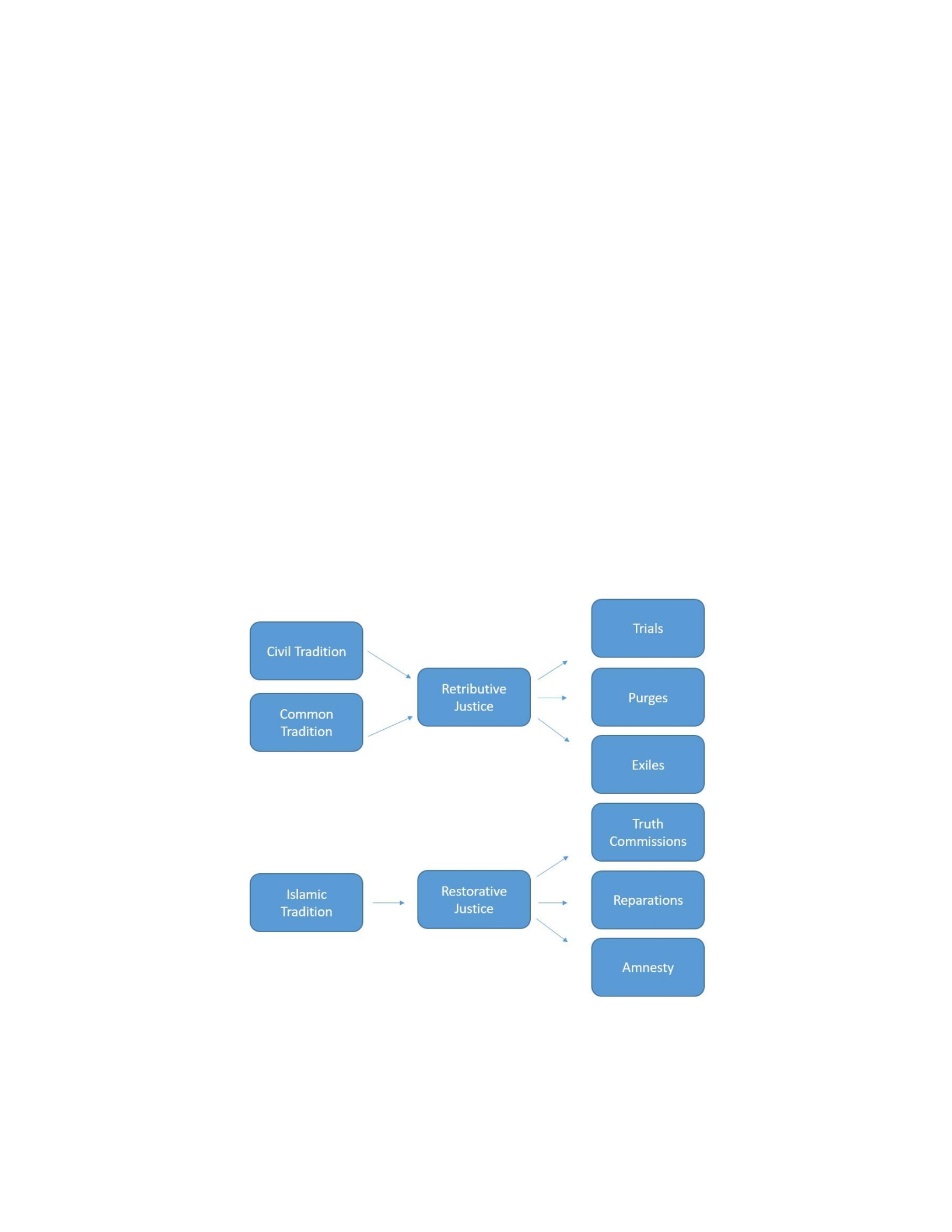
The general relationship between legal traditions and post-conflict justice practices are
presented in Figure 4.1 below. Legal traditions are linked to specific post-conflict justice
mechanisms through either retributive or restorative justice paradigms, specifically, that civil and
common law traditions emphasize a retributive justice framework that lends itself to trials,
purges, and exiles. On the other hand, the Islamic legal tradition emphasizes a restorative justice
framework, which lends itself to truth commissions, reparations, and amnesties. While the figure
provides a broad overview of the conceptual framework of this project, more specifically it
demonstrates the relationship between the key variables in this study and how congruence
between legal tradition and post-conflict justice mechanisms is determined.
Figure 4.1 Relationship between Legal Tradition and Post-Conflict Justice Mechanisms

Hypotheses
There are three hypotheses in this study. The sequencing of the hypotheses is important
as each hypothesis builds upon the previous. Before testing hypotheses regarding congruence or
the efficacy of post-conflict justice mechanisms, it is important to ask which states adopt
transitional justice. Both Teitel (2003) and Sikkink (2011) point to the normalization of PCJ,
calls for an end to impunity, and regional and global treaties and institutions aimed at
accountability are evidence of the norm diffusion surrounding transitional justice. While one
might assume that post-conflict justice is automatic in the wake of conflict and recalling that not
all states have the capacity or will to carry out justice mechanisms, this study begins with a basic
question regarding which states adopt justice mechanisms in the first place.
Transitional justice, as it is generally practiced and promoted around the world is derived
from civil and common legal traditions. Further, permanent international institutions, for
example the ICC, that were established to ensure accountability and serve as a deterrence
mechanism for future crimes are based in civil and common legal traditions. The first hypothesis
is derived as such:
Hypothesis 1: States with civil and common legal traditions are more likely to adopt
postconflict justice mechanisms than states with an Islamic legal tradition.
Once states have decided to pursue post-conflict justice, there are a variety of justice
mechanisms to choose from. How, then, do states determine which mechanism is best suited to
achieve their justice goals? The preferences expressed by the domestic legal tradition embody
norms, ideas, and values related to justice. Identifying congruent mechanisms can provide states
with predictability in process, procedures, and outcomes. As such, states would want to choose
mechanisms that are congruent with their legal tradition. Incongruous mechanisms may not

receive support from the population, may be perceived as illegitimate, and could risk opposition
from stakeholders. Chapter 3 developed an argument for why congruence in post-conflict justice
is important, but also outlined a congruence matrix based on legal traditions, justice mechanisms,
and justice paradigms.
Hypothesis 2: States will adopt post-conflict justice mechanisms that are congruent with
their domestic legal tradition.
Hypothesis 2a: States with civil and common legal traditions will adopt post-conflict
justice mechanisms that emphasize retributive justice.
Hypothesis 2b: States with an Islamic legal tradition will adopt post-conflict justice
mechanisms that emphasize restorative justice.
While I present an argument for the consideration of domestic legal traditions in the
adoption of post-conflict justice and the importance of congruence, a more interesting and
perhaps important question is why congruence matters at all. The exercise of post-conflict justice
is aimed at dealing with the past to achieve a more peaceful future. To that end, it is important to
inquire whether or not implementing congruent post-conflict justice mechanisms is ultimately
more effective than adopting incongruent mechanisms. Otherwise, the mechanism selection is
irrelevant. This is not to suggest that congruence is the only relevant factor in the post-conflict
justice process, but it is certainly worthy of attention and further exploration. To test the efficacy
of congruence, I hypothesize the following.
Hypothesis 3: The adoption of congruent post-conflict justice mechanisms is more likely
to be effective in the post-conflict period than the adoption of incongruent post-conflict justice
mechanisms.

To measure and test efficacy, I examine the duration of peace in the post-conflict period.
In cases specifically related to armed conflict, the absence of violence or negative peace is the
desired outcome, and one would expect a successful post-conflict period to experience an end to
armed conflict. Comparing the duration of peace (in years) in cases that used congruent PCJMs
and incongruent PCJMs is one way to measure the influence of legal traditions on post-conflict
justice as well as the extent to which congruence influences the outcomes of justice mechanisms.
Hypothesis 3a: States that adopt congruent post-conflict justice mechanisms are more likely to
experience a longer duration of peace in the post-conflict period.
Testing the efficacy hypotheses will not only show if congruence has any effect on
postconflict outcomes, but comparisons can also be made between states that adopt post-conflict
justice and states that do not. This contributes to the broader transitional justice literature that is
concerned with whether or not transitional justice works by approaching the question from a
different perspective. By taking a closer look at the role of legal traditions in transitional justice
and introducing the congruence variable, this study not only bridges two previously distinct
literatures, but also presents an innovative approach to broader questions regarding how societies
come to terms with legacies of conflict and abuse.
Methodology & Research Design
Research design: large-N and secondary data analysis.
This study implements a large-N, secondary data analysis approach using the
PostConflict Justice Dataset to test the hypotheses presented (Binningsbø et al., 2012). This
research design serves several purposes. First, it narrows the scope of the investigation to justice
practices specifically related to armed conflict. Thus, it allows for a more specific examination of
the role of legal traditions in the broadening field of transitional justice. Second, this approach

contributes to the broader post-conflict and transitional justice literature as existing studies
primarily take a case study approach or examine a single mechanism. In this study, I attempt not
only to take a broad view of post-conflict justice practices but also assess relationships across a
variety of mechanisms over time. Third, this large-N approach examines multiple post-conflict
justice mechanisms. Many existing large-N analyses of transitional justice practices are limited
in scope to a single mechanism.
Description of the data and dependent variables.
The primary dataset used in this study is the Post-Conflict Justice (PCJ) Dataset, which
provides information on how countries engaged in conflict have addressed any wrongdoing
associated with the conflict (Binningsbø et al., 2012). Using the UCDP/PRIO Armed Conflict
Dataset to provide information on armed conflicts from 1946 to 2006, the PCJ Dataset then
offers an overview of six specific justice processes that are often found in post-conflict and
transitional contexts: trials, truth commissions, amnesties, reparations, purges, and exiles. In the
first hypothesis, the dependent variable is the existence of any PCJ mechanism. The data
indicates the presence of any PCJ process using a “1” to show that a PCJ mechanism was
implemented and a “0” if no mechanism was implemented. The data also includes indicators for
the presence of each specific PCJM (trials, truth commissions, etc.) and whether it was
implemented in the post-conflict period. The dependent variable in the second hypothesis is the
adoption of congruent PCJMs. To determine whether states adopted congruent PCJMs based on
their domestic legal tradition, I examined only cases in which PCJ was adopted. Cases were then
coded as congruent or incongruent based on which PCJMs were adopted. For example, civil and
common law states that adopted trials, purges, exiles, or any combination of the three, were

coded as congruent. While Islamic law states that adopted truth commission, amnesties,
reparations, or any combination of the three were coded as congruent. Alternatively, states that
adopted only incongruent PCJMS or a mixed approach (a combination of congruent and
incongruent mechanisms) were coded as incongruent. All coding for congruence is dichotomous.
The data for the third hypothesis is replication data from Loyle and Appel (2018) and is
also based on the UCDP/PRIO Armed Conflict Dataset and includes many of the same indicators
from the PCJ Dataset. I included my indicators for legal tradition and congruence to be able to
test the effects of congruence on peace duration in the post-conflict period. In hypothesis three,
the dependent variable is the number of peace years in the post-conflict period, which is
measured as a continuous variable in years.
Temporal domain.
The temporal domain of this study is 1946 to 2006 and is based on the Post-Conflict
Justice Dataset. There are two reasons for using this time-period. The first is the availability of
data. The second is that 1946 marks the first year after the end of World War II, and, more
importantly, is that it is the beginning of modern approaches to transitional justice. The most
prominent example is the October 1946 Nuremberg Tribunals, and a lesser-known example is the
Bucharest People’s Tribunal. The PCJ Dataset includes any justice processes that have occurred
within five years of the post-conflict peace period (Binningsbø et al., 2012). For the purposes of
this study, having 2006 as the last year of observation allows for ample time to observe the post-
conflict effects of justice mechanisms such as the duration of peace.
Unit of analysis.
The three hypotheses and corresponding data structure for each hypothesis test result in
different units of analysis. The unit of analysis for the first hypothesis, the adoption hypothesis,

is the post-conflict peace period. This is a period of time up to five years after the conflict
termination and is the same as in the UCDP/PRIO Armed Conflict Dataset and Post-Conflict
Justice Dataset (Gleditsch, Wallensteen, Eriksson, Solenberg, & Strand, 2002; Binningsbø et al.,
2012). The second hypothesis regarding congruence also utilizes the post-conflict peace period
as the unit of analysis. Because I code post-conflict justice mechanisms as either congruent or
incongruent based on their implementation as coded in the original dataset, there was no need to
transform the data to complete this analysis. To test the third hypothesis, I have constructed a
panel dataset, which uses the state-year as the unit of analysis to test changes in peace duration,
the dependent variable of interest, over time.
Primary Independent Variables: Coding Legal Traditions and Congruence
This study examines the three major legal traditions of the world and their relation to
post-conflict justice. Established by Badr (1978, p. 178), for a legal tradition to be considered
“major” it must be one “whose application extended far beyond the confines of their original
birth places and whose influence, through reception of their principles, techniques or specific
provisions has been both widespread in space and enduring in time.” By this standard only the
civil, common, and Islamic legal traditions qualify as major legal traditions of the world. Glenn’s
(2014) influential work on legal traditions of the world identifies the Talmudic, Hindu, Asian,
and Chthonic along with the civil, common, and Islamic traditions. Other scholars identify
Socialist law as one tradition or legal family. However, these traditions, where still practiced, are
limited in their influence across space and time. As a preliminary examination of the influence of
legal traditions on post-conflict justice practices, this study adopts the widely accepted
convention of “major legal traditions” as a jumping off point.

To determine legal tradition, I have adopted the Mitchell and Powell (2011) coding,
following Badr (1978), which classifies states as belonging to either the civil, common, or
Islamic traditions. While other classifications, such as JuriGlobe, include the customary tradition,
I exclude this tradition from this analysis for two reasons. First, according to JuriGlobe, there are
only three customary law monosystems, that is, a political entity that operates strictly under a
single legal system. Those states/territories are Andorra, Guernsey (UK), and Jersey (UK), none
of which are included in the PCJ dataset. Second, all other states that employ customary legal
systems are mixed with other legal systems. Because customary legal systems vary based on
“wisdom born of concrete daily experience or more intellectually based on great spiritual or
philosophical traditions” the variation is much more extensive than the scope of this project, but
would be one area to expand upon in future research (The University of Ottawa Faculty of Law,
JuriGlobe, 2008). The Islamic legal tradition is not treated in the same way as customary legal
traditions in this study, despite having few monosystems (Afghanistan, Maldives, and Saudi
Arabia). Because the Islamic legal tradition is rooted in the Islamic faith, it serves to unify core
beliefs across otherwise different states. This is not to ignore the variation among Islamic law
states. In fact, there is variation within each of the major legal traditions of the world, as well as
many combinations of legal traditions. The scope of this study necessitates taking broad view of
legal traditions. To test the hypotheses presented while keeping in line with current literature on
the role of domestic legal traditions in state behavior, this study is limited to the three major legal
traditions in the world today.
Chapter 3 detailed the rationale for developing a congruence variable to test the
hypotheses of this study. First, I included dummy variables to indicate the domestic legal
tradition, collapsing the civil and common tradition into a “western” dummy variable. I then

created an Islamic dummy variable to indicate legal traditions that are Islamic or have an Islamic
component. Next, I indicate congruence for each post-conflict justice mechanism based on the
justice paradigm that is emphasized in each legal tradition. For example, states coded as civil or
common that also held a trial would be coded as congruent. I repeat this procedure for the
remaining mechanisms. Cases that implemented multiple PCJMs were only coded as congruent
with all of the PCJMs were congruent; cases in which a combination of retributive and
restorative PCJMs was coded as incongruent.
The civil and common legal traditions are collapsed into a single variable for two
reasons. First, these are considered to be western legal traditions because they originate in states
in west. Second, they both emphasize a retributive justice approach. Because there is no variation
on this, I collapse them into a single variable that can be juxtaposed to the Islamic tradition,
which emphasizes restorative approaches to justice.
Control variables.
State age is an important variable as younger states may lack the institutional capacity
and legitimacy for carrying out transitional justice. Additionally, transitional justice mechanisms
may be imposed by more powerful states resulting in the use of less congruent mechanisms in
newer states. State age is measured by the length of time a state has been recognized in the
international community as found in the Correlates of War project. I expect older states utilize
more congruent mechanisms of transitional justice as their domestic legal systems should not
only have institutional capacity but also legitimacy.
Regime type is important to consider when evaluating post-conflict justice practices.
Though transitional justice in its early days commonly referred to political transitions from
authoritarianism to democracy, over time, it has become broader to include transitions from

armed conflict to peace. Regime type is important to consider, especially as related to
religiousbased legal systems like Islamic law states. Many civil and common law states are
democracies.
Democracy is associated with “respect for the judicial process, the rule of law, and consideration
for constitutional constraints” (Mitchell & Powell, 2011, 118). Alternatively, many Islamic law
states are authoritarian in nature, yet not all authoritarian states implement Islamic law. States
that utilize Islamic law in their national systems represent a variety of government systems from
republics to constitutional monarchies to absolute monarchies such as Saudi Arabia. Islamic law
states that operate as presidential or parliamentary republics have often experienced instability,
alternating between periods of democracy and authoritarian rule. Some examples include
Pakistan and Egypt. While recognizing that there is variation among political systems within
autocratic and democratic regimes, to capture regime type I use the Polity IV data which
measures the extent to which democracy is institutionalized within the state on a scale of -10 to
10 through political participation, election of executives, and constraints on the executive
(Marshall, Gurr, & Jaggers, 2019). I expect higher Polity scores to be associated with PCJ
adoption.
Mechanism senders or whether post-conflict justice mechanisms are imposed from an
external actor or initiated from within the state could have an important impact on the justice
process. If there is opposition to the imposing power or the mechanism is not considered
legitimate by citizens within the state, the process may fail. This information is indicated within
the PCJ data as the “sender” of each mechanism. The sender can refer to the government or
official representative of either side of the conflict, both sides of the conflict, an international
actor, or an “other” category when the previously mentioned options do not apply. This is coded

as a categorical variable. I expect externally imposed transitional justice mechanisms to be less
effective than mechanisms initiated from within the state.
Conflict termination or the mechanism by which the conflict ended is expected to
influence post-conflict justice practices. Coded as a categorical variable, possible methods for
conflict termination within the data include victory for one side of the conflict, bargained
solutions which include peace agreements and ceasefires, and an “other” category that includes
low or no conflict activity (Kreutz, 2010, Binningsbø et al., 2012). I expect the conflict
termination method to influence peace duration if the conflict is terminated through a bargained
solution or a peace agreement. Specifically, because I expect to find less congruence in cases that
were terminated through an agreement, negotiations may result in compromises related to justice,
and there may be greater opportunity for external influence in the overall outcome of the
solution. I expect there to be little to no effect for conflicts that end by a victory for either side of
the conflict. Loyle and Appel (2017) find no relationship between conflict termination and peace
duration. Further, armed conflicts are, more often than not, terminated through a means other
than victory (Kreutz, 2010).
Battle deaths are expected to be an important control variable in the adoption of
postconflict justice mechanisms. Following Lacina and Gleditsch (2005), battle deaths are an
indicator of conflict intensity and measures soldier and civilian deaths in combat. This is distinct
from other fatalities related to conflict that may include unorganized violence or increased
mortality as a result of conflict conditions (Lacina and Gleditsch, 2005). I expect conflicts with
higher numbers of battle deaths to be more likely to adopt post-conflict justice mechanisms than
conflict with lower battle deaths. A higher number of battle deaths not only indicates increased
conflict intensity but also has a broader impact on the population as more families suffer losses.

This could be especially hard if the decedents were the primary wage earner in the home.
Conflict type is expected to be a significant variable in the adoption of post-conflict
justice. The data identifies each conflict as either extrasystemic, internal, or internationalized
internal following the UCDP/PRIO Armed Conflict Data. Extrasystemic refers to a conflict
between a state and non-state group that is located outside of the state territory. Internal conflict
refers to conflict within a state, and there is no external involvement. Internationalized internal
conflicts refer to conflicts that are internal, but there is international involvement. I expect
internal conflict to be significant in the adoption of post-conflict justice as the repair of fractured
social relationships and rebuilding trust within society are significant in moving forward from
conflict.
Peace agreement and peacekeeping presence are both included as control variables in the
survival analysis for hypothesis 3. Both of these variables indicate the characteristics of the
postconflict period. The model takes into account whether or not a peace agreement was part of
the conflict termination while the peacekeeping presence indicates the presence of peacekeeping
operations in the post-conflict period. Both variables have been to be significant factors related to
the duration of peace. I expect both peace agreement and peacekeeping presence to contribute to
a longer duration of peace in the post-conflict period.
Power-sharing agreements are another relevant factor to consider in the post-conflict
period. Power-sharing agreements are used as a tool to in divided societies to achieve political
stability and reduce violent conflict. Previous studies have shown the use of power-sharing
arrangements, such as consociationalism, to have a positive effect on peace duration in the
postconflict period (Hartzell & Hodie, 2003). I expect to find the same in the peace duration
model in chapter 6.

Ethnic incompatibility is included as a control variable in the third hypothesis to indicate
the presence of ethnic issues in the conflict. Following Loyle and Appel (2017), it is coded as a
binary variable to indicate that the conflict included ethnic issues. Ethnic incompatibility and
division are related to increased risk for civil conflict and can lead to longer conflicts overall
(Fearon & Laitin 2003, Collier, Hoeffler, & Soderbom, 2004). I expect the results of the duration
analysis to show an increased risk for peace failure for conflicts that included an ethnic issue.
Models
I begin by employing a Chi-square analysis using crosstabs. The crosstab serves several
purposes. First, it provides a comparison across categorical data that shows the relationship
between the adoption of post-conflict justice practices and legal traditions. Because both the
dependent and independent variables of interest in this test are categorical, the Chi-Square tests
whether there is a statistical relationship between the two. Where the null hypothesis states that
no relationship exists between the two variables of interest, the Chi-Square will show the
observed frequency as well as the expected frequency of the relationship between the two
variables of interest. In this case, the null hypothesis is that there is no relationship between the
adoption of post-conflict justice and legal tradition type. The Chi-Square analysis will test this
claim to determine if a relationship exists. If the X2 value falls within the rejection region of the
distribution plot, there would be sufficient evidence to continue with the claim that there is a
relationship between the adoption of post-conflict justice and legal tradition type.
This test is appropriate for the first hypothesis because there is one dependent variable,
the adoption of post-conflict justice, and the outcome is categorical – yes/adopt or no/adopt. For
the first hypothesis, I use one predictor – the domestic legal tradition type, which is also a
categorical variable – civil law, common law, or Islamic law.

To further test the first hypothesis, I use a logistic regression model to determine if the
hypothesis holds since the dependent variable (adoption of transitional justice) is binary. The
predictor is also a categorical variable (legal system type). The logit model estimates the
probability that adoption of post-conflict justice is determined by the legal tradition. This model
controls for regime type and region, as I expect there to be a high correlation between these
variables and legal system as well as transitional justice adoption. Additionally, this model
controls for participation in international courts and whether or not the adoption of transitional
justice was imposed from an external source. These are important factors that point to a state’s
willingness to participate in transitional justice processes. To better assess the substantive results
of the model, I also employ predicted probabilities to determine the extent of the effect of
domestic system type on the adoption of transitional justice.
The second hypothesis requires a logistic regression model, as well. In this model, the
dependent variables are binary indicating whether or not retributive or restorative justice
mechanisms were implemented in the post-conflict period. In the first model, the variable for
civil and common legal traditions is the main independent variable of interest, and retributive
justice is the dependent variable. The model controls for state age, conflict termination via
victory, and a sender variable indicating whether both sides agreed to the PCJM. I expect each of
these variables to influence the PCJM choice. In the second model the dependent variable is
restorative justice, and the independent variable is the indicator for Islamic legal traditions. The
same control variables are used in both models one and two.
The third hypothesis, or the efficacy hypothesis, states that congruence between legal
tradition and mechanism choice will lead to successful transitional justice outcomes. Given that
this study utilizes the Post-Conflict Justice data and is examining transitional justice practices

specifically in instances of armed conflict, the first question one must ask is whether these justice
mechanisms lead to peace. To test the first efficacy hypothesis, a duration model is appropriate.
Duration models describe how much time passes between specific events. In this case, I am
interested in how much time has elapsed since the initial end of the conflict to the next conflict
outbreak. I hypothesize that the implementation of congruent post-conflict justice mechanisms
leads to a longer post-conflict peace period. The duration or hazard model will estimate the effect
of congruence on the duration of peace. This model estimates the impact of the independent
variables on the risk that peace will fail during the post-conflict peace period or if that risk is
lower if congruent mechanisms are used in post-conflict justice efforts.
Table 4.1
Description of Variables of Interest
Variable Description
Conflict Incompatibility
Indicates whether the conflict was over
government, territory, or both.
Conflict Type
Indicates whether the conflict was
extrasystemic, internal, or internationalized
internal
Post-conflict justice
Indicates the total number of post-conflict
justice mechanisms initiated in the
postconflict peace period.
Post-conflict justice dummy
Dummy variable indicating the presence of
post-conflict justice mechanisms in the
postconflict peace period.
Trial
Dummy variable indicating that a trial was
initiated in the post-conflict peace period.
Truth Commission
Dummy variable indicating that a truth
commission was initiated in the post-conflict
peace period.
Reparation
Dummy variable indicating that reparations
were initiated in the post-conflict peace
period.

Amnesty
Dummy variable indicating that amnesties
were initiated in the post-conflict peace
period.
Purge
Dummy variable indicating that purges were
initiated in the post-conflict peace period.
Exile
Dummy variable indicating that purges were
initiated in the post-conflict peace period.
Civil/Common
Dummy variable indicating that the legal
tradition of the state where the conflict is
occurring is either civil law or common law.
Islamic
Dummy variable indicating that the legal
tradition of the state where the conflict is
occurring is Islamic law.
Congruence
Dummy variable indicating that congruent
post-conflict justice mechanisms were
adopted in the post-conflict period.
State Age
Indicates the number of years the state has
been a member of the international system in
the episode year.
Polity2
Combined score indicating the regime type of
the state.
Battle death
Reports the number of battle-related deaths
for the conflict episode
Civil war
Dummy variable indicating that the number
of battle deaths reached a threshold of at least
1,000.
Termination
Indicates the method of conflict termination
as victory, bargained solution, or other.
Retributive
Dummy variable indicating that all of the PCJ
mechanisms employed were retributive
(trials, purges, exiles).
Restorative
Dummy variable indicating that all of the
post-conflict justice mechanisms employed
were restorative (truth commissions,
reparations, amnesties).
Peace Agreement
Indicates the termination of conflict by a
peace agreement.
Peacekeeping
Indicates the presence of peacekeepers in the
post-conflict period.
Ethnic Incompatibility
Dummy variable indicating that the conflict
included an ethnic incompatibility issue.
Power Sharing
Indicates the implementation of a power
sharing agreement in the post-conflict period.

GDP Per Capita
Measure of standard of living calculated by
dividing national gross domestic product by
total population.
GDP Per Capita Growth
The growth rate of the GDP Per Capita
Chapter 5 Quantitative Analysis Results – Post-Conflict Justice Adoption and Congruence
Introduction
The following chapter presents the empirical analysis and findings related to the adoption
of post-conflict justice and congruence between legal traditions and post-conflict justice
mechanisms. Before presenting the findings, it may be useful to restate the hypotheses generated
from the literature and theoretical discussions in chapters 2 and 3.
In the aftermath of conflict, states are faced with legacies of violence, repression, and
human rights abuses. Over the past 75 years, transitional or post-conflict justice practices have
emerged as a regular course of action to help states and their people reckon with the past and live
in peace. While seeking to address past wrongdoings is viewed as a favorable practice from the
international community, not all states adopt these practices in the post-conflict period. Which
states, then, adopt post-conflict justice? Further, which mechanisms do states implement given
the variety of choices available? This study suggests that domestic legal tradition is an
overlooked explanatory factor in the adoption of post-conflict justice. Post-conflict justice
mechanisms, as they are practiced and promoted across the world today, are derived from
Western legal traditions. This is evident in the establishment of a permanent International
Criminal Court to prosecute specific conflict-related crimes as well as ad hoc trials and tribunals
that have been developed for specific conflicts. As such, the first hypothesis states: H1:
States with a Western legal tradition (common and civil law traditions) are more likely to adopt

post-conflict justice mechanisms than states with an Islamic legal tradition. Once states
make the decision to pursue post-conflict justice efforts, how do they go about it? In the early
days of transitional justice, criminal prosecutions were the chosen method.
Over time, additional mechanisms such as truth commissions and reparations programs became
popular. Today the transitional justice toolbox provides several mechanisms that may address
past wrongdoings. Mechanism choice can be particularly important depending on the specific
context and overall goals of the post-conflict justice efforts. The domestic legal tradition
literature tells us that legal tradition matters when it comes to how states behave in the
international arena, and more importantly, how states prefer to settle their disputes. We can then
ask what influence legal tradition has on how states pursue post-conflict justice. I suggest that
states have a preferred or congruent post-conflict justice mechanism based on their domestic
legal tradition.
H2: States will adopt post-conflict justice mechanisms that are congruent with their
domestic legal tradition.
More specifically, it is expected that states with civil and common legal traditions will be
more likely than states with Islamic legal traditions to adopt retributive post-conflict justice
mechanisms, while states with Islamic legal traditions will be more likely to than those with civil
and common legal traditions to adopt restorative post-conflict justice mechanisms.
Preliminary Data
Before proceeding with the empirical analysis and overall findings, it is useful to present
a general overview of the data and scope of this study. The Post-Conflict Justice Dataset covers
all armed conflict with at least 25 battle-related deaths between 1946 and 2006 (Binningsbø et
al., 2012). In total, there are 357 episodes of armed conflict within this period. One hundred

seventy-three of these conflict episodes saw some post-conflict justice mechanisms implemented
within the first five-year peace period (Binningsbø et al., 2012). A total of 272 post-conflict
justice mechanisms were attempted; two or more mechanisms were attempted in the aftermath
71 conflict episodes.
Amnesties were the most frequently implemented post-conflict justice mechanism during
the period covered by the data, with a total of 92. Trials and exiles were the next most popular
mechanisms employed with 78 and 58, respectively. Reparations, purges, and truth commissions
were implemented the least frequently during post-conflict peace periods. Figure 5.1 presents an
overview of the frequency with which post-conflict justice mechanisms were implemented.
Figure 5.1
Frequency of Post-Conflict Justice Mechanism Attempts, 1946-2006.
The frequency of legal traditions in the world should be noted to better understand the
context of this study. To reiterate from Chapter 4, I code domestic legal tradition following
Mitchell and Powell (2011) and Powell (2015) and then combine civil and common legal
traditions into a single western legal tradition variable. As discussed in Chapter 4, customary
legal traditions were excluded from this analysis for several reasons. First, there are very few
0
20
40
60
80
100
Reparation
Truth Commission
Trial
Purge
Exile
Amnesty
Frequency of PCJM Attempts
1946
-
2006

states with purely customary legal traditions. Second, the variation among customary legal
traditions is beyond the scope of this study. Finally, I have adopted legal tradition coding that is
found in previous studies as an entry point to bringing these previously distinct literatures
together and conducting preliminary analyses of the relationship between legal traditions and
post-conflict justice practices. One hundred thirteen states are represented in the dataset.
Seventy-eight of those states is coded as having a Western legal tradition (civil or common law).
Twenty-one states are Islamic, and 14 states have a mixed legal tradition. Figure 5.2 presents an
overall view of the frequency of legal traditions represented in the data.
Figure 5.2
Frequency of Legal Traditions in the World, 1946 – 2006
Having looked at both the frequency of legal traditions in the world and which
mechanisms were most frequently adopted, I now turn to adoption and legal tradition. Western
legal traditions are by far the most frequently observed legal tradition in the world. It would
follow that states with Western legal traditions adopt post-conflict justice mechanisms more
frequently than other legal traditions as there is greater opportunity for adoption. Figure 5.3
0
20
40
60
80
100
Western
Islamic
Frequency of Islamic and Western Traditions
1946
-
2006

presents the frequency with which the legal traditions contained in this study (Western, Islamic,
and Mixed) adopt post-conflict justice during the first five years of the post-conflict peace
period.
Figure 5.3
Frequency of Adoption of Post-Conflict Justice by Legal Tradition, 1946-2006
When states adopt post-conflict justice, which mechanisms do they utilize? Do they adopt
one mechanism or multiple mechanisms? In many instances, post-conflict justice mechanisms
are not used in isolation. That is, states may employ combination of mechanisms to address the
aftermath of a conflict. Figure 5.4 shows that the adoption of a single post-conflict justice
mechanism is more frequent; many states adopt two or more post-conflict justice mechanisms
after the end of a conflict.
0
20
40
60
80
100
120
140
160
Western
Islamic
PCJ Adoption by Legal Tradition
1946
-
2006

Figure 5.4
Adoption of Multiple Post-Conflict Justice Mechanisms by Legal Tradition 1946 – 2006
Because this study is also interested in the choices states make when adopting
postconflict justice, it is important to note the frequency with which specific post-conflict justice
mechanisms are adopted by each legal tradition. Figure 5.5 demonstrates that amnesties and
trials are the most popular choices across both legal traditions of interest. However, it is
interesting to note that truth commissions have only been implemented in states with western
legal traditions.
0
10
20
30
40
50
60
70
80
90
1
PCJ mechanism
or more PCJ mechanisms
2
Adoption of Multiple Mechanisms by Legal
Tradition
1946
-
2006
Islamic
Western

Figure 5.5
Post-Conflict Justice Mechanism Adoption by Legal Tradition, 1946 – 2006
Hypothesis 1: Results and Analysis
Crosstabs & Chi-square
I first employ crosstabs to describe the relationship between the adoption of post-conflict
justice and legal tradition type. Because both variables are categorical, the contingency table
records the frequency with which each combination of variables occurs. The Chi-square statistic
determines whether the two variables of interest are independent. The results of the Chi-square,
as reported in Table 5.1 indicate that the adoption of post-conflict justice and legal traditions are
not independent of one another. The Pearson Chi-square test statistic is 0.505, and the p-value is
0.477 which is greater than the significance level of p=0.05. Based on these results, there is
0
10
20
30
40
50
60
70
80
Trial
Truth Commission
Reparations
Amnesty
Purge
Exile
PCJM Adoption by Legal Tradition
1946
-
2006
Islamic
Western

insufficient evidence to reject the null hypothesis or suggest that there is a relationship between
the adoption of post-conflict justice and legal tradition type.
Table 5.1
Results of Chi-square Test and Descriptive Statistics for Post-Conflict Justice and Legal
Tradition
Legal Tradition Total
Presence of Islamic Law Civil/Common
PCJ Law
No PCJ
35 (32.4)
118 (120.6)
153
PCJ Present
34 (36.6)
139 (136.4)
173
Total
69
257
Note. 2 = 0.505, Numbers in parentheses indicate expected values.
Logistic Regression
To further test H1, I use logistic regression to model the probability that states will adopt
post-conflict justice while observing other characteristics related to the state and conflict
episodes. Logistic regression is the most appropriate test when the dependent variable of interest
is binary. In the first hypothesis, I am interested in the adoption of post-conflict justice, which
has two possible outcomes: the adoption of PCJ or no PCJ. In this model, I control for the
following variables: number of battle-related deaths, regime type, and the type of conflict. I
expect higher numbers of battle-related deaths to increase the probability of post-conflict justice
adoption. I also expect internal conflicts to increase the probability of post-conflict justice rather
than extrasystemic or internationalized internal conflicts. Finally, I expect the regime type to
influence the adoption of post-conflict justice. Specifically, that states with democratic regimes

will have a higher probability of adoption post-conflict justice than autocratic regimes. The
results of model 1, as reported in Table 5.2, are consistent with the crosstabs analysis in testing
the relationship between PCJ adoption and legal tradition type. The p-value of 0.336 is
statistically insignificant. In this model, only regime type is statistically significant, with a pvalue
of 0.005. However, the odds ratio for regime type is 0.936 indicating that for every 1-unit
increase in the Polity2 score, the odds of adopting post-conflict justice decrease by 0.07. In other
words, the more democratic a regime is, the odds of adopting transitional justice decrease by a
factor of 0.07. While initially this appears to be counter-intuitive, it may indicate that
democracies have less of a need to adopt post-conflict justice, as there are generally stronger
institutions, respect for the rule of law, higher capacity for regular justice institutions to deal with
conflict-related transgressions.
Table 5.2
Logistic Regression Results – Adoption of PCJ for Civil/Common Law States
Variables B Se Z Ratio Odds
Civil/Common
Law
0.336
.527
0.96
1.426
Battle Deaths
0.537
1.75e-06
0.62
1.00
Democracy
0.005**
.0217
-2.82
0.936
Internal
Conflict
0.381
.234
-0.88
0.764
Constant
0.981
.391
-0.02
0.990
Model X2 =
11.44
Pseudo R2 =
0.039
N =
323
Notes: *p< .05, **p< .01, ***p< .001
Hypothesis 2
Crosstabs & Chi-square

The crosstabs analysis for H2 tests the relationship between the adoption of congruent
post-conflict justice mechanisms and legal tradition type. That is when states adopt PCJ, are they
adopting mechanisms that are congruent with their legal tradition? The results of the Chi-square
tests indicate that there is insufficient evidence to reject the null hypothesis and move forward
with the claim that there is a relationship between congruence and legal tradition. The Pearson
Chi-square test statistic for the first analysis is 1.001, and the p-value is 0.317 as presented in
Table 5.3. In the second analysis, presented in Table 5.4, the Pearson Chi-square test statistic is
0.767, and the p-value is 0.381.
Table 5.3
Results of Chi-square Test and Descriptive Statistics for Post-Conflict Justice Mechanism Type
and Legal Tradition
Legal Tradition Total
Type of Islamic Law Civil/Common
PCJM Law
Restorative
23 (20.4)
81 (83.6)
104
Retributive
11 (13.6)
58 (55.4)
69
Total
34
139
Note. 2 = 1.00, Numbers in parentheses indicate expected values.
Table 5.4
Results of Chi-square Test and Descriptive Statistics for Post-Conflict Justice Mechanism Type
and Legal Tradition
Legal Tradition Total
Type of Civil/Common Islamic Law PCJM Law
Retributive
96 (93.9)
20 (22.1)
116
Restorative
44 (46.1)
13 (10.9)
57
Total
140
33
Note. 2 = 0.76, Numbers in parentheses indicate expected values.
Logistic Regression

To further test H2, logistic regression is used to model the probability that when states
adopt PCJ, they adopt mechanisms that are congruent with their domestic legal tradition.
Specifically, that states with civil or common legal traditions will adopt retributive PCJMs, and
states with Islamic legal traditions will adopt restorative PCJMs. In the first model, the
dependent variable is retributive PCJMs, and the independent variable of interest is
civil/common legal traditions. In the second model, the dependent variable is restorative PCJMs,
and the independent variable is Islamic legal traditions. For each model, the dependent variable
is binary with two possible outcomes, the adoption of retributive/restorative PCJMs or no
adoption of retributive/restorative PCJMs.
In these models, I control for the following variables that I believe would influence
congruence: state age at conflict onset, conflict termination method, and the group who initiated
the PCJ process. I expect state age to positively influence the adoption of congruence PCJMs.
States that have a longer tenure in the international system theoretically should have
longestablished legal systems, and thus there would be less instability in the pursuit of justice. I
predict that the method of conflict termination will also be significant to the adoption of
congruence PCJM. Conflicts terminated via victory would be more likely to select congruent
PCJMs rather than if the conflict was terminated through a bargained solution. One possible
exception that future research would be well suited to address is cases of conflict termination via
victory for the non-governmental side that may or may not adopt a new form of government and
approach to justice. One would expect conflict victors to select PCJMs that are aligned with their
perceptions of justice, which may or may not reflect the broader views of justice within a divided
society. Finally, I expect congruence to be influenced by the initiators of post-conflict justice. In
this model, I use a dichotomous variable to indicate whether both sides of the conflict agreed

upon the PCJ process. This includes justice efforts initiated through peace agreements. PCJMs
that are decided upon by both sides of the conflict are more likely to be congruent with the
prevailing conceptions of justice within the state. While I would have expected PCJMs that were
initiated by international actors to play a significant factor, there were only three instances within
this universe of cases that had externally imposed or initiated processes. As such, they were
omitted from the statistical models as this variable perfectly predicted the success of this model.
The first model in Table 5.5 shows that the independent variable of interest, civil and
common legal traditions, is statistically significant with a p-value of 0.056. The odds ratio of
2.257 indicates that states with a civil or common legal tradition are 2.5 times more likely to
adopt retributive post-conflict justice mechanisms such as trials, purges, and exiles. The control
variables in model one are all statistically insignificant, and the control for sender of the
mechanism was omitted from the analysis for perfectly predicting failure.
The second model in Table 5.6 shows the independent variable of interest, Islamic legal
traditions, is statistically significant with a p-value of 0.014. The odds ratio of 6.113 indicates
that states with an Islamic legal tradition are 6.1 times more likely to adopt restorative
postconflict justice measures such as truth commissions, reparations, and amnesties. The control
variables for state age, conflict termination via victory, and PCJM sender were all statistically
significant with p-values of less than 0.001. The odds ratio for state age is 0.979, indicating that
for each year a state has been a member of the international system, the odds of selecting a
restorative PCJM decreases by 2%.
Table 5.5
Logistic Regression Results – Civil/Common Law and Retributive PCJMs
Variables B Se Z Ratio Odds

Civil/Common
Law
0.056*
.962
1.91
2.257
State Age
0.954
.004
-0.06
.999
Victory
0.969
.361
-0.04
.986
Sender
..
..
..
1
Constant
0.206
.257
-1.26
.560
Model X2 =
3.68
Pseudo R2 =
0.020
N =
134
Notes: *p< .05, **p< .01, ***p< .001
Table 5.6
Logistic Regression Results – Islamic Law and Restorative PCJMs
Variables B Se Z Ratio Odds
Islamic
0.014*
4.489
2.47
6.113
State Age
0.000***
.005
-3.50
.979
Victory
0.000***
.354
-3.81
.043
Sender
0.000***
5.747
4.64
11.081
Constant
0.510
.518
0.66
1.300
Model X2 =
40.91
Pseudo R2 =
0.466
N =
172
Notes: *p< .05, **p< .01, ***p< .001
Case Study Examples
To give additional context to the results described above, the following mini case studies
present four different examples of how congruent and incongruent post-conflict justice
mechanisms were implemented in states with civil, common, or Islamic legal traditions. The
purpose of the cases is to highlight the usage of PCJMs in various conflict contexts. The
incongruent cases illustrate why some mechanisms were implemented despite other more
congruent options. The cases below represent congruent and incongruent examples within each

legal tradition; cases were selected based on sharing similar attributes found in the data such as
conflict incompatibility and conflict type.
Incongruent Cases
Croatia 1995
Shortly after Croatian independence from the former Yugoslavia in 1991, Serbian
populated regions grew increasingly concerned with their position within the newly formed
Croatian state. Despite having several Serbian Autonomous Oblasts (SAO), Serbs within Croatia
were not recognized as constituents of the state, but rather a national minority. Through a
referendum in the Serb National Council, the SAO of Krajina declared itself the Republic of
Serbian Krajina (RSK) and attempted to break away from Croatia entirely. With the support of
Serbia, the RSK forces clashed with the newly formed Croatian army. A 1992 ceasefire
eventually brought hostilities to a standstill for three years.
In 1995 the RSK rebelled against the Croatian government. Croatian offensives
Operation Flash and Operation Storm helped Croatia to regain control of parts of RSK territory.
In November 1995, the Basic Agreement on the Region of Eastern Slavonia, Baranja and
Western Sirmium, also known as the Erdut Agreement, was signed by Croatian and local Serbian
authorities. Under the agreement, the parties agreed to a transitional administration and the return
of refugees and displaced persons to their rightful homes. The agreement also recognized
reparations for persons who lost property through either the restoration of said property or “just
compensation” for property that cannot be returned or that requires reconstruction (United States
Institute of Peace, Edrut Agreement, 1995). In October 1996, Croatia enacted a General Amnesty
law for crimes against the state during the conflict.

As a state with a civil legal tradition, this case was coded as implementing incongruent
post-conflict justice mechanisms as both reparations and amnesties are forms of restorative
justice. Given the broad scope of those participating in the conflict through combat and rebellion,
and those affected as refugees and displaced persons, PCJMs that are conducive to providing
redress to large groups was an option that was both victim-oriented and aimed at repairing a
deeply divided state. Further, amnesties, as discussed in previous chapters, can serve short-term
political aims such as guaranteeing cease-fires. Amnesties can also be useful as a means not to
overburden judicial systems. In states that have fully functioning court systems and strong
judicial independence, prosecuting thousands of combatants is simply expensive,
timeconsuming, and unrealistic. In other instances, weak judicial systems could result in sham
trials or a general lack of political will to commit to justice efforts. While the framework of this
study points to trials, purges, or exiles in states with civil legal traditions, it does not account for
scope and institutional capacity to carry out such mechanisms in states with weak political and
legal systems. Future research should consider further the constraints of institutional capacity to
conduct post-conflict justice.
Comoros 1989
Comoros gained independence from France in 1975, and Ahmed Abdallah became the
first president of the small island nation off the eastern coast of Africa. Leadership in Comoros
has been rocky, at best, and is marked by a series of coup d’états. President Abdallah was
deposed after his first month in office but was reinstated in 1978 with French and South African
support. A French soldier, Bob Denard, played an active role in Abdallah’s removal from office
and his subsequent reinstatement. Denard went on to become the head of President Abdallah’s

Presidential Guard from 1978 to 1989 when a looming coup d’état threatened Abdallah’s
presidency again. Abdallah was shot and killed by a member of his own guard, presumably under
the direction of Denard. Denard was later evacuated from Comoros with the assistance of the
French military. Upon his return to Comoros in 1995, Denard attempted yet another coup. This
time, he was captured, surrendered, and returned to France. Mohamed Taki Abdoulkarim, now
president of Comoros, denied Denard’s return to Comoros in 1998, effectively exiling the man
who repeatedly worked to overthrow the government.
This case was coded as an incongruent application of post-conflict justice as Comoros is
an Islamic law state and applied a retributive PCJM. The population of Comoros is 98% Sunni
Muslim, and Islam is the official state religion. Under President Abdallah, Comoros was declared
an Islamic Federal Republic. The preamble of the current Constitution of Comoros refers to
Islam as “the permanent inspiration of the principles and rules that govern the Union”
(Constitution of Comoros, 2009). As such, according to the framework of this study, one would
expect that the state takes a reconciliatory approach to this conflict episode. However, given the
emphasis on the responsibility of a single individual (Bob Denard), an exile was perhaps the
fastest and least expensive option to move forward from instability. Like the Croatia case
discussed above, the framework of this study does not account for the scope of the conflict
beyond time and battle-related deaths, nor does it account for the effect of colonial history or
institutional capacity to carry out justice mechanisms. Justice mechanisms that are meant to be
broad and inclusive such as truth commissions may not be justifiable in conflict episodes that are
limited to a small number of political elites.
Congruent Cases
United States 2002

In the wake of the September 11th attacks, three members of Al-Qaeda were indicted on
charges related to the attacks in which civilian commercial airplanes were deliberately flown into
buildings in New York City and Washington, D.C. French national, Zacarias Moussaoui was
indicted by a federal grand jury on six criminal charges of terrorism and conspiracy related to the
attacks. Moussaoui was a member of Al-Qaeda that had trained at one of the group’s camps in
Afghanistan and traveled to the United States to participate in the planned attack. In August
2001, while completing his pilot training in Minnesota, Moussaoui was arrested by federal
agents. He denied his membership in Al-Qaeda and any intention of using his pilot training to
kill Americans (United States v. Moussaoui, 2005). Other members of Al-Qaeda continued with
the planned hijacking of four airplanes, killing close to 3,000 people and injuring thousands
more. Moussaoui received six consecutive life sentences without the possibility of parole. Two
members of an Al-Qaeda cell in Buffalo, New York, Mukhtar al-Bakri and Yahya Goba, were
tried in court and received prison sentences. Members of this cell had attended Al-Qaeda training
camps in Afghanistan and were found guilty of “providing material support or resources to a
designated foreign terrorist organization” (Department of Justice, 2003).
This case is coded as congruent in the dataset. The United States has a common law
tradition, and trials are a form of retributive justice. The criminal justice system in the United
States emphasizes punitive measures as a response to wrongdoing. Given the magnitude of
destruction and loss of human life in this conflict episode, this appears to be a justice mechanism
that is aligned with the domestic legal tradition. While a criminal trial was carried out, it should
be noted that during Moussaoui’s trial, there was controversy regarding a possible death penalty.
Pakistan 1996

The Muttahida Qaumi Movement (MQM) is a political party founded in Pakistan in the
1980s. First established as a student group, MQM was a secular party that represented the
interests of the Urdu-speaking Mohajirs in the Sindh province. MQM soon became a popular
political party, forming coalition governments at the national level. In the early to mid-1990s,
political and ethnic violence escalated in Karachi, an MQM stronghold. The Pakistani military
carried out operations to regain control and minimize crime and violence. MQM perceived these
operations as specifically targeting their group as hundreds of group leaders, members, and
supporters were arrested and detained. There were also reports of torture and extrajudicial
killings while the government conducted raids and roundups (RefWorld, 1996). As conditions
deteriorated throughout 1995, MQM rebelled, and the government effectively lost control of
parts of Karachi and the Sindh province. The two sides began negotiations to end the conflict in
July 1995. In the beginning, the negotiations were a wash, as the two sides could not identify
common ground to begin a settlement (RefWorld, 1996). By the following year, the situation and
talks improved. In 1997, the two parties signed a peace agreement that stipulated that the
families of MQM members who were killed or died while under arrest or detainment by the
Pakistani government would receive reparations (Binningsbø & Loyle, 2012).
This case was coded as congruent within the dataset as Pakistan has an Islamic legal
tradition, and reparations were implemented as the only form of post-conflict justice in this
conflict episode. Reparations are a form of restorative justice and are part of the emphasis on
making relationships right. In this case, the reparations were meant to foster reconciliation
between the government and the MQM, specifically the families of MQM members who were
killed as a result of the conflict. While reparations can never replace a family member, nor fully
restore any lost income or earnings of that family member, the act of reparations can prove

symbolic in many ways. It acknowledges a loss, harm, and suffering and signals the restoration
of right relationship, an important factor in the Islamic legal tradition. Reparations are also a
means for the state to make a statement about their commitment to reconciliation within society.
Conclusion
The general findings of this chapter indicate that while there is no relationship between
legal tradition and the adoption of post-conflict justice, states do have a tendency to implement
mechanisms based on their domestic legal tradition as outlined in this framework. It should be
noted that Islamic law states, in this universe of cases, have never adopted a truth commission as
a method of post-conflict justice. Given the emphasis of reconciliation and the restoration of
right relationship in the Islamic legal tradition and the intention of restoration in truth
commissions, it is surprising that this is a seemingly unpopular choice for Islamic law states. One
could surmise that the mandates, structure, or implementation of final reports and findings would
all be important factors in the decision to adopt a truth commission. This analysis, however, does
not account for unofficial processes taking place at the local level. The inclusion of community
efforts towards reconciliation would be one avenue for future research in this vein.
The results of the congruence hypothesis reveal that states with civil and common legal
traditions are more likely to adopt retributive justice mechanisms than restorative justice
mechanisms, while states with an Islamic legal tradition are more likely to adopt restorative
justice mechanisms. While these findings support the congruence hypothesis and contribute to
the broader transitional justice literature, perhaps a more intriguing question is what does this
actually mean for transitional justice? The final empirical chapter of this dissertation attempts to
answer this question by testing the impact of congruence on peace as one of the primary goals of
transitional justice.

Chapter 6 Quantitative Analysis Results – A Survival Analysis of Congruence and Peace
Duration
Introduction
Previous chapters have presented an argument for the consideration of legal traditions as
an explanatory factor in post-conflict justice practices, presented the concept of congruence as a
part of a conceptual framework linking legal traditions to post-conflict justice (PCJ), and offered
an initial analysis of congruence. This chapter presents an analysis and findings related to the
efficacy of post-conflict justice mechanisms. Specifically, whether the adoption of congruent
post-conflict justice mechanisms have any measurable effect on how long peace lasts in the
postconflict period. The third and final hypothesis of this study is stated as follows:
H3: States that adopt congruent post-conflict justice mechanisms are more likely to experience a
longer duration of peace in the post-conflict period.
The broader transitional justice literature is concerned with whether or not these practices
work. Given that the scope of this study is limited to justice practices in post-conflict settings, I
analyze how long peace lasts when congruent and incongruent post-conflict justice mechanisms
are implemented. To examine how long peace lasts in the post-conflict period, I utilize a survival
or event history model. The purpose of the survival analysis is to measure and compare if and
when an event occurs considering the preceding history as well as other variables of theoretical
interest or covariates (Box-Steffensmeier & Jones, 2004). More specifically in this analysis, at
what point do post-conflict states break peace and return to a state of conflict, and what
covariates effect peace failure? In addition to survival or duration, the survival analysis also
lends itself to considering the risk of an event occurring, or in this case, the risk of peace failing.

The risk of peace failure is presented as a hazard ratio. The overall results of this analysis suggest
that the selection of congruent post-conflict justice mechanisms reduces the risk of peace failure
or conflict recurrence in the post-conflict peace period. While this analysis is a preliminary test
and does not account for all possible covariates related to post-conflict periods, it does suggest that
the inclusion of congruence in post-conflict justice is an avenue for future research in this
field.
Preliminary Data and Data Sources
The universe of cases for this analysis is limited to post-conflict peace periods in which a
post-conflict justice mechanism was implemented within five years. There are 3243 observations
across 126 conflicts and 173 post-conflict peace periods. Congruent PCJMs are adopted in 71
post-conflict peace periods, and incongruent mechanisms are adopted in 102 post-conflict peace
periods.
This analysis is interested in how congruence influences how long peace lasts, given the
implementation of varying post-conflict justice mechanisms. The average number of peace years
in this universe of cases is 16.69 years. There is little difference in the average of peace years in
which congruent and incongruent PCJMs were implemented with averages of 19.98 and 19.55
respectively. To better understand the frequency distribution of post-conflict peace years, the
following histograms, Figures 6.1 and 6.2, provide a visualization of how long peace lasted when
congruent and incongruent PCJMs were used. The bins along the x-axis represent the number of
peace years, and the y-axis represents the frequency. In both congruent and incongruent cases,
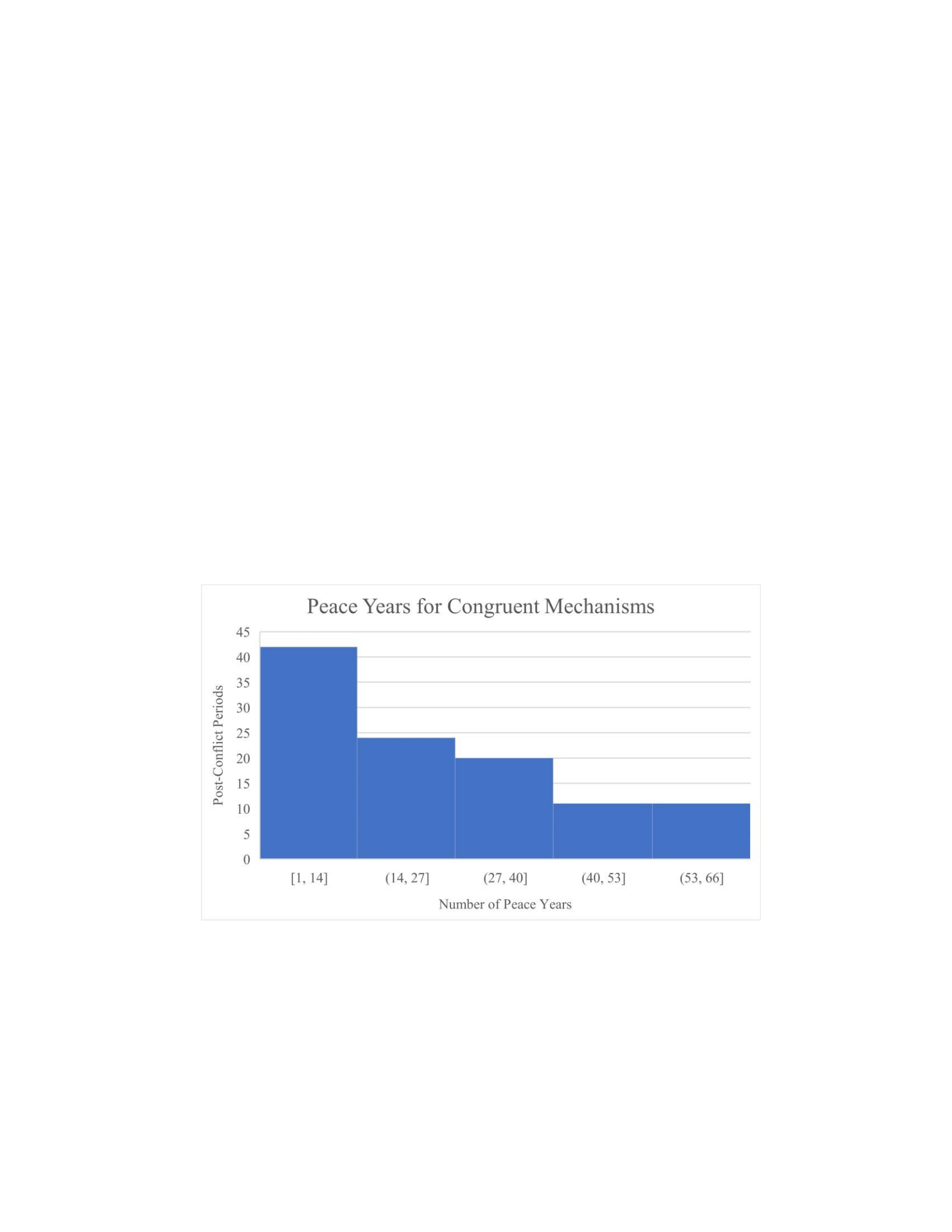
most of the observations appear to the left of the graphs, meaning the histograms are skewed
right, and the means are less than the median.
What is more important, however, is that the histograms illustrate fewer cases of
longlasting peace when incongruent PCJMs are implemented than when congruent PCJMs are
implemented. The utility of the histogram rather than looking only at means is the distribution.
While there is little difference in the average number of peace years between the two groups, the
distribution shows that there are more cases of longer-lasting peace for the congruent group over
time. This supports the idea that the adoption of congruent PCJMs can have positive long-term
effects in the post-conflict period.
Figure 6.1
Histogram of Peace Years for Congruent Post-Conflict Justice Mechanisms
Figure 6.2
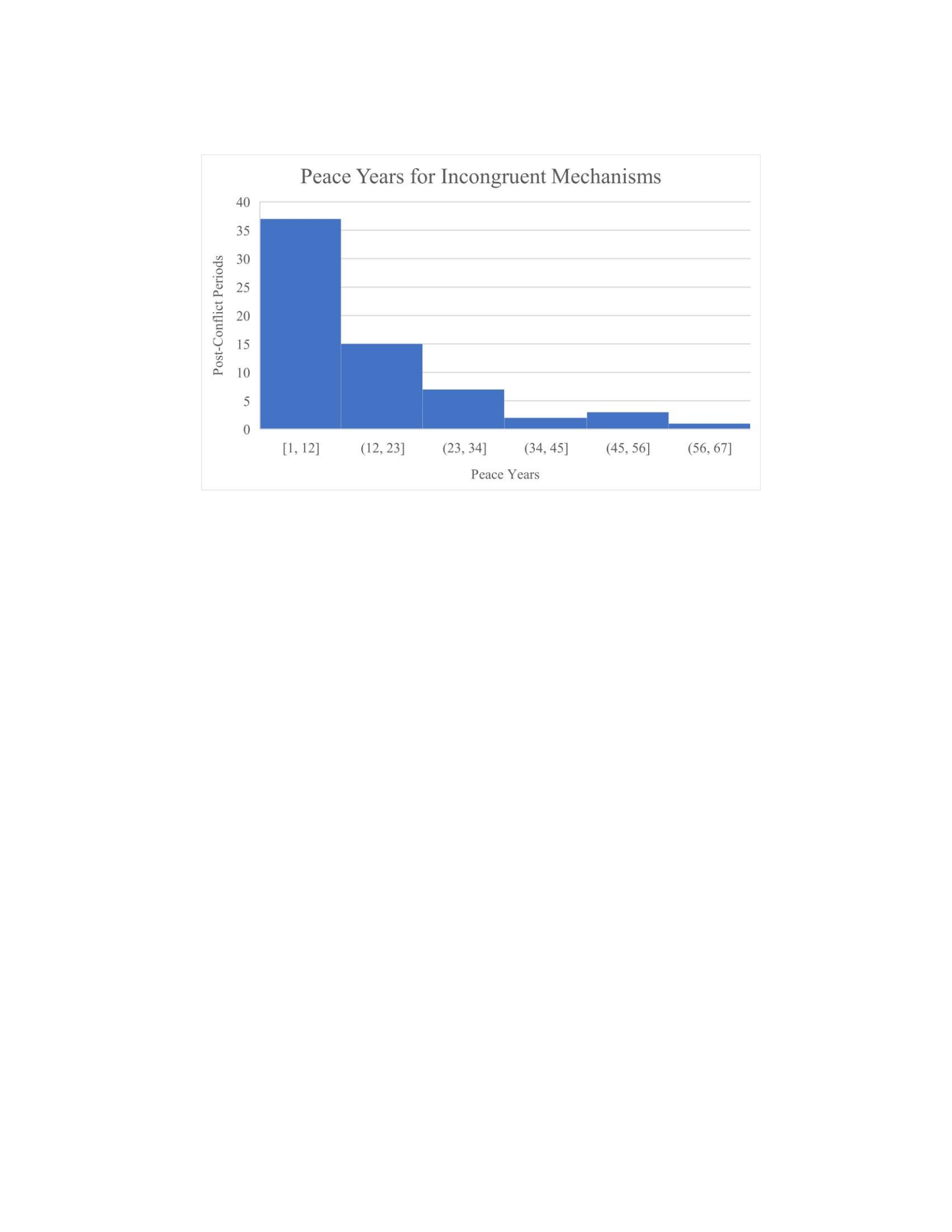
Histogram of Peace Years for Incongruent Post-Conflict Justice Mechanisms
Dependent Variable
In this analysis, the duration of peace upon the termination of an armed conflict is the
dependent variable. Utilizing the Post-Conflict Justice Dataset, I measure the number of peace
years after a conflict has ended. The count of total peace years starts over if conflict resumes in a
given year and results in at least 25 battle deaths (Binningsbø et al., 2012). Because the measure
of conflict recurrence is based on the resumption of violence, it does not take into account the
possibility that a negative peace may exist, but a brutal or repressive regime may be in place.
This hypothesis calls for a survival analysis and as such, analyzes the effect of congruent
postconflict justice mechanisms is expressed as a hazard ratio or the probability of peace failure.
Independent and Control Variables
Congruence is the primary independent variable of interest and is coded as “1” if the
mechanism or combination of mechanisms implemented align with the appropriate legal
tradition. I expect the adoption of congruent PCJMs to experience a more durable peace in the
post-conflict period. States with a civil or common legal tradition that adopt trials, purges, and

exiles, or some combination of the three, are coded as congruent for retributive post-conflict
justice mechanisms. Islamic law states that adopt truth commissions, reparations, and amnesties
or some combination of the three are coded as congruent for restorative post-conflict justice
mechanisms. States that adopt incongruent or a combination of congruent and incongruent
mechanisms are coded as “0” for congruence.
The adoption of post-conflict justice mechanisms, however, do not occur in isolation.
Additional control variables take into account characteristics of the conflict, the method by
which the conflict was terminated, and characteristics of the post-conflict peace period. I
consider the number of battle deaths and whether ethnic issues were part of the conflict as
variables of theoretical interest related to peace duration. Battle death count is widely used in
studies of armed conflict as a measure of conflict intensity as well as previous studies related to
peace duration and post-conflict justice (Binningsbø et al., 2012; Loyle & Appel 2017; Fortna,
2004). Ethnic incompatibility is also important to include when considering the risk of peace
failure in post-conflict states. Ethnic incompatibility and division are related to increased risk for
civil conflict and can lead to longer conflicts overall (Fearon & Laitin 2003, Collier, Hoeffler, &
Soderbom, 2004).
The method in which conflicts are terminated should also be accounted for when
considering peace duration. While conflicts are not always terminated through clear outcomes
such as a victory or peace agreement, conflict recurrence has been linked to termination methods.
For example, Kreutz (2010) finds that conflicts that are ended by a government victory or by the
presence of peacekeeping operations are less likely to recur. This analysis considers if the
conflict was terminated through a decisive victory for one side of the conflict, either the
government or rebels or if it was terminated by other means. Other means of conflict termination

include a bargained solution or low/no activity. This data originates from the UCDP Conflict
Termination Dataset and is used across several conflict-related studies including the primary
dataset used in this analysis (Kreutz 2010, Binningsbø et al., 2012). I also include a variable
indicating the presence of peace agreements related to conflict termination. Peace agreements
can take on many forms and range from ceasefire agreements to comprehensive agreements that
address deep-seated grievances in conflict. Badran (2014, p. 213) shows that the design of peace
agreements plays a significant factor in strengthening peace, noting that “how well peace is made
determines how long it will last.” While others consider conditions in which governments may
break such agreements. DeRouen, Lea, and Wallensteen (2009), for example, suggest that peace
agreements will last longer if the cost of government concessions is lower.
This study also considers several characteristics of the post-conflict peace period
concerning peace duration. Regime type is coded as democratic if a state has a Polity IV score of
6 or higher in a given year (Marshall et al., 2019). While many of the control variables describe
the nature of the conflict, the regime variable is an important characteristic of states and their
ability to carry-out or inhibit policies that could strengthen or threaten peace in the post-conflict
period. Regime type has been linked to peace duration through peace agreements and
powersharing arrangements. For example, Mason and Greig (2017) find links between types of
autocratic regimes and peace failure. In addition to democratic regimes, autocracy in the form of
personalist and military regimes reduce the risk of peace failure in the post-conflict period
(Mason and Greig 2017, p. 982). Their findings also indicate that specific types of autocratic
regimes that implement peace agreements have a higher risk for peace failure. Jarstad and

Nilsson (2018) examine how regime type influences power-sharing arrangements in intrastate
conflicts, finding that democracies commonly sign territorial pacts while autocracies sign
political and military power-sharing agreements.
I include a variable indicating the presence of peacekeepers during a post-conflict peace
period. Fortna (2004, 2008) finds that peacekeeping presence is effective in creating lasting
peace and reduces the risk of conflict recurrence in civil wars. The use of power-sharing
institutions, such as consociationalism, have also been shown to increase the chances for
effective and lasting peace (Hartzell & Hodie 2003). Indicators for GDP are also included to
measure economic growth overtime during the post-conflict period as economic development
reduces the risk of renewed conflict (Collier et al. 2008).
Results and Analysis
The final hypothesis of this study employs a survival analysis to test the effect of
congruence on the duration of peace. A survival or duration analysis models the expected time
duration to an event of interest. In this case, I am interested in how long peace will last given
specific inputs related to PCJ. I expect peace to fail sooner when incongruent PCJMs are used
than if congruent PCJMs are used. Duration models make no assumptions about how long peace
will continue to last past the end of the available data. For example, if peace has held to the end
of the data cutoff, in this case, 2006, the model does not assume that it will continue to hold. This
is referred to as censoring and means that the event of interest, failure of peace, did not occur in
the observed time period but may occur given a longer observation period. This data is “right
censored” in that there is incomplete data regarding survival time past a certain point, in the case
the data ends in the year 2006. Box-Steffensmeier and Jones (2004, p. 16) describe right
censoring as instances in which “the time-frame of a study or observation plan concludes prior to

the completion of termination or survival times.” In this analysis, peace lasts or “survives” until
armed conflict resumes in the same conflict. If peace survives and conflict does not resume by
the end of the observed time period in 2006, the data are censored. There is no certainty that
peace will continue to survive past the censoring point, but the survival analysis provides an
indication of the risk of peace failure. The data are organized by post-conflict peace period and
not all conflict within a particular state. As such, there may be multiple conflicts occurring in a
state in which peace lasts or does not last. The Soviet Union is an excellent example within this
universe of cases. Between 1946 and 1950 there were four separate conflicts occurring within the
Soviet Union related to what is now the Baltic States and Ukraine. Each conflict is considered
separately within the dataset and has different end dates. The conflict between the Soviet Union
and Latvian rebel groups was terminated in 1947, while the Ukrainian rebellion against the
Soviet Union lasted until 1950. Peace has held in each of these conflicts since their termination
and exiles were implemented in each case.
The Cox proportional hazard model or Cox regression is used when a model is interested
in the effect of categorical independent variables on duration. In this model, the independent
variable of interest is congruence, which is dichotomous and coded as 0 or 1. The Cox regression
produces hazard ratios instead of coefficients. The hazard ratio is the risk or hazard of an event
occurring within a given time. More specifically, in this analysis the hazard ratio will predict the
hazard of peace failing (conflict resuming). Fortna (2008, pp.104-105) employs Cox proportional
hazard models to test the effect of the presence of peacekeepers on peace duration and
summarizes the interpretation of hazard ratios in a similar context: “ratios significantly less than

1 indicate that a variable is estimated to reduce the hazard, or the risk, of another war, while
ratios significantly greater than 1 mark an increased risk of another war.” Hazard ratios can be
expressed as a percentage because they are understood as being relative to 1. A hazard ratio of
.50, for example, would be interpreted as reducing risk by 50%. Alternatively, a hazard ratio of 3
means that the risk is tripled. The hazard ratios provide an interpretation of the risk of peace
failing (or conflict recurring) given the presence of certain conditions. In this analysis, I am
examining how the presence of congruent post-conflict justice mechanisms influences the risk of
peace failure; or how long peace will hold in the post-conflict period.
Table 6.1
Survival Analysis Results – Congruence and Peace Duration
Variables Congruence
p-value 0.045*
Hazard Ratio
.591
Standard Error
(.154)
Ethnic Conflict
0.00***
3.273
(.914)
Termination – Victory
0.264
.735
(.202)
Peace Agreement
0.330
1.578
(.738)
Peace Keeping
0.279
.561
(.299)
Democracy
0.290
.685
(.245)
Power Sharing
0.059
.139
(.145)
GDP Per Capita
0.029*
.999
(.000)
GDP Growth
0.720
.589
(.869)
Battle Deaths
0.405
1.09e+14
(4.22e+15)
Notes: *p< .05, **p< .01, ***p< .001
The results of Table 6.1 indicate that the implementation of congruent post-conflict
justice mechanisms reduces the risk of peace failure by 41% (with a hazard ratio of .591). This
result is statistically significant, with a p-value of 0.045. A p-value of less than 0.05 signals that
there is strong evidence to reject the null hypothesis that the implementation of congruent PCJMs
has no effect on the duration of peace. Ethnic issues and GDP per capita are also statistically
significant in the analysis. Conflict with an ethnic incompatibility component is three times more
likely to experience peace failure in the post-conflict period. The presence of a power-sharing

agreement reduces the risk of peace failure by 87%. And GDP per capita is statistically
significant with a p-value of 0.029, but a hazard ratio of .999 indicates that peace failing is just as
likely as peace holding.
Conclusion
Based on the findings in Table 6.1, I find that we can expect longer-lasting peace in the
post-conflict period when post-conflict justice mechanisms that are congruent with domestic
legal traditions are implemented. Using secondary data to test this hypothesis presents both
strengths and weaknesses in this study. The data are drawn from reliable sources that have been
analyzed in prior studies in peer-reviewed journals and research programs. The data is available
online, maintained by scholars and research centers, and made publicly available for replication;
this contributes to higher measurement reliability. A significant weakness or limitation of this
approach is overgeneralization and the possible exclusion of other independent or intervening
variables. This could have the effect of decreased validity as other intervening variables may
negate the results (Bryman, 2012). Generalization, however, can also be viewed as a strength in
social science research. Scholarship that provides general explanations of social and political
phenomena contributes to a body of knowledge that helps make predictions and provide
explanations about the world. It is important, however, to bear in mind the practicality and of
such work. For example, broad generalizations may be too abstract for any direct application to
policy interventions. Overall, the initial results suggest that this is an area that merits further
investigation with a more sophisticated operationalization of the congruence concept.
Chapter 7

Conclusion
Transitional justice seeks to deal with legacies of the most brutal conflicts and political
transitions within states; however, there is no one-size-fits-all approach. Post-conflict justice, as a
subset of transitional justice, is concerned with justice mechanisms in the wake of armed
conflict. The use of transitional and post-conflict justice is not everyday practice, and as such,
there are often no pre-designated strategies in place to turn to when faced with the aftermath of
conflict. A growing literature has demonstrated that domestic legal traditions are an important
state characteristic that influences conflict management behaviors ranging from dispute
settlement preferences to organizational membership.
Given that the norms and principles of justice are, in part, derived from legal traditions, it
is necessary to investigate the relationship between legal traditions and transitional justice
practices. How do legal traditions influence the adoption and mechanism selection of postconflict
justice mechanisms? Further, do these choices have any effect on the broader goals of transitional
justice? This dissertation has shown that domestic legal traditions should be considered in
making decisions about implementing post-conflict justice mechanisms. The inclusion of legal
tradition as an explanatory factor suggests that states have latent preferences for post-conflict
justice that could ultimately lead to a more durable peace. This is based on existing principles of
law and justice that are recognized as legitimate within the state as expressed by their domestic
legal tradition type.
The consideration of the role of legal traditions on post-conflict justice practices
contributes to both the transitional justice literature and the literature on domestic legal
traditions. This study provides new explanations for why and how states chose to pursue and
practice transitional justice, specifically, that domestic legal traditions are one component of state

identity and provide a different lens through which to examine and explain state behavior.
Further, this dissertation contributes a new theoretical understanding through the development of
the congruence concept to the literature and research on transitional justice.
Overview of the study
People and their governments have practiced transitional and post-conflict justice since
the beginning of democratic governance in ancient Athens. The need for communities to remedy
large-scale violence and oppression has been expressed through legal proceedings, punishment,
truth-seeking, and reparative measures. Increased attention from scholars and policymakers
continues to produce new understandings and frameworks for achieving the goals of justice,
truth, and peace.
The literature is primarily concerned with the impact and efficacy of transitional justice.
Given that the implementation of transitional and post-conflict justice mechanisms requires both
human and financial resources, it makes sense that stakeholders are concerned with whether
these mechanisms work. Single case studies investigating the impact of PCJ mechanisms provide
mixed results when it comes to the overall efficacy of transitional justice (Gibson 2004, 2005;
Meernik, 2005, David, 2006; Mayer-Rieckh, 2007). Comparative case studies and regional
examinations provide more encouraging results. For example, truth-telling has a positive effect
on peace and democratic strength in Latin America (Long & Brecke, 2003; Kenney & Spears,
2005; Sikkink & Walling, 2007). Criminal tribunals in Europe and Africa have contributed to the
emergence of political moderates who support coexistence in multiethnic societies while at the
same time marginalizing former leaders responsible for fueling ethnic division (Akhavan, 2001;
Stromseth, Wippman, & Brooks, 2006). The “quantitative-turn” in transitional justice
emphasizes “the need for basing claims about the impact of transitional justice on more solid
empirical foundations” (Stewart & Wiebelhaus-Brahm, 2017, p. 98). Many of these studies have

assessed the impact of transitional justice on the status of human rights, peace, and
democratization, while treating the presence of transitional justice as the independent variable of
interest (Melander, 2009; Meernik, Nichols, & King, 2010; Lie, Binningsbø, & Gates, 2007;
Olsen et al., 2010). Overall, the literature that emphasizes the impact and efficacy of transitional
justice points to mixed results with little generalizable theory.
Adoption and mechanism selection in transitional and post-conflict justice is also a focal
point in the literature. As such, it begins by addressing the question of whether certain legal
traditions are more likely to adopt PCJ in the first place. This study does not assume that
postconflict justice occurs in each case. The political context of a state, the extent of repression
within authoritarian regimes, and economic constraints all play a part in the adoption of
transitional justice mechanisms (Reiter, Olsen, & Payne, 2013). Further, international pressure in
the form of pre-conditions for membership in international organizations and aid conditionality
are also areas that can influence the adoption and mechanism choice of transitional justice
practices. Decisions regarding adoption and mechanism selection are important, yet the bulk of
the literature is concerned with impact and efficacy.
In this dissertation, I employ the concept of congruence as the theoretical link between
post-conflict justice and domestic legal traditions. Congruence refers to the fit between inherent
legal principles and practices that are held by a group (legal tradition) and a process by which
justice is sought in a post-conflict setting (post-conflict justice mechanism). Understanding
domestic legal traditions can give leaders, policymakers, and other stakeholders in the
postconflict process clues about the adoption of post-conflict justice as well as which
mechanisms best serve the goal of peace in the post-conflict period. I classified both the legal
traditions and post-conflict justice mechanisms according to the overarching justice type that is

found in both variables. This approach allowed me to deal with complex independent and
dependent variables, and carry out the first, to my knowledge, empirical test of the influence of
legal traditions on post-conflict justice practices. Within the universe of cases of this study,
congruence exists when a state with a legal tradition that emphasizes retributive justice, chooses
retributive PCJMs, and a state with a legal tradition that emphasizes restorative justice chooses a
restorative PCJM. From this conceptual framework, I derive three sets of hypotheses related
to the adoption of post-conflict justice, mechanism choice, and the impact of congruence. While
transitional and post-conflict justice practices continue to evolve, contemporary understandings
of transitional justice are rooted in the post-World War II experience, which was dominated by
Western powers. As a result, international institutions such as the International Criminal Court
and various international criminal tribunals have followed a Western-style justice model. The
first hypothesis contends that states with a civil or common law legal tradition are more likely to
adopt post-conflict justice than states with Islamic law legal traditions. However, the results
show there is insufficient support to this claim and that the adoption of post-conflict justice
mechanisms is independent of the legal tradition type.
The second set of hypotheses is related to mechanism selection and congruence. I claim
not only that states will adopt post-conflict justice mechanisms that are congruent with their legal
tradition, but specifically, that civil and common law states will adopt retributive PCJMs and
Islamic law states will adopt restorative PCJMs. Results from the Chi-square test find that there
is no support for the congruence claim; that mechanism choice is independent of legal tradition
type. However, the results from the logit models find support for the claim. The results of the
first model show weak support (p = 0.056) that states with civil of common law traditions will
adopt retributive post-conflict justice mechanisms. The second model finds stronger support (p =

0.014) for the claim that Islamic law states are more likely to adopt post-conflict justice
mechanisms that are restorative in nature.
Perhaps the more compelling question is why congruence matters at all? As much of the
transitional justice literature is dedicated to the question of impact and efficacy, this study also
seeks to address whether the consideration of legal tradition has any influence on the broader
goals of transitional justice. The third hypothesis tests the claim that when states adopt congruent
post-conflict justice mechanisms, peace will be more durable in the post-conflict period. Results
from a survival analysis show that the adoption of congruent PCJMs reduces the risk of peace
failure in the post-conflict period by 53%. Thus, choosing congruent mechanisms can increase
peace, but in many cases we see that countries choose incongruent mechanisms. In fact, 38% of
the cases in this sample chose incongruent mechanisms. Knowing that congruence between
domestic legal traditions and post-conflict justice mechanisms can lead to longer-lasting peace is
an important contribution to the literature and practice of transitional justice.
Testing three hypotheses related to post-conflict justice adoption, mechanism selection,
and efficacy (as defined by peace duration) contributes to these same strands of transitional
justice literature. Further, the introduction of legal tradition as the primary independent variable
of interest brings together the growing literature of the influence of legal traditions on state
behavior and transitional justice. Zartner (2012) asserted that legal traditions matter in
transitional justice practices, however, this study is the first empirical test of this relationship.
The overall results confirm that this area deserves additional attention from scholars,
practitioners, and policymakers.

Limitations
This study was limited in scope to post-conflict justice, or justice mechanisms that were
attempted in the first five years after an armed conflict as defined by UCDP/PRIO Armed
Conflict Dataset. The universe of transitional justice also includes political transitions (typically
from a state of repression) that may or may not have occurred with armed conflict. The data is
limited to justice efforts following an armed conflict with a minimum of 25 battle deaths per year
between 1946 and 2006, and therefore does not include every justice mechanism implemented
with the goals of truth, justice, peace, and dignity for victims. However, future research could
expand the application of congruence to test the effect in other transitional contexts.
Another limitation concerns the classification of legal traditions. The broad approach taken in
this study proved quite useful for a preliminary investigation. It not only allowed for hypothesis
testing that included complex variables, but the results indicated that there are avenues for future
research. Using broad classifications, however, did not account for the variation among states
within each legal family; one could call it an oversimplification. Legal traditions and legal
systems are complex, and no two are identical, and a more in-depth approach should recognize
the internal diversity among states within each tradition.
Applying a quantitative approach to the study of a social phenomenon assumes several
limitations. This approach assumes that one can quantify and measure complex events, issues,
and ideas. While there is increasingly available data that quantifies transitional justice efforts,
scholars must continue to question their assumptions and continue to refine measurements for
precision. This is especially true as new variables, such as congruence, are introduced.
Quantitative approaches can obscure the broader context of the subject at hand and often can
benefit from complementing qualitative approaches such as case studies or interviews. While

these methods were outside the scope of this study, future research would benefit from taking a
mixed-methods approach to provide a richer understanding of how the relationship between legal
traditions and post-conflict justice works.
Related to the measurement limitations is the fact that perceptions of what is considered a
legitimate post-conflict justice mechanism may vary between the government and the people.
This is not reflected in the scope of this study due to the use of the broadest categories possible
for the variables of interest. This disconnect would be especially problematic in deeply divided
states and/or diverse states comprised of groups with different cultural heritages. Further,
because this study uses the legal tradition of the state, it does not account for customary or
traditional justice practices that are important parts of many communities, and future research
would need to take this into account.
Recommendations
Policy Recommendations
The results of this study have many implications for the transitional justice selection
process. In particular, the findings provide key insights into important factors that should be
considered during this process and can inform best practices when considering the adoption of
post-conflict justice and mechanism selection. The transitional and post-conflict justice literature
should move forward with a deeper understanding of the legal tradition. The literature does
recognize the importance of the national or even local context but is leaving out this one key
variable. Policy makers and practitioners should consult with legal scholars and experts as part of
the decision-making process for a deeper understanding of the beliefs and norms related to
justice, and attention should be given to the domestic legal tradition of the state as related to any

decision to implement specific PCJMs. States that have a history of conflict should consider the
development of a broad policy framework to address post-conflict justice in the future.
Some states have even included constitutional provisions for transitional justice to
demonstrate commitment to the transitional justice process. Colombia, Egypt, and Tunisia have
all put into place provisions dealing specifically with the issue of transitional justice based on
their past experiences with conflict. Libya and Yemen currently have transitional justice
provisions in the most recent drafts of their constitutions, although they have not been legally
enacted at this time. The inclusion of legal provisions for such instances provides states with
initial guidance in the event such measures become necessary.
A 2006 report from the Office of the United Nations High Commissioner for Human
Rights designates the monitoring of legal systems as one tool for post-conflict states. Recalling
the discussion of the distinction between legal traditions and legal systems from Chapter 3, it is
the legal system – the institutions and policies - that has failed in protecting citizens from any
abuses that may have occurred during the conflict. However, as argued in this study, the norms
and values of the tradition remain constant. As such monitoring legal and justice systems for
dysfunction, corruption, and compliance with both domestic and international standards is one
method for understanding what is working and what is not, allowing transitional justice
stakeholders to develop the most appropriate recommendations and policy frameworks in
specific contexts (United Nations, 2006).
The relevance of this study is not limited to the academic study of transitional and
postconflict justice practices. The findings indicate that there are clear implications for how
transitional justice works or could be improved to serve better those impacted by conflict and
repression. Transitional justice processes should be inclusive and not limited to executives or

those in power. Consultations with judges, legal scholars, and community leaders would help
engage with the population to gain acceptance of any processes that may be implemented. A
more inclusive approach allows for community members to be invested in the process and
therefore increase acceptance at local levels.
Future Research
As this study provided an initial explanation and analysis of the link between legal
traditions and post-conflict justice, the results indicate that there is more work to be done.
Recognizing the limitations discussed above, future research would benefit from a more
sophisticated operationalization of congruence. One approach would be to develop a typology on
a state-by-state basis, acknowledging that there is variation within each legal tradition. It would
also be critical to take into account customary law practices within states and how these impact
the broader operation of the legal system within the state. Additionally, future research could also
be expanded to include more religious traditions as well as take a closer look at mixed traditions
and the effects of colonial history on legal traditions and post-conflict justice practices. More
specifically, it would be important to consider the entire scope of justice systems at play within a
state; the tradition that underpins the system at work at the state level, does not necessarily
include or even recognize customary traditions that may be at work at the community level.
These complex relationships between customary traditions and the state present questions of
legitimacy at the local level, jurisdiction, and coordination of efforts. There is increasing
scholarship exploring the unique contributions of customary justice and reconciliation practices
of mato oput in Uganda and South Sudan, Gacaca courts in Rwanda, Fambul Tok in Sierra
Leone, and tara bandu in East Timor, to name a few. As the discussion in Chapter 3 pointed out,
legal traditions often do not operate in isolation and have been influenced by other traditions

through historical events, colonization, and increased interaction and globalization. It would be
imperative for future research to begin to untangle these influences.
Future research should include considerations of who is leading a justice mechanism.
This is particularly important for Islamic Law States (ILS), according to Powell (2020, p. 108)
who notes, for example, the role of judges in religious courts, who “while making decisions,
applies insights from God’s law to a particular case.” PCJ mechanisms that are alien to a context
or are led by outsiders decrease certainty for states in already fragile situations. Considering who
or what body leads or performs post-conflict justice would provide additional insight into the
domestic acceptance of these practices as well as efficacy related to the broader goals of peace
and justice.
Future research should also examine the various combinations and sequencing of
postconflict justice mechanisms. That is, what factors contribute to the adoption of multiple
mechanisms and what effect does that have on the goals of peace, truth, and justice versus the
implementation on a single mechanism. One important question to ask is, what are the effects of
implementing a combination of congruence and incongruent post-conflict justice mechanisms? A
deeper understanding of how the combination of PCJMs work concerning legal traditions would
have even more meaningful implications for policy recommendations and implementation in the
future.
Another avenue for future research would be to expand this approach to include all
transitional justice. While this study examined post-conflict justice as a subset of transitional
justice, examining the influence of legal tradition across all instances of transitional justice could
provide even greater generalizability. This could be of particular importance when considering
political transitions from authoritarianism to democracy as there would be significant changes to

domestic institutions and power structures such as the legal system. The discussion of
congruence as it relates to human nature and the design of the state in Chapter 3 highlights the
importance of considering the political context of the state that occurs in regime change. Legal
traditions in light of political transitions from authoritarianism to democracy motivate questions
of the adaptability of traditions across time as well as how new political and legal norms may be
accepted as legitimate under new institutional frameworks.
Taking a case study or regional approach to give greater context to the overall findings of
this study would provide a more in-depth understanding of how the influence of domestic legal
tradition plays out in real-world examples. This approach may also present additional variables
of interest to include in future studies.
The findings of this dissertation have implications for future research not only in
transitional justice but also in international conflict and international conflict management more
broadly. Understanding the extent to which complex domestic characteristics, such as norms,
beliefs, and values related to justice, manifest in different situations can help policymakers and
leaders make well-informed decisions and better predict outcomes.
Contribution to Knowledge
Zartner (2012) suggested that legal traditions should be considered in transitional justice
practices. I build upon this idea by developing a new variable (congruence) to test hypotheses
about the relationship between legal traditions and post-conflict justice practices. This
dissertation is the first study to empirically test this relationship. Overall the results indicate that
this could develop into a new strand of transitional justice scholarship. Further, it contributes to
the existing legal tradition scholarship which explores how this important characteristic of states
influences their behavior in the international arena.

The congruence variable, as discussed above, requires additional refinement and testing.
However, the initial results presented here indicate that further development of congruence could
lead to a deeper understanding of how societies can best heal from conflict and work towards
sustainable peace. With additional work, it would be possible that congruence could be applied in
other ways to understand better how domestic characteristics and cultural norms influence
transitional justice implementation and outcomes.
This dissertation contributes to the broader transitional justice literature in the
methodological approach, as well. As previously discussed, much of the existing literature takes
a qualitative approach to the study of transitional justice. Case studies and regional studies have
provided in-depth accounts of varied approaches to transitional and post-conflict justice practices
and are invaluable contributions to the broader understanding of transitional justice. Quantitative
and large-N analyses have been less popular, but thanks to several data initiatives are beginning
to emerge in the literature. The Transitional Justice Database, Transitional Justice Research
Collaborative, Post-Conflict Justice Dataset, and During Justice (DCJ) Dataset have all collected
information on transitional justice practices and are available for scholars to use to further the
study of these unique justice mechanisms (Olsen et al., 2010; Dancy, Lessa, Marchesi, Payne,
Pereira, & Sikkink, 2014; Binningsbø et al., 2012; Lolye & Binningsbø, 2018). This study
utilizes existing data, the PCJ Dataset, and applies new variables related to legal traditions,
congruence, and justice types to better understand the relationship between important domestic
characteristics and transitional justice outcomes. Stewart and Wiebalhaus-Braham (2017, p. 120)
note that critics of quantitative approaches to the study transitional justice “fail to account for
‘changes in the [global] normative context’ over time and for ‘local contextual factors.’” This
study, however, is a first step towards bridging this gap by including existing and previously

tested data in addition to explanatory factors that account for normative and cultural
characteristics. The contributions of this dissertation to the study of transitional and post-conflict
justice as well as the broader field of international conflict management include the inclusion and
first empirical test of legal traditions as an independent variable of interest, a new application of
congruence theory as important in the broader field of transitional justice, the development of the
congruence variable, and the testing of the effect of congruence on one of the primary goals of
transitional justice – the durability of peace in the post-conflict period. The overall results
indicate that this is an important new area for future research with key insights into important
factors that can inform policy and best practices when considering the adoption and
implementation of post-conflict justice.

