


INTRODUCTION After the fall of the Soviet Union
After the fall of the Soviet Union, many scholars celebrated the victory of liberalism and
democracy. Democracy was now king in Europe, and it seemed there to stay. One such scholar
named Francis Fukuyama went so far as to state that the fall of communism marked:
‘not just ... the passing of a particular period of post-war history, but the end of history as
such: That is, the end-point of mankind's ideological evolution and the universalization of
Western liberal democracy as the final form of human government.’
Yet today in Europe, democracy is in peril; fascism and the radical right pose the greatest threat
to democracy since the height of their power in the Second World War. Understanding the
reasons behind this resurgence and being able to differentiate this new threat is vital to defend
democracy.
The first chapter will give a sufficient introduction to Europe and democracy. I will begin
by explaining how Europe is defined. I will provide a historical account of both the conceptual
and geographic evolution of the continent. Europe is difficult to define geographically, especially
along its eastern border. For the purposes of my thesis, I settle with the conventional border that
stretches from the Ural Mountains to the Caucasus Mountains. Although some may argue
otherwise, I will exclude Turkey and Russia for various cultural and political reasons.
Conceptually, Europe is currently united with the values of political liberalism and democracy
that first arose from the French Revolution. However, these values do not define Europe, rather,
they act as the glue that holds the continent together. A Europe without democracy is still
Europe, albeit a weaker and fractured one.

I will then give a historical account of European democracy. I will begin with the French
Revolution in 1789 and explain how the ideas born from this event evolved until the creation of
the European Union. The fight for democracy, especially in Europe, was wrought with change
and violence. Democracy is a feeble thing that must constantly be fought for as its own existence
allows for its challengers' existence.
The second chapter will attempt to define fascism. Rising fascism and similar movements
are the focus of this paper, so I must have a working definition to give the reader. I begin with
how fascism first arose in interwar Europe, specifically in Italy and Germany. I will underscore
the conditions that led to its creation to compare them in later chapters to contemporary Europe. I
then compare the varying definitions of fascism and examine generic fascism, classical fascism,
and neofascism. Through this analysis and comparison, I arrive at a “fascist minimum” that
serves as the criteria for defining fascism.
In chapter three, I conduct a case study analysis of three popular far-right parties in
Europe, often described as fascist. In each case, I begin with a brief historical account of the
party. I then examine how each party may have changed over time. The party is examined further
through analysis of its policies, leadership, and supporters. After this is done, I will then assess
whether it is appropriate to label the party is fascist, using my “fascist minimum” as the final test.
If fascist is proved an inappropriate label, then I will provide one that is better suited for that
party.
In my conclusion, I will then state the ramifications of these movements on Europe and
democracy as a whole. I will also discuss how these movements have changed the European
political landscape. I will then analyze the radical right movement as a whole, incorporating my
case study analysis with other examples and overall trends. The state of European democracy as

a whole is then examined with recent data that measures the strength of democracy and using
this, I provide an outlook on its future.

CHAPTER ONE: EUROPE AND DEMOCRACY
Europe has long been a beacon of democracy and political liberalism in the world, but
now that seems to be in jeopardy. In recent decades, Europe has been experiencing a steady
increase in anti-democratic sentiment. Voters across Europe have become angry and disillusioned
with their democracies and have shown increasing support for movements and parties that would
challenge democratic institutions. These groups are largely on the radicalright, showing some, if
not outright, fascist tendencies. The reasons behind this shift vary in each country and cultural
region, whether it be rising xenophobia, economic strife, Euroscepticism, or several others. This
chapter will give a historical account of Europe itself and its many definitions, then discuss the
origins and evolution of European democracy.
What is Europe?
To first understand European democracy and fascism, it is important to ask what Europe
itself actually is. This is no easy task; the concept of Europe and its borders has been debated
since its creation, continuing to this day. There are multiple definitions of Europe, varying both
ideologically and geographically. These definitions have changed over time with war, religion,
and political and technological revolutions. The answer to the question of Europe depends on
who one asks and what one is looking for.
Geographically, Europe is thought of as a continent. However, unlike most other
continents, its borders are hard to pin down and have changed drastically over time. A continent
is defined as a very large and contiguous landmass. Europe has many obvious borders: it is
surrounded by the Arctic Sea to the north, the Atlantic Ocean to the west, and the Mediterranean

and Black Seas to the south. Its eastern border, however, is the cause of much debate. Many
geographers would simply draw no border at all and call the vast Eurasian expanse of land a
single continent. But for many, the two seem far too different to be considered a singular entity.
The problem, then, has been deciding where to divide this large landmass when, at least
geographically, there is no reason to do so (Jacobs 3).
Europe was originally thought of as merely a stretch of land that the Persians used to
invade ancient Greece. This land now exists in Turkey, which, ironically, is thought by many to
be excluded from Europe. Turkey, then may have a claim to be the original Europe (Jacobos 3).
Turkey's general exclusion in Europe is based upon a broader concept that forms the backbone of
most definitions of Europe today. This concept was formed in the early Middle Ages where
Europe constituted a third of the world’s landmass, the other two-thirds being occupied by Asia
and Africa. All three regions converged on Jerusalem, thought to be the center of the world.
Increasing threats from the Tartars in Russia and the Turks in the 13th century caused the concept
of Europe to become more spiritual, bringing forth the identity of Christendom. This new
concept forged a border between Turkey and Europe. This border, however, has changed over
time with the advancement and eventual retreat of the Ottomans, creating the classical definition
that places the border at a waterway that connects the Mediterranean and Black Seas (Jacobs 4-
5).
As one looks farther north of the eastern border, things become increasingly complicated.
The question of this border essentially boils down to how one defines Russia. In Western
Europeans' eyes, this definition has changed much over time, and, subsequently, Europe’s
borders. Even from its earliest conclusions, the consensus from the West has always seemed to
be that Russia is of little relation to Europe, if not something totally alien. Sully (1560-1641), a
French minister, expressed his thoughts on the inclusion of Russia into Europe, saying, “[T]here
scarce remains any conformity among us with them; besides they belong to Asia as much as to
Europe. We may indeed almost consider them as a barbarous country, and place them in the same
class with Turkey” (Jacobs 5). The feeling was often mutual, as was seen in 1703 with the
founding of St. Petersburg, its mission claiming the city was to be a “window on Europe”
(Jacobs 6).
Joe Burgess/The New York Times
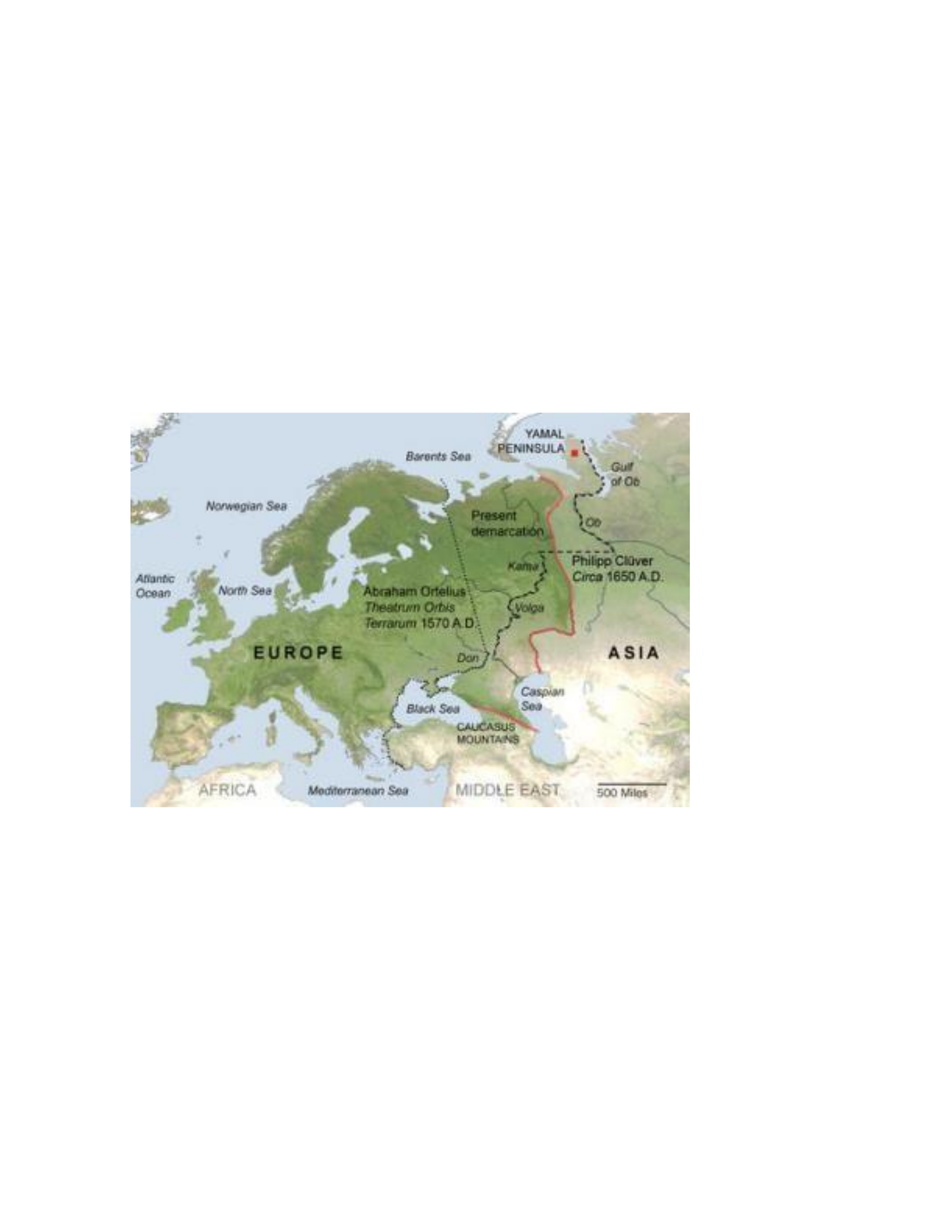
The eastern border has varied vastly as attitudes towards Russia changed over time.
During the Renaissance, the border began with the river Don and continued upward to the White
Sea. In the 17th century, this border changed to follow the rivers Don, Volga and Kama, and
extended across to join with the river Ob. In 1730 Swedish geographer Philip Johan von
Strahlenberg proposed the Ural Mountains as the eastern border, which was widely accepted. In

the early 19th century, this border was amended to include the Caucasus Mountains as the
southern portion of the border by Conrad Malte-Brun and other French geographers. This
amended border that stretches from the Urals to the Caucasus Mountains is still today regarded
as the most conventional eastern border of Europe (Jacobs 7).
The widely accepted Urals-Caucasus border, however, is merely a geographical guideline.
This border has been and continues to change as Europe as a concept changes. For instance,
during the Cold War, this border was moved much farther west to exclude the Eastern
Bloc countries and the Soviet Union, who were, at the time, not thought of as European (Jacobs
7). The balance of power in Europe has always been heavily favored towards the west. Western
Europe holds the power to grant any given country or region entry into the European community.
Eastern Europe, however, has always had trouble fitting in with the rest of the Europe. Eastern
Europeans are not to blame for this; the region is simply a product of an unfortunate
geographical location. Its proximity to Asia makes it the first to be hit by foreign invaders.
Eastern Europe has acted as Western Europe’s convenient buffer zone for centuries. The last
invasion of Western Europe by non-Europeans was in 711 when the Moors invaded Spain. They
were beaten in 732 and finally driven out in 1492. By contrast, Eastern Europe was not free of
Turkish invaders until 1913. The lack of geographical barriers also makes it prone to attack
(Roskin 7). Eastern Europe is also largely without many rivers and has little access to the open
sea. This makes it hard to facilitate trade with a lack of trade routes, putting the region's economy
at a disadvantage (Roskin 8). The history of weakness and poverty relative to the rest of Europe
makes the “Europeanness” of the Eastern countries seem less real. Many of these countries,
however, found themselves legitimized when granted entry into the European Union.
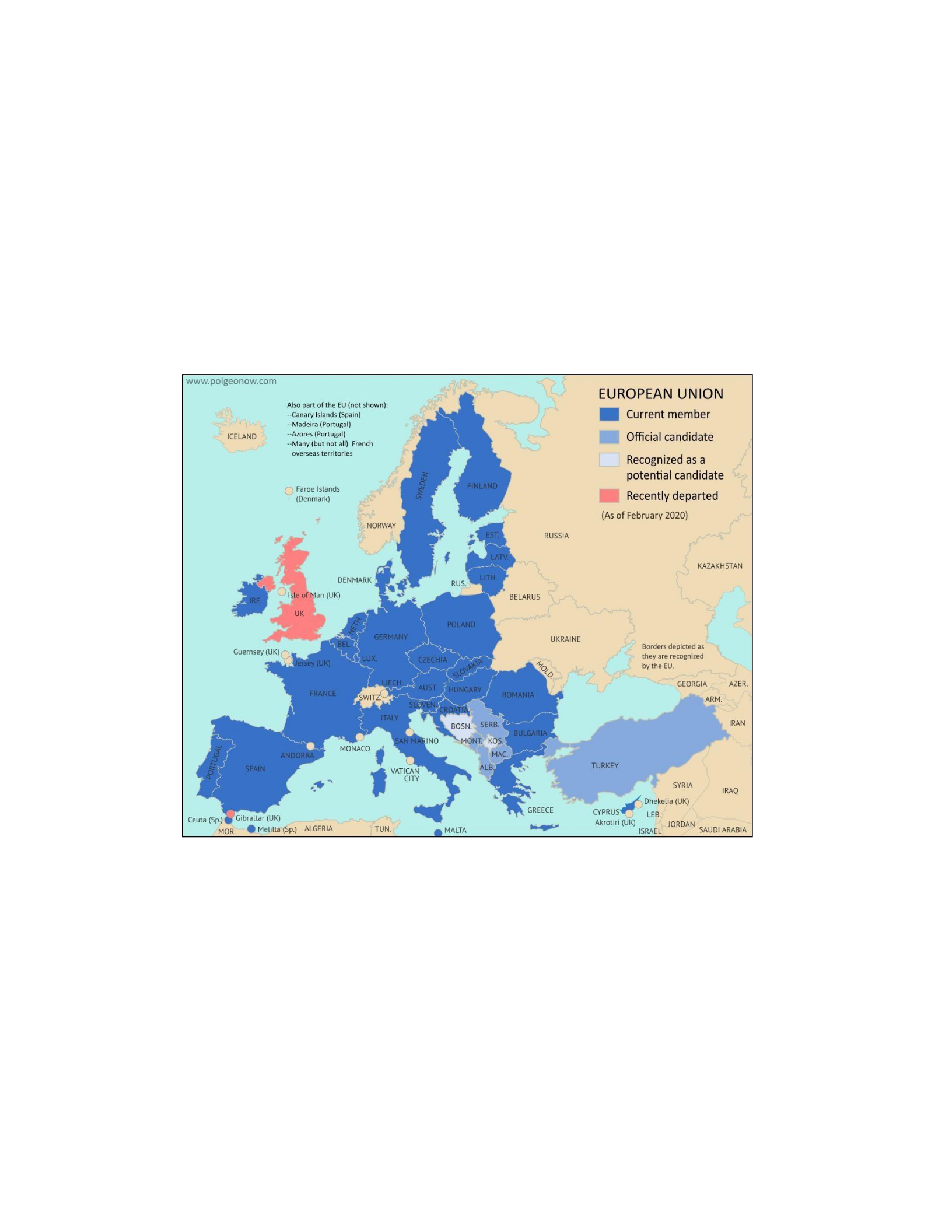
The members of the European Union often define contemporary Europe. However, some
countries are not members of the EU yet are undoubtedly European, such as Britain and
Switzerland. There are also members that are in the EU yet are questionably European, like
Cyprus. Therefore, it is unwise to view the European Union as synonymous with Europe itself. It
is merely an open membership body consisting of democratic states that cooperate for political
and economic ends (Rose 5).
polgeonow.com
How then can contemporary Europe be defined? The answer is nearly impossible to find.
According to Richard Rose, “Any attempt to reduce contemporary Europe to a single idea is
bound to fail, for Europeans differ about almost everything imaginable. There are striking
differences between countries in language, religion, and economic prosperity” (3). Nonetheless,

for this thesis's purposes, the concept of Europe that I will analyze will be those states that exist
within the conventional geographical borders previously mentioned, excluding Russia.
As championed by Richard Rose, the political concept of Europe is founded upon
democratic values, political liberalism, and economic freedom. However, it is important to note
that Europe is united by these values, not defined by them. A Europe without democracy is still
Europe. Therefore, Europe is best defined in geographic terms, even though this can be difficult.
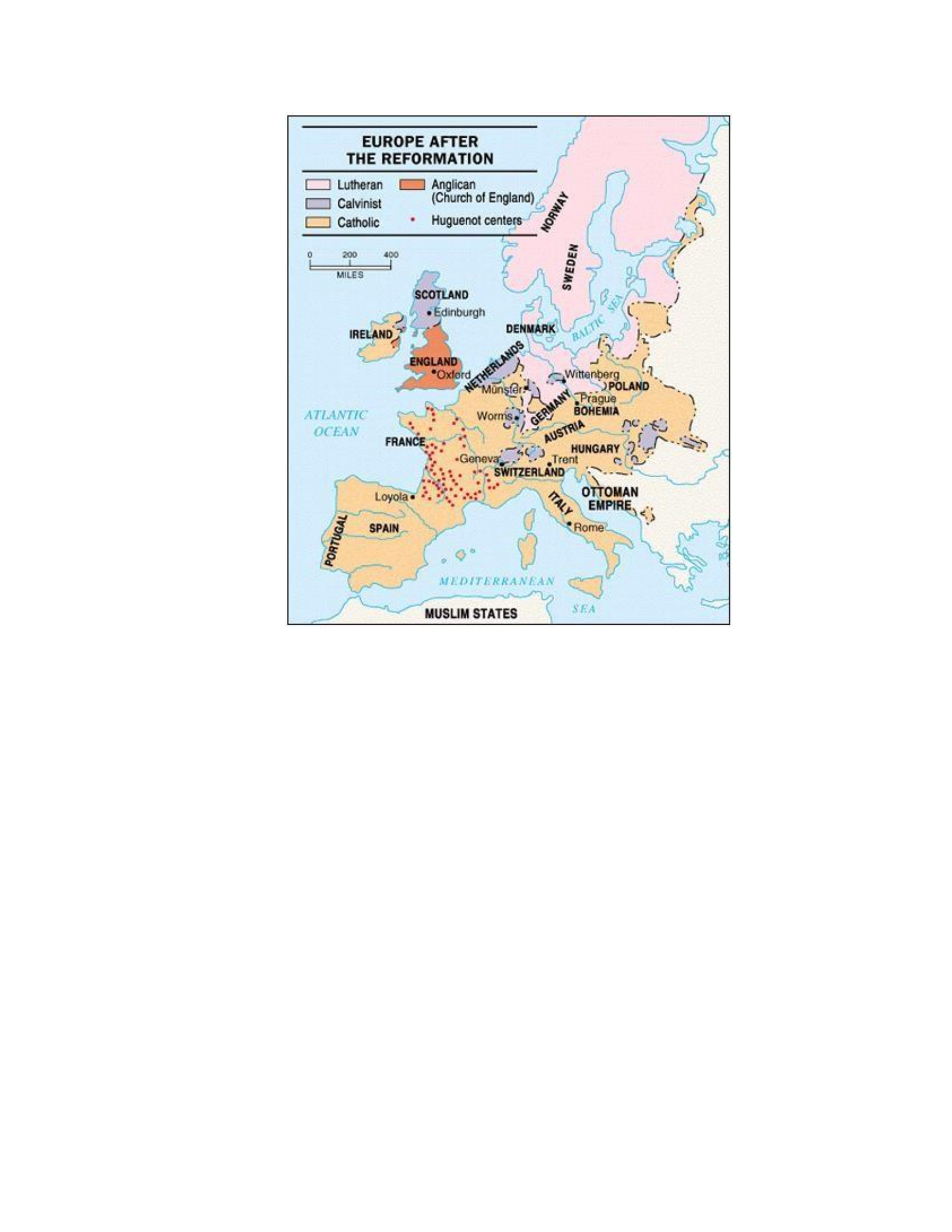
It is not only important to settle Europe’s borders; common historical experiences must also be
accounted for that have contributed to its formation. Examples of such events are the
Reformation, the Renaissance, and the Enlightenment. These cultural experiences shaped the
countries they touched with revolutionary ideas that created common ground. It is easier to
define Europe today by looking at which countries experienced these revolutions, especially in
Eastern Europe. Russia was largely left out of these events, so it is hard to categorize it as
inherently European. Other eastern countries, such as Poland, were a part of these events and
therefore share a link to the rest of Europe.
Dr. Gayle Olson-Raymer/Humboldt State University
These common democratic values serve to unite Europe and make it stronger, but the
resurgence of forces that would undermine them only exist to weaken it. This can be seen in
rising Euroscepticism, which has led to Brexit and defiance from other countries such as Poland
and Hungary. A democratic Europe is undoubtedly worth fighting for, but will it remain united
and survive rising stress from fascism?
European Democracy
Before analyzing democracy’s challengers, it is important first to understand the
conception and context of modern European democracy. Democracy in Europe began with the

French Revolution in 1789. With the collapse of the hereditary authoritarian regime and the
introduction of many civil and political rights, this was the start of a new era in Europe.
However, this did not last long, and in the span of a decade, France was back in control of
another authoritarian regime led by Napoleon Bonaparte. Although democracy in France did not
last long after its inception, its impact was still felt across Europe. Even France’s authoritarian
rule following the revolution saw many adjustments that included elements of political
liberalism. The expectations of government changed with the new ideals of the revolution. King
Louis XVIII ruled under a constitution after taking over in 1814. This new form of government
included a two-chamber parliament and many civil liberties such as freedom of speech and
equality before the law. This “liberal authoritarian” government was not met with open arms.
King Louis XVIII and his successor Charles X never attained the power that kings had held
before the revolution. The French people simply would not allow themselves to be ruled under
such authority ever again. Even King Louis-Phillipe, who took power in 1830 and implemented
an even more liberal government by greatly reducing the aristocracy and clergy's power and
expanding suffrage, was met with widespread rejection (Berman 31-33).
This feeling was shared all across Europe had reached its tipping point with the
Revolutions of 1848. The French regime fell, and, once again, this caused political upheaval
across Europe. Protesters took to the streets all over the continent, demanding change. Even
Europe’s most authoritarian regimes were forced to heed the calls of their people. Emperor
Ferdinand of the Austrian Empire adopted policies that decreased the power of the nobility and
other reforms. Prussia’s King Frederick William IV was forced to accept a reform constitution, a
move one scholar stated, “...seemed to complete and make definitive the collapse of absolutism”
in Europe (Berman 33). The Revolutions of 1848, however, as influential as they were, did not
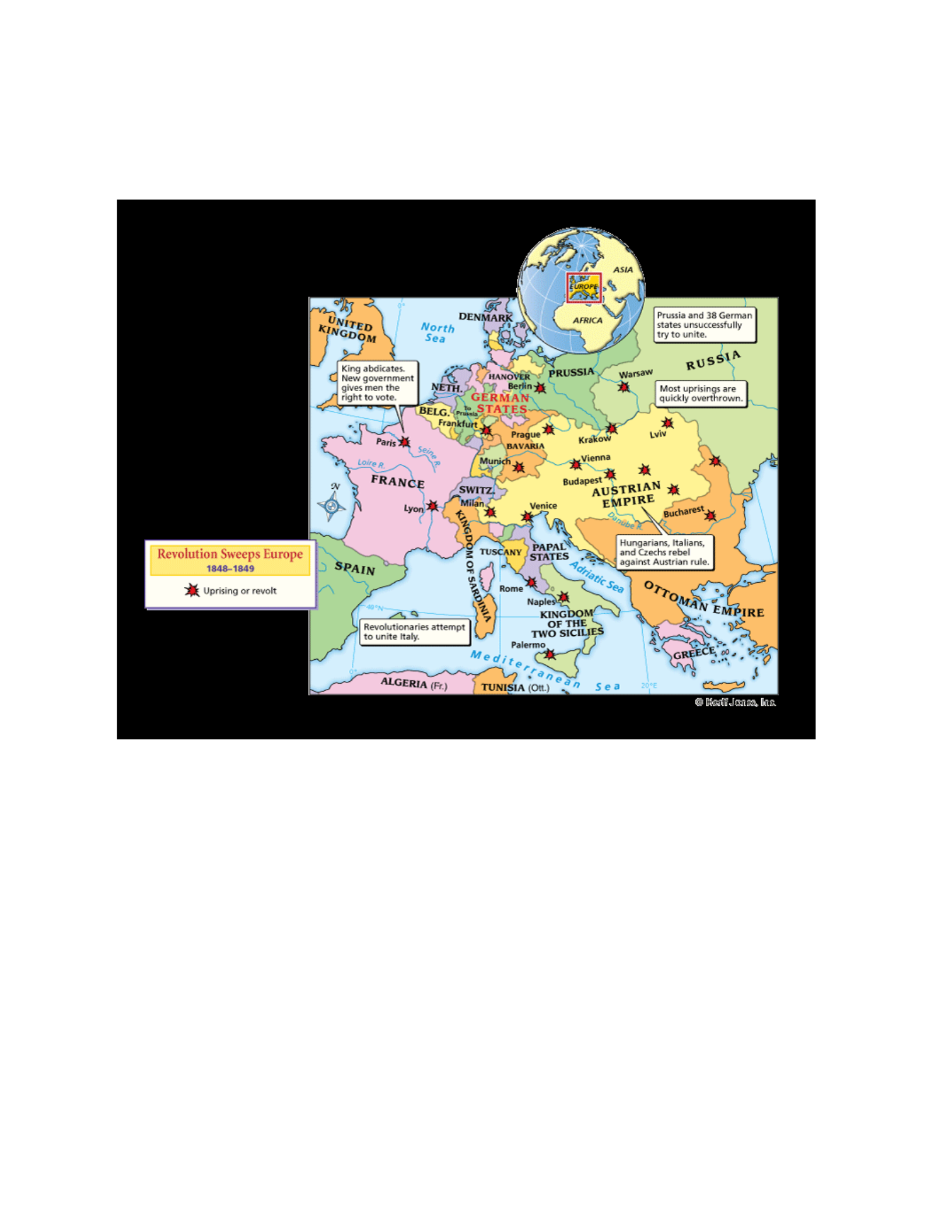
result in the culmination of a democratic Europe. Many places saw reform but remained under
authoritarian rule.
The aftermath following the 1848 Revolutions created a highly charged political
environment in Europe. Leaders across the continent now knew that they must respect the
masses' wishes lest they face significant backlash. The unification of Italy and German came
with even more debate over political representation. Italy settled on a constitutional monarchy,
parliamentary government, and a lower house of elected officials (Berman 34). Germany
instituted a liberal authoritarian regime, one that saw foreign policy ruled by the kaiser and
domestic policy overseen by the kaiser, the Bundesrat (delegates from Germany’s constituent

states), and the Reichstag (democratically elected officials). Both governments, however, failed
to deal with the plethora of issues they faced. In Italy, this resulted in decades of civil unrest.
Germany, by 1914, found itself in political gridlock and much social tension. The failed
transition to a more liberal government was not only seen in these two cases, however. The
Austrian Empire, Spain, and France all instituted increasingly liberal reforms and forms of
government, yet all seemed unable to govern properly and became increasingly unstable. The
result was that Europe entered the first World War with decades of growing political discontent
and mobilization (Berman 36).
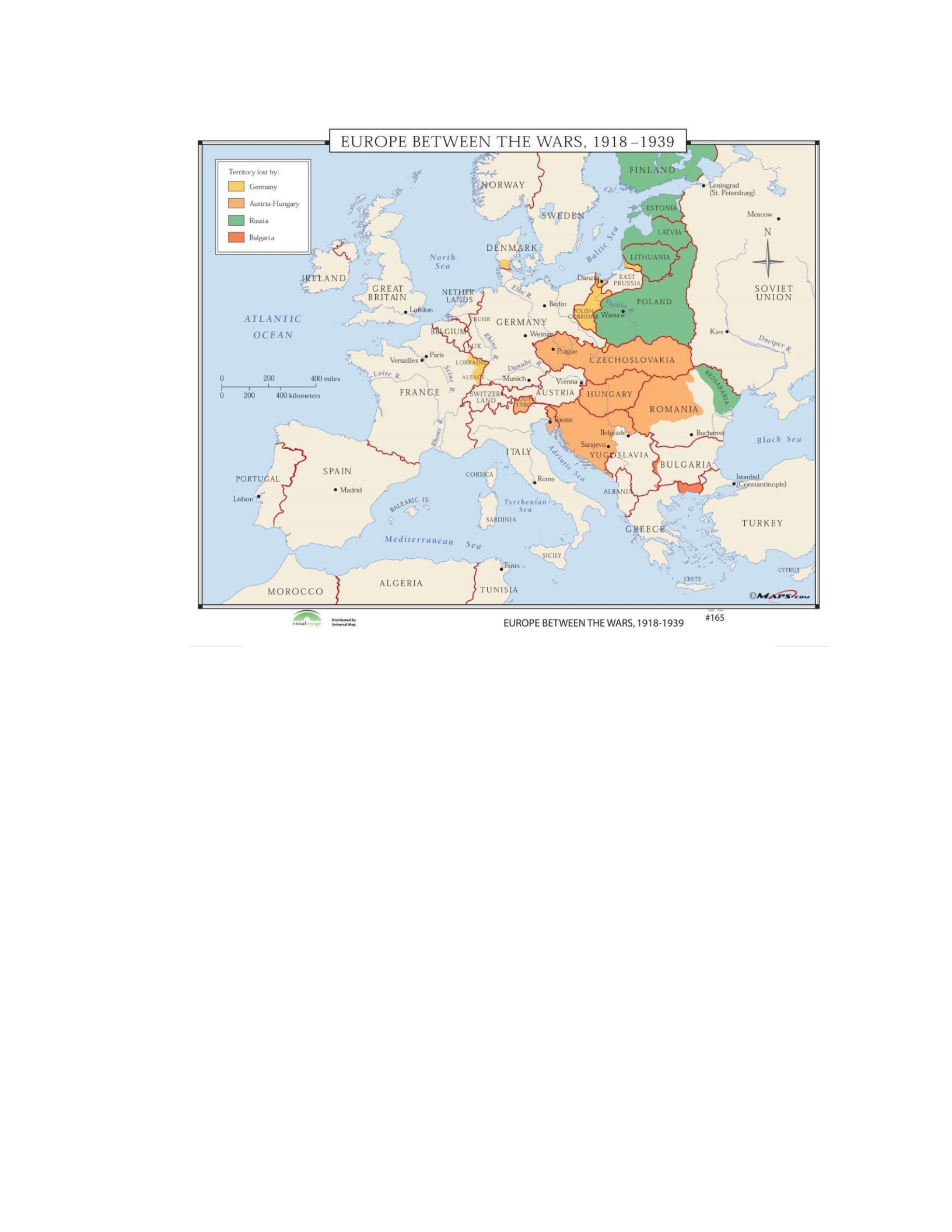
World War I brought an end to the old order of governance, allowing democracy to take
hold over much of Europe. These young democracies, however, were weak and overwhelmed
with the vast amount of issues they faced, many resulting from the war, including, “the
reintegration of huge numbers of veterans into peacetime society; economic devastation,
inflation, and sometimes an obligation to pay reparations; paralyzing political divisions; violent
oppositional movements of both right and left; and, for the losers, national humiliation” (Berman
37). Consequently, many of these democracies quickly collapsed. Italy resorted to Fascism in
1922, Germany adopted National Socialism, and Spain and Austria both found themselves in
civil war and dictatorship in the 1930s. Like France and Britain, others were severely weakened
and ill-equipped to fight the Second World War (Berman 37).
kappamapgroup.com
After the Second World War, the West began the gradual march toward peace and
prosperity across Europe. The aftermath of the war had brought an end to the old authoritarian
regimes and ideal conditions for the consolidation of democracy. The old authoritarian order was
largely discredited and lost most social, political, and economic support (Berman 37). With the
Axis powers defeated, the Allies sought to bring democracy to the whole of the continent. The
United States made a substantial commitment to the political and economic reconstruction of
Europe, one that embodied liberalism and economic freedom. The European states, at least the
Western half, echoed this sentiment, recognizing that democracy was the superior mode of
governance. This endeavor is known as the European project. In summation, Takis Pappas
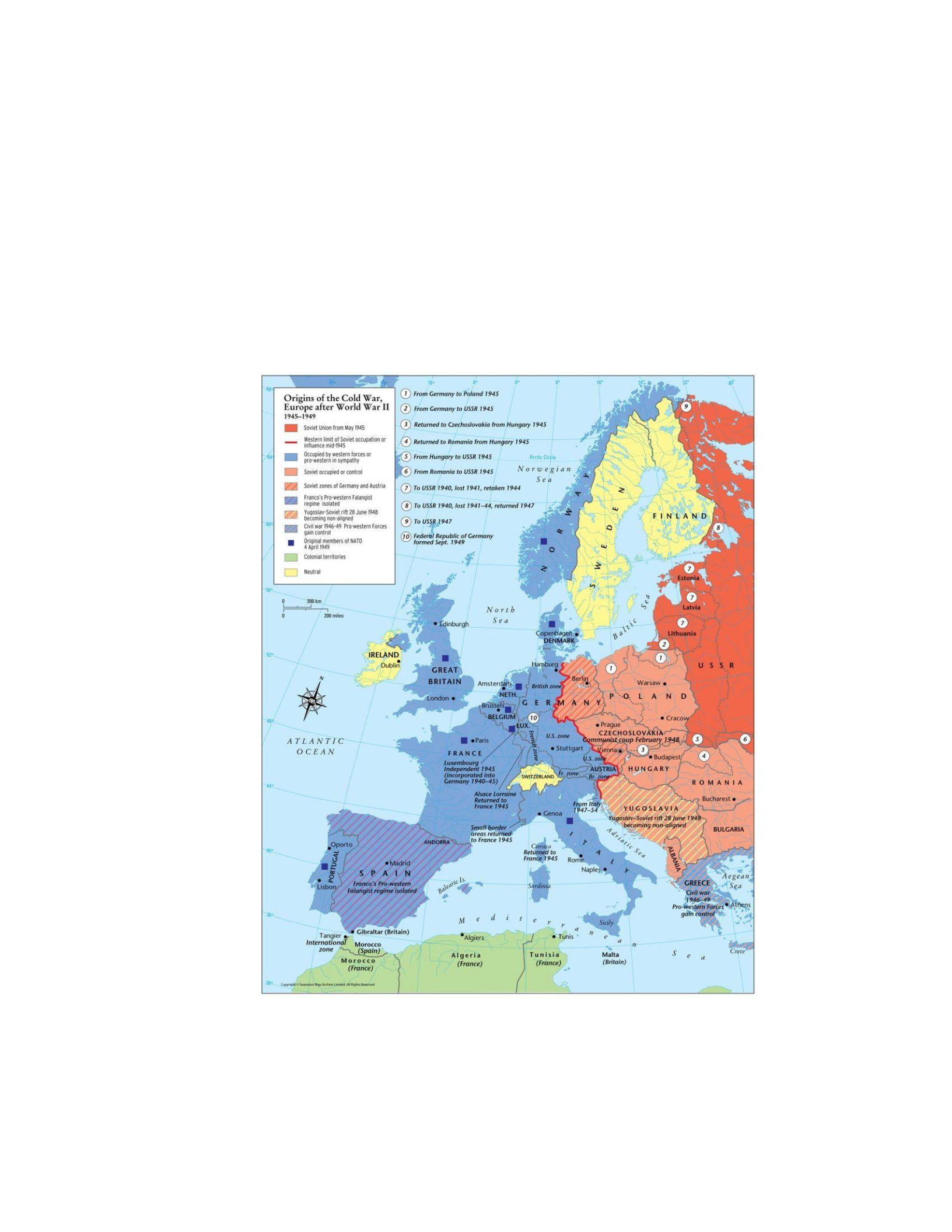
defines the main goals of the project as “1) the spreading of pluralist parliamentary democracy to
nation after nation across the continent; 2) the forging of a multiethnic, multicultural, and ‘ever
closer’ union of European peoples and states; and 3) the continual advancement of political
liberalism” (Pappas 23). This project would face much opposition, however, as Europe was
divided during the Cold War as opposing ideologies struggled for dominance.
themaparchive.com
With the fall of the Berlin Wall in 1989 and the collapse of communism, these goals were
fully realized. Liberals viewed this event as a victory that promised future prosperity and that

economic and political liberalism had won and was here to stay. Francis Fukuyama prophesied
this event as “the end of history,” or rather, “the end point of mankind’s ideological evolution and
the universalization of Western liberal democracy as the final form of human government” (4).
History, however, has obviously not ended, and it seems that the threats to democracy, thought to
be defeated, are back from the dead.
Democracy is hard to attain and even harder to uphold. It certainly seems naive of Francis
Fukuyama to believe that the consolidation of European democracy would remain forever stable
and unchallenged. After all, even in France, the birthplace of modern democracy, it took over 150
years of violence and change to create a stable democracy. Two competing theories of
democratization have emerged over the years, those two camps being preconditionists and
universalists. Preconditionists believe that democracy can only emerge through a set of specific
conditions and experiences. Universalists believe that democracy can emerge from a wide range
of ways (Berman 28).
The preconditionist view could be a valid reason for the recent challenges to democracy.
Many of the movements are seen in Eastern European countries that did not follow the West's
same path of democratization. However, these movements are being found all across Europe,
even in countries considered models of democracy like Britain and France. According to Sheri
Berman, “The idea that a gradual, liberal path to democracy exists and that it makes sense to
discourage countries that do not follow it from democratizing is a chimera based on a misreading
or misinterpretation of history” (38).
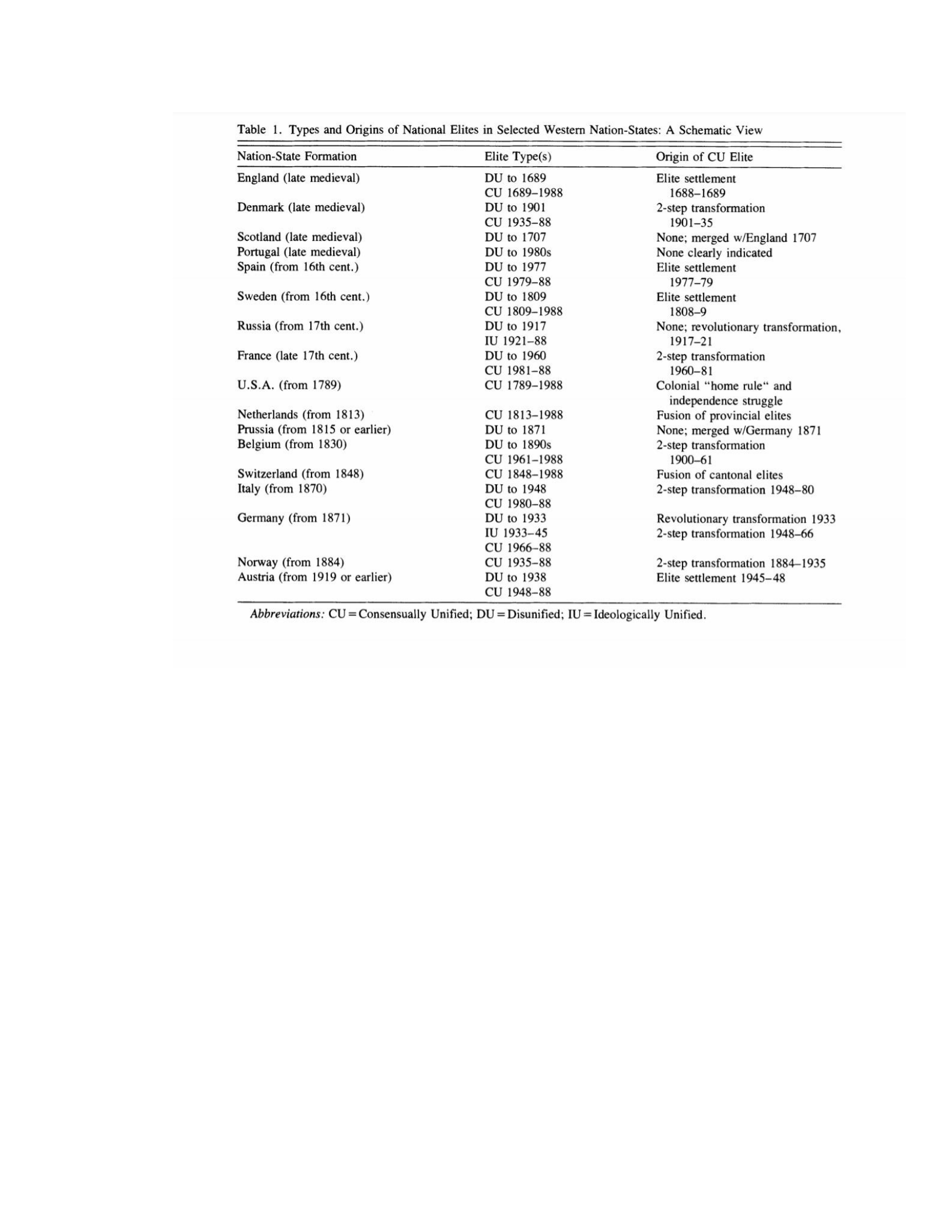
John Higley and Michael G. Burton offer a notable addition to how democracies rise and
fall over the course of history, hinging on elites' role. They add that a “stable regime” can only be
attained through a “consensually unified” national elite. A stable regime can then have the chance

to eventually become a modern democracy. Such is the case with Britain, the United States, or
Sweden. This, however, is rare. The most common state of national elites is a
“disunified” one, where a series of “unstable regimes” that alternate back and forth from
authoritarian to democratic is the result (Higley and Burton 17-18). They define “national elites”
as “persons who are able, by virtue of their authoritative positions in powerful organizations and
movements of whatever kind, to affect national political outcomes regularly and substantially”
(18). Higley and Burton consider a consensually unified national elite one where its members:
‘(1) share a largely tacit consensus about rules and codes of political conduct amounting
to a "restrained partisanship", and (2) participate in a more or less comprehensively
integrated structure of interaction that provides them with relatively reliable and effective
access to each other and to the most central decision-makers’ (19).
The cooperation of these elites has been observed to be vital in forming a stable regime,
and therefore modern democracy. The table below illustrates the historical timeline of
consensually unified elites vs. the creation of the nation-state for many modern democracies.
Higley and Burton
The influence of national elites on the success of democracy is interesting as it opposes
the notion that democracy is made for the people and by the people. By paying attention to elites'
behavior in contemporary Europe, we can better understand and predict the longevity of
established regimes and prepare for the emergence of new ones, whether they be stable or not.
Modern democracy, in the grand scheme of human history, is still a very new
phenomenon. Throughout the course of its inception and implementation, there has been much
violence and turmoil. To think that it will no longer experience issues and challenges is ignorant.
Democracy requires a devoted populace that embraces its core values of political liberalism and

freedom, however, it is this same freedom that gives rise to its challengers. Fascism, for instance,
can only succeed in a liberal democratic system. In instances where fascism competed with a
military dictatorship or a Communist regime, it was defeated. Fascism thrives in a democracy
where there exists a full political spectrum of Left and Right. In this system, the fascists find
weaknesses to exploit and indoctrinate those who would not have thought themselves radical.
Historically, the collapse of democracy occurred because there were not enough democrats
willing to take up its defense (Laqueur 18).

CHAPTER TWO: FASCISM
Opponents of Democracy and liberalism have risen from both the left and the right
extremes of the political spectrum, ranging from communists to fascists. However, most of the
movements seen portray more fascist tendencies, and these will be the focus of the following
chapters. These radical-right movements oppose both liberalism and Communism, however since
the fall of the Soviet bloc, the threat of Communism has significantly weakened. Therefore, these
movements now hold antiliberalism and anticapitalism at the forefront of their ideology (Laqueur
4). Before these specific movements are analyzed, it is important to attain an understanding of
what fascism itself is and how applicable this term can be in contemporary Europe. This chapter
will give a historical account of fascism and outline varying definitions that have been presented
and argued since its conception, ultimately deciding upon a working definition for the remainder
of my thesis.
Fascism’s Roots
Fascism first emerged during the interwar period in Europe. The ramifications of the first
World War and the treaty of Versailles changed the landscape of Europe, carving up old empires
into young democracies. As previously mentioned, these new democracies were weak and
illequipped to deal with the problems they faced. Vast amounts of returning war veterans were
not adequately dealt with and often turned into revolutionaries. The world economic crisis of the
late 20s and early 30s brought high unemployment, increased inflation, and a decline in industrial
production. These factors rocked these countries and fueled anti-democratic sentiment, causing a
polarization of politics and support for anti-democratic movements (Berg-Schlosser 343). Some

of these countries buckled under the stress of these issues, giving in to authoritarian regimes. In
the cases of Italy and Germany, they turned specifically to fascism.
Both countries were dissatisfied with their place in the world following World War I.
Germany was the ultimate loser of the treaty of Versailles, and Italy, although being a winner of
the war, did not achieve the spoils of victory that it wanted. In hindsight, conditions in each
country were perfect for a fascist victory. According to Walter Laqueur, “Fascism prevailed in
countries in which the old order seemed to no longer work, in which democracy was not deeply
rooted, in which waves of nationalist resentment were running high, and which felt threatened by
economic breakdown and social disorder” (16). Without World War I and the following postwar
crisis, fascism would have never prevailed. Economic strife was not all that contributed to the
victory of fascism in Italy and Germany. Economic issues of the same kind were seen all over
Europe. Therefore, the postwar crises that fueled fascism were of moral and cultural origins, not
economic.
It is important to note that there are stark differences between Italian Fascism and
National Socialism. These two movements are textbook examples of fascism; however, they are
each unique. To gain support, the Nazis looked to the peasantry, which was most vulnerable after
the war. The Italians, however, found support among war veterans who struggled to reintegrate
into civilian life and unemployed students (Laqueur 18). Both movements were able to mobilize
previously inactive parts of the population.
Nazi ideology was based upon the myth of the Volk, which juxtaposed the German people
to the Western idea of society. This idea placed the German people at the top of a hierarchy and
called for a return to traditional values and community. It also warned that the superior German
people were in danger of total destruction, and therefore the purity of their race must be

protected. Germany's main enemies were seen as the Jews, liberalism, Marxist socialism, and all
supernational forces (Laqueur 24). National Socialism is also unique from other fascist
movements in that it facilitated the Holocaust. Such mass extermination has not been seen in
other fascist regimes.
Italian Fascism was rooted in the nation and the role of the state. They believed that the
state creates the nation, not the other way around. This view of the state was a truly independent
one, outside of which no human or spiritual values could exist. This state should control all
political, moral, and economic forces, with its ultimate value being the greatness of the nation.
The idea of a nation, however, was a myth, and fascists were aware of this. Mussolini himself
stated, “We have created our myth. The myth is a faith, it is a passion, in our myth is the nation,
and to this myth, to this grandeur we subordinate all the rest” (Laqueur 25). The myth of the
nation and the supreme aim of greatness is echoed in both Italian Fascism and Nazism.
According to Mein Kampf, one nation is the other’s enemy, and therefore any war is justified.
The nation with the greatest willpower and brutal intent will prevail.
Although they share certain doctrinal differences, German National Socialism and Italian
Fascism share much in common. Their differences seem to only be relevant philosophically
rather than in their actual implementation of fascism.
Generic Fascism
Defining fascism is no easy task; even historically, this term is problematic as it seems to
ignore the differences between Germany and Italy. Fascism is a complicated concept that is
becoming increasingly complex. Even in its inception during the interwar period, there were
multiple varying forms of it throughout Europe. This concept has also continued to evolve over

time and has become harder to define. The good news is it doesn’t need to have an exact
definition. According to Walter Laqueur, one does not need to define something in order to study
it precisely. In his words, “Fascism resembles pornography in that it is difficult - perhaps
impossible - to define in an operational, legally valid way, but those with experience know it
when they see it” (6). Fascism is difficult to define because it can have many definitions. One can
define fascism through National Socialism's lens; however, it would not be wholly applicable to
any other fascist movement. The same is true for Italian Fascism. The problem arises when one
tries to reach a definition that transcends a place and time, or “generic fascism” (Scholtyseck
258).
Some scholars, such as Stanley Payne, argue that a definition of fascism can never escape
the confines of interwar Europe. Payne believes it is simply a historical phenomenon and that
"the full characteristics of European fascism could not be reproduced on a significant scale
outside Europe" (Payne 175). This is an understandable conclusion, as fascism emerged from
Europe and was created from European models of organization and politics. However, other
scholars, such as Roger Griffin, disagree. Griffin upholds that fascism did not end in 1945 but is
still relevant today due to its connection with modernization and modernity. Griffin is a founding
scholar of “generic fascism,” stating that the ideal type of fascism has a “mythic core” where
"the vision of the (perceived) crisis of the nation as betokening the birth-pangs of a new order"
(Scholtyseck 258). According to Griffin, “a certain amount of secularization, a broadened
suffrage, and a democratic setting were necessary prerequisites for the emergence of fascism,
which used the attractions of traditional religion but distorted its values” (Scholtyseck 258).
These conditions were, and are currently, primarily found in Europe, leading Griffin to reserve
the label of “fascism” for mostly European movements. In Michael Mann’s Fascists, he agrees

that fascism should remain solely a European phenomenon, however, he takes it further by
focusing on movements in Italy, Germany, Austria, Hungary, Romania, and Spain (Scholtyseck
259).
How, then, do we treat movements outside of Europe? “Islamofascism” has been a
popular term to describe Muslim terrorist groups and dictatorships in the Middle East in recent
decades. In some ways, the movements of this region share similarities with European fascist
movements. Both share a fear of modernity have nationalistic elements. Both have charismatic
leaders and are willing to resort to violence to achieve their goals. But to classify al-Qaeda and
similar groups in the Middle East as fascist is incorrect. The main component of truly fascist
movements is the perception of a “faltering liberal order” (Scholtyseck 254). Fascism in Europe
arose from the failures of interwar democracy as a “Third Way” from both capitalism and
communism as a means to fight against the established European order (Scholtyseck 250).
“Islamofascist” groups and regimes in the Middle East simply do not have the appropriate
preconditions to spawn true fascism. The “widely varying national fascisms of interwar Europe”
have “very different resentments, demands, and strategies of the (equally heterogeneous) Muslim
movements and insurgencies of our own time” (Judt 2). Also, fascist movements have been seen
to create a "political religion,” defined by Geovanni Gentile as something that "sacralizes an
ideology, movement or a political regime through the deification of a secular entity transfigured
into myth” (Scholtyseck 252). Muslim extremist groups, as we should appropriately call them,
such as al-Qaeda, do not have a “political religion” at the core of their being; rather, it is a radical
interpretation of Islam. Comparing Muslim extremists and fascists primarily because of their
similar actions is misguided. A fascist movement need not be specifically in interwar Europe to

be considered fascist, but it still must share the core elements of the fascists in that time and
place.
Neofascism
Fascist movements in recent decades have been classified as neofascism. However, this
term, like fascism, is hard to define. European fascism today is set in a completely different
world. Democratic institutions are now heavily rooted all across Europe, Communism is no
longer a threat, and Europe is no longer the center of world power as it once was. In its heyday,
fascism coexisted with war. The ability to so easily declare war on your perceived enemies is no
longer possible, even if some neofascists may want it. How then can this new idea of neofascism
be linked to generic, historical fascism? What is being seen today is something new and different
(Laqueur 7). In an attempt to describe this new movement, many terms have been used, such as
right-wing extremism, right-wing radicalism, right-wing populism, national populism, and
national revolutionaries, among others (Laqueur 7-8). Any term that has been used, however, is
to some degree unsatisfactory.
It is also important to distinguish fascism from populism, as the two are commonly
confused with one another. The term “populism,” while sharing many characteristics with
fascism, is used to define any illiberal but democratic and non-revolutionary form of politics.
Populist movements are fueled by widespread mistrust of the ruling elites, both political and
economical, both domestic and international. Fascist longing for an ultra-nation is not the driving
force behind populism. Instead, it is the “feeling of vague existential threat streaming from
modernity itself, of being a stranger in your own country, the longing to have roots, to have an
identity, and to be ‘somewhere’ familiar, not to live in the new world of the revolutionary

imaginary” (Griffin 96). Populism, then, seems like merely a side effect of a modernizing and
increasingly globalized world. Fascism, however, is completely antisystem and antidemocratic
and steeped in racism, sexism, xenophobia, and ultranationalism.
It may help to analyze the mind of a fascist to better understand both historical fascism
and neofascism. Fascists are propelled more with feelings than actual rational thought.
Passionate rhetoric leads to a tribal mentality that unites the masses. According to Robert O.
Paxton, this rhetoric has “mobilizing passions” that are present in all fascisms. He organizes
these characteristics as follows:
‘1. The primacy of the group, toward which one has duties superior to every right,
whether universal or individual.
2. The belief that one’s group is a victim, a sentiment that justifies any action against the
group’s enemies, internal as well as external.
3. Dread of the group’s decadence under the corrosive effect of individualistic and
cosmopolitan liberalism.
4. Closer integration of the community within a brotherhood (fascio) whose unity and
purity are forged by common conviction, if possible, or by exclusionary violence if
necessary.
5. An enhanced sense of identity and belonging, in which the grandeur of the group
reinforces individual self-esteem.
6. Authority of natural leaders (always male) throughout society, culminating in a
national chieftain who alone is capable of incarnating the group’s destiny.
7. The beauty of violence and of will, when they are devoted to the group’s success in a

Darwinian struggle’ (Paxton 6-7).
These beliefs are shared and echoed by fascist leaders to recruit followers. These “mobilizing
passions'' can be seen in Nazsim and Italian Fascism and the fascist movements that are seen
today. The fascist also substitutes tradition in the place of reason. Fascism cannot exist in
harmony with reason, as it is irrational and opposes reason at its very core. Arthur J. Jacobson
states:
‘The fascist knows that in a world where reason is always a temptation, tradition must be
merciless and hard. If it is not, then reason, which is always merciless and hard, will
triumph and humanity will be destroyed. The fascist knows that sustaining a tradition in
the face of reason requires discipline and violence. It requires total immersion in the texts
and ways of the tradition. It requires intolerance. It requires keeping the strange, the
different, the other at bay’ (403-404).
Fascism favors tradition over reason and the absence of reason is remedied with faith. The fascist
has faith that reason is not suitable for the human experience and successful civilization. Whether
it be communist, liberal, or conservative, the products of reason are doomed because they do not
hold the irrational terms of fascism (Jacobson 404). The foundation of the fascist tradition is
bogus pageantry. The fascist “mobilizes its resources through theater, through music and the
visual arts. Fascist emotions are theatrical emotions” (Jacobson 404). The passionate rhetoric and
showmanship of fascists inspire the masses to look past reason and believe in tradition.

These theatrics allow fascism to be capable of adaptation and disguise, especially today.
In an interview with the US New Republic in 1986, concentration camp survivor Primo Levi
spoke on the nature of fascism, stating:
‘Since it is difficult to distinguish true prophets from false, it is well to regard all prophets
with suspicion. Yet it is clear that this formula is too simple to suffice in every case. A
new fascism, with its trail of intolerance, abuse, and servitude, can be born outside our
country and imported into it, walking on tiptoe and calling itself by other names; or it can
loose itself from within with such violence that it routs all defenses. At that point, wise
counsel no longer serves, … and one must find strength to resist. But then, too, the
memory of what happened in the heart of Europe, not very long ago, can serve as support
and warning’ (Griffin 142).
No matter what it is called or how it is disguised, it is important to be vigilant against fascism in
all its forms in defense of democracy.
The evasiveness of defining fascism today should not discourage the study of it. As
fascism changes and adapts, so should we in being able to recognize it. We must pay attention to
certain warning signs and ask ourselves the appropriate questions when analyzing these new
movements. According to Robert O. Paxton, the important questions to ask are:
‘Are they becoming rooted as parties that represent major interests and feelings and wield
major influence on the political scene? Is the economic or constitutional system in a state
of blockage apparently insoluble by existing authorities? Is a rapid political mobilization

threatening to escape the control of traditional elites, to the point where they would be
tempted to look for tough helpers in order to stay in charge?’ (22).
By asking these questions and being cognizant of fascism's past, we will better identify today’s
equivalents to fascism.
Finding the “Fascist Minimum”
The misuse of the term “fascism” and “neofascism” has muddied the waters in today’s
political landscape. These terms are often used as synonyms for racialism, xenophobia, sexism,
right-wing conservative and reactionary views, and more. Fascism is so commonly used and
thrown around so liberally that it has essentially lost its meaning. Not every anti-Semite,
ultranationalist, or someone who opposes immigration is fascist. There exists a “fascist
minimum,” as Walter Laqueur puts it, and people may sympathize or share certain basic
characteristics of fascism without being full-bodied fascists (7). Ernst Nolte identifies the
requirements for the “fascist minimum” as being “anti-Marxism, anti-liberalism, a partial
anticonservatism, the existence of a party army, and the leader- principle” (Scholtyseck 248). The
“fascist minimum” is similar to the concept of “generic fascism” as both attempt to identify
fascist movements with a definition that transcends time and space.
The “fascist minimum” outlined by Nolte ignores some key concepts, however. Italian
historian Emilio Gentile, in his definition of fascism, accounts for the religious aspect of fascism.
According to Gentile, fascism includes a “sacralization of politics” that is unique from other
religious institutions (Scholtyseck 249). His definition also accounts for the ideological
background that birthed fascism:

‘A mass movement with multi-class membership in which prevail, among the leaders
and militants, the middle sectors, in large part new to political activity, organized as a
party militia, that bases its identity not on social hierarchy or class origin, but on the
sense of comradeship, believes itself invested with a mission of national regeneration,
considers itself in a state of war against political adversaries and aims at conquering a
monopoly of political power by using terror, parliamentary tactics, and deals with leading
groups, to create a new regime that destroys parliamentary democracy’ (Scholtyseck
249).
Gentile’s definition is an improvement to the “fascist minimum,” however, more concepts must
be added for it to be more widely applicable. Fascists are often drawn to new and different forms
of organization and political action. This progressiveness and fluidity are included in Juan Linz’s
multi-dimensional definition:
‘We define fascism as a hyper-nationalist, often pan-nationalist, anti-parliamentary,
antiliberal, anti-communist, populist and therefore anti-proletarian, partly anti-capitalist
and anti-bourgeois, anti-clerical, or at least, non-clerical movement, with the aim of
nationalsocial integration through a single party and corporative representation not
always equally emphasised; with a distinctive style and rhetoric, it relied on activist
cadres ready for violent action combined with electoral participation to gain power with
totalitarian goals by a combination of legal and violent tactics’ (Scholtyseck 250).

This definition, however, still does not satisfy the universality that fascism demands. The most
current and widely accepted definitions of fascism are brought forth by Robert Paxton and Roger
Eatwell. These definitions cover a wide range of fascists movements, include multiple European
phenomena, and act as a guideline for universal fascism. Robert Paxton states:
‘Fascism may be defined as a political behaviour marked by obsessive preoccupation
with community decline, humiliation, or victimhood and by compensatory cults of unity,
energy, and purity, in which a mass-based party of committed national militants, working
in uneasy but effective collaboration with traditional elites, abandons democratic liberties
and pursues with redemptive violence and without ethical or legal restraint goals of
internal cleansing and external expansion’ (Scholtyseck 259).
Roger Eatwell adds:
‘An ideology that strives to forge social rebirth based on a holistic-national radical third
way, though in practice fascism has stressed style, especially action and the charismatic
leader, more than detailed programme, and to engage in a Manichean demonisation of its
enemies’ (Scholtyseck 259).
These two final definitions best serve as the basis for fascism and the “fascist minimum” that will
be used to analyze current movements in the next chapters. However, it is important to note that
these definitions, although presently accepted, are subject to change. The study of fascism is a
turbulent one, with much internal debate on what it precisely is. In MacGregor Knox’s words, the

debate on fascism resembles "a deserted battlefield littered with the burnt-out, rusting hulls of
failed theories” (Scholtyseck 259).
In summation, the “fascist minimum” that I have arrived at is best illustrated by the
following checklist. A party or movement can be considered fascist if it consists of:
1. A disdain for and abandonment of democratic and liberal values.
2. Establishment of a “mythic” past that stresses the protection of a desired
race/culture.
3. Demonization of a particular group to take action against.
4. Employs violence at will and abandons ethical and legal restraints.
5. Presence of a charismatic leader.
6. Views themselves as anti-establishment and an alternative to mainstream politics.
7. Against mainstream media, anti-clerical, and anti-communist.
This checklist will serve as the litmus test to decide whether a party or movement can be
considered fascist or not. Some parties may only embody a few of these characteristics and will
then need an alternative classification. The most important of these characteristics is undoubtedly
point number one: the abandonment of democratic and liberal values. A party or movement is
most dangerous if it has no regard for the rules of democracy or liberal values. This is the most
essential aspect of fascist ideology.

Alternative Classifications
The “fascist minimum,” which I have come to define in the previous section, can be
considered more of a “lumper” approach to classifying fascism and similar movements. Other
scholars, such as Takis Pappas, would disagree with my broader definition and champion
multiple, more precise definitions in the place of mine. Takis Pappas, and those like him, are
considered “splitters.”
Pappas distinguishes democracy's current challengers into three categories:
antidemocrats, nativists, and populists. He defines antidemocrats as parties that “may take part in
elections, but they do so as “antisystem” formations—they comply with some of the outward
rules of parliamentarism, but they disdain its principles and spirit and would happily jettison
them if given the chance” (24). Antidemocrats exist both on the right and the left. Leftist
antidemocrats tend to “promote proletarian dictatorship, condemn European unification as the
brainchild of a nefarious capitalism, and are ideologically committed to internationalism for all
working people, including immigrants and refugees” (25). Antidemocrats on the right, however,
“typically advocate ultranationalist—even racist—ideologies, focus on security issues, are hostile
to the EU, and take a strong stand against immigration” (25).
Nativists, as described by Pappas, fear immigration and European Union multiculturalism
above all else. Nativists see both of these as “grave threats to well-ordered, ethnoculturally
coherent societies, to their established liberal-democratic values, and, perhaps most crucially, to
the sustainability of the welfare states that these societies have inherited from the days before
mass immigration” (27). To define populism, Pappas simply uses the term “democratic
illiberalism” (28). A party that fits this category “must harbor an allegiance to democracy, and it
also must endorse illiberal tactics” (29).

These three alternative classifications for distinguishing the radical-right in contemporary
European politics are useful. However, they do not aid in identifying and specifying fascism. The
“fascist minimum” that I outlined previously, in line with Joachim Scholtyseck’s analysis, uses
Robert Paxton’s and Roger Eatwell’s definitions for fascism as its foundation. Paxton and
Eatwell’s definitions can easily bleed into each of the three categories that Pappas describes.
Fascists can embody elements of antidemocrats, nativists, and populists all at once. Therefore,
my established “fascist minimum,” although it may favor “lumper” ideology in its breadth, is the
most appropriate form of classification going forward.
CHAPTER THREE: CASE STUDY ANALYSIS
Now that a theoretical foundation has been established on the meanings and variations of
fascism itself, I will examine three current radical-right parties in contemporary Europe. I will
analyze the National Rally in France, the League in Italy, and Fidesz in Hungary. Each party

holds a different amount of power within its government. The National Rally has never held any
substantial power and has long existed on the periphery of politics. The League has been in
control of Italy’s government, but only as a part of a coalition. Fidesz, however, has maintained
complete control of Hungary’s government since 2014. In each case study, I will give a brief
historical account of the party and analyze the party’s demographic, leadership, various tactics to
horde power, and behavior towards democratic and liberal values. I will then finally ascertain
where each party lands on the political spectrum and determine the appropriate label for them,
whether fascist or another more fitting term.
National Rally
History
The National Rally, or Rassemblement National, was founded in 1972 by Jean-Marie Le
Pen, who was the party’s leader until 2011. Until June 2018, the party was known as the National
Front for French Unity or National Front for short. Since its conception, the party has strongly
advocated for French nationalism, immigration control and has often exhibited xenophobic and
anti-Semitic behavior. Before founding the National Front, Le Pen served as a paratrooper in
Algeria and French Indochina and was highly critical of Charles de Gaulle’s decision to concede
Algeria. Upon returning to France, he was elected to the National Assembly as its youngest
deputy in 1956. After his failure to be reelected in 1962, he founded a society that peddled Nazi
speeches and German military songs. He then founded the National Front 10 years later
(Britannica).

In its early years, the party was seen as the French take on western Europe’s burgeoning
neofascist movement. The National Front resurrected fascist slogans from the 1930s to attract
support from right-wing populist citizens, including veterans of the Algerian War and supporters
of the Poujadisme movement of the 1950s. However, the party struggled with electoral success
with the emergence of Le Pen’s alleged involvement in torture during the Algerian War, causing
right-wing voters to support other candidates (The French Report). Le Pen later failed to secure
the mere 500 signatures needed to appear on the 1981 presidential ballot (Britannica).
The early 1980s saw a turning point for the National Front, however, with success in the
Paris and Dreux mayoral elections and the winning of 10 seats in the European Parliament. This
was largely due to the softening of party policies by Le Pen, leading to increased support from
other right-wing and center-right parties. By 1984 the party had a 17% approval rating and had
much success in the 1986 legislative elections, securing 35 seats in the National Assembly,
roughly 10% of the vote. In the 1988 presidential election, Le Pen accounted for an
unprecedented 14.4% of the vote (The French Report). Despite his increasing success and
support, Le Pen was consistently a divisive personality, with his comments leading to fines and
widespread criticism. One such comment being the dismission of the impact and scale of the
Holocaust (Britannica).
By the 1990s, the National Front was an established force in French politics. In the 1995
presidential election, Le Pen won more than 15% of the vote, with the party also having
successful mayoral elections in Toulon, Orange, and Marignane. Despite now finding itself amid
the French political scene, the party still identified itself as an organization that existed outside of
the French establishment. It opposed mainstream politics and any party that it included, from the
French Communist Party to the neo-Gaullist Rally for the Republic (Britannica).

The 2002 presidential election saw Le Pen’s greatest showing yet, after his surprising
first-round victory over Socialist Prime Minister Lionel Jospin. He was then pitted against
incumbent President Jacques Chirac in a runoff election, the first of which since 1969 where
neither candidate belonged to a left-wing party. Despite his unexpected win in the first round, Le
Pen was soundly defeated in what is the largest margin of victory in the history of the French
presidency. Le Pen’s divisive tactics led many disparate parties to shift support behind Chirac,
allowing him to win more than 82% of the vote, with polls showing that 71% of that was simply
to prevent a Le Pen victory (The French Report).
Le Pen’s performance in the 2007 presidential election was far less successful with his
failure to advance past the first round of balloting. The next year Jean-Marie was sentenced to a
three-month suspension and 10,000 Euro fine for his comments that violated France’s statute on
Holocaust denial. It soon became clear that Jean-Marie was no longer fit to lead the party, and he
resigned as president of the National Front in 2008. In 2011, after three years of campaigning,
Jean-Marie’s daughter Marine Le Pen won an overwhelming majority to succeed him as the
National Front leader (Britannica).
Upon taking the reins of the National Front, Marine Le Pen began shifting the party away
from its radical-right roots to become more acceptable by the mainstream public and media. This
process was dubbed “dediabolisation” by Marine due to the description of the National Front as
“diabolical” that was popular in political discourse. Jean-Marie was famous for making
extremely racist, xenophobic, and anti-Semitic comments that limited the party’s success.
Marine’s strategy to exercise the party of her father's extreme sentiments has been successful, as

68% of French people now consider the National Rally to be a mainstream party (Magnificat).
Marine still embodies many right-wing values, however, the most important of which being
immigration control, especially from Islamic countries.
In the first round of the 2012 presidential election, Marine finished third behind Socialist
candidate Francois Hollande. She secured 18% of the vote, the highest ever for a candidate from
the National Front. The party continued to garner increasing support, finishing first in the 2014
elections for the European Parliament with one-fourth of the vote. The National Front, now the
National Rally, has continued to gain support since the success of the 2014 elections, despite a
disappointing outcome of the 2017 presidential election (Britannica). Marine Le Pen is poised to
be a front-runner for the 2022 presidential election with rising xenophobia and euro-skepticism.
Transition of Power
To orchestrate the ideological shift of the National Rally, Marine used a variety of tactics.
Her use of identity politics helped to shield the party from its criticisms. Identity politics is
defined as “political positions based on the interests and perspectives of social groups with which
people identify. Moreover, identity politics includes the ways in which politics are shaped by
aspects of their identity through loosely correlated social organizations” (Magnificat). To combat
the criticism that the National Rally was racist and homophobic, Marine appointed several gay
and minority members to the party in 2012. Although this move angered the party's Catholic and
regionalist factions, it made the National Rally more appealing to the mainstream public. As a
result, the rhetoric of the party underwent a fundamental change as well. In dealing with the issue
of immigration, the party no longer demonized immigrants and showed disdain for certain
groups of people but rather expressed that they simply cannot assimilate successfully into

France’s society based on their vastly different upbringing. The same message of antiimmigration
was still being sent; however, the wording was now much more widely acceptable (Magnificat).
Marine also distanced herself from her father as much as possible in an attempt to clear
her name, and the name of the party, of his past transgressions. In 2013, she announced that Jean-
Marie no longer had an official role within the party but remained as an advisor. In reference to
Jean-Marie’s past controversial comments, Marine remarked they were
“unacceptable” and “from a past era” (Magnificat). In an attempt to save his reputation,
JeanMarie stated his support of the shift occurring in the party and denounced his past comments
and decisions. This was all for not, however, when Jean-Marie implied that the gas chambers
used during the Holocaust were a detail of a much larger war and that the “white world” is under
attack in an interview (Magnificat). Marine quickly rejected Jean-Marie’s comments and
suspended him from the party. In reaction to his suspension, Jean-Marie publicly disowned
Marine, and on April 10th, 2015, he announced his retirement from politics (Magnificat).
The falling out between Marine and her father Jean-Marie is symbolic of the greater
schism that Marine created within the party. Old members and supporters of Jean-Marie have
found themselves at odds with the younger members who support Marine. To further cleanse the
party image and rid it of the old regime, Marine banned several militants from the party she
considered to be too neo-fascist. She also called the Holocaust an “abomination,” which is a
drastic improvement to anything her father said on the subject. Jean Yves Camus speaks on this
move, saying:
‘Its sincere rejection of Holocaust denial and Nazism also limits the persistence within
the FN of radical militant nuclei whose vision of the world is based on necessity to

repudiate all the founding ideas of liberal democracy, with a particular fixation against
anti-racism, egalitarianism and universalism’ (Magnificat).
Marine’s stance on the Holocaust is in direct opposition to her father's ideals and the party’s older
members. This was a significant step for the party to move further away from the far-right and to
the center. In 2012, Marine also detached the party from significant far-right “alliances” such as
the European Alliance for Freedom (Magnificat).
Identity and Policy
The shift away from Jean-Marie’s National Front to Marine’s National Rally has been
methodical and carefully planned so as to not alienate its base. The party’s continued move to
mainstream politics and the center risks the support of its members who liked that the party
existed in protest to the political establishment. Regardless of this risk, the National Rally has
remained an “anti-establishment” party. France’s system of presidential elections often leads
voters to choose the lesser of two evils in its second round. This typically results in very low
approval ratings for presidents, as they were not most of the voter’s first choice. In this sense, the
National Rally has enjoyed the luxury of avoiding this scrutiny, having never won a presidency.
The party remains on the periphery, and it is here that it holds some degree of immunity. It is also
able to hold on to its historical base due to the multiple scandals within the conservative right,
one such scandal being when Nicolas Sarkozy took money from Colonel Ghaddafi
(Magnificat).
The National Rally is not only split between old and young, but also by North and South.
Each region holds its own political views and priorities. The party’s supporters in Northern
France identify more with the new era of the National Rally led by Marine and want a more

social party. The South, alternatively, leans more to the right. Both regions, however, agree on
the party’s central issue of immigration. According to the National Institute of French Public
Opinion, both north and south electorates voted over 90% yes when asked if there were too many
immigrants in France (Magnificat). To remedy the divide between the North and South, Marine
has made the issue of immigration the central focus of the party.
According to the National Rally, immigration is the root of all evil, and the issue is a tool
used by Marine Le Pen to unite those who would have disagreements over her policies.
According to Marine, the first step to solving all issues in France is to increase border security.
To accomplish this, she proposed using 50,000 military personnel, 15,000 policemen, and the
construction of 40,000 prison cells during her 2017 presidential campaign (Magnificat). Marine
also hopes to limit France’s total legal and illegal immigration to 10,000 people per year. To
accomplish this, Marine has proposed the abolishment of the Schengen zone, effectively
blocking Europeans from immigrating freely to France. She also wishes to end the right of soil
for children born in France of foreign parents (Magnificat).
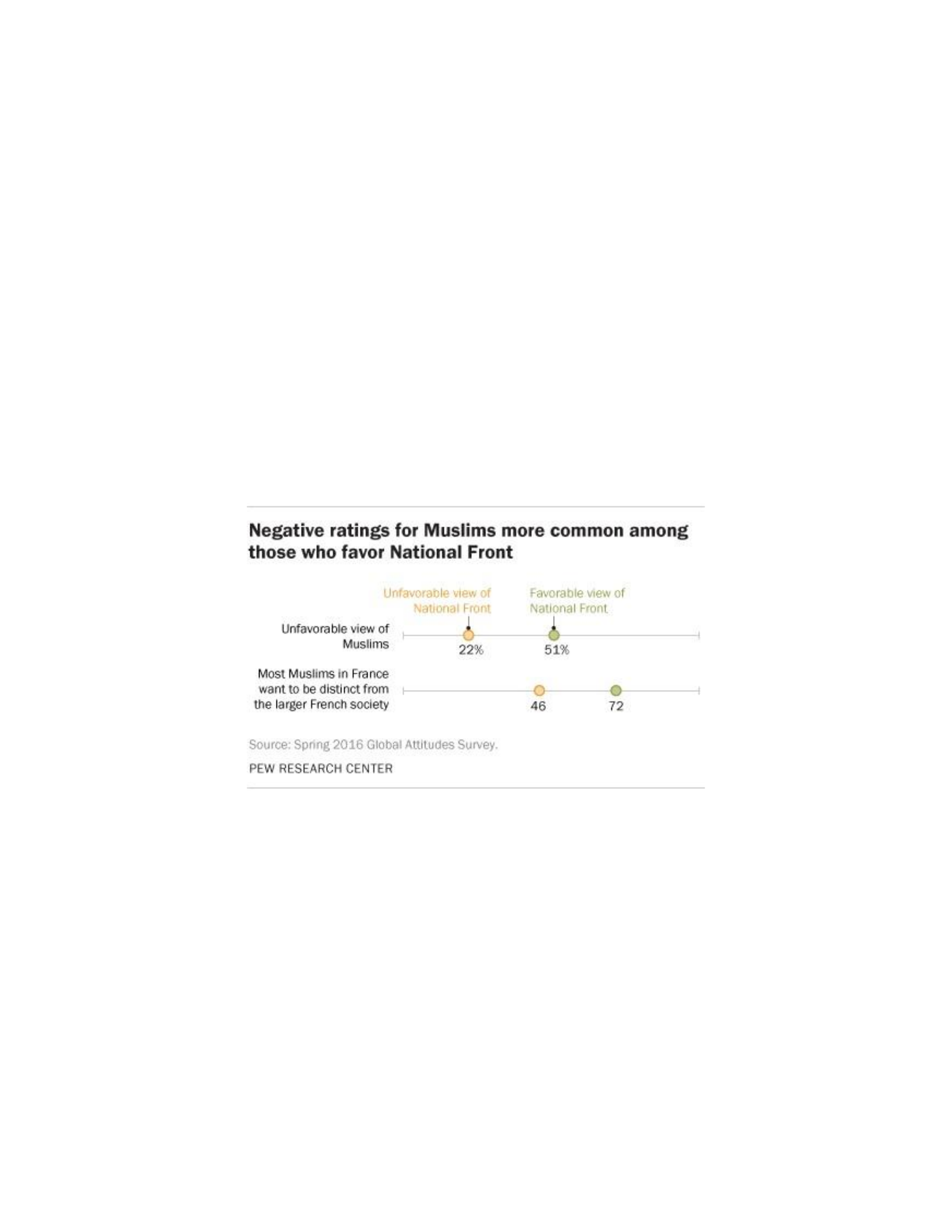
The disdain felt for immigrants within the National Rally is especially focused towards
Islamic countries. After the 2015 terrorist attacks in Paris, the party has used the heightened
Islamophobia within France to attract more support. More recently, a French middle school
teacher was beheaded by a Muslim extremist after showing cartoons depicting the Prophet
Muhammad in October of 2020. Marine Le Pen has used such horrible acts of violence to spread
fear of Muslims. Marine Le Pen has recently proposed a law to ban Islamist ideologies, which
she describes as “totalitarian and murderous” (Ya Libnan).
Marine Le Pen is also fiercely against the European Union. She was elected to the EU
parliament in 2014 while being openly anti-EU and was a roadblock for many pieces of
legislation. She vehemently advocates for France’s exit of the European Union, stressing the
importance of sovereignty and control of borders and currency. Marine believes that economic
decisions should be made by the French themselves and wants to escape the controls of the Euro
and the European Central Bank. According to Marine, France is being treated unfairly compared
to other members of the EU, and the open borders of the EU result in a loss of jobs for the
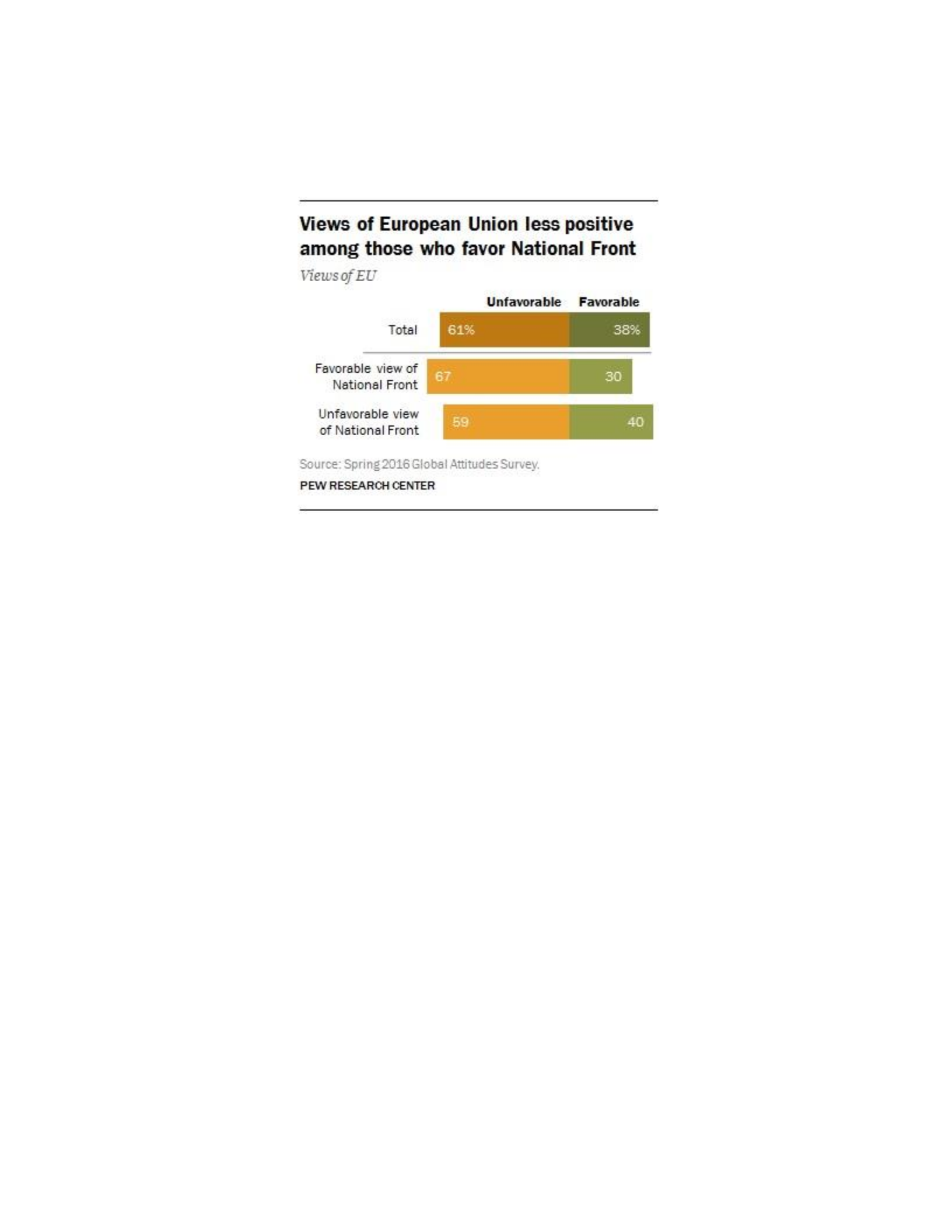
French people. She has also proposed a tax on companies that hire outside of France.
(Magnificat).
Marine Le Pen has also been highly critical of NATO, believing that it is a strain on
French sovereignty. It is believed that she would like to instead align France with Russia as she
was a supporter of the annexation of Crimea. The National Rally was also given a hefty loan of
11 million Euros from Russia in 2014 which many political entities have highly criticized. Both
the National Rally and Russia are anti-NATO and anti-EU (Magnificat).
Gay marriage is an issue that has become somewhat divisive within the National Rally.
Christians and traditional Catholics that are opposed to gay marriage make up a large part of the
party’s base and still hold significant power within the party. In 2017, however, Marine promised
the protection of the LGBTQ community from the threat of Islamism. This is in direct opposition
to the anti-LGBTQ stance that most of her party adheres to, yet it seems that the threat of
Muslim immigration has trumped that view. Marine still officially opposes same-sex marriage,
however, it is unclear if this position may change in the future to further solidify her rejection of
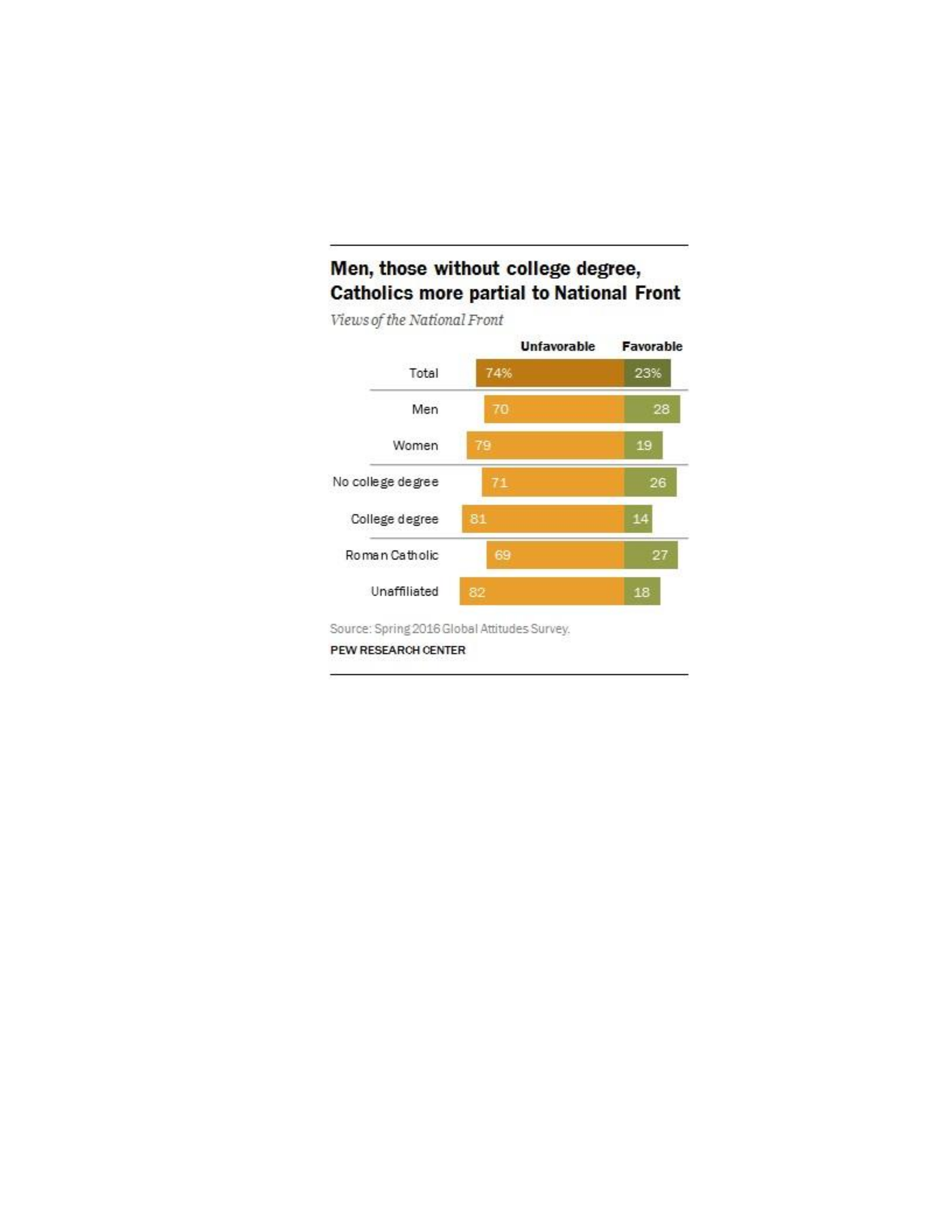
Islamism (Magnificat). However, it is doubtful that she would do this, as Catholics contribute a
significant amount to the party’s support, as seen in the graph below.
Although Christians and Catholics make up a significant amount of the party’s base, the
National Rally is a large proponent of secularism. France is a hyper-secular country and has
greatly limited the impact of religion on daily life. For instance, French schools have banned any
and all religious objects or symbolism, including Muslim hijabs, Christian veils and signs, the
Jewish kippa and more. The National Rally is a proponent of this secularism, especially when it
comes to its defense against Islamism. In 2016, Marine Le Pen vowed to “protect the French
family and the traditions of secularity” (Magnificat). The union of family values and secularism
is altogether something different than what is seen in other countries, especially the United

States, where conservative family traditions and religious values typically exist in unison.
A New Generation
Marine and Jean-Marie are not the only Le Pens worth mentioning, however. Marion
Maréchal-Le Pen, the granddaughter of Jean-Marie and niece of Marine, represents the newest
generation of young conservatives in France. Marion seems to be the guiding figurehead leading
an “evolving right-wing Popular Front” (Lilla 1). This new generation of conservatives believes
in an organic conception of society, one that:
‘...sees Europe as a single Christian civilization composed of different nations with
distinct languages and customs. These nations are composed of families, which are
organisms, too, with differing but complementary roles and duties for mothers, fathers,
and children. On this view, the fundamental task of society is to transmit knowledge,
morality, and culture to future generations, perpetuating the life of the civilizational
organism. It is not to serve an agglomeration of autonomous individuals bearing rights’
(Lilla 4).
These young conservatives denounce France’s involvement in the European Union because of its
focus on individuals' economic self-interest and its rejection of the cultural-religious foundation
of Europe. To them, the EU has also allowed for the immigration of Muslims, who are from a
different and incompatible civilization. The EU has also ignored France’s most vulnerable
citizens through its consolidation of economic power in Brussels. In their eyes, the economy
should be subordinate to social needs (Lilla 4).

Environmental conservation is also an important issue for this new generation, who
criticize the severe impacts of neoliberal economics and environmental degradation. They
denounce agribusiness, genetically modified crops, and suburbanization (Lilla 4).
In terms of family and sexuality, these young conservatives hold a traditionalist Catholic
view, however, they argue this view purely through secularity. The increase of radical
individualism has resulted in many problems for the family, including dropping rates of family
formation, delayed child-bearing, rising numbers of single-parents, and pornography addiction.
They argue that a return to more traditional values, ones that support strong, stable families, will
solve these problems (Lilla 4).
The women of this new movement have adopted a new form of feminism called
“alterfeminism” in rejection of the “career fetishism” of contemporary feminism (Lilla 4). They
oppose the capitalist view that slaving for a boss is freedom, however, they do not only advocate
for the traditional stay-at-home-mother role. They believe that women instead need a more
realistic image for themselves, one that embraces the traditional role of motherhood and
reproduction but also embodies individual accomplishment in the workplace. Marianne Durano
speaks on the harmfulness of contemporary feminism, saying:
‘We are the victims of a worldview in which we are supposed to live it up until the age of
25, then work like fiends from 25 to 40 (the age when you’re at the bottom of the
professional scrap heap), avoid commitments and having children before 30. All of this
goes completely against the rhythm of women’s lives’ (Lilla 4).
This “alter-feminism” praises the efforts of feminists in the past; however, it questions the new

wave that has rejected the traditional role and values of women.
Marion is not her grandfather, nor is she her aunt. She embodies a new form of
conservatism and has the stage and personality to unite it. She has the potential to lead a
moderate conservative movement that is not primarily motivated by xenophobia and anti-elitism
but rather one that wishes for a more stable and less fluid world, both economically and
culturally. This new classical, organic conservatism could oppose the alt-right by simply stressing
tradition, solidarity, and care for the earth (Lilla 7). Marion could also, however, use the
traditional, organic view of this new generation to foster a new wave of Christian nationalism,
one that can span Europe and lead to joint political action between many right-wing populist
parties (Lilla 7). Either way, Marion will undoubtedly be a significant player in not only French
conservatism but also European conservatism in the near future.
Assessment
Now that the party has been fully analyzed, is it reasonable to consider the National Rally
a fascist party? The National Rally is a long-standing party that has undergone copious amounts
of change over its history. It was most certainly fascist in its early years under Jean-Marie Le
Pen's leadership; however, in recent years, it has shifted away from its founding ideals. Under
Marine Le Pen's leadership, the party has adopted more progressive forms of thinking and
rhetoric. Marine’s break with her overtly fascist father and her full recognition of the Holocaust’s
horrors have helped her cause immensely. Even the name change of “National Front,” which has
aggressive and militaristic undertones, has been a step away from the party’s fascist history. The
National Rally, however, still has undoubtedly remained on the radical-right end of the political
spectrum. Xenophobia, Euroscepticism, distrust of the media, islamophobia, and homophobia all

remain as central motivators of the party. In this initial analysis, however, I would not call the
National Rally fascist. It does not currently meet the qualifications of my previously mentioned
“fascist minimum.” Rather, I believe it to be a right-wing populist party.
The League

History
Lega, or “League” in English, formerly known as the “Northern League,” was founded in
1991 by Umberto Bossi. It is the oldest existing party in Italy. Bossi was a northern-regionalist
politician who created the League by uniting the various autonomous movements across the Po
River valley. The League was founded to lead a movement of northern secession from the Italian
state in favor of a new “Federal Republic of Padania.” The League was also founded as a
populist party, with its rhetoric denouncing the central government, referring to it as “Roma
ladrona” (Rome the Thief). The government was seen as “a nest of corrupt elites allegedly bent
on exploiting hardworking northerners for the benefit of lazy, profligate southerners”
(D'Alimonte 122).
The League soon took the national stage in the 1992 general elections, where it won
8.7% of the votes, 56 deputies and 26 senators. In 1994 the party won only 8.4% of the votes.
However, it increased its deputies to 117 and senators to 56 for greater parliamentary
representation. Also in 1994, the League joined Forza Italia, Alleanza Nationale, and the Centro
Cristiano Democratico to form a coalition government under Silvio Berlusconi. The League
obtained five ministries in this government. In the 1996 general elections, the party won 10.1%
of the votes (Life in Italy).
However, the League shifted from secessionism to federalism in 2000, following its
second alliance with Silvio Berlusconi. Alongside Forza Italia, the League governed Italy from
2001-2006. Despite this change, the party still upholds its pledge to free its regional home from
the Italian Republic (D'Alimonte 121-122). In 2008, spurred by Romano Prodi’s government's
fall, the League secured 8.3% of the votes in the early general elections (Life in Italy).
In 2013, Matteo Salvini became the leader of the League. For the next few years the
League remained largely on the periphery of the political landscape until the 2018 parliamentary
election. In this election, Italy became the only country in Western Europe with a populist
majority. The League, in conjunction with the Five Star Movement, won a combined 50.3% of
the popular vote and 56% of the seats in the lower house of parliament, the Chamber of Deputies
(D'Alimonte 114). The Five Star Movement was by far the single largest party with 227 seats in
the 630-seat Chamber and 122 seats in the 315-seat senate. The League, by contrast, was the
second-largest single party in the house with 125 seats. In the Senate, the League captured 58
seats, the third-largest amount by a single party (D'Alimonte 114). The League also overtook
Forza Italia as the country’s top party in the center-right bloc. The party system has therefore
shifted, with components of the right becoming increasingly more radical. The coined
“Government of Change” currently had Salvini as Minister of the Interior and Deputy Prime
Minister, along with Luigi Di Maio of the Five Star Movement.
Roberto D'Alimonte (116)

The Five Star Movement’s dominance declined in the 2019 European Parliament election,
only securing 17%. The League, however, accounted for 34% of the vote. This was an almost
exact inversion of the 2018 results (CNBC). This result marked a clear shift of support from the
left-leaning Five Star Movement to the far-right League. Following the 2019 elections, the
League joined the political group of European Parliament “Identity and Democracy,” formerly
known as the “European Alliance for People and Nations” (Deutsche Welle). The group consists
of Italy’s League, France’s National Rally, and Germany’s Alternative for Germany as member
parties (Politico).
In July of 2019, Salvini and the League were accused of corruption linked to Russia, as
recordings leaked of party members meeting with Russian agents in Moscow. The meeting
centered around Russia funding the party with an illegal $65 million (BuzzFeed). Italian
authorities are currently investigating this case and other instances of Russian-linked corruption
by the League. It is also important to note that the League is an official cooperation party of
United Russia, Russia's governing party (Financial Times).
In August 2019 the coalition government of the Five Star Movement and the League
crumbled, allowing for a new government led by Guiseppe Conte to take power. This new
coalition consisted of the Five Star Movement, the Democratic Party, the Free and Equal
parliamentary group, and Italia Viva. The League was forced into the opposition once again;
however, it still continued to gain support across Italy. Conte’s government fell in January 2021
after losing support from Italia Viva (CNBC). President Mattarella has appointed Mario Draghi
to form a cabinet, consisting of the League, the Five Star Movement, the Democratic Party, and
Forza Italia.
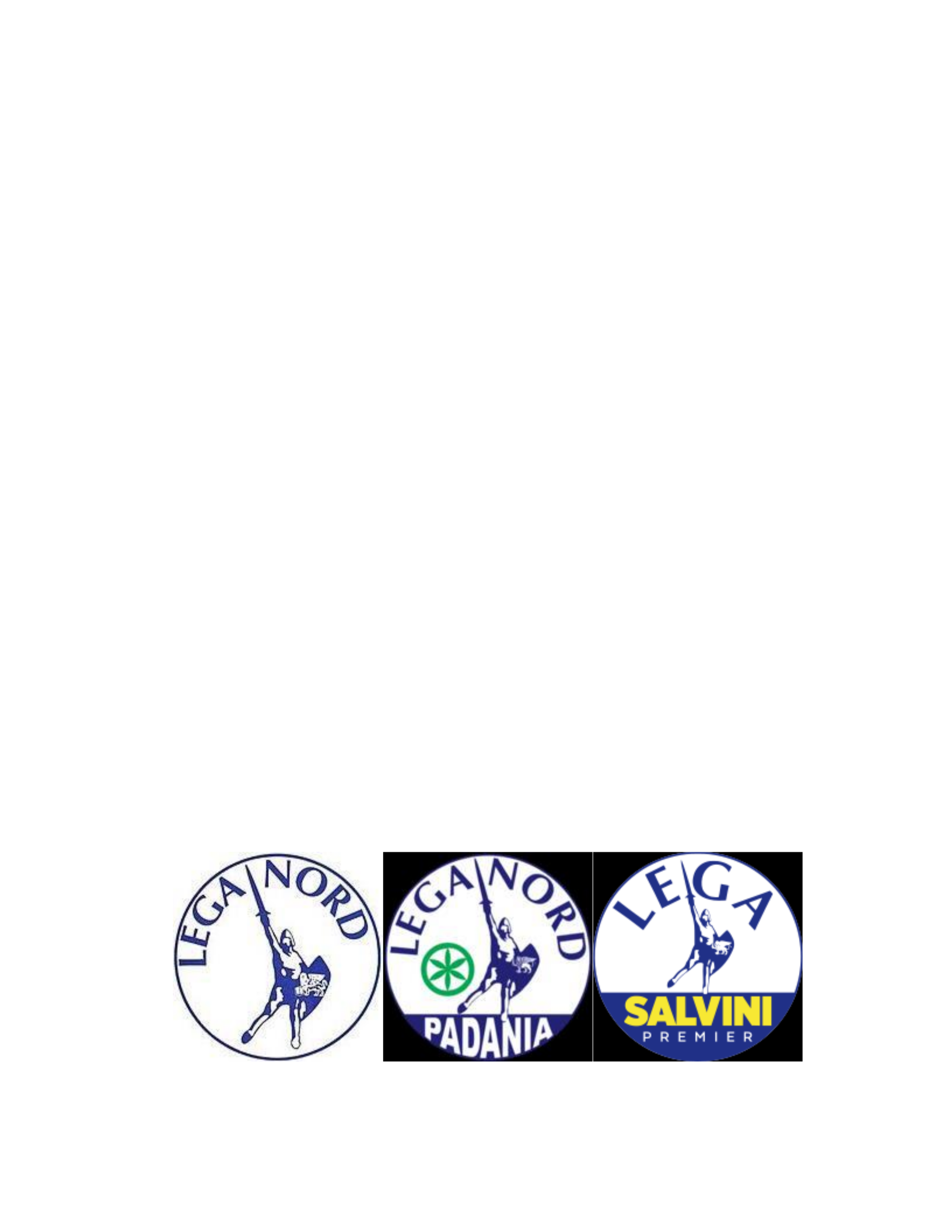
Transforming the League
Under Matteo Salvini’s leadership since 2013, the party has shifted its focus from
regionalism to nationalism. The unofficial name change from “Northern League” to simply
“League” reflects this shift, as the latter is undoubtedly more inclusive and universal. “Northern
League” still exists as the official name in the party statute, however. Salvini’s strategy for party
success has been aided by the lack of a national right-wing party in Italy. Bossi’s Northern
League was right-wing but regionally based. Salvini’s League has evolved into a national rightist
party, as was seen by his slogan for the 2018 election, “Italians First.” Patriotism has taken the
place of regionalism, and Italy has replaced Padania. The European Union and immigrants have
replaced Rome and southerners as the party’s primary enemy. (D'Alimonte 122).
Salvini has become synonymous with the League, readily embodying the role of a
charismatic leader. Like Marine with the National Rally and Viktor Orbán with Fidesz, the
success of the party is closely linked to Salvini and his personal success. This symbiotic
relationship is visible in the evolution of the party logo, as shown below. The official logo
remains highly regionalistic, with references to Padania. The electoral logo, however, brandishes
Salvini’s name instead.
Official logo (1994-1999) Official logo (1999-present) Electoral logo (2018-present)

leganord.org
The European Union, immigrants, and refugees must exist as a threat to Italy and its
national identity in the eyes of the League. These threats affect all of Italy, not just the north, and
allows Salvini to appeal to a wider range of voters. A large swath of the electorate in Italy already
views immigrants and refugees as a threat, and Salvini has taken advantage of this. Of Italy’s
population of 61 million, immigrants only account for about 8%. One 2018 study, however,
shows that many Italians estimate that immigrants make up 25% of the entire population. This is
the largest gap between real and perceived immigrant share in all of Europe
(D'Alimonte 122).
Salvini’s xenophobic rhetoric and actions against immigration has successfully
nationalized his party. His actions against NGOs that rescued and brought migrants from sea to
Italy as Interior Minister were praised among voters. The rising distrust of elites and the political class has
voters viewing Salvini as a rare leader, one who actually accomplishes what he promised. Salvini has also
received much criticism from the EU on his immigration policy, but this has only aided his effort. Criticism
from the EU has only polished his image as the leader Italy needs to oppose EU interests.
The rapid decline of Berlusconi’s Forza Italia has also helped the League break from its
regionalist roots. Silvio Berlusconi is now 84, and his legal “imbroglios” paired with a crisis at
the political center has allowed the League to cannibalize Forza Italia’s voters. The League
entered central and southern Italy under the banner “Us with Salvini” to rebrand the party to
voters outside the north. Forza Italia now polls at a mere 7% compared to the League’s 32%,
with the League polling 22% in the south (Broder 13).

The League’s increasing popularity and nationalism may soon come back to haunt the
party, however. Salvini has done a strategic job of rebranding the party to appear more
nationalist, however he has yet to totally abandon its regionalist roots. This issue has yet to be
appropriately addressed by Salvini, who, so far, has chosen simply to delay dealing with this
issue. Roberto D'Alimonte speaks on the League’s paradoxical nature, saying:
‘Yet there is lingering ambiguity regarding how regional or national it is— just weeks
after running in the 2018 general election as Lega, it ran as the Northern League in a
northern regional election and as Lega in a southern regional election—but so far this has
not damaged Salvini. It is a League `a la carte. Sooner or later, however, the coexistence
of the old Northern League with the new Lega will have to be addressed’ (123).
Luckily for Salvini, his electoral success has thus far silenced public criticism on the issue.
Despite this, Salvini must ask himself how long this will last. How long will regional party
leaders sit by idly while Salvini panders to the Five Star Movement and the southern voter base?
Currently, the party exists in a state of limbo, torn between its regionalist roots and Salvini’s
increasing nationalism. Only time will tell if Salvini can navigate this situation successfully and
satisfy the constituents of both sides.
Identity and Policy
The League’s mission today is nationalism. Salvini cares most about regaining control of
national borders and national policies. Restoring sovereignty, specifically through the lens of
eurocriticism and fear of technocracies, has become a primary issue of importance of the League.

A party that champions nationalism and direct democracy cannot accept the legitimacy of
decisions made by non-elected European institutions. In a 2019 rally, Salvini stated, “There are
no extremists, racists or fascists in this square…the extremists are those who have governed
Europe for 20 years in the names of poverty and precarity (The Guardian). Although the League
challenges the idea of European integration, it has yet to reject the idea of a Union outright
(D'Alimonte 124).
The party gains a significant amount of support from employers who struggle to compete
with the European Union’s single market. However, it does poorly with young professionals. But
Salvini cannot withdraw from the eurozone to aid these employers, as doing so would default on
Italy’s national debt and eviscerate wealthier voter’s savings. Salvini has ruled it out due to the
backlash that would occur from such an action (Broder 14).
Salvini has attempted to tip-toe around the true confrontation with the EU, acting in
opposition against it without totally committing to the struggle. When the League was in
coalition with the Five Star Movement, they instituted a 2.4% budget deficit designed to oppose
Brussels. This deficit was three times larger than the previous administration’s. This allowed
Salvini to “posture as a defender of Italian economic interests, even without risking an all-out
confrontation with the EU” (Broder 14).
The League is strongly against immigration. In October of 2019, Salvini had Domenico
Lucano, the antiracist mayor of Riace, Calabria arrested over allegations of “aiding and abetting
illegal immigration” (Broder 14). During this time, Salvini also suggested that “ethnic shops”
should close at 9 pm. Party loyalist and mayor of Lodi, Lombardi also cut funding for migrant
pupils’ right to free school meals. The party, much like other far-right parties in Europe, strongly
opposes Islam and Muslim immigrants. Salvini sees himself as a defender of “Judeo-Christian”

values and has slammed left-wing governments’ immigration policy that is “transforming the
Mediterranean into an open-air cemetery” (Euronews).
The League is in favor of the environment, supporting public green areas, natural parks,
and recycling. The party also has a strong agricultural backing and likewise supports the
protection of traditional food and opposes GMOs. It has also campaigned for a revision of the
quota system of the Common Agricultural Policy (Chamber of Deputies). The party also
typically takes socially conservative stances on social issues, opposing abortion, euthanasia, stem
cell research, artificial insemination, same-sex marriage, and drug use.
Assessment
The League is currently the most successful far-right party in Western Europe. Although
they underwent a significant transformation from regionalism to nationalism, they never altered
any rhetoric or actions that may label them fascist, unlike the National Rally. Italy’s democratic
system is much more vulnerable than France’s, leading the League to have much more electoral
success. The League embodies many things a fascist would: it is xenophobic, racist,
islamophobic, hyper-nationalist, Euroskeptic, and has a charismatic leader. The party has,
however, observed and obeyed democratic rules, even when in power. Thus, the party does not
meet my “fascist minimum.” Because of this, I do not find it appropriate to label Salvini’s league
fascist, but rather a far-right populist party, similar to the National Rally.

Fidesz
History
Fidesz was founded in 1988, with its full name being “Fiatal Demokraták Szövetsége,”
meaning “Alliance of Young Democrats” in English. The party grew from a liberal underground
student activist movement that opposed the ruling communist party (Vox). After the fall of
communism in Hungary, the country adopted a democratic system. Fidesz was started as a
moderate centrist liberal party and found success early after its creation. In 1990, the party
gained entry to the National Assembly after attaining 6% of the vote, winning 22 seats. In 1997
the party gained members in the National Assembly from a dismantled Christain Democratic
group, effectively becoming the largest bloc. Fidesz became the single largest party in 1998,
winning 148 seats. The party formed a coalition government with the Hungarian Democratic
Forum and the Independent Smallholders’ Party (Britannica). Viktor Orbán of Fidesz was
appointed prime minister. Under Orbán’s rule, the party was considered conventionally

conservative by European standards (Vox). It continued an austerity program, cut taxes and
social insurance fees, and fought for Hungary’s European Union membership (Britannica).
Fidesz narrowly lost the 2002 elections to the Hungarian Socialist Party. In 2005, Fidesz’s
nominee László Sólyom was elected President of Hungary and acted with a largely centrist
mindset (index). In 2006, Fidesz and the Christian Democratic People’s Party formed a coalition
for that year’s elections. They won 42% of the vote and 164 representatives out of 386, yet still
lost to the social-democratic and liberal coalition of the Hungarian Socialist Party and the
Alliance of Free Democrats (BBC). Later that year, however, Fidesz won the municipal
elections, 15 of 23 mayoralties in the largest Hungarian cities, and the majority in 18 of 20
regional assemblies (Taipei Times). Fidesz regained full control of the government in 2010,
winning more than two-thirds of the seats. The landslide victory was spurred on by economic
issues, especially Hungary’s economic collapse in 2008.
In the 2010 parliamentary elections, Fidesz won 53% of the popular vote in the first
round, leading to a supermajority of 68% of the seats. With this newfound power, Fidesz adopted
an entirely new constitution, which has been harshly criticized by the Venice Commission for
Democracy through Law, the Council of Europe, the European Parliament, and the United States.
The new constitution has received such criticism for concentrating far too much power in the
hands of the ruling party, limiting oversight by the Constitutional Court of Hungary, and
removing forms of democratic checks and balances, such as the media, supervision of elections,
and the ordinary judiciary (The New York Times).
In 2014, Fidesz won a supermajority again in the nationwide parliamentary election.
However, this supermajority was lost when Fidesz’s own Tibor Navracsics was appointed to the

European Commission. His seat was taken by an independent candidate in a by-election (The
Wall Street Journal). In 2018, Fidesz won its third supermajority in the nationwide parliamentary
elections, running primarily on a platform of anti-immigration and foreign meddling
(EUobserver). Fidesz remains in power today as one of Europe’s leading and most powerful
right-wing populist parties.
Changes in Government
In 1989-1990, Hungary underwent a significant turning point. The fall of communism
liberated Hungary and other members of the Soviet Bloc to pursue other systems of governance,
many following the zeitgeist of democracy and liberalism. Until 2010, Hungary was seen as a
model of this transition as the country pursued a market economy based on the dominance of the
rule of law and of private ownership. The 2010 victory of Viktor Orbán and Fidesz changed the
course of Hungary’s progress, beginning the dismemberment of the country’s fundamental
institutions of democracy (Kornai 280).
Under Orbán, the executive and legislative branches have essentially become one. Orbán
and Fidesz control both and have effectively turned parliament into a “law factory” (Kornai 281).
Between 2010 and 2014, no less than 88 bills were introduced and passed within the same week,
with 13 of these being introduced and passed within the same or following day. Any investigation
into potential fraud or corruption within Orbán’s government has, without exception, been
dismissed. Fidesz has power over organizations that are not legally controlled by the executive
branch, which would provide a form of security to check the executive and legislative branches
in real democracies. Such organizations are the constitutional court, the state audit office, the

fiscal council, the competition authority, the ombudsman's office, and the central statistical office
(Kornai 281).
Fidesz’s government has done all it can to dismantle the institutions of the rule of law that
had been established by 2010. One of the most important steps to undermine the rule of law was
seen in the aforementioned new Hungarian constitution. The new constitution was drafted by a
small group within Fidesz and passed quickly through the “law factory” of the executive and
legislative branches (Kornai 281). The new constitution was riddled with shortcomings that
many local and foreign legal experts criticized. This document, officially called “Fundamental
Law,” was amended five times due to the number of clauses it contained that served the political
agenda of those in power (Kornai 281).
One major aspect of the rule of law, according to János Kornai, is that “no-one, not even
those who hold the most power, should be above the law. The law must be respected” (281).
Fidesz has completely ignored this idea by using legal tricks to pass laws that ensure favoritism.
The current government also has taken control of the Prosecution Service, a centralized
organization that, in theory, operates independently from the rest of the government. In any given
case of the Prosecution Service, however, the chief prosecutor is chosen by the holder of
supreme power and then formally appointed by parliament. From then on, the chief prosecutor is
effectively no longer under the control of parliament. When the Prosecution Service has
investigated cases of corruption and scandals pertaining to members of the current government,
barring a few exceptions, the cases have never progressed past the investigative or prosecution
phases. However, this is not the case when pertaining to members of the opposition, who the
Prosecution Service often persecutes to the utmost degree (Kornai 282).

Fidesz has also worked to gain control over the courts. The President of the Supreme
Court was dismissed early once Fidesz took power in 2010, and a new institution emerged, called
the National Office for the Judiciary. This new organization was gifted with a wide array of
powers, including the ability to appoint judges and decide which cases should be heard by which
courts. The retirement age for judges was reduced from 70 to 62, resulting in the expulsion of the
older, more liberal generation. An international court ultimately annulled this change; however,
most judges that were ousted did not return to their previous positions (Kornai
282).
Fidesz has also targeted private property through legal, ideological, and economic
attacks. The party has nationalized private pension funds financed from the obligatory
contributions, severely hurting the principle of private property. The shift to state-owned rather
than privately owned has spread to banking, energy, public works, transportation, the media and
advertising. In these areas, property rights were bought by the state, oftentimes well below
market value and leaving little to no say for the previous owner. To further centralize things in
Hungary, Fidesz greatly increased the powers of local government. Schools and hospitals, for
instance, no longer belong to local authorities. Now, they are controlled by the bureaus of the
central government (Kornai 283).
The methods of centralization enacted by Orbán and his party has put him in a position of
supreme authority in government. Everything has become tied to the hierarchy he has created,
with him alone at the top. János Kornai examines this system, stating:
‘A pyramid-like vertical hierarchy has emerged and solidified, with the supreme leader at
its summit. Below him, ready to obey his every command, stand his hand-picked

henchmen, who owe him unconditional loyalty. Moving on down, we find the next level
of the pyramid, and the next: for each position people are chosen for their loyalty to the
regime. Commands which take obedience for granted tightly bind each subordinate to his
or her superiors. It is only the leader at the top who does not depend on his superior, only
those at the very lowest level do not give orders to anyone. Everyone else incorporated
into the levels in-between is simultaneously servant and master. It is in their interests to
hang on in there, to move further up in the pyramid. Their position is not decided at
elections, but depends on winning the trust of their superior by services and flattery, or at
least by uncritical obedience. Hundreds of thousands of public employees, including
those who work in the state-run educational and health sectors, feel defenseless: few dare
to speak up, to protest, because they fear for their jobs. The regime is robust, partly
because it can surely count on the fear of the majority of people dependent on it, as well
as on the "keep a low profile and obey" mentality’ (283).
Civil society has long acted as an important mechanism for decentralization. Fidesz, in pursuit of
total centralization, has neglected this mechanism. No relevant trade unions or organizations
outside of government control are consulted when parliamentary bills are drafted. Likewise,
declarations and demonstrations by people expressing their concerns are largely ignored (Kornai
283).
Orbán and Fidesz, even with all their tampering within the government, still exist within
a democracy, albeit an illiberal one. However, Orbán employs propaganda to convince
Hungarians and outsiders that the majority of the people want his leadership. Fidesz routinely
boasted that they won a supermajority of two-thirds for two parliamentary cycles in a row, yet
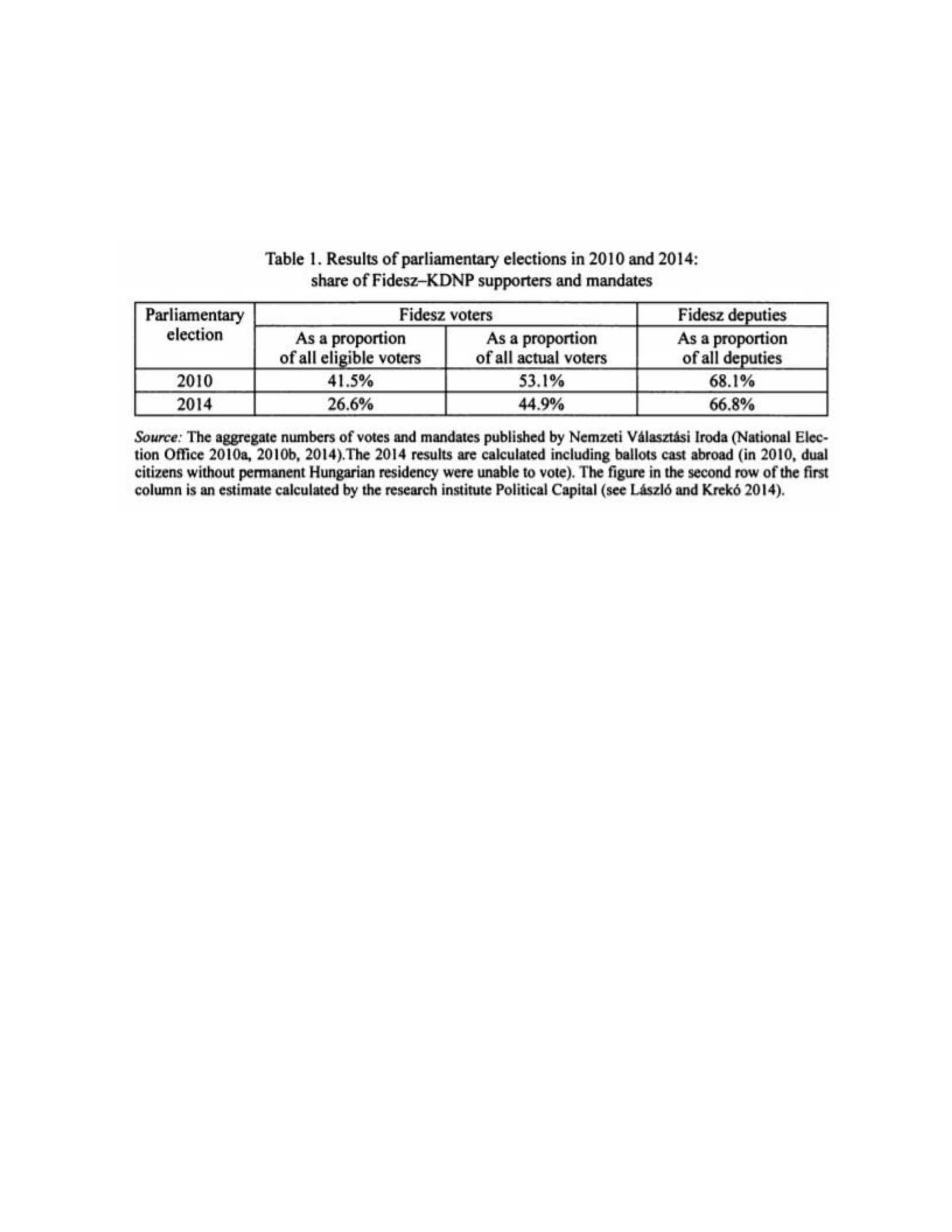
this is very misleading. In the 2014 election, pictured below, one-fourth of voters expressed
support for Fidesz.
János Kornai (290)
Identity and Policy
Viktor Orbán and other Fidesz officials have openly described Hungary's current
government as an “illiberal democracy.” Orbán and Fidesz have been transforming Hungary into
a Christian democracy, which according to Orbán, “...is not liberal...It is illiberal, if you like”
(Reuters). Orbán explains why Christian democracy must be illiberal, adding that it rejects
multiculturalism and immigration while being anti-communist and defending Christian values
(Reuters). To Orbán, liberal democracy is inherently undemocratic because it is “intolerable of
alternative views” (Reuters). He identifies China, Turkey, Russia, and Singapore as successful
illiberal states (Politico).
Fidesz’s economic policy is typical of a far-right party in its skepticism of neoliberal
economic values. As seen with its centralization of the Hungarian government, Fidesz supports
more interventionist economic policies (Todosijević 421). However, Fidesz has implemented

some more liberal policies, such as a flat income tax, reductions in the corporate tax rate,
restrictions on unemployment benefits, and privatization of state-owned land (The Budapest
Beacon). Fidesz’s more populist economic policies include a public works job program, pension
hikes, utility bill cuts, a minimum wage increase, and cash gifts for retirees (Politico). The party
has also instituted a national public works program that helps rural communities in need (The
New York Times).
Fidesz has long been in conflict with the European Union. Orbán views the EU “...as a
declining economic power with a questionable foreign policy, and sees its Western member states
as having shaky democratic legitimacy” (Végh 72). Under Orbán, Hungary has significantly
improved its relations with Russia, however it has also become increasingly dependent on
Russia’s energy and financial support. This has led Orbán to openly question Europe’s treatment
of Russia’s aggression in Ukraine. Orbán has also stood against the EU by informally leading a
coalition, consisting of the Czech Republic, Poland, Slovakia, and Hungary, that opposes the
European Commission and Germany’s immigration policies Willkommenskultur
(Végh 72-73).
Orbán opposes the EU and instead supports the idea of a “Europe of nation states,”
arguing against further European inclusion. Although Orbán is firm in this stance, Hungary still
greatly benefits from its EU membership. The EU Cohesion Monitor, pictured below, supports
this, showing Hungary’s increased structural cohesion paired with its decline of individual
cohesion (Végh 73).

Zsuzsanna Végh (73)
Orbán’s strong anti-immigration policies and rhetoric have been a staple of his
government. Orbán has presented himself as the last protector of a Europe in which “Christianity
and the nation-state are sacred succeeded both domestically and internationally” (Müller 4). In
the spring of 2015, the Hungarian government built a fence along its border to keep out refugees
from Serbia. Orbán employed many conspiracy theories to justify this action, calling the refugees
economic migrants or Muslim terrorists (Müller 4).
To support his stance on immigration, Orbán has adopted a strong support of nativism. In
a 2018 address, he stated,

‘We must state that we do not want to be diverse and do not want to be mixed: we do not
want our own colour, traditions and national culture to be mixed with those of others. We
do not want this. We do not want that at all. We do not want to be a diverse country’
(Ministry of Hungary).
Orbán supports a racially homogeneous society in Hungary, and his government has made
changes in the constitution that have made it illegal to “settle foreign populations in Hungary”
(The New York Times).
Assessment
Fidesz is one of the most influential far-right parties in all of Europe, but can it be
considered fascist? The party is clearly the most radical thus far. It is openly against liberal and
democratic institutions, xenophobic, racist, strongly against European integration, and has made
immense changes to the democratic institutions and the rule of law in Hungary. Viktor Orbán is
undoubtedly a charismatic leader, not only of the party but for the radical-right across the globe.
Paul Lendvai, an Austrian-Hungarian journalist, describes Orbán’s regime as a “Führer
Democracy” due to its extreme centralization of power. Lendvai does not believe it to be fascist
because the government does not seek to mobilize people, encourage massive violence, or
demand total ideological conformity (Müller 6). I agree with Lendvai’s label. According to my
established “fascist minimum,” Fidesz fits many of the requirements, but not all. Hungary still
operates within a democracy, albeit an “illiberal” one, as described by Orbán himself. Fidesz
does not advocate for violence and the mobilization of the masses. Even when it lost power in

2002, Fidesz conceded to the winning socialist party, obeying democratic rules. The party is also
not the least bit anti-clerical as it constantly emphasizes the need for a Christian democracy.
Orbán and his party’s transition to the radical right cannot be ignored, however. Fidesz and Orbán
started out in support of democracy and liberal values, yet they have progressively moved further
to the right, especially since regaining power in 2010. Fidesz has made monumental changes to
its government to ensure it stays in power. It is possible that they may resort to violence in the
future to keep this power if they should stray further to the right, but only time will tell.
Therefore, it is best to describe Fidesz as an illiberal, far-right populist party. Fidesz does,
however, embody the most defining characteristic of fascism, that being the abandonment of
democratic and liberal values. Hungary was once a burgeoning young democracy and a model of
communist transition. Since 2010, Orbán and Fidesz have turned it into a beacon of populism
and far-right ideologies but has yet to reach outright fascism.
CONCLUSION
The far-right in Europe today has reached a level of legitimacy that has not been seen
since the Second World War. Spurred on by intensifying Islamophobia, the success of Donald
Trump and other right-wing politicians across the globe, and the escalating war on migrants, the
far-right has enjoyed a substantial surge in public support and electoral success. However, is it
fair to compare these contemporary movements to the “classical” fascism that rose during the
interwar period? My analysis of such popular movements (National Rally, the League, and
Fidesz), compared with my established “fascist minimum,” has not resulted in any meeting the
requirements to be called fascist.

Today, we see a new mold of the radical right; many of these movements were conceived
with fascist roots; however, they have since changed in favor of electoral success. Italian scholar
Enzo Traverso suggests that this is “post-fascism.” These post-fascist parties had ties with
historical fascism but have “mutated” and are currently “moving in a direction whose ultimate
outcome remains unpredictable.” The National Rally is the best example of this mutation with
the transition of power from Jean-Marie to Marine. The National Rally and other similar parties
in Europe have strictly accepted a parliamentary strategy and now plan to change the system
from within. This is unlike classical fascism, which sought to change everything and did not
hesitate to use violence to do so (International Socialism).
Fascism today, then, has become somewhat antiquated. We are quick to call someone
fascist who exhibits fascist characteristics. Oftentimes, as is seen in my case study analysis, they
merely exist within the radical right or are fascist pretenders. Those who live and participate in
democratic societies have a knee-jerk reaction when seeing these pretenders, excitedly and
incorrectly, characterizing them as fascists. It seems the wounds inflicted by the original fascists
have not yet fully healed. However, we cannot liberally throw this term around at any far-right
party or movement, lest we forget what fascism truly is.
Fascist parties and movements, ones that fully embody the characteristics of classical
fascism, still exist within Europe today. One such part is the National Radical Camp in Poland.
The National Radical Camp was originally founded in 1934 as an ultranationalist, antisemitic,
and anti-communist party. The party today was reincarnated in 1993 and considers itself an
ideological descendant of the original (The Guardian). This party has traditionally been a
paramilitary and street fighting organization, but it has participated in elections under the
National Movement Coalition. The party has enjoyed little electoral success yet has, on many

occasions, drawn crowds of over 200,000 to their marches (dream deferred). The United Nations
Committee for Elimination of Racial Discrimination considers the National Radical Camp a
fascist party that promotes racial and national hatred and has called on Poland to enforce a
constitutional ban on the party and similar groups (Poland In).
Many parties like the National Radical Camp exist throughout Europe. Most of these
parties, however, do not achieve enough popular support to have electoral success. Radical right
parties recognize this and have adopted a softer electoral periphery to enter mainstream politics.
Fascism, as it existed in the interwar period, simply does not have an active base large enough to
translate into electoral success (International Socialism). Thus, major parties that may have once
been fascist have adapted to the contemporary political climate, changing their core beliefs and
rhetoric to acquire more votes.
The recent accommodation of radical right into mainstream politics has fundamentally
changed the political system. Rising support for the radical right has led the center-right and
center-left to adapt their positions on certain issues, such as immigration and integration. These
adapted stances often mirror those that were initially held by the radical right. This is known as
the “contagion effect,” where mainstream parties react to the threat of the radical right by
adopting their positions (Wagner and Meyer 87). This strategy is used “...to contest the
ownership of the immigration issue by the radical right and thereby to reduce their policy-based
appeal” (Wagner and Meyer 87). The adoption of radical right positions is done to “...maximise
their vote share and close down the issue space occupied by the radical right” (Wagner and
Meyer 87).

An example of this strategy is seen in the recent actions of current French president
Emmanuel Macron. The French government announced in February 2021 that it would launch an
investigation into academic research that supposedly feeds “Islamo-leftist” tendencies that
“corrupt society” (The New York Times). This attack on academic freedoms is in direct response
to the burgeoning threat that Marine Le Pen poses in the upcoming presidential election. Le Pen
was Macron’s main rival in the last election, and recent polls show that his lead is shrinking.
Macron has adopted much of Le Pen’s xenophobic rhetoric in recent months, cracking down on
“certain social science theories entirely imported from the United States’’ that would threaten
France. Macron’s shift to the right is an attempt to draw support from Le Pen, who will likely be
his main challenger in next year’s election (The New York Times).
The radical right has also changed the political system through its emphasis on certain
issues. Typically, mainstream parties tend to focus more on economic issues, whereas the radical
right has focused on liberal-authoritarian topics, such as immigration. The radical right’s
emphasis on liberal-authoritarian topics leaves mainstream parties two options: either they ignore
these issues and, in turn, ignore the radical right, or they adopt stances on these issues and
address them, therefore indirectly including the radical right into mainstream politics. According
to Markus Wagner and Thomas M Meyer, mainstream parties have chosen the latter strategy.
They state:
‘Radical right parties may have been successful in their strategy of making immigration
and related topics more important to political debate. By acting as such ‘issue
entrepreneurs’, radical right parties change the issue content of party competition and
therefore become more mainstream, less unusual competitors’ (88).
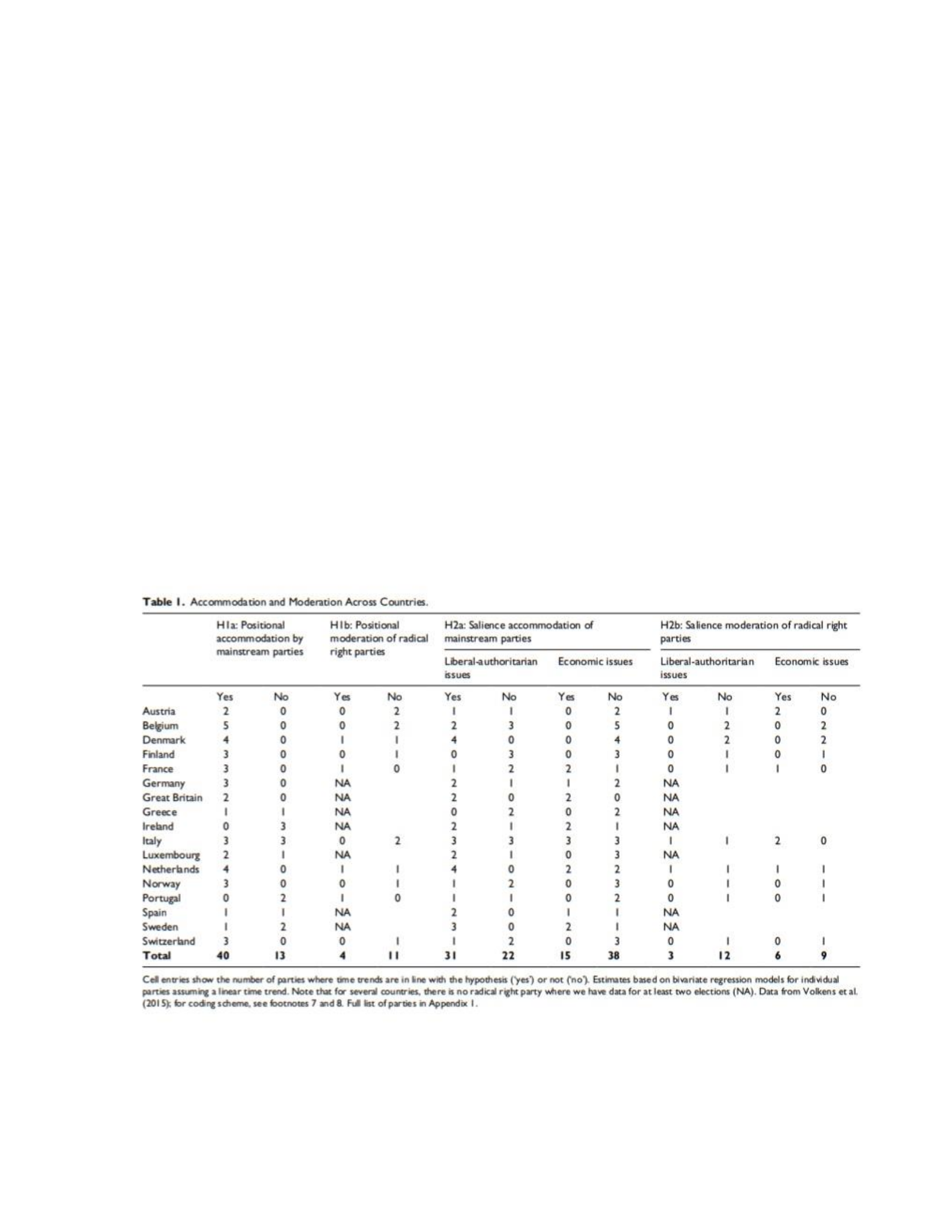
Although the radical right may have trouble entering mainstream politics directly through
electoral means, they can affect the political landscape ideologically and create an environment
that no longer sees them as extreme outsiders. The table below from Wagner and Meyer shows in
detail how countries in Western Europe have accommodated for the radical right. 40 of 53
mainstream parties have shifted to the right on liberal-authoritarian issues, which dominates 10
of the 17 listed countries. Parties in Greece, Italy, Luxembourg, Spain, and Sweden reacted
differently, and only in Ireland and Portugal were the changes of mainstream parties not to the
right (Wagner and Meyer 93).
Wagner and Meyer (94)

With the radical right threatening the very institutions of democracy, much of Europe is
unsure how to address the inclusion of such parties. Democracy calls for a voice for all people,
but if certain people seek to undermine democracy, how should they be treated? Germany’s
domestic intelligence agency has recently taken this matter into its own hands by placing the
farright Alternative for Germany under surveillance for extremism. The agency views the party
as a potential threat to Germany’s democracy, and no party has received such scrutiny in all of
Germany’s postwar history (The New York Times).
Germany, after all, is familiar with its own history, and it is no surprise that they would
take these measures to ensure another Nazi party doesn’t come to power, even at the expense of
democracy. Their fears are warranted; one only needs to look at how Fidesz transformed
Hungary’s government to become wary of radical right parties. The best way to combat the
radical right is to subdue them within democratic institutions. It is against democracy’s very
nature to ignore its citizens' voices, even if they are considered extreme. A party that obeys the
rules of democracy should not be barred from democratic participation. Should such a party gain
power, it is up to the government and the system of checks and balances within it to control it.
Therefore, countries in Western Europe are better equipped to defend their democracies because
their institutions are strong and long-established. Eastern Europe, however, contains many young
democracies with weak institutions, most of which are flawed or have succumbed to
authoritarian rule.
Democracy in Europe is currently in more peril than it has been in decades. Democracy in
Eastern Europe is significantly worse off compared to the West. The Economist’s 2020

Democracy Index states that not one “full” democracy exists within Eastern Europe. The average
regional score of Eastern Europe dropped from 5.42 in 2019 to 5.36 in 2020. This is especially
alarming considering the region’s core was 5.76 in 2006 when the index was first published.
Eastern Europe’s democratic descent in recent years “...indicates the fragility of democracy in
times of crisis and the willingness of governments to sacrifice civil liberties and exercise
unchecked authority in an emergency situation” (The Economist). The region’s poorly
functioning institutions and weak political culture are persistent issues, with its average political
culture score of 4.67 being the worst of any region. This indicative of Eastern Europe’s current
attitudes towards democracy, as many have a “deep democratic malaise and popular
disenchantment with the political status quo in the region,” coupled with “increasing support for
military rule and strongman leaders” (The Economist). The table below provides a breakdown of
Eastern Europe’s democracy by country.
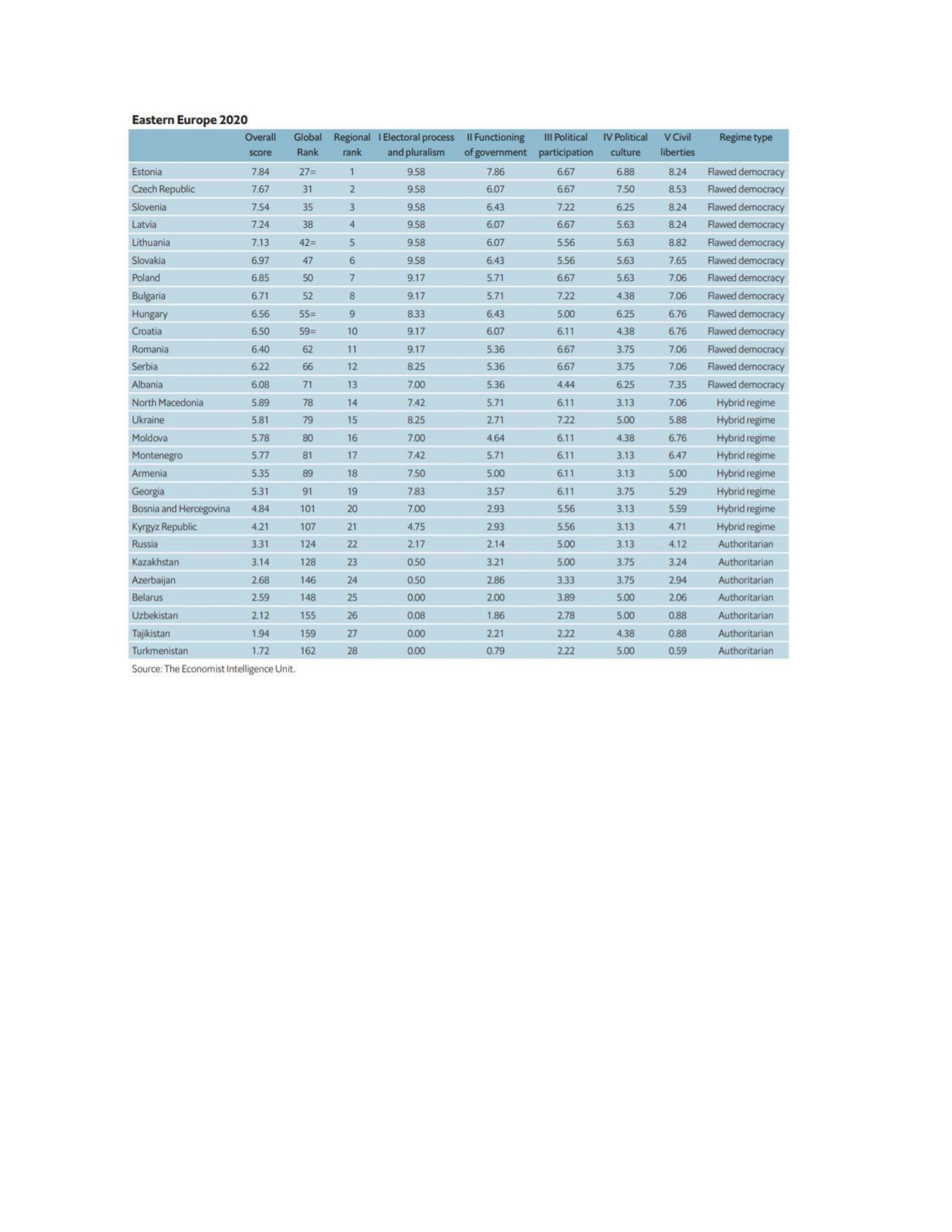
Western Europe, alternatively, has the highest regional score in the world. However, the
region’s long-established democracies harbor strong institutions even though they are trending
downwards on the democracy index. The region’s average score declined from 8.35 in 2019 to
8.29 in 2020, with most of this due to a decrease in civil liberties and the functioning of
government. The recent COVID-19 pandemic has also led to a weakening trust in government,
with citizens doubting its ability to handle such situations. This distrust, coupled with the overall
trend of disillusionment in democratic institutions, explains the recent downturn in Western
Europe’s democracies (The Economist). Nevertheless, Western Europe, especially the

Scandinavian countries, remains the best region for democracy. The table below illustrates each
individual country’s score.
Overall, Europe's democracy is in a state of decline. Spurred on by rising Islamophobia,
xenophobia, racism, economic decline, and widespread distrust in government, radical right
parties have acquired significant power and support across the continent. The defeat of Donald
Trump in the 2020 American presidential election is promising for the future of European
democracy. In many cases, especially in the ones examined in this paper, the radical right is
poised to achieve unprecedented amounts of power. The study of these movements is imperative
to understand the nature of this new mold of conservatism in Europe and its followers. European

democracy is currently at a crossroads, and although the future seems grim, it is unknown
whether it will choose those who would protect it or those who would destroy it.

