


INTRODUCTION HUMAN SEXUALITY AND SEXUAL DEVELOPMENT
Human sexuality and sexual development are significant and paramount aspects of human
life (Coleman, 1999/2000; DeLamater & Friedrich, 2002). As the world population now exceeds
seven billion, the need for human sexuality education, therapy, and research has increased. As of
2006, in the United States alone, unplanned pregnancy rates have risen to 49% of all new
pregnancies (Finer & Zolna, 2011). Sexually transmitted infections (STI) are now estimated at
20 million new cases annually, half of which occur in young people aged 15 to 24 (Centers for
Disease Control, 2012). Daily, in popular media, there are a number of sexual issues that
typically arise, from Ariel Castro, his personal experience with sexual abuse, and the subsequent
abuse of three women over a 10 year period, to Miley Cyrus’ inadvertent challenge to youth
sexual normality and voice. While either scenario accounts for varying aspects of the sexual
spectrum, both identify elements of sexuality not fully understood.
The prevalence of one or more sexual dysfunctions during the life course is common
(Laumann, Piak, & Rosen, 1999). Epidemiological data over the past 20 years have suggested
that between 10-52% of men will experience one or more sexual dysfunctions during life, while
25-63% of women may experience one or more sexual dysfunctions across the same time span
(DeRogatis & Burnett, 2008; Heiman, 2002; Laumann, Paik, & Rosen, 1999; Simmons & Carey,
2001; Wallwiener et al., 2010). Unfortunately, the numbers of sexuality educators, therapists,
and researchers currently in practice to address these problems are inadequate. At this time, the
American Association of Sexuality Educators, Counselors, and Therapists (AASECT; the
primary accrediting body for sexuality educators, counselors, and therapists in North America)
has a membership of approximately 2000 educators, counselors and therapists (AASECT
membership coordinator, personal communication, March 24, 2014). Ten years ago, AASECT
1

had a membership of roughly 1500. The Society for the Scientific Study of Sexuality (SSSS; the
most prominent sexuality research organization in the United States) has a current membership of
741 (SSSS membership director, personal communication, February, 26, 2014). Data
representing SSSS membership for 10 years prior were unavailable, as electronic records were
not kept at the time. While membership numbers have increased, they are disproportionate to the
growth of other organizations and mental health as a whole.
Because the range of normative and non-normative sexuality is wide, the fields of
behavioral and medical health must provide evidence-based education, therapy, and research
modalities. While many sexuality professionals maintain training and continuing education in a
combination of education, therapy, or research, the overall number of qualified and/or trained
professionals who can manage sexual issues is marginal. Currently, only Widener University
maintains an accredited academic program at the doctoral level for graduate training in human
sexuality. In addition, there are a small number of training and continuing education programs
that provide advanced instruction to mental health professionals, educators, and researchers in
human sexuality. Of the 552,000 mental health care providers in the United States, it appears
very few enter the field of human sexuality education, therapy, or research, yet there is little
evidence for why this is the case (Grohol, 2011).
While the prevalence of sexual dysfunction, unplanned pregnancy, and STI transmission
rates are high, there are three professions that attempt to meet and address the challenges in
education, therapy, and research. Sexuality educators currently exist at all levels of education,
from young childhood to adult settings. Educators deliver sexual health knowledge from
abstinence-derived and comprehensive perspectives (Kendall, 2008a). Typically, sex educators
have existed in school and home settings (Balding, 1999; Walker, 2004). Core dimensions of
2

sexuality education include social skills, sexual knowledge, reproductive and contraceptive
knowledge, self-awareness, and self-esteem (Walker, 2004). Sexuality educators, typically
existing in the public education system have struggled to provide comprehensive programming
due to federal funding mandates (Fields & Tolman, 2006). Holistically educating individuals
about sexuality aids in diminishing negative sexual outcomes (Eisenberg, Bernat, Bearinger, &
Resnick, 2008). The greatest issues sexuality educators face are the political struggles based on
perceptions of morality (Coleman, 2000). Funding sources are heavily mediated by the personal
ideologies of administrators, and are not necessarily consistent with educational programming
that is positive and evidence-based (Walker, 2004). While educators have been limited by
federal funding and social perceptions of abstinence as the best practice, the surmounting body of
literature supporting comprehensive sexuality education programming has allowed for changing
mindsets and increased funding (Albert, 2007; Eisenberg, Wagenaar, & NeumarkSztainer, 1997;
Eisenberg et al, 2008; King, 2012).
The delineation between sexuality education and sex therapy exists as preventative and
responsive measures. Comprehensive sexuality education programs reduce unwanted sexual
outcomes, unplanned pregnancy rates, and STI transmission (King, 2012). This type of model
helps provide a preventative front line against unwanted sexual outcomes (King, 2012).
However, when negative sexual outcomes arise, sex therapists provide evidence-based treatment
and psycho-education to help mitigate unwanted sexual dysfunctions or increase desired sexual
outcomes as they are occurring (Berry, 2013; Kaplan, 1979). Beginning with Sigmund Freud
and psychoanalysis to Masters and Johnson and cognitive behavioral therapy, sex therapy has
transitioned into a systemic practice incorporating biological, psychological, and social elements
of the human experience into treating sexual dysfunction (Berry, 2013). Sex therapists dealing
3

with sexual dysfunction additionally work in close collaboration with medical practitioners to
resolve sexual problems (Berry, 2013; Tiefer, 2008). Behavioral treatment has primarily been
used as a responsive measure (Berry, 2013). Sex therapy alone does not necessarily cure or
prevent the transmission of sexually transmitted infections, sexual dysfunctions, or unplanned
pregnancy. Many clinicians, who practice this type of therapy, work in private practice, group
practice, outpatient, or medical settings. Because insurance does not cover all sexual diagnoses,
many practitioners are relegated to cash for practice settings, greatly limiting the demographic
available to access treatment (Health Partners Insurance, 2013).
Sexuality researchers attempt to employ qualitative and quantitative methodologies to
support and test the underlying educational programs and treatment approaches used by sexuality
educators and therapists and to explore novel dysfunctions, understudied aspects of sexuality, and
aspects of sexual behavior and response, to answer these questions (Fenton, Johnson, McManus,
& Erens, 2001). Sexuality researchers exist in a number of settings, including academic,
medical, and private foundations. The practice of sexuality research began in the late 19th
century inspired by writings of Charles Darwin (Bullough, 1994). During this time period,
sexuality research was dominated by the medical profession as bodily function was within
medicine’s realm of study (Bullough, 1994; Bullough, 1998). Medical research was plagued by
experimenter error as researchers consistently made the assumption that deviations from normal
sexuality denoted illness (Bullough, 1998). In the 1940s with the work of Alfred Kinsey, and
subsequently Albert Ellis, William Masters and Virginia Johnson, scientists outside the field of
medicine initiated the modern study of human sexuality (Bullough 1998). Researchers were
subsequently able to identify numerous aspects of human sexuality and behavioral treatments for
sexual dysfunctions. Today, sexuality researchers are limited by a number of factors including
4

social challenges with attaining funding to study taboo issues, and difficulty attaining
institutional review board approval of research projects. These issues have been exacerbated by
political agendas and social policies over the last 20 year dictating what is worthwhile to study
(Epstein, 2006).
The purpose of the following study was to identify the joys and challenges of human
sexuality education, therapy, and research that encapsulate the triumphs and struggles of entering
the field and practicing as a sexuality educator, therapist, and researcher. Discovering the factors
that allow or inhibit professionals to enter, practice, and remain in these particular fields is
abundantly necessary if we are ever to increase the availability of educators, therapists, and
researchers that specialize in human sexuality. If we could do so, we may better address issues
such as unplanned pregnancy, STI transmission, sexual dysfunction and adjustment, normative
sexuality, and healthy sexuality and education more effectively from a preventative rather than
reactive standpoint. It was essential to examine the factors that impact professional practice in
sexuality education, therapy, and research, as such factors may aid the field in becoming more
attractive for young professionals, increasing practitioners’ abilities to competently engage those
who require these services, and retaining current sexuality specialists.
Theoretical Perspective
An ecological framework, which is holistic, can be meaningful to assess the
environmental systems and social interactions responsible for the areas that impact professional
practice in sexuality education, therapy, and research. Identifying reciprocal actions among
natural, human-behavioral, and human-constructed elements can help explain the wide range of
issues experienced by educators, therapists, and researchers.
5

An Ecological Systems Framework
An ecological systems framework is a general theoretical approach that is useful in
explaining the issues of individuals and interrelated environments (Darling & Cassidy, 2014).
This model is based around three primary concepts: the organism or human environed unit
(HEU), the environments that surround the HEU, and the reciprocal relationships that exist
between HEUs and encompassing environments (Darling & Cassidy, 2014). The HEU can be an
individual or group of connected individuals that share common interests, resources, and goals.
Environments that surround the human environed unit are classified as the natural, human-
behavioral, and human-constructed environments (Bristor, 2010; Darling & Turkki,
2009). The natural environment (NE) refers to the environment as formed by nature (Bristor,
2010; Darling, 1987). This is inclusive of time, space, and biological and physical aspects of the
environment. The human-behavioral environment (HBE) refers to the environment in which
socialization happens to the human environed unit through psychological (thoughts and emotions
of individuals), socio-biological (interacting persons in social relationships), and biophysical (an
individual’s biophysical presence, body movements, and posture) means (Darling, 1987; Darling
& Turkki, 2009). Finally, the human-constructed environment (HCE) refers to the environment
that is manipulated or modified by humans. This is inclusive of sociocultural (human
constructions of culture), sociophysical (human manipulations of naturally occurring physical
elements), and sociobiological (human manipulation of natural living non-human organisms)
elements (Bristor, 2010). Regulatory systems, which are a part of the human constructed unit,
also impact the human environed unit (Darling & Cassidy, 2014). Such systems consist of legal,
religious, medical, political, economic, and educational entities. Overarching all environments is
the cosmos, inclusive of factors beyond the realm of earth. In addition to the three categories of
6

environments, each exists in levels, such as in the home, the community, the state or government,
or the cosmos. Interaction between systems takes place within the environed unit, within
environments, between environments, and between the environed unit and environments
(Bristor, 2010; Darling & Cassidy, 2014).
Theory Application
For this study, an ecological systems framework was used to help explain themes within
the data. As many factors within different environments affect sexuality educators, therapists, or
researchers in their ability to practice their professions, an ecological systems framework may
account for these organism-environmental interactions. In this study, individual sexuality
educators, therapists, and researchers are perceived as the organism or human environed units
(HEU). Examining and explaining environmental factors and interrelationships that facilitate or
inhibit an HEU’s ability to enter, practice, or remain in the professions of sexuality education,
therapy, and research may allow for unique and meaningful insights.
Aspects of the natural environment, human-behavioral environment, and
humanconstructed environment may be useful in clarifying and explaining themes. In the natural
environment, time affects many regulatory processes. Across time, laws and regulations change
and expire, allowing for modifications that may help the field of human sexuality progress (e.g.,
enactment of the Defense of Marriage Act (DOMA), and having it subsequently struck down by
the Supreme Court). Additionally, regulatory bodies for sexuality education and therapy (e.g.,
AASECT) were not present a century ago, but today lobby for a unified standard of practice
among sexuality educators and therapists. Within the psychological component of the
humanbehavioral environment, the thoughts and emotions that human-environed units
experience while attempting to enter or practice in human sexuality, emotional reactions to
7

specific relationships or sexual issues, and their ability to remain objective and empathetic in
treatment, may affect the HEU’s ability to work in sexuality education, therapy, and/or research.
The sociobiological element of the human-behavioral environment (HBE) encapsulates the
dynamic of collegial and interpersonal relationships within sexuality education settings,
therapeutic settings, and research settings. These dynamics may be expressed through verbal and
non-verbal means, as well as specific postures HEUs take in relation to human sexuality. These
aspects of interrelationships between HEUs may strongly affect professionals’ willingness to
enter, practice, or remain in the fields of human sexuality.
Within the sociocultural element of the human-constructed environment, taboos of
sexuality, conservative values, IRB difficulties, technology, current legislature, current laws, NIH
and CDC grant funding priorities, the current economic state, familial ideologies, religious
practices, and private initiatives (whether for or against sexuality education, therapy, and/or
research endeavors) may all impact a professional’s ability to enter, practice, or remain in the
field of human sexuality. Within the sociobiological aspect of the HCE, many therapeutic
treatments are now biomedical, altering human physiology such as male erectile functioning
medications (Tiefer, 2008). Additionally, our conceptualization of treatments that produce a
satisfactory level of holistic health have changed, potentially affecting health care funding, the
standard of professional practices, and subsequent laws.
Throughout these environments, regulatory systems containing rules, professional ethics,
credentialing standards, morals, laws, and value transmissions happen through the interaction
between the human-environed unit and each environment at varying levels of proximity. For
example, in the legal system, treatment regulations may impede sexuality therapists from
receiving federal dollars to provide Medicare or Medicaid services for aspects of sexuality. In
8

the religious system, moral and value stances against educating individuals about sexuality may
limit professional practices, as many individuals in the United States participate in a faith system.
In the political system, funding mandates may limit federal dollars available to sexuality
researchers to study novel or taboo aspects of sex. The medical system has provided a
dichotomy between behavioral and medical approaches to the development of a standard of
practice for treating sexual dysfunctions. The economic system itself regulates the amount of
funding available from federal bodies, private foundations, insurance companies, and private
individuals for sexuality education, therapy, and/or research. Finally, the education system
greatly mediates where and when individuals experience sexuality education programming in the
United States.
Consequently, behavioral and social processes impacting a professional’s ability to enter,
practice, or remain in the professions of sexuality education, therapy, and research may be taking
place within the HEU, between the HEU and environments, and/or between environments.
These interactions can happen across different levels. For example, sexuality education is
discussed, delivered, and occurs differently in the home compared to the community, school
setting, or at the state or federal governmental levels.
Statement of the Problem
Researchers have yet to investigate factors that impact professional practice in the fields
of human sexuality education, therapy, and research. Professionals’ perspectives on the joys and
challenges of sexuality education, therapy, and research have the potential to influence
practitioners considering practicing in human sexuality, practitioners who are considering leaving
the field of human sexuality, strategies for educational curricula, future credentialing policies for
educators and therapists, and suggestions for future research. Perspectives of sexuality
9

professionals on needed future research will additionally help outline new directions for the field.
Thus, the overall purpose of this study is to examine the experiences of sexuality educators,
therapists, and researchers that identify the factors influencing professionals from entering,
practicing, and remaining in the field of human sexuality.
Research Questions
Based on an ecological systems framework, the following research questions were addressed.
1. What are the factors impacting individual’s abilities to practice sexuality education,
therapy, and research?
2. What are the similarities or differences in the experience of sexuality educators, sexuality
therapists, and sexuality researchers?
3. How does the ecological systems framework help facilitate explaining the joys and
challenges of human sexuality education, therapy, and research?
Definitions
Sexual Dysfunction – an unwanted disturbance in sexual desire and/or in the
psychophysiological state of a man or woman in association to the sexual response cycle
(Laumann et al., 1999).
Sexually Transmitted Infection – diseases or illnesses that have a high likelihood of being
transmitted through sexual contact; also referred to as sexually transmitted diseases (Nancy,
1999).
Unplanned Pregnancy – pregnancies that were not planned at the time of discovering conception
(Matteson, Peipert, Allsworth, Phipps, & Redding, 2006).
Assumptions
There were several primary assumptions underpinning this project:
1. Respondents answered interview questions to the best of their abilities.
10

2. Respondents were interviewed at a time and place where they were able to speak freely
and able to self-disclose information.
Limitations This
study had several limitations:
1. Participants may have been reluctant to disclose some personal and/or private
information to the researchers.
2. The sample is inclusive of, and assumes theoretical saturation at 27 participants.
3. The sample is limited by the participants who responded.
4. Participants are experts in their fields, and only those who responded could be
interviewed.
Delimitations
This study was delimited by contacting only experts in the fields of human sexuality
education, therapy, and research. Only data from experts in these fields were analyzed.
Abbreviations
AASECT – The American Association of Sexuality Educators, Counselors, and Therapists
ABS – The American Board of Sexology
CBT – Cognitive Behavioral Therapy
CDC – Centers for Disease Control
ED – Erectile Dysfunction
GT – Grounded Theory
HCB – Human-Behavioral Environment
HCE – Human-Constructed Environment
HEU – Human-Environed Unit
HIV – Human Immunodeficiency Virus
11

NE – Natural Environment
NIH – National Institutes of Health
SEICUS – Sexuality Information and Education Council of the United States
SSSS – The Society for the Scientific Study of Sexuality STI
– Sexually Transmitted Infection
CHAPTER TWO
LITERATURE REVIEW
Sexual development is an important process for all individuals that will last throughout
their lifetime. While families and close communities play a significant role in socializing
12

individuals, sexuality education, therapy, and research that examines, explains, and guides human
development are paramount. In addition to examining the development of a baseline toward
healthy sexuality, the following chapter will outline the fields and current state of sexuality
education, therapy, and research.
The Development of a Baseline toward Healthy Sexuality
Sexual maturation (SM) throughout life is a significantly understudied process consisting
of biological and behavioral components (DeLamater & Friedrich, 2002). Incomplete sexual
maturation through developmental stages can impact puberty, pregnancy, sexually transmitted
infections (STI), use of birth control, and relational processes (Bancroft, 1989; Collins & Sroufe,
1999). Sexual Maturation (SM) as a construct is defined by key desired outcomes: a firm sense
of gender identity, sexual response, and the capacity for close dyadic relationships (DeLamater &
Friedrich, 2002). Prior to the successful attainment of each of these outcomes, youth pregnancy
and sexually transmitted infections existed at a significantly higher rate than their adult counter
parts (DeLamater & Friedrich, 2002). In the past, little research has attempted to account for
developmental features that work as protective factors against disparate levels of unplanned
pregnancy and STI transmission.
High rates of pregnancy, STI transmission, and social myths about partnering behavior
and contraceptive use draw attention to the importance of how individuals mature sexually
throughout developmental life cycle stages, or, how individuals have failed to hit appropriate
developmental markers (Collins & Sroufe, 1999; DeLamater & Freidrick, 2002; Maurer, 1994).
Despite the attention given to human sexuality during the psychoanalytic era, sexuality was
viewed as physiological responses centrally motivating behavior toward other people (Berry,
2013). The need for sexuality education and research across developmental stages is paramount,
13

as individuals’ understanding of their bodies, reproductive processes, and maintenance of
intimate relationships are core aspects of sexual development (Goldman & Bradley, 2001).
The State of Sexuality Education
Historical Developments in Sexuality Education
Sexuality education is the acknowledgment of the biological, sociocultural,
psychological, and spiritual dimensions of sexuality from a cognitive, affective, and behavioral
perspective, including the ability to communicate and make effective sexual decisions (Bruess &
Greenberg, 2009). In the early 20th century, the National Education Association suggested teacher
training in sexuality education. Advocacy began for the inclusion of some type of sex education
program in public school starting in 1940. Students were beginning to learn basic reproductive
functioning in the public school setting (Reiss, 2005). By the 1960s, the great controversy about
what sexuality education program is the most appropriate began. During this time when
sexuality education programs were being introduced to schools, a strong opposition to sexuality
education developed (Geraci, 2001). By the 1970s0 programs were emphasizing accurate
information, inclusive of relationship dynamics and biological lessons (Reiss, 2005).
Additionally, during the 1980s, sexuality education programs began to expand even further,
examining gender roles, sexual behaviors, communication patterns, biology, relationship
dynamics, and sexual feelings (Freeman, 2005; Geraci, 2001).
The most drastic and impactful shift in modern sexuality education came with the onset of
HIV/AIDS. As HIV/AIDS became prevalent, sexuality education programs became exceedingly
politically charged. In turn, a polarizing view of sexuality emerged through political channels,
suggesting that sexuality education could not be a valueless system (Freeman, 2013). The notion
of refraining from sexuality became commonplace, spawning abstinence-derived sexuality
14

education programs (Geraci, 2001). Through today, the moral battle of healthy sexuality
education remains prominent despite increasing numbers of evidence-based programs (Freeman,
2013).
As previously stated in the introduction, the rates of sexually transmitted infections (STI)
and unplanned pregnancies are higher in the United States than many other industrialized
countries (Centers for Disease Control, 2012; Finer & Zolna, 2011). Since the change of
political mindsets during the 1980s, due to STI and HIV/AIDS transmission, unplanned
pregnancy increases, technological advancements, social changes, and new diseases and
disorders, sexuality education in the United States has evolved (Kendall, 2008b). Initially,
learning about sexuality generally took place within the family system or within social groups
(Kendall, 2008b). Federally funded programs were typically inclusive of anatomy training about
reproduction, but lacked the emphasis of other sexual processes seen in sexuality education
programs today. Many federal controls prohibited the public dissemination of sexuality-related
materials through state agencies, schools, hospitals, and media outlets (Kendall, 2008b).
Recently, federal control of sexuality education has shifted due to the availability of information
through the internet, the use of sexuality to sell goods and services, and increased funding and
lobbying from and through the United States federal system (Fields & Tolman, 2006). Many
online forums have extensive information on many sexuality topics where individuals who have
not been given adequate information may find answers (e.g., www.teenwire.com,
www.outproud.org; Kendall, 2008a; Rietmeijer & Shamos, 2007).
However, not all information is based on research and may be biased.
Access to new media formats has increased support and criticism for how sexuality
education should be delivered (e.g., online forums, websites, online pornography, online sex
15

stores, online and community-based sexuality education group programs). Commercial sexuality
education products have grown, as the ability for direct purchase from online forums and
websites allows for anonymity amongst individuals wishing to explore novel aspects of sexuality
(Kendall, 2008b). Community-based programs have also experienced expansion through
inperson or online websites typically occurring in a faith-based, non-profit, or community
settings (Bryson, 2004; Bryson, MacIntosh, Jordin & Lin, 2006). These types of forums provide
support for all sexual communities on every ideological front imaginable (Bryson et al., 2006).
The largest area of debate has occurred within the context of federally-sponsored,
schooldelivered sexuality education programs (Fields & Tolman, 2006; Goldman & Bradley,
2001; Kendall, 2008b; Russell, 2005). It is important for people to understand their bodies and
their response cycle, as well as how to manage close dyadic relationships and develop their own
sexual values (Goldman & Bradley, 2001). Despite leaders in the field of sexuality research
declaring sexuality health and education as a basic human right, the American people have
debated youth access to this information based on positions of varying morality (Coleman,
2000). Parents agree that preventative knowledge must be discussed (e.g., STI/HIV
transmission), and have supported abstinence-only and abstinence-based education (Kendall,
2008b).
Increasing research in publicly delivered educational settings has shown the difficulty
educators have experienced in delivering informational materials (Elliot, 2008; Mayo, 2008).
Despite struggles, longitudinal data have suggested that youth desire comprehensive educational
programs (Albert, 2007). Collecting observational and retrospective data of youth experiences in
these programs, especially in the context of public education, has been extremely challenging
and risky as many parents do not want their children engaged in sexuality research (Fields &
16

Tolman, 2006). Regardless, sexuality education programs that emphasize sexuality as a lifelong
learning process, produce the lowest STI transmission and unplanned pregnancy rates, and the
highest number of individuals who engage in sexual behavior only when they feel fully prepared
to do so (Eisenberg et al., 2008; Leiblum, 2001; Lottes, 2002). Currently, despite longitudinal
data suggesting these positive outcomes, abstinence derived programming in the United States
still receives significant funding in many states (Kendall, 2008b).
Premature Sexuality
While all sexual education programs include some form or discussion of abstinence,
regardless of program efficacy, premature sexual involvement occurs (Creatsas, 1995). Young
people who engage in sexual activity before they are prepared to do so typically are subject to a
higher rate of pregnancy, probably due to a lack of knowledge of appropriate contraceptives
(Creatsas, 1995).
Another significant complication of premature sexual development is an increase in STI
transmission due to incomplete sexual knowledge (Creatsas, 1995; Wendell, Onorato, McCray,
Allen, & Sweeney, 1992). Contraceptives are not always readily available, and youth, who have
not yet received adequate sexuality education, may not effectively utilize contraceptives (Blake
et al., 2003; Guttmacher et al., 1997). Without thorough sexuality education, it is difficult to
completely educate young people before they choose to become sexually active.
Types of Sexuality Education Programs
Abstinence-Only-Until Marriage Sexuality Education
Abstinence-only until marriage sexuality education refers to school or church-based
sexuality education programs designed to minimize the risk of STI transmission and unplanned
pregnancy through delaying sexual activity until marriage (Kohler, Manhart, & Lafferty, 2008).
17

In 1996, under the Adolescent Family Life Act and the Personal Responsibility and Work
Opportunity Reconciliation Act, federal dollars were approved to educate public school students
on the social, psychological, and physical benefits of abstaining from sexual activity (McCave,
2007; McFarlane, 2006). Methods of effective birth control are not typically discussed, however
there is a significant emphasis placed on the negative impacts of sex or childbirth outside of
marriage (Kohler et al., 2008; McCave, 2007). Abstinence-only-until-marriage programs include
instruction on how to use good judgment, to thwart unwanted sexual advances, and to teach that
the best and safest time to engage in sexual activity is abstaining until marriage (Dailard, 2002).
While these types of programs have been useful with young children who have not yet
matured or developed appropriately to make the decision to engage in sexual activity for
themselves, there is little evidence of abstinence-only education being effective with adolescents
and adults (Smith, Dariotis, & Potter, 2003). Longitudinal data have suggested that the overall
effects of abstinence-only-until-marriage programs to combat risky sexual behavior and
unwanted outcomes (e.g., STI transmission and unplanned pregnancy) have been minimal
(Kirby, 2007; Kohler et al., 2008; Trenholm et al., 2008; Zanis, 2005).
Abstinence-Based Sexuality Education
Abstinence-based sexuality education (also known as abstinence-plus sexuality
education) emphasizes the benefits of delaying sexual activity by resisting external pressures to
engage in sex (Benton, 2011). These types of programs discuss delaying sexuality, but do not
necessarily specify waiting until marriage to abstain (Toups & Holmes, 2002). Unlike
abstinence-only-until marriage curricula, abstinence-based programs discuss the benefits of
contraception, disease prevention methods, and other non-coital sexual behaviors (Toups &
18

Holmes, 2002). There is a wide degree of variance in how intensely programs of this nature
teach abstinence (Realini, Buzi, Smith, & Martinez, 2010).
A number of these abstinence-based programs have produced statistically significant
results by reducing the frequency of sexual activity and increasing the use of contraceptives in
sexually active individuals (e.g., Kirby, 2007; Underhill, Montgomery, & Operario, 2008). One
of the major struggles abstinence-based education has incurred is the social controversy over
whether contraceptives should be discussed in school settings (Benton, 2011). Controversy over
abstinence-based and abstinence-only programs remains prominent within our culture (Lindberg,
Santelli, & Singh, 2006).
Comprehensive Sexuality Education
The third and most politically charged form of sexuality education is comprehensive
sexuality education programming. Comprehensive sexuality education focuses on kindergarten
through 12th grade students, teaching sexuality as a lifelong process of learning. The original
guidelines for comprehensive sexuality education programs included teachings on human
development, relationships, personal skills, sexual behavior, sexual health, and society and
culture (Sexuality Information and Education Council of the United States (SEICUS), 1994).
Topics covered include: sexual development, gender roles, power imbalances, abstinence,
contraceptives, intimacy, affection, intimate relationships, and reproduction/reproductive health
(Eisenberg et al., 2008). These concepts are taught to students across four developmentally
appropriate stages: middle childhood, during elementary school, ages 5 to 8; preadolescence,
toward the end of elementary school, ages 9 to 12; early adolescence, during middle school, ages
12 to 15; and adolescence, during high school, ages 15-18 (SIECUS, 1994). For example, during
middle childhood, a comprehensive sexuality education program may include basic anatomy,
19

during preadolescence it may include puberty and sexual organ maturation, during early
adolescence it may include the sexual response system, and during adolescence it may include
sexual pleasure.
Although comprehensive education programs include a myriad of information each
developing person needs, some parents have been resistant to these programs being implemented
out of the fear they encourage sexual behavior (Realini et al., 2010). However, comprehensive
sexuality education programs have not been shown to increase the likelihood of sexual activity
whatsoever (Kohler et al., 2008). This social conundrum may be due to parents’ own lack of
knowledge around sexuality and normative development (Wilson, Dalberth, Koo, & Gard, 2010).
Despite social and political turmoil around implementing K-12 programming, communities that
have implemented these programs have seen significant decreases in teen pregnancy and STI
transmission rates, and a higher degree of tolerance of others’ sexuality (e.g., Leiblum, 2001;
Lottes, 2002). While many parents (upward of 80%) support sexuality education that is
abstinence-based, the youth of today prefer straightforward information (Albert, 2007; Eisenberg
et al, 2008; Eisenberg et al., 1997). Overall, comprehensive sexuality education programs have
shown the greatest effectiveness in reducing unplanned pregnancy, STI/HIV transmission, and
unwanted sexual activity (King, 2012).
The State of Sexuality Therapy
Historical Developments in Sexuality Therapy
The Psychoanalytic Era
A sex therapist is a psychotherapy provider who treats health problems concerning sexual
functioning, sexual feelings, and intimacy in an individual or couple format through behavioral
and/or biomedical interventions (Mayo Clinic, 2013). Over the past century, sex therapy has
20

undergone significant shifts. From early origins in psychoanalytic theory, sexuality therapies
classified sexual behavior and dysfunction in the context of Freudian thought and psychoanalytic
treatment (Berry, 2013). During this time period, sexual dysfunction was characterized by a
psychoanalytic view, yet the physiological aspects of sexual development and dysfunction were
overlooked (Berry, 2013). Psychoanalysts, led by Sigmund Freud, identified pathological sexual
conditions that were present in everyone’s psyche (Berry, 2013). Examples included the
“Oedipal desire,” or one’s fixation on one’s mother, and the “Madonna-Whore complex,” when a
man must reconcile the difference between the virginal mother with the sexual nature of the
“whore,” and when sexual fulfillment with oneself and one’s partner could not occur until there
was an integration of these archetypes (Berry, 2013; Freud, 1912). Sexual dysfunctions were
primarily seen as psychogenic, or caused by the psyche. Freud and psychoanalysts characterized
sexual response into the successful or unsuccessful movement and competition of the triphasic
development process, where infants moved through the oral and anal stages of development
toward the genital stage (Berry, 2013). A lack of integration of the subconscious during the
genital stage of development could result in one of the previously mentioned sexual
dysfunctions. This particular era in psychological treatment maintained significant authority
over the treatment of sexual issues until psychoanalytic thought regarding sexuality was
challenged decades later (Atwood & Klucinec, 2007).
Sex Therapy in the Mid-Twentieth Century
Decades after the development of psychoanalytic treatment and conceptualizations of
human sexuality, the field of psychotherapy was challenged by the onset of cognitive-behavioral
sex therapy and theory (Berry, 2013). Starting in the late 1950s, William Masters and Virginia
Johnson challenged the underlying assumptions of psychoanalytic thought and the general lack
21

of physiological understanding of the sexual response cycle and general sexual processes
(Atwood & Klucinec, 2007; Denman, 2004). Masters and Johnson (1966) were first to discuss
and recommend the integration of biological, psychological, and social elements into what every
individual experiences over the course of a lifetime. Their sex therapy model incorporated
shortterm intensive behavioral interventions to treat dysfunctions and shift unwanted or
destructive thought processes (Berry, 2013). This type of treatment could be delivered quickly
over a few sessions (under 10, as opposed to an unlimited number in psychoanalysis), that
greatly reduced the cost to the client and allowed its access to a number of individuals who could
not afford costly psychoanalysis (Berry, 2013). Sexual functioning was defined during this era
by a response cycle consisting of four stages: excitement, plateau, orgasm, and resolution
(Masters & Johnson, 1966). Problems were seen as either lack of response or a problem with
one aspect of the sexual response cycle. Typically, performance anxiety leading to a learned
behavior greatly affected the client, disrupting the cycle (Berry, 2013; Masters & Johnson, 1970).
This stream of sex therapy persisted from the 1970s onward (Berry, 2013). Sexual problems
could now be defined and treated by providing education, systematic desensitization, and
cognitive restructuring (Berry, 2013). Cognitive behavioral sex therapy has been successful in
treating erectile dysfunction, premature ejaculation, and diminished intimacy, as well as many
other sexual dysfunctions (Berry, 2013; Perelman, 2006).
Sex Therapy from the Mid-Twentieth Century Onward
While many Masters and Johnson techniques are still very relevant and current today,
many clinicians employ more systemic modalities of therapy (Berry, 2013). Not long after
Masters and Johnson, Helen Singer Kaplan suggested the integration of a psychodynamic theory
out of the psychoanalytic and cognitive-behavioral treatment models. Kaplan (1979) proposed
22

that immediate causes of sexual dysfunction should be initially addressed through the
modification or control of the cause, and then deeper psychological issues should subsequently
be addressed. In this model, the clinician begins with cognitive-behavioral techniques and then
searches for deeper psychological meaning associated within one’s behavior.
In recent years the field of sex therapy shifted from treatments being psychologically
oriented toward a biomedical approach (Berry, 2013; Tiefer, 2008). With the advent and
approval of Viagra in 1998, sexual dysfunction and pharmacological treatments became
commonplace (Althof, 2006). Mental health providers of sex therapy argue, however, that drug
therapies are uni-directional and only treat physiological symptoms, not relational or
psychological impacts and processes (Althof, 2010; Berry, 2013; Tiefer, 2008). While novel sex
therapies are needed, there is still a need for longitudinal effectiveness trials of current models to
empirically base some treatments (Berry, 2013). In addition, biomedical and drug therapies have
provided minimal information about long-term efficacy. Sexuality researchers’ inability to
produce high quality longitudinal effectiveness and efficacy trials, combined with large
pharmaceutical companies’ aggressive marketing, have resulted in undermining quality
behavioral treatments (Althof, 2010).
Access to Sexuality Therapy
Historically, insurance providers, as well as state run medical programs, have provided
varying compensation or coverage for sex therapy. Some insurance plans cover specific sexual
dysfunctions and sex therapy as a treatment approach (Cleveland Clinic, 2013). Many therapists
sit on insurance panels and will accept insurance if the policy includes sex therapy benefits
(Cleveland Clinic, 2013). Consequently, some insurance plans cover varying DSM-V (the
diagnostic and statistical manual for mental health care providers) diagnoses that require sex
23

therapy, but are not specifically regarded as sexual dysfunctions (American Psychiatric
Association, 2013). For example, HealthPartners (2013) insurance plans cover the behavioral
treatment of paraphilias, compulsive sexual behavior, perpetration of sexual abuse of a child or
an adult, and the victim of sexual abuse as a child or an adult. However, diagnoses that
specifically require direct sex therapy, such as sexual desire disorders, sexual arousal disorders,
orgasmic disorders, sexual pain disorders, sexual dysfunction disorders, and sexual dysfunction
due to a medical condition, are not covered under many insurance plan benefits (Health Partners
Insurance, 2013). Coincidentally, many differential diagnoses in the DSM-V are comorbid with
sexual dysfunctions (e.g., depression, major depressive disorder, dysthymic disorder, anxiety
disorder, adjustment disorder), and as such are covered by many health insurance plans under
benefits for mental health (Health Partners Insurance, 2013). Many clinicians may elect to code
and bill for a covered diagnosis and incorporate sex therapeutic techniques as many diagnoses
are interrelated. Mainly however, most sex therapy treatment providers run fee-for-service
practices of a varying scale. As such, treatment for any sex-related disorder is available to those
who can afford fee-for-service if treatment is not covered under insurance plan benefits.
Medicalization of Human Sexuality
From the early 1980s, a number of paramount sexologists have advocated against the
looming medicalization of human sexuality (e.g., Bancroft, 1989; Bass, 1995; Rosen & Leiblum,
1995; Tiefer, 1996; Tiefer, 2008). Today, sexual development and contemporary sexuality have
undergone a social transition, shifting toward medicalization. Medicalization of human sexuality
has become a distinctive trend of thinking that relocates experience from social, normative, or
developmental processes into categories of medical domain (Tiefer, 1996). Medicalization of
sexuality refers to defining the problem in medical terminology, utilizing a medical (reductionist)
24

framework to understand the problem, and then implementing a medical intervention or
treatment to treat the problem, such as surgery or drug therapies (Conrad, 1992). Major shifts
from behavioral treatment to medical intervention first came with shifting cultural paradigms
toward individualism, affecting men and women’s sexual health (Bancroft, 2002). Despite
medical models suggesting the benefit of reductionism toward core characteristics of the
“disease,” issues arise as many aspects of human sexuality are normative, based in biology, and
constructed in the context of cultural norms and paradigms (Tiefer, 1996; Tiefer, 2008). As the
popularity of the medial model of understanding sexuality has increased, mindbody dualism has
begun to prevail. Problems necessitating sexuality education, therapy, and/or research are more
commonly being characterized as dichotomously organic or nonorganic in origin (Tiefer, 2008).
Functioning from a general lack of systemic thought, medicalization of sexuality does not
integrate the impact of culture on the individual or relationship, but rather shifts sexuality into a
framework that reduces each experience to functions of the body (a complex independent
organism) from the mind (a separate and equally complex organism)
(Tiefer, 1994b; Tiefer, 1996; Tiefer, 2008).
Credentialing for Sexuality Educators and Therapists
The primary credentialing body for sexuality educators and therapists is AASECT.
Founded in 1967 to foster comprehensive sexuality education, counseling, and therapy by
qualified professionals, AASECT established the first set of professional ethics, academic
preparation, and an applied skill set for professional credentialing (American Association of
Sexuality Educators, Counselors, and Therapists, 2013). As a not-for-profit professional
organization, AASECT provides sex educator, sex counselor, and sex therapist certification
(American Association of Sexuality Educators, Counselors, and Therapists, 2013). Educators,
25

counselors, and therapists each must attain specific educational benchmarks by completing 150
hours of coursework in a number of sexuality domains (AASECT, 2013). Each professional
track must also undergo supervised fieldwork. For educators, 20 hours of sexuality education
program supervision from a qualified member of the organization must be completed. For
counselors and therapists, 50 hours of clinical supervision must be attained with over 250 direct
client contact hours (AASECT, 2013). Sex counselor certification is designed primarily for
health care professionals in medical settings interested in advanced training in human sexuality,
whereas sex therapist certification requires the candidate to hold a license in a mental health
profession (e.g., social work, professional counselor, or marriage and family therapist)
(AASECT, 2013). For educators, counselors, and therapists attempting to achieve AASECT
certification, the organization also outlines professional standards and maintains an ongoing code
of ethics.
Another certification body is the American Board of Sexology (ABS). ABS, unlike
AASECT, only offers certification for sex therapists. While not as well known, ABS maintains
high professional standards requiring every member to possess a doctoral level degree, as well as
complete a large amount of clinical course work and supervision (50 hours) (The American
Board of Sexology, 2013). The main difference between organizations (other than the sheer size
of AASECT comparatively), is ABS’ requirement of members to be referred and endorsed by two
current members in good standing. Currently, only Florida maintains regulatory standards that
require 120 hours of approved clinical sexuality education and 20 hours of case supervision
(Rule 64B4-7.005 (2005)), in addition to a mental health practitioner license to advertise as a
“sex therapist” (Florida Statute 491.0143). It is unlawful for any person to practice under this
26

title without holding an active mental health license in social work, marriage and family therapy,
or mental health counseling in addition to these requirements. Certification from AASECT or
ABS fulfills clinical education and supervision requirements to practice as a sex therapist.
The State of Sexuality Research
Historical Developments in Sexuality Research
Sexuality research, commonly known as sexology, is the scientific study of human
sexuality, behavior, and functioning. The modern process of sexuality research began in Europe
in the late 19th century as a result of the writings of Charles Darwin on sexual selection
(Bullough, 1994). At this time studies were dominated by medical practitioners, as they were
seen as experts on bodily functions and sexual activity (Bullough, 1997). Interpretations of
research data were supplemented by historical materials to bolster the significance of findings
(Bullough, 1998). In the psychological community, sexuality research was heavily influenced by
psychoanalysis and the teachings of Sigmund Freud (Berry, 2013). Psychoanalysts believed
pathological sexual conditions were present in everyone’s psyche, and sexual dysfunctions were
seen as being purely psychogenic or derived from the mind (Berry, 2013).
After World War II, sexuality research became dominated by American researchers, as
Nazi ideals stifled a generation of eastern and western European psychoanalytic and medical
researchers (Bullough, 1998). At this point, American research was centered in the discoveries
of Alfred Kinsey. Kinsey challenged major assumptions about sexual activity in the United
States (Jones, 1997). His seminal works brought to light many sexual practices that had yet to be
discussed or researched (Jones, 1997). Because he came from a zoological perspective, he
experienced difficulties incorporating aspects of psychology into his research (Jones, 1997).
27

Regardless, his national work utilizing data on male and female sexual processes, extramarital
sexuality, and homosexuality, were all paramount for the future of sex research (e.g., The Kinsey
Report; Sexual Behavior in the Human Male; and Sexual Behavior in the Human Female)
(Bullough, 1998). Challenging social beliefs of the day allowed for others to follow.
Subsequently, psychological practitioners began further research into sexuality in America.
As the psychoanalytic era of sexual understanding was becoming increasingly challenged,
scholars like Albert Ellis, and later William Masters and Virginia Johnson, began conceptualizing
sexuality and the treatment of sexual dysfunction in novel ways (Bullough, 1994). Cognitive
Behavioral and Rational Emotive therapies were formed, suggesting that sexual dysfunction
would be amended through cognitive restructuring and rational analysis of the problem
(Bullough, 1994). Since then, a great deal of research has been conducted to explain varying
aspects of human sexuality, sexuality education, and treatment.
Regardless of advances seen through the 20th century, few studies since Kinsey ever
attempted to understand sexual behavior among the general population. Epidemiological studies
were not conducted until nearly 35 years post Kinsey after HIV/AIDS became known (Laumann,
Gagnon, Michael, & Michaels, 1994). Not until the National Health and Social Life Survey
(NHSLS) was sexuality studied in the general population. To this day, Laumann, Gagnon,
Michael, and Michaels’ study of general sexual behavior has not been replicated due to the
inability to obtain funding. Securing funding to study sexual behavior in the general population,
while the onset of HIV/AIDS commandeered federal dollars, nearly prevented NHSLS data from
being collected (Laumann, et al., 1994). Inevitably, as seen in many instances today in sexuality
research, the United States government was unwilling to provide federal dollars to support the
size of the NHSLS project. As such, the authors scaled the sample down and were able to secure
28

adequate private funding to execute the project. Like the Kinsey report, the NHSLS national
sample of sexual behavior provided current epidemiological insights into typical sexuality and
sexual processes.
From the 1990s and in the last decade, sexuality research has undergone significant, and
at times, turbulent changes. In mid-2003, the National Institutes of Health (NIH) revoked
funding from core sexuality projects, and based on lobbying through the Traditional Values
Coalition, began to question and bring increased scrutiny to a large number of sexuality
researchers seeking funding from grants (Epstein, 2006). During this time, under federal
recommendation, federal funds through the Department of Health and the Centers for Disease
Control (CDC) were significantly reduced, resulting in diminished community-based AIDS
protection programs in fear they encouraged sex, an unwillingness to promote condoms as a
successful preventative method against HIV, and the banning of an emergency contraceptives
(Harris, 2004; Smith, 2003). As morality became a strong defense against the scientific pursuit
of human sexuality, credibility was consistently called into question (Epstein, 1996).
Abstinence-only-until-marriage sexuality education was eventually funded with assets otherwise
stagnating for some time (Epstein, 2006).
Researchers have argued for the autonomy of science, but ultraconservative lobbyists
have funded politicians who limited federal funds from topics that were perceived to have poor
“face value” (Epstein, 2006). The largest hindrance sexuality research has endured to date is the
dichotomy between meaningful science and social constructions through political lines of what is
proper, right, and/or desirable (Epstein, 2006).
29

Funding Sexuality Research
Unique difficulties have plagued the funding of sexuality research over the past 30 years.
During the 1980s, the AIDS epidemic brought significant lines of federal funding into the NIH,
and subsequently to sexuality researchers (di Mauro, 1996). At this time funding was delivered
for nationally representative research exploring sexual beliefs, practices, and STI transmission in
relation to the transmission of HIV (Epstein, 2006). In subsequent years, HIV funding
continued, however funding for sexuality research was been stifled. Mainly rooted in positions
of social morality, politicians have made few resources available to the National Institutes of
Health and the Centers for Disease Control for sexuality research (Levine, 2002). Beginning in
the mid-1990s, congressional oversight committees saw an onslaught of conservative members.
Therefore, socially conservative congressmen passed legislature to limit the funding of sexuality
research, as it was believed to intrude on the private lives of Americans (Epstein, 2006). From
2000 to 2008 congressional funding was cut from the NIH, specifically limiting topics that could
be investigated using federal dollars (Epstein, 2006; Levine, 2002). Later in 2004, the NIH
leadership stood up against political legislators and defended the scientific process and need for
comprehensive understandings of basic human processes (Zerhouni, 2004). Subsequently, due to
this turmoil, many studies are now funded by private foundations, universities, or by researchers
themselves.
Funding from private industry has propelled many topics in sexuality research. For
example, the Center for Sexual Health Promotion at the Indiana University has just completed a
national survey on sexual behavior and condom usage. While federal funding was not available
for this research, funding was procured from the private sector through a condom manufacturer,
but potential biases can evolve as private enterprise may have a vested interest in a particular
30

outcome or part of the research. Whether or not data are skewed in favor of the funding source
because of how and what data are collected, the funding source can create skepticism about the
findings.
Regardless of funding sources, trends have shifted in topics studied over the past 10 years
from an emphasis on reparative therapies, homosexuality, and HIV/AIDS, toward studying a
myriad of unique sexual processes. Topic titles have shifted from where funding priorities were
in 2003 (with HIV/AIDS and reparative therapy being paramount in the published literature), to
more diversified topics ten years later (such as psychosocial aspects of sexuality, as well as
within-group differences between sexual minorities). This shift may represent changes in
funding priorities, the increasing medicalization of sexuality, or a loosening around what is seen
as socially or morally reprehensible to study.
A sampling of these publications in the Archives of Sexual Behavior (ASB) in mid-2003
include: “The Politics and Science of “Reparative Therapy;” “Can Some Gay Men and Lesbians
Change Their Sexual Orientation? 200 Participants Reporting a Change from Homosexual to
Heterosexual Orientation;” and “Sexual Risk-Taking in Gay Men: The Relevance of Sexual
Arousability, Mood, and Sensation Seeking.” It appears as time has passed, a shift in published
studies may reflect the transition from what federal dollars were funding in 2003, and may
indicate where some funding is going currently. The following are examples of ASB articles
from 2013: “Race Differentials in Partnering Patterns among Older U.S. Men: Influence of
Androgens or Religious Participation?;” “United States Women and Pornography Through Four
Decades: Exposure, Attitudes, Behaviors, Individual Differences;” and “The Relationship
Between Sociosexuality and Aspects of Body Image in Men and Women: A Structural Equation
Modeling Approach.”
31

Current Methodological Developments
With the dichotomous nature of sexuality between the behavioral and biomedical
approaches, research modalities have improved alongside technological advancement. Sexuality
research methodology has been characterized by generalized population surveys, qualitative and
quantitative studies on population sub-groups, partner studies, and ethnographies, as well as
other qualitative designs (Fenton et al., 2001). With the onslaught of HIV/AIDS funding from
the 1980s onward, epidemiological studies of subgroups have been a significant focus (Fenton et
al., 2001). Large scale sub-group studies have been thwarted by measurement issues including
difficulty with sample selection and participation, psychometrically sound measures for the
specific population, and design (Fenton et al., 2001; Ridolfo, Miller, & Maitland, 2012).
Developing sound instruments that are culturally specific has been a necessary and incomplete
step in conducting sound methodologies (Ridolfo et al., 2012; Zea, Reisen, & Diaz, 2003). In
conjunction, there is a great need for tested theory that underlies sexual phenomena in all
populations (Fenton et al., 2001; Zea et al., 2003).
More significant advancements have been seen in sexual dysfunction treatment. A
number of researchers have employed randomized control trial designs to assess the efficacy of
modernized treatments. Many examples are currently within the realm of erectile dysfunction
(ED) treatment. A few current developments in ED have been as follows: Andersson et al.,
(2011) utilized internet-based cognitive behavioral therapy to deliver cognitive behavioral
therapy (CBT) intervention material, mainly psychoeducation with individual males.
Individually delivered CBT in a clinical setting for men was compared to a pharmacological
treatment (McCabe, 2001). Treatment outcomes of CBT couple-based ED interventions have
been studied (Wylie, 1997). Psychosexual CBT as treatment as usual has been compared to
32

vacuum device assisted CBT (Wylie, Jones, & Walters, 2003). Banner (2007) compared CBT to
pharmacological treatment as usual.
Current Theoretical Developments
The history of sexuality research is fairly brief. With the onset of sex therapy and
research in the psychoanalytic era, sexuality research was pinned within the underlying
assumptions of psychodynamic theory (Wiederman, 1998). Research and therapy were
conducted with the assumption of the intra-psychic, or internal psychological processes of the
individual, serving a primary role in all dysfunctions (Wiederman, 1998). With the changing
nature of sex therapy and sex research beginning with Masters and Johnson (1970), funding
became more available with a broader number of issues that were socially acceptable (Tiefer,
1994a; Wiederman, 1998). The field of sexual dysfunction research saw new underlying bases in
systems theory, script theory, social learning theory, feminist theory, and symbolic interaction
theory (e.g., Bancroft, 2000; Gangon, 1990; Levine & Troiden, 1988; Tiefer, 1991; Weis, 1998).
Regardless of methodological advances to understand, predict, and explain sexual
functioning more thoroughly, advances in theory testing is necessary. To consider the multitude
of factors impacting an individual’s sexual functioning and development, it is important to build
complex models that theorize biological and social, as well as psychological factors underlying
sexual processes and their interaction (Bancroft, 2000; Weis, 1998; Wiederman, 1998). With the
dichotomy of sexuality research split between academic and medical pursuits, a great deal of
funding is invested into biomedical advances around sexuality (Bancroft, 2000). As such, many
biomedical studies are atheoretical, relying solely on the scientific method (Weis, 1998).
However, despite the medicalization of sexuality, there have been recent advances in the
development of sex specific theory around sexual phenomena (e.g., Calleu, 2007; Crooks, 2001;
33

Navathe, Ward, & Gannon, 2008; Quackenbush, 2003).
Struggles with Institutional Review Boards and Sex Research
Institutional review boards (IRB) have existed for some time, beginning in the early 19th
century, with medical experimentation to thwart novel diseases and conditions. Events from the
20th century were instrumental in shaping the landscape of modern science. After World War II,
due to gruesome Nazi experimentation on non-consenting human subjects, the Nuremberg Code
was established. Modern science could no longer be conducted without benefit to society,
minimal risk to the participant, informed consent of the participant, the presence of skilled
scientists, and voluntary participation that ends at the discretion of the participant (Edgar &
Rothman, 1995). Reiterating these points in the United States, the unethical study of syphilis in
African American men in Tuskeegee, AL from 1932 to 1972, eventually resulted in loss of life, in
that participants were not informed of their participation and never offered a treatment. To
ensure respect for participants, harm reduction to participants while maximizing scientific
benefit, and fairness in the distribution of costs and benefits to participants, institutional review
boards maintain oversight in scientific endeavors involving human subjects (Edgar & Rothman,
1995).
In a discussion with an institutional review board representative from a southeastern
university, it was suggested there are unique circumstances that the IRB must consider when
reviewing applications for sexuality research (J. Haltiwanger, personal communication, October
24, 2013). When considering the impact on the research subject, sexuality research, especially if
it involves vulnerable populations (e.g., sexual minorities, children, pregnancy women, sex abuse
survivors) raises significant concerns warranting a strong justification for the benefit to the field
or participants (Rojas & Kinder, 2007). Many IRBs have struggled to identify whether research
34

with sexual minorities or sex-abuse survivors can minimize participant risk rather than
retraumatizing them (Rojas & Kinder, 2007). Subjects may be a part of a population that
experiences disparities. Similarly, when researching child or adolescent participant behaviors,
ethical data collection is reviewed under greater scrutiny, as there are more legal ramifications
related to abuse and vulnerable populations (Lee, 1993). Since sexuality can be sensitive, great
harm could be caused if others outside of the research context discovered research instruments
and measures (Wiederman, 2002). Ensuring participants are fully informed of the research
project’s intent and their ability to voluntarily withdraw at any time are paramount (Wiederman,
2002). It is typical for sexuality research that involves a vulnerable population to warrant full
review of the proposal by the IRB.
Summary and Conclusions
Sexuality is a lifelong process all humans experience. The fields of sexuality education,
therapy, and research are extremely beneficial to the growth and development of all people. Each
field strives to solve developmental problems and enlighten human understandings of healthy
sexuality. Sexual dysfunctions, unplanned pregnancy, and STI transmission are all serious
problems affecting sexually active individuals across the lifespan. Despite the significance of
these processes, no research has been found that examines the factors that facilitate or inhibit the
entrance, practice, and retention of individuals in the professions of human sexuality education,
therapy, and research. While improvements in specific areas of each field have been seen over
the past century, many challenges remain; some are specific to the fields of sexuality education,
sexuality therapy, and sexuality research. By further examining these issues, there can be
implications for educators, therapists, researchers, training programs, legislators, and families
needing assistance.
35

CHAPTER THREE
METHODOLOGY
Secondary qualitative data were used to assess the factors that impact professional
practice in sexuality education, therapy, and research; to compare the similarities and differences
in themes among sexuality educators, therapists, and researchers; and to determine the
explanatory usefulness of an ecological systems framework to explain the joys and challenges of
sexuality education, therapy, and research. The sections of this chapter discuss the sample, data
collection, and data analysis employed in this study.
36

Sample
Data for this study were collected to gain information on the lived experiences of
sexuality educators, therapists, and researchers. The existing data set for the study of “Walking a
Tightrope: The Joys and Challenges of Sexuality, Researchers, Educators, and Therapists” was
drawn from experts in the prospective fields of human sexuality education, therapy, and research.
The Florida State University human subjects committee approved the current study (see
Appendix A). Respondents who are leaders in their professions were initially identified through
purposive sampling, with the researcher approaching SSSS and AASECT membership
coordinators to determine who would be the most prominent professionals in the field to contact.
Once initial participants were identified by the researcher and organizational membership
coordinators, a snowball sampling technique was employed to gain further participants through
the recommendation of previous contacts. At the completion of data collection, the final sample
consisted of 27 sexuality educators, therapists, and researchers. The sample included 14 male
participants and 13 female participants. Participants were asked to identify themselves by their
professional practice, as explained in Table 1. Seventeen identified as sexuality educators, 12 as
therapists, and 15 as researchers. Two participants identified as a combination of educator and
therapist, 7 as an educator and researcher, 2 as a therapist and researcher, and 3 identified as a
member of all three professions.
Table 1: Participant Identification of Professional Role
Individual Professional Roles Combination of Roles
Participant Sex Educator Therapist Researcher E/T E/R T/R All
Number 1 (M/
M
(E) (X T) (R) Prof
2 M X X X
3 F X X X X
37

4 F X
5 M X
6 F X X X
7 F X
8 F X
9 F X X X X
10 M X
11 F X
12 M X
13 F X X X
14 M X X X
15 M X X X
16 F X X X X
17 F X
18 M X X X
19 F X
20 M X
21 M X X X
22 F X
23 M X
24 M X X X
25 F X X X
26 M X X X
27 M X X X
Total 17 12 15 2 7 2 3
Instrument
To construct the interview instrument (see Appendix B), a pilot study consisting of 10
respondents was conducted four years ago by the second researcher, who was a consultant on this
project. Based on these responses, interview questions were modified to include the perceptions
of sex therapists, as well as educators and researchers. After changes were made, the instrument
(see Appendix B) was developed, including demographic information and a number of questions
38

detailing participants’ positive and negative experiences in their profession(s), as well as
recommendations for the future.
Data Collection Procedure
Sexuality educators, therapists, and researchers who were identified as experts in their
perspective fields through purposive and snowball sampling were contacted through email to
determine their willingness to participate. Subsequently, an electronic survey containing the
informed consent document (see Appendix C) was sent prior to the narrative interview being
conducted. Through email, participants scheduled a date to have either a telephone or Skype
conversation, typically lasting between 30 to 90 minutes, during which the participant was asked
a number of questions regarding their experiences as a sexuality educator, therapist, and/or
researcher (see Appendix B). Interviews were initially audio recorded and subsequently
transcribed.
During data collection, 33 participants were contacted, resulting in 27 replies with a
response rate of 81.8%. One of the six non-respondents was traveling outside of the country for
an extended period of time and could not be contacted for an interview, while the remaining five
did not respond to an initial email message from the research team.
Researcher Backgrounds
The primary researcher conducted and completed all 27 interviews, as well as this project
in its entirety. This researcher is in part-time clinical practice focusing on issues of human
sexuality, is pursuing American Association of Sex Educators, Counselors, and Therapists
(AASECT) certification in sex therapy, is a clinical member of AASECT, and is a student
member of the Society for the Scientific Study of Sexuality (SSSS). In addition to clinical
39

practice, the author is also engaged in research exploring systemic behavioral treatments for
psychogenic erectile dysfunction.
Clinically, the researcher is trained in marriage and family therapy, which focuses on a
systems perspective of treatment. As such, the researcher takes a systemic perspective in clinical
treatment, and bases his underlying perspectives in a general systems framework. Thus, the
author sees the multifaceted factors that impact professionals entering and practicing in the fields
of sexuality education, therapy, and research.
The second researcher was a consultant on the project and had completed the original
pilot study four years prior. This researcher has been involved in sexuality teaching and research
for over 30 years and has published numerous articles and book chapters on sexual behavior,
sexual interaction, and sexuality education. The second researcher suggested potential
theoretical frameworks that may encompass the data, as well as provided guidance throughout
the study. In addition, the second researcher is known as a leader in sexuality within the
profession of family studies.
The research assistant is a fourth year undergraduate student, majoring in family and child
sciences, who is currently applying to graduate training programs in marriage and family therapy.
This assistant was involved in providing secondary blind coding of all interviews to increase the
dependability of the findings concurrently with the researcher, which is a process similar to
reliability in quantitative research.
The research assistant has experienced training in multiple ways. Initially she took course
work in research methods for behavioral sciences. Additionally, she has been trained extensively
by the primary researcher. The research assistant has read many primary sources in grounded
theory, as well as narrative data collection and analysis. Under the guidance of the primary
40

researcher, sample data were coded through the open, axial, and selective stages with the
research assistant present for practice and experiential leaning. The primary researcher had the
research assistant practice with sample data numerous times until she was comfortable with the
coding process, and internal consistency between the researcher and research assistant had been
achieved.
In addition, other undergraduate research assistants were used during this project to
transcribe the audio files of interviews. All assistants were trained by the researcher to maintain
confidentiality. Transcriptions were rechecked by the researcher against the original audio
recordings to ensure accuracy and consistency.
Analytic Plan
To identify themes within the data, a Grounded Theory (GT) strategy employing a
multifactorial coding system was implemented for each aspect of the interview guide (Corbin &
Strauss, 2008; Creswell, 2007; Strauss & Corbin, 1998). The analytic plan followed a Straussian
method, developed by Anselm Strauss. GT of this style is the systematic generation of themes
through rigorous data analysis (Strauss & Corbin, 2008). GT suggests that taking the following
set of steps to examine data should produce good themes or theory as an outcome. The themes or
theory generated can be seen as subject to the quality or rigor of the coding strategy leading up to
them (Strauss & Corbin, 2008). Thus, using this GT methodology to analyze narrative data
should produce the strongest and most reliable results.
The following analysis identified a process model. Once the data were transcribed, they
were coded by the researcher using the constant comparison method starting with the first coded
piece of data, and then coding against all subsequent datum for similar indicators or concepts
(Corbin & Strauss, 2008; Strauss & Corbin, 1998). After all transcriptions were coded, the
41

research assistant blindly recoded the data to ensure internal consistency and triangulation. The
analytic plan integrated open, axial, and selective coding stages to generate themes. Memos
were used throughout the coding process to aid in the development of themes. Given the GT
methodology, the process of identifying rich themes in the narratives through induction is
traditional to the modality.
Coding began with the first transcribed interview. The researcher and the research
assistant looked at each piece of data line by line to maintain consistency. Once initial codes
were generated, the researcher and research assistant returned to the data line by line to compare
codes at particular stages of the transcription. For example, codes relating to the responses on
the interview guide that dealt with the joys of sexuality education were compared at the axial
stage. At the selective stage of coding, axial codes from each section of the interview guide were
reviewed and consolidated (section by section) to produce a unifying theme for each section of
the data (e.g., joys of sexuality education, challenges of sexuality education, suggested advice for
future researchers).
Open Coding
Open coding refers to the process of building initial concepts from the data set (Charmaz,
2003; Corbin & Strauss, 2008). During this procedure, the researcher classified elements into
preliminary categories where commonalities were observed (Corbin & Strauss, 2008; Stauss &
Corbin, 1998). Transcriptions were read line by line, identifying recurring incidents in the data
(Corbin & Strauss, 2008). Units for analysis during this coding stage were sentences from
transcriptions, sequences of sentences, or interactions within the transcriptions. Many concepts
were identified throughout this process, and as subsequent transcriptions were coded, prior
concepts were compared with emerging concepts for similarities and differences (Strauss &
Corbin, 1998).
42

Glaser (1978) recommends avoiding literature on the topic to keep the researcher from
developing biases while establishing themes. During this time, the research team attempted to
explain what was happening, and what was indicated in the data (Glaser, 1992). The crux of
open coding is constant comparison. By dissecting the data and employing constant comparison,
the researcher was able to compare and place data into categories where classifications are
appropriate (Creswell, 2007). Asking “what the researcher sees going on here” is helpful in
fitting initial codes of the data (Charmaz, 2006). Ideally, the core categories explaining the
phenomena became more apparent.
An illustration of an initial code that was developed from the following
interviewer/interviewee dialog, dealing with the question: “What are the three most important
areas we need to cover in human sexuality research?” is as follows:
•Seeing how this is world sexual health month, the approaches that I take are very
committed to the idea of sexual health as both a goal and a standard for research.
•Finding and continuing to use empirical approaches toward the reformation of American
perspectives on sexuality, to something that actually would incorporate sexual health with
a strong perspective on sexual rights and justice, would help achieve public policy that
incorporated sexual rights.
In open coding, the participant response may produce the code of holistic education. The
participant identified a unified process he or she believed was necessary for comprehensive
education. For individuals to have freedom, health, and a strong perspective on sexual justice
and rights, the “holistic education” code encompasses the process suggested by the participant.
The effect of the participant may be coded as: positive outlook for sexuality research in America.
Axial Coding
43

Once the open coding process was complete, axial coding commenced. Axial coding
refers to the development of subcategories from initial categories identified in the open coding
process (Charmaz, 2003; Corbin & Strauss, 2008; Strauss & Corbin, 1990). The axial coding
process purposely searched for relationships that interconnect previously coded elements of the
data. When looking at initial codes, the researcher determined the condition, contexts, and
interactions between subcategories and their relation to primary categories (Strauss & Corbin,
1990). Thinking about causal conditions may lead to central phenomena (e.g., “what causal
conditions influence a phenomena?”). Corbin and Strauss suggest looking for causal conditions,
or what is affecting the phenomena or central ideas. Also, considering the context in which the
phenomena was happening and interactions between contextual conditions helped in establishing
links between codes.
To illustrate the axial coding process, for the research question, “what are the three most
important areas we need to cover in human sexuality research,” axial codes determined the
relationship between initial codes and the context in which they occurred. If the open coding
process for this question produced the codes of holistic education, positive affect toward the
future, and social engagement, the axial coding process resulted in developing a code that
summarized the relationship between open codes as: “maintaining forward thought and
education.”
Engaging in this process can help make generated themes more conceptually dense
(Corbin & Strauss, 2008; Strauss & Corbin, 1990). Strauss and Corbin (2008) have suggested
this process can be equated to “putting puzzle pieces together.” Asking context questions (e.g.,
who, what, when, why) aided in linking content and structure to process. Generating theoretical
memos at this stage reflected insights and connections of the problem to specific categories
44

(Glaser, 1978).
Selective Coding
To refine the categories developed through open and axial coding, a selective coding
process was employed. Selective coding refers to the process of unifying all categories around a
centralized theme or themes that represents the phenomena the study is attempting to identify
(Charmaz, 2003; Corbin & Strauss, 2008; Strauss & Corbin, 1990). Essentially, one may think
of this as writing a story that connects all categories (Corbin & Strauss, 2008). These central
phenomena are identified by asking questions such as: “If findings had to be summarized into
one sentence, what would the sentence say? How can all of the variation that is observed
between categories be explained (Strauss & Corbin, 1990)?” The core themes may easily emerge
out of prior categories and subcategories, or novel categories will need to be created to
encompass the phenomena (Corbin & Strauss, 2008). For example, the selective coding process
for each strain of narrative dialog in the interview guide produced unified themes. Specifically,
considering the interview question: “What are your hopes or concerns for the future of the
field?”, the selective coding process generated the code of internal unification from the open and
axial codes of needing strong mentors and leadership, no federal lobbying, fractured governing
bodies, low collaboration between education, therapy, and research, and feeling isolated.
Corbin and Strauss (2008) also suggest the usefulness of diagramming categories to
identify the core phenomena, as all categories will relate in some way to the core theme. These
final core categories served as the center of the developing core themes, mainly these categories
explained variation in behavior.
45

Theoretical Memos
Memos were written about theorized codes or categories during the coding process.
These memos were used to detail new ideas coders had about relationships between data
categories, as well as across data categories. Memos were purposively related to the sample’s
data, and aided in generating themes rather than speculation. Memos were used to describe the
purpose of each code as it was identified, and how each code related to others. Sorting memos
helped clarify specific categories, increasing analytic precision (Charmaz, 2003; Charmaz, 2006;
Creswell, 2007). An illustration of a memo about the selective code of internal unification
included notes on suggestions for that code. Questions aiding in the development of the code
were written in the memo and included; “What about the structure of relationships between
professionals?”; “How does fragmentation in professional groups affect individuals?”; “What
needs to happen to make the field stronger?”; “Is it easier for some than others?” Employing
field notes and memos was helpful in developing comprehensive codes.
Constant Comparison and Theme Generation
To construct themes around factors that facilitated or inhibited professional engagement
in the professions of human sexuality education, therapy, and research, the researcher constantly
compared initial theoretical constructs created from the first transcription coded to subsequent
transcriptions. While coding, each piece of datum presented new themes or similar themes to
what had been previously analyzed starting from the first interview. To establish themes,
saturation needed to occur. When no new themes or relationships were being gleaned from the
data, theoretical saturation had occurred (Corbin & Strauss, 2008). Once this point was
achieved, overarching themes from the findings could be derived.
46

Limitations
Because using grounded theory (GT) methodology for analyzing narrative data is an
inductive theme generating process, specific limitations occur. As there are no hypotheses being
empirically tested to explain variance, threats to internal and external validity exist. In GT,
internal and external validity are conceptualized as internal consistency and transferability.
Internal consistency can be attained if the findings are consistent with the individuals being
studied. Findings must relate to the context of the situation (Charmaz, 2006). In this process,
interpretations are, to an extent, subjective and are biased by the experience of the research team.
The researchers must account for and be overt about biases when reporting the findings
(Charmaz, 2006). Transferability is attained when findings are able to be transported to other
contexts. Traditionally, GT (as well as other qualitative methods) has been criticized because
findings, given the nature of the methods, are not necessarily generalizable. The major limitation
to validity is subjectivity (Charmaz, 2006; Glazer, 1978). Unless biases are controlled, internal
consistency will be low, making transferability impossible as the themes will not accurately
describe the data. Strategies that allow for triangulation, a strategy to control for biases, are
discussed below.
Additionally, the data did not sample professionals who departed the profession of
sexuality. These data may have provided an alternative perspective as to the factors that
influence sexuality educators, therapists, and researchers from maintaining their practice in their
field(s).
Rigor
To address validity in qualitative methods, triangulation (the usage of multiple sources or
methods to corroborate the findings) must be employed (Charmaz, 2003; Charmaz, 2006). This
47

process is typically used by qualitative researchers to check and recheck findings from their data
to establish the truth and relevance of findings through varying means (Charmaz, 2006). To
maintain rigor throughout the coding process, the researcher first addressed establishing the
credibility of the study through triangulation; the triangulation process involved using a
selfreport diary, observation, and a second coder (research assistant). Transferability, or the
ability of the findings to be generalized to other settings, was addressed through the purposive
sampling process previously identified, inclusion of thick description of the data, and
incorporation of precise methodology. Dependability, or the findings’ ability to be replicated,
was addressed through the creation of an audit trail during coding, as well as triangulation. This
process occurred with interviews, a second coder, and a self-report diary. Confirmability, or the
ability of the results to be confirmed by others, can also be addressed through triangulation. This
process involved interviews, a second coder, and a self-report diary, as well as maintaining
reflexivity by creating rich memos that documented all decisions in detail. Because qualitative
research is inductive, with themes being derived from the data by the researcher, subjectivity will
always be present (Charmaz, 2003; Charmaz, 2006; Strauss & Corbin, 1998). To assess
trustworthiness, reflexivity (self-reflection) must be maintained. This process allows the
researcher to be explicit about social contexts, or aspects of culture that may be impacting the
beliefs, personality, or knowledge of the researcher, affecting the generation of theory, as well as
the researcher’s own biases that effect the interpretation of the data (Charmaz, 2006).
48

CHAPTER FOUR RESULTS
The following chapter reports on the findings of the study. Participants were
characterized in terms of background, demographics, and professional achievements to qualify
their eligibility as experts in their respective fields. Overarching themes and sub-themes will be
noted. Finally, a summary of findings related to each research question will be related to the
research questions.
49

Participants
Experts in the field of human sexuality provided personal insights into the joys and
challenges of human sexuality during their careers. Participant responses came from the
perspective of a singular professional background, or a combination of sexuality education,
therapy, or research. As previously noted in Chapter 3 (Table 1), five participants indicated they
were sexuality educators only, four were sexuality therapists, and three were sexuality
researchers. Of the respondents, seven described themselves as both researchers and educators,
two as educators and therapists, two as therapists and researchers, and three as educators,
therapists, and researchers. Table 2 displays the characteristics of the sample. Included are
participant ages, sex, highest degree earned, work setting, professional membership status,
experience in a professional leadership role with one or more sexuality organization(s), editorial
experience in a sexuality journal, professional awards received related to their work in sexuality,
and years of experience in their field. Participants ranged in age from 31 to 84 years old, with a
mean age of 54. Twenty five (92.5%) had a doctoral level of education, two (7.4%) had a
master’s level, and one (3.7%) had medical training. Sixteen (59.3%) worked within academic
settings, six (22.2%) in therapeutic or private practice settings, one (3.7%) in an academic and
private setting, and one (3.7%) in a purely research setting. Twenty one (77.8%) were SSSS
members, while 14 (51.9%) were AASECT members. Eleven participants (40.7%) were both
SSSS and AASECT members.
Table 2: Participant Specific Demography and Qualifications
Participant Demographics and Qualifications
Participant Age Degree Work
Setting
Professional
Memberships
Editorial
Experience
Leadership
Experience
Awards Years in
Practice
1 69 Ph.D. Private
Practice
AASECT Yes Yes Yes 40+
50

2 59 Ph.D. Academic IARR Yes Yes Yes 40+
3 70 Ph.D. Academic SSSS,
AASECT
Yes Yes Yes 50+
4 66 Ph.D. Academic SSSS,
AASECT
Yes Yes Yes 40+
5 70 Ph.D. Academic NCFR, ASA,
SSSS
Yes Yes Yes 50+
6 41 Ph.D. Academic IASR, SSSS Yes Yes Yes 12+
7 53 Ph.D. Private
Practice
AASECT, IASR Yes Yes Yes 25+
8 31 Ph.D. Private
Practice
AASECT, SSSS,
AAMFT
Yes Yes Yes 30+
9 55 Ph.D. Private
Practice
SSSS,
AASECT
No Yes No 20+
10 62 Ph.D. Academic SSSS Yes Yes Yes 30+
11 84 M.Ed Private
Practice/
Academic
AASECT No No Yes 40
12 55 M.S. Private
Practice
SSSS,
AASECT,
AAMFT, NCFR
Yes Yes Yes 30+
13 56 Ph.D. Academic AASECT, SSSS Yes Yes Yes 20
14 39 Ph.D. Academic SSSS No Yes Yes 15+
15 34 Ph.D. Academic AASECT, SSSS Yes Yes Yes 12
16 39 Ph.D. Academic AASECT, SSSS Yes Yes No 18
17 36 Ph.D. Academic AASECT, SSSS Yes Yes Yes 15
18 59 M.D. Academic SSSS, IASR Yes Yes Yes 30
19 53 Ph.D. Academic SSSS, AAAS Yes Yes Yes 16
20 62 Ph.D. Academic SSSS,
AASECT
Yes Yes Yes 35
21 60 Ph.D. Academic SSSS, IASR Yes Yes Yes 38
22 37 Ph.D. Academic SSSS, IASR,
CSRF
Yes Yes Yes 7
Table 2 - Continued
23 63 Ph.D. Private
Practice
AASECT, SSSS Yes Yes Yes 40+
24 40 Ph.D. Academic SSSS Yes Yes Yes 10
25 36 Ph.D. Hospital SSTAR Yes Yes Yes 10+
26 40 Ph.D. Academic APHA No Yes Yes 9
27 76 Ph.D. Academic IASR, SSSS,
IARR
Yes Yes Yes 40+
51

Key: AAAS --- The American Association for the Advancement of Science; AAMFT --- The American Association
for Marriage and Family Therapy; AASECT --- The American Association of Sexuality Educators, Counselors, and
Therapists; APHA --- The American Public Health Association; ASA --- The America Sociological Association;
IARR --- The International Association for Relationship Research; IASR --- The International Academy of Sex
Research; NCFR --- The National Council on Family Relations; SSSS --- The Society for the Scientific Study of
Sexuality; SSTAR --- The Society for Sex Therapy and Research
Nearly all participants had editorial experience with one or more journals focusing on
human sexuality (83%), as well as some degree of leadership experience in one or more
organizations that focus on sexuality (96%). Many of those with leadership experience
previously served as either the president of AASECT or SSSS. All but two participants had
received one or more awards for their work in sexuality. In total, participants had published over
50 books, ranging from academic texts to those meant for the personal development of
individuals and couples. Additionally, participants’ levels of experience in their field(s) ranged
from 7 to over 50 years in at least one aspect of the field. The average level of experience among
participants was 26.8 years, with a median of 25.0 years.
Overall, this sample represents longstanding and successful leaders in the professions of
sexuality education, therapy, and research. All participants have attained high levels of education
and training, with many contributing service to their field by participating at an organizational
level through leadership or editorial work in a major sexuality peer-reviewed journal. In
addition, participants have spent decades in their chosen profession(s), garnering many novel and
impactful experiences.
Factors that Influence Professional Practice in Human Sexuality In order to
better understand the experiences of sexuality educators, therapists, and researchers, the initial
purpose of this study was to identify the factors impacting professionals in the field of human
sexuality. In an arena focused on many unique aspects of human development, particular
challenges and joys occur. To understand the underlying processes impacting sexuality
52

education, therapy, or research, qualitative data can show details and reveal findings. In the case
of the factors that influenced professional practice in human sexuality, two main themes were
identified: meaningful work and diehard determination.
Meaningful Work
While participants had warm feelings in recalling their experiences, creating significant
meaning in their work was multifaceted. All respondents identified joys and challenges that have
impacted their ability to practice sexuality education, therapy, or research. Meaningful work
refers to professionals’ commitment to human sexuality as something greater and more change
inspiring than other mental health professions. Table 3 below identifies sub-themes from the data
that underpin the theme of meaningful work.
Table 3: Supporting Sub-Themes of Meaningful Work by Profession
Main Theme Supporting Sub-Themes by Profession
Meaningful
Work
Sexuality Educators Sexuality Therapists Sexuality Researchers
•Student
epiphanies
•Public Desires
for accurate
information
•Overwhelming
trust of clients
•Variety in treatment
and
problems
•Variance of the
phenomena
studied
•A sense of
pioneering
Essentially, professionals considered human sexuality as a type of work that draws in the
individual, with a belief of the possibility for compelling professional impacts on a significant
scale. The presence of seeing one’s work as having tremendous meaning may affect the way an
individual practices in his or her field. Many topics were discussed by educators, therapists, and
researchers that support the need for this professional outlook.
53

Developing Meaning in Sexuality Education
Finding one’s work meaningful is an important element in the lives of sexuality
educators. In particular, seeing students realize the importance and relationship of sexuality
content to their lives can be very rewarding. In addition, understanding that the public has a
desire for knowledge about sexuality can be invigorating. Educators found meaning through
witnessing student epiphanies and watching how the public craves knowledge.
Student epiphanies. Respondents, whether solely an educator or an educator in
combination with being a therapist or researcher, provided insight into what has allowed them to
find joy or unique meaning in their work, as well as what has challenged their strength to
continue seeing their practice as meaningful. Two sub-themes became paramount within the
responses of sexuality educators that help maintain meaning in their work, the first being student
epiphanies. Educators felt especially worthwhile, their work constituted change, and they
inspired those around them when they could see students having “epiphanies” that could change
their lives or beliefs. The following are examples of educator responses related to gaining
meaning when working with and inspiring students:
•I think it’s really exciting when students are engaged with the subject matter in general.
•I did enjoy it a lot, when the arrogance was taken away. I like the idea of sharing
information with students who thought they already knew something. Then they learn
the facts, issues, and controversies, and realize they didn’t really know anything. All of
those “ah-ha” moments were really special.
One participant’s response exemplified this sub-theme in a direct and enlightening way.
Seeing student epiphanies represents a great deal of the joy educators find in their practice.
According to the participant:
54

To see the light bulbs go on, to see people write about those things, and to see the growth
that people incur, as well as the recognition and acceptance of themselves, has been most
rewarding. We need these people to be advocates. We need you. We need many voices for
sexuality in all career paths, in all places. Students have a way of making an impact by
speaking up, and can do so by working directly at something they really want to work at.
Hopefully they will choose to go places where they have an influence through the
language they use, the acceptance they show, and by the ways that they can approach
sexuality in a more positive vein instead of getting caught in the negative elements of it.
Passionate young people influence others. We need everyone to stand up and get involved
politically.
When students finally understand the importance of human sexuality or sexuality
education, and realize that their prior assumptions of behaviors may be inaccurate or normative,
they feel liberated and in turn, the educator is rejuvenated. Receiving thanks from students and
knowing that one was directly involved in this process, make criticisms and challenges
worthwhile.
The public craves knowledge. When educators teach in public settings, they see the
desire of adults and the general public to learn about healthy sexuality and gain accurate
information. Seeing this process helps educators solidify the importance of the work being done.
It seems there is a similarity between administrators adopting conservative education stances and
the public’s willingness to absorb more comprehensive information.
•At times, you suggest to a university the need to have better sex education. Occasionally,
the administration listens with few negative comments afterwards. In those situations,
I’m not hearing a whole lot of people getting crazy.
55

•People seem hungry for this kind of information.
•If anything, it’s fantastic that I can teach a four-year seminar on sexuality and gender and
people are always scrambling to get into it.
As a result, many sexuality classes have enormous waiting lists or are completely full. In
addition, many public forums and seminars are typically filled quickly with people who are eager
to learn. The desire is present, and if able to access an appropriate forum, educators may create
significant impacts.
Developing Meaning in Sexuality Therapy
Seeing great meaning in one’s work is an important process throughout a career in
sexuality therapy. When therapists are able to create and share a significant level of trust with
clients while treating a variety of presenting problems, they are reminded of the rewarding nature
of their work. Therapist’s responses embodied the meaning-making process through the
overwhelming trust of clients and variety in treatment and problems they experience in practice.
Overwhelming trust of clients. Many sexuality therapists shared similar experiences of
what accounts for exceptional meaning in their work. Therapists suggested that the
overwhelming trust of their clients brought great joy to themselves and their practice. This
feeling of trust was experienced through the development of insights into the clients’ most
personal aspects of their lives. Below are examples of therapist joys related to the trust they
share with their clients:
•It’s very rewarding. The fact that no matter what happens, people leave your office in a
better situation or condition is priceless. I think that takes great responsibility and care.
56

•I just feel so privileged to be invited into parts of relationships that most people don’t get
to see with other people. To help people hear each other, I think that’s the most rewarding
piece.
•My jaw always drops, and I haven’t gotten used to that. I feel a huge sense of
responsibility, but it’s also a joy to be able to have that trust and to deal with sensitive and
difficult issues that have potential to impact people.
Working with individuals and couples around issues of sexuality is a unique privilege and
something that requires additional responsibility and care on the part of the clinician. One
therapist discussed this trust as, “a privilege that is very rewarding.” Practitioners perceived that
carrying this level of trust was a significant responsibility, often evoking a great sense of pride of
ones’ work. Another regarded this outcome as a process that is “a privilege and ultimately very
rewarding.”
Variety in treatment and problems. When sex therapists treat individuals and couples,
many unique problems are observed. Consequently, instead of seeing these problems as
challenges, several therapists identified this type of diversity as “very complex, dynamic, and
joyful.” Clinicians enjoy the uniqueness of sex therapy specialization and the variety of
presenting problems.
•I suppose I like the intellectual challenge of it. Although people have similar complaints, I
think you have to look at it with a fresh eye every time, and not just look forward to the
end.
•Just because somebody has an orgasm issue doesn’t mean it’s going to be the same thing
as with the person you saw before.
57

•It’s fascinating, sexual health, sexuality, and sexual difficulties are just absolutely
fascinating.
•It’s never boring, it’s always different session to session, patient to patient.
While many clients struggle with similar problems, the nature of sexuality engulfs a wide
variety of sexual dysfunctions and sexual proclivities, not seen in general therapies. Carrying the
trust and hopes of the client through rough, and often personal waters, may instill value in the
clinician.
Developing Meaning in Sexuality Research
Finding meaning in one’s work despite unique challenges is an important aspect of
maintaining a career in sexuality research. In particular, studying a wide variety of phenomena
and having this process result in a personal feeling of pioneering can be very rewarding.
Researchers found meaning through the variance of the phenomena studied, and a sense of
pioneering as they typically study and discover new or novel phenomena.
Variance of the phenomena studied. Like their therapist counterparts, sexuality
researchers found great meaning in their work through the variance and novelty of the
phenomena they are able to study. One researcher referred to the significance of this process as
simply “making discoveries.” Renewal of interest in studying sexuality comes through the
ability to examine a wide array of phenomena.
•I have always been a scientist at heart, so to have an opportunity to spend my days
solving puzzles about sex has been so much fun.
•If one is conducting research that people find very meaningful in a personal or social
way, and is regarded as individually and socially consequential by the reviewers of the
research, that’s gratifying.
58

One researcher discussed this process as his “biggest joy,” and that studying the variance
of sexual phenomena is something significant to him. This participant gave the following
example:
I think about things I’m curious about, I teach about things I’m curious about, I have
discussions with people about things that we’re curious about. I have students that I work
with side by side trying to uncover the mysteries of women’s sexuality. This is an area of
research where we are situated pretty strongly right now. How many people in human
sexuality get to literally focus only on topics they are curious about all day long? My old
advisor called this attitude and excitement the ‘fire in the belly.’ I’ve had the ‘fire in the belly’
for research for a long time, and I’m really lucky to have the resources I do. I was hired
as a sexuality researcher. I wasn’t hired as a public health person who gets to do a little bit of
sexuality research on the side, or psychologist who gets to do a little bit of sexuality
therapy on the side, but I am a sexuality researcher all day long. It’s awesome, and I enjoy
every minute. The best part is truly working with students. It is absolutely the most fun,
and we are able to work really collaboratively with one another.
This process may keep morale high, as there is always something novel and exciting to
study. Tasks researchers undertake, as well as collaboration with colleagues, may vary greatly
from project to project, as sexuality is a systemic facet of human development. Studying new
and novel processes can be energizing and helpful in avoiding burnout.
Pioneering. As researchers find meaning and fulfillment in studying unique processes,
they also retain great professional identity through pioneering. As few sexuality researchers
exist, new discoveries are often made.
59

•Whether it’s LGBT populations, or more standard HIV/STD research, digging into
sociocultural elements and finding that people are actually interested in it, especially
when it hasn’t been done before, is gratifying. One word I guess summing that up is
being a ‘pioneer.’
•I think that any of us that are researchers probably do what we do because we’re innately
so curious.
•I have students with whom I work side by side trying to uncover the mysteries of
women’s sexuality.
Discovering a novel treatment or sexual phenomenon can be inspiring and encourage
young professionals to join the field, as well as help retain those who are veterans. Sexuality
researchers live to “develop collaborative relationships that allow for many potential venues to
be explored.”
Diehard Determination
While there are many factors that aid in developing a strong sense of meaning in one’s
work, many challenges exist in the practice of sexuality education, therapy, and research.
Whereas one of the greatest joys and challenges experienced by participants was maintaining
meaning in their work, retaining an attitude of enduring determination was important in the face
of great challenges. Diehard determination refers to the personal quality of extreme resilience in
the face of great struggles, set-backs, challenges, hardships, and opposition, regardless of the
social pressures to not pursue or leave a career in human sexuality. In essence, it is the ability to
overcome struggles that are atypical in other arenas of work or life, as “individuals need to know
how to cope well.” Possessing this prevailing quality in the face of many great challenges may
be paramount in whether individuals enter or remain in their chosen fields of sexuality practice.
60

Table 4 describes subthemes supportive of individuals developing diehard determination.
Table 4: Supporting Sub-Themes of Diehard Determination by Profession
Main Theme Supporting Sub-Themes by Profession
Diehard
Determination
Sexuality Educators Sexuality Therapists Sexuality Researchers
•Confrontation
and conflict
•Maintaining
sensitivity
•Insufficient
training
•Clients’ beliefs
about
normality
•Funding is an ever
present challenge
•IRBs do not understand
sexuality research
•Work is undervalued
Developing Diehard Determination in Sexuality Education
Professionals constantly experience many conflicts and interpersonal confrontations, and
throughout these interactions struggle to cultivate sensitivity. While challenging, maintaining
resolve may greatly impact educators’ practice in their field. Educators remained committed and
determined even through confrontation and conflict, learning that maintaining sensitivity is an
essential skill while practicing in human sexuality.
Confrontation and conflict. Educators, or educators who were also therapists and
researchers, discussed many challenges to remaining determined in their conviction to continue
in their professional practice. Educators described how confrontation and conflict were
pervasive in delivering sexuality education, as many “individuals and clients are uncomfortable
with sexual material.” Conflicts can arise between colleagues and educators, and “between
students and educators,” as either group may take offense to the information being taught or
provided by the sexuality educator in a private forum or public educational setting. Common
responses from sexuality educators are:
•Undergraduate students require some careful teaching to bring a scientific view to
sexuality.
61

•It takes a little bit of finesse to convey the fact that there is a scientific process with
particular rules of inquiry and evidence. Also, one must show the substantial body of
knowledge and convey the fact that having genitals doesn’t actually equip you to be a
top-ranked sexual scientist.
•I think that my colleagues see the value of it, but they sometimes think it’s a joke course.
It is like the way students have the assumption that they already know it all coming into a
class.
Content provided by sexuality educators may produce discomfort in students. “It takes
guile to convey the merit of sexual science.” Additionally, educators constantly work toward
basing materials in empirical science. This process is challenging, as many content areas do not
have large empirical bases. However, to do so quells the anxiety of fellow educators over the
relevance and merit of the material.
Maintaining sensitivity. As sexuality educators must remain determined in the face of
their colleagues’, students’, and others’ challenges and confrontations, they must also maintain
sensitivity even during times of extreme frustration. Many participants believed that maintaining
sensitivity was constantly trying, as educators wish to cover a multitude of sexual topics, some of
which may push student boundaries or offend particular students or groups. “Students come
from varying backgrounds,” and may find particular content areas unpleasant or uncomfortable
to discuss.
•Sexuality is different than math, where there’s no room for interpretation or opinion. In
terms of sexuality, there is so much content, there can be a lot of subjectivity.
•I think just trying to be sensitive to everyone’s needs when you’re teaching has been one
of the biggest challenges.
62

•I was teaching and I introduced my first percentage of ‘x percent of people do y,’ which I
always follow with a small sermon. You know, this is not a direction, this is not a
prescription, but in fact this a common pattern of behavior. So you have to be very, very
sensitive to protecting students from unintended consequences of instruction because you
can be very prescriptive and very normative without knowing it.
Educators constantly struggle to provide an atmosphere that is safe and respectful of
varying beliefs while attempting to provide comprehensive materials. This process can be
extremely frustrating, “as sexuality is so subjective” and requires “being sensitive to everyone.”
Developing Diehard Determination in Sexuality Therapy
Developing enduring determination also is an important process in the lives of sexuality
therapists. Many therapists experience insufficient training. Consequently, those who do possess
adequate training must compete with other clinicians who do not, ultimately testing trained
therapists’ resolve. Additionally, overcoming challenging client beliefs can be draining, however,
they can be rejuvenating if success is perceived by the therapist. Therapists struggled to maintain
determined despite many practitioners possessing insufficient training and struggling with
clients’ beliefs about normality during treatment.
Insufficient training. Training is important in all aspects of sexuality practice, but it is
especially important in sexuality therapy. Insufficient training has proven to be commonplace
among therapists, as there is no universal standardized coursework or supervision requirement
among credentialing bodies for those who wish to be trained as a sexuality therapist.
•I guess another challenge would be training needs, as I get a huge number of requests
every year from students, practicum students, and interns wanting to get training to do
sex therapy.
63

•You need to have training before practicing sex therapy, and how to cope with it.
•I always used to tell my supervisor, if I walk into therapy I really need to have a
direction.
Multiple participants discussed the needs for training, identifying “a training gap that is
missing.” Therapists must seek out, even when unavailable, continued, and often extensive
training. This process can increase the competence and credibility of the therapist.
Clients’ beliefs about normality. Although therapists may be properly trained, they still
struggle with clients’ beliefs about normality. “Basically, people look at sexuality their own
way,” regardless if those beliefs are healthy or not. Not all client beliefs are helpful to the
progression or completion of treatment. As such, therapists are determined to overcome what is
not useful for clients, toward what is.
•Most of the people that I’ve seen don’t have very difficult issues. They’re not psychotic,
they’re not schizophrenic --- they just basically lack the information and education about
the things that they like. There’s still the old issues of, ‘I do this, and I think I’m the only
person in the world who does it.’
•I think within the domain of sexuality, there are many sexual complaints.
•With all of the psychiatric comorbidities, mental comorbidities, relationship concerns,
and communication, I am more aware of my time and have to feel very comfortable in
taking on all of the extra layers of sexual health concerns.
Many clients are unaware of what behaviors, actions, or desires are normative. Therapists
are burdened with needing to work around social norms of sexual health, what is appropriate
publically, pressures to educate clients to dispel sexual untruths, as well as work toward problem
resolution.
64

Developing Diehard Determination in Sexuality Research
Like educators and therapists, developing enduring determination toward one’s work is an
important aspect in the careers and lives of sexuality researchers. In particular, overcoming
inequitable treatment by peers, funding sources, and ethics review committees challenges one’s
steadfastness. Sexuality researchers are consistently undervalued in the scope of the larger
scientific community, and must develop personal resilience. Sexuality researchers remained
determined despite the fact that funding is an ever present challenge and IRB’s understanding of
sexuality research is generally limited, complicating expeditious research. Additionally, despite
monetary and ethics challenges, researchers must battle the fact that their work is undervalued.
Funding is an ever present challenge. Unlike their therapist and educator counterparts,
sexuality researchers face unique challenges that test their resolve and ability to remain
determined. Since sexuality research is dependent on monetary support, funding is an ever
present challenge. As social taboos and moral values have perpetrated federal funding sources
and agendas, researchers struggle to find financial backing to pursue novel or understudied
aspects of sexuality.
•If I have a degree and I need a job, I’m going to work. If that means I have to step out of
sexuality for five years while I do the work I need to, so be it.
•I think the largest challenge would be funding, although the climate is certainly changing.
Up until recently, there have not been many funds from federal agencies earmarked for
sexual health and research.
•One would have to piggyback his or her studies on sexual health onto something else that
is more medically important, like cancer or disabilities.
65

•Funding for research depends on what university you’re at, although we need more
people doing sexuality research, good quality sexuality research.
Given the political nature of sexuality, “there honestly isn’t a lot of funding for sexuality
research.” “It’s a challenge to get funded, and you have to be creative some times.” Once
funding is obtained, researchers still struggle with ethics review committees and often may need
to modify an aspect of the study to accommodate the funding organization or IRB’s mandate.
IRB’s understanding of sexuality research. Along with garnering funding for sexuality
research come issues with ethics review boards. Institutional review boards do not understand
sexuality research. IRBs, or human subjects boards, generally have nothing more than a basic
understand of sexuality research and “require wording to appear a certain way.” The sexuality
researcher may need to educate the ethics board, which often makes a tremendous difference as
to whether or not a project will be funded.
•At least one or more of the nurses did not like the research packet, as we were asking
about masturbation. So, they gave a copy of the survey to a very conservative legislator
from a suburban municipality of a major metropolitan center, and he took the
questionnaire and called a press conference on the capitol steps to read excerpts. This of
course circulated through the local news media while I was traveling to a meeting in New
York. My research assistant was calling trying to reach me, and kept leaving messages
explaining how the news outlets were calling her looking for information about the study.
I was interviewed around midnight that same night by a reporter at a local news station.
The report of the research study created quite a stir.
•It was very challenging to word things so everything was conducted in a way that the IRB
saw as appropriate.
66

•A lot of universities go beyond what is really required in terms of supervision, for lack of
a better term.
Ethics board struggles are a residual challenge shaking the resolve of sexuality
researchers. Approaching these bodies successfully may take finesse and additional work
beyond what members of other scientific communities experience.
Work is undervalued. If remaining determined to continue research despite the
challenges of receiving funding and gaining ethics approval were not enough, researchers can
perceive that their work is undervalued. Many sexuality researchers work in the context of
academia. In these settings, a few participants felt undervalued by colleagues and the
administration. “There is a certain level of not being taken seriously,” that is frustrating to
academicians. One participant stated that “they were often encouraged to pursue
multidisciplinary research.”
•There’s a certain degree to which people don’t take you seriously because you do sex
research, which is frustrating.
•I got to a point where I started getting tired of even teaching sexuality because of the
negative attitudes of the students.
•When I came here, I really was not respected. First of all, the university instructors’
union did not recognize my degree, and then I was unable to get licensed.
Maintaining resolve when one’s work is undervalued may be challenging and ultimately
disheartening for some. For others, developing a “thick skin” during their career has been
influential in preserving their determination to sexuality research.
Regardless of the unique joys or challenges experienced by professionals, 24
interviewees, when asked, said they had no regrets and would not change a single aspect of their
67

career or developmental process leading to it. While most said “no” with great certainty, others
were more elaborate in their interpretation of their career as a whole. For example, one
participant did not express his experiences as regrets, but rather wishes he would have had for
himself: “Well, I wish I’d known more from the very beginning. I always feel badly about
information that I’ve learned that I didn’t know.” One researcher stated: “I always would spend
more time on my research, that’s something I would do differently today than yesterday.”
Mostly, participants, regardless of the challenges having been faced, enjoyed and did not regret
their career path or decisions.
Similarities and Differences among Professions
The second purpose of this study was to identify similarities and differences among
sexuality professions, as this may further illuminate the factors impacting professional practice
and the unique struggles experienced by sexuality educators, therapists, and researchers. While
these groups share similarities, there are many differences in each profession’s interpretation of
the futures of professionals entering the field, and the future of human sexuality as a whole.
Similarities within Professions
Similarities within professions were observed at great frequency. As an example of how
professionals within the same field share similar qualities, the experiences of the youngest versus
oldest members of the sample (both sexuality therapists) exemplified consistencies. For instance,
when discussing what has brought joy to their careers, the youngest therapist discussed how
“helping women, nationally and internationally to feel better about themselves as sexual beings
has brought great professional satisfaction.” In turn, one of the oldest participants expressed
similar experiences in “being able to help people make a difference in terms of their personal
68

lives, and allowing individuals to feel able to be expressive.” These types of withinprofession
similarities were consistent for those who reported from the perspective of an educator, therapist,
or researcher (as participants responded to interview questions from each professional role they
identified with independently). Additionally, gender differences were not observed, as similar
responses were provided by therapists, educators, and researchers regardless of gender
orientation. Table 5 below summarizes themes consistent among sexuality professions.
Table 5: Similarities across All Three Professions
Sexuality Education, Sexuality Therapy, and Sexuality Research
•Holistic views
•Change in sociopolitical ideology
•Advice for those wishing to enter the field
•Versatility
•Tenacity
•Advantageous start-up
There were three distinct areas where educators, therapists, and researchers aligned
professionally. The first two grounds of commonality were represented by the themes: holistic
views and change in sociopolitical ideology. The third area of similarity between professions
was observed through advice offered for those wishing to enter the field, inclusive of the themes:
versatility, tenacity, and an advantageous start-up.
Holistic views. While there are many differences in perceptions of the future among each
professional practice, those who were educators, therapists, and researchers all exemplified a
desire to promote holistic views among professions and the general population. This similarity
among professions, or those that embody all professions, incorporates the larger picture,
69

inclusive of sexual and ethnic minorities. This stance takes a systemic approach to human
sexuality.
•I think people are actually taking to heart, that the definition of sexual health is more than
the absence of disease and includes the rights to sexual information and pleasure.
•We need to get rid of static ways of thinking and include all aspects of life into practice.
It is totally possible to do within a framework that incorporates people’s different values.
•It would be great if the adults in the world knew how to give sexuality messages like
people in other countries where parents around the dinner table, or commercials on
television, encourage discussions about exploring themselves. But, our adults are very
uneducated, and by the time children get to be adults and parents, they get scared.
This perspective is inclusive of age, anatomy, physiology, pleasure, culture, socialization,
gender, and power, toward a collective understanding of sexual health. Approaching sexuality
from this type of lens could be helpful in promoting a general baseline of sexual health.
Change in sociopolitical ideology. A major concern participants consistently displayed
impacting holistic practice, was the need for a change in sociopolitical ideology. Many
participants believed that government entities have stifled funding and the promotion of sexuality
education, therapy, and research through the guise of contemporary morality. Finding ways to
“de-stigmatize sexuality and lobby more effectively” were commonly observed in interviews.
•The overall Victorian attitude in this country has been a major obstacle to change taking
place.
•You get politicians talking about “legitimate rape” and “bodies shutting down
pregnancies” and utterly nonsensical things that a good sex education course would have
dispelled.
70

•I think funding sex research is challenging for a number of these reasons. Again, there is
a permeation of a taboo, as well as a sense that the legitimacy of sexuality research itself
it challenged. While sexuality research studies taboo and important aspects of human
development, its relative importance is constantly compared with other arenas in
psychology. I have often found that sexuality research has to be legitimized through
looking at disordered populations or combined with physical or mental health issues.
Educators, therapists, and researchers believed that active lobbying and community
engagement could be helpful in countering sexual myths and misnomers currently pervasive in
United States culture. Regardless, there are many encultured challenges that must consistently
be fought to achieve more holistic views toward sexuality and sexual health.
Advice for those wishing to enter the field. Sexuality professionals perceived it was
important to provide information for individuals wishing to begin a career in the fields of
education, therapy, and research. Three themes represent professionals’ suggestions to those
wishing to enter the field of human sexuality: versatility, tenacity, and an advantageous startup.
Each has been suggested to bolster the future success of potential sexuality educators, therapists,
and researchers.
Versatility. Initially, versatility, or the ability to “have multiple professional interests,
not just within the field of sexuality,” but also outside of the field of sexuality, allows for greater
marketability and scope in one’s career. Participants believed this was a significant trait that all
emerging professionals should attempt to attain. This quality seems to allow for better
professional positioning.
•You have to have something else. If you’re initial training is in marriage and family
therapy, that’s great, as then you can go into the sex stuff.
71

•You can certainly apply, extend, and generalize the theory, research, and substantive
knowledge in your field to sexual science.
One participant remembered a series of events happening during her training that
summarized what many professionals believed was the case today. The following outlines her
graduate training experiences and desires toward a career in sexuality education and research:
When I was finishing my doctoral program, my advisor was very concerned that I was
interested in sexuality education specifically, and was worried that sexuality education alone
might not be sufficient to grant me tenure because it was so controversial. It still is
unfortunately. She said, ‘As much as you can, broaden your research.’ And so I did. I started
broadly saying that my research agenda was focused on sexual health. This allowed me to
focus on sexuality education, medical issues related to sexual health, adolescent
development, and HIV/AIDS if I wanted to. I could focus on so many things that fit under
the umbrella of sexuality or sexual health without tying myself into sexuality education
alone, as there is never much funding for research. Going broader enabled me to make my
resume a little more varied. Later, I was able to branch out from sexuality by adding a genetic
and public health arm to my research. I have consistently tried to keep my interests broad
enough so I could continue to get funding and do
research.
Sexuality educators, therapists, and researchers must be versatile. If a professional
struggles to maintain work in the field of human sexuality, professional training in another larger
field would ensure the ability to transition in and out of sexuality education, therapy, or research
as funding allowed.
72

Tenacity. Many participants suggested a quality embodied by tenacity, or the ability to
face a great deal of criticism and hostility from those outside of the field. This personal attribute
is indicative of those who possess “thick skin” and allows individuals to be resilient in the face
of strife.
•This is where you need thick skin --- to realize that their value is not your value.
•There are always going to be people who criticize what you do and will think of you as,
‘that pervert doing something.’ That stigma is always going to be there, but then you just
move on and get into something that you know you should be doing.
•I worry that you have to fight in this field, and you’re going to get threats, nasty letters,
and public embarrassment if people can get ahold of your name. If you’re not willing to
fight for it, you’re doomed.
As human sexuality is a field surrounded by taboo, as well as political and moral values,
practitioners may encounter resistance from those outside of the field. When these struggles are
present, professionals must be strong in the face of adversity.
Advantageous startup. Participants consistently suggested an advantageous startup, or
a combination of elements that were essential for experiencing success in human sexuality. It is
important for future professionals to position themselves as best they can for a successful career
in sexuality education, therapy, or research. For individuals interested in a career in human
sexuality, it is essential to build credibility, and foster strong mentorship opportunities with
experienced professionals through organizational involvement to begin collegial relationships.
Credibility. It is essential to obtain a high level of education, certification, and
“experience in another field that is relatable.” Demonstrating to other professionals that
73

sexuality educators, therapists, and researchers have training at a demanding level, ensures
professional credibility supporting their work.
•I think an advanced degree has been really important for me because I’ve been accused of
being a pornographer, but having a Ph.D. behind my name adds credibility.
•I think I’m very supportive of what I call excellence in a relevant parent discipline, so if
you want to go into sexuality research, first become a ‘cracker-jack’ social psychologist,
or a ‘cracker-jack’ personality psychologist, or become an excellent sociologist, or
anthropologist. Become a really skilled person with ownership of research methods and
accumulated knowledge of a relevant parent discipline.
•Be really good at the systematic science of a relevant field, and then include what I call,
indigenous and imported activities.
Strong mentorship. Once professional credibility has been established through a “parent
discipline,” potential sexuality professionals should seek strong mentorship. This process
provides guidance and protection from others, as well as outside forces allowing for professional
experience to be obtained without great challenges. For educators and therapists, this
relationship may be found through supervision requirements for certification. For sexuality
researchers, finding an academic mentor may be most suitable.
•During training, you need to develop a strong background not only in research
methodology, but also in contextual matters.
•Get a good mentor and try to team up with someone, or work with someone who you
admire and ask them what they like most about their work. What are the challenges that
they faced early on? Do they have any advice for me at this stage in my training?
74

•It’s very important who you trust to join you in your research. During school, you need to
have good training in research methodology.
Organizational involvement. Once training and mentor relationships have been
completed or are underway, potential professionals could benefit from organizational
involvement. Getting involved by attending sexuality conferences is an excellent place to
develop collegial or collaborative relationships, and/or mentor or supervisory relationships.
Finding solidarity among likeminded professionals can “be beneficial and supportive ---
establishing community.”
•I think the professional organizations that I belong to have been a big part of the positive
experiences I have had. They got me right in to feeling a part of the community as a
student, and that is huge.
•One thing about going to SSSS it that everybody there will have that same fundamental
passion and commitment. It’s just nice periodically to not feel like you’re by yourself.
•Stay in AASECT, SSSS, and other sexuality organizations, and you see what people are
struggling and working with, and they know that you are too. You’ll see that you’re
appreciated by them.
Putting oneself in a professional position that bolsters credibility and increases
professional connections through organizational involvement and mentorship may be beneficial
in beginning a successful career in human sexuality. Professionals believed that becoming
involved in activities embodied by sexuality education, therapy, or research would provide the
best training and collaborative relationships, allowing for a smooth entrance into the field.
75

Differences among Professions
While there were some similarities among the experiences of professions, there were
many unique factors that differentiate each group. These differences will be outlined by specific
themes from the perspectives of sexuality educators, therapists, and researchers toward
professional hopes and concerns about the future of each profession, and what must be done to
attain it. Table 6 outlines differences among professions’ views toward the future of each field.
Table 6: Views among Professions toward the Future
Sexuality Education Sexuality Therapy Sexuality Research
•External
collaboration
•Empathetic
teaching
•Standardization of
certification
•Pleasure focus
Internal unification
Standardizing
methodology and theory
Educator Perspectives for Future Directions in Human Sexuality
Sexuality educators distinguish themselves from therapists and researchers by viewing
the future of human sexuality as growing in a unique and necessary direction. In particular,
educators recognize that bolstering credibility for sexuality education programs through external
collaboration was intrinsically important. In turn, as programming and funding may change and
increase, professionals must continue to increase their ability to be empathetic toward students
and colleagues. Educators see the future of the profession needing collegial relationships that
foster external collaboration. In addition, further training for professionals that focuses on
empathetic teaching could greatly help legitimize sexuality educators’ abilities to inspire students
to think critically about sexuality.
76

External collaboration. Participants believed that sexuality has not always been a field
of study seen as credible by many larger education, therapy, and research bodies. Cooperation
between multiple fields could help bring additional reputability to sexuality education, therapy,
and research. An apparent lack of partnership among fields has traditionally stifled the validity
of sexuality professionals.
•One of the major challenges is to have peers who are not in the field of sexual health see
this as an important area to investigate.
•I would have liked to work in a lab where I had more potential to collaborate.
•There isn’t the same critical mass of people doing this work now, which can be a real
challenge.
One researcher’s experience reflected the need for collaboration between sexuality
professionals. Additionally, this participant’s worry was echoed by many others, that we’re
apparently losing the next generation. I am definitely one of those people who literally sees it
and is concerned about what’s happening next. The honest truth is that there isn’t much funding
for sexuality. If I have a degree and I need a job, I am going to try and find work. If that means
I have to step out of sexuality for five years while I work in another arena to support myself, so
be it. Given this state, I am worried about the fact that we’re seeming to lose the next
generation. I’m never trying to be nasty to the next generation, but I’m concerned about the
attitude of ‘I deserve.’ I’m surprised by the young generation’s current attitude of, “Where’s
mine?” I think there are some people who work their asses off who are coming up behind me,
which is great. I also know there is a generation coming up, which is not specific to just the sex
field, of ‘Give me, I deserve.’ I worry that you have to fight in this field, and you’re going get
77

threats, and you’re going to get nasty letters, and you’re going get embarrassed publically if
anyone can get ahold of your name. Consequently, if you’re not willing to fight for it, we’re
doomed.
Few individuals are being attracted to the field of sexuality through collaborative work.
Numbers are low, and without maintaining and garnering future collegial relationships, few
professionals may enter sexuality education, therapy, or research.
Empathetic teaching. To address future issues in human sexuality, educators identified
the need for professionals to bolster their ability to teach empathetically. This achievement could
help educators and students think critically about their own sexuality, cultural awareness, and
variances among individuals. Striving to “teach understanding rather than pure tolerance” may
help promote empathy, compassion, and respect for differences.
•At the beginning, my basic challenge was to really know how to teach effectively, so that
people utilize the information I provide. I recognized early on that teaching human
sexuality content alone was not enough.
•I personally think we need to do a better job with people understanding themselves.
People need to understand that there are differences, and those differences are legitimate.
It’s not hierarchical, it’s not I’m better than you, there are just general differences. It is
coming from a perspective of comfort within your own skin and tolerance of others.
•You have a few students that are really good at critical thinking, but most freshman in
college don’t have very strong critical thinking skills so you, at a very baseline level, try
to develop that.
78

Increasing empathy among professionals could allow for greater multicultural sensitivity
and awareness. This could potentially help with future collaboration between sexuality educators
and members of other education communities.
Therapist Perspectives for Future Directions in Human Sexuality
Therapists work within a very different (health care) context of sexuality. In particular,
standardizing certification could greatly help bring consistency and credibility to the field. In
turn, it is important for ethical practice to maintain a bio-psycho-social model, inclusive of
pleasure. Therapists see the standardization of certification as an integral aspect of the field
gaining broader legitimacy. Additionally, if treatment is able to take a pleasure focus, more
holistic interventions will be delivered.
Standardization of certification. As sexuality therapy is a health care profession,
unifying regulation would benefit all behavioral health clinicians by ensuring a “united standard
of practice” for those qualified to treat sexual issues. Promotion of these requirements to the
general clinical population would help outline standard practices, coursework, and supervision
requirements, as well as clarify under what circumstances a practitioner is qualified to pursue a
career in sex therapy.
•It actually bugs me that there is no specific, systematic, robust training. When I see
clients that have been to other practitioners, and they come to me, it’s clear simple things
were missed.
•My hope is that we are publically recognized for whatever we do, and come out of this
shadowy, dirty place of anyone calling themselves a sex therapist that wants to.
•I think we need to have a united board certification for sexuality therapy in the United
States like what was started in Europe.
79

Regulation for those pursuing or maintaining a sex therapy credential would help unify
the practice and legitimize the specialization apart from general practitioners. A lack of
standardization has allowed unqualified and uncertified practitioners to advertise and treat clients
under the title of “sex therapist” regardless if they are capable to do so.
Pleasure focus. As psychoeducation is a large component of sex therapy training and
practice, therapists’ responses indicated a bolstered need for the field of therapy to include a
greater focus on pleasure. By taking a more comprehensive approach emphasizing pleasure,
therapists could detract from social taboos of sexuality as purely a reproductive process, and
normalize pleasure and sensuality.
•I am much more pleasure oriented than goal oriented in terms of how I look at sexual
expressions and sexual interactions. And, I think it’s very important.
•I teach sexual health, and from this perspective, you cannot have a conversation without
including the pleasure component of sexuality.
•Sexual pleasure --- I think that’s starting to grow. I think that’s one area that we need
more coverage.
•It is wonderful to be able to have people clearly understand what I mean by being
pleasure orientated and not goal orientated, and not setting up experiencing orgasm as a
goal, but learning what you enjoy instead.
Including pleasure in sexuality education, therapy, and research could help move the field
from the current medical focus to a more holistic stance. Incorporating pleasure into a
biopsycho-social focused sexuality therapy allows for therapists to provide systemic and
comprehensive treatment.
80

Researcher Perspectives for Future Directions in Human Sexuality
For sexuality researchers, a positive shift forward in the field of human sexuality would
include organizational bodies coming together to bolster internal strength and credibility. In turn,
as sexuality research gains more traction, standardized methodology and greater theoretical
underpinnings could bolster successful programs of research. It is important for the future of
sexuality research to include internal unification among professions to further collaboration and
legitimacy. Increasing outward credibility needs to also come through standardizing
methodology and theory, both of which are factors necessary for all sexuality professions
wishing to underscore practice as evidence based.
Internal unification. Researchers described the necessity for internal unification to
occur between sexuality professions. There are numerous small organizations worldwide that
each represent a small number of professionals. Unfortunately, these organizations do not share
a strong common leadership. With “fractured governing bodies,” it is difficult to create a strong
lobbying body. The following were typical participant responses:
•I would like to see us grow as a field and as a profession. It would be great if this could
happen from an organizational standpoint. It would be wonderful to see SSSS and the
research foundation grow.
•It would be ideal for us to educate people who are in positions of authority, which would
mean politicians and others, and hopefully have them make decisions based on science.
•I think it would be beneficial to get people into leadership positions who can see the
value that everybody brings, whether they’re retired, ‘one of the greats,’ or a budding
researcher, student, or teacher. Hopefully, we will be able to find ways to bring the best
81

out of all of those and to really help the field to continue to blossom and flourish to a
whole new set of directions.
Sexuality education, therapy, and research bodies need better channels of communication
so collaboration can happen more easily among professionals. With extensive collaboration,
internal unification or alignment between organizations may occur.
Standardizing methodology and theory. As researchers see the profession of human
sexuality growing through increasing collaboration, it was additionally clear that standardizing
methodology and theory must to be achieved. This would allow for research to be conducted and
evaluated more empirically, and help to bolster the credibility of the field.
•The lack of depth in the theoretical base can be a real shortcoming.
•If you want to publish in really far reaching, big journals, so many of them (for example
the top journals) want a very solid and developed theoretical foundation to whatever the
work is.
•We need good quality research and well-trained people doing it because one of the
challenges is to keep it valid and respected. There’s a lot of margin and potential for
making it the laughing stalk of the science community.
More theory may be useful as a base for sexuality research and practice to create and
evaluate strong systemic models of education and treatment. Having “well trained people
conducting research, would help to keep it valid.”
Sexuality educators, therapists, and researchers share a number of similarities and
differences. In each profession, many within-group similarities were identified. In turn, every
profession had unique differences that distinguish one from another. The views of each
82
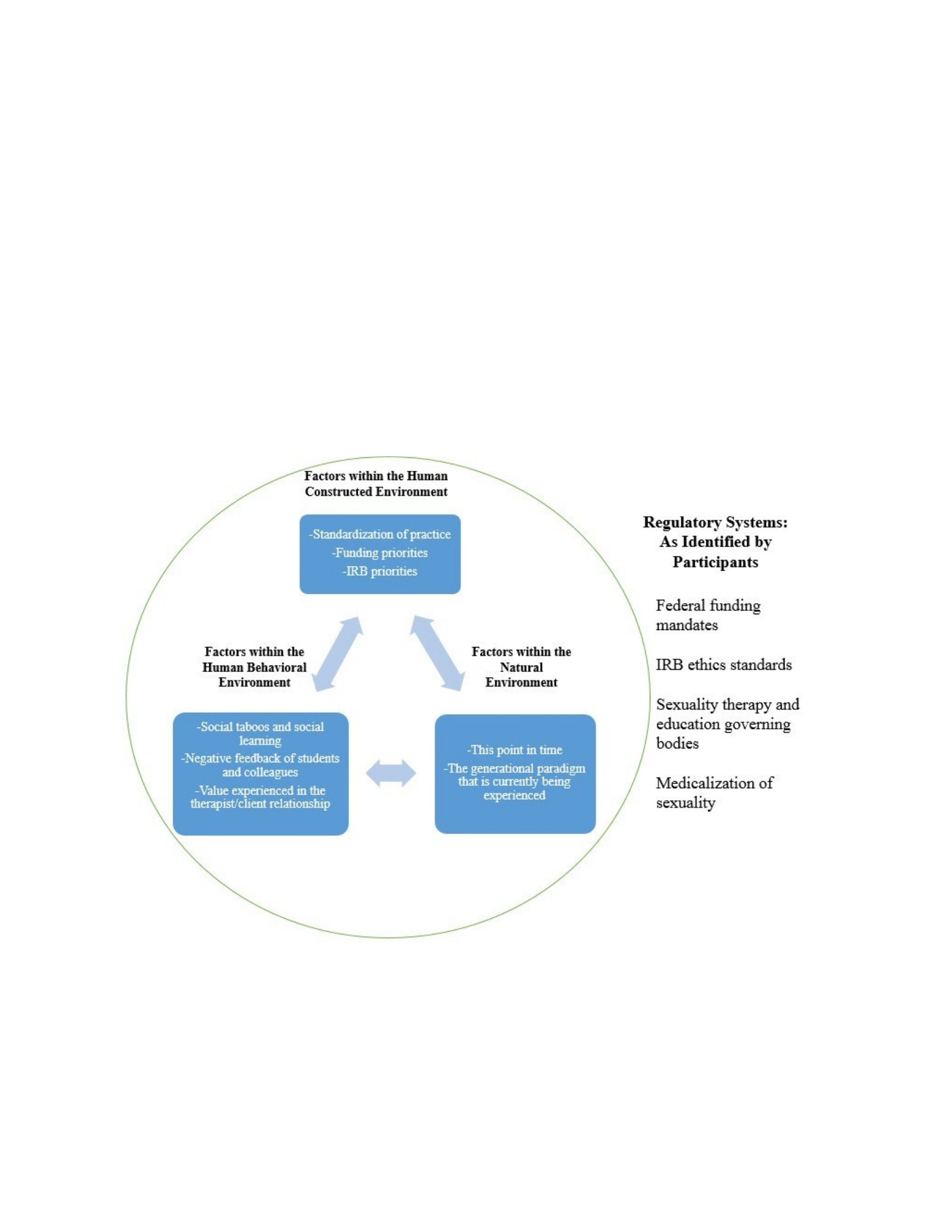
profession toward the future, as well as factors impacting professional practice differed among
each group.
The Role of an Ecological Systems Framework
The third purpose of this study was to identify whether an ecological systems framework
was meaningful in explaining the factors that influence professional practice in sexuality
education, therapy and research. Many of the themes identified by participants are encompassed
by the natural, human-behavioral, and human-constructed environments, as well as regulatory
systems, as identified in Figure 1 below.
Figure 1: Ecological Systems Framework Fit
As previously stated, an ecosystem framework can be beneficial in explaining the factors
that impact professional practice in human sexuality. Every ecosystem has three elements: the
human-environed unit (HEU), the environments (the natural, human-behavioral, and
83

humanconstructed environments), and interactions between the HEU and environment, and
between environments themselves.
Regarding the first purpose of this study, the experiences of the HEUs, or professionals
involved in sexuality education, therapy, and research were identified. The experiences of HEUs
within their environments were also evident. During the second phase of this study, the
similarities and differences among the three professions were identified. Each profession, as well
as the experiences of each professional represent elements of the natural, human-behavioral and
human-constructed environments. Elements of HEUs’ experiences and interactions will be
explained in the context of the natural environment, human-behavioral environment,
humanconstructed environment, regulatory systems, as well as various interactional elements.
The Natural Environment
In the natural environment, time is a constant factor. The particular point in time these
data were collected, and the current cultural paradigms, and generational cohorts in which
professionals belong, greatly affect the experiences of each participant. Different periods of time
may have yielded different findings.
•The overall Victorian attitude in this country has been a major obstacle to change taking
place.
•Trying to find time during my week to fit in clinical pursuits is challenging. Sometimes
it’s hard to shift between the role of clinician and researcher. Essentially, the needs of the
client or couple might spill into my research time. It’s tricky to separate the two and
remain protective of my clinical time.
•I guess I can be optimistic, and hope that there will be some incremental changes that will
take place over time, but I don’t think I’m going to see that anytime soon.
84

Interactions between the HEUs and elements of the natural environment are impactful.
The time period we are currently in has significant ramifications on the expectations and
experiences of professionals. One participant suggested that he “hasn’t seen a change in the
sexuality profession in thirty years.” While times have changed and some processes have been
made easier, challenges still exist. Many professionals identified how they “do not have the time
to pursue all personal interests in the field, but wish they did.” A professional’s ability to practice
in more than one field of sexuality is greatly regulated by the context of the natural environment.
Challenges have shifted throughout the history of human sexuality, yet the general North
American “Victorian attitude in this country has been a major obstacle to change taking place.”
The Human-Behavioral Environment
Within the human-behavioral environment, the thoughts and emotional experiences of
professionals (HEUs) were recognized. Sexuality educators identified that maintaining
multicultural “sensitivity during interactions with students is essential.” Educators’
confrontations and conflicts with students and colleagues (around differences of belief)
exemplified that unique behavioral and interactional components of work in the field of human
sexuality can be explained from the perspective of an ecosystem framework. Therapists’
appraisal of value toward clients, as well as researchers’ overt challenge of being undervalued by
colleagues, funding sources, and the academic community are all expressed and perceived
through behavioral interactions.
•I got to a point where I started getting tired of teaching sexuality because of the attitudes
of the students.
•When I came here, I really was not respected. First of all, the university instructors’
union here did not recognize my degree, and then I was unable to get licensed.
85

•At least one or more of the nurses did not like the research packet, as we were asking
about masturbation. So, they gave a copy of the survey to a very conservative legislator
from a suburban municipality of a major metropolitan center, and he took the
questionnaire and called a press conference on the capitol steps to read excerpts.
Behavioral interactions between HEUs and environments were regularly seen within the
data. Participants’ perceptions and interactions between HEU’s and their environments were
identifiable. One participant discussed how in their institution, “there are many relational issues
between researchers who study sexuality, and those in other fields of study within the same
department.” These relationships, in addition to human constructions, explained many
participant experiences, as they identified “the general taboo around studying sexuality in
different social contexts.” The intercommunications among professionals, as well as the
necessity of unifying and forming collaborative relationships, all happen at the behavioral level.
Additionally, many challenges experienced by participants came through behavioral interactions
with other HEUs and professional and public organizations. This could regularly be seen
through “political biases against a more liberal approach to sexuality and sexual variability,” as
often observed by sexuality professionals in many interpersonal contexts.
The Human-Constructed Environment
In the human-constructed environment, cultural facets of what is normative or taboo, as
identified by therapists, are a product of socialization. Taboos of sexuality and cultural variances
requiring sensitivity by sexuality educators fit well within the sociocultural element of the
human-constructed environment. Additionally, values, therapeutic training standards, training
bodies, and what is normative behavior for educators, therapists, and researchers are all elements
of human construction.
86

•It actually bugs me that there is no specific, systematic, robust training. When I see
clients that have been to other practitioners, who then come to me, it’s clear simple things
were missed.
•There’s an institutional level, a political level, and a sociocultural level at which things
can be challenging. At an institutional level, I think sexuality education, therapy, and
research are all really influenced by the general taboo around studying sexuality.
•If we address the stigma, there could be policy implications, guidelines, and laws to help
change the fabric of culture and to allow people to have more full and healthy sexual
lives.
•I think people are actually taking to heart that the definition of sexual health is more than
the absence of disease, and includes the rights to sexual information and pleasure.
The interactions of many sexuality educators, therapists, and researchers with their
environments were heavily impacted by regulatory systems. Many participants discussed how
they “have struggled to obtain adequate funding,” or “have had the legitimacy of their research
questioned by the IRB or the general public.” The majority of factors impacting HEUs were seen
within the human-constructed environment. Interactions between HEUs showed the significance
and challenges of finding meaning in one’s work, as well as remaining determined and
committed to the field. One participant identified how “the ideas and way we describe health
and sexuality are changing and becoming more holistic.” This is a reassuring sign, as some
social constructions around normality and sexuality may be growing in a positive direction.
Regardless, a small number of participants discussed how they believe that “some incremental
social changes will take place over time, but many North American beliefs and institutions may
87

not any time soon,” negatively impacting the practice of sexuality educators, therapists, and
researchers.
Regulatory systems. As a part of the human-constructed environment, significant
professional impacts were exemplified within the context of regulatory systems. Residual issues
with securing funding due to socially constructed ideals of taboo, plagued many researchers and
educators. Secondly, institutional review boards and ethics committees’ struggles with approving
sexuality research, often under the guise of professional and moral standards, inhibit many
researchers from maintaining consistent professional practice. At the credentialing level for
therapists, multiple bodies exist with little legislation governing sex therapy practices on a state
by state basis. Navigating this process is challenging for therapists, as many will practice in
different communities or states from where they received their training and supervision.
•Our IRB is a little too rigid on recruitment. Even if you are going to use an anonymous
survey that will use snowball sampling, or recruitment through email, they will still want
permissions for everything.
•It was very challenging to word the study’s intent and methodology so that everything
was conducted in a way that the IRB saw as appropriate.
•I think the largest challenge is funding. The climate is certainly changing in some
countries, but up until recently there have not been many funds available from United
States federal funding agencies ear-marked for sexual health research.
•I think that whatever economic condition the governments are under in North America
will have an impact on the ease in which sex researchers get funding, as well as what
kind of research can be done.
88

Factors impacting sexuality educators, therapists, and researchers from practicing in their
field happen in nearly all environments (e.g., NE, HBE, and HCE) within an ecological systems
framework. The ecological systems framework is helpful in explaining the regulatory factors
positively or negatively impacting the practice of each sexuality profession.
An ecological systems approach can capture the unique interactions among various
elements of an ecosystem. Many participants’ personal examples illustrated the holistic nature of
this model, but none better than one researcher (human-environed unit, HEU), who experienced
challenges when a study’s questionnaire was made public. When the researcher attempted to
gather data for a study on sexuality, “one or more nurses at the site where the data were to be
collected did not like that the research packet asked about masturbation (interaction of the HEU
and human-behavioral environment—psychological and social, as well as interaction between
the HEU and human-constructed environment--sociocultural). So, she gave a copy of the survey
to a very conservative legislator (interaction of HBE and HCU-regulatory system), who took the
questionnaire and called a press conference to read excerpts from the steps of the capitol.” The
nurse’s and legislator’s behaviors indicate interactions between elements within the
humanbehavioral environment and human-constructed environment—sociocutural and
regulatory systems. Subsequently, this “circulated through the local news media” (HCE) while
the participant was traveling to a meeting in New York. The time in which this event occurred
and the location of the (HEU) depict interactions of the HEU and natural environment (space and
time). During his absence, the participant’s “research assistant was calling trying to reach” him,
(interaction of HEU with HBE and HCE—sociophysical/phone) and “kept leaving messages
explaining how the news outlets were calling her looking for information about the study”
(interaction of HEU and HBE affected by NE of space and time). These anxious communications
89

from the research assistant, and the researcher’s inability to manage the situation that was
occurring while he was away further exemplify the simultaneous interactions between the HEU
and all three elements of the environment (NE, HCE, and HBE). Each element of the
participant’s experience while conducting his study fit within and can be described by the
interactions of the HEU with his multifaceted environment within an ecosystems framework.
Summary of the Findings
Through a grounded theory analytic procedure, two main themes, as well as many
subthemes, were produced regarding the factors that impact professional practice in the field of
human sexuality. A presence of meaning in one’s work, and having immense determination in
the face of adversity, were both important factors that affected professional outcomes. In each
field of practice, participants’ experiences were steeped in discovery. For instance, developing
meaning in one’s work and attaining diehard determination came in different ways for sexuality
educators (e.g., student epiphanies), therapists (e.g., overwhelming trust of clients), and
researchers (e.g., a sense of pioneering).
While sexuality education, therapy, and research all face unique challenges, there are
distinct similarities and differences that are consistent among professionals’ experience in the
field of sexuality. Educators, therapists, and researchers all identified the need for more holistic
views toward sexuality, coming from a change in socio-political ideology. Additionally, all three
professions offered similar advice for those wishing to enter the field of sexuality. Differences in
professions were seen through varying views toward the future of each field (e.g., educators
identify the need for external collaboration between professionals, therapists see the need for a
standardization of certification, and researchers believe an internal unification of professions is
necessary).
90

Finally, an ecological systems approach can be applied when explaining professional
experiences in the field of human sexuality, because many facets fit within the framework. In
turn, interactions between participants and their environments were identified within the natural,
human-behavioral, and human-constructed environments.
.
CHAPTER FIVE
DISCUSSION
The purpose of the current study was to examine the factors that facilitate and inhibit
professionals from entering and remaining in the professions of sexuality education, therapy, and
research. Three specific aims were identified: First, to determine the factors impacting
professional practice in sexuality education, therapy, and research. Second, to examine whether
there are similarities or differences in the experiences of sexuality educators, therapists and
91

researchers as professionals. Third, to examine whether an ecological systems framework could
facilitate explaining what impacts professional practice in human sexuality. Lastly, this chapter
provides relevant findings for discussion, and offers implications for research and professional
practice.
Summary of the Study
A qualitative research design was employed to examine the factors that impact
professional practice in the field of human sexuality, similarities and differences between
professions, and whether an ecological systems framework would be helpful in explaining
participant experiences. Twenty-seven experts in the professions of human sexuality education,
therapy, and research were consulted using purposive and snowball sampling. An interview
guide was modified from the pilot study to ask participants to provide their experiences regarding
their joys, challenges, what they would have done differently; areas where the field needs
growth; factors to be studied; and suggestions for the future of sexuality education, therapy, and
research. Interviews were audio recorded over telephone and Skype, and then transcribed prior
to analysis. A grounded theory (GT) technique was employed to code and analyze the data,
subsequently producing themes. Participant responses identified factors that impact practice in
the fields of sexuality education, therapy, and research.
Two main themes were observed: meaningful work and diehard determination. Many
sub-themes were also observed that were supportive of these factors in meaningful work,
examples included: student epiphanies, the overwhelming trust of clients, and the variance of the
phenomena studied. Diehard determination included sub-themes such as: confrontation and
conflict, insufficient training, and funding is an ever present challenge. Subthemes were
identified by each profession and exemplified the challenges each profession had encountered in
92

creating meaning in their work, as well as remaining determined to continue their practice.
Responses also allowed for the identification of whether similarities or differences in the
experience of sex educators, therapists, and researchers existed. A number of between-group
similarities were observed including holistic views, a change in sociopolitical ideology, and
recommendations for future professionals wishing to enter the field. Many differences among
the experiences of each profession were observed through professional’s perspectives on future
directions for sexuality educators (who saw external collaboration as a factor needing immediate
attention); therapists (who believed that the standardization of certification requirements is the
most important factor needing to be addressed); and researchers (who hope internal unification
between professions can be achieved).
The data were reviewed to identify whether an ecological systems framework would be
meaningful when explaining the realm of what impacts professional practice in human sexuality.
This framework was helpful in describing the experiences of respondents in the context of
natural environment (e.g., time); human-behavioral environment (e.g., the personal interactions
and difficulties in collaboration between sexuality professionals and those in other fields of
human science); and human-constructed environment inclusive of regulatory systems (e.g.,
restrictive funding priorities, IRB challenges, political agendas). Additionally, participant
responses identified the need for holistic theoretical models to work from. As such, this
framework provides the systemic nature required to encompass the nonlinearity of life and
human interaction.
Discussion of the Methodology
93

Sampling
The population sampled was easy to access and willing to participate. Utilizing an initial
purposive, then snowball, sampling technique to interview experts in the professions of sexuality
education, therapy, and research allowed for saturation among participant referrals. Many
respondents referred participants, enriching the final sample’s overall credibility. All participants
worked in one or more aspects of the field of human sexuality.
Because the composition of each sexuality profession is limited in numbers, professionals
were willing to contribute to the understanding of what facilitates and limits work in human
sexuality. Thus, the sample was appropriate for a study of this nature. Participants were
purposively selected from professional recommendations to facilitate the goal of a gender
heterogeneous sample. Contacting experts directly through email and telephone conversations,
and explaining the significance of their insights, seemed to be a particularly effective way to
facilitate participation.
Presently, many organizations (e.g., AASECT, IASR, SSSS, SSTAR) in North America
are geared toward the practice and study of human sexuality. It was hoped that many sexuality
professionals who are certified educators or therapists belong to the American Association of
Sexuality Educators, Counselors, and Therapists, and that numerous researchers belong to the
Society for the Scientific Study of Sexuality. Given this assumption, an adequately rich sample
would be found within these membership bodies. This, however, is difficult to quantify, as many
professionals belong to membership bodies not surveyed, or refrain from participating at an
organizational level (a limitation potentially affecting sample saturation). Approaching
membership coordinators at AASECT and SSSS was helpful in identifying past and present
leadership, as well as long-time expert members, but acquiring membership demographics was
94

challenging as neither organization possessed adequate computerized record keeping ten years
ago (for the background data required for this study).
In terms of sample composition, participants were representative of the professions of
sexuality education, therapy, and research. While the sample came from a secondary data set,
saturation was possible. However, without a sample as robust as what had been collected, this
would have been impossible. Narrative data were particularly useful in identifying factors that
impacted professional practice in human sexuality, by focusing on how individuals have
interpreted personal experience in their fields (Creswell, 2007).
Methodology
During the original data collection, participants were asked to provide personal accounts
of their experience in the professions of sexuality education, therapy, and research. As no prior
literature was available at the time of this study, qualitative methodology was the most
appropriate to gain insight into the research questions. A structured interview producing
mininarratives allowed for storytelling to be synthesized into categories for analysis.
A notable strength of this study was the implementation of a grounded theory (GT)
strategy for interview coding. Employing a qualitative coding system to each aspect of the
interview guide allowed for an accurate analysis of the data. The GT methodology followed a
systematic set of steps to produce appropriate themes, helping control for potential experimenter
subjectivity (Corbin & Strauss, 2008; Creswell, 2007). Additionally, the services of a research
assistant to blindly recode the data aided in thematic generation, as this addition helped achieve
triangulation.
Because qualitative data analysis is inherently subjective, and thus difficult to generalize
to larger populations, maintaining internal and external validity was paramount. Subsequently,
95

this study employed multiple strategies (e.g., a second coder, a self-report diary, creating rich
memos) to corroborate data and manage limitations. As subjectivity is the greatest limitation to
validity, biases were constantly controlled through triangulation (Charmaz, 2006). Regardless,
subjectivity is an ever present limitation of GT analysis for coding narrative data. As the author
is also a member of AASECT and SSSS, and is currently a sexuality educator, therapist, and
researcher, his beliefs about the field of sexuality (during participant interviews) could have
skewed the interpretation of the narratives. Because the interview guide was structured to ensure
internal consistency, the bias of the author toward the field of sexuality and the professionals who
participated (as potential future colleagues) may be represented in a different way than would
have been by a researcher not steeped in the field of sexuality. Consequently, if this study was
replicated, it would be beneficial to modify the interview guide to include additional openended
questions to gain a broader range of experiences of the participants. Additionally, the theoretical
application to the research questions was limited, because the interview guide was created and
the data were collected prior to the secondary analysis of these data. Thus, the interview
questions were not specifically focused to include this theoretical approach. Allowing more time
for interviews to be completed (often limited by participants’ schedules) could have provided
even richer data by being able to ask additional probing questions.
Discussion of the Findings
While professional practice in all aspects of human development can be challenging, the
provocations experienced in human sexuality education, therapy, and research may be intensified
by many factors (as outlined in Chapter 4). Regardless of the difficulties being exacerbated in
the field of sexuality, professionals not only choose to enter and remain in their career, but also
96

find great joy in their practice. Human sexuality seems to have unique meaning to those who
practice it.
The first purpose of the study suggested two main themes (supported by subthemes) that
impact professional practice in sexuality education, therapy, and research: experiencing
meaningful work, and having a disposition of diehard determination. These findings are
consistent with the premises and components of an ecological systems framework, which
highlights the reciprocal interactions between human-environed units, natural, humanbehavioral,
and human-constructed environments (Darling & Cassidy, 2014; Darling & Turkki, 2009). Thus,
it is unsurprising that sexuality educators, therapists, and researchers would report in their
qualitative responses, a wide range of experiences affecting their professional practice.
One participant’s response encompassed the need for non-linear and holistic theoretical
models saying: “Here is the concern that I have, and it’s a theoretical paradigmatic concern. I’m
being trained and learning a lot about complexity science, dynamic systems analysis, and
network analysis, but I am worried that we are too linear in our paradigms in most of the
research.” The ecosystem framework is systemic in its nature, and encompasses all natural
elements, behavioral interactions, and human-constructions impacting living organisms. This is
particularly useful for sexuality educators, therapists, and researchers as it identifies each factor
impacting professional practice and where interactions between professionals and environments
take place. For sexuality educators and therapists, many desire or practice from theoretical, and
often evidence based models, increasing the credibility of the information and interventions
delivered. Additionally, researchers often underscore studies in theory to increase the robustness
of their methodology. Factors impacting human development fall well within the parameters of
97

the model, accounting for how and when particular phenomena exist, as well as their interaction
with living systems.
Uniquely, time (a component of an ecological systems framework) is an important
element of each factor impacting professional practice in human sexuality. Changes across time,
as well as current cultural climates, influence the circumstances that interfere or facilitate a
career in human sexuality. This is important to note, as themes that have been identified in
Chapter 4 may not be relevant in other cultures, or at other points in time. For instance, 200
years ago the formal study of sexuality did not exist and was entirely taboo, while 50 years from
now, the profession of sexuality may be commonplace, with few negative factors impacting
practice.
Given that many struggles have been previously identified in delivering and attaining
resources for sexuality education (Kendal, 2008b), the shift from behavioral sexuality treatments
to medical interventions (Tiefer, 1996; Tiefer, 2008), and research funding difficulties (Epstein,
2006), it was expected that professionals would report many unique factors directly impacting
the practice of human sexuality. This may be related to the reciprocal interaction of elements
present in the natural, human-behavioral, and human-constructed environments, as factors that
impact professional practice may be exacerbated by their presence and relationship with each
environment (e.g., certain funding struggles may be linked with beliefs and interpersonal
interactions supporting the myth that sexuality research is less worthy than other mediums of
study).
Other theoretical modalities may account for individuals’ perceptions of what impacts
their professional practice positively or negatively. For instance, social cognitive theory may
postulate that factors from the natural, human-behavioral, and human-constructed environments
98

impact individuals’ beliefs about sexuality as a profession through social learning, throughout
their professional development (Bandura, 1985). An example of this could be a potential
professional (interested in sexuality education) seeing a current educator presenting materials in a
way that is well received, thus the potential professional chooses to model his or her behavior
after the individual who exhibits a preferred outcome.
Future studies could address the immediate coping and crisis prevention strategies that
enable professionals to maintain a practice in their field(s). Many of the factors identified from
participant responses may relate to individual perceptions of each factor as a volitional or
nonvolitional stressor, as postulated by Family Stress Theory (Boss, 2002). Sub-themes
supporting meaningful work and diehard determination may represent situations that are within
professionals’ control (volitional), or outside of their control (non-volitional).
Seeing great meaning in one’s work is necessary in possessing a successful career in
human sexuality. This is consistent with prior research showing that developing meaning for
one’s work contributes to the professional’s ability to deal with career stressors and maintaining
balance (Clausen & Borg, 2011). While these findings bear similarities with other fields, they
exemplify the strength needed to overcome struggles that are more intensified than in other
professions.
Considering the unique and diverse level of stressors and challenges endured by sexuality
professionals, it is surprising they are able to retain a high level of resilience. Although
individuals who experience meaning in their work typically see increased feelings of wellbeing
with reduced chances of illness and long-term health problems, the findings of the current study
suggest that sexuality professionals still experience a high level of distress (Clausen & Borg,
2011). The question of how and whether participants saw an increase in well-being and health,
99

despite the intense stressors they have experienced, has yet to be answered. While professionals
enjoyed their practice, it seemed they constantly struggled to maintain their career. The current
study raised new questions for the field of human sexuality by highlighting the need to discover
the personal characteristics that would make a professional desire entering a career that has
challenges exacerbated by many factors outside the locus of a professional’s control.
Participants and members of the sexuality field seem to be unique. For most individuals,
creating personal significance in one’s work has been shown to strongly relate to positive
emotional states (Brown, 1996; Parzefall & Hakanen, 2010); however, for sexuality educators,
therapists, and researchers, this seems to be more of a reciprocal process. Participants viewed
sexuality as a phenomena that inherently produced positive emotional states, helping them create
significance and meaning in their work. In turn, this is also consistent with participant responses,
suggesting that possessing great meaning in sexuality education, therapy, or research
significantly impacts practitioners’ perceptions of their career and professional role.
Since data from participants included sub-themes that underpin making meaning in their
work, prior literature was used to demonstrate that having these personal nuances are a
fundamental career resource (Hobfoll, 2002). This identified the level in which a professional
who finds meaning in his or her work is willing to endure and overcome. It appears that in the
field of sexuality, professionals are like prize fighters sitting in the ring with Muhammad Ali,
knowing that what they face is greater than the resources they have in their corner. Despite this,
participants continued to fight.
Future studies could attempt to examine the qualities it takes to be a fighter, or one that
knows the odds are stacked against him or her, yet continues to pursue and endure hardship.
Exploring the personal qualities that allow professionals to succeed in intensely challenging
100

situations could be further examined through how individuals make meaning. These specific and
personal ways (e.g., through student epiphanies, client trust, or pioneering) can relate to positive
work-related outcomes (e.g., Arnold et al., 2007; Milliman, Czaplewski, & Ferguson, 2003).
Finding personal significance in one’s work can be a tremendous resource, greatly impacting
professional practice.
Along with building meaning in their work, professionals also require determination and
commitment to face great obstacles and remain in practice. Previous research suggests that when
professionals are firmly committed to their practice, they are more likely to continue working
toward their personal or career goals (e.g., Crant, 2003; Den Hartog & Belschak, 2007). In many
professions, individuals endure some struggles and challenges, but may not recognize their field
as a difficult practice. Sexuality professionals however, see the issues highlighted in this study
often at the onset of their career. As these professionals deal with challenges throughout their
practice, the idea that having a strong affective commitment to one’s work closely relates to the
level of initiative taken to maintain one’s career (e.g., Meyer, Stanley, Herscovitch, &
Topolnytsky, 2007; Vandenberghe, Bentein, & Stinglhamber, 2007). Sexuality practitioners are,
in a way, like pit-bulls. They look out onto the sexuality landscape, see or are informed of the
challenges, and bite into their preferred role, not letting go if possible. This type of
determination is truly extraordinary. This study highlighted the difference between sexuality
professionals and many individuals who work in other fields of practice. Sexuality educators,
therapists, and researchers possess internal motivations (e.g., reasons individuals find meaning in
their work) that show how they form the basis for high levels of commitment toward their
profession (e.g., Meyer et al., 2007). A strong sense of personal identity, in addition to a firm
101

career focus, may significantly impact commitment or determination (Johnson, Chang, & Yang,
2010).
Prior studies have concluded that factors impacting the development of commitment (or
determination) are associated with an individual’s level of control at their workplace, the
complexity or variance of their work (observed in therapist and researcher responses), support
and collaboration with colleagues (as experienced by all professions), and autonomy (e.g., Den
Hartog & Belschak, 2007; Fay & Frese, 2001; Morrison & Phelps, 1999). These prior findings
seem contradictory, as sexuality professionals rarely have adequate funding, social or collegial
support, or complete autonomy in their practice, yet remain intensely determined. This is not
completely surprising, as the ecological systems framework focused on the interaction and
impacts of interactions between natural, human-behavioral, and human-constructed
environments, highlighting the unique factors that fill this role (instead of what had been
suggested in other studies) for sexuality educators, therapists and researchers.
Practicing in the field of human sexuality was explained by many participants as
something deeply personal. Prior studies have elaborated this finding by suggesting the
emotional attachment of practitioners strongly influences their ability to remain determined and
committed to their work (e.g., Cacioppo, Gardner, & Berntson, 1999). Possibly, through social
learning (or through family of origin experiences), educators, therapists, and researchers have
been taught that sexuality is one of the most fundamentally important aspects of human
development, and despite the overt challenges, they fight to bring light to this piece of humanity
for everyone. Findings indicated the challenges present at this point in time, and regardless of
the context, sexuality educators, therapists, and researchers would endure whatever struggles
came their way, considering the field represents a deeply important aspect of human
102

development. As the current study also exemplified, the meaning individuals see in their work is
correlated to their commitment given toward job priorities (e.g., Brown & Leigh, 1996). As
such, these main themes tie closely together.
The findings addressed the similarities and differences between professions. All three
groups discussed how if a shift in social ideology could be made, the field could take on a more
comprehensive and holistic standpoint moving forward. This is a difficult process, as research
has indicated challenges in garnering funding for education, therapy, and research (e.g., Epstein,
2006). It is unsurprising that each profession would desire collaboration among one another,
taking a more holistic stance, given that professional commitment to one’s field is impacted by
collegial collaboration (e.g., Den Hartog & Belschak, 2007). Struggles to attain collaboration
between professions may be a factor of competition over funding, ideologies, recognition, or
training standards. It would be useful to explore the barriers that have prevented professional
collaboration between sexuality educators, therapists, and researchers, to best determine how to
facilitate future endeavors.
Whether the same type of meanings or levels of commitment are present in sexuality
educators vs. therapists vs. researchers is unclear. Therefore, it would be useful to understand
why professionals choose education, therapy, research, or a combination of professions versus
another (e.g., why do some professionals choose to be educators instead of therapists). It would
be interesting to explore whether certain sexuality professions require more personal gumption
than others. This study does highlight the unique experiences of an outlier or taboo field,
essentially identifying future directions for study.
This study makes a significant contribution to the body of literature, as it identifies factors
that impact professional practice. Sexuality professionals appear to be individuals who see the
103

world systemically and holistically, and while in a dark place (at times) can see down to the end
of the tunnel where the light shines. The enduring questions ultimately raised are: How do we
cultivate these personal qualities in future professionals? Or, what factors inspire interest in
human sexuality prior to pursuing professional endeavors in sexuality education, therapy, or
research? This study emphasized some of the factors that make sexuality purposeful or
challenging to professionals, and impact their practices and personal lives.
Implications for Future Research
Prior studies have not examined the factors that impact professional practice in sexuality
education, therapy, or research. This study’s sample included experts from the field of human
sexuality currently in one or more forms of practice. With the ever changing nature of political
ideals, funding sources, and availability; insurance coverage; and socially-constructed paradigms
of sexuality, new and changing elements will always uniquely impact the practice of sexuality
educators, therapists, and researchers. Thus, regular follow-up studies should be conducted by
the leaders and practitioners of sexuality education, therapy, and research organizations.
Because the social development of each individual practitioner is dependent on the context in
which he or she is raised and the training received, studying successful and unsuccessful
practitioners’ beliefs about sexuality, and what they know to be normative, could be beneficial in
further understanding this phenomenon. Potentially studying family of origin experiences and
current levels of differentiation (the ability to separate cognition from emotional response)
around human sexuality could explain successes in the field from a quantitative standpoint.
Given the unique challenges faced by sexuality professionals, future research could analyze
functional levels of anxiety, happiness, and/or stress that influence their ability to practice.
104

Due to the nature of participant responses and suggestions for future directions in the
field of human sexuality, many observations can be made. Whether respondents’ were members
of ethnic or sexual minority groups was not studied, but could potentially identify within-group
differences or similarities in how specific types of practitioners vary. Ultimately, future studies
could identify a more diverse range of experts in the fields of sexuality education, therapy, and
research those who have remained or departed from the field, and identify the factors that have
impacted their career decisions.
From this point, a potential future study should identify sexuality educators, therapists,
and researchers who exited the field, and identify what has prevented these professionals from
being able to maintain a career in human sexuality. This could be done through a purposive and
snowball sampling technique by gathering a list of former members of professional
organizations. The interview guide should include questions about professionals’ experiences
that have resulted in their leaving the field. Also, including questionnaire items that ask
participants to identify factors that challenge entrance into the field could be particularly useful
for distinguishing factors that inhibit entry and facilitate exit from working in human sexuality.
A pattern analysis would be appropriate for coding and interpreting the data.
It would benefit the field to study the experiences of new professionals, and the factors
that encourage and inspire their pursuits. Garnering the insights of early sexuality educators,
therapists, and researchers could provide novel understandings, as time, and the factors that
impact professional practice, may have had little negative impact early in individuals’ careers.
New professionals may possess a luster or drive not seen in individuals who have spent a career
dealing with the struggles inherent in practicing human sexuality. Following them over several
years could also be meaningful.
105

Implications for Professional Practice
The current study shows several important implications for educational, therapeutic, and
research practice. The researcher interviewed participants regarding their professional
experiences, as well as suggestions for future practice, this study offered many themes suggesting
future directions for sexuality education, therapy, and research.
The future of each sexuality profession has many potential directions, but some specific
suggestions would help unify the field. It would be initially beneficial to hold a joint summit
between the executive boards of each organization that represent all three professions, as well as
to reach out to major human services organizations. This could provide a forum to discuss the
unique factors impacting sexuality professionals. Students have a difficult time understanding
what direction and what organization, license, and training are required to pursue a career in
sexuality. Thus, if credentialing bodies could unify, a general standard of practice could be
formed. Unfortunately there are no clear regulatory means to ease the transition from general
mental health education, therapy, or research into a sexuality-based paradigm. The development
and publication of a basic set of regulations and credentials for sexuality professionals could
clarify the difficulties and semantics of accessing the field itself. This could be structured in a
similar fashion to the American Association for Marriage and Family Therapy or the American
Psychological Association. As these organizations oversee the credentialing of their
memberships, a meta-organization for sexuality could provide one standard for all educator and
therapy certification. Potentially reaching out to leadership in other fields and bodies through the
hope of future collaboration, may expose many non-sexuality practicing educators, therapists,
and researchers to the value of specialized training in human sexuality. The scope of this project
highlights the need for additional education and program funding for training individuals and
106

professionals in human sexuality. Relevant post-graduate training programs in sexuality should
be established to comprehensively facilitate practitioner education, and provide a standard of
practice to legitimize the field.
Therapists must always be aware that individuals’ perceptions of reality develop in the
context in which they are raised. As such, many social stigmas limit individuals’ educations and
understandings about human sexuality. Potential clients may be timid and overwhelmed by the
content being shared by the therapist during treatment. Whereas some clients may be motivated
and voluntarily seek treatment, others are mandated by legal bodies or brought unwillingly by
their partner(s). Therapists should be additionally cautious as many clients come from ethnic, as
well as, sexual minority backgrounds differing from that of the therapist. These same
recommendations are true for educators as well. As many sexuality educators function and teach
in public settings, it is difficult to gauge the audience at any time.
As to not appear as a “gutter science,” professionals should qualify their teachings or
practice in empirical science. Regardless of past struggles to secure funding for sexuality
research, many treatments and programs are evidence based, and form a strong foundation for
sexuality education programming, as well as sexuality therapy intervention. Because a strong
scientific basis shows merit, this may allow other professionals, students, or the general
population the opportunity to ease themselves into more complex facets of the education they are
gaining, therapy they are practicing, or research that requires funding or approval outside the
realm of sexuality.
Due to social taboos negatively impacting individuals’ perceptions of sexuality (Epstein,
2006; Kendall, 2008b) and its practice, sexuality professionals should be especially overt about
the normalization of both positive and negative reactions to novel and anxiety provoking content
107

observed while engaging in sexuality education, therapy, and research. This process is important,
as it allows sexuality practitioners to gradually introduce content to individuals who may not be
initially comfortable, or may have particular beliefs that contradict their work. Far more research
is needed to determine the impact of professional/non-professional interactions and
dissemination of sexuality content. It would be beneficial to identify techniques and approaches
that would best allow for an educator, therapist, and researcher to most efficaciously deliver their
content with a minimum level of negative social or interpersonal impact.
Conclusion
This study exerts practical value and offers insight into the rewards and struggles
experienced by sexuality professionals. It examines barriers to professional practice, as well as
potential areas of growth. Leaders of organizations may develop greater insights into what
impacts their members, as well as strategies for promoting growth and retention of perspective
and current members. The findings of this study contained many contributions to the field of
human sexuality (e.g., such as identifying factors that impacted professional practice: meaningful
work and diehard determination, and suggesting where changes could be made to promote a
more unified field: external collaboration, internal unification, and credentialing).
With regard to future practice, the importance of understanding what impacts sexuality
professionals is paramount in filling the clinical void currently experienced. The field needs
more members for a significant presence and impact on positive sexual health. Support should
be given to prospective members of each sexuality profession, as members require making
unique meaning of their work to maintain a successful career in the field. Additionally, if support
(e.g., financial, training, regulation, education) is not given to future or current members of
sexuality education, therapy, or research, professionals may lose determination and leave the
108

field. Overall, the results of this study indicate that despite the field of human sexuality being
riddled with unique challenges for professionals in a career in sexuality education, therapy, or
research, there are distinct qualities that allow for continued inspiration, rejuvenation, and work
in their professions.
109

