


Introduction Narrative representations of place
The state is invisible: it must be personified before it can be seen, symbolized before it
can be loved, imagined before it can be perceived—Michael Walzer (see Denison,
2009, 1170).
Narrative representations of place are a precondition of geographic
knowledge. The above quotation encapsulates a complex process by which we
ascribe meaning onto socially and politically bound space. Space only becomes
meaningful when we become aware of its presence. The process of transforming
empty space into a meaningful construct necessitates first visualizing in the mind’s
eye what, or more importantly who, occupies that space. The cultural landscape, or
social meaning, of space is rendered intelligible only when we attach to it some of
the available representations while disregarding others (Davis, 2005). When
stabilized over time, narrative representations of place have the potential to become
deeply imbedded knowledge that have enormous implications for how we
understand and interact with the world.
This thesis examines how Xinjiang Uyghur Autonomous Region, located in
northwest China, is represented in tourism and geographic education literature. The
research demonstrates the limited and distorted place narratives of Xinjiang that are
promoted by the government-backed tourist enterprise in China for consumption by
English language speakers; as well as, the inadequate and uncritical representations
of the region currently available to students in the United States. Qualitative content
analysis methodology is employed to investigate the narrative representations of
Xinjiang contained within tourist brochures, geography textbooks, and regionally
appropriate curricular guides as well as to gathering data from teacher members of
the Montana Geographic Alliance. Informed by the research results, I have created a
body of geographic lesson plans pertaining to Xinjiang. The purpose of this thesis is
to move toward a more nuanced understanding of Xinjiang as a dynamic region of
global significance, challenge prevailing stereotypes of the region, and strengthen
geography literacy, particularly among school aged students.

For students to become responsible citizens, capable of making informed
decisions for personal and public good, they must be aware of the dynamic trends
that have, and continue to, shape our interdependent world. Xinjiang, as a focal
point of academic inquiry, offers a point of introduction to influential historic trends,
ideologies, and events that have shaped our world. Importantly, knowledge of
Xinjiang’s incredible diversity and position on the periphery of current
representations of China will help students contextualize China as a dynamic
nationstate that faces challenges related to its size, heterogeneous population, and
political history.
Contributions to Geography and Research Questions:
This thesis makes three substantive contributions to the body of knowledge
within the discipline of geography. These contributions are divided as follows: First,
through qualitative content analysis of Xinjiang tourism brochures I explore the
relationship between narrative representations of place and the exercise of state
power as they have unraveled in Xinjiang. Continuing, I assess the extent to which
Xinjiang is covered in geographic education through an extensive survey and
qualitative content analysis of geography textbooks, and curriculum guides. Finally,
thus informed, I create a body of lesson plans and teaching resources pertaining to
Xinjiang that are available to educators via the Xinjiang Geographic Education
Curriculum website.
My research has been driven by a series of questions that have guided my
inquiry throughout the different stages of this thesis. These are divided into four
parts: initial framing questions; questions pertaining to tourism texts, and
geographic education texts; and finally questions that guided the creation of
geographic lesson plans.

Part 1: Initial questions that prompted this thesis included: What is currently
known about Xinjiang? And, why is a geographic understanding of Xinjiang
worth pursuing?
Part 2: During the analysis of Xinjiang tourist literature I tried to answer:
How are textual and graphic representations of Xinjiang used to create
discursive meanings? What are the implications of a tourism driven
narrative of place presented in the brochures for geographic understanding
about Xinjiang and its place within China.
Part 3: The analysis of geography textbooks and curricular resources was
driven by the questions: What materials in geography and allied sciences are
currently available to American teachers about Xinjiang? And, what is taught
about Xinjiang in Montana?
Part 4: Finally, the lesson plans I created addressed the questions: What is
important to know about Xinjiang? And, how can knowledge about Xinjiang
help students challenge long-standing misconceptions about China and
contextualize broader social, cultural, and political issues unfolding in
Eurasia?
Arrangement of Thesis
This section provides a brief synopsis of each chapter’s content. Chapter II
presents a review of the literature in the fields of cultural geography and geography
education. The chapter outlines the theoretical position of this thesis within the
geographic discussion of space and place. The discussion theoretically links the core

concepts that frame this analysis: concepts of space, place, representation,
discourse, power, imagined geographies, identity, and nationalism. The chapter
continues by discussing the role of geography education in the reproduction of
narratives of place.
Chapter III is dedicated to the methodological approach used during
research. Qualitative content analysis was used to investigate the place narratives of
Xinjiang embedded in tourism brochures and geographic educational materials.
The chapter introduces the data sources and lays out the analytical procedure.
Chapter IV is devoted to geographic and historic background on Xinjiang that
is needed to fully appreciate the discussion of research results. Xinjiang’s physical
and human geography are covered first, followed by discussions of Uyghur history,
Chinese nationalism, the Chinese ethnic identity discourse, production of ethnic
space in China, and issues at the heart of persisting ethnic tensions in the region.
Chapter V offers a discussion of initial research findings gathered from a
survey of scholarly databases. The results of extensive database searches for
cultural geography literature show that very little research on Xinjiang has been
published in the academic field.
Chapter VI is dedicated to exploring the construction and contested nature of
space in Xinjiang through a qualitative content analysis of tourism literature. The
chapter reviews the ethnic tourism economy in China and tourism in Xinjiang before
launching into the qualitative discourse analysis of a series of Xinjiang tourism
brochures published by a Chinese government tourism authority. The research
illustrates the extent to which representations of place are controlled and
manipulated by the Chinese Communist Party apparatus to reinforce real and
perceived boundaries at the core of the Chinese national narrative.
Chapter VII surveys currently available textbooks, curriculum guides,
teaching materials, and lesson plans pertaining to Xinjiang in order to identify the
extent to which Xinjiang is covered in geographic education. The results of this

inquiry show that almost no content is dedicated to Xinjiang in secondary school
geography textbooks, very little in the way of curriculum guides or lesson plans, and
little recognition of the region among teachers. While increased content on Xinjiang
in college level geography textbooks is promising, the quality of coverage at all levels
is questionable. Finally, I compare representations of Xinjiang and Tibet in
geographic education materials and media, and attempt to answer why Tibet is
comparatively well covered while Xinjiang remains a terra incognita in the popular
mind.
Informed by the results of the content analysis, Chapter VIII contains lesson
plans I developed that are devoted to Xinjiang. At least two lesson plans were
created for each grade level (K-4, 5-8, 9-12). All lesson plans have been created in
line with the content standards and benchmarks set forth in the Geography For Life:
National Geography Standards (1994).
Chapter II
Theoretical and Conceptual Framework
Introduction
This chapter reviews the bodies of cultural and education geography
literature in order to situate this thesis within the broad field of geographic
knowledge. The opening section is dedicated to the considerable body of literature
on space and place in cultural geography. The discussion links the concepts of space,
place, representation, discourse, power, imagined geographies, identity, and
nationalism.
The chapter continues with a review of literature on geographic education.
The links between the production of knowledge, exercise of power, and education
are discussed with regard to the reproduction of homogenized place knowledge in
geography textbooks. The section cites how and why the West’s geographic
knowledge of China has been framed as it has. The chapter concludes with a look at
current geographic literacy about China among young Americans.

Cultural Geography:
Contributions to the Study of Space and Place of Xinjiang
The geographic literature on space and place provides the foundation for
cultural geography as it informs my research. Informed by Marxist critiques of
capitalist spaces, feminist concepts of performance and positionality, and
postmodern understandings of the subjective nature of knowledge, cultural
geographers have problematized the epistemology of absolute space as an inert
container. Neil Smith built upon the work of David Harvey to articulate a
conventionalization of space, which holds that space, far from being fixed and
passive, is dynamic and in a constant state of being created and recreated through
the actions and the meanings ascribed onto it by society (Hubbard 2009). Meaning
of space comes about as a person constructs a conceptualization of a place by
noticing some of the attributes of a place and attaching to it some of the meanings
available while disregarding other potential meanings (Davis, 2005).
The meaning of space depends on its symbolic and social functions. Key to
this understanding of space is the concept of representation, the process of
rendering something intelligible or identifiable. According to Saussure (1966; see
Johnston 2000), representations do not describe a pre-existing reality, but constitute
“what counts and is valued as reality.” As Martin Heidegger (1962; see Johnston
2000) puts it, “the world is never that which stands before us and can be seen,”
meaning our perception of the world is always mediated through apriori
representations that inform our worldview. Accordingly, multiple competing
interpretations of place are always possible.
However, when a specific series of representations and practices are
stabilized over time they are understood to attain a degree of fixedness known as
discourse (Butler 1993). Discursive knowledge has particular influence over how
identities are constituted, social relations established, and political and ethical

outcomes made possible. Discourses “shape the contours of the taken for granted
world,” naturalizing and universalizing a particular subject formation and view of
the world (Johnston 2000).
Concentrating on the image of the Middle East, as created in European
literature and art; Edward Said demonstrated the discursive link between the
production of knowledge and power to exert control over space. Power at its most
basic can be understood to refer to the ability of one agent to affect the actions or
attitudes of another. Here we can also understand power to mean a set of strategies,
discourses, and technologies of government (John Allen cited in Johnston 2000). In
his seminal work Orientalism, Said (1978) revealed the images and knowledge of the
Orient produced by the West over many generations to be highly politicized
narratives of place, created far from the physical territory they described. As Said
employed it, the term ‘Orientalism’ refers to the totalizing essentialism,
ethnocentrism and racism imbedded in the West’s ‘knowledge’ of the Orient. Said
asserted that political and economic dominance of West over East relies on the
constant maintenance and reproduction of discursive narrative knowledge, or
‘imagined geographies’ of the East (Hubbard 2009). In this sense, control of the
production of space, real or imagined, is instrumental in the exercise of authority.
According to Benedict Anderson (1983), ‘imagined geographies’ are made
real through the controlled representation of spaces crafted to reinforce political
narratives of identity, nationalism, power, and authority. Histories of founding
fathers, documents, and formative events are woven into nationalistic narratives
that mobilize strong feelings of community connectedness between individuals in a
way that consolidates their identification with a common historical and national
inheritance.
According to Eric Hobsbawm (1983), crucial to the success of these imagined
geographies are the invention of equally powerful symbolism in the form of flags,
anthems, and emblems that demarcate national space that draws together feelings
of belonging, solidarity, and identification between citizens. “From this perspective,

national identity is decisively not a primordial gift, nor even a coincidence of
geographic location, but the willed incorporation into an ‘imagined community”
(Johnston 2000, 364). Thus conceived state power and space are co-constructed
through ongoing narrative performance of ‘imagined geographies.’
Geographic Education
The links between the production of knowledge, exercise of power, and
education have long been recognized and much has been written about the nexus
between ideology, the state, nation building, and education (Zajde 2009, Vanhulle
2009, Merrett 1999, Myers 2001). According to Merrett (1999, 598), “Public schools
are one of the most important institutions of socialization and social reproduction in
the United States.” It follows then that school textbooks, as the primary curricular
resource for most social science teachers in America (Bednarz 2004), play a
significant role in the transmission of national values through promoting patriotism,
and normative political socialization (Zajde 2009). The majority of literature on the
politicization of social science textbooks focus on undemocratic and authoritarian
regimes, with Russia and China frequently mentioned in the company of other
autocratic states.
Nationalistic points of view have long influenced how regional social studies
materials have been crafted and narratives of place deployed. Indeed historic and
spatial narrative is a convenient format for creation knowledge and understanding
of an event or phenomena (Vanhulle 2009). Given the audience, the epistemological
character of most textbooks is drastically different than those of journals of
academic readership. The author may not be compelled to justify the knowledge
presented through citation and footnotes. The impact instead is the presentation of
knowledge contained in the text as indisputable fact and the author as an omniscient
source of knowledge (ibid 2009). The facts only take on meaning from their place in
the narrative, as the narrative ending provides meaning for all proceeding events.
“The narrative does not portray an event, it is not a story supported by evidence, but

a statement of the evidence itself” (ibid 2009, 268). Therefore, the nature of
textbooks lends them to the presentation of politicized narratives of place and
history, whether intentional or not.
The uncritical reputation of these narratives may have the effect of creating
‘homogenized knowledge’ (Mirsky 1973) or “discipline defined mythologies that
become highly simplified narratives which ascribe fixed and coherent meaning to
selected events, people and places that help to constitute or bolster particular
versions of self, society, and the world” (Bell 2009, 5). The intrenchedness of
narratives of place in textbooks is thoroughly exposed in Garth Andrew Myers’s
2001 analysis of representations of Africa in introductory human geography
textbooks.
Myers (2001, 522) asserts that the uncritical repetition and reproduction of
particular images, figures of speech, and stereotypes in media shape an accepted
understanding of Africa as a “confusing” and “distant Other” where “events do not
follow any pattern recognizable to western reason.” Myers demonstrates through
content analysis that these understandings of Africa are reproduced via tropes—
repeated figures of speech and representations—imbedded in the texts of current
human geography textbooks.
Myers (2001) notes that textbook authors place surprisingly little emphasis
on the current research findings by geographers that may refute or contest the
prevailing negative, ahistorical, and geographic simplifications that characterize our
understanding of Africa. He goes on to suggest that perhaps these textbooks are
following conventions that reflect the interests of the market.
While it is recognized that geographic literacy is imperative to preparing
students to navigate an increasingly global future, supply of appropriate teaching
materials has not kept pace with the heightened demand for geographic
information, techniques, and perspectives. As Bednarz (2003, 462) states, “The
most salient aspect of this demand is in education reform, especially K-12 where
geographic education is indeed expanding rapidly.” This is certainly the case when it

comes to curriculum materials pertaining to China, which generally impart
homogenous, Han-centric, understandings of China.
There currently exists no research on Xinjiang’s representation in geography
textbooks. However there is a body of literature that examines how China has been
represented in western academic and textbook literature. Traditional narratives of
China have stressed national politics, diplomacy, and the lives and thoughts of
significant individuals (Wasserstrom 1992,). According to Mirsky (1973), certain
characteristics of Chinese society and history have become “homogenized
knowledge” in history textbooks; these include foot binding, opium, and the
barbarian threat. He goes on to suggest knowledge of China is framed as
onedimensional, ahistorical and outside of the normal processes of change through
the citing oft repeated ‘facts’. Textbooks report that “The Chinese have always been
agricultural people” and “Chinese culture arose in the Yellow River Valley” (Mirsky
1973, 91). The term ‘Chinese’ is used uncritically to imply a historical, geographical,
and cultural unity that is not supported by the wealth of academic literature
concerning China’s diversity and heterogeneous development.
Wasserstrom (1992) postulated several reasons for the persistence of
unproblematized historical narratives about China in the literature. First, he makes
the astute, but obvious, observation that the difficulty and unfamiliarity of western
researchers with Asian languages has limited access to information and archives.
Second, he acknowledges the politicization of Chinese studies, with competing
imperative ideologies of the Nationalists and Communist camps since mid-twentieth
century. And finally, he refers to our understanding of Chinese ‘otherness’ as shaped
by political factors particular to the western world, such as the experience of
McCarthyism and the Vietnam War.
Further more, current trends indicate an alarming deficit in geographic
literacy among young Americans. A report published by Roper Public Affairs (2006,
6), on behalf of the National Geographic Society, damningly states, “Americans are far
from alone in the world, but from the perspective of many young Americans we

might as well be.” The report goes on to state that young Americans between 18-24
years of age —the most recent graduates of our education system—are unprepared
for an increasingly global future, citing findings that indicate young Americans have
a limited understanding of the world beyond their country’s borders, place
insufficient importance on basic geographic skills, and are ignorant on how the
United States fit into the wider world (Roper 2006).
While this study found that nearly seventy percent of young Americans could
find China on a map, it also found that young Americans do not recognize the
significance of China in comparison to the U.S. Given a multiple choice format,
nearly half incorrectly believe that China has only twice the population of the United
States (rather than roughly four times the population), and three-fourths believe
that English is the world’s most common native language. Fewer than one in five
recognized that Chinese is the most commonly spoken first language in the world
(Roper 2006).
Given young American’s apparent low geographic literacy of China, the
development of curriculum about Xinjiang is an opportunity to address significant
knowledge deficiencies pertaining to China as a whole, while drawing attention to
the histories and geographies of China’s non-Han populations. With its extreme
topography, dynamic multi-ethnic populations, and intriguing histories Xinjiang as a
topic of inquiry is ripe with provocative content suitable for the development of
engaging curriculum for students at all levels.
Summary
This chapter reviews the cultural geography and geographic education
literature that situates my research in the field of geography. The cultural geography
literature on space and place illuminates the relationship between discursive
narratives of place and the exercise of state power. The geographic education
literature shows how geographic education has contributed to the reproduction of

discursive place narratives. Building upon this theoretical and conceptual
foundation, this thesis seeks to extend and apply these core concepts to an analysis
of narratives of Xinjiang.
Chapter III
Methodological Approach
Introduction
This chapter introduces the analytic methodology employed during the
research phase of this thesis. Included are initial findings that contextualize the
state of knowledge about Xinjiang in academia. The methodology of this thesis is
qualitative content analysis of textual and visual representations of Xinjiang. The
material analyzed comes from two bodies of Xinjiang place narratives texts. First, I
analyze Xinjiang place narratives as they have been deployed through a series of
Xinjiang tourism brochures published by a state operated Chinese tourism authority.
Second, I analyze how Xinjiang is represented in geographic education materials,
textbooks, and web-based curricular guides.
Ontologically speaking, qualitative content analysis assumes documents not
produced specifically for social science research can be ‘read’ or interpreted for
underlying themes. In this thesis the content analysis consisted of recursive and
reflexive movement between data collection, concept development, and
interpretation (Bryman, 2001). During research I endeavored be to be systematic
and analytical, but not rigid, allowing themes illustrated by textual evidence to
emerge during the study. Inquiry was driven by the questions: What information is
conveyed by the text? What information is conveyed by non-verbal message
components—pictures, maps, graphs, tables, etc.? What issues are highlighted and
what is occluded? And, how is Xinjiang related to other topics in the text?

A View of Xinjiang’s Cultural Geography from Academia
In the initial stage of preparing this thesis I attempted to ascertain to what
degree Xinjiang, as a topic of inquiry, is covered in the body of published qualitative
cultural geography literature. Using academic database search engines: Epsco Host,
Academic Search Premier, LexisNexis Academic, SAGE Premier, OvidSP, and others, I
poured through thousands of documents, skimming articles and reading abstracts,
searching for qualitative cultural geography articles that focused on Xinjiang. While
search results generated considerable literature in the fields of physical geography,
the body of articles devoted to human and cultural geography research in Xinjiang
appears to be limited to the quantitative research analysis of official census figures.
However my research did uncover a small body of qualitative research about Xinjiang
from allied fields: anthropology, ethnomusicology, economics, and political science.
Academic database searches for keywords ‘Xinjiang’ and ‘Geography’ result in
thousands of article citations. However, of these the vast majority are quantitative
physical geography articles with titles such as, “Wavelet analysis and nonparametric
test for climate change in Tarim River Basin of Xinjiang during 19592006” (Yaning
2007). Of 2,281 results found using the Maureen and Mike Mansfield Library at the
University of Montana geography database subject search, twelve articles appear to
be relevant to qualitative cultural geography. A search for “Xinjiang” in Annals of the
Association of American Geographers results in four articles: one on Tibet, two about
development in China, and one on the environmental politics of China and India. A
search of the Professional Geographer for “Xinjiang” and related topics results in five
articles: two about transportation infrastructure throughout China, two about
regional migration and change within China, and one about landscape change in
Jiangxi Province. Of one hundred results for a search for “Xinjiang” on OvidSP, the
Mansfield Library’s top human geography article database, eight appear to be
related to human geography.
Among the articles that appear relevant to cultural geography, the majority
are in fact political science articles that focus on analysis of regional geopolitics and
security issues. The journal articles in geography and allied sciences generally focus

on environmental, demographic, and economic change that employ abstract
quantitative research paradigms (Fan 2002, Chan 2008, Pannell 2006, Toops 2004).
There are very few published articles based on qualitative fieldwork in
Xinjiang. This is understandable as Xinjiang is a politically sensitive topic for the
Chinese state due to the sensitivity of its border with Central Asia and the legacy of
ethnic and social unrest in the area. Joanna N. Smith (2006) refers to a period
between 1979, when social science was officially sanctioned in the PRC, and the
1990’s when qualitative fieldwork was still possible in Xinjiang. The period of
openess seems to have changed as events such as Tiananmen Square (1989), the
collapse of the Soviet Union (1991), and incidents of ethnic violence took place in
Xinjiang throughout the nineties (Smith 2006). One widely cited source to emerge
from this era was Justin Rudelson’s Oasis Identities, which explored contemporary
Uyghur identity. However, Rudelson (1997, 15) acknowledged the “political
difficulty of conducting systematic interviewing” and adopted an ad hoc method of
street interviewing. Certainly the incidents of ethnic violence in June 2009
demonstrate Xinjiang remains a charged environment. The Chinese government is
not likely to loosen control over social science research, for fear qualitative fieldwork
may expose criticisms or grievances against the Chinese state.
Authors who have conducted recent, or relatively recent, qualitative
fieldwork in Xinjiang are overwhelmingly anthropologists. They include: Joanne N.
Smith, I. Beller-Hann, Cristina Cesaro, Gardner Bovingdon, and of course Dru
Gladney, the heavy-weight in the field of Xinjiang scholars. Other scholars well
represented in the literature on Xinjiang are Rachael Harris, an ethno-musicologist,
and Linda Benson, a historian. The literature generally focuses on the process of
negotiating ethnic identity in Xinjiang.
The sole cultural geographer I have been able to find publishing about
Xinjiang is Stanley Toops. Toops’ early publications, “Xingjian’s Handicraft Industry”
(1993) and “Tourism in Turpan” (1999), are focused on the geographies of tourism
and are informed by fieldwork in Xinjiang and time he spent in Xinjiang as a tour

guide. His other published articles about Xinjiang are quantitative in nature and
focus on analysis of demographics through censes data and the increasing likelihood
of water depletion and scarcity in the region (Toops 2004).
Data Sources
The tourism brochures were gathered in Xinjiang during a July 2008 faculty
field excursion. The brochures are published by the Association of Cultural
Exchanges with Foreign Countries, Xinjiang Uyghur Autonomous Region. Although I
can find no information on the publisher, I can only believe, given the organizations
arc-typically Soviet Socialist name and rather unimaginative format, the Association
of Cultural Exchanges with Foreign Countries, Xinjiang Uyghur Autonomous Region
must be a party-state apparatus. These broachers are divided into two categories:
“The Folk Culture” of Xinjiang’s ethnic minorities, and those that concentrate on
Xinjiang’s cities of touristic interest series.
Eight nationalities are represented within the “The Folk Culture” series:
Uyghur, Tajik, Kazak, Mongolian, Daur, Hui, and Han. Constructions of minority
national character are reinforced in their placement within tourist destination cities.
The cities depicted in the brochure series can be divided into two distinct categories:
the Han-dominated northern cities of Urumqi, Shihezi and Karamay, and the Uyghur
cities around the Tarim Basin.
Data for the geographic education portion of research was generated through
a survey of eleven geography textbooks and nine curriculum guides. I focused m
attention on chapters or resources devoted entirely to China and Central Asia, and to
the themes of ethnic minorities, religion, cross-cultural or regional interactions,
physical geography, human rights, and contemporary issues in China or Central
Asia. The secondary grade school textbooks included: People Places and Change:
Eastern Hemisphere (Sager 2003); Eastern World (Salter 2007); World Geography
and Cultures (Boehm 2008); World Cultures and Geography (Bednarz 2005); and

World Geography: Building a Global Perspective (Baerwald 2009). Introductory
college level world regional geography textbooks were: World Regional Geography
(Johnson 2010); Globalization of and Diversity (Rowntree 2011); World Regional
Geography Concepts (Mihelic 2009); and World Regions in Global Context (Marston
2011). Geography of China textbooks were: China’s Geography (Veeck 2007);
Changing China: a Geographic Appraisal (Hsieh 2004); and A Historical Geography of
China (Tuan 2008). The textbooks were selected mainly from the Mansfield Center’s
Curriculum Material Collection, bibliography searches, and teaching professionals.
Criteria for selection included topic and subject matter, as well as, publication within
the last ten years.
Three published curriculum guides were analyzed including From Oil to Silk
(Amster 2005); Teaching about the Islamic World (Mowell 2006); and Ethnic
Minority Groups in China (Brown 2003). Six Internet based curricular resources
were examined:
http://www.nationalgeographic.com/xpeditions/lessons/index.html;
http://www.yale.edu/macmillan/pier/resources/lessons/curriculum.htm;
http://afe.easia.columbia.edu/geography/;
http://jsis.washington.edu/ellison/outreach_silk_curr.shtml;
http://www.einaudi.cornell.edu/curriculum/monkey/index.asp; and
http://www.indiana.edu/~iaunrc/outreach/teaching_resources.shtml.
My search of curriculum guides and web-based lesson plans was delimited by
concentrating on content sponsored or recommended by major universities with
reputations for strong Central and East Asian Studies programs. I allowed my search
to snowball by investigating the bibliographies and suggested resources on
university department websites that I knew to have research interests in Xinjiang. I
continued to search curricular resources until my results were saturated. From the
vast quantity of curricular resources available I selected lesson plans for content
relevant to Xinjiang.

Procedure
I first analyzed the tourism brochures. Analysis for all texts involved an
iterative process of identifying themes of how constructs of Xinjiang are introduced
and represented in the text. After a cursory reading of the texts I divided the
brochures into conceptually similar categories to be analyzed together; however, an
analysis across categories was necessary given the complexity and interrelatedness
of representational narratives of identity and place. Among the “The Folk Culture”
series, the Hui and Han brochures stood out as modern and cosmopolitan in contrast
to the rather traditional representations of other ethnicities; Uyghur, Tajik, Kazak,
Mongolian, and Daur. Similarly, the city brochures were divided into two categories
that mirrored the ethnic division of the region. The Han-dominated northern cities
of Urumqi, Shihezi, and Karamay were represented differently then the Uyghur cities
of the southern Tarim Basin.
The analysis continued with the geographic education texts. I began by
skimming texts to determine their relevance and to note topics of interest. Having
familiarized myself with the text I continued with thorough reading of texts during
which I isolated passages related to Xinjiang. Here I systematically copied relevant
passages and took copious notes regarding the content, tone, bias, quality of
information, and blaring omissions. I then wrote a brief summary of my impression
of each text in which I began the process of teasing-out prominent themes. Initially I
was deliberate about reading each text discreetly, and focused on avoiding a priori
judgment. I coded the texts using themes that emerged, and then created tables of
the results. This helped me visualize the information. As I progressed I recognized
repetition of prominent themes and began to form in my mind an understanding of
the body of literature.
Next, I analyzed the curricular resources and lesson plans, which proved a
more heterogeneous body of literature. Analysis of these diverse resources led to
the emergence of new themes. This was followed by the review of introductory level
world regional geography texts. Finally I analyzed introductory college level world

regional geography textbooks. When I had studied all the curricular resources, I
returned to the body of textbooks in order to reexamine passages for prevalence of
themes that had emerged later.
Having read all the texts, I created a table of the themes that had emerged and
the texts. I examined the themes for contextual redundancy and went about
consolidating and refining the table. For example, in virtually all subsections
devoted to religion in China, Confucianism, Taoism, and Buddhism were nested
together. Likewise, if there was discussion of other religions these were similarly
grouped, more or less as an afterthought by the authors. Therefore, I felt
comfortable combining Confucianism, Taoism, and Buddhism into one category
titled, for lack of a better term, “Three Chinese Religions.” Similarly, I created a
catchall category entitled “Other Religions.” However, given this project’s focus on
Xinjiang, I maintained yet a third religious theme, “Islam,” reserved for any
discussion of Islam, Muslims, or Islamic traditions. Subsequently, I divided the
results into two graphs: one pertaining to Xinjiang themes and the other pertaining
to representations of China more generally (See Appendix A).
The general dearth of attention paid to Xinjiang and ethnic minorities in
China caused some difficulty determining a standard by which to tally texts in any
given category. After several iterations I finally determined the most objective way
was to utilize the most basic unit of meaning, a single word. For example, texts that
include the word “Islam,” however superficial, are tallied in that category. For
categories such as “Other Xinjiang Ethnics,” mention of any of Xinjiang’s non-Uyghur
or Han nationalities resulted in a tally for that text.
Given this, the tables alone do not constitute a holistic representation of
thematic coverage within the texts. Further, the discussion deals with the quality of
representation of Xinjiang within the texts. The tables do, however, allow the reader
to visualize the general state of knowledge about Xinjiang. Given the rather
superficial criteria, the persistence of sparse representation, particularly among
secondary school textbooks, is perhaps the most meaningful finding of this exercise.

The viewer will, for example, notice that only two secondary school textbooks
contain the word “Islam” in chapters devoted to China.
Utilizing the tables as a point of reference, I continued the analysis with a
thorough examination of prominent themes supported by textual evidence. In the
process of writing up my findings the salience of certain themes became more
apparent, contributing to the in-depth discussion below. Although the process of
extracting themes is implicit, validity has been has maintained through transparency
in decisions made and textual evidence. In this sense, conclusions are clearly and
logically supported by quotations from the text so that the results of the analysis are
replicable (Patterson 1998).
Summary
As the opening section of this chapter demonstrates, there is little published
cultural geography research available concerning the region of Xinjiang, China. To
date there are no sources available that focus on the cultural geography of Xinjiang
in geography education. Overall, the review demonstrates a general void of
published research in the geographic subfields of cultural geography, Xinjiang
regional geography, and geographic education. The dearth of attention paid to
Xinjiang in qualitative cultural geography research presents a significant
opportunity to contribute to the field of geographic knowledge and to contribute to
the diversity of ideas, knowledge, and skills available in geography education.
This chapter reviewed the methodological approach utilized in the research
for this thesis. The research involved qualitative content analysis of tourism
brochures and geography education textbooks and curricular guides. Research
involved an iterative process that required movement between data collection,
concept development, and interpretation. The chapter documents the selection of
sources, describes the data collection process, and the procedure of analysis.
Chapter IV

Background Information:
Xinjiang’s Geography and History
Introduction
Unproblematized geographic simplicity pervades popularly available place
narratives of China. Imagine asking a school-aged child what Chinese people look
like and what food they eat. It is likely we all imagine a nearly identical response.
However, China is not just the fast paced, economically developed, Han dominated,
rice eating, coastal cities and inland industrial centers. China is also a composite of
vast, ethnically diverse, western regions that have developed differently through
time and space. These regions differ from eastern China significantly in terms of
ethnicity, religion, language, economy, landscape, topography, and history.
Among the western regions of China is the Xinjiang Uyghur Autonomous
Region (XUAR), the geographic representations of which are the focus of this thesis.
Xinjiang is the largest political sub-division in China and one of only two provinces
in China where Han Chinese do not constitute an ethnic majority. In Xinjiang Han
Chinese are outnumbered by a population that is predominantly Turkic and Muslim.
Often referred to as ‘Chinese Central Asia’, Xinjiang is liminal space
characterized by what Bhabha (cited in Hubbard 2004) has referred to as the
‘cultural translation’ through which meaning is ascribed to space across contesting
cultural values and traditions. In this sense, Xinjiang can be thought of as a ‘third’ or
hybridized space that exists in neither China nor Central Asia discretely (Hubbard
2004) where definitive statements about Xinjiang’s human geography and history
are made difficult.
Partisan interests within, as well as beyond, Xinjiang have mobilized
contrasting representations of Xinjiang’s geography and history in efforts to
legitimize their respective claims to the land and its people. The persistence of
contested narratives of place has contributed to the politically charged climate in the
region in which knowledge and representation are of vital significance. In this

sense, virtually all statements about Xinjiang can be interpreted for their political
connotations.
Given the politically charged nature of the topic, even the seemingly simple
task of providing background information on the region is made difficult as each
statement is open for political interpretation and must be considered for its bias and
political orientation. Therefore, when conveying information about Xinjiang, here
and elsewhere, I endeavor to avoid an uncritical acceptance and repetition of the
political rhetoric that pervades secondary literature. I have done my best to relay
factual information that is supported by solid and reliable evidence.
This chapter introduces to readers the geographic region of China
contemporarily known as Xinjiang. A description of the region’s physical geography
is followed by a rendering of the region’s human geography. A brief synopsis of the
region’s complex history is included in order to provide readers with historical
context needed to understand the complex and contested narratives of place that
emerge in later analysis.
Physical Geography
Xinjiang, which borders Mongolia, Russia, Kazakhstan, Kyrgyzstan,
Tajikistan, Afghanistan, Pakistan, India, and the Tibetan Autonomous Region of
China, comprises roughly one sixth of China’s total area (See Figure 1.). Being at the
heart of the Eurasian landmass, within Xinjiang is the ‘continental pole of
inaccessibility’—the point on earth furthest from open water—about two hundred
miles north of Urumchi (Garcia-Castellanos 2007). Furthermore, Xinjiang is home to
both the second highest and second lowest points on the earth—K2 at 8,611 meters
above sea level and the Turpan Depression at 154 meters below sea level.
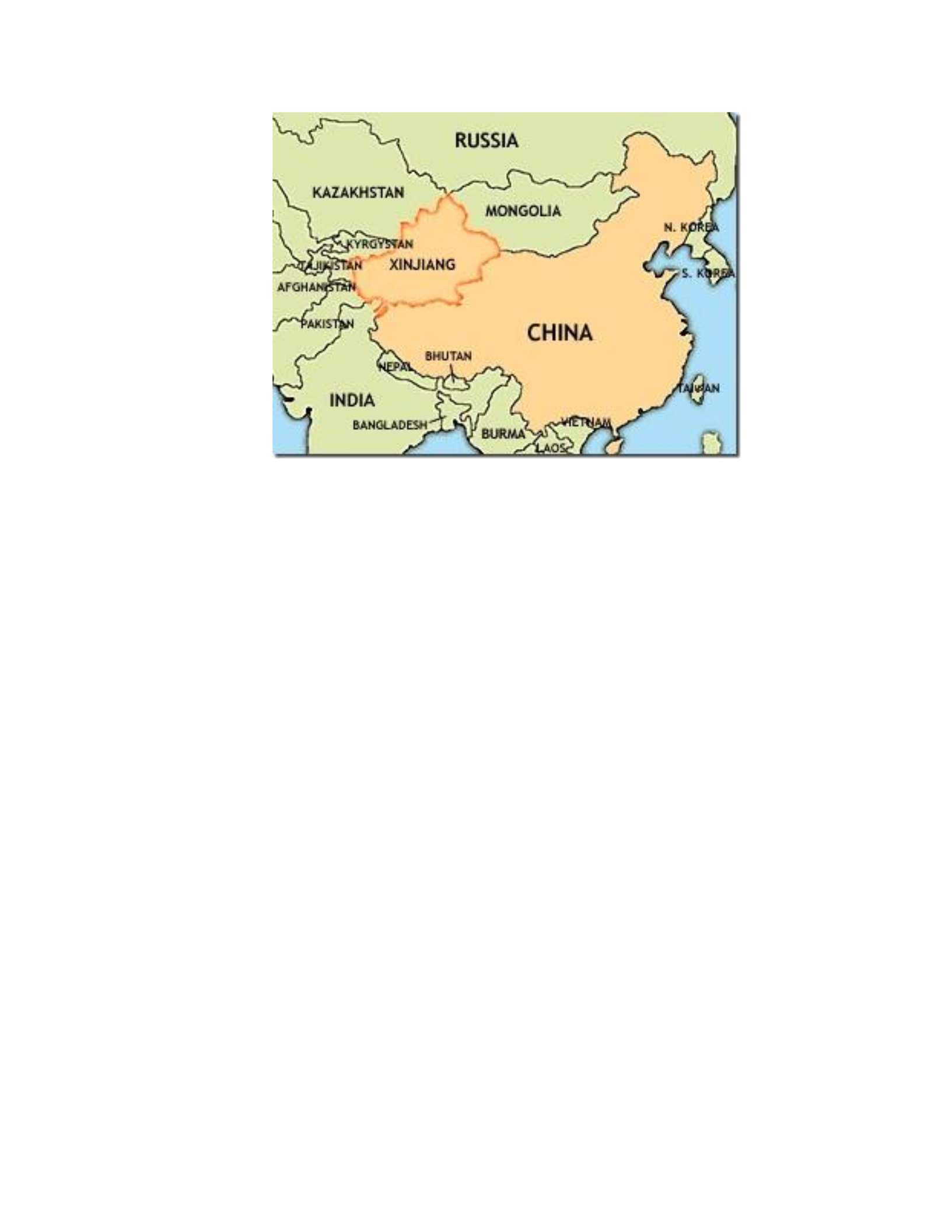
Figure 1. Xinjiang’s Location in Eurasia (Source:
http://thechinabeat.blogspot.com/2008/04/growing-up-han-reflections-
onxinjiang.html)
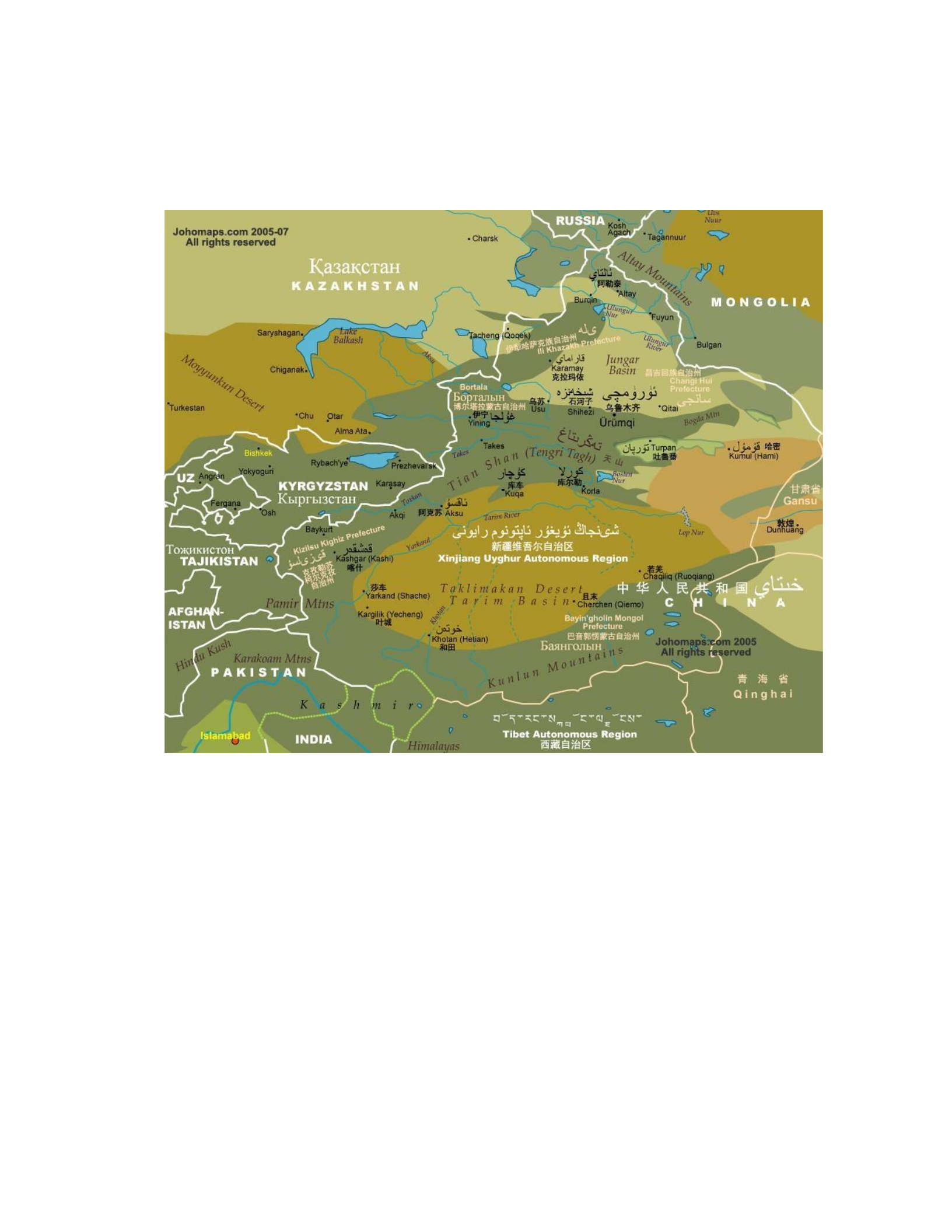
Topographically, Xinjiang is usually divided into three areas. The Dzungar
Basin, an arid steppe region bordered by the Altai Mountains to the east, is divided
from the Tarim Basin in the south by the Tian Shan Mountains. The Tarim Basin is
dominated by the Taklimakan Desert— the second largest drifting sand desert in the
world— and contained by the Altun and Kunlun Mountains to the south and the
Pamir and Karakorum to the southwest and west. Oasis towns that surround the
desert were important stopovers and staging points on the historic ‘Silk Roads’. To
the east is the Turpan Depression, which contains the important oasis cities of
Turpan and Hami. Yet another geographically distinct sub-region of Xinjiang is the
Ili Valley, which opens to the west into Kazakhstan (See Figure 2).
Xinjiang’s watersheds are almost entirely closed systems; rivers that descend
from the mountains disappear into the desert or flow into lakes. Only one of
Xinjiang’s rivers is connected to open water. The Irtysh River flows out of northern
Xinjiang before meeting the Ob River on its way to the Arctic Ocean. The oasis towns
of the Tarim are watered by glacier fed springs and rivers from the surrounding
mountains. Ancient subterranean aqueducts known as karez made possible the
expansion of irrigated oasis agriculture that allowed for the urbanization and
stratification of oasis population centers.
Figure 1. Multilingual Map of Xinjiang (Source:
http://johomaps.com/as/china/xinjiang/xinjiang1.html)
Human Geography
The complexities of Xinjiang’s human geography can be illustrated well by the
multiple titles used variously to refer to this region. The name ‘Xinjiang’ literally
translates into “New Frontier” and came into use in 1888 when the Qing Dynasty
conquered and colonized northern Xinjiang in the area of the Dzungar Basin

(Millward 2007). Before that the region was known in Chinese sources simply as
‘Xiyu’, or “Western Regions” (Toops 412). The name change tells us something about
the relationship between the region and the rest of China. First, the region was
located to the west of the rest of China. And second, the region was part of a frontier
zone that Chinese territory expanded into and occupied.
The region is also known by the names ‘Chinese Turkistan’ and ‘East
Turkistan.’ ‘Turkistan’ was the term used by medieval Islamic scholars to refer to the
parts of Central Asia dominated by Turkic speaking nomads—as opposed to
sedentary Persian speakers. After the Tsarist conquest of much of Central Asia in
the nineteenth century European writers continued to refer to the region as
Turkistan, but differentiated between the part controlled by the Qing in the east,
‘Chinese Turkistan’ and ‘Russian Turkistan’ (Millward 2007). The origins of the
name ‘East Turkistan’ are quite obvious; however, contemporarily the term is
associated with two short-lived independent republics from the first half of the
twentieth century, as well as more recent Uyghur separatist groups. Referring to the
politically charged term ‘Turkistan’ Millward (2007, ix) states rather mildly, “Since
the PRC officially maintains that Xinjiang has been part of China since the first
century C.E., any allusion to the region’s other past political and ethnic identities is
unwelcome.”
Southern Xinjiang is occasionally referred to as ‘Uyghuristan,’ a reference to
the ancient Uyghur kingdom whose capital was near present day Turpan, and an
overt claim that the region is the natural homeland of the Uyghur people—
sedentary, oasis dwelling, Turkic Muslims. The title is significant in that by inference
it excludes all other Turkic and non-Turkic ethnic groups, including the Han Chinese.
By the end of the nineteenth century and into the early part of the twentieth
century, nationalism became an important ideology that challenged prevailing
geopolitical arrangements. Empires, dynasties, and kingdoms were rapidly
transformed into modern nation-states with discrete political boarders and
republican governments. Just as reform minded politicians in China orchestrated

the founding of the Republic of China out of the ashes of the Qing Empire, so did
politically aware Turkic Muslim elites of Xinjiang advocate for there own
independent nation-state. During the first half of the twentieth century, when the
government of China was weak, the Turkic peoples of Xinjiang twice declared the
independence of ‘East Turkistan.’ However both efforts were short lived, suffering
from poor organization, lack of unity, and military weakness at a time when the rise
of the Soviet Union and Communist China, the decline of the British Empire in South
Asia, and both World Wars profoundly changed the world.
Today, groups that continue to advocate for an independent nation-state in
Xinjiang still use the name “East Turkistan.” However, as Millward (2007, ix) states
rather mildly, “Since the PRC officially maintains that Xinjiang has been part of China
since the first century C.E., any allusion to the region’s other past political and ethnic
identities is unwelcome.” Groups that use the name “East Turkistan” are accused by
the Chinese government of the “three evils”; separatism, terrorism, and religious
extremism. The extent and intensity of Chinese claims of terrorist activity has been
discredited by many scholars and human rights groups who contend that the danger
is exaggerated in order to justify harsh suppression of local nationalism.
Uyghurs are the largest ethnic group in Xinjiang. They are Sunni Muslims
who speak a Turkic dialect closely related to Uzbek, and who have traditionally
inhabited oases around the Tarim basin. Irrigated agriculture has been the mainstay
of their economy, while Uyghurs have also been involved in the manufacture and
trade of textiles, knives, jade, and other products.
Uyghur History
The term name Uyghur is derived from the powerful Uyghur Empire that
existed in Inner Asia between the eighth and thirteenth centuries (Millward 2007).
The ancient Uyghur were a confederation of nomadic Turkic tribes that inhabited
what is today western Mongolia, and who gained power and influence during a
period when other Turkic and Chinese empires were comparatively weak. Early on
the Uyghur kingdom helped the Chinese Tang dynasty defeat an expanding Tibetan

empire and quell a large rebellion (Millward 2007). For this the Uyghur royal house
extracted extortionate tribute from the Tang, trading horses for huge quantities of
silk and gold. At its height the Uyghur Empire extended into parts of present day
Mongolia, northwest China, and as far west as the Fergana valley in present day
Uzbekistan.
In the ninth century another Turkic confederation, the Kirghiz, challenged the
Uyghur’s supremacy by destroying their capital and causing the empire to fracture.
A faction migrated southward and reoriented itself around a new capital at Qocho,
known as Gaochang in Chinese, near present day Turpan. The new Uyghur kingdom
controlled an area of eastern Xinjiang that extended from Hami in the East to Kucha
in the West until the 13th century (Millward 2007). Over time the Uyghurs
abandoned their nomadic way of life and adopted the sedentary way of life of the
Iranian people who were then still the primary inhabitants of the Tarim. The
Uyghurs of this time period were not Muslims but rather followers of Manichaeism,
an ancient religion from Persia that celebrated the duality of the universe. The
Uyghur state in Xinjiang tolerated Buddhism and Nestorian Christianity among its
urban population. The Uyghur court adopted a Sogdian script and continued to
enjoy good relations with China based dynasties via Sogdian merchant middlemen.
Overtime the populations and cultures of nomad ruler and oasis ruled blended;
religious, political, and cultural influences from Sogdiana, India, and China were well
incorporated.
Meanwhile, in the western Tarim oases another Turkic confederation, the
Qarakhanids, arose and ultimately formed the empire of Kashgaria. It was this
branch of Turks who, having contact with Islamic kingdoms in Central Asia—then
Transoxiana—who first converted to Islam. Thus while the modern Uyghur people
take their name from the Uyghur empire, it was the Qarakhanids who spurned on
the Islamicization of Xinjiang.
The Uyghur kingdom in eastern Xinjiang was subsumed by the rapid rise of
the Mongol empire. Nevertheless Uyghurs and Uyghurstan occupied a unique

position in the Mongol empire. The Mongol court adopted the Uyghur script and
Uyghurs were employed bureaucrats and administrators in the new empire.
However by the late thirteenth century the Uyghur city-states of eastern Xinjiang
were devastated as they became the front line between the Mongol, China based,
Yuan dynasty and powerful Turkic states to the west. Thus the ethnom ‘Uyghur’ fell
into disuse for more then seven centuries.
In the interim the inhabitants of the Tarim basin had become Islamicized, but
the waves of conquest and acculturation by Turkic, Iranian, Mongol, Indian, Russian,
Tibetan Buddhist, Kazakh, Kyrgyz, and Chinese had all left their mark. As James
Millward (2007, 53) writes, “One cannot construct a neat uni-linear narrative of
Uyghur history, but that does not mean no narrative is possible or certain branches
must be arbitrarily excluded.” Indeed, Uyghur ethnic identity can only be
understood as a unique and emergent fusion of its parts.
It was not until 1921 that the term ‘Uyghur’ was resurrected to refer to a
distinct ethnic group by Soviet authorities at a conference in Tashkent, Uzbekistan.
The inhabitants of Tarim continued to use localized, oasis specific, ethnoms to refer
to themselves, while all the Turkic people of Xinjiang continued to be referred to by
the catch all ‘Turki’.
Between the fall of the Qing Empire and the Communist victory in 1949,
although nominally under the control of the Nationalist government, control of
Xinjiang changed hands, and political orientation, several times. Governing Xinjiang
proved a tricky task as several Chinese warlords were assassinated (at dinner
parties), and the administrations changed allegiance opportunistically between
Soviet advisors, the Chinese Nationalist Party, and ultimately the Chinese
Communist Party.
During this time two short-lived Independence movements were established
in Xinjiang. The independence movements drew inspiration from pan-Turkic and
pan-Islamic ideologies, as well as the legacy of the Yarqup Beg Rebellion, which

succeeded in establishing the kingdom of Kashgaria in the late 19th century. The
Turkic Islamic Republic of East Turkistan was established in 1933 in southern
Xinjiang, only to be disbanded one year later. And in 1945 the more pluralistic
Republic of East Turkistan (ETR) was established in the Ili Valley of northwestern
Xinjiang. Nevertheless, ideological disagreements, infighting, and infiltration
prevented the fledgling republic from gaining stability.
Both independence efforts appealed to the international community for
recognition. However in the midst of the complex geopolitics of WWII, in which, by
degrees of separation, the Chinese Nationalists and Soviet Union where allied by
their common enemy, no country was willing to become entangled in the political
quagmire the nascent independence movement represented. In 1949, having very
recently agreed to the terms of so called “liberation” in exchange for autonomy, the
entire leadership of the ETR was killed in a plane crash on their way to Beijing to
meet Mao Zedong.
Other significant ethnic groups in Xinjiang include Kazak (7%), Hui
(ethnically Chinese Muslims) (5%), Mongols (1%), and Kyrgyz (1%). There are also
Tajik (Pamiri), Manchu, Russian, Uzbek, Tatar, Salar, Miao, Tibetan, Xibo, and Zhuang
populations in Xinjiang (Toops 2004).
Chinese Nationalism
The success of China’s Communist Party and the Chinese government can be
understood as an outcome of an ethnic identity discourse that has monopolized the
construction and maintenance of ethnic identity and Chinese national identity since
1949. In the contemporary period of globalization the government of China has
anticipated the importance of widening its audience. The narratives of place offered
by the state led tourism enterprise to domestic and foreign tourists alike reproduce
the ethnic identity discourse onto the tourism landscape. In the consumption and
acceptance of the Party’s geographic narrative, readers participate in the
reproduction and legitimization of political rhetoric at the heart of the Chinese

national discourse and the Han-centric hegemony of the Chinese Communist Party
(CCP).
In order to conquer space, space first must be created (Anderson 1983).
Place, communities, and traditions are created and maintained through the
repetition of historic and geographic narratives. Thus, the power to dictate historic
and geographic narratives of place is central to the authority of the nation-state.
China’s transformation from dynastic empire to modern nation state in the early
part of the twentieth century necessitated an epistemological transformation of
space.
Notions of Chineseness historically were based on a worldview in which the
zhongguoren, roughly translated as Chinese race or people, were understood to be
the direct cultural bearers of a continuous, unified, and central Chinese civilization,
surrounded by culturally inferior barbarians at the peripheries (Wu 1991). In this,
identity was considerably more fluid, with identity in Chinese society being
understood more as a continuum of relationships between the core and periphery,
assimilation and difference, of Chinese society than discreet ethnic and racial
identities.
Susan McCarthy (2009) explains traditional conception of identity in China
through a Chinese idiom. Those people who measure up to Chinese standards of
behavior, etiquette, and learning were considered civilized, or “cooked”, while those
whose folkways customs, language, and actions were irredeemably foreign were
viewed as barbarian, or “raw.” “A group’s place on this continuum was determined not
by blood or kinship based notions of ethnicity but by its member’s adherence to
behavioral standards” (McCarthy 2009, 12).
According to Yen-ho Wu (1991), China’s confrontations with the Western
world in the nineteenth and early twentieth centuries obliged the Chinese to deal
with the foreign concepts of nation, state, sovereignty, citizenship, race, and cultural
and ethnic identity. Nationalistic writings in China’s early Republican period warned
people of the danger of annihilation under Western invasion (Wu 1991). The

Chinese Nationalists sought to create an ethnic and territorial solidarity that stood
in opposition to the ethnically exclusive Manchu aristocracy of the Qing Dynasty by
transcending long-standing suspicion between northern Mandarin speakers and the
southern Cantonese speakers. The concept of zhonghua minzu, Chinese people or
Chinese nationality, emerged that carried the connotation of modern patriotism,
nationalism, and connectedness with the fate of the Chinese nation. Inclusive Han
ethnic identity, as mobilized first by Chinese Nationalists, came to encapsulate
interchangeably the meanings: China the nation-state, Chinese the race, and China
the geographic location.
Somewhat paradoxically, although far from unique, Han ethnicity was
necessarily defined in contrast with other ethnic groups: Manchu, Tibetan, Mongol,
and Hui. Faced by the Japanese invasion of mainland China the Nationalists
attempted to shore up territorial divisions by stressing assimilation of minority
nationalities, declaring all minorities were sub-varieties of an ancient Chinese race
(Gladney 1999), a concept preserved in the five stars on the flag of the People’s
Republic of China: one star for each of the four sub-nationalities, and one large stare
for the Han “Big Brother.”
Ethnic Identity Discourse
China’s transformation from dynastic empire to nation state necessitated an
abrupt change in the way Chinese space was conceptualized. Dynastic authority,
which emanated outward with diminishing intensity changed gave way to the
dispassionate uniformity of national sovereignty applied evenly throughout national
space. Nomadic clansmen, feudal peasants, and itinerant merchants, whose
metageographies had previously gravitated elsewhere, where suddenly transformed
into citizens, the terms of which required definition.
In contrast to the Nationalist’s assimilationist approach, the Chinese
Communist Party developed a multi-national platform that promised special
privileges to the minority nationalities in exchange for their support. Most

important of these privileges were self-autonomy and secession rights. These
promises were essential to the survival of the Red Army during the Long March as it
traversed the minority-dominated regions of western China.
After Communist victory in 1949 minority areas were brought under military
control in a political relationship that has been described as ‘internal colonialism’
(Gladney 1994, Levine 2008). According to Edward Said (See Johnston 2004),
cultures of imperialism construct the modernity of Euro-American nationalism by
contrasting the supposedly pre-modern geographies of their colonies with the
ordered and framed “civilization” of the paternal homeland. In Communist China the
process of conferring citizenship on those who fell within the political territory
inherited from the Qing, via the Nationalists closely resembled the ethnic identity
discourse Stalin had adopted in Soviet Central Asia, informed by Marxist stage
theory and the social evolutionary theory of Lewis Henry Morgan (McCarthy 2009).
The Marxist theory of history, in which societies are understood to progress
through a succession of modes of production from feudalism to capitalism, easily
conformed to the traditional conceptualization of central Han Chinese. Armed with
the political rhetoric of Soviet-Marxist ideology, the Han-dominated Chinese
Communist Party assumed the leading role of the various peoples of the periphery
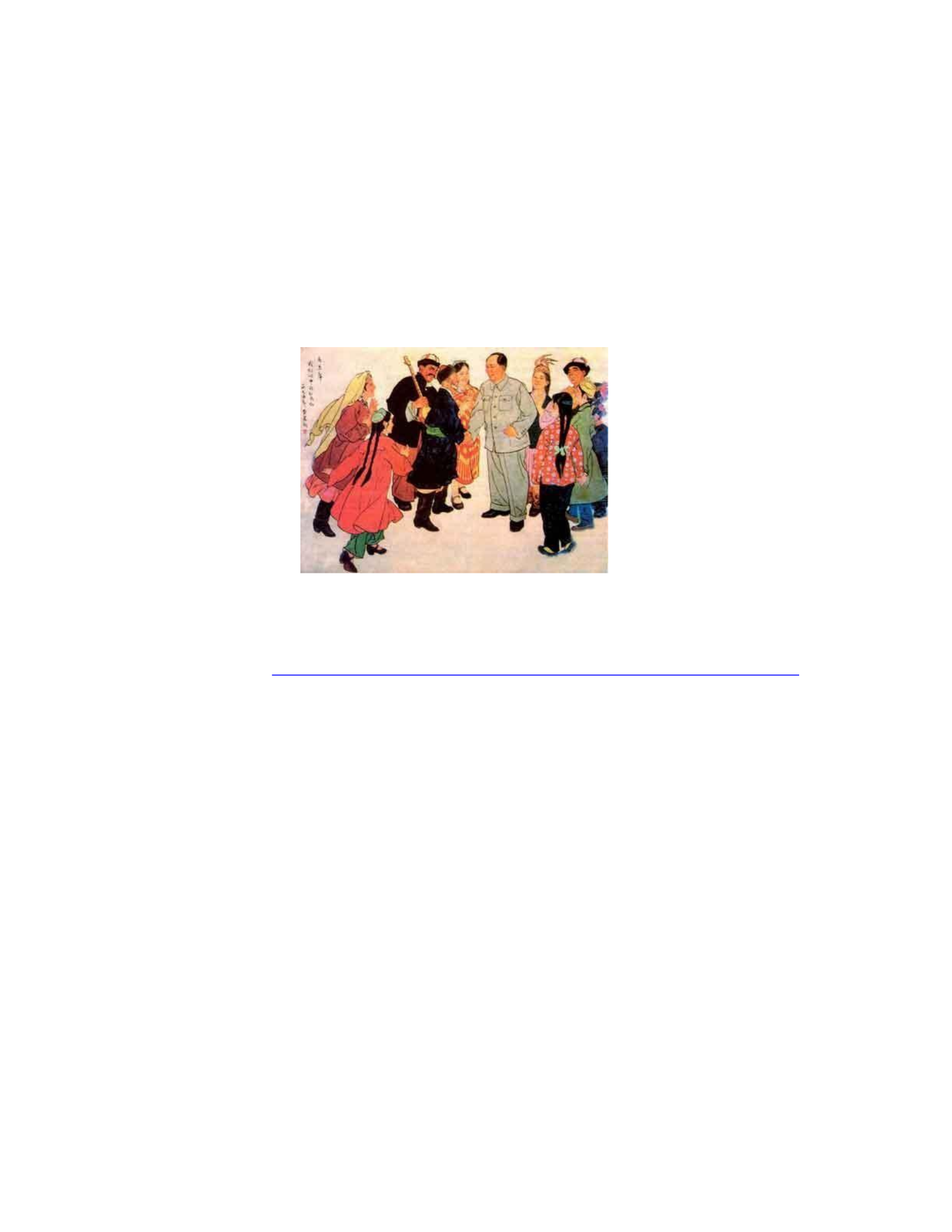
who were understood to be less culturally developed. In the painting Chairman Mao
Is the Red Sun in Our Hearts, painted by Gong Jianxin in 1964, Chairman Mao,
centered in revolutionary grab, can be seen greeting the child-like ethnic groups of
China (See Figure 3).
“Once it had gained complete control, the Party was free to co-opt the leading
role for all the peoples, with Han majority in the vanguard” (Gladney 1999, 90).
Through the Chinese-Marxist ethnic identity discourse, official ethnic identities were
bestowed on 55 minority groups according to common economy, ancestry, religion,
language, and territory.
Although stipulated in the People’s Republic of China's constitution, ethnic
national autonomy has never been granted, rather national integration through
assimilation has dominated Communist Party policy for the past sixty years. Thus,
with the exclusion of sanctioned activities, expressions of ethnic nationalism have
been treated as dissident, since they undermined Communist hegemony. According
to Gladney (1999, 88), “the contradiction between a policy that promotes both
autonomy and assimilation is an irony that continues to plague China’s nationality
policy.”
Figure 3. Chairman Mao Is the Red Sun in Our Hearts by Gong Jianxin, 1964
(Source: http://www.chinaheritagenewsletter.org/editorial.php?issue=003)
Production of Ethnic Space in China
The Chinese Communist Party and the government of the Peoples Republic of
China have reinterpreted the meaning of China’s ethnic-minority spaces throughout
its history, skillfully producing and manipulating narrative representations to suit
the needs of the party-state. The process of defining “autonomous” areas for
minority nationalities replaced the indigenous cultural landscape with imposed
spatial constructions. Land reforms and communes transformed socio-spatial land
uses, while new place names, Communist generic catch phrases such as “Red Flag,”
replaced traditional place names. Communes and production brigades of the
Cultural Revolution were “placeless representations of a single theme…. This might
be understood as a spatial ‘mass production’ that erased the meaning of place all
together” (Kolas 2008).

In the cultural geographic vacuum the Communist Party replaced traditional
place representations with ones more closely aligned with the Chinese-Marxist
narrative place. Schoolchildren were taught new place names, and new local
histories were invented that celebrated the People’s Liberation Army and the
Communist victory. Chinese textbooks and media have suggested that before
liberation minority places such as Xinjiang were feudal slave states ruled by despotic
Begs and Khans. ‘Backwardness’ of minority people of Xinjiang and other minorities
are constantly contrasted with the ‘modernity’ of the Han. This falls in line with the
basic tenets of Chinese Marxist ideology, that of evolutionary stages of social forms,
where minority nationalities represent ‘less advanced’, or more ‘primitive’, stages
and Han, as members of a more advanced’ and civilized nationality were responsible
for helping their less fortunate compatriots develop (Gladney 2004). The following
quote from China’s Minority Nationalities, distributed by Party publisher Beijing
Foreign Press, illustrates this point:
In the past, many poor Uyghur peasants lived on a diet of narrow-leaved
oleaster and dried apricot and peach, mulberry and grain porridge. Now
[since liberation], wheat flower, rice and maize are the staple foods…. Some
like to wear Western-style suits and skirts… the Women’s favorite
decorations include earrings, bracelets and necklaces…. Male chauvinism was
practiced in the family, and Uyghur women, humiliated with no one to turn
to, often retreated to prayer…. After liberation, feudal religious privileges
were abolished, and religion was taken out of the control of the reactionary
ruling class, and became a matter of individual conscience. As science and
knowledge spread, many of the old feudalistic religious habits lost popularity
(Ma Yin 1989).
Reading the passage Uyghur’s are understood as static and child-like, fundamentally
incapable of progress without Chinese intervention. Dru Gladney (1994, 98)
suggests that the Chinese state, “through commodifying and representing its
minorities as colorful and exotic, engages in a project familiar to the representation
of colonized peoples by colonial regimes.”

Ethnic Tensions
The Chinese “occupation” of Tibet is well known. In recent years Tibet has
become a popular topic among human rights activists who criticize the Chinese
Communist government’s administration of the region, claiming that government
policies there are designed to erase Tibetan culture and religion, and benefit Han
Chinese interests. The Chinese government, and many ordinary people, on the other
hand point to the region’s rising GDP, increased education, and new transportation
infrastructure as tangible evidence that government policies are creating economic
opportunities raising the living standards of Tibetan people.
Although much less publicized in Western Media, a similar situation exists
directly north of Tibet in the Xinjiang Uyghur Autonomous Region. Here, like in
Tibet, people who are not Han Chinese are the ethnic majority. People called the
Uyghur are the largest ethnic group in the region. Unlike Han Chinese, Uyghur speak
a Turkic language and are Sunni Muslims. Traditionally, Uyghur people have
inhabited the oases of the Tarim Basin, practicing irrigated agriculture, cottage
industries, and facilitating trade along important transportation routes.
Since 1949, the Chinese government has enacted policies designed to
encourage Han Chinese migration to Xinjiang. Early on this involved resettling large
numbers of demobilized military personnel on newly formed collectives charged
with transforming barren desert lands into huge state farms directed by the Xinjiang
Production and Construction Corps, or bing tuan. Since the late 1990’s the Chinese
government has undertaken an initiative called “Develop the West” that is intended
to bring the economic prosperity of eastern cities to western China. Tax incentives,
availability of cheap labor, and lax pollution standards have encouraged the
relocation of heavy machinery and petrochemical industries to the region.
Meanwhile many Uyghurs have traveled to other parts of China looking for jobs and
economic opportunities.
The completion of a railway all the way to Kashgar, the furthest west city in
China, has helped to facilitate the migration of huge numbers of people and further

integrated the economy of Xinjiang with the rest of China. Since 1949 the number of
Han Chinese in the region has grown significantly: from around five percent to about
forty-one percent today (Toops 2004, Millward 2007). However the official census
statistics only include those with official residency. Military personal and a
significant floating population—both assumed to be predominately Han Chinese—
are not included in Xinjiang’s census figures. Although it is impossible to determine
the exact number, Toops (2004) estimates China’s floating population to account for
ten to fifteen percent of the population of many cities (Toops 2004) and Millward
estimates them to have comprised approximately two and a half percent of
Xinjiang’s total population.
The Chinese government maintains that its policies are designed to increase
the well being of all people in China. They point to Xinjiang’s comparatively high
GDP and rapid urbanization as signs of the regions prosperity. However many
Uyghurs complain that they are left out when it comes to the region’s new wealth,
complaining that companies prefer to employ newly arrived Han workers rather
then the local population. Companies may prefer to hire Han workers for several
reasons. Uyghur workers may not speak Chinese well and they may have special
needs such as hala foods and require breaks to pray. Mean while migrant workers
may be more willing to move to onsite dormitories, work longer for less, or work
under less safe conditions. Thus, to compete Uyghurs are expected to learn the
Chinese language, compromise their religious practices, be willing to leave their
home communities, and work for meager wages.
Some Uyghurs believe that government policies constitute deliberate attacks
on their distinct culture and ethnic heritage and traditional ways of life. Commonly
cited policy grievances include: the prohibition of Uyghur youth from entering
mosque until they are 18, thereby inhibiting their participation in the religious
community; government control and censorship of Imams; the systematic reduction
of native language in schools; difficult Chinese proficiency tests minority students
must pass in order to be admitted into higher education; strict censored of native
language newspapers and media by the party-state security apparatus; forced

relocation; and Han Chinese domination of political power. They regard interference
in their religious practice, limits placed on the use of their native language,
censorship, disruption of traditional communities, the massive influx of Han Chinese
immigrants, and the negative ecological consequences that dirty industries have had
on local people as programs designed to destroy traditional community life and
under mind the viability of native cultures (Rudelson 1997, Gladney 2004, Starr
2004, Smith 2006).
The rapid increase in the Han population of Xinjiang has caused Uyghurs to
become alarmed that they will soon become a minority in their own homeland
(Gladney 2004). Sporadic acts of ethnic violence, most recently in July 2009, are
seen to be the manifestation of a pent-up frustration and suppressed
ethnoterritorial conflict.
Summary
This chapter provides the reader with relevant background knowledge
needed to understand the region and issues at play with regard to the production of
knowledge about Xinjiang. The introduction to this chapter introduces the reader to
the idea that Xinjiang is a complex region, knowledge of which is heavily weighted
with political overtones. Next, the physical geography of Xinjiang is described,
followed by an introduction to the region’s contested human geography. Afterward
is an account of Xinjiang’s history that is focused on the historic legacies that inform
the human geography of contemporary Xinjiang. Next is a discussion of the rise of
Chinese nationalism in the context of China’s transition from dynastic empire to
modern nation state. The epistemological and ideological shifts of identity are
tracked from the Qing dynasty that ended in 1911, through Republican China, and
finally into China’s present Communist period, 1949 onward. A section is devoted to
the Chinese-Marxist ethnic identity discourse that has come to define ethnic identity
politics since the 1950’s, and which is fundamental to the production of narratives of

ethnic space in China. The chapter concludes with a discussion of the perceived and
real grievances of Xinjiang’s ethnic nationalities, particularly the Uyghur.
Chapter VI
Xinjiang’s Tourism Space: Narratives of Place
Introduction
This chapter examines the construction of place and ethnicity identity as they
have unfolded in Xinjiang’s tourism literature. The purpose of the chapter is to
illustrate the pervasive, consummate, bias, and political reproduction of ethnic space
in Xinjiang that is deployed by the Chinese government inline with the Chinese-
Marxist ethnic identity discourse. To successfully demonstrate this I employ
qualitative discourse analysis of Xinjiang tourist information brochures published by
a state controlled tourism organization.
I argue that the state-imposed ethnic identity discourse is reproduced both
for the purpose of profit-making in the tourism market, as well as deliberately
deployed within the production of tourist space as a means of bolstering
Handominant state power and the legitimacy of the Chinese government. Through
the promotion of ethnic tourism the Chinese authorities advance a narrow
representation of Xinjiang’s ethnic nationalities and the space they inhabit. Thus
conceived, Xinjiang’s non-Han populations are deliberately relegated to a decidedly
‘other’ landscape in a process Rob Shields describes as production of ‘place-myths’
(cited in Davis 2005).
China’s Ethnic Tourism Economy
Since its identification as a site of increased tourism investment in the
midnineties, Xinjiang has seen a steady increase in attention from both domestic and
international tourists. State controlled place narratives and representations of
ethnic identity are reinforced through their repackaging as objects of tourism. State

representations of minority space are characterized by the exoticisation and
marketization of ahistorical tropes for the tourist economy. State sponsored place
narratives foreground representations of an ethnic landscape ready for the tourists
gaze. Presented as unchanging, traditional, gendered, and authentic, these
pejorative narratives of place reinforce real and perceived boundaries between
China’s ethnic minority periphery and the Han-Chinese core.
A favorite phrase of Chinese tourism, as found my analysis and observed in
during excursions to ethnic tourism attractions in China, is “living fossil.” This place-
image, which ignores alternative interpretations, fixes ethnic-minority people
permanently within a natural history landscape that is beyond contemporary
society. As Nyiri (2006) states: “In Chinese tourism, ethnicity has been themed and
the tourist gaze directed toward objects that are marked and interpreted so well that
they leave little room for the imagination.” Through these strategies the Chinese
authorities suppress any attempt to question the political and ethnographic order of
things as represented by the state.
Tourism is an effective vehicle for the transmittance and actualization of
state-sponsored representations of minority people and their locations. This is
particularly true in China where the state has the authority, and means, to dictate the
narrative of representation. The tourist, predisposed by the state-sponsored
narratives within tourism literature, un-wittingly performs the state’s narrative by
accepting the representation of minority landscapes as tourism destinations. As
Davis (2003, 611) states, “then tourist needs a place to conceptualize as a tourist
place to perform certain activities the re-affirm their identities as successful
(modern) persons.” Chinese and Western tourists are successfully “modern”
because they are the kinds of people who travel and vacation. Local people, by
inference, are something else less than modern.
The pervasive reach of the tourism destination, effecting social, economic,
cultural, and spatial spaces around the narrowly defined connotation moves the
representation from place-image to acknowledged place-myth (Davis 2003). Among

the powers of place making are permanence and inertia that, once accepted, are
slow to change. “The representative mode of [Uyghur] culture has increasingly been
naturalized and taken as more real than reality itself” (Murkami 2008, 65).
Reconstruction of ancient mosques as ethicized museum sites obscures their
religious and social significance, transforming them from focal points of possible
resistance into spaces that conform to the state’s ethnicity discourse. Local
experiences of space are not represented within the state-sponsored tourism
narrative, or the tourism landscape. The experience of discrimination of local ethnic
people, exclusion from educational and economic opportunities, and exploitation are
not likely to be reproduced on the tourist landscape.
Tourism on the Silk Roads
Tourism is already a major industry in China, which is expected to continue
growing as a Chinese middle class with expendable income takes shape for the first
time. Government officials recognize not just the economic potential of tourism, but
also the potential to reinforce the discriminative, revisionist narratives of the
Chinese Communist Party, which simultaneously marginalize ethnic minority
nationalities, in regions such as Xinjiang, as well as assimilate them. “When the
‘nationalities identification project’ defined the ethnic groups of China,” writes Kolas
(2008, 272), “this implied distinguishing the various ‘nationalities’ according to
specific ethnic markers, such as typical livelihoods, architecture, festivals, religious
practices, arts and crafts, and dress.” Kolas continues:
With the introduction of tourism, these ethnic markers have been
commodifed through the making of ethnic art and handicraft products for
tourists, the creation of staged ethnic tourism performances and other
tourism products. In this way tourism has served to reinforce hegemonic
representations of ‘minority nationalities’ and the places they inhabit.
Tourism in Xinjiang has grown and thrived over the past two decades for
several reasons: adventure travelers were eager to visit this exotic destination long

off limits to foreigners; government support and investment in the tourism sector;
the quality of its attractions; and growing international interest in the Silk Roads.
Coined by the German geographer Ferdinand von Richthofen in 1877, the Silk
Roads have captured popular imagination with romantic associations of exotic,
aromatic, mystery, primitive, solitude, remoteness, bazaar towns, Asiatic despots,
and nomads. As such, semiotic value of the Silk Roads, with its wide recognition and
broad appeal is an example of what Davis (2005) terms ‘traveling’ representations of
place that do not arise from a particular place as much as are applied to it. The term
“Silk Road” has come to define the place-myth that informs international and
domestic tourists’ expectations of Xinjiang.
The close association with, and official adoption of the “Silk Road” label by
state tourism departments indicates pre-established place images that convey
romantic notions of an elusive, exotic and idyllic past (and present), which play on
the tourists’ quest for the authentic. It has the additional effect of redefining the
space and its inhabitants as conforming with pre-inscribed connotations of
otherness. Furthermore the term encapsulates an explicitly Orientalist projection,
which has been adopted by the Chinese in the ongoing process of what has been
termed “Chinese internal Orientalism” (Schein 2000, 130) or Chinese
selfOrientalism (Levine 2008).
Urbanized Han Chinese idealize the ethnic minorities and their landscapes as
unspoiled reserves of nature, religiosity, and simple life styles of the past. Chinese
tourists see Xinjiang as a nostalgic destination, where ethnic minorities are cast as
inhabitants of an imagined past (Kolas 2008). Therefore Chinese tourists take part
in what can be considered “cultural pilgrimage,” in which Chinese tourists are
symbolically involved in visiting their culturally ‘less developed’ past (Petersen
1995). The following quote is an excerpt from the Beijing Review, a weekly English
language newspaper that is an organ of the Communist Party. It concerns an affluent
Han Chinese “exploration” tourist who had recently participated on a state
sponsored “expedition to Xinjiang.” The trip included crossing the desert to the

ancient ruins of Lop Nor, as well as visiting the tourist city Turpan. According to the
article, “the trip was an adventure, as well as an opportunity to observe the ethnic
folklore, understand the society and get acquainted with the history” (Zhiping 1997,
16). The quotation illustrates how readily the prevailing narrative is accepted. It
also demonstrates the emergence of domestic Chinese tourists who are emulating
exploration and adventure tourism, trends, which have hitherto been associated
with foreign visitors. Finally, terming the trip “exploration tourism” implies that the
local people and culture have existed beyond the veil of the known and need to be
discovered…by tourists.
In the political climate of liberalization and marketization local officials,
dominated by Han Chinese, have been in uniquely privileged positions to engage not
just as planners, but also as ‘cultural brokers’ and entrepreneurs in tourist-related
industries. A lucrative practice among local governments has been to set up private
companies, paid for with public funds, to develop tourist destinations. Thus, the
regulatory agencies have a vested interest in the unhindered success of tourist
destinations, while the government enjoys continued revenue through charging of
entrance fees to every tourist attraction (Kolas 2008).
The Beijing Review article “A New Taste of the Countryside” demonstrates the
extent to which local people’s interests are disregarded wholesale in favor of profit
and power of Han entrepreneurs and Party elite. The article details the construction
of a “Kazak Folk Village”, a collection of new yurts erected in pairs on concrete slabs,
east of Urumchi. Local Kazaks are invited to pay a yearly fee to the government for
the opportunity to live in one yurt and act as hosts to tourists in the other.
According to the article, “Guests can eat, sleep and sing karaoke in the yurts” and the
host sometimes hires a dance team to perform (Jing 2005, 26). One can imagine,
tourists willfully believe their hosts to be authentic Kazak nomads who once
traversed this same land with their flocks, however most of the “host” Kazaks come
from a nearby village that was relocated to make way for a ski resort. Thus, the
Kazak hosts perform their ascribed ethnic identity in a tourist space that is
‘hyperreal.’ The article treats these developments as uncompromisingly positive

elements in the economic development of the region, citing the rise in per-capita
income. The interpretation fails to account for the cheap cultural commodification,
continued economic marginalization, and lack of agency experienced by the local
people who are excluded from all but the most menial opportunities.
Qualitative Content Analysis of Xinjiang Tourism Brochures
The prevailing Han chauvinism and deliberate objectification and
commodification of ethnic groups that characterize the Communist Party’s ethnic
identity discourse is clearly demonstrated in a series of brochures that are targeted
to tourists, published by the Association of Cultural Exchanges with Foreign
Countries, Xinjiang Uyghur Autonomous Region (See Appendix B). Although I can
find no information on the publisher, I can only believe, given the organization’s
arctypically Soviet Socialist name and rather unimaginative format, the Association
of Cultural Exchanges with Foreign Countries, Xinjiang Uyghur Autonomous Region
must be a party-state apparatus. These brochures are divided into two categories:
“The Folk Culture” of Xinjiang’s ethnic nationalities and Xinjiang’s cities of touristic
interest series. A close reading not only illuminates representations of minority
nationalities but also informs the construction of Han identity.
Eight nationalities are represented within the “The Folk Culture” series:
Uyghur, Tajik, Kazak, Mongolian, Daur, Hui, and Han. The brochures represent a
discourse in which knowledge of the ‘other’ carries the power to define the reality of
space. As discussed above, the representation of minority people as part of a
timeless landscape, ripe for tourist consumptions, is but one representation of
reality of space. One that reinforces the state-sponsored place-myth of minority
people and space as inherently different than the familiar and modern in which the
Han, and West envisions itself. This representation is made “real” or hyper-real in
its physical manifestation at tourist destinations. Ethnicized architecture, rituals,
costumes, and crafts are reproduced for tourist consumption. In this process, local
minority people are compelled to play the role assigned to them within the

landscape of ethnicized “other.” In this way both the physical space and the local
inhabitants appear to fall into the prescribed Chinese-Marxist narrative. In
discourse, tourist literature is invaluable due to its power to pre-inscribe the
Chinese-Marxist narrative in the minds of tourists.
Generalizations of ethnic national character are continually constructed and
reinforced, cementing the essentialized image of ethnic minorities as “noble
savages.” With the exception of the Hui, the minority nationalities are all
represented more or less the same: primitive, static, and exotic. In the text all the
minority nationalities (other then Han and Hui) are summarily characterized as
“brave”. Mongols are summarily stereotyped as “warm, uninhibited nature” and the
Tajiks and Kazaks are “vigorous.”
In the series, ethnic culture is defined by primitive skills and livelihoods and
inferior religious practices. According to the Mongol brochure, “Archery is a skill
which every Mongol man should learn and use, by which he kills his enemy, protects
himself and hunts.” Kazaks “grow up on horseback” and are particularly “suited for
the cold.” These characterizations envision the ethnic nationalities as part of the
primitive past, imbuing them with untamed, almost animal like, natural qualities. In
this respect the minority people are represented as part of the natural landscape,
and therefore as a legitimate object of the tourist gaze, to be consumed within a
market driven tourist economy.
In line with the predominant Communist Marxist narrative, religion is
relegated to the status of unsophisticated, unenlightened, folk-beliefs. Religion as a
significant cultural and place identifier in its own right, a possible alternative to
Party hegemony, is down played. Alternatively, religion is washed into the
ethnicization of the people and place, an interesting antidote. The section on
Uyghur’s religion, Islam—a world religion with hundreds of millions of adherents
around the globe, is headed “Belief Folklore.” And of the Kazaks it disparagingly
states, “Even now Kazaks still have a worshiping feeling for ancient trees.” The
statements dismiss 1200 years of Islamic tradition and untold generations of

shamans as little more then superstitions imbedded into the traditional landscape
and culture.
The photos that illustrate the brochures universally display the minority
nationalities in rustic settings. Whether Uyghurs in dusty bazaar towns, plying
colorful homespun cloth and fluted copper vessels, Mongols and Kazak nomads with
animals and yurts in the alpine meadows, or Tajiks tilling barren soil with yaks in
the Pamir, the minority nationalities are presented as static parts of the landscape.
Additional photos picture attractive minority girls in beautiful alpine settings. The
minority nationalities are only shown in their traditional dress, or rather their
exoticized, quasi-traditional, hyper-real costumes and head dresses; never in
modern or contemporary clothing.
Interestingly, the Hui and Han are represented much differently. The Han are
represented as modern, connected, and sophisticated. Photos show Han and Hui
men and women in contemporary clothing, including pretty young women without
headscarves. A photo next to the heading “The Cloths of Xinjiang Han people” shows
thoroughly modern, fashionable silk pants suits with mandarin collars, a far cry from
the strange hats of the minority nationalities. The photos display western style
weddings and modern production techniques. Within the text Hui are treated as
decidedly more modern, adaptable, and distinct than their minority nationality
counterparts. Set apart, Hui are stated not to share their mosques with their
coreligious nationalities, building their own mosques instead. The section on Hui
religion is entitled “Religious Customs,” as opposed to the pejorative “Belief Folklore”
of the Uyghur. The Hui are characterized by nuclear families and “modern
education.” According to the text, Hui also celebrate contemporary Chinese secular
holidays: Labor Day and National Day. By contrast the texts make no reference of
other nationalities taking part in contemporary secular Chinese national holidays,
thereby tacitly implying their exclusion from contemporary secular society. The text
continues the close association of Han (and therefore modernity) and Hui with the
statement, “During Spring Festival, the Hui people visit their Han colleagues and
friends.”

Several reasons for this distinctly different treatment of one ethnic minority
nationality among many stand out. Although not stated in the text, Hui are
ethnically and culturally Han Chinese Muslims, who were converted to Islam by
seafaring Arab traders around the 8th century. Hui people spread out along
important trade routes and continue to be important to transportation industries in
China. As traders Hui can be found in every province and city of China and are
familiar to everyday Chinese. The historical legacy of Hui in Xinjiang allies them
closely with the Han overlords. During the late Qing dynasty Hui mercenaries were
employed to quell local revolts in Xinjiang. In 1933, during the warlord period of
Republican China, Hui armies were instrumental in suppressing a short-lived
independent Uyghur state, the Turkish Islamic Republic of East Turkistan.
Consequently, an opportunistic Hui warlord from neighboring Gansu became the
governor-general of Xinjiang another briefly lived independent state in Xinjiang, just
before Communist incorporation of Xinjiang in 1949. Needless to say, in spite of a
common religion, relations between Hui and the other Muslims of Xinjiang are
strained.
Without a doubt, the brochure dedicated to the “Han Nationality of Xinjiang”
is the most revealing. Unlike the other nationality groups, Han ethnicity is
continuously displayed as modern and connected to a contemporary globalized
world. Of Han food the brochure reads, “Now, the food of every branch of Han
Chinese food exists in Xinjiang and the western-style food, South Korean, and
Japanese food were also introduced to the region.” It continues, “All this shows the
trend that the food of Xinjiang Han people is under drastic change”. By inference the
text erroneously suggests other nationalities, immobile in time and space, have not
changed due to globalizing forces at work in Xinjiang, nor does it acknowledge
Xinjiang’s cross-cultural and dynamic past. By contrast Han are the only nationality
shown to have the ability to change or progress along a trajectory informed by
modernization and industrialization.
Of religion and festivals it is stated, “some old customs are still practiced
among Xinjiang Han people, but they are merely a kind of rites and religious

meaning is lost,” effectively separating the Han from the “Folk Beliefs” of other ‘less
developed’ nationalities. One brochure states that the Han have accepted the
Gregorian calendar and it is popular for Han to take part in “Western style”
marriages. This stands in contrast to the barbaric yet eroticized ethnic marriage
practices such as “Girl Chasing” among the Kazak and Tajik. Likewise the brochure
emphasizes that equal status is accorded men and women enjoyed among the Han,
as opposed to the “patriarchal”, and therefore feudal, family structures that appear
to afflict other nationalities. For rhetorical value the fabrication of the long and
continuous historic legacy of Han in Xinjiang is established by the brochure text; as
the opening of the Han brochure is entitled, “A Long History of Han People in
Xinjiang.” Throughout the brochures the historic legitimacy of the Han is established
by the repeated mentioning of the oldest known Han settlements in the region.
Constructions of minority national character are reinforced in their
placement within tourist destination cities. The cities depicted in the brochure
series can be divided into two distinct categories: Han dominated northern cities of
Urumqi, Shihezi and Karamay, and the Uyghur cities around the Tarim Basin.
The Uyghur cities of the Tarim are depicted as relics of the past, primitive
bazaar towns of the ancient Silk Roads. Almost as if museum pieces, the term “living
fossil” is repeatedly used to describe Uyghur cities. Within the photos Uyghur cities,
scenery, architecture, and ethnic people become part of a seamless naturalized
landscape of the old Silk Roads. The photos depict the Central Asian architecture of
mosques and tombs that have been restored, or entirely rebuilt as is the case of a
magnificent minaret in Turpan, with state funding for the express purpose of
creating tourist destinations. The photos show very few people. The few people
depicted are “ethnic”, wearing traditional clothing and hats, hard at work producing
beautiful, labor intensive, handicrafts: silk weavings, jewelry, carpets, ceramics, and
beautifully fluted copper vessels, in romantically languid bazaars. These images
succeed in presenting the cities as ‘authentic’ tourist destinations that have
essentially not changed since the days of the ancient Silk Roads.

Presented in sharp contrast are the northern Han Chinese cities: Urumqi,
Shihezi and Karamay. These cities are depicted as modern, complete with
manicured city parks, post-modern monuments, skyscrapers and traffic. They show
modern means of production and are described in terms of their economic vibrancy,
achievements of Communism, and science.
Shihezi is presented as a monumental achievement in land reclamation.
Modern technical equipment is heralded along with place names that glorify the
Long March, and Peoples Liberation Army. Monuments that are of touristic interest
include a statue of Zhou Enlai and a socialist realism sculpture, “First Plowing of the
Production and Construction Corps Engaging in Farming.” Not mentioned is the fact
that the Xinjiang Production and Construction Corps was, and continues to be, a
paramilitary organization, independent of the Xinjiang government, which settles
de-mobilized military personal within Xinjiang as colonists, as well as serving as a
reserve security force.
Karamay is “A Petro-industry City of China” with one of the largest oil fields in
China. The name means, “black oil” in Uyghur. This is no doubt a part of the mass
production of space under taken by the Communists in minority areas after
liberation. The localization of an otherwise placeless name is a thin guise of Han
colonialism. The city lies in the northern Dzungar Basin, far from traditional Uyghur
territory. I can find no reference to it before liberation.
The largest city and administrative capital of Xinjiang, Urumqi, is treated
somewhat more delicately. Ignoring its short, decidedly Han history and culture,
there is an attempt to establish its integration with the rest of Xinjiang. A modern,
architecturally “Islamisized” shopping mall, is selectively featured along side
skyscrapers. This is important for symbolic reasons, as it legitimizes an otherwise
Han-Chinese city, through which virtually every tourist must pass, as part of a
continuous “ethnicized” landscape. According to the brochure, Urumqi is the
“Geographic Heart of Asia” and the “trade center of Central Asia”. As such, this Han
dominated city is presented as exceedingly cosmopolitan and modern. The claim

that Urumqi is the “cultural center of Xinjiang” ignores the historical facts that
Kashgar and Khotan are the cultural centers of Uyghur culture and history. A limited
integration of Urumqi is attempted: “Modernity and tradition co-exist in the city.
One may see people wearing traditional ethnic dress and modern fashion dress.
There are traditional Uyghur businesses and modern, international business such as
Kentucky and Mac-Donalds fast food chain.” By inference ethnic dress is not
fashionable and Uyghur businesses are not modern.
Summary
Gladney (1994) suggests that the objectified portrayal of ethnic identity in a
colorful, romanticized fashion has more to do with constructing a ‘majority
discourse’ than it has to do with the construction of ‘minority’ identity as such.
According to Oaks (1998), tourism to minority areas can be understood as a
romantic search for unspoiled nature and the lifestyles of people who appear to be
close to nature and history. When this desire is harnessed and interpreted for the
viewer through an ethic identity discourse that is a framed by the Han-centric
interests of the Communist Party and the Chinese government the marginalization
of ethnic people and the centrality of Han Chinese interests are reinforced.
This chapter demonstrates how the Chinese government frames the
prevailing place narratives of Xinjiang through the tourism economy. Xinjiang
tourism texts, created and distributed by state tourism authorities, reproduce a
representation of Xinjiang’s ethnic population that recreates and reinforces the
Chinese-Marxist ethnic identity discourse. Through the ethnic identity discourse the
terms of existence for Xinjiang’s minority ethnic nationalities are set by the state.
Within the national narrative of China, non-Han ethnic nationalities are physically
and conceptually relegated to a static periphery.
Chapter VI

Analysis of Geography Education on Xinjiang
Introduction
Education is a powerful element in the reproduction of narratives of place. It
is widely recognized that through the selective repetition of narrative
representations of place in textbooks and other educational media geographic
knowledge is discursively naturalized. This chapter looks carefully at the narrative
representations of Xinjiang as they have been reproduced in geography education in
the United States.
Through qualitative content analysis I explore the extent and nature of
content devoted to Xinjiang in secondary school geography textbooks, world
regional geography textbooks, regionally appropriate curricular guides, and
regionally specific lesson place. The primary focus of the content analysis was K
through 12 teaching materials. However, I also examined introductory college level
world regional geography textbooks and geography of China textbooks in order to
form a broader picture of the status of learning about Xinjiang’s geography.
The chapter begins with a discussion that explores how Xinjiang’s position
within China mediates how Xinjiang is represented in secondary school geography
textbooks. The chapter continues with a discussion of how, and in what narrative,
Xinjiang is represented in textbooks. World regional geography textbooks followed
by curricular guides and lesson plans are then analyzed. A portion of the chapter is
devoted to feedback received from teachers regarding how China is presented in
current geographic education and their knowledge of Xinjiang. The chapter
concludes with a section comparing the place narratives of Xinjiang and Tibet as
they are found in current geography education materials.
The research shows that very little attention is devoted to Xinjiang in currently
available educational materials. The resources available to educators and students
about Xinjiang are distorted by the overwhelming focus on the history of Han Chinese
civilization and the Han dominated population centers of eastern China. Content

devoted to China’s non-Han ethnic nationalities is nearly always lumped together in
curt subsections that occlude China’s ethnic diversity.
Furthermore, those texts that do devote substantial attention to Xinjiang are marred
by factual and conceptual inaccuracies and conflict tropes that fail to accurately
represent the region.
Framing Knowledge about Xinjiang within China
Despite the buzz in education literature concerning the need to transform our
worldviews in this increasingly interconnected global era, a Kuhnian paradigm shift
has failed to materialize. Persistent geographic simplification and ahistoricism
perpetuate dangerous stereotypes and the status quo by occluding the historic and
geographic complexities of peripheral regions and minority people. Geography
textbooks and teaching materials remain overwhelmingly organized by world
regions that are divided along the discrete political boundaries of modern
nationstates. By default discussion of Xinjiang is relegated to chapters devoted to
the region of ‘East Asia’, arbitrarily defined as some combination of China, Mongolia,
Taiwan, the Koreas, and Japan. One high school geography textbook, World Cultures
and Geography: Eastern Hemisphere and Europe (Bednarz 2005), goes as far as to
group East Asia, Australia, Oceania, and Antarctica into a single hodgepodge chapter.
Within chapters devoted to ‘East Asia’ attention to cross-cultural exchange, shared
histories, or current events are limited to incidents within the region, that usually
take place around an un-problematized ‘East Asian cultural hearth’ defined by the
continuity of Han Chinese culture and the shared cultural legacies of Confucianism,
Taoism, and Buddhism.
In this context, Xinjiang’s cultural and historic affinities with Turkic Central
Asia and the Islamic world do not mesh neatly with China’s established position as
the cultural and political epicenter of East Asia. In the case of geographic education
and teaching materials, knowledge of Xinjiang is first and foremost mediated by its
physical and conceptual location within China. As such, Xinjiang’s distinct ethnic

geography and disorderly history are subordinate to prevailing knowledge of
‘Chinese China’; that is the central and coastal regions that are overwhelmingly
inhabited by Han Chinese. As a result Han Chinese cultural geography and history
are in practice understood to apply evenly throughout Chinese territory.
Occasionally texts include maps showing the historic extent of the Chinese empire in
comparison to China’s current area. For the most part the issue of who or what
existed beyond those boundaries is never dealt with in any meaningful or sustained
manner; nor is it clearly explained when or how exactly those places stopped being
something other than Chinese territory. By default, the ‘Chineseness’ of China’s
peripheral areas remains unproblematized, with the result that competing
geographies and historical realities remain occluded. Even university departments
that regularly include the study of Xinjiang within the boundaries of Central Asia
area studies, such as Indiana University, continue to respect China’s politically
sensitive boundary when it comes to providing useful educational resources.
Knowledge is power and therefore production of knowledge is political.
When considering the content and scope of educational materials dedicated to
Xinjiang, it is worthwhile to bare in mind the layers of discursive knowledge that
shape and mediate our knowledge of Xinjiang. In the geopolitical sense, Xinjiang’s
location and history are loaded. Here the Orientalist discourse and issues of
contemporary Chinese national hegemony merge with Cold War rhetoric and fear
mongering over the threat of Islamic radicalism. These tropes give Western readers,
who are largely unfamiliar with the region, a way of understanding Xinjiang within a
larger geopolitical context that is by and large informed by a Euro-centric worldview
of history and geography.
Of the predominance of a European worldview Clifford (2001) writes,
“History, proper history, is meant as a record of change and progress, toward the
spread of human freedom seen in Whig-Liberal terms and the emergence of the
modern state.” When China’s past is framed in reference to European milestones
and epochs, its failure to progress according to European norms only serves to
highlight the contrast between an active and energetic West and the passive

timelessness of the Eastern world. Said (cited in Clifford 2001) goes as far as to
state, “Such a view puts the European in command of Oriental history, time, and
geography, ensuring that it becomes part of ‘world history’—European history that
is.”
In general geography textbooks reproduce European “world history” onto
China uncritically. As such, China is understood to have been a homogeneous,
immobile, and passive entity throughout history, only spurned to political and social
revolution by contact with, and therefore reaction to, the imposition of Western
powers and ideas in the 18th century. For example, Mihelic’s statement, “A little over
2000 years ago, the basic institutions of government that still exist across [East Asia]
were established in eastern China” (2009, 338), brands the Asians as politically and
socially passive. While Confucius thought may still influence the political discourse
of East Asia, none of the governments of the region resemble the institutions of 2000
years ago.
Most texts do at least mention distinct cultural achievements of various
dynasties: the Qin and the Great Wall, Tang bronzes, and Ming vases. However
dynastic succession appears as continuous repetition, wherein politics, society,
culture, and economy remain essentially the same, and fundamentally disconnected
from the history of the rest of the world. Salter (2007, 571) states, “Throughout
history, China often limited contact with the outside world. The Chinese saw their
culture as superior and had little use for foreigners. The tall mountains, deserts, and
seas around China further limited contact and isolated the region,” while Sager
(2003) reports that China experienced no outside influences before 1500, except for
Marco Polo. Mihelic (2009, 340) goes as far as to suggest; “It was during the
[Mongol] empire that traders such as the Venetian Marco Polo made the first direct
contacts between China and Europe.” Thus informed American students are
instructed to understand China’s stirring from a state of natural largess to have been
initiated by the arrival of 18th century European interlopers at its eastern seaports.

The persistence of this Orientalist narrative is perhaps best illustrated by Johnson
(2010, 514) who writes, “Fundamentally challenged by Western technologies,
science, and economic systems, China’s traditional view of the world with the
Middle Kingdom as its center was turned upside down. The meeting of East and
West did not involve a mutually interactive environment.”
The existence of a continuous Chinese civilization inhabited by Chinese
people, essentially unchanged since primordial times, remains a powerful construct
situated at the heart of modern Chinese nationalism (Gladney 1999). By in large,
geography textbooks uncritically reproduce the rhetoric of Chinese civilization.
Salter (2007, 571) states, “Today the Chinese can boast a civilization some 4,000
years old, older than any other.” Similarly Baerwald (2009, 651) writes, “Since its
birth along the Huang He in northern China around 3000 B.C., Chinese civilization
has been deeply rooted in agricultural way of life.” While Marston (2011, 283) adds,
“China has had a continuous agricultural civilization for more then 8,000 years.”
Meanwhile nearly every text embeds a photo of terraced rice patties. Give or take
4,000 years, the image that emerges is of a cohesive and naturally homogenous
population at home in a fixed landscape.
Regarding ethnic diversity in China, nearly all the textbooks include an almost
identical two to four sentence paragraph. One of the more informative, the Boehm
(2008, 677) text states:
When people in China say someone is Chinese, they use the Chinese word for
“a person of the Middle Kingdom.” About 92 percent of China’s more then 1.3
billion people belong to the Han, an ethnic group named for a powerful
ancient ruling family. Han rulers developed a culture whose influence has
lasted to the present. The remaining 8 percent of China’s population belongs
to about 55 different ethnic groups.
Sager (2003, 551) does not even acknowledge the existence of ethnic minorities
simply stating, “About 92 percent of China’s population consider themselves Han
Chinese. Almost everyone can speak one of the seven major Chinese dialects.
Mandarin is the official language and the most common.”

The Salter (2007, 573) text goes above and beyond others with a half page
graphic inset devoted to “Ethnic Groups” in which there are three labeled photos: an
attractive Han girl wearing stylish clothing; an older Hui man with bushy eyebrows
and white scull cap; and a younger Zhuang man in tattered peasant hat and jacket,
holding a rudimentary farm implement. Boehm (2008, 676) and Sager (2003, 542)
both include photos of fashionable young people in urban settings with captions that
explicitly imply they are Han Chinese. Otherwise, non-Han ‘ethnics’ are rarely
visually represented in the texts; however, when they are they are dressed
traditionally and are part of religious or otherwise ‘indigenous’ landscapes.
Throughout all texts the terms Han and Chinese are conflated. Even those texts that
distinguish Han ethnicity immediately revert to using the term Chinese
unproblematicly. In several texts, Bednarz and Salter, the only review devoted to
ethnicity instruct teachers to ask students, “To what ethnic group do most people in
China belong?” (Bednarz 514). Thus informed, students understand that Han
Chinese are modern, normal, culturally the same, and the only important people to
know about. The minorities, while they may exist, are traditional, poor, tied to the
land, and do not merit attention.
Only Veeck and Mihelic make efforts to problematize the construct of Han
ethnicity worth noting. Veeck (2007, 44) contributes:
A common mistake is to assume the Chinese and Chinese culture emerged
from some single ethnic stock, the origins of which could be to a particular
place in time. But rather than attesting to such a commonality, the evidence
points to a pattern in which over time, many distinct groups were blended
and absorbed into a composite that we now think of as Han people.
While Mihlic (2009, 357) writes:
Cultural diversity exists throughout East Asia even though most countries
have one dominant ethnic group. In China, for example, 93 percent of
Chinese citizens call themselves “people of the Han.” The name harks back
about 2000 years to the Han empire, but it gained currency only in the early
twentieth century, when nationalist leaders were trying to create a mass
Chinese identity. The term Han does not denote an actual ethnic group but
rather connotes people who share a general way of life, pride in Chinese
culture, and a sense of superiority to ethnic minorities and outsiders.

Beyond misleading, the geographic simplification and ahistoricism that pervades
most geographic education materials is factually wrong and conceptually loaded.
The banality of reporting Marco Polo as the first contact between China and the
“outside world” is so ludicrous it hardly warrants attention and only goes to show
the lack of scholarship and academic rigger tolerated in textbooks. As reported, the
narrative of an ‘imagined’ passive and homogeneous Chinese civilization not only
affirms latent Orientalist stereotypes, but also affirms and reproduces political
rhetoric employed by the Chinese Communist Party to legitimize its political
hegemony over China’s diverse population.
Narratives of Xinjiang in Geography Textbooks
As one might imagine, content devoted to Xinjiang in geography textbooks is
rather sparse. The analysis of geography textbooks undertaken in this project has
yielded some interesting findings worth examining more closely. Of the five
secondary school geography textbooks I analyzed, only one, Baerwald’s (2009)
World Geography: Building a Global Perspective, devoted any substantial attention to
Xinjiang. However, attention to Xinjiang in college level textbooks was, on the whole,
substantially higher, leaving an optimistic impression that perhaps as interest in
Xinjiang’s unique and diverse geography grows, recognition of the importance of the
region may disseminate and diffuse among educators and the public alike.
As stated above, secondary school geography textbooks do not allocate space
for discussion of Xinjiang, or its minority nationalities. All but one text failed to even
mention Xinjiang by name, identify Uyghur or other Xinjiang nationalities, or draw
attention to longstanding issues of ethnic tension in the region. Only two texts even
acknowledge the presence of Islam in China; the Salter (2007, 574) text limits its
discussion to one simple sentence, “Other major religions in China include
Christianity and Islam.”
The Silk Roads have become widely known as trading routes that connected
Europe to China. As an educational topic the Silk Roads provides an opportunity to

introduce important ideas of dynamic continuity and change across Asia’s diverse
landscape, and highlight Xinjiang’s regional significance. Several geography
textbooks reference the Silk Roads and some include simple maps (Baerwald 2009,
Boehm 2008, Saltar 2007). Nevertheless, none of the sources draw significant
attention to the dynamic historic and geographic processes that characterized the
Silk Roads, which deserve attention in their own right; nor do they acknowledge
those who inhabitant the region that the famous trading routes traversed. The
Salter text (2007, 516-17) features a full two page graphic dedicated to the Silk
Roads: pictures of a Roman centurion and stocky Asiatic outfitted with a mandarin
coat and fu-manchu overlay a map of Eurasia. The Han and Roman Empires are
highlighted and tethered by linear trade routes that traverse an empty plane, while
two great arrows point east and west pointing the way to destinations across an
abyss. The instructional side-bar instructs teachers to tell students:
The harsh climate of western China is only for hardy tourists. One city,
Kashgar, has a market where tourists can get some idea of what trade along
the old Silk Road was like long ago. At the market, people of many
nationalities sell spices, wool, livestock, silver knives, and other items (2007,
516).
As it is presented, Kashgar remains rooted in an eternal past, its landscape primarily
populated by visiting tourists while native inhabitants are relegated to the
background. Baerwald (2009, 662) moves toward highlighting some socioecological
complexity stating: “Along the road, way stations developed around oases fed by
streams. Over time some of the way stations grew into large towns. For example,
Kashgar, on the western edge of the Taklimakan, has a population of about 300,000.”
However Baerwald quickly returns to uncritically vague topes, terming the region
with all its inhabitants a “barren landscape” (2009, 662).
As currently addressed in geography textbooks the study of the Silk Roads
imposes a Sino-European perspective focused on the region’s historic economic
significance to China and Rome. This mode of understanding fails to recognize the
significance of the region, with its legacies of cosmopolitanism, diversity, and
dynamic socio-cultural processes that deserves attention in its own right.

The one topic all textbooks appear to cover with some adequacy is Xinjiang’s
physical geography. While descriptions of the physical geography of northwest
China are generally brief and lack depth as well as specificity, they do identify many
of the region’s significant topographic features; particularly the Tarim Basin, Tian
Shan Mountains, Kun Lun Mountains, and Turpan Depression. Others draw
attention to the Pamir Mountains, Taklimakan Desert, and Gobi Desert.
Baerwald’s World Cultures: Building a Global Perspective (2009)
In comparison to other textbooks, Baerwald’s (2009) World Cultures: Building
a Global Perspective stands out among secondary school geography textbooks for its
substantial coverage of Xinjiang. Although Baerwald (2009, 663) states, “Few
people find the region hospitable, and the population is low,” in the subsection
dedicated to China’s Northwest, he makes some steps toward illustrating the
complex socio-ecological adaptations that characterize the region when he states: “a
system of underground irrigation canals fed by streams flowing from the Tian Shan”
to oasis agriculture and, “grape growing is an important occupation.” Baerwald
(2009, 663) continues with the statement, “Nomadic herding, however, is the major
economic activity throughout the region,” going on to describe transhumance in the
most basic terms. While the accuracy of this statement is open for conjecture, credit
for bringing attention to the complex socio-ecological adaptations that have shaped
the human geography of the region is warranted.
At the end of the chapter is a subsection entitled, “People and Geography:
Human Rights in China.” The section begins with a brief discussion of the United
Nation’s Universal Declaration of Human Rights, followed by sections devoted to
“Women in China, Muslims in Xinjiang Province, and Buddhists in Tibet” (Baerwald
2009, 671). The section on Xinjiang reads:
Religious and ethnic minorities face discrimination in China. In Xinjiang
Province in Northwest China, the Uighurs, who practice Islam, are an ethnic
minority. The Chinese government has placed strict restrictions on when and

where they can practice their religion. The government has also encouraged
members of the majority ethnic group, the Han Chinese, to migrate into the
area. Statistically, the Han Chinese obtain higher paying jobs and own more
businesses then Uighurs. Believing their rights are being violated, some
Uighurs hope to win independence from China. However, the government is
particularly intolerant of unrest in Xinjiang Province because it values the
province as a key military location and as an important source of petroleum
and other natural resources.
While attention to persecution of Uyghurs is vitally important, and otherwise
unrepresented in secondary school geography textbooks, the text falls short of
providing quality coverage of Xinjiang and its inhabitants. In the follow up activity
the text asks students, “What evidence is there that the Uighurs do not enjoy the
same rights as the majority Han Chinese? How does ethnic tension effect the
economy of Xinjiang Province?” (Baerwald 2009, 671). While the answers to these
two questions are not entirely clear, they do a disservice by characterizing Xinjiang
and Uyghurs as more or less one-dimensional in relation to ethnic conflict with the
Han and Chinese state. Furthermore, the author situates the current ethnic strife
entirely in terms of contemporary socio-economic grievances, thereby denying the
history of ethno-territorial resistance that is central to understanding the conflict.
Highlighting facets of Xinjiang’s geography other then inter-ethnic conflict, such as
language, material culture, ethnic diversity, cross-border affinities, and ecology,
could strengthen the section. By focusing solely on the conflict between Uyghurs
and the Chinese state, the author draws attention to the most extreme and negative
attributes of the region.
Although this text should be appreciated for its coverage of Xinjiang and
other sensitive issues, the text is marred with factual errors, conjecture, and
frequent lack of conceptual coherence. These deficiencies draw into question the
texts validity as an authoritative or useful source. Baerwald (2009: 657) reports
“Chinese leaders believe their nation’s economy will be the third largest in the world
by 2020 and second largest by 2050.” In contrast, it has been widely reported that
China’s economy became the second largest in the world in 2009 (CIA 2010).
Bearing in mind the text’s publication date, one may still presume this development

was forecast by economists. If the Baerwald text was utilizing current and relevant
information this mistake would not have been made. The text also seems to
underestimate China’s floating population, reporting statistics that were surpassed
in 2004, according to researchers at Columbia University (Lu 2010).
The Baerwald textbook’s persistent use of broad value-weighted language is
easily refuted. Regarding Tiananmen Baerwald (2009, 658) shows bias and
misreports the incident when he declares the Chinese military “opened fire without
warning.” Regarding Tibet Baerwald (2009, 664) carelessly terms the region a
“country” and continues on to state, “A proposed railroad to connect Tibet with
western China is viewed as an effort to speed [Han] migration. As a result, many
Tibetans are now firmer in their resolve to regain independence.” Tibet’s political
status is a contentious and vastly important issue that ought to be dealt with
carefully. Use of inappropriate terms is conceptually misleading and ultimately
misinforms students to the reality of the situation. Furthermore, the railroad to
Lhasa was competed in 2005.
In the subsection “Ethnic Differences” the Baerwald (2009, 666) identifies
Mongols, Uyghurs, Tibetans, and Kazakhs as the largest ethnic minority groups in
China when in fact they are not; the Zhuang, Manchu, Hui, and Miao are the four
largest minority populations. Similarly careless, Baerwald falsely declares, “China is
officially an atheist state” (Baerwald 2009, 667). While it is true that the Chinese
government has discouraged organized religion and persecution of religious
communities is well documented, the People’s Republic of China’s constitution
protects freedom of religion.
Finally after introducing and discussing the concept of autonomy in reference
to the official title of Tibet (Xizang Autonomous Region), Baerwald (2009, 671)
persists in referring to Xinjiang incorrectly as a province, thereby missing an
opportunity to establish conceptual unity among the issues surrounding the two
regions and their inhabitants. Furthermore, Uyghurs constitute a majority in

Xinjiang, rather then a minority as the passage on human rights confusedly
indicates.
World Regional Geography Textbooks
The body of college level world regional geography textbooks contains more
instances that reference Xinjiang and Uyghurs, more accurate information, and
greater complexity. However, the texts tend to situate the conflict entirely in the
context of present-day economic inequities and religious persecution.
A quote from a young Uyghur man in Urumchi in the Mihelic (2009, 358) text
does well to illustrate the lived experience in Xinjiang:
I am a strong man, and well educated. But [Han] Chinese firms won’t give me
a job. Yet go down to the railroad station and you can see all the [Han]
Chinese who’ve just arrived. They’ll get jobs. It’s a policy to swamp us.
However, the situation in Xinjiang cannot be adequately understood without
awareness of the historic legacies that underpin the present situation. Over
emphasis on contemporary economic grievances denies the persistence of
ethnoterritorial nationalism that dates back to the Qing Dynasty.
Furthermore, the world regional geography textbooks overwhelmingly focus
ethnic conflict and volatility at the exclusion of other facets of life in Xinjiang.
Marston (2011, 301) writes, “Protests and bombings increased sharply in the
1990’s, and the traffic of weapons, political literature, and insurgents has prompted
the Chinese to increase surveillance in Xinjiang and, intermittently, to close its
borders with Pakistan and neighboring Central Asian states.” While it is important
that students be aware of the ethnic tension in Xinjiang, accusations of foreign
financed weapons trafficking and Uyghur jihadists trained in al-Qaeda camps have
largely been dismissed by experts as propaganda promoted by the Chinese
government to support its ‘Strike Hard’ policy (Gladney 2003, Human Rights Watch
2001). Furthermore, the uncritical reproduction of sensational tropes of violence

does little to dispel or dissuade students from accepting the uncritical stereotypes of
Islamic extremism and Oriental backwardness.
Rowntree’s et al. (2011) Globalization and Diversity: Geography of a Changing
World is noteworthy as it is the only textbook that defies the false sacredness of the
nation-state as the preferred world-ordering paradigm. Instead, the text is
organized along more fluid functional regions. In this text, discussion of Xinjiang is
principally contained in the chapter devoted to Central Asia. The chapter begins
with a discussion of the geographic and historical similarities that justify the unity of
the region, yet the text also acknowledges the contradictions that challenge regional
coherence. As such, the text presents a regional geography that is conceptually quite
different than that of other textbooks by highlighting the continuity of culture,
history, and ecology across the boundaries that separate China and its Central Asian
neighbors. Additionally, the text contains the most current information with
reference to the incidents of rioting in Urumchi in July 2009. Rowntree’s et al.
critical approach and strong conceptual coherence informed by up to date
information make this a valuable text.
Lesson Plans and Curricular Guides
Lesson plans and curricular guides were found mostly through the websites
of universities with regional concentrations in either China or Central Asia.
Additionally, I scanned teacher resource websites dedicated to geography, social
studies, or Asia for Xinjiang lesson plans. The lesson plans and curricular guides
analyzed represent a more heterogeneous body of texts than the geography
textbooks. Many dealt, in some way or another, with ethnicity and identity and most
highlighted, to one degree or another, the economic, cultural, and ecological
connections between western China and Central Asia. Given the selective nature of
my search, the low number of lesson plans dealing principally with Xinjiang is
noteworthy. Of the six Internet based curricular resources I studied, only three

contained lessons directly related to Xinjiang. Surprisingly, none of the lesson plans
highlighted the importance of Islam in Xinjiang.
Several lesson plans and curricular guides focus attention on the Silk Roads,
however most focus on the famous trade routes’ occurrence in Central Asia,
partitioned from China and therefore Xinjiang. Rossabi’s From Oil to Silk (2005)
succeeds in breaching the political border by focusing on the complexities and
interconnectedness of the Silk Roads across Central Asia and China. Rather than a
vacuous corridor, Rossabi focuses on the dynamic changes and cross-cultural
impacts the Silk Roads have had across time and space, and the transmission of
religious, artistic, and material innovations. The text contextualizes historic and
geographic forces as ongoing and emergent processes that continue to impart
meaning on place, as well as to inform multiple layers of group identity, with
particular focus on Uyghur experience. Rossabi acknowledges the centrality of
Uyghur agency as intermediaries and antagonists among Chinese dynasties and
others empires.
Two curricular guides, Teaching About the Islamic World and Ethnic Minority
Groups in China, at first glance appear as plausible sources for lesson plans
pertaining to Xinjiang and its ethnic nationalities. The introduction to Teaching
About the Islamic World correctly states, “The popular mind tends to associate the
Islamic world with the Middle East, which in turn is frequently synonymous with the
Arab world” (Mowell 2006, 4), while Ethnic Minority Groups in China begins with the
statement, “While many outside of China believe that China is an ethnically
homogeneous nation, it is actually quite diverse” (Brown 2003). Nonetheless, both
texts fail to deliver when it comes to increasing awareness of Muslims in Xinjiang.
Teaching About the Islamic World (Mowell 2006) is a great resource that
provides information and lesson plans driven by National Geography Standards that
help dispel prevailing stereotypes about the Islamic world. This edited volume
includes no discussion of Muslims in China beyond the inclusions of Hui and Uyghur
on a map depicting the spatial distribution of ethnic groups and language families.

Ethnic Minority Groups in China is an excellent resource to aid educators to introduce
complex topics of ethnicity and identity, assimilation, sovereignty, as well as
representation and stereotypes, however it makes no mention of Xinjiang, Uyghurs,
Kazakhs, Kyrgyz, Tajiks, or other Xinjiang ethnic nationalities. Instead, the lessons
focus on Hui, Tibetans, Mongols, and Miao.
Several lesson plans are notable for their overt political agenda. A lesson plan
posted on Yale’s “Exploring Ethnicities in China” website entitled “Xinjiang: A Bi-
Cultural Perspective” focuses entirely on Han persecution of Uyghurs and more or
less asks students to pit Uyghurs against Han Chinese. The stated goal of the lesson
is for students to, “develop an understanding of how the Chinese nuclear testing
program and the environmental health of the Uyghur minorities are interrelated”
(Strelau 2002). The lesson plan links students to several websites that are mild to
overt in their bias against the Chinese, then asks students to research “the
motivations for the Han Chinese massive movement into Xinjiang” (Strelau 2002).
Next, students are asked to write parallel diary entries that describe the experience
of Han migration to Xinjiang, one from a Han and one from a Uyghur perspective.
However, first the class is asked to look at a United States population projection that
shows “Caucasians will not be in the majority early in this century”
(Strelau 2002). The class is instructed to have a conversation around the question,
“How will that fact affect politics, education, daily life right here at home?” (Strelau
2002).
The final activity is designed for the students to “learn about the Han Chinese
nuclear testing through the imaginative interviewing of participants at the site”
(Strelau 2002). Students are linked to a number of websites dedicated to the
nonproliferation of nuclear weapons that are critical of China’s nuclear weapons
program. However, none of the sites are dedicated to the ecological consequences of
nuclear testing in Xinjiang or their effect on local people. Students are asked to role
play an exceedingly biased scenario: “You and five others have been hired by the
Uighurs to design a memorial to their countrymen and women who have died or are
dying as a result of nuclear testing” (Strelau 2002). Students are instructed to

“interview” their fellow students who play Uyghur locals about how nuclear fall-out
has affected their health and local ecology. The students then create a monument to
the tragedy.
The lesson plan should be considered sophistical at best, but more likely
dismissed for its poor pedagogy and racialist overtone. The lesson plan draws on
nativist xenophobia to illicit sympathy among students for the plight of Uyghurs.
The lesson’s reliance on “imaginative interviewing”, rather then credible research,
promotes the reproduction of dangerously essentialized narratives of
ethnonationalism and racist stereo-types about immigrants and is reliant on an
emotive response to nuclear testing. At the conclusion of this exercise students will
likely leave with strong emotional impressions informed by stereotypes and rhetoric
rather then a well-rounded understanding of the situation faced by Uyghurs that is
based on substantiated facts.
Another web-based lesson plan worth exploring is entitled “Geography and
Ethnic Diversity in China” provided by Cornell University. The lesson plan begins
with the laudable paragraph:
To teach about China and Chinese culture, it is essential to understand the
geographic and ethnic diversity in China in order to avoid creating or
strengthening stereotypes of China. It is important to understand that not all
Chinese are alike, or eat the same foods or talk the same way.
However, the text and lesson that follows does more to reproduce those stereotypes
then refute them. In fact, the entire lesson plan follows the discourse of ethnicity
promoted by the Chinese Communist Party, wherein the Han form the vanguard of
Party authority. The lesson, rife with embellishing language that is subtly pejorative
toward non-Han ethnics, establishes Han as paternal protectors of unthreatening
ethnics. For example in a paragraph devoted to ethnicity the text reads, “From the
dawn of time…. The 55 ethnic minorities, nestled away on China’s vast frontiers
maintain their own rich traditions and costumes, and all are part of Chinese culture.”
Explaining the relationship between Han civilization and its neighbors the text
reads:

As the Han prospered, they became the envy of the hearty horseman of the
north…. Unlike the plunder and destruction characterized by the barbarian
invasion of Rome, these people admired what they saw, leading them to stay
and assimilate…. No matter what the story, one enduring theme of Chinese
history remains the stability of Han Chinese Culture.
The pure propaganda intent of the text comes out in this passage that
celebrates the Communist party:
The Nationalists denied the existence of different ethnic groups. However,
after the Communist Party came to power in 1949, an earnest effort to
investigate and categorize minorities began. Although over 400 minority
groups answered the call to register, studies found that there was a lot of
overlapping, and a significant number of groups that claimed to be separate
were actually the same with different names.
The passage celebrates the Communist Party as the ‘liberator’ of China’s enthusiastic
ethnics, while simultaneously it underscores the command and authority of the
Communist Party through determination of the very terms of existence of ethnic
minority nationalities.
The portion of the Cornell lesson plan devoted to Xinjiang utilizes the story of
the Monkey King, a Han folk tale, as a vehicle to explore the region. Specifically, the
section retells the story in which the Iron Fan Princess, wife of the Ox Demon who
represents the native inhabitants, helps the Monkey King to extinguish the Flaming
Cliffs and thereby win control. Read critically, the story can be understood to
illustrate feminine submission of local customs to the overwhelming superiority of
Han culture and ritual.
The text further diminishes the agency and distinct history of Xinjiang’s
ethnic groups when it reports:
Xinjiang is famous for its folk dances, fruits, gems, and carpets… Urumchi is
the political, economic, and cultural center of the region… Xinjiang was the
hub of the Silk Road, a place where Chinese culture met Indian, Persian, Arab,
Greek, and Roman cultures… Its unblemished natural beauty and its varied
and colorful minority customs attract tourists from all over the world.
Conspicuously absent from the list of cultures that have influenced Xinjiang are
those of its titular inhabitants. This, and the identification of Urumchi as the

unqualified socio-economic center of Xinjiang, denies by inference the existence of
native culture, or alternative ‘ethnic’ interpretations of Xinjiang’s history and
geography. Furthermore, celebrating the products of Xinjiang, and not the people
who crafted them, while associating “unblemished nature” with “colorful minorities”
simply as attractions within a touristic landscape underscore the denial of Xinjiang
as a meaningful place for Xinjiang’s minority inhabitants.
The University of Washington’s online curricular resource, The Visual Source
Book of Chinese Civilization, is divided into two parts: physical geography and
cultural geography. The resource reproduces common tropes outlined previously,
including photos of Han Chinese in contemporary dress while depicting ethnic
groups exclusively in costumes. Besides a photo of a market place, the teacher guide
asks, “How do you suppose people in China would recognize that buyers and sellers
here are Han Chinese?” The suggested answers relate to physical appearance and
clothing. This suggests ethnic minorities have somehow remained unaffected by the
movements of contemporary society, perpetually stuck in a primordial pre-history.
Another passage, “The majority of ethnic minority groups today live in the
northeast, northwest, and southwest, undoubtedly as a consequence of the
expansion of the Han Chinese over centuries,” does the titular inhabitants of these
regions a disservice by implying their historic marginalization, rather then their
cultural centrality within their particular geographies.
Columbia University’s “East Asia In Geographic Perspective” website and
National Geographic’s “Xpeditions” website both contain excellent, well-organized,
lesson plans. However, neither addresses the region of Xinjiang or its inhabitants
specifically. Indiana University, well known for its regional focus on Central and
Inner Asia that includes study of Xinjiang and Tibet, provides no lesson plans
pertaining to Xinjiang, but several excellent lesson plans focusing on Tibet.

Xinjiang Education in Montana
Data for this assessment was gathered from responses from a short
questionnaire I emailed to 153 members of the Montana Geographic Alliance, as well
as a thorough search of the Missoula County Public Schools Library Catalog.
The questionnaire asked teachers to answer these questions as best they could:
1. Is education about China part of your curriculum? In what context and
how is China taught?
2. On what specific themes or points having to do with China do you
focus? 3. What materials (textbooks, videos, maps, brochures, etc.) do you
use to teach about China? Please be specific.
4. Have you ever heard of Xinjiang? What do you know about this
region? Do you teach about Xinjiang?
5. Do you have any suggestions about how to improve education about
China?
6. Would you like to continue to be involved in this project? If so, how?
Fifteen teachers responded. The low response rate was likely caused by
teachers failing to receive the survey due to powerful new firewall protection
applied to Montana school’s Internet servers. While the survey cannot be thought
of as representative of all Montana teachers, results do provide a useful glimpse into
the current state of teaching about China and Xinjiang in Montana schools. On the
whole, the survey shows the rather poor recognition of Xinjiang within Montana
education.
The first questionnaire to be returned was also the most animated. The
respondent, a recent Montana Public Schools teacher retiree, opened bluntly: “To say
the least our geography education was piss poor.” She went on to state:
The state of Montana, in my opinion, is horribly ignorant about all countries
and China does not have any exclusivity. In my county it is sports and
basketball [that are important]…. The National Guard comes out here each
year with climbing walls and fun activities to recruit innocents to join, and
[the students] don’t even know where they’re going.

Other respondents were less blunt. The impression I got from reading survey
responses was one of shared dismay, or at least ambivalence, over the state of
geographic education in Montana schools. One respondent communicated that the
geography curriculum standards adopted by the state sound very nice; however, in
reality these standards are not followed. One teacher described teaching geography
during her lunchtime for no compensation. Many of the teacher respondents appear
very motivated and expressed their eagerness at the prospect of improved teaching
resources and opportunities.
Education about China in the Montana state curriculum appears to come in
the sixth, seventh, and tenth grades. In the sixth grade students study ancient
civilizations, including China; however, as one teacher reported, “Egypt, Greece, and
Rome take up most of the year.” In seventh grade students study world regional
geography. They learn that China is a country of East Asia, “and they may have to
learn the capital and a few brief facts.” The tenth grade is exposed to Chinese history
in World History class where they learn about the dynasties and “memorize some
historical facts for a test.” Otherwise several teachers reported students are exposed
to Chinese communities in the mining and railroad towns of Montana when they
study state history and the Chinese Exclusionary Act of 1882.
Overall my impression is that education about China is very weak, and
overwhelmingly confined to learning about China through ancient histories, thus
relegating China in student’s minds to an exotic and pre-modern position that has
very little relevance to their lives. When discussing what they teach about China,
teachers used phrases such as, “contact with the outside world”, as if China is
somehow fundamentally separate from the rest of the globe.
Another teacher stated that he “always tries to make connections between
world cultures and Montana’s native peoples.” Explaining that he compares how
young people in China and Montana’s Native Americans “are struggling between
traditional and modern life…and concepts of balance and harmony in nature that are
shared in both cultures.” However good his intention, the teacher reproduces for his

students a distorted view of contemporary China informed by an outdated, but
persistent, Orientalist worldview. In my opinion, although many young people in
China face the bewildering changes globalism and market reforms have wrought on
the impoverished countryside, China’s decidedly modern cities are full of “little
princes and princesses” who have never known “traditional” life. Nor do I think that
the anthropocentric notion of nature in Confucius, not to mention Maoist, thought is
comparable to Native American religions.
As far as teacher’s knowledge about Xinjiang goes, most were quite frank
about their ignorance. Responding to the question: “Have you ever heard of
Xinjiang? What do you know about this region?” one educator wrote: “Yes, I know
what Wikipedia told me when I looked it up just now.” Another answered
unconvincingly with the banal affirmation, “Yes, Xinjiang has a varied physical
landscape.” Another answered that it came up in reference to the Tibetan
Independence Movement.
Needless to say, there is room for improvement in geographic education
about China and Xinjiang in Montana schools. To address this educators suggested
more teacher training was an important step to improving geographic education in
Montana. Several teachers reported having participated in free classes here at the
University of Montana, presumably through the Mansfield Center and China
Institute. One teacher suggested taking teachers to the region would be beneficial
stating, “I know I am a better teacher of the Roman Empire and medieval Europe
after spending time there, seeing it, and learning first hand.” Given this response,
efforts by the Montana Geographic Alliance to take teachers on educational tours of
Xinjiang and Central Asia should be acknowledged for their significance.
Other suggestions included working with the organization Teacher’s Without
Borders to have teachers exchange lesson plans with counterparts in Xinjiang, and
the creation of a Xinjiang Trunk to be circulated among Montana schools. The
Montana Historical Society as well as the Montana Natural History Center maintain

these “traveling road-shows” that bring much needed resources and hands-on
learning to rural Montana schools.
A very thorough search of the Missoula Public Schools library digital catalog
yielded next to nothing directly related to Xinjiang. When a student searches for
“Xinjiang” he or she will find a single entry: a page dedicated to the Dzungar Basin in
100 Natural Wonders of The World (Yenne 1995; see Figure 4). Searches for Uyghur
(in its various forms), ‘Turkistan’, Kashgar, Turpan, Urumchi, Rabiya Kadeer, and
other terms associated with Xinjiang are fruitless. There are 21 results for “Silk
Road,” yet none of the documents appeared to deal directly with Xinjiang.
Searching the term ‘China’ yields 1018 results. A survey of pages of abstracts
for sources potentially dealing with, or related to, Xinjiang produced no results. The
popular topics in sources dedicated to China included: Marco Polo, Pandas, Tea, Yao
Ming, and Confucianism. There are 58 results for “Tibet” and 31 for the “Dalai
Lama.” Interestingly, there are 85 sources containing the keyword “Buddhism” but
209 containing the keyword “Islam”, a reflection of our nation’s current
preoccupation with understanding the Islamic world since the declaration of the
‘Global War on Terror’ in 2001 that launched the United States into armed conflict in
two predominately Islamic nations. Why then is there an utter deficit of materials
available to students dedicated to “China’s restive Islamic frontier,” to borrow
Fredrick Starr’s (2004) phrase?
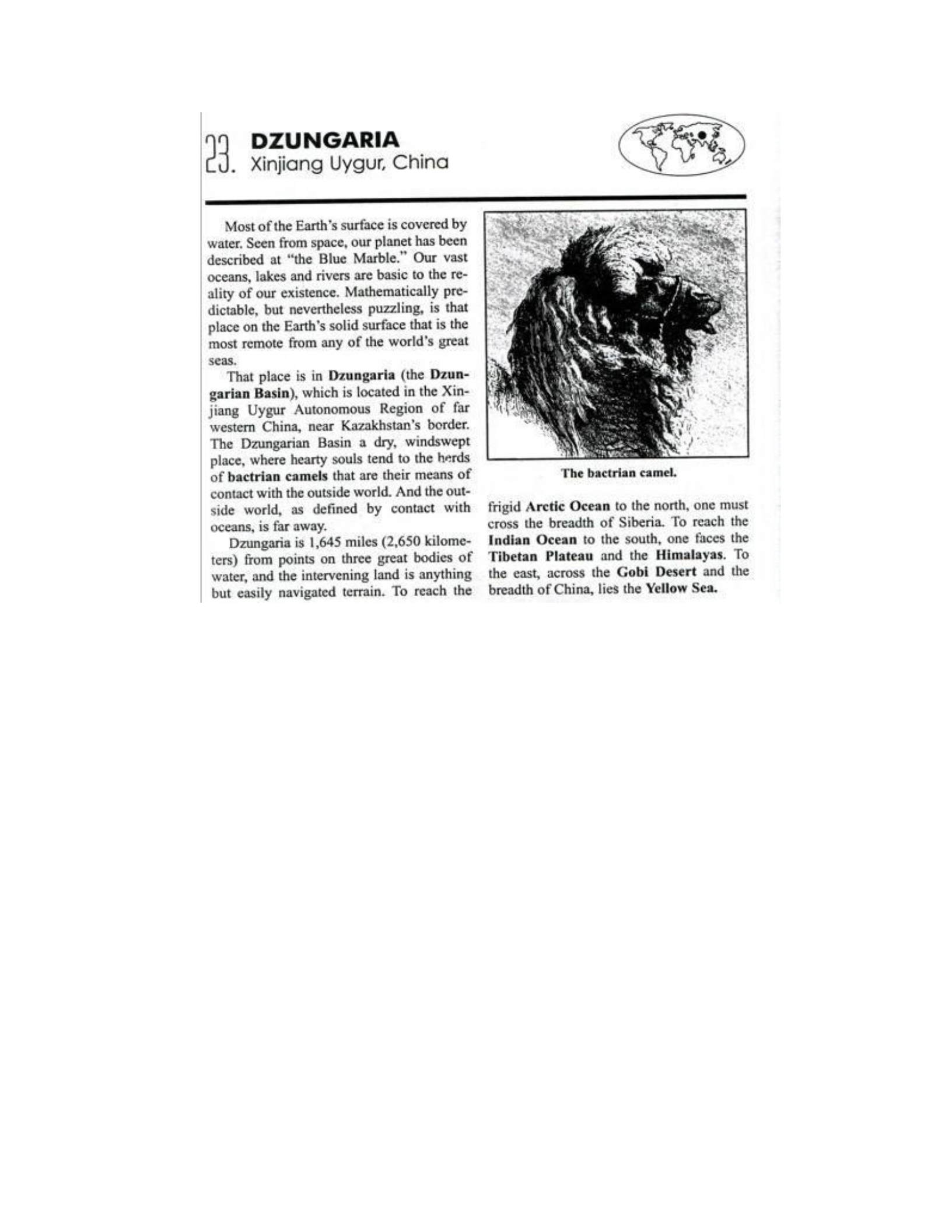
Figure 4. The only source in Missoula County Public Schools catalog for Xinjiang
(Source: 100 Natural Wonders of the World)
Tibet and Xinjiang
While Xinjiang remains very much underrepresented in geography textbooks
and teaching materials, Tibet and the plight of its titular nationality, on the other
hand, is highlighted in one way or another by every text that was analyzed. This
comes as little surprise given the West’s long infatuation with this ‘Shangri-La’ and
the celebrity profile of its exiled religious head of state. Ever since, and indeed long
before, James Hilton’s (1933) novel Lost Horizons, Tibet has been fixed in the
popular Western imagination as an isolated and timeless utopia inhabited by
innocent peasants, presided over by tantalizingly mysterious ascetics. Indeed,
criticism of the Chinese occupation of Tibet has become a cause célèbre on college
campuses, in Hollywood, and in media with portraits of the Dalia Lama regularly

appearing on the cover of grocery store checkout reading material. Of the Dalai
Lama’s mass appeal, Cunningham (2008, 28) writes, “Many Westerners, taking cues
from Hollywood, which celebrates the underdog and is deeply hungry for anything
resembling spiritual advice, and put him in the same league as Gandhi and Mandela,
if not Brad Pit and Richard Gere.”
All but one secondary school textbook includes at least one passage that is
critical of the Chinese government’s ‘occupation’ of Tibet and the persecution of its
people (Baerwald 2009, Boehm 2008, Salter 2007, Sager 2003). Bednarz (2005) is
the exception in that her text contains no discussion of ethnic tension in China
whatsoever. Likewise, nearly every textbook highlights Tibet as a site of strong
Buddhist traditions and acknowledges the role of the Dalai Lama in exile (Baerwald
2009, Boehm 2008, Salter 2007). All the texts contain non-visual message
components referring to Tibet, including photos of the Potala Palace, Tibetan
pilgrims, and landscapes of the Himalaya (Baerwald 2009, Boehm 2008, Salter 2007,
Bednarz 2005, Sager 2003).
The trend is closely followed by the other categories of teaching materials
analyzed. Among college level geography of China and world regional geography
textbooks decidedly more space is devoted to issues related to Tibet than any other
minority topic. Among Internet sources analyzed, nearly all include at least one
lesson plan devoted exclusively toward Tibet. National Geographic’s “Xpeditions”
contains three resources for teachers and students regarding Tibet, while searches
for “Xinjiang” and related topics yield zero results. Indiana University’s website
contains five excellent lesson plans devoted to Tibet, but none pertaining to Xinjiang.
Stanford’s curriculum guide, China’s Ethnic Minorities, has an entire chapter devoted
to Tibetans, but does not even mention Uyghurs or the other titular nationalities of
Xinjiang.
Some sources even appear to suggest there is not ethnic unrest in other parts
of China. The chapter review in Salter’s secondary school textbook instructs
teachers to ask students, “What rebellions has China’s communist government put

down since coming to power?” “Tibet 1959, and Tiananmen 1989” is the answer
provided (2007, 579), giving the false impression that these are the only two
incidences of widespread dissent to have occurred in China in the last 60 years!
Johnson’s textbook, with a 2010 publication date, mentions the 2008 riots in Lhasa
in a paragraph devoted to “Challenges to China’s Future” as evidence that the “1950
annexation of Tibet, the systematic denegation of Tibetan culture, and Han Chinese
economic control remain volatile issues that Beijing simply fails to recognize” (2010,
543). While the conclusion is open to conjecture, the author misses an opportunity
to generalize the point with additional evidence from other parts of China, namely
the inter-ethnic rioting and upheaval that took place in Xinjiang’s capital, Urumchi,
in July 2009.
The prevalence of resources devoted to Tibet can be viewed positively as it
contributes to a more critical awareness of China’s diversity. The lack of attention
devoted to Xinjiang, as compared to Tibet, warrants questioning given their
similarities: Tibet and Xinjiang are the two largest political subdivisions in China,
together comprising greater then one third China’s area (China 2007); they are the
first and third least densely populated regions of China; and significantly they are
the only two provincial level regions where Han Chinese are not the ethnic majority.
In both Tibet and Xinjiang the titular nationalities are united with communities
outside of China through their devotion to Buddhism and Islam, respectively. And
the vast majority of the populous are united by linguistic commonalities not shared
with the rest of China. Furthermore, Tibet and Xinjiang share the experience of
ethnic and religious persecution, interethnic violence, internal colonialism, and
aspirations of independence, or at least autonomy (Gladney 1994).
Why then does Tibet receive significantly more attention within textbooks
and curricular resources then Xinjiang? After all, Xinjiang is larger then Tibet and
contains a population greater then seven times that of Tibet (China 2007). Without
deviating too far I will propose a few of my thoughts to explain this trend.

Tibet’s geographic inaccessibility, geopolitical isolation since before the Great
Game, and its popularly accepted image as an exotic, mystical, religious destination
have helped create a narrative frame accepted in the West of Tibet as an unspoiled
ethereal kingdom somehow beyond the vice that is perceived to inflict “modern
societies”. As stated above, the Dalai Lama is an internationally recognized celebrity
regularly appearing in Western print media and television. The story of Tibet as it is
intermeshed with the Dalai Lama’s escape from Lhasa in 1959, his highly publicized
profile as a Nobel Peace Prize winner, are widely circulated and publicized in
Western media. Viewed through the normative lens of cosmopolitism— the legal,
political, and ethical values of neoliberal globalization embodied in international
human rights law (Mayo 2010)—Tibetan Buddhism, with its apparently unassailable
reputation for compassion and non-violence, is easily, and often, juxtaposed with a
reflexive revulsion against the soulless atheism of Communist China. Thus framed,
Western and American media portray Tibetans as ‘worthy victims’ (Herman and
Chomsky 1997), that is victims worthy of our support and sympathy because of
persecution by a Chinese state that is perceived to threaten our neoliberal Western
values.
Meanwhile in Xinjiang, there exists no charismatic leader who enjoys the
same high profile recognition and unconditional sympathy as the Dalai Lama
(Teague 2009). Rebiya Kadeer, the Uyghur businesswomen turned vocal political
dissident in exile, is the closest figure, however she remains far from a household
name. Furthermore, Islam does not enjoy the same uncritical attraction in the
Western psyche as Buddhism. Much has been written on the discursive framing of
Islam as a threat to Christian Europe and the West through the repeated tropes of
irrational violence, backwardness, and cruelty (Said 1978, Cere 2002). Indeed
Cunningham (2008, 28) writes:
The underlying key to the Dalai Lama’s appeal is rooted in Western
perceptions and misperceptions about Buddhism. Given similar grievances,
it is hard to imagine the religious leader of a Muslim minority group, lets say
in Indian Kashmir, south Thailand, or south Philippines, enjoying anything
near the same degree of almost unquestioned Western support.

Cunningham’s failure to recognize the salience of his point with regard to the
aggrieved Muslim minorities bordering Tibet to the north underscores the
invisibility of Xinjiang.
Here I would like to return to the concept of ‘worthy vs. unworthy’ victims.
Herman and Chomsky (1997, 37) suggest that Western and American media always
selectively apply human rights discourse according to their country’s geopolitical
alliances and interests. Herman and Chomsky (1997, 37) write, “[Media]
consistently portray people abused in enemy states as worthy victims, where as
those treated with equal or greater severity by their government or a client state will
be unworthy victims.” If we are to accept this argument, understanding the
invisibility of the Uyghurs and other Muslim minorities of Xinjiang becomes more
tenable. Uyghurs and their place in Xinjiang challenge the duality of this paradigm
and thus their place in the geopolitical narrative of the West becomes more
complicated and less certain. On the one hand, Uyghur are ‘worthy victims’ for the
same reasons as Tibetans; they face ethnic, cultural, economic, political, and
religious persecution at the hands of the Chinese state who’s rise is understood to be
somehow unfair and a threat to Western hegemony.
On the other hand, China’s tacit cooperation, particularly in Afghanistan, is
vital to US interests and continued military operation in Central Asia and beyond.
China’s ‘Strike Hard’ policy and other repressive actions taken in Xinjiang are
therefore tolerated as yet another facet of the “Global War on Terror.” The
designation of the East Turkistan Islamic Movement as an ‘international terrorist
organization’ with links to al Qaida and the high profile detainment of 22 Uyghurs in
Guantanamo have helped frame Uyghurs and Xinjiang within the distorted context of
the West’s struggle against militant Islamic fundamentalism. The fact that experts
question the significance of the East Turkistan Islamic Movement and its
relationship with al Qaida and the fact that all the Uyghur detainees at Guantanamo
have been cleared of all charges matters little.

Earlier I referenced the frequently repeated idiom “knowledge is power.” The
information contained in geography textbooks regarding Xinjiang is mediated by the
world ordering narrative frames of geopolitics. Here, yet again, Xinjiang is a liminal
space. Reporting on Xinjiang and its people is mediated first by its position within
the Chinese state. The socio-economic and political spaces of Uyghurs and China’s
other non-Han nationalities are occluded by the dominance of a Chinese national
discourse that stresses the unbroken spatial and temporal continuality of Han-
Chinese civilization. In this context knowledge and awareness of Xinjiang is
circumscribed. Its unique position within a larger dynamic cultural landscape is
subverted by the needs of a nation-state that is preoccupied with maintaining the
political status quo. Geography textbooks’ failure to address issues of cultural and
ethnic diversity in Xinjiang passively reproduces the “Hanification” of Uyghur and
other ethnic nationality’s space.
Summary
This chapter is dedicated to the qualitative content analysis of currently
available education materials focused on Xinjiang. The chapter explores how
Xinjiang is represented in secondary school geography textbooks, world regional
geography textbooks, regionally appropriate curricular materials, and regionally
specific lesson plans.
The results of the analysis clearly indicate a vast deficit in knowledge and
education about Xinjiang. Moreover, my research gives the impression that the
current state of education about China, and geography in general, in Montana
schools leaves something to be desired. Available teaching materials focus almost
exclusively on the political, historic, and human geography of eastern China, with
virtually no recognition given to the vast diversity of China’s population.
Chapter VII

Xinjiang Lesson Plans
Introduction
As knowledge and teaching about China develop, in relation to China's
ascension in world politics and economy, it is vital that teachers have access to
materials that demonstrate to students the diversity and complexity of social and
physical processes that characterize China today and throughout history. Making
available compelling geographic teaching materials that highlight the complexity of
social and physical processes in Xinjiang will aid teachers in strengthening the
geographic literacy of their students, while preparing them to make informed
decisions in an increasingly global future.
Given young American’s apparent low geographic literacy of China, the
development of curriculum about Xinjiang is an opportunity to address significant
knowledge deficiencies pertaining to China as a whole, while drawing attention to
the histories and geographies of China’s non-Han populations. With its extreme
topography, dynamic multi-ethnic populations, and intriguing histories Xinjiang as a
topic of inquiry is ripe with provocative content suitable for the development of
engaging curriculum for Montana students at the K-12 levels.
Furthermore, development of curriculum about Xinjiang conforms to the U.S.
Department of Education’s 2010 Invitational Priority 4, which calls for the
development of projects focusing on improving the understanding of areas with
substantial Muslim populations. Few people realize China is home to approximately
20 million Muslims (Pew 2009). Learning about Xinjiang’s predominantly Muslim
populations will inform students about the nature and extent of the Islamic world.
Knowledge of the region’s historically moderate practice of Islam and tolerance
shown for other religions will help students balance the sweeping generalizations
and negative stereotypes applied to Islam in much popular media with a broader
understanding of Islam as a diverse world religion.

Bearing all this in mind, I have endeavored to create meaningful lesson plans
that for all grade levels about the locality of Xinjiang specifically, but which highlight
important geographic, historic, cultural, and political questions with global
applicability. Having found that much of the material available on Xinjiang focuses
on ahistorical conflict tropes and unproblematized nationalistic rhetoric, I have
made an effort to create lessons that both broaden the scope of knowledge about
Xinjiang while asking students to think critically about commonly held assumptions
and stereotypes. To this end I have included lesson plans that challenge students to
think subjectively about the meanings of ethnicity, material culture, contemporary
media, and place. Where appropriate I have endeavored to include the use of
primary sources so that students will begin to think critically about the biases and
positionality inherent to media.
In structure I modeled these lesson plans after those found on National
Geographic’s 'Xepeditions' curriculum website. I have developed two to three
Xinjiang themed lesson plans appropriate for implementation in each of the three
grade levels—K-4, 5-8, 9-12. Lesson plans reflect relevant Content Standards,
particularly Content Standards 1, 3, 4, and 6, as well as, grade appropriate
Benchmarks as put fourth in the Montana Standards for Social Studies document.
The lesson plans can be found in the appendix to this document Geographic
Perspectives of Xinjiang: Narratives of Place Lesson Plans for Grades K-12 (See
Appendix C) and will be made available through the Xinjiang Curriculum Project
website.
Lesson Plans: K-4
What’s in a Hat: Ethnic Diversity of Xinjiang
This lesson plan is intended to introduce students to the concepts of identity
and ethnicity through the construction of ‘traditional’ ethnic hats from Xinjiang.
Students will begin by discussing what identity is and how it is symbolized in
material culture. In the second activity students will create traditional hats of

Xinjiang’s ethnic groups and assume a given identity. Teachers may extend the
activity by having students write a short “autobiography” about an assumed ethnic
identity.
Understanding Meaning Across Cultures: Understanding Uyghur Stories
This lesson asks students to interpret the meaning of Uyghur cartoons and stories,
from familiar Aesop’s fables to more abstract Uyghur folktales. In the process
students will analyze the materials for non-verbal information about Uyghur culture
and life. Students will also become familiar with the predominant linguistic families
and their relative geographic location.
Lesson Plans: 5-8
Visualizing Xinjiang: Understanding Through Mapping
Studying maps is a great way to begin to understand a region. There are
many different types of maps that present different types of information. In this
lesson, students will use physical, political, and thematic maps to investigate the
geography of Xinjiang, China. Students will gather information from many maps to
create their own map of Xinjiang and answer questions about its geography.
Xinjiangren: Ethnic Identity and Diversity in Xinjiang
This lesson plan is intended to build student’s awareness of diversity in China
by focusing on Xinjiang. Students will become familiar with the concepts of ethnicity
and identity, before learning more about Xinjiang’s ethnic nationalities. Ultimately
students will be assigned an imaginary ethnic identity that they will investigate.
Students will create an "official" identity card and write a short autobiography about
themselves.
Xinjiang’s Traditional Economies: Nomads and Oasis Agriculturalists
This lesson is intended to introduce students to the complex socio-ecological
adaptations that have made life in Xinjiang’s varying and extreme geography

possible. Students will explore the ecological and climactic conditions that have
shaped these different ways of life. Further more students will look at how these
two vary different ways of life have influenced each other.
Finally students will examine the material culture of nomads and
agriculturalists. Through class discussion students will compare and contrast the
utility and meaning of textiles within Xinjiang’s nomad and oasis communities. They
will conclude by creating their own carpet design that incorporates traditional
motifs as well as personalized symbols.
Lesson Plans: 9-12
Opposing Views: The 2009 Xinjiang Riots
This lesson plan is intended to introduce students to issues being faced by
China’s minority populations, particularly the Uyghurs of Xinjiang Province. The
primary activity of the lesson has students read newspaper articles about the 2009
riots in Urumchi that diverge widely in their treatment of the events. Students are
asked to use a work sheet to help them compare and contrast the differing
narratives, and come to their own conclusions as to the quality of the sources.
Xinjiang Music: Traditions in a Changing World
This lesson will introduce students to the diverse musical traditions of
Xinjiang, as well as facilitate conversations about the meaning and implication of
globalization, traditions, meanings of place, and national identity in our
contemporary era. Students will watch a short documentary about a well-known
Uyghur musician and challenges that Uyghurs face. Then students will study short
case studies of musical traditions of Xinjiang, analyzing them for how the forces of
globalization and tradition come to bare on place.

Summary
It is hoped that through geographic inquiry into Xinjiang, students will
become more knowledgeable and aware of the physical, social, and political forces
that have shaped this complex and geopolitically significant region of the world.
Furthermore, it is hoped that through close examination of this particular region,
students will be more able to apply geographic knowledge and skills to a host of
related geographic topics, thus illuminating the broader interconnectedness of the
world. Ultimately, if students are able to apply their skills and knowledge reflexively,
they will be able to bring those lessons to bear on decisions affecting themselves and
their communities. It is hoped that competence in geographic literacy will
encourage students to become informed, knowledgeable, thoughtful, competitive,
and tolerant global citizens and leaders.
This chapter presents a brief description of the seven lesson plans that were
created as an outcome of this thesis. The lesson plans are informed by the results of
the qualitative content analysis and meant to broaden student’s geographic literacy
of China and Central Asia by making quality Xinjiang geography lesson plans
available to teachers who are interested in engaging this region of the world.
Chapter VIII
Conclusion
Textbooks and educational literature, although authored by “experts”, are not
evaluated by the scholarly standards accepted in the academic community. Instead
publishers look at marketability of materials to school districts and teachers whose
preferences are chiefly influenced by familiarity, convenience, ease, and personal
preference. According to Bednarz (2004, 230), “The actual substance of geography
textbooks appears to have changed little over the years despite a veneer of new
ideas.” Current geographic education materials repeat homogenous knowledge and
harmful stereotypes. They are rife with superficial coverage, inaccuracies, and
outdated rhetoric.

The purpose of this thesis has been to explore and document the prevailing
narratives of place as they have been deployed in tourism and geography education
texts about Xinjiang, China. The research results show that the available place
narratives for Xinjiang fail to acknowledge the region’s unique character and
dynamic cultural landscape. Instead, the region is either defined in terms of the
pejorative Chinese-Marxist ethnic identity project, or occluded in the singularly Han-
centric place narrative of China. This thesis provides evidence that demonstrates
the profound degree that Xinjiang is overlooked, ignored, or misrepresented in
tourism and geographic education texts.
When tourism brochures and geography textbooks uncritically reproduce the
homogenized Chinese-Marxist ethnic identity narrative, the needs and interests of
China’s ethnic populations are subverted. By concentrating predominantly on Han-
centric geographies and histories of China, tourist literature and educational
materials tacitly condone and reproduce the hegemony of China’s Communist Party.
The relegation of China’s minority people to peripheral sidebars and curt
subsections in geography education literature reinforces their reality as second tier
citizens within China.
Geographic education is an opportunity to challenge the homogenized and
unproblematized narratives of China that pervade textbooks and other materials.
Recognition of China’s diversity and awareness of its minority people is essential to
understanding contemporary China and represents an opportunity for students to
think more critically about the world ordering spatial relationships between power,
people, and place. The lesson plans created as part of this thesis address the current
deficit of materials and knowledge within geographic education literature pertaining
to Xinjiang. In creating regionally focused lesson plans I have endeavored to create
awareness of Xinjiang as a dynamic home to multidimensional peoples faced the
challenges of our rapidly globalized era. The next steps needed to implement the
Xinjiang lesson plans involve field-testing by teachers and colleagues and continued
feedback from educators on how geographic education can be improved. Additional

materials need to be developed that educate teachers about Xinjiang so that they feel
comfortable approaching a region as unfamiliar and complex as Xinjiang. Finally, as
teachers have suggested the creation of a “Xinjiang Trunk” that contains educational
resources and material artifacts from Xinjiang would do much to make geographic
education about Xinjiang attractive to interested teachers and school districts
throughout Montana.
Further research into how Xinjiang is represented, historically as well as
contemporarily, by media both inside China and beyond will do much to illuminate
how our understanding of the region is framed, and provide a more critical
awareness of how narrative representations of place function in the region.
Furthermore, the need to evaluate and critique geographic education of China at
large is clearly evidenced. Geographic education about China remains marred by
homogenized knowledge, political rhetoric, and outdated tropes. If the promised
benefits of a truly diverse, tolerant, and just globalized era are to be actualized then
students must become globally aware citizens. Education is the nexus between
knowledge and power. Students must be educated think beyond themselves, to be
critically aware of misrepresentations or distortions of events, and open to the
multiplicity of competing interpretations of space.

