


1
Chapter 1: Introduction to the Study
The objective of this quantitative pretest/posttest impact evaluation was to analyze
the effect of Revision 7 of Article V of the Florida Constitution on fiscally constrained
counties using the punctuated equilibrium theory (PET) to explain policy and budgetary
changes within the Florida courts system. Before Revision 7 was implemented, urban
counties had greater resources to fund their court system than their more rural
counterparts (Hays, 1975; Samuel, 2015; Florida Office of State Courts Administrator,
2018). On some occasions, this disparity meant litigants with the same criminal
charges would receive different sentences or were denied opportunities for timely justice
based on the county in which they lived (Jennings & Calabro, 2006).
The stated goals of Revision 7 (Article V, Section 14(a) of the Florida
Constitution) were to: create a uniform funding mechanism at the state appropriation
level that would fund the state courts system, state attorneys, public defenders, and court-
appointed counsel (Martinez, et. al, 1998). Another goal was to determine how judges at
the trial court level are selected via direct election or merit selection and retention. It was
also a goal of Revision 7 to change the term of office for county court judges from 4 to 6
years and to correct the number of years a member of the state’s Judicial Qualifications
Committee is allowed to serve.
I served as the Clerk of the Circuit Court and County Comptroller of St. Lucie
County, Florida for 12 years. During that time, I observed numerous fluctuations in the
amount of dollars available to fund the courts system. This research contributed to

2
advancing current knowledge in academic literature regarding this issue. Evaluating the
courts system funding scheme in the state of Florida will help inform how state decisions
are made regarding courts system funding.
Seventeen years have passed since Revision 7 was implemented. However, a
dearth of academic research that examines funding for Florida’s courts system or any
other state courts system remains. One reason court systems funding is studied rarely is
complexities of understanding the funding models of modern-day court systems
(Greenberg & McGovern, 2012; Hartmus & Walters, 2016; Robinson, 2012).
In Chapter 1, I discuss the background of Article V Revision 7 and provide a
history of Florida’s courts system funding. I introduce the problem statement, purpose of
the study, and an analysis of the goals I achieved through this study. I introduce the
theoretical framework, the PET before an in-depth discussion of these policy ideas in
Chapter 2.
In this chapter, I explain the quantitative research questions and hypotheses. The
research questions involve whether Revision 7 is a successful policy that achieved its
goal related to providing greater funding for fiscally-constrained counties. The
independent predictor variable of the proposed study is the implementation of Revision 7
of Article V in 2004. The dependent variable is the funding allocation for each county
court in Florida between 1998 and 2018. I propose to use a one group pretest/posttest
design to compare actual budget numbers before the intervention of Revision 7 to those
numbers after intervention had occurred. I explain general terms used in the study.

3
Afterward, I provide study assumptions and scope and delimitations. As I have identified
my service in the courts system as a potential bias, I also provide an overview of any
additional biases that had the potential to affect the study, along with attempts to ensure
that these biases were addressed.
Chapter 1 concludes with my thoughts regarding additional research involving the
implementation of Revision 7 and its outcomes. I provide recommendations on how best
to work with data and answer research questions. I conclude Chapter 1 by summarizing
what I have shared and provide a transition to Chapter 2.
Background of the Study
On November 3, 1998, 59.6% of Florida’s voters approved the Florida Local
Option for Selection of Judges and Funding of State Courts, Amendment 7. The
amendment shifted most of the burden for funding the courts system from each of the 67
counties to the Florida State Legislature (Butterworth & Martinez, 1998). This change to
the courts system was substantial. Counties would pay less to fund their portion of the
judicial system. In the 1995-96 fiscal year, the state of Florida spent $101 million less to
fund the state courts system than counties did (Butterworth & Martinez, 1998). The cost
savings because of the financial burden shift to the state legislature meant that counties
would have additional revenue available to spend on other priorities. An additional
priority of Revision 7 meant that rural and urban counties had financial parity in local
courthouses.

4
Revision 7 was implemented in 2004. The Great Recession of 2008 was a barrier
for counties to receive expected funding based on the approved 2004 model. The Florida
courts system experienced major reductions in funding. Issues involving appropriate
Article V Revision 7 funding were part of yearly state budgeting conversations. The
focus of this study was an impact evaluation of budgets passed by the Florida legislature
and 29 fiscally-constrained county governments. The goal of the research was to evaluate
a gap in literature to determine whether the state increased funding for counties in
general, and 29 fiscally-constrained counties specifically. The initial impact of Revision 7
on the state budget was projected to be experience an increase in funding of about 32%
more than the previous year’s budget, for a total of $234.2 million, with the second-
year increase in court funding being approximately 2.5% and 1.6% increased funding in
years following Revision 7 implementation (Florida Senate Ways and Means
Committee, 2005). It is important to know whether these projections were correct.
Each year, Florida’s legislature commits less than 1% of the total state budget to
fund the courts system. In the 2019/20 fiscal year, that amount was approximately $554
million (Florida Office of State Courts Administrator, 2020). The legislature is not alone
in this method of funding. According to Molvig (2016), many state and local
governments attempted to reap money from fines and fees from state courts without
allowing those courts to use those funds to operate. In Florida, the courts system
generated nearly one billion dollars in revenue for the state. Much of the revenue
flowed to programs and services that are not related to the courts. Since 2006, the courts

5
system of the state experienced an erratic budgeting process. Florida Tax Watch (2004)
said funding for 2004-2005 would require “legislative fine-tuning—likely both increases
and decreases” (p. 17) in addition to emergency funds until funding issues were resolved.
Some departments within the courts system are running out of money to support
operations. A lack of planning may be to blame.
The Great Recession made full implementation of Revision 7 difficult. Another
challenge with full implementation of Revision 7 was the 4-year delay in writing
implementation instructions on the part of the Florida Legislature. Revision 7 was
approved by voters in 1998. The amendment mandated legislators to fund the state courts
system, gradually culminating with full implementation of Revision 7 to Article V in
2004. The first House and Senate implementation plans began in 2002. Progress at
implementing Revision 7 was made in 2003 when legislation setting up the new court
structure was adopted. All implementing legislation, or bills to place Revision 7 into law,
was completed in 2004 (Carlson et al., 2008).
Results of this evaluation will benefit policymakers as they identify the funding
scheme used by Florida state courts. Term limits for Florida state legislators mean that
elected officials do not know as much about legislation compared to lobbyists
(Lemongello, 2019). This means few elected officials in the state capital understand the
purpose and use of Revision 7. Five years after Revision 7 implementation, the Florida
Bar commissioned a study to review the policy. Population growth and the Great

6
Recession created case backlogs that required courts to reduce or eliminate services as a
result (Washington Economic Group, 2009).
Problem Statement
Equal justice under the law and access to justice are guiding principles of the US
judicial system (Albiston et al., 2017; Edenfield, 2014; Jawando & Wright, 2015; Prescott,
2017; Robinson, 2012; Saufley, 2010). Judicial independence is considered a pillar of
American jurisprudence (Darwall & Guggenheim, 2012; Nownes & Glennon, 2016;
Robinson, 2012). The general problem is a lack of financial data on courts systems that
persists throughout the US. The specific problem is reduced funding for courts systems
impacts communities via job losses, financial impacts for business owners, and reduced
access to justice.
Current research on judicial funding in the United States, including courts system
funding in the state of Florida, revealed little information on funding models for modern
day courts systems. If left uncorrected, the executive and legislative branches of
government will lack appropriate information to identify and determine what is considered
proper funding for the judicial branch of state governments (Samuel, 2015). The stated
goals of Revision 7 as listed in Article V, Section 14(a) of the Florida Constitution that
pertained to this evaluation were to create a uniform funding mechanism at the state
appropriation level that would fund the following: the state courts system, state attorneys,

7
public defenders, and court-appointed counsel. This change was approved by 57% of
Florida’s voters.
As an issue of transparency, legislators and members of the public require greater
knowledge of the funding process for Florida’s courts system.
However, the creation of a stable source of funding remains elusive.
Purpose of the Study
The purpose of this quasi-experimental quantitative archival-based research study
was to determine the impact of Revision 7 to Article V on the amount of funding received
in Florida’s fiscally-constrained counties. I compared county funding for judicial services
in the 6 years between 1998 and 2004. Also, I reviewed financial data post-
implementation between 2005 and 2018. A significant goal of Revision 7 was to end
Board of County Commissioners funding of the state courts system and allowing the state
government of Florida to fund the state courts system instead. (Butterworth & Martinez,
1998; Samuel, 2015).
I proposed using a quantitative research method involving archival data to
examine the funding differences between fiscally and nonfiscally constrained counties in
Florida by collecting data pre- and postintervention. The empirical study included all
counties but focused on 29 counties determined to be fiscally constrained according to
statute 218.67(1) of the Florida Legislature. It is important to focus on fiscally-
constrained counties because their unique financial challenges were a significant reason

8
to support passage of Revision 7. I examined funding of Florida’s courts system before
and after implementation of Revision 7. Reviewing this policy intervention has the
potential to inform legislative and executive branch policies related to the judicial system
in Florida. The goal of my study was to add to academic literature while determining the
impact Revision 7 had on court funding among nonfiscally-constrained and fiscally-
constrained counties in Florida.
Research Questions and Hypotheses
RQ1: Did Revision 7 to Article V create a significant difference in the amount of
court funding received pre and postimplementation?
H01: Revision 7 to Article V did not create a significant difference in the amount
of court funding received pre and postimplementation.
Ha1: Revision 7 to Article V created a significant difference in the amount of
court funding received pre and postimplementation.
RQ2: Did Revision 7 have an impact on Article V in terms of court-related
revenues pre and postimplementation?
H02: Revision 7 did not have an impact on Article V in terms of court-related
revenues pre and postimplementation.
Ha2: Revision 7 had an impact on Article V in terms of court-related revenues pre
and postimplementation.

9
Theoretical Foundation
This research plan involved using the PET, as presented by Baumgartner and
Jones, to review the impacts of Revision 7 to Article V on the Florida courts system.
Funding for Florida’s courts system after Revision 7 was a significant departure in terms
of the incremental nature of the courts system before 2004 (Samuel, 2015; Butterworth &
Martinez, 1998). The PET is an appropriate theory to use when focused on longitudinal
studies related to decision-making and political institutions (Baumgartner & Jones, 1993;
Weible & Sabatier, 2014). The PET is also beneficial when using budgetary information
because it involves identifying the importance of government programming over time
(Baumgartner & Jones, 1993).
Nature of the Study
Academic literature on state courts funding is scarce. This study was a
quantitative archival-based impact evaluation and involved examining state and county
funding of the Florida courts system pre and post Revision 7 implementation in fiscally-
constrained counties. A quasi experimental one group pretest/posttest design indicated a
median increase of about $23.3 million for fiscally-constrained counties after Revision 7
implementation. The independent variable was the implementation of Revision 7 in that it
serves as a marker of time pre intervention versus post intervention. The dependent
variable was funding for each county before and after Revision 7 intervention. This study
involved using a quasi-experimental design with archival data that were longitudinal and
compiled between 1993 and 2018.

10
A one group pre-test/post-test design allowed me to infer whether Revision 7 had an
impact on per capita spending for fiscally-constrained counties in the courts system. Results of
the impact evaluation will be used to inform legislators and citizens regarding outcomes of this
significant funding policy .
Definitions
Available funding: The amount of funding accessible for use to fund the courts
system in each county.
Fiscally-constrained County: Fiscally-constrained counties are in rural areas of
economic concern within Florida where the value of a mill, or unit of value equal to .10
of a penny, is less than $3 million based on tax data and property valuations (Financial
matters pertaining to political subdivisions, YEAR).
Funding: Resources to support the functioning of the judicial branch.
Mill: A money of account equal to 1/10 cent
Non-fiscally constrained county: All counties except for the 29 counties in Florida
who generate more than $3 million based on tax data and property valuations (Financial
matters pertaining to political subdivisions, n.d.).
Policy Punctuation: A significant departure from a normally incremental process
used to update public policy.
Revision 7: A series of voter-approved changes to the way the court system of the
state was funded through Article V of the Florida Constitution.

11
State Courts System: Judicial actors –including the Supreme Court, District
Courts of Appeal, circuit courts, county courts, and specialized divisions.
Bounded rationality: A believe that decision-makers have limits in making
choices based upon the information they are given, attention span, long-term memory,
emotional factors, age, amount of, and exposure to information.
Disproportionate attention: A believe that legislators have difficulty in processing
all the information they receive. Therefore, information is reacted to either in an
underwhelming fashion or as an overreaction.
Assumptions
There were some ontological assumptions to consider in this study. The issue of
court funding rarely receives public attention. I begin my assumptions with the believe
that the underpinning research is sound. I also assume that the data used for this study are
accurate. It was assumed that larger counties would have a larger team of financial
services professionals to audit and validate financial data when compared to their smaller
county counterparts.
Scope and Delimitations
This study covers the effects of Revision 7 over a 20-year timeframe between
1988-2018 in Florida’s 67 counties. I spent some time determining the impacts of
Revision 7 on Florida’s 29 fiscally-constrained counties as well. This study is delimited
to the 20-year time frame because it answers the research questions regarding the
financial impact of Revision 7. I chose not to go further back since there were changes in

12
policy prior to 1998. I chose the impact of Revision 7 because is changed the way that the
state of Florida funded its courts system. I focused on the fiscally-constrained counties
because they had fewer financial resources than counties that had greater populations.
Limitations
While there were benefits using archival data, there were also limitations. A
potential challenge with archival data was that it could be unreliable. However, data were
sourced from reliable government agencies. Another possible limitation is that the way
data were collected in 1993 is different than the way data are collected today. Therefore,
the way information was collected during one period may change as well. This limits the
study’s genera because the researcher does not know the data are reliable. Another
limitation was related to the size of the counties. When Florida’s counties submitted
annual budget information to the Department of Financial Services, they did so for
auditing purposes. An additional challenge of ex post facto research was the
observational nature of the study.
Significance
This proposed research was significant because it fills a gap by informing citizens
how Revision 7 was used to allocate public funds within Florida’s courts system. Judicial
independence was identified as important for courts to thrive (De Muniz, 2014;
Robinson, 2012). The erosion of judicial independence is a related concern (Berkson &
Carbon, 1978; Edenfield, 2014; Robinson, 2012; Tobin, 1981). Reduced funding for the
judiciary led to a lack of administrative resources to dispense justice (Payne, 2019). Court

13
funding has an impact on the lives of citizens, and results of my quantitative research will
help inform citizens.
I gathered data that compared funding of Florida’s fiscally-constrained counties to
those that are not. Data were manipulated using paired samples t-tests and regression
analysis to determine benefits of the intervention of changes to Revision implementation
of Revision 7 on the budgets of fiscally-constrained counties. This one group
pretest/posttest design was used to provide an estimate of the impact of Revision 7 on
fiscally-constrained counties compared to the time period before the ratification of
Revision 7. Understanding whether Revision 7 as a policy intervention was beneficial to
Florida’s fiscally-constrained counties was important because this project cost tens of
millions of dollars and used state funds from Florida’s taxpayers. It was in the public’s
interest to determine whether it was a successful use of resources. Kettl (2003) surmised,
“All political issues sooner or later, become budgetary issues” (p. 1).
By its definition, an impact evaluation “provides timely, accurate, and focused
information to effect social change” (Burkholder et al., 2016, p. 278). Harkness (2004)
believed adding scholarly information regarding judiciary funding would have a positive
social impact. My goal with this evaluation was to provide opportunities for
strengthening Revision 7 if data supported it .
Summary
The role Revision 7 to Article V of the Florida Constitution has on the courts
system is substantial. Revision 7 created substantial changes in terms of the way the

14
courts system is funded within the state. The success of Revision 7 remains in question.
Since its implementation in 2004, the courts system has had different challenges
involving funding, including the Great Recession and COVID-19 global pandemic. Since
the courts system is funded by the state legislature, and funds allocated are based on fines
and fees from users of the system, the funding mechanism is sensitive to significant
economic impacts. These impacts would be felt in greater measure in areas that are
already fiscally-constrained.
Existing research on Revision 7 has addressed questions regarding technical
efficiency and governance. Determining the success of Revision 7 implementation has
not been addressed. I reviewed archival data from prior to and after implementation and
determined whether variances before and after implementation of Revision 7 had a
greater impact on fiscally-constrained counties who had the greatest need for funding.
Determining the impacts of Revision 7 will aid in in policymaking by providing data-
driven information to verify how decisions made in legislatures impact policy.

15
Chapter 2: Literature Review
Introduction
Chapter 1 introduced the research study including the significance of conducting
research and basic information. In this chapter, I introduce available academic literature
related to my study of Article V Revision 7. I present a review of the literature search
strategy, extant PET literature, Florida’s courts system, and the history of Revision 7 to
Article V as it informed my study. Available literature involved the need of the judicial
branch to remain independent of the executive and legislative branches that funded it.
Available literature neither provided successful models of this phenomenon nor contained
exemplars of judicial systems that reviewed attempts to fund the judicial branch after
implementation of a new funding model. Literature related to Revision 7 implementation
was scarce, but literature related to the PET, policy creation, and judicial funding was
identified. There was a need for additional research regarding this topic.
To begin this chapter, I examined the scholarly literature regarding the PET. I
address court and governmental funding. I presented information that identified changes
in judicial funding models in Florida. In Chapter 2, I focused on extant literature. The
literature review began by reviewing funding challenges within judicial branches around
the world, across the nation, and around the state of Florida. Then I focused on the
unification of Florida’s courts, funding of the judicial branch before implementation of
Revision 7, and challenges involving insufficient funding for this branch. Last, I

16
discussed how Article V Revision 7 was operationalized and presented my summary and
conclusions.
Literature Search Strategy
This literature review began in 2017. The keywords searched were as follows:
courts system, court funding, judicial funding, judicial independence, Article V, Revision
7, funding justice, financing courts, punctuated equilibrium, judicial finances, and fiscally
constrained. This literature review was completed using multiple databases. Among them
were: Academic Search Complete, Military & Government Collection, Open
Dissertations, Political Science Complete, Public Administration Abstracts, SocINDEX,
Gale In Context, Google Scholar, and Thoreau. Since this study is a review of the passage
of a law and changes that followed, other than historical academic writings, articles were
selected that were published between 1998 and 2021. There was a limited amount of
peer-related literature available regarding the topic of court funding. States choose
various paths to fund state courts. Zambrano (2019) believed expansion of judicial rule at
the federal level reduced political pressure on state legislatures to find adequate funding
for state courts. This literature review also includes court decisions, law journals,
government reports, nonpartisan nonprofit think tanks, and the Florida Constitution. The
focus of my review was how court systems are funded generally and in the state of
Florida specifically.

17
Theoretical Foundation
The PET is used to explain how and why issues are managed within institutions in
the United States (O’Neal, 2011; Baumgartner & Jones, 1993). The PET involves
concepts such as bounded rationality, disproportionate attention, power, agenda setting,
framing, policy monopolies, and venue shopping (Cairney, 2013). Originally used in
geological studies, PET focuses on incremental changes that lead to larger change based
on attention and time (Baumgartner & Jones, 2010).
Elected officials must determine the best ways to inform themselves to make
decisions. During the 2020 Florida Legislative Session, there were 3,578 bills filed.
However, only 210 were passed (Florida Chamber of Commerce, 2020). Legislators
must balance competing requests for budget allocations with a finite amount of money
available for spending. Some social problems must wait while others receive immediate
attention.
Policy venues for courts include courts, local government, state government,
attorneys, court system users, and elected officials (Baumgartner & Jones, 2009). The
PET involves how changes in policy results from a radical departure from agenda setting
in governing. The result is an entirely different policy (Cairney, 2013; Moershell, 2009).
An additional benefit of the PET is that it allows for “.an in-depth analysis across time
that can provide rich information to test the PET model” (Menefee, 2017, p. 76).
The PET involves how and why court funding policies go through periods of
stasis before periods of rapid change (Sanders, 2016). Political processes create changes

18
to policy equilibrium based on either negative or positive feedback. These changes
effected explosive changes that created a new equilibrium. Without a crisis event, it is
difficult for those in leadership to disrupt the status quo (Dickson & Mitchelson, 2007).
Judges set the agenda for judicial funding by presenting the public with
information about their responsibilities. These responsibilities include providing adult
education regarding the role of the judiciary, teaching children about the role of judges in
modern life or reaching out to professional organizations to increase the level of public
knowledge about the judiciary (Levi, 2015).
The agendas of the state judiciary, the Florida legislature, and Florida counties
created a confluence of agendas and instability which determined the way the topic of
court funding was presented, discussed, and changed through Article V Revision 7.
Challenges remained in the way justice is funded in Florida. The passage of
Revision 7 was intended to be a solution for those challenges. Challenges to the law
remain. Since passage in 1998, the effect of Revision 7 was. not scrutinized through a
lens of effectiveness in part because it was difficult for elected officials to want to review
the effectiveness of policy interventions. Institutional friction and disproportionate
information processing were identified in PET literature as the two reasons that policies
are punctuated (Frick, 2017; Jones, Epp, & Baumgartner, 2019). Where there were
punctuating events, it was believed that recent experiences are positively associated with
the probability of punctuation (Cho & Jung, 2018).

19
Policy change can happen rapidly, but an incremental component was also present
(Robinson et al., 2014). Their supposition was concordant with Revision 7
implementation. While the state courts system began preparations for the significant
change after Revision 7 was passed in 1998, Florida’s legislature had other plans
(Carlson et al., 2008). Near the 2004 funding deadline for Revision 7, six years after its
approval, an editorial in the St. Petersburg Times stated the goals of Revision 7 to create
equity among judicial services funded by former governor Jeb Bush was inadequate (St.
Petersburg Times, 2004). This is an example of disproportionate attention because the
issue of court funding was a key 1998 constitutional amendment with a six-year
implementation time frame. The issue of court funding received disproportionate
attention across the United States during the 1990s (Zambrano, 2019). In Florida,
government officials waited four years before focusing attention on the issue of courts
funding (Carlson et al., 2008).
This study was a pretest-posttest quantitative study of the relationship between
fiscally constrained counties in the state of Florida and the financial results of the
implementation of Revision 7 to Article V of the Florida Constitution. Documents were
readily available for review from trusted websites at the state level. While preparing this
research, it became obvious that proper funding of the Third Branch of government
throughout the country remained a significant issue (Hartley, 2013; Ostrom & Hanson,
2010). Some states were not impacted by the Great Recession of 2008/2009. However,
court funding was reduced during the 2010—2011 legislative sessions in 80 percent of

20
the states, including Florida. This proposed dissertation evaluation and study builds upon
the different studies that investigated this area of courts system funding but did not tackle
this issue specifically. This study is different because it utilizes a PET framework to
delve into 25 years of data that contains budgetary information to answer the research
questions.
A former court administrator thought that the public would not believe the dire
financial condition facing state courts until the pain being experienced by litigants was
expressed in explicit terms (Grossi et al., 2012). A report went further to include a tale in
Washington State where a suspect had to be released because of speedy-trial issues.
While out, it was determined that the suspect raped a woman and then killed a pedestrian
during the high-speed chase meant to capture him (Grossi et al., 2012). This is part and
parcel of the objective conditions argument which posits that compelling issues require
either a shift in attitudes or a focus on how the misfortune of a few obtains the attention
of the masses and therefore, becomes an image worthy of governmental intervention
(Majone, 1989; Aikman, 2012).
McGovern and Greenberg (2014) believed the advantage of state courts being
funded by state dollars was the ability for all taxpayers to fund a constitutional right.
Under the scenario posited by the American Bar Association (ABA) at the time, only
court users would pay for the system and not all citizens. Baumgartner and Jones (2009)
identified a similar issue in their research related to class. The PET is often associated
with those who represent the masses of citizens who are not politically aware when

21
responding to policy changes initiated by political elites. In this way, the ABA comments
did not stand the test of time. The courts system had to admit a difficult truth. During the
2013-14 fiscal year, mortgage foreclosure filings fees were shifted from the State Courts
Revenue Trust Fund (SCRTF) to the state’s General Revenue fund. Foreclosures had a
precipitous drop in filings and as a result, the SCRTF was less reliable for revenue than
initially anticipated (Florida Office of State Courts Administrator, 2018). The courts
believed, “. . .the general revenue fund can better withstand the volatile nature of the
foreclosure filing fees. General revenue was then used as a primary funding source for
the courts” (Florida Office of State Courts Administrator, n.d.). During that time, 75% of
courts system funding comes from general revenue. All court services in Florida utilize
less than one percent of the state’s budget (The Florida Bar, 2004). Nationwide, courts
utilize between one-and-a-half and two-and-a-half-percent of total state budgets for
funding (“USA Today’s Debate: Public Spending”, 2011; Judicature, 1996).
The commentary from legislators regarding equal branches and adequate
funding is important. However, politicians often exult the concept of judicial
independence without adequate information to define it (Tiede, 2006). A difficult
challenge for the judiciary, it seems, is determining the difference between the soaring
platitudes offered by the other branches towards the judicial branch versus their follow-
through.
The use of evaluation as a tool in the government arena has increased in recent
years due to legislative edict (Davies et al., 2005). Impact evaluations are popular in the

22
field of policy evaluation (Burkholder et al., 2016). This study was a pretest-posttest
quantitative study of the relationship between fiscally constrained counties in the state of
Florida and the financial results of the implementation of Revision 7 to Article V of the
Florida Constitution. Documents were readily available for review from trusted websites
at the state level. While preparing this research, it became obvious that proper funding of
the Third Branch of government throughout the country remains a significant issue
(Zambrano, 2019, Hartley, 2013; Ostrom & Hanson, 2010). As a result, the rationale for
use of the PET became evident when change: both immediate and delayed was applied to
the courts system. This dissertation built upon multiple studies that looked in this area of
courts system funding but did not tackle this issue specifically. Earlier studies looked at
the process of implementation of Revision 7, attempted to measure the impacts from an
implementation period and forward aspect, monitored governance improvements because
of Revision 7, determined technical efficiency, and reviewed the literature regarding the
role of court systems funding on a nationwide scale. This study was different because it
utilized the PET framework to delve into more than 25 years of data that contained
budgetary information to answer the research questions.
Literature Review
The concept of a government stronger through its independence has served as a
formula for modern democracies (Tiede, 2006). Government is most effective when no
individual branch enjoys so much unrestrained power to make life difficult for either the

23
other branches or the wider community (Jackson, 1993; Rosenbloom, 1983; Madison,
1788). While co-equal branches were ideal, The Federalist Papers reminded the reader of
the challenge of the independent judiciary; for decisions of the courts to be upheld, the
Legislative and Executive branches were the only branches equipped to carry them out
(Hamilton, 1788 ; Badas, 2019). The concept of checks and balances required a true
separation of powers and a breakdown in that separation would destabilize our form of
government (Jackson, 1993). A former president believed that the judiciary were the
guardians of all rights in the United States and other presidents have spoken about an
independent judiciary serving as a reason Jeffersonian democracy thrives.
The judicial branch is one of three independent and coequal branches that form
our government (Schifino, 2017). The struggle to understand its funding is complex.
While this issue has garnered scholarly attention for many years, the 20 years between
1989 and 2009 seem to be the height of academic research into this issue. The National
Center for State Courts, a repository for courts systems related information, focused its
attention to the issue of judicial funding and independence during that time (Zambrano,
2019).
As mentioned previously, scant literature exists regarding state courts and their
funding schemes. As part of the study, the issue of adequate funding was identified as a
challenge. A finding of the study was that a better understanding of the court system
budget was necessary, as well as a keen understanding of the political and legislative
processes.

24
Hays (1975) also studied court reform focused on innovation and challenges to
reform. Both reviews looked at the aftereffects of a constitutional-based reorganization of
Florida’s judiciary. Samuel (2015) and Hays focused on the roles of the court
administrators and the role funding plays within the judicial system. Hays also included
perspectives from chief judges and court clerks. Samuel chose the administrative officers
of court as a group to gather knowledge from, Hays and contemporaries at the time in
legal and academia believed that managers within the administrative state were the
impediment to court reform. Both found little academic information related to court
administration.
Ferrandino (2010) focused on the technical efficiency and productivity of the
Florida Courts System. Specifically, Ferrandino utilized resource dependency and
institutional theory to determine that Florida Courts had not become more efficient since
Revision 7 implementation. Of note for this study, Ferrandino indicated that productivity
fell by nearly 3% in small and medium-sized circuits, which happen to encompass most
of the fiscally constrained counties that form the population for this study. The
determination of the study was that resource allocation decisions should include
efficiency analysis as well as additional judges do not increase, but rather decrease
efficiency.
Carlson et al. (2008) produced a study by the Justice Management Institute and
funded by the National Institute of Justice that reviewed Revision 7 as part of a three-
state review of court funding. The study was focused on the effectiveness of trial court

25
funding to include equity and accountability. Hamilton (2017) looked at revenues
generated from traffic citations and their impact on the court clerks and comptrollers in
Florida utilizing multiple linear regression analysis. I discovered that a large proportion
of the budget for this element of the courts system came from traffic citations. This
research attempted to inform future funding initiatives for Florida’s courts system during
challenging times. As we are entering into the third budget cycle while living with the
Covid-19 virus, legislators may appreciate a review of policy decisions made during
other difficult times.
The Carlson et al. review pointed to three issues that form the basis of my
research: smaller courts have greater funding challenges than their larger court
counterparts, it is difficult to determine stability and adequacy of court system funding
from only a cursory look at financial data, and additional research is necessary to discern
best practices and approaches.
Researchers observed that an unintended consequence of Revision 7 was reduced
innovation within the courthouse and that state funding limited the creation of best
practices.
Funding Around the World
Langbroek (2019) identified the way the judicial budget for the Netherlands
worked related to workload. Rates are determined based on the amount of work produced
by the different types of courts on an annual basis. If the case load is higher than the
budgeted amount, a distribution equal to 70% of the amount spent per case is provided. If

26
the case load is less, then there is a 30% reduction. The judicial system is budgeted as
another government agency and remains, “.subordinate to political considerations.”
Viapiana (2019) discussed the limited pool of resources available for allocation. Across
the European Union, similar challenges exist than in the Netherlands and in the United
States: funding is delegated to the other two branches of state. Resources for the judiciary
are funded with a goal to keep the judicial branch independent There is a focus on
accountability and protecting the public purse. Budgets are focused on performance-
based systems in countries like Finland, France, and the United Kingdom. Performance
budgeting uses outputs and impacts of public policy to determine how much funding
should be allocated to the judicial system’s budget (Viapiana, 2019). One item that is
different in the budgeting process occurs in Finland. Each year, a kickoff meeting occurs
between the courts staff and the Ministry of Justice occurs to provide a financial
overview and increase transparency of judicial funding. Finland is allowed to roll-over
budget savings into the next year’s budget.
Funding for Courts in the United States
The 1990s were the first time that there was significant documentation of the
funding challenges that courts systems faced nationwide (Zambrano, 2019, Judicature,
1996). As a result, articles that identified increased user fees, reduced hours of
operations, and lack of access within courts systems became prevalent (Judicature,
1996; DeBenedictis, 1992). The drug epidemic and subsequent war on drugs and increase
in crime was identified as the beginning of the end for adequate funding for the civil

27
courts (Judicature, 1996; DeBenedictis, 1992). Another goal for court systems was to
develop a solution to a growing problem: a lack of financial investment within the courts
system. One way to do more with less was through unifying different types of courts
under a single umbrella to increase efficiencies. Ninety-five percent of cases filed in the
United States are heard in state courts (Graetz, 2014; McGovern & Greenberg, 2014).
Sixty percent of all cases in the United States are heard through courts of limited
jurisdiction, like county courts in Florida (Schauffler et al., 2011).
Judicial actors learned to use an outside third party to lobby and message for
greater resources on their behalf. The National Center for State Courts has assisted with
messaging throughout the United States as it relates to funding court systems (McGovern
& Greenberg, 2014). It is a common believe within the judiciary at all levels that the
inability of the legislative branch to fund the judicial branch at the level the judicial
branch requests has caused numerous problems for citizens. The inability to receive
appropriate and timely access to the courts has reduced the public’s right to receive
constitutionally protected and mandated services.
Therefore, talking points advised judicial leaders to speak of the harm to innocent
users of the court system because of denials and delays of their constitutionally
guaranteed access (Barron, 2012; Derocher, 2010; Florida Constitution, n.d.; Grossi et.
al., 2012; Justice for all Floridians Key Messages, n.d; New Hampshire Bar Association,
2010; Quince, 2009). Utilizing the structures of PET, this idea is referred to as a policy
image (Baumgartner & Jones, 2009). Notice that the talking points are related to

28
information but also an emotional hook. Policy images are always a mixture of these
characteristics. The American Bar Association encouraged their judicial partners at the
state and local level to pay attention to the impacts inadequate funding had within their
communities. They were also encouraged to build coalitions of citizens who would
comment to the legislature and request action (Graetz, 2014; Podgers, 2012). One of the
important points legal leaders wanted to share with their elected officials was that
funding courts was a constitutional responsibility and not just another budget
appropriation (Samuel, 2015; Podgers, 2012; White, 2009). The belief is that making
legislators, the public, and other decision makers aware of the needs of the court system;
they will be better advocates touting the role of the courts (Grossi et al., 2012; Buenger,
2004). As recently as 2015, the two chief justices of California and Texas shared that
their grand challenges for dispensing justice include a lack of stable and reliable funding
to operate and a public that does not understand the courts (Levi, 2015).
Funding for Courts in Florida
Florida’s courts system was funded in the following manner: state revenues are
appropriated for state attorneys’ offices, public defenders’ offices, and court-appointed
counsel. Certain costs were funding via filing fees and service charges. Counties and
municipalities are not required to fund the offices previously mentioned, or the offices of
the clerks of the circuit and county courts when they are performing court-related
functions (Florida Legislature Constitution and Statutes, n.d.).
Elements of the Florida Courts System

29
During the implementation of Revision 7, Chapter 20.004 of Florida Statutes was
created to define elements of the state courts system including judges either appointed or
elected, juror compensation and expenses, court reporting costs, facilities costs including
security, interpretation services, expert witnesses, judicial assistants, law clerks, and
resource materials, expert witnesses, foreign language and sign language interpreters and
translators, court management, court administrators, magistrates and hearing officers.
Judicial event scheduling, mediation and arbitration, and drug court are also funded. Case
management is also included. Case management may not include costs associated with
the application of therapeutic jurisprudence principles by the courts. Case management
also may not include case intake and records management conducted by the clerk of
court. The final items funded by the state for purposes of justice in the courts system
includes mediation and arbitration, basic legal materials but not a law library, the Judicial
Qualification Commission, and appellate services.
After a thorough review of the Constitution and Statutes of the state of Florida,
the term “court system” refers to the judicial actors listed in Sections 1 - 6: the Supreme
Court, District Courts of Appeal, Circuit Courts, County Courts, and Specialized
Divisions. As it relates to funding, “courts system” is distinguished from other
organizations like the State Attorney, Public Defender, and Court-Appointed Counsel.
This would suggest as well that the “courts system” refers only to the judicial actors.
Whether it is described as the court system or the courts system, the singular organization

30
to which it refers is the Judicial Branch and the most necessary tools required to dispense
justice.
The Florida Supreme Court and Florida District Court of Appeals have the ability
to establish the rules for procedures in courts and the appropriate methods of practice
including the appellate courts, supervision of courts in the state, case transfer authority
for court cases filed incorrectly before the wrong court and a guarantee that cases may
not be dismissed because a remedy is considered improper (Florida Constitution, Article
V: Section 2) The Court consists of seven justices of which five constitute a quorum. For
a decision to be made, at least four justices shall concur.
It also can review district court decisions of “great public importance” or in
conflict with another district court of appeal (Florida Constitution, Article V: Section 3).
The Supreme Court also heard appeals from final judgments, rates of service of public
utilities, determined the validity of state statutes or determined a provision of
constitutions, constitutional officers, or contravening decisions of courts of appeal. There
are district courts of appeal that could hear appeals from “final judgments or orders of
trial courts, including those entered on review of administrative action, not directly
appealable to the supreme court or a circuit court” (Florida Constitution, Article V:
Section 4b: 1). District courts also could direct review of administrative action. They
consist of at least three judges with concurrence of two being necessary to render a
decision.
Court Jurisdiction

31
In each judicial circuit there will be a circuit court and the jurisdiction for each
circuit court will be different than in county courts. The authority of the circuit courts
shall be for “… writs of mandamus, quo warranto, certiorari, prohibition and habeas
corpus, and all writs necessary or proper to the complete exercise of their jurisdiction”
(Florida Constitution, Article V: Section 5). In each county, there shall be a court with at
least one judge and the jurisdiction should be uniform across the state.
It is appropriate to discuss jurisdiction of courts at this point. State courts are
established in numerous ways throughout the United States. (courtstatistics.org). Single-
tiered, or unified state courts process all legal cases within a single trial court. There are
five states and territories that fall into this category. The other states provide a two-tiered
structure. Florida’s judiciary follows this model. There are two courts: courts of general
jurisdiction and courts of limited jurisdiction. General jurisdiction courts, which are
called Circuit Courts, have the authority to hear all types of cases within a geographic
area (circuit, district, state, etc.). By comparison, limited jurisdiction courts, which are
called County Courts in Florida, focus on cases that are more common like traffic
citations, small claims, and misdemeanors (Samuel, 2015; Cornell, 2012). Under this
system, Circuit courts can hear appeals from county court cases, meaning that the circuit
courts serve as the lowest appellate court within Florida’s Judiciary Branch. Circuit
courts are where the following cases are adjudicated: felonies, juvenile, probate, land and
tax disputes, civil cases involving an amount greater than $15,000, declaratory
judgments, and injunctions. There may be other types of courts within the circuit

32
(juvenile court, mental health court, veterans court, etc.). They are most often a circuit
court doing business as these other courts. However, there are other actors who are part
of the courtroom and have a vital role to play. They include roles that are familiar to
citizens like the state attorney, public defender, court-appointed counsel, and clerks of the
circuit and county courts. Below, a short description of each office is provided for
context.
Florida is divided into 20 circuits for purposes of court management. Therefore,
there are 20 state attorneys and 20 public defenders who serve the public of those circuits.
A challenge for these offices was the lack of funding and the extreme number of cases
(Moreau, 2019). There are also 20 chief judges and court administrators who function as
chief operation officers on behalf of circuit chief judges. There is also the office of the
State Courts Administrator, County Trial Court Administrators, the Justice
Administrative Commission (JAC), Clerk of Courts Operations Corporation (CCOC), the
Trial Court Budget Commission (TCBC), and the Boards of County Commissioners
(BOCC) (more information on the BOCC later) throughout the state of Florida.
Article VIII Section 1 of the Florida Constitution states the selection of the Clerk
of the Circuit Court and delineates how the responsibilities of the clerk of the circuit
court can be divided between two officers: one serving as the clerk and the other as the
clerk of the board of county commissioners, and custodian of county funds. Filing fees
based on judicial proceedings and charges for court services (Florida Constitution, Article

33
5: Section 16). There are also costs and fees that may be funded through filing fees for
proceedings of law and service charges and costs for court-related funding.
The Justice Administrative Commission (JAC) serves as an administrative arm to
nearly 50 entities that are part of the courts system. The state attorneys and public
defenders, Criminal Conflict and Civil Regional Counsel, Capital Collateral Regional
Counsel, and the Guardian ad Litem program. Most of the administrative services are
focused on finance, budget, and human resource services. It was created in 1965. The
Clerks of Courts Operations Corporation (CCOC) was created by an act of the Florida
Legislature as a public corporation. The CCOC supports clerks in all counties through
review and certification of court-related clerk budget proposals. Comprised of all clerks
of the circuit court and led by an executive council of eight clerks plus an ex-officio
designee of the House Speaker, an ex-officio designee of the Senate President, and a
designee of the Chief Justice of the Florida Supreme Court. The group is also responsible
for “Recommending to the Legislature changes in the amounts of the various court-
related fines, fees, service charges, and costs established by law to ensure reasonable and
adequate funding of the clerks of the court in the performance of their court-related
functions” in addition to “developing and certifying a uniform system of workload
measures and applicable workload standards. . .” (Florida Legislature Constitution and
Statutes, n.d.). Funds are provided to the Chief Financial Officer of the state for
distribution to the corporation as appropriated by general law. The Trial Court Budget
Commission (TCBC) has budget authority based on the goals of actors in the judicial

34
branch and their established policies. TCBC is a commission charged with advocacy for
additional budgeted funds. They also recommend to the Court funding allocation
formulas and establish funding and budgetary policies. Now that there is a baseline of
understanding regarding the main characters and supporting actors within the Florida
courts system, it is appropriate to discuss the push for unification of Florida’s Courts.
Unification of Florida’s Courts
Florida abolished multiple types of trial courts—more than any other state except
New York in 1973 (Florida Office of State Courts Administrator, 2020). This move
toward unification was based on a realization that court expenditures increased as courts
began to develop unique characteristics from the communities they served (Hartmus &
Walters, 2016). Unifying courts, as Florida did, was thought to provide numerous
efficiencies over time and reduced the number of cases dismissed for lack of jurisdiction
(Flango, 1994). As all state courts systems in the United States are funded differently,
Florida was not alone in making this shift (Hartmus & Walters, 2016). Alaska, Colorado,
Connecticut, Hawaii, and Nebraska moved toward court unification during a similar time
frame as well (Hays, 1975). The goal of court unification was to give judicial actors the
efficiency to promote dispensing justice (Hartmus & Walters, 2016; Grossi et al., 2012;
Durham & Becker, 2010). Unfortunately, while the issue of court funding was initially
dealt with as early as 1973, challenges remain. The longer that it takes to solve a
problem, the greater the policy punctuation required to solve that problem (Jones, Sulkin,
& Larsen, 2003; Jones &Baumgartner, 2005).

35
A two-tiered trial court system and a focus on unification were positive results in
the modern development of the courts (Carlson et al., 2008; Durham & Becker, 2010;
Graetz, 2014; Hartley, 2013; O’Conner, 2013). The move from local funding to state
funding is often viewed within the context of centralizing the Judicial Branch while
providing an additional layer of judicial independence from the Executive Branch
(Berkson & Carbon; 1978; Tobin, 1981). State economic outcomes and borrowing
capabilities are also improved by greater judicial independence (Dove, 2017). However,
even after tools like unification and cost-shifts from local to state funding
were implemented, there was no significance shift in the amount of dollars used to fund
judicial systems (Hartley, 2013; Carlson et al., 2008). Graetz (2014) and Flango (1994)
identified that court unification would provide a simple and effective model to move
resources in an efficient manner while reducing the burden on local taxpayers. McGovern
& Greenberg (2014) said the advantage of state courts being funded by state dollars is
that all taxpayers are funding a constitutional right. However, state funding also involved
risk. The independence of the judiciary was at risk because the courts were forced to
suffer the whims of appropriators in the legislative branch (McGovern & McGovern,
2014). Unification led to more efficient use of retired judges, increased case
management, staffing efficiencies, improvements to record systems, and automations
because of administrative unification. As of 2010, there were 10 states that had a single
trial court. Seven more had advanced to a two-tier system like Florida (Durham &
Becker, 2010). Regardless of how many tiers a courts system has, all courts systems

36
require funding to operate. Next, I will review funding for the judicial system in Florida
before Revision 7.
Judicial Branch Funding Prior to Revision 7
McGovern and McGovern (2012) recognized that information regarding some
parts of the justice system were lacking, poor and of limited scope. It was also
acknowledged that attempts to compare court funding across states could be problematic
because reporting across states is inconsistent. States did not fund their court systems in
the same way, states did not fund judicial activities at the state level in the same way,
states used different budget organization methods for courts, and the budget process
performed by the executive and legislative branch was unclear. There are often hidden
agendas as part of policymaking since policymaking is a political process on its face
(O’Neil, 2010).
During fiscal year 1995-1996, Florida counties spent nearly $614 million on state
courts while the state of Florida spent $513 million (Butterworth & Martinez, 1998).
When voters decided in 1972 to amend Article V, the amendment was presented to and
approved by the public with the understanding that counties would be out of the funding
business for a state entity (Carlson et al., 2008; Florida Tax Watch, 2006; Martinez &
Butterworth, 1998). Just as civil rights issues moved from a localized venue to a federal
venue for enforcement, so too has the issue of courts system funding moved from a local
issue to a state issue (Baumgartner & Jones, 2009).

37
Challenges of Insufficient Judicial Branch Funding
The judicial branch has the responsibility to solve disputes between citizens. It
has a greater responsibility to solve disputes between branches of government. Courts are
at a disadvantage as a branch of government because, while considered equal, they do not
have the same voice as the other two branches of government. However, they have a
responsibility to marshal the full resources of the judiciary to defend itself from the
legislative and executive branches that are meant to be separate but equal. Since the 1968
Constitutional Revision Commission, Floridians have made multiple changes to the way
they fund the courts system. Today, the Three Branches of state government continue to
debate the question of courts system funding—the most recent debate occurring during
sessions of the Florida Legislature in 2020.
Since implementation of Revision 7, the courts system spent the past 17 years
lurching from one budget crisis to another due to factors both exogenous and self-
inflicted. In 2009, the state courts system received what it believed would solve any
additional funding problems; a dedicated source of funding through the State Courts
Revenue Trust. A decade later, the Justice Administrative Commission, part of the state
courts system, ran out of money and could not pay the fees on behalf of criminal
defendants to court reporters, expert witnesses, and private investigators for more than
two months (Orlando Sentinel, 2019). The friction, or levels of resistance between the
Executive, Legislative, and Judicial Branches mean that reaching solutions that satisfy all
three branches is more difficult the further into the legislative process the parties get

38
(Jones, Epp, & Baumgartner, 2019). As federal courts took more legal issues out of the
prevue of state courts, Zambrano (2019) posited businesses no longer needed to lobby for
“competent and well-funded courts” (p. 2109). Holyoke & Brown (2019) took a deeper
look at the issues surrounding what occurs post policy punctuation and whether the
impact was sustainable.
Additional challenges to the courts system since 2004, including the Great
Recession, have rendered the Revision 7 funding scheme, which utilized fines and fees
for court services, unsustainable (Samuel, 2015). The goal of this dissertation was to
provide detailed information about court funding in Florida, and determine from
documentation, how the funding crisis and the positions of the actors involved created the
moment for change. Citizens have a right to know if government funded programs are
making a positive impact in the lives of their neighbors (Owens & Rogers, 1999).
Revision 7 was created to solve a social dilemma. The location of a court could determine
the type of justice a citizen would receive. The public reviewed the information and
determined that action should be taken. As a result, the citizens voted to spend resources
to effect a social change. Since implementation, no academic review of the impacts of
Revision 7 on the goals of the policy were undertaken. It is appropriate to identify
challenges with the current program and propose improvements and promote
accountability to the voters (Burkholder, Cox, & Crawford, 2016).

39
Article V Revision 7
Article V of the Florida Constitution focused on the Judicial Branch and its
funding. It also focused on key actors within the broader courts system. To understand
the funding needs of the system, it was important to understand the structure of the
Judicial Branch as delineated in the Constitution and state statutes.
Comprised of 20 sections, the first seven sections of Article V (1-7) focused on
the type of courts (Supreme Court, District Courts of Appeal, Circuit Courts, County
Courts, and Specialized divisions) and their respective formulation, processes, and
general procedures throughout the state (Florida Legislature Constitution and Statutes,
n.d.). The next five sections (8-12) focused on elections of judicial members,
determination of need of judges, the process to handle vacancies of judicial office and
discipline. Section 13 is related to prohibited activities of judges and Section 14 is the
Funding section, as explained previously. Sections 15 through 18 focused on Clerks of
the circuit courts, State attorneys, and Public defenders, respectively. Section 19 provides
for judicial officers to be conservators of the peace and Section 20 provides the detailed
schedule of Article V implementation from 1973 (Florida Legislature Constitution and
Statutes, n.d.).
When the 1997 Constitutional Revision Commission was formed, the issue of
funding Florida’s court system funding was a priority (Labrador & Copelan, 1997).
County funding for the courts system totaled more than the state’s financial contribution.
At the time, the courts system was in crisis mode, partly because 14 counties in the state

40
had reached the maximum allowable millage rate of 10 mills. The previous time the
constitution was reviewed, Article V was implemented to create a state system that was
uniform from Pensacola in the west to Key West in the south (Labrador & Copelan,
1997). A comprehensive state funding plan served as the cornerstone of the Article V
revision.
Boards of County Commissioners across the state passed resolutions in support of
Revision 7 (Article V Costs, 1998). In 1972, the revision to Article V “was presented as a
measure that would provide tax relief to property taxpayers (Labrador & Copelan, 1997,
p. 30).” At the time it was viewed as complete restructuring of a diffused court system
into a complete whole (Hays, 1975). The previous type of courts, including many
municipal and juvenile type courts were abolished and replaced by a two-tier court
structure (Hays, 1975).
The counties attempted to have the state pay for the full cost of funding the courts
system since Article V passage as part of the 1968 Constitution and then again with the
1972 revisions, but the state refused (Labrador & Copelan, 1997). When the opportunity
came to push the issue politically, counties embraced the opportunity. Floridians for
Fairness in Court Funding was the name of the political arm of the Florida Association of
Counties that spend $3.5 million to campaign to promote Revision 7 to shift funding to
the state (Krueger, 1998). In the ad, the supporters use a gruesome murder case where
after being tried, convicted, and sentenced to death; it was alleged that the murderer got
life because there were limited funds to adequately cover the costs of the sentencing

41
hearing (Nitkin, 2008). While there was room for interpretation, the state attorney
involved in the case at the time stated that the death sentence was not issued because the
murderer was in poor health and would not survive another prosecution (Orlando
Business Journal, 1998).
Article V Revision 7 intended to provide Justice for all Floridians; the catchphrase
used by the Judiciary in hopes of securing passage of Revision 7 (Harkness, 2004).
Judicial partners said and did what they could to pass Article V and Revision 7. A year
before the 2004 funding shift in Florida took place, the director of the National Center for
State Courts asserted that judiciaries were facing, a test not seen since World War II
(Center Court, 2003). More interesting is that the crisis was especially devastating for
courts systems that received most or all their court-related funding directly from the state
government (Buenger, 2004). Hartley (2013) found no way to determine if states
provided better funding than local municipalities and counties.
Florida’s Budgeting Process
The state budget for Florida is created after an extensive process. The state is required to
balance its budget each fiscal year (Fla. Const. Article VII, Section 1, n.d.). The budget has three
main categories of funding streams: general revenue, state trust funds, and federal funds. Each
fall, there is the long-range financial outlook that provides a model of potential funding for the
state by matching expected revenues with estimated expenditures. Section 216.133-138, Florida
Statutes provides the authority for this outlook to occur. Agencies of the state also play a role in
submitting their potential budget needs to the executive and legislative branches. One month

42
before the annual 60-day session of the Florida Legislature convenes, the governor is required to
submit the proposed budget from the Executive Branch to the House and the Senate. After
submittal, the legislative branch begins its work separately in each house, and then together as a
unified branch of government. Separately, the House and the Senate begin to draft a budget
which consists of three types of funding bills in the Florida Legislature: appropriations,
implementing, and conforming.
The Florida legislature has the power of the purse, which is like the federal courts
system. All spending is controlled by the legislature. After the House and Senate pass
their versions of the spending bill, the Speaker of the House and Senate President appoint
members to jointly serve on the budget conference. This committee, consisting of
members from the legislative bodies discuss areas where the two versions of legislation
disagree and attempt to find agreement that each chamber can support. Appropriation
authority is also provided in the form of budget allocations. The conference
committee must determine which line items receive funding and at what level. If there are
disagreements that are unable to be resolved at the lower level are forwarded to the main
committee. If the main budget committee is unable to make final determinations, the
issue is forwarded to the Senate President and Speaker of the House make the final
decisions on the fiscal issue. A final conference report is submitted and voted upon
before it is sent to the governor for review and signature. Florida’s governor could veto
parts of the budget before agreeing to it.

43
Revenue sources funded by income taxes and sales taxes are cyclical (Buenger,
2004; Tarr, 2012). When the economy is good, so are revenues and the interest in
program funding. However, when the economy takes a tumble, revenues, and the interest
in funding programs shifts to a focus on providing essential services (Buenger, 2004). For
example, in 2005, $112 million was approved to give poorer counties better funding as
the voters had previously approved, because of Article V Revision 7. The poorer counties
were still short-changed (White, 2009). July 2009 marked the greatest amount of
foreclosure filings in U.S. history (Sommer & Li, 2011). After Revision 7 was
implemented, and during the foreclosure crisis, things got so bad financially that the chief
justice of the Florida Supreme Court had to request loans from the executive and
legislative branches to fund the judicial operations as the branch was facing a $72 million
deficit of cash (Hawkins, 2011). The governor and legislature responded with $65.1
million in temporary support. While more than $1 billion is earned by the state’s judicial
branch each year in court fees, “two-thirds of it is dedicated to funding courts ($228
million) and clerks ($432 million). The other third of the $1 billion goes into the state’s
general revenue fund and a wide variety of agency trust funds dedicated to other
purposes” (Hawkins, 2011, p. 7).
At the start of 2009, the Florida Legislature went into special session to fix a $2.3
billion deficit. To assist the courts, there were increases in some fines and fees to help
fund court services (White, 2009). By 2010, the financial system was improving. SB
2108 created the Florida State Courts Revenue Trust Fund (SCRTF). As a result,

44
millions in filing fees were diverted to the courts based largely on foreclosure filing fees
(Diner, 2010). The SCRTF was implemented to help the courts avoid additional cuts and
to provide a dedicated funding source (Florida Office of State Courts Administrator,
n.d.). This mechanism was created to “ensure ongoing stabilized funding” (Diner, 2010,
p. 6). As a result of the trust fund, 90% of funding for state courts comes from for state
courts comes from court fees.
Summary and Conclusions
There remains a lack of comprehensive data regarding court funding at the state
level (Samuel, 2015). Citizens understand the important role courts have within our
society, but the public does not understand how courts are funded (Graetz, 2014; Grossi
et al., 2012). Compared to other government services, like schools, public safety and
roads, the public does not consider it important to learn how the courts are funded
(Buenger, 2004; Tarr, 2012). Users of the courts system do not create a natural
constituency able to lobby for additional funding for the courts (Judicature, 1996;
Samuel, 2015; Schauffler et al., 2010; “USA Today’s Debate: Public Spending”,
2011). If citizens are interested in learning more about courts system funding, it is
unreasonably difficult to because the courts have difficulty explaining their fiscal
condition in a way that can be understood (Carlson et al., 2008; McGovern et al., 2014).
There were negligible differences between the funding of courts systems from the
state level compared to a local level (Hartley, 2013). Revision 7 warrants additional
study. While an initial lookback of four years determined that equity of funding could be

45
achieved in Florida’s courts system, an assessment is necessary to determine whether that
trend has continued (Carlson et al., 2008). This chapter included a review of available
literature related to Florida’s courts system and Revision 7. The data necessary to
determine the answer to the posed research questions are available in numerous forms. A
review of academic literature and fiscal information from the previous budgets of
Florida’s counties and Florida’s legislature will determine to what degree funding for the
courts system was reduced at the county level and increased at the state
level. Additionally, substantial information regarding lack of academic study on the topic
of court system funding was presented.

46
Chapter 3: Research Method
Introduction
This chapter includes information regarding the type of research I conducted. This
includes procedures, research design, methodology, setting, samples, and research
questions that formed the basis of this study. I provided information about archival data
used for this study as part of hermeneutical dialogue and explained the sampling method
necessary for conducting the study. I researched challenges that existed in terms of
funding judicial systems. This chapter also includes an outline of study variables and the
methods used to determine how court funding data from fiscally and nonfiscally
constrained counties were measured.
Research Design and Rationale
A quantitative archival research pretest/posttest design was used to examine state
and county funding of the courts system after Revision 7 implementation. It was a quasi-
experimental design that involved using archival data that is longitudinal and compiled
over 26 years. Archives of financial information formed the basis of this study. White and
Sabarwal (2014) said quasi-experimental designs are appropriate for retrospective
research. For this retrospective, I reviewed the initial amount of funding fiscally
constrained counties used to fund their court system before Revision 7 was implemented.
Burkholder et al. (2016) believed policy decisions were often tied to public programs,
and impact analyses can be used to identify these policy decisions. Information regarding
county expenditures in the courts system was taken from the Florida Local Government

47
Financial Reporting report generator, which is a website repository maintained by the
Florida Department of Financial Services (DFS) that keeps detailed records about county
finances. Detailed data about Florida’s court structure came from the Florida Courts
State Courts Administrator’s office and Florida Constitution. Detailed financial data
regarding Florida’s fiscally-constrained counties came from the Florida Department of
Financial Services. Data regarding the population of counties came from reputable
organizations focused on population issues like the United States Census Bureau and
Florida Bureau of Economic Research.
The purpose of this study was to advance understanding of the impact Revision 7
to Article V had on fiscally-constrained counties. In this study, I used a quantitative
method with a one group pretest/posttest design. The quantitative approach was useful to
determine the extent of the impact of Revision 7. The dependent variable was funding
available to each county. The independent variable was the implementation of Revision 7
to Article V because there are data available before and after the implementation. The
goal of this study was to address effects of Revision 7 on the funding of fiscally-
constrained counties in Florida.
Methodology
Archival data were obtained from the website of the state of Florida’s Chief
Financial Officer. Data regarding annual county appropriations for county judicial
operations was publicly accessible and available for the period between 1993 and 2018
for nearly every county within the state. Expenditures were coded in the following ways:

48
Circuit Court-Civil, Circuit Court-Criminal, Circuit Court-Family, Circuit Court-
Juvenile, Circuit Court-Probate, County Court-Civil, County Court-Criminal, and County
Court-Traffic.
Archival financial data were used that identified court-related revenues and
expenditures for each of the fiscally constrained counties under review in dollars as a
ratio variable. The outcome of the treatment (Revision 7) was based on the
pretest/posttest design.
Setting and Sampling Procedure
Sampling Method
I reviewed total expenditures of each county in both circuit and county courts,
general court administration, and general court operations. Data were collected in report
form. There were no necessary permissions required to obtain the data for this study,
which is an additional benefit of using archival data in addition to comprehensive data
that are available.

49
Sampling Procedure
Archival data were obtained from the state of Florida Department of Financial
Services. A strength of the internal validity of this research was my ability to observe
results that were close to results that were observed in randomized experiments. The
statistical processes I conducted on the data reduced possibilities for external validity
challenges and helped eliminate external validity concerns.
Data Analysis Plan
The study involved using archival data from Florida's 67 counties. In 1998,
Florida’s population was 15,230,421, and low-end estimates for 2020 place the state’s
population near 21 million residents (Bureau of Economic and Business Research
(BEBR), 2020). Using archival data reduced the need for data collection. In Florida, a
county is a political subdivision that has elected county commissioners authorized to tax
residents of communities for public services and debt (Florida Constitution, n.d.). In
Florida, the circuit is the court structure within a geographical area determined by the
Florida Legislature. Twenty judicial circuits exist based on geographical size, population
of the area, and amount of court cases generated within that area. Circuits in Florida are
either recognized as small, medium, or large (Ferrandino, 2010). Within each of the
judicial circuits, at least one county exists. While five counties are big enough to exist as
judicial circuits unto themselves, other judicial circuits include partnerships between two
and seven counties (Ferrandino, 2010). The dataset included the following revenue

50
streams germane to this research: court-related revenues and judgments, fines, and
forfeitures.
I employed a quasi-experimental one group pretest/posttest design. This design
allowed me to provide a population study of all counties in Florida. The cutoff for what
qualifies as fiscally-constrained was amount of total revenue received before treatment.
The pre-test group was 66 counties prior to treatment. The post-test group was 66
counties posttreatment. Before analysis began, I reviewed data for outliers or data
elements that were unavailable. Duval county did not have data available so that is why
the post-test group is 66 counties. I used IBM Statistical Package for the Social Sciences
(SPSS) version 26 and Microsoft Excel for analysis and review of descriptive statistics
to measure the characteristics of my data set to determine whether data were distributed
normally. I also prepared a summary table to report findings of the analysis. Then I
presented a paired-samples t-test to determine whether the mean difference between two
sets of observations is zero. Linear regression was also performed.
To determine the answer to RQ1, longitudinal budget data (1993–2004 and
2005—2018) from each Florida county was input into SPSS and analyzed using
descriptive statistics. To determine the answer to test RQ2, court revenue data was
measured between 1993 and 2004 and 2005 and 2018. Descriptive statistics measuring
mean difference between two sets of observations were analyzed using SPSS. Data were
downloaded to my private computer and retained for institutional review, if necessary,

51
via the Microsoft Cloud service. The following are the hypotheses and research questions
that informed my study:
Research Questions and Hypotheses
RQ1: Did Revision 7 to Article V create a significant difference in court funding
pre and postimplementation?
H01: Revision 7 to Article V did not create a significant difference in court
funding pre and postimplementation.
Ha1: Revision 7 to Article V created a significant difference in court funding pre
and postimplementation.
RQ2: Did Revision 7 have an impact on Article V in terms of court-related
revenues pre and postimplementation?
H02: Revision 7 had an impact on Article V in terms of court-related revenues
pre and postimplementation.
Ha2: Revision 7 had an impact on Article V in terms of court-related revenues pre
and postimplementation.
Threats to Validity
Validity threats are either internal or external. This evaluation utilizes the entire
population so generalization from population data is appropriate. It was also possible that
findings of this study could be used to determine the effects of other studies related to
courts system funding. The resulting hypotheses for this study tested the extent of
funding for the state courts system by county and circuit. There are 67 counties in Florida

52
and 20 judicial circuits. Various aspects and characteristics of funding between counties
and judicial circuits were evaluated based on the literature review in Chapter 2.
There were potential threats to internal validity. One was related to
instrumentation. There was a possibility that the method used to collect and store
financial information between 1998 and 2018 changed, which would create a change in
the data’s ability to be used longitudinally. History also served as a threat to internal
validity. There was the possibility that other forces, like an increased tax base, population
growth, or political realities would impact the dependent variable per capita funding.
Ethical Procedures
Ethical considerations related to data storage and conflict of interest were
alleviated by using a quasi-experimental research design. All data were publicly available
for research. There were no restrictions on its use and no permissions were required. Had
data not been available for this research, I would have burdened participant counties with
multiple requests for information. Since the data is aggregated, confidentiality regarding
each county’s financial situation was maintained. I was an elected official within
Florida’s courts system, but any potential conflicts on my part were limited using archival
data. None of the fiscally constrained counties included the county where I served. Data
files were stored according to protocol and Institutional Review Board approval was
obtained to conduct this study.

53
Chapter Summary
This chapter presented details of the quantitative methodology I employed in
examining the impacts of Revision 7 to Article V on funding for Florida’s counties. I
described the research design I employed as well as the basis of use for the design. My
use of archival data was explained. The methodology of the study was described with
additional attention provided to the proposed data collection for variables and the data
analysis plan grounded my use of the statistical tests to determine whether I could reject
the null hypothesis. Threats to validity, both internal and external were reviewed and
addressed. Lastly, ethical procedures and the impact they may have on my proposed
study were discussed. In Chapter 4, I explained the statistical analysis and research
findings of this study.

54
Chapter 4: Results
Introduction
The issue of judicial system funding has had challenges for decades. The Florida
legislature made changes to the structure of the judicial branch of government to make it
more efficient and more trustworthy.
The purpose of this quantitative research study was to determine the impact of
Revision 7 to Article V of the Florida Constitution on courts system funding in Florida in
terms of its 29 fiscally-constrained counties and 38 nonfiscally-constrained counties. The
impact of this policy intervention was analyzed and discussed. I examined secondary
financial data gathered from 66 of Florida’s 67 counties between 1998 and 2003 and
compared it to financial data from those counties between 2005 and 2018. Additional
attention was paid to the 29 counties determined to be fiscally-constrained by Florida
Statute 218.67(1). It was important to focus on fiscally-constrained counties because their
unique financial challenges were used as a significant reason to support passage of
Revision 7. Funding of each county served as study variables and were analyzed via a
paired-samples t-test to determine significant differences, if any, in courts system funding
before and after Revision 7 implementation.
Through this research, I addressed the following research questions and
hypotheses:
RQ1: Did Revision 7 to Article V create a significant difference in court funding
pre and postimplementation?

55
H01: Revision 7 to Article V did not create a significant difference in court
funding pre and postimplementation.
Ha1: Revision 7 to Article V created a significant difference in court funding pre
and postimplementation.
RQ2: Did Revision 7 have on impact on Article V in terms of court-related
revenues pre and postimplementation?
H02: Revision 7 had an impact on Article V in terms of court-related revenues
pre and postimplementation.
Ha2: Revision 7 had an impact on Article V in terms of court-related revenues pre
and postimplementation.
Research Tools and Analysis
The data analysis for this study was conducted using data available on the Florida
Department of Financial Services (DFS) website. These data included courts system
financial data for 66 counties between 1998 and 2018. Data were input into SPSS.
Collected data between 2009 and 2018 remain available on the DFS website. For data
between 1998 and 2008, data were available from government analysts with the Florida
DFS Division of Accounting and Auditing.
Data Collection
The data collection process began after receiving approval from Walden
University’s Institutional Review Board (IRB) on October 30, 2020 (#10-30-20-
0977266). To answer RQ1, a descriptive analysis of financial data before and after

56
Revision 7 was calculated and reported. This was accomplished by comparing the mean
amount of funding (i.e., how much a county received for funding) between 1998 and
2003 to the mean amount of funding between 2005 and 2018.
Statistical Assumptions
Prior to conducting the analysis, data screening was conducted regarding the
amount spent for courts funding. I sorted data regarding variables and scanned for
inconsistencies. I discovered there were some counties that did not have data available for
certain years. Duval County had no financial information available for manipulation. It
was therefore excluded from the research. My point of contact with the Florida DFS
Division of Accounting and Auditing Bureau of said information was not available for
some counties during 1998, 1999, 2000, and 2011. Hardee County has no financial
information available for the year 2011. Jefferson County and Lafayette County had no
financial information available for 1999. Wakulla County had no financial information
available for 1999 and 2000. Washington County had no financial information available
for 1998, 1999, and 2000. A box and whiskers plot was used to detect outliers. There
were some nonfiscally-constrained counties that received an amount of financial support
that skewed the data set.
There are several requirements related to use of a paired-sample t-test. A
continuous dependent variable should be available and there should be independence of
observations. Independence of observations in inferential tests assumes that observations
from the sample are independent of each other and not influenced by any other

57
measurement in the test. The continuous dependent variable is the amount spent for
courts funding; the independent variable is categorical with two groups, one independent
group of financial data related to county funding of the courts system before the
implementation of Revision 7 and one independent group of financial data related to
county funding of the courts system after the implementation of Revision 7. Normal
distribution is a requirement of the paired-samples t-test, but the dependent variable was
not normally distributed. This was not met. There should be no significant outliers
because outliers have a large negative effect on results as they can exert a large influence
on standard deviation and mean of dependent variables (Laerd Statistics, 2021).
Descriptive statistics to describe the characteristics of my data set including sample size,
minimum, maximum, mean, and standard deviations were obtained involving the
dependent variable. There was one outlier and six extreme points in data, as assessed via
inspection of a boxplot for values greater than 1.5 and 3 box lengths from the edge of the
box, respectively. In the budgets of Florida court system funding, the outlier during
budget years 1998—2003 was Volusia County and the extreme points existed for Miami-
Dade, Hillsborough, Broward, Osceola, and Pasco counties All those counties were
nonfinancially-constrained and removed. I ran the test again, and there were two
additional outliers in Brevard and Pinellas counties. One outlier, Pinellas, was removed
from the study. Afterwards, the population consisted of 58 counties.
For nonfiscally constrained-counties, I reviewed all values greater than 1.5 box
lengths from the edge of the box. Those values are considered extreme outliers, as

58
assessed via inspection of a boxplot. There were two counties considered extreme outliers
as their values were more than three box lengths away from the edge of their box.
Inspection of a boxplot was necessary to determine outliers for fiscally constrained
counties. There were three counties whose values were greater than 1.5 box lengths from
the edge of the box and were considered outliers. Paired samples t-tests can handle
violations of normality and still provide valuable results. Therefore, even though it did
not meet the assumption for distribution between two related groups being approximately
normally distributed, this population study has enough data to provide results that may be
useful.
Descriptive Statistics
In this quasi-experimental research study, I used archival data to help identify
impacts of Revision 7 on Article 5 of the Florida Constitution. The boxplot for budget
years 1998–2003 is in Figure 1.
Figure 1
Box and Whisker Plot Identifying Outliers and Extreme Points Between 1998 and 2003
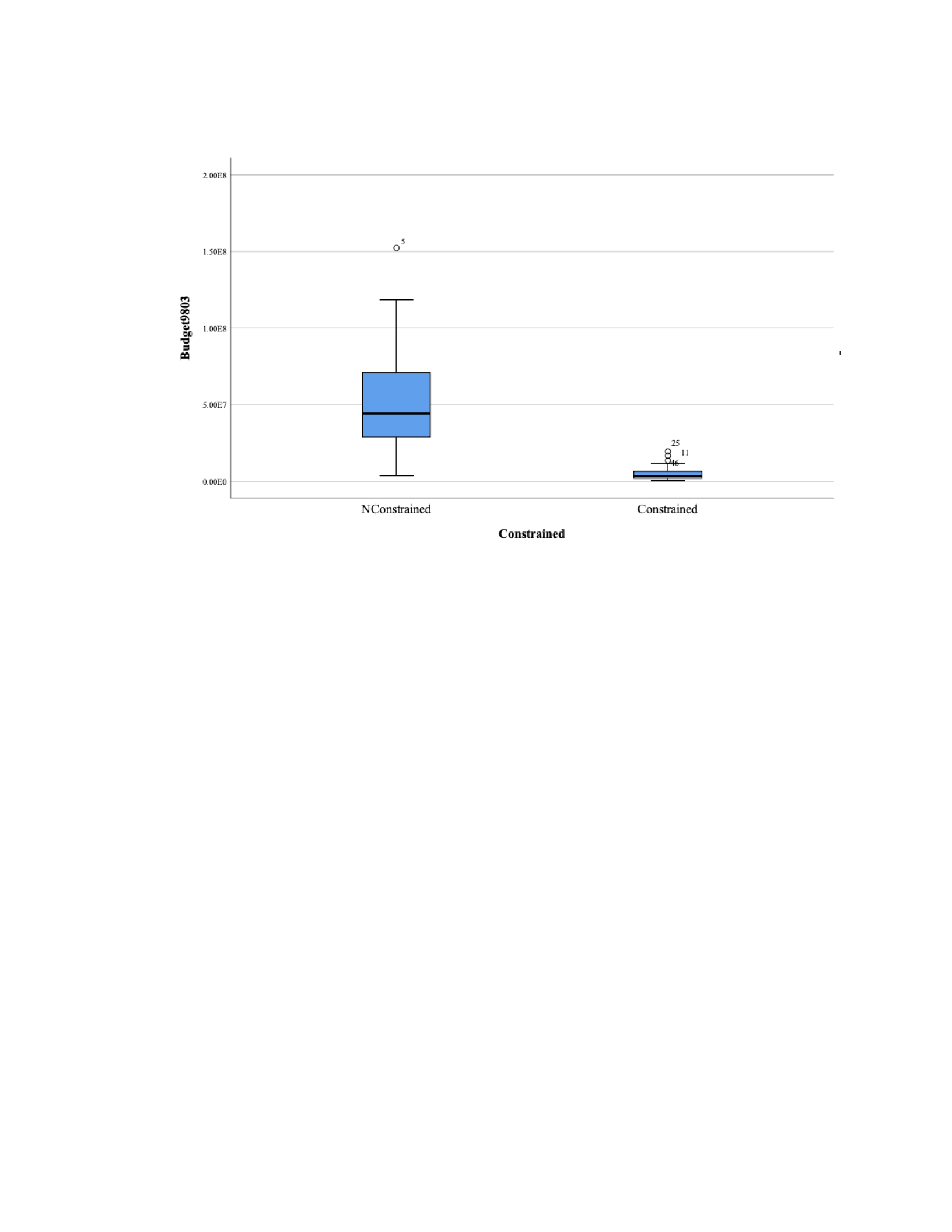
59
The data had outliers due to disparities in funding among counties prior to
Revision 7. All outliers were nonfiscally-constrained counties. I ran descriptive statistics
for budget years 2005–2018 as well. For ease of visuals on the figures, I converted
counties to a numerical representation. Post Revision 7 Pasco ( 51) and Orange ( 47)
counties were no longer considered extreme points but remained outliers instead. Volusia
was no longer an outlier. As a result, the population sample of the study was reduced
from 66 counties to 58 counties for budget years 1999–2003 and 56 counties for budget
years 2005–2018 (see Figure 2).
Figure 2
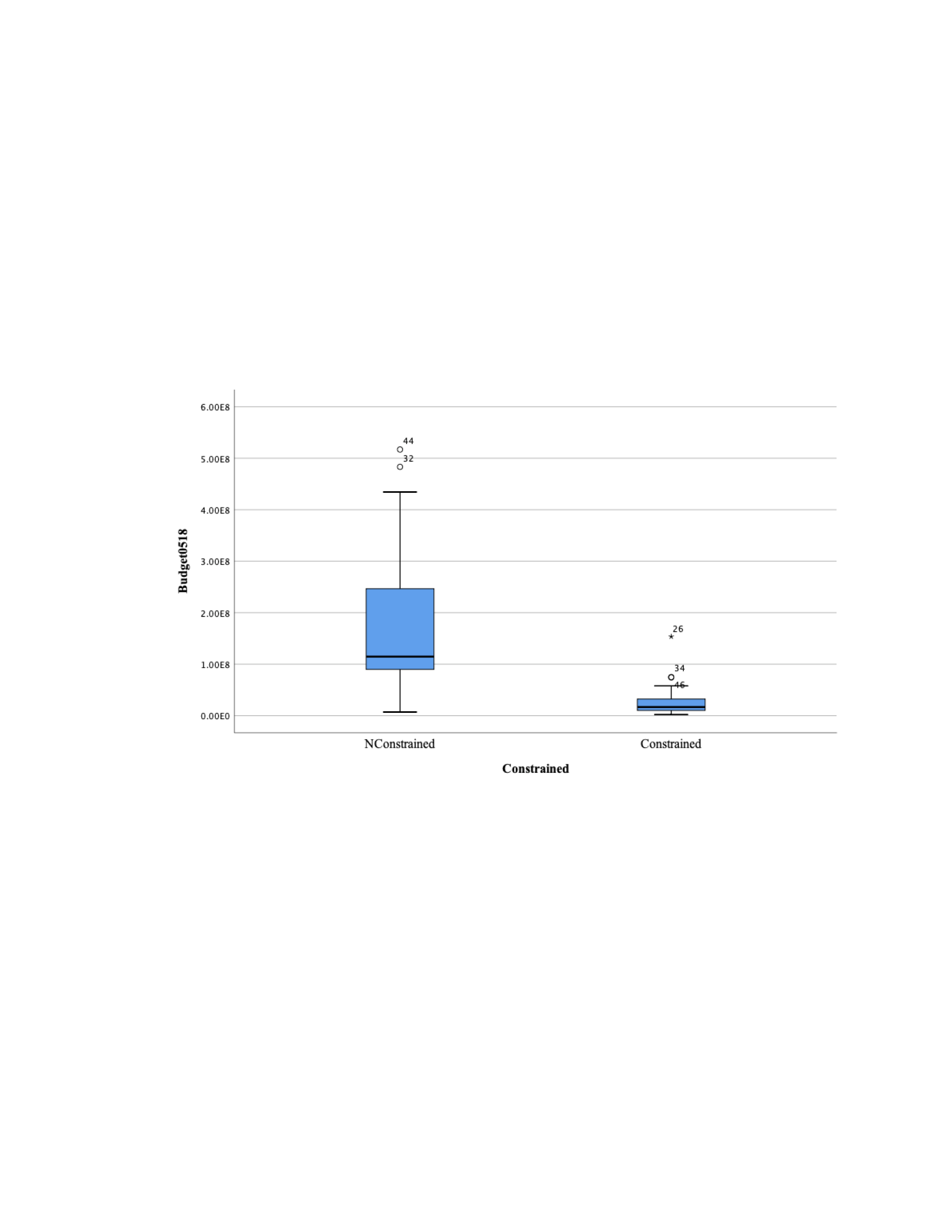
60
Box and Whisker Plot Identifying Outliers and Extreme Points between 2005 and
2018
Descriptive statistics for budget years including sample size, minimum,
maximum, mean, and standard deviations were presented as part of this study. After
removing extreme points and outliers, the sample size for the study was 58 counties prior
to Revision 7 implementation (1998 – 2003). Data were available for 56 counties post
Revision 7 implementation (2005 – 2018). That information is available in Table 1.
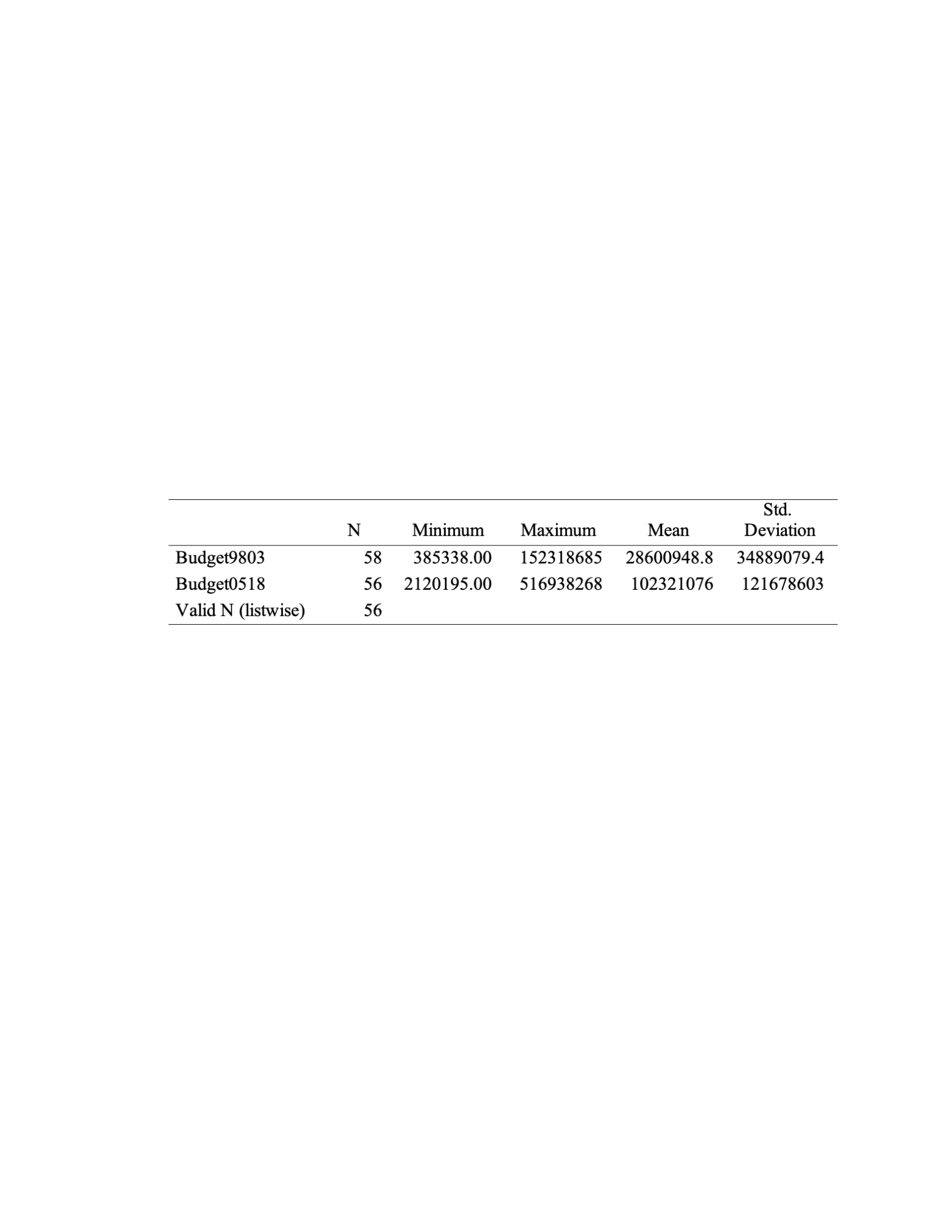
61
Table 1
Descriptive Statistics for Florida County Court System Budgets Before and After
Implementation of Revision 7
Another assumption is that the dependent variable should be approximately
normally distributed for each group of the independent variable. In social science
research, it is common that the dependent variable is not normally distributed for each
group of the independent variable (Lared Statistics, 2021; Pallant, 2013). The Paired-
Sample t -test requires that the assumption of normality be met. Normality was examined
using Shapiro-Wilks. The assumption of normality was not met. The t-test, however, is
robust to tolerate violations of this assumption. See Table 2 for Tests of Normality for
Budget Years 1998 - 2003.
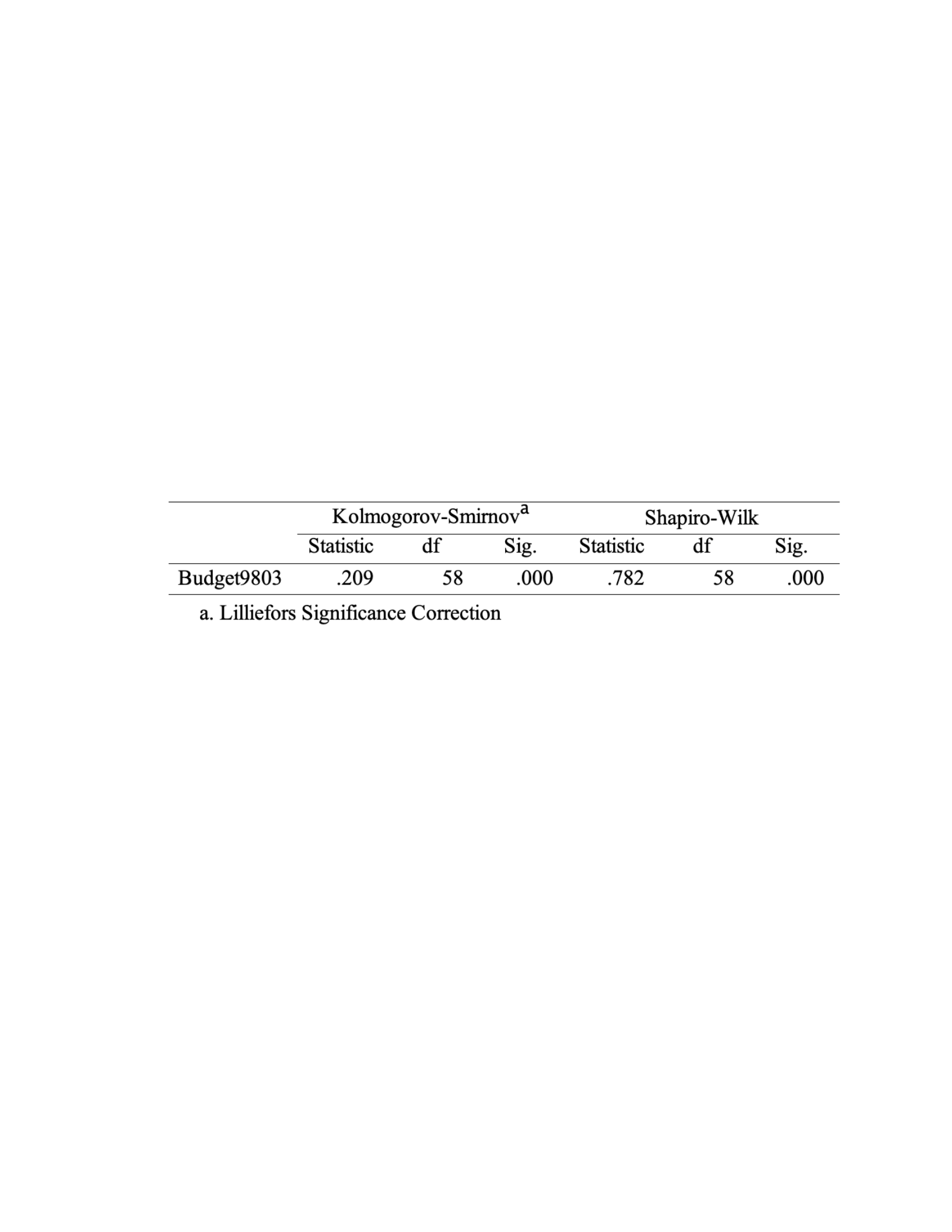
62
Table 2
Tests of Normality For Florida County Judicial System Funding
After the implementation of Revision 7 (budget years 2005 – 2018) data were not
found to be normally distributed as represented in Table 3.
Table 3
Tests of Normality for Florida Courts Judicial System Funding Post Revision 7
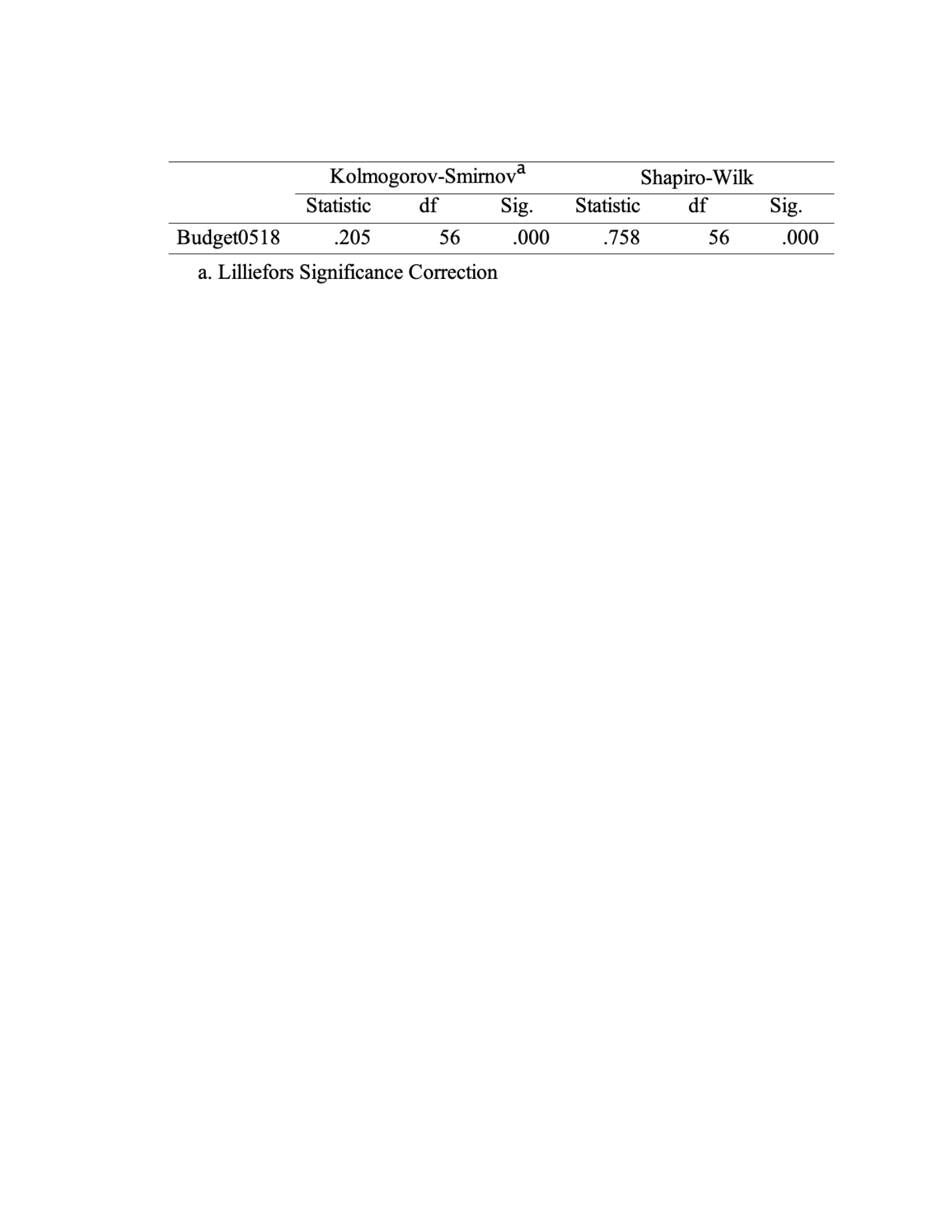
63
Finally, the assumption was made that samples obtained had homogeneity of
variances. The dependent variable, level of courts system funding was not normally
distributed, as assessed by Shapiro-Wilk’s test (p<.05).
RQ1
To examine RQ1, descriptive statistics were conducted to describe the impact of
the Revision to Article V (IV) on state court revenues (DV). A paired-samples t-test was
conducted to evaluate the differences in court system funding before and after
implementation of Revision 7. The null hypothesis posited that Revision 7 did not create
a significant difference in court funding pre and post implementation. The dollar amount
of funding for each county is a scale variable. To identify changes between fiscally and
non-fiscally constrained counties, I ran statistics on nonfiscally constrained counties
before and after the intervention of Revision 7 and performed the same tests on fiscally
constrained counties.
Nonfiscally-Constrained Counties
The result showed that, among non-fiscally constrained counties (n=29), the
variables were courts system funding between FY 1998 – FY 2003 and FY2005 –
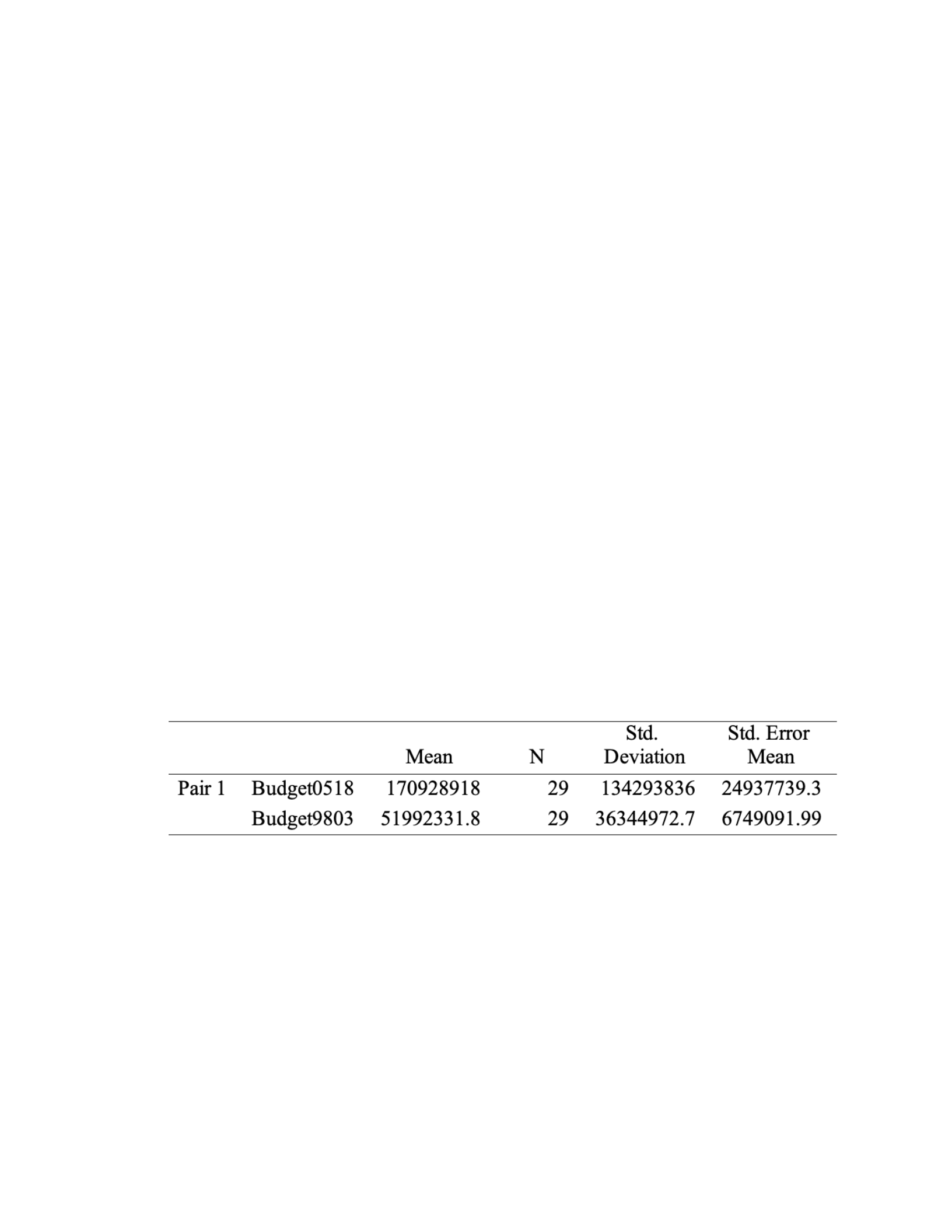
64
FY2018. Descriptive statistics show a larger mean during budget years 1998 – 2003 than
for budget years 2005 – 2018. There was more funding among non-fiscally constrained
counties during FY2005 - 2018 (M =171.0m, SD = $134.m) than non-fiscally constrained
counties during FY1998 - FY2003 (M =52.0m, SD =$36.3m).
Table 4
Descriptive Statistics of Nonfiscally-Constrained Counties Pre and Post Revision 7
Implementation
A paired-samples t-test was used to determine whether there was a statistically
significant mean difference between court system funding for non-fiscally constrained
counties pre and post Revision 7 intervention. Court system funding increased post
Revision 7 intervention (M=119m, SD=108m), showed a statistically significant mean
increase of 119m, 95%CI [77.7m, 160m], t(28)=5.905, p<.001, d=1.11. The significance
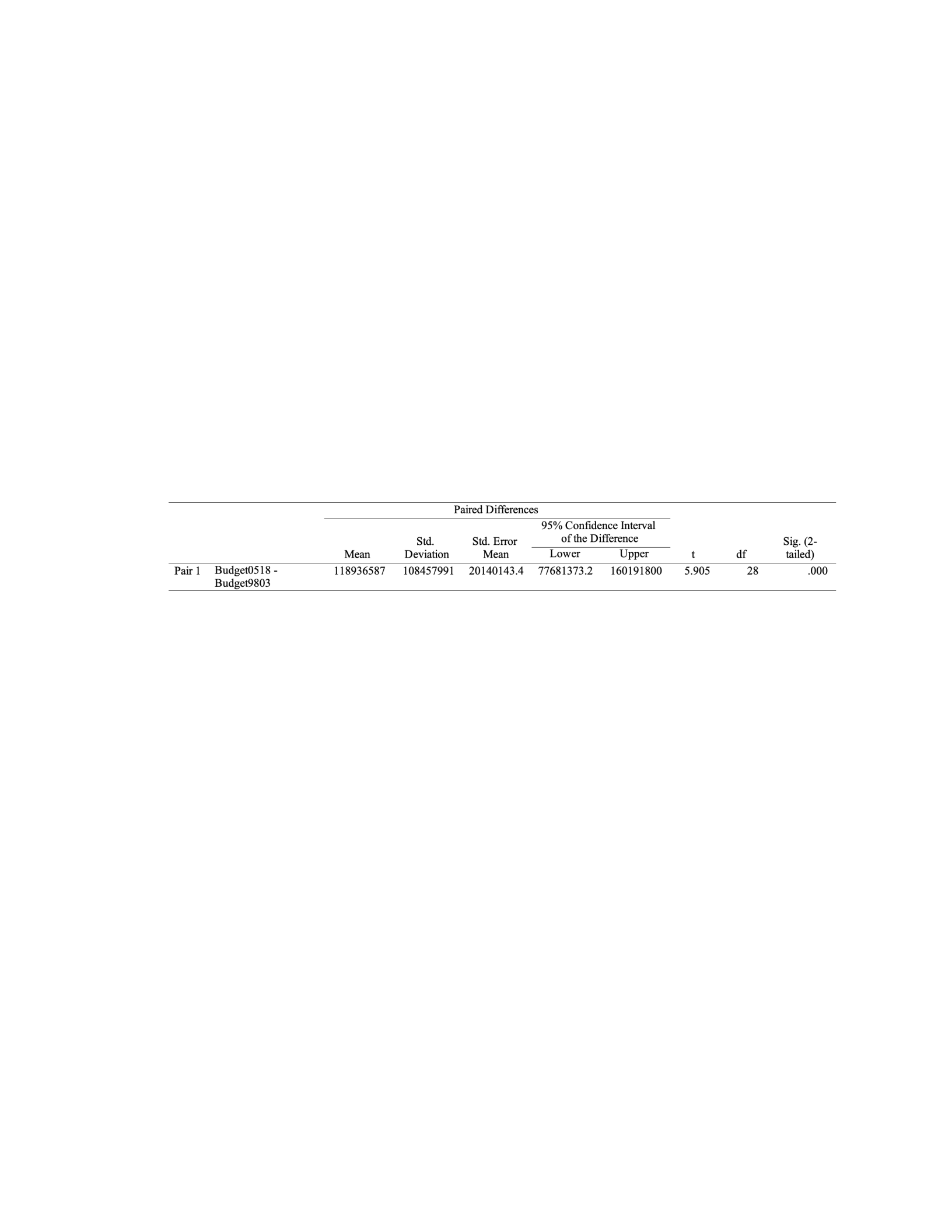
65
of Revision 7 on court system funding was found to be of a very large effect size (1.11)
according to Cohen’s d effect sizes (Cohen, 1988). Therefore, we can reject the null
hypothesis and accept the alternative hypothesis.
Table 5
Paired Samples Test Among Nonfiscally-Constrained Counties Pre and Post Revision 7
Intervention
Fiscally Constrained Counties
In Table 6, among fiscally constrained counties (n=27), the variables were courts
system funding between FY 1998 – FY 2003 and FY2005 – FY2018. Descriptive
statistics show a larger mean during budget years 1998 – 2003 than for budget years 2005
– 2018. There was more funding among fiscally constrained counties during FY2005 -
2018 (M =28.6m, SD = $31.8.m) than fiscally constrained counties during FY1998 -
FY2003 (M =5.3m, SD =$5.0m).
Table 6
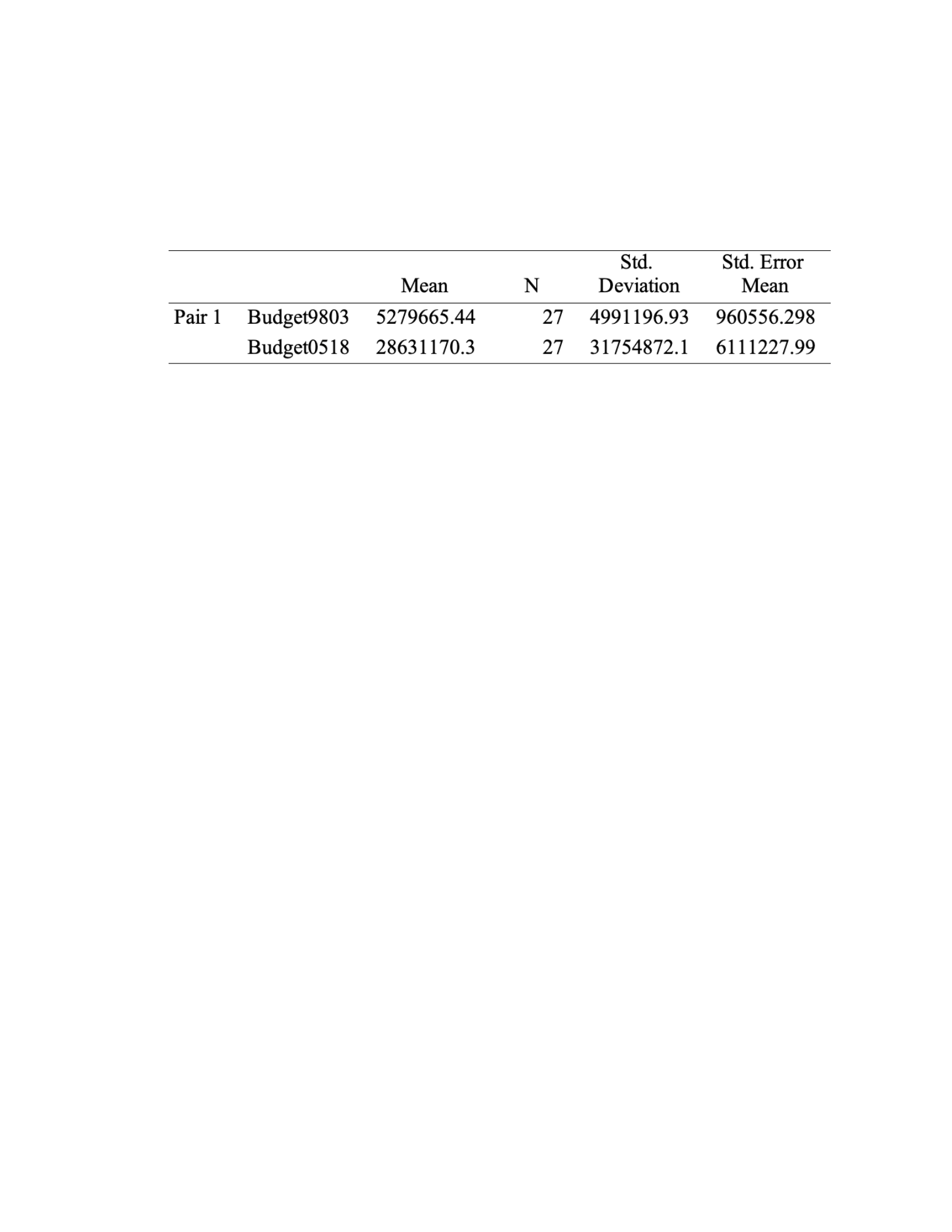
66
Descriptive Statistics of Fiscally-Constrained Counties Pre and Post Revision 7
Implementation
A paired-samples t-test was used to determine whether there was a statistically
significant mean difference between court system funding for fiscally constrained
counties pre and post Revision 7 intervention. Court system funding increased post
Revision 7 intervention (M=23.4m, SD=30.2m), showed a statistically significant mean
increase of 22.9m, 95%CI [11.4m, 35.3m], t(26)=4.016, p<.001, d=.773. The significance
of Revision 7 on court system funding for fiscally constrained counties was found to be
of a large effect size (.773). Therefore, we can reject the null hypothesis and accept the
alternative hypothesis.
Table 7
Paired Samples Test Among Fiscally-Constrained Counties Pre and Post Revision 7
Intervention
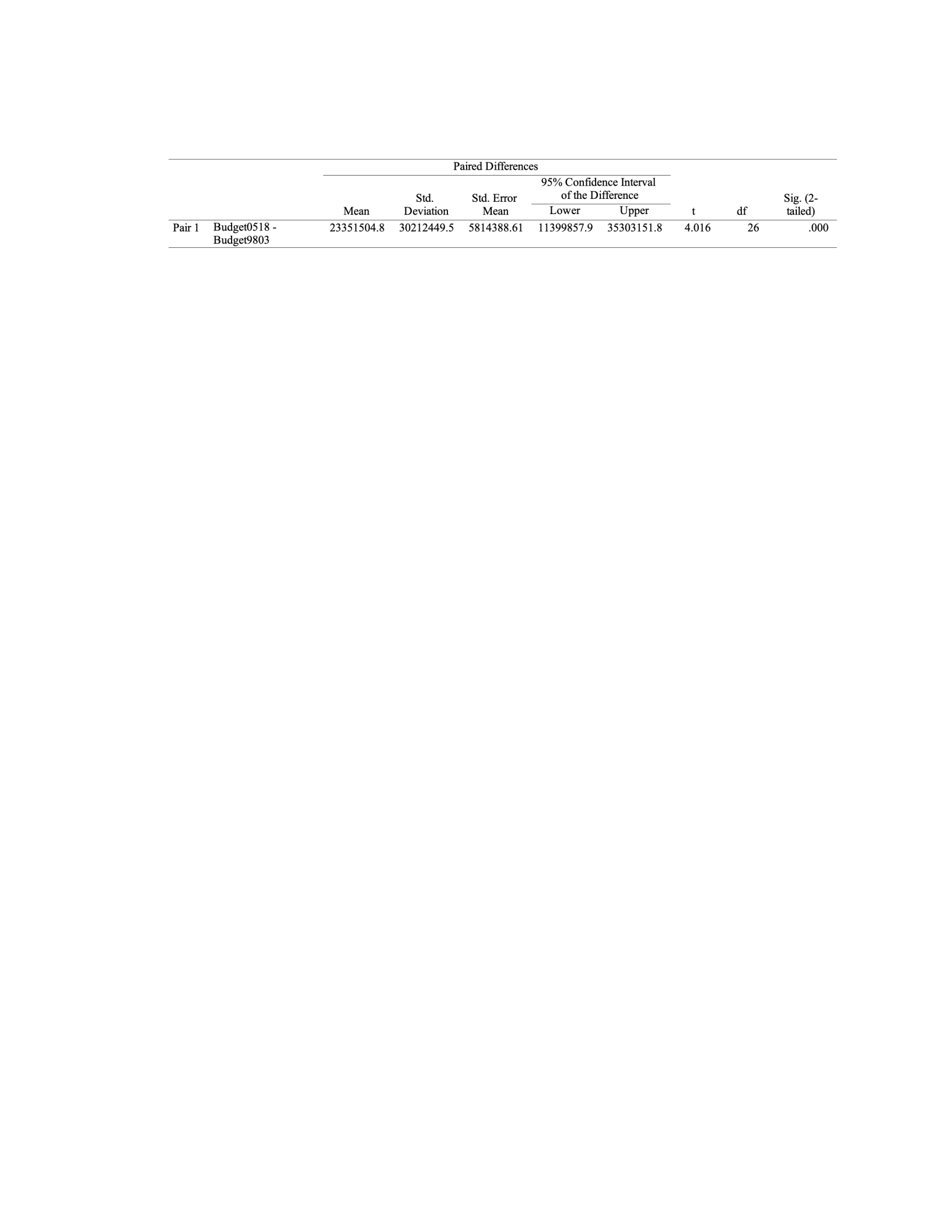
67
RQ2
To examine RQ2, I identified what the impact of Revision 7 to Article V on court-
related revenues pre and post implementation was. I sorted the data and scanned it for
inconsistencies on each variable. No data errors or inconsistencies were identified. A
scatter plot was used to detect bivariate outliers between the independent variable and the
dependent variable.
Descriptive Statistics
Descriptive statistics were obtained on each of the variables. The sample
consisted of 66 Florida Counties. The budgets of judicial funding in Florida counties
between 1993 - 1998 and 2005 – 2018 were analyzed. In Table 13, I present the
descriptive statistics. Among counties (n=66), the variables were courts system funding
between FY 1998 – FY 2003 and FY2005 – FY2018. Descriptive statistics show a larger
mean during budget years 1998 – 2003 than for budget years 2005 – 2018. There was
more funding among counties during FY2005 - 2018 (M =2.1b, SD = $323.m) than
during FY1998 - FY2003 (M =385k, SD =129m).
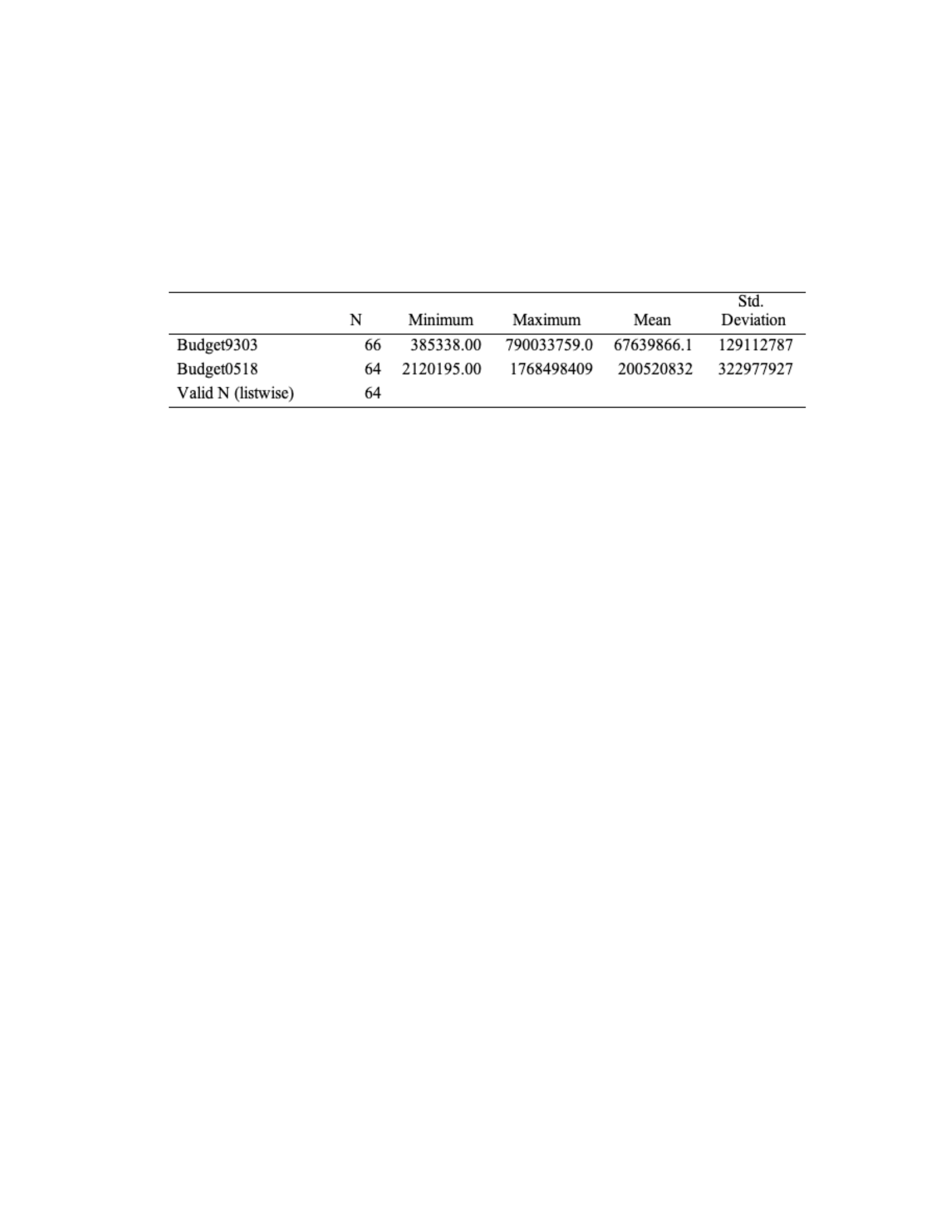
68
Table 8
Descriptive Statistics Related to Impact of Revision 7 on Courts System Funding
The bivariate regression requires that the assumption of bivariate normal
distribution is met. The assumption of bivariate normal distribution was examined using a
scatter plot. The assumption of bivariate normal distribution was met. See Figure 3 for
scatterplot.
Results
I conducted a bivariate regression to see if there was a predictive relationship
between the independent variable, courts system funding between 1998 – 2003, and the
dependent variable, courts system funding between 2005 – 2018. In Table 9, the results
of the regression model summary indicated a correlation between funding of the Florida
courts system pre and post Revision 7.
Table 9
Model Summary on Impact of Revision 7 on Courts System Funding
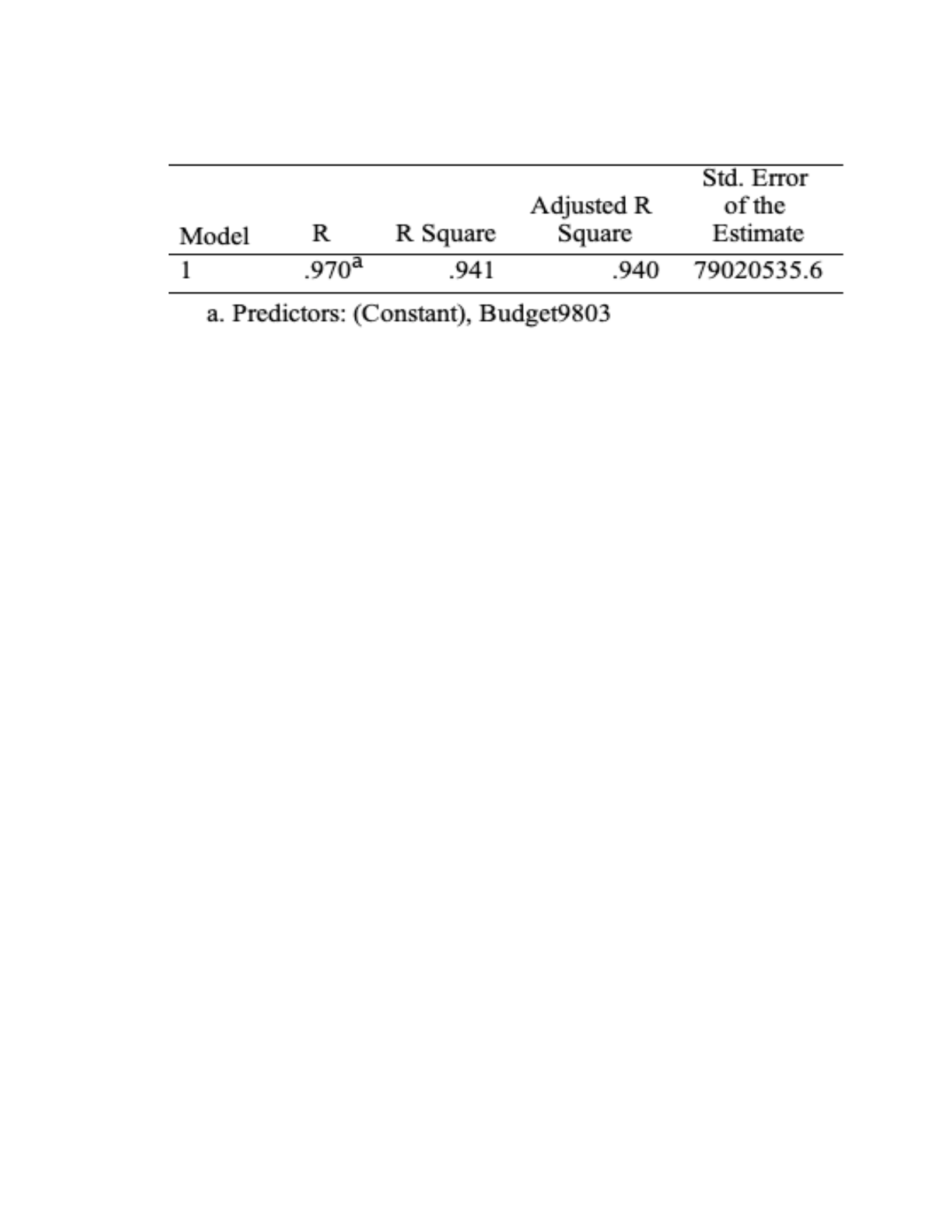
69
Court system funding between 1998 – 2003 accounted for 97% of the variation in
courts system funding with an adjusted R2= .941, a very large effect size according to
Cohen (1988). This indicated that approximately 94.1% of the variance of courts system
funding post Revision 7 can be explained by its linear relationship with courts system
funding pre-Revision 7. There was independence of residuals, as assessed by a Durbin-
Watson statistic of 1.527.
I rejected the null hypothesis at the 95% confidence level where F(1, 62) =
990.462, p<.001, with an R2 of .941. There was a statistical predictive relationship
between the independent variable (courts system funding between 1998 – 2003) and the
dependent variable (courts system funding between 2005 – 2018). Court system funding
post Revision 7 (2005 – 2018) is equal to 33,600 + 2.398 (court system funding between
1998 – 2003) when measured in dollars. The court system budget post Revision 7
increased 2.398 for each dollar spent pre-Revision 7. See Table 10 for regression model
results.
Table 10
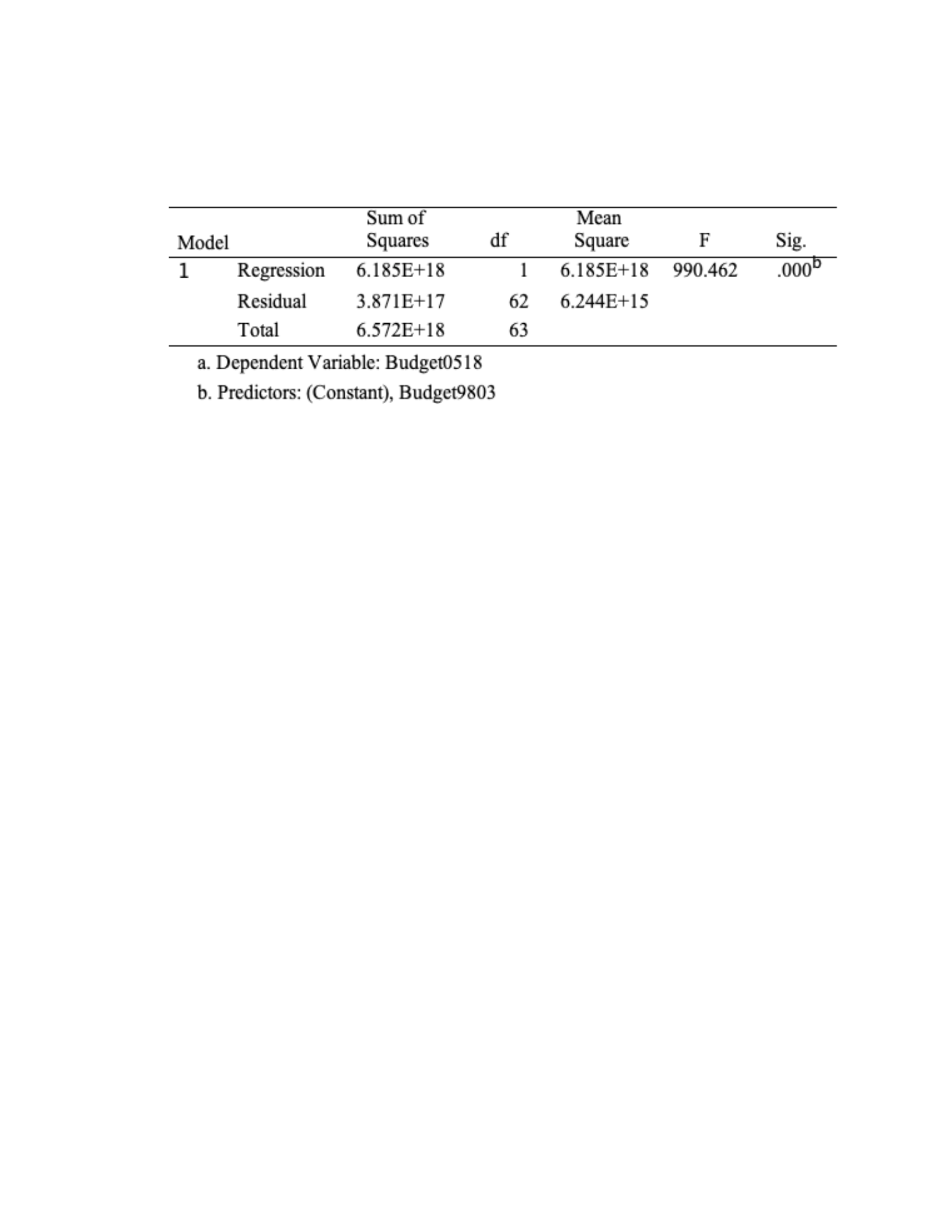
70
Regression Model Results
A superimposed regression line was plotted in Figure 3.
Figure 3
Simple Scatter Plot
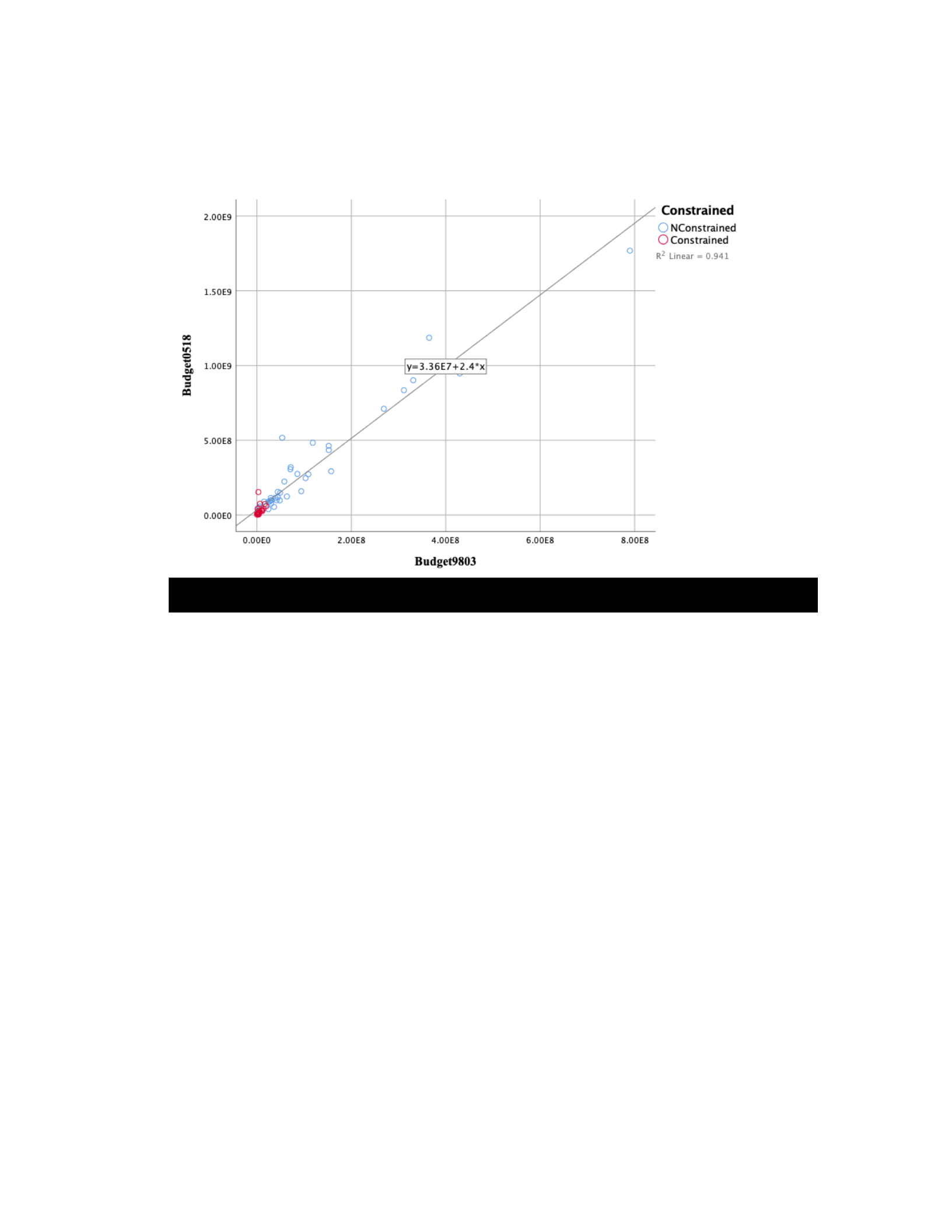
71
I rejected the null hypothesis at the 95% confidence level where F(1, 62) =
990.462, p<.001, with an R2 of .970. There was a statistical predictive relationship
between the independent variable (courts system funding between 1998 – 2003) and the
dependent variable (courts system funding between 2005 – 2018). Court system funding
post Revision 7 (2005 – 2018) is equal to 33,600 + 2.398 (court system funding between
1998 – 2003) when measured in dollars. The court system budget post Revision 7
increased 2.398 for each dollar spent pre-Revision 7. See Table 14 for regression model
results.
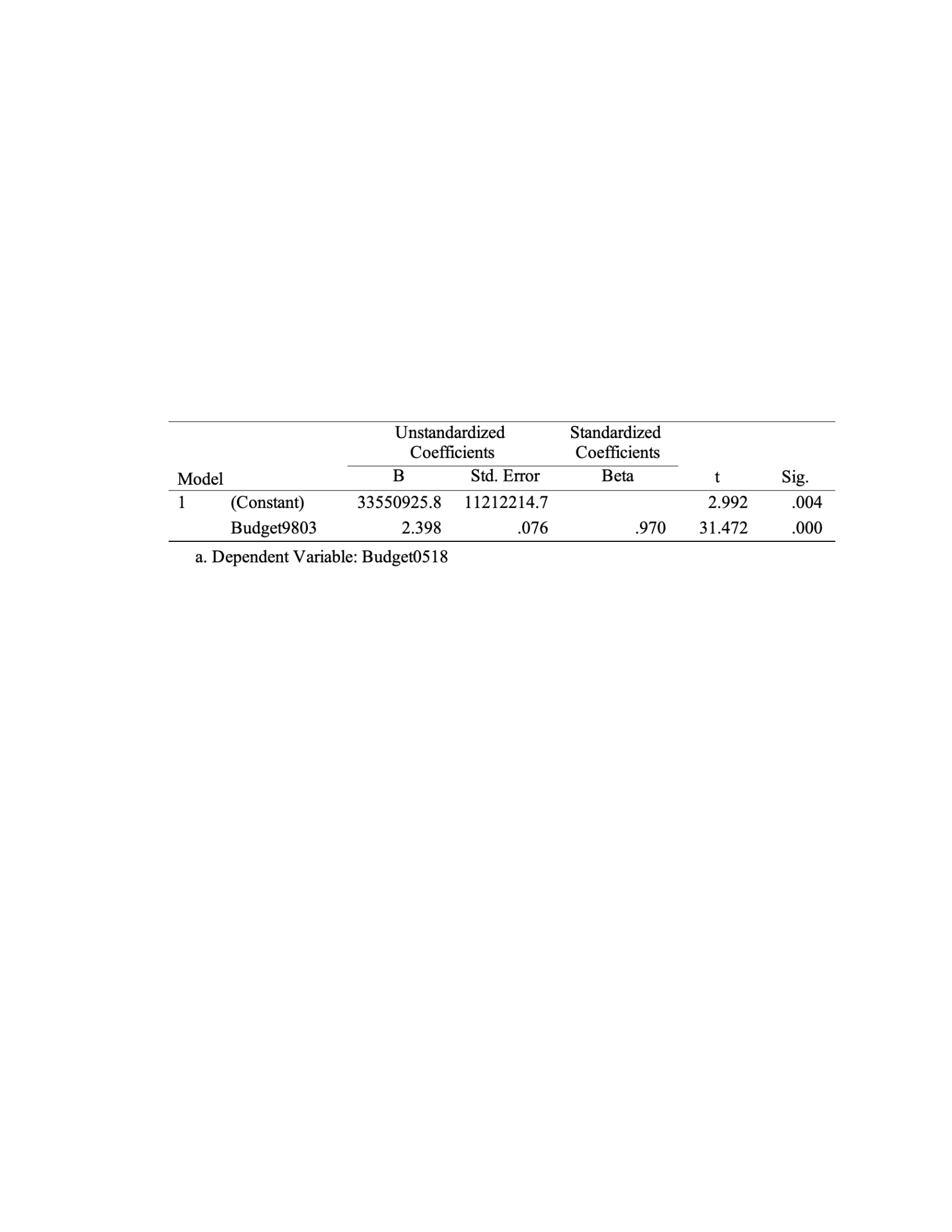
72
Table 11 provides the regression coefficients derived from the bivariate logistical
regression used to assess the impact of Revision 7 on court system funding between 2005
and 2018. A positive association was identified.
Table 11
Regression Coefficients of Court System Budgets for 1998-1993 on 1995-2018
Summary
This chapter reported the results from both quantitative research questions.
Results showed that Florida’s court system did not benefit initially financially from
Revision 7 post-implementation because less money was available to fund court
operations in FY 2005 than was available pre-implementation in 2003. Results also
revealed that court funding between 1998 – 2003 accounted for 94.1% of the variation in
court system funding post-implementation (2005 – 2018). Chapter 5 will provide the
discussion, conclusions, and recommendations related to this study.

73
Chapter 5: Discussion, Conclusions, and Recommendations
Introduction
The purpose of this quasi-experimental study was to address the gap in literature
and add to the body of knowledge in public policy analysis by examining the effects of
Revision 7 to Article V of the Florida Constitution on court system funding in Florida
counties. Public policies are meant to solve community issues and encourage citizen
participation in government. Using data from the Florida Department of Financial
Services (DFS) database from 1998 to 2018, I examined 58 of Florida’s 67 counties using
an independent samples t test and a simple regression technique to determine whether
there was a difference in the amount of funding before and after Revision 7.
My review of literature confirmed limited research related to funding of courts
systems throughout the US in general and Florida in particular. My research involved
exploring how Revision 7 affected financial outcomes of Florida’s courts system. The
implementation and funding of Revision 7 to Article V of the Florida Constitution had a
statistically significant relationship that increased funding for Florida’s courts system
when compared to courts system funding before the implementation and funding of
Revision 7 to Article V of the Florida Constitution in 2004. Public funds are used by the
judicial branch to enforce laws and ensure justice, which are components of a democratic
society (Viapiana, 2019). There is potential for this information to inform policy
decisions and public actions of the Florida government. Johnson (2004) claimed many
funding decisions in the judicial branch are made based upon political need, rather than

74
evidence-based research. There was a political need in 1998 to create a system of judicial
funding that seemed fairer. In this chapter, I provide an interpretation of my findings,
discuss relevant issues related to limitations of this study, provide recommendations for
future research, discuss implications of these findings in terms of social change, and end
with a conclusion.
Interpretation of the Findings
In reviewing findings for this quasi-experimental research study, I discovered
three themes. The first theme is that solutions to adequate court system funding remain
challenging. Fiscally-constrained counties continue to close the equality gap with their
nonfiscally-constrained neighbors. Fiscally-constrained counties still have challenges of
scale involving equal access to courts compared to their better funded counterparts. This
was evident in the literature review.
I conducted paired-samples t-tests for court funding between the following time
periods: 1998–2003 and 2005–2018. I found statistically significant evidence that court
funding remained relatively equal after Revision 7 compared to before. I also found that
among fiscally-constrained counties, funding did increase rather than decrease after
Revision 7 implementation. Findings presented in this research serve to increase
understanding of the public policy implemented through Revision 7. Before 2004,
counties in Florida were individually responsible for funding their courts systems. A
paired-samples t-test comparing means for courts system funding before and after
Revision 7 revealed significant differences. Even though there is more money available

75
for fiscally-constrained counties, parity is in no way established between county-based
available programs for justice services. Those counties that are not fiscally-constrained
still have the ability for their county governments to fund them at rates above any amount
the state legislature or funding commissions determine are appropriate.
The stated goals of Revision 7 listed in Article V, Section 14(a) of the Florida
Constitution germane to this evaluation were to create a uniform funding mechanism at
the state appropriation level that would fund the following: state courts system, state
attorneys, public defenders, and court-appointed counsel. For many counties, the
challenge of courts system funding at the county level prior to Revision 7 meant that
justice was uneven in counties, due to varying financial health of each community.
A regression analysis was performed to examine how much of the new budget
funding post-Revision 7 could be explained by initial budgets created prior to Revision 7.
There was a statistically significantly impact on post Revision 7 budget numbers. These
results suggest that 94% of funding for the courts system after Revision 7 implementation
could be explained by initial funding of counties before Revision 7. The hypothesis that
there was an impact of Revision 7 to Article V on court-related revenues pre- and post-
implementation was accepted, and the null hypothesis was rejected.
As I presented in my literature review, research in this area is very limited. Most
of the research addressing court system funding was outdated and limited to reviewing
impacts of courts system funding on the dispensation of justice. When addressing
outcomes from a funding perspective, it was necessary to discuss challenges of

76
creating sustainable funding models for court systems. DeBenedictis (1992) said many
state court systems received inadequate funding to support their statutory roles.
I was unable to identify other studies that focused on the financial impacts of
Revision 7. At the federal level, courts are funded well and remain politically
independent while state judicial systems have dealt with budget crises, and some have
gone bankrupt (Zambrano, 2019). It is difficult to make determinative claims regarding
the impact of Revision 7; however, these findings imply that the attempt made by the
Florida Legislature to create greater resources for judicial services in the short term was
unsuccessful. Moral panics related to events of significance lead to rapid periods of
change in terms of public policy (Jennings et al., 2020). The financial shocks to the
criminal justice system in Florida during the 1990s as mentioned previously produced
disparities that made justice dependent on the strength of the tax base of each county.
Variations in funding between Florida’s counties meant that court services depended on
available financial resources of communities. While some counties had robust funding for
their courts, others had difficulty achieving minimum services. Florida’s focus on
budgetary unification of the state courts system was a response created because of
lawmakers, interest groups, and those who demanded action (Holyoke & Brown, 2019).
Although limited, these findings seem to suggest that a policy intervention without
adequate study leads to stasis even when policy punctuations are created.

