


INTRODUCTION Since the Industrial Revolution
Since the Industrial Revolution, human activity has been the most significant
factor influencing the environment (Vitousek, Mooney, Lubchenco, & Melillo, 1997).
Human influence on the Earth system is so significant that scientists are calling this
geological age the Anthropocene, or the Age of Humans (Crutzen, 2006; Lewis & Maslin,
2015; Steffen, Grinevald, Crutzen, & McNeill, 2011). Global climate change,
deforestation, pollution, and threats to biodiversity are just a few major environmental
problems that have been driven primarily by human activity (Walther et al., 2002).
Knowledge of how humans influence the environment has given rise to an environmental
revolution pushing environmentally-friendly alternatives to previous ways of life.
Additionally, the public is generally aware of the issues facing the Earth today
(O’Connor, Bord, & Fisher, 1998).
However, there is plenty of progress that must still occur in order to adequately
slow the pace of environmental degradation. Some of that progress will be in the form of
scientific research monitoring the progression of environmental problems, some will be in
further technological advances, but most of that progress must come from a greater
understanding of human psychology and inspiring behavior change (Leviston, Leitch,
Greenhill, Leonard, & Walker, 2011; St. John, Edwards-Jones, & Jones, 2011; Stern,
1992; Swim, Stern, Doherty, Clayton, Reser, et al., 2011). Despite an awareness of the
issues facing the earth today, some people debate the extent to which those issues are
human-caused (Arbuckle, Morton, & Hobbs, 2015; Weber & Stern, 2011), and others
exhibit relatively low levels of pro-environmental behavior, despite their noted interest

and concern for the environment (Kollmus & Agyeman, 2002). Environmental efforts
will only be successful if a larger number of people support it personally, socially, and
politically. Thus, understanding why people do, or do not, engage in all types of
proenvironmental behavior is one of the greatest challenges of our time.
Researchers have been interested in understanding the root of pro-environmental
behavior for a long time, but there is no single factor or technique that increases all types
of pro-environmental behavior in all types of people. The assumption that people simply
must be educated about environmental problems in order to act on that knowledge has
been refuted and even when one cares deeply about environmental problems, they still
face barriers to action (Kollmuss & Ayeman, 2002). Decades of research from
environmental and behavioral psychology into this awareness-action gap shows that the
factors that lead to pro-environmental behavior are complex, multifaceted, and
inconsistent between individuals (Blake, 1999; Lane & Potter, 2007; Moser & Dilling,
2011; O’Brien, 2013; Taylor, 1989). Pro-environmental behavior can depend upon
environmental knowledge, values, attitudes, perceived locus of control, personal and
social norms, extrinsic motivation, age, sex, race, socioeconomic status, religion, and
geographic region (Clark, Kotchen, & Moore, 2003; Finger, 1994; Karp, 1996; Scannell
& Gifford, 2010; Steg & Vlek, 2009). Even when all the factors come together so that
one forms an intention to engage in pro-environmental actions, barriers such as access,
past behavior and habits, and social pressures can prevent pro-environmental behavior
(Gifford, 2011; Hargreaves, 2011; Kollmus & Agyeman, 2002). We know that behavior is
more likely to change when there is an emotional tie to the issue (Sia, Hungerford, &
Tomera, 1986), yet people are less likely to change their behavior if they are emotionally
overwhelmed by alarmist claims or feel that claims are being exaggerated (Whitemarsh,

2011). In an age where the public has access to an enormous amount of accurate
information at their fingertips, they are also faced with an onslaught of misleading claims
and politicized information in the media (Askanius & Uldam, 2011; Ladle, Jepson &
Whittaker, 2005). Through the internet, people have access to like-minded individuals
who can help them feel part of a pro-environmental culture (Brulle, 2014). But
simultaneously, those who oppose environmental policy or reject environmental science
can find others to support and reinforce their views, more than ever before (McCright &
Dunlap, 2011).
Despite these challenges, research has elucidated some factors that are
antecedents of pro-environmental behavior and potential areas of successful intervention.
Most recent meta-analyses and theoretical models include some measure of
environmental values or worldview as a significant determinant of pro-environmental
behavior (Xiao, Dunlap, & Hong, 2019). This has been measured using survey tools such
as the new environmental paradigm (Dunlap, Van Liere, Mertig, & Jones, 2000) and the
connectedness to nature scale (Mayer and Frantz, 2004). These scales measure the extent
to which one feels a part of nature, as opposed to an anthropocentric worldview in which
one feels that man dominates over nature. Not surprisingly, people who have an
environmental worldview are more likely to engage in pro-environmental behavior than
their anthropocentric counterparts (Dunlap et al., 2000). Similarly, studies show that
having frequent and meaningful outdoor experiences in early life can lead to more
positive attitudes and values toward the environment as an adult (Chawla, 1998; Ewert,
Place, & Sibthorp, 2005; Palmer, Suggate, Robottom, & Hart, 1999; Stevenson et al.,
2014). It is also clear that nature experiences are more impactful when supported by or
shared with family members, friends, and role models (Chawla, 1998). However,

instilling children with an environmental worldview and a feeling of connectedness to
nature is challenging during an age when people are more and more disconnected from
nature and live increasingly indoor lives (McCurdy, Winterbottom, Mehta, & Roberts,
2010). At the same time, access to natural places and nature-loving role models are not
universal across all groups of people (Strife & Downey, 2009).
Gaps in the Literature
The problem of increasing pro-environmental behavior requires complex
solutions that are tailored to the culture of specific groups of people. Yet much of the
previous research has overlooked or under-emphasized the impact of social and cultural
factors that can shape which antecedents of pro-environmental behavior and barriers to
pro-environmental behavior are most important for a particular group. For example, the
significant factors determining the pro-environmental behavior of an African American
female from an urban region and high socioeconomic status are probably not the same as
those of a white male from a rural region with low socioeconomic status.
Previous research has not taken the approach of framing the culture and
demographics of the population as central to the research, aiming for depth rather than
breadth. Additionally, much of the research on pro-environmental behavior has focused
more on the private-sphere and direct consumptive behavior of an individual versus
political and collective behavior that can greatly influence society and the culture of
environmentalism and stewardship (Hargreaves, 2011; Steg & Vlek, 2009; Stern, 2000).
The focus on these behaviors must shift if the movement is to succeed (Jugert,
Greenaway, Barth, Buchner, & Eisentraut, 2016; Lee, Kim, Kim, & Choi, 2014). The
field needs more research that studies the pro-environmental behavior of different groups

of people to learn what pro-environmental behavior looks like for them. This would allow
researchers to learn how to adapt efforts and interventions to overcome a group’s specific
barriers, especially those that can lead to collective action and cultural shifts.
One particular group of people that has been under-studied in the literature are
those from rural geographic areas (Larson, Stedman, Cooper, & Decker, 2015; Takahashi
& Selfa, 2015). Early studies and environmental education efforts focused on urban youth
due to the assumption that their physical disconnection from nature would make them
less likely to exhibit pro-environmental behavior (Tidball & Krasny, 2010). However, this
does not seem to be true; rural youth often exhibit similarly low pro-environmental
behavior, despite their physical proximity to natural spaces (Larson, et al., 2015). Some
studies show that rural students exhibit less direct pro-environmental behavior, have
lower environmental knowledge, and lower environmental literacy compared to students
from more urban schools (Chen et al., 2011; Williams, 2017). These findings could be
due to a difference in the availability of resources to behave pro-environmentally (Chen et
al., 2011), or a difference in values and worldviews (Huddart-Kennedy, Beckley,
Mcfarlane, & Nadeau 2009; Rauwald & Moore, 2002). In contrast, other studies have
found greater pro-environmental behavior and environmental sensitivity in rural students
due to greater time spent outdoors in nature (Gallay, Marckini-Polk, Schroeder, &
Flanagan 2016; Meyer, 2015), and a greater moral obligation to behave
proenvironmentally (Berenguer, Corraliza, & Martin, 2005). Numerous other studies see
no correlation between urban versus rural residence and pro-environmental behavior
(Arcury and Christianson, 1995; Halder et al., 2012; Lutz, Simpson-Housley & deMan,
1999). Clearly this is an area of the pro-environmental behavior research that requires
further exploration.

Another weakness in both research and practice is the lack of synergy between
environmental efforts and the recent emphasis on improving science, technology,
engineering, and math (STEM) literacy. Major STEM initiatives have successfully
garnered widespread support for educational programs aimed at improving the STEM
literacy of American teachers and students (DeJarnette, 2012; Jolly, 2009). It might seem
that improvements in science literacy would lead to improvements in environmental
literacy, but this would require a concerted effort to weave environmental issues into
STEM programming. Additionally, STEM initiatives tend to be valued based on their
contribution to industry and the economy, which is not always congruent with the goals
of the environmental movement (Atkinson & Mayo, 2010; Kennedy & Odell, 2014).
Despite this strange dichotomy between the ways we perceive “science” versus
“environment”, public views of environmental science are intrinsically tied to those of
science as a whole. As such, environmental science is likely plagued by many issues
facing the sciences in general (Chang, Eagan, Lin, & Hurtado, 2011; Hazari, Sadler, &
Sonnert, 2013). Research in the STEM realm has shown that science literacy and science
identity are generally low, especially in females, people of color, and those with low
socioeconomic status (Lee & Luykx, 2007; Miyake et al., 2010). At the same time, public
distrust of science is high (Gauchat, 2012). If science is not broadly accepted, accessible,
and relatable, people are not likely to trust or value what scientists have to say. This has
serious implications for environmental efforts, which require the public to know about
environmental issues and trust in scientists’ findings related to those issues, before they
can overcome the other barriers preventing pro-environmental behavior.
One promising area of research that comes from the STEM field is the concept of
science capital (Archer, Dawson, DeWitt, Seakins, & Wong, 2015), which was developed

in order to help researchers assess the cultural factors that influence the science
aspirations of young people. Derived from the concept of social capital, science capital is
the sum of the science-related experiences that one builds up over a lifetime that
influence certain social groups to participate in science, while others remain
underrepresented. Science capital includes what you know about science, who you know
that influences your views on science, your values and attitudes toward science, and your
engagement with science in daily life (enterprisingscience.com). This concept has not
been used to assess engagement in environmental science specifically, although its
emphasis on culture could help to explain the tremendous variation in pro-environmental
behavior research. The concept of environmental science capital is introduced in this
study to help explain why some individuals or groups behave pro-environmentally, while
others do not.
Significance of the Study
The concept of environmental science capital will help researchers to study
proenvironmental behavior in a more holistic way that considers the individual’s
sociocultural background and life experiences. In practice, formal and informal educators
will benefit from a deeper understanding of how to foster pro-environmental behavior in
rural youth, because they can present lessons or programs that are more effective with
that specific population. Therefore the findings of this study will benefit society by
building more pro-environmental citizens, especially among rural American populations.
This could result in greater social and political support for the pro-environmental
movement, benefitting the Earth and all its inhabitants.

Theory of Change
This study will use the Kollmus and Agyeman model of pro-environmental
behavior as the theoretical framework. Through the exploration of numerous theoretical
frameworks developed to explain the gap between the possession of environmental
knowledge and awareness and displaying pro-environmental behavior, Kollmus and
Agyeman (2002) analyzed the factors found to have some influence, positive or negative,
on pro-environmental behavior. These factors include: demographic factors, external
factors (institutional, economic, social and cultural) and internal factors (motivation,
proenvironmental knowledge, awareness, values, attitudes, emotions, locus of control,
responsibilities and priorities). Environmental knowledge, values, and attitudes together
with emotional involvement make up a complex Kollmus and Agyeman call
“proenvironmental consciousness”. This complex is embedded in the broader personal
values and is shaped by personality traits as well as other internal or external factors.
From this analysis, Kollmus and Agyeman developed a model (Figure 1.1) that
incorporates all of these factors to illuminate the complexity of what shapes pro-
environmental behavior (Kollmus & Agyeman, 2002).
The model indicates how the different factors influence each other and how they
ultimately influence pro-environmental behavior. Figure 1.1 illustrates that both internal
and external factors can directly lead to pro-environmental behavior (shown by two
narrow arrows), however, when both factors act synergistically (shown by one wider
arrow) there is a greater positive influence. The model also depicts several possible
barriers Kollmus and Agyeman found within their analysis as being the most important.
The possible barrier of old behavior patterns is illustrated graphically with the largest
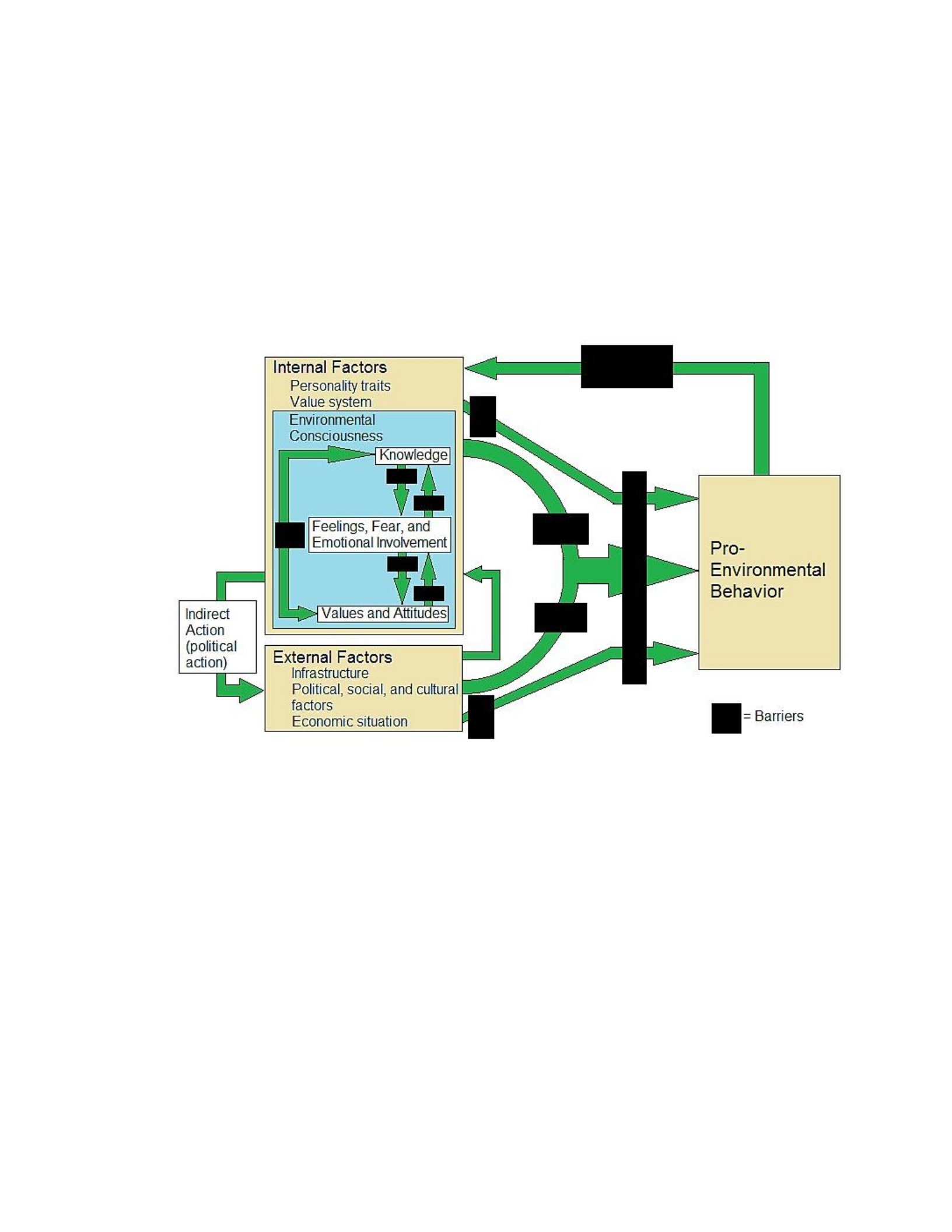
barrier box to draw attention to old habits as a very strong barrier often overlooked in the
pro-environmental behavior literature (Kollmus & Agyeman, 2002).
The Kollmus and Agyeman model of pro-environmental behavior is the
framework for this research because it includes both the internal and external factors that
we believe must be considered when studying the pro-environmental behavior of a
specific population.
Figure 1.1. Model of Pro-Environmental Behavior (adapted from Kollmus and Agyeman,
2002).
Other recent theoretical frameworks (Bamberg & Moser, 2006; Klockner, 2015)
place less emphasis on the external factors such as political ideology, social norms,
economic situation, and culture. A framework that emphasizes culture is an ideal basis for
the present research. Although it does not encompass all the factors that could impact pro-
environmental behavior, the Kollmus and Agyeman model is more useful for conducting

research that is relevant to a specific demographic population, so that actionable
recommendations can be derived from the research to increase the proenvironmental
behavior of the specific population being studied. The model also references indirect
environmental actions and barriers to pro-environmental behavior, both of which are
addressed in the present research.
This study’s proposed theory of change attempts to build upon the model of
proenvironmental behavior by theorizing that environmental science capital is the
“missing middle” needed to overcome or address the barriers to pro-environmental
behavior. Environmental science capital is added to our version of the model, along with
two other variables that are not emphasized in science capital is added to the model
because the present research on science capital demonstrates the ability of science capital
to help underprivileged youth overcome barriers to aspirations and engagement in science
(Archer, DeWitt, Dillon, Willis, & Wong, 2012; Archer et al., 2015). The present study
will examine whether environmental science capital has a similar relationship with
proenvironmental behavior. The variables of meaningful nature experiences and role
models are added to the model because we hypothesize that these variables are potential
drivers of pro-environmental behaviors in rural youth (Chawla & Cushing, 2007;
Hungerford &
Volk, 1990).
This proposed theory of change also divides pro-environmental behavior into
individual actions that benefit the environment and collective actions that build
environmental culture, politics, or workforce. Kollmus and Agyeman’s model is the only
known prominent theoretical model of pro-environmental behavior that represents both
individual and collective forms of behavior and separates them on the model, although

they call them “indirect environmental actions” and present them as a side effect more
than a major outcome (Figure 1.1). Other frameworks either do not emphasize collective
pro-environmental behavior at all, or combine all forms of pro-environmental behavior
together (Bamberg & Moser, 2007; Hines, Hungerford, & Tomera, 1987; Klockner, 2015;
Stern, Dietz, Abel, Guagnano, & Kalof, 1999). Since we see individual and collective
pro-environmental behavior as equally important outcomes, and expect that they are
influenced by different factors, Kollmus and Agyeman’s model is applicable to
conducting research that values both forms.
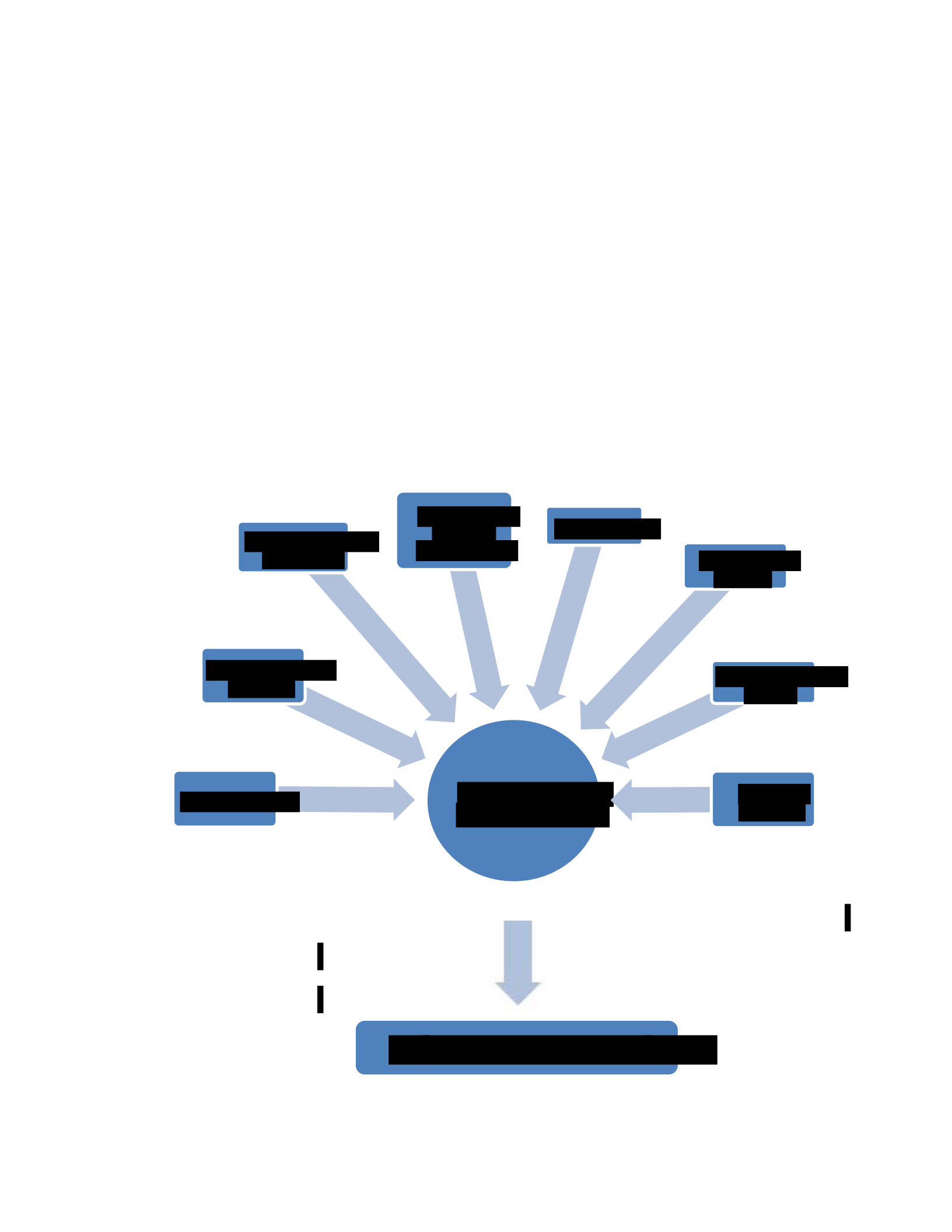
Our theory of change (Figure 1.2) posits that internal and external factors build an
individual’s environmental science capital, giving them the tools to overcome barriers
preventing pro-environmental behavior. This study will examine environmental attitudes
using the connectedness to nature scale (CNS), a widely-used tool for measuring one’s
feeling of connectedness to nature (Mayer & Frantz, 2004). Environmental concern,
along with external factors such as race, ethnicity, gender, geographic region,
socioeconomic status, and political affiliation build the environmental science capital of
rural youth. Individuals with high environmental science capital have the means to
exhibit pro-environmental behavior, but may not necessarily do so because of many
barriers that exist in the gap between concern and action (Kollmus & Agyeman, 2002).
We hypothesize that meaningful nature experiences and the positive influence of family,
friends, and mentors will help rural youth with high environmental science capital to
“bridge the gap” and overcome barriers to pro-environmental behavior (Figure 1.2).
Purpose Statement
This study contributes to the pro-environmental behavior literature by introducing
the concept of environmental science capital and using it to explore the factors
influencing pro-environmental behavior in rural American youth. Using an explanatory
sequential mixed methods design, data were obtained from 252 surveys of youth aged 13
– 22 from Franklin County, Missouri, Berkley County, West Virginia, and the state of
Kansas. After the surveys, 35 youth were selected to participate in follow-up focus group
interviews to further explain survey results.
E
S Capital
STEM I
E
I
C
Na
M
N
E
R M
G
R
S
S
P
I
P
-
E Behavior

Figure 1.2. Theory of Change, Proposed Pro-Environmental Behavior Model
incorporating Science Capital based on the Model of Pro-Environmental Behavior
(adapted from Kollmus and Agyeman, 2002).
In the first quantitative phase of the study, surveys assessed how environmental
science capital, interest in STEM and agriculture fields, meaningful nature experiences,
role models, connectedness to nature, and environmental identity influence
proenvironmental behavior. The results of those quantitative analyses informed the
structure of focus groups, which further explored the factors contributing to pro-
environmental behavior in participants.
Research Questions
The quantitative phase of this study used surveys to address the following questions:
Research Question 1. How does the concept of environmental science capital
(ESC) help to explain pro-environmental behavior (PEB) of rural youth in this
study?
Sub-question 1a: What is the relationship between environmental science
capital and pro-environmental behavior?
Sub-question 1b. Which aspects of environmental science capital best
predict pro-environmental behavior?
Research Question 2. How do the following factors influence PEB in our sample
populations?
• Meaningful Nature Experiences
• The Influence of Role Models
• Connectedness to Nature (CNS)

• Environmental Identity
• STEM Interest
Qualitative focus groups were conducted following analysis of the quantitative
survey results. Research questions for focus groups are as follows:
Research Question 3. How do described experiences of freshman and sophomore
college students enrolled in science courses help to explain patterns observed in
quantitative surveys?
Sub-question 3a: What personal success stories emerge from descriptions
of rural college students who have overcome barriers to
environmental science capital and pro-environmental behavior?
Sub-question 3b: What life experiences do students perceive as most
important in shaping their interests and environmental actions?
What is the importance of role models?
Sub-question 3c: What themes emerge in the lived experiences of students
with different courses, academic majors, or career plans? Research Question 4.
How do described experiences of high school STEM and environmental club
participants help to explain patterns observed in quantitative surveys?
Sub-question 4a: How do their lived experiences and descriptions explain
or contradict the findings from the quantitative study?
Accountability Statement
As with any successful group effort, the course of this research and writing has
been shared by all. How one untangles all the contributions made by the three-member
cohort is difficult to say the least. Each researcher helped develop the survey instrument
and was responsible for administering the survey to their distinct populations. Each

researcher uploaded their collected data into a shared spreadsheet and we were all
together when we ran most of the statistical tests. Qualitative data were collected by each
researcher from their respective focus groups. Coding took place as a group effort once
comments were uploaded into a shared Google Drive spreadsheet and we discussed codes
at our weekly meetings until we reached a consensus. Different chapters within the
document were spearheaded by different cohort members but the final product was a
combined effort from everyone.
Beyond the duties shared by all members, each researcher contributed in distinct
and unique ways. Michelle Donlan was able to carry out two focus groups to help offset
the smaller number of surveys she was able to obtain. Michelle has also undergone the
greatest review of the literature, developed the literature map, and is skilled at setting up
the starting phases of various chapters due to her vast knowledge on the subject matter,
especially in the realm of science capital. She was also instrumental in the development
of the focus group protocol. Writing for this document has been an ongoing effort but the
bulk of the formatting, layout, and editing for a single cohesive voice has been
undertaken by Elizabeth Flotte. Elizabeth also took the lead in the production of the
survey instrument and formatted, created spreadsheets, and generally took care of the
documents needed for this cohort to be successful. Elizabeth contributed the most content
to the pro-environmental behavior literature, especially as it relates to political views. Pat
Silovsky has undertaken extra quantitative and qualitative data analysis duties beyond
those conducted as a group. Pat has also contributed the most content to the literature
review regarding outdoor recreation and rural experiences. She kept the group on track,
particularly in the early stages, as she guided the development of this project by

introducing the group to some seminal research which laid the foundations for our
variables of interest.
CHAPTER 2: LITERATURE REVIEW
This study addresses the lack of pro-environmental behavior and unequal
distribution of environmental science capital. To explore the factors that contribute to
these phenomena in rural youth, a literature review was conducted. Search words
included: pro-environmental behavior, environmental sensitivity, responsible
environmental behavior, environmental identity, science identity, political identity, role
models, meaningful nature experiences, outdoor experiences, environmental literacy, and
science capital. ERIC, EBSCO, ProQuest, and Google Scholar databases were used.
Pro-Environmental Behavior
Pro-environmental behavior includes the actions that generate positive
environmental impacts, promote environmental quality, and result in sustainable use of
natural resources (Stern, 2000). This has been the ultimate goal of the environmental
education field since its inception. Early goals of environmental education were
developed according to recommendations from a meeting organized by the United
Nations Education, Scientific, and Cultural Organization (UNESCO) to discuss the role
of environmental education in addressing global environmental issues (UNESCO, 1977).
In their final report, UNESCO provided a list of recommendations, goals, objectives, and
guiding principles for environmental education (Tilbury, 1995; UNESCO, 1977).

The goals outlined in this report were:
to foster clear awareness of, and concern about, economic, social, political
and ecological interdependence in urban and rural areas; to provide every
person with opportunities to acquire the knowledge, values, attitudes,
commitment and skills needed to protect and improve the environment; to
create new patterns of behavior of individuals, groups and society as a
whole towards the environment (p. 26).
Prior to the UNESCO meeting, William Stapp (1969) stated that “Environmental
education is aimed at producing a citizenry that is knowledgeable concerning the
biophysical environment and its associated problems, aware of how to solve these
problems, and motivated to work toward their solution” (Stapp et al., 1969, p. 24).
Although some changes have been made over time, such as the shift toward a focus on
sustainability (Tilbury, 1995) and sustainable development (Hopwood, Mellor & O'Brien,
2005), the goals of environmental education are largely the same as they were in the
1960’s and 1970’s.
Throughout the history of environmental education research, pro-environmental
behavior has been a major theme, although it has had many names. This concept has been
named pro-environmental behavior (Bamberg and Moser, 2007; Klockner, 2015; Stern et
al., 1999), responsible environmental behavior (Hines et al., 1987),
environmentallyresponsible behavior (Kaplan, 2000), environmentally-friendly behavior
(Dolnicar &
Grun, 2009; Tindall, Davies, & Mauboules 2003), environmental sensitivity (Chawla,
1998), environmentally significant behavior (Stern, 2000), etc. It is also often studied as a

subcategory of the broader goal of environmental literacy or ecoliteracy (McBride,
Brewer, Berkowitz, & Borrie, 2013). Some studies consider only individual
proenvironmental behavior such as recycling, purchasing eco-friendly products, trying to
conserve water, and using public transportation, while others also address collective
proenvironmental behavior such as activism, engagement, and career aspirations that
contribute to the culture of environmental stewardship. It is important to study both types
of behavior because while individual action immediately benefits the environment,
collective actions, such as voting for a particular environmental policy, can affect change
on a very large scale – even at the level of industry or government. Since industry and
government account for two-thirds of the United States’ total energy consumption, the
most effective actions are collective, such as when people organize to pressure industry
and the government to act for the common good (Gardner & Stern, 2002).
Stern (2000) provides evidence that individual and collective pro-environmental
behavior are separate phenomena with their own sets of predictors. In one study, factor
analysis indicated that individual behavior, collective environmental citizenship behavior,
and environmental policy support were statistically distinct and were correlated with
different personal, social, and cultural attributes (Dietz, Stern, & Guagnano, 1998) and
other studies have agreed that all types of pro-environmental behavior cannot be reliably
combined into one concept (Stern, 2000). Yet these variables are not always separated in
the literature, and often collective behavior are not measured at all. Thus, our review of
the pro-environmental behavior literature provided below will include studies that
distinguish between types of pro-environmental behavior, studies that combine them
together, and studies that focus solely on individual behavior.

The determinants of pro-environmental behavior are so complex and multifaceted
that statistical modeling and meta-analyses are useful to obtain a complete understanding
of how one’s life experiences, personality, social factors, and demographics may
influence pro-environmental behavior. Hines, Hungerford, and Tomera (1987) conducted
one of the first major meta-analyses of pro-environmental behavior by reviewing the
existing research and determining not only what variables were predictors of
proenvironmental behavior, but also the strength of those relationships. They found four
major determinants of pro-environmental behavior – attitudes toward the environment,
locus of control, personal norms, and intention to act pro-environmentally. Recent
reviews of the literature indicate that age, sex, race, geographic location, socioeconomic
status, knowledge, cultural norms, and extrinsic motivation can also be important factors
(Gifford & Nilsson, 2014; Stern, 2000). In much of the recent research on
proenvironmental behavior, the factors that influence an individual’s propensity to engage
in individual and/or collective pro-environmental behavior are separated into internal and
external categories (Gifford & Nilsson, 2014; Kollmus & Agyeman, 2002). The internal
and external factors that are most consistently correlated with pro-environmental
behavior are reviewed first. Examples of research specific to rural youth will be provided
when available, since this is the demographic focus of the present study.
Within the category of internal factors, knowledge of environmental problems and
solutions is considered a prerequisite for pro-environmental behavior (Frick, Kaiser, &
Wilson, 2004). This is concerning because research of the past several decades has
indicated that students, specifically, and Americans, in general, lack knowledge regarding
environmental issues (Blum, 1987; Bodzin et. al, 2014; Gambro & Switzky, 1999). In a
study of twelfth grade students, for example, "although environmental knowledge

increased fairly steadily with parental levels of education, the level of knowledge, even at
the highest level of education, remained disappointingly low" and although taking more
science classes generally resulted in higher environmental knowledge over time, students
were only taking an average of two science classes in high school (Gambro & Switzky,
1999). As a result of these deficits, it is clear that environmental knowledge, also referred
to as environmental literacy and/or ecological literacy, is low and should be improved.
However, the assumption that knowledge leads to values and then to pro-environmental
behavior has been very clearly disproven (Stern, 2000), so knowledge is included in
proenvironmental behavior research but is rarely the focus of recent studies.
Pro-environmental values and beliefs are also considered a prerequisite for
proenvironmental behavior, and this relationship is stronger than that of knowledge alone.
Values, beliefs, and attitudes have been studied in the form of environmental concern,
environmental sensitivity, environmental worldview, post-materialistic values, nature
affinity, etc., and have been shown to significantly correlate with pro-environmental
behavior (Dietz et al., 1998; Dunlap et al., 1992; Schultz, 2001). Contemporary studies of
pro-environmental behavior include some sort of measurement of environmental values,
worldview, concern, etc. The new environmental/ecological paradigm (NEP) is the most
widely-used scale for measuring environmental values. This scale measures the extent to
which one holds a pro-environmental worldview, feels that humans are deeply connected
to the natural environment, and believes human activities can have dire environmental
consequences (Dunlap & Van Liere, 1978; Dunlap et al., 1992). Even holding an
environmental worldview does not necessarily result in pro-environmental behavior, so
pro-environmental behavior research began to incorporate psychological behavior theory
to help understand the gap between caring about the environment and engaging in

proenvironmental behavior. This literature shows that although the NEP does not always
directly predict pro-environmental behavior (Scott & Willits, 1994) it is a reliable
measure of environmental worldview, a key variable in theoretical models that predict
pro-environmental behavior (Klockner, 2015; Stern et al., 1999). Mayer and Frantz
(2004) believe the NEP is not an adequate measure of one’s affective, experiential
relationship to the natural world, for two reasons. First, it measures cognitive beliefs
rather than affective experience. And secondly, it measures beliefs about humans in the
aggregate, not the individual’s personal relationship to nature (Mayer & Frantz, 2004). A
commonly used alternative is the connectedness to nature scale, which will be discussed
more below.
One example of the application of behavioral psychology to pro-environmental
behavior research is the value-belief-norm (VBN) theory of environmentalism (Stern et
al., 1999). The VBN was developed based on a review of studies explaining how
environmental values lead to behavior. This theory states that individuals who have high
biospheric and altruistic values and low egoistic values are more likely to have an
environmental worldview, which leads to the development of pro-environmental personal
norms. According to this theory, values and beliefs do not translate into proenvironmental
behavior until personal norms are established. Even if one is aware of the problems
facing the environment, holds environmental worldviews, and knows how to help protect
the environment, they may not display pro-environmental behavior if they do not feel
obligated to do so due to personal norms, habits or routines.
In addition to knowledge, values, and norms, locus of control is a significant
factor influencing pro-environmental behavior (Hines et al., 1987; Stern et al., 1999).

This is similar to the concept of self-efficacy, the belief that one has the ability to help the
environment if they try, and thus have some control over what happens to the environment.
Individuals who lack these traits are more likely to feel overwhelmed or helpless in the face
of environmental challenges and are thus less likely to exhibit proenvironmental behavior
(Stern et al., 1999). Bamberg and Moser (2007) refer to a similar concept of perceived
behavioral control in their meta-analysis of pro-environmental behavior research that builds
upon the work of Hines, Hungerford, and Tomera by incorporating psychological action
theory. Their work takes a more holistic look at proenvironmental behavior and applies
what psychologists know about behavior in general. The concept of perceived behavioral
control comes from psychological action theories such as the theory of planned behavior
(Azjen, 1991) and the norm-activation theory
(Schwartz & Howard, 1981). It describes one’s belief in their ability to perform the
behavior in question and also considers the difficulty or inconvenience of the behavior.
Bamberg and Moser found that pro-environmental attitudes, personal norms, and
perceived behavioral control were relatively equal predictors of intention to act
proenvironmentally (Bamberg & Moser, 2007). Thus, individuals consider the difficulty
of the behavior just as much as they consider their attitudes toward the behavior and their
personal moral obligation to perform the behavior. Perceived behavioral control has
continued to be an important variable in pro-environmental behavior research that is
conducted from an environmental psychology lens (Klockner, 2015; de Leeuw, Valois,
Ajzen, & Schmidt, 2015).
Klockner (2015) combined all of the relevant environmental psychology
proenvironmental behavior theories into one model through a meta-analysis of 56 data
sets. This model is called the comprehensive action determination model (CADM), as it is

meant to encompass all previous theories so that more robust conclusions can be drawn
and the model can be used in a variety of situations. Based on his analysis, Klockner
concluded that habits should be part of the model due to their direct influence on
environmental behavior. The intention to act pro-environmentally is formed by attitudes,
personal norms, social norms, and perceived behavioral control (Klockner, 2015). Thus,
the most powerful interventions to increase pro-environmental behavior would likely
focus on breaking old habits, improving social support for the behavior so that it becomes
a social and personal norm, and increasing perceived behavioral control by educating
people on how to act pro-environmentally and reducing the barriers to those actions.
Interventions that build pro-environmental values influence pro-environmental behavior
indirectly, through their effect on personal norms.
The meta-analyses described above are useful when measuring pro-environmental
behavior because they identify potential predictors of and barriers to pro-environmental
behavior that can be tested broadly in any population. This helps to clarify which
variables are generally most important. However, demographics and external factors such
as cultural, social, and economic situations are not represented in these models, unless
indirectly through their relationship with norms. Yet these are crucial factors to consider
when making suggestions for particular interventions or action strategies. If the goal of a
study is to determine how to address the problem of low pro-environmental behavior, the
demographics and external factors of the study population must guide the research.
Gifford and Nilsson (2014) reviewed the demographic and external factors influencing
pro-environmental behavior and found that age, gender, religion, political views, urban
versus rural residence, proximity to environmental problem sites, social class, culture and

ethnicity build the personal and social norms upon which pro-environmental behavior are
built (Gifford & Nilsson, 2014).
Age comparisons show that older people have more knowledge and ability to
exhibit pro-environmental behavior (Gifford, 1982), while younger people are more
concerned about environmental problems (Klineberg, McKeever, & Rothenbach, 1998).
Gender comparisons show that females have more positive environmental attitudes and
values (Meyer, 2015; Uitto & Saloranta, 2010; Zelezny, Chua, & Aldrich, 2000), despite
the fact that males often have greater environmental knowledge. There is conflicting
evidence as to whether these attitude and knowledge differences result in actual
behavioral differences (Gifford & Nilsson, 2014). The research on the effect of religion is
highly varied and seems to imply that religion influences how environmental concern is
manifested in pro-environmental individuals, but does not predict the presence or absence
of pro-environmental behavior (Gifford & Nilsson, 2014). Higher social class is generally
correlated with greater pro-environmental behavior, at least in developed countries
(Balderjahn, 1988; Laidley, 2011, Inglehart, 1997), except in the case of poorer citizens
who are particularly concerned about local environmental problems that directly affect
their communities (Brechin, 1999).
Pro-environmental Behavior and Rural Populations
The present study is particularly interested in the external factor of rural
residence. There are conflicting results regarding whether rural residence influences
proenvironmental behavior, despite the obvious difference in how rural and urban people
experience the natural world. Some studies indicate that people living in larger cities are
more likely to engage in pro-environmental behavior (Chen et al., 2011) due to the fact

that many types of pro-environmental behavior, such as recycling and using public
transportation, are more available in urban settings. Williams (2017) found that rural
students exhibit less pro-environmental behavior, lower knowledge, and overall lower
environmental literacy scores than students from urban and suburban schools (Williams,
2017). In contrast, Hinds and Sparks (2008) and Meyer (2015) report greater
proenvironmental attitude and behavior in rural students, compared to urban students.
This is supported by a study comparing rural and urban students in Michigan which
confirmed that rural students have higher baseline environmental sensitivity due to
greater time spent outdoors engaged in “rural” activities such as hunting, fishing, and
camping (Gallay et al., 2016). Berenguer, Corraliza, and Martín (2005) found moral
obligation and the level of pro-environmental behavior to be higher among rural than
urban residents, but the opposite was found for environmental concern. Not only do rural
and urban residents exhibit different levels of environmental concern and behavior, but
the type of concern also differs. Rural residents tend to be more anthropocentric and wish
to protect the environment so that it can better fulfill human needs, while urban residents
are more likely to display ecocentric values (Bjerke & Kaltenborn, 1999; Huddart-
Kennedy et al., 2009; Rauwald & Moore, 2002). Still, numerous studies have observed no
difference between the pro-environmental behavior of rural and urban residents (Arcury
&
Christianson, 1990; Halder et al., 2012; Lutz, Simpson-Housley & deMan, 1999).
Rural residence is closely tied to political values and other cultural factors that can
influence pro-environmental behavior. Studies have shown that political
conservativeness results in less environmental concern (Dunlap, Xiao, & McCright,

2001; MCright & Dunlap, 2011), although the degree to which this difference exists
depends on the framing of pro-environmental statements (Feinberg & Willer, 2013).
Other cultural factors such as race, ethnic group, and immigrant status yielded highly
variable and conflicting results (Gifford & Nilsson, 2014). One meta-analysis that places
particular emphasis on demographic, external, and social factors is that of Kollmus and
Agyeman (2002). In their review of pro-environmental behavior literature, they
developed a model of pro-environmental behavior that displays internal and external
factors as separate categories that can influence each other and have a synergistic effect
on pro-environmental behavior when both are strong (Figure 1.1). Of all the reviewed
studies and meta-analyses described here, the study Kollmus and Agyeman may be the
most relevant for research that aims to result in actionable strategies that will work for a
specific population, due to the emphasis on external factors and demographics.
Gifford and Nilsson (2014) concluded that:
A person with a particular personal and social profile will be more likely to
be concerned about the environment and to act on its behalf… such
persons are likely to have spent time in nature as a child, to have accurate
knowledge of the environment, its problems and potential solutions, to
have an open, agreeable, and conscientious personality, to consider the
future consequences of their actions, to feel in control of their behaviors,
to harbor biospheric, post-material, liberal values and responsibility for
environmental problems, to be among the upper half of the economic
classes, to hold personal and descriptive norms about pro-environmental
action, to adhere to a religion that teaches a stewardship orientation to the
earth, and to spend time in non-consumptive nature activities (p. 151).
The above quote highlights some experiences and interventions that can alter
one’s path toward pro-environmental behavior. Specifically, Gifford and Nilsson mention
spending time in nature as a child and participating in non-consumptive nature activities
throughout life. The present study will refer to these as meaningful nature experiences.
Further, studies show that meaningful nature experiences and the influence of role

models are the most self-reported factors in pro-environmental research. Given their
importance, this research will focus on these two influential factors.
Connectedness to Nature Scale
Currently there are at least nine published assessment tools that measure
connectedness to nature. Tam (2013) did empirical research to compare seven of these
scales. His results showed "strong convergent validity and little incremental validity" so
he concluded these scales can be considered "markers of the same underlying construct."
Therefore, however connectedness to nature is measured, the research is showing that a
reliable relationship exists between connectedness to nature and self-reported
proenvironmental behavior. (Brugger et al., 2011; Clayton, 2003; Davis, Le, & Coy, 2011;
Dutcher, Finley, Luloff, & Johnson, 2007; Nisbet, Zelenski, & Murphy, 2009).
One of the most widely used measures is Mayer and Frantz's (2004)
connectedness to nature scale (Brugger et al., 2011; Cervinka et al 2012; Corralize &
Bethelmy 2011; Olivos & Aragones 2011; Zhang et al., 2014). This scale has been used
around the world and translated into several languages (Navarro, Olivos & Fleury-Bahi
2017; Pasca, Aragones & Coello, 2017). According to Mayer and Frantz (2004), the CNS
was developed based on the views of Aldo Leopold, particularly his “contention that
people need to feel they are a part of the broader natural world if they are to effectively
address environmental issues”. The CNS-R (Frantz, Mayer, & Sallee, 2013) is a shorter
version suitable for use with children and low-income adult samples. The CNS-R has also
been shown to predict self-reported pro-environmental behavior across multiple
populations, including college students, children, and a general adult population (Frantz,

Mayer, Gordon, & Handley, 2010; Frantz, Mayer, & Sallee, 2013; Gordon, Frantz, &
Mayer, 2012).
Pasca, Aragones and Coello (2017) did an analysis of the CNS using item
response theory and found seven items presented appropriate indices of discrimination
and difficulty, in addition to a good fit. The remaining items of the scale were redundant
or didn't discriminate well between individuals with different levels of connectedness. By
reducing the scale to seven items, they demonstrated a slightly higher reliability than
Mayer and Frantz (2004) obtained in their original 14-item scale. The new 7-item scale is
more “reliable, easier to administer, and correctly measures connectedness insofar as the
scores obtained actually discriminate between individuals who are connected and those
who are not” (Mayer & Franz, 2004). These researchers even went so far as to say that
item 11 ("Like a tree can be part of a forest, I feel embedded within the broader natural
world") would be the best option in the event that it is necessary to measure
connectedness with a single item.
Perrin and Benassi (2009) argue that the CNS scale measures cognitive beliefs
and not emotional connections. Their confirmatory factor analysis showed that
participants responded similarly to the items with the word feel and the items that used
cognition words. Based upon content analysis of scale items that include no emotional
component (e.g., I think., I consider., I imagine.) and their suggestion of a cognitive
interpretation of the word feel, Perrin and Benassi concluded that the one-factor CNS taps
into is a cognitive connection to nature, not an emotional connection to nature.

Meaningful Nature Experiences
In their review of prior research on pro-environmental behavior, Chawla and
Cushing (2007) found that half to more than 80% of the respondents identify childhood
experiences of nature as a significant experience. Childhood experiences includes a
variety of activities such as free play, hiking, camping, fishing and berry picking.
Respondents also mentioned influential family members or other role models equally
often or second in importance which is in agreement with other research and will be
discussed more below. Other common answers are experiences in organizations like the
scouts or environmental groups, witnessing the destruction or pollution of a valued place,
and reading books about nature and the environment (Chawla and Cushing, 2007).
Although this research has been criticized because it looks backwards to distant
childhood experiences rather than focusing on contemporary conditions for young people
(Scott, 1999) no conflicting evidence has been presented. Chawla and Cushing (2007)
further argue that the fact that similar formative experiences are identified by descriptive
qualitative studies and large correlational surveys, in a variety of cultures, by secondary
school students as well as older populations, gives these findings weight. (Chawla &
Cushing, 2007)
Similarly, a study with Wisconsin High School students found that the outdoors
and environmental influences were major influences on respondents’ level of
environmental sensitivity, an important precursor to both environmental literacy and
environmentally responsible behavior (Sivek, 2002). During the study’s focus group, the
most frequently mentioned subcategories to emerge under environmental influences were
accessibility to or frequency of visits to outdoor areas and opportunities for in-depth
learning and/or involvement. Negative experiences (such as the Exxon Valdez oil spill

and loss of a cherished natural area) were also mentioned as important influences,
whereas, media, in general, appeared to have relatively low influence. Results from the
study’s paper and pencil survey found several strong influences including having ready
access to the outdoors (96%), spending time outdoors (95%), seeing bad things happen to
the environment (78%) and spending time outdoors alone or with a few friends (67%).
Moderate influences included work or volunteer experiences with animals, having wild
animals as pets and books and other print media (Sivek, 2002).
Outdoor recreation, an example of a meaningful nature experience, is often cited
as the most influential activity that contributes to an individual's environmental activism
with hunting and fishing being mentioned by more than a third of the respondents. Tanner
(1980) investigated the backgrounds of members of environmental organizations to try
and find antecedents to environmental activism. When he found recurring accounts of
"childhood hours spent outdoors" he formed the hypothesis that these may be critical
experiences for environmental activism and sent open-ended surveys to staff of several
prominent environmental organizations. When people explained the sources of their
environmental career choice, activism, or environmental concern or interest, similar
answers recurred: positive experiences in natural areas, adult role models, environmental
organizations, education, negative experiences of environmental degradation, books and
other media, and on-the-job experience. Peterson (1982) surveyed environmental
educators and found similar results. 77% of Peterson's samples were males and 45% of
these mentioned hunting and fishing as their outdoor activity.
Current research on wildlife recreation and pro-environmental behavior within
rural New York residents found that wildlife recreationists (hunters and birdwatchers)
were four to five times more likely than non-recreationists to engage in conservation

behaviors (Cooper, Larson, Dayer, Stedman, & Decker, 2015). These behaviors include
donating to support local conservation efforts, enhancing wildlife habitat on public lands,
advocating for wildlife recreation and participating in local environmental groups. They
also found that there was an additive effect with hunter-birdwatchers as having the
greatest likelihood of engaging in all types of conservation behavior. Although wildlife
recreationists were more likely to engage in conservation behavior, the study also found
that engagement in environmental lifestyle behavior (recycling, energy conservation and
green purchasing) were roughly comparable among all types of wildlife recreationists and
non-recreationists (Cooper et al., 2015).
Influence of Role Models
Research findings on meaningful nature experiences and role models suggest that
both childhood experiences in nature and the examples of parents, teachers and other role
models are key "entry-level variables" for responsible environmental behavior. (Chawla
& Cushing, 2007). An example of an entry-level variable could be membership in an
environmental club or organization. Being involved in these clubs or organizations allows
youth to gain increased knowledge about environmental issues and learn environmental
action skills – the skills referred to as “ownership” and “empowerment” variables
(Chawla & Cushing, 2007). Chawla and Cushing highlight several characteristics of
effective programs: an extended duration of time, opportunities to learn and practice
action skills, and success in achieving some valued goal where their efforts are taken
seriously by others (Chawla & Cushing, 2007).

Sivek (2002) assessed the influences on environmental sensitivity in Wisconsin
high school students and found that while time spent outdoors was the most frequently
mentioned influence on environmental sensitivity, role models was the second (Sivek,
2002). The qualitative phase of this study found that students’ responses about role
models fell into five subcategories: teacher or their environmental club advisor, parents,
relatives, friends and others (such as actors or politicians). The greatest number of
students reported teacher or their environmental club advisor. When asked about their
role model’s traits, student responses fell into four subcategories: knowledge,
openminded, action/involved in environmental matters and friendly/personable. The most
frequently mentioned trait was friendly/personable (Sivek, 2002). The quantitative phase
of this study found that male teachers accounted for 44% of role models while parents
and other relatives accounted for 42% of role models ranked as most important. Only
13.7% ranked unrelated people other than male teachers as most important role model
influence (Sivek, 2002). The present study uses Sivek’s survey instrument of role models
and role model traits.
In terms of influence of family and friends, recent research indicates that positive
parental attitudes and support contribute to the concept of science capital. Therefore,
science-related experiences and activities contribute to this concept of science capital,
especially when they are experienced with significant family members. Further, the
results from ASPIRES, a prominent longitudinal study that explored the development of
children’s science attitudes and aspirations, found that parental attitudes to science play
an important role in shaping children’s science aspirations. In fact, Archer and her
colleagues found that parental attitudes to science, experiences of school science, and
student self-concept in science were the variables that had the strongest relationship with

students’ aspirations (Archer et al., 2012). Students with “high science capital” tend to do
science-related activities in their spare time and have family/friends (particularly parents)
who work in science-related jobs (Archer et al., 2015). Thus, the influence of family,
friends, mentors and roles models can help build self-efficacy, create positive shared
outdoor experiences and assist with capital perhaps including environmental science
capital. It is not known whether similar shared experiences in nature contribute to higher
environmental science capital specifically. However, it is known that shared experiences
in nature with family, friends, and mentors have a positive influence on
proenvironmentalism (Chawla & Cushing, 2007).
Meaningful Nature Experiences and Role Models in Rural Youth
For rural students, one positive shared outdoor experience often viewed as the
archetypical rural activity is hunting. Hunting game for recreation is an image often
associated with visions of the family farm and the stereotypical rural way of life. Rural
upbringings can foster an increase in hunting, especially for males (Stedman & Heberlein,
2001). In one study, wildlife recreationists – both hunters and birdwatchers – were four to
five times more likely than non-recreationists to engage in conservation efforts and those
that participated in both had the greatest likelihood of engaging in all types of
conservation behaviors (Cooper et al., 2015). Thus, hunting may be a meaningful nature
experience that is particularly important in forming the pro-environmental behaviors of
rural youth, especially when it is shared with friends, family, or mentors.
Johnson, Bowker, and Cordell (2001) explored outdoor recreation constraints of
race, gender and rural dwelling. Some potential factors that may lead to constraints for
rural populations include lower tax revenues and incomes and restricted access to hunting

and fishing areas. A series of logistic regressions from a national recreation survey was
used to model the probability that individuals perceive certain constraints to participating
in outdoor recreation activities. Results from the survey found that rural residence does
not appear to be an important factor among participants and non-participants in outdoor
recreation constraints. The only constraint shown significance in rural populations is “not
enough time” equation (Johnson et al., 2001).
Science Capital
A recent conceptual tool for understanding the production of classed patterns in
the formation and production of children’s science aspirations is science capital (Archer
et al., 2015). Science capital is the sum of all the science-related knowledge, attitudes,
experiences and resources that an individual builds up through their life. This includes
what science they know about, what they think about science, the people they know who
have an understanding of science, and the day to day engagement with science (House of
Commons Science and Technology Committee, n.d.). Archer and her colleagues advocate
the extension of the Bourdieusian notion of capital beyond the arts by including science
capital. This is not without criticism. While Jensen and colleagues praise the work being
done to address social inequality in science education, they argue that adding “science
capital” to Bourdieu’s existing range of concepts is unnecessary. They go on by saying
that there is just as good an argument for “sports capital,” “numeracy capital, “and many
other domain-specific “capitals” as for “science capital.” Their main concern is by
introducing “science capital”, it may undermine a focus on the ways in which inequalities
and injustice in science education are coterminous with other forms of systemic

inequality (Jensen & Wright, 2015). Despite this criticism, we use science capital in this
present study as a framework in looking at the uneven distribution of science aspirations.
Archer and her colleagues coined the term science capital during Kings College’s
ASPIRES project, a five year longitudinal study (conducted between 2009 – 2013)
exploring science aspirations and engagement among 10 to 14 year olds – a critical age
period for forming science aspirations. The ASPIRES project was funded by the UK’s
Economic and Social Research Council (ESRC) as part of its Targeted Initiative on
Science and Mathematics Education. For this study, Archer and her colleagues used the
Bourdieusian conceptual framework to study how the interplay of family habitus and
capital can make science more “thinkable” for some children (white, middle class) than
others. They then use family habitus rather than family identity or family context to
“better encompass a broad spectrum of family resources, practices, values, cultural
discourses, and “identifications” of “who we are” (Archer et al., 2012). Archer further
explains that it provides a lens for attempting to situate and contextualize individual child
and parent identities (and orientations to science) within the family environment – for
examining the extent to which the everyday family landscape shapes, constrains, or
facilitates aspirations and engagement in science through the combination of attitudes,
values, practices, and ways of being that they engage in (Archer et al., 2012).
The results of this study examining how “thinkable/natural” or
“unthinkable/unusual” science aspirations and engagement within students aged 10 -14
were:
• Analyses highlighted the importance of social class in facilitating or
constraining children’s potential science aspirations and identifications,
even though the overwhelming majority of children in the sample
reported liking science.

• Middle-class family habitus, capital, and a child’s identification with
science were in alignment in favor of science. The result was particularly
powerful, with families able to foster and capitalize on their child’s
interest, enabling them to occupy a strong and privileged position from
which to potentially pursue these aspirations further.
• Within most working class families, science was less “familiar”, being
more “peripheral” to parents’ and children’s everyday lives.
• Despite these clearly classed patterns, our analyses also highlighted the
nondeterministic nature of habitus, with examples of children “going
against the grain” and of home expectations. This agency worked both
ways, with some children resisting a strong science “steer” from home
and others proactively choosing science despite little awareness or
science resources at home.
Ultimately, they found that most young people, from primary through secondary,
find school science interesting. However, interest in science does not translate into post16
participation and careers – with only 15% of 10-14 year olds interested in becoming a
scientist (King’s College London, n.d.).
As part of this larger ASPIRES project, Archer pulled survey and longitudinal
interview data from Black African/Caribbean students and their parents to examine why
science careers are less thinkable for Black students. Additionally, they presented a case
study of two young Black women who bucked the trend and aspired to science careers.
Results from this study suggests although the “being/doing” (liking science, but seeing
science careers as not for me) is common across all students, it is particularly problematic
and exacerbated in the case of Black students (Archer, Dawson, et al., 2015). Archer and
her colleagues suggest three implications for science education based from their analysis:
1. There is an urgent need to find ways to break the pervasive science =
scientist link.
2. Challenges need to be made to the popular association between science and
“braininess.”

3. There is a need for a better and fairer (re)distribution of all forms of
capital, including science capital, across society.
Archer and her colleagues further went on to conceptualize science capital and
explained how they translated this into a survey tool with the “wish to help science
educators and delivery organizations to be able to delineate what they are seeking to
change through their practice and why and to assess to what extent they have been
successful, or not, in these efforts” (Archer et al., 2015). Using logistic regression, 14
questions (12 individual items plus two larger questions) were identified as the strongest
predictors of whether a student would fall into the high or low group on the outcome
variable of future science affinity plus recognition. The twelve individual items are:
• A science qualification can help you get many different jobs?
• When you are NOT in school, how often do you talk about science with other
people?
• One or both of my parents think science is very interesting.
• One or both of my parents have explained to me that science is useful
for my future.
• I know how to use scientific evidence to make an argument.
• When not in school, how often do you read books or magazines about
science?
• When not in school, how often do you go to a science center, science museum
or planetarium?
• When not in school, how often do you visit a zoo or aquarium?
• How often do you go to after school science club?
• My teachers have specifically encouraged me to continue with science
after GCSEs.
• My teachers have explained to me science is useful for my future.

• It is useful to know about science in my daily life.
The two larger questions concerned who students speak with about science and
who they know who has a job using science (Archer et al., 2015).
This research study uses this recent concept of science capital because it explores
social inequities in the distribution of capital and how it impacts engagement and
aspirations within science. It particularly looks at those from more socially disadvantaged
backgrounds and how it can increase their access to science related knowledge, resources,
and social capital (Archer et al., 2012).
Environmental Science Capital of Rural Youth
Within this study, the focus is on rural populations and an expanded definition of
science capital to include environmental science capital – meaning sciences within the
environment such as biology, ecology, agriculture, animal science, environmental science
and natural resource management. By expanding science capital to include the
environmental sciences, hopefully this study will characterize and define environmental
science capital of rural youth.

CHAPTER 3: METHODOLOGY
This study used a mixed methods design that incorporated both quantitative and
qualitative approaches. Quantitative approaches examine relationships among variables
whereas qualitative approaches explore meaning and understanding individuals or groups
ascribe. The rationale for using a mixed methods design is that this form of inquiry
provides a more complete understanding of a research problem than either approach alone
(Creswell, 2014). Thus, this technique allows researchers the potential of answering both
“how” and “how much” questions (Brinkmann & Kvale, 2015). This study used an
explanatory sequential mixed methods design. This design involves a two-phase project
in which the researchers collect quantitative data in the first phase, analyze the results,
and then use the results to plan (or build onto) the second, qualitative phase (Creswell,
2014). The quantitative phase is the emphasis of this approach, with the qualitative phase
providing a supporting role. The qualitative methods seek to add depth and meaning to
the quantitative results. Figure 3.1 is a visual model of the explanatory sequential mixed
method design used in this study.
The challenges of using mixed methods designs in general are the need for
extensive data collection, the time-intensive nature of analyzing both quantitative and
qualitative data and the requirement for the researcher(s) to be familiar with both forms of
research (Creswell, 2014).
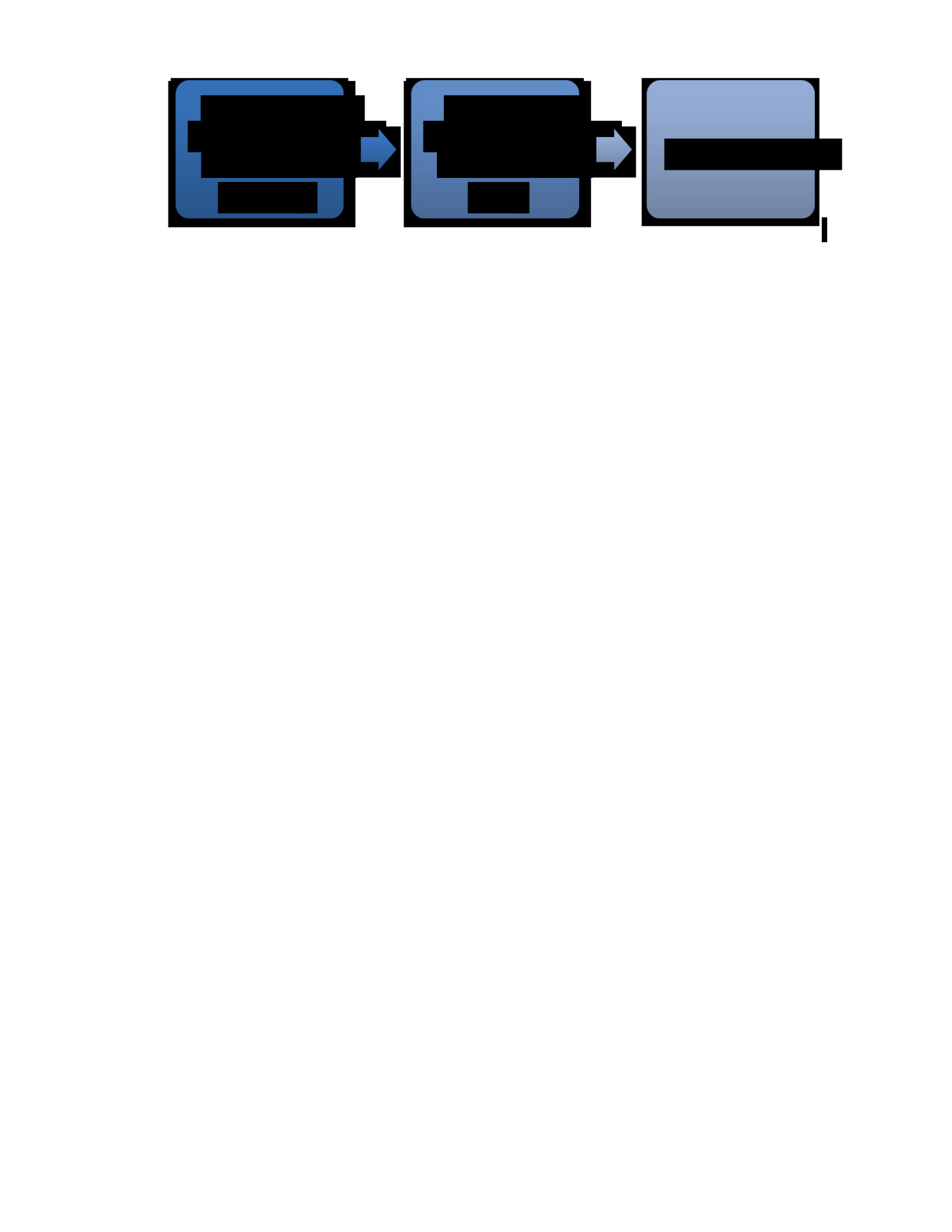
Figure 3.1. The Visual Model of the Explanatory Sequential Mixed Method Design
(Creswell, 2014).
The challenge of using an explanatory sequential mixed methods design is to plan
adequately what quantitative results to follow up on and what participants to gather
qualitative data from in the second phase (Creswell, 2014). To address this challenge,
Creswell suggests looking at extreme or outlier cases, significant predictors, and
significant results relating variables, insignificant results, or even demographics in the
quantitative results to build the second qualitative phase. For example, we found identity
to have a significant relationship with pro-environmental behavior, therefore, we focused
on identity during our qualitative focus groups. Another challenge of the explanatory
mixed methods approach is not considering and weighing all the options for following up
on the quantitative results such as focusing on personal demographics and overlooking
important explanations (Creswell, 2014). Creswell suggests drawing on the same sample
for both phases of the study in order to prevent minimizing the importance of one phase
building on the other (Creswell, 2014). In this study, we used a subset of the same sample
for the qualitative phase of the study as was used in the quantitative phase.
As with any study design, validity and reliability must be addressed. Since this is
a mixed methods design, both quantitative and qualitative data must be checked for
validity and reliability. There are additional concerns with the explanatory mixed methods
Q
D Collection
An
(
QUANT
)
Q
D Co
An
(
)
I

design such as the researcher(s) not following up with all of the potential quantitative
findings (Creswell, 2014). This will be noted in the limitations section. Strategies for
addressing validity are triangulating different data sources and using member checking
(Creswell, 2014). Triangulation occurred when looking at the findings from both the
quantitative survey and qualitative data. Member checking occurred when asking
participants if researchers captured their responses and thoughts during the focus group
discussions. Strategies for addressing reliability include checking transcripts and cross-
checking codes (Creswell, 2014). Throughout the qualitative data analysis all participant
responses were compiled in a shared document. The researchers crosschecked codes by
coordinating and communicating code definitions to achieve intercoder agreement. More
details about the validity and reliability of the quantitative data are addressed later along
with the survey description.
Sampling Procedure
For the quantitative and qualitative phases of the study, the researchers sought out
rural youth with access to various types of environmental experiences. Participants were
selected from high schools, colleges, or educational clubs in Franklin County, Missouri,
Berkeley County, West Virginia, and throughout the state of Kansas. These groups were
chosen for study based on the likelihood that respondents would be mostly rural and
within the age range of 13 – 22 years old. Within those areas, researchers selected
individuals who were part of an academic program, club, or college course with a strong
environmental science focus, when possible. Surveys questioned the respondents
regarding their age and rural residence in order to confirm the assumption that they are
rural youth. Students were allowed to self-report whether they consider their hometown

to be rural, suburban, or urban. Zip codes were also collected to check the students’
perception of rural versus the US Census Bureau method of defining rural residence.
Self-reported rural residence was compared to the Census Bureau definition of
“rural” as not existing in an urbanized area or an urban cluster. Urbanized areas include
regions with 50,000 or more people, while urban clusters contain between 2,500 and
50,000 people (www.census.gov). Delineations of area boundaries are defined by census
blocks that are dependent on population density. Thus, when considering two towns with
the same population, one that is not in close proximity to any large cities may have
“rural” status while a town with the same population that is nearer to a large city could be
defined as an “urban cluster”.
For the quantitative phase of the study, researchers administered at least 100
surveys to each of the three different study populations (described below), up to a
maximum of 350 total participants. The sampling procedure is quasi-experimental
because the researchers sampled all willing individuals that met our criteria from
previously formed groups such as a classroom or participants of a particular program
(Creswell, 2014). The sampling unit was 52 from the West Virginia population, 100 from
the Missouri population, and 100 from the Kansas population, for a combined total of 252
participants. This sample size is sufficient because it ensured that enough of the
participants fit the age and rural residence parameters so that meaningful inferences can
be made from the data. It is assumed that this is enough surveys to account for
demographic variations and provide a complete picture of the factors influencing
proenvironmental behavior in the populations studied. Surveys addressed the dependent
variables of pro-environmental behaviors (PEB) to determine how it is influenced by the
independent variables of age (A), gender (G), race (R), geographic region (GR), Hispanic

ethnicity (H), socioeconomic situation (SE), political identity of self and family (PA),
connectedness to nature scale (CNS), environmental identity (IDE), meaningful nature
experiences (MNE), influence of role models (RM), STEM interest (INT) and
environmental science capital (ESC). These variables will be addressed using survey
questions. See Appendix A for survey questions.
For the qualitative phase of the study, researchers conducted focus groups. Along
with focus group data, qualitative data were also collected by asking three open-ended
questions on the quantitative survey. Similar to the quantitative sampling, the sampling
procedure for the qualitative was also quasi-experimental meaning researchers sampled
all willing individuals that met the criteria from previously formed groups (classroom and
program). Participants were selected not because of convenience and availability, but
because they are considered “information-rich” individuals (Creswell, 2014).
Information-rich is defined by containing, providing, or possessing a great deal of
information and having easy access to information - especially information considered
important for full participation in society or politics (Oxford definition). Participants were
deemed information-rich based on their direct experiences either being a student in an
environmental class and/or participating in a club or environmental competition. For
example, for the Kansas portion of the study, participants were considered
informationrich based on the selection process employed by their ECO-Meet coach to
win a spot on a coveted ECO-Meet team. Team members for the Colgan/St. Mary's High
School ECOMeet team must rank in the top 12 to qualify for an ECO-Meet team after
competing with others in a "mini-ECO-Meet" devised by the coach. In essence, these
students must really want to compete in this program and they must agree to study and
practice for the ECOMeet competition.

For focus group interviews, the sampling unit was eight from Spring Mills High
School Science Club (West Virginia), seven from the 4H Animal Science Club (West
Virginia), nine from Colgan St Mary’s High School ECO-Meet team (Kansas), and 11
from the East Central College Introduction to Animal Science class (Missouri), for a total
of 35. This sample size was sufficient because with 35 information-rich individuals,
saturation was achieved and no new insights or themes were revealed. Themes of interest
from the literature review included motivation, environmental identity, meaningful nature
experiences, role models, environmental science capital and pro-environmental
behaviors. Focus group questions were determined based on the themes that arose after
analysis of the quantitative data such as the relationship between identity and
proenvironmental behavior.
Population 1: West Virginia – Berkeley County High School Students & 4H
STEM Clubs
Spring Mills High School is the fourth high school in the Berkeley County West
Virginia school system. It is a relatively new school which opened in the fall of 2013 to
address overcrowding. The student body was formed from about one-half of the student
body of each of Martinsburg High School and Hedgesville High School. Their vision
statement is to “utilize technology and data to facilitate a collaborative and engaging
learning environment. Our students will become lifelong learners with the critical
thinking skills necessary to enter the global 21st century workplace.” Students surveyed
include two 9th grade Earth and Space Science classes, one 9th grade Environmental class
and the Spring Mills High School Science Club.

Along with the Spring Mills Science Club, two other STEM clubs were surveyed,
the Berkeley County 4H STEM Club and the Berkeley County 4H Soaring Eagles –
which is an Animal Science Club. The Berkeley County 4H STEM club fosters and
educates youth members interested in the areas of science, technology, engineering, and
math. 4‑H is delivered by a community of more than one hundred public universities
across the nation that provides experiences where young people learn by doing. 4H is in
every county and parish in the country—through in-school and after-school programs,
school and community clubs and 4H camps (4H website, n.d.). The Berkeley County 4H
is delivered by the West Virginia University Extension. Participants complete hands-on
projects in areas like health, science, agriculture and citizenship, in a positive
environment where they receive guidance from adult mentors and are encouraged to take
on proactive leadership roles.
Berkeley County is in the Eastern Panhandle region of West Virginia (Figure 3.2).
As of the Census of 2010, the racial makeup of the county was 87.8% white, 7.1% black
or African American, 0.8% Asian, 0.3% American Indian, 1.2% from other races, and
2.6% from two or more races. Those of Hispanic or Latino origin made up 3.8% of the
population. The median income for a household in the county was $52,857 and the
median income for a family was $64,001. Males had a median income of $45,654 versus
$34,239 for females. The per capita income for the county was $25,460. About 7.0% of
families and 10.1% of the population were below the poverty line, including 13.2% of
those under age 18 and 6.5% of those age 65 or over.
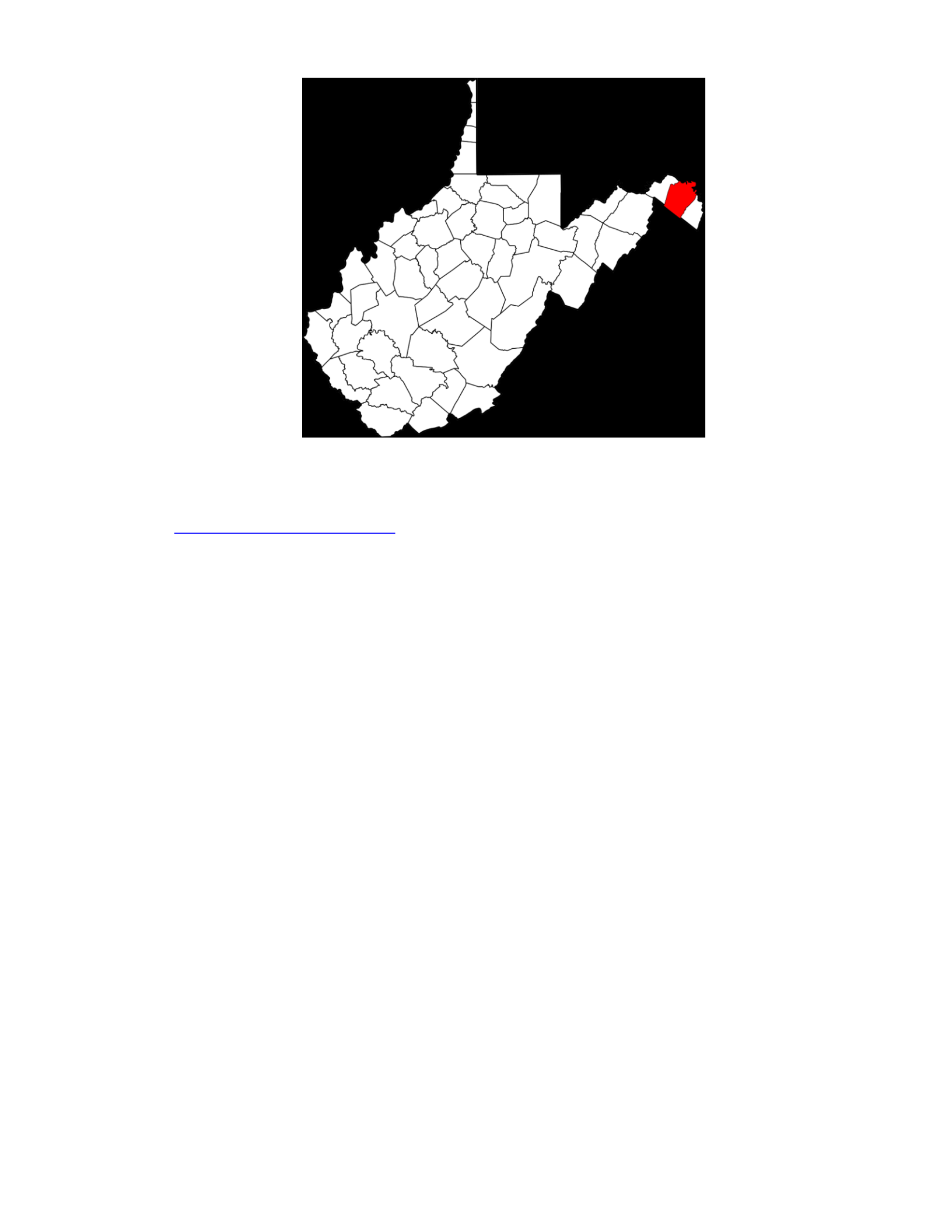
Figure 3.2. West Virginia map highlighting Berkeley County
(http://www.nationalatlas.gov/).
Population 2: Kansas – ECO-Meets, Agriculture Classes, and Environmental
Clubs
Kansas ECO-Meets have a mission statement of: To challenge and inspire an
interest, appreciation and understanding of the natural sciences and the state of Kansas
environment through interscholastic competition. ECO-Meets have been in existence
since 1991 and are a unique environmental competition in Kansas testing students from
grades eight to twelve on their knowledge of Kansas’ plants and animals. Much of the
competition takes place outdoors so experiences in nature are inherent in the event and
make for ideal survey respondents. Sixty-six survey respondents were ECO-Meet
participants from the following six regional ECO-Meets depicted in Figure 3.3- Girard,
Hays, Milford, Olathe, Salina, and Wichita.
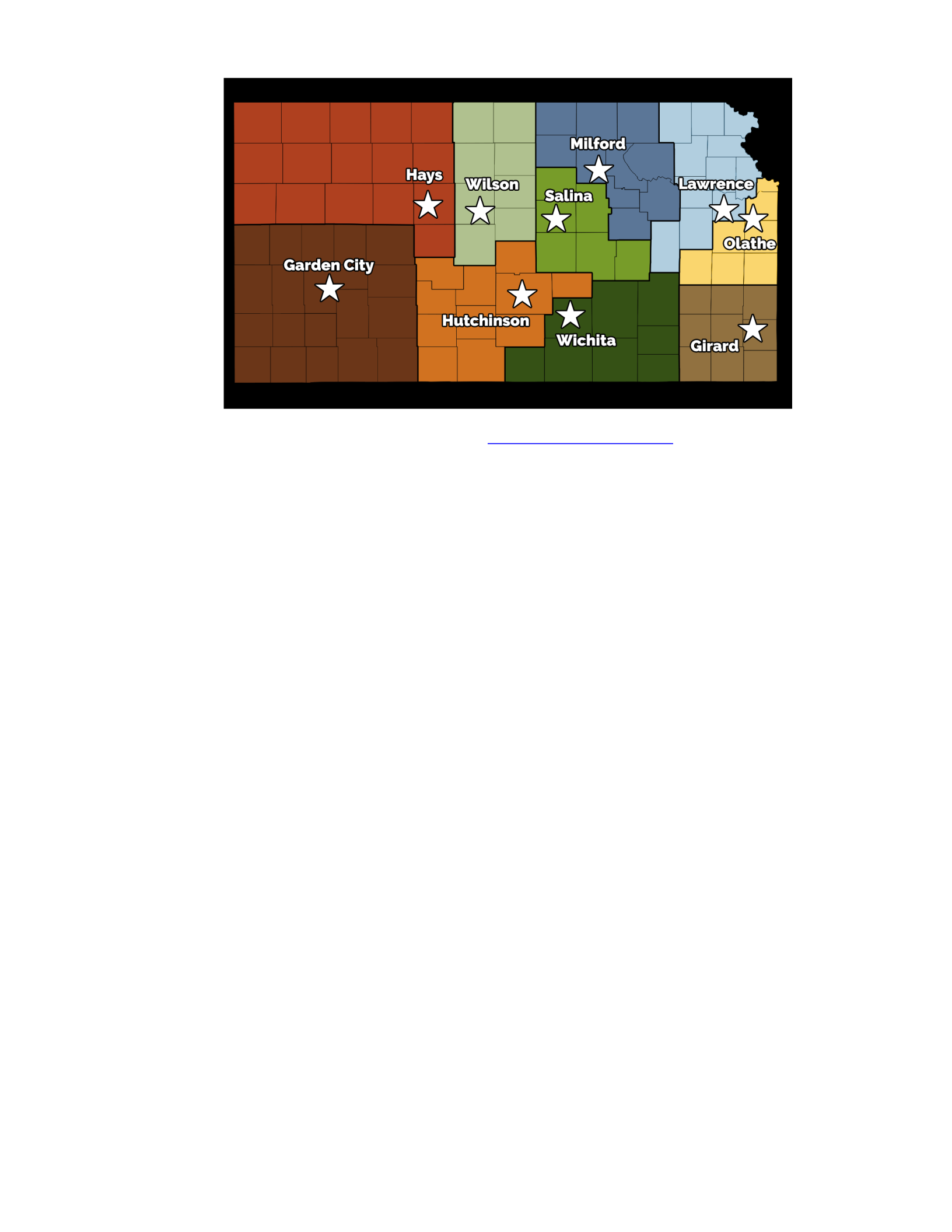
Figure 3.3. Kansas Eco-Meets by regions (www.kansasecomeet.org)
Overall, schools from eleven counties were included in the survey response.
Those counties were Allen, Cloud, Crawford, Geary, Johnson, Mankato, Republic, Riley,
Saline, and Sedgwick counties.
Since each ECO-Meet covers multiple counties in Kansas, the size of schools
participating in an ECO-Meet ranges from 1A to 6A (KSHSAA classifications, 2018).
ECO-Meet respondents were distributed between five 6A (largest) schools, three 5A
schools, zero 4A schools, one 3A school, one 2A school, and five 1A schools (smallest).
According to the 2010 Census, the racial makeup of the Kansas population in general is
83.8% of the population is white, 5.9% is African American, 1.0% American Indian or
Alaska Native, 2.4% Asian American, 0.1% Native Hawaiian and other Pacific Islander,
3% from two or more races and 3% other. Ethnically 10.5% of the total population is of
Hispanic or Latino origin.
Along with ECO-Meet respondents, students from the Introduction to Agriculture
class and the Animal Science class at Maize High School in Maize, Kansas were

surveyed. Maize High School is a fully accredited public high school located in Maize,
Kansas, serving students in grades 9-12. It is a 5A school located in Sedgwick County in
south central Kansas with a student population of approximately 1,500. The racial
makeup of Sedgwick County is 68.1% white, 9.3% Black, 1.3% Native American or
Alaskan Native, 4.6% Asian, 14.6% Hispanic, and 3.7% two or more races. The median
household income is $52,841, the per capita income is $27,583 and 14.2% of persons are
living in poverty.
Eco Club, the environmental club at the Topeka Zoo, was the last youth group
surveyed in Kansas. Eco Club provides an opportunity for children and teens interested in
the environment to meet and share ideas and interests on how to positively impact the
planet. Though the Topeka Zoo is only a medium-sized zoo, it houses over 250 animals in
a number of exhibits, including one of the first indoor tropical rain forests in the
United States. Topeka is the capital city of Kansas and situated in northeast Kansas in
Shawnee County. The racial make-up of Shawnee county is 66.4% white, 11.0% Black,
16.1% Hispanic, 1.5% Asian. 0.8% Native American, and 3.5% two or more races. The
estimated median household income was $45,054 and the estimated per capita income
was $25,602.
Population 3: Missouri – East Central College Students
East Central College (ECC) is a public open access institution in Union, Missouri
providing associate degrees and technical certificates to its service region since 1968.
According to the college website (eastcentral.edu) ECC is supported by the college
district, which includes most of Franklin County and portions of Crawford, Gasconade,
St. Charles, Warren, and Washington counties. This includes ten public school districts:
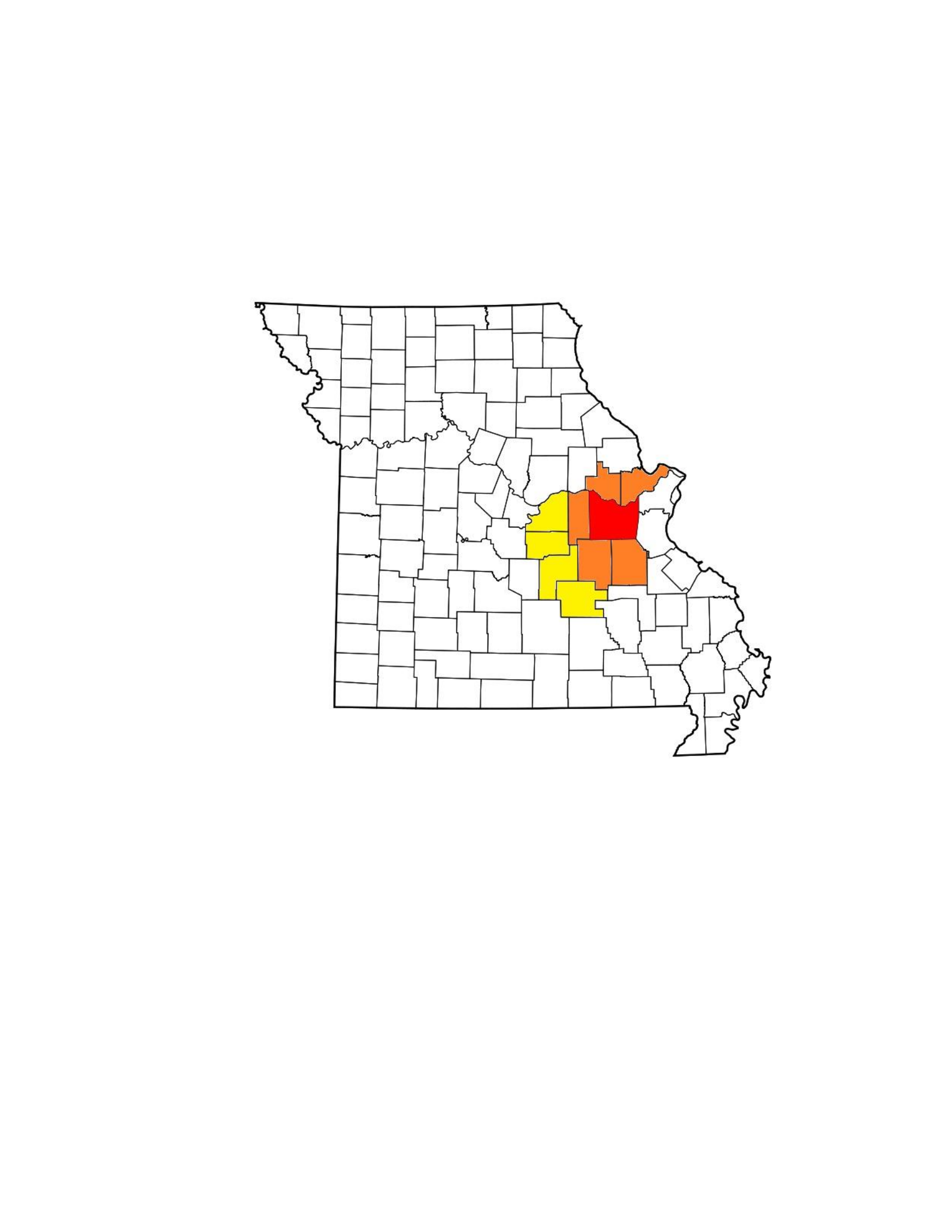
Crawford County R-1, New Haven, St. Clair R-13, Sullivan C-2, Union R-11,
Washington, Franklin County R-2, Lonedell R-14, Spring Bluff R-15 and Strain-Japan
R-16. ECC’s service region extends beyond its taxing district to the entire east-central
region of Missouri, which includes the aforementioned counties as well as Osage,
Maries, Phelps, and Dent counties (Figure 3.4).
Figure 3.4. Map of East Central College district and service region.
Red indicates the home county of East Central College (Franklin). Orange indicates counties that
are at least partially in the East Central College District (From top right, going counter-clockwise:
St. Charles, Warren, Gasconade, Crawford, Washington). Yellow counties that are not in the East
Central College district, but are part of the service region (From indicates top to bottom: Osage,
Maries, Phelps, Dent). Red and orange counties are also part of the service region (adapted from
Wikimedia commons image, Retrieved from: https://commons.wikimedia.org/wiki/File:
Map_of_Missouri_highlighting_Franklin_County.svg).
In 2017, ECC was comprised of 2,897 students, 45% full-time and 55% part-time,
39.6% male and 60.4% female. Its students are 0.5% American Indian/ Alaskan Native,

0.9% Asian, 1% Black or African American, 2% Hispanic, 0.1% Native Hawaiian/Pacific
Islander, 0.9% Unknown, 1.4% Two or more races, and 93.2% white. Table 3.1 shows the
demographics of the counties served by the college. 93% of first-time, full-time students
receive financial aid, 53% receive Pell Grant aid, and 13% receive other types of Grant
aid. The 2017-2018 tuition was $2,592, $3480, and $4896 for in-district students, out-of-
district students, and out-of-state students, respectively (eastcentral.edu, n.d.). The tuition
of the college is meant to remain relatively low compared to the state of Missouri so that
it is considered affordable for students in the rural communities surrounding the college.
As shown in Table 3.1, Franklin County is the home of East Central College, and
is the most populated county in the service region, except for St. Charles County, which
has been omitted due to the fact that ECC only serves a very small portion of that county
and the rest is served by St. Charles’ own community college district. Of the remaining
counties, the population averages 31,587 people, 45.58 people per square mile, median
household income of $43,986, 95.73% white, with 83.68% of 25+ year olds holding a
high school degree and 16.49% holding a Bachelor’s degree or higher (US Census
Bureau, n.d.). All peripheral counties considered in Table 1 meet the qualifications to be
considered “rural” or “urban cluster” according to the US Census Bureau, so it is
assumed that the sample will contain many individuals with a rural background.
Table 3.1
Demographics of Counties in the East Central College Service Region
Franklin 103,330 96.6
In district, in service region
1
0.5
1.4
1.7
87.2
19.7
$50,895
110
Warren 34,373 94.5
2.3
0.5
2.1
3.3
85.8
18.2
$51,509
75.9
Gasconade 14,726 97.3
0.5
0.5
1.3
1.4
86
16.4
$45,505
29.4
Crawford 24,102 96.9
0.5
0.3
1.5
2
78.3
12.5
$36,983
33.3
Washington 25,002 95.4
Out of district, in service region
2.4
0.3
1.4
1.4
77
8
$36,701
33.2
Osage 13,662 98.3
0.4
0.2
0.8
0.9
90.3
19.1%
$54,119
23.0
Maries 8,867 96.3
0.7
0.6
1.6
1.3
82.6
14
$40,542
17.4
Phelps* 44,744 90.6
2.4
3.7
2.4
2.5
87
27.9%
$41,603
67.2
Dent 15,480 95.7
0.6
0.8
1.8
1.8
78.9
12.6
$38,020
20.8
Note: Table includes counties served exclusively by East Central College. St. Charles County is
excluded because only a small portion of that county is within the ECC service region. The
remainder of the county has its own community college district.
Only the top 5 race/ethnicity classifications are shown. Data are from the United States Census
(Retrieved from www.census.gov).
* indicates Phelps county as a potential outlier due to the presence of a public 4-year University
in that county.
Variables
For the quantitative portion of the study, the survey questions were based on the
variables below (Table 3.2). The variables of interest were determined based on the
literature reviewed. Survey questions were obtained from previous research when
County
Home County

possible. When new questions were developed, they were closely based on other
questions found in the literature. Since this is an explanatory sequential mixed methods
design, the findings from the first quantitative phase informed the measures for the
follow-up qualitative phase.
Methods of Data Collection
The quantitative phase of the study focused on factors that influence
proenvironmental behavior within rural populations. A survey was used for the collection
of quantitative data. The advantage of a survey is that it can generalize from a sample, is
cost effective and produces a generally quick turnaround. The survey was cross-sectional
– taking a “snapshot” at one point in time (Fink, 2017). For the qualitative phase of the
study, topics explored were environmental identity, meaningful nature experiences, role
models, and pro-environmental behavior. The qualitative phase focused on these topics
because they have shown significance in previous research or in the quantitative analysis.
Open-ended questions on the quantitative survey and focus group interviews were used
for collecting the qualitative data. All data were added to a shared spreadsheets and
analyzed by each member of the group. Statistical analyses were performed using SAS
Studio.
Table 3.2
Variables of Interest in the Present Study
Individual
ProEnvironmental
Behavior (PEB_I)
Actions that directly improve the environment, such as
recycling, purchasing eco-friendly products, choosing
public transportation, etc.
Dependent
Variable a
nd Code
Definition
Type

Collective
ProEnvironmental
Behavior (PEB_C)
Actions that promote environmental culture, workforce,
or politics, such as voting proenvironmentally,
participate in environmental careers, publically
supporting the environment, etc.
Dependent
Connectedness To
Nature Scale (CNS)
The connectedness to nature scale measures to
what degree people feel part of nature.
Independent
Environmental Identity
(IDE)
A sense of identity that transcends the individual
and encompasses one’s position as part of a living
ecosystem. Includes identities related to science,
the outdoors, nature, and environmentalism.
Independent
Meaningful Nature
Experiences (MNE)
An experience with nature that one interprets to
have a serious, important, or useful quality.
Independent
Role Models (RM)
A person looked to by others as an example to be
imitated.
Independent
STEM Interest (INT)
Interest in the fields of Science, Technology,
Engineering, and Mathematics. Science includes
both physical and life sciences, such as
environmental and agricultural sciences.
Independent
Environmental
Science Capital
(ESC)
Sum of the environmental science-related
experiences that one builds up over a lifetime.
Environmental science includes agriculture,
animal care, fisheries and wildlife, ecology,
botany, limnology, and other sciences dealing with
the environment.
Independent
Socioeconomic
Situation (SE)
A combination of social and economic factors.
Independent
Political Identity (PA)
The membership in, participation in, or support of, a
particular political party, group, or candidate.
Independent
Gender (G)
Identification as male/masculine, female/feminine or
something else, and association with a (social) role or set
of behavioral and cultural traits, clothing, etc; a category
to which a person belongs on this basis.
Independent
Race
(R)
A grouping of humans based on shared physical or social
qualities into categories generally viewed as distinct by
society.
Independent
Geographical Region
(GR)
Self-described or defined using Census Bureau definition
- rural refers to all population,
housing, and territory not included within an
urban area. Two urban areas are recognized:
Urbanized Areas (UAs) of 50,000 or more people;
and Urban Clusters (UCs) of at least 2,500 and
less than 50,000 people.
Independent

Hispanic (H)
Relating to Spain or to Spanish-speaking countries,
especially those of Latin America.
Independent
Age (A)
A period of a human life measured by years from birth.
Independent
The qualitative phase of the study involved focus groups conducted with a subset
of the participants. A total of 35 individuals participated in focus groups. Two focus group
were conducted with participants from Berkeley County, West Virginia. The first
consisted of eight participants from the Spring Mills High School Science Club at their
High School in Berkeley County, West Virginia on Monday, February 25, 2019. The
second consisted of seven participants from the 4-H Animal Science Club at their meeting
place Shepherd Whey Farm on Friday, March 15. Participants for the Kansas portion of
the study were from Colgan St. Mary's High School in Pittsburg, Kansas. Nine
individuals took part in a one hour focus group on Wednesday, March 20, 2019 in the
conference room at their high school. For college students, focus groups were conducted
with 11 students from an Introduction to Animal Science course on East Central College
campus on Monday, April 8th, 2019 in their normal classroom.
Description of Survey Instrument
A paper and pencil survey was developed through adoption and modification of
questions previously used in the literature and tested for reliability and validity. The first
introduction section consists of several questions on student information such as age,
race, gender identity, how they would describe the place they live (urban vs. rural). The
next section is the 7-item connectedness to nature scale (Mayer & Frantz, 2004). The next
section consists of 18 Likert-scale questions about meaningful experiences. These
questions were developed from various sources (Nature of Americans Report, Sivek

2002, plus some original questions for modern rural youth). The next two sections deal
with Role Models and is from Sivek’s (2002) study and includes 12 questions about role
models, followed up with seven questions about traits of role models. The next section is
nine original questions about environmental identity. Then there are twelve STEM
interest questions derived mostly from Wallace (2018). Pro-environmental behavior
questions were obtained from Fah and Sirisena (2014). Three open-ended questions were
added to provide qualitative data. One question focuses on meaning nature experiences:
“Which of your experiences has been most meaningful? What about it was so
meaningful?” The other two focuses on role models: “If you stated that an unrelated adult
who you know personally or a public figure who you do not know personally was an
important influence on your connectedness to nature, who were you referring to?” And
“Of all the role models who have influenced your connectedness to nature, which role
models would you consider to be the most important?” See Appendix A for a list of all
survey questions and their sources and Appendix B for a copy of the survey instrument.
Several steps were taken to protect the validity and reliability of the survey
instrument. Survey questions obtained from previous research were only used if they
were shown to have validity in previous studies. However, a threat to the internal validity
is the combined instruments and modification of survey items. This may impact the
validity and reliability of the original instruments. To minimize this impact, when
questions had to be modified, they were written as similarly as possible to questions from
previous research that showed validity. These questions, in addition to the few new
questions that were developed, were tested for validity and reliability after survey
analysis using the Cronbach alpha tests. Due to the characteristics of individuals, the
uniqueness of the setting, and the timing of the research, researchers cannot generalize

beyond the study population. Additional experiments will need to be conducted for
groups with different characteristics, new settings or future settings (Creswell, 2014).
Description of Focus Group Protocol
A focus group protocol was developed to gain further insights into patterns
observed in survey data. (Appendix C). This protocol was developed using Krueger’s
“Designing and Conducting Focus Group Interviews (2002). Questions were few in
number and open-ended to elicit the views and opinions of the participants. The types of
questions included: introductory, follow-up, probing, and closing. Notes were also taken
during the focus group to record observed behaviors. During the focus group, participants
began by writing their answers down before sharing to encourage the participants to
selfreflect, to share individual perspectives, and feel comfortable giving in-depth
responses. Participants were then guided through a pre-selected set of questions and the
facilitator captured notes on major themes that arose. At the end of the focus group, the
facilitator shared the themes that arose allowing the participants to determine whether
they agreed with the facilitator’s interpretation of themes for member checking. Written
responses were collected and added as documentation for triangulation.
Data Analysis Procedures
For the quantitative portion of the study, descriptive and inferential statistics were
calculated. Descriptive statistics are used to describe the basic features of the data in a
study. They provide simple summaries about the sample and the measures and are a
logical first step in data analysis. Inferential statistics make inferences about populations
using data drawn from the population. Inferential statistical tests used in this study

include univariate linear regression, multivariate linear regression, one-way Analysis of
Variance (ANOVA), and two-sample t-test.
A linear regression is an appropriate analysis when the goal of research is to
assess the extent of a relationship between a dichotomous or interval/ratio predictor
variable on an interval/ratio criterion variable. This technique was used for the category
means of connectedness to nature, STEM interest, environmental identity, meaningful
nature experiences, role models, and environmental science capital. One-way ANOVA is
an appropriate statistical analysis when the purpose of research is to assess if mean
differences exist on one continuous dependent variable by an independent variable with
two or more discrete groups. This technique was used for all questions with categorical
data, and for each individual question in the broader independent variable categories. The
only exception would be for questions with only two answer choices, for which the
twosample t-test was used. The assumption of normality and homogeneity of variance
will be assessed for ANOVA and regression test results when significance is indicated.
For all of the tests described here, the alpha value was 0.05, so tests returning a p<0.05
were deemed statistically significant.
For certain tests, correlation coefficients were also calculated. A multiple
regression analysis provides the relative prediction of one variable among many in terms
of the outcome (Creswell, 2014). Correlation quantifies the degree to which two variables
are related. By computing a correlation coefficient (r) that tells you how much one
variable tends to change when the other one does. When r is 0.0, there is no relationship.
When r is positive, there is a trend that one variable goes up as the other one goes up.
When r is negative, there is a trend that one variable goes up as the other one goes down.
For the qualitative part of the study, both qualitative data from the open-ended questions

on the survey and focus groups were analyzed. The analysis process was adapted from
Creswell (2014). First, all participant responses (open-ended questions and focus group
discussions) were compiled in a shared document. After all responses were compiled,
researchers read over all the responses to get a sense of the “big picture” and reflected on
its overall meaning. Researchers then identified themes by starting with the broad
concepts of meaningful nature experiences, role models, connectedness to nature, STEM
interest, environmental identity, environmental science capital and proenvironmental
behavior. Researchers then started to identify patterns within these concepts. Researchers
also noted the frequency of themes that were mentioned by participants and recorded
quotes to illustrate those major themes and patterns. These themes and patterns further
informed the interpretation of quantitative data. Results were captured in tables
(Appendix D).
Limitations of Study
The data collected in the quantitative portion of the study were self-reported and
thus could be subject to socially desirable answering behavior. To reduce the effects of
social desirability, the questionnaires ensured full confidentiality and the respondents
were asked to state their own opinions and to answer all questions honestly. There was no
contact between the researchers and the participants that could lead to any type of
emotional response caused by sympathy or antipathy to the participants' answers. For the
survey instrument, several instruments were combined (connectedness to nature scale and
environmental science capital) and some survey items were modified. This may impact
the validity and reliability of the original instrument.

For the qualitative portion of the study, the intent was to describe the particular
themes of rural secondary school and college students within Berkeley County, West
Virginia, Franklin County, Missouri, and Crawford County, Kansas, which presents
limitations to generalizability outside of this study. Additional cases of participants with
the same characteristics of similar programs could be studied for potential
generalizability. However, to repeat a case study’s findings in a new case study setting
requires good documentation of qualitative procedures, such a protocol for documenting
the problem in detail and the development of a thorough case study database (Creswell,
2014).
For the explanatory mixed methods study design, there are challenges in terms of
validity and reliability that must be addressed. One such challenge is not following up on
all of the quantitative results needed in order to explain findings. Creswell (2014) warns
that if this occurs then important explanations may be overlooked compromising overall
findings. Although researchers were careful to follow up on results deemed significant,
more quantitative findings could be addressed in future studies.
Other limitations to the study include discrepancy between age groups of
populations in science capital research and the adequacy of the connectedness to nature
scale (CNS) in measuring one’s affective, experiential relationship to the natural world.
Previous research on science capital, such as the ASPIRES longitudinal study, focused on
youth ages 10 – 14, while this present study focuses on youth ages 13– 22. At present no
studies on science capital focusing on rural populations have been found.
Ethics and Human Relations
Because this research involves collecting data from young people, care must be
taken to protect research participants and personal disclosure, trust must be developed

with research participants, the integrity of research must be promoted, and misconduct
must be guarded and new problems that emerge must be coped with (Creswell, 2014).
Prior to the study, the researchers applied for approval from the Institutional Review
Board (IRB) at the University of Missouri – Saint Louis and obtained the necessary
permissions to gain access to the sites and to study participants (Appendix E).
Researchers conveyed the purpose of the research to participants and obtained the
necessary informed consent from participants. Additional parental consent was obtained
from participants below the age of 18. At the start of surveys or focus groups, the
researchers expressed to participants that they may decline to participate or cease
participation at any time with no consequences. They were also assured that their privacy
and confidentiality would be maintained by properly storing information and sharing data
per the requirements of the institutional IRB. During data collection and analysis,
researchers avoided the exploitation of the participants and collection of any potentially
harmful information.
Researchers obtained access to their study participants through teachers, club
leaders, and coaches. For the Berkeley County West Virginia students and STEM Club
participants, approval and recruiting of participants was through Dr. Robert Myers,
Principal of Spring Mills High School, Spring Mills High School Science Teacher, Mrs.
Angela Hollida, Mr. Michael Withrow, Berkeley County 4H Extension Officer and
various 4H STEM Club leaders, Mr. and Mrs. Charles Engle, Mrs. Nikki Welch and Ms.
Heather Riker Johnson.
For Kansas ECO-Meets, students were asked to participate in the survey by their
ECO-Meet coach. Since IRB approval was received after the 2018 ECO-Meet season,
coaches from the 2018 season were contacted by email and asked if they would be

willing to gather permission slips and administer the survey to students from their
ECOMeet teams. Thirty-two coaches were contacted and thirteen coaches returned
surveys for this research. Those returning surveys were Evan Brandt (Shawnee Mission
North HS), PJ Born (Shawnee Mission South HS), Chris Ollig (Blue Valley North HS),
Denise
Scribner (Goddard HS), Matt Mosher (Salina South HS), Alison Pfeifer (St. Xavier
Catholic HS), Tarry Weese (Miltonvale HS), Curt Parry (Pike Valley HS), Cindy
Thompson (Riley Co. HS), Noah Bush (Manhattan HS), Donna Maus (Colgan/St. Mary's
Catholic HS), Jody Hadachek (Rock Hills HS), and Bailey Myers (Crest HS).
Selfaddressed stamped envelopes were mailed to each coach for the return of the surveys.
A total of 66 ECO-Meet participants took the survey. This was short of the desired 100
surveys of ECO-Meet participants so additional high school students involved in similar
curriculums were recruited. Jay Super, ECO-Meet coach at Maize High School did not
have an ECO-Meet team in 2018 due to a restructuring of the science program, so Mr.
Super offered to survey his Intro to Agriculture class and Animal Science class. These
courses provide an introduction to the flora and fauna of Kansas similar to an ECO-Meet.
Another non ECO-Meet group that was surveyed was the Eco Club at the Topeka Zoo.
The purpose of Eco Club is to increase environmental awareness similar to the
curriculum of ECO-Meet. Dennis Dinwiddie, Education coordinator at the Topeka Zoo
surveyed the club. Eco Club presents a wider range of ages but only secondary students’
responses were recorded.
Contact with college students was obtained through East Central College science
course instructors. Each instructor who was contacted agreed to participate in the study.

Consent forms and surveys were administered during regular class times to ensure that
surveys were returned. The instructors included Keith Pulles and Parvadha
Govindaswamy from the Biology department, Isaiah Kellogg from Engineering, and
Matthew Monzyk from Chemistry. Surveys were administered in the regular classroom at
a time convenient to the instructor. Instructors determined the time and location for the
survey administration and Elizabeth Flotte delivered and collected the surveys.
CHAPTER 4: RESULTS
The aim of this mixed methods study was to explore the concept of environmental
science capital and to investigate how environmental science capital, connectedness to
nature, STEM interest, environmental identity, meaningful nature experiences, and role
models influence the pro-environmental behavior of rural youth. The first phase of this
explanatory sequential mixed methods study involved the administration of a survey
measuring these variables, along with demographic information. In the second phase,
focus groups were conducted to build upon the findings of the quantitative phase. We will
present the results in a similar order, with the first section reviewing the results of the
quantitative phase and the second section reviewing the results of the qualitative phase.

Phase I: Quantitative Results from Surveys
Quantitative data were collected using paper surveys and analyzed using SAS
Studio. Surveys included between 15 and 19 questions on demographics and
programspecific information, depending on the study population. There were 101 Likert-
style questions assessing the independent and dependent variables, and 3 open-ended
questions regarding their most meaningful nature experience, identifying role models
who are unrelated adults or public figures, and their most important role model.
Study Population Overview
Participants were students between the ages of 13 – 22 and were affiliated with a
school or club in Franklin County, Missouri, Berkeley County, West Virginia, or the state
of Kansas. Participants were chosen based on their participation in a science club or class,
with preference for those that focus on environmental science. Students at East Central
College in Franklin County, Missouri were chosen based on enrollment in science courses
that have an inherent environmental focus or would provide access to a variety of science
majors. Following is a list of courses that were surveyed, with the likely academic major
of those students in parentheses: Introduction to Animal Science
(agriculture), Human Anatomy and Physiology I (health science), General Ecology
(various majors), Environmental Science (various majors), General Chemistry II (STEM
majors), and Introduction to Circuit Theory (Engineering). Participants from Berkeley
County, West Virginia were chosen based on their enrollment in an environmental science
class, high school science club, 4H STEM club, or 4H Animal Science club.
Participants from Kansas were chosen based on their participation in a class, club, or
ECO-Meet competition. Survey dates, times, locations, and response rates are shown in
Table 4.1. A total of 252 surveys were collected, with an overall response rate of 57.80%.

The 252 surveyed participants included 100 individuals from Kansas, 100 from
Missouri, and 52 from West Virginia (39.86%, 39.86%, and 20.63%, respectively). The
average age of the population was 17.31 years (±2.16 SD), with 43.60% of the population
in the 16 to 18 year age range. The participants were 55.56% female, 87.25% white, and
45.60% rural (Table 4.2). Further details about the population demographics are provided
in Table 4.2. The distribution of age, gender, race, and self-identified geographic region
are graphically represented in Figures 4.1 and 4.2.
Table 4.1
Survey Response Rates for Study Populations and Sub-Populations
Surveys Response
Subpopulation Date
Location
Received
Rate
College Students - Missouri
Human Anatomy and
Physiology I
01/24/19
East Central College
Union, MO
32
100%
Introduction to Animal
Science
01/28/19
East Central College
Union, MO
10
100%
General Chemistry II
01/28/19
East Central College
Union, MO
11
100%
General Ecology
01/31/19
02/07/19
East Central College
Union, MO
24
88.89%
Environmental Science
01/31/19
East Central College
Union, MO
13
61.9%
Introduction to Circuit
Theory
02/04/19
East Central College
Union, MO
10
83.33%

High School Students – West Virginia
St. Xavier High School EcoMeet Team
2/9/19 St.
Xavier
High School,
Junction City, KS
Shawnee Mission North
High School Eco-Meet Team
2/4/19
Shawnee Mission High
School,
Overland Park, KS
11
68.7%
Shawnee Mission South
High School Eco-Meet Team
2/1/19
Shawnee Mission South High
School,
Overland Park, KS
5
45.45%
Pike Valley High School Eco-
Meet Team
2/18/19
Pike Valley High School,
Scandia, KS
4
100%
Crest HS Eco-Meet Team
2/1/19
Crest High School, Colony,
KS
2
50%
Miltonvale High School Eco-
Meet Team
2/22/19
Miltonvale High School,
Miltonvale, KS
4
100%
Salina South High School Eco-
Meet Team
2/20/19
Salina South High School,
Salina, KS
1
25%
Manhattan High School
EcoMeet Team
2/14/19
Manhattan High School East
Campus,
Manhattan, KS
3
37.5%
Colgan/ St. Mary's High
School Eco-Meet Team
1/30/19
Colgan St. Mary's High
School,
Pittsburg, KS
12
100%
Rock Hills High School Eco-
Meet Team
2/15/19
Rock Hills High School,
Mankato, KS
2
66.67%
Spring Mills High School
Science Class
02/14/19
Spring Mills High School Spring
Mills, WV
35
41%
Spring Mills High School
Science Club
02/14/19
Spring Mills High School Spring
Mills, WV
8
53%
4H STEM Club
02/08/19
United Methodist Church
Martinsburg, WV
2
8%
4H Animal Science Club
Secondary Students - Kansas
02/10/19
Shepherd’s Whey Farm
Martinsburg, WV
7
100%
Junction City High School
Eco-Meet Team
01/28/19
Milford Nature Center, Junction
City, KS
1
25%
ECO-Club, Topeka Zoo
01/29/19
Topeka Zoo, Topeka,
KS
22
73.33%
Goddard High School EcoMeet
Team
1/30/19
Goddard High School, Goddard,
KS
2
66.67%
5
62.5%

Maize High School Animal
Science Class
2/27/19
Maize High School, Maize,
KS
3
12%
Maize High School
Introduction to Ag Class
2/27/19
Maize High School, Maize,
KS
9
31%
Riley County High School
Eco-Meet Team
2/28/19
Riley Co High School, Riley,
KS
10
58.8%
Blue Valley North High School
Eco-Meet Team
2/11/19
Blue Valley North High
School,
Leawood, KS
4
50%
Total
252
57.80%
Note: Times are not included because they are not available for some subpopulations.
Table 4.2
Summary Demographic Data
Demographic Characteristic
Variable Response
Number of Respondents
Count Percentage
State
Kansas
100 39.68%
Missouri
100 39.68%
West Virginia
52 20.63%
Age
13 to 15 years old
60 24.00%
16 to 18 years old
109 43.60%
19 to 22 years old
81 32.40%
Gender
Female
140 55.56%
Male
108 42.86%
Non-binary
1 0.40%
Prefer not to say
1 0.40%
Self-describe
2 0.79%

Race
American Indian or Alaska Native
1 0.40%
Asian
1 0.40%
Black or African American
9 3.59%
More than one race
14 5.58%
Other
7 2.79%
White
219 87.25%
Hispanic
No
228 92.31%
Yes
19 7.69%
Self-Identified
Geographic Region
Rural
Suburban
114 45.60%
105 42.00%
Urban
31 12.40%
Political Identity
Do not know Republican
74 30.58%
68 28.10%
Independent
36 14.88%
Democrat
41 16.94%
Other
20 8.26%
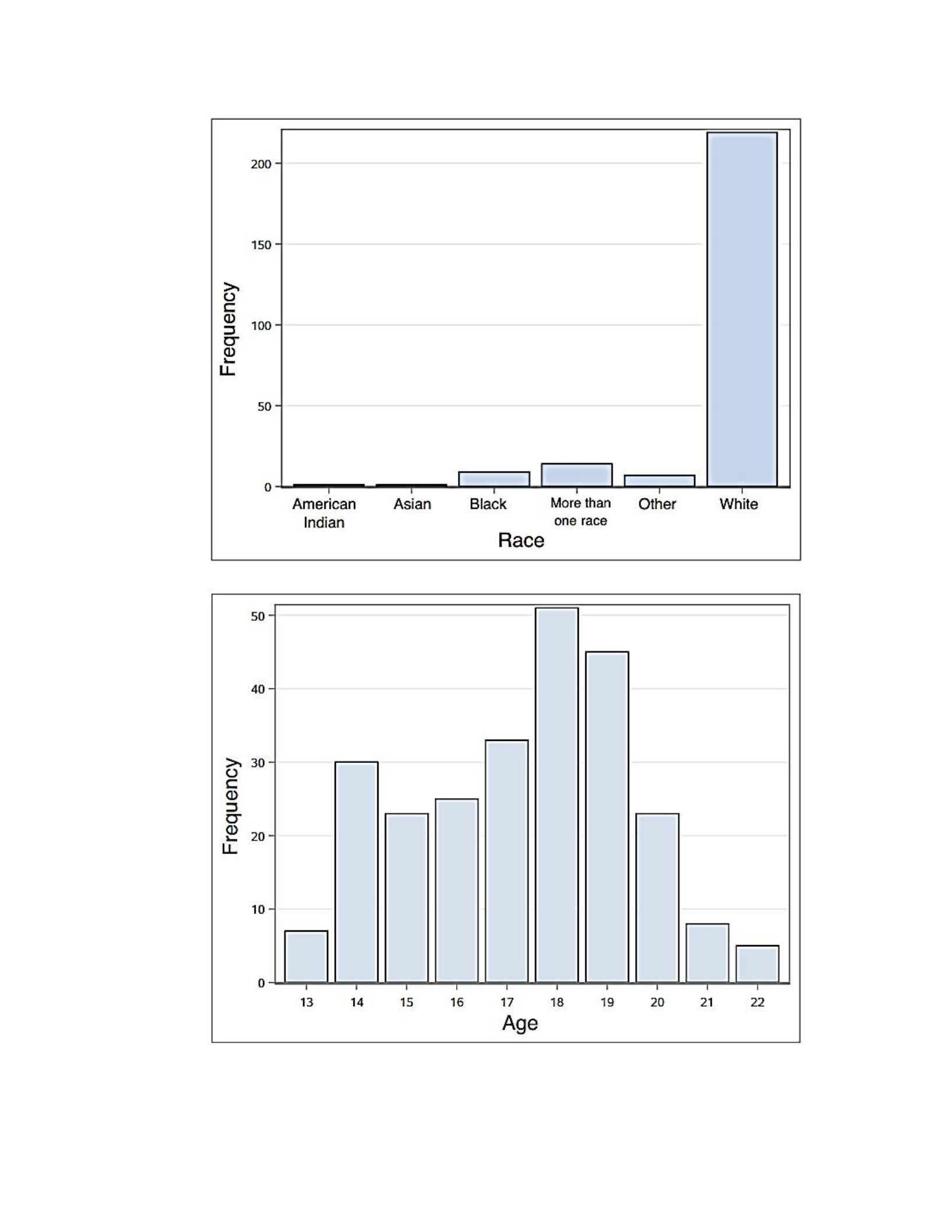
Figure 4.1. Demographics of Study Population by Age and Race.
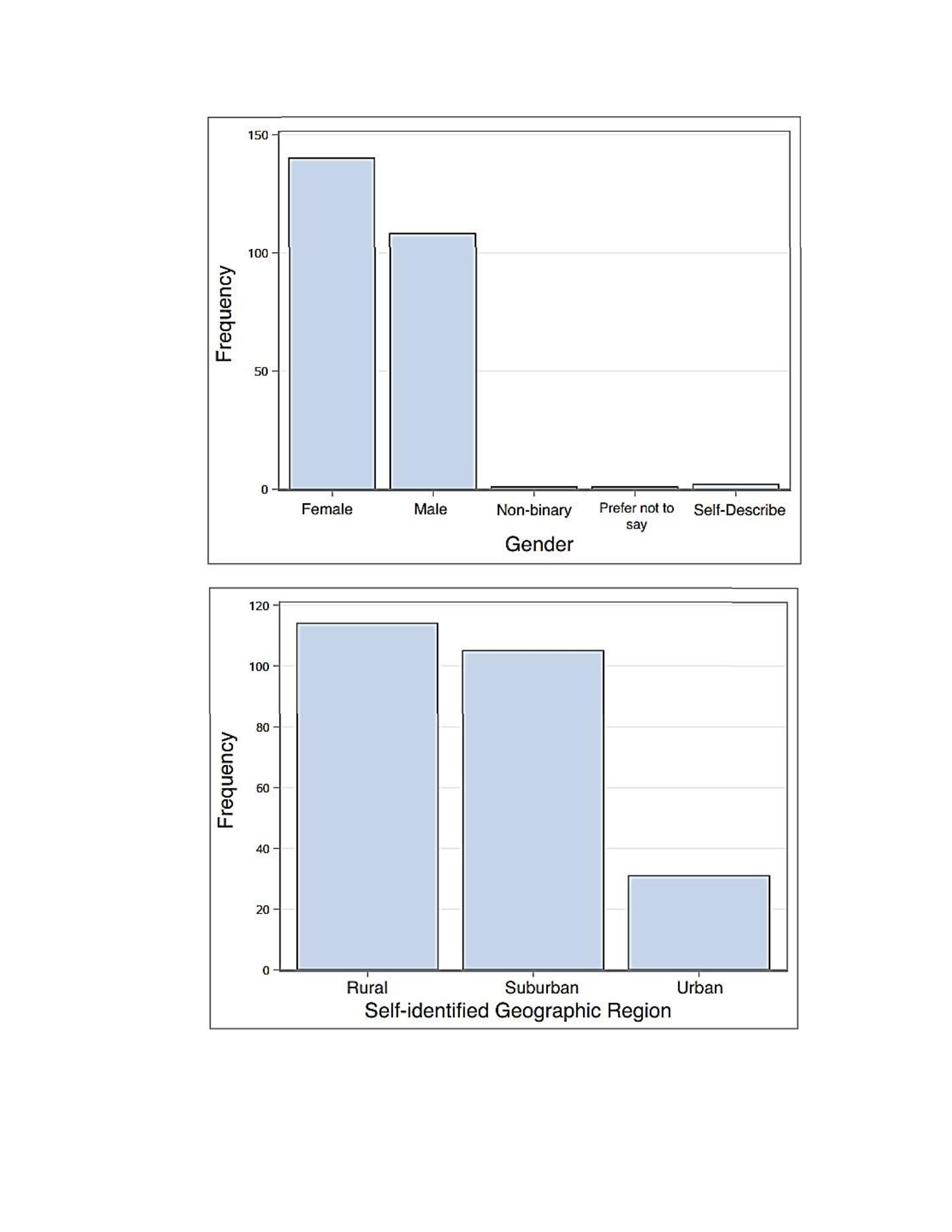
Figure 4.2. Demographics of Study Population by Gender and Self-identified Geographic
Region.

Relationships between Independent Variables and Pro-Environmental Behavior
In addition to the demographic survey questions, the survey included seven
Likert-style questions assessing six independent variable categories, with seven questions
for connectedness to nature, 18 for meaningful nature experiences, 19 for role models,
nine for environmental identity, 12 for STEM interest, and 21 for environmental science
capital. Cronbach’s alpha tests indicated that all variable categories had internal
consistency due to alpha scores above 0.7, so these constructs were analyzed individually
and within variable groups. The alpha values were 0.837, 0.852, 0.856, 0.808, 0.786, and
0.856 for connectedness to nature, meaningful nature experiences, role models,
environmental identity, STEM interest, and environmental science capital, respectively.
These questions were compared to the individual’s mean score for 15 pro-environmental
behavior questions, seven of which measured individual pro-environmental behavior
while eight measured collective pro-environmental behavior.
Initially, we were interested in two sub-categories within our dependent variable
of individual pro-environmental behavior and collective pro-environmental behavior.
However, analyses of the survey data did not demonstrate differences in how these two
sub-categories of pro-environmental behavior relate to the independent variables. When
we used simple linear regressions to analyze the relationships between independent
variable category means and the dependent variables of individual pro-environmental
behavior, collective pro-environmental behavior, and combined (individual and collective
pro-environmental behavior), we did not see different results based on the type of
proenvironmental behavior (Table 4.3). P-values and R2 values were similar regardless of
the dependent variable analyzed.

Table 4.3.
Results of Simple Linear Regressions for Independent Variable Category Means by Each
Type of Pro-Environmental Behavior
Individual PEB Collective PEB Combined PEB
p-value R2 p-value R2 p-value R2
Environmental
Science Capital
<0.0001
0.34
<0.0001
0.27
<0.0001
0.25
STEM Interest
<0.0001
0.31
<0.0001
0.3
<0.0001
0.35
Environmental identity
<0.0001
0.33
<0.0001
0.35
<0.0001
0.37
Connectedness to
Nature
<0.0001
0.08
<0.0001
0.08
<0.0001
0.1
Meaningful Nature
Experiences
<0.0001
0.17
<0.0001
0.13
<0.0001
0.18
Role Models
<0.0001
0.09
0.0001
0.05
<0.0001
0.04
Additionally, the Cronbach’s alpha for the mean of all pro-environmental behavior
questions (0.890) was stronger than that of the individual (0.757) or collective (0.837)
subsets alone. Thus, the entire set of pro-environmental behavior is a more reliable
construct than either sub-category of pro-environmental behavior. Due to the results of
the Cronbach’s alpha tests, we used all 15 questions in our pro-environmental behavior
variable for the rest of the analyses presented in this chapter. Descriptive statistics and
one-way ANOVA tests were calculated for each survey question to examine the
relationship between each question response and pro-environmental behavior. The results
of all of these analyses are provided in Appendix D.

When answering the individual survey questions about connectedness to nature,
meaningful nature experiences, role models, environmental identity, STEM interest, and
environmental science capital, participants were able to indicate their agreement to a
statement based on a 5-point scale with the following options: strongly disagree,
somewhat disagree, no opinion, somewhat agree, strongly agree. Meaningful nature
experiences and the first set of role models questions had answer choices on a 5-point
scale ranging from “Not at all Important” to “Very Important” and the second set of role
model questions ranged from “Does not describe my role model at all” to “Describes my
role model very well”. Pro-environmental behavior questions had a 5-point scale ranging
from “Never” to “Always”. In each case, participants checked a box and that information
was recorded as a “1” for the first box (Not at all Important, Strongly Disagree, Never) up
to a “5” for the fifth box (Very Important, Strongly Agree, Always), before entering the
data into a spreadsheet. Answer choices of 1, 2, 3, 4, and 5 represent the five categories
that were compared in each ANOVA tests. Appendix D shows the results of the one-way
ANOVA tests for each survey question.
Following is an example of how all variables in Appendix D were analyzed.
Figure 4.3 demonstrates an example of the relationship between responses to the first
environmental science capital question (ESC1) and participant mean score for
proenvironmental behavior. Responses of 1, 2, 3, 4, or 5 meant “strongly disagree”,
“somewhat disagree”, “no opinion”, “somewhat agree”, and “strongly agree”,
respectively. When individual participant responses to the first environmental science
capital question are compared to their average score in the mean pro-environmental
behavior category using a one-way ANOVA test, it is evident that there is a relationship

between the two variables. When observing the bar graph of the data, that relationship
seems to be positive; as agreement with the statement increases, pro-environmental
behavior increases.
In this case, the dependent variable in the one-way ANOVA test was the
participant’s mean score for pro-environmental behavior, and the independent variable
was the participant’s response to the survey question “Learning about the environment
helps prepare me for my future job”. A bar graph showing the pro-environmental
behavior score for those who answered 1, 2, 3, 4, or 5 to this question is shown in Figure
4.3. The one-way ANOVA test returned a p-value <0.0001, indicating that there is a
statistically significant difference between the pro-environmental behavior means of
participants in each ESC1 response category.
When analyzing the ANOVA results for individual questions, Levene’s Test for
Homogeneity was used to test for homogeneity of variances. In this example, the
Levene’s test returned a p-value of 0.2991. Because this number is above 0.05, we accept
the null hypothesis that variances are equal, thus fulfilling an assumption for the ANOVA
test. In all cases where ANOVA results yielded a Levene’s Test p-value below 0.05, the
Welch’s ANOVA p-value was reported. In this case, the original p-value stands. The
assumption of normality is also evidenced by the relatively normal distribution displayed
in the quantile-residual plot and residual-percent plots (not shown).
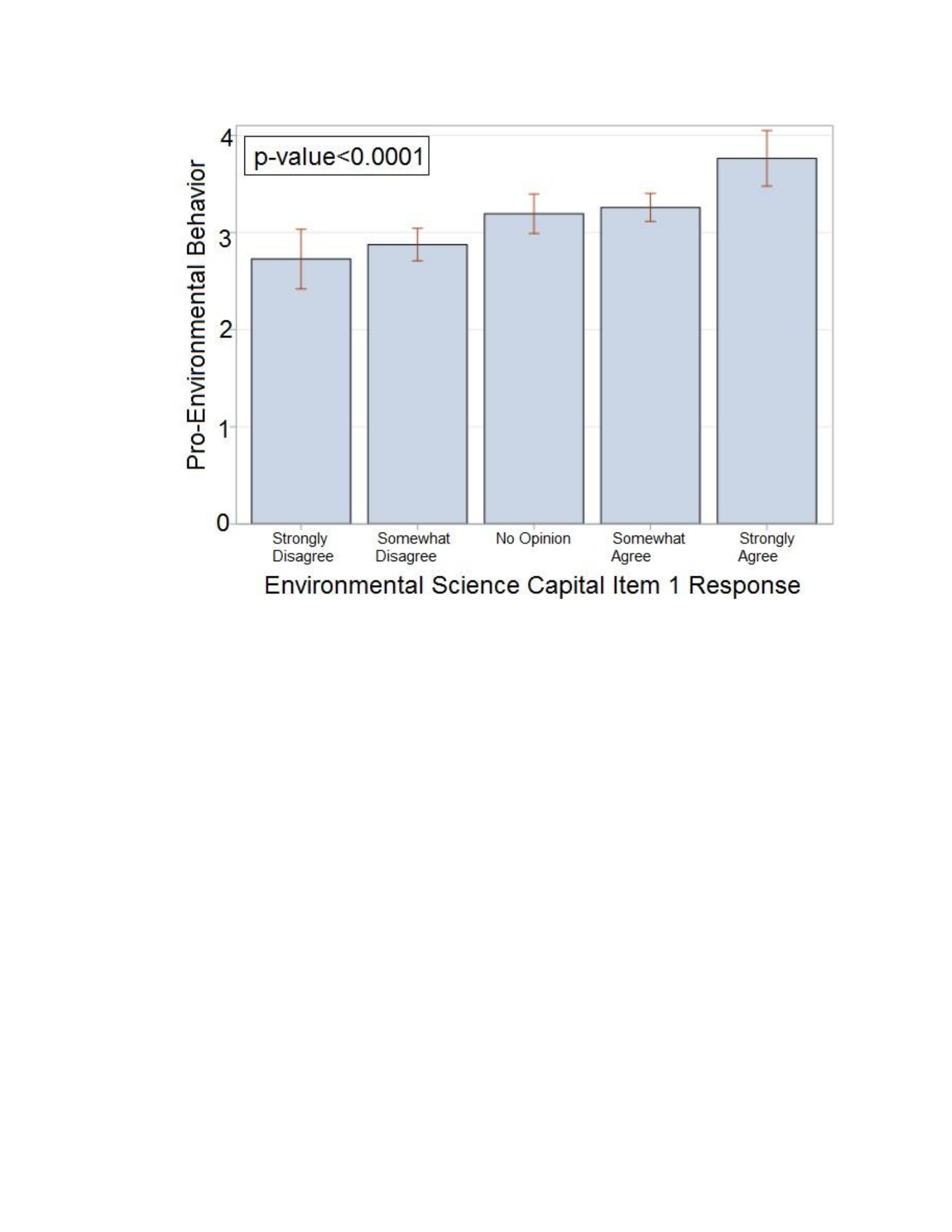
Figure 4.3. Relationship between Participant Response to Environmental Science Capital
Survey Question 1 and Mean Score for Pro-Environmental Behavior. Error bars represent
a 95% confidence interval (One-Way ANOVA p < 0.0001, N = 248).
Scores from the independent variable categories of connectedness to nature,
environmental identity, STEM interest, environmental science capital, role models, and
meaningful nature experiences as measured through self-reported survey responses were
averaged to calculate each participant’s mean score for all six categories. Linear
regressions were used to examine the relationship between these combined scores for the
six independent variable categories and the dependent variable of pro-environmental
behavior (Table 4.3, Figures 4.4 – 4.6). Table 4.4 contains the summary statistics for each

independent variable category. The means for each category are above three, indicating that
on average, responses were on the positive side.
Although the univariate model is statistically significant for all six independent
variables and their relationship to pro-environmental behavior, the R2 values are highest
for environmental science capital, STEM interest, and environmental identity.
Comparatively, connectedness to nature, meaningful nature experiences, and role models
explain less of the variation in how respondents reported their pro-environmental
behavior.
Table 4.4.
Summary Statistics for Independent Variable Category Means
Connectedness to
Nature
3.72
0.76
1.00
5.00
252
STEM Interest
3.75
0.70
1.00
5.00
249
Environmental
Identity
3.42
0.61
1.92
4.83
250
Environmental Science
Capital
3.68
0.60
1.76
4.90
249
Role Model
3.30
0.85
1.00
5.00
252
Meaningful Nature
3.68
0.64
1.24
5.00
252
Experiences
Variable
Mean
Std Dev
Minimum
Maximum
N

It is possible that interactions between these independent variables could result in
statistically significant p-values even if the given variable is not an important contributor
to the overall relationship when all variables are taken into account. Thus, as a follow-up
to these univariate tests, a multivariate linear model that also includes demographic
variables, was necessary to understand how these variables interact to facilitate
proenvironmental behavior.
Fit plots show that while the variables STEM interest, environmental identity,
environmental science capital, and connectedness to nature have positive relationships
with mean pro-environmental behavior, the distributions of STEM interest and
environmental identity are closest to the fitted regression line, with R2 values of 0.37 and
0.37. Environmental science capital fits less strongly with an R2 of 0.24 and
connectedness to nature even less at an R2 of 0.10.
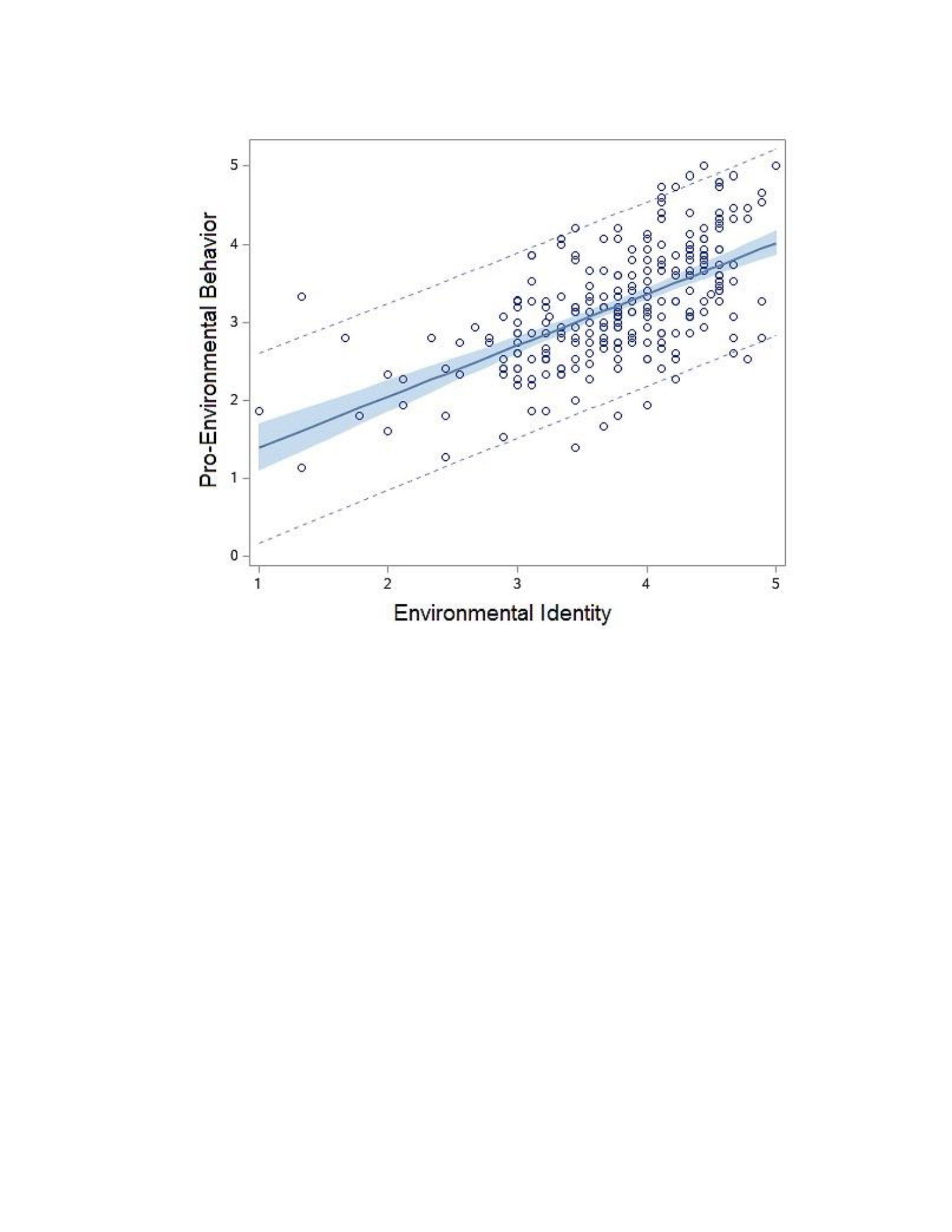
Figure 4.4. Fit Plot for Univariate Analysis of the Relationship between
ProEnvironmental Behavior and Environmental Identity. N = 247, R2 = 0.37.
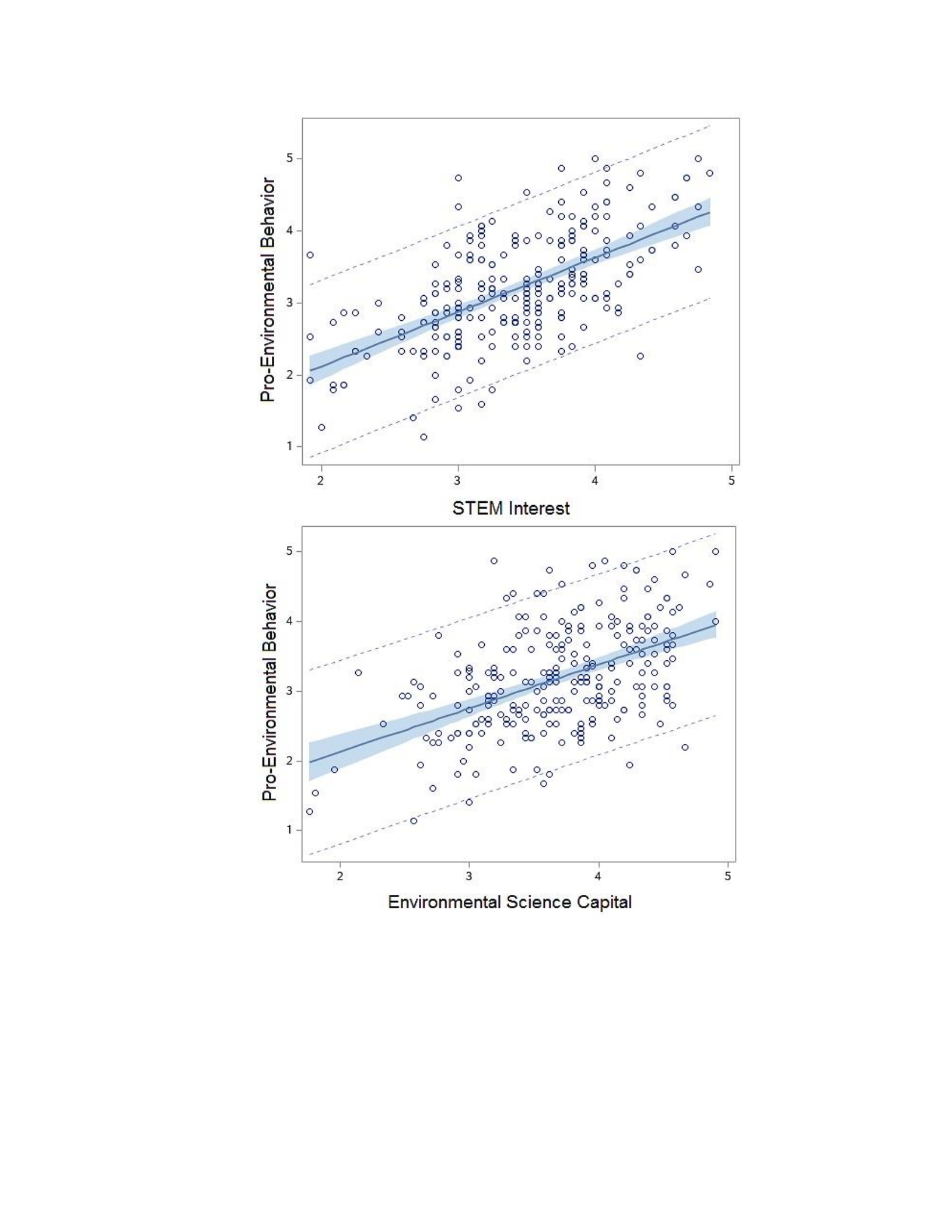
Figure 4.5. Fit Plots for Univariate Analyses of the Relationship between Pro-
Environmental Behavior and STEM Interest and Environmental Science Capital. N = 246
and R2 = 0.37 for STEM Interest. N = 247 and R2 = 0.25 for Environmental Science
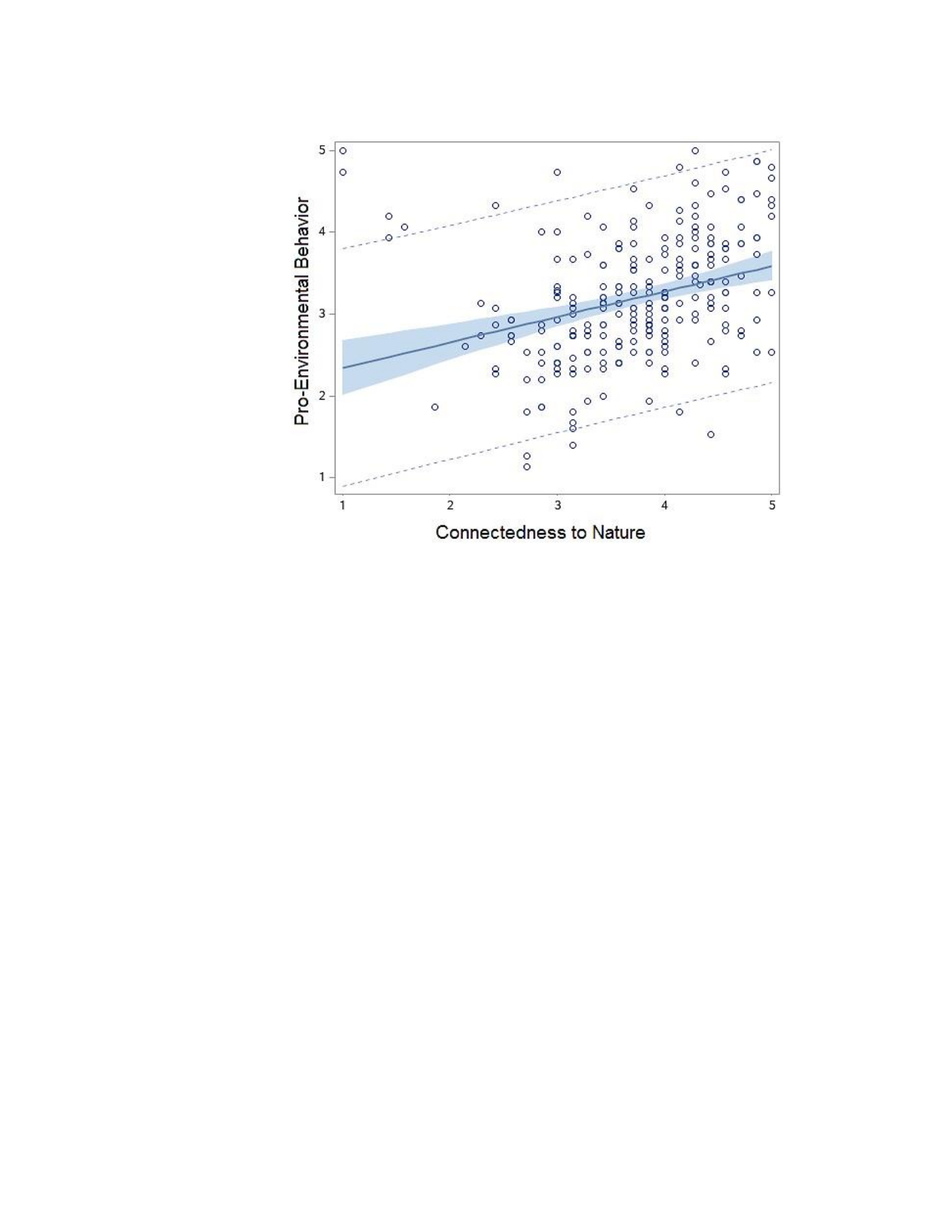
Capital.
Figure 4.6. Fit Plot for Univariate Analysis of the Relationship between Pro-
Environmental Behavior and Connectedness to Nature. N = 248, R2 = 0.09.
Once the relationship between all independent variables and pro-environmental
behavior had been examined using univariate analyses, the next step was a multivariate
linear regression including all important variables from the linear model. All of the six
major independent variable categories were used in the model, but some of the
demographic data could not be used in the analysis, and some needed to be transformed
in order to add those data to the linear model. Below is a summary of how each
demographic variable was analyzed and the reasoning for why and how it was included in
the multivariate linear regression model.

Age, Gender, Race, and Ethnicity
Age was entered into the regression directly because it was collected as an ordinal
variable. Hispanic ethnicity was already a dichotomous variable and did not require any
change. Gender was expressed in the model as male or female because the low number of
individuals who did not choose male or female were excluded from this analysis. The
variable of race was also not included because of the low number of participants who
were not white. Thus, this study is unable to explore the effects of race or the perspectives
of those who do not identify as male or female.
Political Identity
The survey contained four different questions to address participant political
identity. However, only one of those questions was present on the survey for every
population, due to the differences in age between populations. All three study populations
were asked to indicate their political affiliation with the options of “Republican”,
“Independent”, “Democrat”, “Other” or “I don’t know”. We assumed that enough
students over the age of 12 would identify with one of these categories that we could
draw some inferences from political identity data. For the youngest of the participants, we
expect that some of them may simply be identifying as they know their family or
community members would identify, but that is likely how their own political identity
would also be formed, at least at this young age. Older participants at the college level
were also asked three additional questions that were presumed not age appropriate for the
younger participants. College students were asked to indicate their political ideology
regarding social issues, with the answer choice options of “conservative”, “moderate”, or
“liberal”. They were also asked to indicate their political ideology regarding economic

issues, with the same answer choice options. Last, college students were asked to indicate
the extent to which their own political ideology was more or less conservative than their
parents, on a 5-point scale from “much less politically conservative” to “much more
politically conservative”.
When the political party affiliation question responses were compared to scores
for pro-environmental behavior using a one-way ANOVA test, there is a significant
relationship (p<0.0001). A bar graph of these data, excluding the “I don’t know” and
“Other” responses, indicates that those who identify as “Democrat” have the highest
proenvironmental behavior, followed by Independents in the middle, and Republicans
with the lowest pro-environmental behavior. When adding this variable to the
multivariate linear regression model, participants who chose any answer other than
“Republican”,
“Democrat”, or “Independent” for political party affiliation were excluded from the
analysis. This was done in order to not exclude independents, but also not emphasize
them in the analysis because independent is a broad category including liberal,
conservative, and moderate groups. Also, dividing in this way resulted in two groups with
a larger sample size (68 Republican and 77 Non-Republican). This is supported by
comparing the mean pro-environmental behavior scores of these groups (Figure 4.7),
which shows that the pro-environmental behavior mean for Independents is closer to the
Democrat mean than the Republican mean. Thus, the data were divided into
“Republican” and “Not Republican” categories, which pools Democrats and
Independents together. The “Republican” variable was added to the model as Republican
= 1, and Non-Republican = 0.
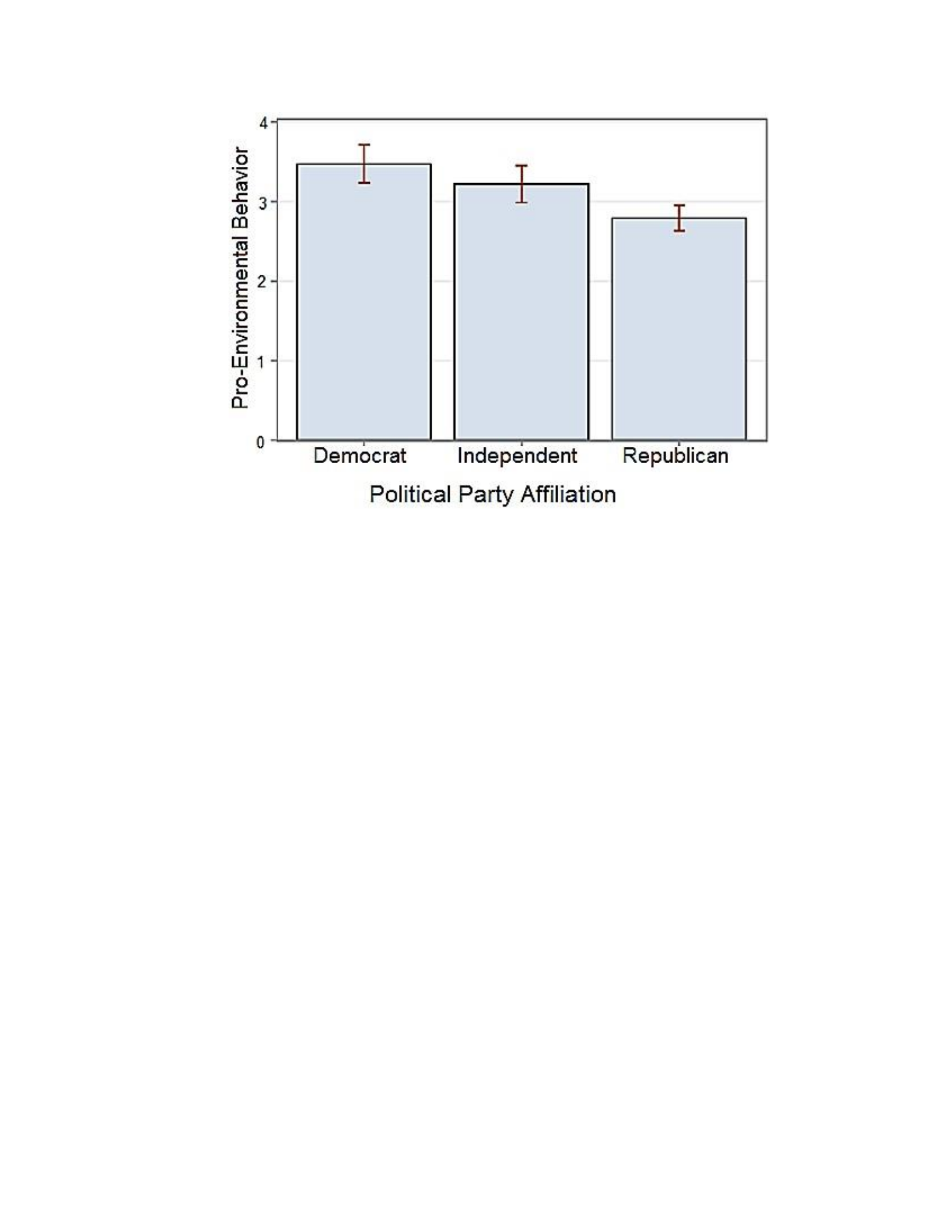
Figure 4.7. Relationship between Political Party Affiliation and Pro-Environmental
Behavior. Error bars represent a 95% confidence interval.
Political ideology regarding social issues and political ideology regarding
economic issues were both significant when compared to pro-environmental behavior
using a one-way ANOVA test (P = 0.004 and P = 0.017, respectively, N = 93 for both
tests). In both cases, the mean pro-environmental behavior score is highest for those who
identify as liberal and lowest for those who identify as conservative. Participants who
indicated that they are somewhat less politically conservative or much less politically
conservative than their parents had slightly higher pro-environmental behavior scores
than those who indicated that they were somewhat more politically conservative than
their parents or shared political views that were more or less the same as their parents (P
= 0.05, N = 96). Interestingly, none of the 96 respondents indicated that they were much

more politically conservative than their parents. All of these political identity questions
demonstrate a tension between having a politically conservative or Republican political
identity and pro-environmental behavior.
Collecting additional data on the older Missouri population allowed for additional
insights into the political identities of the population in general, especially when
comparing responses to the political party question with responses to the ideology
questions. Only 55 of the participants in the college population chose a political party,
with 31 Republicans, 13 Independents, and 11 Democrats. The remaining 45 either chose
“Other” or “I don’t know” or did not answer the question. In the “Other” category, three
participants wrote in “Libertarian”, and there was one occurrence of each of the
following: “politically unaffiliated liberal”, “no party affiliation”, “anarchist”,
“democratic socialist”, and “issue-by-issue”. This is also the part of the survey that had
the most unsolicited notes written in the margins, as if participants wanted to make sure
the reader knows that they do not identify with the options provided. For example,
“neutral in all political and government matters”, “government will lead to our downfall”,
“not into politics” and “conservative but geez not a radical nutcase that believes
everything that supports my views” were written into the margins of four different
surveys.
Conversely, 93 of the 100 participants responded to both political ideology
questions. There were 27 conservatives, 47 moderates, and 19 liberals regarding social
issues. There were 30 conservatives, 43 moderates, and 20 liberals regarding economic
issues. Based on these data, it appears that there are a substantial number of politically
moderate youth who do not identify with a particular political party. Also, more

participants identified as “liberal” than “Democrat”, but the same pattern is not seen with
conservatives and Republicans. It is possible that conservative, moderate, or liberal
ideology is a better measure of political identity for the youth in this study. However,
political party affiliation was the only political identity measurement collected for all
participants, including the younger West Virginia and Kansas populations. Thus, only the
political party affiliation question was added to the multivariate linear regression to avoid
reducing the sample size of the overall model.
Geographic Region
On the survey, participants were able to self-identify as rural, urban, or suburban,
and also provided their zip code so that we could determine their geographic region in
other ways, if needed. While analyzing the data, we quickly noticed that participants from
the same zip code often self-identified differently, with one seeing their zip code as
“urban”, for example, while others saw the same zip code as “suburban”. We also
recognize that “rural” may not have the same meaning in Kansas as it does in West
Virginia. Due to the subjective and relative nature of these terms, we used the zip code for
each participant and entered it into a database to indicate whether the US Census
Bureau considers that zip code to be an “urbanized area”, an “urban cluster”, or a rural
area. These distinctions varied widely from how one self-identified, especially across
states. For example, many Missourians who saw themselves as rural are considered to be
in “urban clusters” and many West Virginians who saw themselves as suburban are
considered “urban” by Census Bureau standards (Figure 4.8).
One-way ANOVA tests were used to examine the relationship between geographic
region and pro-environmental behavior. The relationship is not significant regardless of

whether self-identified or Census Bureau definitions are used (p = 0.23 for self-identified;
p = 0.2419 for US Census Bureau definition). However, it is possible that a more nuanced
way of classifying rural identity is necessary to truly explore the influence of this
variable. We were interested in determining whether the variable was significant when
part of a multivariate analysis, so we changed it to a dichotomous variable and added it to
the model. When viewing the mean scores for pro-environmental behavior for urban,
urban cluster, and rural participants, urban cluster and rural are more similar (Figure 4.9).
Thus, urban cluster and rural were pooled in the “Rural” category for this analysis, with
urban individuals in the “Non-Rural” category. The “Rural” variable was added to the
model as Rural = 1 and Non-Rural = 0.
Socioeconomic Status
Survey questions for socioeconomic status (SES) were obtained from the National
Center for Educational Statistics, which asks five different questions to indirectly
determine socioeconomic status. Participants are asked to indicate how many books are in
their home, with increasing categories that count on a 1 – 4 scale, whether they have a
computer at home (0 = no, 1 = yes), whether they have a list of up to 5 different
appliances in their home, the level of their father’s education using Likert-style questions
from 1 – 4, and the level of their mother’s education from 1 – 4. All of these responses are
totaled, with possible totals ranging from 0 – 18. In order to analyze these data using a t-
test, participant responses were categorized into low, medium, and high. The National
Center for Educational Statistics categorizes low as a score of 0 - 5, medium as 6 - 13,
and high as 14 - 18.
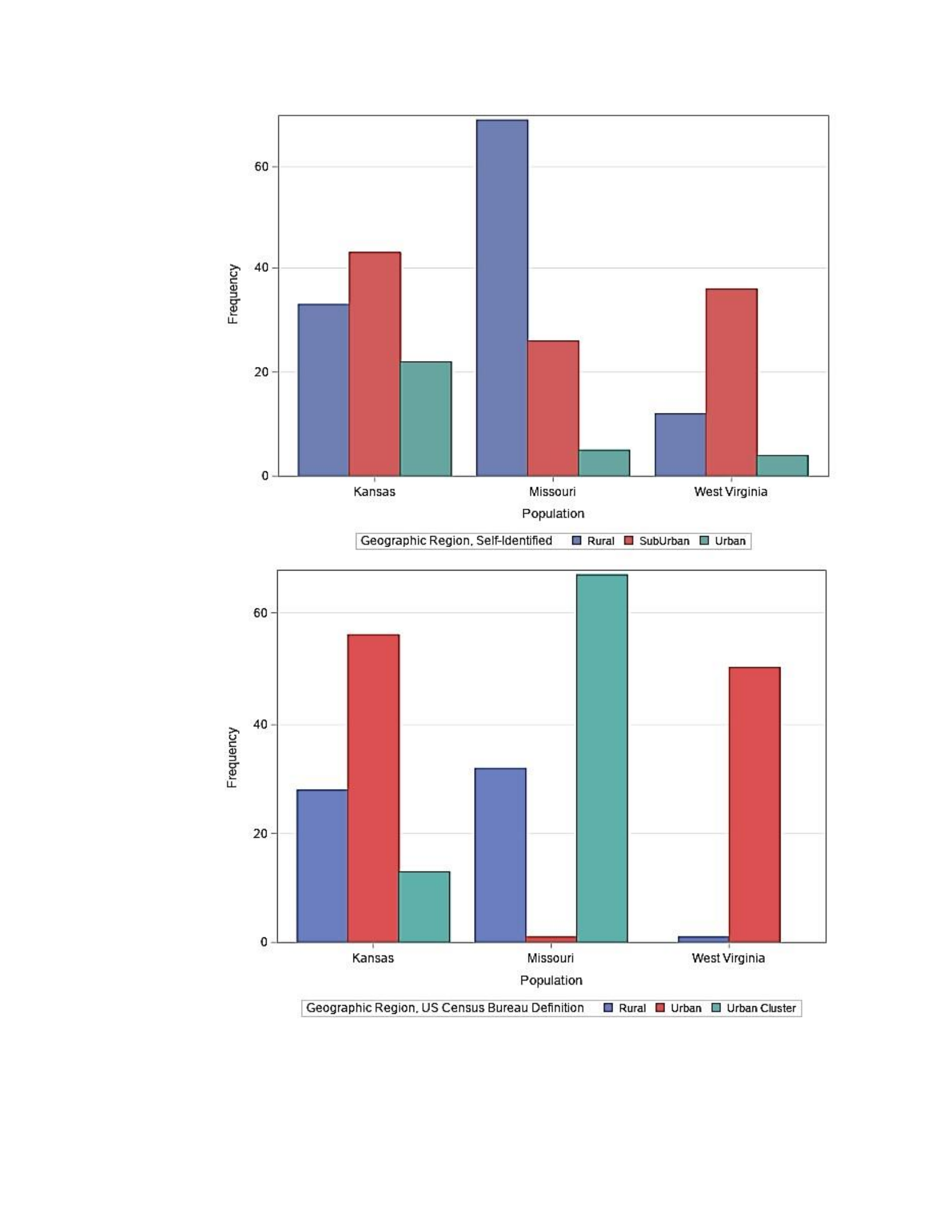
Figure 4.8. Geographic Region by Population (State) According to US Census Bureau
versus Participant Self-Identification.
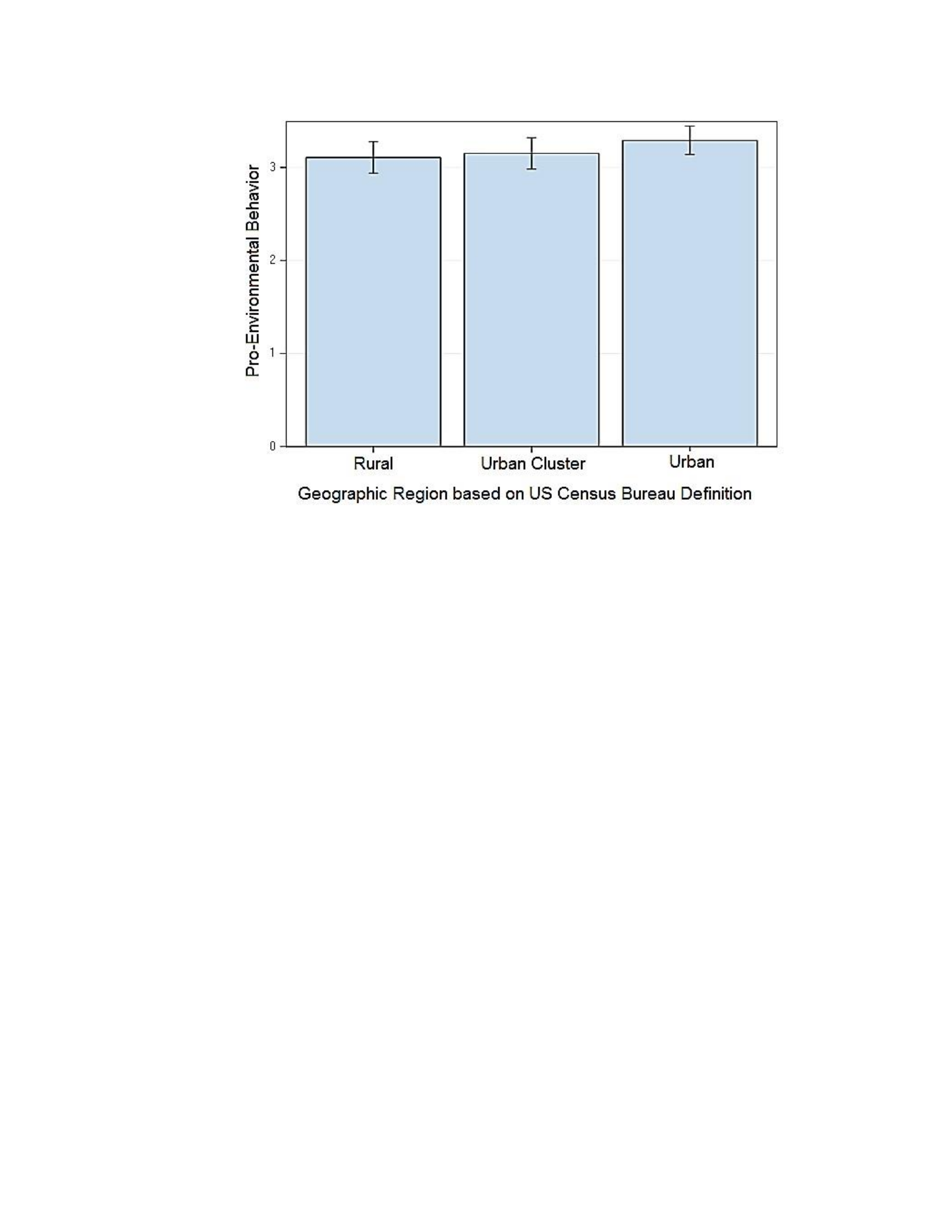
Figure 4.9. Relationship between Pro-Environmental Behavior and Geographic Region,
as Defined by the US Census Bureau. Error bars represent a 95% confidence interval.
None of the participants in this study scored below a 5 (Figure 4.10), so scores
were placed into medium and high categories. A t-test that compared the two categories
shows no significant difference in their Pro-Environmental Behavior, due to a p-value of
0.4260 (Figure 4.11). However, it is possible that differences would be observable if there
were respondents with low socioeconomic status. The lack of respondents with low
socioeconomic status is a limitation of this study and prevents us from making inferences
regarding the influence of this variable.
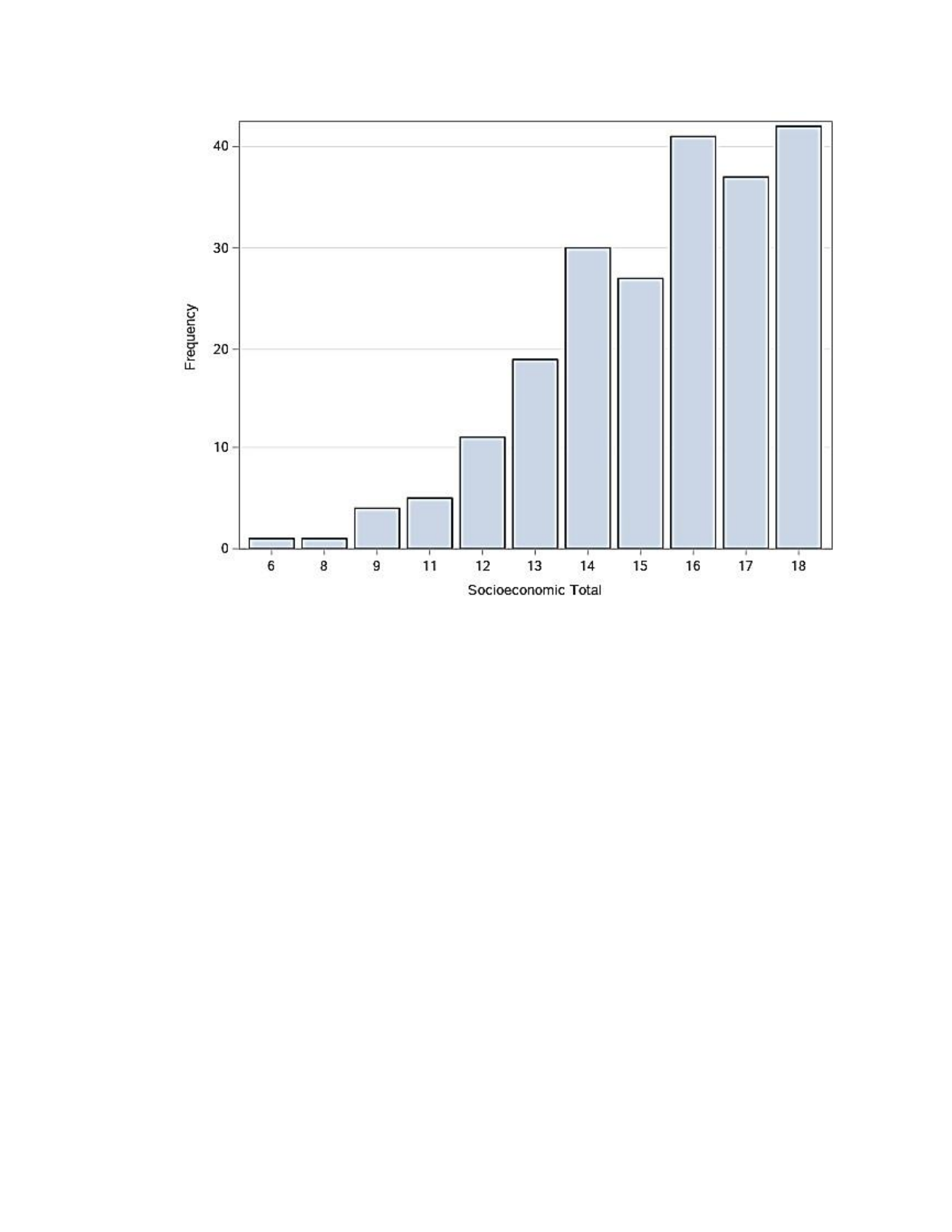
Figure 4.10. Frequency of Socioeconomic Totals. Socioeconomic total is a count of
responses to questions regarding number of books in the home (1-4), computer in the
home (0-1), amenities in the home (0-5), mother schooling (1-4) and father schooling (1-
4) up to a total of 18 maximum.
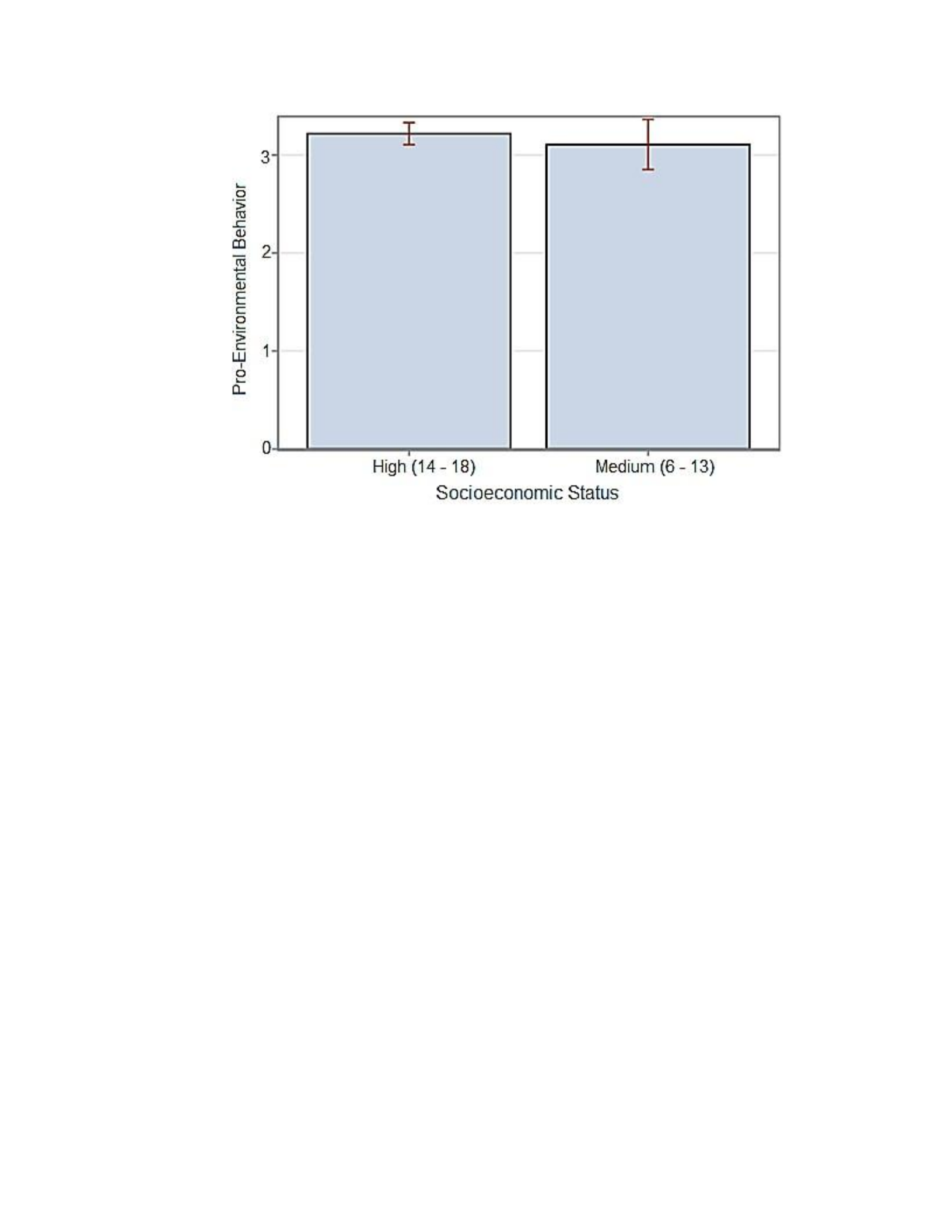
Figure 4.11. Relationship between Socioeconomic Status and Pro-Environmental
Behavior (p = 0.4260, N = 217)
Socioeconomic status was not added to the multivariate linear regression model
because a large number of participants skipped or answered “do not know” to one or
more of the socioeconomic status questions. Thus, we could not calculate an overall SES
score for many participants. Including this variable in the model would have greatly
reduced the sample size of the overall regression.
Academic Major
The study population of college-age students were asked some additional
questions regarding their education that were not relevant or appropriate for the younger
populations. These were not added to the multivariate linear regression model because
they would greatly reduce the overall sample size. However, the results are of interest
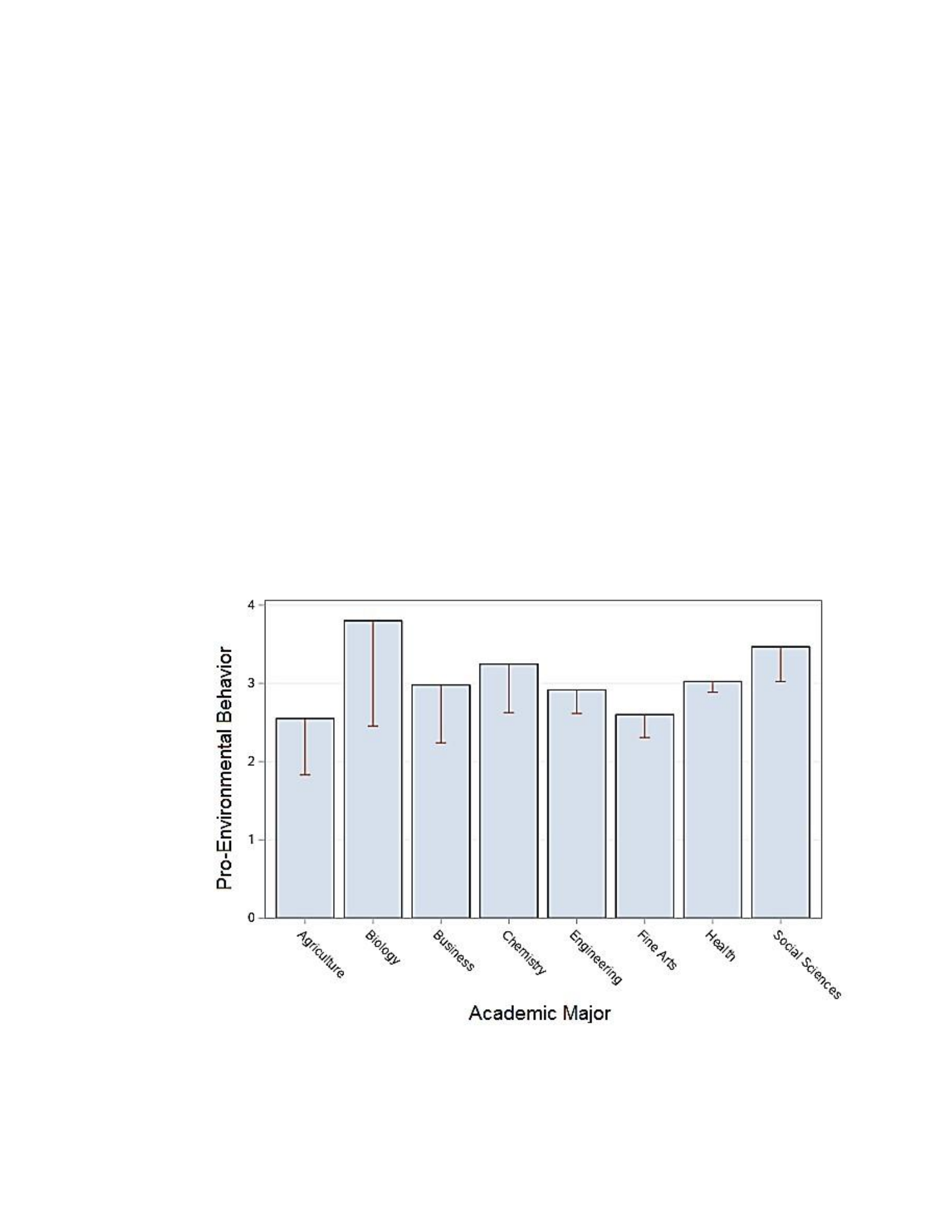
when interpreting the results from the overall study. College students were asked to
indicate the number of years that they had been in college and their academic major.
While number of years in college did not have a significant relationship with
proenvironmental behavior when analyzed using a one-way ANOVA test (p= 0.30), there
was a significant relationship between academic major and pro-environmental behavior
(p = 0.008) When comparing the pro-environmental behavior score means for those in
each academic major, it is evident that Biology majors had the highest pro-environmental
behavior and Agriculture majors had the lowest pro-environmental behavior (Figure
4.12). Results from this analysis indicate that differences in the experiences, knowledge,
attitudes, identities, or interests of students in various major tracks may lead to
differences in pro-environmental behavior.
Figure 4.12. Relationship between Academic Major and Pro-Environmental Behavior.

Results of the Multivariate Linear Regression Model
After analyzing the influence of each variable using univariate methods, we build
the multivariate linear regression model. Other than the six mean categories, we included
age, geographic region based on the Census Bureau definition (Rural = 1), political
identity (Republican = 1), gender (Female = 1), and Hispanic ethnicity (Hispanic
Ethinicity = 1) in the multivariate linear regression. The results (Table 4.5) indicate that
the model is significant (p < 0.0001) and that the independent variables included explain
50.52% of the variation in pro-environmental behavior, as projected by the model. The
adjusted R2 of 0.51 is used because this is a multivariate analysis. The Slope of
Relationship column (Table 4.5) provides information regarding the extent and direction
of the relationship of each variable to pro-environmental behavior, the standard error for
that relationship, the significance of that relationship (t and p-value), the relative
importance of each variable (Standardized Estimate), and the potential for collinearity
(Variance Inflation). The values returned indicate that only political identity (p < 0.0001),
environmental identity (p < 0.0001), STEM interest (p < 0.0001), and environmental
science capital (p = 0.0126) are significant contributors to the model.
Standardized estimates show that the greatest contribution comes from STEM
interest (0.308) then environmental identity (0.28844), then political identity (-0.20163),
and environmental science capital (0.157). Note that the relationships are positive for
environmental identity, STEM interest, and environmental science capital but negative for
political party affiliation. This means that as environmental identity, STEM interest, and
environmental science capital increase, so does pro-environmental behavior.

Table 4.5.
Results of Multivariate Linear Regression Model
Variable
Slope of
Relationship
Standard
Error
t Value
p-Value
Standardized
Estimate
Variance
Inflation
Factor
Intercept
0.65663
0.42248
1.55
0.1215
0
0
Age
-0.0393
0.0214
-1.84
0.0677
-0.10974
1.67981
Gender
0.01169
0.07286
0.16
0.8727
0.00788
1.13478
Hispanic Ethnicity
-0.16952
0.12498
-1.36
0.1764
-0.06421
1.05401
Political Identity
-0.33052
0.0817
-4.05
<.0001
-0.20163
1.16829
Geographic Region*
0.0027
0.09311
0.03
0.9768
0.0018
1.815
Connectedness to
Nature
-0.06082
0.05326
-1.14
0.2548
-0.06259
1.4131
Environmental
Identity
0.30555
0.07274
4.2
<.0001
0.28844
2.21752
STEM Interest
0.37846
0.07646
4.95
<.0001
0.308
1.82126
Environmental
Science Capital
0.19719
0.07839
2.52
0.0126
0.157
1.83206
Role Models
0.02236
0.04593
0.49
0.6269
0.02569
1.30968
Meaningful Nature
Experiences
0.08157
0.07448
1.1
0.2746
0.06845
1.83681
*Note: Geographic region uses the US Census Bureau definition of “rural”.
However, being Republican results in lower pro-environmental behavior than not
being Republican. Variance Inflation values are low, indicating that interaction effects are
not a problem in this model.
The plot of observed by predicted values also shows a good fit between the model
and the data (Figure 4.13). The assumptions of normality and constant variance are met,
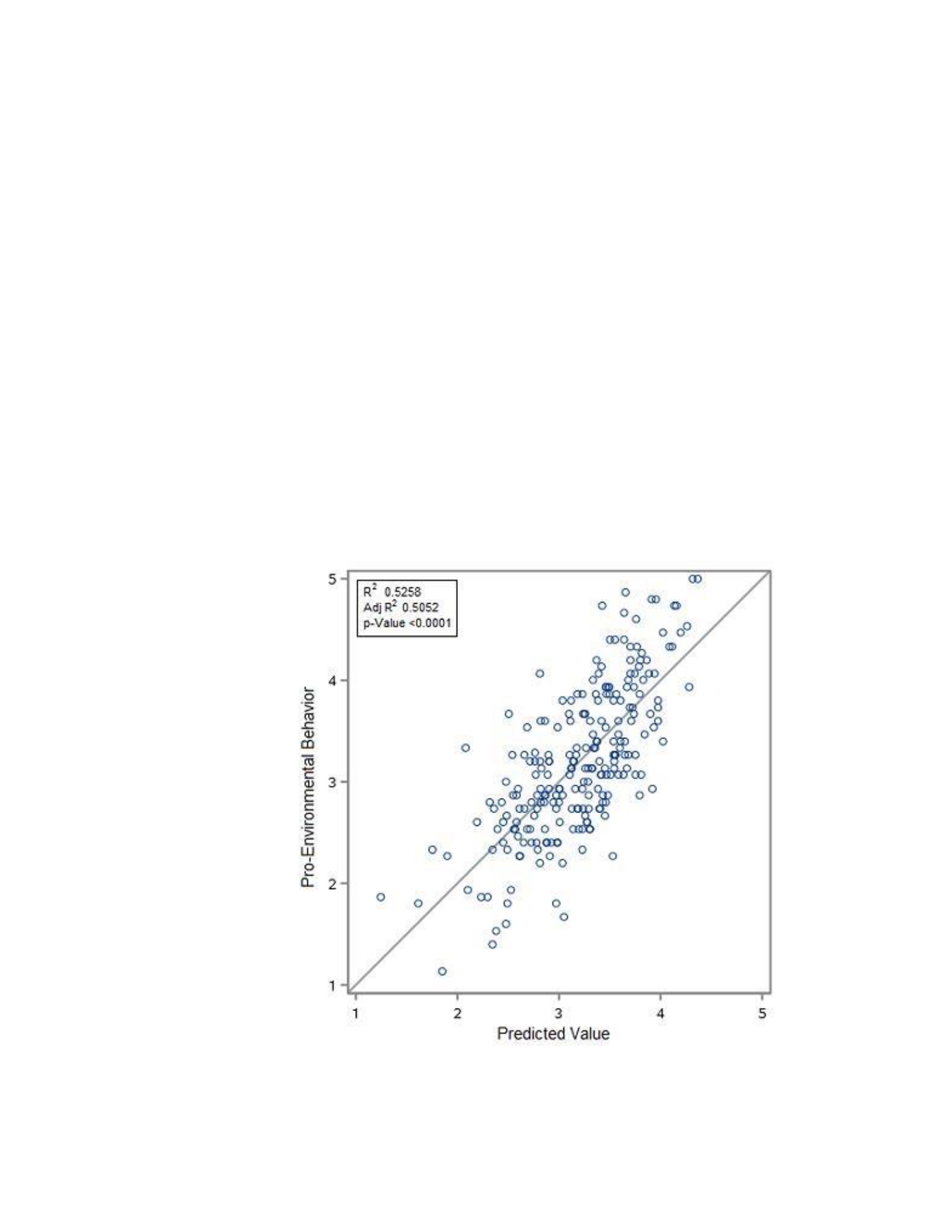
as shown by a lack of homoscedasticity in the residual plots, and the presence of a normal
distribution in the Q-Q plot and residual distribution plot. Compared to results of
univariate analyses, the importance of environmental identity, STEM interest, and
environmental science capital are confirmed by this model, while the connectedness to
nature scale, role model and meaningful nature experience variables are no longer
significant. Those three variables lost their significance when included in the multivariate
model. This is not surprising as these were the three independent variables with the
lowest R2 values when analyzed individually (Table 4.3). Their individual significance
could have been due to slight interactions with other variables in the model, rather than
having a direct effect on their own.
Figure 4.13. Observed versus Predicted Values from Multivariate Linear Model.

Meaningful Nature Experiences
Meaningful nature experiences and role models did not appear to be important
contributors to the model, but that may be due to the way that these variables were
measured. Unlike the other independent variables that assessed attitudes or values by
asking participants to rank their agreement with a set of statements, the questions that
make up these variables were written with the specific intent to compare to previous
studies. For example, the meaningful nature experiences questions involved a list of
activities (exploring the outdoors alone, time spent working with animals, learning about
the environment in school, etc.) and participants were asked to rank how important those
activities were in influencing their feeling of connectedness to nature. The initial intent
was to determine which experiences were most important to participants, and not to create
a mean score for a construct that would be put into a multivariate linear regression model.
Individuals with a high mean score in the overall meaningful nature experiences category
have had many different types of experiences that they deem important. Comparatively,
someone who has had a few very important experiences would have a low overall score
in this category, but those few types of experiences might have influenced them just as
much as the many types of experiences influenced the person with a high meaningful
nature experiences score. Thus, this question is more useful for characterizing what
experiences are important rather than describing the extent of one’s
meaningful experiences in nature as a broader construct.
Although the meaningful nature experiences mean was not a significant
contributor to the model, most of the individual questions had significant relationships
with pro-environmental behavior. When analyzed using one-way ANOVA tests, most

experiences had statistically significant relationships with pro-environmental behavior.
Individual survey items that do not show a statistically significant relationship with
proenvironmental behavior were directly related to hunting and fishing. Specifically,
hunting with others (MNE 11), hunting alone (MNE12), and fishing alone (MNE 14) did
not have significant relationships with pro-environmental behavior but fishing with others
(MNE 13) did show a significant relationship.
This was very surprising as earlier studies linked hunting and fishing to
antecedents of pro-environmental behavior (Peterson, 1982). In our own survey, 35
written answers given by participants specifically mentioned hunting and fishing as
meaningful nature experiences. For these reasons, it seems these archetypical rural
activities deserved further analysis. To analyze whether there was a specific relationship
between these experiences and pro-environmental behavior, analysis of variance was
conducted after the data was adjusted using an indicator variable for hunting and fishing.
Respondents were given a "1" if their answers to any of the four hunting and fishing
questions were either a "4" (important) or "5" (very important). Other responses were
coded as a zero. A category of "ALL" was created for those who had a "1" for all four
questions and a category of "BOTH" was created if they only indicated importance for
hunting and fishing while with others.
From our respondents, people who fish showed higher environmental science
capital (ESC) means, connectedness to nature (CNS), and science identity than those who
did not fish. (Table 4.6) The ESC mean for those participants that hunt or both hunt and
fish was higher than for those who did not participate in these activities. The CNS mean
was also significantly higher for those who fish and the subset of those that fish and hunt,

either alone or with others. The Science Identity mean was significantly higher for those
that fish as well as those who both hunt and fish, but not for those that only responded with
hunting.
Another surprising result is the gender of those respondents who indicate hunting
and fishing is an important activity. More females than males (52%) indicated that fishing
(with others) was an important or very important meaningful experience. Females
accounted for 49% of those who viewed fishing alone as a meaningful nature experience.
Indeed, 38% of all those who found both hunting and fishing a meaningful nature
experience were female. The research of Stedmen & Heberlein (2001) indicated that rural
upbringings can foster an increase in hunting, especially for males, but females in our
study valued hunting with others (39%) or by themselves (38%) as important
experiences.
These numbers are startling when compared to the nationwide number of females
that fish and hunt. Of the subset of Americans that fish, 27% are female. (USFWS, 2016)
Of the subset of Americans that hunt, only 10% are female (USFWS, 2016). Even more
restrictive is that only 7% of all females in the U.S. fish and only 1% of all females hunt.
(USFWS, 2016). In this context, the fact that 52% of our respondents who value fishing
and 39% of those who value hunting as a meaningful experience (39%) were female is
unexpected.
The higher than normal percentage of female fisherpeople may explain why the
category of fishing with others (MNE 13) initially showed a significant relationship with
PEB. Females tend to display more pro-environmental behavior and report stronger
environmental attitudes and concern than men (Meyer, 2015; Blocker & Eckberg, 1997;

Uitto & Saloranta, 2010). There may also be traits that are associated with fishing that
are different from those associated with hunting that leads to this difference in PEB.
The non-significant correlation between hunting and PEB might reflect the more
anthropocentric view that many rural residents possess. Often rural residents see the
environment as existing to fulfill their human needs (anthropocentric view) and do not
put the needs of the environment above their human needs (ecocentric view)(Bjerke
&Kaltenborn, 1999; Ruawald & Moore, 2002; Huddart-kennedy, Beckley, McFarlane, &
Nadeau, 2009). The new environmental paradigm (NEP) developed by Dunlap &Van
Liere, (1978) taps “primitive beliefs” about the nature of the earth and humanity’s place
in it making it an accepted measurement of the ecocentric view (Dunlap, Van Liere,
Mertig & Jones, 2000). Using the NEP instead of the connectedness to nature scale may
have yielded a different correlation or made clear that anthropocentric views were an
important reason why hunters did not have high PEB.
Role Models
The role model questions on the survey were designed to assess which role
models are most important to the participants and what qualities those role models
possess. This causes a similar issue to that described above with meaningful nature
experiences, in which a high mean score denotes that the person has many types of role
models that they deem important, not that role models were important in forming their
values and attitudes in general. So this variable also does not provide a useful averaged
value. However, responses to these questions demonstrated that fathers/stepfathers were
the most important role models, with the highest mean of 3.98.

Table 4.6
P-values for ANOVA analysis of Hunting and Fishing Questions regarding Meaningful
Nature Experiences
Variable
CNS Mean
ESC Mean
STEM Identity
Hunting w/others
0.4555
.0002
0.1001
Fishing w/others
0.0072
<.0001
0.0130
BOTH
Hunting and Fishing w/
Others
0.0872
<.0001
0.0275
Hunting Alone
0.3748
0.0028
0.1452
Fishing Alone
0.0535
0.0007
0.0105
ALL
Hunting and Fishing with
others or alone
0.0142
0.0001
0.0028
However, mother/step-mother was not far behind with a mean of 3.85. After that,
the following role models’ mean rating of importance from highest to lowest is: female
teacher (3.68), female friend (3.57), male friend (3.55), male teacher (3.47), other male
relative (3.32), other female relative (3.18), other unrelated known male (2.92), other
unrelated known female (2.84), public male figure (2.72) and public female figure (2.45).
For traits of role models, friendly/personable had the highest mean of 4.45 and
knowledgeable had the lowest mean of 4.03.

Phase II: Qualitative Data Analysis
The goal of the qualitative phase of this mixed methods study was to build upon
the quantitative findings for a greater depth of understanding. Qualitative data were
obtained through open-ended questions on the quantitative survey and qualitative focus
group discussions. Since previous research studies show meaningful nature experiences
and role models as significant predictors of pro-environment behavior, these were the
variables the open-ended questions addressed on the quantitative survey. The open-ended
questions were:
Open-Ended Survey Questions
1. Which of your experiences has been most meaningful? What about it was so
meaningful?
2. If you stated that an unrelated adult who you know personally or a public figure
who you do NOT know personally was an important influence on your
connectedness to nature, who were you referring to?
3. Of all the role models who have influenced your connectedness to nature, which
role models would you consider to be the most important?
This initial focus on meaningful nature experiences and role models in the
openended portion of the survey helped to characterize the lived experiences of our
participants. However, our focus shifted to environmental identity and STEM interest for
the qualitative focus groups. This shift was necessary because environmental identity and
STEM interest were the most important variables in our multivariate analysis, yet we had
not yet directly collected qualitative data on these variables. Thus, qualitative focus group
discussions were conducted to obtain more details regarding the participants’

environmental identity, pro-environmental behavior, and how they believe their club
and/or science course has influenced their pro-environmental behavior.
While a focus group protocol and questions were developed (Appendix C),
researchers asked questions and follow up/probing questions depending on the
participants’ flow of conversations. This allowed the participants to lead the discussion.
However, some questions were asked in all focus group discussions to examine
similarities and differences among groups. Participants were also asked to answer certain
questions individually to allow for time for self-reflection without the influence of their
friends and peers. Researchers followed up with these questions during the group
discussion to gain further insight. These questions were:
Opening Focus Group Questions
1. What is your very favorite thing to do when you think about playing in the
outdoors and nature?
2. Is there someone you enjoy spending time with outdoors and/or in nature?
Who and why?
3. Do you consider yourself:
a. A “science” person? Yes ____ No ____
b. An “outdoors” person? Yes ___ No ____
c. A “nature” person? Yes ____ No ____
d. An “Environmentalist?” Yes ___ No ____
e. Why or why not?
4. Has this club/course helped you with taking actions for the environment
(recycling, trash pick-up, voting, public support, etc.)?
5. Do you feel more confident to tackle environmental problems after
participating in (name of club/course)? What about (club/course) made you
feel more comfortable?
Four different focus groups were conducted: the Spring Mills High School
Science Club, the 4H Animal Science Club, the Colgan/St Mary's ECO-Meet Team, and

the East Central College Introduction to Animal Science course. Details about each focus
group are provided below.
Spring Mills High School Science Club
This focus group occurred on Monday, February 25th at Spring Mills High School
with their Science Club. Eight out of the fifteen students enrolled in Science Club
participated in the focus group. The focus group lasted approximately an hour. The first
half of the focus group involved the collection of written responses assessing certain
facets of the participants’ science identity.
4H Animal Science Club
This focus group occurred on Friday, March 15, 2019 at the Shepherd’s Whey
Farm in Berkeley County, West Virginia. The focus group lasted approximately an hour.
The first half of the focus group involved the collection of written responses assessing
certain facets of the participants’ science identity.
Colgan St. Mary's High School ECO-Meet Team
This focus group took place on March 20, 2019 in the conference room at
Colgan/St. Mary's High School in Pittsburg, Kansas. Nine of the 12 students that returned
surveys participated in the focus group which lasted approximately one hour. Participants
began by writing down answers to several questions regarding their time outdoors and
how they view their science identity.

East Central College Introduction to Animal Science Class
This focus group took place on Monday, April 8th, 2019 in the regular classroom
meeting location for the Introduction to Animal Science course at East Central College.
Ten students took part in the focus group, which lasted approximately one hour.
Participants began by writing down answers to several questions regarding their time
outdoors and how they view their science identity.
Qualitative Findings
Participant responses from both open-ended questions from quantitative survey
and qualitative focus group discussions were compiled in one shared document. From that
document, researchers sorted responses using the research variables (connectedness to
nature, meaningful nature experiences, role models, STEM interest, environmental
identity, environmental science capital and pro-environmental behavior) as broad
categories. Once responses were sorted, each researcher identified patterns and themes
from participant responses. Themes were communicated and agreed upon between
researchers to gain inter-coder agreement. Sixteen themes were identified and described
below along with representative quotes. A short table of themes is provided in this chapter
(Table 4.7) and a full table with themes and quotes can be found in Appendix F. The study
populations were chosen based on the assumption that individuals who participate in
science or environmental clubs or courses would exhibit high levels of environmental
science capital. This was evident in many of the responses regarding their day-to-day
interactions with science and the environment and certain experiences that not all youth
can access. In general, the participants have access to environmental clubs, learning

experiences inside and outside of the classroom, and environmental media, all of which
were cited by the participants as important.
Table 4.7
List of Themes from Qualitative Analysis
Theme One
Environmental clubs, learning experiences, and media can provide a social avenue for
building environmental science capital.
Theme Two
Outdoor recreation, working outdoors and/or with animals, and solitary experiences tend
to connect participants with nature.
Theme Three
Participants often exhibit awareness of environmental problems, yet engagement in pro-
environmental behavior is lacking or limited to individual actions.
Theme Four
Participants tend to lack environmental identity or experience conflicts related to their
environmental identity.
Theme 1: Environmental clubs, learning experiences, and media can provide a
social avenue for building environmental science capital.
When asked about their most meaningful experiences, participants often
mentioned the clubs or groups in which they participate, inside or outside of school. For

example, an ECO – Meet participant from Goddard High School alluded to the
importance of being a contributing member of the ECO-Meet team at their school.
Just being able to contribute to the ECO-Meet team. Making stronger bonds
with friends, old and new.
Boy and Girl Scouts were specifically called out by many participants as being
particularly meaningful. One member of the Riley County High School ECO-Meet team
described how experiences as a Boy Scout were impactful because of the social
experience and memories formed with others.
Boy Scouts has been pretty impactful and I think spending time in outdoor
areas with my friends falls into that. The memories you gain with that is
what makes it important.
Another ECO-Meet participant from Shawnee Mission North High School
suggested meaningful experiences is just implied with being a Boy Scout.
Being an eagle scout. I think enough is said there.
Environmental clubs provide significant learning experiences. In fact, participants
frequently described certain experiences as meaningful simply because of their
educational value. While it was not surprising that participants enjoyed these experiences,
it was surprising how often educational (rather than recreational) experiences were
mentioned. Some participants, such as an ECO-Meet participant from Shawnee Mission
North High School identified their innate love of learning as the catalyst for their
meaningful experiences.

I don't think there's been any one thing. I'm naturally very curious and I
love learning. Science is always changing, so there's constantly something
new to learn. I also grew up appreciating the small details of nature.
One ECO-Meet participant from Manhattan High School mentioned learning about
environmental issues in school, partly because of the social aspect of learning alongside
classmates. This sentiment was reflected in various other quotes regarding meaningful
nature experiences.
Learning about the environment in school. It was the most meaningful
because we got to learn every aspect of environmental issues and got to
learn with peers.
Sometimes, participants mentioned specific school field trips that were
meaningful, such as the description of a Biology class field trip described by an
ECOMeet participant from Colgan/St. Mary’s High School.
Outdoor field trips with Biology class to go water wading in creeks. I got
to spend time with friends and experience the beauty of God's work while
learning more about the natural environment.
In addition to the day-to-day, hands-on exposure with environmental clubs and
learning experiences, exposure to environmental media was also important for
participants. Sometimes, media was mentioned as a meaningful experience.
Books that I have read. This is meaningful because, for me, books allow me
to envision a new and better world. Books allow for the world to be seen
from another person's perspectives. This includes nature and the feelings
surrounding it.

Other times, media had the effect of educating the participant on an environmental
issue and inspiring them to care about the issue. An East Central College student in a
Chemistry class described one such example regarding pollution.
I believe the most meaningful experiences are seeing how humans have
damaged the Earth with your own eyes. Reading about it vs. seeing it
makes it feel so much more real. I had recently watched a movie and an
underwater scene showed pollution and dumped cargo crates from boats.
The pollution had little to do with the movie but it really made you think.
Sometimes, the environmental media was powerful enough to inspire participants
to act. One East Central College student in an Animal Science class explained how
environmental media inspired them to choose their career path.
When I first saw the before and after of Antarctica's melting ice caps, my career
was decided.
Social experiences, such as with clubs, are meaningful to participants because they can
bond and form memories with others. Two participants from the Topeka Zoo ECO-Club
share their thoughts on how outdoor experiences have become family traditions and that
during these times, they feel present.
Fishing and visiting zoos with my family, because both of those things have
been kind of like traditions for my whole life and so I have strong
connections to them.
The most meaningful were the experiences with my friends and family
because it is a time we can disconnect from technology and be in the
moment.
Two participants from the East Central College Anatomy and Physiology class mentioned
using time outdoors as a way to bond and build stronger relationships.

Spending time in the outdoors with my family, because it brings us closer in
our relationship with each other because we have all learned, experienced,
and created memories concerning the same event.
Spending time outdoors with friends and family. It is meaningful because it
forms a bond by interacting with each other.
Theme 2: Outdoor recreation, working outdoors and/or with animals, and solitary
experiences tend to connect participants with nature.
When recalling meaningful outdoor experiences, participants described both
consumptive and non-consumptive types of outdoor recreation. As an example of a
nonconsumptive activity, a participant from East Central College Animal Science course
explained how being outdoors benefits her well-being.
The most important and meaningful experiences to me are the ones that
keep you craving more. I love camping, sleeping on the ground in a tent
because it's relaxing. I crave camping/hiking/anything outdoors. I have
very low vitamin D so alongside taking vitamin D pills, something that
helps me get along stress free is spending most of my time outdoors. To
breathe fresh air in and feel nature swallowing you feels like a dream.
Along with non-consumptive recreational activities, participants also mentioned
consumptive activities such as hunting and fishing. One participant from East Central
College Anatomy and Physiology class mentioned the significance of providing for your
family while also benefitting wildlife.
Hunting with others; because you are taking from nature to feed your
family while also allowing nature to flourish due to less overpopulation of
animals.
Another East Central College Animal Science student relays how their childhood
experiences and family influenced their connectedness to nature through hunting,
working outdoors and fishing.

Spending time hunting, working, and fishing outdoors alone and with
family is what I feel has influenced my connectedness to nature the most.
I've been outdoors all my life and was taught to sit back and
enjoy/appreciate nature since I was young. Being out there gives you a
sense of purpose in your life.
Participants described working outdoors and/or with animals as meaningful experiences
that connect them to the environment. An ECO-Meet participant from Salina South High
School mentioned how this started their interest in conservation.
Time spent working with animals was the most meaningful to me because it
sparked my passion for the environment. It started my interest in conservation
and how I could do my part to help.
Another ECO-Meet participant from St. Xavier High School expressed their love
for animals and how that love of animals inspired their career choice.
Working outdoors and with animals because I love being outdoors and I love
animals. I have a job where I work outside and we see a lot of wild animals.
I love seeing these beautiful creatures.
Other participants just expressed the intrinsic appreciation of animals. One West
Virginia 4H Animal Science member happily exclaimed her joy of taking care of animals.
Taking care of goats, dogs and cats. That’s my life!
When analyzing participant responses, we noticed that both the solitary and social
aspects of these experiences are important. Some experiences are more meaningful when
they occur alone, and some are more meaningful when shared with others. Further,
participants describe the different benefits gained from solitary experiences versus those
that occur with others.
Although there has been a focus on friends and family with prior research on
connectedness to nature, many participants described solitary experiences as being

meaningful. An East Central College student describes a sense of calmness and belonging
when spending time alone in nature.
Going on a hike and then fishing by myself was probably most meaningful.
Walking through the woods to the pond was a unique experience for me. There
were no sounds except for my footsteps and the birds. It made me feel calm and
like I belonged there.
An ECO-Meet participant from Shawnee Mission South High School agrees by
adding that the connection to nature is deeper and more personal when experienced alone.
Spending time outdoors alone is a great way to connect to nature on a
deeper and more personal level.
Some participants mentioned they enjoyed spending time outdoors alone to
disconnect from “life” and reconnect to nature. A Spring Mills Hill School student in
West Virginia mentioned being able to enjoy the beauty of nature without distractions.
Spending time outdoors alone has made me feel very connected to nature
because it’s nothing but me and my surroundings. There is no distractions to
take me away from the beauty of nature.
Another student from the Colgan/St. Mary’s High School ECO-Meet team shared
that same sentiment of being able to de-stress and disconnect.
Time spent outdoors while alone has allowed me to particularly examine the
world around me without thinking of other needless stress. It is primarily a
disconnecting experience.
Although many of the nature experiences described by participants are regular
occurrences in their lives, sometimes participants described unique or awe-inspiring
experiences that brought them closer to nature or changed their perspective. Some
participants described experiences that may seem mundane but had quite an impact.

When I was little my cousins and I would pick up toads to look at them.
I have had a baby bird 'fly' out of its nest and land on me ...TWICE! Once
a baby cardinal and once a baby Robin. It showed me up close the true
beauty of nature. It demands respect, but also unity with all creation.
In contrast, some participants mentioned experiences in faraway locations and/or
exotic wildlife.
I have been to Puerto Rico and was able to see the rainforest and several
other awesome places that made me fall in love with the outdoors.
Yellowstone and seeing the geysers. And buffalo that stop traffic.
Theme 3: Participants often exhibit awareness of environmental problems, yet
engagement in pro-environmental behavior is lacking or limited to individual actions.
It is clear that participants have positive feelings toward nature and the
environment. Numerous participant responses also indicated that participants generally
have an awareness of environmental issues and are inspired to act on those issues. One
participant noted that change begins with awareness while another participant states how
small actions add up. Both quotes are from Colgan/St. Mary’s High School students.
After seeing all the trash in the environment, you start to hear the stories
about pollution everywhere. That awareness is where change starts.
I think being in ECO-Meet/Science club has helped me because now I'm
more aware of how much the environment and all organisms that live
within are affected by our careless actions, and that my small steps to help
do amount to something.
Some participants mentioned that tackling these environmental issues as a group
made them feel more confident. For example, a Spring Mills High School student
contributes school and peer support for this increased self-efficacy.

I feel more able to confront environmental problems when supported by
friends and school organization.
Despite this apparent motivation to act, participant responses often indicated a
lack of engagement with pro-environmental behavior. However, when participants did
describe their pro-environmental behavior, it was usually limited to individual actions
opposed to collective actions. A participant from Spring Mills High School in West
Virginia offers this list of her actions.
I mainly follow the common advice: don’t litter, reduce your energy, don’t use
plastic if you can, use degradable [items], reuse things, etc.
Theme 4: Participants tend to lack environmental identity or experience conflicts related
to their environmental identity
Given the populations studied and their exposure to science clubs, science
courses, and day-to-day exposure to science, it is no surprise that participants in this study
indicated science identity and relevancy. Qualitative results confirmed this initial
assumption. One East Central College student in an Animal Science course explained
why they are a science person during the focus group interview.
I'm a science person because I always ask why, how, what, who and when.
I love learning about our world and hopefully how to make a difference
and sharing humanity's ecological footprint.
A participant from Spring Mills High School in West Virginia mentioned that
science is important because of its relevance to society.
I’m interested in science because it helps other people.
This sentiment was echoed in the statement of another East Central College
Animal Science student.

The more you examine an object's state, makeup, and origins, the more
complex it becomes. Science is the most powerful tool humanity has at its
disposal.
Another participant from Spring Mills High School acknowledges that science
and technology is relevant even beyond a science career.
I’m not interested in a science job but using science and technology within
my job.
Although science, in general, seems to be accessible to the population in this
study, and participants seem to be pro-science, we were especially interested in
environmental science and whether attitudes and behaviors toward the environment are
influenced by archetypal “rural” experiences. Open-ended survey responses revealed the
importance of outdoor recreation and working outside and/or with animals to the study
participants.
These findings highlight the gap between pro-environmental attitudes and
collective pro-environmental behavior in this population. Although this gap could exist
for a multitude of reasons, one potential reason stands out in participant responses in this
study. Participants often indicated that they lack an environmental identity or that their
environmental identity exists in tension with the other identities that they hold. Two East
Central College students offer reasons as why they do not identify as environmentalists.
I don't practice any rituals that are environmentally friendly. I believe we
should all get on board to help the planet but I don't actively recycle or
anything like that.

I do not see myself as an environmentalist, simply because it is not my
main priority all the time. I do things that help the environment, but I do a
lot of things that hurt it too.
One participant from Spring Mills High School suggested that advocacy is a part
of being an environmentalist.
I don’t consider myself an environmentalist because while I don’t do harmful
things to the environment, I don’t often speak up about environmental issues
to other people.
One participant from East Central College student even expressed a rather
antienvironmentalist sentiment.
I'd say I'd probably take diesel trucks and cow farts over being
subconsciously nervous about the environment.
This lack of environmental identity exists despite a generally high level of science
identity. Thus, the two types of identities have different meanings for participants. We
learned more about these meanings by noticing the types of language that participants
used to describe these identities, along with “outdoors” and “nature”-related identities. In
the following themes, participants expand more on how they identify or not with being a:
science person, outdoors person, nature person and environmentalist.
When participants described why they see themselves as being “science” people,
they often described conventional traits of scientists that suggest “braininess.” For
example, one student from Spring Mills High School said he liked science because he
was logical. A 4H Animal Science member said she saw herself as being a “science”
person because she wants to know how things work and recalls the objective nature of
science.

I want to know why things work and facts versus opinions!
Other participants mentioned that they saw themselves as “science” people
because they liked science activities such as experimenting and the challenges that come
with those activities. The challenge with this conventional stereotype of scientist being
“brainy” is that some participants don’t identify with “brainy” or “clever.” For example,
one student expressed their frustration with participating in science.
I don't because I am horrible at science and I think it takes me longer to
understand it, either that or I was never taught it well. It stresses me out a
bit and it’s hard for it to keep my focus long enough for me to understand it.
When describing themselves as “outdoors” people, participants described more
active experiences such as camping, hiking and exploring. One participant from East
Central College mentions their craving for the outdoors.
I crave to be outdoors 24/7. When I'm inside all I can think about is going outside.
Camping was mentioned often as a popular outdoor activity.
Both of these quotes are from members of the 4H Animal Science club, however,
one participant evokes adventure by expressing overcoming fear.
Me and my family go camping every year up and down the east coast.
I like camping but I’m kind of afraid of camping!
Similar to an outdoors identity, participants also used action terms when
describing environmentalists. However, participants framed these action terms around
advocacy. Examples of these advocacy terms include: passionate, speak up, encourage,
protect and responsibility. During the Spring Mills High School focus group, participants

discussed that they see themselves as “environmentalists” because they advocate behavior
through their club.
[Spring Mills Science Club] encourages us to use other options, such as eco-
options as a consumer.
Encourage family members such as not to waste water.
Another student recognizes that her Mom is an environmentalist due to her
passion and that her Mom engages her daughter through conversations.
Mom is passionate about it [environment] and talks to me.
When describing themselves as “nature” people, participants used words such as:
beauty, art, peace, harmony and happiness as the enjoyable aspects of nature. One student
from the Spring Mills High School explains that she is a “nature” person because she
draws inspiration from nature for her art.
I’m an artist and I get inspired by nature. I draw from it and how it makes
people feel good.
Two other students from East Central College expand on this image of a “nature”
identity as someone that values the “nurturing” concepts of nature such as harmony, peace
of mind and internal happiness.
Nothing is more beautiful than nature in complete harmony.
Something about the outdoors brings me peace of mind and internal
happiness.

CHAPTER 5: DISCUSSION
This chapter discusses the quantitative and qualitative results of this study within the
context of environmental science capital and pro-environmental behavior. We present the
major findings of this study and examine the ways in which the present study supports or
contradicts the current literature on pro-environmental behavior in order to better
understand the study populations. This chapter also addresses implications for educational
practitioners, limitations of this study, and recommendations for future research. The
findings of this study build upon the science capital research by helping to define and
characterize the environmental science capital of rural youth.
Determinants of Pro-Environmental Behavior
This study explored how a variety of factors influence the pro-environmental
behavior of rural American youth aged 13 - 22 who participate in environmental clubs,
competitions, or courses. We assessed the determinants of pro-environmental behavior by
surveying youth from Kansas, West Virginia, and Missouri and measuring
proenvironmental behavior, STEM interest, environmental identity, socioeconomic status,
political identity, geographic region, role models, meaningful nature experiences, and
connectedness to nature. Multivariate linear regression analysis indicated that STEM
interest, environmental identity, and political identity are the major determinants of
proenvironmental behavior in the study population (Table 4.5).
STEM Interest
Although the relationship between STEM interest and pro-environmental behavior
may seem obvious in the context of this study, STEM interest is not typically a variable
considered in the pro-environmental behavior literature. The education research regarding

STEM issues is generally separate from that of environmental issues; STEM research
aims to increase participation in technical careers, while pro-environmental research aims
to increase environmentally sustainable behaviors. We were interested in the overlap
between these two fields, so we based our STEM interest variable off of questions from a
study exploring citizen science identity (Wallace, 2018) that explored the concept of
conservation and environmentally-minded STEM (CEmSTEM). CEmSTEM is a useful
way of measuring interest in people who aspire to STEM careers for environmental
reasons. CEmSTEM questions and traditional STEM questions were combined in our
STEM interest section of our survey. Having a high STEM interest means that students
are interested in science careers, believe in the ability of science to solve environmental
problems, and are externally motivated to participate in STEMrelated or agricultural
careers. Wallace (2018) demonstrated that citizen science projects increase STEM interest
levels, and this study demonstrates that higher STEM interest levels are related to higher
pro-environmental behavior. This finding is encouraging because it suggests that certain
STEM-related educational programming can lead to environmental behavior change.
Environmental Identity
Our research indicates that environmental identity is the second most important
factor influencing pro-environmental behavior and political identity is third. Although
initial studies of pro-environmental behavior focused on attitudes and values, recent
studies show that identity may be more important (Gatersleben, Murtagh, & Abrahamse,
2014). Falk (2011) cites that most studies of identity have focused upon the qualities
related to the big divisions of humanity such as race, religion, or national origin
(higherorder identities), however, his work contends that lower-order identities have a

great impact on day-to-day decision making, including those involving leisure decisions
like visiting a museum (Falk & Storksdieck, 2005). Lower-order identities may include
one’s sense of being a member of a family, a good friend, or even a valued employee.
(Falk, 2011). In this context, environmental identity would behave as a lower-order
identity and influence the day-to-day behaviors to act pro-environmentally to a greater
degree. One could argue that deciding to act pro-environmentally is similar to the process
of making leisure decisions. Neither decision is being forced upon a person nor is no one
held accountable for these decisions through laws or policies.
The environmental identity section of the survey measured how participants
identify regarding various subtypes of environmental identity, from “outdoorsy person” to
“environmentalist” to “someone with unique knowledge about nature”. This set of
questions was original to this study and was developed because self-identification and
being seen as a “science person” by others was shown to have importance within the
science capital literature. The aim of these questions was to identify which types of
identity were important in environmental science capital, as opposed to general science
capital. When each survey item was analyzed separately, the categories of environmental
identity that had the three highest means were: someone who values protecting the
environment (4.26), someone who values the conservation of nature (4.13) and an
outdoorsy person (4.02). The categories with the two lowest means were: “someone with
unique knowledge about nature” (3.35) and “someone who has a special relationship with
the land” (3.32). This suggests the concerning trend of youth lacking vernacular
knowledge and a decreased sense of place. David Orr defines vernacular knowledge as
the “knowledge that people have of their places” and notes that while some areas of

knowledge are increasing (such as the more lucrative sciences), others are decreasing
such as Aldo Leopold’s science of land health (Orr, 2004).
The results of the multivariate linear regression analysis guided the design of
focus group interviews. After quantitative analysis revealed the importance of identity,
focus groups were conducted to learn more about the relationship between identity and
pro-environmental behavior. The survey could not explain why participants might see
themselves as science people and outdoorsy people, for example, but not as
environmentalists. Qualitative data helped to further explore this phenomenon. This was
the primary goal of the focus group interviews conducted after the quantitative data were
analyzed, for that very reason. Qualitative analysis also explored responses to open-ended
survey questions, though these focused on meaningful nature experiences and role
models. All participant responses were recorded and coded, resulting in the emergence of
16 themes. Four of those themes related to STEM interest, environmental identity, and
political identity:
• Participants tended to have a strong science identity and perceive science as
relevant to their lives.
• Participants often lacked environmental identity or experienced conflicts
related to their environmental identity.
• Participants generally seemed aware of environmental problems and motivated
to solve them.
• Participants tended to participate in individual pro-environmental actions,
rather than collective actions.
These themes indicate that the study population has high levels of science
interest and identity. This is not a surprising result, given that participants were chosen
based on their participation in science clubs or courses. During the focus group
discussions, participants were asked why they do (or do not) identify as a science person,

nature person, outdoors person, and environmentalist. Out of the total 35 focus group
participants, 30 identified as a nature person, 29 identified as a science person, 28
identified as outdoors person and 20 identified as environmentalists. This supported our
quantitative findings that fewer participants identified as environmentalist which ranked
in the bottom three lowest means (3.35). More importantly, participant responses to these
questions helped to elucidate what being a “science” person means to them, versus
“nature”, “outdoors”, or “environmentalist”. The language used in those responses
demonstrate that “science” carries a (brainy/logical) identity, “nature” is more about how
it makes the person feel, “outdoors” is for activities and enjoyment, while
“environmentalist” is all about pro-environmental action.
Although many participants of this study identified as “scientists” some
participants did not. Those students said, “I don't really like all the formulas and equations
but I like animals, anatomy, and the nature aspect.” and “I don't because I am horrible at
science and I think it takes me longer to understand it, either that or I was never taught it
well. It stresses me out a bit and it’s hard for it to keep my focus long enough for me to
understand it.” With these participants it is demonstrated that in order for these
individuals to engage with science, the scientist = braininess link is a barrier (Archer et al.
2015). From their quotes, it is shown that they enjoy some aspects of science but this
limited mindset of science is preventing them from identifying as scientists. The focus
group questions pertaining to identity also shed light on why participants might exhibit
low pro-environmental behavior scores, despite their apparent positive attitudes toward
nature, the outdoors, science, and the environment.

Multiple participant responses indicated a lack of environmental identity or
conflicts with environmental identity and other identities that they hold. Either these
conflicts were related to the fact that the person does not engage in pro-environmental
behaviors, or it was a conflict with their rural or agricultural identity. This is
demonstrated by the striking difference between these two quotes: “(I am a scientist
because) I have always been fascinated with trying to see why things are the way they
are” and “ I'd say I'd probably take diesel trucks and cow farts over being
subconsciously nervous about the environment”. This is supports that science capital and
environmental science capital are separate concepts with different antecedents.
We also found that the participants were generally aware of environmental
problems and motivated to solve them. Respondents often indicated a passion for
protecting the planet and knowledge that they’ve gained on how to do so. Yet, many
participants described a lack of engagement with pro-environmental behavior, and those
who did describe their pro-environmental behavior described individual rather than
collective actions.
These results demonstrate the knowledge-action gap that is well documented in
the literature. Despite their awareness and motivation to solve environmental problems,
participants do not exhibit high levels of engagement with environmental issues. Given
the previously described relationships between pro-environmental behavior and political
or environmental identity, it is possible that tensions between environmental identity and
rural/agricultural or political identity contribute to that gap.

While examining focus group responses, we also noticed that participants used
different language to describe different types of identity. Participants were asked if they
see themselves as a “science person”, an “outdoors person”, a “nature person”, and an
“environmentalist”. As a probing question, they were asked why they do or do not
identify in these ways. The language that participants used in their responses helped to
characterize the identities of these types of people, from the participants’ perspectives.
The following themes emerged from analysis of participant language when describing
their identities:
• Participants often described “science” people as being smart, logical, and
clever.
• Participants often described “outdoors” people as being active and adventurous.
• Participants often described “environmentalists” as being action and advocacy
based.
• Participants often described “nature” people as enjoying nature because it
offers beauty, peace, harmony, and happiness.
Most participants identified in more than one of the above ways, but their
language when describing why they identify in that way was most telling. They identified
as science people because they are logical and inquisitive. They identified as outdoors
people because they enjoy recreational activities outdoors. They identified as nature
people because of a deep connection or feeling gained from being outside in nature.
Those who identified as environmentalists did so because they feel the need to protect the
environment, but when participants did not identify as environmentalists it was because
they do not typically engage in pro-environmental behavior.
Analysis of identity language revealed not only a difference between these
identities, but also a special requirement of action or advocacy in the case of

environmental identity. For example, whether participants viewed themselves as scientists
seemed to be based upon innate qualities or interests. Yet, whether people viewed
themselves as environmentalists was most often based on what actions (or lack thereof)
they take toward the environment. It seems that participants believe they cannot be
“environmentalists” unless they are contributing substantially to the solving of
environmental problems. Simultaneously, the survey results indicate that participants are
less likely to behave pro-environmentally if they lack an environmental identity. This
suggests a positive feedback cycle between environmental identity and proenvironmental
behavior. In essence, having an environmental identity leads one to behave pro-
environmentally, but the act of engaging in pro-environmental behavior leads to the
development of a pro-environmental identity.
Our findings related to identity and pro-environmental behavior support the theory
that the lack of past engagement in pro-environmental behavior is itself a barrier to future
engagement in pro-environmental behavior. Previous studies have alluded to the
importance of developing social, cultural, and personal norms when seeking behavior
change (Gifford and Nilsson, 2014), and even the Kollmus and Agyeman study (2002)
shows old behavior patterns as the greatest barrier preventing the flow from
environmental knowledge to environmental action. These studies characterize this
problem as an issue with breaking old habits or a threat to motivation but we posit that
past behaviors pose a threat to identity.
More research is necessary in order to determine the most significant barriers to
pro-environmental behavior in rural American youth. This problem requires more
research into the pro-environmental behavior of rural youth in general, investigation of a

positive feedback cycle between identity and behavior, and further exploration of the
rural-environmental and political-environmental tensions. However, it is clear from this
study that any activities or experiences that involve reducing these tensions, building
environmental identity, or engaging youth in pro-environmental behavior could be
effective avenues for increasing environmental science capital. Exploring what activities
or experiences are successful in building environmental science capital is important for all
youth, even those who are seemingly pro-science and pro-environmental. Because as this
study demonstrates, even rural American youth with high science capital may not have
high enough environmental science capital to facilitate engagement in proenvironmental
behavior.
Political Identity
Political Identity was the only demographic variable that had a significant
relationship with pro-environmental behavior. In fact, it was the third most significant
variable in the multivariate linear regression analysis. The pro-environmental behavior
score for those who identified as having a Democrat or Independent political affiliation
was significantly higher than the pro-environmental behavior of those who identify as
Republican. The Missouri subpopulation answered two additional questions regarding
political identity that were also significantly correlated with pro-environmental behavior.
When participants were asked to indicate their political ideology regarding social and
economic issues, having a liberal ideology resulted in greater pro-environmental behavior.
The relationship between relatively liberal (versus conservative) political identity has
been demonstrated in previous studies (Dunlap, Xiao, & McCright, 2001; McCright &
Dunlap, 2011). This finding could be a result of the way environmental issues have been

politicized in the media, or it could be based upon the tendency of people who are
politically conservative to have less environmental concern and hold less ecocentric
worldviews (Dunlap et al., 2000). Given the importance of political identity in this study,
it would have been useful to utilize a metric for ecocentric worldview, such as the new
environmental paradigm, to test whether political conservatives are experiencing
cognitive dissonance between their environmental and political identities, or whether they
are simply less ecocentric.
Our findings regarding political identity and low collective pro-environmental
behavior support Chawla and Cushing’s (2007) advocacy for a political model of
environmental education. With collective actions being more effective, Chawla and
Cushing (2007) identify antecedents of political action. They include: Democratic
parenting style, collaborative decision-making in everyday life, teachers creating
opportunities for open discussion, and family members as critical role models for public
issues, prosocial values and social justice. The most effective way for youth to learn
about government and politics is to engage with public issues at the local level where
they can see their efforts are taken seriously by others.
“Behaviors with the largest potential of benefits for the environment
require political engagement. Although private actions for the
environment are important the most effective actions are collective, when
people organize to pressure government and industry to act for the
common good” (Gardner & Stern, 2002.)
Characteristics of Environmental Science Capital
We define environmental science capital as the sum of all of the environmental
science-related experiences that one builds up over a lifetime. We are interested in the

potential of this term to help explain why certain people are more likely to engage in
environmental issues and behave pro-environmentally. The term “environmental science
capital” is introduced in the present study, and is based upon the concept of science
capital. The concept of science capital is defined as what you know about science, who
you know that influences your views on science, your values and attitudes toward
science, and your engagement with science in daily life (Archer et al., 2015). One of our
major goals was to explore this concept and characterize the environmental science
capital of rural American youth in this study.
Quantitative analysis indicated that certain aspects of environmental science
capital are particularly important determinants of pro-environmental behavior. For
example, having an interest in science and the environment builds environmental science
capital. Having a science or environmental identity builds environmental science capital.
Since the most important independent variables contributing to pro-environmental
behavior in this study were identity and interest, it is clear that those aspects of
environmental science capital facilitate pro-environmental behavior. We also included a
set of questions in our survey in the environmental science capital category, which
included questions based off of Archer’s (Archer et al., 2015) science capital questions.
Many individual questions within this category demonstrated significant relationships
with pro-environmental behavior, and the category mean was significant when measured
as a univariate or in multivariate analysis.
Other aspects of environmental science capital would include the people you
know who influence your views on environmental science and the daily engagement that
you have with environmental science. These two types of capital were indirectly assessed

using individual questions and the set of role models and meaningful nature experiences
questions. As previously explained, both the role models and meaningful nature
experiences question categories were not designed well to calculate meaningful category
means. Thus, qualitative methods were more helpful than quantitative methods when
analyzing the importance of these variables. Qualitative thematic analysis resulted in the
emergence of the following themes related to environmental science capital:
• Environmental clubs or groups provide meaningful experiences for
participants.
• Learning, both in school and outside of school, is a meaningful and enjoyable
experience.
• Environmental media is a source of meaning and inspiration for participants.
• Outdoor recreational activities such as hunting, fishing, camping, and hiking
connect participants to nature.
• Working outdoors and/or with animals connects participants to nature and
builds their identities and interests.
• Participants feel a sense of peace, solitude, calmness, and connectedness to
nature when in nature alone.
• Social experiences in nature are meaningful to participants because they can
bond and form memories with others.
• Unique close-encounters with nature inspire wonder in participants.
These themes describe activities or experiences that build the environmental
science capital of the participants in this study. From these themes, we can assume that it
is important that rural youth have access to environmental clubs, media, and educational
opportunities. Outdoor experiences are valuable to these participants, including outdoor
recreational activities and time spent working outdoors and/or with animals. Regular
access to both social experiences and nature experiences in solitude are important, but it
is also beneficial for youth to have occasional unique up-close encounters with nature.

Revised Conceptual Model
After our research, we revisited our conceptual model proposed in Chapter One
(Figure 5.1). The variables supported by the quantitative results and qualitative findings
remain while variables not supported by results and findings were removed. The variables
environmental science capital, environmental identity, STEM interest and political
identity (highlighted in purple) are supported through quantitative results and the
variables connectedness to nature, meaningful nature experiences, and role models
(highlighted in orange) are supported through qualitative findings. With the quantitative
findings, the numbers within the arrows represent the strength of the relationship based
on Pearson’s Correlation Coefficients. Since qualitative findings are not backed by
statistical tests, we cannot claim relationships, however, participant responses suggests a
relationship. This is shown by arrows outlined with dashed lines.
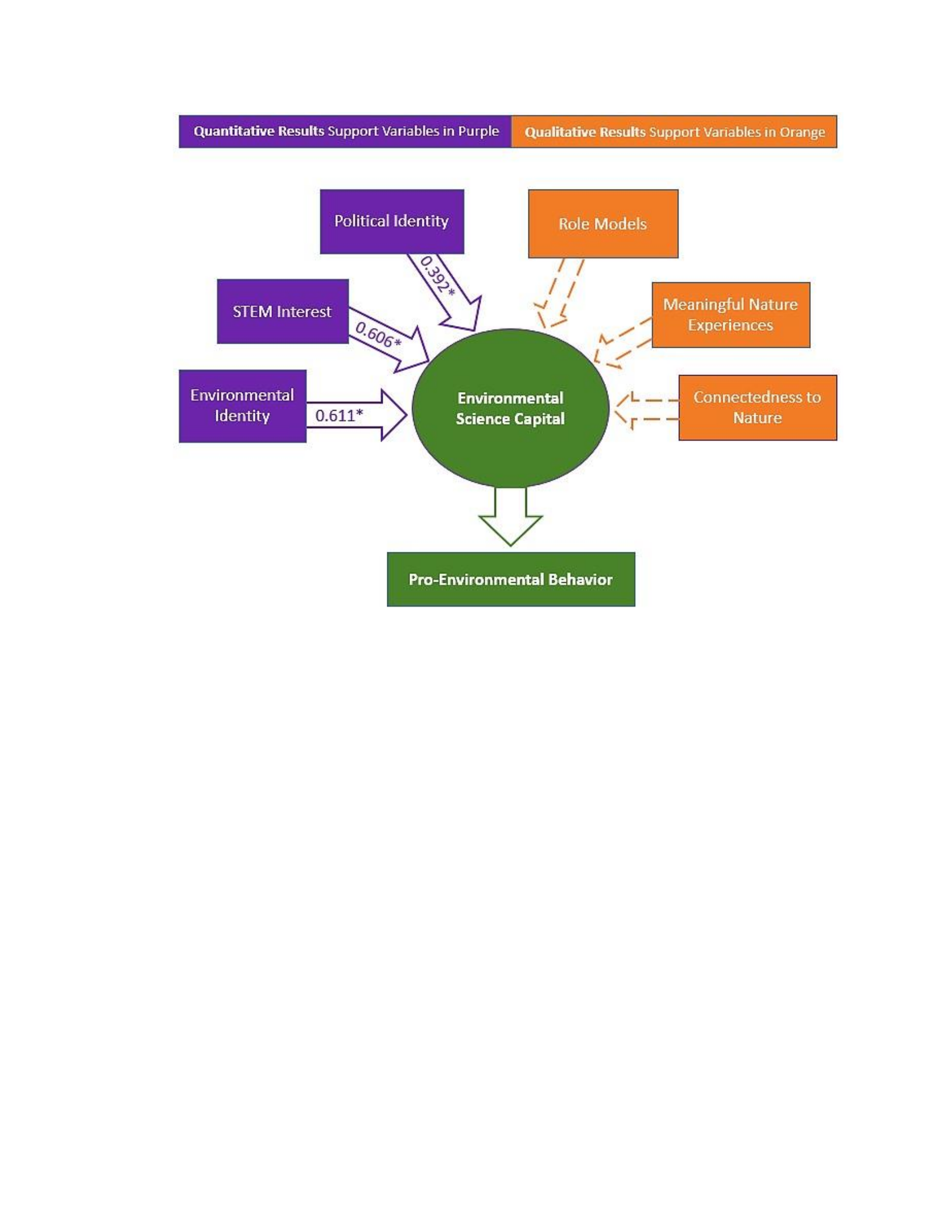
Figure 5.1. Revised Conceptual Framework Based on Study Findings.
Purple boxes represent findings from quantitative analysis and orange boxes represent
findings from qualitative analysis. Numbers within purple arrows indicate Pearson’s
Correlation Coefficient between the variable and pro-environmental behavior. The
relationship between green shapes is conceptual.
Variables marked with * have significance of p<0.0001.
Conclusions
Based on the quantitative results and qualitative findings, here are the conclusions
that address our research questions.
1. How does the concept of environmental science capital help to explain
proenvironmental behavior of rural youth in this study? The recent concept of science
capital is a theoretical lens to examine the differential patterns of aspiration and

educational participation of science among youth. Similarly, our proposed expanded
concept of environmental science capital can help explain the pro-environmental
behavior of rural youth in this study by shedding light on why this population engages
or
(does not engage) within the environmental sciences.
a. What is the relationship between environmental science capital and
proenvironmental behavior? Based on the quantitative results, there is a positive
relationship between environmental science capital and pro-environmental
behavior.
b. Which aspects of environmental science capital best predict pro-environmental
behavior? Quantitative results suggest that STEM interest and environmental
identity may be the best predictors of pro-environmental behavior. Although the
univariate analysis shows statistical significance for all six independent variables
in this study, the R2 values are highest for STEM interest and environmental
identity. Additionally, multivariate analysis shows that the greatest contribution
comes from STEM interest (0.308) then environmental identity (0.28844). This
suggests that as STEM interest and environmental identity increase, so does
proenvironmental behavior.
2. How do the following factors influence PEB in our sample populations?
• Meaningful Nature Experiences
The meaningful nature experience (MNE) mean score was significant with
PEB within the univariate analysis with a positive relationship between
MNE and PEB. Meaningful nature experiences were not significant in the
multivariate analysis with PEB.

• The Influence of Role Models
Influence of role models was significant in the univariate analysis,
showing a positive relationship with PEB, but was not significant in the
multivariate analysis.
• Connectedness to Nature (CNS)
Connectedness to nature (CNS) mean score was significant with PEB in
the univariate analysis with a positive relationship between CNS and
PEB. The CNS score was not significant in the multivariate analysis.
• Environmental Identity
Environmental identity was significant with PEB in both the univariate
analysis and the multivariate analysis. This relationship was positive and
accounted for 29% of the variance in the multivariate analysis making it
the second most significant variable in the multivariate analysis.
• STEM Interest
STEM interest was significant with PEB in both the univariate analysis
and the multivariate analysis. STEM interest was the greatest contributor
to PEB in the multivariate analysis at 31% of the variance accounted for
by STEM interest.
3. How do described experiences of freshman and sophomore college students enrolled in
science courses help to explain patterns observed in quantitative surveys? Quotes from
college students confirmed that this group of participants had high science identity and
interest as expected and indicated in quantitative surveys. However, some students
indicated a lack of pro-environmental behavior or environmental identity.
a. What personal success stories emerge from descriptions of rural college students
who have overcome barriers to environmental science capital and
proenvironmental behavior? They did not describe overcoming barriers to
proenvironmental behavior, but their responses provided insights into what those

barriers might be. For example, tensions between environmental identity and rural
identity were evident from participant responses. Past behaviors seem to also act
as a barrier to pro-environmental behavior.
b. What life experiences do students perceive as most important in shaping their
interests and environmental actions? What is the importance of role models?
Participants generally described their interests in science or nature as intrinsic
qualities that they possess. When they did mention activities or experiences that
influenced them, they mentioned solitary and social experiences in nature,
especially hunting, fishing, or working outdoors with animals. Often their role
model was a father figure who took them hunting or fishing.
c. What themes emerge in the lived experiences of students with different courses,
academic majors, or career plans? Qualitative findings are relatively consistent
across academic major or course, aside from the agriculture students who seemed
to stick out from the rest. They provided thoughtful responses to open-ended
survey questions that sounded quite pro-nature, despite their lower
proenvironmental behavior scores.
4. How do described experiences of high school STEM and environmental club
participants help to explain patterns observed in quantitative surveys? When
describing high school STEM and environmental club experiences: participants use
different language for different identities, express tension between their environmental
identity with other self- described identities, list individual actions opposed to
collective environmental actions and enjoy both solitary and shared nature experiences.
These described experiences add depth and “color” to the quantitative results.

a. How do their lived experiences and descriptions explain or contradict the findings
from the quantitative study? Participants’ self-described experiences relating to
STEM interest and environmental identity support the quantitative results of these
two variables having a significant relationship with pro-environmental behavior.
Although meaningful nature experiences and role models were not significant in
the multivariate analysis, participants did describe shared experiences and support
of friends and family. Due to this contradiction, we believe that the low
significance is due to the way that these two variables were measured in our
survey instrument.
Implications for Practitioners
Based on the quantitative results and qualitative findings, here are four implications for
practitioners which could include formal and non-formal educators, environmental and/or
science club leaders and community leaders.
Provide Frequent Experiences with Support from Parents and Peers
Research on science capital shows that daily experiences and support from parents
and peers can contribute to an increase in science aspirations and participation among
youth. This study supports that, similar to science capital, frequent experiences and
support from family and peers also increases aspirations and participation in
environmental science among this study population. These daily experiences of being a
part of environmental clubs and taking an environmental science class coupled with
shared experiences with family and friends contribute to making participating in
environmental sciences a norm. Our recommendation for practitioners is to include

parents/guardians, siblings, and influential others within your programming in order to
build this shared supportive culture.
Encourage Place-Related Connections
Another recommendation for practitioners is to emphasize sense of place into
educational programing. Sense of place incorporates both place attachment, how strongly
people are attracted towards places, and place meaning, the reasons for attraction. In fact,
Kudryavtsev, Stedman and Krasny (2012) posit that the strongest influence on
proenvironmental behavior via a place-related connection may be through a combination
of place attachment and ecological place meaning.
Provide Solitary Experiences
Shared experiences in nature are viewed as meaningful in past research and
supported in this research, however, many participants also mentioned spending time in
nature alone. For these participants, being alone in nature allowed them to disconnect and
to have a deeper more personal connection to nature. Perhaps this is due to the desire to
unplug from our ever-increasing busy lives. Our recommendation is to incorporate these
solitary experiences in educational programs such as setting aside time for self-reflection
in a solitary yet comfortable space.
Move Beyond Individual Behavior to Collective Behavior
During our focus groups, participants expressed more individual actions for the
environment such as not littering, recycling, and reducing energy and water consumption.
While this is encouraging, collective actions have more impact. Our recommendation is
to encourage and demonstrate more collective actions such as: addressing and engaging

in local environmental issues, voting for environmental policies and writing letters to
their representatives. One increasingly popular activity that has the potential to address
local community issues and build science/environmental engagement is citizen science,
also referred to as community science.
Ease Tensions with Environmental Identity
Within this research, we found that participants hold different identities
simultaneously, however, they use different language to describe these identities. For
example, when talking about being a “science” person, language that evokes “braininess”
and “logical” is often used versus when they express being a “nature” person. For a
“nature” person, they use language that suggests more “heart” and “warmth” such as
calm, happiness and harmony. Surprisingly, we found significant tension between
participants’ environmental identity with some other identities that they hold such as a
rural and/or political identity. Much like how the link between “braininess” and scientist
is a barrier, this tension between identities can prevent youth from engaging within the
environmental sciences and/or pro-environmental behaviors. Solutions to this challenge is
beyond the scope of this study. However, embracing and demonstrating a “both/and”
mindset and setting clear ground rules of respect can help set the tone within clubs and
classes.
Acknowledgement of Limitations
This study was limited by the following:
• The results of this study cannot be generalized beyond the study population
since sampling was not random.

• There was a lack of respondents with low socioeconomic status and racial
diversity so the effects of race and socioeconomic class could not be
studied.
• While every effort was made to replicate survey questions from published
survey instruments, some questions were modified for our population. Our
survey combined questions from different survey instruments and it may be
that the reliability and validity of the original survey instruments was
impacted.
• The ages of our respondents were typically older than the respondents of
the published science capital research. This discrepancy may have an
impact on comparisons of our findings to the previous science capital
research.
• A more robust connectedness to nature scale may have produced different
results. Due to the desire to keep the number of questions manageable, the
shorter connectedness to nature scale was used. More published research
exists using the longer new ecological paradigm (NEP) scale and it is
possible that a different measure of connectedness to nature would have
yielded different outcomes.
• As with any self-reported survey, respondents may answer questions in a
way that is not truthful but makes them look more favorable. There is also
the possibility that some question meanings were not clear and the
information collected was not valid.
• The quantitative data set is large and many more relationships from this
data have not been thoroughly studied due to time constraints.
Future Research
Based on the findings of this study, future research might include a study that
looks at how the factors we examined (STEM interest, environmental identity,
socioeconomic status, political identity, geographic region, role models, meaningful
nature experiences, and connectedness to nature) influence the pro-environmental
behavior of a random sample of American youth. This would allow for generalization of
these results to better examine environmental science capital in American youth.

Research might also examine the new environmental paradigm scale to assess an
ecocentric worldview in opposition to the connectedness to nature scale. We propose this
might lead to a greater understanding of the differences we discovered between those that
hunt as opposed to those individuals that fish when looking at pro-environmental
behavior.
Future research could explore how practitioners in formal and informal education
could emphasize collective pro-environmental behavior (i.e. addressing and engaging in
local environmental issues, voting for environmental policies and writing letters to their
representatives) in an effort to assess the impact of these collective behaviors on
environmental science capital and pro-environmental behavior.
Another issue that could be explored is the different identities that were observed
in this study. We found tension between the different identities held by rural youth
(scientist, nature person, outdoors person and environmentalist) and the other identities
they hold such as rural or political party member. Research into effective strategies to
break the stereotypes of "brainy scientists" and "environmental activist" could increase
the environmental science capital and pro-environmental behavior of American youth.
Rural identity is of particular interest because defining rural for this study was a
far more complicated subject than it appears on the surface. The popular definition of
rural put forth by the US Census Bureau is quantitative in nature and defines rural in
terms of the number of people in a given area but by this definition, our survey
respondents "misidentified" their geographic residence as "rural" 22% of the time and
over half (53%) incorrectly identified their place of residence as rural or urban.

If respondents believe they live in a rural area, are they rural? This is the question
brought to light by discussions for this research. Rural is not easy to define and educators,
legislatures, and other policy makers have struggled with this question of "What is rural?"
for decades (Rios, 1988). Rural means different things to different people and doesn't
look the same in all parts of the country (Rios, 1988). Someone from "rural" Kansas does
not live the same experience as someone from "rural" West Virginia, yet people from both
areas feel what it is to be rural. Some qualitative features of past definitions of rural have
been simple life, agricultural lifestyle, smallness, homogeneity, and even dullness, but
according to Blakely (1984), these also fail to describe much of rural America.
Though time prevented us from probing deeper into this topic of ruralness, it is
our belief from this study that the definition of rural must include both qualitative and
quantitative elements. The belief that a person lives in a rural area impacts their
viewpoints just as firmly as if they live in a rural area by zip code. Rural encompasses a
mindset and lived experiences as well as a person's physical location. For our study, we
concluded that the self-identified designation of rural spoke more of the mindset of being
rural and probably gave us a better insight into what the participant believed than just
using the Census Bureau definition. Rural, we believe, is an identity and it is likely that a
rural identity should be explored in future research instead of looking strictly at
geographic location.


