


Positive: Fact-based statements (stats, numbers)
Normative: Opinion-based statements (I think, I like)
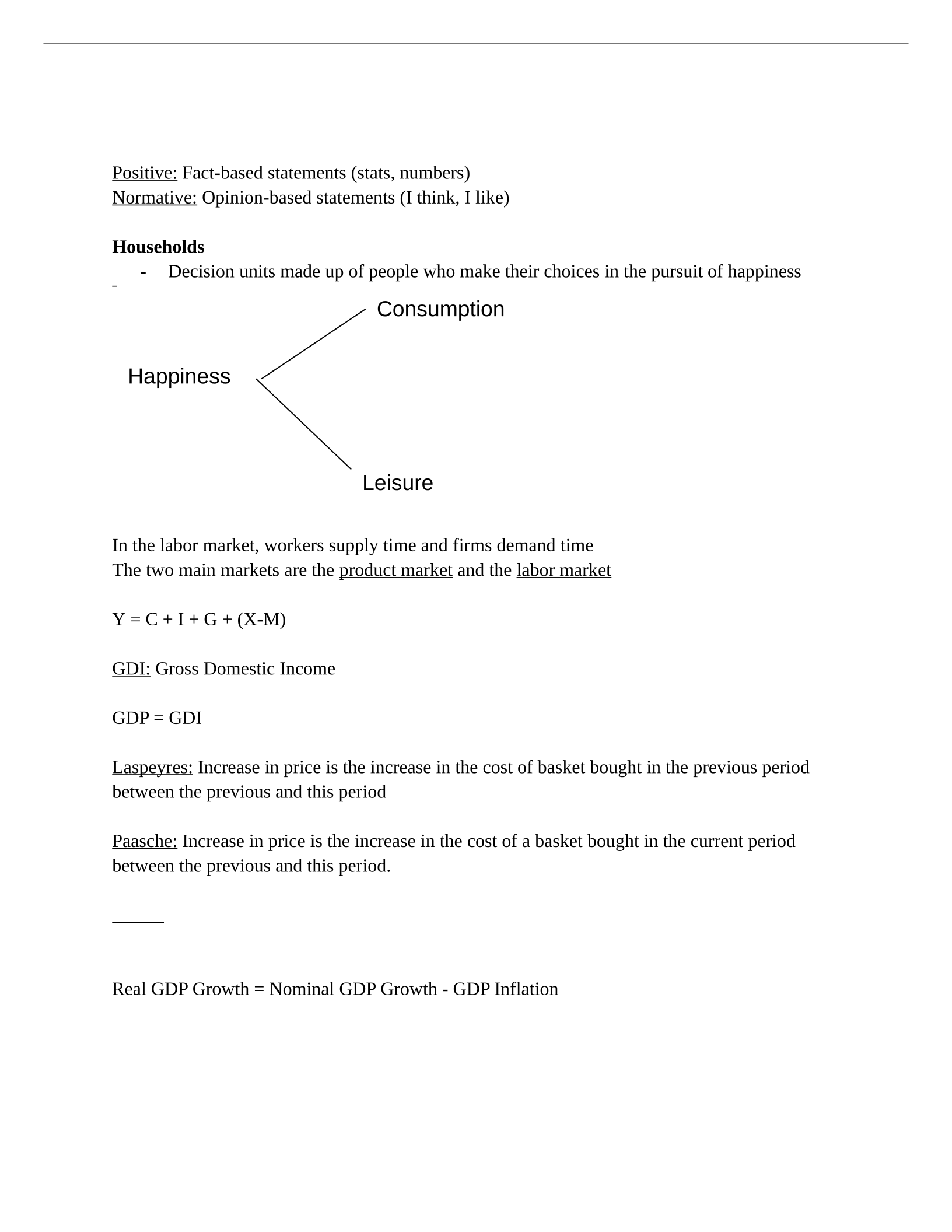
Households
- Decision units made up of people who make their choices in the pursuit of happiness
In the labor market, workers supply time and firms demand time
The two main markets are the product market and the labor market
Y = C + I + G + (X-M)
GDI: Gross Domestic Income
GDP = GDI
Laspeyres: Increase in price is the increase in the cost of basket bought in the previous period
between the previous and this period
Paasche: Increase in price is the increase in the cost of a basket bought in the current period
between the previous and this period.
Real GDP Growth = Nominal GDP Growth - GDP Inflation
Consumption
Leisure
Happiness
Fisher: Instead of choosing Laspeyres' or Paasche's convention, just calculate inflation as the
(geometric) average of both measures
Positive vs Normative Economics

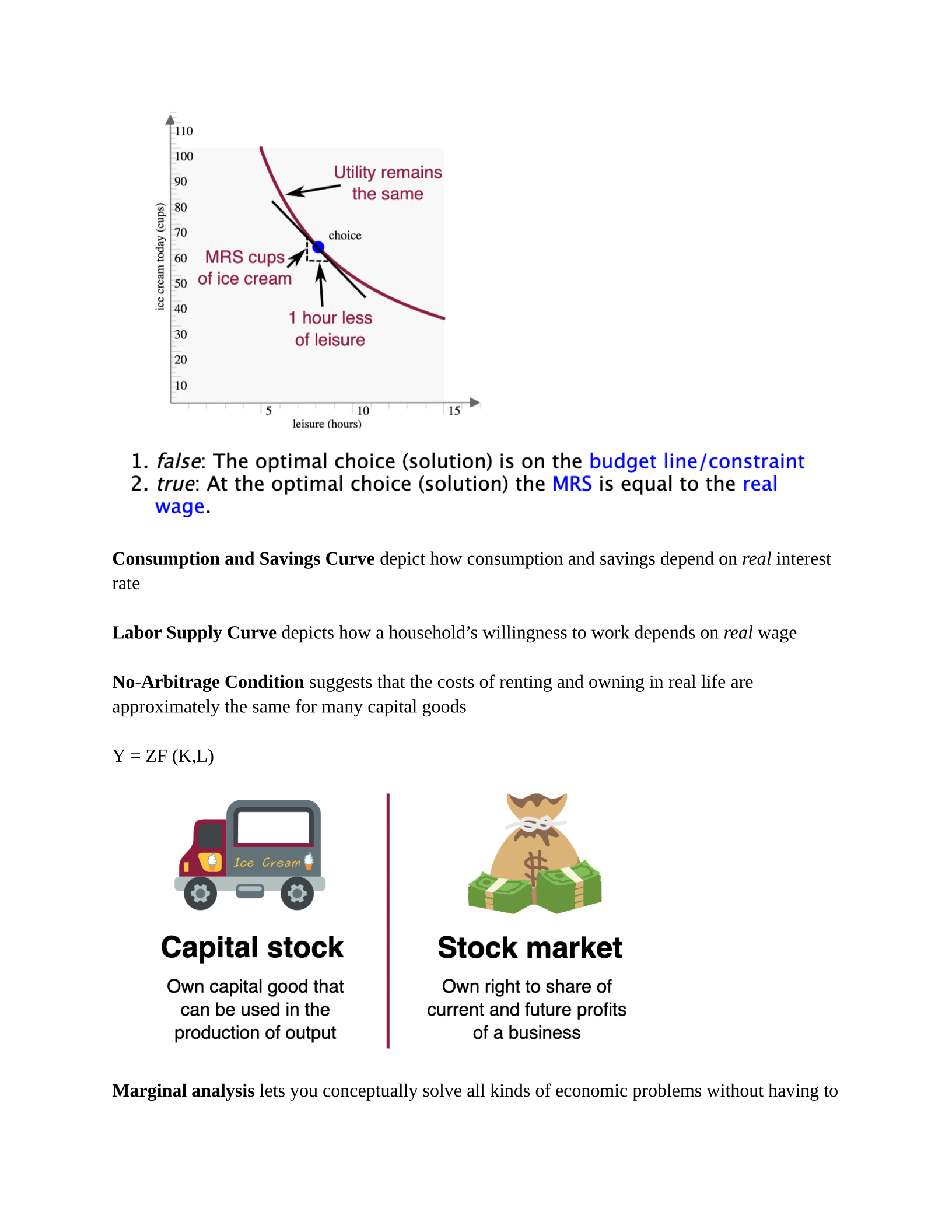
Consumption and Savings Curve depict how consumption and savings depend on real interest
rate
Labor Supply Curve depicts how a household’s willingness to work depends on real wage
No-Arbitrage Condition suggests that the costs of renting and owning in real life are
approximately the same for many capital goods
Y = ZF (K,L)
Marginal analysis lets you conceptually solve all kinds of economic problems without having to
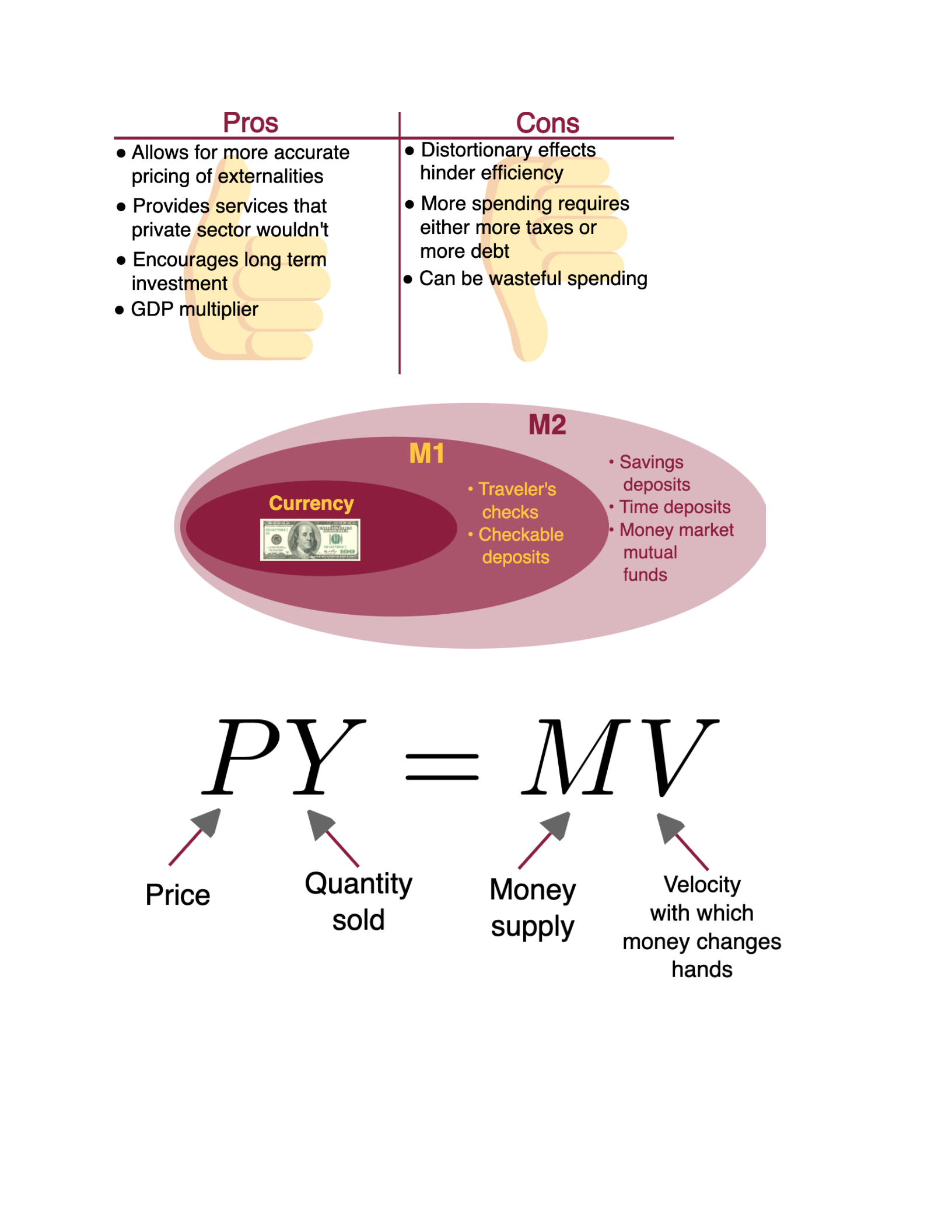
Pros
Cons
e
Allows
for
more
accurate
pricing
of
externalities
e
Provides
services
that
private
sector
wouldn't
e
Encourages
long
term
investment
e
GDP
multiplier
iy
e
Distortionary
effects
hinder
efficiency
e
More
spending
requires
either
more
taxes
or
more
debt
e
Can
be
wasteful
spending
M2
-
Savings
deposits
*
Time
deposits
*
Money
market
mutual
funds
PY
=MV
AN
A
Price
Quantity
Money
Velocity
sold
with
which
Su
pply
money
changes
hands
Powered by TCPDF (www.tcpdf.org)

