



CLOUD-BASED COMPUTING AND HUMAN RESOURCE MANAGEMENT
PERFORMANCE: A DELPHI STUDY
Chapter 1 Introduction
Human resource (HR) leaders are the catalysts for ensuring efficiency in HR
practices and influencing organizations to implement technology-based solutions
(Indranil, 2011; Polen, 2009). The implementation of Cloud-Based Computing is slowly
progressing (Willcocks, Venters & Whitely, 2013) for HR processes, for example,
solutions such as online personal profiles and social networking sites are quickly
abolishing the résumé (Bohnert & Ross, 2010; Dickson & Nusair, 2010; Rickborn, 2012;
SHRM, 2011; Sprague, 2011; The Resume, 2011; Weiss, 2011). However, most of the
HR industry failed to implement new technologies or standardize the use of Cloud-Based
Computing for the HR function in areas such as interviewing, screening, and performance
management, although social media and online recruitment is prevalent (Bohnert & Ross,
2010; SHRM, 2011; Sprague, 2011; Weiss, 2011). Cloud-Based Computing is any third
party, web-based software, platform, infrastructure, or business process as a service. This
study focused on the use of Cloud-Based Computing in the HR field. Businesses aware
of which services are suitable for Cloud-Based Computing can use the technology as a
competitive edge ultimately increasing business value (Aljabre, 2012).
Leadership, retention, training, talent acquisition, and engagement are the most
urgent issues in HR (Bersin, 2014). HR leaders must have the right tools and technology
in place to manage multiple talent processes (Lombardi, 2014) by leveraging cloud
technology to transform and reinvent (Bersin, 2014) HR as a strong strategic partner.
Additionally, the human resource leader’s function shifted to that of a business partner

(Ulrich, 1997). As a value-adding business partner, the human resource leader yields a
list of characteristics including commitment to employee development, assisting the
business through change management, and efficient design and implementation of HR
systems adding value by aligning to organizational strategies and outcomes (Maslak,
2008; Ulrich, 1997) and aligning with characteristics of a transformational leader.
Cloud computing enables a range of information and communication technology
services ubiquitously available through network access from a service provider (Athale,
Barde, Kamble, Mirajkar, & Singh, 2012; Ross, 2011). Increased broadband and
improvements in the technology allow Cloud technology service providers the ability to
exploit new markets (Willcocks et al., 2013) and transform traditional HR business
practices (Deloitte, 2011; Ross, 2011). Cloud-Based Computing is replacing traditional
software installations (Athale et al., 2012) changing traditional business processes, and
increasing business value (Aljabre, 2012; Indranil, 2011; Rickborn, 2012).
However, HR professionals are reluctant to standardize implementation of
CloudBased Computing in traditional HR practices despite the overwhelming agreement
of key challenges remedied by Cloud solutions (Deloitte, 2010, 2011; Indranil, 2011;
Starner; 2011) that may influence Human Resource Management (HRM) and overall
organizational performance. Chapter 1 includes the background and evolution of HRM,
electronic Human Resource Management (e-HRM), Human Resource Information
Systems (HRIS), and the introduction of Cloud-Based Computing to HR with a review of
transformational leadership in HR with respect to technology adoption. The definition of
the problem and purpose for the study is in alignment with the significance of the study to
HRM, leadership theory, and academia. Finally, Chapter 1 includes a review of the
research questions, scope, assumptions, and delimitations for the study.

Definition of Terms
The following is a list of terms and definitions used in the research proposal that
can have unique connotations for this study.
Cloud-Based Computing. Cloud-Based Computing is a term generated by the
researcher to refer to any third party, web-based software, platform, infrastructure, or
business process as a service. This study focused on Cloud-Based Computing in the HR
field.
Cloud Technology. Leveraging third party, web-based technology and services to
complete business tasks, use applications, and maintain data (Qaisar & Khawaja, 2011).
Curriculum Vitae. Curriculum Vitae and résumé are interchangeable; however,
key differentiators are the length and use of the CV to expand on a candidate’s
professional and scholarly identity (Miron, Osoian, & Zaharie, 2011).
Delphi (Delphi Method, Delphi Technique, modified Delphi). The RAND
Corporation developed the Delphi method to obtain opinions from a small group of
participants over multiple questioning rounds for the purpose of consensus and
forecasting (Dalkey & Helmer, 1963). The classic Delphi (Skulmoski et al., 2007) has
since been modified in multiple ways in many research studies (Linstone & Turoff, 1975)
and the terms Delphi (Dalkey & Helmer, 1963), Delphi Method (Linstone & Turoff,
1975), and modified Delphi (Adler & Ziglio, 1996) are often used interchangeably to
refer to a Delphi research design. Changes to this modified Delphi study consisted of
recruitment of informed participants with 5 years HR experience, not necessarily experts;
and the gathering of prioritized responses with ranking, however not necessarily for
consensus (Beakley, 2015; Hall, 2009; Hall & Jordan, 2013).

Diffusion of Innovations (DOI). A theory developed by E. M. Rogers in 1962
explaining how and why innovative ideas, products, or behaviors are adopted and
diffused throughout a population or social system (McGrath & Zell, 2001; Rogers, 2003).
Human Resource Information System (HRIS). The technology tools that collect,
store, maintain, and retrieve an organization’s employee and HR-related data
(Karimidizboni, 2013; SHRM, 2014) and assist organizations in managing talent
(Karimidizboni, 2013; Spaulding, 2011).
Human Resource Management (HRM). HRM is the “formal structure within an
organization responsible for all the decisions, strategies, factors, principles, operations,
practices, functions, activities and methods related to the management of people”
(SHRM, 2014).
Human Resource Management Systems (HRMS). A software application
combining HR duties including payroll, benefits, performance management, recruiting,
screening, and training (SHRM, 2014).
Human Resource (HR) strategic business partner. A strategic business partner
that aligns business objectives with human resource practices and serves as a consultant
to management and executive leadership on Human Resource related issues (SHRM,
2012).
Infrastructure as a Service (IaaS). Infrastructure as a Service is a service of
virtual machines including raw storage, firewalls, and networks (Athale et al., 2012;
Skiba, 2011).
Legacy Technologies. Legacy Technologies refer to any onsite or customized
HRIS or HRMS not accessible via Cloud.

Platform as a Service (PaaS). Platform as a Service is Cloud computing module,
which provides platforms such as operating systems and application development
platforms via the internet (Athale et al., 2012; Skiba, 2011).
Software as a Service (SaaS). Software as a Service is a Cloud-computing model
that deploys software behind a firewall on a local area network and arrayed over the
internet (Howarth, 2009; Skiba, 2011).
Strategic Human Resource Management. Strategic Human Resource
Management is an approach to managing human resources that align with organizational
performance.
Society of Human Resource Management (SHRM). Originating in 1948, SHRM is
the largest human resource-focused organization in the world dedicated to the practice
and evolution of human resource management (SHRM, 2014).
Technology-Organization-Environment (TOE). A conceptual framework using
three contextual groups of technology, organization, and environment to explain the
process by which an organization adopts and implements technology innovations
(Tornatzky & Fleischer, 1990).
Background
Human Resource professionals are an essential part of strategic and organizational
leadership adding value by contributing to organizational strategy (Timmons, 2008). The
focus of human resource leaders is to identify cost-effective methods for hiring,
managing, and developing talent. Minimizing costs, optimizing talent, and positively
influencing business outcomes means the HR leader has the opportunity to align with the
business as a valuable business partner unlike historical perceptions as a compliance
officer (Chiu & Selmer, 2011). The importance of human resources integration into the
business strategy sphere continues to increase since the 1980s (Chiu & Selmer, 2011).

Scholars agreed HR, as an important business partner, are becoming increasingly critical
to maintain a competitive edge (Kapoor & Sherif, 2012).
Organizational leaders understand that hiring top talent, and retaining talent, is
crucial to maintaining a competitive advantage (Aladwan, Bhanugopan, & D’Netto,
2015). The processes of HRM, such as employee recruitment, selection, development,
performance, and rewards, are emphasized within a technology-based business
environment (Aladwan et al., 2015). The contribution of the Human Resource leader as a
value-add business partner includes activities in recruiting and staffing, employee
development, performance management, compensation management, and regulatory
compliance (Armstrong & Pitrowski, 2006; Eisner, 2010) with influence to organizational
performance.
Chiu and Selmer (2011) posited companies that find and retain the best talent have
a competitive edge. Staffing a business with top talent is dependent on recruiting,
screening, and hiring the right candidate for a specific position against the skills,
knowledge, and competencies required for success. The cost to hire and retain top talent
is a business goal HR leaders can leverage with new technology (Dickson & Nusair,
2010). While electronic web-based employment practices are widely used, many
companies rely on standard HR processes such as recruitment, selection, screening, and
performance management (Armstrong & Pitrowski, 2006; Eisner, 2010). Human
resource professionals are constantly introduced to technology-based strategies and trends
requiring organizational awareness of potential challenges (Morris & Revels, 2012;
Shilpa & Gopal, 2011). Indecisiveness in managing business operations is an
organizational recruiting challenge (Morris & Revels, 2012). Organizations rely on HR
leaders to implement solid processes and strategies with integrated technology to
maintain an efficient workforce (Morris & Revels, 2012) and department. The objective

of HRM is to transform organizational strategy into effective HR strategies that create a
competitive edge (Convertino, 2008; Tyson, 1995). In the role of a business partner, the
HR leader must add value by providing direction, leadership, and solutions to
successfully implement change (Nair, 2011), and achieve business objectives.
Information, technology, and systems have become a critical component in most
HR departments for hiring, payroll, training, and other responsibilities (Corsello, 2012).
Cloud-Based Computing is expected to intensify the need to change technologies and
enable HR to improve performance (Corsello, 2012). Employers use résumés to
determine if candidates possess the necessary background, skills, knowledge, and other
competencies to warrant investment in more costly selection measures, such as interviews
(Cole, Feild, Giles, & Harris, 2008). Digitized portfolios, or e-Portfolios, are tools for
students compiling work and identifying how curricular and work activities apply
professionally (Eisner, 2010) and are highly encouraged, if not required, by higher
learning institutions (Dubinsky, 2003) but not standardized as a tool for talent selection in
HR. At the time of this study, some employers use Cloud-Based Computing with social
networking and popular websites to screen candidates (Bohnert & Ross, 2010; Marx,
2011; SHRM, 2011; Sprague, 2011; Weiss, 2011); however, most use on-site legacy
systems.
Recruitment and screening are important processes for organizational success and
are transforming slowly through Software-as-a-Service (Deloitte, 2011; Starner, 2011).
Video interviewing is becoming a popular Cloud-based method for conducting interviews
in the hiring process (Abardeen, 2012; Banham, 2011; Crenshaw, 2006). Key drivers for
implementing video interviewing in the Cloud influence the whole organization including
costs, resources, reach, and quality of hire (Abardeen, 2012; Latham, & Luman, 2009),
are linked to business outcomes, and driven by the HR leader as a business partner.

Employment recruitment and screening are ubiquitous processes of talent acquisition for
human resource professionals (Collins, Domagalski, & Wright, 2011); thereby affecting
HR leaders.
Software as a Service (SaaS) will potentially replace traditional software in many
departments including human resources (Balbaa, 2011). In all HR leader competency
models, the ability to adapt and manage change is a critical success factor (Madu, 2009).
According to a survey by Deloitte (2011), standard HR practices in the Cloud are
inevitable; however, HR leaders are resistant to implementing Cloud-Based Computing
despite their role as an innovative leader, change agent, and business partner, and the
potential of using Cloud-Based Computing as a tool to achieve business goals.
The role of a business partner requires competence in diagnosing organizations,
reengineering processes, listening and responding to employees, and managing cultural
transformation (Loshali & Krishnan, 2013). The HR business partner adds value to a
firm through strategy execution, administrative efficiency (Sternberger, 2002), employee
commitment, and cultural change (Ulrich, 1997). HR leaders could implement
CloudBased Computing for HR practices and be willing to influence organizations to use
Cloud technologies as an alignment to business strategy (Indranil, 2011).
The HR professional’s perceptions change with the introduction of new or
advanced technologies (Polen, 2009) with Cloud-Based Computing being the latest
evolution to affect HR professionals. Numerous Cloud-Based Computing applications
are available to Human Resource professionals, and more recently to employees and
candidates, as technology becomes increasingly sophisticated and accessible (Aljabare,
2012; Indranil, 2011). Organizations are competing for access to a global talent pool, to
retain top talent, and require a cost effective platform for conducting traditional talent
acquisition processes (Dickson & Nusair, 2010; Kapoor & Sherif, 2012). Existing

challenges for large and small businesses substantially invested in fixed behaviors and
practices (Gibson, 2012) hinder adoption of new technologies and processes. However,
HR leaders need information supporting the decision to incorporate Cloud-Based
Computing solutions into effective standard HR processes such as validation from other
HR leaders based on experience.
Human resource leaders, as business partners, consider long-term business goals
to ensure talent acquisition and development processes align with business strategies
resulting in better talent choices (Collins, Domagalski, & Wright, 2011) potentially
increasing competitive advantage and organizational performance. Considerations for the
study include key drivers, processes, and concerns for implementing Cloud-Based
Computing for HR functions, characteristics of an HR leader having successfully
implemented Cloud-Based Computing, and the potential effect on HRM and
organizational performance. As more companies compete for the finest in the global
talent pool, and maintaining a competitive advantage (Kapoor & Sherif, 2012),
organizations and HR leaders must offer the best opportunity for success when
implementing standard HR processes to achieve extraordinary results (Loshali &
Krishnan, 2013).
Change initiatives start with leadership; therefore, leaders require adequate
preparation for successfully deciding upon, and implementing, changes. Increasing
competition for top talent requires organizations to implement effective strategies for
hiring from a global talent pool to stay competitive. Human resource leaders are
responsible for influencing organizational leadership when implementing HR technology
solutions and must have solid support to affect the decision positively (Polen, 2009; Yeh,
2012). The effects of Cloud-Based Computing are slowly evolving despite prevalent
interest in its benefits (Willcocks, Venters, & Whitely, 2013). Additionally, a need exists

to evaluate the performance of HRM to organizational performance (Fitz-enz &
Davidson, 2002; Ulrich, 2010). This study contributes to scholarship, HRM, and
leadership by providing information regarding the HR leader’s perspective and insight to
their respective experiences implementing Cloud-Based Computing and the potential
influence on organizational performance.
The most recent findings include identifying the benefits of Cloud-Based
Computing, current HR processes conducted via Cloud solutions, and reasons for slow
implementation by HR leaders. Findings include key success factors for technology
implementation from industry experts in organizations such as KPMG International,
General Electric, LinkedIn, Deloitte, and Sierra-Cedar. Cited throughout this study are
foundational theorists in the profession of HR leadership such as Ashbaugh, Rowan,
Ulrich, Gibson, and Fitz-enz, and thought leaders in Cloud technology such as Indranil,
Luman, Bohnert, Ikhlap, Khan, Mujtaba, Sadiq, and Ross.
Problem Statement
The general problem is the slow adoption of Cloud-Based Computing for
efficiency of the HR function (Bersin, 2014; Chen, Low, & Wu, 2011; Deloitte, 2011;
Deloitte 2012; Laurano, 2014; Sierra-Cedar, 2015). Bersin (2014) reports a significant
gap between organizations considering HR technology an urgent issue and organizational
readiness for technology change. Companies all over the world are competing for talent
and maintaining a competitive advantage, and must implement strategies and technology
for the ability to enhance HR performance and achieve organizational goals (Kaur & Rin
Yahya, 2010; Polen, 2009). Consequently, organizations are cautiously implementing
new methods for cutting costs and improving efficiency in standard HR processes such as
talent acquisition (Toldi, 2010). Traditional hiring practices are extensive and may

incorporate different phases, modalities, standards, or strategies, potentially requiring
different technologies. Human resource leaders experience resistance to implementing
technology-based solutions during the hiring process (Polen, 2009), and in standardized
processes, such as the traditional screening interview (Crenshaw, 2006; Evuleocha, 2002)
or online résumé. Globalizing and standardizing processes and technologies are
emerging issues in HR (Keebler & Watson, 2014).
Human resource professionals influence organizational leadership when making
the decision to integrate technology resources and the factors influencing the
organization’s adoption of technology (Polen, 2009; Yeh, 2012). HR technology is a
minimum requirement for HR professionals (Madu, 2009) and the adoption of
CloudBased Computing becomes a competitive advantage in the HR profession (Deloitte,
2011; Yeh, 2012). The specific problem is that the literature does not provide clarity how
a more rapid adoption of Cloud-Based Computing will affect HR processes. Human
resource leaders should understand the advantages, disadvantages, and risks associated
with moving business applications and processes to the Cloud (Wright, 2011), and
redefine HR strategies with an understanding of how Cloud-Based Computing can
contribute to operational efficiency, revenue growth, and strategic value (Deloitte, 2011).
Qualitative studies regarding the factors influencing decisions in HR to adopt technology
should be conducted (Bahli, Borgman, Heier, & Schewski, 2013). This study involved
using a qualitative method with a Delphi research design. The intention of this study was
to investigate the reasons HR leaders are slow to implement Cloud-Based Computing,
how Cloud-Based Computing influences human resource management and HR
effectiveness, and the overall performance of the organization.

Purpose Statement
The purpose of this qualitative study with a Delphi research design was to
examine how the adoption of Cloud-Based Computing affects HRM and organizational
performance. Business executives and HR leaders acknowledge the effect of technology
on business processes and strategies, and their influence on technology implementation
and adoption (Deloitte, 2011, 2012; Indranil, 2011; Polen, 2009; Starner; 2011).
Additionally, executives, HR leaders, and professionals acknowledge the need for
aligning HR and organizational strategies when implementing new technologies to
increase business value (Aljabre, 2012; Chiu & Selmer, 2011; Starner, 2011). Balbaa
(2011) stated Software-as-a-Service (SaaS) would potentially replace traditional software
in many departments including Human Resources. According to a survey by Deloitte
(2011), standard HR practices in the Cloud are inevitable.
Significance of the Study
Aberdeen (2013) reports 48% of organizations still manually manage and
integrate data. Organizations further along the maturity curve are more likely to adopt
new technology with 62% of organizations indicating technology will be delivered via
cloud within the next two years (IBM, 2015). The adoption of Cloud-Based Computing
is slow despite the benefits of its implementation and use (Whitley et al., 2013). The
study may be relevant to academia in fields of leadership and HR, the cloud technology
industry serving HR, HR leaders as transformational leaders, and leaders of change,
HRM, and organizational performance, and in identifying areas for further research,
contributing to the HR body of knowledge. Human resource professionals reported to
have little knowledge of information systems and HR technology used to facilitate HR
activities although HR technology is a minimum requirement for HR professionals

(Madu, 2009). An increased understanding and knowledge of HR leaders’ perspectives
on implementing Cloud-Based Computing for the HR function could influence HRM and
the role of the HR leader as a value-added business partner.
Significance of the Study to Leadership
Transformational leaders strive toward the mutual pursuit of enhanced individual
and organizational performance. Transformational leadership contributes to enhancing
organizational talent and achieving competitive advantage through people (Birasnav &
Dalpati, 2010). Human Resources leads require the technology and tools to manage HR
processes effectively (Lombardi, 2014).
The findings from this study contribute to leadership and HR leaders, as
transformational leaders, general leaders, and human resource managers, by establishing
an understanding of HR professionals’ experience (Maslak, 2008; Nair, 2011)
implementing Cloud-Based Computing. Transformational leaders inspire others toward a
common vision, encourage innovation (Birasnav, Rangnekar, & Dalpati, 2011; Chen, Lin,
Lin, & McDonough, 2012), assist in developing skill sets, led by example, and establish
expectations for performance (Bass & Avolio, 1993; Mueller, 2009). The results of this
study benefit transformational leaders in implementing Cloud-Based
Computing as an innovative strategy and tool for HRM and the HR function.
The HR leader should be able to identify suitable technology solutions based on
organizational priorities and workforce needs (Polen, 2009; Ulrich, 1997; Yeh, 2012).
The results of this study benefit HR strategic business partners and professionals,
considering a similar strategy, by identifying Cloud-Based Computing applied, concerns,
and key success factors of implementing Cloud-Based Computing for HR processes
(Deloitte, 2010; Indranil, 2011). A better understanding of HR professionals’ perceptions
enhances the potential of the workforce and organization, enriches the organizational

leader’s ability to enhance business operations, expands understanding within the HR
profession, and assists future research (Polen, 2009).
The study findings contribute to the body of knowledge of leadership in HRM and
leadership in general by understanding the perceived effect of Cloud-Based Computing
on HRM and HR performance. The results of this study may influence the perspective of
HR professionals understanding the characteristics of HR leaders with successful
implementation of Cloud-Based Computing, building a business case for moving forward
with Cloud-Based Computing, and providing a model for implementing Cloud-Based
Computing.
Research Questions
More companies are progressively using Cloud technologies for standard Human
Resource processes (Deloitte, 2011). Human Resource leaders are business partners and
asked to suggest strategies for streamlining standard HR practices. However, Human
Resource leaders may be reluctant to move toward Cloud-Based Computing and look to
the experience of peers to understand how technologies are implemented and the results
of implementation prior to making a technology change. To study the topic of HR
leader’s perspective on implementing Cloud-Based Computing, the following research
questions guided the study:
RQ1: What are the Cloud-Based Computing tools that appear to be most effective
for Human Resources?
RQ2: What are the impediments to adoption of Cloud-Based Computing in
Human Resources?
RQ3: How does successful Cloud-Based Computing affect the performance of
HRM?

RQ4: What leadership traits of successful Cloud-Based Computing adopters also
contribute to HR performance?
RQ5: How does HR contribute to the overall performance of an organization?
RQ6: What are the implications of best practices in Cloud-Based Computing
adoption within HR and to general leadership theory?
Nature of the Study
The conduction of this study involved a qualitative research methodology with a
modified Delphi research design modified to leverage the strengths of qualitative and
quantitative research allowing for insight to subjective and objective issues and determine
the HR leader’s perception of the topic (Skulmoski, Hartman, & Krahn, 2007). The
Delphi method is an exploratory technique of subjectivity (Hall, 2009; Skulmoski et al.,
2007) as an iterative process to collect the subjective opinions and feedback of study
participants through a series of surveys using small sample sizes (Skulmoski et al., 2007).
While studies existed depicting the decision-making process for adopting cloud
technologies, benefits of cloud technologies, and the effect of technology in HR, most
studies are conducted in countries outside of the United States, and very little research
explains how Cloud-Based Computing potentially affects HRM performance or the
reasons behind the slow implementation.
The objective for researchers using a Delphi research design is to sample a range
of diverse views and perspectives (Okoli & Pawlowski, 2004). Modifications to the
Delphi can occur between studies, however the following definition captures the essence
of the Delphi method: “The Delphi Technique is a method for the systematic solicitation
and collection of judgements on a particular topic through a set of carefully designed
sequential questionnaires interspersed with summarized information and feedback of

opinions derived from earlier responses” (Delbecq, Van de Ven, & Gustafson, 1975, p.
10). For the purposes of this study, the use of the terms Delphi, Delphi Method, and
modified Delphi are interchangeable. The research methods considered for the study
included quantitative and qualitative. Quantitative research methods require more data
for an effective study on the topic and thus inappropriate for this study given the lack of
data available. A review and the consideration of qualitative research designs including
Grounded Theory, Phenomenological, Hermeneutics, and Case Study revealed these
methods as inappropriate for this study. A modified Delphi research design was most
appropriate for this study to gather data of subjective judgments, is effective with small
samples, and to identify, compare and contrast the success factors from the perspective of
the HR leader. Researchers using a Delphi research design are interested in
understanding the unbiased expressed views of participants to improve understanding of
problems, solutions, or opportunities when knowledge about a problem or phenomenon is
incomplete (Skulmoski et al., 2007). Modifications to the study included the
identification of informed participants opposed to experts, as consensus is not required
(Hall & Jordan, 2013). Hall (2009) argued that the level of quantitative analysis possible
in later rounds determines if the study should be characterized as purely qualitative, or
mixed method; qualitative analysis followed by quantitation, if later rounds are
conducted. Some research studies, referred to as modified Delphi studies (Hall, 2009),
changed from the approach originally developed by RAND Corporation in the 1960s.
A convenience sampling of 14 informed participants with a minimum of 5 years
of HR experience was recruited to participate in the study. The study consisted of a
tworound pilot study followed by two rounds of a complete Delphi study with the full
panel of participants distributed through SurveyMonkey®. The first round of the full

Delphi consisted of demographic, informative, and open-ended questions and concluded
with Likert-type scale questions for ranking in the final round. The questionnaire design
of each round of the study was built upon the information collected from the previous
round until the sufficient information was uncovered (Skulmoski et al., 2007).
NVivo10®, Excel®, and SPSS® software were used to discover subtle connections
among data providing additional insight and ideas for answering research questions and
justifying findings. Significant results were obtained through correlational analysis
during Round 2 of this study in an attempt to further understand and triangulate the data.
The results of the analysis resulted in additional recommendations for future research
provided in Chapter 5. However, given the small sample size and ordinal data obtained,
this study did not justify reclassification to quantitative or mixed methods and remains a
qualitative study.
The information in this study directly challenges HR leaders with demonstrating
discovered characteristics demonstrated by participants of those HR leaders successfully
implementing HR while aligning with transformational leadership. The results of this
study distinguish leadership characteristics of technology early adopters in HR, and
identify issues hindering adoption and that may assist HR leaders in designing effective
change management strategies for adopting and implementing Cloud-Based Computing,
and may provide the foundation of a model for implementing Cloud-Based Computing or
a model for transformational leaders adopting technology.
Population Sample and Criteria
For the purpose of this study, 14 participants were recruited to participate in this
study. A requirement of 5 years minimum of HR experience ensured all participants were
knowledgeable about HR, not necessarily experts (Hall, 2009). Informed participants
included HR leaders, administrators, executives, generalists, and specialists using and not

using, Cloud-Based Computing. A selected subset of the population represented the
population under study. Participants were recruited from HR-focused LinkedIn forums
and Arizona-based HR organizations. In Round 1, 14 participants completed survey with
12 participants completing the Round 2 survey. A convenience sampling technique was
appropriate given the number of LinkedIn forums and Arizonabased HR groups
considered for research and incorporating a snowball sampling technique to reach other
participants through referrals from participants who initially met the study criteria for
participation (Christensen, Johnson, & Turner, 2011).
Data Collection
A minimum of 12 participants were targeted with a convenience sampling and a
snowball sampling technique was useful as the desired population was challenging to
obtain (Christensen et al., 2011) and expectation of participation was low. Twelve
participants completed both rounds of the study. Study participants received an e-mail
containing an informed consent form with details about the research process, withdrawal
procedures, personal risks, and primary intent of the study. Once participants submitted a
signed informed consent, each received a link to the Round 1 questionnaire via e-mail.
The data collection process used online surveys housed with SurveyMonkey® for
all rounds of the modified Delphi research design. Each round of the study was built
upon the information collected from the previous round until the researcher uncovered
sufficient information (Skulmoski et al., 2007). Participants were able to withdraw from
the study at any time before, during, and after data collection. Data analysis did not
include information collected from participants choosing to withdraw from the study
without their permission for use.

Data Analysis
Data analysis attempted to find commonalities between leader’s perceptions about
the implementation of Cloud-Based Computing, HR practices using Cloud-Based
Computing, characteristics of HR leaders skilled at adopting Cloud-Based Computing,
and the potential influence on HR effectiveness and overall productivity of an
organization using NVivo10® and Microsoft Excel® software in Round 1. NVivo10® is
a secure, software program specifically for analyzing qualitative and mixed methods
research data. The NVivo10® software allows the researcher to import, code, organize,
and query data, discover themes, and reflect on outcomes for rigorous support of the
research findings. The software is a powerful tool for uncovering subtle connections
among data for answering research questions and justifying findings. The use of the
NVivo10® software was for analysis of the qualitative data for Round 1 and served to
create the questionnaire instrument for the subsequent iteration. Excel® and SPSS® are
software packages for descriptive statistical analysis and used for analyzing data from
Round 2. Chapter 3 includes specifics regarding sample size and criteria, methodology,
research design, instrumentation, and data analysis.
Theoretical and Conceptual Framework
Theoretical and conceptual frameworks present an overview of the foundational
theories and concepts related to the study (Leshem & Trafford, 2007). The basis for the
theoretical and conceptual framework supporting the study included HRM, leadership,
and technology adoption theories and concepts with respect to innovation, performance,
behavior, and change management. This study focused on the experiences and
perceptions of HR leaders and their influence with implementing Cloud-Based
Computing for HRM and the perceived effect to HRM and organizational performance.
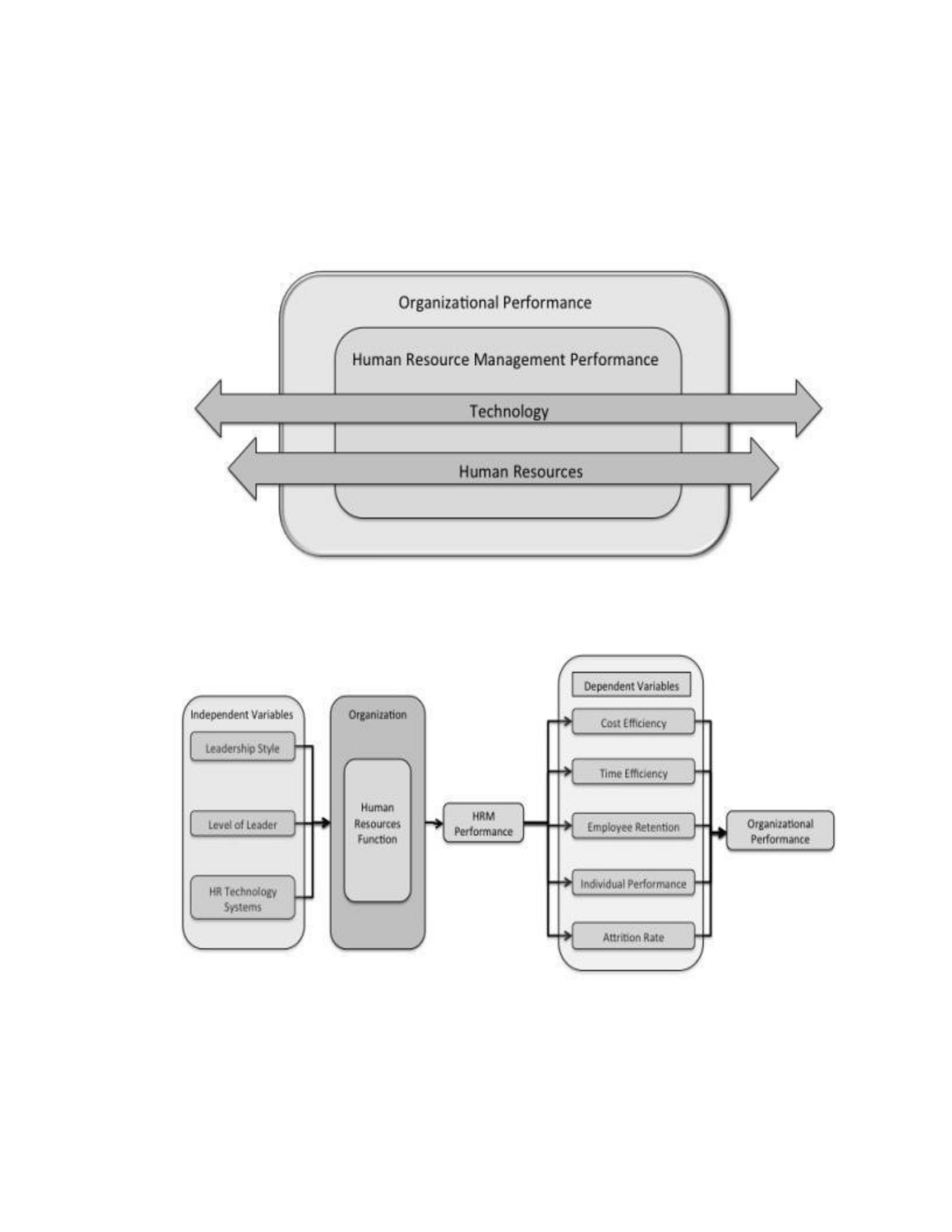
Figure 1 provides a visual of the conceptual framework for the study depicting Human
Resources as the social system by which innovations are communicated and technology
as factors perceived to influence HRM and organizational performance. Figure 2 shows
the relationship between the dependent and independent variables for the study.
Figure 1. Conceptual Framework
Figure 2. Relationship Between Variables
Technology is an organizational factor for maintaining competitive advantage
(Oliveria & Martins, 2011). Numerous theories existed explaining the adoption, or lack
thereof, of new technologies from an individual perspective; however, few were from an

organizational perspective and fewer specific to HR and cloud technology. The study
uses Rogers’ (2003) theory of Diffusion of Innovations (DOI) and the Technology,
Organization, and Environment (TOE) conceptual framework by Tornatzky and Fleischer
(1990).
The TOE framework categorizes three contextual groups: technological,
organizational, and environmental. The technological context refers to the internal and
external factors to an organization such as perceived barriers, mobility, relative
advantage, and accessibility to data and applications (Kraemer, Xu, Zhu, 2006). The
organizational context describes factors of the firm including size, scope, structure,
leadership support, firm culture, and organizational readiness (Bahli et al., 2013). The
environmental context refers to the firms industry, competition, and government policy
(Chen et al., 2011; Oliveria & Martins, 2011; Wang et al., 2010).
Diffusion of Innovations theory attempts to explain “how, why, and at what rate
new ideas of technology spread through cultures operating at the individual and firm
level” (Oliveria & Martins, 2011, p. 111). Innovation is communicated through certain
channels over time among members of a social system (Rogers, 1995). Organizations
adopt innovation that suggests various degrees of resistance effectively visualized as a
bell curve with 2.5% considered innovators, 13.5% as early adopters, 34% as early
majority, 34% as late majority, and 16% as laggards. Independent variables related to
organizational innovation adoption include individual leadership characteristics, internal
characteristics of organizational structure, and external characteristics of the organization
(Rogers, 1995). The diffusion of innovation consists of five characteristics that influence
innovation adoption:
•Relative advantage – the degree to which innovation can bring benefits to an
organization;

•Compatibility – the degree to which an innovation is consistent with existing
business;
•Complexity – the degree to which innovation is difficult to use;
•Observability – the degree to which the results of an innovation are visible to
others and;
•Trialability – the degree to which an innovation may be experimented. (Rogers,
2013, p. 15)
The TOE framework and DOI theory align with principles of change management
theory and strategies for implementing change in HR (Ruta, 2005) and for HR technology
(Benvenuti, 2011; Ruta, 2005). Oliveria and Martins (2011) conducted a thorough review
of research studies using DOI and TOE from an empirical perspective (Kraemer et al.,
2006; Wang, Wang, & Yang, 2010). Wang, Wang, and Yang (2010) and Chen, Low, and
Wu (2011) conducted separate studies on Radio Frequency Identification (RFID) and
Cloud technology adoption, respectively, using the TOE framework and DOI theory.
Human resource management focuses on theory development, actionable
managerial principles, historical origins, and development of management scholarship
and practice (Kaufman, 2012). The theory explains how human resource management
practices align with organizational performance (Huselid, 2011; Kaufman, 2012; Marler,
2012; Wright, Gardner, Moynihan, & Allen; 2005). Thought leaders, in the human
resource management field, agree the HR professional must be a change agent,
technology proponent, and innovation champion to create value toward organizational
performance (Fitz-enz & Davidson, 2002; Ulrich, 1997, 2012).
Transformational leadership is marked by a leader’s ability to influence others
(Bass & Avolio, 1993), embrace innovation (Wren, 1995), and guide others toward
accomplishing goals and improving organizational performance using the

transformational characteristics and behaviors the leader possesses (Birasnav et al., 2011).
Transformational leader characteristics in alignment with those required of HRM are
professionals as champions of innovation and change, particularly when adopting new
technologies (Yost et al., 2011). Previous studies using the DOI theory and TOE
framework have an empirical approach to determinants of technology adoption without
reference to leadership style and characteristics, not within the HR profession, and limited
association to organizational performance. Additionally, the study took a qualitative
approach for better understanding of the problem to answer the research questions.
Assumptions
The study involved five assumptions regarding bias, sample size, and participants.
Impartiality throughout the study is critical for maximizing understanding (Christensen et
al., 2011). One assumption was that the researcher remains unbiased (Linstone & Turoff,
1975; Murray & Hammon, 1995a). Delphi is an optimal methodology for small sample
sizes (Skulmoski et al., 2007). Given the newness of Cloud-Based Computing in HR,
and the resistance to implement these technologies, 17 HR informed participants were
petitioned for the study resulting in 14 participants completing Round 1, and 12
participants completing Round 2. Another assumption was the selected method of
recruitment through LinkedIn groups and Arizona HR organizations were viable locations
for recruiting study participants. Delphi rounds may be considered a timeconsuming
activity. Participants were assumed to have time availability for engaging in the study
and commit to completing two rounds of questions. A final assumption was that study
participants responded honestly and candidly, and had the information needed to answer
the questionnaire (Salkind, 2003). Participants received assurance of confidentiality and
remained informed of the procedures for the study and privacy measures. This study
assumed the responses of HR professionals as panelists in the study would mirror those

of HR professionals across all industries through the recruitment of participants from
various professional backgrounds.
Scope, Limitations and Delimitations
Scope
The scope of this qualitative study with modified Delphi research design was an
exploration of the perceptions of human resource leaders regarding the reasons for, and
against implementation of Cloud-Based Computing. Additionally, the scope included
exploring which of the many HR processes used Cloud-Based Computing, what
characteristics were common for human resource leaders skilled at implementation of
Cloud-Based Computing, and the potential influence of Cloud-Based Computing on
HRM and organizational performance. This study included a convenience sampling of
14 HR informed participants recruited through LinkedIn forums and with expanded reach
via snowball chain method. All participants were confirmed, as required for this study, in
having a minimum of 5 years of experience in HR. The full panel of 14 participants
responded to two rounds of surveys including open-ended questions, demographic and
informative questions, and Likert-type scale ranking questions. The problem is the
resistance in adopting and standardizing Cloud-Based Computing for HR. Cloud
technologies are vast and services span a variety of technical options including platform,
infrastructure, and business processes.
Limitations
Limitations are the boundaries or weaknesses potentially experienced during the
study (Leedy & Ormrod, 2010). The validity of the research for a population is a
limitation because the design of Delphi studies uses small sample sizes (Linstone &
Turoff, 1975). Avoiding the urge to oversimplify the complexity of the problem is
necessary as the perceptions of participants enhance the outcomes, as consensus is

pursued (Linstone & Turoff, 1975). A pilot study occurred to ensure accuracy and
reliability of the study results. Suggested revisions to the questionnaires were
implemented prior to distribution to the full-panel Delphi study participants. Additional
limitations to the final study are expounded in Chapter 5.
Delimitations
Delimitations narrow the focus of the study by stating what is not included in the
study (Leedy & Ormrod, 2010). The first control was to limit the population to HR
informed participants with 5 or more years of HR experience. The second delimitation
was to begin recruiting study participants within Arizona-based HR groups and
HRfocused LinkedIn forums given the researcher’s location. The implementation of
CloudBased Computing occurs globally and clients could reside in any location despite
their online group affiliation. A snowball sampling effect extended outside of Arizona;
however, the sample was limited to organizations primarily based in the United States.
Additional delimitations to the final study are expounded in Chapter 5.
Summary
Human resource processes are slowly transforming through the SaaS process
(Deloitte, 2011; Starner, 2011). However, HR professionals are slow or reluctant to
standardize the implementation of Cloud-based technologies despite the overwhelming
agreement of key challenges remedied by Cloud-Based Computing (Deloitte, 2010, 2011;
Indranil, 2011; Starner; 2011). The general problem is the slow adoption of Cloud-Based
Computing for efficiency of the HR function (Chen et al., 2011; Deloitte, 2011; Deloitte,
2012). The specific problem is the literature is unclear of how effective the HR function
may be with the more rapid adoption of Cloud-Based Computing. Human resource

leaders must understand the advantages, disadvantages, and risks associated with moving
business applications and processes to the Cloud (Wright, 2011).
The theoretical and conceptual framework of the study includes the Technology,
Organization, and Environment framework, HRM, transformational leadership, and
Diffusion of Innovation theories. Definitions provided for these concepts and theories are
helpful, in addition to the common terms for this research project. Arguments existed
that HRM theory is piecemeal (Ferris, Hall, Royal, & Martochhio, 2004); however, the
study creates another connection between HR theory, HRM performance, and
organizational performance.
This modified Delphi study served to provide insight to the perceived effect of
Cloud-Based Computing in HR and slow adoption of the technology. Chapter 1
contained information regarding the nature of the study, a review of research questions,
scope, assumptions, limitations, and delimitations. Chapter 2 involves a detailed review
of the literature applicable to this study, a historical overview, current findings, germinal
research, and gaps in the literature.

Chapter 2 Review of the Literature
The purpose of the qualitative study with modified Delphi research design was to
understand the reasons human resource leaders are slow to implement Cloud-Based
Computing, the common characteristics between human resource leaders and human
resource leaders with successful Cloud-Based Computing implementation, and how the
implementation relates to HRM performance and organizational performance. Little
research exists about the influence of Cloud-Based Computing to human resource (HR)
performance and less on organizational performance. Much research exists on the
adoption of technology; however the limited information on the adoption of Cloud-Based
Computing in HR and information available is often specific to other industries or
countries (Chen, Low, & Wu, 2011; Obeidat & Turgay, 2013).
People are an organization’s largest resource and the key to maintaining a
competitive advantage (Karimidizboni, 2013; Kaur & Rin Yahya, 2010; Theriou &
Chatzoglou, 2008). The HR function is responsible for all factors related to people within
the organization and influential in the adoption of new technologies. William Gibson
(2012) posited adoption of Cloud-based technologies is a competitive advantage for HR
performance. Extensive studies addressed innovation from transformational leaders and
HR leaders as change agents; however, a gap exists between the leadership style and
competencies for technology adoption and the effect on performance. Companies are
competing for obtaining and maintaining talent on a global level, and technology is at the
forefront of HR (Abardeen, 2012; Deloitte 2012; Kapoor & Sherif,
2012; SHRM, 2011). This chapter is a review of literature on Human Resource
Management (HRM), the evolution of technology in HR, Cloud-Based Computing, the
adoption of new technology in HR with respect to change management, and the related
organizational effect of technology in HR. The literature review presents theories in

support of HRM, transformational leadership, technology adoption, and leadership in
general. The writings of HRM and leadership theorists provide an understanding of
current thought on the effect of technology, specifically Cloud-Based Computing on
HRM.
Title Searches, Articles, Research Documents, and Journals
The review of literature contains peer-reviewed journal articles and dissertations
obtained through University of Phoenix Library including EBSCOhost and ProQuest
databases, related books and textbooks by industry, academia recognized thought leaders,
and industry studies from notable organizations related to technology within the HR
profession. The review of the literature focuses on providing a review of HRM, the
introduction, use, and evolution of technology in HR, and the use of Cloud-Based
Computing in HR. The review includes identified gaps in the literature regarding the
effect of Cloud-Based Computing on HRM, leadership, and organizational performance
and serves as a preliminary step in bridging the gap between the current knowledge of
HRM and technology, and the potential effect on leadership practice, HRM, and
organizational performance.
Literature Review
The objective of the literature review is to provide historical background of HRM,
technology evolution within the HR function, HRM leadership challenges with
implementing new technologies, and review Cloud-Based Computing available for HRM.
Notable HR thought leaders and theorists expressed the necessity for technology within
the HR function and consistent improvement (Fitz-enz & Davidson, 2002; Ulrich; 1997,
2012). Many notable organizations predict a timeframe for updating to new Cloud-based
solutions; however, the adoption of HR technology remains historically slow. Although
many studies existed about the adoption of technology and the effect to performance in

general, few studies explored this from the HR perspective, and fewer explored
CloudBased Computing within the HR function. The lack of quantitative research and
need for establishing qualitative information is the basis for the naturalistic approach to
this literature review (Price & Walker, 2009).
The Framework of Research Literature
A broad representation of a discerning review of topics surrounding the
phenomena presented for this study was through the identification of common themes
used to link sources together found within the literature. The literature review includes
information from 168 resources with the majority of resources dated from 2008 to 2014,
with the exception of some historical sections or pertinent resources. The literature
review spans the depth and breadth of relevant topics intended to identify a potential gap
that the study will address. Literature sources consisted 223 sources including 14
dissertations, 40 books, 116 peer-reviewed journal articles, 22 white papers, and 31 other
resources. Literature maturity includes the majority of sources dated 2009 through 2015,
61 sources dated 2000 through 2008, and 24 sources dated 1999 or earlier.
A variety of keywords associated with this study was used find and identify
significant scholarly research contributing to the literature review. The keywords were
used singularly and in combination with other terms including: (a) human resources, (b)
cloud, (c) cloud computing, (d) HRIS, (e) human resource technology, (f) technology
adoption, (g) eHR, (h) human resource management, (i) eHRM, (j) organizational
performance, and (k) leadership characteristics. The exploration of foundational topics
within the available relevant literature include the adoption of technology in HR,
transformational leadership in HR, the role of HR as change agent, Cloud-Based
Computing, and the effect of technology on HRM and organizational performance,
respectively. The review contains a presentation of content-rich, pertinent literature

supported by theory, peer-review, and germane thought leaders. A clear gap exists
because of the lack of available literature, framework, and standards for adopting Cloud-
Based Computing in HRM.
Evolution of Human Resource Management (HRM)
Human Resource Management evolved through time with name changes and
similar practices. Beginning in 1870 Industrial Relations in Great Britain sparked the
growth of unions, government labor relations, policy, and law (Zeitlin, 1987). Frederick
Wilson Taylor founded Scientific Management in the late 1880s by focusing on personnel
managers, synthesizing and standardizing manufacturing processes to reduce employee
input and effort, and maximizing productivity (Wren, 2005). The late 1920s brought
about organized labor and personnel relations; however, the focus remained upon
industry. In the 1930s, the role of personnel managers expanded to fuse relations with
labor unions and additional duties of negotiation, regulatory compliance, hiring, record
keeping, and compensation (Arthur, 2004; Fitz-enz & Davidson, 2002). Additionally, the
profession of psychology emerged in personnel management with psychological
employment testing and the significance of the Hawthorne Studies on employee
motivation (Doyle, Florman, & Pignatelli, 1985).
After World War II, the complexity of personnel management expanded further to
include benefits administration, performance appraisal, employer/employee relations
programs, employee selection testing, interviewing, and training; thus garnering a change
to employee relations, a more human-centric focus in HR by attracting more skilled
workers (Arthur, 2004; Fitz-enz & Davidson, 2009). This was the beginning of a more
human-centric focus in HR. The balance of power remained with personnel managers
throughout the 1950s and 1960s, until legislation brought about uniform policies and
regulatory acts requiring compliance and adherence by personnel, and supplemented by

employee handbooks, policies, and procedures. Arthur (2004) coined the term human
resources in the 1980s when referring to the personnel function or department. The
development and implementation of required global standards in HR occurred through
the American Society of Personnel Administration (ASPA), founded in 1948, and since
1989 changed the name of the organization to the Society for Human Resource
Management (Fitz-enz & Davidson, 2002; HRCI, 2014; SHRM, 2014).
The Society for Human Resource Management (2014) defines HRM as the
configuration within an organization responsible for all things related to managing people
including policies, operations, procedures, activities, and decisions. The reference to
HRM today is human capital management or talent management (Arthur, 2004; Fitz-enz
& Davidson, 2002; Nadler & Nadler, 1990).
Human resource management. The foundation of HRM began during the
Industrial Revolution of the late 1800s and rooted in the emergence of personnel
management after World War II. The traditional function of personnel management was
the oversight of hiring and firing employees, compensation, and training. Some argument
exists that the functional overlap of personnel management and HRM was an academic
façade (Strauss, 2001) of progress lacking practical and applicable theory (Kaufman,
2012; Storey, 1995) while other researchers argued a gap between HRM practice and
theory is ongoing (Prabu, 2011). Numerous scholars and thought leaders provide a
historical review of HRM in theory and practice over the past 2 centuries describing the
changing roles, practices, environmental influences, and technologies created and
adopted for HRM (Lee, 2008).
Nadler and Nadler (1990) provided a detailed review of a nine-period historical
framework on the development of HRM in combination with Sherman, Bohlander &
Snell (1996), Fletcher (2005), and Ulrich (1997), briefly presented in this literature

review. The conceptualization of HRM occurred before 1800 by larger organizations
with numerous resources such as the Catholic Church, military, and government. The
evolution of HRM continued during the Industrial Revolution Era (1880 – 1990) with the
development of group learning in employee training, legislative developments, scientific
management achievements, and Frederick Taylor’s experiments to maximize productivity.
The beginning of personnel management (Fitz-enz & Davidson, 2002; Sherman,
Bohlander & Snell, 1996), reintroduction of military veterans to the workforce, and the
first academic course in personnel administration offered at Dartmouth College (Sherman
et al., 1996) occurred during World War I. During this time, HR academicians
acknowledged notable experiments in HRM development with the Hawthorne Studies
from 1920 through 1940, bringing a more human focus to personnel administration.
During World War II, a shift of the workforce to women and older men occurred.
Additionally, support of work rights, and large companies, such as GE, pioneered the
adoption of technology for HRM processes (Fletcher, 2005). The foundation of the
American Society for Personnel Administration (ASPA) in 1948 was to combat the view
of HR as a non-essential area within the organization and thus the development of human
relations occurred in tandem. From 1960 through 1973, the introduction of legislature for
employment equality and worker safety began along with the emergence of other
industrial nations (Fletcher, 2005). Rapid development of technology began to affect HR
and the introduction of behavioral science, later known as organizational development
(Nadler & Nadler, 1990) was the next evolution of HR.
Significant changes in HR occurred with the operation of the Organization of
Petroleum Exporting Countries (OPEC) (Nadler & Nadler, 1990) and heavy competition
from Japan in the international auto industry, accompanied by increased mergers from
1973 through 1990 (Fletcher, 2005). During this time the HR profession was introduced

to certifications from the Human Resources Certification Institute (HRCI) (Lee, 2008;
HRCI, 2014), GE developed technology for HR payroll, and HR technology continued to
evolve by incorporating non-value adding HR processes (Fletcher, 2005).
From 1980 through 1990, socioeconomic issues gave rise to HRM focusing on
young workers as an advantage (Nadler & Nadler, 1990), and catapulted a shift of HRM
to a strategic role including adoption of technology to streamline administrative
responsibilities and free up HR resources for strategic, consultative responsibilities
(Fletcher, 2005; Ulrich, 1997). During the decade prior to the turn of the millennium, the
Internet, and emerging technologies brought globalization to the forefront (Lee, 2008).
Educating line managers came to the forefront of HR issues and supported as an added
HRM value (Sherman et al., 1996). The focus of HR as a strategic partner, administrative
expert, employee champion, and change agent (Brandl & Pohler, 2010; Ulrich, 1997) was
accepted. Today, technology increasingly plays a critical role in HRM
(Crenshaw, 2006; Fitz-enz & Davidson, 2002; Lee, 2008).
HRM and Organizational Performance
Human Resource Management continues to evolve respective roles and
information technology (IT) continues to play an ongoing critical piece in HRM functions
(Fitz-enz & Davidson, 2002; Huselid, 2011, Lee, 2008). Today HR is an internal formal
structure responsible for all aspects related to managing people (SHRM, 2014).
Functions of HR in the value chain include staffing; compensation and benefits;
employee relations; labor relations; employee training; and organizational development
(Fitz-enz & Davidson, 2002). The categorization of each HR function is under different
HR roles. Ulrich (1997) described the roles of HR as strategic partner, administrative
expert, employee champion, and change agent. Fitz-enz and Davidson (2002) described
the roles of HR as strategic business partner, manager of human talent, change manager,

and supporter of organizational goals. The commonality between Ulrich, Fitz-enz, and
Davidson (2002) is the idea of the HR function and HR leaders as value-adding business
partners to the organization.
A thorough examination by researchers occurs regarding each of the functions and
roles linking HRM practices to organizational performance outcomes and the creation of
competitive advantage (Becker, Huselid & Ulrich, 2001; Huselid, Jackson & Schuler,
1997; Jackson & Schuler, 1995; Theriou & Chatzoglou, 2008; Ulrich, 1997).
Outcomes include dependent variables such as cost efficiency, time efficiency, individual
performance, employee retention, return on investment (Fitz-enz & Davidson, 2002;
Lake, 2006; Ulrich, 1997), and individual productivity (Saniewski, 2011; Theriou &
Chatzoglou, 2008; Ullah, 2010). Theriou and Chatzoglou (2008) shared their theoretical
framework of linking HRM best practices of knowledge management and organizational
learning to enhancing organizational performance through the alignment of business and
HRM strategies developed by leaders (Loshali & Krishnan, 2013; Timmins, 2008)
because Kumar and Pandya (2012) presented strategies for leveraging HR technology to
improve organizational performance and improve leader’s decision-making. Zakaria
(2013) used five factors from Argawala’s (2003) HRM innovative practice categories
contributing to organizational performance and competitive advantage including training
and development, reward systems, performance appraisal, staffing, and communication
and information sharing. Zakaria (2013) posits small to medium-sized organizations
must engage in innovative HRM practices as part of corporate culture for the organization
to remain relevant and long-standing.
Leadership in HRM
Numerous theories existed regarding leadership or the role of a leader such as
great man theory, situational leadership, transactional leadership, servant leadership, and

others (Avolio & Yammarino, 2002; Nahavandi, 2011; Wren, 1995; Yukl, 2006). The
focus of this review is transformational leadership as it relates to HRM and the
implementation of technology. Human resource leaders have a multifaceted role as
administrative expert, employee champion, strategic partner, and change agent (Fitz-enz
& Davidson, 2002; Ulrich, 1997). Accomplishments and completed goals should be the
focus of leadership. Transformational leaders are concerned with inspiring and
developing others to achieve common goals and are innovative thinkers capable of
identifying new ways to solving old problems (Wren, 1995). Formal leaders are not only
responsible for change; middle managers are also mediating variables between HRM and
performance (Savaneviciene & Stankeviciute, 2012).
Organizational leaders demonstrate significant change when implementing
technology (Lavie, 2006; Mueller, 2009). Leadership support and an understanding of
technology complexity and employee reaction toward the implementation of the
respective technology, determines success or failure (Mueller, 2009; Polen, 2009).
Innovative measures in technology for HRM are often brought to focus by
transformational leaders (Mueller, 2009) making leaders core influencers for the
formulation and implementation of innovative technology (Michel, 2007; Mueller, 2009;
Pollen, 2009; Vonk, Geertman & Schot, 2007). This is essential for creating and
maintaining a competitive advantage (Linying, Heshan, & Yulin, 2007; Theriou &
Chatzoglou, 2008). The model of transformational leadership by Bass and Avolio (1993)
focused more on a leader’s ability to make task and mission outcomes attractive to
followers. Although, transformational leadership is more strongly correlated to higher
employee satisfaction, productivity, and retention (Hater & Bass, 1988) by inspiring
employees to enhance performance and reach organizational goals (Wren, 1995).

The link between people and technology is foundational to individual and
organizational effectiveness (Linying, Heshan, & Yulin, 2007) along with the courage of
leaders toward value-driven management (Kridel, 2006). Leadership is not limited to a
person with a specific title within an organization making individuals capable of
effectively influencing others (Cyrus, 2010). Organizations should have people with the
appropriate placement in defining tasks and managing relationships (Cyrus, 2010), but
even more important, organizations should have leaders capable of bringing organizations
into futures not yet realized (Timmins, 2008).
No longer is the perception of HR as the dumping ground for personnel related
tasks and poor performing managers (Arthur, 2004). The perception of the HR manager
is increasing as a business partner involved in executive decision-making directly related
to organizational growth and productivity (Arthur, 2004; Mueller; 2009). HRM is a
complex, multifaceted, multidimensional function (Chiu & Selmer, 2011; Fitz-enz &
Davidson, 2002). HR roles include change agent, administrator, employee relations, and
strategic business partner (Chiu & Selmer 2011; Welch & Welch, 2012). Change
management for HR staff and employees is critical for acceptance of new technology
(Morgan, 2000; Yusliza & Ramayah, 2011). Advances in technology allow HR to
become a value-added business partner within the organization (Morgan, 2000) by
providing consulting to employees and management, talent development, and strategic
planning.
Strategic HR is the ability for HR leaders to align HR initiatives with business
strategy. Loshali and Krishnan (2013) reported a significant positive correlation between
transformational leadership, HR strategy, and organizational performance. This
alignment can occur by developing strategic talent strategy and curriculum for driving
employee training and development (Loshali & Krishnan 2013).

The present concept of leadership shifted because of societal, technological, and
organizational changes in values, awareness of stress on employees, and the need to
maintain competitive advantage (Timmins, 2008). Thus, leadership qualifications are
adapted toward more transformational, ethical, and relationship-building styles.
Transformational leaders desire to motivate followers “by appealing to moral values and
ideals” while stimulating creativity and innovation (Islam & Muhammad, 2011, p. 236).
In a study by Islam and Muhammad (2011) of the perceived leadership styles of HRM
executives in public sector universities, the findings revealed that few teachers viewed
HRM leaders as demonstrating transformational leadership characteristics. Chen, Lin,
Lin, and Mcdonough (2012) reported that transformational leadership positively
influences technological innovation and indicated a strong innovative business culture
can effectively substitute for transformational leadership.
The HR function must consistently add value to the organization through effective
policies, practices, and strategies (Fitz-enz & Davidson, 2002; Ulrich, 1997; Ulrich &
Brockbank, 2005). The human capital of any organization is its greatest asset
(Karimidizboni, 2013; Subramanian, 2012) through learning, experience, knowledge,
creativity, and innovation. As a department, human resources likely have more data than
any other area of business with respect to talent management (Ingham, 2013). The
management of human capital is where HR holds value to the organization (Timmins,
2008). Organizational performance serves as the outcome of effective HRM, thus
business leaders, managers, and researchers have continued concerns for factors
influencing performance (Ferguson, 2006). Technology removed the barriers to
accountability and performance measures in HR allowing for quantitative measurement
systems related to organizational performance factors (Fitz-enz & Davidson, 2002).

The change agent may have more influence on organizational performance and
development (Timmins, 2008). In a study conducted by William Gibson (2012), the
findings indicated that adoption of Cloud-Based Computing in the HR space is a
competitive advantage for efficient performance, streamlined processes, enhanced
recruiting, advanced analytics, and excellent training. However, challenges exist for large
and small businesses substantially invested in fixed behaviors and practices (Gibson,
2012), thereby requiring effective HR change agents. Deloitte (2012) reported most
participants to a study of HR professionals hold a modest and traditional view of HR,
which is a contributing factor to the slow adoption of technology, transformation of
archaic processes, and a lack of alignment to business strategy. Bersin (2014) reports
two-thirds of global survey participants stated cloud technologies are an important to
urgent issue for respective organizations however, 56% reported their companies had no
plans for updating their current systems.
The Society for Human Resource Management (2014) defines leadership in
human resources as a process where an individual identifies direction, influences others,
and guides a group toward common goals. Change management relates closely to
leadership, defined as applying knowledge, resources, and tools for dealing with change
through a systematic approach. Change management means adopting corporate
strategies, procedures, structures, and technologies to handle change externally and
within the business environment (SHRM, 2014). The Society for Human Resource
Management describes change agents as a group or individual who directly or ultimately
instigate behavioral change or change within a group or culture. Human resource leaders
must be agents of change to assist leading and guiding the organization and to attain goals
through HR policies, technology, and assessment (Fitz-enz & Davidson, 2002; Ulrich,
1997).

Transformational leadership correlates strongly with lower attrition and higher
retention, productivity, and employee satisfaction (Hater & Bass, 1988) while
transformational leaders are perceived as more competent, innovative, charismatic, and
inspirational. Transformational leaders often encourage the use of technology to realize a
vision and accomplish organizational goals (Birasnav, Rangnekar & Dalpati, 2011).
Schepers, Wetzels, and Ruyter (2005) reported a correlation between acceptance and
usage of new technology by employees and transformational leadership. However, a lack
of information existed regarding specific characteristics of effective transformational
leaders experienced in successful implementation of Cloud-Based Computing.
Transformational leaders in organizations are individuals demonstrating
flexibility, innovation, ability to handle change, and lead organizations to unrealized
futures (Timmins, 2008). Transformational leaders can positively influence
organizational performance through their effect on organizational strategies, systems, and
climates (Liao & Chuang, 2007). Purvis, Sambamurthy, and Zmud (2001) used
institutional theory as the foundation for describing how and why managers influence an
end user’s beliefs as to the benefits of new technologies to work activities. Users form
individual cognitive interpretations of new technology based on the norms and values
established by managers via legitimization and domination via established policies
(Linying, Heshan, & Yulin, 2007; Purvis et al., 2001) further supporting the leader’s
influence on technology adoption (Polen, 2009). Although studies exist regarding new
skills required by HR professionals (Yeh, 2012), little exists regarding leadership and
technology adoption in HR.
Human Resource Information Technology and e-HRM
The expanding role of HR and development of technology introduced the Human
Resource Information System (HRIS) (Karimidizboni, 2013; Arthur, 2004) and

Electronic Human Resource Management (e-HRM) (Dhamija, 2012; Obeidat, 2012).
Human Resource Information Systems are the technology tools that collect, store,
maintain, and retrieve an organization’s employee data (Karimidizboni, 2013) and can
assist organizations in managing talent (Karimidizboni, 2013; Spaulding, 2011).
Electronic Human Resource Management, as described by Dhamija (2012), is using the
Internet and other technologies for conducting business transactions (Lee, 2008; Shilpa &
Gopal, 2011). Dhamija (2012) stated, “e-HRM is a way of implementing HRM
strategies, policies, and practices in an organization through a directed support of web
technology based channels” (p. 33). Considerable confusion exists between the terms
HRIS, e-HRM, and Electronic Human Resources (e-HR), as a significant portion of
literature refers to these interchangeably. However, each of the terms describes the digital
means of managing human capital.
A review of technology in HR begins with the HR function focus on records
management in the 1930s with transaction-based retention storing résumé and employee
files (Arthur, 2004). The first HR systems came to market in the early 1970s as
recordkeeping software (Fitz-enz & Davidson, 2002) advancing toward automating more
HR functions. The HR department became one of most dependent users of technology
(Ikhlap, Khan, Mujtaba, & Sadiq, 2012) with increased computer use in the workplace,
new technology, and added responsibilities required of the HR function (Shilpa & Gopal,
2011). In the 1990s, HR technologies incorporated automated interviewing,
computerbased training, performance evaluation software, electronic forms, and
advanced e-mail applications (Fields, 1995). Human resource executives look to
technology and corresponding information to drive decision-making for organizational
success (Wilcox, 1997). Expansion of client-server networks allowed employees within

domestic organizations limited access to information, however unavailable overseas until
KPMG’s technical staff leveraged a web-enabled front-end system that provided access to
employees overseas (Wilcox, 1997).
The rationale for implementation of HRIS varies between organizations and
industries to include reduced costs, time efficiency, improved HR performance (Stanley
& Pope, 2000), and increased strategic contribution (Ikhlap et al., 2012). However,
organizations require the use of information systems to manage the base of all HR
activities (Karimidizboni, 2013) yet, employee acceptance of new technology varies
between organizations based on attitude (Yusliza & Ramayah, 2011), organizational
culture, demographics, and change management effectiveness (Morgan, 2000). One
challenge for the HR function is the ongoing evolution of technology and the effect to the
profession and function (Ashbaugh & Rowan, 2002). HRM-related breakthroughs in
technology typically occur because of the effects of HRM by environmental
discontinuities, regulatory, or legislative modifications (Fitz-enz & Davidson, 2002). The
future of the global business environment requires the HR function to fill a strategic role
(Shilpa & Gopal, 2011) and add more value to the organization by further automating
administrative responsibilities thus reducing time, cost, and people resources, and the
need for additional on-site technology.
Globalization increases because of the shortage of talent in many developed
countries, accessibility to low-cost labor, increasing consumer numbers in developing
countries, technology, and diversity. HR departments of large-scale organizations must
have global databases of employee information, including information regarding attrition,
hiring, compensation, benefits, demographic, and national data. Large companies must
modify their HR practices to attract, develop, maintain, and retain high performing talent
for sustainability and success in a global market, including having a globally accessible

HRIS (Kapoor & Sherif, 2012). Electronic human resource management integrates the
administrative responsibilities of HR and related outcomes to the technology required for
creating value across the organization (Sareen & Subramanian, 2012). Technology is a
tool allowing HR professionals the ability to streamline functional responsibilities and
delivery of services to focus on more strategic, consultative, and management roles
(Fitzenz & Davidson, 2002; Ulrich, 1997, 2010). The explosive evolution of technology
requires the transformation of HRM (Saleem, 2012). As such, HR leaders must influence
the adoption of technology within respective organizations (Bassellier, Benbasat, &
Reich, 2003; Polen, 2009; Toldi, 2010; Ulrich, 1997) and, as transformational leaders, are
the innovative thinkers to implement new technologies (Mueller, 2009).
Ashbaugh and Rowan (2002) identified a general list of benefits to an
organization when leveraging an HRIS, including aligning to organizational performance
issues (Muenstermann, Alexander, Laumer, & Eckhardt, 2010), improving core business
processes, developing human capital inventory, planning and budgeting,
labormanagement relations, employee-manager self-service, and business intelligence.
The literature includes HRIS related studies conducted in developing nations with small
to large firms resulting in improved technology acceptance with access to information,
ease of use, and training (Morgan, 2000). Extensive literature existed regarding the
adoption, usage, and implementation of technology in general; however, little research
existed about the successful use of information technology (IT) in HRM practice (Mishra
& Akman, 2010). Mishra and Akman (2010) indicated the industry in which the use of
technology increases for HRM practice is significant in terms of early adoption. Skiba
(2011) reported adoption efforts in healthcare and education are gradually increasing
while pharmaceutical and life science industries are emerging (Subramanian, 2012).
Kinanga (2012) reported a positive correlation between accessible IT infrastructure to IT

adoption and HR performance in Kenyan universities; however, information is lacking
referencing IT or Cloud-Based Computing adoption and HR performance in the United
States.
Human Resource leaders, theorists, and thought leaders agreed that people are an
organization’s most important resource (Deloitte, 2011; Fitz-enz & Davidson, 2002;
Karimidizboni, 2013; Kaur & Rin Yahya, 2010; Theriou & Chatzoglou, 2008; Ulrich,
1997). Organizational leaders must rely on HR and IT to increase effectiveness,
efficiency, and productivity of the organization (SHRM, 2014). Gainey and Klaas (2008)
report e-HR is often associated with improved delivery of HR services resulting in
reduced costs, higher employee engagement, and greater strategic involvement by the HR
function. Electronic human resource services include the use of social media, HRIS, and
digital means for recruitment, selection, interviewing, performance management,
compensation, benefits, and payroll (Gainey & Klaas, 2008). The significant
differentiator between e-HR and e-HRM is employee access to key functionality within
the HRIS (Shilpa & Gopal, 2011). Most organizations provide some form of online
access to employees (Overman, 2002); however, the extent to which the HR function uses
technology varies. Sareen and Subramanian (2012) stated, “e-HRM helps to create
competitive advantage and align the function more closely with business/corporate
strategy and the longer-term branding and reputational objectives of organizations” (p.
123). In a study conducted by Gainey and Klaas (2008), 18% of surveyed organizations
did not use electronic means for any HR activities. However, Ankrah and Sokro (2012)
indicated that improved technology would cause efficiencies in the HR function resulting
in better HRM.

Cloud Computing and Human Resources
Organizations are facing technological obsolescence with globalization and high
competition (Birasnav, Rangnekar, & Dalpati, 2011). Technology is evolving faster than
business organizations can keep up, including the HR function, requiring collaboration
between HR and IT to improve HR practices (Stryve Advisors & The RBL Group, 2011).
Technology substantially and strategically affects business and HR capabilities as does
those responsible for talent management (Ingham, 2013). The roles and functions of
HRM continue to evolve in addition to the use of technology for HR. Human resource
leaders are responsible for implementing plans for reducing costs, time efficiency,
decreasing attrition, and increasing performance (Gainey & Klaas, 2008; Jordan, 2002).
Cloud-Based Computing is a new paradigm shift for distributed applications, platforms,
and infrastructures globally accessible through any mobile device with Internet access
(Chen et al., 2011) providing HR leaders the opportunity to complete these tasks.
Studies conducted on the adoption of Cloud-Based Computing include small to
large high tech organizations in the United States and other countries (Cegielski, Hazen,
Jones-Farmer, & Wu, 2012; Indranil, 2011; Obeidat & Turgay, 2013) and industries
(DeFelice, 2010), with few directed toward HR (Indranil, 2011; Yeh, 2012). Chen, Low,
and Wu (2011) conducted a study in several Taiwanese high-tech organizations
identifying relative advantage, firm size, top management support, competitive pressure,
and trading partner pressure as determinants with significant effect on the adoption of
Cloud-Based Computing. HR must transform and reinvent itself by leveraging cloud
technology (Deloitte, 2014). A survey by Deloitte (2014) found 68% of participants
consider HR technology an important to urgent trend. Yet, results from the HR Systems
Survey by CedarCrestone (2012) indicate 79% of surveyed domestic, and 84% of global,
organizations have core HR systems located on-site because SaaS solutions consisted of

only 11%, and Laurano (2014) reports 48% of organizations still manually handle data
(Aberdeen, 2013).
Reasons for slow adoption of Cloud-Based Computing in HR include a lack of
leadership support (Deloitte, 2012), substantial investment in traditional HR practices,
poor change management (Gibson, 2012), security (Carcary, Conway, & Doherty, 2014;
Khawaja & Qaisar, 2012; Laurano, 2014; Sierra-Cedar, 2015) and departmental or
organizational silos (Jones, 2012). Time, cost, and effective change management are
consistent risk factors for public and private sector organizations implementing new
technology (Ashbaugh & Rowan, 2002). Cloud-Based Computing services can be used
to reduce time and capacity constraints, lower costs by changing fixed costs to variable
usage-based costs, provide anytime-anyplace connectivity, and scalability without
responsibility for maintenance or updates (Rader, 2012).
Significant cost reduction is possible with Cloud-Based Computing (Aljabre,
2012; Carcary, Conway, & Doherty, 2014; Geczy et al., 2012). Gibson (2012) reported
large companies must focus on overcoming long-standing HR practices to move toward
Cloud-Based Computing while small to medium-sized businesses can take advantage of
low capital expenditure. Obeidat and Turgay, (2013) used the technology trade theory
(Triple-T) model for identifying a multi-perspective approach for evaluating technology
adoption. The model used 16 advantages and disadvantages for technology adoption and
found IT executives agreed to a balance of benefits and suggest organizations adopting
technology must highlight the benefits, that may include cost savings, time and space
efficiency, flexibility, scalability, and improved output to improve acceptance of
technology within the organization (Obeidat & Turgay, 2013).
Studies using the Technology-Organizational-Environment framework found
relative advantage, compatibility, complexity, organizational readiness, top management

support, and training are critical variables to successful cloud computing adoption (Bahli,
Borgman, Heier, & Schewski, 2013; Gangwar, Date, & Ramaswamy, 2014). Willcocks,
Venters, & Whitely (2013) identify three antecedents to implementing Cloud-Based
Computing including collaboration, innovation implementation process, and attributes to
the technology. Attributes to the technology include the relative advantage, risk level,
ease of use, complexity, and Trialability (Rogers, 1995). Innovation implementation
process includes the receptiveness to change, user attributes, organizational readiness,
and the quality of the organization’s implementation plan (Willcocks et al., 2013).
Innovations exist on a variety of levels once cloud computing is adopted including
operational innovations, business process innovations, and market innovations (Willcocks
et al., 2013). HR leaders must be prepared to link top and bottom line results when
deciding upon new technology (Lombardi, 2014) however, cost savings may emerge
more slowly than organizations anticipate (Willcocks et al., 2013). Additional advantages
of Cloud-Based Computing include efficient use of resources, instant scalability, no
hardware or software maintenance, anti-virus security, data recovery, and upcoming
standardized data security legislation (Aleem & Sprott, 2013). The benefits of adopting
technology within the HR function are apparent; however, potential negative outcomes
exist including the cost for wiring the workforce and successful change management
methods for ensuring user acceptance (Sareen & Subramanian, 2012). Risks for
transferring information through Cloud-Based Computing include privacy of data (Shilpa
& Gopal, 2011), inconsistent data protection legislation, remigration challenges when
changing service providers, lack of disaster recovery by the user organization, inadequate
employee training, unauthorized access (Card & Sivak, 2015; Dutta, Peng, & Choudhary,
2013; Géczy, Izumi, & Hasida, 2012; Sierra-Cedar, 2015), and lack of control over
availability (Aleem & Sprott, 2013).

In a study by Deloitte (2012) of 334 senior business leaders and HR executives’ at
large businesses, the findings reported 67% of businesses would significantly increase
technology as part of their talent strategies. In a study conducted by SHRM (2011), 48%
of participants stated rapid growth toward mobile technologies strategically affected
business and that Cloud-Based Computing, via SaaS and mobile technologies, are
increasingly becoming the preferred solution for HR technology while other HR
professionals indicated system integration to Cloud-Based Computing is a top priority
(Jones, 2012). While Cloud-Based Computing is slowly realized, mobile technologies
are fast becoming an HR issue (Card & Sivak, 2015; Keebler & Watson, 2014) with only
10% of organizations providing mobile applications for employees (Keebler & Watson,
2014).
Conclusion
Wang and Shyu (2007) reported effectiveness of HRM practices and
organizational performance improved when HRM and business strategies align (Loshali
& Krishnan, 2013; Timmins, 2008). Theriou and Chatzoglou (2008) found HR best
practices in knowledge management and organizational learning is two of the greatest
factors affecting organizational performance. Knowledge management and
organizational learning are more effective when using Cloud-Based Computing (Theriou
& Chatzoglou, 2008). Human resource management performance may increase with the
use of Cloud-Based Computing technologies and directly effecting organizational
performance.
Although prior study results revealed that HRIS, e-HR, and Cloud-Based
Computing assisted with achieving HR and organizational goals, little research existed
concerning the cause for the slow adoption of Cloud-Based Computing and the related
effect of Cloud-Based Computing on HR performance, and overall influence on

organizational performance. Information technology experts believed legal and technical
complexity hinders the adoption of Cloud-Based Computing (Aleem & Sprott, 2013;
Dutta, Peng, & Choudhary, 2013). Studies regarding the understanding and
implementation of Cloud-Based Computing in various industries provided insight to the
advantages and disadvantages of adoption. A lack of information existed regarding the
direct influence of Cloud-Based Computing use on organizational performance in
nontechnology related industries. Bassellier et al. (2003) stated, “To achieve successful
IT planning and IT implementation, essential for business managers to take a leadership
position” (p. 317). Results from the study may assist with HRM and talent management
as globalization becomes more apparent with small- to mid-sized businesses (Xiaoya,
Marler, & Zhiyu, 2012) and may support that the implementation of Cloud-Based
Computing globally could improve HRM and change management on an international
scale.
Summary
This chapter was a review of the pertinent literature germane to this study. The
HR function is viewed increasingly more as a critical business partner within
organizations. The demands on HR require additional tools for managing the
administrative responsibilities of the function for focus on strategic roles. This requires
leaders to influence respective organizations and end users to adopt new technologies,
such as Cloud-Based Computing, in an effort to improve the performance of HRM.
Human resource managers with strategic competence and management skills must
consider an IT-based workplace a top priority (Mishra & Akman, 2010). However, the
HR function is historically slow to adopt new technologies, and Cloud-Based Computing
is no different. The information provided in the literature review identified the
importance of innovative leaders, as characteristically seen in a transformational

leadership style, examine the evolution of HRIS and e-HRM to Cloud-Based Computing,
and consider the possibility of improved HRM and overall organizational performance.
Extensive research existed regarding the adoption of technology, implementation of
Cloud-based technology, adoption of technology in HR, and the effect of technology on
organizational performance. However, a gap exists for literature specific to the adoption
of Cloud-Based Computing in HR and on the implications of Cloud-Based Computing on
HRM and organizational performance. Chapter 3 will present the methodology for use
with this specific study of informed HR professionals.

Chapter 3
Research Method
Companies are competing for talent on a global level and technology is at the
forefront of human resource HR change (Abardeen, 2012; Deloitte 2012; SHRM, 2011).
An extensive literature search suggested that no definition existed for the characteristics
of successful leaders implementing Cloud-Based Computing related to the effect on
human resources management (HRM) performance through the adoption of Cloud-Based
Computing, and limited information available regarding the reasons for slow adoption in
HR. The purpose of this qualitative study with a modified Delphi research design was to
understand the reasons HR leaders are slow to implement Cloud-Based Computing, the
common characteristics of effective HR leaders and leaders with successful
implementation experience, and how the implementation of Cloud-Based Computing
relates to HRM and organizational performance. The problem is the slow adoption to
Cloud-Based Computing for efficiency of the HR function. The information in this
chapter includes a detailed review of the research method and design appropriateness,
population, sampling, instrument, data collection, and data analysis techniques.
Study Method and Design Appropriateness
Rationale for Selecting a Qualitative Method
Quantitative research is a numerical research approach involving one or more
variables, as opposed to a qualitative research approach that involves reviewing
characteristics and complexities of a given phenomenon (Leedy & Ormrod, 2010). An
extensive literature search led to the identification of a gap in the body of knowledge
regarding reasons behind the slow adoption of Cloud-Based Computing, describing the
characteristics of successful leaders implementing Cloud-Based Computing, and the
potential effect to HRM performance through the adoption of Cloud-Based Computing.

Little research is available on the effect of Cloud-Based Computing to HRM (Indranil,
2011; Yeh, 2012). Quantitative research is used for validating existing theories (Creswell,
2009); however, the prior research was incomplete regarding information about
technology adoption in HRM. Qualitative information is required to provide key topics
for research and move forward to quantitative research (Neuman, 2009). The focus of the
study was to understand the perceived effect of Cloud-Based Computing to HRM and
research factors documented making a qualitative approach appropriate for examining the
given phenomenon.
According to Christensen, Johnson, and Turner (2011) qualitative research relies
on subjective perspectives from participants. Creswell (2009) stated a qualitative
research method is appropriate for exploring undefined phenomenon experienced by
participants. Peshkin (1993) stated qualitative studies could serve one or more purposes
of description, interpretation, verification, or evaluation (Leedy & Ormrod, 2010). This
study focused on investigating the experiences and perspectives of informed participants
on the HR practices transitioned to Cloud-Based Computing, interpret the impediments of
adoption, characteristics of leaders successfully transitioning to Cloud-Based Computing,
and evaluate the perceived effect of Cloud-Based Computing to HRM performance.
Salkind (2003) described qualitative research as a rigorous method for exploring
academic questions needing additional context and explanation of phenomenon. Bahli,
Borgman, Heier, & Schewski (2013) recommended further qualitative study regarding the
factors influencing leader’s decision to adopt cloud computing. The goal of this study
was to obtain an understanding of the phenomenon associated with Cloud-Based
Computing adoption and HRM performance; thereby, a qualitative method was
appropriate to address the complexity of the research problems.

Rationale for the Research Design
After identifying the proper research method, an evaluation of the appropriate
research design is necessary. Considerations included the type of data required to answer
the research questions, data collection and analysis processes, interpretation, and
researcher skill (Leedy & Ormrod, 2010). The review and consideration of several design
approaches included grounded theory, hermeneutics, phenomenological, case study, and
Delphi.
Grounded theory. The grounded theory approach is useful for developing theory
from existing data and is least likely to begin with a theoretical framework (Leedy &
Ormrod, 2010). Creswell (2008) described grounded theory as an appropriate design
when available theories are insufficient or nonexistent for a particular phenomenon and
requires the discovery of a new theory or the creation of a new theoretical model
(Creswell, 2009). The literature review was inconclusive in identifying an applicable
theoretical model suggesting the need for further study of the phenomenon.
Hermeneutics. Smith, Flowers, and Larkin (2009) defined hermeneutics as “the
theory of interpretation” (p. 21). The researcher interprets the meaning of the
participant’s lived experience in found themes (Creswell, 2013). Hermeneutics, used
often in the study of humanities, helps researchers to interpret the essence of lived
experience by examining text in the form of writings, pictures, or conversations
(Neuman, 2009). Hermeneutics requires comprehensive investigation of the phenomena
from personal observations (Neuman, 2006). Extensive knowledge is gained from
analysis of field notes and additional observations or data obtained regarding the
phenomena (Neumann, 2006). For the purposes of this study, hermeneutics represents

interpretation of the lived experiences of participants’ involvement in adoption of
CloudBased Computing and perceived effect to HRM performance.
Phenomenology. Edmund Husserl developed the phenomenological research
design to provide a fundamental understanding regarding how a person experiences an
occurrence by conducting interviews of study participants (Christensen et al., 2011). The
design of phenomenological studies is to gain a better understanding of other’s
perspectives or perceptions based on experience (Creswell, 2009; Leedy & Ormrod,
2010). Christensen, Johnson, and Turner (2011) stated phenomenological studies are
appropriate when the researcher attempts to understand the essence of an individuals’
lived experience of a phenomenon (Creswell, 2009).
Case study. Christensen, Johnson, and Turner (2011) described case study “as
the intensive and detailed description and analysis of one or more cases” (p. 374). Social
science researchers are familiar with case studies across multiple industries including law,
medicine, psychology, and political science as it presents a thorough understanding of a
case (Creswell, 2013; Neuman, 2009). Studies existed for organizations in various
industries adopting different technologies and technological organizations adopting
Cloud-Based Computing at the time of the research; however, none addressed Cloud-
Based Computing within HR specifically.
Delphi method. The Delphi method, developed by Helmer and Dalkey (1963) in
the 1950s at the RAND Corporation, gathered consensus of participants on a specific
topic through the individual, and anonymous, questioning of study participants via a
series of questionnaires. The use of the Delphi method can be a judgment, decision, or
forecasting tool (Linstone & Turoff, 1975; Rowe & Wright, 1999). Skulmoski, Hartman,
and Krahn (2007) described the Delphi method as "an iterative process to collect and
distill the anonymous judgments of experts using a series of data collection and analysis

techniques with feedback” (p. 1). Classical Delphi is useful for helping to describe the
research method that adheres to the original Delphi method established by Helmer and
Dalkey (1963). The method is well suited when information about a phenomenon is
incomplete or nonexistent and “well suited to rigorously capture qualitative data”
(Skulmoski et al., 2007, p. 9). Delphi was the appropriate research design for this study
given the search for agreement regarding applicable phenomena (Adler & Ziglio, 1996)
and factors not established by prior research (Hall, 2009; Linstone & Turoff, 1975).
Additionally, the anonymity of participants eliminates exposure to bias from others
participants. The flexibility for modification of the Delphi model (Linstone & Turoff,
1975; Skulmoski et al., 2007) and lack of studies similar in scope or design, and the
likelihood of answering the research questions (Hsu & Sandford, 2007) contributed to the
appropriateness of modified Delphi for this study.
Overview of Research Methodology
The selection of the modified Delphi research design for this study was
appropriate for several reasons. The purpose of this study was to explore the experiences,
perceptions, and perspectives of informed participants in HR on the adoption of
CloudBased Computing, leadership characteristics of those successfully implementing
CloudBased Computing, and the perceived effect to HRM and organizational
performance. "Researchers may want to look forward to see what will be the key
information systems issues in a wireless world, the ethical dilemmas in social network
analysis, and the lessons of early adopters" (Skulmoski et al., 2007, p. 2) making the
modified Delphi a reasonable research design for answering the research questions of this
study.
Key characteristics of Delphi include minimizing the effects of bias during group
interaction using electronic means of communication (Hsu & Sandford, 2007), providing

controlled feedback to study participants, and maintaining participant anonymity (Adler
& Ziglio, 1996; Dalkey, 1972). Primary considerations include the lack of literature
available regarding the phenomenon (Skulmoski et al., 2007) and established standards,
the flexibility for modification of the method for identifying subjective themes, the
request for informed participants over experts, and the ability for the researcher to request
further insight to participant ranked items through subsequent iterations (Hsu & Sandford,
2007). The modified Delphi approach aligns with and benefits the research by assisting
with the exploration of the experiences and opinions of informed participants through
sequential, iterative, anonymous collaborative contribution (Skulmoski et al., 2007). The
results of the study benefit the existing body of knowledge on the phenomena of
leadership, adoption of Cloud-Based Computing, HRM, organizational performance, and
may advance future research through quantitative methods.
Delphi Process
The Delphi technique is the methodical gathering of perspectives on a topic
through sequential surveys created from the participant responses of earlier iterations
(Agarwal & Balasubramanian, 2012). Hall (2009) expressed the process for Delphi
research as illustrated in Figure 3. A structured approach in qualitative study contributes
to validity and reliability (Shank, 2006). The number of rounds varies based on the
purpose of the research (Skulmoski et al., 2007). When the goal is to understand nuances,
reach consensus, or reveal sufficient information the research process may require three
rounds or fewer (Skulmoski et al., 2007). Various modes of interaction are acceptable for
Delphi studies, including paper-based and electronic e-mail questionnaires, and online
surveys (Skulmoski et al., 2007). This study used SurveyMonkey® for online
distribution of the questionnaire instrument to answer the research questions.
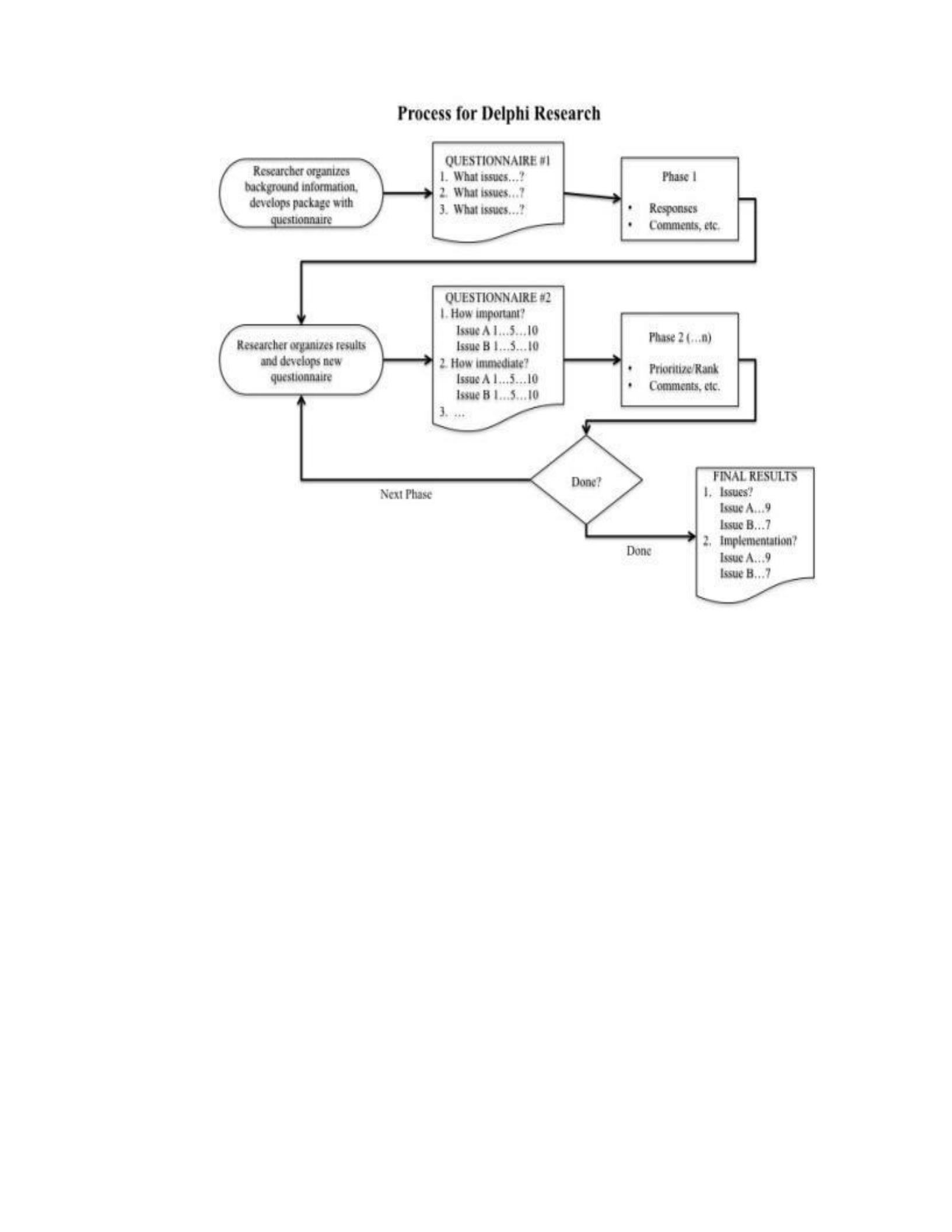
Figure 3. Process for Delphi Research (Hall, 2009). Note. Adapted from “The Delphi
primer: Doing real-world or academic research using a mixed-method approach.” by
Elmer Hall, in Cheryl Lentz, The refractive thinker: Vol. 2: Research Methodology, (p.
7). Copyright 2009 by Elmer Hall. Adapted and reprinted with permission.
Research Questions
The following research questions drove the study regarding the topic of HR
leader’s perspective on the phenomenon:
RQ1: What are the Cloud-based Computing tools that appear to be most effective
for Human Resources?
RQ2: What are the impediments to adoption of Cloud-Based Computing in
Human Resources?
RQ3: How does successful Cloud-Based Computing affect the performance of
HRM?

RQ4: What leadership traits of successful Cloud-Based Computing adopters also
contribute to HR performance?
RQ5: How does HR contribute to the overall performance of an organization?
RQ6: What are the implications of best practices in Cloud-Based Computing
adoption within HR and to general leadership theory?
The research questions were addressed with open-ended questions in free-form format in
Round 1, and Likert-type scale questions for ranking in Round 2. Qualitative analysis of
the data occurred to identify themes and connections using NVivo10® and Excel®, and
statistical analysis using Excel® and SPSS® occurred after Round 2. The data from
Round 1 guided the creation of ranking questions for the Round 2 survey while
addressing the research questions with free form questions in Round 1. The data analysis
began by using NVivo10® to identify themes, patterns, and connections. The resulting
qualitative data were useful for creating additional questions in Round 2 as outcomes
revealed the need for further insight. The research questions were also part of the data
collection process in Round 2 using ranking and percentage questions based on common
answers obtained in Round 1. The results of the study for RQ5 included findings
associated with the other research questions of this study and integrated with available
literature to identify themes and patterns within existing leadership theory. Statistical
analysis of the outcomes from all research questions of Round 2 was conducted using
Excel® and SPSS®.
Population and Geographic Location
Identifying the population for a Delphi study is critical for ensuring involvement
of appropriate participants (Helmer, 1967) and typically dependent on the area of
experience (Hsu & Sandford, 2007). The population for this qualitative study consisted
of HR informed participants with 5 or more years of experience in HR with a targeted
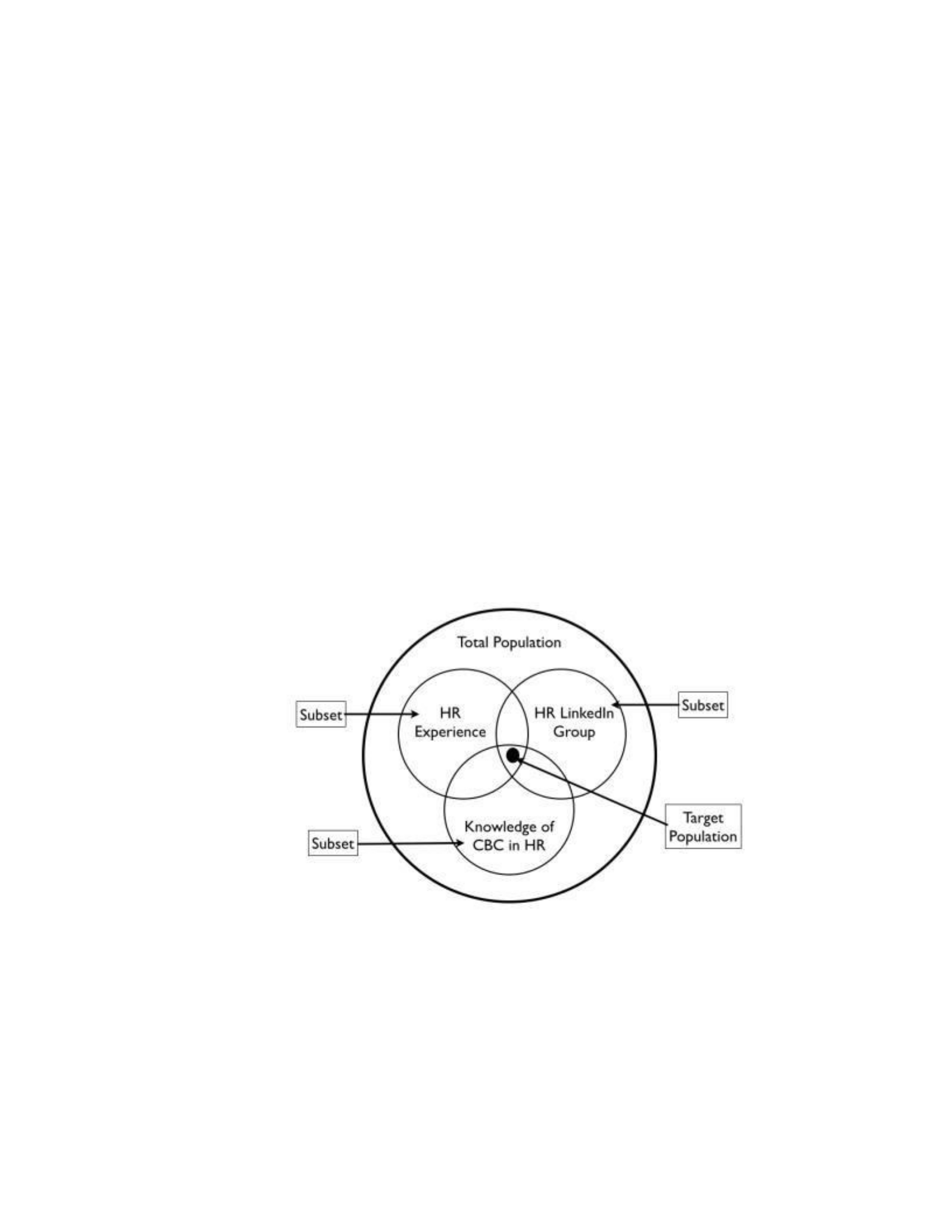
number of 12 participants associated with HR focused LinkedIn forums and HR groups in
Arizona. Round 1 of the study secured 14 participants. The accessibility of LinkedIn is
global and not limited to any specific geographic area that provided a larger population
sample of HR informed participants.
Participant Selection Criteria
Classic Delphi requires the identification of experts on a study participant panel
(Helmer, 1967; Helmer & Dalkey, 1963). A modification to the Delphi allows for
flexibility in identification of study participants. For the purpose of this study, the target
sample relates to the identified subsets of the total population for this study, including
participants with 5 or more years of HR experience, knowledge of Cloud-Based
Computing in HR, members of select HR LinkedIn groups, and Arizona-based HR
groups. Figure 4 provides a visual representation of the target population.
Figure 4. Target Sampling Frame
In Delphi research, a large panel is unnecessary (Delbecq, Van de Ven, &
Gustafson, 1975; Hall, 2009; Skulmoski et al., 2007) because a smaller informed group
can more easily obtain consensus (Linstone & Turoff, 1975). The recommendation from
the literature was 10 to 18 participants on a Delphi panel, as size does not depend on

statistical power (Agarwal & Balasubramanian, 2012). Previous Delphi studies included
a similar number of participants. The expected convenience sample was a targeted group
of 12 HR informed participants with 14 recruited from various professional organizations
and social media groups to participate in the study. Participation was low upon initially
posting a request for study participants in the LinkedIn forums. A purposive snowball
sampling technique was then used to recruit participants.
Why use social networking groups and local chapters. LinkedIn is a top
professional social networking site with over 250 million individual profiles. LinkedIn
groups provide a forum for like-minded professionals to connect with others within a
respective industry or similar interest. The groups provide an immediate filter for
recruiting volunteer participants within the target population. The HR groups where the
recruitment of participants occurred for this study required administrative approval and
proof of the requesting member’s affiliation within the respective industry or area of
interest. Most social media groups are open groups once members are approved allowing
members to post content, which promotes the progress or welfare of the group industry or
interest. Select HR groups received a request to solicit (see Appendix A) study
participants and responded affirmatively for recruiting study participants (see Appendixes
B, C, & D).
Miller and Salkind (2002) stated that, “when practical considerations preclude the
use of probability sampling” (p. 53) a subgroup might be selected for group
representation. Identification of potential participants occurred through qualifying
questions in the demographic portion of the questionnaire. Participants included HR
professionals with varying levels of HR, managerial, and executive experience. All
participant organizations were based in the United States and all participants were
familiar with Cloud-Based Computing in HR. The combined experience, leadership

level, industry background, and technology experience provided informative feedback.
Participant attrition commonly occurs with the completion of each round making the goal
of each round to obtain information saturation in the event a participant withdrew prior to
completion.
Informed Consent
A fundamental ethical principle of research is participation in research must be
voluntary and potential participants must know their rights to make an informed decision
(Leedy & Ormrod, 2010; Neuman, 2009). The informed consent statement explains all
aspects of a study requesting the potential participants’ voluntary agreement prior to the
start of the study (Neuman, 2009). Leedy and Ormrod (2010) stated no data collected
should refer back to the participant and personal data must remain confidential.
All prospective participants received an e-mail containing a consent form to
obtain informed consent from each participant prior to involvement in the study (see
Appendix E). Upon successful submission of an electronically signed consent form, the
participant received an introduction e-mail with a link to the survey housed on
SurveyMonkey®. The potential participant received access to the Round 1 questionnaire
after providing a signed informed consent via e-mail or fax. The informed consent form
explained the process, withdrawal procedures, risks, and primary intent of the study.
Participants were able to withdraw at any point before, during, and after data collection.
Participants who choose not to participate were directed to submit a written withdrawal
via e-mail to the researcher. Had participants withdrawn, the participant’s data would
have been removed from data gathered, deleted, and destroyed. Forms are stored and
saved for a minimum of 3 years.
Confidentiality
Maintaining the privacy, anonymity, and confidentiality of research participants

(Neuman, 2009) is paramount and involves physically and electronically securing data
(Stiles & Petrilla, 2011). The assignment of unique and individual alphanumeric codes
ensured the confidentiality of all participants and organizations discussed remained
anonymous. During each phase of the study, the participants’ unique data codes helped to
identify specific phases, themes, and participant. The code issued to the first participant
in the pilot phase of the study is TCPS001 and TCFDS001 for the first participant in the
full Delphi study. Using a coding system provides further protection of participant
confidentiality and aids in the organization of the data. Creswell (2012) recommends
using a coding system to enhance readability of data while maintaining confidentiality of
the participant and respective data.
Data code keys remain separate from the research data to which the researcher
holds exclusive access. Data will remain exclusive to the researcher, stored on a digitally
encrypted, password protected external hard drive or housed in a fireproof safe for a
minimum of three years. The hard drives and folders containing data code keys,
participant codes, and research data will be erased, formatted, and physically destroyed
and all documentation will be shredded after the 3-year period.
Reliability and Validity
Qualitative research requires objectivity and as such, researchers must emphasize
rigor and trustworthiness to ensure validity and reliability (Lincoln & Guba, 1985;
Neuman, 2009). The establishment of reliability must occur prior to validity (Lincoln &
Guba, 1985) and refers to the dependability of the outcomes (Christensen, Johnson, &
Turner, 2011) while validity refers to how effectively the phenomenon observed matches
with the constructs used to understand the phenomenon (Neuman, 2009). Rigor relates to
the logical and systematic manner of planning and implementing a research design with
accuracy. The Delphi methodology serves to obtain agreement between the participants

thus, by its very nature provides validity because of expert consensus (Bourgeois,
Pugmire, Stevenson, Swanson, & Swanson, n.d.; Linstone & Turoff, 1975) while the
processes of identifying and selecting experts, ranking, and consensus are rigorous (Okoli
& Pawlowski, 2004). Linstone and Turoff (1975) explained that creating a valid and
reliable population sample on a Delphi panel of experienced participants uses the
researcher’s established selection criteria. Design considerations such as sample size,
sample composition, methodology, number of rounds, and mode of interaction contribute
to rigor of the method, a successful Delphi and deeper understanding of the topic
(Skulmoski et al., 2007). To maintain validity and reliability in a Delphi study 5 to 10
carefully selected participants are needed, according to Loo (2002), 10 to 50 participants
according to Turoff (1970), and 10 to 15 according to Meijering, Kampen, and Tobi
(2013), and Skulmoski (2007). This study obtained the opinions of 12 qualified fullpanel
participants completing both survey rounds.
The Delphi method works well when the objective of a study is obtaining a
consensus, developing forecasts, or obtaining a deeper understanding of issues, problems,
or solutions (Skulmoski et al., 2007). Adler and Ziglio (1996) determined the reliability
of the Delphi research method was significantly comparable to traditional interviews and
group discussions. The iterative process of the Delphi method incorporates the
knowledge and experience of participants providing the researcher with controlled
feedback and data critical for analysis that is valid and reliable (Dalkey, 1967). Lincoln
and Guba (1985) stated establishing trustworthiness is necessary in research and defined
credibility, confirmability, dependability, and transferability as key factors to traditionally
defined validity and reliability in qualitative study. All efforts were made to mitigate
potential issues and maintain the validity and reliability of this study.

Credibility and Triangulation
Internal validity is the degree to which the observation of a phenomenon is causal
(Christensen et al., 2011; Leedy & Ormrod, 2010). Credibility refers to the internal
validity of a study and suggests corroboration of study participants as a strategy for
addressing credibility (Lincoln & Guba, 1985). Credibility requires establishment
through triangulation and is useful as an equivalent or extension to, validity and reliability
in qualitative research (Willis, 2007). The objective of triangulation is ensuring multiple
perspectives of an observed phenomenon (Willis, 2007; Lincoln & Guba, 1985). Four
types of triangulation exist including measures, methods, theory, and observers (Neuman,
2009). This study used data triangulation and theoretical triangulation. Data
triangulation provided various perspectives regarding best practices for Cloud-Based
Computing implementation, HR leader characteristics, and factors championing and
challenging cloud adoption. Data triangulation was accomplished by obtaining data from
multiple study participants (Barusch, Gringeri, & George, 2011; Christensen et al., 2011)
in different settings (Christensen et al., 2011) where participants had the opportunity to
corroborate findings in Round 2, enhancing the credibility, or internal validity, of the
study.
Triangulation is viewing data through multiple means. Denzin and Lincoln
(2000) posit the use of multiple data collection procedures enhances validity and
improves understanding, duplication, and comprehension of research questions
(Christensen et al., 2011; Denzin, 1978). Data sources triangulation is used by collecting
data at two different points in time (Patton, 2002) through the Delphi process using
openended questions in Round 1 and Likert-type scale questions in Round 2.
Triangulation occurred by using open-ended questions during Round 1 of the study and
categorizing responses according to how many years the participants indicated the target

company was in business and the years of managerial experience for each participant,
respectively, sliced the data. Theoretical triangulation occurs when multiple theoretical
perspectives are used during data analysis to better understand and interpret the data
(Christensen et al., 2011; Neuman, 2009). In this study, theoretical triangulation was
accomplished by comparing previous study results discussed in Chapter 2 with outcomes
from this study and by using concepts of the DOI and TOE theory and conceptual
frameworks (Neuman,
2009).
Spearman rank correlation is a bivariate, nonparametric test used in statistical
analysis (Hollander & Wolfe, 1973). Robust parametric statistical tests are not reliable
given small sample sizes, therefore, descriptive statistics and non-parametric tests were
used to explore and analyze the data (Bahli, Borgman, Heier, & Schweski, 2013) testing
the reliability of the range of data and mitigating limitations in ranking Delphi methods
(Patton, 2002). Although correlational analysis was conducted in this study, the small
sample size, and lack of statistical power did not justify the need to reclassify this study
as mixed-methods, rather this study remains qualitative.
Confirmability
Reliance on researcher interpretation increased confirmability of qualitative
studies, often considered subjective in academia (Leedy & Ormrod, 2010). Lincoln and
Guba (1985) referred to confirmability as the neutrality of the researcher when
interpreting data. “Researchers strive for objectivity” (Leedy & Ormrod, 2010, p. 21);
however, objectivity may not be possible or desirable in qualitative studies (Creswell,
2009; Leedy & Ormrod, 2010). According to Lincoln and Guba (1985), the researcher
establishes confirmability through triangulation or by providing auditable proof of
corroborated results including raw data, methodological decision, analysis notes, personal

interpretations, and other pertinent information to ensure objectivity. The study used data
triangulation and maintained accurate, descriptive documentation for auditing. The pilot
study conducted allowed pilot participants to review the surveys for bias and ensure
objectivity. Feedback from pilot participants was incorporated into the final creation of
each survey with subsequent iterations designed based on replies and feedback from pilot
participants.
Dependability
In qualitative research dependability, “that the results will be subject to change”
(Creswell, 2013, p. 246), corresponds to reliability in quantitative research (Lincoln &
Guba, 1985). Dependability refers to the reliability, or consistency (Neuman, 2009) of a
measurement. Researchers can ensure dependability by providing a transparent account
of the research process including an audit trail of data, findings, analysis, and
interpretations (Lincoln & Guba, 1985). Participant responses were gathered, examined,
and complied into Excel® spreadsheets prior to analysis. The data were then manually
analyzed and cross-referenced to data analysis from NVivo10® for each survey round,
and supportive literature to preserve dependability.
Transferability and Limited Generalizability
Transferability corresponds to the external validity of a qualitative research study
(Lincoln & Guba, 1985). External validity in qualitative research is the degree to which
one can apply the study results to another or similar population (Christensen et al., 2011;
Willis, 2007). Kirchner (2014) describes transferability as “descriptive adequacy” (p. 82)
conducted by providing detailed descriptions of data collection and analysis processes
(Lincoln & Guba, 1985). Krefting (1991) argues strategies for establishing
trustworthiness of transferability include nominated sample, time sample, and dense
description. Lincoln and Guba (1995) describe transferability as the original researcher

providing adequate detail about a phenomenon where implications are applicable to other
settings, times, situations, and people, and argue proof of transferability, after sufficient
detail is provided, lies with the researcher seeking application elsewhere. This study
attempts to provide a dense description of the research process, participant backgrounds,
and study outcomes to increase the possibility of transferability. The study findings from
this research may be transferable and applicable, in larger scale, across industries in HR,
or Cloud-Based Computing.
Generalizability is a determination on the applicability of study outcomes to a
larger population and a major criterion in quantitative research (Polit & Beck, 2010).
Generalizability may be limited because of the challenges in exact replication of a study,
the nature of the Delphi methodology, and small sample size; however, generalizability is
attainable when the sample closely represents the population (Salkind, 2003). The study
appears to be consistent with a representative sample (Leedy & Ormrod, 2010) of HR
informed participants who met the requirements of consideration, despite the small
number of respondents, generalizability is possible however, applying the results to the
broader population of HR managers should be judiciously conducted. Correlational
analysis was conducted to understand the data and potential contribution to triangulation
better. Several statistically significant relationships were produced implying the strength
of relationships would increase if the population were larger and fully representative of
all HR manager’s responses. However, small sample sizes may not provide robust,
reliable statistical results (Bahli et al., 2013) thereby limiting generalizability of the study
results.
Data Collection
Data collection began by recruiting volunteer participants via LinkedIn HR
specialized forums and Arizona-based HR groups. The administrators for three Arizona

HR forums on LinkedIn received a written request (see Appendix A) and returned emails
of written permission from each of the administrators (see Appendixes B, C, and
D). The study included a modified Delphi technique with two rounds of questionnaires
(Skulmoski et al., 2007). Study participants had five or more years of HR experience to
ensure the participants were knowledgeable on the topic. Participants received a letter of
recruitment (see Appendix H) with details regarding the purpose of the study and
informed consent form detailing privacy measures. All participants were required to
physically sign and return the informed consent form (see Appendix E). After receiving a
signed informed consent from each participant, the researcher provided an introductory
letter with the link to the Round 1 questionnaire (see Appendix F) via e-mail. The
expectation was to use the same participants in Round 1 and in Round 2 in the study.
Each round of the study built upon the information collected from the previous
round until reaching information saturation among participants (Skulmoski, 2007). The
objective of the first round questionnaire was to obtain information from participants
using open-ended questions and free form answers. The answers from Round 1 were then
used to develop the questionnaire for data collection in Round 2 (see Appendix G).
Questionnaires were distributed via the Internet using SurveyMonkey®. Online
surveys and electronic e-mail questionnaires are acceptable modes of interaction for
Delphi studies (Skulmoski et al., 2007). SurveyMonkey® provides multilayered security
and encryption features ensuring the protection of data transmission, storage, and access
ensuring the anonymity and privacy of participants and data integrity.
Instrumentation
The Delphi method is a process requiring a series of data collection rounds using
participant feedback to modify the instrument used for data collection in subsequent
iterations (Skulmoski et al., 2007) including the modified Delphi. The online

questionnaire was a combination of free-form answers, Likert-type scale, and ranking
questions. The study used an online questionnaire instrument for each round of the full
Delphi study Round 1 (see Appendix F), Round 2 (see Appendix G), distributed via
SurveyMonkey®. Expediency of electronic communication and questionnaire
distribution assists with maintaining enthusiasm and retention of study participants
(Skulmoski et al., 2007). Online distribution of the questionnaire instrument preserves
anonymity of participants and data integrity by avoiding bias, group think (Straus, Parker,
Bruce, & Dembosky, 2009), dominant perspectives (Hall & Jordan, 2013), or influence
from other study participants (Linstone & Turoff, 1975).
Modification of the Round 1 questionnaire occurred based on results from the
pilot study. Round 1 of the full Delphi began after the pilot study was complete and
results analyzed. All study participants received an e-mail letter of recruitment
explaining the purpose of the study (see Appendix I), background of the researcher,
detailed explanation of the Delphi process and an attached informed consent form (see
Appendix J) with instructions for form submission. After receiving, coding, and storing
signed informed consent forms, the participants received an email link to the online
questionnaire with instructions for completion. The Round 1 questionnaire consisted of
demographic, informational, and open-ended questions. Round 1 data were analyzed and
participant feedback aided in creating the Round 2 survey.
Creating the Round 2 questionnaire occurred after obtaining and analyzing the
Round 1 data from participants. The Round 2 questionnaire (see Appendix G) required
revisions from the initial survey based on data collected from Round 1 and considering
feedback from pilot participants. The Round 2 questionnaire consisted of Likert-type
scale questions for ranking purposes. Data collected were reviewed, examined, and
analyzed to produce the results of this study. All electronic written communication,

informed consent forms, and storage of the data are housed on encrypted, secure external
drives in a fireproof safe with physical documentation accessible only to the researcher.
Pilot Study
A pilot Delphi is a small-scale version of the full Delphi study and is “sometimes
conducted with the goals of testing the Delphi questionnaire to improve comprehension,
and to work out any procedural problems” (Skulmoski et al., 2007, p. 4). A pilot test of
the survey instrument ensures participants can complete the questionnaire (Creswell,
2009), improves reliability (Neuman, 2009), and increases rigor of the study (Lincoln &
Guba, 1985). Five individuals assisted with conducting a pilot for the study. Prior to the
Round 1 pilot study start, pilot participants were sent the Informed Consent form (see
Appendix J). An introduction letter to the pilot study was sent to all pilot participants
upon receipt of a signed consent form (see Appendix I). The introduction letter
emphasized the need for their trusted opinion based on content, structure, phrasing,
understanding, and ease of use.
The pilot study participants were not invited to participate in the full Delphi;
although the pilot results were reviewed as part of the data triangulation process in
Chapter 4. Feedback received from the pilot included slight verbiage changes, the
deletion of one question, and the addition of three clarifying questions. All participants in
Round 1 of the full Delphi study received the revised questionnaire instrument after the
pilot testing and incorporation of feedback from pilot participants.
Data Analysis
The data analysis phase of the Delphi study included results from the pilot study
and full Delphi rounds. Analysis techniques for the Delphi relate to the questions
presented to participants (Skulmoski et al., 2007). Electronic collection of raw data can

benefit expediency of collection and minimize transcription during analysis (Skulmoski et
al., 2007). Analyzing qualitative data requires organizing data, themes, coding,
interpretation, and presentation (Creswell, 2009). NVivo10® is a secure, online software
program supportive of qualitative and mixed methods research. NVivo10® functionality
allows the researcher to import, code, organize, and query data, discover themes, and
reflect on outcomes to support research findings rigorously. NVivo10® is a powerful tool
for uncovering subtle connections among data providing the researcher with additional
insight and ideas for answering research questions and justifying findings. The software
was useful for analyzing the data from Round 1. SurveyMonkey® and NVivo10® work
seamlessly and securely together preserving confidentiality and ensuring data integrity.
Data from Round 1 was initially collected into Excel®, organized and manually coded.
The data were then imported into, and analyzed in, NVivo10® to identify themes and
cross-referenced with key themes identified in NVivo10® and analysis from Excel®.
The NVivo10® software is capable of managing unstructured, text-based data with
theorizing and indexing ability (Creswell, 2012.
Visual graphic representations are a feature within NVivo10®.
The Round 2 questionnaire consisted of one identification question for the
participant code, seven Likert-type scale questions for ranking, and one open-ended
question. Likert-type scale presents qualitative data with a quantitative value (Neuman,
2009). SPSS® is a statistics software package for managing and analyzing data. Excel®
and SPSS® are programs located on a password-secured computer owned by and
accessible only to the researcher. Given the small sample size, robust parametric
statistical tests are not reliable, therefore, SPSS® software was used to explore and
analyze the data using descriptive statistics and non-parametric tests (Bahli, Borgman,
Heier, & Schweski, 2013).

A total of 12 participants completed both survey rounds, more than sufficient for a
Delphi study. Correlational analysis was conducted using Spearman’s Rho resulting in
noteworthy information, although a sample size of 30 or greater is recommended for
quantitative analysis (Neil & Rasmussen, 2007),. The data collected from the small
sample size used for this study provides valuable information yet less than reliable
results. This study was not reclassified as a quantitative or mixed-method study, although
correlational analysis was conducted and statistically significant results were found
(Beakley, 2015; Kirchner, 2014). The outcomes of this study are presented in Chapter 4
and discussed further in Chapter 5, along with recommendations for future research.
Summary
The purpose of this qualitative study with a modified Delphi research design was
to understand the reasons HR leaders are slow to implement Cloud-Based Computing,
common characteristics between effective HR leaders, and HR leaders experienced with
successful implementation of Cloud-Based Computing, and discover how the
implementation of Cloud-Based Computing may potentially affect HRM and
organizational performance. Chapter 3 provided an explanation and justification of the
appropriateness for selecting the methodology and research design for the study. This
chapter contained an explanation regarding the conduction of the study, including the
selection of the study participants and the data collection and data analysis processes.
Chapter 3 also provided a description of the instrumentation, validity, reliability, and
ethical considerations for ensuring privacy and confidentiality of study participants and
data.
The gaps found during the literature review assisted with the formulation of the
research questions for this study to address these gaps. Quantitative approaches require

more data than currently available; therefore, a qualitative approach is appropriate. After
reviewing various qualitative methods, the modified Delphi approach is the most
appropriate method to answer the research questions. A modified Delphi research design
was appropriate to gather data of subjective judgments, highly effective with small
samples, flexible for modifications (Skulmoski et al., 2007), and suitable to identify,
compare and contrast the success factors from the perspective of the HR leader. The
modified Delphi was used to acquire input from informed participants by organizing
feedback obtained through questionnaires delivered through multiple iterations and
revised based on the input from previous iterations.
SurveyMonkey® is a secure website where the collected data from the two Delphi
rounds remained until the data analysis process begins. The data analysis process
includes using Excel® and NVivo10® software to identify themes and subtle patterns,
and using SPSS® for descriptive statistics and non-parametric tests. Chapter 4 will
include the results of the data analysis obtained from the Delphi study.

Chapter 4
Results
The objective of this modified Delphi study was to obtain a deeper understanding
of how a more rapid adoption of Cloud-Based Computing will potentially affect HR
processes and outcomes. Chapter 1 included an examination of background information
and the necessity for this study, a presentation of the research questions that guided this
study, and overview of the conceptual framework. Chapter 2 included an examination of
relevant literature about current research on HRM, Cloud-Based Computing in HR, and
leadership. Chapter 3 detailed the appropriateness of the research method with
participant criteria and overview of the methodology for this study. Chapter 4 includes
details regarding the pilot study, participant recruitment, qualifying criteria, research
design, and presentation of the data. This chapter provides the results from the two
rounds of respondent surveys.
Review of the Purpose Statement and Research Questions
The purpose of this study was to examine how the adoption of Cloud-Based
Computing affects HRM and organizational performance. This study served to gain a
deeper understanding of the slow adoption of Cloud-Based Computing for efficiency of
the HR function and how a more rapid adoption might affect HR processes and outcomes.
This modified Delphi study focused on attaining the opinions of informed HR
participants via two rounds of surveys. The study was conducted to obtain data pertinent
to answering the research questions that guided this study. Six research questions are
analyzed. The pilot assisted with validating the study questionnaires and ensuring the
information captured aligned with answering the research questions.

Pilot Study
Pilot studies are a tool to determine the general effectiveness and validity of
research instruments, and collection and analysis procedures. A pilot study was
conducted with five panelists testing the effectiveness of the questionnaires. The data
analysis results from the pilot study served as the foundation for creating the final
questionnaires of the full-panel study. Five pilot participants met the selection criteria
and were emailed Informed Consent forms 1 week prior to the Round 1 pilot study start
date. An introduction letter to the pilot study was sent to all pilot participants upon
receipt of a signed consent form. The introduction letter emphasized the need for their
trusted feedback based on content, structure, phrasing, understanding, and ease of use.
The Round 1 questionnaire consisted of demographics questions, open-ended
questions with free form answers, and multi-selection questions. Participants of the pilot
study were afforded the opportunity to provide additional feedback at the end of each
questionnaire via open format text box. Round 1 of the pilot study began on November
14, 2014 and concluded November 20, 2014. Due to a heavy holiday schedule at the end
of November and throughout December, Round 2 of the pilot commenced January 7,
2015 and concluded on January 14, 2015. One pilot participant did not complete Round
2 and did not respond to email requests for completion.
Pilot Participant Demographics
Five participants were selected for the pilot. All participants expressed
understanding the definition of Cloud-Based Computing. However, forty percent of pilot
participants indicated having no experience with Cloud-Based Computing in HR. Three
participants were classified as individual contributors while two participants were
classified at manager or executive level. The participant who dropped out of the Round 2
pilot survey was a female at the individual contributor level. Twenty percent of pilot

participants expressed having six to nine years of HR experience and 80% with 10 years
or more of HR experience. All pilot participants were based in the United States and
worked for domestic organizations.
Pilot Study Findings
Feedback from the pilot resulted in minor verbiage changes, the deletion of one
question, and vetting of three additional questions in the Round 1 questionnaire. Results
from Round 2 of the pilot resulted in verbiage changes for better clarity of the questions.
Two participants provided additional statements in the open comment field at the end of
the Round 1 pilot survey. Pilot participant TCPS001 stated, “Security is a wild and big
issue for everyone. That may be the biggest reason that companies hold back on
implementing cloud.” Pilot participant TCPS003 stated, “Cloud-computing can have a
strong impact on overall organizational performance and in creating greater productivity
and efficiencies.” The consensus among pilot participants was the research questions
were relevant and the study evoked ideas significant to the research topic and questions
resulting in a successful pilot. Pilot participants did not receive a request to participate in
the full-panel Delphi study. No major changes were required based on feedback from the
pilot study. Since four panelists in the pilot completed both rounds of the Delphi study,
the findings from the pilot are useful in corroborating the results of the full study; this is
done in the triangulation section pertaining to data triangulation.
Sample Collection
The goal of the study was to obtain input from a panel of informed participants
with a minimum of 5 years’ experience in HR. Participants were recruited via
topicspecific HR LinkedIn forums and Arizona-based HR groups. LinkedIn forums

provide a community platform for individuals with common interests, professions, or
affiliations.
Permission was requested from each forum administrator (see Appendix B, Appendix C,
& Appendix D). Each forum administrator provided permission to solicit study
participants from within the forums. A digital post was submitted to each forum one time
per week for three weeks prior to the start of Round 1 of the full-panel Delphi. A low
response rate resulted in frequent postings, which kept the request at the top of the forum
feed (see Table 1).
Table 1
First Responses Influenced by Signed Informed Consent Forms
N
Responses to the requests for participants 17 n/a Returned signed
Informed Consent form 14 100
Participated in Round 1 of full-panel Delphi 14 100
Participated in Round 2 of full-panel Delphi 12 0.86
Note: Eighteen percent of initial participants elected not to proceed with participating
after reading the letter of informed consent.
The additional visibility prompted requests for participation and a snowball affect
extended reach to additional participants. Each participant request was vetted to ensure
participants met selection criteria and participants were then emailed an Informed
Consent form. Seventeen individual requests were received with 14 participants
completing the Informed Consent form resulting in an 82% initial response rate.
Full-Panel Delphi Demographics
This section focuses on the demographic characteristics of the full-panel
participants. All informed participants met the requirement of 5 years minimum HR
experience. Fourteen individuals completed Round 1 of the full-panel Delphi with 12
Response Type %

participants completing Round 2 resulting in a 14% attrition rate. Participants who did
not complete Round 2 provided permission for use of their data from the previous round.
The study contained a high concentration of women participants, with 93% females and
62% of all participants with 10 or more years of HR experience. Table 2 illustrates the
demographics of participant’s experience and gender.
Table 2
Participant’s Experience and Gender
Years of Experience Gender n %
5 Years Female 2 14
Male 0 0
6 to 9 Years Female 3 21
Male 0 0
10 to 14 Years Female 2 14
Male 1 7
15+ Years Female 6 44
Male 0 0
Totals 14 100
Note: Only one male responded to, and participated in, the study.
All participants indicated having experience with electronic HR systems and were
employed in a multitude of industries with 50% of participants in organizations
established for 30 years or more. Twenty-one percent of participants worked for
organizations with 10,000 or more employees. Industries of full-panel participants are
included in Table 3.
Table 3
Industries of Full-Panel Participants
n
Education 3 21.44
Industry Type %

Manufacturing 2 14.30 Construction 1 7.14
Consulting 1 7.14
Financial Services 1 7.14
Government 1 7.14
Healthcare 1 7.14
HR Recruiting & Screening 1 7.14
Social Services 1 7.14
Technology 1 7.14
Transportation 1 7.14 Totals 14 100.00
Data Collection
The study used a modified Delphi research design to assist with exploring the
experiences and opinions of informed participants through iterative rounds of Likert-type
scale survey information and open-ended, free-form text questions. SurveyMonkey®
served as the channel for distributing study questionnaires and collecting data. The data
collection process included two rounds of questionnaires in both the pilot and full-panel
study. The pilot served to identify ambiguities in the questionnaire, solidify the data
collection and analysis processes, and validate the questionnaire. Areas of focus for the
study included HR leadership characteristics, leadership characteristics of HR leader’s
successfully implementing technology, technology implementation best practices in HR,
and HR organizational performance factors with technology.
A total of 14 participants completed Round 1 of the study and 12 participants
completed Round 2 that was above the minimum participants needed for this type of
modified Delphi study. All initial participants received an Informed Consent form via
email (see Appendix E) and introduction letter (see Appendix H) upon completion of the
pilot study. All informed participants met the criteria of 5 years minimum HR
experience. Participants returned signed informed consent forms by fax and email. Each
participant was sent an introduction letter with detailed information regarding the nature

and purpose of the study, expected time commitment, the need for their honest opinion,
and thanking them for participating.
Round 1 included 14 participants and the questionnaire consisted of 33 total
questions in a combination of open-ended free form text answers and select closed-format
multiple choice (see Appendix F). Fifteen questions related to demographic information
about the participant and the target company being referenced by the participant to
answer study questions. The remaining 18 questions related to identifying HR leadership
characteristics, technology implementation best practices in HR, characteristics of HR
leaders having successfully implemented technology, and the effect of technology to HR
and organizational performance.
The data derived from the first iteration guided the formulation of the
questionnaire used in the second iteration. Round 2 consisted of four questions on a
7point Likert-type rating scale of probability and two questions on a 5-point Likert-type
rating scale of importance (see Appendix G). Panelists ranked factors affecting
implementation of Cloud-Based Computing, leadership characteristics, best practices for
implementation, and factors affected by the implementation of Cloud-Based Computing.
Ranking across all areas of study related to the research questions was complete;
therefore, the second iteration was the final round. A third iteration would have
commenced if additional questions arose or ranking was unachievable in the second
round.
Data Analysis
Data from Round 1 of the full-panel Delphi study were analyzed using NVivo10®
and Excel®. The results were used to create the questionnaire format and questions, and
determine ranking scales, for Round 2. The entire process took approximately two
months longer than originally anticipated. Recruiting through LinkedIn forums required

multiple posts at various points throughout the day in order to maintain visibility to the
group. Delays occurred with holidays, obtaining signed Informed Consent forms and in
providing gentle reminders to participants to complete questionnaires. Attrition is
expected in any Delphi study and was experienced in both rounds (Davidson, 2013;
Donohoe, 2011).
Fourteen participants responded to the Round 1 questionnaire. The same 14
participants received an email inviting them to participate in Round 2 of which 12
responded by completing the Round 2 questionnaire resulting in a 14% attrition rate.
Rigorous qualitative research is suitable for discovering high-level concepts applicable to
participants or settings (Polit & Beck, 2010). Thorough inductive analysis, combined
with confirmatory strategies that require credibility of conclusions, assist qualitative
researchers in building insightful, inductive conclusions (Polit & Beck, 2010).
Analysis of the data was rigorous. Rigorous qualitative research depends upon
inclusion of credibility, confirmability, dependability, and transferability (Hasson &
Keeney, 2011; Lincoln & Guba, 1985). Credibility refers to the internal validity of a
study through triangulation (Neuman, 2009; Willis, 2007) by ensuring multiple
perspectives of an observed phenomenon (Willis, 2007; Lincoln & Guba, 1985). This
study included participants of various HR experience levels, industry, function, and
leadership. Confirmability refers to researcher objectivity and neutrality (Leedy &
Ormrod, 2010) through data triangulation to ensure accurate and descriptive
documentation. Survey questions within the study were strategically aligned with other
questions to provide a slightly different perspective and confirm the participant’s intent.
Dependability refers to the stability of data and transparency in collection, analysis, and
interpretations without ambiguity (Hasson & Keeney, 2011; Lincoln & Guba, 1985).

Transferability refers to the applicability of study results (Christensen et al., 2011)
attained when the sample closely represents the population (Salkind, 2003).
The thematic analysis involved progressively coding the data to uncover and
verify themes while carefully preserving the integrity of the participant’s opinions.
Themes revealed during the data analysis included information directly related to the
research questions for leadership characteristics, factors challenging and supporting
Cloud-Based Computing, and best practices for implementing Cloud-Based Computing in
HR. Interpretation of the data from Round 1 of the full-panel Delphi was important
because meaning was derived as participants chose from options presented and provided
open comments to elaborate on selections. Each of the participant’s unique industry, level
of HR experience and experience with technology in HR influenced the answers.
Round 1 analysis of comments included open coding to identify preliminary
analytic categories (Neuman, 2006). Axial coding revealed category clusters with links to
preliminary analytic categories (Neuman, 2006). Round 1 data were manually analyzed
using Microsoft Excel® to find preliminary categories and themes and then analyzed
using NVivo10® to identify and verify additional themes, patterns, and word frequencies.
The Round 2 survey consisted of Likert-type scale questions requiring participants
to rank responses based on likelihood or importance, with one question requesting
percentage. The second round provided participants an opportunity to provide additional
information or change responses leading to consensus and data saturation. A consensus
was considered reached when a convergence of topics and themes was identified and new
information was exhausted. Data were then analyzed using SPSS® to obtain descriptive
statistics including minimum, maximum, mean, and standard deviation scores. This
study obtained qualitative data including ranking of open-ended responses from Round 1
in Round 2. The minimum, maximum, and standard deviation obtained from Round 2

data provided agreement among participants and was further analyzed using Spearman’s
Rho. Correlational analysis resulted in statistically significant results implying the
strength of relationships would increase with a larger sample size more representative of
all HR leader’s responses. The small sample size did not justify reclassification of the
study to quantitative or mixed-methods and remains a qualitative study. Appendices Y, Z,
AA, and AB display Spearman’s Rho and statistical criteria of specified correlations.
SPSS® was used to conduct correlational analysis and calculate descriptive statistics.
Appendices K through X display data triangulation based on the two categories
described. Although statistically significant results were found, limitations exist with use
of the data requiring care when interpreting results due to confines of the study and small
sample size.
Full-Panel Delphi Findings
The focus of this study was to examine how the adoption of Cloud-Based
Computing potentially affects HRM and organizational performance. Two rounds of
surveys were distributed. Round 1 consisted of open-ended questions to obtain data that
were further refined in Round 2. The survey for Round 2 required participants to rank
analyzed data obtained in Round 1 and the opportunity to expand on their previous
responses until consensus was reached or data exhausted.
Round 1 Findings
The first round survey questions addressed each research question. Research
Question 1 addressed in survey Questions 9, 17, 18, 19, and 20. Research Question 2 is
addressed in survey Questions 24 and 27. Research Question 3 is addressed in survey
Questions 25, 26, and 29. Research Question 4 is addressed in survey Questions 21, 22,
and 23 with additional supportive information gathered from survey Questions 24

through 28. Research Question 5 is addressed in survey Questions 28 and 29. Research
Question 6 is addressed in survey Question 28 with additional supportive information
gathered in survey Questions 21 through 27, 30, 31, and 32.
The first section of the survey consisted of qualifying and demographic questions
about the participant and the target company with which the participant had prolonged
experience. Fourteen qualified participants responded to the Round 1 survey of which
93% were female and 62% had 10 years or more of HR experience and 100% had HR
management experience and 50% with executive experience. All participants indicated
having worked with electronic HR systems. Participants described electronic HR systems
by process or system brand name where Table 4 displays the top five processes most used
in HR by function. Brand names mentioned included ADP, Kronos,
PeopleSoft, AS400, Ascentis, Ceridian, FileMaker Pro, HireSystems, InfiniSource,
Oracle, Paychex, Taleo, and Timeforce. Additional electronic processes included
attendance, coaching, customer relationship management (CRM), employee relations,
learning management systems (LMS), performance reviews, and screening.
Table 4
HR Processes Using Electronic Systems
HR Function f%
Recruiting 8 57
Payroll 7 50
Benefits 6 40
HRIS 6 40
Interviewing 5 36
The National Institute of Standards & Technology (NIST) defines Cloud Computing as,
“a model for enabling ubiquitous, convenient, on-demand network access to a shared pool
of configurable computing resources (e.g., networks, servers, storage, applications, and
services), that can be rapidly provisioned and released with minimal management effort

or service provider” (Grance & Mell, 2011). Three service models include Software-as-
a-Service SaaS), Infrastructure-as-a-Service (IaaS), and Platform-as-aService (PaaS).
Participants in Round 1 indicated understanding the definition of Cloud
Computing as defined by NIST. When asked with which Cloud-Based Computing
systems participants had experience, items were listed by function and brand name
including ADP, BLR Employer Resources, Cisco, SaaS, IaaS, PaaS, Paychex, PayCom,
SAP, SuccessFactors, Ultimate Software, UltiPro, WorkDay, and Workforce Logic.
Participants were asked which HR processes use on-site technology in question 17 and
which currently use Cloud-Based Computing in question 18. Table 5 reflects analysis
results of participant responses to questions 17 and 18. On-site technology was used
most often for Benefits, Hiring, Performance Management, and Training & Development,
for 50% of participants while 57% used on-site technology for Hiring. Cloud-Based
Computing for other, or undefined, HR processes for 50% of participants. The
participants indicated Compensation/Payroll (43%), Time and Attendance (36%) were the
following two HR process most used with Cloud-Based Computing.
Table 5
HR Processes Using Various Technologies
Using On- % Using On-
Using % Using
HR Process Site Site
CBC CBC
Technology Technology
Benefits 7 50 3 21
Compensation/Payroll 6 43 6 43
Diversity & Inclusion 4 29 0 0
Employee Labor Relations 5 36 0 0
Hiring 7 50 2 14
Onboarding 6 43 2 14
Performance Management 7 50 2 14

Performance Analytics 3 21 0 0
Recruiting 8 57 3 21
Screening/Interviewing 6 43 2 14
Time & Attendance 5 36 5 36
Training & Development 7 50 2 14
Workforce & Succession Planning 5 36 2 14
Other 2 14 7 50
Note. Items are bolded noting a majority of participants using a variety of technologies
for HR processes.
Understanding the slow adoption of Cloud-Based Computing required insight to
the current and planned use of Cloud-Based Computing for standard HR processes for the
referred organizations to identify possible innovators, early adopters, and early majority.
Similar to results in Table 6, 43% of participants indicated Compensation/Payroll and
Time & Attendance were the top two HR processes currently accessed using CloudBased
Computing. Within one year, 36% of participants indicated Onboarding efforts would
move to Cloud-Based Computing while 29% of participants indicated Benefits and
Training & Development would use Cloud-Based Computing technologies within one
year.
Table 6
HR Processes Moving to Cloud-Based Computing
HR Process
Currently Within 1 Within 5
No Plans
Using Year Years
Unknown n
Benefits 3 4 0 3 4 14
Compensation/Payroll 6303214
Diversity & Inclusion 0 0 0 0 0 14
Employee Labor Relations 1 0 1 4 8 14
Hiring 2 2 1 5 4 14
Onboarding 1 5 1 4 3 14
Performance Management 2 2 1 5 4 14
Performance Analytics 1 1 1 4 7 14
Recruiting 2 3 0 5 4 14
Screening/Interviewing 2 3 0 5 4 14
Time & Attendance 6203314
Training & Development 1 4 3 3 3 14
Workforce & Succession Planning 1 2 2 4 5 14

Note. Items are bolded noting a majority of participants using or plan to be using
CloudBased Computing.
Although Compensation/Payroll, Benefits, and Time & Attendance were the top HR
processes currently using Cloud-Based Computing, or within one year, 50% of
participants stated plans to use Cloud-Based Computing for Benefits unknown or none,
38% stated unknown or no plans for Compensation/Payroll and 43% indicated unknown
or no plans for Time & Attendance. Performance Analytics, Diversity & Inclusion, and
Employee Labor Relations are the top three HR processes participants indicated were the
least likely to use Cloud-Based Computing.
The topic of the next question focused on HR Processes currently in use via
mobile devices (see Table 7). Benefits, Compensation/Payroll, and Recruiting were
currently accessible via mobile by 14% of participants, while 7% of participants indicated
Screening/Interviewing, Performance Management, Time & Attendance, and Training as
currently used, mobile-accessible, HR processes.
Table 7
Currently Mobile Accessible HR Processes
HR Process f% Using
Benefits 2 14
Payroll 2 14
Recruiting 2 14
Screening/Interviewing 1 7
Performance Management 1 7
Time & Attendance 1 7
Training 1 7
The focus on leadership characteristics was a key consideration in identifying a
difference between successful HR leaders and those HR leaders successfully
implementing Cloud-Based Computing. For Question 21 participants listed 20
characteristics of successful HR leaders (see Table 8). Knowledge, including education
and certification, was considered a top characteristic for 71% of participants. The ability

to coach, motivate, and empower employees was a top characteristic for 64% of
participants while 43% agreed Communication, the ability to be Strategic, and having
Business Acumen were key characteristics of successful HR leaders. Remaining
characteristics had 36% or less agreement among participants.
Table 8
HR Leadership Characteristics
Characteristic f%
Agreed
Knowledgeable (Education/Certification) 10 71
Coaching/Motivating/Empowering 9 64
Communication 6 43
Strategic 6 43
Business Acumen 6 43
Integrity/Credibility 5 36
Open-Minded/Approachable 4 29
People Savvy/Interpersonal Skills 4 29
Analytical/Detailed 3 21
Initiative 3 21
Managing Vision & Purpose 3 21
Technology Savvy 3 21
Innovative/Resourceful 2 14
Project Management 2 14
Authenticity 1 7
Change Management 1 7
Confident 1 7
Dependable 1 7
Relationship Building 1 7
Time Management 1 7
Note. Items bolded reflect leading responses from participants.
For Question 22, participants were asked to list the top three characteristics that
they believe contribute most to being a successful HR leader adopting Cloud-Based
Computing using the list each participant created in question 21. For Question 23,
participants were asked if there were any characteristics to add to the list. Participants
shifted focus on top characteristics when considering successful adoption of Cloud-Based

Computing and expanded the list when asked if additional characteristics should be added
generating a list of 21 total characteristics. Table 9 is a combination of characteristics
generated by participant data from Questions 22 and 23 that displays the list of
characteristics with 57% stating Technology Savvy as the top characteristic. Forty-three
percent of participants rated the ability to be Strategic as a leading characteristic with
29% agreeing to Business Acumen and Communication. Remaining responses had 21%
agreement or less.
Table 9
Characteristics of an HR Leader Successfully Implementing CBC
f
Technology Savvy 8 57 Strategic 6 43
Business Acumen 4 29
Communication 4 29
Analytical 3 21
Foresight/Innovative 3 21
People Savvy 3 21
Project & Change Management 3 21
Confident 2 14
Knowledgeable 2 14
Managerial Courage 2 14
Open-Minded 2 14
Operations Focused 2 14
Influencing 1 7
Problem Solver 1 7
Purpose Driven 1 7
Resourceful 1 7
Time Management 1 7
Training 1 7
Trustworthy 1 7
Dependable 1 7
Note. Items bolded reflect leading responses from participants.
Characteristic % Agreed

For Question 24, participants listed reasons for the target company not
implementing Cloud-Based Computing in HR to which participants generated a list of 13
reasons contributing to not implementing. Seventy-one percent of participants agreed
Cost/Budget as the leading factor while 36% agreed aversion to change and lack of
technology awareness as top contributing factors for not implementing Cloud-Based
Computing (Table 10). Security was a concern for 29% of participants and 21% agreed
executive fear or unfamiliarity, lack of user skills, and sufficient legacy systems as
contributing factors for non-implementation.
Table 10
Reasons for Not Implementing CBC at Target Company
Cost/budget 10 71 Aversion to change 5 36 Lack of technology
awareness 5 36
Security 4 29
Executive fear or unfamiliarity 3 21
Lack of user skill 3 21
Legacy systems function sufficiently 3 21
Limited staff & resources 2 14
Company culture 1 7
HR concerned for people not technology 1 7
Other higher priorities 1 7
Small company size 1 7
Time constraints 1 7
Question 25 of the Round 1 survey asked participants to list the top reasons
Cloud-Based Computing was implemented at the target company. Accessibility and
availability to the application and data were identified as the top reasons for supporting
implementation. Although Budget/Cost was identified as the top reason the participant’s
target company had not implemented Cloud-Based Computing, 21% indicate
Cost/Budget as a leading reason for implementation along with mobility of the
Reasons f% Agreed

application and data (Table 11). Remaining answers had 14% or less agreement among
participants.
Table 11
Reasons Why CBC Was Implemented at Target Company
f
Accessibility & availability to application an
Budget/cost
Mobility of application and data
Business priority
Efficiency in productivity
Global expansion (business strategy)
Ability to implement a phased approach
Consistency of information
Encourage technology awareness and ability
Improved customer experience
Prioritizing specific HR processes per leadership
Security
Streamlining plants in multiple sites
Technical agility
5
3
3
2
2
2
1
1
1
1
1
1
1
1
36
21
21
14
14
14
7
7
7
7
7
7
7
7
Note. Items bolded reflect leading responses from participants.
In response to Question 26, 57% of participants agreed having change
management and implementation plans contributed most to successful implementation of
Cloud-Based Computing. Solid executive and technology support along with training
were listed as success factors by 36% of participants. Additional factors included
communication and vendor support (29%, security and understanding of the technology
available (21%), followed by ease of use and having a solid business case (14%) as seen
in Table 12.
Table 12
Factors Contributing to Successful CBC Implementation in HR
Reason % Agreed

f
Change management plan 8 57 Implementation plan 8 57
IT support 5 36
Senior leadership support 5 36
Training 5 36
Communication 4 29
Vendor support 4 29
Security 3 21
Understanding of technology available 3 21
Ease of use 2 14
Solid business case 2 14
Cost effective 1 7
Metrics for success 1 7
Pressure from leadership 1 7
Scalability 1 7
Note. Items bolded reflect leading responses from participants.
Table 13 illustrates the results of Round 1, Question 27 with the factors identified
by participants as challenging or limiting successful Cloud-Based Computing
implementation. Fifty percent of participants indicate a lack of planning or scoping a
Cloud-Based Computing project as the leading factor challenging implementation. The
participants indicated lack of subject knowledge (43%), fear or close-mindedness (29%),
ineffective training (29%), and lack of executive leadership support (29%) as leading
factors hindering Cloud-Based Computing implementation in HR.
Table 13
Factors Challenging
CBC Implementation
in HR
Success Factor % Agreed
Challenge Factors
Lack of planning/scoping
Lack of subject knowledge
Fear/close-minded
Ineffective training
Lack of executive leadership support
Resistant to change
Budget
Lack of vendor/support
Low employee adoption
Security
Company culture
Disaster recovery
Hidden fees/costs
Lack of internal IT support
Vendor selection
f
7
6
4
4
4
3
2
2
2
2
1
1
1
1
1
% Agreed
50
43
29
29
29
21
14
14
14
14
7
7
7
7
7

Note. Items bolded reflect leading responses from participants.
In Question 28 of Round 1, participants were asked to indicate best practices for
implementing Cloud-Based Computing in HR. Table 14 presents the frequency and
percentages of the collected best practices. Efficient training for end users was identified
by 71% of participants followed by 57% stating that creating and understanding a clear
implementation plan was a best practice and addressing security needs/concerns and
conducting a detailed needs analysis with 29% of participants in agreement, respectively.
Table 14
Best Practices for Adopting CBC in HR
Best Practice f%
Agreed
Efficient training for end users 10 71
Creating and understanding a clear implementation plan 8 57
Addressing security needs and concerns 4 29
Detailed needs analysis 4 29
Communication 2 14
Global scalability 2 14
Accessibility 1 7
All-in-one integration 1 7
Ample testing time 1 7
Buy-in from executive leadership 1 7
Commitment to long-term goal 1 7
Cost efficiency 1 7
Data accuracy 1 7
Feedback loop from end users 1 7
Hire a professional consultant 1 7
Identify super users 1 7
Innovation awareness 1 7
Involve business operations leaders 1 7
Project management streams 1 7
Service level agreements with vendor 1 7
Teaching executive leadership CBC basics 1 7
Utilization metrics 1 7
Note. Items bolded reflect leading responses from participants.

In Round 1, Question 29 participants were asked to indicate the effect of
CloudBased Computing on the specified factors. Table 15 shows how participants rated
each factor based on a five-point scale from no effect to critical effect. Seventy-four
percent of participants agreed Cloud-Based Computing has a low to no effect on
Absenteeism. A moderate effect by Cloud-Based Computing in HR has an effect on
employee retention
(57%) and general employee performance (50%). However, participants agreed Cloud-
Based Computing in HR has high to critical effect on cost (71%) and time efficiency
(71%), the HR individual’s performance (57%), overall HR department performance
(71%), and overall organizational performance (71%).
Table 15
The Effect of CBC on the Following Factors:
Factor None Low Moderate High Critical
Absenteeism 4 6 4 0 0
Employee retention 2 3 8 1 0
Cost efficiency 00455
Time efficiency 00455
General employee performance 1 3 7 3 0
HR individual’s performance 11453
Overall HR department’s performance 01355
Overall organizational performance 01373
Note. Bold indicates a majority selecting high or critical effect on select factors.
Table 16 displays descriptive statistics of the participant’s responses. The average
response for cost and time efficiency was 4.07 with a small standard deviation (SD) of .80
with 29% of participants on the lower end of the scale and 71% expressing that Cloud-
Based Computing had high to critical impact. The average response for effect on the
overall HR department’s performance was 4.00 with .93 standard deviation. The effect of
Cloud-Based Computing on overall organizational performance was found high to critical
with a mean of 3.86 and standard deviation of .83. Seven percent of participants

disagreed while 21% found CBC to have a moderate effect on organizational
performance.
Table 16
Descriptive Statistics for the Effect of CBC on the Following Factors:
Factor nMin. Max M SD
Absenteeism
Employee retention
Cost efficiency
Time efficiency
General employee performance
HR individual’s performance
Overall HR department’s performance
Overall organizational performance
14
14
14
14
14
14
14
14
1
1
3
3
1
1
2
2
3
4
5
5
4
5
5
5
2.00
2.57
4.07
4.07
2.86
3.57
4.00
3.86
0.76
0.82
0.80
0.80
0.83
1.12
0.93
0.83
Note. Bold indicates a majority selecting high or critical effect on select factors.
Round 1, Questions 30, 31, and 32 attempted to gather information from
participants for better understanding of customized and successfully implemented Human
Resource Technology Systems (HRTS). Question 30 asked participants what percentages
of off-the-shelf HRTS were customized, in their experience. The range of responses
spanned 85 points with a mean of 37.73 for minimally customized HRTS. Moderately
customized HRTS responses ranged 70 points with a mean of 29.93 and HRTS with
significant modifications ranged 80 points with a mean of 41.36. Based on the means, a
higher percentage of HRTS with significant modifications were experienced
(see Table 17).
Table 17
HRTS Customization Factor
Very little customization (10% or less is customized)
Some modification (25% or less is customized)
Significant modification (more than 25% is customized)
n
11
13
12
Range
85
70
80
Min
5
5
5
Max
90
75
85
M
37.73
29.23
41.36
Descriptive Statistics for the percentage of customized off-the-shelf HRTS:

Question 31 asked participants to indicate the percentage of customized HRTS
successfully implemented. The range of responses spanned 85 points with a mean of
38.18 for minimally customized HRTS. Moderately customized HRTS responses ranged
70 points with a mean of 32.27 and HRTS with significant modifications ranged 80 points
with a mean of 48.33 (see Table 18). Based on the means, a higher percentage of
HRTS with significant modifications were successfully implemented.
Table 18
HRTS Implementation Factor
Very little customization (10% or less is customized)
Some modification (25% or less is customized)
Significant modification (more than 25% is customized)
n
11
11
12
Range
85
70
80
Min
5
5
5
Max
90
80
85
M
38.18
32.27
48.33
Descriptive Statistics for the percentage of customized HRTS successfully implemented:
Question 32 asked participants to indicate what percentage of Cloud-Based
Computing systems are successfully implemented at the respective target company.
Fifty-seven percent of participants had experience with implementation of Cloud-Based
Computing at the target company with a mean of 62.5 successfully implemented (see
Table 19). Figure 5 represents the individual participant responses displaying the span
between percentages of successfully implemented Cloud-Based Computing Systems.
Table 19
The percentage of Cloud-Based Computing systems successfully implemented:
nMin Max
Cloud-Based Computing HRTS successfully implemented 8 90 20 90 62.50
Participants were provided a free form comment section at the end of the Round 1
survey where two participants offered additional information. Participant TCFDS007
stated, “There is a lack of technological understanding regarding using cloud based HR
HRTS Factor Range M
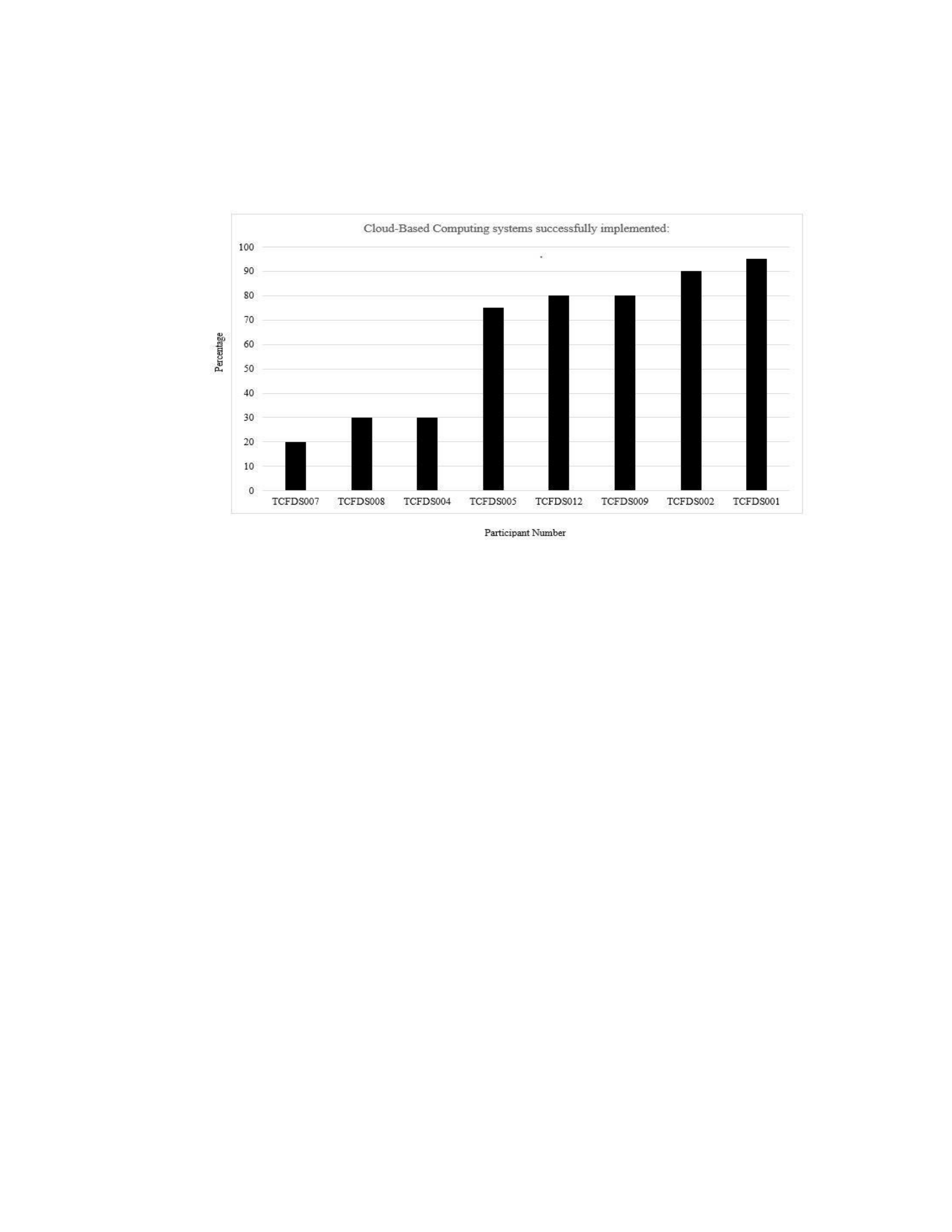
systems within the HR world.” Participant TCFDS010 stated, “We are in a four year
phased project of moving HRIS to cloud based in partnership with Oracle People Soft.”
Figure 5. Histogram Representation of Individual Participant Responses. Responses
included from eight respondents with four non-responses.
Round 2 Findings
Round 2 of the Delphi study began shortly after data from Round 1 was analyzed
using NVivo10® and Microsoft Excel®. The results from Round 1 were used to create
the survey questions and determine the 7-point and 5-point Likert-type rating scales for
Round 2. The same 14 participants received an introduction letter with as an invitation
with instructions to complete Round 2. Of the initial 14 participants, 12 completed the
Round 2 survey. Each Round 2 survey question was built to answer the guiding research
questions. Research Question 1 is addressed in survey Question 9. Research Question 2
is addressed in survey Questions 2 and 5. Research Question 3 is addressed in survey
Question 9 with supportive information from Question 3. Research Question 4 is
addressed in survey Questions 7 and 8 with supportive information gather from survey

Question 9. Research Question 5 is addressed in survey Question 9. Research Question
6 is addressed in survey Questions 6, 7, 8, and 9 with supportive information gathered
from survey Questions 3 and 4.
The purpose of survey Question 1 of the Round 2 survey was to collect the
participant’s individual code. Data analysis from Round 1 generated a list of 14 reasons
for non-implementation of Cloud-Based Computing in HR. Table 20 illustrates the
results from Question 2, responses rating the probability of the accompanying reasons for
not implementing Cloud-Based Computing at the participant’s respective target company,
frequency from data analysis in Round 1 (n), and analyzed using mean, minimum,
maximum, and standard deviation. Appendix K (Table 28) and Appendix L (Table 29)
display a comparison of means broken down by years the target company has been in
business and years of management experience for each participant, respectively. Outlier’s
two standard deviations from the mean occurred with participants in a target company of
21 to 25 years in business and with participants 10 to 14 years of management experience
and over 15 years of management experience.
Table 20
Reasons for Not Implementing Cloud-Based Computing in HR
f
Q2a Cost/budget
Q2k Limited staff & resources
Q2l Other priorities rank higher
Q2b Lack of technology awareness
Q2e Executive fear/unfamiliarity
Q2d Aversion to change
Q2m Outsourcing HR processes
Q2i Company culture
Q2f Legacy systems function sufficiently
Q2n Small company size
Q2c Security
Q2h HR processes not defined
9
1
1
5
3
5
1
1
3
1
4
1
4
2
2
3
3
2
1
1
1
1
1
2
7
7
7
7
6
7
7
6
7
7
6
5
5.50
4.58
4.42
4.17
4.08
3.92
3.67
3.58
3.58
3.58
3.42
3.33
1.09
1.68
1.73
1.27
1.24
1.62
1.97
1.17
1.78
2.07
1.38
0.99
Reasons Min. Max. M SD

Q2j HR concerned about people and not technology
Q2g Lack of user skill
1
3
1
1
5
4
3.08
3.08
1.17
0.79
Note. Items are bolded noting a majority of participant agreement. f = frequency of the
item from Round 1.
A list of 14 reasons for implementing Cloud-Based Computing in HR at the
respective target organizations was generated during analysis in Round 1. Table 21
illustrates the results of Round 2, Question 3 where participants rated the probability of
the reasons for implementing Cloud-Based Computing, frequency from Round 1, and
analyzed using mean, minimum, maximum, and standard deviation. Appendix M (Table
30) and Appendix N (Table 31) display a comparison of means broken down by years the
target company has been in business and years of management experience for each
participant, respectively. Outlier’s two standard deviations from the mean occurred with
participants in a target company of 21 to 25 years in business and with participants 10 to
14 years of management experience and over 15 years of management experience.
Table 21
Reasons for Implementing Cloud-Based Computing in HR
f
Q3a Accessibility/availability to application and data
Q3e Efficiency in productivity
Prioritizing specific HR processes as dictated by
Q3k company and leadership
Q3m Streamlining multiple company sites
Q3i Improved customer experience
Q3c Mobility of application and data
Q3g Consistency of information
Q3n Technical agility
Q3b Budget/cost
Q3j Ability to implement a phased approach
Q3l Security
Q3d Business priority
Q3h Encourage technology awareness & ability
Q3f Global expansion as a business strategy
5
2
1
1
1
3
1
1
3
1
1
2
1
2
4
4
3
1
4
3
2
3
3
2
2
2
1
1
6
7
7
7
6
7
7
6
6
6
7
6
5
6
5.17
4.92
4.83
4.75
4.67
4.67
4.50
4.42
4.25
4.17
4.08
3.92
3.83
3.50
0.94
1.00
1.27
1.82
0.79
1.07
1.31
0.90
1.22
1.12
1.31
1.17
1.19
1.62
Note. Items are bolded noting a majority of participant agreement. f = frequency of the
item from Round 1.
Reasons Min. Max. M SD

In Question 4, participants were allowed to indicate which best practices
contributed to the successful implementation of Cloud-Based Computing in HR. Data
analysis of Round 1 responses generated a list of best practices. Participants rated the
probability of these factors contributing to successful implementation of Cloud-Based
Computing. Table 22 illustrates the frequency of each factor from Round 1, and analyzed
using mean, minimum, maximum, and standard deviation. Appendix O (Table 32) and
Appendix P (Table 33) display a comparison of means broken down by years the target
company has been in business and years of management experience for each participant,
respectively. Outliers, two standard deviations from the mean, occurred with participants
in a target company of 11 to 15 years in business.
Table 22
Likelihood of Factors in Contributing to Successful Implementation of Cloud-Based
Computing:
f
Q4e Communication
Q4d Training
Q4f IT support
Q4b Implementation plan
Q4c Senior leadership support
Q4l Cost effective
Q4j Ease of use
Q4a Change management plan
Q4m Metrics for success
Q4g Security
Q4i Vendor Support
Q4k Solid business case
Q4h Understanding of technology available
Q4o Scalability
Q4n Pressure from leadership
4
5
4
7
5
1
2
8
1
3
3
2
3
1
1
4
4
4
4
4
4
4
3
4
4
4
4
4
3
3
7
7
7
7
7
7
7
7
7
7
7
7
7
7
7
6.50
6.42
6.33
6.08
6.00
5.92
5.83
5.75
5.67
5.67
5.67
5.50
5.42
5.00
4.75
0.91
0.90
0.89
1.08
1.13
1.17
1.19
1.42
1.44
1.07
1.16
1.31
1.00
1.35
1.49
Note. Items are bolded noting a majority of participant agreement. f = frequency of the
item from Round 1.
Success Factors Min. Max. M SD

Question 5 of Round 2 allowed participants to rate the probability of factors
challenging the implementation of Cloud-Based Computing in HR. Round 1 data
analysis generated a list of factors. Table 23 illustrates the frequency results from Round
1, and analyzed using mean, minimum, maximum, and standard deviation. Appendix Q
(Table 34) and Appendix R (Table 35) display a comparison of means broken down by
years the target company has been in business and years of management experience for
each participant, respectively. No significant outliers from the mean occurred.
Table 23
Challenging Factors
Q5a Lack of planning
Q5f Budget
Q5d Ineffective training
Q5b Lack of subject knowledge
Q5m Hidden fees/costs
Q5e Lack of executive leadership support
Q5n Lack of internal IT support
Q5g Lack of vendor support
Q5o Vendor selection
Q5c Fear/close-minded
Q5l Disaster recovery
Q5h Low employee adoption
Q5j Security
Q5i Resistant to change
Q5k Company culture
f
7
2
4
6
1
3
1
2
1
4
1
2
2
2
1
Min.
3
4
3
3
3
1
4
3
3
2
2
2
3
2
2
Max.
7
7
7
7
7
7
7
7
7
7
7
7
7
7
7
M
5.67
5.33
5.25
5.25
5.17
5.08
5.00
4.83
4.67
4.50
4.42
4.42
4.42
4.17
4.08
SD
1.58
1.30
1.49
1.49
1.47
1.88
1.21
1.19
1.16
1.57
1.56
1.56
1.24
1.40
1.31
Likelihood of Factors Challenging Successful Implementation of Cloud-Based
Computing:

Note. Items are bolded noting a majority of participant agreement. f = frequency of the
item from Round 1.
Round 1 data analysis generated a list of best practices for successfully
implementing Cloud-Based Computing in HR. Question 6 in Round 2 allowed
participants to rate the importance of each best practice. Table 24 exhibits the frequency
of each best practice from Round 1, and analyzed using mean, minimum, maximum, and
standard deviation. Appendix S (Table 36) and Appendix T (Table 37) display a
comparison of means broken down by years the target company has been in business and
years of management experience for each participant, respectively. Outlier’s two
standard deviations from the mean occurred with participants in a target company of less
than 5 years in business.
Table 24
Importance of Best Practices for Successfully Implementing Cloud-Based Computing:
Best Practices f Min. Max. M SD
Q6a Create & follow a comprehensive
implementation plan
Q6f Create a communication plan
Q6bTraining plan for all end users
Q6k Implement feedback loop for ongoing
improvements
Q6e Leadership buy-in & support
Q6c Address data security (access/accuracy/backup)
Q6d Conduct detailed needs analysis
Q6i Cost efficiency
Q6g Ensure scalability
Q6l Solution should fit company culture and needs
Q6h All-in-one integration
Q6j Hire a professional consultant
11
2
9
1
3
6
5
1
2
1
1
1
3
3
3
3
2
2
2
2
2
1
1
1
5
5
5
5
5
5
5
5
5
5
5
5
4.50
4.50
4.50
4.17
4.17
4.08
4.08
3.83
3.83
3.83
3.50
2.58
0.80
0.67
0.67
0.72
1.03
1.00
1.00
1.03
0.94
1.47
1.38
1.51
Note. Items are bolded noting a majority of participant agreement. f = frequency of the
item from Round 1.

In Round 1, participants provided a list of leadership characteristics indicative of a
successful HR leader and an HR leader successfully implementing Cloud-Based
Computing. Data analysis from Round 1 generated lists where participants rated the
importance of each characteristic in Questions 7 and 8, Round 2. Tables 25 and 26
display the frequency of each characteristic from Round 1, and analyzed using minimum,
maximum, mean, and standard deviation. Appendix U (Table 38), Appendix V (Table
39), Appendix W (Table 40), and Appendix X (Table 41) display a comparison of means
broken down by years the target company has been in business and years of management
experience for each participant, respectively. No significant outliers from the mean
occurred.
Table 25
Importance of Characteristics Indicative of a Successful HR Leader:
f
Q7d Communication
Q7e Integrity/credibility
Q7a Knowledgeable (education/certification)
Q7b Coaching/empowering/influencing
Q7f Adaptability/flexibility Q7c Strategic
Q7h Open-minded/approachable
Q7i People savvy/interpersonal skills
Q7r Relationship building
Q7g Business acumen
Q7q Confident
Q7o Initiative
Q7j Analytical/detail-oriented
Q7s Time management
Q7k Compassionate
Q7l Managing vision & purpose
Q7m Project/change management
Q7p Innovative/foresight
Q7n Technology Savvy
5
5
9
9
4
6
4
4
1
4
1
2
3
1
3
3
3
2
3
4
4
3
4
4
2
4
3
3
3
3
3
3
2
2
2
2
2
2
5
5
5
5
5
5
5
5
5
5
5
5
5
5
5
5
5
5
4
4.83 4.83
4.67 4.58
4.50 4.50
4.42 4.42
4.33 4.17
4.17 4.00
3.92 3.83
3.75 3.75
3.67 3.50
3.25
0.39
0.39
0.65
0.52
0.52
1.00
0.52
0.67
0.79
0.72
0.94
0.74
0.69
0.84
1.22
0.97
0.89
0.91
0.75
Note. Items are bolded noting a majority of participant agreement. f = frequency of the
item from Round 1.
Table 26
Importance of Characteristics Indicative of a Successful HR Leader Successfully
Implementing Cloud-Based Computing:
Characteristics Min. Max. M SD

f
Q8g Communication
Q8o Integrity/credibility
Q8r Time management
Q8q Problem solver
Q8i Project/change management
Q8f Analytical/detail-oriented
Q8k Confident
Q8e Innovative/foresight
Q8c Strategic
Q8d Adaptability/flexibility
Q8h People savvy
Q8j Coaching/empowering/influencing
Q8m Managerial courage
Q8b Business acumen
Q8l Knowledgeable (education/certification)
Q8n Open-minded/approachable
Q8a Tech Savvy
Q8p Managing vision and purpose
3
1
1
1
3
3
2
4
6
5
3
2
2
6
2
2
8
1
4
2
3
3
2
3
2
3
2
3
2
2
1
2
2
2
2
2
5
5
5
5
5
5
5
5
5
5
5
5
5
5
5
5
4
5
4.58
4.25
4.17
4.08
4.08
4.00
4.00
4.00
4.00
3.92
3.92
3.83
3.83
3.75
3.75
3.75
3.67
3.58
0.52
0.97
0.58
0.52
1.00
0.74
1.05
0.74
0.74
0.52
1.08
0.84
1.03
0.75
0.97
1.22
0.65
1.08
Note. Items are bolded noting a majority of participant agreement. f = frequency of the
item from Round 1.
Question 9 of Round 2 asked participants to identify a percentage Cloud-Based
Computing contributes to improving a list of select outcomes. Table 27 displays the list
of outcomes analyzed with minimum, maximum, and mean.
Table 27
Percentage Cloud-Based Computing Contributes to the Following Outcomes:
Responding
to the
Research
Questions
This study
was guided by six research questions answered through a series of two rounds of surveys
and distributed to 14 participants. The general problem is the slow adoption of Cloud-
Based Computing for efficiency in HR. The specific problem is that the literature does
not provide with clarity how a more rapid adoption of Cloud-Based Computing will affect
HR processes. The purpose of this study was to examine how the adoption of Cloud-
Characteristics Min. Max. M SD
Outcome Min. M
Absenteeism
Cost efficiency
Time efficiency
Employee performance
Individual HR employee performance
Overall HR department performance
Overall organizational performance
0
20
10
5
1
2
2
Max.
75
20
10
5
1
2
2
22.50
55.83
53.33
42.50
54.25
61.83
56.00

Based Computing potentially affects HRM and organizational performance. The research
questions were created to address key factors of leadership in HR, best practices for
Cloud-Based Computing adoption, and the perceived effect of HR on organizational
performance as it relates to the adoption and use of Cloud-Based
Computing. The research questions guiding the study are:
RQ1: What are the Cloud-Based Computing tools that appear to be most effective
for Human Resources?
RQ2: What are the impediments to adoption of Cloud-Based Computing in
Human Resources?
RQ3: How does successful Cloud-Based Computing affect the performance of
HRM?
RQ4: What leadership traits of successful Cloud-Based Computing adopters also
contribute to HR performance?
RQ5: How does HR contribute to the overall performance of an organization?
RQ6: What are the implications of best practices in Cloud-Based Computing
adoption within HR and to general leadership theory?
This study produced results that answered the research questions. Each research question
is addressed with those results in the following sections.
Research Question 1 Analysis and Data Triangulation
The first research question asked, “What are the Cloud-Based Computing tools
that appear to be most effective for Human Resources?” Participants indicated having
experience using electronic systems for recruiting (57%), payroll (50%), benefits (40%),
HRIS (40%), and interviewing (36%). On-site technology is currently used for recruiting
(57%), benefits, hiring, performance management, and training and development (50%),
and compensation/payroll, onboarding, and screening/interviewing (43%). Cloud-Based

Computing is currently used for 50% of participants for undefined HR processes with
compensation/payroll (43%), and time and attendance (36%) as the following two HR
process most used with Cloud-Based Computing. Participants indicated respective target
companies had plans to move to Cloud-Based Computing in the next year for onboarding
(36%), training and development, and benefits (29%). Recruiting,
screening/interviewing, and compensation (21%) were listed as the next top priorities for
change to Cloud-Based Computing within the next year.
Pilot participants indicated having experience using electronic systems for HRIS
(80%) and recruiting (40%). Additionally, pilot participants indicated using on-site
technology for recruiting, screening, and hiring while Cloud-Based Computing was most
used for compensation/payroll, screening/interviewing, and training and development.
Research Question 2 Analysis and Data Triangulation
Research Question 2 asked, “What are the impediments to adoption of Cloud-
Based Computing in Human Resources?” Questions 24 and 27 in Round 1 addressed this
research question through open-ended questions. Responses generated a list of factors
impeding adoption of Cloud-Based Computing at the respective target companies. Table
10 displays the list generated of reasons for not implementing Cloud-Based Computing in
HR. The top 50% of responses include cost/budget, aversion to change, lack of
technology awareness, security, executive fear or unfamiliarity, lack of user skill, and
legacy systems function sufficiently. Table 13 displays a list of factors challenging the
implementation of Cloud-Based Computing in HR at the respective companies.
Responses with the most frequencies include lack of planning/scoping, lack of subject
knowledge, fear/close-minded, ineffective training, lack of executive leadership support,
and resistant to change.

Table 20 displays Round 2 responses where participants collectively identified
cost/budget can impede the adoption of Cloud-Based Computing with a mean (M) of 5.50
on a 7-point Likert-type scale and standard deviation (SD) of 1.09. The next highest
scored items include limited staff and resources with a mean of 4.58 and standard
deviation of 1.68, and other undefined organizational priorities ranking higher with a
mean of 4.42 and standard deviation of 1.73. Lack of technology awareness (M = 4.17)
and executive fear/unfamiliarity (M = 4.08) were also prominently listed as impediments.
The participants listed lack of planning (M = 5.67), budget (M = 5.33), ineffective
training (M = 5.25), lack of subject knowledge (M = 5.36), hidden fees/costs (M = 5.17),
lack of executive leadership support (M = 5.08), and lack of internal IT support (M =
5.00) as factors challenging the successful implementation of Cloud-Based Computing.
Individual outliers occurred with participants within organizations in business between 21
to 25 years and participants with 10 or more years of management experience with
standard deviation 1.25+/- than the overall standard deviation (see Appendices K & L).
The high mean scores for cost/budget, limited staff and resources, and having other
organizational priorities indicate the likely impediments for adoption of Cloud-Based
Computing. Interestingly, lack of planning, budget, and ineffective training are identified
as factors challenging successful implementation, two of which support the top three key
impediments.
Appendix Y (Table 42) displays the correlation between reasons for not
implementing Cloud-Based Computing and factors challenging implementation of Cloud-
Based Computing. Spearman’s Rho is presented where rs = Spearman’s Rho, and p =
statistical criteria. Statistical significance was found between other priorities ranking
higher and fear/close-minded (rs = .888, p = <.01), and between limited staff and

resources, and lack of vendor support (rs = .865, p = <.01), lack of subject knowledge (rs
= .864, p = <.01), fear/close-minded (rs = .844, p = <.01), and resistance to change (rs =
.840, p = <.01). Significant correlations were found between cost/budget and lack of
vendor support (rs = .860, p = <.01), and between lack of technical awareness and
fear/close-minded (rs = .823, p = <.01). Additional significant correlations are reported
between reasons for not implementing Cloud-Based Computing and characteristics of a
successful HR leader (see Appendix Z, Table 43).
Research Question 3 Analysis and Data Triangulation
Research Question 3 asked, “How does successful Cloud-Based Computing affect
the performance of HRM?” Questions 25, 26 and 29 in Round 1 addressed this research
question through open-ended questions. Responses generated a list of reasons why
Cloud-Based Computing was implemented at the respective target companies. Table 11
displays the list with the leading responses including accessibility and availability to
application and data, budget/cost, and mobility of application and data. Table 12 displays
a list of factors contributing to the successful implementation of Cloud-Based Computing
in HR with the leading factors consisting of change management plan, implementation
plan, IT support, senior leadership support, and training. Tables 15 and 16 display the
effect of Cloud-Based Computing with high to critical effect on cost efficiency, time
efficiency, HR individual’s performance, overall HR department performance, and
organizational performance.
In Round 2, Table 30 displays responses where participants indicated CloudBased
Computing contributed to increasing time and cost efficiency with a mean of 4.07 and
standard deviation of .80, respectively, by an average of 52.73%. The next highest rated
areas of contribution by HRM with Cloud-Based Computing include overall HR
department performance with a mean of 4.0 (SD = .93), overall organizational

performance with a mean of 3.86 (SD = .83), and HR individual performance with a mean
of 3.57 (SD = 1.12). The reasons for implementing Cloud-Based Computing for the
increased performance in HRM (Table 21) include accessibility/availability to
applications and data (M = 5.17, SD = .94), efficiency in productivity (M = 4.92, SD =
1. 00), prioritizing specific HR processes as dictated by company and leadership (M
=
4.83, SD = 1.27), and streamlining multiple company sites (M = 4.75, SD = 4.75).
Improved customer experience (SD = .79) and mobility of application and data (SD =
1.07) had a mean of 4.67, respectively.
Research Question 4 Analysis and Data Triangulation
Research Question 4 asked, “What leadership traits of successful Cloud-Based
Computing adopters also contribute to HR performance?” Table 8 displays a list of 19
characteristics indicative of a successful HR leader generated during Round 1 analysis.
The leading characteristics include knowledgeable (education/certification),
coaching/motivating/empowering, communication, strategic, business acumen,
integrity/credibility, open-minded/approachable, and people savvy/interpersonal skills.
Table 9 displays a second list of 18 characteristics of an HR Leader successfully
implementing Cloud-Based Computing also generated during Round 1 analysis. The
leading characteristics include technology savvy, strategic, business acumen,
communication, analytical, foresight/innovative, people savvy, and project and change
management.
In Round 2, participants used a 5-point Likert-type scale to rate the importance of
characteristics indicative of a successful HR leader (Table 25) and of an HR leader
successfully implementing Cloud-Based Computing (Table 26). The leading five
characteristics of a successful HR leader include communication, integrity/credibility,

knowledgeable (education/certification), coaching/empowering/influencing, and
adaptability/flexibility. The leading five characteristics of an HR leader successfully
implementing Cloud-Based Computing include communication, integrity/credibility, time
management, problem solver, and project/change management. Appendix AC displays a
full comparison of participants’ answers between the two lists of characteristics. The top
five common characteristics between the two include communication (M = 4.58, SD
=.52), integrity/credibility (M = 4.25, SD = .97), time management (M = 4.17, SD = .58),
problem solver (M = 4.08, SD = .52), and project/change management (M = 4.08, SD =
1.00). The low standard deviation indicates a high level of agreement between
participants.
Research Question 5 Analysis and Data Triangulation
Research Question 5 asks, “How does HR contribute to the overall performance
of the organization?” Questions 28 and 29 in Round 1 addressed this research question
through open-ended questions. Responses from Question 28 generated a list of best
practices for adopting Cloud-Based Computing in HR. Table 14 displays the list of best
practices generated during Round 1 analysis with the leading practices including efficient
training for end users, creating and understanding a clear implementation plan, addressing
security needs and concerns, and conducting a detailed needs analysis. Tables 18 and 19
display the effect of Cloud-Based Computing on select HR and organizational factors
indicating high to critical effect on cost efficiency, time efficiency, HR individual’s
performance, overall HR department performance, and overall organizational
performance.
In Round 2 participants were asked to rate the effect on select factors using a
5point Likert-type scale. Participants identified Cloud-Based Computing in HR affected
organizational performance (M = 3.86) through cost efficiency (M = 4.07), time

efficiency (M = 4.07), overall HR department performance (M = 4.00), general employee
performance (M = 2.86), and employee retention (M = 2.57). Participants rated reasons
for implementing Cloud-based Computing in HR on a 7-point Likert-type scale of
importance as increased accessibility and availability to applications and data (M = 5.18),
efficiency of productivity (M = 4.91), mobility of application and data (M = 4.64), and
budget/cost (M = 4.18).
Research Question 6 Analysis and Data Triangulation
Research Question 6 asked, “What are the implications of best practices in Cloud-
Based Computing adoption within HR and general leadership theory?” Traditional
Transformational leaders inspire followers towards realizing common goals (Wren,
1995), however Chen, Lin, Lin, and McDonough (2012) found transformational
leadership positively influences technological innovation. Research Question 6 sought to
identify possible links between characteristics between transformational leaders in HR as
drivers of best practices for implementing Cloud-Based Computing. Question 28 (Table
17) regarding best practices for adopting Cloud-Based Computing in HR. Questions 21
(Table 8) and 22 (Table 9) address the leadership component of RQ6.
In Round 2 participants were asked to rate the importance of best practices for
successfully implementing Cloud-Based Computing (Table 24). Descriptive statistics
results show best practices for successfully implementing Cloud-Based Computing
include creating and following a comprehensive implementation plan (M = 4.50, SD
= .80), creating a communication plan (M = 4.50, SD = .67), training plan for all end
users
(M = 4.50, SD = .67), implementing a feedback loop for ongoing improvements (M =
4.17, SD = .72), leadership buy-in and support (M = 4.17, SD = 1.03), addressing data

security, and conducting detailed needs analysis (M = 4.08, SD = 1.00). Participants
identified important HR leadership characteristics in Table 25 and HR leadership
characteristics for successfully implementing Cloud-Based Computing are displayed in
Table 26 as communication (M = 4.58, SD = .52), integrity/credibility (M = 4.25, SD
= .97), time management (M = 4.17, SD = .58), problem solver (M = 4.08, SD = .52), and
project and change management (M = 4.08, SD = 1.00).
Appendix AA (Table 44) displays the correlation between best practices for
implementing Cloud-Based Computing and characteristics of an HR leader successfully
implementing Cloud-Based Computing. Statistical significance was found between
having a training plan for all end users and innovative/foresight (rs = .740, p = <.01), and
between all-in-one integration and open-minded/approachable (rs = .844, p = <.01).
Additional significant correlations are reported between factors contributing to successful
implementation of Cloud-Based Computing and best practices for successfully
implementing Cloud-Based Computing in HR (see Appendix AB, Table 45) and between
reasons for not implementing Cloud-Based Computing and characteristics of a successful
HR leader (see Appendix Z, Table 43).
Chapter Summary
Chapter 4 presented the data comprised from two rounds of this Delphi study. A
pilot study was conducted with five participants to test SurveyMonkey® as the
distribution instrument, validate the survey, and to ensure accuracy, reliability, and
anonymity of participants. Fourteen participants shared their informed opinions through
Round 1 of the full-panel Delphi via open-ended and Likert-type scale questions. The
results from Round 1 were analyzed and used to create the survey for Round 2. Round 2
consisted of Likert-type scale questions and attrition of three participants was

experienced resulting in 12 active participants. Two rounds of surveys were needed to
reveal sufficient information before repetitive data were obtained.
The objective of this Delphi study was to obtain a deeper understanding on how
the adoption of Cloud-Based Computing affects HRM and organizational performance by
addressing the six research questions guiding this study. The results revealed data
necessary to answer the Research Questions. Participant’s insights included identification
of HR processes most effective with Cloud-Based Computing, key leadership traits of HR
leaders implementing Cloud-Based Computing, impediments to successful
implementation of, and best practices for, successfully implementing CloudBased
Computing.
Chapter 5 includes theoretical triangulation, interpretation of findings, limitations
of the study, and expands the results into conclusions and recommendations based on
major themes of the study aligned to the Research Questions. The implications of this
study’s findings provide an understanding of the issues surrounding the effect of
CloudBased Computing on Human Resource Management, human resource leadership
characteristics and overall organizational performance. Chapter 5 includes a review of
the study’s methods as the foundation of a model for implementing Cloud-Based
Computing and leadership profile for HR leaders effectively implementing technology.
These conclusions provide suggestions to human resource management leaders and for
future research.

Chapter 5
Introduction
The purpose of this qualitative Delphi study was to explore the reasons HR
leaders are slow to implement Cloud-Based Computing, characteristics between
successful HR leaders and those successfully implementing Cloud-Based Computing, and
how the implementation of Cloud-Based Computing affects HRM and organizational
performance. Chapter 5 reiterates the research questions, interprets the results from the
study, and compares the findings to literature reviewed in Chapter 2. This comparative
analysis between literatures is intended to cross-examine the outcomes for validity.
Discussions for implications to leadership, Human Resource Management, organizational
performance, and the implementation of Cloud-Based Computing in HR are presented in
this chapter. Finally, the chapter includes delimitations, limitations, recommendations for
future research, and research summary.
Interpretation of Findings
This Delphi study consisted of two iterative survey rounds to a panel of 14
informed participants in HR with a minimum of 5 years of experience in HR. The
questions led to discovery of factors challenging, and contributing to, successful
implementation of Cloud-Based Computing, a comparative list of HR leadership
characteristics, best practices for implementing Cloud-Based Computing, and potential
affects to organizational and HRM performance through use of the technology. Findings
derived from the study provide new information, and support existing information, to the
HR field, leadership, Cloud-Based Computing adoption, and academia. The following is
a discussion of each research question, findings, and related literature.

Research Question 1
The first research question asked, “What are the Cloud-Based Computing tools
that appear to be most effective for HR?” According to Jones (2012), an integrated HR
solution (Card & Sivak, 2015) including recruiting workforce planning, compensation,
learning and development, career management, and succession management as a
complete performance management system is top-of-mind with HR professionals (Shilpa
& Gopal, 2011; Sienna-Cedar, 2015). Deloitte (2012b) indicates a cloud-based service
model with “recruitment, screening, predictive analytics, performance management,
payroll, and time and attendance” (p. 3), can help HR work more effectively. All study
participants agreed to either having experience with electronic HR processes with on-site
or cloud technologies with recruiting, payroll, benefits, HRIS, and interviewing rating the
highest. The majority of participants were not innovators or early adopters and may be
considered early majority in using Cloud-Based Computing for compensation/payroll,
and time and attendance. Participants identified the potential Cloud-Based Computing
tools that appeared to be immediately most effective for HR as compensation/payroll and,
time and attendance.
Ikhlap, Khan, Mujtaba, and Sadiq (2012) focus on HRIS as the technology
solution for HR. The processes reviewed and evaluated by study participants are
available via Cloud-Based Computing solutions including HRIS as a Software-as-
aService platform. Study participants agreed HRIS was an effective tool for HR and
align with Indranil (2011) that Cloud-Based Computing solutions for payroll,
compensation, recruitment, and performance management contributed to the efficiency of
the HR department. Kumar and Pandya (2012) found higher technology in specialized
HR software and HRIS could lead to efficiency, effectiveness, and productivity in HR.

Gainey and Klass (2008) stated the tools that appear to be most effective for
Human Resources are those that increase cost and time efficiency, overall HR department
performance, and overall organizational performance to which participants also agree
Cloud-Based Computing has a significant effect. Indicators would lead to the adopting
Cloud-Based Computing tools that are currently used for some participants, and those
that are planning to move to Cloud-Based Computing within the next year to 5 years,
including compensation, time and attendance, benefits, screening and interviewing,
recruiting, and onboarding.
Research Question 2
The second research question asked, “What are the impediments to adoption of
Cloud-Based Computing in HR?” Deloitte (2012) reported HR professionals hold a
traditional view of HR contributing to the slow adoption of technology, transformation of
archaic processes, and a lack of alignment to business strategy. Five factors within the
DOI framework influence the adoption of innovation including relative advantage,
compatibility, complexity, observability, and trialability. It may be suggested that
compatibility (Chen, Low, Wu, 2011; Wang et al., 2010), or the degree to which
CloudBased Computing is consistent with existing business processes, values, and
practices is an agreed point of impediment to adoption according to Deloitte (2012).
Willcocks,
Venters, and Whitely (2013) posit a large education gap exists about the value of
CloudBased Computing. Participants in this study indicated lack of technology
awareness and subject knowledge as leading factors, in alignment with Deloitte (2012)
and Whitley et al. (2013).
Dai, Yang, and Xing (2015) state security issues, network-transmission problems,
and a lack of knowledgeable developers contribute to impediments of Cloud-Based

Computing, to which Willcocks et al. (2013) also note. Data privacy is an ongoing
concern and impediment to adoption (Shilpa & Gopal, 2011) of Cloud-Based Computing.
Data concerns include privacy, data integrity and accessibility, internal employee access,
lack of disaster recovery measures (Card & Sivak, 2014; Dutta et al., 2013; Geczy, Izumi,
& Hasida, 2012) and availability (Aleem & Sprott, 2013).
Carcary, Conway, and Doherty (2015) found the leading drivers for moving
processes to the cloud included cost reduction and mobility of data and devices (Staley &
Gandi, 2014). Study participants identified the same drivers as reasons for implementing
Cloud-Based Computing in HR. Additionally, Carcary et al. (2015) listed Internet
connectivity (Chen, Low, & Wu, 2011) and trust in the service provider as the leading
barriers to cloud adoption that were neither in agreement with this study, nor listed as
contributing challenges for Cloud-Based Computing in U.S. based companies.
According to Lee Sears in the Human Resource Management International Digest
(2012), “HR leaders in the future need to develop greater insight from employees,
develop the means for bringing the insight and savviness into play within the
organization, and find a voice to share the meaningful messages from all the insight” (p.
24). Organizational factors may contribute to impeding technology adoption including
perceived financial cost, organizational culture, perceived resource availability,
leadership behavior, and informal communication. Sareen and Subramanian (2012)
indicate a lack of planning as a limiting factor with implementing an effective change
management strategy that considers user acceptance. Study participant’s responses
aligned in including limited staff and resources, lack of planning, budget, and lack of
executive leadership support as contributing organizational factors.
Size of the organization was implied as a hindrance to technology adoption by
study participants supporting that organizations further along in the maturity curve, and

being a quantified organization, are higher in Cloud-Based Computing adoption than are
smaller, less mature organizations (Bahli, Borgman, Heier, & Schweski, 2013; IBM,
2015; Sierra-Cedar, 2015). Bahli et al. (2013) found firm size to be inconclusive among
Cloud-Based Computing adopters and non-adopters. Study participants indicate
cost/budget as a leading barrier to adoption. This aligns with Whitley et al. (2013) who
suggest the economic benefit could take significantly longer than anticipated by most
organizations. However, IBM (2015) reports cost reduction and efficiency are concerns
and adoption hindrances for organizations lower on the maturity curve. According to
IBM (2015), organizations higher in the maturity curve are more focused on business
growth as a contributing factor to realized Cloud-Based Computing.
Research Question 3
The third research question asked, “How does successful Cloud-Based Computing
affect the performance of HRM?” Gibson (2012) posited adoption of Cloud-Based
Computing is a competitive advantage for HR performance for organizations of all sizes
and revenue. The ability to attract and attain top talent is a competitive advantage to
which Cloud-Based Computing can be the means by which to achieve (Gibson, 2012)
potentially improving HRM performance and of the overall organizational workforce.
Saleem (2012) posits transformation of HRM is required with the explosive evolution of
technology. Compelling advantages to Cloud-Based Computing include reduction in
expenses via minimal initial investment, monthly service plans, and decreased
maintenance, and via increased operational agility through easy of accessibility,
scalability and deployment (Gibson, 2012). Cloud-Based Computing may offer a unique
opportunity to build competitive advantage in the HR function by providing accessibility
to, and use of, big data for increased efficiency in HR performance (Gibson, 2012).

HRIS is a tool deliverable by means of Cloud-Based Computing and is found to
have a significant impact on HRM. Ikhlap, Khan, Mujtaba, and Sadiq (2012) conducted a
study of HRIS in Pakistan-based banks finding the HR function most dependent on
technology. While Ankrah and Sokro (2012) found HRIS positively correlated to cost
and timesaving, Ikhlap et al. (2012) found HRIS improved HR processes and resulted in
timesaving however, did not find a link to cost savings, communication, or effective
recruitment.
Gibson (2012) states Cloud-Based Computing frees HR from administrative tasks
leaving more time to devote to decision-making and strategic endeavors (Ikhlap et al.,
2012). Ankrah and Sokro (2012) posit improved decision-making with greater use of
HRIS and indicate improved technology may positively affect efficiency of the HR
function resulting in better HRM. However, Ikhlap et al. (2012) acknowledge HRIS is
underutilized for HR strategic decision-making. Karimidizboni (2013) acknowledged the
challenges of implementing technology and states the HR function must implement more
advanced instruments and technology for enhanced HRM performance.
Implementing technology allowing the HR function to use data for better
decision-making improves HRM through increased competiveness, facilitated
information processing, enhanced reporting, and global accessibility (Karimidizboni,
2013), to which participants agree accessibility, and availability to applications and data
is crucial for implementing Cloud-Based Computing.
Participant identification of efficiency in productivity, improved customer
experience, mobility, and global organizational expansion, as reasons for implementing
Cloud-Based Computing, supports Kapoor and Sherif’s (2012) position of using a
globally accessible HRIS for HR efficiency. Participants agree the cost and time
efficiency afforded by implementing Cloud-Based Computing improves performance of

the HR employee, thus of the overall HR department, and provides value to the
organization (Ankrah & Sokro, 2012; Gibson, 2012; Staley & Gandi, 2014). This
sustains the position of Saleem (2012), and Kapoor and Sherif (2012) that HRIS
significantly supports HRM. HRIS via Cloud-Based Computing may provide a globally
accessible platform supporting and potentially improving HRM in organizations.
Research Question 4
The fourth research question asked, “What leadership traits of successful Cloud-
Based Computing adopters also contribute to HR performance?” According to the TOE
framework (Tornatzky & Fleisher, 1990), leadership style can be considered an
organizational and environmental factor and compatibility characteristic that influences
the adoption of innovation (Rogers, 2003). Loshali & Krishnan (2013) support Bass’
definition of transformational leadership and aligned characteristics including
charismatic, inspirational, individualized consideration, and intellectual stimulation. The
researchers also posit the characteristics support employee retention, productivity, and
cost variables for improved organizational performance (2013). Leadership style is
viewed as an independent variable in relation to the effect on technology adoption in HR
and related outcomes.
Mueller (2007) and Polen (2009) indicate the success or failure of technology
hinges on leadership support and an understanding of the technology complexity (Bahli et
al., 2013) along with employee reaction to the implemented technology. Participants
found leadership support a factor contributing to successful implementation and a lack of
subject knowledge a challenge to implementing Cloud-Based Computing. Kumar and
Pandya (2012) state technology is a critical driver of HR serving a strategic role and

“changes the competencies required for success of HR professionals” (p. 112, para. 4).
Study responses support the conclusion as participants found characteristics of a
successful HR leader differed from those of an HR leader successfully implementing
technology.
Study participants identified communication as a key characteristic for HR leaders
implementing Cloud-Based Computing, additionally identifying effective communication
and training plans as best practices. This supports Polen’s (2009) findings that the use,
knowledge, and communication of e-technologies by HR professionals may contribute to
success in HR. Gangwa, Hema, and Ramaswamy (2014) posit managers must train
employees for Cloud-Based Computing for effective implementation and improved
performance to accomplish organizational objectives.
Kraemer, Xu, and Zhu (2006) posit HR and IT develop the infrastructure for
technology change and influence technology readiness and assimilation within the
organization (Mueller, 2009) making HR leaders core influencers of technology adoption
(Michel, 2007; Vonk, Geertman, & Schot, 2007) and attitude of intention to use the new
technology (Yusliza & Ramayah, 2011). Transformational leaders often encourage the
use of technology to realize organizational vision and goals however, must consider the
employee’s perception of need and ease of use (Birasnav, Rangnekar & Dalpati, 2011;
Purvis, Sambamurthy, & Zmud, 2001; Timmons, 2008).
A positive correlation between Transformational Leadership and strategic HRM
exists, as transformational leaders are likely to create processes aligned with
organizational goals through strategic practices of staffing, performance management,
training, compensation, and rewards (Loshali & Krishnan, 2013). Chen, Lin, Lin, and
McDonough (2012) found transformational leadership had a positive effect on
technological innovation, however also reported an organization with a strong innovative

culture fostered technological innovation, and may substitute for transformational
leadership while maintaining a positive impact on technological innovation. Study
participants recognize the effect of characteristics aligned with those of a successful
transformational leader on implementation of Cloud-Based Computing and the resulting
performance of HRM. This study may offer better insight to the perceived competencies
required by successful HR leaders implementing Cloud-Based Computing.
Research Question 5
The fifth research question asked, “How does HR contribute to the overall
performance of the organization?” Ferguson (2006) suggests the strategic alignment of
HR to organizational goals through training, development, and employee engagement
may positively affect organizational performance. A transformational leader emphasizes
development, growth, and an alignment of HR with organizational strategies required for
effect on organizational performance and found a positive correlation between
transformational leadership, strategic HR, and organizational performance (Loshali &
Krishnan, 2013). One suggestion could be the increased operational agility of
CloudBased Computing on HRM may also contribute to organizational performance.
Human Resource Management practices are expected to improve organizational
performance (Huselid, 1995; Theriou & Chatzoglou, 2008) by using unique
characteristics in HR specifically through knowledge management and organizational
learning capability (2008). A majority of participants found accessibility and availability
to applications and data a critical reason for implementing Cloud-Based Computing. The
use of Cloud-Based Computing as a platform for knowledge management and
organizational learning may enhance and contribute to the efficiency of HRM and overall
organizational performance. Gainey and Klass (2008) report e-HR is often connected to

improved delivery of HR services resulting in reduced costs, improved employee
engagement, and greater strategic contribution by the HR function.
Sierra-Cedar (2015) confirmed the Value Chain Analysis model in linking HR
technology adoption to talent and business outcomes finding organizations that adopt HR
technologies experience improved financial performance from a Return on Equity than
late majority and laggard organizations. Although study participants found Cloud-Based
Computing to have a high to critical effect on overall organizational performance, a
distinct link was not made as to specifically how Cloud-Based Computing influences this
outcome.
Research Question 6
The sixth research question asked, “What are the implications of best practices in
Cloud-Based Computing adoption within HR and general leadership theory?” Study
findings derived from participant responses identified the Cloud-Based Computing
solution should fit the organizations needs and culture. This aligns with Harper and Utley
(2001) and Mueller (2009) who posit cultural attributes contribute to effective technology
implementation by fostering behaviors such as trust, flexibility, and information sharing.
Additionally, best practices identified by study participants included the creation of a
communication plan and training for end users that may foster the previously listed
behaviors. According to study participants, leadership buy-in and support,
comprehensive implementation plan, communication, and adequate training are best
practices for successfully implementing Cloud-Based Computing. This aligns with
research presented by Shilpa and Gopal (2011) who stated prerequisites for implementing
e-HRM including a commitment to change management (Sierra-Cedar, 2015),
stakeholder buy-in, communication of value to end users, and adequate training.

Participants identified best practices for successfully implementing Cloud-Based
Computing and challenges to implementation. The results align with Shilpa and Gopal’s
(2011) list of challenges to implementing e-HRM including cost, aligning e-HRM to
business requirements, security, data management, traditional mindset, customization
required, training, return on investment, and monitoring feedback. Morgan (2000) and
Yusliza and Ramayah (2011) indicated change management as a critical factor in new
technology acceptance.
Study participants stated, fear, close-mindedness, and lack of executive leadership
support, challenged the implementation of Cloud-Based Computing. This aligns with
Deloitte (2012), Wang, Wang, and Yang (2010), and Bahli, Borgman, Heier, and
Schweski’s (2013) findings that lack of leadership support is a critical cause for the slow
adoption rate (Babcock, 2010). Reasons for slow adoption of Cloud- Based Computing
included traditional mindset and HR processes (Deloitte, 2012; Gibson, 2012).
A transformational leader influences the perceived usefulness and acceptance of
new technology of the user (Schepers, Wetzels, & Ruyter, 2005). Obtaining executive
and general leadership support while following a comprehensive implementation plan
with transparent communication are suggested best practices from study participants that
may increase the adoption rate of Cloud-Based Computing in HR. Bersin (2014) reports
the four key factors for organizations successfully moving to Cloud-Based Computing
solutions include integration, ease of use, enterprise strength, and support, and
emphasizes key leadership support with the use of a comprehensive implementation plan,
also supported by study participant responses.
Limitations
A pilot study was conducted to ensure accuracy and reliability of the results with
suggested revisions included in the final surveys distributed to study participants. The

modified Delphi study required two survey iterations to achieve validity. The validity for
the population is a limitation because of the small sample sizes with a Delphi research
design (Linstone & Turoff, 1975). While membership within LinkedIn forums was high
and an open request for study participants submitted on multiple occasions, the response
rate was low, and may not be fully representative of the HR community. However, the
study received responses from the amount of participants targeted and all organizations
discussed were based in the United States.
The scope of this study was focused on informed participants in HR although
leadership experience and level varied among participants. Limitations to
generalizability and transferability may occur because of the small sample size of the
Delphi research design and qualitative nature of the study (Lincoln & Guba, 1985). Items
outside the control of the study included the timeframe of the study, holidays, participant
availability, and participant’s willingness to respond to requests to complete the surveys.
Finally, researcher experience, interpretation, and bias could be limitations based on, bias,
previous professional experience, or ideas.
Delimitations
The study was delimited to informed participants with a minimum of 5 years of
experience in HR. The focus of this study was HR professionals and may be limited in
generalizability to other industries. Further research may be required focusing on a
specific sector, industry, or organizational department. The electronic distribution of
surveys through SurveyMonkey® allowed for unrestricted access and disclosure from
participants while ensuring minimal bias among participants.
Implications and Significance of the Findings

Implications and Significance for Implementing Cloud-Based Computing in HR
The study findings indicated leading consultancies, researchers and field
practitioners agree Cloud-Based Computing is the predominant method of deployment for
HR systems and services with mobile fast becoming the focus of design (Card &
Sivak, 2015; Deloitte, 2012; Deloitte, 2011; Sierra-Cedar, 2015). Sierra-Cedar (2015)
expects the adoption of Cloud-Based Computing, subscription-based services to increase
58% by the end of 2016. According to study participants customized HR systems are
more in-demand with low implementation success rates, while Cloud-Based Computing
solutions success rates are higher, perhaps attributable to the onus of maintenance and
customization on the service provider. Technology continues to play a critical role in
HRM and despite reports from numerous researchers and consultancies, adoption of
Cloud-Computing (Deloitte, 2012); continues to increase in forecast but lacks realization
for most organizations (Géczy, Izumi, & Hasida, 2012; IBM, 2015; Sierra-Cedar, 2015).
Data security is among the top challenges for cloud adoption (Babcock, 2010;
Farah, 2010; Géczy, Izumi, & Hasida, 2012; IBM, 2015; Indranil, 2012; Sierra-Cedar,
2015). Attempting to mitigate challenges of adoption, the informed participants of this
study emphasized following a comprehensive implementation plan, communication, and
training as leading factors in successful implementation of Cloud-Based Computing. End
user support and training may increase the likelihood of better technology adoption
(Ruyter et al., 2005). This may be accomplished through following a conceptual model
for implementation and ensuring a strong, simplified communication to all stakeholders
(Babcock, 2010). Based on innovation diffusion (Rogers, 1995) and
technologyorganization-environment (TOE) frameworks (Tornatzky & Fleischer, 1990),
Kraemer et al. (2006) developed a model addressing seven factors for e-business
assimilation. Results from this study identified factors aligning with each component of

the model suggesting the model may be an effective method for cloud technology
adoption.
According to this study and those of other researchers and consultancies,
implementation of Cloud-Based Computing propels efficiency, effectiveness,
performance, and engagement (IBM, 2015; Sierra-Cedar, 2015). Organizational
maturation challenges the organizational readiness for technology adoption (Bahli et al.,
2013; IBM, 2015; Sierra-Cedar, 2015). In this study, most participants aligned with
factors challenging adoption indicative of organizations slowly progressing through the
maturity curve. A suggestion to HR leaders is to consider the technological readiness of
the organization with consideration to maturation and organizational goals.
Implications and Significance for Leadership and Human Resource Management
Study participants identified characteristics indicative of successful HR leaders
and of HR leaders successfully implementing Cloud-Based Computing. HR leaders hold
a multidimensional role as employee advocate, strategic leader, administrative expert, and
change agent (Fitz-enz, 2002; Ulrich, 1997) and must lead their social systems to new
technological realizations (Rogers, 1995). The study results indicate the characteristics
between a successful HR leader and one implementing new technology are the same
however rated and emphasized differently. This study may contribute to the foundation
of a new leadership model in consideration and inclusive of rapid technology growth in
organizations.
Cultural resistance is a leading factor challenging technology adoption (IBM,
2015) to which HR leaders can navigate to invigorate productivity, effectiveness,
flexibility, performance, and innovation (Florea, Goldbach, & Goldbach, 2011).
Strategic organizational change requires effective decision-making by leaders (Bass,
2007). Human resource management theory includes various leadership styles, such as

transformational leadership, identified in this study as preferable to implementing
innovative technologies (Yukl, 2012). Encouraging innovating thinking and diverse
perspective, as provided by transformational leaders, from employees may encourage
higher levels of technology acceptance (Ruyter et al., 2005). Kramer et al. (2006)
suggested managers create an infrastructure to support new technology reinforced by
study participant’s responses that leaders must be knowledgeable of technology available
and its alignment with departmental and organizational needs.
Recommendations for Future Research
This research study focused on identifying factors contributing to the slow
adoption of Cloud-Based Computing, the potential effect on HRM processes, and
contributes to clarifying literature. Additional research in the study of HR leadership and
technology adoption, and contributing factors of Cloud-Computing on HRM and
organizational performance is necessary. Further research may be conducted based on the
information presented within this study. The current study consisted of 14 participants. A
mixed-methods or quantitative study, with a larger sample fully representative of HR
managers, could provide further confirmation of study outcomes and additional insight to
the problem. Focusing the scope of the study on HR leadership characteristics during
technology adoption, specifying the administrative or strategic HR factors affected by
cloud technology, or targeting the dependent organizational performance variables may
further validate, and increase generalizability and transferability of study results.
The transferability of the study findings could be further investigated and
strengthened by surveying a larger sample of the population or specifying HR
professionals in specific industries. Additionally, targeting a larger population of HR
professionals with specific leadership or executive experience may provide insight to
perspectives and challenges faced when deciding upon or implementing Cloud-Based

Computing. Triangulating the data in this way could identify themes, perceptions, or
create the constructs of a new technology implementation model for HR leaders that may
translate to other fields.
Isolating how communication of technological innovation such as Cloud-Based
Computing is communicated, accepted, and adopted in the HR field may assist with
mitigating challenges for future innovators and adopters. Another opportunity for
research may include a quantitative study of the impediments to adoption in HR, and best
practices or potential solutions for implementation and adoption of Cloud-Based
Computing. Study participants identified extensive customizations to off-the-shelf
HRMS solutions often contributed to poor or failed implementation. A quantitative study
may include the types of HRMS, percentage of customization, extent of successful
implementations and identification of impediments.
Mobility is fast becoming a primary reason for organizations to implement new
technologies. In some cases, organizations are choosing incorporating mobile
applications over replacing legacy systems. Future study efforts could include a
mixedmethods study on mobility of HR systems, the benefit of mobility to the workforce
and resulting organizational performance outcomes.
Conclusion
The objective of this modified Delphi study was to identify the perceived effect of
Cloud-Based Computing in HRM performance and factors contributing to its slow
adoption from a panel of HR informed participants. Through two rounds of surveys, the
study attempted to provide insight to the effect of Cloud-Based Computing on HRM, an
underdeveloped area of research in the United States using data and theory triangulation.
Some research has been conducted on the effect of Information Technology to HRM
(Kinanga, 2012; Mishra & Akman, 2010); however, most is conducted with organizations

or specific sectors in countries outside of the United States. In accordance with the
Delphi method, a deeper understanding of the problem was gained and can be explored
further in future research.
The study findings confirms, and extends, research conducted on the slow
adoption of cloud technologies in HR (Bahli et al., 2013; Chen, Low, & Wu, 2011;
Deloitte, 2011; Deloitte, 2012, Deloitte 2012b; IBM, 2015; Indranil, 2012; Sierra-Cedar,
2015; Wright, 2011). Results from this study included factors contributing to, and
challenging, successful adoption of Cloud-Based Computing and cloud technology tools
most effective for HR. Additionally, participants identified best practices for successful
implementation and defined characteristics of HR leaders effectively adopting and
implementing Cloud-Based Computing. Human resource leaders practicing
transformational leadership may be most aligned with the characteristics of successful
early technology adopters, and more likely to succeed leading employees and
organizations to do the same. The study is significant because a gap in literature exists
regarding Cloud-Based Technology adoption in the HR field and the results of this study
may serve to assist academia, HR leaders implementing Cloud-Based Computing, and
leadership in general. This study may be used to establish an HR technology leadership
competency model or model of best practices for implementing Cloud-Based Computing
in HR and potentially other fields.
Globalization requires standardization. The HR field is experiencing emerging
issues of globalizing and standardizing processes and technologies. Organizations are at
risk of technological inefficiency with globalization and high competition (Birasnav,
Rangnekar, & Dalpati, 2011). Technological evolution is occurring faster than
organizations can maintain, including the HR function, and requiring collaboration
between HR and IT to improve HR practices (Stryve Advisors & The RBL Group, 2011).

Researchers and participants in this study identified outdated processes, fear, and
close-mindedness as leading challenges to adopting new technologies in the HR field.
The rate of adoption in the field diverges leaving the HR field with arbitrary practices,
responsibilities, and limited strategic influence. As organizations continue to access
global talent pools and expand customer reach, technology may alleviate these challenges
increasing outcomes of organizational and strategic importance including performance,
engagement, productivity, effectiveness, efficiency, and sustainability of the organization.
Academicians and HR leaders may benefit from, and use the findings of, this study to
extend future research and provide a more targeted perspective to HRM and
organizational performance.

