


ADOPTION OF CLOUD COMPUTING BY SMALL-MEDIUM
MANUFACTURING ORGANIZATIONS
CHAPTER 1: INTRODUCTION TO THE STUDY
Innovation remains a pursuit for many small and medium businesses; however,
innovation initiatives may fail, and even successful innovators may have difficulty
sustaining their performance (Attaran, 2019; Chang et al., 2019; Rogers, 2003). The
constant process of seeking differentiation and improvement requires resources for
research and development activities, such as dedicated personnel in the information
technology (IT) field working in areas of business process innovation. In the
manufacturing industry, small-medium enterprises (SME) leadership seeking innovation
generally needs to use technology to augment resources and reduce capital investments to
execute business process innovations (Liu et al., 2021). The lack of information and
communication technology knowledge and limited budget and resources imply
tremendous difficulties for SMEs, which leads the SMEs to fall behind in the digital
competition and can lead to worse market performance (Liu et al., 2021).
Cloud computing (CC) adoption is a step forward in the innovation journey,
enhancing product and production development while reducing company assets used for
operations (Subramanian et al., 2021). The journey to adopting CC technology is a
complex intersection of technology and business process knowledge, requiring leaders in
the industry to deal with technology and the less tangible aspects of the implementation
such as ambiguity, complexity, and uncertainty (Tripathi, 2021). The business innovation
success relates to the CC implementations and is driven by effectiveness of the business
leaders in communicating and defining the IT and business alignment (Tripathi, 2021).
1

An innovation strategy is formed from interdependent business processes (Davis,
1989). The leaders and IT personnel search for novel problems and solutions, synthesize
ideas into business concepts and product designs and select which projects are funded.
The aggregate output of these activities promoted by the strategy is considered the
organization’s best practices (Davis, 1989). Organization leaders with success in
technology implementations have constructed partnerships among different IT areas such
as governance, communication, maturity of technical skills, and the value of data and
analytics supporting the business (Moghadam & Fayoumi, 2019).
Innovation is necessary and CC is a way forward (Garzoni et al., 2020; Gupta et
al., 2022; Kruger & Steyn, 2020; Kyriakou & Loukis, 2019; Picoto et al., 2021); however,
adoption is problematic due to factors evidenced by the literature. One factor includes the
need for internal personnel experience being suited to cloud implementation (Garzoni et
al., 2020; Kruger & Steyn, 2020; Tripathi, 2021). Another factor is the need to seek
guidance from trusted third-party partners (Kaymakci et al., 2022; Raut et al., 2021).
Further, adoption may be problematic due to the need to be agile on process changes
(Karunagaran et al., 2019). Adoption also features the need to create exploratory work
streams (Kaymakci et al., 2022; Ozusaglam et al., 2018).
A qualitative methodology using the case study research design included analyses
of small and medium manufacturing organizations’ strategies of attempting to adopt CC
in their bid to address the first two obstacles noted in the preceding paragraph (i.e.,
internal personnel experience and guidance from trusted third-party partners).
Additionally, the study sought to understand the organizational elements that may foster
innovation such as leadership communication and internal initiatives to support the
2

adoption. The results of this study are targeted to manufacturing small and medium
enterprises (MSME) leaders by improving their understanding of CC technology and how
to align that technology to the organization’s strategies for innovation.
Study Background/Foundation
Technology adoption has been a field of study permeated by different theories and
practices that are constantly evolving (Garzoni et al., 2020). Cloud computing sits at the
top among other business trends as an innovation enabler of other technologies
(Karunagaran et al., 2019). Cloud computing provides scalable access to internal IT
personnel and business partners to data storage and computing resources and the ability to
run systems and applications required for an organization’s business processes
automation in a shared computational infrastructure (Gangwar et al., 2015; Liu et al.,
2021; Mittal et al., 2020; Subramanian et al., 2021). Essentially, CC adoption can provide
the infrastructure needed for leadership to engage their innovative strategic initiatives.
For organizational leaders attempting to embrace the future developments of the
industry, CC works as an enabler for artificial intelligence (AI), machine learning (ML),
and the internet of things (IoT; Karunagaran et al., 2019). The combination of these
multiple technological streams is the main motion that characterizes the new Industry 4.0
generation (Moeuf et al., 2018). Business leaders attempting to stay competitive on their
industry segments should carefully look upon transforming the organization (Kaymakci et
al., 2022). Engaging in business and leadership activities furthers the organization’s
competitive advantage.
The adoption of CC by different types of industries and organization sizes requires
further exploration (Karunagaran et al., 2019). In selecting a CC provider, generally
3

manufacturing SME’s leadership lacks the support and assistance of the internal IT
department in the analysis of the efforts for the implementation such as CC literacy, data
confidentiality, and interoperability (Raut et al., 2021). Economical and strategic facts for
the development of CC vendors’ collaborations are also a necessity, covering aspects
from the return on investments of the technology to the time necessary for the
implementation (Kaymakci et al., 2022). Therefore, further research in CC adoption per
industry segments is necessary to improve the leadership understanding of
CC technology and how to align the technology to the organization’s strategy.
Software Service Vendors
Given the constraints in IT human resources capacitation and the time taking to
implement and capitalize on the technology investment, it is also essential to notice the
different types of software services offered by vendors of different sizes (Kyriakou &
Loukis, 2019). Vendors can be classified into at least two important categories: software
as a service (SaaS), and infrastructure as a service (IaaS; Kauffman et al., 2018).
Software as a Service
Although software as a service (SaaS) promotes a fully developed solution for one
industry or its segments—considering aspects of business processes, data management,
and user access—it may lack the capabilities to be customizable to specific operation
details to create some differentiation on a business execution or strategy (Kyriakou &
Loukis, 2019). For instance, application software running on CC uses similar artifacts,
such as data processing workflows and input/output user interfaces, generalizing a data
model for the industry. Therefore, a typical SaaS implementation has a shorter lifecycle
because most CC artifacts are prebuilt. Generally, SaaS does not allow business and IT
4

personnel to implement CC as unique solutions, building upon market or product
differentiation strategies (Moeuf et al., 2019). SME leadership needs to learn the
importance of researching software solutions before implementing them in the business.
Manufacturing SME leadership needs to develop awareness once contracting the
application SaaS (Moeuf et al., 2019). The software applications are subject to the
familiar modus operandi in the industry, providing lesser capabilities to differentiate, one
crucial goal for leaders seeking innovation (Karunagaran et al., 2019). The response to
the awareness comes in different forms preparing the organization’s personnel and,
adapting the existing culture to the new environment, developing the internal knowledge
to leverage the capabilities of the new applications (Kruger & Steyn, 2020). The learning
of awareness development is crucial to implementing new software applications
effectively.
Infrastructure as a Service
On the counter side, infrastructure as a service (IaaS) offerings are sold as open
services with compelling capabilities to allow any application or other services to be built
in, requiring a more extensive development of these solutions to be applicable (Kauffman
et al., 2018). Leaders face the challenge of developing the organization’s personnel and
adequate the business transactional environment to the chosen service type offering,
noticing the increasing dependency on the relationship with an external provider
(Kyriakou & Loukis, 2019). With the right approach and mindset, leaders have the call to
turn the organization nimble to foster IaaS as a positive force for business growth and
innovation.
5

Current State of the Field in Which the Problem Exists
The definition of SMEs may vary by country or region of the world according to
their economic stage. In the United States, the definition of SME usually involves capital
structure, number of employees, and industry segments (Small Business Association,
2021). In the United States, an SME is an organization with fewer than 500 employees;
however, the definition could become too narrow for a proper analysis (Small Business
Association, 2021). The U.S. Census Bureau (2017) identified almost 14,000 SME firms
in the Pacific Northwest region of the United States. The census accounts for innumerous
other volume metrics such as revenue, cost of supplies, electricity used, and multiple
costs associated with the workforce, such as payroll and benefits. For this study, SMEs in
the manufacturing industry will be selected from organizations in the lower quartile based
on revenue, cost of operations, and a number of employees combined. The lower quartile
includes organizations representing the bottom quarter of the suggested data points, such
as revenue.
By defining SME’s in the context of this research, researchers can look deeper
into contextual understanding in manufacturers in this SME space. Specific to SME
manufacturing, staying competitive is a struggle due to the requirements of employee
knowledge and leadership skills. Understanding the larger aspects, further definition can
be explored and defined. Specifically, drilling into the diffusion aspects of technology and
how employees and leaders apply adoption processes. I examine the adoption process in
the next section.
6

Diffusion of Technology in CC Adoption
The second aspect of CC adoption is the diffusion of the technology. Researchers
believe that the diffusion of technology can be divided into different segments in the
organization. Examples of diffusion are the innovators and early adopters of technology
(Ozusaglam et al., 2018). Other examples and where the majority of individuals are
grouped are categories as late adopters and laggards. The described diffusers can be
represented in a form of bell curve (Lai, 2017). There is a tendency for manufacturing
SMEs to stay on the late adopters or laggards’ side of the adoption spectrum due to the
limited resources SMEs have targeted for investment, which also coincides with the fear
of sudden changes associated with the production chain (Karunagaran et al., 2019), as
depicted in Figure 1.1.
7
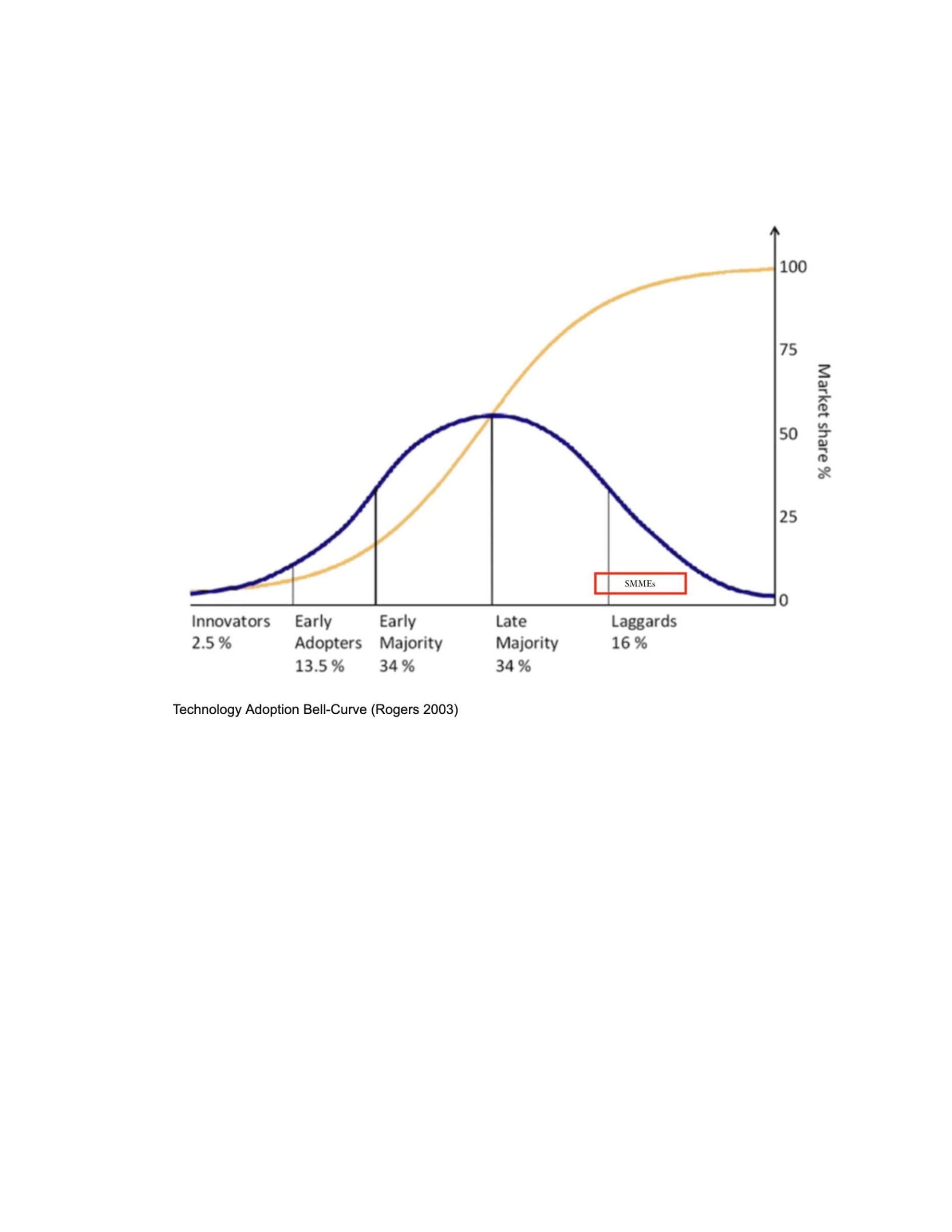
Figure 1.1
Rogers’s (2003) Bell Curve and Manufacturing SME Positioning
Note. This figure depicts the technology adoption bell curve. The blue line represents a
typical probability normal distribution with adopters distributed among the quartiles. The
golden is the cumulative distribution totaling the percentage of market share composition.
The area assigned in the red box correspond the positioning of the small-medium
manufacturing enterprises (SMMEs) in the bell curve.
Cloud computing adoption is one technology strategy involving changes in how
businesses process information. Organizational leadership requires planning to modify
the existing ways businesses process and store data (Karunagaran, 2019). Leaders in late
8

adopter organizations must deal with a natural reticence of the organization’s personnel to
react to the change (Ozusaglam et al., 2018). One key point of this study was to analyze
leadership actions leading to technology adoption in such organizations.
Raut et al. (2021) suggested that manufacturing SMEs challenges for CC adoption
focusing on “in depth cross cases” for data analytics can mitigate risks and improve
SME’s supply chain flexibility (p. 4). Kaymakci et al. (2022) pointed out the need to
collaborate in the research to add different viewpoints generated from case analysis
involving CC related machine learning solutions and the ability to improve
manufacturing SME’s decision criteria to choose among CC providers. Moeuf et al.
(2018) noted that further research is needed in the CC space to make big data analysis
more accessible for SMEs by developing straightforward, practical methods. These
methods should detail the steps for implementation, specify the necessary techniques and
tools, and clearly define the roles and skills required (Moeuf et al., 2018). Kyriakou and
Loukis (2019) stressed the need for research on how a broader range of firm
characteristics influences the likelihood of adopting various categories of CC services
across different industry sectors, which have unique approaches to technology and
business innovation, and across national contexts with varying levels of economic and
technological progress, as well as distinct cultural backgrounds. Besides the human
resistance to change, leadership in the manufacturing organizations face conditions where
certain processes can become conflicting with new ones getting introduced by the
technology (Tripathi, 2021). One example is the preexistence of antiprograms as reported
by Langstrand and Elg (2012) in the lean manufacturing industry: an existing practice can
work as an antiprogram to the change initiative required to implement new technology.
9

As CC technology advances and automation and features get built in, existing practices
may work as antiprograms and must be redesigned or reconsidered, giving the late
adopters more difficulties in getting the technology adopted in the full capacity.
Another deterring gap faced by leaders is the proficiency of the internal human
resources to manage and use data provided in the CC technology. To become effective in
CC, leaders in the manufacturing industry should rely on data to improve existing
processes and create new ones (Lee & Chien, 2020). Personnel who are capable to use
data and analytics to improve business with technology such as data scientists are difficult
for SMEs to hire, leaving a gap in the organization personnel, which is fulfilled by
consulting professionals hired from the vendors. Developing confidence and trust with
these vendors is another issue that makes CC adoption challenging.
Historical Background
Cloud computing (CC) was initially introduced commercially in the mid-2000s to
make available the excess computing resources not fully used by large e-commerce and
Internet-related organizations during the low hours of their business operations such as
when there are fewer transactions to be processed electronically. CC grew beyond this
initial setup, and business leaders in these technology organizations started to develop
dedicated data centers to accommodate various businesses, now organized as tenants of
the service provider (Kushida et al., 2015). Leaders in the manufacturing organizations
could then benefit from the resources optimization and cost savings promoted by CC,
using a shared pool of computational resources available on demand, improving business
bottom line, and reducing the amount of capital necessary to invest in technology.
10

Beyond these improvements, leadership in large organizations formed an expanded
version of CC as a platform to launch new business capabilities, such as optimizing the
material in-transit process such as lean manufacturing.
Since 2010’s, CC has become the center of leadership strategies for technology
used for business innovation (Subramanian et al., 2021). The ability to store massive
amounts of data and access computation resources on demand have placed CC on the top
priorities of large organizations in the capital structure embracing the digital marketplace.
In CC, for instance, large e-commerce enterprises have been able to store all the clicks a
customer executes in their web commerce interface (Habjan & Pucihar, 2017).
Posteriorly, the organization can use on-demand computer resources to analyze the
customer experience while navigating throughout the organization’s website. Similarly, a
large manufacturer of a customer product can store every deviation of a function in a
product specific part such as when toner is running low in a printer to a valve that has too
much pressure to displace (Frederico, 2021).
The digital age requires computing and storage capabilities to manage business
transactions that are available and scalable on demand because business can change
without considering significant investments or divestments in IT (El-Haddadeh, 2020).
Organizations have a need to adapt to different marketing scenarios and conditions; thus,
controlling liabilities and expenditures associated with their computational network
infrastructure needs can become prohibitive if not considered from a shared resources
perspective as proposed by the CC technology. Cloud computing also enables the firms to
use on-demand software applications and in this way, firms sustain their technological
11

agility as well. These are valuable contributions of CC to the business, generally
confirmed by the firm once CC adoption is in place (Tripathi, 2021).
A manufacturing company’s culture is usually forged on well-established business
processes and the agility necessary to embrace new technology, which are factors that
often clash (Liu et al., 2021). The issues of turning business processes more agile are not
yet relevant on that segment (Habjan & Oucihar, 2017). However, the manufacturing
industry continues to be driven by global competition (Liu et al., 2021). That competition
pushes the industry to trim down production costs while it attempts to streamline business
processes with the upstream or downstream supply chains (Habjan & Pucihar, 2017). This
effort requires the organization’s departments and personnel to become agile in response
to changes, which is a desirable scenario and justifies use of CC technology. By contrast,
the methodology-based approach on best practices and the longterm tenure of a
production line are indexed on change avoidance factors.
The most remarkable points in the cases of anomalies detection are that these
tasks can be done almost instantaneously, requiring a fraction of the necessary capital if
executed on an organization’s own data center premises (Kruger & Steyn, 2020). It is
difficult to reach that level of sophistication because these tasks require an organization’s
internal knowledge to use the CC features and associated human capital necessary to
operate the environment (Liu et al., 2021). In summary, anomaly detection in cloud
computing (CC) is efficient and cost-effective compared to in-house data centers, yet
achieving this sophistication requires significant organizational expertise and specialized
human capital
12

In late adopters of CC, the personnel allocated for rolling technology could be
lagging the knowledge acquired at the actual marketplace stage, requiring extraordinary
efforts to catch up on the more recent technical developments. This fact is an evolving
issue that requires continuous analysis by SME’s leadership as new CC developments and
enhancements take place, new implementation methodology and associated workforce
skills are necessary to be developed in the organization (Liu et al., 2021). In summary,
late adopters of cloud computing (CC) often face challenges as their staff may lack up-to-
date marketplace knowledge, requiring ongoing efforts from SME leadership to adapt to
new CC advancements, methodologies, and workforce skills.
In summary, CC has become central to business innovation strategies, enabling
large organizations to manage vast data and computation needs on demand, making it
essential for both e-commerce and manufacturing sectors. CC allows businesses to
streamline processes and stay agile by offering scalable resources and software
applications without large IT investments, a feature particularly valuable in competitive
industries like manufacturing. However, adopting CC requires organizations to have
specialized knowledge and human capital, and late adopters often struggle to keep pace
with the latest developments, requiring continuous adaptation and workforce
development from leadership.
Deficiencies in the Evidence
In today’s digital world, CC has become an essential aspect of organizational IT
infrastructure (Liu et al., 2021). With technology evolving at an unprecedented rate,
keeping up with the latest developments can be a daunting task. The IT department is
responsible for implementing and maintaining cloud computing technology in the
13

organization (Liu et al., 2021). However, limited familiarity with certain technologies can
increase implementation timelines, and a lack of resources to investigate new
technologies can create difficulties in justifying their use (Shankar et al., 2021).
There is importance to researching CC by industry segments and geographical
regions, not just the size of the organizations (Karunagaran et al., 2021). Researching CC
has considerable value when analyzed from the diffusion of technology standpoint in one
business segment or region (Chonsawat & Sopadang, 2020). For instance, industries
dependent on the digital marketplace—such as e-commerce retailers or business services
platforms that operate on the Internet—deploy technology as their immediate strategy
(Shankar et al., 2021). The leadership in these organizations follows a steeper learning
curve because the business operation’s dependency relies entirely on computing
infrastructure (Shankar et al., 2021).
To be innovative, leaders in manufacturing organizations need to leverage
technical capabilities with a certain degree of experimentation and dynamism that
opposes their organization’s culture (Garzoni et al., 2021). Future research about
leadership changes that promote technology adoption suggested in Kyriakou and Loukis’s
(2019) findings exert the need to address the lack of experimental practices in
manufacturing. For the operational areas of the MSMEs attempting to adopt technology,
Liu et al. (2021) pointed out factors to be analyzed by further research on MSMEs, such
as the difficulty of defining organization’s goals for establishing technology adoption
criteria.
One key element of CC adoption is the construction of relations and external
dependencies with CC providers (Chen et al., 2016; Liu et al., 2021). Their research has
14

pointed to the transposition of roles between the organizations’ IT departments and the
CC vendor regarding the operations of a new system in the cloud. Regarding the
manufacturing SMEs, Saniuk and Grabowska (2021) referred to additional factors such as
the cost of consulting services in the field of new technology, the ability to determine the
appropriate return on investment, difficulties in crafting a compelling business
justification, and the CC implementation timeline and disruption. These gaps in the
manufacturing industry SMEs’ understanding must be analyzed by further research
(Saniuk & Grabowska, 2021). As SME leadership begins to work with the CC vendor,
they realize that the IT roles have been transposed (Liu et al., 2021). The vendor takes
charge of the operations of the new system in the cloud, leaving leadership and the IT
organization to focus on the areas of the business requiring improvements.
Advancements in the CC are ongoing, and a common standard for developing
cloud services or application portability has yet to be achieved (Fahmideh & Beydoun,
2020). The CC adoption analysis results in a mechanism for migration classification,
defining different layers as migration units (Gupta et al., 2022). The migration units could
be classified as the migration of the entire organization to the cloud, the applications
stack, the data tier, or just the business logic tier (Fahmideh & Beydoun, 2020). Future
research needs to focus on subsets of the different migration classifications and adoption
criteria that could benefit MSMEs, considering the vast differences to cover in just a
single study (Aligarh et al., 2023; Fahmideh & Beydoun, 2020). In this research, there is
the collaboration with MSME leadership and IT organization because they are the ones
who have the most direct experience with these challenges. By analyzing the specific
15

implementation, the research ensures the results are grounded in real-world experience
and address the most pressing issues facing these businesses adopting cloud computing.
Kyriakou and Loukis (2019) and Ali (2023) reported on the need for more
research and the effects of only a few firms’ characteristics on CC adoption have been
investigated. Their research indicates a limited understanding of the firm’s characteristics
and the internal environment conditions for adopting CC. Ali (2022) researched the
propensity for the organization to adopt the cloud and found additional research is
necessary to analyze the perception of CC usefulness among organization individuals and
the effective adoption of CC.
Although CC is a popular technology strategy, the technologies enabled by CC are
still neglected by MSMEs, suggesting that use cases in specific industries are yet to
provide knowledge in these areas (Aligarh et al., 2023; Moeuf et al., 2018). The
deficiencies in the evidence confirms that the additional initiatives business leaders can
employ to improve adoption are underdeveloped or unknown in the MSME space (Saniuk
& Grabowska, 2021). These researchers pointed to the analysis still needed in the
stratified marketplace of manufacturing industries concerning CC technology adoption.
Problem Statement
The general problem SME manufacturers are experiencing is that they are
becoming less competitive in their industry segment because leadership is not able to
adjust the organization to implement CC. Cloud computing is an enabler of other
technologies that leads to product and production innovations (Ahn & Ahn, 2020;
Gangwar et al., 2015; Liu et al., 2021; Mittal et al., 2020; Subramanian et al., 2021;
Sukathong et al., 2021). Without the CC capabilities, MSMEs cannot respond to
16

marketplace demand, such as improving product quality or production processes (Aligarh
et al., 2023).
The expertise necessary for business leaders in manufacturing MSMEs to adopt
CC technology is limited (Aligarh et al., 2023). A knowledge gap exists between MSME
leadership and the larger manufacturing organizations leadership where most of the CC
technology is developed (Karunagaran et al., 2019). There is an ongoing failure rate in the
MSME for projects adopting CC (Khalil, 2019).
MSME IT departments have less resources than large organizations, and these
department are the ones driving the technology developments (Chonsawat & Sopadang,
2020; Karunagaran et al., 2019; Koh et al., 2019; Tica et al., 2021). Technology is the
significant driver for product and production innovation (Ali, 2022; Habjan & Pucihar,
2017; Koh et al., 2019). The use of CC is the de facto enabler to other technologies that
drive innovation in the manufacturing industry such as the smart manufacturing and the
lean manufacturing processes (Liu et al., 2021; Subramanian et al., 2021).
Another important context is to analyze regional factors of CC adoption
(Frederico, 2021). Some changes in the supply chain where specific organizations reside
or do business are very recent; momentous opportunities are created or reduced from the
stages they were before (Gupta et al., 2022). Applied technology originated from CC
streams such as IoT, big-data analytics, learning, and flexible manufacturing management
software in the cloud, which are helpful to capitalize on the changes and improve the
business performance forward (Tripathi, 2021). MSME leadership has opportunities to
develop upon the new work streams created by CC adoption to gain the edge necessary to
capitalize on the changes. However, preparing for these actions requires them to break
17

some of the barriers in assessing technology (Gupta et al., 2022). Some of these barriers
are typified as the solution’s fitness to the manufacturing environment, the limited
familiarity with these solutions, the nontangible returns on investment, and flexibility,
where research has yet to be conducted (Kaymakci et al., 2022).
The nonadoption of CC can have a wide spread negative effects on a
manufacturing organization (Aligarh et al., 2023). The specific problem is that MSME
leaders face innovation stagnation without CC adoption, hindering their ability to lead the
organization to adapt to new market conditions (Ali, 2022). The current study explored
leadership skills in transforming organizational culture to provide the necessary resources
to close the knowledge gap between MSME personnel and their larger counterparts in the
manufacturing industry. The expected competencies in addressing internal capabilities to
develop and maintain innovation cycles position the MSME to become more competitive
in their industry segment.
Audience
This research analyzed the leadership of MSMEs in the Pacific Northwest region
of the United States; however, it extended to other regions and nations facing the
challenges of the modern days’ business environment. Personnel involved in technology,
business strategy, and IT functions may understand how factors disclosed in this analysis
may affect the adoption of CC technology and were also part of the audience.
CC provider product managers who are attempting to understand industry
sentiments and the correlated organizations’ deficiencies form another part of the
intended audience (Ali, 2022). Results of the study can be used to improve service
offerings tailored to MSMEs. As the technology changes the business process execution,
18

service providers can benefit from innovating their offerings and introducing components
tailored to specific use cases presented in the research.
Specific Leadership Problem
Business leaders directly influence the outcome of technology implementation and
the digital transformation of a business (Ali, 2022; Trenerry et al., 2021). Leaders who
perform in the transactional space with glares of a laissez-faire outcome are less likely to
succeed in leading organizations in the technology implementation fields (Aligarh et al.,
2023). Conversely, transformational leaders encourage the personal accomplishment of
individuals, which is necessary to break through barriers associated with innovation
(Garzoni et al., 2021).
In the case of CC technologies, leadership can assume the responsibility to focus
on the employees’ experiences and widespread learning mechanisms (Ross, 2010). For
instance, leaders may encourage workplace learning and development given the technical
depth necessary to achieve transformation (Ali, 2022). That learning will facilitate a
broader organizational change in the context of CC technology (Habjan & Pucihar, 2017).
Another aspect of leadership in times of innovation is the need to forge new
competencies employees will require once a new manufacturing process becomes
implemented (Aligarh et al., 2023; Koh et al., 2019). For example, an existing company’s
process could involve visual inspections to assert quality in an assembly line. With the
advent of sensor data, this visual activity can be replaced by analyzing data coming out of
a data stream stored in the cloud and confronting the mean and standard deviation of
different metrics, improving the quality of the process (Liu et al., 2021). Identifying and
crafting new roles, duties, and expectations, and arriving with the right workforce
19

composition, requires training existing employees versus hiring or outsourcing and are
vital developments for the organizations’ leaders (Liu et al., 2021).
Purpose of the Study
The purpose of this study was to identify factors that MSME leadership can use to
support their organization in adopting and embracing CC technology, enhancing
competitiveness (Ali, 2022). The study addressed the knowledge gap between MSME
personnel and their larger counterparts in the manufacturing industry, addressing the
internal capacitation to develop and maintain innovation cycles (Ali, 2022). The research
involved the analysis of MSME technical and business personnel abilities to address
complex problems associated with the technology adoption to support business strategies
and the respective development of CC vendor relationships to sustain the continuous seek
of innovation (Kaymakci et al., 2022). In doing this analysis, the results of this study
could benefit MSME leaders to understand and implement best practices for CC adoption
from the human capital development perspective, internal and external to the organization
(Garzoni et al., 2021; Gupta et al., 2022; Kaymakci et al., 2022; Liu et al., 2021; Saniuk
& Grabowska, 2021).
Personnel in the IT organizations supporting manufacturing businesses become
more diligent, such as identifying facts that lead to a long-term relationship with
providers, the tradeoffs the organization should check when exchanging business
knowledge, and data in multitenant computing infrastructure (Chen et al., 2016).
Similarly, leadership should develop and infuse concepts of innovation cycles, developing
the personnel to become culturally capable to execute experimental changes, assessing
those, discard or promote them further (Gupta et al., 2022).
20

Methodology and Research Design Overview
A qualitative research methodology, case study design has been used for the
purpose of this research study, when considering the investigation on how leaders
develop practices to influence their internal personnel to innovate. According to Merriam
and Tisdell (2016), case studies provide an in-depth way to get a deeper understanding of
the situation. Also, a single case study is preferred to a multicase study. Yin (2017)
provided an example in which a single case study was a watershed case on innovation
because the group studied was predisposed to change.
Technology adoption is a process, with the adopter progressing from the oblivion
of the technology to embracing it and considering it a necessity (Saniuk & Grabowska,
2021). The progression can only occur if the adopter’s organization fully accepts the
technology (Saniuk & Grabowska, 2021). If not, the organization is unlikely to progress
toward wholehearted adoption and remain a reluctant consumer or discard the technology
altogether (Gupta et al., 2022). Theoretical models explain the dynamics of technology
acceptance by proposing certain predictive factors (Gupta et al., 2022). They are based on
quantitative studies built on the responses of organizations’ leadership, IT management,
consulting, and vendors associated with technology development and implementation
(Gupta et al., 2022). Although quantitative research will demonstrate a trend in adoption
(Goertzen, 2017), it will not be able to extract several issues concerning needs, uses, and
limitations from participants, which can be verified using structured interviews with
leadership and parts involved in the organization’s technology adoption (Yin, 2017). The
acceptance factors are derived from the experiences and opinions of the participants and
are mapped against a recognized adoption process, highlighting that current models only
21

partly predict adoption and acceptance (Kaymakci et al., 2022). Therefore, a qualitative
design was preferable.
Theoretical Framework
The theoretical framework included the diffusion of innovations (DOI) theory
(Rogers, 1962), technology acceptance model (TAM) (Davis, 1989), and
technologyorganization-environment (TOE) theory (Tornazyky & Fleischer, 1990), which
provided a robust foundation for examining CC adoption in SMEs. When applied
specifically to the context of CC, these theories collectively offered a nuanced
understanding of the adoption process by addressing the multifaceted factors that
influence decision making, organizational readiness, and the broader sociotechnical
landscape (Ross, 2010). The study’s theoretical framework, comprising the diffusion of
innovations (DOI), technology acceptance model (TAM), and technology-organization-
environment (TOE) theories, provided a comprehensive basis for analyzing CC adoption
in SMEs by capturing the complex factors influencing adoption decisions, organizational
preparedness, and the wider sociotechnical environment.
DOI Theory and CC Adoption
In the context of CC adoption, the DOI theory offers a valuable perspective on
how cloud technology spreads within and across organizations. Rogers (1962)
conceptualized DOI as the process by which innovations are communicated through
certain channels over time among members of a social system. For CC, this diffusion
process is shaped by factors such as perceived advantages over traditional on-premises
infrastructure, the compatibility of cloud services with existing organizational practices,
and the observability of positive outcomes from early adopters.
22

SMEs often adopt CC at different stages depending on how the technology aligns
with their needs and the perceived risks and benefits. For instance, early adopters may
pursue cloud solutions to gain a competitive edge, leveraging the flexibility and
scalability of CC to drive innovation and operational efficiencies. Conversely, late
majority and laggards may only adopt CC once the technology is well-established,
industry peers have demonstrated successful use cases, and potential risks have been
mitigated. In this regard, the DOI theory provides insights into the sequential nature of
cloud adoption, which is particularly relevant for SMEs with limited resources and a
cautious approach to technological investment (Ross, 2010).
The DOI theory also highlights the role of social networks in influencing cloud
adoption decisions. In SMEs, decisionmakers often rely on external sources such as
industry associations, consultants, and peer networks to gain insights into the potential
benefits and pitfalls of CC. The theory suggests that when influential peers adopt CC and
share their experiences, it can accelerate the diffusion process in an industry, encouraging
more SMEs to explore cloud-based solutions. Thus, understanding the dynamics of
innovation diffusion is essential for policymakers and industry leaders aiming to promote
cloud adoption in the SME sector (Picoto et al., 2021).
TAM and Behavioral Attitudes Toward CC
The TAM framework, developed by Davis (1989), focuses on the behavioral
aspects of technology adoption, emphasizing the roles of perceived usefulness and
perceived ease of use in shaping user acceptance. In the context of CC, TAM can be
applied to understand how SME leaders and employees perceive cloud technologies and
how these perceptions influence the decision to adopt cloud solutions.
23

Perceived usefulness in the case of CC refers to the extent to which
decisionmakers believe cloud services will enhance business performance by improving
operational efficiency, reducing costs, or enabling access to advanced technologies like
artificial intelligence (AI) and data analytics. If organizational leaders perceive CC as a
tool that can deliver tangible benefits, they are more likely to advocate for its adoption
(Tornazyky & Fleischer, 1990). Conversely, if cloud technology is perceived as merely an
incremental improvement or as having limited relevance to core business activities, the
likelihood of adoption may be lower.
Perceived ease of use pertains to the degree of effort required to implement and
integrate cloud solutions into existing business processes. In SMEs, concerns about the
complexity of transitioning from legacy systems to cloud-based platforms may impede
adoption, particularly if the organization lacks in-house expertise (Picoto et al., 2021).
Thus, TAM suggests that strategies aimed at simplifying the adoption process—such as
providing user-friendly interfaces, clear implementation guidelines, and robust customer
support—can positively influence SMEs’ willingness to adopt CC (Ross, 2010).
The TAM framework also emphasizes the role of subjective norms, which can
include organizational culture and leadership attitudes toward technology. When leaders
in an SME demonstrate a proactive stance toward technological change and foster a
culture of innovation, employees are more likely to adopt cloud solutions enthusiastically
(Picoto et al., 2021). Therefore, TAM provides a useful lens through which to analyze not
only the individual perceptions of cloud technology but also the broader organizational
behaviors that support successful adoption.
24

TOE Framework and CC
The technology-organization-environment (TOE) framework provides a
comprehensive approach to understanding cloud computing (CC) adoption by
considering the broader context within which such adoption decisions are made. It
encompasses three key dimensions: the technological context, which assesses the
available technologies and their relevance; the organizational context, which evaluates the
internal readiness, resources, and needs of the adopting organization; and the
environmental context, which examines external factors such as industry trends,
regulatory pressures, and competition (Tornazyky & Fleischer, 1990). By addressing
these critical areas, the TOE framework offers valuable insights into how various
influences shape an organization’s approach to adopting and implementing new
technologies
Technological Context. The technological context includes both the existing
technologies available in the organization and the characteristics of the new technology
being adopted. CC adoption involves evaluating the technical compatibility of cloud
solutions with the SME’s existing systems, the relative advantages of cloud services over
traditional IT infrastructure, and the perceived risks associated with data security and
service reliability (Ross, 2010). For SMEs, the technological benefits of CC—such as
scalability, cost efficiency, and access to advanced computing resources—are significant
factors influencing adoption. However, technological risks, including concerns over data
privacy, vendor lock-in, and regulatory compliance, may act as barriers to adoption (Raut
et al., 2021). Therefore, the TOE framework emphasizes the need for SMEs to perform a
thorough technical evaluation before committing to cloud solutions.
25

Organizational Context. The organizational dimension includes factors such as
the firm’s size, structure, and resource availability, as well as leadership support and
employee readiness. In the context of CC adoption, organizational factors significantly
impact the firm’s ability to integrate cloud technologies successfully. For instance, larger
SMEs with more resources may find it easier to invest in cloud training programs or to
hire specialized IT staff, while smaller firms with limited budgets may struggle to allocate
resources for cloud migration. The framework suggests that leadership support is crucial
in driving cloud adoption because leaders can champion the change process, allocate
resources, and establish a clear vision for how cloud technology aligns with business
objectives (Raut et al., 2021). Additionally, fostering an organizational culture that
embraces change and supports continuous learning is essential for overcoming resistance
to cloud adoption.
Environmental Context. The environmental dimension encompasses external
factors that influence the organization’s technology adoption decisions, such as
competitive pressures, regulatory requirements, and technological trends. In the case of
CC, the rapidly evolving landscape of cloud services and the increasing reliance on
digital transformation in many industries creates significant external pressure for SMEs to
adopt cloud solutions. Competitive pressures may drive SMEs to pursue CC adoption to
keep pace with industry leaders and to meet evolving customer expectations. Regulatory
requirements concerning data storage and privacy may also necessitate the use of cloud
services that offer compliance with specific standards, influencing adoption decisions.
The TOE framework highlights the importance of considering these external factors when
26

planning for cloud adoption because they can significantly impact the timing and
approach of implementation.
Integrative Analysis for CC Adoption. By integrating the DOI, TAM, and TOE
frameworks, this research provided a comprehensive analysis of CC adoption in SMEs,
addressing the individual, organizational, and environmental factors that influence
adoption (Subramanian et al., 2021). The combined application of these models allows
for a more holistic understanding of the complex process of adopting cloud technologies,
as each framework brings unique insights to different aspects of the adoption journey.
The theoretical framework’s application to CC adoption not only informs practical
strategies for SMEs but also contributes to the development of a more robust theoretical
understanding of how CC can be integrated effectively into business operations
(Subramanian et al., 2021). This integration offers a roadmap for researchers and
practitioners to identify key factors driving adoption, anticipate potential barriers, and
design interventions that facilitate successful CC implementation across diverse
organizational contexts.
Research Questions
The research questions were formulated considering the mix of the three models:
(a) TAM, which includes behavioral analysis toward the technology adoption; (b) TOE,
which provides the context where the CC technology is applicable to the organization and
its operating environment; and (c) DOI, where the timing of the organization and
technology are assessed and contrasted. The following research questions guided this
study:
27

Research Question 1: How can SME leadership in the manufacturing industry
enhance the organization’s personnel knowledge to adopt CC technology?
Research Question 2: How can SME information systems managers mitigate
internal stakeholder concerns of trusting data and business processes
implementation to a third-party CC provider?
Research Question 3: How can the SME leadership in a manufacturing industry
organization use CC as a strategy to create business innovations?
Case Study Design
Based on the research questions, a qualitative study was a better fit for the
research because the knowledge developed pertained to concepts, processes, thoughts,
and experiences assessed (Yin, 2017). The case study design is a research design that
covers contextual conditions, assuming they are relevant to the cloud-technology
adoption, attempting to clarify the phenomenon and context (Cunningham et al., 2017). A
case study departs from existing theories and concepts by analyzing specificities of a
situation and the complement of existing theories, sometimes developing new concepts
and understandings (Yin, 2017). It focuses on gaining in-depth knowledge about the
realworld subject, explaining how or why a particular observed phenomenon occurs and
potential factors that led to the situation. For this study, the case study research design
allowed me to explore the organizations interventions, relationships, communities, and
programs supporting the analysis of various causes that led to technology adoption.
Considering MSMEs, a case study provides a detailed understanding and build
upon additional knowledge when attempting to address the research questions. These
questions require deep investigation into dynamic, experimental, and complex processes
28

and areas of expertise (Vissak, 2010). The questions led to an attempt to find explanations
on how specific concerns in the adoption of CC technology can be addressed in an SME’s
environment; therefore, the case study design was better for this research.
The case study design allowed me to collect evidence in three forms: (a) a survey
with a predefined set of questions for participants about CC use by the organization; (b)
interview transcripts and the coding of terms and categories presented on the responses;
and (c) documentation available in the field such as an organization’s manuals, guides, or
practices developed on the use CC technology and CC vendor and consulting
organizations’ related materials. The order of collecting the information was relevant to
ensure the case study remained a distinctive form of empirical inquiry (Yin, 2017).
Study Limitations
When conducting research, it is crucial to acknowledge potential limitations that
could impact the study’s outcomes. Time constraints may affect the ability to locate and
identify suitable participants. This fact will reduce the ability to identify some key factors
addressing the adoption, for instance, the organization development necessary to embrace
the technology.
Data limitations may restrict the research’s scope. In a case study, confronting the
outcomes of interviews with the available materials is of utmost importance as a means to
address a limitation in this case study. The materials can vary such as documented
process, a change, a technology snippet, or a piece of reusable implementation adopted by
the organization. The absence of such materials may hinder the research from essential
conclusions about the adoption process. In this case, preconceived notions about adoption
29

processes, not endorsed by other data sources, were removed from the research analysis
process and from the conclusions drawn.
Finally, considering scope limitations, this study will not examine early adopters’
organizations and their respective challenges. The analysis to be considered a late adopter
starts with the principle that organizations in more mature work environments have
successfully implemented cloud computing for several years. Late adopters correspond to
organizations that have started their implementation with 2 years of research. The careful
consideration of these limitations will help researchers understand this study’s parameters
and develop more informed conclusions with confidence.
Contrasting with the research limitations, mitigation can be achieved using
multiple strategies. Using the triangulation of the data sources such as data collected from
the interviews, observations, and documentation will promote a comprehensive
understanding of the adoption process, reducing the sample size and selection bias
limitations. Participant selection purposively ensures the representation from various
backgrounds and experiences related to adoption. This approach helps in gathering
diverse and relevant data (Maher et al., 2020).
Acknowledging biases, documenting them, and establishing a social rapport with
the interviewees may mitigate the social desirability and researcher biases. Encouraging
honest and candid responses reduces the likelihood of the social desirability bias,
regularly reflecting on the documented bias to minimize its potential during data
collection and analysis (Merriam & Tisdell, 2016).
30

Study Delimitations
This case study offers a single unit of analysis for the organization where the
interviewee leads or manages the process to adopt CC technology. Existing conditions
associated with business processes, the maturity of the knowledge about the new
technology, and conditions arranged with the vendor are specific to the case in the
analysis. Transferability should not be conceived beyond the boundary conditions of this
research (Yin, 2017). The understanding and knowledge gathered by the development of
themes associated with responses from the interviewee should remain in the scope of the
questions formulated as part of this research process (Maher et al., 2020). Therefore,
findings and results may not necessarily generalize to other subjects, locations, or time
periods.
One important delimitation comes from expanding the study to cover different
research questions. There is a large degree of subjectivity associated with the
development of the interview process that attempts to maximize the interviewee
experience (Yin, 2017). The research focused primarily on addressing the questions. The
correlations among the terms and categories in the analysis of the interview transcripts
were delimited by the research questions (Merriam & Tisdell, 2016).
The analysis of existing literature has pointed out the gap in knowledge about late
adopters of CC, especially toward SMEs in the manufacturing industry (RamónJerónimo,
2017; Raut, 2019). Therefore, this research was delimited to expand the knowledge on
that segment of industry, attempting to identify the factors associated with the leadership
behaviors and attitudes in adopting CC technology in a case on that segment.
31

In the same scope, another delimitation remounts from the geographical context
associated with the industry. Kyriakou et al. (2019) pointed out the regional characteristic
of the different segments of industry and their significance in terms of innovation and
technology adoption, with some organizations in specific geographical areas performing
distinctly over other areas. This study attempted to focus in one specific geographic area
and was delimited by the Pacific Northwest region of the United States.
Definitions of Key Terms
Artificial intelligence. AI is a logic-based technique supported by ML that allows
the interpretation of events to support the automation of decisions and actions (Koh et al.,
2019).
Cloud computing. CC is a service intended to make computing resources
available, such as servers, storage, networking, and application software (e.g., databases
by subscription; Ross, 2010). It is built on the promise to create economies of scale and
provide availability of resources on demand, allowing businesses flexibility to scale
services when necessary. Operational CC refers to the practice of managing, deploying,
and running applications and services in a cloud environment to ensure they are always
available, scalable, and performant (Gangwar et al., 2015). Some of the daily operational
aspects of cloud infrastructure are resource provisioning, monitoring, maintenance, and
automation. The operational goal is to optimize the use of cloud resources, enable rapid
deployment cycles, and ensure resilience through techniques like auto-scaling, load
balancing, and fault tolerance (Ross, 2010). Operational CC aims to deliver seamless and
efficient technical operations by leveraging the dynamic and flexible nature of cloud
32

platforms, enabling organizations to respond quickly to changing business needs and
demand fluctuations (Raut et al., 2021).
Cloud migration. Cloud migration is the process used by an IT department to
move compute resources, data and application software from an on-premises
infrastructure to a cloud computing services provided by one or more vendors (Fahmideh
& Beydoun, 2017).
Diffusion of innovations. Rogers (2003) synthesized DOI, a theory of innovations
adoption, defining the characteristics of the innovations and cross referencing it with the
characteristics of the individual adopters of an innovation.
Infrastructure as a service. IaaS is a CC technology offering standardized and
automated computer, storage, and networking resources provisioned to a customer on
demand (Ross, 2010).
Information technology. IT is a generic term describing any computer, storage,
and associated network used in a business, with capabilities to create, process, store,
secure, and exchange any form of data (Ross, 2010). It can also be interchanged by a
department in charge of such tasks.
Internet of things. IoT is a network of manufactured devices with embedded
technology to sense and emit data about the device’s internal state (Subramanian et al.,
2021).
Machine learning. ML is a composition of statistical algorithms used to learn from
operations that are guided by lessons from existing information (Koh et al., 2019).
Manufacturing industry. The manufacturing industry refers to organizations
transforming goods, generating products that vary from food, machinery, clothing, and
33

electronics to chemicals, drugs, and petroleum-derived products (Koh et al., 2019). The
first area where the result of the production process is a physical unit or part is considered
discrete manufacturing and the second area is called continuous manufacturing,
differentiating their transformation processes.
Small and medium enterprises. For the context of this research, SMEs are
organizations where the aggregate number of employees, revenue, and operational costs
fall into the first quartile (i.e., the lower 25% of the distribution) for a specific
geographical region such as the Pacific Northwest region of the United States (Small
Business Administration, 2021; U.S. Census Bureau, n.d.).
Software as a service. SaaS is a CC offering where software applications based on
a set of standard code and data definitions owned by a provider are provisioned to a
customer in a pay-by-use basis (Ross, 2010).
Technology acceptance model. TAM is a model of technology acceptance
developed by Davis (1989) that incorporates the behavioral elements to the perceived
measures of adoption such as ease of use and usefulness.
Technology organization environment. TOE is a framework that attempts to
describe technology adoption using contextual elements such as the technology
application itself, the organization, and the organization’s environment (Tornatzky &
Fleicher, 1990).
Summary
CC technologies in more conservative business environments are mainly
considered as part of a cost-cutting strategy. This study revealed other perspectives for
these business leaders that can create value on intangible business metrics such as
34

flexibility, scalability, and new functionalities to add to business processes. These facets
will help various stakeholders inside the organization with tasks that may be very
demanding from a resource perspective, such as the research and development of new
products and services. Parallel to the internal personnel in the organizations, researchers
in the SME manufacturing field would benefit from the understanding of specific use
cases reported in the research when analyzing the benefits or assessing the risk for
migrating systems and applications to the cloud.
The case study methodology offered an opportunity to explore how technology
can support innovation, specifically tailored to the innovation in business processes for
small- and medium-sized manufacturing organizations. In this context, the case study
aimed to confirm and expand on the known parts of the theory and observations
associated with business innovation promoted by technology through the coding and
development of themes gathered from interviewee responses.
This study also highlighted the contextual additions necessary to understand the
adoption of CC technology. The case study revealed the concerns building upon the areas
that intersect business and CC providers and the impact in business execution,
considering the importance and number of business processes migrating to the cloud. The
relevance for one organization will stay in its boundaries, and the resulted analysis can
expand and elucidate new aspects of adopting CC technology in the manufacturing
industry.
CHAPTER 2: LITERATURE REVIEW
This study aimed to understand the technology adoption—more specifically, the
cloud computing (CC) adoption—by small and medium enterprises (SME) in the
35

manufacturing industry. A comprehensive examination of the adoption of technology and
fundamental theories, tracing down to the CC adoption in the most contemporaneous
field of research, is analyzed throughout the literature review. The difficulties in
extending the theories and practices to small organizations that do not own significant
budgets for such investments and necessary knowledge are pointed out, and the gaps in
the actual research are identified.
The essential point to notice in the characteristics of the manufacturing industry
segment on technology is the pace of adoption relative to its integration into existing
business processes (Wielki, 2016). The perception is SMEs in this industry segment are
late adopters of trends and are reactionary to radical changes (Haddadeh, 2020). The
reaction is more of a reluctance to conform to a different and new business process
integration. With these aspects in mind, the literature search was specifically tailored to
the potential of the questions formulated. The literature search involves the nature of the
target systems to be adopted in the CC technology, key targeted metrics that would lead to
the adoption, and the presence of a vendor that would implement CC securely and
effectively (El-Haddadeh, 2020; Maqueira-Marín et al., 2017; Wielki, 2016).
Technology Adoption, CC, and Small-Medium Manufacturing Organizations
Adoption of innovation theories has remounted from mid-1990’s, incorporating
aspects of behavioral sciences to understand the consumers’ and organizations’ desires.
Davis (1989) and Rogers (2003) started these studies by associating the human
experience with the use and perception of benefits that one technology could bring to
individuals. The authors pointed out the classification of adopters at different stages of
the technology, such as early adopters, majority adopters, and laggards. Considering the
36

timing for different organizations to embark on the CC innovation journey, organizations
attempting to improve the operations or assessing the compatibility of processes and
internal norms associated with one technology can be considered late adopters or laggards
on the actual days.
The purchasing, maintaining, and administering of computing assets requires
significant financial and manpower resource investment for a business. Ross (2010)
started to address the factors that influence technology adoption by analyzing the cost
effectiveness, reliability, security, and perception of the need to augment the computing
capacity by the information technology (IT) organization leaders. Thus, the perception of
management about these businesses’ benefits is one of the critical indicators for CC
adoption. However, Davis (1989) attributed the adoption of technology to its perceived
usefulness and ease of use. Both authors used behavioral science ideas to formulate the
basis for the adoption of technology and somewhat settle the ground for existing theories
for CC adoption.
Rogers (2003) ideated several concepts associated with innovation, which were
later applied to technology and its adoption by different segments of society. In some
ways, Rogers’s theory has extended the earlier development and knowledge surrounding
social and behavioral sciences to build the most recent models that researchers in
business technology have leveraged. Technology adoption starts from cognitive factors
associated with the benefits of adoption, passing to the knowledge acquired while
deploying and using it as an innovation mechanism. The case for CC technology is
evident in the utilization factor of the technology more than the recognized out-of-box
benefits, sparking the need for constant research in that field. As organizations mature in
37

the use of technology and service providers augment their capacitation, the cloud
adaptiveness measures that describe the organization’s technological and structural
readiness to adopt CC technology require constant assessment. Schneider and Sunyaev
(2016) complemented that vision by portraying management comprehension of the
changes in the “organizational structures, interdependencies, processes, and habits” (p.
11) necessary for effective use of the technology. However, “empirical insight into
cloudsourcing decisions remains scarce” (Schneider & Sunyaev, 2016, p. 11).
Innovators seek to differentiate in their marketplace from the technology,
establishing the cumulative set of competencies early that will be incorporated into their
business processes (Clegg, 2018). Innovators will build up the practices, incorporating the
new technology in the transformation chain of the manufacturing organization in an
attempt to benefit from new products or service offerings in the market, eventually
creating a trend. The innovators are the prominent organizations in the industry segment.
One other aspect associated with technology is the association of CC technology
and open innovation (OI) technology toward the reuse of open source components in a
shared knowledge framework (Chang et al., 2019). In a more interconnected world,
manufacturing organizations are subject to obsolescence if they do not adapt to standards,
and CC is a catalyst for the standardization of processes. Ishikawa and Suzuki (2018)
assessed the use of OI on influencing the product manufacturing quality in the electronics
segment in the Japanese marketplace. They pointed out organizations adopting open
frameworks have a better potential to enhance the creativity for new products and
improve the company’s operations. This all leads to reduced costs by automating specific
parts of industrial processes and tasks, such as predictive maintenance. While innovative
38

technology is prevalent today, businesses often lack the appropriate application to meet
specific needs (Ali, 2022).
CC Adoption Theories
CC adoption has been dissected on multiple marketplaces and in different
industries. These studies are unique because they take place in one point of time and have
a single scope. Most of the studies have covered a country or specific region, specific
type of industry, and specific size of the organizations. Therefore, there is a need to
continuously analyze the development of industry segments, finding actual factors
leading to the adoption of CC and what may have changed in the industry’s recent
development.
Wielki (2016) explored the facts of cloud-based services adoption by SMEs,
attempting to become more competitive, attracted by cost reduction facts. Companies are
attracted to the reduction of IT operational costs, faster innovation cycles, and increasing
agility to build new business models. Despite the target improvements, challenges
associated with systems reliability, data privacy, and migration process can impose
implementation hurdles, dealing with technical issues and organizational and legal issues.
One key aspect that would complement Wielki’s research is that SMEs in the
manufacturing industry lag their counterparts in other sectors, such as service industries,
where CC adoption is far advanced due to its earlier adoption.
The adoption of cloud-based services and further understanding of the impact of
this adoption on organizational flexibility have also been studied by Lal and Sangeeta
(2016). They bridged the gap in the research by identifying factors that drive the adoption
of cloud-based services in different forms—such as software, platform, and infrastructure
39

—and exploring the impact of cloud adoption on organizational flexibility. The
fundamental assertion from the research is the need for expanding knowledge on the
adoption factors, with a simple conclusion that services preclude different levels of
engagement between the organization and its cloud provider. The involvement and use of
technology transcend packaged software available on the Internet through a complete
migration of systems controlling day-to-day business process execution in a multitenant
environment. Therefore, there is a need to devise better dimensional parameters for the
adoption analysis that compare business strategies at different maturity levels associated
with cloud adoption. These parameters could eventually be inferred from the type of
systems and applications a manufacturing organization is targeting to move into the
cloud.
CC adoption factors are related to the perception of systems scaling and the
economics of cost sharing, granting CC adoption theories a terrain to be further
investigated in other functional areas of business. Jede and Teuteberg (2015) offered an
analysis of the available literature and theories up until 2015, positioning the relationship
between CC and supply chain management—the core system used by the manufacturing
industry—under the SaaS offerings scope. The theories’ commonalities reside in the
aspects of the human perception of usefulness contrasting with the knowledge and
difficulties associated with CC implementation.
Technology adoption also occurs in stages. Ross (2010) pointed out adopting one
business trend such as CC is shaped over time. The difficulties found in the early stages
of technology development are systematically addressed and resolved in the following
stages, giving the perception of complexity reduction. Although this observation is
40

accurate for most of the technology development industry, applying it to CC technology
has not been confirmed (Hitpass & Astudillo, 2019). On the contrary, later technology
adopters face more challenges in knowledge and business practices, expanding the need
to complement existing theories and development of use cases tailored to industry
segments where their businesses operate.
A critical point for adoption reports is the ability for applications to be migrated
into the cloud (Fahmideh et al., 2021). Users, over time, have built some familiarity with
existing software application environments, and having the opportunity to continue to use
the same features and capabilities in a system that easily scales to the demand is
considered a positive factor in the adoption (Fahmideh et al., 2021). On the other side of
the analysis, the researchers concluded that the costs of reengineering and operating
applications to run on CC could be prohibitive to small organizations, leaving the
organization leadership with alternatives that lesser palatable to the existing workforce.
Advancements in the CC are an ongoing effort, and a common standard for
developing cloud services or application portability has yet to be achieved, according to
Fahmideh and Beydoun (2020). In this excerpt, they attempt to create a framework to
classify and characterize the approaches for developing services and portability of
applications. The analysis results produce an exciting mechanism for the migration
classification, defining different layers of migration concerning the unit of migration,
such as “migration of the entire organization to the cloud, the whole applications stack,
the data tier, or just business logic tier” (Fahmideh & Beydoun, 2020, p.08). The excerpt
concludes with the direction of future research to focus on subsets of the different
41

classification criteria, considering the vast differences to cover in just a single study.
According to Sobati et al. (2019), SMEs can benefit from the following:
The pay-per-use model of CC, reducing the start-up costs for a new business
venture, some cloud outsourcing models go as far as outsourcing. A complete
business process to a third party cloud service provider, and consequently they
share part of their IS assets through the cloud system. (p. 13)
In their excerpt, a systematic approach to data encryption is developed, noticing the
tradeoffs between data privacy and functionality and efficiency of the cloud solutions.
They concluded that more than just cryptography is needed in the mechanism to impose
the level of data security that makes the organization leadership comfortable with data
breach risks, but the one that trades those risks with the objectives of the cloudcomputing
implementation. Therefore, the data security analysis is particular and unique to the
business and scenario where the CC deployment is taking place (Sobati et al.,
2019).
Gupta et al. (2022) pointed out that “distributed innovation is considered the vital
building block of innovation management” (p. 03). The concept of distributed innovation
systems is a methodology of organizing for innovation, addressing the problem of
“gaining access to knowledge that exists outside the confines of any single company”
(Gupta et al., 2020, p. 05). Gupta et al. (2020) continued and stated, “Distributed
innovation provides organizations an advantage in their business development by
providing cutting-edge technology that feels unobtrusive to the user” (p. 05). The term
innovation system refers to the reality that innovation no longer occurs inside the
confines of a single organization.
The research augments the CC adoption by presenting knowledge management
practices to reduce the problems that originated from innovation streams. Secondly, it
42

attempts to correlate individual characteristics such as gender, age, and race as well as
social influences like performance and effort expectancy, voluntariness, and subjective
norms with the impact on a user’s attitude toward and intention to use a particular
technology (Fahmideh et al., 2021). Fahmideh et al. (2021) also reported on “specific
constructs and items to analyze the acceptance behavior of a particular country or
subcontinent” (p. 11), concluding that these facts can be considered in the analysis of
technology and the acceptance of the model.
Cloud Computing Stage
In exploring the economics associated with CC, Makhlouf (2020) presented a case
study attempting to establish the connections among the cloud transaction costs and
elements that may illustrate the operational business changes derived from the adoption.
Makhlouf (2020) presented some concrete cost variables, such as the transaction
frequency, but also delineated costs not apparent that involved organizational changes
such as the uncertainty, represented by “legal compliance, monitoring, and contract
management” (p. 2). Makhlouf (2020) also developed on the specificity of the technology
and the necessary “business process reengineering, meta-services and change
management” (p. 3).
Following a similar construct to support a sustainable business strategy, Luo et al.
(2018) proposed a study starting from existing technology adoption theories attempting to
present a framework with multiple dimensions such as “complexity, compatibility,
configurability and trialability” (p. 5) associated with CC. The study concluded with
proposed venues for the framework validation, contrasting with a sustainable competitive
advantage, foreseeing CC technology as one of the critical elements that could lead
43

businesses to develop innovative solutions. Gopalakrishna‐Remani et al. (2023) study
explored how the extent of sustainability adoption impacts both environmental and
financial firm performance, highlighting the significance of top management's beliefs and
involvement in sustainability initiatives. They completed the research offering a guide for
management to achieve performance on sustainability.
El-Haddadeh (2020) developed CC benefits for the digital transformation of
businesses. This research provided insights into the adoption of technology among SMEs,
attempting to cover some of the knowledge gaps existing in the literature. From the
business systems perspective, El-Haddadeh attempted to trace the adoption of CC
technology to the organization’s perceptions of creating advantages in business
executions as one of the key elements for adoption.
Bogataj Habjan and Pucihar (2017) examined factor groups attempting to
understand the adoption patterns for CC technology. Although their research was limited
to eastern European countries, their research seems relevant because it developed under
different groups and the relevancy of the size of the organization across these groups was
an indication—or not—for successful adoption. The factor groups in question are the
ones that prioritize different areas of context, such as the provider’s capabilities, value
proposition, customer relationship management, and revenue-cost model. Following the
same lines, Attaran (2017) described the different cloud offerings involving the services,
platform, and infrastructure. This research also contrasted the obstacles to the adoption,
such as the trust in data processing security, inability to respond to audit requests,
potential for a large-scale outage, loss of physical control beyond the traditional concerns
about malicious and abusive insiders, and network security in general. On the counter
44

side, the research offered the rationality for the adoption, such as performance, cost, and
agility. Their research closed with the opportunity for other researchers to create a new
study on CC technology as it emerges as a rapidly evolving technology that companies
are willing to adopt to improve collaboration.
More recent research in the CC field applied to the MI has revealed the
implementation stage is susceptible to enabling other technological advancements such as
the IoT. Liu et al. (2021) proposed the implementation framework that models IoT in the
CC strategy for SMEs. The excerpt included a proposed business development alongside
the development of solutions, encompassing three distinct layers of the framework:
business, technology, and innovation.
There are potential opportunities for organizations to create dedicated internal
structures to leverage new technology segments. The realization of CC technology as an
enabler of other technological fronts becomes evident, in some cases, of the potential to
create business partitions or segments of the business dedicated to the technological
novelty (Liu et al., 2021) or spinoffs (Carrete et al., 2020). For the manufacturing industry
in particular, IoT has been presented as the new edge of CC development. Some
organizations have aligned their internal and external structures to build upon this fact.
However, in MI, stringent safety and environmental standards must be consistently met,
while maintaining high levels of availability and reliability. Consequently, it is essential
to eliminate risks that cannot be clearly assessed (Bortz et al., 2023).
Small-Medium Manufacturing Organizations
Manufacturing SMEs do not have as extensive of budgets for software application
customizations as large organizations have to develop and acquire technology with
45

dedicated technical personnel. Subramanian et al. (2021) pointed out the common
perception that IT tools and applications are expensive and difficult to evaluate. In the
same context, technology-driven applications via the Internet have become predominant
in manufacturing applications such as enterprise resource planning (ERP), a core
component in large manufacturing organizations (Subramanian et al., 2021). A small
organization can become restrained by the large intake in technology, such as ERP
systems, which prominent industry players promote. The knowledge gap among
organizations of different sizes creates inequality in the technology implementation and
use, letting the small players become lagged (Tica et al., 2021).
In summary, large firms find the characteristics of the cloud more complex and
challenging to implement compared to SMEs (Karunagaran et al., 2019). The academic
landscape lacks sufficient empirical studies of cloud adoption at the firm level, indicating
a gap in rigorous, data-driven research that provides concrete evidence and detailed
analysis of how firms adopt cloud technologies (Karunagaran et al., 2019). Consequently,
there is a critical need for more robust research methodologies and large-scale empirical
studies to better understand the determinants, challenges, and impacts of cloud adoption
in organizational contexts. (Karunagaran et al., 2019).
As the integration between the manufacturing processes and IT becomes more
evident in smart manufacturing, SMEs need to devise a strategy to avoid obsolescence of
their processes. Mital et al. (2020) proposed a hierarchical assessment of an SME
organization, starting from the data available on the shop floor and continuing to develop
the business management awareness and readiness to leverage such asset. Their analysis
enforced the idea that innovation derived from technology adoption streams involves the
46

development of a comprehensive business vision, where data about processes and their
components have become very valuable to the organization. The business vision will
follow the need to store and maintain large data assets that can corroborate the need to
invest in CC technology as a form to keep cost, availability on demand, and security
under the organization’s priorities.
Similarly, Moeuf et al. (2018) introduced an “analytical framework for SMEs
attaining the industrial performance towards CC and Industry 4.0” (p. 14). In that study, a
group of technologies represents different means of implementing the desired capacity.
They conclude there is a proximity between the targeted objectives, the levels of
managerial capacity sought, and the technical resources required to achieve them. The
performance indicators that an SME can hope to improve after investing in new
technologies: lower costs, improved quality, improved flexibility, improved productivity
(Moeuf et al., 2018). The study reports that despite the growing number of new tools and
technologies, most are underexploited, if not ignored by SMEs (Moeuf et al., 2018). It
continues with the more exploited areas, mentioning CC as very popular. However, the
technologies enabled by that technology, such as machine-to-machine, big data, or
collaborative robots, still need to be addressed by SMEs. The wide variety of available
technologies requires adaptability from users, especially MSMEs, when adopting new
innovations. Extensive research has been conducted on technology adoption within the
context of MSMEs (Aligarh et al., 2023).
Kaymakci et al. (2022) provided an excerpt for SMEs implementing digital
solutions enabled by CC adoption, such as AI systems. It portrays these capabilities are
often associated with challenges and, therefore, not widespread in SMEs. The study
47

derives a multilevel criteria catalog, summarizing the various requirements of SMEs
regarding cloud computing. In manufacturing, the adoption of cloud computing offers the
potential to improve traditional processes, thus moving into an era of smart
manufacturing with more agile, scalable, and efficient processes (Kaymakci et al., 2022).
Kaymakci et al. (2022) determined the study’s limitations, including the
unpractical assortment of criteria complicating the assessment of suitable cloud solutions
for SMEs. It reports on the absence of a comprehensive system enabling the systematic
selection of cloud services from end-to-end (Kaymakci et al., 2022). The process to
evaluate and rate CC services and decision making based on a practical case is yet to be
determined. It reports that a defined decision system that details the end-to-end process of
cloud service selection for SMEs is yet to be developed.
In today’s analysis, the practical success of a presented decision process is still to
some extent, uncertain and heavily dependent on the quality and accuracy of the service
evaluation and the criteria weighting is performed (Kaymakci et al., 2022). Further
improvements and specifications of the evaluation and weighting could be added, such as
developing concrete standards for each criterion and facilitating the service evaluation
(Kaymakci et al., 2022).
Organization Capabilities, Complexity of Changes, and Vendor Dependency
For many decades, the MI has been the focus of many countries’ economic
strategies, with some countries attempting to increase inputs to develop the economy
while others have been trying to become disruptive in gaining market relevance and
innovation. In either scenario—a developing country or a more advanced economy—the
organization in the MI will need to adapt. Sukathong et al. (2021) indicated integrating
48

advanced technology in existing ones depends on information infrastructure, business
planning, and personnel training. To become effective in using technology, organizations
need to attach a strategy to promote the use of technology to the business plan. This
process involves the leadership creating conditions in the organization for technology to
be assessed and the application benefits to be clearly stated and incorporated into the
forward business practices.
For Gangwal et al. (2015), the leadership in the organization can be reluctant to
adopt CC technology because storing essential data of the company somewhere else
where the company cannot control and access the data is a concern. There are
misconceptions that CC may put the organization at risk by seeping out confidential
details. Beyond the fact that manufacturing organizations are risk averse, they may not
have sufficient knowledge about the implementation of cloud solutions. Delivering the
information and selecting the correct cloud setup is difficult without direction; it requires
the organization to shift the business to cloud-based technology without covering the gaps
in knowledge. Business leaders would have significant reservations with this technology
for performing their business functions without such expertise.
Maqueira-Marín et al. (2017) attempted to prove two hypotheses associated with
the awareness of success cases by the organizations’ leadership on the influence of the
technology providers and public administration, considering the southern Europe region.
This analysis traced the motivational factors that lead organizations of different sizes to
the cloud. On one side of the spectrum, small enterprises can benefit from services
provided by a cloud provider because they do not have the necessary budget and
knowledge to build and maintain their infrastructure. Maqueira-Marín et al. (2017) stated,
49

“Medium and large firms are looking for not just technological suppliers, but for actual
technological partners able to provide support and valuable know-how” (p. 9). Many
organizations rely on strong ties with trading partners for their IT design, implementation,
and operations tasks. The excerpt concluded with the importance of having successful
cases for the public administration associated with the technology provider for the
adoption.
Ahn and Ahn’s (2020) study comprehensively examined the significant
relationship between technology, organizational and environmental context, innovation
characteristics, resistance characteristics, and the intention to adopt cloud-based solutions
such as the ERP system. This study cut very vertically into the CC space because it
analyzed one mainstream system presented in most, if not all, manufacturing
organizations. Ahn and Ahn successfully identified the factors affecting the intention to
adopt cloud-based vertical solutions (i.e., SaaS). The empirical analysis results
demonstrated organizational culture, regulatory environment, relative advantage,
trialability, and vendor lock-in significantly influenced the intention to adopt cloud-based
solutions. In contrast, technical skills, complexity, observability, data security, and
customization had no significant influence on the intention to adopt cloud-based
solutions. Although technical skills and complexity were considered essential variables in
the intention for adoption, the result of the empirical analysis was not statistically
significant in this study. It also pointed out that, with the resistance to the adoption
characteristics, only vendor lock-in was proven to be valid. Data security and
customization limitations, which are generally in question for CC adoption, were
insignificant. This result pointed out where the research attempted to gather further
50

knowledge. Vertical solutions in the cloud—although they require the revitalization of the
organizational culture—can be associated with the risk of using a subpar solution;
therefore, Ahn and Ahn’s research validates the concern about the fear of the vendor
lockdown scenario. Some other standardized systems and applications have yet to be
examined on the aspects that lead them to adoption and the critical capabilities the
business may seek from providers.
Ahn and Ahn (2020) made other significant contributions to CC adoption by
addressing asset specificity (i.e., the dedicated capacity allocated to do business
processing in an on-premises solution). Hence, assets on the cloud are shared and
specificity is low. However, the organization’s balance shifts due to the additional control
necessary to reengineer change management and business processes. The high transaction
frequency of cloud solutions attenuates this cost to achieve. The concept of absorptive
capacity is very similar, denoting the ability to grow data processing without significant
investments. Further investigation is necessary to find out the correlation with the
organization’s competitive advantage.
Kruger and Steyn (2020) proposed the concept of innovation and its role in
delivering commercially viable products, reference is made to an ecosystem that provides
an infrastructure to support ideation, creation and skills development towards innovative
business endeavors. The research found that entrepreneurship is vital for innovation, and
the identification and protection of intellectual property, including patenting, is needed
(Kruger & Steyn, 2020). Therefore, organizations depend on supporting institutions such
as universities and the government to raise technology development and
commercialization funds. The frequent exchange with industrial partners and supporting
51

institutions is crucial to guide supportive actions and funding. Their study also states that
further coordination of activities and resources is required. To address this issue, they
conclude further research can be conducted regarding policy to assist individual
entrepreneurs in their drive to create, make and innovate (Kruger & Steyn, 2020). As the
starting point, an institutional theory approach could be used to expand the focus of
entrepreneurship by using entities in the public space that can unite professionals,
researchers, and policymakers toward entrepreneurship development.
Kyriakou and Loukis (2019) reported on the need for more research, and the
effects of only a small number of firms’ characteristics on CC adoption have been
investigated. They stated this fact has resulted in a limited understanding of firm’s
characteristics and, therefore, internal conditions that favor and promote CC adoption,
which might be quite useful for both CC user and service provider firms (Kyriakou &
Loukis, 2019). They continue with the observation that such understanding would lead to
interesting and practically useful insights concerning the main aspects of CC usefulness
and value potential perceived by firms, as well as the particular ways and forms of CC
utilization they envision (Kyriakou & Loukis, 2019).
In the Kyriakou and Loukis (2019) excerpt, they report that in some of the
examined manufacturing sectors firm’s view, CC is an efficient option for reducing the
negative consequences of technology costs reduction strategies. CC enables them to make
necessary computing infrastructure upgrades to meet new business needs and exploit
emerging technologies without having to make significant investments and with lower
risk. CC is also perceived, but to a lesser extent, as an efficient way of providing the
required technical support for innovations in an organization’s products and services.
52

Furthermore, they conclude CC is also perceived as an efficient way of providing
technical support for process innovations in small firms. Conversely, this argument only
holds for medium and large firms, assuming the processes in these organizations are
usually more complex and firm-specific than smaller firms. They also argue for
increasing the specificity of the critical technology assets in large organizations, marrying
them to the transaction cost economics theory, and reducing the opportunities for and
benefits from outsourcing them.
Manufacturing Systems
The manufacturing industry actual stage of development offers many
opportunities for organizations to evolve and become better prepared for market needs
and competition (Lee & Chien, 2020). New manufacturing concepts are aggregated in
new terminology—Industry 4.0—which comprehends a variety of technologies that
improve and sustain existing manufacturing processes (Liu et al., 2021). For instance, the
additive manufacturing concept uses three-dimensional printing automation tailored to
improve manufacturing models and devise a custom mass production strategy of
components (Sukathong et al., 2021).
The integration between IT data and manufacturing processes and technologies
produces what the market defines as smart manufacturing (SM); most large organizations
have SM but SMEs in this industry have not ultimately deployed SMs (Mittal et al.,
2020). The organization’s maturity on this integration is relevant to the analysis of other
applicable technologies. On one side, manufacturing processes benefit from data
augmentation. At the same time, that increase in data needs to be accounted for on
computation resources and storage, which is the baseline of the CC principle.
53

Raut et al. (2021) pointed out that the existing literature also fails to address the
cause-effect relationships and priority of the barriers to big data analytics, a technology
enabled by the CC adoption, specifically in the manufacturing sector. In the excerpt, they
concluded that manufacturing sectors, such as automotive, electronic components, and
machine tools have different cause-barriers to technology adoption. For instance, the lack
of integration and interoperability is a cause for nonadoption in the automotive and
electronic industries (Raut et al., 2021). However, it affects the machine tool industry.
Similarly, the lack of skilled workforce is identified as a cause by the automotive industry
and an effect in the machine and electronic components industries. All three industries in
this study have identified the most significant barrier attributed to the lack of IT
infrastructure. This barrier is supported further by a lack of interest and support by top
management identified in two of the industry segments analyzed. The excerpt concludes
that the cause-effect relationships can help decision-makers in identifying potential
hurdles from industrial aspects (Raut et al., 2021). The adoption of recent technologies,
like AI, cognitive computing, and the Internet of Things play significant roles in
improving manufacturing firm efficiency. The authors mentioned that the study could be
extended to other industries and regional economies with modifications.
Serey et al. (2023) discussed the advancements in the framework for the adoption
of technology currently required: "Industry 4.0 needs strategic adjustments mainly in
seven objectives (business model, change mindset, skills, human resources, service level,
ecosystem, interconnection, and absorption capacity)". Grasping the strategic adoption of
Industry 4.0 and artificial intelligence is crucial for industrial organizations to remain
competitive and relevant in a continually evolving business landscape.
54

Business Strategy and Dependencies
Like any industry segment, manufacturing has been subject to external factors
such as the economic inflections on the marketplace. The postpandemic business scenario
is one major catalyst of these inflections when production needs to be adjusted to sharply
different outputs in such short periods. Sainidis et al. (2019) attempted to deconstruct the
business strategy for manufacturing SMEs in different influence factors using the last
economic recession scenario in 2008. Emerging from their analysis were several points
that can be used to describe a strategy for fluctuating economic times, such as lean
manufacturing (i.e., the ability to maintain a sustainable ratio on inventory turns and the
reduction in the capital allocated in inventory while increasing marginal returns on
investments). These facets require a detailed and programmatically executed strategy
using systematic data analysis from operations, which can lead the organization to use
more computational resources.
Another relevant factor for the MI is the supply chain output resonance effect
caused by market variability, which is a crucial fact observed during and after pandemics
(Frederico, 2021). The organizations capable of producing demand forecasts, which are
usually large corporations, determine the signals of the production levels of a supply
chain. In the middle of these chains, small organizations are reactionary to these signals
(Frederico, 2021). They require more significant changes to adequately adapt to the new
outputs, often in smaller timeframes to execute upon the changes (Sainidis et al., 2019).
Organizations attempting to manage this ripple effect require a tighter data integration
with upstream and downstream partners in the chain, often leading to the need to support
the business with more computational resources and data exchange over the Internet. This
55

occurrence is presented in Sainidis et al. (2019) as the smart manufacturing concept in
Industry 4.0.
Another business strategy that contains such changes to increase the supply chain
data exchange is creating a diversified portfolio of products (Ramón-Jerónimo & Herrero,
2017). This strategy steers away from a single product or product family manufacturer;
one product segment can offset an increase or decrease in another segment.
RamónJerónimo and Herrero (2017) addressed achieving the production
heterogeneousness where manufacturing SMEs strategy should encompass significant
investments in IT to enable data-driven decisions to evolve the company’s offerings in
different markets situations.
Regardless of business strategy, lean or smart manufacturing, business or
inventory ratio improvements, and product diversification, Chang et al. (2019)
emphasized aspects of organization maturity and adaptability for technology adoption.
Although the maturity depends on human resources policies for the technical
advancement of organizations’ employees (Garzoni et al., 2019), adaptability comes in
entrepreneurial wisdom (DePaoli et al., 2020), where leadership consistently provides an
environment to embrace changes.
Another interesting finding of this research is that firms attempting to support
innovations in their products, services, and processes have a stronger tendency to use CC
for such purposes (Kyriakou & Loukis, 2019). They continued that the tendency is
strengthened due to the familiarization and experience they already have concerning the
use of technology for supporting innovation, which increases their capabilities to search
for, select and then uses effectively relevant CC services.
56

As an example, Kyriakou and Loukis’ (2019) findings indicated that SaaS
providers should improve their offerings so that they can support complex firm’s
processes due to wide geographical scope of activities, or internationalization, or other
reasons, and firm-specific processes, by enabling extensive customization. On the other
side, they concluded that the findings can guide CC provider firms for the development of
new CC services that support additional kinds of strategies, processes and technology
infrastructures (Kyriakou & Loukis, 2019).
The research from Kyriakou and Loukis (2019) finally closes with the further
research required concerning the effect of broader sets of organizations’ characteristics on
the propensity to adopt different categories of CC services in various sectoral contexts.
Aspects being considered are the different attitudes toward technological and business
innovation and national or regional contexts, imposing different economic and
technological development levels and cultures.
Liu et al. (2021) introduced a “framework aiming for SMEs to implement digital
transformation in the manufacturing industry” (p. 3). The proposal addresses aspects of
business, technology, and innovation following a bottom-up approach. It reports a
threestage architecture describing the digital transformation process in a business-driven,
technology-enabled, and innovation-guided context.
On top of the framework, an innovation stage guides the development direction of
technology and business by introducing innovations to both fields. Some innovation
concepts such as partition and integration are proposed to accelerate innovation taking
place in technology and business (Liu et al., 2021). According to Liu et al. (2021),
partition in business simply means to split a part of functions or services from existing
57

products and incubate the one that has a potential to grow into a new business sector.
Moreover, partition in the technology devises splitting a technical solution into distinct
modules to produce various benefits. Conversely, integrating multiple products or
services together may also generate new business values. The excerpt concludes that the
design principles for cloud adoption that come from practical experience (Liu et al.,
2021) can accelerate SMEs in the digital transformation journey.
Summary
CC adoption has been extensively researched through the lenses of technology
adoption theories and business improvement excerpts experience (Liu et al., 2021). For
SMEs in the development stage, this intersection of technology and business creates
many opportunities for innovation. However, late adopters have more significant
difficulties in ramping up and staying on the edge of this technology. The literature
review also assessed the current stage of CC applied to the MI, expanding the knowledge
acquired to develop and implement it as an enabler for other and future technology.
Research documents in the MI point to very dependent concepts and interconnect
to CC adoption, such as the IoT and supply chains (Koh et al., 2019). They also devised
paradigms such as the smart product, the smart machines, and the augment operator as the
leading innovation ideas, permeating the space of innovation. All these excellent
capabilities are very dependent on the adoption of technology, and CC is at the center
stage of this enablement. However, CC needs to be part of an organized strategy to be
achieved.
When addressing business execution issues in the cloud, organizations may be
able to leverage the potential to scale, adapt, and be flexible to changes without carrying a
58

significant burden on budgets to buy CC resources. In a nutshell, cloud resources should
be considered as convenient as procuring commodities in the market, such as utilities and
telecommunications (Feng & Shanthikumar, 2018). To transform these ideas into
practical actions, SMEs in manufacturing need to develop awareness about CC in the
stages for this study. The questions developed for this study attempted to find responses
tailored to the actual moment of the CC technology in manufacturing developed from the
analysis of this literature review. For instance, the company’s system or application asset
adopting the cloud model and the key considerations from a business strategy point of
view was analyzed by this research.
The literature review overviewed information starting from the existing theories
about technology adoption and attempted to extend it to the CC adoption model, noticing
the significant differences in the operational aspect of this innovation. CC technology acts
as an enabler to other, more plausible innovations that can attract an organization’s
curiosity and the associated behavioral changes. Most of the models researched in the
technology adoption theories are derived from proposed changes necessary to understand
the CC adoption model.
The compilation of the material used in the literature review followed the general
purpose of a scholastic review, identifying relevant sources to the subject in the review.
The focus comprehends an integrative part attempting to extend the existing knowledge
for theories and prior empirical studies on the CC adoption model. On a second goal, the
literature review sought state-of-art research, targeting emerging topics associated with
the actual development of CC for the manufacturing sector, looking for opportunities to
integrate with suggestions for research collected from the material analyzed.
59

60

CHAPTER 3: METHODOLOGY
The purpose of this research was to understand and identify factors leading to
cloud computing (CC) adoption in manufacturing organizations, enhancing their
competitiveness in the marketplace. The lack of a framework that can be used to describe
CC adoption in all dimensions of analysis regarding small and medium enterprise (SME)
organizations’ readiness and leadership education is a crucial fact that defined the
research methodology (Nair et al., 2019).
The research questions supporting the study were used to determine the
methodology. The following research questions guided the study:
Research Question 1: How can SME leadership in the manufacturing industry
enhance the organization’s personnel knowledge to adopt CC technology?
Research Question 2: How can SME information systems managers mitigate
internal stakeholder concerns of trusting data and business processes
implementation to a third party CC provider?
Research Question 3: How can the SME leadership in a manufacturing industry
organization use CC as a strategy to create business innovations?
Qualitative methods allow for a detailed exploration of complex phenomena,
providing rich, descriptive data that capture the context and meaning behind the research
subject (Nair et al., 2019). Qualitative research is flexible and adaptive, allowing
researchers to adjust their approach and delve deeper into unexpected findings or
emerging themes. Qualitative research incorporates the subjective experiences and
diverse perspectives of participants, providing a holistic view of the phenomenon under
study (Merriam & Tisdell, 2016). However, my presence and interactions may have
61

influenced participants’ responses, potentially altering the natural behavior or opinions of
participants. Similarly, my subjectivity and involvement may have introduced biases in
data collection, interpretation, and analysis (Graham & Moore, 2021).
Research Method
Merriam and Tisdell (2016) defined qualitative research as when questions
formulated by a proposed study aligned with the persons’ experiences when facing a
specific situation or scenario. Considering the questions proposed are in line to describe
how leaders address certain concerns and issues presented on the adoption of CC, the
qualitative method is appropriate. Merriam and Tisdell (2016) stated, “Qualitative
research is based on the belief the knowledge is constructed by people in an ongoing
fashion as they engage in and make meaning of an activity, experience or phenomenon”
(p. 23).
Existing research about CC adoption covers implementation methods and
costbenefit analysis (Sharma et al., 2020). However, technology adoption requires
tradeoffs of intangible factors, such as the practical transformation strategy required to
select the cloud service or vendor (Lee & Seo, 2016). A qualitative research study can be
used to identify the critical factors leading to transformation, seeking to answer how CC
technology has been implemented in one organization’s scenario, attempting to explain
the story behind the decisions, leadership actions, and personnel responses.
Conversely, a quantitative methodology would have objectives primarily focus on
establishing correlations, patterns, and statistical significance among already understood
factors in technology adoption context. It would provide a structured framework to
quantify and measure these relationships, allowing for rigorous analysis of the research
62

questions that are rooted in the research’s specific goals, with the necessity for
generalizability (Nair et al., 2019).
Quantitative research aims to collect data from a representative sample, allowing
for statistical analysis and generalizability of findings to a larger population. Quantitative
research allows for statistical analysis, hypothesis testing, and the identification of
correlations and causal relationships among variables (Merriam & Tisdell, 2016).
Quantitative research often focuses on numerical data, which may limit the exploration of
the context, meaning, and underlying reasons behind the observed patterns. Quantitative
research may not capture the full complexity and nuances of human experiences or social
phenomena, as it often focuses on quantifiable variables and statistical associations
(Queirós et al., 2017).
Although mixed methods research can offer valuable insights by combining both
quantitative and qualitative data, there are specific scenarios where a case study research
design might be favored over mixed methods. The research questions for the technology
adoption require a deep understanding of a particular phenomenon, context, or process.
The case study is more appropriate than a mixed methods approach, which may spread
the focus across multiple cases (Queirós et al., 2017). The research topic is complex and
unique to an organization, the case study explores the intricacies and nuances of the
phenomenon in its natural context. Mixed methods might not fully capture the depth
required to unravel such complexities (Merriam & Tisdell, 2016).
Research Design
The research design used in the case study analysis. The design emphasizes an
inductive type of analysis, attempting to uncover social processes from interview data
63

among research participants (McCann & Polacsek, 2018). It starts with the standard
concepts that led to technology adoption and, by collecting additional data to test,
enhances those theories on the specific topic of cloud adoption (Merriam & Tisdell,
2016). Qualitative research throughout the case study lenses provides an in-depth method
to understand the context and situations present in the adoption journey of technology
(Karunagaran et al., 2019).
A case study design has similar characteristics. It includes constructs such as
coding, which results from interviews conducted to seek a new knowledge, and the
researcher as the center for the data collection process. Yin (2017) observed the case
study is the design where the phenomenon’s variables are difficult to be separated from
the context and they form a single unit of analysis. The case study differs from other
qualitative designs by the boundedness of the topic such as the data collection finitude
(Merriam & Tisdell, 2016).
Considering business organizations are at different stages of an adoption journey
(Nair et al., 2019), and they have different challenges on their marketplace (Sharma et al.,
2020), defining a unit of analysis in more than one organization may result in findings
that are disconnected from the original context. Although grounded theory design is
valuable for generating new theories from data, a case study design is more appropriate
when there is a need to apply and refine existing theoretical frameworks in a specific
context (Sharma et al., 2020). Therefore, a case study is preferred for the research design,
aligning well with the research’s intention to contribute to the refinement and application
of existing theories.
64

In this case study, the sampling method was purposeful, meaning the individuals
studied had an understanding and knowledge of the CC adoption. The purposeful
sampling resulted in information-rich, in-depth learning (Yin, 2017). An information-rich
case study enabled learnings about crucial issues of the research inquiry. This research
design yielded a greater level of insights and in-depth understanding of the facts.
Other qualitative research designs such as narrative research or ethnography may
involve storytellers from individual experiences or groups sharing the same experience
and they take a much longer process gathering data (Merriam & Tisdell, 2016). The pace
at which technology evolves in the business world is truly remarkable. It seems like every
day there’s a new breakthrough, innovation, or trend that can potentially disrupt entire
industries (Karunagaran et al., 2019). This rapid rate of change presents both
opportunities and challenges for businesses, especially when it comes to collecting and
analyzing data (Liu et al., 2021). Because the focus of the research was to develop an
indepth understanding of the adoption case, the need for storytelling or interpreting
results for a shared culture was reduced. Therefore, these designs were not considered.
Instruments
This study included three data collection instruments: survey responses,
semistructured interviews, and documents, organized into two phases of data collection.
By employing multiple data collection instruments, I aimed to gather comprehensive and
robust data. This combination of methods enhanced the reliability and validity of the
findings, as information can be cross validated and triangulated from different sources
and perspectives (Maher et al., 2018). The semistructured interviews provided rich
narratives and insights from participants and offered a contextual understanding of
65

behaviors and interactions. The use of documents complemented the data collected from
primary sources, providing additional context and historical perspectives. The approach
ensured that the research evolved iteratively, allowing me to adapt the data collection
strategies based on the emerging understanding of the adoption process or phenomena
under investigation (Maher et al., 2018).
Data Collection
On the data collection, a survey with predefined questions was sent to potential
participants. The potential participants were initially select from the recommended
personnel suggested by the selected organization leaders. Appendix B includes the initial
interview to select the participants. Participant selection aimed for diversity in the
selected sample to capture a range of experiences, perspectives, and contexts. The survey
questions were organized in the way the respondents were familiarized with CC, the
perceived functional value added by CC, and future perspective the respondents toward
the technology. By organizing the survey questions under these topics, the selection of
interviewees was based on their relevance to the specific topics of interest (Yin, 2017).
The research aimed to explore the challenges of cloud adoption; thus, interviewees who
had experience with cloud adoption barriers and concerns were selected.
Once the participants were selected and committed, they were interviewed. A
semistructured form of interview was used for participant responses. Appendix C has a
list of questions for the participant interviews. The questions on the interview were
tailored to provide insights about the CC adoption process, attempting to uncover
experiences that can answer the research questions. During the interview, insights were
66

gathered that shape the data collection process in the second phase, which pertained to
any observations and documents previously selected.
The purpose was to collect the interview material reported by the interviewees on
the process of adopting CC technology by their organizations. With this interviewing
method, respondents must start with answering preset, open-ended questions. This
technique is widely employed by different industry professionals in their research (Maher
et al., 2018). These types of interviews are conducted once with each respondent. The
semistructured interview is a schematic presentation of questions that need to be explored
by the researcher (Yin, 2017). Because there are only a few preset questions, any follow
up questions are developed during the interview to get more in-depth information (e.g.,
about the relationship with the technology provider).
To establish trust during the interview process, some common techniques can be
used. First, the interviewee was asked about their current position on their career journey
to activate the storyteller principle of the semistructured interview. The storyteller
mechanism puts events in the context of the answers (Merriam & Tisdell, 2016). Using
this method causes the researcher to use the respondents’ prior experiences to explore a
deeper understanding of the response, or sometimes ask for a supporting example of a
developing topic during the interview (Jansen, 2015). Second, a break-the-ice question
such as the things the interviewees “consider important on their day at work” (Jansen,
2015, p. 3) also promotes a better level of comfort for the interviewee, knowing the
researcher has been informed about the interests that led the participant to choose that
journey and, eventually, the rationale used on some decision points.
67

To have the interview data captured more effectively, obtaining participants
consent and recording the interview is considered an appropriate choice. The recording
allows the interview to be transcript at a later stage, giving the opportunity for the
interviewer and interviewee to focus on the topics discussed rather than on annotations or
other activities that may cause a divided attention span (Campbell et al., 2013).
Handwritten notes during the interview could be relatively unreliable because the
researcher might miss some key points or nonverbal communication (Campbell et al.,
2013). The interview recording makes it easier for the researcher to focus on the
interview content and verbal prompts; thus, it enables a transcriptionist to generate a
verbatim transcript of the interview using a software such as MAXQDA (2024).
Field documents related to cloud computing implementation and its use were
collected. The purpose of this evidence was two-fold: (a) to look for convergence of what
participants have talked about in the interviews, what has been observed, and what the
marketplace says; and (b) to confront the problem with technology adoption because
processes quickly become irrelevant as technology advances. Field documents will take
the form of marketplace business and consulting materials involving the adoption of CC
technology, operating manuals, business process mapping for the industry and others
(Yin, 2017). These documents are readily available online from technology providers,
consulting firms, and other organization websites. This structured observational protocol
involves creating a predefined and systematic plan for the data collection. Resulting from
the participant’s interview phase, specific categories are determined, the variables, or
behaviors of interest before the observation began.
68

In summary, three data collection instruments were implemented in two steps. The
first step was to collect information about organizations of interest (i.e., smallmedium
manufacturing) using the available contacts disclose according to the public sites. The
second step included interviews and documentation and materials collected. The three
data sets are analyzed, triangulating the codes from the interview, their presence on the
direct observations of business process whenever is possible, and validated against the
most common practices documented about CC use and adoption in the actual stage of the
technology.
Some examples of observational protocol associated with codes resulted from
interview are to identify patterns in interview associated with cloud computing, for
instance:
•Data Security Concerns: analyze interview transcripts for instances where
participants express concerns about data security in cloud adoption. For
validation a cross check with documentation and any possible direct field
observations for any security-related measures. A common practice is to
validate against documented practices for ensuring data security in cloud
computing environments.
•Integration Challenges: identify excerpts in interview transcripts where
participants discuss difficulties integrating existing systems with cloud-based
solutions. For validation, align with any challenges mentioned in the business
processes, and as common practice validate against documented strategies for
overcoming integration challenges during cloud adoption.
69

For observations and record instances of cloud computing usage in the daily
business operations, direct observations could be exemplified as:
•Cost Optimization: monitor instances where the organization’s use of cloud
services leads to cost savings or optimization in resource allocation. For
validation, cross reference with interview responses where participants
mention cost effectiveness as a motivation for adopting cloud computing. As a
common practice, validate against documented best practices in cloud
adoption that emphasize cost savings through scalable resources.
•Scalability and Flexibility: Document cases where the organization scales
resources up or down to meet varying workloads using cloud services. For
validation, compare with interview data discussing the ease of resource
scalability and flexibility in cloud environments. As common practice, align
the observation with industry standards that highlight scalability benefits of
cloud computing.
Trustworthiness
Implementing a rigorous research design and adhering to established
methodologies enhance the trustworthiness of the data collection process. The articulation
of the research questions, objectives, and the rationale behind the chosen methods and the
selection of appropriate data collection techniques, such as interviews, observations, or
document analysis, that align with the research goals also contribute for the qualitative
research trustworthiness (Merriam & Tisdell, 2016).
To ensure the credibility and reliability of this study, all interview conversations
will be meticulously recorded using a high-quality recorder to capture every piece of
70

information accurately. The recorded data were then securely stored on a
passwordprotected device and will be retained for a period of 5 years, as per the
guidelines of the Office of the Senior Vice President for Research (2022). Throughout the
interactions between myself and participants, utmost clarity and transparency were
maintained. Participants were explicitly informed that their identities, including their
names and affiliations with organizations, would remain strictly confidential and would
not be disclosed beyond the scope of the study. Instead, pseudonyms were used in all
references to ensure anonymity and confidentiality. By adhering to these rigorous
protocols, the study aimed to alleviate any external pressures on the participants and
create an environment of safety and reassurance, ensuring the trustworthiness and
integrity of the
research.
Developing and following standardized data collection protocols are essential for
maintaining consistency and reliability. Devising detailed guidelines and procedures for
data collection, including interview or observation protocols, coding schemes, and
documentation methods are practices that enhance the trust in the research (Yin, 2017).
These protocols help ensure that the data collection process is systematic, transparent, and
replicable.
Thoughtful participant selection is crucial for generating trustworthy data. The
clarity in the defining to the inclusion and exclusion criteria based on the research
objectives are key elements of the data selection. Aiming for diversity in the sample to
capture a range of perspectives and experiences (Patton, 2015). This process includes the
71

identification and recruitment of participants who have relevant knowledge, expertise, or
experiences related to the research topic.
Triangulation involves using multiple sources, methods, or perspectives to
validate and corroborate the findings. The incorporation of various data sources, such as
interviews, observations, and documents, are to strengthen the trustworthiness of the data
(Yin, 2017). The consistency patterns or convergence across different data sources
enhances the reliability of the findings. Information captured is cross validated by
comparing and contrasting the data obtained from different sources to identify patterns,
consistencies, or discrepancies. Consistent findings across multiple sources enhance the
reliability of the conclusions drawn.
Similarly, the documentation of the data collection process ensures transparency
and accountability. That involves keeping detailed records of interview transcripts, field
notes, or coding decisions and documenting any modifications or deviations from the
original data collection plan (Patton, 2015). This transparency allows for scrutiny and
enhances the trustworthiness of the data.
Participants
In a case study research on cloud computing, the participants typically include
individuals, teams, or departments that have engaged in the adoption or implementation
of cloud computing technologies. The selection of participants in a cloud computing case
study should align with the research objectives and the specific aspects of cloud
computing adoption being investigated (Patton, 2015).
72

Sampling Organizations
The research is tailored to understand and identify factors that lead to CC adoption
in manufacturing organizations. One or more analyses can be assessed from the
manufacturing industry segment, specifically the MSMEs operating in the Pacific
Northwest region. Patton (2015) recommended specifying a minimum sample size should
be based on an expected coverage of the research study given phenomenon. Patton’s
criteria prioritize the depth and richness of data over a predetermined sample size. The
sample size is determined dynamically based on the principles of data saturation,
informational redundancy, theoretical sampling, besides practical considerations, such as
time, budget, and access to participants. Identifying organizations that fit the criteria of
this study, two websites are used that house a list of MSME’s in Washington State (i.e.,
https://www.impactwashington.org/made-in-washington.aspx and
https://www.campsus.com/manufacturers-supply-chain).
The first site is produced by a nonprofit organization that compiles all the
manufacturing organizations in the Washington State. It is associated with the U.S.
government’s organizations that develops policy and deploy affordable manufacturing
expertise for improving the competitiveness of manufacturing for small and mediumsized
companies. Organizations that have agreed to post their success stories in the site are the
focus in the first survey.
The second site, Center of Advanced Manufacturing Puget Sound (CAMPS), is
also a nonprofit organization representing small and medium manufacturing organizations
in the Puget Sound area of the Washington State. The center focuses in creating a network
to foster innovation and workforce development in the manufacturing. Organizations that
73

are participating in the Industry 4.0 work group are the primary focus for the
organization’s leadership survey.
Organizational Criteria
Identifying one organization for the case study uses the judgment and expertise to
select from cases with the specific purpose of the technology adoption. The purposive
sampling is helpful for the analysis in the context of unique cases (Yin, 2017). In
purposive sampling technique, units of analysis are selected because have unique
characteristics serving the purpose of the research. These cases are exceptionally
informative, allowing a deeper understanding of those particular types of scenarios and
situations. The logic and power of purposeful qualitative sampling derive from
emphasizing an in-depth understanding of specific cases with rich information. The cases
rich in information are those from which one can learn a great deal about issues of central
importance to the purpose of the inquiry, thus the term purposeful sampling (Patton,
2015).
Based on the selected case study sampling methodology, organizations are
selected, and the criteria defined for the process. Criterion-based selection requires the
definition of the attributes used for sampling (Merriam & Tisdell, 2016). These attributes
are organized according to the following:
•Organization size and location
•The stage of cloud computing adoption, such as research, implementing stage,
or production
•The success of cloud computing adoption by examining the adoption practice
74

•The organization’s maturity concerning the well-established manufacturing
and business processes
•The organization’s ability to leverage cloud computing to enable other
technologies
Besides the organization size and location in the study that were gathered from the
nonprofile sites, the attributes to select the organization involved finding the stage for the
CC implementation, such as considering the implementation and whether they were
effectively implementing CC or already established the CC practice. Organizations
considering the CC implementation or who started the CC implementation were the
audience for this analysis.
The organizations that have successfully adopted CC form the pool for the
sampling because they can provide most of the answers to the research questions. There
are crucial learnings necessary for the organization to endure and support a CC
implementation, and getting the organizations at these stages can elucidate factors
involving the adoption of the technology.
The fourth important attribute is the organization’s maturity concerning its
operation. Organizations with well-established business processes have been iterating on
those processes for several years (Nair et al., 2019). Organizations that have been
operating for more than 5 years present a complexity in the business execution that has
been optimized over time and constitutes a good criterion that serves the purpose of the
research.
Another criterion essential in defining successful CC adoption is the enabling
factor of that technology. For instance, organizations using CC technology to enable other
75

industry advancements—such as IoT, augment supply chain analysis and apply AI, and
improve manufacturing processes using smart or lean strategies—are a particular interest
group (Sharma et al., 2020). Selecting from these pools of organizations shall produce in-
depth considerations on acquiring the knowledge and engaging the organization toward
adopting CC technology.
Appendix A includes an invitation letter for business executives of manufacturing
SMEs in the Pacific Northwest region and the survey questions. The responses of the
survey were analyzed according to the criterion to select the organization with the best
match for the case study.
Sampling Participants
The potential participants in the cloud computing case study are provided by the
organization leadership once agreed to participate in the research. They must be
representatives of the engagement in the CC technology adoption and gathered from
(Patton, 2015):
•IT Leaders. IT leaders who have played a crucial role in the cloud computing
adoption process in their organizations. These individuals can provide insights
into the decision-making process, challenges faced, and strategies employed
during the implementation of cloud computing technologies.
•Technical Experts. Technical experts who have been directly involved in the
planning, deployment, and management of cloud computing systems. Their
experiences and expertise can provide valuable information on the technical
aspects, integration challenges, and operational considerations associated with
cloud adoption.
76

•Business Executives. Business executives who have been responsible for
aligning cloud computing initiatives with the organization’s strategic goals.
Their perspectives can shed light on the business drivers, cost considerations,
and potential benefits of cloud computing adoption.
•Organization Leaders. Leaders who have experienced the impact of cloud
computing technologies in their day-to-day operations or interactions with the
organization. Their insights can provide a user-centric view of the benefits,
challenges, and usability of cloud-based applications and services.
Participant Criteria
Once the organizations are established, leadership involved in the business
decisions will be selected as part of the purposeful sampling. The criteria established for
purposeful sampling directly reflect the purpose of the study and guide in the
identification of information-rich cases (Merriam & Tisdell, 2016). Head of businesses,
business owners, organizations IT members, and manufacturing and finance executives
are the key personnel in an organization who are directly involved in the decisions to
adopt CC technology (Ross, 2010). Part of this research is to gather the knowledge
necessary to successfully adopt CC technology, considering the influence the leadership
has over the organization.
Another important criterion, also correlated to the influencing factor, is the time
personnel have been in their selected role. More senior personnel tend to correspond with
having a greater degree of organizational influence (Creswell, 2013). Therefore,
personnel who had been in their positions for over 1 year were part of the sampling
considerations.
77

In the definitive set participants and the authorization to access their professional
networks, other participants could be located to participate in the unit of analysis who are
further personnel of interests. Network sampling is one of the most common forms of
purposeful sampling (Merriam & Tisdell, 2016). Once the key participants who meet the
criteria established for the study are defined, they are asked to refer other participants
during their interview. By asking many people who else to talk with, the snowball gets
bigger and bigger as new information-rich cases accumulate (Patton, 2015).
Appendix B contains a survey to select the participants from the selected
organization’s population, defining the questions to select the participants for the
interviews. The questions are formulated to determine the target population that is most
relevant to the research objectives. The population include departments heads, or
organization’s individuals who have experienced or are currently undergoing the cloud
computing technology adoption.
When selecting participants for a cloud computing case study, it is crucial to
ensure diversity in terms of organizational responsibilities, industry experience, the
geographic locations, and the stages their roles perform at the cloud (Frederico, 2021).
This diversity allows for a comprehensive exploration of different contexts, challenges,
and success factors associated with cloud computing adoption (Yin, 2017). It is important
to note that the specific participants in a cloud computing case study will depend on the
research objectives, the scope of the study, and the availability of individuals or
organizations willing to participate (Patton, 2015). Table 3.1 demonstrates a chart to
collect participant information during the data collection process.
78

Table 3.1
Distribution List of Participants
Participant Role Academic
background Years in the role
Participant 1 Executive director Business 10
Participant 2 Leader IT Engineering 5
Participant 3 Business owner Business 20+
Participant 4 Business owner Engineering 20+
Participant 5 VP Manufacturing Engineering 20+
Participant 6 VP Operations Business 5
Participant 7 President Engineering 20+
The CC adoption is presented as an enabler intersecting business and technology
fields (Ross, 2010). One way to reduce the bias is by choosing leaders in the
organizations who have different responsibilities, such as business processing and
execution, and product development or quality management (Yin, 2017). Thus, an
academic background column is included in Table 1.1. The participants’ unique
perceptions can be organized into new categories that will eventually reveal
commonalities among business and technology fields about CC adoption. Role and years
on the role are directly correlated to the criteria specified for the sampling.
Contingency Plans for the Organization and Participants Selection
Hence a sufficient number of responses from the Organization Leaders (see
Appendix A) could not be obtained, an analyses of the demographics or characteristics of
the respondents received so far and identification of any gaps took place. The
development of targeted strategies to reach out to segments, tailoring messages and
channels that were more likely to resonate with potential research participants, was used
(Frederico, 2021). An assessment of the sampling methodology used for the survey had
been conducted, and ensure that it was appropriate and representative of the population,
79

eventually looking for organizations listed in the sites that have not been invited for the
survey.
To address the issues identified with the sampling approach, considerations and
revisiting the sites used to increase the chances of obtaining a sufficient number of
respondents took place. The analyses of the partial data collected to identify any trends,
patterns, or insights the survey questions were revealing. Even though the survey data
may not represent the entire target population, the available data can still provide some
level of understanding and guidance for decision-making purposes (Patton, 2015).
Organizations were selected according to the screening interview on Appendix B.
Table 1.1 describes the participants titles and positions in the organizations. During the
screening interview, the organization’s leadership was asked to reach out to other
potential individuals who may not have been considered in the first attempt to gather
participants for the semistructured interviews. In that case, considerations about
expanding the network community working in the organization and assess if further
personnel can be enticed to respond to the survey and become eligible for the case study
interviews.
Snowball sampling is a frequently employed technique in qualitative research,
offering the chance to establish a participant pool through referrals from individuals who
possess the desired characteristics sought for the study sample (Yin, 2017). In the process
of snowball sampling, researchers ask participants to recommend new participants,
expanding the sample size. This sampling method ensured the recruitment of the
anticipated number of participants for the study.
80

Data Analysis Methods
The participant interview data analysis process starts with the answers to the
questions and the attempt to identify the factors that could address CC adoption as part of
the business strategy. The data considered in this first stage were the transcripts of the
interviews and the initial documentation supporting the research, such as the public
material from consulting organizations attempting to address the technology adoption
paradigm for SMEs.
In a second stage, the inductive strategy, key concepts emerged by closely
examining the data, not from prior theoretical propositions (Yin, 2017). Analyses of the
data resulted from the interviews and surveys were considered. This stage produced
themes, subthemes, and categories generated from the transcript data without cross
referencing the original theories, using code for the pattern identifications (Maher et al.,
2018). The software for coding and consolidating the themes and categories at this stage
was MAXQDA (2024).
The trends and traditional components of CC adoption were collected from the
third evidence, the field documents. The analysis attempts to qualify a category identified
in the interview report and determine the convergence by comparing the assumed
adoption trend reported in the field documents (Maher et al., 2018). A cross reference
with the original survey responses validated in the category analyzed, indicating the
findings have converged. Conversely, the absence of these observations will not
determine the convergence, and process continued.
The trends and traditional components identified as necessary for adoption
reported in the field documents created an additional comparison basis and eventually
81

lead to other relationships not entirely captured by interviews and direct observations
(Yin, 2017). Field documents are composed of marketing publications describing the
actual trends leading to CC adoption. For instance, Subramanian et al. (2021)
documented (a) the improved security after moving to the cloud; (b) automation of
repetitive manual operations, such as syncing files; (c) processing applications, such as
onboarding new clients; and (d) routing documents. Other marketing publications report
on comparisons with on-premises systems that lead to CC adoption, such as IT cost
reduction and opportunity to scale compute processing up or down depending on demand,
reliability, and uptime of systems and applications (Liu et al., 2021).
Code Development
Coding resulting from the interviews lined up the responses from the research
questions and presented in a hierarchical order (Maher et al., 2018). The hierarchy of
terms is produced by grouping them in a logical manner from the most generic on the top
of the hierarchy to the more detailed terms in the resulting branches (Yin, 2017). Sample
codes could include business enabler, improve customer experience, or amplify business
reach. The coding should be inductive, also called open coding, starting from scratch and
creating codes based on the qualitative data (Yin, 2017). Coding definitions arrived by
breaking the responses on different data sets, reading the sample data, and defining a code
that could cover the sample (Maher et al., 2018). From that point, there was an iterative
process of using the codes from the first data set and attempting to apply them to the
subsequent data sets, filling up the gap with new ones whenever a new concept or idea is
detected (Yin, 2018). Then, the next iteration would occur, reanalyzing what had been
coded and applied to the first and subsequent data sets (Maher et al., 2018). This iterative
82

process was repeated until the codes confirm all ideas and concepts presented in the
responses and the learnings in the process have been exhausted.
The resulting stage then were incorporated in an organizational-level logical
model as described by Yin (2018). The observations from the technology adoption
confirmed or deny the desired outcome concerning the new skills and capacity created by
the CC technology and the changes in the organization’s operations resulting from it.
Controlling Bias
Contrasting with the research limitations, bias mitigation was achieved using
multiple strategies. Using the triangularization of the data sources such as data collected
from the interviews, surveys and documentation promoted a comprehensive
understanding of the adoption process, reducing the sample size and selection bias
limitations. Participant selection purposively ensured the representation from various
backgrounds, industry segments, and experience related to adoption. This approach
helped in gathering diverse and relevant data (Maher et al., 2020).
Seeking diversity in the selection of organization participants captured a range of
perspectives and avoid biases associated with homogeneity. That included participants
from various industry segments, and leadership roles relevant to the research questions.
This diversity enriched the data and provided a more comprehensive understanding of the
case under study (Patton, 2015).
Similarly, clearly documenting the data analysis process, including the steps taken
to code, categorize, and interpret the data. The creation of independent coding processes
can be used to validate the findings (Yin, 2017). A transparent and well-documented data
analysis reduces the potential for bias and allows for scrutiny and replication of the study.
83

During the reporting stage, reflexive interpretation and critical reflection on the
findings were used. They involved challenge assumptions, explore alternative
explanations, and consider counter-arguments (Maher et al., 2018). By maintaining a
critical stance and engaging in reflexive analysis, this research minimized the bias and
draw more balanced conclusions.
Limitations
The inherent complexity of real-world contexts in case studies can lead to the
presence of numerous uncontrolled variables that may impact the observed outcomes.
These variables, left unchecked, can introduce confounding influences, clouding the
interpretation of causality and relationships. Failure to identify or account for these
variables can compromise the validity of the conclusions drawn (Yin, 2017). The
intertwined nature of variables in real-life scenarios can result in confounding factors that
blur the distinction between cause and effect. In case studies, the risk of overlooking such
factors may lead to inaccurate attributions of outcomes to certain variables, eroding the
internal validity of the study.
The process of selecting cases and participants, often guided by convenience or
accessibility, can inadvertently introduce selection bias. This bias may undermine the
generalizability of the findings and raise concerns about the credibility of the research
outcomes in broader contexts (Maher et al., 2020). Also preconceptions, beliefs, or even
unintentional preferences can influence data collection, analysis, and interpretation. These
biases can distort the findings, impacting both internal validity and the believability of the
research.
84

The qualitative nature of case studies invites subjectivity into the interpretation of
findings. Divergent interpretations can undermine the credibility and reliability of results,
affecting the believability of the research outcomes (Yin, 2017). Case studies also may
face the challenge of accounting for time-related changes that occur during the course of
the study. These changes can introduce uncertainty into the interpretation of causal
relationships and impact the internal validity of the research.
The case study could be an entry point for a quantitative method of research
(Merriam & Tisdell, 2016). In principle, it will not have a statistical component that can
retain or reject a hypothesis given the data externalized are unique to the single case.
Therefore, the traditional extension of findings using a numerical approach is not viable.
The extension of the single case study should remain in the analytical value presented by
ideas and themes discussed and the respective findings (Yin, 2017).
Another limitation comes from the expansion of the study to cover different
research questions. Hence, there is a large degree of subjectivity associated with the
development of the interview process that attempts to maximize the interviewee
experience, and the research focuses primarily on addressing the questions. This fact may
be considered as a lack of objectivity, depending on the interview process development
and from the lenses of an external observer. One way to reduce the lack of objectivity
during the interview process is for the interviewer to actively participate and contribute as
part of the interview process, paying as much attention to noting the interviewee
responses and reactions, including any questions raised by what the interviewee
participant raises and what the researcher says (Yin, 2017). This strategy will allow
participants to recollect from prior experiences to the point the information they share
85

had some meaningful impact in the process they went through. For instance, addressing
the first question involves defining the importance of system migrating to the cloud,
which is a high-level information request of which the interviewee will become aware.
The detailed questionnaire will develop on that theme. For example, it will inquire about
the relation with different aspects of the business execution: customer relations,
operations, and supply chain and manufacturing activities.
The transferability of the findings requires further considerations, whether
analyzed for another organization or at a different stage in that own organization.
Although considered in the scope of transferability restraints, many operational managers
may find the facets developed under the themes quite involved, and they could be used to
assess similarities of the facets involving other organizations or scenarios (Runeson et al.,
2012).
Another limitation resides in accuracy and the assessment of the participants’
responses. Verigin et al. (2020) indicated that interviewees calibrate the richness of detail
provided in the first element of their statement based on the veracity of the following
element. Therefore, truthful and deceptive information may interact to influence detail
richness and may provide a bias strategy to manipulate the information when certain
statements could contain a mixture of truths and uncertainties.
Delimitations
The single case study offers an opportunity to explore how CC technology can
support innovation, specifically tailored to business processes where the interviewees
have extensive knowledge in their careers. For instance, the preparation for the interview
and the research questions’ development play an essential role in the process (Yin, 2017).
86

In summary, the case study may help to confirm or deny—through the coding and
development of themes, subthemes, and categories—the known parts of the theory and
observations associated with business innovation promoted by CC (Maher, 2018). It will
also reveal additional concerns building on the areas that intersect business and CC
providers and why they could be relevant to explore and analyze further. The external
validity is confirmed or denied by the presence, or not, of themes, subthemes, and
categories that also present in the researched literature.
The case study offers a single unit of analysis for the organization where the
interviewee has been managing or participating in the process to adopt CC technology.
The existing conditions associated with the business processes, the maturity of the
knowledge about the new technology, and conditions arranged with the vendor, are
specific to the case in the analysis (Maher, 2018). Transferability should not be conceived
beyond the boundary conditions of this research. The understanding and knowledge
gathered by the development of themes associated with the responses from the
interviewee should remain in the scope of the questions formulated as part of this
research process. Therefore, findings and results may not necessarily generalize to other
subjects, locations, or future time periods.
Summary
The case study offered an opportunity to explore how technology can support
innovation, specifically tailored to the innovation in business processes for SME
manufacturing organizations. In this context, the case study aimed to confirm and expand
on the known parts of the theory and observations associated with business innovation
promoted by technology through the coding and development of themes.
87

The research also highlighted the contextual additions necessary to understand the
adoption of CC technology. The case study revealed the concerns building on the areas
that intersect business and CC providers and the impact in business execution,
considering the importance and number of processes migrating to the cloud. The
relevance for one organization will stay in its boundaries, and the resulted analysis can
expand and elucidate new aspects of adopting CC technology in the MI.
88

CHAPTER 4: FINDINGS
This chapter covers the results from the qualitative research study, which explored
the use of cloud computing technology in the small manufacturing organizations. This
study addressed the following three research questions:
Research Question 1: How can SME leadership in the manufacturing industry
enhance the organization’s personnel knowledge to adopt CC technology?
Research Question 2: How can SME information systems managers mitigate
internal stakeholder concerns of trusting data and business processes
implementation to a third-party CC provider?
Research Question 3: How can the SME leadership in a manufacturing industry
organization use CC as a strategy to create business innovations?
This chapter includes the coding tables to support the choices of the themes and a
discussion of the interpretations from the analysis. The research process and coding
methodology was included in Chapter 3. The research findings address the problem
identified in Chapter 1, which is how leaders can adjust the organization to implement
CC, an enabler of other technologies that leads to product and production innovations.
Participants Selection Process
With a list of contacts from potential MSMEs compiled from the sites mentioned
on Chapter 3, 534 personal emails were produced inquiring about the MSME leaders’
participation in the research, asking for the survey response and respective forms
authorizing the use of the data according to Chapter 3 and the appendixes. Email
solicitations were followed up four times with the MSME leaders who have yet to send a
response at that time. Figure 4.1 shows the proportions of survey responses (n = 38) from
89
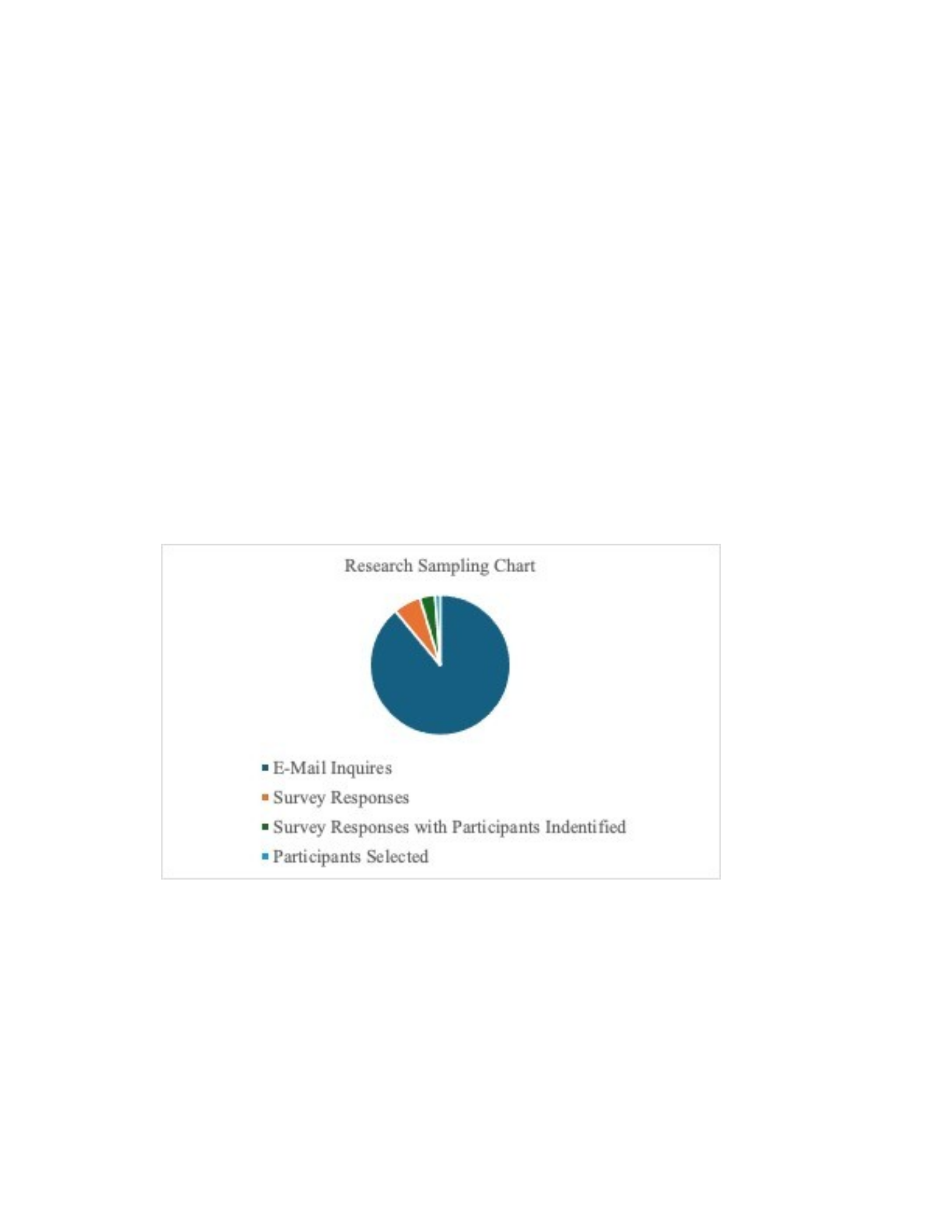
the email inquiries, the participants who chose to be identified (n = 21), and the
participants selected (n = 7). From the survey responses, the participants who identified
themselves in the survey and responded to the first question as familiarized with CC were
contacted. The participation selection criteria for the interview follow the process defined
in Chapter 3. In the screening interview, other potential organization leaders were
identified and additional emails were produced inviting the organization leaders to
participate in the research.
Figure 4.1
Sampling Chart
Note. Chart representing the proportion from the surveys’ e-mail inquiries to the
participants selected for the interview process.
Figure 4.2 demonstrates the distribution of the responses to the first survey
question. From the 21 survey responses whose participants identified themselves, seven
90
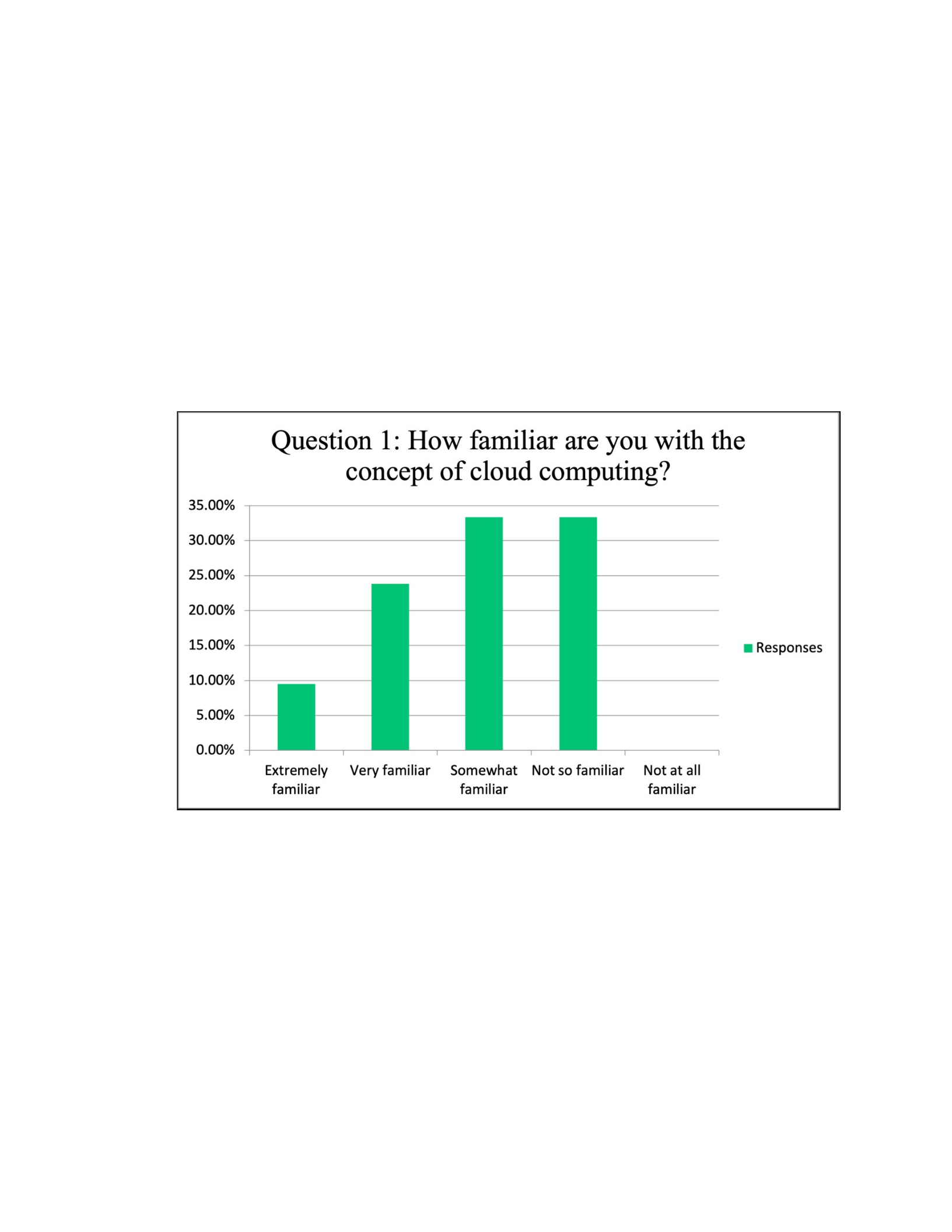
interviewees who described themselves as very familiar with CC and were selected to
participate further in the interview process. The questionnaire for the participants’
interview selection is described in Chapter 3 and Appendix B. The participants were
gathered from the pool of organizations surveyed and their respective leadership roles.
Figure 4.2
Distribution of Survey Participants According to Their Responses to Question 1
Note. Survey respondents who expressed themselves as extremely familiar or very
familiar were likely the participants in the interview process.
I screened the survey responses to identify individuals who exhibited
characteristics or experiences pertinent to the CC adoption case study. The purposive
sampling technique described in the Chapter 3 deliberately selected participants who
offered diverse perspectives or unique insights on the topic of interest. Also factors such
91

as willingness to participate, availability, and communication skills were considered
during the selection process. The seven participants selected exhibited great knowledge
on how CC was deployed in their organizations and have agreed to be interviewed in the
next stage of the research. The selected participants included a diverse group of leaders
from various organizations, each playing a key role in the deployment and management
of cloud computing within their respective companies. They comprised executive
directors, IT leaders, business owners and executives, each bringing a wealth of
knowledge and practical experience to the study.
These seven participants were not only knowledgeable about how cloud
computing was deployed in their organizations but also demonstrated a strong willingness
to participate, were available for the required interviews, and possessed excellent
communication skills. Their diverse backgrounds and experiences ensured a
comprehensive understanding of cloud computing adoption across different sectors,
making their contributions invaluable to the next stage of the research. Table 4.1
describes the list of participants selected for the interviews data collections phase.
92

Table
4.1
Distribution List of Participants
Participant Role Academic
background
Years in the role Selected for
interview
Participant 1 Executive Dir Business 10 Yes
Participant 2 IT Leader Engineering 5 Yes
Participant 3 Bus. Owner Business 20+ Yes
Participant 4 Bus. Owner Engineering 20+ Yes
Participant 5 VP Manuf. Engineering 20+ Yes
Participant 6 VP OPS Business 5 Yes
Participant 7 President Engineering 20+ Yes
Participants 8–21 Various Business/Eng. Various No
Note. Participants were selected based on the survey responses that demonstrate the use
of CC to improve the organization’s business, and then responding and accepting the
terms about the final interview process.
The remaining survey respondents were not chosen for the interview process due
to several factors. A significant number of respondents displayed a lack of familiarity
with cloud computing (CC), indicating that they did not possess the requisite knowledge
or experience needed for the case study. Additionally, some individuals were unable to
participate per their company policies, which restricted them from engaging in external
research activities. There were also respondents who did not respond to invitation letters,
making it impossible to confirm their willingness and availability to contribute to the
study. Finally, a few respondents explicitly expressed no interest in the interview process,
further narrowing the pool of suitable participants. These considerations ensured that only
the most qualified and willing individuals were selected for the next stage of the research.
The final set of interviews involved participants who were recognized for their
expertise in the application of cloud computing (CC) in their respective organizations.
93

These individuals, chosen for their proficiency and extensive experience, contributed a
substantial amount of qualitative data. In total, the interview sessions spanned over 8
hours. Each participant’s interview lasted on average 59 minutes, providing in-depth
insights into their practices and experiences with cloud computing. The following key
aspects were considered for validity of the interview data set:
•The individuals interviewed in the final round were specifically chosen based
on their demonstrated mastery and successful implementation of cloud
computing in their workplaces.
•The cumulative length of all the individual interviews was over 8 hours. This
indicates a comprehensive data collection effort aimed at understanding the
nuanced application of cloud computing.
•On average, each interview session lasted about 59 minutes. This medium
duration suggests that the interviews were thorough enough to delve into
significant detail without being excessively long.
Interviews Transcriptions and Coding
The process of coding, as detailed in Chapter 3, was applied systematically to the
collected data. This process involved analyzing the seven interviews, the remaining
responses from the survey, and relevant articles. The coding focused on identifying
significant terms and themes while remaining receptive to the unique nomenclatures and
terminologies used by participants to describe their experiences. Table 4.2 summarizes
coding generated from one of the interviewees once addressing one of the open ended
questions.
94

Table
4.2
Sample From MAXQDA Coding
Transcription Coding
Well, actually, that was one of the things that came out of our
tour yesterday. They mentioned that they’ve had a shop
floor operator for 15 years who got excited about new
technology, got excited about what it could do for their
business. So he will actually identify the new technology,
but he’ll spend months learning it going. And, you know,
testing it and getting it set up and designed for the shop.
But he’ll learn it so that he can then teach it to the rest of
the shop. But without that delegation, as you mentioned,
and it’s a I think it’s a little bit as ownership of the project.
So I don’t think owners by themselves or the leaders
necessarily have bandwidth to do everything. But if they
can, they can give that ownership to somebody and like
you said, he probably did 2 or 3 jobs at the same time. He
was owning a shop and trying to adapt to the new
technology.
Leadership capacity
Delegation and
Ownership
Knowledge acquisition
Leaders bandwidth
Limitations
Employee engagement
Technological
Enthusiasm
Note. The coding methodology, which was thoroughly outlined in Chapter 3, was used to
analyze the data. This involved a structured approach to categorize and interpret the data
systematically.
During coding, I emphasized on identifying and extracting significant terms and
themes that emerged from the data. These terms were crucial for understanding the key
points and recurring concepts. The coding process was flexible and open to the specific
language, nomenclature, and terminologies that participants used to describe their
experiences. This approach ensured that the analysis accurately reflected the participants’
perspectives and the context of their experiences.
Progressing with coding additional interviews, a reusable code list was
constructed in MAXQDA software. Using this list, systematically all transcripts were
95

coded employing an in vivo approach, resulting in the creation of 557 distinct codes.
Subsequently, these codes were grouped into 15 categories in the MAXQDA software
application, drawing upon considerations such as frequency of mention, conceptual
similarity, and theoretical relevance (see Table 4.3). Although some categories were
rooted in theoretical frameworks, others stemmed from observations made during this
exploratory study. For instance, the concept of balancing human and machine
contributions, although not conventionally associated with cloud computing adoption,
emerged prominently in the responses about the technology enablers of cloud computing.
Another concept associated with the responses about vendors and marketplace,
information-seeking challenges depicts the difficulties to find information about cloud
computing and technology related to manufacturing in general.
96

Table
4.3
Categories Generated in the Analysis
Categories Number of segments
Continuous improvement and innovation
Enhancing customer satisfaction
Technology and solution alignment
Balancing human and machine contributions
Quantities and inventory management
Technological progress and manufacturing
Technology solutions
ERP system implementation challenges
Cloud as a transformative technology
External factors influencing business
Small manufacturer’s struggle
Importance of Vendor certifications
Information-seeking challenges
Rate of technological change
Leadership capacity
51
24
13
24 4
33
36
23
51
13
36
64
23
12
131
Note. By categorizing the data from interviews into these or similar categories, the
information was systematically analyzed, drawing meaningful conclusions, and provide
actionable recommendations for MSMEs looking to adopt and embrace cloud computing
technology.
Presentation of Findings
The research findings emphasize the critical role of transformational leadership in
driving CC adoption, the importance of a holistic approach that integrates strategic
alignment, phased implementation, and continuous learning, and core leadership
principles such as integrity, communication, adaptability, and resilience. By focusing on
these areas, small manufacturing organizations can successfully navigate the complexities
of cloud computing adoption and achieve sustained competitive advantage (Aligarh et al.,
2023).
97

Transformational leadership is essential for envisioning the future state of the
organization postcloud adoption (Ali, 2022). They create a compelling vision that aligns
cloud computing with the company’s strategic objectives, inspiring and motivating
employees to embrace change (Kruger & Steyn, 2020). These leaders are skilled at
inspiring their teams by communicating the benefits of cloud computing and the
longterm advantages for the organization.
A holistic approach involves collaboration across various are various areas of
expertise such as finance, operations, and human resources (Sukathong et al., 2021).
Ensuring all the personnel are involved in the planning and implementation phases helps
in creating a seamless transition. Adopting CC requires a comprehensive strategy that
aligns with the organization’s overall goals (Aligarh et al., 2023). This includes a
detailed assessment of current capabilities and a clear roadmap for integrating cloud
solutions into existing workflows.
The third group of analysis, core leadership principles, emphasizes the
importance of integrity and ethical decision making. Leaders must ensure that cloud
adoption processes are transparent and that data privacy and security are maintained at
all times
(Liu et al., 2020). Leaders are accountable for the successful adoption and integration of
CC. Transparency in decision-making processes builds trust and ensures that all
stakeholders are on the same page (Liu et al., 2021). This includes sharing the rationale
behind adopting specific technologies and addressing any concerns promptly. And
nonetheless, the ability of setting clear objectives, monitoring progress, and being
98

Table
responsive to feedback. Table 4.4 summarizes the initial group of analyses, the themes
developed from the conceptual categories originated from the interviews coding process.
4.4
Groups of Analyses, Themes, and Conceptual Categories
Group of analyses
Transformational
leader
Themes Conceptual categories
Achieving a harmonious
integration of human
expertise and machine
capabilities
Information seek challenges
Balancing human and machine
contributions
Guiding the organizations
through the complexities of
cloud computing adoption
Leadership capacity
Contextualization of technology
Engagement strategies
Reflections on CC business
benefits
Cost optimization
Integration challenges
Data security concerns
Scalability and flexibility
Holistic approach
to CC adoption
Small manufacturer’s struggles Continuous improvement and
innovation
Technology and solution alignment
Technological progress and
manufacturing
CC as a transformation technology
Strategic planning
Quantities and inventory
management
Technological solutions
ERP implementation challenges
Rate of technology change
Core principles Ethical practices to ensure
successful business
execution and sustained
competitive advantage
Enhancing customer satisfaction
Importance of vendor
certifications
Note. Themes are developed from the categories and grouped according the abilities
business leaders must possess to foresee future technological trends and their potential
impact on the organization.
99

The first group of themes focus in the foresight and advocacy leaders who
successfully adopted CC in their organizations have possessed. This involves
understanding the strategic importance of CC and aligning it with the company’s
longterm goals. At the same time, they have promoted a culture of innovation by
championing the benefits of CC and encouraging experimentation and creative problem
solving in the organization.
Themes Developed
Achieving a Harmonious Integration of Human Expertise and Machine Capabilities
Emerging from the coding, this theme not clearly stated or examined in the
problem statement definition literature (Ahn & Ahn, 2020; Ali, 2022; Gangwar et al.,
2015; Liu et al., 2021; Mittal et al., 2020; Subramanian et al., 2021; Sukathong et al.,
2021), that presents challenges to the manufacturers: Information-seeking challenges and
Balancing human and machine contributions.
Information-seeking challenges reports on the difficulties in finding immediate
solutions online. As reported by Participant 1, “Small organizations struggle with
navigating the complex landscape of cloud service providers and understanding the
varying service offerings, software solutions, and pricing models.” Organization’s
limited resources and expertise can hinder their ability to conduct thorough research and
assess which cloud solutions best align with their specific needs and budget constraints.
Additionally, as confronted by Participant 7, “The abundance of technical jargon and
rapidly evolving cloud technologies can create barriers to comprehension, further
complicating the decision-making process.” Moreover, concerns about data security,
compliance, and reliability may arise, prompting small organizations to seek reliable
100

Table
sources of information and guidance to mitigate risks and make informed choices. The
information-seeking challenges faced by small organizations in adopting cloud
101

computing underscore the importance of accessible and tailored resources to support their
transition effectively.
In the pursuit of implementing cloud computing, small organizations often grapple
with the delicate task of balancing human and machine contributions effectively.
In one hand, Participant 1 attested:
There is a need to harness the efficiency and scalability that cloud technology
offers, automating repetitive tasks and streamlining operations. Yet, on the other
hand, small organizations rely heavily on the expertise and adaptability of their
workforce, especially in navigating the complexities of cloud migration and
optimizing its use.
Also, Participant 2 mentioned “finding the right equilibrium between human decision
making and automated processes is crucial to ensuring a successful transition to the
cloud.” This category was present on Participant 5 and mentioned “not only identifying
areas where automation can enhance productivity but also empowering employees with
the skills and knowledge to leverage cloud technologies effectively.” Moreover, fostering
a culture of collaboration and innovation is essential for maximizing the potential of both
human and machine contributions, ultimately driving organizational growth and
competitiveness in the digital age.
Guiding the Organizations Through the Complexities of Cloud Computing Adoption
Leaders must possess the ability to foresee future technological trends and their
potential impact on the organization. This process involves, as attested by Participant 1,
the “understanding the strategic importance of cloud computing and aligning it with the
company’s long-term goals, encouraging the experimentation and creative problem
solving.” The leadership capacity underscores the multifaceted nature of skills required
for successful cloud computing adoption. Participant 3 reported on the leaders as

“visionary, technically knowledgeable, empathetic, collaborative, and adept at managing
risks and resources.” Regarding this theme, new categories have emerged not mentioned
in the literature (Garzoni et al., 2021; Gupta et al., 2022; Kaymakci et al., 2022; Liu et al.,
2021; Saniuk & Grabowska, 2021) such as the contextualization of technology and
engagement strategies.
Contextualization of technology reports in the leadership mindset and change
management that are crucial for technology adoption. As Participant 2 defined, “The
message should align with the company culture to have maximum impact.” Technologists
must translate technology into what it means for the company and culture.
Engagement strategies gives the example that younger manufacturers with
engineering backgrounds are more open to adopting new technology, such as cloud
computing. Participant 1 elucidates “Education is important, but getting people to learn
about new technology is difficult.” Therefore, a workforce with more recent college
educates can promote the use technology and cloud computing.
Reflections on CC Business Benefits
The next theme is to look back at the achievable benefits CC would bring to the
organizations that have been reported. The existing areas of analysis were used where
cloud computing deployment reports business benefits as stated in Chapter 3, using
highlevel categories from literature associated with cloud computing adoption in small
manufacturing organizations. The codes presented were examined in the categories
collected from the interviews and confronted with the survey responses, online consulting
materials, and cloud-computing vendors’ documentation. The categories were organized
following the existing literature, expanding the examples given in Chapter 3.

Cost Optimization
Although there is existing literature on the cost effectiveness of cloud computing
for small businesses, further research is needed to explore nuanced cost considerations
specific to small manufacturers (Koh et al., 2019). It includes factors such as initial
investment, ongoing operational costs, potential cost savings, and return on investment
(Chonsawat & Sopadang, 2020; Karunagaran et al., 2019; Koh et al., 2019; Tica et al.,
2021). The code emerging from this category that has not been fully explained is
associated with the “lost work orders and parts” or, according to Participant 4, “instances
where the work orders and parts were misplaced or lost.” In the assessment, the
manufacturer interviewee validated their struggle with on-time delivery and the ability to
improve. Using technology and applications provided on the cloud, they achieved 97–
100% on-time delivery. Participant 5 confirmed cloud computing enables “the new
technology allowed near real-time information exchange, permitting the operators to see
what was happening inside their process.” The example shows the benefits of using cloud
computing technology to improve processes and avoid confusion and chaos.
Integration Challenges
Small manufacturers often have unique processes and systems in place. Research
focusing on cloud solutions’ customization and integration capabilities to accommodate
these specific needs is crucial (Liu et al., 2021; Subramanian et al., 2021). Participant 5
attested, “Understanding how easily cloud platforms can be tailored and integrated with
existing technologies can help mitigate adoption barriers.” Participant 2 contrasted with
“manufacturing leaders attempted to learn on their own or with consultants, but projects
tended to fail without full commitment.” Participant 1 gave an essential conclusion for a

lean manufacturing implementation earlier and stated, “Hiring someone experienced and
successful in implementation is crucial.” Therefore, integration challenges are addressed
with a hiring practice that allows the business to pursue system and process integrations
by shortcutting an existing gap in the organization’s knowledge and culture.
Data Security Concerns
These concerns regarding data security and regulatory compliance are significant
barriers to cloud adoption for small manufacturers. Further research should delve into the
effectiveness of security measures implemented by cloud providers, compliance with
industry regulations, and strategies to address data privacy concerns (Gupta et al., 2022;
Tripathi, 2021). Participants 1, 4, and 6 mentioned that the cyber security theme emerged,
as stated by Participant 1, “focus on the requirements and efforts of manufacturers to
meet the Department of Defense standards.” This category is relevant for the
manufacturers providing parts to government agencies or downstream supply chain
manufacturers doing the same.
Scalability and Flexibility
Research exploring the performance metrics of cloud services, including uptime,
latency, and response times, can provide insights into the reliability of cloud computing
solutions for small-scale manufacturing operations (Garzoni et al., 2021; Kaymakci et al.,
2022; Liu et al., 2021). Although most of the interviewees alluded to this category in
some of their responses, additional code did not clearly emerge from the analysis. For
instance, Participant 3 alluded “I did a lot of research on the kind of all in one platform.
The winner just offered a lot more customizability, probably the biggest thing”.
The second group of themes explorer the holistic approach MSMEs toward the
CC adoption. In great respect, it correlates the conceptual category developed as

leadership capacity with themes involving the day-to-day operations such as the struggles
in the manufacturing organizations and the strategic planning to make the organization
abreast of the market conditions and changes. Kaymakci et al. (2022) pointed out that
balancing the budget to ensure that CC is cost effective and aligns with the organization’s
financial constraints and goals. Likewise, allocating resources to invest in the necessary
technology infrastructure and to recruit or train talent capable of managing cloud
technologies (Bortz et al., 2023).
Small Manufacturer’s Struggles
Small manufacturers face a myriad of struggles when it comes to continuous
improvement and innovation, aligning technology solutions with their needs (Liu et al.,
2021). Resource constraints, skill gaps, integration challenges, and security concerns are
significant barriers that need to be addressed (Bortz et al., 2023). Despite these
challenges, with strategic planning, targeted training, and a culture that embraces change,
small manufacturers can leverage these technologies to drive efficiency, competitiveness,
and growth. Participant 1, embedded in the context, defined well reported on the struggle
in the organization:
Small manufacturer in Duvall, Washington he couldn’t get business. And the truth
was he stayed comfortable for too long, didn’t adapt to new technology and he
was going out of business. He says, what do you think I could do? Because he
said, I go to trade shows and conferences. I bid on jobs and I’m not getting them.
And they said, well, somebody’s stealing your jobs and it’s not you. And it’s
because for some reason, they know your reputation . . . what they know about
you or your process somehow tells them that you’re not the best company for the
job. And he admitted, he admitted that to them was very correct.
Rapid technological advancements can overwhelm small manufacturers, who may
struggle to keep pace with the latest developments (Garzoni et al., 2021; Kaymakci et al.,
2022; Liu et al., 2021). This lag can result in missed opportunities and a competitive

disadvantage. The costs associated with adopting new technologies, including hardware,
software, and training, can be prohibitive (Bortz et al., 2023). Small manufacturers need
to balance these costs against the potential benefits, which is often a complex decision.
Regarding the technology and solutions alignment, small manufacturers often
struggle to find technology solutions that align perfectly with their specific needs
(Aligarh et al., 2023). Off-the-shelf solutions may not fit their unique processes, and
custom solutions can be prohibitively expensive. Participant 1 offered a good summary:
They started up companies that come in and try to develop solutions. The very
first question they’ll ask the manufacturing leader is where are your pain points?
Because when you think in terms of, I can tell you a hundred things about this
thing over here, but if it’s not your pain point, you don’t really care. And every
manufacturer has different pain points, you know. So it is very individualized
because of the stage of the development of the company.
Regarding the technological progress in the manufacturing industry, rapid
advancements can overwhelm small manufacturers, who may struggle to keep pace with
the latest developments (Ari, 2022). This lag can result in missed opportunities and a
competitive disadvantage. All the Participants offered a similar experience, in the
transcript session of Participant 3:
Early adapters are getting an advantage, a knowledge advantage because of
companies like this, then they’ve layered on top of the cloud, you know, their
solutions in the cloud. And they have seen the problem of manufacturers who
can’t get visibility without that information. And what it gathers the information,
it cleans the information, it sorts it out, it makes then useful to, you know, to
management.
Lastly on this theme is the transformational nature of CC. Small manufacturers
may lack awareness or understanding of how cloud computing can transform their
operations (Gupta et al., 2022). Exploring that further, Participant 3 shared an important
vision about the CC transformation concept of the supply chain:

The vendors have built advantages in the cloud. They could do things in the cloud
they can’t do on premise. So I’m thinking of the individual vendors might build
capabilities into the cloud that are more difficult on a on-premise basis. There
have been some conversation about that. This idea of maybe interfacing more
easily with vendor data could be very attractive, meaning supply chain if they
could, by being in the cloud, allow them to have visibility into their whole supply
chain.
Education and demonstration of cloud benefits, such as scalability, cost savings,
and flexibility, are crucial for the process of adoption as they demonstrate to the
personnel the immediate benefits of technology.
Strategic Planning
One important theme identified during the interview assembles concepts
associated with the manufacturing industry such as quantities and inventory management,
technological solutions, ERP implementation challenges, and rate of the technology
change. The focus on real-time tracking, demand forecasting, and appropriate technology
selection is key to the strategic planning in the manufacturing industry (Kaymakci et al.,
2022). The interview questions confronted MSMEs on this theme while navigating by
complexities of cloud adoption.
Participant 1 had a glaring answer to the question about CC enabling capabilities
when reporting about inventory management:
And so, we often we think of AI just as an example as a copilot. But in other
words, it’s being the standards, the process, the quantities or whatever are dictated
by the humans. But then the machine comes back and says, you know, your
inventory is at this level or that level, and we use this much or that much, or we
have this much defect or this much waste in the process. So it’s human dictated,
but could be machine identified.
On the other hand, Participant 3 offered an explanation about how the CC and
enabled technologies have allowed his business to pursue different sourcing strategies:
Draw it up and then send it over to my suppliers to manufacture in bulk. So, it
was a pretty long process. And sourcing the right ones. A lot of trial and error. It’s

still is an ongoing process in terms of quality control… I have quite a few options
kind of in my back pocket just in case something goes wrong…if you’re familiar
with China. They have many holidays… take at least a month off where the
factory just shuts down…when you’re running tangible good business, when
production just halts for a whole month, you need production somewhere else to
happen.
Developing effective sourcing strategies for a small manufacturing enterprise
involves identifying reliable suppliers, negotiating favorable terms, ensuring quality and
timely delivery of raw materials, and establishing long-term partnerships to maintain a
competitive edge and sustain business growth (Gopalakrishna‐Remani et al., 2022).
The fast pace of technological change means that small manufacturers must
continuously monitor industry trends and advancements in cloud computing. Strategic
planning involves setting up mechanisms to stay informed and agile in adopting new
technologies (Kaymakci et al., 2022). Participant 7 made an observation during the
interview reporting, elevating the different channels to seek the progression of
technology:
There’s always industry trade publications, different industries have different
trade publications. Fabricators have a trade publication and welders have a
publication…searching online, trade publications . . . go to conferences and
shows. We hear new things all the time . . . and sometimes it’s because these
innovations are working.
Creating a strategy to stay informed about technology trends for small
manufacturing organizations involves establishing a systematic approach that includes
attending industry events and trade shows, subscribing to specialized technology and
industry journals, fostering partnerships with tech-savvy suppliers and consultants,
engaging in online forums and professional groups, implementing continuous education
programs for staff, and leveraging digital tools to track and analyze emerging

technologies that could impact their operations and market competitiveness (Kaymakci et
al., 2022).
Ethical Practices to Ensure Successful Business Execution and Sustained
Competitive Advantage
Ethical practices are integral to successful business execution and achieving a
sustained competitive advantage (Gopalakrishna‐Remani et al., 2022). By focusing on
customer satisfaction through transparency, responsive support, and fair marketing,
businesses can build strong, trust-based relationships with their customers. As Participant
6 reported:
Is the ability to scale up, scale down, especially in a manufacturing, you probably
want to focus more around servicing customers. Most of the emphasis or most of
the dollars would generate gains, the most profitability from a marketing
standpoint. So if your customers are already in the cloud and mostly consume
your technologies in the cloud, it probably be more easily deployed in the cloud
with that experience that you wanted versus having that not in cloud. So one
would argue that to have the technology in the cloud may serve better for your
overall, customers experience and, therefore, increase the profitability on the top
line and then vice versa.
Conversely, ensuring cloud computing vendors are certified and adhere to industry
standards, undergoing regular audits, and maintaining ethical practices further strengthens
business integrity and reliability. On Participants 1, 2, 3, and 5 responses about the vendor
relations, the category about vendor certification, more specifically toward the cyber
security certifications have been mentioned.
Results
The results section focuses on the theme of small manufacturers’ struggles,
attempting to address the specific problem statement that MSME leaders face innovation
stagnation without CC adoption, hindering their ability to lead the organization to adapt
to new market conditions (Ali, 2022). The results also expand the leadership problem,

recalling that “leaders who perform in the transactional space with glares of a laissezfaire
outcome are less likely to succeed in leading organizations in the technology
implementation fields” (Aligarh et al., 2023, p. 5-11), by exploring further the theme
“Guiding the organizations through the complexities of cloud computing adoption” (Ali,
2022, p. 12). Therefore, reorganizing and contrasting the categories identified in the
interview process and the documentation about the themes available in public domains
were performed. Further triangulation of information and cross referencing them with the
conceptual categories and related codes were analyzed, but focusing on the responses
where the context of the main themes was present in the responses. More than one theme
was present in the interview responses, observing the driver theme about the
organization’s struggles.
Next, I created a correlation matrix of conceptual categories and their relative
mentions, focusing on the manufacturer’s struggle theme to adopt cloud computing. The
most significant correlated conceptual categories were then plotted in Figure 4.3. The
association among these categories was once more validated with the exposed
documentation reported by the cloud computing vendors that have proposed solutions for
small manufacturers, such as Amazon’s AWS and Microsoft Azure. The interview
responses were also validated against the initial survey responses to confirm the context
and CC experience initially reported at that research stage by the participants.
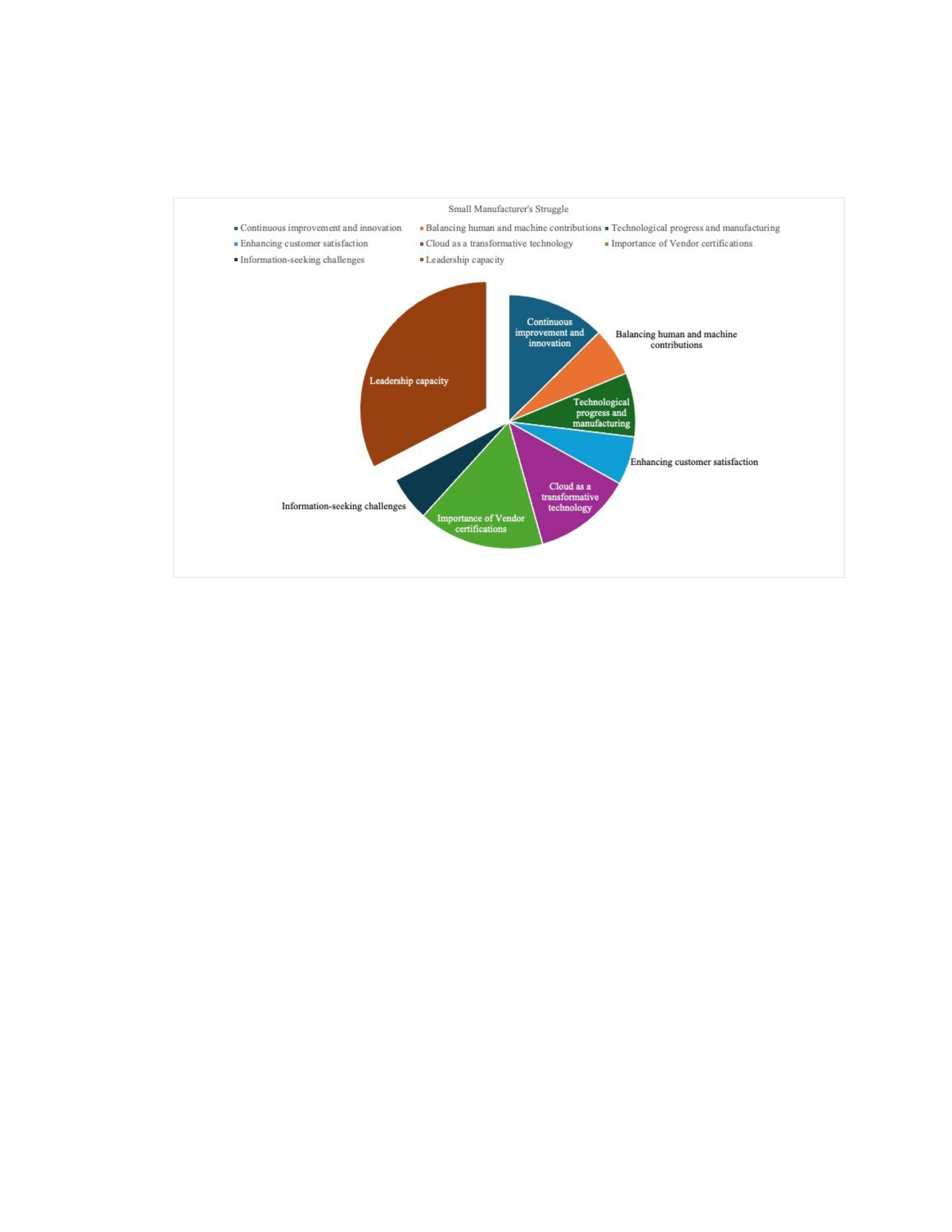
Figure 4.3
Small Manufacturer’s Struggle Most Relevant Associated Categories Pie Chart
Note. The conceptual categories plotted are the ones with most category appearances
when both aspects are presented in the response: the conceptual categories associated
with the theme Small Manufacturer’s Struggle and the categories associated with the
remaining themes reported in the interview.
Leadership capacity emerged from “recognizing the limitations of leaders in
handling all tasks” on small organizations as pointed out by Participant 1. Small
businesses face difficulties to find immediate cloud computing solutions online, requiring
leaders to embrace some sort experimentation to assess benefits and estimate returns on
potential investments. On the contrary, Participant 1 stated, “Small manufacturers face
challenges in adopting new technology due to employee resistance and cultural issues,”
leaving the organization leader to be sole persona leading the initiative.

Continuous Improvement and Innovation
Collaborating to the struggle faced by the organization’s leader is “the speed of
innovation and improvement in technology is consistently impressive,” pointed out by
Participant 3. Cloud computing plays a pivotal role on these dynamics, with the depth and
breadth of its impact across various stages and industries segments, “affecting the aspects
of an organization’s daily life” as reported by Participant 5. As most of the participants
who are leaders in their organizations pointed out, seeking external guidance is crucial to
obtain advice on budget, skills required and eventual technology adoption timeline.
Information Seek Challenges
Small organizations encounter challenges in finding immediate solutions online
for cloud computing underscores the complexities and nuances inherent in adopting new
technologies. As pointed out by Participant 2, “while the internet offers a vast repository
of information and resources, the specific needs and circumstances can often make it
challenging to find relevant, actionable guidance tailored to unique situations.” Small
companies may struggle to navigate the abundance of available information, sift through
the noise to identify credible sources, and discern which solutions are most suitable for
their specific requirements and constraints. The rapid pace of technological change means
that “online resources may quickly become outdated or insufficiently detailed, further
complicating the search for timely and effective solutions” as reported by Participant 3.
As a result, leadership in small organizations may find themselves grappling with a lack
of readily available expertise and support, highlighting the importance of accessible,
reliable, and up-to-date resources to facilitate their journey toward successful adoption of
cloud computing technologies.

Importance of Vendor Certifications
Emerged from the interviews has come the concept of cybersecurity and the
importance of vendor certifications on that space. Some small manufacturers, embedded
in large supply chains on downstream businesses, have expressed mounting concerns of
using applications and software that “expose their business practices, especially materials
and parts sourcing,” stated Participant 3. Small businesses also have to build a trust
relationship with a cloud computing partner who can assist them to “navigate throughout
the jargons and terminologies” and the same time provide a “reliable experience toward
information security,” affirmed Participant 4.
Technological Progress and Manufacturing
To stay competitive in the market, MSMEs can evaluate the benefits offered by
emerging technologies. “Staying competitive is important for small manufacturers to stay
in business, and keeping up with technology is a key factor in this,” stated by Participant
1 and confirmed by the Participants 5 and 7 interview coding process. Participant 7
stated, “As a small manufacturer in Duvall, Washington, we struggled to get business
because we did not adapt to new technology and that reputation may have been a factor in
losing jobs.” MSMEs often face difficulties in adopting cloud computing due to
complexity of integrating cloud solutions with existing processes and legacy equipment.
“Despite the initial difficulties with adoption, cloud computing has enabled the
organization to create a path for other applied technologies” completed Participant 7,
confirming the already depicted by the literature.

Cloud as a Transformative Technology
The MSMEs leaders often face the resistance to change from traditional systems,
“resistance to new technology among employees is a potential problem, with cultural
issues and perceived risk or threat being common reasons for reluctance. There is no easy
solution to this issue,” affirmed Participant 1. Under the same context, Participant 3 stated
that “hiring personnel for business development is necessary for scaling the business and
procuring strategic partnerships.” They advised further that a new personnel can “utilize
technology is important, but getting the product in front of as many eyes as possible
through partnerships is crucial for success.” The amount of product information and
details that can be shared in and outside of the supply chains is greatly enhanced by the
CC technology (Gopalakrishna‐Remani et al., 2022).
Enhancing Customer Satisfaction
One of the most difficult points on the manufacturing industry has been to
determine what may cause customer’s friction. As attested by Participant 7:
Most manufacturing leaders have to figure out what they’re doing to cause friction
to their customers, you know that. And manufacturers have a limited menu of things that
they can use to fight the cause of friction for their customers. Responding promptly to
concerns and suggestions demonstrates a commitment to customer satisfaction, as
attested by Participant 3, “Incorporating feedback into product and service improvements
shows customers that their opinions are valued. Cloud computing has enable the
interconnection between the applications that can manage that feedback.”
Balancing Human and Machine Contribution
Integrating human judgment with machine analytics to make informed decisions
about cloud adoption and implementation, as attested by Participant 3 “the machine is

always accurate, you know, is the information, the data, the analysis and the conclusion
what we wanted?” MSME leadership has the role of ensuring that human skills are
continually developed to complement machine capabilities, focusing on training and
upskilling, as reported by Participant 1 “understand how competitive the world market’s
getting because they’re hungry for the technology.”
Summary
In this chapter, the data from the case study was reviewed by reporting on how the
codes, categories, and themes were developed. The findings session reported on groups of
analyses emerged from the interview themes and derived from the literature, and the
conceptual categories were developed from the coding of the interviews. They were
validated against the initial survey responses and the documentation about CC adoption
available to the public from vendors and consulting organizations according to the group
of analyses.
The groups reported in the analysis were transformational leader (Gupta et al.,
2022), holistic approach to cloud computing adoption (Graham & Moore, 2021), and core
leadership principles (El-Haddadeh, 2020; Graham & Moore, 2021; Gupta et al., 2022).
The concepts were developed across different interview responses and contexts,
addressing the questions, and eventually formulated the broader themes. The concepts
were then categorized, logically organized and assigned to the themes identified in this
process.
A detailed examination of the findings generated the several themes: (a) achieving
a harmonious integration of human expertise and machine capabilities, (b) guiding the
organizations through the complexities of cloud computing adoption, (c) reflections on

CC business benefits, (d) small manufacturer’s struggles, (e) ethical practices to ensure
successful business execution, and (f) sustained competitive advantage.
Although the findings section reported on all the content collected from the
interview process, the results of the findings section centered on the themes small
manufacturer’s struggles and guiding the organizations through the complexities of cloud
computing adoption, reanalyzing the content collected from the problem statement and
research questions perspectives. These two themes were cross referenced with citations of
concepts presented in other themes to form a comprehensive understanding of the cloud
computing adoption by the organizations where the leaders had been interviewed.
The leadership capacity conceptual category has emerged in the center of the
themes and has been found to have influence the diverse nature of the other themes,
characterizing the context where the technology adoption actually happens in the
MSMEs. Conceptual categories such as (a) the importance of vendor certifications, (b)
continuous improvement and innovation, (c) cloud as a transformative technology, (d)
technological progress and manufacturing, (e) balancing human and machine
contributions, (f) enhancing customer satisfaction, and (g) information-seeking
challenges, demonstrated the key areas where the business leadership had been acting to
successfully implement CC technology, offering a deep understanding of how small
manufacturing organizations can address their struggles.
CHAPTER 5: CONCLUSIONS AND DISCUSSION
Graham and Moore (2021) claimed to have analyzed and further developed a
framework where business leadership in small organizations can successfully adopt new
technologies. Leaders understand the need to seek for external for innovative solutions

that align with their organizational goals and objectives. They recognize that embracing
new technologies can streamline processes, improve efficiency, and ultimately drive
growth (Liu et al., 2021). Consequently, leaders who are proactive in their approach,
actively seeking out opportunities to leverage emerging technologies can gain a
competitive edge in the market. Whether through strategic partnerships, research and
development initiatives, or investment in digital infrastructure, leaders are committed to
positioning their organizations for long-term success in the ever-evolving technological
landscape.
Discussion of Findings and Conclusions
The findings focus on the key themes elaborated during the interviews of the
MSMEs top management participants, regarding the nature of the cloud computing
adoption, its complexity, and the ability to drive their organizations to successful
implementation of technology.
Discussion of Research Questions
The following is a discussion of how the findings addressed the research
questions.
Research Question 1
How Can SME Leadership in the Manufacturing Industry Enhance the
Organization’s Personnel Knowledge to Adopt CC Technology?
Participant 1 stated, “I don’t think owners by themselves or the leaders necessarily
have the bandwidth to do everything.” He continued, “If they can give that ownership of
research to somebody he or she probably would do two or three jobs at the same time.
Owning a shop and trying to adapt to the new technology is challenging.”

Besides the delegation authority, the findings identified other initiatives and
explanations through the categories and terms. The most eminent ones are born from the
necessity to create a change mindset (Liu et al., 2020). Especially in manufacturing,
participants have agreed the employees and collaborators built the status quo overtime.
They are averse to the sudden modifications technology may bring or just the
experimentation of new things. Participants 3 and 4 offered the opportunity to establish
certain goals that could foster a culture of continuous learning, for instance providing
hands-on experiences with software in the cloud and encouraging some sort of the
certification.
Participants 2 and 7 preferred to improve the work force by blending some new
business development roles with CC and technology literates. According to Participant 7:
We’ve had some presentations where the manufacturing leader said that they
attempted to learn it on their own, like lean manufacturing enabled by cloud
compute. They tried to learn it on their own. They’ll bring in a consultant even.
But all of those projects tend to fail until there’s a full commitment. And they
usually have to hire somebody who is really good.
Manufacturing leaders have attempted to independently learn and implement lean
manufacturing through cloud computing, sometimes even hiring consultants, but these
projects often fail without full commitment and typically require hiring an expert to
succeed.
The Organization’s Personnel is Primarily Responsible for the Continuous
Improvement and Innovation Enabled by the CC Applications
In an MSME, interpersonal qualities such as hunger and motivation are essential
when expanding the team (Kruger & Stein, 2020). Although technical skills are essential,
hunger and motivation are the most critical nontechnical qualities. Participant 3 attested,

“Hiring personnel for business development is necessary for scaling a business and
procuring strategic partnerships.” He continued and shared, “Utilizing technology is
important, but getting the product in front of as many eyes as possible through
partnerships is crucial for success.” Therefore, a team actively seeking recommendations
from credible entities can drive business growth. Participants 1 and 3 agreed that the next
step in, as stated by Participant 3 “scaling a business is to bring in more personnel that
can drive more business development, such as procuring strategic partnerships to increase
the number of eyes on the product.”
Participant 3, as the business founder, also emphasized the importance of acting
quickly, failing quickly, and adapting quickly. Acting quickly implies a sense of urgency
in embracing cloud computing solutions to capitalize on emerging trends, market
demands, or competitive advantages. Adapting quickly emphasizes the importance of
flexibility and agility in responding to changing circumstances, market dynamics, or
customer needs (Serey et al., 2023). With cloud computing enabling scalable and
ondemand resources, “the organization can rapidly adjust its operations, infrastructure,
and services to meet evolving requirements and seize emerging opportunities,”
Participant 2 affirmed.
In summary, the participants highlighted several key factors affecting cloud
computing (CC) adoption in manufacturing MSMEs, emphasizing the importance of
delegation, change mindset, and continuous learning. Participant 1 noted the challenge for
business owners to balance operations with technology adoption, suggesting that
delegating research to dedicated personnel could be beneficial. These facts contrast and
expands the leadership areas pointed out in the literature requiring additional research as

stated by Liu et al. (2020) and Garzoni et al. (2020). Participants 3 and 4 emphasized
fostering a culture of continuous learning, such as hands-on experiences and
certifications, while Participants 2 and 7 discussed the necessity of integrating business
development with technology expertise, highlighting that projects often fail without full
commitment and skilled personnel. These facts respond to the areas of research identified
in excerpt of Gopalakrishna‐Remani et al. (2022), attempting to examine employee’s
perceptions of top management engagement on sustainable business growth. Additionally,
the participants stressed the importance of hiring motivated and hungry individuals for
business development to drive strategic partnerships and market presence. Participant 3,
in particular, emphasized the need for quick adaptation and agility in embracing cloud
solutions to respond to market changes and opportunities, supported by the scalable
nature of cloud resources. These facts expands on Gupta et al. (2022) study about
measuring the impact of CC in the organizations innovation, complementing the
personnel characteristics that leads to a successful implementation.
Research Question 2
How Can SME Information Systems Managers Mitigate Internal Stakeholder
Concerns of Trusting Data and Business Processes Implementation to a Third-Party CC
Provider?
This question somewhat outdated from the participants’ responses. In the
beginning of the CC adoption until few years ago, literature may have qualified this
question as a concern to be explored. All participants agreed the actual stage of CC
technology is safer than their old environments. This perhaps is a proof these are the
successful adopters of technology, resolving most of their concerns and seeking clarify

and assertion of their data security needs. However, a new concept has emerged, the
cybersecurity certification necessary for certain manufacturers to adhere to continue to
provide parts and services to U.S. government agencies. Likely in the earlier times of CC,
Participants 1, 2, 4, and 5 looked for guidance from vendors and related information to
get adequate to the ever new certification requirements.
Importance of Vendor Certifications Requires the Recognition of Certifications in
the Field of Cybersecurity
Cloud compute Vendor’s certifications play a critical role in cybersecurity by
ensuring that manufacturers adhere to necessary protocols and best practices (Gupta et al.,
2022). Certifications demonstrate that vendors have implemented robust security
measures, undergone rigorous testing, and met industry standards and regulatory
requirements (Liu et al., 2020). For manufacturers, partnering with certified vendors
provides assurance that their supply chain partners prioritize cybersecurity and data
protection, reducing the risk of cyber threats, data breaches, and regulatory
noncompliance (Serey et al., 2023).
Participants 4 noted regarding being a supplier of “the Department of Defense
(DoD) mandates manufacturers to achieve Cybersecurity Maturity Model Certification
(CMMC) compliance to safeguard sensitive information and ensure cybersecurity
resilience.” CMMC encompasses a set of cybersecurity standards and controls tailored to
protect defense information and controlled unclassified information (CUI). Cloud
services used by manufacturers must meet CMMC requirements to support DoD
contracts and maintain compliance with government regulations. In his response
elaboration, Participant 7 concluded that “vendor certifications, assurance of cloud

service security, protection of proprietary information, and alignment with defense
contractor requirements are essential considerations for manufacturers seeking secure and
compliant cloud solutions to support their operations and meet regulatory obligations.”
Vendor certifications play a crucial role in ensuring cybersecurity for
manufacturers by demonstrating adherence to necessary protocols, best practices, and
industry standards (Shankar et al., 2021). These certifications, which signify that vendors
have implemented robust security measures and met regulatory requirements, provide
manufacturers with confidence that their partners prioritize data protection (Sainidis et
al., 2019). This reduces the risk of cyber threats, data breaches, and noncompliance.
These facts improve the existing theories about CC data security and privacy, not
articulated in the research. For instance, manufacturers working with the Department of
Defense must achieve Cybersecurity Maturity Model Certification (CMMC) to protect
sensitive information and ensure cybersecurity resilience. This certification ensures that
cloud services meet the necessary requirements for supporting DoD contracts and
complying with government regulations. As Participant 7 emphasized, these
certifications, along with the assurance of cloud service security and protection of
proprietary information, are vital for manufacturers seeking secure and compliant cloud
solutions.
Research Question 3
How Can the SME Leadership in a Manufacturing Industry Organization use CC
as a Strategy to Create Business Innovations?
The answers of this question are for the most a continuation of the organization’s
personnel development stated on the responses of the first question, but focusing on the

theme of cloud computing leading to innovations. CC plays a pivotal role in fostering
innovation and driving business growth, especially in small organizations where
interpersonal qualities like hunger and motivation are paramount (Serey et al., 2023).
Participant 2 commented, “Cloud computing enables small startups to scale their
businesses and procure strategic partnerships effectively. While utilizing technology is
important, establishing partnerships and maximizing product visibility are key to
success.” In general, the business owners and founders responses to the research question
rely on personal experience and industry knowledge to develop solutions that address
real-world needs. Although initial guidance on CC technology was limited, organizations
placed significant emphasis on the agility and adaptability afforded by these technologies
while promoting a culture characterized by swift action, rapid iteration, and continuous
learning. These observations suggested that successful adopters of CC share a vision and
mindset aligned with a culture of experimentation, which is substantially enhanced by the
capabilities of CC technology (Serey et al., 2023).
The final concepts developed during the analysis of this research questions points
out to the specific technology components enabled the CC adoption such as ERP and
solutions dealing with the manufacturing processes. As Participant 1 attested:
Thinking at this point as cloud computing as an enabler. Right. So, we talk here
about maybe having a system that is more capable of maintaining their
manufacturing information, things that may make the connection with their
supply chain better streamline and maybe other things that they don’t know yet.
Finding solutions in the cloud such as ERP implementations becomes more
commoditized with the CC development. Participant 5 explained “the numbers [of
information] were staggering on how much information comes from the manufacturer,”

suggesting information management about inventory and part quantities are part of a
business strategy, an enablement made possible due to the CC adoption.
CC as an Enabler of Manufacturing Applications: Expanding Capabilities and
Creating New Business Opportunities
Vendors leveraging cloud technology can “embed capabilities that are more
challenging to achieve with on-premise solutions,” reported Participant 1. Cloud
platforms offer a vast array of services and tools, such as artificial intelligence (AI),
machine learning (ML), big data analytics, and Internet of Things (IoT) integration,
which can be seamlessly integrated into software applications (Ali, 2022). As an example,
Participants 1 and 7 mentioned the use of computer aided design (CAD) software hosted
on the cloud, in Participant 7 words, “can leverage AI algorithms for automated design
optimization, predictive analysis, or generative design.” Additionally, cloud-based
engineering programs can harness big data analytics to analyze large data sets and extract
actionable insights for product development or process optimization, mentioned by
Participant 2. By leveraging these advanced capabilities, vendors can deliver more
powerful, innovative, and feature-rich software solutions that meet the evolving needs of
users and industries.
In summary, vendors utilizing cloud technology can integrate advanced
capabilities that are difficult to achieve with on-premise solutions (Raut et al., 2019).
Cloud platforms provide access to a wide range of services and tools, including artificial
intelligence (AI), machine learning (ML), big data analytics, and Internet of Things (IoT)
integration (Nair et al., 2019). For example, cloud-hosted computer-aided design (CAD)
software can utilize AI algorithms for automated design optimization, predictive analysis,

and generative design. Additionally, cloud-based engineering programs can analyze large
datasets through big data analytics, providing actionable insights for product development
and process optimization, attested Participants 1 and 7. These advanced capabilities
enable vendors to offer more powerful, innovative, and feature-rich software solutions
that cater to the evolving needs of users and industries. These are examples of developing
stories in the technology progress of manufacturing systems, the ones that can
complement existing literature, as stated by Mittal et al., (2020) in their future research
recommendations.
Despite the potential advantages associated with CC, small organizations
frequently encounter significant challenges in accessing the information needed for
effective technology adoption. The first emergent theme underscored how these
information-seeking difficulties can hinder small organizations’ capacities to make
informed decisions and implement cloud solutions. Although the literature has
acknowledged the struggles faced by small manufacturing firms, particularly in obtaining
relevant information, it has not extensively conceptualized this issue as part of a broader
business management strategy. Participants indicated that addressing these challenges
necessitates proactive efforts by small organizations to seek assistance from reliable
sources, such as industry associations, government agencies, and experienced cloud
consultants.
Application of Findings and Conclusions to the Problem Statement
The first reported theme emerged reports that small organizations often encounter
various challenges when seeking information about adopting cloud computing. These
challenges can hinder their ability to make informed decisions and effectively implement

cloud solutions (Serey et al., 2023). In the interviews, the small manufacturing struggles
theme is associated with the information seek challenges is touched by the literature but
not defined to the extend the leadership can setup as part of a business management
strategy. According to the participants, information-seeking challenges requires small
organizations to proactively seek assistance from trusted sources, such as industry
associations, government agencies, and experienced cloud consultants. There is also great
benefit from networking with peers and attending workshops or training sessions focused
on cloud computing adoption as attested by Participant 1, 2, and 7.
To maximize the benefits of cloud technology effectively while addressing
potential challenges, organizations must leverage both human expertise and automated
processes. Human expertise is essential for understanding the unique needs and
requirements of the organization (Aligarh et al., 2023). Employees contribute domain
knowledge, creativity, and problem-solving skills that are crucial for selecting appropriate
cloud solutions and customizing them to align with specific business objectives (Ali,
2022). Achieving an optimal balance between human and machine contributions
necessitates fostering a culture of continuous improvement and innovation. Human
creativity and ingenuity drive the exploration of emerging cloud technologies,
experimentation with novel use cases, and adaptation to evolving business demands.
According to Participants 1, 2, and 5, leadership’s role in the change management process
is vital for preparing employees for technological transitions, addressing resistance to
new technologies, and providing the necessary training and support to facilitate a
seamless transition. Participant 5 further emphasized that developing training programs

can “empower employees to effectively use cloud tools and platforms, enhance their
digital skills, and adapt to new ways of working in a cloud-enabled environment.”
In the leadership capabilities framework, two related emergent categories
underscored the necessity for leaders to participate actively in the CC adoption process.
The concept of contextualized data refers to information framed in a specific context,
providing insights into the circumstances that influence its creation or relevance. This
contextual information may encompass situational details such as time, location, or other
pertinent factors, enriching the understanding of the data’s significance (Bortz et al.,
2023). Examples of contextualized data include process measurements and master data
related to technical equipment. The term “situation” encompasses various elements, such
as temporal or spatial contexts, which can further connect to additional information like
batch phases or involved resources (Bortz et al., 2023). Participants 1 and 2 highlighted
the contextualization of applied technology as a key factor motivating employee
engagement, fostering an environment conducive to technology adoption.
Further analysis of leadership capabilities in the context of CC adoption revealed
the importance of an engagement strategy. As procedural tasks diminish, employees
increasingly face responsibilities requiring creativity, complex decision making, and
emotional intelligence (Serey et al., 2023). Repetitive tasks typically offer limited
discretion or decision-making authority, restricting employee autonomy
(GopalakrishnaRemani et al., 2023). The introduction of process automation into job
roles can enhance user discretion by allowing them to establish rules, priorities,
procedures, and workflow sequences, increasing autonomy in task execution (Serey et al.,
2023). Participant 1 noted that assessing the workforce critically and creating roles that

increase employee involvement in technology adoption is a step toward successful CC
implementation.
A significant challenge in CC adoption is the need for technical personnel to
acquire new skills and expertise related to cloud technology (Serey et al., 2023).
Mastering the complexities of cloud architecture, deployment models, security protocols,
and management tools requires substantial time and effort. Consequently, micro-, small-,
and medium-sized enterprises (MSMEs) may face a steep learning curve when
transitioning from traditional on-premises infrastructure to cloud-based solutions
(Karunagaran et al., 2019). Additionally, the limited resources available for investigating
and experimenting with new technologies can exacerbate the difficulties associated with
cloud adoption. Technical departments often operate with constrained budgets and limited
staff, leaving little capacity for comprehensive research and development initiatives (Ali,
2022). Without sufficient resources, MSMEs may struggle to assess the potential benefits,
risks, and practical implications of CC.
The leadership capabilities framework included several key concepts associated
with MSME challenges that emerged from participant interviews. As participants
considered themselves successful in their CC adoption journey, these conceptual
categories were central to embracing the technology effectively.
Under leadership capabilities most mentioned cross referenced terms and
categories associated under the MSME struggles are the key concepts that have emerged
from the interviews. As the participants considered themselves successful in their journey
to adopt the cloud compute technology, these are the main conceptual categories they
looked upon to embrace the technology.

Technological Advancements in Manufacturing Enabled by CC Facilitate Rapid
Exploration of the Impact of Process Changes
Participant 3 had a unique case where some manufacturing parts were outsourced
to five suppliers in Asia and has a warehouse in the United States for assembly and
shipping. The company designs and innovates products, hiring an engineer to create
drawings, and send them to suppliers for bulk manufacturing. Quality control is an
ongoing process and there are backup options in case of production issues, such as
factory shutdowns during Chinese New Year for instance. Participants 1, 3, and 4 related
to the cloud-based supply chain management (SCM) systems that provide real-time
visibility into the entire supply chain, from raw material sourcing to manufacturing and
distribution. By integrating data from suppliers, logistics partners, and internal systems,
organizations can gain insights into inventory levels, production schedules, and shipment
status. Participant 1 reported, “This visibility enables proactive decision making, allowing
organizations to optimize inventory management, mitigate supply chain risks, and
respond quickly to disruptions.”
Table 5.1 summarizes the distribution of concepts identified in the interview,
assigning the correspondent initial inquiries of the research. The themes are first
mentioned in the second column as the correlation, and listed underneath are the
corresponding concepts incorporated in the themes developed. Leadership capacity and
engagement strategies concepts are also crucial to respond to the specific leadership
problem associated with the CC adoption, stated in the Chapter 1.

Table 5.1
Problem Statement and Research Questions, and Conceptual Categories
Problem statement and research
questions Themes and concepts
SME manufacturers are
experiencing that they are
becoming less competitive in
their industry segment because
leadership is not able to adjust the
organization to implement CC; an
enabler of other technologies that
leads to product and production
innovations.
Guiding the organization through the
complexities of CC adoption:
- Leadership capacity
- Engagement strategies
- Contextualization of technology Small
manufacturer’s struggles:
- CC as a transformation technology
RQ1. How can SME leadership in
the manufacturing industry
enhance the organization’s
personnel knowledge to adopt CC
technology?
Achieving a harmonious integration of human
expertise and machine capabilities:
- Balancing human and machine
contributions
- Information seek challenges Guiding the
organization through the complexities of
CC adoption:
- Leadership capacity
- Engagement strategies
Small manufacturers’ struggles:
- Continuous improvement and innovation
RQ2. How can SME information
systems managers mitigate
internal stakeholder concerns of
trusting data and business
processes implementation to a
third-party CC provider?
Reflections on CC business benefits:
- Data security concerns
Ethical practices to ensure successful business
execution and sustained competitive advantage:
- Importance of vendor certifications
RQ3. How can the SME leadership
in a manufacturing industry
organization use CC as a strategy
to create business innovations?
Small manufacturer’s struggles:
- Technology and solution alignment
- Technological progress and
manufacturing
- CC as a transformation technology
Strategic planning
- ERP implementation challenges
- Quantities and inventory management
Note. Problem statement and research questions corresponding themes and concepts
developed as part of the findings analyses.

Application to Business
The adoption of new technology by small manufacturers presents several
challenges, particularly in overcoming employee resistance and organizational cultural
barriers. As reported by various research participants, resistance often stems from fears
associated with change, including the potential loss of jobs or a significant shift in the
nature of work (Karunagaran et al., 2019). Such fears may lead to reluctance in
embracing new technologies, which is compounded by the fact that many manufacturers
historically adopt new practices only when faced with pressing necessity or a clear
external threat (Gupta et al., 2022). This tendency to resist change can stifle technological
advancement and innovation, limiting small manufacturers’ abilities to remain
competitive in a rapidly evolving market. Failure to adopt new technologies can have
severe consequences, potentially leading to a loss of market share, reputational damage,
and difficulty attracting new business. For example, some small manufacturers in Duvall,
Washington, peers with Participants 1 and 7, faced challenges in attracting customers due
to their hesitancy to adopt technological innovations, highlighting the practical
implications of resistance to change.
For small manufacturers, staying competitive is critical to sustaining their
businesses, and technological innovation serves as a key driver for achieving this
objective. The rapid pace of technological development has made it essential for
companies to adopt a proactive approach to technology adoption, integrating
advancements into their operations to improve efficiency, quality, and customer service.
One of the ways small manufacturers can achieve this is through CC, which democratizes
access to advanced technological resources. By offering scalable and on-demand access

to computing power, storage, and a range of software services, CC enables businesses of
all sizes to compete on a more level playing field with larger corporations (Liu et al.,
2020). This democratization not only reduces the gap between small firms and larger
enterprises but also enhances the ability of small manufacturers to respond quickly to
market demands, improving their competitive positioning.
CC’s ability to provide on-demand access to scalable computing resources
supports rapid prototyping and experimentation, allowing small manufacturers to develop
and test new products, services, or processes with minimal initial investment in hardware
or infrastructure (Bortz et al., 2023). This flexibility is particularly beneficial for MSMEs,
which often operate under tight budgetary constraints and may lack the capital to invest
heavily in new technologies upfront. Through cloud-based platforms, businesses can use
cutting-edge tools and technologies that would otherwise be inaccessible, such as
artificial intelligence (AI) and advanced analytics. By integrating these tools into their
operations, companies can optimize production processes, forecast demand more
accurately, and automate routine tasks, increasing efficiency and reducing costs.
The deployment of cloud-enabled solutions in manufacturing also facilitates
seamless integration with existing production systems. Participants 1, 2, and 3 noted that
CC platforms provide access to advanced software applications equipped with embedded
AI and analytics capabilities, which can be implemented through managed services or
third-party integrations directly onto the manufacturing shop floor. This integration
allows manufacturers to collect and analyze real-time data from production processes,
equipment, and supply chain operations, yielding insights that can drive continuous
improvement and innovation. By leveraging these advanced capabilities, small

manufacturers can differentiate themselves in the marketplace, offering customers
innovative products and services tailored to specific needs or that incorporate unique
features enabled by data-driven decision making.
Moreover, CC supports collaborative efforts and knowledge sharing across the
value chain because it allows manufacturers to connect with suppliers, distributors, and
other stakeholders in real time. This connectedness enables a more agile approach to
production and supply chain management, where companies can adapt swiftly to
changing market conditions or customer preferences. For instance, real-time data sharing
facilitated by cloud-based systems can help manufacturers anticipate disruptions and
implement proactive measures to mitigate risks. Consequently, businesses that embrace
CC are better positioned to capitalize on emerging opportunities, respond to industry
trends, and enhance customer satisfaction.
Furthermore, CC can play a pivotal role in addressing the cultural barriers that
hinder technology adoption in small manufacturing firms. By gradually introducing
cloud-based tools and applications, companies can ease employees into new ways of
working, reducing the anxiety associated with change. This approach allows employees to
see the benefits of new technologies firsthand, such as how data-driven insights can
simplify decision making or how automation can relieve them of repetitive tasks,
allowing more focus on higher-value activities. Additionally, by using cloud-based
learning platforms, organizations can provide personalized training to upskill their
workforce, ensuring employees are prepared adequately to operate in a digitally enabled
environment.

In conclusion, CC offers transformative potential for small manufacturers seeking
to overcome traditional barriers to technology adoption. By providing accessible and
scalable technology solutions, CC empowers these firms to compete on innovation and
agility with larger corporations. To capitalize fully on these opportunities, business
leaders should prioritize the integration of cloud-based technologies into their strategic
planning, invest in training and development to equip their workforce with the necessary
skills, and foster a culture that embraces technological change as a pathway to growth and
sustained competitive advantage.
Recommendations for Action
Based on the findings of this study, several recommendations emerged for
business leadership and personnel engaged in the adoption of CC in MSMEs. The
challenges highlighted in the theme of MSMEs’ struggles indicated that acquiring
information online, particularly concerning research required for adopting CC for
business enhancement, can be difficult. Personnel responsible for obtaining such
knowledge should seek guidance from reliable sources, including industry associations,
government agencies, and experienced cloud consultants. Participants 1, 2, and 7 noted
the advantages of leveraging peer networks and attending workshops and training
sessions.
To address these information challenges, leadership can formulate strategies that
allocate time for personnel to conduct in-depth research on CC and technology
enablement. The literature has frequently advocated for collaboration and knowledge
sharing in organizations, involving stakeholders with varying roles and expertise levels in
the CC adoption process. This approach encourages open communication, brainstorming

sessions, and cross-functional collaboration to harness collective insights and expertise
(Liu et al., 2022).
The adoption of new cloud technologies, experimentation with innovative use
cases, and adaptation to evolving business needs are driven by human creativity and
ingenuity. Participants 1, 2, and 5 emphasized the significance of effective leadership
throughout the change management process because it prepares employees for transitions,
reduces resistance to new technologies, and provides necessary training and support for a
smooth transition. Participant 5, in particular, underscored the importance of developing
training programs that empower employees, enhancing their ability to use cloud tools and
platforms effectively, improving digital skills, and embracing new methods of working in
a cloud-based environment.
Table 5.2 outlines the key areas of leadership identified in this research and
presents proposed action considerations. The study underscored the critical role of
leadership in driving CC adoption, emphasizing the need to balance human and
technological contributions. The successful implementation of cloud technology in
MSMEs, according to the research, relies on empowering personnel to leverage their
expertise in conjunction with advanced technological tools. Ultimately, the study
highlighted leadership involvement, the synergy between human and machine
contributions, and a culture of innovation as essential factors in realizing the full potential
of cloud computing in MSMEs.
Table 5.2
Research Identified Areas of Leadership Influence and Considerations
Areas of leadership
influence Considerations

Organizational -
structures and
leadership involvement
MSMEs often have centralized organizational structures, so
decision-making authority is concentrated at the top,
typically with the CEO or owner. This structure allows for
quick decision making and agility but also places
significant responsibility on top management.
- CEOs/Owners/Executive Directors are directly involved in
all facets of the business, from strategic planning to
operational execution. Their hands-on approach drives
technology adoption, as they can align technology
initiatives directly with business goals.
- The leadership’s active role ensures that resources are
allocated effectively and that there is a solid commitment to
overcoming resistance to change. This top-down approach
is efficient in small and medium enterprises where the
CEO’s vision and drive can significantly influence the
company’s direction.
Human expertise - and
automated processes
The integration of cloud computing in MSMEs requires a
blend of human expertise and automated processes. Human
expertise is necessary to understand the organization’s
specific needs and customize cloud solutions accordingly.
- Employees bring invaluable domain knowledge and
creativity, which are critical for identifying the best cloud
solutions and ensuring that they are implemented to align
with the company’s objectives.
- Automated processes, on the other hand, provide
efficiency, scalability, and consistency, allowing the
organization to handle complex tasks with greater precision
and less manual intervention.
Fostering a culture - of
continuous
improvement and
innovation -
For CC to be truly effective, it is not enough to simply
implement the technology; organizations must foster a
culture of continuous improvement and innovation.
Encouraging experimentation with new cloud technologies
and use cases helps the organization stay ahead of
technological trends and adapt to changing business needs.
- This culture of innovation ensures that the organization is
always looking for ways to improve processes, enhance
productivity, and drive growth through the strategic use of
technology.

Recommendations for Further Research
Based on the findings of this research, several avenues for future research warrant
further exploration to advance the understanding of CC adoption in MSMEs. A deeper
investigation into the organizational change management processes associated with cloud
adoption in small manufacturing firms is recommended. This investigation should include
a detailed examination of strategies for stakeholder engagement, training programs, and
communication initiatives aimed at facilitating smooth transitions. Future studies could
explore how different change management approaches affect adoption outcomes and how
they can be tailored to specific organizational contexts.
Additionally, there is a need to enhance the existing cloud adoption framework by
conducting a more granular analysis of the specific barriers and facilitators influencing
cloud adoption in MSMEs. Although factors such as cost, implementation timelines,
change management, regulatory compliance, and organizational culture have been
acknowledged in the literature and documented in this research, further exploration of
their causal relationships could provide a more nuanced understanding. Future research
could adopt longitudinal studies or experimental designs to investigate how these factors
interact over time, potentially leading to the development of predictive models that can
guide organizations in adopting cloud technologies more effectively. Such models could
help refine the existing adoption frameworks and provide practical guidance on
overcoming specific challenges.
Expanding the scope of the research to include organizations in different
geographic regions, various industry segments, and a broader range of personnel in
MSMEs, such as middle management and frontline employees, would also be beneficial.

This expansion would enhance the generalizability of the findings by increasing the
diversity of the sample and allow for a comparative analysis across different contexts.
Incorporating diverse organizational settings may reveal unique challenges and best
practices associated with cloud adoption, enriching the body of knowledge in this area.
Moreover, there is an opportunity to develop comprehensive performance
measurement frameworks to evaluate the effectiveness of CC adoption in MSMEs. This
evaluation could involve defining key performance indicators related to productivity,
innovation, customer satisfaction, and financial performance. Future research could focus
on establishing standardized metrics to assess the impact of cloud adoption on
organizational outcomes, as well as examining the long-term effects on business growth
and sustainability. Comparative studies across different sectors could further illuminate
how CC adoption contributes to competitive advantage and organizational resilience.
Lastly, future studies could explore the role of emerging technologies, such as
artificial intelligence and the internet of things (IoT), in enhancing the benefits of cloud
adoption. Investigating how these technologies can be integrated into existing cloud
infrastructures to address specific business needs or create new opportunities for
innovation could provide valuable insights. Additionally, research could examine the
ethical and security implications associated with cloud adoption, especially in the context
of data privacy, to guide the development of policies that ensure safe and responsible use
of cloud technologies in MSMEs.
Concluding Statement
Manufacturing small-medium enterprises (MSMEs) exhibit diverse organizational
structures across different regions depending on their immediate supply chain. MSMEs

commonly adopt a straightforward and centralized organizational model. Often, chief
executive officers (CEOs) also serve as the owners of these enterprises. Consequently, top
management, comprising CEOs/owners/executive directors, plays an integral role in the
technology adoption process, overseeing strategic, tactical, and operational decisions
(Khayer et al., 2020). This active involvement of top management is crucial for ensuring
organizational commitment to effectively use available resources and harness the
potential of cloud computing to address challenges stemming from innate resistance to
technological integration (Aligarh et al., 2023). This research covered the fundaments of
organizations’ leaders who were self-assessed as successful implementers of CC
technology on their journey.
Effectively harnessing both human expertise and automated processes is crucial
for maximizing the benefits of cloud technology while mitigating potential challenges.
Human expertise plays a pivotal role in comprehending the unique needs and
requirements of the organization (Koh et al., 2019). Employees contribute to the domain
knowledge, creativity, and problem-solving skills vital for identifying the most suitable
cloud solutions and tailoring them to meet specific business objectives (Gupta et al.,
2022). Striking a balance between human and machine contributions necessitates
fostering a culture of continuous improvement and innovation. Human creativity drives
the exploration of new cloud technologies, experimentation with novel use cases, and
adaptation to evolving business requirements. The research elucidated most of the themes
associated with the enablement CC brings to the MSMEs and the empowerment of the
personnel. In conclusion, the CC adoption in MSMEs is a multifaceted process that
requires strong leadership, the effective use of human expertise, and the integration of

automated processes. By fostering a culture of continuous improvement and innovation,
MSMEs can overcome challenges and harness the transformative potential of CC to
achieve sustainable growth and competitiveness.

