


Threat Intelligence in Support of Cyber Situation
Awareness
Chapter 1: Introduction to the Study
Introduction
Technology and security professionals implement various security technologies
with the expectation that a certain level of protection is provided against cyber-attacks.
Antivirus, firewalls, intrusion detection/prevention, server-based access control lists, and
log management software are among the many software and hardware solutions designed
to meet this expectation. According to the Computer Security Institute and Federal
Bureau of Investigation 2010-2011 computer crime survey report (Richardson, 2010),
antivirus and firewalls are at the top of the list for security technologies deployed within
the organization. However, even implementing the latest security technology will not in
itself protect the organization from attacks. Despite the technological advances in the
information security field, attacks by unauthorized individuals and groups have continued
to successfully penetrate these defenses. Security technologies such as those mentioned
above are designed to detect malicious activity after the event has initiated and in some
instances record the penetration process for review by the security analyst at the
conclusion of the event, thereby placing the organization in a reactive security posture
(AlHogail & Berri, 2012). Reacting to information captured by security technologies does
not provide the necessary information for the security professional to fully understand
what is important in the defense of the network. Security devices have not always

interpreted the data correctly and have provided false positives or recorded false
negatives in the security logs.
It is important that the security professional have an awareness of the situations
that occur within the network and understand the meaning of the information that is
captured and presented by the different security technologies. Situation awareness
provides a means to understand what information is important in order to meet the goals
and objectives for the security of the network (Endsley, 2012). In the field of information
security, situation awareness is dependent on the technological sensors’ ability to capture
the critical information and to present it for action (Tyworth, Giacobe, Mancuso, &
Dancy, 2012). While this concept has been widely adopted in various fields, relying
solely on technology and the security professional’s ability to maintain a high level of
situation awareness in the field of information security is no longer practical in
maintaining a sound security posture. With the expansion of global operations through
the Internet and the increased complexity in information security in protecting valuable
data assets, effective security has become a major challenge for organizations to defend
against cyber security threats (Gendron & Rudner, 2012; Hernandez-Ardieta, Tapiador, &
Suarez-Tangil, 2013). Security professionals must not only rely on security technologies
and their ability to employ situation awareness skills, but must compliment this approach
with other security avenues through cyber threat intelligence and cooperative information
sharing with partners and allies (Gendron & Rudner, 2012; Fernández-Vázquez, Pastor
Acosta, Brown, Reid, & Spirito, 2012). Not only does the security professional need to
understand the organization’s own security weaknesses in order to improve the defense,

but knowledge of the adversary from many different sources is necessary to take an
offensive approach in security. By joining technical innovations and intelligence
processes, organizations can counteract cyber threats and gain a competitive edge towards
a proactive information security posture (Beer & von Solms Basie, 2013; Sigholm &
Bang, 2013). Other avenues are available for sharing information; however, these are at
times slow and are available only to a select group of individuals or organizations. In
addition, the quality of data may vary over time between sources. Organizations have
collected a vast amount of information regarding cyber threats in order to elevate the
security posture to a higher level. In a collaborative environment, the sharing of threat
intelligence may benefit the security professional by supporting efficient timing of the
data as well as providing efficient access to the correct information and its relevance to
other organizations.
Background
This study was inspired by the increased cyber-attacks against organizations and
the negative consequences that have been experienced as a result of theft of information.
In a recent survey of approximately five thousand security professionals world-wide,
fifty-three percent stated it is difficult to keep track of the security threat landscape
(Ponemon Institute, 2014). As intelligence is essential to the cybersecurity posture, it is
also essential to share the information so that countermeasures effective for one
organizational environment may be implemented in another organizational environment.
This continues to be an important topic as the computing environment and cyberspace
continues to evolve in sophistication.

The Industrial and Information Age introduced systems that provided valuable
benefits to society. In the Industrial Age, railways and highways offered new and
innovative methods for transporting goods and people across the country.
Telecommunications opened new channels to expand commerce and news from local
communities to areas across the country and eventually on a global basis. The advent of
the Internet and the World Wide Web continued to expand the capabilities of connecting
people and industries together without concerns of geographic borders. One of the effects
of new systems, whether through railways, highways, or the Internet, is the concept of the
network effect. The more people are connected to a network, the more valuable it
becomes (Updegrove, 2011). In the 21st century, society has experienced a tremendous
growth in benefits and conveniences with technology. Banking transactions,
manufacturing order processing, electronic commerce, governments, and connecting to
friends and families are just a few benefits of the Internet and technology. As the
technology continues to expand and more people are connected, the more the value is
increased. From an organizational perspective, the value includes reducing costs,
increasing markets, and increasing or improving customer and partner relationships
(Farahmand, Navathe, Sharp, & Enslow, 2005; Adeyinka, 2008). Furthermore,
organizations are expanding the physical locations globally as technology provides a
seamless digital connection for data sharing and reporting and provides a physical
presence closer to customers and partners.
With all the benefits and conveniences technology provides, a considerable
amount of risk is also present, which if not properly controlled may have adverse

consequences. Just as the physical world consists of individuals and groups displaying
deviant behavior through criminal acts, the world of the Internet contains the same type
of criminal behavior. The basis for this behavior, or attacks, include acts of greed,
financial gain, disruption of organizational progress, or retaliation due to a perceived
wrong towards an individual as in employment termination. These attacks have been
performed with the backing of foreign governments against another nation in order to
disrupt certain government functions or to steal classified information pertaining to a
nation’s critical infrastructure or more specifically military operational plans (Schneider,
2012). The risks to the organization from these attacks included loss of money, loss of
productive time by employees, loss of confidentiality, and loss of reputation
(MendykKrajewska & Mazur, 2010; Kim, Jeong, Kim, & So, 2011). As interest and
growth of the Internet for business, commercial, and governmental use continues, threats
to organizations continue to grow, and network security remains a major concern for
organizations worldwide (Adeyinka, 2008). However, the main focus of network security
continues to be oriented towards basic security devices that protect the perimeter.
Information security is designed to be a mitigating factor in minimizing security
risks (Baker & Wallace, 2007; Conklin & Dietrich, 2008). The focus of organizations in
protecting the networks and information from attack is concentrated towards protecting
the perimeter and end points. Intrusion detection/protection systems, firewalls, antivirus
software, content filtering, and network monitoring systems are conventional security
devices designed to add a level of protection against unauthorized access and activities
within the organization’s network (Kumar & Kumar, 2014). An area of concern with

these devices relates to the accuracy in monitoring capability. The rule sets or definition
files are constructed by security analysts or administrators to identify the type of attack,
whether it is malware or a direct penetration attempt, based on characteristics that are
known. If the characteristics do not match the predefined criteria of the rule set or
definition file, the device is unable to accurately identify the attack behavior (Faysel &
Haque, 2010). Additionally, this approach towards security is reactive in nature as the
devices report activities that have already occurred or are in progress. This diminishes the
effectiveness of the security protection. Even with the diminished level of network
protection, conventional security technologies are not likely to be abandoned as a security
measure as they continue to be effective against limited attacks launched towards
organizational networks (Potts, 2012). As attacks continually became more sophisticated,
that coupled with reliance on conventional security devices for protection has meant that
unauthorized penetration of organizations’ networks continued to be successful.
Technology countermeasures have continuously been designed and redesigned to
enhance the level of security, but corporations continued to be the victims of successful
attacks (Adeyinka, 2008). Even with the available technology to counteract threats for the
protection of information and systems and implementing mandatory internal controls,
organizational security has not be able to keep abreast of the threats by individuals that
consistently arise (Workman, Bommer, and Straub, 2008). New vulnerabilities have
constantly been discovered by adversaries, who have developed and launched new
exploits to bypass network security devices. The Data Breach Investigation Report for
2012 (Baker et al., 2012) reported that 174 million records were compromised. When

combined with the reports for the previous 8 years, over one billion records have been
compromised through various methods of attacks. For the year 2011, 98% of the
confirmed breaches were the result of external forces, including organized crime, activist
groups, and individuals guided by greed. Interestingly, 81% of the breaches were
accomplished through some form of hacking and 69% of these incorporated some form of
malicious software.
The threats to information security confronting organizations continually evolve
and methods increase in sophistication to remain undetectable to conventional security
devices. Viruses and worms transitioned from inconveniences to launching a destructive
force that could impact thousands of computers. Computers are being remote controlled
through the infection of Bots that employ encrypted communication channels to an
external server to receive commands. The attacker may discover and exploit new flaws or
vulnerabilities in software without current patches, known as zero-day vulnerabilities, so
as to bypass security devices and controls (Koch, Stelte, & Golling, 2012). Attackers
have utilized various attack vectors, whether through cyber channels or deception
techniques, to gain entry and spread probes throughout organizational technology
infrastructure for extended lengths of time in order to meet the main objective of
exfiltration of information, a technique known as advanced persistent threat (Brewer,
2014). The motivation of the attacker is no longer fueled by displaying technical skills in
subverting authentication and access controls. A primary motivational factor is
financially driven by targeting identity theft, corporate proprietary and confidential
information, nation-state secrets, and military research and development activities as well

as operational plans, to name a few illicit goals (Dlamini, Eloff, & Eloff, 2009; Etsebeth,
2011). Therefore, as each attack yields success and increases the attackers’ profitability,
the sophistication of new attack methods and frequency continues to increase
Information security professionals are aware of the increased number and
sophistication of cyber-attacks against the networks. In an April, 2012, cyber security
research report by bit9, Inc. (2012), a survey of 1,861 technology and security
professionals indicated that not only have they been aware of the increase in attacks, 71%
believed they will be the target of a cyber-attack within the next six months. Specifically,
45% of the surveyed security professionals are most concerned about malicious software
and 62% believed anonymous individuals or hacktivists caused these attacks. (Loveland
& Lobel, 2011) supported this trend in the Global State of Information Security survey
report. PriceWaterhouseCoopers reported that 83% of organizational safeguards were
directed towards malicious software based attacks, which represented an increase from
72% the previous year.
Organizations must incorporate a more proactive approach in implementing
security controls to meet the security requirements. When attacks occur against an
organization’s network infrastructure, the security professional must also rely on his
situational awareness and the conventional security devices to react appropriately in
defense. In other words, the security professional must rely on his knowledge of the
current network environment and status (perception), analyze the event (comprehension),
understand its potential impact (projection), and determine an appropriate course of
action and execute the necessary action (resolution; Miller, 2006; Oliverio, Masakowski,

Beck, & Appuswamy, 2007). While maintaining situation awareness provides value to an
organization’s information security program, the process still relies on a reactive approach in the
defense against attacks. To compliment situation awareness, an early warning system through threat
intelligence may add value in incorporating a proactive security program.
Problem Statement
The attempted penetration of security defenses is recorded in the system event
logs providing the security analyst with capability to identify the attempt to breach the
network (Ponemon Institute, 2012). The reliance on logs have not provided the necessary
information to comprehend certain actions at the time they have occurred as the devices
only generated alerts for known signatures. Some breaches in defenses have been
conducted in a slow penetration method that was undetectable and did not alert the
administrator. Because attack methods and the computing environment constantly
change, the reliance on a predetermined set of actions have derived inconclusive or
misleading results.(Yang, Byers, Holsopple, Argauer, & Fava, 2008). Utilizing shared
threat intelligence between organizations is increasing, but also a lack of research
indicating whether the organization has received any value through the shared process in
order to maintain a proactive security approach.
Purpose of the Study
Information security is in need of a change from reactive to proactive defense and
must include the ability to understand the motives of the attacker as well as the tools and
methods used in attacks. Advanced knowledge of unusual patterns that provide evidence
of an attack, a specific system and/or process toward which the attack is directed, or the

types of information that are the target of the attack may improve the organization’s
ability to proactively increase security measures where necessary. Intelligence through
the sharing of information between organizations may provide the advantage of shifting
from reacting to an ongoing attack to becoming proactive in understanding the threat,
intent, and motives of the attacker in order to reduce the likelihood of a successful attack
(Hutchins, Cloppert, & Amin, 2011).
Little research has been offered to identify the value of available shared
information through threat intelligence as the information that is necessary for the
security professional or decision-maker to make a qualified decision (Tadda, 2008). The
purpose of this study was to explore whether the value of current threat intelligence
increased the security analyst and decision maker’s situation awareness so as to
proactively detect a potential adversary’s intention.
Nature of the Study
The nature of this study was to understand the value threat intelligence provided
to the security analyst’s and decision maker’s situation awareness so as to minimize or
prevent the consequences of an attack against the organization’s information and network
security.
The increased speed and sophistication of how attackers exploit vulnerabilities
necessitates the need to support decisions in response in the shortest amount of time
possible. Several databases are available to identify previous types of attacks and
mitigated solutions including the National Vulnerability Database, Common Attack
Pattern Enumeration and Classification, and Common Vulnerabilities and Exposure.

These avenues provided important and relevant information, but lack of timeliness of the
information is a growing concern. In a recent study on sharing cyber threat intelligence
(Ponemon Institute, 2015), 47% of 692 respondents experienced a significant security
breach compromising enterprise systems. Most respondents (65%) stated that threat
intelligence could have prevented or minimized the impact of the attack. While some
concern remains regarding trust in sharing information, a growing recognition exists that
the sharing of threat intelligence may lead to improving an organization’s security posture
and situation awareness. Threat intelligence is designed to provide and distribute
solutions to threats against an organization’s computing environment as expeditiously as
possible, thereby minimizing the consequences of the attack and decreasing the time
between the vulnerability being discovered and mitigating actions against the threat being
initiated.
I conducted a case study in order to determine whether situational awareness
complimented with threat intelligence resources provided the security professional with
the ability to proactively identify attacks, resulting in the proper execution of
countermeasures to reduce or eliminate the threat impact. A case study was the
methodological design the most appropriate for research for this topic, as it provided for
research on a specific issue through one or more cases that was bounded by a setting or
context (Yin, 2009). The participants in the research study were security professionals
currently actively participating in the security of an organization.

Research Questions
Based on the methodology of case study research, this research addressed the
main question of how important threat intelligence is in supporting situation awareness
for the security analyst and the decision maker. Specifically, the questions this study was
designed to answer were:
RQ1: How effective is situation awareness in response to cyber-attacks? RQ2:
How does threat intelligence support situation awareness in response to
cyber-attacks?
RQ3: How difficult is maintaining situation awareness for information security?
RQ4: What effect on information security was due to the combination of threat
intelligence and situation awareness?
RQ5: Why was implementing threat intelligence with situation awareness
successful or unsuccessful in the goal of information security?
Conceptual Base
Three conceptual bases were used for this research study. The first conceptual
base for this study was Boyd’s theory of Observe-Orient-Decide-Act (OODA) loop in the
decision-making process (Boyd, 1987a). According to Boyd’s theory, to gain the
advantage over an adversary, an individual must process the loop at a faster rate than the
opponent so as to create confusion and chaos and prohibit the ability to generate an
effective situation awareness. A second conceptual base was Endsley’s situation
awareness process for decision-making in dynamic systems (Endsley, 1994). Situation
awareness is an extension of Boyd’s “Orient” and “Observation” phase and is the process

of perceiving the elements in the environment, comprehending their meaning as
compared to the individual’s mental models and how they relates to the goal, and
projecting the impact the elements have in the future. While situation awareness
originated in the aerospace field, the concepts have been adopted to other fields,
including systems that are dynamic in nature. In the field of cybersecurity, change occurs
at a more rapid pace. In the OODA loop and situation awareness, time may be measured
in minutes, hours, or days. However, in the realm of cyberspace, change may occur at the
speed of light. The third conceptual base was Barford’s realm of cyberspace. Due to the
dynamic nature of cyberspace, Barford, et.al (2010) expanded the concept of Endsley’s
(1995, 2012) situation awareness towards understanding the behavior and intentions of
the adversary within the realm of cyberspace. An understanding of the adversary’s intent,
opportunity, and capability in addition to knowledge of the vulnerabilities within the
environment is necessary to adequately project the future situation. I discuss the theories
of Boyd, Endsley, and Barford in more detail in Chapter 2.
Definition of Terms
Attack: A deliberate act by an individual or group to gain unauthorized access to a
network or system or to prevent authorized users from utilizing the network resources
(Cole, 2011).
Cyber intelligence: Tracking the capabilities, intentions, and activities of potential
adversaries as they evolve within the cyber domain; collecting and analyzing the
information in order to produce timely reports in support of the decision-maker (Mattern,
Felker, Borum, & Bamford, 2014).

Intrusion: An attack on information systems and assets in which the adversary
attempts to gain entry or disrupt the normal operations with the intention to do malicious
harm (Whitman & Mattord, 2010).
Mental model: A cognitive process to gain an understanding of how something
works that assists in determining what information is important. Without a mental model,
it is difficult to understand what is happening and what may happen in the future
(Endsley, 2012).
Security: The set of principles, methodologies, tools, and techniques that protect
the confidentiality, integrity, and availability of network devices and information
(AlHogail & Berri, 2012).
Security controls: The countermeasures (management, operational, technical)
designed to protect the security of systems and information (U.S. Department of
Commerce, National Institute of Standards and Technology, 2006).
Virus: Self-replicating programs that infect and propagate through files and infect
systems and/or boot-records. This may occur by attaching to files the user does not see
(Adeyinka, 2008).
Vulnerability: A weakness in a system allowing unauthorized actions. The
weakness may be a result of design flaws, implementation errors, or configuration errors
(Bosworth, Kabay, & Whyne, 2012).
Zero-day exploit: A flaw in software that is discovered and a program exploiting
the flaw is available before the vendor is aware of the flaw (Koch et al., 2012).

Assumptions
For this research study I assumed that the best data was available through case
studies of organizations that have dedicated security professionals and that the
information was relevant to the study. The second assumption was that the security
professionals interviewed were truthful and provided unbiased information. The third
assumption was that the data was collected in a timely manner. The fourth assumption
was that the security professionals provided the knowledge relevant to their professional
experiences. The fifth assumption was that the participants experienced an attack against
the organization’s network. Without open and accurate information, understanding the
value of intelligence for the organization would have been difficult to determine.
Limitations
The limitations of the study were based on the availability of the data to support
the research. Little control was exercised on whether any individuals participating in the
research provided the critical and relevant data. While some information was offered,
reluctance to disclose certain information was evident when addressing information and
network security. The research required individual participation without compensation
and did not guarantee that the participants would allocate time throughout the research. It
was possible to obtain data from other research organizations; however, no guarantee was
offered that the specific data needed for this research topic would be complete or entirely
relevant.

Delimitations
The selected participants were security professionals representing various
organizations. The participants were required to be in a role or position that provided
them with direct contact during an attack, and the participants were required to have
firsthand experience with an attack towards the security posture, regardless of whether
the attack was successful. I did not consider any respondent without these requirements
for this study.
Significance of the Study
Technology is a major facilitator in every aspect of society, from economics and
social interactions to professional and government functions (Bosworth et al., 2012).
People have learned to rely on the speed of computers and the universal connectivity
through the Internet in which activities can be accomplished in seconds without the
concerns of geographical boundaries. Individuals communicate through electronic mail
and instant messages, conduct financial transactions, and search the Internet for
information. Organizations conduct various types of business from e-commerce to
confidential business proposals through the Internet. Data is archived in computers
ranging from individual personal information to past financial records, either due to
regulatory requirements or based on the organization’s business model. In essence,
computers connected to the Internet have evolved not only as a benefit, but as a necessity.
With all the benefits and conveniences technology has to offer, the opposite is a
dark side of implementing technology. Just as financial institutions encountered crimes
by robbers and automobile owners encountered crimes by thieves, it is not surprising that

computer users and the Internet have encountered cybercrimes. While technology
countermeasures have been continuously designed and redesigned to offset these attacks,
corporations continued to be the victims of successful attacks. Research indicated that
security professionals exercised elements of situation awareness to comprehend the
security changes within the environment and projected the impact as it related to the goal
of information security (Cyril, 2012). As the cyber environment continued to change at a
rapid pace and new attack methods were being implemented, the process of situation
awareness has not allowed the security professional to function in a proactive state
(Jajodia, Liu, Swarup, & Wang, 2009). Through the implementation of threat intelligence
as an added process to situation awareness, the security professional may be able to
understand the threat and impact on the network and may plan the necessary
countermeasures to minimize any future consequences.
The positive social change resulting from this research is that it may benefit
several groups. One group is the security professional responsible for implementing
countermeasures. Through an understanding of the issues and consequences as a result of
advance threat intelligence in the decision process, security professionals may modify the
risk assessment methodology so more accurate analysis may be performed. Another
group receiving benefit is corporate management. Through the accurate analysis of risk
by the security professional and the potential consequences facing the organization,
external influences in the decision process may be modified to provide more support.
This support may be in the form of active participation by management, increased

personnel for proper staffing, increased funds for implementation, and targeted training
for increasing expertise in the area of information security.
Summary
Due to the dynamics of cyberspace, security personnel have been faced with
relying on technology in addition to individual situation awareness ability to identify
attacks while faced with the challenge of identifying new methods of attacks and
understanding the significance in relation to the goals of information security. Threat
intelligence offers security professionals valuable information to complement their
situation awareness and implement a proactive posture to defend against adversaries and
the attack methods. The research study was based on the theoretical concepts of Boyd,
Endsley, and Barford. Based on these concepts, in this research I examined the effects of
incorporating a threat intelligence model with situation awareness. The expectation
derived from this study was to gain a better understanding of whether threat intelligence
has a significant effect on information security so that new models may be defined.
Chapter 2 provides a literature review of past and current literature and research to
support that current security technologies and situation awareness have diminished in
effectiveness for proactive measures in protecting information. Chapter 3 details the
research design and methodology for this study.
Chapter 2: Literature Review
Introduction
This chapter presents the approach to researching the literature pertaining to the
difficulties in information security defense based on technology and the cognitive

abilities of situation awareness by the security professional. To be more proactive in
security, threat intelligence may provide the professional the advance information
required to minimize or eliminate consequences of the threat. The first section of this
chapter presents the searches, terms, and resources performed for this review. The next
section provides the background and definition for information security. In the next
section, I offer an overview of network attacks and with the continued reliance in
computers and discuss the increased sophistication of attacks against organizations’
networks. The next section provides the theory of Boyd’s OODA loop and the benefit the
theory has in confronting an adversary. The next section provides the theory of Endsley’s
situation awareness and its relation to Boyd’s OODA loop. Next, I discuss cyberspace
and the challenges in providing security. The final section presents cyber threat
intelligence and the value advance information relating to an attack may provide the
professional with a proactive approach to security.
Search Strategy
The literature search strategy included the utilization of several databases of
academic periodicals, journals, and peer reviewed technical papers through selected key
word searches. The key words included situation awareness, situational awareness, security,
information security, network security, computer security, cyber security, cyber threat,
cyber-attack, Internet attack, cybercrime, intelligence, counterintelligence, hacker, attacker,
intrusion detection, human computer interface, information sharing, knowledge sharing,
malware, Advanced Persistent Threat, critical infrastructure, and detection. Academic

articles were searched through Walden University Library: ProQuest Central, Academic
Search Complete, EBSCOhost, Science Direct, Computers and
Applied Sciences, Institute of Electrical and Electronic Engineering digital database, and
Association of Computing Machinery digital database. I utilized Google Scholar search
engine to retrieve relevant articles from multiple online databases. I used the dissertation
database through Walden University, and the search included all published dissertations
within the past 5 years from all universities. I accessed local university libraries
(Washington University in St. Louis, Missouri and Southwestern Illinois College in
Belleville, Illinois) through personal visits to conduct additional research. In addition, I
queried government and government sponsored databases to include National Institute of
Science and Technology, United States Secret Service National Threat Assessment
Center, and the Computer Emergency Response Team Coordination Center of Carnegie
Mellon University.
I reviewed books, both online and print, for background and historical information
specifically relating to this study. Newer editions (within the past 5 years) were a source
for the latest developments significant to the study. I reviewed newspaper articles and
industry specific electronic newsletters to keep abreast of information security and cyber-
attack topics, but I did not include them as part of the literature review. The value gained
from these periodicals was the identification of new key words for search purposes.
Situation awareness is not only relevant to computers and networks but has its
roots in the military environment. Articles pertaining to military pilots and ground forces
were reviewed to gain an understanding of the origin, concepts, and practical application

of situation awareness. For relevant historical purposes, articles were included that were
published over the past 25 years. While the concept of situation awareness has been
extended to other fields, many of these were not significant to the study of information
security. The transition from situation awareness to the field of cyber situation awareness
is a relatively new field of study; therefore, relevant articles and studies have primarily
been published within the past 5 years.
Literature Review
Technology is a major facilitator in every aspect of society, from economics and
social interactions to professional and government functions. People have learned to rely
on the speed of computers and the universal connectivity through the Internet in which
activities can be accomplished in seconds without the concerns of geographical
boundaries (Bosworth et al., 2012). Organizations conduct various types of business,
from e-commerce to confidential business proposals through the Internet. Data ranging
from individual personal information to past financial records is archived in computers
due to regulatory requirements or based on the organization’s business model. In essence,
computers connected to the Internet have evolved not only as a benefit, but also as a
necessity. An analysis of Information and Communication Technology for 159 countries
has shown a positive effect and played a vital role in economic growth (Farhadi, Ismail,
& Fooladi, 2012). As organizations expand and increase in competitiveness in the global
market, reliance on computing technology has increased (Chu, 2013; Farahmand et al.,
2005). It is not surprising that information is one of the most important assets for any
organization. As computers and their related technology expands and improves, so does

the importance of the information to the organization. Confidential and proprietary data,
patents, contracts, and business strategic plans are critical business assets contained in
computer systems. Executives in organizations base decisions on the reliability, accuracy
and speed of availability to the information when needed. The absence of these qualities
may, and most often does, have a negative impact on the organization, including
jeopardizing its existence (Etsebeth, 2011). The protection of information assets is vital
through effective practices and relevant technologies regarding information security.
Information Security
Information security as defined by the International Standards Organization is the
“preservation of confidentiality, integrity and availability of information.” In addition, the
International Standards Organization defines an information security event as “an
identified occurrence of a system, service or network state indicating a possible breach of
information security policy or failure of safeguards, or a previously unknown situation
that may be security relevant” (International Organization for Standardization,
International Electrotechnical Commission, 2005, p. 2). To meet these objectives, the
organization must implement countermeasures and evaluate whether these controls are
effective in protecting the organization from network breaches or attacks.
In the 1980s, personal computers became widely available and individuals began
to increase their knowledge of computers and applications. Even though the personal
computer was a standalone desktop computer, these devices were capable of performing
word processing and financial calculations. Organizations began to utilize this technology
for automating manual processes. However, while this approach was more efficient and

convenient for the worker, it was difficult to share information with others (Bosworth et
al., 2012; Whitman & Mattord, 2010). To add more value to the organization and increase
productivity and efficiency, users required the ability to communicate and share
information with other users.
In the 1990s, with the advancement of technology, personal computers became
more powerful and organizations began interconnecting the computers through local area
networks (LANs). Not only could users share the information, but LANs also provided
connectivity to mainframes, downloading data, and executing programs at the
workstations. By the end of the 1990s, the growing popularity of networks enhanced the
development of methods to expand the connectivity into wide area networks (WANs).
This provided the means for users and computing devices to interconnect across a wider
geographical area.
The Internet began as a Department of Defense communication project known as
ARPANET. The project was divided into two parts, one for research (ARPANET) and
one for military use (MILPART) and was designed to demonstrate the ability for packet
switching within the military command and control system. The project was a success
and in 1989, the ARPANET portion of the project was shutdown (Lukasik, 2011). In
1990, T. Berners-Lee introduced a new and expanded method of computing known as the
World Wide Web (Bosworth et al., 2012). The capability of the World Wide Web
allowed users and organizations to expand access to information within the global
community. Initially, the government controlled the Internet and restricted its use to
government agencies and government contractors. However, during the 1990s the

government released its control resulting in an immense system of interconnected
networks. This explosion provided an enormous opportunity for organizations to compete
on a global basis without the geographical boundaries.
Network Attacks
As businesses, governments, and society have become dependent on computer
networks, information processing ranging from banking transactions to critical
infrastructure relied on information technology solutions through the use of the Internet
(Jang-Jaccard & Nepal, 2014). With the growth and dependency of computers, attacks
began as a benign form of intrusions through malicious software. Viruses mainly
displayed a message on the user’s screen and were not harmful to the computer or data
(Dlamini et al., 2009). However, malicious software has evolved to the point that
destruction of systems and data can be achieved.
Workman et al. (2008) argued that organizations continued to be adversely
affected through information security vulnerabilities. Even with the available technology
to counteract threats for the protection of information and systems and implementing
mandatory internal controls, organizational security has not be able to keep abreast of the
threats by individuals that consistently arise. While automated procedures using
specialized technologies are known to improve the information security posture coupled
with the publicity of security vulnerabilities to inform the public of the security threats,
security professionals have frequently failed to understand the significance of the threat at
the time it is discovered. To address this problem adequately, it is imperative that an
understanding of the process used by the security professionals in deciding whether to

implement certain security precautions be attained. Several factors may be responsible in
the decision process, for example, lack of adequate resources, lack of adequate training or
practical experience). Another potential factor is that security professionals and managers
do not know what measures to apply, when to apply them, or why these measures should
be applied (Workman et al., 2008).
From the attacker’s point of view, not all computer systems are created equally
and each have different levels of complexity. The popularity of the systems and software
have a direct relationship to the attack level and frequency. Since Microsoft is very
popular in the corporate environment, it is not surprising that it is the system that is
attacked the most (Jumratjaroenvanit & Teng-amnuay, 2008). Investigating these areas of
vulnerabilities and the methods that are used by hackers are designed to provide security
professionals methodologies for implementing security best practices in the
organization’s computing environment. However, successful attacks continue to be
carried out through methods that are already known.
The challenge related to information security is the complexity of the network and
the rapid growth and expansion to remain competitive in the global market. Businesses
continue to increase reliance on technology in all industries, including financial,
manufacturing, government, and electronic commerce. A result of this increased reliance
is the rise in activities of cybercriminals. In 2011, the second highest level of
compromised data records were reported since 2004, a major increase over 2010: 174
million records compared to four million records respectively (Baker et al., 2012). For the
previous 8 years, one billion records have been compromised by cybercriminals. This

increase has led to an understanding of the importance of designing and implementing
proper security controls (Conklin & Dietrich, 2008).
OODA Loop
The OODA Loop is a decision cycle in which the decision-maker interacts with
the environment through four steps and is able to adapt, or change based on feedback
during the process in order to achieve a desired state or goal. John Boyd provided the
basis for this concept in his theory “Destruction and Creation” (Boyd, 1987a) by outlining
how individuals “comprehend and cope with our environment” in order to develop mental
concepts or maps. Individuals create and destroy these mental images based on the
changing environment to match reality and is able to “survive on our own terms” (Boyd,
1987a). Boyd’s theory was developed through his research to explain why American
fighter pilots during the Korean War were able to out maneuver and be more successful
than his adversary. Boyd determined that part of the success was based on the F-86 Sabre
fighter jet’s bubble-shaped canopy, increasing the ability of the American pilot to
observe, orient, decide, and act (OODA) more quickly than his adversary’s
Chinese MiG 15 fighter jet (Boyd, Richards, Spinney, & Richards, 2007; Bryant, 2006;
Polk, 2000). The OODA Loop is part of Boyd’s expansion of the characteristics of fast
transients in conflict. The idea of fast transient indicates that in order to win, one must
operate at a faster rate or rhythm than the opponent so as to make one appear
unpredictable and create confusion and disorder among the adversary (Boyd, Richards,
Spinney, & Richards, 2007). Concepts of meaning were developed to represent our
perceived reality. Boyd described this process through the concept of creative induction,

which brings order and reason to reality. When the creative induction process is disrupted
in such a manner that the perceived reality changes, the result is destructive deduction or,
in other words disorder and chaos (Boyd, 1987a; Polk, 2000). To achieve the
characteristics of fast transient, Boyd states that the opponent must get inside the
adversary’s decision-making process of observation-orientation-decision-action loop so
they are not able to generate mental images fast enough that agree with the patterns of
conflict (Boyd et al., 2007). Boyd’s theory combined the physical (current state of the
environment), with the cognitive (mental maps and concepts) in order to achieve a
specific goal, which was to survive on one’s own terms and to improve the capacity of
independent action while denying the opponent the same goal in a military conflict
(Boyd, 1987c). To achieve this goal, it was also important for the opponent to process the
loop at a faster rate than the adversary.
The OODA loop is initiated through the process of observing the environment by
the decision-maker through acquiring information through various sensors. These
sensors, which may be physical (eyes, ears, smell, touch) or through other devices (video,
camera) allow the decision-maker to collect information that aids in understanding the
current state of the environment and aids in forming a mental concept, or mental map, of
the environment. As new information is obtained, it is analyzed in the Orient phase.
Orientation phase was considered by Boyd to be the most important phase of the
loop. It is the key process that ties the others together and is described as the
schwerpunkt, or the focus of the main effort. Boyd states “Orientation is the Schwerpunkt.

It shapes the way we interact with the environment – hence orientation shapes the way we
observe, the way we decide, the way we act.” (Boyd, 1987b). During the orient phase, the
decision-maker interprets the new information in relation to the existing knowledge of the
environment before adjusting the new mental map to depict the updated state of the
environment. The interpretation of the information is based on the individual’s cultural
traditions, genetic heritage, previous experiences, new information, changing or
unfolding circumstances, and analysis. (Boyd, 1996; Brumley, Kopp, & Korb, 2006;
Hammond, 2013). Once the new mental map or current state of the environment is
formulated, the individual can decide the appropriate action.
The decide phase uses the new mental map to process different hypotheses about
the situation and what actions to take in response. With the new mental map of the
environment, the individual has a better understanding of how the actions will impact the
future state and whether the result will be a positive or negative consequence of the
decision. Upon determining the action that offers the most positive consequence, the
individual performs the action.
In the action phase, the manipulation of the objects in the environment occur
which results in changes. If the action was based on a rational decision-making process,
then the existing state of the environment may change to maximize the positive
consequence and minimize the negative. This change is observable by the individual as
well as others and generates a new observable state of the environment. The OODA loop
was designed to be a feedback process between the individual and the environment. Since

actions alter the current state, as new information is gained, hypotheses are considered
and action taken, feedback is iterated through the loop.
Boyd’s work was based on the strategies and tactical methods of aerial combat.
While his influence and contribution to aerial combat and aircraft design is widely
regarded, Boyd’s work as a strategist, especially the OODA loop, is a topic of
controversy (Hasík, 2013). Critics contend that part of the challenge in accepting his
ideas centers in the difficulty of defining what his theory represents and whether it is
called Boyd’s Theory (military strategy) or the OODA Loop (decision-making process).
For some, it is the OODA Loop that describes the human cycle of decision-making while
others describe it as a command and control process. Others regard his ideas as a theory
of warfare (Polk, 2000; Samuels, 2014). In addition, controversy was founded in Boyd’s
lack of scientific testing and academic publication. While his experience as a fighter pilot
influenced his theories, Boyd did not publish any of his works or seek out any peer
reviews for validity. His work does not contain any hypothesis and test results nor does
his work contain any scholarly references to support his arguments (Osinga, 2013; Polk,
2000). Instead, he presented his theories in a series of oral slide presentations supported
by his own experiences as a fighter pilot, his studies of other military theoreticians,
including Carl Von Clausewitz, Alfred Mahan, Giulio Douhet, and his in-depth review of
military history coupled with social and physical sciences (Hasík, 2013; Mets, 2004).
Boyd often stated that victors were victorious because they operated inside the
opponent’s decision cycles. However, he did not model any variables or processes within
the OODA loop to support his position. Grant and Kooter (Grant & Kooter, 2005) argued

several shortcomings exists in the OODA process. First, Boyd did not specify the overall
scope of the four stages in the process or attempt to decompose any of the stages other
than orient. As an example, the process does not offer sub-divisions to determine how the
decision-maker interprets the new information as compared with the original concept or
mental map of the environment. Also, as a result of the act phase, the process does not
identify the steps required to determine whether the result of the act was successful.
Second, the process displays shortcomings in that it lacks memory and attention, and
cognitive representations of world states or deliberate planning processes. Third, the
process does not model any interaction of the loop with the adversary, which would
impact the feedback loop of the process (Grant & Kooter, 2005; Hasík, 2013).
Subprocesses are missing from Boyd’s presentations of the OODA Loop, however no
evidence exist that indicate these processes were not presented in oral fashion.
Many of the published critiques of Boyd’s work are based on the ideas from
different perspectives of the interpreters. Since Boyd did not publish his work but
presented oral briefings, these interpretations were derived not from the participation in
his briefing, but from examining the slide presentations of Discourse on Winning and
Losing, Organic Design for Command and Control, The Strategic Game of ? and ?, The
Essence of Winning and Losing, and Patterns of Conflict. In order to properly analyze
and interpret Boyd’s ideas, one would need to review over 300 slides and be conversant
in the areas of social science, military history, and science and technology so as to place
them in proper context (Hammond, 2013). For example, one of the most recognized
concepts of Boyd’s OODA loop is the wheel of four arrows labelled Observation,
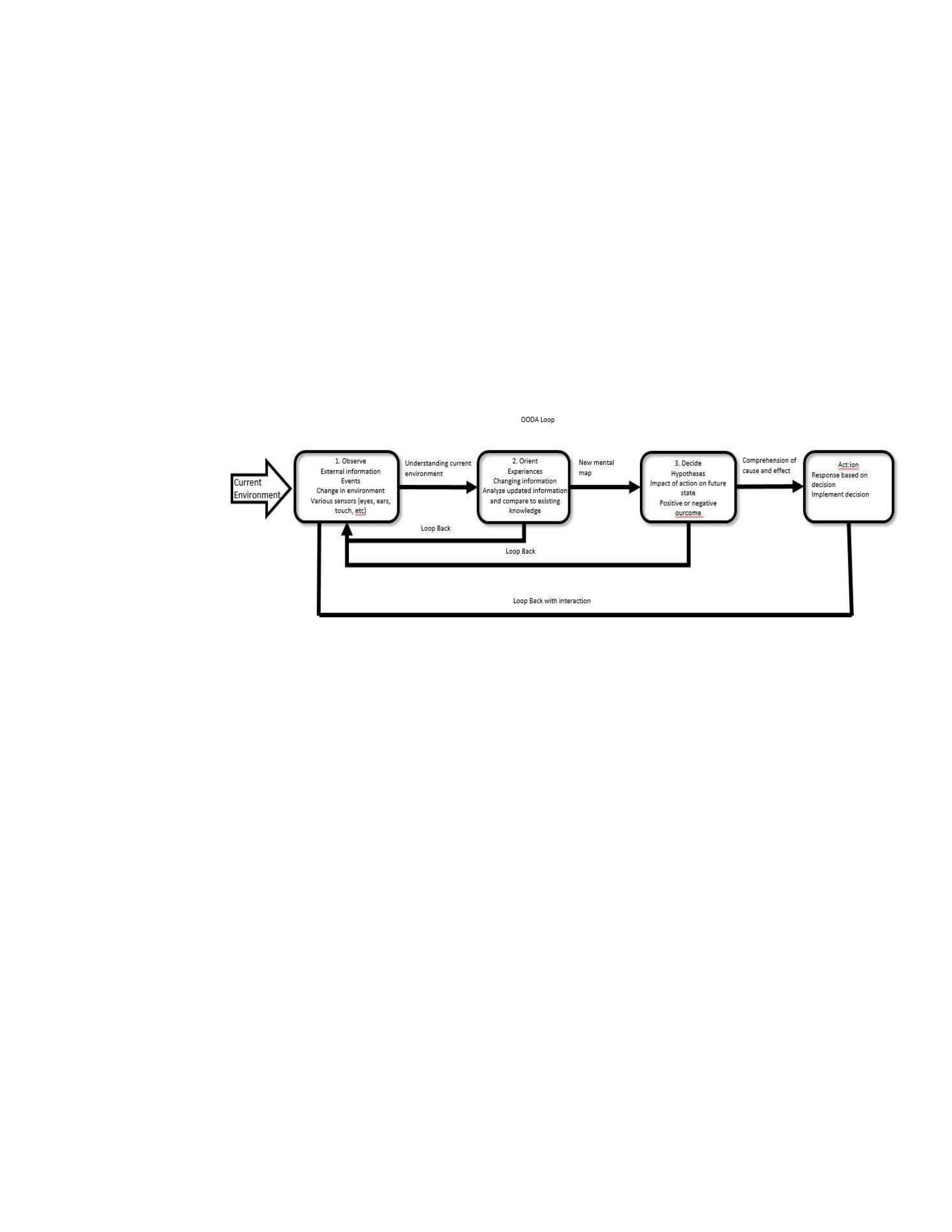
Orientation, Decision, and Action. The OODA loop completes one phase then connects to
the next phase in a circular pattern.
While this diagram is most often used in association with his ideas, this simplistic
view was never drawn by Boyd. The process is more complex with available feedback
and feedforward loops contained in each phase, making each phase an interrelated
process (Philp & Martin, 2009).
Figure 1: Boyd’s OODA Loop
Boyd developed his theory in relation to war and contrary to many of his critics
was not intended to be more than an outline or guide to act according to the changing
environment. While his OODA loop process can be further presented in more detail at
each process, Boyd was more interested in presenting the human behavior and
decisionmaking process while having his audience think “outside the box”. As Hammond
argued, Boyd’s style was interrogative and focused more on questions than answers in
order to find new methods to solve problems. Effective decision-making requires the
decisionmaker to be aware of the current environment and examine the unforeseen and
changing situations from various perspectives so that the individual’s mental model or
image can adapt to correspond with the changes. Through the mental processing of

updated information the decision-maker is able to decide on the most appropriate
response and act on the decision.
OODA and Situation Awareness
Boyd’s OODA loop model originated as a representation of the decision-making
process within the military and has since been expanded to other areas, especially where a
competitor is trying to gain the advantage over an opponent (Marra & McNeil, 2013).
The ability of the decision-maker to assess, or be aware of the current environment and
make adjustments at a faster rate than the opponent as the situation changes is a major
factor in the quality of the decision process. As in Boyd’s OODA loop, the perception of
the current environment as observed through senses or displays is the foundation for
concepts of situation awareness in the decision-making process. However, situation
awareness involves more than receiving various pieces of data. It is necessary to gain a
level of understanding of the situation, comprehend its meaning, and the ability to project
future states of the system in accordance with the operator’s goals. Situation awareness is
described as a detailed description of observe and orient stage of Boyd’s OODA loop
model and a key component in the decision-making process (M. Endsley & Jones, 1997;
Salfinger, Retschitzegger, & Schwinger, 2013). Endsley provides the detailed sub-
process that compliments Boyd’s OODA Loop through the identification of perception,
comprehension, and projection.
Situation awareness has its foundation in the study of pilots’ ability to maintain
awareness of the different complex and changing events that occur during flight and how
this information is used to predict future actions. While several definitions appear in
literature, it is Mica Endsley’s seminal work and formal definition that has been widely

adapted, not only in the field of aviation, but has expanded across multiple fields of study
(Tenney & Pew, 2006; Wickens, 2008). Endsley defines situation awareness as “the
perception of the elements in the environment within a volume of time and space, the
comprehension of their meaning, and the projection of their status in the near future”
(Endsley, 1988a). In other words, it is the internal model of the world around him (pilot)
at any point in time (Endsley, 1988b) and being aware of what is going on in the current
environment, being able to discern what is important, understanding what these factors
mean in relation to the goal, and what will happen in the near future (M. Endsley &
Jones, 1997; Onwubiko, 2009). Since Endsley’s original research, various definitions
have been presented to support situation awareness in the decision-making process: the
continuous perception of self and aircraft in relation to the dynamic environment (Carroll,
1992); responding to informational cues based on humans, important information,
behavior, and appropriateness of responses (Dalrymple & Schiflett, 1997); the integration
of knowledge that results from recurring assessments (Sarter & Woods, 1991); a
cognitive understanding of the current situation and its implications (Vidulich, 1995).
The common element of the various definitions convey the point that situation awareness is a
cognitive process that represents an individual’s perception of the elements within the environment
and is supported through external sources including visual displays, senses, or relevant information
from other individuals in order to determine the appropriate action in the decision-making process.
Situation awareness, however is not an automated system, technical device, or external display, but a
state of human awareness based on a level of understanding the situation, comprehending the
meaning, and the ability to project the future state of the environment in accordance with the goal of
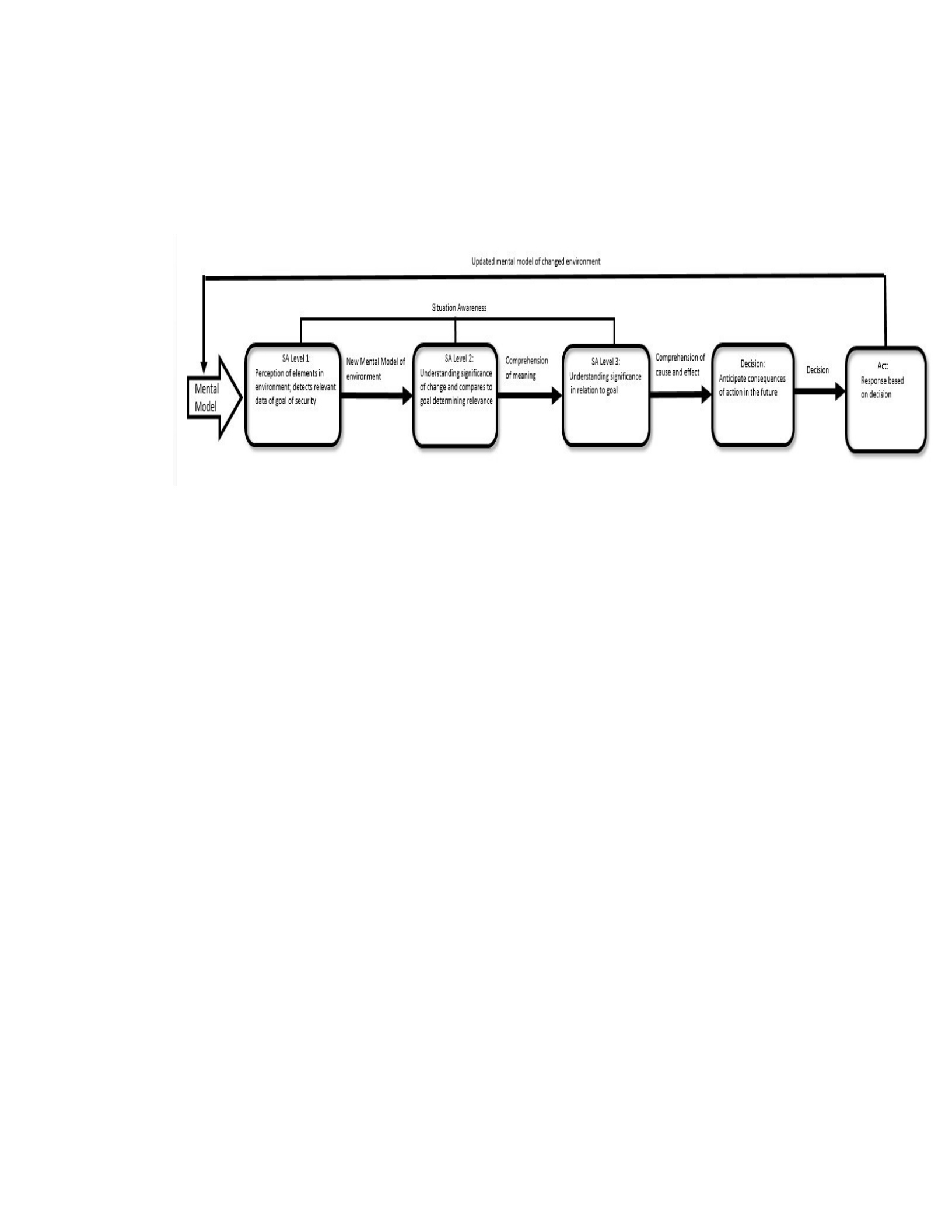
the individual (Endsley, 1994; Lambert, 2001). Based on Endsley’s formal definition, situation
awareness was developed into three levels, or stages of understanding, each built upon the other.
Figure 2 Model of situation awareness process.
Level 1: Perception. Level one is the perception of the elements of the
environment. The perception is knowing the important elements of the computing
environment, including the relevant attributes, status, as well as the overall dynamics
(Endsley, 1994; Mihailovic et al., 2009). Perception across different domains are different
and each will contain different characteristics and dynamics. For example, a physician
may use his or her senses and available information in assessing the health of the patient
and detect subtle differences. An automotive mechanic may detect abnormal conditions
of an engine based on the sounds or devices designed to monitor engine performance. In
complex information systems, much attention is directed towards the use of electronic
displays and various reports that directly perceive the status of the environment (Endsley,
2012). Within information and network security, the challenge in attaining accurate
perception is detecting all of the relevant data and disregarding data that is not relevant to
the goal of maintaining and securing the network. The operator needs to maintain an

awareness of the status of the computing environment by relating to the various devices
and services that comprise the computing environment as well as the activities conducted
by individuals using the services of the network. The security analyst perceives the
various data on the status of the network firewalls, routers, switches, intrusion
detection/prevention systems, servers, and network storage devices, as well as the real-
time data traffic traversing the network. The data, referred to events in this context, report
various activities across the network and its devices. Events may include activities such
as normal logons by authorized users, incorrect password attempts, amount of data
transferred from one device to another, network interrogation by outside sources, and
network services started or stopped. The security analyst must sort through this
information in order to gain a proper understanding of the current environment. A vast
amount of data is being presented that is competing for the attention of the operator or
analyst and as a result, the potential for failure to accurately perceive the environment is
great (Endsley, 2001; 2012). According to Endsley’s model, the perception of the current
environment is stored in a mental model which is a representation of the static knowledge
of the environment (Endsley, 2000). Without an accurate mental model of the current
environment and important information, the individual is at risk of not detecting changes
as they occur within the environment, and form an incomplete or inaccurate
representation of the new environment (Endsley, 2000; Rosli, Rahma, & Alias, 2011). An
inaccurate representation of the environment may inhibit understanding the impact to the
security goals and objectives necessary to achieve level two of situation awareness.

Level 2: Comprehension. Comprehension is more than just being aware of the
elements and status of the environment. It is gaining an understanding of the significance
of the elements and compares this information to the goals and objectives as supported by
the new mental model of the environment. In other words, perception of the elements
gained in Level One, combined with comprehension of the meaning to form patterns of
the fragmented information provides a complete mental picture of the environment and
the significance of its meaning based on combining new information with existing
knowledge (Salerno, Hinman, Boulware, & Bello, 2003). Comprehension is compared to
the goals and objectives of the environment to determine its relevance in attaining the
goals (Endsley, 1995, 2001, 2012). For example, a physician assesses the health of a
patient through exams and external devices. The information gathered at this stage may
not provide any significant details. However, through his expertise and experience he is
able to combine the various pieces of information and comprehend the meaning as to
whether the patient is healthy or treatment is necessary to achieve the overall goal of a
healthy patient. Likewise, the security analyst goals in information security include
maintaining confidentiality, integrity, and availability of the information and the
computer systems (von Solms & van Niekerk, 2013.; National Institute of Science and
Technology, 2006). For the analyst to achieve comprehension, he must not only be aware
of the data provided by the security devices, system logs, and monitoring software, but
must comprehend the significance of the data as it relates to the protection of the
confidentiality, integrity, and availability of the information.

Errors within the process of situation awareness occurs in the comprehension
phase. In the case of errors, the individual receives the necessary information relating to
the status and elements of the environment, however due to lack of experience is not able
to comprehend the meaning in relation to the goals. For example, the security analyst has
gathered information from the various security devices and software. Due to lack of
experience in the security field and knowledge base, the analyst is not able to
comprehend the meaning of the various pieces of information and is not aware the
network is experiencing a low-level attack. Because the analyst does not have a good
knowledge base of previous experiences, he is at a disadvantage in adequately attaining
and developing level two situation awareness.
Level 3: Projection. Level Three is the highest level of situational awareness and
is the ability to project the events that will occur in the future (Endsley, 2001;Luokkala &
Virrantaus, 2014). Projection is achieved through the perception of events occurring
within the environment and gaining an understanding of the cause and effect in relation to
the overall goal so that the decision maker can anticipate the effects and devise a course
of action. To achieve this level, it is important for the decision maker to have a good
understanding of the domain and the expertise to understand the operations and dynamics
of the system. This, in turn, supports the ability to gain insight into the meaning of the
information provided (Level 2) and its relation to the goals in order to project the future
actions of the event (Endsley, 2012; Luokkala & Virrantaus, 2014). Through this process,
a plan of action may be formalized that support the goals of the decision maker in a
timely manner.

Situation awareness is comprised of two distinctive processes: technical and
cognitive. Technically, situation awareness is acquiring, compiling, processing and fusing
different pieces of information. Cognitively, the decision-maker must be able to evaluate
the different pieces of information, determine its relevancy or quality, and understand its
implications in order to comprehend the implication so an informed decision or course of
action may be pursued in relation to the goal. As indicated in the formal definition by
Endsley, situation awareness is a progressive process with each level increasing the
individual’s awareness resulting in the ability to predict future actions.
Situation Awareness in Cyberspace
The physical world is defined by four distinct domains, each with geographic
boundaries and measurements comprising of land, sea, aerospace, and space.
Geographic boundaries may include regions or countries as well as defined sovereign
rights for national security purposes. Boundaries may be reduced in size, such as the
visual limitations of an individual when observing the immediate physical world around
him. Measurement for distance is defined by feet and miles while time is measured in
minutes, hours and days. The elements of boundaries, measurements, and time shape the
mental model of the current environment for the individual. As changes are perceived by
the individual through visual displays or senses, the individual comprehends the
significance of these changes and projects the future impact. The individual is then able
to determine the appropriate action. This process of situation awareness within the
physical world has been studied and applied in different fields to include military
operations, aviation, critical infrastructure systems, automotive, and healthcare. Since the

beginning of the 21st century, researchers have shown a growing interest in the
application of situation awareness to the realm of cyberspace, which is described as the
fifth domain along with land, sea, aerospace, and space.
The term cyberspace was first defined by William Gibson in the novel
“Neuromancer” as “a consensual hallucination” or “an artificially created perception or
vision that is common to a community of users” (Gibson, 1984). Since the 1980s, several
definitions have emerged to formally define cyberspace. Cyberspace is “distinct entities
with clearly defined electronic borders” (Schwartau, 1994); “the confluence of
cooperative networks of computers, information systems and telecommunication
infrastructures commonly referred to as the Internet and the World Wide Web” (Sharp,
1999); “a physical domain resulting from the creation of information systems and
networks that enable electronic interactions to take place” (Rattray, 2001). The Joint
Chiefs of Staff defined cyberspace as “a domain characterized by the use of electronics
and the electromagnetic spectrum to store, modify, and exchange information via
networked information systems and physical infrastructures” (Pace, 2006); President
George W. Bush signed Presidential Directive 54 that included the definition
“interdependent network of information technology infrastructures, and includes the
Internet, telecommunications networks, computer systems, and embedded processors and
controllers in critical industries” (White House, 2006); a "global domain within the
information environment whose distinctive and unique character is framed by the use of
electronics and the electromagnetic spectrum to create, store, modify, exchange, and
exploit information via interdependent and interconnected networks using

informationcommunication technologies” (Kuehl, 2009); “a global domain within the
information environment consisting of the interdependent network of information
systems infrastructures including the Internet, telecommunications networks, computer
systems, and embedded processors and controllers” (Kissel, 2013).
Unlike the four physical domains, unique elements must be considered when
employing situation awareness in cyberspace. First, the boundaries or geographic features
are limitless. While the pilot may be able to view the world from the cockpit and even
observe visually the elements of the environment, the elements for cyberspace consists of
a digital representation, with information presented to the analyst through visual displays,
intrusion detection alerts, and firewall or event logs. While the analyst may be able to
understand the limit of the internal network, cyberspace is limitless. Second, the rate of
change within cyberspace occurs at a much faster rate than the environment in the
physical world. New attack methods, vulnerabilities, and exploits are continuously being
designed and deployed along with new security technologies to counteract the attacks.
Using air combat as an example, the rate of new attacks methods within the realm of
cyberspace would equate to a new aircraft with the latest weapons appearing instantly
without warning. Based on the speed in which an attacker could penetrate a network
would equate to compromising a friendly aircraft weapons system and deploying its
armament without warning (Tyworth et al., 2012). Situation awareness incorporates the
ability of the individual to use mental models that provides a mental representation of the
environment. Changes are compared to the model to aid in determining whether a course

of action should be taken. However, in cyberspace, changes occur at such a rapid pace
that the use of mental models for the analyst is all but obsolete.
Cyber situation awareness is considered to be an extension of Endsley’s model of
situation awareness, but is applied to computer networks. However, in the context of
cyber, situation awareness includes a mission awareness through the analysis of network
events as it relates to the mission or goal being carried out by the organization (Doupé et
al., 2011). While situation awareness can be achieved through the senses of the
environment (touch, smell, sight, sound), cyber situation awareness is achieved through
the gathering of data from various technological sensors, such as intrusions detection
systems, firewalls, system monitoring software and related storage logs (Franke &
Brynielsson, 2014).
Within the realm of cyberspace, situation awareness is perceived as a three phase
process similar to Endsley model: situation perception, situation comprehension, and
situation projection (Barford et al., 2010). The first phase, situation perception, is based
on recognition and identification, which is the ability to identify the type of attack as
opposed to only an understanding that an attack is in progress. Perception is more than
obtaining data from intrusion detection systems. While usually a sensor on the network,
intrusion detection does not identify or recognize whether an attack is in progress, but
simply identifies that an event, which may be part of an attack is in progress.
Additionally, it is important to gain knowledge of the source of the attack and the
intended target. To supplement this knowledge, the source or system of the information
must be trustworthy or of high quality so as to gain confidence in recognizing an actual

attack as opposed to a false alert. The second phase, situation comprehension, relates to
impact assessment and adversary behavior. Being aware of the impact of the attack is
acknowledgement of an attack in progress and assessing the damage in addition to an
assessment of future damage as a result of the attacker continuing on the current path. To
supplement the assessment of future damage is an awareness of the adversary’s behavior
based on attack trend and intent analysis. Additionally, the comprehension phase includes
an awareness of why and how the situation occurred through back-tracking or forensics.
In other words, focus is more on the behavior of the adversary than on the situation. The
third phase, situation projection, is the ability to access possible future actions of the
adversary as well as the path that may be pursued. To adequately project the future
situation, an understanding of the adversary through intent, opportunity and capability as
well as knowledge of the vulnerabilities within the environment is necessary.
The advancement in technology has presented organizations with security devices
to detect threats launched against a network. However, these devices operate on known or
predefined rules, such as a firewall, and experiences difficulties when confronted with
unknown or undefined rules (Cummings, Bruni, & Mitchell, 2010). Vulnerability and
threat information from network sensors alone are not adequate to provide the necessary
information in which to formulate an effective decision (Kornmaier & Jaouen, 2014). The
decision-maker needs more than just to mitigate the existing threat, but the ability to
counteract the cyber threat. Security devices will have difficulties in predicting future
states of the environment as defined in level three of situation and cyber situation
awareness. Security devices, both hardware and software exhibit proficiency in

collecting, assimilating, and filtering relevant data for review but is primarily restricted to
threats that are known and have been defined. The security analyst exhibits proficiency in
areas that are lacking in today’s technology to include the ability to interpret, analyze, and
make decisions based on the information provided (Jones, Connors, & Endsley, 2011).
However, with the amount of data presented for analysis by the security devices and the
dynamic nature of the environment, the decision-maker is easily overwhelmed in
attempting to gain the required level of cyber situation awareness. Attacks against
organizational networks have increased through zero-day vulnerabilities, Botnets, and
Distributed Denial of Service. Hacker tools are more sophisticated and have created an
imbalance of capabilities between the attacker and the defender (Hernandez-Ardieta et
al., 2013). The speed in which attacks occur are barely measurable as they occur at the
speed of light (Clarke & Knake, 2010). Decision-makers who have achieved an
acceptable level of situation awareness obtain relevant information through observing the
environmental changes based on the current mental model, making sense of what the
changes are, and if continuing on the current path, the implications in relation to the goal.
Once the projection of the future state is determined, then a course of action is
implemented. While this may benefit addressing changes in the physical domain, this
approach continues to be reactionary in the realm of cyberspace. Organizations continue
to spend funds for new and more advanced security technologies, but the adversary
continues to penetrate the defenses (Baker et al., 2012; Ponemon Institute, 2012; Verizon,
2013).

Cyber Intelligence
A growing recognition within the information security industry realizes the
traditional security measures, including software and hardware, are no longer effective in
counteracting the latest threats. The paradigm needs to change to include examining the
security defenses from the viewpoint of the adversary. To address this change, the
organization needs to implement an intelligence-based defense in conjunction with cyber
situation awareness designed to improve the information security posture due to the rapid
changes in cyberspace (Beer & von Solms Basie, 2013). The process of intelligence is
essential as it supports obtaining an accurate awareness of the situation as well as an
assessment of future developments based on threats, which is necessary in the
decisionmaking process (Biermann, Hörling, & Snidaro, 2009; Kornmaier & Jaouen,
2014). In the cyber domain, intelligence may enhance the decision-maker’s ability to
detect the threat and perform an assessment of the cyber capabilities of the adversary.
With the advance information through the intelligence process, the threat may be
mitigated based on a proper evaluation of the effects of the attack resulting in improved
security based on well-informed decisions (Gendron & Rudner, 2012). Intelligence
increases the possibility to anticipate and mitigate future intrusions in the cyberspace
environment based on the knowledge of the threat and is advantageous in studying the
intrusions from the perspective of the adversary (Hutchins et al., 2011). Intelligence for
cybersecurity is not just the ability to understand network operations and activities, but
also to understand who is performing the activity, why it is occurring, and what may be
next phase of the activity. This includes collecting and analyzing data that is transformed

into meaningful information that produces timely reports for the decision maker
(Tamjidyamcholo, Bin Baba, Shuib, & Rohani, 2014; Hurley, 2012). Cybersecurity
cannot rely solely on responding to known threats. The process must include tracking
capabilities, intentions, and activities of the adversary, which is foundational to cyber
intelligence. Specifically, the intelligence activities can discern who may be targeting the
network; what are his or her capabilities and intentions; when will the malicious activity
occur; where will the threat originate; how does he or she plan on penetrating the network
(Mattern et al., 2014).
In a recent survey of approximately five thousand security professionals
worldwide, forty-four percent stated that current security solutions do not provide
adequately security intelligence to inform them of an attempted attack and the potential
consequences. Fifty-three percent stated it is difficult to keep track of the security threat
landscape (Ponemon Institute, 2014). One of the challenges of cyber intelligence is that
no single organization has the relevant information regarding the threat landscape to
maintain effective situational awareness (Barnum, 2012). Taking into consideration the
overall threat landscape, the volume of data in relation to relevant threat intelligence, and
the speed in which attacks occur, it is necessary for organizations to share this knowledge
with each other. While trust between organizations sharing threat information is
necessary, this approach shares vital information as to what to look for so as to identify
the attack and the attacker. The threat, or attack, that one organization battles one day
may the next attack another organization battles another day. In sharing information as to
what was observed and lessons learned from the attack, then others may be able to

identify the attack in its early stage before an actual breach occurs on the network. It is
also essential to share the information so that countermeasures effective for one
organizational environment may be implemented in another organizational environment.
For the organization to protect themselves from known threats, an awareness and
understanding of the latest threats is critical to the process. To gain this awareness, the
flow of threat intelligence information is critical. Threat intelligence data may be
gathered internally through the collection and analysis of network data, but more
effective is obtaining intelligence through external sources such as cyber security
companies. These external sources are valued by some organizations as the information
and sources are validated and is considered as providing quality and relevant threat
information (Haass, Ahn, & Grimmelmann, 2015). However, the issue still remains in
how to effectively share the information, with whom should the information be shared,
and what information will be relevant. Even with the available information and several
forums and organizations participating in the sharing of threat intelligence, a significant
number of organizations continue not to participate. According to a survey of 692
technology and security professionals, it was reported that forty-seven percent
experienced a significant security breach that compromised the networks and data
(Ponemon Institute, 2015). Over sixty percent of those experiencing the breach stated that threat
intelligence could have prevented the attack or minimized the consequences of the attack. While threat
intelligence may be essential to support a strong security posture for the organization, the same
research study showed forty percent did not participate because of a lack of trust in the source of the

intelligence, the process of sharing was too slow, and the perception of sharing of threat intelligence
was not beneficial to the organization.
Summary
The ability of the security professional to maintain situation awareness and
adequately defend the security posture has been reduced due to the complexity of the
global computing environment coupled with the speed in which information transverses
the Internet. Even with enhancements of security technical devices and advanced
software, the defense methods remain in a reactive mode. Research has shown that
utilizing current security methodologies and relying on technology alone does not
adequately support the requirements to meet the current challenge of attacks.
Organizations have begun to examine the benefits of implementing threat intelligence to
enhance the organization’s information security program. Understanding the value of
implementing threat intelligence may encourage more security professionals and
organizations to modify the current methodology and create a paradigm shift from
reactive to proactive protection.
Chapter 3 explains the research methodology to be conducted for this study. It
provides an overview of the qualitative approach, data collection and the analysis,
participant selection and procedures.
Chapter 3: Research Method
Introduction
I utilized a qualitative methodology with a case study design. The goal was to gain
an understanding of the impact of incorporating threat intelligence into the cyber situation

awareness model for the decision making process as it related to an attack against an
organization’s security posture. In addition, the study was to help understand if advanced
indicators of an attack were present in network monitoring devices (firewalls, routers,
antivirus, etc.) and whether utilizing the concepts of cyber situational awareness could
have prevented a successful attack. The research method was reviewed by Walden
University’s Institution Review Board and granted approval for the research. The
approval number for this study was 07-21-16-0064526.
Information security is in need of a change from reactive to proactive defense and
must include the ability to understand the motives of the attacker as well as the tools and
methods used in attacks. Knowing in advance what unusual patterns provide evidence of
an attack, determine the specific system and/or process against which the attack is
directed, or the types of information that are the target of the attack will improve the
organization’s ability to proactively increase security measures where necessary.
Intelligence through the sharing of information between organizations provides the
advantage of shifting from reacting to an ongoing attack to becoming proactive in
understanding the threat, intent, and motives of the attacker and reduce the likelihood of a
successful attack (Hutchins et al., 2011).
Little research has been provided that identified the value of available shared
information through threat intelligence that is necessary for the security professional or
decision-maker to make a qualified decision (Tadda, 2008). The purpose of this study
was to explore whether the value of current threat intelligence may increase the security

analyst and decision maker’s situation awareness so as to detect a potential adversary’s
intention.
Based on the methodology of case study research, the questions this study was
designed to answer were:
RQ1: How effective is situation awareness in response to cyber-attacks?
RQ2: How does threat intelligence support situation awareness in response
to cyber-attacks?
RQ3: How difficult is maintaining situation awareness for information
security?
RQ4: What effect on information security was due to the combination of
threat intelligence and situation awareness?
RQ5: Why was implementing threat intelligence with situation awareness
successful or unsuccessful in the goal of information security? In the major sections of
this chapter I address the research design and rationale in approaching the study. I
compare the various design methodologies along with the reasons for not selecting a
specific design. I also provide the reasons for the selection of a case study and the
rationale as to why this approach was best for this study. For this study, my role as
researcher included conducting interviews, making observations, and reviewing available
supporting documentation. The methodology I used was to interview information security
professionals to understand the process involved in deciding whether incorporating
cybersecurity intelligence added value to the decision making process. A pilot study was

conducted with the purpose of validating the questionnaire and determining whether any
questions were misleading or required additional clarification.
Research Design and Rationale
The study purpose was to understand the value in integrating cyber intelligence
into the process of situation awareness for information security professionals who are
responsible for protecting an organization from and reacting to cyber threats.
The purpose of qualitative research is to gain an understanding of issues or a
particular situation by investigating the perspectives and behavior of the individuals
involved in these situations and to study the context in which they act (Kaplan &
Maxwell, 2005, p. 30). This means understanding the meaning of the events, situations,
experiences, and actions from the perspective of the participants (Maxwell, 2005, p. 22).
Qualitative research methods are useful for evaluating experiences and the decision
process that is not adequately captured through quantitative methods. Qualitative
methodology was best suited for this study as it allowed me to examine the proposed
problem statement as actually experienced by the individual as opposed to “second hand”
experience (Patton, 2002, p. 104). Most qualitative research is based on an interpretivist
perspective. Interpretivism holds the perspective that truth is contextual, depending on the
specific situation, the individuals who are being observed, and the researcher performing
the observation (Chism, Douglas, & Hilson, 2008, p. 2). This approach supported the
study as each cyber threat characteristic was different, occurred under different
circumstances, and was approached through different methods by the security
professionals.

Various methodologies of qualitative research were examined to determine the
best approach for this study. A narrative study was considered as it allowed the research
to describe stories through the study of one or more individual’s experience, using
interviews and looking for themes in the data. However, a narrative study was not
appropriate as it examines an individual or group of individuals’ life with the final
product being a chronological narrative about the participants experiences. Grounded
theory examines multiple individuals who participated in a process and generates a theory
grounded in the data collected. While grounded theory is consistent with some of the
research, it did not address adequately the purpose of the research as this study was not to
generate a theory but to examine integrating cyber intelligence into the security program.
Ethnography examines groups that share a culture and focuses on describing or
interpreting that shared culture. The purpose of this study was to examine a specific issue
rather than a sociocultural attribute; therefore, this approach was not appropriate
(Creswell, 2007). Phenomenological researchers collect data through use of interviews,
observations, and existing documents, which was consistent with the data collection
approach of this study. The data analysis strategy was also consistent with this study as
the researcher looks for significant statements, meaning, and textural descriptions to draw
conclusions. Phenomenology was not appropriate, however, as the focus was not to
understand and describe a lived experience.
Case based research was the best choice for examining the incorporation of cyber intelligence
processes with situation awareness within the organizational security posture and therefore was the
most appropriate methodological design for reaching the goal of this study.

A case study is preferred when the focus of the research is to answer how or why
questions, examining events that are contemporary and where relevant behaviors cannot
be manipulated and the contextual conditions are relevant to the phenomenon being
studied (Baxter & Jack, 2008; Yin, 2009). It also incorporates direct observations and
interviews of the individuals who are actually involved in the events that are being
studied (Yin, 2009, p. 11). It is useful in understanding the casual chain that results in
either success or failure by revealing in chronological manner the actors and events that
influenced the final outcome (Benbasat, Goldstein, & Mead, 1987, p. 382). A multicase
approach was appropriate for this study as it focused on more than one specific case in
depth that provided an in-depth understanding. Multicase studies examine multiple
sources of data collection including interviews and observations and provide a detailed
analysis of each case and an overall conclusion found among all cases.
Role of the Researcher
I have 30 years’ experience in the field of information technology and over 20
years’ experience specializing in the area of information security. I am certified through
SANs Global Information Assurance in Security Audit and Control and a member of
InfraGard, a collaborative group consisting of agents of the Federal Bureau of
Investigation and local organizations. The main purpose of this study was to share
information relating to the latest threats in cyberspace. My current role is manager of
information security (governance, risk and compliance) for a large healthcare
organization located in the metropolitan area of St. Louis, Missouri.

For this study, my role as researcher included interviews, observations, and
reviews of available supporting documentation. Since the study was performed within my
organization or circle of influence, no relationship, whether personal or professional, was
involved during the research. This study was performed with some bias based on my
current experience with cybersecurity and participation in cyber intelligence information
sharing groups. My bias is an assumption that cyber intelligence through information
sharing adds value to the process of cyber situation awareness for an organization’s
information security program.
Methodology
Participant Selection Logic
The sample size in this qualitative research was based on the subject of the study,
the purpose of the study being conducted, what information was useful, and the amount
of effort available based on time and resources (Patton, 2002). Accordingly, no specific
rules for determining the sample size in qualitative research was available. It was not
possible for me to include every individual regardless of geographic location in the
course of the study. The choices that were made about who to include and why places
limits on sampling in the inquiry (Miles & Huberman, 1994).
In determining the sample size, purposeful sampling was used in this qualitative
research study. Purposeful sampling is where the researcher selects individuals and sites
to study because they can purposefully provide in-depth understanding of the central
problem. If the size is too large, the researcher may become overwhelmed with the
volume of information, which may have an adverse effect on the study due to limitations

of time and resources. Various researchers have suggested guidelines for determining
appropriate qualitative sample sizes for case studies.(Charmaz, 2014) suggested that 25
participants are appropriate for small projects. (Ritchie, Lewis, Nicholls, & Ormston,
2013) stated that the sample size is often 50. (Green & Thorogood, 2013) stated that very
little new information is derived after approximately 20 individuals are interviewed.
For the case study approach, 13 individuals were interviewed for the study. For
this study I intended to interview information security professionals to understand the
process involved in deciding whether incorporating cybersecurity intelligence added
value to the decision making process. The individuals interviewed presented the
opportunity to gain more in-depth, relevant data within the constraints of the study.
The criterion on which participant selection was based was through the use of
established qualifying benchmarks. Individuals were to have a minimum of 5 years of
direct information security experience. In addition, individuals were to have direct
technical experience with network defense to include firewalls, routers, intrusion
detection, and security event analysis. During the selection process, information gathered
included employment history, security certifications, years of direct experience,
specialized security training, and affiliation with any cybersecurity information sharing
groups. While the participant population was 13 individuals, the objective of the research
was to achieve saturation. Saturation occurs when no new information was added in order
to gain better understanding or the information becomes redundant (Patton, 2002, p. 246).
Saturation, where no new information was obtained, occurred after the 9th interview.

Instrumentation
The basis for the instrumentation development was from literature reviews, my
professional experiences within the information security field, and through a pilot study.
The instrumentation was individual interviews through the use of a voice recorder.
Interviews were used as a method to understand the cognitive and behavioral aspects of
the security professional in decision-making process during and after a security incident.
The interview session was guided through formal questions in order to maintain focus on
the topic by both the interviewer and interviewee. The nature of the questions were to
ascertain demographic data, qualifying data for the purpose of the study, and open ended
questions pertaining to the nature of the study. The open ended questions allowed the
interviewee to provide relevant information as well as professional opinions.
Pilot Study
A pilot study was conducted with the purpose of validating the questionnaire and
to determine whether any questions may be misleading or require additional clarification.
The study was to consist of four or five individuals being interviewed for approximately
one hour. These individuals were selected based on the established criteria, but was not
included in the formal study. Recruitment was selected from the study population and
included participation based on the snowball approach where individuals recommended
other qualified persons that may add value to the study. Each individual was provided
with the nature of the study and given the opportunity to either participate or to decline.
A consent form was provided.

Procedures for Recruitment, Participation, and Data Collection
The target population for the study was professional security personnel who are
actively involved in the information security for the organization. Participants may be
performing the role of manager, security analyst, security architect, security
administrator, or any other function providing his or her individual role or daily function
was actively related in providing security for the organization. The participants were
identified as fulfilling a variety of different security positions where other organizations
may employ one professional for each role. Identification of specific organizations and
individuals was not used in the study. Training in and technical experience and
knowledge of information security was a primary criteria for the research study.
Additional questions included in the survey were for use and data collection. The study
population was to consist of companies primarily within in the St. Louis, Missouri
metropolitan area.
The data was collected through interviews either by phone or in person.
Individuals were contacted through electronic mail and invited to participate in the study.
All perspective participants were informed of the nature of the study and the
confidentiality of the information provided.
Data Analysis Plan
Pre-coding structure for qualitative data analysis refers to the creation of a
provisional start list containing codes before conducting the fieldwork (Miles &
Huberman, 1994). Based on the list of research questions, key variables, and problems
studied, the list of codes were developed. An advantage to creating codes prior to the start

of fieldwork was that it forced the researcher to connect the questions or interests to the
data (Miles & Huberman, 1994). In addition, using codes aided in identifying what was
important among the vast amount of information gathered through various mediums
(interviews, documents, records, etc.). Through the use of codes, the information was
more organized and structured and reduced the time to analyze the data.
Issues of Trustworthiness
Credibility
Verification through the participant’s feedback to what is described and the
resulting conclusions provided the researcher confidence in the accuracy, completeness,
and fairness towards the validity of the data analysis (Maxwell, 2005, p. 111; Patton,
2002, p. 560). Each participant upon completion of interviews was provided the
opportunity to review the content and address and questions or concerns. For specific
questions, an expert review provided an increase in the level of credibility through
judging the quality of the data collection and analysis (Patton, 2002, p. 562). Through the
review the researcher was able to verify whether the results were accurate in the
interpretation of the information provided by the participants.
Transferability
Transferability is understanding whether the conclusions of the research study be
applied to other studies or theories. To support transferability, the data, or information
collected was sufficiently detailed and varied to fully understand the topic and the
process. Collecting the detailed information made it difficult to concentrate only on the
data that supports any prejudices and preconceived expectations and was a test on any

generating theories derived from the research study (Kaplan & Maxwell, 2005). In this
manner, the researcher had the opportunity to discover new questions that may lead to
new discoveries or actions.
Dependability
Dependability is whether the process involved in the research study is consistent
and reasonably stable over time and across different researchers and methods. It
addresses whether the research questions are clear and the data collected across
appropriate times, settings, and participants as indicated by the research questions (Miles
& Huberman, 1994, p. 278). Dependability was achieved through the concept of
triangulation. Triangulation was the use of multiple and different sources or methods to
corroborate the evidence gained by the researcher. This method reduced the risk that the
conclusions of the study reflected only biases or limitations of a specific source while
providing the researcher with a more broad understanding of the study by the researcher
(Maxwell, 2005, p. 93). Dependability was based on quality and appropriate checks were
implemented to provide assurance that appropriate care was undertaken during the
research process.
Confirmability
Reflexivity is being aware of the researcher’s contribution of the interpretation in
the research process based on cultural, social, class, and personal positions (Cresswell,
p179). I was able to determine that the conclusion of the research was dependent on the
inquiry and was not influenced by personal assumptions, values, or biases. I was aware
and explicit about how these could have influenced the study (Miles, p 278).

Ethical Procedures
The nature of this study required gathering information that many security
professionals consider confidential as it may outline specific security measures and
procedures for the organization. It was imperative that the participants were given
assurances that the information provided would be kept confidential and that the
participants providing the information would remain anonymous as well as the specific
organization. To address this specific point, the signing of a Non-Disclosure Statement
was offered by each participant deemed to be unnecessary. All questions, processes, and
survey instruments were disclosed to the Institutional Review Board for review and
approval prior to the commencement of any fieldwork for this research.
All information and data collected was maintained in a confidential manner. The
researcher did not use any information provided for any purposes outside the scope of this
research study. All participants were required to sign a voluntary consent form approved
by Walden‘s Institutional Review Board process. All documentation are kept locked and
in secure storage device for future research request. Participants were informed that they
have the right to stop providing information during the process without any risk or
consequence.
Summary
The information in this chapter provided detailed information in conducting the
case study as to the role of cyber intelligence within the process of situation awareness.

The data collected was through the use of survey questions and interviews with
participants who meet the criteria established within the information security field. The
data collected is kept confidential and used only for the purposes of this research study.
Chapter 4: Results
The purpose of this study was to examine the perceived value of threat
intelligence information sharing as a proactive process for information security. The
objective of this study was to explore how situation awareness is enhanced by receiving
advanced intelligence reports resulting in better decision-making for proper response to
security threats. In this chapter I present the results and findings of the qualitative
research methodology following a case study approach. In this chapter I describe the
process used to identify the participants, validate the instrument, gather the data through
interviews, and analyze the data as related to each research question.
Based on the methodology of case study research, the interviews for this study
were designed to answer the following questions:
RQ1: How effective is situation awareness in response to cyber-attacks? RQ2:
How does threat intelligence support situation awareness in response to
cyber-attacks?
RQ3: How difficult is maintaining situation awareness for information security?
RQ4: What effect on information security was due to the combination of threat
intelligence and situation awareness?
RQ5: Why was implementing threat intelligence with situation awareness
successful or unsuccessful in the goal of information security?

Nvivo software was used to analyze the responses to the interview questions. A
summary of the results is presented at the end of this chapter.
Pilot Study
The pilot study interview consisted of conducting one hour sessions with three
individuals. The selection procedure consisted of selecting qualified pilot participants
obtained from public information contained on LinkedIn networking website.
A pilot study was conducted to validate the questions for the interviews as to their
clarity, purpose and relevance to the research questions. The research questions were
designed to explore the concepts of the study. Additional questions have been identified
and can be defined as issue questions. These questions are not informational questions but
provide the opportunity to prompt the participant to a deeper level of critical reflection of
the core process of the study (Stake, 2013). Initially, 25 issue questions were designed to
explore to a deeper level of each stated research question. Through the use of the pilot
study, each issue question was reviewed for the intended meaning and objective to avoid
any misleading or inadequate responses and to determine if the content of the questions
was too intensive for comprehension. The pilot study added value as it provided the
opportunity to make improvements and adjustments to the main study (Kim, 2011).
The interview for each participant lasted 45 minutes to 1 hour and each question
was discussed to determine its overall value to the study. The result of the pilot interviews
provided the opportunity to reduce the number of issue questions from 25 to 14 in order
to avoid duplication. The actual research questions were reviewed and determined that
original RQ4 and RQ5 were closely related and should be rewritten to be combined as

one question. Another determination was defining the term “situation awareness” for the
participants. This term has different meanings based on the participants’ perceptions and
may not be consistent with the definition of the study. In other instances, while the
concepts of situation awareness is used in daily activities, participants may not be aware
of the actual term.
Research Question Supporting Interview Questions
Question 1: How effective is situation awareness in
response to cyber-attacks?
Describe how you were alerted to this incident?
How much time did it take to remediate the
incident?
Describe any additional investigations
performed related to the incident after
remediation? What factors were included in your
decision making to respond to this incident?
Question 2: How does threat intelligence support situation
awareness in response to cyber-attacks?
What sources do you rely on to keep abreast of the
latest security threats?
Are you a member of any cybersecurity
information sharing groups? If not, why? How
effective is your participation with cyber
intelligence information sharing in your
organization’s information security program?
How accurate is the information you receive
relating to the latest threats?
Question 3: How difficult is maintaining situation
awareness for information security?
With several servers generating various event logs
and a high number of alerts, how do you monitor
them to identify any real or significant incidents?
Do you believe the analyst is able to do an adequate
job in analyzing and determining what events are
going on?
How effective do you believe situation awareness is
in responding to cyber-attacks?
Question 4: How effective is threat intelligence in support
of information security?
Describe the reasons for participating in cyber
information sharing groups.
Do you believe that threat intelligence could have
minimized or prevented the consequences of your
incident? Why or why not?
Describe the main elements of a cyber intelligence
information sharing program that would be (or is)
most important to you.
Figure 3: Matrix of research and issue questions.

Research Setting
The setting for the research interviews were varied based on the participant and
the participant’s geographic location. Two interviews were conducted in the individuals’
business locations in the St. Louis, Missouri, metropolitan area. Three interviews were
performed in a private office and one in a secluded conference room. The remainder of
the interviews were conducted as phone interviews due to either available time or
geographic location. The target geographic location centered towards the St. Louis,
Missouri, metropolitan area; however, the qualifying criteria did not restrict the
participants based on geographic location. Phone interviews were conducted with one
individual in Washington, DC, one individual in Kansas City, Missouri, one individual in
Jefferson City, Missouri, one individual in Baton Rouge, Louisiana, and seven
individuals in St. Louis, Missouri. Each participant established the date, time, and, where
appropriate, the location for the interview.
The interviews lasted 45 minutes to 1 hour and were recorded using a digital audio
recorder. The initial conversation, which lasted 5 to 10 minutes and included a personal
introduction and brief description of the study, was not recorded.
Demographics
Participants selected for this study were determined based on specific criteria or
purposeful sampling method. With purposeful sampling, the researcher seeks to gather as
much information as possible in order to understand the important issue of the study from

the participants’ perspective. It is vital to select participants from whom the most
information may be obtained (Merriam, 2002).
Specific personal information was not asked of the participants. Demographic
information such as age and gender were discovered through viewing public professional
profiles as listed on the website LinkedIn but was not relevant to the requirements of the
study. LinkedIn is a free public site for individuals and companies to publish professional
profiles and contact information with the purpose of collaborating with peers on related
professional topics or as a recruiting tool for companies searching to locate individuals
for hire. In addition to using LinkedIn, I contacted individuals for participation through
previous professional relationships and those whose qualifications were well known. The
criteria for participation consisted of (a) a minimum of 5 years’ experience in the
information security field; (b) a current role within the organization in or directly related
to information security; and (c) background including direct experience with network
defense to include firewalls, routers, intrusion detection systems, and security event
analysis. Seniority level was not a main consideration or requirement for participation but
included CEOs, CIOs, senior directors, managers, and security analysts. The CEOs met
the criteria as they currently led companies in the information security field and had
technical backgrounds. The other participants represented various industries to include
government, financial, health care, and professional services. The selection of participants
were purposeful in order to gain an understanding of the level and type of information
necessary at each level of the organization so that informed decisions may be made. In
the sample population, 85% were male, 23% were junior level positions, 46% were mid-

level, and 31% were senior level positions. The experience in the security field ranged
from 10 years to 30 years with the average experience of 17 years. The following figure
provides the specific qualification of the participants for this study and whether the
participants personally participated in a cyber intelligence program.
Participant
Code Position Geographic
Location
Years of
Technical
Experience
Industry
Cyber
Intelligence
Participation
Participant 1 Manager St. Louis, MO 14 Financial No
Participant 2 CEO St. Louis, MO 18 Technical
Services
Yes
Participant 3 CEO Washington, DC 18 Government Yes
Participant 4 CIO St. Louis, MO 30 Financial Yes
Participant 5 Director St. Louis, MO 14 Technical
Services
Yes
Participant 6 Director St. Louis, MO 12 Managed
Services
Yes
Participant 7 Security
Architect
Peoria, IL 22 Healthcare No
Participant 8 Director St. Louis, MO 20 Government No
Participant 9 CEO St. Louis, MO 24 Technical
Services
Yes
Participant 10 Director Kansas City, MO 20 Healthcare No
Participant 11 Director Baton Rouge, LA 10 Healthcare No
Participant 12 Security
Analyst
St. Louis, MO 10 Healthcare Yes
Participant 13 Security
Analyst
St. Louis, MO 10 Healthcare Yes
Figure 4: Participant demographics.

Data Collection
The data collection process was conducted over a seven month period screening
for potential participants, conducting a pilot study, and initiating participant interviews.
Potential participants’ professional profile was screened through the free public LinkedIn
web site. Professional group members were screened and 850 were identified with the
qualification criteria outlined for this study. Invitations were sent to these potential
participants and 165 requested additional information about the study and 13 agreed to
participate. Originally, the projected number of participants was estimated at 30. The
outcome of the study was not adversely affected with the lower number of actual
participants. No new information relating to security processes or threat intelligence was
gained after 9 interviews resulting in the achievement of saturation. The data was
collected through personal one-on-one interviews with 13 individuals. Two interviews
were conducted face-to-face in an office environment of the participant. The remaining
interviews were conducted as phone conferences due to geographic locations and
available time. The interviews were guided through the set of questions resulting from the
pilot study and designed to facilitate the conversation, but allowed the participant to
expand on the topic as needed. Each interview was recorded on an Olympus digital voice
recorder, model WS-853. The recorder timestamps each interview with the time/date and
unique identifying code in an MP-3 format. In addition, each interview was stored in a
separate folder on the recorder. During interview, I took handwritten notes in addition to
the recording in the event any additional clarification may be necessary during the
conversation.

A change was made in the data collection process as described in Chapter 3.
Originally, an on-line survey instrument was identified to gather the data for the study.
While the survey would provide some information, an interview process was decided as
the best approach as it offered the opportunity for the participants to expand on the
questions in more detail.
Data Analysis
Analysis of the data collected began with the transcription of the interviews from
digital recordings to text documents using Microsoft Word 2013. The transcriptions’
accuracy was verified by reading the text while listening to the audio recording. The
documents were provided to each participant for review and verification of the
information. The text of the interviews were imported into the analysis software NVivo
Starter Edition version 11. The analysis provided a listing of the most common words
used by the participants for each of the research questions. The criteria for the frequency
pattern was the word of at least 8 characters in length, matching the word and stems, and
generate a list of the 50 most frequent works. Displaying the list in a Word Cloud format,
I was able to generate various nodes to further analyze the data and the context of word
usage. By comparing the data across the nodes I was able to identify significant themes
and correlate the themes with each research question.
Research Question Theme
Question 1: How effective is situation
awareness in response to cyber-attacks?
Process for threat reporting
Analyst training
Question 2: How does threat intelligence
support situation awareness in response
Proactive security
Risk Identification

to cyber-attacks?
Question 3: How difficult is maintaining
situation awareness for information
security?
Volume of data
Speed of breach
Question 4: How effective is threat
intelligence in support of information
security?
Quality of threat intelligence
Source of threat intelligence
Figure 5. Themes.
Evidence of Trustworthiness
Credibility
Verification through the participant’s feedback to what was described and the
resulting conclusions provided confidence in the accuracy, completeness, and fairness
towards the validity of the data analysis (Maxwell, 2005, p. 111; Patton, 2002, p. 560).
Each participant upon completion of the interview was provided the opportunity to
review the content and address any questions or concerns. In addition, the use of an
expert review provided an increase in the level of credibility through judging the quality
of the data collection and analysis (Patton, 2002, p. 562). I solicited the opinion of several
professionals with in-depth experience in the areas of firewall administration, computer
forensics, cyber security, network security administration, and information security event
analysis. These individuals expressed confidence in the approach of the research and
provided a validation of the research theory.
Transferability
Transferability is understanding whether the conclusions of the research study be
applied to other studies or theories. The data collected through the participant interviews

and analysis of the data through analytical software is sufficiently detailed to fully
understand the topic and the process. In collecting the detailed information of cyber
intelligence as it supports situation awareness, I was able to concentrate not only on the
data that supported my expectations but through the interview process had the
opportunity to discover new questions to link the results to other studies or theories.
Dependability
Dependability was achieved as the process involved in this research study would
be consistent and reasonably stable over time and across different researchers and
methods. The research questions were clear and the data collected across appropriate
times, settings, and participants as indicated by the research questions would achieve the
same results (Miles & Huberman, 1994, p. 278). Dependability was achieved through the
concept of triangulation. Triangulation is the use of multiple and different sources or
methods to corroborate the evidence gained by the researcher. This method reduced the
risk that the conclusions of the study reflected only biases or limitations of a specific
source while providing the researcher with a more broad understanding of the study by
the researcher (Maxwell, 2005, p. 93). Dependability was based on quality and that
appropriate checks are implemented to provide assurance that appropriate care was
undertaken during the research process.
Confirmability
Reflexivity is being aware of the researcher’s contribution of the interpretation in
the research process based on cultural, social, class, and personal positions (Cresswell,
p179). The researcher needs to determine whether the conclusion of the research depends

on the inquiry or is influenced by personal assumptions, values, or biases. The researcher
needs to be aware and explicit about how these may have influenced the study (Miles, p
278).
The research conducted for this study drew its conclusions from the inquiries of
the participants and was based on individual professional experiences. I have several
years of experiences within the information security field, but I did not inject any
personal assumptions or biases that would influence the conclusion of this study.
Study Results
This qualitative research study was a case study approach to understand through
the experiences of the participants as to how cyber intelligence provides support to
situation awareness for information security. Each interview began with an overview of
the purpose of the study and the format for the interview process. Each participant was
informed that while specific questions would be asked during the interview, these
questions were designed to facilitate the interview and each participant was encouraged to
provide as much detail as they desired to communicate. Each participant was also
informed that the study did not require the participant to reveal any proprietary or
confidential organizational information. Each interview lasted between 30 minutes and
one hour, with the average interview lasting 45 minutes.
Each participant was familiar to a certain degree the meaning of situation
awareness. The most common perception of the meaning was the awareness of events
occurring at any particular moment in time. Awareness is a portion of the definition of
situation awareness and to be consistent, the three parts of situation awareness was

explained and the relation to this study. It was not necessary to know of any specific
cyber-attack or the technical details. To understand the effectiveness, it was important to
know the process of alerting about the incident, how much time was involved from alert
to action, and what factors were included in the decision-making process in responding to
the incident.
Research Question 1
RQ1: How effective is situation awareness in response to cyber-attacks?
The cyber environment in which organizations participate and operate rely on the
security devices deployed to protect itself from unauthorized activities. For the future, the
ultimate goal is to devise a security foundation based on artificial intelligence that will
provide protection without the intervention of human decision-makers. While this goal is
one that may be realized in the future, this role is performed by the security analyst who
is responsible for observing the operations within cyberspace, understanding any changes
and its consequences, and determining the proper response (Dutt, Ahn, & Gonzalez,
2011). The research question strived to examine the effectiveness of the analyst’s ability
to understand the changes and determine the appropriate response to a cyber-attack based
in his or her cognitive situation awareness within the cyber environment.
Security devices designed to monitor network activity will provide alerts when an
event violates a rule, but security analysts also receives alerts from a variety of sources.
Participant 11 stated different scenarios contribute to situation awareness. The
information could come from the operations center, the security analyst’s observation, or
receiving alerts from the security devices that a potential breach or attack is in progress.

In learning how the alert process occurs, Participant 9 stated that awareness is not always
from an observed state, such as logs relating to system events or firewall alerts.
Awareness may generate from an end user, who in turn may notify the administrator that
an anomaly has been observed. These sources generate a large volume of information that
may be valuable but overwhelms the analyst. Sometimes, according to Participant 9, the
information turns out to be old or benign and not usable for decision-making. Regardless
of the source of the alert that comes to the security analyst, the analyst uses the mental
process of fusing the various pieces of information together and comparing this to the
analyst’s mental picture of the current network. Participant 12 stated that based on the
current mental model of the network, when it is noticed that something appears that may
be an anomoly, it stands out and grabs the attention of the analyst.
Timing from notification to action is an important factor in determining the
effectiveness of situation awareness. According to Participant 5, “the timing of
notification can vary depending on the pathway that the attacker is taking.” Participants
have stated that notification of an actual attack is dependent on different factors, such as
if it is a firewall alarm, slow periodic events that trips a specific rule, and the type of
systems that are being hit. Depending on the pathway, this could result in minutes to
hours before notification of the attack.
Once notified of an event, another factor in situation awareness is projecting the
consequences of the event based on the criticality of the system or systems being attacked
then implement an appropriate response. According to Participant 8, a variety of factors
are involved that are running through the analyst’s mind that he immediately wades

through the mental processes as to the appropriate response. Participant 7 supported this
view and stated that if it is critical, then “you act on it immediately. The minute you hear
about it, you isolate the system, kill the account so it no longer has privileges on the
network.” Participant 5 agreed that the decision is based on the criticality of the system:
“it’s an instantaneous decision. We shut it down, period, end of statement.” Other factors
considered in the decision-making process include whether the system contained
noncritical data or data that is not significant; do the event logs provide any insight into
the activities; is it virus, malware, or an actual penetration attempted by an unauthorized
individual or group.
The speed in which attacks can occur can be measured at the speed of light and be
considered as zero-day exploits (Tyworth et al., 2012). The speed in which new attack
methods are being developed and deployed and new vulnerabilities discovered and
exploited, it is very difficult for the security analyst to solely rely on his situation
awareness and security devices to counteract these events.
The data in this study revealed that relying on the analyst’s situation awareness to
identify cyber-attacks that are occurring within the network and to understand the
consequences against the security contributed to the overall security defenses but did not
provide enough intelligence on its own to support an effective security defense.
Participant 2 stated that in most instances when the analyst discovers the event it is
“almost too late to make a good decision to respond or not.” The security analyst
contends with a large volume of potential cyber-attacks that are reported through logs and
alerts generating an overload of information. It is difficult for the security analyst to rely

on only one source of intelligence, namely his or her situation awareness ability, to
comprehend the changes that are occurring and project the consequences so as to make
well-informed decisions for a proper response.
Research Question 2
RQ2: How does threat intelligence support situation awareness in response to
cyber-attacks?
Relying on the analyst’s situation awareness to identify and comprehend the
events that are occurring within the network provided an inward view of how the attacker
is penetrating or attempting to penetrate the security defenses. This view of the event and
related information does not provide effective security advice for decision-makers and is
mainly a technical point solution. (Kornmaier et al., 2014). Participant 1 stated that while
situation awareness is effective, it’s going to be reactive “because we’re looking at logs
and the logs are going to tell us past events.” Information that is necessary for the
decision-maker is provided through the intelligence process and increases the accuracy of
situation awareness through anticipating intrusions based on the knowledge of the threat
(Hutchins et al., 2011). The research question strived to explore how utilizing threat
intelligence supported situation awareness in defending against cyber-attacks.
The data in this study revealed that threat intelligence is able to point the security
analyst towards specific point of entry or exploit of a specific vulnerability as well as
indicate a specific type of attack that may be targeting an industry or organization. The
participants agreed that utilizing threat intelligence is a valuable process that strengthens
the organization’s security procedures as it narrows the focus of the analyst towards the

potential threat. Participant 7 stated that the intelligence information received shows what
vulnerabilities a particular threat is exploiting and provides the security analyst the
advance knowledge to strengthen any necessary security defenses. Participant 10 agreed
with this viewpoint in that threat intelligence is able to provide an awareness of events
that may not be noticed under normal monitoring conditions. The advanced information
provides the avenue to examine various configurations, identify any risks based on the
intelligence received, and in turn, be aware of any changes outside of normal processing
that may lead to identifying a potential breach.
Threat intelligence provided additional support to the security analyst by
providing insight into the consequences of the potential attack as well as the possible
motivation of the attacker. Participant 3 stated that while the first victim may not be
successful in stopping the attack or minimizing the consequences, sharing the intelligence
can greatly benefit the other organizations so as to either minimize the damage or even
prevent the attack. This information is more than identifying bad IP addresses or hash
files known to be suspicious in nature. Effective support for situation awareness is where
the security analyst is presented with details of underground chatter in the darknet,
gathered through human intelligence alerting the organization of the probability of an
attack, the method deployed, and the specific information to be targeted in the attack.
Supporting this view, participant 9 related that it is important to gather all the pieces of
intelligence data and fuse this information together so that the security analyst gains full
situation awareness across the enterprise. In fusing both the technical and the human

intelligence and applying the information to the mental process of understanding the
threat, the analyst may be better prepared to form a decision for response.
Research Question 3
RQ3: How difficult is maintaining situation awareness for information security?
Situation awareness represents a security analyst’s ability to interpret events
within the observed environment. The security analyst must remain aware of the state of
the environment and be able to anticipate critical situations as they emerge so as to
understand the consequences and take appropriate action. However, the analyst’s ability
to maintain an accurate level of situation awareness is severely affected through
information overload, time criticality as well as the speed of the events as they unfold.
The results can be a partial loss of situation awareness or a complete misinterpretation of
current situation (Salfinger et al., 2013). The research question strived to examine
specific variables that contribute to the difficulties in maintaining situation awareness.
The security analyst is presented with the task of identifying anomalies that occur
within the network, understanding what these events mean to the security of network and
project the consequences. Due to the speed of data processing and the vast number of
servers within an organization, the analyst is constantly in a reactive mode. Participant 8
believed the difficulty is in the many variables. Does an accurate baseline exist so the
analyst can determine if it is normal traffic? Is the proper technology in place, such as a
SIEM or something reporting information to increase the analyst’s situation awareness?
Participant 4 stated that the difficulty also resides knowing what else was going on within
the system. “The bad guys are getting pretty smart and they will DDoS you on the front

end and then try to come in the back.” Other variables that make maintaining situation
awareness is the low and slow attacks. These attacks stay under the threshold of
generating alerts by the security devices and can take a significant amount of time to
identify the patterns. Participant 2 stated that it is difficult for human beings to be able to
put all the information together that might be available to give an indicator of the risk and
changes in behavior. Participant 11 stated that much of the information generated through
alerts is repetitive and trying to correlate with the various systems looking for similar
patterns is time consuming and a challenge for any analyst to maintain adequate situation
awareness.
The volume of data and the speed in which the data processes are main factors
that contribute to the difficulty in maintaining situation awareness. Situation awareness is
based on the cognitive ability of the security analyst to construct a mental picture of the
network or infrastructure so when changes occur the analyst is able to determine the
significance. As new vulnerabilities are discovered and new or updated security devices
and/or applications are implemented, the security analyst must update his mental model
of the infrastructure so a current mental diagram is maintained. Because of the speed and
frequency of changes, it is extremely difficult for the security analyst to maintain a
current mental diagram so when a potential or active cyber-attack occurs, the analyst is
comparing the consequences to an outdated mental model. This diminishes the ability of
the security analyst to maintain his situation awareness to effectively support the
organization’s information security program and security goals.

Three of the participant’s offered another variable attributing to the difficulties in
situation awareness. The analyst needs to be knowledgeable to be able to identify and
react properly to the potential threat. Organizations are deploying various devices to alert
the security staff of any potential threat or risk to the data. One issue is the analyst
continues to monitor these devices and relies on these devices inform them of any
intrusion into the network. The alerts generally are illustrated through a color scheme
indicating informational, caution, or critical. Waiting to interpret these indicators can be
misleading as it is dependent on what it knows and what has been seen in the past.
Participant 9 stated that the attackers have the same technology and they are writing
malware “so it can’t be seen, or it doesn’t bubble up to a red or flashing alert”.
Organizations have advanced systems that are properly configured and issuing alerts, but
as Participant 8 added “if you don’t have the staff knowledgeable enough to deal with it,
then you don’t have adequate situation awareness”. To compliment situation awareness,
the analyst needs a deeper training beyond what the application or security device teaches
or the vendor teaches about the application. Participant 10 added that additional training
will enable the analyst to look at the events and make proper decisions, and “helping
them to have proper situation awareness.”
Research Question 4
RQ4: How effective is threat intelligence in support of information security?
Organizations rely on the traditional security measures contained in both hardware
and software solutions even though these solutions provided minimal protection against
cyber-attacks. The collection of logs and the analysis of events as reported by these

solutions do provide a certain level of security that is valuable, but due to globalization
and the complexity of cyber security generates a difficult landscape for the security
analyst. A consensus has emerged that it is necessary to share information about threats,
actors, tactics, and motivations in order to develop and maintain an effective cyber
security defense (Hernandez-Ardieta et al., 2013)(Hernandez-Ardieta et al., 2013). The
research question strived to examine the effectiveness of threat intelligence in support of
an effective cyber security program.
The majority of the participants expressed the view that threat intelligence is an
effective mechanism in supporting information security. The intelligence that is received
has been especially effective in that it provides insight into threats and vulnerabilities that
may be considered zero-day events, targeted attacks due to political events, social
exploits based on tragedies or religious events or new malicious software to further
criminal activities. This information has changed the security process from a traditional
reactive mode to a proactive mode and allowed the decision-maker to understand the
risks and level of criticality in order to make a better informed decision as to the proper
course of action. Participant 2 stated that threat intelligence is the sharing of information
that alerts the analyst to “what is outside the normal security baseline and the risk”,
therefore allowing the analyst to take a proactive approach.
Threat intelligence is important, but the quality of the intelligence is vital in
supporting the goals of information security. A variety of sources exist where
organizations receive threat information and not all sources are created equal. One source
of information is from government agencies, such as the Federal Bureau of Investigation

and Homeland Security. These agencies provide credible information, but in most
instances the information is not detailed because, as Participant 3 stated, “It’s part of a
criminal investigation and they don’t want to reveal sources and methods”. This
information provided the organization with a direction to investigate, but unclear as to the
actual problem.
The source of the threat intelligence plays a critical part in determining how
effective the information is in support of situation awareness. The research data in the
study revealed that organizations receive threat intelligence from a variety of sources and
each has a certain level of quality, accuracy, and relevance. Not surprisingly, sources
where paid subscriptions are utilized tend to have a higher level of quality and relevance
to the organization than through free services or membership forums. Value is increased
in obtaining intelligence from various sources even with the degree of quality. Gathering
as much intelligence as possible and fusing the data provides the security analyst with
identifying trends in the potential attack method and avenue of penetration into the
network.
Summary
Chapter 4 provided insight into the importance of situation awareness and
supported the research signifying an effective element within the security program for an
organization. It is also acknowledged by the participants that based on individual
experiences situation awareness is difficult to maintain and to improve its effectiveness
should be supported by incorporating threat intelligence. Sources of threat intelligence

vary in quality, accuracy and relevance and the participants agreed that this has an impact
on the overall quality of the organization’s security program.
Chapter 5 provides an interpretation of the findings in this study in addition to
recommendations for further research. Implications for social change is discussed based
on the data contained in the study is provided and the chapter concludes with a brief
summary of the key essences of this research.
Chapter 5: Discussion, Conclusions, and Recommendations
Introduction
Threat intelligence is a vital security resource for advance knowledge of a
potential cyber-attack and in determining the appropriate response. The purpose of this
research study was to gain an understanding of the value threat intelligence provides to
cyber situation awareness for the security analyst and in the decision-making process
relating to cyber-attacks.
This study contributed to the literature relating to threat intelligence in support of
cyber situation awareness and demonstrated that the sharing of intelligence allowed the
analyst to focus on specific exploits and vulnerabilities that resulted in improved support
in the decision-making process. Key findings of this study revealed that threat
intelligence has the potential to improve the security posture of the organization and has
the capability of supporting a proactive security process. The degree of improvement is
the result of receiving advanced information from reliable sources capable of relaying
accurate information of a potential attack. In addition, improvements in threat intelligence

must be implemented that include increasing the level of specific details in relaying
threats and improve information sharing processes between organizations.
Interpretation of Findings
This study’s findings indicated that implementing a threat intelligence program
may provide a complimentary component to a security analyst’s cyber situation
awareness. This study provided an increased understanding of the importance of the
analyst’s ability to perceive anomalies in an organization’s network, understand the
meaning anomalies may have in regard to information security, and to project the
consequences.
Research Question 1: Effectiveness of Situation Awareness
The first research question was to examine the effectiveness of the analyst’s
ability to understand the changes and determine the appropriate response to a cyberattack
based in cognitive situation awareness. The research data in this study revealed a certain
level of effectiveness in situation awareness in response to cyber-attacks. The security
analyst receives information pertaining to the activities on the network from various
sources. Organizations implemented various types of security devices to detect and record
in system logs events or activities that are examined on a regular basis. In addition,
information is received from users, vendors, and/or other external entities about observed
activities that appear to be abnormal but have not generated an alert to the security
analyst.
Situation awareness is critical in identifying and forming the proper response to
cyber-attacks. Security devices are dependent on what is known and what has been

viewed in the past. Attackers are constantly improving the exploits to bypass the security
devices and gain entrance to the core of the network. The security analyst may at times
observe actions that have not been noticed before and have not caused an alert to be
generated. The analyst must rely on situation awareness to know that this activity does
not seem right even though the analyst may not have specific information. It is through
the use of situation awareness that the analyst is able to filter through the actions and
identify what is real and what is just noise, a potential risk or issue compared to typical
volume, and where to focus and whether additional exploits are present other than the
initial point of attack. Individuals internal and external to the organization may report
observed activity that is questionable but do not have the knowledge to compare the
activity with normal activity. The information conveyed to the security analyst is
important, and by exercising perception, comprehension, and projection of the event, the
analyst is able to see the differences from the normal baseline and recognize anomalous
behavior.
The research supported that in understanding these differences, the analyst may
determine if the events will cause harm and potentially make the best decision for further
action. This supported the research in the literature review of this study in that situation
awareness is a state of human awareness based on a level of understanding the situation,
comprehending the meaning, and the ability to project the future state of the environment
in accordance with the goal of the individual (Endsley, 1994; Lambert, 2001). Regardless
of the security defenses based on hardware and software solutions, situation awareness by

the security analyst may be critical in the effectiveness of the organization’s cyber
security program.
Research Question 2: Threat Intelligence in Support of Situation Awareness
The second research question was to examine how threat intelligence supports
situation awareness in response to cyber-attacks. The research data shows that effective
situation awareness supported the security analyst in understanding the threat, its
consequences, and appropriate action to be taken, but it is not a process that will provide
meaningful advanced information. In the cyber realm, advanced knowledge of an attack
or potential attack is critical.
Threat intelligence is valuable as it is designed to provide advanced information
so the security analyst can focus on specific areas that may be vulnerable to attack and
determine if additional security measures should be implemented in the network prior to
being exploited by the attacker. Intelligence gives the analyst an awareness of activities
outside of the organization. The technical details (hashes, ip address, e-mail address) may
change from one attack to another, but the same behavior may be observed within the
organization’s network. With this information, the security analyst is aware that a greater
risk exists, the patterns and signatures that may be present, paths into the network that
may be exploited, and steps that others have implemented to neutralize or minimize the
threat. Threat intelligence adds value for the security analyst situation awareness as it
shortens the process in determining an appropriate response. Utilizing fusion analysis in
the intelligence process may allow the analyst to take different pieces of information and

fuse them together to formulate situation awareness across the enterprise so that quick
decisions are made to react to the threat.
Threat intelligence supports the analyst situation awareness and may add value to
the overall security program for the organization. This position is consistent with the
literature research where intelligence coupled with information from security devices
provides the necessary information to formulate an immediate and effective response to
threats (Biermann et al., 2009). Security devices alone do not have the necessary data to
support situation awareness or potential threats as the devices report only the information
that is known (Kornmaier & Jaouen, 2014). The process of intelligence is essential as it
supports obtaining an accurate awareness of the situation as well as an assessment of
future developments based on threats, which is necessary in the decision-making process.
Research Question 3: Difficulty in Maintaining Situation Awareness
The third research question was to examine the difficulty in maintaining situation
awareness for information security. The research data supported that due to the speed of
Internet processing and volume of potential vulnerabilities, cyber-attacks make it difficult
for the security analyst to maintain effective situation awareness.
Organizations continually grow in the number of data servers in order to maintain
the vast amounts of data generated and received in the course of business operations.
Each server maintains event logs that records activities by individuals as well as errors
with hardware, software, and data communications just to name a few. Combined, these
logs can generate billions of lines of events in any given month. Because of the vast
amount, it is impossible for the security analyst to parse through this amount of data

quick enough to comprehend the information that is available to provide an indicator of
the risk that may be present coupled with changes in the normal behavior in the network.
Comprehending this information is easy to discuss but difficult to put into practice. Many
different systems are interacting together, and it is difficult to establish a baseline to
measure the level of situation awareness. In addition, with attacks that may be slow and
do not generate any alerts, the security analyst may not notice any specific pattern to
indicate changes in behavior or even comprehend any specific threat activity against the
network. Additional issues also impacts the effectiveness in that analyst does not have the
time to analyze all of the data that is generated by the systems. The analyst situation
awareness is negatively affected as systems begin to generate large amounts of data for
analysis at a higher rate of speed. The security analyst is not capable of keeping the same
pace and may lose some of his situation awareness ability and miss indicators of a
potential threat. The attackers have the same technology and are running malware against
the same solutions. This approach allows the attackers to practice the launch of the attack
and make any modifications necessary to increase the chances of success. This results in
activities not rising to a level of generating an alert for anyone to take appropriate action.
The study supported that maintaining situation awareness is a difficult process and
is consistent with the research data in the literature review. The amount of data presented
for analysis by the security devices and the dynamic nature of the environment causes the
decision-maker to be easily overwhelmed in attempting to gain the required level of cyber
situation awareness. Attacks against organizational networks have increased through
zero-day vulnerabilities, botnets, and distributed denial of service. Hacker tools are more

sophisticated and have created an imbalance of capabilities between the attacker and the
defender (Hernandez-Ardieta et al., 2013). The speed in which attacks occur are barely
measurable as they occur at the speed of light (Clarke & Knake, 2010). The speed
coupled with the amount of data to analyze may hinder the ability of the analyst to
maintain the proper level of situation awareness to adequately support the security
program.
Research Question 4: Effectiveness of Threat Intelligence
The fourth research question was to examine the effectiveness of threat
intelligence in support of information security. The research data in this study supported
that implementing threat intelligence capability in the information security program may
provide an effective mechanism in achieving a more comprehensive understanding of
what is occurring in addition to the information being presented by the internal systems.
Receiving advanced knowledge of different threats that may affect the organization may
provide the security analyst the information needed to monitor for events that otherwise
may infiltrate the network.
The effectiveness of threat intelligence relies on the source and the level of detail
that is provided by the source. Organizations receive intelligence feeds from various
sources: subscription-based, forum memberships, or free security websites and
newsletters. In many instances, threat intelligence feeds are received from a variety of
sources by the organization but not all of these sources are created equally for reliability
and accuracy. For example, searching the Internet for threat information isn’t necessarily
reliable and may even be questionable depending on the actual source. Forums, such as

InfraGard, provide an increased level of reliability, but may not be accurate. In other
words, it is possible where some specific details are not released to aid the organization,
which hinders the strengthening of the security posture. This becomes even more
problematic for the organization if the intelligence source is prohibited from providing
meaningful and detailed intelligence due to the fear of jeopardizing a criminal
investigation.
Intelligence data is received daily, but only one threat analysis in ten provide any
actionable information. The results also indicated that according to the study’s
participants, 20% of the analyses will provide any actionable information. Access to
meaningful data is hampered by the cost factor for participation in sharing groups. Many
services that provide threat intelligence require a subscription or annual membership fee
to receive information that is relevant to the organization. Not all services are created
equally, and the threat intelligence provided vary in detail and quality. While the
information provided is valuable, the cost may be prohibitive for some of the smaller
companies.
Organizations are reluctant to provide detailed information relating to breaches of
networks or potential attacks due to legal restrictions. One of the legal concerns pertains
to respecting individuals’ privacy so that the personal information is not released to other
organizations. Various federal regulations protect the consumer’s privacy through the
Health Insurance Portability and Accountability Act ( Centers for Disease Control and
Prevention, U.S. Department of Health and Human Services, 2003), Payment Card
Industry Data Security Standard (PCI Security Standards Council, n.d.) and others as

governed through the Federal Trade Commission and the Federal Communications
Commission to name a few.
The study supported that threat intelligence is important and has the potential to
add value to the overall security program but has lacked in providing enough meaningful
and consistent threat data that is needed for strengthening information security. Threat
actors participate in knowledge sharing so malicious software and techniques can be
improved. The information shared through the black market contains results of previous
exploits, updated applications to account for new technologies deployed, and knowledge
of specific targets and the most vulnerable path into the network. One main reason these
actors are successful is attributed to the sharing of intelligence. According to the
participants in this study, organizations may need to follow the same approach in order to
improve the effectiveness of threat intelligence capability, thereby increasing the
effectiveness of the overall security posture.
Summary
Research indicated that effective situation awareness is vital in order for the
security analyst to understand any changes within the network, what these changes mean
and the consequences of these changes towards the goal of information security. As
technology evolves and speed of data transfer increases, the security analyst cannot rely
solely on his situation awareness ability to discover a potential cyber-attack against the
organization. The security analyst cannot always rely on the security devices to provide
meaningful information as these devices can only alert to issues in which it has
knowledge. Hackers use the same technology and security processes and continually

adapt malicious software to by-pass the devices. While improvements in knowledge
sharing are necessary and should be implemented, threat intelligence may add value to
the security program by providing a focused view of the potential exploit, vulnerability
and motivation behind the cyber-attack to support a more proactive and informed
decision-making process.
Limitations of the Study
The research study was designed to draw on the technical knowledge and
experiences of information or network security personnel. One limitation was based on
the questions presented and the answers provided by the participant. In answering
questions related to processes and other actions taken in the event of a breach, it was
possible that the participant provided answers as a combination of various organizations
he or she has been employed and not necessarily the current organization. In addition,
differences were noted in the participants meaning of cyber situation awareness and the
processes. It was possible that this difference may not have reflected some of the actual
steps involved in the decision-making process. A second limitation was the reluctance of
providing specific details as to the actual breach and the actual process undertaken to
remediate the action. The reason may be due to the specific information being considered
confidential and some critical details were omitted from the interview.
Recommendations for Further Study
Recommendations for further research were grounded in the strengths and
limitations of this research study as well as the literature reviewed in Chapter 2.

Cyberattacks continue to penetrate organizations’ data infrastructure by developing
sophisticated
Further research may be directed towards the various types or sources for cyber
intelligence. Incorporating a threat intelligence process to compliment the organization’s
information security program may provide an additional layer of security, but differences
exists depending on the source. Several reasons may be discussed that reveal why
organizations choose a specific source and may uncover any relation between available
sources for threat intelligence and the organization’s decision not to participate.
Understanding the differences in subscription services, security forums, and free services
also may provide insight into the accuracy and reliability needed to strengthen the
information security program.
Further research may be valuable in studying issues that hinder organizations in
establishing an information sharing group with other organizations that are like in size,
operate in the same industry, or have similar concerns regarding the protection of data.
While this study did not concentrate in this area, organizations may have a reluctance in
sharing information as to the current security processes and any details about a breach or
potential breach of the infrastructure. This type of threat intelligence has the potential to
be of value to others in that the information can be specific enough to take action or
increase monitoring for any exploit.
Further research may be valuable through a quantitative approach to examine the
relationship between the two variables of cyber threats and cyber intelligence. The data
can be used to determine any cause and effect and to make predictions. A quantitative

approach may also provide numerical data that can be analyzed statistically to examine
any correlation between a proactive security approach to cyber threats and cyber
intelligence.
Another area for further research may address the legal aspect of acquiring and
sharing threat intelligence with other organizations. A limited number of knowledge
sharing groups exist and the information provided may be restrictive so as to avoid
violating federal regulations and to avoid the appearance of collusion within a specific
industry. Relaxing of some of the restrictions have occurred, but it is unsure as to whether
it is enough and if organizations are gaining confidence in sharing information.
Implications
The conclusion of this research study offered implications for positive social
change at the organizational level in the field of information security. Threats and attacks
designed to infiltrate the organization’s network security defenses are increasing in speed
and sophistication. Traditional security techniques and devices are necessary elements but
provide minimal security defenses. Security analysts continue to rely on event logs and
automated alerts to gain an understanding of the threats and identify potential breaches.
Using this information the decision-maker comprehends the event that is occurring and
project the consequences of this action in order to determine the appropriate response. For
many organizations, logs and alerts are the standard processes for monitoring the network
for any potential threat or potential breach.
The value of this study showed that continuing the current security process is
supporting a reactive approach to protecting the information contained within the

organization’s network. Continuing a reactionary process may hinder the ability of the
organization to effectively protect the network and data. Security processes that
incorporate a threat intelligence program may add value to the security analysts’ situation
awareness by focusing on specific potential vulnerabilities and determining whether
appropriate security measures are implemented. These measures may include up to date
patches for applications, additional rulesets for intrusion detection/protection systems and
firewalls. Additionally, threat intelligence identifies the method of attacks and motivation
of the attacker and procedures to protect against the attack are provided and supports the
analyst ability to focus on specific measures.
Organizations may add value to the security program through the implementation
of a threat intelligence program. Participating in the sharing of knowledge about
perceived and actual breaches within a controlled and trusted forum may improve the
capabilities of identifying and remediating the threat through a proactive security posture.
Conclusions
This research study was designed to explore the overall value of threat intelligence
in support of the security analyst cognitive situation awareness to support information
security. The key points discovered during this study are:
1. Situation awareness is an ability of the security analyst that is necessary to
support the organization’s security program.
2. Due to the nature and speed of changes in attack postures and network
defenses, effective situation awareness is difficult to maintain.

3. Threat intelligence may actively support the security analyst’s situation
awareness by providing advance information into the techniques and
motivation of the attacker.
4. Threat intelligence provides the potential for the security analyst to focus on a
vulnerability that may otherwise have not been examined.
5. Threat intelligence is effective in supporting information security, but requires
more maturity as a process.
The primary process of information security relies on the traditional methods to
alert the security analyst of any active or potential breach in the network security
defenses. The traditional methods including the review of server event logs, intrusion
detection systems and firewall alerts play a minimal but important part for security but
can only relay information the devices know either at the time of the event or after the
event has occurred in the network. A limitation to the current process is understanding the
motive and goal of the attacker in advance of the potential breach. This method of
information security is reactive by nature and causes the security analyst to react without
the necessary information to adequately make an informed decision to the appropriate
response.
The normal methods and procedures need to change to a more advantageous
approach by implementing threat intelligence as part of the security process. Threat
intelligence still requires more maturity in the consistency of the information and
mechanism of distributing the information, confidence of organizations to share
information as approach during and after a cyber-attack to trusted partners. Threat

intelligence has the potential to provide the security analyst with advanced information
from other organizations and government agencies as to the vulnerabilities, methods, and
motivation of the attacker. Threat intelligence may be a means where the analyst may not
need to only rely on what the organization has experienced, but the experiences of others
and allows the analyst to focus on the specific nature of the attack before the event.
Incorporating threat intelligence into the organizations’ security program may begin to
shift the protection mode from reactive to a proactive process.

