


Security Strategies for Hosting Sensitive
Information in the Commercial Cloud
Section 1: Foundation of the Study
Cloud service users face constant and significant risks both inside and outside
their cloud communities. Cloud services carry privacy and security risks that leave
sensitive data vulnerable. The purpose of this study was to identify a need for systematic
strategy assessment and then to simplify the complex remedying process for IT security
managers. In this study, I first detail the problems that IT security managers face in cloud
security; I then present the literature behind the study’s basic framework.
Background of the Problem
Cloud service providers offer and manage the cloud infrastructure, which is the
most distinctive element of cloud computing. The cloud infrastructure allows a company
to store sensitive information offsite; this method of storage facilitates authorized and
unauthorized access to information (King & Raja, 2012). The main obstacles in cloud
computing are the security and privacy risks that IT security managers face while
protecting sensitive information (Zhang & Zhang, 2014). This statement means that IT
security managers might want to consider the main obstacles while building a strategy
framework.
The data’s security depends on elements of availability, integrity, and
confidentiality. These three elements establish a foundational block in the design of
secure information systems (Zissis & Lukas, 2012). Although cloud computing permits

shared resources and components between subscribers, it also carries an increased risk
that subscribers might capitalize on unauthorized access to sensitive information by
exploiting vulnerabilities found in the cloud (King & Raja, 2012). The cloud computing
environment has high system complexity, providing hackers with opportunities for
unauthorized data access (Rathi & Parmar, 2015). Furthermore, because commercial
cloud providers deliver their services over the Internet, malicious outsiders execute high
network threats on exposed data and applications (Riungu-Kalliosaari, Taipale,
Smolander, & Richardson, 2014). In this study, I explored the strategies that IT security
managers, with experience against internal and external data breaches in the cloud
computing context.
Problem Statement
Service users fail to recognize the extent of security vulnerabilities in the cloud. In
fact, Rong, Nguyen, and Jaatun, (2013) noted that many cloud services fail to provide
assurance of security or privacy. Given that malicious insiders and outsiders threaten the
cloud’s information security, this issue demands immediate study. Ahuja and
Komathukattil (2012) indicated that insider attacks accounted for 17% of data breaches,
while external attacks represented 92% of the security attacks (Rao & Selvamani, 2015).
The general IT problem is that companies that store data in the cloud could expose their
customers’ private information to these internal and external data breaches. The specific
IT problem is that some IT security managers lack the strategies necessary to host
sensitive information in the commercial cloud.

Purpose Statement
The purpose of this qualitative, single case study was to explore the strategies that
IT security managers use to host sensitive information in the commercial cloud. The
research participants were IT security managers from a government agency in the eastern
region of the United States with experience implementing security strategies to host
sensitive information in the cloud. The findings from this study may benefit information
security practice by increasing their understanding of the complex nature of internal and
external threats and breaches. The implication for positive social change lies in the
potential to improve security of a user's private data while stored in the commercial
cloud.
Nature of the Study
I considered which research method best supported this study. The research
method I adopted for this study was the qualitative method. In the qualitative method,
scholars emphasize the description of meaning, concepts, elements, symbols, and
definitions of the phenomenon (Fallahpour & Zoughi, 2015). Researchers rely on
subjectivism when using the qualitative research method. Subjectivism is an
epistemological position that posits that human subjects create the meaning of a
phenomenon (Hathcoat & Nicholas, 2014). Other research methods, such as quantitative
or mixed methods research, were less productive to the overall objectives of this study. A
quantitative researcher builds on the positivism epistemology, where researchers use
theory to formulate and test hypotheses (Everett, Neu, Rahaman, & Maharaj, 2015). This
study did not involve formulating and testing hypotheses. Mixed-methods researchers

builds on the pragmatism philosophy. Onwuegbuzie and Corrgin (2014) pointed out that
mixed-methods research involves combining both qualitative and quantitative
approaches. Mixed-methods research requires the formulation and testing of hypotheses
(Green et al., 2015). I did not use mixed-methods research because I was exploring
openended questions. A qualitative methodology best maintained my objective in the
study: to understand security strategies in cloud computing from the perspectives of
experienced IT managers.
The most suitable design merited equal consideration. The case study method
provided the best option, due to its strengths for investigating a contemporary event
without manipulating relevant behaviors. Stake (2013) suggested that researchers use a
case study design to explore a subject through multiple points of view. I considered other
designs. Tracy (2012) explained that phenomenology deals with the exploration and
understanding of an individual’s lived experiences; a researcher using phenomenology
focuses on lived experiences presented in the participant’s words. This focus on lived
experiences was less relevant to the goals of this study. Venters and Whitley (2012)
pointed out that ethnograpers combine research design fieldwork with other methods.
This combination occurs as researchers attempt to develop a greater understanding of a
particular culture or subculture. Throughout the premise of this study, I hoped to focus
less on comprehending the value of the IT manager than on focusing on the methods that
IT managers can use to protect information on the cloud. Although the narrative design
includes interviews, narrative scholars seek to create meaning from interview answers,
culminating them into a story that furthers life’s meaning (Grbich, 2015). In this study, I

sought not to qualify life, but to focus on security problems and security strategies in the
cloud environment.
Research Question
The main research question was the following: What security strategies do IT
security managers use to host sensitive information in the commercial cloud?
Interview Questions
The open-ended interview questions follow:
1. What habits do you repeatedly see among cloud-hackers when you
consider which security strategies to implement?
2. What security vulnerabilities in the cloud-computing environment have
you experienced?
3. What types of insider or outsider attacks in the cloud has your
organization experienced?
4. What do you consider is the impact of these insider or external attacks?
5. In what ways have insider or external data breaches affected the cloud
services provided to your clients?
6. What were your challenges addressing insider or external threats in your
organization’s use of cloud computing?
7. What security strategies have you used that failed to secure sensitive
information in the cloud?

8. What security strategies have you used that succeeded to secure sensitive
information in the cloud?
9. What additional information would you like to provide that I have not
already asked?
Conceptual Framework
The conceptual framework for this study was the routine activity theory. Cohen
and Felson (1979) developed the routine activity theory in 1979. According to the routine
activities theory, activities that occur on a daily basis present unpredictable opportunities
for crime and predation (Barclay, 2014). Hollis and Wilson (2014) suggested that the
theory has three aspects necessary for predatory breaches to occur: missing guardians, a
valuable target, and a willing offender. These aspects are required for crime commission
because their temporal and spatial converging provides necessary opportunities. Thus,
when a target meets all three aspects, a crime occurs (Denham, 2015). Considering this
information, I adopted the routine activity approach to study the internal and external
threats in the cloud computing environment; I used this theory to identify effective
security strategies to protect sensitive information in the commercial cloud.
Definition of Terms
Cloud computing: The cloud computing model enables access to shared
computing resources that are readily available, convenient, and universal, allowing for
quick deployment and restricted interaction with the service provider (Samani, Honan, &
Reavis, 2015).

Community cloud: The community cloud system provisions itself for use by
consumers with shared, similar concerns (Ab Rahman & Choo, 2015).
Hybrid cloud: The hybrid cloud system comprises of two or more distinct cloud
systems; these systems are distinct entities mutually joined with proprietary or
homogeneous technology for enabling application and data portability (Samani et al.,
2015).
Infrastructure as a service (IaaS): The IaaS service model allows the client to
compute resources such as networks, storage, and processing, and to run and deploy
software (Zikkis & Lekkas, 2012).
Malicious insider threat: A malicious insider threat arises from a former or
current contractor, employee, or other business partner with legal access to an
organization’s data, network, or system. These individuals deliberately abuse or surpass
their access in order to affect the privacy, accessibility, or integrity of data or information
systems negatively (Yusop & Abawajy, 2014).
Multitenancy: Resource sharing occurs among various clients within the cloud
environment (Ab Rahman & Choo, 2015).
Platform as a service (PaaS): The PaaS model offers clients the ability to deploy
the cloud system and applications the customer has created or acquired. The cloud service
provider offers program languages and tools to produce the cloud system and its
applications. (Zikkis & Lekkas, 2012).

Private cloud: A private cloud system restricts use to only one organization,
which may include various clients (Samani et al., 2015).
Public cloud: A public cloud infrastructure open to the general public (Samani et
al., 2015)
Software as a service (SaaS): The SaaS model provides the client with the ability
to use applications on the cloud system that the cloud service provider offers (Zikkis &
Lekkas, 2012).
Assumptions, Limitations, and Delimitations The work in this
study adheres to some assumptions, limitations, and delimitations. Barnham (2015)
suggested that all individuals see the world in their own perspective; therefore,
researchers should recognize and admit their underlying assumptions in the pursuit of
objectivity. In the following section, I outline the assumptions, limitations, and
delimitations of this qualitative study.
Assumptions
I should recognize my assumptions. Farquhar (2012) argued that an assumption
appears when a researcher initiates a qualitative study and his or her primary theoretical
expectations direct his or her supportive conclusion. Mortari (2015) suggested that
researchers support the primary interpretive/theoretical frameworks while conveying the
personal insights that frame the path of the investigation. Individual interpretations can
shape the path of research. A particular set of assumptions arose in this study as well.
Ardagna, Asal, Damiani, and Vu (2015) suggested that I should consider the participants
in qualitative research as experts in the areas relevant to the study. In addition, the

participants should provide truthful responses in the semistructured interviews. I
anticipated both statements would be true and, as a result, the data collected reflected the
complexity of combating data breaches in the cloud computing environment. I also
assumed that the use of a qualitative research methodology would be effective in
providing the data needed to answer the research question.
Limitations
Researchers cannot generalize the restriction of a single case study. Ercikan and
Roth (2014) claimed that limitations center on issues in reliability, validity, and
generalizability. I anticipated some potential weaknesses in this investigation. First, using
a qualitative design could have introduced researcher or participant bias. The participants
or I could provide distorted, subjective opinions (Hammond, 2013). The limitation of
using case study design meant the results hinged primarily on the experiences that the
participants shared in the semistructured interview. If the participants did not have a
particular experience, the results reflected that absence. The second limitation was that
data collection occurred through participants from one government agency; though this
limitation could have inhibited the generalization of findings to the private industry,
many of the strategies the agency uses could apply to IT practice elsewhere. The third
limitation was that the strategies that the security managers used are for private clouds,
making generalizations to public or hybrid clouds difficult.
Delimitations
I should consider delimitations just as I should consider the limitations and
assumptions. Rosenberg and Koehler (2015) claimed that delimitations as those factors

within my control that limit scope and create the study boundaries. The scope of the study
was to research internal and external data breaches in cloud computing. The first
delimitation was the study’s focus: the informal, formal, and technical strategies that IT
security managers implement in pursuit of cloud data protection. Another delimiter was
my focus on government organizations and not on private industry. The research included
all IT security managers (approximately 10) from a U.S. government sector. The third
delimiter was that the study participants and I worked for the same agency but in entirely
different departments and locations. The final delimiter was that these IT security
managers were involved in the use of cloud-based products and providing security in the
cloud infrastructure, so that their lived experiences would provide relevant information
on the complexity involved in the cloud’s internal and external data breaches, as
identified by Ardagna et al. (2015).
Significance of the Study
Cloud service users fail to recognize to what extent their sensitive information is
vulnerable in the cloud. This study is valuable to IT security managers because I propose
security strategies for protecting cloud information. Its findings might provide IT security
managers with a robust framework for assessing cloud data security. The study’s findings
may contribute to IT practice by enriching the literature on internal and external threats
and the security strategies used to combat them, thereby expanding an understanding of
the complex nature of these topics. The goal of this study was to create a security strategy
model for IT security managers grounded on the routine activity theory, a model that may
benefit IT security managers when using a combination of what Chang and

Ramachandran (2015) called formal, informal, and technical strategies. With this
framework in place, IT security managers could implement the correct combination
measures against certain internal and external data breaches.
This research could contribute to positive social change by creating awareness for
IT managers on the complexity of internal and external attacks in the cloud environment.
Greater society might benefit from this research’s potential to strengthen knowledge
around informal, formal, and technical strategies. IT security managers might be able to
choose, more efficiently, which strategies work best to combat particular internal or
external data breaches.
Security strategies for fraud protection rest in the hands of both the individual and
national agencies. Fraud in online circles is one of the most trending forms and aspects of
behavioral deviance in modern society (Williams, 2015). This deviance takes various
shapes and forms, as the distinction and veracity of online fraud and subsequent thefts
differ from one country to the next. Mergel and Bretschneider (2013) stated that security
measures should consider all components in a multifaceted matrix to explain the different
tenets that may expose differing groups of people. For instance, the national security
measures regarding cyber welfare and protection strategies determine whether a country
could be more prone to compromise. Furthermore, Williams (2015) claimed that
individuals must ensure that their data are safe from prospects of easy infringement and
theft. In addition, Williams argued that an attempt should be made to associate online
identity theft to the physical and personal choice of security measures. The responsibility

for cyber security rests on the cloud computing environment, as well as the persons
involved in online businesses.
There are difficulties surrounding online fraud and security break down. Reyns
and Henson (2015) highlighted how the thief may get away, but the victim often suffers
from the consequences associated with a stolen identity; thieves can also use the victim’s
identity to commit other crimes. There are few explainations of the causes correlating
occurrences of identity theft to the subsequent victimization. Criminals might establish
some patterns or routine procedures to recreate an occurrence for crime. For instance, the
hackers and the cyber criminals may develop an algorithm through binary regression
models to try to determine the future behavioral pattern of an online user (Ahmad,
Maynard, & Park, 2014). Thus, it would be easier to navigate through some of the most
common platforms and sites that the online user frequents and to create a duplicate,
resulting in identity theft. Making note of these behavioral patterns is crucial to security
measures.
A Review of the Professional and Academic Literature Many
researchers have undertaken security strategies for hosting sensitive information in the
commercial cloud. Waleed, Chunlin, and Naji (2014) found that, despite researchers’
efforts to determine cloud security issues, the intervention measures have not been
effective because cloud security issues have continued to be a threat to organizations
that use the cloud. As a result, IT security managers seeking security strategies for
hosting sensitive information in the commercial cloud look to previous studies for

guidance. Therefore, I reviewed the previous research regarding the most effective
intervention methods. These intervention methods can help IT managers overcome
challenges they face while managing their organizations’ cloud security. Ali, Khan, and
Vasilakos (2015) reviewed literature relevant security in cloud computing. I have done
the same. I also added aspects of the routine activity that were relevant to this study,
including influences on the conceptual model, security strategies, internal and external
attacks, and an observation of the complexity of security strategies.
During this phase, I organized the contents of the literature review with security
strategies in mind. I outline the conceptual model by first explaining the routine activity
theory (RAT). After providing a general background of the theory and its use in multiple
IT studies, the I present the main components of the security strategy conceptual model. I
contextualize the security strategy conceptual model, separating the internal and external
attacks, and moving into the informal, formal, and technical strategies. The most efficient
security strategies include a combination of formal, informal, and technical controls
because many of the strategies necessitate complexity to deal with complex issues and
include concerns regarding privacy and confidentiality, data integrity and segregation,
and data center operations.
To amass the information necessary for this literature review, I searched through
scholarly databases to compile 200 sources; these databases included University Library,
Google Scholar, ProQuest, SAGE, Academic Search Complete/Premier, and EBSCO
host. The search terms included data breaches, internal and external data breaches, and

IT strategies for data breaches. My focus narrowed to literature about current themes in
internal or external attacks and the strategies used to prevent them. There were a total of
95 sources in the literature review. Of those sources, 85, or 89%, were peer-reviewed and
verified through Ulrich. These sources were recent, with 94 out of 95, or 99%, of the
literature review sources having a publication date within 5 years or less of expected
chief academic officer (CAO) approval. Data breaches remain a common occurrence, as
demonstrated with recent attacks on Sony and Apple. Scholarly references to those
attacks are minimal, however, and research remained far spread. In instances where the
sources appeared earlier than 5 years, I either countered or added to them with work that
was more recent.
The routine activity approach, used as the basis for the conceptual framework of
this study, originally appeared in 1979—well beyond the 5 years of the CAO approval.
Studies that were more recent have implemented and expounded on this theory. Some of
these studies, such as work undertaken by Drawve, Thomas, and Walker (2014), have
attempted to move beyond the deciding factors of criminalization and have tried to create
methods of prediction in various crimes like assault or Internet fraud. I attempted
something similar in this study, believing that a firm that understands criminal motivation
can predict potential crimes to prevent potential crimes. In this way, the RAT was in
concordance with the development of cybercrime. Weisburd, Groff, and Yang (2014)
used RAT to predict crimes at the national level. In this review, I explained the lack of a
national standard for cloud security protection.

The Routine Activity Theory
The RAT was a component of this study’s literature review. Cohen and Felson
developed the RAT with the aim of explaining the occurrence of crimes in the world
(Branic, 2015). Though the theory is not in alignment with most criminology theories, it
can be used to explain some crimes. In fact, the theory’s focus was on computer crimes
rather than physical crimes. According to RAT, offenders are motiviated to conduct a
crime whenever a suitable target emerges (Leukfeldt & Yar, 2016). Crime remains
unaffected by social causes such as unemployment, inequality, and poverty. In computer
victimization, the offender will be motivated to commit crime and will do so once a target
appears. Vakhitova, Reynald, and Townsley (2015) claimed that most of the people
involved in these sorts of criminal activities are youths. Vakhitova et al. covered
computer victimization’s evolution, how different models have shaped the routine
activity theory, as well as the theory’s critical analysis.
Evolution of the theory. The RAT has changed since its conception. Cohen and
Felson first postulated the theory in the year 1979 (Leukfeldt & Yar, 2016). Cohen and
Felson introduced the theory in response to the rise of computer victimization, which
demanded the discovery of both an explanation of the crime and its solutions. Cohen and
Felson (as cited in Leukfeldt & Yar, 2016) established their own RAT. The theory is built
on three principles; these principles include a motivated offender who is willing to
commit crime, a suitable target at the receiving end, and the absence of someone who can
defuse the situation (Cohen & Felson, 1979). Schafer and Mazerolle (2015) stated that

when all three elements are present, crime will likely happen. The absence of one of the
elements may be enough to discourage crime from happening. When computer security is
absent, crime could happen. Similarly, Reyns and Henson (2015) claimed that the number
of people victimized by computer criminals has been on the rise. Hackers or cyber
criminals invade other people’s computers without their permission.
Supportive theories. Researchers created the RAT during a time when
victimization entered the foreground of many people’s attention. The focus shifted not
only in to the criminal offender but also to the victim. Some of the theories in support of
RAT are what Vakhitova, Reynald, and Townsley (2015) pointed out as the human
ecology theory and lifestyle exposure theory. These theories are about similar issues of
crime but consider different elements the cause behind crime’s occurrence. According to
the human ecology theory and lifestyle exposure theory, individual daily activities
contribute to victimization, either on the computer or in real life. Hawley (1950) created
the human ecology theory in 1950 and suggested that the interaction of an individual with
his or her environment will fuel him or her to crime. In the lifestyle exposure theory,
individuals will act depending on the way they interact with their surroundings (Schaefer
& Mazerolle, 2015). Although RAT centers more on computer victimization, it suggested
that an individual’s daily activities would drag him or her toward criminal behavior.
Ultimately, the human ecology theory and lifestyle exposure theory offered similar
conclusions as the RAT.

Contrasting theories. Lifestyle exposure theory and human ecology theory
include similar issues, though they do have some variation. Human ecology theory
focuses entirely on the physical acts that humans commit against each other. Human
ecology theorists cover only those crimes that offenders physically commit against their
victims. The lifestyle exposure theory appeared later in response to technological
advancement. The theory’s main aim was to address computer victimization (Bunch,
Clay-Warner, & Lei, 2015). According to the lifestyle exposure theory, certain lifestyles
lead to the occurrence of computer victimization. For instance, lifestyle exposure
theorists have linked leisure time and its influence on computer victimization.
Criticism of the theory. Though the RAT has be used to explain the occurrence
of criminal acts in the world, it has failed in some aspects. Major critiques arose on the
issue of provision of testable propositions on the offenders. Bunch, Clay-Warner, and Lei
(2015) pointed out that the RAT cannot be used to establish extensive research on
computer victimization. Felson and Cohen (1979) did not explain what motivated
offenders into doing their acts. Felson and Cohen believed that motivation was constant.
Felson and Cohen neglected to provide an explanation of how an individual’s social
status influences his or her actions. Social aspects, like poverty, could affect someone’s
actions. The theory does not cover all types of crime but a given section only.
RAT and IT practice. The RAT can be combined with IT, other theories, and
subjects. Karanasios (2014) examined theory and knowledge of shortcomings of ICT for
Development (ICT4D) with RAT. The RAT also was used in information systems
security. Wang, Gupta, Rao, and Raghav (2015) quantified the risk of information

systems applications to insider threats. Bossler and Holt (2013); Wang et al. (2015); and
Reyns, Henson, and Fisher (2015) pointed out the significant influence of guardianship in
combating malware infections, an element crucial to the development of this study’s
conceptual framework.These findings suggest guardians like IT security managers are
integral to cloud data protection. Other theories were considered to further the import of
this finding.
Previous scholars’ application of the RAT made it a choice for the conceptual
framework for this study. Franklin, Franklin, Nobles, and Kercher (2012) noted that the
RAT includes copyright infringement crimes related to peer-to-peer file sharing,
corporate espionage, and employee theft. Anandarajan, D'Ovidio, and Jenkins (2013)
pointed out that the way that routine activities occur daily could create opportunities for
predation. I built on RAT because its account of the motivations to commit crimes
created a better understanding of the types of strategies available.
Victims can incur property loss or loss of means of livelihood. Turanovic and
Pratt (2014) claimed that the criminal victimization may have adverse ramifications to the
individual and society. In addition, victimization may include mental harm, such that the
affected persons would undergo episodes of psychological torture during and after the
ordeal. Turanovic and Pratt also expressed that repeat victimization is likely to occur. A
particular section of the society that might have suffered from victimization in the past
may experience similar occurrences. There is no one reason that can determine the
prospect or likelihood of a victim’s chances of victimization in future. A person’s

lifestyle may place him or her at a disadvantage to be more likely to be exposed to such
victimizations, depending on the nature and pattern of their routine (Holtfreter, 2015).
Such occurrences may occur in future as they might have occurred previously.
Regular online patterns or routines could lead to higher chances of identity theft
and subsequent victimization (Reyns, 2013). For instance, people who uses the Internet
and other online platforms regularly are at a higher disposition to becoming victims.
Specifically, the customers who use online banking services, instant messaging, and
email services are most likely to form an online pattern that could expose them to online
offenders (Reyns, 2015). People who download and use online shopping platforms are at
a 30% increased risk (Reyns, 2015). These statistics might be an extension of traditional
or conventional direct-contact offenses. The online web surfing patterns may cover other
aspects of online surfing characteristics (Reyns, 2015).
Other researchers have focused on remedying computer systems to mitigate
criminal activity. Crossler et al. (2013) explored factors in mitigating and protecting
against technological threats. For instance, Crossler et al. reasoned that IT personnel
could institute software or hardware security measures within computer systems.
However, it may be difficult to fully cover technological assets within a larger context.
Willardson (2013) and Braswell, McCarthy, and McCarthy (2015) agreed that the
challenges of security compatibility rest in the technical issues. Crossler et al. and
Braswell et al. outlined potential actions to cover technological assets in larger contexts.
They drew their focus on Behavioral InfoSec (Information Security) research modes,

outlining its technical and mechanical challenges. These modes pursue future measures
for crime mitigation. There is a difference between deviance and misbehavior on the part
of the insider and outsider, however.
Gang activity is taking a new form. Pyrooz, Decker, and Moule (2015) specified
that deviance and crime form some of the components of the human life and society. The
advancements, modifications, and changes in the Internet or IT has introduced a
landscape of technological complexity. Accordingly, the approaches to criminal behavior
and victimization have also changed in proportion to the alterations in the technological
world. Pyrooz et al. elaborated on how gangs have shifted to focusing on online settings.
Pyrooz et al. gathered data from 585 research respondents from various cities all over the
world, and 418 research participants were current and former gang members.
Where crime occurs is just as important as why it occurs. Henson, Reyns, and
Fisher (2013) and later Newton and Felson (2015) investigated places where crime
occurs. Security chiefs and IT security managers should note that criminals have changed
their traditional places of attack and crime, such as street corners or isolated street
segments, and have brought crime into neighborhoods. Neighborhood theorists have, in
the past, attempted to explain the mental processes of the offenders (Newton & Felson,
2015). These researchers posited that three main conditions predicted crime: the crime
pattern theory, RAT, and the rational choice theory. Not all these concepts are mutually
exclusive; some degree of dependability exists between the crime pattern theory and
RAT.

Determining a theory to use to build the conceptual framework depended, first, on
a consideration of the research problem. The overall complexity of addressing security
issues in the cloud needed a solution that would not only be able to break that complexity
into manageable parts but also assist in application against insider and outsider attacks.
The goal of this study was to develop a robust framework that IT specialist can use to
determine which strategies will best protect sensitive information stored in the cloud.
Williams (2015) pointed out that, in terms of predictability, the RAT was the best option.
Miller (2013) stated that when Cohen and Felson’s theory emerged in the 1970s, they
hoped to understand the situations and opportunities that create crime; over time, this
theory became one of the founding principles of criminology. Both Miller and Policastro
and Payne (2015) demonstrated how the RAT theory branched in a combination of
factors, but two dependent variables—concerned with either crime or criminality. That
branching meant that RAT could apply to any number of investigative works, including
investigations into street codes and gang work, cyber bullying, and telemarketing fraud
(Arntfield, 2015; Hughes & Short, 2013; McNeeley & Wilcox, 2015).
Security Strategy Conceptual Model
The goal of this research was to determine a strategy that could help boost an
organization’s cloud security. I hoped to accomplish this by adding more layers to a
security strategy conceptual model. Akeel, Wills, and Gravell (2014) stated that adding
more layers implies that the model will become more complex, making it increasingly
difficult for hackers to perform their hacking operation. Furthermore, adding an assurance

layer to the security strategy conceptual model could aid in monitoring the function of the
entire system. In case of any intrusion into the system, the assurance layer should be
capable of immediately notifying the system administrator about a detected problem. To
best address cloud security’s complexity, my conceptual framework needed
a theoretical foundation.
The conceptual framework centers around the routine activity theory. Tang and
Liu (2015) investigated the complex strategies that consumers need to pick a cloud
service provider for SaaS; I wanted to model their work but have my conceptual
framework build off the RAT in order to understand internal or external threats in the
cloud environment better. I hoped this understanding would help IT security managers
determine effective security strategies against those data breaches. Figure 1 below
demonstrates how the security strategy conceptual model maps relate to the RAT.
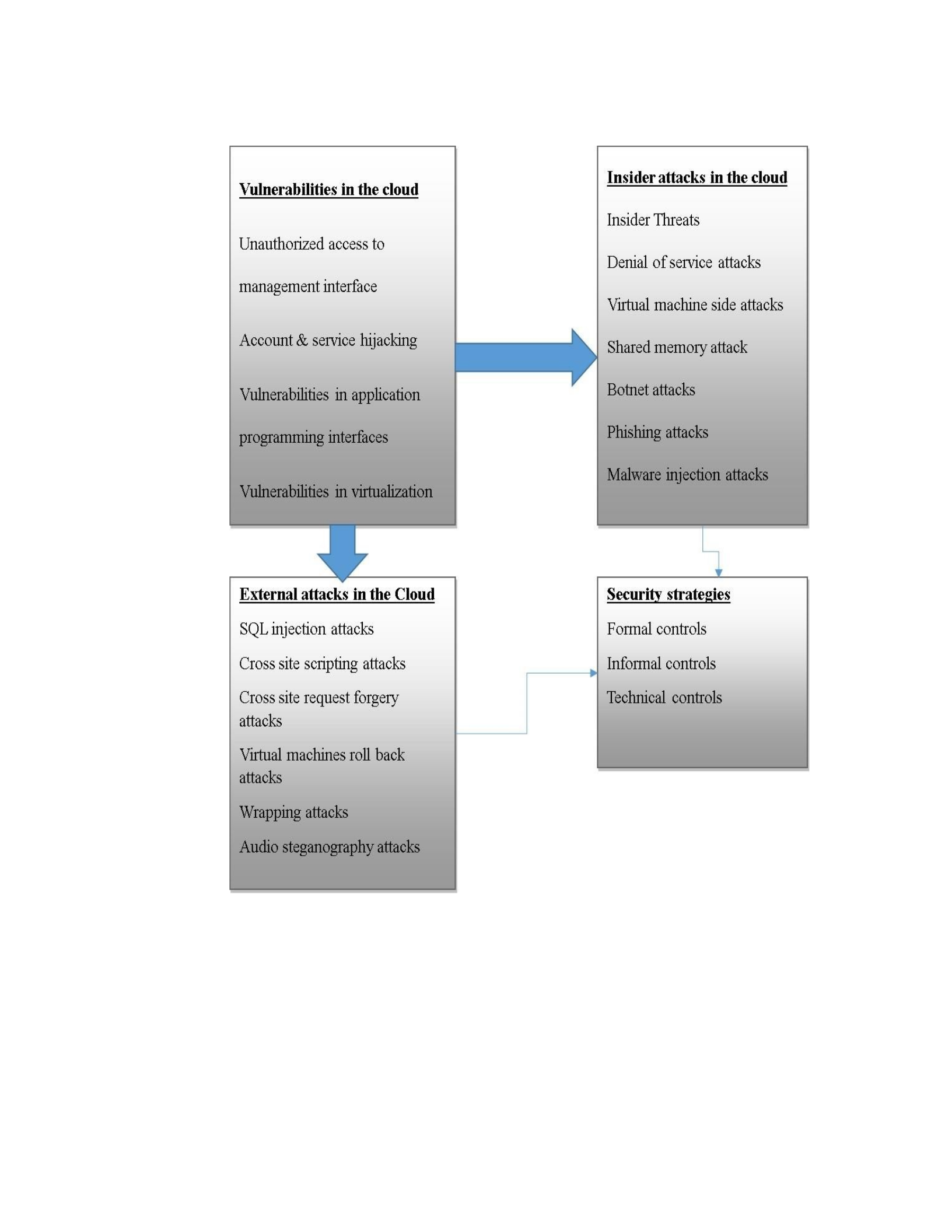
Figure 1. Security strategy conceptual model.
In Figure 1, vulnerabilities in the cloud, in combination with four properties of the
RAT (visibility, inertia, value, and accessibility), present hackers with opportunities to
execute various attacks. Tang and Liu (2015) pointed out that hackers have previous

knowledge about the vulnerabilities in the cloud infrastructure; they also have the
necessary capabilities to exploit those vulnerabilities through an execution of different
attacks. By executing these attacks, hackers can access highly sensitive customer
information, which they later sell for a profit. Therefore, researchers anticipated benefits
for initiating attacks in the cloud. In short, this model coincided with conclusions made
by Bartolacci, LeBlanc, and Podhradsky (2014). Bartolacci et al. (2014) concluded that
some environments are suitable targets because they demonstrate four properties from the
routine activity approach: high visibility, low inertia, easy accessibility, and high value. I
stopped reviewing here due to time constraints. Please go through the rest of your section
and look for the patterns I pointed out to you. I will now look at Section 2.
Leukfeldt (2014) dealt with many of these same properties in a Netherlands-based
investigation of the motivations behind phishing victimization, one of many attacks
relevant to cloud security as well. Leukfeldt (2014) found that homes with higher income
(greater value), items of less weight (low inertia), items of conspicuousness (high
visibility), and with easy access (accessibility) were desirous prospects, necessitating the
need for proper security measures. Whether in phishing or cloud security, all of these
properties rely on the insider’s privileged access to the cloud infrastructure and the
outsider’s capabilities to exploit vulnerabilities in the cloud system. Therefore, continuing
in line with the routine activities theory and the conclusions made by Bartolacci,
LeBlanc, and Podhradsky (2014), security strategies should deal with hackers through a
combination of informal, formal, and technical controls.

Although applications of RAT to IT work were familiar, I was the first to apply
this particular conceptual framework. Mergel and Bretschneider (2013) claimed that I
should construct the conceptual frameworks in research as opposed to copying or finding
them. The framework built on my understanding of RAT, in which to predict, prevent, or
remedy data breaches, one must first understand the vulnerabilities, recognize the
potential sources of attack, and then apply one or more of the informal, formal, or
technical strategies. Ultimately, this study relied on the conceptual model, shown above,
to outline the complexity surrounding insider and outsider attacks. Rezaeibagha et al.
(2015) established the importance of technical features using an extensive literature
review and Prisma flow diagram. I hoped to model the success of their study, aiming for
a conceptual framework that could help establish whether IT security managers have
implemented appropriate security strategies.
Internal and External Attacks in the Cloud Environment
Insiders and outsiders exploit the vulnerabilities found in the cloud environment,
resulting in the execution of attacks against the cloud system. An insider threat, in the
context of cloud computing, is a former or current contractor, employee, or other business
partner with legal access to an organization’s network, system, or data. Yusop and
Abawajy (2014) defined an insider as an individual who abused their access to affect the
confidentiality, availability, or integrity of the data or information systems negatively.
Other researchers, such as Nurse et al. (2014), described an insider as one who violated
the policy on security by utilizing legal access; insiders gain illegal access to violate the
policy on control.

In the cloud-computing context, insiders could embody rogue system
administrators. Claycomb and Nicholl (2012) defined a rogue system administrator as an
internal organization exploiting cloud weaknesses for illegal access, or those individuals
who use cloud systems to execute attacks on an organization’s local resources. A rogue
administrator attacks the cloud infrastructure with an objective of stealing sensitive
information; this particular attack leads to the loss of integrity and confidentiality of the
data. In addition, a rogue administrator could hope to obtain the information and
technology infrastructure of the cloud system.
There are various categories of rogue administrators in cloud computing,
including application, system, virtual image, and hosting firm administrators. These
rogue administrators can execute different attacks to the cloud system. For instance,
application administrators can target vulnerabilities found in the virtual machine drivers.
They can acquire control of the platform that hosts the cloud services, or they can execute
malicious configurations to the cloud’s applications. Mallaiah and Ramachandram (2014)
pointed out that system administrators can execute conventional operating attacks, such
as Trojan horses and root compromises. Meanwhile, virtual image administrators can
copy virtual disks or machines, creating alternating images that fail to conform to the
established baseline despite reports stating otherwise; they might also modify individual
cases of a virtual machine within the cloud, leading to some aspects of the cloud
behaving incorrectly (Claycomb & Nicholl, 2012). Finally, administrators from the
hosting firm can implement network taps on hosted systems; they can utilize social
engineering techniques to monitor the hosting software.

The second category of insider threat includes those individuals who exploit the
vulnerabilities in the cloud system to acquire illegal access to an organization’s data or
system. Claycomb and Nicholl (2012) found that this threat might be unintentional or
malicious; variations in the access control or security policies between the client’s and
cloud systems enable this type of insider threat. In short, an individual gaining access to
sensitive data for fraudulent purposes characterizes this category of insider threat.
One more class of insider threat exists. The final class, as defined by Freitas and
Watson (2014), has attackers utilizing the cloud to conduct nefarious activities. In this
context, the insider uses the cloud as a tool to conduct attacks on data or systems not
automatically related. In this case, an insider uses cloud services, such as file sharing and
email, to steal information. To clarify, the insiders utilize their lawful access to violate the
security policy. Then insiders expand their rights, allowing them to sidestep policies
related to access control and security. Yusop and Abawajy (2014) noted that excessive
privileges could cause insiders to act without accountability and restriction. Trusted
individuals execute insider attacks with different degrees of access to an organization’s
cloud system; insiders have adequate knowledge of the underlying infrastructure, making
it easy for them to execute attacks in the cloud.
There are more advantages for insiders than outside hackers attacking the cloud
system. Mallaiah and Ramachandram (2014) pointed out the various challenges that exist
in relation to the insider threat. For instance, insiders have greater success executing
attacks because they are familiar with the internal security controls. In addition, the

majority of the designed security tools typically deal with external rather than internal
threats. Rafeeq and Kumar (2015) explained that insider attacks include the deletion of
critical information, the tampering of sensitive information, data duplication, and the
unauthorized extraction of such data. Sabotage, bribery, extortion, embezzlement, and
espionage represent some of the many motivations behind insider attacks (Nurse et al.,
2014). Overall, the issue of the insider threat in the cloud computing environment
warranted further empirical investigations to determine the perceptions of IT security
managers about this issue. Their response may help to recognize effective security
mechanisms to overcome this challenge.
External hackers are somewhat limited in their attacks in the cloud environment.
There rely on internal mistakes or lack of security practice allowing their exploits to work
on cloud vulnerabilities. Mukwasi and Seymour (2012) considered external attacks in the
cloud similar to those occurring in systems not based on the cloud infrastructure because
both share underlying technologies.
Security Strategies - Informal, Formal, and Technical
As previously stated, this study’s purpose was to explore strategies used to store
information in the cloud. Three separate categories defined these strategies: informal,
formal, and technical. Ahmed and Hossain (2014) used these categories as derivatives
from the routine activity theory; these categories formed the foundation for this study’s
conceptual framework. The conceptual framework identified vulnerabilities that hackers
could exploit to execute various attacks in the cloud computing setting. It might also aid

security managers in implementing effective security strategies to deal with internal and
external threats in the cloud environment.
Three types of strategies largely defined the security mechanisms possible to
address cloud security complexity. First, Lowry and Moody (2014) claimed that informal
controls provide education on information security and create a security culture in the
organization. Formal controls necessitate compliance with regulations and policies
related to information security (Silbey, 2013). Finally, technical controls address issues
with access management. These strategies remain useless without a guardian to
implement them.
Guardians are critical to the cloud security process. Researchers like Weisburd,
Groff, and Yang (2014) defined guardians are individuals with the ability to prevent a
crime. Ahmed and Hossain echoed this statement, claiming that guardians are critical to
the prevention of crime because they maintain vigilance and implement the necessary
interventions to deter potential offenders. Guardians define an organization’s internal and
external strategies as either informal, formal, or technical in nature. Pyrooz, Decker, and
Moule Jr. (2015) noted that a lack of able guardians, as well as an appropriate target and a
possible offender, were three aspects of predatory breaches in the routine activity theory.
These aspects are required for crime commission because their temporal and spatial
converging provide the necessary opportunities to commit a crime. Therefore, the
implication of the routine activity theory is that a crime can only take place when all of
those three aspects are present (Pyrooz, Decker, & Moule Jr, 2015).

Just like a guardian is important to deflecting cloud attacks, other factors play in
as well. Reyns (2015) presupposed there would always be a motivated offender willing to
commit a crime if the right opportunity appears. This presupposition is how another
element, the rational choice theory, worked into this study’s conceptual framework.
Routine activity theory influenced work by Haimes, Horowitz, Guo, Andrijcic, and
Bogdanor (2015); they presumed that potential offenders calculate their expected risks,
costs, and benefits before perpetrating a crime. Implementation of formal strategies
requires at least a basic awareness of opportunities that could be considered tempting.
Therefore, to understand strategies better, one most also recognize the four properties that
determine a suitable attack target, namely: value, inertia, visibility, and accessibility.
Moon, Morash, Jeong, and Yoon (2015) argued a target with high visibility, limited
inertia, easy accessibility, and significant value attracts a criminal. In a demonstration of
their close relationship, the four properties successfully describe two aspects of the
routine activity theory, namely opportunities and a lack of able guardians (Weisburd,
Groff, & Yang, 2014).
Informal strategies. Informal strategies focus on providing information. WeiWen
et al. (2013) argued these strategies dealt with providing an education on information
security to create a security culture in the organization. In this regard, employers should
provide employees with training to increase their awareness of the internal or external
threat. Greitzer, Kangas, Noonan, Brown, and Ferryman (2013) suggested that awareness

among organizational employees enables them to identify suspicious behavior among
their co-workers, thus helping to thwart insider events.
Furthermore, training employees on this issue create a vigilant community in the
organization, which can play a significant role in exerting deterrence against insider or
outsider activities. Ruefle, Dorofee, Mundie, Householder, Murray, and Perl (2014)
suggested the training programs establish a culture of security that is suitable for an
organization.
Formal strategies. Formal strategies are associated with regulation compliance
and policies about information security. Peppard, Galliers, and Thorogood (2014)
claimed formal strategies involve the following rules. Ambre and Shekokar (2015)
suggested that organizations consistently enforce and communicate information security
policies so that employees understand how to prevent insider or outsider attacks. There
should be clarity in the policies, in terms of acceptable use of organizational resources,
information, and systems, the use of privileged accounts, and the processes for dealing
with employee grievances. In addition, the policies should outline the consequences for
violating the expected standards.
Furthermore, comprehensive service level agreements between customer and
cloud service provider should be in place to provide direction on how to cover
information security risks posed by insiders or outsiders (Ambre & Shekokar, 2015). The
agreements should delineate monitoring capabilities, supervise the activities of
employees, and determine the level of restrictions for accessing the client’s sensitive

information in the cloud. Soomro, Shah, and Ahmed (2016) pointed out that agreements
are necessary to guarantee that the cloud service providers exceed or meet the required
security standards; the agreements must also confirm that the providers will adopt
mitigating controls to minimize the risk of internal and external data breaches. Another
formal strategy is to put in place procedures and policies for incident reporting; this
strategy enables employees to report any malicious activity by their co-workers. Ruefle et
al. (2014) claimed the incident-reporting program should address the incidents committed
by insiders or outsiders and should have a chain of escalation; they should outline the
necessary authorities who make decisions about a certain problem. This outline provides
individuals in an organization with a mechanism for reporting insider or outsider attacks,
providing IT managers with opportunities for initiating the necessary remedies.
Governance and enterprise risk management. Governance is associated with
controlling and supervising the procedural and operational activities of cloud services.
Specifically, Samani, Honan, and Reavis (2015) pointed to issues such as service testing
and monitoring, legal issues, development standards for applications, procedures, and
policies as relevant to the governance of the cloud system. Conversely, cloud computing
requires an examination of legal issues and policies, due in part to the dependencies
found in this context. Therefore, one should identify and address threats associated with
protection of sensitive data, transparency of the cloud service provider, and breaches of
service level agreements. Organizations must have the capability of governing,
measuring, and managing enterprise risks associated with data in the cloud.

The significant problems of governance and enterprise risk management concern
suitable identification and execution of the organization’s processes, structures, and
controls to maintain effectual risk management, security governance, and compliance.
Liu, Sheng, and Marston (2015) suggested companies should also guarantee sensible
information security across an information supply chain, which should consist of
providers and clients of the cloud computing services, as well as the supporting, third
party sellers in any cloud operation model. Liu, Sheng, and Marston (2015) went on to
say that properly developed information security governance procedures result in IS
management programs that are scalable with the organization, measurable, repeatable
across the organization, defensible, continually improving, sustainable, and lucrative on
an ongoing basis.
Compliance management and data regulation. Compliance with legal issues
related to information in the cloud context is a considerable challenge. Because of the
nature of cloud computing in terms of its ubiquity and different service models, cloud
service providers have to evaluate compliance requirements arising in the deployment of
their services. Elifoglu, Guzey, and Tasseven (2014) pointed out that the regulatory and
legal issues that cloud providers have to follow vary based on the location of the cloud
services. Thus, users affect various operational functions, including privacy and security
responsibility, electronic discovery, and management of the data lifecycle, potentially
violating the client’s privacy and security. Sookhak et al. (2015) suggested that cloud
service providers be made to comply with industry regulations and laws related to

protection of the client’s sensitive data. In addition, cloud providers have to conduct both
external and internal audits to assure that risk management actions, related to information
security, build on best practices.
In the United States, cloud computing faces some legal restrictions. Currently, the
U.S. lacks inclusive federal legislation for protecting personal data and consumer’s
privacy; King and Raja (2012) pointed out the country also lacks regulation applicable in
limiting exportation of sensitive data to other countries from the United States.
Furthermore, a federal regulation that categorizes which consumer data is sensitive, or
one that delineates the type of enhanced information security and privacy protections
required for sensitive data, is non-existent. Conversely, various federal regulations
adequately identify the classification of sensitive customer data. For instance, the
Children’s Online Privacy Act defines sensitive data as information gathered by websites
on children aged below 13 years, while the Gramm-Leach-Bliley Act considers data
acquired by financial organizations on their customers as sensitive data (Sookhak et al.,
2015). Similarly, the Health Insurance Portability and Accountability Act considers data
acquired by healthcare providers about their patients as sensitive, while the Fair Credit
Reporting Act categorizes consumer data as sensitive if credit reporting organizations
gathered it. Businesses operating in these industries are subject to federal regulation in
terms of gathering, processing, and disclosing sensitive data, including obligations for
protecting the security and privacy of their consumer data. In general, regulations extend
to the cloud environment for the industries under federal regulation.

King and Raja (2012) suggested that federal regulations require businesses
operating in regulated industries to attain minimum-security standards and offer
incentives for organizations that adopt specific security protocols. For instance, federal
law requires healthcare providers to offer security for personally identifying health
information about customers; Leonard (2014) pointed out they are not obligated to use
encryption mechanisms for such information. Still, Thompson, Ravindran, and Nicosia
(2015) explained that if the healthcare provider uses adequate encryption standards and a
data breach occurs leading to illegal access, healthcare providers are not required to
report such breaches to a government agency or the consumers due to the assumption that
adequate encryption would ensure the breach does not lead to harm. Therefore,
businesses can decide to encrypt sensitive data to avoid the possible loss of its customers
and the expenses associated with reporting security breaches.
If a specific industry lacks legislation requiring security and data protection,
businesses utilizing cloud computing are under no legal obligation to ensure the security
and privacy of personal data. This lack of legal obligation includes personal data used for
business purposes not defined as sensitive and not protected by legislation in the United
States, such as race or sex, income level, email addresses, residential addresses, and the
names of the consumer (King & Raja, 2012). Despite the lack of a single legislation
dealing with consumer data protection, the security of consumer’s personal data is still
achieved by consumer protection laws, privacy tort laws, and data breach notification
regulations at the state level.

In the United States, the majority of states have established statutes for data
breach notification; these statutes obligate organizations to notify customers when
security breaches occur, even though no federal regulation requires data breach
notification. State law describes the consumer data categories that meet requirements for
breach notification; Smith (2016) suggested these state laws facilitate the identification of
sensitive data in order to prevent identity theft. These regulations aid in protecting
consumers from harm associated with data breaches because businesses are encouraged
to use security mechanisms, even though the regulations normally do not offer directives
for particular security protocols. Erdos (2014) explained that firms that fail to comply
with laws on breach notification face legal risks, including criminal penalties and civil
proceedings.
Tort laws at the state level offer further protections for information security; they
enable remedies for consumers when organizations misuse their sensitive data. There is
still uncertainty about applying tort law to address an organizational failure to secure
consumer’s sensitive data. Consumers still use civil proceedings to deal with
organizations who fail to provide adequate security for personal data (King & Raja,
2012). Many consider tort law an ineffective mechanism for protecting the security of
sensitive data because of the difficulty to establish proof of economic harm.
Businesses utilizing cloud computing also have to determine if customers have
remedies based on laws for consumer protection. For instance, Wheatley (2014) detailed
that an organization can contravene section V of the Federal Trade Commission Act by

failing to offer sufficient security for sensitive information in the cloud, enabling access
to unauthorized individuals. This failure equates to a violation of consumer protection,
even when the business has failed to adopt an information security policy required for
providing protection of sensitive data. In addition, Wheatley (2014) went on to explain
that an organization is in violation of the Federal Trade Act by promising to offer security
and privacy of sensitive data and failing to fulfill such promises. In this context, a
consumer can bring complaints before the Federal Trade Commission, asking this agency
to pursue enforcement action against a business violating the relevant regulation.
Evidently, there is a lack of comprehensive legislation for protecting the security
of sensitive data in the cloud environment, which means that cloud service providers are
free to design their privacy and security protections. The non-existence of an inclusive
regulatory framework in the cloud environment might lead cloud providers to establish
low boundaries for data security; cloud providers can also outline service level
agreements that reduce their legal burden when they fail to provide sufficient security
(Bacon, Eyers, Pasquier, Singh, Papagiannis, & Pietzuch, 2014). For instance, such
agreements may fail to address the mechanisms put in place for dealing with insiders and
focus only on external hackers. Therefore, cloud service clients have to ensure that
service level agreements established with the cloud service provider are comprehensive
enough to protect sensitive data and define the legal responsibilities of the cloud service
provider.

Furthermore, regulations in the United States do not place restrictions on the
exportation of personal data to other countries; Fernandes et al. (2014) pointed out this
failure to place restrictions allows cloud service providers the freedom to transfer data to
computer servers found in various countries and further creates legal compliance issues,
as legislation does not mandate cloud service providers (King & Raja, 2013; Whitley,
Willcocks, & Venters, 2013). Moreover, this failure in regulation exposes sensitive data
to insiders or outsiders found in different countries. Thus, the service level agreements
between the client and cloud service provider should have provisions for transferring
sensitive data to other locations.
Incident response. In a management system for information security, incident
response is required, underscoring its relevance in the cloud system. In this context, there
are needs for an incident response process that considers the tools, processes, and
programs in the cloud system. When a security event appears, guardians should undertake
suitable actions to discover the circumstances that led to the incident. Due to the
architecture of the cloud systems, such as multi-tenancy and high scalability, it poses
challenges to conducting digital forensics and determine the vectors of the attack
(GhilicMicu, Stoica, and Uscatu, 2014). Kalloniatis et al. (2014) asserted a robust
forensic framework must have the ability to perform verification of a security incident, to
analyze the attack, and to restore secure service. In the cloud-computing context, it is
important to put in place an incident response framework that covers detection and
response to security incidents.

Technical strategies. Technical strategies address issues with access
management. Preventative measures for technical control include application security;
encryption and key management; identity, entitlement, and access management; and
virtualization. Lian, Yen, and Wang (2014) considered technical strategy a critical role
for security dimensions in cloud computing, including areas of privacy and
confidentiality, data segregation and integrity, and availability. Further methods to
implement technical strategies include encryption and key management; information
management and data security; and identity, entitlement, and access management. If all
those methods fail, disaster recovery is a necessity. All of these strategies continue in
detail below.
Encryption and key management. The encryption and key management
dimension consider the importance of encrypting data to minimize possible data leakage,
specifically relevant in the context of cloud computing. Lian, Yen, and Wang (2014)
explained that encryption describes a process of information encoding meant to ensure
only legal users have access to certain data. There are concerns about the process of
encrypting data in the cloud. Chen and Zhao (2012) suggested that the multi-tenancy
characteristic of the cloud environment means that when a cloud application processes
and stores data from various users, the presence of unencrypted data poses a serious
security threat.
Therefore, researchers have proposed solutions to ensure data security in the
encryption process. For instance, Crete-Nishihata, Deibert, and Senft (2013) explained

private information retrieval, a proposed technical mechanism that hides queries
performed on encrypted information in the cloud. Conversely, the authors considered this
approach as being very expensive in relation to computation costs. Chen, Violetta, and
Yang (2013) confirmed that the majority of the available encryption mechanisms fail to
support data processing within the encrypted medium. Chen et al. (2013) further claimed
that role-based access control (RBAC) would facilitate a superior technical strategy in
securing data. Consequently, researchers Wheeler and Winburn (2015) suggested
homomorphism encryption: a solution that allows secure processing of encrypted data in
the cloud environment.
A privacy manager is an integral part of encryption and key management. Li et al.
(2014) pointed out a privacy manager also operates as a security mechanism for
processing encrypted data. In this context, the privacy manager uses obfuscation methods
to reduce the personal data found in the cloud, minimizing the risk of data leakage. The
idea behind this approach is to store the client’s sensitive information in an encrypted
format while still allowing processing on this data. The restriction is that the cloud
service provider must be willing to execute this mechanism to guarantee the security of
sensitive information. The privacy manager shares their security strategies with informal
and formal mechanisms.
Encryption approaches are another important strategy. Wei, Zhu, Cao, Dong, Jia,
Chen, and Vasilakos (2014) suggested that encryption approaches, such as asymmetric or
symmetric encryption algorithms, prevent illegal access to personal information in the

cloud. A healthcare organization successfully implemented this technique when they
moved their sensitive data to a commercial cloud provider. In addition, Wheeler and
Winburn (2015) felt that the encryption standards established by the NIST protect the
confidentiality and privacy of sensitive information in the cloud environment. Kazim and
Ying (2015) felt that encryption techniques that preserve the format of data, as well as
those that are aware of the format or type of data and context of data usage, are critical in
the cloud. Management of the key is a challenging process in a cloud environment,
especially of those utilizing the multi-tenancy framework. In this domain, an organization
has to address various issues, including safeguarding and storing keys, practices in key
management, and reliable cryptographic services (Kalloniatis et al., 2014).
Information management and data security. In cloud computing, data is critical,
and its protection in the context of multi-tenancy is vital. Kalloniatis et al. (2014) pointed
out that protecting such data occurs through protection of the physical and virtual
networks, data cryptography, data backup, and data segregation and integrity.
CreteNishihata et al. (2013) and Kalloniatis et al. (2014) felt that IT security managers
should consider robust cryptography, sanitization, suitable maintenance of hardware, and
effective computation methods when managing the life cycle of cloud data. This
approach is necessary for addressing various security threats, including data leakage,
insiders, and insecure interfaces. This domain highlights the relevance of information
management in the cloud, involving policies and processes for creating, storing, using,
sharing, archiving, and destroying information. Roy, Sarkar, Ganesan, and Goel (2015)

pointed out the identification and control of access to data stored in the cloud is necessary
for both external and internal users to achieve successful information management.
Identity, entitlement and access management. Identity, entitlement, and access
management appear to best suited for IS managers to include in their technical strategies.
In cloud computing, a transformation of identity management includes entitlement in the
process of managing access (Kalloniatis et al., 2014). Particularly, Kazim and Ying
(2015) suggested cloud applications and services use different sources in identifying
users; management of entitlement offers a decision process to authorize access to the
cloud’s data, processes, and system. This domain focuses on all identity types significant
for cloud computing, including agents, organization, code, device, and users. Brandas,
Megan, and Didraga (2015) considered the two important elements to ascertain these
identity types are, first, the strengths of the attributes and, secondly, the identity expected
to offer higher flexibility within the cloud. In the cloud, access covers data to process,
application, system, and network dimensions. The process of entitlement has to ensure
that linkages exist between the users’ security needs and business needs by using rules to
govern access to various cloud entities.
Traditional security, business continuity, and disaster recovery. The innate
security concerns attributed to cloud computing require the identification, assessment,
and control of business continuity. The continuity requires suitable safety measures vital
for managing security risks and assuring information availability, integrity, and
confidentiality. Kazim and Ying (2015) argued the cloud services have to be continuously

available to the cloud users and, in the case of interruptions, the cloud service provider
should have a robust recovery system to ensure continuity of normal business operations.
Service availability is critical; Kshetri (2013) pointed out that the breakdown of
continuity in cloud services might lead to the closure of cloud users’ normal businesses.
Such breakdown attributes to either failure in the cloud hardware or attacks. In the cloud,
disaster recovery and data backup are required for supporting reliability in data transition
and protection. Thus, full virtualization of the data storage structure and scalability of
recovery applications and file systems are required for disaster recovery and continuity of
business operations in the cloud.
Complexity of Strategies in Cloud Computing
In the cloud-computing environment, security is a complex concept. In order to
address these issues, solutions often require a combination of informal, formal, and
technical strategies. These combined strategies reflect the characteristics of the
cloudcomputing environment and feature in the subsections that follow.
Privacy and confidentiality. Confidentiality is data access by authorized systems
or parties only. The possibility of a data breach is high due to an increase in the quantity
of applications, devices, and involved parties; this possibility results in more
opportunities for unauthorized access. Zissis and Lekkas (2012) claimed the
multitenancy, application security, and data eminence making up the cloud environment
increases confidentiality and privacy risks. Multitenancy, as defined by Elhaida and

Frueh (2015), is a characteristic that shares resources among different clients. In the
context of cloud computing, users share data, networks, programs, and memory.
Cloud computing resource shares at the application, host, and network levels.
Virtually, the users are separate but still share the cloud system hardware. Because of
multitenancy, security and privacy risks, where users access client’s data stored in the
cloud without authorization, are high. (Mouratidis, Islam, Kalloniatis & Gritzalis, 2013).
Meanwhile, data confidentiality can occur because of data eminence. Zissis and Lekkas
(2012) described data eminence as the lingering illustration of data ostensibly erased. In
the cloud-computing environment, the logical drives are virtually separate, but the
hardware remains unseparated between multiple users on a single cloud infrastructure.
Therefore, data eminence might result in unintentionally disclosing sensitive information
(Zissis & Lekkas, 2012; Roy et al., 2015).
In the cloud, data confidentiality requires user authentication. To this end,
electronic authentication determines the authenticity of user identities electronically
presented within an information system. Dawson (2015) noted that privacy breaches
occur when a robust electronic authentication is lacking, resulting in unauthorized access
to a client’s account. Further, cloud system security entails software confidentiality,
which relates to the belief that particular processes and applications should maintain and
handle a client’s sensitive data. Within a cloud-computing environment, clients delegate
confidence to the applications offered by the firm that owns the cloud system. Therefore,
the applications that interact with the client’s information should achieve certification to
avoid further privacy and confidentiality risks (King & Raja, 2012; Elhaida & Frueh,

2015). This unauthorized access occurs when users exploit vulnerabilities in the software
or applications.
Data integrity and segregation. Users can easily realize data integrity in single
systems, but cloud computing necessitates the use of several databases to store data for
multiple users; as a result, it is challenging to assure data integrity. Zissis and Lekkas
(2012) referred to data integrity and segregation concept as the fortification of sensitive
information against unauthorized fabrication, modification, or deletion. Thus,
authorization is important to guaranteeing data integrity; it ensures that only authorized
clients can access sensitive information.
The cloud environment possesses some degree of virtualization; normal methods
to maintain data integrity, such as hypertext transfer protocol, are unlikely. Thus,
achieving data integrity occurs by implementing it at the Application Programming
Interface phase (Hemalatha, Jenis, Donald, & Arockiam, 2014). On the other hand,
Mouratidis et al. (2013) realized this approach could further complicate security measures
by creating potential vulnerabilities in the API technology, or the API stack itself. These
vulnerabilities provide attackers with opportunities to intercept sensitive data and modify
it, resulting in further data corruption or theft (Hemalatha, Jenis, Donald, & Arockiam,
2014).
Multi-tenancy is the lead charge for cloud computing providers. Cloud computing
is characterized by multi-tenancy; Hart (2013) pointed out multiple users store their
sensitive data in the applications of service delivery models. In this context, several users’
data exists in one location, making data intrusion by one of the users a possibility. Data

intrusion transpires by injecting a client code into the cloud system, or hacking
vulnerabilities found in the application. Thus, cloud services should assure boundaries for
client data at the application and physical level.
The security strategy for cloud service must be able to segregate data from
multiple clients. Malicious users can use application vulnerabilities to develop parameters
that can bypass security checks and provide access to user information (Hemalatha, Jenis,
Donald, & Arockiam, 2014). Riungu-Kalliosaari, Taipale, and Smolander (2012)
suggested that security managers could test and validate data segregation in the cloud
environment using assessments such as insecure storage, data validation, and SQL
injection flaws. Vulnerabilities identified with these tests might gain attackers
unauthorized access to a client’s sensitive data. For instance, Chang et al. (2016) detailed
how a security defect found in Google Docs exposed credentials to other users. The
occurrence of this security problem was due to flaws in session allocation, and it
demonstrated the importance of data segregation to prevent data leakages.
Data center operations. The successful functioning of a data center requires the
deliberation of various strategies. Those strategies include assessments of cloud service
provider’s operational procedures, the architecture of the data center, and its
dissemination of security strategies (Islam et al., 2013; Kalloniatis et al., 2014). The data
center is a fundamental element in the operations of the cloud environment because it
hosts the cloud’s applications. Cloud service users need lasting stability and continuous
services associated with the features of the data center. Tankard (2015) suggested other

related issues under the data center domain include service management requirements,
regulatory requirements, security standards, and the data center’s location.
Knowledge Gap
Some literary works addressed informal, formal, and technical strategies, but none
of them addressed a combination of all three. In short, of the six papers relevant to this
study, none sufficiently offered strategies IT security managers should use to protect
information in the cloud. The evidence of this statement details in the following table.
Figure 2: Table of Relevant Studies and Findings
Author(s)/Year Informal Formal Technical Significant Findings
Gonzalez et al.
(2012)
X
Surveyed regulatory & legal
issues to determine whether the
responsibility of information
security fell with the cloud
service provider or the customer.
Soomro, Shah,
& Ahmed,
(2016)
X
Characterized cloud security
issues into three categories: data
control by a third party,
availability issues, and
conventional security challenges.
Hong & Rong
(2014)
X
Recommended the cloud be
consistent with usage policy.
Lin et al.
(2014)
X
X
Examined security issues around
privacy, data control, data
integrity, data confidentiality, and
data availability.
Rizvi &
Mitchell
(2015)
X
X
Surveyed privacy and security
issues in cloud computing,
offered guidelines for firms that
planned to use cloud services.

Shah et al.
(2013)
X
X
Presented a survey of security
concerns in various cloud service
levels, namely IaaS, PaaS, and
SaaS.
Empirical studies have examined the issue of security in the cloud-computing
context. For instance, Gonzalez, Miers, Redigolo, Simplicio, Carvalho, Naslund, and
Pourzandi (2012) surveyed the regulatory and legal issues in cloud computing to
determine whether the responsibility for information security is with the cloud service
provider or the customer. Other researchers, Shah, Anandane, and Shrikanth (2013),
addressed the security concerns in the cloud environment by categorizing them into
security issues associated with data control by a third party, availability issues, and
conventional security challenges in cloud computing. The researchers outlined potential
directions to alleviate issues in data control and establish the different categories of
auditing in the cloud-computing environment. First, the researchers identified a need for a
trusted monitor within the cloud server; this monitor would facilitate auditing of the
servers’ actions and provide demonstrable proof of security-auditing compliance to the
client. Second, data organizations store in the cloud should be self-protecting with the
capacity to establish a secure environment. Hong and Rong (2014) recommended this
necessary environment be consistent with a usage policy.
In another study, researchers Lin, Lin, Chou, and Lee (2014) examined the
security issues of privacy, data control, data integrity, data confidentiality, and data
availability in the cloud environment. The authors also looked at how cloud service

providers are dealing with security issues, such as data control, data integrity,
confidentiality, and availability. The researchers proposed a strategy: security auditing
should occur at the software level of the virtual cloud system, with the system providing
minimum monitoring of logs and events. Researchers Rizvi and Mitchell (2015) surveyed
privacy and security issues associated with cloud computing, offering guidelines for firms
that planned to use cloud services. In a different study, Shah, Anandane, and Shrikanth
(2013) presented a survey of security concerns in various cloud service levels, namely
infrastructure as a service, platform as a service, and software as a service. The
researchers identified the different security concerns in these service models.
Evidently, researchers have conducted significant research to investigate issues
around information security strategies in the cloud computing environment. These studies
have not included security strategies from IT security managers, however. Therefore, I
acknowledge a significant gap in knowledge, necessitating the need for further empirical
studies. This study sought to fill this gap by examining the issue of information security
in cloud computing from the strategies of IT security managers. As a result, I used a case
study research design for this study.
Transition and Summary
The routine activity theory by Marcus and Cohen has tried to explain the
occurrence of different crimes in the world. Though not necessarily applicable to all
crimes, the theory has revealed the process of occurrence behind many criminal attempts.
Generally, most of the studies carried out today show support to the theory (Reyns &

Henson, 2015; Leukfeldt & Yar, 2016). The theory’s focus was on computer
victimization, which is on the rise and involves people of all ages. The theory considered
and unpacked the factors fueling criminal occurrence; the theory concluded that a
combination of factors leads to criminal occurrences. This conclusion has helped future
research in dealing with security issues.
This section discussed literature on information security theory and strategies in
the context of cloud computing. Particularly, the routine activity theory offered the
framework that developed a conceptual model for this investigation. Moreover, the study
so far discussed the routine activity theory, conceptual model, security strategies, internal
and external attacks, and the complexity of security strategies. The next section presents
the methodology employed to gather and analyze data used in response of the research
question.
Section 2: The Project
Purpose Statement
The purpose of this qualitative, single case study was to explore the strategies that
IT security managers use to host sensitive information in the commercial cloud. The
research participants were IT security managers from a government agency in the eastern
region of the United States with experience in implementing security strategies to host
sensitive information in the cloud. The findings from this study may be beneficial for
information security practice by increasing understanding of the complex nature of
internal and external threats and breaches. The implication for positive social change lies

in the potential to improve security of a user's private data while stored in the commercial
cloud.
Role of the Researcher
In regards to my personal relationship with the subject, I work for the same
agency under the Department of Defense (DoD) as the participants in this study but in an
entirely different department. I have over 19 years of experience in both private and
public sectors. I have been safeguarding compliance with valid DoD requirements and the
use of current industry standards. For the last 6 years, I have performed as an
Information System Security Officer (ISSO) and Information System Security Engineer
(ISSE) within the DoD spaces and infrastructures. During this time, I have been using
National Security Agency (NSA) Configuration Management and hardening guidelines
that include agency policies, IT/IS regulations, and current industry and NSA best
practices. As an ISSM, I manage the ISSOs and ISSEs who analyze existing platform
accreditation needs by providing guidance to systems owners on the necessary DCID 6/3
requirements and NIST SP 800-53 controls. Also as an ISSM, I develop and write
policies and procedures for the computer security department. Despite my experience
with the topic, I still upheld myself to a set of standards to ensure the mitigated success of
this study.
I prioritized adherence to the Belmont report. In addition to creating the interview
protocol, I needed to create a comfortable environment and good rapport with my
interviewees, as well as provide sophisticated questions, as suggested by Grenier and
Dudzinska-Przesmitzki (2015). This environment ensured my compliance with the

respect for persons’ principle of the Belmont report (U.S. Department of Health and
Human Services, 1979). I treated the participants as autonomous agents by using only
volunteers, respecting their decision to leave at any point of the process. I developed the
interview questions and disseminated those results. In the semistructured interview, I
used objective questions, developed over time with expert help, to generate what Barnes
(2015) calls the participants’ subjective responses. These subjective responses remained
confidential and secured under protective and encrypted formats to maintain my
participants’ well-being, ensuring my compliance with the beneficence principle of the
Belmont Report. Finally, on the justice principle of the Belmont report, the burden of the
study was minimal. The participants all worked in the IT field; they answered the same
amount of interview questions. Therefore, the burden and benefit went to each person
equally.
I took further precautions to minimize my personal bias. Faniel, Minor, and
Palmer (2014) considered the researcher the main instrument for collecting and analyzing
data. I recognized and considered personal predisposition and bias in the entire research
process. As a result, I became a student who could learn with and from the study
participants. I planned to mitigate my personal bias by remaining open to new thoughts
on the study topic. Through this process, I sought to establish as much credibility for this
study as possible.
Participants
The participants in this study included IT security managers with experience and
expertise in cloud security issues. I selected all IT security managers from the

government agency in the single case study, which was located in the eastern region of
the United States, and they included managers using security strategies to host sensitive
information in the cloud. These security managers managed cloud-based products,
maintained safety on the cloud infrastructure, and maintained customer data. They had no
less than 10 years’ experience in IT management. These participants provided insights
about internal and external data breaches in the cloud. The data provided by these
participants were critical for responding to the research question and testing the theories
guiding this study. I gained access to the participants by first meeting with the director of
technology to explain the purpose of the study and obtain permission to interview the
preselected IT security managers. I then accessed the IT security managers through email
contact.
I considered some of the necessary strategies to establish a working relationship
with the participants. I could face many challenges concerning the participants’
involvement, including their readiness to respond and their reluctance to participate in
difficult environments (Fegran, Hall, Uhrenfeldt, Aagaard, & Ludvigsen, 2014). The
strategic approach I used to remedy these challenges relied on Schreier’s (2012)
application of social skills, which aims at gaining participant trust with an informal use of
language and particular dress code (Fink & Anderson, 2015). Belanger et al. (2013) and
Fegran et al. (2014) also suggested formal strategies to adapt to the cultural norms of the
research site, obtain permission to tape record interviews, and take into account the
differences in languages and accents. Meanwhile, the informal (personal) strategies
include awareness of cultural practices, values, and norms in the research area, as well as

adapting to the participants’ language (Fegran et al., 2014). Given that the efficiency and
effectiveness of the participants’ answer to the research question depended on their
overall impression of the researcher, I maintained high ethics and social skills to win their
trust and acceptance.
Research Method and Design
In this section, I expand on the research methods I adopted, focusing on the
suitability of qualitative practice in study methods. In addition, I explain why quantitative
and mixed methods were not suitable for this research study.
Research Method
The research method was qualitative. Vaismoradi, Turunen, and Bondas (2013)
defined the qualitative method’s focus on describing the meaning, concepts, elements,
symbols, and definitions of a phenomenon. The data sources used in a qualitative method
include observation, documents and texts, and interviews. Further, qualitative researchers
build on the constructivist philosophy, which considers individuals central in the creation
of social reality; this philosophy requires me to adopt an empathetic stance to understand
social reality from the participants’ point of view. It also forces me to consider my own
subjectivism, or my perspective about the social world in qualitative studies.
Recognizing my subjectivism played a key part in formulating the objectivity of
this study. Endres and Weibler (2016) argued that social actors influence social
phenomena through interactions. In order to understand the phenomena, I investigated the
subjective meanings influencing individuals’ actions. Under subjectivism, researchers
consider reality a social construction that individuals create when they attach meaning to

situations. Consequently, qualitative methods can be used to uncover the subjective
meanings that individuals attach to phenomena.
The qualitative method also employs an inductive approach, or data gathering and
analysis to aid theory development. Harrison and Kirkham (2014) elaborated on the
inductive approach, pointing out how it can be used to prioritize a deeper understanding
of how individuals interact with the world. This deeper understanding unfolds by
collecting qualitative data using few research participants rather than large samples
(Harrison & Kirkham, 2014).
I considered the quantitative method. Quantitative researchers build on the
positivism epistemology, where researchers apply principles of natural science to
examine a study issue. Yilmaz (2013) pointed out that the positivism epistemology uses
current theory to formulate hypotheses. The researcher tests and validates the formulated
hypotheses. Epistemologists emphasize quantifiable data to carry out statistical analyses.
Objectivism guides quantitative research. According to objectivism, social actors
are not involved in creating reality. As a result, I should employ naturalistic methods to
gather knowledge. A researcher employing the quantitative method adopts an objective
stance in the study and respondents provide anonymous opinions to the research issue
using a survey questionnaire (Haegele & Hodge, 2015).
Finally, the quantitative method relies on the deductive approach, where
hypotheses are tested based on the rules of natural science. Deduction includes a
concentration on explaining study variables’ relationships through the development of

hypotheses, data gathering, and hypotheses testing. Scholars use the deductive approach
controls to test propositions, ensuring changes occur between variables in the proposed
relationship only, and not because of other intervening variables. Deduction requires me
to employ an effectively structured research methodology; Yilmaz (2013) suggested this
structured research methodology ensures reliability and replication of the research.
Another aspect of this approach operationalizes constructs to support their measurement
in quantitative terms. In this regard, I should ensure that I define all of the study variables
before conducting scientific analysis on them (Hughes & Short, 2013). I did not select the
quantitative method for this study because the deductive approach was not applicable; I
was exploring the answers to open-ended questions and was not seeking to formulate and
test a hypothesis.
I also considered mixed-methods research. Mixed-methods research is an
amalgamation of qualitative and quantitative methodologies. Yeh et al. (2013) argued that
mixed-methods approaches include a combination of the best of both quantitative and
qualitative methods by compensating for paradigmatic restrictions found in a single
method. Yeh et al. proposed that mixed-methods research provides maximum elasticity
for a researcher. Daigneault and Jacob (2013) claimed that the mixed-methods approach
uses numerous viewpoints, involves large collections of data, requires extensive analysis,
calls for skilled interpretation of procedures, needs comprehensive commitments of
scope, necessitates profundity of understanding, and requires validation. Mehl-Madrona,
Mainguy, and Valenti (2013) argued that adequate researcher knowledge of both
approaches can help to ensure effective conceptualization and implementation of

mixedmethod designs, preserving the strengths of each in any given research endeavor.
As a beginning researcher, however, I found the qualitative research method an
accessible and effective approach for a first-time research study meant to observe formal,
informal, and technical strategies to secure cloud data.
Based on the examination of the differences between quantitative and qualitative
methods, I relied on the qualitative method. I used the qualitative method to explore what
strategies IT security managers use to host sensitive information in the commercial cloud
and how those strategies have been effective or ineffective. Therefore, using the
qualitative method enabled me to obtain insights I could not have acquired using a
quantitative method. In addition, the qualitative method allowed me to adopt a subjective
stance while interacting with the participants in data collection; these data determined IT
managers’ strategies for protection from insider and external threats in cloud computing.
Research Design
I used the case study design in this study to address the research questions adequately.
Tsang (2014) surmised that the case study is preferable when investigating a
contemporary event without manipulating the relevant behaviors. In addition, Wohlin and
Aurum (2014) explained that a case study’s strength is how it provides scholars with the
ability to explored various evidence sources, including observations, interviews, artifacts,
and documents. The case study’s design supports the exploration of an issue through
multiple lenses; the result is that the case study design enables the discovery and
understanding of multiple components of a phenomenon. Furthermore, Bjerknes and
Bjork (2012) pointed out that the case study analysis includes an exploratory approach

that does not carry the consequences of extensive research found in alternative qualitative
approaches like ethnography, narrative, and phenomenological studies.
The case study approach avails as an important tool in carrying out social science
research; it provides the descriptive accounts of one or more cases. Qi and Gani (2012)
highlighted how I could apply the case study approach intellectually and experimentally
to isolate one or more selected social factors within a real-life context. In IT, the
application of this technique is important in the sense that it ensures comparison between
past and current events. That way, I can draw the best solution.
A case study is a valid tool in the conduction of research. For instance, the case
study has many advantages, such as forming a point of reference to rely on in challenging
theoretical assumptions and when studying rare phenomena. Some fields rely on the case
study approach. Organizational theorists, for example, rely on the case study as a way of
challenging underlying assumptions. The application of the case study in this research
acted as an approach to challenge theoretical studies. The case study is one of the most
flexible study designs; Stake (2013) illustrated its applicability in exploring different
theoretical predictions founded upon set theoretical frameworks. A case study is suitable
to analysis and general interpretation. The approach presents lower levels of validity as
well as reliability. Lee et al. (2013) pointed out the process of gathering data may take a
considerable amount of time. Stanley and Nayar (2014) echoed Lee et al., noting that for
in-depth analysis to occur, scholars must interview participants for 1 to 2 hours, multiple

times. The extensive time requirements of phenomenology to achieve data saturation
means was not viable for this study.
I did not use an ethnographic study. Schober, Gerrish, and McDonnell (2016)
asserted ethnographifers qualify data based on personal observation and depicted events.
Lewis (2015) suggested that ethnographic studies also include shared accounts to draw
descriptive conclusions about a particular culture. An ethnographic study’s disadvantages
made it less appropriate for this particular research, however. For instance, Yin (2013)
pointed out that the ethnographic technique requires a substantive amount of time. This
challenge did not necessarily render the method unsuitable for conducting research
because I could have accomplished the completion of some ethnographies in a reasonable
amount of time. De Costa (2014) explained that the longer the length of time taken during
a research study, the more the information gathered on the topic in question.
Ethnography’s insight into consumer behaviors proves valuable, and I used data
collection methods familiar to ethnography, including interviews and direct observation.
Hjorth and Sharp (2014) suggested that there is a difference between borrowing from
ethnography and doing an ethnographic study. Ethnography narrows from a particular
kind of participant observation with anthropological roots (Baskerville & Myers, 2015). I
did not use ethnography because I did not study workplace culture. I did not directly
observe how the participants interacted within their workspace; instead, I explored the
strategies that IT security managers use to protect the cloud environment. I trusted that

their experience, coupled with member checking, would establish the validity of the
themes.
Finally, I did not use the narrative approach in this study. The narrative approach
includes photos, diaries, and recounted interviews to create stories of to form meaning
(Alves et al., 2013). Lewis (2015) described the narrative study as unanalyzed stories and
accounts using interviews, notes, letters, and conversations put together by a researcher.
The use of the allegorical account is this approach’s greatest strength; it gives an account
of a situation and captures the necessary information around the issues the participant and
researcher discuss. The narrative study ensures that a scholar fully captures the situation.
The strength of the narrative approach is its capability of chronologically identifying the
different issues that make up a situation. Lewis (2015) pointed out, however, that the
disadvantage of using narrative inquiry is that it changes its explanations and frames of
orientation. This disadvantage was counterproductive to the study’s goals.
Saturation of data was an important aspect of this study. Lee et al. (2013)
suggested that when researchers reach the point of theoretical saturation during the
analysis process, they should conclude the analysis. Data saturation occurs when I am
unable to cover new information, coding, or themes, and other researchers are able to
replicate the findings (Fusch & Ness, 2015). The research design elements of a case study
include the research question, units of analysis, proposition, link between the proposition
and the data, and the criteria for interpretation of the results (Hassan, Reza, & Farkhad,
2015). I familiarized myself with the interview data and triangulated the participant

responses with field notes from the direct observation of a training seminar and
organizational policies and documents. I processed this information into interpretations
during the data analysis process. I met with the participants again to share the
interpretations. This second meeting was meant to increase the study’s chances at data
saturation. Data saturation occurs when no new information or themes surface (Fusch &
Ness, 2015). The participants either corroborated or added their own experiences to the
interpretations; this process was member checking. Houghton et al. (2013) suggested that
member checking would be more helpful in increasing the rigor of the study because
participants are more likely to contend or contribute to their ideas when I interpret them
as opposed to when I repeat their statements verbatim. I completed as many member
checking interviews as necessary until the participants had no new information to offer,
thereby helping to enhance data saturation. I stopped reviewing here due to time
constraints. Please go through the rest of your section and look for the patterns I pointed
out to you. I will now look at Section 3.
The units of analysis in this study were the elements the selected IT security
managers identified in a discussion about cloud security. Specifically, the items examined
in this study related to vulnerabilities in cloud computing, types of insider and outsider
attacks in the cloud, impacts of external and internal attacks, and security challenges the
IT security managers faced. Finally, linkages between the theories and data came together
through qualitative data analysis. Notably, a thematic analysis aided in data analysis, and
I used the findings to explore identified theories.

Population and Sampling
Snowball sampling is a type of non-probability sampling approach to choose
potential participants in a study. It is commonly used in cases where it is difficult to
locate the participants (Lecy & Beatty, 2012). Snowball sampling is appropriate if the
study sample is rare or limited to a small subgroup of the population. The sampling
method is similar to a chain of referral. Once I observe initial participants, I request their
assistance to identify people with similar interests. The procedure of snowball sampling
requests participants to nominate another individual with the same interest as the subject.
Then I observe the nominated participants and continue until I achieve the required
sample size. For instance, to obtain consensus sampling for this study, I asked Participant
One about other potential participants. Participant One stated that there were there were
10 ISSM managers for the from a government agency in the eastern region of the United
States that were all members of the ISSA. Using Participant One’s information, I was
able to contact other ISMM’s. Out of the 10 ISSM’s, 3 did not participant, while 7
respondents contributed to this research. Although snowball sampling gives me less
control, the chain of referral enables me to contact people of the population that are hard
to sample. Snowball sampling is suitable for this research because it is not only cost
efficient but straightforward. Unlike other sampling techniques, snowball sampling
requires less planning and fewer research assistants.
Ethical Research
The term consent in research refers to a state where the participant is free.
Johnson et al. (2014) pointed out that people taking part in a study have the freedom of

acting according to their own wishes. Drazen et al. (2013) expounded, suggesting it is the
participant’s right to know the objectives of the study, as well as the potential risks and
benefits that go along with it. If I clearly inform the participant about the study, the
decision to participate should hinge on the feelings that participant has towards the study.
Participants might refuse or agree. The importance of this policy is that I respected the
participant’s rights.
Once selected, a person could have chosen to withdraw at any time from this
study. I accomplished this withdrawal process in an official way to ensure I followed
certain procedures. Zhang and Creswell (2013) asserted that the withdrawing participant
should inform the chief researcher about their change of plans. The factors that led a
participant to decide to withdrawal vary from one person or another. However, in the
interest of maintaining the ethics of the Belmont Report, all participants could leave the
study freely at any point. I asked that the participant inform them of their intent to leave
in the consent form, at which point I would acknowledge and respect their choice.
Before providing consent, I briefed the participants on the significant information
related to the research. This information included the participants’ responsibilities, any
risks in the study, research objectives, and the way I used the information I collected.
Furthermore, I informed participants of their freedom to stop participating in the study,
devoid of negative repercussions. I captured all this information in a consent form located
in Appendix A. The participants signed the consent form before the interviewing process
began. Furthermore, the consent document stated the research posed no risk to the

participants; I asked them only to share their experiences and perspectives about the study
topic, without revealing sensitive information. Nishimura, Carey, Erwin, Tilburt, Murad,
and McCormick (2013) found low participant-risk an important part of the research
process.
Another issue captured in the consent document was that I did not provide the
participants monetary benefits for participating in this investigation. Researchers allot
incentives to participants through two main ways: the researcher gives something to all
people taking part in the study, or the researcher rewards after dividing participants into a
group, thus issuing the award to the group (Harriss & Atkinson, 2013). In this study, I did
not use rewards. I encouraged participation to be voluntary. I informed the participants,
however, that their involvement in the study could benefit other IT security managers in
cloud computing. The participant information may help provide improvements to the
security of sensitive information hosted in the cloud environment.
In this research study, I wanted to ensure that I gave the participants adequate
ethical protection. Lewis (2015) recommended defining how I will maintain privacy and
confidentiality when researching to establish ethical protection. Confidentiality
maintenance is crucial because it builds a trustworthy relationship between the participant
and myself; it reduces participant concern. Wanting to adhere with Belmont principles, I
maintained the participant’s dignity. One of my goals in achieving participant
confidentiality was to avoid revealing the names of the participants. Marshall and
Rossman (2016) stated that unless given an order by the government, the student should

make sure that nobody receives permission to gain access to the participants’ names. In
short, I was obligated to keep their information safe.
Considering the fact that I collected and recorded data, I intended to treat the
information I collected with confidentiality. Confidentiality entails the protection of the
participant’s identity in a study (Gergen, Josselson, & Freeman, 2015). Doody and
Noonan (2016) suggested the researcher protect participant identities with codes. I kept
these codes (Participants A, B, and so on) on an excel spreadsheet encrypted with Viivo
encryption software. I stored the encrypted document in a Dropbox to ensure that the data
would not be lost. Schmidlin et al. (2015) recommended that I hold participant
information for 5 years. I held their information for 5 years, and then I destroyed all data.
I conducted this study under Walden IRB approval number 11-14-16-0457592.
In this qualitative research, I employed two strategies to make sure the identity of
participants and organizations were confidential. The first strategy ensured I ignore
instances where I could use names in the report. Gutmann (2014) assured generalization
of the participants is one of the best ways to achieve confidentiality. The second strategy,
as I have mentioned previously, required codes. I assigned the participants code names
entirely different from their original ones. I also assigned organizations names in the form
of letters. For example, organization A, organization B, and so on.
Data Collection
Elo et al. (2014) defined data collection as the systematic process of gathering
ideas on a study’s meaning, concepts, and definitions of a phenomena; this information
answers the research questions and evaluates the outcomes. I used semistructured

interviews and analysis of organizational policies and documents. I used the
organizational policies and documents for triangulation purposes of the semistructured
interview. In the following three subsections, I discussed the instruments, collection
techniques, and organization techniques that went into the data collection process of this
study.
Data Collection Instruments
The researcher is the main instrument used in the process of data collection (Yin,
2013). In a qualitative study, I have to recognize my role as the primary instrument in
order to ascertain any assumptions that might keep me from achieving as much
objectivity as possible (Barnham, 2015).
Lim et al. (2013) and Yin (2013) also suggested that a collection of evidence
should include a minimum of two of six sources. These sources comprise of direct
observation, documents, physical artifacts, interviews, archival records, and participant
observation (Yin, 2014). In addition to myself as the researcher and the primary data
collection instrument, I used semistructured interviews, direct observation field notes, and
analysis of organizational policies and documents.
The main instrument I used are the semistructured interviews. Mendoza (2014)
suggested that a good instrument considers construct, validity, reliability, and design. An
interview protocol helped me better adhere to these four criteria. Thus, I conducted
interviews following the interview protocol presented in Appendix B. Petty, Thomson,
and Stew (2012) made clear that I am supposed to ensure that all questions I ask are the
same for all participants. Following the interview protocol helped ensure I was asking all

the participants the same questions, thereby improving the reliability of my
semistructured interviews; I also planned to use member checking follow up interviews
for the same goal. The original interview questions are located in the Research Question
section of the study.
Hyett, Kenny, and Dickson-Swift (2014) suggested that a researcher should
choose observation as an instrument because evidence arises by watching participants
more than listening to them. Furthermore, Houghton et al. (2013) surmised that
observation opens me to collecting data, such as verbal and physical behavior, in a
natural setting. I prioritize the communication I expect to have with the participants in the
semistructured interviews of this study. I do argue, however, that I can supplement those
conversations with observations and conversations in a natural work setting. I used direct
observation field notes as a second instrument. I observed a quarterly security training
meeting. The meeting was a security training session led by two ISSMs. The audience
included SharePoint and web designers, system administrators (SA), network
administrators (NA), information system security engineers (ISSE), and information
system security officers (ISSO).
Document analysis is the methodical evaluation of documents both virtual and in
print (Vaismoradi et al., 2013). I used organizational documents and policies as the third
instrument of this study for triangulating purposes, hoping it could provide insight,
clarification, or confirmation to the responses I collected in the semistructured interviews.
Vaismoradi et al. (2013) suggested that I could be more confident in the credibility of me

conclusions if the documents corroborate me. I therefore hoped that document analysis,
paired with the field notes from the direct observation of a government training meeting,
would enhance the overall validity and reliability of the study.
Data Collection Techniques
Semistructured interviews were the primary method of data collection. I used an
interview protocol, located in Appendix B, to gather data from the research participants.
The interview protocol contained instructions that should take one to two hours. I decided
on this time to provide the participant an adequate amount of time for their subjective
responses. The instructions I developed in the interview protocol included the open-ended
questions and prompts to remember, such as a prompt to watch for nonverbal cues and
probe for clarity.
The process of qualitative interviewing begins when the I explain the purpose of
the investigation to the sampled participants (Petty et al., 2012). I read the consent
document to the participants to ensure they understood what I expected of them in the
data collection process. The participants signed the consent document. After the
participants met the consent document requirements, I obtained permission from each
participant to audio record the interview session, then posed the open-ended questions
(section one). Taylor et al. (2016) claimed that open-ended questions encourage
discussion on the research topic. In addition to these open-ended questions, I used
probing questions to encourage deeper interpretation of the participants’ responses.
Franke et al. (2015) suggested that probing questions illuminate a particular answer for
clarification. I used rephrasing techniques to ensure that I accurately captured the

participants’ meanings. After exhausting all the open-ended questions in the interview
protocol, I thanked the participants for their time.
When the interview process was complete, I performed member checking within
ten days of the original interview. Member checking occurs when the researcher offers up
findings for the participants to validate (McConnell-Henry et al., 2011). The participant
and I completed another interview for the purpose of member checking. The interview
protocol provides instructions for the member checking interview as well. In the followup
interview, I shared a concise summary of the responses from the original open-ended
questions and allowed the participants to respond. The participants either confirmed or
corrected my interpretations. I also clarified any unclear points that might have impeded
data interpretation. If it was necessary, I scheduled another member checking interview
with the participant to go over the summaries I discovered in the first and subsequent
interviews.
I used direct observation and organizational documents to triangulate the data
with the data from the semistructured interviews. Stuckey et al. (2014) pointed out that
direct observation can correlate or complicate information from a semistructured
interview, while also clarifying particular workplace behaviors. I used direct observation
by attending a quarterly training session to observe organizational strategies to secure the
cloud environment. I took direct observational field notes during the session. Anderson et
al. (2014) suggested a researcher using organizational policies as a data collection
technique is better able to recognize, record, and relay organizational practices with better

environmental and contextual background. I used organizational documentation to
elucidate any strategies relating to privacy, strategy, and data security in the commercial
cloud. The organizational documents are available publically through the National
Institute of Standards and Technology (NIST) and the United States D.O.D. Chief
Information Office websites. I received all other documents with permission from the
organization’s Director of Technology.
Data Organization Techniques
I recorded the interview data in an audio format that required transcription. The
transcription process involved converting the audio-recorded interviews into an
accessible and readable format. I completed the transcription process within ten days of
initial data collection. Sloan and Bowe (2015) argued that data analysis begins by
repeatedly exposing one’s self to the data via the transcription process. Therefore, I
familiarized myself with the data through the transcription process. I typed out the
interviews and placed them in data storage for protection.
Houghton et al. (2013) also suggested I create a database for recording the raw
data to transcribe the interviews and store field notes. I kept the interview information on
an Excel spreadsheet encrypted with Viivo encryption software. I stored the encrypted
document in a Dropbox to ensure that the data would not be lost.
I maintained hard copy notes from the semistructured interviews, the interview
transcripts, and the interpretations from the member checking interviews in a similarly
confidential manner as the meeting observation notes, company documents, and company
policies. I made copies of company documents and policies, as necessary and if possible.

If I cannot create copies, Liu, Wang, Yuan and Li (2012) recommended I categorize notes
based on a data label. I stored hard copy documents in a locked file cabinet in my home;
these hard copy documents included interview transcripts, direct observation field notes,
and copies or notes from organizational documents. I clearly labeled the documents into
readily discernable categories and created an organized system for easy retrieval. I
organized documents in a system most helpful to the data analysis process. Once I had
analyzed all the data from the interviews, observation field notes, and organizational
documents, I recorded the themes on Excel, encrypted the information with Viivo, and
stored the encrypted documents into a Dropbox. I created a backup of the data on a USB
drive, encrypted the information, and stored the drive in a locked file cabinet in his home.
I kept all data, both hardcopy and electronic, for five years before deleting or destroying
it. I completely removed all data stored in the Dropbox; I shredded any hard copy
documents kept in the locked file cabinet.
Data Analysis
The data analysis technique selected for this study is thematic analysis. Cruzes,
Dyba, Runeson, and Host (2014) claimed that thematic analysis entails identifying,
analyzing, and reporting patterns or themes found in the collected data. The labels I
created in the data organization process could improve the ease of data analysis.
Furthermore, the interpretations I created in the member checking interviews could
further feed into the development of particular codes.
Triangulation was key to the success of this study. In this study, I focused on
methodological triangulation over data triangulation. Data triangulation implies that time,

location, and an individual can all influence data results; I should achieve variety in these
three factors to ascertain how they are influencing the results (Hussein, 2015). I did not
collect research over an extended period of time and did not interview IT security
managers from different spaces. I used methodological triangulation in the data analysis
process. Methodological triangulation uses at least two collection methods to explore and
analyze a similar phenomenon (Hussein, 2015; Bekhet & Zauszniewski, 2012). To
clarify, I used within-method triangulation through semistructured interviews with
openended questions, field notes from direct observation of a training meeting, and
analysis of organizational documents and procedures related to managing and strategizing
cloud security.
For my data analysis process, I took the concepts and ideas from raw data to find
key concepts. Vaismoradi, Turunen, and Bondas (2013) stated the process of thematic
analysis, as related to qualitative descriptive study, breaks down into six steps:
establishing familiarity with the data, generating initial codes, searching for themes in the
data, reviewing those themes, defining and naming the themes, and finally, producing the
report. In the initial step of thematic analysis, I read each interview and member checking
transcript to establish familiarity with the data. Afterwards, I performed initial coding by
dissecting the transcripts into distinctive words, phrases, or paragraphs. Weidmann
(2015) recommended I carry out axial coding by linking data, classifying it, establishing
the major categories and subcategories, and finding associations between the categories. I
analyzed organizational and company documents in a similar procedure, dissecting the

information into categories and subcategories; this process repeated all six steps of
thematic analysis with the observational notes I took during the quarterly training
meeting. I organized and analyzed all distinctive words, phrases, or paragraphs from the
data to confirm methodological triangulation during data analysis. Ryan (2013) pointed
out that observation and document analysis, done in concordance with in-depth
interviews, could improve the overall quality of the interviews.
The final step was when I organized overarching themes in Excel to establish the
major themes for identification. These themes formed the results of the study. I should
report the data linked with every theme (Vaismoradi et al., 2013; Weidmann, 2015).
Reliability and Validity
Rather than focusing on the truth behind the research, researchers use reliability
and validity to unpack a study’s quality. Reliability and validity in qualitative research
can be broken down into four criteria: credibility, transferability, dependability, and
confirmability (Trochim, 2006). Validity assesses the tools, processes, and data to
determine if the conclusions are appropriate to the study; reliability relates to how
replicable the study’s process and conclusions are (Leung, 2015). Sinkovics and Alfoldi
(2012) claimed trustworthiness is a necessary aspect of qualitative research, and one of
the methods to achieve trustworthiness is through the development of a chain of
evidence. The methods I took to establish that chain of evidence and trustworthiness
follow.

Reliability
Reliability relates to dependability. To obtain dependability of research data, I
must audit my entire research process. If a change occurs in the research setting, I am
responsible for acknowledging that change and deciding how it might affect the research
(Trochim, 2006). Barnes (2015) argued a process should demonstrate the findings’
reliability.
In this same vein, I paid attention to the study’s confirmability. Confirmability
calls researcher bias into question and asks if I am being objective by confirming or
corroborating the results (Trochim, 2006). First, I admitted my biases and assumptions in
the research process. Next, I performed member checks during the research process to
receive participant feedback. Participants either confirmed or denied my conclusions,
increasing the trustworthiness of the results. Using multiple interview participants
minimized the possibility of researcher bias shaping the findings; verifying the interviews
with organizational documents and observation notes provided another source in the
confirmability process; I also used these sources for methodological triangulation.
Finally, I provided an audit trail to represent how the data formed into its conclusion;
Zitomer and Goodwin (2014) suggested an audit trail was integral to confirmability
because it provides a clear and concise map of my deciding process.
An audit trail allows other researchers to evaluate the methods, decisions,
documentation of data, and study findings and apply them to their investigations to attain
reliable results (Gutmann, 2014). Gutmann (2014) went on to say the audit trail has to

cover important issues in the research process, such as describing the planning and
execution of the study design and information about the process of data collection. I
followed a detailed interview protocol in Appendix B. I also detailed my member
checking process in the same protocol.
Validity
Validity does not question the authenticity of the participants’ responses; rather it
asks if my conclusions prove feasible in the eyes of the participants (Lub, 2015).
Credibility focuses on the feasibility of the results from the participants’ perspectives. I
can establish credibility through methods including prolonged engagement, debriefing
sessions, member checking, iterative data collection, and triangulation of data sources
(Wren & Barbara, 2013; Yin, 2013).
The primary method of data collection was the semistructured interviews. In this
study, allocating one to two hours for interview conduction opened me to adequately
collecting enough information about security strategy issues in the cloud environment.
Also note that some initial interviews took longer than two hours to obtain additional
information.
I also used member checking to establish my credibility. Harper and Cole (2012)
claimed that I should use member checking as a quality control process when I look to
improve the precision, integrity, and legitimacy of what I documented during an
interview. Member checking provides a clear interpretation by confirming accurate
reporting of the meanings intended by the participants for authentication (Houghton,

Casey, Shaw, & Murphy, 2013). In my investigation, after I completed the process of
transcribing the interviews, I analyzed my data using the thematic analysis process. A
researcher using thematic analysis must identify, analyze, and then report the themes he
or she found in the data. I established familiarity with the interview notes and transcripts
in order to more easily find distinctive words and phrases in the data. These phrases
represented the themes I compiled and brought to the follow-up member checking
interview with the participants. Cheng (2014) claimed a positive outcome of member
checking is that it not only enhances the data’s credibility but also establishes me as
attentive, respectful, and serious, which can inevitably aid in building a trusting
relationship between the interviewer and interviewee. Member checking guaranteed
another conversation; this additional conversation aided in confirming data saturation.
I also established similar familiarity with the field notes and organizational
policies to further the study’s credibility through methodological triangulation. In both
these forms of data, I highlighted and recorded distinctive words and phrases, and then I
compared the distinctive words and phrases from all data sources, including the interview
notes and transcripts from the initial and member checking interviews, to discover
themes. Finally, I compiled these themes in a final step for report.
Confirming transferability asks me to consider if I have provided enough
information for other researchers to transfer findings (Barnes, 2015). Houghton et al.
(2013) suggested I could increase transferability by thoroughly presenting my research
findings and using thick description of the background, data collection methods, and data

sources. Marshall and Rossman (2016) pointed out that the transferability of the research
is ultimately determined by another researcher looking to transfer the findings.
Transition and Summary
This section presented the methodology I used in this investigation. Overall, I
have chosen the qualitative case study methodology; I considered it the most suitable
research methodology for achieving the study’s purpose. This methodology supported the
collection of data from IT security managers using semistructured interviews and
historical records. Thus, using this methodology allowed me to discover the strategies IT
managers use during internal data and external breaches in cloud computing. The next
section of the paper provides the results of this investigation in a more detailed form.
Section 3: Application to Professional Practice and Implications for Change
This study’s focus was exploring the strategies that IT security managers use to
host delicate data in the commercial cloud. In this section, I focus on the use of these
findings in professional fields to bring about change. It includes a synopsis of the study,
the presenting results, an application of specialized practice, the potential effect for social
change, a recommendation for action, proposals where further study is needed, and the
reflection and study conclusion.
Overview of Study
I set out to demonstrate the importance of security management in cloud
computing. Through this study, I hoped to affirm just how necessary it is to safeguard
cloud information from all fronts to ensure attackers do not compromise organizational
data. According to the participants, hackers exploit the cloud’s security through Wi-Fi

hotspots and password cracks. Nonetheless, service providers are not legally obligated to
provide adequate encryption services, subjecting corporations to risk (King & Raja,
2012). As referenced in the conceptual framework model, unauthorized access to the
management interface, account and service hijacking, vulnerabilities in application
programming interfaces, and vulnerabilities in virtualization complicate the security
narrative in cloud computing. Through the use of formal, technical, and informal
strategies, however, an organization might manage data breaches and head off future
attacks and security holes.
Insider attacks pose significant risk to an organization. In most organizations,
insiders who exfiltrate information can enhance access to external cloud hackers (Chang
et al., 2016). Insider access to these platforms could lead to security holes that external
hackers can exploit. Whether the attack is internal or external, most organizations spend
hefty amounts on security management (Reinmoeller & Ansari, 2015). Organizations
should enact concrete policies to safeguard their sensitive data. A missing policy
framework could influence cloud providers to institute insufficient measures to safeguard
information. These observations are further detailed in the findings.
Presentation of the Findings
At the onset of the study, I sought to answer the following research question:
What security strategies do IT security managers use to host sensitive information in the
commercial cloud? This section encompasses a dialogue of the five main themes and one
subtheme I identified through the study. I used methodological triangulation to analyze
the data from semistructured interviews with follow-up member checking interviews,

field notes from direct observation of a training meeting, and organizational documents
and procedures related to managing and strategizing cloud security. Five major themes
emerged during my analysis: avoiding social engineering vulnerabilities, avoiding weak
encryption, maintaining customer trust, training to create a cloud security culture, and
developing sufficient organizational policies. In addition, there was one subtheme that
derived off weak encryption, vulnerabilities caused by weak passwords. These themes
illustrate potential strategies related to securing sensitive information in the commercial
cloud.
Theme 1: Avoiding Social Engineering Vulnerabilities
The first theme to emerge from data collection was avoiding social engineering
vulnerabilities. These types of attacks are powerful because they rely on human trust and
intimacy; they are not easily mitigated through technical strategies. According to the
study findings, the participants experienced challenges in securing the cloud against
social engineering attacks. Participant A reported that attackers use simple tactics like
acquiring and using birthdays to obtain access to information beyond their jurisdiction.
Participant G shared that social engineering attacks are common among enterprises and
SMBs and that these attacks are increasingly sophisticated. Participant F reported that
hackers use free Wi-Fi hot-spots and falsified login pages to share and receive
information and free cloud storage. I found similar acknowledgments of phishing risk in
the organizational documents. For example, according to DoDI 8582.01, Security of
Unclassified DoD Information on Non-DoD Information Systems, IT security managers
should protect unclassified DoD information with, at minimum, one electronic or

physical barrier, including but not limited to logical authentication or logon procedure.
This policy offered a way to mitigate potential social engineering attacks through logical
authentication but failed to consider ways to mitigate motivation. In my direct
observation of a training session, I failed to find any insights in terms of social
engineering, which could reveal an absence in the consideration of the theme in cloud
security strategies. Scholarly literature coincided with the methodological triangulation to
illuminate the extent of social engineering vulnerabilities.
In the intersections of the literature and the data, I uncovered strategies to
minimize or avoid social engineering vulnerabilities. One of the most common social
engineering vulnerabilities is caused by phishing. Jansen and Leukfeldt (2016) focused
on online banking victimization and concluded that measures against phishing scams
could reduce customer risk; however, phishing eases an attacker’s means of accessibility
to critical information. In fact, six respondents from Jansen and Leukfeldt’s interviews
were initially unable to recognize a phishing attack because the attack required no direct
interaction with the victim. This observation coincided with Krombholz et al. (2015),
who found that minimal direct contact with numerous tools to obtain personal
information made social engineering attacks effective against companies like the RSA
and the New York Times. The findings of both these studies align with the participants’
reports; Participants A, B, and E all reported phishing in their interviews, pointing out its
manipulation of unsuspecting employees or home users. In my review of organizational
documents, DoD Instruction 8550.01 recommended disabling HTML web links from
government e-mails to stop phishing attacks. The direct observation provided no data

relevant to this theme. The literature and data from methodological triangulation provided
some solutions to social engineering attacks.
Security cultures could be effective at minimizing social engineering
vulnerabilities. Bullée et al. (2015) suggested that the development of a security culture
could be a countermeasure against social engineering vulnerabilities. Current
countermeasures against social engineering typically include outside parties performing
technical tests (vulnerability assessments) or user-oriented tests (phishing tests).
However, these strategies do not consider persuasion techniques. Bullée et al. concluded
that intervention reduced the effect of subject compliance, with 62% of the control group
complying versus 37% of the intervention group. In short, creating a security culture
helps to minimize social engineering vulnerabilities. In the organizational documents, the
DoD offered no policy for combatting social engineering attacks, but a DoD
memorandum, Questions Regarding Social Media and the Hatch Act (2015), did
recommend training employees on social media use to create awareness against social
engineering attacks. Participant A aimed at the center of the DoD memorandum,
recommending against password and personal information sharing, especially on social
media. Participant E and G warned against sharing personal information with anyone.
The literature provided some gravity to the theme but revealed a hole in the RAT.
Although social engineering aligned with the tenets of the RAT, the RAT did not
include attacker motivation. Social engineering attacks aligned with the RAT because
these attacks manipulated known vulnerabilities in the cloud to monitor the hosting
software (Claycomb & Nicholl, 2012). Social engineering eases accessibility,

manipulating privileged access to the cloud infrastructure to put accounts at risk
(Krombholz et al, 2016). Participants A, B, and E all claimed that attackers are motivated
to access sensitive data. However, routine activity theorists did not define motivation and,
without a way to mitigate attacker motivation, security strategies will continue to lack a
holistic approach. From the organizational documents, the United States Army Social
Media Handbook, Executive Order 12333, and DoDI 8530.01 all suggested that offenders
were willing to participate in social engineering attacks to target valuable information,
such as network defenses and sensitive data. This hole in security strategy methods can
be compensated by relating social engineering to other theories.
The RAT, theory of planned behavior, and neutralization theory all aligned with
the theme of social engineering and attacker motivation. According to the theory of
planned behavior, intention precedes behavior and is influenced by attitude, subjective
norms, and perceived behavioral control (Ifinedo, 2012). Bulgurcu et al. (2010) reviewed
the theory of planned behavior to formulate their model for antecedents of ISP
compliance. Bulgurcu et al. claimed that employees’ attitudes toward compliance
depended on an assessment of benefit of compliance, cost of compliance, and cost of
noncompliance. This three-part assessment allowed for neutralization theory, which
includes five neutralization techniques: denial of responsibility, injury, and victim;
condemnation of condemners, and appeal to higher loyalties (Rocha Flores & Ekstedt,
2016). A multipart assessment of the benefits and costs of compliance/noncompliance
eased the execution of neutralization techniques. For instance, Participants A, E, F, and G
all suggested benefits of noncompliance are a significant motivating factor because social

engineering attackers are influenced by greed. Participant B suggested denial of
responsibility and an appeal to higher loyalties was responsible for social engineering
attacks, pointing out the presence of state-sponsored actors, those individuals who are
authorized by their states of allegiance to commit these attacks. The RAT included the
suitability of the target and the benefits of noncompliance (Bulgurcu et al., 2010; Kajtazi,
Bulgurcu, Cavusoglu, & Benbasat, 2014). Both the theory of planned behavior and
neutralization theory relate to the RAT because they disprove Cohen and Felson’s (1979)
suggestion that motivation is constant. IT professionals should consider the motivations
behind social engineering attacks because these attacks are demanding issues for sensitive
items in the commercial cloud.
IT security professional should consider social engineering in their cloud security
strategies because it compensates for the shortcomings of the RAT. IT professionals
might head off social engineering attacks by focusing on criminal motivation. In further
engagement with organizational policies, I discovered in DoDI 8582.01 that adequate
encryption could safeguard unclassified DoD information. Although this policy still
failed to mitigate motivating factors, encryption could be a significant strategy in cloud
security.
Theme 2: Avoiding Weak Encryption
Another theme to emerge was the necessity for adequate encryption. Encryption
can be used to secure data moving in and out of the cloud (Hashizume et al., 2013).

Hashizume et al. (2013) performed a systematic review of literature related to the SPI
(SaaS, PaaS, and IaaS) model and its vulnerabilities and concluded that encryption could
secure data during transfer, if the encryption methods were strong.
The participant responses echoed Hashizume et al.’s (2013) conclusion.
Participant B reported common security vulnerabilities in the hardware and software
devices, pointing out that a common habit among hackers is to look for a weak
encryption algorithm to break. Participant B stated that collaboration among hackers in
sharing industry standard devices, as well as utilities, allows them to gain unauthorized
access. Attackers have numerous ways to manipulate vulnerabilities in areas with weak
encryption. For example, Participant E recommended against employees storing credit
card data in a browser because information breaches, exploited vulnerabilities, account
hacking, and denial of service authentication make this unwise. Participant G pointed out
that hackers can steal a user’s cookies or CSRF to convince users to send genuine
requests to arbitrary sites. Because hackers have full command of knowledge on cloud
vulnerabilities, establishing an adequate level of encryption to protect the data is
important. Organizational policies from the NIST could help to establish adequate
encryption levels.
Among the organizational policies I analyzed, NIST SP 800-175A: Guideline for
Using Crypto Standards: Directives, Mandates and Policies determined that encryption
measures necessary to protect data both in transmission and cloud storage should depend
on the results of a risk analysis. Participants A, B, C, and G all suggested encryption,

including encryption at the provider level, was one of the best ways to protect cloud data.
I failed to provide any further insight into the NIST documents in my training
observation. The literature does provide some clarity on this matter.
The data aligned with current literature, and I found a connection to the theory of
cryptography. Participant C acknowledged weak encryption as a security vulnerability in
the cloud, citing the inadequacies of many service providers to encrypt at-risk data.
Participant C’s response fell in line with the findings of Rodrigues et al. (2013), who
concluded that data encryption is one of several key issues customers and cloud service
providers should consider. Without service provider guarantees, the burden of
confidentiality, security, and privacy falls on IT security managers. Hossein et al. (2013)
expanded research of the theory of cryptography to speak to cloud service provider
commitment to encryption. Hossein et al. determined that encryption at the service
provider level still posed a risk and that client-side encryption could counteract the
benefits of cloud services. From the organizational policies, documents DoDD
5240.06, CNSSI 1253F (Attachment 5 and 6), and DoD Cloud Computing Strategy used
NIST SP800 to outline requirements for encryption and passwords that could counteract
the risk mention by Hossein et al.
Rodrigues et al. (2013) and Hossein et al.’s (2013) conclusions coincided with
formal controls because cloud service providers’ legal regulations depend on location.
For example, current compliance management and data regulation requirements were lax
on the cloud service provider’s end. Therefore, organizations should develop formal

control strategies in concordance with their own policies. Department of Defense Cloud
Computing Security Requirements, Guide Version 1 (2017), used six sections to define
policy for the DoD’s internal networks, external networks, and its stakeholders to ensure
effective implementation of its mission and data protection. The various ways
unencrypted information is exploited necessitates a close engagement with the theory of
cryptography which, in relation to cloud services, considers cryptographic techniques a
way to improve the privacy and security of the cloud architecture. However, these
strategies do little to mitigate this theme’s subtheme.
Subtheme: Vulnerabilities caused by weak passwords. Weak passwords are a
subtheme to weak encryption. Weak passwords are easily guessed and can depend on
information obtained through social engineering techniques. Fifty three percent of weak
passwords are easily cracked versus 27% of strong passwords (Houshmand &
Aggarwhal, 2012). I found that that weak passwords posed a threat to cloud security.
Participants revealed that weak passwords could have drastic consequences.
According to Participant B, weak passwords across cloud peripheral devices can
contribute to cloud hackers achieving access via password crack devices. Participant F
suggested weak passwords, in concordance with potential social engineering practices,
could allow hackers to masquerade as IT personnel. Participant E considered the potential
damages of a hacker with a default admin password catastrophic because of the
administration levels opened to the hacker. Weak passwords could cost organizations
exponentially.

In the participant responses, I found that organization leaders overlooked the need
to monitor their weak security standards because it cuts the profit margin. I also
discovered that organization leaders can find effective solutions to deal with internal and
external threats both involving and costly. As participants noted, however, previous data
breaches increase top management engagement in the adoption of security-based
enterprises. In short, organization leaders should be diligent in password development
from the forefront when subscribing to cloud services. This conclusion calls back to
Rodrigues et al. (2013) and their findings on weak encryption, in which cloud service
providers offered inadequate coverage for data encryption without legal or company
regulation. Organizational leaders must ensure that their measures are comprehensive to
safeguard sensitive information.
In other data from the methodological triangulation, I found that organizational
leaders have little to guide them in terms of comprehensive measures. According to
Participant C, organization leaders can achieve diligent measures by integrating stringent
security measures that support a centralized architecture, cut down the number of
privileged users, and create awareness through training. My direct observation of a
training procedure failed to support Participant C’s conclusions, however. In fact, my
observation provided little in terms of weak password risks. Meanwhile, industry
standards could prove useful in this endeavor. DoDI 8582.01, Security of Unclassified
DoD information on Non-DoD Information Systems, suggested encrypted documents use
at least application-provided password protected level, which falls in line with much of
the literature about adequate password protection.

Current strategies toward adequate password protection focus on increasing
password strength and password independence, but other methods exist. NIST documents
offered some ways to increase password strength, including nonalphabetic characters and
a variety of upper and lowercase letters. Participants A, B, C, and F supported the NIST
documents because it is a de facto standard the entire government upholds. According to
Bonneau et al. (2015), these policies impose a high usability cost. Users also tend to reuse
passwords, which means leaks in one web outlet could cause leaks in another. Bonneau et
al. concluded that researchers should revisit the password’s role in authentication.
Bonneau et al. also concluded that the evolution of password countermeasures is in its
early stages, with little to no research into the long-term results of current
countermeasures.
Some researchers have tried to offer their own additions to weak password
solutions. Alhadidi et al. (2016) proposed software to compensate for determining
adequate password protection. Alhadidi et al. explored authentication in cloud computing
over mobile devices to propose a solution that uses the One Time Password concept to
increase security and use the mobile device as an authentication device. Alhadidi at al.
claimed that static passwords are one of the most common methods of user
authentication. Alhadidi’s solution did not coincide with the suggestions from the
organizational policies. The organizational policies demonstrate the success of formal
strategies in the conceptual framework.

According to my analysis of organizational documents, IT managers should
follow industry standards because they adhere to the RAT’s tenets of formal strategies. I
analyzed NIST document, Special Publication 800-39, Managing Information Security
Risk Organization, Mission, and Information System View, and discovered that the
document provided education on measures to combat weak encryption, legislation,
policies, and programmatic initiatives. Many of the previously discussed organizational
policies built off this document. The industry standard documents provided a foundation
for numerous organizations, aiming to secure complete assurance. Most DoD documents
did not provide a measurement of the consequences of data breach and failed to mention
the repercussions of these circumstances.
Theme 3: Maintaining Customer Trust
The third theme, customer trust, focuses on the direct relationship between the
organization and its customers. Information and data breaches can damage customers’
trust of the organization. Failure to establish customer trust with adequate security could
inhibit customers from further interaction with the business.
Organization leaders avoid costly practices to secure information, but the
participants noted that these avoidance's could have costlier outcomes. An organization’s
perception and brand can encounter significant damage because of breaches. Participant
A had observed and shared how data breaches could cause customers to hold inadequate
faith in the organization’s ability to adequately secure their sensitive data. According to
Participant A, organizations who lose customer faith, lose opportunities for new business.
Without business, an organization will inevitably fail. Participant F recalled data breaches

that had occurred huge expenses for tax payers. Participant F went on to mention that
organizations can incur large fines, civil lawsuits, and criminal charges; organizational
leaders might also need to purchase credit monitoring services to alert their customers
about their stolen information. Both the organizational documents and training session
failed to consider the role of maintaining customer trust in cloud security. The scholarly
literature, however, did provide some insight.
Maintaining customer trust was an important theme in the scholarly literature
about cloud security Sunyaev and Schneider (2013) surveyed 53 consumers with
experience or intent to use consumer cloud services and discovered that consumers
prioritized security, privacy, and availability assurances over others. Sunyaev and
Schneider (2013) conclusions fell in line with social theories of interpersonal
relationships. Organizations who invest in providing the assurances their customers need
develop greater customer satisfaction. Failure to invest in security, privacy, or availability
assurances could be costly. In fact, the overwhelming expense of security failure
suggested adequate cloud security for customers should be a priority.
Experts disagreed on which strategies are necessary to maintain cloud data
security. Participant E found IT security managers too content in complex approaches to
secure networks. This finding was initially in line with Waleed, Chunlin, & Naji (2014),
who found simulation and modeling crucial against possible threats. However, their
analysis of their own simulation experiment suggested they had taken only initial steps in
mitigating security issues like data handling, management, governance, and data

protection. My findings suggested IT security managers should avoid one-size-fits-all
security strategies to prevent and detect insider threats. Although Participant E insisted
hackers think in simplistic ways, Participant D described an overly simplistic strategy
attempt in which systems were patched to provide adequate protection but not rebooted.
According to this participant, the system owners were willing to accept the risk because it
allowed them to maintain customer trust and support. Strategies to build customer trust
are not well-considered however, so further in-depth research could clarify the views of
IT security managers on this theme’s importance. Certain theories could also provide
further insight.
Maintaining customer trust requires a degree of visibility. As the theory of
interpersonal relationships suggests, business leaders need to demonstrate an investment
in customer needs to establish and maintain customer trust. Ionita et al. (2016) recognized
that visibility in the whole security context was necessary to establish customer
confidence, and proposed an infrastructure that could allow for the exchange of threat
information with foreign organizations. The theme of customer trust adhered less to the
development of the conceptual framework than it revealed about the consequences of not
adhering to it. As the data and literature revealed, a break in customer trust has costly
consequences, further necessitating a strategy to ensure that a break in customer trust
never occurs. Because data breaches and security measures can be costly, organizations
can benefit from the right combination of cloud strategies. Informal strategies were
particularly important to this combination.

Theme 4: Training to Create a Cloud Security Culture
In this study, I defined training in direct concordance with informal strategies
from the conceptual framework. Informal strategies focus on creating a culture of
knowledge in an organization.
My observation of a public quarterly information security meeting could
corroborate the importance of a security culture. At the public meeting, Trainer One
presented FREQ.PY, a program that computes the probability of the incidence of
character pairing with respect to frequency assessment in DNS server logs as well as
client DNS logs/cache. According to Trainer One’s instruction, a number of attackers
love DNS because many systems require name resolution, allow outbound traffic, have
high volumes of benign traffic, and are proxied by design. Again, Trainer One noted that
adversaries are aware that security is hooked on Blacklist; therefore, attackers use rapid
return and programmatic generations of fake websites to infect users. Organizations can
invest in log monitoring to minimize attacks on the DNS. Logs provide high-degree
visibility. Organizations should associate with their log source to reconstruct a reliable
event timeline and a suitable preliminary guideline for security analysts and event
respondents. This reconstruction lends itself to the establishment of protocol.
I observed a need to establish a baseline. For example, whether it is standard for
internet protocol one to talk to internet protocol two in reference to connections volume
from enterprise to the destination. In short, an evident need exists to train network and
systems administrators on DNS logs. These administrators often overlook DNS logs. As a
result of training, these administrators can train other users on how to tell if a website is

fake or authentic. Through this action, administrators further the cloud security culture. In
the development of a security culture, organizations should consider particular theories.
A cloud security culture could also align with the theory of planned behavior.
Arpaci et al. (2014) surveyed via questionnaire 200 pre-service teachers and concluded
that perceived values of security and privacy had significant influence of students’
attitudes towards and intent to use cloud services. In short, perceptions of security had
direct influence on consumer intent. If intent is measured through the costs and benefits
of compliance or noncompliance to cloud security standards, increased security culture
could contribute to decreased intent to noncompliance with cloud security standards. All
seven participants cited training and education as key to mitigating noncompliance with
cloud security standards. The organizational policies also provided some insight.
Organizational policies are relevant to the development of a security culture
because they help to establish a training protocol. Hendre and Joshi (2015) analyzed
security threats from data breaches, malicious insiders, and other public documents to
determine, among other security controls, cloud training and awareness programs are
necessary and should adhere to NIST 800-61[30] and ISO 17799 [24] compliance
standards. The cloud security culture cannot function with protocol. To ensure employees
adhere to their level of access, organizations should clearly communicate their rules and
guidelines. Passing information forward is another way education embodies the informal
strategies of the routine activity theory. I analyzed organizational documents that provide
standards for relaying training information. These standards often form organizational

policies. In fact, organizational documents and policies offered examples for establishing
a security culture. For instance, NIST SP 800-137 provided a standard compliance policy
to assure ISCM programs provide awareness of threats and vulnerabilities. The United
States Army Social Media Handbook from the Office of the Chief of Public Affairs
(2016) suggested that training occurs in two ways, formal training at the Defense
Informational School and informal training sought out on one’s own. According to the
document, an efficient security culture requires multiple methods of training. The
solutions to create an efficient cloud security culture relate to the conceptual framework.
The participants offered a variety of solutions to training models, inadvertently
speaking to the conceptual framework’s complexity around cloud security strategies. All
participants except Participant E asserted some need to train to prevent cloud security
breaches. Participant C suggested a series of strategies that included stringent security
controls, centrally-managed architecture, reduced privileged users, and enhanced
information assurance awareness. These strategies invoke a combination of strategies
from the conceptual framework model, suggesting that a combination of formal,
informal, and technical strategies best meets cloud security demands. Meanwhile,
Participant D focused on informal strategies, expressing an explicit need to train ISSMs,
ISSOs (Information System Security Officers), and ISSEs (Information System Security
Engineers). The focus on training integral members of cloud security asserts a need for
training protocol, so that all employees receive vital information necessary to create the
cloud security culture.

Theme 5: Developing Sufficient Policies
Policies should outline efforts to protect sensitive cloud information; inadequate
policies make it difficult for cloud service providers to implement privacy and security
protections.
NIST SP 800-137, Information Security Continuous Monitoring for Federal
Information Systems and Organizations, was a policy example I found during
organizational document analysis. NIST SP 800-137 guided organizations on how to
establish ISCM strategies, implementing an ISCM program that provides awareness of
threats and vulnerabilities. The policy relied on all three forms of security strategies from
the framework model. For example, NIST SP 800-137 assessed and offered the
effectiveness of deployed security controls, adhering to the technical strategies portion of
the framework, while also meeting the need for informal strategies by training readers
how to respond to security risks in a timely manner. During the training session I
observed, Trainer One gestured at the importance of developing policy as protocol
baselines, specifically when determining the standard for internet protocol one to talk to
internet protocol two as previously mentioned. Strong policies combine strategies to
sufficiently secure sensitive cloud data. Failing to instate and adhere to a strong policy
could have disastrous results.
A lack of proper backup policies can result in cloud data compromise. As
previously stated, Participant D described a system patch meant to reduce threats, but
without a policy in place to reboot the system, error fixing failed. Three participants
offered policy suggestions that could meet technical and formal strategies, including

stronger passwords, strong cyber regulations, IAVA and security patching, and tightening
firewalls to allow one-way traffic. Participant A suggested expanding a higher degree of
Transport Layer Security (TSL) while removing Secure Sockets Layer (SSL), and that
point to point encryption could eliminate attacks on all data levels. A clear policy
becomes necessary to categorize the array of cloud security strategies, and scholarly
literature provides insight into the development of clear policies.
In the literature, I found theories that are relevant to the way organizations form
clear guidelines. Metheny (2017) presented a short case study of how NIST RMF can
apply to FedRAMP while still adhering to the values of rational and incremental theories.
Metheny concluded that the NIST RMF is a continuous document that will need regular
reviews and changes, while still expecting NIST standards to establish implementation of
a program that considers costs and benefits. In short, organizational policies should strive
toward NIST standards. By focusing on some theories relevant to policy development,
these standards become more readily achievable.
Rational theory, incremental theory, and the routine activity theory were all
relevant to the development of organizational policies. According to rational theory, a
policy’s benefits should far outweigh the costs. A policy should also align with
incremental theory and be cohesive and comprehensive enough to be added to over time
without significant revision. The DoD Social Media Policy was an example of a policy
that met these theoretical needs. The Directive Type Memorandum (DTM) added to the
policy sets the guidelines that those under Pentagon jurisdiction should follow in their

social media use. Cole-Miller et al. (2016) performed an assessment of the DoD Social
Media policy and concluded that DoD policies are adequate in promoting responsible
social media use and in guarding against social media risks. They then offered four
potential recommendations to further the overall effectiveness of the documents. One of
Cole-Miller et al.’s recommendations were considering monitoring and risk in relation to
in overall organization risk management. This aligned with Participants F and G, who
asserted that an inadequate understanding of sensitive data could create inadequate
policies, and that policy makers should be trained on the sensitivity of cloud data and
their role to keep it safe. According to the tenets of the routine activity theory, the manner
in which routine activities take place provided opportunities for hackers (Barclay, 2014).
From the data, I observed that the most successful policies covered all three forms of
security strategies in the framework model: formal, informal, and technical strategies. For
example, policies to educate users could meet the need for informal strategies while also
clarifying users’ responsibilities to ensure data safety. Policies need clear guidelines to
inform users what to do or not do.
Applications to Professional Practice
The IT impact of this issue is that the findings may benefit information security
practice by increasing understanding. Again, researchers could benefit in major
applications of the findings of this research, particularly those that require special
management oversight due to significant risk of harm due to loss, unauthorized access, or
misused data. Major applications include software applications, such as integrated
consumable brands. Several software applications carry out single goals, like payroll,

while mixtures of software and hardware carry out roles like Global Command and
Control System, Defense Enrollment Eligibility Reporting System, and so forth
(Chander, Jain & Shankar, 2013). The findings of this study may be beneficial in
professional practice by helping IT security managers to increase their understanding of
the complex elements surrounding external and internal threats and breaches.
Implications for Social Change
General organizations and IT professionals might develop a shared consciousness
on the intricacy of internal and external attacks in the cloud from this study. Wider
society may also benefit from the potential to strengthen their sensitive information with
informal, formal and technical approaches (Mohamed & Pillutla, 2014). The social
impact belies on the benefits of cloud services, and the need to secure these services to
continue their benefits.
Platforms such as YouTube and Google are a testament to a paradigm shift in
modern interaction. With modern technology, viewers can share a viral event worldwide
almost immediately. As globalization reaches its height, citizen journalists emerge, able
to report anything, anywhere, at any time. Viewers’ live-stream news instantly. Via social
media sites like Twitter and Facebook, individuals find forgotten acquaintances and
friends. Political icons and high profile images run through social media platforms as
well, reaching a wider public and shaping opinions towards a certain end (Suo, 2013).
Firm employees gather information from social media networks, coupled with
cloudcentered data resources, to gain exceptional insight on prospective services, novelty,
and clientele demands. But just as businesses and politicians can use social media to

obtain clientele information, so can potential attackers. In fact, Wagner et al. (2012)
found that
Twitter users interact comfortably with strangers. User comfort increases the chance of
Twitter users offering information susceptible to social engineering attacks.
Presidents of academic institutions have been fast to grasp the benefits of cloud
technology. Institutional leaders who embrace cloud technology better obtain the capacity
for their learners to access information ubiquitously, to join online classrooms, to
increase involvement in team-related activities (Czerkawski, 2016). Learners in emerging
economies benefit from cloud computing by curtailing expenses and coalescing
businessrobotics processes to restructure subscription, class registrations, and task
tracking.
Institutional leaders balance their storage clouds to keep about 2.5 quintillion
bytes of information under lock and key, without the need for another structure (Barclay,
2014). However, the benefits of academic cloud sharing do not come without risks.
Further understanding of cloud security strategies could benefit the continued growth of
education in first-world and emerging economies.
These benefits do not extend to education alone; various sectors in banking,
agriculture, health, and science have also reaped enormous benefits from cloud
computing. User adoption of smartphones in developing nations enhanced economic
progress far better than what historians witnessed during the traditional wired telephone

system. Still, organizational leaders who benefit from cloud computing share the same
risk as any cloud user when it comes to protecting their precious data.
For example, it seems that small business owners are better able to compete
globally with cloud computing. To propitiate new markets being generated by the cloud,
startup owners will utilize cloud computing to gain an edge in a highly competitive
market. A single community cloud underpins workers with intricate travel itineraries,
synchronizing variations in hotel bookings and reservations (Adjei, 2015). Regardless of
the shoestring budget on which small business owners operate, they would be able to
globalize cost effectively by wielding the power of cloud computing (Ray, 2016). With
cloud computing, firm owners will likely move away from the old mantra of creating a
physical data hub. Instead, through established service purveyors, firm owners may be
able to access infrastructure as a service in little time, an aspect that presents a latitude
advantage over slower rivals.
In terms of healthcare, cloud technology could influence how physicians practice.
Cloud computing enables hospital workers to more easily manage non-stored patient
information. They may also share patient information among other healthcare
professionals; patients are more easily able to follow through with their treatment
processes. In the long run, operational expenses are usually negligible. Cloud computing
allows healthcare professionals to implement quick solutions in a safe environment while
still adhering to the Health Indemnity Portability and Accountability Act

Standards (Trulove, 2015). Apart from the many challenges that come with integrating
antique technology with modern applications, and the analogous level of services, the
advantages the cloud presents outweigh the laxity to embrace the status quo. Still,
healthcare providers could face serious legal repercussions if they fail to adequately
encrypt their information and protect the confidentiality of their patients’ information on
the cloud.
The way various organizations can benefit from the cloud fosters a significant
influence on social change. Technological advances influence modes of life. For
example, institutional success occurs because technological development removes
technological constraints around an organization (Freeman, 2016). Therefore, the
technological benefits from cloud computing can better enable federal agencies, state
agencies, and private organizations to improve sectors like banking, agriculture, and
science. These sectors are important to the success, growth, and comfort of society at
large. These same technological benefits lend themselves to the creation of social
movements (Ward & Pede, 2015). The development of social movements within an
organization, for example, creates more chances for the organization to adopt strong
leadership; it encourages employees to commit to the recommended strategies, duties,
and responsibilities developed to uphold the organizational standards. Therefore, the
technological benefits seen in the various industries above can be said to be essential in
the facilitation of societal improvement. The obvious benefits of cloud technology in
social spheres necessitates cloud security.

An enhanced cloud security method is integral because of its social impact. Those
who embrace cloud security enable themselves to engage in a social conversation with
involved organizations or groups; they also enable chances for security intelligence
(Linsay, 2015). An organization that creates security intelligence can improve their
performance in all organizational sectors. They can also develop a security culture that
protects the various groups in the social conversation. For example, in the corporate
world, members of an organization that focuses on using security strategies to maintain
their sensitive cloud data can remember the information their management team presents
them (Rüegg, Gries, Bond-Lamberty, Bowen, Felzer, McIntyre, & Weathers, 2014). This
observation occurs because a properly secured cloud structure allows relevant or
authorized members to access information whenever they want. Security is an integral
portion of the social culture, especially in business. An organization that focuses on cloud
security might expect more profitable outcomes.
Cloud computing could alter the way firm owners sell products and services to
clients. With the advents of cloud computing, customers engage in more cloudbased
transactions. They construct their opinions of an organization’s products and services
through online communities (Suo, 2013). The cloud could provide small niche retailers
the capability to modify their offers and closely survey their clients’ demands.
Organization leaders could make propositions anchored not just on a given activity on
one platform, but across various platforms, e.g. what is watched on Web TV, YouTube,
and other interfaces (Weber & Carblanc, 2014). Small niche retailers will need to
protect their brand through proper security protocol.

By and large, cloud computing can enable people to make informed decisions via
mobile gadget use. Many people now have easy access to the processing power the cloud
requires; they are able to evaluate virtually any type of data, regardless of the distance or
remoteness (Suo, 2013). Users can pool together real-time market information, weather
forecasts, new storylines, tweets, and blog opinions on their mobile phones. Individuals
and businesses gain a glimpse into strategic data through real-time market information to
pave the way for prudent decision-making processes. Moreover, individuals and
businesses with improved processing power allow for swift, original research on a broad
range of themes and coalescing sales forecasts. The increased accessibility of shared
information feeds into one of the four properties of the routine activity theory, thereby
increasing the risk of external attack. In fact, thieves steal over 10, 000 laptops from US
airports on a weekly basis (Lee et al., 2015); laptop theft subjected multiple firms to
humiliation and financial risk, especially when the thieves leak critical information.
Traditionally, individuals who carry laptops leave all pertinent information at risk. While
encryption is the surest way to secure information, certain jurisdiction disallows the
importation of encrypted laptops. In general society, to continue the benefits of cloud
services on various sectors, security is a priority.
Recommendations for Action
Due to the largely unregulated nature of cloud policy, organization leaders should
exercise caution when subscribing to cloud services. To reiterate many of the
participants’ suggestions, organizations should integrate stringent security measures, use
centralized infrastructures, train employees on security protocol, and minimize the

number of privileged users to ensure data assurance. Organization leaders should
stipulate policies and consistently categorize data and controls to ensure users
appropriately handle their data categories (Weber & Carblanc, 2014). Organization
leaders should create awareness about the sensitivity of the information and the need for
users to ensure its security. The awareness programs for cloud computing should involve
ISSMs, ISSOs, and ISSEs. To effectively protect sensitive data in the cloud,
organizations should educate users on the need to protect sensitive data, use strong
passwords, adopt cyber laws and certificate-based access, integrate with ACLs layered
with encryption, and hire third-party firms to provide centralized security. These changes
toward action could give firm leaders a greater sense toward cloud security.
Recommendations for Further Study
Insider threats could obliterate useful data, meddle with critical data, reduplicate
information, and mine illegally. Insider attacks possess a number of motivations.
Therefore, the element of insider threats in cloud computing should be investigated
further to help determine IT managers’ perceptions concerning this issue. The limitations
of this study lie primarily in the study sample. The results depend largely on participant
experience. To increase the chance that IT research reaches various participant
experiences, I recommend that researchers interview participants outside the government
or in private industry. Also, researchers in the routine activity theory do not consider
social engineering in the theory’s foundation. They do not consider hacker motivation or
social status. Research into human behavior could further illuminate comprehensive
strategies in cloud security. Researchers might also consider customer trust in those

human behavior endeavors: how to maintain customer trust and the extent of the impact
of losing customer trust. A quantitative study of organizational loss factors could also
further the information I have accumulated here.
Reflections
The research process was an involving endeavor, as such; I took necessary
precautions to reduce personal bias. I am the main tool for not only gathering but also
reviewing the information. As such, I acknowledged and considered individual bias
throughout the study process. I endeavored to learn from the participants and the study. I
sought to ensure the credibility of this study. I opened myself to the new ideas that arose
in this study. For example, I discovered that because many attackers focus on DNS, a
number of systems require outbound traffic and high volumes of benign traffic. I learned
that logs present high-degree visibility and that a relationship among sources of logs is
essential in reconstructing reliable incidence timelines and appropriate preliminary
guidelines for incident responders and security analysts.
Summary and Study Conclusions
In endeavoring to establish the problematic security management in cloud
computing, I hoped to affirm how imperative it is to ensure organizations securely
maintain data to prevent encroachment. IT security managers should secure Wi-Fi
hotspots to allow authentic entry alone. If service providers offered strong encryption
services, they could thwart password penetration and curtail organizational risk. Firm
leaders can manage security breaches with formal, technical, and informal approaches;

they should develop a strong policy framework that ensures vendors attach a high
premium on securing data.
The advents of cloud computing represent a paradigm shift in the way things are
done, from healthcare delivery to education and e-commerce. Despite the cost benefits,
cloud computing faces major security concerns that could threaten the sustainability of
various businesses. Although people using the internet are clearly at risk of identity theft,
those that use apps to make online purchases are similarly vulnerable (Adjei, 2015). IT
security officers have underscored the fact that criminals have altered conventional places
of executing crimes. Most criminal activities have now shifted from streets onto
decentralized networks like the internet. These criminal activities are better explained
through three models, namely the lifestyle exposure theory, human ecology theory, and
the routine activity theory. In responding to the study objectives, I adopted security
approaches that were imperative in bolstering the organization's cloud security. Adding of
layers to the security strategy concrete model was one of the approaches that would make
the model somewhat complex. Complexity should make it more difficult for external
intruders to advance hacking activities. Augmenting a security layer is also critical when
it comes to monitoring the operation of the whole system.
Hackers exploit routine activity concepts such as visibility, inertia, value, and
accessibility. They manipulate these concepts to wage viral attacks, hurting sensitive
customer information. Phishing is, for instance, one of the dominant cloud security
issues. However, most attacks depend on insider privileged access. As such,

organizations should impose and communicate security guidelines to their employees,
outlining how employees might thwart internal and external attacks (Weber & Carblanc,
2014). Moreover, policies should guide how to access organization resources.
Organization leaders should also clearly outline the consequences of policy violation.
Effective risk management is, therefore, an integral aspect when it comes to the
governance and execution of corporate processes. In the end, while adherence to legal
issues associated with data in cloud framework is a substantive challenge, service
providers in cloud computing should evaluate acquiescence demands that arise in the
deployment of their services (Clarke, 2013).

