


1
Chapter 1: Introduction to the Study
Globalization has fueled the growth of the world economy during the last few
decades due to advancements in computing, communications, and the Internet (Dhillon,
Syed, & Pedron, 2016). The Internet of Things (IoT) is a set of emerging technologies
that has improved efficiency in the supply chain for retail industry and safety in high-risk
industrial environments (Hosseinian-Far, Ramachandran, & Slack, 2018; Lee & Lee,
2015; Manogaran, Thota, Lopez, & Sundarasekar, 2017). Smartphones and other devices
in the IoT are used to connect and share information and to enable transactions such as
banking, travel, healthcare, and online commerce. Information technology systems using
IoT devices also store and manage sensitive information that, if handled inappropriately,
can have devastating consequences for organizations (Ifinedo, 2012; Lebek, Uffen,
Neumann, Hohler, & Breitner, 2014; Mbowe, Zlotnikova, Msanjila, & Oreku, 2014). A
data breach from a cyberattack harms the reputation of a company and its business
operations and could result in a massive financial loss (Edwards, Hofmeyr, & Forrest,
2016). Having a data breach due to cyberattack on company’s digital assets makes
company senior management look irresponsible in mitigating information security risk
(Andreea, 2014; Bauer, & Bernroider, 2017; Dionne, 2013; D’Urso, 2015; Harrison,
2016; Kushwaha, 2016; Marx, 2017; Nicho, 2018). Chapter 1 includes the background of
the study, problem and purpose statements, the research questions and hypotheses,
conceptual framework, nature of the study, assumptions, limitations, scope and
delimitations, definitions, the significance of the study, and its implications for practice,
theory and social change.

2
Background of the Study
The managerial competencies needed for managers who are responsible for
managing and mitigating information security risk are the most important success factor
in enterprise risk management. There is more collaboration and information exchanged
with people and businesses around the world due to advancement in computing and
communication technologies (Dhillon et al., 2016). The number of electronic devices
connected to the Internet is expected to increase and be in the range of 23 billion by 2020
(Gartner, 2014). However, the increased number of unsecured devices leads to an
increased risk of cyberattacks on corporate systems. Home Depot had a major
cyberattack that resulted in a data breach that led to 50 million credit card numbers being
released. The major credit bureau in the United States also had a cyberattack and lost
$145.5 million consumer records contacting sensitive personal information (Moore,
2017). Corporate boards and senior management have recognized the importance of
building a core competency in information security and risk management across the
organization (Valentine, 2016). The topic of the governance of information technology
(IT) and information security is one of the agenda items in corporate board meetings.
Information security is an essential part of a company as it ensures information will be
safe, which gives confidence to potential investors. Organizations must also comply with
government standards to avoid fines and punishment (Lee, Lee, & Kim, 2016).
The managerial competencies developed for information security managers help
in implementing an effective enterprise risk management and lead to the security
measures being more integrated into the company risk management framework (Barton,

3
Tejay, Lane, & Terrell, 2016). However, in many organizations, senior management is
not practicing the mandated security practices and delegating them to their subordinates
(Banks, 2016). The involvement and support of the company board and senior
management can help in establishing a strong security framework for information
security and improving the quality of security controls across the organization to mitigate
risk (Matta, Cavusoglu, & Benbasat, 2016). But security measures tend to be lax in
companies where managers are not included in security measures (Soomro, Shah, &
Ahmed, 2015). There should be a holistic approach to include business managers in
security strategy development and implementation. The most challenging aspect of
information security and risk management is addressing the issue at a higher level and
aligning resources to take control of data security in the company (Andreea, 2014; Bauer,
& Bernroider, 2017; Dionne, 2013; D’Urso, 2015; Harrison, 2016; Kushwaha, 2016;
Marx, 2017; Nicho, 2018).
Problem Statement
IoT enables the integration of devices such as smart phones, industrial sensors,
and wearables to connect and exchange information (Lee & Lee, 2015; Mukherjee,
2015). Along with new benefits, IoT brings new challenges of security and privacy risks,
which may outweigh the benefits regarding exposing sensitive data to unauthorized
entities (Weinberg, Milne, Andonova, & Hajjat, 2015). A review of over 100 peer-
reviewed articles published within the last 5 years indicated that the risk from data
breaches is increasing and the annual cost of data breaches will be over $2.1 trillion

4
globally by 2019 (Cheng et al., 2017; Cohen, 2017; Gartner, 2014; Juniper, 2017;
Meisner, 2018).
The average cost of data breaches from cyberattacks in the United States ranges
from $6.53 million to $7.01 million for recovery (Cheng, Liu, & Yao, 2017; Cohen,
2017; Hackett, 2016; Meisner, 2018). The average cost of a data breach in 2020 will
exceed $150 million as more Internet infrastructure is connected for business transactions
(Juniper, 2017). Every data breach from a cyberattack harms the reputation of the
company and its business operations and may result in a massive financial loss (Edwards
et al., 2016). A major retailer, Target, had a major cyberattack on November 2013 that
resulted in a data breach and over 40 million credit card numbers and 70 million records
of personal records were stolen (Cheng et al., 2017; Cohen, 2017; Meisner, 2018). A
major health insurer, Anthem, in the United States had a cyberattack on January 2015 and
lost 78 million patient records containing sensitive personal and health information
(Cheng et al., 2017; Cohen, 2017; Hackett, 2016; Meisner, 2018). The total number of
publicized data breaches in the United States as reported in 2015 was 4,571, and the
direct and indirect cumulative cost of these data breaches was estimated at $179 billion
(Cheng et al., 2017; Cohen, 2017; Edwards et al., 2016).
Senior management should be more proactive in identifying and building
competencies for managers who are responsible for integrating and aligning
organizational resources such as people, process, and technology to protect critical assets
of the organization from cyberattacks. Information security having a major data breach
makes company senior management look irresponsible (Aasi, Rusu, & Leidner, 2017;

5
Andreea, 2014; Bauer, & Bernroider, 2017; Benson, McAlaney, & Frumkin, 2018;
Carden, Boyd, & Valenti, 2015; Chaudhry, Chaudhry, & Reese, 2012; Dionne, 2013;
D’Urso, 2015; Edwards et al., 2016; Fenz, Heurix, Neubauer, & Pechstein, 2014;
Harrison, 2016; Kushwaha, 2016; Marx, 2017; Matta et al., 2016; Nicho, 2018;
Pattabiraman, Srinivasan, Swaminathan, & Gupta, 2018). The general problem was that
the risk from cyberattacks is increasing even with senior management involvement and
increased capital expenditure on information security infrastructure and resources. The
specific problem was that many senior managers lack the competencies to align and
integrate organizational resources such as people, processes, and technology to prevent
cyberattacks on enterprise assets.
Purpose of the Study
The purpose of this qualitative Delphi study was to explore what competencies
senior managers need to align and integrate organizational resources for information
security and risk management in managing organization security objectives and practices
to mitigate information security risks. The findings from this study could help
organizations in the development of their information security practices and managerial
competencies for aligning and integrating organizational resources. The knowledge may
also provide insights that a company can use in developing their budget and
organizational strategies (Garg, Curtis, & Halper, 2003).
Research Question
The research question is the main driver of the research approach and
methodology in carrying out a research study (Creswell, 2009). This study built

6
knowledge on several qualitative questions about the current state of managerial
competencies and gaps in competencies needed to face the challenges from cyber threats
and vulnerabilities. The overall research question was: what competencies should senior
managers develop to align and integrate organizational resources such as people,
processes, and technology to detect and mitigate the risks of cyberattacks on enterprise
critical assets?
Conceptual Framework
After analyzing the significant contributions that the National Institute of
Standards and Standards (NIST) framework has made in the field of information security
and risk management, I selected the NIST framework as the conceptual framework for
my study. The framework core, framework implementation tiers, and framework profiles
work together to assess cybersecurity risk. Each component is essential for business
operations to continue despite persistent cybersecurity threats.
1. The framework core is made up of five functions: identify, protect, detect,
respond, and mitigate. These functions are the cybersecurity activities used to
analyze the threat situation and compile potential solutions to reduce damage. The
solutions follow the standard practices of the industry such that the framework
can exist alongside existing security protocols.
2. The framework implementation tiers are in place for risk assessment. The risks
that an organization faces are placed in tiers to denote the level of importance.
Organizations use the categorized data to determine the appropriate security plans
to accommodate the threat landscape.

7
3. The framework profile is comprised of the potential solutions that have been
determined from the data of various framework categories. The profile includes a
comparison of previous security landscapes and new solutions that directly
address the needs of the organization.
The NIST framework showcases the ability of an organization to handle the
threats from a databreach or cyber threat (Dedeke, 2017; Hiller, & Russell, 2017; NIST,
2018; Pendley, 2018; Stewart, & Jürjens, 2017). Organizations that are at the lowest level
of the NIST framework have insufficient security controls and will suffer from cyber
threats and attacks. I chose the NIST framework for my research based on the significant
contributions that the NIST framework has made in the field of risk management. The
NIST framework and managerial competencies were the main components of the
conceptual framework. The conceptualizations of data breaches and the effect on
business based on managerial competencies are discussed further in Chapter 2.
Nature of the Study
This research involved a qualitative Delphi design to gain consensus on the
competencies senior managers need to align and integrate organizational resources for
mitigating information security risk from cyber attacks. I chose to use a qualitative
method of research because it is a method for seeking a better understanding of the
problem under study (Cooper & Schindler, 2011; Matta et al., 2016). The Delphi research
methodology was developed by the RAND company after the World War II to determine
the influence that technology may have on future wars (Borden, Shaw, & Coles, 2017;
Ohtera, Kanazawa, Ozasa, Ueshima, & Nakayama, 2017; Strang & Strang, 2017). This

8
approach involves a qualitative method with participants who are required to have a
certain level of expertise in the topic to provide input and come to a consensus (Linstone
& Turoff, 2011; von der Gracht, 2012). The experts are divided up while responding to
questions such that their responses would not be influenced by the responses of their
peers (Nowack, Endrikat, & Guenther, 2011). The questions are asked by a facilitator and
each question builds on the previous answers collected (Linstone & Turoff, 2011). The
Delphi technique has been used in many different industries such as politics, psychology,
and business where experts in their respective fields have been used to analyze a topic.
The Delphi technique has evolved to include different types of research studies as well as
improve its structure of data analysis.
Research topics that do not have a robust set of existing data benefit from the
Delphi technique, as all data gathered comes from informed experts (Skulmoski,
Hartman, & Krahn, 2007). The Delphi technique is popular with security software
research because the field is growing and changing with information that the public might
not understand. The sample of my study was made up of information security senior
managers who were responsible for the enterprise information security management for
reducing risk from cyberattacks. The participants were 12 United States residents who
work for Fortune 500 companies in the United States and are senior managers with of
certified information systems security professional credentials. They were anonymous in
the study as well as to each other. Participants were asked a set of questions regarding
what managerial competencies are needed for managers who are responsible for the
organizations information security and risk management.

9
The Delphi consensus illustrates the various points of view of the participants and
connects them to the experience that is being researched (Creswell, 2009). The data were
collected using a 3-round Delphi study, which was important in gaining a holistic
understanding of the information collected as well as the topic that is researched (Cooper
& Schindler, 2011). The analysis of data collected from these three rounds was important
in finding common themes and patterns (Skulmoski et al., 2007). The main purpose of
the technique was to reach consensus among a panel of experts, which makes the
conclusion of the research more grounded as well as more helpful for future research.
The study participants were selected through LinkedIn, a social media site that displays
employment and education details. Participants’ personal identification information was
not collected or used during the process of the data collection or in any part of the study.
This approach reduced the chance of violating participant’s privacy rights and
confidentiality. Direct involvement was also limited as the selection criteria emphasized
anonymous contributions (American Psychological Association, 2010; Bernard &
Bernard, 2013; Sieber, 2011). Further, participants were free to leave the study if they felt
discomfort or pressure.
If consensus was not reached with 12 participants, I planned to interview more
participants to reach consensus on managerial competencies required for aligning
organizational resources to mitigate risks from cyberattack. The consensus may not occur
in every study as participants may continue to have diverging opinions and it may be
difficult to achieve. The findings from a study lacking consensus can also contribute to
valid conclusions (Gupta & Clarke, 1996; Hsu & Sandford, 2007; James & Warren-

10
Forward, 2015). The interquartile range is commonly used by researchers to declare a
consensus (Haynes & Shelton, 2017; Skinner, Nelson, Chin, & Land, 2015; Strasser,
2017). Statistical measures such as central tendency and distribution were be used to
determine the level of consensus between the participants (Cleary, Horsfall, & Hayter,
2014; Lee-Jen Wu, Hui-Man, & Hao-Hsien, 2014; Morgan, 2008).
Definitions
Cyberattack: Attack, via Internet or computer connectivity, that targets an
organization’s use of cyberspace for disrupting, destroying, or maliciously controlling a
computer and communications infrastructure; destroying the integrity of the digital
assets; or stealing organization’s information (NIST, 2013).
Data breach. A data breach or a security breach is theft of sensitive information
such as social security number, credit card number, name, date of birth, and personal
health records. Breach usually results in unauthorized access to critical data and IT
infrastructure (Romanosky, Telang, & Acquisti, 2011).
Governance: Governance is using regulations, internal policies, and procedures
(Govindji, Peko, & Sundaram, 2017).
Internet of Things (IoT): IoT is the collection of resource constrained tiny
intelligent devices interconnected via the Internet (Piggin, 2016).
Assumptions and Limitations
The study limitations were due to the defined criteria of the research participants
being from a specific field for a narrow topic (Nowack et al., 2011). Industry experts in
different parts of the United States may have come to a different consensus on the topic.

11
Another limitation could have been participants feeling pressured in their responses;
however, the experts were divided up while responding to questions so their responses
would not be influenced (Nowack et al., 2011).
One of the assumptions of this study was that the participants should have a
greater understanding of the topic than members of the general population. Another
assumption was that the data would be more useful, as it would be backed by research
and understanding rather than broad opinions of random participants. This approach was
a good choice for a research study as it provided a more concise and educated
conclusions compared to other types of studies (Linstone & Turoff, 2011).
Scope and Delimitations
One of the delimitations of this study was its focus on Fortune 500 companies that
are based in the United States. This is because the United States has more mature security
practices due to the stringent federal regulatory compliance requirements. The companies
that were included in the study came from a variety of different private sector industries
such as financial, healthcare, insurance, and technology. The participants for this study
were selected from a population of senior managers with certified information systems
security professional credentials and are responsible for implementing senior
management mandates and managing organizational risks in the Fortune 500.
Significance of the Study
The research findings may contribute to the understanding of how information
security can be pursued and how senior management may improve organizing
organizational resources to mitigate information security risk and its effect on

12
organizational financial performance. The applicability of traditional enterprise
information security controls are not sufficient, and neither are management practices
sufficient to provide the required security controls for Internet infrastructure supporting
systems and business applications. This study may be used as a basis for additional
research to identify new threats and countermeasures. Management can use the findings
from this research study to enhance business practices that address information security
risks. Organizational management can also use the findings to create new strategies to
balance the business and security aspects of a new system. The more data that are
cultivated means that leaders will have a better understanding on the most effective
security system. This study can also help in preventing data breaches. The information
can help in improving information security and lowering the costs involved in responding
to threats. The employees that work with IT could use this information to better
understand the variances that come with security threats.
Significance to Practice
This study may reduce the gap in existing literature on enterprise risk due to rapid
globalization, technology advancements, and dynamically changing regulatory
environments. Today’s organizations are spanned across countries and are exposed to
greater threats from cyberattacks. The collaboration between federal regulators, business
leaders, standards organizations, and academic institutions is one of the key success
factors in enhancing existing or developing new frameworks, standards, and policies for
an effective information security risk management based on integrated system theory’s
system policy theory, risk management theory, and management system theory. The

13
system is developed based on individual business needs to minimize organizational risk
and improving financial performance. This study may help the organization leadership in
aligning, people, process, and technology for achieving information security goals of the
organization.
Significance to Theory
This study may be used for further research to identify new threats and
countermeasures. The following may be the significant contributions:
1. The gaps identified in management practices that are adopted in organizations
using IoT infrastructure to support business applications may help in
enhancing the overall information security framework in traditional enterprise
security management and security controls implementation.
2. The enterprise security and risk management can reuse the processes,
technology, and applications developed for an IoT platform to mitigate risk.
3. The findings may help senior management to oversee systems that protect data
(Knapp & Ferrante, 2012). This study may also aid in identifying and exposing
potential risks that can result in data breaches. Fewer breaches will lead to a
smaller financial burden on companies that otherwise may have had to spend
millions of dollars to correct the problem. The appropriate funding can be put
aside for the implementation and integration of the new information system.
Significance to Social Change
Investors are looking at breach notifications on various companies while making
investment decisions. Information security breaches influence company’s financial

14
performance and overall risk. A data breach that results in the leak of confidential data
has a greater negative effect than any other type of breach (Das, Mukhopadhyay, &
Anand, 2012). Employee awareness of security threats help improve the overall
understanding of security threats and the best practices to use to protect the data. Some of
the most malicious breaches occur through simple mistakes of employees. These can be
avoided with a better sense of understanding. Employee training can be a valuable
investment in protecting the assets of the company. Findings may result in a positive
social change by reducing the number of data breaches from cyberattacks in the business
world thus protecting organizations, employees, and the public from financial loss.
Summary and Transition
Every data breach from a cyberattack harms the reputation of the company and its
business operations and result in financial loss (Edwards et al., 2016). Having a large data
leak makes company senior management look unprepared when it comes to protecting
themselves (Andreea, 2014; Bauer, & Bernroider, 2017; Dionne, 2013; D’Urso, 2015;
Harrison, 2016; Kushwaha, 2016; Marx, 2017; Nicho, 2018). Risk management is the
responsibility of senior management in making strategic decisions related to
organization’s information security controls and risk. Measuring the overall effectiveness
of organization’s information security management controls is done using return on
investment with metrics such as finance, governance, information security incidents, and
technology. Top management can effectively integrate the entire organization, people,
process, and technology for an information security management to minimize financial
loss from cyberattacks and increase organization value to all stakeholders.

15
This study addressed strategies that managers use to mitigate data risks. The NIST
framework served to inform the study, and I used a qualitative Delphi approach. Findings
of this study may result in a positive social change by reducing the number of data
breaches from cyberattacks in the business world thus protecting organizations,
employees, and the public from financial loss.
Chapter 2, the literature review, contains the result from the review and research
of published literature which underpinned this study. The associated literature search was
based on the research problem involving data breaches and the lack of sufficient
leadership and managerial competencies to minimize the risk of data braches resulted
from cyber attacks on organizational digital assets.

16
Chapter 2: Literature Review
The purpose of this qualitative Delphi study was to explore how the managerial
competencies for information security and risk management senior managers can help in
managing security objectives and practices to mitigate information security risks.
Previous research has indicated how managerial competencies impact organizations’
information security and risk management. The average cost of data breaches from cyber
attacks in the United States ranges from $6.53 million to $7.01 million for recovery
(Cheng et al., 2017; Cohen, 2017; Hackett, 2016; Meisner, 2018). The direct and indirect
cumulative cost of these data breaches in 2015 was estimated at $179 billion (Edwards et
al., 2016; Kushwaha, 2016). The average cost of a data breach in 2020 will exceed $150
million as more Internet infrastructure gets connected for business transactions (Juniper,
2017).
The purpose of this chapter, the literature review, was to analyze, interpret, and
synthesize the literature on the phenomenon of managerial competencies and to discuss a
conceptual framework for my research. The identification of the gap in literature helped
focus this study and justify the selection of research questions. The qualitative research
on managerial competencies with data breaches lacked depth and breadth. This chapter
starts with the conceptual framework, on which this research project was organized and
through which the problem was described. The literature review follows and covers the
following topics: The data breaches and impact, managerial competencies, information
security and risk management, governance, and alignment of organizational resources.

17
Literature Search Strategy
The literature researched and reviewed for this dissertation spanned from 1960 to
2018. Sources included text books, peer-reviewed journal articles, publically available
government agency standards, and regulatory compliance documents. Additionally,
electronic based media sources were researched such as online publications, databases,
and websites for government, nongovernmental organizations, and corporations. The
following databases were used to identify peer-reviewed articles: EBSCO host, ERIC,
ProQuest, ProQuest dissertation, ScienceDirect, Google Scholar, Business Source
Complete/Premier, ABI/Inform Complete, and Emerald Management Journals.
By searching these databases using selective keyword search strategy, I
determined that I had found all the relevant articles and research question, I could review
before the searches became redundant. The following keywords were used for identifying
peer reviewed articles and text books: Assurance, assessing the effectiveness of
information security controls “AND” cyber attacks, assessing the impact of management
support and involvement in organization risk management, business continuity, change
management critical success factors, disaster recovery, data security, effective
information security controls development, and implementation, financial performance
impacts of security breaches and data theft, information security, information security
management, information security standards, information security strategy and
alignment, information security governance, information security awareness, internal
and external threats, incident management, impact of information security on firm
performance, management support, management involvement in risk management, risk

18
management strategies, regulatory compliance, risk assessment, security breaches,
security controls, security policies and procedures, stake holders, security breaches, and
information theft. Narrowing the results to the last 5 years yielded 120 relevant articles.
Conceptual Framework
Threats to data security expose existing vulnerabilities of an organization’s
infrastructure. New developments in communication such as online communication
increase the amount of information that is transported via unsafe channels. Information
on financial issues, health records, and security protocols can be breached by threats. The
financial influence from these threats can be dangerous for and can make recovery very
difficult. The reputation of an organization is also placed at risk when there is the
appearance of insufficient security protection.
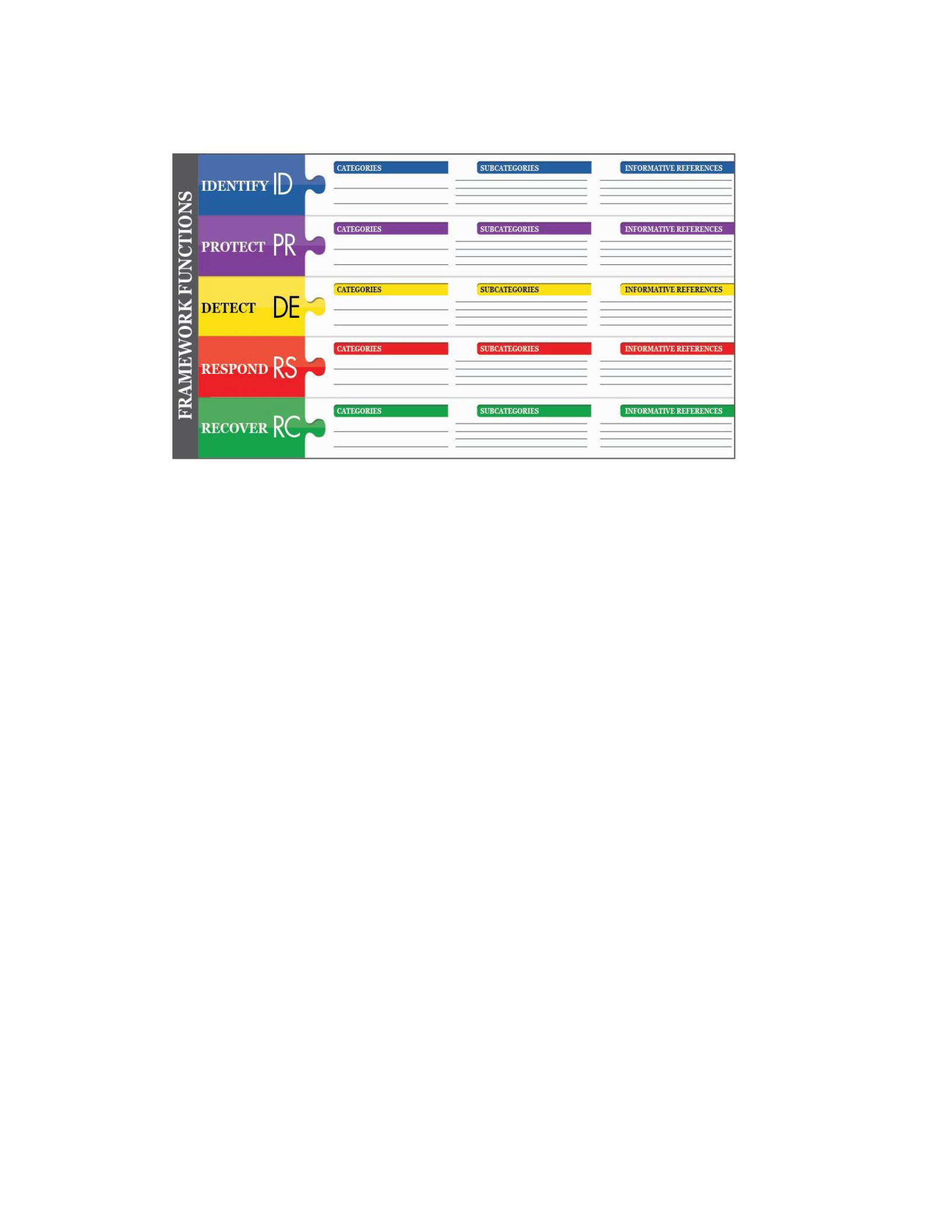
The Cybersecurity Enhancement Act of 2014 was introduced to address the risks
of cyber threats. This act enhanced the reach of the NIST, which makes identifying and
mitigating threats against frameworks easier. The NIST framework is comprised of the
framework core, the implementation tiers, and the framework profiles. The framework
core is used to analyze the activity that occurs across an organization. The
implementation tiers allocate data for the use of building individual profiles to fit into the
organizational framework. The framework profiles help the system divide activity to the
areas of the framework that require the most help. These factors work together in the
NIST framework to create an effective system that will uphold the requirements of cyber
security protection (see Figure 1). I chose the NIST framework for this study because it
addresses security risks.
19
Figure 1. NIST framework core structure. (Source: https://nvlpubs.nist.gov)
Framework Core
The framework core functions of identify, protect, detect, respond, and recover
work to access cybersecurity risks. The various functions are broken down into categories
to determine the needs of the organizational programming. The subcategories are an
additional subdivision below categories that help narrow down the specific technical and
managerial resources that are needed to combat threats. The purpose of the identify
function is to obtain an understanding of the organization’s ability to detect threats and
protect against their negative effects. The protection aspect involves introducing new
security protocols that will handle the needs of the organization. The detection element
requires the security protocols to find threats and adapt the system to protect against
similar attacks. The purpose of the response function is to develop security systems that
will carry out solutions that fight against threats. The system must also be able to recover
lost information and capabilities that were affected by cyber security breaches.

20
Framework Implementation Tiers
The framework implementation tiers are used to divide the risks of an
organization by their urgency and potential effect. Each tier builds on the rigor of the
previous tier. The highest tier level will include the most serious risks with the potential
of the most damage. Most resources and managerial attention will be allotted to higher
level risks. Organizations that include framework implementation tiers in their cost-
benefit analysis will be able to assess the situation and understand how to address
security concerns.
Tier 1: Partial risk. Tier 1 includes risk management process and integrated risk
management program. The risk management process includes gathering data and
developing ideas on security protocols that can address the issues being faced by the
organization. Responses to current cyber security risks are also addressed. The integrated
risk management program may have a lack of understanding of the overall risks being
faced by the organization, which means that there will need to be extensive research to
develop appropriate programs.
Tier 2: Risk informed. Tier 2 involves known risks and the strategies that can be
used to mitigate potential effects. The risk management process at Tier 2 includes
established security protocols designed to address current risks facing the organization.
The protocols may only be limited to certain sections and not widespread through each
division. Priority of risks will depend on current and former risks that have impacted the
security landscape. Secure data may not have established secure channels to transfer
information between employees.

21
Tier 3: Repeatable. The risk management process of Tier 3 has extensive
security protocols that are implemented throughout the organization. The protocols are
adapted to fit the changing security needs faced by the system. The integrated risk
management program involves company-wide security practices to combat cyber security
risks. These practices are studied to illustrate effectiveness in protecting data while
fending off future issues. The employees of the organization have a rigorous
understanding of security protocols and supervisors ensure the protocols are being
followed. Senior level management also make data security a priority and ensure the
appropriate number of financial and managerial resources are devoted to upkeep the
organizational information security risk management system.
Tier 4: Adaptive. The risk management process of Tier 4 involves the
organization evolving its security practices based on acquired knowledge of the risk
landscape. Technology and threats are always changing, such that organizations need to
stay on trend to protect the long-term security of the organization. Organizations that are
unable to evolve with the times become obsolete.
The integrated risk management program of Tier 4 involves the highest level of
security integration into the overall business structure. The people, processes, and
procedures of the organization are aligned with the organizational structure to ensure that
the capabilities of the organization are appropriately protected. The employees have a full
understanding of the link between success and data security and conduct their behavior
accordingly. Senior management champion new security ventures to protect sensitive

22
data and communication. The security budget reflected the importance of rigorous data
security protocols.
Framework Profile
The framework profile is the alignment of organizational regulations, risk
assessment, and resources for mitigating cybersecurity risk. There may be more than one
profile needed to analyze the security landscape of the organization depending on size
and scope. The profiles address the current state and the target state of the security
elements in the organization. The current framework profile addresses the current state of
security while the target framework profile represents the potential outcomes of new
security implementations. Effective communication between individuals in the
organizations as well as between multiple organizations need to be analyzed to test for
secure channels and risk. Vulnerabilities are found through analysis of current and target
profiles. Future security plans need to address these vulnerabilities while keeping the
strengths intact. The number of resources and employees needed to fight back against risk
are also calculated by the numbers of the framework profiles.
The NIST framework can be used by any type of organization. Variances in
magnitude of risk, size, and resources make little difference in the effectiveness of the
framework. The universal nature of the NIST framework is due to its practical approach
and solutions. Despite its practical usage, the framework will not manage cybersecurity
risks of different origins the same way. There are differences in each system depending
on how the infrastructure is set up in a framework. The ultimate purpose is to reduce and
mitigate risks in the system. The employees who oversee the framework need to be

23
experienced in threats and how to work with the system to handle solutions. NIST is
constantly evolving based on new information obtained by threats and gets more intuitive
after every incident. The framework follows a set of guidelines to address the security
needs of an organization. The guidelines cover the cybersecurity landscape of the
organization, specific vulnerable areas, potential improvement areas, progress in handling
threats, and communication between employees about maintaining a safe system.
Coordination of Framework Implementation
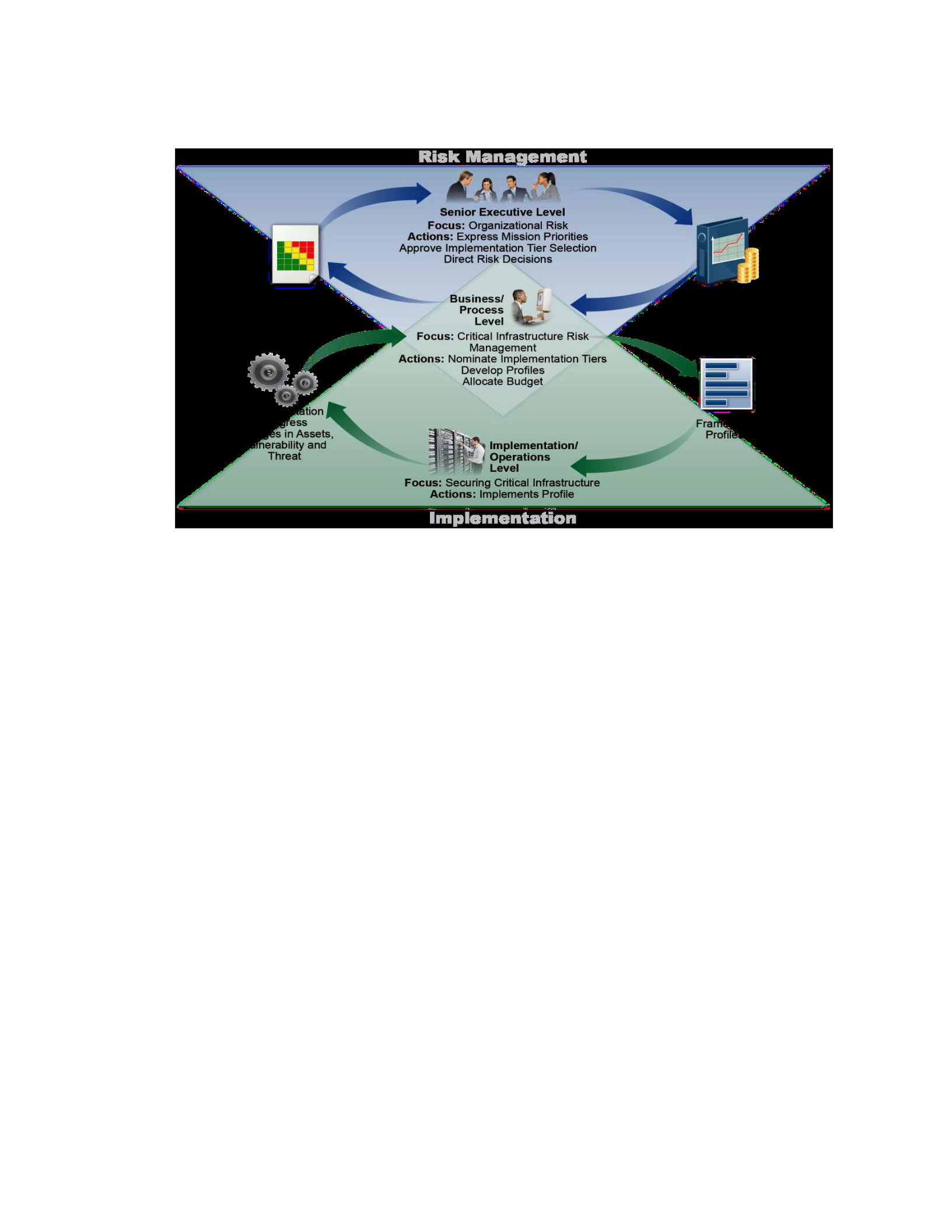
Figure 2 includes a common flow of information and decisions at the following
levels within an organization. Framework implementation occurs between the executive
level, business level, and the implementation level. The executive level involves the
overview of operational goals, current resources, and risk management. The business
level involves the alignment between operational goals and business goals in the creation
of the framework profile. The operations level completes the framework profile and then
share the data with the business level. The business level uses the data acquired by the
profile to conduce a risk assessment, which is communicated to the executive level to
create a plan to address the risks in their overview report. The NIST framework works
alongside existing security controls without replacing existing infrastructure. The
framework core, framework implementation tiers, and framework profiles work together
to assess cybersecurity risk.
24
Figure 2. NIST framework implementation for risk management. (Source:
https://nvlpubs.nist.gov)
NIST Framework Cybersecurity Practices
Proper cybersecurity practices are essential to the growth of an organization.
Organizations that are not able to adequate protect their data will be given a poor
reputation and little to no chance for improvement. There are seven steps that are
involved in the implementation of new cybersecurity practices. The first step is to
determine the operational objectives and priorities of the organization. The second step is
aligning resources with the goals of the organization. The third step is to create a current
profile that describes the existing security landscape, categories, and subcategories of the
organization. The fourth step is to conduct a risk assessment to understand the current
threats being faced by the company as well the effectiveness of current security protocols.
The fifth step is to create a target profile that predicts the outcome of potential security

25
protocols. The sixth step is to determine vulnerabilities and gaps in the system. The
seventh step is to create a plan that addresses the risks facing the organization while
utilizing the set resources available in the organization.
Information Security Risk Management
Even a small vulnerability can lead to a large breach and financial loss. Breaches
are most often caused by internal and external vulnerabilities in an organization (Fenz et
al., 2014). People, process, and technology are integrated elements in any organization
and should be aligned to achieve information security goals. If proper security controls
are not put into place to protect the data, data breaches rise exponentially (Soomro et al.,
2015). Security risk analysis is the area of enterprise risk management that determines the
level of risk and the method in handling the risk. As security become a part of a
company’s focus, so does the role of senior management (Feng, Wang, & Li, 2014).
Risk management is a program that incorporates multiple systems to deal with the
information security risks that affect operations (Safa et al., 2015). The process includes
creating a framework to recognize risky activities, analyzing the risk, creating a solution
to combat the risk, and to keep up with dealing with risk over an extended period. The
system also includes features that address risk to the organization (Bodin, Gordon, &
Loeb, 2008).
Information Security Controls
In a business context, control can help in maintaining behaviors that can assist in
improving the performance of a company (Cram, Brohman, Chan, & Gallupe, 2016). It is
a challenge for management to implement a change and controls in any organization

26
(Jensen, 2017). Management must exercise control over people, process, and technology
through a risk awareness program to positively affect the company. There are several
drivers such as internal and external threats, business and regulatory requirements that are
necessary to analyze to create a proper control system for an effective information
management system (McFadzean, Ezingeard, & Birchall, 2011). McFadzean et al. stated
that senior management at board level and their support for organizational level
information security initiatives will help to bring security awareness across the company
with a minimal resistance from employees for a change to adopt new processes and
procedures to implement new security controls. The information security controls
suggested by NIST (2013) are included in Table 1.
Table 1
Information Security Controls Family
Sr.No
Security control family ID
Security control family name
1
AC
Access control
2
MP
Media protection
3
AT
Awareness and training
4
PE
Physical and environmental protection
5
AU
Audit and accountability
6
PL
Planning
7
CA
Security assessment and authorization
8
PS
Personal security
9
CM
Configuration management
10
RA
Risk assessment
11
CP
Contingency planning
12
SA
System and services acquisition
13
IA
Identification and authentication
14
SC
System and communications protection
15
IR
Incident response
16
SI
System and information integrity
17
MA
Maintenance
18
PM
Program management
Note. Source: NIST SP 800-53r4, Joint Task Force Transformation Initiative (NIST,
2013).

27
Literature Review
The alignment of people, process, and technology at every level of the
organization towards risk management helps in reducing internal and external threats
from cyberattacks (Chen, Ramamurthy, & Wen, 2015; Kohnke, Shoemaker, & Sigler,
2017). Organizations that integrate and align people, process, and technology into the
overall business process lower the costs of data breaches (McFadzean et al., 2011;
Pooley, 2017; Scarfò, 2018). Companies that have an alignment gap between
organizational resources are found to have an increased amount of security risks. This
literature review includes the effect of managerial capabilities for creating organizational
readiness for handling information security risks. The leadership competencies of a
manager play a large part in how the organization prevents and responds to threats.
Certain managerial competencies are essential for information security managers for
aligning organizational resources to prevent data breaches from internal external threats.
The literature research and review was organized into data breaches and impact,
competency domains such as information security risk management, leadership and
managerial competencies, communication competencies, project management
competencies, on the organizational performance. The leadership and managerial
competency attributes are identified from literature review and classified in to the
following three categories: people, process, and technology as shown in Table 2. People
management competency includes all internal and external stake holders, goal setting,
performance management, performance metrics, training, conflict resolution, delegation,
rewards and recognition. Process domain includes communication at all levels of the

28
organization, organizational strategy and organizational alignment, regulatory
compliance and governance, finance and budgeting, Industry networking, vendor and
supplier management, ethics and social responsibility, quality management, and change
management. Technology competency includes IT and systems, communications and
networking infrastructure, information security, risk management, and industry specific
domain competencies.

29
Table 2
Competencies for Aligning Organizational Resources
Sr.No
People Skills And Competency Attributes
1
People and stake holder management
2
Goal setting and monitoring
3
Performance measurement and corrective actions for improvement
4
Rewards, recognition and corrective actions
5
Education training and Training and awareness programs
6
Conflict resolution
7
Ethics and compliance
8
Social responsibilities
9
Ownership and responsibilities
10
Understanding organizational goals and vision
11
Developing strategic skills
12
Mentoring and building teams
Sr.No
Organizational Process Skills And Competency Attributes
1
Communication at all levels of the organization
2
Organizational strategy development
3
Governance and regulatory compliance requirements
4
Finance and budget development
5
Industry peer networking to new and emerging process improvements, lesons
learned at other
6
Vendor management
7
Project management
8
Quality management
9
Customer support
10
Resource planning and optimization
11
Organizational risk management and regulatory compliance applicable to the
organization
12
Organizational vision and strategy development and implementation to achive
operational strategic goals
Sr.No
Technology Skills And Competency Attributes
1
Information technology and systems used by the organization to achieve
organizational goals
2
Organizational business applications
3
Communication and computing technology
4
Information Security tools and technology
5
New and emerging technologies such as internet of things (IoT), artificial
intelligence, big data, and cloud technologies
6
Industry specific domain
7
Technology alignment with organizational
8
Industry specific regulations and their impact on the organization
Note. The competencies are compiled from literature review

30
Data Breaches and Their Effects
This section includes a review of the different data breach literature with focus on
the financial effects of data breach incidents. The review of data breach incidents and
their effect on financial performance of the organizations, review of the entire
organization including organizational performance, alignment, capabilities, culture, and
strategies. The review of the senior management’s role in aligning the entire organization,
people, process, and technology to manage the risk effect from cyber attacks and data
breaches to an acceptable level. The review of information security risk management,
governance, framework, regulatory compliance, financial impact, security investments,
the stock market price and market value implications due to a data breach. A summary of
the overall data breach effect on organization financial performance and the cost of a data
breach incident and critical success factors.
Data breaches are some of the most intense security threats that a company faces.
Breaches are concerned with exposed data to forces outside the company. As data are the
most important asset of a company, a leak can create severe damage to the finances and
reputation of a company (Cheng et al., 2017). Data breaches are becoming more common
as more data is being placed online. The breaches are constantly evolving so it can be
difficult for security programs to find and destroy threats. There is significant research
being done about threats but there is no best method of protection (Cavusoglu,
Cavusoglu, Son, & Benbasat, 2015).
Scholars have recently begun to investigate multiple aspects of data breaches that
are determined by the source of the data breach and the industry it affects (Das et al.,

31
2012). Data breaches can occur due to the loss of physical objects, loss of documents or
devices with sensitive data can lead to massive data breaches. About half of the
companies that had a data breach incidents between 2006 to 2008, resulted from a lost
portable device (Grahn, Westerlund, & Pulkkis, 2017; Schafer, 2016).
A data breach that results in the leak of confidential data has a greater negative
effect than any other type of breach (Das et al., 2012). Research conducted from 2003 to
2012 has found that information security breaches have a considerable effect on the
financial performance of a company (Ayyagari, 2012). The economic cost of publicly
announced information security breaches has some financial repercussion and the
repercussions can come in the form of stock drops or loss of cash flow (Campbell,
Gordon, Loeb, & Zhou, 2003). The data reviewed from 1997 to 2003 showed that the
characteristics and intensity of the security breach have an impact on stock market
response to the breach (Andoh-Baidoo & Osei-Bryson, 2007). Research on the market
price effect from data security breaches was also conducted from 2000 to 2010 (Morse,
Raval, & Wingender, 2011). The results of the study proved that a data breach could hurt
stock market performance. This negative effect can last for a long time after the initial
breach (Morse et al., 2011).
Ultimately, denying a data breach has occurred has a greater negative effect on
the stock market than addressing the issue properly (Veltsos, 2012). The effects of
security breaches on the market value of companies were researched between 1996 and
2001 (Cavusoglu et al., 2015). Cavusolu analyzed the company within 2 days after a data
breach was reported. The results were that companies lost an average of 2.1% of their

32
market value, which is an average loss of $1.65 billion dollars per incident (Cavusoglu et
al., 2015). The factors that were tested were company size, type, type of breach, and time.
While the breached company was negatively affected, security developers had a positive
market value in response to a breach. Security developers had a 1.36% gain in market
value which led to a gain in $1.06 billion dollars in the span of 2 days (Cavusoglu et al.,
2015). The conclusion of this study was that investors largely penalize poor security
practices, which lead a negative market value of a company. The size of the firm seemed
to have no significant effect on the market response to a breach.
Healthcare organizations also have large risks associated with data breaches.
Hospitals and medical insurance companies handle patient health records containing
personal health and personal information while providing care and processing payments
(Holtfreter, & Harrington, 2015; Houser, 2015; Kierkegaard, 2012). The Health
Insurance Portability and Accountability Act were put into place in 2013 to ensure
privacy, provide protection against fraud, and to continue coverage for health plans
(Holtfreter & Harrington, 2015; Houser, 2015). The Health Information Technology for
Economic and Clinical Health Act was enacted in 2009 for the purpose of covering
security mandates in the wake of a healthcare information breach (Caldwell, 2012;
Kierkegaard, 2012).The notification allows individuals to seek out measures to protect
against further attacks and to attempt to maintain privacy (Bisogni, 2016; Schuessler,
Nagy, Fulk, & Dearing, 2017). Some states have less restrictive laws on this matter than
others, which brings in the need for a federal law (Caldwell, 2012; Romanosky et al.,
2011). The benefits of notification laws include companies having an incentive to

33
improve their data security, individuals are better able to protect themselves against
identity theft, and priority is placed on the privacy rights of a person whose personal data
has been breached (Bisogni, 2016; Schuessler et al., 2017).
Federal Notification Laws: The Data Security and Breach Notification Act was
enacted in 2011, which stated that when a breach occurs, all affected individuals would
have to be notified (Caldwell, 2012). A federal law that affects healthcare information is
the Health Information Technology for Economic and Clinical Health Act which requires
the Department of Health and Human Services as well as the Federal Trade Commission
to address breach issues that apply to the Health Insurance Portability and Accountability
Act (Kierkegaard, 2012). The federal laws have led to better protection against data
breaches due to the potential financial and reputation damage (Kierkegaard, 2012). Most
research done on data breach effects have focused on the stock market price or the market
value days after the breach announcement. The studies that have researched the effects of
data breaches have varied in the years they cover.
In a research study done by Garg et al. (2003), only 22 breaches were reported
during the period before the mid 90’s. Loss of data from the retail industry alarms many
people as it can lead to credit card information being leaked. The retailer then had to face
numerous lawsuits from angry customers, regulatory oversight audits and fines (Archer,
2012; Ayyagari, 2012; Cheng et al., 2017). The incident at the Michael stores and TJX
Corporation is another example as the company reported what is now the largest case of
credit card fraud. Data breaches have a large effect on retail companies as the trust that
the public had with the company is greatly affected.

34
Information Security Risk Management
Even a small vulnerability can lead to a large breach and large financial loss.
Breaches are most often caused by internal and external vulnerabilities in the
organization (Fenz et al., 2014). The pillars of modern organization such as people,
process, and technology are tightly integrated elements in any organization and should be
aligned to achieve information security goals. If proper security controls are not put into
place to protect the data, data breaches rise exponentially (Soomro et al., 2015). Security
risk analysis is the area of enterprise risk management that determines the level of risk
and the method in handling the risk and as security becomes a large part of a company’s
focus, the role of senior management changes (Feng et al., 2014).
Risk management is a program that incorporates multiple systems to manage
information security risks that affect operations (Safa et al., 2015). The process includes
creating a framework to recognize risky activities, analyzing the risk, creating a solution
to combat the risk, and to keep up with dealing with risk over an extended period of time.
The system also must include features that address risk to the organization (Bodin et al.,
2008).
Information Security Policies
Security policy includes a set of standards that incorporate all the aspects that the
security service works with. There are several internal and external factors that are
included in a security policy (Hu, Dinev, Hart, & Cooke, 2012; Soomro et al., 2015). The
regulations and practices must be set into place such that all the members of a company
can follow the rules. This ensures that the company has the sufficient amount of

35
protection for their data. Senior management is responsible for the implementation and
assurance of policies, procedures, and security controls across the organization (Hagen,
Albrechtsen, & Hovden, 2008).
Information Security Controls
In a business context, control can help in maintaining behaviors that can assist in
improving the performance of a company (Cram et al., 2016). It is a challenge for
management to implement changes and controls in any organization (Jensen, 2017).
Management must exercise control over people, process, and technology through a risk
awareness program to positively affect the company. There are several drivers such as
internal and external threats and business and regulatory requirements, that are necessary
to analyze to create a proper control system for an effective information management
system (McFadzean et al., 2011). McFadzean et al. (2011) stated that senior management
at board level and their support for organizational level information security initiatives
will help to bring security awareness across the company with a minimal resistance from
employees for a change to adopt new processes and procedures to implement new
security controls.
Organizational Alignment
The entire organization’s buy-in for adopting a stringent information security
control using employee awareness training and workshops is an important step towards
the organizational alignment with people (Hagen et al., 2008). The information security
awareness should be a top-down approach, and senior management intervention will help
to achieve the resources alignment at organization level.

36
The human resource challenge of information security management has been
neglected and has focused more on technology. People, processes, and technology are the
critical components of the organizational resources which are vital for an effective
information security management (Ashenden, 2008). The organizational culture,
communication between information security team, end users, and management should
be aligned to achieve the overall information security risk and corporate risk management
(Makhlouf, 2017). Risk management is everyone’s responsibility.
Well established business operations with highly integrated and aligned
organizational resources are vital for any organization to achieve its strategic goals.
Business operations with people, process, and technology alignment will reduce the cost
of information security breaches from cyberattacks (Gordon, Loeb, & Lei, 2011; Pathari
& Sonar, 2013). Chang and Lin (2007) and McFadzean et al. (2011) noted that it is the
responsibility of the management to align resources within in the organization to achieve
organizational performance and mitigate the internal and external threats.
Accountability
Security threats are rapidly evolving and having a highly integrated and
coordinated risk management strategy will help in mitigating organizational risks from
cyberattacks. The economic factors, internal and external threats, and regulatory
requirements are the main drivers for implementing information security controls by
management (Chaudhry et al., 2012). Strategic alignment and integration of
organizational resources is an important aspect for organizations and it will help to

37
streamline company operations to improve the efficiency and productivity of a company
(Hagen et al., 2008).
Management is accountable for leading the organization and managing
information security risks to achieve organizational strategic goals, efficiency, and value
to stakeholders (Chander, Jain, & Shankar, 2013). Management has control of resources
and decides how those resources are assigned to projects based on organizational goals.
Management involvement is also essential in information security and risk management
to protect the organization assets (Chen et al., 2015).
Managerial Competencies for Information Security Management
Technology draws the most focus from management and is treated with higher
priority than human resources and processes (Ashenden, 2008; Bauer, & Bernroider,
2017; Stewart, & Jürjens, 2017). Human resources go through numerous challenges of
discovering and handling risks to the company as technology alone cannot manage
organizational risk (Burns, Posey, Roberts, & Lowry, 2017). Management tends to focus
more on the technology aspect information security controls, as they is the most visible
part of security infrastructure (Pattabiraman et al., 2018; Stewart, & Jürjens, 2017).
Managerial competencies are the behaviors that a manager has that align with the
skills and knowledge of their field. Leaders with managerial competencies are identified
by the stakeholders (Anderson & Sun, 2017; Anthony, 2017). Companies that select
leaders with poor managerial competencies will suffer from financial losses and wasted
resources (Eberly, Bluhm, Guarana, Avolio, & Hannah, 2017; Ulrich & Smallwood,
2012). The selected leaders have little room for mistakes as even the smallest error can

38
have a large negative influence on the company (Pavlou & El Sawy, 2006; Wei, Samiee,
& Lee, 2014). Understanding the qualities that make a good leader will help in leadership
selection. A better understanding of which leadership competencies are required in highly
effective managers for managing the information security risk is a pressing research
concern.
Leaders need to have a diverse set of skills that can handle a shifting business
environment. The main leadership styles are intellectual, managerial, and emotional
leadership. The three styles of leaderships are vastly different and require differing skill
sets (Laureani & Antony, 2017; Maamari & Majdalani, 2017; Pierce & Newstorm, 2015).
According to Sanchez, & Terlizzi (2017) the competencies are different factors of human
characteristics that can be useful in identifying high performing employees and leaders.
Candidates with high level competencies will be able to use their skill sets in a variety of
business environments (Drucker, 2016; Northouse, 2018). Competencies are different
from the concept of competence as they relate to the behaviors and characteristics of an
individual, and not the overall quality of those characteristics (Croft & Seemiller, 2017).
Harrison (2016) reviewed empirical literature on the effect of competencies in job
performance and stated that tests measuring intellectual capacity were not enough to
determine quality of employees. According Lo, Macky, and Pio (2015), it would also be
important to analyze employee’s behavioral characteristics. The management
competencies, behavioral competencies, and organizational competencies are
foundational competencies for an effective manager (Harrison, 2016; Lo et al., 2015).
Behavioral competencies are preferred behaviors that would be useful in any work

39
setting. Organizational competencies are business focused behaviors with the aim of
improved performance. Competencies measure emotional, social, and cognitive intellect
based on behavioral patterns (Maamari & Majdalani, 2017). The authority of the leader
enables managers to control follower’s decision as opposed to a more democratic
approach in which the leader gives up some control (Hogan, 2017; Mendenhall, Weber,
Arna Arnardottir, & Oddou, 2017; Sturm, Vera, & Crossan, 2017).
Communication Competencies
Effective communication between individuals and groups in an organization will
help improve the performance of the company. Having employees that can inform and
understand each other helps to better use time and resources to fulfill the goals of the
organization (Bachmann, 2017; Gochhayat, Giri, & Suar, 2017; Raina, 2010). It has been
found that the poor communication abilities of managers have a negative effect on the
performance of the employees (Henry, 2017; Schuttler, 2010). Highly effective leaders
and managers will communicate very well with team to achieve organizational goals
(Harrison, 2016; Lo et al., 2015; Northouse, 2018).
The workplace has become more global and diverse. Employees must now be
able to handle different interpersonal dynamics with people of different cultures and
background (Anzengruber, Goetz, Nold, & Woelfle, 2017). Mayfield, Mayfield, and
Sharbrough (2015) stated that challenge for managers is to effectively engage employees
in information processing and sharing, problem-solving, and decision-making. The
diversified social, cultural, educational, and generational differences among workforce is
a new challenge for managers at workplace in today’s business environment

40
(Anzengruber et al., 2017; Morreale, Valenzano, & Bauer, 2017). Despite the need for
improved communication, there has been little practical research done on the topic of
improving managerial communication. Researchers working on managerial competencies
would agree that there are cognitive, interpersonal, personal, and motivational
competencies (Mikkelson, York, & Arritola, 2015). Ulmer, Sellnow, & Seeger, 2017).
Despite this agreement, studies have failed to identify the complete range of
competencies required for effective performance of managers who are critical for
organization information security and risk management (Mohamad, Nguyen, Melewar, &
Gambetti, 2018; Solomon & Steyn, 2017). Communication between employees can be
hindered due to multiple reasons such as social and cultural changes, intergenerational
gaps, and the changing workplace environment in the global economy. New managerial
methods must be established to overcome the new obstacles.
Project Management Competencies
As the expansion of the Internet in the business landscape, companies have
depended on IT to conduct day-to-day business practices. However, IT projects have a
high failure rate despite their importance in business (Hughes, Rana, & Simintiras, 2017).
The primary goal of any organization is to create new products, systems or solutions that
will create a strategic value and edge with the competition. Optimal deployment and
alignment of organizational resources are required to achieve the end goal (Pavlou & El
Sawy, 2006; Wei et al., 2014). The Project Management Institute (PMI) found that only
25% of IT projects were meeting their established goals, 50% of IT projects were having
troubles continuing, and the remaining 25% of IT projects were failing. IT projects are

41
unique due to their aggressive delivery schedules, shortage of resources, and frequent
scope changes demanded by the business atmosphere and changing technology standards
(Stevenson & Starkweather, 2010). The competitive business conditions and changing
technology landscape has mandated the need of optimal utilization of organizational
resources to reduce cost and increase productivity to stay in business (Kerzner &
Kerzner, 2017; Müller & Turner, 2010; Müller, Geraldi, & Turner, 2012; Stevenson &
Starkweather, 2010). Papke-Shields and Boyer-Wright (2017) identified seven highly
visible causes for IT project failures. The causes were: misunderstood requirement,
optimistic schedules and budgets, inadequate risk assessment and management,
inconsistent standards and training, management of resources, the unclear charter for the
project, and lack of communication. Project managers may be trained to use emotional
intelligence in their leadership style to reduce the risk of project failure (Maamari &
Majdalani, 2017).
An effective and competent manager will be able to oversee a successful project
(Stevenson & Starkweather, 2010). The core competency theory includes six competency
areas: results orientation, interpersonal skills, personal accountability, flexibility,
problem-solving, and planning and organization (Bass & Bass, 2009; Dulewicz & Higgs,
2005; Geoghegan & Dulewicz, 2008; Marx, 2017; Meng & Boyd, 2017) stated that
leadership competencies and emotional awareness of project manager are a key factor in
the success of project. The ability to understand and communicate with employees is just
as important as the technical expertise for a project manager. The five key functions that
are a part of project management are scope, organization, time, cost, and quality

42
Ibrahim, Boerhannoeddin, and Bakare (2017) suggested that the competencies
associated with soft skills such as emotional intelligence and communication abilities
were more important than the hard skill knowledge. Leaders that have soft skill abilities
will be able to transition their leadership abilities into different situations. A project
manager in the IT field must have technical competencies as well as leadership
competencies (Meng & Boyd, 2017; Müller & Turner, 2010; Ulrich & Smallwood,
2012). Project managers that lack technical and leadership competencies will struggle in
prioritizing and aligning resources, which leads to project cost and schedule overrun and
impact returns on investment (Ulrich & Smallwood, 2005). Stevenson and Starkweather
(2010) stated that the aggressive project delivery schedules, shortage of budgets and
resources increased the risk of costly project failures.
Technical skills enhance the ability of the project manager to lead and manage
through an understanding of the complex issues that develop during a project life cycle
(Bauer, Richardson, & Marion, 2014). Organizations are undertaking and executing large
and complex projects and it is no longer possible for a project manager to remain a
technical expert in all aspects of a project. Project managers were spending most of their
time scheduling, performing cost control, and monitoring progress rather than providing
technical direction (Bauer et al., 2014; Frame, 2003). Müller & Turner (2010) stated that
the leadership competencies should be considered when assigning project managers to
projects. Project management training and development should focus not only on
technical and management skills but also on the development of leadership competencies.

43
According to Fan, Thomas, and Anantatmula (2014), there is no formula for
finding the right project manager in today’s dynamic business environment and
organizational context. Brill, Bishop, and Walker (2006) questioned the validity of the
PMBOK in terms of breadth. He noted that there are inadequacies in the areas of project
strategy, project definition, value management, and technology management in current
project management standards. These inadequacies are significant as they affect the
outcome of the project. Skulmoski and Hartman (2010) stated that the new research
appears to have changed focus from the technical skills of a manager to more behavioral
skills. The landscape of an organization is constantly changing. Managing organizational
change is an essential skill for managers to have to succeed in the changing business
landscape (Ahmed, & Anantatmula, 2017; Hornstein, 2015). The main factors analyzed
for project success were time and costs (Ibrahim et al., 2017; Stevenson & Starkweather,
2010). The factors of product success, business benefit, and stakeholder satisfaction are
analyzed when determining the success of a project in today’s business environment
(Dulewicz & Higgs, 2005).
Soft skills include social skills and effective personality factors that can be used
for positive social interactions inside and outside a business environment (Ibrahim et al.,
2017; Skulmoski & Hartman, 2010). Hard skills include technical abilities and
knowledge of business procedures. Hard skills are learned through education while soft
skills are developed through life experiences (Ibrahim et al., 2017). Companies are still in
the process of understanding the importance of soft skills in job performance. Ibrahim et
al. (2017) stated that the managers with good technical, communication and people skills

44
can handle the requirements of the team members and stakeholders. The six
competencies involved with strategy are leadership, communication, verbal skills, writing
skills, attitude, and ability to clear ambiguity (Ibrahim et al., 2017; Stevenson &
Starkweather, 2010). A better understanding of which leadership competencies are
required in a highly effective manager for managing and delivering the IT and
information security projects on schedule and on a budget is a pressing research concern.
While leadership competencies of a project manager are important factors in a project’s
outcome, there is a limited amount of research on the people competencies of project
managers (Ahmed & Anantatmula, 2017).
Competencies for Building Secure Software
Business and government have both been victims of high-level data breaches
(Chang, 2015; Houser, 2015; Huckvale, Jose, Tilney, Benghozi, & Car, 2015). The
complexity and importance of software security will continue to increase along with the
growth of digital systems and networks (Kushwaha, 2016). Business uses software to
handle many tasks such that security protecting their information must be strong to
accommodate the volume of data (Capretz, 2014; Gisladottir, Ganin, Keisler, Kepner, &
Linkov, 2016; Mesquida & Mas, 2015; Touhill, & Touhill, 2014). The IoT is a rapidly
emerging field that allows many electronic devices to be connected to the Internet
(Ghani, Khelil, Suri, Csertán, Gönczy, Urbanics, & Clarke, 2014; Piggin, 2016). Software
security also have to evolve to handle the security demands of a widely-connected system
that involves the different types of electronics (Cavelty, 2014; Gisladottir et al., 2016;
Jing, Vasilakos, Wan, Lu, & Qiu, 2014; Kahtan, Bakar, & Nordin, 2014; Touhill, &

45
Touhill, 2014). Existing systems can be built on to improve security and new systems can
include high-level security software (Astuti, Muqtadiroh, Darmaningrat, & Putri, 2017;
Chen et al., 2015). There are high costs involved in implementing high-level security
software. Having security safeguards in software development will increase the overall
development costs. The costs are needed as the security software protects the data and the
system from unauthorized access. Security protocols in every phase of the development
are essential as they prevent against the biggest risks of system vulnerability (Astuti et al.,
2017; Houser, 2015; Kushwaha, 2016; Piggin, 2016). The industry has acknowledged
that security should be included into every aspect of software design, development, and
implementation (Aasi et al., 2017; Cavelty, 2014; Islam, Mouratidis, & Weippl, 2014).
Despite industry encouragement, the need for enhanced security protocols in the SDLC is
still being overlooked (Ghani et al., 2014; Jones & Rastogi, 2004). The problem is with
the time and resources that have been allocated to implement security requirements in
software changes. Another industry concern is how to best implement new security
protocols and systems into the phases of software development (Ghani et al., 2014;
Gisladottir et al., 2016; Jones & Rastogi, 2004; Khan, 2014; Touhill & Touhill, 2014).
The existing approach to include security controls in software design is to
implement it after the development and it is very expensive. Companies that keep
security design in mind while starting their software application phases will have a better
chance of keeping their systems and data safe at lower cost (Gisladottir et al., 2016;
Khan, 2014; Piggin, 2016; Touhill & Touhill, 2014). Including security during the initial
testing of new software allows a company to find weaknesses early in the process.

46
Finding and correcting errors in security controls is an easier process during the early
stages of the software development life cycle, than at the deployment stage. The current
standard of waiting until a stage is completed before including security makes correcting
errors to correct, expensive and difficult (Astuti et al., 2017; Houser, 2015; Kushwaha,
2016; Mesquida & Mas, 2015; Piggin, 2016).
Different levels of employee groups must be involved in the software design
process so that the system will be able to meet the needs of everyone in the organization
(Dabbagh & Lee, 2014; Gisladottir et al., 2016; Khan, 2014; Piggin, 2016; Touhill &
Touhill, 2014). Software systems become more complex as time in the development
cycle passes due to scope creep and lack of resource to meet new scope (Khaim, Naz,
Abbas, Iqbal, & Hamayun, 2016). Integrating security processes early allows the best
resources to be used for security development and prevent against weaknesses caused by
oversight and limited investment (Dabbagh & Lee, 2014; Gisladottir et al., 2016; Kahtan
et al., 2014; Khan, 2014; Mesquida & Mas, 2015). Many companies are reluctant to
assign resources for security controls early in the software development life cycle due to
the increased cost of the project (Kahtan et al., 2014). Companies that choose to include
security into the initial testing have better end results with resource allocation and
security strength (Aasi et al., 2017; Houser, 2015). Flaws in the initial stages of software
development could be caught and fixed in a way that avoids a large time and resource
commitment at a later stage of the product life cycle. The leaders and stakeholders of the
organization must include early security implementation in their plans to improve their
projects and data safety (Posey, Roberts, Lowry, & Hightower, 2014).

47
There are several reasons for organizations for not including security controls in
their initial plans for software development such as budget, schedule and resource
constraints. Organizational leadership should act proactively to identify the best methods
for encouraging early security implementation in software development to build and
implement secure software systems to address risk from data breaches (August, August,
& Shin, 2014; Frydman, Ruiz, Heymann, César, & Miller, 2014; Ghani et al., 2014;
Gisladottir et al., 2016).
Technology Competency for Managers
Cloud computing systems have been a hosting platform of recent technology for
social networks and artificial intelligence projects (Hosseinian-Far et al., 2018; Raguseo,
2018). Artificial intelligence was a conceptual model until the faster computing
processors, better algorithms, and data organized for cloud computing made it possible to
build a real version for practical applications. Many organizations are hosting their
information systems on cloud platforms, because of cost and flexibility of scaling as
needed. One issue with the use of cloud computing system is information security
(Bertino & Ferrari, 2018; Choi & Lambert, 2017; Cook et al., 2018). The main
drawbacks of cloud computing are security vulnerabilities for data that are hosted on
cloud infrastructure (Dave et al., 2018). Organizations must assess and evaluate the
potential risks that cloud computing could bring with its flexibility and scalability.
Organizations with high-value data must understand the risks and implement security
protocols to use cloud computing (Khari, 2018; Mishra, Sharma, Sharma, & Vimal,
2018).

48
Big data and security analytics. Big data are comprised of large data structures
and complex data sets that come from several independent data sources (Reddy & Sunil,
2017). The size and nature of the data make it additionally vulnerable to threats that
conventional security measures are not able to combat (Olson & Wu, 2017; Raguseo,
2018; Tian, 2017). The term big data is becoming a standard part of organizational
vernacular. Big data and data analytics have become a necessity for organizations making
business decisions to improve organizational value and to stay competitive (Raguseo,
2018; Vassakis, Petrakis, & Kopanakis, 2018). The value of big data is in its data
analytics as organizations can use the information to gain additional knowledge to
develop strategies to stay ahead of the competition. Strategies developed using
intelligence from big data analytics can bring in a strategic value to the organization
(Hosseinian-Far et al., 2018; Reddy, & Sunil, 2017; Sagiroglu & Sinanc, 2013; Vassakis
et al., 2018).
Current security measures are created for smaller sets of data and would not be
able to handle the nature of big data. Organizations need to address the vulnerabilities of
big data to be able to use it for their business operations (Olson & Wu, 2017; Tian, 2017).
All types of business and organizations are building big data capabilities to remain a
viable part of the current technological landscape (Raguseo, 2018; Vassakis et al., 2018).
Data security and confidentiality are the main concerns with big data deployment
(Olson, & Wu, 2017). Many new software systems using big data are unable to handle
advanced security threats (Bertino & Ferrari, 2018; Choi & Lambert, 2017; Undavia,
Patel, & Patel, 2018). Many financial institutions have had wide scale public scandals due

49
to mass leaks of confidential data (Singh, Halgamuge, Ekici, & Jayasekara, 2018;
Undavia et al., 2018). New innovations that follow cloud computing will involve big data
and IoT technology (Hosseinian-Far et al., 2018). Data are needed to build on ideas and
to expand on existing concepts. Data must be kept secure to maintain its value (Bertino,
& Ferrari, 2018; Choi, & Lambert, 2017).
Artificial intelligence and machine learning. Machine learning is the evolution
of computer technology in which the machines themselves can find solutions
independently for complex problems (Andrade, Torres, & Flores, 2018; Hosseinian-Far
et al., 2018). Some examples include facial recognition, virus software, and self-driving
cars. Two categories of machine learning are pattern recognition and anomaly detection
(Chio & Freeman, 2018). A decision support system can handle majority of security
threats a company will face while implementing organizational plans to reduce threats
(Andrade et al., 2018; Chio & Freeman, 2018; Hirsch, 2018; Verma, Calo, & Cirincione,
2018).
Implementation of an artificial intelligence (AI) and machine learning systems
requires a specialized competency to integrate it with the existing organizational IT
infrastructure and systems for organizational alignment (Hirsch, 2018; Liu, Liu, Liu,
Wang, Jin, & Wen, 2018). Using automated tools for analysis could increase the
effectiveness of the decision support system in data protection while reducing the total
time spent on security operations (Liu et al., 2018).
Security in an organizational structure requires alignment of people, technology,
and processes to identify organizational threats, develop and implement sufficient

50
security controls to mitigate risk from cyberattacks (Verma et al., 2018). Non-alignment
of organizational resources may lead to gaps in security controls which expose
organizational digital assets to cyberattacks and increased organizational risk. The
additional knowledge gained by the analysis of big data will help in implementing
specific strategies to handle relevant threats (Liu et al., 2018; Vassakis et al., 2018). The
organizational resource alignment will increase organizational readiness with established
policies, processes, trained resources, and security technology infrastructure in meeting
threats from cyberattacks.
There are several opportunities for security advancement with new innovations in
artificial intelligence, machine learning, and blockchain technology (Chio, & Freeman,
2018; Hirsch, 2018; Rabah, 2018) such as enabling things in IoT and continuous adaptive
threat identification of risk. The zero-trust security feature of blockchain ensures identity
verification of the users and keeps data safe from misuse and data attacks. The
opportunity comes from the intersection of artificial intelligence and machine learning for
information security risk management (Rosenberg, 2017). Artificial intelligence and
machine learning can be used to determine trends in security threats and implement
solutions to detect, and to identify the required security controls to prevent cyber attacks
(Andrade et al., 2018; Liu et al., 2018).
There are multiple considerations that must be made when addressing the human-
machine relationship of artificial intelligence (Brynjolfsson & McAfee, 2017; Morris,
2017). The increased number of data breaches has shown potential risk factors of targeted
data such as the manipulation of social media regarding social issues and outcomes

51
(Benson et al., 2018; Demek, Raschke, Janvrin, & Dilla, 2018; Luna & Pennock, 2018).
Artificial intelligence is needed to combat the high risk nature of new cyber threats (Hess
& Ludwig, 2018; Kumar, Pattnaik, & Pandey, 2017; Lawless, Mittu, Sofge, & Russell,
2017; Rosenberg, 2017).
Bring your own devices. Bring your own device is when employees bring their
own technology into the office to use for business purposes (Gaff, 2015; Thompson,
2017). Some devices that employees bring to office are tablets and smartphones. This is a
new concept used by some companies that have been proven to increase productivity in
the workplace. An issue that arises from bring your own device is that new vulnerabilities
are added to the company system that places company data at risk. It is difficult to
implement the same security protocols that can be implemented on a company owned
device. Companies that choose to have a bring your own device policy should require
strict security standards and have liability policies for their users to avoid legal issues
(Gaff, 2015; Thompson, 2017). Having an approval process that requires digital
certificates also helps in reducing risks.
Risks for an organization rise when managing social networks, IoT technology,
and bring your own device (Kumar & Singh, 2015; Thompson, 2017). The security risks
of IoT are still being determined as the implementation is still new (Kumar & Singh,
2015; Thompson, 2017). IoT technology innovations are becoming more advanced as
they can learn to adapt to their environment by taking new information in and adapting to
the new circumstances.

52
Drones and surveillance. Drone regulations must take security threats of civilian
drones into consideration when developing new rules. An increased number of civilian
drones need better security to handle potential safety risks such as intrusion and privacy
(Lin, He, Kumar, Choo, Vinel, & Huang, 2018; Martin, Tomkinson, & Scott, 2017).
Morris (2017) stated that the use of drones needs to be monitored and regulated with
strict policies and operational guidelines. Today, systems of drones do not prioritize
security and thus exposed to cyber attacks and data breaches. Future drone design must
integrate data protection to handle vital tasks. The security of the drones that use IoT is
still evolving (Sicari, Rizzardi, Grieco, & Coen-Porisini, 2015).
Internet of Things (IoT). The role of IoT technology has expanded to key
business applications such as healthcare, retail, power, and industrial (Lee & Lee, 2015;
Weinberg et al., 2015; Hosseinian-Far et al., 2018). IoT devices are growing in
deployment as there will be 50 billion IoT devices by 2020 (Jayakumar, Raha, Kim,
Sutar, Lee, & Raghunathan, 2016).
Personal and financial data used by the industry such as healthcare, finance;
insurance, military, and other disciplines must be kept safe from data breaches due to its
sensitive nature. Threats and vulnerability areas must be addressed by healthcare
organizations when implementing IoT technology to reduce risk from data breaches
(Cirani, Ferrari, & Veltri, 2013; Ning, Liu & Yang, 2015; Sicari et al., 2015).
IoT devices have limited computing power to support embedded security
protocols and are vulnerable for security threats (Zhang, Cho, & Shieh, 2015). The
alignment of organizational resources such as people, process, and technology is essential

53
while adopting IoT technology for business applications (Amaral, Tiburski, de Matos, &
Hessel, 2015; Mashal, Alsaryrah, Chung, Yang, Kuo, & Agrawal, 2015).
IoT technology helps to increase productivity with its volume and scale
(Weinberg et al., 2015). The data used in business transactions will be handled by IoT
devices. The current security should be examined for weaknesses and those weaknesses
should be corrected when the devices are implemented (Ara, Al-Rodhaan, Tian, & Al-
Dhelaan, 2015; Granjal, Monteiro, & Sa Silva, 2015). Modern technology has integrated
the Internet capabilities of computers and communication abilities of phones into
personal devices such as tablets and smartphones. These devices face threats on multiple
levels from predatory breaches of personal data to privacy breaches in social media
(Bertino & Ferrari, 2018; Choi & Lambert, 2017).
Social media platforms. The rise of social media platforms such as Twitter,
Facebook, Instagram, YouTube, and LinkedIn has increased the amount of data sharing
and consumption on a global level (Benson et al., 2018; Demek et al., 2018; Luna &
Pennock, 2018). The modern era is synonymous with the digital era. Personal
information in the form of data is shared in every aspect of life from financial
transactions to social interactions (Hosseinian-Far et al., 2018). Digital data exchange has
altered the perception of privacy and ownership as our personal information is difficult to
control once placed on a public platform (Sicari et al., 2015).
Enterprise Risk Management Competency
Risk management provides an organizational framework to identify critical assets,
vulnerabilities, threats, potential risks and mitigation strategies using organizational

54
resources (Brustbauer, 2016; Lundqvist, 2015). Enterprise risk management is comprised
of several internal and external factors. The external factors include competition from
other firms, corporate governance, industry regulations, and changes in technology
(Yilmaz & Flouris, 2017). The internal factors include business operations and
relationship with shareholders. A good risk management strategy is holistic and balances
both the external and internal factors (Farrell & Gallagher, 2015; Grace, Leverty, Phillips,
& Shimpi, 2015). Employees across the organization must provide information on issues
that influence different sections of the company (Babu, Babu, & Sekhar, 2013; Shad &
Lai, 2015). The strategy must be able to protect the organization while complying with
federal regulations.
Determining asset value and its estimated risk is the first part of risks analysis
(Grace et al., 2015; Hoyt & Liebenberg, 2015; Ramakrishna, 2015). Risk management
has helped the business to meet regulations such as Sarbanes-Oxley Act (Ahmed &
Manab, 2016; Dionne, 2013; Lam, 2014; Lundqvist, 2015; McNeil, Frey, & Embrechts,
2015; Ramakrishna, 2015; Walker, 2013). The data from risk analysis process of risk
management helps management to make better executive decisions on organizational risk
(Andreea, 2014; Brustbauer, 2016; Carden et al., 2015; Shad & Lai, 2015; Steinhoff,
Price, Comello, & Cocozza, 2016). The amount of total loss should be less than the
expected amount of loss of an organization.
The threats that an organization faces are constantly evolving due to changes in
technology and the business landscape (Nehari-Talet, 2014). The specific resources that a
company needs to have continuous operations require specialized security controls (Shad

55
& Lai, 2015; Soomro et al., 2015). Critical assets are more vulnerable and may be under
an increased amount of threats by those who want to cripple the organization from its
business operations (Mbowe et al., 2014; Nehari-Talet, 2014; O’Neill, 2014; Zhang et al.,
2015).
Enterprise governance. The long-term success of an organization is dependent
on the ability to keep data safe. The organizational data from operations and income
statements are used to make executive decisions (Carden et al., 2015; Cavusoglu et al.,
2015; Chen et al., 2015; McFadzean et al., 2011). The data is very critical to business
operations and vulnerable to cyber threats. Data breaches may have an effect on business
continuity and organizational performance (Safa et al., 2015; Shad & Lai, 2015;
Skorodumov, Skorodummova, & Matronina, 2015; Steinhoff et al., 2016).
Senior management owns the responsibility of protecting the organization from
risk from cyberattacks (Shad & Lai, 2015; Soomro et al., 2015). But in any organization,
the information security department is responsible for understanding company strategy
and implementing suitable information security management system aligning
organizational resources soliciting management support mitigate the risk to an acceptable
level of the organization (Steinbart, Raschke, Gal, & Dilla, 2016). The security strategy
must address requirements from business, industry-specific compliance regulations and
fit into the financial budget of the company (Shad & Lai, 2015; Soomro et al., 2015).
Employees are more likely to follow the necessary protocols if they see
management making security a priority. Corporate governance is helped by risk
management as it provides stability in decision making (Shad & Lai, 2015; Soomro et al.,

56
2015). The organizational risk analysis provides a holistic view on the strengths and
weaknesses of a company that can be used when developing strategies (Carden et al.,
2015; Lundqvist, 2015). The board of directors is responsible for selecting employees
that can fit organizational strategies into industry regulations (Lundqvist, 2015). Risk
analysis also helps in aiding employee transparency that ensures quality governance.
Haislip, Masli, Richardson, and Watson (2015) also stated that an ineffective
information security controls can negatively impact the financial resources of a company
and bring legal consequences to senior leadership and the organization. The financial
reports are governed by SOX 404 IT regulations and require ethical behavior and
consistency from CEO and CFO of the organization on material weaknesses of financial
reports (Cardinaels, 2015; Haislip et al., 2015). Any irregularities in reports can damage
the integrity of the company (Cardinaels, 2015; Haislip et al., 2015; Otero, 2015).
Additional help can come from external auditors that are not affiliated with the company
(Kaya, 2018; Rubino, Vitolla, & Garzoni, 2017). Auditors have a critical role in
identifying security control gaps and help information security and risk management
experts in designing and implementing required controls and help management to bolster
the reputation of the company by showing the company’s willingness to fix the problem
in a transparent manner (Cardinaels, 2015; Haislip et al., 2015; Otero, 2015; Safa et al.,
2015; Skorodumov et al., 2015; Soomro et al., 2015).
Information Security Standards and Frameworks
The information security and risk management are a part of the overall
organizational strategy and should be led by executive leaders that are familiar with the

57
organizational landscape of the company (Murphy & Murphy, 2013; Safa et al., 2015;
Soomro et al., 2015). The Information Security framework is made up of multiple
organizational business requirements, policies and procedures (Steinhoff et al., 2016;
Shad & Lai, 2015; Soomro et al., 2015; Zhang et al., 2015). The framework should
reduce the vulnerabilities of the system to prevent security threats (Ahmad &
Mohammad, 2012; Murphy & Murphy, 2013; Zhang et al., 2015;). The information
security and industry-specific standards are:
1. The international organization for Standardization (ISO) 27000 series
The International Standards Organization oversees security standards with the
ISO 27000 series (Mataracioglu & Ozkan, 2011). The ISO 27000 series such as
ISO 27001 and ISO 27005 are mature security standards and adopted in numerous
organizations from small businesses to large corporations globally for mitigating
risk from cyberattacks (Ahmad & Mohammad , 2012; Bahtit & Regragui, 2013;
Everett, 2011; Faris, Hasnaoui, Medromi, Iguer, & Sayouti, 2014; Watkins &
Calder, 2015).
2. The National Institute of Standards and Technology (NIST) 800 series
NIST is a federal governmental agency for responsible for standards that oversee
the governmental use of technology. The organizations have used the NIST
framework for over 2 decades (NIST, 2018; Pendley, 2018). The framework holds
a myriad of security standards and strategies (Dedeke, 2017; Hiller, & Russell,
2017; NIST, 2018; Pendley, 2018). The NIST framework is useful as it helps in
developing secure systems for complex systems. Large organizations benefit as

58
the numerous security threats they face require nuanced solutions (Ross, Katzke,
Johnson, Swanson, & Stoneburner, 2008; Tenable, 2018). NIST works closely
with ISO to develop and manage security guidelines such as NIST 800-53 and
NIST 800-30 to guide organizations in the U.S for risk mitigation from internal
and external cyber threats (Das et al., 2012). Smaller organizations can also
benefit due to the ease of integrating NIST framework into the organizational
framework.
3. The Committee of Sponsoring Organizations
The Committee of Sponsoring Organizations works to create and implement
strategies to reach the compliance goals of risk management (Kaya, 2018; Pierce
& Goldstein, 2018; Rubino et al., 2017).
4. The control objectives for information and related technologies
The control objectives for information technology develops objectives for proper
IT that comply industry standards and regulatory compliances (Heninger,
Johnson, & Kuhn, 2017; Pereira, Ferreira, & Amaral, 2017; Rubino et al., 2017).
The control objectives for information and related technologies framework
reduces risks through identification and mitigation (Ahmad & Mohammad, 2012;
ISF, 2014; Mataracioglu & Ozkan, 2011; Tofan, 2011).
5. Industry-specific standards
There are certain framework standards that target the needs of a specific industry
that control objectives for information and related technologies and NIST are not
able to meet. Standards such as Sarbanes-Oxley (SOX) for financial reporting

59
with integrity and transparency (Gao & Zhang, 2018; Govindji et al., 2017;
Rubino et al., 2017; Cardinaels, 2015). The Payment Card Industry Data Security
Standard (PCI DSS) is an information security standard for credit card processing
(Haber & Hibbert, 2018; Nicho, 2018; Sabillon, 2018).
The Health Insurance Portability and Accountability Act of 1996 is the
United States legislation that provides data privacy and security provisions for
safeguarding medical information (Chen & Benusa, 2017; Farhadi, Haddad, &
Shahriar, 2018). The health industry has the Health Insurance Portability and
Accountability Act that sets security and confidentiality standards for health
records and medical information (Chen & Benusa, 2017; Farhadi et al., 2018;
Haber & Hibbert, 2018). The need for additional legal standards comes from the
increased amount of harm that could result from leaked medical records (Farhadi
et al., 2018; Haber & Hibbert, 2018).
The Committee of Sponsoring Organizations and NIST frameworks are widely
used in the business landscape as part of the organizational security framework
(Wieczorek-Kosmala, 2014). Companies choose one or the other depending on the needs
of their organization. NIST framework is used in federal governments and places a high
priority on mitigating risks from breached data systems. NIST is easy to adapt to existing
organizational framework (Paape & Speklé, 2012).
Committee of Sponsoring Organizations frameworks are commonly chosen for
the security needs of corporate organizations. Businesses place a higher level of trust in
Committee of Sponsoring Organizations frameworks (Kaya, 2018; Pierce & Goldstein,

60
2018; Rubino et al., 2017). The Committee of Sponsoring Organizations was developed
by private auditing employees while NIST was created by the government (NIST, 2018;
Pendley, 2018). The framework of Committee of Sponsoring Organizations is also
applicable to a wide range of organizations (Das et al., 2012). The use of components
differs between Committee of Sponsoring Organizations and NIST while the components
themselves are similar.
Developing a security framework is integral to the success and protection of a
company. Employees of all levels and fields should be included in the decision making so
that all types of data in the company are protected (Barafort, Mesquida, & Mas, 2017;
Leszczyna, 2018; Von Solms & von Solms, 2018). Executive leaders should be involved
in the planning process and should direct other employees to share their security
requirements (Dedeke, 2017; NIST, 2018; Von Solms & von Solms, 2018; Watkins &
Calder, 2015).
According to Tenable (2018) and Von Solms and von Solms (2018) there are
several factors involved in implementing a security framework into an existing
organizational structure. Many organizations use multiple frameworks to target different
issues and threats (Dedeke, 2017; NIST, 2018; Pendley, 2018). Existing frameworks have
strengths that can be used for some parts of the organizations that may not be of useful in
other parts. Organizations should use current frameworks as a reference for creating a
specific framework that can handle their unique requirements (Yeo, Rolland, Ulmer, &
Patterson, 2014).

61
The resources and time that are needed to implement a new framework would be
analyzed against the needs of the organization (Heninger et al., 2017; Pereira et al., 2017;
Rubino et al., 2017). There are situations where the existing frameworks are sufficient for
an organization. Ahmad and Mohammad (2012) also stated every organization has
different risks and priorities when conducting the risk analysis and risk management
based on organization size, geographical location, and its industry segment (Tenable,
2018).
Summary and Conclusions
This literature review includes various leadership theories and competencies that
are essential in containing risk from ever-increasing cyber threats. This literature review
took broad-based categories and narrowed in on specific areas that inform the topic of
this study. A review of various aspects of competencies, cybersecurity, data breaches, and
risk was conducted to provide the foundation for this research study. A description of
what is known and unknown is provided with this literature review.
Through this review of the literature, various data breaches and skills were
identified as they relate to cybersecurity. This literature review examined the theoretical
basis for leadership, competencies information security managers. Leadership has been a
prominent topic in scholarly research for decades. The study of information security
management shares many of the same attributes of general management literature but at
the same time, there are unique characteristics, such as technical, people skills,
communication skills, and finance expertise that makes information security management
a unique role within the organization. The literature suggests technical competencies and

62
minimal on general management skills for information security managers, but
nontechnical skills and technical skills are critical to align organizational resources such
as people, process, and technology to contain the organizational risk.
I identified significant competencies for an information security manager for
managing organizational information security risk. The project management skills for
delivering information security projects on schedule, information security and risk
management domain knowledge, regulatory and compliance expertise, and emerging
technologies and their risks are critical for managing risks from cyberattacks on
organizational business-critical digital assets. (Skulmoski & Hartman, 2010). This study
findings provided an additional support for many of the key competencies that have been
identified for implementing an organizational information security management system
for mitigating risk.
The objective of this study was to investigate and provide qualitative data
showing how the need of managerial competencies can play a major role in aligning
organizational resources to mitigate the risk from cyberattacks and data breaches. This
study enhances the literature by investigating the managerial competencies impact of
information security breaches. Most the prior studies on the effects of security breaches
on competencies were limited to technical competencies to mitigate cyber threats.
Several researchers have studied the effect of security regulations and controls on
data breaches in many organizations and leadership involvement and support, but not
explored the competencies of people who are leading the effort. This study may provide a

63
valuable contribution to the research literature on managerial competencies that are
effective in managing organizational risk from cyber threats.
Based on the literature review, there is an information security and risk
management skills shortage among non-information security professionals and non-
technical skills such as leadership, communication, and project management skills
shortage among information security professionals. As the intent is to solicit expert
opinions, the study would be a qualitative approach using a Delphi technique with an
expert panel chosen for their experience and expertise in the field of SDLC. Chapter 3
includes the methodology, population, sampling procedure and hypotheses formulated to
study this topic. Chapter 3 also includes the research method, sample and population,
instrumentation, validity, reliability, data collection, data analysis, and report.

64
Chapter 3: Research Method
The purpose of this qualitative Delphi study was to explore the managerial
competencies that senior managers need to align and integrate organizational resources
such as people, process, and technology to manage information security and risk to
prevent cyberattacks. This study may be useful in determining the competencies that can
increase the effectiveness of information security procedures such that organizational
data can be protected. Chapter 3 contains details on the research methodologies and
procedures. The Methodology section includes details of the Delphi technique and the
reasons for its selection. The benefits and liabilities are detailed for a holistic view of the
Delphi technique. The section on procedures includes the population selection, the
process involved in population selection, the data selection process, and the analysis
process. The data used for analysis were collected from an expert panel of information
security and risk management experts. The required approval of institutional research
methods and ethical guidelines regarding participant safety are also included in this
chapter.
Research Design and Rationale
The role of senior management is to build critical competencies for IT managers,
who are responsible for implementing information security controls by aligning and
integrating organizational resources to mitigate security risks. Specific competencies
were analyzed through data from questionnaire responses provided by an expert panel to
test the research question: What competencies should senior managers develop to align
and integrate organizational resources such as people, process, and technology to detect

65
and mitigate the risks of cyberattacks on enterprise critical assets? The research question
is the main driver of the research approach and methodology during a research study
(Cooper & Schindler, 2011; Marshall & Rossman, 2011; Morgan, 2008; Salkind, 2012;
Sekaran & Bougie, 2013). This research was built on knowledge about several qualitative
questions regarding the current state of managerial competencies and gaps in
competencies needed to face the challenges of cyber threats and vulnerabilities. I selected
a qualitative inquiry to conduct an in-depth data analysis from a practicing information
security and risk management expert sample of participants. The questions were set up to
identify the needed managerial competencies that can address the challenges of
cyberattacks on critical assets of the organization.
The Rationale for Using the Delphi Technique
My research benefited from the Delphi technique because of the limited amount
of empirical data and research on the security effect of managerial competencies. There
were also limitations in the data available on the connection between information security
management and the reduction of cyberattacks. These gaps in knowledge increased the
difficulty of using traditional methods of research for research studies (Eycott, Marzano,
& Watts, 2011; Powell, 2003). Quantitative, qualitative, and mixed methods research
studies are difficult to conduct when there is a lack of substantial data (Eycott et al.,
2011; McCusker & Gunaydin, 2015).
Despite being a traditional research method, the Delphi technique allows research
to be conducted without existing literature, making it an effective research tool in the
field of managerial competencies and data security (Brady, 2015; Clayton, 1997; Haynes

66
& Shelton, 2017; Linstone & Turoff, 1975). The Delphi technique has been found to be a
useful tool for investigating issues where analytical precision may be impossible but the
subjective opinions of a group of experts could lead investigators closer to a solution of
the problem (Brady, 2015; Cole, Donohoe, & Stellefson, 2013; de Loë, Melnychuk,
Murray, & Plummer, 2016; Haynes & Shelton, 2017). The Delphi technique has also
been found to be an effective research tool in studies with a limited time frame and in
areas of study with limited existing information.
Along with the Delphi technique, I used an expert panel because it provides
independent backgrounds on the topic and allows a consensus to be formed based on the
collective expertise of the participants (Clayton, 1997; Eycott et al., 2011; Meijering,
Kampen, & Tobi, 2013). An analytic research method would have been difficult to
implement due to the subjective nature of the topic (Sekaran & Bougie, 2013; Strasser,
2017). The reliance on expert opinions also increases the value of the study (Clayton,
1997; Dalkey & Helmer, 1963; Posey et al., 2014). The expert panel in this study worked
to come to a consensus on critical managerial competencies, and data were collected from
the subjective ideas of group members. Though each expert has a varied stance on which
managerial competencies contribute to efficiency, the guided questions in this study
narrowed the topic such that a consensus was more likely to be found (see Heiko, 2012;
Hsu & Sandford, 2007; James, & Warren-Forward, 2015). As the area of study had
limited information, the expert panel responses to my questionnaires were used to obtain
answers to my research question (see Eycott et al., 2011; Heiko, 2012; Singh, 2015).

67
The Delphi technique is flexible and can be used in a variety of research methods
(McCusker & Gunaydin, 2015; Salkind, 2012; Strasser, 2017). The most common use for
the Delphi technique is in cases with limited amounts of information (Clayton, 1997;
Dalkey & Helmer, 1963; Strasser, 2017). As the area of data security is still new, there
are large gaps in knowledge. Thus, the Delphi technique was able to provide nuanced
data for analysis (Brady, 2015; de Loë et al., 2016; Gupta & Clarke, 1996; Haynes &
Shelton, 2017; Hsu & Sandford, 2007).
Benefits of the Delphi Technique
A benefit of the Delphi technique was that it is easy to understand (Thomas &
Magilvy, 2011; Trevelyan & Robinson, 2015; von der Gracht, 2012). There was no need
for advanced knowledge of research methodologies, whereas quantitative and mixed
research methods require specialized training in statistical analysis. The skills needed to
use the Delphi technique are easy to learn and could benefit studies with short timelines
(Brady, 2015; Clayton, 19975; Cooper & Schindler, 2011; Donohoe, Stellefson, &
Tennant, 2012). The anonymous nature of Delphi studies was another benefit because it
allowed participants the comfort to share their honest opinions.
Research studies that benefit the most from the Delphi technique are areas of
study with a limited amount of existing data. A lack of comprehensive data prevents the
use of traditional research methods (Brady, 2015; Donohoe et al., 2012; Hsu & Sandford,
2007; Skinner et al., 2015). Using the Delphi technique allows an in-depth analysis of
managerial competencies using expert opinions. The lack of existing literature does not

68
hinder the progress of the study as the background information comes from an expert
panel.
Along with the benefits, the Delphi technique also contains liabilities. One of the
liabilities is the amount of influence the researcher has throughout the data collection
process (Clibbens, Walters, & Baird, 2012; Donohoe et al., 2012; Eycott et al., 2011;
Rowe & Wright, 2011). The researcher is involved in collecting data, creating survey
questionnaires, and analyzing data. These interactions increase the possibility of
interference. Even unintentional influences from the researcher can undermine the
validity of the study and invalidate the conclusions (Okoli & Pawlowski, 2004; Rowe, &
Wright, 2011). Time constraints are also a liability with the Delphi technique (Donohoe
et al., 2012; Haynes & Shelton, 2017). The short time span between data collection and
the feedback process places pressure on participants and researchers (Hsu & Sandford,
2007). The researcher needs to keep up with the schedule of providing feedback and
developing new surveys. Some participants may not turn in certain surveys and that
contribute to low response rates (de Loë et al., 2016; Gupta & Clarke, 1996; Haynes &
Shelton, 2017; Hsu & Sandford, 2007). This decreases the amount and quality of the data
that is required for analysis. Sizable panels with 12-20 participants should be selected to
ensure a stable influx of data (Cleary et al., 2014; Hsu & Sandford, 2007; Trevelyan &
Robinson, 2015).
The researcher must maintain a level of consistency throughout the study to
reduce the effects of any liabilities that the Delphi technique provides (Hasson & Keeney,
2011; Rowe & Wright, 2011; Strasser, 2017). The flexible nature of the Delphi technique

69
can be helpful or a hindrance depending on how the researcher handles the technique
during the study. However, I chose the Delphi method as the best suited for my study.
Role of the Researcher
As the researcher, I had several responsibilities throughout the study. I identified
several industry experts for the panel with information security and risk management
experience at Fortune 500 companies in the United States. Recruitment of the participants
included research procedures to protect the rigor of the study and ensure continued
participation throughout the study. The privacy protections of the expert participants were
an integral aspect of the study (Donohoe et al., 2012; Nowack et al., 2011). The
participants were given details of privacy procedures that were enforced throughout the
study to maintain confidentiality. Personal information from recruitment documents and
e-mail communication were obscured for protection.
The biggest threat to this study was researcher bias. Any biases could result in the
obscuring of collected data, which would negatively affect analysis. It was important to
reflect on every step of the data collection process to ensure validity and rigor of the
collected data (Marshall & Rossman, 2011; Mendoza, 2014). Several experts in the fields
of business administration and business policy were recruited to assist with the feedback
process. This helped to decrease the amount of time spent on creating analysis and
developing the next rounds of data collection. The ability of participants to view data also
decreased the possibility of bias (Rowe & Wright, 1999; Thomas & Magilvy, 2011; von
der Gracht, 2012). With the Delphi technique, the participants can also change their
views on competencies after feedback and the answers of other panel members are

70
provided (Heiko, 2012; McCusker & Gunaydin, 2015; Salkind, 2012; Strasser, 2017).
This allowed an exchange of ideas with the hopes of a final consensus.
Methodology
I used the Delphi technique to identify the competencies that best aligned the
resources of people, processes, and technology in organizations. The Delphi technique is
an iterative process that uses expert opinions (Clayton, 1997; Dalkey & Helmer, 1963;
Eycott et al., 2011; Heiko, 2012; Hsu & Sandford, 2007; James & Warren-Forward,
2015). The Delphi technique has been used by researchers since the 1950s (Loo, 2002;
Linstone & Turoff, 2002; Rowe & Wright, 1999) and is used for a variety of research
methods, especially in cases with large gaps of knowledge. The research steps of problem
identification, solution development, solution validation, and forecasting can benefit from
the Delphi technique (Eycott et al., 2011; Salkind, 2012). The emphasis on
communication between researcher and participants allows for a more nuanced
understanding of the research topic. The goal of the Delphi technique is to find a
consensus that is minimally contested by experts in the field (Hsu & Sandford, 2007;
James & Warren-Forward, 2015).
Essential factors used for the Delphi technique are sample selection, expertise
criteria, set number of research participants, initial questions, stable mode of interaction,
multiple rounds of data collection, level of consensus, and the validity of data (Gupta &
Clarke, 1996; Keeney, Hasson, & McKenna, 2006; Landeta, 2006). The interactions are
comprised of anonymous participation of experts in the field of research (James &
Warren-Forward, 2015; Strasser, 2017). In this study, the data were collected

71
anonymously through three sets of data collection. Feedback was provided between the
sets of data analysis (Brady, 2015; Cole et al., 2013; de Loë et al., 2016; Gupta & Clarke,
1996; Haynes & Shelton, 2017; Hsu & Sandford, 2007). The feedback that is provided
between questioning helped to clarify responses and reduced the variation of individual
answers.
The feedback that is provided between rounds of questioning is based on the
analysis of the responses (Sekaran & Bougie, 2013; Okoli & Pawlowski, 2004; Strasser,
2017). Despite the importance of consensus, researchers should avoid having participants
interact with each other, and participants should not be questioned as a group.
Discussions among participants can allow pressure from other participants to change
answers (Brady, 2015; Cole et al., 2013; de Loë et al., 2016). Pressure from other
participants can also decrease the understanding of the research topic as people can feel
uncomfortable providing converging or controversial opinions (Clayton, 1997; Dalkey &
Helmer, 1963). The answers from each participant are analyzed between rounds of
questioning as well as against other participants (Gupta & Clarke, 1996; Haynes &
Shelton, 2017; Hsu & Sandford, 2007). This allows for intensive discussions with
multiple perspectives (Okoli & Pawlowski, 2004; Posey et al., 2014; Strasser, 2017).
Similar to other research methods, the Delphi technique has certain advantages
and disadvantages. The advantages of the Delphi technique are that it is inexpensive and
allows efficient data collection (Donohoe et al., 2012; Gupta & Clarke, 1996; Haynes &
Shelton, 2017). The anonymous data collection also prevents outside influences from
affecting the end results. Expert involvement allows a higher-level conclusion to be

72
formed. The disadvantages of the Delphi technique are that the small sample sizes can be
unreliable when conducting analysis (Clibbens et al., 2012; Donohoe et al., 2012;
McCusker & Gunaydin, 2015). However, issues with the sample size can be avoided with
careful selection of participants that will provide the best possible data (Cleary et al.,
2014; McFadzean et al., 2011). Additional disadvantages include the pressure that
participants may feel to accommodate other views of participants. As questioning
continues until a consensus is reached, researchers will need to ensure that participants
feel comfortable in their answers to ensure reliable results (Donohoe et al., 2012; Giorgi,
2002; Haynes & Shelton, 2017). Feedback between question sets narrow answers from
open-ended questions (Skinner et al., 2015; Strasser, 2017). The Delphi technique
ensures reliability as it exposes the study to a panel of differing, and often contradictory,
opinions while seeking convergence through subject matter experts’ feedback
(McFadzean et al., 2011).
I used anonymous online questionnaires. The data collected from the
questionnaire were analyzed for feedback before additional rounds of questioning. The e-
mail to recruit participants contained the questionnaire. Qualitative research methods
were used in the questionnaire for collecting expert opinions in the field of information
security and risk management (Haynes & Shelton, 2017; Posey et al., 2014; Skinner et
al., 2015; Strasser, 2017).
Population
The target population for this research study was the senior managers in the fields
of information security and risk management. The expert participants had a minimum of

73
15 years of experience in their respective fields and worked at notable organizations in
the United States. The expert participants provided valuable data used to answer research
questions (see Posey et al., 2014; Strasser, 2017; von der Gracht, 2012).
Research Study Participants Sample Selection
The participants were selected through purposeful sampling. Purposeful sampling
is when the researcher selects participants based on their ability to provide relevant data
for the study (Cleary et al., 2014; Haynes & Shelton, 2017; Hasson, Keeney, &
McKenna, 2000; Skinner et al., 2015; Strasser, 2017). The Delphi technique is most
helpful when researching topics in specialized fields that the general population would
have limited knowledge (Linstone & Turoff, 2011; Posey et al., 2014; Strasser, 2017).
Experts in the information security and risk management domain have an advanced
understanding of their domain that would greatly benefit this research study.
Data Collection and Analysis
The data collection process began after getting approval from the Walden
University Institutional Review Board (IRB; approval no. 01-29-19-0491679). This study
contained three rounds that were completed by a panel of experts in the information
security and risk management domain. The surveys were in a questionnaire format. The
intent of the questionnaires was to develop a greater understanding of the managerial
competencies required to best protect and manage company data.
Data Collection
Participants completed a consent form before beginning the research survey. The
participants were given a score after each task was completed in the survey. The score

74
was recorded on a password protected spreadsheet. Data screening was done before
analysis to ensure accuracy and consistency (Haynes & Shelton, 2017; Skinner et al.,
2015; Strasser, 2017). Potential data errors and quality issues were identified and
resolved to maintain the integrity of the research study. Examination of data was also
done before the final round of analysis to check for missing data to ensure data
consistency (Cleary et al., 2014; James & Warren-Forward, 2015; Lee-Jen Wu et al.,
2014; Strasser, 2017). Missing data can potentially damage the accuracy of research
conclusions (Donohoe et al., 2012; Haynes & Shelton, 2017).
During the research, the expert panel was asked to rank managerial competencies
in order of importance and to provide additional competencies they felt would be helpful
in managing information security (Clayton, 1997; Eycott et al., 2011; James & Warren-
Forward, 2015). Data were collected from 12 information and risk security experts from a
variety of industries. Having a collection of experts from multiple fields helped to
cultivate a holistic conclusion that can be applied across industries (Posey et al., 2014;
Strasser, 2017; von der Gracht, 2012). The study contained a review of existing research
done on the topics of information security, data breaches, and managerial competencies.
The themes identified during the literature review as shown in Appedix F were used in
the development of the first round of data collection. The first round of expert input via
the Delphi technique was analyzed and used for the following two rounds of data
collection (Brady, 2015; Haynes & Shelton, 2017; James & Warren-Forward, 2015).
Feedback from the Rounds 1, 2, and 3 were sent to the participants through email. The
expectation is that a consensus will be achieved after the third and final round of data

75
collection (Heiko, 2012; Hsu & Sandford, 2007; James & Warren-Forward, 2015). The
end goal was to find universal managerial competencies that could be beneficial in the
fields of information security and risk management to mitigate the organizational risk of
cyberattacks and data breaches.
Participant Selection Logic
Expertise is an integral part of the Delphi technique as expert participants provide
the most nuanced conclusions (Clayton, 1997; Posey et al., 2014; Strasser, 2017; von der
Gracht, 2012). Participants needed to have 15 to 20 years of information security and risk
management experience to be considered experts. The experience must also come from
working at credible organizations (Hsu & Sandford, 2007; James & Warren-Forward,
2015; Powell, 2003). The accumulated knowledge and years of experience help in
answering the research questions (Posey et al., 2014; Strasser, 2017). The end goal of the
Delphi technique is to come to a consensus from the research questions and data from the
expert panel.
The definitive size of Delphi studies varies depending on the topic and scope of
the research topic. Sizes vary depending on the complexity of the subject, the number of
experts available in the field of study, and resources of the researcher (Cleary et al., 2014;
Haynes & Shelton, 2017; Skinner et al., 2015; Strasser, 2017). The generally accepted
size is 12-30 participants (Clayton, 1997; Dalkey & Helmer, 1963; Eycott et al., 2011;
Heiko, 2012; Hsu & Sandford, 2007; James & Warren-Forward, 2015). Despite the small
sample size, the expert participants provide valuable data that to be used in research
analysis.

76
Expert participants in the Delphi study are selected from multiple fields including
technology, finance, retail, manufacturing, insurance, telecommunications, and
healthcare. The experts of information and risk management in various fields bring a
diverse range of perspectives when answering the research questions (Posey et al., 2014;
Strasser, 2017; von der Gracht, 2012). The participants were asked to join the study via
email. They were required to sign a consent form to officially join the research study.
The expert participants were not intended to be representatives of the information
security field. The industry is too vast for every sector to have representation. The
participants were selected for their unique perspectives and expertise (Posey et al., 2014;
Powell, 2003; Strasser, 2017). In the Delphi technique, expertise is based on the level of
credibility that an individual has in their respective field (Clibbens et al., 2012; de Loë et
al., 2016; Hasson & Keeney, 2011; Mendoza, 2014). The amount of relevant information
an employee has bolsters the value they provide to a research study. The perception of
credibility enhances the end conclusions (de Loë et al., 2016; Hasson & Keeney, 2011).
The participants of the study have years of experience in a variety of fields. The
types of fields include public organizations, private organizations, non-profit
organizations, startup companies, Fortune 500 companies, and federal organizations
within the United States. The expert panel had information security and risk management
expertise in industry sectors such as finance, healthcare, retail, technology, and insurance.
The profile of the participants was vast and multifaceted. The various managerial
competencies that were considered useful benefit organizations in mitigating information
security risk across the industry.

77
Expert participants were questioned on the relevancy of each survey question to
analyze the value of managerial competencies (Hasson et al., 2000; Haynes & Shelton,
2017). Using expert feedback in developing new questions takes the participants into
consideration while making the study more reliable and trustworthy (Clibbens et al.,
2012; de Loë et al., 2016; Hasson & Keeney, 2011; Strasser, 2017).
Sampling
Participant selection of studies using the Delphi technique requires experts in the
specific field of study (Cleary et al., 2014; Haynes & Shelton, 2017; Skinner et al., 2015).
Experts in the field of information security and risk management provided a range of
nuanced perspectives of the research topic (Posey et al., 2014; Strasser, 2017; von der
Gracht, 2012). A sample size of 12 participants allowed for multiple perspectives of the
large topic of study (Cleary et al., 2014; Haynes & Shelton, 2017; McFadzean et al.,
2011; Skinner et al., 2015).
Email requests were sent to potential research study participants. The emails
contained detailed explanations of the goals and nature of the study. The data collection
process was explained as part of the nature of the study. The iteration process had three
rounds of online questionnaires with feedback provided between rounds (Haynes &
Shelton, 2017; Skinner et al., 2015; Strasser, 2017). Consent forms were also be included
in the email. The consent forms required the consent of participation and understanding
of the study (Cleary et al., 2014; James & Warren-Forward, 2015; Lee-Jen Wu et al.,
2014; Morgan, 2008). After receiving the emails, participants who decided to join the
study had to sign the consent agreements. I then sent confirmation emails along with

78
links to the online questionnaires. Each participant was assigned an identification number
to maintain anonymity (James & Warren-Forward, 2015; Strasser, 2017). The password
for the first round was included in the email for the first round of data collection.
Instrumentation
The first round of questionnaires was developed using the information found in
the literature review as shown in Appendix D. The questions helped guide the interviews
with the expert participants (Eycott et al., 2011; Heiko, 2012; Hsu & Sandford, 2007;
James & Warren-Forward, 2015). The study included open-ended questions in later
rounds of questioning such that extensive analysis can be done (Haynes & Shelton, 2017;
Skinner et al., 2015; Strasser, 2017). The topics of the first found of questioning were
data breaches and effects, information security, risk management, leadership competency,
project management competency, communication competency, and technical
competency.
Pilot Study
I conducted a pilot study before the first round of questioning. Pilot studies help
to maintain the rigor of collected data (Clibbens et al., 2012). Pilot tests prevent
inconsistencies as they provide feedback from the research participants, such that changes
can be made to the data collection process and questions.
The pilot study was made up of three experts in the field of information security
and risk management. Established questions were used to drive the study. The research
participants were asked nine questions on the topic for the first round of data collection.

79
The feedback allowed fine-tuning questions and methods of questioning and thus biases
and inconsistencies could be reduced.
My role in the pilot study was to select the expert participants, restructure
research questions based on feedback, and to maintain consistent communication with the
pilot study participants. Researchers have often used pilot studies to determine the
transferability of the Delphi method (Clibbens et al., 2012). Even though the Delphi
method is used in a myriad of research studies, the researcher should be able to adapt the
method to fit the needs of the study (Skulmoski et al., 2007). My research study used
broad and focused questions such that the panel of information security experts could
provide their varying perspectives on the organization information security and risk
management to reduce risks from cyberattacks.
The qualitative questions of a research study drive the focus of the study such that
relevant data can be collected. Studies that start off with weak questions have a difficult
time realigning the focus of the study. Researchers need to formulate questions that
receive relevant data without interference from researcher biases. I addressed potential
issues with my research questions by working with the committee on my initial round of
questioning and using a pilot study to address issues during data collection. Pilot studies
require testing of research questions before the first round of questioning (Linstone &
Turoff, 1975). The pilot tests can be conducted on the participants of the study so that
immediate changes can be made to the study. Pre-testing has been found to be important
in maintaining the reliability of results (Okoli & Pawlowski, 2004).

80
Procedures for Recruitment, Participation, and Data Collection
An email was the primary mode of interaction during this research study. The
expert participants were sent questionnaires for responses and analysis. There were three
rounds of questionnaires until consensus was found. The data collected was kept
anonymous to protect the confidentiality of the participants (Clibbens et al., 2012; de Loë
et al., 2016; Mendoza, 2014). The Delphi technique is heavily focused on privacy as it
allows participants to respond without external pressures (Brady, 2015; Haynes &
Shelton, 2017; James & Warren-Forward, 2015). The exchange of data was monitored by
me such that irrelevant data could be removed before analysis begins.
Iterations of data collection are a major part of the Delphi technique. Iterations
helped participants fine tune their perceptions or change their opinions from round to
round, and allowed me to provide feedback to the participants (Haynes & Shelton, 2017;
Skinner et al., 2015; Strasser, 2017). Delphi studies have one to three rounds of
questioning (Skinner et al., 2015; Strasser, 2017). The preferred outcome is to gain a
consensus about the topic and to obtain a deeper level of understanding of managerial
competencies. There were three Rounds of data collection with the goal of a consensus
between participants after Round 3 (Brady, 2015; de Loë et al., 2016; Haynes & Shelton,
2017; Hsu & Sandford, 2007).
Data Analysis Plan
Data analysis was performed based on collected data (Alias, 2015; Haynes &
Shelton, 2017; Skinner et al., 2015; Strasser, 2017). The analysis helped find the most
efficient managerial competencies to guide me in information security and risk

81
management. The Delphi technique helped in providing reliable results that could be used
to form an exhaustive conclusion (Brady, 2015; Haynes & Shelton, 2017; James &
Warren-Forward, 2015). There were five potential limitations in this research study that
should be considered such that data integrity is not compromised (Donohoe et al., 2012;
Giorgi, 2002; Haynes & Shelton, 2017). The limitations are the small population sample
of expert participants, the exhaustion of participants from multiple rounds of questioning,
the few perceptions from multiple rounds of questioning, the possibility of bias from the
researcher, and the possibility of selection bias due to nonrandom selection (Haynes &
Shelton, 2017; James & Warren-Forward, 2015).
Delphi round 1. The first round of the Delphi technique started with the
participants receiving their first online questionnaire with details on the research study,
methodologies, and return dates. The questionnaire included the overarching research
question on the competencies that will best guide information security and risk
management (Posey et al., 2014; Strasser, 2017). Participants ranked the competencies in
order of importance using the 5-point Likert scale. Open-ended questions allow the
participants to include additional competencies that would help management. There were
20 questions and two additional open questions. The questionnaire was sent via email and
was due after a week such that feedback can be compiled.
Analysis of responses from round 1. Statistical analysis was performed on the
collected data during Round 1 and presented for Round 2 (Haynes & Shelton, 2017;
Skinner et al., 2015; Strasser, 2017). The data was stored in Excel spreadsheets. The data

82
was analyzed for all participants before feedback was created and returned. The first
round included the ranked competencies and answers from the open-ended questions.
Delphi round 2. The second round of questioning included a new questionnaire
based on analysis done on Round 1 to rank the managerial competencies. The Round 2
questionnaires were sent through email to participating experts with a due date. Follow
up reminders were sent as required to obtain participants attention. Participant responses
were kept anonymous to protect confidentiality (Brady, 2015; Haynes & Shelton, 2017;
James & Warren-Forward, 2015). New questions were added based on the feedback
created from the first round of questioning. The Likert scale was also used to rank
managerial competencies.
The competencies that had the greatest level of consensus were grouped together
and the competencies with the least level of consensus were grouped together (Clayton,
1997; Eycott et al., 2011; James & Warren-Forward, 2015). Any new competencies that
were suggested in the open questions were included. Participants were sent feedback
from the first round of questioning and other participant’s opinion such that participating
experts had an opportunity to review and change their ranking of managerial
competencies if needed (Cleary et al., 2014; McFadzean et al., 2011). This gave the
participants an opportunity to alter their answers or to solidify their original views
(Landeta, 2006; Mendoza, 2014; Strasser, 2017). The answers of other participants were
summarized in a short statistical analysis of the entire group (Haynes & Shelton, 2017;
Skinner et al., 2015; Strasser, 2017)

83
Analysis of responses from round 2. There was a statistical analysis performed
on the second round of data collection (Cleary et al., 2014; Lee-Jen Wu et al., 2014;
Morgan, 2008). The questionnaire answers were collected in an Excel spreadsheet. The
5-point Likert scale was used to rank competencies. A mean score was calculated based
on the total rankings of each competency. The consensus level for this study was set at
80% of agreement on each themed statement between participating information security
experts. The competencies that score in the top five were used for creating a
questionnaire for Round 3.
Delphi round 3. The data from the second round of questioning were analyzed
and condensed in a statistical summary. The summary included the most important
competencies that the participants could come to a consensus on. A slideshow was
created with the survey results as well as a new survey based on earlier results. The
survey was emailed to participants for Round 3 data collection. Participant identities were
still kept anonymous to avoid unreliable data (Mendoza, 2014; Strasser, 2017). The
Likert scale was used to rank competencies that had the lowest level of consensus. The
bottom five competencies on each round of questioning were included in the ranking. The
new survey was also include new items suggested in the previous answers. Feedback was
provided based on earlier analysis and the new summary helped guide new answers from
participants.
Analysis of responses from round 3. A statistical analysis was conducted on
data collected from Round 3 responses from participating experts. The responses with the
highest level of consensus was chosen for a final summary. The summary included a

84
spreadsheet and a graphical representation of the findings. The physical view of findings
was in developing a conclusion of the research questions of best managerial
competencies for data security.
Level of Consensus
Based on the Delphi technique, the data collection process ended after participant
answers reach a final level of consensus after Round 3 (Clayton, 1997; Eycott et al.,
2011; Heiko, 2012; Hsu & Sandford, 2007; James & Warren-Forward, 2015). The full
consensus was potentially difficult to reach due to the complexity of the topic (Posey et
al., 2014; Strasser, 2017). I used statistical methods to analyze the three rounds of data.
The participants were asked to reassess their responses to questions that lacked a
common consensus during the third round of questioning. Most Delphi studies use
statistical analysis when determining the median, range, and standard deviations of data
(Haynes & Shelton, 2017; Skinner et al., 2015; Strasser, 2017). The standard deviations
and mean values are important elements for reaching consensus. The mean, standard
deviation, majority agreement, and ranges were used to determine the final outcome for
this research study (Cleary et al., 2014; Lee-Jen Wu et al., 2014; Morgan, 2008).
Responses with the least amount of disagreement are the most realistic end goal (Eycott
et al., 2011; Gupta & Clarke, 1996). Consensus is reached when the responses of
participants are finalized and will likely not change (Hsu & Sandford, 2007; James &
Warren-Forward, 2015). The three rounds of questioning helped in cultivatating high-
level answers for consensus.

85
Issues of Trustworthiness
Credibility
Rigor is defined in the academic setting as the value of being methodical and
accurate (Haynes & Shelton, 2017; James & Warren-Forward, 2015; Thomas & Magilvy,
2011). Rigor is important when conducting research studies as it ensures a level of
consistency in research methodologies. Researchers who value rigor will strive to have
data that is valid and reliable (Cleary et al., 2014; James & Warren-Forward, 2015; Lee-
Jen Wu et al., 2014; Strasser, 2017). The value of verification is also important during
research as it provides quality in data and results. Strategies with a strong focus on
verification help guide researchers to amend the research process during times of
inconsistencies (Donohoe et al., 2012; Giorgi, 2002; Haynes & Shelton, 2017; James &
Warren-Forward, 2015). Verification and rigor are correlated with proper verification
methods to ensure rigor. Procedures should be altered when the researcher has doubts
about the consistency of data collection (Skinner et al., 2015; Strasser, 2017).
The Delphi technique has a special approach to rigor that differs from traditional
scientific methods. Delphi seeks to demonstrate the rigour of research studies by using
the goodness criteria (de Loë et al., 2016; Mendoza, 2014; Powell, 2003). The goodness
criteria value the reasoning behind decisions in the research process as well as the
strength of execution. The Delphi technique is beneficial when analyzing the specific
managerial competencies that can reduce risk (Posey et al., 2014; Strasser, 2017; von der
Gracht, 2012). The three rounds of questions were useful in collecting data from expert

86
participants while the feedback guided the study to meet specific goals (Eycott et al.,
2011; James & Warren-Forward, 2015).
Transferability
The field of information security and risk management involve specific variances
that separate them from experts from other fields of study (Posey et al., 2014). Specific
criteria such as exclusive participation of senior managers in with 15 to 20 years of
experience in information security and risk management help in strengthening the the
research study (Eycott et al., 2011; James & Warren-Forward, 2015). The outcome may
provide valuable insights into the essential managerial competencies that enhance
managerial abilities in organizing and aligning organizational resources to build a robust
information security and risk management system to mitigate risks from cyber attacks
and data breaches. The questionnaire was reviewed by my committee chair before
conducting the pilot study and Round 1 for data collection from the expert panel. The
purpose of the first round of questioning was to gain an understanding of the enterprise
level security landscape.
The Delphi technique is useful in analyzing managerial competencies as it
improves the reliability of the study (Donohoe et al., 2012; Haynes & Shelton, 2017). The
competencies are being evaluated for their effectiveness in a specific field. The field of
information security requires high-level expertise that only some employees can attain.
The expert participation provides a high level of reliability as their responses are backed
with expertise (Landeta, 2006; Linstone & Turoff, 2011; Meijering et al., 2013; Skinner
et al., 2015; Strasser, 2017). The consensus that the panel reaches is from the collective

87
knowledge of multiple high-level industry specialists. Group decisions are more valid and
rigorous than individual decisions (Englander, 2016; James & Warren-Forward, 2015;
McCusker & Gunaydin, 2015; Singh, 2015). Although the results of the Delphi study
may not be relevant to all information security and risk management programs
implemented at various organizations, I worked to ensure that the results of the study
aligned with existing literature on the organizational risk management and managerial
competencies. The results of the study may not be transferable; however, the research
process may be transferable to other fields of study.
Dependability
The Delphi technique helped guide decision making with the intention of finding a
group consensus on managerial competencies (Posey et al., 2014; Strasser, 2017; von der
Gracht, 2012). The level of expertise, number of data collection rounds, and level of
consensus were selected before the implementation process to reduce obstacles to achieving
valid and reliable results. The anonymous nature of the study promotes honesty from
participants (Haynes & Shelton, 2017; James & Warren-Forward, 2015). Honest
participants provide valid data. The participant feedback improves answers without
influencing participants into giving certain answers (Brady, 2015; Haynes & Shelton, 2017;
Skinner et al., 2015; Strasser, 2017). The responses from the group provided additional
perspectives that could provide depth for analysis (Haynes & Shelton, 2017; Skinner et al.,
2015; Strasser, 2017).

88
Ethical Procedures
The IRB at Walden University oversees the ethical standards of the university by
making sure research follows federal and local regulations. Approval was needed to be
granted by the IRB for my research study to move forward. The anonymous nature of the
study protected participant identities during and after the study. Anonymity was especially
important as the research participants will be experts in their fields. Identifiable information
was not be included in the communication between the researcher and participants. The
study followed the code of ethics set by the American Psychological Association (APA,
2010), which exists to protect the safety of the participants.
Summary
The purpose of this qualitative Delphi study was to explore how the managerial
competencies for information security and risk management senior managers can help in
managing security objectives and practices to mitigate information security risks. The
purpose of this chapter, the literature review, is to analyze, interpret, and synthesize a
body of published literature on the phenomenon of managerial competencies and to
determine a conceptual framework for my research topic.
Chapter 3 contains details on the research question, research methodologies, and
research procedures. The research methodology section included aspects of the Delphi
technique and the reasoning for being selected for this research study. The benefits and
liabilities detailed so that a holistic view of the Delphi technique could be understood.
The research procedure section included the population selection, the process involved in
population selection, the data selection process, and the analysis process. The data used

89
for analysis was collected from the expert panel of information security and risk
management experts. The required approval of institutional research methods and ethical
guidelines regarding participant safety are included in this chapter. The data collection
rounds and limitations for the Delphi study were also described. Chapter 4 includes the
responses for three rounds of data collection and subsequent data analysis. The best
competencies that increase managerial efficiency in protecting data were determined
from the data analysis.

90
Chapter 4: Results
Chapter 4 contains the results collected from the Delphi panel of experts on
competencies essential for managing security objectives for organizational performance
with information security management. The purpose of this study was to analyze the
panel opinions on the best methods to reduce cyberattacks and prevent data breaches. The
participants reviewed the questionnaire through e-mail. The rounds of data collection
involved a 5-point Likert scale for evaluating the agreements and importance of various
competencies. The group median was shared with panel participants to provide feedback
and find a consensus with other participants. With the increase of cyberattacks and data
breaches that can significantly affect organizational performance, this study’s results may
provide information that can reduce cyberattacks and risk from data breaches. I used
qualitative questioning based on the literature review to create the first round of
questions, which guided the overall study:
1. How effective can organizational leaders and information security managers
be when following traditional risk management strategies to recover from the
effect of cyberattacks?
2. What managerial competencies are needed to mitigate the risks of
cyberattacks? How do these competencies compare to the competencies
required to handle traditional organizational risk?
3. What are the managerial competencies that can be found by in a company that
is prepared for the effect of cyberattacks compared to the companies that are
unprepared for cyberattacks?

91
4. What are common factors of cyberattacks that could have been prevented with
the effective alignment of organizational resources such as people, process,
and technology with a cyber security framework focus?
5. What are the types of expertise that should be recruited by companies to build
a successful recovery program that can respond to cyberattacks?
6. What advantages or disadvantages exist in defining cyber security risk and
controls frameworks?
The questions from Round 1 were focused on the managerial and technical competencies
for managing enterprise information security risk management. This chapter includes the
pilot study, research setting, demographics, data collection and analysis, evidence of
trustworthiness, results, and summary.
Pilot Study
A pilot study was performed to verify the rigor and confirmability of the Delphi
study. The pilot study involved four participants who fit the selection criteria provided in
Chapter 3. The participants were from different industries and roles. The first participant
was a cybersecurity advisor for the financial, insurance, and healthcare sectors. The
second expert was an executive member responsible for governance, compliance, and
audit sectors. The third expert was an architect responsible for delivering a cloud-based
secured e-commerce solution for the retail and banking industries. The fourth expert was
a data security expert responsible for protecting electronic patient health information,
personally identifiable information, and credit card data.

92
The pilot study was used to collect feedback from the first round of data
collection to ensure that the study was on track and focused. Participants were allowed to
make improvements to the research process to strengthen the rigor of the main study. One
suggestion of the panel was to improve the initial questions by including the definitions
of information security management competencies, security strategy enterprise, and
overall strategy alignment. An additional suggestion was to modify the communication
methods for between the researcher and participants. Pilot study participants also
provided feedback on communication protocols to improve the communication and
follow-up e-mails for reminding participants to complete the questionnaire and suggested
providing additional details on competencies on new standards and emerging
technologies such as IoT, Cloud, artificial intelligence, and social media for managing
cybersecurity risk.
Research Setting
Data for this Delphi study were collected electronically. This technique was
different from traditional data collection technique of observations and interviews. One
advantage of this Delphi technique was that data were reported directly by the study
participants. A disadvantage of this technique was that the conditions that the participants
were under during the questionnaire were unable to be reported.
The only information collected from the participants was the consent form and
data. The Delphi instrument did not require information about the conditions and
demographics of the participants. Both of these factors could potentially alter responses.

93
The expertise of each participant was verified on LinkedIn before the start of the study
and thus was not included as a question in the research questionnaire.
Demographics
One hundred and thirteen experts in the field of information security and risk
management were contacted for participation in the study. They were identified on
LinkedIn and contacted for their potential involvement in the study. Eighteen participants
confirmed their participation. The participants managerial and information security
experience in managing information security risk was recognized by:
Expertise in the organizational leadership and risk management strategies.
Demonstrated managerial competencies and cyber-security, cyber threats, and
cyber vulnerability management.
Expertise in aligning organizational resources for mitigating enterprise cyber
risk
Expertise in IT, applications, data, and infrastructure security and risk
management
Expertise cyber security standards, frameworks, governance, policies, and
audit
Panel participants in the fields of information security and risk management were
chosen for their involvement within large corporations in the United States. Due to the
size of the organizations, employees were given various responsibilities to handle the
phases of development, architecture, design, deployment, implementation, and
management. The participants were also chosen based on their education, experience, and

94
expertise. The information found in LinkedIn on each participant was checked to ensure
eligibility and contributions to the study. The panel contained multiple participants who
were interested in finding effective strategies and competencies to add a value to
information security management practice. The summary of participant education and
experience profile is shown in Table 3.

95
Table 3
Participant Demographic Summary
Sr.NO
Information security expertise
Education
Years of
experience
Gender
1
Information security, risk management,
infrastructure security governance, and
strategy
MS
16 Plus
Female
2
Information security, risk management, and
application security
BS
16
Female
3
Information security, risk management,
governance, strategy, policy, compliance and
BCP/DR
PhD
20 Plus
Male
4
Information security, risk management,
IAM, data security
BS
16 Plus
Male
5
Information security, risk management, and
compliance
MS, CPA
18 Plus
Male
6
Information security, risk management, and
operations security
MS, MBA
16 Plus
Male
7
Information security, risk management,
strategy, governance, cloud security
MS, MBA
16 Plus
Male
8
Information security, risk management,
ERP, compliance
BS
20 Plus
Male
9
Information security, risk management,
infrastructure security governance, and
strategy
MS
18
Male
10
Information security, risk management, and
application security, governance
MS
16
Male
11
Information security, risk management, and
compliance
MS
22
Male
12
Information security, risk management,
infrastructure security governance, and
strategy
MS, MBA
24
Male

96
Eighteen experts participated in the study, and 12 out of 18 participants finished
the first two rounds of data collection. Two of the participants exited the study after the
first round was completed. Due to this loss, I invited two additional participants who
were able to complete the first two rounds with 12 participants. The participants who
turned in their submissions late were sent reminders through e-mail and phone messages
to encourage study participation. Participants who had conflicts with the study
requirements or lacked the time due to work schedules at work were free to exit the study
as mentioned in the consent form.
Data Collection
Recruitment
I created a short list of potential participants on LinkedIn while the IRB approval
process was occurring. I set aside 1 month to complete the participation selection. One
month was enough time for me to verify the participant information and request
interviews for participants that had the necessary experience in managing security
objectives for effective organizational performance with information security
management. Invitations with information regarding the study along with IRB consent
forms were sent to 113 potential participants. Out of the 113, 34 responded, and 18 of
those participants agreed to join the research study. These participants fit the selection
criteria and were deemed credible for study inclusion. I also selected some additional
participants for backup in case other participants were unable to complete the study
requirements. Information regarding Delphi study schedule is included in Table 4.

97
Table 4
Pilot and Delphi Study Schedule
Event
Start Date
End Date
Delphi Round 1
3/3/2019
3/20/2019
Round 1 analysis
3/21/2019
3/30/2019
Delphi Round 2
4/2/2019
4/8/2019
Round 2 analysis
4/9/2019
4/12/2019
Delphi Round 3
4/15/2019
4/19/2019
Round 3 analysis
4/19/2019
4/22/2019
Delphi Round 1
Participants were sent the details and expectations of the study after their
completion of the consent forms. All the documents were in Microsoft Word files. All 18
of the participants had areas of expertise that made them useful for participation in the
study. The panel was sent the qualitative research questionnaire and given 2 weeks to
complete the first round of questions. The participants recorded their answers in the form
of Microsoft Word documents. All of the responses were categorized in a Microsoft
Excel spreadsheet. Each panel member had their answers provided with a number to keep
their identity hidden. The participants answered six questions and sent their responses to
me. Based on the responses, I found several recurring statements among responses from
participants. Recurring statements or themes were removed to maintain quality and rigor.
Total of 111 statements was collected in the Round 1 survey and grouped them based on
themes to develop a survey questionnaire for Round 2.
Delphi Round 2
The answers to the open-ended questions of the first round of data collection were
used to create Round 2 questions. The second round was centered on competencies that

98
can influence the information security structure of an organization. A 5-point Likert scale
was used for Delphi agreements following the first round of submissions with 5 =
strongly agree and 1 = strongly disagree (Hasson & Keeney, 2011; Haynes, & Shelton,
2017; Mendoza, 2014).
The panel participants used the 5-point Likert scale to evaluate each of the
statements. For the statements that scored a 2 or below, participants were asked to expand
on their answers to understand the reasoning for the low score. The purpose of this was to
understand why they felt certain competencies were unhelpful in managing information
security. A score of 3 was the natural benchmark and a score of 4 and over is general
agreement by the panel. All of the data from the participants were placed into an Excel
spreadsheet. The values for the mean, standard deviation, and percent agreement were
calculated based on collected data. The statements with a high value and high level of
consensus were used in the third round of questioning. The questions from the second
round of data collection are found in Appendix E. The calculation of consensus is a
standard deviation below 1.5 and 80% participant agreement (Cleary et al., 2014; Lee-Jen
Wu et al., 2014; Morgan, 2008).
Delphi Round 3
During Round 3, four out of 68 statements scored below the consensus standard.
Sixty-four statements reached consensus and 81 statements were used to understand the
managerial competencies that can improve the efficiency of management. The filtered
statements were shown to be inefficient in dealing with information security-related
issues. Appendix C contains all of the questions from Round 3.

99
The participant panel was able to rank the competencies that they found to be
important in effective management during Round 3. Sixty-four of the 68 statements
reached consensus on essential managerial competencies. The questions from the third
round of data collection are found in Appendix F. The Likert scale used for ranking
importance judgement was formatted as 5 = very important and 1 = not important.
Data Analysis
The goal of qualitative research is to observe and record data patterns during the
research process (Eycott et al., 2011; McCusker & Gunaydin, 2015). The statements
collected from the initial round of data collection were analyzed to create the statements
for the second round of the Delphi method. The initial round of questioning displayed a
broad idea of the competencies the research panel finds important of management. I
analyzed the responses to guide the research study into a consensus among the
participants. The open-ended questions of the first round allowed for a more specific look
into the competencies and strategies that would be beneficial to management. The data
were placed into categories and created into statements for the following rounds of
questions. As the responses were collected, the statements were altered to fit the new data
received. There were over 111 statements collected from the participant panel. These
statements were analyzed and categorized into the 81 statements used for the next round
of data collection. The statements used in Round 2 are included in Appendix E.
Guided questions were used in this study to narrow the topic so a consensus was
more likely to be found (Heiko, 2012; Hsu & Sandford, 2007; James, & Warren-Forward,
2015). The consensus does not occur in every study as participants may continue to have

100
differing opinions and it is difficult to obtain. The findings from a study lacking
consensus could still help in developing useful conclusions (Gupta & Clarke, 1996; Hsu
& Sandford, 2007; James & Warren-Forward, 2015).
Statistical measures including central tendency and standard deviation were used
to calculate the level of consensus among participants (Cleary et al., 2014; Lee-Jen Wu et
al., 2014; Morgan, 2008). The inter-quartile range is commonly used by researchers to
determine the consensus (Haynes & Shelton, 2017; Skinner et al., 2015; Strasser, 2017).
Most Delphi studies use statistical analysis when determining the median, range, and
standard deviations of data (Haynes & Shelton, 2017; Skinner et al., 2015; Strasser,
2017). The standard deviations and mean values are important elements for determining
whether a consensus has occurred (Linstone & Turoff, 2011; von der Gracht, 2012). The
mean, standard deviation, majority agreement, and ranges were used to determine the
final outcome for this research study (Cleary et al., 2014; Lee-Jen Wu et al., 2014;
Morgan, 2008). Statements with the least amount of resistance are the end goal of this study
(Eycott et al., 2011; Gupta & Clarke, 1996).
The consensus was determined by the standard deviation, mean, participant
agreement of 80% and interquartile scores (Haynes & Shelton, 2017; Skinner et al., 2015;
Strasser, 2017). The value of 3.9 was determined to be the baseline of participation
agreement. The measurements used for determining consensus are:
An 80% agreement from the participants was taken in to consideration.
An interquartile range below 2.5 was taken for measuring consensus for each
statement (Cleary et al., 2014; Lee-Jen Wu et al., 2014; Morgan, 2008).

101
A standard deviation below 1.5 was recorded (Cleary et al., 2014; Lee-Jen Wu
et al., 2014; Morgan, 2008).
A mean score of greater than 3.9 was taken for measuring consensus for each
statement
The statements that were given a value below 4 were removed from the
questionnaire of the following round. The third round of data involved the participant
panel evaluating the remaining competency statements and attempting to find the factors
and statements with the highest amount of consensus. The statements that had over 80%
participant consensus or over 3.9 points on the Likert scale are determined to have
reached consensus (Linstone & Turoff, 2011; von der Gracht, 2012).
Evidence of Trustworthiness
Credibility
Rigor is an essential component of research studies as it strengthens the credibility
of research methodologies (Haynes & Shelton, 2017; James & Warren-Forward, 2015).
Researchers who value integrity, credibility, and methodology have the goal of reliable
data (Cleary et al., 2014; James & Warren-Forward, 2015; Lee-Jen Wu et al., 2014;
Strasser, 2017). Verification of data is another critical element in research as it backs up
the validity of data and research conclusions. Improvements should be made to the data
collection and verification procedures if the researcher has doubts about the quality of
data collection (Skinner et al., 2015; Strasser, 2017). To ensure the credibility of my
study and to address the disadvantages of the Delphi method, I set up a pilot study to test
the Delphi process. I also reviewed and refined seed questions developed for Rounds 1, 2

102
and 3 with the committee. During my role as a researcher, I maintained the
confidentiality and professionalism of our participants while communicating with
participants during the recruitment phase, data collection phase, analysis phase, and
reporting phase.
The Delphi technique has a unique approach to test the rigor of research studies
by using the goodness criteria (de Loë et al., 2016; Mendoza, 2014). Data were collected
from three rounds of questioning. The ultimate goal of the questioning process was to
come to a consensus and guide the direction of the research study (Eycott et al., 2011;
James & Warren-Forward, 2015). The panel was comprised of experts in different areas
of the information security field to ensure a wide variety of opinions on the subject of
managerial competencies. (Posey et al., 2014; Strasser, 2017). The result of the research
study stated that there were specific managerial competencies were essential to managing
security objectives for effective organizational performance with information security
management practices. After each round was completed, panel participants had the option
to include additional competencies they feel would help to manage security objectives for
effective organizational performance with information security management. The data
was analyzed, and feedback was generated for subsequent rounds of data collection.
Transferability
The fields of information security and risk management have nuances that
separate them from other fields of business (Posey et al., 2014). The specific details may
help find the managerial competencies that will enhance managerial abilities in
organizing and aligning organizational resources to create an adequate information

103
security and risk management system to mitigate the risks from cyberattacks and data
breaches.
Information security is a field that requires high-level expertise. The expertise was
helpful on the expert participant panel as the goal from data collection is finding a
consensus between participants. (Landeta, 2006; Linstone & Turoff, 2011; Meijering et
al., 2013; Skinner et al., 2015; Strasser, 2017). The group consensus on the managerial
competencies is more important than the opinions of an individual expert (Englander,
2016; James & Warren-Forward, 2015; McCusker & Gunaydin, 2015; Singh, 2015).
My role in the pilot and Delphi studies was to select the expert participants,
restructure research questions based on feedback, and to maintain consistent
communication with the participants. Researchers have often used pilot studies to
determine the transferability of the Delphi method (Clibbens et al., 2012). Using a pilot
exercise for the first round of questioning helps to increase the transferability of the
Delphi method (Clibbens et al., 2012). The pilot study included a small panel of
information security experts that validated the research instruments. The small size of the
participant pool creates low transferability of the study. Thus, the results of the study may
not be transferable given the small sample size and the sampling technique; however, the
research process may be transferable to other fields of study.
Dependability
The expertise of participants, the anonymity of participants, the number of data
collection rounds, consensus level, and processes are essential factors when conducting a
research study. (Haynes & Shelton, 2017; James & Warren-Forward, 2015). Participants

104
with a high level of expertise will provide valuable data (Brady, 2015; Haynes & Shelton,
2017; Skinner et al., 2015; Strasser, 2017). There were three rounds of data collection for
my study to achieve the 80% consensus among 12 participating experts on managerial
competencies to mitigate organizational cybersecurity risk from cyberattacks.
The sample size of my research study comprised of experts in the field of
information security. These participants have experience in the information security
management field of mitigating risks from cyber attacks and breaches. The limitations of
the study were that the participant criteria for a specific field of study make for a small
participant pool. Various experts of the industry who come from different countries may
have a different consensus on the topic of managerial competencies. (Linstone & Turoff,
2011).
Confirmability
An advantage of the Delphi technique was that the data is collected from the
participants instead of the researcher who helps to decrease the chance of researcher bias.
Collecting data this way helps reduce any pressure that the participants can feel from the
researcher (Haynes & Shelton, 2017; James & Warren-Forward, 2015).
The confirmability could be found in a Delphi study by the calculation of group
statistical summaries of the judgments, pilot testing, audit trail, methodical process, and
electronic survey (Linstone & Turoff, 1975; Okoli & Pawlowski, 2004; Skulmoski et
al.,2007). I have maintained all the audit trails retained, recorded all questions, responses,
feedback, calculations, and coding for each round. The initial six seed questions were
clearly defined with the alignment from the review of the literature in Chapter 2. The

105
expert participation provides a high level of reliability as their responses are backed with
expertise (Landeta, 2006; Linstone & Turoff, 2011; Meijering et al., 2013; Skinner et al.,
2015; Strasser, 2017).
One issue during research studies is the interference of researcher bias. Biases
obscure the data collected which leads to unverified analysis and conclusions. It is
important to reflect after every round of data collection to ensure the validity of results
(Marshall, & Rossman, 2011; Mendoza, 2014). Allowing the participants to view the data
helped to decrease biases during the research process (Rowe, & Wright, 1999; Thomas,
& Magilvy, 2011; von der Gracht, 2012). Participants were able to alter their responses
based on feedback from other panel participants. The goal for the result was a consensus
on the best managerial competencies. The researcher must create research studies that
reduce the potential of bias (Haynes & Shelton, 2017; James & Warren-Forward, 2015). I
addressed the weakness of my research study by asking my committee to review my
questions and pilot study.
Study Results
The purpose of this qualitative Delphi study was to explore the critical managerial
competencies that senior managers need to align and integrate organizational resources such
as people, process, and technology to manage information security and risk to prevent
cyberattacks
Round 1
A total of 111 statements were collected from the participant panel during Round
1. The collected statements fell into six significant categories related to skills and

106
competencies needed for managing security objectives for effective organizational
performance with information security management were:
1. Risk management strategies to recover from the effect of cyberattacks
2. Managerial competencies needed to mitigate the risks of cyberattacks
3. Type of managerial competencies that can be found by in a company that is
prepared for the effect of cyberattacks, compared to the companies that are
unprepared for cyberattacks
4. Common factors of cyberattacks that could have been prevented with the
effective alignment of organizational resources such as people, process, and
technology
5. Skills and expertise required to build a successful recovery program that can
respond to cyberattacks
6. Impact of security frameworks
Round 2 questions were created based on the data that were collected and coded
from Round 1. The recurring answers were turned into statements for further questioning.
The Round 1 coding activity produced 81 themes that were used in the development of
the Round 2 instrument 81 statements and reviewed with the committee before emailing
it to all 12 participants for Delphi agreements. During Round 1, participants provided
their responses in paragraphs with multiple statements; I had to reach out to many
participants for clarifications to understand their intention to qualify each statement to
validate before qualifying it for Round 2. The categorization list for the themed
statements collected in Round 1 are listed in Table 5.

107
Table 5
Categorization List for Statements Collected in Round 1
No
Category
Number of
Statements
1
Risk management strategies to recover from the effect of
cyberattacks
22
2
Managerial competencies needed to mitigate the risks of
cyberattacks
23
3
Type of managerial competencies that can be found by in a
company that is prepared for the effect of cyberattacks,
compared to the companies that are unprepared for
cyberattacks
20
4
Common factors of cyberattacks that could have been
prevented with the effective alignment of organizational
resources such as people, process, and technology
15
5
Skills and expertise required to build a successful recovery
program that can respond to cyberattacks
15
6
Impact of security frameworks
16
The 111 collected statements were put into an Excel spreadsheet and categorized
by managerial competency. The collected themes are coded and listed in Table 6.
Table 6
Codes Collected from Round 1 Seed Questions
Sr.No
Code/Theme
Frequency
1
Risk Management
25
2
Competencies
21
3
Organizational Risk
11
4
Organizational Resources
10
5
Organizational Alignment
12
6
Regulatory Standards and Security Frameworks
25
7
Recovery from Cyber Security incident
33
8
Risk Mitigation
13
9
Regulations
6
10
New Technology
11
11
Domain Expertise
16
12
Security Controls
17
13
Training
8
14
Management Support
12
15
Security Policies
16

108
16
Security and Privacy
32
17
Awareness
11
18
Security Certifications
4
The collected data were grouped into 111 statements based on the answers
obtained from the first round of data collection. The statements included in the first round
were placed into groups of risk management strategies and security architecture,
managerial and technical skills and competencies needed to mitigate the risks of
cyberattacks, common factors for cyberattacks, alignment of organizational resources
such as skilled people, well defined regulatory standards, security frameworks, matured
processes, and technologies.
Round 2
The Round 1 data collection included 111 statements from the six open-ended
questions. The 111 statements were analyzed and themed into 81 statements relating to
the seed questions and fine-tuned for Round 2 survey. Appendix E contains the complete
list of Round 2 questions sent to the participant panel. I did receive queries on eight
statements from four participants on people and technology competencies.
Of the 81 statements sent to the participants, consensus was found on 77
statements in Round 2 survey. Questions 2 and 3 recorded two statements each lacking
the criteria needed for consensus. The summary of consensus reached in Round 2 is listed
in Table 7. The details of consensus and supporting statistical analysis is listed in Table 8.
For each themed statement surveyed in Round 2 for measuring agreement judgement
using the 5-point Likert scale.

109
Table 7
Round 1 Analysis: Themed Statements and Consensus Reached
Seed Question
Themed Statements
Consensus Reached
Q1
14
12
Q2
16
14
Q3
13
13
Q4
12
12
Q5
11
11
Q6
15
15

110
Table 8
Round 2: Participant Consensus on Round 2 Agreements
Statement
Question 1: How effective can organizational leaders and information
security managers be when following traditional risk management
strategies to recover from the effect of cyberattacks?
Mean
SD
%
1
Traditional risk management strategies & plans need to be updated to
account for the changing technical and business environment.
4.83
0.39
97%
2
The risk impact can be managed efficiently, and recovery can begin
with minimal impact on organization. If organizational leadership
follows the strategy, standards, right policies, plans, and procedures
according to the plan before and after an attack,
4.33
0.78
87%
3
The traditional risk management strategies used by organizational
leaders and information security managers can be quite effective, if
matured and tested risk management program would have already
considered to mitigate risk if ever a cyberattack occurs
4.25
0.87
85%
4
Traditional Risk Management methods alone will not be effective if the
leaders and security managers are following tradition risk management
strategies to recover from the effects of Cyberattacks.
4.42
0.67
88%
5
Organizations need to conduct continuous monitoring and risk
assessments and implement required security controls to address
security threats and vulnerabilities.
5.00
0.00
100%
6
Organizational leaders, information stewards and security managers
must adapt to tools and processes that will better equip the team, so
they can stay ahead of the curve in the whole spectrum of threat and
risk management.
4.67
0.65
93%
7
With increased vulnerability from all directions, leaders must have
people, processes and technologies in place to proactively monitor,
identify, diagnose, fix, and prevent cyberattacks.
4.83
0.39
97%
8
Traditional risk management strategies does not always address
“cyberattacks” or “cyber security” and Leadership should continuously
update their Risk Management strategy to address emerging cyber risks
from new and emerging business processes and technologies
4.67
0.65
93%
9
Traditional risk management strategies may not be effective in the
digital age due to the increased use of Open source code and the Cloud
to develop/host applications/services containing sensitive data
3.92
0.67
78%
10
The principles of Information Security remain the same regardless of
the change in technology. However, the speed, agility and complexity
which has increased due to emerging technologies such as Cloud, IoT,
Blockchain, self-driving cars, industrial automation,
Blockchain/Cryptocurrency, Smart cities, etc.
4.58
0.67
92%
11
Need a major transformation in terms of security regulations, standards,
policies, procedures, controls, and monitoring to address risks from
emerging technologies
4.33
0.89
87%
12
Organizations need to embrace automation, AI, and analytics in order to
be successful in prevention, detection and recovering from Cyber
Attacks.
4.58
0.67
92%
13
Traditional risk management strategies will need to be tailored to
address the dynamically changing threat and regulatory landscape
4.67
0.49
93%
14
Traditional risk management strategies are no longer effective in today’s
dynamic ecosystems and landscapes with emerging cloud based
infrastructure and technologies.
3.67
1.07
73%
(table continues)

111
Statement
Question 2: What managerial competencies are needed to mitigate the
risks of cyberattacks? How do these competencies compare to the
competencies required to handle traditional organizational risk?
Mean
SD
%
1
Equanimity in the face of a crisis, emotional intelligence, detail
orientedness, intimate awareness of company’s IT landscape and
technologies, leadership qualities, and resourcefulness are needed as
competencies.
4.25
0.62
85%
2
Deep understanding of business processes, digital assets such as
applications, data, infrastructure, and people who support them and their
potential vulnerabilities
4.58
0.51
92%
3
The ability to monitor and assess what is happening in the cybersecurity
and cyber-threat world is essential due to the increase of technology.
Mapping them to one’s organization’s risk processes and determining
the gaps on a timely basis will be a best practice.
4.67
0.49
93%
4
As a manager, hacks are inevitable with the increased number of digital
services. One has to manage the team and allow them to employ out of
the box ideas to identify the new emerging threats and come up with
innovative deterrent measures.
4.58
0.67
92%
5
Educate and train his/her teams and non-technical stakeholders on the
risk management lifecycle and processes
4.67
0.49
93%
6
Competency includes the understanding of risk management programs
within the organization and an understanding of risk mitigation options
relevant to the respective area of responsibilities.
4.25
0.62
85%
7
Currently, organizations have not made cyber-centric competency a
priority.
3.33
0.78
67%
8
Executive management, senior, and middle management should include
cyber-security and risk management focused leadership competencies in
their leadership to mitigate emerging cyber risks.
4.67
0.49
93%
9
Management should have an open and agile mindset to be able to adopt
the effective ways of mitigating the risks of cyberattacks.
4.75
0.45
95%
10
Context setting, alignment at the leadership level for priorities, good
program management, time management, and conflict resolution are all
important for any risk management program
4.67
0.49
93%
11
Communication is an important, technical expertise goes a long way in
helping the team to mitigate risks.
4.75
0.45
95%
12
Suddenly there has been a major transformation to cloud based systems,
IoT adoption, mobility, etc. which have almost made traditional security
controls ineffective.
3.58
0.67
72%
13
There is a necessity for modern leaders to help securely adopt emerging
technology, understand the evolving regulatory landscape, and increase
cross border transfers.
4.58
0.51
92%
14
Risk management methodology/frameworks need to be re-aligned with
new threat landscape which did not exist in traditional environments.
4.58
0.51
92%
15
For an effective security management, there must be balance between
emerging technologies, understanding the management and financial
planning requirements, and understanding the big picture of how a new
technology based eco-system will function.
4.67
0.49
93%
16
Mitigation of cyberattack risks requires a broader range of managerial
competencies that traditional organizational risk due to the complexity of
technologies involved. A management team of technical representation,
financial and business representation is required. In traditional
organizational risk, the technical representation is not likely needed.
4.25
0.62
85%
(table continues)

112
Statement
Question 3: What are the managerial competencies that can be found by
in a company that is prepared for the effect of cyberattacks, compared to
the companies that are unprepared for cyberattacks?
Mean
SD
%
1
Managers must have competencies such as superior communication,
problem solving, teamwork, capability to define and implement
processes, and the maturity to mentor and motivate the team to achieve
individual, team and organizational goals.
4.58
0.51
92%
2
Leadership should demonstrate open mindedness, lack of bias, and
maturity to provide and implement risk mitigation plans.
4.75
0.45
95%
3
Cybersecurity managers must have well-tested standards, frameworks,
and industry best practices in place to address the known and emerging
vulnerabilities in order to protect the organization from cyber threats and
risk.
4.75
0.45
95%
4
Transparency amongst the management in handling cyberattacks is
essential.
4.50
0.52
90%
5
Proper understanding of the risk management program within the
organization is important when dealing with the impact of threats on a
business.
4.58
0.51
92%
6
Managers should be required to have a proper understanding of risk
management program within the organization.
4.50
0.52
90%
7
A well prepared leadership will have managerial competencies that place
a priority on identifying threats. Such management also puts their
organization’s mission critical information and data security as their top
most priority and will align their IT spending with the right objectives.
4.67
0.49
93%
8
A well trained and experienced leadership will have a robust disaster
recovery plan and business continuity plan in place and will diligently
conduct simulation drills throughout the organization to carry out the
recovery tasks in case an incident occurs.
4.75
0.45
95%
9
An unprepared organization or leadership on the other hand will be
unaware of the complex and changing threat landscape and may not have
the right people, processes or technologies in place in the event of a
cyberattack.
4.75
0.45
95%
10
Mangers must have an overall view of the organization assets, policies,
and procedures. Managers also need to have a comprehensive “security
policy” which has all the threat vectors considered.
4.58
0.51
92%
11
The most important security element is effective communication with C-
Suite to ensure enough resources are allocated for cybersecurity
resilience.
4.67
0.49
93%
12
Being aware of security protocols will ensure behaviors that protect the
data of a company.
4.58
0.51
92%
13
A technical background is required to be able to make decisions and
communicate to C level executives and external regulators
4.42
0.67
88%
Statement
Question 4: What are common factors of cyberattacks that could have
been prevented with the effective alignment of organizational resources
such as people, process, and technology with a cyber security framework
focus?
Mean
SD
%
1
The surprise element of the cyberattack can be a major threat to the
company in terms of direct and indirect consequences.
4.58
0.51
92%
2
The impact of a surprise attack can be addressed by proactively building
well trained incident response team to reduce the detection, recovery, and
mitigation
4.58
0.51
92%
3
The right governance structure consists of a core group with
responsibilities for strategy, design and implementation of cybersecurity
programs and policies.
4.58
0.51
92%
(table continues)

113
Statement
Question 4: What are common factors of cyberattacks that could have
been prevented with the effective alignment of organizational resources
such as people, process, and technology with a cyber security framework
focus?
Mean
SD
%
4
The effective use of processes and training programs – the company must
introduce strong training programs that ensure team members are aware
of the company’s business processes, infrastructure, and critical digital
assets, as well as cybersecurity vulnerabilities, threats, risks, and
necessary controls for risk mitigation.
4.75
0.45
95%
5
Having the right group of resources in various teams with required
expertise and clear roles and responsibilities, industry recognized
cybersecurity frameworks, regulatory standards, well-defined processes
with global best practices and periodic review of processes as part of risk
management and standardized adoption of technologies and technical
solutions within the company can help mitigate threats.
4.58
0.51
92%
6
Lack of coordination and senior leadership support, weak access controls,
lack of encryption for sensitive data, non-application of patches, insecure
remote communication, ineffective recovery processes, poor user security
awareness, lack of layered defense approach are known common factors
responsible for cyberattacks on any organization
4.75
0.45
95%
7
With the effective alignment of organizational resources such as people,
process, and technology with a cyber security framework focus, an
effective information security awareness and training, strong governance
measures to define, implement and manage policies and processes,
properly architected, implemented and managed technology infrastructure
would be key to avoid cyberattacks.
4.58
0.51
92%
8
Social Engineering attack, Social media attack and Malware attacks must
have specialized security controls.
4.58
0.51
92%
9
Cyberattacks that are triggered through phishing, denial-of-service (DOS),
general virus/malware and other modes can be prevented with having the
right controls in place. In general, human factor, compliance and policy
related aspects, external/cloud, bring your own device related factors can
be effectively prevented with a well devised and implemented cyber
security framework.
4.58
0.51
92%
10
Cyberattacks can be internal or external. A process must be kept in place
to stop the attacks or prevent it. The manager needs to make sure the team
follows process and has the required ongoing training to stay current in
trends of technology, attacks and tools
4.67
0.49
93%
11
Lack of Security Awareness and enablement of organizational users to
acknowledge security as a shared responsibility, Not defining KPI’s
which help in measurement of Security control effectiveness, insufficient
allocation of security controls and define process for prevention, detection
and response to cyberattacks, failure to identify alternate mechanism how
business can continue during response/recovery of cyber security attacks.
4.42
0.67
88%
12
If more effective alignment existed across the organization, common
factors of cyberattacks could be reduced. Some of these negative factors
include: Not prioritizing and allocating required resources to security
projects
4.17
0.72
83%
(table continues)

114
Statement
Question 5: What are the types of expertise that should be recruited by
companies to build a successful recovery program that can respond to
cyberattacks?
Mean
SD
%
1
The best qualities of a successful candidate include being a team player,
being detail oriented, having security domain expertise, and programming
expertise.
4.33
0.65
87%
2
It all starts with recruiting the right people who are competitive and have
the right background in the industry. This involves relevant security
certifications, experience in effectively implementing mitigation plans,
experience in effectively handling a cyberattack, and the ability to
develop short term and long term plans to address the attack.
4.50
0.67
90%
3
Teams comprising of employees with competent expertise will always
play a pivotal role during any crisis. Employees with clearly defined roles
and responsibilities will ensure an effective tandem at work during crisis.
4.58
0.51
92%
4
Crisis Managers/Incident Handling Managers/BCP & DR Managers must
have competencies such Network and IT infrastructure, Cloud, Enterprise
Architects and Application architecture, Security infrastructure, IAM, Log
analysis, Forensic, and leadership and communication to mitigate the risk
from cyberattacks.
4.33
0.65
87%
5
The types of expertise that should be recruited by companies to build a
successful recovery program would include risk management, business
continuity and disaster recovery, cyber security assessment, regulatory
compliance and cyber security frameworks, system security architecting,
implementation, management and monitoring, system security
vulnerabilities testing, and governance, risk and compliance
4.58
0.51
92%
6
Solid understanding of IT fundamentals, sufficient coding skills,
understanding of architecture, administration and operating system are
required from candidates.
4.17
0.72
83%
7
For a successful recovery program, one must recruit people with expertise
covering business continuity planning, behavioral change management,
malware detection, IT forensics, risk analysis and mitigation, threat
modeling, and Cloud security.
4.42
0.67
88%
8
Security Operations Center SMEs who can do Threat Hunting, Incident
response, Forensic analysis, Threat Intelligence are essential to the
performance of a company.
4.33
0.78
87%
9
Skilled employees should have the right certifications in security, coding
skills, architecture and operational expertise, and excellent oral and
written skills.
4.17
0.58
83%
10
Investment in domain specialization for the core team which includes
incident response, network security, etc, and Ethical Hackers. All these
roles can handle different aspects of security issues.
4.75
0.45
95%
11
Unfortunately a recovery program often results in a loss of data.
Management should include technical knowledge and effective
communication in their response to crisis.
4.33
0.65
87%
Statement
Question 6: What advantages or disadvantages exist in defining cyber
security risk and controls frameworks?
Mean
SD
%
1
Frameworks keep everybody on the same page as they comprehensively
cover all aspects of the cyber security risks.
4.58
0.51
92%
2
Various frameworks are in practice to guide the industry. Frameworks
help to understand systems and recognize risks in order to adopt the
customized risk management methodologies to minimize the risk for a
better ROI and measureable effectiveness.
4.83
0.39
97%
3
Frameworks are guiding practices, their intentions vary from country to
country, industry to industry, one should not blindly follow them.
4.83
0.58
97%
(table continues)

115
Statement
Question 6: What advantages or disadvantages exist in defining cyber
security risk and controls frameworks?
Mean
SD
%
4
Identification of risks in a timely manner per type of asset and their
classification. assist in risk assessment, useful for risk mitigation and
deriving residual risk, real time risk monitoring and reporting
4.67
0.49
93%
5
A traditional approach may slow down countermeasures against
sophisticated APT’s and socially engineered attacks.
4.08
0.79
82%
6
Cyber security frameworks provide organizations with an opportunity to
identify areas where existing processes may be strengthened, or where
new processes can be implemented.· Frameworks would help to guide key
decision points about risk management activities through the various
levels of an organization from senior executives, to business and process
level, and implementation and operations as well. Frameworks help to
align with various regulatory compliance requirements
4.67
0.49
93%
7
Lack of resources to manage the framework implementation and
maintenance would cause a disadvantage for the system.
4.33
0.65
87%
8
The cyber-security framework should include the core functions to
identify, protect, detect, respond and recover. It has to be a comprehensive
framework that will enable organization to meet the security challenges
faced today.
4.58
0.51
92%
9
The advantages of having a well-defined cyber security risk and controls
framework is that it equates to one’s ability to proactively monitor threats
and recover attacks in a seamless and effective manner, thus minimizing
the overall business loss.
4.75
0.45
95%
10
Frameworks provide great advantages. One big disadvantage is they may
be too broad for an organization & costly to implement verbatim. So we
may need to modify the framework to suite our needs..
4.67
0.49
93%
11
Using controls framework help organizations to be clear in what cyber
security risks they are trying to prevent and help ensure everyone within
the organization is on the same page to jointly identify, prevent, detect,
respond and recover from cyber security incidents and associated risks
4.75
0.45
95%
12
There are more advantages than disadvantages to having cyber security
risk and control framework in place Frameworks help the organization to
have controls in place to stop attacks and provides management a sense of
security both internally and externally.
4.58
0.51
92%
13
Cyber Security Frameworks allow for structured implementation of
controls and allow to comprehensively cover all aspects of the cyber
security risks. Align with industry best practices which clients/partners
can be assured of having verifiable minimum security controls in place.
4.67
0.49
93%
14
However frameworks have certain disadvantages. Efficiency of
frameworks depends on how an organization has interpreted security
controls and if there is room for flexibility to enhance controls for any
modernization/transformation initiatives. Any rigidity can hinder
innovation, maturity and adoption of emerging technologies.
4.67
0.49
93%
15
The advantages are in discussing, documenting and defining frameworks.
If more material exists, if more scenarios are reviewed and documented,
there will be a greater awareness to cyber security risks and controls.
4.75
0.45
95%

116
Round 3
During Round 3, four out of 68 statements scored below the consensus standard.
64 statements reached consensus and 68 statements were used to understand the
managerial competencies that can improve the efficiency of management. Appendix F
contains all of the questions from Round 3.
The participant panel was able to rank the competencies that they found to be
important in effective management during Round 3. A total of 64 of the 68 statements
reached consensus on useful managerial competencies. The details of consensus and
supporting statistical analysis are listed in Table 11 for each themed statement surveyed
in Round 3 for measuring importance judgement using the 5-point Likert scale.

117
Table 9
Round 3: Participant Consensus on Importance Judgment
Statement
Question 1: How effective can organizational leaders and information
security managers be when following traditional risk management
strategies to recover from the effect of cyberattacks?
Mean
SD
%
1
The enterprise cyber risk can be minimized if organizational leaders
follow the strategy, standards, policies, plans, and procedures according
to the information security management plan before and after an attack.
4.8
0.4
97%
2
Organizations need to conduct continuous monitoring and risk
assessments and implement required security controls to address cyber
threats, vulnerabilities, and cyber risks.
4.8
0.4
97%
3
Organizational leaders and security managers must adapt to tools and
processes that will better equip the team, such that they can stay ahead of
the issues in cyber threats, vulnerabilities, and cyber risks.
4.7
0.7
93%
4
With increased cyber threats, vulnerabilities, and cyber risks, leaders
must have people, processes and technologies in place to proactively
monitor, identify, diagnose, fix, and prevent cyberattacks.
4.8
0.5
95%
5
Leadership should frequently update their risk management strategy to
address current and emerging cyber threats, vulnerabilities, and cyber
risks.
4.7
0.5
93%
6
The principles of information security remain the same regardless of the
change in technology. However, the speed and agility must increase to
address persistent threats from emerging technologies such as Cloud,
IoT, Blockchain, self-driving cars, industrial automation,
Blockchain/Cryptocurrency, Smart cities, etc.
4.2
0.8
83%
7
Organizations need to embrace new technologies such as automation,
artificial intelligence, and analytics to be successful in the prevention,
detection, and recovery from cyberattacks.
4.3
0.9
85%
8
Risk management strategies must be tailored to address the dynamically
changing cyber threats, vulnerabilities, and cyber risks.
4.6
0.5
92%
Statement
Question 2: What managerial competencies are needed to mitigate the
risks of cyberattacks?
Mean
SD
%
1
Leaders need to have emotional intelligence to handle crisis situations
regarding cyberattacks.
3.9
1.1
78%
2
Leaders must have an understanding of the organization related
regulatory standards and requirements to support cyber risk management
efforts with required resources such as people, process, and technology.
4.7
0.5
93%
3
The ability to monitor and assess what is happening in the cybersecurity
is essential due to the increased use of technology.
4.3
0.6
85%
4
To bring awareness, leaders must support internal training and awareness
programs on current and emerging cyber threats, vulnerabilities, and
cyber risks to all employees.
4.5
0.7
90%
5
Cybersecurity competency includes the understanding of cyber risk
management programs within the organization and an understanding of
cyber risk mitigation options relevant to the respective area of
responsibilities.
4.3
0.7
87%
6
Executive management, senior, and middle management should include
cybersecurity and risk management focused leadership competencies in
their leadership to mitigate current and emerging cyber threats,
vulnerabilities, and cyber risks.
4.1
1.0
82%
7
Management needs to be able to adopt effective ways of mitigating the
risks of cyberattacks.
4.4
0.8
88%
(table continues)

118
Statement
Question 2: What managerial competencies are needed to mitigate the
risks of cyberattacks?
Mean
SD
%
8
Communication is an essential skill for leaders to understand and convey
current and emerging cyber threats, vulnerabilities, and cyber risks to
stakeholders.
4.8
0.4
97%
9
Leaders need to adopt emerging technologies and understand the
evolving regulatory policies to manage current and emerging cyber
threats, vulnerabilities, and cyber risks.
4.4
0.7
88%
10
Risk management frameworks need to be re-aligned with the current and
emerging vulnerabilities, cyber threats, and cyber risks
4.7
0.5
93%
11
For effective security management of risk from emerging technologies,
there must be a process for evaluating and assessing risk from emerging
technologies and risk mitigation controls.
4.5
0.5
90%
12
Leaders must have an understanding of the organization’s IT
infrastructure, applications, systems, and data of the organization to
support cyber risk management efforts with required resources.
4.6
0.7
92%
Statement
Question 3: What are the managerial competencies that can be found in a
company that is prepared for the effect of cyberattacks, compared to the
companies that are unprepared for cyberattacks?
Mean
SD
%
1
Managers must have competencies such as effective communication,
problem solving, teamwork, capability to define and implement
processes, and the maturity to mentor and motivate individuals and
teams to achieve organizational goals.
4.3
0.8
85%
2
Cybersecurity managers must have relevant experience on industry
specific regulatory and information security standards, frameworks, and
industry best practices in place to address the current and emerging cyber
threats, vulnerabilities, and cyber risks.
4.3
0.6
85%
3
Proper understanding of risk management programs within the
organization is important when addressing the effects of current and
emerging cyber threats, vulnerabilities, and cyber risks.
4.5
0.5
90%
4
A well-prepared leadership will have managerial competencies that place
a priority on identifying current and emerging cyber threats,
vulnerabilities, and cyber risks. Such management also puts their
organization’s mission critical information and data security as their top
most priority and will align their IT spending to meet organization
objectives.
4.6
0.5
92%
5
A well trained and experienced leadership will have a tested and verified
recovery plan in place in case of a cyberattack
4.3
0.8
85%
6
Managers must have an overall view of the organization, people,
process, and technology to manage current and emerging vulnerabilities,
cyber threats, and cyber risks to an acceptable level in the organization
4.4
0.7
88%
7
The most important security element is effective communication with
senior leadership to ensure enough resources are allocated for addressing
current and emerging cyber threats, vulnerabilities, and cyber risks.
4.8
0.5
95%
8
The cybersecurity background and knowledge of senior leaders will help
the organization to make decisions, implement required security controls
and communicate with stakeholders.
3.8
1.0
75%
9
The most important and critical success factor in cybersecurity
management is the effective communication with senior leadership to
ensure enough resources are allocated for cybersecurity management
programs.
4.7
0.5
93%
(table continues)

119
Statement
Question 4: What are common factors of cyberattacks that could have
been prevented with the effective alignment of organizational resources
such as people, process, and technology with a cyber security framework
focus?
Mean
SD
%
1
The effects of a surprise attack can be addressed by proactively building
well-trained incident response teams to identify, protect, detect, respond,
and recover from cyberattacks
4.4
0.5
88%
2
The right governance structure should be in place with a core group with
responsibilities for strategy, design, and implementation of cybersecurity
programs.
4.3
0.7
87%
3
Leaders must introduce strong training programs that ensure
cybersecurity management team members are aware of the company’s
people, processes, and technology.
4.5
0.5
90%
4
Having the right group of resources in various teams with the required
expertise and clear roles and responsibilities, within the company can
help to mitigate current and emerging cyber threats, vulnerabilities, and
cyber risks.
4.4
0.5
88%
5
Having the industry recognized cybersecurity frameworks, regulatory
standards, and policies within the company can help mitigate current and
emerging cyber threats, vulnerabilities, and cyber risks.
4.3
0.5
87%
6
Senior leadership support is a well-known known factor for mitigating
risk from cyberattacks.
4.4
0.7
88%
7
Coordination between various teams responsible for cybersecurity,
strong security controls, and encryption for sensitive data are known
factors for mitigating risk from cyberattacks.
4.6
0.7
92%
8
Application of security patches, secure remote communication, effective
recovery processes, and user security awareness are known factors for
mitigating risk from cyberattacks.
4.8
0.4
97%
9
A defense in-depth approach is a known strategy for mitigating cyber
risks from cyberattacks.
4.7
0.5
93%
10
The effective alignment of organizational resources such as people,
process, and technology with a cybersecurity framework focus are
essential in mitigating cyber risks from cyberattacks.
4.4
0.5
88%
11
Social engineering, social media, and malware attacks must be addressed
by enforcing training and awareness programs, along with specialized
security controls.
4.4
0.7
88%
12
Cyberattacks that are triggered through phishing, denial-of-service
(DOS), general virus/malware and other modes can be prevented by
having the right security controls in place.
4.4
0.7
88%
13
Cyberattacks can be internal or external. A process must be kept in place
to mitigate or prevent cyberattacks.
4.8
0.5
95%
14
Leaders need to make sure the team follows established processes and
has the required training to stay current on trends in technology and
cybersecurity.
4.6
0.7
92%
15
It is the shared responsibility of leadership, employees, and business
partners to build security awareness and implement security protocols.
4.6
0.5
92%
16
Common factors of cyberattacks could be reduced by effective alignment
of resources such as people, process, and technology.
4.5
0.5
90%
(table continues)

120
Statement
Question 5: What are the types of expertise that are needed by
companies to build a successful recovery program that can respond to
cyberattacks?
Mean
SD
%
1
The best qualities of a successful candidate include being a team player,
being detail oriented, having security domain expertise, and having
programming expertise.
4.3
0.6
85%
2
Cybersecurity starts with recruiting the right people who have the right
background in the industry to develop short term and long term plans to
address current and emerging cyber threats, vulnerabilities, and cyber
risks.
4.3
0.5
87%
3
The relevant security certifications, experience in effectively
implementing mitigation plans, experience in effectively handling a
cyberattack, and the ability to develop short term and long term plans to
address the cyberattack.
4.1
0.8
82%
4
Teams comprising of employees with cyber security expertise will
always play a pivotal role during and after cyberattacks.
4.4
0.5
88%
5
Crisis managers/incident handling managers/BCP & DR managers must
have a resources with competencies such as IT infrastructure, cloud,
enterprise architecture, application architecture, security infrastructure,
IAM, log analysis, forensic, and leadership and communication to
mitigate the risk from cyberattacks.
4.4
0.7
88%
6
The types of needed expertise to build a successful recovery program
include: risk management, business continuity and disaster
recovery,·cybersecurity assessment, regulatory compliance and
cybersecurity frameworks, system security architecting, implementation,
management and monitoring,·system security vulnerabilities testing,
governance, risk and compliance
4.3
0.8
87%
7
Solid understanding of IT fundamentals, computer programming skills,
understanding of data architecture, system administration are required
from candidates.
4.1
0.7
82%
8
For a successful recovery program, leaders must recruit people with
expertise covering business continuity planning, change management,
malware detection, IT forensics, risk analysis and mitigation, threat
modeling, and cloud security.
4.3
0.5
85%
9
Security operations center SMEs that can do threat hunting, incident
response, forensic analysis, and threat intelligence are essential to the
operation and business continuity of a company.
4.3
0.7
87%
10
Skilled employees should have the right certifications in security, coding
skills, architecture and operational expertise, and excellent oral and
written skills.
3.9
0.8
78%
11
Investment in domain specialization for the core team should include
incident response, network security, and ethical hackers. All of these
roles can handle different aspects of security issues.
4.3
0.7
87%
12
Management competencies should include technical knowledge and
effective communication in their response to crisis.
4.4
0.8
88%
(table continues)

121
Statement
Question 6: What advantages or disadvantages exist in defining
cybersecurity risk and controls frameworks?
Mean
SD
%
1
Frameworks keep everybody informed as they comprehensively cover
all aspects of cybersecurity risks.
4.3
1.0
85%
2
Various frameworks are in practice to guide the industry. Frameworks
help to understand systems and recognize risks to adopt customized risk
management methodologies to minimize risks.
4.3
0.5
85%
3
Cybersecurity frameworks provide organizations with an opportunity to
identify areas where existing processes may be strengthened or where
new processes can be implemented.
4.4
0.5
88%
4
Lack of resources to manage the framework implementation and
maintenance may increase threats, vulnerabilities, and risk to the
organization.
3.9
1.2
78%
5
The cybersecurity framework should include the governance,
competencies, challenges, and best practices to identify, protect, detect,
respond and recover.
4.4
0.7
88%
6
The advantages of having a well-defined cybersecurity risk and controls
framework is that it equates to the ability to proactively monitor threats
and recover from attacks in an effective manner, thus minimizing the
overall business loss.
4.3
0.8
85%
7
Using controls framework will help organizations to be clear on what
cybersecurity risks that they are trying to prevent and help to minimize
associated risks.
4.3
0.6
85%
8
Using controls framework will help organizations to identify, prevent,
detect, respond, and recover from cyber threats, vulnerabilities, and
cyber risks.
4.5
0.5
90%
9
Using cybersecurity frameworks will help in the implementation of
controls and allow for comprehensive coverage of all aspects of
cybersecurity risks.
4.5
0.5
90%
10
Advantages in using security frameworks are in risk assessments,
selection of controls and implementation to respond and recover from
cyber threats, vulnerabilities, and cyber risks.
4.6
0.5
92%
11
The security framework has to be comprehensive to enable the
organization to handle current and emerging cyber threats,
vulnerabilities, and cyber risks.
4.3
0.7
87%

122
The consensus statements made in this round showed the high importance that
organizations should place on building skills and competencies needed for managing
security objectives for effective organizational performance. In Round 1, the numbers of
themed statements are 111 and only 81 were qualified for Round 2. Only 72% of Round
1 statements were qualified for Round 2 survey to get the Delphi agreement judgement
rankings on a 5-point Likert scale, and 77 statements out of 81 met the requirements of
consensus criteria. Only 68 statements out of 81 of Round 2 statements were qualified for
Round 3 survey to get the Delphi importance judgements rankings on a 5-point Likert
scale. Participants reached consensus on 64 statements on importance judgement. The
Round 3 consensus reached statements represent only 80% of the Round 2 and 58% of
Round 1 statements. The analysis of the third round of data is listed in Appendix E. The
participants also had the chance to provide details on their ranking.
Summary
Chapter 4 contained the data collection and data analysis of the three rounds of
the Delphi research study to identify the managerial competencies for managing security
objectives for effective organizational performance with information security
management. The results of the study evaluate the data collected from the expert
participant panel in the field of information security and risk management. The results of
this research demonstrate the expertise of the expert panel to identify the required
managerial and technical competencies needed for managing the organizational
information security risk from cyberattacks.

123
A total of 111 qualitative statements were collected by the first round of data
collection during the Delphi study. The compiled statements have been placed into
categories of risk management strategies and security architecture, managerial and
technical skills and competencies needed to mitigate the risks of cyberattacks, common
factors for cyberattacks, alignment of organizational resources such as skilled people,
well defined regulatory standards, security frameworks, matured processes, and
technologies.
Only 72% of Round 1 statements were qualified for Round 2 survey to obtain the
Delphi agreement judgment rankings on a 5-point Likert scale, and 77 statements out of
81 were met the requirements of consensus criteria. Only 68 statements out of 81 of
Round 2 statements were qualified for Round 3 survey to get the Delphi importance
judgments rankings on a 5-point Likert scale. Participants reached consensus on 64
statements on importance judgment. The Round 3 consensus reached statements
represent only 80% of the Round 2 and 58% of Round 1 statements.

124
Figure 3. Pictorial view of the organizational alignment.
Key findings of the study included:
Management involvement and support
Communication with senior leadership on cyber risk and resource
requirements
Risk management strategies and planning to recover from the effect of
cyberattacks
Developing talent with managerial and technical competencies needed to
mitigate the risks of cyberattacks
Adopting best practices and lessons learned from peers in the industry to
assess their strengths and weaknesses to prevent similar incidents and to
improve future responses

125
Proactively identifying common factors of cyberattacks that could have been
prevented with the effective alignment of organizational resources such as
people, process, and technology
Skills and expertise required to build a successful recovery program that can
respond to cyberattacks, and Impact of security frameworks
Chapter 5 contains the implications, data interpretations, limitations, recommendations,
and the conclusion of this research study.

126
Chapter 5: Discussion, Conclusions, and Recommendations
The most challenging aspect of information security and risk management is
addressing the issue at a higher level and aligning resources to manage information
security risk in the company (Andreea, 2014; Bauer, & Bernroider, 2017; D’Urso, 2015;
Harrison, 2016; Nicho, 2018). The purpose of this qualitative Delphi study was to explore
what competencies senior managers need to align and integrate organizational resources
to mitigate information security risks. A qualitative inquiry was chosen to conduct an in-
depth study on a practicing information security and risk management expert population.
The results of this study included consensus statements by the expert panel on six
essential factors such as information security strategy, managerial and technical
competencies, organizational competency and maturity of its information security
management program, skills and expertise of the team, regulatory standards, and security
frameworks. The results of this study show that (a) organizations should have a better
understanding of the intricacies that cyberattacks have on its digital assets, (b)
management support is essential for the risk management, (c) strategy and planning for
managing information security risk is crucial, (d) managerial and technical competencies
for management to align organizational resources, and (e) the maturity of the
organization’s information security management program should improve the
organizational readiness for meeting challenges from cyberattacks.
In this chapter, I explain the results of the Delphi panel. I discuss the potential
changes that can be made to build required managerial competencies to minimize the
cyber risk from cyberattacks. The remaining sections of Chapter 5 include the

127
interpretations of the findings, limitations of the study, recommendations, and
implications.
Interpretation of Findings
The results of this study included consensus statements by the participant panel on
six central topics that produced 111 statements in Round 1 for a questionnaire with six
open-ended qualitative questions. In Round 2, a total of 77 consensus statements were
received from a panel of experts on enterprise information security risk management on
agreements judgment measured using a 5-point Likert scale. A total of 64 consensus
statements were received from a panel of experts on the enterprise information security
risk management on importance judgment measured using a 5-point Likert scale in
Round 3. In the second round, four of the 81 statements did not reach the consensus
formula that consisted of a mean of 4.0 or greater, 80% agreement, interquartile range of
less than 2.5 and SD less than 1.5. In the third round, four of the 68 statements did not
reach the consensus formula that consisted of a mean of 4.0 or greater, 80% agreement,
interquartile of less than 2.5 and SD less than 1.5. Table 12 contains the consensus
summary of this Delphi study.

128
Table 10
Consensus from Rounds 2 and 3
Themed Statement
Group
Round 1
Statements
Round 2
Statements
Round 2
Consensuses
Round 3
Statements
Round 3
Consensuses
Information
security and
strategy
22
14
12
8
8
Managerial
competencies
23
16
14
12
11
Organizational
maturity and
competencies
20
13
13
9
8
Alignment of
resources
15
12
12
16
16
Skills and expertise
15
11
11
12
11
Regulatory
standards and
security
frameworks
16
15
15
11
10
Summary of Delphi Study Findings
I selected the NIST framework as the conceptual framework of my study because
it showcases the ability of an organization to handle cyber threats (Dedeke, 2017; Hiller,
& Russell, 2017; NIST, 2018; Pendley, 2018; Stewart, & Jürjens, 2017). Organizations
that are at the lowest level of the NIST framework have insufficient security controls and
will suffer greatly from cyber threats and attacks. The NIST security framework allows
for structured implementation of controls and to comprehensively cover all aspects of
cyber security risks. However, my study findings indicate that the NIST framework has
certain disadvantages. The usefulness of the framework depends on how an organization
has interpreted security controls and if there is room for flexibility to enhance controls for

129
any modernization/transformation initiatives. Any rigidity can hinder innovation,
maturity, and adoption of emerging technologies. In Round 1, 15 participants responded
with statements relating to the importance of frameworks, and all 15 statements met
consensus.
Organizations that integrate and align people, process, and technology into the
overall business process lower the costs of data breaches (McFadzean et al., 2011;
Pooley, 2017; Scarfò, 2018). Companies that have an alignment gap between
organizational resources have an increased amount of security risks (Cavusoglu,
Cavusoglu, Son, & Benbasat, 2015). Nonalignment of organizational resources may lead
to gaps in security controls, which expose organizational digital assets to cyberattacks
and increased organizational risk (Verma et al., 2018). Twelve participants responded
with statements relating to the importance of frameworks, and all 12 statements met
consensus.
Senior management is responsible for the implementation and assurance of
policies, procedures, and security controls across the organization (Hagen, Albrechtsen,
& Hovden, 2008). It is a challenge for management to implement a change and controls
in any organization (Jensen, 2017). Twenty-one themed statements were presented for
judgment. Of the 14 statements for Question 1, 12 (85%) statements came to a consensus.
People, processes, and technology are the three main pillars of information
security management of any organization to counter internal and external cyber threats.
Technology draws the most focus from management and is treated with higher priority
than human resources and processes (Ashenden, 2008; Bauer, & Bernroider, 2017;

130
Stewart, & Jürjens, 2017). Sixteen statements were presented for ranking the importance
of resource alignment in managing cyber risk, all of which reached a consensus on the
importance of resource alignment.
The core competency theory includes six competency areas of result orientation,
interpersonal skills, personal accountability, flexibility, problem-solving, and planning
and organization (Bass & Bass, 2009; Dulewicz & Higgs, 2005; Geoghegan & Dulewicz,
2008; Marx, 2017; Meng & Boyd, 2017). Participants responded with provided 16
themed statements. Of the 16 statements, 14 (85%) statements reached a consensus. The
statements that reached a consensus included emotional intelligence, intimate awareness
of company’s IT landscape and technologies, leadership qualities, and resourcefulness are
needed as competencies.
Determining an organizations asset value and its estimated risk is the first part of
risks analysis (Grace et al., 2015; Hoyt & Liebenberg, 2015; Ramakrishna, 2015). Senior
management owns the responsibility of protecting the organization from risk from
cyberattacks (Shad & Lai, 2015; Soomro et al., 2015). Information security and risk
management are a part of the overall organizational strategy and should be led by
executive leaders who are familiar with the organizational landscape of the company
(Murphy & Murphy, 2013; Safa et al., 2015; Soomro et al., 2015). Of the eight
statements relating to this topic, all statements reached consensus. Participants stressed
the importance of risk management. The literature also suggests technical competencies
and minimal on general management skills for information security managers, but

131
nontechnical skills and technical skills are important to align organizational resources
such as people, process, and technology to contain the organizational risk.
Based on the literature review, there is an information security and risk
management skills shortage among noninformation security professionals and
nontechnical skills such as leadership, communication, and project management skills
shortage among information security professionals. Twelve statements were sent to the
panel for ranking that focused on cybersecurity skills and knowledge in managing risk
from cyberattacks. Of the 12 statements, 11 (91%) achieved consensus. Participants
indicated that cybersecurity management starts with recruiting the right people who have
the right background in the industry to develop short-term and long-term plans to address
current and emerging cyber threats, vulnerabilities, and cyber risks.
The literature review, NIST security framework, and the key findings of the study
indicateded that an organization’s management needs to focus on greater risk assessments
of critical technology infrastructures outside of the traditional risks. Threats are
conducted by attackers seeking to disrupt the systems of an organization and stealing
valuable data. Employees need to be trained to handle any incidents that may occur in the
organization. Cybersecurity training on detection and identification may improve
responses to cyber crime. The findings also pointed to integrating cybersecurity strategy
with an organizational overall strategy, industry peers, and regulatory standards
approach.

132
Delphi Round 1
The first round of the study provided six open-ended, seed questions to the
participants. The original seed questions were derived from the literature review. Twelve
participants of the 18 that agreed to join the study responded to the questionnaire. The
initial six seed questions resulted in 111 statements corresponding to the five main
themes in Table 6.
Information security and risk management strategy. The first open-ended seed
question in Round 1 was to collect factors related to information security and risk
management strategy. Twenty-two statements were submitted by the panel as factors to
consider when responding information security strategy. The panel stated in agreement
judgment that the risk management strategies and plans need to be updated regularly to
account for changing technology and business environment. Information technology risk
management strategies need to be integrated with enterprise risk management strategies
to work as a cohesive self-corrective mechanism against cyberattacks.
Managerial competencies. The second open-ended seed question in Round 1
was to collect factors related to managerial competencies required for managing
information security risk. Twenty-three statements were provided by the participants on
managerial competencies required for managing information security risk. The panel
stated that the managerial competencies should include the understanding of risk
management programs within the organization. For effective security management,
executive and middle management should posses cyber-security and risk management
focused leadership competencies on managing emerging cyber risks.

133
Organizational maturity of information security and risk management. The
third open-ended seed question in Round 1 was to collect factors related to organizational
maturity of the information security and risk management for managing organizations
information security risk. Twenty statements were provided by the participants on
organizational maturity of information security and risk management. The panel
agreements state that a prepared leadership will have managerial competencies that place
a priority on identifying threats. Such control also puts their organization’s mission-
critical information and data security as their priority and will align their IT spending
with the right objectives.
Alignment of organizational resources. The fourth open-ended seed question in
Round 1 was to collect factors related to the alignment of organizational resources such
as people, process, and technology for managing organizations information security risk.
Fifteen statements were provided by the participants on the alignment of organizational
resources required for managing information security risk. The panel’s observation
included the governance structure for creating a short-term and long-term strategy to
manage the organization’s cybersecurity risk. Lack of senior leadership support and
resources for security and risk management, lack of layered defense approach for
identifying threats, vulnerabilities, and required security controls are known common
factors responsible for cyberattacks on any organization.
Skills and expertise. The fifth open-ended seed question in Round 1 was to
collect factors related to the skills and knowledge required for managing organizations
information security risk. Fifteen statements were provided by the participants on the

134
skills and expertise required for managing information security risk to acceptable goals of
the organization. The panel stated that information security risk management starts with
recruiting the right people who are competitive and have the right background in the
industry. This involves relevant security certifications and experience will help in
implementing mitigation plans, involvement in handling a cyberattack, and the ability to
develop short-term and long-term plans to address the attack. Investment in domain
specialization for the core team, which includes incident response and network security,
and ethical hackers will help in building an expert team to manage cyber-risk.
Regulatory standards and security frameworks. The sixth open-ended seed
question in Round 1 was to collect factors related to the regulatory standards and security
frameworks required for managing organizations information security risk. Sixteen
statements were provided by the participants on regulatory standards and security
frameworks for managing information security risk to acceptable goals of the
organization. The panel observed that the cybersecurity frameworks have to be
comprehensive with use cases to enable organizations to customize security controls to
meet their business specific requirements and security risks.
Delphi Round 2
The second round of the Delphi presented 81 themed statements analyzed from
the first round of data collection. The statements were broken up by the six seed
questions such the participants could have better clarity on the research subject. Of the
111 statements sent to the participants, the consensus was found on 77 (95%) of the
81statements.

135
Information security and risk management strategy. The first open-ended seed
question in Round 1 was to collect factors related to information security and risk
management strategy. For Question 1 focusing on information security and risk
management strategy, 21 themed statements were presented for judgment. Of the 14
statements for Question 1, 12 (85%) statements came to a consensus. The panel
highlighted that the leadership should continuously update their risk management strategy
to address emerging cyber risks from new and emerging business processes and
technologies, a strategy should drive the adaption of advanced tools such as artificial
intelligence, machine learning, and analytics to be successful in prevention, detection,
and recovering from cyberattacks. The speed and agility of technology adoption have to
be increased to meet the security challenges from emerging technologies such as Cloud,
IoT, Blockchain, and Bigdata.
Managerial competencies. The second open-ended seed question in Round 1
was to collect factors related to managerial competencies required for managing
information security risk. Participants responded with provided 16 themed statements. Of
the 16 statements, 14 (85%) statements reached a consensus. The statements that reached
a consensus included emotional intelligence, intimate awareness of company’s IT
landscape and technologies, leadership qualities, and resourcefulness are needed as
competencies. Understanding is also needed regarding business processes and digital
assets such as applications, data, infrastructure, and people who support them and their
potential vulnerabilities. Executive management, senior, and middle management should
include cyber-security and risk management focused leadership competencies in their

136
leadership to mitigate emerging cyber risks. Risk management methodology/frameworks
need to be realigned with the new threat landscape
Organizational competencies and the maturity of information security and
risk management. The third seed question was to collect factors related to organizational
maturity of the information security and risk management for managing organizations
information security risk. Participants responded with 13 statements for analysis. Of the
presented statements, 13 (100%) of the statements met consensus. The panel stated that
managers must have competencies such as excellent communication, problem-solving,
teamwork, the capability to define and implement processes, and the maturity to mentor
and motivate the team to achieve individual, team and organizational goals.
Cybersecurity managers must have the competency to develop and implement well-tested
standards, frameworks, and industry best practices in place to address the known and
emerging vulnerabilities to protect the organization from cyber threats and risk.
Alignment of organizational resources. The fourth question was to collect
factors related to the alignment of organizational resources such as people, process, and
technology for managing organizations information security risk. Participants responded
with 12 statements for analysis. Of the presented statements, 12 (100%) of the statements
met consensus. The responses that panel have provided include the effective use of
processes and training programs—the company must introduce active training programs
that ensure team members are aware of the company’s business processes, infrastructure,
and critical digital assets, as well as cybersecurity vulnerabilities, threats, risks, and
necessary controls for risk mitigation.

137
Technical skills and expertise. The fifth question was to collect factors related to
the skills and expertise required for managing organizations information security risk.
Participants responded with 11 statements for analysis. Of the presented statements, 11
(100%) of the statements met consensus. The panel stated the importance of having well-
trained employees that can manage cybersecurity risks. Organizations should invest their
resources and time into building strong teams that can identify, mitigate, and plan for
risks.
Regulatory standards and security frameworks. The sixth seed question was to
collect factors related to the regulatory standards and security frameworks required for
managing organizations information security risk. Participants responded with 15
statements for analysis. Of the presented statements, 15 (100%) of the statements met
consensus. The panel stated that standards and frameworks are for guidance only; an
organization needs to build its frameworks specific to the organization. Frameworks are
guiding practices, their intentions vary from country to country, industry to industry, and
one should not blindly follow them.
Delphi Round 3
The Round 3 questionnaire was developed to measure the importance of judgment
based on agreement judgment measured in Round 2 survey. Only 68 (88%) of Round 2
consensus statements were identified for Round 3 and presented to the participants for
judgment of a 5-point Likert scale to identify the most important competencies and
attributes required for managing organization’s risk from cyberattacks.

138
Information security and risk management strategy. Eight statements were
ranked for their importance of risk strategy and addressing cyber risks. Of the eight
statements, all (100%) statements reached consensus. Participants stressed the importance
of an organizational leader’s role in developing the strategy, standards, policies, plans, to
minimize risk from cyberattacks. Organizational leaders and security managers must
adapt to advanced tools and processes that will better equip the team, such that they can
stay ahead of the issues in cyber threats, vulnerabilities, and cyber risks. With increased
cyber threats, weaknesses, and cyber risks, leaders must have people, processes and
technologies in place to proactively monitor, identify, diagnose, fix, and prevent
cyberattacks.
Managerial competencies. Twelve statements were presented for ranking the
importance of managerial competencies in managing cyber risk. Of the 12 statements, 11
(91%) statements reached a consensus on the importance of managerial competencies.
The panel suggested that the leaders must have an understanding of the organization
related regulatory standards and requirements to support cyber risk management efforts
with required resources such as people, process, and technology. To bring awareness,
leaders must support internal training and awareness programs on current and emerging
cyber threats, vulnerabilities, and cyber risks to all employees.
Organizational competencies and the maturity of information security and
risk management. Nine statements were presented for ranking the importance of
organizational competencies and the maturity of its information security and risk
management program in managing cyber risk. Of the nine statements, 8 (88%) statements

139
reached a consensus on the importance. The participants highlighted that managers must
have competencies such as effective communication, problem-solving, teamwork, the
capability to define and implement processes, and the maturity to mentor and motivate
individuals and teams to achieve organizational goals.
Alignment of organizational resources. Sixteen statements were presented for
ranking the importance of resource alignment in managing cyber risk. Of the 16
statements, all 16 (100%) statements reached a consensus on the importance of resource
alignment. Building well-trained incident response teams to identify, protect, detect,
respond, and recover will help in addressing cyberattacks. The right governance structure
should be in place with a core group with responsibilities for strategy, design, and
implementation of cybersecurity programs.
Technical skills and expertise. Twelve statements were sent to the panel For
ranking that focused on cybersecurity skills and knowledge in managing risk from
cyberattacks. Of the 12 statements, 11 (91%) achieved consensus. Participants indicated
that cybersecurity management starts with recruiting the right people who have the right
background in the industry to develop short term and long term plans to address current
and emerging cyber threats, vulnerabilities, and cyber risks.
The relevant experience in effectively implementing mitigation plans, handling a
cyberattack, and the ability to develop short term and long term plans to address the
cyberattacks. Participants stressed the importance of expertise in governance,
compliance, risk management, business continuity and disaster recovery, cybersecurity
threats, vulnerability, control assessments, regulatory compliances, cybersecurity

140
frameworks, system security architecting, implementation, monitoring, and system level
security vulnerabilities testing.
Regulatory standards and security frameworks. Eleven statements were
presented for ranking the importance of regulatory standards and security frameworks in
managing cyber risk. Of the 11 statements, 10 (90%) statements reached a consensus on
the importance of security frameworks.
Cybersecurity frameworks provide organizations with an opportunity to identify
areas where existing processes may be strengthened or where new processes can be
implemented. The cybersecurity framework should include the governance,
competencies, challenges, and best practices to identify, protect, detect, respond and
recover.
Limitations of the Study
The research study had some limitations due to the defined criteria of the research
participants being from a specific field and a narrow topic (Nowack et al., 2011). Industry
experts in different parts of the U.S. may have come to a different consensus on the issue.
The scope of the questions in the research study was also limited as I selected the specific
competencies that would be debated by the panel.
The purpose of this study was to identify essential managerial competencies that
can align the organizational resources while mitigating the impact of cyber attacks. I did
not analyze the motive or reasoning behind the potential cyber attacks. There are still
gaps in knowledge in the field of information security and cybersecurity management.
The study also neglected to include additional ways the organization could be proactive

141
regarding the risks of the organization. The findings of this research study are dependent
on the type of organization. Organizations with fewer security and data requirements may
not be able to use the findings of the study for the benefit of their business. Organizations
with high information security requirements would be able to apply the results of their
study to their management style. Despite the differences between company sizes,
organizations should seek to improve their managerial competency scope and maturity
levels to meet present and future challenges of cyber-security challenges and risk.
The significant limitation of developing a panel without diverse thinking might
skew the results of the study. A group that is too like-minded may be unable to debate
and reach consensus. Experts can have differing opinions, but it is vital that they are
rational and are able to debate their thoughts for rational discourse.
Recommendations
Recommendations were created based on the results of the qualitative Delphi
study. The recommendation was designed to improve the understanding of the various
competencies required for managing both the organization information security systems
as well as handle the risks faced by the organization. This study focused on a variety of
industries to have a holistic view of the impact of competencies on security controls. Six
categories were studied to analyze managerial strategy and competencies.
Previous research studies have been conducted on the relationship between
security regulations and data breaches of an organization. A gap remains on the people in
charge of handling the security controls of an organization. This study may provide
insight into useful managerial competencies that can help organizations manage the risk

142
of cyber attacks. New information on this subject can identify the best legal and
regulatory frameworks to handle cyber risk.
Twelve expert panelists involved in this research study stated that the main
challenges in managing organizational information security and risk from cyber attacks
are lack of strategy, lack of leadership support, and lack of managerial and technical
competencies. Future qualitative studies may further explain the reasoning of why
specific managerial competencies needed for handling risk. The alignment of people,
process, and technology by management should help in reducing the chances of
cyberattacks (Chen et al., 2015; Kohnke et al., 2017). The organizations that integrate
people, process, and technology into the overall business strategy should have lower costs
from data breaches (McFadzean et al., 2011; Pooley, 2017; Scarfò, 2018).
Organizations need to address the security risks of big data for it to be used.
(Olson & Wu, 2017; Tian, 2017). Improper alignment of resources lead to gaps in
security controls. This leaves the organizational data vulnerable to risk. AI is a useful tool
against the risk of cyber threats (Hess & Ludwig, 2018; Kumar et al., 2017; Lawless et
al., 2017; Rosenberg, 2017).
Ninety-seven percent (97%) of this study’s panel highlighted that the enterprise
cyber risk could be reduced if organizational leaders follow the strategy, standards,
policies, plans, and procedures according to the information security management plan
and align corporate resources before and after an attack to mitigate the risk from
cyberattacks. Ninety-three percent (93%) of this study’s panel highlighted that the
leadership must have an understanding of the organization related regulatory standards

143
and requirements to support cyber risk management efforts and align required resources
such as people, process, and technology. Ninety-two percent (93%) of the panel
highlighted that a well-prepared leadership would have managerial competencies that
place a priority on identifying current and emerging cyber threats, vulnerabilities, and
cyber risks. Such management also puts their organization’s mission-critical information
and data security as their first priority and will align their IT spending to meet
organization objectives. Ninety-five percent (95%) of the panel highlighted that the most
crucial security element is effective communication with senior leadership to ensure
enough resources are allocated for addressing current and emerging cyber threats,
vulnerabilities, and cyber risks. Eighty-seven percent (87%) of the panel highlighted that
the cybersecurity starts with recruiting the right people who have the right background in
the industry to develop short term and long term plans to address current and emerging
cyber threats, vulnerabilities, and cyber risks. Eighty-three percent (83%) of the panel
highlighted that the principles of information security remain the same regardless of the
change in technology. However, the speed and agility must increase to address persistent
threats from emerging technologies such as Cloud, IoT, Blockchain, self-driving cars,
and industrial automation. Eighty-five percent (85%) of the panel highlighted that the
organizations need to embrace new technologies such as automation, artificial
intelligence, and analytics to be successful in the prevention, detection, and recovery
from cyberattacks.
This study may provide additional support to specific competencies that have
been used by organizational information security management system to manage risk.

144
Previous studies on the information security risk management competencies were limited
to technical competencies and had little information on managerial competencies.
Implications
Technology is an essential part of day-to-day business organizations as it helps to
conduct business operations as well as handle financial transactions. Due to the immense
importance of technology in the modern business environment, it is important for
companies to place a priority on cybersecurity. Having robust security protocols will
increase the protection of valuable data. Any organization that fails at preventing data
breaches will lose their goodwill in public for not doing their job in managing
information security risk (Andreea, 2014; Bauer & Bernroider, 2017; Dionne, 2013;
D’Urso, 2015; Harrison, 2016; Kushwaha, 2016; Marx, 2017; Nicho, 2018).
The managerial and technical competencies of organization leadership and
information security risk management team have a critical role in developing a short term
and long term information security management strategy and its implementation for
adequate security controls for mitigating risk from cyberattacks. The research findings
may contribute to the understanding of how information security could be pursued and
how senior management may improve the utilization of organizational resources to
mitigate information security risk and protect organizational financial performance. This
study can be used as a basis for additional research to identify new management
strategies competencies for aligning organizational resources and countermeasures and to
enhance business practices that address information security risks and better returns on
investment for information security risk from cyberattacks. The resources that work with

145
IT could use this information to understand better the variances that come with security
threats.
Significance to Practice
This study may reduce the gap in the existing literature on the enterprise risk
landscape due to rapid globalization, technology advancements, and dynamically
changing regulatory environments. Today’s organizations span across countries and are
exposed to more significant threats from cyberattacks. The collaboration between federal
regulators, business leaders, standards organizations, and academic institutions is one of
the critical success factors in enhancing existing or developing new frameworks,
standards, and policies for an effective information security risk management based on
integrated system theory’s system policy theory, and risk management theory and
management system theory. The system will be developed based on individual business
needs to minimize organizational risk and to improve financial performance. This study
may help the organization leadership in aligning, people, process, and technology for
achieving information security goals of the organization.
Recommendations for Information Security and Risk Management Teams
Company executives are often charged with the responsibility of leading
organizations through challenging situations and achieve organizational short term
tactical and long term strategic goals through vision, strategy, and leadership. Unlike
traditional business risk management, information risk management requires both
managerial and technical competencies. This study may reduce a gap in the
understanding of managerial and technical competencies needed for aligning

146
organizational resources such as people, processes, and technology which are the
cornerstone for building a matured enterprise information security and risk management
program for effectively mitigating risks such as data breaches, service interruptions for
mission-critical businesses, and other services such as hospitals, transportation, utilities,
and energy, which essential services for community. Organizations across the world are
experiencing interruptions due to unexpected cyberattacks. Researchers are predicting
this trend to increase (Liu et al., 2018). Organizations need to take measures to handle the
cybersecurity to identify and mitigate threats as well as the impact of those threats.
Significance to Theory
This study may be used for further research to identify new managerial and
technical competencies to develop new countermeasures for mitigating risk from
cyberattacks. The following may be significant contributions:
1. The gaps identified in management practices that are adopted in organizations
using the cloud, internet of things, big data, blockchain, artificial intelligence,
and machine learning to support business applications.
2. The findings may help senior management to oversee systems that protect
data (Knapp & Ferrante, 2012). This study may also aid in identifying new or
enhancing existing competencies and skills, regulatory standards, security
frameworks, and the appropriate funding and resources for cybersecurity and
risk management programs.
3. This study may also aid in identifying and exposing potential risks due to non-
availability of managers with right managerial and technical competencies

147
that can result in poorly aligned resources and risk mitigation practices and
exposed for cyberattacks.
4. This study may also aid in requesting to address gaps in regulatory standards
and security frameworks to provide low-level details on new technology-
specific security controls.
Significance to Social Change
A data breach that resulted in the leak of sensitive data has a more significant
negative effect on organization performance than any other type of breach (Das et al.,
2012; Edwards et al., 2016). The effects of data breaches can be devastating on a
company and can result in bad media and bankruptcy. Findings may result in social
change by reducing the number of data breaches from cyberattacks in the business world
thus protecting organizations, employees, and the public from financial loss.
Having a large data leak makes company senior management look irresponsible
and not doing due diligence when it comes to protecting themselves (Andreea, 2014;
Bauer, & Bernroider, 2017; Dionne, 2013; D’Urso, 2015; Harrison, 2016; Kushwaha,
2016; Marx, 2017; Nicho, 2018). Risk management is the responsibility of senior
management in making strategic decisions related to the organization’s information
security and risk. To measure the overall effectiveness of an organization’s information
security management controls using return on investment (ROI) using metrics such as
finance, governance, information security incidents, and technology. Findings from this
study may be used in organizations to train managers to build strong leaders with
information security and risk management focused expertise to manage cybersecurity

148
threats, vulnerabilities, and risk. In the academic world, business and engineering schools
may use the findings to introduce new courses to prepare students with industry-ready
skills focused on information security and risk management. In organizations,
information security and risk management teams may use my findings as a justification to
request more funding for training and education to provide new competencies.
Senior management can effectively integrate the entire organization, people,
process, and technology for effective information security management to minimize
financial loss from cyberattacks and increase organization value to all stakeholders. A
qualitative Delphi study was used for this research study. Findings of this study may
result in a positive social change by reducing the number of data breaches from
cyberattacks in the business world thus protecting organizations, employees, and the
public from financial loss.
Conclusions
A review of the literature published within the last 5 years indicated that the risk
from cyber attacks is increasing and the annual cost of data breaches was over $2.1
trillion globally by 2019 (Cheng et al., 2017; Cohen, 2017; Gartner, 2014; Juniper, 2017;
Meisner, 2018). The general problem was that the risk from cyberattacks is increasing
even with senior management involvement and increased capital expenditure on
information security and risk management
This Delphi research study used the experience of information security
practitioners, researchers, and cybersecurity incident responders as an instrument to
understand and measure the competencies and expertise required to manage and mitigate

149
the risk from cyberattacks effectively. The expert participants used their information
security experience to select the best competencies with the most payoffs. The research
participants highlighted many critical attributes and competencies such as information
security strategy, winning leadership support, and resource alignment. Therefore, based
on the results of this study, organizations must explore ways to build maturity into
organizational strategy, managerial competencies for aligning critical resources and
should improve their enterprise information security and risk management programs
through integration with a cybersecurity framework.
Senior management support is one of the critical success factors, but in reality,
senior management is not practicing actively in information security management
practices and delegating it to their subordinates in many organizations (Banks, 2016; Lee
et al., 2016). The involvement and support of the company board and senior management
should be more visible and proactive in establishing a strong and an effective security
framework for information security and to improve the quality of security controls across
the organization to mitigate the risk (Matta et al., 2016).
The security measures tend to be lax in companies where senior management does
not participate actively in security measures. There should be a holistic approach to
include business managers in security strategy development and implementation (Soomro
et al., 2015). Lee et al. (2016) stated that the topic of the governance of IT and
information security is one of the agenda items in corporate board meetings. The findings
from this study could help organizations in the development of their information security
practices and managerial competencies for aligning and integrating organizational

150
resources. The knowledge also provides insight such that a company can use it in
developing their budget and organizational strategies (Garg et al., 2003). The most
important objectives include security controls, risk management, and organizational
policies. These factors should all be considered when implementing organizational
policy.

151
References
Aasi, P., Rusu, L., & Leidner, D. (2017). IT organizational structure relationship with IT
governance performance: Case of a public organization. In Information
Technology Governance in Public Organizations (pp. 229-252). doi:10.1007/978-
3-319-58978-7_10
Ahmad, W. A., & Mohammad, B. (2012). Can a single security framework address
information security risks adequately? International Journal of Digital
Information and Wireless Communications, 2(3), 222-230. Retrieved from
http:/www.diwc.net
Ahmed, R., & Anantatmula, V. S. (2017). Empirical study of project manager’s
leadership competence and project performance. Engineering Management
Journal, 29(3), 189-205. doi:10.1080/10429247.2017.1343005
Ahmed, I., & Manab, N. A. (2016). Influence of enterprise risk management success
factors on firm financial and non-financial performance: A proposed model.
International Journal of Economics and Financial Issues, 6(3), 830-836.
Retrieved from http://www.econjournals.com
Ali, S., Al Balushi, T., Nadir, Z., & Hussain, O. K. (2018). Risk management for CPS
security. In Cyber Security for Cyber Physical Systems (pp. 11-33).
doi:10.1007/978-3-319-75880-0_2
Alias, N. A. (2015). Designing, developing and evaluating a learning support tool: A
case of design and development research (DDR). Retrieved from
http://www.srmo.sagepub.com

152
Amaral, L. A., Tiburski, R. T., de Matos, E., & Hessel, F. (2015). Cooperative
middleware platform as a service for internet of things applications. In
Proceedings of the 30th Annual ACM Symposium on Applied Computing (pp.
488-493). doi:10.1145/2695664.2695799
American Psychological Association. (2010). Publication manual of the American
Psychological Association (6th ed.). Washington, DC: Author.
Anderson, M. H., & Sun, P. Y. (2017). Reviewing leadership styles: Overlaps and the
need for a new ‘full‐range’theory. International Journal of Management Reviews,
19(1), 76-96. doi:10.1111/ijmr.12082
Andrade, R., Torres, J., & Flores, P. (2018, January). Management of information
security indicators under a cognitive security model. In Computing and
Communication Workshop and Conference (CCWC), 2018 IEEE 8th Annual, 478-
483. doi:10.1109/CCWC.2018.8301745
Andreea, A. (2014). Risk assessment at enterprise level. Analele Universităţii
ConstantinBrâncuşi Din Târgu Jiu: Seria Economie, 1(6), 107-109. Retrieved
from http://www.utgjiu.ro
Andoh-Baidoo, F. K., & Osei-Bryson, K. (2007). Exploring the characteristics of internet
security breaches that impact the market value of breached firms. Expert Systems
with Applications, 32(3), 703-725. doi:10.1016/j.eswa.2006.01.020
Anthony, E. L. (2017). The impact of leadership coaching on leadership behaviors.
Journal of Management Development, 36(7), 930-939. doi:10.1108/JMD-06-
2016-0092

153
Anzengruber, J., Goetz, M. A., Nold, H., & Woelfle, M. (2017). Effectiveness of
managerial capabilities at different hierarchical levels. Journal of Managerial
Psychology, 32(2), 134-148. doi:10.1108/JMP-12-2015-0451
Ara, A., Al-Rodhaan, M., Tian, Y., & Al-Dhelaan, A. (2015). A secure service
provisioning framework for cyber physical cloud computing systems.
International Journal of Distributed and Parallel Systems, 6(1), 1-11.
doi:10.5121/ijdps.2015.6101
Archer, N. (2012). Consumer identity theft prevention and identity fraud detection
behaviours. Journal of Financial Crime, 19(1), 20-36.
doi:10.1108/13590791211190704
Ashenden, D. (2008). Information security management: A human challenge?
Information Security Technical Report, 13(4), 195-201.
doi:10.1016/j.istr.2008.10.006
Astuti, H. M., Muqtadiroh, F. A., Darmaningrat, E. W. T., & Putri, C. U. (2017). Risks
assessment of information technology processes based on COBIT 5 framework: A
case study of ITS service desk. Procedia Computer Science, 124, 569-576.
doi:10.1016/j.procs.2017.12.191
August, T., August, R., & Shin, H. (2014). Designing user incentives for cybersecurity.
Communications of the ACM, 57(11), 43-46. doi:10.1145/2629487
Ayyagari, R. (2012). An exploratory analysis of data breaches from 2005-2011: Trends
and insights. Journal of Information Privacy & Security, 8(2), 33-56.
doi:10.1080/15536548.2012.10845654

154
Babu, M. S., Babu, A. M., & Sekhar, M. C. (2013). Enterprise risk management
integrated framework for cloud computing. International Journal of Advanced
Networking and Applications, 5(3), 1939-1950. Retrieved from
http://www.ijana.in
Bachmann, B. (2017). Literature review: The evolution of ethical leadership. In Ethical
Leadership in Organizations (pp. 27-63). doi:10.1007/978-3-319-42942-7_3
Bahtit, H., & Regragui, B. (2013). Risk Management for ISO 27005 decision support.
International Journal of Innovative Research in Science, Engineering and
Technology, 2(3), 530-538. Retrieved from http://www.ijirst.org/
Banks, N. (2016). Practice what you preach. Computer Fraud & Security, 2016(4), 5-8.
doi:10.1016/S1361-3723(16)30035-5
Barafort, B., Mesquida, A. L., & Mas, A. (2017). Integrating risk management in IT
settings from ISO standards and management systems perspectives. Computer
Standards & Interfaces, 54, 176-185. doi:10.1016/j.csi.2016.11.010
Barton, K. A., Tejay, G., Lane, M., & Terrell, S. (2016). Information system security
commitment: A study of external influences on senior management. Computers &
Security, 59, 9-25. doi:10.1016/j.cose.2016.02.007
Bass, B. M., & Bass, R. (2009). The Bass handbook of leadership: Theory, research, and
managerial applications. New York, NY: Free Press.
Bauer, B. J., Richardson, T. M., & Marion, J. W. (2014). Project manager ‘management
competency’ vs. ‘technical competency’: Which is more important to overall
project management success? International Journal of Engineering Research and

155
Applications, 4(4). Retrieved from http://www.commons.erau.edu
Bauer, S., & Bernroider, E. W. (2017). From information security awareness to reasoned
compliant action: analyzing information security policy compliance in a large
banking organization. ACM SIGMIS Database: the DATABASE for Advances in
Information Systems, 48(3), 44-68.doi:10.1145/3130515.3130519
Benson, V., McAlaney, J., & Frumkin, L. A. (2018). Emerging threats for the human
element and countermeasures in current cyber security landscape. In
Psychological and Behavioral Examinations in Cyber Security (pp. 266-271). IGI
Global.
Bernard, H. R., & Bernard, H. R. (2013). Social research methods: Qualitative and
quantitative approaches. Thousand Oaks, CA: Sage.
Bertino, E., & Ferrari, E. (2018). Big data security and privacy. In A Comprehensive
Guide Through the Italian Database Research Over the Last 25 Years (vol. 31,
pp. 425-439). Rende, Italy: Springer, Cham.
Bisogni, F. (2016). Proving limits of state data breach notification laws: Is a federal law
the most adequate solution? Journal of Information Policy, 6(1), 154-205.
doi:10.5325/jinfopoli.6.2016.0154
Bodin, L. D., Gordon, L. A., & Loeb, M. P. (2008). Information security and risk
management. Communications of the ACM, 51(4), 64=68.
doi:10.1145/1330311.1330325
Borden, D. S., Shaw, G., & Coles, T. (2017). Consensus building in social marketing
campaigns through the Delphi method. Social Marketing Quarterly, 23(4), 354-

156
367. doi:10.1177/1524500417732772
Brady, S. R. (2015). Utilizing and adapting the Delphi method for use in qualitative
research. International Journal of Qualitative Methods, 14(5), 1.
doi:10.1177/1609406915621381
Brill, J. M., Bishop, M. J., & Walker, A. E. (2006). The competencies and characteristics
required of an effective project manager: A web-based Delphi study. Educational
Technology Research and Development, 54(2), 115-140. doi:10.1007/s11423-
006-8251-y
Brustbauer, J. (2016). Enterprise risk management in SMEs: Towards a structural model.
International Small Business Journal, 34(1), 70-85.
doi:10:1177/0266242614542853
Brynjolfsson, E., & McAfee, A. (2017). What’s driving the machine learning explosion.
Harvard Business Review, 3-11. Retrieved from http://www.hbr.org
Burns, A. J., Posey, C., Roberts, T. L., & Lowry, P. B. (2017). Examining the
relationship of organizational insiders’ psychological capital with information
security threat and coping appraisals. Computers in Human Behavior, 68, 190-
209. doi:10.1016/j.chb.2016.11.018
Caldwell, T. (2012). Reporting data breaches. Computer Law & Security Review, 7, 5-10.
doi:10.1016/S1361-3723(12)70072-6
Campbell, K., Gordon, L. A., Loeb, M. P., & Zhou, L. (2003). The economic cost of
publicly announced information security breaches: Empirical evidence from the
stock market. Journal of Computer Security, 11(3), 431. doi:10.3233/JCS-2003-

157
11308
Capretz, L. F. (2014). Bringing the human factor to software engineering. IEEE Software,
31(2), 102-103. doi:10.1109/MS.2014.30
Cardinaels, E. (2015). Earnings benchmarks, information systems, and their impact on
the degree of honesty in managerial reporting. Accounting, Organizations and
Society, 52, 50-62. doi:10.1016/j.aos.2015.09.002
Carden, L. L., Boyd, R. O., & Valenti, A. (2015). Risk management and corporate
governance: Safety and health work model. Southern Journal of Business and
Ethics, 7(1), 137-148. Retrieved from http://www.salsb.org
Cavelty, M. (2014). Breaking the cyber-security dilemma: Aligning security needs and
removing vulnerabilities. Science and Engineering Ethics, 20, 701-715.
doi:10.1007/s11948-014-9551-y
Cavusoglu, H., Cavusoglu, H., Son, J. Y., & Benbasat, I. (2015). Institutional pressures in
security management: Direct and indirect influences on organizational investment
in information security control resources. Information & Management, 52(4),
385-400. doi:10.1016/j.im.2014.12.004
Chander, M., Jain, S. K., & Shankar, R. (2013). Modeling of information security
management parameters in Indian organizations using ISM and MICMAC
approach. Journal of Modelling in Management, 8(2), 171-189. doi:10.1108/JM2-
10-2011-0054
Chang, S. E., & Lin, C. (2007). Exploring organizational culture for information security
management. Industrial Management & Data Systems, 107(3), 438-458.

158
doi:10.1108/02635570710734316
Chang, V. (Ed.). (2015). Delivery and adoption of cloud computing services in
contemporary organizations. Hershey, PA: IGI Global.
Chaudhry, P. E., Chaudhry, S., & Reese, R. (2012). Developing a model for enterprise
information systems security. Economics, Management and Financial
Markets, 7(4), 587-599. Retrieved from
http://www.addletonacademicpublishers.com
Cheng, L., Liu, F., & Yao, D. D. (2017). Enterprise data breach: Causes, challenges,
prevention, and future directions. Wiley Interdisciplinary Reviews: Data Mining
and Knowledge Discovery, 7(5). doi:10.1002/widm.1211
Chen, J. Q., & Benusa, A. (2017). HIPAA security compliance challenges: The case for
small healthcare providers. International Journal of Healthcare Management,
10(2), 135-146. doi:10.1080/20479700.2016.1270875
Chen, Y., Ramamurthy, K., & Wen, K. W. (2015). Impacts of comprehensive
information security programs on information security culture. Journal of
Computer Information Systems, 55(3), 11-19.
doi:10.1080/08874417.2015.11645767
Chio, C., & Freeman, D. (2018). Machine learning and security. Sebastopol, CA:
O’Reilly Media.
Choi, T. M., & Lambert, J. H. (2017). Advances in risk analysis with big data. Risk
Analysis, 37(8), 1435-1442. doi:10.1111/risa.12 859
Cirani, S., Ferrari, G., & Veltri, L. (2013). Enforcing security mechanisms in the IP-based

159
internet of things: An algorithmic overview. Algorithms, 6(2), 197-226.
doi:10.3390/a6020197
Clayton, M. J. (1997). Delphi: A technique to harness expert opinion for critical decision-
making tasks in education. Educational Psychology, 17(4), 373-386.
doi:10.1080/0144341970170401
Cleary, M., Horsfall, J., & Hayter, M. (2014). Data collection and sampling in qualitative
research: Does size matter? Journal of Advanced Nursing, 70(3), 473-475.
doi:10.1111/jan.12163
Clibbens, N., Walters, S., & Baird, W. (2012). Delphi research: Issues raised by a pilot
study. Nurse Researcher, 19(2), 37-44. doi:10.7748/nr2012.01.19.2.37.c8907
Cohen, F. (2017). What’s the big deal about big data loss (Actually theft)? EDPACS,
55(6), 6-11. doi:10.1080/07366981.2016.1220227
Cole, Z. D., Donohoe, H. M., & Stellefson, M. L. (2013). Internet-based Delphi research:
Case based discussion. Environmental Management, 51(3), 511-523.
doi:10.1007/s00267-012-0005-5
Cook, A., Robinson, M., Ferrag, M. A., Maglaras, L. A., He, Y., Jones, K., & Janicke, H.
(2018). Internet of Cloud: Security and privacy issues. In Cloud Computing for
Optimization:Foundations, Applications, and Challenges, 271-301. Springer,
Cham. doi:10.1007/978-3-319-73676-1_11
Cooper, D. R., & Schindler, P. S. (2011). Business research methods. Columbus, OH:
McGraw-Hill.
Craig, A. N., Shackelford, S. J., & Hiller, J. S. (2015). Proactive cyber security: A

160
comparative industry and regulatory analysis. American Business Law
Journal,52(4), 721-787. doi:10.1111/ablj.12055
Cram, W. A., Brohman, M. K., Chan, Y. E., & Gallupe, R. B. (2016). Information
systems control alignment: Complementary and conflicting systems development
controls. Information & Management, 53(2), 183-196.
doi:10.1016/j.im.2015.09.012
Creswell, J. W. (2009). Research design: Qualitative, quantitative, and mixed methods
approaches. Thousand Oaks, CA: Sage.
Croft, L., & Seemiller, C. (2017). Developing leadership competencies. New directions
for student leadership, 2017(156), 7-18. doi:10.1002/yd.20267
Dabbagh, M., & Lee, S. P. (2014). An approach for integrating the prioritization of
functional and nonfunctional requirements. The Scientific World Journal 2014,
2014, 1-13. doi:10.1155/2014/737626
Dalkey, N., & Helmer, O. (1963). An experimental application of the Delphi method to
the use of experts. Management Science, 9(3), 458-467. doi:10.1287/mnsc.9.3.458
Das, S., Mukhopadhyay, A., & Anand, M. (2012). Stock market response to
informationsecurity breach: A study using firm and attack characteristics. Journal
of Information Privacy & Security, 8(4), 27-55.
doi:10.1080/15536548.2012.10845665
Dave, D., Meruliya, N., Gajjar, T. D., Ghoda, G. T., Parekh, D. H., & Sridaran, R.
(2018). Cloud security issues and challenges. In Big Data Analytics, 499-514.
Springer, Singapore. doi:10.1007/978-981-10-6620-7_48

161
Dedeke, A. (2017). Cybersecurity framework adoption: Using capability levels for
implementation tiers and profiles. IEEE Security & Privacy, (5), 47-54.
doi:10.1109/MSP.2017.3681063
de Loë, R. C., Melnychuk, N., Murray, D., & Plummer, R. (2016). Advancing the state of
policy Delphi practice: A systematic review evaluating methodological evolution,
innovation, and opportunities. Technological Forecasting and Social Change,
104, 78-88. doi:10.1016/j.techfore.2015.12.009
Demek, K. C., Raschke, R. L., Janvrin, D. J., & Dilla, W. N. (2018). Do organizations
use a formalized risk management process to address social media risk?
International Journal of Accounting Information Systems, 28, 31-44.
doi:10.1016/j.accinf.2017.12.004
Dhillon, G., Syed, R., & Pedron, C. (2016). Interpreting information security culture: An
organizational transformation case study. Computers & Security, 56, 63–69.
doi:10.1016/j.cose.2015.10.001
Dionne, G. (2013). Risk management: History, definition, and critique. Risk Management
and Insurance Review, 16(2), 147-166. doi:10.1111/rmir.12016
Donohoe, H., Stellefson, M., & Tennant, B. (2012). Advantages and limitations of the
Delphi technique: Implications for health education researchers. American
Journal of Health Education, 43(1), 38. doi:10.1080/19325037.2012.10599216
Drucker, P. (2016). The effective executive. New York, NY: Routledge.
Dulewicz, V., & Higgs, M. (2005). Assessing leadership dimensions, styles and
organizational context, Journal of Managerial Psychology, 20(2), 105‐23.

162
doi:10.1108/02683940510579759
D’Urso, M. (2015). The cyber combatant: A new status for a new warrior. Philosophy &
Technology. 28(3), 475. doi:10.1007/s13347-015-0196-9.
Eberly, M. B., Bluhm, D. J., Guarana, C., Avolio, B. J., & Hannah, S. T. (2017). Staying
after the storm: How transformational leadership relates to follower turnover
intentions in extreme contexts. Journal of Vocational Behavior, 102, 72-85.
doi:10.1016/j.jvb.2017.07.004
Edwards, B., Hofmeyr, S., & Forrest, S. (2016). Hype and heavy tails: A closer look at
data breaches. Journal of Cybersecurity, 2(1), 3–14. doi:10.1093/cybsec/tyw003
Englander, M. (2016). The phenomenological method in qualitative psychology and
psychiatry. International Journal of Qualitative Studies on Health and Well-
being, 11(1), 1-11. doi:10.3402/qhw.v11.30682
Everett, C. (2011). A risky business: ISO 31000 and 27005 unwrapped. Computer Fraud
& Security, 2011(2), 5-7. doi:10.1016/S1361-3723(11)70015-X
Eycott, A. E., Marzano, M., & Watts, K. (2011). Filling evidence gaps with expert
opinion: The use of Delphi analysis in least-cost modeling of functional
connectivity. Landscape and Urban Planning, 103(3-4), 400-409.
doi:10.1016/j.landurbplan.2011.08.014
Fan, Y., Thomas, M., & Anantatmula, V. (2014). A longitudinal study of the required
skills of project managers. The Journal of Modern Project Management, 1(3).
doi:10.3963/jmpm.v1i3.24
Farhadi, M., Haddad, H., & Shahriar, H. (2018). Compliance of electronic health record

163
applications with HIPAA security and privacy requirements. In Security and
Privacy Management, Techniques, and Protocols, 199-213. doi:10.4018/978-1-
5225-5583-4.ch007
Faris, S., Hasnaoui, S. E., Medromi, H., Iguer, H., & Sayouti, A. (2014). Toward an
effective information security risk management of university’s information
systems using multi agent systems, ITIL, ISO 27002, ISO 27005. International
Journal of Advanced Computer Science and Applications, 5(6), 114-118.
doi:10.14569/IJACSA.2014.050617
Farrell, M., & Gallagher, R. (2015). The valuation implications of enterprise risk
management maturity. Journal of Risk and Insurance, 82(3), 625-657.
doi:10.1111/jori.12035
Feng, N., Wang, H. J., & Li, M. (2014). A security risk analysis model for information
systems: Causal relationships of risk factors and vulnerability propagation
analysis. Information Sciences, 256, 57-73. doi:10.1016/j.ins.2013.02.036
Fenz, S., Heurix, J., Neubauer, T., & Pechstein, F. (2014). Current challenges in
information security risk management. Information Management & Computer
Security, 22(5), 410-430. doi:10.1108/IMCS-07-2013-0053
Frame, J. D. (2003). Managing projects in organizations: How to make the best use of
time, techniques, and people. San Francisco, CA: John Wiley & Sons.
Frydman, M., Ruiz, G., Heymann, E., César, E., & Miller, B. P. (2014). Automating risk
analysis of software design models. The Scientific World Journal, 2014, 1-12.
doi:10.1155/2014/805856

164
Gaff, B. M. (2015). BYOD? OMG! Computer, 48(2), 10–11. doi:10.1109/MC.2015.34
Gao, H., & Zhang, J. (2018). SOX Section 404 and corporate innovation.
doi:10.1108/RAF-04-2016-0066
Garg, A., Curtis, J., & Halper, H. (2003). Quantifying the financial impact of IT security
breaches. Information Management & Computer Security, 11(2/3), 74-83.
doi:10.1108/09685220310468646
Gartner. (2014, March 19). Gartner says the Internet of Things will transform the data
center. Retrieved from http://www. gartner.com
Geoghegan, L., & Dulewicz, V. (2008). Do project manager’s leadership competencies
contribute to project success? Project Management Journal, 39(4), 58-67.
Ghani, H., Khelil, A., Suri, N., Csertán, G., Gönczy, L., Urbanics, G., & Clarke, J.
(2014). Assessing the security of internet connected critical infrastructures.
Security & Communication Networks, 7, 2713-2725. doi:10.1002/sec.399
Giorgi, A. P. (2002). The question of validity in qualitative research. Journal of
Phenomenological Psychology, 33(1), 1-18. doi:10.1163/156916202320900392
Gisladottir, V., Ganin, A. A., Keisler, J. M., Kepner, J., & Linkov, I. (2016). Resilience
of cyber systems with over‐and underregulation. Risk Analysis, 37(9), 1644-1651.
doi:10.1111/risa.12729
Gochhayat, J., Giri, V. N., & Suar, D. (2017). Influence of organizational culture on
organizational effectiveness: The mediating role of organizational
communication. Global Business Review, 18(3), 691-702.
doi:10.1177/0972150917692185

165
Gordon, L. A., Loeb, M. P., & Lei, Z. (2011). The impact of information security
breaches: Has there been a downward shift in costs? Journal of Computer
Security, 19(1), 33-56. doi:10.3233/JCS-2009-0398
Govindji, S., Peko, G., & Sundaram, D. (2017). A context adaptive framework for IT
governance, risk, compliance and security. In Context-Aware Systems and
Applications, and Nature of Computation and Communication, 217, 14-24.
doi:10.1007/978-3-319-77818-1_2
Grace, M. F., Leverty, J. T., Phillips, R. D., & Shimpi, P. (2015). The value of investing
in enterprise risk management. Journal of Risk and Insurance, 82(2), 289-316.
doi:10.1111/jori.12022
Granjal, J., Monteiro, E., & Sa Silva, J. (2015). Security for the Internet of Things: A
survey of existing protocols and open research issues. IEEE Communications
Surveys & Tutorials, 17(3), 1294–1312. doi:10.1109/COMST.2015.2388550
Grahn, K., Westerlund, M., & Pulkkis, G. (2017). Analytics for network security: A
survey and taxonomy. In Information Fusion for Cyber-Security Analytics, 175-
193. doi:10.1007/978-3-319-44257-0_8
Gupta, U. G., & Clarke, R. E. (1996). Theory and applications of the Delphi technique: A
Bibliography, (1975-1994). Technological Forecasting and Social Change, 53(2),
185-211. doi:10.1016/S0040-1625(96)00094-7
Haber, M. J., & Hibbert, B. (2018). Regulatory compliance. In Privileged Attack Vectors,
171-188. doi:10.1007/978-1-4842-3048-0_19
Hackett, R. (2016, Jun 15). Changing face of security. Retrieved from

166
http://www.fortune.com
Hagen, J. M., Albrechtsen, E., & Hovden, J. (2008). Implementation and effectiveness of
organizational information security measures. Information Management &
Computer Security, 16(4), 377-397. doi:10.1108/09685220810908796
Haislip, J. Z., Masli, A., Richardson, V. J., & Watson, M. W. (2015). External
reputational penalties for CEOs and CFOs following information technology
material weaknesses. International Journal of Accounting Information Systems,
17, 1–15. doi:10.1016/j.accinf.2015.01.002
Harrison, A. E. (2016). Exploring millennial leadership development: A Rapid evidence
assessment of information communication technology and reverse mentoring
competencies. Retrieved from http://www.papers.ssrn.com
Hasson, F., Keeney, S., & McKenna, H. (2000). Research guidelines for the Delphi
survey technique. Journal of Advanced Nursing, 32(4), 1008-1015.
doi:10.1046/j.1365-2648.2000.t01-1-01567.x
Hasson, F., & Keeney, S. (2011). Enhancing rigour in the Delphi technique research.
Technological Forecasting and Social Change, 78(9), 1695-1704.
doi:10.1016/j.techfore.2011.04.005
Haynes, C. A., & Shelton, K. (2017). Delphi method in a digital age. Handbook of
research on innovative techniques, trends, and analysis for optimized research
methods. Hershey, PA. IGI Global.
Heiko, A. (2012). Consensus measurement in Delphi studies: Review and implicationsfor
future quality assurance. Technological Forecasting and Social Change, 79(8),

