


A Secure and Strategic Approach to Keep IoT
Devices Safe from Malware Attack
Section 1: Foundation of the Study
The ease of attacking connected devices are increasing more and more. It is
necessary for security professionals to learn how attacks happen and prevent such attacks
(Fu & Xu, 2018). It is critical to understand how to create and deploy policies and
procedures that would best fit different environments.
Background of the Problem
Information Technology security professionals use policies and procedures to
protect infrastructure and data (Aldosari, Snasel, & Abraham, 2016). These policies and
procedures are based on the best practices or industry standards. In recent years,
weaknesses in networks and devices were found to be a result of misconfigurations and
lack of proper security controls (Majhi, Patra, & Dhal, 2016). IT professionals use best
practices and industry-leading standards when looking to create standardization for
processes or policies. The same consideration for networks and other devices should be
used when Internet of Things devices are deployed.
Problem Statement
The increase in IoT devices being introduced into healthcare each year add more
security vulnerabilities (Burns & Johnson, 2015). The 20 million projected IoT devices
by 2020, in conjunction with the weak to no security controls in place, continue to
increase the likelihood of a cyber-attack on IoT devices (Pishva, 2017). The general IT
problem is a lack of strategies for how to protect the communication to and from IoT

devices. The specific IT problem is that some IT security professionals lack strategies to
prevent attacks on IoT medical devices from malware.
Purpose Statement
The purpose of this qualitative multiple case study was to explore strategies IT
security professionals use to prevent attacks on IoT devices by way of malware. The
specific population was IT security professionals with strategies to offset vulnerabilities
in two medium-to-large-sized healthcare facilities in the Eastern region of the United
States. The findings of this study may affect social change by emphasizing how users can
use IoT devices to enhance their activities of daily living while remaining safe from
hackers.
Nature of the Study
I selected the qualitative methodology as the research method for this study.
Anderson, Leahy, DelValle, Sherman, and Tansey (2018) identified that in a qualitative
study, the participants were part of the collection of the data, and questions were used to
better understand the setting the participants work within. The ability to observe the
participants in their work setting made the qualitative method the best choice for my
study because the reaction to uncontrolled stimuli provides more raw data. With a
quantitative method, the researcher looks for a setting that allows for phenomena and
attempts to explains it with statistics or some other computational technique (Rutberg &
Bouikidis, 2018). In this study, I used observations and interviews with the participants
instead of numbers or computations to demonstrate the reaction to a response. Morse and
Niehaus (2016) stated that the use of mixed-method looks to use the results of

quantitative methods that also help support qualitative values with observation or vice
versa. The mixed-method was not appropriate for my study because the statistical or
hypothetical structure of a quantitative method was not applicable.
There are multiple qualitative designs, including: phenomenology, narrative, and
case study. In case studies, a researcher investigates a specific environment that provides
real-life scenarios (Cakmak & Akgün, 2017). In the study it was imperative that I could
observe and understand the logic of the participant. Phenomenology is the study of how a
participant experiences and understands phenomena (Kaivo-oja, 2017). There was not a
need to address the perception of the participant about the phenomena to conduct the
research. The narrative study, as discussed by Pauwels, Svensson, and Hirtenlehner
(2018), examines historical and biographical information of the participant.
Research Question
The primary research question for this study was: What strategies do IT security
professionals use to prevent malware attacks on IoT medical devices?
Interview/Survey Questions
1. How long have you been employed at your company?
2. How many years’ experience do you have in cybersecurity?
3. What degree or certifications do you possess?
4. Is there a process for the policy to be created? If so, what is your role in
the process approval?
5. Please describe the strategies you are utilizing to prevent attacks on IoT
medical devices. What part did you play in the plan?

6. How are you preventing the things that motivate an offender to want to
attack an IoT device?
7. What countermeasures do you have in place to prevent the user of the
device from putting the environment at risk of an attack?
8. What is your current strategy for protecting data that may reside on an IoT
device?
9. What is your process for responding to an attacked device? Has this
process been tested? If, so how often and in what scenario?
Conceptual Framework
The conceptual framework that I used in this study was the routine activities
theory (RAT), developed by Cohen and Felson (1979). RAT shows that the choice to
commit a crime does not depend on how much money, the inequality of a situation, or if
the person has a job or not. Instead, contemporary insights of society allow criminals the
ease to act if the target was valuable and if there was a lack of protection. While the basic
concept aligns and draws from the human ecology, the relationship between humans, and
rational choice theory, which is the theory that states individuals make calculated
decisions to make rational decision, it added value for the IT domain. The relationship
between cybercrime and RAT is that the simple basis of not having protection in place
and the reasoning for an attacker to conduct an attack.
To align the RAT theory with IoT security, the IT security professional should
have proper security protocols to prevent the attack, which can prevent the attack from
occurring. Using the concepts from RAT, the attacker looks at the lack of preventative

measure(s) the IT security professional fails to put in place to prevent attacks (i.e., using
Secure Shell (SSH) v1 instead of SSH v3) and builds an attack strategy. The attacker
views the information they can obtain and determines if it is worth the attack (e.g., easy
access to healthcare data). Lastly, the Routine Activity Theory is used to describe the
motivation for the attack. For example, getting access to health records would provide the
ability to gain other information like a DOB, illness, and other pieces to steal a patient
identity.
Definition of Terms
I used the following terms throughout this study:
Big Data: The collection of large volumes of data to decide or to add value to
other pieces of information (Grable & Lyons, 2018a).
Bring Your Own Device (BYOD): A device that is personally owned by an
employee but is permitted to use for accessing company applications (Xuequn, Wang, &
Heiko, 2017).
Honeypot: A decoy computer system used to proactively gather information from
attempted attacks (Erdem, Pektaş, & Kara, 2018).
Internet of Things (IoT): Connections used to collect, compile, and transmit data
for consumer use to help make decisions or stay informed (Hoffman & Novak, 2018). An
object or “thing” is a device that is readable, recognizable, locatable, or addressable and
would be connected to the internet (Gonzalez-Manzano, De Fuentes, & Ribagorda,
2019).
IT Security Professionals: For this study, this term included the chief information
security officer (CISO), IT security manager, and IT security analyst, who were

welleducated professionals and specialize in all the facets of information security
(Whitman, & Mattord, 2018).
Malware: A collection of malicious code that is used to perform tasks that can be
intended to cause harm to an infrastructure (Middaugh, 2016).
Assumptions, Limitations, and Delimitations
Assumptions
Lips-Wiersma and Mills (2014) identified that the concept of assumption uses
information that does not need proof. My first assumption was that the participants would
provide accurate answers. My second assumption was that the participants had the needed
experience needed to answer the questions. My third assumption was that IT security
professionals were motivated to implement a strategy that helped prevent attacks by using
malware.
Limitations
A limitation is something that the researcher is not able to control and could
negatively impact the research results (Busse, Kach, & Wagner, 2016). The main
limitation was the intentional misrepresentation of the answer to prevent the possible
work needed to implement a strategy. The other limitation could be the lack of experience
to adequately explain the purpose or reasoning of how an IoT is or is not protected.
Lastly, access to healthcare facilities were highly limited due to COVID-19.
The users that fit the criteria at additional sites were either laid off or were required to
assume other responsibilities and were not able to participate in the study.

Delimitations
Thomas, Silverman, and Nelson (2015) explained that delimitations are used by
the researcher to shape the scope of the study intentionally. In this study, my intention
was to limit the scope of professionals to only IT security professionals in medium-
tolarge healthcare facilities in the Eastern region of the United States.
Significance of the Study
The usage of IoT is beginning to increase in sensitive areas of work that use
valuable information, like healthcare (Wencheng et al., 2018). There have been studies
and research conducted on IoT, but not enough in the healthcare sector. This study may
be useful to IT security practitioners for the development of a strategy when
implementing IoT or an improvement to their current strategies.
Contribution to Information Technology Practice
The purpose of this study was to explore the strategies being used by IT security
professionals to protect IoT devices. The findings from the study may be used by the IT
healthcare industry to avert potential hazards of having unsecured IoT devices. From a
device manufacturer perspective, the increase use of IoT devices are great for the profit
margins, but from a consumer and IT security professional's perspective, it was dangerous
and costly.
Implications for Social Change
The contribution to positive social change comes from the need to protect the
information that the users would access or provide in a healthcare setting when they are at
doctor’s appointment. The consumer base benefited from the safety and security of the

data when they released the data to healthcare professionals. When people go to a
healthcare facility, they share personal information and expect that the information will
remain secure. The confidence from the consumer builds up when the data can remain
protected. Users would be able to see the significance of protecting the information in
other devices, like their own IoT (e.g., cell phone) to check lab results, which would also
help to secure their data.
A Review of the Professional and Academic Literature
In the literature review, I focused on the research question: What strategies do IT
security professionals use to prevent malware attacks on IoT medical devices? A
literature review comprises critical thinking, evaluation of literary sources, and the
process of synthesizing all the collected data (Badenhorst, 2018). In the literature review,
I provided a breadth of knowledge on IoT devices and an in-depth review and synthesis
of RAT. The focus of the literature review contains (a) Internet of Things and Security of
IoT (57% of peer-reviewed citations), (b) RAT and rival theories – rational choice theory
and lifestyle routine activity theory (22% of peer-reviewed citations). The complete
references I used in the literature review are 80% of all references used in the entire
paper.
Internet of Things
History of IoT
There are multiple ways to define IoT due to its ubiquitous usage. One definition of
IoT is: connections used to collect, compile, and transmit data for consumer use to help
make decisions or stay informed (Hoffman & Novak, 2018). An IoT system or device

provides a mechanism for a series of devices or one device to connect in a networked
environment. The concept of IoT is useful in many situations - for example, a smartwatch
can be a convenient function to alert someone of a meeting. An IoT device can monitor
heart rhythm for a heart irregularity while the patient is at home, possibly preventing a
hospitalization (He, Cheng, Wang, Huang, & Chen, 2017). The use of IoT devices has a
purpose in most daily activities, and when they couple with medical professionals, they
are also now lifesaving tools.
At each turning point of technology, there has been a catalyst that has propelled
technology to the next level. Throughout the centuries, there have been conceptual steps
in the progression of technology. In the 19th century, the Industrial Revolution
transitioned from making things individually to massive production called manufacturing
(Jacobson, Spence, & Ng, 2017). The Internet Revolution, which brought about leaders
such as Bill Gates and Steve Jobs, started the progression of technology. IoT is the next
step of evolution for technology (Jacobson et al., 2017). Therefore, as technology
advances, the expectation of the technology advancements provided forward progress and
presented an opportunity for IoT to remain relevant.
Through the advancement of technology, and with more integrations into the user's
work life and home life, the devices got smaller (Xu et al., 2018). IoT started with the use
of systems reporting out to a device that could compile information and decide what
information was needed and what to do with that information. IoT breaks down into four
individual pieces that combine into one concept: obtaining the data, passing along the
data, managing the data, and putting the data to work (Arshad, Azam, Rehmani, & Loo,

2019). Each of the components operates with a specific function the impacts the overall
goal and carries out to the result. Once the IoT device get the data from the user or other
source, it can evaluates how the data gets to and from the various devices (i.e., Bluetooth,
near-field communication (NFC), or equivalent) (Arshad et al., 2019). It is the obtaining
stage that has developed as the technology has improved (Arshad et al., 2019). The
improvements in the obtaining step was developed as a newer technology was discovered
and became available to users.
Next, the information must pass to a central repository. The passing can be a cellular
signal from a phone, a wireless connection, or even a satellite signal. The information
gets from an cellular tower or satellite to a server for the following steps to take place
(Arshad et al., 2019).
The last two steps involve how the information is analyzed and delivered. Data
management uses other technologies like Big Data or Cloud computing to provide an
analysis of the information and begin to correlate information (Arshad et al., 2019).
Lastly, the information is assembled into a user-friendly format to help the user of the
device obtain or make decisions. The finalization part of the data looks at decisions made
from other systems to present into an application or perform another action (i.e., another
machine would begin a sequence of tasks; Arshad et al., 2019). The crucial steps in
getting the information to a functional state for use in a decision system or for a user to
perform and action.
While the use of IoT in different areas is becoming more prevalent, the ability to
protect the devices and the information is also becoming a challenge. Due to the sensitive

information that IoT devices can potentially use it, behooves an IT professional to apply
layered security, like adding more than just a firewall or antivirus to protect a device
(Moos, 2017). The underlying intention of IoT provides the interconnecting of devices to
one another with little to no human interaction (Mendoza & Kleinschmidt, 2015). The
concept of IoT and the layering of security are connected themes. The themes relate
because of the close relationship of information passed to and from the user, plus the
vulnerability of information's integrity, confidentiality, and availability.
A critical consideration of sending information across a network is to be sure the
information is secure. The protection of the information as it sends from a central location
to an IoT device has an impact on how the device is secured, especially in vital usage, for
example, implanted devices in humans or external devices that control medication (Arias,
Wurm, Hoang, & Jin, 2015). An attack on a device can be critical, but the inability to
remove the threat and have a later attack occur is even more dangerous (Arias et al.,
2015). The security of the information at the device level adds an extra layer of concern
for security professionals (Rghioui & Oumnad, 2017). The devices bring information to
the user's fingertips and provide a more seamless and less cumbersome experience.
Therefore, the securing of IoT or any other mobile device improves the awareness of
unexpected, unpatched, or malicious devices that may exist, and in return, protects the
infrastructure and data on the network.
As IoT devices become more involved in daily business and personal routines, the
attack surface for the data on those devices becomes larger (Khan & Salah, 2018). The
devices used to make up the IoT environment places the best of smart connectivity and

computational power of context-aware technology through networked resources (Nayyar
& Puri, 2016). As information moves from one location to another, the chances of
interception and manipulation of the data increase, and the integrity of the data could
potentially decrease (Dysart, 2018). Therefore, securing the devices did not need users
and corporations; it was a must to ensure that data remains secure.
Bring Your Own Device
Bring your own device (BYOD) is the process of bringing your personal device to
perform specific business tasks (Cho & Ip, 2018). The use of BYOD has improved the
adoption of various technologies that businesses have sought to use (Cho & Ip, 2018).
The adoption of technology can assist with the productivity of the business and security
constraints found in users using unfamiliar technology to perform a business task. The
use of BYOD has increased in the last 2 years. The increase can be closely related to the
IoT devices that help users maintain schedules, add to improving processes, or improve
familiarity with equipment (Magruder, Lewis, Burks, & Smolinski, 2015).
The use of a BYOD allowance introduces an increase in potential problems (e.g.,
patch management) and places an even higher need to identify critical assets (Aminzade,
2018). Aminzade (2018) found that critical assets have detrimental effects on the business
if compromised. A variety of newer products have improved the adoption of BYOD.
These devices include laptops, cellphones, or smartwatches. The BYOD introduction has
also enhanced the use of programs that could otherwise be annoying from the user's
perspective (Magruder et al., 2015). The use of personal devices can be a helpful resource
for employees and cost-effective for businesses.

Bringing your computer, smartphone, or tablet to work for business is becoming a
common trend in various industries (Xuequn et al., 2017). In most industries, a policy
needs to be developed and applied to personal devices for business transactions
(Krombholz, Hobel, Huber, & Weippl, 2015). The intent is to ensure that the information
accessed from the employee’s personal device can be secured (Chalee, Soontorn,
Ekkachan, & Visut, 2017). The combination of BYOD and instilling a reliable method of
obtaining the data creates a holistic approach to advancing technology and ease of user
experience.
To address the vulnerabilities and protect a company’s environment, IT
professionals need to have control over what users may download to their BYOD devices
(Dang-Pham & Pittayachawan, 2015). One viable option to BYOD is using a
corporateowned and personally enabled (COPE). COPE, as determined by Feigelson,
Jim, Serrato, and Jonathan (2016), is when the organization provides a cell phone or
tablet to an employee, who can tweak it and utilize it for both business and individual
purposes. Therefore, the use of devices is meant to be helpful, but can also pose a risk to
the security of business infrastructure, so the IT security professional should weigh the
risk factors should decide if BYOD is best for the current environment.
The ability of the users to make changes on the device poses a security risk. As
cell phones continue to store sensitive information and represent a greater danger of theft
or burglary, required controls must be organized to avert or relieve potential data theft
(Leclercq – Vandelannoitte, 2015). The need for companies to secure how their data is
transmitted, stored, and destroyed on BYOD is not only a standard, but a requirement

(Baillette, Barlette, & Leclercq-Vandelannoitte, 2018). The struggle for IT professionals
to secure the data on devices is increased when users can bring in their own devices
(Baillette et al., 2018). If a company wants to entertain the BYOD experience it is
important for the IT security professional to solidify policy or procedure to protect any
data on a BYOD or COPE. The use or improvement of the policies by the IT security
professional can decrease the risk of data theft or malware infection.
Because a user could bring in a device, good policies around BYOD would help
support any change needed for the user's device and provide scalability of advancing
technology within the company, while keeping the data secure. However, Chatfield and
Reddick, (2018) stated policies that are too cumbersome or create frustration for the user
began to find ways around the policies or restriction. A struggle with personal devices
can be the lack of applications and expertise within the company that could help defend
the BYOD devices as laptops or computers have (Belanger & Crossler, 2018). Regardless
of the environment, the data must be a priority, and the building of policy and procedure
that users would be able easily circumvent is equally inefficient as not having policy and
procedures. Furthermore, while this concern or struggle applies to most environments, it
holds a significant interest in fields that house vital data (e.g., healthcare).
Healthcare IoT
Healthcare is becoming one of the biggest adopters of technology in order to
improve the outcome of patient's conditions. The use of IoT or mIoT (Medical Internet of
Things) has doubled since the introduction of the pacemaker in the early 1990s (Yi &
Cai, 2019). The driving factor in the integration of IoT into healthcare has been the

freedom it has provided patients. Previously, a patient would need to come in for
monitoring and would sometimes stay overnight stay or longer. Now, the patient can set
up a remote monitoring tool (e.g., mobile electrocardiogram), and the information would
transmit back to the doctor's office or have it record on the device and be retrieved later
(Lakhoua, 2019). These advancements in technology have improved the patient
experience and provided a sense of empowerment to the patient.
The integration of IoT into service-oriented industries has increased the
innovation of different services. IoT started to change how the healthcare industry uses
technology and change how clinical decisions are made (Hoyme, 2017). The concern for
IT security professionals is the security of information and what protections exist for its
transmission (Owens, 2016). The security controls for the information as it is added to the
world-wide web are essential but should couple with proper product mapping and patch
management; to ensure that the devices have the newest software and is compatible with
appropriate security protocols (Anderson et al., 2018). The use of IoT in service-oriented
areas is becoming more accepted. Still, the need to secure or develop policies that ensure
the data is always secure is a must and, in most cases, regulated.
Because the exposure to electronic personal health information (ePHI) exists with
the use of IoT and medical information, the need for proper securing of data is
imperative. Hospitals need to know when a threat to their data exists and how to handle
the threat (Owens, 2016). The ability to see how devices rate from a security perspective
is essential and would prove helpful when there are questions related to the hardening of
the device (Hossain, Islam, Ali, Kwak, & Hasan, 2018). The hardening of the device and

software provides another layer of security (Hossain et al., 2018). The hardening of the
device removed or makes it more challenging to gain access to information transmitted to
or from the device and any data that currently reside on the device (Anderson et al.,
2018). The presence of only having the policy on the protection is essential but does not
prevent the data loss, so the need to have software and hardware hardening is crucial to
the protection of the data and, therefore, should align with policy.
The use of IoT medical devices is beginning to help patients live more fulfilling
lives (Ellouze, Rekhis, Boudriga, & Allouche, 2018). The ability to restart someone's
heart with an implanted defibrillator has made IoT medical devices a must-have in the
medical field (Ellouze et al., 2018). Medical devices have unique features that have
functions for the patients, and a medical device typically needs to be programmed before
it can be used on the patient (Ellouze et al., 2018). Furthermore, IoT medical devices
improved patient's daily activities when discharged from a hospital, and in some cases,
did not require a night stay at the hospital for observation.
The lifesaving capabilities plus the vulnerabilities have placed medical devices on the
radar of IT security professionals, and these devices have much information that can
fatally wound someone. Ellouze et al. (2018) stated that having four areas to break down
and look at the techniques used to protect the device: the first one served as a link or
gateway between the device and the patient using the device. The second is based on the
credentials that the programmer would use to access the device (Ellouze et al., 2018). The
third is a lightweight approach that helps to omit let energy-aware security techniques
that would reduce the cost. Lastly, the fourth used the physical proximity to the device

before it can be programmed. With all these techniques combined, the use of healthcare
IoT can deploy in such a way that users and the data remain protected and provide the
best clinical information possible.
Embedded systems and security
An embedded system serves as a programmed device and has a function to a more
extensive process (Ebert & Dubey, 2019). The purpose of an embedded system is to
perform a private function (e.g., a network switch) that would take a significant amount
of general-purpose processing power (Shukla, 2019). Embedded systems are available in
a variety of industries, but the ubiquity of embedded systems have not caused a need for a
security measure to improve (Elmiligi, Gebali, & El-Kharashi, 2016). The consumerlevel
use is no different from enterprise-level use, and at each of these levels, the user, whether
it be in a BYOD environment or in an enterprise area when the company provides a
mobile device, the security concerns still exist (Elmiligi et al., 2016). An embedded
system attack happens in a variety of methods: reverse engineering, cloning, spoofing,
and other methods (Elmiligi et al., 2016). Elmiligi et al. (2016) describe that
understanding how to classify an attack could help with preventing attacks.
Figure 1, as described by Elmiligi et al. (2016) there is a representation of a model
that would help place a possible identifier on the attacks and areas that would need to
consider during the integration of an embedded system.
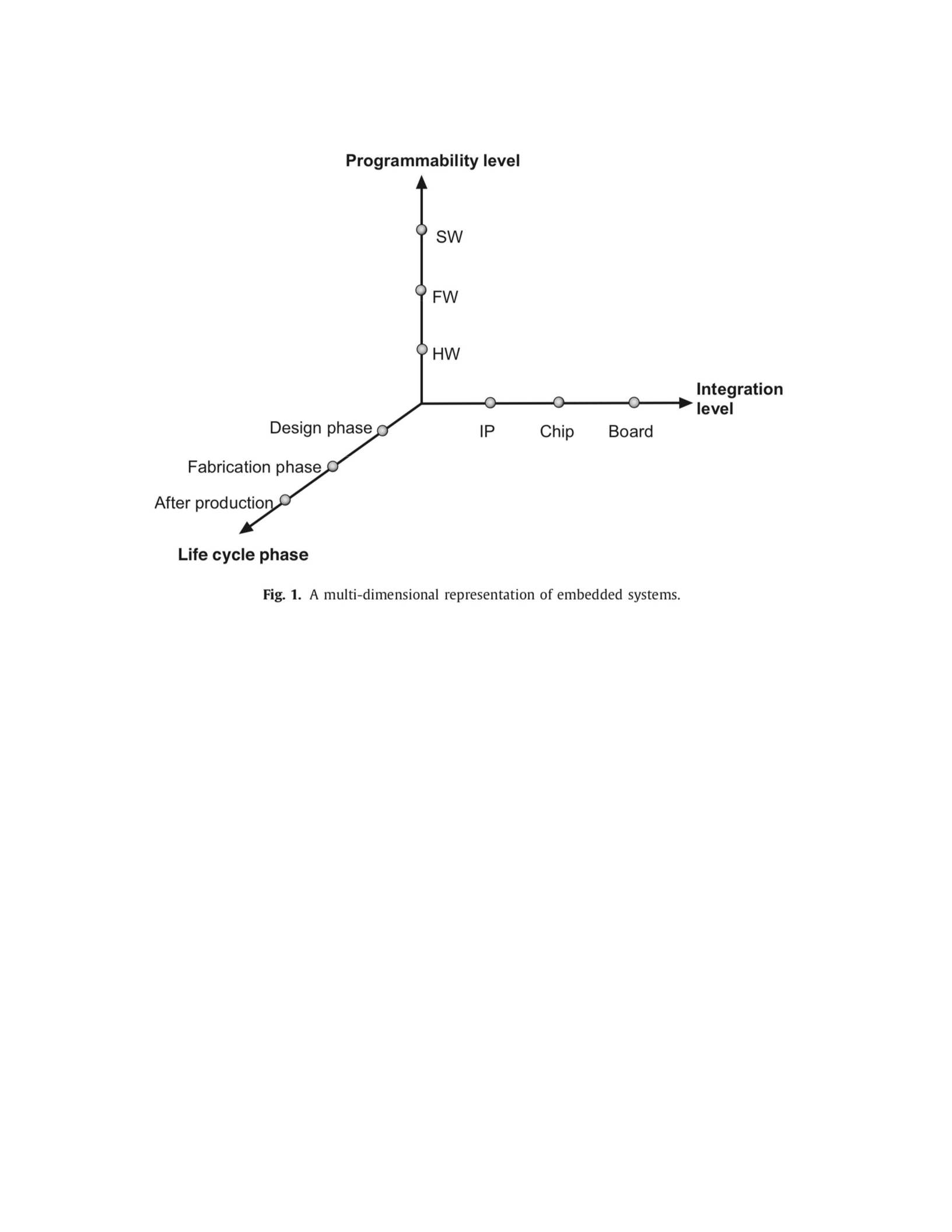
Figure 1. The evaluation of embedded systems based on each of the parts that could have
a vulnerability. Copyright permission in Appendix A. Retrieved from Elmiligi, H., et al.,
(2016). Multi-dimensional analysis of embedded systems security. Microprocessors and
Microsystems, 41, 29–36. https://doi
org.ezp.waldenulibrary.org/10.1016/j.micpro.2015.12.005
The IT security professional would need to consider each stage in the area and
would need to be remedied before moving to the next part (Elmiligi et al., 2016). For
example, threats on the firmware (F.W.) part, it would need to fix that vulnerability
before moving to the software (S.W.) phase. The help of a framework provides a
structured evaluation to establish a policy or procedure. Likewise, the use of Figure 1
helps describes how an embedded system is evaluated based on individual parts that
could be vulnerable. However, the usage of the security framework like the CIA could
help other instances that did not meet the multi-dimensional representation.

Personal Identifiable Information (PII) / Protected Health Information (PHI)
Protecting information about customers, patients, and employees is a vital aspect
of information security. PII is the link or linkable piece of information to a natural person
(Ducich & Fischer, 2018). PII is protected by laws such as the Healthcare Insurance
Portability and Accountability Act of 1996 (HIPPA) and the 'Children's Online Privacy
Protection Act of 1998 so that it does not provide access to unauthorized users. Likewise,
PHI is evermore protected and equally sought out for by a hacker for malicious intent.
One reason for the highly sought information is the value it holds. The value of a medical
record or information about a patient from a medical record is worth substantially more
than a Social Security Number (Soma, Courson, & Cadkin, 2009). One cause of the
difference is the ability of multiple use cases from the criminal. For example, if a hacker
were to access information about a patient that contained medical information along with
the date of birth, Medicare ID, and address, the hacker could falsely file healthcare claims
faster and with more accuracy than with just a Social Security Number and get more
financial gain (Cohen & Mello, 2018). The prevention of access to information is not as
simple as just encrypting records. Good IT hygiene involves technical but also behavior
improvements (Jang, Jung, & Park, 2016a). The data can have the best technical security,
but if it is handed out by an ill-informed employee, the technical changes would not
matter. The combination of technical and behavioral or cultural changes helped in the
effort to secure patient data.

Security of IoT devices
As the technology advances, the user's demand for more devices that are connected to
more sensors increased and therefore increased the attack surface along the way (Guerar,
Merlo, Migliardi, & Palmieri, 2018). As IoT devices become more immersed in various
industries, there more vulnerabilities discovered for IoT devices (Sha, Wei, Yang, Wang,
& Shi, 2018). Likewise, the increase of the IoT use changed the behavior pattern of the
users of the device, and the way information gets collected and stored by the user
required a change in how data needs to be secured (Weber, 2015). Beresford, Mascolo,
and Gruteser (2018) stated that the landscape changed and what begins to get attacked
changed as well. From the attack on a vending machine, like the one in 2017 where a
universities vending machine was used to conduct a denial-of-service attack, to an attack
on Minecraft servers, a popular online game where players build their own environment
and invite others to join their "world" to help build. At times these attacks are based on
the popularity, and other times it is based on primary oversight of the security of the
device. The data that sends or transmitted must remain safe, regardless of the device, and
this becomes a more significant challenge when using BYOD or devices that cannot be
controlled by a security professional.
Confidentiality, Integrity, Availability (CIA)
The CIA (confidentiality, integrity, and availability) triad applies when evaluating
the IT risk of a device, framework, or policy (Aminzade, 2018). The implementation and
balance of the CIA are one of the most challenging tasks in an IT risk assessment
(Aminzade, 2018). The information provided for implementing the CIA has not

controlled information and is known by cyber-criminals, who can use this information to
gain access to vital infrastructure approaches and other methods of preventing a breach
(Aminzade, 2018; Dorogovs, 2016). The use of the CIA in the grand scheme of security
and the development of policies provides a standard for IT Professionals to use. One of
the most common forms to disrupt the confidentiality of the data is the misuse of
passwords (Gřivna, & Drápal, 2018). Hackers look for an easily guessed password (e.g.,
Password1) to attempt in a typical attack called Brute Force, where the attacker is just
guessing, or have a program guess, a variety of different passwords until it is correct
(Gřivna, & Drápal, 2018). Another part of the triad of CIA is integrity, and it, too, has a
pivotal meaning when being used to evaluate a streamlined process or a new policy.
When implementing a policy that pertains to confidentiality, integrity, or availability, it is
essential to understand the application and the guidelines. To understand how to apply or
what guidelines to use, and IT security professionals should understand the application of
the three parts of the triad and what role each play in the securing of information. The
first in the triad is confidentiality. Confidentiality is the preservation of access to
information and the disclosure of the information (Dempsey et al., 2011). The application
of confidentiality is essential when determining who has access to data and at what level
of security needs to be applied to protect the data (McCallister, Grance, & Scarfone,
2010a). The application of confidentiality may provide a better foundation for a policy, as
the support and assistance in its use are standardized amongst multiple sectors. The
second part of the triad is integrity. Integrity is the reference to how the data remains in
the purest form and is not manipulated or altered by an improper or unauthorized actor

(Dempsey, Witte, & Rike, 2014). Integrity also means the data is always proven to be the
same data that the original creator provided, and if changed, the person that changed it
can be identified (Dempsey, Witte, & Rike, 2014). The last part of the triad is the
application of availability. Availability describes how often the application or system is
available. There are a variety of methods to use to ensure the system is available (i.e.,
redundancy, shadowing, or a RAID configuration) (Nieles, Dempsey, & Pillitteri, 2017).
Availability provides assurance or reassurance that the systems were available when they
are needed or required. The overreaching goal of CIA is to make sure that allowed user
accesses the information or system, accurate information can be obtained and trusted
from the system, and that the system is always available – or at least not taken down by
malicious events.
The integrity of the data or systems where the data resides altered by manipulating
the outcome of the data or how the system works in such a way that it ''cheats' the
integrity of its intended use (Gřivna, & Drápal, 2018). For example, the manipulation of
gambling games or machines can be made so that the user(s) benefit by changing the
mechanism of the algorithm in the machine (Gřivna, & Drápal, 2018). Lastly, availability
is the ability to get the data or system when the user needs the information and is the last
balance of the triad to make all three work together in harmony (Sosin, 2018). The use of
the CIA is shown to have assisted in the creation of policies that have best practices and
industry standards to support the logic.
The purpose and development of the confidentiality, integrity, and availability triad
for a company builds around the understanding of how removing one or two of the

components caused the triad to fail and therefore place the company at risk. The
cybersecurity sector has a lot of different interests, and understanding how one attack
crippled a business can help another from becoming a victim as well (Sosin, 2018). When
the CIA is implemented, there needs to be a defined method of understanding the risk that
is involved, if any, of the three components that are not met and what that meant for the
overall protection of the data or device (Sosin, 2018). The method of creating a policy
that only addresses some, but not all components, is just as problematic as not having one
at all.
Malware
Malware is software that is built by a hacker or entity that is made to break a
system by destroying the files or spying on a user or group (Iannarelli, & 'O'Shaughnessy,
2015). The intent of sending implementing a malware attack is to either disrupt service or
business (Keese & Motzo, 2005). The attack can be sent via an unsuspecting email,
removable media insertion into a machine, or by getting access to a user account. The use
of malware is also used to bring a business to a stop because of perceived or actual bad
business practices. This kind of use is when companies that do testing on animals or other
controversial topics gain the attention of ''hacktivist'' (He et al., 2017). At any rate, the
protection of the data and prevention of malware to get in is critical in providing
confidential data, a business that has data integrity, and available business.
Signes-Pont, Cortés-Castillo, Mora-Mora, and Szymanski (2018) agreed that the
problem with identifying malware is its ability to hide in any source (i.e., attached to an
email, within a document, links associated to messages). The amount of damage malware

can also because depended on the target (Signes-Pont et al., 2018). If the target(s) have a
weak detection protocol for malware and no or poorly delivered awareness training for
end-users, the likelihood of the malware payload will succeed (Signes-Pont et al., 2018).
Furthermore, the awareness of vulnerabilities in the infrastructure impacts what security
policies and procedures need to be enacted to protect the environment from malware.
The concerns of malware in the healthcare arena should move IT Professionals to
adopt better policies and processes. Various issues plague the healthcare field when it
comes to a medical device, the internet, and protected health information (Middaugh,
2016). When a health record is stolen and then used for another person's identity, the
integrity and confidentiality of the medical records are violated (Middaugh, 2016). The
instance of losing a medical record or having a breach of multiple records puts in
question the appropriateness of the current process and policies that should have
prevented the loss or breach to happen (Middaugh, 2016). The education of the healthcare
industry with best practices and lessons learned from other incidents provided a clearer
understanding of how policy and process could prevent loss of data or breach of the data.
It assumes that just removing all access to the system is better, but removing a segment of
the network, or all the network, from the visibility from the outside is not a fix to prevent
attacks. The attack or breach of a network is the first of many steps to add malware or to
cause harm to the infrastructure (Guri & Elovici, 2018). Throughout the events from
well-known attacks like Stuxnet, where a malware payload is delivered by a USB inserted
by an insider, the ability for the attacker to gain access to the environment has been
proven easier than expected (Guri & Elovici, 2018). The encouragement for physical

security and the prevention of hardware to circumvent policies and procedures is
becoming a necessity.
The spread of malware can have an impact on the response time and, in return,
determined how fast and what resources are needed to stop the attack. To define how to
react to an attack, the IT security professionals must know the scope of the attack and
what is in the environment (Nikolopoulos & Polenakis, 2017). A measurement criterion
needs establishing (e.g., epidemic model). Models, such as an epidemic model, are used
to describe the state of the machine and helps with understanding the (a) status of the
machine, (b) status of the malware, and (c) ability and the likelihood of resolution of the
attack (Nikolopoulos & Polenakis, 2017). Because the scope and the status of impacted
devices surface and organized, the IT security professionals can make a better decision on
how to prevent, isolate, and stop an attack.
The propagation of malware depends on the expertise used to create it and how
good or bad the attack surface is patched or protected (Nikolopoulos & Polenakis, 2017).
The securing of devices in these situations is even more critical as the attacker has the
advantage due to uncontrollable environment variables (Nikolopoulos & Polenakis,
2017). To that point, controlling how the users connect and what connections are allowed
on the chosen device provides more control to the IT Professional. For example, if the
user is attempting to connect to an open-unsecured wireless connection and checking
work documents or applications, the users would not be permitted and would have to
connect to a virtual private network first.

IoT Malware
With the introduction of IoT devices, various industries have been a victim to
attacks from relaxed or nonexistent security protocols. WannaCry and Petya are the two
latest malware infections that have influenced clinicians and healthcare establishments all
over the world (Jarrett, 2017). The devices used in a healthcare setting are generally for
transmitting data or serving as a sensor (Anggorojati & Prasad, 2018). The increase of the
IoT devices requests in the healthcare industry and the lack of protection to the devices
made for a dangerous combination.
Therefore, aligning a strategy that would work for all, including, IoT would be an
ideal situation for IT security professionals (Erdem, Pektaş, & Kara, 2018). While an
antivirus or firewall is not possible to install on an IoT device, the use of other strategies
like a Honeypot, which is a decoy computer system that is used to proactively gather
information from attempted attacks (Erdem, Pektaş, & Kara, 2018), would help identify
potential attack patterns or types of devices targeted (Erdem et al., 2018). The Honeypot
would take an IoT device and insert it in what seems like a legitimate environment but
would instead be a non-critical location that cannot see other critical systems, and then
monitor the traffic to capture any wrongdoing. In return, the traffic provided data to the
IT security professionals to help protect how the devices are getting attacked (Erdem et
al., 2018). The combination of traditional network security (e.g., firewalls, intrusion
detection systems, etc.) in addition to Honeypots, the IT security professionals would be
able to secure the devices and prevent malware from accessing the sensitive data.

Security Best Practices
Encryption. Understanding what endpoints are in the environment helped with
understanding the level of threat or risk in the event a breach occurred. The awareness of
the endpoints helped established the potential content on the devices, which, in return,
determined the level of risk if compromised. The basic principle of securing hardware
from being compromised is to provide a level of isolation that prevents the attacker from
accessing information across the applications and the hardware of the device (Schaumont
& Montuschi, 2018). Keeping up with the everchanging threats from hackers can be a
daunting task. However, having a reliable security standard established needs to be broad
enough to cover the applications, hardware, and other connected devices. A standard
method of ensuring the isolation of information is encryption.
The premise of encryption is to keep the content secure from people not intended
to see the message is referred to as encryption in transit. The process of protecting the
message can vary from case to case. One method of protecting the message is to use
asymmetric encryption method with a public key. Using this type of method would begin
with creating a symmetric key that was used to encrypt and decrypt the information
(Khan, & Salah, 2018). The essential factor is that one person, the sender, only know the
decryption key. Another method of encryption is after the message has arrived and
additionally encrypting the message on the received device, referred to as encryption at
rest. Muslukhov, Sun, Wijesekera, Boshmaf, and Beznosov (2016) stated that using a
four-digit code or a password is not enough to secure data that is at rest, and encryption is
critical. When accessing data that is encrypted, the IoT device and the storage device
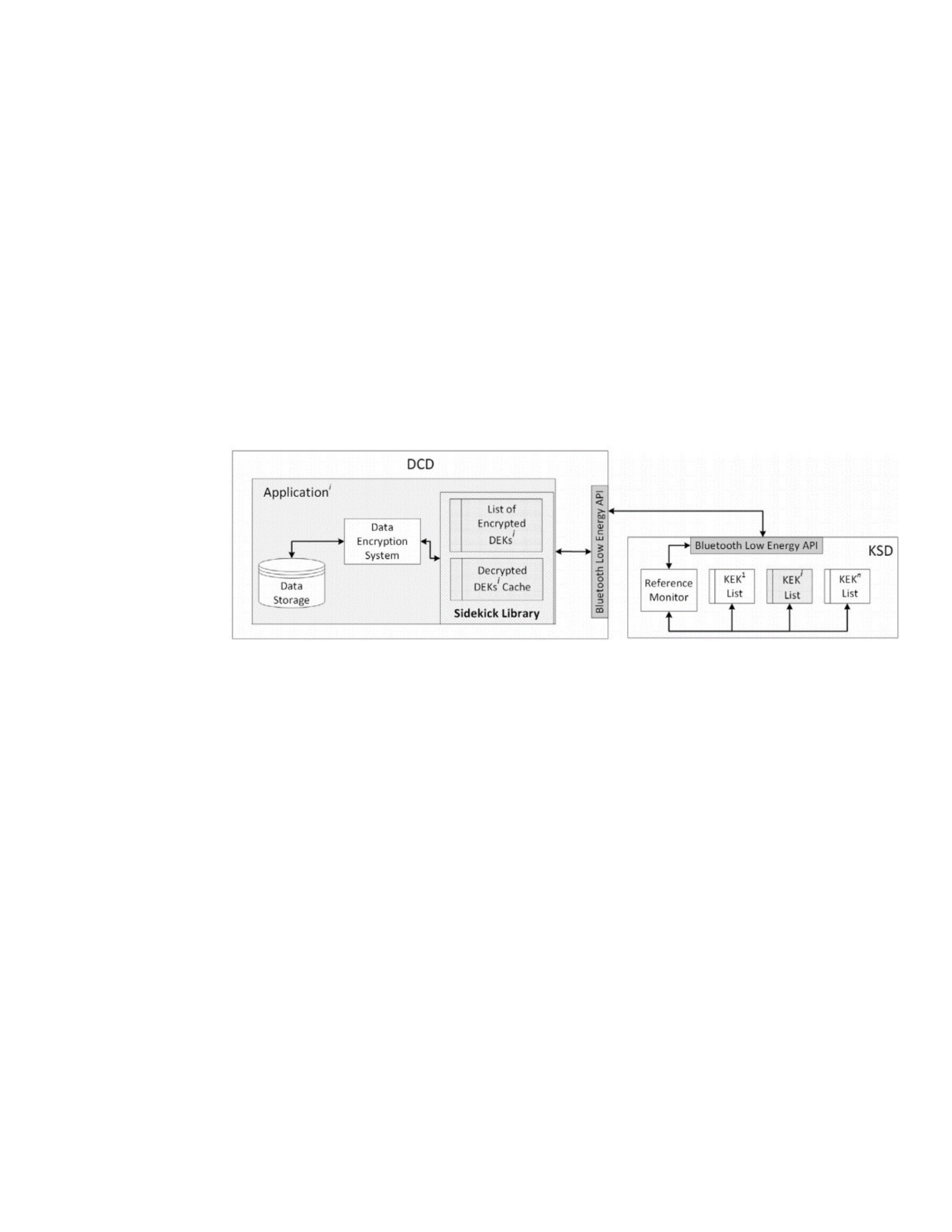
need to authenticate. Muslukhov et al. suggest a process known as a Sidekick System. In
this system, there would be a library that would keep the ‘keys’ for the IoT device to
unlock the data from the storage devices. The storage device and the IoT would sync to
this library and could understand what the keys are being used. Figure 2 outlines a basic
workflow of how the Sidekick Library process would work. The importance of the
Sidekick Library is that it compartmentalizes the authentication to a central location and
helps protect the confidentiality, integrity, and availability of the data.
Figure 2. Muslukhov, I., Sun, S.-T., Wijesekera, P., Boshmaf, Y., & Beznosov, K.(2016).
Decoupling data-at-rest encryption and smartphone locking with wearable devices.
Pervasive and Mobile Computing, 32, 26–34.
https://doiorg.ezp.waldenulibrary.org/10.1016/j.pmcj.2016.06.016
The encryption process can occur in a hardware or software environment (Stapleton,
2019). In either hardware or software, a positive and a negative is presented in using one
versus the other. In a hardware environment, the decisive point is that the key that
controls the encryption and decryption of the data is better protected because of the
hardware's physical and logical controls (Stapleton, 2019). Likewise, if the hardware
encryption was networked or connected to other devices, the concern of latency or delays
become a problem when encrypting and decrypting the content (Stapleton, 2019). The use

of hardware encryption modules has better-controlled protection to the content that is
stored on the machine locally on the hard drive of the device.
In contrast, if the encryption process utilizes a software encryption approach, the
hardware being used is assumed not to have any hardware encryption. When using
software encryption, as compared to the hardware encryption, the key that controls the
encryption and decryption process is stored outside the hardware being used (Elnaggar &
Chakrabarty, 2018). An immediate concern with using software encryption is the
integrity of the key used to encrypt and decrypt the data. The risk is much higher for the
key to becoming compromised, and the detection of a compromised key is difficult, and
the inability to determine the integrability of the key possesses significant risks (Elnaggar
& Chakrabarty, 2018). The use of encryption has its pros and cons, and the IT security
professional should be able to base the decision on what worked best in the current
environment. As with most technology, it is not always a one-size-fits-all approach, and
adjustments from the IT professional and the users were needed.
Patch Management. Like encryption, the use of patch management to mitigate
vulnerabilities is a necessity in an IT security professional's arsenal. Patch management is
the ability to ensure that the hardware and software are at its best for the user's
experience, security, and interoperability with new installs of code, scripting changes for
application performance, or increases in security to ensure the user and data remain safe
from attackers (Dennis, 2018). When hardware and software get designed, the developers
have the best intentions to release the best version of hardware and software.

However, to remain at the top of the interoperability scale and ensure that it
continues to work with other applications and hardware, updates are needed (Anderson,
2018). Updates also provide required changes to the hardware and software to address
any security and interface improvements from known bugs. The process of managing the
patches varies from one company to another company.
The best example of how patch management can prevent damage to vulnerable
systems is WannaCry. In early 2017, the exploit called WannaCry left thousands of
systems vulnerable. The feat took advantage of a protocol called Server Message Block
(SMB) (Anderson, 2018). The SMB protocol was used to help spread the malware across
file shares on the target network. The connective nature of file shares reached multiple
devices and files shares that relied on SMB to carry out information. Approximately one
month before WannaCry was discovered, Microsoft had a patch out called MS17-010 that
fixed this vulnerability (Dennis, 2018). If companies maintained a tight schedule for
patch management, machines would not be likely to be vulnerable to the WannaCry
exploit (Dennis, 2018). Most environments have a process for patch management, and
most have methods of adjusting to critical patches that come out.
Nevertheless, most also do not have a method of patching their IoT devices
(Bertino et al., 2016). The problem that is faced in Healthcare is that some of the IoT
devices are implanted in a human, and taking it out is not safe nor secure. The volume
that healthcare facilities are using IoT devices are climbing and will outnumber the total
number of P.C., laptops, and people combined (Ka Man, Mei Na, & Chun Kit, 2015). The
IoT devices are being used to also track the other software in a facility (Minoli, Sohraby

& Occhiogrosso, 2017). However, the management of the IoT device alone has no
practical method of getting patched with updates and security vulnerabilities and is a
manual process.
IT security professionals should have a policy in place that defines what is
allowed on a network and what is not allowed (Cox, 2019). Also, Cox (2019) found that
the facilities that had a policy in place about what devices could be connected to the
network were not enforcing it, or the users had no idea it even existed. The underlining
concern appears to be the inability to (a) see the IoT devices that are on the network and
(b) how those IoT devices are managed for security vulnerabilities and patches. The need
to manage IoT devices is more than an asset management purpose. The need also comes
from the threat assessment perspective. Multiple demonstrations provided on how
criminals could take over a thermostat and hold it hostage until a ransom is paid (Cox,
2019). In a hospital setting, this is critical and bring an entire hospital operation to a halt.
It is not possible to see into the future to address the feat, but a proactive and consistent
approach to patch management would have certainly assured better adherence to the
security update Microsoft pushed out.
Asset Management. According to the NIST cybersecurity framework (Calder,
2018), asset management is the first step in understanding what needs to protect in an
environment. The management is not only associated with the device, but also the
applications, people, and role that someone would play in the cybersecurity arena
(AlMoshaigeh, Dickins, & Higgs, 2019). If the device can link a user, and the user can
link to workflow, then the type of data and the value associated with that data can be

assessed. The benefit of assigning a value to the device, and the user provides a standard
of how that device would need to be protected (Al-Moshaigeh et al., 2019). If the user
was a lower-level employee that had low-level access, then the security need could be a
standard GPO structure, password expiration, asset tagging, and proper Active Directory
security groups. While on the other side of the spectrum, if there were a Chief Financial
Officer that had a device, it would be given a higher level of protection: applications that
have two-factor authentication, encrypted hard drive/removable drive, data loss
prevention policies audited, and RAID drives, etc.
According to Boeckl, Fagan, Lefkovitz, Megas, Nadeau, O'Rourke, Piccarreta,
and Scarefone (2019), IoT devices are "black boxes" that cannot manage like a traditional
machine (e.g., computers, server or switches). The is difficult to track the IoT devices that
reside on a network and even more challenging to patch those devices (Boeckl et al.,
2019). All of the precautions used and security standards can provide a safer environment
for laptops, P.C., servers, and other commonly used hardware. The difference is the use
of the same methods to protect IoT devices that are used to protect other hardware (Díaz
López et al., 2018). One of the most significant gaps is the ability to find applications and
hardware that can protect IoT devices with the same protections as a laptop, P.C., or
server (Díaz López et al., 2018). Nine attack surfaces are considered relevant for IoT
device that the Open Web Application Security Project (OWASP) has identified as the
most the concerning, and that should be addressed about the management of the devices
once they are in the intended environment:

•Administrative interface – does the device have one, and is it
protected outside of the typical default username and password
•Device web interface – this is what houses all the configuration
and is accessible via web access
•Mobile application – this can be any application that the IoT
device may interact with or provide data to and from
•Device network services – these are the networks that the IoT
device will work on
•Update ability – this looks at the ability for the devices to receive
updates (i.e., firmware, security, virus)
•Devices physical interface – this references the embedded chipset
that the IoT device uses to communicate
•Devices firmware – this references the application or logical
statements that exist to allow the device to function
•Locally stored data – any information that the devices store on
locally
All the topics mentioned above provide a way for the attacker to access the
device. These are also vulnerabilities that cannot solve with a piece of software or
hardware. A layered approach should exist to ensure that all aspects of security (Díaz
López et al., 2018). The lack of management for IoT devices places an administrator in an
awkward position. An environment variable can render the device inaccessible and,
therefore, impossible to manage. One method can be used to help control what devices

are allowed, and that is called whitelisting. Whitelisting allows the administrator to allow
or prevent a device from connecting to the network or a computer. Mendez and Yang
(2018) stated that whitelisting devices allows the administrator to control what
information can pass through the IoT to the computer. The use of whitelisting adds
another level of management for the devices.
Furthermore, an IT security professional should use a variety of methods to detect
vulnerabilities within the infrastructure. A key point to ensure that systems remain
updated and free from known vulnerabilities is to understand how encryption works,
maintain a schedule for patch management, and asset management (Kohout, Komárek,
Čech, Bodnár, & Lokoč, 2018; Dennis, 2018; Anderson et al., 2018). The use of
preventative security measures helps an environment remain secure, but the same
processes and protocols are not always possible on IoT devices, and therefore, a layered
approach should be used (Erdem et al., 2018). IoT devices do not share the same CPU
and memory capabilities that a traditional computer or laptop would have, and proper
asset control and policies need to fill the gap where the technology may not.
Routine Activity Theory. RAT was developed by Lawrence Cohen and Marcus
Felson in 1979. Cohen and Felson (1979) theorized that trends in crime were indicative of
patterns in conduct called routine activities. The activities defined by the reoccurrence of
the events and could apply to a variety of instances (e.g., social interactions, leisure,
shelter) if they were part of an everyday routine (Cohen & Felson, 1979). Also, Cohen
and Felson (1979) described that routine activities could happen at home and work. Like
this, the victim and offender had to be connected, such that their space and time had to

meet to create an event that a likely offender, suitable target, and the absence of a capable
guardian existed (Cohen & Felson, 1979). Furthermore, the connection of all three
components made the crime possible and can be a basis on how to prevent such crimes.
The development of RAT was intended to look past another theory of human
ecology that Hawley developed in 1950 (Cohen & Felson, 1979). Cohen and Felson took
Hawley's approach and had a similar thought process but differed in the scalability.
Hawley believed that crimes were on three pillars: rhythm, tempo, and timing (Cohen &
Felson, 1979). The understanding and application of RAT assisted in the shaping of how
strategies can be developed to prevent malware attacks on medical devices.
The definition of routine activity is the ordinary activity of someone that does
provides a service to a population or individual need (i.e., making food, providing shelter,
social interaction, learning) (Cohen & Felson, 1979). The service helped provide a
criminal a purpose for committing a crime to that service or that person providing the
service. For example, if the district manager of a financial firm were known to carry large
amounts of money on them, a criminal would find that person a definite target to rob.
Alternatively, if a CEO had a laptop for work and he left the laptop in his unlocked car,
that too would be a good target.
However, for any of the mentioned events to be worth the criminal's time and
effort, the need for an offender to meet in time and space to a victim would be required
according to RAT (Choi, Earl, Lee, & Cho, 2018a). A single event or series can help
increase or decrease the likelihood of the victim meeting the offender, and therefore the
crime being committed. The act of a crime cannot remove because the victim is on the

Internet or using other forms of technology. The initial approach of RAT was that the
victim and the offender had to meet in a place through a time and space combination
(Cohen & Felson, 1979). With the advances in technology, the meeting of the victim and
offender online is made possible. The advances in technology have also made it possible
for the victim to visit a manipulated site, where an offender would be hiding to perform
some malicious acts, like stealing a credit card or other information (Reyns, Henson, &
Fisher, 2018). Overall, the RAT intends to evaluate what attracts the offender to the
victim and how those attractions can be prevented or offset with policy or procedure.
Also, a variation of RAT has been theorized by a more recent researcher that
encompasses Cohen and Felson's (1979) RAT framework and helps align modern
technology with RAT. Such a theory was hypothesized by Choi (2008) and referred to as
Cyber-RAT. Similar to the traditional RAT framework, Cyber-RAT also identifies that
there are additional components that direct the genesis of online crime: (a) the concept of
a digital guardian, such as security programs, measures, or policies; (b) the online
vocational or leisure activity such as a social network or messaging services that bring
two or more people together (Choi et al., 2018a). The creation of Cyber RAT stemmed
from the combination of lifetime exposure theory and routine activity theory,
respectively. The combination of the two theories states that the lifestyle online and the
capable guardianship may increase or decrease someone's chances of getting victimized
(Choi, 2008). The routine uses of online messaging service, group forums, or other
patterns in conjunction with the lack of some computer security introduce risk. That same
user may also be more likely to click on links or download attachments from offenders

from those chat rooms or forums that they visit (Choi, 2008). The combination of the
research of Choi (2008) with Cohen and Felson (1979) provides a framework that has
been used to shape crime prevention policies in the traditional community to those crimes
that occur in the virtual community.
The premise of RAT works around three components that are paramount to the
definition: a motivated offender, a suitable target, and a lack of guardianship. The terms
are flexible in that other literature with different verbiage (e.g., suitable targets may be an
opportunity), but the concepts are the same. Using RAT, by definition, if one of these
components is missing, a crime is imminent (Hawdon, Costello, Ratliff, Hall, &
Middleton, 2017). According to RAT, the crime cannot exist if the target has a way to
prevent an attack (i.e., using a virtual private network when connecting from the outside
of the company, ensuring IT is updating the virus database on the user's machine, or not
leaving a laptop in plain sight in a car). The breakdown of RAT and each of the elements
is helpful to understand the overall approach of this study and how the application of
RAT is applied.
Motivated Offender. The motivated offender was the ‘criminal' in most cases
that committed the crime(s) and caused harm to another person or situation (Schnell,
Grossman, & Braga, 2018). The motivated offender looked at a person or situation to find
how he or she best gained from their actions. If the offender can conclude that the
victim(s) are weak and vulnerable, it may appear easier for the offender to strike at one,
as opposed to another (Schnell et al., 2018). Therefore, understanding the motivation of a

person looking to cause harm or the potential to cause helped align any policies to
prevent the situation from the beginning proactively.
The purpose of the motivation can be described in a multitude of ways: from a
societal to a rational manner, but at any rate, the purpose is to visualize how a situation
can remove the motivation for the offender. From an individual perspective, the motivator
can look for gender-based or educational-based motivations (Bergmann, Dreißigacker,
von Skarczinski, & Wollinger, 2018). The gender assumes that males visited websites
that are riskier than women (e.g., pornographic), and educational motivation is used when
looking at those that are less informed about proper identification in various types of
fraud (Bergmann et al., 2018). Whatever the motivation may be, understanding how that
impacts (e.g., gender or educational) most of the user group helped a better policy
creation and, in return, assist in protecting the data's infrastructure and company.
Suitable Target. Without someone to commit the crime against, the criminal does
not have much to loathe for when looking to make a profit or gain other desires if there is
not a suitable target. In the findings from Cohen and Felson (1979), a suitable target was
one that provided the object that the criminal desired. The ‘value' of the object that the
criminal is looking for correlates to the concept presented by Felson and Clarke (1998),
which outlined the acronym VIVA (value, inertia, visibility, and access). The acronym
helped describe why one target would or would not be more likely sought out than
another. The value of the target is viewed as a financial value or the worth of having the
information that places others at a disadvantage. In either situation, the target has access
to the information or money that encouraged the illegal move forward and commit the

crime, regardless of the consequences (Felson & Clarke, 1998). If the target has a routine
that does not deviate and the criminal knows the route and routine, it is possible for the
criminal to create a situation that would trap the target and not provide a way to escape.
If the victim can escape easily, then the offender would have to put in more effort
to prevent that from happening, and knowing the routine and route would improve the
offender's chances of not losing the victim (Felson & Clarke, 1998). In comparison to
inertia, visibility provides the offender with the ability to watch or see how the victim
behaves or reacts to specific events (Felson & Clarke, 1998). However, the contrast is
that visibility also pertains to gathering information about the victim from a variety of
outlets (e.g., social media and networking with others that know the victim). The term
access is literal in its definition. It defines how easy it is for the offender to get access to
the victim, in both the physical and virtual sense. Felson and Clarke (1998) define the
term access as the ability to carry out the illegal act. All these definitions combine to
provide the ability to outline how and what determines a suitable target for the offender.
VIVA also provides a way for the policy and process creators to prevent a suitable target
from becoming 'interesting' to an offender. All of which can be helpful when developing
a plan for a policy or how to harden a system.
Lack of Guardianship. Guardians are those that look to protect a person or a
group from becoming a victim. Hollis, Felson, and Welsh (2013) changed how the term
guardianship was thought of and placed a term of ‘handler' to the guardian. The handler
would be someone like a teacher, parent, security officer, or in a corporate environment,
an IT security professional. Guardianship expresses that by ensuring that would-be

offenders do not get access to the potential target (Hollis-Peel & Welsh, 2014). If the
guardianship is not present, the likelihood for the offender to commit the crime is higher.
Creating such an environment that a criminal would not want to attack removes the urge
for criminals to act. In the design of such an environment, the ecological thought process
would help take the focus off the group that is looking for protection (Nikitkov, Stone, &
Miller, 2014). The creation of a policy that increases the hardening of a target and one
that prevents the offender from viewing the target as something to pursue helped remove
the initial interest and therefore lessen the chances of victimization.
Rival Theory – Lifestyle Routine Activity Theory. The Lifestyle Routine Activity
Theory (LRAT) stated that the use of probability would determine if a target engages in
specific behavior, then the chances of them becoming a victim increase (Pratt &
Turanovic, 2016). With the use of RAT, if any of the three elements (likely offender, a
suitable target, and lack of capable guardian) are missing, then victimization would not
occur (Cohen & Felson, 1979). On the contrary, LRAT outlines that if any of the three
are present, then the crime would happen (Pratt & Turanovic, 2016). The chances, or
probability, of a crime happening versus removing a key that would cause crime is not the
focus of the study. The focus of the study is to look at how establishing a policy around
protecting IoT devices from malware improves or does not improve the security of the
data and the device (Sung, 2019). The importance of understanding the decisions a victim
would make does have an impact on lessening the crime occurring or not. However,
LRAT highlights the probability of risky behavior taking place as the primary factor of
the criminogenic (Van Ouytsel, Ponnet, & Walrave, 2016). The use of LRAT dictates that

certain behaviors, in general, can result in crime happening but does not provide a
framework that would clearly outline how an approach of protecting IoT would prevent
the crime.
The importance of why someone would plan would be based on how victimization
could occur (Reyns, Henson, Fisher, Fox, & Nobles, 2015). For example, if a college
student decided to go out and drink without telling someone where he was going, and
went to a location he was not familiar with, LRAT would say that victimization
probability would be higher. Also, the use of the connection between social inequality
and victimization is answered with LRAT (Choi et al., 2018a). Therefore, the outlook
with LRAT looks at how the summation of socio-economic and routine activities could
increase the victimization.
The use of LRAT would not provide a framework strong enough to shape around
its use around the creation of a policy for IT security professionals. The expansion of
RAT added another part called proximity to crime (Engeström, 2018; Cohen & Felson,
1979). The addition looks at how crime is increased because someone lives in a
crimeridden neighborhood. Cohen and Felson (1979) focused on how and why the crime
occurred in certain areas. A postulation made by Cohen and Felson (1979) highlighted
that crimes that occur do not happen at random. The structure of RAT and LRAT are
similar, and both serve a purpose. However, it would be best suited for the IT security
professionals to conceptualize the policy around better-aligned points like what entices
the criminal, what makes the victim appear vulnerable, and how the data can stay
protected. All of which is captured best with RAT.

Rival Theory – Rational Choice Theory. Rational choice theory (RCT) is the concept
of self-directed methods of performing an act to obtain something that is desired. The
theory was developed by Derrick Cornish and Ronald Clarke (Cornish & Clarke, 1986).
The initial purpose of the theory was to apply it to the development of crime control
policies (Cornish & Clarke, 1986). The theory focused on how and why a criminal would
decide to commit a crime. Bransen (2001) posited that choice of the act is not based on
events, but is a deliberate decision made by a capable who thought of all the possible
outcomes. Furthermore, the use of the RCT has its place in the prevention of crime
holistically but does not provide the details needed to support a policy creation.
The use of RCT evaluates the benefit and the punishment or the risk and reward
balance. If the offender feels that the risk outweighed the benefit, then the crime is not
performed (Özdemir, Tanhan, & Özdemir, 2018). In the application of RCT with a sex
offender, Gönültas, Oral, and Beyaztas (2015) found that those that committed sexual
abuse crimes made a point to think about how their decisions would impact their life, and
found that the criminals believed that the benefit was higher than the risk. As described,
the use of RCT provides an outline of criminal and the choice to commit the crime, but it
does not describe the framework to prevent such decisions.
Overall, the use of RCT is helpful and adds value to the prevention of crime, but
itself cannot provide enough information and foundation to develop processes and
policies. However, the use of RAT assists with the development and understanding of
how the process and policy can prevent crime from happening (Schnell et al., 2018). RAT
does so by understanding why the criminal is interested in the target (i.e., how much

information does the target provide to the public, or is there too much information about
projects available), and places precautions around the vulnerabilities (i.e., does the
communication to and from the medical devices encrypted and on a segmented network).
RAT Theory/CYBER RAT in Use. The holistic insight of RAT evaluates how a
criminal may choose to commit a crime. While in no way is it possible to stop all crime,
using RAT helped identify what policies and procedures can be used or changed. The use
or change of a policy or procedure merely establishes a baseline for a company to protect
an asset. RAT can be viewed as an opportunity-based theory, and therefore one that helps
establish why a specific action should or should be taken (Schaefer & Mazerolle, 2017).
The application of RAT also identifies the crime or event that can happen and how it can
be avoided to protect an asset (Schaefer & Mazerolle, 2017).
Specifically, RAT looks at the actions that increase the effort, lower what a
criminal would get from the crime, reduce the motivation to commit the crime, and lastly,
the excuse of evening committing the crime (Schaefer & Mazerolle, 2017). Schaefer and
Mazerolle (2017) evaluated the RAT in what was termed 'waves. In each wave, there was
an indication that placed meaning on RAT. In the first wave, the need for time-space was
paramount for a crime to happen. In the second wave, Schaefer and Mazerolle (2017)
discussed how the merging of the three pillars (offender, place, and victim) could be
avoided by placing a controller at each point. The last wave looked at the use of
guardianship as a whole and indicated that if it did not exist, then crime would happen,
and if it did, then crime did not happen (Schaefer & Mazerolle, 2017). All of the waves
were used to help understand how Schaefer and Mazerolle (2017) developed the 3R’s that

were also placed in a triangle like the second wave but was done in a combined approach
of all three of the waves and places a level of variability to how certain crimes may
happen and others may be stopped. In the end, the result of preventing the crime was the
expected outcome, and understanding where that prevention would be placed resulted in
the creation of the hypothesized fourth wave.
Likewise, Hawdon et al. (2017) indicated that not only did the use of RAT
maintained relevance with the three pillars of a motivated offender, suitable target, and
lack of guardianship; there were also conflict management, target suitability, and
victimization. The extension of RAT, according to Hawdon et al. (2017), illustrated that
the use of additional behaviors not only helped prevent the occurrence of offenses but
was also able to help remove the crime from that location. Using the logic from Hawdon
et al. (2017), the use of conflict management in a cybervictimization case would be to
ignore or delete the text or email simply. In a non-cyber event, the suitability of a target
can be based on how easy the offender may think it would be to take physical control of a
person would increase or decrease the likelihood of a crime (Hawdon et al., 2017).
Victimization is increased or decreased by implementing a way to remove the offender
and the asset the offender is after. While there are various methods of removing the
offender and changing the want of the asset, the underlying issue is how can this be
performed without the potential victim has to live in a bubble.
Victimization contains a large group of purpose and reasoning of who, why, and
how people are victims of crime. As outlined in a study conducted by Wick et al. (2017),
gender is not a primary factor any longer when looking at cyber-victimization. The focus

of the cyber-crimes are around the value of the target and the adjustment that needs to be
made on the criminal based on the accessibility of the target, attractiveness (if they are
worth the attack), and if they are the right person that had the needed target (Wick et al.,
2017). The use of RAT in this study evaluates how cyber-harassment can be avoided by
using preventative measures and stopping the risky behaviors that entice criminals. This
same concept can be used to develop policies and procedures to protect the data and those
that are custodians of the data.
Unlike the victimization that is traditional in a physical sense, the application of
RAT can be applied to the cyber environment just the same. The attacker is not one that
always someone that fits a stereotypical outline. In reference to an attacker, Bock,
Shannon, Movahedi, and Cukier (2017) see this shaping into an IP address or the last
location of the computer used to prepare for an attack (i.e., a distributed denial-of-service
attack). In a study conducted by Bock et al. (2017), there is a close connection with the
time that the attack happens and the weaken in which is being exploited. The weakness is
a delay in patching, lack of resource, or some other information that the attacker may
aware of from either social engineering or another mean of gathering data. In the study,
attackers would pick a time of the day that would allow their traffic to 'blend' in with
other high traffic on the network and make it harder to identify. The use of RAT was used
to understand the timing of the attack.
In another study that was conducted by Ming-Li and Shun-Yung, (2018), the use
of RAT was used to highlight how cybercriminals used the online suitability and
attractiveness of ATMs in Taiwan because of the lack of guardianship. The criminals

were able to steal over $2.6 million from banks by only using malicious code or malware
to force the ATMs to 'spit out' money. The study found that, like most criminals, financial
gain was the goal of their actions. The issue that is discovered with this study is that the
capture of these crimes has the Internet to hide who they are and add another issue for
authorities (Ming-Li & Shun-Yung, 2018). The need for technology is an understatement
and is needed for the financial sectors to remain secure from attacks such as these. In all,
the application of RAT can help identify for the companies where weakness exists in their
current infrastructure and open the discussion on how to fix the weakness.
Transition and Summary
In section 1, there was a detailed exploration of IoT devices and how those
devices work in a variety of environments. Also, there was an outline for the lens that the
study is going to use. The use of the RAT was used to align the application of the study to
a framework. The use of RAT describes how the three factors - motivated offender, a
suitable target, and lack of guardianship - can collectively help prevent a crime from
happening by placing policies and procedures to reduce the risk.
The literature review focused on IoT, how IoT has impacted Healthcare, what
malware is, and how malware has changed the use of IoT in Healthcare. Lastly, the
literature review focused on the use of routine activities theory in comparison to other
theories and why it was better suited for use in this study. By using the routine activities
theory, it was possible to understand how IoT devices are vulnerable and how they can be
protected. The next section provided a detailed landscape of the study, such as research
design, methodology, population, and sampling.

Section 2: The Project
In Section 2, I explain in detail the research method, design, and processes. I
define the role of the researcher, the participant selection process, population and
sampling, and ethical research. Lastly, in this section, I cover the data collection,
organization, the process for analyzing the data, and the reliability and validity of the
study and collection of the data.
Purpose Statement
The purpose of this qualitative multiple case study was to explore strategies IT
security professionals used to prevent malware attacks on IoT devices. I focused on
leaders in the IT security field that resided in Washington D.C., and Buffalo, NYof the
United States and implemented a strategy to address the prevention of malware on IoT
devices. The positive impact for society was implementing a strategy to prevent malware
on IoT devices and enable freedom from unauthorized access of IoT devices.
Role of the Researcher
In this qualitative study, my role was to collect and analyze data and present the
results in an unbiased and impartial manner. Ensuring the participants that the
information would be safe and confidential data and handled appropriately was critical to
provide the safest environment to divulge such information (Morris, Armstrong, &
Balmer, 2009). I structured the interviews to provide an opportunity for the participants to
express their expertise on the topic of creating a strategy around securing IoT devices in a
healthcare setting (Jacobson, Brackbill, Frazier, & Gargano, 2019). I selected the
participants based on their use of a strategy, regardless of its level of success.

Furthermore, the use of IT security professionals in the healthcare industry, whom
implemented a strategy, dealt with security breaches, and had insight on why such a
strategy can be valuable.
I have worked in healthcare for 6 years. Most of my experience has been in IT
security and operations, protecting data. One year was spent on the clinical side, helping
patients. The amount of data that transversed through the hospital was unsurmountable in
size, and the protection of that data was paramount for the patient and the hospital. There
are structures and standards to protect data in medical record systems (i.e., encryption,
network segmentation, etc.). The significant gap was recognized when the protected data
went on an IoT device (i.e., insulin pump, infusion pump, ventilator, etc.). The problem
was that information would be encrypted from the computer would not be encrypted from
the IoT device due to the hardware (Yang, Zheng, & Tang, 2017). Lastly, the use of a
strategic approach to secure IoT devices protected the data, provided continued
confidence to the patient that their data was safe, and instilled reassurance that the
information the clinical staff receives was accurate.
While conducting this study, I followed the guidance of the Belmont Report. I
used the Belmont Report to ensure that the three core principles of beneficence, respect
for persons, and justice were met while the study was being conducted (United States
Department of Health and Human Services, 1979). United States Department of Health
and Human Services (1979) stated that the three principals of benefice, respect for
person, and justice remained a priority during the study. Therefore, I explained the
potential risk to participants that was associated with the study.

I used a recording device and a transcription service to ensure that I did not inject
bias into the participant's responses. Greenwood, Kendrick, Davies, & Gill (2017) stated
that the use of the audio and creation of the transcription was a helpful aid in ensuring
that information was accurate and was not changed to prove a point in one way or
another. To help remove bias, I conducted an in-person interview or through video chat.
The medical facility had no affiliation with my current employer. The researcher needs to
ensure that their views on topics can be removed (Fusch & Ness, 2015). No other
researcher conducted research in this study, and I remained open-minded to any ideas
brought forth. In addition, Castillo-Montoya (2016) indicated that by using the interview
protocol a researcher would control the precision of the data saturation and give an
organization to the researchers questioning. I interviewed three participants at each
facility in the Washington D.C. and Buffalo, NY region of the United States until I
achieved data saturation.
Participants
In this study, participants were in Washington D.C. and Buffalo, NY of the United
States and were employed at a medium to large (2,300–10,000 employees) sized
healthcare facility. The participants were an IT security professionals who had a
minimum of 2 years in IT security experience. The participants created or helped create
strategic policies surrounding the technical landscape and the IoT devices therein (i.e., IT
Security Manager, CISO, CTO, CIO, ISSO, or equivalent). Lastly, the facility employed
the participants at least 2 years in their current role. The role and experience of the
participants are significant to the study, so both criteria were used when providing

feedback. Preston, Leone-Sheehan, and Keys (2019) explained that the participants are
used to help drive the understanding of the topic and add clarity to already supporting
information from the study.
At the start of the interview, I used opening questions to help establish a level of
comfort for the participant (i.e., how long they have worked at the facility, their
education, and experience, or equivalent). Franks (2017) explained that helping the
communication remains comfortable for the participant would improve the value that was
provided. If the participant made jokes to help relax the situation or complains about a
specific issue, the acknowledgment or demonstration of acceptance helped get better
quality information. These cues may be minor but can help build the rapport between the
researcher and the participant. The communication between myself and the participants
was professional, and the participant always had the option to stop the interview at any
point during the interview.
The gatekeeper provided me access to the participants throughout the interview
process. As I work through the process, the gatekeeper assisted me with access to
documents, processes, or policies, if permitted. Due to the access, the gatekeeper has
access to critical information, and I leveraged that relationship to build participation from
other participants; therefore, providing an overall positive experience for myself and the
participants. Each participant had an opportunity to ask any question RD before the
interview by email or phone. As Newton (2017) outlined, when dealing with information
about the participant, the trust relationship needed to be clearly defined to help retrieve
needed information. I began the interview with demographic questions. The questions

were followed by open-ended questions about the topic of strategy around protecting IoT
devices in the healthcare arena. O’Cathain and Thomas (2004) stated that the point of
using open-ended questions was to give the participant a chance to add information that
may not have been asked in a closed-ended question. The point that I drew from a
question later helped me in building the structure of the study.
I conducted interviews via Zoom due to the large distance between the sites and
me. The gatekeeper provided me with a list of email addresses. I sent each participant an
email that outlined the premise of the study. Attached to the email was a letter of consent
that provided details of the study. After the participant agreed with the study, a reply
email was sent with data and time that worked. I created a Zoom link that matched the
date and time and sent it to the participant. At the designated date and time, I had my
webcam on and microphone enabled. I introduced myself and thanked the participant. I
informed the participant that the interview would be recorded and that they could stop the
interview by letting me know.
After the interview, I explained the recording would be kept confidential, and no
identifying information about the person or the company would be provided to the public
also, that the recording would be kept on an encrypted device. I also said that I would be
transcribing the interview and conducting a follow-up meeting to ensure accuracy in my
transcription. After each of the interviews, I sent each participant a letter thanking them
and a copy of the transcripts. I set up a second interview, via Zoom, and reviewed the
transcripts with the participants. Lastly, I used the information obtained during the

conversation, business documents, and industry-standard information to compile my
findings.
Research Method and Design
A qualitative multiple case study was best suited for strategizing to prevent
malware on healthcare IoT devices. Boddy (2016) explained that when a qualitative
method was used, the researcher needs to have a clear understanding of the subject matter
to ensure that a high degree of the body of knowledge exists. It was for that reason that I
was able to organize the information obtained through interviews, research, and other
forms to develop a study that outlines the preventative methods of malware on IoT
devices.
Research Method
For my study, I relied on the participant's professional feedback and experience
and capturing the information in a qualitative multiple case study, which I conducted by
interviews. It was common for researchers to use qualitative interviews to obtain data
from the participant's interview (Vasileiou, Barnett, Thorpe, & Young, 2018). The data
was directly from a source that would meet the eligibility requirements of the study. I
used a qualitative interview method to help convey information in a more mature manner
(Vasileiou et al., 2018). Therefore, the method of qualitative research worked best for this
study. Another benefit of the qualitative method was evident in the need to ask for
additional information or clarifying information from that participant. I used probing
questions that helped clarify information from the participant.

Likewise, inductive reasoning provided background, analysis, and context behind
the participant's feedback (Vasileiou et al., 2018). In this study, I used inductive
reasoning to outline the participant's usage, implementation, and other reliable strategies
surrounding securing IoT devices from malware. The use of the qualitative method
provided an opportunity for me to hear what the participant(s) must share their experience
and its value to the study. The ability to evaluate the feedback from the participant were
critical when using the qualitative method, as it helped delineate any exiting assumption
from the participant (Peterson, 2019). Understanding why a participant who creates or
implements a strategy, views the topic in a certain fashion, was imperative to the overall
focus of the study.
I considered the use of a quantitative method. The premise of a quantitative
method looked to quantify data and place a generalization on those results, which was
used to measure the incidents in which the study occurs. Park and Park stated the
statistical information was used to form conclusions and are typically descriptive. The use
of a semi-structured technique to collect (i.e., like an interview) helps align the
information from the participants with the goal of the study (Park & Park, 2016). While
the use of statistics and quantifiable data were important, it does not provide an insight
into how implementing or not implementing a strategic plan to protect IoT devices from
malware attacks happens.
I also considered the mixed-method approach, as it includes both qualitative and
quantitative methods. Schoonenboom (2018) explains that a method of research was
selected based on the overall-reaching purpose of the study and what was expected from

the answers that are provided by the participants. In this study, both factors were relevant
to answer the study question. Unlike quantitative methods, my study consisted of
openended questions, and I did not use a survey of the participants to collect data. While
using a mixed-method could be helpful in cases where a complex and a higher level of
data was needed, it would not serve helpful in my study and did not use mixed-method.
As noted by Meister (2018), the use of mixed-method demands more time to address both
aspects of quantitative and qualitative methods, and this study does require that level of
attention, which explains more why the mixed method was not considered for my study.
Research Design
Due to the exploratory nature of this study, using a case study was better than an
ethnographical or phenomenological approach. I used a case study approach which
helped in getting more than one instance and a variety of evidence and provides a usecase
design to explain and describe a phenomenon in more detail (Sampson, Goodarce, &
O’Cathain, 2019). As such, a case study was going to help outline the multitude of events
and answer the overall research question, all of which could be achieved easier with a
case study than with the other design structures.
Ethnographic and the phenomenological design was considered but I found them
to not best suit the study. The use of an ethnographic design indicates that the researcher
would be looking for information relevant to the participant's heritage or cultural behavior
(Tierney, 1985).
Furthermore, it demonstrated how a case study would best fit this research. The
use of an individual occurrence was not needed for this study. It was more important to

look at the corporate level and how the strategy was or was not being used to secure IoT
devices from malware.
Population and Sampling
The population for this study was IT security professionals ranging from IT
security manager, CISO, CTO, CIO, ISSO, or equivalent depending on the structure of
the strategic process within the two healthcare facilities that were selected in the North
Eastern region of the United States. A gatekeeper, as described above, was used to help
coordinate the participants. Malterud, Siersma, and Guassora (2016) described that the
selection process of a population was to have the most relevant information possible
without needing to go beyond the defined population. Therefore, selecting the correct
participants was vital to the success of gathering information from the participants. The
selection of the participants was dependent on the best participants that fall into these
roles at the respective location - IT Security Manager, Director of IT Security, Chief
Information Security Officer, Chief Technology Officer, Chief Information Officer, or
Chief Compliance Officer, have two or more years in IT security have been employed at
the facility for two years. The facilities were selected on the size of the facility and the
location. A conference room was virtual in a Zoom environment. I told the participant
that the meeting would be held in Zoom, and no one else was partaking in the interview.
The facility was not within a 100-mile radius of the selections to ensure that no conflict of
interest. Lastly, each of the participants had experience and knowledge of implementing a
strategy to minimize the attacks on IoT devices with malware.

Sampling
Determining to sample was important. There are a variety of methods to use to
determine the sampling. A researcher can use simple random sampling, where the
researcher gives each person in a population a number. Cho, Jang, & LoCascio (2016)
indicated that a selection process would be that each of the numbers given was placed on
a table (i.e., 200 people in the population, so numbers 0-199 are placed on a table) the
table was turned on the wheel. The number that was stopped on was the selection, or
something was thrown at the table (i.e., a dart) to select the number. This method would
not help because I have defined group, and using this method would not be needed.
Another method of sampling was systematic sampling. Ashwood, Vanguelova, Benham,
& Butt (2019) indicated that systematic sampling would ensure that a specific number of
participants are selected from the given population. For example, if there are a total of
1,000 people in the population, and the researcher needed 100, the researcher would use
the following mathematical formula 1000/100 = 10th. So, this would indicate that every
10th participant would be used in the research. Using this method would be helpful if my
population size was larger than 100, but it was not and, therefore, would not add value or
purpose to the selection process. The participants in this study are identified by title and
experience.
Another method that was considered was called stratified sampling. Stratified
sampling was used to select the appropriate amount of data points for the population to
maximize important information (Tong, 2006). Uribeetxebarria, Martínez-Casasnovas,

Escolà, Rosell-Polo, and Arnó (2019) indicated that using stratified sampling would help
decrease the cost and time by using an optimized sampling size as opposed to larger and
more irregular sizes as well as provide more proportionate sizes respective to the
population examined. For example, with random selection sampling, there would be a
population size of 100 from Company A, 400 from Company B, and 800 from Company
C. If random sampling was used, the number of participants would be lower compared to
each Company A size and the selection process would skew. If using stratified sampling,
then a selected subset of each Company was taken. For example, 10 participants taken
from Company A, 20 taken from Company B, and 40 taken from Company C. Using the
stratified method would help ensure a more proportionate number of participants. In this
study, the IT professionals may be lower in smaller company size than a larger and,
therefore, would negatively impact the sampling. While stratified sampling was
beneficial, it would not help in this study, as the group was narrowed enough by the
experience requirements and the title of the position. Lavrakas (2008) indicated that a
census was the total count of all people in a population. The use of census sampling
collects data from everyone in the population of choice. Because the population selection
process was to experience and title, the collection of data was specific enough to collect
data from all participants and not be too cumbersome for the collection process.
Therefore, the sampling of the population was census sampling. Census sampling
was the sampling of all populations that meet the eligibility requirement (Tobin,

Nugroho, and Lietz, 2016; Hosseinabadi, Karampourian, Beiranvand, & Pournia, 2013).
One of the benefits of using census sampling was using more than one establishment (i.e.,
four different healthcare facilities) (Charman, Petersen, Piper, Liedeman, & Legg, 2016).
Arias-Gómez, Villasís-Keever, and Miranda-Novales (2016) included that the inclusion
process of the participants based on their eligibility in the study. Therefore, the
participants needed to have two years’ experience in the IT security field, implemented or
prepared a policy focusing on the prevention of attacks on IoT devices, and be willing to
participate in the study to be eligible. In addition, the exclusion of participants focused on
those that are not willing to participate in the study and withdraw. The eligible
participants were interviewed by phone or in person. In either scenario, I allotted 45
minutes for questions and follow up discussion. Ensuring the process adheres to all
official guidelines, an interview protocol was used (see Appendix B). The outlined
interview protocol followed, and I used the same questions and process for all
participants. The participants signed the consent forms, which outlines what the study
consisted of and that all their personally identifiable information was not disclosed at any
time during or after the study.
The ability to confirm the message and information the participant provides
during an interview was critical to the validation of the study. Caretta and Pérez (2019)
indicated that to attain validity, the process of repetitive conversation confirming the
information improved the validation of the content. In addition, while the process of
doing validation can be time-consuming and financially draining, it was important to a
study (Caretta & Pérez, 2019). The process I followed was similar; I collected the

information from the participants and conducted a follow-up interview reviewing the
conversation.
Ethical Research
The use of ethics in research was important. To ensure that this study complied
with ethical standards, I ensured that the privacy of the participant was always forefront.
McGlothen, Cleveland, and Pados (2019) stated that there are four parts of ethical
principles (a) nonmaleficence, (b) beneficence, (3) justice, and (4) autonomy. Owonikoko
(2013) defines the four ethical principles as such: the use of nonmaleficence, which was a
twined process of benevolence, was the understanding the no one in the process of the
study was hurt; the other was benevolence, which was the outstanding moral perspective
that others are kind; justice was treating participants fairly; and autonomy, or respect for
people, indicates the ability of competent subjects be able to make their own decisions,
along with being recognized and respected. These practices in the study use clear
communication on the next steps, consent forms, and the ability to withdrawal from the
study at any time. To protect all participants involved in research, Walden uses an
Institute Review Board, IRB, to provide oversight to the research process. Biros (2018)
indicated that providing the participant with a method to give consent ensures they have
ethical rights.
The consent forms were signed, and a copy was provided to the participant for
their records. A five-year holding period will be kept, along with the other documentation
for this study. Information that identifies a person or a company was confidential and

must remain (Lippe, Johnson, & Carter, 2019). Ensuring that participants have the
confidentiality needed, each participant was provided a masked titled (i.e., Participant 1).
Also, the company’s name was masked with a similar naming convention (i.e., Company
1). Lastly, I obtained Walden’s IRB approval before I collect any data from the
participants; to this point, I took the guidance of Walden’s IRB to ensure that I meet and
maintain the highest level of ethical research. All the participants in my research were
able to withdrawal from the process at any time, and the participants acknowledged the
withdrawal and other processes by reading and signing a consent form before the research
was conducted. However, the participant would be able to withdrawal from the study
after they signed the consent form. I did not provide any incentive for the participant to
proceed or continue with the interview. The use of money to get someone to participate
would result in the negative result of information and negatively impact the results.
(Ripley, 2010). There was no use of money for participation in this study.
For the protection of the company and participant, the names of each were
disguised with a pseudo-name—the names aligned with the order they are interviewed
(e.g., Participant A and Company A). The use of masking the data helps with the
protection of the participant and the company (Surmiak, 2019). The information that was
collected was stored on an encrypted drive that was password protected that only I had
access to and was kept in a locked cabinet. The information was stored for five years after
I get the CAO approval to ensure the highest level of confidentiality was met. As I am
collecting the information, the names, phone numbers, email addresses, names, and
addresses of all the parties were not shared with anyone. Before I started collecting the

information, I sent an invitation to the participant along with a consent form. The
invitation, found in Appendix C, asked the participant for their cooperation and had the
consent letter attached. Both documents were signed and returned to me before the
interview began.
Data Collection
Instruments
The use of data in a case study can vary. Yin (2014) stated that the focus of data
should derive from around the four principles of conducting a case study: the use of
multiple sources, creating a database, making a connection between the data points, and
the careful approach of using electronic sources for data. In my study, I was the primary
source for collecting data. My questions were asked in an open-ended manner, to help
elicit more information and prevent short one-worded answer. The use of open-ended
questions was framed to gather short or long answers to identify a correlation within the
observed environment (Weller, Vickers, Bernard, Blackburn, Borgatti, Gravlee, &
Johnson, 2018). I used these pre-determined questions to gather and correlate information
provided by the participants.
Data Collection Technique
After I received approval from Walden’s IRB, approval number 04-24-20-
0586342, I conducted interviews to collect the needed information to make a correlation.
While a face to face interview provided a chance to build a great rapport versus over the
phone, the timing would not permit such an arrangement. Therefore, I conducted the
interview via the Zoom virtual call. It helped mimic an in-person interview that helped

calm the participant and get better-aligned data to the question. The Zoom meeting, along
with the one on one with the participant, assisted in the comfortable presentation of
information (Rousseau, Turner, Duncan, O’Cathain, Croot, Yardley, & Hoddinott, 2019).
The point of the virtual face-to-face interview was to obtain the information, but also
observe body language that helped address any follow-up questions and how to answer
those follow-up questions. As with anything, there are some downsides to a face-to-face
interview. With a face-to-face interview, the entire process was contingent on the
researcher able to comfortably ask the questions and create a comfortable atmosphere for
the participant (Castillo-Montoya, 2016). I ensured that the room was comfortable, free of
distraction, and I made sure that the participant meets the requirements to participate in
the study.
Data Organization Techniques
The collection of data was the focal point in a study. In addition, the organization
of that collected data was equally important. The data that I collected was consist of
electronic notes, recordings from interviews, and any other data that was collected, all of
which were being stored on a secure and encrypted device. BitLocker controlled the
encryption key, and the encryption key was stored on a separate device that was
password-protected, that only I had access. The information that was collected had a
naming convention to help determine the information origin (i.e., O1P1 would indicate
Organization 1 and Participant 1). Swygart-Hobaugh (2019) highlights the importance of
denoting and coding and making connections amongst the data to assist with alignment.

The use of Nvivo was used to help organize the themes throughout the study.
SwygartHobaugh (2019) found that using Nvivo helps neatly organize the data from a
study in a fashion that was accommodating to most that use it. As a side of caution,
Atlas.ti was also evaluated to provide a comparison. The use of either data analysis tools
was used to orchestrate the information better.
Data Analysis Technique
In addition to the information provided from the participants in the interview,
documents shared, industry standards (i.e., NIST Cybersecurity Framework), along with
the evaluation of my conceptual framework were used to connect the information and
serve as a data source. The documents retrieved from the participants pertained to the
policy or some other justification on a course of action to protect the devices or data. To
that point, the multiple sources were interviewed, and the information was added to
NVivo for tracking and analysis. Clustering took my interview questions, the answers
from the participants, along with any documents that are provided and placed them in
appropriate clusters that helped with building the themes of the study.
Triangulation
There are a variety of triangulation methods used in research. The methods are
data, theory, investigator, and methodological triangulation. All have advantages and
disadvantages. The most common one was data triangulation. Data triangulation was the
process of using multiple sources to build up the validity of a study (Jentoft & Olsen,
2019). Data triangulation was the method I selected for this study. The data was collected
through interviews, artifacts provided, best practices, and industry standards. The other

method of triangulation was theory triangulation. In addition, the use of secondary data
sources was used. A secondary data source was a source that was published by another
person not related to the current study the researcher was conducting (Salkind, 2010).
The secondary sources consisted of NIST frameworks, best practices from the industry,
and artifacts presented by the participants. Cater et al. (2014) contends that most
researchers conducting qualitative studies collect data by an interview. Also, Carter et al.
(2014) stated that the data source triangulation happens best when the collection of the
data was from different groups, companies, and communities to ensure that multiple
perspectives are met. I collected my data from two different facilities, and each facility
had a minimum of three participants. I stopped collecting data when data saturation was
met. I knew that data saturation was met with the questions that did not result in any
additional information from other participants, and the same conclusion was made.
The theory triangulation method uses a combination of theories to make a
connection with the information (Cruz, 2016). The use of theory was used, but a
collection of theories was not used to correlate the data or phenomena directly. It was this
reason that theory triangulation was not used as the primary triangulation of the study.
The other method of triangulation was called the investigator. The use of investigator
triangulation was helpful in a study. The concept of investigator triangulation was to
provide details from other researchers on a topic (Archibald, 2015). Using this method
was very time consuming and would increase the cost of a study (Archibald, 2015). The
time restriction was one of the main factors that investigator triangulation was not used in
this study (Archibald, 2015). Lastly, methodological triangulation was evaluated for use

in the study. The concept of methodological triangulation was the ability to have multiple
research methods to gather data or to have one research use multiple research methods
(Bryman, 2001). The use of methodological triangulation was beneficial and served its
purpose. Still, this study would be time-consuming, and the study was not going to be set
up in a manner that other researchers would use the method and data sources.
Reliability and Validity
Reliability and validity work together to align concisely, but an accurate presentation of
information in a study (Mohajan, 2017). Mohajan (2017) contends that reliability and
validity are two-fold: they both can increase the honesty of the study, as well as decrease
the researcher's bias, which could be injected into the study. Spiers et al. (2018) stated
that reliability looks at the adequacy of the data and ensures that the data can be used
across the participants involved in the study. Just the opposite, validity looks at the
felicitousness of the data and provides an accurate reflection of the feedback from the
participants (Spiers et al., 2018). In other words, the purpose of reliability and validity in
a study was to help the view of the research in a dependable manner. To assist with the
reliability and validity of the study, I used member checking after the interviews were
conducted. Member checking was a process of validating the data from the researcher and
was an accurate reflection of the participant's statement (Birt, Scott, Cavers,
Campbell, & Walter, 2016). Member checking or respondent verification (Birt et al.,
2016; Creswell & Miller, 2000) was used in this study by collecting the information from
the participant, coding the information for theme identification, typing up the

information, and presenting it back to the participant the validation. The use of member
checking assisted in the dependability and reliability of information by allowing the
participant to confirm the information was an accurate reflection of the information they
provided (Birt et al., 2016). The participant had a chance to provide feedback on the
interpretation. I scheduled a time for the participants to hear and see how the information
as interpreted. If needed, additional follow-up interviews were conducted to ensure the
information was interpreted accurately. Once the participant confirms the information,
then it was added to the NVivo software for further analysis. Naidu and Prose (2018)
highlight the opportunity of expanding on the content that helped draw additional
conclusions from the participant's answers and therefore validates those answers via
member checking.
Aside from member checking, which was critical in the reliability and validity of
a study, transferability also serves a vital role. According to Amankwaa (2016),
transferability was the process of making the study possible to apply in any setting,
situation, and to any group. Lincoln and Guba (1985) also contend that to achieve
transferability can be accomplished by using a thick description. The thick description
was a method of providing such detail to the phenomena that anyone can use the
information to apply in other situations. My study used transferability by describing, in
detail, how RAT was able to apply and assist with the creation of appropriate policy
surrounding the prevention of malware to IoT. Creswell and Miller (2000) stated that the
close relationships that are built with the participants could assist in the validity of the
study. The day-in and day-out interaction built on the collaboration that the collection of

data through the questioning of their experiences. Another part of reliability and validity
was confirmability. Korstjen and Moser (2018) say that confirmability was the process of
other researchers being able to confirm the study. The confirmability was vital to show
that the information was not a figment of the researcher’s imagination (Korstjen &
Moser, 2018). One method that can be used in the process to ensure confirmability was
met was an audit trail (Korstjen & Moser, 2018). I ensured confirmability by providing
detailed information in my notes, recordings, and interactions so that an authorized party
can audit it.
The last part to ensure reliability and validity was met was going to be
data saturation. Data saturation was the collection of data to the point that no additional
information would have an impact on the study, positive or negative (Tran, Porcher,
Falissard, & Ravaud, 2016). While it was impossible to remove all bias from a study, the
use of member checking, data saturations, and interview protocol can help with such
impossibilities (Fusch, Fusch, & Ness, 2017). The data collected through data
triangulation combined with data saturation help provide validity in the study (Fusch,
Fusch, & Ness, 2017). I kept track of the information provided to be able to identify when
data saturation was obtained. I knew that data saturation was reached when information
became redundant, and new information was not presented.
Transition and Summary
Section 2 provided a further explanation of the perspective of the study in more
detail. Along with the role of the research, I also covered the participants, sampling, and
population, and how the study had reliability and validity. Additionally, I outlined how I

conducted the research, the methods I decided with, and why. I also identified that NVivo
or Atlas.ti could be used for the analysis of the data. To conclude this section, I discussed
the reliability and validity of the study and that the two were accomplished through
member checking. In Section 3, I discussed the study and its overview, along with the
findings from the study.
Section 3: Application to Professional Practice and Implications for Change
In Section 3, I present the findings from the qualitative study, explain and
demonstrate the application to professional practices, the implication of social impact, the
recommendation for action and further research, and provide my reflection on the study
process. I interviewed six participants across two healthcare sites. The interviews were
held online with an encrypted Zoom session. I asked the participants questions according
to the interview protocol in Appendix B. I was able to identify saturation when the
information from all participants at each site met equal responses, and no additional
information was found. After each interview, I transcribed the conversation and
conducted a second interview where I provided a review of the transcription with the
participant. The second interview was the member checking phase. The second meeting
allowed the participants to agree or disagree with the information that I transcribed. In
addition, I provide a synthesis of the findings, which outlines in more detail in the
Presentation of the Findings section.
Overview of Study
The purpose of the study was to find the strategies used to mitigate attacks on
medical devices. I used semi-structured interviews, internet calls, and reviewing and

analyzing company documents on various topics (e.g., BYOD policy, removable media
policy, and similar documents) to collect the data. The core content exists in the
Presentation of the Findings, where I discuss the information analyzed from the
interviews, correlation to the framework, and the summary of the data. For the ease of
reading the findings, I broke down the information in the following way: O =
organization and P = was the participant.
Presentation of the Findings
The principal research question was: What strategies do IT security professionals
use to prevent malware attacks on IoT medical devices? In the section, I discussed the
information found in my research and presented four themes that emerged from the
research. I interviewed six participants from two healthcare facilities in Washington,
D.C., and Buffalo, N.Y. I conducted all the interviews via Zoom sessions that lasted
approximately 30 minutes in length. I recorded and transcribed the meetings. A second
interview was conducted to perform member checking to solidify the data triangulation
process. The four themes that emerged from the study were: (a) user education to
promote security, (b) protection of the environment through layers in security, (c) policy
that supports security, and (d) threats that the technical gaps present. The four themes
could be used by IT security professionals to help protect their IoT devices from malware
attacks. I discovered a holistic strategy used by both facilities. The strategy highlighted a
need to understand the environment and its structure, the information and how it is
traversing the network, and how a network protects the data. To understand these key
points requires an understanding of policy creation and implementation, having multiple

layers of security, the gaps that exist and the mitigation, and how the end-user impacts the
security.
Theme 1: User Education to Advance Security Initiatives. The first theme that
emerged from the analysis of data and transcripts was how each facility educated their
users on the importance of cybersecurity. In the study, I used the analysis of the theme
which came from six participants from two different organizations to answer the research
question: What countermeasures do you have in place to prevent the user of the device
from putting the environment at risk of an attack? I used the inquiry highlighted areas that
each of the facilities used to ensure the end-users couldn't quickly put the environment at
risk. From the analysis of the transcripts and follow-up conversations, I discovered that a
pivotal point to the countermeasure was the education of the end-user through a well-
structured cybersecurity awareness program.
The structure of the awareness program was essential. According to Mitnick
(2017), the information must be presented in such a way that prevents the prairie dog
effect – where one employee tells another person about the email or fake attack. This
effect can minimalize the efforts of the training to take away and decrease the impact of
the intention of the program. Likewise, if the program presents relevant fake attacks to
areas, a focused effort can be made. For example, if a financial themed false phish attack
focuses on a group that does not handle financial records, an assessment of the
effectiveness of the program may not be viable (Jensen, Dinger, Wright, & Thatcher,
2017). In addition, NIST SP 800-5, a standards document states,

Comprehensive role-based training addresses management, operational, and
technical roles and responsibilities covering physical, personnel, and technical
safeguards and countermeasures. Such training can include, for example, policies,
procedures, tools, methods, and artifacts for the security and privacy roles defined
(Dempsey et al., 2014, p.38).
The need to identify who the training was directed at was critical to the success of
a program and adds value to the possible lessons learned. According to the creators of
NIST SP 800-50, Wilson and Hash (2003), the structuring of an awareness program can
fall in three different models: (a) centralized policy, strategy, and implementation; (b)
centralized policy and strategy, distributed implementation; and (c) centralized policy,
distributed strategy, and implementation. The main difference between the three models
was who constructed the program: all internal personal, mixed constructing with some
internal and some external, or all external construction of the program. In all three, the
policies are all centralized to the internal team (e.g., the IT security team).
Each of the three has benefits and concerns. For example, if a company went with
Model 1, it would be expected that the resources and knowledge came from inside the
company, and there was no need for external assistance. If a company selected Model 2,
the policy and strategy are internally developed, but implemented by someone else.
Lastly, in Model 3, policy creation and maintenance are internal, but everything else was
external. It was important to note that at one Model was not any better or worse than
another. Rather it depends on the resources available to the facility. If subject matter
experts exist internally, and they can support a program, Model 1 may be a good option.

The selection of a model aligns well with how an IT security professional can use the
Confidentiality, Integrity, and Availability (CIA) triad to protect data, as mentioned in the
literature review. The CIA triad focuses on the confidentiality, integrity, and availability
of data and the associated risks. Because the end-user can be a risk to the data, a proper
method of educating them was necessary to assist in the pursuit to protect data and
hardware (Gřivna, & Drápal, 2018; Samonas & Coss, 2014). The information presented
to end-users should be formatted in a way that was easy to understand
The cybersecurity awareness program took its unique shape in each of the
respected facilities. In each case, users were expected to understand how their actions
could impact the overall security of the institution. The selection of how the information
was provided to the users appeared to be systematic. The users attended training each
year. The training compromised of points from the year and new trends that may surface
since the last training. O2P2 stated, "We have annual security training. So, you take not
only just regular security training, phishing security, and we do phishing." As noted in the
literature, the end-users are closest to the devices and access the information the most.
The development of a structured cyber awareness program can positively impact how the
end-users view the importance of security (Trim & Lee, 2019).
Both facilities had a cybersecurity awareness model. Compared to the NIST SP
800-50, both facilities would be using a Model 2. It was made evident by the participants
that frequent tests got sent to the users. The use of the training, according to O2P2, used
benign phishing attacks on the users to see if the training was valid or not. O2P3 stated
that,

We do require an annual Security Awareness Training certification. It's an online
step-by-step training for both the awareness of what they're touching, what sort of
data they're dealing with, and role-based training. So, we do include that in that
training, and you must, when you complete it, take a final test on that to get an
idea if you are comprehending what the topics.
The importance of comprehension gets repeated throughout the interviews from the
participants. O2P1 stated,
We'll also sat down and educated the end-user. If we knew that the individual
opened an infected PDF file, whoever the person was can educate them on
recognizing like, and show them telltale signs that this was a malicious
attachment.
Structuring training should be needs to make sense to an end-user and was
essential to the overall effectiveness of the program. Establishing a sense of ownership to
the end-user about the severity of the training was necessary and can change how it was
perceived. One key driver in the perception of the training was the support from leaders.
O2P3 statement, which paired nicely with O1P2, mentioned that if there was a security
breach on a user's device, part of the investigation was to go back and see how that user
performed in training. While both participants and organizations used different Models,
O2P3 stated,
We also, after everything has been isolated and taken off the network, do also
educate as well on the users. We required them to redo their security awareness
training, making sure that they did not just click, click, click to the next screen, and

that they understand the severity of what that particular user did do. Once the user
was educated about the circumstance, the expectation was that it was prevented and
did not happen again.
In the review of the business document Annual Training Requirements, all
endusers must attend annual training online learning modules, and new hires are required
to take additional training. Each module serves as a focal point for a specific topic: the
first module referred to information security, privacy awareness, records management
refresher, and emergency preparedness refresher; the second and third module refered to
information security awareness and information management training that all newly hired
employees are required to pass. Creating a structured list of training that needs to be
complete, the awareness program needs to have support from senior leaders. If the user
becomes a habitual offender, there should be a progressive discipline to correct bad
behavior. O2P3 stated, "…we also do create a list of if this person was a repeat offender,
we might have to follow up with some further notifications, and then their supervisors
can decide what the discipline was for them." The aligned approach from IT and leaders
about the training may improve the attention that the end-users give to the training.
Maintaining compliance with the program was essential. Having clear
expectations can help drive the awareness program to success. Per NIST SP 800-50, an
automated tracking system should be used for all the leaders to track the compliance of a
program. The compliance provided a better understanding of the gap that may exist in the
current state of the company. Reviewing the business document Security Training
Website, I found. Also, NIST 800-16 states that all users received specific, including

those in management, need to understand the overarching impact of the training (Wilson
et al., 1998). The training focused on the roles for each employee. Furthermore, if the
user worked remotely then leaders should enforce their employees to get the Secure
Remote Computing training. It would also help to develop the training required that may
be specific to a job function. Along with tracking the training of employees and ensuring
that users understand their role as it pertains to cybersecurity awareness.
RAT and its modernized offset, Cyber-RAT, aligned well with the theme of user
education to advance security initiatives because of the need for capable guardianship or
digital guardianship and the totality of victimization. The end-user was under the IT
security professional's guardianship when navigating the enterprise and associated
networks. If the IT security professional was not able to provide a capable level of
guardianship that protects the users from threats, then the user lacks said guardianship.
By educating the user about the threats (e.g., phishing attacks), they would improve on
their existing knowledge of cybersecurity. The expansion of the knowledge for the
endusers closely aligns with the advancement of security initiatives because of the
inherent involvement a user has with the data and hardware.
As the literature outlines, the need for a capable guardian is defined in the victim's
VIVA. If the victim has high-value information like PHI along with the ease of accessing
data and removing it they become prime a target. If the information is stored on a hard
drive or they have the rights to access data, the visibility for the offender is increased. If
the offender can conceal their identity quickly, and the offender's accessibility to the
victim is. Under the premise of RAT, the lack of capable guardianship were the most

crucial aspect when evaluating the reduction of victimization of users (Leukfeldt & Yar,
2016).
Table 1
User education to advance security initiatives
Source of data collection D
Participants 6
Industry Standardization Documents 2
Business Documents 3
Note. Theme 1, user education to advance security initiatives; D= data collected from.
Theme 2: Protection of the Infrastructure Through Layered Security
The second theme that emerged from the study was the protection of the
infrastructure through layered security. The theme was developed while analyzing
provided documents, transcripts, and follow-up meetings with the participants. All
participants from both facilities aligned with this theme as a critical part of the
overarching security posture. While the layered security appeared different at each
facility, the overall approach remained the same. The protection of infrastructure through
layered security was a multifaceted concept that takes various topics and views them
holistically. Some of the topics used for this theme overlapped into other themes in the
study. There were three topics that participants addressed in the interviews that were also
found in the documents shared: (a) asset control, (b) encryption, and (c) network security
Asset Control. Part of the layered strategy started with understanding what assets
existing in the environment. O2P1 stated, "All of our devices go to our property

management section where they get inventoried, barcoded, and labeled." O1P1 stated,
"There's a couple of different tools. We run the traditional MDM technology, or your
mobile devices, like the iPhones; there are Android-based devices as well, that was on our
network that provides, that we use in a hospital setting that was managed. We also have
laptops that we manage around the network." Understanding the assets in an environment
as part of the initial understanding of what needs to be protected (Cadler, 2018). The
ability to track a device was important, but so was knowing what can join your network.
Creating a list of devices that can join the network, also known as whitelisting, can limit
what rogue devices are allowed on the network. Mendez and Yang (2018) stated that
whitelisting a device can control what information can reach a device, and if a device can
connect at all. The use of whitelisting adds another level of management for the devices.
As mentioned by O1P1, "…workstations that are making connections physically on our
network, go to a central correlator such as SIEM." Having an insight on who and what
was connected to a network was a critical point, especially when an IT security
professional was attempting to control assets (Díaz López et al., 2018).
In the evaluation of business documents Mobile Device Policy, Medical Device
Computers SLA, and IT Medical Device Computers SOP, it was found that the use of
asset tracking software was required and in use. As the Mobile Device Policy highlights,
"…furnished mobile devices must be enrolled in this MDM service before allowing direct
access to IT resources." The MDM protocol allows the user(s) to access information from
O2 applications to perform job functions and provide access for IT security professionals
to monitor the devices if needed. Also, the Medical Device

Computers SLA pressed the importance of updating the devices and keeping a schedule,
"…weekly software updates with the Department POC. The computer updated through
weekly software "pushes." These included updates to the OS and applications such as
Java, Adobe, .Net, etc. Remediation of security vulnerabilities was coordinated with the
Department POC." The use of a schedule appears to place accountability for the device
and those using the device. Deviation from the updates schedule must be submitted to the
CIO with an explanation, again establishing accountability and further control of the
asset.
Encryption. If the data and hardware can be isolated in a manner that prevents the
attacker from accessing either, then it adds a layer to the environment (Schaumont &
Montuschi, 2018). During the review of the business document Encryption Policy, I
found that each structure had a detailed policy. The file server, desktop, laptop, and other
mobile storage devices carried a specific guideline. The policy stated, "Users are not
authorized to copy data from government-furnished equipment (GFE) to non-GFE,"
which highlights a clear indication that users can't take data from encrypted devices to
non-encrypted devices. In addition, any USB thumb drive had to be approved by a
designated IT representative. Furthermore, data loss prevention (DLP) technology was
used to help monitor the compliance of data to and from GFE.
One form of isolation was encryption. O2P1 indicated "…data in transit, all of that
has to be encrypted as well so again. We use encryption methods like TLS 1.2 or above
since 1.0 and 1.1 are not deprecated, to ensure that all the traffic from our services, for
our IoT devices, primarily medical devices in this case, to the actual laboratory

information system are encrypted. Then for data in motion, that's hard for RAM. Still, we
do also do, for our databases, we also enable encryption at the bottom level to ensure that
if there's any PII or PHI, that information was encrypted as well." A similar mindset was
shared by O1P2 when it came to removable media (e.g., USB jump drives). "On a USB, it
forced it to be encrypted because we're not going to block activity. Of course, it was
encrypted; we'll record it." As mentioned in the literature, encryption intends to keep the
information protected from those not the reviewers of that data.
Network Security. Securing a network is more than just authenticating with a
username and a password. IT security professionals can use a filtration tool or technique
(e.g., MAC filtering or Cisco Umbrella) to assist in tracking rouge devices added to the
network unbeknownst to the IT security professional. During my review of the business
document Information Security Report stated that "High risks allow malicious parties to
easily gain access to the network, compromising sensitive information and valuable data.
These risks can be identified through vulnerability scanning, penetration testing, or
evaluation of a system's architecture and security controls." As noted by O2P1, "…before
it's [the device] released to the end-user, our user support team was responsible for
registering the MAC address of that device in our MAC tool, so we ensure that this was
an authorized device on the network." The use of MAC filtering speaks to the literature
that references providing access to only authorized devices to the network and capturing
the assets on the network. Al-Moshaigeh, Dickins, and Higgs (2019) highlighted that
also, the hardware could be paired with what type of data that resided on the device. The

two attributes, data and asset awareness, provides a higher level of awareness on the
network and establishes accountability.
Along with knowing the location of the asset and the data that resides, being able
to segment based on the information provides or device was an additional layer of
network security. O1P2 highlights, "…we segment access for them within medical
devices. We have a whole separate segment that was just ID pumps. There's a lot of
segmentation." The network segmentation aligns with network security by layering the
data and devices in the network through multiple layers, commonly referred to as
"Defense in Depth" or DiD. DiD is a concept that takes a security structure and layers the
defenses available such that if one layer were hindered, it wouldn't jeopardize the
infrastructure. Mansfield-Devine (2016) highlights that the challenges are knowing what
devices are on the network to protect. Therefore, the practice of network security is more
than a firewall, Intrusion Detection and Prevention Systems, and antivirus. It prevents the
attacker from accessing your environment with multiple protection and not having a
failure point to exploit.
An example of weak network security came from the evaluation of the business
document Penetration Testing Report. While a secure network passed the annual
penetration test, it was discovered that some of the configurations needed adjustments. In
this example, a user's device could have strong security, password, and physical access.
Still, a weak configuration of the network could provide an attack via a graphic user
interface to the public and provide a vector of attack (e.g., brute-force) to the
administrative interface. While these findings were fixed, it is essential to the point that

this was a single point of failure, could be used to gain access to vital interfaces and
attack infrastructure.
During my review of the business document Pen Test Remediation Process, I
discovered that the testing was conducted by an internal team that carried out a
methodical approach. The Internal Vulnerability Assessment (VA) was completed in four
phases: discovery, detection, exploitation, and analysis/recommendations. Each phase
owned a specific step and required various teams to perform tasks. For example, during
the discovery phase, all entry point into the facilities network was evaluated. The required
some assistance from the IT staff, CISO, and CIO to ensure that all entry points were
found.
The development of this theme partnered well with the RAT—specifically, a
suitable target. Providing ways to prevent attackers from accessing an infrastructure takes
away the potential for a business or person to appear to be a suitable target. As mentioned
in the literature, there are four attributes of a suitable target: value, inertia, visibility, and
access. When an attacker looks for a victim(s), the value, whether monetary or other
means, is considered; in the case of an IoT device, the known lightened security and
antivirus methods can be exploited. But placing the IoT devices in an air-gapped or
secluded VLAN can improve the exploitation of the same device. Also, access to the
attacker had an impact on who would be attacked. If an attacker can perform a scan of a
network and find IoT devices, the attacker knows what can and can't be exploited. Hiding
these devices is a layer that can be considered. With both attributes in mind, IT security

professionals can look at how to protect an environment in layers. If a layer is hindered, it
will not give access to the attacker, and an attack can potentially be mitigated.
Table 2
Protection of the Infrastructure Through Layered Security
Source of data collection D
Participants 6
Business Documents 5
Note. Theme 2, Protection of the Infrastructure Through Layered Security; D= data
collected from.
Theme 3: Policy that supports security
Policies that support the technical needs provides substance to the purpose and,
therefore, includes consistency for enforcement when needed—the evaluation of
transcripts from both organizations and industry standards. The use of the policy was
demonstrated, and the support of senior leaders was made clear. The first finding of this
support was with O2P1, who mentioned, "…procurement strategy in terms of, you can't
buy certain devices from certain companies like Huawei to other requirements like, the
vendor must be able to identify supply chain management and also identify any supply
chain threats." The vetting process of who the company could use for the procurement of
machines was a policy that was enforced. The enforcement of the policy was also
supported by not just the senior leaders but also by other departments, as demonstrated by
the option to order from other unapproved vendors.

Likewise, O2P3 stated, "…in the end, it's the executive who needs to go ahead
and accept the risk on all of this [security of the infrastructure]. Knowing the executive
leadership was involved helps provide more authority to the process." The statement from
O2P3 also aligned with O1P1, who said, "The policy process in general at O2 was very
structured. Part of that was due to not only the regulatory nature of health care but also
because we do have a union representation throughout the facilities and the system. In
terms of information security, policies are initially drafted or developed primarily within
my team. And it'll go through peer review before being brought to the operational policy
council." O1P1 provides some additional insight as to how the variety of reviews helps
the process shape the variety of groups it would apply to when published. The use of the
policy in a real scenario was addressed by O2P3, who stated, "we do lean on our
processes and procedures that we do have in place. So, it would require technology to
limit the device. We have an incident response checklist that we go through, where we
involve executives at the executive level, as well as subject matter experts, both at the
server level and the network level, where we immediately activate a call on our end here,
which means that a conference call was kicked off." The involvement of an executive
team or member helps the situation by providing more authority to a situation and
promotes additional involvement of other departments. As Elmiligi et al. (2016)
highlighted, providing a policy to a specific framework or approach helps solidify an
approach and establishes consistency.
In my analysis of the organizational document SOP Index, I discovered the
organization document Encryption Policy. I discovered that the oversight of the policy

carried not just at the mid-level of a manager or director but also at the executive level.
The policy explains the minimum requirements for encryption, but also outlines if
encryption was not possible, that other security measures must be utilized. The policy
continues to explain how the movement of data was monitored, "A Data Loss Prevention
(DLP) system/tool must be implemented to monitor and prevent loss of sensitive data.
The DLP tool shall perform frequent scans regularly to ensure sensitive information was
stored and protected in compliance with policies." The development of the process for
encryption also used best practices from NIST 800-111, which also outlines that having
the storage was not enough. Access to the data must also be access-controlled (Scarfone
et al., 2007). The Encryption Policy shows the additional protection by indicating that
access must be requested from a responsible person (e.g., Information Security Officer,
ISO).
The organizational document Mobile Device Policy identifies that mobile devices
pertain to several devices. The changing of the devices, the ability of those devices, and
the interconnect ability presents some issues with a static policy. Therefore, updating the
policy needs to occur due to the changing of technology and common trends. As O1P2
indicated, "we review them on a biannual basis, although we're trying to look to move to
an annual basis with them. And really, it's becoming more of a mature program." Looking
at a process from an objective manner helps place the policy on an omnidirectional path,
which means that the policy was applied to all parties that share a common usage (e.g.,
billing department or HR using a technology). Because multiple departments comprise an
organization, it was sometimes helpful to include a standard operating procedure that ties

in a policy. During the review and analysis of the industry standardization document
NIST 800-124 (Souppaya & Scarfone, 2013), the overarching list of applications that
aren't allowed establishes a baseline for all users. According to O2P3, "It helps to have
some sort of standard operating procedure for a lot of processes that tend to repeat itself,
tend to be repetitive. Anything did annually, quarterly, as far as timeframes are
concerned, it makes it easier to create standard operating procedures or SOPs as we call
them."
RAT aligns with the policy that supports the security theme because if any of the
three attributes of RAT are missing (motivated offender, a suitable target, and absence of
a guardian), then a criminal act was likely (Cohen & Felson, 1979). The use and
enforcement of policy provide guardianship. The criminal uses areas of opportunity, and
the lack of policy can provide an opening that promotes individual situations that presents
a security risk. For example, if a company does not have a policy about social media
usage or picture taking in the workplace, then the potential for someone to post a picture
that reveals sensitive information can be enough for an attacker to offend. The policy
itself was not the guardian; rather, it was the leaders that enforce the policy that serves as
the guardian. Likewise, having the policy was an administrative control that helps enforce
the controls. While the policy itself does not prevent misuse, it does support the
disciplinary action of a violation that could put the data at risk. Therefore, the support
structure of a policy combined with appropriate actions that can take place prevents no or
poor security control.
Table 3

Third Theme
Source of data collected D
Participants 6
Industry Standardization Documents 2
Business Documents 3
Note. Theme 3, policy that supports security; D= data collected from.
Theme 4: Threats that the technical gaps present
Identifying the gaps in an assessment was important. The lack of attention to the
gaps can present a significant security concern. The best method of figuring out the gaps
was to have an annual assessment of the infrastructure from an unbiased third party. Also,
to maintain the infrastructure, having a way to conduct vulnerability scans help on an
ongoing basis. O1P1 stated, "We have begun to move toward increased vulnerability
scanning of these devices. We are moving towards increased logging of their activity, and
we're in the market right now for more advanced medical devices and security
equipment." Understanding the gap, as O1P1 stated, provides a clear and actionable task
to prevent potential attacks.
Being able to address the gaps was important, but strategizing the resolution was
also helpful in ensuring all facets of solutions. O2P1 stated, "We have what's known as a
security and technical board meeting every Monday. At that meeting was where the
security team presents all the vulnerabilities within our organization to all the different
stakeholders. Then we get updates in terms of where are you on patching all high or
critical vulnerabilities, are you experiencing any challenges, obviously one of the major
challenges that we face was that we're a medical organization as well, so a lot of times out

technical points of contact are waiting on the vendor to give the go-ahead that you can
apply x, y, z patch before they release into production." According to the FIPS 199
standard, having and understanding the potential impact an organization has and what
would be needed to remediate any risks was paramount in the threat assessment process
(NIST, 2004).
The evaluation of company policies and industry standards NIST 800.37 and
800.53B, outlines that being proactive and systemic with safeguarding technologies. The
policies and standards also allow for technology and sometimes a user to lower concern
of performing a function or task that would place infrastructure in jeopardy. An idea was
shared that providing the users a method to visit non-business websites while on break
could help with the urge to access. This idea was highlighted by O1P1, being proactive
and eliminating the potential of personal internet searches or other non-business-related
topics can be prevented. O1P1 goes on to say, "We also look to satisfy various free time,
various satisfiers. People do have downtime, they do take breaks, and they may want to
go shopping, for example, during the workday or their break. We have accessible guest
Wi-Fi that associates can use. It was on our network, but it's segregated. And there was a
less restrictive firewall policy in place that allows some of that behavior. Individuals are
allowed to bring them. We do have the BYOD policy." Providing the option to allow
users to search helps prevent the urge to do so in a more protected environment. In the
analysis of the policy, it was evident that other departments supported the policy. It was
referenced in the HR onboarding process and reinforced by the annual training required
for all to watch and pass the given quiz.

There were other common concerns— the use of honeypots and lack of staffing. A
honeypot was a technical diversion tactic that takes the attention of the attacker to a fake
environment, as opposed to a live production environment. O2P1 said, "Honeypots are
something that if we had time, we would look into, doing it internally for our
organization, but since obviously, the challenge for us was that we're short of staff, was
that we have to do more of a so we do try to maximize our tools to the best of our
abilities." As the literature shows, honeypots can be helpful in 'holding' the attacker's
attention, and therefore possibly diverting their attention away from production data.
Du and Wang (2019) highlight that the use of intrusion detection systems has
many resource requirements and can consume in the trillions of bytes per second. By
leveraging honeypots, the traffic would be minimal because it was only capturing data
from sources that are pretending to be legitimate. Therefore, pretending resources can
consume the time and resources of the attacker (Du & Wang, 2020). Furthermore, the use
of honeypots was not a 'fix-all' approach and be optimized using additional honeypots,
known as a pseudo-honeypot game or "PHG" (Du & Wang, 2020). The collection of
honeypots deployed served as decoys for the attackers and would likely not consume as
much as an IDS but trick the attackers even further.
Also, O2P1 refers to staffing issues that prevented the use of honeypots. Wirth
(2017) highlighted that, even though the healthcare IT staffing in 2016 increased to 11%,
staffing and budget were still large barriers in getting the right people to use the right
application to protect infrastructure. Wirth (2017) also commented that the IT security

leader needed to set a proper expectation to the board of directors that sustains adequate
staffing and budget.
RAT aligns with the threats that the technical gaps present theme as it denotes the
possibility of a lack of guardianship and makes facilities a suitable target. Cohen and
Felson (1979) stated if there were a motivated offender, a suitable target, and a lack of
guardianship, a crime could occur. Defining these gaps helps with the alignment of areas
of opportunities that a criminal may exploit. The ability to divert the attackers away from
critical information while draining the resources decreases the motivation the offender
would have initially. Likewise, if the staffing levels of the IT security team are improved,
the lack of guardianship is removed as well. The staffing resources are used to monitor
and proactively address concerns more efficiently. Hence, providing a heightened level of
guardianship to the infrastructure.
Table 4
Threats that the technical gaps present
Source of data collected D
Participants 6
Industry Standardization Documents 3
Business Documents 1
Note. Theme 4, threats that the technical gaps present; D= data collected from.
Applications to Professional Practice
The information provided in the findings has the potential to provide insight into
IT security professionals on how to protect medical devices from malware attacks. The
protection of medical devices provides security to the data and to the patient. The

information in this study could be used to prevent malware attacks that could jeopardize
the safety of both the patient and data. To say that an environment will never be attacked
is not logical, and the mindset of such can prove to be detrimental. The lack of a strategic
approach for protecting medical devices can place a hospital and its devices at risk for an
attack. The IT security professional should try to take an unbiased view of the current
infrastructure for the gaps to be identified. Obtaining feedback from a third-party vendor
helps assure; there is no bias. The use of technology is to assist medical professionals to
perform their jobs more effectively and provide the best outcomes for the patient. If the
data can't abide by confidentiality, integrity, and availability guidelines, then the use of
that information would not be helpful to the medical professionals and could cause
irreversible damages to the patient.
Implications for Social Change
The findings of this study may help IT security professionals protect their IoT
devices from malware and other attacks. The medical devices are sometimes critical for
medical professionals to provide accurate and helpful assessments to the patients. The
attack of a medical device can be financially devasting to a healthcare facility, decrease
the public trust for the healthcare facility, and cause death from the attackers altering
automatic dosage calculation or altering the power output. If the IT security professional
chooses not to implement a strategy to protect data, ramifications from governing bodies
could ensue, fines from a vendor or other agencies, and much more as a result of
improper protections that are required. It may be important for senior IT security leaders
to evaluate their environment using these strategies—to ensure that the critical parts of

protecting IoT are met. While this list was not all-inclusive of all steps needed to protect a
multifaceted environment, it does outline the strategies that could be used to protect IoT
devices against malware attacks. From the findings of this study, IT security professionals
can apply these strategies to strengthen network security, heighten awareness to end-user
about the part they play in cybersecurity, engage senior IT security leaders in purposeful
conversation about using a policy that supports the security, and address the technical
gaps that present threats.
Recommendations for Action
In this study, I looked for the strategies that IT security professionals used to
protect IoT devices from malware attacks. The findings demonstrated that a strategy
needs to be layered and not have a single direction approach (e.g., only implementing
encryption). The strategy needs to be adopted by security professionals and owned by all
levels of management. The strategy required resources to develop or maintain the
environment along with a dedicated budget that aligns tools and hardware with best
practices that improve the security posture. Most importantly, a steadfast commitment to
enforcing the needed changes to improve any deficiencies. Senior IT security leaders
must understand that these strategies are not just reading material, but rather a way to
approach security. The use of IoT devices continues to increase as technology advances.
Not having a strategy to protect the devices and the information increases the likelihood
of an attack.
Because the use of cybersecurity best practices was an ongoing process, the IT
security leaders need to have a peer-reviewed improvement methodology. The review can

assist in the best practices that are or aren't being used and provide an unbiased
assessment of the current practices. The peer-review should meet at a regularly scheduled
time (e.g., once a month), and that meeting should have clear agendas on what was
covered. Lastly, there was the importance of the IT security professional to adopt a way
to measure success. There are multiple methods to do this but starting out with a baseline
was critical. Understanding the uptime of the network, standardization of configuration,
clear processes that help outline all steps, and establishing a service level agreement was
a good start.
I am looking to create a summary for all the participants that are interested in
having one. I also want to create a version of the study that can be sent to journals for
publishing. It was my goal to get this information to as many professionals as possible to
help bridge any gaps that exist.
Recommendations for Further Study
In this multiple case study, I conducted semistructured interviews that looked at
what strategies IT security professionals were using to protect IoT devices from malware
attacks. The study was focused on the healthcare environment, but I can see this
expanding to any industry and having it apply to any device, not just IoT. An additional
focus can be around the reason existing strategies are used, and if they are effective or
not. I also think that using other states would present a different outlook. The regulations
may change from state to state and therefore change the strategy. I requested multiple
participants, but I was only able to get six participants. The number of participants still
allowed for data saturation to occur, but more perspectives could lead to additional

themes. Lastly, the specific details of the hardware and technology used can provide more
insight and reasoning for a specific strategy. The focus of this study was to look at a
strategy and how it protected IoT devices. I think a deeper dive into the use of the
existing technology can be leveraged to provide a more specific focus on IoT.
Reflections
This study was an eye-opening experience. The last two and a half years have
been filled with a lot of ups and downs. I can say that my perspective on things changed
about three times during the study. I was also humbled along the way. I improved my
patience during the process and was able to take in, sometimes hard to hear, constructive
criticism. I am incredibly thankful for the time I spent on this study and with the people
that assisted me along the way. I knew that when I started this journey, it would be a long
process.
When I started with the study, I was told to find something that I enjoyed
studying, as I would be stuck to that topic. I know now that the topic of "A Secure and
Strategic Approach to Keep IoT Devices Safe from Malware Attack" was a good
decision. When I selected the topic, I knew that IoT, specifically medical devices, would
be a good focus, and the Mid-Spring of 2017 proved that even more. Mid-Spring of 2017
was when a large-scale international attack called WannaCry reared its ugly head. While
it did not focus on IoT; specifically, it did highlight the lack of patch management, which
was a tenant of this study.
The process taught me the importance of information gathering, analytical
perspectives, and being unbiased. During my research, I read over 150+ articles about the

subject matter and the theoretical approach. I was able to take those articles and use them
to create a solid foundation for the study. Lastly, because the interviews were
semistructured, I had to be certain not to inject my own bias on a statement or topic from
the participants and did so to the best of my ability.
Summary and Study Conclusions
The development of a strategy for protecting IoT devices was not a clear-cut
process. There needs to be a collaborative effort on both ends of the equation. The senior
leaders need to understand that the risk of not having a strategy to protect IoT device was
equally important to any other device. Likewise, IT security professionals need to
understand that having a strategy was not a single point solution, meaning it was layered
with other technologies and concepts. Learning from past mistakes and other facilities
that have dealt with attacks was important to develop or adjust a strategy.
If there was a need to implement new policies or technologies that impact the
endusers, the leadership needs to help drive the message and support the direction of the
IT security professionals. While the leadership and IT security professionals make the
changes, it was equally important that the users are listened to for any issues or concerns
that are brought up. During the change, it was recommended that a 'town hall' style
meeting was set up to address any concerns from the staff. The meeting needs to be a
listening exercise for the leadership and IT teams. As facilities mature in the strategic
approach, it was important to review policies and procedures constantly. Looking at the
strategy, adjusting to new trends, and seeking better processes and technologies was an
ongoing journey that must be met with consistency and good leadership.

