Name: Zachary Mattson Score___________/50
Lab Day & TA: Wed (Will Asma) Unknown Solution # 3
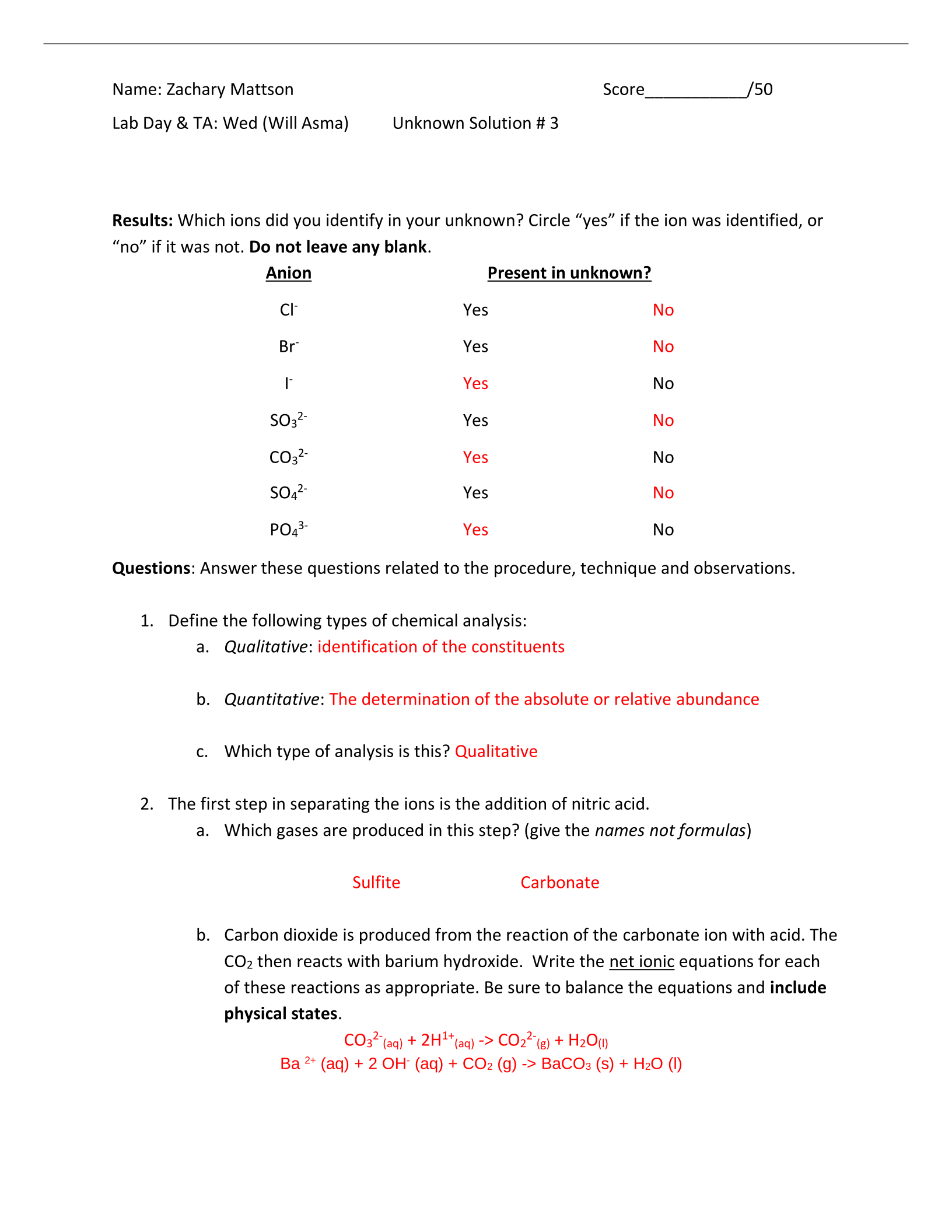
Results: Which ions did you identify in your unknown? Circle “yes” if the ion was identified, or
“no” if it was not. Do not leave any blank.
Anion
Present in unknown?
Cl-
Yes
No
Br-
Yes
No
I-
Yes
No
SO32-
Yes
No
CO32-
Yes
No
SO42-
Yes
No
PO43-
Yes
No
Questions: Answer these questions related to the procedure, technique and observations.
1. Define the following types of chemical analysis:
a. Qualitative: identification of the constituents
b. Quantitative: The determination of the absolute or relative abundance
c. Which type of analysis is this? Qualitative
2. The first step in separating the ions is the addition of nitric acid.
a. Which gases are produced in this step? (give the names not formulas)
Sulfite Carbonate
b. Carbon dioxide is produced from the reaction of the carbonate ion with acid. The
CO2 then reacts with barium hydroxide. Write the net ionic equations for each
of these reactions as appropriate. Be sure to balance the equations and include
physical states.
CO32-(aq) + 2H1+(aq) -> CO22-(g) + H2O(l)
Ba 2+ (aq) + 2 OH- (aq) + CO2 (g) -> BaCO3 (s) + H2O (l)
Qualitative Anion Analysis Post-Lab
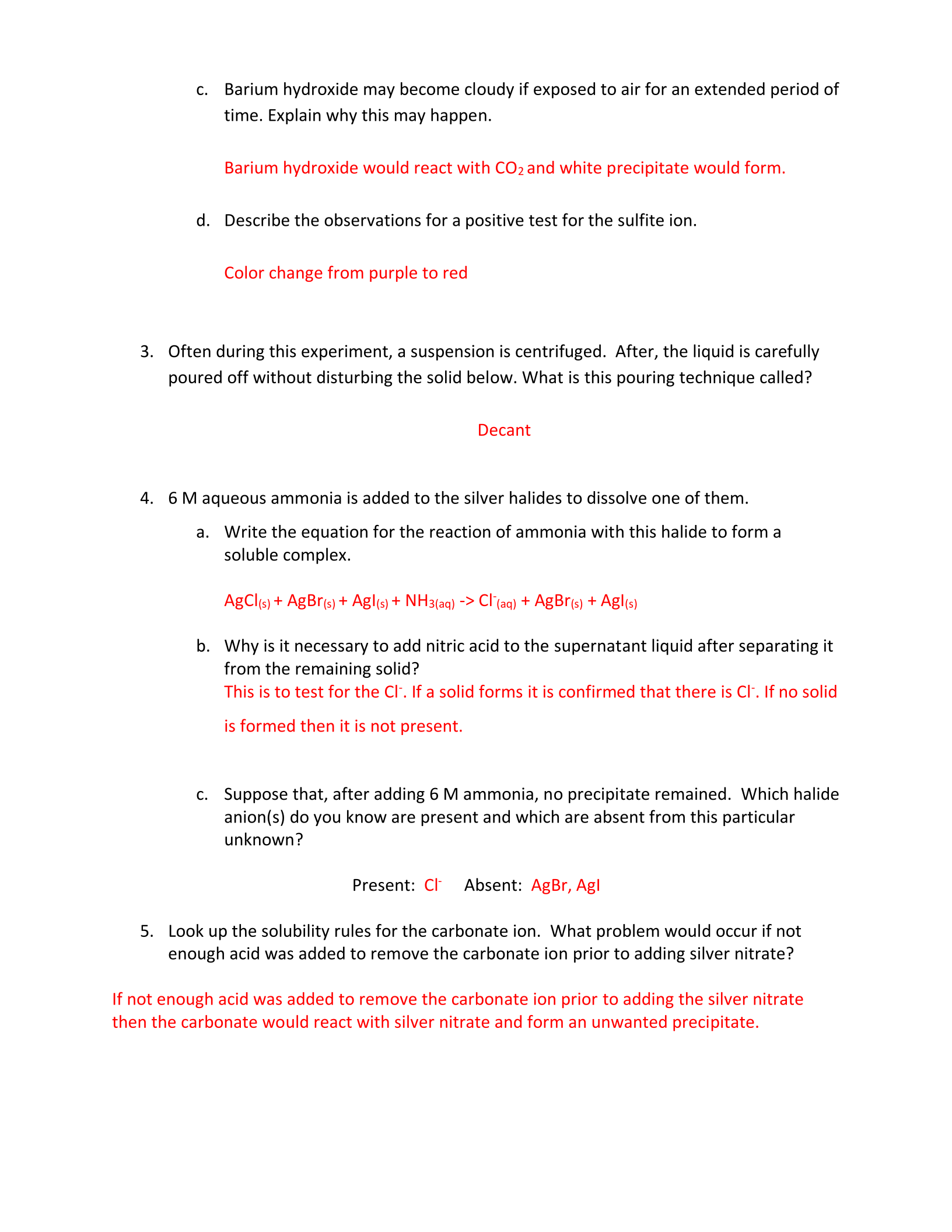
c. Barium hydroxide may become cloudy if exposed to air for an extended period of
time. Explain why this may happen.
Barium hydroxide would react with CO2 and white precipitate would form.
d. Describe the observations for a positive test for the sulfite ion.
Color change from purple to red
3. Often during this experiment, a suspension is centrifuged. After, the liquid is carefully
poured off without disturbing the solid below. What is this pouring technique called?
Decant
4. 6 M aqueous ammonia is added to the silver halides to dissolve one of them.
a. Write the equation for the reaction of ammonia with this halide to form a
soluble complex.
AgCl(s) + AgBr(s) + AgI(s) + NH3(aq) -> Cl-(aq) + AgBr(s) + AgI(s)
b. Why is it necessary to add nitric acid to the supernatant liquid after separating it
from the remaining solid?
This is to test for the Cl-. If a solid forms it is confirmed that there is Cl-. If no solid
is formed then it is not present.
c. Suppose that, after adding 6 M ammonia, no precipitate remained. Which halide
anion(s) do you know are present and which are absent from this particular
unknown?
Present: Cl- Absent: AgBr, AgI
5. Look up the solubility rules for the carbonate ion. What problem would occur if not
enough acid was added to remove the carbonate ion prior to adding silver nitrate?
If not enough acid was added to remove the carbonate ion prior to adding the silver nitrate
then the carbonate would react with silver nitrate and form an unwanted precipitate.