


• Changes Raising Significance of Cultural Awareness
Shift from bi-polar political powers to multi-polar political powers (i.e.,
disintegration of the Soviet Union)
Shift from military alliances (e.g., NATO) to economic alliances (e.g., European
Union)
Shift from independent national economies to interdependent global economy
(e.g., 51 of the top 100 world economies are multinational corporations)
Shift from cultural isolation to cultural integration (e.g., advancements in
transportation and communication technologies leading to “global society”)
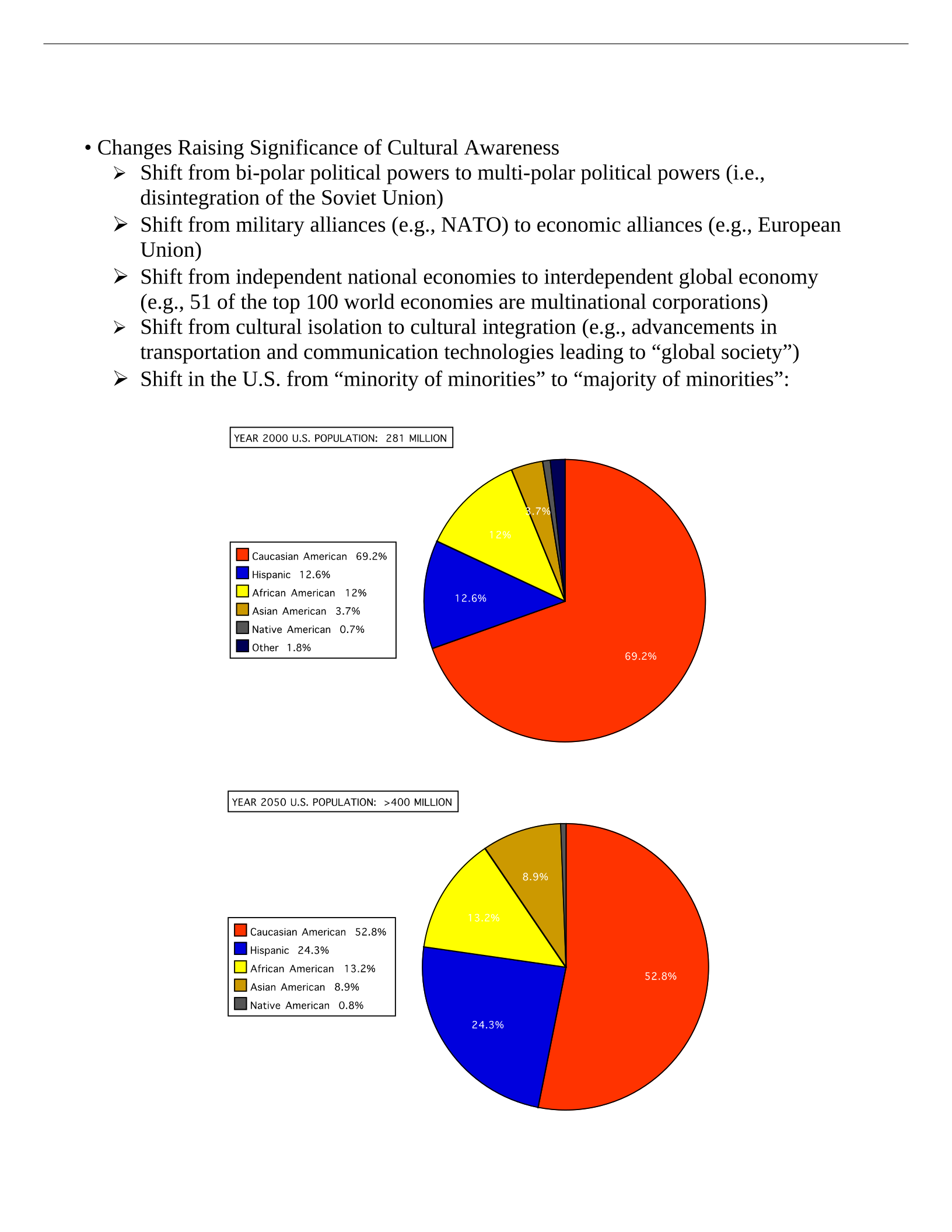
Shift in the U.S. from “minority of minorities” to “majority of minorities”:
CULTURE AND COMMUNICATION
• Culture-Related Terms
Culture – distinguishing features shared in common by a group of people due to
social learning; normative characteristics that include
ohow the group thinks (shared beliefs and values)
ohow the group talks (shared language and expressions)
ohow the group acts (shared customs and rituals)
Co- or sub-cultures – unique cultures co-existing within a greater cultural
framework
Race, tribe, and clan – distinguishing features shared in common by a group of
people due to biological heritage; genetic characteristics that are not learned
Nationality – distinguishing features shared in common by a group of people due
to territorial situation; civic characteristics that overlap cultural norms
Ethnicity – ambiguous label ascribed to the distinguishing features shared in
common by a group of people; can encompass aspects of cultural, racial, and
national characteristics
• Culture-Related Issues
Enculturation – Acculturation
Importing culture – Exporting culture
Cultural enrichment – Cultural imperialism
Ethnocentrism – Ethnorelativism
Evolving but fractured attitudes toward cultural differences in U.S.
oCultural homogeneity (Eurocentric “mold”)
oCultural melting pot (“super-alloy”)
oCultural diversity (“tossed salad”)
oCultural fusion (“casserole”)
• Dimensions of Intercultural (Cross-Cultural) Communication
Individualism – Collectivism
Low power distance – High power distance
Low context – High context
Low contact – High contact
Monochronic – Polychronic
• Learning about Culture
The most revealing viewpoint to learn about another culture is from the inside,
looking out
The most revealing viewpoint to learn about my own culture is from the outside,
looking in
Immersing myself in another culture enables me to simultaneously learn about
another culture and my own (Land of Opportunity)
Powered by TCPDF (www.tcpdf.org)

