


• Purposes for Listening: Paramount for Significant Goal Achievement
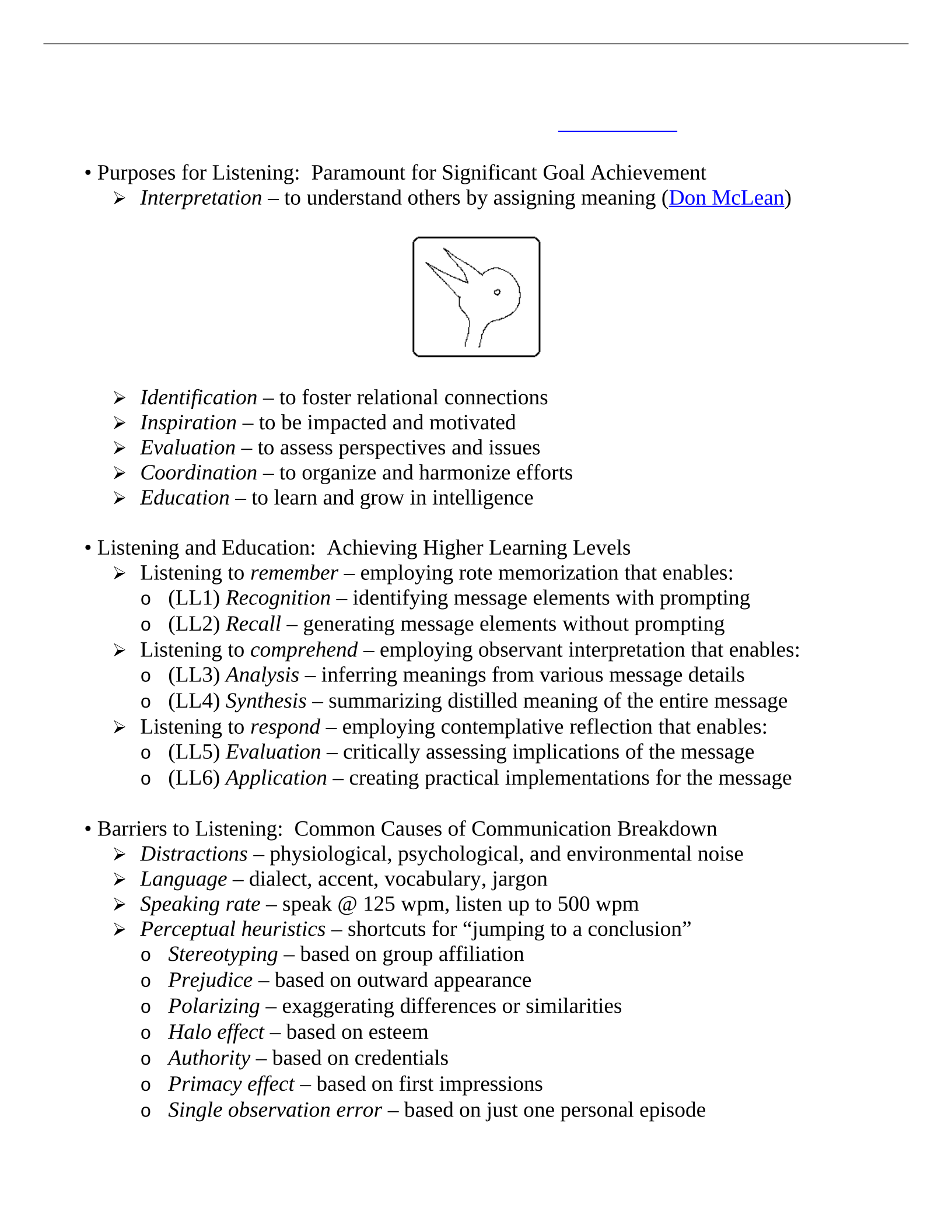
Interpretation – to understand others by assigning meaning (Don McLean)
Identification – to foster relational connections
Inspiration – to be impacted and motivated
Evaluation – to assess perspectives and issues
Coordination – to organize and harmonize efforts
Education – to learn and grow in intelligence
• Listening and Education: Achieving Higher Learning Levels
Listening to remember – employing rote memorization that enables:
o(LL1) Recognition – identifying message elements with prompting
o(LL2) Recall – generating message elements without prompting
Listening to comprehend – employing observant interpretation that enables:
o(LL3) Analysis – inferring meanings from various message details
o(LL4) Synthesis – summarizing distilled meaning of the entire message
Listening to respond – employing contemplative reflection that enables:
o(LL5) Evaluation – critically assessing implications of the message
o(LL6) Application – creating practical implementations for the message
• Barriers to Listening: Common Causes of Communication Breakdown
Distractions – physiological, psychological, and environmental noise
Language – dialect, accent, vocabulary, jargon
Speaking rate – speak @ 125 wpm, listen up to 500 wpm
Perceptual heuristics – shortcuts for “jumping to a conclusion”
oStereotyping – based on group affiliation
oPrejudice – based on outward appearance
oPolarizing – exaggerating differences or similarities
oHalo effect – based on esteem
oAuthority – based on credentials
oPrimacy effect – based on first impressions
oSingle observation error – based on just one personal episode
CONSCIENTIOUS LISTENING
A Crucial Communication Skill (Sound Health)
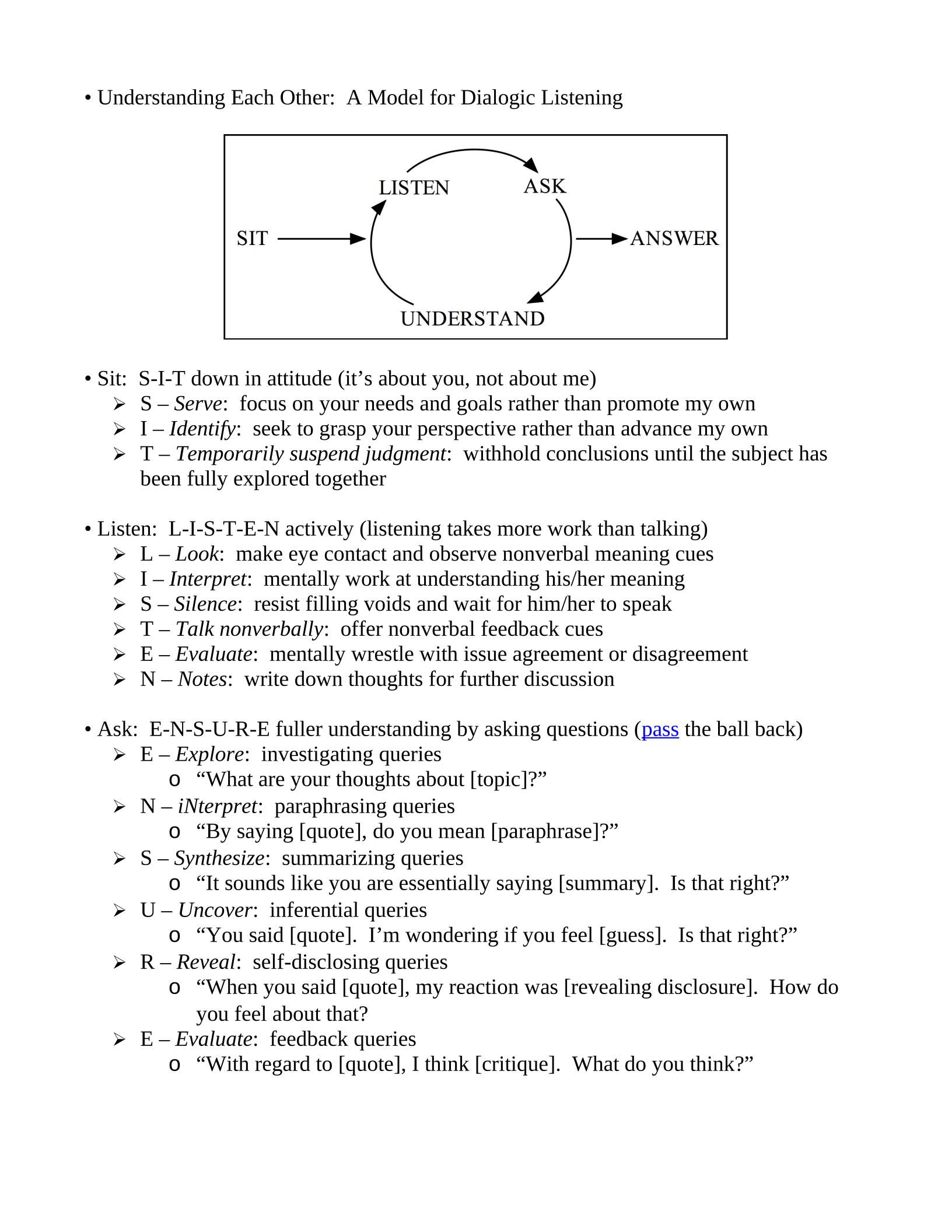
• Understanding Each Other: A Model for Dialogic Listening
• Sit: S-I-T down in attitude (it’s about you, not about me)
S – Serve: focus on your needs and goals rather than promote my own
I – Identify: seek to grasp your perspective rather than advance my own
T – Temporarily suspend judgment: withhold conclusions until the subject has
been fully explored together
• Listen: L-I-S-T-E-N actively (listening takes more work than talking)
L – Look: make eye contact and observe nonverbal meaning cues
I – Interpret: mentally work at understanding his/her meaning
S – Silence: resist filling voids and wait for him/her to speak
T – Talk nonverbally: offer nonverbal feedback cues
E – Evaluate: mentally wrestle with issue agreement or disagreement
N – Notes: write down thoughts for further discussion
• Ask: E-N-S-U-R-E fuller understanding by asking questions (pass the ball back)
E – Explore: investigating queries
o“What are your thoughts about [topic]?”
N – iNterpret: paraphrasing queries
o“By saying [quote], do you mean [paraphrase]?”
S – Synthesize: summarizing queries
o“It sounds like you are essentially saying [summary]. Is that right?”
U – Uncover: inferential queries
o“You said [quote]. I’m wondering if you feel [guess]. Is that right?”
R – Reveal: self-disclosing queries
o“When you said [quote], my reaction was [revealing disclosure]. How do
you feel about that?
E – Evaluate: feedback queries
o“With regard to [quote], I think [critique]. What do you think?”
Powered by TCPDF (www.tcpdf.org)

