


LOGOS
Asserting Persuasive Arguments
• Three Common Conceptions of Argumentation (Argumentation Demo)
Having an argument – uncomfortable interpersonal conflict or dispute that results
in relational dissension (“We got into an argument about . . .”)
Abstracting an argument – synthesizing an argument to that was made or an
argument that is to be made (“She essentially argued that . . .”)
Making an argument – interactive communication that involves one party seeking
adherence from another party (“I am arguing that . . .”)
• Three Core Characteristics of Argumentation – The Nature of Argued Knowledge
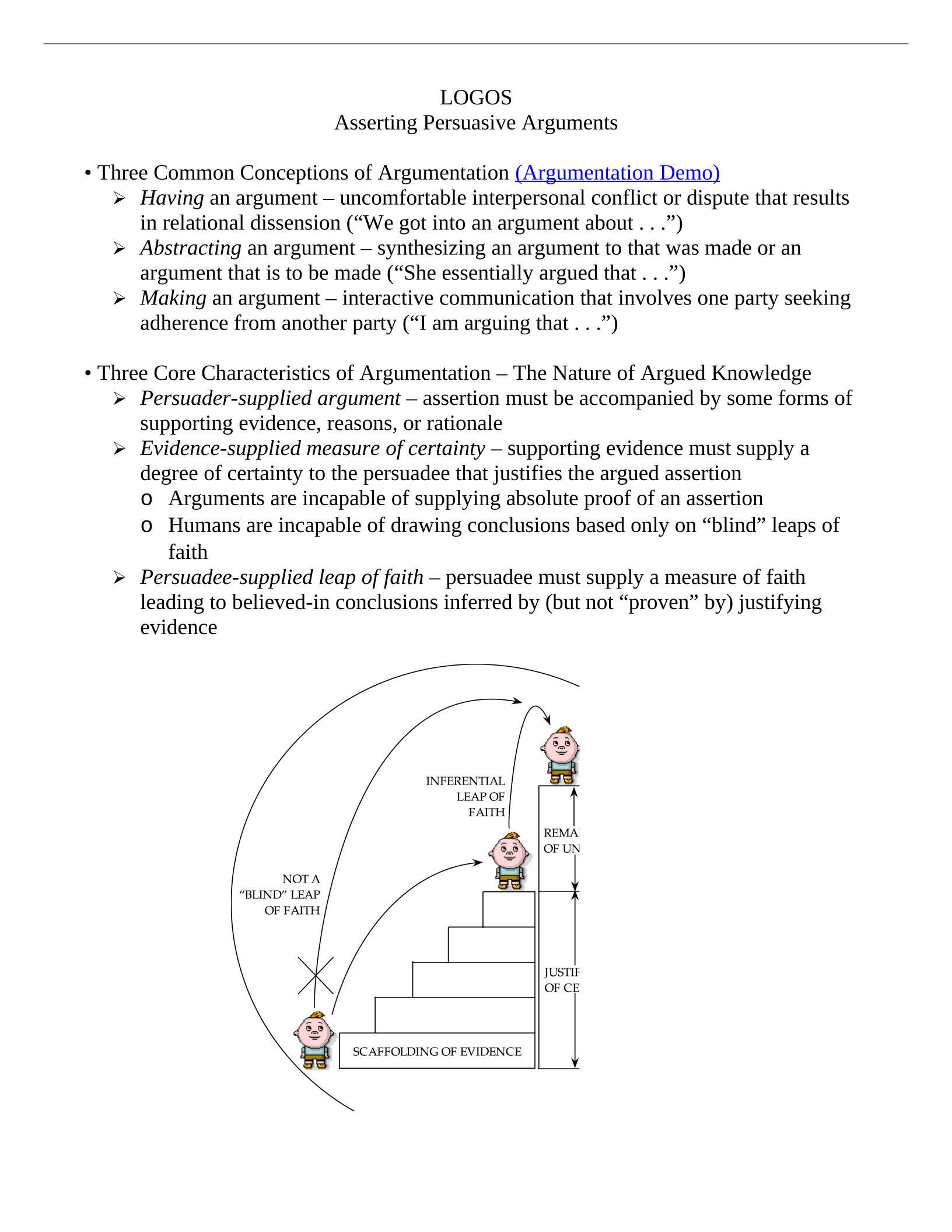
Persuader-supplied argument – assertion must be accompanied by some forms of
supporting evidence, reasons, or rationale
Evidence-supplied measure of certainty – supporting evidence must supply a
degree of certainty to the persuadee that justifies the argued assertion
oArguments are incapable of supplying absolute proof of an assertion
oHumans are incapable of drawing conclusions based only on “blind” leaps of
faith
Persuadee-supplied leap of faith – persuadee must supply a measure of faith
leading to believed-in conclusions inferred by (but not “proven” by) justifying
evidence
• Three Crucial Components of Argumentation – Logos as Hunting
Animal – targeted issue being argued arising from one of the three fundamental
questions about life
Armament – accurate and reliable argued case constructed from one of the three
forms of human rationality
Ammunition – potent and effective evidence supporting the argued case
(armament) that comports with the issue in question (animal)
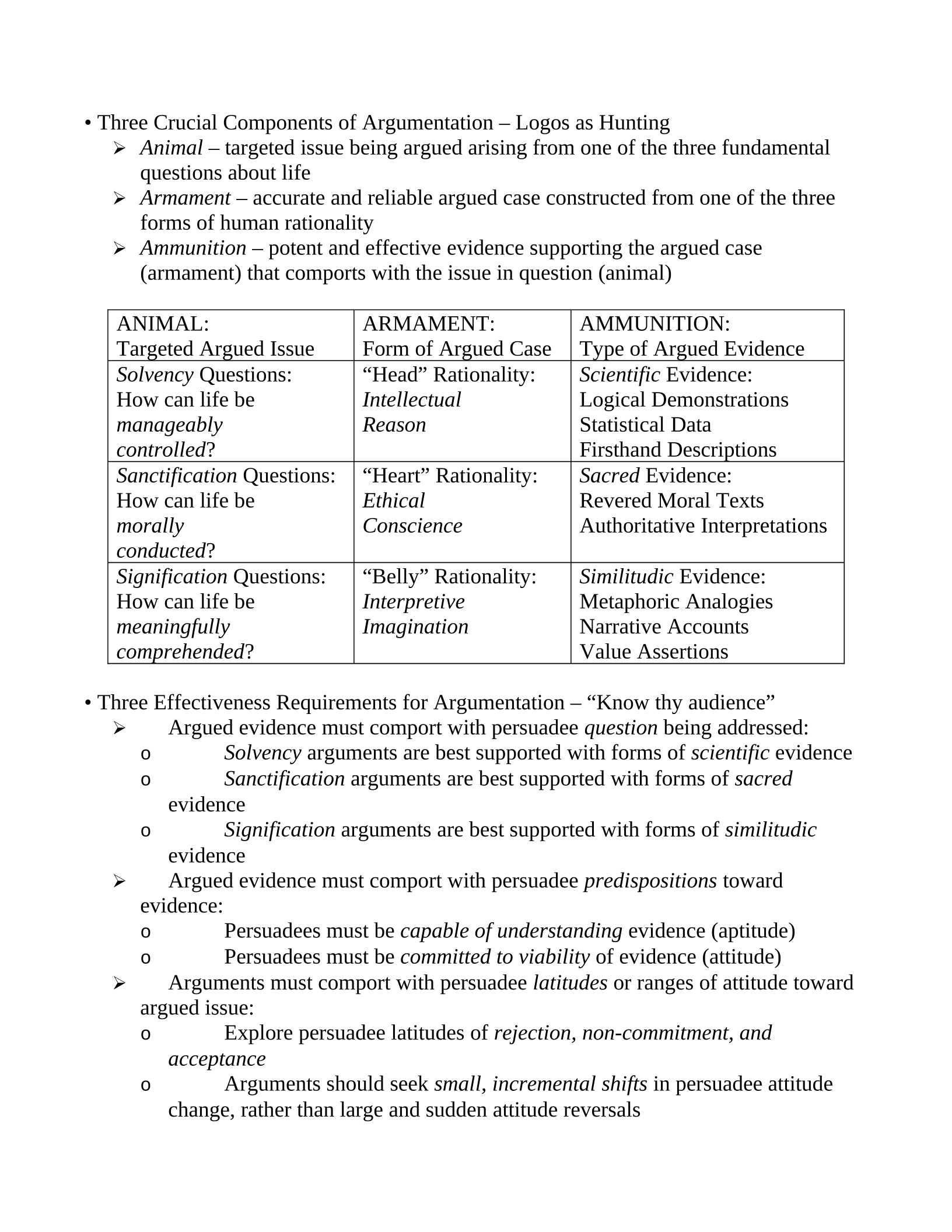
ANIMAL:
Targeted Argued Issue
ARMAMENT:
Form of Argued Case
AMMUNITION:
Type of Argued Evidence
Solvency Questions:
How can life be
manageably
controlled?
“Head” Rationality:
Intellectual
Reason
Scientific Evidence:
Logical Demonstrations
Statistical Data
Firsthand Descriptions
Sanctification Questions:
How can life be
morally
conducted?
“Heart” Rationality:
Ethical
Conscience
Sacred Evidence:
Revered Moral Texts
Authoritative Interpretations
Signification Questions:
How can life be
meaningfully
comprehended?
“Belly” Rationality:
Interpretive
Imagination
Similitudic Evidence:
Metaphoric Analogies
Narrative Accounts
Value Assertions
• Three Effectiveness Requirements for Argumentation – “Know thy audience”
Argued evidence must comport with persuadee question being addressed:
oSolvency arguments are best supported with forms of scientific evidence
oSanctification arguments are best supported with forms of sacred
evidence
oSignification arguments are best supported with forms of similitudic
evidence
Argued evidence must comport with persuadee predispositions toward
evidence:
oPersuadees must be capable of understanding evidence (aptitude)
oPersuadees must be committed to viability of evidence (attitude)
Arguments must comport with persuadee latitudes or ranges of attitude toward
argued issue:
oExplore persuadee latitudes of rejection, non-commitment, and
acceptance
oArguments should seek small, incremental shifts in persuadee attitude
change, rather than large and sudden attitude reversals
Powered by TCPDF (www.tcpdf.org)

