


ARIZONA STATE UNIVERSITY
"Efficiency of Essential Oil and Extract Isolation as Antibacterial Agents through a
Metabolomic Approach"
JEFF. M
Background
The fragrant lemongrass (Cymbopogon nardus L.) is an essential oil plant
belonging to the grass family with significant potential for development in
Indonesia due to the vast land available for cultivation. In 2020, lemongrass
production in Indonesia reached 4,922 tons of essential oil from 25,413 hectares of
land, with the majority coming from Aceh, West Java, and West Sumatra. There are
two varieties of lemongrass: Mahapengiri and Lenabatu. The Mahapengiri variety is
superior to Lenabatu due to its higher levels of citronellal (30-45%) and geraniol (80
-97%), compared to Lenabatu which has citronellal at 15% and geraniol at 55-65%.
Lemongrass contains chemical components with relatively high bioactivity, making
it useful in treating various diseases. The products can be essential oil obtained
through hydrodistillation and steam distillation, or oleoresin extracts using
maceration. Research shows that lemongrass oil contains the highest components
of citronellal (33.86%), geraniol (18.29%), and citronellol (14.97%). It is commonly
used in industries as a mosquito repellent, pesticide, or fragrance agent in food
products, soaps, and cosmetics. Additionally, lemongrass has health benefits as an
antibacterial, antiseptic, and anti-inflammatory agent. The antibacterial activity of
lemongrass can be assessed using the broth microdilution method, which
determines the lowest concentration of the antibacterial substance that completely
inhibits bacterial growth. Studies have shown that lemongrass oil exhibits
antibacterial activity with minimum inhibitory concentration (MIC) values of 1%
against E. coli and 0.25% against S. aureus, while extracts obtained through
maceration with ethanol have MIC values of 25% and 12.5% against E. coli and S.
aureus, respectively. Antibacterial agents combat pathogenic bacteria by either
killing them or reducing their metabolic activity.
A metabolomic approach is necessary to explore the correlation between
essential oil components and the bioactivity of citronella extract to identify
compounds with specific effects on this bioactivity. Metabolomics involves a
comprehensive study of small molecules, known as metabolites, which play crucial
roles in metabolic pathways and cellular processes within a biological system. This
analysis is conducted using multivariate data analysis techniques such as principal
component analysis (PCA) and orthogonal partial least squares
‒
discriminant
analysis (OPLS-DA) to identify marker compounds in each sample and their
correlation with antibacterial activity. Research by Utomo used a metabolomic
approach to differentiate marker compounds in basil leaf extracts from various
locations, while another study by Santos et al. demonstrated that metabolomics

can identify and correlate marker compounds responsible for the antimicrobial
activity of different essential oils. Based on these studies, it is predicted that
different extraction methods for citronella oil and extract will yield different
biomarker compounds due to varying extraction efficiencies. The biomarker
compounds obtained are characteristic of the test plant and can distinguish one
sample from another. This study aims to identify the chemical components and
antibacterial activity of citronella essential oil and extract from the Mahapengiri
variety in Cibinong, using hydrodistillation, steam distillation, and maceration
methods through a gas chromatography-mass spectroscopy (GC-MS) based
metabolomic approach, to provide valuable information on the citronella variety's
components and their correlation with antibacterial activity.
Cymbopogon nardus
Lemongrass, scientifically known as Cymbopogon nardus L., is a type of grass
cultivated in subtropical and tropical regions across Africa, the Americas, and Asia,
including Indonesia. This plant features green stems and flat, elongated leaves
resembling those of sugarcane, with a strong, citrus-like fragrance. In Indonesia,
there are two developed varieties of lemongrass: Mahapengiri and Lenabatu. The
Mahapengiri variety is characterized by its shorter, broader, and more pliable green

leaves, with a height ranging from 40 to 70 cm. In contrast, the Lenabatu variety has
slender, pale green leaves and reaches a height of 100 to 200 cm.
Primary product of citronella grass (C. nardus L.)
The primary product of citronella grass (C. nardus L.) is essential oil, characterized
by its yellowish color, pungent taste, and lemon-like aroma. Essential oil is a
complex, naturally occurring volatile compound produced by aromatic plants as
secondary metabolites, typically comprising organic compounds such as alcohols,
aldehydes, ketones, and short-chain compounds. Essential oil from citronella can
be extracted using methods like steam distillation and water distillation. The main
components of citronella essential oil include citronellal, citronellol, and geraniol,
which impart a citrus-like scent to the oil. The quality of citronella oil is determined
by the levels of citronellal and geraniol; higher concentrations indicate better
quality. Reports indicate that citronella oil derived from citronella grass leaves
contains major components such as citronellal (26.23%), citronellol (12.96%), and
geraniol (19.75%), with smaller amounts of other compounds like citral (0.67%),
limonene (2.96%), eugenol (1.45%), and geranyl acetate (3.58%). Most of the
essential oil's components are terpenoids, which are formed from combinations of
two to six isoprene units.
Proximate analysis
Proximate analysis is a set of laboratory techniques commonly used on organic
materials to determine their basic composition through gravimetric methods. This
analysis aims to assess the quality of materials used in research. For plant leaves,
proximate analysis includes: 1) Moisture Content, which measures the amount of
water in a sample by comparing the weight of the water to the total weight of the
sample. This is determined using thermogravimetric methods where the sample is
heated at a constant temperature and weight changes are monitored to account for
lost substances. 2) Ash Content, which refers to the total minerals or inorganic
substances present in the material. It is determined by burning the sample at 575°C
in a furnace, leaving a residue of inorganic minerals such as silica, calcium,
potassium, iron, sodium, magnesium, aluminum, titanium, and others, which vary
depending on the plant origin. 3) Fat Content, which measures the total lipids or
fats in the material. This is determined by gravimetric methods where fats are
extracted from the sample using Soxhlet extraction with n-hexane as a solvent. The
Soxhlet extraction utilizes heat to evaporate the solvent, which is then condensed
and flows into the extraction chamber. The solvent accumulates in the extraction
chamber for 5-10 minutes, fully immersing the sample before flowing back into the
boiling flask with the extracted fats.
Hydrodistillation
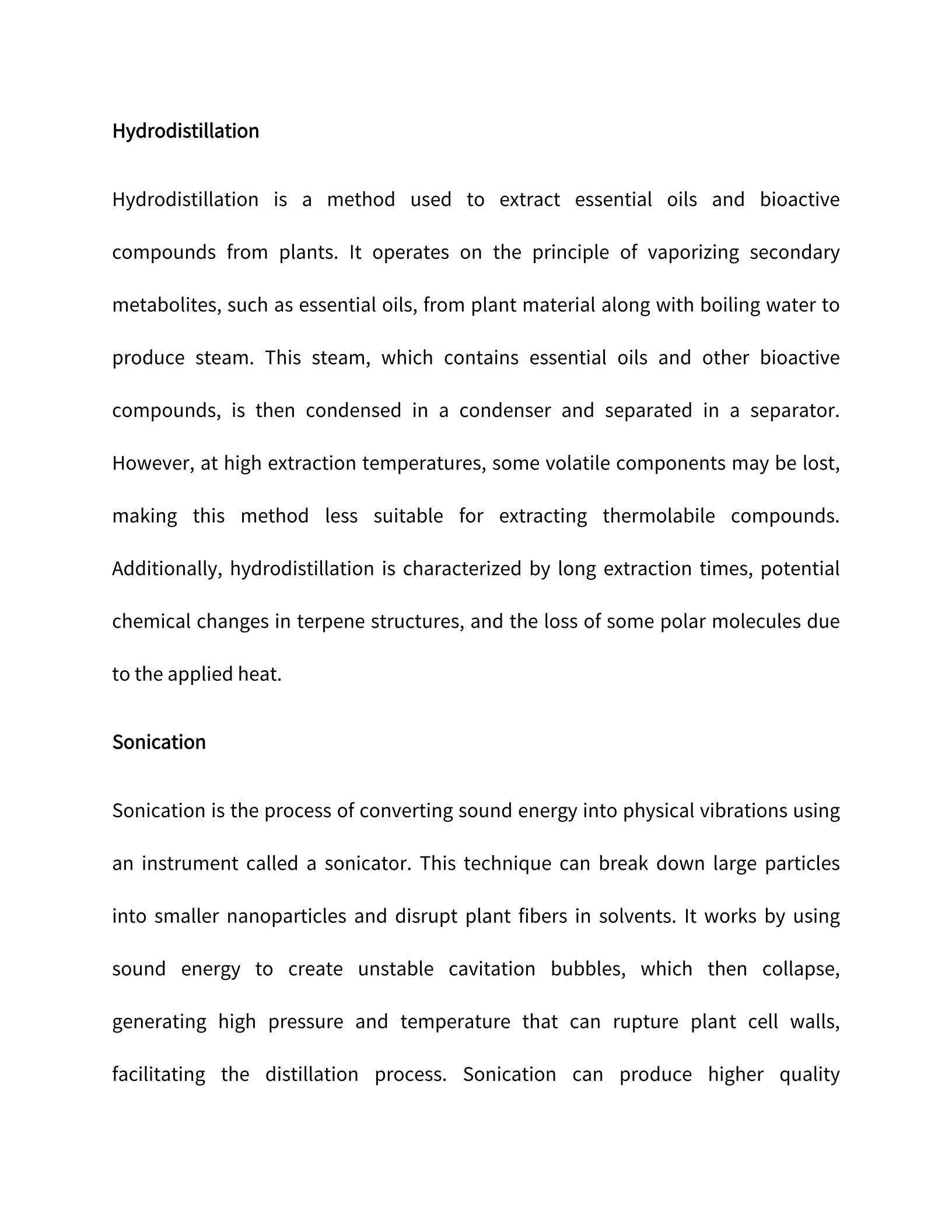
Hydrodistillation is a method used to extract essential oils and bioactive
compounds from plants. It operates on the principle of vaporizing secondary
metabolites, such as essential oils, from plant material along with boiling water to
produce steam. This steam, which contains essential oils and other bioactive
compounds, is then condensed in a condenser and separated in a separator.
However, at high extraction temperatures, some volatile components may be lost,
making this method less suitable for extracting thermolabile compounds.
Additionally, hydrodistillation is characterized by long extraction times, potential
chemical changes in terpene structures, and the loss of some polar molecules due
to the applied heat.
Sonication
Sonication is the process of converting sound energy into physical vibrations using
an instrument called a sonicator. This technique can break down large particles
into smaller nanoparticles and disrupt plant fibers in solvents. It works by using
sound energy to create unstable cavitation bubbles, which then collapse,
generating high pressure and temperature that can rupture plant cell walls,
facilitating the distillation process. Sonication can produce higher quality
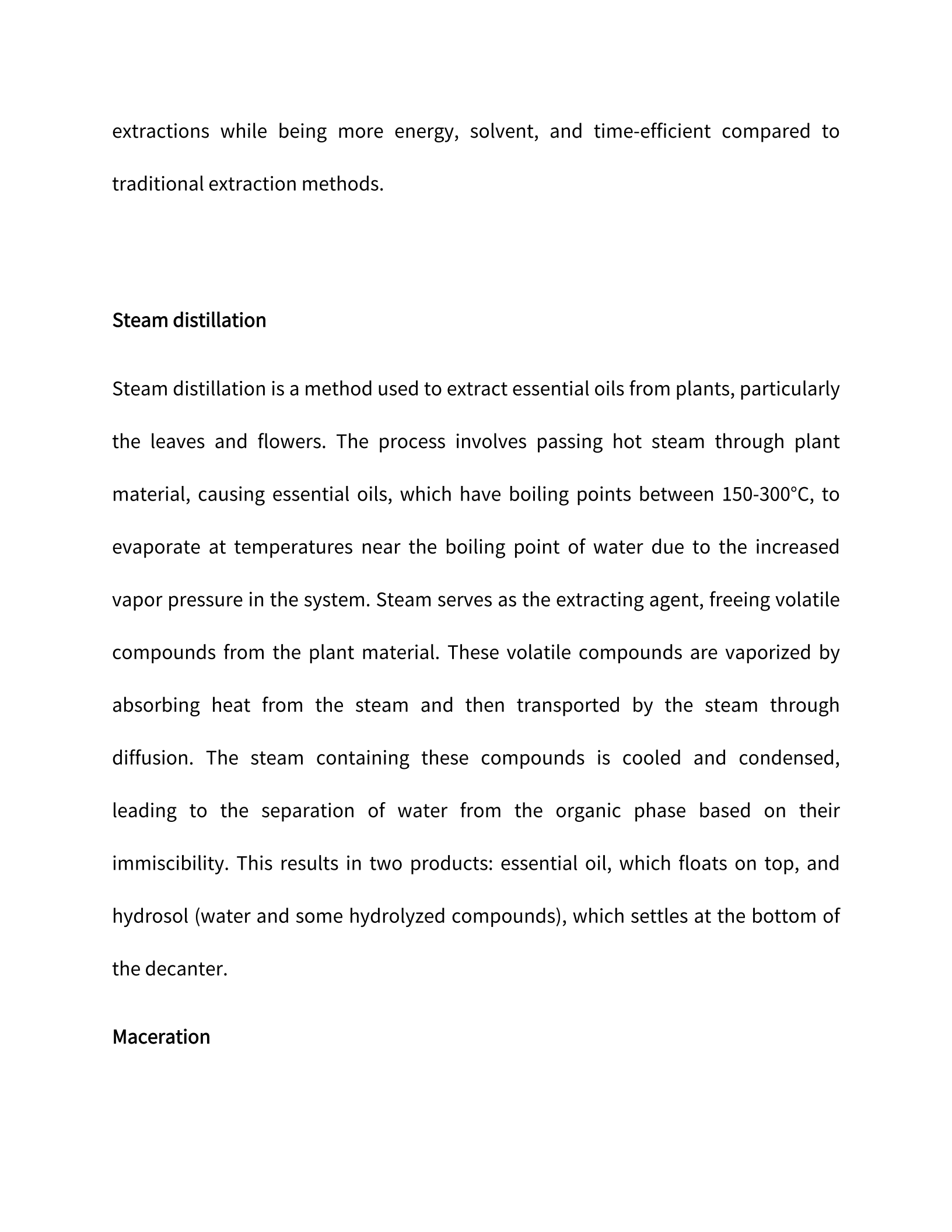
extractions while being more energy, solvent, and time-efficient compared to
traditional extraction methods.
Steam distillation
Steam distillation is a method used to extract essential oils from plants, particularly
the leaves and flowers. The process involves passing hot steam through plant
material, causing essential oils, which have boiling points between 150-300°C, to
evaporate at temperatures near the boiling point of water due to the increased
vapor pressure in the system. Steam serves as the extracting agent, freeing volatile
compounds from the plant material. These volatile compounds are vaporized by
absorbing heat from the steam and then transported by the steam through
diffusion. The steam containing these compounds is cooled and condensed,
leading to the separation of water from the organic phase based on their
immiscibility. This results in two products: essential oil, which floats on top, and
hydrosol (water and some hydrolyzed compounds), which settles at the bottom of
the decanter.
Maceration
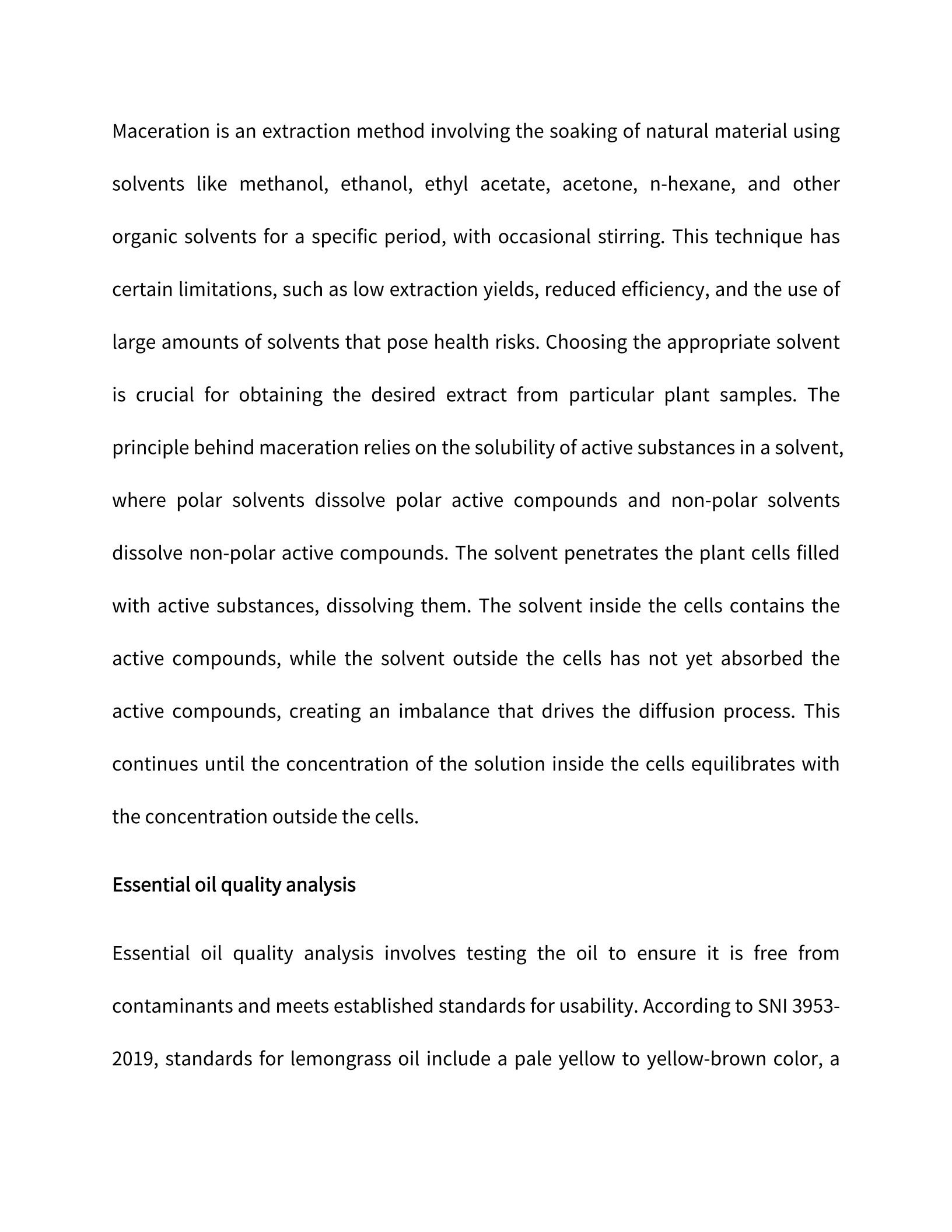
Maceration is an extraction method involving the soaking of natural material using
solvents like methanol, ethanol, ethyl acetate, acetone, n-hexane, and other
organic solvents for a specific period, with occasional stirring. This technique has
certain limitations, such as low extraction yields, reduced efficiency, and the use of
large amounts of solvents that pose health risks. Choosing the appropriate solvent
is crucial for obtaining the desired extract from particular plant samples. The
principle behind maceration relies on the solubility of active substances in a solvent,
where polar solvents dissolve polar active compounds and non-polar solvents
dissolve non-polar active compounds. The solvent penetrates the plant cells filled
with active substances, dissolving them. The solvent inside the cells contains the
active compounds, while the solvent outside the cells has not yet absorbed the
active compounds, creating an imbalance that drives the diffusion process. This
continues until the concentration of the solution inside the cells equilibrates with
the concentration outside the cells.
Essential oil quality analysis
Essential oil quality analysis involves testing the oil to ensure it is free from
contaminants and meets established standards for usability. According to SNI 3953-
2019, standards for lemongrass oil include a pale yellow to yellow-brown color, a

minimum citronellal content of 35%, a specific gravity between 0.880-0.922 g/ml, a
refractive index of 1.466-1.475, and solubility in 80% ethanol at a 1:2 ratio. Factors
influencing essential oil quality include harvest time, sample drying, plant growth
location, soil nutrient content, plant variety, and extraction techniques. Quality
analysis includes measuring the refractive index, which indicates how light bends
as it passes through the oil, with higher values representing greater light deflection.
The specific gravity measures the mass of a substance per volume, with the
comparison between the liquid and water under the same conditions. Solubility in
80% ethanol tests the oil's purity, with clear solutions indicating proper dissolution,
as essential oils primarily consist of terpene compounds that dissolve easily in
ethanol. Oils containing water may become cloudy when mixed with ethanol due to
emulsification.
Bacteria
Bacteria are prokaryotic organisms lacking membrane-bound organelles and a
nucleus, and they are typically microscopic in size. They can perform metabolism
both autotrophically and heterotrophically. Bacteria are classified into two main
types based on their cell wall structure: gram-positive bacteria, which have a single
lipid membrane and a thick peptidoglycan layer, and gram-negative bacteria, which
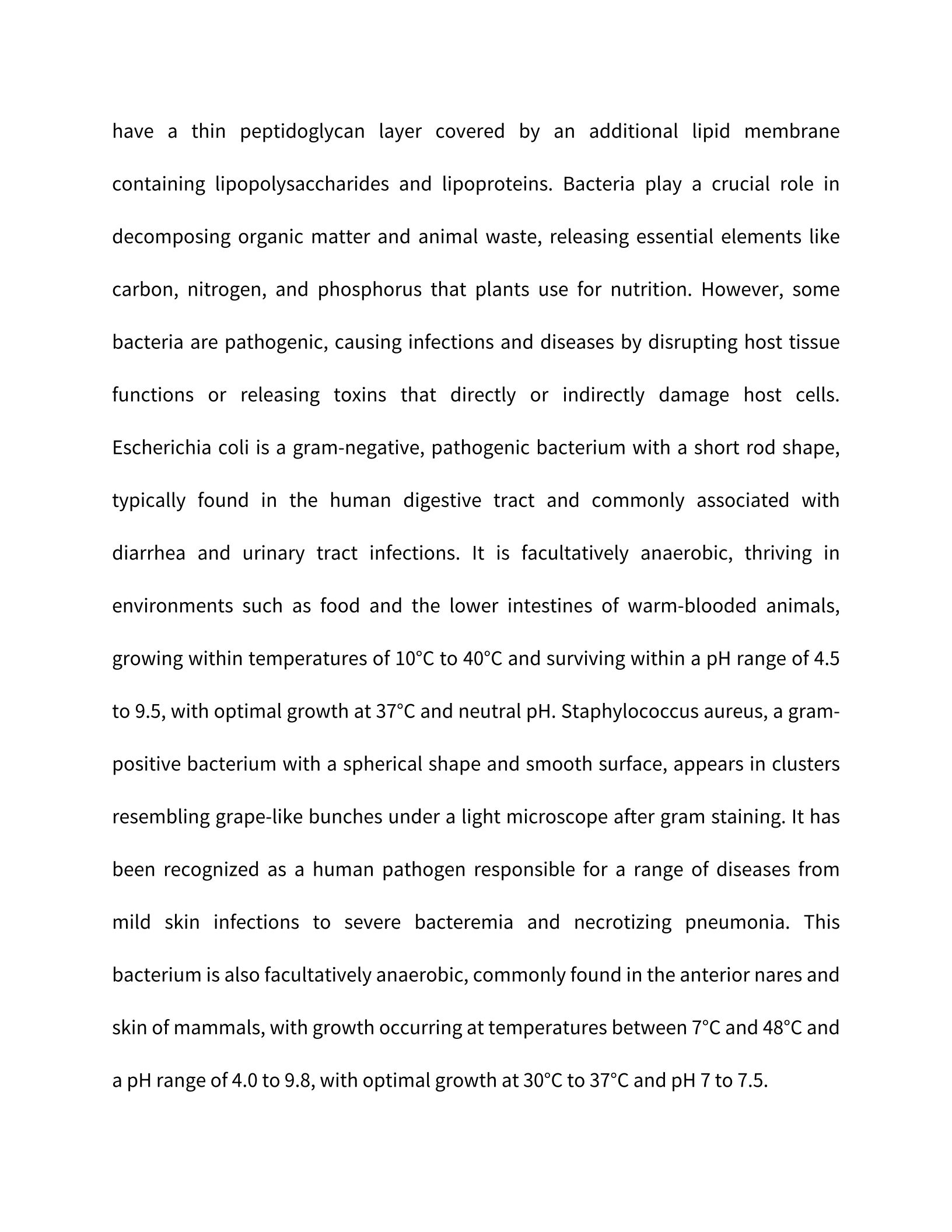
have a thin peptidoglycan layer covered by an additional lipid membrane
containing lipopolysaccharides and lipoproteins. Bacteria play a crucial role in
decomposing organic matter and animal waste, releasing essential elements like
carbon, nitrogen, and phosphorus that plants use for nutrition. However, some
bacteria are pathogenic, causing infections and diseases by disrupting host tissue
functions or releasing toxins that directly or indirectly damage host cells.
Escherichia coli is a gram-negative, pathogenic bacterium with a short rod shape,
typically found in the human digestive tract and commonly associated with
diarrhea and urinary tract infections. It is facultatively anaerobic, thriving in
environments such as food and the lower intestines of warm-blooded animals,
growing within temperatures of 10°C to 40°C and surviving within a pH range of 4.5
to 9.5, with optimal growth at 37°C and neutral pH. Staphylococcus aureus, a gram-
positive bacterium with a spherical shape and smooth surface, appears in clusters
resembling grape-like bunches under a light microscope after gram staining. It has
been recognized as a human pathogen responsible for a range of diseases from
mild skin infections to severe bacteremia and necrotizing pneumonia. This
bacterium is also facultatively anaerobic, commonly found in the anterior nares and
skin of mammals, with growth occurring at temperatures between 7°C and 48°C and
a pH range of 4.0 to 9.8, with optimal growth at 30°C to 37°C and pH 7 to 7.5.

Antibacterial agents
Antibacterial agents are medications that can combat infections and save lives
when used properly. These agents work through various mechanisms, such as
inhibiting cell wall synthesis, altering bacterial cell permeability, modifying nucleic
acid molecules, inhibiting nucleic acid synthesis, and disrupting microbial cell
metabolism. The immune system typically eliminates bacteria before they can grow
and cause symptoms. Antibacterial substances become crucial in situations where
there is an excess of harmful bacteria that the immune system cannot handle. The
antibacterial activity of a compound can be assessed using different methods. The
dilution method, commonly used to determine the minimum inhibitory
concentration (MIC), involves a serial dilution of the antibacterial compound
followed by inoculation with a known quantity of bacteria in an agar or liquid
medium. After incubation, bacterial growth is observed visually or using a
spectrophotometer to determine the MIC. The diffusion method, on the other hand,
measures the qualitative inhibition zone of bacterial growth. This method is based
on the ability of an antibacterial agent to diffuse into a medium inoculated with test
bacteria. A disk containing a specific antibiotic concentration is placed on the
medium, and the diameter of the inhibition zone around the disk is measured. A
larger inhibition zone indicates a stronger antibacterial activity of the substance.

Gas Chromatography Mass Spectrometry (GC-MS)
Gas Chromatography Mass Spectrometry (GC-MS) is an analytical technique that
integrates two methods: Gas Chromatography and Mass Spectrometry. GC-MS is
used to analyze volatile organic compounds such as fatty acids, terpenes,
flavonoids, esters, essential oils, alcohols, and gases. A common application of GC-
MS is the identification of secondary metabolites by comparing the full mass
spectrum of an unknown peak with a spectrum library or database. The GC-MS
process involves heating a sample to separate its components, injecting it into the
GC inlet where it is vaporized and carried into the chromatography column by a
carrier gas (helium). The sample passes through the column, where components
are separated based on their boiling points and interactions with the stationary
phase and the carrier gas. The separated components enter the mass spectrometer,
where they are ionized by an electron beam to form molecular ions with
characteristic relative abundances, creating a 'fingerprint' for each compound. The
mass analyzer then separates and identifies these ions, converting them into a
chromatogram. The GC-MS results are presented as a chromatogram with retention
time on the x-axis and ion abundance on the y-axis. The MS detector identifies each
peak as a fragmentation spectrum with the mass-to-charge ratio (m/z) on the x-axis
and relative abundance on the y-axis, providing information about the molecular

structure of the analyte.
Metabolomics
Metabolomics is the comprehensive study of small molecules, known as
metabolites, which play crucial roles in metabolic pathways and cellular processes
within biological systems. Plant metabolomics, a subset of metabolomics, focuses
on identifying changes in a wide array of metabolites within plant samples and
subsequently conducting in-depth data mining and bioinformatics analysis.
Metabolites, which are part of the plant's defense mechanisms against pathogen
attacks and environmental stresses, are vital sources of many pharmacologically
active natural products, often associated with specific biological activities related
to their biochemical structures. One application of metabolomics is the
identification of plant biomarkers, which are naturally occurring compounds within
plants that can be quantitatively measured to serve as quality control indicators.
Studies on biomarkers can be applied in various research areas, including species
verification based on their content, discovery of new resources as alternatives for
raw materials, optimization of extraction and purification methods, and
determination of plant product purity. Systematic investigation using biomarkers
can also lead to the discovery and development of new drugs. Targeted
metabolomics is an approach that focuses on analyzing specific groups of
metabolites which have been chemically characterized and biochemically
annotated. This method allows for quantitative or semi-quantitative analysis using
internal standards and leverages a comprehensive understanding of various
metabolic enzymes, their kinetics, final products, and biochemical pathways. In
contrast, untargeted metabolomics involves a comprehensive analysis of all
measurable metabolites in a sample, including unknown chemicals. This approach
must be paired with advanced chemometric techniques, such as multivariate
analysis, to manage the extensive data sets generated and detect as many
metabolites as possible, covering the entire metabolic network. Untargeted
metabolomics encompasses two analytical approaches: metabolomic profiling,
which identifies and measures secondary metabolites within an organism, and
metabolomic fingerprinting, which typically uses spectroscopy to classify samples
based on their origin or biological relevance. Multivariate data analysis techniques
like PCA, PLS-DA, and OPLS-DA are employed in untargeted metabolomics. PCA, a
common multivariate analysis method, reduces original variables into a smaller set
of uncorrelated principal components, capturing the majority of the original
information. OPLS-DA, on the other hand, is a supervised classification technique
that reduces data dimensions and enhances interpretability by comparing groups

and highlighting variables with the greatest discriminatory power.

