


1
Chapter I: Introduction
During adolescence, children change dramatically in psychology and physiology. For
example, they are more likely to become rebellious (McDermott, 1988). The relationship
between parents and children during adolescence has increasing conflict and decreasing
closeness (Baer, 2002; De Goede et al., 2009; McGue et al., 2005). Moreover, a growing sense
of independence and autonomy occurs during adolescence (Steinberg, 2013). Adolescents are
less likely to communicate their whereabouts, activities, and other information (e.g., aggressive
behavior problems, substance use) with their parents. The interaction between parents and
adolescents may become unexpected and dynamic. This dissertation intends to uncover the
mysterious interplay between parents and adolescents regarding adolescent aggressive behavior.
Though aggression decreases from childhood to adolescence (Cairns et al., 1989; Tremblay
et al., 1999), adolescent general aggressive behavior is still a significant problem. For instance,
more than one in three adolescents in high school report they have been in a physical fight in the
past year (Centers for Disease Control and Prevention, 2012). In addition, adolescent aggressive
behavior typically has stronger negative consequences than those of children’s aggressive
behavior. For example, adolescent aggression can be associated with violent crimes such as
robbery, rape and homicide (Loeber & Hay, 1997; Yonas et al., 2005), and during adolescence
the rate of children arrested for violence dramatically and stably increases (Loeber & Stallings,
2011). According to the dual taxonomy model, the evocative, reactive, and proactive interactions
between children and their environment can produce a pathological personality for some
children, which manifests in the persistence and stability of antisocial behavior (for a review, see
Moffitt, 1993). Based on this model, aggressive behavior problems for a small group of
adolescents may be persistent and lead to serious consequences in their adulthood (Moffitt,

2
1993). The possibility of researching how to prevent adolescent aggressive behavior problems
justifies the attention of researchers.
Externalizing Behavior Problems
Externalizing behavior problems is often defined as consisting of two facets: aggressive
behaviors (e.g., physically attacking people, teasing a lot) and delinquent behaviors (e.g.,
breaking the evening curfew; Fergusson et al., 1994; Lahey & Loeber, 1994). Parents’ behaviors
are suggested to contribute to the development of externalizing behavior problems by several
theoretical models (Bandura, 1977; Bell, 1977; Gottfredson & Hirschi, 1990; Patterson, 1982;
Reid et al., 2002). An increasing body of empirical research also demonstrates the impact of
parenting on adolescent externalizing behavior problems, especially parental monitoring and
parental knowledge (e.g., Bendezu et al., 2018; Hoeve et al., 2009; Keijsers, 2016; Keijsers et
al., 2009; Laird et al., 2010). However, when focusing on the effects of parental monitoring and
parental knowledge, most of these studies investigated delinquency or externalizing behavior
problems that include both delinquency and aggression. Only a few studies examined the nature
of the relationship between adolescent aggression specifically with parental monitoring and
parental knowledge. For example, a study by Racz and McMahon (2011) reviewed 47 studies on
the relationship between parental knowledge and monitoring and child and adolescent conduct
problems from 2000 to 2010. Among these 47 studies, only one study exclusively examined
adolescent aggressive behaviors. Although aggressive behaviors and delinquent behaviors are
highly associated with each other, research suggested that these conduct problems indeed
represent two distinct entities (Achenbach et al., 1995; Barnow et al., 2005; Bongers et al., 2004;
Stanger et al., 1997). For instance, aggressive behaviors on average decrease over time, while
delinquent behaviors on average increased over time (Bongers et al., 2004; Tremblay, 2000).

3
Aggressive behaviors and delinquent behaviors should not be considered as unidimensional, and
developmental research has been recommended to distinguish aggressive behaviors and
delinquent behaviors, in order to get meaningful findings for each type of behavior (Bongers et
al., 2004; Tremblay, 2000). Therefore, research is needed that specifically focuses on adolescent
aggression to provide robust and confident evidence for aggression prevention programs. To
extend the literature in this field, the current dissertation focuses on adolescent aggressive
behavior problems and examines the prospective associations between adolescent aggressive
behavior problems and parental monitoring as well as parental knowledge. In addition, this
dissertation further investigates three possible moderators on these associations.
Statement of the Problem
Distinguishing Parental Monitoring and Parental Knowledge
Parental monitoring involves a set of parental behaviors intended to obtain information
about the child’s whereabouts, activities, and adaptations (Dishion & McMahon, 1998). Parental
knowledge is what parents know about their child’s whereabouts, activities, and others (Crouter
& Head, 2002). Research has found that children perceiving more parental monitoring and
parental knowledge during adolescence had fewer aggressive behavior problems (Buehler et al.,
2006; Simons-Morton et al., 2004). For example, Merrin et al. (2019) discovered that adolescents
who reported higher average rates of parental monitoring had lower rates of deviant and violent
behaviors during middle and high school. Brody (2003) also showed that when mothers knew
more about their child (11 to 13-year-old African American adolescents), their child had fewer
externalizing behavior problems as indicated by teachers’ report.
However, the measures of parental monitoring and parental knowledge have been mixed in
the literature. In fact, the mixed measures between parental monitoring and parental knowledge

4
have been critiqued in this field since 2010 by several researchers (e.g., Keijsers, 2016; Kerr &
Stattin, 2000; Stattin & Kerr, 2000; Racz & McMahon, 2011). Up to today, this phenomenon still
exists in research on adolescent aggressive behavior problems. Conceptually, parental
monitoring assesses the degree to which parents actively make efforts to obtain their child’s
information (Kerr & Stattin, 2000; Stattin & Kerr, 2000), such as parents actively asking their
child and child’s friends for information (i.e., parental solicitation) as well as establishing the
monitored rules about their child’s activities (i.e., parental control). Parental knowledge assesses
what parents know about their child’s whereabouts, activities, and others. However, most
research measures parental monitoring by assessing parental knowledge of their child’s
information. For example, a number of studies used five items taken from the work of Barber et
al. (1994) to assess parental monitoring. A closer scrutiny on the content of these five items, such
as “how much do your parents really know where you are most afternoons after school?” and
“how much do your parents really know what you do with your free time?,” suggests that what is
being assessed is not parental monitoring but parental knowledge. Other studies used similar
items to measure parental monitoring, such as “how much do your parents really know ... Who
your friends are? Where you go at night? Where you are most afternoons after school?” (Fletcher
et al., 1995, p. 262). These items capture parental knowledge of their child (Kerr & Stattin, 2000;
Stattin & Kerr, 2000), rather than about how parents actively make efforts to know what their
child is doing. Such items do not capture the construct of parental monitoring.
Other researchers have measured parental monitoring by assessing 1) parental control, 2)
parental solicitation, and 3) child active disclosure (Merrin et al., 2019; Pinquart, 2017). For
instance, Merrin et al. (2019) combined parental solicitation, parental control, and child active
disclosure into one construct that they called parental monitoring to examine the effect of their

5
construct of parental monitoring on adolescent deviant and violent behaviors. Pinquart’s (2017)
meta-analysis study also used the term parental monitoring in a way that combined parental
solicitation, parental control, and child active disclosure. However, defining parental monitoring
in a way that combines parental solicitation, parental control, and child active disclosure hides
the true nature of parental monitoring which refers to parent-driven behaviors to get their child’s
information. While child active disclosure is a significant source of parental knowledge (Kerr et
al., 2010; Stattin & Kerr, 2000), it is not parental monitoring. Thus, it is inappropriate to measure
parental monitoring by lumping disclosure together parental control and parental solicitation,.
The term parental monitoring is used in the following sections to specifically represent parents
actively making efforts to know their child’s activities and whereabouts through solicitation or
parental control.
Different Effects of Parental Monitoring and Parental Knowledge on Adolescents Behavior
Problems
Although there are some overlaps between parental monitoring and parental knowledge
(e.g., the more parents monitor their child, the more they are likely to know their child, Hirschi,
1969; Liu et al., 2020), parental monitoring and parental knowledge should be considered as two
different dimensions of parenting (Kerr & Stattin, 2000; Stattin & Kerr, 2000). Several empirical
studies showed the different functions of parental monitoring and parental knowledge on
adolescent behavior problems when distinguishing these measures (e.g., Laird et al., 2010;
Lippold et al., 2014; Kerr et al., 2010). A study by Kerr et al. (2010), for instance, examined the
associations between adolescent delinquent behaviors with parental monitoring and parental
knowledge from a longitudinal perspective. Parental knowledge in this study was measured by
assessing parent’s knowledge of youth’s whereabouts, activities, and peers from both parents’

6
and adolescent perceptions, and parental monitoring was assessed through parental control and
parental solicitation (i.e., only a focus on parent-driven behaviors). Interestingly, they found that
parental knowledge significantly predicts the changes of adolescent delinquency over time, while
parental monitoring does not predict the changes of adolescent delinquent behavior over time.
The research by Laird et al. (2010) demonstrated a similar conclusion that higher levels of
parental monitoring do not predict fewer adolescent antisocial behavior problems using the
measures of parental monitoring per se. In addition, some researchers suggested that parental
monitoring has effects on adolescent delinquent behavior problems, when parental monitoring
leads to the increases in parental knowledge (Lippold et al., 2014).
Taken together, the mixed measures between parental monitoring and parental knowledge
make the findings on adolescent aggressive behavior problems unclear. Indeed when
distinguishing the measures of those two characteristics of parenting, parental monitoring and
parental knowledge were found to have different influence on adolescent delinquent and
antisocial behavior problems (Kerr et al., 2010; Laird et al., 2010; Lippold et al., 2014; Wang et
al., 2011). However, in the research literature, no studies on adolescent aggressive behaviors
distinguished the measures between parental monitoring and parental knowledge, let alone
examined the impact of parental monitoring and parental knowledge on adolescent aggressive
behavior problems as two different dimensions of parenting (for more information, see the
Literature Review section). The current dissertation therefore fills in this gap to examine the
associations between adolescent aggressive behavior problems and parental monitoring as well
as parental knowledge in one longitudinal model by using the measures of distinct parental
monitoring (i.e., parent-driven behaviors) and parental knowledge (see the hypothesized
structural model in Figure 1). Investigating parental monitoring and parental knowledge in one
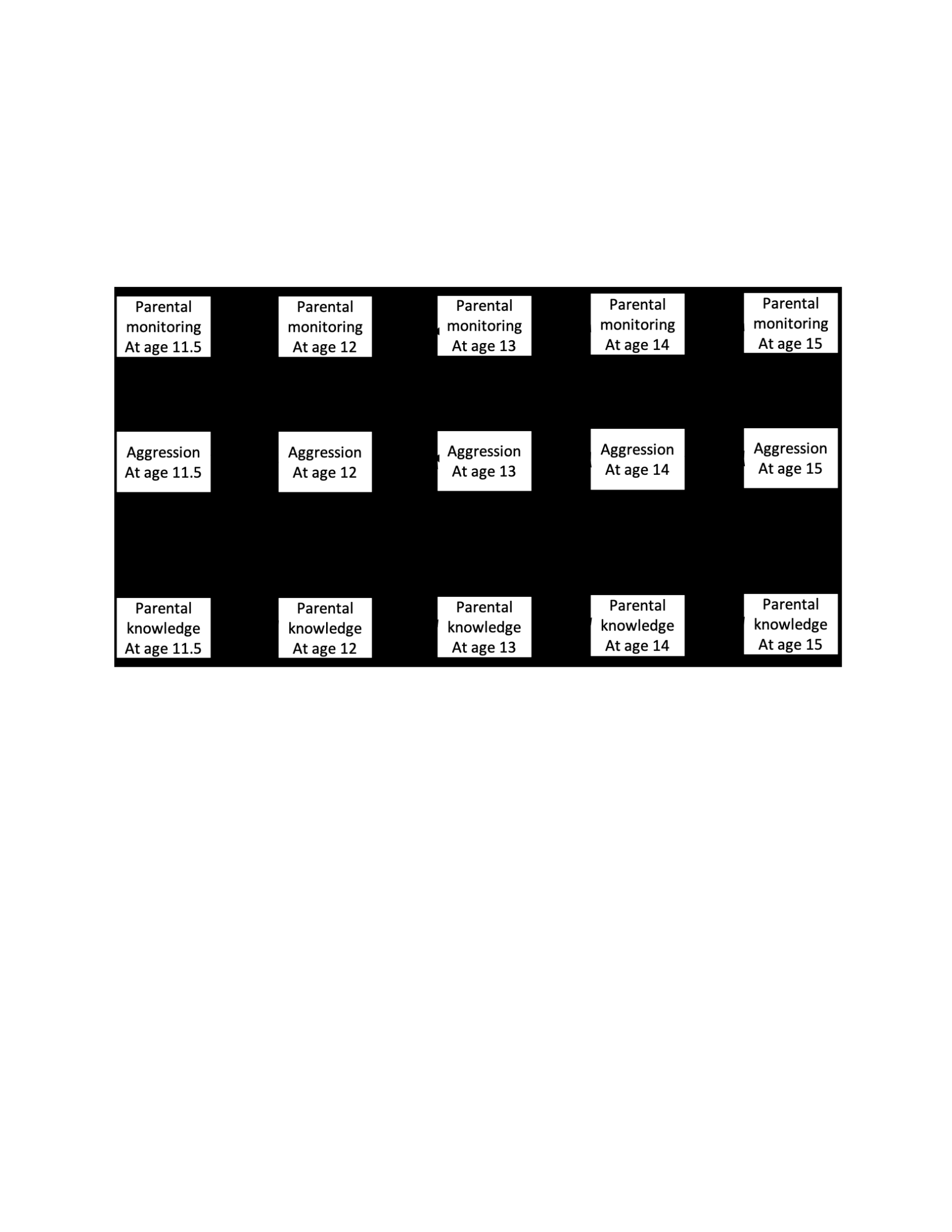
7
model could further differentiate these two concepts by controlling the effects on each other. The
desirable implications of such a study are discussed in the following section.
Figure 1
The Hypothesized Structural Model between Parental Monitoring and Parental Knowledge
Note. The effects of mothering and fathering would be tested separately in this model. Intervention status would be
controlled as a covariate in all model.

8
Different Roles of Mothers and Fathers in Parenting
Several studies have indicated that maternal parenting and paternal parenting have unique
contributions on adolescent development (Hoeve et al., 2011; Jeynes, 2016; Murray et al., 2014;
Van Heel et al., 2019). For example, Jeynes (2016) conducted a meta-analysis that included 34
studies and demonstrated that fathers play a unique role in parenting that is different from
mothers’ roles in children’s development controlling for psychological, sociological, and
academic measures. In particular, Hoeve et al. (2011) examined whether parenting styles of
fathers and mothers had different associations with adolescent behavior problems. They found
that father’s neglectful parenting style has a long-term (i.e., 5 years) association with male’s
delinquency, while this is not the case for mother’s neglectful parenting style. Thus, there is
every reason to believe that the effects of maternal parenting on adolescent behavior problems
may differ from the effects of paternal parenting (Hoeve et al., 2011; Keijsers et al., 2010).
Viewing the influences of mothers and fathers on children as the same and investigating mother
and father as a whole – “parent” – may lose some important information (Jeynes, 2016). It is
worthwhile to examine the effects of mothers and fathers separately.
However, except one study on delinquency (Keijsers et al., 2010) that found the majority
associations between parental knowledge and adolescent behaviors occurred to mothers, to my
best knowledge, no prior research examined the associations between adolescent aggression with
parental monitoring and parental knowledge considering the potential different roles of mothers
and fathers. Therefore, the current study adds to literature by examining parental monitoring and
parental knowledge with mothers’ and fathers’ perspectives separately (i.e., maternal monitoring,
paternal monitoring, maternal knowledge, and paternal knowledge) in the association with
adolescent aggressive behavior problems.

9
Three Potential Moderators on the Associations between Parental Monitoring and Parental
Knowledge and Adolescent Aggressive Behaviors
Parent-Adolescent Relationship Quality. An extensive body of studies have illustrated the
effects of parent-child relationship quality on adolescent behavior problems (for more details, see
the Literature Review section). Importantly, several studies demonstrated the moderation effect
of parent-adolescent relationship quality on the associations between adolescent delinquency
with parental monitoring and parental knowledge, and found that under high parent-adolescent
relationship quality, the associations between adolescent delinquency and parental knowledge as
well as parental monitoring were stronger than under low relationship quality (e.g., Keijsers et
al., 2009; Lippold et al., 2014). However, no existing studies show the moderating effect of
parent-child relationship quality on the associations between adolescent aggressive behavior
problems with parental monitoring and parental knowledge.
The integrative model of parenting style proposed by Darling and Steinberg (1993) indicates
that parenting style as an overarching characteristic (e.g., parent-child interactions, including
emotion, relationship) impacts the associations between specific parenting practices and youth
outcomes. In accordance with the integrative model of parenting style (Darling & Steinberg,
1993), several empirical studies have demonstrated the moderation effect of parenting style on
the association between adolescent risk behaviors (e.g., sexual, substance use, delinquency) and
specific parenting practices (e.g., Abar et al., 2014; Mounts, 2002; Zhengyan et al., 2007). Thus,
it is possible that parent-adolescent relationship quality may influence the associations of
parental monitoring and parental knowledge with adolescent aggressive behavior problems, and
the current study provides insight on this issue.

10
In addition, to further extend the literature, the moderating role of parent-adolescent
relationship quality in the current study is tested separately on mothers and fathers in terms of
their monitoring and knowledge. If high quality parent-adolescent relationships facilitate the
positive effects of parenting on adolescent aggressive behavior problems, researchers will be
able to take this evidence into account when adding the factor of parent-adolescent relationship
quality into their proposed adolescent aggression intervention programs. In addition, if the
moderation effect of parent-adolescent relationship quality differs between mothers and fathers,
the implications for mothers and fathers should be suggested accordingly. Thus, it is important
and necessary to examine the moderation effect of parent-child relationship quality on the
associations between adolescent aggressive behavior problems with parental monitoring and
parental knowledge.
Parent-Adolescent Communication Quality. The process of parents actively monitoring
and parents knowing their adolescents involves the communication between parents and
adolescents. Communication is key to build and enhance connectedness and intimacy between
parents and adolescents (Finkenauer et al., 2002). High quality of parent-adolescent
communication may contribute to high quality relationship between parents and adolescents
(Guilamo-Ramos et al., 2006). It has been established that higher communication quality
between parents and adolescents is related to fewer adolescent behavior problems (Clark &
Shields, 1997; Guilamo-Ramos et al., 2006; Yu et al., 2006). However, little is known about the
role of parent-adolescent communication quality in the association between parental monitoring
and parental knowledge with adolescent aggressive behavior problems. Theoretically, similar to
parent-adolescent relationship quality, high quality parent-adolescent communication can create
a warm and friendly family environment, which may enhance the positive effects of parents on

11
their children (Darling & Steinberg, 1993). Thus, the current study extends the literature by
examining whether parent-adolescent communication quality moderates the associations of
parental monitoring and parental knowledge with adolescent aggressive behavior problems. In
addition, the moderating role of parent-adolescent communication quality is examined separately
on mothers and fathers regarding their monitoring and knowledge. These examinations could
help researchers thoroughly understand the nature of the relationship between adolescent
aggressive behavior problems and parental monitoring as well as parental knowledge to better
understand how to efficiently and effectively prevent adolescent aggression.
Examining the moderating role of parent-adolescent communication quality on the
associations between adolescent aggression and parental monitoring and parental knowledge has
several practical implications for parents. If parent-adolescent communication quality is
demonstrated to have moderating effects, this will provide parents with concrete and feasible
suggestions on how to use parenting as an effective way to prevent their child’s aggression. For
example, parents could often show a real interest in and consider their child’s ideas. Meanwhile,
parents should avoid criticizing and refusing their child’s ideas. Through appreciating and
encouraging their child’s ideas, parents can create high communication quality with their child,
which in turn will strengthen the protective effects of parenting on children’s behavior problems.
Adolescent Gender. Although most research examining the associations between parental
monitoring and parental knowledge with adolescent aggressive behavior problems has
considered adolescent gender differences, the findings have been mixed. Some research did not
find the gender differences in the association between adolescent behavior problems and
parenting (Fosco et al., 2014; Kawabata et al., 2012; Kuppens et al., 2013), while some
demonstrated the gender differences (Kerr et al., 2010; Reitz et al., 2007). For these studies

12
discovering gender differences, the results were inconsistent. For example, Buehler et al. (2006)
illustrated that in a low level of parental knowledge was associated with more externalizing
problems for boys than girls. On the contrary, Neumann et al. (2010) found that the protective
effect of parental knowledge on adolescent antisocial behaviors was stronger for girls than for
boys. Given the mixed evidence in gender differences, the current study contributes to this field
by longitudinally examining the moderating role of youth gender on the prospectively reciprocal
relationships between adolescent aggression and parental monitoring and parental knowledge.
Current Study
In order to demonstrate the function of parental monitoring and parental knowledge as two
different aspects of parenting on adolescent aggressive behavior problems, this study
distinguishes the measures between these two and longitudinally examines the influence of
parental monitoring and parental knowledge on adolescent aggressive behavior problems in one
model. Four research questions will be investigated. Importantly, to provide a more
comprehensive picture about these associations and to take the possible different roles of
mothering and fathering in adolescent development into account, mothers and fathers will be
examined separately in terms of their parental monitoring and parental knowledge for each
research question.
Research Question 1. Are there reciprocal associations between adolescent aggressive
behavior problems with parental monitoring and parental knowledge?
Hypothesis 1. According to control system theory (Bell, 1977) and coercive family process
theory (Patterson, 1982), the associations between children’s aggressive behavior problems with
parental monitoring and parental knowledge are hypothesized to be bidirectionally negative.
Specifically, lower levels of parental monitoring will lead to more adolescent aggression, and

13
more adolescent aggression will result in lower levels of parental monitoring. A similar
hypothesis applies to the relationship between parental knowledge and adolescent aggressive
behavior problems. Control system theory points out that the associations between parenting and
child’s externalizing behavior problems are bidirectional because of the existing effects of
parents on children and the existing effects of children on parents (Bell, 1977; Reid et al., 2002).
The influence between parents and children is documented as a dynamic, bidirectional process
(Lytton, 1990; Pardini, 2008). Therefore, the associations between parental monitoring and
parental knowledge with adolescent aggressive behavior problems can be considered as
bidirectional. In addition, according to coercive family process (Patterson, 1982), there are
reciprocal effects between anti-social children and the negative behaviors of their parents. Inept
parental disciplinary tactics can foster children’s aggressive behaviors (Patterson, 1982); in turn,
children’s aggressive behaviors increase negative parenting practices. In other words, when
children experience less parental monitoring, they may engage in more problematic aggressive
behaviors. When children engage in more aggressive behavior problems, parenting practices may
become more negative, which may result in less parental monitoring.
Research Question 2. Does the quality of parent-adolescent relationship moderate the
associations of parental monitoring and parental knowledge with adolescent aggressive behavior
problems?
Hypothesis 2. According to the integrative model of parenting style that encompasses
parenting practice, parenting style, and children’s behavior outcomes (Darling & Steinberg,
1993), parenting style is conceptualized as a context that moderates the relationship between
specific parenting practices and specific children’s outcomes. In this integrative model, parenting
style is displayed across a range of parent-child interactions, including emotion, relationship, etc.

14
(Darling & Steinberg, 1993). Based on this model, the quality of parent-adolescent relationship is
hypothesized to moderate the associations between parental monitoring and parental knowledge
with adolescent aggressive behavior problems.
Specifically, high parent-adolescent relationship quality creates a positive and friendly
environment between parents and children where parents are more likely to increase their
knowledge about children (Kerns et al., 2001; Sampson & Laub, 1994) and children are more
likely to positively accept their parents’ active efforts in monitoring (Abar et al., 2014; Laird et
al., 2003). Children in a positive and friendly context are more likely to change their behaviors
considering parental monitoring and parental knowledge (Abar et al., 2014; Hoeve et al., 2011).
Hence, under high relationship quality, the associations of parental monitoring and parental
knowledge with adolescent aggressive behavior problems will be stronger. On the other hand,
the associations of parental monitoring and parental knowledge with adolescent aggressive
behavior problems will be weakened under low relationship quality between parents and
adolescents, because in this environment, parents may know less about their children’s
information (Kerns et al., 2001; Sampson & Laub, 1994) and children may have weaker beliefs
in parental monitoring (Fuligni, 1998; Smetana, 1989). Additionally, in the context of low
relationship quality, children may rebel against parents to negatively respond to parental
monitoring and parental knowledge so that the changes in their behaviors become less or even
negative (Abar et al., 2014).
Research Question 3. Does the quality of parent-adolescent communication moderate the
associations of parental monitoring and parental knowledge with adolescent aggressive behavior
problems?

15
Hypothesis 3. In alignment with parent-adolescent relationship quality, this study
hypothesizes that parent-adolescent communication quality moderates the associations of
parental monitoring and parental knowledge with adolescent aggressive behavior problems.
Based on integrative model of parenting style (Darling & Steinberg, 1993), parent-adolescent
communication quality as a facet of parenting style can be conceptualized as a context that may
moderate the associations of parental monitoring and parental knowledge with adolescent
aggressive behavior problems. High parent-adolescent communication quality generates a warm
and friendly environment, in which children may positively respond to their parental monitoring
and parental knowledge (e.g., more likely to change their behavior problems, Yu et al., 2006),
and meanwhile parents may easily and conveniently monitor and know their children’s
information (Hayes et al., 2003; Tilton-Weaver et al., 2010). Therefore, under high parent-
adolescent communication quality, the associations between parental monitoring and parental
knowledge with adolescent aggression are hypothesized to be stronger. In contrast, under the low
communication quality context, children are less likely to change their problematic behaviors
(Yu et al., 2006) and parents are less likely to successfully monitor and know their children’s
information (Lippold et al., 2015; Tilton-Weaver et al., 2010). Thus, the low communication
quality between parents and adolescents is hypothesized to weaken the associations of parental
monitoring and parental knowledge with adolescent aggression.
Research Question 4. Does the youth gender moderate the associations between parental
monitoring and parental knowledge with adolescent aggressive behavior problems?
Hypothesis 4. This study hypothesizes that the associations between parenting and
adolescent aggressive behavior problems have gender differences. Because girls tend to have a
more intimate relationship with their parents, they are more likely to share information of their

16
whereabouts and daily activities with parents than boys (Field et al., 1995; Waizenhofer et al.,
2004). Therefore, parents generally have more knowledge about their girls than boys (Pettit et
al., 2001; Smetana & Daddis, 2002). Moreover, because of the relatively high quality of parent-
daughter relationship (e.g., more closeness and less confliction), it may be easier for their parents
to actively make efforts to monitor girls than boys (Kerr & Stattin, 2000). In addition, typically
boys have more aggressive behavior problems than girls and the aggressive behavior problems in
boys are more stable over time than in girls (Broidy et al., 2003). Gender differences exist in
parental knowledge, parental monitoring, and adolescent aggressive behavior problems. Because
of more aggressive behavior problems, less parental knowledge and less parental monitoring in
boys, the changes of parenting may have stronger effects on aggressive behaviors in boys than
girls (Rothbaum & Weisz, 1994). So the associations between adolescent aggressive behavior
problems with parental monitoring and parental knowledge are hypothesized to be stronger for
boys than girls.
Implications of the Current Study
This study can provide some important implications for researchers and parents who care
about adolescent aggressive behavior problems. For example, if the effects of parental
monitoring and parental knowledge on adolescent aggressive behavior problems are
demonstrated to be different, such as parental knowledge rather than parental monitoring (i.e.,
parent-driven behaviors) associated with adolescent aggression, it will suggest that parents
should be encouraged to get more knowledge about their adolescents. The existing empirical
research has been consistently demonstrated that child active disclosure is the main source of
parental knowledge (e.g., Kerr et al., 2010; Stattin & Kerr, 2000). Thus parents are
recommended to encourage their adolescents to proactively disclose information to them in order

17
to effectively prevent or reduce their adolescent aggression. The suggestions to increase parents’
active efforts to monitor their adolescents may be ineffective in terms of reducing their
adolescent aggression.
Moreover, if reciprocal relationships between adolescent aggressive behavior with parental
monitoring and parental knowledge are demonstrated, this will suggest that researchers should
not only focus on the effects of parental monitoring and parental knowledge on adolescent
aggressive behavior, but also pay attention to the impact of adolescent aggressive behavior on
parenting. If adolescent aggressive behavior problems have negative influence on parenting,
educators should not only consider the negative effect of aggressive behavior problems on
adolescents themselves, but also be aware of its impact on their parents. That being said, when
proposing intervention programs, researchers should build in ways that support those parents
who are negatively impacted by adolescent aggressive behaviors.
Additionally, the current study separately examines mothers and fathers on the prospectively
bidirectional relationships between parental monitoring and parental knowledge with adolescent
aggression. If the results show the effects of maternal monitoring and knowledge on adolescent
aggression differ from the effects of paternal monitoring and knowledge (e.g., the degree or even
the direction of effects), researchers should be cautious when suggesting the uniform prevention
information to mothers and fathers. More importantly, this study could provide some robust
evidence on different roles of mothering and fathering in adolescent behavior problems.
CHAPTER II: LITERATURE REVIEW
Parental monitoring is important for adolescent aggressive behavior problems. However,
most of the research in this field does not explore the function of parental monitoring on
adolescent aggressive behavior problems, because the construct of parental monitoring (i.e.,

18
parent-driven behaviors) was not measured appropriately in the existing adolescent aggression
research. Although this issue has been discussed by Stattin, Kerr and colleagues since 2000 (Kerr
& Stattin, 2000; Stattin & Kerr, 2000) and continually argued for almost two decades (Keijsers,
2016; see Racz & McMahon, 2011), this problem still exists in the research on adolescent
aggression. The term parental monitoring has been inconsistently measured and defined in the
literature on adolescent aggression. To review the literature in this field, five broad aspects are
explored: 1) the association between parental monitoring and adolescent aggressive behavior
problems, 2) the relationship between parental knowledge and adolescent aggressive behavior
problems, 3) the effect of parent-adolescent relationship quality on adolescent aggressive
behavior problems, 4) the influence of parent-adolescent communication quality on adolescent
aggressive behavior problems, and 5) youth gender differences on adolescent aggressive
behavior problems and parental monitoring as well as parental knowledge.
Parental Monitoring and Adolescent Aggressive Behavior Problems
When focusing on parental monitoring that refers to parent-driven behaviors, knowledge on
the associations between parental monitoring and adolescent behavior problems is unclear. Some
studies have demonstrated that adolescents who perceived more parental monitoring reported
fewer behavior problems (e.g., Stavrinides et al. 2015; Wang et al., 2011; Wertz et al., 2016;
Willoughby & Hamza, 2011). Whereas several studies did not find any association between
parental monitoring and adolescent behavior problems (e.g., Keijsers, 2016; Keijsers et al., 2010;
Gault-Sherman, 2012). Additionally, others indeed found that more parental monitoring was
associated with more adolescent behavior problems (e.g., Abar et al., 2014; Kerr et al., 2010;
Kiesner et al., 2009; Kapetanovic et al., 2020; Lippold et al., 2014). When particularly focusing
on adolescent aggressive behavior problems, to my best knowledge, no studies exclusively

19
examined the association of parent-driven monitoring behaviors with adolescent aggressive
behavior problems (for a review, see Racz & McMahon, 2011). Most of the existing studies
investigated the relationships between parental monitoring and adolescent delinquent behavior,
risk behavior, and antisocial behavior problems. To review this domain, two examples on
delinquency that exclusively examined parental monitoring were discussed here to provide some
reference for research on aggression.
Keijsers et al. (2010), for instance, examined the reciprocal effects between parental
solicitation, parental control, adolescent disclosure, and adolescent delinquency using a two-
wave longitudinal data (baseline modal age = 14). They used the Dutch translation of scales
developed by Kerr and Stattin (2000) to measure parental solicitation (i.e., how often parents ask
adolescent or friends about unsupervised time), parental control (i.e., the way in which parents
control their child’s activities and friendships), and adolescent disclosure (i.e., adolescents
actively share their parents about friends, activities, and whereabouts). The results demonstrated
the negative bidirectional relationship between adolescent disclosure and adolescent
delinquency. However, the predictive effect of parental monitoring (i.e., solicitation and control)
on adolescent delinquency was not found (Keijsers et al., 2010). Furthermore, one contribution
of the study by Keijsers et al. (2010) is that they examined these reciprocal effects using multi-
informant sources. In other words, they examined parental solicitation, parental control, and
adolescent disclosure from three different reports, namely mother’s report, father’s report and
adolescent self-report. The result was consistently found in father, mother, and adolescent reports
that the adolescent delinquency was not associated with parental solicitation. But interestingly,
they found that maternal solicitation predicted adolescent disclosure. This suggests that although
parental monitoring does not have protective effect against adolescent delinquency, mothers can

20
use solicitations to elicit their child’s disclosure to indirectly influence their child’s problematic
behaviors.
Another example on delinquency is the research by Lippold et al. (2014). In the study,
parental monitoring was operationalized by parental active monitoring efforts to solicit
information and track their children’s activities. Parental knowledge was measured by assessing
youth perceptions of maternal knowledge about how often their mother knows where they are
and who they are with, when they do something really well at school or someplace else away
from home, and how often their mother knows when they do not do things they have asked
him/her to do. Lippold et al. (2014) separately measured parental monitoring and parental
knowledge and examined the effects of those two different parenting on adolescent substance use
and delinquent behavior problems. This research illustrates that parental knowledge predicts
adolescent later substance use and delinquency, while the predictive effect of parental
monitoring on adolescent substance use and delinquency is mediated by parental knowledge.
They suggested that the beneficial effect of parental monitoring on adolescent behavior problems
may be less effective if parental monitoring does not result in parental knowledge. This finding is
partly consistent with Keijsers and her colleagues’ work (2010) that implies the importance of
parental monitoring against adolescent behavior problems via evoking parental knowledge.
In sum, the picture on the association between parental monitoring and adolescent behavior
problems is vague. No previous studies on adolescent aggressive behavior problems, to my best
knowledge, examined the association of parental monitoring with adolescent aggression, let
alone the bidirectional associations. Given the mixed findings in previous research (e.g., Abar et
al., 2014; Keijsers et al., 2010; Lippold et al., 2014), the current study adds to literature by
testing the possible bidirectional associations between parental monitoring and adolescent

21
aggressive behavior problems specifically. As mentioned at the beginning of this study,
aggressive behavior should be considered as a distinct entity from delinquent behavior
(Achenbach et al., 1995; Barnow et al., 2005; Stanger et al., 1997). Developmental research
should investigate aggression and delinquency separately to reveal meaningful, developmental
findings (Bonger et al., 2004). Therefore, the current study extends the literature to
longitudinally examine whether the association between parental monitoring and adolescent
aggressive behavior is bidirectional.
Parental Knowledge and Adolescent Aggressive Behavior Problems
An increasing body of studies consistently demonstrate that high levels of parental
knowledge are associated with low levels of adolescent antisocial behavior, substance use,
delinquency, and risky sexual behavior (Crouter & Head, 2000; Kerr et al., 2010; Stattin & Kerr,
2000; Wang et al., 2011). For example, Stattin and Kerr (2000) illustrated that adolescents who
perceived more parental knowledge reported themselves having fewer norm-breaking behaviors.
Subsequently, Kerr et al. (2010) conducted a two-year longitudinal study among 938 seventh and
eighth graders and their parents. This study also showed that parental knowledge predicted
decreases in adolescent delinquent behavior problems over time, and that adolescent delinquency
predicted decreases in parental knowledge over time. Research involving adolescent aggressive
behavior problems showed similar results to Kerr et al. (2010) (Brody, 2003; Buehler et al.,
2006; Gaertner et al., 2010; Merrin et al., 2019; Reitz et al., 2007; Simons-Morton et al., 2004).
Reitz et al. (2007), for instance, examined the effects of parental knowledge on adolescent
aggressive and delinquent behavior problems by using latent growth curve modeling in the
longitudinal data and illustrated that parental knowledge negatively predicted adolescent
aggressive and delinquent behavior problems. Parental knowledge in this study was measured by

22
assessing the extent to which parents know about their child’s whereabouts and daily activities.
Adolescents perceiving more parental knowledge reported fewer aggressive and delinquent
behavior problems over time. Simons-Morton et al. (2004), as another example, examined the
association between “parental monitoring” and early adolescent aggressive behavior. However,
“parental monitoring” in this study was assessed with how much parents know about their
children in school and free time. The measurement of “parental monitoring” in the study by
Simons-Morton et al. (2004) actually assessed parental knowledge, rather than parental
monitoring . It demonstrated that high levels of parental knowledge predicted fewer adolescent
subsequent aggressive behavior problems (Simons-Morton et al., 2004). Last example by Merrin
et al. (2019) used an accelerated longitudinal design to examine the association between parental
behavior and the developmental changes of adolescent aggression from Grade 5 to Grade 11.
Parental behavior in this study was operationalized as parental monitoring (i.e., established
familiar rules) and parental knowledge (i.e., parental awareness regarding schoolwork and
attendance, peer relationships, alcohol or drug use, and weapon possession) combined. They
found that individuals who reported higher average rates of parental behavior had lower rates of
deviant and violent behaviors during middle and high school. Moreover, when controlling for the
average level of parental behavior, within-person findings showed that individuals who
perceived more parental behavior than their typical level reported fewer deviant and violent
behaviors. This finding suggests that when parents increase knowledge respective to their typical
level, their child may engage in fewer deviant and violent behaviors.
In addition, regarding the direction of effects between parental knowledge and adolescent
aggression, the study by Stavrinides et al. (2015) investigated this focusing on bullying and
victimization using a two-wave data with a 6-month interval. Parental knowledge in their study

23
was measured by an adaptation of Stattin and Kerr’s (2000) questionnaire, which includes
parental solicitation, parental control, and child disclosure. Three-hundred and forty-eight early
adolescents (at wave 1 mean age = 13.5 years) were included. Bullying is a type of aggressive
behavior (Olweus, 1993). Results related to bullying are presented here. They found that parental
solicitation negatively predicted bullying. One possible explanation for the beneficial effect of
parental solicitation on bullying is that parental solicitation (e.g., explicating asking their
children’s information about whereabouts) may create an environment in which children might
find it no longer easy to bully without being discovered by their parents. Moreover, Stavrinides
et al. (2015) uncovered that parental control and child disclosure predicted more bullying and
bullying predicted higher levels of subsequent parental control.
In summary, the negative association between parental knowledge and adolescent aggressive
behavior problems is supported by prior studies (e.g., Gaertner et al., 2010; Reitz et al., 2007;
Simons-Morton et al., 2004). Although Stavrinides et al. (2015) illustrated the reciprocal
association between parental knowledge and bullying, the findings in their study are inconsistent
with existing research on delinquency that demonstrated the negative bidirectional associations
between parental knowledge and adolescent delinquency (e.g., Gaertner et al., 2010; Keijsers et
al., 2010; Kerr et al., 2010). Except the research on bullying (i.e., a special type of aggression) by
Stavrinides et al. (2015), no previous studies longitudinally test the possible reciprocal
relationships between parental knowledge and adolescent general aggressive behavior problems,
while simultaneously accounting for parent-driven monitoring behaviors. The current study
therefore extends the literature by using a longitudinal approach to demonstrate whether the
negative relationship between parental knowledge and adolescent aggressive behavior problems
is bidirectional while accounting for parental monitoring.

24
Effect of Parent-Adolescent Relationship Quality on Adolescent Aggressive Behavior
Problems
Predictive Effect of Parent-Adolescent Relationship Quality on Adolescent Aggressive
Behavior Problems
The quality of parent-adolescent relationship is associated with adolescent externalizing and
risk behavior problems (Pinquart, 2017). For example, parent-child conflict predicts increases in
adolescent externalizing behavior problems (Klahr et al., 2011), while parent-child warm
relationship quality is associated with fewer adolescent externalizing behavior problems
(Pinquart, 2017). In particular, Fosco et al. (2014) explored the predictive function of parent-
adolescent hostile relationships on adolescent aggressive behavior. This research demonstrated
that parent-adolescent hostile relationships in seventh grade positively predicted adolescent
aggressive behaviors in ninth grade (Fosco et al., 2014). Moreover, the meta-analysis study by
Pinquart (2017) indicated that parent-child relationship was associated with children’s
externalizing behavior problems. Specifically, warm parent-child relationships had a small
negative association with externalizing problems (r = -.18, p < .05), while harsh parent-child
relationships were associated with higher externalizing problems (r = .21, p < .05). A study by
Buehler et al. (2006) illustrated that hostile relationship between parents and youth positively
predicted adolescent externalizing behavior problems, while the acceptant relationship between
parents and youth did not have predictive function on adolescent externalizing behaviors.
Besides the direct effect of parent-child relationship quality on externalizing behaviors, a
body of research has demonstrated the indirect effects of the quality of parent-child relationship
on adolescent behavior problems via parental monitoring and parental knowledge. For example,
Ary et al. (1999) illustrated that families with high levels of conflict and low positive family

25
relations were more likely to have poor parental monitoring, which further predicted the
increases of adolescent problem behaviors, such as antisocial behavior, high risk sex, and
substance use. They examined the family relationship (conflict and positive relations) that
included every family member (e.g., inter-parent relationship, inter-sibling relationship, and
parent-child relationship), rather than just focusing on parent-adolescent relationship. Similarly,
Kapetanovic et al. (2019) illustrated the indirect effect of adolescent connectedness to parent on
adolescent delinquent behavior and substance use through parental knowledge (i.e., adolescent
disclosure, parental solicitation, and parental control). This study showed that a close
relationship between parents and adolescents was associated with more parental knowledge at
the same time point, which further predicted adolescent delinquent behavior at a subsequent time
point.
Moderation Effect of Parent-Adolescent Relationship Quality on the Associations between
Adolescent Aggressive Behavior Problems and Parenting
No previous evidence shows the moderation effects of parent-adolescent relationship quality
on the associations between adolescent aggressive behavior and parental monitoring or parental
knowledge. Few studies investigated the moderation effect of parent-child relationship quality on
the associations between monitoring/knowledge and youth behavior problems (e.g., delinquency,
antisociality) (e.g., Abar et al., 2014; Lippold et al., 2014; Keijsers et al., 2009). Keijsers et al.
(2009), for instance, found when having a high level of supportive relationship between parents
and adolescents, the association between adolescent delinquent behavior and monitoring
(defined in this study as solicitation) became stronger when having a low level of supportive
relationship. Keijsers et al. (2009) discovered that a greater decrease in parental control was
associated with a greater increase in adolescent delinquent behavior under a low level of

26
supportive relationship between parents and adolescents. Conversely, a greater decrease in
parental control was related to a less increase in adolescent delinquency under a high level of
supportive relationship between parents and adolescents. Consistently, another example by
Lippold et al. (2014) found that under a high level of parental warmth, the predictive effect of
parental monitoring on adolescent behavior problems via parental knowledge was stronger
compared to under a low level of parental warmth.
In addition, Abar et al. (2014) used the first 4 waves of the National Longitudinal Study of
Youth 1997 to examine the moderating role of parent-adolescent relationship quality in the
association between parental knowledge and adolescent substance use and delinquency. Results
showed that the association between delinquency and parental knowledge becomes stronger
under a high-quality parent-adolescent relationship. Therefore, high quality of parent-adolescent
relationship has a protective function on the association between parenting and adolescent
behavior problems. The associations between monitoring/knowledge and adolescent behavior
problems appear to be stronger when relationships are warm and supportive.
As stated earlier, findings regarding delinquency or broad measures of externalizing
problems may not be generalized to aggression because of differences between delinquency and
aggression (Achenbach et al., 1995; Barnow et al., 2005; Stanger et al., 1997). Thus, in this
study, the moderating effects of parent-adolescent positive affective quality on adolescent
aggression specifically will be examined.
Influence of Parent-Adolescent Communication Quality on Adolescent Aggressive
Behavior Problems
The majority of research on parent-adolescent communication focuses on exploring the
influence of amount of communication on adolescent risk behaviors, such as sexual behavior,

27
smoking, tobacco and alcohol use (e.g., Guilamo-Ramos et al., 2006; Hutchinson et al., 2003;
Jaccard et al., 2002; Litrownik et al., 2000; Simons-Morton, 2002). The more communication
adolescents have with their parents, the fewer risk behaviors (e.g., sexual activities, smoking)
adolescents engage in (Dittus et al., 1999; Huebner & Howell, 2003; Litrownik et al., 2000;
Miller et al., 1999). The amount of parent-adolescent communication also predicts decreases in
adolescent externalizing behavior problems (Cernkovich & Giordano, 1987; Griffin et al., 2000).
Unlike the extensive body of studies on parent-adolescent relationship quality and adolescent
behavior problems, limited research has investigated the relation between quality of parent-
adolescent communication and adolescent behavior problems. High correlation between parent-
adolescent communication quality and parent-adolescent relationship quality (Guilamo-Ramos et
al., 2006; Shek, 2010) may partly explain the lack of research on communication quality.
However, parent-adolescent communication quality is indeed distinct from parent-adolescent
relationship quality. Parent-adolescent relationship quality emphasizes the affective
connectedness between parents and adolescents, such as warm, hostile, supportive, conflictive,
(e.g., Ary et al., 1999; Fosco et al., 2014; Keijsers et al., 2009; Pinquart, 2017), while parent-
adolescent communication quality underlines the characteristic of communication, such as how
to communicate (McCubbin & Thompson, 1987).
A handful of studies demonstrated that higher quality of parent-adolescent communication
predicts fewer adolescent behavior problems (Guilamo-Ramos et al., 2006; Clark & Shields,
1997; Yu et al., 2006). For example, the study by Hartos and Power (2000) investigated the
associations between parent-adolescent communication quality and adolescent problem
behaviors (i.e., anxious/depressed behaviors and aggressive behaviors) using both mother report
and adolescent report. They found that lower quality of mother-adolescent communication is

28
related to adolescents displaying more aggressive behaviors. Wallenius and Punamaki (2008)
conducted a two-year longitudinal study to examine the moderating role of parent-adolescent
communication quality in the relation between digital game violence and aggression among 316
12- to 15-year old adolescents. The results showed that poor parent-adolescent communication is
associated with higher levels of aggression. Meanwhile, they demonstrated that poor parent-
adolescent communication quality strengthens the negative effects of digital game violence on
adolescent aggressive behaviors. In addition, the negative relationship between parent-adolescent
communication quality and adolescent aggression was also illustrated in the cross-sectional study
by Wallenius and her colleagues (2007).
As we can see, the existing research in this field has consistently demonstrated the negative
association between parent-adolescent communication quality and adolescent aggression.
However, no studies further examined the role of parent-adolescent communication quality in the
associations between parental monitoring, parental knowledge and adolescent aggressive
behaviors. The current study therefore adds to literature by exploring the moderating role of
parent-adolescent communication quality in the relationships between adolescent aggression and
parental monitoring as well as parental knowledge.
Gender Differences in Adolescent Aggressive Behavior Problems and Parenting
Adolescent aggressive behavior problems show gender differences (Broidy et al., 2003; Card
et al., 2008). Generally, boys have more physical aggressive behavior problems than girls and
physical aggressive behavior problems in boys are more stable over time (Broidy et al., 2003).
The bulk of research shows that parenting of boys and girls during adolescence is different (e.g.,
Buehler et al., 2006; Neumann et al., 2010; Radziszewska et al., 1996; Reitz et al., 2007). For
example, during adolescence boys are more likely to have unengaged parents and less likely to

29
have authoritative parents than girls (Radziszewska et al., 1996). Girls perceive more parental
knowledge than boys (Pettit et al., 2001; Smetana & Daddis, 2002), and they are more closely
monitored by their parents than boys (Kerr & Stattin, 2000).
When focusing on parental monitoring and parental knowledge, however, the findings
regarding whether the association between parenting and adolescent behavior problems has
gender differences have been mixed. A body of research did not find gender differences in the
association between adolescent behavior problems and parenting (e.g., Fosco et al., 2014;
Kawabata et al., 2012; Kuppens et al., 2013; Pinquart, 2017). For instance, the meta-analysis
study by Pinquart (2017) did not find a moderation effect of child gender on the relationship
between parental monitoring and children’s externalizing behavior problems. This meta-analysis
indicates that the association between parental monitoring and children’s externalizing behavior
problems does not differ by gender. Moreover, Stattin and Kerr (2000) also demonstrated no
gender differences on the association between parental knowledge and adolescent delinquency.
On the other hand, some of research has discovered gender differences in the associations
between adolescent behavior problems with parental monitoring and parental knowledge.
However, findings are mixed with some of them showing stronger associations for boys and
others for girls. For example, the study by Reitz et al. (2007) demonstrated that parental
knowledge had a stronger effect on boys’ aggressive and delinquent behavior problems than
girls’ among 13- to 14-year old adolescents through contact with peers. Specifically, the
decreases in parental knowledge were associated with the increases in contact with peers for
boys, not for girls, which were further related to increases in aggressive and delinquent behavior
problems. Buehler et al. (2006) found that boys were more likely to have externalizing problems
when perceiving a low level of parental knowledge than girls during adolescence, reflecting

30
stronger effect of parental knowledge on behavior problems for boys than for girls. However,
Kerr et al. (2010) discovered that adolescent delinquent behavior problems significantly
predicted the decreases in parental knowledge and parental control (one aspect of parental
monitoring ) for girls, but not for boys. Neumann et al. (2010) demonstrated that the protective
effect of parental knowledge on adolescent antisocial behaviors was stronger for female than
male adolescents.
In conclusion, the findings in terms of gender differences on the association between
parenting and adolescent behavior problems are inconsistent. The current study with a focus on
adolescent aggressive behavior problems further explores whether gender differences exist in the
associations between adolescent aggressive behavior problems with parental monitoring and
parental knowledge. The findings from this study can provide significant implications for
researchers, educators, and parents. For example, if there are gender differences, this will suggest
researchers and educators come up with different intervention programs for boys and girls, and
this will also recommend parents using different parenting behaviors according to their child’s
gender in order to effectively prevent and reduce children’s aggressive behavior problems.
Overview of Literature Review
After reviewing the relevant bodies of literature on which the current study rests, we can see
that adolescent aggressive behavior problems are negatively associated with parental knowledge
(e.g., Brody, 2003; Buehler et al., 2006; Gaertner et al., 2010; Merrin et al., 2019; Pinquart,
2017; Reitz et al., 2007; Simons-Morton et al., 2004). However, more parental monitoring is not
consistently found to be related to fewer adolescent delinquency and antisocial behaviors (e.g.,
Kerr et al., 2010; Laird et al., 2010; Lippold et al., 2014). Moreover, although the reciprocal
relationships between adolescent externalizing behavior problems (including both aggression and

31
delinquency) and parental knowledge have been investigated to some extent, the findings were
mixed (Brody, 2003; Pinquart, 2017). Most studies focus on adolescent delinquency to examine
the reciprocal associations between adolescent delinquency with parental knowledge and
parental monitoring (e.g., Gaertner et al., 2010; Keijsers et al., 2010) and do not examine
aggression specifically.
Parent-adolescent relationship quality has a predictive effect on adolescent aggressive
behavior problems (e.g., Buehler et al., 2006; Fosco et al., 2014; Klahr et al., 2011; Pinquart,
2017), and parent-adolescent relationship quality moderates the effects of parental knowledge on
adolescent delinquency (Abar et al., 2014; Keijisers et al., 2009). Parent-adolescent
communication quality is negatively associated with adolescent aggression (Hartos & Power,
2000; Wallenius & Punamaki, 2008; Wallenius et al., 2006) but its moderating effects are
unknown. Last, the findings regarding adolescent gender differences in the associations of
parental monitoring and parental knowledge with adolescent behavior problems have been mixed
(e.g., Fosco et al., 2014; Kawabata et al., 2012; Kuppens et al., 2013; Neumann et al., 2010;
Reitz et al., 2007).
Building on these research findings, the current study extends previous examinations by
investigating the possible reciprocal associations between adolescent aggressive behavior
problems and parental monitoring as well as parental knowledge. Specifically, this study
distinguishes the measures of parental monitoring from those of parental knowledge and uses a
longitudinal approach simultaneously accounting for each other. Second, the current study
examines three potential moderating roles on the associations between adolescent aggressive
behavior problems with parental monitoring and parental knowledge: 1) parent-adolescent

32
affective quality, 2) parent-adolescent communication quality, 3) adolescent gender. Third, this
study adds to literature by examining mothers and fathers separately.
CHAPTER III: METHOD
Participants
Data for the current study come from a subset of the PROSPER project (Promoting School-
Community-University Partnerships to Enhance Resilience; Spoth et al. 2004). The PROSPER
project is a large-scale effectiveness trial of a community-university partnership model for
delivering evidence-based interventions (Spoth et al., 2017) and includes 28 rural communities
randomized into 14 intervention and 14 control units. A family-focused and school-based
sequence of evidence based preventive interventions was implemented in PROSPER intervention
communities (see Spoth et al., 2004). Community-university teams selected from a menu listing
family-focused and school-based interventions. All teams chose the Strengthening Families
Program: For Parents and Youth 10-14 (SFP: 10-14) as the family-focused intervention. SFP
targets adolescent skills training (e.g., teaching effective communication and problem solving
between parents and children) to reduce adolescent aggressive behavior problems (Spoth et al.,
2000). For the school-based program six teams chose the All Stars program (McNeal et al.,
2004), and four each chose Life Skills Training (Botvin & Kantor, 2000) and Project Alert
(Ellickson et al., 2003). All three programs target decision making, social norms regrading
substance misuse and personal goal setting. A random sample of 2,267 families of PROSPER
youth were invited to participate in an in-home data collection, and 977 families at wave 1
completed the intensive in-home interviews. Wave 1 was finished in the fall semester of 6th
grade. Wave 2 was finished in the spring semester of 6th grade and Wave 3 to Wave 5 were
finished annually in the spring thereafter for 3 years (i.e., spring 7th grade, spring 8th grade, and

33
spring 9th grade). The current study draws on all five waves of in-home data (N = 977 at wave 1).
Fifty-two percent of current analytic sample at wave 1 were female; 87% of them were
Caucasian. Mean age (years) of adolescents from wave 1 to wave 5 were 11.29 (SD = .49), 11.94
(SD = .47), 12.95 (SD = .46), 13.93 (SD = .50), and 14.90 (SD = .47).
Wave 1 comparisons between families with and without wave 5 data showed families
missing data at wave 5 did not differ on any variables at wave 1 used in this study (see Measures
below). Given this finding, the data in this study is conservatively assumed to be missing at
random (Schlomer et al., 2010). This study was approved by the Institutional Review Board of
University at Albany, SUNY, on March 6, 2020.
Measures
Parental Monitoring
Based on the research by Kerr et al. (2010), the operational definition of parental monitoring
in the current study is that parents actively make efforts to gain the knowledge of their child’s
whereabouts and activities. Parental monitoring was measured by assessing the degree of
parental active monitoring efforts to solicit information from them and set up monitoring
relatedrules about their activities (Lippold et al., 2014). In total, five Likert-scaled items
1
were
included (1 = Almost always true to 5 = Almost always false), such as “I expect my child to let
me know in advance who will be driving for my child and his/her friends when they go out (to
parties, motives, etc.).” Items were recoded so that higher scores mean higher parental
monitoring. The same five items were reported by mothers and fathers, separately. The average
scores of these five items were used to create maternal monitoring and paternal monitoring
variables. Alpha reliabilities of parental monitoring ranged from .63 to .76 across five waves.
1
These five Likert-scaled items were originally used to measure “parent action” in PROSPER tech report (Lippold,
2009).

34
Parental Knowledge
According to research by Crouter and Head (2002), parental knowledge was
operationalized as how much information parents know about their child’s whereabouts and
activities. In total, five Likert-scaled items were included (1 = Almost always to 5 = Almost
never). These five items were used in prior studies to measure parental knowledge (e.g., Lippold
et al., 2014; Lippold et al., 2015), indicating good validity. An example item is “How often do
you know who this child is with when he or she is away from home.” Mothers and fathers
completed these five items, separately. Items were recoded so that higher scores mean higher
parental knowledge, and the mean scores of the five items were used to create the composites of
maternal knowledge and paternal knowledge. Alpha reliabilities of parental knowledge ranged
from .66 to .72 across 5 waves.
Adolescent Aggressive Behavior
Aggressive behavior among adolescents was measured using the Child Behavior Check
List (CBCL), which is a widely used parent-reported measure for assessing children’s
internalizing and externalizing behavior problems (Achenbach, 1991; Achenbach & Rescorla,
2001). The CBCL externalizing behavior problems subscale includes a general measure of
aggressive behavior problems (Achenbach, 1991; Achenbach & Rescorla, 2001). In this study,
the 17-item aggressive behavior subscale was used to measure adolescent aggressive behavior
problems. Mothers and fathers were asked to rate how true each of the 17 items was for their
adolescents within the past 6 months, such as physically attacking people, destroying things, and
teasing a lot. Items were scored on a 0-2 scale (0 = Never true, 1 = Sometimes true, 2 = Always
true) and were averaged to create an aggressive behavior problems measure. Alpha reliabilities
of adolescent aggressive behavior problems were from .86 to .91 across 5 waves.

35
Parent-Adolescent Affective Quality
Parent-adolescent affective quality was measured using seven Likert-scaled items (1 =
Always to 7 = Never). Items were designed to measure adolescents’ perceptions of parental
hostility and warmth toward them (Conger et al., 1994; Lippold et al., 2014), such as how often
adolescents think their mothers/fathers get angry at them, and how often adolescents think their
mothers/fathers act loving and affectionate toward them. Items were recoded so that higher
values mean higher parent-adolescent positive affective quality. Adolescents completed items for
mothers and fathers, separately. The average scores were used to represent mother-adolescent
positive affective quality and father-adolescent positive affective quality. Alpha reliabilities of
parent-adolescent positive affective quality were from .75 to .89 across 5 waves. Given the high
stability between waves (rs = .61 to .78), in order to efficiently use parent-adolescent positive
affective quality as a grouping/moderator variable, time-specific indices were averaged (Abar et
al., 2014). To test Hypothesis 2 - whether the associations of parental monitoring and parental
knowledge with adolescent aggression differ between high and low positive affective quality
circumstances - a median split approach was then applied to create two parent-adolescent
positive affective quality groups: low positive affective quality group (< median) and high
positive affective quality group (
≥
median) (Frazier et al., 2004; Lippold et al., 2011).
Parent-Adolescent Communication Quality
Parent-adolescent communication quality was measured by eight Likert-type items (1 =
Always to 7 = Never), which is an adaptation of the Parent-Adolescent Communication Scale
(Barnes & Olson, 1982). Items were designed to measure adolescents’ perceptions of
communication quality from their parents including negative and positive communication, such
as how often adolescents think their mothers/fathers refuse, even after discussion, to work out a

36
solution to the problem, and how often adolescents think their mothers/fathers consider their
ideas for solving the problem. All items were recoded so that higher values mean higher levels of
parent-adolescent communication quality. The average scores of these eight items were used to
create the composites of mother-adolescent communication quality and father-adolescent
communication quality. Alpha reliabilities of parent-adolescent communication quality were
from .77 to .90 across five waves. Similar to parent-adolescent positive affective quality, given
the high stability between waves (rs = .61 to .70), time-specific indices were averaged to
efficiently treat parent-adolescent communication quality as a grouping/moderator variable
(Abar et al., 2014). To test the Hypothesis 3 that is whether the associations of parental
monitoring and parental knowledge with adolescent aggression differ between high and low
communication quality circumstances, a median split approach was then applied to create two
parent-adolescent communication quality groups: low communication quality group (< median)
and high communication quality group (
≥
median) (Frazier et al., 2004; Lippold et al., 2011).
Intervention Status
Intervention status (0 = Control, 41%, N = 401; 1 = Intervention, 59%, N = 574) that may be
associated with adolescent aggressive behavior problems (Spoth et a., 2000) was controlled in all
models as a covariate.
Data Analysis
Before testing the hypotheses, the longitudinal measurement invariance for parental
monitoring, parental knowledge, and adolescent aggression across ages (i.e., from age 11.5 to
age 15) was examined using the means Eq.syntax function of the semTools package in R
(Jorgensen et al. 2018; Mastrotheodoros et al., 2020), in order to validate whether the constructs
across waves were measured the same. Measurement invariance involves three components,

37
which are configural invariance, metric invariance, and scalar invariance. If the longitudinal
configural invariance is satisfied, this indicates that the same basic organization of one construct
is measured across time. If the longitudinal metric invariance is satisfied, this means that each
item contributes to the latent construct to a similar degree across time. If the longitudinal scalar
invariance is satisfied, this suggests that the mean differences in the latent construct across time
capture all mean differences in the shared variance of the items. Together, if the longitudinal
configural, metric, and scalar invariance of one construct is validated, the longitudinal
measurement invariance of that construct is fully verified (Putnick & Bornstein, 2016).
Following measurement invariance tests, all four hypotheses were tested using Mplus
(Muthén & Muthén, 2017). The current study examined the potential time-specific bidirectional
associations between adolescent aggression and parental monitoring as well as parental
knowledge over three and half years (from age 11.5 and age 15 years old; Hypothesis 1).
Generally, a cross-lagged panel model is suggested to be used to test the bidirectional
associations between two or three variables (Kearney, 2003). The cross-lagged panel model
controls for the stabilities of each variable between adjacent ages and concurrent correlations
between two variables. However, during early- to mid-adolescence (aga 11.5 to age 15), parental
monitoring and parental knowledge (see Lionetti et al., 2019; Laird et al., 2003) and parent-
reported adolescent aggressive behavior problems (e.g., De Haan et al., 2012; Fowler et al.,
2014) have been found to decrease, rather than having stability. Therefore, the current study used
an Autoregressive Latent Trajectory (ALT) model (Bollen & Curran, 2004; Abar et al., 2014;
Laird et al., 2003) to examine the possible time-specific bidirectional associations between
adolescent aggression with parental monitoring and parental knowledge, while simultaneously
accounting for long-term growth in the constructs. The ALT model allows for examination of

38
these shorter-term bidirectional associations in the context of long-term change (Bollen &
Curran, 2004). Specifically, the ALT approach combines growth curve modeling with cross-
lagged paths so that the hypothesized bidirectional associations (cross-lagged paths) can be
examined while controlling for change (or stability if there is not significant change) in the
constructs over time (growth curve model). For example, when the cross-lagged portion of this
model tests whether parental monitoring/parental knowledge at age 11.5 predicts adolescent
aggression at age 12, the long-term change (or stability) is accounted for by estimating a latent
growth curve model for adolescent aggression from age 11.5 to age 15. Because the growth
model for adolescent aggression is a latent-variable model, the ALT approach disentangles the
growth variance among the indicators and the indicators are the residuals after accounting for the
growth. The lagged association is actually a residual regression coefficient after accounting for
the growth. Note centering the intercept of growth model at different ages (e.g., at age 11.5
versus at age 12) does not influence the indicators. Similarly, when the cross-lagged portion of
this model examines whether adolescent aggression at age 11.5 predicts parental
monitoring/parental knowledge at age 12, the long-term change (or stability) is simultaneously
controlled by the growth models of parental monitoring/parental knowledge from age 11.5 to age
15.
The hypothesized ALT model with a linear developmental trend for all constructs is depicted
in Figure 2. Specifically, first, a series of latent growth curve models with intercept-only, linear
slope, and quadratic terms were estimated to model the developmental trend of parental
monitoring, parental knowledge, and adolescent aggressive behavior problems from age 11.5 to
age 15, separately. All factors were allowed to freely covary. The best growth model was
selected based on the model fit indices and statistical attribution of the factors (e.g., whether the

39
slope is significant or not). Then the cross-lagged paths between parental monitoring and
adolescent aggression and between parental knowledge and adolescent aggression were
estimated with the growth models as a way of controlling for the development in these
constructs. Note the intervention status was controlled as a covariate in all models.
Figure 2
The Hypothesized Autoregressive Latent Trajectory Model with Linear Developmental Trend for
All Constructs
Note. The effects of mothering and fathering would be tested separately in this model. Intervention status would be
controlled as a covariate in all models. Bolded lines indicate the associations of interest in current study. I_PM =
intercept of parental monitoring, S_PM = linear slope of parental monitoring, I_Agg = intercept of adolescent
aggression, S_Agg = linear slope of adolescent aggression, I_PK = intercept of parental knowledge, S_PK = linear
slope of parental knowledge
To examine the moderation effects of parent-adolescent affective quality, parent-adolescent
communication quality, and adolescent gender (Hypotheses 2 to 4), a multiple-group analysis
was performed by adding the moderator variable as a grouping variable to the ALT models. All
multiple-group ALT models were first estimated freely and then estimated with cross-group
equality constraints (i.e., only constraining cross-lagged paths to be equal between the high

40
affective quality group and the low affective quality group). A significant chi-square difference
between the free and constrained models indicated a moderation effect. In all the models,
intervention status was controlled as a covariate.
CHAPTER IV: RESULTS
Preliminary Analyses
Descriptive Statistics and Comparisons between Mothering and Fathering
The descriptive statistics of the core study variables across waves are presented in Table 1.
The correlations between core variables are summarized in Table 2. Overall the means of all
variables decreased over time. A series of paired sample t-tests on parental monitoring and
parental knowledge showed that the differences of parental monitoring and parental knowledge
between mother report and father report were significant across ages (ps < .001), such that
mothers always reported more parental monitoring and parental knowledge compared to fathers
from age 11.5 to age 15. Moreover, though the means of mother-reported adolescent aggression
were higher than the means of father report across ages (see Table 1), the differences between
mother report and father report were not statistically significant. The concurrent correlations
between parental monitoring and parental knowledge at each wave ranged from .16 to .40. The
Variance Inflation Factor (VIF) test (i.e., multiple regression models that using parental
monitoring and parental knowledge predicted subsequent adolescent aggression) indicates that
there was no collinearity issue including parental monitoring and parental knowledge in one
model (VIF < 10; Hair et al., 1995).
Table 1
Descriptive Statistics for Core Study Variables across Ages
Mean (SD)
Variable
Age 11.5
Age 12
Age 13
Age 14
Age 15

41
Maternal monitoring
4.82 (.36)
4.77 (.38)
4.67 (.45)
4.58 (.50)
4.42 (.58)
Paternal monitoring
4.64 (.54)
4.58 (.52)
4.48 (.58)
4.34 (.62)
4.19 (.71)
Maternal knowledge
4.35 (.42)
4.34 (.42)
4.33 (.42)
4.31 (.43)
4.24 (.43)
Paternal knowledge
4.20 (.45)
4.22 (.41)
4.19 (.42)
4.16 (.42)
4.12 (.41)
Mother-reported adolescent
aggressive behavior problems
.31 (.28)
.26 (.27)
.27 (.29)
.25 (.27)
.24 (.30)
Father-reported adolescent
aggressive behavior problems
.31 (.30)
.25 (.27)
.24 (.26)
.23 (.25)
.22 (.26)
Mother-adolescent affective
quality
5.83 (.87)
5.91 (.94)
5.77 (1.05)
5.66 (1.07)
5.57 (1.09)
Father-adolescent affective
quality
5.90 (1.02)
5.86 (1.14)
5.70 (1.25)
5.53 (1.22)
5.45 (1.20)
Mother-adolescent
communication quality
5.92 (.90)
5.92 (.96)
5.81 (1.07)
5.71 (1.08)
5.61 (1.06)
Father-adolescent
communication quality
5.92 (1.01)
5.80 (1.13)
5.70 (1.22)
5.08 (1.03)
5.44 (1.20)
Table 2
Correlations between Parental Monitoring, Parental Knowledge, and Adolescent Aggression at
each Age and Lagged Correlations of Parental Monitoring and Parental Knowledge with
Subsequent Adolescent Aggression across Ages
Concurrent correlations
Age 11.5
Age 12
Age 13
Age 14
Age 15
MM-MK
.16
.26
.31
.27
.31
DM-DK
.21
.26
.33
.35
.40
MM-AGG
-.041
-.09
-.16
-.16
-.10
MK-AGG
-.09
-.18
-.21
-.24
-.24
DM-AGG
-.09
-.09
-.12
-.11
-.09
DK-AGG
-.18
-.25
-.16
-.19
-.21
Lagged correlations
Age 11.5àAge 12
Age 12àAge 13
Age 13àAge 14
Age 14àAge 15
MM-AGG
-.09
-.07
-.17
-.09
MK-AGG
-.10
-.19
-.18
-.17
DM-AGG
-.16
-.091
-.071
-.011
DK-AGG
-.18
-.21
-.13
-.15
Note. MM = maternal monitoring, MK = maternal knowledge, DM = paternal monitoring, DK = paternal
knowledge, AGG = adolescent aggression, 1 = non-significant at .05 level. All other correlations are significant at
least at .05 level.
Longitudinal Measurement Invariance

42
The longitudinal measurement invariance for parental monitoring, parental knowledge,
and adolescent aggressive behavior problems across ages was tested and the results are
summarized in Table 3.
Table 3
Fit Indices of Measurement Invariance Analyses for Maternal and Paternal Monitoring and
Knowledge and Mother- and Father-reported Adolescent Aggression across Ages
χ2
df
CFI
RMSEA
ΔCFI
ΔRMSEA
Longitudinal Invariance of Maternal Monitoring across Ages
Configural
581
215
.940
.054
Metric
623
231
.935
.054
-.005
0
Scalar
752
247
.916
.059
-.019
.005
Longitudinal Invariance of Paternal Monitoring across Ages
Configural
656
215
.908
.074
Metric
678
231
.907
.072
-.001
-.002
Scalar
730
247
.900
.072
-.007
0
Longitudinal Invariance of Maternal Knowledge across Ages
Configural
765
215
.894
.065
Metric
803
231
.890
.064
-.004
-.001
Scalar
846
247
.885
.064
-.005
0
Longitudinal Invariance of Paternal Knowledge across Ages
Configural
604
215
.876
.069
Metric
622
231
.875
.067
-.001
-.002
Scalar
646
247
.872
.066
-.003
-.001
Longitudinal Invariance of Mother-Reported Aggression across Ages
Configural
4410
3305
.978
.019
Metric
4466
3369
.978
.018
0
-.001
Scalar
4524
3433
.978
.018
0
0
Longitudinal Invariance of Father-Reported Aggression across Ages
Configural
3963
3305
.978
.017
Metric
4018
3369
.978
.016
0
-.001
Scalar
4078
3433
.978
.016
0
0
Note. CFI: Comparative Fit Index; RMSEA: Root-Mean Square Error of Approximation
The results show that overall the measurement invariance for parental monitoring,
parental knowledge and adolescent aggression across ages was validated using recommended
cutoff values (ΔCFI
≤
.01, ΔRMSEA
≤
.01, Cheung and Rensvold 2002), except maternal
monitoring. For maternal monitoring, the configural invariance (i.e., the same basic organization

43
of the construct is measured across ages) and metric measurement invariance (i.e., each item
contributes to the latent construct to a similar degree across ages) were validated (ΔCFI
≤
.01,
ΔRMSEA
≤
.01), while the scalar measurement invariance (i.e., the mean differences in the
latent construct across ages capture all mean differences in the shared variance of the items) was
partly/not fully evidenced (ΔCFI
=
-.02, ΔRMSEA
≤
.01). This suggests that the measure of
maternal monitoring across ages assessed the same construct, though statistically the latent
means of maternal monitoring across ages might not be compared meaningfully. However, in
practice, this is not an issue because during adolescence parenting changes gradually.
Longitudinal research using constructs with small deviations from invariance during this time
range is acceptable and can still produce practically meaningful interpretation (Putnick &
Bornstein, 2016). Taken together, the results indicate that the measures of parental knowledge,
parental monitoring, and adolescent aggression measured the same constructs across ages.
Model Selection for Latent Growth Curve of Parental Monitoring, Parental Knowledge, and
Adolescent Aggressive Behavior Problems
The model fit indices of a series of growth curve models for parental monitoring, parental
knowledge, and adolescent aggression are summarized in Table 4. As shown in Table 4, from
models with intercept-only to models with intercept and linear slope, the model fit improved
significantly (Δχ2(3) = 35 to 431, p < .001) and the linear slope in all models was statistically
significant and negative (β = -.32 to -1.30, p < .001). This also indicates that parental monitoring,
parental knowledge, and adolescent aggression decreased significantly over time. Adding a
quadratic term in addition to the intercept and linear slope did not significantly improve model
fit, save for maternal monitoring (Δχ2(4) = 7 or 8, p > .05). For maternal monitoring, although
the model fit improved significantly when adding quadratic term (Δχ2(4) = 28, p < .001), the

44
quadratic term was not statistically significant (β = -.29, p = .15). Taken together, the model with
intercept and linear slope was selected as the best fit model for parental monitoring, parental
knowledge, and adolescent aggression in current study.
Table 4
Fit Indices for Growth Curve Models
Construct
Model
χ2
df
RMSEA
CFI
Δ χ2 (df)
Model change
Maternal
monitoring
Intercept-only
465
13
.19
.63
Linear slope
34
10
.05
.98
431(3)
Improved
Quadratic term1
6
6
.01
1.00
28(4)
Improved
Paternal
monitoring
Intercept-only
282
13
.17
.77
Linear slope
18
10
.03
.99
264(3)
Improved
Quadratic term1
10
6
.03
1.00
8(4)
No
Maternal
knowledge
Intercept-only
86
13
.08
.95
Linear slope
25
10
.04
.99
61(3)
Improved
Quadratic term
18
6
.05
.99
7(4)
No
Paternal
knowledge
Intercept-only
51
13
.06
.96
Linear slope
16
10
.03
.99
35(3)
Improved
Quadratic term1
8
6
.02
1.00
8(4)
No
Mother-reported
aggression
Intercept-only
172
13
.11
.95
Linear slope
43
10
.06
.99
129(3)
Improved
Quadratic term1
36
6
.07
.99
7(4)
No
Father-reported
aggression
Intercept-only
83
13
.09
.97
Linear slope
18
10
.03
1.00
65(3)
Improved
Quadratic term1
10
6
.03
1.00
8(4)
No
Note. Model with quadratic term includes linear slope and intercept. Model with linear slope include
intercept. CFI: Comparative Fit Index; RMSEA: Root-Mean Square Error of Approximation
1 = non-significant term at .05 level. All other indicators are significant at least at .05 level.
Associations between Adolescent Aggressive Behavior Problems with Parental Monitoring
and Parental Knowledge
The ALT models depicted in Figure 2 fit the data very well (for mothering: χ2(77) =
181.00, p < .001; RMSEA = .04; CFI = .98; for fathering: χ2(77) = 106.49, p < .001; RMSEA
= .02; CFI = .99). All the significant associations between adolescent aggression with parental
monitoring and parental knowledge were positive (see Table 5), which is inconsistent with the
Hypothesis 1.

45
Table 5
The Standardized Beta Coefficients of Cross-Lagged Associations from Autoregressive Latent
Trajectory Models
Cross-lagged associations
Mothering
Fathering
Parental knowledge Age 11.5àAggression Age 12
.04* (.02)
.04 (.02)
Aggression Age 11.5àParental Knowledge Age 12
.02 (.03)
.03 (.03)
Parental Monitoring Age 11.5àAggression Age 12
-.03 (.02)
-.04 (.02)
Aggression Age 11.5àParental Monitoring Age 12
.02 (.03)
.03 (.03)
Parental knowledge Age 12àAggression Age 13
.00 (.02)
.03 (.02)
Aggression Age 12àParental Knowledge Age 13
.09** (.03)
.03 (.04)
Parental Monitoring Age 12àAggression Age 13
.04* (.02)
-.01 (.03)
Aggression Age 12àParental Monitoring Age 13
-.01 (.03)
-.03 (.04)
Parental knowledge Age 13àAggression Age 14
.07** (.02)
.01 (.03)
Aggression Age 13àParental Knowledge Age 14
.11** (.04)
.08 (.05)
Parental Monitoring Age 13àAggression Age 14
.02 (.02)
.05 (.03)
Aggression Age 13àParental Monitoring Age 14
-.00 (.04)
.01 (.05)
Parental knowledge Age 14àAggression Age 15
.06 (.03)
.02 (.04)
Aggression Age 14àParental Knowledge Age 15
.16** (.05)
.04 (.07)
Parental Monitoring Age 14àAggression Age 15
.08* (.03)
.09* (.05)
Aggression Age 14àParental Monitoring Age 15
.03 (.05)
-.00 (.06)
Note. Intervention status is controlled as a covariate in all models. *p < .05, ** p < .01.
Mother Model
Specifically, as depicted in Figure 3, the positively bidirectional associations between
maternal knowledge and adolescent aggression were found from age 13 to age 14 (maternal
knowledgeàadolescent aggression: β = .07, p < .01; adolescent aggressionàmaternal
knowledge: β = .11, p < .01), indicating that more maternal knowledge at age 13 was associated
with more adolescent aggression at age 14, and in turn more adolescent aggression at age 13 was
associated with more maternal knowledge at age 14. The hypothesized bidirectional association
between maternal knowledge and adolescent aggression was partly evidenced but with a positive
association rather than the hypothesized negative association. In addition, more maternal
knowledge at age 11.5 was related to more adolescent aggression at age 12 (β = .04, p < .05).
More adolescent aggression at age 12 and age 14 was related to more maternal knowledge at age
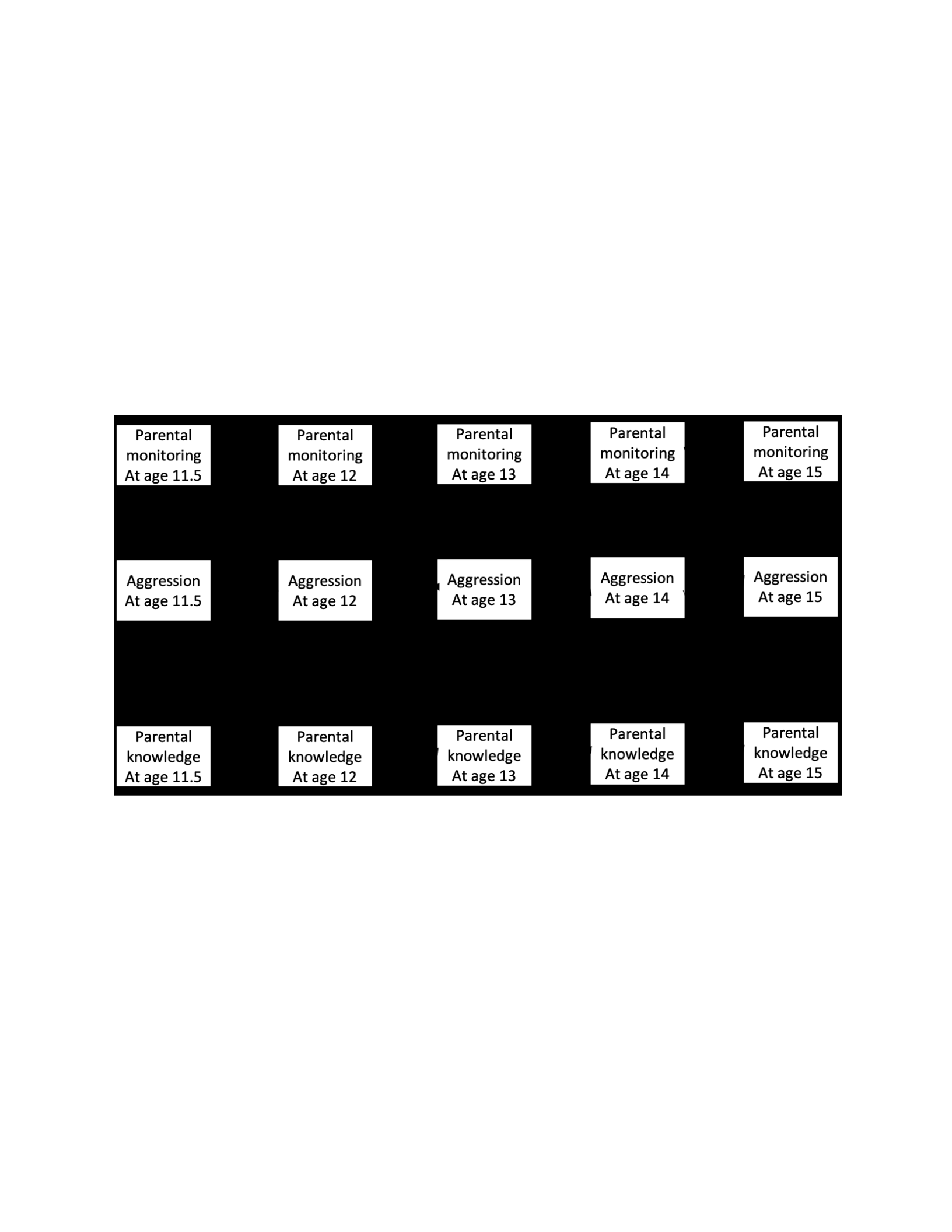
46
13 (β = .09, p < .01) and age 14 (β = .16, p < .01), respectively. For the association between
maternal monitoring and adolescent aggression, only maternal monitoring at early age was found
to predict more adolescent aggression at subsequent age (from age 12 to age 13: β = .04, p < .05;
from age 14 to age 15: β = .08, p < .05). No significantly predictive associations of adolescent
aggression with subsequent maternal monitoring were found (see Table 5).
Figure 3
Cross-Lagged Associations in Autoregressive latent Trajectory Models
Note. The effects of mothering and fathering are tested separately. The solid lines indicate significant associations
for mothering only; the bolded line indicates the significant association for both mothering and fathering. All
significant associations are positive sign. Intervention status is controlled as a covariate in all models. Growth
parameters are not depicted for ease of interpretation (see Figure 2)
Father Model
After controlling for the development in paternal monitoring, paternal knowledge and
adolescent aggression and meanwhile mutually controlling for paternal monitoring and paternal
knowledge, only at age 14 was paternal monitoring found to predict more adolescent aggression
at age 15 (β = .09, p < .05). No significant associations between paternal knowledge and

47
adolescent aggression or predictive effect of adolescent aggression on paternal monitoring were
found (see Table 5), which is inconsistent with the hypothesis 1.
Summary
In short, the hypothesized bidirectional parental monitoring and adolescent aggression
failed to be detected for both mothering and fathering, while the hypothesized bidirectional
relationship between parental knowledge and adolescent aggression was found for mothering
such that more maternal knowledge was associated with more subsequent adolescent aggression
and more adolescent aggression was related to higher levels of maternal knowledge.
Moderation Effect of Parent-Adolescent Affective Quality
Mother Model
When adding mother-adolescent positive affective quality as a grouping factor in ALT
model, a significant chi-square difference between the multiple-group ALT model and the
constrained multiple-group ALT model (i.e., constraining cross-lagged paths to be equal between
the high positive affective quality group and the low positive affective quality group) was found
(Δχ2(20) = 40.71, p < .01). This indicates that there was a difference in the associations between
adolescent aggression with maternal monitoring and maternal knowledge between the high
mother-adolescent positive affective quality group and the low mother-adolescent positive
affective quality group. Specifically, as shown in Table 6 and depicted in Figure 4, all
significant, positive associations between adolescent aggression with maternal monitoring and
maternal knowledge were found in the low mother-adolescent positive affective quality group (β
= .09 to .23, p < .01). However, in the high mother-adolescent positive affective quality group,
maternal monitoring at age 11.5 was found to predict lower levels of adolescent aggression at
age 12 (β = -.06, p < .05). These findings indicate that when the relationship between mothers

48
and adolescents is bad, maternal monitoring and knowledge are actually associated with worse
adolescent outcomes (i.e., higher levels of adolescent aggression). High positive affective quality
between mothers and adolescents may have a beneficial effect on the adolescent aggression, such
that under this circumstance maternal monitoring was associated with less adolescent aggression.
Table 6
The Standardized Beta Coefficients of Cross-Lagged Associations from a Multiple-Group
Autoregressive Latent Trajectory Model for Mothering
Mother-adolescent positive
affective quality
Cross-lagged associations
Low
High
Parental knowledge Age 11.5àAggression Age 12
.05 (.03)
.05 (.03)
Aggression Age 11.5àParental Knowledge Age 12
.03 (.04)
.03 (.04)
Parental Monitoring Age 11.5àAggression Age 12
-.02 (.02)
-.06* (.03)
Aggression Age 11.5àParental Monitoring Age 12
.05 (.04)
.00 (.04)
Parental knowledge Age 12àAggression Age 13
-.02 (.03)
.02 (.03)
Aggression Age 12àParental Knowledge Age 13
.10** (.04)
.07 (.04)
Parental Monitoring Age 12àAggression Age 13
.09** (.03)
-.01 (.03)
Aggression Age 12àParental Monitoring Age 13
-.04 (.05)
.04 (.04)
Parental knowledge Age 13àAggression Age 14
.10** (.04)
.03 (.04)
Aggression Age 13àParental Knowledge Age 14
.16** (.05)
.03 (.05)
Parental Monitoring Age 13àAggression Age 14
.04 (.03)
.01 (.04)
Aggression Age 13àParental Monitoring Age 14
-.03 (.05)
.07 (.05)
Parental knowledge Age 14àAggression Age 15
.06 (.05)
.08 (.05)
Aggression Age 14àParental Knowledge Age 15
.23** (.07)
.01 (.07)
Parental Monitoring Age 14àAggression Age 15
.17*** (.05)
-.03 (.05)
Aggression Age 14àParental Monitoring Age 15
.06 (.07)
.02 (.06)
Note. Intervention status is controlled as a covariate in all models. *p < .05, ** p < .01, *** p < .001.
Figure 4
Cross-Lagged Associations from a Multiple-Group Autoregressive Latent Trajectory Model for
Mothering: A High Level of Mother-Adolescent Positive Affective Quality versus a Low Level of
Mother-Adolescent Positive Affective Quality
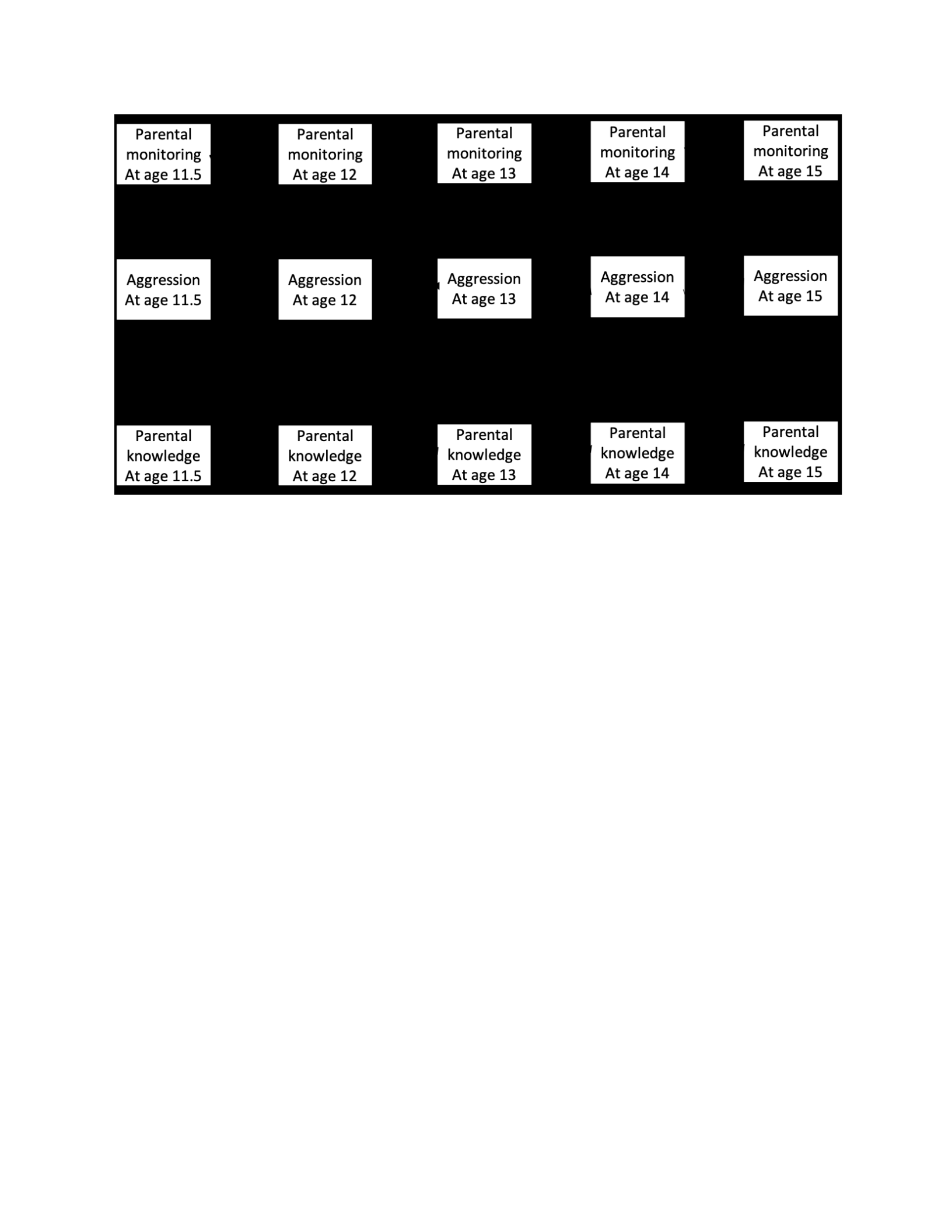
49
Note. The solid lines indicate positive significant associations for a low level of mother-adolescent positive affective
quality group; the bolded and dashed line indicates a negative significant association for a high level of mother-
adolescent positive affective quality. Intervention status is controlled as a covariate in all models. Growth
parameters are not depicted for ease of interpretation (see Figure 2).
Father Model
For fathering, no difference between the high father-adolescent positive affective quality
group and the low father-adolescent positive affective quality group was found on the
associations between adolescent aggression and paternal monitoring as well as paternal
knowledge (Δχ2(20) = 15.30, p > .05).
Moderation Effect of Parent-Adolescent Communication Quality
No significant difference between the high parent-adolescent communication quality
group and the low parent-adolescent communication quality group was found on the associations
between adolescent aggression with parental monitoring and parental knowledge (for mothering:
Δχ2(20) = 27.13, p > .05; for fathering: Δχ2(20) = 20.44, p > .05).
Moderation Effect of Adolescent Gender

50
A significant difference between adolescent boys and adolescent girls was found on the
associations between adolescent aggression with maternal monitoring and maternal knowledge
(Δχ2(20) = 36.90, p < .05). Specifically, as shown in Table 7, the positive, bidirectional
associations between adolescent aggression and maternal knowledge were found only for
adolescent boys (β = .08 to .17, p < .05), such that more adolescent boys’ aggression was
associated with more maternal knowledge and in turn more maternal knowledge was associated
with more adolescent boys’ aggression. For adolescent girls, adolescent aggression at age 12 was
found to predict more maternal knowledge at age 13 (β = .11, p < .01). In addition, maternal
monitoring at age 14 was found to predict more adolescent girls’ aggression at age 15 (β = .11, p
< .05).
Table 7
The Standardized Beta Coefficients of Cross-Lagged Associations from a Multiple-Group
Autoregressive Latent Trajectory Model for Mothering
Adolescent gender
Cross-lagged associations
Boys
Girls
Parental knowledge Age 11.5àAggression Age 12
.03 (.03)
.05 (.03)
Aggression Age 11.5àParental Knowledge Age 12
.01 (.04)
.02 (.03)
Parental Monitoring Age 11.5àAggression Age 12
-.01 (.02)
-.04 (.02)
Aggression Age 11.5àParental Monitoring Age 12
-.01 (.04)
.05 (.04)
Parental knowledge Age 12àAggression Age 13
.01 (.03)
-.01 (.03)
Aggression Age 12àParental Knowledge Age 13
.05 (.05)
.11** (.04)
Parental Monitoring Age 12àAggression Age 13
.04 (.02)
.04 (.03)
Aggression Age 12àParental Monitoring Age 13
-.09 (.05)
.06 (.04)
Parental knowledge Age 13àAggression Age 14
.08* (.03)
.07 (.04)
Aggression Age 13àParental Knowledge Age 14
.13* (.06)
.07 (.05)
Parental Monitoring Age 13àAggression Age 14
.05 (.03)
-.01 (.04)
Aggression Age 13àParental Monitoring Age 14
-.05 (.06)
.00 (.06)
Parental knowledge Age 14àAggression Age 15
.10* (.04)
-.02 (.05)
Aggression Age 14àParental Knowledge Age 15
.17* (.08)
.13 (.07)
Parental Monitoring Age 14àAggression Age 15
.08 (.05)
.11* (.05)
Aggression Age 14àParental Monitoring Age 15
.05 (.07)
.00 (.06)
Note. Intervention status is controlled as a covariate in all models. *p < .05, ** p < .01.

51
Similar to the foresaid two moderators, no difference between adolescent boys and
adolescent girls was found on the associations between fathering and adolescent aggression
(Δχ2(20) = 18.35, p > .05).
CHAPTER V: DISCUSSION
Aggressive behavior problems during adolescence can lead to seriously adverse
consequences for both adolescents themselves and society (Loeber & Stallings, 2011; Kokko et
al., 2009). One research line on preventing adolescent aggressive behavior problems focuses on
parental behaviors. Parental monitoring and parental knowledge are suggested to be two salient
parenting factors in regulating adolescent aggressive behavior problems. However, despite calls
to distinctly measure parental monitoring and parental knowledge (Stattin & Kerr, 2000; Kerr et
al., 2010), no studies have examined their unique relation with adolescent aggressive behavior
problems. The current study therefore aimed to examine the associations between adolescent
aggressive behavior problems with distinct parental monitoring and parental knowledge while
simultaneously controlling for the two dimensions of parenting. In addition, following the
contextual model of parenting style (Darling & Steinberg, 1993), the moderation effects of
parent-adolescent affective quality and parent-adolescent communication quality on these
associations were investigated. Last, given the mixed findings in adolescent gender differences in
the extant literature, the current study also tested whether these associations have adolescent
gender differences. Importantly, to provide a comprehensive picture on the interaction between
parents and adolescents and propose more nuanced suggestions on intervention programs, all
these foresaid associations and effects were examined by taking mothers and fathers separately
into consideration.
Summary of Answering Research Questions

52
In short, a positive bidirectional association between maternal knowledge and adolescent
aggression was found, while no association between paternal knowledge and adolescent
aggression was found (RQ1). Both maternal monitoring and paternal monitoring were found to
have a positively predictive effect on adolescent aggression (i.e., more parental monitoring
predicted more adolescent subsequent aggression), while no predictive effect of adolescent
aggression on parental monitoring was found (RQ1). Mother-adolescent positive affective
quality was found to moderate the associations between adolescent aggression with maternal
monitoring and maternal knowledge, whereas no moderation effect of father-adolescent positive
affective quality on the associations between adolescent aggression and fathering was discovered
(RQ2). Specifically, under a high level of mother-adolescent positive affective quality, maternal
monitoring predicted less adolescent subsequent aggression; whereas under a low level of
mother-adolescent positive affective quality, maternal monitoring and maternal knowledge were
actually associated with worse adolescent outcomes (i.e., higher levels of adolescent aggression).
The quality of parent-adolescent communication, however, was not found to have any
moderation effect (RQ3). Adolescent gender differences were found in the associations between
adolescent aggression and mothering such that positive, bidirectional associations between
adolescent aggression and maternal knowledge were found only for adolescent boys, while no
adolescent gender differences existed in the associations of adolescent aggression with fathering
(RQ4). More details are discussed below.
A Bidirectional Association between Maternal Knowledge and Adolescent Aggression
After controlling for the development in marental knowledge and adolescent aggression
over time, a bidirectional association between maternal knowledge and adolescent aggression
was found, consistent with previous work on parental knowledge and adolescent delinquency

53
(e.g., Gaertner et al., 2010; Keijsers et al., 2010). In contrast to the prior studies, however, the
associations between maternal knowledge and adolescent aggression were positive after
accounting for the growth in these two constructs. This indicates that maternal knowledge
predicted more subsequent adolescent aggression and adolescent aggression also predicted more
subsequent maternal knowledge. The contradictory finding may partly be attributed to different
methodologies used between current study and prior studies (e.g., Gaertner et al., 2010; Keijsers
et al., 2010). Prior studies (e.g., Gaertner et al., 2010; Keijsers et al., 2010; Kerr et al., 2010)
often used cross-lagged panel models to test the bidirectional associations, and cross-lagged
panel models control for the stabilities of parental knowledge and adolescent behavior problems
between adjacent times. However, given that during early- to mid-adolescence parental
knowledge (see Lionetti et al., 2019; Laird et al., 2003) and parent-reported adolescent
aggressive behavior problems (e.g., De Haan et al., 2012; Fowler et al., 2014) have been
consistently found to decrease over time, rather than having stabilities, current study used an
autoregressive latent trajectory model to test the bidirectional associations while simultaneously
controlling for the developmental course of parental knowledge and adolescent aggression.
Indeed, when accounting for the developmental course of parental knowledge and adolescent
behavior problems, some extant studies (e.g., Abar et al., 2014) also found the positive,
bidirectional associations between parental knowledge and adolescent outcomes, which is in
alignment with the current study. To confirm whether and how the differences in methodologies
may result in contradictory findings in the correlations’ direction (e.g., negative, bidirectional
associations in cross-lagged panel models versus positive, bidirectional associations in
autoregressive latent trajectory models), additional methodological research is needed.
Associations between Parental Monitoring and Adolescent Aggression

54
After controlling for the development in parental monitoring and adolescent aggression
over time, only the effect of parental monitoring on adolescent aggression was found. This
finding is partly consistent with the research by Lippold et al. (2014) who discovered the
predictive effective of parental monitoring on adolescent delinquency. However, inconsistent
with the Lippold’s finding (2014) that showed the negative predictive effect, the current study
found that both maternal monitoring and paternal monitoring predicted more adolescent
aggression. These findings may reflect autonomy-granting (Silk et al., 2003), such that, to get
appropriate adolescent behavior (less adolescent aggression), parents should reduce their
behaviors that may impede adolescent autonomy development (less parental monitoring). In
other words, from the autonomy-granting perspective of parenting, adolescents seek autonomy
over time. In this process, more parental monitoring, which manifests as actively soliciting
information from adolescents and setting up monitoring related rules about adolescent activities,
may limit or even threaten adolescents seeking autonomy (Grusec & Davidov, 2007). As a result,
adolescents may negatively respond to parental monitoring such that perceived more monitoring
may lead to worse their outcomes (more aggression; Borelli et al., 2014; Laird et al., 2018;
McLeod et al., 2007). Parents more actively monitoring their adolescents may see an increase in
the undesirable adolescent behaviors, such as increasing adolescent aggressive behavior
problems.
Moderation Effect of Mother-Adolescent Affective Quality
This study supports the integrative model of parenting style (Darling & Steinberg, 1993)
that mother-adolescent affective quality could moderate the relationship between parental
monitoring and parental knowledge with adolescent aggression. Under a high level of mother-
adolescent positive affective quality, maternal monitoring was found to have a protective effect

55
against adolescent aggression such that, under this context, more maternal monitoring predicted
fewer subsequent adolescent aggressive behavior problems after controlling for the development
in the adolescent aggressive behavior problems over time. Interestingly, all the positive
associations between adolescent aggression and maternal monitoring as well as maternal
knowledge were found only under a low level of mother-adolescent positive affective quality.
These findings indicate that when the relationship between mothers and adolescents is bad,
maternal monitoring and knowledge are actually associated with worse adolescent outcomes
(i.e., higher levels of adolescent aggression). In the context of bad mother-adolescent relationship
quality, adolescents are more likely to rebel against parents and negatively respond to parental
behaviors (Abar et al., 2014). Thus more maternal monitoring and knowledge was associated
with more adolescent aggression when the relationship quality between mothers and adolescents
was low. Conversely, a high mother-adolescent positive affective quality may produce a warm
and friendly family environment where adolescents are more likely to positively respond to
parental behaviors (Abar et al., 2014; Lipplod et al., 2014; Keijsers et al., 2009). As a result,
parental monitoring was related to fewer adolescent aggressive behavior problems. Together, this
study uncovers the importance of mother-adolescent affective quality in the interaction between
parenting and adolescent behavior problems. Good mother-adolescent relationship quality is
suggested to make the protective effectiveness of maternal monitoring valid.
Adolescent and Parent Gender Differences
Adolescent gender differences in the associations between maternal monitoring, maternal
knowledge, and adolescent aggression were found after controlling for the development in
parenting and adolescent aggression over time. The results were inconsistent with prior research
on adolescent delinquency that did not find gender differences in the associations between

56
mothering and adolescent delinquency (Keijsers et al., 2010). In the current study, the
bidirectional associations between maternal knowledge and adolescent aggression were only
found for adolescent boys. This is partly consistent with the hypothesis that the associations
between adolescent aggressive behavior problems and parental knowledge expected to be
stronger for boys than girls. However, unexpectedly, the stronger associations between maternal
knowledge and adolescent boys’ aggression were positive, such that adolescent boys’ aggressive
behavior was related to more subsequent maternal knowledge, and in turn maternal knowledge
was associated with more subsequent adolescent boys’ aggressive behavior. A cross-gender
effect between mothering and adolescent boys’ behaviors emerged (Stolz et al., 2005; Rothbart
& Maccoby, 1966). During adolescence, boys generally have more aggressive behavior problems
than girls (Broidy et al., 2003). And the major source of maternal knowledge is suggested from
adolescent active disclosure (Kerr et al., 2010). Through active disclosure, adolescent boys may
get some degree of relief from performing aggressive behavior problems. Thus maternal
knowledge about their adolescent boys may increase as boys perform more aggression. This
implies that mothers obtaining more information from adolescent disclosure may be a sign for
more their boys’ aggression. In addition, mothers may be stricter to their daughters compared to
sons (Radziszewska et al., 1996). Sons may feel less punitive than daughters if their mothers
know more about their negative information. Thus, more maternal knowledge may be associated
with more adolescent boys’ aggression, given the possibility of less fear of being discovered and
being punished. Additional research, such as interview studies, is needed to test these
possibilities.
For adolescent girls, maternal monitoring was found to predict adolescent girls’
aggression. No effect of adolescent girls’ aggression on maternal monitoring was discovered.

57
This implies that, during adolescence, parent-driven behaviors that are intended to obtain
information concerning adolescent girls are more likely to result in adverse behaviors such as
increased aggression on the part of adolescent girls. Prior studies indicate that it may be easier
for parents to actively make efforts to monitor girls than boys (Kerr & Stattin, 2000), given the
relatively high quality of parent-daughter relationship (e.g., more closeness and less confliction).
Girls may perceive higher levels of maternal monitoring compared to boys. As discussed before
that maternal actively monitoring may limit or even impede adolescents seeking autonomy (Abar
et al., 2014; Grusec & Davidov, 2007), girls who perceive more maternal monitoring may
negatively react to their mothers’ behaviors (more aggressive behavior problems). However,
because boys may perceive lower levels of maternal monitoring compared to girls, maternal
monitoring that boys perceive may be still in boys’ tolerance levels (acceptable levels, Bell,
1977). Thus there may be no responses from boys to their mothers’ monitoring.
Additionally, consistent with the previous research using multiple informant sources
(Keijsers et al., 2010), the associations between adolescent aggression with parental monitoring
and parental knowledge were mainly found for mothers. Mothers consistently reported higher
levels of parental monitoring and parental knowledge than fathers reported during early- to mid-
adolescence. This reflects the fact that fathers are less involved in parenting compared to mothers
(Harris & Morgan, 1991). Partly due to less involvement of fathers in adolescent development,
the moderation effects of parent-adolescent affective quality and adolescent gender failed to be
detected for fathering and were only found for mothering. It is worth noting that current study
examined the associations of parental monitoring and parental knowledge with adolescent
aggression for mothers and fathers separately in different models, rather than in one single
model. That is partly due to that mothering and fathering in terms of the same parenting are

58
highly correlated with each other. Testing mothering and fathering in one model has collinearity
issue (Azen & Budescu, 2003; Johnson, 2000). Furthermore, mothering and fathering may be
complementary and supported with each other (Day & Mackey, 1989). For instance, the
behaviors that mothers or fathers set up monitoring-related rules in one family may have been
discussed by mothers and fathers together; maternal (paternal) monitoring may have the largest
effect on adolescent aggression in the combination with paternal (maternal) monitoring. If
examining maternal and paternal monitoring in a single model (i.e., controlling for maternal and
paternal monitoring with each other to test the unique effect of maternal or paternal monitoring),
it may lose some important information where maternal (paternal) monitoring has an effect on
adolescent aggression in the existence of paternal (maternal) monitoring. Investigating mothers
and fathers separately in different models can fully understand the associations between
mothers/fathers’ parenting and adolescent aggression.
Implications on Adolescent Developmental Research and Intervention Programs
During adolescence, both adolescent behaviors and parents’ behaviors change
dramatically. Particularly, it has been consistently found that parent-reported adolescent
aggressive behavior problems, parental monitoring, and parental knowledge decrease during this
period (e.g., De Haan et al., 2012; Fowler et al., 2014; Laird et al., 2003; Lionetti et al., 2019).
However, traditionally, researchers examined the age-specific bidirectional associations between
adolescent aggression with parental monitoring and knowledge using cross-lagged panel models,
which control for the stabilities between adjacent ages (e.g., Gaertner et al., 2010; Keijsers et al.,
2010; Kerr et al., 2010). This may confound the uncovered bidirectional associations between
parenting and adolescent behaviors, given the normative decreasing trend of parenting and
adolescent behaviors during adolescence (Abar et al., 2014; Laird et al., 2003). Thus, the current

59
study adds to the extant literature by examining the age-specific bidirectional associations
between parental monitoring and knowledge with adolescent aggression while simultaneously
controlling for the normative developmental course of parenting and adolescent aggression.
However, the knowledge on the associations between parental knowledge and adolescent
aggression, after ruling out the developmental course of parenting and adolescent aggression, is
inconsistent with the knowledge without controlling for the developmental change. This reminds
adolescent developmental researchers rethinking 1) whether it is necessary to take away the
variance of developmental change of parenting and adolescent aggression and then test the age-
specific bidirectional associations in the remaining variance, and 2) what indeed these
bidirectional associations mean after ruling out the developmental change of parenting and
adolescent aggression. Before suggesting future adolescent developmental researchers to
investigate the age-specific bidirectional associations between parenting and adolescent
behaviors while controlling for the developmental change, these two crucial and fundamental
questions need to be answered first.
After controlling for this decreasing development in adolescent aggression, parental
monitoring, and parental knowledge, these two dimensions of parenting were found to be
associated with more adolescent aggression during early- to mid-adolescence. However, it
appears that the association between parental knowledge and adolescent aggression may be more
stable than the association between parental monitoring and adolescent aggression during this
time period. Importantly, the positive association between parental monitoring and adolescent
aggression are more likely to occur in the process to mid-adolescence. This implies that the
adverse effect of parental monitoring on adolescent aggression may be a function of
developmental timing. Additional developmental research is needed to explore this possibility.

60
Furthermore, these findings imply that indeed parental monitoring and parental knowledge may
have little beneficial effect on adolescent aggression and may in fact even have negative effects
on aggression. More parental monitoring and parental knowledge may result in more adolescent
aggression, because adolescents tend to seek autonomy and negatively respond to parents’
behaviors (Abar et al., 2014; Silk et al., 2003). The present study provides evidence concerning
the likely ineffectiveness of increasing parental monitoring and parental knowledge to prevent
and reduce adolescent aggressive behavior problems, after ruling out the normative
developmental course of parenting during early- to mid-adolescence.
On the other hand, increasing parental monitoring is not always ineffective to prevent or
reduce adolescent aggressive behavior problems. There is evidence for a beneficial influence of
high mother-adolescent positive affective quality in the association between parental monitoring
and adolescent aggression (Hoeve et al., 2011; Mounts, 2002). Under a high level of mother-
adolescent positive affective quality, maternal monitoring has a protective effect against
adolescent aggression. The high positive affective quality between mothers and adolescents
could create a friendly and warm family context, in which adolescents are more likely to
positively respond to parents’ behaviors (Darling & Steinberg, 1993). This suggests that
intervention programs could incorporate improving mother-adolescent relationship quality in
increasing maternal monitoring to ward against adolescent aggression. Focusing solely on
increasing maternal monitoring may not achieve the expected results. On the other hand, bad
mother-adolescent relationship quality should draw researchers’ more attentions, because under
this context, more maternal monitoring and knowledge are related to worse adolescent outcomes
(i.e., more adolescent aggression). When the relationship between mothers and adolescents is

61
bad, mothers’ monitoring behaviors can become a risk factor on adolescent behaviors. Coping
with bad mother-adolescent relationship quality is needed as well.
Limitations and Future Directions
There are several limitations in current study. First, given the relatively small magnitude
of the associations between adolescent aggression with parental monitoring and parental
knowledge, the interpretation of the findings in the current study should be taken with some
caution. Additional research is needed to confirm these associations. Second, the sample used in
current study was almost exclusively Caucasian. The findings from this study may not generalize
to other populations. Additional research using more diverse samples is needed to validate the
findings of this study. Third, the current study investigated the associations of parental
monitoring and parental knowledge with adolescent aggression during early- to mid-adolescence.
It would be valuable to include data on late-adolescence to examine how these associations
change from mid- to late-adolescence, given that late-adolescence is a different and unique stage
compared to early- and mid-adolescence (Steinberg, 2013). Knowing the relationships between
adolescent aggressive behavior problems and parental monitoring as well as parental knowledge
during different stages of adolescence can make researchers better understand the nature of these
relationships. As a result, more individualized prevention programs for target adolescents at a
specific stage can be suggested. In addition, this study used parent-reported surveys to measure
parental monitoring, parental knowledge, and adolescent aggression. It is well-known that the
survey method has several limitations, such as possible inaccurate answers and participants
hiding important sensitive information (Gravetter & Forzano, 2016). Future research using other
approaches to collect data (e.g., observation) is necessary before fully understanding the
associations between parenting and adolescent aggressive behaviors. Last, to effectively test the

62
possible moderation effect of parent-adolescent affective quality, current study treated it as a
grouping variable adding to the autoregressive latent trajectory models. However, existing
research found that, during adolescence, parent-adolescent relationship quality may become
lower with increasing conflict and decreasing closeness (Baer, 2002; De Goede et al., 2009;
McGue et al., 2005). Further longitudinal research may consider more advanced longitudinal
analyses that could test the moderation effect of parent-adolescent relationship quality
incorporating the developmental change of this construct.
Conclusion
This study adds to the growing body of literature addressing bidirectional associations
between parenting and adolescent behavior problems. Specifically, this study extends the
literature in adolescent aggressive behavior problems by distinguishing the measure of parental
monitoring from the measure of parental knowledge and examining the possible unique and
bidirectional associations between adolescent aggression and these two dimensions of parenting.
The multi-wave multi-informant data from the PROSPER project that were used in this study
provide an opportunity to investigate these associations longitudinally while exploring mothering
and fathering separately. Surprisingly, after controlling for the development in parenting and
adolescent aggression during early- to mid-adolescence, more parental monitoring and parental
knowledge were found to relate to more adolescent aggression. Only the bidirectional association
between maternal knowledge and adolescent aggression was demonstrated and this bidirectional
association only existed in adolescent boys. Under a high level of mother-adolescent affective
quality, maternal monitoring was found to predict fewer adolescent aggressive behavior
problems. However, maternal behaviors were associated with more adolescent aggression when
the relationship between mothers and adolescents was bad. These findings indicate that

63
intervention programs focusing only on increasing parental monitoring and/or parental
knowledge may be ineffective, or even have adverse consequences for adolescents in the context
of a poor relationship. Intervention programs should be considered that focus on improving
parent-adolescent positive affective quality, and in particular, mother-adolescent affective
quality, as a way to evoke the protective effect of parental (maternal) monitoring on adolescent
aggressive behavior problems.

