


Molecular Biology Basic Techniques
DNA chromosomal isolation
Basic knowledge of the DNA is one of the prerequisites in carrying out the calm
of the Biology of Molecule. DNA isolation is a basic worker in molecular biology
techniques before continuing to the technical things such as the
characterization of microorganisms, sequences of base base arrangements in a
gene, transforming (incorporating genes) into the vector (gene carrier) and
subsequently Cloning (incorporating genes that have been brought by vector)
into model organisms (E. coli, B. subtilis, arabidopsis, S. cerevisciae, etc.).
There are various methods to isolate DNA from microanism, animals and plants.
And in general it is considered that the method of isolation with phenol is the
most commonly used by researchers. Lately, many experts use a kit (reagent to
isolate DNA in the form of a reagent package) especially if we isolate a small
amount of DNA (only for PCR purposes). However, the isolation with phenol is
still relevant if the DNA is needed in a relatively large amount for further
analysis. Therefore in the manual to lone DNA by using phenol.
Material
1. Saturated phenol solution in buffer tris-HCl pH 8.0
2. Buffer Ten (tris-edta-nacl)
3. Lysozyme enzyme
4. Buffer TE (Tris-EDTA) pH 7.5
5. SDS Solution (Sodium Dedosil Sulfate) 10%
6. isoamyl alcohol
7. Chloroform
8. Ethanol 99% cold
9. Ethanol 70%
10. Enzyme Rnase
11. Sterile water
12. ice cubes
13. Pure culture microoragism
14. Appropriate media
Tools
1. Centrifefuse (if there is a cooler, it can be adjusted at 12,000
up to 15,000).
2. Effendorf (small tube)
3. Pipetman 10, 200, 1000 micro liters
4. Incubator (Waterbath)
5. Falcon tube, phenol resistant snterfuse tube.
How it works:
a. Grow the culture in 100 ml of the appropriate liquid medium
breakfast. Cell harvest by centrifuging at 3,500 rpm for 20-30 minutes
C.. Rinse the cell of the cell with 100 mL of buffer ten solution that has been
cooled in ice fractions
d. Suspension cells in 12 ml of lizozyme solution with concentration of 10 mg / l
in the buffer te and incubated in water bath 37oC temperatures for 1 hour
Hey. Add a 6 mL of a 10% solution of 10% and incubate back at 37oC for 1 hour
f. Add 9 mL of saturated phenol solution (in the Tris-HCl buffer, pH 8.0).
g. Add 9 mL of alcohol-alcohol chloroform-isoamyl solution (24: 1)
h. Discentricous suspension at a speed of 1.5000 rpm at 5oC for 30 minutes
I. The top of the supernatant is taken and put in a falcon tube (or
The like, which is resistant to phenol).
a. Add 2.5 times the volume of 99% alcohol that has been cooled, leave it 15
minutes in ice fraction
k. Supence centrififion at 15,000 rpm for 15 minutes at 5oC, and DNA will settle
at the base of the tube
l. Dispose of supernatant and suspension of DNA pellets using 70% alcohol, and
dysentrifuse returns like step k.
am. DNA deposits are dried using aspirators and subsequently
Suspended in 100 Microliter BUFER TE, PH 7.5
DNA isolated using this method is almost always accompanied by RNA. Because
RNA will disrupt the PCR reaction, it is recommended for Meghidrolisa RNA
ynag found in DNA in the following:
Seavy DNA isolated in 100-120 Micro Liter BUFER TE PH 7.5 (or pH 8.0)
Add Rnase (Sigma, Co. Ltd: ENZYM Final Concentration in the Ocean): 50
Micro Gr / L
Perform phenol extraction and further precipitation using alcohol like the
previous step.
DNA that has been isolated in BUFER TE, temperature -20 or -80oC
DNA can be isolated using a fewer scales. Generally culture is bred in 5 ml of
liquid media and DNA isolated from 1 ml (even 100 micro liters) of culture
suspension in the way above. Make a comparison scale so that the solvent
concentration is used accordingly. This small scale DNA extraction (small scale)
will make it easier if we have many samples to be done. Besides that, DNA is
only needed in very little amount for PCR purposes (maybe around 10-100 PIKO
grams) for one PCR reaction is more than enough. Except for cloning or
hybridization requirements, the number of DNAs is needed more (some micro
grams).
Electrophoresis
Electrophoresis is a DNA separation technique or other biological molecules
such as protein (emazz etc.), by driving on slabs to specifically in electrolyte
solutions (certain buffers). In the biology molecular technique that dives with
DNA and techniques involving PCR, electoforesis is an integrated part that
cannot be avoided. This technique aims to: ensure that DNA can be well isolated
and how far the DNA purity is obtained, and more importantly is after printing
the DNA fragment (PCR), whether the amplification reaction takes place
properly, or what a large (long) product is formed It is in accordance with the
magnitude of the target of the gene, or the primary apparent used is quite
specific to the PCR reaction. This is all done by analyzing the ribbon that
appears on the gel after electrophoresis.
Material
1. DNA isolation results
2. Agarion 1%
3. Loading buffer (buffer used when entering samples into the gel, usually
contains dyes and contains glycerol so that DNA does not spread on the gel).
4. BUFER Tris-acetate acetic-edta (Tae: 1 time Strength)
5. Ethidium bromide (ETBR)
Tools
1. Electrophoresis set (chamber, comb to make gel, gel mold, power supply).
2. Piperman 10 micro liters and the tip
3. Gloves
4. Transluminator (UV lamp)
5. Camera
How it works:
a. Prepare agarose gel in BUFER TAE, 1x Strength (stock buffer Tae is usually
made in 50x Strength). For a standard gel with a standard size, with a 50-75 ml of
agarose (thick agile 75% of the combann comb used).
breakfast. Heat agarose until dissolved, usually done by heating repeatedly in
microwafes for 2 minutes until the agarion dissolves perfectly.
C.. The agarose cast on standard mold is used, and let Sleary 20 minutes until it
is perfectly frozen.
d. Angakta comb (to make samur samples) towards vertical slowly.
Hey. Put it in the electrophoresis chamber that has been filled with Tae buffer
1x, with a sea buffer surface 2-3 mm above so that. NOTE do not let there be air
bubbles under the agarous mold (tray) because it will inhibit electricity at the
time of electrophoresis.
f. DNA suspension pipette (1-2 micro liters), depending on the concentration of
DNA. Usually the DNA is in the numbered of 1.5 ml of liquid culture, and the
final DNA is dissolved in 100 micro liters buffers, taken as much as 3-5 micro
liters producing a good DNA band. Too much DNA will give a ribbon that is too
thick and sometimes smear (fuzzy).
g. Drop above the clean parailm and then added with the loading buffe (so that
DNA does not spread above the surface of the agar). Usually loading buffers are
made by 6x strength, so 1 micro liter loading buffer is added with 5x DNA
volume.
h. Enter the sample vertically right in the gel well. Do carefully so that the
sample does not spread on agarose.
I. Use the standard size (marker to determine the length of the ribbon that will
be formed). Generally for DNA genomes use HinfiII Digestion Size Standard, or
it can also use 1 kilobasa (1000 nucleotides) the standard size of Biorad. The
length of the DNA genomes of prokaryote (bacteria) is about 2-3 mega pairs of
bases.
a. Do electrophoresis for 30 minutes (if the agile concentration is 1%: or about
45 minutes for the PCR fragment that uses 1.5 - 2% agarose).
k. Stop electrophoresis machines, and Ideal gel.
l. Soak in ethidium bromide solution (concentration of 5 micro gr / ml) in a 1x
tae buffer for 10 minutes.
am. Lift the gel and soak in aquired for 10 minutes (destaining, so that the
advantages of the ETBR is washed).
n. Ribbon Yeng is formed can be seen under UV light. (Trasliminator) and then
in the photo.

Attention
EtBR is carcinogenic. Therefore use gloves
If you take a gel, or the gel is taken with a plastic spoon.
The gel that has been painted with an etbr don't be dumped carelessly.
Collect into one in a container and then handled
by giving chlorine before being thrown away.
Polymerase Chain Reaction (PCR)
Preliminary
Polymerase Chain Reactions (PCR) is a method of multiplying the number of
DNA or the desired gene target in vitro, through a series of enzymatic reactions.
In this enzymatic reaction, several components are needed:
1. DNA that wants to be reproduced (tenplate).
2. Primary (Printer) that is that it is a nucleotide composition with a maximum
length of 27 bases (base pair).
3. DNTPS (which is a source of nucleotide: a, c, g, t).
4. Buffers and MGCL2 (so that the reaction can run optimally).
5. ENZYME heat resistant polymerase (thermosable enzyme) or taqpolymerase.

In general, the reaction runs in several stages where the initial stage begins with
Tenpale DNA denaturation into a single strand form, and then the temperature
is reduced quickly to provide the condition of the occurrence of annealing
(primary hybridization / hybridization) in the section that has susuanan
Complete base base on templates that simultaneously enzyme polymerase
works to combine appropriate base-base arrangements. SE it occurs an
extension reaction (elongation) where the extension of the DNA chain formation
reaction is perfect. So, because every Double Strand DNA will be printed into 2
single strand chains, then every one-time the reaction cycle produces 2 double
strand chains from one DNA Tenplae chain (double strand). In other words,
there will be 2nproduk PCR (N is the number of reaction cycles). With this
method, the DNA will be produced in a very large amount of a very limited
amount of DNA tenplate.
Material
PCR set (1-6) consisting of:
1. Dntps Mix: which is a mixture of each 10 mm DATP, DCTP, DGTP,
dttp)
2. MGCL2
3. PCR Buffer II
4. Primary forward
5. Primary reverse
6. Taqpolymerase
7. DNA Templates
8. Sterile water
9. ice cubes
10. Electrophoresis set (see Protocol 8.2)
Tools
1. 200 micro liter PCR tube (or certain PCR uses 500 micro liters)
2. Pipetman 0.5 - 10 micro liters and 10-200 microliter) with the tip
3. PCR Machine
Work
Into the PCR tube (0.2 ml PCR Tube) Inserted the following reagent:
(We recommend that the DNA be sought in the final step before the addition of
sterile distilled water).
①
5 L DNTPS which is a mixture of each 10 mm DATP, DCTP, DGTP, DTTP) (10
mm end concentration of each DNTP).
②
3.5 L MGCL2 (75 mm)
③
5 L PCR Buffer II (10x PCR Buffer)
④
5 L forward primary 10 PMOL
⑤
5 L Reverse Primary 10 PMOL
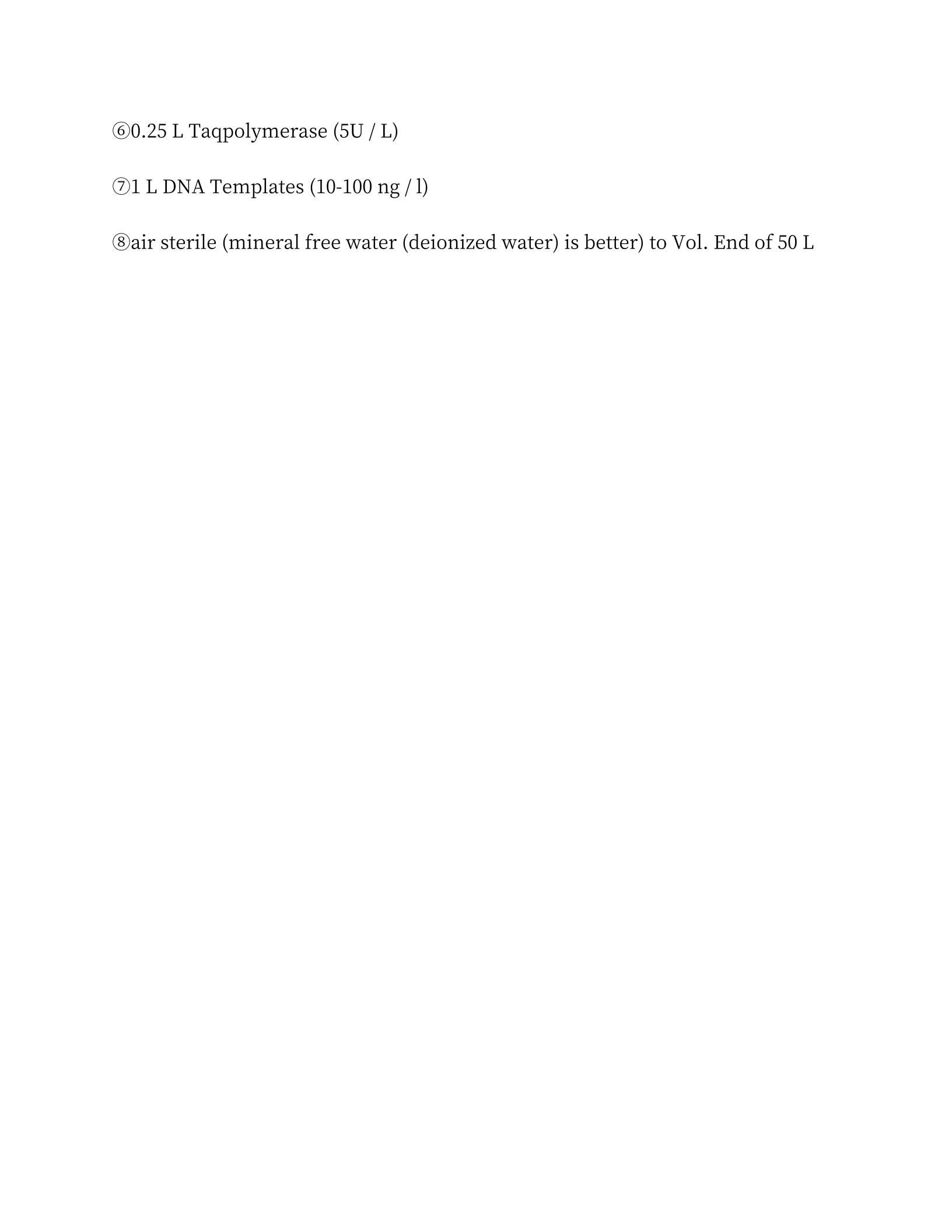
⑥
0.25 L Taqpolymerase (5U / L)
⑦
1 L DNA Templates (10-100 ng / l)
⑧
air sterile (mineral free water (deionized water) is better) to Vol. End of 50 L

