


Microbial enzyme
The mechanism works enzyme
Enzymes increase reaction speed by lowering energy
activation. Activation energy is the energy needed to activate
A reactor so that it can react to form other compounds. Energy
the potential results of the reaction becomes lower than the reaction, so
The reaction equilibrium to the reaction. The existence of enzymes cause
activation energy becomes lower, but the enzyme does not affect the location
The reaction equilibrium. When the enzymatic reaction is a temporary bond
between enzymes and the substrate (reactants). This temporary bond is labile
and only a short time. Furthermore, the substrate bonds will break into
enzymes and end results. The enzyme that is released after the reaction can
function again as a biocalamator for the same reaction.
The substrate enzyme system for each enzymatic reaction is special.
The stability of the enzyme-substrate bond is determined by Michaelis (KM)
constant.
Enzyme structure
In general enzymes are composed of protein. Protein constituents
can be a simple protein or protein that is bound to a non-non-cluster
protein. Many enzymes only consist of protein, for example trypsin.
The dialysis of enzymes can separate protein parts, namely parts
protein called apoenzim and nonprotein parts in the form of coenzymes,
Prosthetic groups and metal ion cofactors. Each of these parts if
Separate becomes inactive. Apoenzim if joining the part
nonprotein is called a holoenzyme which is active as a biocalamator.
Coenzyme and prosthetic groups function the same. Coenzyme is part
which is weakly bound to Apoenzyme (protein). Prosthetic group is
The part is strongly bound to the apoenzyme. Coenzyme functioning
determine the type of chemical reaction that is catalyzed enzyme. Metal ion is
Very important components, needed to strengthen the protein structure with
interaction between charge.
Enzyme
Enzymes can be classified based on the workplace, the substrate
catalyzed, the power of the catalysis, and the way it forms. Generally giving
The name of the enzyme is based on behalf of the catalyzed substrate or power
The catalysis with the addition of words. For example proteinase is an enzyme
which can catalyze protein solutions.
Enzyme classification based on the place of work
a. Endoenzim
Endoenzymes are also called intracellular enzymes, namely enzymes that work
in cells. Generally an enzyme used for the synthesis process in cells and for
energy formation (ATP) which is useful for the process
cell life, for example in the respiration process.
d. Lipase
This enzyme serves to catalyze taking or addition
The cluster of a molecule without going through the hydrolysis process.
Hey. Ligase
This enzyme catalyzes the reaction of a merguling of 2 molecules with
The release of pyrophosphate molecules from nucleoside trifosphate.
f. Other enzymes with different Tatanama
There are some enzymes that naming are not under the way above,
for example pepsin enzymes, triosin, and so on and enzymes included
permease enzyme. Permease is an enzyme that plays a role in determining
Celective properties of permiables from cell membranes.
Enzyme classification based on how to form
a. Constitutive enzyme
In cells there are enzymes which are part of the cell arrangement
normal, so the enzyme is always in general in a fixed amount on
living cells. However there is an enzyme which is influenced by the level
The substrate, for example amylase enzymes. While enzymes that play a role
In the process of respiration the amount is not influenced by the substrate level.
breakfast. Adaptive enzyme
Microbial environmental changes can induce the formation of enzymes
particular. Induction causes the speed of the synthesis of an enzyme to be
stimulated up to several thousand times. Adaptive enzymes are enzymes whose
formation is stimulated by the substrate. For example, the beta galactosidase
enzyme produced by Escherichia Coli bacteria is grown in a medium containing
lactose. At first Escherichia Coli could not use lactose so that initially did not
appear to have growth (the length of the lag / phase of the adaptation length)
after some time just revealed growth. During the lag phase Escherichia Coli
formed the beta galactosidase enzyme used to overhaul lactose.
Factors that influence enzymatic reactions
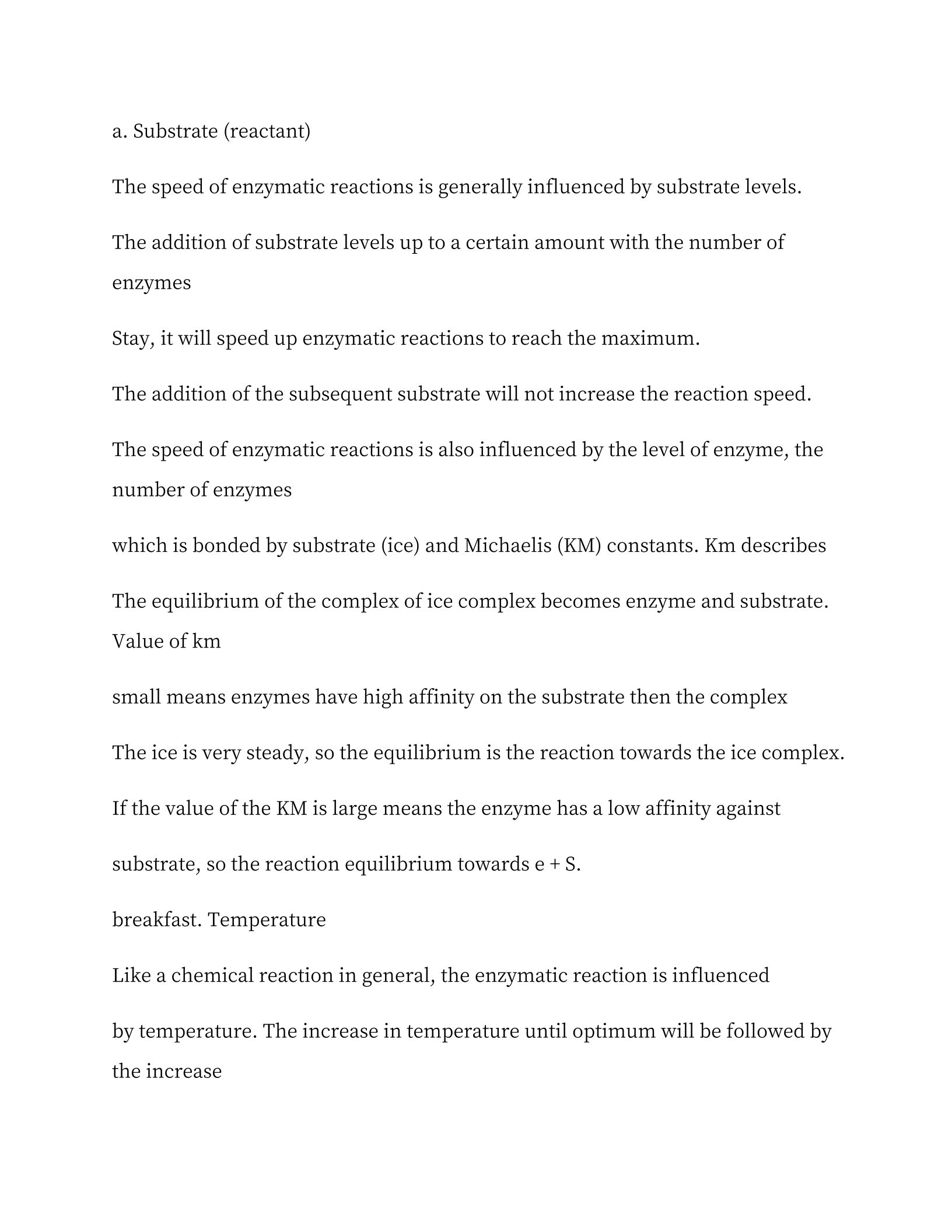
a. Substrate (reactant)
The speed of enzymatic reactions is generally influenced by substrate levels.
The addition of substrate levels up to a certain amount with the number of
enzymes
Stay, it will speed up enzymatic reactions to reach the maximum.
The addition of the subsequent substrate will not increase the reaction speed.
The speed of enzymatic reactions is also influenced by the level of enzyme, the
number of enzymes
which is bonded by substrate (ice) and Michaelis (KM) constants. Km describes
The equilibrium of the complex of ice complex becomes enzyme and substrate.
Value of km
small means enzymes have high affinity on the substrate then the complex
The ice is very steady, so the equilibrium is the reaction towards the ice complex.
If the value of the KM is large means the enzyme has a low affinity against
substrate, so the reaction equilibrium towards e + S.
breakfast. Temperature
Like a chemical reaction in general, the enzymatic reaction is influenced
by temperature. The increase in temperature until optimum will be followed by
the increase
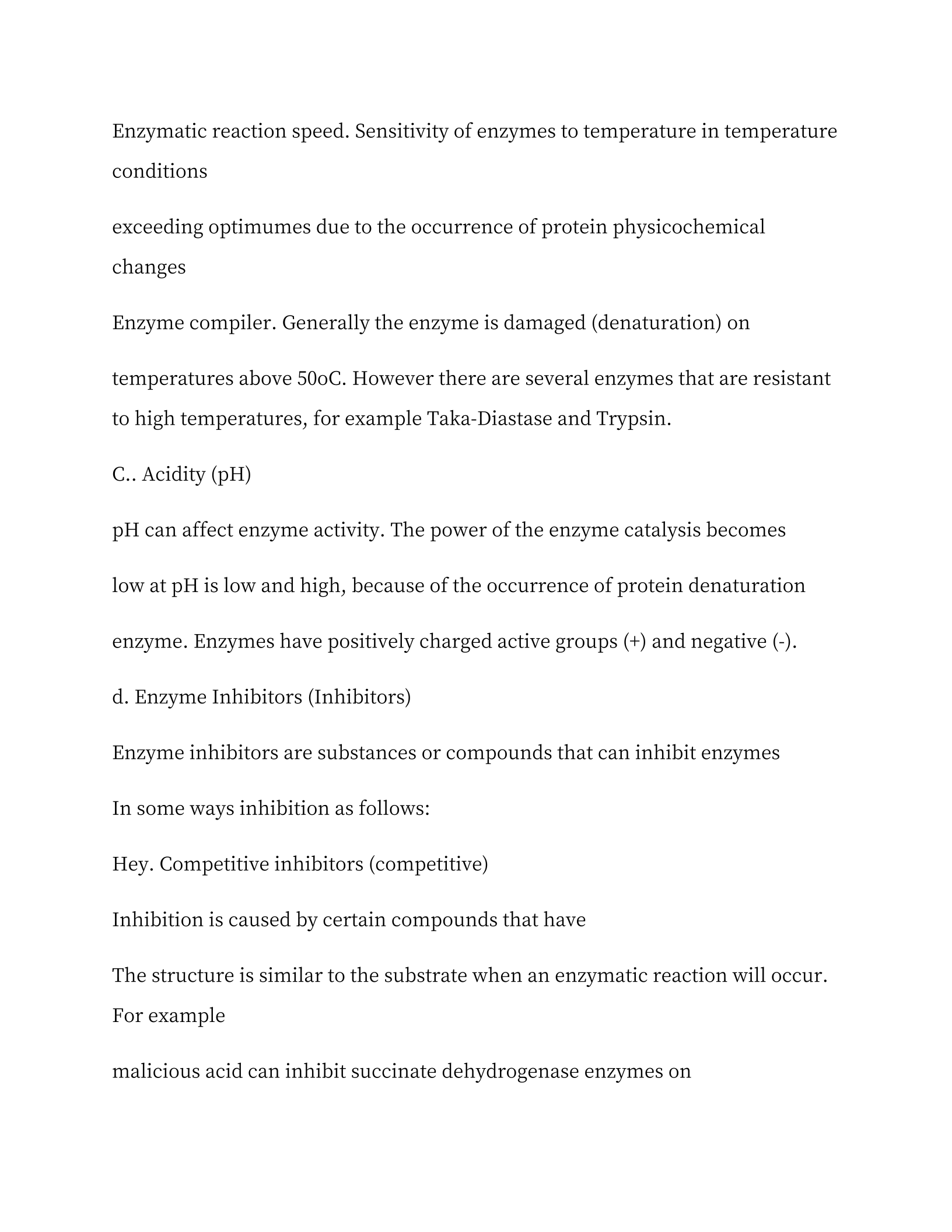
Enzymatic reaction speed. Sensitivity of enzymes to temperature in temperature
conditions
exceeding optimumes due to the occurrence of protein physicochemical
changes
Enzyme compiler. Generally the enzyme is damaged (denaturation) on
temperatures above 50oC. However there are several enzymes that are resistant
to high temperatures, for example Taka-Diastase and Trypsin.
C.. Acidity (pH)
pH can affect enzyme activity. The power of the enzyme catalysis becomes
low at pH is low and high, because of the occurrence of protein denaturation
enzyme. Enzymes have positively charged active groups (+) and negative (-).
d. Enzyme Inhibitors (Inhibitors)
Enzyme inhibitors are substances or compounds that can inhibit enzymes
In some ways inhibition as follows:
Hey. Competitive inhibitors (competitive)
Inhibition is caused by certain compounds that have
The structure is similar to the substrate when an enzymatic reaction will occur.
For example
malicious acid can inhibit succinate dehydrogenase enzymes on
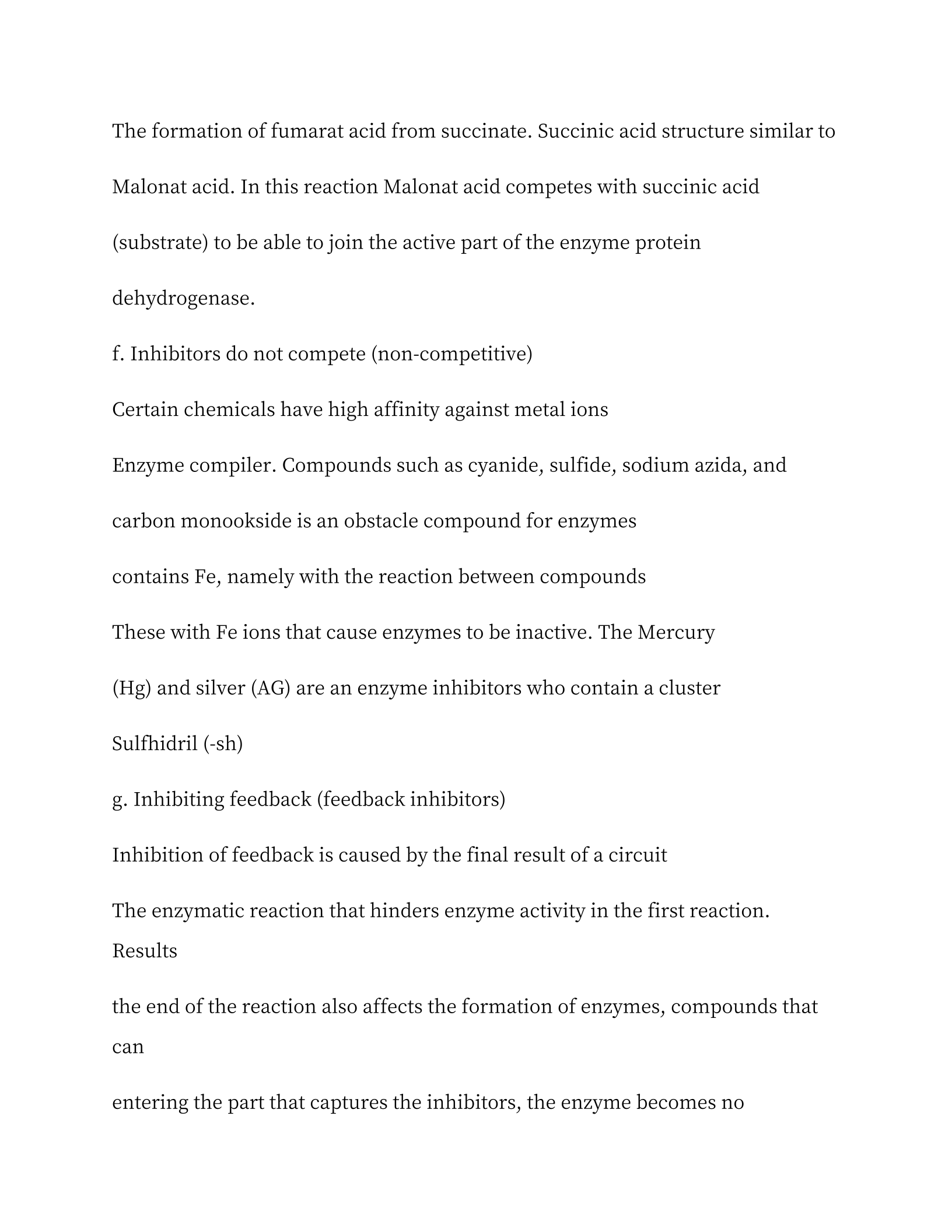
The formation of fumarat acid from succinate. Succinic acid structure similar to
Malonat acid. In this reaction Malonat acid competes with succinic acid
(substrate) to be able to join the active part of the enzyme protein
dehydrogenase.
f. Inhibitors do not compete (non-competitive)
Certain chemicals have high affinity against metal ions
Enzyme compiler. Compounds such as cyanide, sulfide, sodium azida, and
carbon monookside is an obstacle compound for enzymes
contains Fe, namely with the reaction between compounds
These with Fe ions that cause enzymes to be inactive. The Mercury
(Hg) and silver (AG) are an enzyme inhibitors who contain a cluster
Sulfhidril (-sh)
g. Inhibiting feedback (feedback inhibitors)
Inhibition of feedback is caused by the final result of a circuit
The enzymatic reaction that hinders enzyme activity in the first reaction.
Results
the end of the reaction also affects the formation of enzymes, compounds that
can
entering the part that captures the inhibitors, the enzyme becomes no
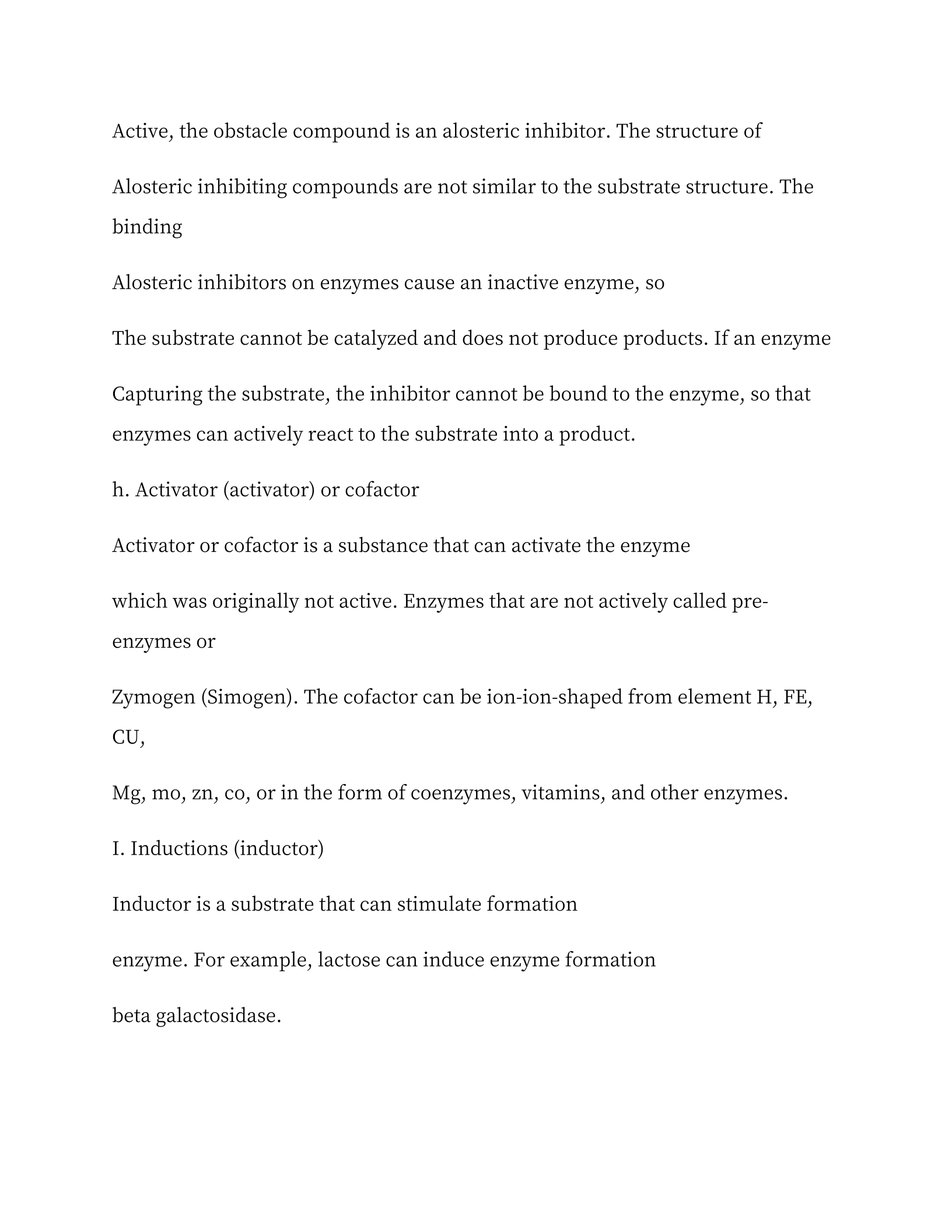
Active, the obstacle compound is an alosteric inhibitor. The structure of
Alosteric inhibiting compounds are not similar to the substrate structure. The
binding
Alosteric inhibitors on enzymes cause an inactive enzyme, so
The substrate cannot be catalyzed and does not produce products. If an enzyme
Capturing the substrate, the inhibitor cannot be bound to the enzyme, so that
enzymes can actively react to the substrate into a product.
h. Activator (activator) or cofactor
Activator or cofactor is a substance that can activate the enzyme
which was originally not active. Enzymes that are not actively called pre-
enzymes or
Zymogen (Simogen). The cofactor can be ion-ion-shaped from element H, FE,
CU,
Mg, mo, zn, co, or in the form of coenzymes, vitamins, and other enzymes.
I. Inductions (inductor)
Inductor is a substrate that can stimulate formation
enzyme. For example, lactose can induce enzyme formation
beta galactosidase.


