



Task one
Carbohydrates are broken down through dehydration synthesis; monomers in the carbohydrates
are called monosaccharides, whereas polymers are called polysaccharides. They possess
glycosidic bonds. Proteins are formed through a condensation reaction; the monomers are
amino acids, known as polypeptides, with a peptide bond. When dehydration synthesis occurs
for the carbohydrates, glycosidic bonds are formed after monosaccharides have joined, thus
creating polysaccharides. When proteins are condensed, this leads to the formation of peptide
bonds prevalent between amino acids, therefore forming polypeptides. When hydrolysis occurs,
polymers change to monomers after the water is added. When glycosidic bonds have been
hydrolyzed to form monosaccharides. Proteins with peptide bonds undergo hydrolysis to form
amino acids.
Task two
Molecule Structure Function
Starch Starch consists of polymers
of glucose molecules
interlinked by glycosidic
bonds. It appears in
branched, chain-like form.
Starch is responsible for
storing energy in plants. It
plays an integral role as an
energy reserve, helping
provide glucose for
metabolism when
photosynthesis occurs.
Starch also provides
carbohydrates to animals.
Glycogen The appearance shows a
glucose polymer that is more
branched and linked by
glycosidic bonds. Branching
in the glycogen is prevalent
after 8-12 glucose units.
Glycogen is an important
storage for energy in plants.
It is present in muscle and
liver cells. Glycogen is ready
to provide glucose, which
produces energy when
metabolism is high and
demands more energy when
undertaking stressful
activities like exercising.
Phospholipid The structure has hydrophilic
phosphate as the head and
two tails consisting of
hydrophobic fatty acids. In
the cell layer, phospholipids
have bilayer structures.
Phospholipids are important
cell membrane components
that regulate substances
moving out and into the cell.
They have bilayers that
hinder water-soluble
molecules from passing into
the cell. Phospholipids also
allow the formation of
compartments and how the
organelles undertake their
functions in the cell.

Triglycerides They have three fatty acid
molecules attached to
glycerol. Depending on
whether double bonds are
present in the fatty acids
, they can be unsaturated or
saturated.
Adipose tissue stores energy.
It is an essential reserve
where it stores energy twice
as much as carbohydrates in
grams. Adipose tissue is
important in insulating and
protecting critical organs of
the body.
Haemoglobin Some proteins are
quaternary and contain four
globin subsections of
proteins. Each subsection
has a heme group with iron
ions at the central part.
They are responsible for
transporting oxygen in red
blood cells. They bind oxygen
within the lungs, which is
later released to tissues that
have low amounts of oxygen,
thus facilitating respiration in
the cells. Their structure is
effective for the transport of
oxygen. They also regulate
the pH and carbon dioxide
transport.
Task three
Enzymes are responsible for accelerating chemical reactions in organisms, which is made
possible by lowering the activation energy, which facilitates the occurrence of the reaction. The
structure of the enzymes exhibits one or several polypeptide chains that are folded in three
dimensions. The shape is practical because the enzymes can bind to the substrates to enhance
the conversion of reactants to products. The enzymes have an active site that provides an area
for the substrates to bind where chemical transformation occurs; how the enzyme-substrate
interacts depends on the shape and chemical properties of the substrate and active sites. The
specificity of the enzymes can be described through the lock and critical model; the active site
where the enzyme is located is referred to as the lock and fits the substrate, which is referred to
as the key, with the condition binding takes place and catalytic reaction. To define the enzyme's
structure, the function-induced fit model illustrates how binding takes place of the substrates,
thus inducing changes in the enzyme, becoming tighter and more complementary and fitting
between the substrate and enzyme. Conformational changes enhance catalytic reactions of
enzymes, which facilitate chemical reactions. Enzymes' role of lowering activation energy to
promote chemical reaction leads to stabilization of the transition state, which results from the
energy formed when the reactants are being converted to products. Activation energy must be
overcome for the reaction to take place. Enzymes facilitate a reduction in the activation energy,
which provides an alternative path for the reaction that lowers energy in the transition state.
When substrates are bonded to favorable states of conformation, they facilitate the emergence
of a transition state, promoting a reaction that results in product formation. With the power
activation energy barrier, the reaction occurs efficiently and effectively.
Task four
The models differ in the relationship based on how the substrate binds and enzyme structures.
The lock and fundamental model states that active sites where the enzyme is present take a
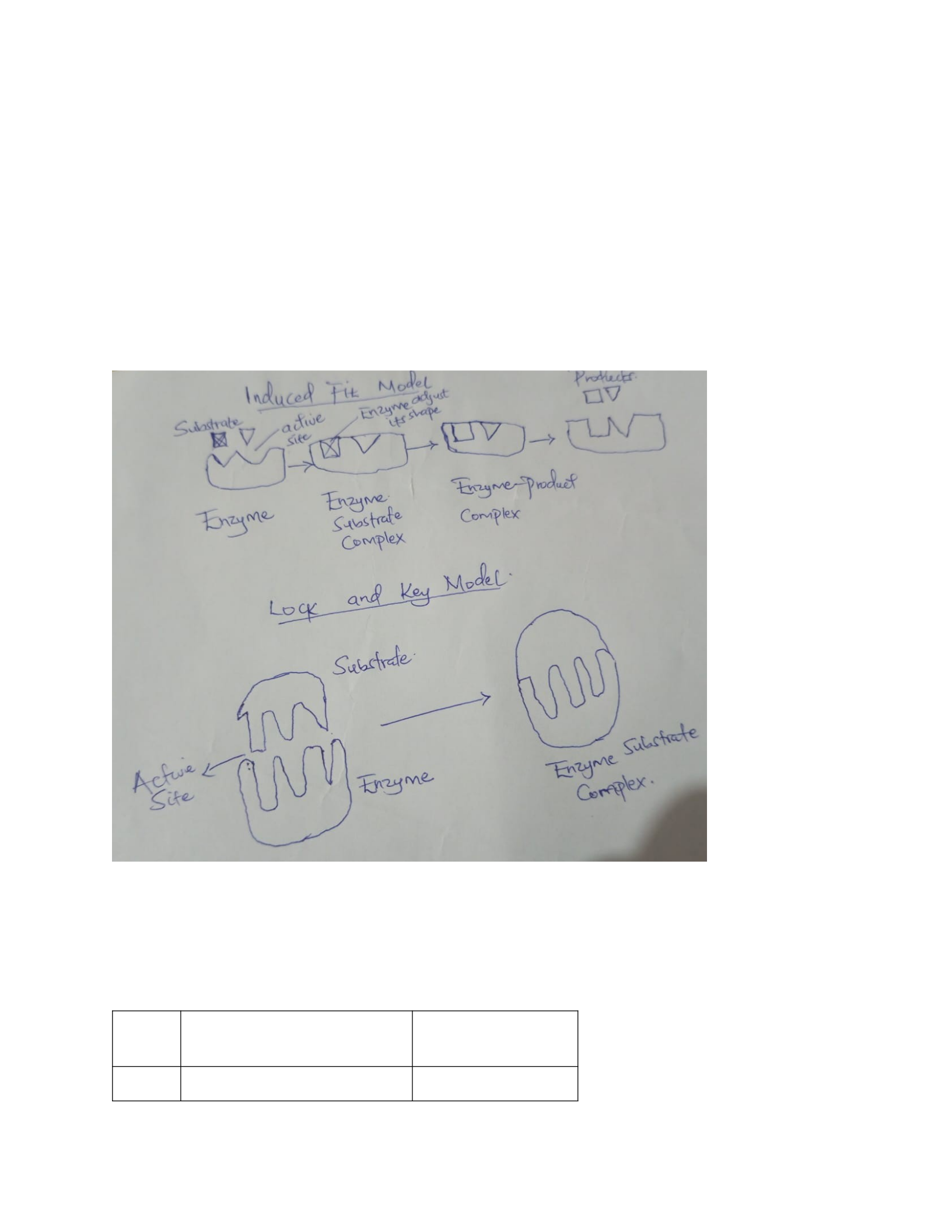
specific shape, tend to be rigid, effectively complement the substrate shape, and resemble a
lock and critical fitting shape. Based on the model, the active sites of the enzymes are pre-
formed and don’t change when the substrate is binding. The substrate is identified based on its
shape and chemical properties. The substrates that fit effectively on the active sites bind and
undergo a catalytic reaction. In the induced fit model, when the substrates bind, they lead to a
conformational change of the enzyme that increases complementary fit among the substrate
and the enzyme. When the substrate binds, the active sites of the enzyme transform because of
structural changes that increase binding, thus enhancing catalysis. The model emphasizes
dynamics that are prevalent due to enzyme-substrate interaction, where the substrate and
enzyme must adapt to the conformations to have a stable complex.
Task five
Table 1. Effect of pH on Amylase
pH Time for starch to
disappear (s)
Rate of Reaction
(1/t)
5 120 0.008
6 40 0.025
7 30 0.033
8 50 0.02
9 150 0.007
0
20
40
60
80
100
120
140
160
0
0.005
0.01
0.015
0.02
0.025
0.03
0.035
0 2 4 6 8 10
Effect of pH on Amylase
Rate of Reaction Time
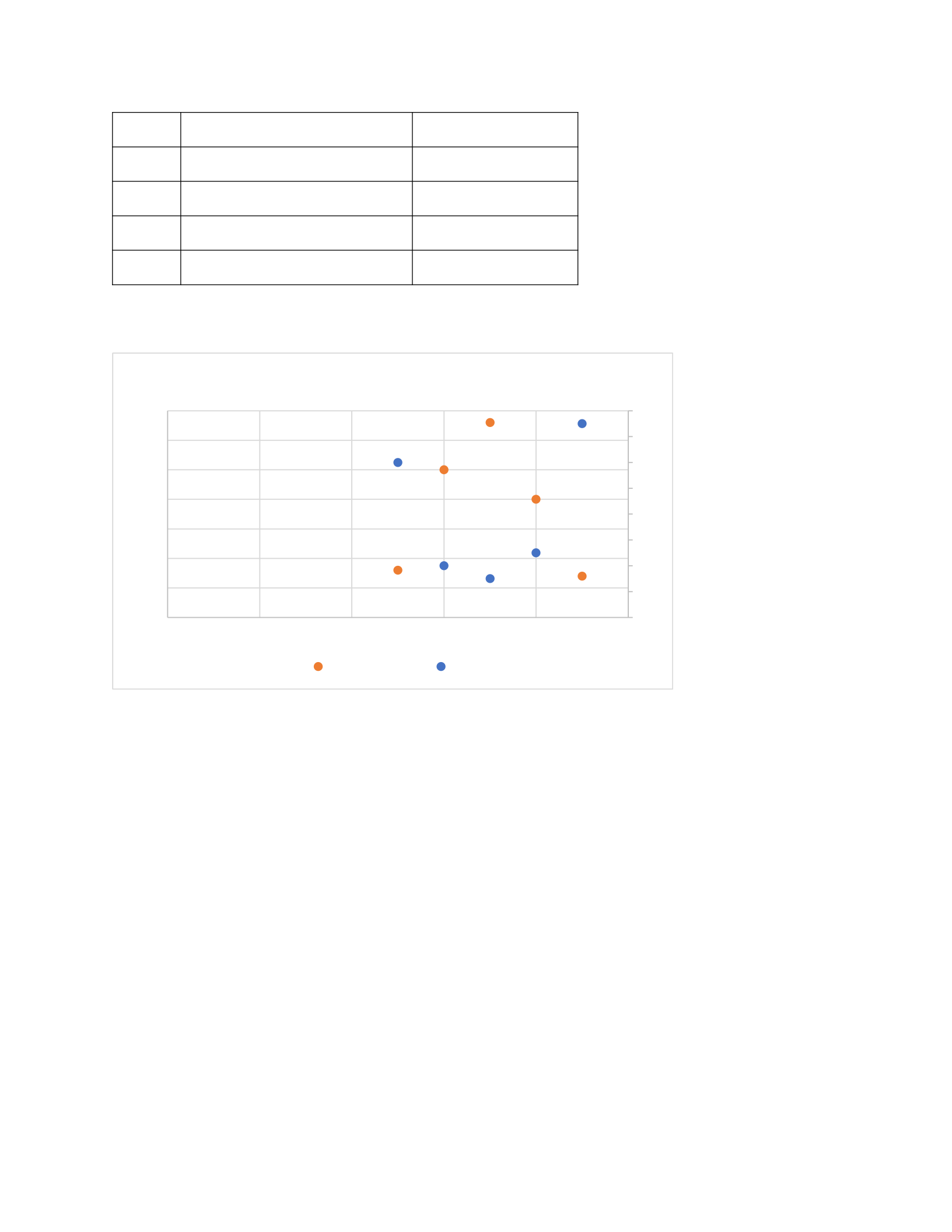
The pH increases from 5-9, and there is a decrease in the time required for starch to disappear.
When the pH is at 7, starch takes the shortest time to disappear, which takes 30 seconds. When
the Ph values are extreme at 5 and nine, the time needed for starch to disappear increases.
When the pH is neutral, the reaction is slow. The reaction rate decreases when there's an
increase in the pH values from 5-9. When the pH levels are high, the rate of reaction is lower.
The results show that Ph affects the activities of the enzymes. The reaction rate of enzymes is
optimum at a specific range of pH, which is the optimal Ph of 5-9. There is a decline in the
enzyme activity when the active site Ph changes. The enzymes for starch breakdown show
optimal activities when the Ph is at 7. When the Ph changes and moves above or below the
optimal range, the activity of the enzymes decreases, leading to reduced rates of breaking down
starch. The enzymes depend on specified Ph to have optimal reaction and catalysis.
Table 2. Effect of Temperature on Amylase
Temperatur
e
Time for starch to
disappear (s)
Rate of Reaction
(1/t)
25 549 0.002
30 276 0.004
35 174 0.006
40 200 0.005
45 462 0.002
0
100
200
300
400
500
600
0
0.001
0.002
0.003
0.004
0.005
0.006
0.007
0 10 20 30 40 50
Effect of Temperature on Amylase
reaction rate time
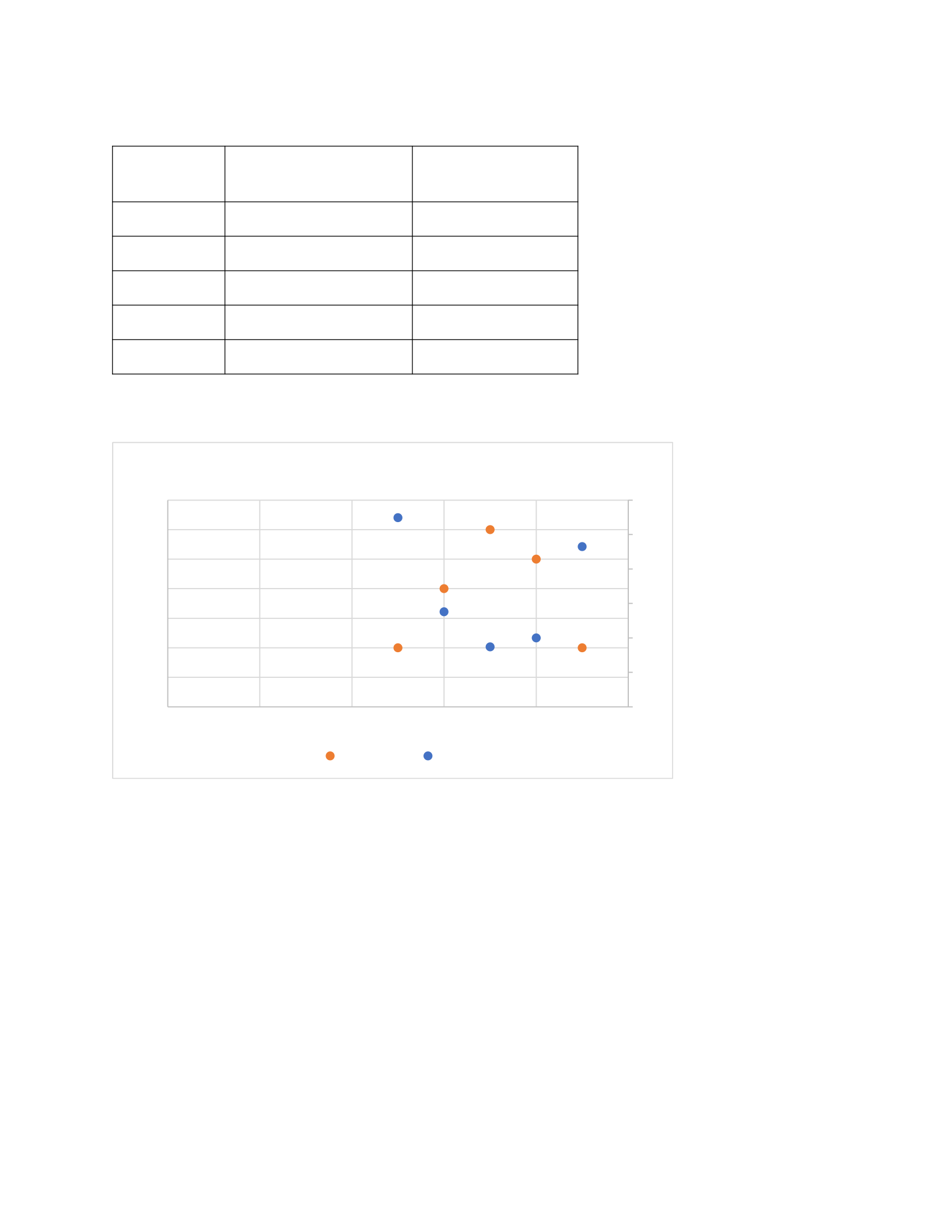
When the temperature increases from 25-35 degrees Celsius, the time needed to break down
the starch also decreases. When the temperature is high, the reaction increases, thus leading to
starch disappearing quickly. The trend is in alignment with chemical kinetic chemicals; an
increase in temperature leads to an increase in the motion of molecules and the collision, thus
increasing the reaction rate. The most significant change is between 25 to 30 degrees celsius,
and the starch disappears quickly. When the temperature is at 40 degrees celsius, the time
needed for starch to disappear increases compared to 35 degrees Celcius. The deviation is
caused by alteration of the enzymes or pathways of the reactions because of the higher
temperatures. When the temperature is at 45 degrees celcius, the time needed for starch to
disappear increases. This is caused by substrate exhaustion, thus decreasing efficiency in the
reaction. The reaction rate increases between 25-30 degrees Celsius and remains constant
between 35-40 degrees Celsius and later decreases at 45 degrees Celsius, which is influenced
by changes in kinetic reactions.

Task 6
On the graph, the line with the blue color shows the impact of competitive inhibitor A whereas
the red line shows the impact of inhibitor competitor which is represented by inhibitor B.
The competitive inhibitors bind on the active sites of the enzymes, where they compete rapidly
with the substrate in binding. The result of the action leads to an increase in concentration
present of the substrate that overcomes the inhibition which is caused by the competitive
inhibitor. The graph is evidence that shows the competitive inhibitor in blue color results in to
decline in the reaction rate contrasted with the control. When the substrate concentration rises,
the reaction rate moves towards the maximum velocity present in the reaction. The occurrence
is enhanced by high substrate concentration because the substrate available is more and
competes against the inhibitors in binding the enzyme's active site. The effect of competitive
inhibitors can be controlled through increasing substrate concentration.
Non-competitive inhibitors binding of the enzyme at the allosteric site. When the binding takes
place an alteration occurs at the enzyme conformation that reduces its ability in catalysis
despite the presence of substrate concentration. Based on the graph the presence of a non-
competitive inhibitor there is a decline in the reaction rate contrasted to the control. The curve is
not moving towards a similar maximum reaction rate when the control is prevalent when there is
a high substrate concentration. An increase in substrate concentration cannot overcome the
inhibition rate fully. Enzyme structure is altered by inhibitors that reduce its efficiency in the
catalytic reaction.

