


Strategies Administrators Use to Mitigate Cloud
Computing Data Threats and Breaches
Section 1: Foundation of the Study
On a global level, many organization leaders are discovering ways to streamline
business processes by implementing information technology (IT) systems (Caniëls,
Lenaerts, & Gelderman, 2015). By using these systems, organization leaders can (a)
expand business operations; (b) create business value; and (c) establish, recover, and
maintain customer and stakeholder relationships (Caniëls et al., 2015). Although
organization leaders have invested significant amounts of money to acquire and update IT
resources (Mithas & Rust, 2016), many IT administrators find it challenging to use these
resources to alleviate data security vulnerabilities (Chen, Lin, & Chuang, 2016; Mithas &
Rust, 2016). As the frequency of data breaches increases, organization leaders must train
IT administrators to implement effective safety solutions to reduce data security risks.
Background of the Problem
Improving data security and reducing data threats and breaches are significant
concerns for organization leaders. IT administrators are essential to protect sensitive data
of organizations (Reece & Stahl, 2014). IT administrators emphasize preventing internal
network threats, which are usually caused by disgruntled employees and human error
(DeSouza & Valverde, 2016), rather than identifying and preventing external risks caused
by unauthorized users (Reece & Stahl, 2014). Although minimizing internal data
breaches is increasingly important (DeSouza & Valverde, 2016), organization leaders

must allocate equal funding to train IT administrators to identify signs of data security
compromise (Rid & Buchanan, 2015) and protect sensitive data from external threats
(Reece & Stahl, 2014). The increased reliance on innovative technology to sustain
competitive advantage requires IT administrators to have the expertise to develop
strategies to address increasingly complex cyberattacks.
Unauthorized users rely on advances in technology to gain illegal access to
confidential data. In 2016, the average cost to U.S. organizations for a single data breach
incident was approximately $200,000, and the total yearly cost was $8.5 billion
(Romanosky, 2016). Data security is a complex process, and organization leaders require
IT administrators to implement strategies to securely store, distribute, and access
confidential data (Singh & Teng, 2015).
IT professionals use data management systems, such as cloud computing, to fulfill
organization leaders’ and consumers’ demands for online access to acquire, store, and
distribute data (Colesca, 2015). Because cloud computing vendors manage users’ data
off-site, concerns such as (a) privacy, (b) identity theft, (c) authentication, and (d) data
access rank among the top user concerns. Despite the increasing interest in data security
breaches, few researchers have explored how data security professionals in the IT
industry minimize data compromises in their respective organizations (DeSouza &
Valverde, 2016). The objective of this qualitative multiple case study was to explore
strategies IT administrators use to mitigate data security threats and breaches in
technology organizations.

Problem Statement
Cloud computing has changed the IT infrastructure of U.S. organizations,
generating new threats and breaches in data security (Kumar, Raj, & Jelciana, 2018;
Nazim & Ashgher, 2015). Economists estimated the total costs from data security
breaches at approximately $8.5 billion yearly (Romanosky, 2016). The general business
problem was that losses resulting from data security breaches put organizations at
financial risk. The specific business problem was that some IT administrators lack
strategies to address data security threats and breaches in cloud computing.
Purpose Statement
The purpose of this multiple case study was to explore strategies IT administrators
use to mitigate data security threats and breaches in cloud computing. The target
population was IT administrators at three IT organizations with 1,000 to 3,000 employees
in central North Carolina who had successfully implemented such strategies. One
implication for social change derived from implementing strategies to reduce the effects
of data threats and breaches on individuals and communities to improve the views of data
security before and after a crisis occurs.
Nature of the Study
Researchers select a research design that relates to the intent of their study.
Qualitative researchers seek to understand how a small group of selected participants
interpret and make sense of their lived experiences in their natural environments (Katz,
Saadon-Grosmana, & Arzya, 2017). Quantitative researchers examine data to (a) evaluate
error rates, (b) establish the statistical reliability and validity of findings, and (c) provide

numerical conclusions (Claydon, 2015). I did not use a mixed-methods approach because
researchers use the method to collect and analyze both quantitative and qualitative data
(see Palinkas et al., 2015). I did not incorporate quantitative data in this study. Because a
qualitative method requires researchers to explore a phenomenon in more depth than that
provided by quantitative analysis (Cronin, 2014), a qualitative method was more suitable
for this study.
I considered the phenomenological design, which researchers use to examine
individuals’ emotional and social experiences (Zlatev, 2016), but that was not the intent
of this study. I also considered the ethnographic design, which researchers use to examine
participants’ experiences with social and cultural phenomena (Rapport, Clement, Doel, &
Hutchings, 2015). The ethnographic design was not suitable for this study because
exploring participants’ experiences with social and cultural events was not the intent of
this study. Researchers use the narrative inquiry design to explore phenomena from
psychological, historic, and cultural viewpoints (Walsh et al., 2015; Wang & Geale,
2015), which was not the intent of this study.
The multiple case study design entails researchers implementing various data
collection techniques to investigate a particular phenomenon with participants at various
research sites (Cronin, 2014). The multiple case study design was suitable for this study
because researchers use the design to replicate findings and explore variations within data
between cases (Yin, 2015). Researchers also use the multiple case study design to
evaluate program or workplace strategies (Yin, 2015), which was the intent of this study.

Research Question
The central research question for this study was the following: What strategies do
IT administrators use to mitigate data security threats and breaches in cloud computing?
Interview Questions
I used the following questions in semistructured interviews to answer the research
question:
1. What strategies have you used to identify data security risks in cloud
computing?
2. What strategies have you used to assess IT systems for data security
vulnerabilities in cloud computing?
3. What strategies have you used to respond to potential and realized data
security threats and breaches in cloud computing?
4. What strategies have you found work best to mitigate data security risks in
cloud computing?
5. What types of crises communication strategies have you used to communicate
with authorized users to mitigate data security threats and breaches in cloud
computing?
6. What strategies have you used to align business objectives with IT security
functions to mitigate data security threats and breaches in cloud computing?
7. What strategies have you used to recover from careless data security threats
and breaches in cloud computing in the past?

8. What else would you like to share regarding strategies you have used to
mitigate data threats and breaches in cloud computing?
Conceptual Framework
A conceptual framework provides insight for (a) constructing qualitative research
questions, (b) outlining the proposal, and (c) aligning the study (Green, 2014).
The underlying conceptual framework for this study was the Committee of
Sponsoring Organizations of the Treadway Commission’s (COSO, 2004)
integrated enterprise risk management (ERM) framework. COSO consists of a
group of administrators from five private institutions who develop regulations and
frameworks pertaining to ERM, internal control, and fraud prevention (COSO,
2013).
The integrated ERM framework comprises eight integrated constructs: (a) internal
environment, (b) objective setting, (c) event identification, (d) risk assessment, (e) risk
response, (f) control activities, (g) information and communication, and (h) monitoring.
COSO (2004) developed the integrated ERM framework to help IT professionals manage
enterprise risks associated with data security. Applying the ERM framework could help
IT administrators (a) assess risk to develop and improve risk response resolutions, and (b)
establish strategies to identify and control activities that cause vulnerabilities in security
systems. Because of the continued incidence of data security failure in organizations,
implementing the ERM framework could educate organization leaders regarding the
significance of IT administrators and organization leaders collaborating to enhance
performance and sustainability. Gordon (2016) posited that ERM includes assessing and

aligning business functions with IT functions to mitigate risks, which decreases the
probability of interruptions in business continuity.
Operational Definitions
Data security: Data security entails applying digital safety mechanisms to prevent
unauthorized users from accessing and corrupting IT infrastructures, databases, and
Internet domains (Saidani, Shibani, & Alawadi, 2013).
Data security breach: Data security breaches occur when unauthorized users
successfully compromise data by illegally (a) inspecting, (b) accessing, (c) stealing, or (d)
distributing confidential data (Saidani et al., 2013). Some forms of data breach incidents
may include medical records, personal identification numbers, and confidential
employment or academic data (Saidani et al., 2013).
Data security threat: Data security threats are incidents caused by attackers who
could pose harm by compromising confidential data (Balasubramanian & Mala, 2015).
Information technology administrator: Information technology administrators
include chief information officers, chief information security officers, chief security
officers, and information technology directors and managers (Hooper & McKissack,
2016).
Infrastructure as a service (IaaS): IT software vendors use IaaS programs to
provide on-demand management systems so that consumers can access, monitor, and
manage their IT infrastructures from remote sites (Lal & Bharadwaj, 2016).

Multitenant: Multitenant refers to multiple clients in various organizations sharing
third-party cloud computing software services on a domain hosted by third-party vendors
(Kabbedijk, Bezemer, Jansen, & Zaidman, 2015).
Platform as a service (PaaS): IT software vendors use PaaS programs to develop
the life cycle of software through development, testing, and distribution in centralized
off-site or on-site locations (Lal & Bharadwaj, 2016).
Software as a service (SaaS): IT software vendors use SaaS programs to maintain
data storage, networking, and server performance off-site (Lal & Bharadwaj, 2016).
Vulnerability: Vulnerability refers to any application, strategy, or design failure
wherein unauthorized users (a) incite system malfunctions, (b) access confidential data,
or (c) gain extended access to confidential data. Unlike threats, which are speculative,
vulnerabilities occur, and the actions lead to unauthorized users successfully mishandling
confidential data (Balasubramanian & Mala, 2015).
Assumptions, Limitations, and Delimitations
Assumptions
Assumptions are researchers’ unsubstantiated assessments regarding a
phenomenon; if assumptions are omitted from the research, the study would be irrelevant
(Gardner & Johnson, 2015; Gioia, Corley, & Hamilton, 2013). I assumed that participants
would provide honest answers regarding data security failure. I also assumed that
participants would have sufficient knowledge to answer the interview questions. Another
assumption was the collected data would provide sufficient insight to answer the research
question.

Limitations
Limitations are probable weaknesses in a study (Gioia et al., 2013; Marshall &
Rossman, 2016). Limitations may also limit the scope of the findings in the study
(Marshall & Rossman, 2016). One limitation of the study was the results were limited by
participants’ knowledge of the subject. Another limitation was the study findings were
limited by the honesty and candor of participants’ responses. The third limitation was
that participants’ responses were limited to IT administrators at IT organizations in
central
North Carolina.
Delimitations
Delimitations are the parameters researchers implement to define the scope and
boundaries of the study (Leedy & Ormrod, 2015). I delimited the study to strategies IT
administrators use to mitigate data security threats and breaches in cloud computing. I
also delimited the study to IT administrators with at least 3 years of experience
successfully mitigating data threats and breaches. Finally, I delimited the cases to IT
organizations in central North Carolina with 1,000 to 3,000 employees.
Significance of the Study
Organizations increasingly experience data security threats that challenge business
sustainability. Integrating new technology such as cloud computing to streamline
business operations presents opportunities and risks (Hussein & Khalid, 2016). This study
was significant because the findings may be a resource to help close the knowledge gap

for IT administrators regarding best practices for managing and mitigating data security
threats and breaches in cloud computing environments.
Contribution to Business Practice
Data security is a major concern for IT professionals in all business sectors
(Wamba, Akter, Edwards, Chopin, & Gnanzou, 2015). The findings in this study may
facilitate organization leaders providing data security professionals with the requisite
training to (a) identify, (b) assess, and (c) respond to data vulnerabilities to maintain
business operations before, during, and after data attacks. Organization leaders have
increased their IT budgets to improve data security best practices to identify and mitigate
risks (Wamba et al., 2015). The findings in this study may also motivate IT and business
administrators to form alliances to mitigate data security threats and breaches
collectively.
Implications for Social Change
Approximately 81% of all data compromises occur because of identity theft
(Chou, 2016). One implication for social change involves reducing the effects of data
security threats and breaches on individuals and communities. Subsequent implications
for social change include (a) fewer compromises of individuals’ personal information, (b)
reduced financial risks for organizations, and (c) reduced financial loss for individuals
and communities. Identifying best practices IT administrators use to mitigate data
security threats and breaches may help organization leaders minimize risks to business
performance and sustainability and enhance community relations.

A Review of the Professional and Academic Literature
The objective of this qualitative multiple case study was to explore strategies IT
administrators at technology organizations in central North Carolina have used to
mitigate data threats and breaches. The literature review was a presentation of scholarly
research regarding data security threats and breaches in cloud computing. The literature
review included a synthesis of studies to provide a comprehensive analysis of data
security. The contents of the literature review were (a) integrated ERM framework, (b)
risk management frameworks, (c) cloud computing, (d) cloud computing adoption, (e)
cloud computing governance, (f) data security, (g) data security breaches, (h) data
security governance, (i) data security regulations, and (j) data security standards.
The literature review included a critical examination and synthesis of data security
and cloud computing literature. I used the following databases to retrieve scholarly and
peer-reviewed literature for this study: (a) ABI/INFORM Complete, (b) ACM Digital
Library, (c) Business Source Complete, (d) Computers and Applied
Sciences Complete, (e) Google Scholar, (f) IEEE Xplore Digital Library, and (g)
ProQuest Computing. The leading search terms were cloud adoption, cloud computing,
cloud governance, cloud regulations, cloud security, data breaches, data governance,
data security, data threats, information administrators, information professionals,
information security, and information technology.
I defined the literature content based on the criteria of (a) peer-reviewed texts, (b)
material published 2013 or later, (c) relevance to the main tenets of COSO’s (2004) ERM
integrated framework, and (d) relevance to the research question. Of the 256 references

used in the literature review, 248 (97%) were peer-reviewed sources and 246 (96%) were
published between 2013 and 2019, which was within 5 or fewer years of my anticipated
graduation date. Older sources consisted of seminal works and works from theory
literature. Researchers contended that risk management frameworks and organizations,
such as IT Infrastructure Library, International Organization for Standardization(ISO),
National Institute of Standards and Technology (NIST), and operationally critical threat,
asset and vulnerability evaluation , help IT administrators establish and control data
security practices (Ahmad, Maynard, & Park, 2014; Jouini, Rabai, & Aissa, 2014; Zarei
& Sadoughi, 2016). The integrated ERM framework comprises the elements described in
these recognized models. The integrated ERM framework was a suitable conceptual
framework for this study because the framework provided a comprehensive guide for IT
administrators to explore the scope of data security in cloud computing. In the following
section, I explain the constructs of the integrated ERM framework.
Integrated ERM Framework
COSO (2004) developed the integrated ERM framework to help IT professionals
manage enterprise risks associated with data security. ERM refers to organization leaders
planning, establishing, leading, and controlling the activities in an organization to reduce
the effects of risk on resources (Meidell & Kaarboe, 2017). Conversely, Gordon (2016)
posited that ERM refers to assessing and aligning business functions with IT functions to
mitigate risks, which decreases the probability of interruptions in business continuity. The
eight constructs of the integrated ERM framework, (a) internal environment, (b) objective
setting, (c) event identification, (d) risk assessment, (e) risk response, (f) control

activities, (g) information and communication, and (h) monitoring, function to guide
organization leaders’ decision-making regarding managing data security risks (COSO,
2004).
Internal environment. An organization leader develops ERM practices in the
internal environment by developing strategies to control risks and perceptions of risks as
well as establish a risk appetite (COSO, 2004). Implementing measures to control risks is
necessary to reduce perceptions of uncertainty given the increased incidents of data
compromises (Pitsis, Sankaran, Gudergan, & Clegg, 2014). Identifying a risk appetite, or
the degree of risk leaders will accept in the process of trying to achieve goals, reveals the
ERM philosophy and operating style within the internal environment in organizations
(Liu & Wang, 2014). Communicating the significance of ERM to divisions across the
organization is necessary for leaders to control risks and improve perceptions of risks.
Objective setting. ERM entails organization leaders establishing processes to set
objectives so that the preferred objectives reinforce and align with organizations’
business culture and risk appetite (COSO, 2013). Developing set objectives allows
leaders to identify potential risks that cause disruptions in business operations (COSO,
2004). Practitioners and researchers call for organization leaders to establish mandatory
polices to align business objectives with IT practices to create business value (Coltman,
Tallon, Sharma, & Queiroz, 2015; Reynolds & Yetton, 2015) and enhance risk
management and business performance (Reynolds & Yetton, 2015). Objective setting
should begin at the executive committee level where board members (a) establish

business objectives, (b) communicate the objectives organizationwide, and (c) adapt the
objectives into policies that align with IT risk management practices (COSO, 2013).
Event identification. Event identification involves identifying internal or external
events that might interrupt business performance (COSO, 2004). Administrators must
distinguish between (a) events that pose risks, (b) events that create opportunities, and (c)
events that may apply to both categories (Al-Musawi, Al-Badi, & Ali, 2015). Four
strategies exist to help IT and business administrators identify disruptive events: (a)
performing ongoing risks assessments, (b) obtaining third-party risks assessments, (c)
establishing internal risk task forces, and (d) creating event and incident databases to
track prior event patterns (Al-Musawi et al., 2015). Opponents of incident reporting
systems (e.g., Schulz et al., 2016) asserted that event assessments are ineffective because
criteria for classifying disruptive events are vague, and users often lack the expertise to
perform risk assessments.
Risk assessment. Researchers use the concepts risk assessment and risk
management interchangeably, and the processes involve evaluating, predicting, and
categorizing risks based on significance (COSO, 2004). Assessing risk based on the
likelihood of an occurrence and potential effect on business performance helps IT
administrators evaluate and hone risk assessment procedures (Alebrahim, Hatebur,
Fassbender, Goeke, & Côté, 2015). Other key aspects of risk assessment include (a)
defining the nature of risks, (b) developing strategies and standards to reduce risks, and
(c) identifying stakeholders and their roles in minimizing risks (Alebrahim et al., 2015).
Because communication among stakeholders during crises may be complex, establishing

risk assessment standards early may help stakeholders understand their roles in mitigating
risks prior to crises.
Risk assessment is a significant part of risk management (Aven, 2016) and IT
administrators should use risk assessment data to facilitate decision-making at the (a)
organization level, (b) business performance level, and (c) IT level (Hansson & Aven,
2014). Bernstein (1996) noted that the basis of risks and risk assessments date back
approximately 2,400 years ago when the Athenians introduced their concept of
performing risk assessments prior to making decisions. The concept of risk assessment
and risk management from a scientific approach emerged during the 1970s (Bernstein,
1996). Risk management is an ongoing process, and IT administrators should continually
evaluate the efficacy of risk management processes (Aven, 2016). The findings in
Bernstein’s study derived from exploring strategies IT administrators used to mitigate
data security threats and breaches, which provided best practices to perform risk
assessments and respond to risks.
Risk response. Risk response involves establishing response strategies that align
with the risk appetite within the organization (COSO, 2004). Administrators select
strategies such as (a) accepting, (b) avoiding, (c) reducing, and (d) sharing risks to
respond to data threats and breaches (COSO, 2013). Accepting risks involves identifying
potential risks and handling incidents as they occur (Kholidy, Erradi, Abdelwahed, &
Baiardi, 2016). Avoiding risks involves withdrawing from events that cause potential
risks or restructuring the response approach to achieve business objectives (Kholidy et al.,
2016). Reducing risks involves implementing strategies to minimize the likelihood of

risks occurring (Kholidy et al., 2016). IT administrators are responsible for collecting and
assessing data to respond to risks. Sharing information with all divisions to determine
who is qualified to handle risks makes all divisions in the organization accountable for
managing risks (Kholidy et al., 2016). Risk responses should be prearranged and relevant
to the significance of risk to help IT administrators control how risks affect business
performance.
Control activities. Control activities represent the guidelines and processes that
indicate how organization leaders execute directives. Control activities include such
practices as (a) data security approvals, (b) sanctions, (c) certifications, (d)
reconciliations, and (e) audits (COSO, 2004). Administrators use control activities to
prevent threat and compromise activities that could cause data security failure. COSO’s
(2004) control activities phase comprises many traditional controls: (a) preventive, (b)
detective, (c) manual, and (d) automated.
Preventive controls refer to procedures IT administrators use to prevent risks
before they occur (COSO, 2004). Examples of preventive controls are (a) applying
encrypted passwords, (b) establishing off-site backup database facilities, and (c) creating
recovery plans to regain business operability in the event of data security failure (COSO,
2004). Organization leaders who combine risk-centered prevention planning and control
processes to mitigate risk, as opposed to focusing on decreasing risk costs, achieve higher
business value (COSO, 2004).
Detective controls consist of guidelines IT administrators use to identify risks
after they occur (COSO, 2004), which causes delays in responding to risks (Frazer,

2016). The purpose of implementing risk controls is to minimize loss resources and
ensure business operability (COSO, 2004). Lapses in response time can prolong the time
it takes to recover from risks (Frazer, 2016). Examples of detective controls include (a)
performance reviews to assess the effectiveness of systems against achieving business
objectives, and (b) reconciliations to compare various data to identify discrepancies to
take corrective actions (Frazer, 2016).
Manual controls are processes that individuals manage and initiate as opposed to
automated system controls (COSO, 2004). Examples of manual controls are (a) manual
audits, (b) manual data reconciliations, (c) manual reporting to record and document
vulnerabilities after audits, and (d) manual performance reviews (COSO, 2004). Manual
controls are vulnerable to risks because of lack of employee expertise and training as well
as potential human error (COSO, 2004). IT-related manual controls refer to joint manual
and automated activities (Benedek, 2016), and provide an upgrade alternative when IT
administrators cannot implement automated controls exclusively because of cost
restraints (Benedek, 2016). Organization leaders can decrease risks with IT-related
manual controls by assigning tasks to experienced IT personnel to confirm the accuracy
and extensiveness of the automated data (Benedek, 2016).
Automated controls are processes implemented and performed electronically such
as (a) automated systems audits, (b) automated reporting, and (c) automated database
maintenance (COSO, 2004). Automated controls are advantageous because
administrators use them to perform ongoing system audits and procedural reviews

(COSO, 2013). Conversely, Elgammal, Turetken, Van den Heuvel, and Papazoglou
(2016) asserted that automated controls might be disadvantageous because of
inexperienced IT administrators and outdated systems. In agreement with COSO (2004),
Benedek (2016) contended that automated controls are reliable and help IT administrators
improve the consistency and predictability of manual controls, which improves IT
operations and reduce risk costs.
Information and communication. The information and communication process
involves identifying, collecting, and communicating information relative to risk
vulnerabilities in data security in a style and timeframe that allows IT administrators to
educate members across divisions in the organization so they can perform their respective
responsibilities (COSO, 2004). Evaluating the sources of internal and external
information is necessary to confirm that data are an accurate account of business
objectives and IT operations (COSO, 2004; Pham, Pham, Brennan, & Richardson, 2017).
Rae, Sands, and Subramaniam (2017) linked three aspects of information and
communication (e.g., information accuracy, information sharing and education, and
information transparency) with control activities. Rae et al. also linked two other aspects
of information and communication (e.g., effective communication and regular feedback)
with risk assessment. Communicating relevant risk management information to divisions
across organizations makes individuals accountable for identifying, responding to, and
monitoring risks (COSO, 2004).
Monitoring. Monitoring refers to testing systems to determine whether risk
management strategies remain effective and relevant (COSO, 2004). Continuous

monitoring is necessary because (a) innovations in IT, (b) updated data security
regulations, and (c) evolving business objectives require timelier and more functional
systems and controls to protect sensitive data (COSO, 2004). Regularly monitoring
authorized users’ access to sensitive data helps IT administrators (a) identify who is
responsible for managing and administering data and (b) assess their competence to
perform such tasks (Siponen, Mahmood, & Pahnila, 2014). An essential part of risk
management is defining how frequently to monitor risk indicators and identifying the
individuals responsible for doing so (Siponen et al., 2014). Defining the aspects of the
monitoring process should be a team effort.
Using the integrated ERM framework to evaluate stakeholders’ perceptions
concerning data security could reveal different perspectives regarding what constitutes
secure business and IT environments. Al-Musawi et al. (2015) applied the integrated
ERM framework to explore how end users in private and public organizations
managed risks in cloud computing environments. Al-Musawi et al. found that
identifying and communicating risks to upper management prior to adopting cloud
services was effective for proactively mitigating risks. The findings also indicated that
improving staff awareness by providing data security and risk management training
were suitable measures to prevent data security failure in cloud environments (Al-
Musawi et al., 2015).
Al-Musawi et al.’s (2015) findings revealed that organization leaders relied on
detailed, though disorganized, frameworks to address data security failure. Al-Musawi et
al. recommended that business leaders could address security vulnerabilities by

implementing the integrated ERM framework, which outlines an integrated system of
multiple constructs that guides leaders in transitioning from traditional on-site IT services
to cloud services in multitenant environments. Organization leaders in Al-Musawi et al.’s
study agreed that the best responses to data security failure were avoiding and controlling
risks.
In another study, Almgren (2014) applied COSO’s (2004) integrated ERM
framework to explore how organization leaders analyzed risks and interruptions to
business continuity in the cloud. Almgren posited that the key to solving data security
failure in the cloud involved finding responses that (a) identify risks, (b) reduce the
probability of risks occurring, and (c) help organization leaders identify the amount of
acceptable risk to achieve business objectives. Almgren found that event identification,
risk assessment, and risk response helped organization leaders perceive risk events as
opportunities to increase risk management awareness.
Risk Management Frameworks
Researchers applied risk management frameworks and theories to explore data
security in cloud computing (e.g., Hanus & Wu, 2016; Ibrahimovic & Franke, 2017;
Park, Shin, & Song, 2016). To justify implementing cloud services, IT administrators
must implement risk management systems that provide relevant strategies to assess,
manage, and secure data (Islam, Fenz, Weippl, & Kalloniatis, 2016). The following
section described the protection motivation theory, risk IT framework, and risk
management framework, which were alternative conceptual frameworks I considered
using as the basis for this study.

Protection motivation theory. I considered Rogers’s (1975) protection
motivation theory as the conceptual framework for this study. Rogers originally
introduced the protection motivation theory as a social cognitive model to predict
individuals’ behavior. In 1983, Rogers applied the protection motivation theory to
understand how individuals react to and cope with threats in data security. Safa et al.
(2015) attributed Rogers’s (1983) seminal research as the impetus for additional
behavioral research in data security.
The two constructs of the protection motivation theory are threat appraisal and
coping appraisal (Rogers, 1983). Threat appraisal refers to how individuals perceive and
assess the severity of risks that occur from vulnerabilities in data security (Rogers, 1983).
These risks can threaten accessibility, reliability, and confidentiality of data (Safa et al.,
2015).
Coping appraisal refers to how well individuals cope with data security threats or
risks (Rogers, 1983). Studies regarding how individuals react during impending threats
depict how individuals perceive and cope with risks (Rogers, 1983). Researchers use
protection motivation theory to explain and predict individuals’ motives for engaging in
actions to protect virtual and physical resources in organizations (Jansen, Veenstra,
Zuurveen, & Stol, 2016; Tapsuwan, Mankad, Greenhill, & Tucker, 2017).
Jansen et al. (2016) used the protection motivation theory to expound on users’
motives for implementing protective practices in data security. Jansen et al. purported that
coping appraisal motivated users to adopt protective data security practices when they (a)
perceived a technique was effective, (b) felt competent enough to use computer

equipment, (c) had a positive perception regarding data security protection, and (d) took
ownership for data security. In opposition to Jansen et al. (2016), Ifinedo (2014) posited
that coping appraisal motivated users to (a) consider the consequences of their actions
prior to responding to threats and risks, (b) consider the degree of potential damage and
incurred cost from threats and risks, and (c) comply with established data security
standards. To mitigate risks, IT administrators must reinforce data security practices by
implementing strategies that help them identify, assess, and respond to data threats and
breaches (Ifinedo (2014).
Researchers noted that IT administrators are integrating IT solutions to streamline
operation practices, which makes organizations vulnerable to data security failure
(Caniëls et al., 2015; Chen et al., 2016; Lohrke, Frownfelter-Lohrke, & Ketchen, 2016;
Mithas & Rust, 2016). Best practices in data security require IT administrators to
implement strategies, guidelines, and technologies consistent with business operation
practices (Posey, Roberts, Lowry, & Hightower, 2014; Singh & Teng, 2015). The
practices must be user-friendly enough that users can integrate and interpret the
guidelines to identify probable security threats in the workplace (Chen, Lin, & Yen,
2014).
The protection motivation theory provides a framework for understanding what
motivates users to cope with and appraise the severity of data security threats and
breaches (Rogers, 1983). The intent of this study was to identify and explore strategies IT
administrators have successfully implemented to mitigate data security threats and
breaches. The protection motivation theory was irrelevant to this study.

Risk management framework. The National Institute of Standards and
Technology (NIST) developed the risk management framework in 2010. NIST is a
governing agency that sets regulations and best practices for the information and
communications technology industry (Yimam & Fernandez, 2016). The risk management
framework is an assessment tool that provides a controlled, yet flexible basis for
exploring and defining security controls to alleviate threats and risks that occur because
of dilemmas in data security (NIST, 2018).
The constructs of the risk management framework are (a) categorization, (b)
selection, (c) implementation, (d) assessment, (e) authorization, and (f) monitoring
(NIST, 2018). Cyber criminals are using complex techniques to access confidential data
in organizations (NIST, 2018). IT administrators must implement wide-ranging safety
techniques because any vulnerable area in operations is a possible threat to data security
(NIST, 2018).
Categorization involves maintaining a record of information systems and the data
processed, stored, and transferred by systems after performing impact analysis to
determine the risks associated with implementing new systems (NIST, 2018). Selection
includes adopting standard security controls to operate information systems based on
impact analysis (NIST, 2018). IT administrators should amend the controls based on an
assessment of organization practices (NIST, 2018). Assessment refers to evaluating
security controls to determine (a) how accurately users implement the controls, (b) if the
controls are functioning as envisioned, and (c) if the controls are creating outcomes
according to system and security requirements (NIST, 2018).

Authorization refers to approving information system tasks based on evidence that
the risks to (a) organization operations and resources, (b) people, and (c) external
stakeholders are acceptable (NIST, 2018). Monitoring risk involves assessing risks
longterm (Joos, Piotroski, & Srinivasan, 2016) and involves periodically evaluating risk
assessment processes to determine if IT professionals need training to enhance their risk
management skillset (NIST, 2018). The risk management framework is inclusive and
consists of best practices for IT administrators to assess risk compliance controls (NIST,
2018.
NIST (2010) created the risk management framework to help federal
organizations in the U.S. to implement new IT systems. Meszaros and Buchalcevova
(2017) questioned the effectiveness of the framework because of the time consuming
process of continuous assessing and monitoring information systems and security
controls. Meszaros and Buchalcevova noted that an effective risk management
framework provides guidelines for selecting security controls based on the results of
assessing and monitoring threat and risk vulnerabilities.
Kalaimannan and Gupta (2017) contradicted Meszaros and Buchalcevova’s
(2017) views and noted that monitoring provides an added level of systems
reinforcement, which allows system owners to address emerging internal vulnerabilities
as they occur rather than after external attacks ensue. Kalaimannan and Gupta likewise
asserted that, without adequate research and training, NIST’s (2010) framework is
inconvenient because the complex security controls can overwhelm novices and prevent
organization leaders from adopting the framework. The risk management framework is

widely accepted, which has led to a market for numerous publications and training tools
to instruct system owners (Kalaimannan & Gupta, 2017).
Mendelson and Mendelson (2017) applied the risk management framework in
practice to explore how third-party vendors in the United Kingdom have legal access to
consumers’ sensitive data without restrictions. Mendelson and Mendelson noted that
study participants, which consisted of international software engineers, purported that (a)
continuous systems monitoring, (b) keeping accurate records of data transfers, and (c)
limiting the use of live data while testing systems provided controls to improve data
security. Kalaimannan and Gupta (2017) also posited that the complexity of applying the
risk management framework in practice was problematic for novice users.
The risk management framework provides a model for assessing data security
failure (NIST, 2010). IT professionals implement the framework to create, assess, and
maintain risk management controls for information and communication technology
compliance (NIST, 2018). Because the intent of this study was to explore strategies IT
administrators have successfully used to mitigate data security threats and breaches, the
risk management framework was inappropriate for this study.
Risk IT framework. Information Systems Audit and Control Association
(ISACA), comprised of 112 colleagues from 18 countries, collaborated with
approximately 1,700 IT professionals to create the risk IT framework (ISACA, 2012).
The objective of the risk IT framework is to help organization leaders bridge the gap in
awareness between ERM and IT risk management practices (ISACA, 2012). The

constructs of the risk IT framework are (a) risk governance, (b) risk evaluation, and (c)
risk response (ISACA, 2012).
Risk governance involves integrating IT risk management controls with ERM
controls to handle risks based on a cost and profit analysis (ISACA, 2012). Risk
evaluation refers to identifying and assessing IT-associated risks and opportunities for
profit and presenting the findings in a business format (ISACA, 2012). Risk response
involves addressing IT-associated risk concerns, opportunities, and incidents from a
costeffective perspective and in a manner that aligns with business objectives (ISACA,
2012). IT risk management is a fundamental element of data security, and IT
administrators
must implement strategies to mitigate threats and promote risk awareness
organizationwide (ISACA, 2012).
Hatefi and Fasanghari (2015) applied the risk IT framework in practice to explore
strategies IT administrators use to improve ERM and data security risk awareness when
implementing new IT projects. Project risk management involves implementing strategies
to improve the project performance by (a) methodically identifying and evaluating risks,
and (b) developing strategies to minimize or avoid risks and create business value. IT
administrators in Hatefi and Fasanghari’s study findings revealed that IT administrators
implemented the risk IT framework to capitalize on opportunities to protect IT assets
(e.g., data, hardware, and software) and obtain the maximum return on IT investments.
The risk IT framework provides a model to help organization leaders accept and manage
tolerable degrees of risks and character damage to pursue a return on investment (ISACA,

2012), which was not the intent of this study. The risk IT framework was inappropriate
for this study.
Irrespective of which risk management framework (or combination of
frameworks) IT administrators select to reduce data threats and breaches, there is a
significant caution. The constructs within the framework should align with business and
IT operations, as well as local, state, and national IT compliance regulations (Al-Ruithe,
Benkhelifa, & Hameed, 2018). Because IT compliance regulations differ at the local and
national levels, establishing a data governance framework consistent with IT and business
requirements helps administrators establish a system of accountability to identify
individuals responsible for securing, distributing, and using data in organizations
(AlRuithe, et al., 2018).
Cloud Computing
Cloud computing is an online data management system wherein third-party
vendors lease comprehensive cloud services to consumers (Avram, 2014). NIST (2018)
recognized five significant features of cloud computing: (a) on-demand availability, (b)
broad network access, (c) resource sharing, (d) scalable services, and (e) monitored
services. IT administrators use cloud services to manage data capabilities, as well as
improve sustainability and competitive advantage (Lal & Bharadwaj, 2016). Cloud
services also reduce IT costs and improve business agility (Talluri, 2016; Tsai & Hung,
2014).
Compliance, manageability, and effective data security practices are three
capabilities essential to creating business value (Lal & Bharadwaj, 2016). The three

common cloud models are (a) SaaS, (b) PaaS, and (c) IaaS (Kushida, Murray, & Zysman,
2015; Lal & Bharadwaj, 2016). SaaS refers to applications delivered to end users online
as a service (Lal & Bharadwaj, 2016). SaaS applications are advantageous because end
users implement SaaS programs to operate existing Internet applications and systems (Lal
& Bharadwaj, 2016), which eliminates the need to run applications on separate
computers. One disadvantage of using SaaS is the lack of end user manageability
privileges (Sharma, Singh, Singh, & Kaur, 2016). Examples of SaaS providers are Citrix,
GoToMeeting, and Facebook (Lal & Bharadwaj, 2016).
PaaS services are services end users implement to create tailor-made development
and deployment platform applications (Kushida et al., 2015). End users implement PaaS
services to customize cloud applications with existing software codes (Kushida et al.,
2015). PaaS providers deliver applications on public domains, which is disadvantageous
to private businesses that cannot customize the services to meet their respective needs
(Sharma et al., 2016). Examples of PaaS providers are Windows Azure, Force.com, and
Google App Engine (Kushida et al., 2015).
IaaS service providers deliver server, storage, and network capabilities as a
service (Kushida et al., 2015). IaaS solutions allow end users to operate multiple
hardware and software applications on designated cloud hardware. One disadvantage of
IaaS applications is the lack of service provider technical support (Sharma et al., 2016).
Examples of IaaS providers are Amazon EC2, Windows Azure, and Rackspace (Kushida
et al., 2015).

Adopting cloud services and outsourcing IT functions to manage software
applications is prevailing in organizations (Fung, 2016). Yet, research and toolkits that
help IT administrators map applications to particular cloud deployment models are sparse
(Fung, 2016). Deployment models depict how users gain access to cloud services (Fung,
2016). The four common cloud deployment models are (a) public cloud, (b) private cloud
(c) community cloud, and (d) hybrid cloud (Islam & Rahaman, 2016). Organization
leaders should invest in cloud deployment models based on (e) business requirements, (a)
compatibility with existing applications, and (b) the degree of support necessary to
operate the models successfully (Islam & Rahaman, 2016).
Public cloud refers to open-access services (e.g., Google) controlled by cloud
providers (Islam & Rahaman, 2016). Private cloud signifies systems tailor-made for a
single organization and maintained by the cloud provider (Islam & Rahaman, 2016).
Community cloud refers to services where groups of similar organizations (e.g., hospitals,
banks, and utility companies) establish information by sharing cloud infrastructures
(Islam & Rahaman, 2016). Hybrid cloud includes a combination of two or more public or
private cloud models (Islam & Rahaman, 2016). As cloud adoption has increased, cloud
providers have expanded the line of deployment models to help meet users’ specific IT
needs (Islam & Rahaman, 2016).
In 2013, cloud computing emerged as a model projected to revolutionize the
mainstream ways in which vendors provided computing services to customers (Sultan,
2013). Cloud adoption rates increased because of advantages such as (a)
costeffectiveness, (b) scalability, (c) efficiency and (d) reduced operation and

maintenance costs (Cioca & Ivascu, 2014; Sridhar, 2016)). The findings in Wang, Wood,
AbdulRahman, and Lee’s (2015) study revealed that integrating cloud services in IT
projects could reduce delays in meeting deadlines and improve the scope of projects. IT
project managers, despite the advantages of using cloud services, expressed
apprehensions regarding disadvantages such as (a) lack of data confidentiality, and (b)
inconsistencies in U. S. and global regulations and governance policies (Wang et al.,
2015).
In 2016, International Trade Administration (ITA) researchers predicted that
organization leaders would invest approximately $191 billion on cloud services by 2020.
The prediction represented a 20% increase above the 2014 proposed expansion rate,
which indicated there was a surge in cloud adoption (ITA, 2016). Researchers in the
International Data Corporation predicted investments in cloud computing to surpass the
$107 billion mark by 2017, doubling the $47.4 billion prediction for 2013 (ITA, 2016). In
2015, the cost-effectiveness of cloud services, along with the need to store, monitor, and
evaluate large volumes of data, caused organization leaders to adopt cloud services at
scale (Chou, 2016).
Hashem et al. (2015) supported Sultan’s (2013) projection and described cloud
computing as a revolutionary alternative to traditional on-site IT services. Contrary to
Sultan’s projection, Avram (2014) indicated that because of disadvantages such as service
providers’ viability and lack of transparency, organization leaders should only consider
cloud adoption after exploring factors such as (a) how well cloud services work with
existing IT functions, and (b) cost-effectiveness in relation to organization size and staff

expertise. Riungu-Kalliosaari, Taipale, Smolander, and Richardson (2016) introduced a
5-phase cloud adoption toolkit to help organization leaders make informed decisions
about adopting cloud services.
Cloud Computing Adoption
Cloud service providers deliver on-demand computing services (e.g., SaaS, IaaS,
and PaaS), which IT administrators in developed and developing countries use to expand
service supply and performance in organizations (Senyo, Effah, & Addae, 2016). Samimi,
Ledary, and Samimi (2015) indicated that cloud adoption rates in developing countries
were 50% to 70% lower than rates in developed countries. The percentages could be
higher because employees in developing countries seldom share experiences regarding
failed cloud adoption processes (Samimi et al., 2015). Contrary to Samimi et al. (2015),
Ika and Saint-Macary (2014) noted that cloud adoption rates were lower in developing
countries because IT administrators lacked strategies to influence organization leaders’
decision-making regarding the advantages of cloud adoption.
A plethora of literature exists regarding cloud adoption in developing countries
(e.g., Carcary, Doherty, & Conway, 2014; Dillon & Vossen, 2015; Ratten, 2014;
Senarathna, Yeoh, Warren, & Salzman, 2016; and Tang & Liu, 2015). Dillon and Vossen
(2015), Ratten (2014), and Tang and Liu (2015) posited that organizations’ geographic
location and data security failure were determinants for cloud adoption in developing
countries. Conversely, Senarathna et al. (2016) indicated that lack of affordable internet
and telephone access influenced organization leaders’ propensities to decline cloud
adoption in developing countries.

Carcary et al. (2014) also posited that cultural differences and geographic location
played roles in organization leaders’ inclinations to decline cloud adoption in developing
countries. Ratten (2014) asserted that exploring cloud adoption in diverse regions could
improve organization leaders’ perspectives regarding cloud adoption in developing
countries. COSO (2004) indicated that the internal environment in organizations, which
includes diverse cultural perspectives, defines how organization leaders assess risks and
make decisions about adopting new services and products.
The cloud concept is a comparatively new phenomenon, and cloud adoption
research is still in an evolving phase (Buyya et al., 2019; El-Gazzar, Hustad, & Olsen,
2016; Vithayathil, 2018). IT administrators have expressed a growing interest in cloud
services to perform complex business tasks (Buyya et al., 2019; Kappelman, McLean,
Luftman, & Johnson, 2013). In 2012, IT analysts recognized cloud computing as the third
most influential IT investment and the fifth most prominent global technology
(Kappelman et al., 2013). Buyya et al. (2019) projected that investments in cloud services
would increase from $70 billion in 2015 to approximately $203 billion in 2020.
IT administrators are managing complex data security and governance processes
(Kappelman et al., 2013). The leading cloud adoption concerns among organization
leaders and IT administrators in developed and developing countries are (a) data security
threats and breaches, (b) vague legal criteria for cloud adoption, and (c) conflicting global
governing practices (Kappelman et al., 2013; Lee, 2019). Although no single governance
framework incorporates every available IT control, combined, the frameworks help IT
administrators address essential aspects of data security governance (Zafar et al., 2017).

Cloud Computing Governance
Cloud computing governance involves implementing detailed guidelines for using
cloud services (Prasad & Green, 2015). IT administrators use cloud computing
governance principles to secure data located on remote IT infrastructures (Prasad &
Green, 2015). Because the cloud is the leading method for providing computing services
globally, legislative and regulatory governance models are gaining more notoriety from
increasing incidents of data security failure (Brender & Markov, 2013; Prasad & Green,
2015). Organization leaders are implementing governance strategies to (a) align IT
objectives with sustainability goals, and (b) assess and manage risks in a timely manner
(Prasad & Green, 2015). Although some of the governance concerns such as (a) data
security compliance, (b) access authentication, and (c) confidentiality are common
features in computing, unique features in cloud computing such as multitenancy and
resource sharing exacerbates the impact of such concerns (Prasad & Green, 2015).
Organization leaders understand the landscape of IT risks in traditional computing
systems (Yousif, Edsall, Krebbers, Pappe, & Khalidi, 2014). Leaders implement
governance standards such as (a) the cooperative ISO and international electrotechnical
commission, (b) control objectives for information and related technologies, and (c) the
payment card industry data security standard, to manage IT functions in cloud computing
(Yousif et al., 2014). By 2012, approximately two-thirds of the Financial Times Stock
Exchange 100 Index organizations were either completely or moderately compliant with
the ISO/IEC 27,000 system of security controls (ISO, 2014).

Yousif et al. (2014) asserted that adhering to governance controls is a creditable
approach to mitigating data security failure. Prasetyo and Surendro (2015) purported that
complying with controls alone does not guarantee data security. Organization leaders
must adopt user-friendly data governance models that align with IT and business
operations to mitigate data security threats and breaches (Prasetyo & Surendro, 2015).
ElGazzar et al. (2016) posited that IT administrators often lack IT governance strategies
and skills to manage and secure cloud services, which makes upper management hesitant
about adopting cloud services.
The links between acceptable and prohibited practices in cloud computing remain
ambiguous (Verma & Bhattacharyya, 2017). Traditional data security regulations, as well
as predictable business profiles, are becoming unsustainable in the cloud (Kim et al.,
2014). Implementing cloud services requires organization leaders to assess governance
models to adopt IT risk management controls that align with business and IT practices
(Kim et al., 2014). Mathur and Purohit (2017) also asserted that conventional governance
controls are no longer viable in multitenant cloud environments.
Data Security
Data security involves protecting IT systems against security threats and breaches
that compromise the accessibility, reliability, and privacy of data (Savola, 2014). Security
and privacy are the challenges that prevent cloud adoption in practice (Wei et al., 2014).
Unlike traditional computing models, where end users manage data storage and data
manipulation, cloud computing involves service providers acquiring full control of
managing data and systems (Savola, 2014; Wei et al., 2014). Because of end- users’

limited access to managing and controlling data security, data are vulnerable to attacks
(Wei et al., 2014).
Researchers study cloud data security challenges and issues from perspectives
such as (a) data confidentiality, (b) data integrity, and (c) network security (DeSouza &
Valverde, 2016; Kumarga & Sireesha, 2014; Rao & Ramana, 2016). Because of the
increasing number of data breach incidents, IT administrators should implement
extensive data security measures in cloud environments (Gordon, 2016). IT
administrators need to understand how to align Administrators can apply the integrated
ERM framework to link ERM practices with business objectives to enhance risk
management practices (COSO, 2004).
Data confidentiality is essential for end users to store private or sensitive data (Xia
et al. 2016). Because of the rise in adoption of cloud services, IT administrators are
motivated to outsource data to cloud platforms because of cost-effective data
management services (Bajaj & Sion, 2014; Xia, Wang, Sun, & Wang, 2016). Xia et al.
(2016) suggested that IT administrators should encrypt sensitive data prior to outsourcing
to maintain data confidentiality to make it hard for unauthorized users to access data with
traditional passwords.
Contrary to Xia et al. (2016), Hadden and Mahdy (2016) asserted that combining
data encryption and fragmentation improves data confidentiality in cloud services.
Fragmentation refers to partitioning data to multiple platforms among several cloud
providers (Hadden & Mahdy, 2016). Acquiring support from multiple cloud providers
enhances data confidentiality and security (Hadden & Mahdy, 2016).

Data integrity is a fundamental element in IT system operations (Rao & Ramana,
2016). Data integrity refers to protecting data from illegal deletion, adaptation, or
assembly (Rao & Ramana, 2016). By contrast, Kumarga and Sireesha (2014) indicated
that data integrity refers to how accurate and reliable data are after two or more updates.
Rao and Ramana and Kumarga and Sireesha agreed that cloud service providers are
obligated to monitor users’ access and rights to IT resources, which ensures that
confidential data and services are less susceptible to unauthorized and fraudulent
activities. Reece and Stahl (2014) added that IT administrators play significant roles in
securing confidential data; yet IT administrators’ lack of knowledge of cloud computing
and network security discourages organization leaders from adopting cloud platforms.
Network security entails applying tools such as firewall applications, anti-virus
software, and anti-spyware software to filter incoming content (Schlechtendahl,
Kretschmer, Sang, Lechler, & Xu, 2017), which protects users’ information against
unauthorized access (Hassan, Lin, Yue, & Wan, 2017). A computer network consists of a
group of computers that administrators merge to share resources (Li, Li, Pan, & Zhang,
2015). Access to the Internet is the most shared resource among users on a network (Li et
al., 2015). Users also share resources such as data, file servers, and printers (Hassan et al.,
2017).
Schlechtendahl et al. (2017) asserted that IT professionals design network security
systems to mitigate malicious attacks on users’ information. Chu, Chow, Tzeng, Zhou,
and Deng (2014) indicated that threats such as (a) insecure Web applications, (b) malware
attacks, and (c) data leakages pose threats to network security systems. Although cloud

computing is economically advantageous, Chu et al. (2014) purported that inconsistencies
in global security standards and laws, as well as lack of assurance for data confidentiality,
prevent organization leaders from adopting cloud services on a large scale.
Data Security Standards
Cloud adoption has increased since the initial inception of the product in 2006
(Martínez-Pérez, De La Torre-Díez, & López-Coronado, 2015). Because cloud
computing involves using a network of remote servers hosted on the Internet,
organization leaders must implement preventative security standards to ensure that
collecting, storing, and manipulating users’ private information occurs in secure
environments (Martínez-Pérez et al., 2015). Mandatory security standards exist to help
organization leaders establish best practices to mitigate data security failure (Lee, Geng,
& Raghunathan, 2016). The purpose of security standards is to help IT administrators
identify approaches and solutions to mitigate data security challenges in cloud computing
(Lee et al., 2016).
Because organization leaders rely on multiple security frameworks to remain
compliant with federal, state, and local regulations, IT administrators must comply with
established security standards to avoid compliance penalties in the event security
breaches occur (Lee, Park, & Yang, 2015). The list of data security standards is
extensive, and adopting a specific standard or a combination of diverse standards in
multiple frameworks is contingent upon (a) organization size, (b) employees’ IT
expertise, and (c) the efficacy of existing business strategies and IT security frameworks
(Castka & Corbett, 2015; (Prasad & Green, 2015).

There are two categories of data security standards : technology and management
(Heatherly, 2016). Technology security standards include strategies IT administrators use
to concentrate on the logical (e.g., authorization, authentication, encryption, and
passwords) and physical aspects of data security (e.g., inaccessible computers,
investigations, or inoperable systems; Heatherly, 2016). Conversely, IT administrators
use management security standards to implement strategies to develop and supervise best
practices to regulate and protect sensitive data (Heatherly, 2016).
In 2005, ISO developed the ISO/IEC 27001 standard series, which outlines the
criteria for (a) establishing, (b) applying, (c) operating, (d) assessing, and (e) enhancing
management and IT security practices (Alebrahim, et al., 2015). ISO 27001 consists of
security strategies IT administrators and organization leaders use to share information and
align IT objectives with business objectives (Alebrahim et al., 2015). The ISO/IEC
27010:2015 international standard, an extension of ISO 27001, includes instructions
organization leaders implement to exchange and share sensitive data globally within
similar or competing industries (Mok & Ang, 2016). The ISO/IEC 27001:2013 standards,
extensions of the initial ISO 27001 standards, are nonspecific and applicable to
organizations in all business industries (Choi, Choi, & Kim, 2014).
Data security standards such as the (a) Cloud Security Alliance (CSA), (b)
European Network and Information Security Agency, and (c) Information Technology
Infrastructure Library outline strategies that allow IT administrators and organization
leaders to collaborate to develop processes to mitigate data security vulnerabilities (Ali,
Khan, & Vasilakos, 2015). The objective of implementing data security programs is to

offer frameworks that allow organization leaders and IT administrators to develop and
implement strategies to (a) improve data security awareness, (b) assess systems and
processes to identify vulnerabilities, and (c) identify intentional and unintentional threats
to enhance data security governance (Ali et al., 2015).
Data Security Governance
Data security governance refers to the guidelines and accountability standards IT
administrators implement to establish effective data management policies (Thompson,
Ravindran, & Nicosia, 2015). One aspect of data security governance involves identifying
stakeholders’ roles in the data security governance process (Thompson et al., 2015).
Assessing stakeholders’ perceptions regarding security governance helps organization
leaders judge the efficacy of data security governance plans (COSO, 2004).
Making data security a shared effort among internal and external stakeholders
bolsters buy-in and decreases the likelihood of interruptions in business continuity during
crisis (Thompson et al., 2015). Ernst and Young (2013) surveyed 500 IT administrators
worldwide who acknowledged a link between effective security governance and business
stability. At 20% of the organizations in the Ernst and Young study, IT administrators
indicated that establishing a governance plan helped IT administrators identify
vulnerabilities in data security early. Organization leaders should integrate IT security
governance initiatives with corporate governance initiatives to enhance business
operability (Thompson et al., 2015).
IT administrators can enhance data governance policies by (a) proactively
identifying and monitoring risks, (b) aligning risk management policies with business

practices, (c) responding to risks in a timely manner and (d) assessing risk management
strategies to ensure strategies remain relevant and effective (COSO, 2004). Thompson et
al. (2015) indicated that data governance controls exist to help IT administrators manage
IT functions. Tisdale (2015) asserted that IT administrators lack the expertise to apply
governance controls to achieve IT objectives, which could impede business continuity.
Data security governance is a fundamental aspect of enterprise risk management
(Carcary et al., 2014). Organization leaders must assess their existing maturity aptitude
regarding IT security governance and risk management to identify vulnerable areas that
warrant attention (Carcary et al., 2014). Atoum, Otoom, and Abu Ali (2014) asserted that
consumers expect organization leaders to govern data security practices and implement
strategies to mitigate data compromise. Effective data governance involves identifying
and implementing regulations to manage and mitigate data security threats and breaches
(Tisdale, 2015).
Data Security Breaches
Data breaches occur when unauthorized users unintentionally or maliciously
compromise sensitive data (Saidani et al., 2013). Data breach victims lose revenue or
incur physical or virtual property damage (Saidani et al., 2013). The financial effect is
substantially higher during malicious breaches or illegal acts (Ponemon Institute, 2015).
Privacy Rights Clearing House (2016) researchers ranked cybercrime as the number one
concern for organization leaders.
The three most common forms of data breach are (a) physical theft, which refers
to stolen documents, laptops, servers, or computers; (b) skimming, which involves

stealing the magnetic strip from credit cards; and (c) cybercrime, which involves such
acts as cyber espionage, hacking, Internet attacks, malware, and viruses (Edwards,
Hofmeyr, & Forrest, 2016). Hacking accounted for 11.3% of data attacks in September of
2016 (Privacy Rights Clearing House, 2016). Cyber espionage accounted for 4.2% of
data attacks in September of 2016 (Privacy Rights Clearing House, 2016). Cyber warfare
(e.g., deliberately attacking military IT systems) accounted for 4.2% of the data attacks in
September of 2016 (Privacy Rights Clearing House, 2016).
There has been an increased number of data breach incidents since 2008
(Holtfreter & Harrington, 2014). Between 2005 and 2013, there were approximately
4,000 reported cases of data breach incidents in the U.S. (Holtfreter & Harrington, 2014),
and the effects of data breach occurrences were substantial for organizations and private
consumers (Holtfreter & Harrington, 2014). Economists classify the financial effect of
security breaches as short-term costs incurred only during the time of the breach, and
long-term costs incurred for extended periods (Chen, Dong, & Chen, 2016). The
magnitude of the short-term and long-term costs could vary based on the form of breach
and organization type (Chen et al., 2016).
Organizations and consumers suffer substantial financial loss because of data
breaches. Ponemon Institute (2015) researchers revealed that U.S. organizations’ losses
totaled approximately $5.9 million for every individual data breach incident. Consumers’
losses totaled approximately $16 billion after 12.7 million incidents of fraud and
compromises in personal data occurred (Ponemon Institute, 2015). In 2018, the average
cost of a single data breach incident was $148 million, and it took IT administrators
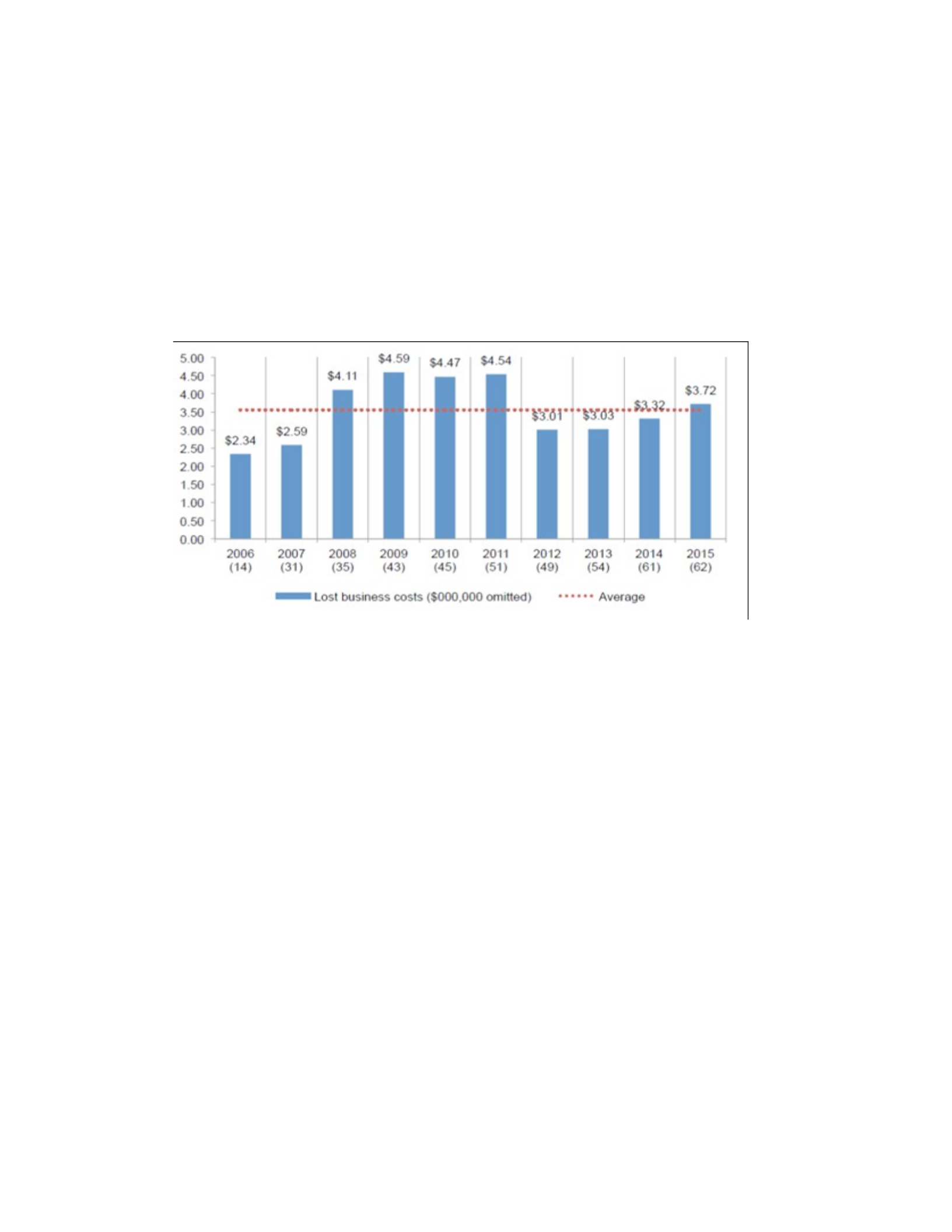
approximately 196 days to identify a breach (Ponemon Institute, 2018). Federal Trade
Commission analysts indicated that identity theft was the number one complaint among
consumers in 2015 (Ponemon Institute, 2015). Figure 1 illustrates that organizations’
losses from data breaches totaled $2.34 million to $3.72 million over a 10-year span
(Ponemon Institute, 2015).
Figure 1. Average organization costs over 10-year span. Retrieved from “2015 Cost of
Data Breach Study: United States,” From IBM & Ponemon Institute, 2015, Ponemon
Institute Research Report, p. 13. Copyright 2015 by Ponemon Institute. Adapted with
permission.
Despite all the precautionary actions taken by IT administrators, the increasing
numbers of data breaches are not restricted to a specific industry or form of data breach
(Sen & Borle, 2015). For example, of the reported data compromises that occurred in the
U.S. between 2005 and 2012, 22% of the cases involved incidents with consumers’
medical information (Sen & Borle, 2015). During 74 % of the cases, attackers
compromised consumers’ private information (e.g., social security numbers and driver
license numbers; Sen & Borle, 2015). Because of the increased number of attacks against

consumers’ personal information, consumers have pursued legal actions against
organizations to recover financial losses (Romanosky, 2016).
The five leading industries attacked in 2015 were (a) retail, (b) financial, (c)
computer software, (d) healthcare, and (e) governmental agencies (Department of
Networked Systems and Services [DNSS], 2016). The five leading types of data stolen in
2015 were (a) legal names, (b) social security numbers, (c) residential addresses (d)
financial data, and (e) birthday data (DNSS, 2016). In 2015, attackers compromised data
at 60% of SMEs in the U.S. (DNSS, 2016). The numbers of reported cases of data failure
indicate the need for additional data security research.
Because of the regularity of data breach occurrences and the economic effect on
IT budgetary spending in organizations, IT administrators must be vigilant to identify
strategies to recognize data security risks early (Sen & Borle, 2015). Implementing
strategies to identify the elements of cybercrime helps IT administrators mitigate security
attacks (DNSS, 2016). Organization leaders should inform victims prior to breaches
regarding the practices IT administrators have implemented to identify and resolve risks
(Modi, Wiles, & Mishra, 2015). Because of the increasing number of data compromises,
a study regarding strategies IT administrators use to mitigate threats and breaches may
help IT professionals establish best practices to minimize data security failure.
Proactively alerting customers regarding established data security policies can
help maintain good customer relations (Modi et al., 2015). Informing consumers about
pending or existing breaches in security also reduces the effect of loss when crises occur
(Modi et al., 2015). Because data security is a safety initiative that should span across

divisions in organizations, organization leaders should encourage employees to remain
productive during crises to help manage the effect of risks for shareholders once the
public is informed about data breach incidents (Modi et al., 2015).
The unprecedented numbers of data breach incidents in the U.S. has led to public
alarm (Risk Based Security, 2015). In 2014, U.S. organizations encountered 1,343 data
breaches, which led to 512 million damaged files (Risk Based Security, 2015).
Legislators reacted by ratifying state and federal regulations that made organization
leaders responsible for notifying consumers regarding data breaches (Risk Based
Security, 2015). Because of the increased dependency on IT, and the increased number of
data breaches, IT administrators must implement strategies to identify, mitigate and
prevent data compromise (Ben-Asher & Gonzalez, 2015). Organization leaders and IT
administrators are responsible for assessing and protecting enterprise systems from
vulnerabilities and threats (Ben-Asher & Gonzalez, 2015).
Cloud computing provides opportunities for organization leaders to improve
service processes (Kude, Hoehle, & Sykes, 2017). Using cloud services also increases the
threat of unauthorized users gaining illegal access to sensitive data (Kude et al., 2017).
With the surge in breach incidents, organization leaders have implemented strategies to
prevent data breaches (Kude et al., 2017). Contrary to Ben-Asher and Gonzalez (2015),
Kude et al. (2017) asserted that IT administrators should implement strategies to handle
security breaches once they occur. Kude et al.’s study revealed that compensating
consumers after breach incidents restored consumers’ loyalty quicker, rather than
providing no incentives to consumers.

Opposing Ben-Asher and Gonzalez’s (2015) and Kude et al.’s (2017) assertions,
Martin and Murphy (2016) posited that even though marketers rely on consumers’
personal information to share promotions, marketers have limited awareness regarding
the ramifications of inappropriately handling consumers’ data. Martin and Murphy also
indicated that marketers’ lack of data management skills could increase consumers’
perceptions of vulnerability because of the increased numbers of data breaches. Kude et
al. (2017) contended that consumers’ perceptions of vulnerability increases when
organization leaders’ fail to make restitution for losses after security breaches occur.
IT professionals perceive that data security failures are avoidable (Chou, 2016).
Organization leaders in numerous organizations received criticism from consumers and
governing agencies for mismanaging data and neglecting to implement effective security
practices (Chou, 2016; Kude et al., 2017). Another factor that attributes to increases in
successful security breaches is that IT administrators miss warning signs (e.g., irregular
login requests and repeated requests for access to the same files) that, when addressed;
prohibit attackers from successfully compromising sensitive data (Chou, 2016). Warnings
are futile if IT administrators fail to conduct ongoing system and procedural assessments
(Chou, 2016). Dreyfuss and Giat (2018) posited that IT administrators should perform
ongoing risk assessments in traditional and cloud computing environments to evaluate
security risks,
Many organization leaders fail to implement strategies to mitigate security risks,
or allocate funding to make security investments before and after crises (Chou, 2016).
The reason is that many organizations are not incurring significant revenue losses or risks

from data breaches, because consumers and credit card companies bare the majority of
the risks (Chou, 2016). Economic analysts maintained that existing governmental
proposals would not correct this imbalanced cost-to-risk dilemma (Chou, 2016).
Although the Federal Trade Commission has applied affirmative measures to levy added
costs on organizations where business leaders disregard existing security processes, the
existing cost-to-risk imbalances caused by security risks remain substantial for consumers
(Chou, 2016).
IT analysts expect that data breach incidents will continue to gain public notoriety
because of (a) modifications in compliance and governing controls, and (b) the imbalance
in cost-to-risk among organizations and consumers (Martin & Murphy, 2016). Therefore,
the potential for IT administrators to participate in the early stages of ERM planning will
also increase (Martin & Murphy, 2016). Organization leaders who understand the
significance of integrating business practices with IT practices to manage enterprise risks
will establish ERM programs that manage data security risks holistically (Atoum et al.,
2014). Organization leaders should allocate funding for data security and establish best
practices that help curtail the billions of dollars in lost revenue the public incurs annually
from data threats and breaches (Atoum et al., 2014).
Transition
Section 1 contains the (a) problem statement; (b) purpose statement; (c) nature of
the study; (d) research question; (e) interview questions; (f) operational definitions; (g)
assumptions, limitations, and delimitations; and (h) significance of the study. Section 1
also includes the literature review, which includes the following subjects: cloud

computing, cloud computing adoption, cloud computing governance, integrated ERM
framework, data security, data security breaches, data security governance, data security
standards, protection motivation theory, risk IT framework, and risk management
framework. Section 1 concludes with an introduction to Section 2.
Section 2: The Project
Section 2 includes an in-depth depiction and rationalization for conducting the
research and the methods implemented to increase the reliability and validity of the study.
Section 2 starts with a reiteration of the purpose statement, followed by (a) the role of the
researcher during data collection, (b) participants’ eligibility requirements, (c) the
research method and design, (d) population and sampling, (e) ethical research, (f) data
collection technique, (g) data collection organization, (h) data analysis, and (i) reliability
and validity. Section 2 concludes with an introduction to Section 3.
Purpose Statement
The purpose of this qualitative multiple case study was to explore strategies IT
administrators use to mitigate data security threats and breaches in cloud computing. The
target population was four IT administrators at three IT organizations in central North
Carolina with 1,000 to 3,000 employees. One implication for social change derived from
implementing strategies to reduce the effect of data threats and breaches on individuals,
organizations, and community members.

Role of the Researcher
The researcher is responsible for constructing awareness and understanding for the
reader while collecting and analyzing data (Kaczynski, Salmona, & Smith, 2013; Morse,
Lowery, & Steury, 2014). During qualitative analysis inquiry, researchers should be
categorical and flexible (Morse et al., 2014) while attempting to provide a detailed
understanding of complex social issues (Kaczynski et al., 2013). Qualitative researchers
should also adopt a descriptive way of presenting data, which includes embracing the idea
of the researcher as instrument (Kaczynski et al., 2013), an analogy used by Geertz
(1975) to indicate that the researcher is involved with all aspects of the research process
at multiple levels.
As the primary data collection instrument, researchers assume multiple roles in
qualitative inquiry (Geertz, 1975; Kaczynski et al., 2013; Katz, 2015; Morse et al., 2014;
Yin, 2015). First, the researcher identifies a conceptual framework that supports the
purpose of the study (Katz, 2015) and reviews the extant literature to link the concepts of
the framework with the literature (Yin, 2015). I analyzed and synthesized the extant
literature to articulate the rationale for conducting a study pertaining to strategies IT
administrators use to mitigate data security threats and breaches.
Second, qualitative researchers strive to understand the core meaning of
phenomena by (a) recruiting participants, (b) collecting data, and (c) analyzing and
interpreting data (Katz, 2015). Nicholls (2017) purported that qualitative researchers rely
on individuals’ accounts to substantiate phenomena, rather than the conclusions obtained
from large groups. I identified qualified participants to collect relevant data to answer the

research question regarding strategies IT administrators use to mitigate data threats and
breaches. After collecting data, I drafted an in-depth report to interpret the findings to
convey summaries, conclusions, and recommendations for future research.
Research participants are reluctant to share thoughts when they perceive that
researchers prefer specific outcomes (Kornbluh, 2015). To gain participants’ trust and
alleviate skepticism about participating in the study, I (a) established rapport with
participants, (b) refrained from guiding participants’ responses, and (c) helped
participants understand the research process by explaining the different phases of the
study. The research process might be, and generally is, a new experience for participants.
Without clearly understanding the purpose and aspects of the study, a participant might
question the researcher’s ability to be objective and interpret data accurately (Miles &
Huberman, 1994).
Researcher bias implies that researchers have preconceived perceptions regarding
the study phenomenon (De Massis & Kotlar, 2014). Complete impartiality is neither
attainable nor expected in qualitative research (Ahern, 1999). Remaining completely
impartial is impossible for researchers to achieve because of factors such as (a) character,
(b) socioeconomic status, and (c) values (Greene, 2015). As a researcher, I was
responsible for implementing strategies to ensure that my biases did not influence
participants’ responses.
I used multiple strategies to mitigate my preconceptions regarding data security
failure. First, I created a reflective journal to identify and re-evaluate my biases, which
helped me bracket any preconceptions. Second, I used an interview protocol (see

Appendix A) to collect data in the same manner from all participants. The interview
protocol consisted of (a) an introduction statement, (b) a reiteration of the purpose of the
study, (c) interview questions that pertained to the research question, and (d) a script of
probing and follow-up interview questions, which ensured that the interview process was
engaging and conversational.
Researchers should try to make sense of the phenomenon by interpreting
participants’ responses to understand the scope and depth of their experiences (Noble &
Smith, 2015). Researchers should also refrain from discussing participants’
preconceptions to avoid guiding their responses (Chan, Fung, & Chien, 2013). I used
member checking to confirm that my interpretations and data analysis reflected
participants’ responses. Researchers accept member checking as the litmus for
establishing reliability in qualitative research (Kornbluh, 2015; Lincoln & Guba, 1985;
Patton, 2002). Engaging in the discussion and critiquing researchers’ preliminary findings
encourages participants to take ownership of the data for possible future use in social
change (Fetterman, 1994; Patton, 2008).
I reached data saturation by collecting adequate data to (a) ensure the study was
generalizable, (b) confirm that no new data were attainable, and (c) demonstrate there
were no new emerging themes. Data saturation is not a generic process; the amount of
data needed to reach saturation differs based on the criterion of each study design (Fusch
& Ness, 2015). Failure to reach data saturation weakens the validity of the study (Noble
& Smith, 2015).

Participants
The impetus for conducting this study was to contribute knowledge that provides
awareness about threats and breaches in data security. Identifying IT administrators who
were willing to share experiences regarding successful strategies they have used to
mitigate data security failure was essential to conducting this study. Eligible study
participants had to have at least 3 years of experience applying strategies to successfully
identify and mitigate data security failure. Participants also had to agree to share
knowledge and answer interview questions pertaining to the research question, as well as
have permission to release applicable documents and artifacts for me to review and
evaluate. The subsequent section includes a description of (a) participant criterion for
eligibility to contribute to the study, (b) methods for gaining access to participants, and
(c) strategies for developing an interactive relationship with participants.
Levitt, Motulsky, Wertz, Morrow, and Ponterotto (2017) indicated that study
participants should satisfy the study’s eligibility requirements, as well as provide
knowledge to satisfy the purpose of the study. The eligibility criteria for the study
required that participants have data security expertise and access to documents or artifacts
pertinent to the study. I also delimited the study to IT administrators, for example, chief
information officers, chief information security officers, chief security officers, and
information technology directors and managers) in central North Carolina IT
organizations with 1,000 to 3,000 employees, who had at least 3 years of experience
successfully implementing strategies to mitigate data security failure.

I excluded IT administrators who did not have at least 3 years of experience
implementing strategies to mitigate data security failure or did not operate in
decisionmaking management roles. Data collection included inviting participants to
participate in interviews to share their experiences. Describing participants’ experiences
regarding phenomena, and analyzing data to understand how participants make sense of
their experiences are primary aspects of qualitative inquiry (Osbeck, 2014).
I identified participants for the study by conducting an online search to identify IT
technical organizations in central North Carolina. Once I received IRB approval (07-
2418-0074368), I contacted multiple management groups in IT organizations by
accessing email addresses and telephone numbers found on their respective public
websites. Ethics in research mandates that researchers outline informed consent, privacy,
and protection of participant rights prior to recruiting participants (M. Carey, 2019;
Peticca-Harris, DeGama, & Elias, 2016). After participants agreed to participate in the
study, I sent each participant a consent form via email. I collected the signed consent
forms from participants during interview sessions. I assured participants that I would
respect their rights throughout the study and conduct an ethical research project.
The term gatekeeper refers to the individual responsible for granting researchers
access to interact with study participants (Collings, Grace, & Llewellyn, 2016).
Negotiating with gatekeepers to recruit study participants involves identifying and
recruiting participants and gaining access to research sites (Collings et al., 2016). To gain
access to participants, I requested that managers review a letter from me explaining the
scope of the study and grant me access to study participants. Next, I requested that

managers compile and forward a list of participants, after which I would send out a call
for interested participants.
Once I received IRB approval, I contacted community partners to recruit
participants. Upon receiving responses from community partners, I followed up with
them by emailing a letter of cooperation (see Appendix B) explaining the rationale for the
study and the participant eligibility requirements. I began establishing rapport with
community partners by requesting to meet participants in person. I asked participants to
respond via telephone, email, or by returning the consent form via fax, email, or U.S.
mail to indicate their willingness to participate in the study.
To establish rapport, I contacted participants chosen to participate in the study via
email or telephone to thank them for agreeing to participate. I conducted interviews in
locations selected by and familiar to study participants. Dempsey, Dowling, Larkin, and
Murphy (2016) indicated that researchers must conduct interviews that provide in-depth
and meaningful data, while simultaneously making participants feel comfortable
discussing confidential data with strangers. I obtained permission from gatekeepers to put
up do not disturb signs in the designated interview locations to make the areas private and
quiet for study participants. Prior to starting interview sessions, I tried to make
participants feel comfortable by initiating informal and unassuming reciprocal
conversations.
Research Method and Design
The intent of this qualitative multiple case study was to explore the successful
strategies IT administrators use to mitigate data security threats and breaches. Because

qualitative researchers use case studies to describe how individuals make sense of
phenomena (Darawsheh, 2014), the qualitative research method and multiple case study
design were suitable to understand how IT administrators understood data security
failure. The research and design sections include extensions of the research and design
justifications described in Section 1.
Research Method
I selected a qualitative method because the approach was suitable to assess how
participants related to data security failure. Researchers use the qualitative method to
demonstrate the techniques participants implement to make meaning of a phenomenon
(Belk, 2017), which provides in-depth understanding of participants’ performance in
response to a phenomenon (Dempsey et al., 2016). Researchers perform qualitative
inquiries for three interrelated purposes: (a) exploring a phenomenon, (b) reviewing
options to mitigate the phenomenon, and (c) exploring new theories regarding the
phenomenon (Lewis, 2015). Because qualitative methods include using open-ended
questions (Belk, 2017), researchers have the flexibility to ask probing questions, which
allows interviewers to identify participants’ perspectives as they occur (Gehman et al.,
2018). The responses to the interview questions regarding strategies IT administrators use
to mitigate data security threats and breaches provided data to answer the research
question.
The scope of the study, and a review of the extant literature, justified using a
qualitative method to explore constructs within the study. Information and
communication technology (ICT) has expanded users’ online access and created limitless

business opportunities (Soomro, Shah, & Ahmed, 2016). Conversely, using ICT has also
created challenges such as (a) modifications in organizational designs, (b) interruptions in
data management systems, (c) technological repercussions, and (d) data security threats
(Soomro et al., 2016). Traditionally, IT administrators governed data security
management using quantitative methods to discover technological solutions to manage
data compromise (Siponen et al., 2014). Researchers and practitioners called for IT
professionals to implement qualitative methods to minimize data compromise issues
(Parsons, McCormac, Butavicius, Pattinson, & Jerram, 2014; B. Phillips, 2013; Siponen
et al., 2014).
Scholars are acknowledging the benefits of qualitative methods in researching IT
phenomena. Parsons et al. (2014) applied a qualitative approach to study the relationship
between 500 Australian workers’ awareness and attitudes toward data security processes
and guidelines. The findings revealed that participants responded favorably to data
security training that outlined the expectations and rationale of data security guidelines
(Parsons et al., 2014).
In another study, B. Phillips (2013) employed a qualitative method to assess how
data security procedures influenced IT effectiveness. Responses from IT and audit
professionals indicated that when management valued the input of IT professionals’
perceptions regarding IT security, the joint effort to mitigate data security failure
enhanced IT effectiveness (B. Phillips, 2013). The IT professionals also viewed IT value
as a litmus test of IT effectiveness (B. Phillips, 2013).

Siponen et al. (2014) used a qualitative approach to examine employees’
propensity to adhere to data security guidelines. The findings indicated that (a) threat
appraisal (e.g., perception of threat severity); (b) self-efficacy (e.g., perception of ability
to mitigate threat); and (c) response efficacy (e.g., extent that response mitigates threat)
influenced employees’ propensity to observe data security policies (Siponen et al., 2014).
In the current study, I used a qualitative method to explore strategies IT administrators
use to successfully mitigate data security threats and breaches in cloud computing.
Researchers use a quantitative method to evaluate data by numerical, scientific, or
statistical data analysis (Toye, Williamson, Williams, Fairbank, & Lamb, 2016). Unlike
qualitative researchers, quantitative researchers rely on data collected from polls,
questionnaires, and surveys; discussions regarding findings are logical and diagnostic but
lack contextual depth (Frels & Onwuegbuzie, 2013). Researchers implement the
mixedmethods approach to integrate qualitative and quantitative methods as a means of
capitalizing on the advantages and counteracting the disadvantages of both research
methods (Starr, 2014).
The objective of the current multiple case study involved exploring strategies IT
administrators use to successfully mitigate issues related to data security failure. Because
researchers use the qualitative method to obtain in-depth descriptions of participants’
experiences with phenomena (Katz, 2015), the qualitative method was suitable for this
study. Because the intent of this study was not to conduct an experiment or incorporate
statistical data with contextual data, the quantitative and mixed-methods approaches were
not appropriate for this study.

Research Design
When using a qualitative research design, researchers make knowledge claims
consistent with the constructivist perspective (Garneau & Pepin, 2015), which stipulates
that researchers describe phenomena using accounts from the experiences of individual
participants (Owen, 2014). An effective research design should answer three questions
(Crotty, 1998):
1. What knowledge claims will the researcher identify?
2. What research design will the researcher use to convey these claims?
3. How will the researcher collect and analyze data to report these claims?
Although researchers use the findings in single case study designs to provide rich
and convincing descriptions of phenomena, critics contend that single case studies are
limited in scope because the findings lack construct validity and replicability (Cronin,
2014; De Massis & Kotlar, 2014). Alternatively, the multiple case study design allows
researchers to offer a robust platform for providing diverse perspectives (Houghton,
Casey, Shaw, & Murphy, 2013), as well as building on existing theoretical frameworks
(Cronin, 2014). Multiple cases facilitate comparisons that determine whether evolving
findings are solely characteristic to a single case or generalizable across multiple cases
(Crowe et al., 2011). Therefore, the multiple case study approach was suitable for
exploring strategies IT administrators use to mitigate data security threats and breaches.
Because researchers use multiple qualitative research designs to explore
phenomena, I considered the phenomenological design wherein researchers examine
participants’ emotional and social experiences (Gelling, 2015), which was not the intent

of this study. I also considered the ethnographic design, which includes examining
participants’ experiences with social and cultural phenomena (Ryan, 2017; Tumilowicz,
Neufeld, & Pelto, 2015), which was not the intent of this study. Researchers use the
narrative inquiry and grounded theory designs to examine phenomena from
psychological, historical, and cultural perspectives (Bruce, Beuthin, Sheilds, Molzahn, &
Schick-Makaroff, 2016; Carey & Griffiths, 2017; Goulding, 2017; Lewis, 2015), which
was not the intent of this study.
The qualitative multiple case study design involves using methodological triangulation
(Cronin, 2014). Triangulation is a process that includes using multiple data collection
techniques to investigate a particular phenomenon with participants at multiple research
sites (Cronin, 2014; Morgan, Pullon, Macdonald, McKinlay, & Gray, 2017). Because
researchers also use the multiple case study design to evaluate program or workplace
strategies (Yin, 2015), which was the intent of this study, the multiple case study design
was suitable for exploring strategies IT administrators use to mitigate data security
threats and breaches.
Population and Sampling
The targeted population for this qualitative multiple case study consisted of IT
administrators (e.g., chief information officer, chief information security officer, chief
security officer, and IT director or manager) at three technology organizations in central
North Carolina. The sample consisted of four IT administrators. Participants were
required to (a) reside in central North Carolina, (b) have at least 3 years of IT experience
implementing strategies to mitigate data threats and breaches, and (c) work at an IT

organization with 1,000 to 3,000 employees. I used the purposeful sampling construct to
recruit the adequate sample size. Purposeful sampling refers to selecting participants with
ample insight pertinent to the focus of the study, which eliminates the need for a large
sample size (Malterud, Siersma, & Guassora, 2016; Merriam, 1998).
The justification for implementing the purposeful sampling technique was that
researchers use the technique to explore and gain insight, and to select a sample size that
offers the most pertinent data pertaining to the phenomenon (Benoot, Hannes, & Bilsen,
2016). Qualitative researchers support purposeful sampling because the core function of
the technique involves examining the intricacy of multiple viewpoints as opposed to
obtaining a particular ‘correct’ response (Hannes, Booth, Harris, & Noyes, 2013;
Marshall, Cardon, Poddar, & Fontenot, 2013). To delimit a sample size that provided
sufficient data to analyze and reach saturation, I specified a sequence of purposeful
inclusion and exclusion criteria for the study. The inclusion criteria included attributes
that participants had to comply with to participate in the study, while exclusion criteria
stipulated attributes that considered participants ineligible to participate in the study.
An insufficient sample size can limit adequate depth and scope, and an overly
large sample size could yield superficial or cumbersome amounts of data (Sandelowski,
1995). Stake (1995) indicated that the efficacy of multiple case study research decreases
with less than four cases, and studies with more than 10 cases could provide too much
data for researchers and readers to process. Yin (2015) posited that five to six cases is
sufficient to obtain a high degree of contrasts and generalizations across various cases,

which strengthens external validity. I recruited four participants to explore strategies IT
administrators use to mitigate data security threats and breaches.
My recruitment practices spanned three IT organizations in central North Carolina
to recruit four IT administrators with at least 3 years of experience successfully
implementing strategies to mitigate data security failure. Numerous issues (e.g.,
constructing theories or exploring phenomena to contribute to existing literature) can
define sample size in qualitative research (Cleary, Horsfall, & Hayter, 2014). My
rationalization for selecting multiple cases was to ensure that data saturation occurred
during data analysis.
Data saturation occurs when implementing new data does not enhance the
descriptions of the themes or provide any new themes (Morse et al., 2014). Morse (2015)
indicated that the goal in qualitative research is not to saturate facts regarding specific
actions pertaining to cases. Rather, the objective is to saturate significant themes that
develop because of (a) research questions, (b) interview questions, (c) the purpose of the
study, and (d) the conceptual framework that underpins the study (Morse, 2015).
Implementing method triangulation practices helps researchers increase internal
validity and answer research questions, as well as achieve data saturation
(SantiagoDelefosse, Gavin, Bruchez, Roux, & Stephen, 2016). I assumed that using the
multiple case study design and triangulating multiple data sources (e.g., introductory
interviews, member checks, field notes, and reviewing organization documents) would
lead to data saturation. I also assumed that triangulating multiple data would provide an
in-depth depiction of data security failure.

Identifying a sample population involves stipulating inclusion and exclusion
criteria for participants (Robinson, 2014). Qualitative researchers must select a sampling
approach to (a) describe the population, (b) determine the sample size, (c) select sampling
strategies, and (d) obtain access to cases (Robinson, 2014). By implementing all four
factors, researchers improve the validity of the research practices and the study findings
(Robinson, 2014). Implementing Robinson’s 4-point sampling approach was instrumental
in recruiting participants for this study.
Ethical Research
Ethics in research becomes apparent because of value clashes (The National
Commission, 1978). Researchers describe ethical inconsistencies in ways such as (a)
individuals’ human rights to confidentiality as opposed to unfair exploitation, (b)
transparency versus privacy, and (c) future wellbeing instead of imminent comfort (The
National Commission, 1978). Every assessment made in research links to a possible
concession of one belief for another (Watts et al., 2017). Unethical research conduct has
consequences such as lack of trust in research findings, as well as lack of trust in the
validity of the research (Antes, 2014; Rozmus, Carlin, Polczynski, Spike, & Buday,
2015). To minimize research misconduct, scholars proposed a mandate of ethics training
for researchers (e.g., Antes, 2014; Rozmus et al., 2015).
Scholars must strive to minimize threats to participants by predicting and
addressing ethical issues from the onset of the research process (Todd et al., 2017), while
attempting to capitalize on the quality of collected data (Watts et al., 2017). During data
collection, researchers might disclose confidential data. The possible benefits of

contributing to best practices in business offset the risks of exposing confidential data
(Todd et al., 2017). Heeney (2017) posited that researchers could mitigate research
misconduct by collecting and analyzing data objectively, as well as refraining from
making value judgements regarding participants’ responses.
My approach to maintaining research ethics involved three strategies. First, I
completed the National Institute of Health online training modules related to protecting
the rights of human participants. Second, I observed the standards indicated in the
Belmont Report, which provided guidelines for protecting the rights of vulnerable and
underprivileged human research participants. Third, I submitted a research proposal to
my committee Chair and Walden University’s Internal Review Board (IRB) for numerous
critiques and approval.
Upon receiving IRB approval, I conducted semistructured interviews to collect
data. Prior to participants agreeing to contribute to this study, I sent participants a consent
form Researchers use consent forms to protect recognizable confidential study data from
mandatory release (Wolf et al., 2015). Lange, Rogers, and Dodds (2013) indicated that
the consent form should include a brief synopsis of the study and a listing of ethical and
researcher accountability standards the researcher must practice to ensure participants’
confidentiality and wellbeing throughout the study.
Researchers have a responsibility to protect the confidentiality of participants’
rights, as well as the data they collect during research (Wolf et al., 2015). I informed
prospective participants that participation in the study was voluntary and informed them
that they could withdraw from the study without explanation. To prevent perceptions of

research misconduct, researchers should not offer remuneration to participants for
participating in the study (Heeney, 2017). Because participation in this study was
voluntary, I did not provide incentives to participants as compensation for participating in
the study.
Data Collection Instruments
The researcher is the primary data collection instrument and assumes multiple
roles in the data collection process (Kaczynski et al., 2013; Katz, 2015; Morse et al.,
2014; Yin, 2018). Lincoln and Guba (1985) posited that humans are best suited to collect
data in qualitative research for six distinct reasons:
1. Humans are receptive to situational cues and capable of interacting with
individuals in environments.
2. Humans are capable of collecting multiple sources of data concurrently.
3. Humans are capable of observing situations holistically.
4. Humans are able to interpret data immediately.
5. Humans can deliver prompt feedback and verify data.
6. Humans can explore uncharacteristic or unpredictable phenomena.
Multiple case study methods require researchers to incorporate multiple
techniques to collect data and identify parallel themes among the data (Cronin, 2014).
Yin (2015) stipulated that case study researchers triangulate six data gathering tools: (a)
documents, (b) archival reports, (c) interviews, (d) direct observation, (e) participant
observation, and (f) physical artifacts. The data collection instruments I used to
triangulate with the interview data were (a) semistructured interviews, (b) an Android

tablet to audio record interviews, (c) field notes, (d) a comprehensive literature review,
and (e) organization documents (e.g. organization newsletters and data security plans).
Prior to collecting data, the researcher is responsible for identifying a conceptual
framework to underpin the study (Katz, 2015). The researcher reviews the extant
literature to associate the constructs of the framework with the literature (Yin, 2018). I
analyzed and synthesized the extant data security literature to indicate the rationale for
conducting semistructured interviews to explore strategies IT administrators in the IT
industry use to mitigate data security threats and breaches.
Semistructured interviews are conducive for conducting reciprocal interview
sessions (McIntosh & Morse, 2015). I used semistructured interviews because the
technique was favorable for implementing open-ended questions, which allowed me to
ask probing questions to obtain more insight regarding data security failure. I used an
interview protocol (see Appendix A) to ask questions pertinent to strategies IT
administrators use to mitigate data security threats and breaches.
Data Collection Technique
Among the numerous research designs available, selecting the suitable design for
a study is contingent upon the research question the researcher intends to answer (Lewis,
2015). Pietkiewicz and Smith (2014) asserted that qualitative methods allow researchers
to collect in-depth rich data to answer research questions, which is not attainable by using
quantitative data collection techniques. I elected to use the qualitative multiple case study
design to explore strategies IT administrators use to mitigate data security threats and
breaches in cloud computing.

Case study research develops from using multiple sources of data to accomplish
triangulation during data collection and analysis (Yazan, 2015). Yin (2017) suggested
that researchers use six data sources: documents, archival records, interviews, direct
observations, participant observation, and physical artifacts to collect data. I used (a)
semistructured interviews, (b) a comprehensive literature review, (c) organization
documents (e.g. organization newsletters and data security plans), and (d) field notes to
collect data. Researchers contended that using interview protocols to pose questions
regarding similar events helps mitigate bias during triangulation (Fusch & Ness, 2015;
Marshall & Rossman, 2016).
An interview protocol is a means of consistently obtaining input from participants
and providing in-depth accounts of participants’ experiences (Castillo-Montoya, 2016;
Tenório et al., 2017). Applying knowledge acquired from reviewing the extant data
security literature, I developed an interview protocol (see Appendix A). The protocol
included a script I used to (a) introduce myself, (b) explain the purpose of the study, (c)
explain the interview process, and (d) pose identical interview questions to participants,
which enhanced the reliability and validity of study findings.
Gatekeepers grant researchers access to interact with study participants (Collings
et al., 2016). Negotiating with gatekeepers to recruit study participants involves
identifying and recruiting participants and gaining access to research sites (Collings et al.,
2016). I identified participants for the study by searching online to identify IT technical
organizations in central North Carolina. Once I received IRB approval, I contacted 17 IT

managers at 11 IT technical organizations by accessing email addresses and telephone
numbers found on managers’ respective organization websites.
To gain access to participants, I sent managers consent forms explaining the scope
of the study. I requested that managers compile lists of participants. After receiving
participant lists, I sent out requests for participants. The sample of respondents who
agreed to participate in the study included four IT managers from three IT technical
organizations. Ethics in research requires that researchers advise participants regarding
informed consent, privacy, and protection of participant rights prior to conducting
interviews (Carey, 2019; Peticca-Harris et al., 2016). After participants agreed to
participate in the study, I sent each participant a consent form via email. I also informed
participants that because participating in the study was voluntary, I would not offer
incentives for contributing to the study. Offering incentives and payment for research
participation could be perceived as coercive, and the topic remains debatable among
research ethics boards, scholars, and research regulatory agencies (Largent, Emanuel, &
Lynch, 2019; Millum & Garnett, 2019). Once participants agreed to the terms of the
study, I scheduled interviews. Two days prior to interviews, I sent participants reminder
emails.
Semistructured interviews, comprised of open-ended questions, are the standard
form of data collection in qualitative research (Marshall & Rossman, 2016; McIntosh &
Morse, 2015; Yin, 2018); therefore, I did not conduct a pilot study. The purpose of
interviewing participants is not to merely obtain responses to interview questions rather;
the intent is to understand how participants make meaning of lived experiences (Seidman,

2013). With participants’ permission, I conducted four interviews: two interview sessions
at two participants’ work sites in private conference rooms, and the remaining two
interview sessions occurred at off-site locations elected by participants.
Dempsey et al. (2016) indicated that researchers must conduct interviews that
provide in-depth and meaningful data, while simultaneously making participants feel
comfortable discussing confidential data with strangers. I began interview sessions by
welcoming participants with informal conversation to establish rapport. I reiterated the
purpose of the study and reassured participants regarding informed consent guidelines
and collected participants’ signed consent forms. I asked eight interview questions
interjecting probing questions to obtain extended responses. Some common probing
errors are (a) asking leading questions, and (b) probing too early in the interview session
(Tenório et al., 2017). I actively listened as participants responded to interview questions,
and I refrained from guiding participants’ responses. At the conclusion of interview
sessions, I thanked participants for contributing to the study and asked them if they had
any final comments. I turned off the recorder and informed each participant that I would
provide a copy of the interview transcript for member checks to review for accuracy.
Member checking involves requesting participants to check researchers’
interpretations of data collected during interviews to determine that researchers depicted
participants’ responses accurately (Iivari, 2018; Kornbluh, 2015; Madill & Sullivan,
2018). Researchers triangulate field notes compiled during and after interviews (e.g.,
impressions of participants’ reactions to questions, interview settings, and distractions)
with participants’ responses to enhance data analysis (Korstjens & Moser, 2018; Maharaj,

2016; Phillippi, & Lauderdale, 2018). Combining the advantages of member checking
and field notes improves the quality of data analysis (Phillippi, & Lauderdale, 2018).
During interview sessions, when necessary, I repeated aspects of participants’ initial
responses and asked for clarification. I affirmed participants’ responses to determine how
the interview would proceed. Before transcribing the interview transcripts, I referred to
field notes I compiled during and immediately after interviews to reflect on (a)
participants’ eagerness to reveal candid information regarding data security, (b)
participants’ preparedness for interview sessions, and (c) participants willingness to
provide extended responses to enhance responses to interview questions.
After transcribing interview responses, I emailed participants to invite them to
review summaries of their respective interview transcripts. I invited participants to review
the interpretations I described as influencing the strategies they implemented to mitigate
data security threats and breaches. I invited participants to indicate whether I had
excluded any important details, or if I had misrepresented their responses. I also invited
participants to indicate if they agreed with my interpretations by replying within 3 days
with corrections to my interpretations if applicable. I stipulated that not responding within
3 days would translate as consent for me to proceed with the research as presented.
During member checks, participants could request researchers to revise interview
interpretations, as well as provide new data (Kornbluh, 2015; Yin, 2018). I did not
receive requests from participants to revise interpretations of interview data or include
new data.

Organization documents supplement and validate participants’ interview
responses (Owen, 2014). I requested that participants provide copies of organization
documents prior to scheduled interviews. Reviewing organization documents (e.g.,
organization newsletters and data security plans) helped me assess IT administrators’ (a)
data loss prevention procedures, (b) internal and external threat assessment strategies, and
(c) data security compliance practices. Researchers enhance the validity and reliability of
study findings by triangulating organization documents, transcripts, and audio recordings
(Cronin, 2014; Morgan et al., 2017).
When considering a suitable instrument to audio record interviews, researchers
should consider factors such as (a) ease of use, (b) cost-effectiveness, and (c) portability
(Tarr, Howard, & Stager, 2014; Tilton, 2015). Researchers typically use portable digital
recording instruments that have no removable components, which eliminate distracting
noises and provide clear interview recordings (Tarr et al., 2014). Handheld digital voice
recorders are slim line and equipped with memory capacity for longer recording time,
which makes transcribing data an easier process (Tarr et al., 2014). I considered using my
cell phone to record interview sessions; however, the threat of telephone call interruptions
would have interfered with participants’ ability to remain focused. Budget restraints
required that I use a recording device comparable to the standard digital recorder to
record interview sessions.
Because of advances in technology, many tablet computers are equipped with
software applications capable of performing data collection processes, such as audio
recording and transcribing data, which is comparable to digital voice recorders (Tilton,

2015). I used my Android tablet, equipped with a built-in software application, entitled
the Voice Recorder, version 1.5.6, to record and transcribe interview data verbatim. I
elected to use the tablet to record interviews because the device was accessible,
userfriendly, and cost-effective. Tilton (2015) conducted a study to explore how college
students were using tablets to replace digital devices to gather and publish research data.
Sixty-six percent of the 26 college students indicated that tablets were comparable to
digital recorders to prepare for and complete research tasks such as gathering and
transcribing data (Tilton, 2015). Tilton’s findings revealed that three tablets and software
applications in particular were comparable to digital recorders for transcribing voice
recordings to textual data: (a) Siri on Apple devices, (b) S-Video on Samsung devices,
and (c) Google Voice Recognition on many Android devices. My Android tablet
generated clear and understandable audio recordings, and I was able to transcribe
interview data to report findings for this study.
Qualitative data collection techniques pose advantages and disadvantages.
Conducting semistructured interviews is the standard technique for collecting data in
qualitative studies (Oltmann, 2016; Seidman, 2019). Semistructured interviews afford
participants the flexibility of providing in-depth explanations regarding phenomena
(Oltmann, 2016; Seidman, 2019). Unlike telephone or email interviews, participants tend
to stay focused and engaged during face-to-face interviews (Oltmann, 2016; Seidman,
2019). I conducted face-to-face semistructured interviews and the participants
demonstrated (a) eagerness to reveal candid information regarding data security, (b)
preparedness for interview sessions, and (c) willingness to answer probing questions. The

possible disadvantages of face-to-face interviews include participants (a) having
scheduling conflicts, (b) feeling uncomfortable discussing sensitive topics and under
reporting experiences, (c) perceiving interview sessions as invasive and (d) recanting
their decision to participate in the study (Seidman, 2019). The two disadvantages
regarding conducting interview sessions for this study were scheduling conflicts and
finding participants in a timely manner.
Collecting secondary data, such as organization documents, is essential for
substantiation and triangulation in qualitative research (Owen, 2014; Seidman, 2019).
Reviewing documents (a) provide information that participants may not reveal during
interviews (b) is economical, and (c) is not invasive (Owen, 2014). Two disadvantages of
using secondary data are that reviewing documents is time consuming, and participants
may not provide documents in a timely manner (Owen, 2014; Seidman, 2019).
Participants willing provided organization documents, and I obtained data from
organizations’ public websites. The disadvantage for using organization documents in
this study was reviewing the documents was time consuming.
Field notes are a recommended form of secondary data in qualitative research
(Maharaj, 2016; Phillippi & Lauderdale, 2018). Moreover, field notes are a mechanism
for sharing data among researchers for later analysis, and compiling notes is costeffective
(Maharaj, 2016; Phillippi & Lauderdale, 2018). Although field notes are an economical
means of collecting secondary data, one disadvantage of using field notes is that data
could be lost if researchers neglect to record notes in a timely manner (Maharaj, 2016;
Phillippi & Lauderdale, 2018). I made notes during and immediately after interviews to

record details regarding interviews (e.g., my reactions to participants’ responses and
details regarding participants’ reactions to interview questions). One disadvantage of
using field notes for this study was the process of comparing multiple organization
documents with field notes was time consuming. I triangulated participants’ responses,
organization documents, and field notes to enhance reliability.
Data Organization Technique
Percy, Kostere, and Kostere (2015) recommended applying simple codes to units
of data to conceal participants’ identity. I assigned alphanumeric codes to participants
(e.g., Org1P1, Org2P2, Org2P3, and Org3P4). I used the same alphanumeric coding
strategy to categorize organization documents participants provided (e.g., Org1D1,
Org2D2, Org2D3, and Org3D4). I compiled a journal of (a) my interpretations of
participants’ responses, (b) accounts from the literature review, and (c) evaluations of
organization documents to categorize themes across all data sources. The purpose of the
journal was to help me acknowledge my preconceived views and judgments throughout
the research process. Reflecting on my predetermined thoughts regarding data security
failure allowed me to focus on describing participants’ perspectives regarding the subject
with minimal partiality.
Managing and storing confidential research data can range from manually
cataloging and storing paper documents to creating electronic file folders with data
software applications (Malagon-Maldonado, 2014). Howard et al. (2017) suggested
backing up research databases to a coded external hard drive kept in an inaccessible filing
cabinet. All online files were stored on a password-protected laptop and on a flash drive.

The files will remain stored in this capacity for 5 years in a locked file cabinet at my
home. I will shred and delete research data after 5 years.
Data Analysis
Methodological triangulation is an essential aspect of the data analysis process
(Heesen, Bright, & Zucker, 2019; Löwe & Van Kerkhove, 2019; Renz, Carrington, &
Badger, 2018). Options for methodological triangulation include (a) conducting
interviews, (b) compiling field notes, (c) directly observing participants, and (d)
reviewing documents (Renz et al., 2018). Data analysis for this study included
triangulating organization newsletters, data security plans, interview transcripts, and field
notes. These multiple sources of data required a method of analysis that would give
meaning to the strategies IT administrators use to mitigate data security threats and
breaches. I analyzed data using Yin’s (2018) 5-stage process of analysis: compiling,
disassembling, reassembling, interpreting, and concluding.
Compiling
Compiling data involves assembling the data in an organized manner (Castleberry
& Nolen, 2018; Yin, 2018). After transcribing interview data, I collated and color coded
data in a Word document to compare content. I cross-referenced interview transcripts
with field notes and organization documents to substantiate participants’ responses to
interview questions. Before analyzing the data, I listened to the audio recordings of
interviews as I read the hardcopy transcripts. I compared aspects of interview responses
with organization documents and field notes, and made corrections as I discovered
discrepancies in my interpretations. I completed these steps numerous times throughout

data analysis to ensure accuracy. Castleberry and Nolen (2018) asserted that researchers
should manage and transcribe data to become familiar with all aspects of the content.
After organizing data in a structured format, I disassembled the data to identify
similarities and differences.
Disassembling
Disassembling data includes sorting data into categories to identify reoccurring
patterns (Mallette & Saldaña, 2019; Yin, 2018). Researchers convert raw data into
meaningful groups by dividing data into headings and subheadings (Castleberry and
Nolen, 2018; Yin, 2018). I divided data into headings and subheadings by grouping
reoccurring words and phrases to construct sentences and paragraphs according to
relevance. Color coding the data allowed me to identify similarities and differences and
map data into themes expeditiously. Because I coded data throughout the study, once I
finalized coding, I compared my early analysis with data that I coded later in the process.
After reviewing the coded groupings of data numerous times, I realized that I had
achieved data saturation. Saturation implies that no new themes emerge as researchers
analyze new data (Morse, 2015). After identifying codes and themes, I created tables in a
Word document to reassemble the data.
Reassembling
Reassembling refers to coding and organizing data into themes and patterns in
relation to how the data answers the research question (Braun, Clarke, & Terry, 2019;
Yin, 2018). After dividing data into themes, I used a Word document to color code
themes into subthemes based on (a) participants’ frequency reference to themes, (b)

themes’ relevance to conceptual framework, and (c) frequency reference to themes in
existing literature. Having a visual depiction of theme similarities and differences help
researchers manage large datasets, which expedites the theme analysis process (Braun et
al., 2019)? After reviewing the clusters of data in tables, I organized data according to
three themes: (a) reliance on third party risk assessment services, (b) employee education,
and (c) best practices. Using NVivo to graph and chart reoccurring themes helped
substantiate thematic analysis and my interpretations.
Interpreting
Interpreting data involves providing analytical conclusions regarding codes and
themes that emerged during data analysis (Yin, 2018). Albeit data analysis is a linear
process, researchers should begin interpreting data during the compiling, disassembling,
and reassembling stages (Yin, 2018). After I coded and reassembled the data, I extracted
excerpts from participants’ responses, organization documents, and data security
literature. I compared and contrasted the information to interpret how participants
perceived data security based on their diverse experiences and data security protocols. I
identified themes that related to the to the research question, Yin (2018) posited that
researchers’ sole focus should not be how many times a theme occurs; rather theme
analysis involves verifying collected data are sufficient to answer the research question.
Interpretations should be representative of analyzing multiple data sources because
interpretations are the foundation for presenting credible conclusions after coding and
analyzing data (Yin, 2018).

Concluding
Thematic analysis involves using raw data to identify codes and themes, which
help researchers interpret data (Yin, 2018). After analyzing and interpreting data,
researchers provide conclusions to answer research questions (Yin, 2018). Qualitative
researchers use the anthropological approach, which emphasizes providing a
comprehensive and narrative conclusion of data analysis (Castleberry & Nolen, 2018).
Qualitative scholars typically follow the case study format with headings and
subheadings to present findings (Braun et al., 2019; Castleberry & Nolen, 2018).
I structured the findings section depicting in-depth descriptions with headings and
subheadings according to themes that emerged from triangulating multiple sources of
data (e.g., interview responses and transcriptions, literature review analysis, field notes,
conceptual framework concepts, and organization documents). Presenting the study
findings included compiling a comprehensive analysis of emerging themes from all data
sources. I incorporated quotes from participants’ interview responses and similar
scholars’ findings in the literature review to corroborate emerging themes. I triangulated
and analyzed participants’ interview responses using integrated ERM framework
concepts. Because COSO (2004) developed the framework to help IT professionals
manage enterprise risks associated with data security, the framework was suitable to
underpin my exploration regarding strategies IT administrators use to mitigate data
security threats and breaches. I composed and formatted the study following the
American Psychological Association guidelines.

Data Analysis Software
Researchers can code, chart, and identify themes manually or scientifically using
computer software programs (Phillips & Lu, 2018). NVivo is a qualitative data analysis
software that allows researchers to achieve multiple data analysis tasks: (a) identifying
themes; (b) coding data; (c) generating reports; and (d) creating visual depictions of data
(e.g., word trees, charts, and graphs; Phillips & Lu, 2018). I manually color coded and
analyzed emerging themes in a Word document; however, I used NVivo 11.0 to expand
the thematic analysis process using graphs and charts to depict participants’ frequency
reference to themes and subthemes.
Reliability and Validity
Evaluating the trustworthiness of study findings requires researchers to assess the
consistency of the study relative to the use and suitability of the chosen research methods
and the reliability of the conclusions (Noble & Smith, 2015). Researchers seek to
establish credibility, dependability, confirmability, and transferability when defining the
legitimacy of qualitative research (Leung, 2015). Qualitative researchers conduct research
on the assumption that researchers collect data to make sense of phenomena by
identifying emerging themes, while preserving the reliability and validity of the study
findings (Houghton et al., 2013).
Reliability
The objective of reliability in qualitative research is to establish dependability of
data collection and reporting practices (Leung, 2015). Considering the diverse standards
in qualitative research, evaluating reliability is taxing and counter-intuitive for novice

researchers (Leung, 2015). Although studies may differ regarding (a) the scope of the
study, (b) the research design, and (c) the research method, a study is reliable when the
research methods remain consistent, transparent, and readily available for examination
(Houghton et al., 2013). I established reliability by using one interview protocol (see
Appendix A) to ask participants the same open-ended questions. I confirmed
interpretations of participants’ responses by performing member checks during and after
interview sessions. Member checking allows interviewees to assess the accuracy of the
interpretations of interview responses and request revisions where applicable (Kornbluh,
2015).
Validity
Personal bias and fallible research methods can distort the validity of research
findings (Houghton et al., 2013). Bracketing techniques help qualitative researchers
identify and mitigate preconceptions, apprehensions, or vulnerabilities regarding
phenomena (Ahern, 1999). To avoid inadvertently reflecting my personal biases in the
written presentation of the study findings, I acknowledged my personal biases and
assumptions about the phenomenon prior to initiating the research. By exposing personal
biases, the researcher gives readers permission to identify with the study findings because
the researcher presents the data in a humanistic manner (Houghton et al., 2013). Criteria
for confirming research validity includes credibility, confirmability, and transferability
(Noble & Smith, 2015).
Credibility, also referred to as trustworthiness, occurs when researchers verify the
accuracy of data interpretations by conducting member checks with participants

(Houghton et al., 2013). Unlike quantitative researchers who use statistics to establish
rigor in research findings (Noble & Smith, 2015), qualitative researchers integrate
methodological approaches to confirm the trustworthiness of study findings (Watkinson
et al., 2016). Strategies such as (a) identifying personal biases that could influence study
findings, (b) recognizing sampling biases, (c) creating a data matrix to compare initial
and emerging themes, and (d) maintaining concise and transparent records of all research
processes helps the researcher focus on collected data instead of personal biases (Noble &
Smith, 2015).
To mitigate bias, I acknowledged possible biases early in the research process. I
used one interview protocol (see Appendix A) to collect data from all participants. I also
performed member checks during and after interviews to verify that I had accurately
interpreted participants’ responses.
A second technique that establishes trustworthiness in qualitative research is data
replication (Eisenhardt & Graebner, 2007). Data replication enhances credibility in study
findings because having multiple forms of data confirms that data are not characteristic of
one specific case (Eisenhardt & Graebner, 2007). Integrating multiple cases in a study
sample signifies replication (Watkinson et al., 2016). Researchers can also signify
replication by collecting the same data numerous times (Watkinson et al., 2016). Data
triangulation is also a notable form of data replication in qualitative research (Kornbluh,
2015). I used multiple data sources (e.g., organization newsletters, data security plans,
interview responses, and field notes) to explore strategies IT administrators use to
mitigate data breaches.

Confirmability involves using techniques to ensure that study findings and
conclusions represent the views and experiences of participants rather than researchers’
predisposed views (Houghton et al., 2013). I triangulated data (e.g., interview transcripts,
organization documents, and field notes) to establish confirmability. I also used member
checking during and after interviews to verify that my interpretations aligned with
participants’ accounts regarding data security failure
Transferability involves quantitative researchers assessing study findings to
determine whether the results are generalizable across other environments or samples
(Elo et al., 2014). Quantitative researchers use large random groups to improve the
generalizability of statistical conclusions (Morse et al., 2014). Although generalizability
is never the objective in qualitative research (Elo et al., 2014), transferability can occur
when researchers achieve data saturation, which indicates that participants provided no
new data (Morse et al., 2014). Contrary to Morse et al.’s assertion, Elo et al. (2014)
posited that qualitative researchers should present findings in a manner that future
researchers could determine if findings were transferable.
Transition and Summary
In Section 2, I discussed the processes I used to ensure that I conducted this study
in an ethical manner. I also expanded on the data collection techniques and instruments,
as well as the anticipated approaches I used to analyze and organize the data. I explained
the criteria I used to establish reliability and validity of the study findings. The impetus
for initiating this qualitative multiple case study was to explore strategies IT
administrators use to mitigate data threats and breaches. The sample for the study

included four IT administrators employed at three IT organizations in central North
Carolina. One implication for social change derived from implementing strategies to
reduce the effects of data threats and breaches on individuals, organizations, and
community members. Data collection included (a) conducting semistructured interviews,
(b) reviewing organization documents, and (c) compiling field notes.
Section 3 begins with a restatement of the purpose of the study. The remaining
segments of Section 3 include data interpretations, data analysis, and a depiction of
themes in relation to the conceptual framework constructs. Section 3 also includes (a)
applications to professional practice, (b) implications for social change, (c)
recommendations for future action, and (d) study conclusions. The conclusion of Section
3 contains recommendations for future research.
Section 3: Application to Professional Practice and Implications for Change
Introduction
The purpose of this qualitative multiple case study was to explore strategies IT
administrators use to mitigate data security threats and breaches in cloud computing. The
target population consisted of four IT administrators at three IT organizations who (a)
employed 1,000 to 3,000 employees, (b) were employed in organizations in central North
Carolina, and (c) had successfully implemented strategies to mitigate data security threats
and breaches in cloud computing. The conceptual framework for this study was the
integrated ERM framework. I triangulated organization documents (e.g., organization
newsletters and data security plans), participant interview responses, and field notes to
answer the research question. The three themes that emerged were (a) reliance on

thirdparty risk management services, (b) employee education, and (c) best practices. My
analysis of the data revealed strategies IT administrators use to successfully mitigate data
security threats and breaches in cloud computing.
Presentation of the Findings
The central research question for this study was the following: What strategies do
IT administrators use to mitigate data security threats and breaches in cloud computing? I
reviewed organization documents, compiled field notes, and conducted semistructured
face-to-face interviews to collect data. I achieved data saturation once the interview
responses and organization documents I examined generated repetitive information,
thereby providing no new data.
After collecting and analyzing data, I gained a better understanding of the
significance of implementing strategies to mitigate data security threats and breaches
in cloud computing. Participants provided relevant strategies for assessing data
security risks and vulnerabilities. Although this study is not a definitive guide to
minimizing losses caused by data security susceptibilities (e.g., identity theft,
humiliation, economic and emotional damages), IT administrators and business leaders
can form alliances to use the emergent theme and subtheme strategies to improve data
security best practices to create a competitive advantage in business operations and IT
functions.
The emergent themes and subthemes in this study aligned with the integrated
ERM framework. COSO (2004), which consists of a group of administrators from five
private institutions, developed the integrated ERM framework to identify regulations

and frameworks pertaining to ERM, internal controls, and IT fraud prevention. The
constructs included in the integrated ERM framework are a combination of elements
focused on (a) risk identification, (b) risk assessment, (c) risk management, (d) risk
awareness, (e) information sharing, (f) employee training, and (g) communication
across divisions, which function to guide IT administrators’ and organization leaders’
decision-making regarding managing data security risks (COSO, 2004). Analysis of
the data in the current study revealed that key words such as training, risk assessment,
third-party vendors, and best practices emerged in all three themes and subthemes.
Table 1 depicts the ERM framework and themes.
Table 1
Integrated Framework
Framework concepts
Theme 1
Reliance on
thirdparty vendors
Theme 2
Employee
education
Theme 3
Best practices
Internal environment
Objective setting
Best practices
Event identification Task force
Risk assessment
Risk response
Control activities
Information and
Communication
Monitoring
Risk assessment
Third-party
expertise
Monitoring
Information sharing
Information sharing
Communication
Employee
training
Limited user
access Two-
factor
authentication
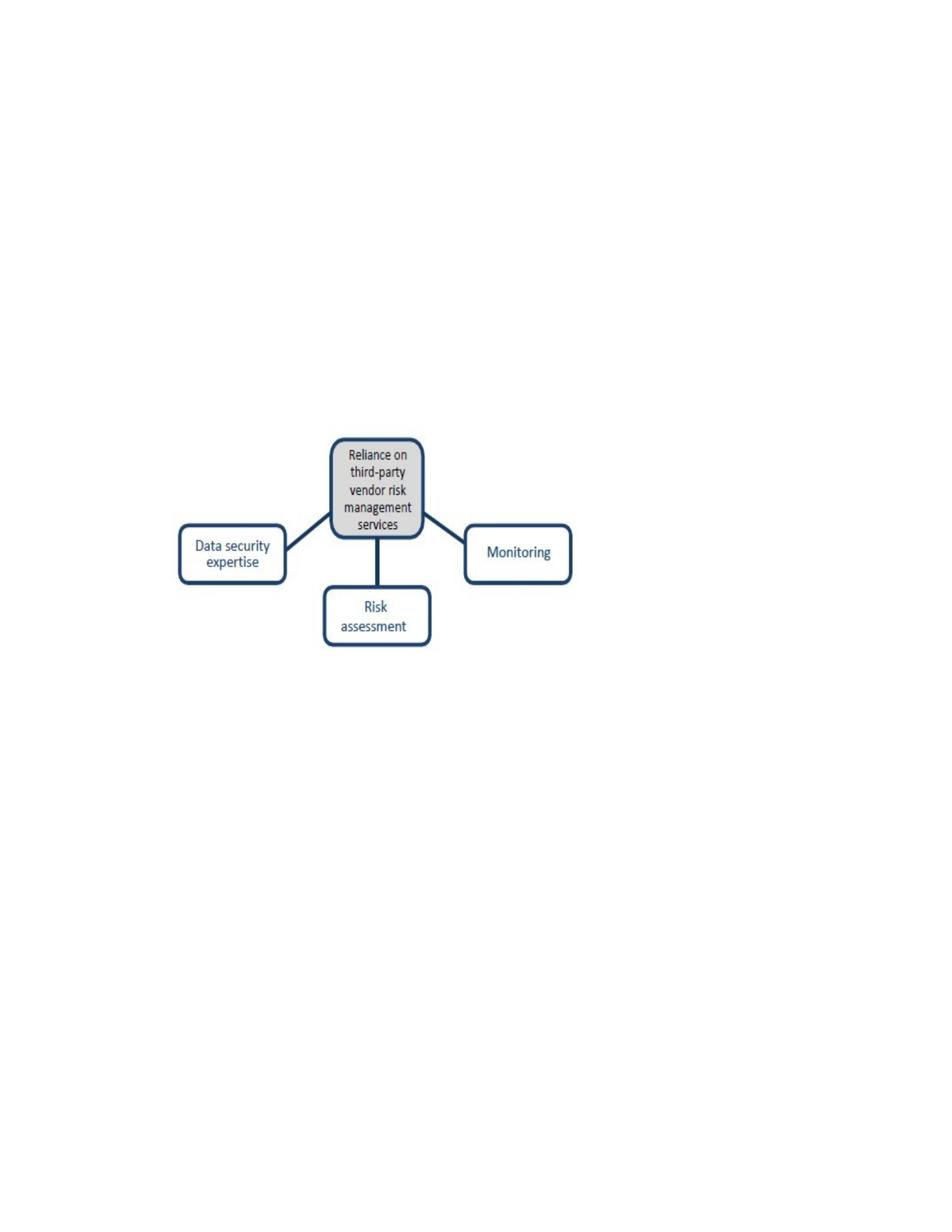
Theme 1: Reliance on Third-Party Vendors for Risk Management Services
The first emergent theme was reliance on third-party vendors for risk management
services. The emergent subthemes for Theme 1 were (a) data security expertise, (b) risk
assessment, and (c) monitoring. I analyzed data security plans, organization newsletters,
and participant interview responses to describe strategies IT administrators use to
mitigate data security threats and breaches. Figure 2 illustrates
Theme 1 and the emergent subthemes.
Figure 2. Theme 1 and emergent subthemes.
Data security expertise. Review of Org1P1, Org2P2, Org2P3, and Org3P4’s
security plans and interview responses revealed that all participants rely on the expertise
of third-party vendors to provide risk management services to enhance data security
practices. Org1P1 stated,
We partner with third-party vendors and we have contracts with three major
vendors, so we keep up-to-date with all the latest software updates. We have also
hired third-party hackers to keep abreast with the latest data security issues out
there. Software hackers are proactive and companies are usually reactive. We hire
hackers to try to be proactive by keeping up with the latest data security issues,

which makes us proactive just like potential hackers. By doing this, we learn
hackers strategies so we work to stop events before they happen.
Org2P2 remarked,
Because we are handling security from a third-party approach, we rely heavily on
third-party training and expertise. We collaborate with our third-party vendors to
alert us of updates and possible threats and concerns. Our service providers are
more up-to-date and we rely on them for constant notifications and assessments.
Org2P3 commented,
We rely on third-party vendor expertise to help us identify and assess our systems
and make sure we are up-to-date on data security concerns. We don’t have the
resources to do large scale security things, but we rely on our partnerships with
third-party partners.
Review of Org3P4’s security plan revealed that Org3 also relies on the expertise
of third-party vendors for multi-cloud management services to provide management of
cloud servers, operating systems, applications, and the entire cloud ecosystem. Org3P4
stated, “We use cloud computing services such as SaaS to secure data integrity.” Review
of Org3P4’s security plan also revealed that IT administrators rely on the SaaS computer
service because of the scalability of the software, which means the software is safe for
use during increases in users, work capacity, or data transactions without added cost to
the organization because the vendor owns the cloud environment. Org3 rents the
software, which minimizes the organization’s responsibility for managing the upkeep of
the service.

Risk assessment. Analysis of Org1P1, Org2P2, Org2P3, and Org3P4’s security
plans and interview responses indicated that all administrators rely on third-party vendors
to assist with establishing ongoing risk assessment practices to protect their IT
infrastructures. Org2P3 commented, “The most convenient way to prevent threats and
breaches is to have frequent backups, monitor systems, and perform frequent system
assessments.” Review of Org2 P2 and Org2P3’s security plan revealed that Org2 relies
on a third-party vendor to run vulnerability scans and reviews and provide vulnerability
assessment reports.
Review of Org3P4’s security plan indicated that Org3 collaborates with a
security solutions group that performs network system tests, evaluations, and
vulnerability assessments. Org3’s plan also revealed that the security group helped
Org3’s IT administrators develop a systems test and evaluation plan. Org1P1’s security
plan and interview responses indicated that Org1 has stringent internal and third-party
risk assessment strategies in place to assess users’ access and system vulnerabilities.
Org1P1 commented,
Not to brag about our company, but we don’t have careless incidents because
our security constraints are so tight and so strict, that before an individual can
access a program, it goes through certain protocols where I, as the engineer
manager, or the engineer director can see what that individual is trying to
access. We can decide if they need that kind of permission or if they don’t.
One of the eight constructs of the integrated ERM framework is risk assessment.
Risk assessment includes evaluating, predicting, and categorizing risks based on

significance (COSO, 2004). Reducing risks involves implementing assessment
strategies to minimize the likelihood of risks occurring (Kholidy et al.,
2016). Table 2 depicts elements of all organizations’ security plans.
Table 2
Elements of Organizations’ Security Plans
Org1 Org2 Org3
Communication X X X
Employee training X X X
Internal task force X
Monitoring
Risk assessment
Third-party vendor
Threat research lab
X
X
X
X
X
X
X
X
X
X
Monitoring. Review of Org3P4’s security plan revealed that IT administrators
established a threat research lab, which consists of a task force to monitor internal and
external users’ access to networks. The task force monitors network communication
and Internet traffic to help IT administrators identify suspicious activity. The task
force’s daily duties include (a) monitoring system events; (b) monitoring command
and control servers; (c) monitoring and responding to suspicious activity; and (d)
monitoring NetFlow (origination, destination, and volume of network traffic flow).
Org1P1 stated,

In our IT area, there’s cameras everywhere and we monitor everything. We
have what’s called footprint software where we can track your keystrokes so we
know what the individual is looking at and we have a program that picks up on
key words that are typed. In the IT field, certain keywords will bring up a red
flag so we use that to keep our security pretty tight. It’s a learning curve and a
learning experience so we are always growing.
Although Org2P2 and Org2P3 work at the same organization, they supervise
two separate divisions within the organization. Org2P2 and OrgP3 had varying
viewpoints regarding how monitoring systems helps mitigate threats and breaches.
Org2P2 stated, “The most convenient way to prevent threats and breaches is to have
frequent backups, monitor systems, and perform frequent system assessments.”
Org2P3 commented, “A lot of what we do is we identify what a user’s workflow is,
methods they’re using to access their data, and if they’re following company protocol.”
Org2P3 focuses on monitoring users’ access patterns on systems, whereas Org2P2
emphasizes monitoring systems to identify risk vulnerabilities to mitigate threats and
breaches.
The findings in Theme 1 depicted three of the eight elements of the ERM
integrated framework: event identification, risk assessment, and monitoring (see Table 1).
The results substantiate Dreyfuss and Giat’s (2018) and Kalaimannan and Gupta’s (2017)
conclusions that risk assessment and monitoring are effective strategies to evaluate
security risks and provide an added level of systems reinforcement, which allows system
owners to address emerging internal vulnerabilities as they occur rather than after

external attacks occur. Org2P2 stated, “The most convenient way to prevent threats and
breaches is to have frequent backups, monitor systems, and perform frequent system
assessments.” This finding contradicts Meszaros and Buchalcevova’s (2017) assumption
that monitoring is time consuming and ineffective as a strategy to assess and manage
risks. All participants’ responses support COSO’s (2004) deduction that risk assessment
and monitoring help IT administrators evaluate, predict, and categorize risks based on
significance.
All participants erred on the side of caution and obtained third-party risk
assessment services to enhance data security practices. Org2P2 remarked,
Because we are handling security from a third-party approach, we rely heavily on
third-party training and expertise. We collaborate with our third-party vendors to
alert us of updates and possible threats and concerns. Our service providers are
more up-to-date and we rely on them for constant notifications and assessments.
Org2P3 commented,
We rely on third-party vendor expertise to help us identify and assess our systems
and make sure we are up-to-date on data security concerns. We don’t have the
resources to do large-scale security things, but we rely on our partnerships with
third-party partners.
These results support Schulz et al.’s (2016) assertion that some IT administrators lack the
expertise to perform risk assessments. These findings also substantiate Al-Musawi et al.’s
(2015) deduction that obtaining the expertise of third-party risks assessment services
helps IT and business administrators identify disruptive events.
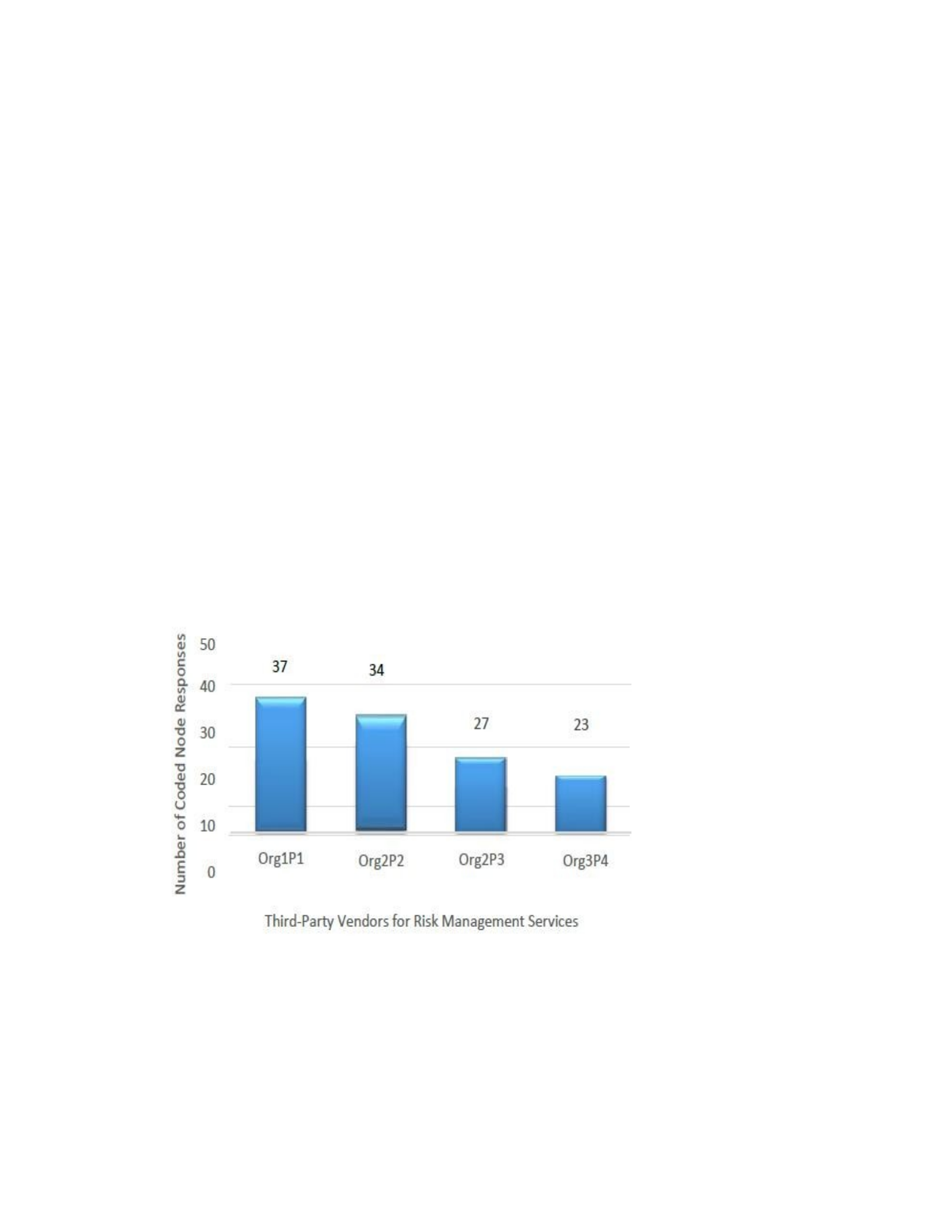
Administrators in one organization formed an internal task force to identify risks.
This finding supports the integrated ERM framework’s event identification element,
which indicates that establishing an internal task force to identify internal and external
events that might interrupt business performance helps reinforce data security processes
(COSO, 2004). The event identification element also elaborates on Almgren’s (2014)
conclusion that event identification and risk assessment help IT administrators and
organization leaders perceive risk events as opportunities to increase their risk
management awareness. Because communication among stakeholders during crises may
be complex, establishing risk assessment standards early may help stakeholders
understand their roles in mitigating risks prior to data security crises. Figure 3 depicts
data analysis results for participants’ frequency reference to Theme 1.
Figure 3. Participants’ frequency reference to Theme 1.

Theme 2: Employee Education
Org1P1, Org2P2, Org2P3, and Org3P4’s interview responses indicated that all
participants advocate implementing effective communication and information sharing
programs to educate employees and organization leaders’ regarding mitigating data
security threats and breaches. Org2P2 commented, “Awareness is first in mitigating data
security issues. Sizing up the user’s level of awareness and their ability to leverage
security tools is important. Next, I think coaching and training is key.”
Org2P3 remarked,
One physical data security protocol we use is making sure that users log off
systems daily and appropriately and that the user complies with company protocol
regarding locking down and accessing systems. I think the biggest thing in any
kind of data environment where you have multiple people accessing the data you
want to keep is providing user education. That’s gotta be the biggest thing in
security in general. You can lock systems down all day, but if you have users that
can access systems but don’t know how to lock down systems and keep systems
secure on their end, it doesn’t matter how good IT administrators are, you will
still have problems because users don’t know how to keep systems secure on their
end.
Org2P3 also commented on education from the perspective of educating
organization leaders. Org2P3 further commented,
Trying to educate the business side of the house about the importance of spending
the appropriate amount of dollars to ensure that we have the necessary

infrastructure to have the necessary data security protocols in place is a large part
of what I do in the client relationship side of the house. So often, the business side
is looking at dollars and cents; whereas the IT side is looking at having what we
need to make sure, our data are secure. The IT department educates the business
side to help them see that aligning what they want to keep safe with the bottom
line is the only way that the organization is going to function properly. Without
this kind of alignment, things won’t work. We try to make them see the benefit of
having the right security plan in place and what it will cost the organization if
there is a breach; therefore, we try to make them see the benefit of IT and
business working together.
Org1P1 commented on education from the perspective of collaborating with
coworkers. Org1P1 stated,
We have a status meeting every morning at 10:00 and during that meeting, it’s
like a round table. We go around the table and every engineer has to give us an
update on any project or any particular concern they might have. We don’t digress
to the next person until we have thoroughly digested that person’s problem, so it
keeps everybody on the same page.
Review of Org3P4’s organization newsletter indicated that Org3 has a strong
presence in the community for providing ongoing data security education and awareness
initiatives to make remote users knowledgeable about accessing the organization’s
systems. A quote from Org3P4’s organization newsletter revealed,

Aside from these flagship programs, our employees work hard every day to make
a difference in their local communities, from offering tours of our network and
security operations facilities to students to hosting cryptography clinics,
cybersecurity super hero programs, and hackathons. To learn more about what
you can do to help educate future generations for a career in cybersecurity, follow
the conversation online.
Figure 4 illustrates Theme 2 and the emergent subthemes.
Figure 4. Theme 2 and the emergent subthemes.
Communication. Review of interview responses indicated that all administrators
emphasized using effective communication strategies to make individuals accountable for
identifying and responding to data security practices. Org2P2 remarked, For the most
part, in-house conversations are the most genuine way to communicate regarding data
security. For instance, if there was a breaking security issue, we’re gonna broadcast the
event every way possible. We’re not gonna wait for our monthly newsletter to go out
every two weeks, we’re gonna hit our social media accounts and make it public and give
users the nuts and bolts to educate them immediately.” We rely heavily on
communication to keep users informed regarding best practices. Our communication is
timely and with authority.

All administrators agreed that ongoing communication is essential to make sure
all divisions in organizations stay informed regarding data security practices.
Org2P3 responded,
We do user education quite a bit. When we see a potential risk, we use the
opportunity to teach our people as a whole instead of one single person. We
have education on how to recognize suspect emails and areas that might
permit remote users to access our systems inappropriately. We let inside
users know what to look for, how to read what they see, and how to handle
what they identify.
Review of Org3P4’s security plan revealed that Org3 implemented a
comprehensive set of communication initiatives called Unified Communications and
Collaboration Services by collaborating with third-party vendors to promote secure
communications and teamwork activities across divisions. Org3’s security plan also
revealed that the reason for adopting third-party communication services was to: (a)
enhance employee engagement and accelerate problem solving, (b) jump-start
productivity, (c) protect against cyberattacks and reduce the risk of disruption, (d) deliver
a common collaborative experience that people love, (e) rely on vendor’s technology
expertise and relationships to improve IT agility, and (f) spend more time on the bottom
line.
Org1P1 was adamant about IT administrators and business executives
communicating to develop strategies to align data security practices with organizational
objectives. Org1P1 reiterated, “When we have our status meeting every day at 10:00, it

includes business and IT. When both parties are at the table, we can address situations
and be better informed.”
Information sharing. Review of Org2P2 and Org2P3’s security plan and
interview responses revealed that Org2 relied on third-party vendors’ expertise to help
educate staff and share security information across divisions regarding strategies to
mitigate data security threats and breaches. Review of Org2’s organization newsletter
revealed that administrators actively engaged community partners to educate remote users
regarding data security.
Org2P3 commented,
Once we identify a potential for a weakness, we share that concern with users and
parties involved in the vulnerability and we go into damage control mode. We
find a way to stop the potential risks, inform the necessary party or division of the
potential risk, and let them know there is a threat. We partner with third-party
vendors to help us educate others regarding potential risks.
Review of one of Org2P2’s organization newsletters indicated that Org2
collaborated with three third-party vendors to initiate social change by sharing
information to surrounding communities through interactive training sessions,
webinars, and monthly newsletters highlighting recent IT and data security topics.
Regional magazines have supported Org2’s information sharing practices through a
range of awareness initiatives (e.g., IT think tank seminars and IT leadership podcasts)
to provide continuing publicity regarding the significance of implementing strategies

to mitigate data security vulnerabilities. Org2P2 stated, “Our role as IT service
providers is to create awareness. Education is key.”
Review of Org3P4’s security plan revealed that Org3 relied on a third-party
vendor to provide a service called Webex Meetings, which allows IT administrators
and users to get together to collaborate onsite or remotely. Vendors manage the
technology, which makes it possible for IT administrators to concentrate on what
matters most – implementing and sharing strategies across divisions in the
organization to respond promptly to internal and external data security vulnerabilities
without interruptions in business operations. Org3P4’s security plan also revealed
that administrators viewed virtual communication as an effective way to keep all
parties involved in communication regarding data security practices. Org3P4
commented, “Notify the proper people and take action to prevent breaches in the
future.” Org1P1 commented, “We address situations at our everyday status meeting
and everyone is better informed.”
The results in Theme 2 included two of the ERM integrated framework’s eight
elements (information and communication, and risk response; see Table 1). The findings
revealed strategies IT administrators use to communicate across divisions to manage data
security risks. Review of Org3P4’s security plan revealed that IT administrators
established a threat research lab to monitor system events and internal and external users’
access to networks and respond to suspicious activity. This finding refutes Schulz et al.’s
(2016) assertion that event assessments are ineffective because criteria for classifying
disruptive events are vague, and IT administrators often lack the expertise to perform risk

assessments. By contrast, this result substantiates Al-Musawi et al.’s (2015) implication
that creating workspaces to track system event patterns that cause potential risks help IT
and business administrators identify and respond to events that disrupt business
performance.
Theme 2 findings included a combination of strategies that elaborated on the
integrated framework elements information sharing and communication as strategies IT
administrators use to mitigate data security threats and breaches. Review of interview
responses indicated that all administrators emphasized using effective communication
strategies to educate users and disseminate information across divisions to make
individuals accountable for identifying and responding to data security practices. Org2P2
remarked,
For the most part, in-house conversations are the most genuine way to
communicate regarding data security. For instance, if there was a breaking
security issue, we’re gonna broadcast the event every way possible. We rely
heavily on communication to keep users informed regarding best practices. Our
communication is timely and with authority.
This strategy aligns with COSO’s (2004) conclusion that distributing information across
divisions helps IT administrators to educate members regarding data security practices so
they can perform their respective responsibilities. Review of one of Org2P2’s
organization newsletters indicated that Org2 collaborated with three third-party vendors
to initiate social change by sharing information to surrounding communities through
interactive training sessions, webinars, and think tank seminars and IT leadership
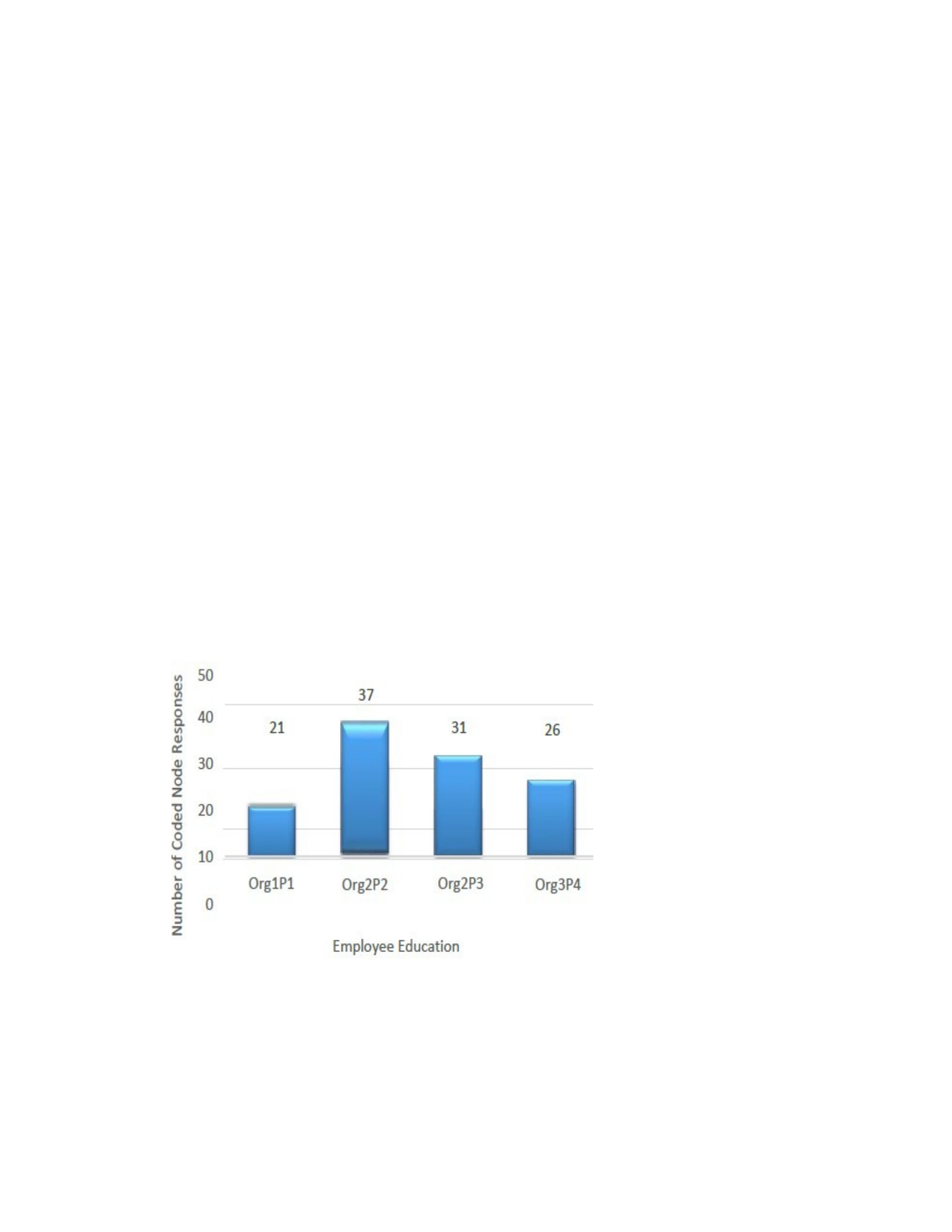
podcasts to provide publicity regarding data security. Org2P2 stated, “Our role as IT
service providers is to create awareness. Education is key.” These strategies elaborated on
Kitchin and Dodge’s (2019) assumption that obtaining community input regarding
security strategies allows IT administrators to implement security strategies that provide
the best economic utility, which minimizes risks to organizational performance and
sustainability and enhances community relations. These findings also support Rae et al.’s
(2017) implication that open communication and obtaining regular external feedback are
effective risk assessment strategies. Information sharing, communication, and education
strategies help IT administrators evaluate the sources of internal and external information
to confirm that data is an accurate account of business objectives and IT operations
(COSO, 2004; Pham et al., 2017). Figure 5 indicates data analysis results for participants’
frequency reference to Theme 2.
Figure 5. Participants’ frequency reference to Theme 2.
Theme 3: Best Practices
Org2P2 remarked,
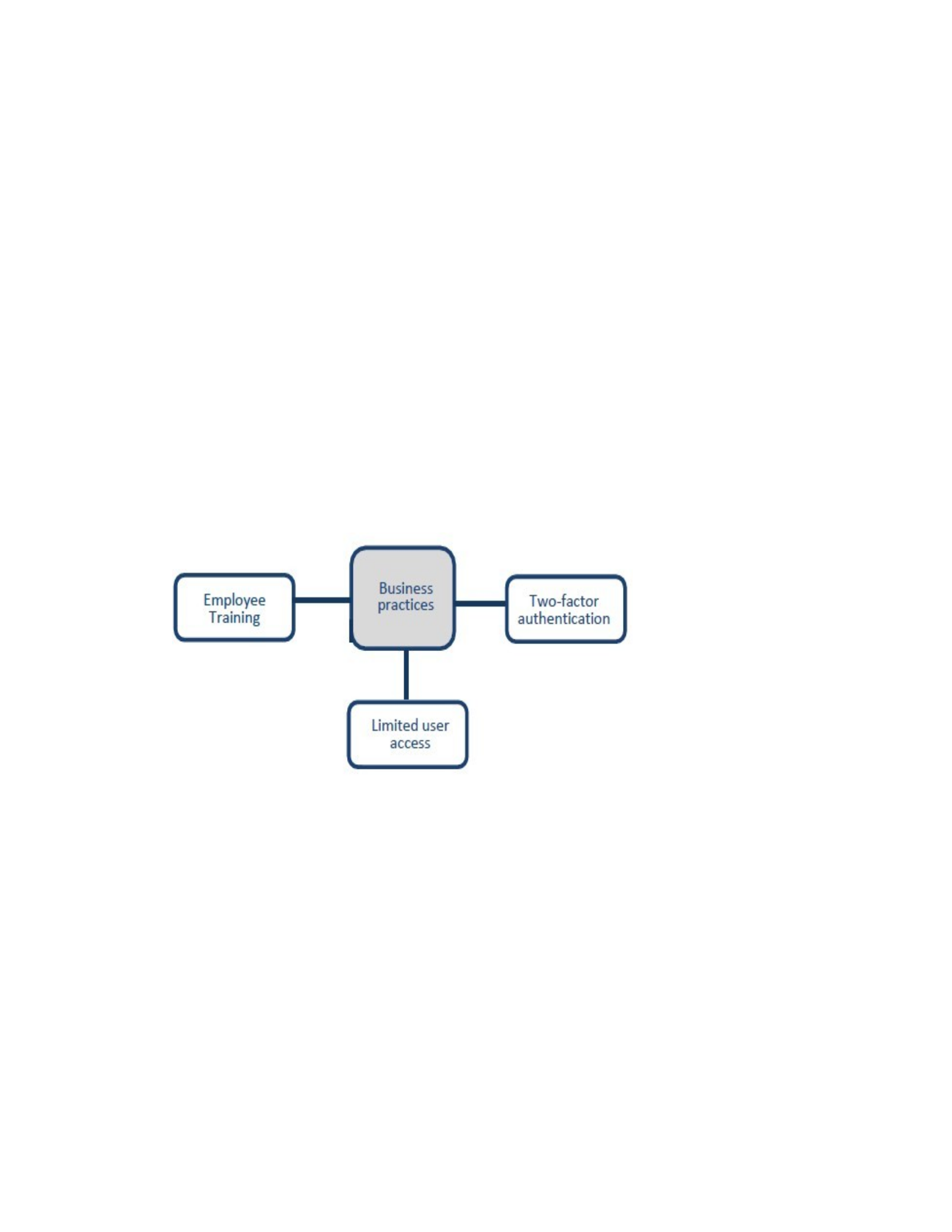
Businesses declare best practices but users don’t; however, it is helpful for users
to understand what best practices are and how to maintain a balance between
security and appropriately using software to make sure systems remain safe.
Everything goes back to best practices. Being able to identify what is a big red
flag and knowing what to look for is key to security. Scalability of security
practices is the key to setting up best practices that protect systems. Knowing
what data security approaches work best for your organization is the best way to
set up best practices that work best. Figure 6 illustrates Theme 3 and the emergent
subthemes.
Figure 6. Theme 3 and the emergent subthemes.
Employee training. Review of Org2P2 and Org2P3’s security policy revealed
that Org3 provides a personal direct approach to training for remote users. The policy
revealed that Org3 implemented a one-on-one training alternative to help remote users
learn how to properly access Org3’s network servers and mitigate data security concerns
in their respective organizations. Org3 frequently recommends that users attend one-

onone training sessions after attending public workshop training sessions. Org2P2
commented,
When you’re talking about effective data security, education is the key thing.
You can have all the strategies and plans in place to help with data security,
but if you have people that don’t know how to use the strategies, you’re still
at risk for breaches in your security measures. That’s why education and
training is so important. Users need to know what they’re clicking on, who
they’re communicating with online, and how they’re allowing outside users to
access our systems. At the end of the day, education is the only way to ensure
that data security is effective. You’re only as safe as your least educated user
when it comes to data security.
Org2P3 remarked,
One of the main things that help us create a strategy about security is that we
have to weigh the balance between security and convenience. There are a
couple of strategies that I have adopted but even those come with their own
burden if the end user doesn’t know how to use the software. We use two
third-party password managers; however, the software can offer the moon,
but if the end user doesn’t know how to navigate the software, there is still the
risk of having enabled security that the user doesn’t understand. We aim to
offer consultation periods that are tailored to consulting users and making
them feel comfortable using software securely. Once they find that we offer
training that makes them feel comfortable, we can present solutions that help

keep systems secure. The key to successful training is knowing how the
conversation should go when you talk to different users. We assess users’
knowledge level, which helps us know how to train users regarding data
security.
To improve individuals’ awareness of the organization’s business objectives and
IT functions, Org1 approached training from the perspective of cross training.
Org1P1 remarked,
We have cross training. If we don’t have cross training and someone wants to
take off, who’s gonna fill that spot. We have cross training and we cross train
very thoroughly. We have what is known as periodic on the job training
classes. We setup a small enterprise network in a user acceptance testing
(UAT) offline environment and conduct various network penetration tactics.
We also invite our vendors to send their engineers onsite here to further
enhance our training knowledge base. The training accomplishes several
goals:
• identifies network vulnerabilities,
• identifies the weak areas of each engineer,
• identifies the strong areas of each engineer,
• tests the new fixes/software patches, • expands the engineer(s) knowledge
base, and
• creates proprietary software.

UAT testing refers to the final steps of the software-testing phase (Scherr,
Elberzhager, & Holl, 2018). During UAT testing, vendors employ actual software users
to test software applications to make certain customers can use the software to achieve
necessary tasks in their respective organizations (Scherr et al., 2018).
Org1P1’s security plan revealed that Org1 relied on third-party vendors to customize
software applications to meet their security software specifications and training needs.
Org3P4 commented, “Training is done by the organization, in-house. We have
training classes on data security and the training is online videos about data security.”
Review of Org3P4’s security policy regarding training processes indicated that Org3
has a rigorous training program. The program entails offering security consultations
that provide users direct access to the resources, administrators’ expertise, and best
practices they need to reinforce data security and compliance.
Org3’s policy revealed that the lists of training consultation services include:
• best-in-class methodologies and practices for addressing security risks;
• a team of experienced security experts and thought leaders with an average of
18 years of experience;
• a complete family of services that span the full security lifecycle—from
assessments to full implementation;
• flexible, vendor-agnostic solutions that make the most of organizations’
current security and compliance investments; and
• deep industry understanding and ongoing expertise through memberships in
ISO, ISACA, ISSA, IEEE and CSI.

Review of Org3’s organization newsletter also revealed that Org3 received
recognition as a finalist for the Leading Lights Award, an award given to commend IT
organizations and their executives for exceptional accomplishments in
“nextgeneration communications technology, applications, services, strategies, and
innovation.” Org3’s training practices could increase IT administrators’ capacity to (a)
proactively recognize and mitigate data threats and breaches, and (b) align IT
functions with organizational objectives to sustain competitive advantage.
Limited user access. Review of study participants’ interview responses indicated
that all participants advocated limiting users’ access to sensitive data as an effective best
practice to mitigate data security threats and breaches. Org2P2 stated,
We limit access to certain systems based on users’ profile and security rights.
Not everybody has access to all areas of systems. Once we realize users have
inappropriately used their access rights, their rights are removed
immediately. We assess our systems and users’ access rights so we will know
where to draw the line between open access and security.
Org3P4 remarked, “Limit users’ access and have a good fire wall protection from
outside threats. Make sure to change passwords and make them very difficult to crack to
limit users’ access to data.” Review of Org2P3’s security plan revealed that IT
administrators deny remote users access to Org2’s networks when remote users’ WiFi
router addresses are not on specified media access control (MAC) lists and fail to
authenticate with Org2’s preferred Wi-Fi network protocols.
Org1P1 commented,

Internally, the best strategy is limit the user access, limit the access of certain
parties, be it engineers, be it the IT professional, be it the, you know,
software engineers so that they can only access certain areas. We strengthen
our protocol as far as how many people can access certain things. We set a
limit as far as your duration on the server, plus the allotted space that you can
use on the server. In doing that, that keeps a person limited if they’re trying
to download a file. They can’t download it because they only have a certain
amount of space. Depending on the individual, we’ll know what files he’ll be
using, so we make sure his access space or rights on the server is less than the
file he’ll need so therefore, the file can never be accessed unless they get
added security rights.
Two-factor authentication. Review of Org2P2, Org2P3, and Org3P4’s security
plan revealed that remote users must complete a two-factor authentication process to
access systems; yet, Org1P1’s security plan revealed that users must complete a 3-step
authentication process before and after gaining access to systems. Review of OrgP2 and
Org2P3’s security plan revealed that IT administrators encouraged internal and external
users to use two-factor authentication. Additionally, the plan indicated that Org2
administrators emphasized to users that two-factor authentication can help keep accounts
and data safe from hackers. Org2’s security plan indicated that administrators promoted
using a personal identification number that administrators sent to users via an email,
SMS, or app. Two-factor authentication can protect against stolen passwords and prevent
an external person from accessing systems and accounts. Ussatova, Nyssanbayeva, and

Wojcik (2019) asserted that multifactored-authentication improves security and validating
users’ rights to access confidential data.
Review of Org1P1’s security plan revealed that IT administrators authenticated
remote users’ identity by using a third-party 3-step access protocol during the time users
initially access servers and periodically after users have signed off systems. Org1
administrators authenticated users’ access based on a shared protocol, such as users’
passwords. Org1P1 noted,
The main strategy is we use our servers and we have what’s called host servers
and protocol servers. So, when you access our network you don’t access one
server. You go through what’s called our security server, which leads you to our
data server that transfers you to whatever server you need. We have what’s called
parallel hosts, and we have those in place so by the time you get to the third
server, which is all the data, you have been authenticated with a process called
CHAP, challenge handshake authentication protocol.
Review of Org1P1’s security plan indicated that IT administrators authenticated remote
users’ identity by using CHAP, a three-factor authentication process that includes the (a)
administrator sending a challenge message to the respective user, (b) user responding
using a predetermined encrypted code, and (c) administrator verifying the response
against the encrypted code. If there is a discrepancy during the authentication process, the
administrator denies the user access to Org1’s systems. Org1’s administrator then sends
the user a new challenge code at random recesses and repeats the 3-step process, which
provides the user another opportunity to complete the three-factor authentication process.
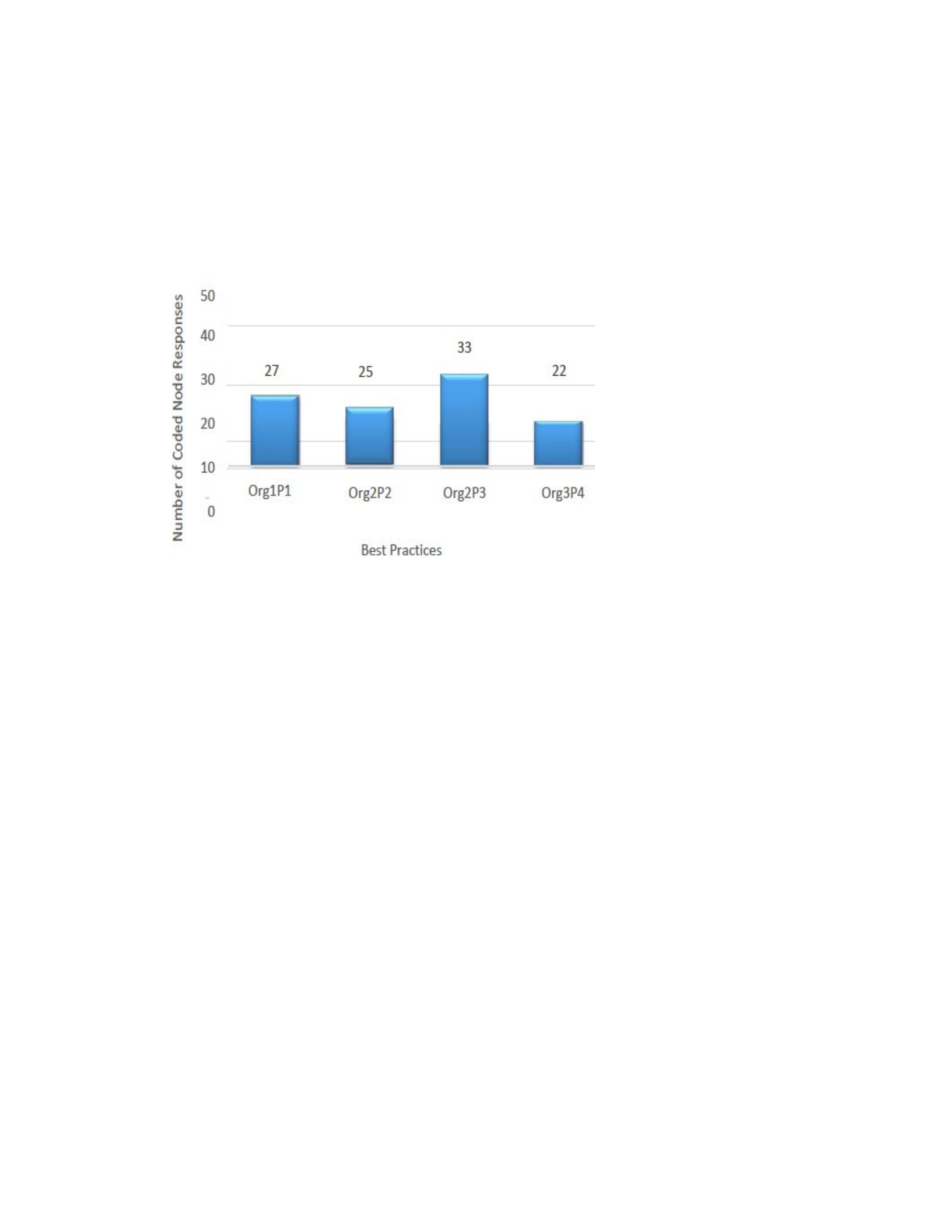
Org3P4 remarked, “Enable two-factor authentication by encrypting data and having a
24/7 security monitoring service and advanced firewall technology.” Figure 7 depicts
participants’ frequency reference to Theme 3.
Figure 7. Participants’ frequency reference to Theme 3.
The findings in Theme 3 were characteristic of two of the eight elements of the
ERM integrated framework (objective setting and control activities; see Table 1). The
interview responses indicated that business leaders developed set objectives to create best
practices to identify potential risks and disruptions to business performance. Org2P2
remarked,
Businesses declare best practices but users don’t; however, it is helpful for users
to understand what best practices are and how to maintain a balance between
security and appropriately using software to make sure systems remain safe.
Everything goes back to best practices. Being able to identify what is a big red
flag and knowing what to look for is key to security. Scalability of security
practices is the key to setting up best practices that protect systems. Knowing

what data security approaches work best for your organization is the best way to
set up best practices that work best.
This finding supports Chen et al.’s (2014) conclusion that best practices must be
userfriendly enough that users can integrate and interpret the guidelines to identify
potential security threats in the workplace. Org2P2 commented, “We rely heavily on
communication to keep users informed regarding best practices. Our communication is
timely and with authority.” This strategy substantiates NIST’s (2018) conclusion that risk
management involves implementing best practices that provide a controlled basis for
exploring and communicating security controls across divisions to alleviate threats and
risks in data security. Review of Org3P4’s security policy revealed that Org3 established
best practices to reinforce data security compliance by obtaining memberships in ISO,
ISACA, ISSA, IEEE and CSI, international administrations that collaborate with
organizations to help them develop product and technology standards. This result
elaborates on Lee et al.’s (2015) implication that organization leaders are reliant on
multiple security standards to remain compliant with federal, state, and local regulations
to avoid compliance penalties. Developing these types of best practices support
practitioners and researchers call for organization leaders to establish mandatory polices
to align business objectives with IT practices to create business value (Coltman et al.,
2015 & Reynolds & Yetton, 2015). These findings are relevant to improving data security
best practices because the identified strategies may increase IT administrators’ and
organization leaders’ capacity to set objectives that align IT functions with organizational
objectives to sustain competitive advantage.

Review of interview responses in Theme 3 also provided indications that all
participants use control activities, which are guidelines and processes that indicate how
IT administrators and organization leaders use preventive controls to secure confidential
data. The emerging control activities in Theme 3 were employee training, limited user
access, and encrypted passwords (See Table 1). Review of Org2P2 and Org2P3’s security
policy revealed that Org3 provided one-on-one training to help remote users learn how to
properly access Org3’s network servers and mitigate data security concerns. Org3
recommended that users attend one-on-one training sessions after attending public
workshop training sessions. Org2P2 commented,
When you’re talking about effective data security, education is the key thing. You
can have all the strategies and plans in place to help with data security, but if you
have people that don’t know how to use the strategies, you’re still at risk for
breaches in your security measures. That’s why education and training is so
important.
To improve individuals’ awareness of the organization’s business objectives and IT
functions, Org1 approached training from the perspective of cross training. These
findings substantiate Parson’s (2014) deduction that participants respond favorably to
data security training that outlines the expectations and rationale of data security
guidelines. These findings also elaborate on Al-Musawi et al.’s (2015) implication that
improving staff awareness by providing data security training is an effective strategy to
prevent data security failure in cloud environments.

All administrators enforced limited user access and two-factor authentication as
preventive controls to restrict users’ access to confidential data. Org2P2 stated, “We limit
access to certain systems based on users’ profile and security rights. Not everybody has
access to all areas of systems. Once we realize users have inappropriately used their
access rights, their rights are removed immediately.” Org3P4 remarked, “Limit users’
access and have a good fire wall protection from outside threats. Make sure to change
passwords and make them very difficult to crack to limit users’ access to data.” These
findings support Mendelson and Mendelson’s (2017) implication that (a) keeping
accurate records of users’ data use and (b) limiting access to live data provides control
activities to improve data security. These findings also elaborate on COSO’s (2004)
perspective that organization leaders who combine risk-centered prevention planning and
control processes to mitigate risk, as opposed to focusing on decreasing risk costs,
achieve higher business value (COSO, 2004).
Review of Org1P1’s security plan indicated that IT administrators authenticated
remote users’ identity by using a three-factor authentication (also known as multifactored
authentication) process that includes the (a) administrator sending a challenge message to
the respective user, (b) user responding using a predetermined encrypted code, and (c)
administrator verifying the response against the encrypted code. Review of Org2P2,
Org2P3, and Org3P4’s security plan also revealed that remote users must complete a
twofactor authentication process to access systems. These findings support Ussatova et
al.’s (2019) assumption that multifactored-authentication strategies improves security and
validating users’ rights to access confidential data. Finally, these findings support

COSO’s (2004) deduction that two-factor authentication is a control activity that IT
administrators use to provide users data security approvals. Two-factor authentication
could help IT administrators level the weaknesses of typical password protection.
Applications to Professional Practice
Extensive review of scholarly literature, as well as exploring the constructs of
the conceptual framework, provided a comprehensive discussion regarding how IT
administrators can effectively apply the findings of this study to implement strategies to
mitigate data security threats and breaches in cloud computing. The findings in this
study are relevant to improving data security best practices because the identified
strategies may increase IT administrators’ and organization leaders’ capacity to align
IT functions with organizational objectives to sustain competitive advantage. Strategic
IT alignment (SITA) improves organization performance (Sabherwal, Sabherwal,
Havakhor, & Steelman, 2019). SITA was ranked among the top three IT management
concerns from 2003 to 2014 (Kappelman, McLean, Johnson, & Gerhart, 2014).
After analyzing data security plans, organization newsletters, and participants’
interview responses, three themes emerged, the first theme that emerged was reliance on
third-party risk management services. The emergent subthemes within Theme 1 were
(a) data security expertise, (b) risk assessment, and (c) monitoring. The range of
discussion regarding Theme 1 and the corresponding subthemes substantiated the
integrated ERM framework constructs, which leaders use to implement effective
ERM practices to identify, assess, and monitor events that disrupt business continuity.

The next emergent theme, employee education, emerged based on two
subthemes, communication and information sharing. The elements within Theme 2 may
help IT administrators establish the basis for collaboration, engaged leadership, and
accountability across divisions in organizations. Establishing a system of awareness
consistent with IT and business requirements may help administrators develop a system
of accountability to identify individuals responsible for securing, distributing, and using
data in organizations (Ahmed & Litchford, 2018; Al-Ruithe et al., 2018).
The practices regarding handling and collecting information in organizations have
implications for privacy, accessibility, and reliability of data (Cobb et al.,
2018). Establishing best practices to secure data should be a shared process between
IT administrators and organization leaders (Cobb et al., 2018). Theme 3 strategies
and the corresponding subthemes may help IT administrators enhance data security
best practices and improve security responsiveness for individuals with diverse levels
of security awareness in organizations. Collaborating to identify security options that
will improve individuals’ perceptions regarding data security helps to improve risk
management in organizations (Cobb et al., 2018).
Implications for Social Change
Approximately 81% of all data compromises occur because of identity theft
(Chou, 2016). One implication for social change involves implementing strategies to
reduce the effects of data threats and breaches among individuals, organizations, and
community members, which could improve the views of data security before and after
crises occur. Subsequent implications for social change include (a) fewer compromises of

individuals’ personal information, (b) reduced financial risks for organizations, and (c)
reduced financial loss for individuals and communities.
A final implication of positive social change involves IT administrators using the
three emergent strategies in this study to adopt what Kitchin and Dodge (2019) refer to as
“security-by-design” (SBD) security standards. Practitioners use the SBD approach to
engage community members to provide input regarding establishing proactive rather than
reactive security strategies (Kitchin & Dodge, 2019). Identifying SBD best practices
allow IT administrators to implement security strategies that provide the best economic
utility (e.g., the ability of a product or service to meet the needs of consumers), which
minimizes risks to organizational performance and sustainability and enhances
community relations
Recommendations for Action
The objective of this qualitative multiple case study involved exploring
strategies IT administrators use to successfully mitigate issues related to data security
failure. Cloud computing has changed the IT infrastructure of U.S.
organizations, generating new threats and breaches in data security (Kumar et al., 2018;
Nazim & Ashgher, 2015). Economists estimated the total costs from data security
breaches at approximately $8.5 billion yearly (Romanosky, 2016). IT administrators
should perform risk assessments in traditional and cloud computing environments to
evaluate and mitigate security risks. Organization leaders should allocate funding for
data security, and establish best practices that help curtail the billions of dollars in lost
revenue the public incurs annually from data threats and breaches (Atoum et al., 2014).

The basis for this research study included synthesizing scholarly literature,
transcribing and interpreting IT administrators’ interview responses, and reviewing
administrators’ security plans and organization newsletters. The data I obtained
provided sufficient information to answer the research question. After triangulation all
sources of data, I was able to achieve saturation during data analysis.
The three themes that emerged were (a) reliance on third-party risk
management services, (b) employee education, and (c) best practices. My analysis of
the findings identified successful strategies IT administrators use to mitigate data
security threats and breaches in cloud computing. The findings may motivate IT and
business administrators to collaborate to mitigate data security failure.
Based on the findings in this study, I recommend that IT administrators and
organization leaders collaborate to facilitate the following actions to implement strategies
for sustained data security best practices:
1. Provide the necessary data security training to help all stakeholders in
organizations identify, assess, and respond to data vulnerabilities to maintain
business operations before, during, and after data security attacks.
2. Communicate and share relevant risk management information to divisions
across organizations to make individuals accountable for identifying,
responding to, and monitoring risks.
3. Evaluate the skills of IT administrators to determine it is necessary to leverage
the expertise of third-party vendors.

4. Limit authorized users’ access to sensitive data, based on users’ security
clearance.
5. Mandate multifactor authentication for access to network systems.
I plan to disseminate the findings and recommendations for action from this
study by offering to provide the IT administrators in this study with fact-finding
summary sheets. I will also facilitate workshops and seminars to share my study
findings. I will volunteer to discuss the findings of this study at IT conferences,
academic institutions, and organizations in surrounding communities. Finally, I plan to
disseminate my research findings by publishing articles in industry and academic
journals.
Recommendations for Further Research
The findings in this study may serve as a resource to help IT administrators
develop best practices to mitigate data security threats and breaches in cloud computing
environments. Because this study was limited to a sample size of four IT administrators, I
recommend that future researchers increase the sample size to determine if the study
findings are transferable to a larger population. I delimited my research scope to
administrators in IT organizations in central North Carolina with 1,000 to 3,000
employees. I recommend that future researchers collect responses from IT professionals
in larger and different types of organizations in other geographical settings to determine
whether the findings will be similar or vary. This study was also limited by using the
qualitative multiple case study design. I recommend that future researchers use the
quantitative or mixed-methods study designs to (a) determine IT administrators’ data

security success and error rates, and (b) determine whether the findings will vary or
remain constant.
One limitation I observed throughout this study occurred while trying to identify
participants who were willing to contribute to the study. Some participants agreed to
participant and later recanted their consent, which made the recruiting process an arduous
task, as well as prolonged the time I spent recruiting study participants. Once I obtained
an eligible sample size, I was able to collect sufficient data to analyze and complete this
study. I recommend that future researchers consider allocating ample time to identify
eligible study participants.
Reflections
Completing the doctoral program was undoubtedly one of the most challenging
and rewarding feats, I have ever attempted. I have expanded my knowledge regarding
identifying strategies to mitigate data security threats and breaches. I feel that I can
confidently apply my knowledge to make recommendations to organization leaders
regarding strategies to successfully assess, identify, and mitigate data security
vulnerabilities. The findings in this study may contribute to existing IT data security
literature, as well as provide future recommendations regarding best practices IT
administrators use to mitigate data security threats and breaches in cloud computing.
The impetus for selecting my study topic stemmed from my preconceived notion
that some IT administrators lacked strategies to address data security threats and breaches
in cloud computing. However, all participants in this study discredited my biased
perspective by providing security plans, organization newsletters, and interview

responses to substantiate their expertise in implementing data security best practices to
mitigate data security threats and breaches. I assumed participants would provide open
and pertinent responses to the interview questions; and I was careful not to ask leading
questions, react to responses, or ask probing questions too early. I feel confident the study
participants provided honest answers.
Conclusion
The purpose of this qualitative multiple case study was to explore strategies
IT administrators use to mitigate data security threats and breaches in cloud
computing. The knowledge gained from the study findings can potentially transform
the way IT administrators and organization leaders establish and adopt best practices
to mitigate data security vulnerabilities. Three core themes emerged from the
research findings, which correlated with the literature review, the existing IT
security literature, and the integrated ERM framework. Review of security plans,
organization newsletters, and interview responses revealed that IT administrators (a)
rely on third-party risk management services, (b) share information and
communicate with individuals across divisions in organizations to educate users
regarding data security practices, and (c) implement best practices to provide
training to enhance individuals’ data security expertise.
IT administrators and organization leaders must collaborate to implement
strategies to reduce the effects of data security failure on individuals and communities,
which can improve perceptions of data security before and after crises occur. The
increased and ongoing phenomenon of data security threats and breaches in

organizations requires IT administrators and organization leaders to develop and
implement best practices suitable for (a) ensuring fewer compromises of individuals’
personal information, (b) reducing financial risks for organizations, and (c) reducing
financial loss for individuals and community members.

