



Introduction The way people share knowledge
The way people share knowledge, conduct electronic business, and create value
was revolutionized by the Internet, which is becoming increasingly important for
conducting business (Askitas & Zimmermann, 2015; Jansen, Veenstra, Zuurveen, & Stol,
2016). In the 21st century, small business owners use computer systems and the Internet
to compete in the technology-infused global e-commerce markets (United States Small
Business Administration [SBA], 2016a). Improvements in global wired and wireless
technology provide businesses enormous benefits, yet simultaneously expose companies
to potential vulnerabilities (Weber & Horn, 2017). In 2014, victims of cyber incidents
reported an estimated annual loss due to cyber crime at $400 billion a year (Arief, Bin
Adzmi, & Gross, 2015).
Small and medium-sized enterprise (SME) owners often lack the necessary
information technology resources and capabilities needed to implement emerging cyber
security recommendations (Harris & Patten, 2014). Specifically, SME owners regularly
lack the proper processes to control evolving cybersecurity risks and information systems
security threats that characterize the use of these technologies (Njenga & Jordaan, 2016).
Theft or loss of private information can be an expensive casualty to any business (Piggin,
2016); however, for SME owners, negative losses resulting from cyber attacks might be
unrecoverable (SBA, 2015). The loss of customers, income, and in some instances
forfeiture of business due to expensive litigation costs are among the potential adverse
effects on SME owners (Federal Communications Commission [FCC], 2014; Layton &

Watters, 2014). Managing cyber risks requires organizations to implement multi-tiered
security strategies focused on prevention, mitigation, and reaction while concentrating on
people, processes, and systems (National Institute of Standards and Technology [NIST],
2015a, 2015b). The purpose of the study was to explore effective strategies small
business owners used to protect their businesses from cyber attacks.
Background of the Problem
Daily over 2.3 billion people use online technologies to work, learn, bank, shop,
and date (Central Intelligence Agency [CIA], 2015). Cyber criminals want access to
computers, tablets, and phones because they contain valuable exploitable information,
and they are always devising new ways to attack networked technologies (Symantec
Corporation, 2015). Cyber criminals use mobile phones, tablets, laptops, and server
computers to commit crimes (FCC, 2014).
In 2014, cyber attackers were responsible for 49% of data breach attacks, and
SMEs were the primary targets of cyber attacks (Symantec Corporation, 2015). In 2015,
cyber attacks against SMEs continued to increase; however, many of these attacks were
directed to fewer organizations (Symantec Corporation, 2016). Business owners must be
aware of and proactive in implementing new security strategies to protect their corporate
and personal client data. New and innovative hardware and software technologies are
essential to ensuring business systems and critical infrastructure are resilient (Maughan,
Balenson, Lindqvist, & Tudor, 2015).
Giboney, Proudfoot, Goel, and Valacich (2016) described how security hackers
pose a continuous and unrelenting threat to organizations by exploiting their computer

systems. Moreover, the FCC (2014) emphasized the importance of effective cyber
security practices as a critical factor to ensure Internet communications remain protected,
and that individuals of every organization should have security awareness. According to
E. B. Kim (2013), cyber crimes are diversified and broad reaching. Owners’ cyber
security awareness and proactive actions can potentially limit future cyber crimes and
increase small business cyber survivability.
Problem Statement
Cyber attacks are increasing, and victimization of individuals, businesses, and
governments will regularly continue to occur (Desai, 2013; Federal Bureau of
Investigation [FBI], 2015a; Walker-Osborn & McLeod, 2015). In 2013, estimated cyber
crime losses exceeded $67.2 billion annually for U.S. companies (Filshtinskiy, 2013). In
2014, 60% of all targeted cyber attacks struck SMEs whose owners were disadvantaged
in protecting their infrastructures (Symantec Corporation, 2015; United States Securities
and Exchange Commission [SEC], 2015). SME owners often do not view themselves as
targets for cyber attacks due to their small size or the perception they have nothing worth
stealing (SBA, 2015). The general business problem is 80% of SME owners do not use
adequate processes to protect against cyber attacks (Shackelford, Fort, & Prenkert, 2015).
The specific business problem is some SME owners may lack effective cyber security
strategies to protect their businesses from cyber attacks.
Purpose Statement
The purpose of the qualitative multicase study was to explore effective strategies
SME owners used to protect their businesses from cyber attacks. The specific population

consisted of four SME owners operating in the Melbourne, Florida area who utilized the
Internet for business operations. Additional study selection criteria required that SME
owners (a) were licensed to operate a retail business in Melbourne, Brevard County,
Florida; (b) employed between one and 249 personnel; (c) had an annual gross revenue
under $10 million; and (d) had successfully implemented cyber security strategies.
Given the findings reported by the National Cyber Security Alliance (NCSA,
2015) and in the U.S. House of Representatives Committee on Small Business hearing on
“protecting small businesses against emerging and complex cyber-attacks” (2013), I
determined that the selected population in this study was appropriate because 60% of
SMEs go out of business within 6 months after the first cyber attack. Findings from my
study may provide SME owners effective strategies to protect against a cyber attack,
which may increase consumer confidence and result in greater economic prosperity for
the local community. SME owners who have survived cyber attacks might spur
economic growth by employing community residents, fueling the socioeconomic
lifecycle.
Nature of the Study
I chose qualitative research methodology for the research study. Researchers use
qualitative methods to explore contemporary, real life situations, understand a
phenomenon, identify events’ significance, answer questions, and capture descriptions of
human experiences (Baškarada, 2014; Houghton, Murphy, Shaw, & Casey, 2015; Yin,
2014). I determined that the qualitative method was most appropriate for this study
because my intent was to explore effective strategies SME owners have implemented to

deter cyber breaches. Quantitative researchers test hypotheses and describe, categorize,
or relate comparison groups to provide trend analysis on attitudes and opinions to explain
and provide understanding of the social phenomena (Palinkas, 2014; Yilmaz, 2013; Yin,
2014). Likewise, mixed methods research combines both qualitative and quantitative
methodologies (Azhar, Latif, Murtaza, Khan, & Hussain, 2013; Mayoh & Onwuegbuzie,
2015; Tong, Chapman, Israni, Gordon, & Craig, 2013). To explore effective cyber
security strategies, I did not test hypotheses, which are part of a quantitative analysis or
the quantitative portion of mixed methods study.
I chose a multicase study design for the study because it is the preferred strategy
when asking how and what questions. According to Hyett, Kenny, and Dickson-Swift
(2014), the case study approach is especially appropriate for qualitative research
questions, which require a detailed understanding of social or organizational processes.
Researchers use case study design to explore a bounded system over time through
detailed in-depth data collection, using multiple data sources in a rich, real life framework
(Baškarada, 2014; Boblin, Ireland, Kirkpatrick, & Robertson, 2013; Marshall,
Cardon, Poddar, & Fontenot, 2013; Yin, 2013).
A multicase study is the most suitable choice to explore the research question
using archival data and participant interviews. The ethnographical research design
requires researchers to observe participants in their natural habitats to gain a deeper
understanding of how people experience, perceive, create, and navigate the social world
(Hallett & Barber, 2014; Murthy, 2013; Perry, 2013). Ethnographic design was not
appropriate for this study given that my goal was not to understand the cultural practices

of a specific group. Researchers use phenomenological design to examine the meaning of
lived experiences of an individual or group of people related to a unique phenomenon
(Gale, Heath, Cameron, Rashid, & Redwood, 2013; Mayoh & Onwuegbuzie, 2015;
Tuohy, Cooney, Dowling, Murphy, & Sixsmith, 2013). The phenomenological design
was not appropriate because I did not explore lived experiences in this study.
Research Question
The following research question guided the study: What effective strategies do
SME owners use to protect their businesses from cyber attacks?
Interview Questions
I conducted semistructured interviews focused on investigating effective cyber
security strategies SME owners used to protect their businesses from cyber attacks. The
following were the eight interview questions I asked each participant:
1. What successful strategies do you use to protect your infrastructure from cyber
attacks?
2. What successful strategies do you use for preventing, detecting, and responding to
cyber attack incidents?
3. How do you assess your information technology security risks?
4. What employee training strategies do you use for security procedures with
Internet devices?
5. What risk management strategies do you use to identify and evaluate cyber attack
risks?
6. What is your cyber attack contingency plan?

7. What effective strategies would you recommend to other SME owners to prevent
a cyber attack?
8. What additional information on cyber security strategies would you like to
provide or expound upon before ending the interview?
Conceptual Framework
I selected the general systems theory (GST) as the conceptual framework for the
study. Von Bertalanffy (1968) developed systems theory, which he characterized as the study of
interrelationships rather than individual modules. Von Bertalanffy contended that systems, in
essence, are self-regulating and self-correcting. Kuhn (1970) extended von Bertalanffy’s
works by proposing scientific advancement is not evolutionary, but a systematic process
where knowledge increases to the limits of the current paradigm, and through scientific
revolutions, one worldview replaces another resulting in a paradigm shift. Leaders who
apply the system thinking principle are more adept at working within organizational
structures, and are better able to manage processes and people within broader
environments (Black & Copsey, 2014). Moreover, Young and Leveson (2014) suggested
that the GST approach provides a robust foundation for security.
Gomes (2015) noted that SMEs are systems consisting of different components,
one of which is information security. As cyber attacks increase, cyber security for SME
owners is a critical systems component (Atoum & Otoom, 2016). Cyber security
technologies are inadequate to achieve secure operations without strategies, procedures,
ongoing risk assessment, and review of secure network protocols to achieve efficient and
secure information delivery (Dunn Cavelty, 2014; Wang & Lu, 2013). Applying von

Bertalanffy’s GST approach to SME owners’ cyber security strategies may capture the
influences under which they operate in an unpredictable, dynamically changing
cyberdependent market (Pouvreau, 2014). Exploring successful strategies SME owners
have implemented to protect their businesses from cyber attacks may contribute to SME
owners’ best practices, increase consumer confidence, and result in greater economic
prosperity.
Operational Definitions
Cyber crime: The criminal or harmful acquisition and manipulation of data for
gain using networked computers to assist perpetration of a crime, such as terrorism,
espionage, computer misuse, and fraud, across local or international networks (FBI, 2014;
Kraemer-Mbula, Tang, & Rush, 2013).
Evil hacker: An evil hacker is a person whose computer expertise results in
malicious intent to sabotage or obtain revenge (Sigholm, 2013; Xu, Hu, & Zhang, 2013).
Insider threats: Insider threats are malicious threats to an organization coming
from people inside the organization such as employees, business associates,
subcontractors, and even former employees who have intentionally misused their access
to negatively affect the confidentiality, integrity, or availability of the firm’s information
or information systems (Chou, 2013; Internet Crime Complaint Center [IC3], 2014).
Outsider threats: Outsider threats are malicious threats to individuals,
organizations, and governments from evil hackers, nonstate sponsored groups, terrorist
groups, and members of organized crime (FBI, 2015a; Zhang, Tsang, Yue, & Chau,
2015).

SME: A SME is a business independently owned and operated, which is not
dominant in its field of operation (SBA, 2015). The SBA defines different size standards
for each industry that relate to the dollar size of the business or the number of employees
it has, adjusted for industry (SBA, 2016b; U.S. Census Bureau, 2013).
Assumptions, Limitations, and Delimitations
Assumptions
Jansson (2013) noted that research assumptions are ideas the researcher accepted
as true. In this doctoral study, I made four assumptions. The first assumption was that
the review of company documents and semistructured interviews would provide
sufficient data to answer the overarching research question, and would be sufficient for
triangulation. The second assumption was that I would be able to reduce or eliminate the
effect of personal bias. The third assumption was that I would be able to conduct
effective interviews and solicit authentic responses from the participants. The fourth
assumption was that the participants would understand the questions and provide honest
answers.
Limitations
Research limitations are constraints over which the researcher has no control and
limit the possibility of transferability of the research findings to other situations (Yilmaz,
2013). The first limitation of the study was the selected participants understand the
interview questions and provide honest answers. The second limitation was the
availability of selected participants for personal interviews to support timely data
collection. The third limitation was the review of company documents and

semistructured interviews would provide sufficient data to answer the overarching
research question and suffice for triangulation purposes.
Delimitations
Research delimitations enable researchers to limit the scope and variables of their
research study (García, Skotnicka, & Zamora, 2015; Marshall & Rossman, 2016).
Research quality is dependent upon the investigator’s ability to deflect personal biases
and present research data in an objective manner (Smith & Noble, 2014). I delimited the
study to SME owners who (a) were licensed to operate a retail business in Melbourne,
Brevard County, Florida; (b) employed between one and 249 personnel; (c) had an annual
gross revenue under $10 million; and (d) had successfully implemented cyber security
strategies. Exclusionary delimitations included SME owners who did not meet all of the
criteria.
Significance of the Study
Impact Value to Business
My findings on SME owners’ effective cyber security strategies may be valuable
to individual consumers, other SME owners, third-party software vendors, cyber hackers,
coders, and academics, as well as municipal, state, and federal government agencies.
Case study research on cyber security phenomena may provide valuable information
enabling SME owners to avoid becoming victims of cyber security breaches. Not only do
cyber security breaches have the potential to impact SME owners financially, but they
also create additional management problems such as employees’ frustrations as they deal
with possible adverse customer feedback, systems downtime, and loss of productivity

(Hayes & Bodhani, 2013; Hua & Bapna, 2013).
Alternatively, Gordon, Loeb, and Zhou (2016) reported cyber security investments
could give organizations a competitive advantage by generating additional benefits, such
as increased revenues. The majority of malicious computer security attacks are
preventable by utilizing various security protection methods, thus disabling installation of
viruses, malware, and spyware on host computers and mobile devices (Egele, Scholte,
Kirda, & Kruegel, 2012; FCC, 2014; Tchakounté, 2014). Business owners, regardless of
the size of their enterprises, are potential cyber crime victims and should invest in
securing their data (FCC, 2014; SBA, 2015). Effective strategies for protecting data
require business owners to be aware and proactive, and to implement effective security
measures to defend against cyber threats (Gupta, Seetharaman, & Raj,
2013).
There are computer users whose sole purpose is to exploit the weakness in a
system for self-profit or gratification (Chowdappa, Lakshmi, & Kumar, 2014). Ethical
and malicious computer hackers are patient and diligent in discovering ways to enter and
infiltrate infrastructure weaknesses; only the intention of the hackers makes them diverse
(Chowdappa et al, 2014). Computer users should take precautions when using a network
device (FCC, 2014).
Securing cyber space is one of the nation’s top priorities. However, it is not only a
national effort, but also a global effort (The White House, 2014). Companies must invest
in preventative technologies to provide an initial layer of protection between themselves
and cyber hackers. Technologists have suggested corporations, consumers, and

government entities must invest in innovative solutions, which are years ahead of any
criminal hacking concept to protect global wired environments (Livshits, Bace, &
Neville-Neil, 2013).
Contribution to Effective Practice of Business
Cyber attacks are rapidly increasing, and economic impacts are beginning to affect
the global economy (Kshetri, 2013). Cyber security strategies cannot prevent personnel
authorized to access information from sharing it with those who are not (Bambauer,
2013). SME owners must develop effective cyber security countermeasures to protect
their companies’ transactions (FCC, 2014; Fielder, Panaousis, Malacaria, Hankin, &
Smeraldi, 2016; SBA, 2015).
According to the FBI’s IC3 (2014), Florida was ranked number two in cyber
victim complainants. Cyber crime appears to be growing at a rapid pace with
everchanging, emerging technologies and dependence on the Internet (Rashid & Parvez,
2014). In this study, I have identified factors that may improve SME owners’ awareness
of cyber security strategies and preventative actions. Implementing successful strategies
promotes positive economic and social benefits, which increase local consumer
confidence while minimizing consumer risks (FBI, 2015a). Additionally, the results of
the study may be useful to SME owners who frequently use Internet-connected devices
and may not focus resources on implementing affordable and sustainable cyber security
strategies.

Implications for Social Change
One of the biggest issues facing SME owners is the ability to defend themselves
from potential cyber attacks (Fielder et al., 2016). At present, SME owners have limited
strategies to address cyber security vulnerabilities and implement effective preventative
measures. Positive social change resulting from this study includes the potential for SME
owners to utilize cyber security best practices to alleviate or mitigate future cyber attacks.
Findings from the study may provide SME owners with effective strategies to
protect against a cyber attack, which may increase consumer confidence resulting in
greater economic prosperity. The implications for positive social change include
empowering other SME owners and new entrepreneurs with strategies and resources to
effect changes within the community. The findings in this study may transform the way
SME owners view cyber security strategies, and help SME owners who survive cyber
attacks spur economic growth by employing residents of the community, thereby
stimulating the socioeconomic lifecycle.
A Review of the Professional and Academic Literature
The purpose of this qualitative multiple case study was to explore what effective
strategies SME owners used to protect their businesses from cyber attacks. The Internet
has played a significant role in transforming modern life and requiring users to keep their
data secure from unauthorized distribution (Kortjan & Von Solms, 2014; Kumar &
Chaudhary, 2014). The targeted population consisted of SME owners who operated retail
businesses located in Melbourne, Florida, used the Internet for business operations, and
had successful cyber security strategies.

In a recent study, researchers estimated that the economic losses due to cyber
attacks will exceed $20 trillion by 2020 (Srinidhi, Yan, & Tayi, 2015). SME owners are
disadvantaged in protecting their infrastructures against cyber attacks (SEC, 2015), and
many SME owners conduct business over the Internet without using any security features
(SBA, 2014). Eighty percent of small business owners do not have established cyber
security policies (Shackelford et al., 2015).
The purpose of my academic literature review was to compare and contrast
different and opposing views related to the research topic. My search efforts were
focused on electronic information I obtained through published dissertations, government
websites, and peer reviewed journals available through the Walden University Library,
Google Scholar, and web pages. Hyperlink results provided access to scholarly
information from EBSCOhost, ProQuest, Business Source Complete, IEEE Source
Library, government websites, and other multidisciplined research databases.
The search criteria included the following keywords: browser security, business
failures, cloud computing, computer crimes, cyber attacks, cyber bullying, cyber crimes,
cyber fraud, cyber hacking, cyber loss, cyber security, cyber war, data loss, data theft,
email phishing, espionage, ethical hacking, fraud, hackers, hacking, network loss,
network prevention, security, security detection, security prevention, small business, and
software theft. I used the Ulrichsweb global serials directory database engine to validate
the peer reviewed and scholarly reference listings. Additionally, if an entry was not listed
in

Ulrichsweb search engine results, I used the journals’ homepages to validate the peer
reviewed and scholarly reference listings.
The literature review consisted of 137 references, of which 121 sources (88%)
were peer reviewed and published between the years 2013 and 2017. Twelve sources
(9%) were peer reviewed but not published between the years 2013 and 2017, and four
sources (3%) were published between the years 2013 and 2017 but were not peer
reviewed. Included in my review were one dissertation, two scholarly magazines, two
seminal books, four industry websites, 25 government websites, and 103 journal articles.
Prior studies have indicated that cyber attacks are on the rise, and that potential
adverse financial impacts are devastating (Desai, 2013; FBI, 2015a; Kongnso, 2015;
Walker-Osborn & McLeod, 2015). This literature review consists of the opening
narrative and discussions of its application to the business problem and conceptual
framework. It is then thematically divided into six major subsections: overview, threats,
attack methodologies, defense methodologies, cyber security, and emerging technologies.
Conceptual Framework
Von Bertalanffy (1968) developed systems theory, which he characterized as the study of
interrelationships rather than individual modules. Von Bertalanffy contended that systems, in
essence, are self-regulating and self-correcting. Kuhn (1970) extended von Bertalanffy’s
works by proposing scientific advancement is not evolutionary, but a systematic process
where knowledge increases to the limits of the current paradigm, and through scientific
revolutions, one worldview replaces another resulting in a paradigm shift. Caws (2015)
described von Bertalanffy’s GST as a theory of open systems which can be opened in

various ways and closed by the selective admission of nearby elements. Leaders who
apply the system thinking principle are more adept at working within organizational
structures, and better able to manage processes and people within broader environments
(Black & Copsey, 2014).
Bambauer (2013) described the current theoretical approaches to cyber security as
significantly flawed, and noted that scholars, governments, and computer scientists agree
inadequate security is an emerging threat and preventative action is urgently required.
The cyber security problem includes economic and structural factors requiring increased
regulation; the reality is cyber threats are inevitable (Bambauer, 2013; Dunn Cavelty,
2013). Gomes (2015) stated that SMEs are systems consisting of different components,
one of which is information security. As cyber attacks increase, cyber security for SME
owners is a critical systems component (Atoum & Otoom, 2016). Cyber security
technologies are inadequate to achieve secure operations without strategies, procedures,
ongoing risk assessment, and review of secure network protocols to achieve efficient and
secure information delivery (Dunn Cavelty, 2014; Wang & Lu, 2013).
Young and Leveson (2014) suggested that the GST approach provides a robust
foundation for security. Applying von Bertalanffy’s GST approach to SME owners’ cyber
security strategies may capture the influences under which they operate in an
unpredictable, dynamically changing cyber-dependent market (Pouvreau, 2014).
Exploring successful strategies SME owners have implemented to protect their businesses
from cyber attacks may contribute to SME owners’ best practices, increase consumer
confidence, and result in greater economic prosperity.

The objective of the study was to explore what effective cyber security strategies
SME owners used to protect their businesses from cyber attacks. Pervasive and sustained
cyber attacks could have a potentially devastating impact and could disrupt the
operations of individuals, businesses, and governments (United States Government
Accountability Office [GAO], 2013, 2015). On February 12, 2013, President Obama
issued Executive Order 13636, Improving Critical Infrastructure Cybersecurity, directing
the NIST to work with over 3,000 government, industry, and academia stakeholders to
develop a voluntary framework based on existing standards, guidelines, and practices to
reduce cyber risks to critical infrastructure (NIST, 2015b; The White House, 2015a).
The Framework for Improving Critical Infrastructure Cybersecurity Version 1.0,
published on February 12, 2014, provides a list of activities to achieve specific cyber
security outcomes (NIST, 2015a). The framework provides elements to identify and
prioritize actions for reducing cyber security risk and can help businesses align policy and
technological methodologies to manage those risks (NIST, 2015a). The NIST
organization focuses on awareness, cyber security education, training, and professional
development (NIST, 2015a; Paulsen, McDuffie, Newhouse, & Toth, 2012).
Typically, large businesses have entire IT organizations dedicated to addressing
advanced persistent attacks and updating security policies, whereas small businesses
normally do not have the same resources to deter cyber attacks. IT experts have argued
that the cyber security framework represents the best efforts to address a threat, which
President Obama has called one of the gravest national security dangers the United States
faces (Shackelford et al., 2015). The NIST cyber security framework is a global plan of

action to guide users by using best practices to develop policies, training, and control
plans to improve or maintain their cyber security (NIST, 2015a; United States
Department of Homeland Security [DHS], 2015c).
The NIST framework includes standards, guidelines, and practices for SME
owners, highlighting the basics of cyber security and information security, defining the
type of information needing protection, discussing common cyber threats, and informing
users of known cyber security best practices (NIST, 2015b; Schneck, 2014). The NIST
(2015b) cyber security framework provides SME owners the best overall framework and
guidelines for protecting information, and it provides the primary tenants for computer
and network security strategies. The NIST framework began in 2010 as part of an effort
under the National Initiative for Cybersecurity Education (NICE) to expand the
Comprehensive National Cybersecurity Initiative from an internal federal activity to an
external national activity (Paulsen et al., 2012).
Moreover, the government created NICE with the idea that the most important
element in the fight against cyber threats is people. People create the technologies that
protect information and resources, they recognize cyber threats and respond to them, and
they understand how to protect themselves and others in cyber space (Paulsen et al.,
2012). The NIST agency’s primary focus is to promote awareness, formal education,
training, development, and workforce structure. Additionally, this new private public
partnership emphasizes collaboration with other government agencies, industry,
communities, and academia for individuals and groups to improve the cyber behavior,

skills, and knowledge of worldwide technology users (Paulsen et al., 2012). The NIST
voluntary cyber security framework is destined to become the next national benchmark
for assessing an organization’s cyber security (NIST, 2015a).
Technological advancements have made critical infrastructures more vulnerable
(Jaradat & Keating, 2014). Bambauer (2013) explained that computer and network
security problems exist because cyber security is undertheorized and lacks a framework
to guide change. Likewise, Jaradat and Keating (2014) examined critical infrastructures
from a systems view, and suggested that interdependences between critical infrastructures
are becoming increasingly apparent and that understanding how to manage critical
infrastructures is an emerging issue for businesses. Global interconnections have caused
systems to converge, meaning an isolated attack on one critical infrastructure system can
result in a cascading effect on other critical infrastructures and affect business operations
(Jaradat & Keating, 2014). Exploring effective SME owners’ strategies aligns with the
systems theory conceptual framework.
Overview
Cyber attacks are actions by individuals or groups of people attempting to bypass
security mechanisms of computer and network systems (FBI, 2016; Raiyn, 2014). Cyber
crime is a relatively new phenomenon with potentially severe consequences for local and
global businesses if not adequately addressed. Intellectual property, patents, and critical
business information are valuable assets (FCC, 2014). The SBA (2012) reported SMEs
produced 16 times more patents per employee than large patenting firms. SMEs are an

important part of the nation’s economy, but their owners often do not view themselves as
targets for cyber attack (SBA, 2015).
Symantec Corporation (2015, 2016) conducted studies of SMEs to determine their
susceptibility to cyber attacks; results indicated SMEs are susceptible to cyber attacks
because they lack sophisticated security capabilities and the financial resources to prevent
potential attacks. Cyber attacks on SMEs may enable access to system backdoors,
exponentially expanding potential losses (MacEwan, 2013). My objective in this
qualitative research study was to explore successful strategic elements of cyber security
and the prevention methodologies employed by SME owners to protect their businesses
from cyber attacks. Cyber criminals are increasing attacks on small business owners who
currently may have limited information on cyber security vulnerabilities and protective
strategies (SBA, 2014).
Trends in the literature indicate cyber attacks are vast and cover many facets of
Internet connectivity (Jang-Jaccard & Nepal, 2014). The term cyber attack includes three
primary areas of criminal activity: cyber terrorism, cyber identity theft, and cyber
espionage (FBI, 2013a). Cyber terrorists are state-sponsored and non-state actors who
engage in computer and network intrusions to pursue cyber space attacks and cause
public fear (Sigholm, 2013). Cyber identity theft occurs when someone unlawfully
obtains another’s personal information and uses it to commit theft or fraud (FBI, 2016).
Cyber espionage is politically motivated hacking focused on national security breaches
and sabotage of a nation’s critical infrastructure (Jang-Jaccard & Nepal, 2014). While
each area contains specific technological advances and methods to perform tasks, the two

commonalities each share are access to connectivity and user vulnerabilities. After
conducting extensive research about cyber security, I found that the United States is not
alone in its efforts to combat cyber attacks and mitigate cyber crimes (Embassy of the
United States, 2013; The White House, 2014).
Technology is a valuable commodity to people, businesses, and governments. In
October 1957 when Russia successfully launched Sputnik 1, the first space satellite
(Kuznetsov, Sinelnikov, & Alpert, 2015), the U.S. government was caught off guard. To
regain their premier and most advanced superpower status, the U.S. Department of
Defense (DoD) awarded multiple contracts to the Advanced Research Project Agency
(ARPA), now known as the Defense Advanced Research Project Agency (DARPA)
(Campbell-Kelly & Garcia-Swartz, 2013). One such contract involved American
scientists who theorized developing a network of dispersed nodes for educators to
communicate with each other over internetworking paradigms using specific
communication protocols. In 1969, Cerf and Kahn’s theory was tested and proved
successful with the first electronic message transmission between two computers: from
the University of California Los Angeles (UCLA) to the Stanford Research Institute
(Campbell-Kelly & Garcia-Swartz, 2013).
Eventually, network and computer developers connected additional computers to
the educational network, exponentially expanding it to the global Internet of today, a
system of diverse networks connected through standard communication protocols
(Campbell-Kelly & Garcia-Swartz, 2013). Campbell-Kelly and Garcia-Swartz found the
developers of the first Internet protocols (IP) did not consider security issues thus fueling

the prominence of current cyber security attacks. Haigh (2014) accurately reported one
person did not develop the Internet, which has evolved over time. The Internet has
transformed the entire global society by enabling information sharing and spurring
economic growth and prosperity.
Cyber espionage of American companies in 2009 exceeded $50 billion while
global losses from cyber hacking surpassed $1 trillion (Ezekiel, 2013). The U.S.
government designed the EINSTEIN program as the first line of defense on national
security prevention against cyber attacks (Malik, 2013). The basis of EINSTEIN’s first
cyber attack strategy was to limit network access points and prescreen incoming network
traffic from malicious attacks. In 2002, the U.S. government established the DHS with its
primary focus to protect the U.S. and its territories from accidents, terrorist attacks, and
natural disasters (DHS, 2015b). Additionally, the DHS has responsibility for protecting
critical national infrastructures, which include the Internet (DHS, 2015b). The DHS faces
many Internet security challenges in its efforts to prevent millions of daily cyber attacks
(DHS, 2015a).
While large organizations have the methods to determine such losses, SME
owners often, lack the capability and ignore the implementation of effective network
security measures, which result in high risk exposure and losses from cyber attacks (SBA,
2014). SME owners prioritize their cyber security strategies by understanding their risk
tolerance to mitigate potential cyber attacks (Fielder et al., 2016). Those who ignore or
fail to implement security measures risk exposure to becoming cyber attack victims
(DHS, 2015a).

Threat Methodologies
Prior studies have indicated cyber attacks are on the rise and that becoming a
cyber attack victim will be a normal occurrence without modifications to national security
and enforcement policies (Desai, 2013; FBI, 2015a; Kongnso, 2015; WalkerOsborn &
McLeod, 2015). Likewise, Filshtinskiy (2013) reported the estimated losses for domestic
U.S. companies affected by cyber crime exceeds $67.2 billion annually. Although cyber
criminals continue to find creative ways to penetrate laptops, phones, and computer
networks resulting in numerous cyber security attacks and thefts, the key to effective
cyber security is managing organizational risks (Sheppard, Crannell, & Moulton, 2013).
Hacking evolved over time spawning into transgressive criminal expertise (Steinmetz,
2014). State and non-state hackers perform cyber operations to achieve a mixture of
political, economic, or military objectives (DoD, 2015). Hackers comprise three groups:
(a) a black hat or evil hacker with malicious intent to sabotage or obtain revenge; (b) a
white hat or ethical hacker, usually a security professional or a penetration tester; and (c)
a grey hat or a person who hacks for curiosity and notoriety and, in some cases, is a
former black hat now employed as a security professional
(Sigholm, 2013; Xu et al., 2013).
Evil hackers are responsible for some of the recent cyber attacks on Coca-Cola,
Target, and the Office of Personnel Management (OPM) (Arlitsch & Edelman, 2014;
Gootman, 2016). Cyberspace is an unpredictable environment characterized by nonlinear
dynamics in which effects are disproportionate to their apparent causes (Betz & Stevens,

2013). The FBI reported global organized crime activities as one of the most
sophisticated reaping illegal profits exceeding $1 trillion per year (FBI, 2015b).
Cyber threats are increasingly affecting businesses’ bottom lines; however,
business owners are often dismissing warnings. Few businesses are taking the necessary
steps to safeguard their private data and enhance cyber security (Shackelford et al., 2015).
The implications and threats posed by security breaches have the potential to crush even
the most intimate aspects of lives (Desai, 2013). There are two categories of threats:
insider and outsider (FBI, 2015a; Zhang et al., 2015).
To mitigate insider attacks, Mandal and Chatterjee (2015) proposed controlling
the system administrator’s activities and proposed policy changes for system
administrators. Hua and Bapna (2013) reported simulation results indicate the optimal
investment required to protect an information systems infrastructure from insiders is
several magnitudes higher than for protecting against external hackers. Effective security
countermeasures are dependent on understanding the user’s behavior and his or her
susceptibility to hackers and scam artists (Zhang et al., 2015).
In many firms, the business value for information technology (IT) is a top
concern. Chen et al. (2014) reported the positive effects of IT capability on
organizational performance but cited our knowledge of the processes through which such
gains are achieved remains limited due to a lack of focus on the business environment.
Kongnso (2015) conducted a qualitative study of 14 participants consisting of four
technology executives and 10 technology staff to determine the best practices technology
leaders use to minimize data security breaches yielding increased business performance.

Research study findings revealed executive business leaders lacked sufficient knowledge
to minimize data security breaches for increased business performance (Kongnso, 2015).
Attack Methodologies
Instigators of both outsider and insider threats use attack methodologies to alter or
destroy data or functionality of networks or systems (FBI, 2015a). One example is the
hacker’s use of bogus security certificates or certificates of authority (CA) which enable
Internet users to operate using secure transmissions (Laurie & Doctorow, 2012). Hackers
then have unlimited access to the Internet via the compromised computers because the
bogus certificates appear to be authentic. In an effort to fix the problem, Laurie and
Doctorow (2012) proposed using a cryptographic protocol called sovereign keys (SK),
which includes additional verification features, as a new security mechanism for vendors
to implement. Internet system administrators continue to explore and deploy solutions to
identify and eliminate the use of bogus security certificates.
Gordon et al. (2016) reported cyber security investments could give organizations
a competitive advantage generating additional benefits, such as increased revenues. SME
owners should develop cyber security strategies focusing on confronting human
vulnerabilities (Zhang et al., 2015). Researchers indicated users are aware of proper
password management, yet are still inclined to take risks (Whitty, Doodson, Creese, &
Hodges, 2015).
The explosion of online and mobile technologies has resulted in a timeless global
workplace. Engineers design computer and network systems to operate with services,
security mechanisms, and attacks running simultaneously without affecting overall

system performance (Emm, 2013). Denial of service attacks, spyware, and viruses are
examples of components affecting computer and network performance (Emm, 2013; Ye,
Aranda, & Hurley, 2013).
The growth of the mobile market has sparked a revolution of employees who
bring their smart phones or tablet devices to use at work locations. Although there may
be advantages for Bring Your Own Device (BYOD) systems, which reduce a company’s
indirect costs, one of the biggest risks involves employees downloading personally
identifying or confidential client information to their smartphones and/or tablet devices
(Disterer & Kleiner, 2013). Thieves could then obtain critical company data if any of
those mobile devices were lost, stolen, or otherwise compromised. To mitigate the effects
of the attack methodology, SME owners can establish policies for employee use of public
Wi-Fi zones, and require employees utilize a virtual private network (VPN) for
connectivity when connecting to a corporate network (Disterer & Kleiner, 2013).
SME owners must be knowledgeable of BYOD systems and develop appropriate
security strategies to mitigate inadvertent company exposure to cyber attacks (MacEwan,
2013). Moreover, business owners must operate under strict regulations to protect client
data (FCC, 2014; SBA, 2014, 2015). The adoption of cloud computing has many benefits
enabling SME owners to compete globally in a cost-effective manner with seamless
sharing of cloud infrastructure and computing resources. Abdellaoui, Khamlichi, and
Chaoui (2016) reported numerous features and advantages; however, the cloud has also
brought some issues, particularly, security and monitoring. One of its primary security
concerns is the weak user authentication.

The U.S. has classified cyber space attacks as an act of war, which allows the use
of military force to combat intrusions (DoD, 2015). Academic computer scientists are in
a unique position to influence and shape national and international cyber security policies
by determining what type of information is required for cyber attack assessments (NIST,
2015a, 2015b; Shackelford et al., 2015). Although the current global political
environment and recommendations by national policy makers are influencing factors,
federal, state, and local officials are ultimately responsible for making decisions to defend
the nation from cyber attacks (The White House, 2014).
Defense Methodologies
Hu and Scott (2014) argued software security prevents leaks of data, alteration of
data, and unauthorized access to data. Determining the level of system vulnerability is
essential to identifying and developing an appropriate security infrastructure
methodology (NIST, 2015b). The top five operating system characteristics for
monitoring system impacts for motion detection, intrusion detection, and cyber attacks
are the system, process, memory, network, and IP (Ye et al., 2013). Varied system
performance objects, such as task manager, monitor the state and performance of systems,
detect attack activities, and trigger appropriate security systems protection (Li, 2013;
NIST, 2015b; Ye et al., 2013).
SME owners are more vulnerable to cyber attacks than large enterprises because
they may lack the IT expertise and resources needed to understand and confront IT
security issues in the rapidly growing threat environments (Emm, 2013). According to a
2016 study conducted by Jansen et al. (2016), SME owners implemented protective

measures when they (a) believe a measure is effective, (b) are capable of using Internet
technology, (c) have a positive attitude toward online protection, and (d) are responsible
for their own online cyber security. Loss of data affects businesses and has the potential
to jeopardize a company’s reputation with customers, suppliers, and partners (SBA,
2014).
Society’s insatiable desire for knowledge has created a repetitive cycle fueling
new technology, computing inventions, and sophisticated cyber attacking (Cheswick,
2013; Jang-Jaccard & Nepal, 2014). Business owners’ first line of defense to prevent
data loss is to implement effective user passwords (Cheswick, 2013). Likewise, Wen et
al. (2014) presented study results indicating appropriate authorization and controls are
necessary to prevent individuals’ data from malicious use and ensures individual privacy
when developing an open platform.
Although Cheswick (2013) and Wen et al. (2014) reported that user passwords are
critical to potentially preventing data loss, Whitty et al. (2015) reported individuals
continue to engage in risky password practices, such as sharing passwords, using the
same password over multiple platforms, and despite numerous public campaigns to the
contrary, using passwords easily cracked. Business owners who used a process approach
to security effectively implement strategies to detect, protect against, and respond to
cyber attacks (Lowe, 2014). Additionally, Emm (2013) addressed six security steps,
which SME owners can employ to protect themselves (a) require user passwords for login
accounts, (b) select products which provide protection, (c) protect and secure systems
data, (d) establish and implement user policies and procedures, (e) properly train staff to

recognize and understand the risks, and (f) expect and prepare for the worst. Business
owners should implement security policies not only flexible and easily adaptable to
counteract emerging cyber threats but also containing data retrieval and backup plans to
prevent complete data loss and enable fast retrieval and recovery (FBI, 2014, 2015c).
Different views for implementing loose and strong password criteria depend on
the business model and user/customer base willingness and ease to access desired
technology. J. Hong and Reed (2013) reviewed password guidelines of international
website retailers such as Amazon, Fidelity Investments, and PayPal, which revealed loose
security password policies enabled users to easily login and purchase products without
stringent verifications. On the other hand, J. Hong and Reed found creating user accounts
and passwords on national government websites was extremely difficult due to strong
password criteria requirements. Jang-Jaccard and Nepal (2014) and the FCC
(2014) recommended business owners’ defense methodologies focus on mitigating risks
associated with owning and operating information systems.
Prevention. Developing a system of preventive security measures adds a
significant deterrent to protect networks from malicious cyber activity (DHS, 2015b;
SBA, 2014). Both public and private organizations require a robust cyber security
strategic approach to prepare, respond, and recover from cyber attacks (Sheppard et al.,
2013). Grossman (2013) analyzed the design of Internet security measures and reported
popular Internet browsers do not offer users sufficient security protection and are still
susceptible to malware downloads, which was similar to findings in previous studies. To
keep information and data safe, developers must make significant improvements to

Internet browsers’ security, such as improved multifactor security authentication methods
and CAs (Grossman, 2013; Laurie & Doctorow, 2012).
SME owners must be more aware of cyber security if they are going to avoid
becoming cyber victim casualties (Hayes & Bodhani, 2013). According to the SBA
(2014), SME owners in the U.S. have a false sense of protection from cyber crime
attacks. SME owners must take a proactive approach to protecting their data by
establishing cyber security plans, and creating and implementing Internet security
policies (DHS, 2015b; SBA, 2014). Building secure software involves several different
processes, but security awareness and implementation are the most important (Hu &
Scott, 2014).
Some businesses are opting to outsource their information security protection
services to a third-party managed security service provider (MSSP), which enable SME
owners to forgo owning, maintaining, and updating their software and hardware
infrastructures (Sultan, 2014). However, outsourcing is not without risks, such as
whether the MSSP’s protection will be sufficient if a data breach occurs (Jang-Jaccard &
Nepal, 2014). Ultimately, a business owner must evaluate whether the risks of
outsourcing security protection services to a third-party are necessary to mitigate
company losses (FBI, 2014, 2015c).
The Internet has rapidly grown from its inception requiring fundamental
legislative changes to keep up with rapidly developing consumer requirements (Kutty &
Sreeramareddy, 2014). There are concerns from privacy advocates who fear legislation
will allow unauthorized disclosure of personal information to the federal government

(Taddeo, 2013). Both the Federal Trade Commission [FTC] (2016) and Taddeo (2013)
reported the need to reach an ethical solution to fine-tune cyber security measures and
individual rights. Taddeo reported public authorities’ attempts at legislation have resulted
in disagreement over cyber security measures and an individual’s rights,
attributing to the struggle between liberties and authorities.
Garfinkel (2012) expressed concern over cyber security and computer related
risks since no single solution addresses the problem of computer security breaches. Rid
and Buchanan (2015) reported attribution for computer network intrusions is one of the
most intractable technical problems and is dependent on the available forensic evidence.
Both Desai (2013) and the White House (2015a) reported on the need to develop cyber
space policies and adopt national and international enforcement for social and business
transactions including data location, accountability, cyber bullying, crimes, terrorism, and
fraudulent activities. Business owners should concentrate their efforts to reduce risks by
implementing technical and political solutions (NIST, 2015b; SBA, 2015, 2016b). While
awaiting additional cyber space policies and enforcement at the national level, it is
imperative for business owners to develop and implement cyber security strategies and
preventative measures to mitigate data losses (FBI, 2015a).
Cloud computing. Cloud computing is a time-sharing, on-demand network
model, which enables access to a shared pool of configurable computing devices where
businesses store and retrieve their data securely at a remote (cloud) location
(Whaiduzzaman, Sookhak, Gani, & Buyya, 2014). Users can quickly provision clouds
fully scalable depending on business requirements. Whaiduzzaman et al. (2014) and

Rashid and Parvez (2014) agreed the emerging technology fills the void for SME owners
whose workforces have immediate access to the Internet by allowing users to access end
systems using infrastructure and software provided by the cloud at minimal cost.
Not only does cloud computing relieve SME owners of the indirect information
technology burden large businesses have by leveraging virtual data storage and retrieval,
it also mitigates huge overhead or indirect costs (Rashid & Parvez, 2014). Cloud
computing efficiencies increase profits by allowing more employees to work from remote
locations thereby increasing overall company productivity. Additionally, Whaiduzzaman
et al. (2014) reported vehicular cloud computing as hybrid technology influencing traffic
management and road safety by instantly allowing users to access vehicular computing
resources and the Internet for decision-making.
Cyber Security Strategies
The global economy depends on effective cyber security strategies to ensure
individual, business, and global governments’ infrastructure assets remain secure (FBI,
2015a; The White House, 2015b). Von Solms and Van Niekerk (2013) defined cyber
security as the ability to protect or defend cyber space from cyber attacks and includes
capabilities allowing detection, assessment, reaction, and exploitation of potential cyber
threats in real or near real time. SMEs comprise the majority of businesses in most
economies and the potential cyber threats to SMEs could be catastrophic
(YeboahBoateng, 2013). Defense, exploitation, and attack are three operational domains
of cyber security while confidentiality, integrity, and availability are three primary
principles of cyber security (Raza, Wallgren, & Voigt, 2013; Wang & Lu, 2013).

President Obama reported cyber security affects the national security, economic
prosperity, and personal privacy and is one of the most significant challenges the global
economy is unprepared to confront (The White House, 2015b).
Cyber security decisions require insight into current security threats and the ability
to forecast potential vulnerabilities (NIST, 2015b). SME owners lack the proper
processes to control evolving cybersecurity risks and information systems security
threats, which characterize the use of these technologies (Njenga & Jordaan, 2016).
According to Verbano and Venturini (2013), because SME owners lack the resources to
respond to cyber security threats, which may potentially threaten their survival, they
should adopt risk management strategies and methodologies. Cyber security models aid
decision-makers by identifying security threats and system vulnerabilities further
enabling stakeholders to quantify their risks results in economic terms (Rabai, Jouini,
Aissa, & Mili, 2013). Each stakeholder defines specific security requirements and the
model adjusts to the identified requirements based on desired security compliance (NIST,
2015b; SBA, 2015, 2016b). Although Rabai et al. (2013) provided a quantitative model
for security measurement to quantify risks enabling SME owners to strategize and
mitigate losses, Bambauer (2013) recommended a different approach to focus on
mitigating breaches rather than preventing them.
Fielder et al. (2016) proclaimed one of the biggest issues facing SME owners is
the ability to defend themselves from potential cyber attacks. Kongnso (2015) conducted
a qualitative multiple case study exploring best practices technology leaders use to
minimize security breaches and increase business performance. According to Kongnso,

the four major elements further reducing security breaches and improving business
performance are (a) an organizational culture promoting security awareness, (b)
consistent organizational security policies and procedures, (c) implementation of security
awareness education and training to mitigate insider threats, and (d) organizational
commitment to adopt new technologies and innovative processes.
Garfinkel (2012) reported there is evidence that global interconnectedness
combined with the proliferation of hacker tools means today’s computer systems are less
secure than equivalent systems a decade ago. Additionally, Garfinkel stated although IT
experts have introduced techniques and technologies to reduce security-critical defects,
such as Microsoft’s Security Development Lifecycle, they have not been widely adopted.
According to Garfinkel, most companies view IT as a cost or product rather than as an
enabling technology, with Fortune 500 companies in 2011 spending $5.3 billion per year
on cyber security, stopping just 69% of all attacks. Organizations increased use of mobile
devices, cloud services, and Electronic Health Records (EHRs), and exploitation by
criminals to commit cyber crimes through handheld devices require organizations to
adequately address security and privacy concerns to deter cyber crime activity (Kotz, Fu,
Gunter, & Rubin, 2015). As the Internet continues to grow, so does the concern over
security threats inflicted by cyber attacks (NIST, 2015a, 2015b). Various researchers,
federal organizations, and commercial companies are working together to identify the
primary factors, which contribute to a secure business environment (FCC, 2014; NIST,
2015a, 2015b).

Emerging Technologies
SME owners are predominantly disadvantaged in protecting their infrastructures
against cyber attacks (SBA, 2014; SEC, 2015). Likewise, Shackelford et al. (2015)
reported 80% of owners of small firms do not have established cyber security policies.
The damage inflicted by recent cyber attacks demonstrates SME owners should
proactively create cyber security strategy plans (SBA, 2014). Strategic planning elements
should include how organizations can leverage emerging technologies to assist with their
strategic visions and risk assessments (NIST, 2015b).
Developers of home electronic devices deploy cyber technology ranging from the
traditional (laptops and desktops) to televisions, toys, appliances, and home automation
systems (Denning, Kohno, & Levy, 2013). By leveraging the latest technological
inventions, criminals have accessed individuals’ home video and audio feeds, unlocked
doors, disabled home security systems, tampered with home healthcare devices, and
interfered with home appliances and utilities (Denning et al., 2013). Items as
insignificant as a bathroom scale are subject to remote data retrieval by unauthorized
access (Denning et al., 2013).
Cyber criminals are using society’s thirst for technology to plan their crimes by
identifying houses with expensive and easily resold items (Denning et al., 2013). The
creation of wireless systems technology provides another vulnerability to enable tracking
and reporting (Denning et al., 2013). Criminals are targeting modern homes because they
now contain a wide range of new technology capabilities, and hackers can tap into these
new technologies relatively undetected (Denning et al., 2013). Moreover, criminals have

compromised police cruisers by hacking into their onboard computer systems and
streaming live video feeds as officers responded to incidents (Denning et al., 2013).
Financial crime committed in the cyber financial world is an emerging threat,
particularly in online gaming where committing fraudulent activities goes virtually
undetected (Keene, 2012). Moreover, due to lack of legislation and regulation, criminals
are able to conceal real life crimes like fraud, identity theft, and money laundering using
virtual worlds (FBI, 2013b; Keene, 2012). In cyber virtual worlds, users pay with
genuine currency to modify their characters (Keene, 2012). Online gamers who
converted their virtual dollars into genuine currency spurred several recent financial
crimes (FBI, 2013b; Keene, 2012). Both the FBI (2013b) and Keene (2012) reiterated the
need to establish legislative or regulatory clarification of the ambiguous lines between
virtual and real-life environments since virtual environments continue to be an
unmonitored criminal safe haven.
Developers of the emerging augmented reality (AR) glasses industry have created
additional cloud computing security issues (Hyman, 2013a). AR glasses are wearable
computer devices developed by Google Glass, Microsoft Corporation, and Apple
Incorporated with an expected industry market of $240 billion (Hyman, 2013a). Hyman
(2013a) reported the concept behind AR glasses is to capture and collect everything you
see and say and backup or save the data to cloud storage in real time. Subsequently,
search engine giants like Google or Bing could buy the data to assist their respective
companies with advertising (Hyman, 2013a). Security experts are concerned about the
amount of data sold to third parties, as well as the issue of saving and backing up real

time data to the cloud, and predict a sharp increase in hacking along with the potential
unauthorized surveillance use of AR glasses affecting individuals’ rights (Hyman, 2013a).
Researchers are exploring and leveraging quantum mechanics to generate
potentially unhackable communications because of the cyber espionage committed by
Eric Snowden, a civilian contractor working for the National Security Agency [NSA]
(Mone, 2013). To achieve the goal, Laurie and Doctorow (2012) proposed using a
cryptographic protocol called sovereign keys (SK) instead of CAs, while Mone (2013)
recommended using quantum cryptography utilizing photons in communication protocols
versus the public-key cryptography. Financial institutions and various government
entities are also evaluating future uses for quantum cryptography (Mone, 2013). Laurie
and Doctorow encouraged browser vendors to adopt cryptographic protocols as a new
security mechanism with the intention of creating a safer Internet environment.
Security awareness and malware identification are critical components to prevent
cyber attacks and cyber crimes (Huang, 2013; Tchakounté, 2014). Tchakounté (2014)
reported malware, viruses, and spyware are prevalent on computers, and currently
infiltrating the operating systems, which support tablets and mobile devices. Huang
(2013) articulated the botnet is one of the most notorious threats to Internet users.
Likewise, Jang-Jaccard and Nepal (2014), Nagunwa (2014), and Prayudi and Yusirwan
(2015) reported malware is one of the most serious threats associated with cyber security.
Nagunwa (2014) reported 556 million global online consumers were victims in
more than 30 million hacking activities yielding economic losses exceeding $110 billion.

Brute force, malware botnets, and web app attack are the prominent types of cyber attacks
in the cloud environment (Singh, 2014). Nagunwa reported Trojans are the most
deployed malware by phishers, accounting for 77% of all malware attacks whereby
phishers install malware to steal credentials or link the host system to a botnet. Botnets
have globally infected hundreds of millions of computers without the owners’ knowledge
(MacEwan, 2013; Nagunwa, 2014; Singh, 2014). Botnets infected with malware and
malicious software have been increasing in numbers, are becoming more sophisticated,
are extremely difficult to detect, and are almost impossible to stop (Jang-Jaccard &
Nepal, 2014; MacEwan, 2013; Nagunwa, 2014).
Moreover, the botnet malicious invasion will continue to adversely impact SME
owners who fail to recognize the threats and implement proper security strategies
(MacEwan, 2013). The Stuxnet malware spied on and invisibly changed data for years
hiding the cause of the Iran nuclear weapons centrifuge failures (Bambauer, 2013).
Sophisticated malware succeeded where diplomacy and threats of military force failed
(Bambauer, 2013).
Malware is often a mechanism for cyber criminal activities because malware
characteristics usually elude most forensics experts’ detection and analysis methods
(Prayudi & Yusirwan, 2015). Prayudi and Yusirwan (2015) reported an infected
application could potentially affect thousands of devices prior to its discovery. To combat
malware exposure, computer, tablet, and mobile users must become more knowledgeable
about protecting their devices, invoke limited permission grants by not allowing the

applications to access sensitive user information, and prevent exposure to cyber criminal
activities (Tchakounté, 2014).
Business owners must find security critical computer bugs, more commonly
known as software errors or flaws, in a computer program or system before hackers and
cyber terrorists exploit the breached systems (Avgerinos et al., 2014). Likewise, NIST
(2015a, 2015b) recommended business owners keep cyber security as a top priority as
they explore opportunities created by mobile and cloud computing particularly since the
proliferation of mobile devices connecting business networks has expanded the number
of potential targets for cyber attacks. SME owners whose core competencies do not
include IT can benefit from cloud sourcing, since they can essentially outsource their IT
to an external provider (Dillon & Vossen, 2015). Additionally, cloud solutions are
attractive for a number of reasons including ease of use, pricing, availability, scalability,
and reliability (Dillon & Vossen, 2015). Implementing preventative solutions will help
SME owners reduce risk exposure and possible security breaches (NIST, 2015a, 2015b).
Recent trends of unethical Internet activity reflect instances where the social
media incited hatred and unrest, especially against government and law enforcement
authorities (Salman, Saad, & Ali, 2013). Jang-Jaccard and Nepal (2014) maintained the
exponential growth of the global Internet interconnections has led to an increased number
of cyber attacks. There is a need for government authorities to develop a set of guiding
principles to thwart unethical Internet abuse and law enforcement authorities to develop
methodology for legal enforcement (Salman et al., 2013).

SME owners have become a target for criminals looking to access sensitive data
because they have limited resources dedicated to information system security (SBA,
2014). The direct correlation to the finding is SME owners with no cyber security
policies are even more susceptible to exploitation (SBA, 2014). An SBA (2015) research
study encompassed four types of e-mail messages and correlated personal staff responses
to each message. The SBA (2015) reported each study participant was knowledgeable on
computer security yet still felt victimized by e-mail phishing and cyber exploitation
exercises. In addition, researchers conducting the study investigated information
assurance issues with SME owners to determine if there were any relationships between
leadership styles and security policies enabling SME owners to prevent cyber crime
activity (SBA, 2015). Researchers concluded SME owners needed to broaden their
leadership styles to find cost-effective approaches to preventative measures (SBA, 2015).
Cyber attackers can gain access to networked or wireless items from anywhere on
the Internet further substantiating the requirement for intrusion detection systems (IDS) to
detect intruders and prevent cyber attacks (Kim & Park, 2013; Raza et al., 2013).
Researchers reviewed and analyzed achieving maximum security results by implementing
SVELTE, a new IDS, which claims to detect all malicious nodes on
Internet Protocol version 6 (IPv6) over Low-power Wireless Personal Area Network
(6LoWPAN) networks (Raza et al., 2013). Julisch (2013) reported anomaly detection
systems are incredibly powerful tools for gaining situational awareness by reporting
deviations from normal behavior rules and policies. Additionally, B. H. Kim and Park
(2013) proposed a control system using a DNS firewall, which provides random client

access to the site for acts, which can block potential intrusion concerns thus reducing
abnormal packets by 14%.
Cyber crimes. In the past criminals were able to go into businesses with guns
and demand money. Today, criminals also digitally steal data. The tools and techniques
for launching future cyber warfare attacks are the same as for cyber crime; however, the
motives differ from political conflicts, undercover activities, and propaganda campaigns
to financial objectives (FBI, 2015a, 2015b).
Kshetri (2013) discussed cyber attacks in China where there are more than 538
million Internet users and reported 45% were victims of malware attacks, 22% had their
online accounts hacked, and 8% were victims of scammers. Symantec Corporation
reported in their latest 2013 study that cyber crimes cost companies $110 billion a year,
whereas MacAfee, Symantec’s closest competitor, reported cyber crimes were 10 times
more than what Symantec Corporation reported costing companies over one trillion
dollars a year (Hyman, 2013b; Symantec Corporation, 2013). Although these studies
reflect the exponential increase in cyber crimes and reinforce the requirement for SME
owners to develop effective and preventative strategies, Bambauer (2013) recommended
a different approach requiring the federal government to combine funding and legal
mandates to push firms to redesign their computer systems.
Computer security. Cyber crime losses in 2012 were more than $100 billion
annually and increasing, and Filshtinskiy (2013) argued criminals are more likely to
commit crimes by selling their services via cyber criminal employment portals than by
foreign adversaries paying hackers to infiltrate websites for national secrets. For

example, (a) hackers’ rates for a DoS on a website ranged from $50 to $500 per day; (b)
hacking into a private e-mail address ranged from $30 to $50 per address; (c) hacking
into databases with backdoor passwords sold for $250; and (d) hackers who sold their
own custom malware for initial application plus monthly consultation fees, maintenance,
and support charged $1,500 (Filshtinskiy, 2013). Additionally, a person does not have to
be a criminal or hacker to inflict cyber losses--a skilled project manager within a
company could easily profit from and inflict untold financial harm from cyber
employment portals (Hua & Bapna, 2013).
Researchers have conducted several studies to determine whether there are
common characteristics motivating hackers’ behaviors, how hackers get started, and how
and why they evolve from innocent behavior to criminal acts (Xu et al., 2013). Research
reports stated the epidemic of computer hacking is a direct result of advances in computer
networking technologies, such as the Internet, and extensive use of computers throughout
society (Xu et al., 2013). Some computer hackers simply do not start out as delinquents
or social deviants but often as curious and respected students fascinated by computers
who transform into hackers by association with like-minded peers, accepted tolerance by
teachers and school administrators, and their abilities to penetrate software barriers (Xu et
al., 2013).
In fact, the only reliable differentiators Xu et al. (2013) found between grey hat
and black hat hackers appeared to be their moral values and judgment. The
Communications of the ACM (CACM) Staff (2013) extended Xu et al.’s research by
discovering additional hacker motivations and concluded malicious hacking motivations

have not changed since the 1960s. Malicious hackers intended to achieve their goals
through mischievous means by causing harm to others, and some young hackers are
looking for shortcuts to very profitable careers without having to attend formal schooling
(CACM Staff, 2013). Likewise, younger participants were more likely to engage in both
hacking and malware-related behaviors, suggesting there may be an age-crime curve
relationship present for cybercrimes (Chua & Holt, 2016).
Additionally, Chua and Holt (2016) conducted a study to determine whether there
are relationships between the techniques of neutralization focused on rationalizing action
and neutralizing guilt, computer hacking, and malware use behaviors amongst college
students from South Africa, Taiwan, and the U. S. Chua and Holt (2016) discovered the
relationship between all three techniques of neutralization were significantly associated
with both simple hacking and malware-related behaviors. These discoveries validate the
need to develop and utilize preventative measures to combat these behaviors to influence
and transform hackers’ behavioral motivations from causing harm.
Security awareness. Security awareness in the cyber environment enables
organizations to make better decisions to protect their data. Cyber crimes have increased
at an alarming rate resulting in devastating impacts on the national security and economy
(FBI, 2013a). Widespread exposure provides hackers access to individual and company
sensitive information to achieve criminal gains (Grossman, 2013). The reality is while
regulation is a necessary part of the legal system, cyber space regulations must be flexible
and adaptable to address opposing threats (Bambauer, 2013).

Researchers evaluated seven articles related to situational crime prevention and
routine activity theory and their application to issues of organized crime and terrorism
(Kleemans, Soudijn, & Weenink, 2012). Special characteristics and motivation explain
organized crime activity, and investigators use situational crime analysis to help identify
circumstances, which facilitate crime (Kleemans et al., 2012). Imposing situational
analysis on organized crime efforts generates opportunities for crime prevention, and
criminal investigators are essential to preventing organized crime and terrorism activity
(FBI, 2015a).
Son and Jeong (2013) discussed society’s increasing utilization and dependency
on the Internet and the dangers associated with intrusion threats by computer hacking,
malicious code, and viruses. Users must learn hacking principles to recognize security
threats and potentially prevent a cyber hack (Hong, Kang, Kim, & Park, 2013). Business
owners are especially vulnerable and defenseless when exposed to cyber attacks if they
host their data on a third-party’s single server (Son & Jeong, 2013).
Egele et al. (2012) provided a comprehensive overview of malware and different
analysis techniques users can implement to prevent potential malware threats on their
computers and mobile devices. Malware is software, which is deliberately harmful upon
attack and includes multiple types, such as a worm, virus, bot, spyware, rootkit, and a
Trojan horse, each with the ability to hide certain information and wreak havoc on user
systems (Egele et al., 2012). Antivirus vendors commonly receive thousands of
malicious samples daily as malware threats and attacks increase (Egele et al., 2012;

Tchakounté, 2014). These exploitations usually result in significant loss of information
and data and potentially pose serious financial loss.
The most common malware attacks result from weak remote administration or
VPN authentications (Bodhani, 2013). Business owners could mitigate against zero-day
malware attacks by using a new emerging technology called whitelisting (Shahzad,
Hussain, & Khan, 2013). The whitelisting technique is simple and lightweight, leverages
existing blacklisting techniques, and allows legitimate services, processes, websites, and
trusted applications to run on a selected device while preventing other threats (Shahzad et
al., 2013).
Hackers use millions of malicious web links to distribute and propagate malware
over the Internet, and traditional security technologies are limited in their capability to
mitigate malware issues (Chang, Venkatasubramanian, West, & Lee, 2013; Tchakounté,
2014). Chang et al. (2013) reported researchers analyzed various web based malware
attacks to determine the type of attack model, the cause, and the vulnerabilities, which
enabled the attack. The research analysis identified three categories to analyze, identify,
and defend a malware infection each with its own advantages and disadvantages, which
are dependent upon the selected implementation strategy (Chang et al., 2013).
Many well-known companies are in the forefront against computer hacking
attacks and threats (Sheldon & McDonald, 2012). Motivated individuals and groups have
also begun targeting high-profile Internet companies and their websites thus exposing
security flaws. The highly publicized Sony attack illustrated new security hacking

dangers when hackers obtained Sony user data comprised of Sony PS3 usernames,
passwords, bank accounts, and credit card numbers (Sheldon & McDonald, 2012).
Conversely, Sony reported encrypting users’ credit card data, but their passwords were
not encrypted placing customers who reused the same passwords on other sites in
jeopardy (Bambauer, 2013). Additionally, Bambauer (2013) reported Sony received a
backlash from users since they did not immediately notify users of the data breach.
Investigators assessed U.S. Fortune 500 corporations’ retail e-commerce security
status using quantitative analysis to identify their strengths and weaknesses for
improvement (Zhao & Zhao, 2012). Investigators used content analysis, information
security auditing, and network security mapping for data collection and analysis, which
indicated most sites posted security policies; however, only one-third provided details on
which security measures were implemented (Zhao & Zhao, 2012). Additional data
analysis revealed many of the e-commerce sites secured user My Account login with
Secure Sockets Layer (SSL) encryption but only 16% invoked lockout after using three
failed attempts (Zhao & Zhao, 2012). Although the e-commerce sites had most of their
Internet ports filtered or behind firewalls, almost one-third of the e-commerce sites’
computer operating systems were detected from several open ports, enabling security
breaches or holes to be exploited by cyber attackers (Zhao & Zhao, 2012).
Moreover, Haichang, Wei, Fei, and Licheng (2013) reported the results of a study
focused on security aspects of existing graphical password schemes, proposed
enhancements for two-factor authorization, and examples of current cyber attack

methods. Researchers categorized existing graphical password schemes into four types
based on authentication style, and provided a comprehensive introduction and security
analysis for each scheme. Additionally, researchers categorized known attack methods
into two types, and based on phishing, pharming, or spyware attack, summarized security
password schemes used to achieve cyber attacks (Haichang et al., 2013).
Geer (2013) discussed his view about society’s global dependency on the Internet
and the quest for real time instant information. The Internet, phones, tablets, watches,
and a multitude of products are dependent upon technological availability and reliability.
Geer argued 90% of the U.S. population has become dependent on the Internet and the
embedded services requiring the need to ensure some level of manual capability to
continue normal operations. In case of a catastrophic event, data users must have a
contingency plan to recover their information.
Goldsborough (2012) stated there are multiple storage solutions, such as external
hard drives, universal serial bus (USB) devices, compact disk-read only memory
(CDROM) disks, and several cloud providers who provide free cloud backup and storage.
Despite having multiple solutions available, Goldsborough argued one of the biggest
concerns is for users to utilize the available solutions. The Internet is considered critical
to the global infrastructure and yet is not adequately protected (Geer, 2013; The White
House, 2014).
Fraudsters are business people who commit fraud for a living and are prepared to
invest time and money to create conditions where they can implement fraudulent
activities because the benefits are enormous (Yelland, 2013). Fraud methodologies will

always exist; the method of attempting to thwart them needs exploitation. Most people
think of mobile fraud as having a cell phone stolen or hacked; however, Yelland (2013)
identified seven types of basic fraud typically occurring in mobile networks. Businesses
lose approximately $60 billion a year due to fraud and lack of effective revenue
protection, which dwarfs in comparison to the issues around personal security, which
network operators suffer and often fail to acknowledge (Filshtinskiy, 2013; Yelland,
2013). Consumer advocacy groups promote increasing user and business awareness and
taking steps to reduce risk exposure (DHS, 2015a; FCC, 2014; SBA, 2014).
White hat hackers or crackers are individuals who break into computer security
systems, not for malicious nor personal gain, to identify security weaknesses and
vulnerabilities within computer systems (Fulton, Lawrence, & Clouse, 2013). Employers
are searching for college graduates who possess specific technical and social skills to
enter the cyber industry career field (Fulton et al., 2013). The thousands of cyber attacks
occurring daily highlight the need for a workforce with the requisite skills and sufficient
size to meet the growing demands (Burley, Eisenberg, & Goodman, 2014).
Global technology is a valuable commodity to people, businesses, and
governments (The White House, 2015b). Although the Internet has transformed the
entire global society by enabling information sharing and spurring economic prosperity,
cyber criminals continue to find creative ways to penetrate laptops, phones, and computer
networks resulting in numerous cyber security attacks and thefts (Tchakounté, 2014).
The key to effective cyber security is the management of organizational risk (FBI, 2014,
2015c). Companies should invest in securing their data to prevent financial loss due to

network hacking and security breaching by users whose sole purpose is to gain access
based on a user’s or system’s weakness (DHS, 2015a; FBI, 2015c).
Hackers have unlimited access to the Internet via compromised computers
because the bogus certificates appear to be authentic (Laurie & Doctorow, 2012). SME
owners are particularly vulnerable to cyber attacks, must be knowledgeable of potential
attack areas, and develop strategies to mitigate inadvertent company exposure to cyber
attacks (SBA, 2014, 2015). The global economy depends on effective cyber security
strategies to ensure individuals’, businesses’, and global governments’ infrastructure
assets remain secure (FBI, 2015a; Shackelford et al., 2015). While multiple factors
influence SME owners’ decisions to establish and implement cyber security protection
strategies and implementation plans, the literature review substantiates the need for SME
owners to be aware of cyber security threats, then develop and implement effective
strategies and preventative measures to combat cyber crimes and ensure their continued
success.
Transition
Section 1 was an introduction, which described the background of the doctoral
study of cyber security attack phenomena, and preventative measures SME owners
employed to hinder cyber attacks. Section 1 encompassed 12 major elements, which
provided the doctoral study’s overall foundation and scope. Critical areas within the
section included a background of the problem; the problem statement; the purpose
statement; nature of the study; research questions; conceptual framework; operational

terms; assumptions; limitations; delimitations; the significance of study; and
summarization of professional and scholarly works of literature.
Cyber attacks have many forms ranging from hacking, viruses, and Trojan horses,
to worms on desktops, tablets, mobile devices, automobiles, and home appliances. The
global economy depends on effective cyber security strategies to ensure individuals’,
businesses’, and global governments’ infrastructure assets remain secure (FBI, 2015a;
Shackelford et al., 2015). Cyber crimes have no boundaries fueling cyber criminal
activities, and potential occurrences for cyber attacks grow daily (FBI, 2015a). Security
awareness, prevention, and proactive actions can mitigate and possibly alleviate future
cyber attacks on small businesses.
Section 2 restates the purpose statement; provides new subsections expanding on
the roles of the researcher and participants; the research method and design; population
and sampling criteria; ethical research criteria; data collection instrument and techniques;
data organization and analysis methodologies; reliability and validity criteria
mechanisms; and transitions into Section 3. Section 3 provides the detailed data
collection analysis of the multicase doctoral study.
Section 2: The Project
Cyber security experts have reported that incidences of cyber crimes are on the
rise and increasing daily as savvy and persistent information communication attackers
find creative ways to penetrate laptops, phones, computer networks, and anything
considered a wired device (FCC, 2014; Gootman, 2016). My objective in this study was

to explore the effective cyber security strategies SME owners utilized and how these
activities potentially reduced cyber threats.
Purpose Statement
The purpose of the qualitative multicase study was to explore effective strategies
SME owners used to protect their businesses from cyber attacks. The specific population
consisted of four SME owners operating in the Melbourne, Florida area who utilized the
Internet for business operations. Additional selection criteria for the study required that
SME owners (a) were licensed to operate a retail business in Melbourne, Brevard County,
Florida; (b) employed between one and 249 personnel; (c) had an annual gross revenue
under $10 million; and (d) had successfully implemented cyber security strategies.
Given the findings reported by the National Cyber Security Alliance (NCSA,
2015) and in the U.S. House of Representatives Committee on Small Business hearing on
“protecting small businesses against emerging and complex cyber-attacks” (2013), I
determined that the selected population in this study was appropriate because 60% of
SMEs go out of business within 6 months after the first cyber attack. Findings from my
study may provide SME owners effective strategies to protect against a cyber attack,
which may increase consumer confidence and result in greater economic prosperity for
the local community. SME owners who have survived cyber attacks might spur
economic growth by employing residents of the community, fueling the socioeconomic
lifecycle.

Role of the Researcher
Qualitative researchers assume several to gather data from participants by using
document reviews, personal interviews, and observations (Sangster-Gormley, 2013;
Snelgrove, 2014; Yilmaz, 2013). Qualitative researchers effectively (a) develop
themselves into research instruments capable of collecting data from a representative
sample; (b) develop, interpret, and complete qualitative data analysis; and (c) present
study findings while adhering to high quality research and ethical standards (Alshenqeeti,
2014; Marshall & Rossman, 2016; Pacho, 2015). I was the interviewer and primary data
collection instrument for the four study participants obtained through the purposive
snowball sampling strategy.
I live in southeast Florida and am an executive manager and a subject matter
expert in information technology practices, program management, and system
methodologies. I did not have a professional relationship with the study participants.
These factors may have mitigated the participants’ concerns about revealing sensitive
information or possible reluctance to participate in the study. In this multicase study, I
explored the issue of whether cyber security protection strategies are beneficial for SME
owners and sought to determine any benefits.
Qualitative research protocols include clearly delineating the study’s problem,
background, rationale, objectives, research design and methodology, data analysis, and
organization (Marshall & Rossman, 2016; Patton, 2015; Yin, 2014). The U.S.
Department of Health and Human Services (DHHS) provides human subjects research
protocols and guidelines, and the Belmont Report mandates adherence to three

fundamental ethical principles when conducting research with human participants:
respect for persons, beneficence, and justice. Mandatory ethical compliance requires
researchers treat individuals as autonomous agents and provide them with additional
protection (Brody, Migueles, & Wendler, 2015; DHHS, 1979).
Researchers must treat participants in an ethical manner, protect them from harm,
and ensure their safety and well-being. Mandatory ethical compliance requires
researchers use fair procedures and outcomes to select participants, and ensure there is an
equitable distribution of benefits and burdens to the population sample (Brody et al.,
2015; DHHS, 1979). Adherence to these guiding principles provides an ethical
foundation for conducting research with human participants. The most valid form of
qualitative data collection is personal interviews since they capture human interactions
and emotions (Marshall & Rossman, 2016; Morse & McEvoy, 2014; Pacho, 2015; Yin,
2014). I adhered to the ethical principles and guidelines for the protection of human
subjects as described in the Belmont Report while conducting this multicase study
research.
Qualitative researchers have an advantage over quantitative researchers inasmuch
as they can add new pieces to the research puzzle, or entire new puzzles can be conjured
while they gather data in both the collection and analysis phases (Pacho, 2015). Smith
and Noble (2014) indicated bias might occur in the planning, data collection and analysis, or
reporting phases of research. Understanding research bias allows critical and independent
review, thus avoiding potentially damaging actions. A case of human decision bias is
automation bias, a decision aid that provides incorrect advice (Wickens, Clegg, Vieane, &

Sebok, 2015). Wickens et al. (2015) reported that when humans depend on automation,
they might manifest the automation bias with wrong advice, triggering lost accuracy, and
manifest complacency with wrong advice. Additionally, Egidi (2015) stated that
cognitive science has demonstrated that human behavior, beliefs, and attitudes are
automatic and generate unconscious rational processes.
Educational guidance on adapting and integrating unconscious bias helps students
identify, reduce, and manage unconscious bias by encouraging change once a bias is
recognized (Allen & Garg, 2016). To mitigate bias in qualitative research, researchers
should (a) understand research limitations, random sample populations, and the
demographics of participants; (b) maintain participant anonymity; (c) eliminate
experimental data errors by reviewing and validating data; and (e) accurately record the
findings (Lunnay, Borlagdan, McNaughton, & Ward, 2014; Smith & Noble, 2014). To
mitigate biases, I (a) adhered to ethical research practices, (b) focused on the context of
the study, (c) participated only as an outsider, (d) adhered to the interview protocol, (e)
protected the privacy of participants, (f) maintained the confidentiality of the data, (g)
guided the conversation and refrained from leading questions, (h) avoided reactions based
on respondent responses, (i) objectively interpreted data obtained from participants, (j)
utilized member checking, and (k) maintained an audit trail during the research process.
In addition to research protocols, researchers should also develop interview
protocols to guide them through the entire interview process (Marshall & Rossman, 2016;
Patton, 2015; Yin, 2014). Exposing the human story is essential in qualitative research,
and interviewing is a method that enables researchers to gain insight into participant

stories. Successful interview protocols include a variety of elements: an interesting
research topic, prior research knowledge, and a good interview script. In semistructured
qualitative research interviews, the richly detailed discussion between participant and
researcher is better achieved via face-to-face interviews rather than through telephone
interviews (Irvine, Drew, & Sainsbury, 2012; Smith & Noble, 2014).
Interviewers must be aware of participants’ body language and facial expressions,
and must display genuine interest and concern throughout the interview. I used the study
interview protocol (see Appendix D) to designate the parameters for the interviews and
set the participants’ expectations. The detailed interview protocol specified I would (a)
be conscious of facial expressions, body language, tone, and dress to not introduce bias
with respondents; (b) remain neutral in my body language, facial expressions, and tone;
(c) ask questions without leading respondents, (d) refrain from offering my opinion, (e)
strive for objectivity by recognizing my personal biases, and (f) report the collected data
without prejudice.
Participants
Qualitative researchers select their sample size in an arbitrary fashion (Marshall et
al., 2013). Moreover, Cronin (2014) and Onwuegbuzie and Byers (2014) reported that
while a minimum of four to 15 participants is desirable, the primary focus is on gathering
thick, rich data and not on the number of participants. In 2012, there were 7,518
businesses in Melbourne, Florida, indicating a sizable population from which to draw a
representative sampling of SME participants (U.S. Census Bureau, 2015). I conducted
sampling of four for-profit SME owners who used the Internet for business operations,

had successful cyber security strategies to protect their businesses from cyber attacks, and
were located within a 5-mile geographic area in Melbourne, Brevard County, Florida.
SME owner selection criteria consisted of each of the following (a) were licensed to
operate a retail business in Melbourne, Brevard County, Florida; (b) employed between
one and 249 personnel; (c) had an annual gross revenue under $10 million; and (d) had
successfully implemented cyber security strategies.
Participant recruitment requires innovative strategies and involves leveraging
trusted relationships to get past gatekeepers and gain access (Pattinson & Preece, 2014).
According to Brooks and Normore (2015), a noticeable omission in many qualitative
research studies is a lack of attention to the relational, power, and gatekeeper dynamics
that influence the study. Moreover, the process of negotiating with gatekeepers requires
time to build trust, establish a shared understanding, and develop a commitment to the
objectives of the research study (McAreavey & Das, 2013). In multicase studies of small
businesses, the gatekeepers are typically the small business owners; however, they may
be prominent figures working for the owners.
The Internet is a viable research medium for mitigating access and distance issues
(Deakin & Wakefield, 2013; Gothberg et al., 2013; Lunnay et al., 2014). To gain access
to participants, I used a four-phase methodology: preentry, formal contact, fieldwork, and
post fieldwork. Internet searches of online business directories, tax records, and
government agencies’ websites provided the best sources of potential participants. I
petitioned selected SME owners through e-mail, telephone, and social media avenues

such as Facebook, and generated appointment requests based on the participants'
availability within a specific timeframe.
A key principle researchers must adhere to before gathering participant data is
informed consent (Lunnay et al., 2014). In the official correspondence (see Appendix B),
I emphasized the benefits of the research, requested informed consent, ensured the
prospective participant’s confidentiality, and requested permission to record the interview.
Research integrity requires upholding ethics while conducting qualitative research (Irvine
et al., 2012). For the fieldwork phase, researchers have stressed the importance of
dressing appropriately, arriving on time for interview appointments, and monitoring and
maintaining neutrality with body language and facial expressions (Irvine et al., 2012).
Social media is another mechanism to facilitate communication with participants
(Lunnay et al., 2014). Deakin and Wakefield (2013) reported that using the Skype
communication service offers researchers an innovative interview method to collect
qualitative data. According to Janghorban, Roudsari, and Taghipour (2014), using a free
synchronous method of communication service such as Skype in research provides an
alternative to obtaining interactive face-to-face interviews by calling, seeing, messaging,
and sharing with people wherever Internet capability exists. In the post-fieldwork phase,
I sent each participant a formal thank-you note via email.
Additionally, member checking concluded within 2 days of receipt of the data
interpretation file from the interview session. Participants who failed to respond within
the specified timeframe agreed with the data accuracy and provided complied consent.

Finally, if there was insufficient data collected or additional clarification required, I
contacted participants to clarify any anomalies.
Qualitative researchers seek to answer questions versus testing a hypothesis.
Onwuegbuzie and Byers (2014) explained interviews are the most common source of data
in qualitative research. Qualitative interviewers engage in active listening involving
probing and phrasing to develop trust, rapport, and facilitate more in-depth discussions
(Rossetto, 2014). The approach to establishing a working relationship with project
participants began by initial contact with each small business owner through the
company’s website or direct e-mail. The success of the qualitative interview is contingent
on how well the researcher establishes rapport with participants; establishing rapport and
mutual respect requires meetings over time between the interviewer and each participant
(Bowden & Galindo-Gonzalez, 2015).
Lunnay et al. (2014) described interactions using social media and identified
several potential risks when used as a facilitation method. Trust and shared
understanding are equally critical areas in which to develop a rapport with participants
when conducting qualitative interviews (Abbe & Brandon, 2013). Developing a rapport
with participants as quickly as possible enables the respondents to feel they can engage in
honest and candid discussions. Before conducting the initial meetings, I conducted
research to gain insight on the prospective participants’ businesses.
Manning (2014) discussed the impact of interpersonal communication research by
expanding inquiry as not only a tool for expressing social reality but as a device to
produce it. It is critical during initial meetings with participants to establish rapport and

determine their willingness to participate in the uncompensated research study. Once the
SME owners voluntarily agreed to participate, then both parties coordinated the dates,
times, and locations for interviews. To develop rapport, I (a) established a mutual feeling
of friendliness and highlighted common interests; (b) described the research topic, my
interest in the study, answered questions, and put participants at ease; (c) reassured
participants of data integrity throughout the process; and (d) reemphasized
confidentiality. Additionally, I (e) interacted in a positive, professional manner; exhibited
politeness and good manners, and maintained a nonjudgmental attitude to ensure positive
working relationships; and (f) showed attentiveness by actively listening and engaging
with interviewees throughout the sessions.
Research Method and Design
Qualitative, quantitative, and mixed methods are the three paradigms used for
conducting research (Marshall et al., 2013; Mayoh & Onwuegbuzie, 2015; Poni, 2014).
Phenomenology, ethnography, and case study are three types of qualitative designs
(Baškarada, 2014; Marshall et al., 2013; Yilmaz, 2013; Yin, 2014). The study utilized the
qualitative research method and the case study design approach to explore the effective
strategies SME owners used to protect their businesses from cyber attacks.
Research Method
Researchers select a method based on research objectives and rationale for the
study. Brooks and Normore (2015) emphasized one of the most important processes a
qualitative researcher undertakes is selecting an appropriate research design and then
adapting it to suit the specific context of the study. Choosing a design methodology

requires multiple criteria, which include objectives for study, research questions, data
collection, and timeframe constraints. The research methods selected should be a simple,
adaptable set of specific procedures and techniques to collect and analyze data (Houghton
et al., 2015; Pacho, 2015; Yin, 2013).
In some instances, researchers combine two methods to achieve maximum results
resulting in a mixed methods research approach (Azhar et al., 2013; Mayoh &
Onwuegbuzie, 2015; Querstret & Robinson, 2013). Researchers utilize qualitative
methods to explore contemporary, real life situations, understand the phenomenon,
identify events’ significance, answer questions, and capture the descriptive human
experiences within their data collection methodology (Baškarada, 2014; Bridges-Rhoades
& Van Cleave, 2014; Yin, 2014). In contrast, quantitative researchers pursue questions or
hypotheses, which describe, categorize, or relate comparison groups to provide trend
analysis on attitudes and opinions to explain and provide understanding to the social
phenomena (Palinkas, 2014; Yilmaz, 2013; Yin, 2014).
Hazzan and Nutov (2014) described investigators primarily use qualitative
research methods to study social phenomena, situations, and processes, which involve
people perspectives. Sargeant (2012) summarized quantitative methods as research,
which focuses on the impact of an intervention and typically answers questions about its
effectiveness. Alternatively, Trafimow (2014) suggested using qualitative methods in the
exploratory period of the research project to determine the relevant variables, and then
using quantitative methods to quantify how much the variables matter. Likewise, the
mixed methods research methodology combines both qualitative and quantitative

methods (Azhar et al., 2013; Mayoh & Onwuegbuzie, 2015; Querstret & Robinson,
2013).
Qualitative research methods are analytical, based on participants’ experiences,
occur in natural locations, and examine small groups of people for a specific timeframe
(Bridges-Rhoades & Van Cleave, 2014). Quantitative researchers pursue questions or
hypotheses, which describe, categorize, or relate comparison groups to provide trend
analysis on attitudes and opinions to explain and provide understanding to the social
phenomena (Palinkas, 2014; Yilmaz, 2013; Yin, 2014). Mixed methods research
methodology capitalizes on the primary elements of qualitative design by describing the
phenomena while utilizing quantitative design elements for statistical tests of hypotheses
(Azhar et al., 2013; Mayoh & Onwuegbuzie, 2015). Mixed methods research leverages
elements from both quantitative and qualitative methods creating a mixed strategy to
investigate phenomena (Azhar et al., 2013; Mayoh & Onwuegbuzie, 2015; Tong et al.,
2013). Mixed methods research methodology can provide breadth and depth of
understanding phenomena while masking weaknesses of a selected research method
(Mayoh & Onwuegbuzie, 2015; Morgan, 2014; Palinkas, 2014).
Frameworks assist researchers to ensure they have coherently framed the research
throughout their design (Green, 2014). The objective of the study was to explore
effective cyber security strategies SME owners used to protect their businesses from
cyber attacks. Cyber attacks are significantly a new phenomenon with profound
economic, political, and social consequences in local and global arenas. Qualitative

research methods are more applicable to explore and determine phenomenon possibilities
than quantitative or mixed methods research methods.
The qualitative method was most appropriate because the research intent was to
explore effective strategies SME owners have implemented to deter cyber breaches.
SME owners must analyze computer and network security vulnerabilities to determine
effective security exploitations (Dunn Cavelty, 2014). To explore effective cyber security
strategies, I did not investigate hypotheses, which are part of the quantitative study or the
quantitative portion of mixed methods study but utilized the qualitative multicase study
design to explore effective cyber security strategies SME owners used to protect their
businesses from cyber attacks.
Research Design
Phenomenology, ethnography, and case study are three types of qualitative designs
(Baškarada, 2014; Marshall et al., 2013; Yilmaz, 2013; Yin, 2014). Each approach
contains similar aspects of research about the research problem, questions, data, data
analysis, and reporting results; however; the data collection processes are entirely
different (Gale et al., 2013; Mayoh & Onwuegbuzie, 2015; Yilmaz, 2013; Yin, 2014).
Phenomenology is a design method for qualitative investigation examining the meaning
of lived experiences of a person or group of individuals about a single phenomenon thus
describing participants’ collective experiences (Gale et al., 2013; Mayoh & Onwuegbuzie,
2015; Tuohy et al., 2013). Ethnography is a design methodology for qualitative
investigation for studying people and cultures requiring researchers to observe
participants in their natural habitats to gain a deeper understanding of how people

experience, perceive, create, and navigate the social world (Hallett & Barber, 2014;
Murthy, 2013; Perry, 2013). Case study is another qualitative design methodology which
explores a bounded system over time through detailed, in-depth data collection, using
multiple sources of evidence in rich context, within a real life framework (Baškarada,
2014; Boblin et al., 2013; Marshall et al., 2013; Yin, 2014).
I selected the qualitative multicase study design as the most suitable choice to
explore what effective cyber security strategies SME owners used to protect their
businesses from cyber attacks. Additionally, qualitative case study design incorporated
my pragmatic worldview, systems theory conceptual framework, small sample
population, data collection and analysis methods, as well as the time constraints to
conduct a doctoral study within a specified timeframe. The phenomenology design was
not the appropriate design choice because I did not explore lived experiences in the
research. Similarly, the ethnography design was not a suitable design selection for the
study due to lack of group culture observations.
Replication occurs when two or more cases support the same theory (Marshall et
al., 2013; Yin, 2013, 2014). Data saturation occurs through a series of data collection
events generating significant amounts of data from multiple resources, which fit diverse
experiences into predetermined response categories (Morse & McEvoy, 2014). Data
saturation exists when no new information, concepts, or themes occur in subsequent
interviews causing an interview redundancy (Cleary, Horsfall, & Hayter, 2014; Elo et al.,
2014; O’Reilly & Parker, 2013).

Several factors determine saturation, and smaller studies may achieve saturation
quicker than larger studies while controlling the size and scope of the case study assists
with data saturation (Fusch & Fusch, 2015; Smith & Noble, 2014; Yin, 2014). To ensure
data saturation in the study, I interviewed participants until no new data or knowledge
emerged. Redundancy and lack of any new concepts or emerging knowledge from
collected data confirm data saturation (Houghton, Casey, Shaw, & Murphy, 2013;
Marshall et al., 2013; O’Reilly & Parker, 2013).
Population and Sampling
The multicase study research sample consisted of four small business owners
located within a 5-mile geographic area in Melbourne, Brevard County, Florida, within
zip codes 32901 and 32903, exploring decisions regarding successful SME cyber security
strategies and practices. The data collection approach for the multicase study utilized the
purposive snowball sampling strategy. B. Marshall et al. (2013) argued case studies are
the most difficult type of qualitative research to classify since there are no rules for
sample size in qualitative inquiry. Moreover, a population sample size depends on what
the researcher wants to know, the purpose of the research, what will be useful, what will
have reliability, and what elements are attainable within the timeframe and resources
(Cleary et al., 2014; Cronin, 2014; Marshall et al., 2013).
Various experts provided opinions for the optimal case study sampling size
ranging from four to 50. Yin (2014) recommended a minimum case study sample size of
six while Cronin (2014) argued the research sampling unit for analysis varies from an
individual to a group of people. Gentles, Charles, Ploeg, and McKibbon (2015) specified

four to 10 was adequate for qualitative case study; however, ultimately the researcher
determines the sample size based on the purpose of inquiry and the research question.
Data saturation exists when no new data, concepts, or themes occur in subsequent
interviews producing interview redundancy (Boddy, 2016; Cleary et al., 2014; Elo et al.,
2014).
Data, investigator, theory, and methodological are several types of triangulation
techniques used to support data saturation and validity (Denzin, 2012; Fusch & Ness,
2015; O’Reilly & Parker, 2013). Denzin (2012) discussed utilizing methodological
triangulation techniques to assist and provide qualitative researchers an in-depth
understanding of the phenomenon in the study. To ensure data saturation in the multicase
study, I interviewed participants until no new data or knowledge emerged, and correlated
data from multiple data collection methods. The data collected from the four participants
met data saturation; therefore, no requirement existed to increase the sample size.
Defining the study sampling requires foresight and preparation about the
requirements to gain insight into understanding the research topic. According to
Grossoehme (2014), the study investigator establishes the criteria at the beginning to
describe participant characteristics and helps determine how large and how diverse the
sample needs to be. Moreover, Barratt, Ferris, and Lenton (2015) and Tong et al. (2013)
reported purposive sampling relies on the researcher’s saturated knowledge of the field
and rapport with members of targeted associations. Similarly, Palinkas et al. (2013)
reported the snowball sampling strategy limits the range of variation and focuses on the
study’s similarities.

Qualitative researchers determine their sampling strategy to accurately depict the
phenomenon, which focuses on capturing rich detailed participant experiences through
small versus large sample sizes of respondents used in quantitative studies (Grossoehme,
2014). Qualitative research participants’ sampling frames are purposeful rather than at
random (Palinkas, 2014). Cleary et al. (2014) acknowledged member selection must be
compatible with the study’s conceptual framework.
The approach for the multicase study utilized a purposive snowball sampling
strategy. There are no best practices for determining sample size; however, a minimum of
four to 15 participants is desirable with the primary focus on gathering rich data versus
the number of participants (Baškarada, 2014; Cronin, 2014; Marshall et al., 2013;
Onwuegbuzie & Byers, 2014). The study sample consisted of four SME owners located
within a 5-mile geographic area in Melbourne, Brevard County, Florida, within zip codes
32901 and 32903, and met the minimum number required to meet the project sample size
for a qualitative case study. I conducted a purposive snowball sampling of four for-profit
SME owners within a 5-mile geographic area in Melbourne, Brevard County, Florida,
ensuring the sample size was representative of the population. Selection criteria for the
study required that SME owners (a) were licensed to operate a retail business in
Melbourne, Brevard County, Florida; (b) employed between one and 249 personnel; (c)
had an annual gross revenue under $10 million; and (d) had successfully implemented
cyber security strategies.
I started recruitment of the sample population by using published business
statistics provided by state and local government agencies. The first search method

consisted of queries within the SBA website, District 2, which covers Brevard County
and Melbourne, Florida (SBA, 2014). Utilizing links on the SBA website, information on
the multiple small business programs provided the initial source for obtaining business
listings, which met the population’s sample criteria.
The second search method accessed small business listings utilizing the business
resource guide obtained through the Melbourne Regional Chamber of East Central
Florida Internet and City of Melbourne websites (Brevard County Tax Collector, 2014;
City of Melbourne, 2016; Melbourne Regional Chamber of East Central Florida, 2016).
The third method provided access to SME owners within the Brevard Small Business
Assistance Council (BSBAC), whose primary purpose is to promote small business
growth in Brevard County (SBA, 2016b). The next method accessed SME owners listed
on the Space Coast SCORE website (Space Coast Score, 2016). Finally, attending the
monthly Brevard County Economic Development Commission (EDC) meetings provided
another access point to SME owners who are networking throughout the county seeking
business growth and opportunities (EDC, 2016). To scope the effort, search criteria
consisted of mailing zip codes 32901 and 32903 within the Brevard County Tax
Collector’s database (Brevard County Tax Collector, 2014). Limiting search criteria to
two zip codes provided a sufficient number of participants matching the study
population’s criteria to reach data saturation; therefore, no requirement existed to expand
the geographic search.
Qualitative research emphasizes the importance of evaluating phenomenon when
it takes place in its real-world setting (Yin, 2014). The case study design investigates a

phenomenon in its natural setting where control or manipulation of participants is not
likely (Abma & Stake, 2014; Tsang, 2014; Yilmaz, 2013; Yin, 2014). Likewise,
researchers recommend considering the participant's interview preference settings to
improve rigor and validity (Yager, Diedrichs, & Drummond, 2013). A relaxed interview
setting allows participants to respond freely and ask questions (Scheibe, Reichelt,
Bellmann, & Kirch, 2015). The familiar setting where the participants feel comfortable,
secure, and at ease to discuss their points of view allows interaction with the investigator
without changing the natural environment. Selected research participants were SME
owners who could provide insightful information about the research topic.
The interview setting was in a private location to minimize distractions, ensure
privacy, and avoid intentional automation bias. During the interview, both the
interviewer and participant avoided external distractions by turning off mobile devices. I
conducted semistructured interviews in person at the agreed upon locations using the
SME Owner’s Cyber Security Strategies Interview Questions (see Appendix A) to
explore participants’ experiences related to cyber security practices. Audio recording the
interviews captured the context, questions, and answers, and allowed me to maintain eye
contact with the participants and focus on the specific data collection. After each
interview, the participants asked questions and provided additional data. Appendix D
contains the interview protocol which ensured the interviewer asked each participant the
same questions in the same sequence during each interview.

Ethical Research
Before embarking on any doctoral research project, researchers are required to
complete ethical standards training. Moreover, dependent on the type of research,
specific ethics, and quality of research training might also be required. Ethical obligation
arises out of the principle of beneficence, which requires researchers to minimize harm to
study participants, and respect for persons (Wolf et al., 2015). To ensure ethical
compliance, I (a) adhered to ethical research practices, (b) obtained informed consent, (c)
protected the privacy of participants, (d) maintained the confidentiality of the data, (e)
discussed the withdrawal process, (f) obtained statements of cooperation to record
interviews, (g) secured and encrypted soft copy data, and (h) will retain both the soft copy
and hard copy data for 5 years in a lockable cabinet in my home.
Consenting Process
Nishimura et al. (2013) stated informed consent is a critical component of ethical
human participant research studies and guidelines for research informed consent should
be cost effective for researchers and institutions to implement. The informed consent
procedure protects the rights of participants and upholds the ethical value of participant
autonomy (Chiumento, Khan, Rahman, & Frith, 2015). Walden University’s IRB
approval number for this multicase study is 12-05-16-0413975. I followed the
recommendations for research ethics and standards provided by the National Institutes of
Health (NIH) and satisfactorily completed the required training course on protecting
human research participants before submitting the doctoral study for review.

1. Confidentiality was a critical element of the qualitative design and ensured no
identification or reporting of individual organizations or persons.
2. All study participants provided written consent.
3. Participants could withdraw without penalty from the study at any time by
notifying the researcher via e-mail, telephone, or in person.
4. Participation was strictly voluntary; there was no paid incentive for study
participants.
5. Maintenance of collected study data in a secure place for 5 years will protect the
rights of participants.
6. There were no anticipated or direct benefits to the participants: the resulting data
analysis may benefit society.
Participant Withdrawal Process
The selected SME owners had the right to decide whether to participate in the
doctoral study using the informed consent process and could withdraw without penalty at
any time. Participants could withdraw from the study at any point via e-mail, telephone,
or in person expressing their desire to withdraw from the study. No study participant has
requested to withdraw. To maintain an audit trail for replication and ensure data reporting
integrity, I will retain electronic encrypted and paper data files, including a sample of the
coded reflection journal and research log, in my home in a locked file cabinet for 5 years
per university requirements and after the 5 year period, shred all study data.

Measures for Ethical Protection
The multicase study excluded retail business owners employing more than 249
employees or with annual gross business revenues exceeding $10 million. Researchers
have a corresponding ethical and legal obligation to maintain the confidentiality of
collected data and typically promise in consent forms to restrict access and conceal
identifying data (Alshenqeeti, 2014; Wolf et al., 2015). Moreover, federal regulations
govern human subjects’ research by imposing an obligation on institutional review boards
(IRBs) to ensure adequate provisions to protect the privacy of subjects and to maintain
the confidentiality of data prior to approving a study (Wolf et al., 2015).
Investigators do not need to know people’s names to gather rich profiles (Saunders,
Kitzinger, & Kitzinger, 2014).
Qualitative researchers face new challenges to maintain confidentiality of
previously classified private data now readily available on the Internet. Study
participants completed and returned the consent forms prior to the interviews.
Subsequently, I assigned the following codes to keep the study participants’ names
confidential (a) CS-1 for the first participant, (b) CS-2 for the second participant, (c) CS-
3 for the third participant, and (d) CS-4 for the fourth participant.
Data Retention Protection Plan
The plan for data retention contained the following requirements (a) password
protect electronic research files, (b) electronically store project data, (c) file paper notes
and research documents in a locked file cabinet, (d) store electronic data on a password
protected encrypted backup disk drive, (e) retain data files in my home in a locked file

cabinet for 5 years following the conclusion of the multicase study (NIH, 2012), and (f)
shred and destroy data at the end of the 5 year retention period. Additionally, per NIH
(2012) guidelines, I protected the participants’ rights throughout the project’s lifecycle.
Data Collection Instruments
Data collection is a phased series of events generating significant amounts of data
from multiple resources to fit diverse experiences into predetermined response categories
(Baškarada, 2014; Gale et al., 2013; Morse & McEvoy, 2014). The data collection plan
utilized a purposive snowball sampling strategy on four SME owners in the retail
business located within a 5-mile geographic area in Melbourne, Brevard County, Florida,
within zip codes 32901 and 32903, exploring decisions regarding successful SME cyber
security strategies and practices. The review of relevant company documents is a
strategy, which increases data reliability and rigor (Baškarada, 2014; Cronin, 2014; Gale
et al., 2013). During the initial phase of the collection process, I (a) obtained and
analyzed relevant company documents, e.g., business, training, security, risk
management, or contingency plans; (b) conducted and digitally recorded the face-to-face
semistructured interviews with the selected SME owners; and (c) to ensure data
saturation, interviewed participants until no new data or knowledge emerged.
The most valid form of qualitative data collection is personal interviews since
they capture human interactions and emotions (Marshall & Rossman, 2016; Morse &
McEvoy, 2014; Pacho, 2015; Yin, 2014). Appendix A contains the interview questions,
Appendix B is the participant recruitment letter, and Appendix C outlines the interview
protocol. For the study, SME owner participation was through a purposive snowball

sampling. Collecting data is an essential element within any research study and may
consist of many phases.
The first phase of the data collection process consisted of a review of relevant
company documents where I was the primary data collection instrument for the multicase
study of four SME owners. After obtaining and examining documents, such as business,
training, security, risk management, or contingency plans, identification of the key
components of general cyber security strategies and practices developed and best practice
themes emerged. Moreover, document reviews provided additional insight about SME
owners’ effective cyber security strategies and preventative measures.
The preferred method of conducting face-to-face semistructured interviews is in
natural settings to capture rich, descriptive human experiences enabling official
participant responses. Telephone and e-mail interviewing techniques are also valid;
however, these methods do not capture human interaction. Technology advances on the
Internet have greatly improved qualitative online interviewing inquiry and have virtually
eliminated the concurrent, collaborative interaction related to face-to-face interviews
(Janghorban et al., 2014).
The second phase of the data collection process consisted of conducting
semistructured interviews in person at the agreed upon locations using the SME Owner’s
Cyber Security Strategies Interview Questions (see Appendix A) to explore participants’
experiences related to cyber security practices. Prior to the beginning of the interview,
each participant acknowledged and provided affirmation to digitally audio record the
interview. Additionally, at the beginning of each recorded interview and prior to the first

interview question, each participant affirmed informed consent. After each interview,
participants asked questions, and provided additional data.
Member checking is an important component of validation in qualitative research
to determine if the researcher accurately reported the participants’ statements (Harvey,
2015; Koelsch, 2013; Palinkas, 2014). Likewise, member checking validates interview
interpretations and increases data reliability (Cleary et al., 2014; Fusch & Ness, 2015;
Houghton et al., 2013). Moreover, the use of member checking ensures the captured
meaning as well as word choice (Elo et al., 2014; Houghton et al., 2013; Pacho, 2015;
Yin, 2014). Elo et al. (2014) reported technological advancements in automated methods
provide researchers faster and more accurate means to translate, code, and analyze
collected data. Member checking, triangulation, and peer debriefing promote
trustworthiness in qualitative studies (Koelsch, 2013; Nottingham & Henning, 2014;
Palinkas, 2014).
To maximize data reliability and validity, I transcribed and interpreted each
interview, provided participants the transcription of their individual data interpretation
files for member checking, and requested comments on accuracy. Participants received
an e-mail with a copy of their data interpretation file for member checking review and a
request for return comments/concurrence within 2 days. Participants understood if they
failed to respond within the specified timeframe, they agreed with the accuracy of the
data interpretation file. If a respondent provided comments, within 1 day a revised data
interpretation file was available for review via e-mail for additional feedback and
concurrence. If the participant provided no further comments within 2 days, the

participant understood he/she provided concurrence. Following the member checking
phase, the data interpretation files were imported into a database to categorize, code, and
theme the collected data from the review of relevant company documents and data
interpretation files for additional analysis.
Data Collection Technique
Researchers have used multiple data collection techniques, such as document
reviews, archival record reviews, physical artifacts, observations, interviews, and
reflective journals, to gather qualitative data (Onwuegbuzie & Byers, 2014; Pacho, 2015;
Sangster-Gormley, 2013; Yin, 2014). Additionally, research experts cited utilizing
multiple data sources increased data reliability and significant substantiation of emerging
data (Marshall & Rossman, 2016; Morse & McEvoy, 2014; Pacho, 2015; Patton, 2015;
Yin, 2014). I reviewed relevant company documents and conducted participant
interviews.
An evaluation of supplementary company documents and external resources
provides another data collection mechanism to capture qualitative case study research
(Baškarada, 2014; Marshall & Rossman, 2016; Pacho, 2015; Patton, 2015; Yin, 2014).
Researchers suggested to maximize interview depth, investigators use multiple sources of
evidence consisting of document reviews and personal interviews (Marshall & Rossman,
2016; Morse & McEvoy, 2014; Pacho, 2015; Yin, 2014). Moreover, Yin (2014), Patton
(2015), and C. Marshall and Rossman (2016) recommended a review of relevant
company documents, such as company magazines, policies, procedures, or sustainability

reports before conducting interviews. Using a consistent data protocol enhances cross
case analysis in qualitative research (Baškarada, 2014; Elo et al., 2014; Yin, 2014).
Case study research thick description involves capturing the rich details of the
case and figuring out the complex layers of understanding the structure of the social
domain (Baškarada, 2014; Elo et al., 2014; Pacho, 2015). Adequate contextual
description is required to understand the case setting (Hyett et al., 2014). I used multiple
sources of evidence and depicted the environmental setting using rich descriptions.
Semistructured interviews consisting of open-ended questions provide both the
interviewer and interviewees opportunities to elaborate on the phenomena topic (Marshall
& Rossman, 2016; Morse & McEvoy, 2014; Yin, 2014). The second part of the data
collection for the qualitative multicase study project consisted of four interview sessions
using a standardized set of eight questions to explore and investigate the SME owners’
experiences related to cyber security strategies. Interview protocols contain not only
research questions, but guide the researcher through the entire interview process
(Marshall & Rossman, 2016; Pacho, 2015; Patton, 2015; Yin, 2014).
Appendix D contains the interview protocol to ensure the interviewer asked each
participant the same questions in the same sequence during each interview. I conducted
semistructured interviews in person at the agreed upon locations using the SME Owner’s
Cyber Security Strategies Interview Questions (see Appendix A) to explore participants’
experiences related to cyber security practices. After each interview, I gave the
participant an opportunity to ask questions, or provide additional data.

The concept measured by the instrument was to understand cyber security
phenomena and identify potential preventative measures, which may apply to a larger
sample population. Collection of participant data was through face-to-face
semistructured interviews in natural settings. The interview approach was a collaborative
partnership between the interviewer and the participants, guiding the conversation with
the participants and then encouraging participants to expand responses to capture rich
descriptions. Prompting the participants may generate more in-depth descriptions of
experiences yielding a richer descriptive analysis report (Baškarada, 2014; Elo et al.,
2014; Marshall & Rossman, 2016; Yin, 2014). During semistructured interviews,
participants discussed what factors influenced decisions about cyber security practices. I
interpreted each digitally recorded file into a textual format to validate raw data.
The framework method, which sits within a comprehensive family of examination
approaches described as thematic analysis, has been a popular approach to managing and
analyzing data in multidisciplinary research (Baškarada, 2014; Gale et al., 2013; Patton,
2015; Yin, 2014). Researchers stressed the importance of documenting field notes from
interviews after each interview (Cronin, 2014; Pacho, 2015; Patton, 2015). The first
phase of data analysis consisted of reading the data transcription twice to verify the
accuracy of the digital recording interpretation against the original voice recording.
Member checking is a critical component of trustworthiness and assists with data
interpretation and validation (Harvey, 2015; Koelsch, 2013; Nottingham & Henning,
2014). To maximize data reliability and validity, I provided all participants the
transcription of their data interpretation files for member checking and requested

comments on accuracy. After the interview cycle, I categorized, coded, and themed the
data collected from an examination of relevant company documents and participant
interviews for further analysis.
There are advantages and disadvantages to each data collection technique.
Document reviews are advantageous to research since they are unobtrusive and
inexpensive, provide robust background information, and may highlight issues not
discovered by other data collection means (Sangster-Gormley, 2013; Wolfswinkel,
Furtmueller, & Wilderom, 2013; Yin, 2013). A primary disadvantage of document
reviews is the time to collect, review, and analyze vast amounts of data, which may be
incomplete or not be available within the required research study period (Owen, 2014;
Pacho, 2015; Wolfswinkel et al., 2013). Interviews provide a benefit by prompting the
participants to elaborate and describe what is most important to them (Pacho, 2015;
Patton, 2015; Robinson, 2014). A primary disadvantage in using interviews is interview
bias (Elo et al., 2014; Pacho, 2015; Robinson, 2014; Yin, 2014).
Data Organization Technique
The most common data collection methods used in qualitative research
incorporate interviews, observations, and document review (Pacho, 2015; Yilmaz, 2013;
Yin, 2014). Three critical components when performing qualitative research include
selecting the participants, performing data analysis, and ensuring research quality and
rigor (Baškarada, 2014; Elo et al., 2014; Marshall & Rossman, 2016; Paulus, Woods,
Atkins, & Macklin, 2017; Yin, 2014). Managing the vast amounts of data can be an
overwhelming task.

The most important decision when conducting structured qualitative research is
choosing the right software program, which increases research rigor (Sotiriadou,
Brouwers, & Le, 2014; Yin, 2014). An element to consider when selecting the best tool is
the ease in which the researcher can integrate information across many different functions
and purposes while conducting qualitative research. A multicase study database allows
investigators to develop an audit trail from various phases, such as data collection,
analysis, reflectivity, and conclusions (Baškarada, 2014; Elo et al., 2014; Yin, 2014). The
NVivo project file provides an audit trail for this research study. Table 1 shows a sample
code list for the reflective journal and research log.
Table 1
Sample Code for Reflective Journal and Research Log
Element Reflective
Journal
Research
Log
SME owners’ executing secure business operations X
SME owners’ knowledge of cyber security X
SME owners’ risk assessment decision making X
Selecting participants X
Obtaining archival company documentation X
Conducting face-to-face interviews X
NVivo is a commercially licensed software suite assisting users in organizing,
analyzing, and sharing collected data from interviews, observations, focus groups, and

literature reviews (Castleberry, 2014; Houghton et al., 2015; Paulus et al., 2017). The
NVivo software application is a user-friendly tool, which enables users to create projects
and organize collected research data according to type (Castleberry, 2014; Houghton et
al., 2015; Zamawe, 2015). NVivo supports the management and synthesis of qualitative
research enabling the researcher to retrieve data quickly and sort, categorize, browse,
code, and interpret the data records. Users create projects containing data sets based on
interviewee and further subcategorize data based on user-defined parameters. NVivo
assists researchers with organizing, classifying, and analyzing nonnumerical data in an
electronic versus manual method (Houghton et al., 2013; Sotiriadou et al., 2014;
Zamawe, 2015). Using the NVivo software application to analyze data has little or no
influence on the design of the research (Zamawe, 2015).
I imported the doctoral research study files consisting of data collected from an
examination of relevant company documents, and semistructured recorded interviews of
four SME owners in Melbourne, Brevard County, Florida, into the NVivo software
application. Additionally, the database contained multiple formats including raw audio
recorded data, interview interpretation files, member checked files, and field notes to
allow complex data analysis. Researchers are required to securely maintain and store all
raw data (NIH, 2012). Consequently, I will maintain and store all raw data in my home in
a locked file cabinet for 5 years after the study concludes.
Data Analysis
The data analysis for the research study included an examination of documents,
audio and digital recording, member review comments, word processing entries, database

development, structured queries, and narrative descriptions. The research database
consisted of data from examination of relevant company documents, and semistructured
recorded interviews of four SME owners in Melbourne, Brevard County, Florida.
Additionally, the database contained multiple formats including raw audio recorded data,
data interpretation files, member checked files, and field notes to facilitate complex data
analysis.
The NVivo software provides features to automate and analyze data generated
from selected inputs. Utilizing the NVivo software, I performed complex data analysis
by creating multiple data sets, while maintaining the original data set, for trends
pertaining to SME owners’ cyber security practices. Analyzed results provided data
about the participants’ cyber security practices and factors influencing decisions. In
qualitative data analysis, ensuring reliability and validity is important throughout the
research project (Baškarada, 2014; Palinkas, 2014; Sotiriadou et al., 2014).
According to Houghton et al. (2015), there are no systematic rules for analyzing
qualitative data. Researchers have many different methods to analyze qualitative data;
however, the most commonly used method is thematic analysis (Gale et al., 2013;
Houghton et al., 2015; Marshall et al., 2013). I assessed the cyber security strategies of
small retail business owners with annual gross revenues of less than $10 million by using
thematic analysis. The first data source to explore the case study was an examination of
relevant company documents; the second and primary data source was through
semistructured interviews.

The data analysis process logically and sequentially addressed the research
question by utilizing analysis techniques designed for qualitative studies. The first step
was to back up research data recorded on the computer hard drive to both a thumb drive
and an external hard drive. The next step was to read the transcribed data multiple times
to analyze and uncover specific patterns and themes.
The framework approach is a suitable form for analyzing text and interview data
by using a systematic and logical method to identify similarities and differences in a
qualitative data set (Gale et al., 2013). The framework approach enables the researcher to
view data, compare and contrast data sets, and identify relationships by using thematic
analysis while maintaining the individual’s original data record intact. My conceptual
framework strategy leveraged the systems theory framework. Additionally, the NIST
framework provides common standards, guidelines, and practices for SME owners which
highlights the basics of cyber security and information security, including defining the
type of information, which needs protection, some of the common cyber threats, and
informs users of known cyber security best practices (NIST, 2015b; Schneck, 2014).
Following analysis of the semistructured interviews and transcriptions, patterns
and themes emerged from the data. The development of themes involves a systematic
search for patterns generating interpretive concepts, which describe or explain the data
(Baškarada, 2014; Gale et al., 2013; Houghton et al., 2015). Research coding is an
iterative and phased process performed at different levels of abstraction (Baškarada,
2014; Gale et al., 2013; Houghton et al., 2015). Confidentiality, integrity, and access

(CIA) are critical elements for information security processes SME owners implement
(SBA, 2015). CIA themes emerged from the examination of documents, interviews,
journal entries, and field notes.
Researchers provided helpful guidance to new researchers to read the collected
data multiple times to identify keywords and phrases (Paulus et al., 2017; Vaismoradi,
Turunen, & Bondas, 2013; Zamawe, 2015). First, I manually identified keywords and
phrases by methodically reviewing relevant company documents and each interview
transcript multiple times to determine keywords and phrases; then used the NVivo
application to identify keywords using its analytical software specifically designed to
identify words and phrases and compared the two data sets. Coding highlighted
significant statements, quotes, or sentences further providing an understanding of the
participants’ responses.
Cleary et al. (2014), Gale et al. (2013), and Paulus et al. (2017), emphasized
categorization of data into distinct groupings. The researcher used NVivo to categorize
coded data by type and sub-type, always keeping the original data set intact. Finally, I
conducted multiple data analyses which determined relationships and trends indicated in
Section 3 of the doctoral study.
Researchers emphasized using multiple sources of evidence to collect data for
case study research: documents, archival records, physical artifacts, interviews, direct and
participant observations (Baškarada, 2014; Marshall et al., 2013; Yin, 2014). I used
multiple sources of evidence to strengthen the case study and developed a database to
collect and organize archival materials and notes. Additionally, the researcher utilized

NVivo to maintain the chain of evidence to increase the quality and reliability of the
study research.
Fusch and Ness (2015) described triangulation as a method for qualitative
researchers to explore different levels and perspectives of the same phenomenon thereby
enabling researchers to check and establish the validity of the study’s results.
Researchers suggested utilizing one of the triangulation methodologies, such as data,
investigator, theory, or methodological to support data saturation and validity (Carter,
Bryant-Lukosius, DiCenso, Blythe, & Neville, 2014; Fusch & Ness, 2015; Patton, 2015;
Yin, 2014). During the data analysis phase, methodological triangulation ensures data
saturation and is an appropriate technique to correlate data from multiple data collection
sources for the multicase study (Carter et al., 2014; Castleberry, 2014; Fusch & Ness,
2015; Paulus et al., 2017).
Compliance with methodological triangulation occurs by employing multiple data
sources, such as interview analysis, creation, and utilization of an NVivo database, and
providing an audit trail documenting the integrity of data from inception to completion
(Castleberry, 2014; Paulus et al., 2017; Yilmaz, 2013). I utilized methodological
triangulation and maintained a case study database populated with the raw, sorted,
themed, and interpretive data. Additionally, the researcher will store the digitally
encrypted data for the study, which consists of field notes, data recordings, participant
member reviews, e-mails, and interpretative data files, in a locked file cabinet in her
home for 5 years after the study concludes.

Codes Developed for Interview
The primary purpose of grouping and coding the research interview questions was
to provide a list of codes for data developed from participant interviews. The secondary
purpose was to explain the processes for developing the coding themes from the
semistructured interview. Appendix A shows the interview questions.
Qualitative research consists of collecting data from responses to open-ended
questions sometimes yielding the data results as indistinct and unstructured (Aaltonen &
Tempini, 2014). By reviewing, categorizing, and interpreting the data, the interrelated
analysis phases assist in interpreting the data using multiuse categories (Elo et al., 2014;
Marshall & Rossman, 2016; Paulus et al., 2017; Yin, 2014). Critical elements contained
in these phases included organizing and preparing collected data for analysis, thoroughly
reading the collected data material, segmenting the data using defined coding
methodology, coding the collected data into categories, highlighting data in defined
colors for each category, developing theme representations, and finally, interpreting the
data.
Development of Coding System
Developing a coding system involved thoroughly reading the collected data. After
analyzation, the researcher used keywords to index and sort data into similar categories,
themed, and divided data into manageable sections of information. Researchers
recommended entering the data into a software application designed to find patterns and
trends to assist in understanding the data (Gale et al., 2013; Marshall &

Rossman, 2016; Paulus et al., 2017). After review of the data analysis, similarities and
variances emerged. These patterns, trends, and variances assist in providing predictive
metrics to forecast similar events (Fletcher, Massis, & Nordqvist, 2016; Gale et al., 2013;
Yin, 2014). Table 2 shows codes and meanings used to categorize similarities and trends,
which emerged during data collection. Strategies subcategories included protect,
information technology, security, risk management, and employee training.
Table 2
Coding Legend
Code Meaning
Strategies Has cyber attack plan
Impacts Understands financial implications if breach occurs
Policy Has adequate current cyber security policies
Prevention Has business strategy to prevent cyber security attacks
Third-party Has defined business strategy to protect company data
Training Values employee training
Interview Coding Summary
Detecting similarities among respondents’ answers provides a method of
correlating data thus revealing patterns and trends (Elo et al., 2014; Fletcher et al., 2016;
Gale et al., 2013; Marshall & Rossman, 2016). Researchers often utilize matching
patterns to create themes (Fletcher et al., 2016; Gale et al., 2013; Marshall & Rossman,
2016; Yin, 2014). I used coded and themed data to identify patterns for data analysis to
find patterns and trends.

Data Analysis Summary and Presentation
Frameworks are the logical structure for shaping research studies and are
dependent on the type of selected research method (Fletcher et al., 2016; Onwuegbuzie &
Byers, 2014; Yin, 2014). The qualitative multicase study research focused on a
conceptual framework leveraging the systems theory to explore what effective cyber
security strategies SME owners utilized to deter cyber attacks. The data presentation for
the doctoral study consisted of written analysis supplemented with a table and figures
depicting trends and patterns on collected data.
Reliability and Validity
In qualitative research, establishing trustworthiness of the data assesses the
reliability and validity (Baškarada, 2014; Elo et al., 2014; Marshall & Rossman, 2016).
Yin (2014) reported taking precautions during the design of a study and preparation for
how applicable the findings will be to a larger population enhanced measurement of
reliability and validity. The trustworthiness of qualitative studies consists of credibility,
dependability, confirmability, and transferability (Elo et al., 2014; Houghton et al., 2013;
Noble & Smith, 2015; Wahyuni, 2012).
Reliability
Research reliability refers to the extent in which research findings are producible
in an accurate and ethical manner, replicable, and transferable to a larger population
(Baškarada, 2014; Houghton et al., 2013; Tong et al., 2013). Member checking is a
critical component of validation in qualitative research to determine if the researcher
accurately reported the participants’ statements (Harvey, 2015; Koelsch, 2013; Palinkas,

2014; Valizadeh, Dadkhah, Mohammadi, & Hassankhani, 2014). Furthermore, member
checking corroborates interview interpretations, ensures the captured meaning as well as
word choice, and increases data reliability (Cleary et al., 2014; Elo et al., 2014; Fusch &
Ness, 2015; Houghton et al., 2013). To enhance the dependability of the qualitative
multicase study, I (a) used multiple data collection sources, including the review of
relevant archival documents and conducting semistructured interviews; (b) administered
all interviews using the interview protocol; (c) utilized member checking; and (d)
consistently examined items such as raw data, field notes, and data products to verify
data.
Establishing research quality requires ensuring mutual reliability and legitimacy
of investigation findings. The trustworthiness of a research study is essential in
determining its merit (Baškarada, 2014; Elo et al., 2014; Houghton et al., 2013). The
research study consisted of face-to-face semistructured interviews with four SME owners
in Melbourne, Brevard County, Florida.
The targeted population consisted of SME owners in the retail business located in
Melbourne, Florida, within the zip codes of 32901 and 32903 employing less than 250
employees and having annual gross revenues of less than $10 million, who utilized the
Internet for business operations and had successfully implemented cyber security
strategies. Following NCSA (2015) and “Protecting Small Businesses Against Emerging
and Complex Cyber-Attacks” (2013), the selected population in this study was
appropriate because among SME owners who suffered a cyber attack, 60% went out of
business within 6 months after the first cyber attack.

Validity
Researchers enhance the validity of their research findings through verification
and validation of data. Credibility is a critical element for the internal qualitative data
validation process and consists of establishing believable research findings from the
research participants’ perspective (Carter et al., 2014; Elo et al., 2014; Noble & Smith,
2015). A study is credible when reviewers outside the study recognize the findings, and
they can be applied to other groups or settings (Noble & Smith, 2015; Petty, Thomson, &
Stew, 2012; Wahyuni, 2012).
For the study, I first conducted an examination of relevant company documents.
Next, I conducted face-to-face semistructured interviews using an established interview
protocol (see Appendix D) to collect data. Data validation and verification for the
qualitative research study uses respondent corroboration through participant member
checking (Valizadeh et al., 2014). Member checking promotes trustworthiness in
qualitative research, captures different dimensions of the same phenomenon, and
increases credibility (Houghton et al., 2013; Nottingham & Henning, 2014; Valizadeh et
al., 2014).
Cross verifying data incorporates triangulation, member checking, and analysing
sets of data using NVivo software queries (Castleberry, 2014; Houghton et al., 2013,
2015). Further data analysis using keyword assimilation predicts patterns and trends
potentially yielding similarities in responses. Utilizing multiple data resources and
maintaining an audit trail of decisions made during the research process increases
credibility (Houghton et al., 2013; Marshall & Rossman, 2016; Pacho, 2015; Yin, 2013).

Review of multiple lines of evidence, theories, and methodologies throughout the study
strengthened the research and addressed research validity.
Transferability refers to the applicability of project findings to a similar group or
generalized population (Elo et al., 2014; Petty et al., 2012; Wahyuni, 2012). Rich and
thick descriptions enable the readers to decide on their own if the research results are
transferable to their context (Onwuegbuzie & Byers, 2014). Researchers recommend
analyzing data from multiple sources, using various methods, and maintaining an audit
trail of decisions made during the research process to increase credibility (Elo et al.,
2014; Houghton et al., 2013; Wahyuni, 2012).
Methodological triangulation of multiple sources will be a contributing factor for
the study’s transferability (Baškarada, 2014; Elo et al., 2014; Fusch & Ness, 2015; Heale
& Forbes, 2013). Data source and method types strengthen the validity of a case study
evaluation (Yin, 2013). A case study protocol contributes to the reliability by
standardizing the investigation (Baškarada, 2014; Marshall & Rossman, 2016; Yin,
2014).
Two strategies for reassuring reliability in the exploratory case study included the
case study protocol and case study database. To ensure transferability and applicability to
other situations, thick descriptions of the participant data, raw examples of data, along
with demographics and geographic limitations will assist with subsequent research
initiatives (Houghton et al., 2013; Palinkas, 2014; Wahyuni, 2012). I employed
methodological triangulation and maintained a case study database populated with the
raw, sorted, themed, and interpretive data.

Carter et al. (2014) reported triangulation is a qualitative research strategy used to
test validity through the convergence of information from different sources.
Confirmability throughout the data collection process signifies the extent to which others
confirm or corroborate research results (Baškarada, 2014; Elo et al., 2014; Wahyuni,
2012). Developing an audit trail is a technique to foster confirmability (Baškarada, 2014;
Wahyuni, 2012; Yin, 2014).
A second technique to achieve confirmability is through reflexivity (Mayoh &
Onwuegbuzie, 2015; Onwuegbuzie & Byers, 2014). Field notes, transcripts, and audio
recordings are acceptable means of qualitative data collection (Cronin, 2014; Houghton et
al., 2013; Smith & Noble, 2014). To ensure confirmability, I created a data collection
database to maintain an audit trail depicting the decisions during the research process
including field notes, memos, and reflexivity journal entries; employed member
checking; utilized methodological triangulation; mitigated personal bias, and reported
results findings in an honest and ethical manner.
Elo et al. (2014) stressed the importance of obtaining the optimal sample size for
qualitative research, which depends on the purpose of the study, research questions, and
richness of the data. Data saturation is through a series of data collection events
generating large amounts of data from multiple resources, which fit diverse experiences
into predetermined response categories (Morse & McEvoy, 2014). Saturation exists
when no new data, concepts, or themes occur in subsequent interviews causing an
interview redundancy (Boddy, 2016; Cleary et al., 2014; Elo et al., 2014).

Several factors determine saturation and small studies may achieve saturation
quicker than large studies; controlling the size and scope of the case study assists with
data saturation (Boddy, 2016; Fusch & Fusch, 2015; Smith & Noble, 2014). To ensure
data saturation in the study, I interviewed participants until no new data or knowledge
emerged. Redundancy and lack of any new concepts or emerging knowledge from
collected data confirm data saturation (Houghton et al., 2013; Marshall et al., 2013;
O’Reilly & Parker, 2013).
The data collection plan utilized a purposive snowball sampling methodology on
four SME owners in Melbourne, Brevard County, Florida, to explore their cyber security
strategies and decisions regarding preventative cyber security practices. The collection
process required examination of relevant company documents, and conducting and
digitally recording, face-to-face semistructured interviews with four participants. Data
evidence gathering is dependent on the redundancy of material and ceases when no new
data emerges (Cleary et al., 2014; Fusch & Ness, 2015; O’Reilly & Parker, 2013; Smith
& Noble, 2014). The research study used a consistent combination of techniques for
comparing and crosschecking data, which increased reliability and validity of the study
and compensated for any weakness found in a single data approach.
Transition and Summary
The pervasiveness of cyber attacks and increased criminal activities affecting
businesses is a new societal phenomenon requiring further exploration in preventative
solutions. Theft of sensitive information can be an expensive loss to SME owners. The
qualitative case study provided SME owners’ perceptions of cyber security practices,

behaviors, and awareness about cyber attacks. The data from the study might make a
social impact on SME owners by increasing their knowledge of cyber security
methodologies, providing sustainable cyber security strategies to alleviate or mitigate
future cyber attacks, and enhancing their potential for success.
Section 2 contained a review of the research purpose and problem, justified the
selected research method and design, included data collection instruments, and participant
and sampling methodologies. Additionally, Section 2 described the analysis strategy and
tools and explained techniques for ensuring an ethical, reliable, and valid research study.
Case study methodology best supports the qualitative research by answering the how and
why of phenomena by interpreting the open-ended, narrative findings. The data
collection plan for the multicase study utilized the purposive snowball sampling
methodology on four SME owners in Melbourne, Brevard County, Florida, to explore
their effective cyber security strategies and decisions regarding preventative cyber
security practices. Semistructured interviews consisted of open-ended questions
providing the interviewees the opportunity to elaborate on effective SME cyber security
strategies. Employing NVivo qualitative software analysis techniques allowed
classification and analyzation of nonnumerical research data.
Section 3 includes an overview of the qualitative study, presentation of
conclusions based on the collected research data and analyzed results, application of the
study to professional business practices, and potential implications for social change.
Additionally, I provided recommendations for modification of cyber security business
practices for SME owners based on analysis through examination of documents and from

semistructured, face-to-face, digitally recorded interviews. Lastly, recommendations for
action, recommendations for further research, my reflections and experience within the
process, and the DBA Doctoral Study’s conclusion complete section three.

Section 3: Application to Professional Practice and Implications for Change
Introduction
The purpose of the qualitative multicase study was to explore effective strategies
SME owners use to protect their businesses from cyber attacks. The specific population
consisted of four owners of SME businesses in the retail industry who (a) utilized the
Internet for business operations; (b) were licensed to operate a retail business in the
metropolitan area of Melbourne, Brevard County, Florida; (c) employed between 1-249
personnel; (d) had an annual gross revenue of under $10 million; and (e) had successfully
implemented cyber security strategies. The conceptual framework for this study was the
GST. Archival company documentation and participant interview responses provided the
data I used to address the research question. Three major themes emerged: (a) cyber
security strategy, (b) reliance on third-party vendors for infrastructure services, and (c)
cyber security awareness. My analysis of the research study findings indicated the
effective strategies successful SME owners use to protect their businesses from cyber
attacks.
Presentation of the Findings
The central research question for the study was: What effective strategies do SME
owners use to protect their businesses from cyber attacks? I used review of archival
documents and semistructured interviews with open-ended questions (Appendix C) to
collect data for the study; however, I collected the largest amount of data from participant
interviews. I achieved data saturation when the interview respondent data and archival
company documents I reviewed became repetitive, and no new information materialized.
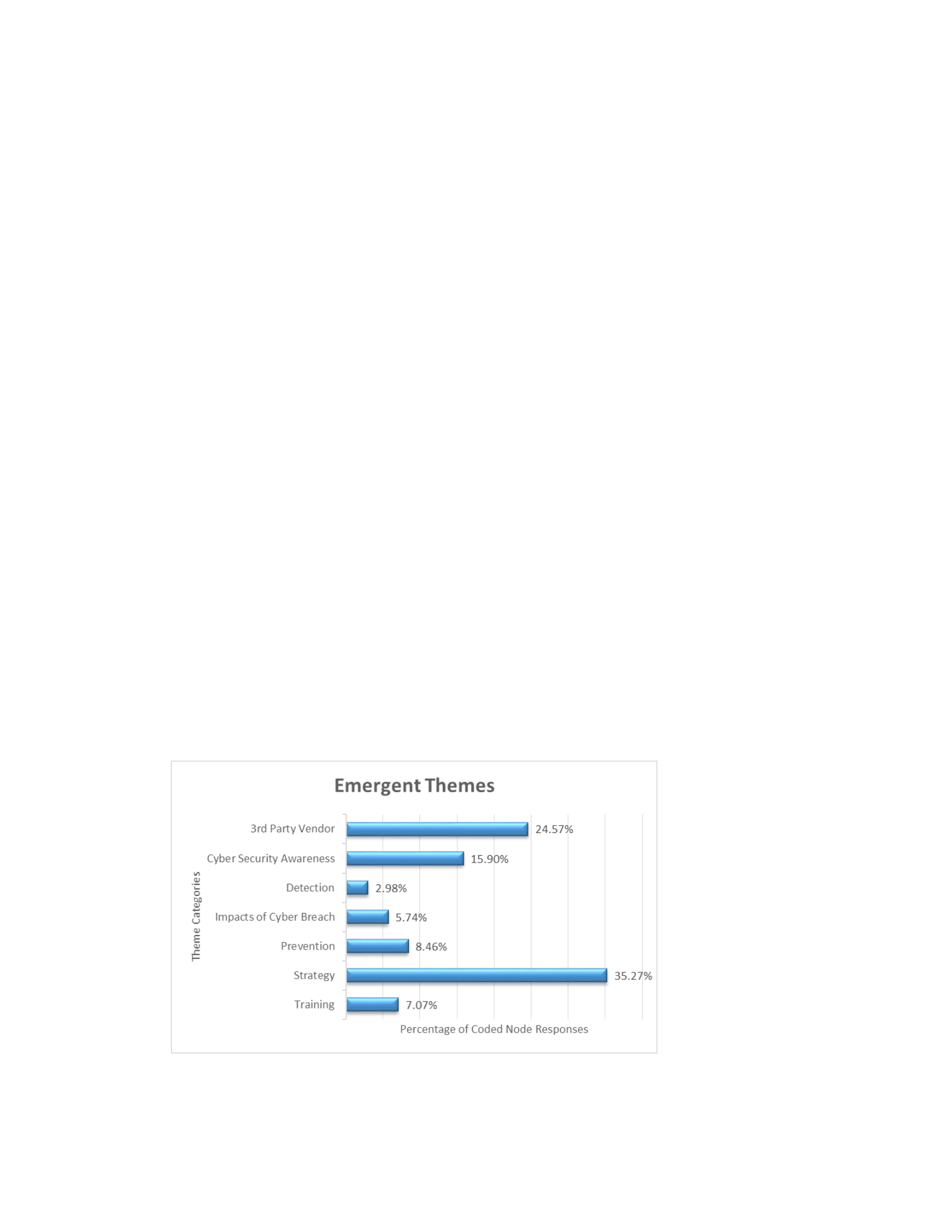
As the primary research data collection instrument, I created a database and maintained
an audit trail of study participant correspondence, journal notes, and archival
documentation. I analyzed the research study data using QSR International NVivo by
importing archival company documentation, participants’ answers to the interview
questions, the member-checked interpretative files, and interview notes.
The document and archival analysis of SME owners’ documents, which included
business reports and company policies, provided corroborative support to the participant
interviews and enabled triangulation in the data collection process. Pseudonyms I used
for participants in the study were SME Owner 1 (CS-1), SME Owner 2 (CS-2), SME
Owner 3 (CS-3), and SME Owner 4 (CS-4). Three major themes emerged from the
triangulated data analysis, based on the frequencies of coded node responses: (a) cyber
security strategy, (b) reliance on third-party vendors for infrastructure services, and (c)
cyber security awareness. Figure 1 shows the emergent themes for effective strategies
SME owners use to protect their businesses from cyber attacks.

Figure 1. Emergent themes of SME owners’ effective cyber security strategies.
The data collection and analysis provided me a basis for understanding effective
cyber security strategies SME owners use to protect their businesses from cyber attacks.
Using the NVivo data analysis software, I categorized and thematized relationships
obtained from archival company documents and the interviews. I ensured that I had
achieved data saturation by using methodological triangulation and member checking.
The findings of the research study aligned well with the systems theory in that
each emergent theme is dependent upon the other. Von Bertalanffy (1968) developed
systems theory, which he characterized as the study of interrelationships rather than individual
modules. Von Bertalanffy contended that systems, in essence, are self-regulating and
selfcorrecting. SMEs are systems consisting of different components, one of which is
information security (Gomes, 2015). Atoum and Otoom (2016) emphasized the
importance of cyber security for SME owners as a critical systems component. Rather
than SME owners utilizing each theme independently, they can leverage them by using
them together for more efficient sustainable business operations. Similarly, Shin and
Konrad (2017) claimed that von Bertalanffy’s GST enables organizations to meet their
objectives, and declared that organizations that incrementally adapt human resource
management practices create a competitive advantage.
The first theme, cyber security strategy, was reflected by the predominant coding
node security plan during the data analysis. The second theme, reliance on a third-party
vendor for infrastructure services and cyber security prevention, emerged following data
analysis and was reflected by the predominant coding node secure provider. The third

emergent theme, cyber security awareness, was evidenced by the predominant coding
node prevention during the analysis of archival and interview data.
During data analysis, some keywords such as training, strategy, and third-party
vendor emerged in more than one theme. The research study results showed the GST of
concept of interconnectivity in the duplication of keywords in emergent themes and
subthemes. Each theme is connected and continuously evolving based on global events
and business needs. The significance of exploring SME owners’ successful
implementation of cyber security best practices, is that my findings may mitigate data
breaches and prevent cyber attacks. According to the U.S. GAO (2013, 2015), pervasive
and sustained cyber attacks might have a potentially devastating impact and could disrupt
the operations of individuals, businesses, and governments.
Theme 1: Cyber Security Strategy
The first major theme to emerge during data analysis of archival documents and
participant interviews was the use of cyber security policy and implementation of
procedures to protect, defend, and react to cyber attacks. My analysis indicated the
requirement for SME owners to establish cyber security policies and effectively
implement cyber security procedures to protect their businesses from cyber attacks.
Sheppard et al. (2013) reported both public and private organizations require a robust
cyber security strategic approach to prepare, respond, and recover from cyber attacks.
SME owners must take a proactive approach to protect their data by establishing
cyber security plans, and creating and implementing Internet security policies (DHS,
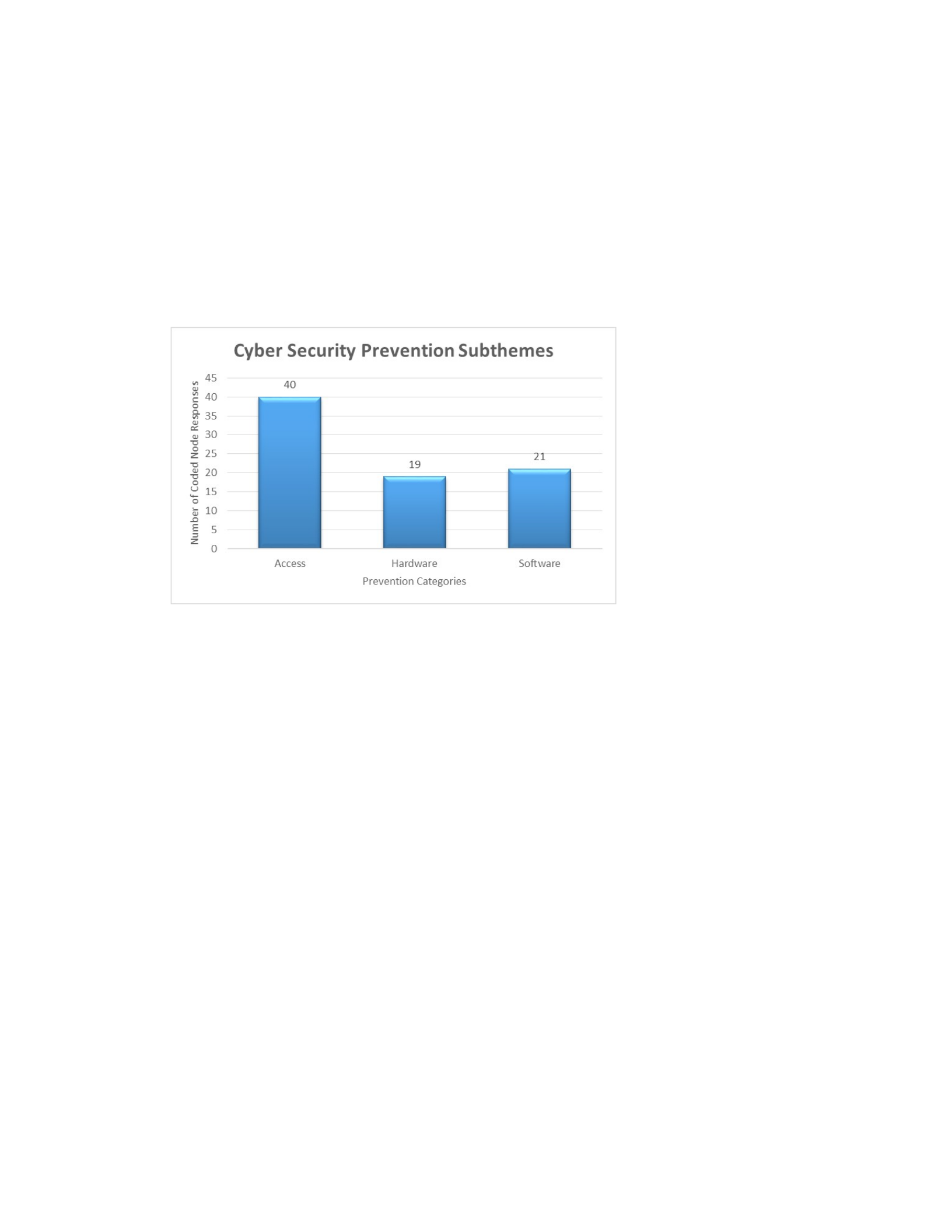
2015b; SBA, 2014). Research participants showed resilience in adapting to a changing
environment by implementing effective cyber security strategies. Figure 2 shows data
analysis results of archival documents and SME participant responses for subthemes
relevant to cyber security preventative measures.
Figure 2. SME owners’ cyber security prevention subthemes.
According to Shackelford et al. (2015), 80% of small business owners do not have
established cyber security policies. Conversely, the information I obtained in this
research study provided new data that shows the strategies of SME owners who have
implemented cyber security policies. These and other SME owners are implementing
effective preventative actions to protect their businesses from cyber attacks. The
successful strategic plans included (a) limiting system access through password
protection methods, (b) establishing a cyber security plan, (c) ensuring cyber security
awareness, (d) conducting training, and (e) implementing security procedures. Figure 3
shows data analysis of archival data and participant responses, by showing the highest
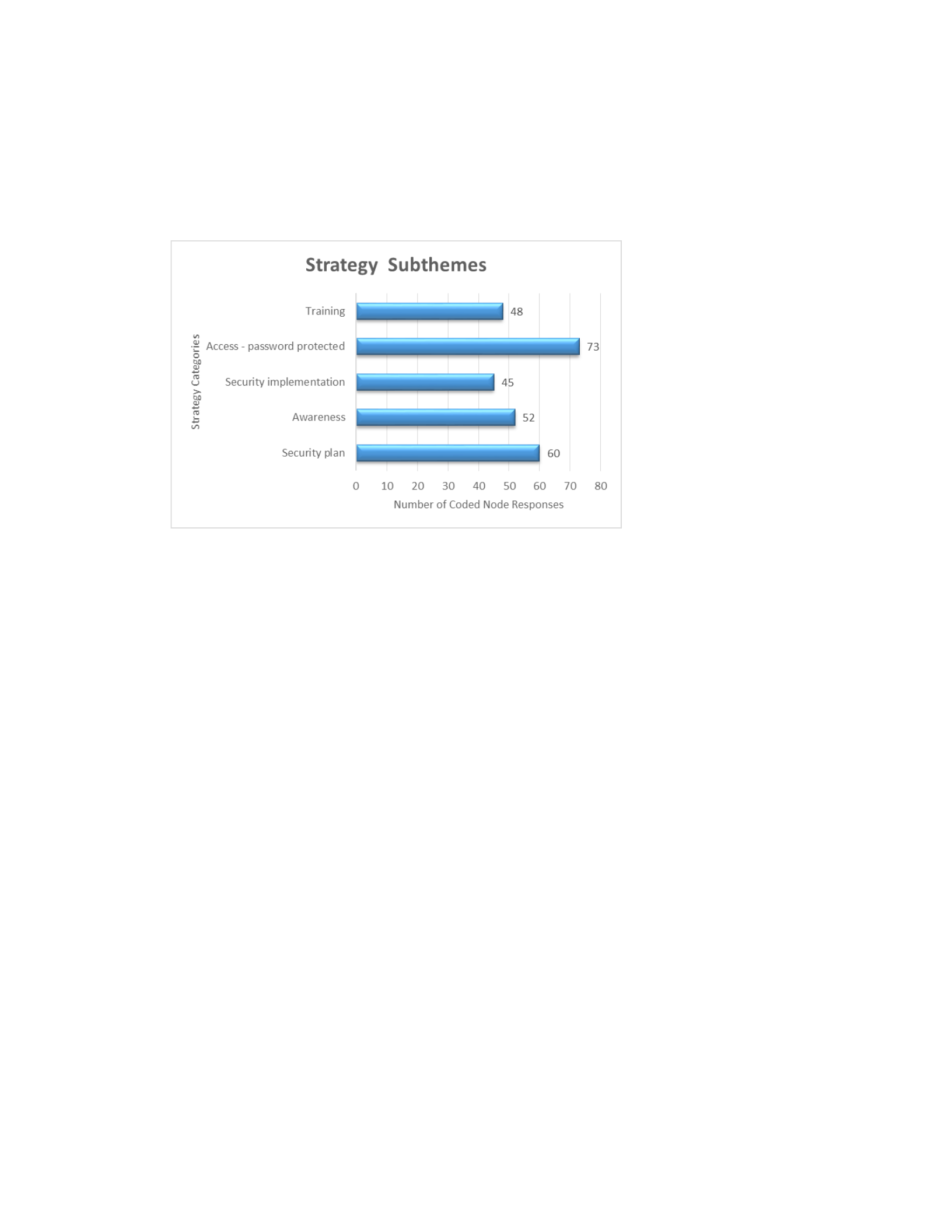
number of coded node responses of SME owners’ successful cyber security strategy
subthemes.
Figure 3. SME owners’ successful cyber security strategy subthemes.
Limiting access by password protection. To prevent financial loss resulting
from network hacking and security breaching by users whose sole purpose is to gain
access based on a user’s or system’s weakness, companies should invest in securing their
data (DHS, 2015a; FBI, 2015c). My analysis of archival documents and interview
responses indicated SME owners ensure explicit awareness and compliance with their
established security and privacy policies. Analysis of Participant CS-1 and CS-2’s
security plans indicated access to business systems, “required logins and unique
passwords.” Participant CS-3’s written security policy contains the requirement for
unique logins and passwords to “protect against the unauthorized access, use, alteration,
or destruction of potentially personally identifying information.” Review of written
privacy policy for Participant CS-4 showed the requirement for unique logins and
passwords, and that “clients are responsible for maintaining the confidentiality of account

information and passwords.” Business owners’ first line of defense to preventing data
loss is to implement valid user passwords (Cheswick, 2013).
My analysis of archival documents and interview responses from the study
participants showed each SME owner imposes basic cyber security preventative measures
by requiring user logins and passwords to access business systems. Participants CS-2,
CS-3, and CS-4 require a unique login and valid password to access business systems.
Additionally, Participant CS-1 requires a unique password and login, or for faster access,
employees can opt to use fingerprint scans to access business systems. Table 3 shows the
various approaches SME owners use to limit access to business systems.
Table 3
Cyber Security Measures to Limit Access
Access Method Participant
CS-1
Participant
CS-2
Participant
CS-3
Participant
CS-4
Unique Login X X X X
Unique Password X X X X
Fingerprint Scan X
According to the SBA (2014), loss of data affects businesses and has the potential
to jeopardize a company’s reputation with customers, suppliers, and partners. SME
owners’ knowledge of preventative actions highlighted access, hardware, and software as
the primary data subthemes to counter cyber threats. Employee and customer access are
the biggest data drivers, followed by software operating system patches and virus
protection, and hardware firewall and router encryption. Analysis of archival security

plan documents and interview responses revealed password protection was the primary
data node for the access category. All participants enforce password protection to gain
access to business systems. Participant CS-1 stated,
Inside the business operations, we utilize employee logins with either a password
or a fingerprint scan. The fingerprint scan recognition feature provided by our
third-party vendor is an extra charge to the business; however, when employees
use it, the results are very easy and fast.
Participant CS-3 affirmed, “Both employees and customers must use a password
to gain access to our application we use for business.” Additionally, Participant CS-4
reiterated, “Our business and customers may access our website system using a unique
login and password from a computer, tablet, or mobile device.” Participant CS-2 stated,
“I do not provide customer access to any of the business systems.” In addition,
Participant CS-2 responded, “I limit employee Internet access to approved websites only.
All other websites require permission.”
Global wired and wireless technology improvements provide businesses
enormous benefits yet simultaneously expose companies to potential vulnerabilities
(Weber & Horn, 2017). The creation of wireless systems technology provides another
vulnerability to tracking and reporting (Denning et al., 2013). My analysis of archival
documents and participant interviews indicated Participants CS-1, CS-3, and CS-4 shared
a common theme by providing Wi-Fi access to the Internet to both their employees and
customers using a unique password, while Participant CS-2 did not provide Wi-Fi access

to the employees or customers. When probing further on why Participant CS-2 elected
not to provide Wi-Fi access, Participant CS-2 stated, “Most people now have smart
phones, and they access the Internet via their own devices using their own plan.”
Cyber security plan or process. Emm (2013) addressed six security steps, which
SME owners can employ to protect themselves (a) require user passwords for login
accounts, (b) select products which provide protection, (c) protect and secure systems
data, (d) establish and implement user policies and procedures, (e) properly train staff to
recognize and understand the risks, and (f) expect and prepare for the worst.
Participant CS-3 described a three-step process used to prevent and detect cyber attacks:
The first step is prevention by utilizing a third-party vendor’s infrastructure. The
second step is to have a security policy requiring monthly security scans through
the third-party vendor’s application software. The third step involves access
control by enforcing limited access to all systems and its information for all
employees.
Moreover, Participant CS-2 answered,
As a top priority, small business owners need to analyze and find areas of their
businesses, which would result in a catastrophic loss, determine alternative
methods to detect and then prevent cyber attacks, and implement procedures and
measures to prevent cyber attacks.
Participant CS-1 explained, “Employees are not allowed to plug in any of their phone
charging devices to the systems as directed by the third-party vendor.” Participants CS-1,

CS-2, CS-3, and CS-4’s written security policies documented SME owners’ awareness of
potential cyber security threats induced by the various virus, malware, and ransomware
programs and the implementation of multiple methods, such as computer virus scans and
operating system patch updates, to prevent data breaches. Participant CS-1’s and CS-2’s
security documents presented one of the most effective methods for preventing cyber
threats, “implementing a layered security approach” (NIST, 2015a, 2015b).
Review of Participant CS-3’s security policy showed secure services for, “credit
card and ACH (electronic check) payments.” Additionally, review of Participant CS-4’s
security policy showed, “All payment information is transmitted via Secure Socket Layer
(SSL) technology, encrypted into our payment gateway, and accessible only by those
authorized with special access rights to such systems who are required to keep the
information confidential.” Of note, Participants CS-1, CS-3, and CS-4 performed
hardware and software security scans and backups monthly, while Participant CS-2 took a
more aggressive approach and performed daily, weekly, and monthly systems scans and
backups.
Cyber security awareness. SME owners are one of the foundational contributors
to economic development and employment growth (Ramayah, Ling, Taghizadeh, &
Rahman, 2015); however, they are hesitant to embrace and implement new technology
and may suffer from resource limitations compared to larger companies (Dahnil,
Marzuki, Langgat, & Fabeil, 2014). Review of Participant CS-1’s security documents
showed a “comprehensive card data security solution,” which encompasses electronic
chip technology to authenticate consumers’ cards, and end-to-end encryption and

tokenization technologies to protect consumers. Review of Participant CS-2’s security
plan showed data encryption and “the impact of tokenization on Payment Card Industry
(PCI) compliance.” Review of Participant CS-3’s security policy stated, “Seamless
integration with major website providers,” utilizing a device-independent web
application. Review of Participant CS-4’s security policy showed, “Secure payment
solutions, 24/7 customer support, and premium protection,” which consisted of user
authentication, SSL technology, and data encryption. Each SME owner indicated not
only an awareness but also the need for cyber security protection by creating and
implementing a written security policy.
In addition to third-party vendors providing infrastructure resources to SME
owners, SME owners utilized different risk management practices thereby limiting their
liability. Each SME participant expressed awareness of potential cyber security
vulnerabilities and utilized risk management strategies by relying on a third-party vendor
to assume or transfer those infrastructure risks. Participant CS-3 stated, “The risk
management strategy we use is to always have a good environmental, situational
awareness, have an acute awareness of clients’ personal information at all times, limit
access, and monitor all network, system, and user activity.”
Conversely, Participants CS-1 and CS-4 relied exclusively on their third-party
vendor for evaluation and identification of cyber risks. Participant CS-1 expressed, “We
rely on a third-party vendor for our business and that is why we pay monthly/yearly fees
for us to securely protect our data” while Participant CS-4 indicated, “We completely rely
on our third-party vendor services’ strategies to identify and evaluate our security risks.

Currently, the third-party vendor absorbs the burden and risks while limiting our
liability.” Participant CS-2 echoed limited liability as a risk mitigation procedure by
stating, “Reliance on a third-party is great in that it limits your liability if data was
compromised using their infrastructure.” SME owners must be aware and proactive to
implement new security strategies to protect their business and personal client data.
Employee training. Employee training may increase the productivity of
employees in business resulting in greater adherence to company policies, increased
customer satisfaction, and reduction in employee turnover. Bryant and Allen (2013)
reported organizations benefit from proactively managing career paths and opportunities,
and leaders need to communicate with their employees about these opportunities.
Participants CS-1 and CS-2 had similar approaches. Their training methodologies for
employees were basic, intuitive, and updated as required. Participant CS-2 confirmed,
“My employee training strategy consists of basic employee policies for operating
computers and devices at the store.” Participants CS-1, CS-2, and CS-3 not only provide
employee training, they also rely on vendor provided training on any new features. Once
the owners receive education on new features, they conduct employee training to
communicate and instruct employees on the latest software and system features.
Participant CS-4 stated, “I rely primarily on vendor provided training.”
My analysis of each SME owner’s security plan and interview responses indicated
vendor, employer, and on the job training were the SME owners’ preferred methods of
training subthemes and are essential to SME owners’ adherence to cyber security policies,

risk exposure, and liability for a data breach. First, third-party vendors provided SME
owners training to understand the vendor provided business operations applications and
recommended security procedures. Participant CS-1 stated, “The third-party vendor
provides a two-hour class on updating the price changes within the system.” Secondly,
SME owners provided employees comprehensive on the job training covering system
operations accesses, employee responsibilities, and security risks. Review of Participant
CS-1’s security plan indicated third-party training and customer support. Participant CS-
2 reported, “My employee training strategies consist of basic employee policies for
operating computers and devices at the store.” Additionally, Participant CS-2’s security
plan indicated employees must adhere to “all company policies and procedures.”
Finally, SME owners conducted periodic training as needed to ensure explicit
awareness and compliance with established security policies. Participant CS-3’s
interview analysis highlighted, “I provide training to our employees on gaining access to
our business systems to ensure they understand the proper use of the system(s), which
ultimately, lowers our potential risk exposure for security issues.” Review of Participant
CS-3’s security plan highlighted payment with ease, “because of the support team.”
Participant CS-4’s security plan indicated, “For network security purposes and to ensure
that our services remain available to all users, we employ commercial software programs
to monitor network traffic and attempt to identify unauthorized attempts to upload or
change information, or otherwise cause damage.” For SME owners, an integral part of
successful business operations is appropriate training for all business staff members.

Figure 4 shows the data analysis results of the SME owners’ preferred methods for
employee training.
Figure 4. SME owners’ preferred employee training methods.
Implementing security procedures. Loss of data affects businesses and has the
potential to jeopardize a company’s reputation with customers, suppliers, and partners
(SBA, 2014). Media reports have cited government security offices reporting incidences
of cyber crimes are on the rise and increasing daily as savvy and persistent information
communication attackers find creative ways to penetrate laptops, phones, computer
networks, and anything considered a wired device (FCC, 2014). Each of the participants
shared a common theme in which they subscribe to system monitoring and reporting of
normal and suspicious activity. Participant CS-2 stated, “My POS vendor provides
different monitoring tools, which they will use to ping your IP address and try to breach
security at the business through your router and firewall ports.” Additionally, Participant

CS-3 reiterated, “Our cyber attack contingency plan consists of ensuring our firewalls
measures are up to standard. We review and monitor our systems by examining scan logs
to ensure nothing strange or out of the ordinary is occurring.” On the other hand,
Participants CS-1 and CS-4 rely on third-party vendors for monitoring and reporting.
Theme 2: Reliance on Third-Party Vendors
The second major theme to emerge during data analysis was the reliance on
thirdparty vendors to provide for infrastructure services and cyber security preventative
measures. Data analysis uncovered the lack of sufficient in-house cyber security
knowledge, skills, and abilities, and the need to utilize third-party vendors to provide
expert infrastructure and cyber security protection. Each of the SME owners in this
research study reported dependence and reliance on third-party vendor services to protect
their businesses from cyber attacks. Review of security and privacy procedures for
Participants CS-1, CS-2, and CS-3 showed SME owners adhere to the “Payment Card
Industry Data Security Standards (PCI-DSS), which regulate security and safeguarding of
payment cardholder data,” while Participant CS-4 adheres to SSL technologies.
Participant CS-1 stressed, “A third-party vendor limits our liability.” Likewise,
Participant CS-3 indicated, “The third-party vendor minimizes our financial liability,
provides protection against a data breach, and provides a warranty against losses should
one occur.” Participant CS-2 confirmed similar reliance on the third-party vendor’s
infrastructure resources stating, “It is difficult for a small business owner like myself to
analyze and implement every aspect of a quality cyber security plan mainly due to limited
resources.” Moreover, Participant CS-4 affirmed, “The benefits of outsourcing to a

thirdparty service provider certainly outweigh the risks and liability of maintaining your
infrastructure.”
Likewise, Participant CS-2 acknowledged reliance on third-party vendors by
stating, “Even if you have the knowledge, skills, and resources to perform and maintain
your infrastructure, at some point, you will rely on a third-party service for some aspect
of your business.” Subthemes within a SME owner’s reliance on third-party vendors
included (a) hiring a secure and trusted third-party provider, (b) limiting SME owner
liabilities, (c) limiting risk exposure, and (d) leveraging expert technical support for
infrastructure services and cyber security protection. Figure 5 indicates SME owners’
reliance on third-party vendors.
Figure 5. SME owners’ reliance on third-party vendor subthemes.
Hiring a secure and trusted third-party provider. Hiring a third-party vendor
reduces SME owners’ liabilities, and Participant CS-1 disclosed, “We do not have the
knowledge, resources, and people to perform these functions ourselves and that is why
40
25
43 39
0
10
20
30
40
50
Limited
liabilities
Expert technical
skills
Secure &
trusted
provider
Limited risk
exposure
Number of Coded Node Responses
Reasons for Third-Party Vendor Reliance
Reliance on Third-Party Vendor
Subthemes

we leverage a third-party vendor.” Participant CS-2 stressed, “SME owners should also
consider hiring a network company or third-party vendor to handle protecting their
business infrastructure.” Moreover, Participant CS-1 indicated, “We use third-party
vendors and rely on their services for our business” while Participant CS-3 echoed
agreement, “The first step is prevention by utilizing a third-party vendor’s infrastructure.”
Moreover, Participant CS-4 stated, “Our third-party vendor provides the basis we use for
our small business infrastructure, and we trust them.”
Limited liabilities. Business owners’ defense methodologies should focus on
mitigating risks associated with owning and operating information systems (FCC, 2014;
Jang-Jaccard & Nepal, 2014). Different views for implementing loose and strong
password criteria depend on the business model and user/customer base willingness and
ease to access desired technology. J. Hong and Reed (2013) reviewed password
guidelines for retailers such as Amazon, Fidelity Investments, and PayPal, which revealed
loose password policies and products without stringent verifications.
In response to SME owners’ responsibilities and liabilities, if a data breach were
to occur, each of the participants utilizes a third-party service, which limits their liability
if a data breach occurs. Participant CS-1 replied, “With a third-party vendor we have
limited liability.” It is imperative for business owners to develop and implement cyber
security strategies and preventative measures to mitigate data losses (FBI, 2015a). SME
owners who utilize third-party vendors limit their cyber security liabilities and thwart
catastrophic cyber security losses. Participant CS-4 conveyed, “The third-party vendor
service provider maintains the confidentiality of the clients’ information and payment

credentials, and are liable for data loss should one occur.” Likewise, Participants CS-2
and CS-3 interview responses revealed they do not write down or store within their
businesses their customers’ credit card numbers.
Participant CS-4 indicated, “Our contingency plan for our small business is to rely
on our third-party vendor to provide the infrastructure, and if a data breach were to occur,
they would inform us of the cyber security breach.” Likewise, Participant CS-1 affirmed,
“Our cyber attack contingency plan is to immediately call our third-party vendor. We rely
on our third-party vendor for our business, and that is why we pay monthly/yearly fees
for us to securely protect our data.”
Limited risk exposure. Managing cyber risks requires organizations to
implement multitiered security strategies focused on prevention, mitigation, and reaction
while concentrating on people, processes, and systems (NIST, 2015a, 2015b). The study
participants expressed an awareness of potential cyber security vulnerabilities and utilized
risk management strategies by relying on third-party vendors for infrastructure risks.
Participant CS-1’s interview response reflected, “With a third-party vendor we have
limited liability.” Review of Participant CS-1’s security plan showed the third-party
vendor provided an, “unprecedented breach warranty” at no additional cost.
Participant CS-2’s interview response stated, “Reliance on a third-party is great in
that it limits your liability if data was compromised using their infrastructure.” Review of
Participant CS-2’s security plan showed payment transactions were, “backed by a
comprehensive warranty.” Participant CS-3’s interview response recommended other
SME owners keep “Computer and operating systems up to date with the latest security

patches, leveraging the encrypted cloud computing technologies and services, and
instilling employee security awareness by implementing security policies and
procedures.” Additionally, Participant CS-3’s implementation of a written security
policy showed adherence to protecting customer data through “security and safeguarding
of payment cardholder data.”
Business owners should concentrate their efforts to reduce risks by implementing
technical and political solutions (NIST, 2015b; SBA, 2015, 2016b). Moreover,
Participant CS-4 declared, “The benefits of outsourcing to a third-party service provider
certainly outweigh the risks and liability of maintaining your infrastructure.” Review of
Participant CS-4’s security documents showed limited warranty services, which are
remedied and “limited to a claim.” The study participants’ interview responses confirmed
SME owners outsource infrastructure and resources to support their secure business
operations.
Expert technical skills. According to the SBA (2014) and the SEC (2015), SME
owners are predominantly disadvantaged in protecting their infrastructures against cyber
attacks. The adoption of cloud computing has many benefits enabling SME owners to
compete globally in a cost effective manner with seamless sharing of cloud infrastructure
and computing resources. Strategic planning elements should include how organizations
can leverage emerging technologies to assist with their strategic visions and risk
assessments (NIST, 2015b). Cyber security threats are continuously evolving requiring
vigilant awareness.

Participant CS-1 stated, “We use third-party vendors and rely on their services for
our business.” Additionally, review of Participant CS-1’s archival documents indicated
their company has the, “Most secure credit card processing solution on the market,
backed by a comprehensive breach warranty.” Both Participants CS-2 and CS-3 stressed
the importance of keeping their computer operating systems up to date with their
vendor’s latest security patches, knowing the operating system well and being able to
install and reinstall operating and software systems if necessary, and limiting access to
systems and sensitive information via unique logins and passwords. Participant CS-4’s
interview response reported, “We utilize our third-party vendor to provide the
infrastructure for protecting, detecting, and responding to cyber threats.” Moreover,
review of Participant CS-4’s archival documents indicated their company received praise
for innovation in providing secure business solutions and featured on major news outlets.
Theme 3: Cyber Security Awareness
Consumer advocacy groups promote increasing user and business awareness and
taking steps to reduce risk exposure (DHS, 2015a; FCC, 2014; SBA, 2014). The third
major theme to emerge during data analysis was ensuring cyber security awareness.
Creating awareness about security issues is imperative for an organization’s overall
objective to implement an effective security program (Mishra, Caputo, Leone, Kohun, &
Draus, 2014). Additionally, Mishra et al. (2014) identified training and education as
effective methods to create awareness of security vulnerabilities since these make
employees aware of the risks and their responsibilities to protect infrastructure assets.
Organizational leaders must implement a tailored set of focus areas and capabilities to
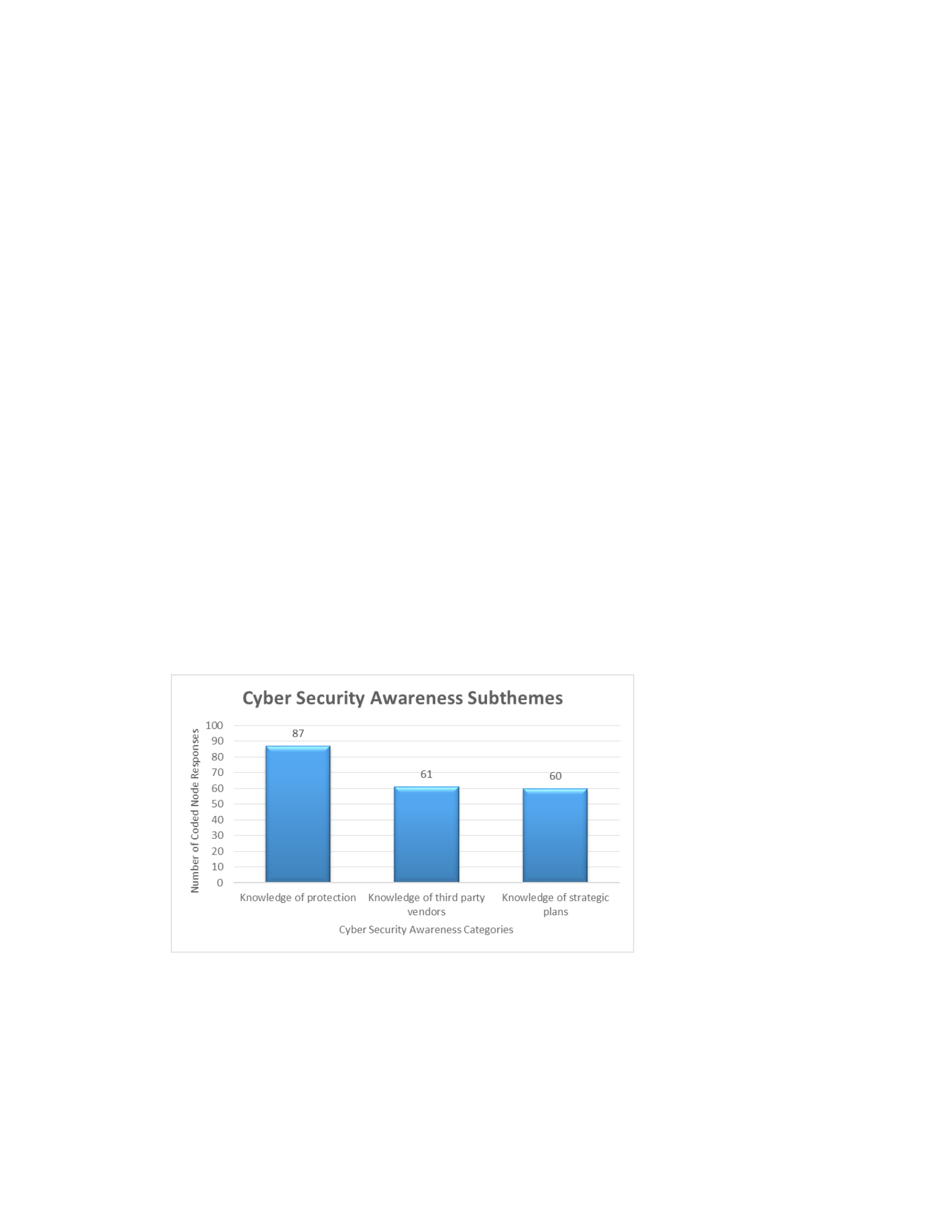
reach a high-security maturity level (Mijnhardt, Baars, & Spruit, 2016). The data
analysis showed each of the participants in this research study corroborated Mishra et al.
affirming cyber security awareness is a critical component of their effective cyber
security strategy.
Miles (2013) reported the focus of systems theory relies heavily on the
interconnectivity between the parts as well as the relationship between the parts that
connect them together. Successful SME owners are aware of their diverse globally
changing environment necessitating the requirement for cyber security awareness. Data
analysis of archival documents and interview responses revealed three primary cyber
security awareness subthemes (a) knowledge of protection, (b) knowledge of third-party
vendors, and (c) knowledge of strategic plans. Figure 6 shows the SME owners’ cyber
security awareness subthemes.
Figure 6. SME owners’ cyber security awareness subthemes.
Knowledge of protection. Hayes and Bodhani (2013) stressed SME owners must
be more aware of cyber security if they are going to avoid becoming cyber victim

casualties. Ultimately, a business owner must evaluate whether the risks of outsourcing
security protection services to a third-party are necessary to mitigate company losses
(FBI, 2014, 2015c). The data analysis of archival documents and interview responses
illustrated knowledge of protection as the most predominant coded node response.
Review of archival documents for Participants CS-1 and CS-2 indicated the use of secure
tokenization services to protect client data by “replacing sensitive data like credit card
numbers with tokens.”
Participant CS-1 stated, “We have the point of sale system (POS) that processes
payments using data encryption,” and recommended, “Other small business owners to do
their research on POS and third-party infrastructure providers.” Likewise, Participant
CS-2 stated, “As a minimum, small businesses must identify and protect data that if lost
would result in a catastrophic failure of the business.” Furthermore, Participant CS-2
discussed the need to conduct “Random scenarios to test the business contingency plan. I
recently had the POS vendor review the backup database files for data integrity and
whether the files could be used successfully for a full restore.”
Participant CS-3 acknowledged, “We depend on our third-party vendor’s
infrastructure to access our systems. Access to our systems is through firewalls and
encrypted routers.” Additionally, Participant CS-3 stated, “We have a security policy
requiring monthly security scans through the third-party vendor’s application software.”
Analysis of Participant CS-3’s archival documents indicated the third-party vendor have,
“more than 60 years of combined experience in payment processing, billing, and
electronic finances.” Participant CS-4 reiterated, “The successful strategies we use to

protect our small business infrastructure from cyber attacks rely on contracting out and
working through a third-party service provider.” Review of Participant CS-4’s archival
documents reflected, “We employ commercial software programs to monitor network
traffic and attempt to identify unauthorized attempts to upload or change information, or
otherwise cause damage.” One of the biggest issues facing SME owners is the ability to
defend themselves from potential cyber attacks (Fielder et al., 2016).
Knowledge of third-party vendors. SME owners are more vulnerable to cyber
attacks than large enterprises because they may lack the IT expertise and resources
needed to understand and confront IT security issues in the rapidly growing threat
environments (Emm, 2013). The findings of the study reveal each SME participant is
reliant on a third-party vendor to provide infrastructure support to their business. Secure
and trusted third-party providers, vendor training, limited liability, and risk reduction
measures are essential elements SME owners leverage when relying on third-party
vendor services.
While dependence and reliance on third-party vendors is a subtheme of cyber
security awareness, it is also one of the three major emergent themes resulting from data
analysis. Participant CS-1 reported, “We do not have the knowledge, resources, and
people to perform these functions ourselves and that is why we leverage a third-party
vendor. We trust these providers to protect our data as that is what they do.” Review of
Participant CS-1’s and CS-2’s archival documents indicates the services are secure,
reliable, scalable, and utilize “proprietary POS security technology to provide
unparalleled protection.” Participant CS-2 indicated, “I rely on PCI compliance

strategies, despite being a bit annoying; this standard provides a level of comfort and
limits my liability.” Review of Participant CS-3’s archival documents indicates the
thirdparty vendor provides secure services, “unmatched customer service,” and are
“exceptionally knowledgeable in credit card and ACH (electronic check) payments.”
Likewise, Participant CS-3 affirmed, “Using a third-party vendor minimizes our financial
liability, provides protection against a data breach, and provides a warranty against losses
should one occur.”
Participant CS-4 stated, “We utilize our third-party vendor to provide the
infrastructure for protecting, detecting, and responding to cyber threats.” Additionally,
Participant CS-4 stated, “We use this third-party vendor because they host our entire
website and customer payments are accepted and processed via their secure encryption
methods.” Review of Participant CS-4’s archival documents reiterated, “All payment
information is transmitted via Secure Socket Layer (SSL) technology, encrypted into our
payment gateway, and accessible only by those authorized with special access.”
Knowledge of strategic plans. SME owners must take a proactive approach to
protect their data by establishing cyber security plans, and create and implement Internet
security policies (DHS, 2015b; SBA, 2014). The data analysis of archival documents and
interview responses showed the SME owners’ requirement for strategic plans the third
most important factor within the cyber awareness subthemes. SME owners cannot
achieve competitiveness and remain profitable without adopting new technologies at the
right market stages (Maduku, Mpinganjira, & Duh, 2016). SME owners may utilize
multiple marketing techniques such as Internet websites, social media, Facebook, or

Twitter, to advertise and obtain customers.
Dahnil et al. (2014) characterized social media as a new marketing
communication tool whereby businesses are leveraging multiple social media venues to
enhance their marketing efforts and gain entrance into global competitive markets.
Developing a system of preventive security measures adds a significant deterrent to
protect networks from malicious cyber activity (DHS, 2015b; SBA, 2014). Sheppard et
al. (2013) emphasized both public and private organizations require a robust cyber
security strategic approach to prepare, respond, and recover from cyber attacks.
Another critical element of strategic plans entails an evaluation of vulnerabilities.
A common element echoed by analyzing participants’ interview responses reflected the
need to establish and implement a viable strategic plan encompassing multiple types of
cyber security protection. Participant CS-1 stated, “All of our servers are password
protected, and we enable employees to either use their password or utilize employee
fingerprint recognition to log into our systems.” Review of Participant CS-1’s, CS-2’s,
CS-3’s, and CS-4’s archival documents indicated the existence of strategic plans that
include cyber security protection. Participant CS-2 replied, “My third-party POS vendor
uses a PCI questionnaire, which gets me thinking about different things which could
cause cyber threats and provokes different thoughts on how to prevent a data breach or
attack.”
Developing and implementing a security plan is another key strategic initiative.
Participant CS-3 stated, “The successful strategies that we use to protect our business
infrastructure from a cyber attack consist of leveraging a third-party vendor’s cyber

security solution.” Participant CS-4 stressed, “Our third-party vendor service provider
maintains the confidentiality of the client’s information and payment credentials, and they
are liable for data loss should one occur.” NIST (2015b) emphasized cyber security
decisions require insight into current security threats and the ability to forecast potential
vulnerabilities. SME owners who implement security awareness practices may increase
employees’ awareness against potential cyber security threats.
Applications to Professional Practice
The findings of this study, along with the results of the analysis of the study’s
conceptual framework and extensive review of scholarly literature, add to the existing
body of knowledge to improve SME owners’ secure business operations. Based on the
study findings, the most significant contribution may be the identification of SME
owners’ implementation of cyber security best practices to protect their businesses from
cyber attacks. Choucri, Madnick, and Ferwerda (2014) reported implementing best
practices would help mitigate cyber threats.
My findings from the research study indicated successful SME owners effectively
apply three major strategies to protect their businesses from cyber attacks. The most
frequently used technique SME owners use consists of developing and implementing a
comprehensive strategic plan to alleviate cyber security threats and data breaches. The
successful strategic plans included (a) limiting system access through password
protection methods, (b) establishing a cyber security plan, (c) ensuring cyber security
awareness, (d) conducting training, and (e) implementing security procedures. The
strategic plan is critical because it provides the foundation for secure business operations.

The second most frequently used strategy successful SME owners apply includes
the reliance on third-party vendors to provide expert infrastructure and cyber security
protection. Data analysis revealed the lack of sufficient in-house cyber security
knowledge, skills, and abilities, and the need to utilize a secure and trusted third-party
supplier. Each of the SME owners in this research study reported dependence and
reliance on third-party vendor services to protect their businesses from cyber attacks. The
successful strategic plans included (a) hiring a secure and trusted third-party provider, (b)
limiting the SME owner’s liabilities, (c) limiting risk exposure, and (d) leveraging expert
technical support for infrastructure services and cyber security protection.
The third most frequently used strategy successful SME owners apply is cyber
security awareness. Mishra et al. (2014) emphasized creating awareness about security
issues is imperative for an organization’s overall objective to implement an effective
security program. The successful strategic plans incorporated (a) knowledge of
protection, (b) knowledge of third-party vendors, and (c) knowledge of strategic plans.
The data analysis showed each of the participants in this research study corroborated
Mishra et al. affirming cyber security awareness is a critical component of their effective
cyber security strategy.
The application to professional practice includes the communication of successful
SME owners’ strategies to protect their businesses against cyber threats and thwart
potential cyber attacks. The results of my research indicate the application of effective
SME owners’ cyber security strategies might provide other SME owners a foundational
guide to assess and mitigate cyber threat vulnerabilities. The findings in my study align

with the systems theory whereby successful SME owners leverage the three major
strategies together for more effective, secure, and sustainable business operations.
Implications for Social Change
The implications for social change from this research include the potential impact
of successful cyber security strategies for SME owners to mitigate and prevent future
cyber security attacks. One of the biggest issues facing SME owners is the ability to
defend themselves from potential cyber attacks (Fielder et al., 2016). Implementation of
effective cyber security best practices, as outlined in the research study findings, provides
SME owners increased knowledge of cyber security methodologies, provides sustainable
cyber security strategies to mitigate future cyber attacks, and enhances their potential for
sustainable business operations. This qualitative multicase study filled a gap in the
related literature by providing additional perspectives on successful SME owners’ cyber
security strategies within a globally changing environment.
Findings from the study have provided SME owners with three effective strategies
successful SME owners use to prevent cyber security attacks (a) cyber security strategy,
(b) reliance on third-party vendors for infrastructure services, and (c) cyber security
awareness. Application of these strategies may catalyze consumer confidence resulting in
greater economic prosperity. The implications for positive social change include
empowering other SME owners, new entrepreneurs, and academic institutions with
successful strategies and resources to effect changes within the community. Additionally,
SME owners may transform the way they view cyber security strategies, expand
businesses, and assist other SME owners who survive cyber attacks spur economic

growth by employing residents of the community stimulating the overall socioeconomic
lifecycle.
Recommendations for Action
The purpose of this qualitative multicase study was to explore effective strategies
successful SME owners use to protect their businesses from cyber attacks. SME owners
represent 99.7% of U.S. employers (U.S. Census Bureau, 2013). In 2014, 60% of all
targeted cyber attacks struck SMEs whose owners are predominantly disadvantaged in
protecting their infrastructures (Symantec Corporation, 2015; United States Securities and
Exchange Commission [SEC], 2015). SME owners do not view themselves as targets of
cyber attacks due to their small size or the perception they have nothing worth stealing
(SBA, 2015).
This research study concentrated on the analysis of scholarly literature, archival
documents, and SME owners’ participant interview member checked responses, which
provided corroborative support and triangulation in the data collection process, to answer
the research question of what effective strategies SME owners use to protect their
businesses from cyber attacks. Three major themes emerged from the triangulated data
analysis, based on the frequencies of coded node responses: (a) cyber security strategy,
(b) reliance on third-party vendors for infrastructure services, and (c) cyber security
awareness. The findings of this research study indicate SME owners (a) have
implemented cyber security policies to protect, defend, and react to cyber attacks; (b) rely
on third-party vendors to provide infrastructure services and cyber security protection;
and (c) are aware of cyber security threats.

Based on unique, successful strategies SME owners use to prevent cyber attacks, I
recommend business owners, future business owners, and new entrepreneurs consider the
following actions to secure information through best cyber security practices:
1. Assess cyber security health by evaluating the current cyber threat environment;
identify the types of business data to protect; pinpoint insider and outsider threats,
risks and vulnerabilities; and highlight types of possible cyber threats.
2. Develop and implement a comprehensive cyber security strategic plan, which
includes policies and procedures to protect sensitive and potentially sensitive data.
The cyber security strategic plan should at a minimum establish:
a. Valid user two-factor authentication (login and password);
b. Company computers equipped with antivirus software, antispyware, and
malware software; and computer operating system patches kept current;
c. Secure Internet and Wi-Fi network connections using firewalls and data
encryption methodologies;
d. End-to-end data encryption and tokenization for secure business
transactions; and
e. Protected company business websites using secure features for data
transactions (such as firewalls, routers, SSL, and PCI data compliance).
3. Assess in-house IT capabilities and consider employing third-party vendors to
leverage their expert skills, reduce infrastructure risks and liabilities, and mitigate
potential data breach losses by utilizing the third-party vendor’s cyber security
data breach warranty.

4. Ensure cyber security awareness by training employees on company policies for
data protection, protection of business and consumer data, and daily rules of
engagement for secure, successful business operations.
I plan to disseminate the results and recommendations from this study by
providing summary fact sheets to the four SME owners who participated in the study. I
will offer my consultant services as a guest speaker for the Melbourne Regional Chamber
of Commerce for East Central Florida, the Space Coast Tech Council (SCTC), and the IT
and Entrepreneur subcommittee to discuss my research findings and its applicability to
businesses and interested parties in the local area. Additionally, I will make an effort to
share the results and recommendations of the study with academic institutions in the local
area such as Eastern Florida State College (EFSC) and Florida Institute of Technology
(FIT), as a guest speaker for seminars and workshops. I will also provide my consultant
services as a guest speaker on successful SME owners’ cyber security strategies for
government, such as the Brevard County EDC, and nongovernment-sponsored
conferences and workshops for SME owners needing assistance. Moreover, I will seek to
disseminate my research findings through industry publications and academic journals.
Recommendations for Further Research
The findings, conclusions, and recommendations from this study may contribute
to existing, and future research regarding best practices owners of SME businesses use to
protect and defend their businesses from cyber attacks to achieve successful, sustainable
business operations. Since this study was limited to the metropolitan area of Melbourne,
Brevard County, Florida, I would recommend a study based in a different geographic

location, to see if the findings will be similar or different based on regional data.
Additionally, since the sample population for this study was four owners of SME
businesses, I would recommend future researchers expand the sample size to determine if
results would be similar or different based on sample size.
Section 1 limitations addressed whether participants would understand the
interview questions and provide honest answers, participants' availability for personal
interviews to support timely data collection, and whether reviewing archival company
documents and conducting semistructured interviews would provide sufficient data to
answer the overarching research question. The only limiting factor that affected the
research endeavors was finding owners of SME businesses in the Melbourne, Brevard
County, Florida, metropolitan area who were willing to participate in the research study,
which significantly increased the amount of time I spent obtaining viable research
participants. However, once SME owners agreed to participate, there were no significant
issues. Archival data was available, and interviews yielded candid participant responses
to provide sufficient data for analyses. I would recommend future researchers consider
allotting additional time to obtain viable research participants.
Reflections
Completing the DBA Doctoral Study process has been a rewarding growth
experience. The journey challenged me academically and personally far beyond what I
had anticipated. I have significantly increased my knowledge of effective cyber security
strategies successful SME owners use to protect their businesses from cyber security
threats; specifically SME owners in the Brevard County, Florida, metropolitan area. I am

confident I can share the application of my research findings with scholars, academic
institutions, business owners, entrepreneurs, and government entities. The findings of the
research study may contribute to existing, and future research regarding best practices
SME owners use to protect and defend their businesses from cyber attacks to achieve
more successful sustainable, secure business operations.
A personal bias after conducting the literary research was a preconceived notion
the majority of SME owners were not aware of and did not practice adequate cyber
security solutions to address potential cyber threat vulnerabilities. Additionally, my
experience as an IT subject matter expert and program manager for a large corporation,
which utilizes extensive, effective cyber security practices fueled this idea. Each of the
participants was a successful SME owner, cognizant of cyber threat vulnerabilities and
potential consequences to their secure business operations. During the semistructured
interviews, I took special care not to lead the participants nor show positive or negative
reactions to their responses. I am confident the respondents provided honest, candid
answers to the eight questions and my actions did not adversely influence their responses.
After completing the research study, my preconceived notion changed regarding
successful SME owners' serendipitous use of effective cyber security strategies. The
literature review provided results that indicated high costs and risks for using third-party
vendors. After completing the data analysis of archival documents and participant
interviews, my thinking changed. Successful SME owners evaluated their risks and
determined third-party vendors were adaptable, scalable, cost-effective, provided expert
technical and infrastructure services, and limited their liabilities in case of data breaches.

Although this research study focused on a small population in central Florida, perhaps the
results of the study are indicative successful SME owners in other geographical areas
have implemented similar strategic actions to prevent cyber security threats.
Conclusion
The purpose of this qualitative multiple case study was to explore what strategies
successful SME owners use to protect their businesses from cyber attacks. The findings
of this research study elucidate effective strategies SME owners use to protect their
businesses from cyber attacks. Three main themes emerged from the research findings,
which correlated with the literature review, the existing body of knowledge, and the
conceptual framework of the GST. The findings of this research study are SME owners
(a) have implemented cyber security policies to protect, defend, and react to cyber
attacks; (b) rely on third-party vendors to provide infrastructure services and cyber
security protection; and (c) are aware of cyber security threats. SME owners who survive
cyber attacks may spur economic growth by employing residents of the community
stimulating the socioeconomic lifecycle. Moreover, SME owners’ implementation of
these successful strategies may catalyze consumer confidence resulting in greater
economic prosperity. The reality of the ever changing global cyber security threat
environment mandates SME owners assess vulnerabilities, and develop and implement
cyber security best practice strategies to ensure secure sustainable business operations.

