


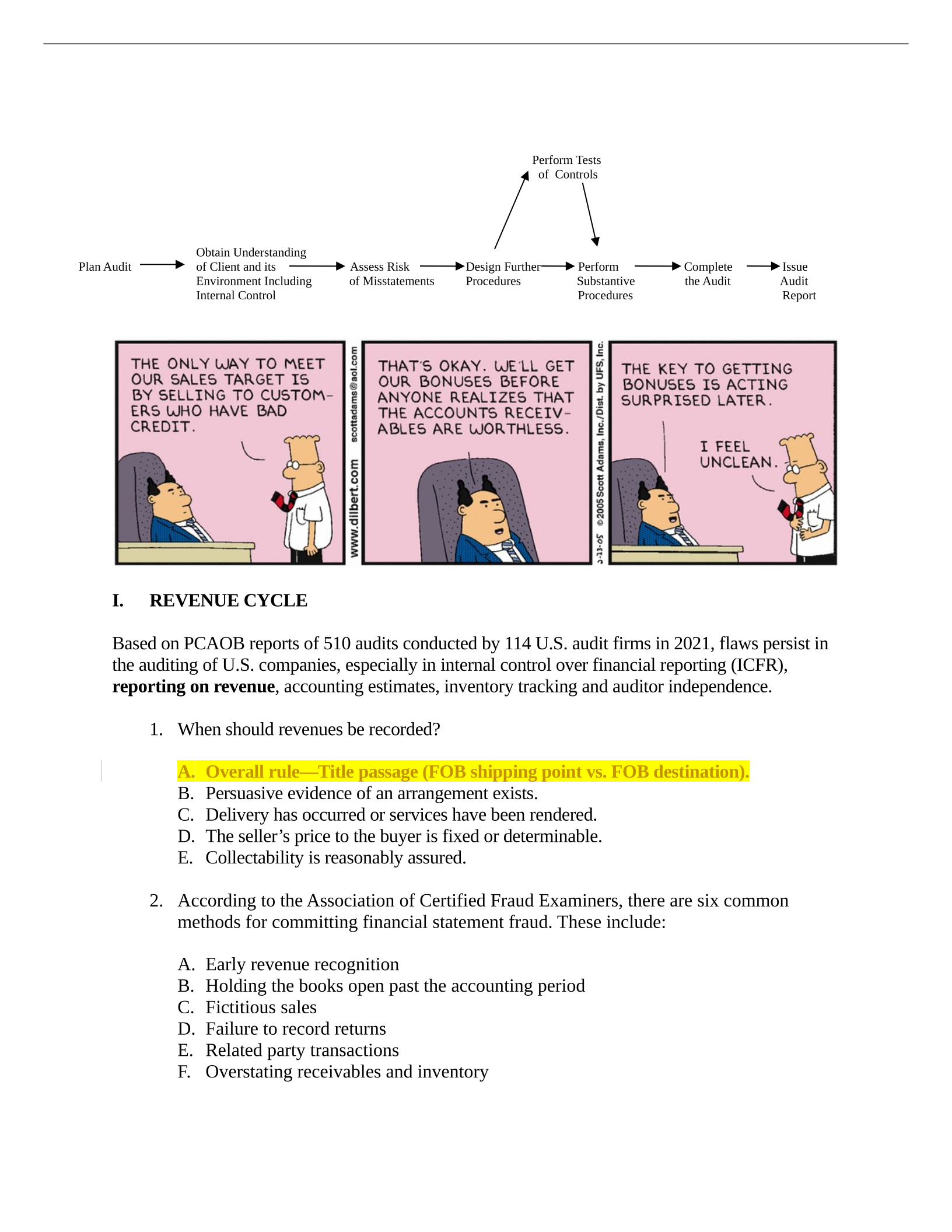
Perform Tests
of Controls
Obtain Understanding
Plan Audit of Client and its Assess Risk Design Further Perform Complete Issue
Environment Including of Misstatements Procedures Substantive the Audit Audit
Internal Control Procedures Report
I. REVENUE CYCLE
Based on PCAOB reports of 510 audits conducted by 114 U.S. audit firms in 2021, flaws persist in
the auditing of U.S. companies, especially in internal control over financial reporting (ICFR),
reporting on revenue, accounting estimates, inventory tracking and auditor independence.
1. When should revenues be recorded?
A. Overall rule—Title passage (FOB shipping point vs. FOB destination).
B. Persuasive evidence of an arrangement exists.
C. Delivery has occurred or services have been rendered.
D. The seller’s price to the buyer is fixed or determinable.
E. Collectability is reasonably assured.
2. According to the Association of Certified Fraud Examiners, there are six common
methods for committing financial statement fraud. These include:
A. Early revenue recognition
B. Holding the books open past the accounting period
C. Fictitious sales
D. Failure to record returns
E. Related party transactions
F. Overstating receivables and inventory
CHAPTER 11ACCOUNTS RECEIVABLE
3. Revenue Cycle Controls
A. Segregation of duties--sales and collections.
B. Matching of sales invoices and shipping documents.
C. Clerical accuracy checks on invoices.
D. Credit approval for sales transactions.
E. Mailing of monthly statements.
F. Reconciliation of bank accounts.
G. Use of control listing of cash receipts.
H. Use of budgets and analysis of variances.
I. Control over shipping and billing documents.
J. Use of chart of accounts and review of account codings.
A/R Journal Entries
Record a Sale: A/R XXXX
Sales XXXX if you are in a perpetual system you have to
also record debit for COGS
Record Bad Debt Bad Debt Expense XXXX
Expense Allowance for Doubtful Accounts XXXX
Writeoff A/R Allowance for Doubtful Accounts XXXX
A/R XXXX

\
II. ACCOUNTS (& NOTES) RECEIVABLE
Substantive Tests Primary Audit Objectives
Obtain aged listing of receivables and reconcile to
ledgers. Obtain analyses of notes receivable and
related interest.
Valuation
Inspect notes on hand and confirm those not on hand. Existence/Rights
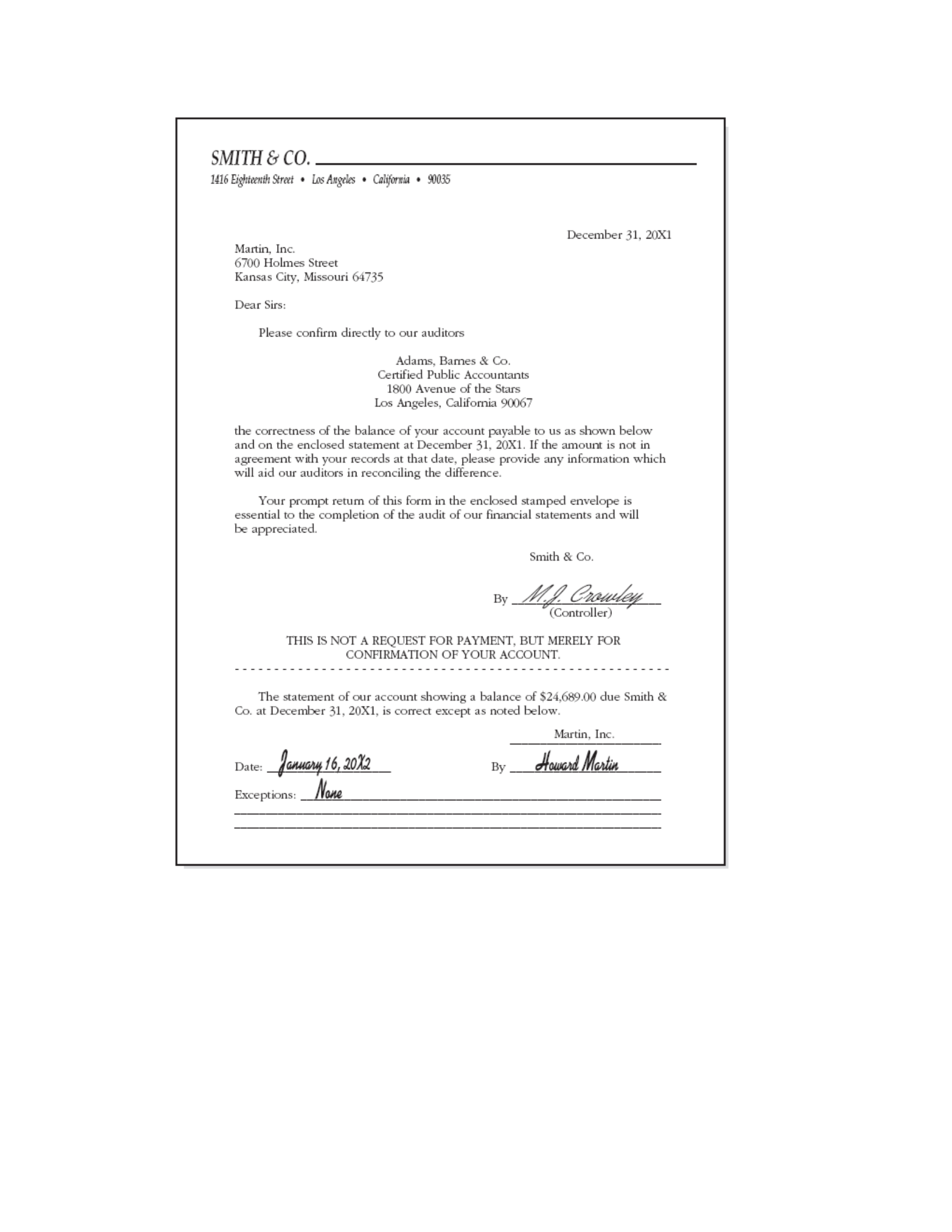
Confirm receivables with debtors.
Client says here is our A/R and we have to analyze
it and get permission from client customers to
make sure receivables exist.
Existence/Rights/Valuation
Review year-end cutoff of sales transactions. Existence/Rights/Completeness
Perform analytical procedures. Existence/Rights/Completeness
Verify interest earned on notes receivable. Existence/Rights/Completeness
Evaluate accounting estimates for revenue.
Determine adequacy of allowance for uncollectible
accounts.
Valuation
Investigate the existence of pledges receivables and
receivables from related parties. Evaluate financial
statement presentation and disclosure.
Presentation and Disclosure
Evaluate the business purpose of significant and
unusual sales transactions.
Existence/Rights/Valuation
Presentation and Disclosure
Evaluate financial statement presentation and
disclosure.
Presentation and Disclosure
SMITH
&
CO.
1416
BjghienthSirct
+
Las
Angeles
»
Caljoria
©
90035
December
31,
20X1
Martin,
Ine.
6700
Holmes
Street
Kansas
City,
Missouri
64735,
Dear
Sirs
Please
confirm
directly
to
our
auditors
Adams,
Bames
&
Co.
Certified
Public
Accountants
1800
Avenue
of
the
Stars
Los
Angeles,
California
90067
the
correctness
of
the
balance of
your
account
payable
to
us
as
shown
below
and
on
the
enclosed
statement
at
December
31,
20X1.
If
the
amount
is
not
in
agreement
with
your
records
at
that
date,
please
provide
any information
which,
will
aid
our
auditors
in
reconciling
the
difference.
‘Your
prompt
retum
of
this
form
in
the
enclosed
stamped
envelope
is
essential
to
the
completion
of
the
audit
of
our
financial
statements
and
will
be
appreciated
Smith
&
Co,
‘THIS
IS
NOT
A REQUEST
FOR
PAYMENT,
BUT
MERELY FOR
CONFIRMATION
OF
YOUR
ACCOUNT.
The
statement
of
our
account
showing
a
balance
of
$24,689.00
due
Smith
&
Co,
at
December
31,
20X1,
is
comect
except
as
noted
below.
Martin,
Ine.
Dane-
feaueny
16,202
by
eewrd
Menta
sxceptions:
aye
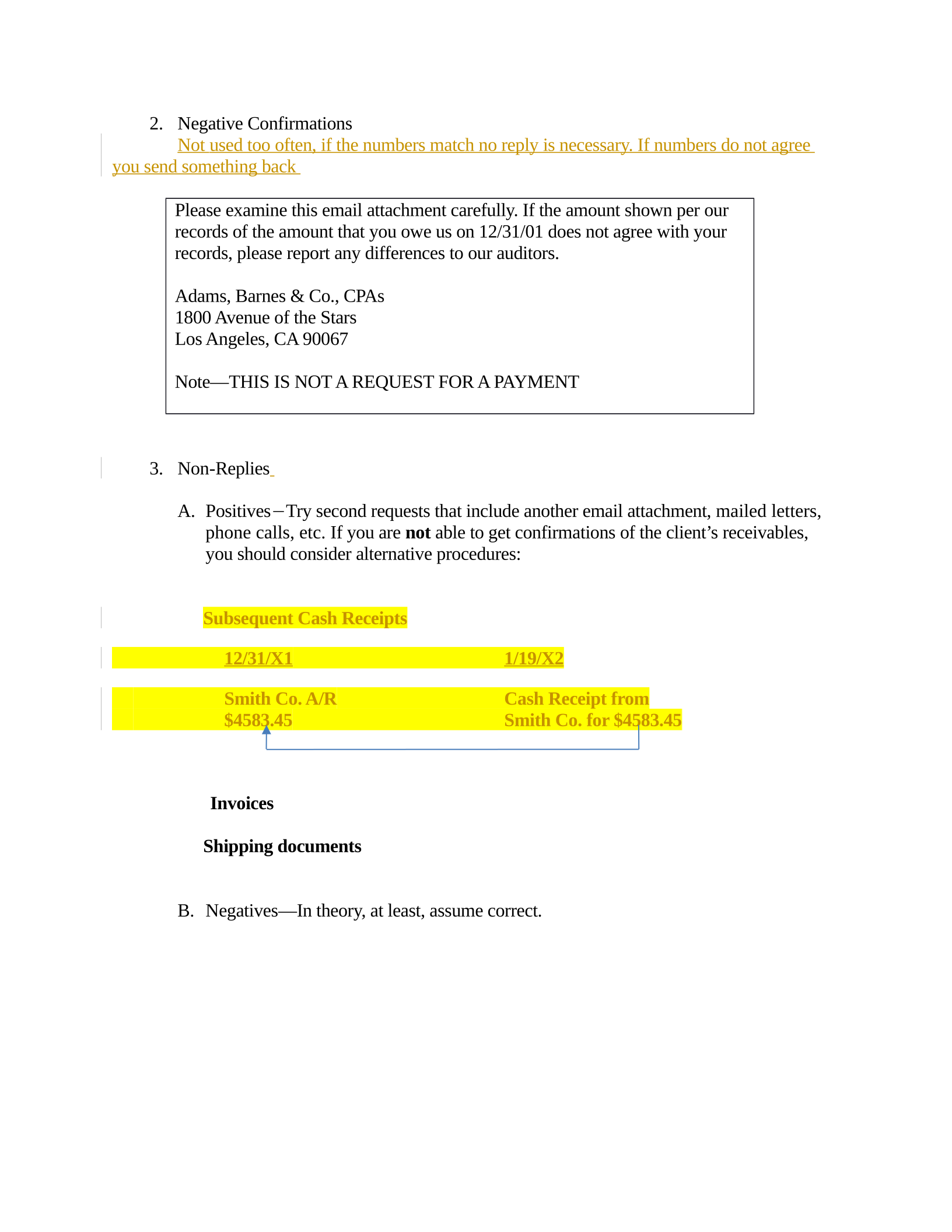
2. Negative Confirmations
Not used too often, if the numbers match no reply is necessary. If numbers do not agree
you send something back
Please examine this email attachment carefully. If the amount shown per our
records of the amount that you owe us on 12/31/01 does not agree with your
records, please report any differences to our auditors.
Adams, Barnes & Co., CPAs
1800 Avenue of the Stars
Los Angeles, CA 90067
Note—THIS IS NOT A REQUEST FOR A PAYMENT
3. Non-Replies
A. PositivesTry second requests that include another email attachment, mailed letters,
phone calls, etc. If you are not able to get confirmations of the client’s receivables,
you should consider alternative procedures:
Subsequent Cash Receipts
12/31/X1 1/19/X2
Smith Co. A/R Cash Receipt from
$4583.45 Smith Co. for $4583.45
Invoices
Shipping documents
B. Negatives—In theory, at least, assume correct.
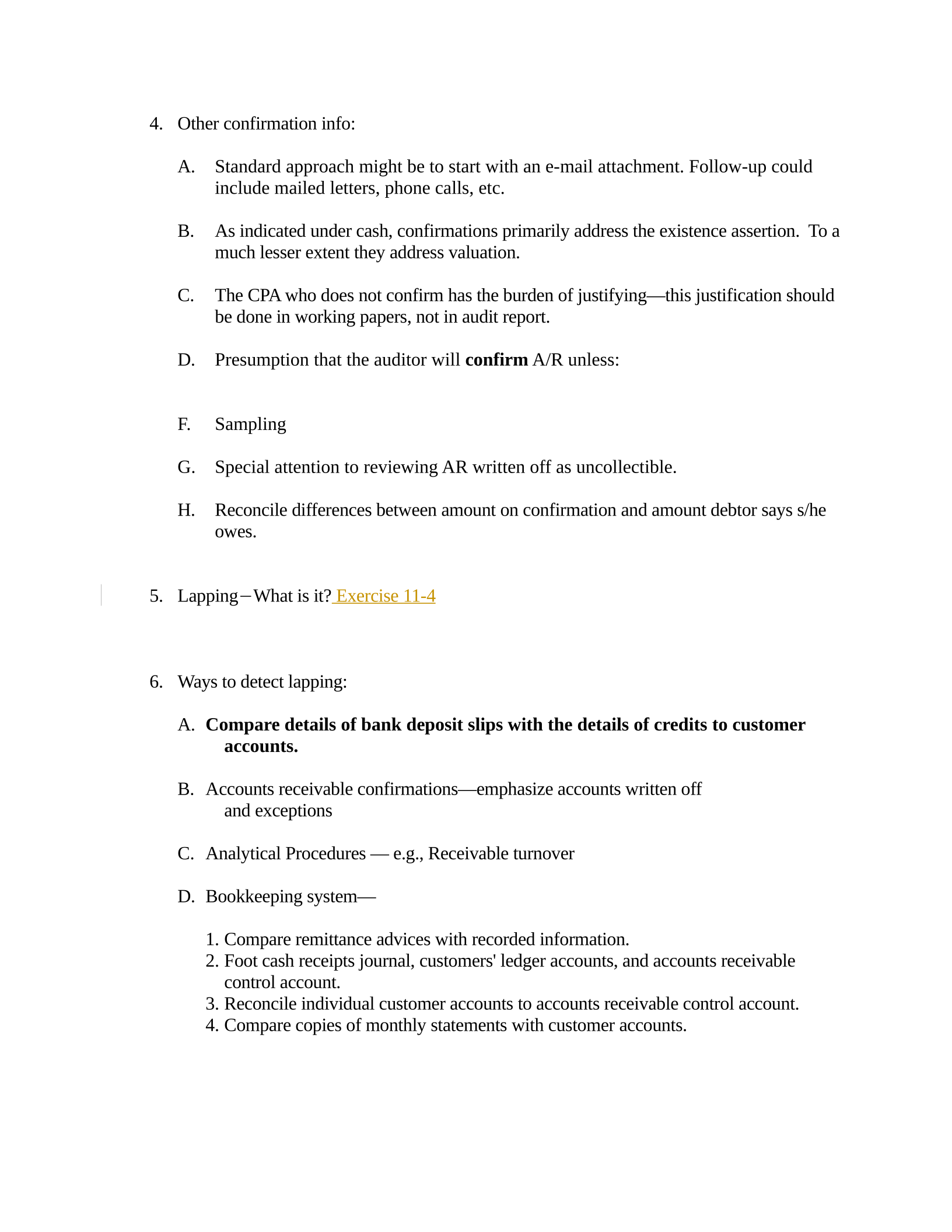
4. Other confirmation info:
A. Standard approach might be to start with an e-mail attachment. Follow-up could
include mailed letters, phone calls, etc.
B. As indicated under cash, confirmations primarily address the existence assertion. To a
much lesser extent they address valuation.
C. The CPA who does not confirm has the burden of justifying—this justification should
be done in working papers, not in audit report.
D. Presumption that the auditor will confirm A/R unless:
F. Sampling
G. Special attention to reviewing AR written off as uncollectible.
H. Reconcile differences between amount on confirmation and amount debtor says s/he
owes.
5. LappingWhat is it? Exercise 11-4
6. Ways to detect lapping:
A. Compare details of bank deposit slips with the details of credits to customer
accounts.
B. Accounts receivable confirmations—emphasize accounts written off
and exceptions
C. Analytical Procedures — e.g., Receivable turnover
D. Bookkeeping system—
1. Compare remittance advices with recorded information.
2. Foot cash receipts journal, customers' ledger accounts, and accounts receivable
control account.
3. Reconcile individual customer accounts to accounts receivable control account.
4. Compare copies of monthly statements with customer accounts.
Powered by TCPDF (www.tcpdf.org)

