


CERTIFIED PUBLIC ACCOUNTANT
For a person planning to become a CPA, it is essential to know the requirements in
the state where he or she plans to obtain and maintain the CPA designation. The best
source of that information is the State Board of Accountancy for the state in which the
person plans to be certified. The National Association of State Boards of Accountancy
(NASBA) Web site (www.nasba.org) provides information on licensure requirements and
links to the Web site of each state board. It is possible to transfer the CPA designation
from one state to another, but additional requirements often must be met for formal
education, practice experience, or continuing education.
Most young professionals who want to become CPAs start their careers working for
a CPA firm. After they become CPAs, many leave the firm to work in industry, government,
or education. These people may continue to be CPAs but often give up their right to
practice as independent auditors. To maintain the right to practice as independent
auditors in most states, CPAs must meet defined continuing education and licensing
requirements. Therefore, it is common for accountants to be CPAs who do not practice
as independent auditors.
Information about the CPA examination can be found in The Uniform CPA
Examination Candidate Bulletin and the Content and Skill Specifications for the Uniform
CPA Examination, both of which can be downloaded from the CPA Examination site found
on the AICPA Web site (www.aicpa.org). The AICPA also publishes selected examination
questions with unofficial answers indexed to the content specification outlines of the
examination.
Some of the questions and problems at the end of the chapters in this book are
based on past CPA examinations. They are designated as “based on AICPA questions.”
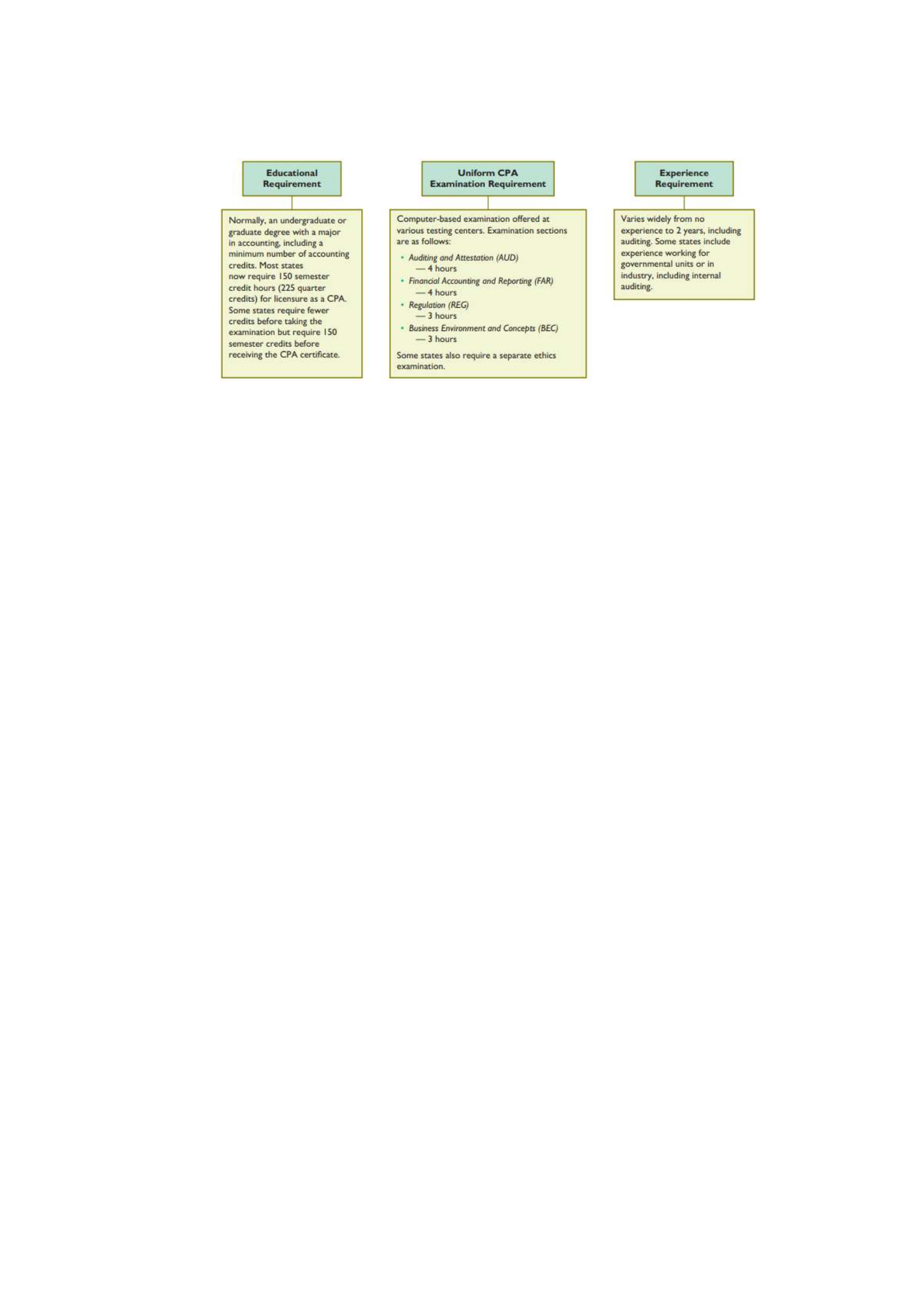
Three Requirements for Becoming a CPA

