


Analyze Potential Cybersecurity Risks
 ZEKEB
ZEKEB WhatIsTaxonomy-DATAVERSITY.htm
- Home
- Conferences
- Training Center
- Live Webinars
- White Papers
- Product Demos
- Articles
- Blogs
- News
- Slides
- On Demand Webinars
- Data Topics
- What is…?
- Case Studies
- Books
Data Topics
- BI / Data Science
- Database
- Data Architecture
- Data Literacy
- Data Strategy
- Data Modeling
- EIM
- Governance & Quality
- Smart Data
- Homepage
- >
- Education Resources For Use & Management of Data
- >
- What is...?
- >
- What Is Taxonomy?
What Is Taxonomy?
By Michelle Knight on August 14, 2017March 12, 2021
 Taxonomy represents the formal structure of classes or types of objects within a domain. It organizes knowledge by using a controlled vocabulary to make it easier to find related information. A taxonomy must:
- Follow a hierarchic format and provides names for each object in relation to other objects.
- May also capture the membership properties of each object in relation to other objects.
- Have specific rules used to classify or categorize any object in a domain. These rules must be complete, consistent, and unambiguous.
- Apply rigor in specification, ensuring any newly discovered object must fit into one and only one category or object.
- Inherit all the properties of the class above it, but can also have additional properties.
Other Definitions of Taxonomy Include:
- “Taxonomy is a set of chosen terms use to retrieve on-line content – to make the search and browse capabilities of the content, document or records management systems truly functional.” (Computer Weekly)
- “Taxonomy is a Knowledge Organization System (KOS) or a set of elements, often structured and controlled, which can be used for describing (indexing) objects, browsing collections etc.” (W3C org)
- “Taxonomy is a classification of products.” (Forbes)
- “Taxonomy is a curated classification and nomenclature for all of the organisms in the public sequence database.” (NCBI)
Businesses Apply Taxonomies to:
- Achieve better Data Quality.
- Organize metadata in an easy grasp format (e.g. a Website map).
- Manage data assets through Data Governance.
- Make it easier for a data steward to curate information.
- Guide machine learning and data experiences towards identifying trends and patterns.
Finding a book or document in a library or a specific website in a browser like Google, requires taxonomies, as does using a thesaurus.
While Taxonomies may differ across domains or Ontologies, they remain consistent in a specific representation (e.g. a business, department, or subject area):
Example of a Taxonomy:
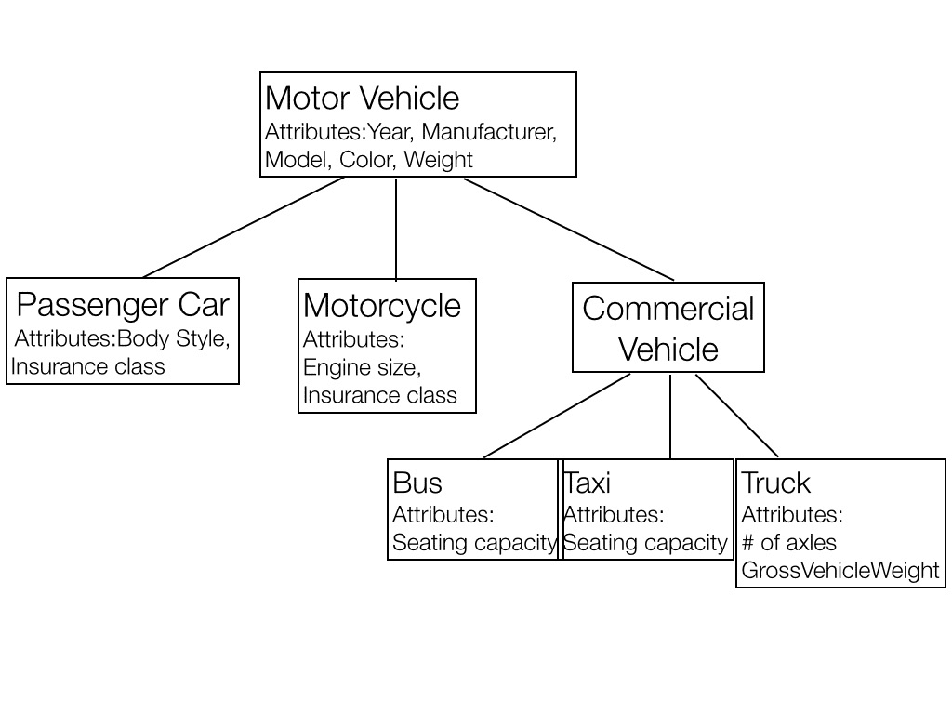 Image Credit: Adrian Bowles (Smart Data Webinar Slides
)
Image Credit: Adrian Bowles (Smart Data Webinar Slides
)
Image used under license from Shutterstock.com

Search the Site
Search for:Why Train with DATAVERSITY


DATAVERSITY Events

DATAVERSITY Website Navigation
- Home
- Conferences
- Training Center
- Live Webinars
- White Papers
- Product Demos
- Articles
- Blogs
- News
- Slides
- On Demand Webinars
- Data Topics
- What is…?
- Case Studies
- Books
Free Webinars
 DATAVERSITY.net
TDAN.com
DATAVERSITY.net
TDAN.com
Conferences
Online Conferences
DATAVERSITY Resources
Company Information
Newsletters
DATAVERSITY Education


© 2011 – 2021 Dataversity Digital LLC | All Rights Reserved. Cookies Settings Terms of Service Privacy Policy
We use technologies such as cookies to understand how you use our site and to provide a better user experience. This includes personalizing content, using analytics and improving site operations. We may share your information about your use of our site with third parties in accordance with our Privacy Policy. You can change your cookie settings as described here at any time, but parts of our site may not function correctly without them. By continuing to use our site, you agree that we can save cookies on your device, unless you have disabled cookies. I Accept
