


1000 word essay due tonight 11:00pm eastern time
 rshem
rshem TheWarsofReligion.html.zip
Units/Unit 2/The Wars of Religion.html
2: Intellectual Change from the 15th to 17th Century
The Impact of the Reformation on Old World Europe
The Impact of the Reformation on Old World Europe
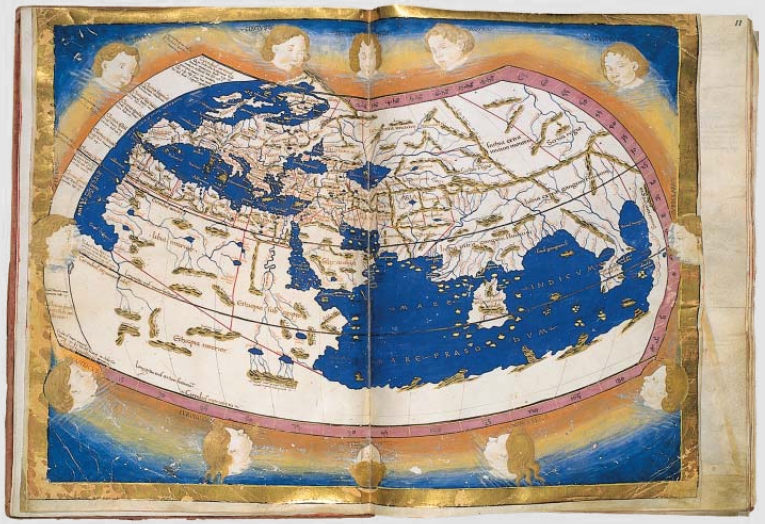
Map of the World as envisioned by Europeans in the 15th Century
Europe was completely changed as a result of the Reformation. The dominance of the Catholic Church had been broken and very strong religious divisions now existed within Europe. The Catholic Church responded to the Protestant Reformation with the Counter-Reformation, but there was little that could be done to reunite Europe around a single religion. Instead, the religious divisions continued and the region was left in disarray.
THE COUNTER-REFORMATION
The Counter-Reformation, also called the Catholic Reformation or the Catholic Revival, was the period of Catholic resurgence initiated in response to the Protestant Reformation, beginning with the Council of Trent (1545–1563) and ending at the close of the Thirty Years' War in 1648 (an event that we will discuss in a minute). Initiated to preserve the power, influence and material wealth enjoyed by the Catholic Church and to present a theological and material challenge to Reformation, the Counter-Reformation was a comprehensive effort that often used extreme methods to defend Catholic sacramental practice, religious orders, and political reach. The Council of Trent began the movement with an issuance of condemnations of what it defined to be heresies committed by proponents of Protestantism, and also issuing key statements and clarifications of the Church's doctrine and teachings, including scripture, sacred traditions, Biblical canon, original sin, salvation, the sacraments, the Mass, and the veneration of saints. As such, reforms included the foundation of seminaries for the proper training of priests, the reform of religious life by returning orders to their spiritual foundations, and new spiritual movements focusing on the devotional life and a personal relationship with God and Christ. It also involved political activities that included The Inquisition, and the conversion of non-Catholic peoples both in Europe and in the New World to the Catholic faith.
Key events of the period include the excommunication of Queen Elizabeth I (1570) for being a member of the Anglican Church and the defeat of Ottoman forces by the Spanish at the Battle of Lepanto (1571) under Pope Pius V; the construction of the Gregorian observatory in Vatican City between 1578 and 1580, the adoption of the Gregorian calendar in 1582, and the mission of Jesuit Matteo Ricci in China (1582-1610) under Pope Gregory XVIII; the French Wars of Religion (1562 and 1598), the Fifteen Years' War between the Hapsburg Monarchy and the Ottoman Empire from 1593 to 1606, and the execution of Dominican friar, cosmologist, and mathematician Giordano Bruno in 1600 for holding opinions and teaching content contrary to the Catholic faith, all under Pope Clement VIII; the birth of the Lyncean Academy of the Papal States in 1603, whose most famous member and intellectural center was Galileo Galilei, and the Thirty Years' War (1618–1648) during the pontificates of Pope Urban VIII and Innocent X; and the formation of the last Holy League by Innocent XI during the Great Turkish War between the Hapsburgs and the Ottoman Empire (1683-1699).
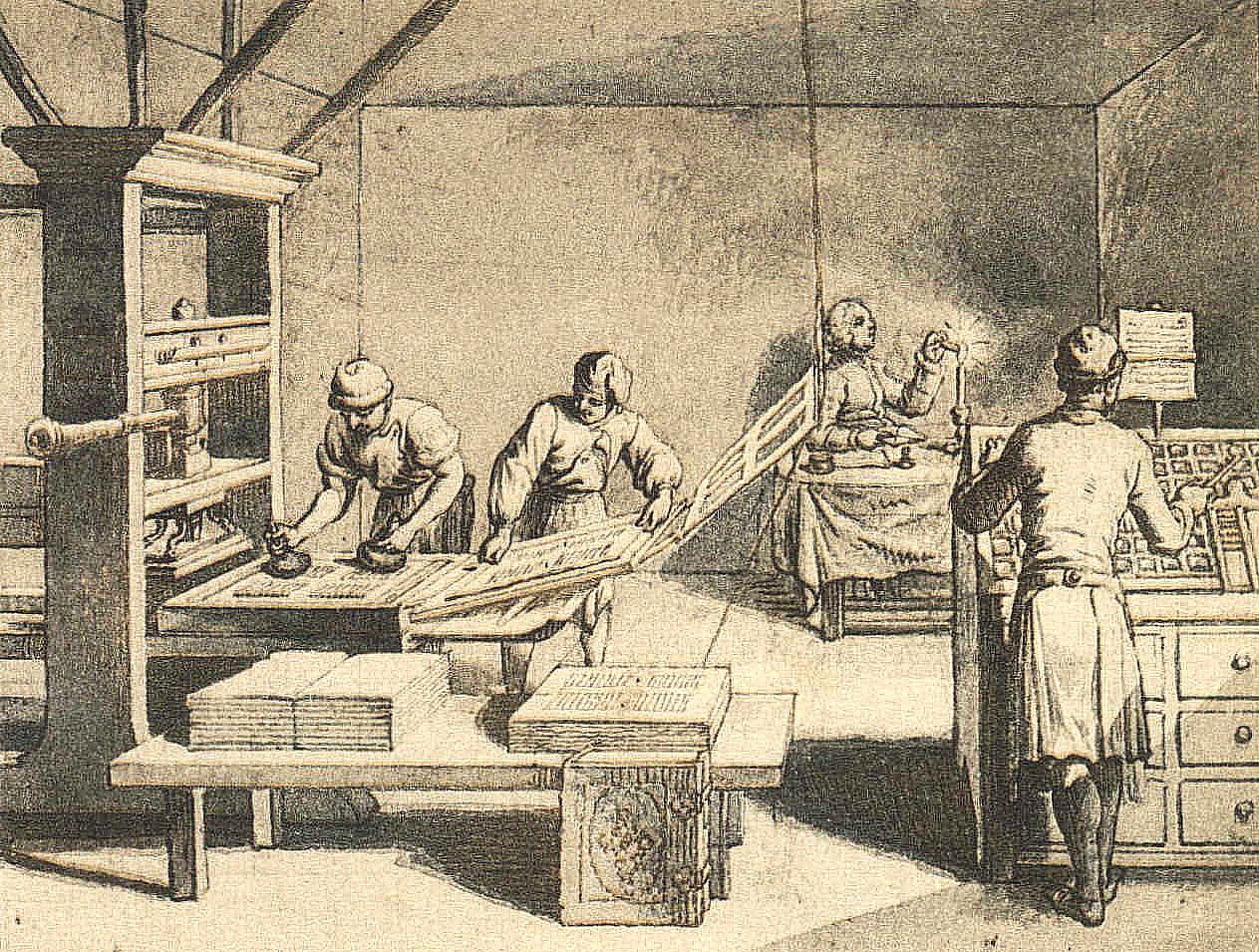
The Printing Press
With the invention of the printing press by Johannes Gutenberg in 1439, each side uses this significant invention to print new interpretations of scripture, religious dogma, and various versions of its bible, which can be read to the masses or be passed along to those who can read themselves. But what happens if you are not a practicing Catholic, or if your opinions differ from those held by those in power?
WITCH HUNTS
 One thing that should be made clear is that even though people regularly went to church, were devout Catholics or Protestants, there was a lot of superstition that was present. Folklore and superstition were the very foundation of everyday life in Europe during this time. And, many Christians had a mixture of what the Bible taught and what folklore taught them. So, when the harvest was unsuccessful or livestock died, many blamed spirits. Earthquakes, plagues, and fires were believed by many to be caused by something supernatural, often the Devil. Some of these superstitious beliefs were a mixture of the two. Witches put curses on people and children to take out their revenge or just cause trouble. God had no power. It wasn’t just Satan, it was some other supernatural power that was just as evil. So, when Catholics and Protestants began to challenge each other’s doctrines, witch hunts spread throughout Europe.
Historians have tried to explain this phenomenon in many ways. Some historians and anthropologists have found evidence that various molds that attack wheat made those who consumed it hallucinate. Ergot, a disease caused by contaminated wheat, spread throughout Europe’s wheat fields and affected just about everyone. Once a charge of witchcraft is made, it caused  paranoia within communities and people began to believe witches to be present when they weren't. Other historians have argued that since it was the masses who were largely persecuted, especially women, and very few elites were even charged with witchcraft, that it was the church using the witch hunts as a control mechanism to punish reformers and Protestants from going against the Church's authority. The Catholic Church did not recognize any religion other than its own, so those who were Protestants were charged with heresy, called heretics, and were burned at the stake, drowned, or hanged. When women exhibited some sort of independence, or challenge to their place in life, they were accused of being witches. Women also were in charge of feeding livestock and tending light crops, so it was easy to blame them if something happens to the animal. If a child died, the wet nurse or midwife was held responsible. Henry VIII of England had his second wife Anne Boleyn charged with witchcraft (as well as adultery), arguing that she bewitched him into marrying him and making her queen, and because of that he had no male heir. Rather than cry negligence, folklore and superstition pointed to witchcraft and the Devil. Once charged, you went to trial where you were tortured or starved until you “confessed.” Other tests were performed where "devil’s marks" in the form of unusual swelling, scratches, moles, or birthmarks were used as proof. The accused were thrown into the water with hands and feet tied, with lawmakers using their ability to float as a sign of guilt. Others were weighed against a Bible, with innocence declared only when the bible weighed. Witch-phobia and prosecutions for the crime of witchcraft reached a highpoint from 1580 to 1630 during the Counter-Reformation and the European wars of religion, with an estimated 50,000 people killed. 80% were women who were most often over the age of 40.
THE INQUISITION
Another aspect of the Counter-Reformation was The Inquisition, a group of institutions within the government system of the Catholic Church whose aim was to combat heresy. It started in 12th-century France to combat religious dissent, but the concept and scope of the Inquisition significantly expanded in response to the Protestant Reformation. The Spanish and Portuguese operated inquisitorial courts throughout their empires in Africa, Asia, and the Americas (resulting in the Peruvian Inquisition and Mexican Inquisition). The Spanish and Portuguese inquisitions focused particularly on the issue of Jewish and Muslim converts to Catholicism, while others focused their attention on witchcraft, Protestant leaders, and the ever-growing number of reform sects that spread throughout Europe during the Reformation.

Inquisitors would arrive in a town and announce their presence, giving citizens a chance to admit to heresy. Those who confessed received a punishment ranging from a pilgrimage to a whipping. Those accused of heresy were forced to testify and were tortured if they refused to confess, only to be publicly executed once they did. Heretics weren’t allowed to face accusers, received no counsel, and were often victims of false accusations. There were countless abuses of power, with many inquisitors known to use their powers to take out political rivals or groups they deemed unworthy. Others confiscated the lands of the accused to increase their wealth. During this period, towns and cities experienced mass arrests and tortures, with dozens of executions performed daily.
In 1808, Napoleon Bonaparte conquered Spain and ordered the Inquisition there to be abolished. After Napoleon’s defeat in 1814, Ferdinand VII worked to reinstate the Inquisition but was ultimately prevented by the French government, which helped Ferdinand overcome a fierce rebellion. Part of the agreement with France was to dismantle the Inquisition, which was defunct by 1834. The last person to be executed by the Inquisition was Cayetano Ripoll, a Spanish schoolmaster hanged for heresy in 1826. The Supreme Sacred Congregation of the Roman and Universal Inquisition still exists as the Congregation for the Doctrine of the Faith.
WARS FOR RELIGION
A series of religious wars were eventually fought in Europe. These wars were violent and bloody, motivated by a deep hatred between Catholics and Protestants. They included the French Wars of Religion, which were a series of civil wars fought in France between Catholics and Protestants from 1562 to 1598. Thousands were killed in this conflict, including many innocent civilians. The lowest point of these French religious wars was the St. Bartholomew's Day Massacre on August 24, 1572. French Protestants had gathered in Paris for a wedding of nobles. The king ordered an attack on the Protestants during the celebration, resulting in more than 3,000 being killed in Paris alone. Over the next few weeks, the violence spread throughout France and between 10,000 and 20,000 French Protestants were killed. This was the single most bloody extermination of non-soldiers in European history until World War II, a sign of the deep hatred between Catholics and Protestants following the Reformation.
Other wars followed that were also fueled by religion. For example, fighting between Catholics and Protestants occurred in the Netherlands, and Spain attacked England with its powerful armada in an attempt to remove the Protestant Queen Elizabeth I from the English throne. The final war of religion in Europe was the Thirty Years' War (1618-1648), in which the Catholic Hapsburgs and their allies fought against the Protestant princes of Germany, supported at various times by Denmark, Sweden and France. The war, which devastated much of Germany, killing between 25% and 40% of its entire population, lasted for such a long time that nearly every major Catholic and Protestant country in Europe was drawn into the war at one time or another. The key moment in the war came in 1635 when France joined the conflict. Despite being a Catholic country, France joined on the side of the Protestants. The French were afraid of growing Spanish power which would have expanded with a Spanish-led Catholic victory in the war. To ensure that did not happen, France helped the Protestants. This decision was important because it signified a shift away from religion as the driving force behind the war and toward secular and political concerns. So, when the Thirty Years War ended with the Peace of Westphalia in 1648, religion ceased to be the motivating force behind the war in Europe. The treaty recognized and accepted the religious divisions that had emerged more than a century before, and declared that each prince would have the right to determine the religion of his own state, the options being Catholicism, Lutheranism, and now Calvinism. Furthermore, Christians living in principalities where their denomination was not the established church were guaranteed the right to practice their faith in public during allotted hours and in private at their will.
While religion still caused divisions and drove alliances, another war fought based on religion did not occur in Europe after 1648.
THE END OF THE REFORMATION
There is no universal agreement on the exact or approximate date the Reformation ended. Various interpretations emphasize different dates, entire periods, or argue that the Reformation never really ended. However, there are a few popular interpretations that are used by large groups of observers, and many consider the Peace of Westphalia to be the event that ended the Reformation. Others attribute it to the start of the First Great Awakening in 1730. Others still point to the Enlightenment as the end of the Reformation, a new era of thought that we will discuss in Unit 4.


