ONLY FOR ( Michelle MalK)
 jewles05
 ReadingMaterial.docx
Introduction to Business Communications
The Importance of Clarity in Professional Settings
Clear, purposeful communication is essential for smooth business operations
Learning Objectives
· Define business communications and the importance of clarity in those communications.
Key Takeaways
Key Points
· Business communication promotes a product, service, or organization; relays information within a business; or deals with legal and similar issues.
· Failures in communication can become amplified in professional settings. In business transactions, especially those involving large amounts of money, a small miscommunication can have devastating effects.
· Customer relationship management (CRM) is a widely implemented model for managing a company’s interactions with customers, clients, and sales prospects. It is necessary because multiple business associates may come into contact with the same client.
· Barriers to clarity in communication include: complex messages, the withholding of information, ineffective communication throughout the chain of command, and lack of trust due to internal competition.
Key Terms
· communication—an instance of information transfer; a conversation or discourse
· miscommunication—an interaction between two parties in which information is not communicated as desired
Business Communication Defined
Business communication typically promotes a product, service, or organization; relays information within a business; or deals with legal and similar issues. It encompasses a variety of areas, including consumer behavior, advertising, public relations, corporate communication, research and measurement, reputation management, and event management.
Business communication may also refer to internal communications. Typically, large companies will retain a communications director who manages internal communications and crafts messages to employees. It’s vital that companies properly manage their internal communications, as a poorly crafted message can easily foster distrust or hostility among employees.
Communication failures can become amplified in professional settings. In business transactions—particularly those involving large amounts of money—a small miscommunication can have devastating effects. So clarity in meaning is absolutely essential. Communication must be consistent, concise, and honest to ensure messages are accurately received.
Barriers to Clarity in Business Communication
· Complex messages: Using complex technical terms can easily cloud meaning. Make your meaning clear by using easily understood, plain, and concise language.
· Withholding information: A company’s policies may require that certain information be kept confidential. Ensure necessary information is readily available and easily accessible to those who require it for important decision making.
· Chain of command: While maintaining an organization’s hierarchy is essential, it can also interfere with the free flow of information. Reducing hierarchical levels as much as possible and encouraging departmental interaction enhances effective communication.
· Mistrust: The biggest reason for poor communication within an organization is competition among employees, which typically leads to a lack of trust. Management should encourage employees to communicate with one another openly and honestly.
Customer Relationship Management
Customer relationship management (CRM) is a widely used model for managing a company’s interactions with its customers, clients, and sales prospects. Because multiple employees may come into contact with a client, CRM is necessary to keep the client’s experience uniform and keep everyone on the same page. To accomplish this, CRM uses technology to organize, automate, and synchronize business processes—principally sales activities, but also those used for marketing, customer service, and technical support.
Creating Effective Messages
Learning Outcomes
· explain how to create effective messaging via public relations
Key Takeaways
Key Points
· All communication with the media should be clear, concise, and contain all pertinent information about an event or product, such as date, time, and location.
· Ensure company communications are free of typos and grammatical errors.
· Try to garner attention by describing a problem and then explaining how a business or product can solve the problem.
· Use public relations campaigns to generate editorial coverage, which is generally perceived as more authentic than advertising.
Key Terms
· disseminate—to sow and scatter principles, ideas, opinions, and errors for growth and propagation.
· buzz—a major topic of conversation, widespread rumor, or information spread behind the scenes
The goal of public relations is to disseminate information about a business by creating effective messages.
Creating Effective Messages
The goal of public relations is to disseminate information about a business. This information can be in advance of upcoming events or product launches, or to quell rumors or stop the spread of incorrect information about a company. Public relations also involves proactively educating staff about how to respond to media queries so incorrect information is not generated in the first place.
Many small businesses and start-ups lack large advertising budgets, so they rely on public relations to build a “buzz” about an upcoming business or product launch. One effective way to do this is by generating editorial coverage, which is generally perceived as more authentic than advertising.
But this can be easier said than done. Having a well-written, attention-grabbing press release at the ready can help. Knowing which media outlets to target is also essential. A press release on a new fashion trend should go to fashion-related media, not a sports journal.
Know Where To Pitch Your Story
Publications often pick up press releases, which contain pertinent information about an event, product, or company
Media Communication
All media communications, such as press releases, should be clear, concise, and contain pertinent information about an event (or product), such as date, time, and location. This information is often the most critical, so it should be positioned at the top of a press release.
Many press releases also include some background information about the company, and the names and contact information of the employees who can provide additional information on a specific event or product. This information is generally found at the bottom of a press release.
Remember to keep all communications free of typos and grammatical errors. Incorporate attention-grabbing language, and try to tell a story that describes a problem and then explains how a business or product can address it.
Licenses and Attributions
Introduction to Business Communications from Boundless Business by Lumen Learning, originally published by Boundless.com, is available under a Creative Commons Attribution-ShareAlike 4.0 International license. UMUC has modified this work and it is available under the original license.
CC LICENSED CONTENT, SHARED PREVIOUSLY
· Curation and Revision. Provided by: Boundless.com. License: CC BY-SA: Attribution-ShareAlike
CC LICENSED CONTENT, SPECIFIC ATTRIBUTION
· Downes &Connell @ Eskow - A Case of Miscommunication . Provided by: Educational Technology and Change Journal. Located at: http://etcjournal.com/2010/09/28/6142/. License: CC BY: Attribution
· Business Fundamentals by Donald J. McCubbrey. Provided by: Global Text Project. Located at: http://florida.theorangegrove.org/og/file/261bc702-5ae9-6293-d8f9-206249327bc5/1/BusinessFundamentals.pdf. License: CC BY: Attribution
· Business relations. Provided by: Wikipedia. Located at: http://en.wikipedia.org/wiki/Business_relations. License: CC BY-SA: Attribution-ShareAlike
· Business communication. Provided by: Wikipedia. Located at: http://en.wikipedia.org/wiki/Business_communication. License: CC BY-SA: Attribution-ShareAlike
· Customer relations. Provided by: Wikipedia. Located at: http://en.wikipedia.org/wiki/Customer_relations. License: CC BY-SA: Attribution-ShareAlike
· Business Fundamentals by Donald J. McCubbrey. Provided by: Global Text Project. Located at: http://florida.theorangegrove.org/og/file/261bc702-5ae9-6293-d8f9-206249327bc5/1/BusinessFundamentals.pdf. License: CC BY: Attribution
· communication. Provided by: Wiktionary. Located at: http://en.wiktionary.org/wiki/communication. License: CC BY-SA: Attribution-ShareAlike
· miscommunication. Provided by: Wiktionary. Located at: http://en.wiktionary.org/wiki/miscommunication. License: CC BY-SA: Attribution-ShareAlike
· CRM Software. Provided by: HiDeveloper. Located at: http://www.hideveloper.com/CRM-Software.html. License: CC BY: Attribution
· Provided by: The Orange Grove. Located at: http://florida.theorangegrove.org/og/file/261bc702-5ae9-6293-d8f9-206249327bc5/1/BusinessFundamentals.pdf. License: CC BY: Attribution
· Provided by: The New Conversations Initiative. Located at: http://www.newconversations.net/pdf/seven_challenges_chapter5.pdf. License: CC BY: Attribution
· Business Fundamentals by Donald J. McCubbrey. Provided by: Global Text Project. Located at: http://florida.theorangegrove.org/og/file/261bc702-5ae9-6293-d8f9-206249327bc5/1/BusinessFundamentals.pdf. License: CC BY: Attribution
· Provided by: The New Conversations Initiative. Located at: http://www.newconversations.net/pdf/seven_challenges_chapter3.pdf. License: CC BY: Attribution
· Provided by: The New Conversations Initiative. Located at: http://www.newconversations.net/pdf/seven_challenges_chapter6.pdf. License: CC BY: Attribution
· Provided by: The New Conversations Initiative. Located at: http://www.newconversations.net/pdf/seven_challenges_chapter4.pdf. License: CC BY: Attribution
· disseminate. Provided by: Wiktionary. Located at: http://en.wiktionary.org/wiki/disseminate. License: CC BY-SA: Attribution-ShareAlike
· buzz. Provided by: Wiktionary. Located at: http://en.wiktionary.org/wiki/buzz. License: CC BY-SA: Attribution-ShareAlike
· CRM Software. Provided by: HiDeveloper. Located at: http://www.hideveloper.com/CRM-Software.html. License: CC BY: Attribution
· Provided by: The Orange Grove. Located at: http://florida.theorangegrove.org/og/file/261bc702-5ae9-6293-d8f9-206249327bc5/1/BusinessFundamentals.pdf. License: CC BY: Attribution
· All sizes | Lahaina News STL Press Release 07-29-10 | Flickr - Photo Sharing!. Provided by: Flickr. Located at: http://www.flickr.com/photos/michaelkollwitz/4842244992/sizes/l/. License: CC BY: Attribution
Means of Communication
Choosing the Right Method for the Message
Business communication channels include meetings, letters, print, radio, television, telephone, word of mouth, and the internet.
Learning Objectives
Define the various communication channels available for packaging and delivering business messaging.
Key Takeaways
Key Points
· Each communication channel can incorporate a variety of specific methods. The internet, for example, could be a method for hosting a web-based advertising campaign, a social media campaign, or a website.
· It’s important to choose the appropriate outlet for your specific message. For example, a company-wide email detailing holiday hours is acceptable, but a company-wide email listing terminations is not.
· Consider your audience and its potential reaction to your message. If an announcement could elicit a lot of questions, a face-to-face meeting may be a more appropriate platform than a mass email. For example, a message about employee benefits may elicit multiple questions, so this information is better conveyed in a group meeting that allows for live questions and answers.
Key Terms
· communication—an instance of information transfer; a conversation or discourse
· word of mouth—verbally transmitting information
Choosing the Right Method for the Message
Business communication encompasses various channels, including meetings, letters, memos, print, radio, television, telephone, word of mouth, and the internet.
Specific Methods
A channel can host a variety of specific methods of communication. The internet, for example, could host a web-based advertising campaign, a social media campaign, or a website.
Other methods of communication include:
· meeting—a personal, interactive exchange often followed by a written summary
· letter—a formal method of communication typically suited for important messages such as proposals, inquiries, agreements, and recommendations
· video conference—a video-based, real-time event that allows people in different locations to hold interactive meetings and interviews
· telephone conference—a voice-only conversation among multiple participants in different locations that allows them to share information in real time
· email—an instantaneous medium for formal and informal notices, updates, and exchanges
· report—an official documentation of the activities of a department or organization
· presentation—a formal proposal, update, recommendation, or report that uses audiovisual material, slideshows, and/or statistics
· web-based communication—an internet-enabled communication method typically suited for leaving contact information (such as address and telephone number) or for sharing transaction details (such as an order confirmation)
· forum—a digital bulletin board that allows members to post information publicly and efficiently in a centralized location
It’s important to choose an appropriate method for the specific message you are seeking to convey. Using a company-wide email to announce upcoming holiday hours is acceptable, but using that method to distribute a list of recent terminations is not.
Know your audience
Choosing the right medium for your message can ensure it is received
When choosing a communication medium, consider your audience and its potential reaction to your message. For example, if the message is about employee benefits, your audience most likely will have questions, so such information is better presented in a group meeting that would allow for a question-and-answer session.
Minimizing Risk of Miscommunication
Miscommunication occurs when there is a disconnect between what is said and what is heard.
Learning Objectives
List the six leading causes of miscommunication in businesses.
Key Takeaways
Key Points
· There are six general causes of miscommunication: complex messages, withheld information, hierarchy, silos, lack of trust, and language barriers.
· In business, miscommunication can lead to costly errors or dangerous mistakes.
· When it comes to effective communication, there are some barriers almost every organization faces. For example, many employees become frustrated by “message overload,” which can occur when they receive too many messages at the same time.
Key Terms
· hierarchy—a group of employees ranked so that everyone but the top-most person is subordinate to a specified person above him or her
· miscommunication—an interaction between two or more parties in which information is not effectively communicated
Miscommunication Defined
Miscommunication occurs when there is a disconnect between what is said and what is heard. In business, a miscommunication can lead to costly errors or dangerous mistakes.
Reasons for Miscommunication
Here are six things that can cause miscommunication:
1. Complex messages. The use of complex technical terms can result in miscommunication. Use clear and concise language that is easy to understand.
2. Withholding information. In many organizations, important information is kept confidential in accordance with company policies. But also ensure that specific information is readily available and accessible when appropriate.
3. Silos. Management often does not keep employees who are separated into different groups well-informed or encourage their feedback.
4. Hierarchy. Hierarchy in an organization is essential, but it can also reduce the flow of information. It is essential to continually encourage departmental interaction and coordination.
5. Lack of trust. Competition among employees and managers can develop and lead to a lack of trust. Management should share information, communicate openly and honestly, and involve others in decisions.
6. Language and cultural barriers. Ensure messages are effectively delivered and understood when conveyed to a diverse audience.
Minimizing the Risk of Miscommunication
When it comes to effective communication, there are some barriers almost every organization faces. For example, many employees become frustrated by “message overload” when they receive too many messages (typically emails and texts) in a short period of time.
Unnecessarily complex messages can also frustrate employees. There are some ways to improve the likelihood that your messages will be well-received and understood. When drafting your message, read it several times—ideally, aloud—and listen for confusing statements or awkward wording. Edit your content to ensure your message is clear and easily understood. And proofread your message for grammar and misspelled words. Sloppy writing can alienate readers and cause them to disregard your message, regardless of its importance.
Licenses and Attributions
Means of Communication from Boundless Business by Lumen Learning, originally published by Boundless.com, is available under a Creative Commons Attribution-ShareAlike 4.0 International license. UMUC has modified this work and it is available under the original license.
CC LICENSED CONTENT, SHARED PREVIOUSLY
· Curation and Revision. Provided by: Boundless.com. License: CC BY-SA: Attribution-ShareAlike
CC LICENSED CONTENT, SPECIFIC ATTRIBUTION
· Professional and Technical Writing/Business Communications/Letters. Provided by: Wikibooks. Located at: http://en.wikibooks.org/wiki/Professional_and_Technical_Writing/Business_Communications/Letters. License: CC BY-SA: Attribution-ShareAlike
· Professional and Technical Writing/Business Communications/E-Mail. Provided by: Wikibooks. Located at: http://en.wikibooks.org/wiki/Professional_and_Technical_Writing/Business_Communications/E-Mail. License: CC BY-SA: Attribution-ShareAlike
· Professional and Technical Writing/Business Communications/Memos. Provided by: Wikibooks. Located at: http://en.wikibooks.org/wiki/Professional_and_Technical_Writing/Business_Communications/Memos. License: CC BY-SA: Attribution-ShareAlike
· Business communication. Provided by: Wikipedia. Located at: http://en.wikipedia.org/wiki/Business_communication. License: CC BY-SA: Attribution-ShareAlike
· communication. Provided by: Wiktionary. Located at: http://en.wiktionary.org/wiki/communication. License: CC BY-SA: Attribution-ShareAlike
· word of mouth. Provided by: Wiktionary. Located at: http://en.wiktionary.org/wiki/word_of_mouth. License: CC BY-SA: Attribution-ShareAlike
· Ballpen head macro. Provided by: Wikimedia. Located at: http://commons.wikimedia.org/wiki/File:Ballpen_head_macro.jpg. License: Public Domain: No Known Copyright
· Basic Writing/Revising. Provided by: Wikibooks. Located at: http://en.wikibooks.org/wiki/Basic_Writing/Revising. License: CC BY-SA: Attribution-ShareAlike
· Business communication. Provided by: Wikipedia. Located at: http://en.wikipedia.org/wiki/Business_communication. License: CC BY-SA: Attribution-ShareAlike
· Basic Writing/Editing. Provided by: Wikibooks. Located at: http://en.wikibooks.org/wiki/Basic_Writing/Editing. License: CC BY-SA: Attribution-ShareAlike
· Communication. Provided by: Wikipedia. Located at: http://en.wikipedia.org/wiki/Communication%23Barriers_to_effective_human_communication. License: CC BY-SA: Attribution-ShareAlike
· miscommunication. Provided by: Wiktionary. Located at: http://en.wiktionary.org/wiki/miscommunication. License: CC BY-SA: Attribution-ShareAlike
· hierarchy. Provided by: Wiktionary. Located at: http://en.wiktionary.org/wiki/hierarchy. License: CC BY-SA: Attribution-ShareAlike
· Ballpen head macro. Provided by: Wikimedia. Located at: http://commons.wikimedia.org/wiki/File:Ballpen_head_macro.jpg. License: Public Domain: No Known Copyright
· All sizes | Question Mark (smaller) | Flickr - Photo Sharing!. Provided by: Flickr. Located at: http://www.flickr.com/photos/purpleslog/2872722022/sizes/o/. License: CC BY-SA: Attribution-ShareAlike
Creating High-Value Communications
Appropriate Tone
An author’s tone conveys his or her attitude or feeling about a subject matter and the reader.
Learning Objectives
Describe the factors that determine appropriate tone in business writing.
Key Takeaways
Key Points
· In business writing, using the appropriate tone ensures the author’s message is communicated as intended. Even the most positive message may be misunderstood if the author’s tone is not appropriate.
· Answering these questions will help you determine the most appropriate tone for your communication: What is the purpose of your message? Who is the audience? What do you want to convey to your audience? What actions do you want to inspire in your audience?
· Most business correspondence adopts a formal tone.
· Your audience is most likely to accurately interpret your message when your nonverbal and verbal cues complement one another.
Key Terms
· tone—the manner in which a message is communicated
· subordination—the state of being appropriately obedient to a superior (as in a superior officer)
Appropriate Tone
An author’s tone conveys his or her attitude toward the subject matter at hand and the intended reader. While this may seem more applicable to writers of literature, business writers also need to be concerned about their tone. In business writing, using an appropriate tone increases the chances that your message will be communicated as you intend it to be. Even the most positive message may be misunderstood if your tone is inappropriate. Answering the following questions can help you determine an appropriate tone for your communication, whether it be a letter, memo, or proposal:
· What is the purpose of the communication?
· Who is the audience?
· What do you want the audience to learn?
· What action do you want the audience to take as a consequence of the communication?
Formal and Informal Tone
Most business correspondence adopts a formal tone. One exception is internal email communication among coworkers. But even then, workers should be prudent in their word choice, as a message to a supervisor requires a more formal tone than one to a coworker requesting a lunch date. A piece of correspondence written in a formal tone contains appropriate subordination, is free from discriminatory language, and contains no slang or text-speak. The overall tone for any type of business writing should be confident, courteous, and sincere. But at the same time, it’s important to avoid writing that is overly formal. For example, avoid long phrases such as “in the event that” when a simple “if” will do.
Business Writing Should Be Clear and Concise
Most business writing, with the exception of interoffice emails, should adopt a formal tone.
Tone and Negative Messages
If the purpose of a piece of correspondence is to deliver a negative message, it is especially important to consider tone. In this case, it’s best to adopt a gracious and sincere tone. Try to avoid the active voice when delivering negative messages.
Using Formatting for Visual Flow
In business writing, the way a document is formatted should contribute to a reader’s ease of understanding.
Learning Objectives
Summarize the benefits of effectively formatting visuals in business communications
Key Takeaways
Key Points
· Common formatting guidelines for business writing include using clear headers, including charts and graphs, and using color to emphasize important information.
· Visuals are commonly used in business settings; they can help make meetings more effective by better communicating complex information.
· When using software to create visual presentations, keep text minimal and visuals simple and clear.
· Use color for clarity and emphasis--not for decoration.
· Use bullet points or create lists to organize complex material.
· Keep paragraphs short and to the point, ensuring that sentences express complete thoughts.
Key Terms
· PowerPoint—electronic slide presentation software
· visuals—all illustrative elements of a multimedia presentation or entertainment
In business writing, how a message is conveyed can be just as important as the message itself. The goal is to produce a well-formatted document that presents all necessary information in a concise and easy-to-read manner. The formatting of a document should never make it more confusing, but rather add to the reader’s ease of understanding.
General guidelines for formatting documents
Labeling
· Use headlines and subheadings in large font.
· Bold or italicize important information.
· Use bullet points or create lists to organize material and make it easy to understand
Charts and Graphs
· Ensure information is clearly presented and supports your point of view; color coordinate charts and graphs if necessary.
· Use text to briefly support or explain charts and graphs.
· Avoid charts and graphs that can confuse your readers.
Wording and Lettering
· Limit your fonts to one or two.
· Consider your audience’s age when setting font size and type.
Color
· Use color for clarity and emphasis--not decoration.
· Maintain a similar color scheme throughout an entire document.
· Consider using contrasting colors to highlight main points.
Formatting Visuals
Business documents commonly use visuals to convey meaning. One study by the Wharton School of Business revealed that the use of visuals reduced meeting time by 28 percent. Another study found that audiences consider presenters who use visuals as more professional and credible than those who only speak.
Additional research indicates that meetings and presentations reinforced with visuals can help participants reach decisions and consensus in less time. Presentation programs such as Microsoft PowerPoint, Apple Keynote, OpenOffice.org, Impress, or Prezi are often used to generate visual presentations. Modern internet-based presentation software, such as the presentation application in Google Docs and SlideRocket allow multiple collaborators in different locations to jointly develop visual presentations.
The following general formatting guidelines are specific to PowerPoint and similar presentation software:
· Do not write out your entire presentation; rather, create bullet points and short headings to convey your main points.
· Include no more than five to seven lines per slide; better to carry information onto another slide than to cram too much text onto one slide.
· Be consistent with your visual theme; do not use a different one for multiple slides.
· Do not overuse flashy transitions; use them to enhance your presentation—not dominate it.
· Choose your color scheme carefully so it enhances your text rather than dominates it.
· Ensure your text is large enough for your audience to easily read.
· Do not use an overly ornate font.
· Use a font color that is easy to read against the background.
Licenses and Attributions
Creating High-Value Communications from Boundless Business by Lumen Learning, originally published by Boundless.com, is available under a Creative Commons Attribution-ShareAlike 4.0 International license. UMUC has modified this work and it is available under the original license.
CC LICENSED CONTENT, SHARED PREVIOUSLY
· Curation and Revision. Provided by: Boundless.com. License: CC BY-SA: Attribution-ShareAlike
CC LICENSED CONTENT, SPECIFIC ATTRIBUTION
· Business letter. Provided by: Wikipedia. Located at: http://en.wikipedia.org/wiki/Business_letter. License: CC BY-SA: Attribution-ShareAlike
· Setting tone. Provided by: Wikipedia. Located at: http://en.wikipedia.org/wiki/Setting_tone. License: CC BY-SA: Attribution-ShareAlike
· Tone (literature). Provided by: Wikipedia. Located at: http://en.wikipedia.org/wiki/Tone_(literature). License: CC BY-SA: Attribution-ShareAlike
· tone. Provided by: Wiktionary. Located at: http://en.wiktionary.org/wiki/tone. License: CC BY-SA: Attribution-ShareAlike
· subordination. Provided by: Wiktionary. Located at: http://en.wiktionary.org/wiki/subordination. License: CC BY-SA: Attribution-ShareAlike
· All sizes | BBC B - keyboard | Flickr - Photo Sharing!. Provided by: Flickr. Located at: http://www.flickr.com/photos/barnoid/235295234/sizes/o/. License: CC BY: Attribution
· Presentation. Provided by: Wikipedia. Located at: http://en.wikipedia.org/wiki/Presentation%23Visuals. License: CC BY-SA: Attribution-ShareAlike
· Professional and Technical Writing/Presentations. Provided by: Wikibooks. Located at: http://en.wikibooks.org/wiki/Professional_and_Technical_Writing/Presentations. License: CC BY-SA: Attribution-ShareAlike
· Professional and Technical Writing/Presentations. Provided by: Wikibooks. Located at: http://en.wikibooks.org/wiki/Professional_and_Technical_Writing/Presentations. License: CC BY-SA: Attribution-ShareAlike
· PowerPoint. Provided by: Wiktionary. Located at: http://en.wiktionary.org/wiki/PowerPoint. License: CC BY-SA: Attribution-ShareAlike
· visual. Provided by: Wiktionary. Located at: http://en.wiktionary.org/wiki/visual. License: CC BY-SA: Attribution-ShareAlike
· All sizes | BBC B - keyboard | Flickr - Photo Sharing!. Provided by: Flickr. Located at: http://www.flickr.com/photos/barnoid/235295234/sizes/o/. License: CC BY: Attribution
· All sizes | 2009 Feltron Report | Flickr - Photo Sharing!. Provided by: Flickr. Located at: http://www.flickr.com/photos/jakeprzespo/4566113909/sizes/l/. License: CC BY: Attribution
Word Choice
Keeping the Audience in Mind
When writing, the identity of your target audience is the most important factor to remember.
Learning Objectives
Describe the best practices for writing for a business audience
Key Takeaways
Key Points
· Tailor your writing to your specific audience and its concerns. If you address your readers in terms they understand, it’s more likely they will read your document.
· Carefully select your words to enhance the readability of your document, enabling your readers to grasp your meaning quickly and accurately.
· Keep in mind that your specific word choice can influence your readers’ impression of you and your topic.
· Keep it simple. By not being unnecessarily complex, you make the message more accessible to more people.
· When more complex writing is warranted, keep your language clear and to the point.
Key Terms
· target audience—the primary group of people that something, such as a media outlet, is aimed at appealing to
Effective writing requires you to tailor your tone and language to the specific audience you want to reach. When choosing your words, your first goal should be to make your message as accessible as possible. Address your readers in terms they will most likely understand and respond to. This increases your chances of getting your message across accurately and received positively.
For example, if you are writing to your boss to ask for a raise, you would adopt a different tone than if you were writing your HR department to request a specific site for the company picnic. Your purpose in each case is different, making a formal tone appropriate for one and a more casual tone appropriate for the other.
Know Your Audience
It is important to know your target audience for any piece of writing.
Keep in mind that your word choice can have a significant effect on how your voice is heard and how your message is perceived, affecting your level of persuasiveness. A formal tone and word selection results in a very different style of writing than an informal tone and word selection.
To ensure you achieve the tone you are aiming for, ask a colleague or two to read your writing and offer suggestions to improve it. Review your own drafts multiple times, reading them aloud to gauge their accuracy and effectiveness.
Keep your audience in mind by
· using concrete, specific words;
· using specialized terms only when you are confident your readers will understand them;
· using words accurately;
· choosing informal words over formal ones;
· choosing words with accurate associations and connotations;
· considering the cultural background of your readers; and
· using inclusive language.
Avoiding Slang and Jargon
When writing business communications, use jargon only when appropriate with specific audiences, and avoid using slang.
Learning Objectives
Learn how to use jargon appropriately and differentiate between jargon and slang
Key Takeways
Key Points
· Jargon refers to the vocabulary commonly used by people in specialized professions, groups, or academic fields; slang encompasses informal words and expressions.
· You can increase the accessibility and persuasiveness of your writing by using the common vocabulary shared by a specific group.
· Avoid using jargon for the sake of appearing knowledgeable about a specific subject.
· Avoid the use of slang in general.
Key Terms
· slang—language outside of conventional usage
· jargon—terminology unique to a particular subject
Jargon Defined
Jargon is the common vocabulary used by specific professions or groups of people with mutual interests. It can be similar to slang, or it can be highly technical. There is jargon specific to the legal, medical, and law enforcement fields.
Occupational Jargon
Police officers have their own specific jargon, which may not be understood by those outside the profession.
Much like slang, jargon can develop as a kind of shorthand to express ideas that are frequently discussed among members of a specific group. It can also be deliberately cultivated, as when a standard term is given a more precise or unique meaning by a group of professionals.
In many cases, this can create communication barriers with those who are unfamiliar with the jargon used by a specific profession. For example, the acronyms and words RAM, bit, byte, CPU, HDD, and hexadecimalare computer jargon commonly used by IT professionals. Those outside of the profession are not necessarily familiar with these terms, and they may be confused when confronted by them in a conversation or document.
While the appropriate use of professional jargon may be advisable when addressing a specific audience that understands its significance, avoid using jargon simply for the sake of sounding “smart.” When addressing a general topic or audience, use simple verbiage to make it as accessible as possible to as many people as possible.
When to Use Jargon
If you are addressing a specific group of professionals, you can demonstrate your credibility and earn their respect by accurately communicating with them using the terms specific to their field. Carefully use jargon to convey precise, technical meaning efficiently, as many terms have no exact equivalent in everyday speech. But avoid using technical terms for their own sake in an attempt to exhibit your own knowledge.
Slang
Slang includes words, expressions, or a specific use of language used in informal speech. It is common in pop, rock, jazz, and rap music, as well as in films. It may also be specific to a particular geographic region, giving rise to language barriers in informal communications. Sometimes, certain slang terms or phrases become so common, they are incorporated into everyday, mainstream speech.
When writing official communications, generally avoid slang, regardless of context. Even in internal documents like memos that have a conversational tone, do not use slang, which is typically unsuitable in a formal setting.
Using Impartial Language
Communicate messages using impartial and unbiased language.
Learning Objectives
Explain why it is important to use impartial language in business writing
Key Takeaways
Key Points
· Biased language can not only potentially offend readers, but it can also destroy your credibility and distract from your message.
· Unbiased language avoids offensive words and phrases and helps better convey your message.
· Ensure your communications are free from gender and group stereotypes, particularly those regarding race, age, ethnicity, disability, or sexual orientation.
· Alway communicate respect in business communications.
Key Terms
· unbiased—impartial or without bias or prejudice
Impartial Language
It’s important to convey your message with impartial and unbiased language in all of your communications. Choosing unbiased language avoids offending your readers and improves the chances your message will be positively received. Biased language negatively reflects on your credibility and distracts from your message.
Impartial Language Enhances Communication
In business writing, it is important not to damage your credibility with biased language.
Using Unbiased Language
Ensure your communications are free from gender and group stereotypes, particularly those that reflect race, age, ethnicity, disability, or sexual orientation. Below are some examples of how to edit your language to ensure it is unbiased:
Disability
· Avoid language that identifies individuals with their disabilities.
· Before editing: The facility should be reconstructed because it is not accessible for individuals confined to wheelchairs.
· After editing: The facility should be reconstructed because it is not accessible for individuals who use wheelchairs.
Gender
· Avoid gender-specific language that could be considered sexist or stereotypical. Gender should only be specified if necessary for clarity.
· Before editing: The instructor should consider the needs of his students when developing the syllabus.
· After editing: Instructors should consider the needs of their students when developing the syllabus.
Racial or Ethnic Identity
· Always use the preferred designations for ethnic and racial groups. Descriptors used to identify a group should be precise.
· Before editing: In clinical studies, the drug was less effective in Oriental and other Non-White women.
· After editing: In clinical studies, the drug was less effective in Asian, Hispanic, and African American women.
Avoiding Passive Voice
Focus your readers’ attention on people and action by using the active—rather than passive—voice.
Learning Objectives
Describe when it is appropriate to use the active or the passive voice in business writing
Key Takeaways
Key Points
· To write in the active voice, make the subject of your sentences the individual or object that is performing the action.
· Research shows that readers comprehend active sentences faster than passive ones. The active voice also eliminates the ambiguity that often accompanies the passive voice.
· Although the passive voice generally reduces readability, it is sometimes advisable to use, such as when you want to keep the identify the subject vague.
Key Terms
· active—having the power or quality of acting; causing change; communicating action or motion
· passive—being subjected to an action without producing a reaction
The Passive Voice Defined
Writers use the passive voice when they make unclear who or what is the subject of a sentence. For example, someone who may not want to take ownership of his or her actions may use the passive voice and say, “Mistakes were made.” This sentence purposely hides the identity of the person who took the action (i.e., the person who made the mistakes). The active version of this sentence, “I made mistakes,” makes clear who is at fault. The active voice keeps the focus of a sentence on the person performing the action. Its specificity clarifies meaning and makes for more compelling writing.
Reasons to Avoid the Passive Voice
Research shows that readers comprehend active sentences faster than they do passive ones. Readers are intuitively drawn in more by the statement, “We had fun at the party,” (active) than “The party was fun” (passive). While the former sentence is not grammatically incorrect, it lacks the specificity of the first sentence.
In business writing, the active voice is more likely to urge readers to take action than the passive voice. “Employees must submit their reports by Friday” (active) conveys more urgency than “Your reports are due Friday” (passive).
Appropriate Uses of the Passive Voice
Although the passive voice generally reduces readability, it can be useful when trying to downplay the identity of the subject of a sentence. For example, if some potentially unpopular changes were made to a company event, and that company’s leadership wanted to avoid questions about the identity of the person who made those changes, the company may state, “Changes were made to the program” (passive) rather than “CEO John Smith made changes to the program.”
It is sometimes difficult to avoid the passive voice in technical writing, such as instructions. It can sometimes actually be preferable to put emphasis on the object rather than the actor when guiding a reader through a series of steps. For example, “First, the liquid is filtered through the machine. Next, it is poured into a hydraulic tank. Finally, it is pumped into storage containers.” The reader’s attention is kept on the liquid, which, in this case, is more important than the actor.
Active vs. Passive
Using the passive voice in your writing can obscure your message.
Licenses and Attributions
Word Choice from Boundless Business by Lumen Learning, originally published by Boundless.com, is available under a Creative Commons Attribution-ShareAlike 4.0 International license. UMUC has modified this work and it is available under the original license.
CC LICENSED CONTENT, SHARED PREVIOUSLY
· Curation and Revision. Provided by: Boundless.com. License: CC BY-SA: Attribution-ShareAlike
CC LICENSED CONTENT, SPECIFIC ATTRIBUTION
· Section 1 Group 11. Provided by: orgcommdynamics Wikispace. Located at: http://orgcommdynamics.wikispaces.com/Section+1+Group+11. License: CC BY-SA: Attribution-ShareAlike
· Rhetoric and Composition/Writing in Business. Provided by: Wikibooks. Located at: http://en.wikibooks.org/wiki/Rhetoric_and_Composition/Writing_in_Business%23Audience. License: CC BY-SA: Attribution-ShareAlike
· Professional and Technical Writing/Rhetoric/Author/Style. Provided by: Wikibooks. Located at: http://en.wikibooks.org/wiki/Professional_and_Technical_Writing/Rhetoric/Author/Style. License: CC BY-SA: Attribution-ShareAlike
· target audience. Provided by: Wiktionary. Located at: http://en.wiktionary.org/wiki/target_audience. License: CC BY-SA: Attribution-ShareAlike
· Female speakiing at the podium large projection image on screen behind royalty free stock picture. Provided by: Public Domain Images. Located at: http://www.public-domain-image.com/full-image/people-public-domain-images-pictures/crowd-public-domain-images-pictures/female-speakiing-at-the-podium-large-projection-image-on-screen-behind.jpg-royalty-free-stock-picture.html. License: Public Domain: No Known Copyright
· Section 1 Group 11. Provided by: orgcommdynamics Wikispace. Located at: http://orgcommdynamics.wikispaces.com/Section+1+Group+11. License: CC BY-SA: Attribution-ShareAlike
· Non-standard English - Teflpedia. Provided by: Teflpedia. Located at: http://teflpedia.com/Non-standard_English. License: CC BY-SA: Attribution-ShareAlike
· Glossary of business and management. Provided by: Wikipedia. Located at: http://en.wikipedia.org/wiki/Glossary_of_business_and_management. License: CC BY-SA: Attribution-ShareAlike
· Professional and Technical Writing/Instructions. Provided by: Wikibooks. Located at: http://en.wikibooks.org/wiki/Professional_and_Technical_Writing/Instructions. License: CC BY-SA: Attribution-ShareAlike
· Professional and Technical Writing/Business Communications/Memos. Provided by: Wikibooks. Located at: http://en.wikibooks.org/wiki/Professional_and_Technical_Writing/Business_Communications/Memos. License: CC BY-SA: Attribution-ShareAlike
· Jargon. Provided by: Wikipedia. Located at: http://en.wikipedia.org/wiki/Jargon. License: CC BY-SA: Attribution-ShareAlike
· Professional and Technical Writing/Rhetoric/Author/Style. Provided by: Wikibooks. Located at: http://en.wikibooks.org/wiki/Professional_and_Technical_Writing/Rhetoric/Author/Style%23Guideline_2:_Use_specialized_Terms_When-_And_Only_When-_Your_Readers_Will_Understand_Them. License: CC BY-SA: Attribution-ShareAlike
· Slang - Teflpedia. Provided by: Teflpedia. Located at: http://teflpedia.com/Slang. License: CC BY-SA: Attribution-ShareAlike
· slang. Provided by: Wiktionary. Located at: http://en.wiktionary.org/wiki/slang. License: CC BY-SA: Attribution-ShareAlike
· jargon. Provided by: Wiktionary. Located at: http://en.wiktionary.org/wiki/jargon. License: CC BY-SA: Attribution-ShareAlike
· Female speakiing at the podium large projection image on screen behind royalty free stock picture. Provided by: Public Domain Images. Located at: http://www.public-domain-image.com/full-image/people-public-domain-images-pictures/crowd-public-domain-images-pictures/female-speakiing-at-the-podium-large-projection-image-on-screen-behind.jpg-royalty-free-stock-picture.html. License: Public Domain: No Known Copyright
· Whizzers's Place: 1/04/08 - 1/05/08. Provided by: Blogspot. Located at: http://thewhizzer.blogspot.com/2008_04_01_archive.html. License: CC BY: Attribution
· Legal and Ethical Issues. Provided by: elliotmedia Wikispace. Located at: http://elliotmedia.wikispaces.com/Legal+and+Ethical+Issues. License: CC BY-SA: Attribution-ShareAlike
· 10 Tips for Constructive Correspondence. Provided by: buv9cp9kwjenz3qy2daughotmvro9atn Wikispace. Located at: http://buv9cp9kwjenz3qy2daughotmvro9atn.wikispaces.com/10+Tips+for+Constructive+Correspondence. License: CC BY-SA: Attribution-ShareAlike
· unbiased. Provided by: Wiktionary. Located at: http://en.wiktionary.org/wiki/unbiased. License: CC BY-SA: Attribution-ShareAlike
· Female speakiing at the podium large projection image on screen behind royalty free stock picture. Provided by: Public Domain Images. Located at: http://www.public-domain-image.com/full-image/people-public-domain-images-pictures/crowd-public-domain-images-pictures/female-speakiing-at-the-podium-large-projection-image-on-screen-behind.jpg-royalty-free-stock-picture.html. License: Public Domain: No Known Copyright
· Whizzers's Place: 1/04/08 - 1/05/08. Provided by: Blogspot. Located at: http://thewhizzer.blogspot.com/2008_04_01_archive.html. License: CC BY: Attribution
· All sizes | pen.jpg | Flickr - Photo Sharing!. Provided by: Flickr. Located at: http://www.flickr.com/photos/new1mproved/391746644/sizes/l/. License: CC BY: Attribution
· Professional and Technical Writing/Rhetoric/Author/Style. Provided by: Wikibooks. Located at: http://en.wikibooks.org/wiki/Professional_and_Technical_Writing/Rhetoric/Author/Style%23Guideline_3:_Use_the_Active_Voice_Unless_You_Have_a_Good_Reason_To_Use_the_Passive_Voice. License: CC BY-SA: Attribution-ShareAlike
· Professional and Technical Writing/Instructions. Provided by: Wikibooks. Located at: http://en.wikibooks.org/wiki/Professional_and_Technical_Writing/Instructions. License: CC BY-SA: Attribution-ShareAlike
· Professional and Technical Writing/Business Communications/Memos. Provided by: Wikibooks. Located at: http://en.wikibooks.org/wiki/Professional_and_Technical_Writing/Business_Communications/Memos. License: CC BY-SA: Attribution-ShareAlike
· Passive voice. Provided by: Wikipedia. Located at: http://en.wikipedia.org/wiki/Passive_voice. License: CC BY-SA: Attribution-ShareAlike
· passive. Provided by: Wiktionary. Located at: http://en.wiktionary.org/wiki/passive. License: CC BY-SA: Attribution-ShareAlike
· active. Provided by: Wiktionary. Located at: http://en.wiktionary.org/wiki/active. License: CC BY-SA: Attribution-ShareAlike
· Female speakiing at the podium large projection image on screen behind royalty free stock picture. Provided by: Public Domain Images. Located at: http://www.public-domain-image.com/full-image/people-public-domain-images-pictures/crowd-public-domain-images-pictures/female-speakiing-at-the-podium-large-projection-image-on-screen-behind.jpg-royalty-free-stock-picture.html. License: Public Domain: No Known Copyright
· Whizzers's Place: 1/04/08 - 1/05/08. Provided by: Blogspot. Located at: http://thewhizzer.blogspot.com/2008_04_01_archive.html. License: CC BY: Attribution
· All sizes | pen.jpg | Flickr - Photo Sharing!. Provided by: Flickr. Located at: http://www.flickr.com/photos/new1mproved/391746644/sizes/l/. License: CC BY: Attribution
· Provided by: Static Flckr. Located at: http://farm4.staticflickr.com/3432/3223920178_85c26133df_z.jpg?zz=1. License: CC BY: Attribution
Audience Analysis
Anticipating Audience Reaction
To best tailor your message to your specific audience, identify their particular interests and needs.
Learning Objectives
Discuss the factors business writers should take into account when anticipating audience reaction
Key Takeaways
Key Points
· When writing business communications, consider the position of the person or people you are addressing.
· Take into account the reaction to your message you expect from your audience. If you expect a receptive audience, use direct language.
· If you expect your audience to be critical of your message, incorporate persuasive arguments, such as providing expert opinions and objective evidence.
· The tone of your language can affect how your message is received.
Key Terms
· tone—the manner in which speech or writing is expressed
· reaction—an action or statement in response to another action or statement
Know Your Audience
To most effectively convey your message, it is important to tailor it to your specific audience. Take into account the interests, needs, and personality of those whom you are addressing. In business writing, that includes taking into account where your audience is in the hierarchy of your organization and whether you are addressing a single person or a group of people.
With your audience in mind, consider the reaction you anticipate your message to generate. If you expect a positive response, be direct with your word choice. If you anticipate a neutral reaction, make an effort to try bring your audience over to your point of view. In you expect a critical or negative response, you will have to make an extra effort to persuade your audience that your take on a topic is a convincing one. Quoting expert opinions and presenting objective evidence can help support your case.
Choose Your Tone Carefully
It’s essential to carefully craft the tone of your message by carefully choosing your words. A professional, friendly tone can make you sound approachable, and your message will be more likely to be well-received. Use second-person pronouns (e.g., “you,” “yours”) throughout your text, which can convey identification with and empathy for your reader.
Be careful to use bias-free language so you do not unintentionally alienate your readers on the basis on their gender, race, age, or disability. Poorly chosen words can create a judgemental tone that causes an otherwise innocuous message to be poorly received. The most effective messages use simple, direct, bias-free words that are precise and, therefore, avoid miscommunication.
The Introduction: Setting the Stage
The most important aspect of business communications is using clear and concise words that efficiently and effectively convey your message at the beginning.
Learning Objectives
Describe how to craft a clear and concise introduction in a piece of business writing
Key Takeaways
Key Points
· Your introduction sets the tone of your piece. This is where you have the best chance to grab your readers’ attention and convince them to read until the end rather than disregard or simply skim over what you have to say.
· Unless your communication is very short, use your introduction to tell your reader what to expect in the text that follows. A forecasting statement positioned at the beginning of a piece can focus its organization and scope.
· Readers’ expectations about the introduction to a communication can be shaped by their culture.
Key Terms
· unethical—not morally acceptable
· scope—the breadth, depth, and reach of a subject
Get Their Attention
Writing is a dynamic interaction between readers and authors. The response of readers to one sentence or paragraph can influence their reaction to all of the sentences and paragraphs that follow. Consequently, the introduction is particularly important for setting the tone of your message. It is your opportunity to grab the attention of your audience and keep it focused until the end.
Audience Analysis
Give your readers a reason to pay attention.
Prepare Your Readers
Unless your communication is short, your introduction should tell your readers what to expect in the text that follows. This should help you focus the scope and organization of your piece. Your readers will be prepared for what is coming, and they will be more able to make an informed decision regarding whether the topic pertains to them and is worth their time.
Guide Your Audience
If you are writing a lengthy piece, tell your readers at the start what to expect, and quickly guide them through your main points. Separate your text into smaller sections that address specific topics, and insert subheads so readers who do not want to read the entire piece can quickly identify the sections that are of specific interest to them. This framework will substantially increase your piece’s usability.
Define Your Scope
Readers want to know from the beginning what information a piece does and does not contain. Even if they are persuaded that your subject is relevant to them, they may still need assurance that your piece is worth their time. Briefly listing the topics you will address indicates the scope of your piece and helps readers self-identify whether they are members of your target audience. If your piece does not address a topic comprehensively or adopts a specific point of view, you may want to include additional information in your introduction that clarifies your scope.
Encourage Receptivity
The tone of your introduction is a significant determinant of how a reader will respond to your overall piece. If your topic is controversial or if you are trying to change opinions, encourage your readers to “hear out” your arguments and stick with you until the end of the piece before rendering judgement. Your powers of persuasion are critical from the start.
Set the Stage
As you draft your introduction, keep in mind that your readers may not have the background knowledge of your topic that you possess. If that’s the case, ensure you provide the foundation they need to understand your piece.
Include a Summary
Unless your piece is short, inserting a summary paragraph or two can help you communicate the main points of your document without your audience having to read every word. For longer pieces, especially those that are lengthy enough to require title pages and tables of contents, summaries should be longer and perhaps printed on a separate page.
Determine Length
There is no rule of thumb for how long an introduction should be. A good, reader-centered introduction may require just a phrase or several paragraphs. You need to make the determination of how much information your audience needs before they are ready to read the body of your piece.
Take Culture Into Account
Readers’ expectations and preferences regarding the introduction of a written piece are often shaped by their culture. The suggestions here are suitable for readers in the United States and other Western countries. But cultures vary widely when it comes to communication. A good understanding of the communication expectations of your specific readers can help you craft a more compelling piece for your target audience.
Act With Integrity
What should you do if you are asked to write something that violates your sense of what is right? Should you speak up, or express your concerns in writing? Employees are often afraid that doing so will endanger their jobs. But doesn’t ignoring something unethical make you an accomplice? We will explore these issues in our next section on business ethics.
Licenses and Attributions
Audience Analysis from Boundless Business by Lumen Learning, originally published by Boundless.com, is available under a Creative Commons Attribution-ShareAlike 4.0 International license. UMUC has modified this work and it is available under the original license.
CC LICENSED CONTENT, SHARED PREVIOUSLY
· Curation and Revision. Provided by: Boundless.com. License: CC BY-SA: Attribution-ShareAlike
CC LICENSED CONTENT, SPECIFIC ATTRIBUTION
· Professional and Technical Writing/Business Communications/Beginning. Provided by: Wikibooks. Located at: http://en.wikibooks.org/wiki/Professional_and_Technical_Writing/Business_Communications/Beginning. License: CC BY-SA: Attribution-ShareAlike
· Section 1 Group 11. Provided by: orgcommdynamics Wikispace. Located at: http://orgcommdynamics.wikispaces.com/Section+1+Group+11. License: CC BY-SA: Attribution-ShareAlike
· Business writing process prewriting. Provided by: Wikipedia. Located at: http://en.wikipedia.org/wiki/Business_writing_process_prewriting. License: CC BY-SA: Attribution-ShareAlike
· tone. Provided by: Wiktionary. Located at: http://en.wiktionary.org/wiki/tone. License: CC BY-SA: Attribution-ShareAlike
· reaction. Provided by: Wiktionary. Located at: http://en.wiktionary.org/wiki/reaction. License: CC BY-SA: Attribution-ShareAlike
· All sizes | pen.jpg | Flickr - Photo Sharing!. Provided by: Flickr. Located at: http://www.flickr.com/photos/new1mproved/391746644/sizes/l/. License: CC BY: Attribution
· Rhetoric and Composition/Writing in Business. Provided by: Wikibooks. Located at: http://en.wikibooks.org/wiki/Rhetoric_and_Composition/Writing_in_Business. License: CC BY-SA: Attribution-ShareAlike
· Professional and Technical Writing/Business Communications/Beginning. Provided by: Wikibooks. Located at: http://en.wikibooks.org/wiki/Professional_and_Technical_Writing/Business_Communications/Beginning. License: CC BY-SA: Attribution-ShareAlike
· unethical. Provided by: Wiktionary. Located at: http://en.wiktionary.org/wiki/unethical. License: CC BY-SA: Attribution-ShareAlike
· Boundless. Provided by: Boundless Learning. Located at: http://www.boundless.com//communications/definition/scope--2. License: CC BY-SA: Attribution-ShareAlike
· All sizes | pen.jpg | Flickr - Photo Sharing!. Provided by: Flickr. Located at: http://www.flickr.com/photos/new1mproved/391746644/sizes/l/. License: CC BY: Attribution
· All sizes | Mrs. Pankhurst in Wall St.n(LOC) | Flickr - Photo Sharing!. Provided by: Flickr. Located at: http://www.flickr.com/photos/library_of_congress/2163792086/sizes/o/in/set-72157603624867509/. License: Public Domain: No Known Copyright
Effective Rhetoric and Presentation
Telling a Story
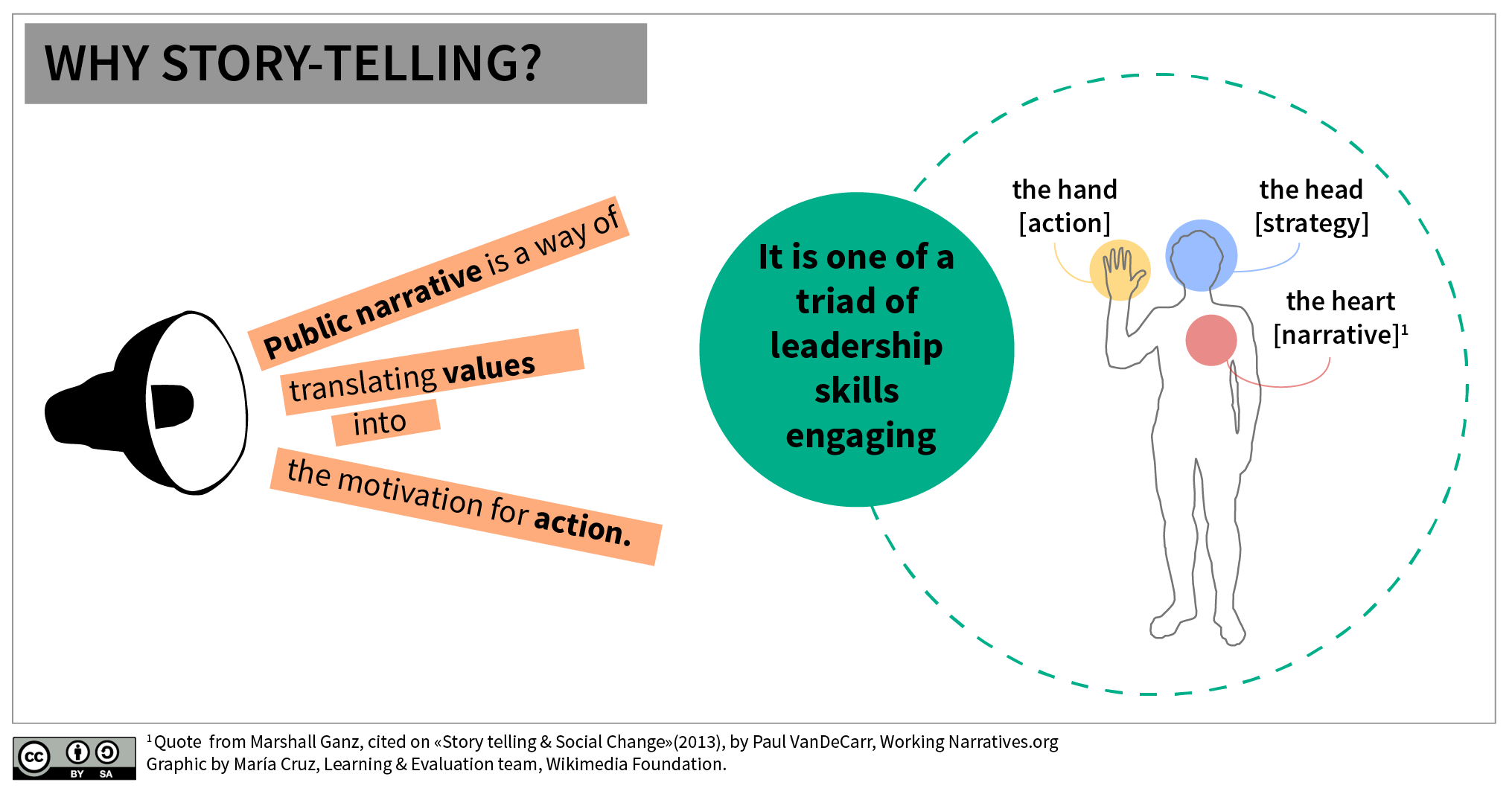
Storytelling is a powerful tool for business leaders and entrepreneurs who want to communicate a vision and strong sense of purpose.
Learning Objectives
· Learn the art of storytelling and recognize its applicability to various facets of the business world.
Key Points
· Many business leaders say that storytelling is one of the most powerful tools in the twenty-first century business environment.
· Today’s leaders and entrepreneurs are tasked with creating organizational buy-in, procuring funding, and aligning resources based on a single, centralized vision—tasks made easier when accompanied by a strong sense of story.
· Technology and social networks have transformed marketing into the art of storytelling, in which engaging and building a community relies heavily on spinning intriguing tales.
· The art of storytelling requires engaging an audience by setting a scene, building tension, staying organized and focused, and ending with a powerful and meaningful conclusion.
Why Storytelling Matters More Than You Think
Leaders
Effective storytelling requires a specific skill set, including strong rhetoric, presentation, and leadership abilities. The ability to craft ideas that incorporate strategy, tactics, consumer needs, core competencies, and other concepts into a speech, presentation, or group discussion can create a strong sense of vision, purpose, and unity. Some managers leaders believe the ability to tell a compelling effective story is the most important skill for a twenty-first century leader.
Community Management
Storytelling is especially essential today, in that it can enable a powerful presence on social media and other digital platforms, conveying the story of a company’s culture, brand, and value proposition. Storytelling can help companies relate to prospective users and build powerful communities—an invaluable asset in the success of any business venture.
Entrepreneurs
Start-up ventures in particular require a strong sense of story to build a commercial and community presence. When pursuing investment, an entrepreneur must be able to take the concept they are marketing and spin it into a vision worthy of taking a risk on. Look no further than Kickstarter campaigns to see how critical it is to build a narrative when searching for people who share your passion. The enthusiasm that narrative can engender can translate into the capital that enables start-up companies to move forward.
The Art of Storytelling
Leaders are expected to have the technical skills to take action and the vision necessary to tell a compelling story.
How To Tell a Story
There are a variety of storytelling techniques. Delivering a specialized presentation on how to integrate a specific software solution will undoubtedly require a different storytelling technique than teaching new employees how to build a Twitter community for a new soda brand. That said, there are a few characteristics that any good story can use to help effectively tell a tale:
· Engage your audience. To pull in your listeners, you must involve them in your story. Start by asking them a challenging question or raising a trending topic. Find something in their world they can relate to, and use that as your starting point. Relevance is key.
· Set the scene. All stories need context in which to unfold. Pull your audience into the world of your story, and you’ll have their full attention.
· Use tension to create interest. Conflict, debate, and struggle can all weave a sense of tension into your story and provide emphasis. Conflict has been central to storytelling for all of human history.
· Stay focused. Stories can serve as anecdotes to effectively communicate otherwise difficult concepts. Stay focused on what’s most important and relevant to the discussion at hand. Keep your story grounded by occasionally and explicitly relating it to your bottom line.
· Be logical. Stories are like puzzles—the pieces need to fit. Keep your story organized and maintain a sense of structure. Lose the thread that holds your tale together, and it will fall apart.
· End with a punch. Use your conclusion to emphasize your point and inspire your audience. Your story’s flow should result in a powerful ending that makes clear your bottom line.
The Beginning
Starting a speech with a quote, statistic, story, or humor can grab your audience’s attention and make them feel invested in what you have to share.
Learning Objectives
Discuss some best practices for opening a speech, such as using quotes, statistics, personal stories, humor, and overviews.
Key Takeaways
Key Points
· It’s important to keep your introduction relatively short; wordy introductions can lose your audience before you get to the speech itself. Regardless of the opening you choose, always connect it to the content of your speech.
· Beginning with a quote, statistic, personal story, or humor are all good options, but only if they are used prudently.
· If the presentation is a formal one, you may want to just give a simple overview of the topics you will address. Using an overview as an opening can be a good choice if you’re unsure how your audience will react to a joke or a startling statistic.
Key Terms
· introduction—the initial section of a book or article that first presents the subject matter
Starting a Speech
You want your audience to be interested and feel invested in what you have to say from the start. The more interest you can arouse in the beginning, the more your listeners will pay attention to what you have to say next. You can do this in a variety of ways, but always keep your introduction relatively short; wordy introductions can lose your audience before you get to the speech itself. Remember that whatever opening you choose, relate it to the larger topic at hand.
The Opening
There are multiple ways to open a speech before segueing into your introduction. Beginning with a quote, statistic, personal story, or even humor are all good options, but only if used appropriately. So tread carefully, particularly with humor, which can do more harm than good if you do not truly know your audience. In all cases, if you open with humor, avoid all sexual, religious, and racial topics.
Quotations
Quoting other people, particularly widely recognized people, is a tried-and-true method of introducing a given topic. Using a quote from Albert Einstein for a speech about the dangers of nuclear war could be particularly effective. For example, you might say, “After the nuclear bombs were dropped during World War II, the leading creator of this destructive force said, ‘I know not with what weapons World War III will be fought, but World War IV will be fought with sticks and stones’ (Calaprice, 2011). Albert Einstein stated this after finally seeing the bomb’s full power, for he knew that he very well may have had a hand in the end of the world.”
Statistics
Using a startling statistic to launch your topic is another effective way of grabbing the attention of your audience. Consider this opening from a speech on modern incarceration: “While the United States has only 5 percent of the world's population, it has nearly 25 percent of its prisoners—about 2.2 million people. … No other country in the world imprisons its citizens as we do in the United States” (Collier, 2014).
Personal anecdotes
Sharing a personal experience can also be an effective way of opening a presentation. Use this option only if you’re convinced it will resonate with your audience. For example, say you are presenting to a group of video game design students at your school on the topic of enjoyable game play elements. You might draw on a personal gaming experience to draw them in:
“A few years ago, everybody was talking about how awesome this new game was and how sweet the graphics were. So, I did what any gamer would do—drove directly to the store, picked up a copy, brought it home, and popped it into my Xbox. My excitement heightened as the game loaded and the intro sequence played. But when the game started, I was absolutely astonished … at how bad the game play was. The game looked cool, but all you did was run around and hit the enemies on the head with a sword over and over again. That game was not fun; let’s make a game that’s fun. ”
Humor
Using a joke to start a presentation can be effective, if the humor is appropriate and relates to your topic. For example, a speaker presenting on the game of football may start with, “Anyone who makes a bad call against the Detroit Lions risks ticking off their last remaining fan.”
Overview
If your presentation is more formal, you may want to stick to a simple, structured overview of the main topics you intend to cover in your speech. Using an overview as an opening could be a good choice if you are unsure how your audience will react to a joke or a startling statistic.
An overview should contain a brief introduction of your topic; an explanation of the relevance of the topic to your audience; a summary of how you organized your speech; and some background information, if necessary. Here is an example from a presentation on the repercussions of dropping out of college:
“Today, I will be discussing college dropouts. I will be going over the current rate of dropouts, as well as the many common factors that affect these rates. I will also talk about the reasons to stay in college, including that college is a place where you can gain better knowledge, memorable life experiences, and the skills to earn greater pay in the future.”
If you’ve chosen to start with one of the other opening techniques, never leave your overview out. A brief overview gives your listeners a map of what they can expect and a reason to continue listening. All types of speeches can benefit from welcoming an audience in this way.
The Rev. Martin Luther King, Jr.
The Rev. Martin Luther King, Jr.’s “I Have a Dream” speech is one of the most powerful speeches in American history. He began with a story: “Five score years ago, a great American, in whose symbolic shadow we stand, signed the Emancipation Proclamation. This momentous decree came as a great beacon light of hope to millions of Negro slaves who had been seared in the flames of withering injustice. It came as a joyous daybreak to end the long night of captivity. But one hundred years later, we must face the tragic fact that the Negro is still not free. One hundred years later, the life of the Negro is still sadly crippled by the manacles of segregation and the chains of discrimination. One hundred years later, the Negro lives on a lonely island of poverty in the midst of a vast ocean of material prosperity. One hundred years later, the Negro is still languishing in the corners of American society and finds himself an exile in his own land. So we have come here today to dramatize an appalling condition.” With this opening, King captured his audience’s attention and helped seal his legacy as a great American orator.
The Middle
The middle of a speech offers the audience facts and perspectives that support the conclusion presented at the beginning and end.
Learning Objectives
Describe the key components of delivering a strong argument in the middle of a presentation that provides compelling support for the conclusion.
Key Takeaways
Key Points
· Generally speaking, speeches and presentations can be divided into three parts: the introduction (beginning), body (middle), and conclusion (end).
· When constructing the body of your speech, you should communicate the premises that support your conclusion.
· Understanding your audience is a key success factor to the body of your speech. How much do your listeners already know about this topic? What are their opinions? How detailed should your reasoning be?
· Delivering a successful speech requires credibility. You can determine the depth of your credibility by considering the “6 I’s of Credibility” (below). The more you can earn your audience’s trust, the better you can convey a convincing argument and conclusion.
Key Terms
· premises—ideas that are assumed or demonstrated to be true in the pursuit of a conclusion
An effective presentation, speech, or lecture is often divided into three parts: the beginning (introduction), middle (body), and end (conclusion). While the beginning and end tend to be the most memorable for an audience, it’s in the body of your speech that you make your key arguments. It’s important to keep a number of considerations in mind when preparing the core of your speech. Here, we’ll examine how to organize your premises to form conclusions, how to best get to know your audience, and how to achieve the 6 I’s of credibility.
Premises and Conclusions
While the beginning and end of your speech should contain an emotionally compelling conclusion, the middle of your speech should lay out the logical arguments—or premises—that lead to that conclusion.
The body of a presentation is all about selecting and communicating those premises. If you think of premises and conclusions as “if” and “then” statements, the logic becomes clear. For example: If cigarette smoke increases the risk of cancer, and if exposure to cigarette smoke does not require smoking the cigarette yourself, then second hand smoke constitutes a cancer risk. This may be oversimplified, but it communicates the core logic that should structure any speech. If you find you don’t have sufficient premises to support your conclusion, you should reconsider the validity of your argument.
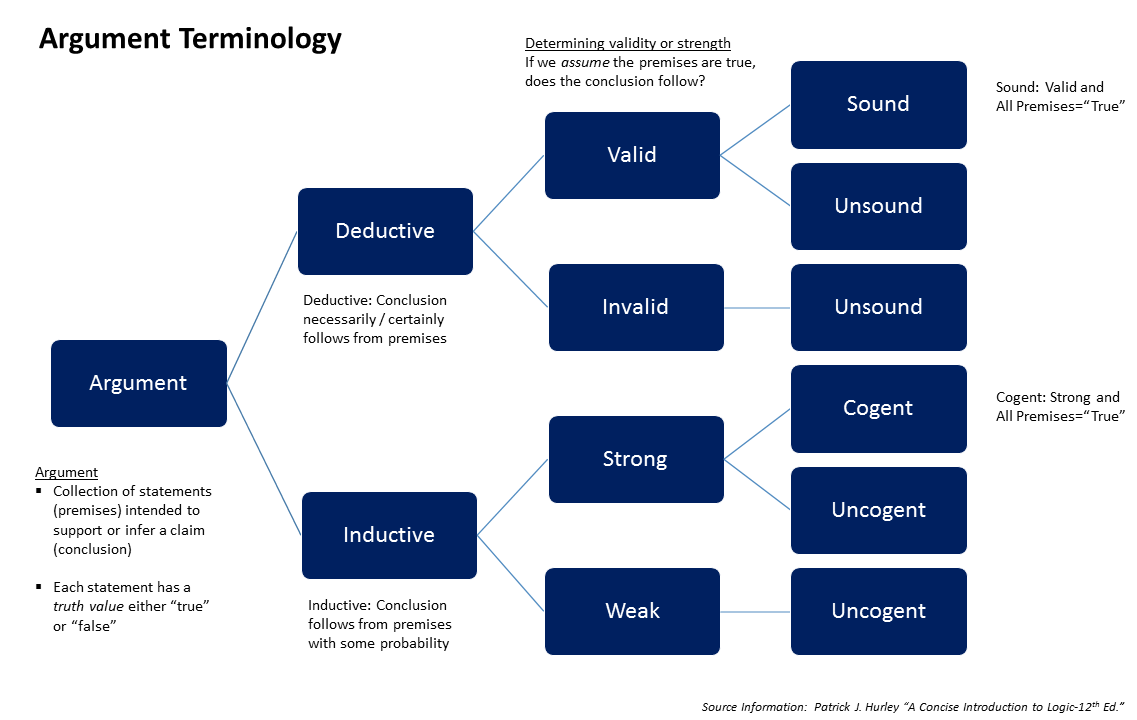
The Anatomy of an Argument
This image outlines the anatomy of an argument. Valid premises lead to sound or cogent conclusions, while invalid premises result in unsound or uncogent conclusions.
Know Your Audience
To construct an effective argument, you must know your audience—an element that can be just as important as knowing the subject matter itself. Your effectiveness will be determined by your understanding of how much the audience already knows about your topic and any opinions or impressions they may already hold about it.
For example, a neuroscientist would offer a substantially different argument with considerably more specific details if addressing an audience full of other neuroscientists who also have a solid background in the field. But if the same speaker were to deliver a talk to the general public, he or she would need to carefully consider which information to add or remove to educate the audience without intimidating them with jargon. It’s primarily in the middle of a speech where this type of background information is most important, as it’s easy to lose your audience in the details—particularly if you have in-depth knowledge of a subject.
The 6 I’s of Credibility
With the structure of your discussion and an understanding of your audience in mind, you are almost ready to deliver your core argument. This is where your own credibility comes into play. The following six considerations can help you determine whether you are a credible enough source on your topic and can convey that to your audience:
1. Ideation. Can you take your audience with you on your journey? Find clever ways to present your concept and help your audience see how you arrived at it.
2. Information. Can you adequately explain the premises that led to your conclusion? Carefully choose and communicate your facts.
3. Influence. Can you demonstrate confidence and passion in your message? If so, it can be contagious.
4. Integrity. Can you earn your audience’s trust? Know what you don’t know, and make sure the audience does too.
5. Impact. Can you find ways to anchor your ideas into the memories of your audience members? Stories and examples are great vehicles for this.
6. Ignition. Can you make your conclusion actionable? Motivate your audience to not only agree with your point, but also to incorporate it into their lives.
The End
The conclusion of a speech can be as important as the beginning and the middle; a good ending leaves a lasting impression.
Learning Objectives
List the different ways of ending a business presentation.
Key Takeaways
Key Points
· After completing the presentation, you should summarize the main points again without repeating verbatim what you said in the introduction.
· “Wow” your audience with one of the techniques you used for introducing your speech. For example, use a quotation, a startling statistic, a personal experience, a joke, or a formal closure. You may also want to conclude with a call to action.
· Thanking the audience is one of the most important things you can do at the close of a presentation. Remember, they have given you their time to be there.
· Asking for questions is a good way to minimize any confusion the audience might have or bring to light any relevant connections you may have overlooked. Answering questions well confirms your mastery of the subject matter.
Key Terms
· ending—a termination or conclusion
Finishing Well
The conclusion of a speech is just as important as the beginning and the body. Remember, the last thing you present tends to be what audience remembers the most. Your conclusion should “wow” your audience just like your introduction did.
How to End a Speech
After completing your presentation, summarize your main points without repeating them verbatim. Leave your audience with a lasting impression by using one of the techniques you used to introduce your speech, such as a quotation, a statistic, a personal experience, a joke, or a formal closure. If you are trying to persuade your audience, end your speech with a call to action. What are you asking them to do? What can they do? Finally, asking for questions is a good way to minimize any confusion the audience might have or bring to light any relevant connections you may have overlooked.
Thank Your Audience
While this is one of the most important things to incorporate into your conclusion, it is also one of the most frequently forgotten. Remember that your audience has given you their time to listen to what you have to say. You should appreciate that. You may want to simply say, “That’s all I have for today. I appreciate you giving me your time. Thank you very much, and have a great day. ”
Know Your Audience
Public speaking can take place in a wide variety of settings, from a small classroom to a large auditorium
Taking Questions
It’s often a good idea—or even a necessity—to take audience questions at the end of your speech. Many speakers find this challenging, as it’s not part of their prepared talk. But by drawing on your mastery of your subject matter and accurately gauging what the questioner is asking, you’ll be able to answer confidently. Answering questions can strengthen the effect of your speech, as it confirms your mastery of the topic in the minds of your audience members.
Questions and Answers
The written question-and-answer (Q&A) format is often used to provide a higher quality or higher volume of responses within business communications.
Learning Objectives
Describe the Q&A writing format and how it can supplement an oral presentation.
Key Takeaways
Key Points
· The Q&A format presents a series of questions and answers about a topic that provides pertinent information a reader needs. This can supplement the information supplied during an oral presentation.
· To use the Q&A format effectively, you should anticipate the most frequent questions readers may have regarding the subject matter at hand and provide comprehensive answers.
· This format can help keep readers engaged when they are presented with a large amount of detailed information.
· The most effective communicators consider the following questions before writing: What is the purpose of the piece? Who is the audience? Are there any stakeholders? What is the context?
Key Terms
· recitation—the material recited
Questions and Answers
Much business writing uses the iterative, “one thing after another” listing approach when communicating information—in essence, a plain recitation of facts. While this method can communicate a message, it can also easily lose your reader and leave him or her with unanswered questions. The Q&A format can provide more information in a way that is likelier to hold your reader’s attention.
Q&A documents can provide complex information in an easy-to-access format
To use the Q&A format most effectively, anticipate any and all questions your reader may have regarding your message and provide comprehensive answers. While this format is most often associated with interviews and news media, effective Q&As do not require two authors. One person can both ask and answer questions effectively. The format is best received when it employs a conversational tone.
Because the Q&A format breaks information down into smaller, easier-to-read pieces, it can be especially effective when you need to convey a significant amount of information. This is more likely to keep your reader engaged than a block of dry, detailed text. Also keep in mind that arranging your questions so they flow into one another can encourage your readers to continue reading and prevent them from skipping over important information. A memo on upcoming changes to an employee benefit program might include questions and answers like this:
Q: When will the new benefits begin? A: The benefit changes will begin January 1, 2018.
Q: Do I need to submit my enrollment information before then? A: Enrollment information is due on December 1, 2017.
Visuals
Visual aids help us distill complex concepts into clean, elegant expressions that are easily grasped by an audience.
Learning Objectives
Integrate visual assets into your presentations to clarify your arguments and simplify your reasoning.
Key Takeaways
Key Points
· Human being have communicated via images for thousands of years, and for good reason. Studies show that 60%–65% of people think predominantly in pictures, even when they are simply listening to someone talk.
· Visual aids are naturally effective at consolidating complex concepts into understandable, elegant expressions.
· There are numerous useful tools that can help you produce visual materials, but keep in mind that different visual approaches are appropriate for specific scenarios.
· While graphs are generally effective for distilling complex data streams into clear correlations, photos work best for creating an emotional connection. Consider the point you want to make to select the most appropriate image.
Key Terms
· chunking—the act of retaining more information by strategically combining concepts
· visualization—the act of transforming data and/or ideas into images
They say a picture is worth a thousand words. When delivering a presentation, few tools are more effective than good visuals. Understanding why visuals are useful and how to best use them can give you a crucial edge at your next talk.
Why Visuals Matter
The evolution of human communication is largely visual, with pictographs dating back thousands of years as early humans created visual representations of objects and ideas. Research indicates that approximately 60%–65% of people “see” images when listening to or looking at a series of words. So whether you use verbal or visual cues, the majority of your audience will likely form a visual image of your message.
Specialists in memory and human comprehension agree that there is a limit to the number of words or concepts the human mind can retain at once. This presents a challenge when attempting to communicate complex ideas to a crowd. Distilling those ideas into simple, clean, visual images can aid in comprehension considerably. This can be particularly effective when wrapping up your talk; summarizing your argument with one clear image can leave a lasting impression on your listeners. You can accomplish this with diagrams, charts, tables, graphs, models, or even internet memes. The more creative and memorable your image, the more likely it will stick in the minds of your audience members.
Encoding and Decoding
When I think the word “tree,” and then proceed to say it, you process the word “tree” and then proceed to think it. Simplifying communication with imagery can often bypass much of the coding and decoding that slows us down.
When creating an image, some of the most useful tools are also the simplest. Focus on chunking your information, organizing your content, ensuring its relevance, creating visual alignment, and emphasizing a single point. Below is a list of visual aids and guidance on how best to use them:
· Physical objects and diagrams. These are quite useful when three-dimensional thinking is required, or when the skill being taught is hands-on. Objects are not as useful if they are big, unwieldy, or distracting.
· Graphs. For presenting complex data with a single and elegant expression, graphs can’t be beat. But take care: If there are multiple data points and numerous possible conclusions, a graph could be misleading.
· Photographs. Photos work best when incorporating the human element, as they tend to create a sense of empathy and connection. They aren’t as effective at depicting abstractions.
· Maps. Spatial reasoning is difficult, so don’t make people navigate a city with words. A map orients your audience to a new space by giving them a sense of scope and direction. But to be effective, know your audience and keep it simple; maps can also be intimidating if overpopulated with supplemental information.
Gear Pump Diagram
This image shows the breakdown of a gear pump as a technical diagram, with each part clearly labeled and color-coded for ease of understanding. This is an excellent example of how a diagram can help us avoid complex coding and decoding of words by instead depicting a clear image of functionality directly from a visual aid.
Practicing Through Anxiety
There are many theories about how to best mitigate anxiety about public performance, or “stage fright,” including thorough preparation and rehearsal.
Learning Objectives
List common solutions for dealing with anxiety about public performance, or stage fright.
Key Takeaways
Key Points
· Although anxiety about public performance may be a symptom of a larger social anxiety disorder, nearly anyone can experience it. Quite often, stage fright results from the mere anticipation of a performance, often long before the event occurs.
· Three ways to reduce stage fright include: diminishing the authority of the people you will be addressing, eliminating negative thinking, and gaining perspective about the actual importance of the upcoming event.
· Other possible solutions include preparing by rehearsing with visual aids and using physical methods for releasing pent-up energy.
Key Terms
· stage fright—a state of nervousness about performing in front of a group of people; lack of self-assurance before an audience
· glossophobia—fear of public speaking
Stage fright or performance anxiety is the worry, fear, or persistent phobia that may accompany the anticipation of performing in front of an audience. In the context of public speaking, this fear is called “glossophobia,” which is one of the most common anxieties. Such worry may precede or accompany participation in any activity involving public self-presentation. In some cases, stage fright is a symptom of a larger pattern of social phobia or social anxiety disorder, although many people experience stage fright without experiencing more significant problems.
Solutions to Performance Anxiety
If you experience performance anxiety, it’s possible you are investing your audience members with power they do not possess, particularly the ability to affect you through their evaluation of your performance. You can reduce this imagined power by increasing your sense of your own power, perceiving the vulnerability in others, and accepting yourself as you are.
Purposefully eliminating any imagined negative consequences of your upcoming speech can also help with stage fright. Negative outcomes are always possible, but spending excessive time dwelling on unlikely scenarios can only damage your confidence. Focus your attention on the present and the practical things you can do to prepare for a successful performance.
Finally, keep your upcoming performance in perspective. The time you will spend on your presentation is but a small slice of your life’s experience, insignificant in the grand scheme of things. By realizing this, you will likely begin to look forward to the experience as one potentially fulfilling to you and enjoyable for your audience. Slowing down and gaining perspective can help you enjoy the entire process of preparing and delivering your speech, rather than solely focusing on judging the outcome as a success or failure.
Preparing for Your Speech
When preparing to deliver your speech, rehearse it just as you plan to present it. This includes using your visual aids (such as slides) during practice sessions to help you make smooth transitions between ideas. Take time into consideration as well, since it is difficult for people to sit through a lengthy talk, even if it is interesting. People can usually only concentrate for about twenty minutes at a time. This may mean you will need to break your presentation up into two parts if it is lengthy. Doing so will give your audience a short break and allow them to better retain important information.
Rehearsing
To rehearse effectively, consider the following tips:
· Pay special attention to the delivery of your key points; it’s most important not to stumble over your words during those sections of your speech.
· Speak in a conversational style. Do not talk at your audience members; talk to them.
· Prepare for interruptions and questions. Make sure you leave time for questions at the end.
· Practice pausing in your speech after important information you would like to stress and as you transition from one point to another. The audience will be better able digest and reflect on what you want them to remember most.
· Rehearse with your graphics and coordinate them with your talk.
· Display your graphics only when you are talking about them. Graphics should support your presentation, not distract from it.
· Time your rehearsal until you are happy with your pace.
· Rehearse in front of others. Feedback can help pinpoint weaknesses you are unaware of.
· If possible, rehearse your presentation in the location at which you will be delivering your speech.
· Record your speech and play it back for yourself, listening carefully to your delivery. This can help you spot areas you may want to improve or rehearse further.
Dealing with a Difficult Audience
Speaking directly, honestly, and on point can improve the reception of a speech, even one in front of a difficult audience.
Learning Objectives
Summarize the benefits of delivering extemporaneous speeches.
Key Takeaways
Key Points
· An extemporaneous speech sounds spontaneous because you are not reading it verbatim.
· Using note cards or an outline can help you keep your material top of mind.
· Extemporaneous speech can enhance eye contact and body language. You are better able to take in audience feedback and respond to it as it occurs.
· When dealing with a difficult audience, be as honest as possible and remain polite if audience members disagree with your arguments.
· Sometimes your audience may be difficult during the question-and-answer period. If you do not know the answer to a question, simply say so and share any relevant information you do know. If you are interrupted by a question, answer it and then continue your presentation.
Key Terms
· extemporaneous—without preparation or advance thought; offhand
Giving a speech or lecture can be difficult or intimidating when presenting to an audience with diverse viewpoints. Not only do you have to deal with possible stage fright, but you may also have to respond to audience members who disagree with you. If you are unprepared, you may appear uninformed or unprofessional. One way to prepare for these situations is to make your speech appear extemporaneous.
Extemporaneous Speaking
Rather than writing out and then reading your presentation aloud, when you talk extemporaneously, you typically prepare an outline or note cards beforehand to structure your main ideas and arguments. You can then refer to your notes unobtrusively during your speech if you need reminders while speaking.
Extemporaneous speaking has several advantages over reading a speech verbatim. It enables you to make sustained eye contact with your audience and take in and respond to audience feedback. Audience reaction can change moment to moment, and a good speaker can tell when more or less detail is necessary at different parts of a presentation.
To properly prepare for and execute an extemporaneous speech, practice extensively with your outline or note cards. Inexperienced speakers tend to worry that they will forget important information if they do not write out their speech verbatim. Practicing your speech will help increase your confidence level in both your delivery and knowledge of the subject, giving you credibility in the eyes of your audience.
Answering Difficult Questions
Sometimes a particularly hostile audience member may intentionally ask a difficult question at the end of a presentation in an attempt to trip up the speaker. If you do not know the answer to a question, simply say so and explain any relevant information you do know. If an audience member disagrees with your argument, remain good-natured, politely and respectfully acknowledging opposing ideas. If an audience member interrupts your speech with a question, answer it and return to where you left off.
A Tough Crowd
It may sometimes be difficult to engage an audience during a question-and-answer period.
Using Humor
If used appropriately, humor can be a good way to to start a presentation.
Learning Objectives
Indicate how humor, irony, and metaphor can best be used in presentations.
Key Takeaways
Key Points
· Humor can be an effective way to engage your audience at the start of a presentation.
· Relate any humor to the subject you are presenting.
· If you use humor in any part of your presentation, avoid sexual, religious, or racial topics.
Key Terms
· irony—a statement that signifies the opposite of the literal meaning, typically for humorous effect
· metaphor—a figure of speech that describes an object in a way that is not literally true, but helps explain it by comparison
· humor—the quality of being amusing, comical, or funny
Using Humor
Beginning a presentation with a joke can be an effective strategy for winning over your audience, provided you know your audience well. If your audience fails to see the humor in your joke, it will fall flat and make for an awkward start. Most often, it’s prudent to keep your humor clean and avoid any topics that deal with sex, race, or religion. And do not use your humor for its own sake. It should relate to your subject matter and pique your audience’s interest in what is to come.
Irony and Metaphor
Irony and metaphor are two common rhetorical devices you can use to emphasize your argument to an audience. An ironic statement signifies the opposite of your literal meaning, thereby emphasizing your point. For example, when a friend gives you incorrect directions that get you lost and you subsequently thank him for getting you home safely, you are making an ironic statement.
The Language of Irony
Sometimes even vandals can use irony for comic effect.
Speakers sometimes use metaphors to convey a new idea or meaning by linking it to an existing idea or meaning with which the audience is already familiar. Linking the new with the familiar through the use of metaphor is an excellent tool for introducing new concepts to one’s audience. For example, “Just as a vacuum sucks up all the debris around it, a black hole swallows all surrounding light” can help the audience understand how a black hole behaves.
The Importance of Delivery
Your appearance and delivery are as important as the content of your speech.
The Importance of Delivery
Learning Objectives
Explain why appearance and delivery are important when making a presentation.
Key Takeaways
Key Points
· Dressing appropriately will encourage your audience to respect you and take your ideas seriously.
· When rehearsing, identify your weaknesses and work on correcting them. Appearing poised and confident adds to your credibility.
· Avoid fidgeting, pacing, looking at the floor, and repeating conversation-stallers, such as “um,” “uh,” and “like.”
· Pay special attention to emphasizing your most crucial arguments. Forgetting some smaller points is fine; just be sure to convey the main objective of your speech.
· Your body language is crucial. Remain relaxed and calm, don’t rush your words, remember to smile, and maintain eye contact with your audience.
Key Terms
· body language—nonverbal communication by means of facial expressions, eye contact, gestures, posture, and the like
Your appearance and delivery can be just as important as your speech in making an impression on your audience. You want your audience to give you respect and to take you seriously, so be sure to dress well. Consider what your particular audience will expect of you. In most cases, this means business casual, but sometimes a suit or dress may be necessary.
The Importance of Delivery
Your appearance and delivery are just as important as your speech.
Deliver Your Message
Be poised and confident. If you are nervous, accept it and work with it. When rehearsing, identify your weak spots and work on correcting them. Do your best to avoid fidgeting, pacing, looking at the floor, and overusing stallers, such as “um,” “uh,” and “like.” Don’t rush; breathe easy and pace your speech. Know that your nervousness is likely not as visible to others as it is to you.
Keep in mind your principal message and supporting arguments. Forgetting certain smaller points is fine, but ensure your audience knows the main objective of your speech.
Your Audience
Body language is crucial in front of an audience. Your listeners may become distracted if you forget you have a laser pointer in your hand or you fidget with a pen. Try to remain relaxed and calm, using animated and lively expressions to emphasize your arguments.
Giving a speech in person allows you to gauge the understanding of your audience by paying attention to their reactions. If your listeners look confused, ask if they have questions before moving on to your next point. Maintain eye contact with your audience members, making sure not to stare at your notes for extended periods of time. If you have a large audience, alternate talking to the audience members to your right, left, and in front of you. Look at and engage your audience as much as possible. You likely know your topic more than most of your listeners, so be confident in your role as presenter.
References
Calaprice, A. (2011). The Ultimate Quotable Einstein. Princeton, NJ: Princeton University Press.
Collier, L. (2014, October). Incarceration nation: The United States leads the world in incarceration. A new report explores why—and offers recommendations for fixing the system. Monitor on Psychology, 45(9), 56. Retrieved from http://www.apa.org/monitor/2014/10/incarceration.aspx
King, M.L. Jr. (1963, August 28). I Have a Dream speech delivered in Washington. D.C. Retrieved from http://www.americanrhetoric.com/speeches/mlkihaveadream.htm
Licenses and Attributions
Effective Rhetoric and Presentation from Boundless Business by Lumen Learning, originally published by Boundless.com, is available under a Creative Commons Attribution-ShareAlike 4.0 International license. UMUC has modified this work and it is available under the original license.
CC LICENSED CONTENT, SHARED PREVIOUSLY
· Curation and Revision. Provided by: Boundless.com. License: CC BY-SA: Attribution-ShareAlike
CC LICENSED CONTENT, SPECIFIC ATTRIBUTION
· Storytelling. Provided by: Wikipedia. Located at: https://en.wikipedia.org/wiki/Storytelling. License: CC BY-SA: Attribution-ShareAlike
· Digital storytelling. Provided by: Wikipedia. Located at: https://en.wikipedia.org/wiki/Digital_storytelling. License: CC BY-SA: Attribution-ShareAlike
· Storyteller. Provided by: Wikipedia. Located at: https://en.wikipedia.org/wiki/Storyteller. License: CC BY-SA: Attribution-ShareAlike
· Instructional Technology/Digital Storytelling. Provided by: Wikipedia. Located at: https://en.wikibooks.org/wiki/Instructional_Technology/Digital_Storytelling. License: CC BY-SA: Attribution-ShareAlike
· Tell A Story. Provided by: Wikihow. Located at: http://www.wikihow.com/Tell-a-Story. License: CC BY-SA: Attribution-ShareAlike
· Why_story-telling3F.png. Provided by: Wikimedia. Located at: https://upload.wikimedia.org/wikipedia/commons/5/52/Why_story-telling%3F.png. License: CC BY-SA: Attribution-ShareAlike
· Rhetoric and Composition/Oral Presentations. Provided by: Wikibooks. Located at: http://en.wikibooks.org/wiki/Rhetoric_and_Composition/Oral_Presentations%23Delivering_The_Message. License: CC BY-SA: Attribution-ShareAlike
· Professional and Technical Writing/Presentations. Provided by: Wikibooks. Located at: http://en.wikibooks.org/wiki/Professional_and_Technical_Writing/Presentations%23How_Will_You_Start_Your_Introduction.3F. License: CC BY-SA: Attribution-ShareAlike
· introduction. Provided by: Wiktionary. Located at: http://en.wiktionary.org/wiki/introduction. License: CC BY-SA: Attribution-ShareAlike
· Why_story-telling3F.png. Provided by: Wikimedia. Located at: https://upload.wikimedia.org/wikipedia/commons/5/52/Why_story-telling%3F.png. License: CC BY-SA: Attribution-ShareAlike
· Martin Luther King Jr. - I Have A Dream Speech by e-strategyblog.com in 1964 - Martin Luther King, Jr., Nobel Prize - The Fotopedia Community Pictures. Provided by: Fotopedia. Located at: http://www.fotopedia.com/items/flickr-1054179588. License: CC BY: Attribution
· Argument. Provided by: Wikipedia. Located at: https://en.wikipedia.org/wiki/Argument. License: CC BY-SA: Attribution-ShareAlike
· Public speaking. Provided by: Wikipedia. Located at: https://en.wikipedia.org/wiki/Public_speaking. License: CC BY-SA: Attribution-ShareAlike
· Premise. Provided by: Wikipedia. Located at: https://en.wikipedia.org/wiki/Premise. License: CC BY-SA: Attribution-ShareAlike
· Thematic structure. Provided by: Wikipedia. Located at: https://en.wikipedia.org/wiki/Thematic_structure. License: CC BY-SA: Attribution-ShareAlike
· Validity. Provided by: Wikipedia. Located at: https://en.wikipedia.org/wiki/Validity. License: CC BY-SA: Attribution-ShareAlike
· Professional and Technical Writing/Presentations. Provided by: Wikibooks. Located at: http://en.wikibooks.org/wiki/Professional_and_Technical_Writing/Presentations. License: CC BY-SA: Attribution-ShareAlike
· Why_story-telling3F.png. Provided by: Wikimedia. Located at: https://upload.wikimedia.org/wikipedia/commons/5/52/Why_story-telling%3F.png. License: CC BY-SA: Attribution-ShareAlike
· Martin Luther King Jr. - I Have A Dream Speech by e-strategyblog.com in 1964 - Martin Luther King, Jr., Nobel Prize - The Fotopedia Community Pictures. Provided by: Fotopedia. Located at: http://www.fotopedia.com/items/flickr-1054179588. License: CC BY: Attribution
· Argument_terminology_used_in_logic.png. Provided by: Wikipedia. Located at: https://upload.wikimedia.org/wikipedia/commons/c/c6/Argument_terminology_used_in_logic.png. License: CC BY-SA: Attribution-ShareAlike
· Rhetoric and Composition/Oral Presentations. Provided by: Wikibooks. Located at: http://en.wikibooks.org/wiki/Rhetoric_and_Composition/Oral_Presentations%23Delivering_The_Message. License: CC BY-SA: Attribution-ShareAlike
· Professional and Technical Writing/Presentations. Provided by: Wikibooks. Located at: http://en.wikibooks.org/wiki/Professional_and_Technical_Writing/Presentations. License: CC BY-SA: Attribution-ShareAlike
· ending. Provided by: Wiktionary. Located at: http://en.wiktionary.org/wiki/ending. License: CC BY-SA: Attribution-ShareAlike
· Why_story-telling3F.png. Provided by: Wikimedia. Located at: https://upload.wikimedia.org/wikipedia/commons/5/52/Why_story-telling%3F.png. License: CC BY-SA: Attribution-ShareAlike
· Martin Luther King Jr. - I Have A Dream Speech by e-strategyblog.com in 1964 - Martin Luther King, Jr., Nobel Prize - The Fotopedia Community Pictures. Provided by: Fotopedia. Located at: http://www.fotopedia.com/items/flickr-1054179588. License: CC BY: Attribution
· Argument_terminology_used_in_logic.png. Provided by: Wikipedia. Located at: https://upload.wikimedia.org/wikipedia/commons/c/c6/Argument_terminology_used_in_logic.png. License: CC BY-SA: Attribution-ShareAlike
· THE PARSONAGE: 6/8/08 - 6/15/08. Provided by: Blogspot. Located at: http://pkdeviance.blogspot.com/2008_06_08_archive.html. License: CC BY: Attribution
· Rhetoric and Composition/Writing in Business. Provided by: Wikibooks. Located at: http://en.wikibooks.org/wiki/Rhetoric_and_Composition/Writing_in_Business%23Purpose_of_Business_Writing. License: CC BY-SA: Attribution-ShareAlike
· Rhetoric. Provided by: Wikipedia. Located at: http://en.wikipedia.org/wiki/Rhetoric. License: CC BY-SA: Attribution-ShareAlike
· recitation. Provided by: Wiktionary. Located at: http://en.wiktionary.org/wiki/recitation. License: CC BY-SA: Attribution-ShareAlike
· Why_story-telling3F.png. Provided by: Wikimedia. Located at: https://upload.wikimedia.org/wikipedia/commons/5/52/Why_story-telling%3F.png. License: CC BY-SA: Attribution-ShareAlike
· Martin Luther King Jr. - I Have A Dream Speech by e-strategyblog.com in 1964 - Martin Luther King, Jr., Nobel Prize - The Fotopedia Community Pictures. Provided by: Fotopedia. Located at: http://www.fotopedia.com/items/flickr-1054179588. License: CC BY: Attribution
· Argument_terminology_used_in_logic.png. Provided by: Wikipedia. Located at: https://upload.wikimedia.org/wikipedia/commons/c/c6/Argument_terminology_used_in_logic.png. License: CC BY-SA: Attribution-ShareAlike
· THE PARSONAGE: 6/8/08 - 6/15/08. Provided by: Blogspot. Located at: http://pkdeviance.blogspot.com/2008_06_08_archive.html. License: CC BY: Attribution
· All sizes | Laptop keyboard | Flickr - Photo Sharing!. Provided by: Flickr. Located at: http://www.flickr.com/photos/lynlomasi/7782359134/sizes/o/. License: CC BY: Attribution
· Wiktionary. Provided by: Chunking. Located at: https://en.wiktionary.org/wiki/chunking. License: CC BY-SA: Attribution-ShareAlike
· Visual communication. Provided by: Wikipedia. Located at: https://en.wikipedia.org/wiki/Visual_communication. License: CC BY-SA: Attribution-ShareAlike
· Professional and Technical Writing/Presentations. Provided by: Wikibooks. Located at: http://en.wikibooks.org/wiki/Professional_and_Technical_Writing/Presentations. License: CC BY-SA: Attribution-ShareAlike
· Presentation. Provided by: Wikipedia. Located at: https://en.wikipedia.org/wiki/Presentation. License: CC BY-SA: Attribution-ShareAlike
· Visual learning. Provided by: Wikipedia. Located at: https://en.wikipedia.org/wiki/Visual_learning. License: CC BY-SA: Attribution-ShareAlike
· Visualization. Provided by: Wiktionary. Located at: https://en.wiktionary.org/wiki/visualization. License: CC BY-SA: Attribution-ShareAlike
· Visual communication. Provided by: Wikipedia. Located at: https://en.wikipedia.org/wiki/Visual_communication. License: CC BY-SA: Attribution-ShareAlike
· Why_story-telling3F.png. Provided by: Wikimedia. Located at: https://upload.wikimedia.org/wikipedia/commons/5/52/Why_story-telling%3F.png. License: CC BY-SA: Attribution-ShareAlike
· Martin Luther King Jr. - I Have A Dream Speech by e-strategyblog.com in 1964 - Martin Luther King, Jr., Nobel Prize - The Fotopedia Community Pictures. Provided by: Fotopedia. Located at: http://www.fotopedia.com/items/flickr-1054179588. License: CC BY: Attribution
· Argument_terminology_used_in_logic.png. Provided by: Wikipedia. Located at: https://upload.wikimedia.org/wikipedia/commons/c/c6/Argument_terminology_used_in_logic.png. License: CC BY-SA: Attribution-ShareAlike
· THE PARSONAGE: 6/8/08 - 6/15/08. Provided by: Blogspot. Located at: http://pkdeviance.blogspot.com/2008_06_08_archive.html. License: CC BY: Attribution
· All sizes | Laptop keyboard | Flickr - Photo Sharing!. Provided by: Flickr. Located at: http://www.flickr.com/photos/lynlomasi/7782359134/sizes/o/. License: CC BY: Attribution
· Encoding_communication.jpg. Provided by: Wikimedia. Located at: https://upload.wikimedia.org/wikipedia/commons/7/79/Encoding_communication.jpg. License: CC BY-SA: Attribution-ShareAlike
· Gear_pump_exploded.png. Provided by: Wikimedia. Located at: https://upload.wikimedia.org/wikipedia/commons/2/23/Gear_pump_exploded.png. License: CC BY-SA: Attribution-ShareAlike
· Stage fright. Provided by: Wikipedia. Located at: http://en.wikipedia.org/wiki/Stage_fright. License: CC BY-SA: Attribution-ShareAlike
· Professional and Technical Writing/Presentations. Provided by: Wikibooks. Located at: http://en.wikibooks.org/wiki/Professional_and_Technical_Writing/Presentations%23Preparing_for_Your_Speech. License: CC BY-SA: Attribution-ShareAlike
· glossophobia. Provided by: Wiktionary. Located at: http://en.wiktionary.org/wiki/glossophobia. License: CC BY-SA: Attribution-ShareAlike
· stage fright. Provided by: Wiktionary. Located at: http://en.wiktionary.org/wiki/stage_fright. License: CC BY-SA: Attribution-ShareAlike
· Why_story-telling3F.png. Provided by: Wikimedia. Located at: https://upload.wikimedia.org/wikipedia/commons/5/52/Why_story-telling%3F.png. License: CC BY-SA: Attribution-ShareAlike
· Martin Luther King Jr. - I Have A Dream Speech by e-strategyblog.com in 1964 - Martin Luther King, Jr., Nobel Prize - The Fotopedia Community Pictures. Provided by: Fotopedia. Located at: http://www.fotopedia.com/items/flickr-1054179588. License: CC BY: Attribution
· Argument_terminology_used_in_logic.png. Provided by: Wikipedia. Located at: https://upload.wikimedia.org/wikipedia/commons/c/c6/Argument_terminology_used_in_logic.png. License: CC BY-SA: Attribution-ShareAlike
· THE PARSONAGE: 6/8/08 - 6/15/08. Provided by: Blogspot. Located at: http://pkdeviance.blogspot.com/2008_06_08_archive.html. License: CC BY: Attribution
· All sizes | Laptop keyboard | Flickr - Photo Sharing!. Provided by: Flickr. Located at: http://www.flickr.com/photos/lynlomasi/7782359134/sizes/o/. License: CC BY: Attribution
· Encoding_communication.jpg. Provided by: Wikimedia. Located at: https://upload.wikimedia.org/wikipedia/commons/7/79/Encoding_communication.jpg. License: CC BY-SA: Attribution-ShareAlike
· Gear_pump_exploded.png. Provided by: Wikimedia. Located at: https://upload.wikimedia.org/wikipedia/commons/2/23/Gear_pump_exploded.png. License: CC BY-SA: Attribution-ShareAlike
· Professional and Technical Writing/Presentations. Provided by: Wikibooks. Located at: http://en.wikibooks.org/wiki/Professional_and_Technical_Writing/Presentations. License: CC BY-SA: Attribution-ShareAlike
· Rhetoric and Composition/Oral Presentations. Provided by: Wikibooks. Located at: http://en.wikibooks.org/wiki/Rhetoric_and_Composition/Oral_Presentations. License: CC BY-SA: Attribution-ShareAlike
· Boundless. Provided by: Boundless Learning. Located at: http://www.boundless.com//communications/definition/extemporaneous. License: CC BY-SA: Attribution-ShareAlike
· Why_story-telling3F.png. Provided by: Wikimedia. Located at: https://upload.wikimedia.org/wikipedia/commons/5/52/Why_story-telling%3F.png. License: CC BY-SA: Attribution-ShareAlike
· Martin Luther King Jr. - I Have A Dream Speech by e-strategyblog.com in 1964 - Martin Luther King, Jr., Nobel Prize - The Fotopedia Community Pictures. Provided by: Fotopedia. Located at: http://www.fotopedia.com/items/flickr-1054179588. License: CC BY: Attribution
· Argument_terminology_used_in_logic.png. Provided by: Wikipedia. Located at: https://upload.wikimedia.org/wikipedia/commons/c/c6/Argument_terminology_used_in_logic.png. License: CC BY-SA: Attribution-ShareAlike
· THE PARSONAGE: 6/8/08 - 6/15/08. Provided by: Blogspot. Located at: http://pkdeviance.blogspot.com/2008_06_08_archive.html. License: CC BY: Attribution
· All sizes | Laptop keyboard | Flickr - Photo Sharing!. Provided by: Flickr. Located at: http://www.flickr.com/photos/lynlomasi/7782359134/sizes/o/. License: CC BY: Attribution
· Encoding_communication.jpg. Provided by: Wikimedia. Located at: https://upload.wikimedia.org/wikipedia/commons/7/79/Encoding_communication.jpg. License: CC BY-SA: Attribution-ShareAlike
· Gear_pump_exploded.png. Provided by: Wikimedia. Located at: https://upload.wikimedia.org/wikipedia/commons/2/23/Gear_pump_exploded.png. License: CC BY-SA: Attribution-ShareAlike
· 2007 Audience. Provided by: Wikimedia. Located at: http://commons.wikimedia.org/wiki/File:2007_Audience.jpg?uselang=estakeholders. License: CC BY-SA: Attribution-ShareAlike
· Rhetoric and Composition/Oral Presentations. Provided by: Wikibooks. Located at: http://en.wikibooks.org/wiki/Rhetoric_and_Composition/Oral_Presentations. License: CC BY-SA: Attribution-ShareAlike
· Professional and Technical Writing/Presentations. Provided by: Wikibooks. Located at: http://en.wikibooks.org/wiki/Professional_and_Technical_Writing/Presentations%23How_Will_You_Start_Your_Introduction.3F+Notes. License: CC BY-SA: Attribution-ShareAlike
· Rhetorical device. Provided by: Wikipedia. Located at: http://en.wikipedia.org/wiki/Rhetorical_device. License: CC BY-SA: Attribution-ShareAlike
· irony. Provided by: Wiktionary. Located at: http://en.wiktionary.org/wiki/irony. License: CC BY-SA: Attribution-ShareAlike
· joke. Provided by: Wiktionary. Located at: http://en.wiktionary.org/wiki/joke. License: CC BY-SA: Attribution-ShareAlike
· humor. Provided by: Wiktionary. Located at: http://en.wiktionary.org/wiki/humor. License: CC BY-SA: Attribution-ShareAlike
· Why_story-telling3F.png. Provided by: Wikimedia. Located at: https://upload.wikimedia.org/wikipedia/commons/5/52/Why_story-telling%3F.png. License: CC BY-SA: Attribution-ShareAlike
· Martin Luther King Jr. - I Have A Dream Speech by e-strategyblog.com in 1964 - Martin Luther King, Jr., Nobel Prize - The Fotopedia Community Pictures. Provided by: Fotopedia. Located at: http://www.fotopedia.com/items/flickr-1054179588. License: CC BY: Attribution
· Argument_terminology_used_in_logic.png. Provided by: Wikipedia. Located at: https://upload.wikimedia.org/wikipedia/commons/c/c6/Argument_terminology_used_in_logic.png. License: CC BY-SA: Attribution-ShareAlike
· THE PARSONAGE: 6/8/08 - 6/15/08. Provided by: Blogspot. Located at: http://pkdeviance.blogspot.com/2008_06_08_archive.html. License: CC BY: Attribution
· All sizes | Laptop keyboard | Flickr - Photo Sharing!. Provided by: Flickr. Located at: http://www.flickr.com/photos/lynlomasi/7782359134/sizes/o/. License: CC BY: Attribution
· Encoding_communication.jpg. Provided by: Wikimedia. Located at: https://upload.wikimedia.org/wikipedia/commons/7/79/Encoding_communication.jpg. License: CC BY-SA: Attribution-ShareAlike
· Gear_pump_exploded.png. Provided by: Wikimedia. Located at: https://upload.wikimedia.org/wikipedia/commons/2/23/Gear_pump_exploded.png. License: CC BY-SA: Attribution-ShareAlike
· 2007 Audience. Provided by: Wikimedia. Located at: http://commons.wikimedia.org/wiki/File:2007_Audience.jpg?uselang=estakeholders. License: CC BY-SA: Attribution-ShareAlike
· Stop Defacing Signs. Provided by: Wikipedia. Located at: http://en.wikipedia.org/wiki/File:Stop_Defacing_Signs.jpg. License: CC BY-SA: Attribution-ShareAlike
· Rhetoric and Composition/Oral Presentations. Provided by: Wikibooks. Located at: http://en.wikibooks.org/wiki/Rhetoric_and_Composition/Oral_Presentations%23Delivering_The_Message. License: CC BY-SA: Attribution-ShareAlike
· Professional and Technical Writing/Presentations. Provided by: Wikibooks. Located at: http://en.wikibooks.org/wiki/Professional_and_Technical_Writing/Presentations. License: CC BY-SA: Attribution-ShareAlike
· body language. Provided by: Wikipedia. Located at: http://en.wikipedia.org/wiki/body%20language. License: CC BY-SA: Attribution-ShareAlike
· appearance. Provided by: Wiktionary. Located at: http://en.wiktionary.org/wiki/appearance. License: CC BY-SA: Attribution-ShareAlike
· Why_story-telling3F.png. Provided by: Wikimedia. Located at: https://upload.wikimedia.org/wikipedia/commons/5/52/Why_story-telling%3F.png. License: CC BY-SA: Attribution-ShareAlike
· Martin Luther King Jr. - I Have A Dream Speech by e-strategyblog.com in 1964 - Martin Luther King, Jr., Nobel Prize - The Fotopedia Community Pictures. Provided by: Fotopedia. Located at: http://www.fotopedia.com/items/flickr-1054179588. License: CC BY: Attribution
· Argument_terminology_used_in_logic.png. Provided by: Wikipedia. Located at: https://upload.wikimedia.org/wikipedia/commons/c/c6/Argument_terminology_used_in_logic.png. License: CC BY-SA: Attribution-ShareAlike
· THE PARSONAGE: 6/8/08 - 6/15/08. Provided by: Blogspot. Located at: http://pkdeviance.blogspot.com/2008_06_08_archive.html. License: CC BY: Attribution
· All sizes | Laptop keyboard | Flickr - Photo Sharing!. Provided by: Flickr. Located at: http://www.flickr.com/photos/lynlomasi/7782359134/sizes/o/. License: CC BY: Attribution
· Encoding_communication.jpg. Provided by: Wikimedia. Located at: https://upload.wikimedia.org/wikipedia/commons/7/79/Encoding_communication.jpg. License: CC BY-SA: Attribution-ShareAlike
· Gear_pump_exploded.png. Provided by: Wikimedia. Located at: https://upload.wikimedia.org/wikipedia/commons/2/23/Gear_pump_exploded.png. License: CC BY-SA: Attribution-ShareAlike
· 2007 Audience. Provided by: Wikimedia. Located at: http://commons.wikimedia.org/wiki/File:2007_Audience.jpg?uselang=estakeholders. License: CC BY-SA: Attribution-ShareAlike
· Stop Defacing Signs. Provided by: Wikipedia. Located at: http://en.wikipedia.org/wiki/File:Stop_Defacing_Signs.jpg. License: CC BY-SA: Attribution-ShareAlike
· August u2013 2009 u2013 Mike Linksvayer. Provided by: Gondwanaland. Located at: http://gondwanaland.com/mlog/2009/08/. License: CC BY: Attribution
Business Ethics and Corporate Social Responsibility: Why It Matters
Why learn about business ethics and corporate social responsibility?
The Volkswagen emissions scandal caused it to lose the trust of many customers.
The car manufacturer Volkswagen (part of the larger Volkswagen Group) proclaims that its company goal is “to offer attractive, safe, and environmentally sound vehicles that can compete in an increasingly tough market and set world standards in their respective class” (Jurevicius, 2013).
In September 2015, the Environmental Protection Agency revealed that Volkswagen employees had installed special software in cars to manipulate their emissions levels and make it appear the cars were polluting less than they actually were. A week later, Volkswagen disclosed that 11 million of its diesel vehicles contained the devices, and CEO Martin Winterkorn resigned. The price of Volkswagen’s stock plunged—losing 30 percent of its value overnight—and the company scrambled to understand what had happened and control the damage to its reputation.
In the months following the discovery of the deceptive devices, investigators identified a team of Volkswagen employees who had hatched the plan to place the illegal software in millions of cars and then implemented it over a number of years. An internal evaluation identified a “culture of tolerance” at Volkswagen for rule-breaking. Volkswagen’s apparent emphasis on “results at any cost” had contributed to the breach in ethical standards.
In this chapter you’ll learn why business ethics and corporate social responsibility are not just “doing the right thing,” but in many cases good business, too.
References
Jurevicius, O. (2013, September 13). Mission statement of Volkswagen. Retrieved from https://www.strategicmanagementinsight.com/mission-statements/volkswagen-mission-statement.html
Licenses and Attributions
Business Ethics and Corporate Social Responsibility: Why It Matters from Introduction to Business by Linda Williams and Lumen Learning is available under a Creative Commons Attribution 4.0 International license. UMUC has modified this work and it is available under the original license.
CC LICENSED CONTENT, ORIGINAL
· Why It Matters: Business Ethics and Corporate Social Responsibility. Provided by: Lumen Learning.
Ethical and Legal Behavior
What you’ll learn to do: differentiate between ethical and legal behavior
Legal and ethical behavior are two different concepts, and both raise significant issues for businesses. In this section, you’ll get an introduction to ethics and learn why it is an especially challenging issue for companies that are trying to do the right thing.
Smoking on the Job
Learning Objectives
· Define ethical behavior
· Define legal behavior
· Differentiate between ethical and legal behavior
Smoking and Ethics
Let’s begin with a hypothetical—but very feasible—case study. Consider this scenario:
While evaluating its employee health-care benefits, financial services company American Express discovered that its employees who smoked were costing the firm $5,000 to $6,000 more per year to cover than nonsmokers. With the company’s health-care expenses rising 10 to 15 percent annually, its board of directors was considering whether American Express should stop hiring smokers.
Nationwide, about 6,000 companies already refuse to hire smokers (Lecker, 2009). Health care costs are driving this trend. According to researchers, compared to a nonsmoking employee, a smoker has a 50 percent higher absenteeism rate, and, when present, loses 39 minutes a day to smoking breaks—totalling 1,817 hours in lost productivity per year (Lecker, 2009). And given the well-known health effects of smoking, smokers can cost their employers considerably more than nonsmokers to insure.
Few people would fault a company for trying to control costs and maintain productivity, but how far should companies be allowed to go in pursuit of these goals? George Koodray, assistant US Director of the Citizens Freedom Alliance, told the Baltimore Sun in 2014, “What these folks are saying is they're going to deny a person's livelihood due to the fact that people are consuming a perfectly legal product that does not necessarily adversely affect their health” (Mirabella, 2014). Koodray asked if employers would seek to apply the same reasoning to eliminate other potentially “costly” staff: “Would they dare to make a law like this that's against people who are obese or overweight?” (Mirabella, 2014)
Hypotheticals like these can raise serious questions beyond deciding whom to hire. For example, since a company’s board of directors is charged with increasing shareholder wealth, they are tasked with acting in the best interest of a company’s financial health. Should employers promote shareholders’ interests above those of the individual or society?
When faced with situations such as these, managers should consider a company’s ethical behavior as well as its social responsibilities. Ethical decision making refers to the effort to do what’s right and avoid what’s wrong. Social responsibility refers to the broad goal of pursuing policies that benefit society. Should an employer protect an individual’s right to smoke if that places a burden on society? Is it ethical to promote the rights of society if they infringe on the rights of the individual?
If you were in charge at American Express, what would you do?
This scenario exposes some of the fundamental questions that often arise when dealing with complex ethical and legal issues in the business world. It also highlights the tension between our ideals and real-world scenarios. Sometimes, acting in ways that are ethical and legal are the same thing. Other times, they are not.
Ethical Behavior
When organizations or companies want to promote ways of behaving that reflect their ethics, they often codify specific ethical behaviors for their members. These codes of ethics serve to guide the behavior of organization members and company employees so they reflect the specific values of the groups they represent. For example, in the medical profession, newly minted doctors take the Hippocratic Oath, in which they pledge to “First, do no harm.” The American Society of Mechanical Engineers has a professional code that states, “Engineers shall hold paramount the safety, health, and welfare of the public in the performance of their professional duties.”
Legal Behavior
Legal behavior follows the dictates of laws, which are interpreted by the courts. In decision making, determining the legality of a course of action can be facilitated by the existence of statutes, regulations, and codes. Unlike ethical considerations, there are established penalties for behaving in ways that conflict with the law. However, as society evolves, what constitutes legal behavior can change.
For example, until recently, the possession or use of marijuana was illegal in The United States. Now, several states permit the lawful use of recreational marijuana, and the majority of states allow marijuana use for medical reasons. As a result of the legalization of marijuana, existing laws are being reinterpreted, and additional laws are being enacted to govern what was previously illegal behavior. Whether or not a person thinks it is ethical to use marijuana, in some states, the law now permits such behavior.
With this in mind, let’s return to American Express.
Ethical Considerations
If American Express decides not to hire smokers, the company would essentially be interfering in an individual’s right to engage in a legal activity. One may then ask: If the company can make this personal choice for its employees, what else could they get to decide for them? The National Institutes of Health has reported that, in 2008, the aggregate national cost of overweight and obesity combined was $113.9 billion (Tsai, Williamson, & Glick, 2010). Should American Express also set a maximum body mass index limit for its potential employees in an effort to reduce the cost of insuring those who are overweight? Such decisions are complex, and, the ACLU argues, a potentially slippery slope: “If reducing health-care costs is accepted as a legitimate reason for employers to regulate the off-the-job conduct of their employees, then virtually every aspect of our private lives could be subject to employer control” (American Civil Liberties Union).
Legal Considerations
Would American Express’s decision not to hire smokers constitute lifestyle discrimination? A company can require its employees not to smoke during their shift or on company grounds, but does it have the right to require employees not to smoke when not at work? Twenty-nine states and the District of Columbia prohibit discrimination based on legal activities outside the workplace. However, those laws also contain exceptions that do permit employers to charge smokers higher insurance premiums (Workplace Fairness). Clearly, American Express is dealing with a legal issue when considering a nonsmoker policy, but as with ethical issues, it’s not cut and dry.
People take positions and make choices within different frameworks, and those frameworks—while overlapping—are not always completely aligned. While the legal framework incorporates the laws that govern the behavior of individuals and organizations, the ethical framework incorporates standards and rules adopted by individuals within groups or professions to reflect specific values.
When companies try to do the “right thing”—by the law, their shareholders, their employees, or their customers—there is often a complex interplay of ethical and legal considerations at work. Such considerations can complicate even seemingly straightforward decisions.
Check Your Knowledge
Answer the following questions to see how well you understand the topics covered in this section. This short quiz does not count toward your grade, and you can retake it as many times as you wish. Use this quiz to decide whether to study the section further or move on.
Choose the BEST answer.
Question 1
________ are a set of standards that govern the conduct of a person, especially a member of a profession. A good example is the medical profession’s oath to "First, do no harm."
Mission statements
Codes of ethics
Legal behaviors
Question 2
________ follow(s) the dictates of laws, which are written down and interpreted by the courts.
Ethical behavior
Legal behavior
Natural law
Question 3
As society evolves, what constitutes legal behavior ________.
does not matter anymore
remains the same
changes
References
American Civil Liberties Union. The Rights of Employees - Prevent Lifestyle Discrimination In Employment. Retrieved from http://www.hirecentrix.com/the-rights-of-employees-prevent-lifestyle-discrimination-in-employment
Lecker, M. J. (2009 January). The smoking penalty Distributive justice or smokism? Journal of Business Ethics, 18, 47-64. https://doi.org/10.1007/s10551-008-9691-6
Mirabella, L. (2014). In Maryland, smoking could cost you job. The Baltimore Sun. Retrieved from http://www.baltimoresun.com/business/bs-bz-no-smoking-hiring-policy-20140705-story.html#
National Society of Professional Engineers. Code of Ethics. Retrieved from https://www.nspe.org/resources/ethics/code-ethics
Tsai, A. G., Williamson, D. F., & Glick, H. A. (2011, January). Direct medical cost of overweight and obesity in the United States: a quantitative systematic review. Obesity Reviews, 12(1), 50-61.https://doi.org/10.1111/j.1467-789X.2009.00708.x
Workplace Fairness. Smoking and the Workplace. Retrieved from https://www.workplacefairness.org/smoking-rights-workplace#6
Building Business Ethics
What you’ll learn to do: Explain the concept of business ethics and outline the steps companies take to encourage ethical behavior
In this section, you’ll learn how businesses define ethics and how they encourage their employees to behave ethically.
Learning Outcomes
· Describe the concept of business ethics
· Explain how ethics relates to the business and the individual
· Discuss what a corporate code of ethics is
· Explain the role of managers in setting standards for ethical behavior
Governments use laws and regulations to steer the behavior of businesses and businesspeople in an ethical direction. Companies typically adopt their own business ethics to regulate behavior that lies beyond governmental control. Business ethics refer to contemporary standards or societal values that are codified by a company to govern the conduct and actions of employees and of businesses themselves. Corporations and professional organizations, particularly licensing boards, typically adopt a written “code of ethics” that governs the standards of professional conduct expected in specific fields.
Modeling Corporate Ethics
“Corporate ethics” is a phrase that has taken on a more narrow meaning than “business ethics” in that it refers to the values an organization exhibits to its internal and external stakeholders. Such values have become increasingly important to consumers and employees in recent years, heavily influencing their decisions regarding what to purchase and who to work for.
These concerns have given rise to organizations such as Covalence EthicalQuote (CEQ), which tracks the reputations of the world’s largest companies in terms of their environmental and social behaviors, among others. Another organization, the Ethisphere Institute, publishes an annual list of the “World’s Most Ethical Companies” in an effort to to reward organizations with good ethical practices and offer models of how corporate entities should conduct themselves.
CEQ and the Ethisphere Institute compile large databases of information on individual businesses to generate corporate behavior ratings for the benefit of investors and the general public. Having access to this information enables individuals to live out an “ethical consumerism” if they so choose, making decisions in the marketplace in ways that are consistent with their values.
Trouble at the Top
A business’ attitude toward ethics is often set by organizational leadership. A significant amount of research suggests that, far from being role models, business leaders are often models for both corporate and personal misbehavior. The 2013 National Business Ethics Survey notes that employees report that the majority of the misconduct they witness is committed by workers with managerial authority.
While misconduct is down overall, a relatively high percentage of misconduct is committed by managers—the very people who are supposed to set a good example of ethical conduct and make sure that employees honor company rules. Workers reported that 60 percent of misconduct involved someone with managerial authority from the supervisory level up to top management. Nearly a quarter (24 percent) of observed misdeeds involved senior managers. Perhaps equally troubling, workers said that 26 percent of misconduct is ongoing within their organization. About 12 percent of wrongdoing was reported to take place company-wide. (Ethics Resource Center, 2014, p. 122).
The ERC says that it has found that that employees judge their leaders primarily by three factors: “the overall character of their leaders as experienced through personal interactions; how senior managers handle crises; and the policies and procedures adopted by senior leaders to manage the company” (Rodriguez, 2015).
These concerns show that potential employees want to know whether potential employers treat lower-level employees with dignity and respect, share credit when good things happen, and uphold standards even at the risk of reducing revenues and profits. They want to know if a company’s leaders are steady in a crisis and if they hold themselves accountable, or shift blame onto others. Will ethical behavior be recognized and rewarded, or do promotions go to workers who bend the rules?
Executives play a crucial role in building the reputations of their organizations. Ethics and integrity tend to start (or fail) at the top, and then trickle down through a company’s hierarchy.
Ethics and the Pressure to Perform
It is the responsibility of a company’s executives to establish specific, measurable objectives for that company, and those objectives determine where employees focus their time and effort. When those objectives cannot be practically met—and there are dire consequences for failure—employees are more likely to compromise ethics and standards. Seventy percent of the employees surveyed by the ERC identified pressure to meet unrealistic business goals as the most likely reason they would compromise their ethical standards. Seventy-five percent identified either senior or middle management as the primary source of pressure they feel to compromise the standards of their organizations.
Former Volkswagen CEO Martin Winterkorn
In the wake of Volkswagen deliberately altering its cars to bypass emissions regulations, internal investigators have shown light on how the company’s culture contributed to its willingness to abandon its code of ethics. The company’s former CEO Martin Winterkorn has been accused of promoting a culture in which corporate goals were ambitious and failure was not tolerated. Winterkorn put Volkswagen’s managers under significant pressure to meet seemingly impossible goals.
When he became CEO in 2007, Winterkorn aimed to make Volkswagen the world’s largest car manufacturer, which required tremendous growth in the highly competitive US car market. But Winterkorn triumphed, leading Volkswagen to nearly double its global annual sales to 10 million cars and its revenue to $225 billion. In early 2015, Volkswagen sold marginally more vehicles than the world’s No. 1 automaker, Toyota. One former sales executive said that pressure soared under Winterkorn’s tenure to meet his targeted goal. “If you didn’t like it, you moved of your own accord or you were performance-managed out of the business,” he said (Cremer & Bergin, 2015).
In describing Winterkorn’s leadership style, another former Volkswagen executive said, “If he would come and visit or you had to go to him, your pulse would go up. If you presented bad news, those were the moments that it could become quite unpleasant and loud and quite demeaning” (Cremer & Bergin, 2015).
A week after US regulators revealed Volkswagen’s illegal manipulation of its emissions equipment, Bernd Osterloh, the employee representative on Volkswagen’s supervisory board, sent a letter to the company’s employees suggesting that culture change was needed: “We need in the future a climate in which problems aren’t hidden but can be openly communicated to superiors,” said Osterloh. “We need a culture in which it’s possible and permissible to argue with your superior about the best way to go” (Cremer & Bergin, 2015).
It’s likely that aggressive corporate objectives to obtain more market share played a contributing role in Volkswagen’s ethics scandal. When executives set aggressive goals, it becomes especially important to cultivate open communication channels in an organization and address issues as they occur. Otherwise, employees can internalize the pressure to succeed and begin to cut corners on their own.
Employees look to executives to uphold a company’s business standards and code of ethics. When executives bend the rules or turn a blind eye to bad behavior, such standards and codes lose value, and executives lose the respect of employees. This can open the door to a range of bad behavior as employees follow the lead of their supervisors.
Creating a Code of Conduct
As part of a trend toward more comprehensive compliance and ethics programs, a growing number of companies are requiring their employees to attend educational trainings about appropriate business conduct. These trainings typically include discussions about the company’s policies, examples of specific case studies, and explanations of legal requirements. Some companies require their employees to sign agreements stating they will abide by the company’s rules of conduct.
Internal company policies that detail employees’ expected behavior are generally documented in one of two ways:
1. Corporate Code of Ethics. A corporate code of ethics articulates a company’s specific values and describes its obligations to its stakeholders. Companies make these documents publicly available to anyone with an interest in the company’s business. Corporate codes of ethics generally include details about how a company intends to implement its values and vision as well as guidance to staff on ethical standards and how to achieve them.
2. Code of Practice. Codes of practice are created and adopted by professional, governmental, or nongovernmental organizations for the purpose of regulating a profession. A code of practice is often styled as a code of professional responsibility, and it addresses potentially difficult issues that could cause a professional to compromise his or her integrity. Codes of practice provide clear definitions of of what behavior is considered ethical and unethical in the practice of one’s profession. If a professional membership organization has created a code of practice, violating it could result in expulsion from the organization.
Richard DeGeorge, author of Business Ethics (2009, pp. 207-208), has this to say about the importance of maintaining a corporate code:
Corporate codes have a certain usefulness, and there are several advantages to developing them. First, the very exercise of doing so in itself is worthwhile, especially if it forces a large number of people in the firm to think through, in a fresh way, their mission and the important obligations they as a group and as individuals have to the firm, to each other, to their clients and customers, and to society as a whole. Second, once adopted, a code can be used to generate continuing discussion and possible modification to the code. Third, it could help to inculcate in new employees at all levels the perspective of responsibility, the need to think in moral terms about their actions, and the importance of developing the virtues appropriate to their position.
Not everyone supports the creation of corporate policies to govern ethical conduct. Some claim that ethical problems are better dealt with by relying on employees to use their own judgment. Others believe that corporate ethics policies are primarily utilitarian, created to limit a company’s legal liability or to curry public favor. When there is disconnect between a company’s code of ethics and its actual practices, its code can appear duplicitous and may be dismissed as a mere marketing tool. Ultimately, how to promote professional ethics in any given company is the decision of its leadership.
Check Your Knowledge
Answer the following questions to see how well you understand the topics covered in this section. This short quiz does not count toward your grade, and you can retake it as many times as you wish. Use this quiz to decide whether to study the section further or move on.
Choose the BEST answer.
Question 1
Rather than regulating a profession, a ___________________________ tends to support a company's obligations to its stakeholders.
code of ethics
code of practice
standard of conduct
Question 2
_____________ refer(s) to contemporary standards or societal values that are codified by a company to govern the conduct and actions of employees and of businesses themselves.
Business ethics
Annual reports
Cultural bias
References
Cremer, A. & Bergin, T. (2015, October 10). Fear and respect: Volkswagen’s culture under Winterkorn. Reuters. Retrieved from https://www.reuters.com/article/uk-volkswagen-emissions-culture/fear-and-respect-vws-culture-under-winterkorn-idUKKCN0S40MN20151010
DeGeorge, R. (2009). Business Ethics. NJ: Prentice Hall.
Ethics Resource Center. (2014). National Business Ethics Survey. Retrieved from file:///C:/Users/bgabriel2/Downloads/nbes2013.pdf
Moriarty, J. (Fall 2017). Business Ethics. The Stanford Encyclopedia of Philosophy. Retrieved from https://plato.stanford.edu/entries/ethics-business/
Rodriguez, M. (2015, October 21). The 5 Most Common Unethical Workplace Behaviors. bSci21.org. Retrieved from https://bsci21.org/the-5-most-common-unethical-workplace-behaviors/
Strauss, K. (2016, March 9). The World’s Most Ethical Companies 2016. Forbes. Retrieved from https://www.forbes.com/sites/karstenstrauss/2016/03/09/the-worlds-most-ethical-companies-2016/#6f2d1e3f7cdf
Licenses and Attributions
Introduction to Business Ethics from Introduction to Business by Linda Williams and Lumen Learning is available under a Creative Commons Attribution 4.0 International license. UMUC has modified this work and it is available under the original license.
CC LICENSED CONTENT, ORIGINAL
· Outcome: Business Ethics. Authored by: Linda Williams and Lumen Learning. License: CC BY: Attribution
Building Business Ethics from Introduction to Business by Linda Williams and Lumen Learning is available under a Creative Commons Attribution-ShareAlike 4.0 International license. UMUC has modified this work and it is available under the original license.
CC LICENSED CONTENT, ORIGINAL
· Revision and adaptation. Authored by: Linda Williams and Lumen Learning. License: CC BY-SA: Attribution-ShareAlike
· Check Your Understanding. Authored by: Lumen Learning. License: CC BY: Attribution
CC LICENSED CONTENT, SHARED PREVIOUSLY
· Business Ethics. Provided by: Wikipedia. Located at: https://en.wikipedia.org/wiki/Business_ethics#cite_note-188. License: CC BY-SA: Attribution-ShareAlike
· Ethics. Authored by: Jed Sullivan. Located at: https://www.flickr.com/photos/jed-sullivan/5319185308/. License: CC BY-NC: Attribution-NonCommercial
ALL RIGHTS RESERVED CONTENT
· Our Ethics Programme. Provided by: BAE Systems. Located at: https://youtu.be/3VGWlXs8K6g. License: All Rights Reserved. License Terms: Standard YouTube License
Ethical Challenges
What you’ll learn to do: Identify common ethical challenges faced by organizations
In this section you’ll learn some of the special terms for particular kinds of unethical behavior in business.
Learning Outcomes
· Define bribery
· Define conflict of interest
· Explain what a kickback is
· Give examples of unethical corporate or business behavior
· explain how whistleblowers can contribute to a company’s ethical behavior
Case Study: Microsoft’s Gift to Bloggers
Gift-giving in business is both commonplace and controversial. Business gifts are usually perceived as a means of advertising, promoting sales, or marketing (Cooper, Madden, Hunt, & Cornell, 1991). Giving gifts can be done for a variety of business reasons, such as
· to thank clients or customers for their business or for referring business,
· to create a positive first impression that may help establish a business relationship, and
· to fulfill a quid pro quo, that is, returning a favor or expecting a favor in return for something (Arunthanes, Tansuhaj, & Lemak, 1994).
Making informed decisions about whether business gifts are ethical and appropriate is extremely complex in the United States. In a global business environment, corporate gift-giving can becomes one of the most challenging ethical issues in business, since the cultural norms of other countries can conflict with the standard practices of your own. For this reason, the practice of giving gifts in the business world warrants a deeper discussion.
Let’s examine one of Microsoft’s promotions that included a gift.
The Red Acer Ferrari
When Microsoft was preparing to introduce its Vista operating system (OS) at the end of 2006, the company devised a noteworthy promotion. During the Christmas season, the company sent 90 Acer Ferrari laptops—loaded with the Windows Vista Operating system—to approximately 90 influential bloggers. Different bloggers received different machines, but the most basic model was worth about $2,000. Michael Arrington, editor of TechCrunch, shared the message that accompanied his gift:
This would be a review machine, so I’d love to hear your opinion on the machine and OS. Full disclosure, while I hope you will blog about your experience with the PC, you don’t have to. Also, you are welcome to send the machine back to us after you are done playing with it, or you can give it away to your community, or you can hold on to it for as long as you’d like. Just let me know what you plan to do with it when the time comes. And if you run into any problems let me know. A few of the drivers aren’t quite final, but are very close (O’Brien, 2006).
Clearly, Microsoft was hoping to encourage reviews of Vista and wanted to make sure the bloggers experienced Vista on a high-end computer that would optimize its performance. Sending these pricey gifts to bloggers was a risky marketing tactic for Microsoft, even without the ethical considerations. Culturally, bloggers are a highly influential group of people with strong opinions they share openly with a wide audience. Many of the recipients reacted to the gift by sharing information about the promotion—rather than about the Vista OS, as Microsoft intended—and their opinions on it. A broad range of ethical issues emerged from discussions in the blogosphere. Below are several excerpts.
Now that I know these guys (any gals?) have access to a tailored laptop, preloaded, etc., I know their wisdom is no longer that of The Crowd—I suspect it is going to be tainted (even if not the case), so I have already discounted them. And, since I don’t know who has and has not had the gift, I will distrust them all on this subject! (Alan, 2006)
If you’ve ever tried to add a new Microsoft OS to an existing computer, you know you can’t do that without totally f****** up your computer. The only way to switch to a new Microsoft OS is to start with a new computer. And, of course, to wait a year or two while they get the kinks out. Microsoft wouldn’t chance having dozens of bloggers writing about how VISTA screwed up their computers, so they installed the system on brand-new computers. They gave the computers as gifts instead of lending them to the bloggers for review, which is the norm when dealing with traditional journalists (Ochman, 2006).
Microsoft’s approach raises some problematic issues…How many bloggers have received a notebook but have not declared it on their blog? Quite a few, I suggest, which highlights the fundamental problem with blogging, which is that bloggers are not trained journalists and not necessarily in tune with the ethical problems that gifts entail . . . sending bribes to bloggers is not a good look for Microsoft, and this is exactly how this initiative will be perceived. Even as they try to defend themselves, Microsoft’s PR gurus show that they do not understand the blogosphere (CNET, 2007).
Another blogger shared the disclosure concern while also supporting the promotion:
That is a GREAT idea. After all, how can anyone have a decent conversation about Windows Vista without having put a bunch of time on one of the machines? Now, regarding blogger ethics. Did you disclose? If you did, you have ethics. If you didn’t, you don’t. It’s that black-and-white with me (Scoble 2006).
While there was not a clear consensus on the ethics of Microsoft’s promotion, the debate drowned out any positive opinions Windows Vista had generated in the blogs. Today, the Microsoft Vista case stands as a good example of a business gift program gone wrong. The company not only wasted the money it spent on the gifts (none of the bloggers reported to have returned the laptops), but it also suffered weeks of bad press—and soured the commercial launch of its product.
How to Evaluate Gifts
The Microsoft example provides a three-dimensional framework by which you can evaluate whether a gift crosses the line into bribery. (Remember that a bribe is something given to induce someone to alter their behavior—in this case, to write a favorable product review.) The framework helps establish guidelines for keeping business gifting above board. Three dimension of corporate gift-giving can be used to evaluate the appropriateness of a gift.
1. Content
The chief problem with Microsoft’s gift was the content. Content refers to the nature of the gift itself (a shiny, new, top-of-the-line laptop) and the price ($2,000 or more). The company claimed that such a high-end machine was necessary to showcase the full capability of the Windows Vista operating system. And, they asserted, since the bloggers were given the option of returning the laptops (or giving them away), the issue of bribery didn’t come into play and the onus of acting ethically fell to the recipients.
Nonetheless, Microsoft’s actions represented a departure from the standard industry practice of sending just preview disks of new software to influencers. While it might be acceptable to give $2,000 gifts in other industries (like sending expensive fashion clothing to movies stars), and one can debate about whether $2,000 is or is not too extravagant, the point is that Microsoft broke with the ethical conventions of its own industry.
The key lesson is that what is being given defines the nature of corporate gifting, and extreme care must be taken to determine whether that gift is appropriate. While the market price of a gift item can be used as a benchmark, the type of gift is as important as its price. If Microsoft had gifted $2,000 worth of software, it wouldn’t have cause as much controversy. And items sent around the year-end holidays are more apt to be perceived as gifts.
2. Context
Another objection to the Microsoft gifts was the company’s motives for giving them. People argued that Microsoft sent the expensive laptops to bloggers as a quid pro quo. Though the accompanying email said “you don’t have to write about Vista,” that was mainly a legal disclaimer meant to protect Microsoft against formal bribery charges. (US corruption law prohibits corporate gifts designed to induce action by the recipient.) The company may have kept itself out of legal trouble, but it remained vulnerable to the charge that it tried to exert psychological pressure on the bloggers to write about their experiences with Vista.
Critics said Microsoft gave the laptops to the bloggers so they would lack the testing environment that was used by most mainstream technology journalists. The bloggers were set up to give positive reviews of Vista by using it on a brand-new machine, tuned and tested for this purpose by Microsoft’s engineers. The experience of actual users—who might be influenced by these bloggers’ opinions—would likely be different, since most would install the software on older machines with no help from Microsoft. Critics charged that the company’s promotion was intended to create a false opinion of the market.
While most businesses define what is a bribe and what isn’t in terms of the content and value of the gift, in most countries the matter is decided on the basis of context. So regardless of the size, type, or price of the gift, if it can be proven that the gift was given with the intent to influence others or induce an action, it will be regarded as a bribe. It isn’t enough for businesses to establish clear value/type limits on corporate gifts; it’s also necessary to scrutinize the motives behind the gift-giving, think carefully about how the gift will be received, and stop short of anything that induces the recipient to cross the line into unethical behavior.
3. Culture
Other critics held that Microsoft’s blunder was not caused by the content or context of the gifts, but rather that the company fundamentally misunderstood the culture of blogging. This view came primarily from marketers, who pointed out that by giving the laptops just to elite bloggers, Microsoft violated the egalitarian and sponsorship-free nature of social media. It’s a culture whose members loathe any kind of commercial taint to their independence and are highly sensitive to charges of “selling out.”
It’s crucial to establish clear boundaries and protocols so that gifts are truly received as gifts—not as attempts to influence. To do that means factoring in the recipient’s culture, since what may be perceived as a gift in one place may seem like a bribe in another. People tend to implicitly understand the culture of gift-giving in their personal lives. (A toy truck might be an excellent present for your six-year-old nephew, but it wouldn’t be appropriate for your boss.) But practicing discretionary gift-giving hasn’t garnered much attention in the business world. Nevertheless, making an effort to understand the cultural-based preferences of the receiver can be an important issue in international business.
Ethical Challenges
In a perfect world, it’s always clear what’s right or wrong. In the real world, such distinctions are often muddied. Someone’s wrong may be your right, which means your right will be someone else’s wrong. In most cases, the “right” choice can be subjective. In business, ethical challenges can take the form of bribes, kickbacks, conflicts of interest, and whistle-blowing.
Bribery
Bribery is the act of giving money, goods, or services to a recipient in exchange for an alteration in their behavior that works to the benefit of the giver. Many types of favors can constitute bribes, including payments, discounts, waived fees, free food, free advertising, free trips, free tickets, donations, campaign contributions, sponsorships, stock options, or job promotions.
An example of the simplest form of bribery is a parent who tells a child that if he behaves while at the grocery store, he will get ice cream or a toy. This is a common and mostly harmless form of bribery, although it may suggest to the child the possibility of receiving future favors in exchange for good behavior. In business, bribery can be much more subtle. Consider the following example:
You are the purchasing manager for a manufacturing company. There are several suppliers from whom you can purchase component parts used in the production of your finished product. One of the supplier representatives comes by every Monday morning with biscuits for you and your staff. He calls you on occasion and offers you tickets to sold-out sporting events and sends a lavish gift basket every Christmas. Is this just good business on his part, building a personal relationship with you and your staff, or is there an expectation that, in exchange for his generosity, you will select his company’s product over the competition’s—even though he’s not the most cost-effective choice? Are you taking a bribe when you accept the football tickets? These small “tokens of appreciation” can be construed as bribes, and as a result, many companies prohibit their employees from accepting gifts from suppliers and vendors.
One determining factor of whether or not someone has taken a bribe or simply accepted a gift are the social and cultural norms of the place the object was given. What is legally and ethically acceptable in business can differ from one place to another. For example, certain monetary transactions are acceptable and appropriate in some cultures, but not in others. Political campaign contributions in the form of cash are considered criminal acts of bribery in some countries, but in the United States, as long as contributors adhere to election law, they’re legal. Tipping is considered bribery in some regions, but in others tipping is appropriate and expected.
Kickbacks
A kickback is a form of negotiated bribery in which a commission is paid to the bribe-taker in exchange for services rendered. Generally speaking, the money, goods, or services handed over are negotiated ahead of time. Kickbacks differ from other kinds of bribes in that there is implied collusion between agents of the two parties, rather than one party extorting a bribe from the other. The purpose of kickbacks is usually to encourage one party to cooperate in an illegal scheme.
For example, regulators typically keep a watchful eye out for kickbacks in the housing market, which has been known for generating significant kickback arrangements. For example, some employees at mortgage giant Fannie Mae have said kickbacks can be “a natural part of business.” One employee who attempted to take an illegal kickback from brokers for giving them foreclosure listings before they were made public said the practice was not unusual (Reckard, 2013).
Conflicts of Interest
Conflicts of interest (COI) occur when an individual or organization has multiple monetary interests that are at odds with one another. COI is especially problematic in situations involving someone in a position of trust—e.g., a doctor or lawyer—who has competing professional or personal interests. These competing interests can make it difficult to act on behalf of one entity without compromising the integrity of the other. For example, when a doctor who has a significant financial stake in a pharmaceutical company prescribes a medication manufactured by that company, there may be uncertainty regarding whether the doctor is acting in the patient’s, company’s, or his own best interests.
The following are some of the most common forms of conflicts of interest:
· Self-dealing conflicts occur when a person who controls an organization enters into a transaction with that organization or with another organization that benefits that person. In such cases, the person is on both sides of the “deal.” For example, if an executive in a hospital owns shares in a medical supply company and then ensures the company lands significant contracts with the hospital, that is self-dealing.
· Outside employment conflicts occur when an individual is employed at more than one company, and the interests of those companies conflict.
· Family interests conflicts occur when an employee’s spouse, child, or other close relative obtains employment at the same company. This conflict can also manifest itself when an employee purchases goods or services on behalf of his or her employer from a firm owned or controlled by an immediate relative. The potential for conflicts of family interests is the reason many employment applications ask if an applicant is related to a current employee. In that event, the relative may be recused from any hiring decisions. This type of conflict of interest is also called nepotism.
· Conflicts with friends occur when an employee receives gifts from a friend who also does business with the employee’s company (such gifts may include non-tangible things of value such as transportation and lodging). In these cases, it can be unclear whether a gift is a product of the friendship or of business interests.
Consider the following example:
Margaret Hatch is a member of the Pasadena County Zoning Board that is responsible for approving plans for commercial development in the county. The zoning board is currently in the preliminary stages of reviewing plans proposing a new shopping center on the north end of the county. The plans include several fast food restaurants, a multiplex movie theater, and several national retailers that do not have a presence in the county. Everyone on the zoning board agrees that this shopping center could create a new retail/service hub that would attract business not only from Pasadena County, but also from two neighboring counties.
Margaret’s family owns a considerable amount of farm land adjacent to the proposed site, and after talking with the developer, it becomes clear that future expansion of the shopping center would require the use of her land plus two parcels she does not own. Margaret talks to her husband, Phil, who is a real estate broker, about the proposed development and what she believes it will mean to the future of the area. Several days later, Phil comes home and tells Margaret that he has spoken to the owners of the other two parcels of land, and they are willing to sell it for below current market value if the sale can be closed quickly. Margaret and Phil agree that they will use the equity line on their home to purchase the two parcels as soon as possible.
How would the Pasadena County Zoning Board view Margaret’s actions? What will be the consequences of the purchase of the additional parcels of land? What happens when the land’s owners learn that the uncultivated farmland they sold to Margaret and Phil has been rezoned for commercial uses and resold to a developer? What would the State Board of Realtors say about Phil’s actions? Is this just being in the right place at the right time, or is it something much less ethical?
Having a code of ethics can help minimize conflicts of interest because such codes spell out the extent to which such conflicts are to be avoided and what employees should do if conflicts do arise. Codes of ethics also help raise awareness among employees about what is and is not acceptable, making it less likely that employees can claim they were unaware their behavior was against company policies. In addition, the threat of disciplinary action (e.g., a lawyer being disbarred) can help minimize unacceptable conflicts or improper acts when a conflict is unavoidable.
The Best Policy: Honesty and Integrity
In business, sometimes ethics comes down to deciding whether or not to tell the truth. Admitting an error, disclosing material facts, or sending a customer to a competitor when conflicts exist are all decisions that business people make based on their honesty and integrity. Because honesty and integrity are often used in the same breath, many people believe they are equal. However, they are decidedly different, and each is important in its own way.
Integrity refers to personal adherence to principles. It’s occurs in three steps: choosing the right course of conduct; acting consistently with your choice (even when it’s inconvenient or unprofitable to do so); and openly declaring where you stand. Accordingly, integrity is equated with moral reflection, steadfastness to commitments, and trustworthiness.
The major difference between honesty and integrity is that one may be entirely honest without engaging in the thought and reflection that integrity demands. The honest person may truthfully tell what he or she believes without the advanced determination of whether it’s right or wrong. Sometimes the difference is subtle. Consider the following example:
As a graduate of an elite business school, a manager gives more challenging assignments to employees who also attended his alma mater. He does this because he believes those employees will do the best job, and for the benefit of others who did not attend similar schools. He believes his actions show integrity because he is acting according to his beliefs, but he fails the integrity test. The question is not whether his actions are consistent with what he truly believes, but whether he has done the work of ascertaining whether what he believes is right and true (Thomas, 2011).
Company executives who value and practice honesty and integrity will likely see their behavior reflected in their company culture. In such a climate, coworkers trust one another, employees view management with less suspicion, and customers spread the word about the company’s ethical behavior. Honest companies also don’t have to worry about getting into trouble with the IRS or the media due to ethical compromises. Even if executives have to sacrifice short-term gains to maintain the company’s honesty and integrity, in the long run the company has a better chance to come out ahead of its competition.
Read how Binta Brown made a decision to act with honesty and integrity early in her career:
Binta Niambi Brown, lawyer and CEO of Fermata Entertainment Ltd.
Fifteen years ago, hours before closing a $3 billion asset acquisition, Brown, who was a senior associate in her late twenties in a law firm, received some essential information that was only fair to share with her client, although the information could potentially end the entire deal. At the time, her partner wasn’t reachable, and Brown had to make a choice: either give her client the information and risk losing the deal, or keep quiet until the papers were signed.
She chose to tell the client.
“It was early in my career,” she says. “Even if the deal had been blown up for good, honest reasons rooted in decent integrity and morality, there’s always the fear that you’re going to become the associate whose deal blew up, and now everybody’s talking about how the senior person wasn’t around and you’re being Goody-Two-Shoes, and you ruined the deal.”
After disclosing the information she discovered with her client, Brown was able to help both sides arrive at a solution, and a deal was ultimately finalized. Her good judgment led her to do what she thought was right rather than allow fear to drive her decision. Brown says she has applied the lessons she learned in this episode throughout her career.
“Without question, I have repeatedly in my career seen that to be the case—just proceeding from a place of love and integrity and looking to solve the problem and to move the ball forward, as opposed to fear. Because usually when there’s a moral dilemma like this, the main thing that’s getting in the way of the ability to make a good decision is that we’re motivated by our fears,” she explains.
Her advice: “It’s the moment where we start giving in to our fears, that’s when people start making really bad decisions that can be very hurtful and harmful to others. People are afraid their piece of the pie is going to be cut up and given to someone else, and so that motivates some of what you see in the business context” (Giang, 2015).
Whistleblowing
A whistleblower is a person who exposes information about illegal or unethical practices in his or her workplace. Many whistleblowers say they were motivated to act to end unethical practices after witnessing injustices in their company or organization. Social and organizational pressure can also be motivating forces. A 2012 study found that individuals are more likely to blow the whistle when several others know about the wrongdoing, often because they fear consequences for keeping quiet.
The motivation for whistleblowing isn’t always virtuous, though, and the outcome isn’t always positive. There are cases in which employees blew the whistle as an act of revenge against their employer or supervisor. While a whistleblower may be viewed as a hero for his or her courage, it’s also possible he or she will be considered a traitor—that is, a disgruntled employee who is trying to get even for a perceived but imaginary injustice.
One of the barriers to whistleblowing is the widespread belief in the corporate world that individuals are bound to guard the secrecy of their company’s internal information. Whistleblowing can be a moral dilemma that pits an employee’s loyalty to an employer against that employee’s responsibility to serve the public interest.
By enacting whistleblower protection laws and regulations, the United States has sought to encourage employees to come forward to authorities if they possess knowledge about an employer’s wrongdoing. Regardless of their employers’ expectations that internal information be kept secret, whistleblowers have the legal right to file complaints that they believe give reasonable evidence of a violation of a law, rule, or regulation; gross mismanagement; gross waste of funds; an abuse of authority; or a substantial and specific danger to public health or safety.
The Government Accountability Project names some of the more notable whistleblowers in recent years:
· 2010—Cheryl D. Eckard exposed contamination problems at GlaxoSmithKline’s (GSK) pharmaceutical manufacturing operations, which led to a $750 million settlement with the US government related to civil and criminal charges that the firm manufactured and sold adulterated pharmaceutical products. Eckard was awarded $96 million in 2010, at that time a record for an individual whistleblower.
· 2012—Dr. Eric Ben-Artzi went to authorities with evidence of multi-billion-dollar securities violations at Deutsche Bank. As an employee, he discovered and reported serious internal violations stemming from the bank’s failure to report the value of its credit derivatives portfolio accurately.
· 2013—Jim Schrier, a veteran USDA meat inspector, reported clear humane-handling violations involving market hogs at a Tyson Foods slaughter facility. After raising his concerns with his supervisor, he was sent to work at a facility 120 miles away. His wife started a Change.org petition that gathered more than 180,000 signatures asking the USDA to move her husband back to his original post near their home.
· 2013—USDA poultry inspector Sherry Medina collected more than 70,000 signatures in a Change.org petition asking Tyson Foods to stop its excessive use of hazardous chemicals in poultry processing. Medina exposed the serious health issues that she and other internal inspectors have experienced while working at a Tyson plant in Albertville, Alabama.
· 2013—Edward Snowden is a former Booz Allen Hamilton federal contractor who disclosed information regarding the NSA’s blanket surveillance of citizens through a secret data-mining program that collects the phone records, e-mail exchanges, and internet histories of hundreds of millions of people around the globe.
Whistleblowing is often the subject of heated debate and controversy. The Edward Snowden case is a good example. Widely discussed in the media and academia, the verdict on Snowden’s actions is still out. Did he behave heroically or traitorously? Is it right to report the shady or suspect practices of the government? How does one choose between loyalty to one’s employer and loyalty to those affected by the employer’s (or government’s) wrongdoing? These are some of the ethical challenges employees can face.
Check Your Knowledge
Answer the following questions to see how well you understand the topics covered in this section. This short quiz does not count toward your grade, and you can retake it as many times as you wish. Use this quiz to decide whether to study the section further or move on.
Choose the BEST answer.
Question 1
A kickback is a form of bribery defined by
the giver working for the government
a negotiated agreement between the giver and receiver
the recipient receiving cash
Question 2
As a real estate agent, you learn that the home you are trying to sell resides in a low-lying, frequently flooded area. The seller has not disclosed that information, and the buyer has only seen the property on dry days. What is the best ethical choice?
Call the home inspector behind the seller’s back and have him or her disclose the information to the potential buyer.
Allow the sales process proceed because the seller needs to sell the home to purchase a new one, and you stand to gain a commission on both sales.
Disclose the information to the potential buyer and inform the seller of your action, thereby risking losing the sale.
Question 3
Whistleblower laws in the United States are designed to protect
the general public
employers
employees
References
Arunthanes, W., Tansuhaj, P. & Lemak, D.J. (1994). Cross-cultural business gift giving. International Marketing Review, 11(4), 44.
CNET Staff. (2007, January 1). Microsoft doesn’t know when to stop. CNET. Retrieved at https://www.cnet.com/news/microsoft-doesnt-know-when-to-stop/
Cooper, M. J., Madden, C. S., Hunt, J. B., & Cornell, J. E. (1991). Specialty advertising as a tool for building goodwill: Experimental evidence and research implications. Journal of Promotions Management, 1, 41–54.
Giang, V. (2015, June 7). 7 Business leaders share how they solved the biggest moral dilemmas of their careers. Fast Company. Retrieved from https://www.fastcompany.com/3046630/7-business-leaders-share-how-they-solved-the-biggest-moral-dilemmas-of-their
Government Accountability Project. A Timeline of US Whistleblowers. GAP. Retrieved from https://www.whistleblower.org/timeline-us-whistleblowers
O’Brien, K. (2006, December 29). Microsoft vista blogger campaign causes controversy. PR Week. Retrieved from https://www.prweek.com/article/1259420/microsoft-vista-blogger-campaign-causes-controversy
Ochman, B.L. (2006, December 27). Edelman has new ethics scandal Bbewing with Microsoft’s blogger bribe campaign. What’s Next? Blog. Retrieved at http://www.whatsnextblog.com/edelman_doesnt_give_a_crap_what_you_think_about_their_ethics/
Patrick, A. (2006, December 28). Why giving Ferraris to bloggers is a bad idea. Broadstuff. Retrieved from http://www.broadstuff.com/archives/97-Why-giving-Ferraris-to-Bloggers-is-a-bad-idea.html
Reckard, S. (2013, May 27). Kickbacks as a ‘natural part of business’ at Fannie May alleged. Los Angeles Times. Retrieved from http://articles.latimes.com/2013/may/27/business/la-fi-fannie-mae-kickbacks-20130525
Scoble, R. (2006 December 27). I Think the Microsoft Vista Giveaway Is a Great Idea. Robert Scoble’s Augment Your Life. Retrieved from https://scobleizer.blog/2006/12/27/i-think-the-microsoft-vista-giveaway-is-an-awesome-idea/
Thomas, J. (2011, August 15). Honesty is not synonymous with integrity, and we need to know the difference, for integrity Is what we need. Alliance for Integrity. Retrieved from http://allianceforintegrity.com/integrity-articles/honesty-is-not-synonymous-with-integrityand-we-need-to-know-the-differencefor-integrity-is-what-we-need/
Licenses and Attributions
Introduction to Ethical Challenges from Introduction to Business by Linda Williams and Lumen Learning is available under a Creative Commons Attribution 4.0 International license. UMUC has modified this work and it is available under the original license.
CC LICENSED CONTENT, ORIGINAL
· Outcome: Ethical Challenges. Authored by: Linda Williams and Lumen Learning. License: CC BY: Attribution
Ethical Challenges from Introduction to Business by Linda Williams and Lumen Learning is available under a Creative Commons Attribution-NonCommercial-ShareAlike 4.0 International license. UMUC has modified this work and it is available under the original license.
CC LICENSED CONTENT, ORIGINAL
· Revision and adaptation. Provided by: Lumen Learning. License: CC BY-NC-SA: Attribution-NonCommercial-ShareAlike
· Simulation: Ethics. Authored by: Clark Aldrich for Lumen Learning. License: CC BY: Attribution
· Check Your Understanding. Authored by: Lumen Learning. License: CC BY: Attribution
CC LICENSED CONTENT, SHARED PREVIOUSLY
· Sunday Posts Blog. Authored by: Supriyo Chaudhuri. Located at: http://sundayposts.blogspot.com/2008/10/when-does-business-gift-become-bribe.html#.VoARN5OAOkq. Project: When Does Business Gift Become A Bribe: A Marketing Policy Perspective. License: CC BY-NC-SA: Attribution-NonCommercial-ShareAlike
· Acer Ferrari One. Authored by: Masaru Kamikura. Located at: https://www.flickr.com/photos/kamikura/3976320866/. License: CC BY: Attribution
· Bribery. Provided by: Wikipedia. Located at: https://en.wikipedia.org/wiki/Bribery. License: CC BY-SA: Attribution-ShareAlike
· Kickback. Provided by: Wikipedia. Located at: https://en.wikipedia.org/wiki/Kickback_(bribery). License: CC BY-SA: Attribution-ShareAlike
· Kickbacks As a Natural Part of Business at Fannie Mae Alleged. Authored by: 4closure Fraud. Located at: http://4closurefraud.org/2013/05/29/kickbacks-as-a-natural-part-of-business-at-fannie-mae-alleged/. License: CC BY-NC: Attribution-NonCommercial
Corporate Social Responsibility
What you’ll learn to do: Explain the concept of corporate social responsibility
Corporate social responsibility (CSR) is a recent, proactive form of practicing business ethics that is playing an increasingly significant role in corporate missions and strategies.
For many people, pollution is an everyday reality
Learning Outcomes
· Define corporate social responsibility (CSR)
· Describe the impact of CSR on direct and indirect stakeholders
· Give examples of CSR
· Discuss controversies surrounding CSR
The Origins of Corporate Social Responsibility
President Calvin Coolidge declared in the roaring 1920s that “the chief business of the American people is business.” It was a popular observation in a time of great economic prosperity, when issues such as energy security and climate change were practically nonexistent.
Almost a century later, things are very different. Now more than ever, environmental concerns are paramount, and citizens are calling on private companies to take responsibility for their roles in generating pollution and other actions that endanger the environment. A growing number of people believe that companies ought to do more than simply follow the letter of the law and meet the bare minimum of regulatory requirements. The notion of CSR has arrived and is growing across the globe.
President Coolidge, like many American presidents before and since, worked to keep government out of business affairs. But starting in the 1960s and 1970s, the environmental impact of an ever-expanding economy was growing, pouring waste into oceans and the landscape, generating more and more citizen protest. The result was a wave of legislation designed to reduce the pollution that was a product of many industrial operations. Those laws effectively decreased pollution emissions, and they now constitute a large part of the backbone of the the American regulatory framework. But despite these regulations, excess pollution continues to be a challenge. And there are even larger problems on the horizon.
Even though today’s businesses are more efficient and use fewer resources to manufacture goods—thanks to technological advances—many natural ecosystems continue to suffer. This is the result of a continual rise in economic activity to meet the demands of expanding, increasingly wealthy populations worldwide.
In recent years, a growing number of citizens in the US and around the world have called on private enterprise to take more action to address their environmental footprint—action that goes beyond simply complying with regulations. The result has been a new movement known as corporate social responsibility, or CSR.
CSR Defined
CSR can be simply and broadly defined as the ethical role corporations play in the societies in which they operate. The aim of CSR is to increase a company’s long-term profits and shareholder trust by upholding and adhering to high ethical standards. By taking responsibility for the consequences of their actions, companies can reduce their business and legal risks, and promote their public image.
A company’s stakeholders—including its employees, unions, investors, suppliers, consumers, local and national governments, and communities—all have an interest in limiting the negative environmental consequences of corporate activities such as construction and manufacturing. For many companies, CSR means manufacturing products in a way that doesn’t harm the environment and protects the consumer from potentially hazardous materials. One such company that has staked its reputation on ethical manufacturing is LUSH Cosmetics.
Demand for CSR
There are at least three drivers pushing businesses to practice CSR include:
· Increased pressure from sonsumers. They are demanding more from the businesses that get their hard-earned money. Businesses that are perceived as valuing more than their bottom line are gaining favor with consumers, particularly in North America. Citizens there are more likely to vote with their wallets and refuse to purchase from companies whose social and environmental practices they disagree with. In fact, 42 percent of North American consumers report having punished socially irresponsible companies by not buying their products (International Institute for Sustainable Development).
As the following video shows, the company has been forced to react to increasing consumer pressure.
· Pressure from Shareholders and Investors. In the US, where 61 percent of people own shares in private companies, more than a quarter say they have bought or sold their shares on the basis of a company’s social performance. As the table below illustrates, a similar trend has emerged in Canada, Japan, Britain, and Italy.
|
Percentage of share-owners who have bought or sold shares because of a company's social performance, by country |
|
|
· Italy |
33% |
|
· USA |
28% |
|
· Canada |
26% |
|
· Japan |
22% |
|
· Britain |
21% |
|
· France |
18% |
|
· Germany |
18% |
|
Source: International Institute for Sustainable Development |
· Supply Chain Pressure. As consumers pay closer attention to the social responsibility of retailers and service providers, they are also scrutinizing the details of their supply chains. For example, Apple has come under scrutiny and criticism for the poor working conditions and environmental hazards in their assembly facilities in China. Even though these facilities are outside of the United States and are separate corporate entities, Apple has spent considerable resources defending its reliance on such suppliers. Other companies such as IKEA, the Swedish international retailer of furniture and household goods, takes a proactive approach to CSR both internally and within its supply chain. IKEA’s website invites consumers and interested parties to read the company’s sustainability reports and its policy statement on “People and Planet.”
Regardless of where the pressure originates, companies are finding that ignoring their social and environmental impact is ultimately bad for business.
Nike sponsored a campaign to address the effects of HIV in Africa.
Common Approaches to CSR
Not all companies approach CSR the same way. It depends on their resources, available assets, and corporate culture. Some companies perceive more benefit from one approach to CSR than another. The personal beliefs and priorities of senior management and ownership also influence the company’s approach to social responsibility. Below are some different approaches to CSR.
Corporate Philanthropy
Corporate philanthropy refers to a corporation’s gifts to charitable organizations. Despite claims that the that such donations have no strings attached, that is not always the truth. At minimum, most corporations expect their donations to be publicly acknowledged, which generally generates positive press. When corporations make large cash gifts to universities or museums, they are also usually rewarded with a plaque or with the naming of a building in their honor. This further burnishes the corporation’s public image. These cases have little to do with corporate philanthropy and are more the product of marketing or public relations.
Cause-Related Marketing
Cause-related marketing occurs when a company aligns its sales with a charitable campaign. One example, the “Red Campaign,” in which companies such as Nike and Gap pledge to contribute profits from the sale of certain red products to a program for African development and the relief of AIDS-related social problems. Cause-related marketing enables companies to promote their brands while also promoting awareness about a social cause.
Another example is images of the pink ribbon, used to promote breast cancer awareness and the search for a cure. The pink ribbon has been broadly used in a wide variety of programs whose ultimate aim is to promote a product. For example, companies such as Estée Lauder, Avon, New Balance, and Self all use the pink ribbon to advertise their contributions to breast cancer research. Estée Lauder has made support for breast cancer awareness one of the defining features of its corporate philanthropy. Thus, the company frequently refers to its charitable contributions in its corporate communications and public relations materials.
Sustainability
The concept of sustainability has become nearly synonymous with the goal of environmentalism in corporate America: for companies to operate without compromising the natural world. Becoming truly sustainable is a challenging goal for any company, and many environmentalists maintain that no corporation operates fully sustainably, since all use energy and all produce waste products such as garbage and industrial chemicals. Whether or not true sustainability is attainable anytime in the near future, the development and promotion of sustainability strategies have become paramount to most of today’s large corporations, whose websites advertise their commitment to sustainability and responsible environmental practices. No corporation or corporate executive today is overheard saying they don’t care about the environment. Nevertheless, their actions can betray their words.
Social Entrepreneurship
Social entrepreneurship (or social enterprise) refers to using the proceeds of a business to attain laudable social goals. For example, Blake Mycoskie created TOMS Shoes largely in reaction to his travels in Argentina, which had exposed him to devastating poverty that left many school-age children without shoes. An important part of TOMS shoes’ corporate mission is its pledge to provide a free pair of shoes for every pair purchased. This business model has been adopted by others, including the popular online eyewear brand, Warby Parker.
The difference between social entrepreneurship and CSR is that a company’s commitment to having a positive social impact is built into the mission of the company at its founding. Other examples of companies founded on social entrepreneurship include The Body Shop, Ben & Jerry’s ice cream, and Newman’s Own:
· The Body Shop was founded by noted activist Anita Roddick who insisted all her products be derived from ingredients that were natural, organic, and responsibly sourced. Her employment policies allow each employee to take one workday off a month to participate in social or community projects.
· Ben & Jerry’s was founded to promote the use of organic, locally produced food. The company’s founders implemented a policy that stipulated company executives earn no more than seven times the salary of factory line workers (although this policy was eventually relaxed when it became difficult to recruit a competent CEO at those wages). Over the years, Ben & Jerry’s has engaged in high-profile political activism in which they also encourage their employees to participate, such as protesting the building of the Seabrook nuclear power plant in Vermont.
· Newman’s Own was founded by film actor Paul Newman and his friend A. E. Hotchner with the goal of selling wholesome products and donating 100 percent of their profits to charitable ventures. To date, Newman’s Own has given away more than $200 million.
Social Marketing
Social marketing refers to the use of business marketing techniques to pursue goals for the common good. Often, governments and nonprofit organizations make use of social marketing to communicate and emphasize their messages to a wide audience. Classic examples are powerful TV commercials warning of the dangers of unsafe driving or failing to wear seat belts. Cinematic techniques are typically employed in these commercials to portray dramatic, arresting images of crumpled cars and bodies, and children and mothers crying.
Social marketing typically aims to convince citizens to drive safer, eat better, report child and domestic abuse, and avoid various forms of criminality and drug use. As with ordinary advertising, social marketing can seem overdone or maudlin, and some social marketing ads have been mocked or considered silly. For example, former First Lady Nancy Reagan participated in a social marketing campaign that urged young people to “Just Say No” to drugs, an approach that was ridiculed by many as inappropriately simplistic. Activist Abbie Hoffman said that telling drug users to “just say no” to drugs was like telling manic-depressives to “just cheer up.”
CSR: Commercial or Commitment?
From the beginning, CSR has been the subject of debate. CSR’s critics argue that the main objective of companies is to maximize the return on shareholders’ investment. They point to the legal system as the more appropriate place for regulating businesses’ social conduct. Businesses are already performing a key public service by providing the jobs and services that society needs.
Other critics assert that many CSR activities are really just publicity stunts and corporate greenwashing. Greenwashing refers to when companies exaggerate or misstate the impact of their environmental actions or promote products as being “eco-friendly” when they are not.
Supporters of CSR contend that there are significant profit-related benefits to socially responsible behavior. They say companies use CSR activities to establish partnerships with communities to increase company influence and play a bigger role in local and national legislation.
Trends indicate that CSR is gathering force and is here to stay. More and more leading companies in America and worldwide are releasing sustainability reports. And new industries like clean energy are providing social and economic benefits while also fighting climate change. The result has been called one of the greatest commercial opportunities in history.
As the importance and nature of CSR continue to be a topic of ongoing debate and controversy, consider the following facts and viewpoints regarding CSR in general, and its implications for specific issues:
Sincerity or Public Relations?
· Facts: CSR is a rapidly growing object of study in universities and business schools. Most large corporations have adopted CSR programs.
· Controversy: Is CSR a good thing or is it corporate window dressing?
· In favor: CSR motivates corporations to address social problems, energizes and rewards workers, and strengthens ties to the community while also enhancing a company’s image.
· Against: Surveys show that citizens are more concerned about corporations treating their workers well and obeying laws than about engaging in philanthropic activities. People worry that CSR may allow corporations to distract consumers and legislators from the need to tightly regulate corporations.
Beneficial or Boasting?
· Facts: There is a scientific consensus that global warming and climate change represent an enormous threat to mankind.
· Controversy: Can CSR really have a significant impact on climate change, or is it just a public relations vehicle for companies and a distraction from the need for stronger government action, such as a carbon tax?
· In favor: Corporations can have a major impact in the battle against global warming by reducing their large carbon footprints, encouraging other corporations to follow suit, and helping discover and develop alternative sources of energy.
· Against: Companies spend a lot of advertising money to boast about their small actions against global warming, but many of these companies are in industries—such as fossil fuels or automobiles—that produce the most greenhouse gases to begin with. Self-serving claims about concern over climate change are often simply greenwashing campaigns meant to distract us from the need for more effective measures through taxation and regulation.
Defining Personhood
· Facts: Most large corporations spend money on lobbying in an effort to influence legislators and regulators. In the Citizens United decision, the Supreme Court ruled that companies are “corporate persons.” Accordingly, they now have the right to the same freedom of speech protections—and the right to lobby with cash—as do ordinary citizens. This has significantly increased the flow of corporate money into Washington.
· Controversy: Many citizens are outraged that the justice system now gives multinational corporations the same rights as ordinary people on the grounds that corporations are “persons.” However, others point out that The New York Times and CNN are also corporations, and that it could have a chilling effect on freedom of speech if all corporations were legally constrained from speaking out freely.
· In favor: As major employers and technological innovators, corporations benefit society. They should be free to oppose inefficient and cumbersome government regulations and taxation that can limit the benefits they provide. Freedom of political speech is so essential to our society, we should be cautious about limiting it in any way.
· Against: Corporations are not “persons” in the same sense that humans are, and therefore, they should not enjoy the same freedom of speech protections. Since corporations can become vastly wealthier than ordinary citizens, allowing them to participate without parameters in politics will allow them to bend laws and regulations to their will.
In each of the debates outlined above, there are intelligent and well-informed people on both sides of the issue. How CSR is defined and practiced differs for each enterprise. But for all those companies, the view seems to be that CSR programs are a good investment.
Case Study: Social Entrepreneurship at TOMS' shoes
TOMS' shoes incorporated philanthrophy into its business model.
While there is no universally accepted definition of social entrepreneur, the term is typically applied to an individual who uses market-based ideas and practices to create social value in the form of the enhanced well-being of individuals, communities, and the environment. Unlike ordinary business entrepreneurs who base their decisions solely on financial returns, social entrepreneurs incorporate the objective of creating social value into their business models.
Social entrepreneurship has become exceedingly popular in recent years, and a number of prestigious business schools have created specific academic programs in the field. Social entrepreneurs are lauded for their ability to effect far-reaching social change through innovative solutions that disrupt existing patterns of production, distribution, and consumption. Prominent social entrepreneurs are celebrated on magazine covers, praised at the World Economic Forum in Davos, awarded millions of dollars in seed money from “angel” investors, and applauded as harbingers of new ways of doing business. But are they actually effecting positive social change?
Social entrepreneurship can undeniably arouse a striking level of enthusiasm among consumers. Blake Mycoskie, social entrepreneur and founder of TOMS shoes, tells the story of a young woman who accosted him in an airport, pointing at her pair of TOMS while yelling, “This is the most amazing company in the world!” Founded in 2006, TOMS immediately attracted a devoted following with its innovative use of the so-called One for One business model, in which each purchase of a pair of shoes triggers the gift of a free pair of shoes to an impoverished child in a developing country.
Widespread enthusiasm about social entrepreneurship is perhaps emblematic of increased global social awareness, evidenced by increased charitable giving worldwide. A 2012 study revealed that
· 83 percent of Americans wish brands would support causes;
· 41 percent have bought a product because it is associated with a cause (a figure that has doubled since 1993);
· 94 percent say that, given the same price and quality, they would be likely to switch brands to one that represented a cause; and
· 90 percent think companies should consider giving to the communities in which they do business.
Does Social Entrepreneurship Live Up to its Promise?
Despite the eager reception from consumers, critics of social entrepreneurship have raised concerns about the creation of social value in a for-profit context. TOMS is sometimes mistaken for a charity because it donates shoes to children in developing countries, but it is also in the business of selling shoes. The company earns an estimated $300 million a year. While companies are starting to look more like charities, nonprofit organizations are also increasingly relying on business principles to survive an uncertain economy in which donors expect to see tangible results from their charitable contributions.
The difficulty of gauging social outcomes complicates the matter. There is little concrete statistical data on the impact of social entrepreneurship. Thus, there is little agreement on its precise definition, making it difficult to say to what extent any given company is an example of social entrepreneurship. TOMS’ Chief Giving Officer, Sebastian Fries, recently told the New York Times that the company is “not in the business of poverty alleviation.” Does this mean that increased social value is merely a happy byproduct of the business of selling shoes? If so, what specifically makes Blake Mycoskie a social entrepreneur?
Some critics go so far as to suggest that social entrepreneurs are merely using public relations tactics to engage in social or environmental greenwashing, thus taking advantage of consumers’ desire to do good. In some cases, it has been argued, social entrepreneurs can even do more harm than good. Lacking a full understanding of the socioeconomic and cultural dynamics of the developing countries in which they intervene, social enterprises can in fact undermine fragile local markets and foster dependence on foreign assistance.
Check Your Knowledge
Answer the following questions to see how well you understand the topics covered in this section. This short quiz does not count toward your grade, and you can retake it as many times as you wish. Use this quiz to decide whether to study the section further or move on.
Choose the BEST answer.
Question 1
Companies today are held to higher standards than ever before. Individuals and groups of consumers consider not only the quality and price of a company's products, but also the company’s ________.
marketing accuracy
commitment to environmental and social concerns
production process
Question 2
Consumers wishing to encourage corporate social and environmental responsibility can
vote with their wallet
encourage their family members to shop local
shop at Walmart
Question 3
Examples of approaches to corporate social responsibility include
Facebook, Twitter, and LinkedIn
product, price, promotion, and placement
product, price, promotion, and placement
References
International Institute for Sustainable Development. Corporate Social Responsibility Monitor. Retrieved from https://www.iisd.org/business/issues/sr_csrm.asp
Licenses and Attributions
Introduction to Corporate Social Responsibility from Introduction to Business by Linda Williams and Lumen Learning is available under a Creative Commons Attribution 4.0 International license. UMUC has modified this work and it is available under the original license.
CC LICENSED CONTENT, ORIGINAL
· Outcome: Corporate Social Responsibility. Authored by: Linda Williams and Lumen Learning. License: CC BY: Attribution
Corporate Social Responsibility from Introduction to Business by Linda Williams and Lumen Learning is available under a Creative Commons Attribution-ShareAlike 4.0 International license. UMUC has modified this work and it is available under the original license.
CC LICENSED CONTENT, ORIGINAL
· Revision and adaptation. Authored by: Linda Williams and Lumen Learning. License: CC BY-SA: Attribution-ShareAlike
· Check Your Understanding. Authored by: Lumen Learning. License: CC BY: Attribution
CC LICENSED CONTENT, SHARED PREVIOUSLY
· Corporate Social Responsibility. Provided by: Wikipedia. Located at: https://en.wikipedia.org/wiki/Corporate_social_responsibility. License: CC BY-SA: Attribution-ShareAlike
· Corporate Social Responsibility in the United States And Europe: How Important Is It? The Future of Corporate Social Responsibility. Provided by: The Clute Institute. Located at: http://www.cluteinstitute.com/ojs/index.php/IBER/article/viewFile/7970/8024. License: CC BY: Attribution
· Ethical Cosmetics. Provided by: BBC. Located at: https://youtu.be/yoGMEX1ZLoc. License: CC BY-NC-ND: Attribution-NonCommercial-NoDerivatives
· Good Corporation, Bad Corporation: Corporate Social Responsibility in the Global Economy. Authored by: Guillermo C. Jimenez and Elizabeth Pulos. Provided by: SUNY. Located at: http://pressbooks.opensuny.org/good-corporation-bad-corporation/chapter/1. License: CC BY-NC-SA: Attribution-NonCommercial-ShareAlike
· Starbucks and Consumer Pressure. Provided by: BBC. Located at: https://youtu.be/_Z9es2kXLlY. License: CC BY-NC-ND: Attribution-NonCommercial-NoDerivatives
· Global Warming. Authored by: Billy Wilson. Located at: https://www.flickr.com/photos/billy_wilson/3301803046/. License: CC BY-NC: Attribution-NonCommercial
· Nike RED laces. Authored by: Omar 18. Located at: https://en.wikipedia.org/wiki/Product_Red#/media/File:Nike_(RED)_Laces.jpg. License: CC BY-SA: Attribution-ShareAlike
· Good Corporation, Bad Corporation: Corporate Social Responsibility in the Global Economy. Authored by: Guillermo C. Jimenez and Elizabeth Pulos. Provided by: Open SUNY Textbooks. Located at: http://pressbooks.opensuny.org/good-corporation-bad-corporation/chapter/5/. License: CC BY-NC-SA: Attribution-NonCommercial-ShareAlike
· Toms. Authored by: Danielle Henry. Located at: https://www.flickr.com/photos/waterandglass/5826939576/. License: CC BY-SA: Attribution-ShareAlike
ALL RIGHTS RESERVED CONTENT
· TOMS - Gives new shoes to children in need. One for One. Provided by: TOMS. Located at: https://youtu.be/7MV3HWQHl1s. License: All Rights Reserved. License Terms: Standard YouTube License
PUBLIC DOMAIN CONTENT
· Corporate Social Responsibility in America. Provided by: U.S. Embassy. Located at: http://iipdigital.usembassy.gov/st/english/audio/2011/04/20110412150705enilorac1.085407e-02.html#ixzz4Q0ZtVSdJ. License: Public Domain: No Known Copyright
Putting It Together: Business Ethics and Corporate Social Responsibility
Synthesis
Making ethical decisions in the marketplace means distinguishing between right and wrong
Throughout this chapter you’ve learned about the legal and ethical challenges companies and their employees face in today’s complex corporate environment. Failing to do the “right thing” does not necessarily translate into making a single unethical decision. Rather, employees decide to act ethically or unethically through a series of many small decisions that can create a toxic corporate culture that puts the company on the wrong side of its stakeholders, society, and the law. Even corporate executives who have been imprisoned for unethical conduct often later admit that they knew what they were doing was wrong, but along the line they lost sight of their own standards of honesty and integrity.
Unfortunately, such behavior can have devastating consequences for the public, the environment, and the company—and it can cast a cloud on similar businesses that make good ethical, legal, and socially responsible choices. As the public demands a higher level of corporate social responsibility and accountability, companies are adjusting their strategies to conduct business in a way that earns the trust and loyalty of their current and potential customers.
To bolster this effort, federal, state, and local governments have enacted laws that have established stronger guidelines, processes, and even punishments for unethical business practices. Look closely at the behavior of your own employer. Does your current work environment promote ethical behavior? Are executives receptive to constructive criticism, and do they encourage employees to speak up if they see unethical behavior? Your chances of being happy with your job often hinge on how closely the ethics of your company align with your own sense of right and wrong.
Summary
Ethical and Legal Behavior
The standards for ethical and legal behavior are related but separate codes for behaving that arise from different sources. Legislation or case law establishes the standards of behavior that are legal and illegal in a given society. Illegal behavior may be punishable by fines, imprisonment, or both. Ethics is the domain of philosophy, a field of study that seeks answers to questions such as, “What is the best way for people to live?” and “What actions are right or wrong in particular circumstances?” In practice, ethics seeks to resolve questions of human morality by defining concepts such as good and evil, right and wrong, and virtue and vice.
Business Ethics
Like people, organizations establish their own set of ethical standards. “Business ethics” refers to the culture, attitudes, and actions that govern the determination of what is right and what is wrong. Most organizations adopt a formal code of ethics to help guide the decisions and actions of employees and executives.
Ethical Challenges
Businesses and their employees, managers, and owners must make choices involving a variety of ethical issues in the workplace. Such issues can include conflicts of interest, bribes, conflicts of loyalty, and honesty and integrity. The behavior of the people who make up an organization will determine the tone of their working environment.
Corporate Social Responsibility
Corporate social responsibility (CSR) refers to the actions that companies take or refrain from taking based on evaluating the impact those actions may have on the environment and community. A socially responsible company may take steps to address environmental concerns, poverty, human rights, or animal rights. Successful businesses recognize the importance of CSR in attracting and maintaining good employees and repeat customers. Today’s stakeholders want the companies they patronize to give back to the larger community in which they operate. Examples of some companies that take stakeholder concerns and social responsibility seriously include Ben and Jerry’s, Toms Shoes, and Starbucks.
Licenses and Attributions
Putting It Together: Business Ethics and Corporate Social Responsibility from Introduction to Business by Linda Williams and Lumen Learning is available under a Creative Commons Attribution 4.0 International license. UMUC has modified this work and it is available under the original license.
CC LICENSED CONTENT, ORIGINAL
· Putting It Together: Business Ethics. Authored by: Linda Williams and Lumen Learning. License: CC BY: Attribution
CC LICENSED CONTENT, SHARED PREVIOUSLY
· Angel/devil. Authored by: geralt. Located at: https://pixabay.com/en/angel-devil-gut-evil-dear-489524/. License: CC0: No Rights Reserved