Business Management Memo - Future VA Meats Workplace
 twinkletoes
 PeterSengeandtheLearningOrganization.pdf
Peter Senge and the learning
organization
Peter Senge and the learning organization. Peter Senge’s vision of a learning organization as a group of people who are continually enhancing their capabilities to create what they want to create has been deeply influential. We discuss the five disciplines he sees as central to learning organizations and some issues and questions concerning the theory and practice of learning organizations.
contents: introduction · peter senge · the learning organization · systems thinking – the
cornerstone of the learning organization · the core disciplines · leading the learning
organization · issues and problems · conclusion · further reading and references · links
Peter M. Senge (1947- ) was named a ‘Strategist of the Century’ by the Journal of
Business Strategy, one of 24 men and women who have ‘had the greatest impact on the
way we conduct business today’ (September/October 1999). While he has studied how
firms and organizations develop adaptive capabilities for many years at MIT
(Massachusetts Institute of Technology), it was Peter Senge’s 1990 book The Fifth
Discipline that brought him firmly into the limelight and popularized the concept of the
‘learning organization’. Since its publication, more than a million copies have been sold
and in 1997, Harvard Business Reviewidentified it as one of the seminal management
books of the past 75 years.
On this page we explore Peter Senge’s vision of the learning organization. We will focus
on the arguments in his (1990) book The Fifth Discipline as it is here we find the most
complete exposition of his thinking.
Peter Senge
Born in 1947, Peter Senge graduated in engineering from Stanford and then went on to
undertake a masters on social systems modeling at MIT (Massachusetts Institute of
Technology) before completing his PhD on Management. Said to be a rather
unassuming man, he is is a senior lecturer at the Massachusetts Institute of Technology.
He is also founding chair of the Society for Organizational Learning (SoL). His current
areas of special interest focus on decentralizing the role of leadership in organizations so
as to enhance the capacity of all people to work productively toward common goals.
Peter Senge describes himself as an ‘idealistic pragmatist’. This orientation has allowed
him to explore and advocate some quite ‘utopian’ and abstract ideas (especially around
systems theory and the necessity of bringing human values to the workplace). At the
same time he has been able to mediate these so that they can be worked on and applied
by people in very different forms of organization. His areas of special interest are said to
focus on decentralizing the role of leadership in organizations so as to enhance the
capacity of all people to work productively toward common goals. One aspect of this is
Senge’s involvement in the Society for Organizational Learning (SoL), a Cambridge-
based, non-profit membership organization. Peter Senge is its chair and co-founder. SoL
is part of a ‘global community of corporations, researchers, and consultants’ dedicated
to discovering, integrating, and implementing ‘theories and practices for the
interdependent development of people and their institutions’. One of the interesting
aspects of the Center (and linked to the theme of idealistic pragmatism) has been its
ability to attract corporate sponsorship to fund pilot programmes that carry within them
relatively idealistic concerns.
Aside from writing The Fifth Discipline: The Art and Practice of The Learning
Organization (1990), Peter Senge has also co-authored a number of other books linked
to the themes first developed in The Fifth Discipline. These include The Fifth Discipline
Fieldbook: Strategies and Tools for Building a Learning Organization (1994); The
Dance of Change: The Challenges to Sustaining Momentum in Learning
Organizations (1999) and Schools That Learn (2000).
The learning organization
According to Peter Senge (1990: 3) learning organizations are:
…organizations where people continually expand their capacity to create the results they
truly desire, where new and expansive patterns of thinking are nurtured, where
collective aspiration is set free, and where people are continually learning to see the
whole together.
The basic rationale for such organizations is that in situations of rapid change only those
that are flexible, adaptive and productive will excel. For this to happen, it is argued,
organizations need to ‘discover how to tap people’s commitment and capacity to learn
at all levels’ (ibid.: 4).
While all people have the capacity to learn, the structures in which they have to function
are often not conducive to reflection and engagement. Furthermore, people may lack the
tools and guiding ideas to make sense of the situations they face. Organizations that are
continually expanding their capacity to create their future require a fundamental shift of
mind among their members.
When you ask people about what it is like being part of a great team, what is most
striking is the meaningfulness of the experience. People talk about being part of
something larger than themselves, of being connected, of being generative. It become
quite clear that, for many, their experiences as part of truly great teams stand out as
singular periods of life lived to the fullest. Some spend the rest of their lives looking for
ways to recapture that spirit. (Senge 1990: 13)
For Peter Senge, real learning gets to the heart of what it is to be human. We become
able to re-create ourselves. This applies to both individuals and organizations. Thus, for
a ‘learning organization it is not enough to survive. ‘”Survival learning” or what is more
often termed “adaptive learning” is important – indeed it is necessary. But for a learning
organization, “adaptive learning” must be joined by “generative learning”, learning that
enhances our capacity to create’ (Senge 1990:14).
The dimension that distinguishes learning from more traditional organizations is the
mastery of certain basic disciplines or ‘component technologies’. The five that Peter
Senge identifies are said to be converging to innovate learning organizations. They are:
Systems thinking
Personal mastery
Mental models
Building shared vision
Team learning
He adds to this recognition that people are agents, able to act upon the structures and
systems of which they are a part. All the disciplines are, in this way, ‘concerned with a
shift of mind from seeing parts to seeing wholes, from seeing people as helpless reactors
to seeing them as active participants in shaping their reality, from reacting to the
present to creating the future’ (Senge 1990: 69). It is to the disciplines that we will now
turn.
Systems thinking – the cornerstone of the learning organization
A great virtue of Peter Senge’s work is the way in which he puts systems theory to
work. The Fifth Discipline provides a good introduction to the basics and uses of such
theory – and the way in which it can be brought together with other theoretical devices
in order to make sense of organizational questions and issues. Systemic thinking is the
conceptual cornerstone (‘The Fifth Discipline’) of his approach. It is the discipline that
integrates the others, fusing them into a coherent body of theory and practice (ibid.: 12).
Systems theory’s ability to comprehend and address the whole, and to examine the
interrelationship between the parts provides, for Peter Senge, both the incentive and the
means to integrate the disciplines.
Here is not the place to go into a detailed exploration of Senge’s presentation of systems
theory (I have included some links to primers below). However, it is necessary to
highlight one or two elements of his argument. First, while the basic tools of systems
theory are fairly straightforward they can build into sophisticated models. Peter Senge
argues that one of the key problems with much that is written about, and done in the
name of management, is that rather simplistic frameworks are applied to what are
complex systems. We tend to focus on the parts rather than seeing the whole, and to fail
to see organization as a dynamic process. Thus, the argument runs, a better appreciation
of systems will lead to more appropriate action.
‘We learn best from our experience, but we never directly experience the consequences
of many of our most important decisions’, Peter Senge (1990: 23) argues with regard to
organizations. We tend to think that cause and effect will be relatively near to one
another. Thus when faced with a problem, it is the ‘solutions’ that are close by that we
focus upon. Classically we look to actions that produce improvements in a relatively
short time span. However, when viewed in systems terms short-term improvements
often involve very significant long-term costs. For example, cutting back on research
and design can bring very quick cost savings, but can severely damage the long-term
viability of anorganization. Part of the problem is the nature of the feedback we receive.
Some of the feedback will be reinforcing (or amplifying) – with small changes building
on themselves. ‘Whatever movement occurs is amplified, producing more movement in
the same direction. A small action snowballs, with more and more and still more of the
same, resembling compound interest’ (Senge 1990: 81). Thus, we may cut our
advertising budgets, see the benefits in terms of cost savings, and in turn further trim
spending in this area. In the short run there may be little impact on people’s demands
for our goods and services, but longer term the decline in visibility may have severe
penalties. An appreciation of systems will lead to recognition of the use of, and problems
with, such reinforcing feedback, and also an understanding of the place of balancing (or
stabilizing) feedback. (See, also Kurt Lewin on feedback). A further key aspect of
systems is the extent to which they inevitably involve delays – ‘interruptions in the flow
of influence which make the consequences of an action occur gradually’ (ibid.: 90). Peter
Senge (1990: 92) concludes:
The systems viewpoint is generally oriented toward the long-term view. That’s why
delays and feedback loops are so important. In the short term, you can often ignore
them; they’re inconsequential. They only come back to haunt you in the long term.
Peter Senge advocates the use of ‘systems maps’ – diagrams that show the key elements
of systems and how they connect. However, people often have a problem ‘seeing’
systems, and it takes work to acquire the basic building blocks of systems theory, and to
apply them to your organization. On the other hand, failure to understand system
dynamics can lead us into ‘cycles of blaming and self-defense: the enemy is always out
there, and problems are always caused by someone else’ Bolam and Deal 1997: 27; see,
also, Senge 1990: 231).
The core disciplines
Alongside systems thinking, there stand four other ‘component technologies’ or
disciplines. A ‘discipline’ is viewed by Peter Senge as a series of principles and practices
that we study, master and integrate into our lives. The five disciplines can be
approached at one of three levels:
Practices: what you do.
Principles: guiding ideas and insights.
Essences: the state of being those with high levels of mastery in the discipline (Senge
1990: 373).
Each discipline provides a vital dimension. Each is necessary to the others if
organizations are to ‘learn’.
Personal mastery. ‘Organizations learn only through individuals who learn.
Individual learning does not guarantee organizational learning. But without it no
organizational learning occurs’ (Senge 1990: 139). Personal mastery is the discipline of
continually clarifying and deepening our personal vision, of focusing our energies, of
developing patience, and of seeing reality objectively’ (ibid.: 7). It goes
beyond competence and skills, although it involves them. It goes beyond spiritual
opening, although it involves spiritual growth (ibid.: 141). Mastery is seen as a special
kind of proficiency. It is not about dominance, but rather aboutcalling. Vision is
vocation rather than simply just a good idea.
People with a high level of personal mastery live in a continual learning mode. They
never ‘arrive’. Sometimes, language, such as the term ‘personal mastery’ creates a
misleading sense of definiteness, of black and white. But personal mastery is not
something you possess. It is a process. It is a lifelong discipline. People with a high level
of personal mastery are acutely aware of their ignorance, their incompetence, their
growth areas. And they are deeply self-confident. Paradoxical? Only for those who do
not see the ‘journey is the reward’. (Senge 1990: 142)
In writing such as this we can see the appeal of Peter Senge’s vision. It has deep echoes
in the concerns of writers such as M. Scott Peck (1990) and Erich Fromm (1979). The
discipline entails developing personal vision; holding creative tension (managing the
gap between our vision and reality); recognizing structural tensions and constraints, and
our own power (or lack of it) with regard to them; a commitment to truth; and using the
sub-conscious (ibid.: 147-167).
Mental models. These are ‘deeply ingrained assumptions, generalizations, or even
pictures and images that influence how we understand the world and how we take
action’ (Senge 1990: 8). As such they resemble what Donald A Schöntalked about as a
professional’s ‘repertoire’. We are often not that aware of the impact of such
assumptions etc. on our behaviour – and, thus, a fundamental part of our task (as Schön
would put it) is to develop the ability to <href=”#_the_reflective_practitioner”>reflect-
in- and –on-action. Peter Senge is also influenced here by Schön’s collaborator on a
number of projects, Chris Argyris.
The discipline of mental models starts with turning the mirror inward; learning to
unearth our internal pictures of the world, to bring them to the surface and hold them
rigorously to scrutiny. It also includes the ability to carry on ‘learningful’ conversations
that balance inquiry and advocacy, where people expose their own thinking effectively
and make that thinking open to the influence of others. (Senge 1990: 9)
If organizations are to develop a capacity to work with mental models then it will be
necessary for people to learn new skills and develop new orientations, and for their to be
institutional changes that foster such change. ‘Entrenched mental models… thwart
changes that could come from systems thinking’ (ibid.: 203). Moving the organization in
the right direction entails working to transcend the sorts of internal politics and game
playing that dominate traditional organizations. In other words it means fostering
openness (Senge 1990: 273-286). It also involves seeking to distribute business
responsibly far more widely while retaining coordination and control. Learning
organizations are localized organizations (ibid.: 287-301).
Building shared vision. Peter Senge starts from the position that if any one idea
about leadership has inspired organizations for thousands of years, ‘it’s the capacity to
hold a share picture of the future we seek to create’ (1990: 9). Such a vision has the
power to be uplifting – and to encourage experimentation and innovation. Crucially, it is
argued, it can also foster a sense of the long-term, something that is fundamental to the
‘fifth discipline’.
When there is a genuine vision (as opposed to the all-to-familiar ‘vision statement’),
people excel and learn, not because they are told to, but because they want to. But many
leaders have personal visions that never get translated into shared visions that galvanize
an organization… What has been lacking is a discipline for translating vision into shared
vision – not a ‘cookbook’ but a set of principles and guiding practices.
The practice of shared vision involves the skills of unearthing shared ‘pictures of the
future’ that foster genuine commitment and enrolment rather than compliance. In
mastering this discipline, leaders learn the counter-productiveness of trying to dictate a
vision, no matter how heartfelt. (Senge 1990: 9)
Visions spread because of a reinforcing process. Increased clarity, enthusiasm and
commitment rub off on others in the organization. ‘As people talk, the vision grows
clearer. As it gets clearer, enthusiasm for its benefits grow’ (ibid.: 227). There are ‘limits
to growth’ in this respect, but developing the sorts of mental models outlined above can
significantly improve matters. Where organizations can transcend linear and grasp
system thinking, there is the possibility of bringing vision to fruition.
Team learning. Such learning is viewed as ‘the process of aligning and developing the
capacities of a team to create the results its members truly desire’ (Senge 1990: 236). It
builds on personal mastery and shared vision – but these are not enough. People need to
be able to act together. When teams learn together, Peter Senge suggests, not only can
there be good results for the organization, members will grow more rapidly than could
have occurred otherwise.
The discipline of team learning starts with ‘dialogue’, the capacity of members of a team
to suspend assumptions and enter into a genuine ‘thinking together’. To the Greeks dia-
logos meant a free-flowing if meaning through a group, allowing the group to discover
insights not attainable individually…. [It] also involves learning how to recognize the
patterns of interaction in teams that undermine learning. (Senge 1990: 10)
The notion of dialogue that flows through The Fifth Discipline is very heavily
dependent on the work of the physicist, David Bohm (where a group ‘becomes open to
the flow of a larger intelligence’, and thought is approached largely as collective
phenomenon). When dialogue is joined with systems thinking, Senge argues, there is the
possibility of creating a language more suited for dealing with complexity, and of
focusing on deep-seated structural issues and forces rather than being diverted by
questions of personality and leadership style. Indeed, such is the emphasis on dialogue
in his work that it could almost be put alongside systems thinking as a central feature of
his approach.
Leading the learning organization
Peter Senge argues that learning organizations require a new view of leadership. He sees
the traditional view of leaders (as special people who set the direction, make key
decisions and energize the troops as deriving from a deeply individualistic and non-
systemic worldview (1990: 340). At its centre the traditional view of leadership, ‘is based
on assumptions of people’s powerlessness, their lack of personal vision and inability to
master the forces of change, deficits which can be remedied only by a few great leaders’
(op. cit.). Against this traditional view he sets a ‘new’ view of leadership that centres on
‘subtler and more important tasks’.
In a learning organization, leaders are designers, stewards and teachers. They are
responsible for building organizations were people continually expand their capabilities
to understand complexity, clarify vision, and improve shared mental models – that is
they are responsible for learning…. Learning organizations will remain a ‘good idea’…
until people take a stand for building such organizations. Taking this stand is the first
leadership act, the start of inspiring (literally ‘to breathe life into’) the vision of the
learning organization. (Senge 1990: 340)
Many of the qualities that Peter Senge discusses with regard to leading the learning
organization can be found in the shared leadershipmodel (discussed elsewhere on these
pages). For example, what Senge approaches as inspiration, can be approached
as animation. Here we will look at the three aspects of leadership that he identifies –
and link his discussion with some other writers on leadership.
Leader as designer. The functions of design are rarely visible, Peter Senge argues, yet
no one has a more sweeping influence than the designer (1990: 341). The organization’s
policies, strategies and ‘systems’ are key area of design, but leadership goes beyond this.
Integrating the five component technologies is fundamental. However, the first task
entails designing the governing ideas – the purpose, vision and core values by which
people should live. Building a shared vision is crucial early on as it ‘fosters a long-term
orientation and an imperative for learning’ (ibid.: 344). Other disciplines also need to be
attended to, but just how they are to be approached is dependent upon the situation
faced. In essence, ‘the leaders’ task is designing the learning processes whereby people
throughout the organization can deal productively with the critical issues they face, and
develop their mastery in the learning disciplines’ (ibid.: 345).
Leader as steward. While the notion of leader as steward is, perhaps, most commonly
associated with writers such as Peter Block (1993), Peter Senge has some interesting
insights on this strand. His starting point was the ‘purpose stories’ that the managers he
interviewed told about their organization. He came to realize that the managers were
doing more than telling stories, they were relating the story: ‘the overarching
explanation of why they do what they do, how their organization needs to evolve, and
how that evolution is part of something larger’ (Senge 1990: 346). Such purpose stories
provide a single set of integrating ideas that give meaning to all aspects of the leader’s
work – and not unexpectedly ‘the leader develops a unique relationship to his or her
own personal vision. He or she becomes a steward of the vision’ (op. cit.). One of the
important things to grasp here is that stewardship involves a commitment to, and
responsibility for the vision, but it does not mean that the leader owns it. It is not their
possession. Leaders are stewards of the vision, their task is to manage it for the benefit
of others (hence the subtitle of Block’s book – ‘Choosing service over self-interest’).
Leaders learn to see their vision as part of something larger. Purpose stories evolve as
they are being told, ‘in fact, they are as a result of being told’ (Senge 1990: 351). Leaders
have to learn to listen to other people’s vision and to change their own where necessary.
Telling the story in this way allows others to be involved and to help develop a vision
that is both individual and shared.
Leader as teacher. Peter Senge starts here with Max de Pree’s (1990) injunction that
the first responsibility of a leader is to define reality. While leaders may draw inspiration
and spiritual reserves from their sense of stewardship, ‘much of the leverage leaders can
actually exert lies in helping people achieve more accurate, more insightful and
more empowering views of reality (Senge 1990: 353). Building on an existing ‘hierarchy
of explanation’ leaders, Peter Senge argues, can influence people’s view of reality at four
levels: events, patterns of behaviour, systemic structures and the ‘purpose story’. By and
large most managers and leaders tend to focus on the first two of these levels (and under
their influence organizations do likewise). Leaders in learning organizations attend to all
four, ‘but focus predominantly on purpose and systemic structure. Moreover they
“teach” people throughout the organization to do likewise’ (Senge 1993: 353). This
allows them to see ‘the big picture’ and to appreciate the structural forces that condition
behaviour. By attending to purpose, leaders can cultivate an understanding of what the
organization (and its members) are seeking to become. One of the issues here is that
leaders often have strengths in one or two of the areas but are unable, for example, to
develop systemic understanding. A key to success is being able to conceptualize insights
so that they become public knowledge, ‘open to challenge and further improvement’
(ibid.: 356).
“Leader as teacher” is not about “teaching” people how to achieve their vision. It is about
fostering learning, for everyone. Such leaders help people throughout the organization
develop systemic understandings. Accepting this responsibility is the antidote to one of
the most common downfalls of otherwise gifted teachers – losing their commitment to
the truth. (Senge 1990: 356)
Leaders have to create and manage creative tension – especially around the gap between
vision and reality. Mastery of such tension allows for a fundamental shift. It enables the
leader to see the truth in changing situations.
Issues and problems
When making judgements about Peter Senge’s work, and the ideas he promotes, we
need to place his contribution in context. His is not meant to be a definitive addition to
the ‘academic’ literature of organizational learning. Peter Senge writes for practicing and
aspiring managers and leaders. The concern is to identify how interventions can be
made to turn organizations into ‘learning organizations’. Much of his, and similar
theorists’ efforts, have been ‘devoted to identifying templates, which real organizations
could attempt to emulate’ (Easterby-Smith and Araujo 1999: 2). In this field some of the
significant contributions have been based around studies of organizational practice,
others have ‘relied more on theoretical principles, such as systems dynamics or
psychological learning theory, from which implications for design and implementation
have been derived’ (op. cit.). Peter Senge, while making use of individual case studies,
tends to the latter orientation.
The most appropriate question in respect of this contribution would seem to be whether
it fosters praxis– informed, committed action on the part of those it is aimed at? This is
an especially pertinent question as Peter Senge looks to promote a more holistic vision
of organizations and the lives of people within them. Here we focus on three aspects. We
start with the organization.
Organizational imperatives. Here the case against Peter Senge is fairly simple. We
can find very few organizations that come close to the combination of characteristics
that he identifies with the learning organization. Within a capitalist system his vision of
companies and organizations turning wholehearted to the cultivation of the learning of
their members can only come into fruition in a limited number of instances. While those
in charge of organizations will usually look in some way to the long-term growth and
sustainability of their enterprise, they may not focus on developing the human resources
that the organization houses. The focus may well be on enhancing brand recognition
and status (Klein 2001); developing intellectual capital and knowledge (Leadbeater
2000); delivering product innovation; and ensuring that production and distribution
costs are kept down. As Will Hutton (1995: 8) has argued, British companies’ priorities
are overwhelmingly financial. What is more, ‘the targets for profit are too high and time
horizons too short’ (1995: xi). Such conditions are hardly conducive to building the sort
of organization that Peter Senge proposes. Here the case against Senge is that within
capitalist organizations, where the bottom line is profit, a fundamental concern with the
learning and development of employees and associates is simply too idealistic.
Yet there are some currents running in Peter Senge’s favour. The need to focus on
knowledge generation within an increasingly globalized economy does bring us back in
some important respects to the people who have to create intellectual capital.
Productivity and competitiveness are, by and large, a function of knowledge generation
and information processing: firms and territories are organized in networks of
production, management and distribution; the core economic activities are global – that
is they have the capacity to work as a unit in real time, or chosen time, on a planetary
scale. (Castells 2001: 52)
A failure to attend to the learning of groups and individuals in the organization spells
disaster in this context. As Leadbeater (2000: 70) has argued, companies need to invest
not just in new machinery to make production more efficient, but in the flow of know-
how that will sustain their business. Organizations need to be good at knowledge
generation, appropriation and exploitation. This process is not that easy:
Knowledge that is visible tends to be explicit, teachable, independent, detachable, it also
easy for competitors to imitate. Knowledge that is intangible, tacit, less teachable, less
observable, is more complex but more difficult to detach from the person who created it
or the context in which it is embedded. Knowledge carried by an individual only realizes
its commercial potential when it is replicated by an organization and becomes
organizational knowledge. (ibid.: 71)
Here we have a very significant pressure for the fostering of ‘learning organizations’. The
sort of know-how that Leadbeater is talking about here cannot be simply transmitted. It
has to be engaged with, talking about and embedded in organizational structures and
strategies. It has to become people’s own.
A question of sophistication and disposition. One of the biggest problems with
Peter Senge’s approach is nothing to do with the theory, it’s rightness, nor the way it is
presented. The issue here is that the people to whom it is addressed do not have the
disposition or theoretical tools to follow it through. One clue lies in his choice of
‘disciplines’ to describe the core of his approach. As we saw a discipline is a series of
principles and practices that we study, master and integrate into our lives. In other
words, the approach entails significant effort on the part of the practitioner. It also
entails developing quite complicated mental models, and being able to apply and adapt
these to different situations – often on the hoof. Classically, the approach involves a
shift from product to process (and back again). The question then becomes whether
many people in organizations can handle this. All this has a direct parallel within formal
education. One of the reasons that product approaches to curriculum (as exemplified in
the concern for SATs tests, examination performance and school attendance) have
assumed such a dominance is that alternative process approaches are much more
difficult to do well. They may be superior – but many teachers lack the sophistication to
carry them forward. There are also psychological and social barriers. As Lawrence
Stenhouse put it some years ago: ‘The close examination of one’s professional
performance is personally threatening; and the social climate in which teachers work
generally offers little support to those who might be disposed to face that threat’ (1975:
159). We can make the same case for people in most organizations.
The process of exploring one’s performance, personality and fundamental aims in life
(and this is what Peter Senge is proposing) is a daunting task for most people. To do it
we need considerable support, and the motivation to carry the task through some very
uncomfortable periods. It calls for the integration of different aspects of our lives and
experiences. There is, here, a straightforward question concerning the vision – will
people want to sign up to it? To make sense of the sorts of experiences generated and
explored in a fully functioning ‘learning organization’ there needs to be ‘spiritual growth’
and the ability to locate these within some sort of framework of commitment. Thus, as
employees, we are not simply asked to do our jobs and to get paid. We are also
requested to join in something bigger. Many of us may just want to earn a living!
Politics and vision. Here we need to note two key problem areas. First, there is a
question of how Peter Senge applies systems theory. While he introduces all sorts of
broader appreciations and attends to values – his theory is not fully set in a political or
moral framework. There is not a consideration of questions of social justice, democracy
and exclusion. His approach largely operates at the level of organizational interests. This
is would not be such a significant problem if there was a more explicit vision of the sort
of society that he would like to see attained, and attention to this with regard to
management and leadership. As a contrast we might turn to Peter Drucker’s (1977: 36)
elegant discussion of the dimensions of management. He argued that there are three
tasks – ‘equally important but essentially different’ – that face the management of every
organization. These are:
To think through and define the specific purpose and mission of the institution, whether
business enterprise, hospital, or university.
To make work productive and the worker achieving.
To manage social impacts and social responsibilities. (op. cit.)
He continues:
None of our institutions exists by itself and as an end in itself. Every one is an organ of
society and exists for the sake of society. Business is not exception. ‘Free enterprise’
cannot be justified as being good for business. It can only be justified as being good for
society. (Drucker 1977: 40)
If Peter Senge had attempted greater connection between the notion of the ‘learning
organization’ and the ‘learning society’, and paid attention to the political and social
impact of organizational activity then this area of criticism would be limited to the
question of the particular vision of society and human flourishing involved.
Second, there is some question with regard to political processes concerning his
emphasis on dialogue and shared vision. While Peter Senge clearly recognizes the
political dimensions of organizational life, there is sneaking suspicion that he may want
to transcend it. In some ways there is link here with the concerns and interests
of communitarian thinkers like Amitai Etzioni (1995, 1997). As Richard Sennett
(1998: 143) argues with regard to political communitarianism, it ‘falsely emphasizes
unity as the source of strength in a community and mistakenly fears that when conflicts
arise in a community, social bonds are threatened’. Within it (and arguably aspects of
Peter Senge’s vision of the learning organization) there seems, at times, to be a dislike of
politics and a tendency to see danger in plurality and difference. Here there is a tension
between the concern for dialogue and the interest in building a shared vision. An
alternative reading is that difference is good for democratic life (and organizational life)
provided that we cultivate a sense of reciprocity, and ways of working that encourage
deliberation. The search is not for the sort of common good that many communitarians
seek (Guttman and Thompson 1996: 92) but rather for ways in which people may share
in a common life. Moral disagreement will persist – the key is whether we can learn to
respect and engage with each other’s ideas, behaviours and beliefs.
Conclusion
John van Maurik (2001: 201) has suggested that Peter Senge has been ahead of his time
and that his arguments are insightful and revolutionary. He goes on to say that it is a
matter of regret ‘that more organizations have not taken his advice and have remained
geared to the quick fix’. As we have seen there are very deep-seated reasons why this
may have been the case. Beyond this, though, there is the questions of whether Senge’s
vision of the learning organization and the disciplines it requires has contributed to
more informed and committed action with regard to organizational life? Here we have
little concrete evidence to go on. However, we can make some judgements about the
possibilities of his theories and proposed practices. We could say that while there are
some issues and problems with his conceptualization, at least it does carry within it
some questions around what might make for human flourishing. The emphases on
building a shared vision, team working, personal mastery and the development of more
sophisticated mental models and the way he runs the notion of dialogue through these
does have the potential of allowing workplaces to be more convivial and creative. The
drawing together of the elements via the Fifth Discipline of systemic thinking, while not
being to everyone’s taste, also allows us to approach a more holistic understanding of
organizational life (although Peter Senge does himself stop short of asking some
important questions in this respect). These are still substantial achievements – and
when linked to his popularizing of the notion of the ‘learning organization’ – it is
understandable why Peter Senge has been recognized as a key thinker.
Further reading and references
Block, P. (1993) Stewardship. Choosing service over self-interest, San Francisco:
Berrett-Koehler. 264 + xxiv pages. Calls for a new way of thinking about the workplace –
arguing that notions of leadership and management need replacing by that of
‘stewardship’. Organizations should replace traditional management tools of control and
consistency with partnership and choice. ‘Individuals who see themselves as stewards
will choose responsibility over entitlement and hold themselves accountable to those
over whom they exercise power’. There is a need to choose service over self-interest.
Heifetz, R. A. (1994) Leadership Without Easy Answers, Cambridge, Mass.: Belknap
Press. 348 + xi pages. Just about the best of the more recent books on leadership. Looks
to bring back ethical questions to the centre of debates around leadership, and turns to
the leader as educator. A particular emphasis on the exploration of leadership within
authority and non-authority relationships. Good on distinguishing between technical
and adaptive situations.
Senge, P. M. (1990) The Fifth Discipline. The art and practice of the learning
organization, London: Random House. 424 + viii pages. A seminal and highly readable
book in which Senge sets out the five ‘competent technologies’ that build and sustain
learning organizations. His emphasis on systems thinking as the fifth, and cornerstone
discipline allows him to develop a more holistic appreciation of organization (and the
lives of people associated with them).
References
Argyris, C., & Schön, D. (1978) Organizational learning: A theory of action
perspective, Reading, Mass: Addison Wesley.
Argyris, C. and Schön, D. (1996) Organizational learning II: Theory, method and
practice, Reading, Mass: Addison Wesley.
Bolman, L. G. and Deal, T. E. (1997) Reframing Organizations. Artistry, choice and
leadership 2e, San Francisco: Jossey-Bass. 450 pages.
Castells, M. (2001) ‘Information technology and global capitalism’ in W. Hutton and A.
Giddens (eds.) On the Edge. Living with global capitalism, London: Vintage.
DePree, M. (1990) Leadership is an Art, New York: Dell.
Drucker, P. (1977) Management, London: Pan.
Easterby-Smith, M. and Araujo, L. ‘Current debates and opportunities’ in M. Easterby-
Smith, L. Araujo and J. Burgoyne (eds.) Organizational Learning and the Learning
Organization, London: Sage.
Edmondson, A. and Moingeon, B. (1999) ‘Learning, trust and organizational change’ in
M. Easterby-Smith, L. Araujo and J. Burgoyne (eds.) Organizational Learning and the
Learning Organization, London: Sage.
Etzioni, A. (1995) The Spirit of Community. Rights responsibilities and the
communitarian agenda, London: Fontana Press.
Etzioni, A. (1997) The New Golden Rule. Community and morality in a democratic
society, London: Profile Books.
Finger, M. and Brand, S. B. (1999) ‘The concept of the “learning organization” applied to
the transformation of the public sector’ in M. Easterby-Smith, L. Araujo and J. Burgoyne
(eds.) Organizational Learning and the Learning Organization, London: Sage.
Fromm, E. (1979) To Have or To Be? London: Abacus.
Guttman, A. and Thompson, D. (1996) Democracy and Disagreement, Cambridge,
Mass.: Belknap Press.
Hutton, W. (1995) The State We’re In, London: Jonathan Cape.
Klein, N. (2001) No Logo, London: Flamingo.
Leadbeater, C. (2000) Living on Thin Air. The new economy, London: Penguin.
Van Maurik, J. (2001) Writers on Leadership, London: Penguin.
O’Neill, J. (1995) ‘On schools as learning organizations. An interview with Peter
Senge’ Educational Leadership,
52(7)http://www.ascd.org/readingroom/edlead/9504/oneil.html
Peck, M. S. (1990) The Road Less Travelled, London: Arrow.
Schultz, J. R. (1999) ‘Peter Senge: Master of change’ Executive Update
Online,http://www.gwsae.org/ExecutiveUpdate/1999/June_July/CoverStory2.htm
Senge, P. (1998) ‘The Practice of Innovation’, Leader to
Leader 9http://pfdf.org/leaderbooks/l2l/summer98/senge.html
Senge, P. et. al. (1994) The Fifth Discipline Fieldbook: Strategies and Tools for Building
a Learning Organization
Senge, P., Kleiner, A., Roberts, C., Ross, R., Roth, G. and Smith, B. (1999) The Dance of
Change: The Challenges of Sustaining Momentum in Learning Organizations, New
York: Doubleday/Currency).
Senge, P., Cambron-McCabe, N. Lucas, T., Smith, B., Dutton, J. and Kleiner, A.
(2000) Schools That Learn. A Fifth Discipline Fieldbook for Educators, Parents, and
Everyone Who Cares About Education, New York: Doubleday/Currency
Stenhouse, L. (1975) An Introduction to Curriculum Research and Development,
London: Heinemann.
Sennett, R. (1998) The Corrosion of Character. The personal consequences of work in
the new capitalism, New York: Norton.
Links
Dialogue from Peter Senge’s perspective – brief, but helpful, overview by Martha Merrill
fieldbook.com – ‘home to The Fifth Discipline Fieldbook Project’ – includes material
on Schools that Learn and The Dance of Change
Peter Senge resources – GWSAE online listing includes interview with Senge by Jane R.
Schultz.
A Primer on Systems Thinking & Organizational Learning – useful set of pages put
together by John Shibley @ The Portland Learning Organization Group
Resources on Peter Senge’s learning organization – useful listing of resources from the
Metropolitan Community College, Omaha.
sistemika – online Peter Senge resources
Society for Organizational Learning – various resources relating to Senge’s project.
Systems thinking – useful introductory article by Daniel Aronson on thinking.net.
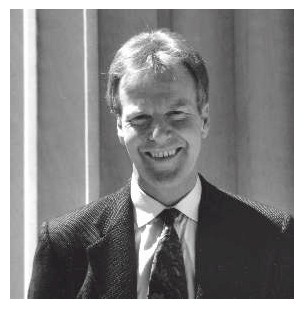
Acknowledgement: Photograph of Peter Senge by Larry Lawfer (used with
permission of SoL)
Bibliographic reference: Smith, M. K. (2001) ‘Peter Senge and the learning
organization’, the encyclopedia of informal education.[http://infed.org/mobi/peter-
senge-and-the-learning-organization/. Retrieved:insert date]
© Mark K. Smith 2001